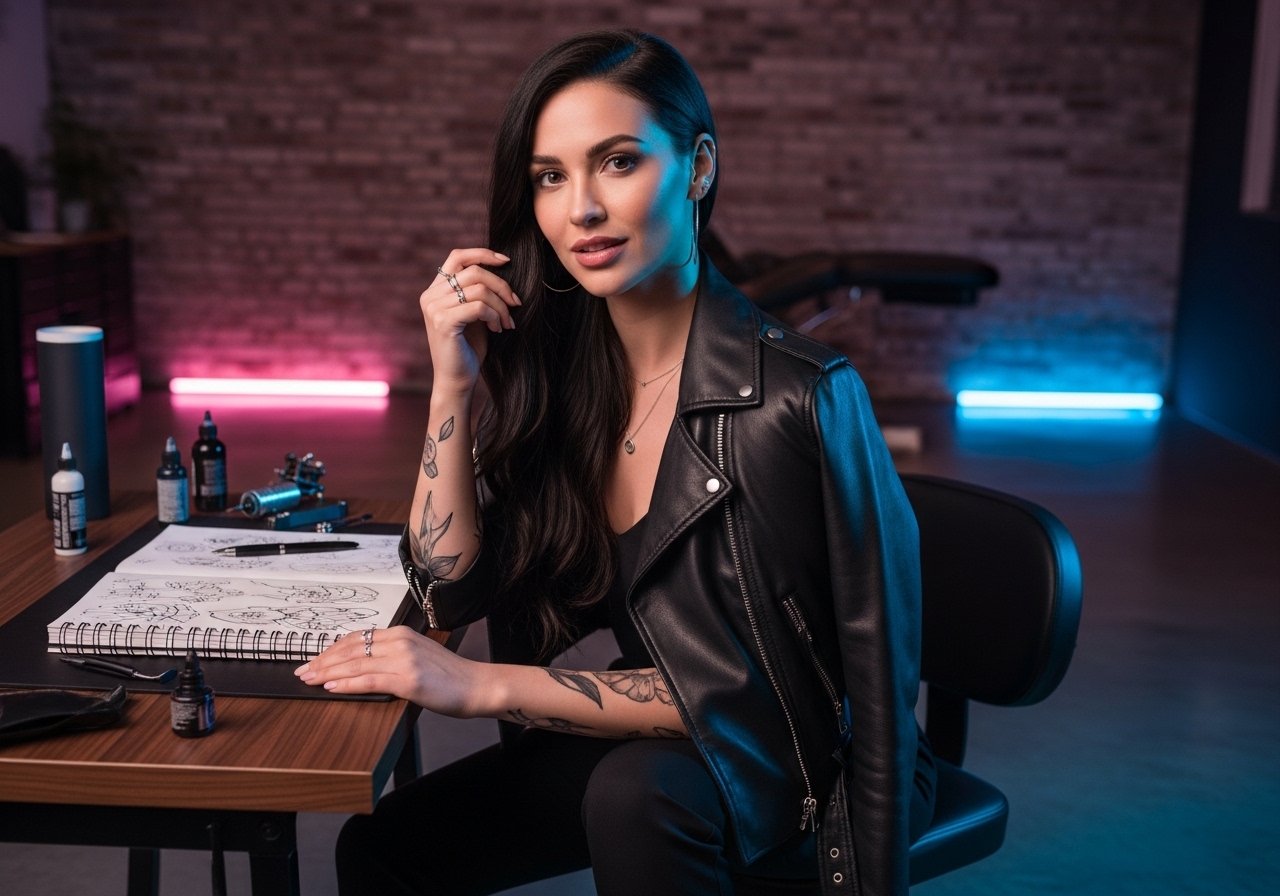
The neck is unforgiving but honest. The tattoos that still read clean at year five are the ones that started with bold linework, smart placement, and a plan for sweat, collar friction, and workplace visibility. Expect design choices that collar up for interviews, line weights that take movement, and session notes you can hand your artist. Below are 21 vintage neck tattoo ideas for guys, each with what to ask for, what ages poorly, and how to show it off.
1. Old-School Rose with Banner on the Side Neck

The side neck favors a 2.5 to 4 inch rose done with old-school linework so the petals hold against movement. Say to your artist that you want thick outlines and solid saturation rather than tiny petal veins. A common mistake is asking for micro-detail banners that blur after a year. Expect this piece to look sharp at six months and still clear at five years with a touch-up timeline around year three. For showing it off, pair the placement with an open collar henley in dark tones and a leather cord necklace to frame the motif. Side neck sessions sting but are short, usually one focused appointment.
2. Blackwork Cover-Up Skull, Full Side Neck
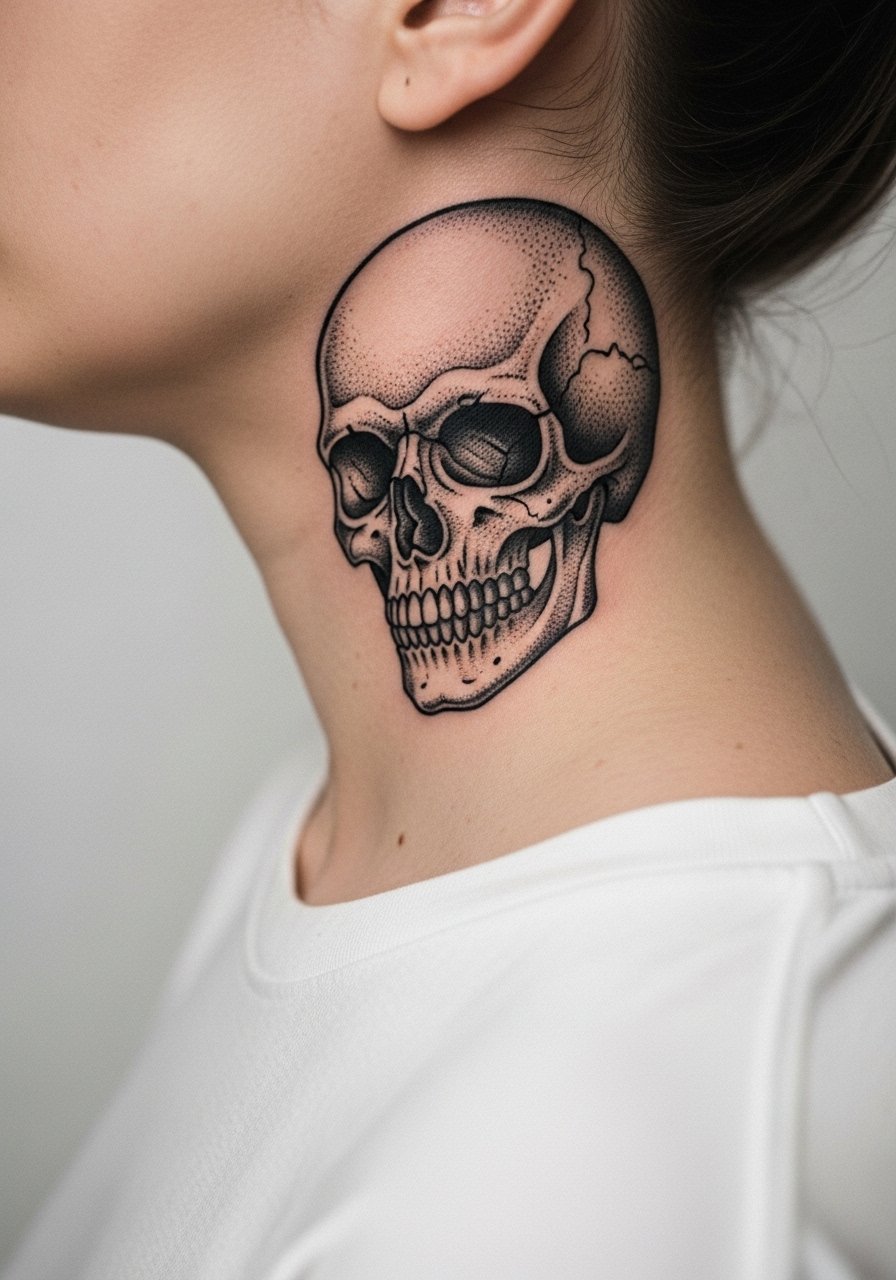
Cover-ups on the neck need opacity and patience. For an old name or faded color, ask for full saturation and layered passes to eliminate ghosting. Blowout risk increases if the artist uses small needles over thin neck skin, so request bold fills and 1-2 sessions rather than a rushed one. Blackwork itches more in the first month and can feel tight during healing. Expect solid coverage at six months and a possible edge touch-up at year two. Match this with a zip hoodie you can unzip to show the silhouette without exposing too much skin during colder heals.
3. Gothic Bat Outline Centered on the Throat
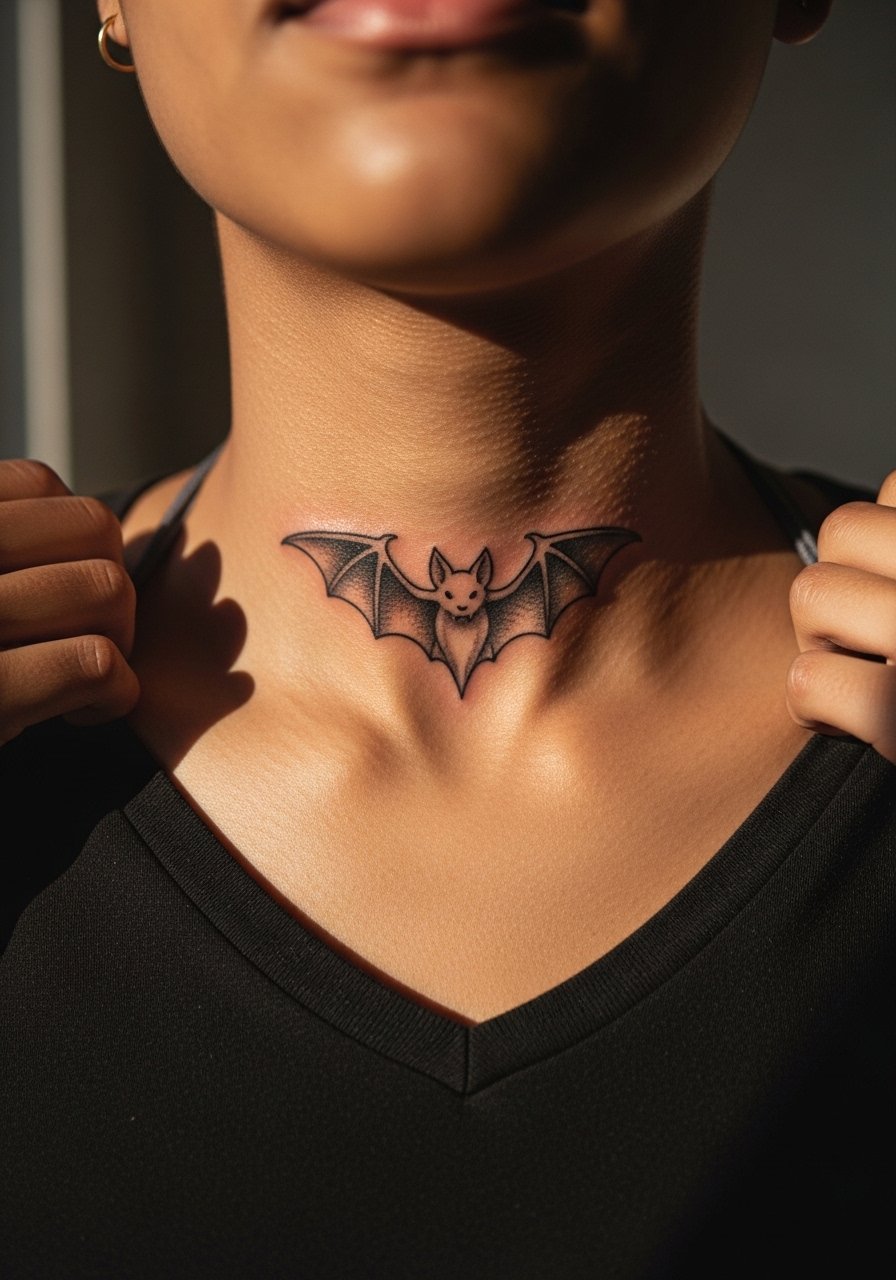
Front throat pieces are visually loud and sensitive. Ask for a 2 to 3 inch wingspan and clear negative space between wing ribbing so the bat does not merge when the skin ages. The main mistake is requesting thin filigree that looks neat fresh but softens into blur by year two. Pain spikes over the larynx, so expect sharp stings during lining. For showcasing, a men's v neck tee keeps the bat visible without crowding the chest. If you sweat heavily, plan for dry healing the first week or discuss protective film options with your artist.
4. Viking Rune Chain Wrapped Around the Neck
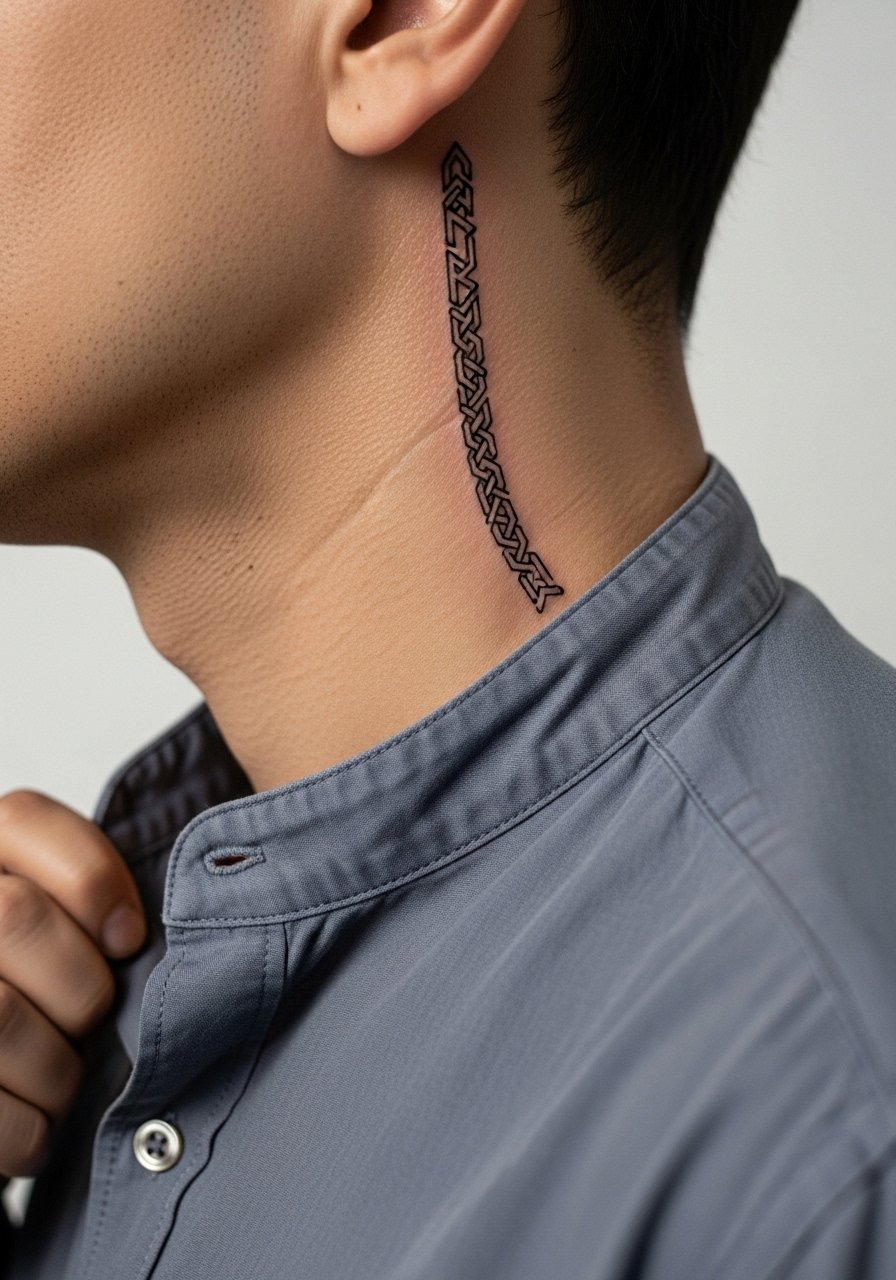
Wrap-around runes need consistent spacing to avoid distortion when the Adam's apple moves. Tell the artist to scale each rune slightly taller near the throat so movement flattens them, not squashes them. A frequent error is tiny runes that merge after weight shifts or stretching. This design ages well as bold blackwork, though touch-ups at year four are common for edge consistency. For everyday style, a stand collar shirt or an unzipped zip hoodie frames the chain without hiding the runes. If you are considering cover-up timing after previous ink, mention session counts and deposit protection platforms during booking.
5. Anchor with Rope on Lower Front Neck

Lower front neck placements are great for sailor-themed vintage motifs. Ask for clean negative space around the rope and saturated color spots for the rope highlights so they do not wash out. The common mistake is tiny shading on the rope that muddies from shirt rub. Session time is short, often under an hour, but pain is high near the throat. Show this piece with a thin silver chain necklace and a deep v shirt men to keep attention on the anchor while reducing friction from collars during healing.
6. Lion Head Profile on the Side Neck
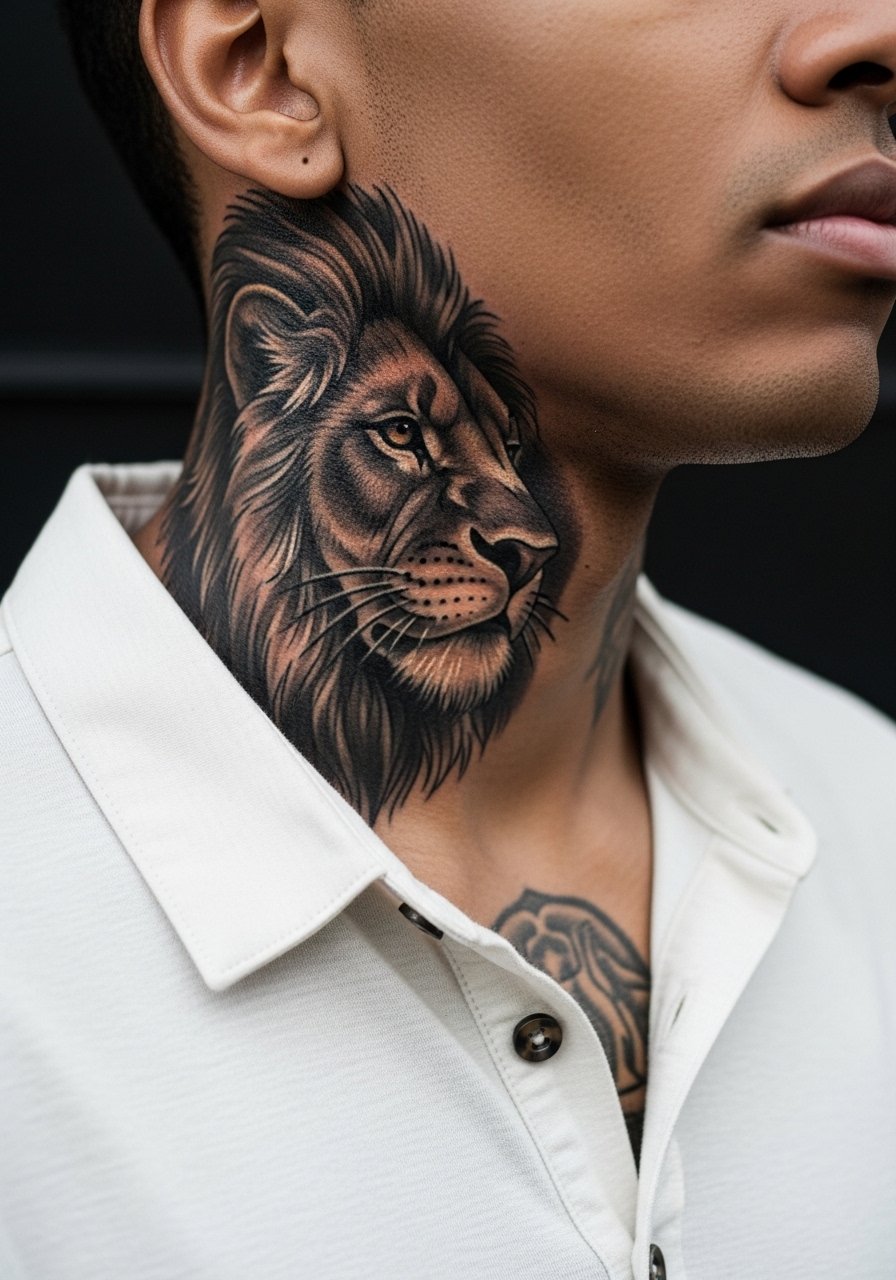
A profile lion reads masculine without overpowering other body pieces. Request a 3 inch height and shading that leans to stipple and whip shading rather than thin hairs. A rookie request is overly fine mane detailing which softens into blur with neck motion. For durability, plan on two sessions for depth and a touch-up at year three. Pair the lion with an open collar henley or a low collar so the piece sits between beard lines and clothing. If you plan travel to guest spots, mention refund policies upfront because artist ghosting is a common complaint in neck bookings.
Studio Day Picks
The first six ideas above include sensitive throat and side neck spots, so smart prep and a couple of specific products make the session and the first week easier.
-
CeraVe Healing Ointment. A non-greasy ointment many people prefer during the initial days because it moisturizes without feeling heavy under collars and avoids clogging pores near the neck.
-
Dragon Blood Tattoo Jelly. A thinner salon-preferred balm that breathes during high-movement heals on the neck and cuts down on intense itching.
-
Australian Tea Tree Salve. Good for anti-itch in sweat-prone neck zones, applied sparingly to avoid irritation.
-
Hada Labo Hydrating Lotion. Lightweight hydration for the neck after the first week, keeps the skin supple without adding heavy residue next to collars.
-
Saniderm. For guys who want a barrier against shirt rub in the first three days, this protective film reduces friction, though some people prefer dry healing if sweat traps under the patch.
7. Swallow Birds Pair at the Back Neck Base
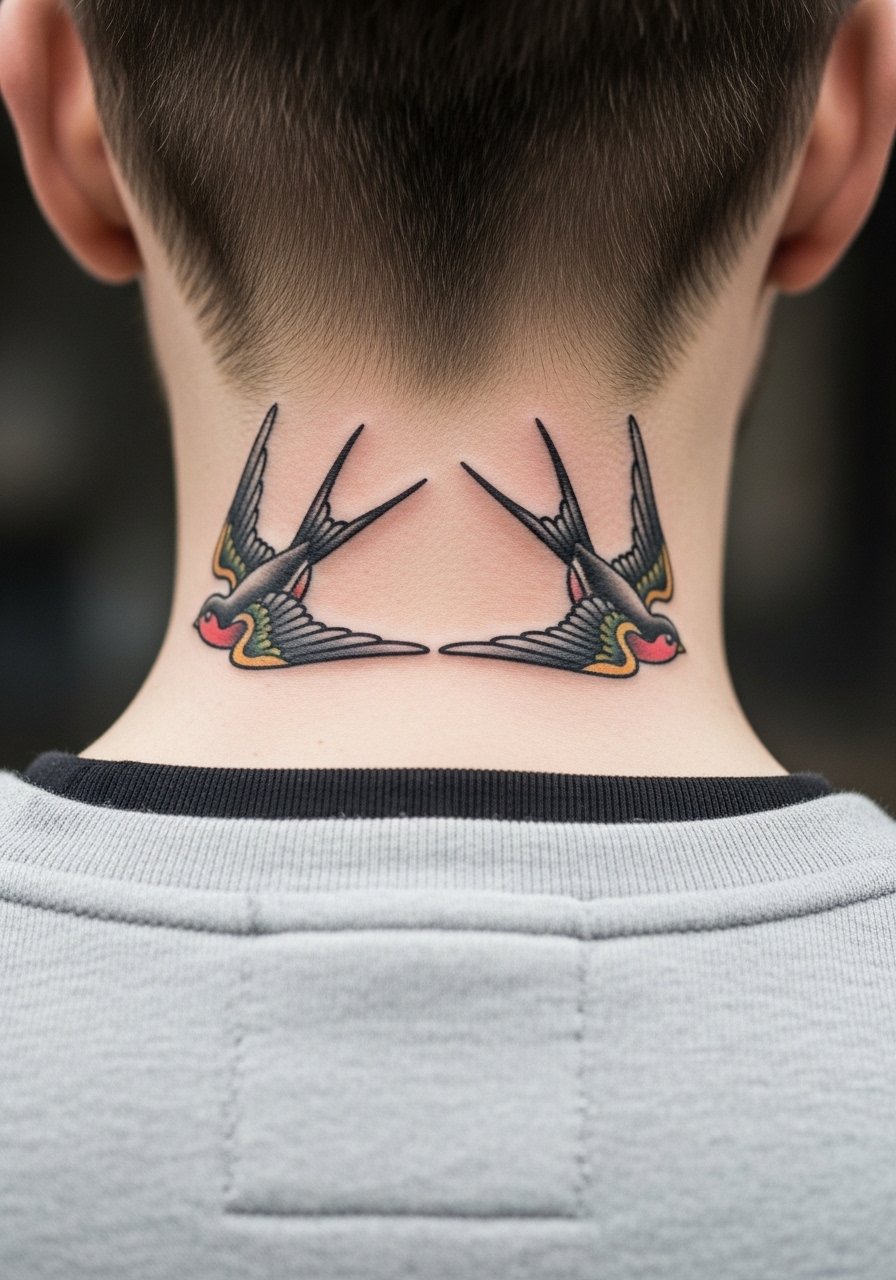
Back base pieces sit under hairlines and respond well to medium lineweight. Ask for paired birds at about 2 inches each with bright fills in the wings so the colors hold against shoulder movement. A common mistake is squeezing several small elements into that tight space. Healed at six months, swallows still pop when hair is tied up and after five years they tend to need a color refresh if sun exposure was heavy. Show with a low ponytail or a men's tank top pulled low, and wear loose collars the day of the session so artist access is clean.
8. Dagger Through Heart on the Throat Center
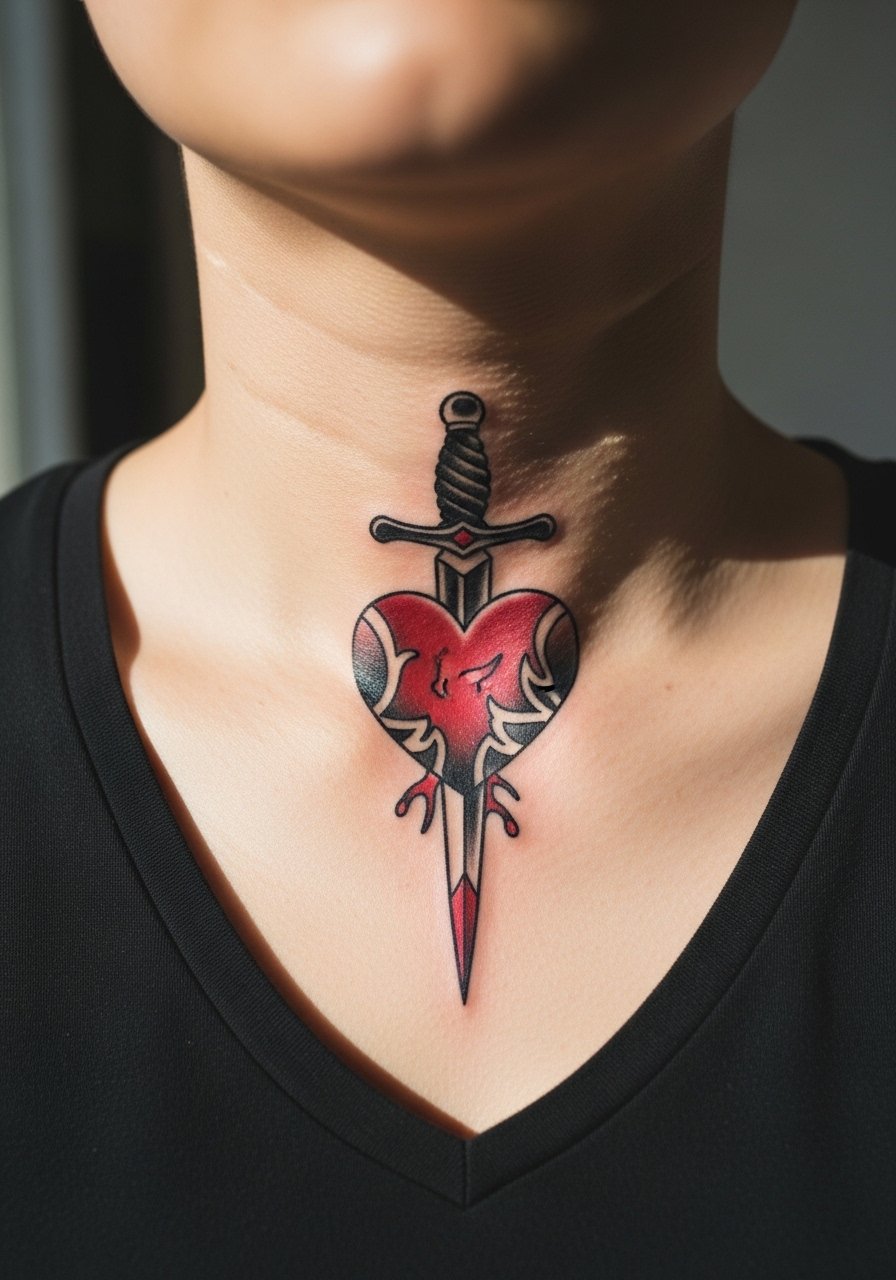
The throat is unforgiving for thin detail. For this vertical dagger request a strong central spine of ink and small pockets of red that read even after some fading. People often ask for tiny blood streaks that blotch; instead specify crisp negative space and bold color stops. Pain is intense during lining over the windpipe. Expect dramatic looks at six months and routine touch-ups every few years depending on how much sun grabs the reds. For daytime wear, a men's v neck tee and a slim silver chain keep the piece visible without irritating the area during activity.
9. Eagle Wings Spanning Side to Back Neck
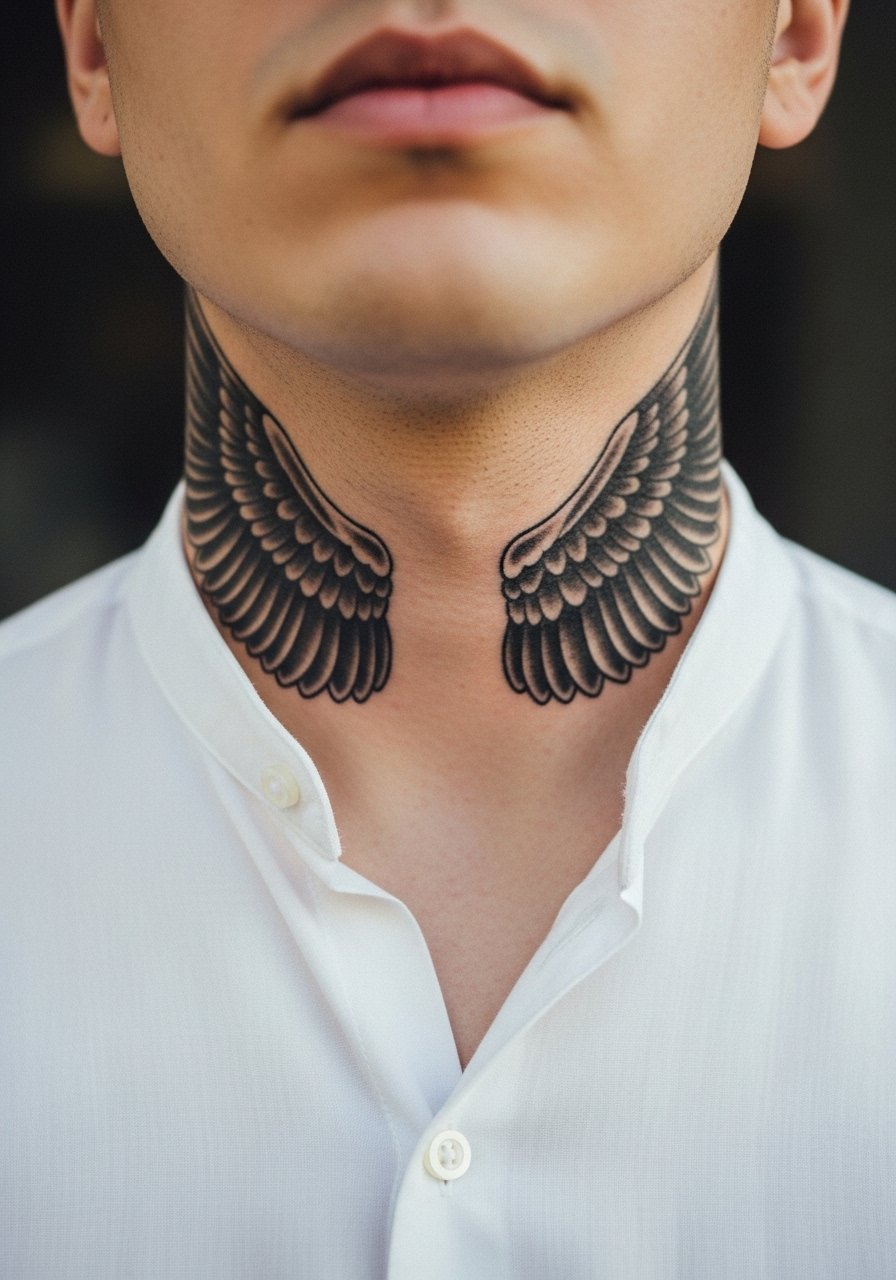
Wide-span wings need even linework to avoid uneven fading on the curve from side to back. Tell your artist you want the wing tips slightly lighter so shoulder movement keeps visual depth. The usual mistake is trying to cram too much feather detail into a small span. At two years the inner lines can soften, so plan a small touch-up to restore contrast. These look great with a stand collar shirt men or an unzipped hoodie so the wings peek out without being cut by a high collar.
10. Pin-Up Girl Portrait on the Side Neck
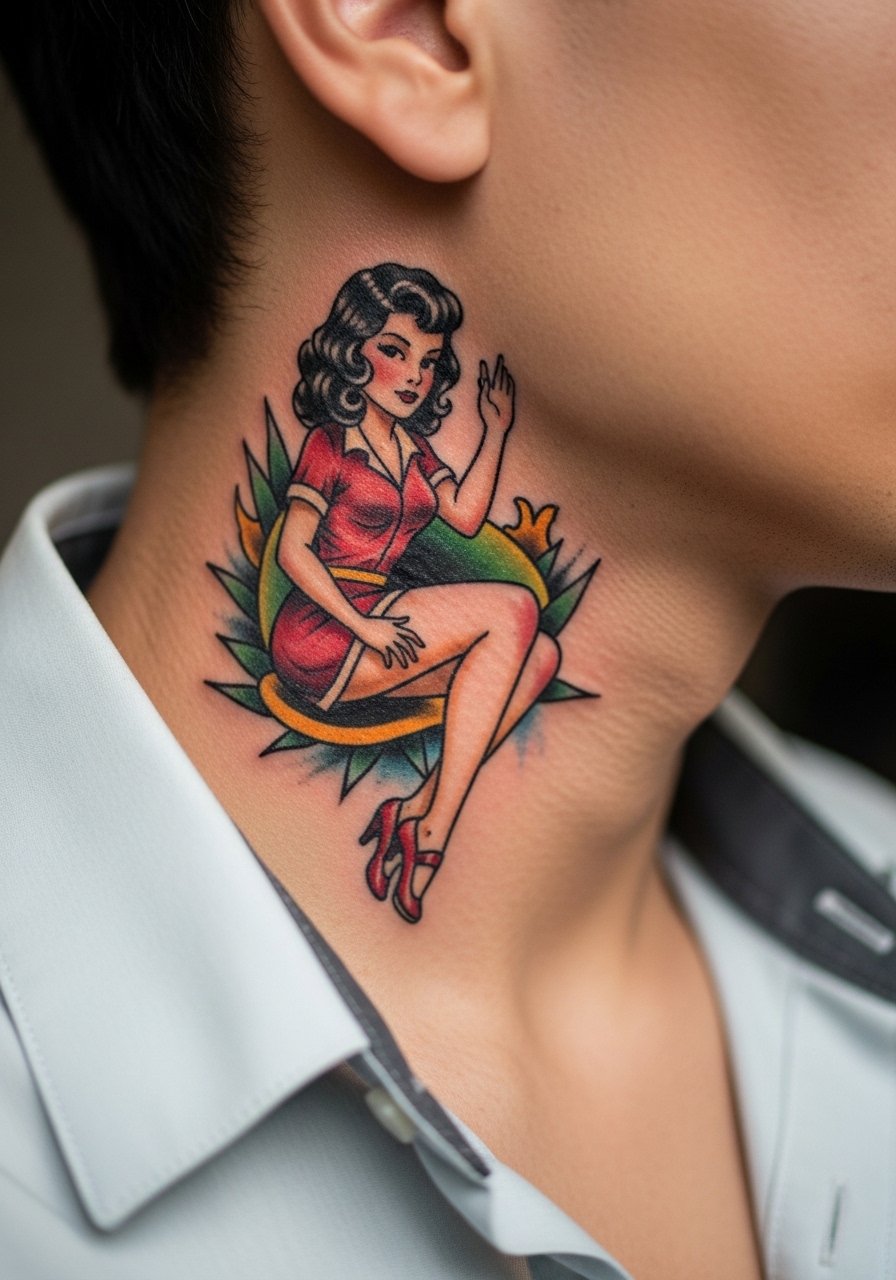
Portraits on the neck need larger scale and simplified features to avoid smudging. For a pin-up ask for bold outlines around face and hair and fewer micro-shadows in the cheek areas. The error is asking for micro realism at portrait scale under three inches; that detail collapses into blur. This kind of piece can take two to three sessions and benefits from scheduled touch-ups. For presentation, pair with an open collar henley or a low button-up so the vintage feel reads with clothing rather than against it.
11. Skeleton Hand Clutching at the Lower Throat
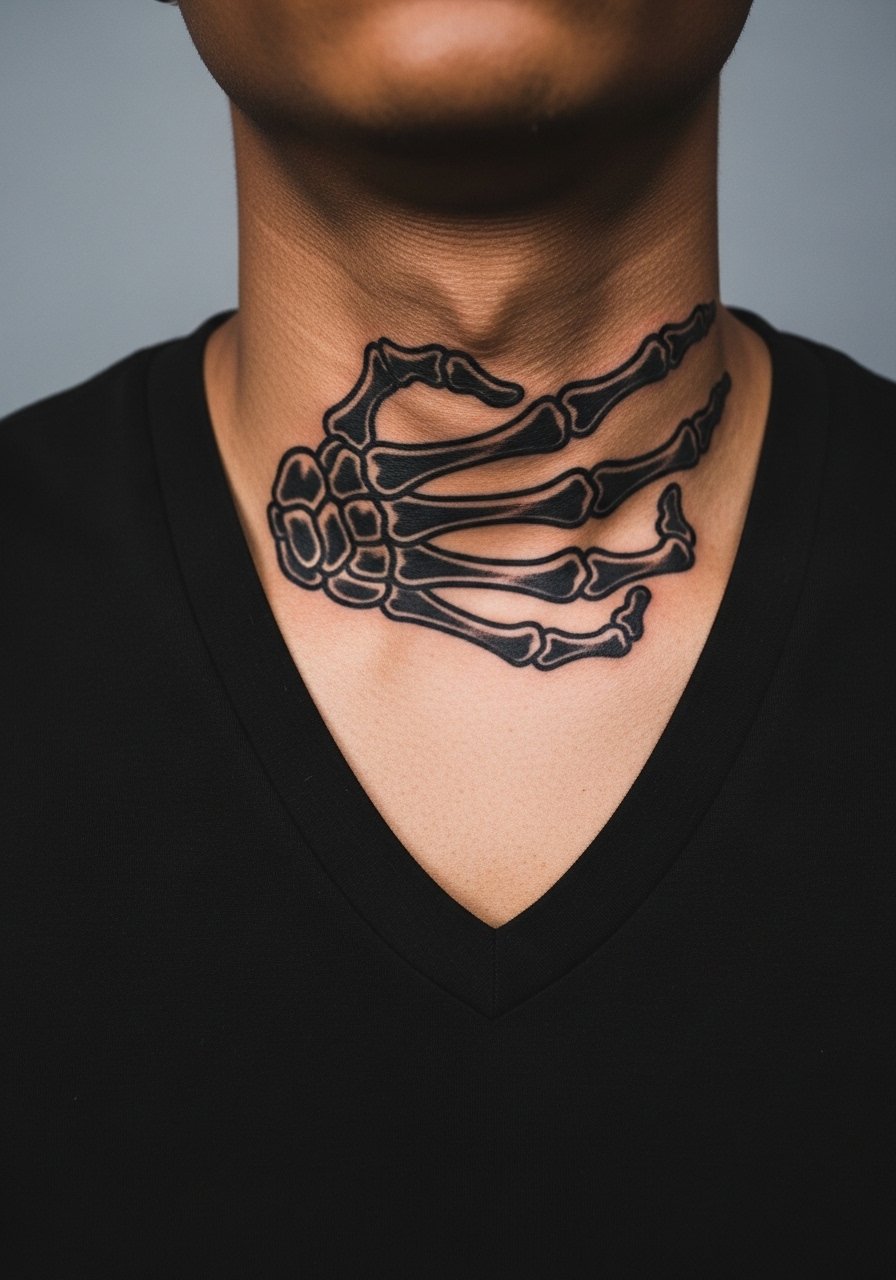
Lower throat blackwork grabs attention but requires clean negative space to read as a hand rather than a blot. Tell your artist to focus on silhouette and high-contrast gaps between fingers. People often pick fine bone detail that fades into a patch after movement and shirt rub. Expect a two-session approach and a touch-up at year two for edge crispness. A deep v shirt men keeps the motif visible while minimizing collar friction in daily wear.
12. Old School Dice Roll on the Side Neck

Small motifs like dice need a bit more scale on the neck than they do on arms. Ask for clear black pips and sturdy outlines so the dice keep their cube look even as the skin shifts. The usual mistake is tiny corner chamfers that soften into a blob. At six months this reads crisp, and at five years expect the whites to warm if sun exposure was heavy. Pair with a leather cord necklace to echo the vintage sailor feel and wear a loose collar for the session so the artist has clear access.
13. Micro Neo-Traditional Compass on the Back of the Neck
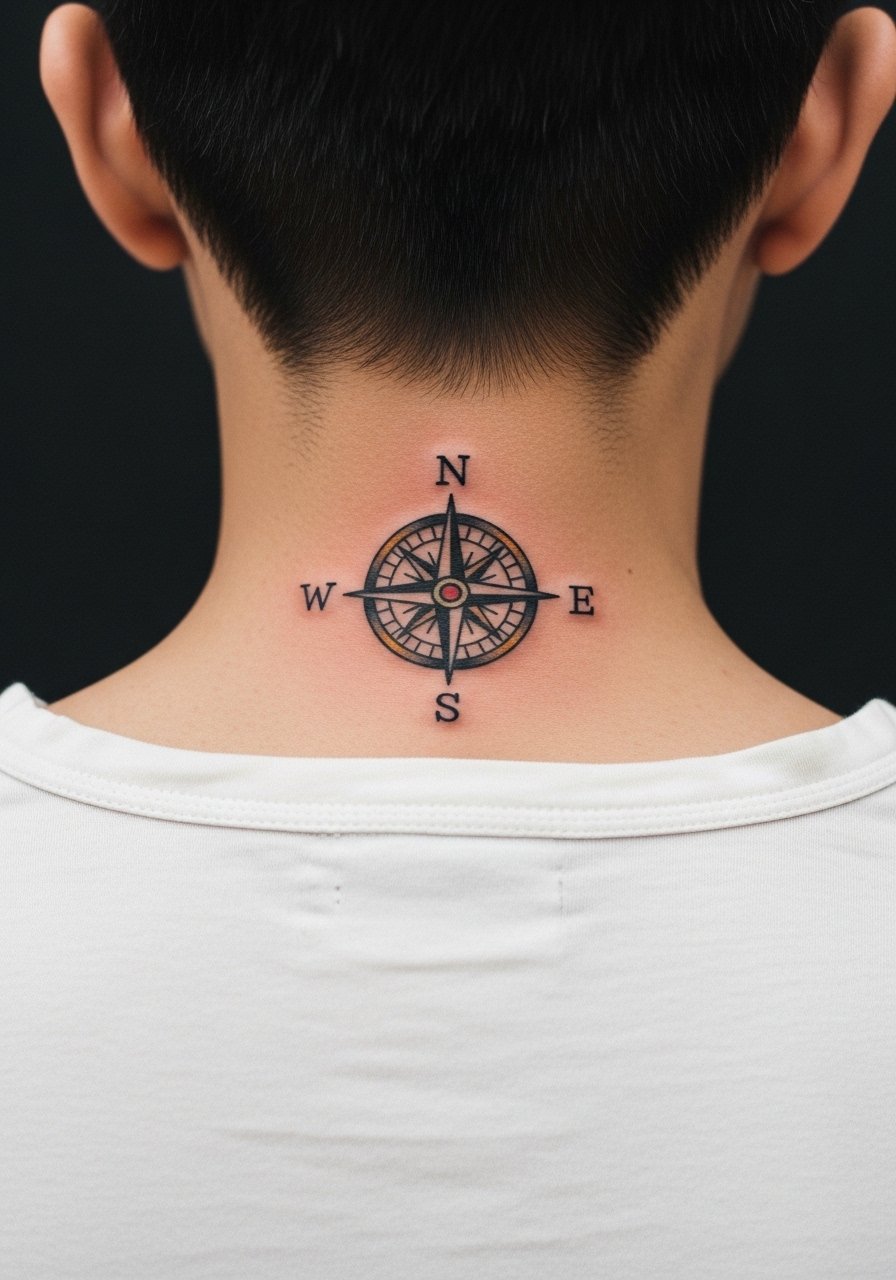
Nape pieces are versatile because hair can hide or reveal them. For a compass request a simplified face and stronger outer ring so the points stay readable. People who ask for tiny tick marks end up with smudged faces as the skin stretches. This piece heals well with standard aftercare and usually needs a touch-up around year three if you spend a lot of time outdoors. Style with a low ponytail and a low cut crewneck to show the piece when you want it visible.
14. UV-Activated Vintage Starburst Near the Side Neck
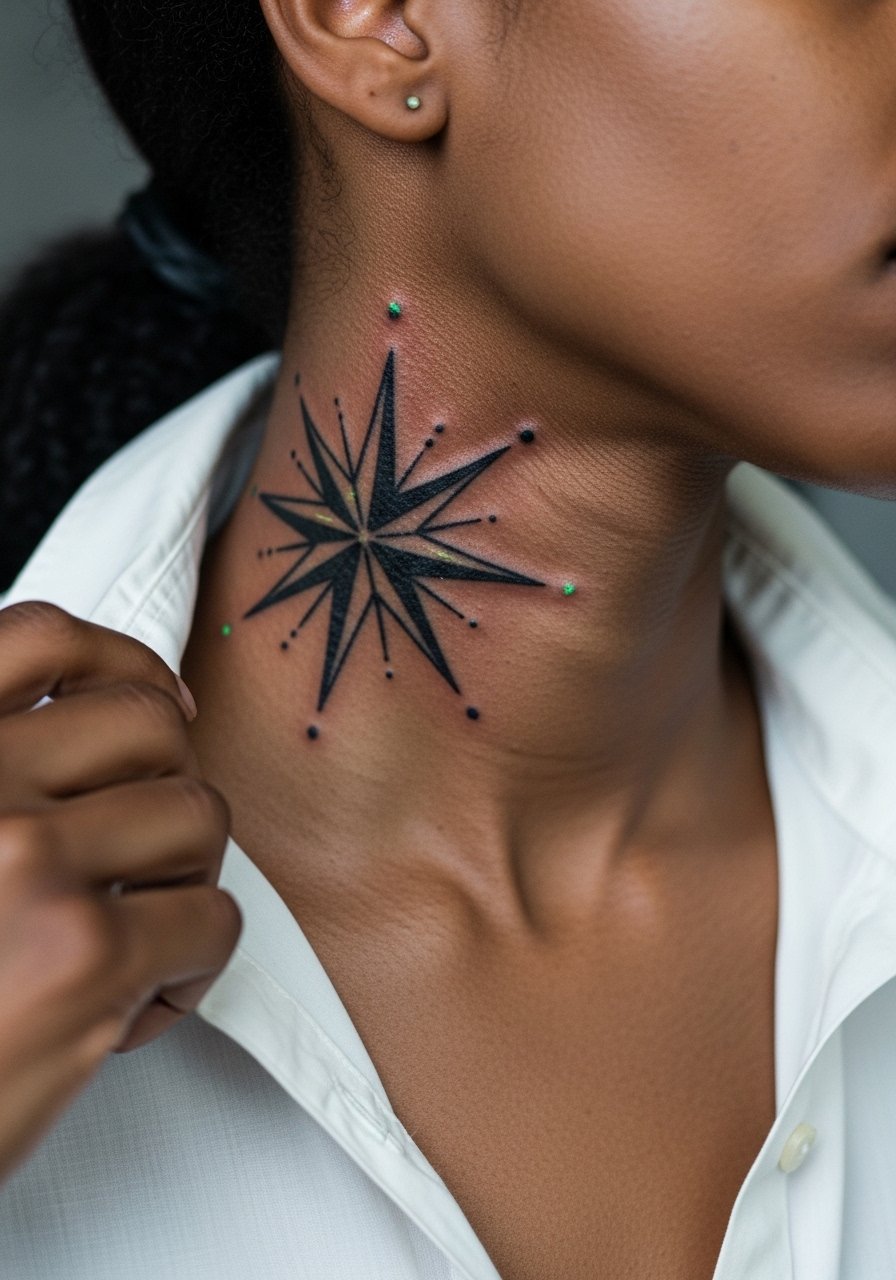
UV-reactive ink is a nightlife option that stays subtle in daylight. Be explicit about which parts you want in UV so daytime aging follows the standard blackwork lines and not the reactive spots. The niche mistake is overusing UV in dense areas where the invisible ink ages differently from pigment. Expect the black outlines to age normally and treat UV sections as decorative with different longevity. This is one of the under-covered ideas most guys ask about at conventions. For low-key display, pair with an open collar henley that reveals the detail at night.
15. Script Name Curved Along the Side Neck
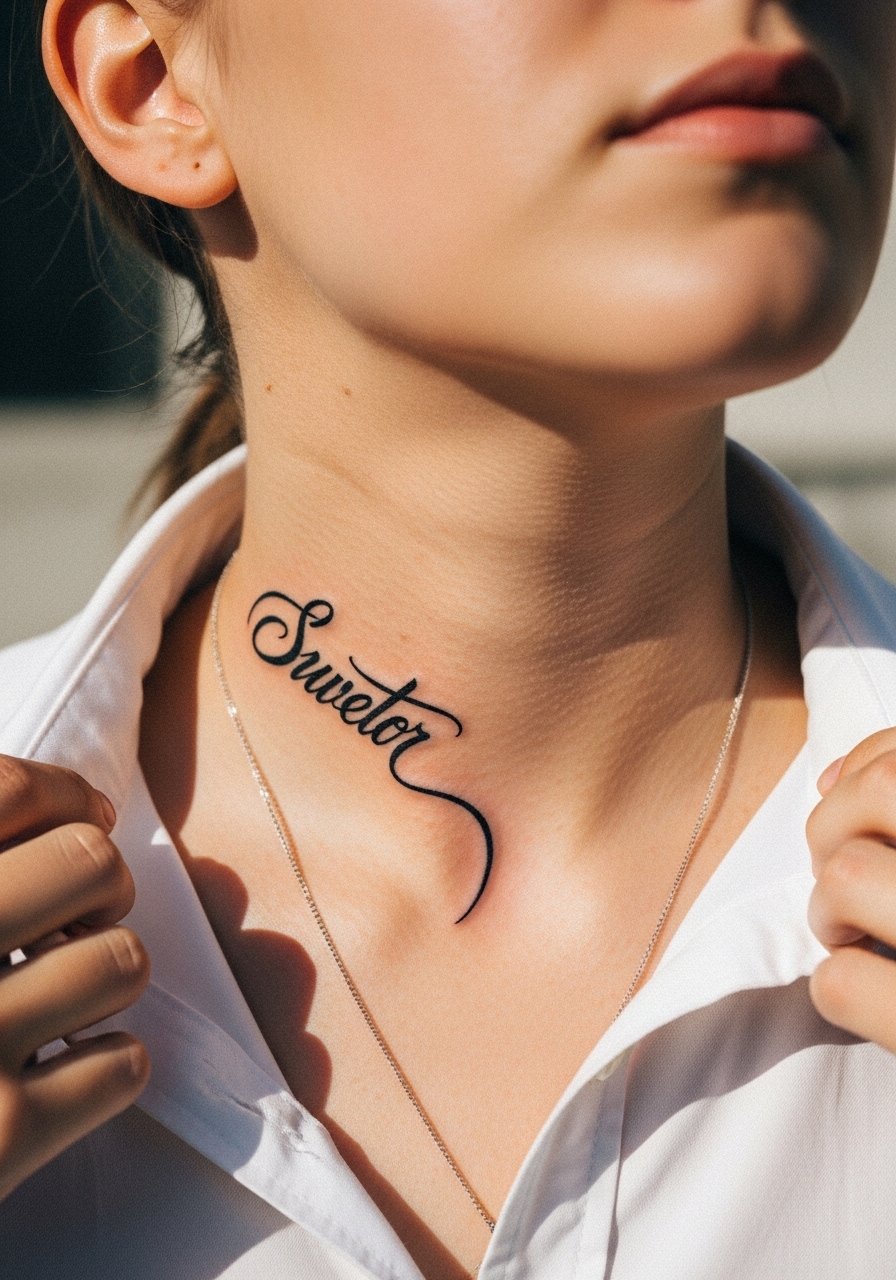
Names on the neck age poorly when the lettering is too fine. Ask for thicker stroke widths and moderate spacing between letters so each character preserves shape. A common regret is tiny script that dissolves into a gray line after a year. Plan touch-ups around year two to keep counters clear. Style this with a thin chain pendant necklace worn just above the script if you want a layered look that does not compete.
16. Small Anchor Below the Adam's Apple
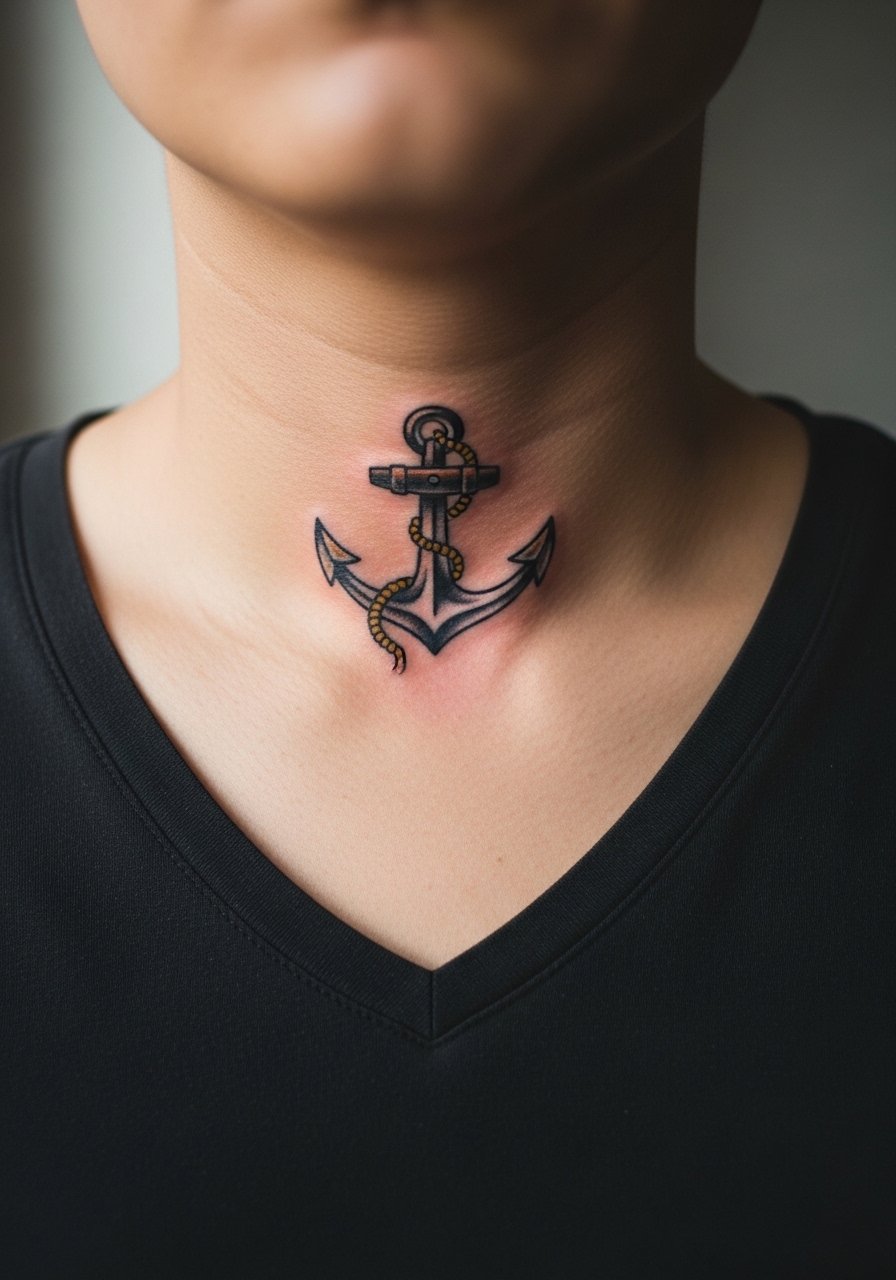
Placement near the Adam's apple flexes every swallow. For durability scale the anchor to 2.5 inches and ask for reinforced outlines near the knot and shank. The mistake is fine rope shading that bleeds into blur with throat movement. Healing feels tight and sensitive for a few days. Keep swallowing in mind and plan session hydration to reduce muscle tension during lining. This works with a men's v neck tee for visibility without high collars.
17. Celtic Knot on the Side Neck Near Ear
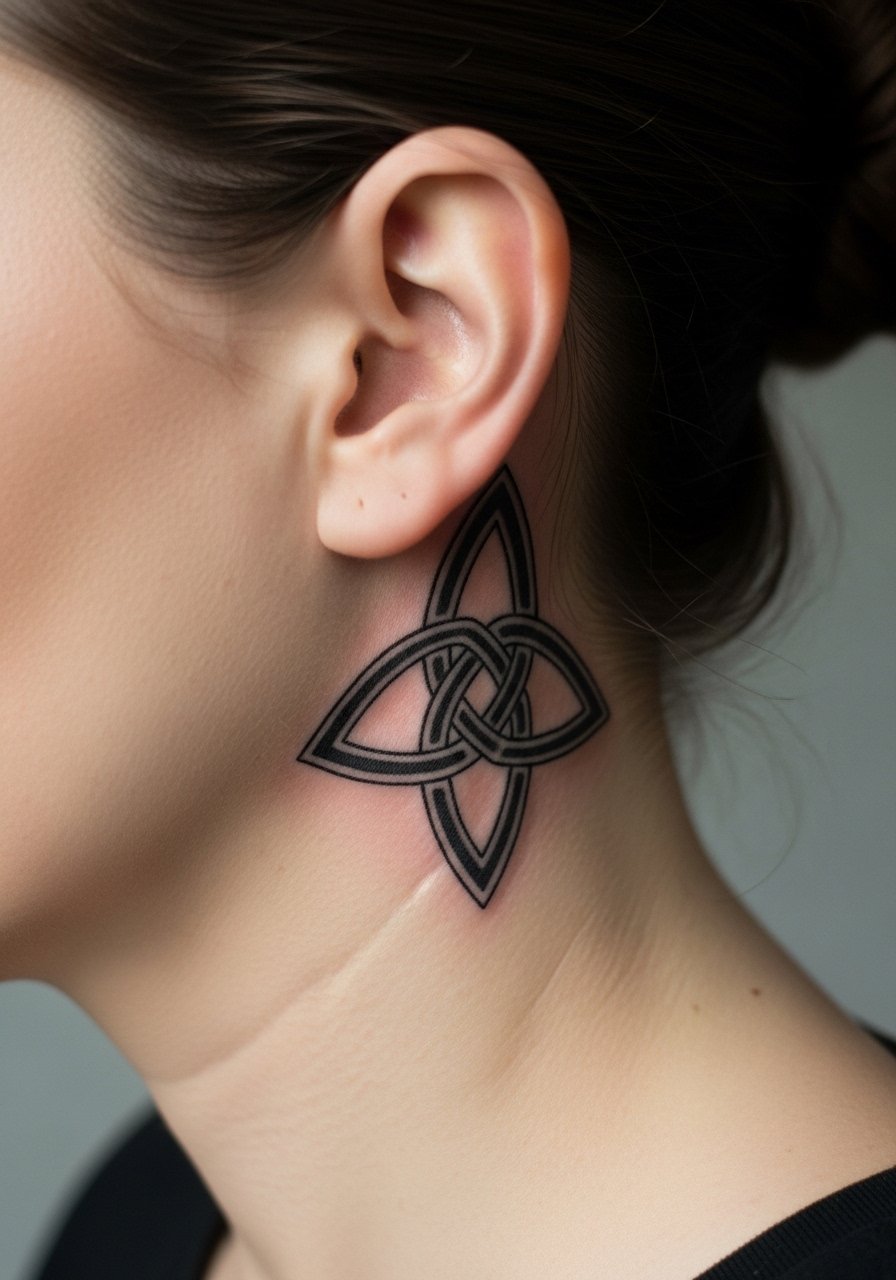
Knots near the hairline require clear open spaces to read. Describe exact placement as on the skin behind the ear below the hairline so your artist frames it correctly. The typical mistake is tiny interlacing that looks great fresh and then loses definition with hair and sweat. This sits well with short hair or a tuck behind the ear. For session day, wear a shirt that allows the artist to tilt your head freely and avoid heavy fragrances if you sweat easily.
18. Neo-Traditional Panther Facing Forward on the Throat
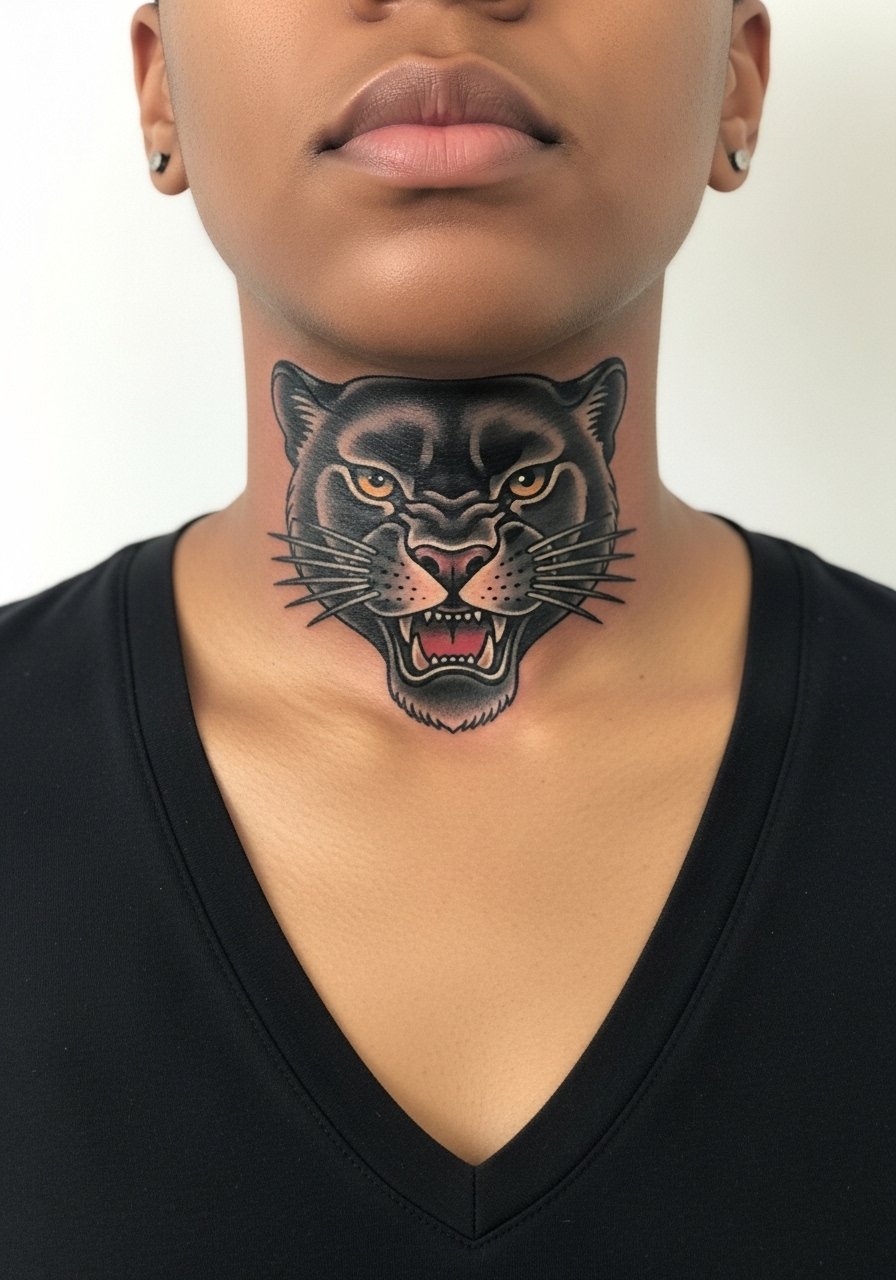
Symmetrical faces on the throat must be balanced left to right so swallowing does not skew the center axis. Tell the artist to check alignment with your Adam's apple at the stencil stage. One mistake is forcing too much facial micro detail at a small size. Expect a painful but quick session for the lining and plan a touch-up at year three for symmetry work. Pair with a deep v shirt men to keep the panther visible without high collars pressing into the tattoo.
19. Minimalist Rune Bar Along the Jugular
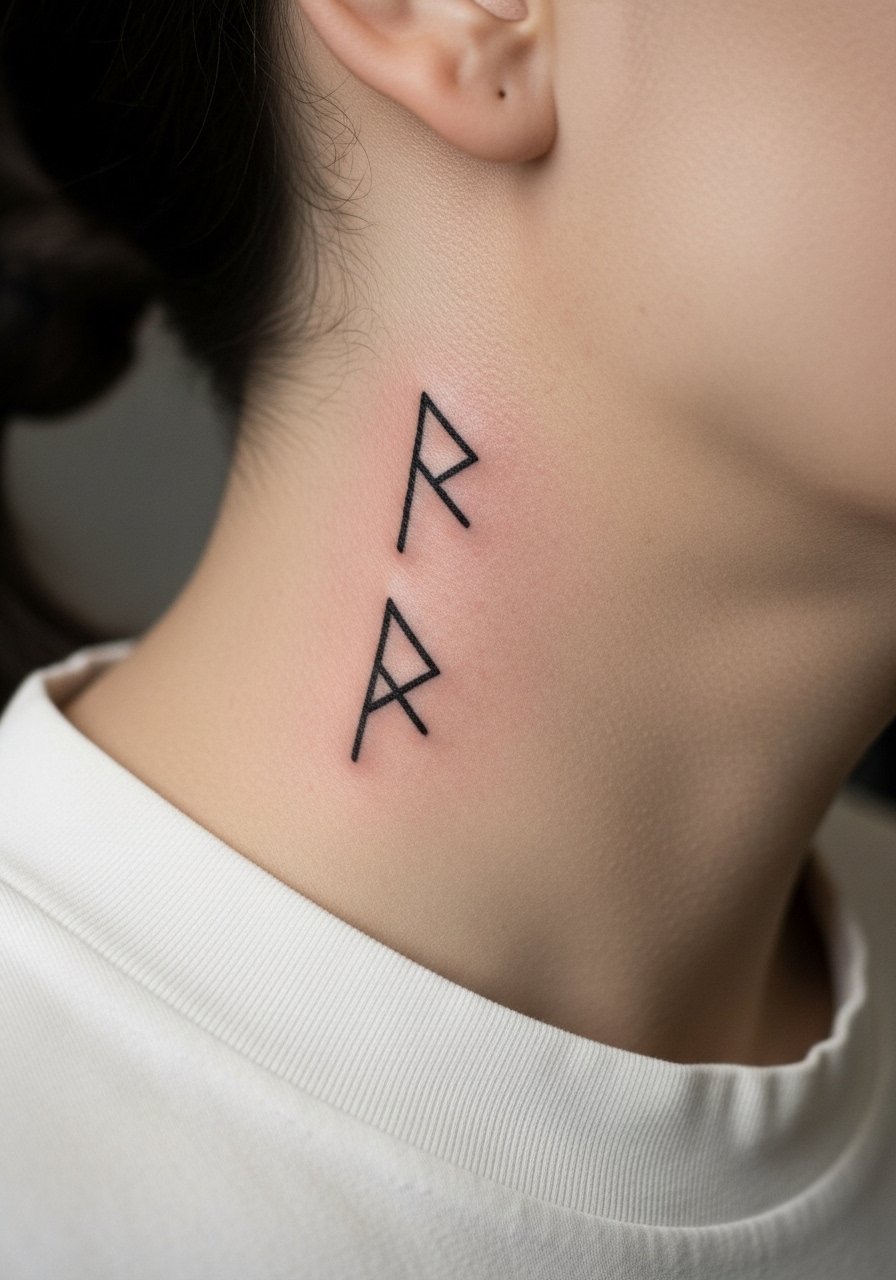
Minimal vertical bars look great but need spacing adjustments to avoid merging with nearby veins and natural creases. Ask the artist to increase gap width between runes and to push line depth for longevity. The debate about fine line versus bold here is active. One camp insists thin runes age gracefully if placed perfectly. The other camp says the neck moves too much and thicker lines are safer. Ask your artist where they stand and consider a slightly bolder line if you plan low touch-up tolerance. Wear a stand collar shirt for a clean reveal.
20. Anchor and Rope Collarbone Extension From Neck
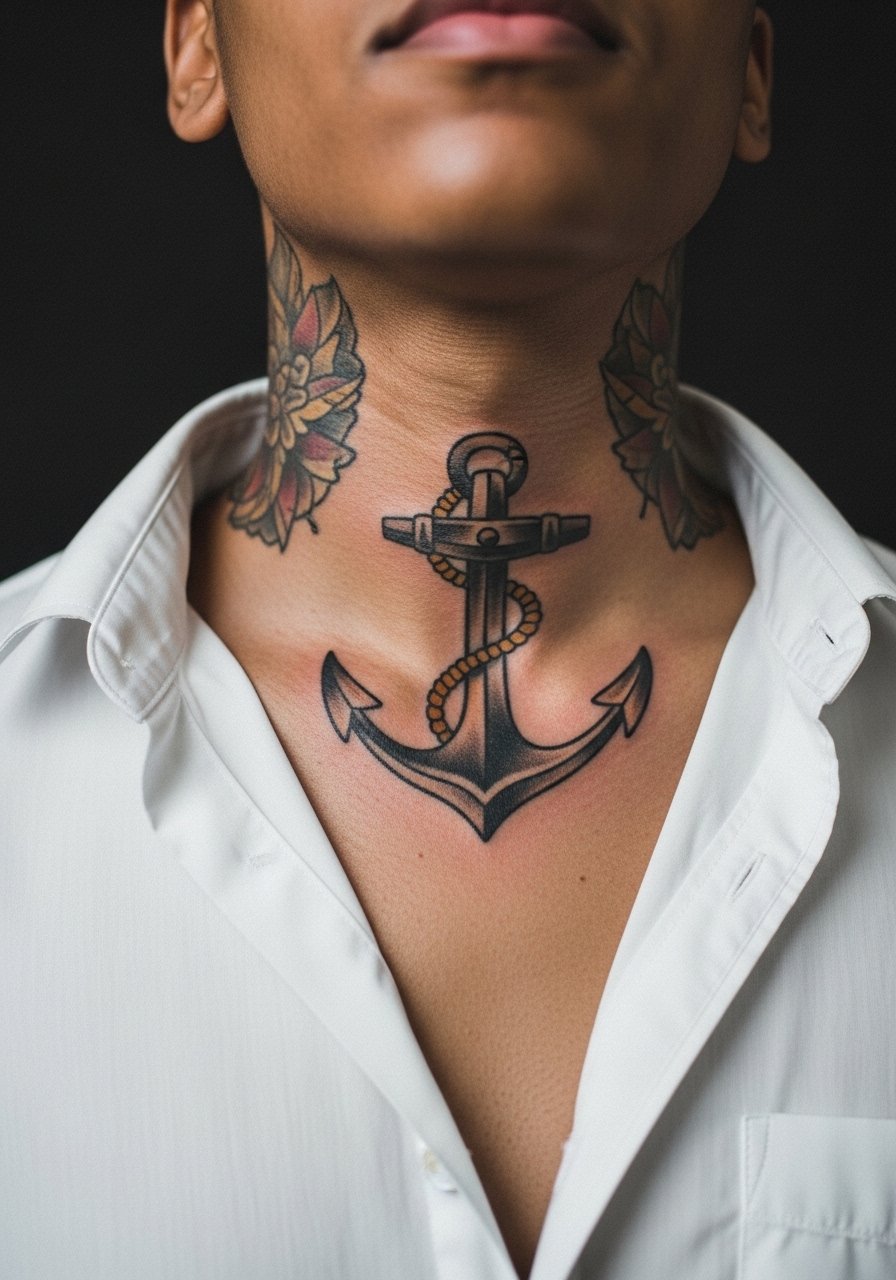
Designs that blend from neck to collarbone should be scaled to the body so the anchor sits naturally on the curve. Tell your artist you want the rope to follow the collarbone and not wrap awkwardly into the chest. Common errors include trying to force a flat chest composition onto curved neck anatomy. This hybrid ages like chest work, but the neck portion needs stronger outlines because collars rub more. For show-off days try an open collar henley so the anchor reads with your neckline.
21. Pinwheel of Stars Around the Back Neck Base
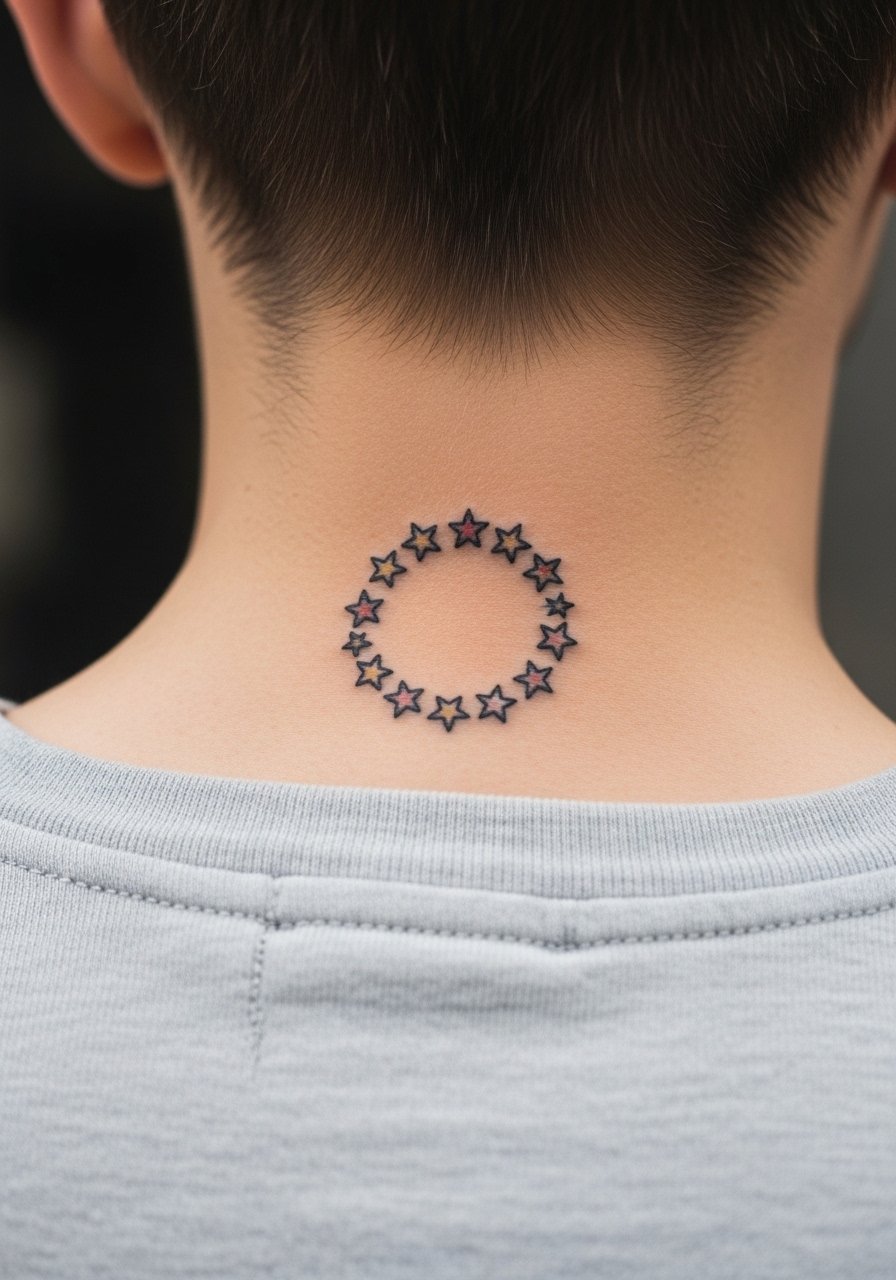
A circular cluster at the nape benefits from varied sizes so the eye moves rather than fixates on a blur. Request at least three different star sizes and space them so each has breathing room. The error is compacting too many elements into a three inch area which leads to smudging. Healing feels straightforward and these usually last well with minimal touch-up if sun exposure is controlled. A low crewneck or tank top shows them off in summer and keeps friction low during the initial week.
Frequently Asked Questions
Q: How do neck tattoos impact job interviews and workplace perception?
A: Visibility is the main factor. Side neck pieces that tuck under collars are easiest to manage for interviews, while front throat tattoos are instantly noticeable. In hiring conversations some industries react conservatively, so consider placement that can collar up or be partially hidden. From what I have seen, planning placement with workplace outfits reduces friction during interviews.
Q: Will fine line work on the neck fade faster than bold traditional lines?
A: Yes, and artists split into two camps on this. One group argues thin work blurs faster on moving neck skin. The other says with precise needle depth and spacing, fine line can settle well. In practice thicker outlines and more spacing offer a safer longevity bet if you want fewer touch-ups.
Q: Should I use Saniderm or dry healing on a neck tattoo given sweat in summer?
A: Both approaches have vocal adherents. The Saniderm camp likes the barrier against shirt rub for the first few days. The dry healing camp warns that trapped sweat under film can macerate delicate neck skin. The choice depends on how much you sweat, your activity level, and what your artist recommends. If you try film, remove it after a short window and monitor the area closely.
Q: How much should I expect to pay for a vintage neck tattoo?
A: Expect a wide range depending on size and complexity. Small single-session vintage motifs often fall in a modest range, while multi-session portraits and full wrap designs fall into a higher range. Ask shops about session counts and booking deposits so you know the overall budget before committing.
Q: What are the best wardrobe choices for showing and protecting a new neck tattoo?
A: For showing off, open collar henleys and deep V tees frame side and throat pieces well. For protection during healing, loose collars, tank tops, and zip hoodies that can be unzipped minimize fabric rub. If you want a quick option for sessions, wear a loose crewneck or a button-down you can pull aside so the artist gets clear access.
Q: Can dark skin tones make blackwork on the neck look muddy, and how do I avoid that?
A: Darker skin can make saturated blackwork read differently in photos. The common fix is higher contrast through spacing and selective negative space so the silhouette reads clearly. Ask for a patch check or to see healed examples the artist has done on similar tones so you know how the saturation translates in real life.