
Fine line tarot pieces are everywhere on saved boards, and the ones that still look crisp years later are not always the tiniest or the flashiest. Placement and spacing matter more than initial detail. That gap between what looks best on a screen and what holds up under daily life is why these tarot designs focus on readable shapes and smart spacing, and why the first idea jumps straight into a forearm piece that ages gracefully.
1. High Priestess Fine Line on Inner Forearm
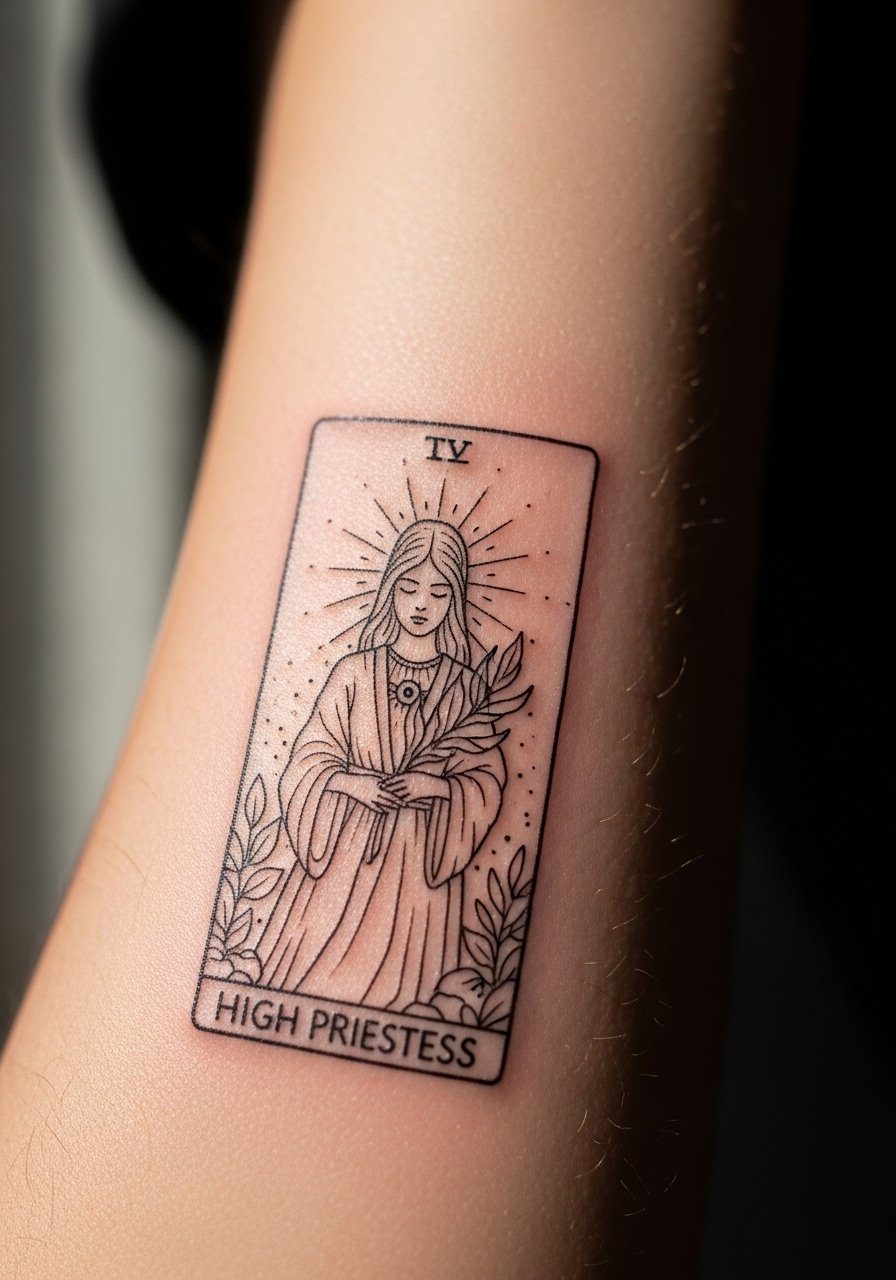
I recommend this for anyone who wants readable script and delicate iconography without crowding. Fair warning, the inner forearm sees a lot of sun and friction from sleeves, so ask your artist for slightly heavier linework in key contours and slightly more negative space inside the card. In consultation, show examples of line weight you like and point out which tiny details you want removed. Expect a mild sting during the session and plan a single short visit. For showing it off, roll up a linen button-down so the card sits in a clean frame on your arm.
2. Empress Micro-Realism Bust on Upper Arm
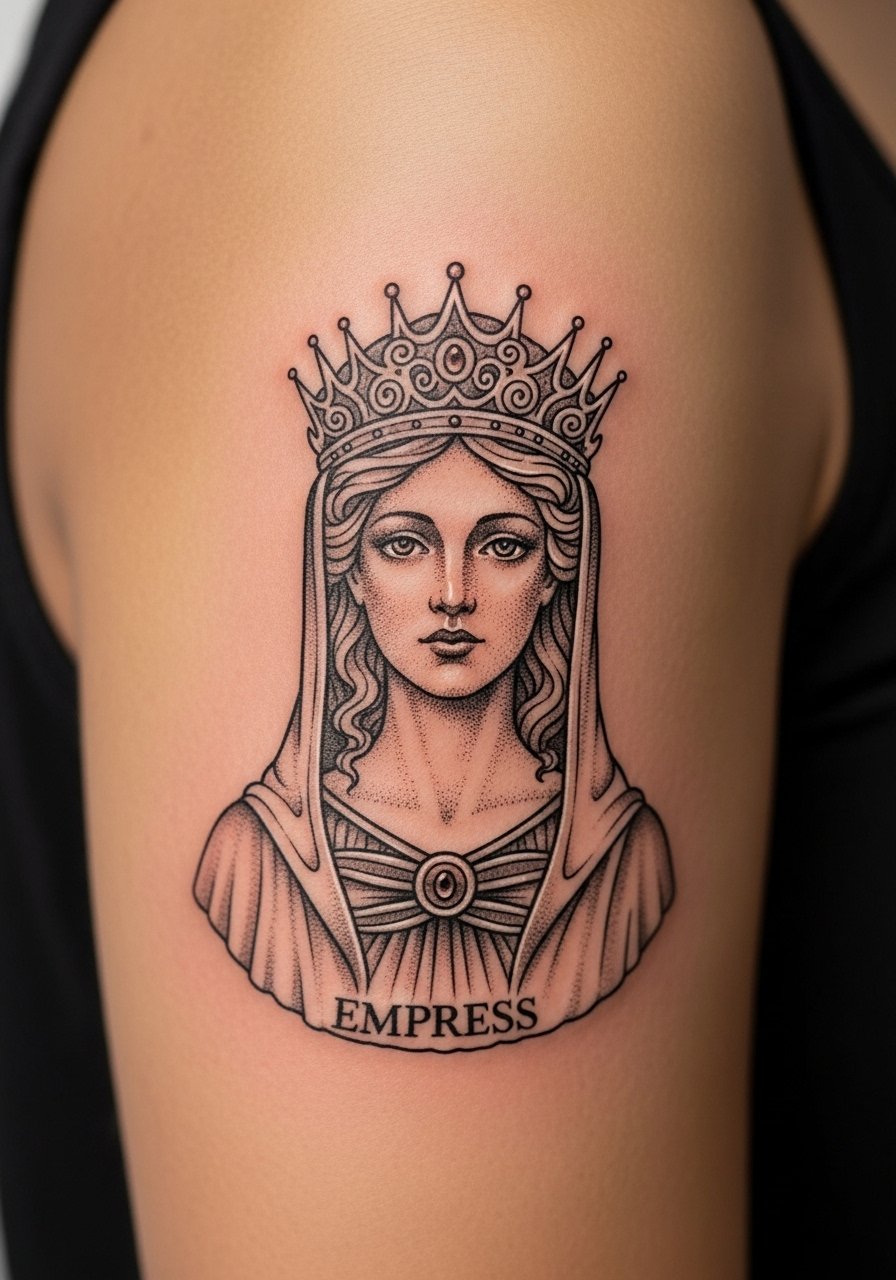
This version favors a soft portrait with botanical motifs around the frame. The upper arm gives enough surface to keep tiny facial features readable while letting shading breathe. Tell your artist you want stipple shading rather than heavy color saturation, which helps the piece age without heavy smoothing. Sessions feel moderate in pain and often finish in one longer appointment. Pair the piece with sleeveless tops for evenings. For session comfort wear a sleeveless blouse that gives the artist clear access to the shoulder.
3. Moon Phases Column on Ribcage
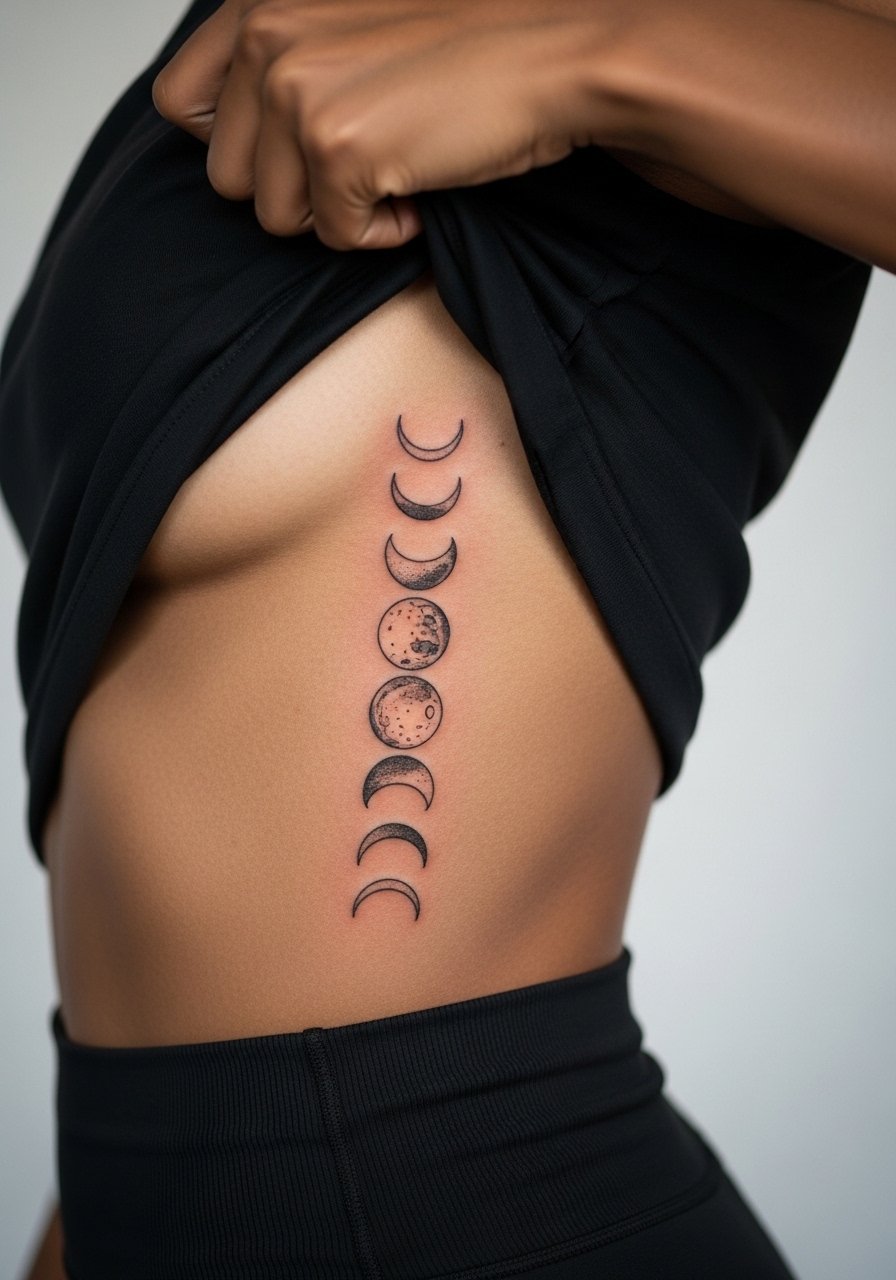
The rib is beautiful for vertical phase work because it moves with breath and clothing. Artists split into two camps about fine line here. One camp says the skin stretch and constant motion blur delicate lines within a couple of years. The other camp says with spacing and consistent needle depth the lines can remain crisp. My take is to ask your artist which camp they belong to, and then design with their method in mind. Common mistakes are going too tiny or crowding phases. Expect a long session and a tougher healing week. This placement needs careful spacing, and touch-ups are common.
4. Tiny Star Constellation Above the Ankle
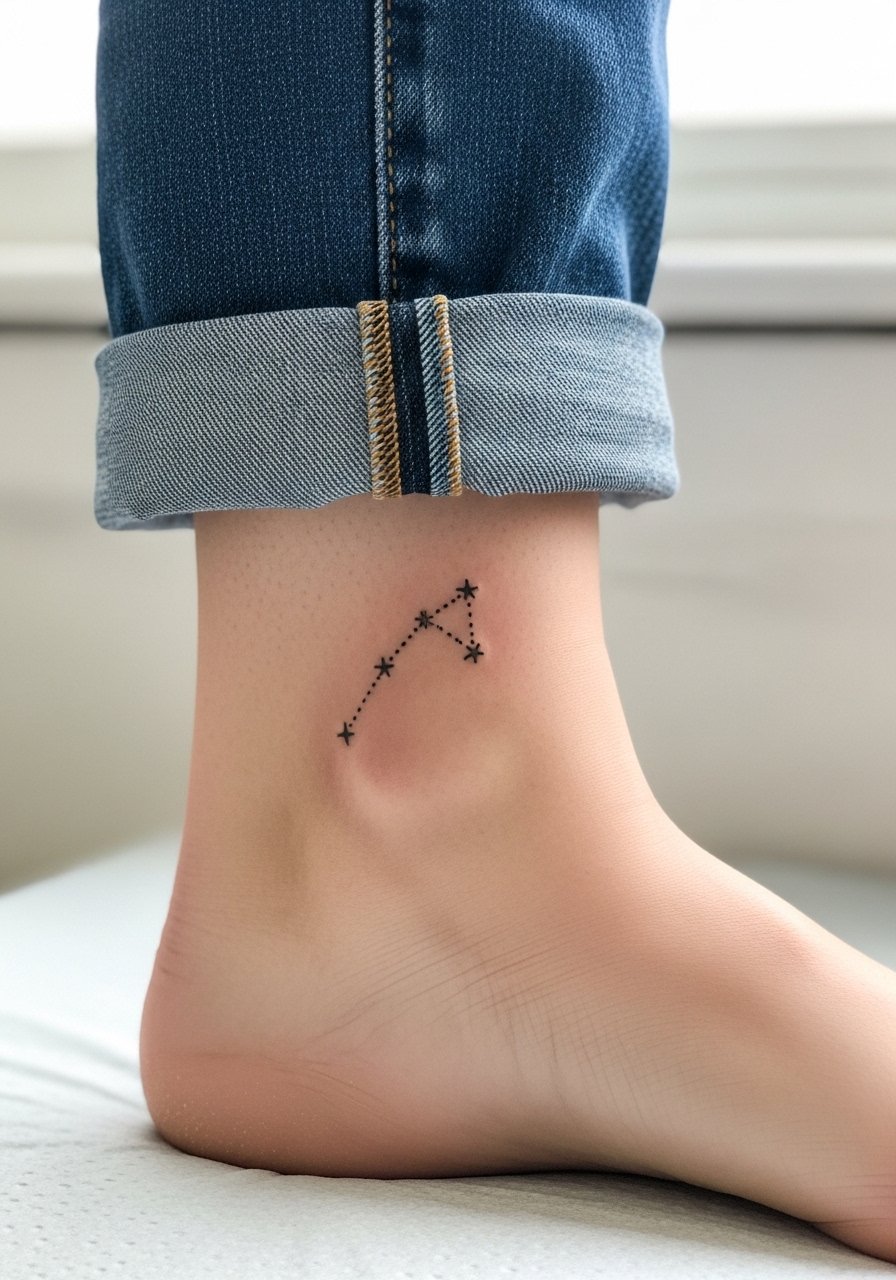
Small star groupings read as a delicate nod to the tarot star card when placed above the ankle. The ankle is a friction zone that rubs against shoes, so ask for slightly bolder dots and a few micro negative-space gaps. Sessions are short and relatively painless. For showing it off, sandals or rolled jeans work well. Pair it with a simple ankle sandal to keep the eye on the constellation rather than busy footwear. Plan for a follow-up touch-up if you wear closed shoes daily.
5. Mini Tarot Card on the Side of a Finger
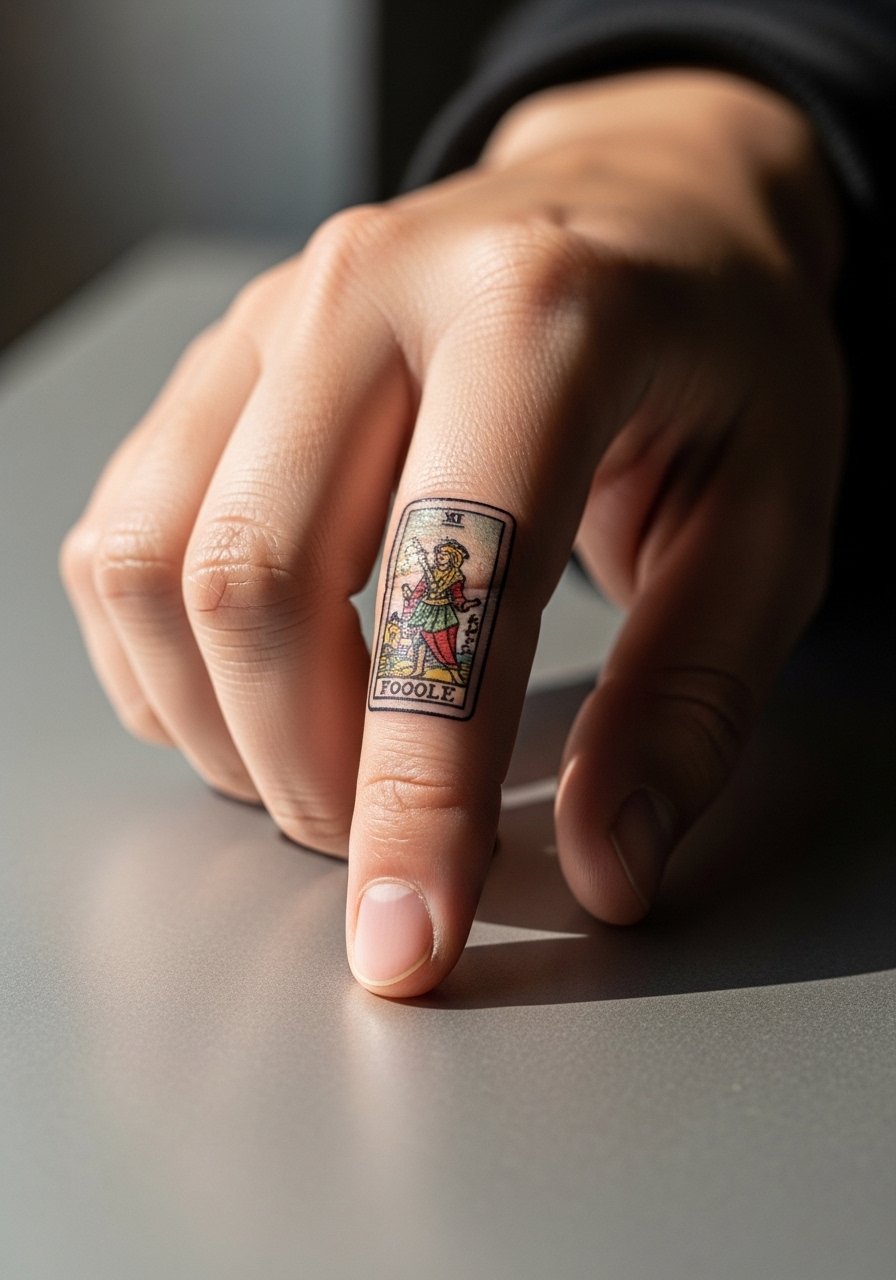
Finger tattoos read intimate and symbolic, but they face constant washing and friction. Ask your artist to simplify the internal card details down to a clear silhouette and a bold perimeter. The common mistake is requesting extreme micro-detail that disappears after six months. Fingers often need annual touch-ups. For styling, stack a few thin rings that sit away from the tattoo edge so the illustration breathes. Try a set of dainty stacking rings that complement the tiny card without rubbing it raw during healing.
6. Lovers Mini Card Near the Collarbone
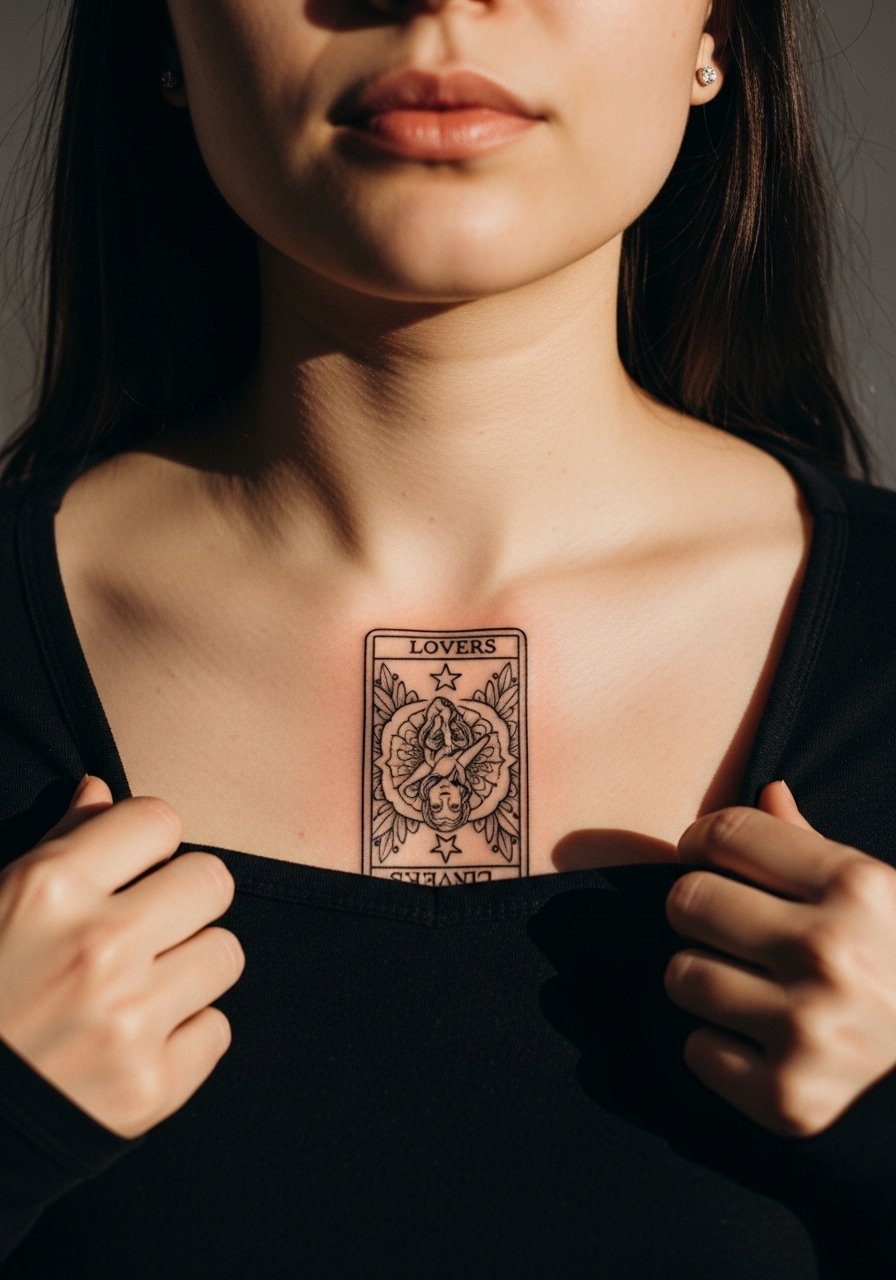
Collarbone placements let a small tarot card peek above tops for evenings out. The skin there can be thin so the trick is balanced linework that avoids going too deep. In consultation, ask for a slightly simplified border and more internal negative space to prevent blotching. Pain is moderate and sessions are short. For the session wear a wide-neck shirt you can pull aside so the artist has clean access without full exposure.
Pre-Session Essentials
The wrist and finger pieces above heal differently from larger work, so a few small things smooth out the session and the first week.
-
Stencil transfer paper kit. Lets you preview the position and scale on small spots like fingers and ankles before the needle touches skin.
-
Thin protective film roll. Keeps tattoos in high-friction zones like the ankle and finger cleaner while the first layer forms.
-
Topical numbing cream 4% lidocaine. Useful for sensitive areas mentioned above when applied according to the product directions and your shop rules.
-
Fragrance-free gentle body wash. Cleanses healing skin without stripping delicate fine line work on the forearm and chest.
-
Aquaphor healing ointment. A thin layer for the earliest days keeps linework hydrated without clogging needle channels.
7. Hermit Lantern Small on the Inner Ankle

The inner ankle is a discreet spot for single-symbol tarot imagery like the Hermit lantern. It avoids toe friction but still contacts socks and shoes, so request slightly reinforced dots for the lantern beam. Sessions are quick and the pain is low. A rookie mistake is asking for filigree inside the lantern that blurs with time. During the appointment wear shoes that slip on and off easily. Expect a touch-up if you favor heavy footwear. The small scale makes it a great starter piece.
8. Wheel of Fortune Vertical on the Forearm
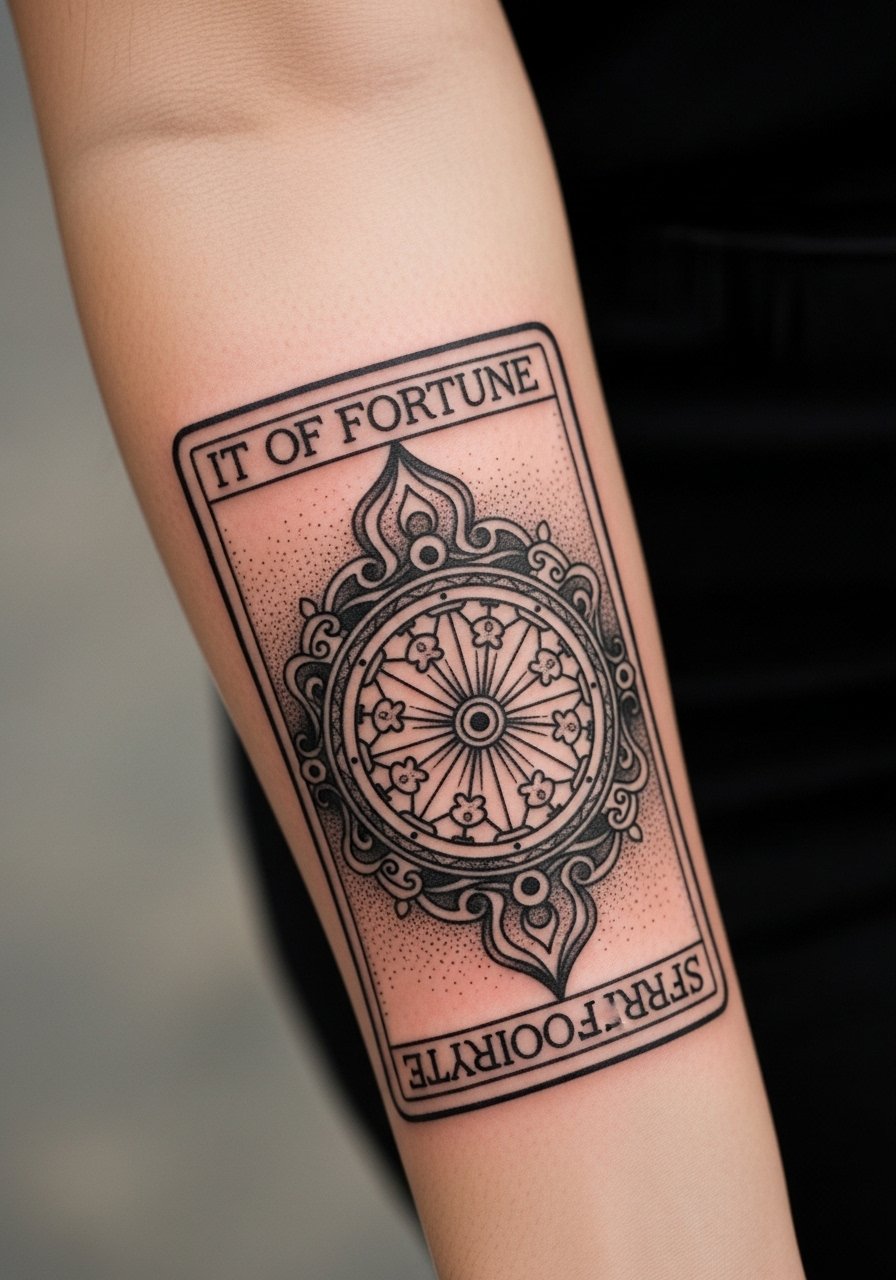
A vertical card works well on the forearm because the flat surface keeps symmetry intact. Tell your artist to keep the wheel's spokes open rather than packed with tiny motifs. If you want longevity, add a small buffer of skin between spokes. Forearm pieces age predictably; they get sun exposure but rarely blow out. For showing it off, rolled sleeves frame the length naturally. A loose button-down shirt keeps the card visible without harsh contrasts to the skin.
9. Death Symbolism Tiny Behind the Ear
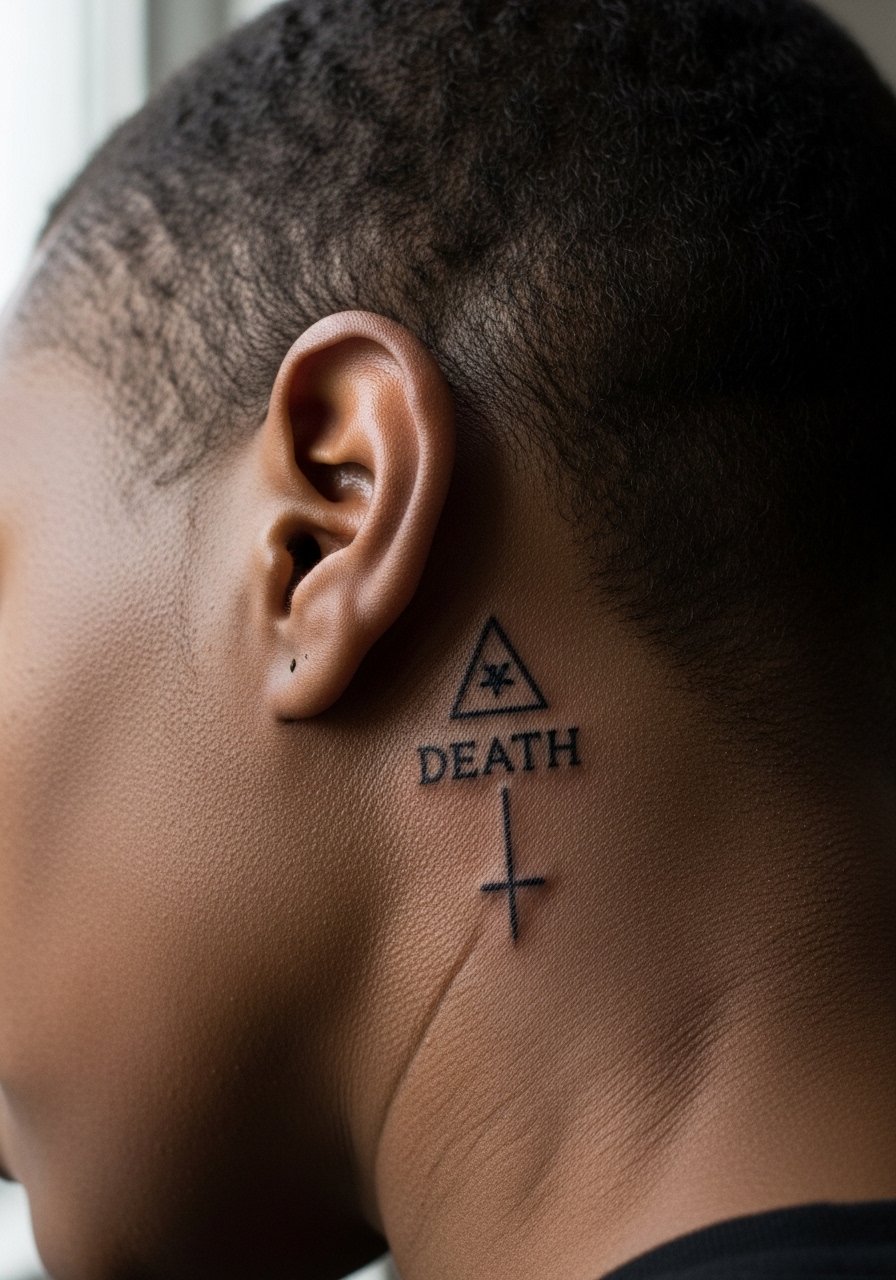
Naming the Death card raises eyebrows, but many wear it as a symbol of transformation rather than literal meaning. That nuance divides wearers in two camps. One camp embraces the title as a rite of rebirth. The other prefers alternate names or imagery to avoid misunderstanding in certain settings. Behind the ear is a spot that hides easily and heals fast. The artist needs to work around hair and curvature, so expect a tight stencil and fast session. Consider long hair pulled back in the days after the session to avoid scabbing caught in strands.
10. Star Full Thigh Watercolor Accent
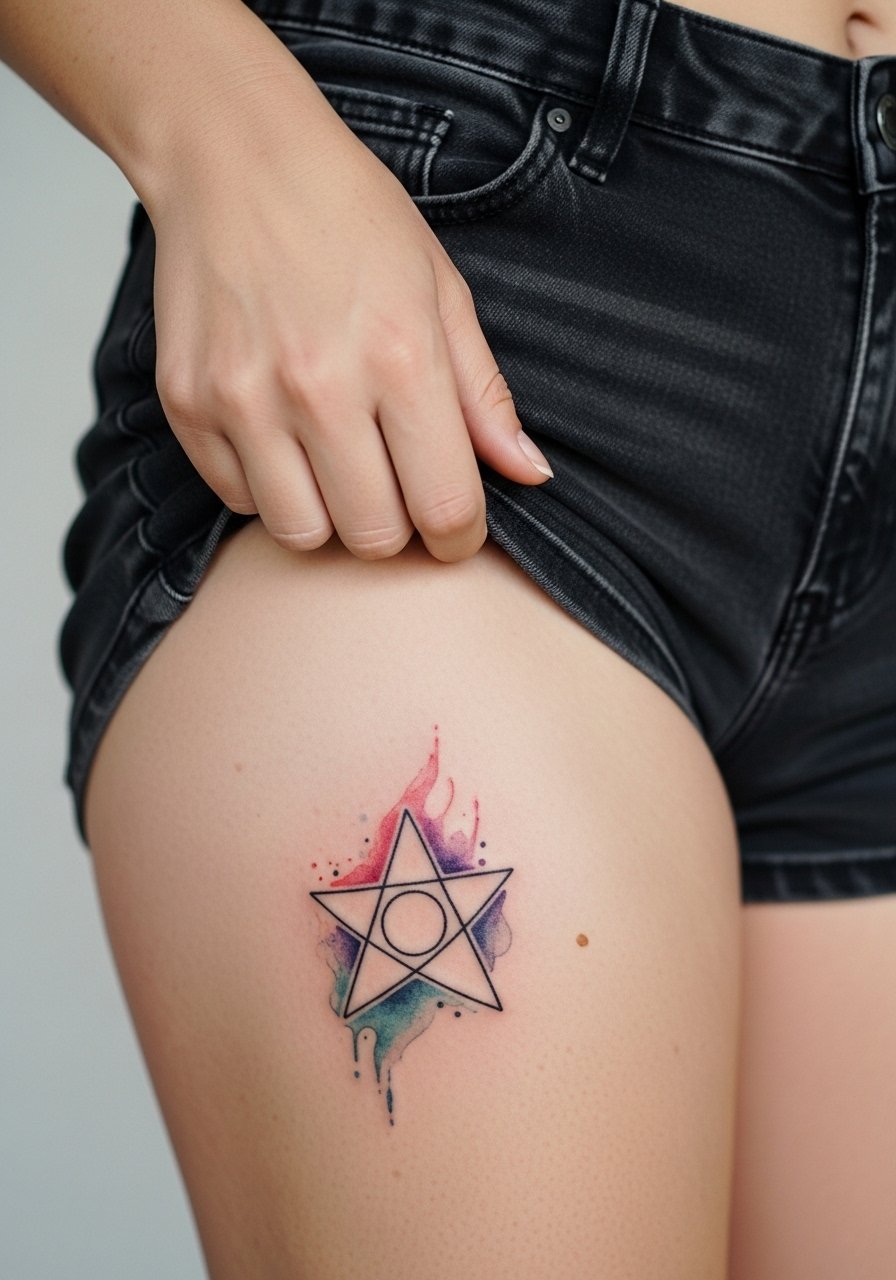
Watercolor effects feel ethereal, but they also age differently than blackwork. The debate here has two sides. One camp says watercolor fades faster and demands larger, less detailed shapes. The other camp says careful saturation and placement on low-friction zones like the thigh can hold color nicely. For a thigh Star piece go slightly bolder on edges and let the watercolor wash be background rather than the primary line. Session discomfort is moderate and healing is generally forgiving on the thigh. Wear loose shorts or a skirt to the session.
11. Temperance Chalice on the Calf
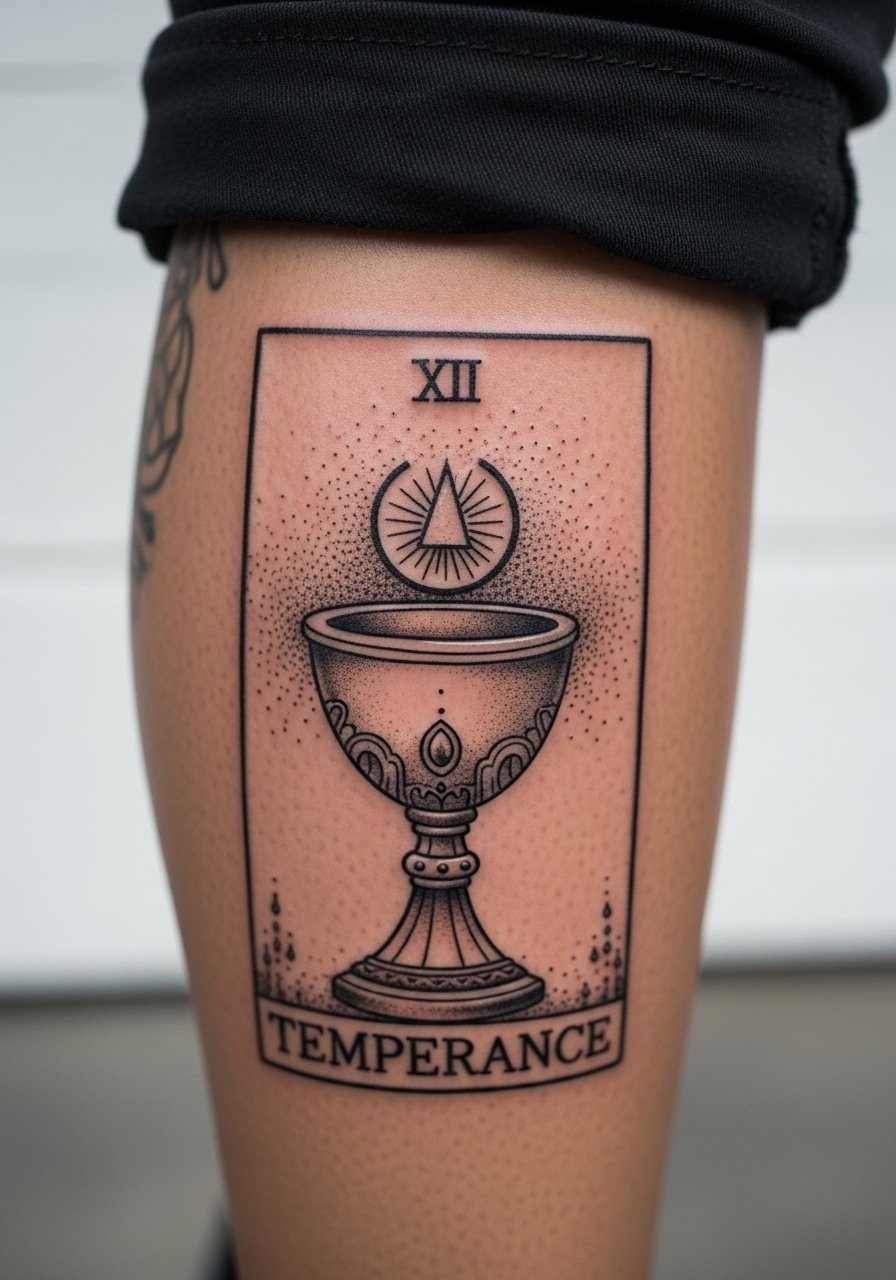
The calf gives room for vertical composition and for small ritual objects like chalices. Ask for stipple shading that layers without heavy saturation. The common mistake is thick black blocks that age into indistinct shapes. Calf sessions tend to be easy on pain and heal cleanly unless you sleep on that side. For casual show-off pair it with strappy sandals. A simple strappy sandal keeps attention on the vertical flow and lengthens the silhouette.
12. Sun Card Mandala on the Outer Upper Arm

Mandala interpretations of the Sun card make for bold but readable compositions when sized correctly. The upper arm tolerates tighter geometry, but the dense work needs micro negative space to avoid merging. Tell your artist you want dot work transitions and stipple highlights rather than solid ink fills. The biggest mistake is packing too many concentric rings into a small diameter. For a clean evening look show it off with a sleeveless top or a tank and consider a sleeveless tank top for session access and display.
13. Magician Botanical Forearm Band
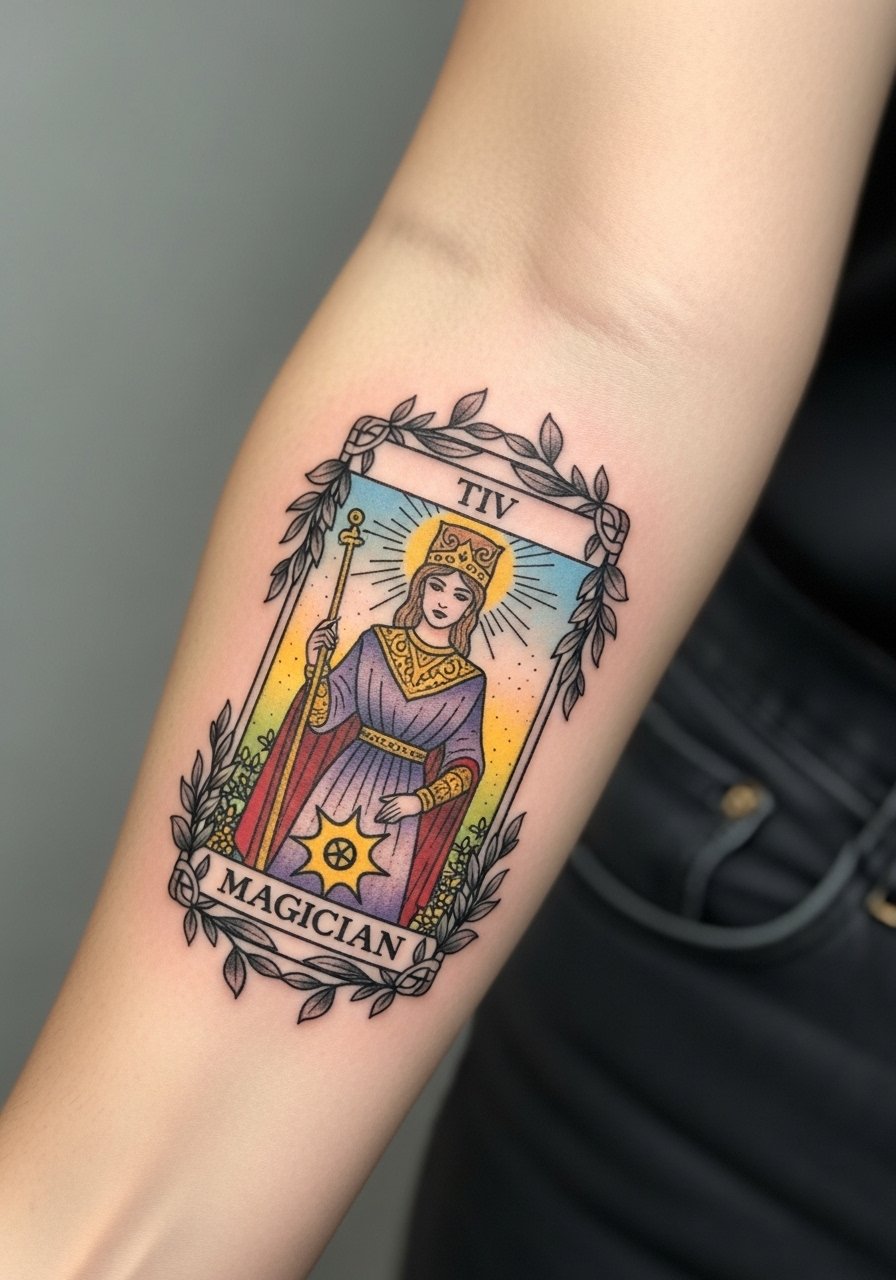
Turning the Magician into a botanical band keeps the magic tactile and wearable. The forearm band reads well if the plants have space to read individually. Tell your artist to avoid tiny leaf veins that will collapse. People often ask for a continuous wrap but forget that wrap patterns need rhythm and breaks for long-term clarity. Sessions are moderate and touch-ups may be needed where the band curves around muscle. Accessorize with stacked bracelets that sit above or below the band rather than over it. Try a delicate bracelet stack that complements without rubbing the ink.
14. Lovers Entwined Hands on the Side Torso
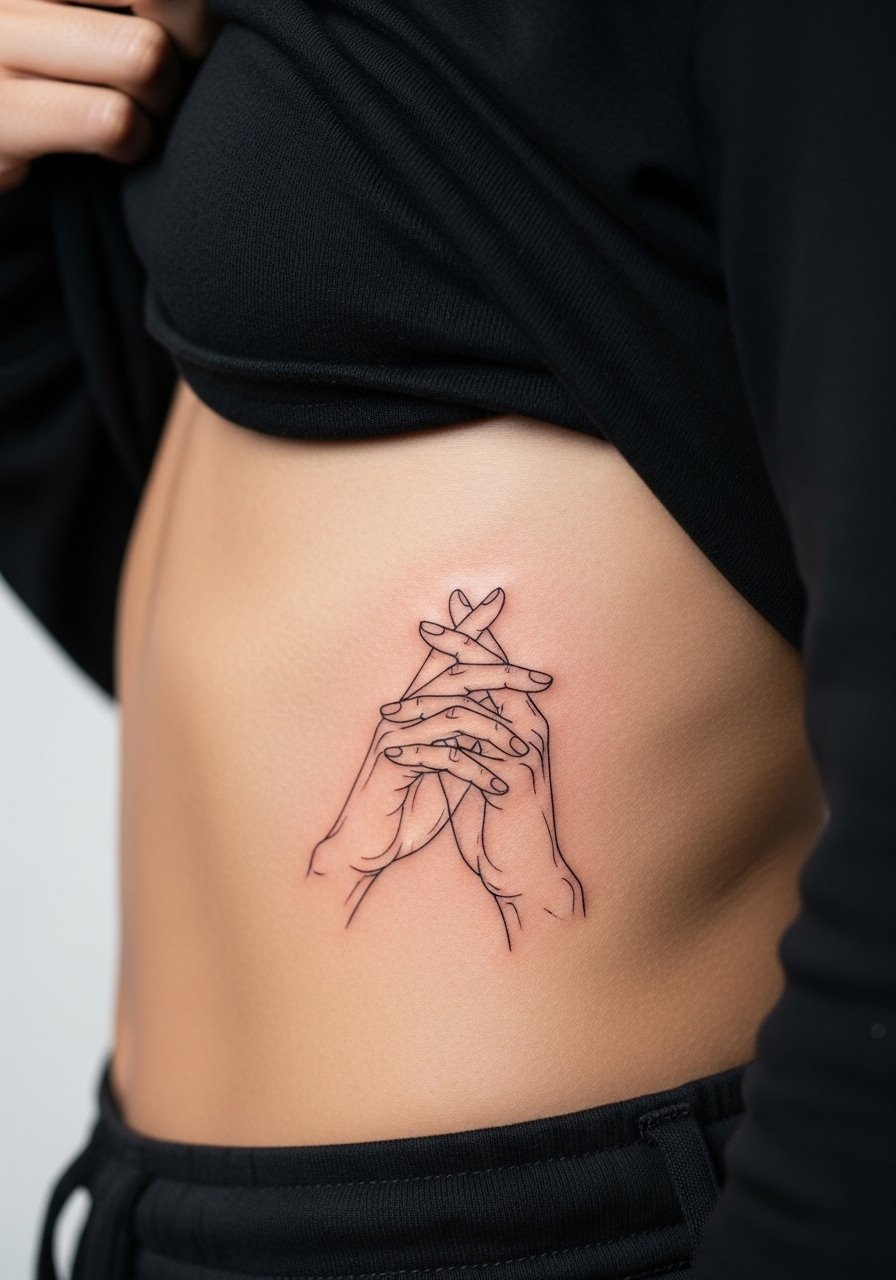
Side torso pieces are intimate and move with posture, which can add life to hand-holding motifs. The usual error is trying to cram full card borders into a narrow curved area. Instead ask for a simplified vignette of the hands and a hint of card edge. The session feels long because you must hold still while the artist navigates the curve. Healing can be trickier due to clothing friction. If career visibility is a concern this placement stays easy to conceal.
15. Justice Sternum Symmetry
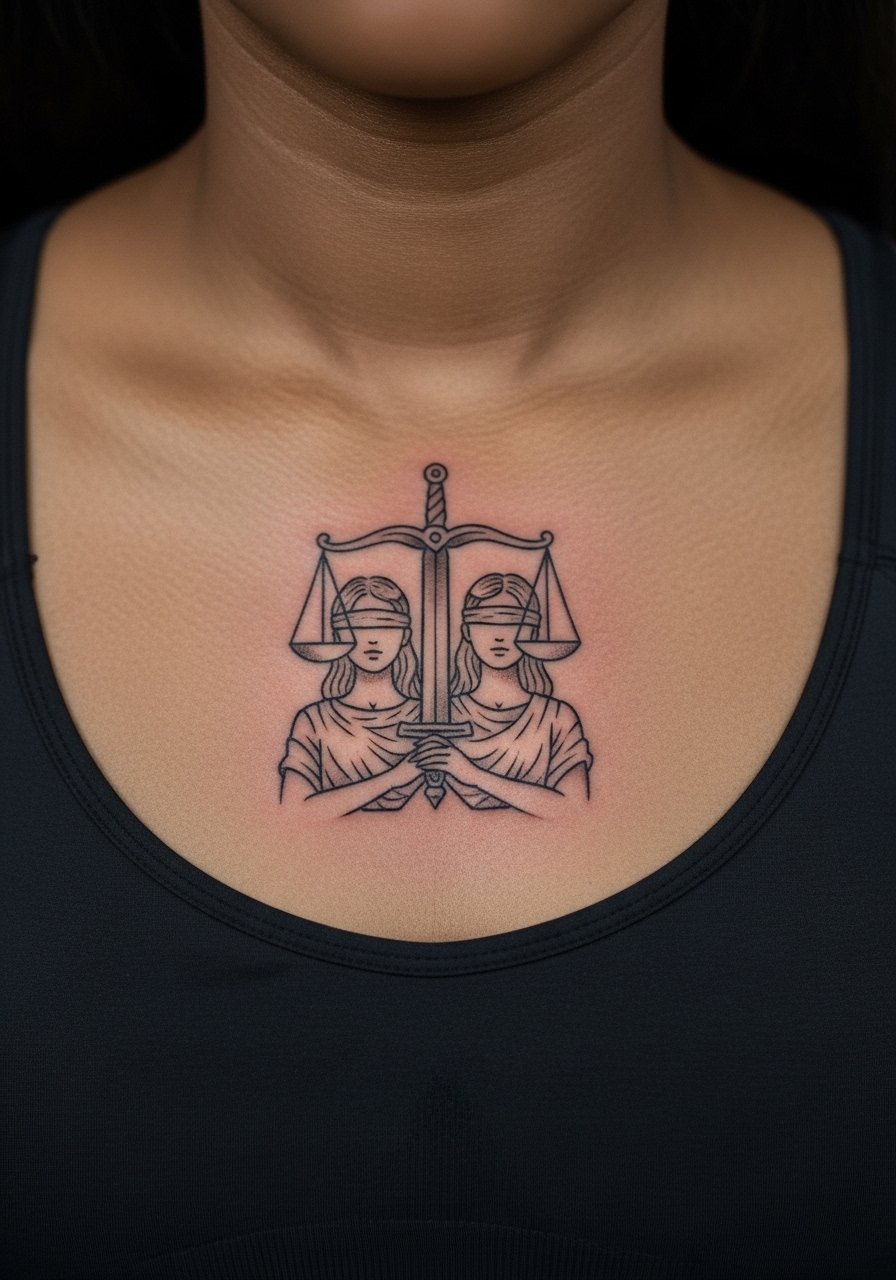
Sternum symmetry reads striking when balanced over the chest, but the thin skin and movement mean lines must be confident without being overly dense. Artists debate whether micro linework survives here. The practical advice is to request bolder primary lines and careful negative-space planning inside scales or sword motifs. The sternum is a sensitive area and sessions are intense. For the appointment wear a sports bra you can remove or shift so the artist can work without full exposure.
16. Nine of Cups Chalice on the Bicep
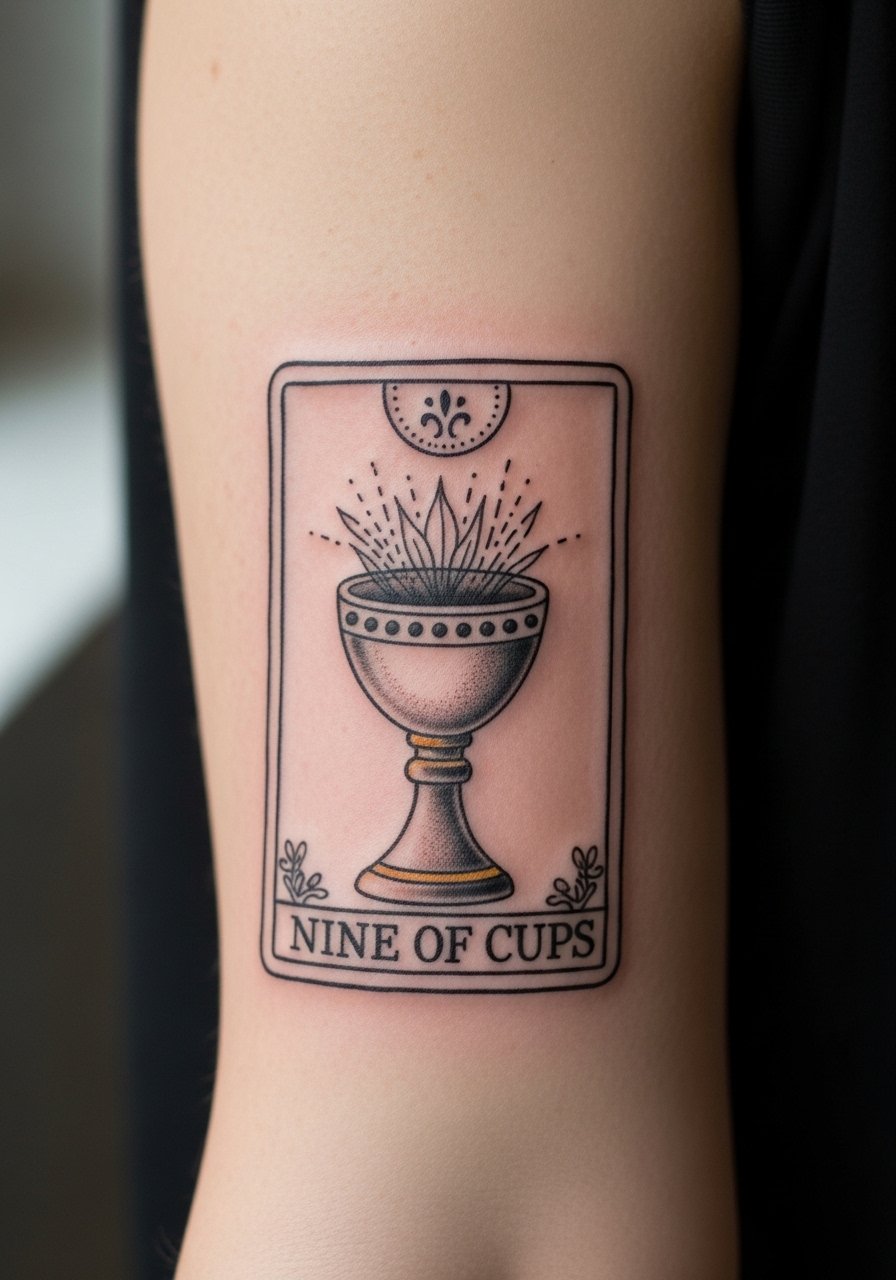
The bicep is forgiving for small to medium tarot symbols and handles saturation well. If you want a slightly decorative chalice, ask for light stipple shading to keep it airy but durable. A common mistake is requesting tiny filigree that loses definition when muscles change tone. Sessions are moderately comfortable and usually finish in one appointment. For showing the bicep off wear a short sleeve tee that frames the piece without hiding it.
17. Page of Cups Watercolor Wrist Accent
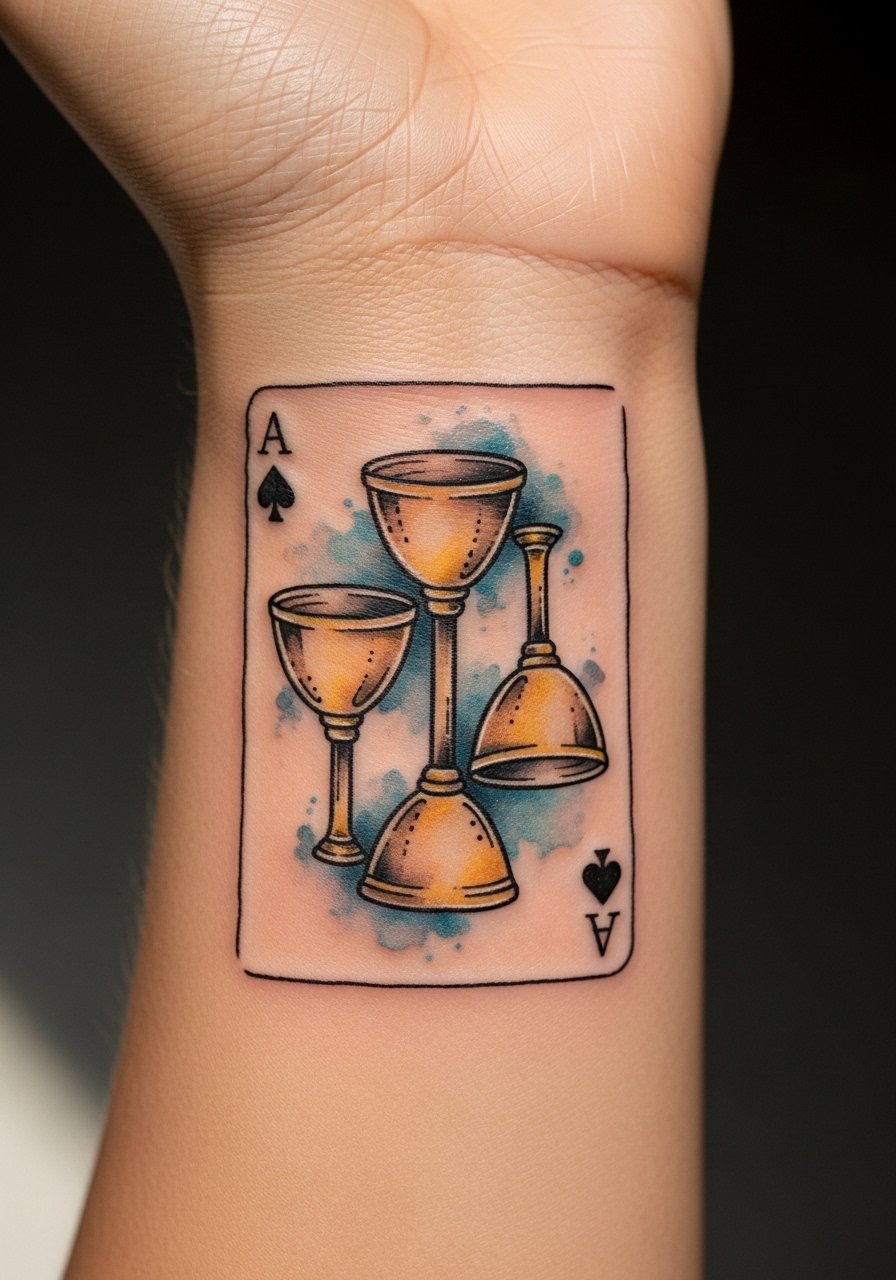
Watercolor on the wrist looks soft and modern, but longevity varies. One camp says watercolor fades and needs frequent touch-ups. The other camp says careful placement on low-friction zones and slightly bolder anchors can preserve the wash for years. For a wrist piece ask your artist to pair watercolor with a thin defined outline at key points. The wrist heals under constant washing so wear minimal bracelets during the first month. Expect touch-ups earlier than for blackwork.
18. Eight of Swords Column Along the Spine
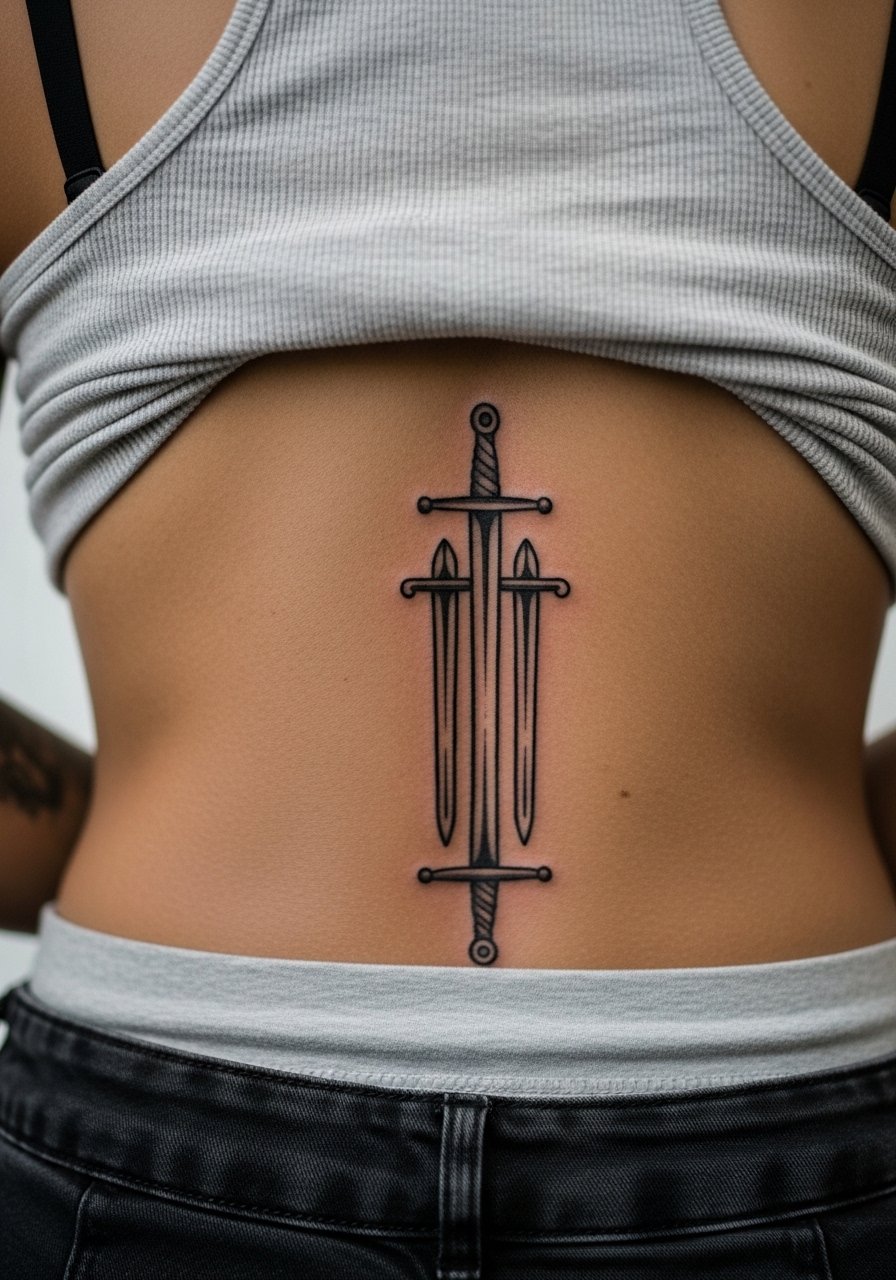
A spine column suits tarot narratives that read top to bottom. The lower back allows longer compositions but avoid extremely tight vertical text or tiny sword details. The common mistake is stacking too many tiny elements that blur along curvature. Sessions can be uncomfortable because of bone proximity. For the session wear pants that pull slightly low and a tank so the artist can reach without full exposure.
19. Ace of Pentacles Minimal Hip Spot
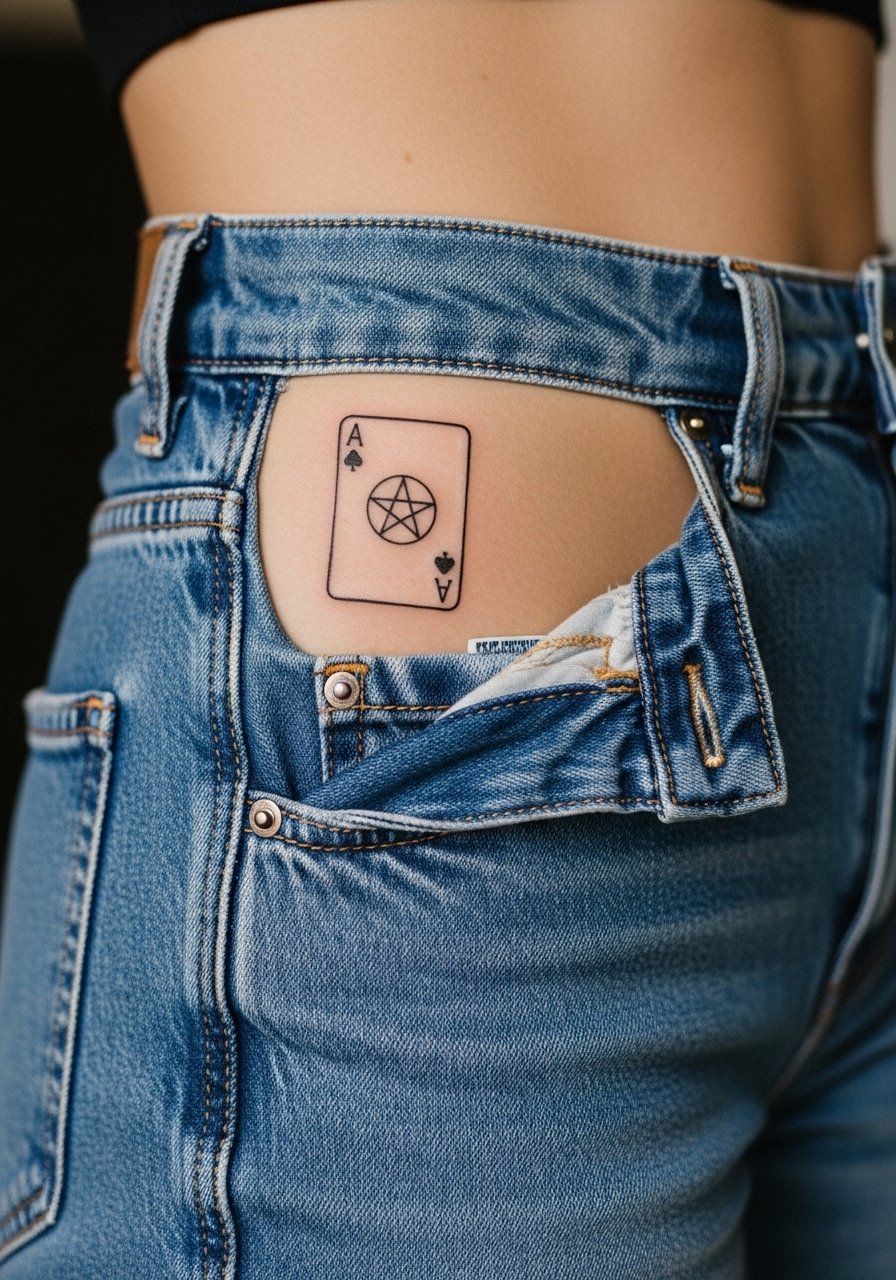
Hips are secretive and flattering for tiny pentacle work. The area is low friction but stretches with movement, so ask for a simple circular glyph with a small outer border rather than ornate internal detail. The session is low on pain and healing is straightforward if you avoid tight waistbands during the first week. For show-off looks pair with high-waisted jeans that sit just above the design. Try a high-waisted denim cut that frames the tattoo without constant rubbing.
20. Mini Spread Panels on the Outer Thigh
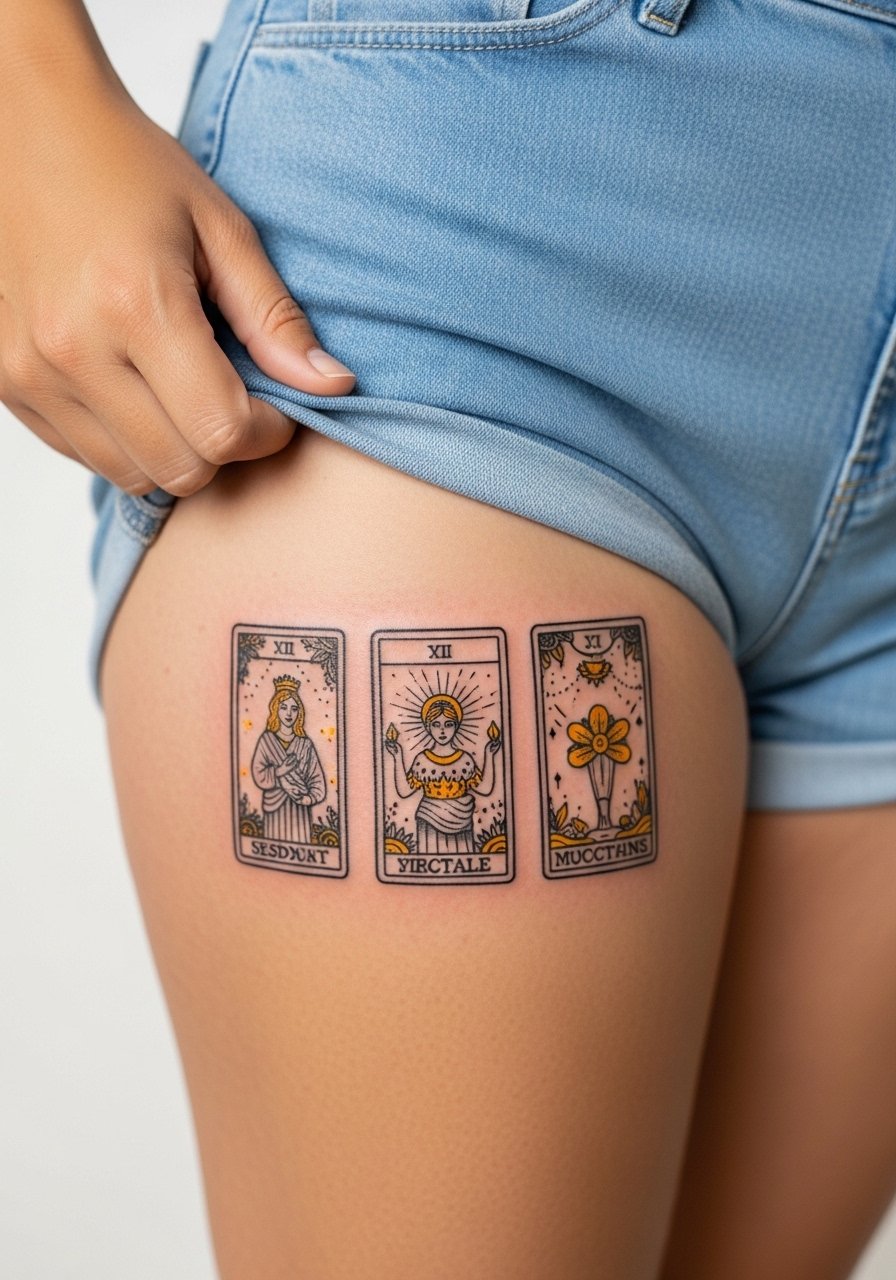
A small three-card spread works well on the outer thigh because the canvas is wide and low friction. The mistake is insisting on tiny internal details in each panel. Instead pick one symbol per card and let the frames be airy. Sessions are comfortable and healing is easy if you skip tight leggings for a week. The arrangement can read like a narrative and lends itself to future expansion into larger pieces.
21. Moon and Stars Tiny Spot Behind the Ear
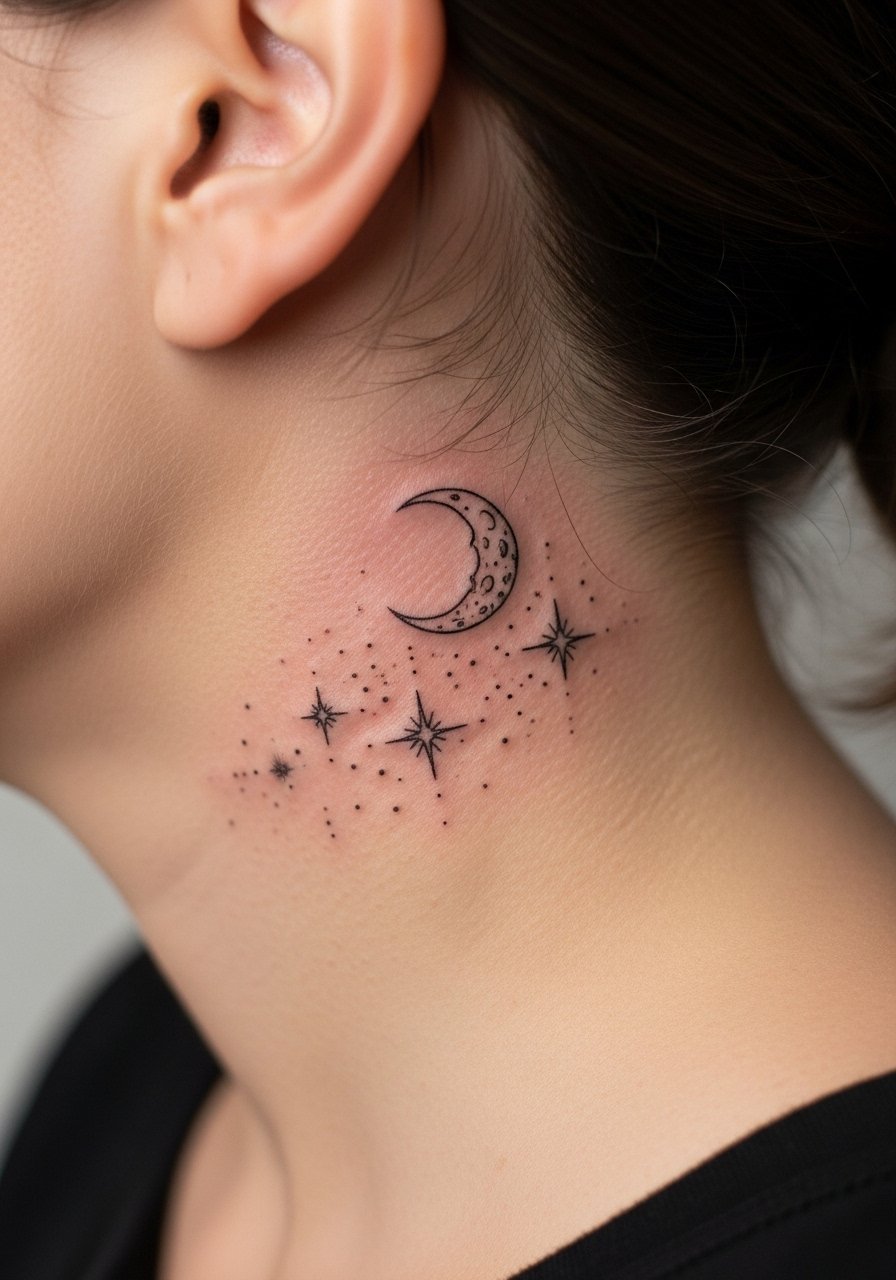
Behind the ear is a subtle place for a small moon and stars. The hairline hides the piece when needed and frames it when hair is swept up. The artist must navigate curvature and hair, so the stencil will be tight and the session fast. For aftercare keep hair away from the area to avoid scabbing caught in strands. This spot is low visibility and low maintenance, and it can be a secret nod to tarot symbolism.
Frequently Asked Questions
Q: Will fine line tarot pieces fade faster than bold blackwork on forearms and wrists?
A: In my experience fine line does fade sooner on high-friction, high-sun areas like wrists and hands. Bold blackwork tends to age into a readable shape while ultra-fine detail can soften. You can ask for slightly heavier anchor lines and more negative space to help fine line last longer.
Q: How do I choose between watercolor and stipple shading for a thigh Star design?
A: Choose watercolor if you want soft washes that read like clothing prints, and expect more touch-ups over time. Choose stipple shading if you want texture that remains readable without frequent retouching. Placement on the thigh favors both because of low friction, so discuss your priorities during consultation.
Q: Are collarbone tarot pieces risky for people with thin skin?
A: Collarbone tattoos sit on thin skin and can feel more intense during the session. Ask your artist about line depth and request some negative space. If you want easy access and modest coverage bring a wide-neck top to the appointment so the artist can work without full exposure.
Q: Should I expect a touch-up for a finger tarot mini card, and how often?
A: Yes, expect at least one touch-up within the first year for finger work. Fingers wash and rub constantly which thins ink faster. Good artists will mention touch-ups during the consult and include a realistic timeline.
Q: Is it appropriate to use tarot imagery like mandalas or culturally specific symbols?
A: It depends on the motif. Mandalas and some glyphs have cultural or religious origins, and many people opt for respectful variations rather than direct replicas. Mention this in your consultation and ask the artist about tasteful adaptation.
Q: How do I find the right artist without naming specific people?
A: Use local studio directories, guest spots at conventions, hashtag browsing for your city, and portfolio searches on artist booking platforms. Look for healed photos of similar placements and ask about longevity in a consult. Trust your artist when they explain how a style will age, and get a second opinion if you are unsure.