Fine line work and heavy blackwork are both topping feeds, but they age very differently. You can get the delicate look you want on a tiny forearm piece and still skip a midlife touch-up if you plan placement and line weight from the start. This list balances trend pieces with realistic wear, practical consult notes, and outfit tips so you pick a small phoenix that still reads sharp two years from now.
1. Minimalist Phoenix Outline on Inner Forearm

I've seen this one a lot on guys getting a first meaningful piece. Ask for a slightly heavier outline than a single-needle sketch so the main silhouette keeps clarity past year one. The common mistake is asking for the absolute thinnest line and then being surprised when it softens into a gray wash. Expect a quick single-session feeling more like light scratching than full shading. For the session wear, roll up a chambray cuff so the artist can work cleanly without tugging at fabric. Pair the healed look with a chambray rolled cuff shirt to frame the forearm without stealing attention.
2. Small Tribal Phoenix on Outer Wrist
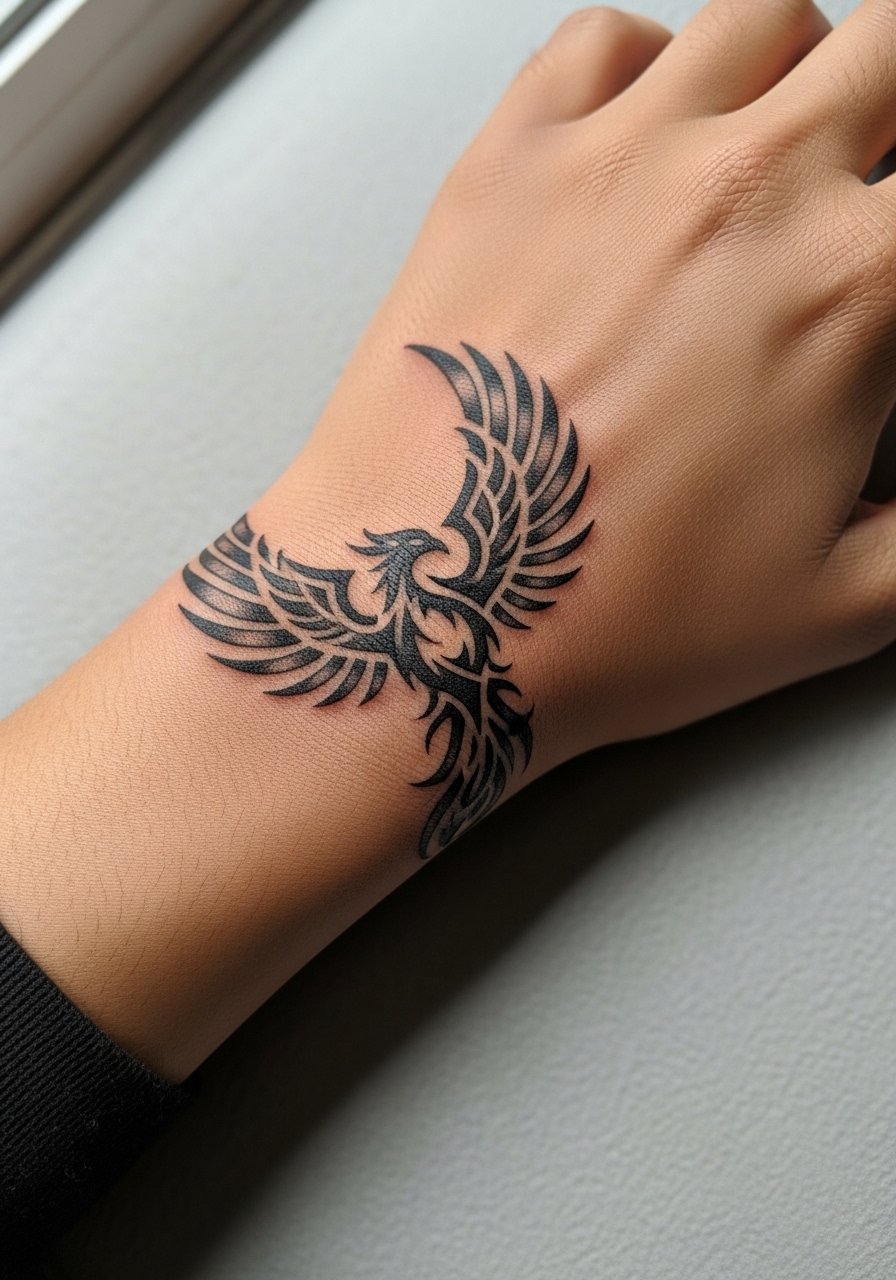
Wrist placements feel intimate but take constant use and washing. For this tribal take, request clean geometric spacing instead of tiny filler, so the shapes age into readable contrast. A common complaint is wrist tattoos blurring around the bone when artists pack too many tiny shapes. The session itself is brief and high on pinging pain near the ulna, so plan for short breaks. During the show-off phase wear a thin bracelet on the opposite wrist, and for the appointment avoid jewelry. A thin leather cord bracelet opposite the tattoo keeps visual balance while letting the wrist piece breathe.
3. Fine Line Phoenix Silhouette on Collarbone

Collarbone silhouettes peek from shirts and age based on where they sit across moving tissue. Ask your artist for a silhouette with negative space rather than filling tiny hatch marks. The mistake is cramming detail into a narrow span and losing it as the skin settles. Pain is mild to medium along the collarbone and most sessions finish under an hour. For showing the healed piece, a V-neck tee works perfectly, and during the session wear an easy wide-neck shirt you can slide aside. Try a men's v neck tee so the neckline complements the silhouette when you want it visible.
4. Neo-Traditional Phoenix with Flames on the Bicep
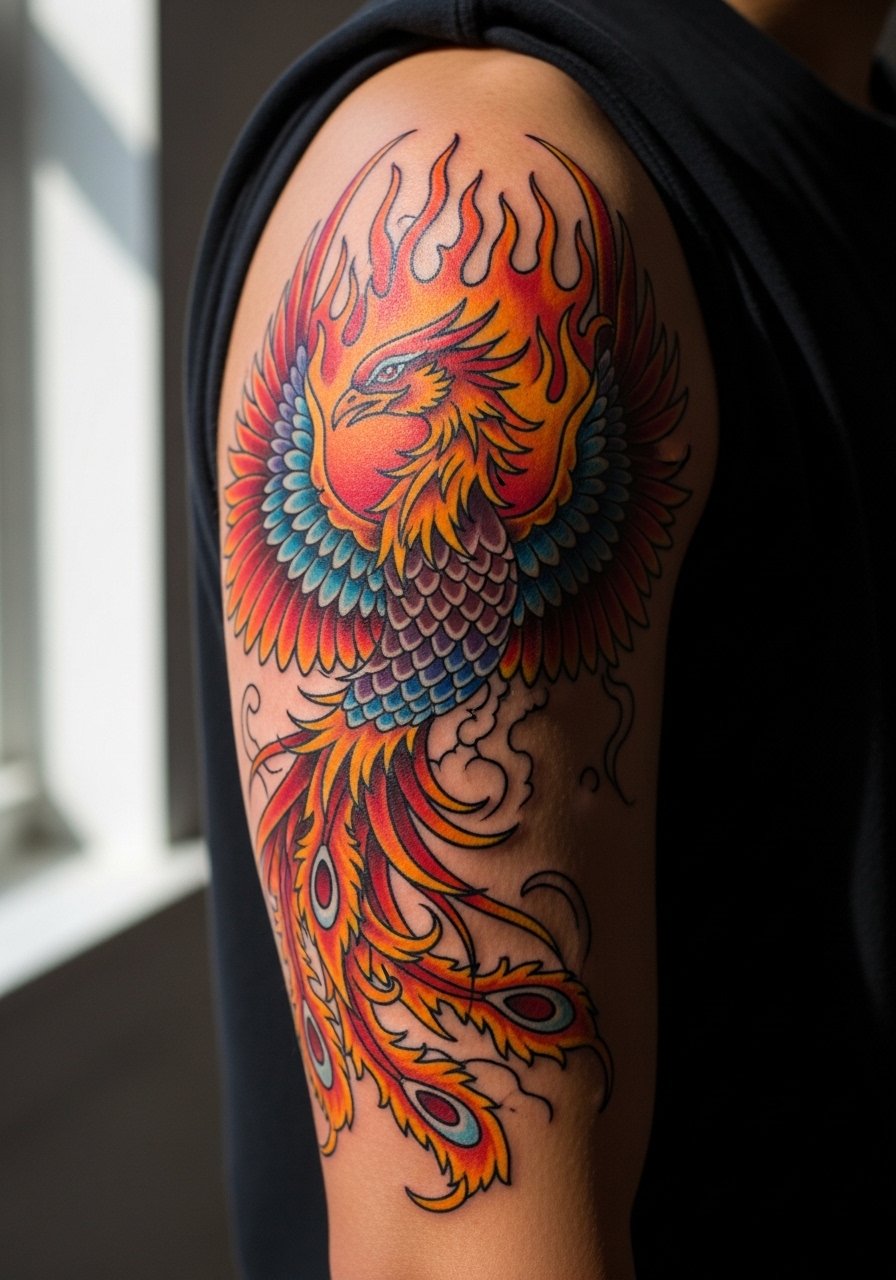
If you want color that still reads at a glance, neo-traditional saturation wins over watercolor for longevity. Tell the artist you want bold contour lines around color patches and ask where they plan to place highlights so the flames keep form as pigment settles. Mistakes to avoid include tiny gradients that merge into a muddy patch after a few years. Expect two shorter sessions and medium discomfort while the needle covers curved muscle. For session access and a post-heal display, a sleeveless top is ideal. A fitted olive tank or sleeveless hoodie men frames the upper arm without hiding the wingspan.
5. Micro-Realism Phoenix Head on Side Neck

Neck pieces read very present and they hurt more than most spots. Micro-realism here gives a sharp, compact portrait feel but needs precise contrast to avoid looking like a gray smudge on darker tones. When you consult, ask for crisp separation between beak, eye, and feathers and for a plan to keep the darkest spots as anchors. One common regret is underestimating daily visibility at work. Expect a two-session schedule and strong soreness immediately after. For wardrobe, open-collar polos or henleys make the piece look polished. Try an open collar polo on reveal days.
6. Blackwork Phoenix Wings on Shoulder

Shoulder caps take block black very well and they create a strong foundation if you plan a sleeve later. Ask the artist to plan for muscle movement so wings read even when the arm flexes. A frequent version that ages poorly uses tiny stipple fills too close together, which can merge. Sessions feel like steady vibration with low sharp pain, and most of this work finishes in one to two sessions. For both the appointment and the finished look, wear a tank so the area is unobstructed. A fitted tank keeps the wings visible and pairs nicely with shorts or sleeveless outerwear.
Studio Day Picks
The forearm, collarbone, and neck pieces above each ask for different prep. These picks help with sensitive wrist work, fine line clarity, and humid-weather healing for small detailed pieces.
-
Ink-Ichiban balm. A non-greasy option users praise for wrist and forearm linework because it soaks in without leaving a film that attracts lint.
-
Australian Tattoo Goo. Works well in humid conditions for small areas like the calf or shoulder where extra moisture can cause scabbing.
-
Green Sheep balm. A petroleum-free balm some people use for sensitive skin after micro-shading sessions on the collarbone and neck.
-
Hada Labo light lotion. Gentle hydration that people sometimes add during the light healing phase for small, detailed pieces without greasy residue.
-
Hustle Butter. Thin and absorbent, useful on larger saturated patches like neo-traditional flames so the area stays hydrated without clogging.
7. Geometric Phoenix on Outer Calf
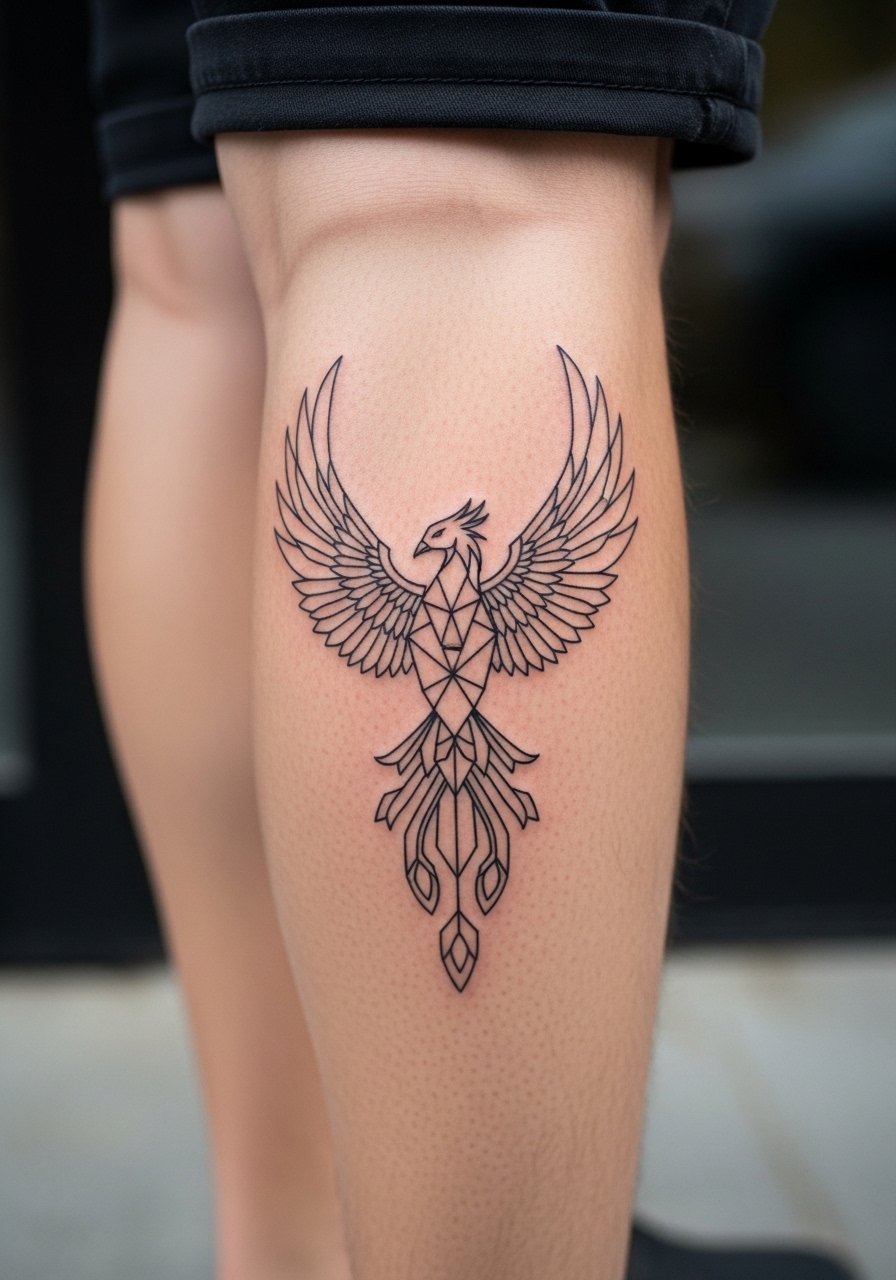
Calf placements hide well under pants and show in shorts. Geometric linework needs breathing room, so insist on pattern spacing the artist can scale up if you later want a sleeve. Runners and active people praise bold black patterns here because sweat and movement put less stress on simple negative space. The usual mistake is going too small with dense geometry which blurs after months. Pain is medium and session time is short. For post-heal looks, roll-up slim joggers and athletic shorts show off the design. A pair of slim joggers men keeps the calf visible without putting constant friction on the skin.
8. Traditional Phoenix with Arrows on Upper Chest
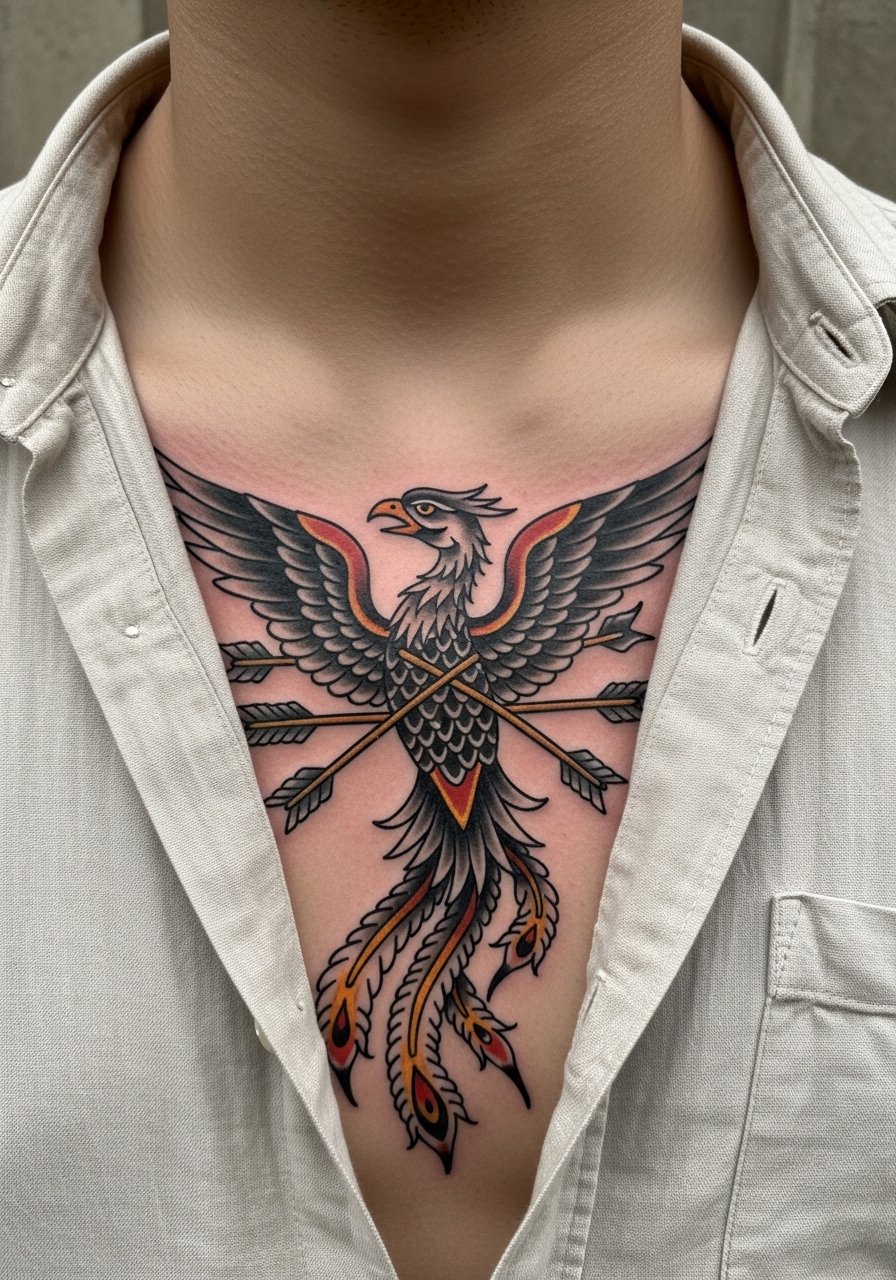
Chest pieces let you keep a clear central motif and add arrows or banners that age predictably. For men with broader chests ask for bold anchors in the design so color remains distinct as the skin shifts with weight or movement. The most common error is cramming tiny feathers into an already busy chest panel. Expect two to three sessions for color and touch-ups in a year if you wanted richer saturation. For showing off the healed chest, an unbuttoned linen shirt frames the upper chest well. Try a relaxed men's linen shirt unbuttoned for casual reveal days.
9. Ignorant Style Phoenix Outline on Inner Thigh

Inner thigh pieces are intimate and they move a lot with walking and sitting. The ignorant aesthetic leans raw and hand-drawn, which hides small imperfections, but the main pitfall is placing too near seams that rub during daily life. Sessions are quick and can feel deeper because skin is softer there. For gym-goers bring loose basketball shorts so the artist can access the area without constriction. Plan on a touch-up if you gain or lose significant muscle mass in the leg.
10. Ornamental Phoenix Mandala on Upper Back
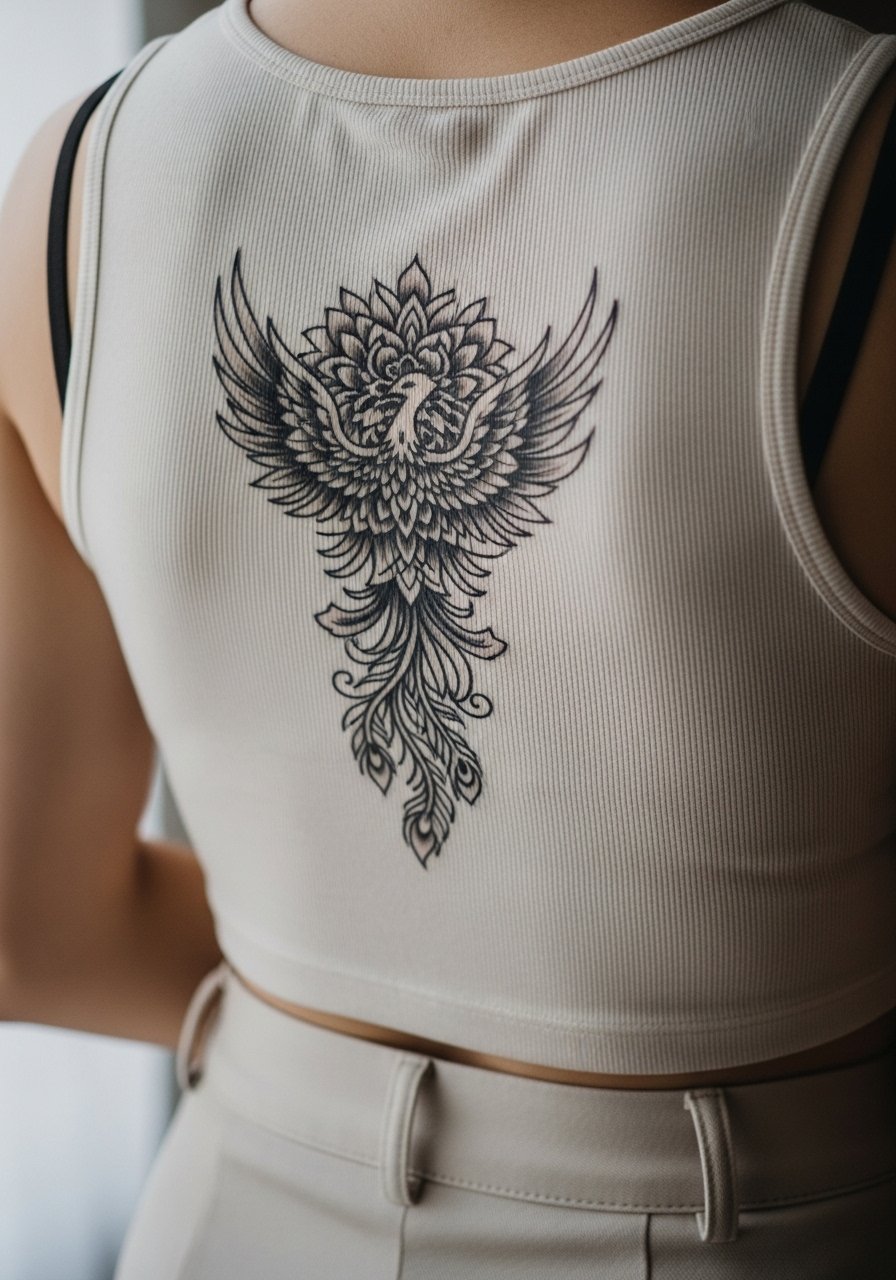
Upper-back mandalas let small starts expand into broader wings or a full backpiece later. Tell the artist you want radial spacing between petal shapes so dense dot work does not merge as the piece heals. A misstep is requesting crowded stippling in a tiny circle, which can look muddy after two years. Sessions may require two visits for symmetry and touch-up. For session access wear a loose tank and for show days open shirts or tank tops keep the mandala visible without exposing more than necessary.
11. Watercolor Phoenix Splash on Ribcage

Watercolor palettes read beautifully fresh but they tend to soften and fade faster than saturated blackwork. Artists and clients split into two camps on aftercare for these: one camp prefers protective film to lock pigment in early, while the other says dry healing prevents trapped moisture and reduces scabbing. Name both methods in your consultation and ask which they recommend for your skin type. The ribcage is a high-pain zone with long session times. If you choose watercolor, budget a likely color refresh in a couple of years.
12. Fine Line Phoenix with Quote on Ankle

Ankle work is low-visibility but high-friction from socks and shoes. Fine script beside a small phoenix looks elegant when spaced correctly, but the main error is cramming long text into a tiny area. Ask the artist to show you a stencil-sized mockup and to enlarge the letterforms slightly for longevity. Pain is sharp near the bone but the session is short. For post-heal styling, rolled ankle joggers or cropped pants make the piece pop. Try an ankle rolled joggers look when you want to show it off.
13. Micro Dotwork Phoenix on Sternum

Sternum placements are tender and often require specialized shading techniques to keep detail crisp. Dotwork can be forgiving if the artist spaces dots to allow breathing room. A frequent mistake is asking for dense stippling too close to the bone where scabbing is heavier. Expect pronounced soreness for several days and a possible secondary session for spot touch-ups. For the appointment wear a zip-up hoodie you can open for access and close afterward without stretching the area.
14. Tiny Phoenix Behind the Ear
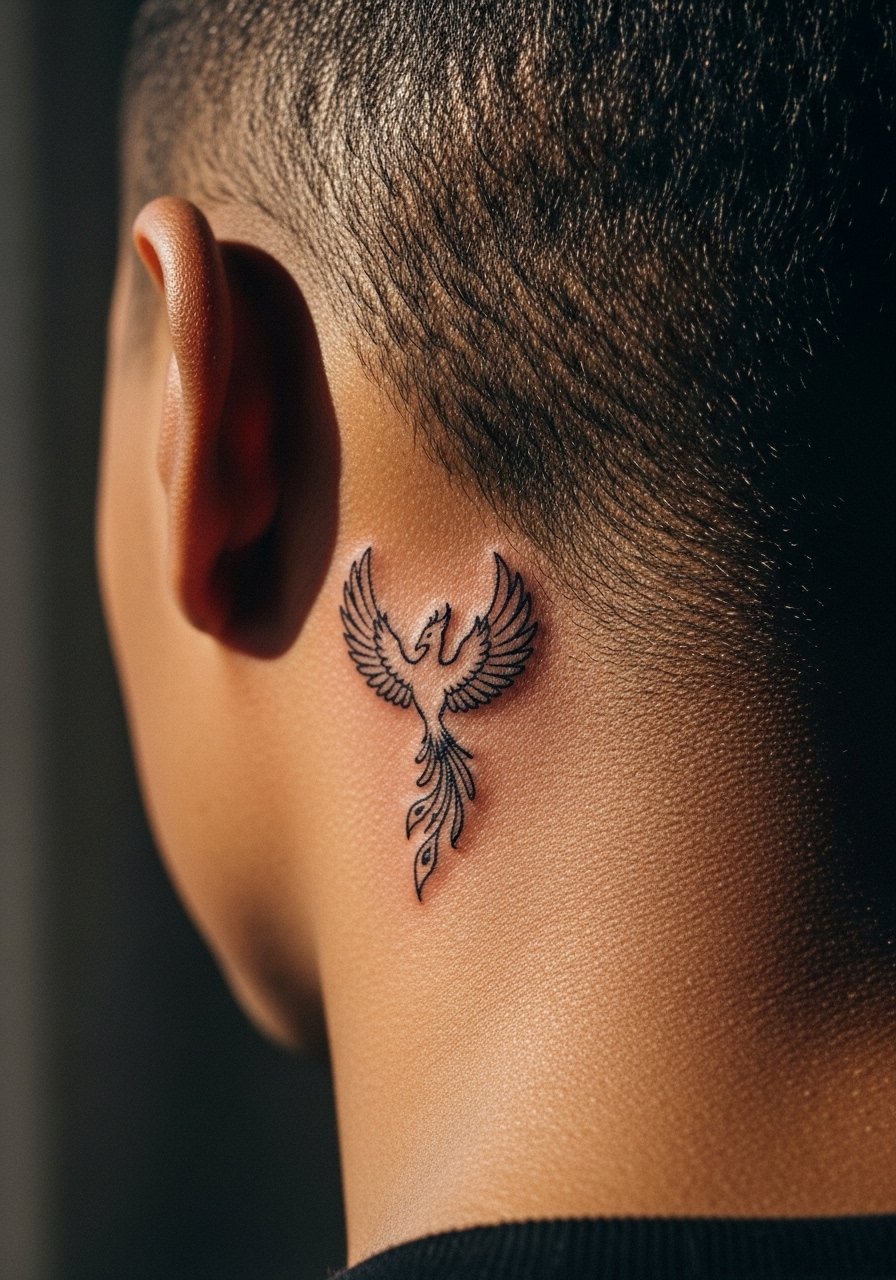
Behind-ear placements are discrete and great if you want a private piece that peeks out with certain haircuts. Tell the artist exactly how far below the hairline you want it, because visibility changes with every haircut. The usual mistake is assuming it will remain hidden; short hair and updos make it obvious. Pain is brief but sharp. Keep in mind some shop policies restrict ear-adjacent work, so confirm booking rules before you plan travel.
15. Family Crest Phoenix Lockup on Upper Arm

Combining heritage elements with a small phoenix is one of the underused personalization options. In your consult show examples of the crest elements you want and ask the artist to simplify heraldic bits so they read at scale. A common error is adding too many tiny symbols that disappear as the piece heals. Session time depends on how many elements you keep. For viewing, a rolled short-sleeve tee or button-up left open highlights the arm lockup without feeling overdone.
16. Runner's Calf Phoenix for Active Guys
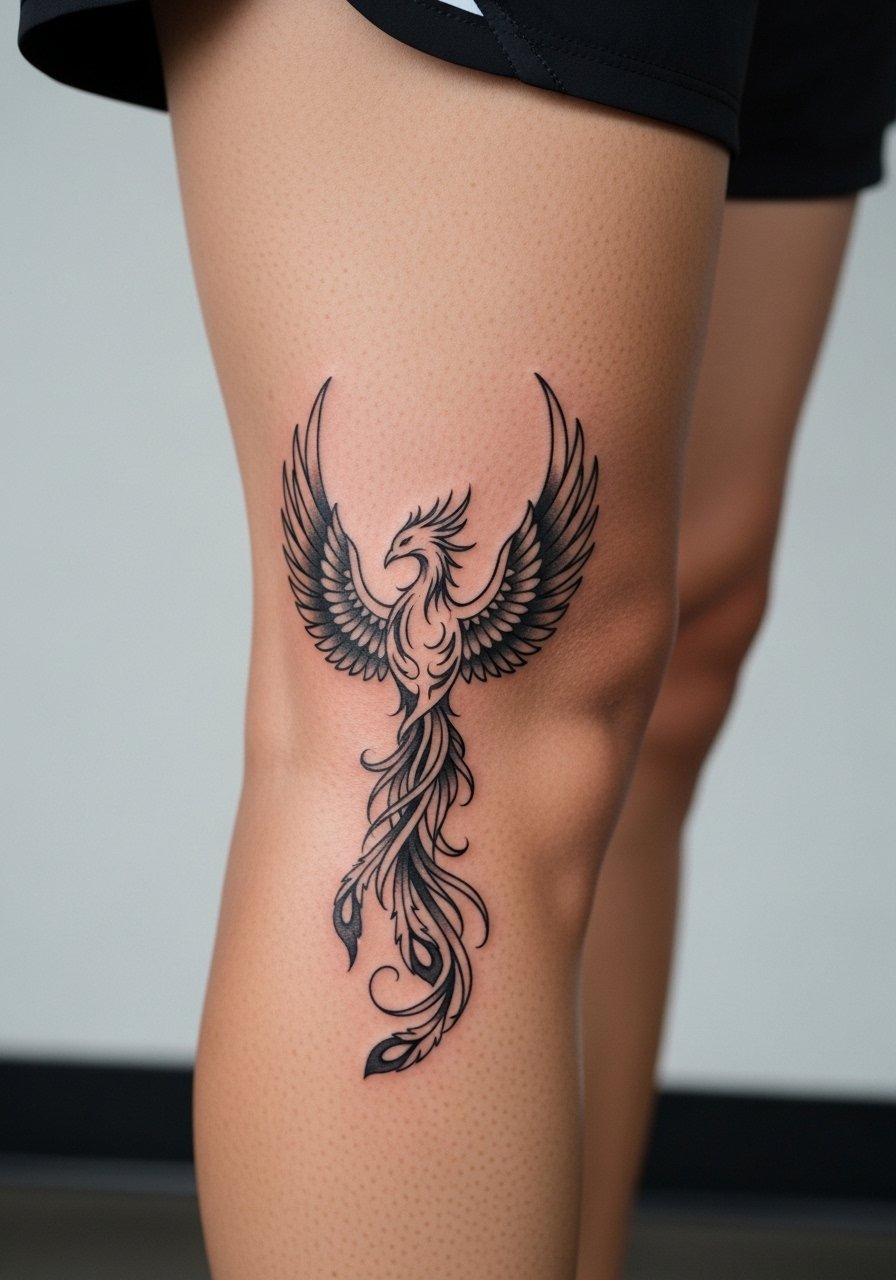
Active bodies put different stress on tattoos. If you run regularly, tell the artist you sweat a lot and want stronger anchors rather than tiny fragile fills. Runners report that simple line anchors and open negative space hold better than dense shading. The session is quick and discomfort is moderate. For the session and the reveal, athletic shorts that can be pulled up without squeezing the area are best. A pair of athletic shorts calf style shorts keeps the skin free of chafe while you heal.
17. Starter Back Phoenix for Future Wingspan

If you want a piece that can grow into a dramatic wingspan, start with a compact anchor on the upper back. Ask your artist where future seams will sit and how added panels will match current line weight. The most common mistake is treating a starter as a finished endpoint, which makes later extension harder. Sessions are low to medium discomfort and allow easy touch-ups as you expand. For the appointment wear a tank and plan for a follow-up to tighten lines once the piece settles.
Frequently Asked Questions
Q: Will a fine line small phoenix blur faster than a blackwork one?
A: Yes, fine line tends to soften sooner than blackwork, but it is not a certainty. One camp of artists accepts fine line and plans touch-ups at year two to keep edges crisp. Another camp argues that careful spacing and slightly heavier single-needle work can make fine line last longer. Ask any artist where they stand and request a touch-up window at booking if longevity is important.
Q: How much does a small phoenix tattoo cost for men?
A: Expect a range depending on size and style. Minimal fine line or small tribal pieces typically start around $150-$400. Color or micro-realism work can fall in the $300-$900 range. Always compare three quotes and look for guest spots or conventions if budget matters.
Q: My forearm phoenix warps when I flex. Can I avoid that?
A: Yes. Test placement with a temporary stencil and flex exactly where the tattoo would sit before you commit. Static areas on the inner forearm are more predictable. Also tell the artist you want the design aligned to avoid major muscle creases and ask for slightly thicker main lines so the silhouette reads even when you move.
Q: Which healing method is better for watercolor or delicate work, protective film or dry healing?
A: People split into two camps. One group favors protective film to keep the area clean and hydrated in the first 24-72 hours. The other group swears by dry healing to avoid trapped moisture and reduced scabbing. The right choice depends on your skin type and the shop's workflow. Discuss both options with your artist and follow their specific aftercare timeline.
Q: How can I keep a visible neck or collarbone phoenix professional when needed?
A: Plan placement under shirt lines so a slightly higher collar conceals it. For quick cover-ups, open-collar polos and henleys reveal the work on weekends while a shirt collar or neat buttoning down hides it for meetings. A lightweight jacket also helps when you need to keep things discreet. For example, an open collar polo pairs well with neck pieces on casual days.