Fine line Vikings rule Pinterest and Instagram, but the pieces that still read crisp after a few years are often the ones that started with sensible spacing and bold anchors. I have watched tiny runes on wrists go soft by year two and thick blackwork age into something proud. Read these ideas the way you would flip a reference book in the chair. The ones below include practical notes on aging, what to ask at consultation, and how to show them off.
1. Minimalist Raven Silhouette on the Wrist
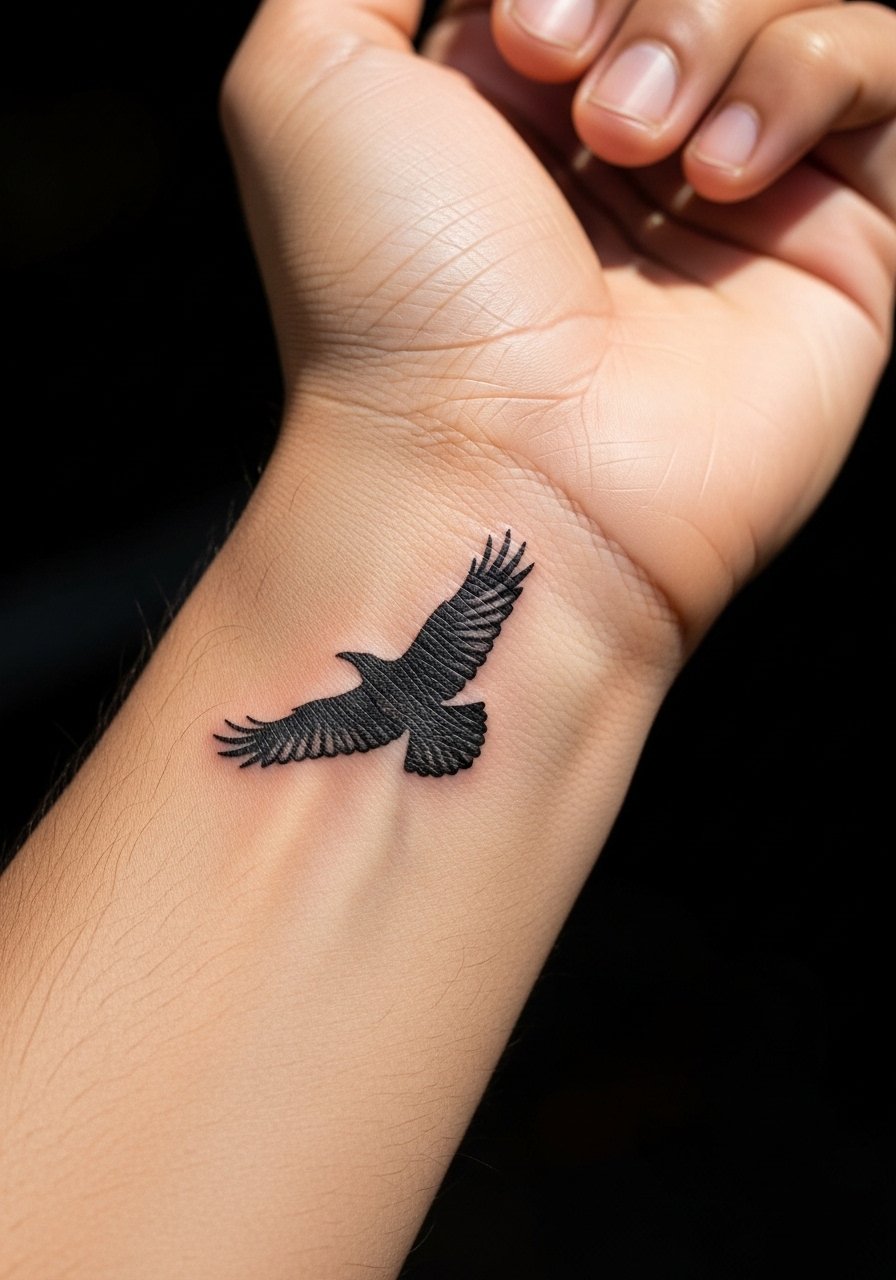
I've seen tiny raven silhouettes hold up best when they are given room to breathe. Ask your artist for a 2-3 inch stencil so the beak and wing tips do not crowd one another. Fair warning, wrists are exposed to sun and washing, so fine line lovers split into two camps. One camp thinks thin lines age gracefully when well spaced. The other prefers a bit more weight so the form stays readable after touch-ups. Wear a thin silver chain bracelet on the opposite wrist to frame the piece without hiding it. Expect a short session and light soreness while healing.
2. Ravens in Flight Pair on the Forearm
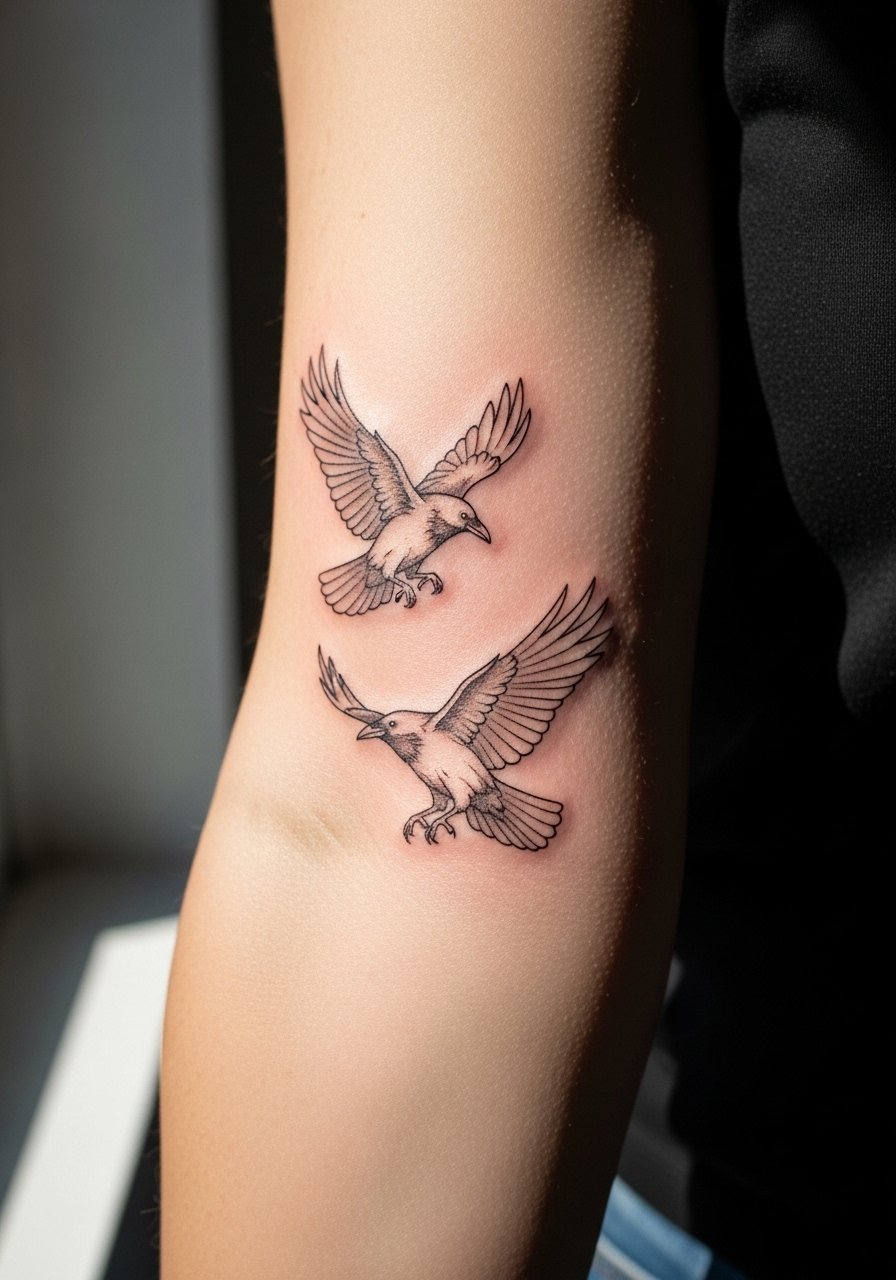
I recommend this layout when you want motion without a heavy commitment. The forearm gives enough canvas for 4-6 inch wingspans so the feathers stay distinct as the piece heals. Tell your artist you want staggered wing positions instead of mirrored copies to avoid optical flattening when the arm moves. A common mistake is squeezing two birds into too small a space which leads to merged linework after a year. For session comfort, wear a cream linen button down you can roll up. Plan for 1 to 2 sessions and one touch-up around year two depending on sun exposure.
3. Rune and Raven Combo on the Inner Bicep
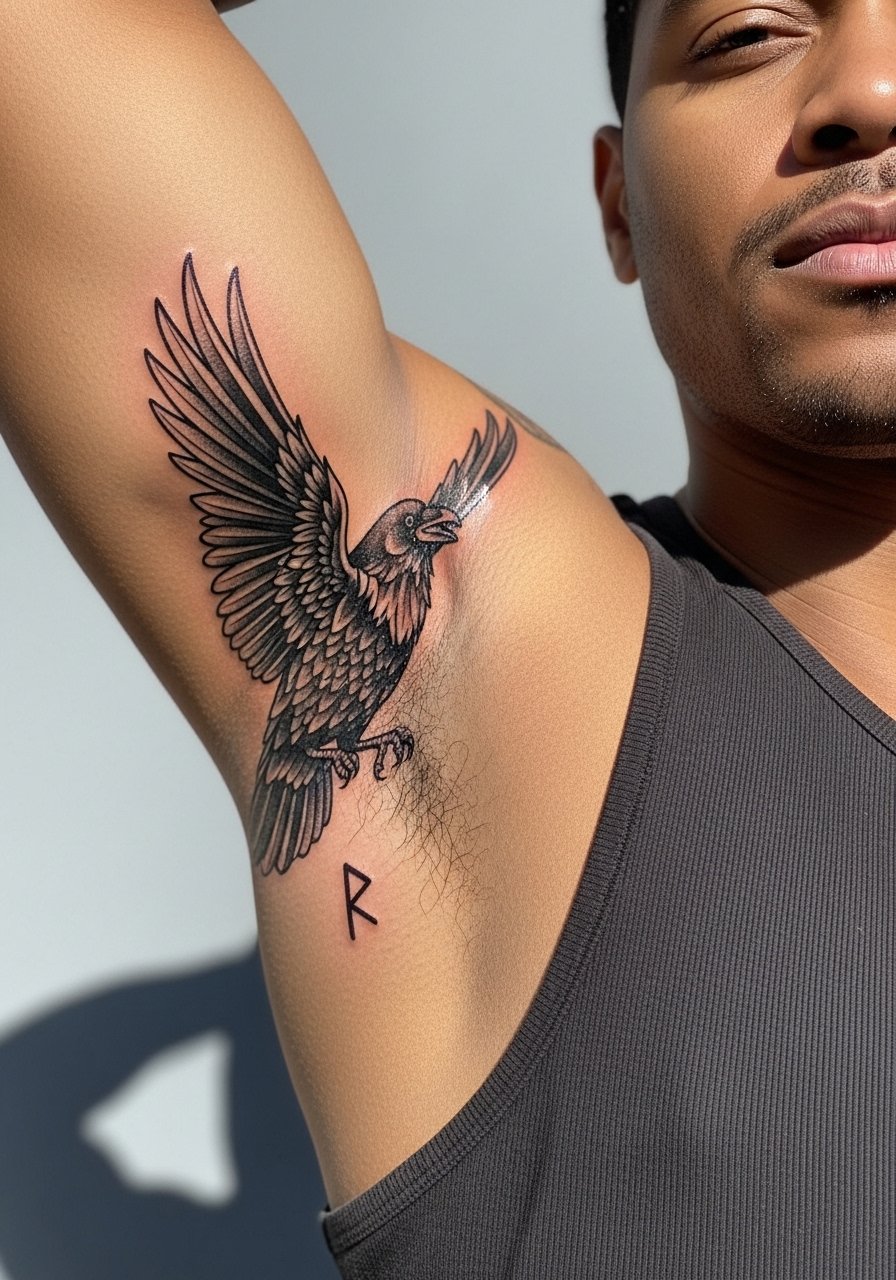
Inner bicep placements are quieter and age differently than forearms. I like a raven perched above a single protective rune, with dotwork filling to connect them. When you consult, ask for dotwork rather than solid fill if you want texture without heavy saturation. Mistakes here include too many small runes that blur together under natural skin compression. The session feels odd because the arm position can tire you, so wear a loose tank for access. Expect moderate pain and a touch-up in two to three years if the dot spacing is tight.
4. Simple Runic Inscription on the Collarbone
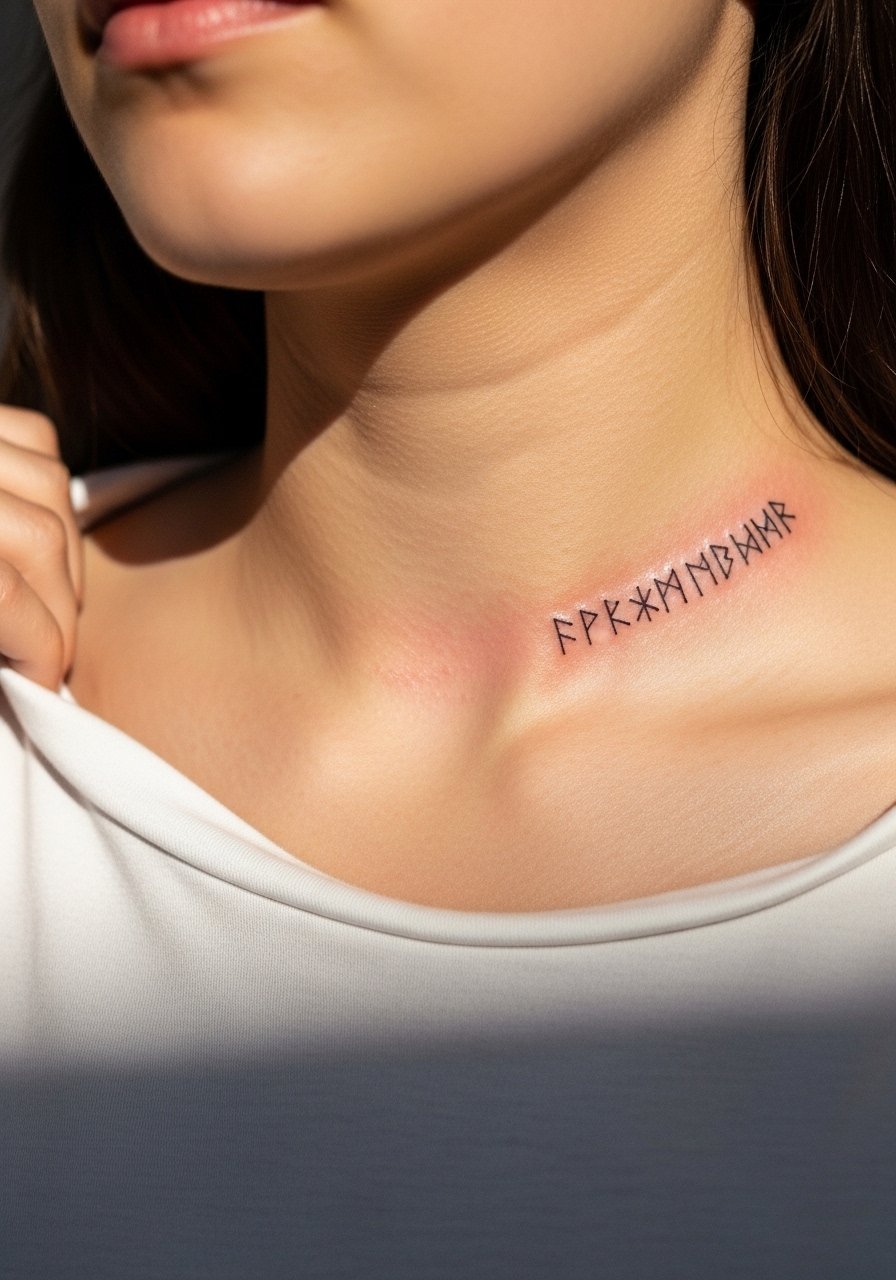
Collarbone script reads delicate when letters are spaced and sized for the movement of the skin. I advise keeping micro runes at least the width of a pencil eraser so they do not collapse into dots as you heal. Tell your artist if you want vertical or horizontal orientation so the stencil lines with clothing. A common version that ages poorly uses ultra-fine lines packed tightly. For showing it off, pair with a v neck blouse silk or an open front cardigan. Sessions are short and collarbone soreness is mostly surface sting.
5. Helm of Awe (Aegishjalmur) on the Shoulder
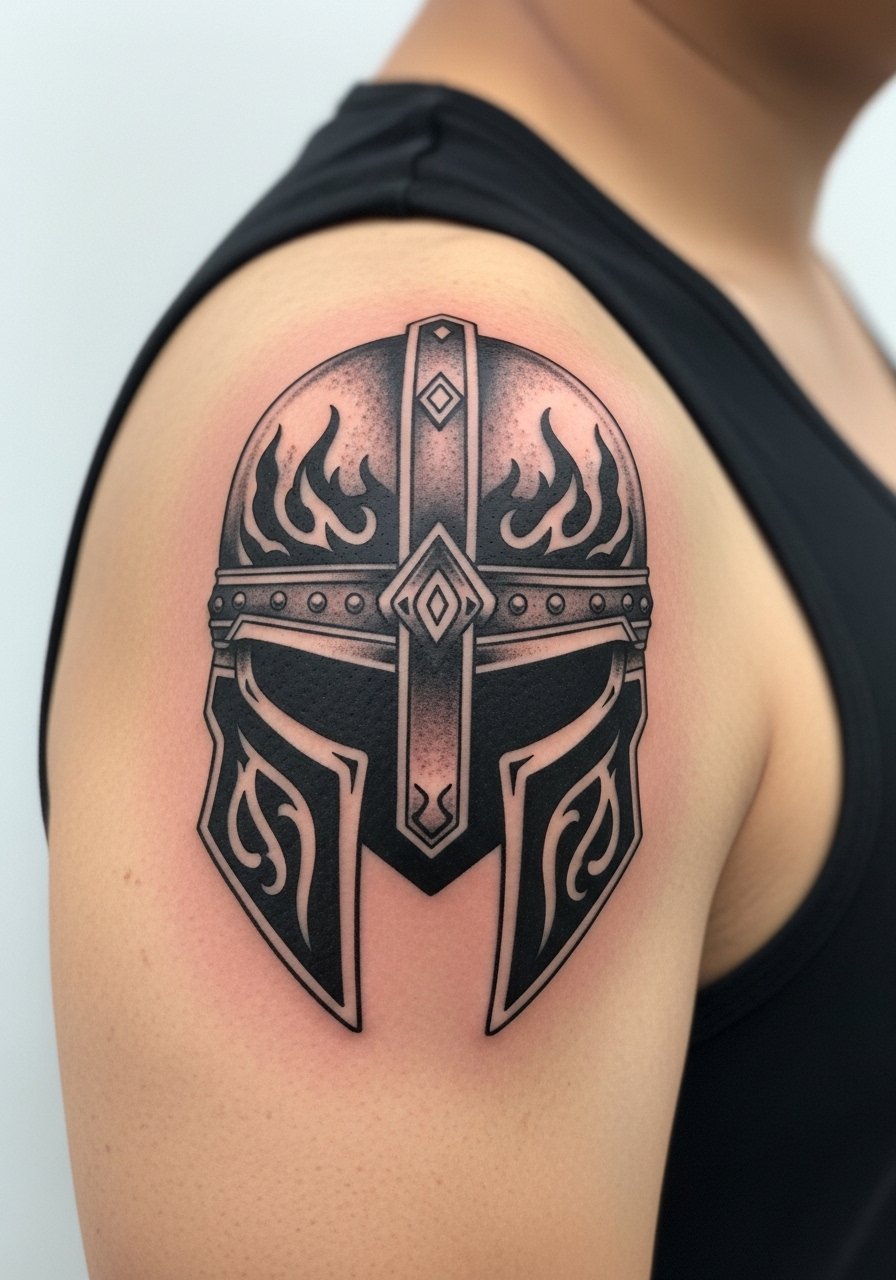
The Helm of Awe looks striking on the shoulder because the round surface suits symmetry. I tell people to choose a medium size so the radial arms of the symbol keep their negative space. Artists sometimes over-detail it which creates tight intersections that age into muddy spots. For the session, wear a button front tank so you can pull it aside. Expect one to two sessions and a touch-up option if any spokes lose crispness after six to twelve months.
6. Vegvisir Compass Outline on the Ankle
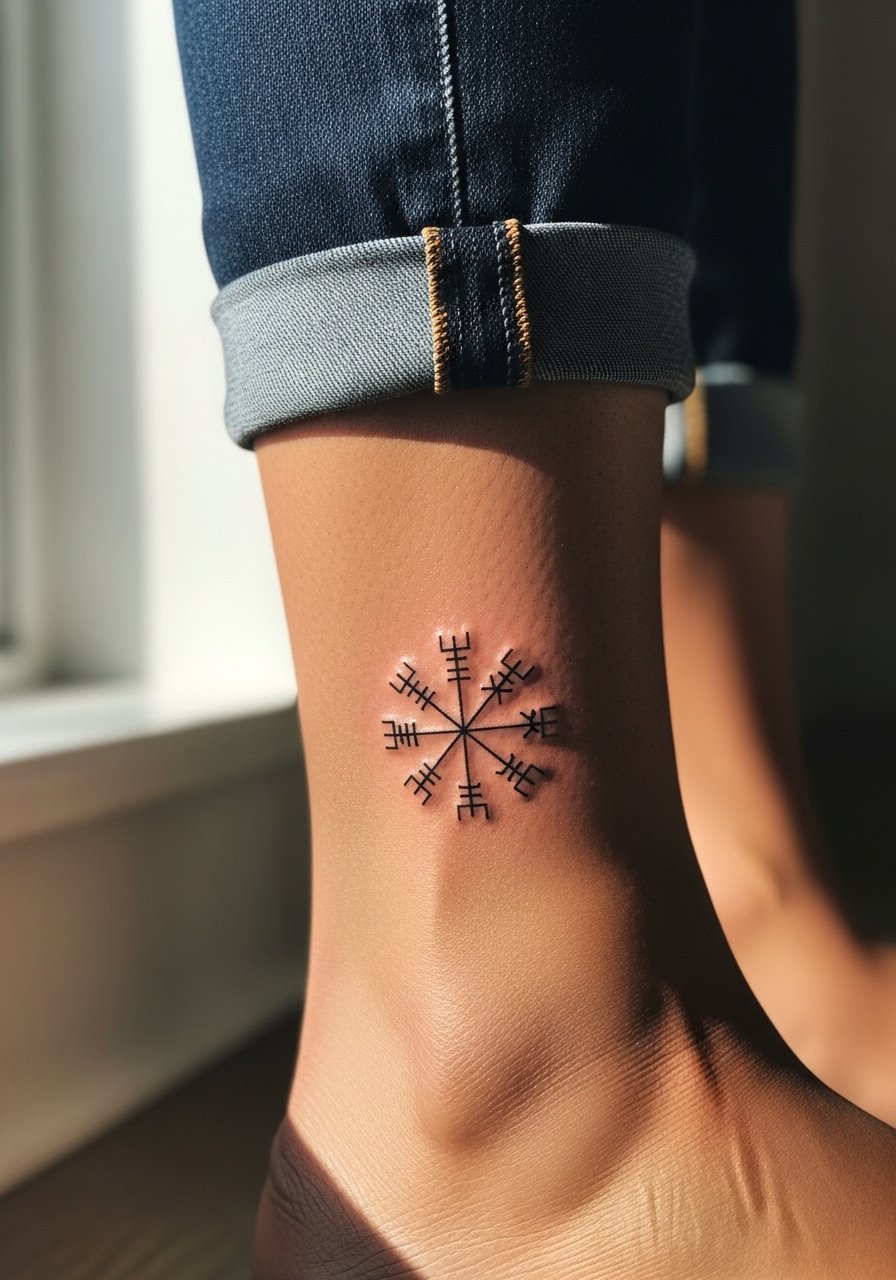
Ankle placements face friction from shoes and socks which affects longevity. I prefer a slightly bolder outline here than ultra-micro details so the compass stays readable. Artists split on fine line Vegvisir for ankles and they name both camps plainly. One camp says thin outlines retain elegance and can be touched up. The other camp argues a stronger blackwork outline prevents early blurring from footwear. For show-off pairing, try strappy flat sandals in summer or cropped straight jeans when you want to hide it. Plan for one session and light scabbing from sock friction.
Studio Day Picks
The wrist, collarbone, shoulder, ankle, and inner bicep pieces above each have different prep and early healing needs. A few targeted items smooth the first week and save a touch-up later.
- Stencil transfer paper kit. Lets you preview line weight on skin so the raven silhouette and rune inscription above read as expected before needles touch.
- Topical numbing cream. Apply per directions to take the edge off shoulder and inner bicep sensitivity during longer sessions.
- Thin protective film roll. Helps ankle and wrist pieces keep clean through showers and sock friction in the first days.
- Fragrance free gentle body wash. Cleans tattoos without irritating the delicate runes and fine line work on the forearm and collarbone.
- Aquaphor healing ointment. A thin layer over small linework protects while the skin starts to form new surface.
7. Valkyrie with Wings on the Upper Arm
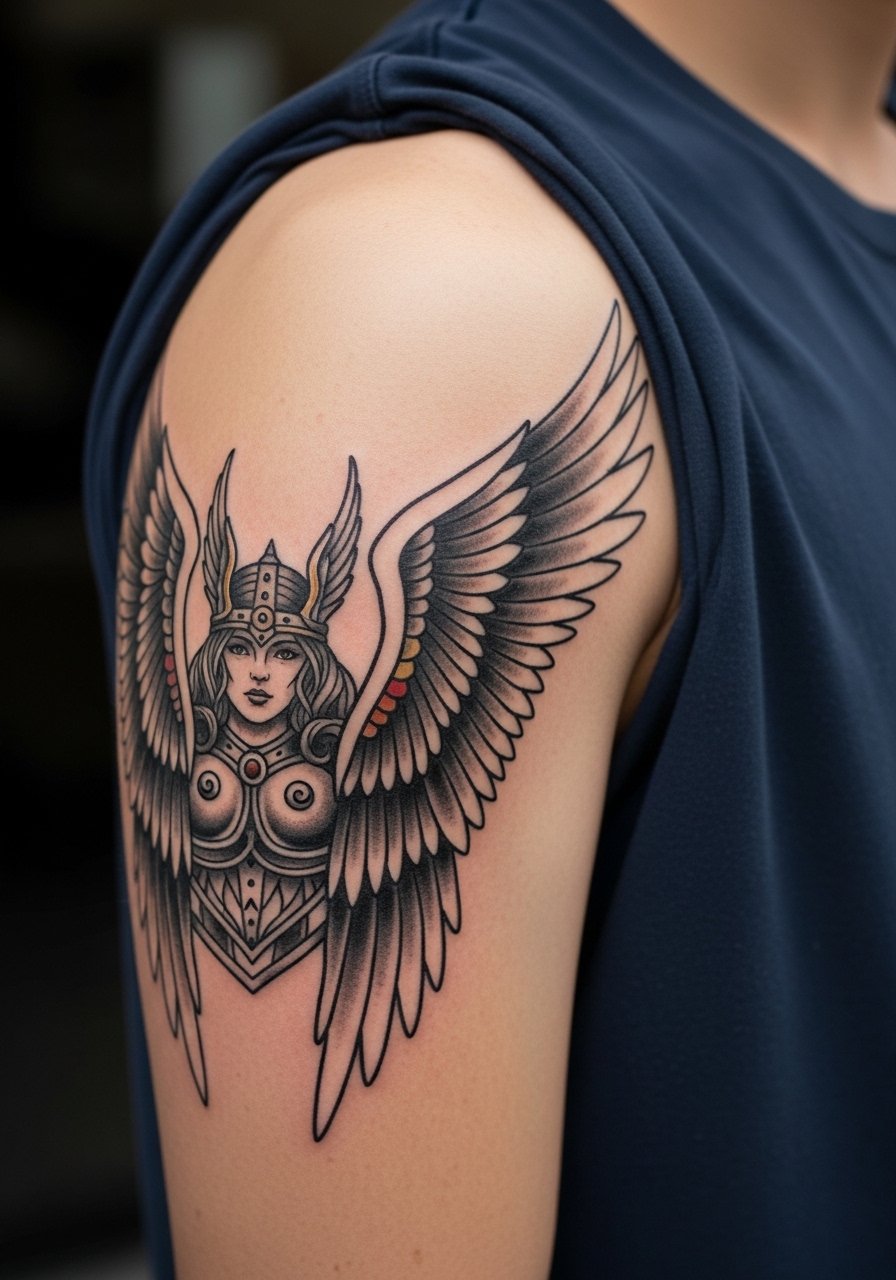
Upper arm placements absorb motion well which helps larger neo-traditional wings read nice over time. Ask your artist for gradual saturation on the wings rather than one saturated slab so color can age evenly. A frequent mistake is cramming a Valkyrie into a size that flattens facial features. For session wear, bring a button front tank or off-shoulder top you can pull aside. Expect two to three sessions and a follow-up appointment for color boost if needed. The area is forgiving for touch-ups.
8. Yggdrasil Tree Silhouette on the Spine
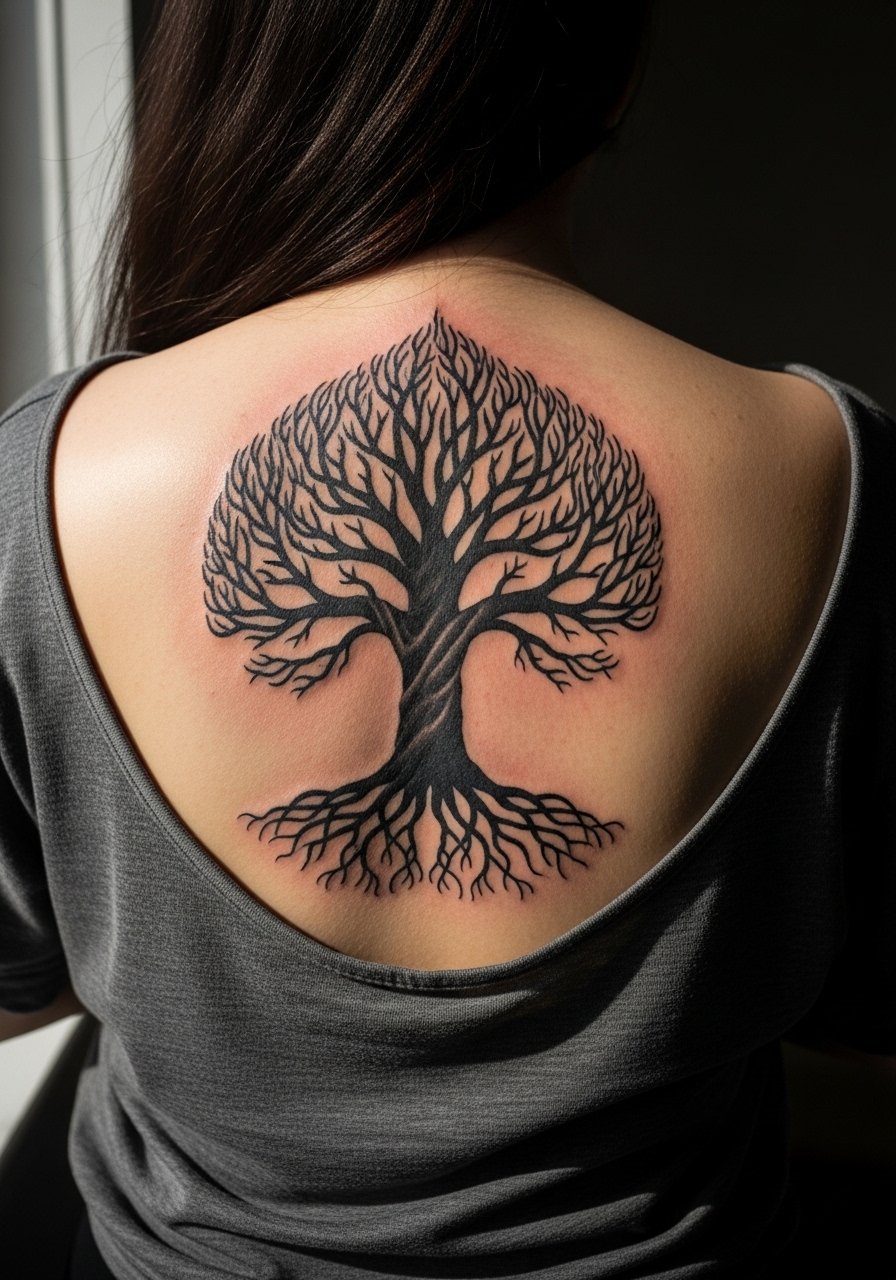
Spine placements carry movement and stretching so scale is everything. I recommend a medium vertical composition that avoids tiny root details. During consultation tell your artist you want negative space between branches to avoid merging when you bend. The ribcage and spine can be tender so sessions may be split into short passes. One common mistake is wanting a full detailed canopy at small scale which leads to wash-out. Expect moderate pain and a clear two-visit plan for comfort and saturation control.
9. Shield Maiden Valkyrie on the Outer Thigh
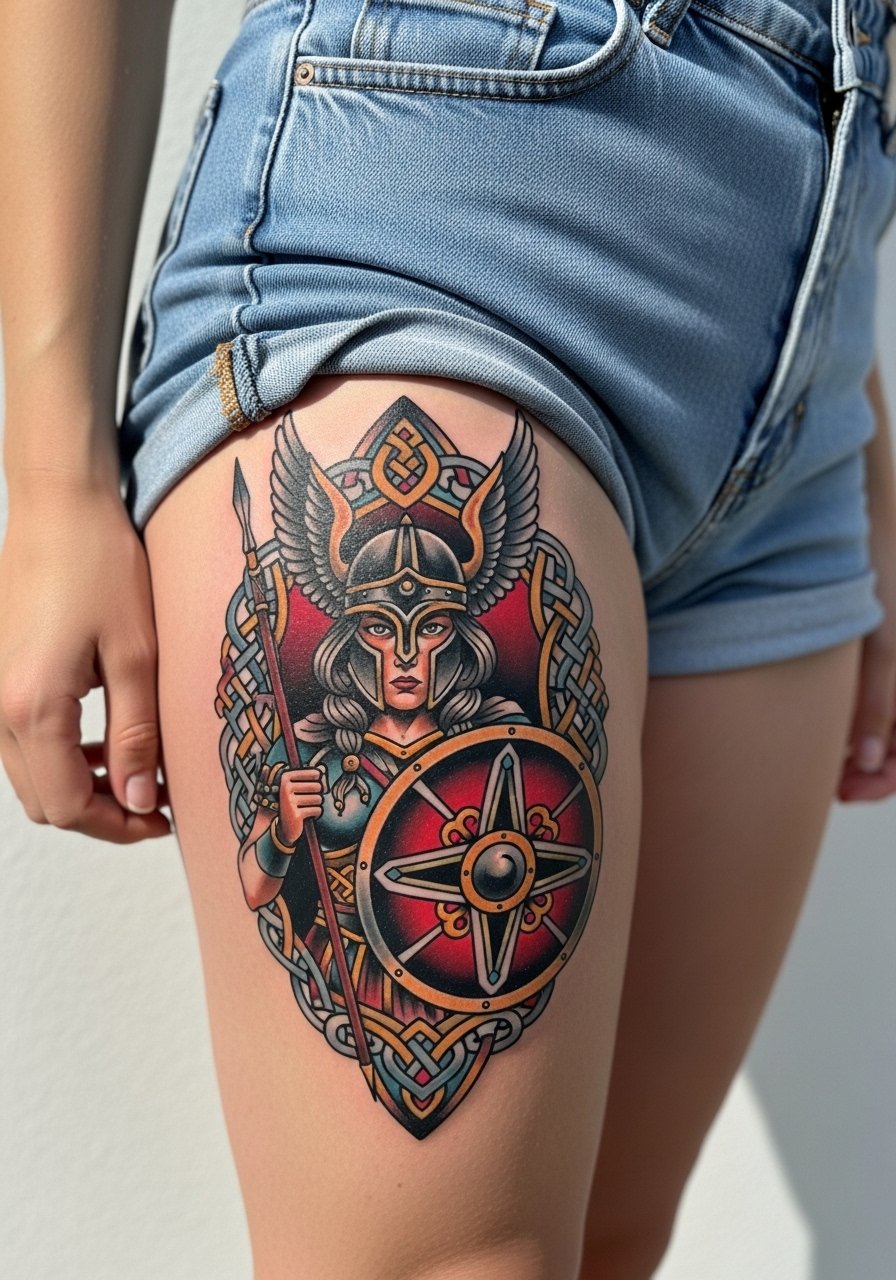
Outer thigh pieces age well if they avoid fine facial micro-detail and instead focus on bold linework and color blocks. I like a design that reads from a distance with deliberate negative space near the hip. For showing it off, high-waisted shorts or an asymmetrical skirt work well. Thigh sessions can be long but the area tolerates saturation without blowout as easily as thin skin zones. Watch for the mistake of tiny script or micro-dot shading near stretch-prone zones. Plan for two to four sessions depending on size.
10. Vegvisir with Knotwork on the Forearm Sleeve Start
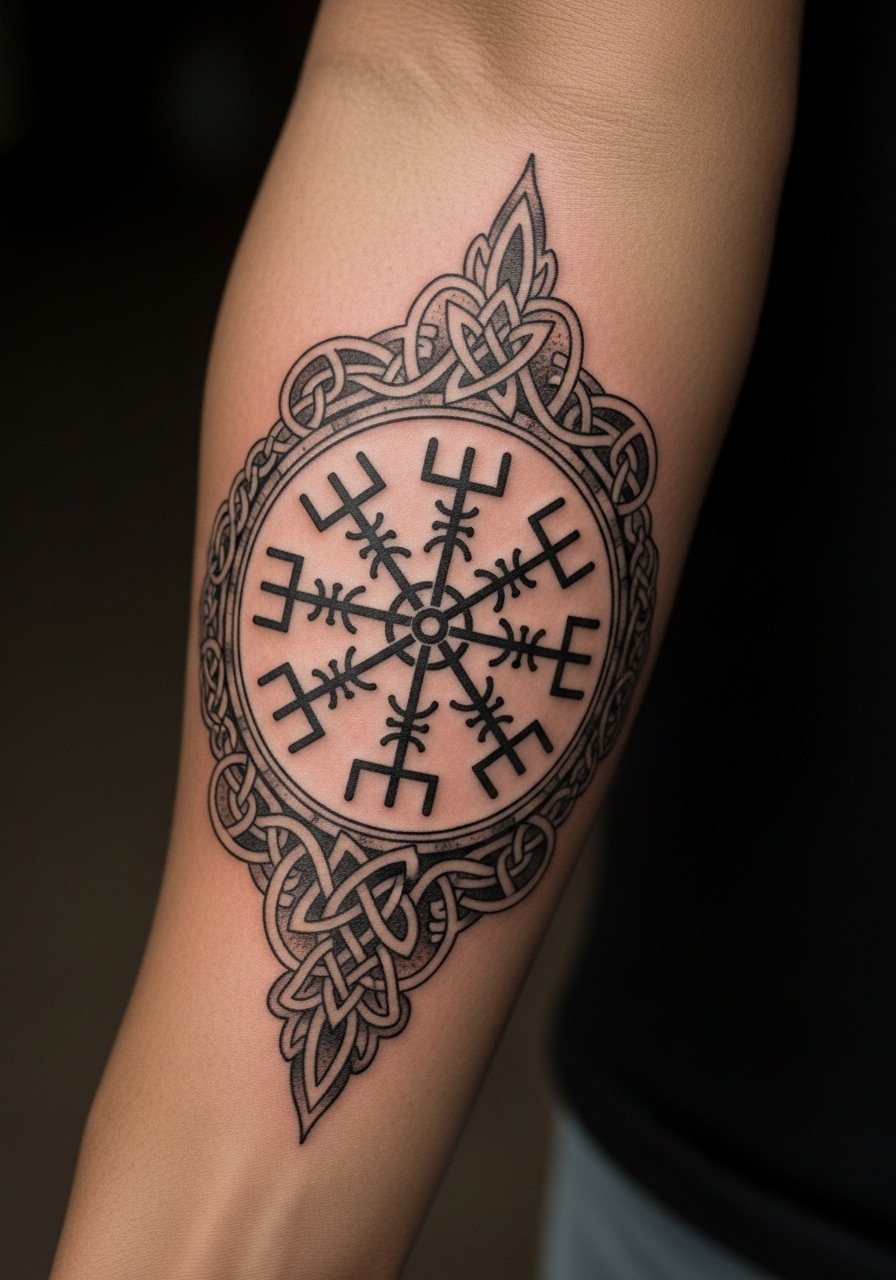
A forearm sleeve start gives the Vegvisir room to expand into knotwork and ribbon elements. I recommend leaving breathing space between the compass and the knots to prevent busy intersections that soften with age. During the consult say you want stipple shading and not solid fill in transition zones. For display, roll your sleeves and pair with thin stackable rings and a rolled sleeve shirt. Expect two sessions for the compass and another for surrounding detail. The forearm is sun-exposed so plan touch-ups if you frequently wear sleeveless tops.
11. Oseberg Style Animal Interlace on the Ribcage
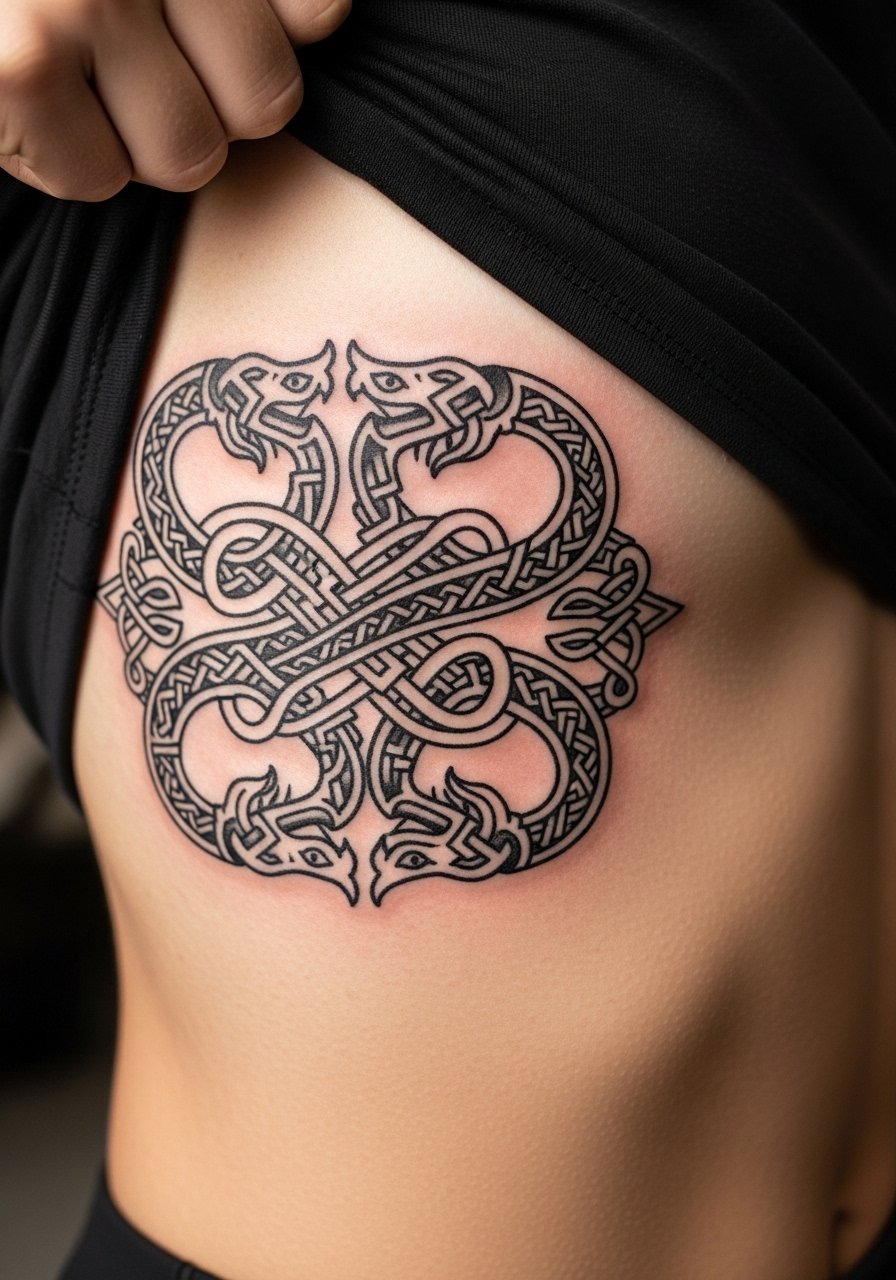
Ribcage pieces read authentic when they follow historical interlace flow and avoid modern filler. I advise a composition that follows the ribs so the S-shaped animal ribbons move with the torso. Artists sometimes overfill negative space with tiny dots which can blend under stretch. Prepare for a higher pain rating on the ribs and split sessions so you do not fatigue. Also factor in weight changes because the ribcage stretches and can warp long runs of linework. If authenticity matters, mention Oseberg style and ask for clear spacing between knot turns.
12. Jelling Beast Ribbon on the Calf
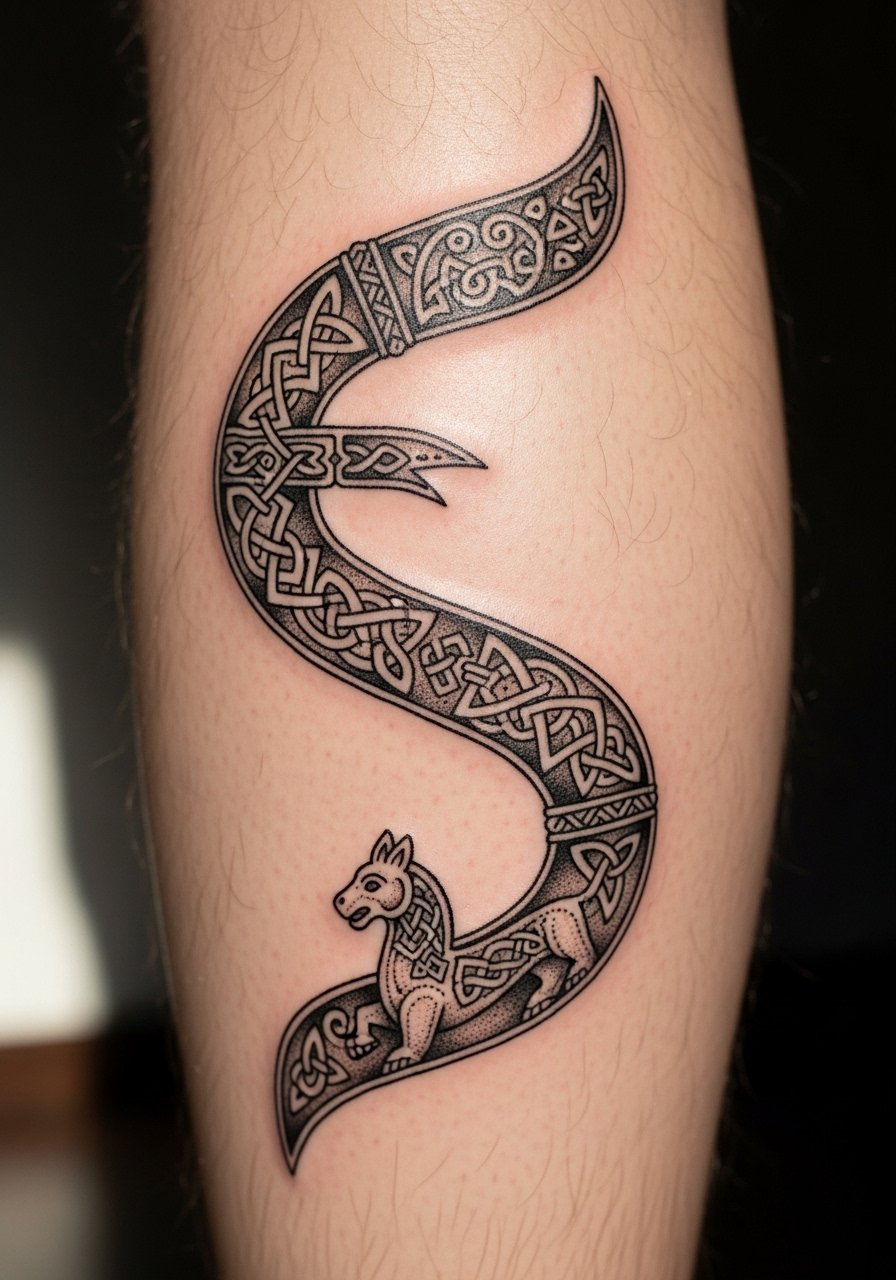
Calf placements are excellent for flowing ribbon beasts because walking emphasizes the S-shape. I suggest dotwork for shaded sections to avoid over-saturation that can cause a single dark block. Tell your artist you want the beast to read from the side view first since most people see calves that way. For casual show-off, roll joggers or a midi skirt flowy. Sessions are usually one or two and pain is moderate. Avoid packing too many thin curls into a small area or you will see blurring at year two.
13. Gripping Beast Motif on the Shoulder Blade
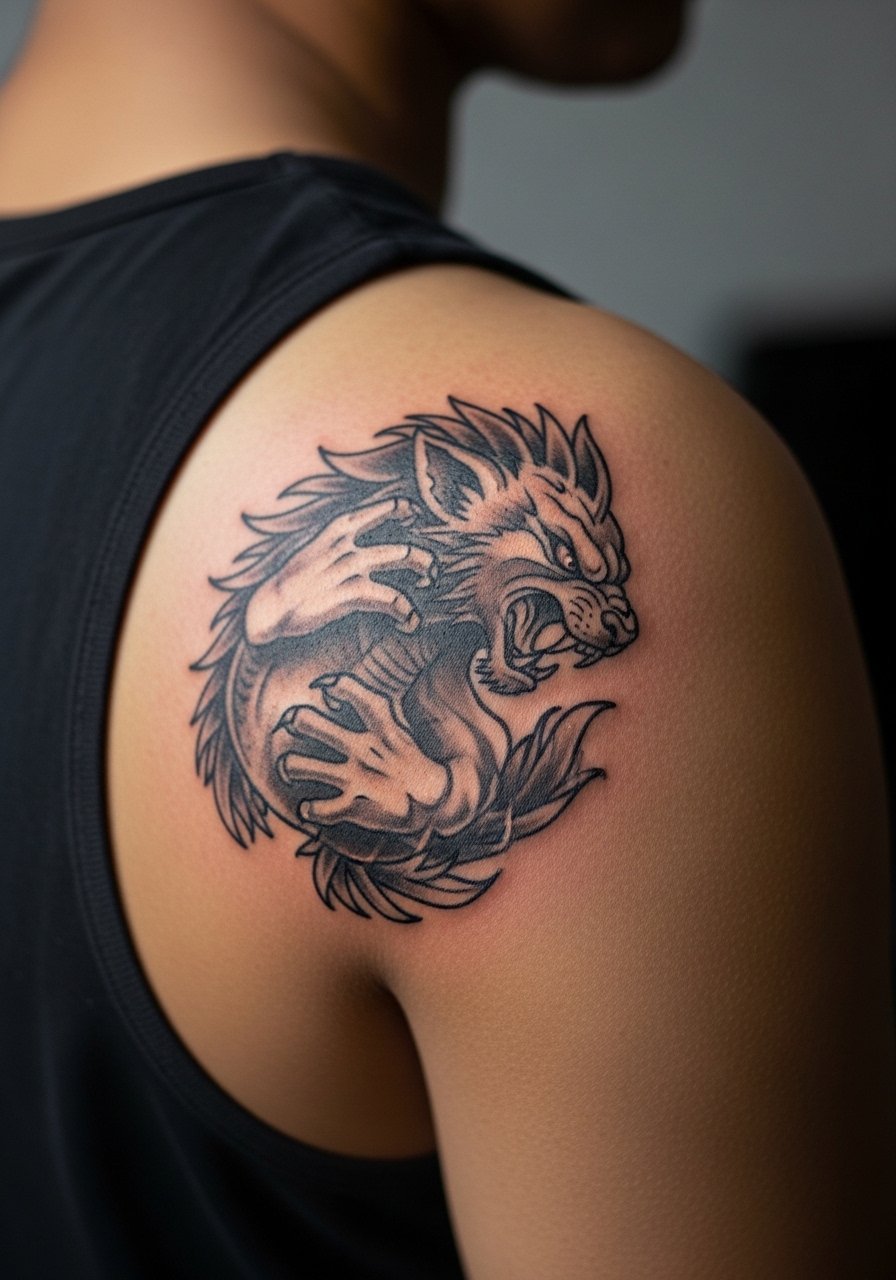
Shoulder blade canvas is generous which helps gripping beast anatomy stay textured without tiny micro-lines. I prefer a mix of bold linework and whip shading to maintain muscle contrast. A mistake is asking for extreme micro-detail in the claw area which flattens after movement and touch-ups. For session access, slip into a loose tank top and expect two sessions for clean edges. The area is low risk for blowout but watch for over-saturation near the spine.
14. Micro Runic Band on a Finger
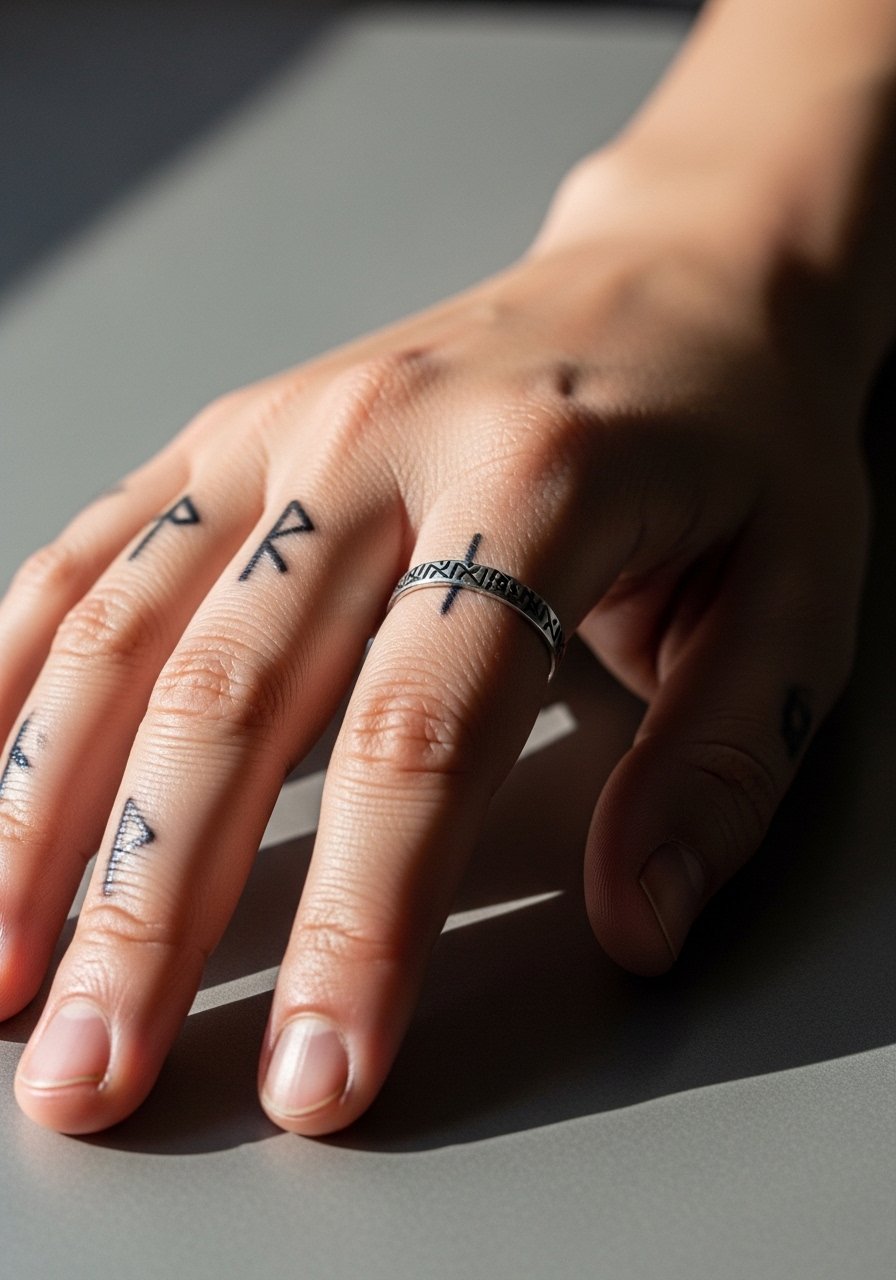
Finger tattoos face heavy use and constant washing which impacts longevity. I advise slightly heavier linework than a typical micro to keep the rune shapes legible past the first year. The most common mistake is expecting micro-script to last like forearm work. During the consult ask for simplified runes with clean negative space. Pair the design with thin stackable rings to complement without crowding. Sessions are quick but plan for a touch-up within a year or two.
15. Bindrune Personalized Wrist Band
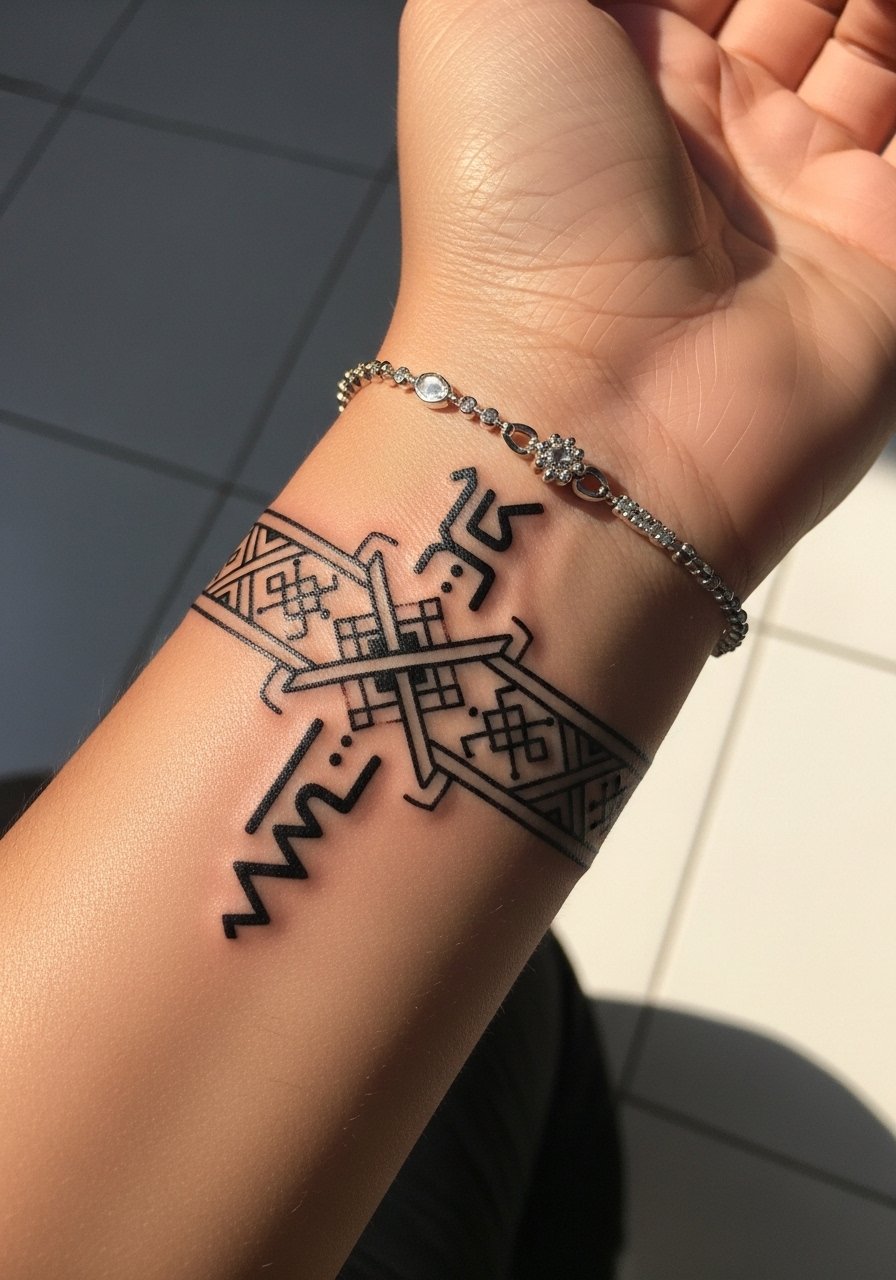
Bindrunes are a clever way to merge multiple concepts into a single icon. For wrist bands, request a test stencil wrapped around the wrist to ensure readable spacing when the wrist flexes. A common misstep is stacking too many sigils which turns the band into a blob. For showing it off, wear a dainty minimalist bracelet on the other wrist rather than over the tattoo. This placement is mildly painful due to bone proximity and may need a touch-up after repeated washing.
16. Tiny Drakkar Ship on the Ankle
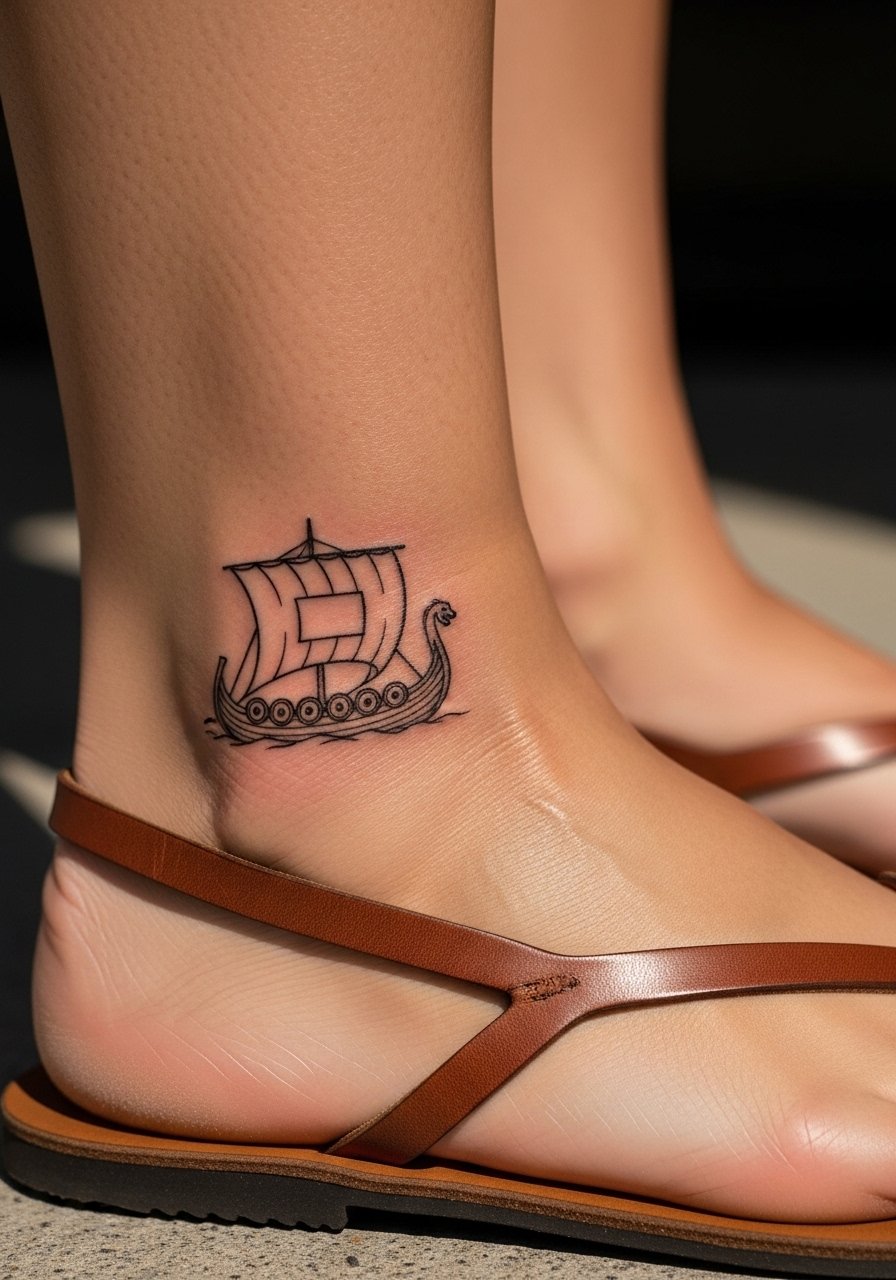
A small drakkar reads best when the mast and shields are simplified into bold shapes rather than tiny carved details. Ankle friction from shoes is the main longevity issue so I recommend a slightly bolder keel line. Avoid ultra-fine shield dots or you will lose them under wear. For session wear, choose strappy flat sandals so the artist can check how shoe contact will sit. Expect a short session and possible scab knock if your footwear rubs the area in the first week.
17. Dotwork Vegvisir at the Nape of the Neck
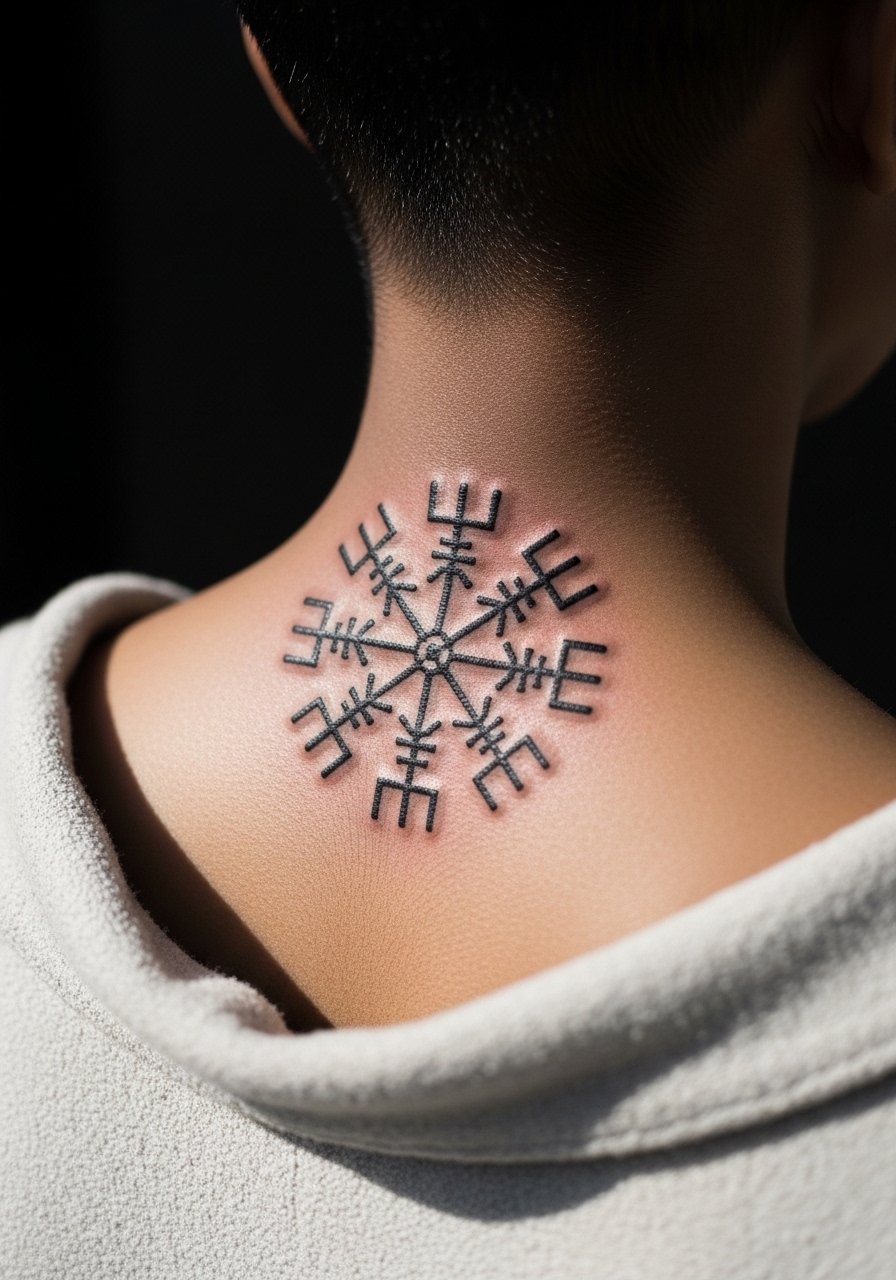
Nape placements sit between visibility and discretion and sun exposure is a lesser issue under hair. Dotwork holds well here because the stipple resists early merging. Controversy exists on fine line for neck pieces. One group says fine line reads elegantly under hair. The other group warns the neck's movement can blur thin strokes quickly. Ask your artist which approach they prefer and why. For session wear use a wide-neck shirt that can be shifted, and expect a calm short session.
18. Yggdrasil Thigh with Knotwork
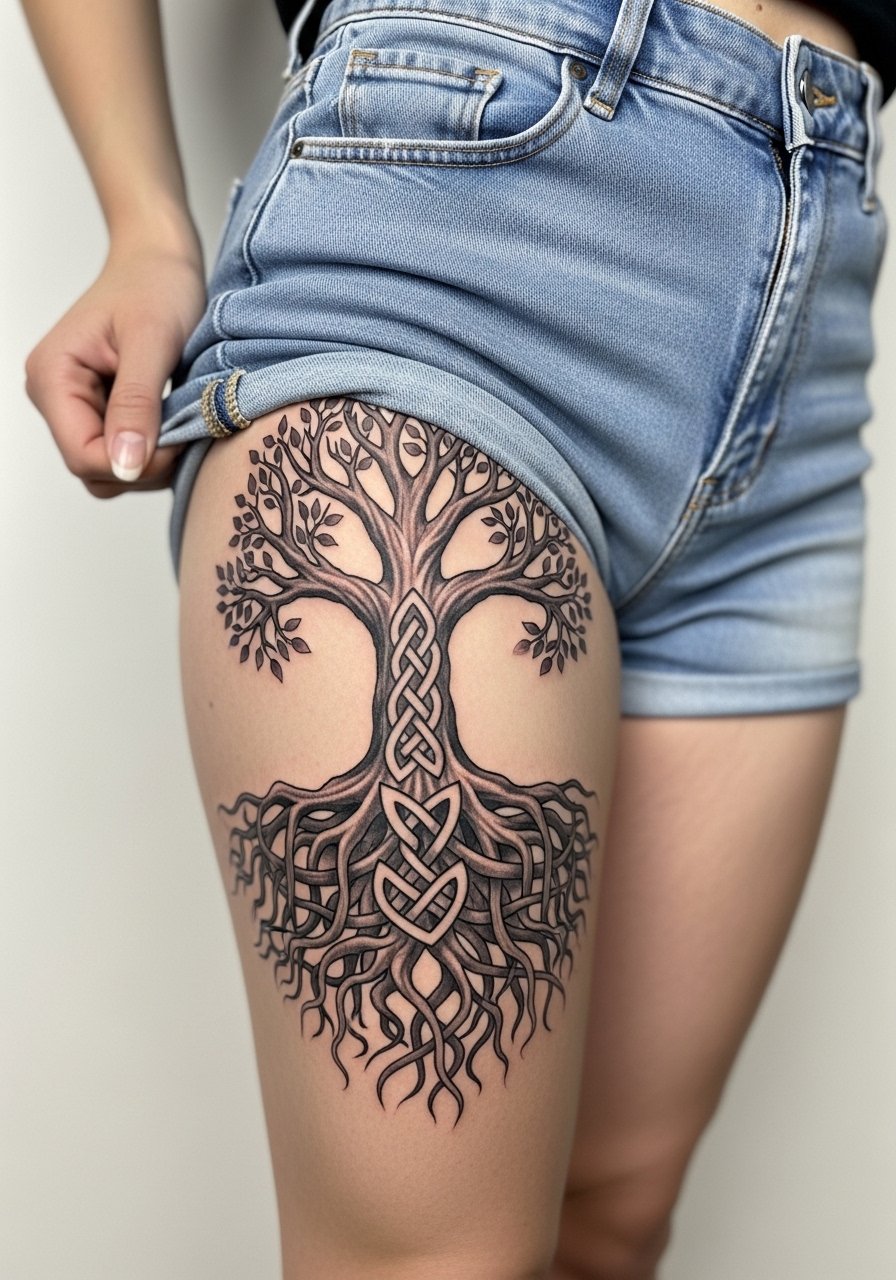
Thigh skin tolerates saturation and holds darker blackwork without blowout when the lines are spaced. I recommend a tall Yggdrasil with negative space between roots and branches so the silhouette reads at five years. A mistake is collapsing roots into tiny interlaces which warp with weight fluctuations. For showing it off wear high waist denim shorts or a flowy skirt. Sessions can be long and a two-visit plan makes transitions smoother.
19. Polynesian-Viking Fusion on the Outer Forearm
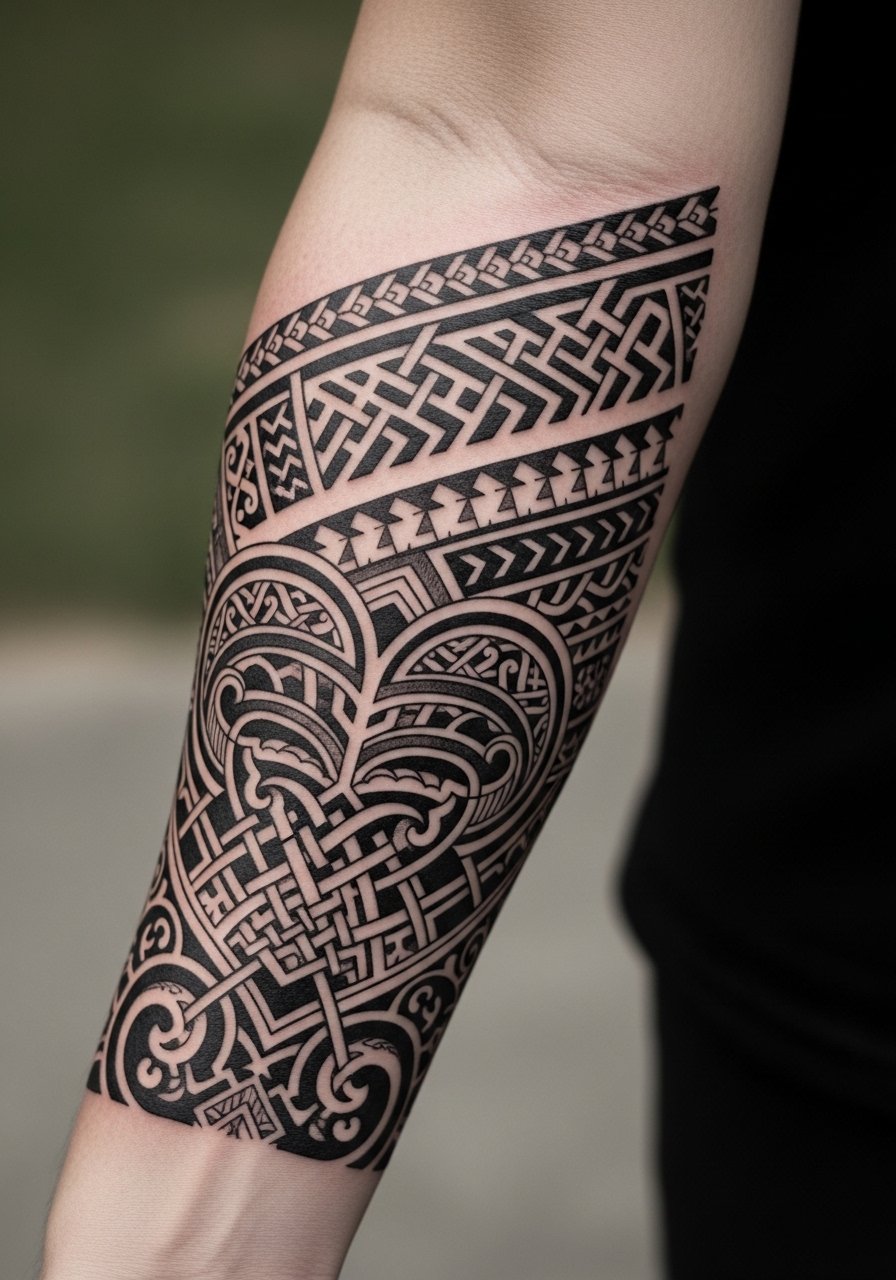
Experimental fusion pieces need clear reference so the motifs do not cancel each other visually. I advise a binding band approach where one language flows into the next rather than mixing tiny elements. During consultation show separate examples for each tradition and ask for a unifying border. A common mistake is copying cultural motifs without understanding space and rhythm which leads to visual clutter. For session wear, roll up a cream linen button down. Expect one to two sessions and an honest discussion about respectful adaptation.
20. Oseberg-Inspired Arm Cuff
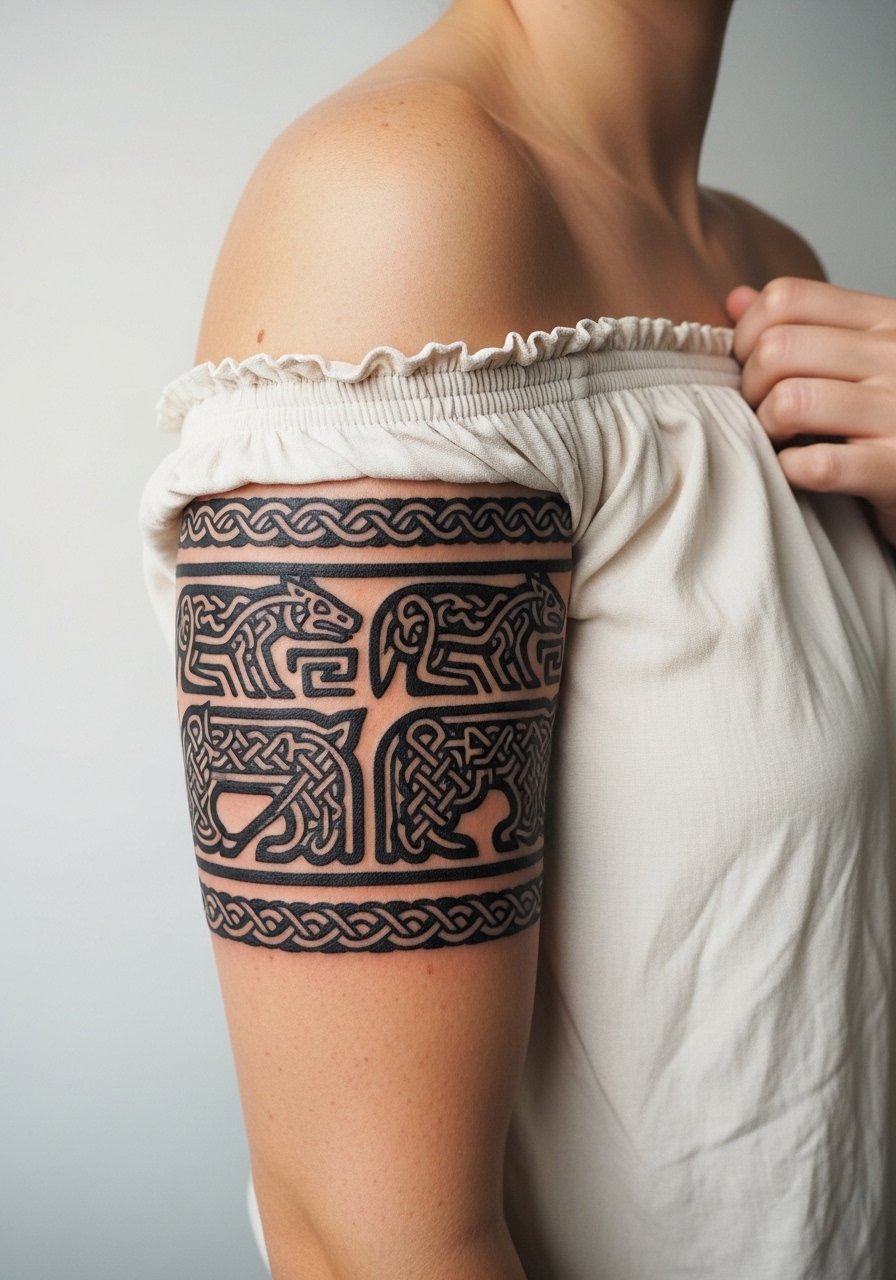
An arm cuff follows the limb contour so plan your knotwork to avoid a seam at the inside bend. I recommend bold ribbons and negative space to keep the cuff readable when the arm flexes. A mistake is tiny internal curves that disappear when the cuff wraps. For showing it off, an off shoulder blouse frames the band without obscuring it. One session may suffice for small cuffs while larger bands need two passes.
21. Small Rune Circle Behind the Ear
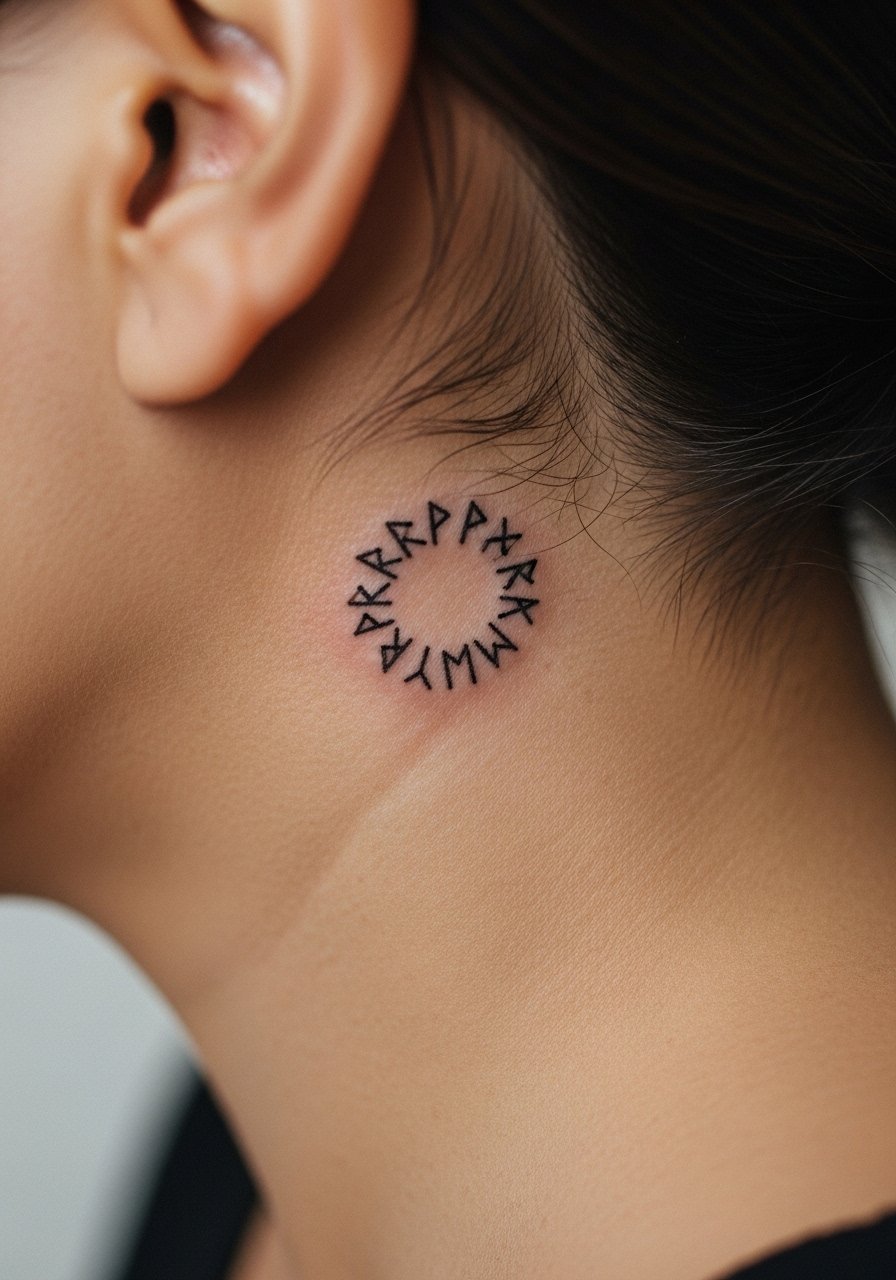
Behind-the-ear placements are intimate and slightly hidden. I always advise keeping details minimal because the area does not tolerate tight intersections. Ask your artist for a simple circle or single rune rather than a complex knot. Be mindful of career visibility since the spot is often seen in short-haired looks. Sessions are quick and healing is straightforward. Expect light soreness and an optional touch-up if lines soften against the hairline.
22. Valknut Micro on the Sternum
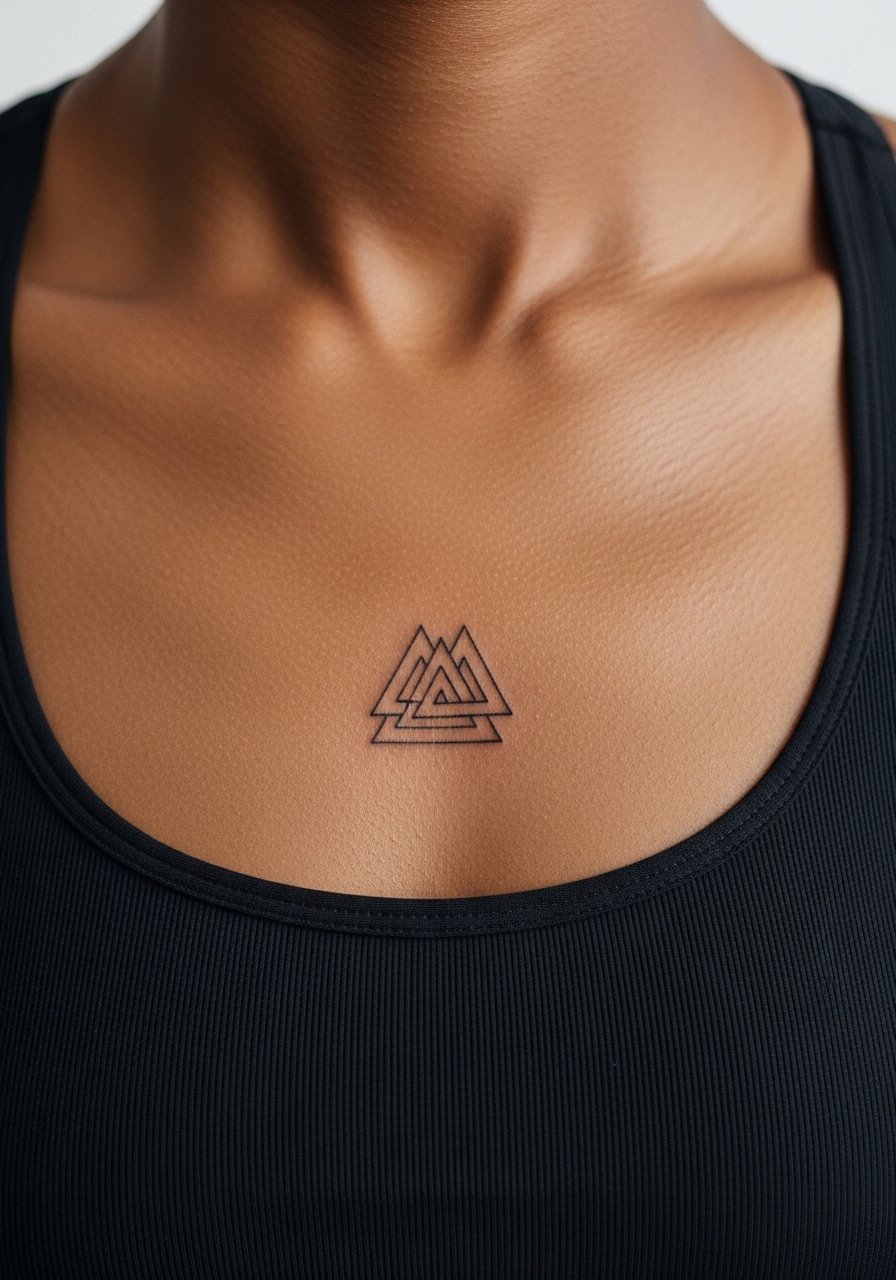
Sternum work needs a clear conversation about size because chest movement can blur tiny triangles. I suggest keeping the Valknut medium-small with clear spacing between triangles. Artists differ on whether ultra-fine lines hold on sternum skin. Discuss depth and needle rhythm with your artist. For the session wear a fitted sports bra that gives access and comfort. Pain can be higher here and sessions are often split to manage tolerability.
23. Norse Knot Bracelet Around the Wrist
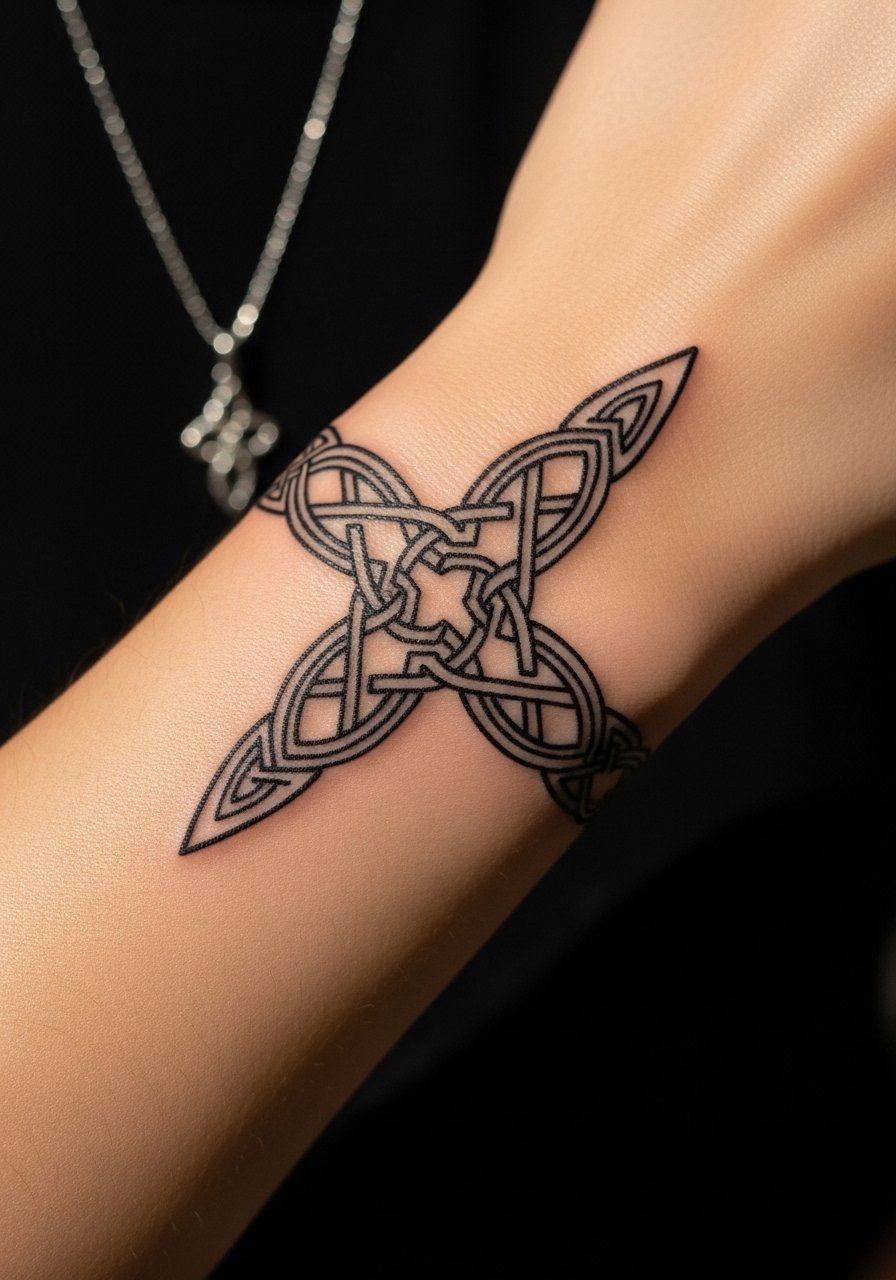
A knot bracelet works as a continuous band but needs a repeating pattern that reads at a glance. I ask clients to try a paper wrap mockup so we can see how the knot repeats across their wrist. A common error is too much micro-knot density which leads to soft patches. For showing it off, try a thin chain pendant necklace that sits near the collarbone and keeps attention balanced. Wrist bracelets are higher maintenance and may require touch-ups sooner.
24. Jormungandr Coil on the Outer Calf
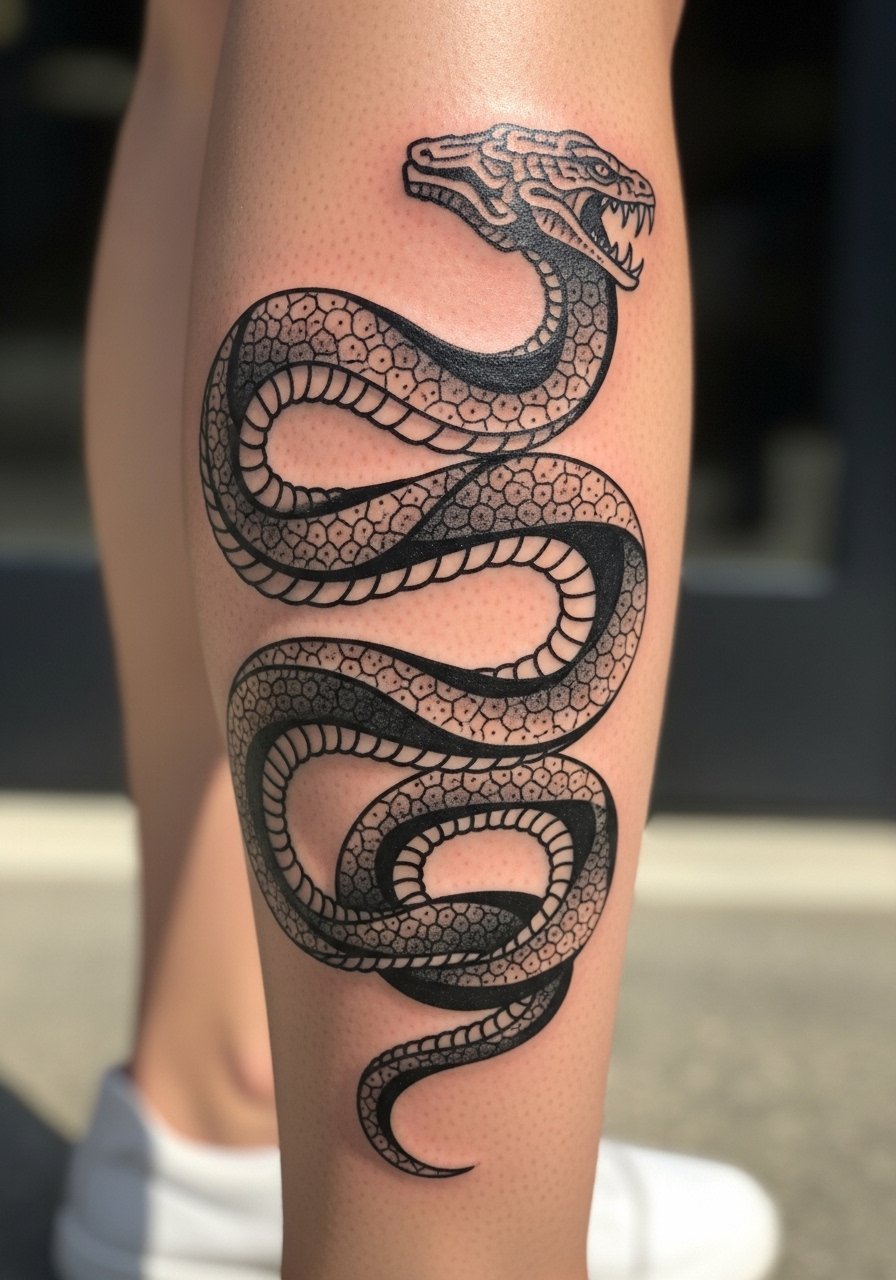
Coiled serpent motifs suit the calf because the curvature complements the muscle. I recommend bold primary lines around the coil with stipple shading inside to keep texture without oversaturation. A mistake is putting too much micro-scaled scale detail which can blend into a gray mass. For session wear, roll up joggers or pick a calf high boots summer friendly outfit so you can preview how clothing will interact. Expect one to two sessions and a potential touch-up after six months.
25. Shield Knot on the Upper Chest Near the Collarbone
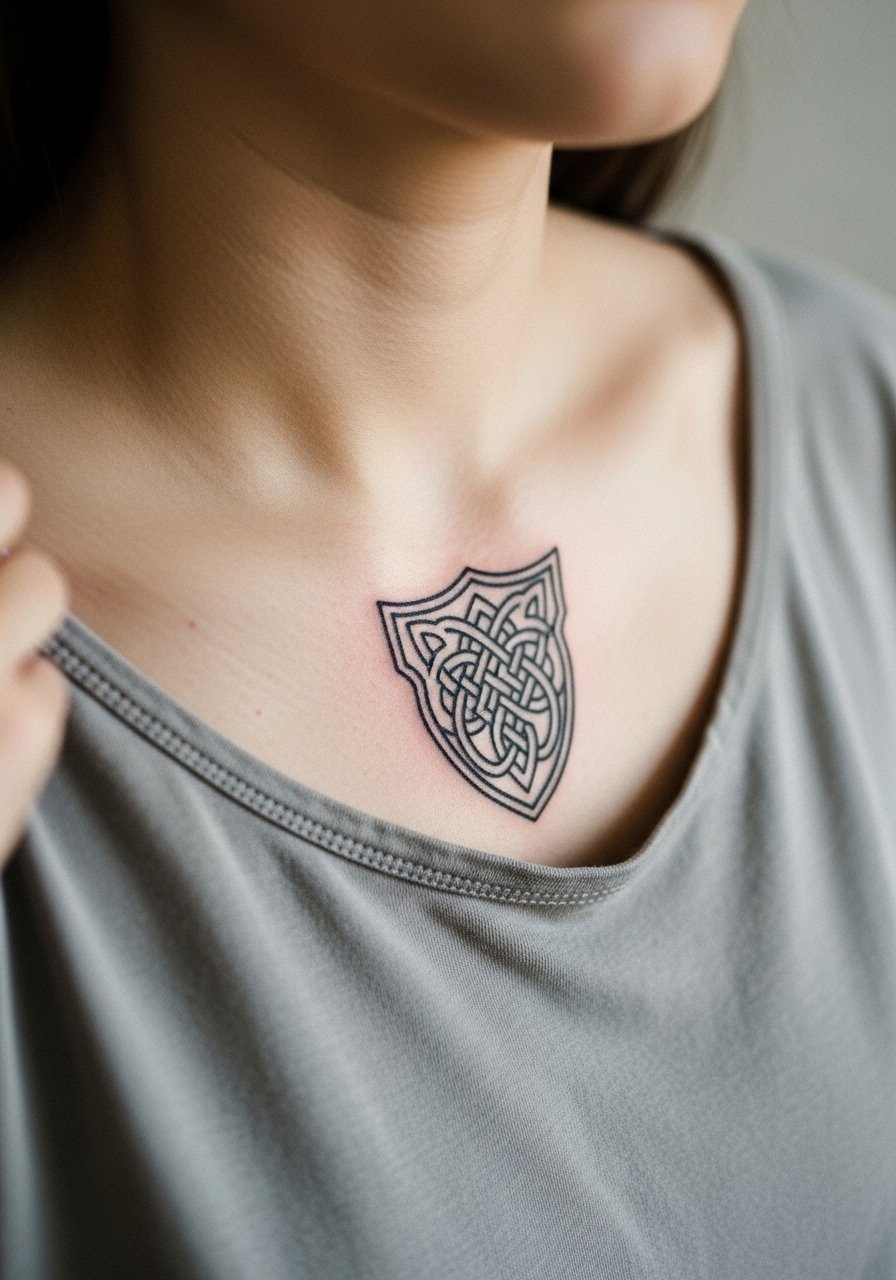
Upper chest placements need attention to how necklaces and shirt collars sit against the art. I suggest a compact shield knot with bold linework to survive friction from straps. During consultation show photos of typical outfits so the artist places the negative space where jewels or collars will be. A mistake is insisting on extremely fine filigree near fabric lines which often fades faster. For showing it off pair with a v neck blouse silk. Expect short sessions and modest surface soreness.
26. Shoulder Strap Valkyrie Half-Sleeve
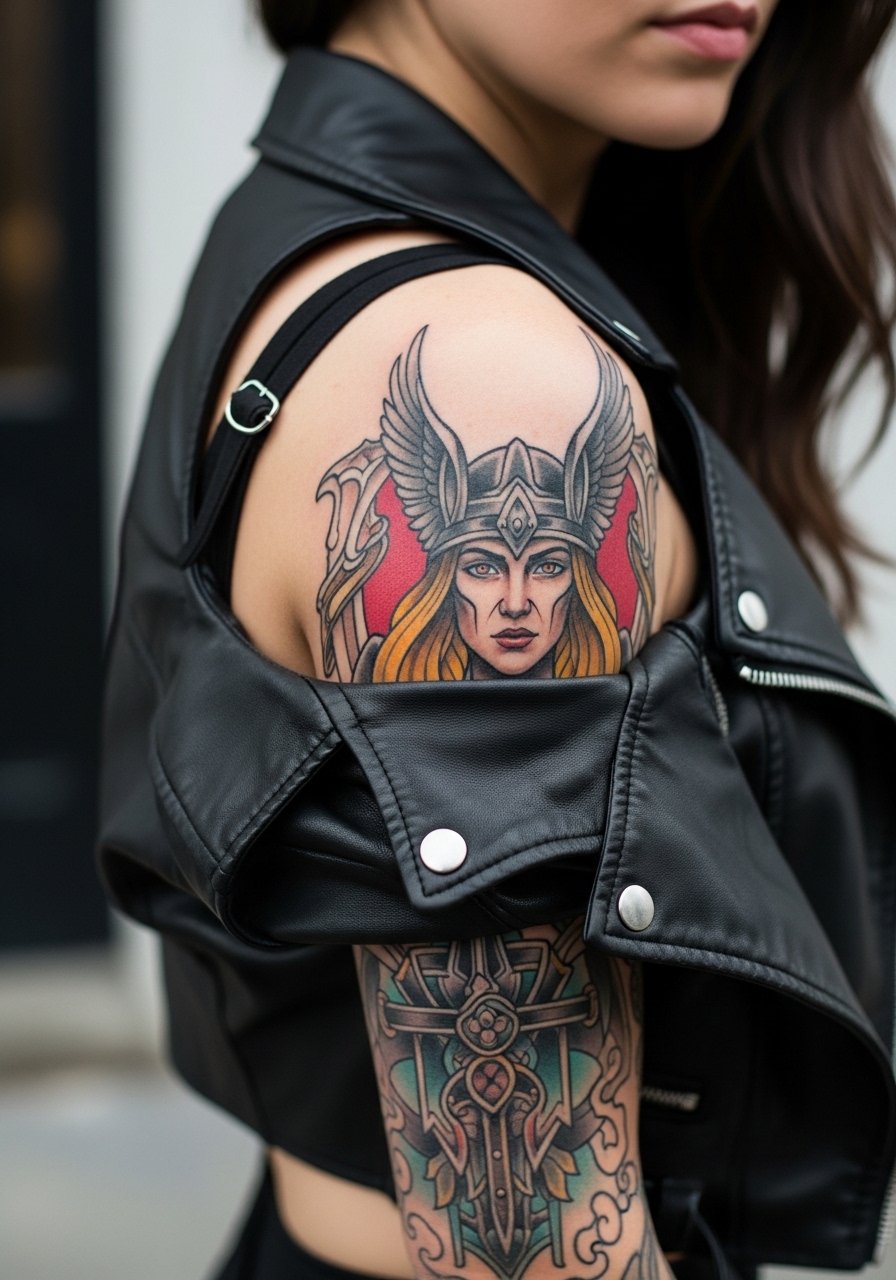
Half-sleeves need composition planning so the Valkyrie face is visible without losing her wings in the fold of the arm. I tell clients to bring references showing both head angles and wing positions so the artist can scale facial features correctly. A typical mistake is insisting on micro-detail in hair and feathers that will muddle when the arm moves. For display, a cropped leather jacket worn open frames the work. Plan two to three sessions and one color-saturation follow-up.
27. Tiny Vegvisir at the Hairline with Dotwork Shield
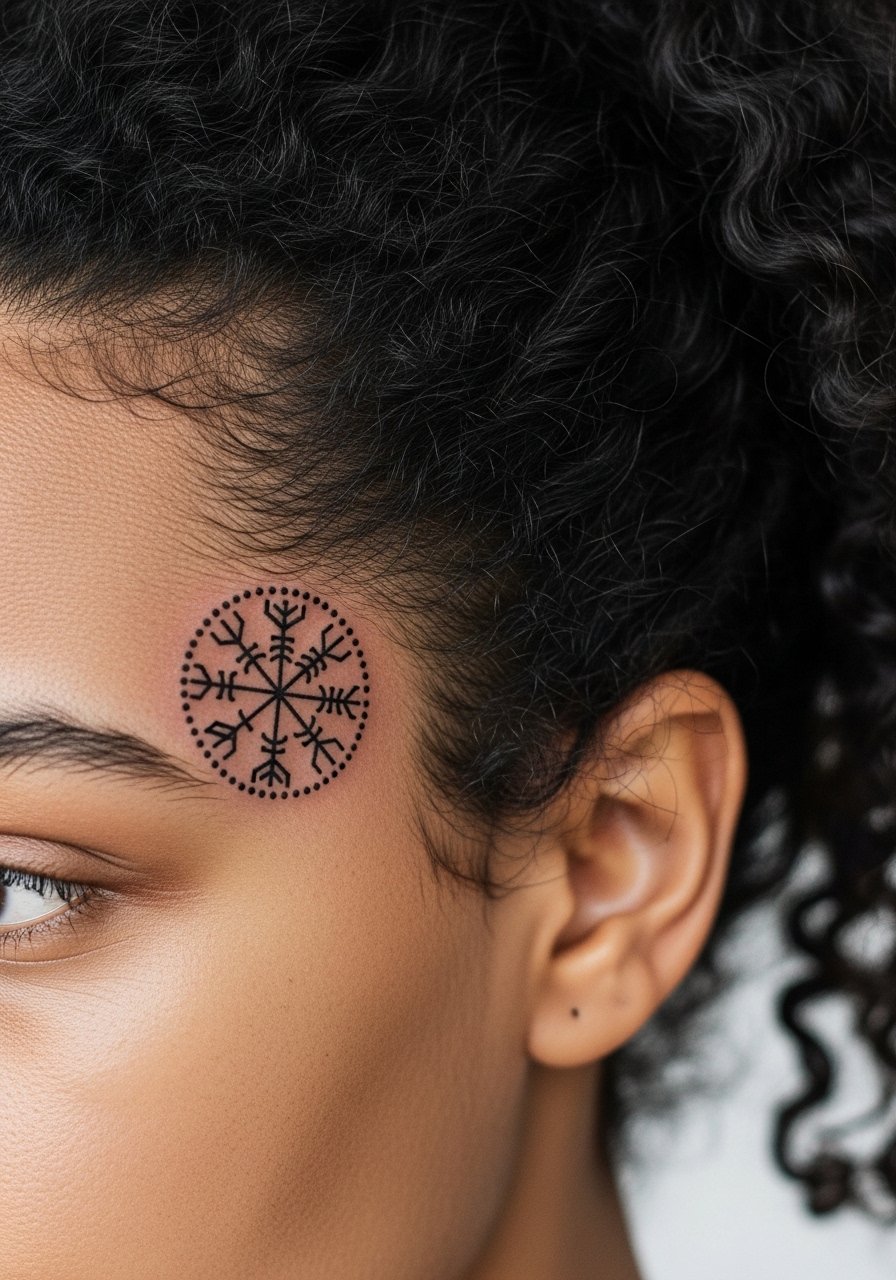
Head-adjacent placements need extra thought on sun exposure and hair covering. Dotwork shields help resist UV-driven softening because stipple retains texture. If you want the Vegvisir here ask for a slightly bolder outer ring so the symbol remains legible when seen at a glance. Artists differ on whether ultra-fine radial lines survive in this zone. During the consult mention how often you wear hats or part your hair. Sessions are short but the area can sting more than the forearm. Expect a simple touch-up if needed.
Frequently Asked Questions
Q: Will small runes on the wrist blur faster than on the forearm?
A: Yes, wrists face more sun exposure and washing which speeds line softening. I recommend slightly heavier linework for wrist runes or choosing the inner forearm if you want longer readable definition. Asking for fixed-price quotes during consults helps avoid surprise charges if you later ask for thicker lines.
Q: How do I choose between fine line and bold blackwork for a Vegvisir?
A: Both camps have merits. Fine line gives a delicate look but can require touch-ups sooner in shoe-friction or high-sun zones. Bold blackwork holds up better outdoors. Make the choice based on placement and how often you will expose the area to UV. Discuss both options with the artist and ask to see healed examples of each on similar skin tones.
Q: Are Oseberg interlace designs appropriate for small ribcage pieces?
A: They can be, but the ribcage moves and stretches so avoid tiny interlace loops. I suggest a simplified Oseberg pattern scaled to follow rib contours. Ask the artist for a lifted crop test on your skin before committing.
Q: How often should I expect touch-ups for finger, ankle, and collarbone tattoos?
A: Fingers and ankles commonly need touch-ups within one to two years. Collarbone pieces can hold longer but may need minor refresh at two to three years if you sunbathe a lot. Plan your budget accordingly and get a clear touch-up window from the artist.
Q: Where can I find artists who specialize in Nordic styles without naming anyone?
A: Search tags like #VikingTattoo, #MinimalistRune, and #NeoTraditionalValkyrie on social platforms. Use apps that filter by style and city or browse curated Pinterest boards for healed examples. Tattoo conventions are also useful for meeting artists who focus on historical work.
Q: Should I be concerned about career impact for visible placements like neck or hands?
A: Yes, some industries remain conservative about visible tattoos. If career flexibility matters to you, consider placements that are easy to cover or choose smaller, discreet placements. Talk frankly with your artist about concealment options and long-term visibility.