Fine line tattoos dominate saved boards right now, but the ones that still look clean in real life are often the ones that made smarter choices before the needle touched skin. Trends like watercolor washes and teeny constellation dots photograph beautifully, and then need touch-ups sooner than expected. Read on for 17 modern Virgo tattoo designs that balance what looks great in a feed with what ages well on skin, plus what to ask at your consult.
1. Fine Line Virgo Constellation on the Wrist
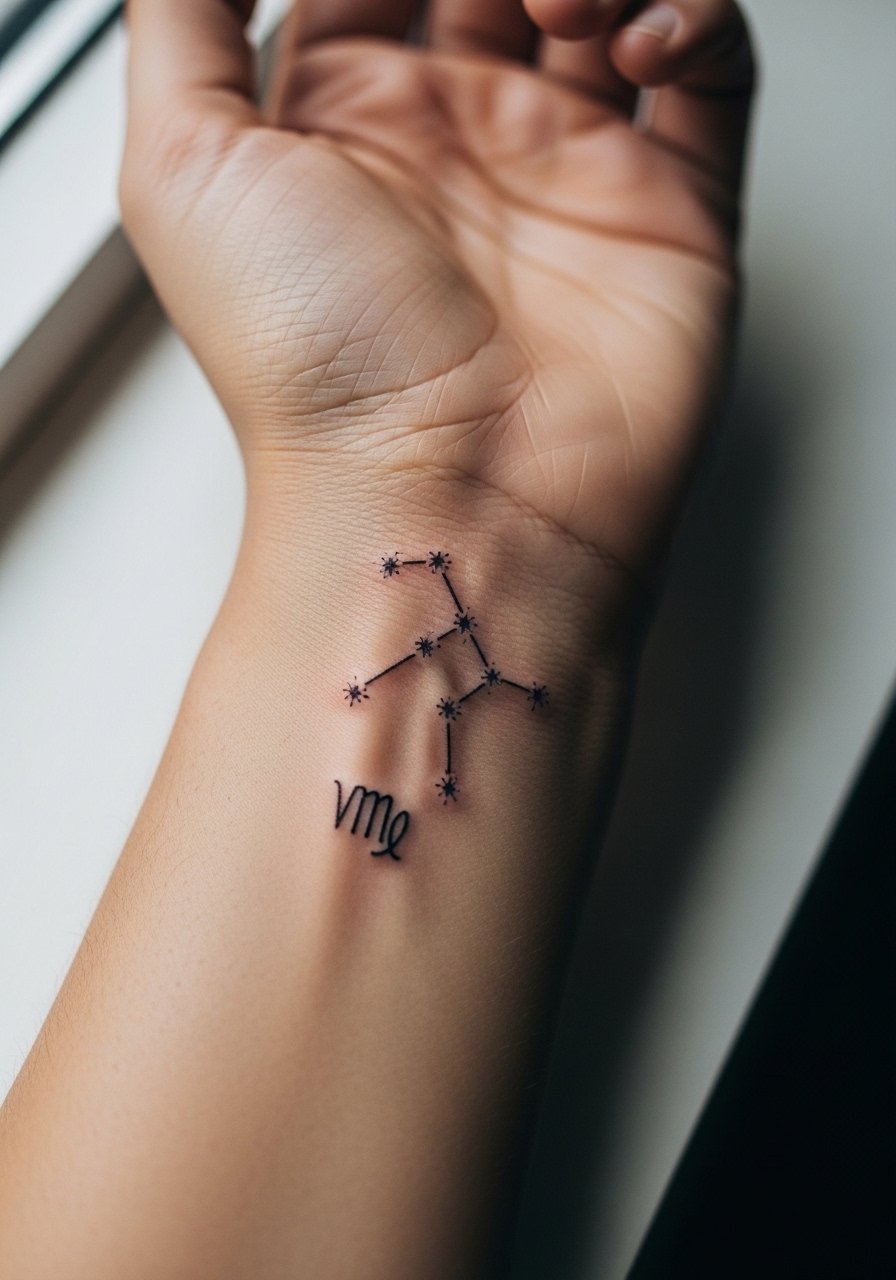
I see this one in more consultations than any single glyph. It reads clean on small wrists when the dots are spaced and the linework is slightly bolder than the sketch. Fair warning, the wrist gets friction from watches and bracelets so plan for a touch-up around year two in many cases. During the consult, ask your artist to show the exact dot spacing on your skin and to test a slightly heavier lineweight so the stars keep their separation. For the session wear, pull on a sleeveless tank so the artist has clear access and you avoid fabric rubbing after the appointment.
2. Black and Grey Mandala Virgo on the Forearm

I've noticed mandalas with precise stipple shading maintain contrast better when artists use dot work instead of dense micro lines. Ask for stipple shading and defined negative space so the mandala does not merge into a blotch as it heals. This placement is medium pain and usually finishes in one to two sessions for a four-inch piece. Pair it with rolled sleeves or a chambray shirt to show off the radial detail without competing with jewelry.
3. Minimalist Virgo Glyph with Wheat Sheaf on the Inner Bicep
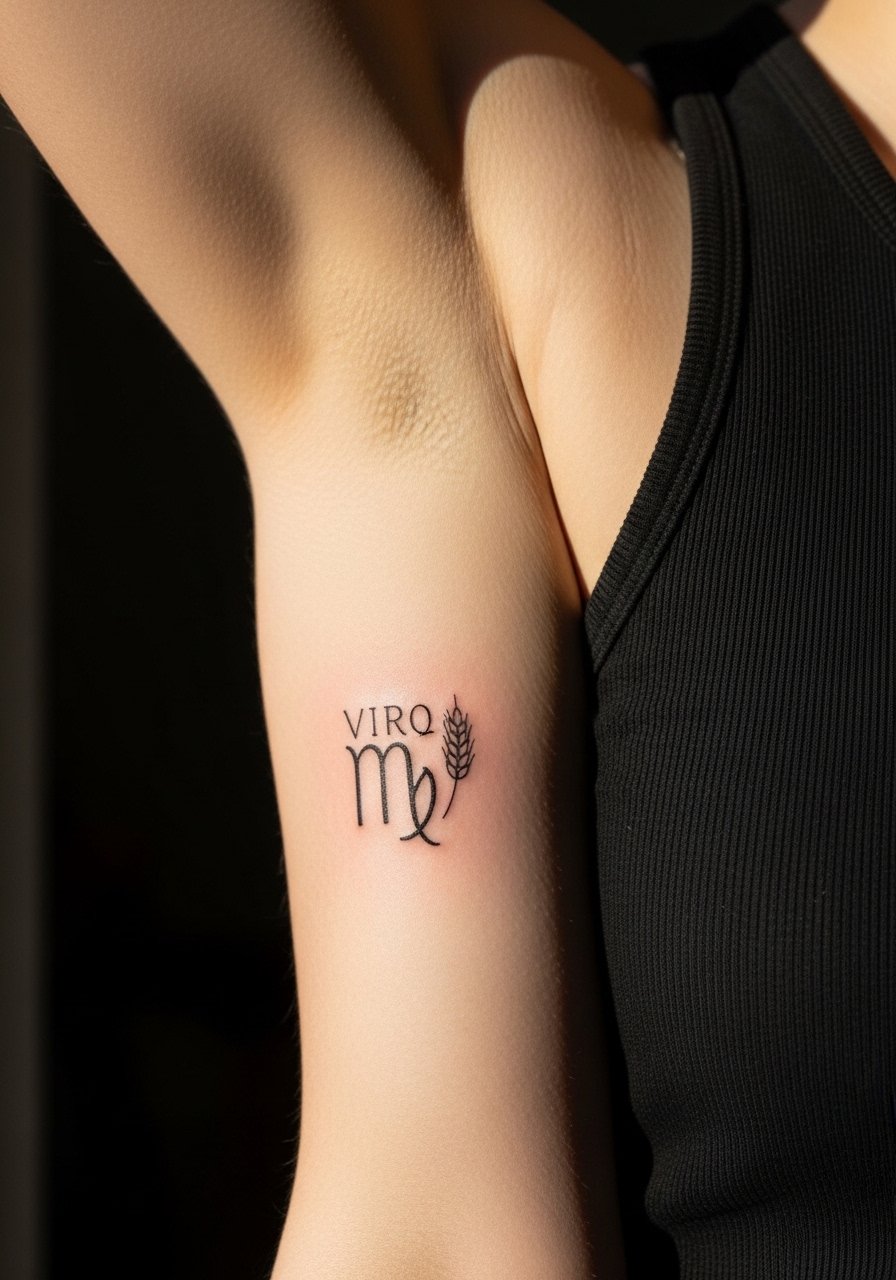
The inner bicep gives this earthy pairing room to breathe, but it is an area that can blur if the lines are too close. Tell your artist to scale the wheat leaves so each stem keeps its own negative space. Pain is lower than ribs but higher than forearm, and a single session usually handles a one-to-two inch piece. For showing it off later, a loose tank top keeps the arm silhouette clean and the design visible.
4. Geometric Virgo Constellation on the Shoulder Blade

This sits nicely where the skin is stable, so geometric spacing shows well for years. The biggest mistake is compressing complex geometry into too small a patch. Ask for 3 to 5 inches and a mockup that maps to your shoulder curve. Two sessions are common if you add solid black fills. For the appointment wear, use a loose button-down shirt you can pull aside so the artist works without the fabric tugging.
5. Watercolor Virgo with Floral Accents on the Ribcage
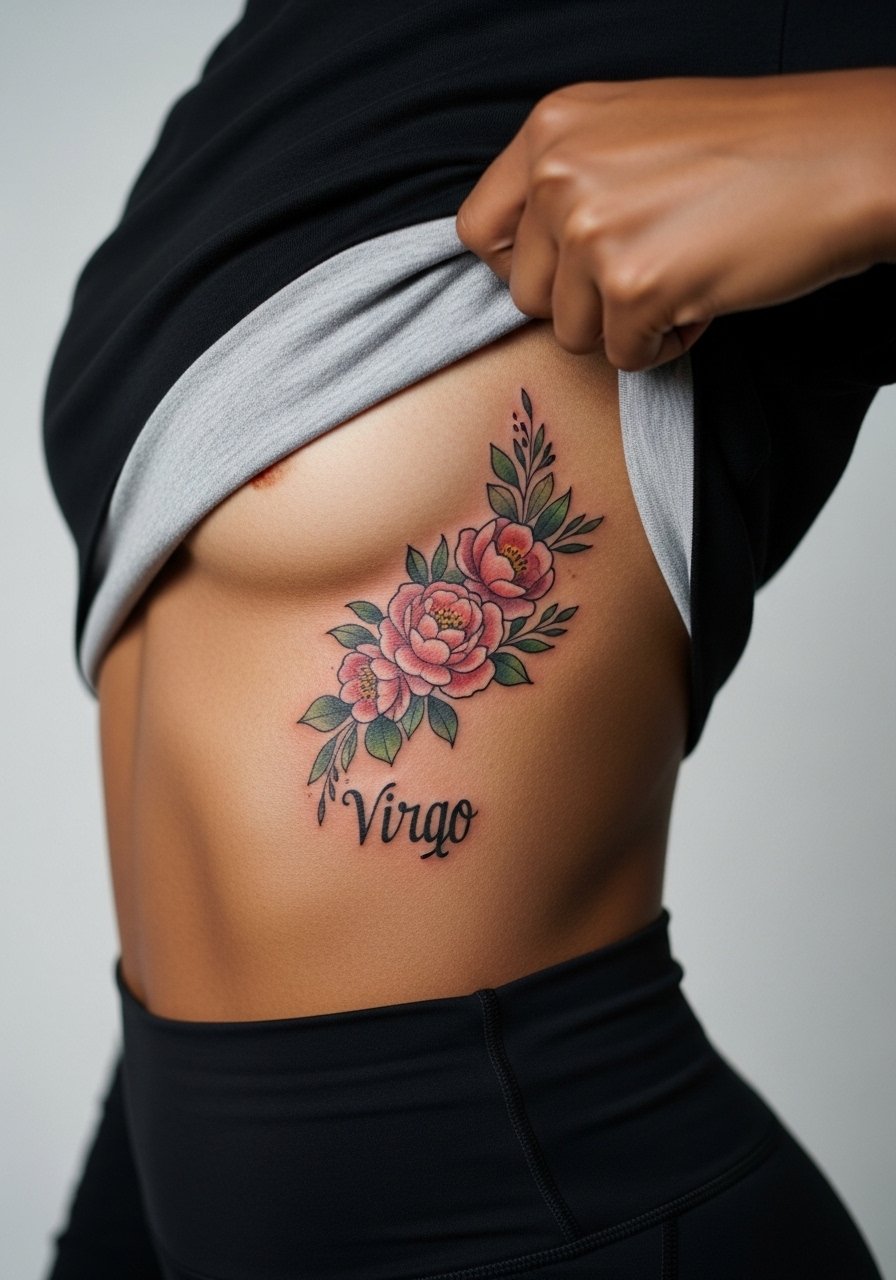
Fair warning about watercolor on ribs. The skin there moves with breathing and weight shifts, so washes can fade unevenly. Artists split into two camps on this one. One camp says watercolor on ribs fades fastest and needs realistic touch-ups. The other camp says with layered saturation and careful placement it can look soft and durable. Ask your artist which camp they fall into and what their touch-up timeline looks like. Rib sessions rank higher on the pain chart, and wearing a sports bra or a loose tank to the appointment makes access straightforward.
6. Neo-Traditional Virgo Maiden Holding Scales on the Calf
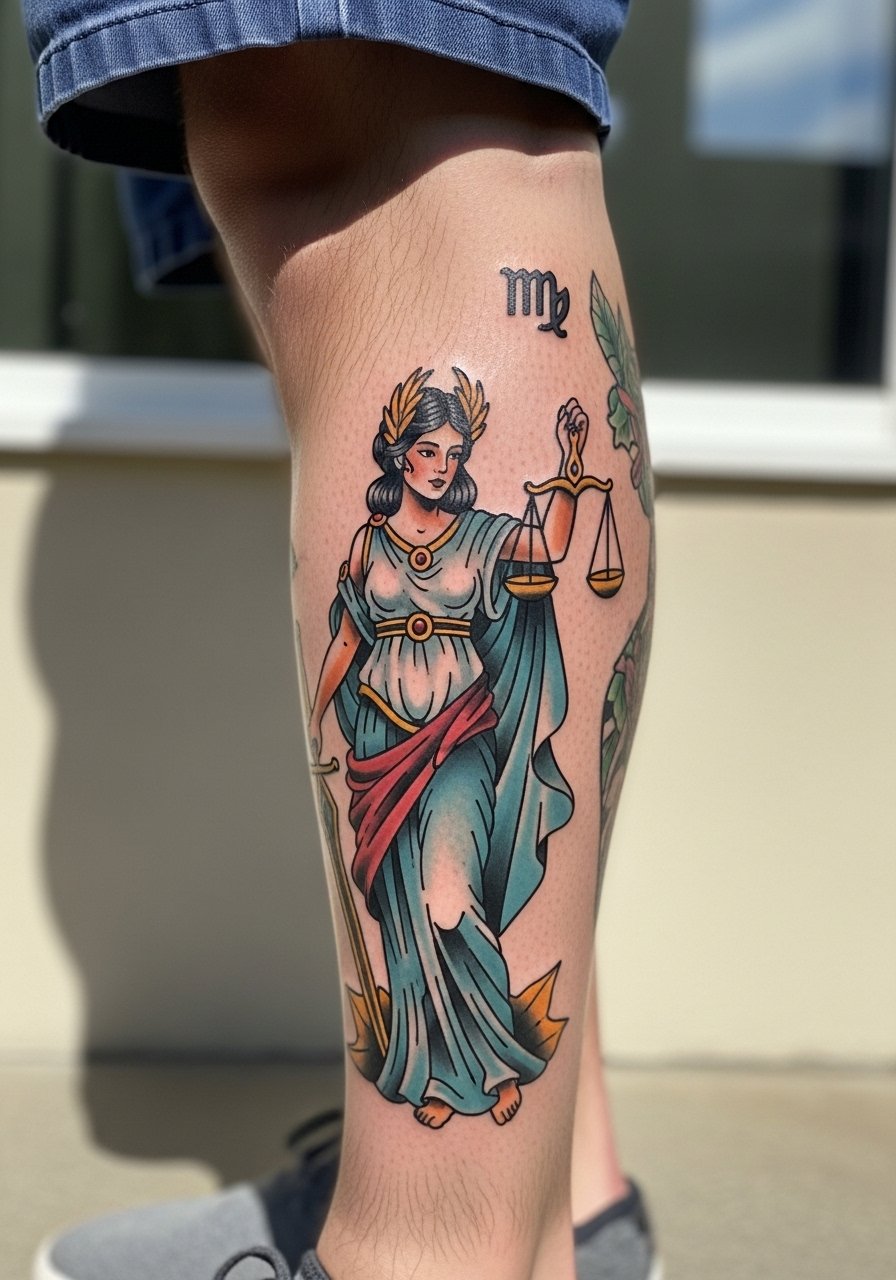
This is a statement piece for collectors who want color and story. Big, saturated shapes here age into a good patina because the calf avoids daily abrasion. Common mistake is over-detailing tiny facial features that lose clarity at distance. Plan for three sessions for a six-inch piece with solid outlines and color saturation. For showing it off in summer, cuffed bootcut jeans or shorts frame the calf without hiding the composition.
Studio Day Picks
The wrist, forearm, inner arm, shoulder, ribcage, and calf designs above each have different session needs, and a few targeted items smooth the day from setup to first week of healing.
- Indie tattoo aftercare oil. A thinner formula than heavy ointment helps fine line wrist pieces avoid clogged pores while still keeping the skin supple in the first week.
- UK-style breathable healing spray. Useful after Saniderm removal on larger rib or calf work for added breathability and comfort.
- Topical numbing cream. Helpful for ribcage sessions where extra pain management reduces flinching and helps the artist keep steady linework.
- Thin protective film roll. Keeps wrist and finger tattoos clean during the first week of frequent hand washing and typing.
- Aquaphor healing ointment. A thin initial layer can lock in moisture on small pieces but follow your artist's specific guidance for application.
7. Micro-Realism Virgo Symbol on the Finger
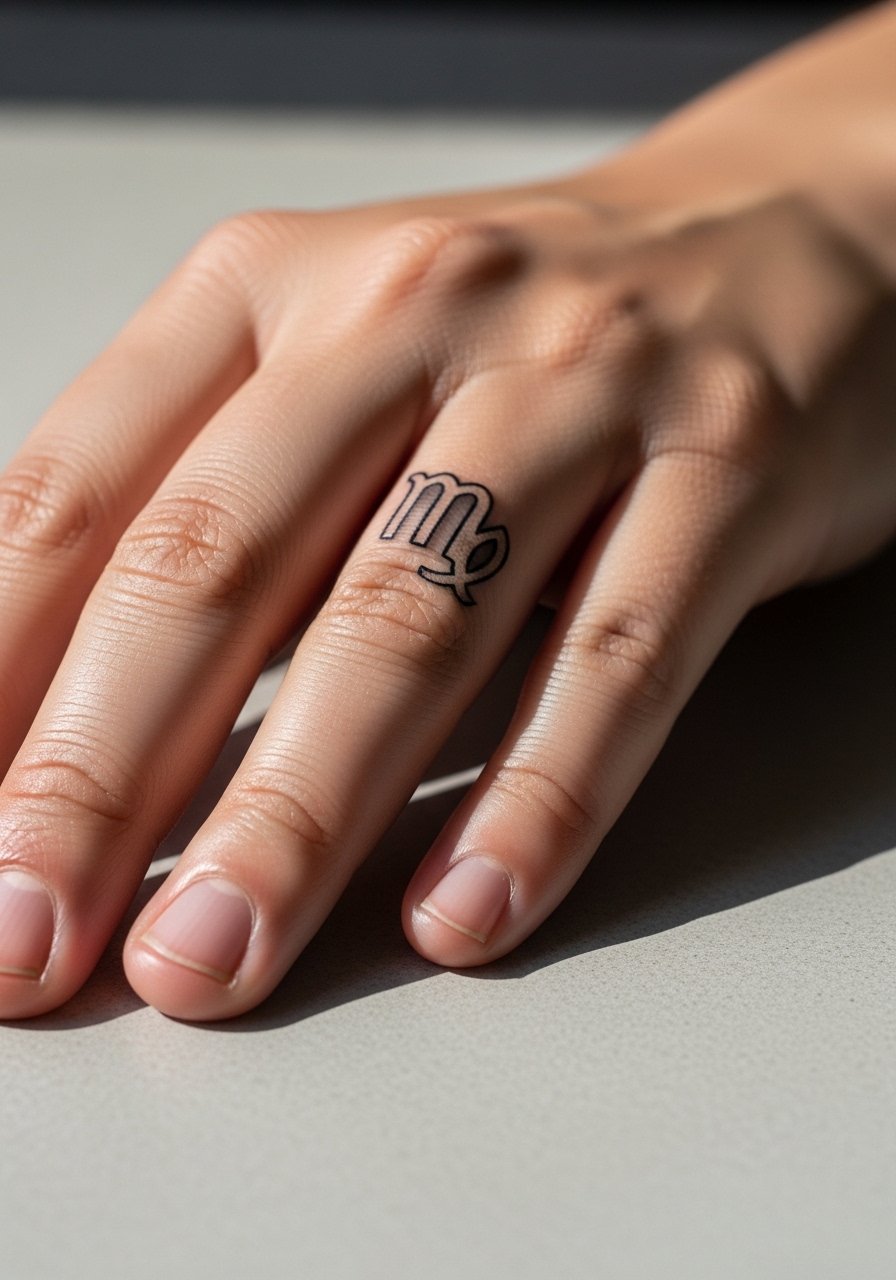
Finger work is addictive but unforgiving. The skin there moves and experiences constant wash cycles, so micro-detail can fade into a softened mark quickly. If you want a micro-real piece, tell your artist you accept yearly touch-ups and keep the design very small and bold at the edges. Session time is short, but expect a high chance of touch-ups in year one. For the appointment and aftercare, protect the area from rings and use a thin bandage for the first nights.
8. Ornamental Virgo Glyph Mandala on the Ankle
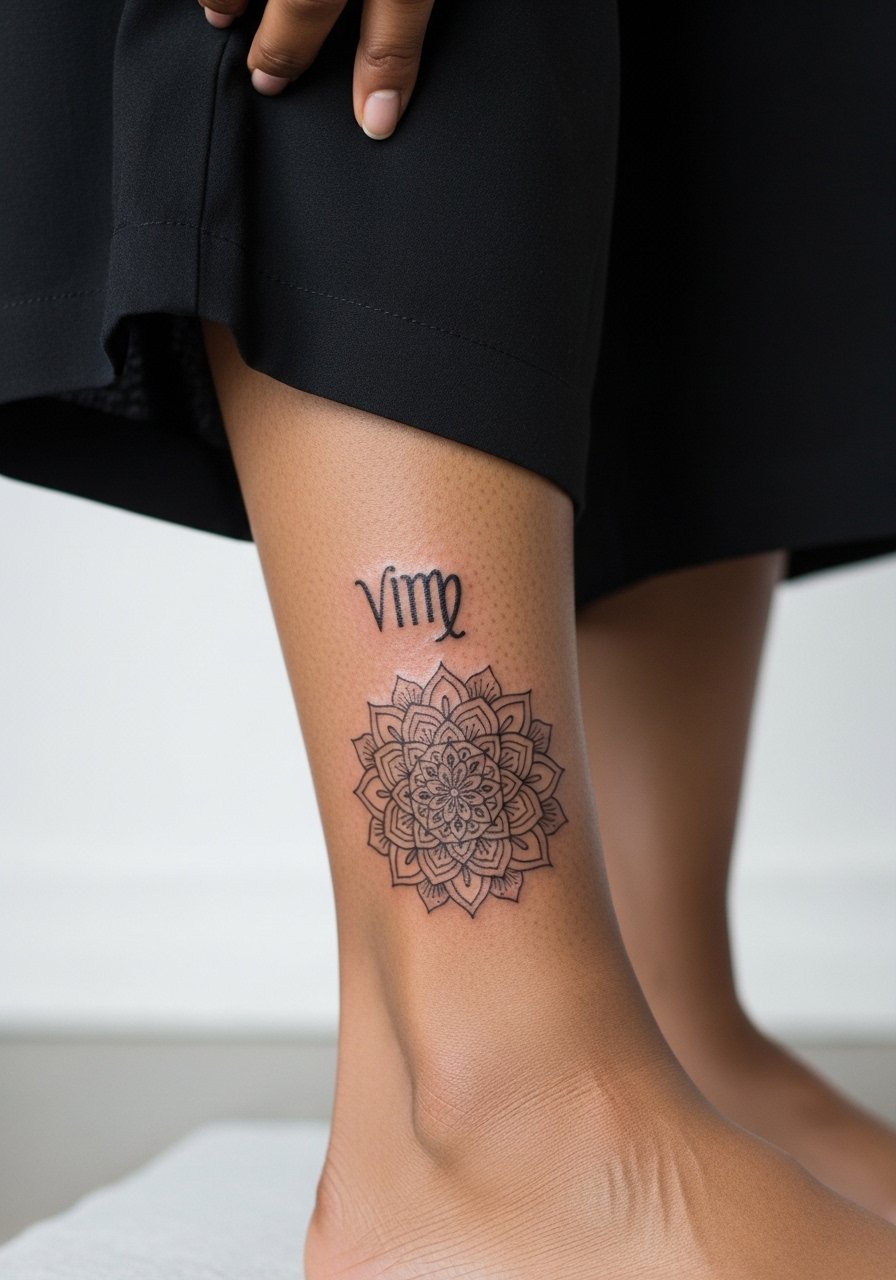
Ankle pieces are perfect for seasonal showing and hidden wear. The common mistake is going too small with intricate patterns, which results in early spreading as the skin around the joint flexes. Aim for three-inch scale with clear negative space. For summer styling, a pair of strappy flat sandals frames the ankle art without covering it. Session wear of loose joggers or a skirt is easiest for access.
9. Ignorant Style Virgo Constellation on the Thigh
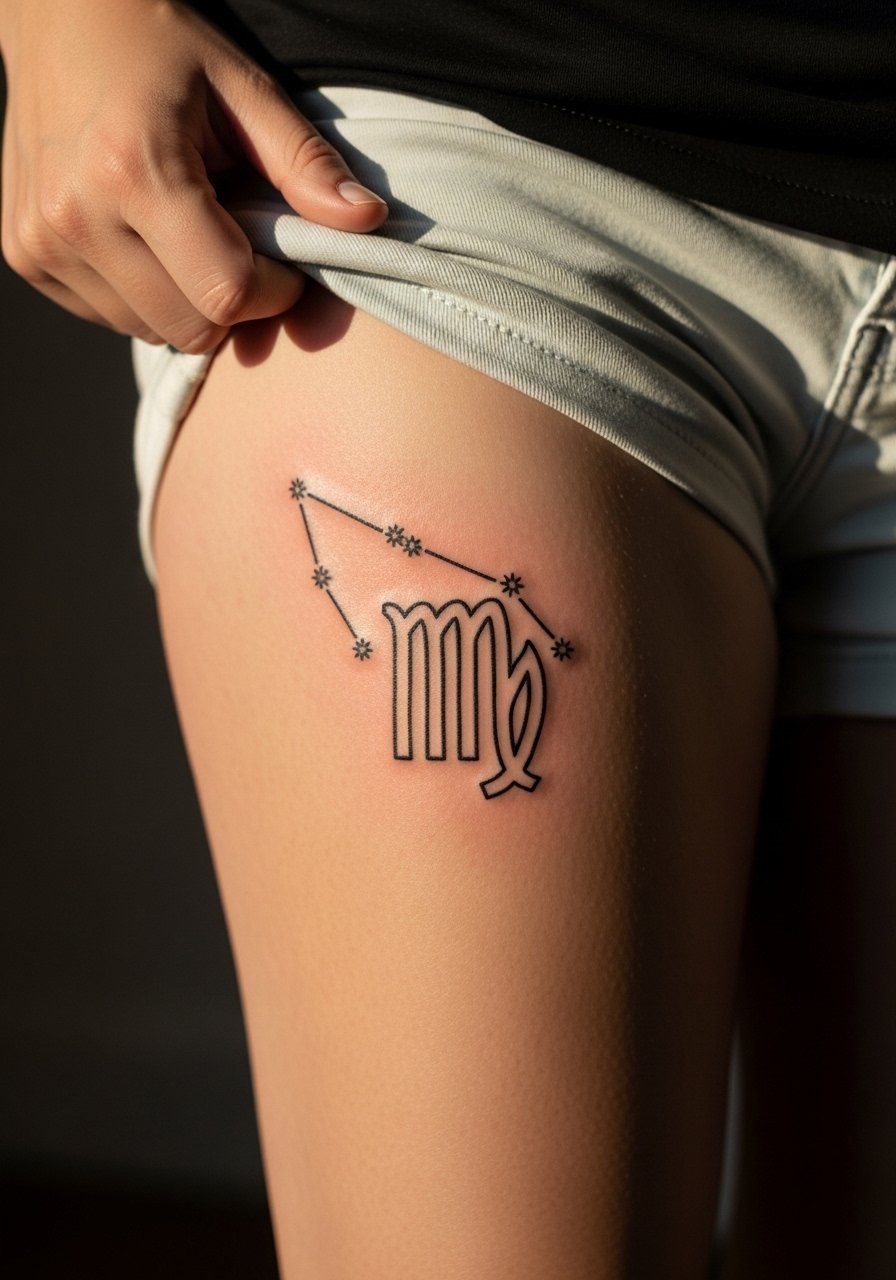
This playful, imperfect line approach intentionally clashes with perfectionism. The inner thigh heals well because it avoids sun and frequent friction, but it is a more private placement that stretches with body changes. Talk to your artist about size relative to your frame so the constellation keeps its proportions. Pain is moderate and sessions usually wrap in one or two appointments. For session wear, loose shorts or a wrap skirt keeps things comfortable.
10. Blackwork Virgo Scales with Stars on the Collarbone

Collarbone pieces read strong from across a room because of contrast. The biggest aging risk is sun exposure, which fades black fills unevenly. Ask for clean edges and slightly larger shapes so the negative space between stars and scales stays distinct. Two sessions are common for consistent saturation. Pair with an off shoulder blouse for evenings and a strapless bralette to ease access during the appointment.
11. Fine Line Virgo Maiden Portrait on the Upper Back

Portraiture in fine line demands restraint. Tiny facial details are vulnerable to blur, so request simplified faces with clean contour linework and avoid heavy micro shading. This placement is lower pain and allows for large scale six- to eight-inch work that holds detail. Expect three to four sessions for a complex upper back piece. For the session, a button-down worn backwards or a loose top makes the artist's life easier and reduces fabric contact on fresh ink.
12. Traditional Virgo Symbol with Banner on the Chest

Classic traditional linework and saturated color age reliably because the strokes are bold. The common error is shrinking the banner and trying to pack long text into five inches. If you want text, spell it out in the consult and get the exact font scale on skin. Chest work needs two to three sessions for proper saturation and healing. A strapless bralette to the appointment keeps coverage discreet and gives the artist unobstructed access.
13. Dotwork Virgo Constellation Down the Spine

Dotwork thrives on the spine because the vertical composition complements the anatomy. The lower back is less sun-exposed so dot contrast keeps longer, but dense dot fields too close together can look muddy after a few years. Tell your artist to space the dot gradients and to test the vertical spacing on your spine curve. Expect three sessions for a six-inch vertical piece. For show-off moments, open-back tops highlight the line without overexposing the area.
14. Hand-Poked Minimalist Virgo Glyph
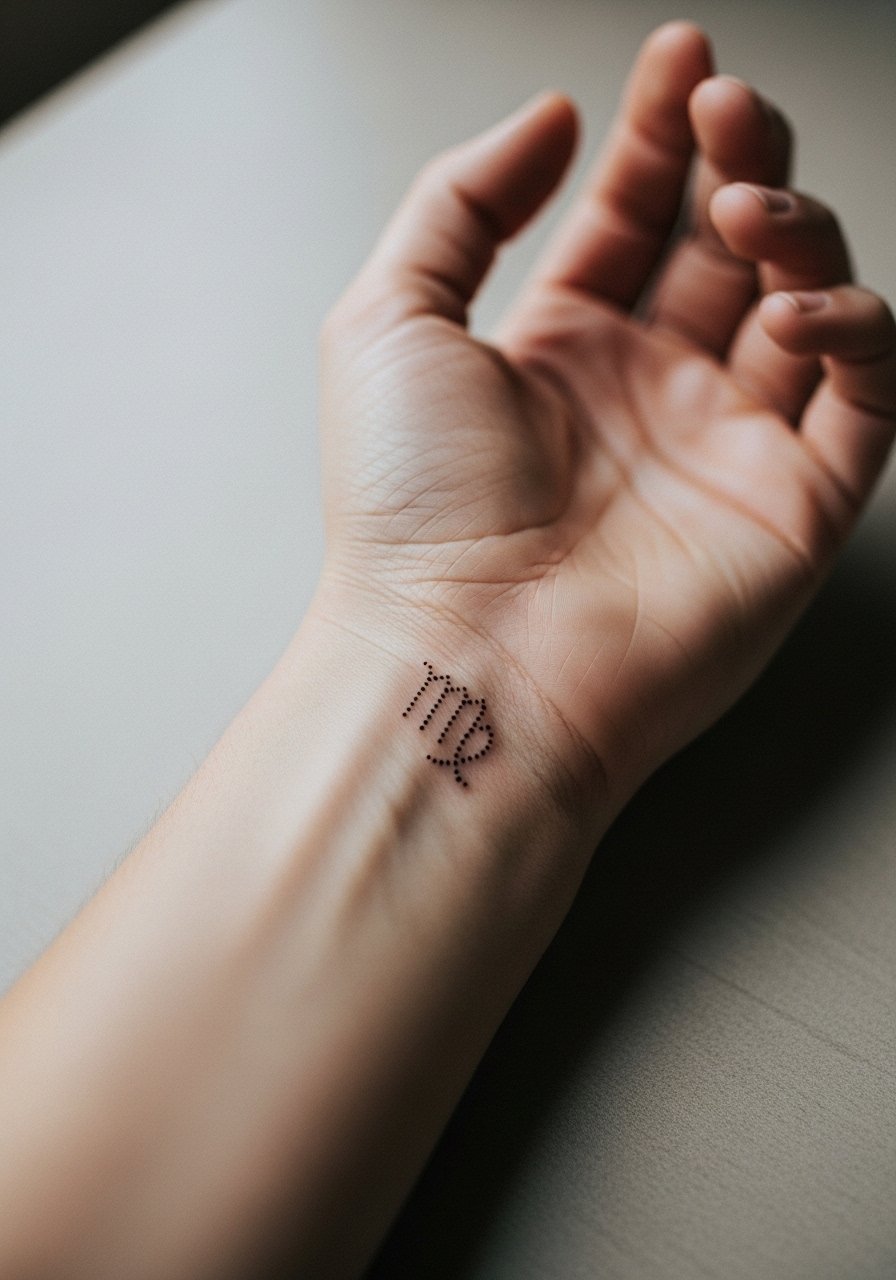
Hand-poked work can be a lower-cost route to clean, slightly textured lines. The technique sits differently in the skin than machine work, and some artists prefer machine on high-friction zones. If cost or a softer aesthetic is the goal, ask the studio if they offer hand-poked options and request a healed photo of similar work on comparable skin tone. Session time is usually longer than machine for the same size, and touch-ups are often needed within one to two years for wrist placement.
15. Birth Chart Constellation Map on the Back

This is a bespoke idea for people who want a personal map rather than a standard glyph. The risk is cramming too many tiny stars and labels into a small area. Ask the artist to mock up a scaled map that preserves spacing and to omit tiny lettering that becomes illegible. Large backs give room for clarity and will age better. For consult prep, gather your chart elements and bring only the essential coordinates so the artist can plan negative space that lasts.
16. Botanical Virgo Wheat Motif with Modern Realism

Pairing botanical realism with the wheat motif gives earthy Virgo energy a modern finish. The mistake is ultra-fine leaf veins that disappear once healed. Ask for simplified leaf shapes with selective stipple shading and slightly heavier node lines. Forearm placement keeps the piece visible without heavy friction, and one to two sessions usually covers a medium piece. For everyday styling, rolled linen shirts in olive or cream complement the organic palette and let the linework pop. Try a loose button-down shirt you can roll sleeves on.
17. Spine Vertical Minimalist Virgo Script
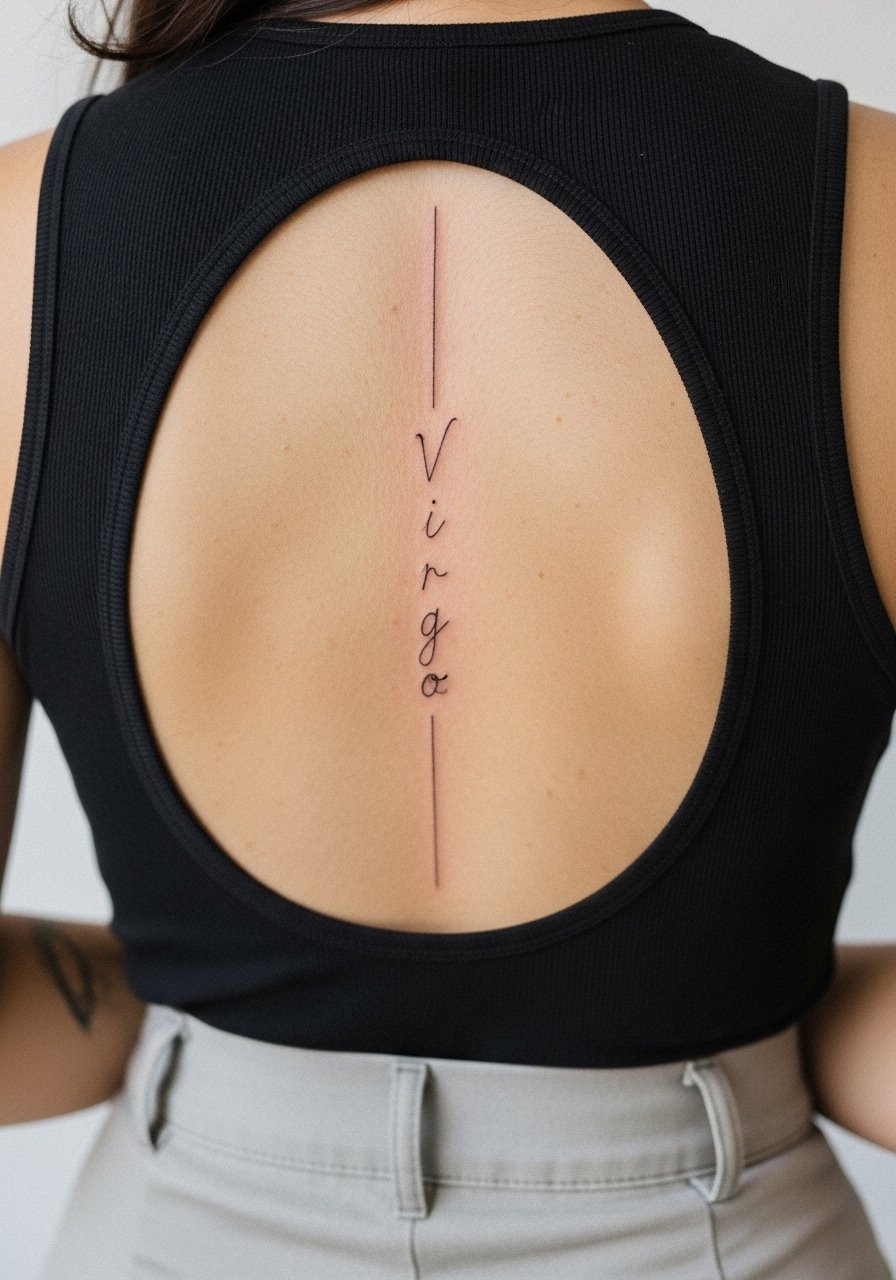
A vertical script along the spine reads quietly yet deliberately. The inner back surface keeps the lines protected from sun, but tight script can blur if the strokes are too narrow. Tell the artist to test the exact lettering size on your spine and to leave breathing room between characters. Pain is moderate for a vertical spine strip and three sessions can be required for longer quotes or added dot work. Open-back dresses are an obvious showing option when you want the piece visible.
Frequently Asked Questions
Q: Do fine line Virgo wrist tattoos blur faster than bold versions, and what should I expect for touch-ups?
A: From what I have seen, very fine lines on wrists tend to soften sooner than bolder linework. Expect a possible touch-up between one and three years depending on sun exposure and daily friction. If you want longevity, ask your artist for slightly heavier lineweight and plan a light touch-up schedule.
Q: Should I pick blackwork over watercolor for a ribcage Virgo if I have medium to dark skin?
A: Blackwork typically keeps better contrast on medium and dark tones, while watercolor can read softer or wash out in photos. That does not mean watercolor cannot work. If you choose watercolor, ask for richer layering and test with temporary color to see visibility before committing.
Q: Are hand-poked Virgo glyphs a reliable cheaper alternative?
A: Hand-poked can be a solid lower-cost option and delivers a distinct texture. It is more reliable on less-trafficked spots. Confirm healed photos from the artist on similar placements and be ready for possible touch-ups. For session comfort, hand-poked sessions may run longer than machine equivalents.
Q: How do I style a forearm mandala so it stays visible without being overwhelmed by jewelry?
A: Keep wrist and hand accessories minimal and let the forearm be the focal point. A thin chain bracelet on the opposite wrist balances the look without crowding the mandala. Rolled sleeves in neutral tones also help the detail stand out.
Q: Should I use Saniderm or dry healing on a fine line wrist piece?
A: Artists are split on this. One group says protective film speeds recovery and reduces scabbing. The other says for very fine line work, dry healing avoids ink migration. Ask the artist which method they prefer based on your skin type and the exact line density.
Q: How do I find a local artist who specializes in fine line Virgo work without naming specific studios?
A: Search hashtags like #VirgoTattoo and #FineLineVirgo on Instagram or use Booksy filters for "fine line" in your city. Browse healed photos, check for consistent linework across different skin tones, and ask to see recent healed examples before booking.