The right upper shoulder piece reads like worn armor on the move. It catches light when you lift your arm and folds with the deltoid so the design breathes with motion. For men chasing something a little raw, the shoulder gives room to test a striking motif without committing to a sleeve, and these ideas show how to get a clean, long-lasting result from the first stencil to the touch-up years later.
1. Bold Tribal Pauldron Armor Cap
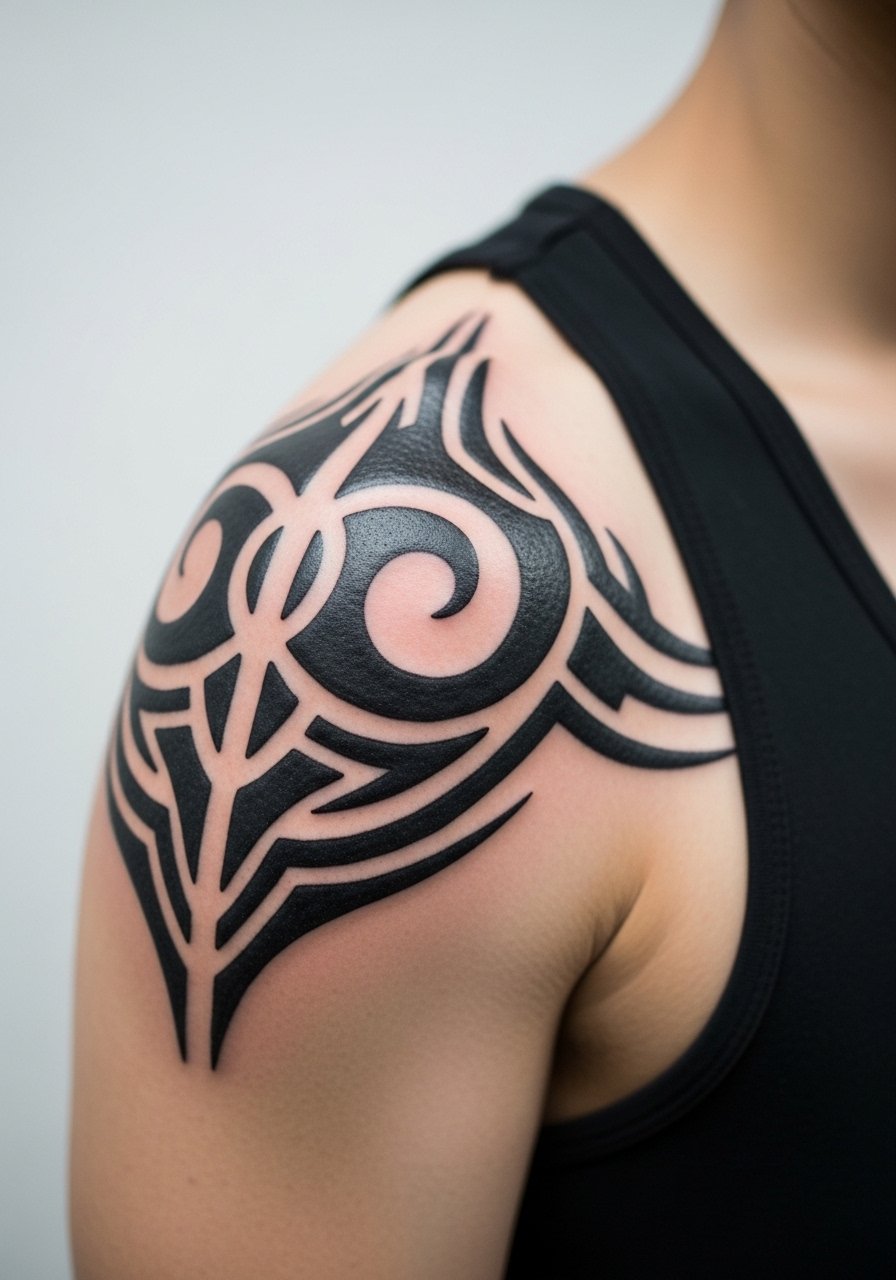
Personal observation: I see this style on athletic builds because the circular, pauldron layout reads like wearable armor when the arm moves. Fair warning, the deltoid can be fussy for tiny detail. Keep elements at least four inches across so the linework has room and the piece ages into a cohesive shape. Tell your artist you want the knotwork to contract with muscle movement and show examples of bold lineweight for longevity. Session time is usually one to two hours. For showing it off, pull on a fitted black tank top men so the cap sits framed against the shoulder seam.
2. Descending Lion Skull Flow
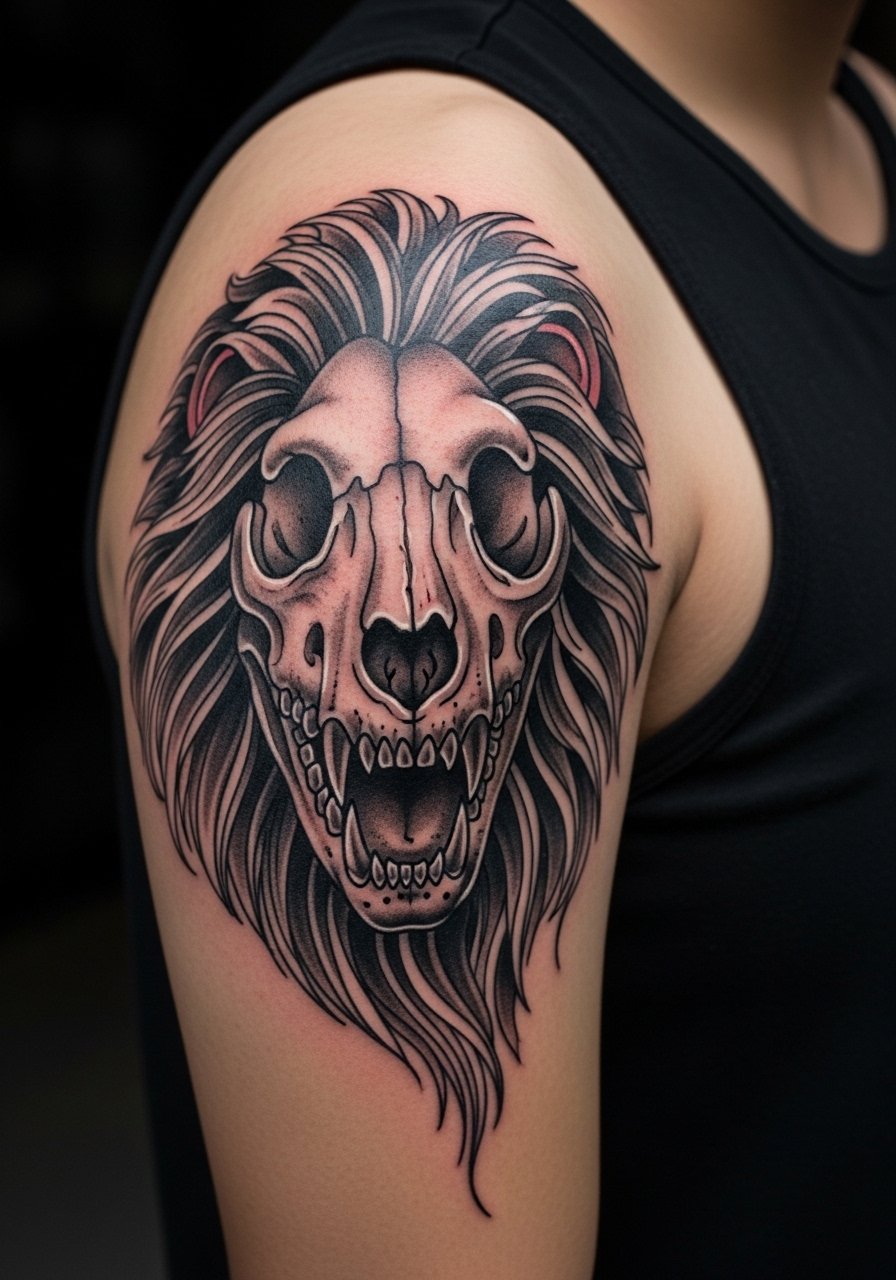
When I talk to people who want a vertical piece, they usually mean visual momentum. This lion skull uses a descending flow to elongate stockier arms, which helps balance proportions in photos and in person. During consultation say you want the jawline and mane to guide the eye down, not compress the shoulder cap. Expect two to three sessions and moderate pain where the needle travels over the lateral deltoid. Common mistake is cramming too much color into the first pass. Ask for spacing that keeps red accents as highlights rather than full saturation. Pair this with a rolled sleeve henley men when you want the arm flow to show.
3. Biomechanical Steampunk Gears
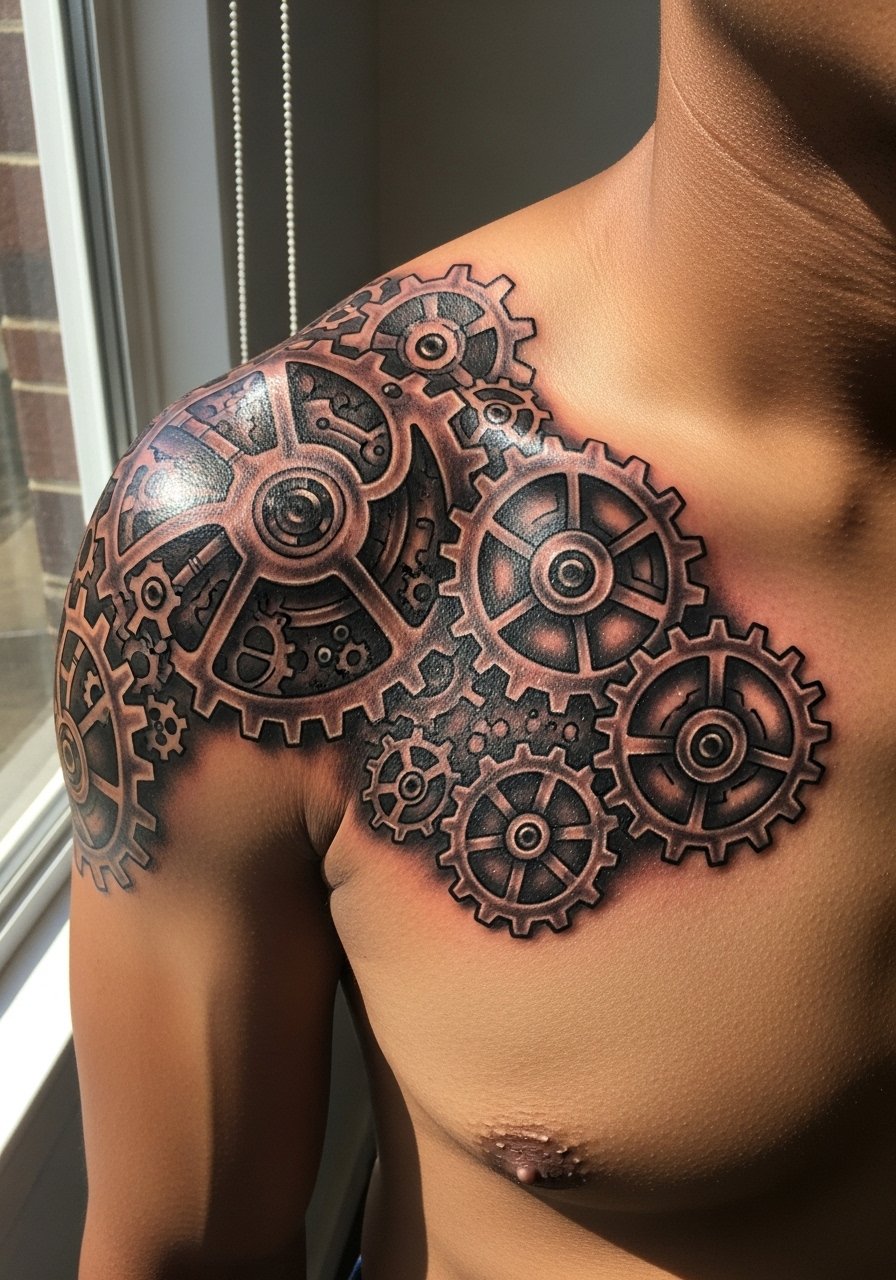
Consultation lead: this style needs a specialist who understands layered shading and how to render metal on curved skin. Expect three or more sessions and a higher touch-up timeline. The biggest mistake is asking for tiny mechanical detail that will blur with movement and aging. Ask the artist to design larger gear faces and to show mockups that follow the collarbone and deltoid. Pain is moderate along the shoulder cap and can climb near the pec crossover. For sessions, wear a men's open button down shirt so the chest-shoulder transition is easy to access.
4. Dragon Wrap-Around Mythical
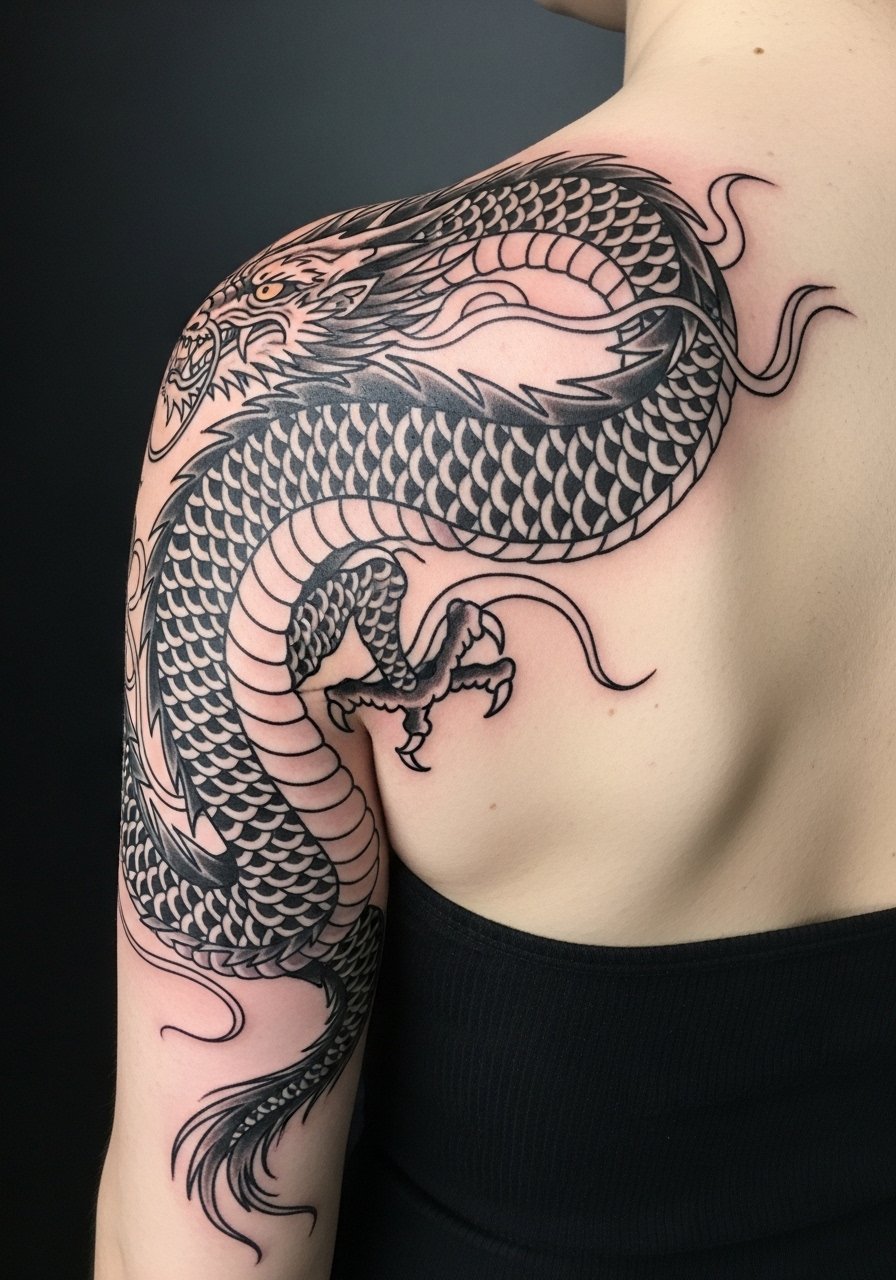
Visual impact lead: dragons work because they use wrap-around motion to make the shoulder feel larger and more dynamic. This one reads best at medium-large scale with two to four sessions depending on color. A common aging problem is oversaturated scales in small areas that blur into one tone. Ask for clearer spacing between scales and controlled saturation in the first session. Match the dragon's curve to the deltoid so the piece flexes with movement. When you want to show it, shrug a rugged leather jacket men off one shoulder for a staged reveal.
5. Celtic Knotwork Shoulder Plate
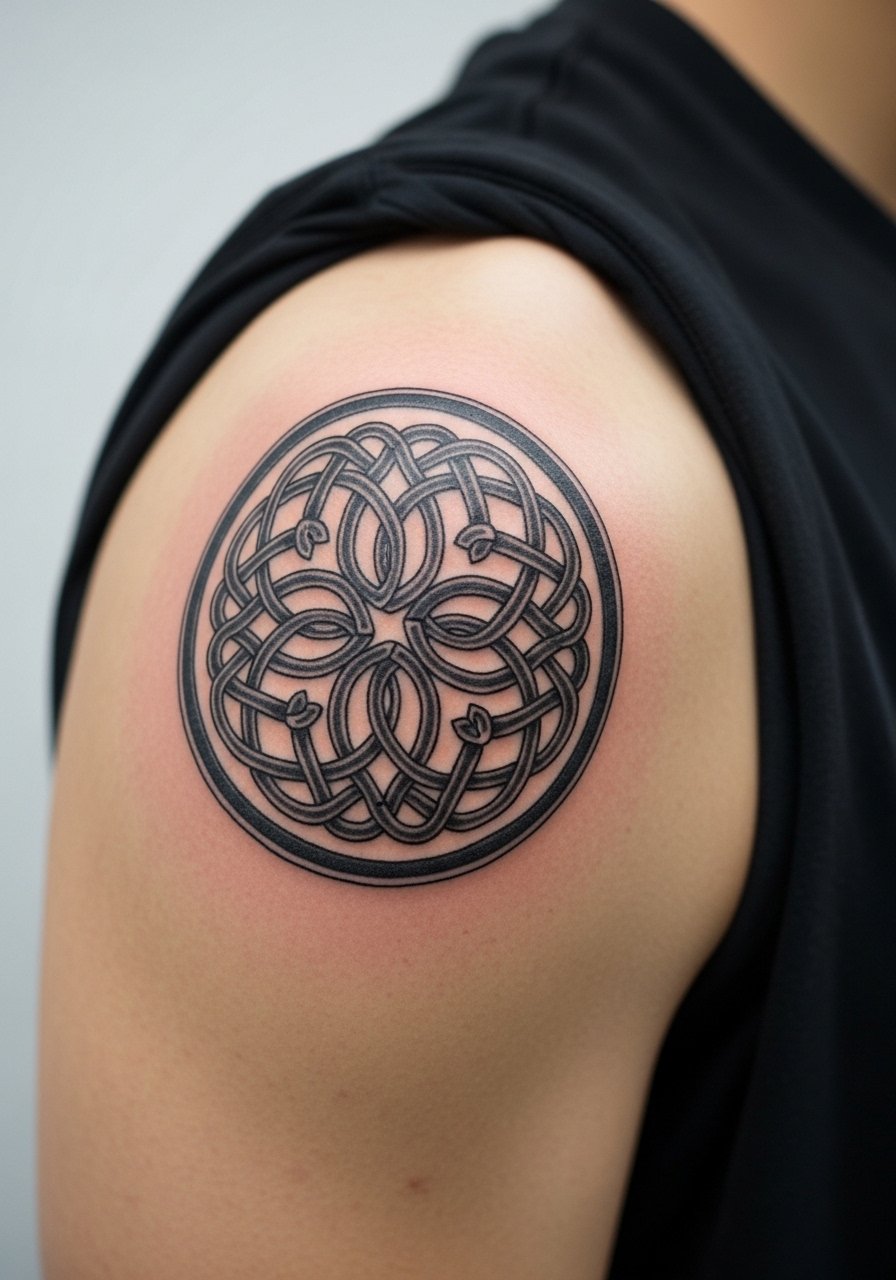
Mistake lead: people often request overly intricate knots at a tiny scale and end up with blurred intersections after a few years. Start with a five-inch circular plate so the interlacing breathes and the pattern moves with muscle. Session time is typically one to two hours for a deltoid cap. Tell your artist you want the knots to sit flat against the muscle rather than wrap too far onto the chest or back unless you plan to extend. For a casual show-off, a loose athletic short sleeve lets the plate peek without full exposure.
6. Predator Wolf Facing Forward
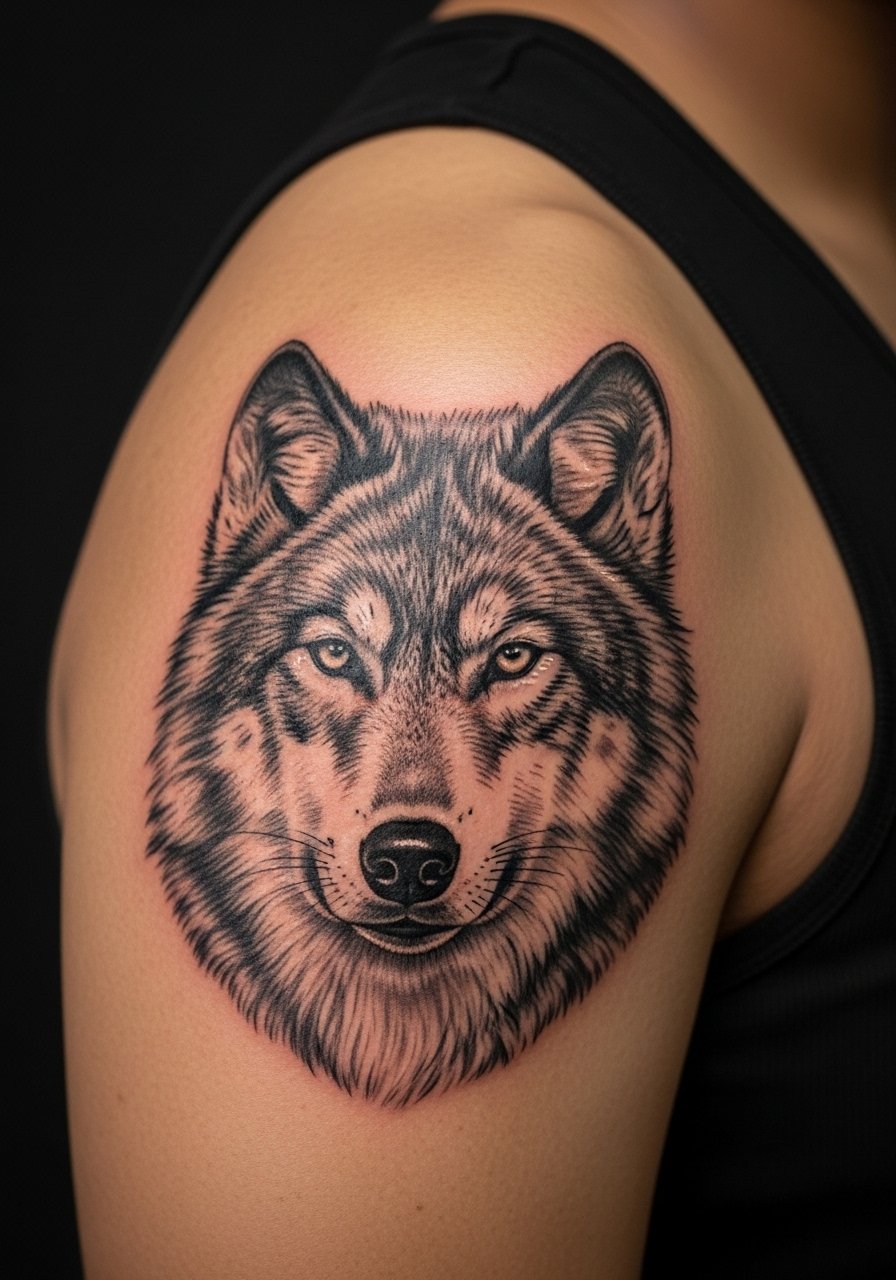
Consultation lead: tell your artist you want the muzzle aligned with the clavicle so the face reads head-on when you stand relaxed. The deltoid may make the snout look longer from some angles so request a stencil preview at three different arm positions. Expect two sessions and moderate pain over the cap. A common mistake is asking for hyper-fine fur detail in a small format. Go medium size for lasting texture and schedule a touch-up at year two. When you want to show it, a slim fit polo shirt men with the shoulder seam aligned frames the portrait cleanly.
Studio Day Picks
The first six designs above range from compact deltoid caps to chest-shoulder blends, and a few need specific prep or protection during the session.
-
Stencil transfer paper kit. Lets you preview placement on curved deltoids before the needle touches skin so small composition shifts are easier to test.
-
Topical numbing cream. Applied per the product instructions before a shoulder-to-chest session it can ease the first pass over sensitive crossover zones.
-
Thin protective film roll. Useful for keeping the cap area clean on days when friction from shirts would otherwise irritate fresh ink.
-
Fragrance free gentle body wash. Cleanses without stripping oils, which helps initial scabbing for fine line or micro-realism shoulder work.
-
Aquaphor healing ointment. Thin application in the early healing window helps prevent excessive dryness while the skin seals over detailed linework.
7. Upper Back Tribal Extension

Visual impact lead: this extension lets you hide bold work under a shirt while still having a wide canvas. Expect three to five sessions and strong saturation maintenance. A frequent mistake is starting the back span with mirrored copies of small flash pieces. Instead, plan the negative space so it breathes across the shoulder blades and reads well whether you are tensing or relaxed. For show-off seasonal wear, a men's muscle tank backless reveals the full span without competing patterns.
8. Chest-Shoulder Mechanical Blend

Aging lead: dense mechanical shading on the chest can soften faster than the shoulder cap because chest skin moves with breathing. Discuss staged saturation with your artist so darker passes remain crisp while allowing the chest fill to sit lighter initially. Sessions are longer for chest blends and require careful session-day clothing like a sleeveless performance tank that gives full access. If you are booking a specialist, search using location tags and directories rather than relying only on single portfolio images.
9. Cyberpunk Tech Implant
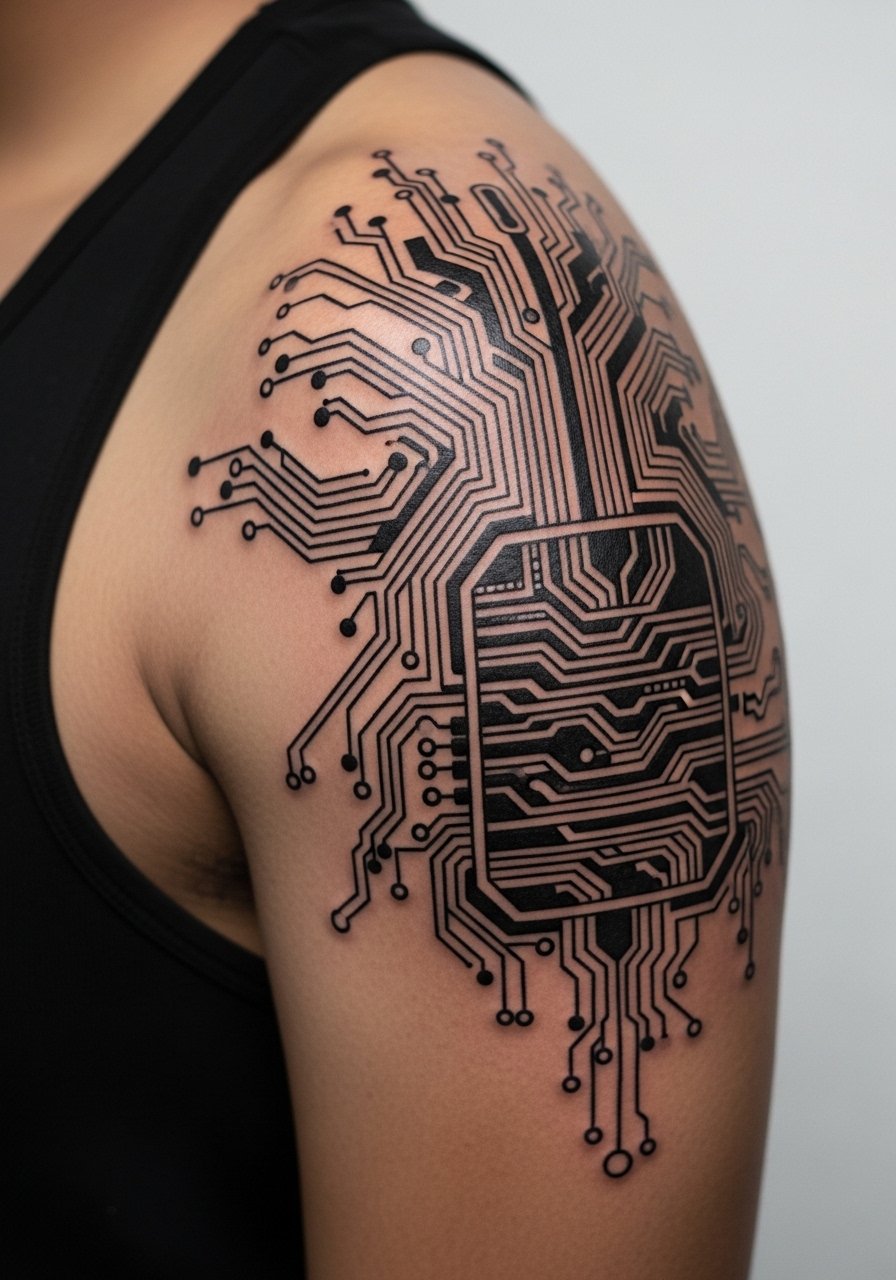
Controversy lead: artists split on how dense black fills should be on curved shoulder zones. One camp recommends broad, flat fills for longevity. The other camp believes heavy fills can trap ink and age poorly on high-movement spots. The right approach depends on the artist's technique and your skin. For this cyberpunk look, plan two sessions and ask for mockups that show how negative space will sit when your arm is relaxed. Wear a loose short sleeve tee athletic to the appointment so the artist can roll the sleeve without pressure.
10. Bear Strength Cap Icon

Mistake lead: the tiny icon approach risks losing texture when the piece is too small. For a bear face that keeps its features, go medium size and ask for slightly heavier contrast in the first session. Session time is often under an hour and pain is low to moderate on the deltoid cap. This piece works well with minimalist styling like a minimalist leather watch that keeps attention near the shoulder without crowding the silhouette.
11. Armor-Inspired Geometric Pauldron
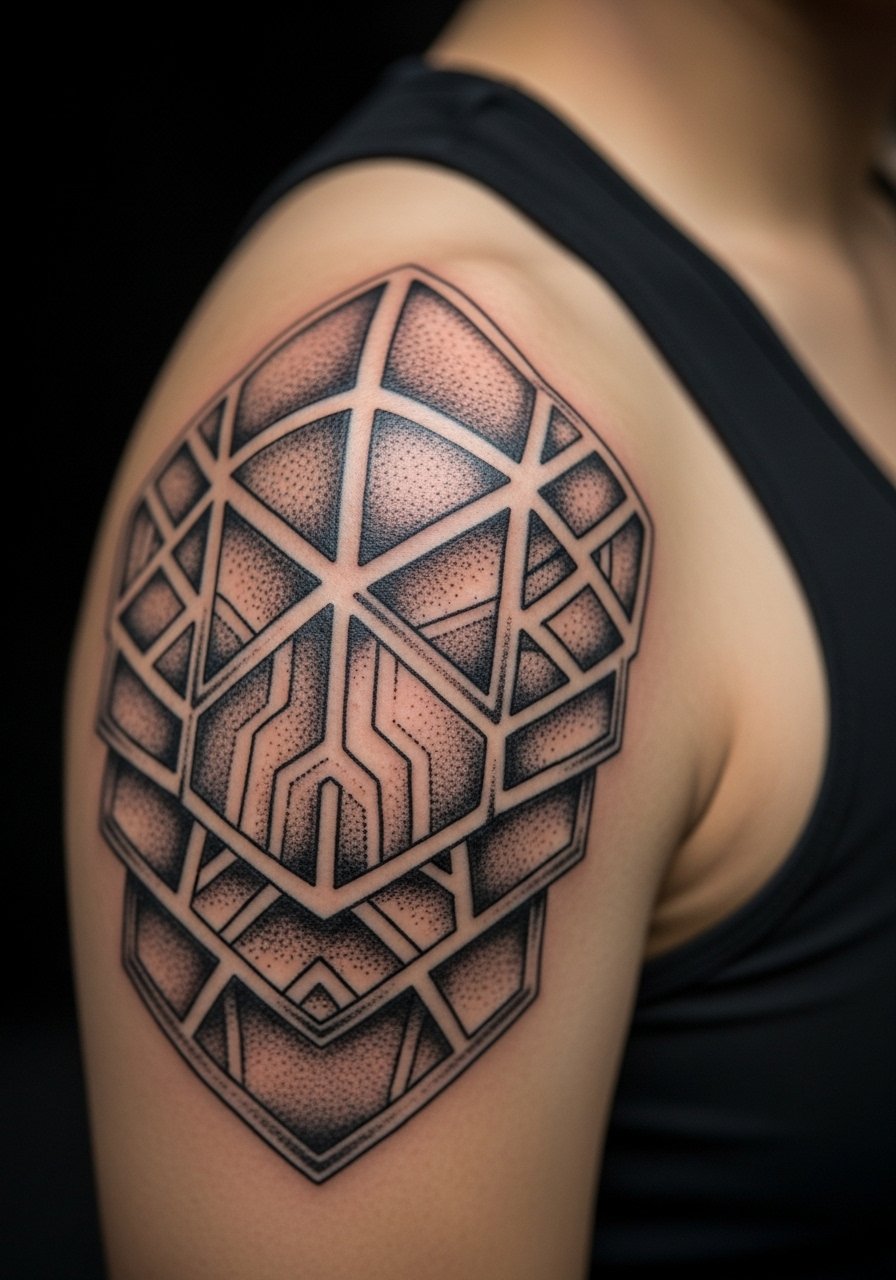
Consultation lead: tell your artist you want geometry that follows the deltoid arc so the polygons read as a pauldron when you flex. Stipple shading holds well on shoulders when the dots are spaced for longevity. Expect one to two sessions depending on scale. A real mistake is insisting on micro polygons that will merge. For the session wear a loose button robe shirt you can lift aside so the artist has clear access without rubbing the fresh ink.
12. Nautical Compass with North Star
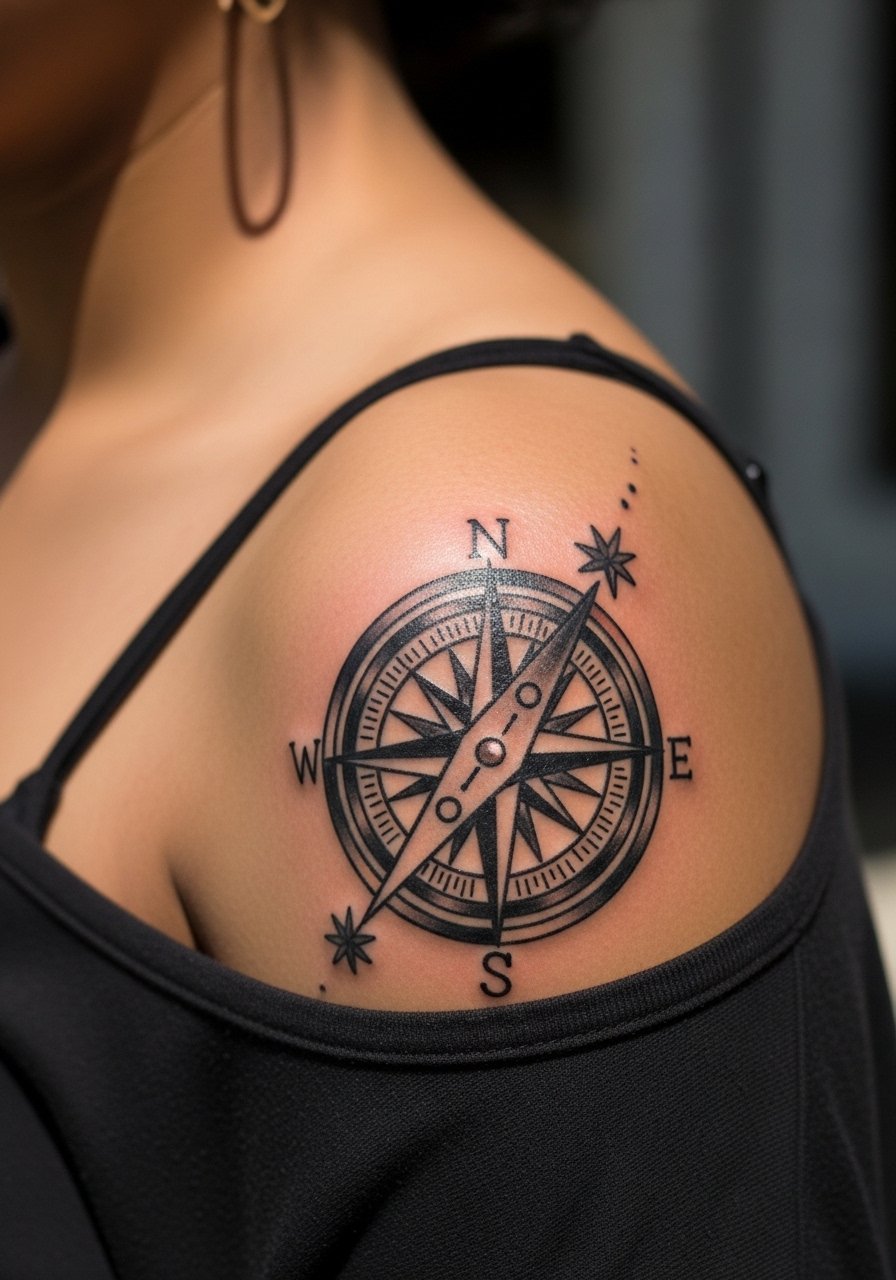
Aging lead: compasses with tight ornamental lines often need a touch-up at year three because the inner points can blur. Ask for a slightly thicker outer ring and for the star to act as the focal point. Session time is roughly one to two hours and pain rating is moderate. A common mistake is too many tiny script notations around the compass. If you want to wear this on show days, a loose athletic short sleeve frames the round shape without crowding it.
13. Staggered Scales: Dragonette Micro-Realism
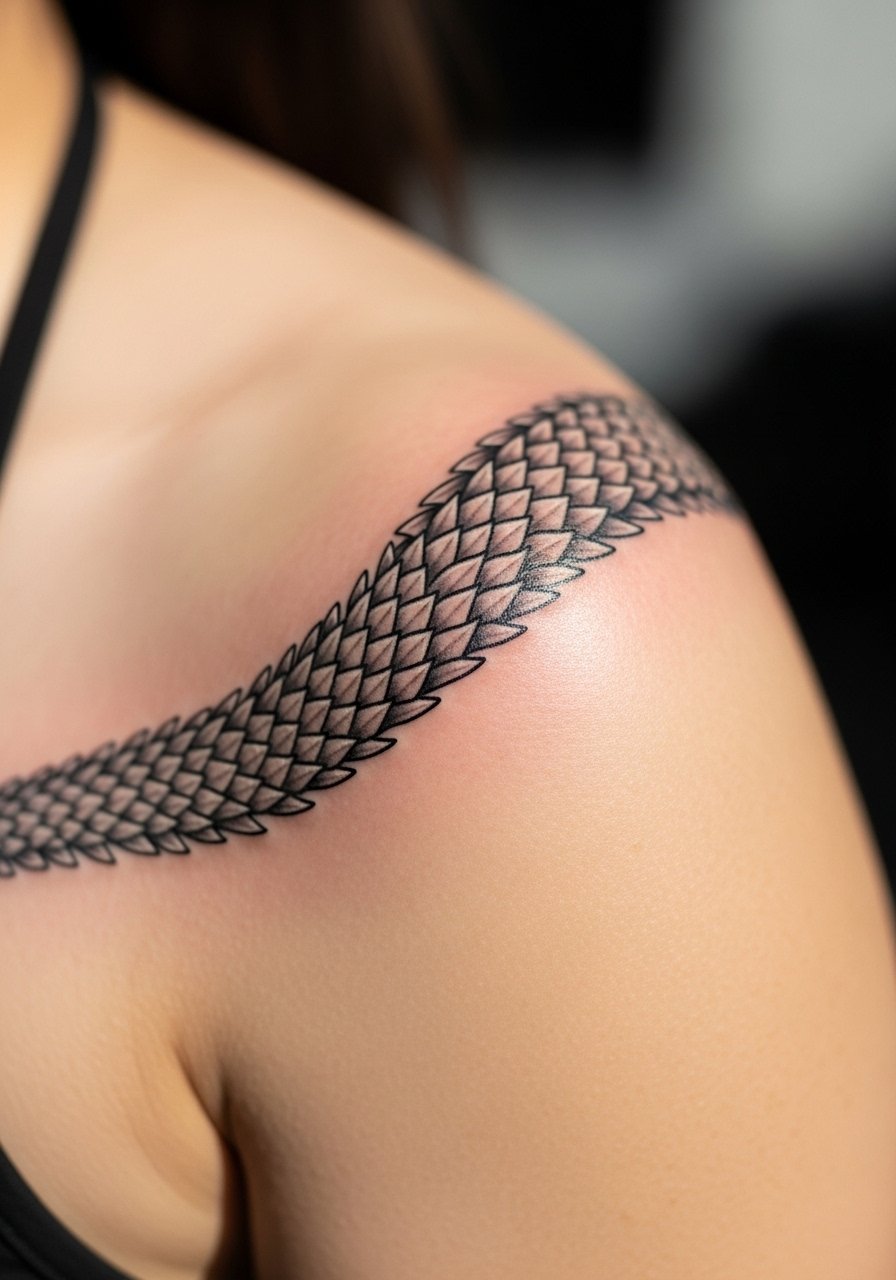
Mistake lead: micro-realism scales can lose definition if packed too tightly. Ask for staggered scale sizing and to see how the band reads at arm rest and at full extension. This is a lower-pain option and can often be completed in a single session if you keep the scale sizes moderate. For a controlled reveal, roll on a slim fit polo shirt men so the shoulder seam highlights the band.
14. Fallen Feather Deltoid Accent

Personal observation: small accents like a feather give you an edgy look without a heavy commitment. Most people tolerate the deltoid for this size with low to moderate pain and a session under an hour. Common mistake is making the feather too narrow; widen the quill a bit so the linework retains texture after a couple of years. For the session wear a sleeveless gym tee for easy access and minimal rubbing afterward.
15. Mechanical Shield Plate
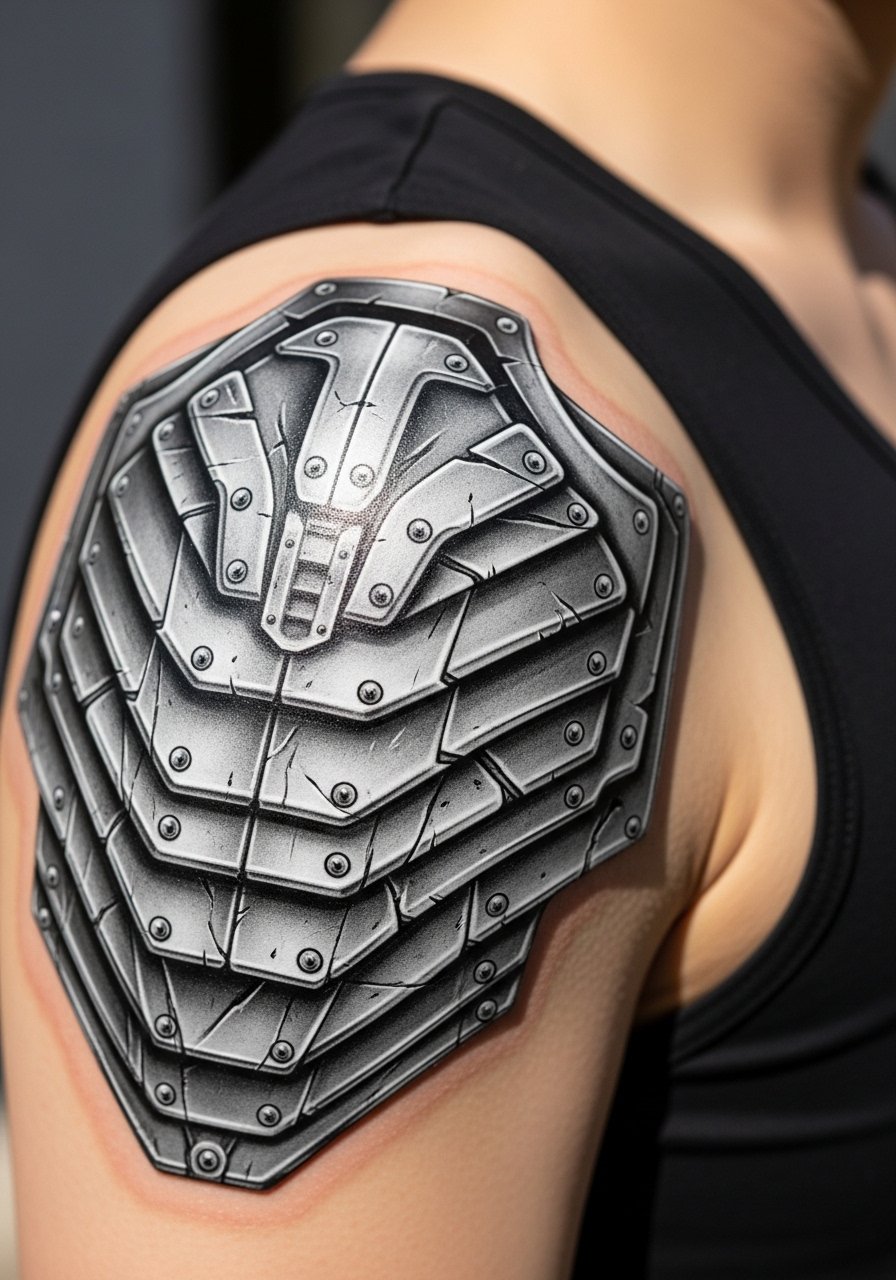
Visual impact lead: shield plates read like armor when positioned across the deltoid. Ask for plate edges that follow the muscle seam so flexing accentuates the layered look. Sessions vary between two and three hours depending on texture. A frequent error is over-detailing rivets in tight areas. If you want to highlight the front plates, shrug a rugged leather jacket men open so the shield sits center stage.
16. Forward-Facing Spearhead Icon
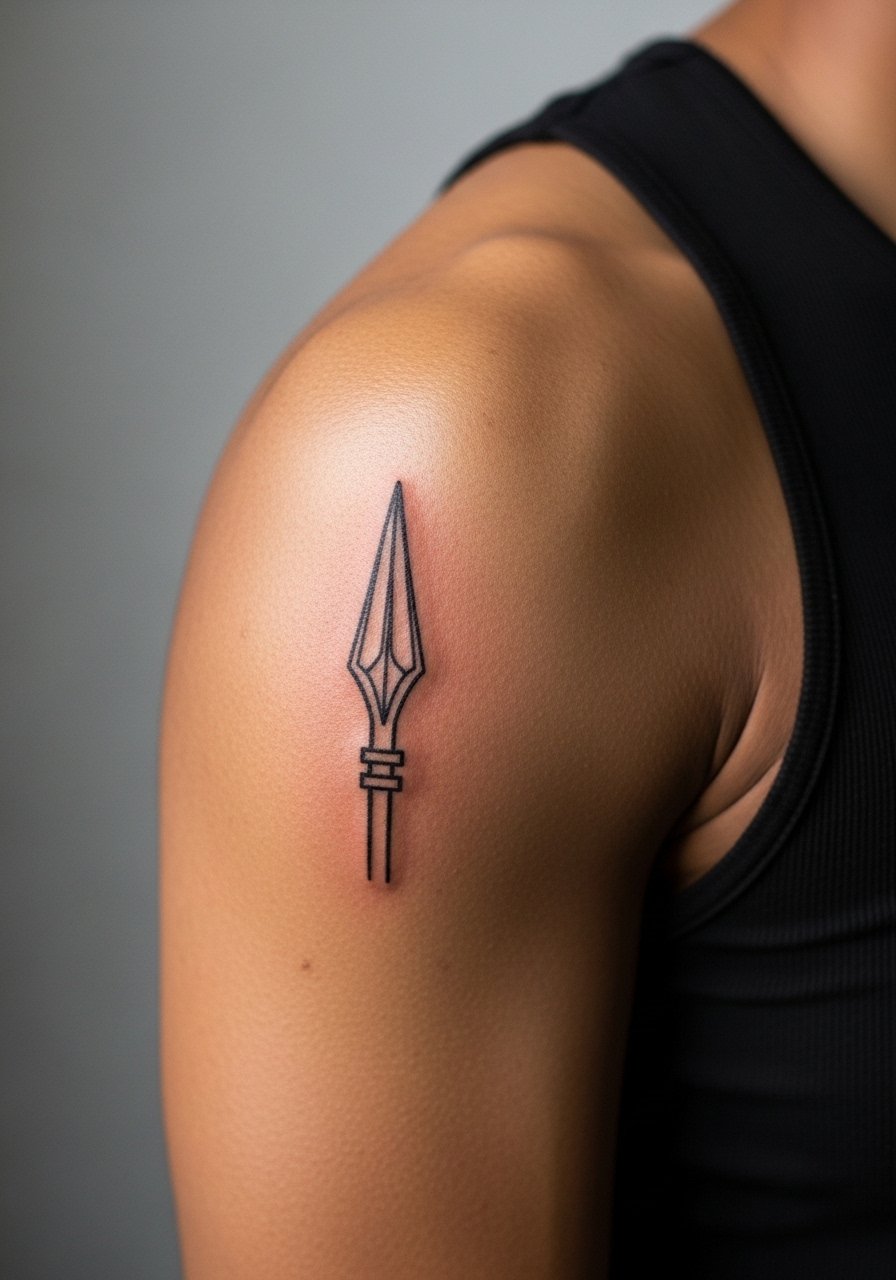
Mistake lead: minimalist spearheads age well when sized properly. Go for a slightly larger scale than your initial instinct so the negative-space edge does not soften into a blob. Session time is short and pain is low to moderate. Most people request a centered placement because it reads strong in shirts with narrow collars. For the appointment, wear a loose short sleeve tee athletic so the artist can access the cap cleanly.
17. Descending Norse Knot Flow
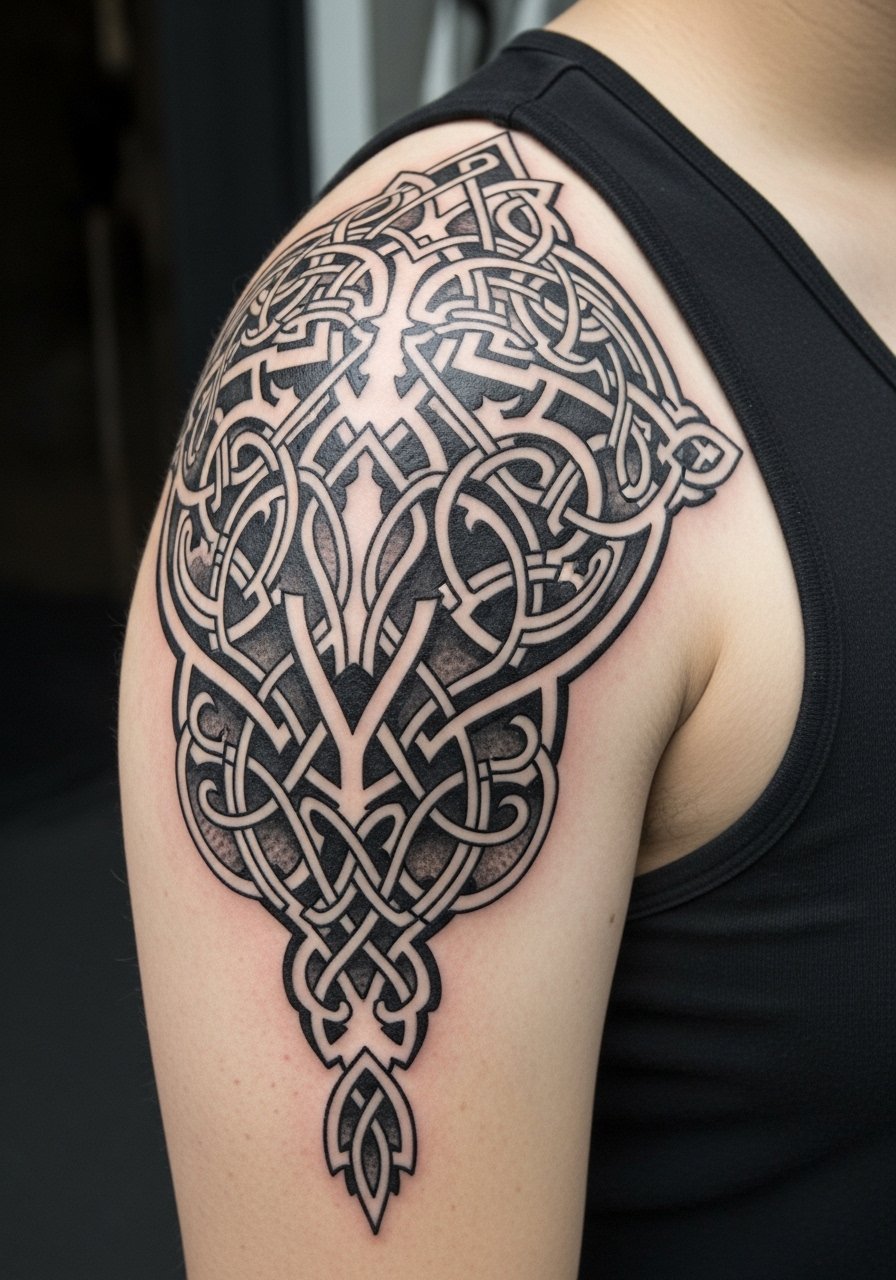
Consultation lead: Norse flows work best when you plan the descent beforehand. Tell your artist you want the knot rhythm to follow the bicep line so the chain-like pattern creates downward momentum. Expect two sessions and schedule a touch-up at year two for heavy black areas. A frequent mistake is copying a historical motif without adjustments for modern skin movement. For discovery, search style-specific hashtags and local studio portfolios to find someone who does anatomical knot flows.
Frequently Asked Questions
Q: How visible are upper shoulder tattoos in professional settings and how can I conceal them?
A: From what I have seen, a standard short-sleeve shirt covers most deltoid caps, but wrap-around or chest blends are harder to hide. If concealability matters, choose a compact deltoid cap or plan placement toward the top of the shoulder rather than the chest crossover. For layering, a loose button down shirt worn normally usually keeps the piece private.
Q: Do biomechanical and blackwork shoulder pieces need different session planning than tribal plates?
A: Yes. Dense blackwork and biomechanical shading generally require more sessions and a specialist who can space out saturation for healing. Tribal plates are often faster because they use bolder lines and less layered shading. Discuss staging and touch-up plans in the consultation so you know whether you are booking two sessions or four.
Q: Will a descending flow actually make my arm look longer if I am stocky?
A: In practice, vertical elements that start at the shoulder and travel down the arm create a visual line that elongates the limb. The effect is not dramatic but it is noticeable in photos and when you are wearing short sleeves. Tell your artist you want the main elements to lead the eye downward, and ask to preview stencils at rest and at extension.
Q: How often should I expect touch-ups on fine-detail shoulder pieces like micro-realism or small knotwork?
A: Expect micro-detail pieces to need touch-ups sooner than bold blackwork. A realistic timeline I hear from artists is a touch-up around year two for fine line or micro-realism, while heavier blackwork may last longer before needing refresh. Good initial spacing and moderate saturation reduce the need for early touch-ups.
Q: Are there styling tricks to make a shoulder tattoo look intentional rather than accidental?
A: Yes. Aligning the shoulder seam of your shirts with the tattoo helps the piece read as intentional. For show days, fitted tank tops and rolled-sleeve henleys frame armor caps and descending flows. For appointments, choose garments that give clear access such as a sleeveless performance tank so the artist can work without fabric interference.