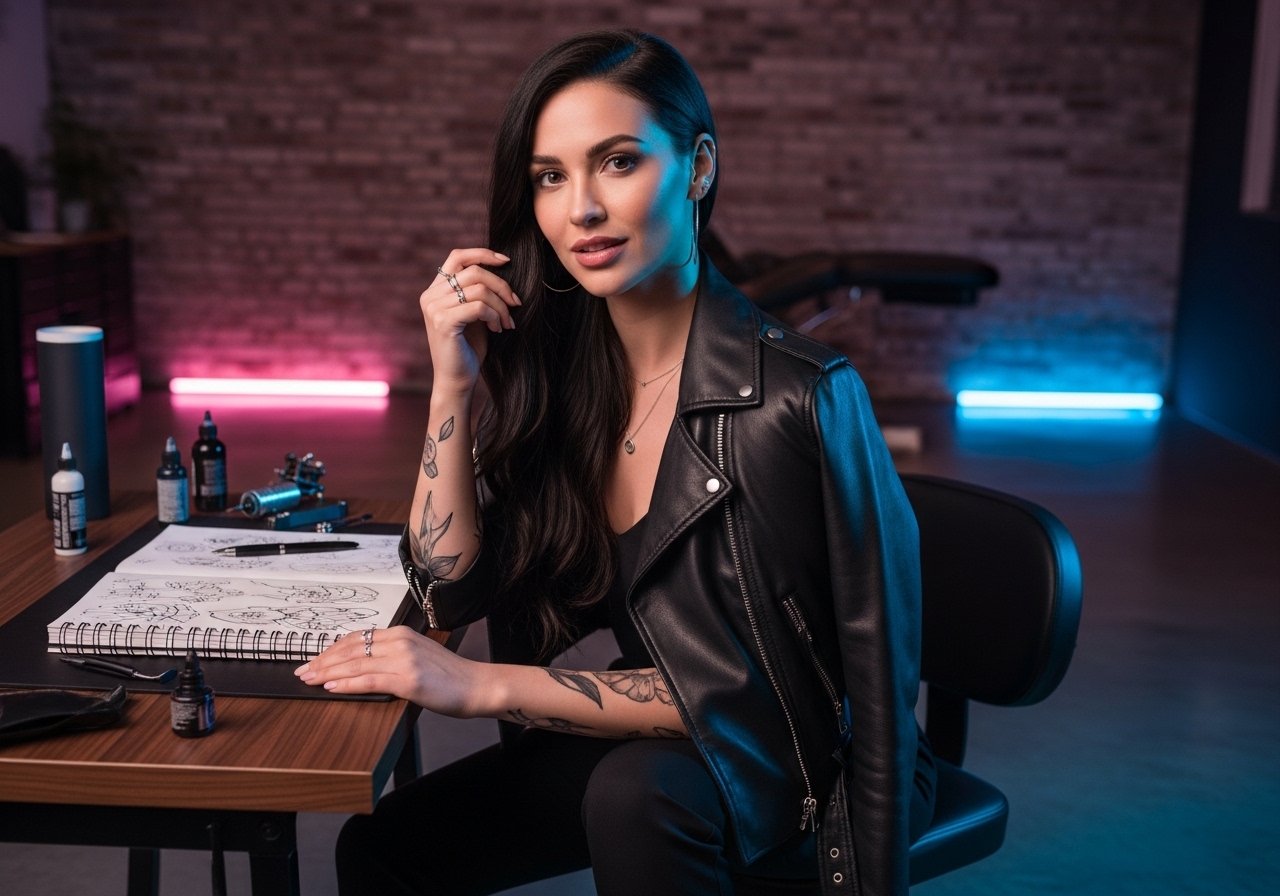
Fine line looks gorgeous on saved boards, but from what I have seen it often needs a reality check. Small scorpions can blur faster than people expect, tiny black ink can vanish on darker tones, and no one plans for last-minute session cancellations until the healing window is ruined. Below are 17 scorpion tattoo feminine aesthetic ideas with real talk on placement, aging, what to ask your artist, and how to style each look.
1. Fine line scorpion with floral wrap on the inner forearm
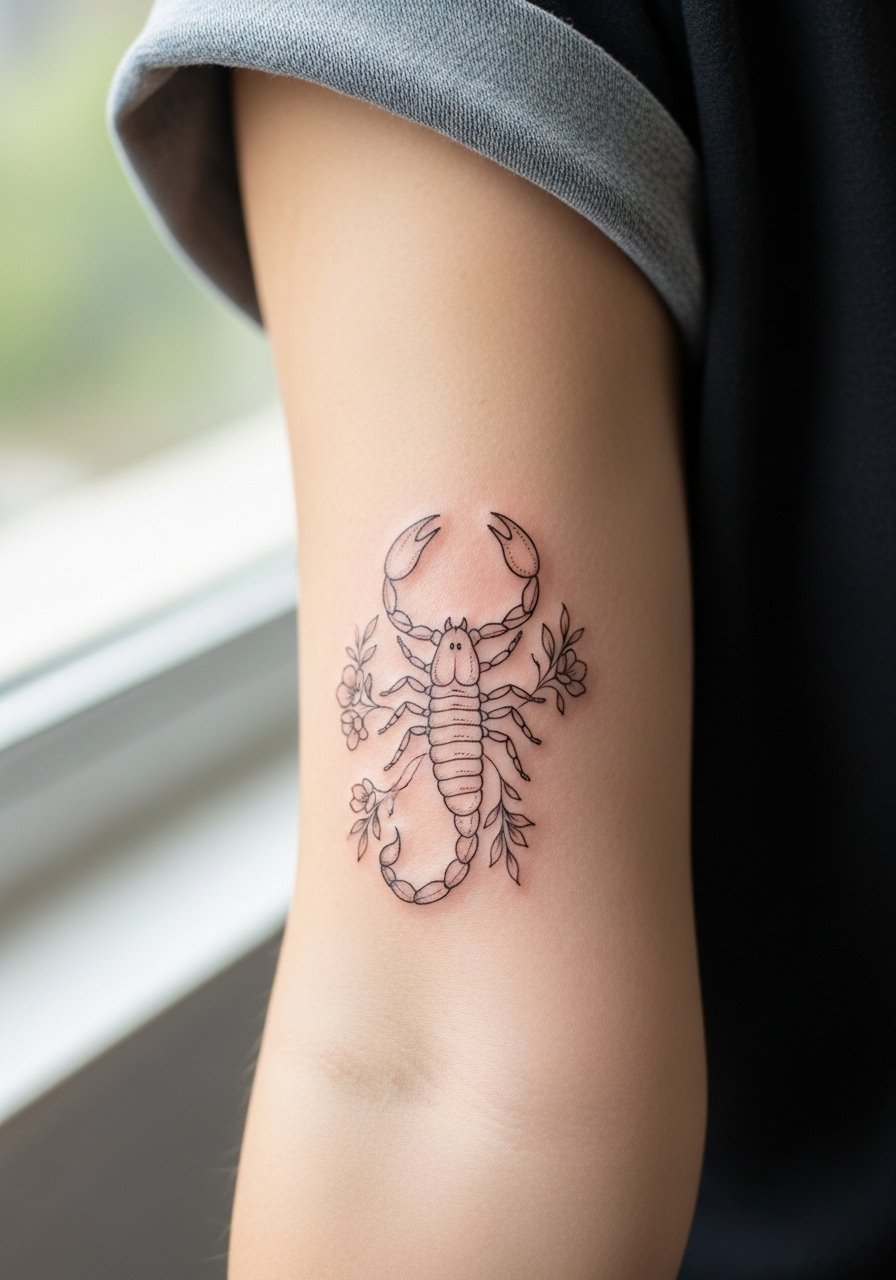
I have seen this one on forearms for years and it reads like jewelry when done right. Recommend asking for 2RL or a slightly thicker lining rather than single-needle work so the legs keep separation after a year. Expect a low pain level, about a 3 out of 10, and a typical session of 45 to 75 minutes depending on floral detail. Common mistake is cramming too many tiny petals into a small space, which leads to early merging. For showing it off, pair with a rolled cuff linen blouse that lets the forearm breathe while providing a neutral backdrop for the linework. Touch-up at 6 to 12 months is common for fine line forearm pieces.
2. Minimalist scorpion outline around the ankle
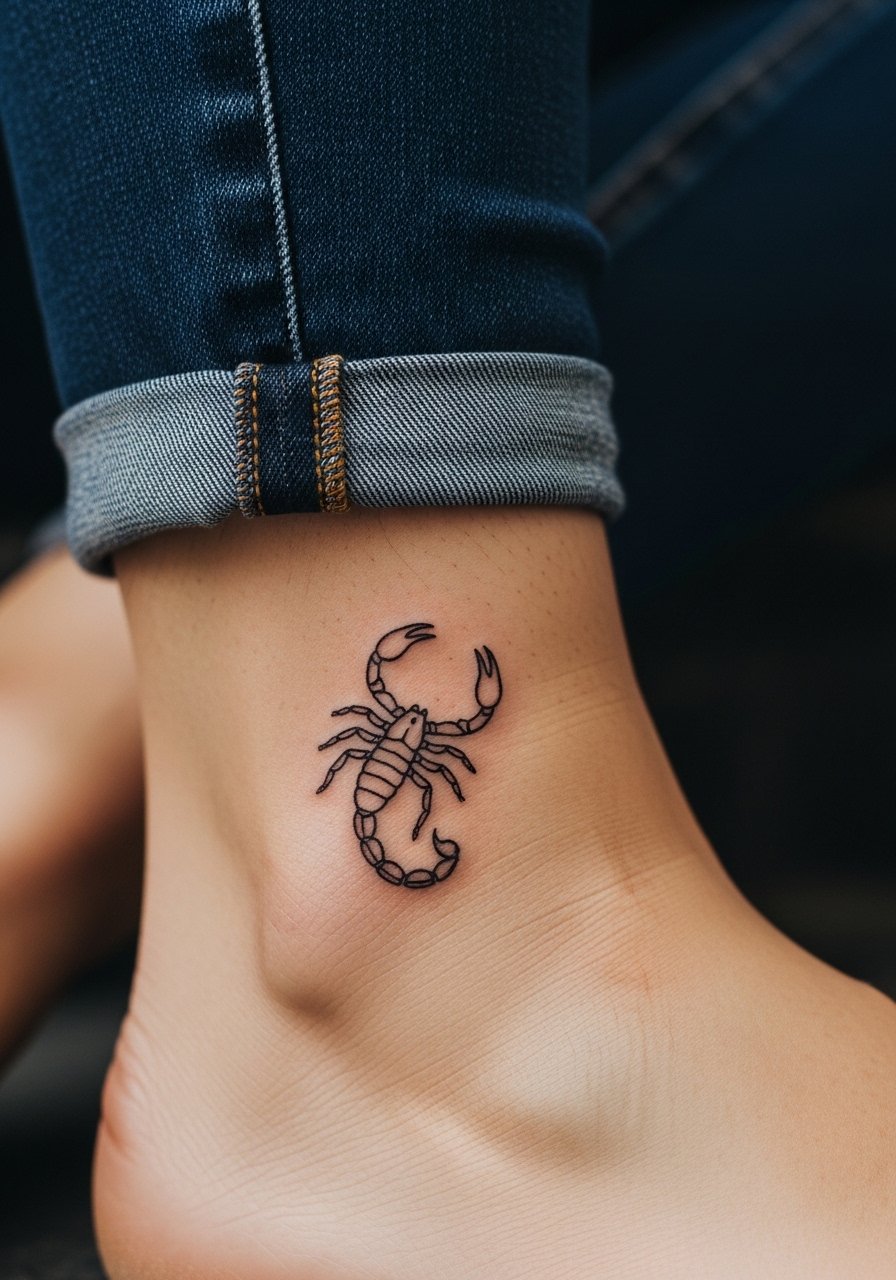
Fair warning, ankle tattoos take extra friction from socks and shoes while healing. The outline version reads best under one inch for a subtle look and usually finishes in a single short session. Tell your artist you want a slightly open tail and extra spacing between segments so the design does not fuse with movement and shoe rubbing. A frequent error is placing it too close to bony protrusions where blowout risk increases. For summer showing off, wear strappy heeled sandals or cropped pants so the tattoo gets its moment without constant irritation. Expect touch-up needs if you wear tight shoes against the site during the first month.
3. Watercolor scorpion across the collarbone in soft pinks and purples
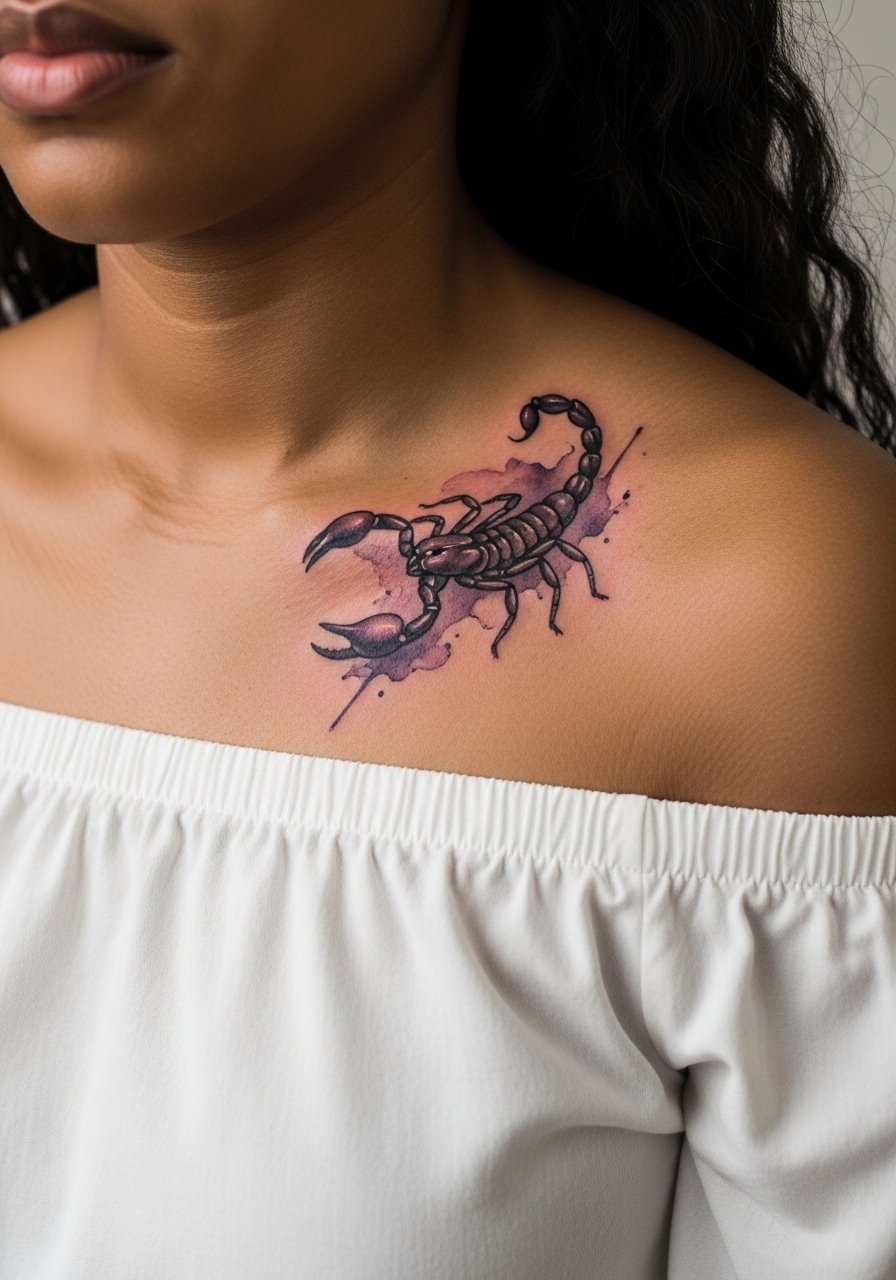
There is something about watercolor that softens the scorpion’s intent and makes it sit like a pretty talisman. Visual impact is strongest in a 3 to 4 inch collarbone placement where the pigment can breathe without tight curves. Ask your artist to build saturation in layers and plan for two sessions so colors settle evenly. The trade-off to mention is that watercolor tends to fade faster in high-sun areas, so plan touch-ups at year two depending on exposure. Pair this with an off shoulder blouse to frame the piece when you want it visible. During the session, a strapless or wide-neck top makes access easy and keeps clothing from pressing on fresh ink.
4. Neo-traditional scorpion with a heart tail on the outer thigh
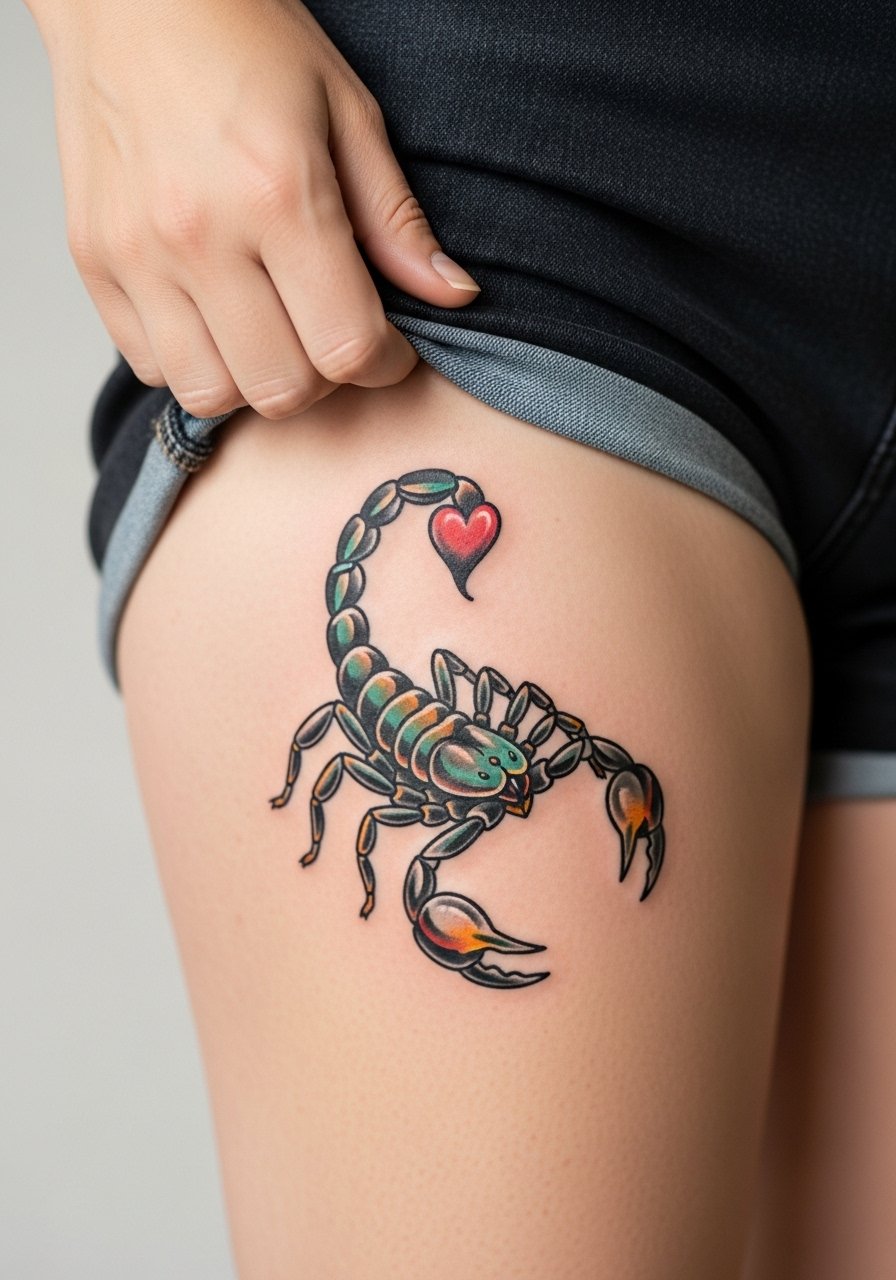
The outer thigh gives space for a playful neo-traditional composition and a 2 to 3 hour session depending on color. The biggest mistake is aiming too small for a neo-trad palette. This style needs room for saturated fills and bold outlines to age well. If you expect body-shape changes, discuss placement higher on the thigh so fashion options like high-waist shorts can hide or reveal the piece. For showing it off, a pair of high waist denim shorts or an A-line mini frames the artwork. Thigh scorpions tolerate touch-ups well, but they can distort slightly if significant weight change occurs.
5. Blackwork geometric scorpion mandala on the upper back
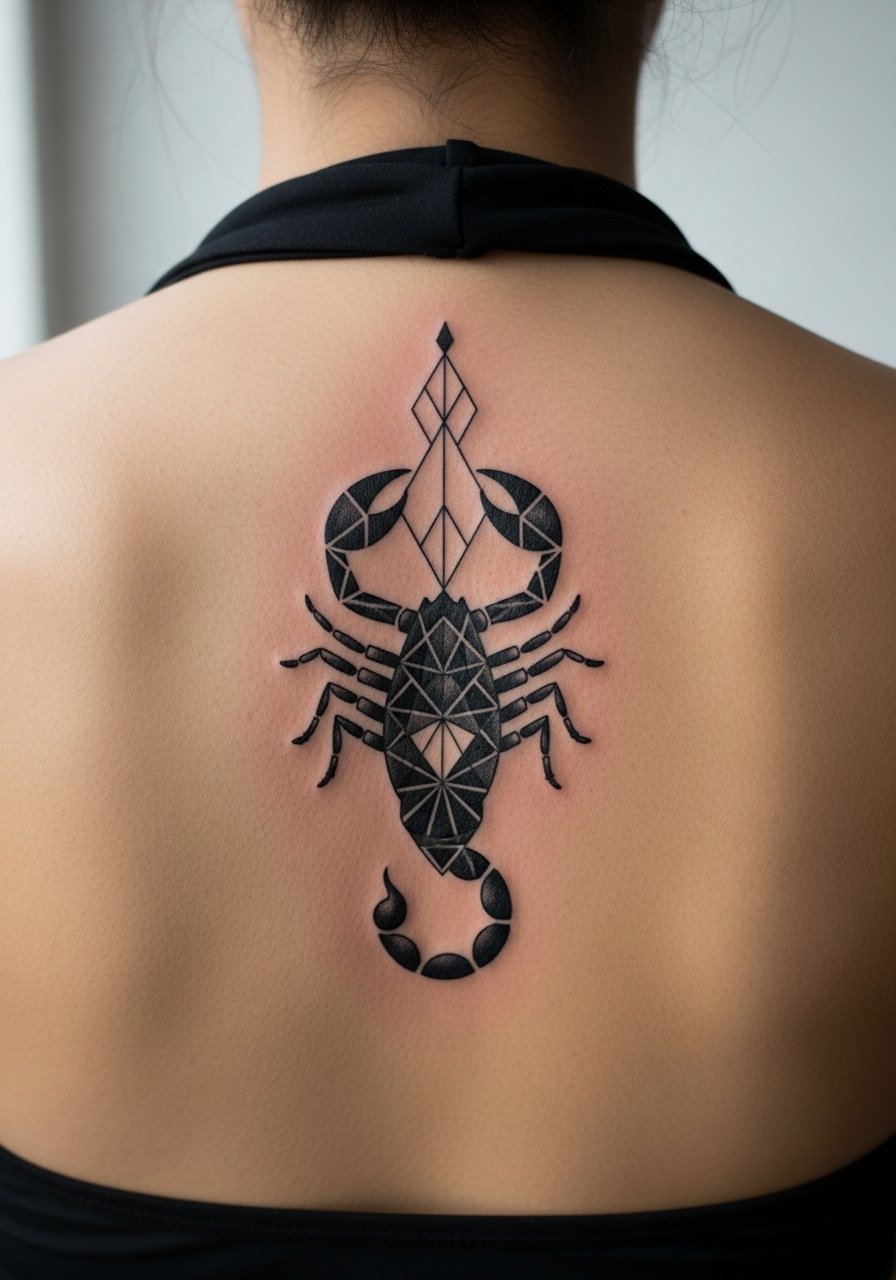
There is a visual impact to dense blackwork that still reads clean from a distance. For upper back pieces plan multiple sessions and expect a longer heal window because of movement and clothing rubbing. When you sit with an artist, bring exact scale references so the mandala has breathing room and the geometry does not compress into a visual blur over time. Some artists favor heavy saturation for longevity while others prefer spaced dot work to preserve texture. If you want to show it at events, try a backless halter top to reveal the central motif without exposing anything else. Upper back work typically needs touch-ups at year two to restore saturation in high-sweat areas.
6. Micro-realism scorpion with dew drops on the inner bicep
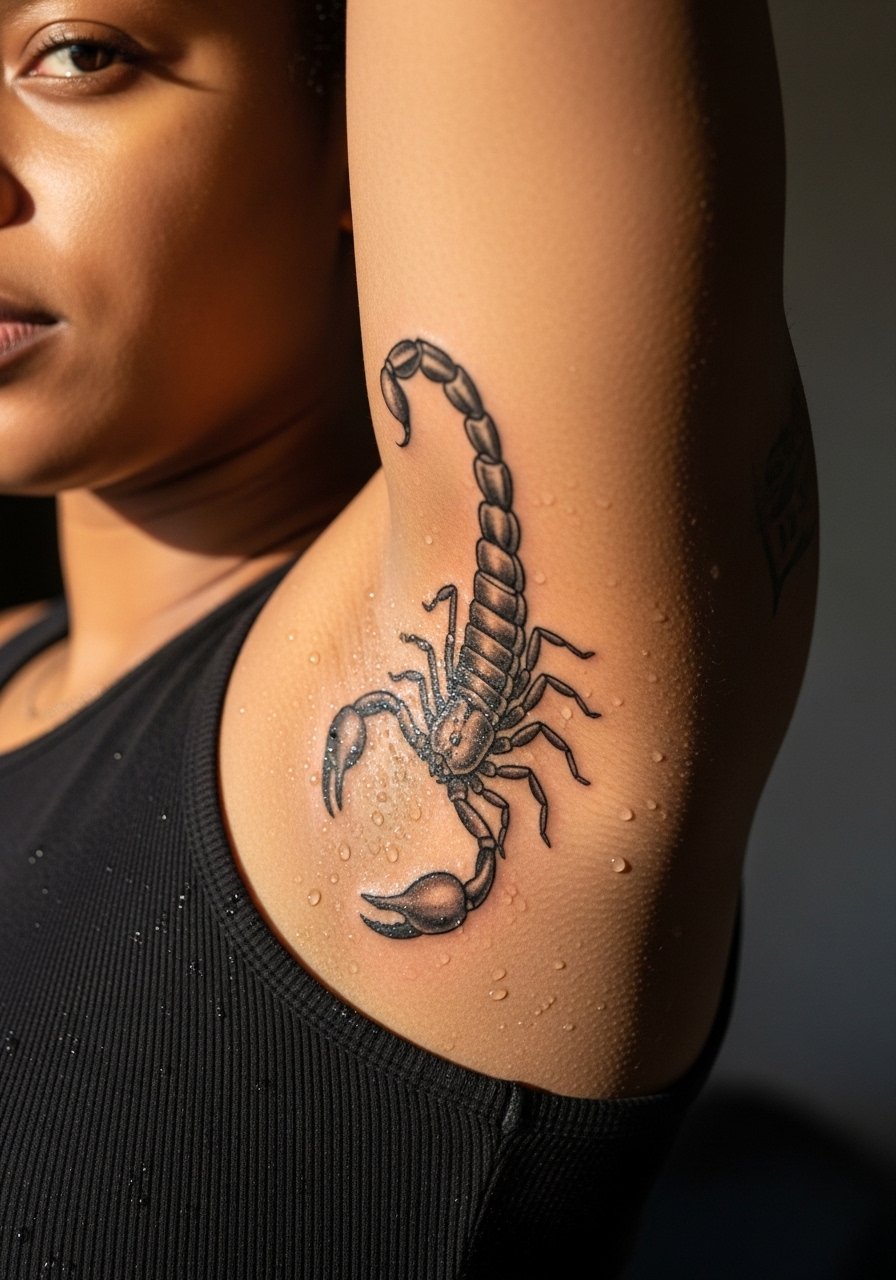
Artists split on whether micro-realism is worth it on flesh that moves a lot. One camp says dense micro detail holds if the shading is placed with depth and healed scope in mind. The other camp worries about early softening when the skin stretches or rubs. For inner bicep placement, the session feels softer than ribs but the area can rub against the side of the body during sleep. Tell your artist you want contrast between shell texture and glossy dew spots to keep the image readable at six months. Common mistake is dialing in too many tiny highlights that vanish in a year. Plan for a two-session approach and a touch-up at 12 to 18 months if shading loses crisp edges.
Before You Book
The first six ideas above include both delicate forearm work and denser back pieces, so a small kit for pre-session comfort and the first-week heal helps across placements.
- Tattoo Goo Balm. A lighter, non-greasy balm many people prefer over heavy ointments during humid summer heals, useful for thigh and collarbone color retention.
- Frida Repieva Aftercare. Fast-absorbing salve for sensitive zones like inner biceps and collarbones, handy when the skin reacts easily in the first week.
- Ink-Illustrations Salve. Thin salve recommended by some who heal dry in winter, good for fine line forearm pieces that blur under heavy ointment.
- Australian Manuka Honey Balm. Anti-inflammatory option that users report reduces itching on dense blackwork and large upper-back pieces.
- Hustle Butter Deluxe. A thinner finish than traditional ointments that artists often recommend for breathability during week one on fine line work.
7. Ornamental scorpion with vine wrap on the ribcage
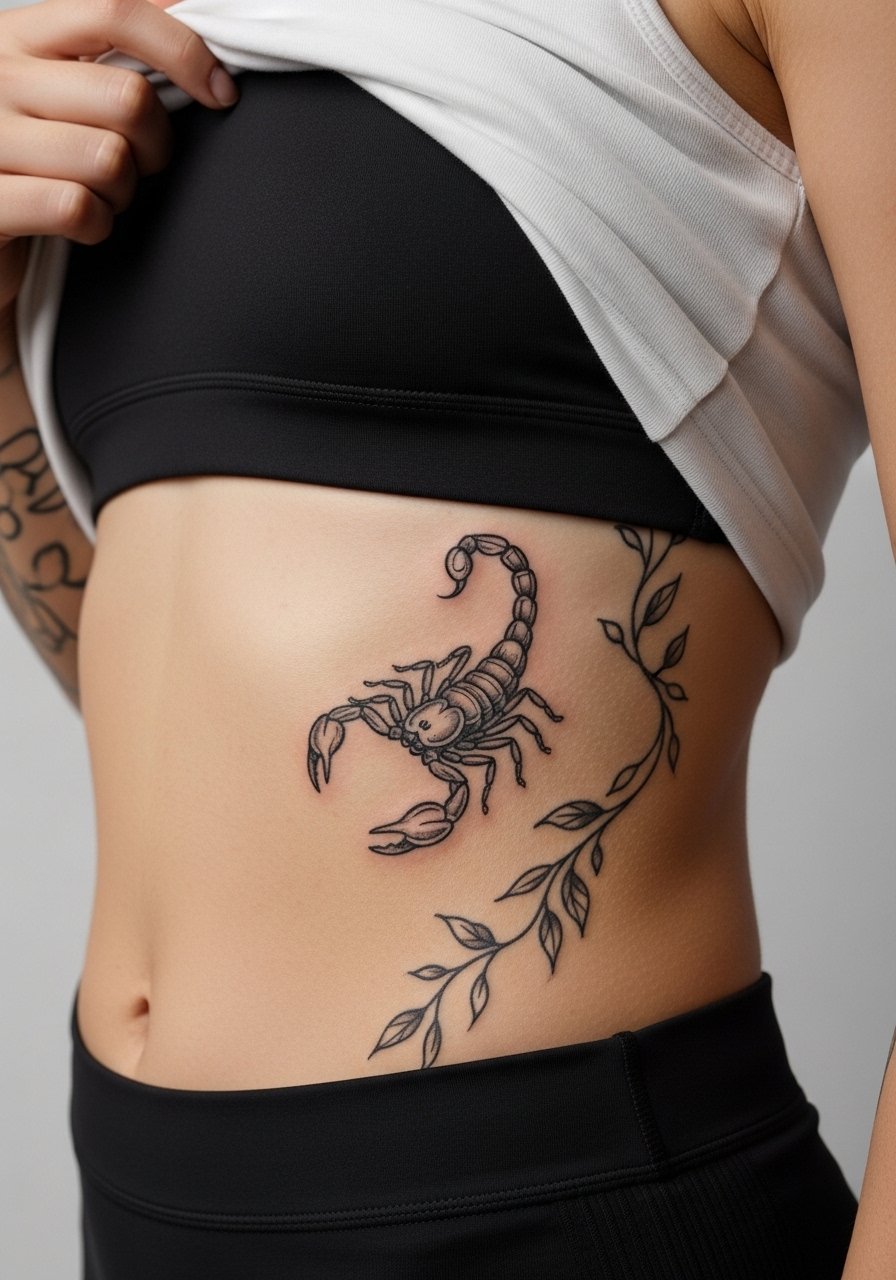
Fair warning, ribs are one of the higher pain zones, often a 7 to 9 on typical scales. That said, the ribcage gives a dramatic canvas for ornamental filigree that reads like a piece of jewelry. When you consult, ask for a tail that follows the rib curve so the design breathes with the torso. A common error is compressing too much detail into a long, narrow area leading to early fading and blurring. Healing here is slower because of movement and clothing, so plan sessions around a calm week and expect a touch-up at year one for any lost linework. If you worry about exposure while healing, choose clothing that lifts for the session then lays flat afterward.
8. Fine line scorpion paired with moon phases on the outer forearm
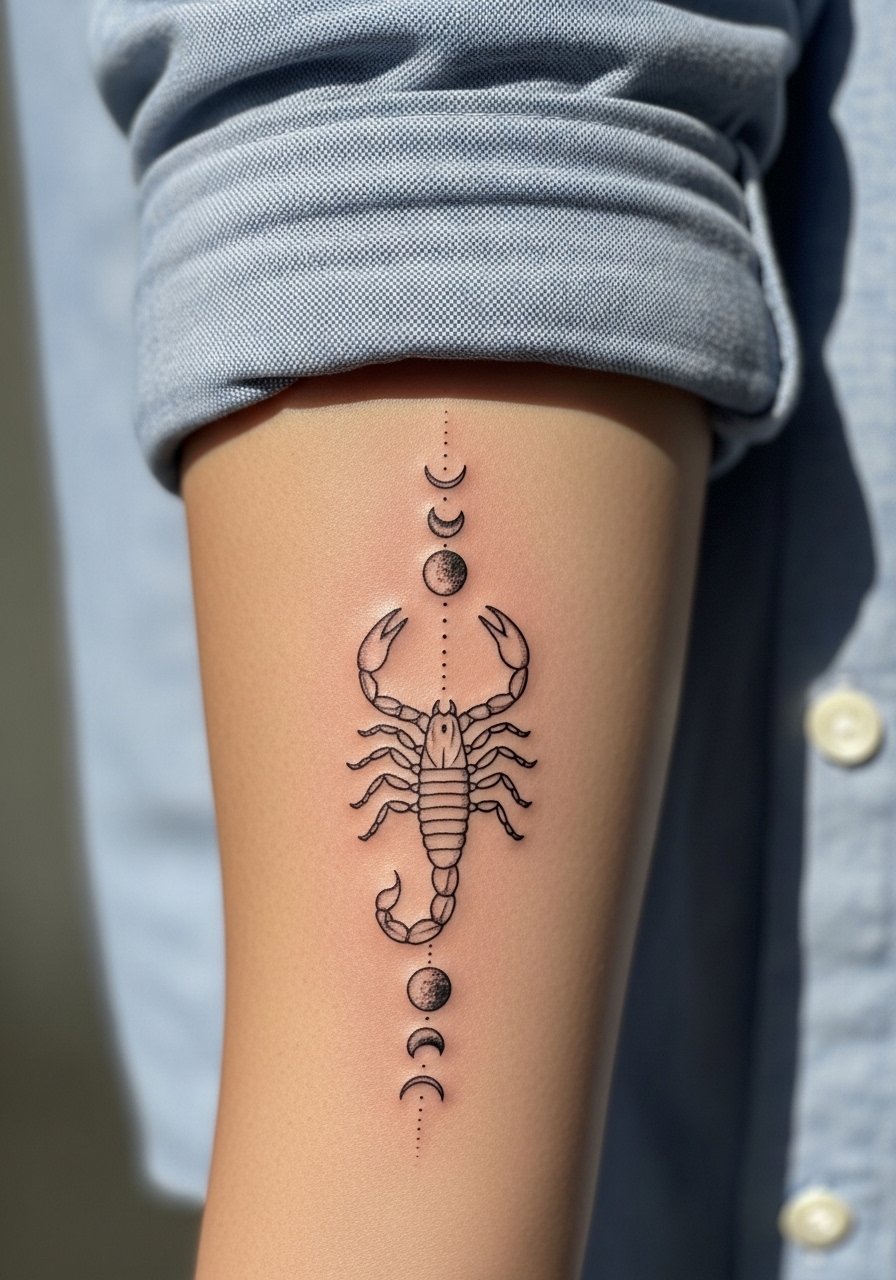
Styling lead first because this aesthetic is trending on social boards right now, but it also shows the aging reality of fine line. The forearm placement gives stretch resistance and visibility, but tiny moons need spacing. Tell the artist you want consistent spacing and slightly heavier anchor lines for the scorpion so the moons can be thin without merging. The typical session runs 60 to 90 minutes. For showing the piece try rolled sleeves and thin silver hoops, and for a quick link use a rolled cuff button shirt to frame the forearm. Expect touch-ups at 6 to 18 months depending on daily sun exposure.
9. Ignorant style scorpion with bold negative space on the calf
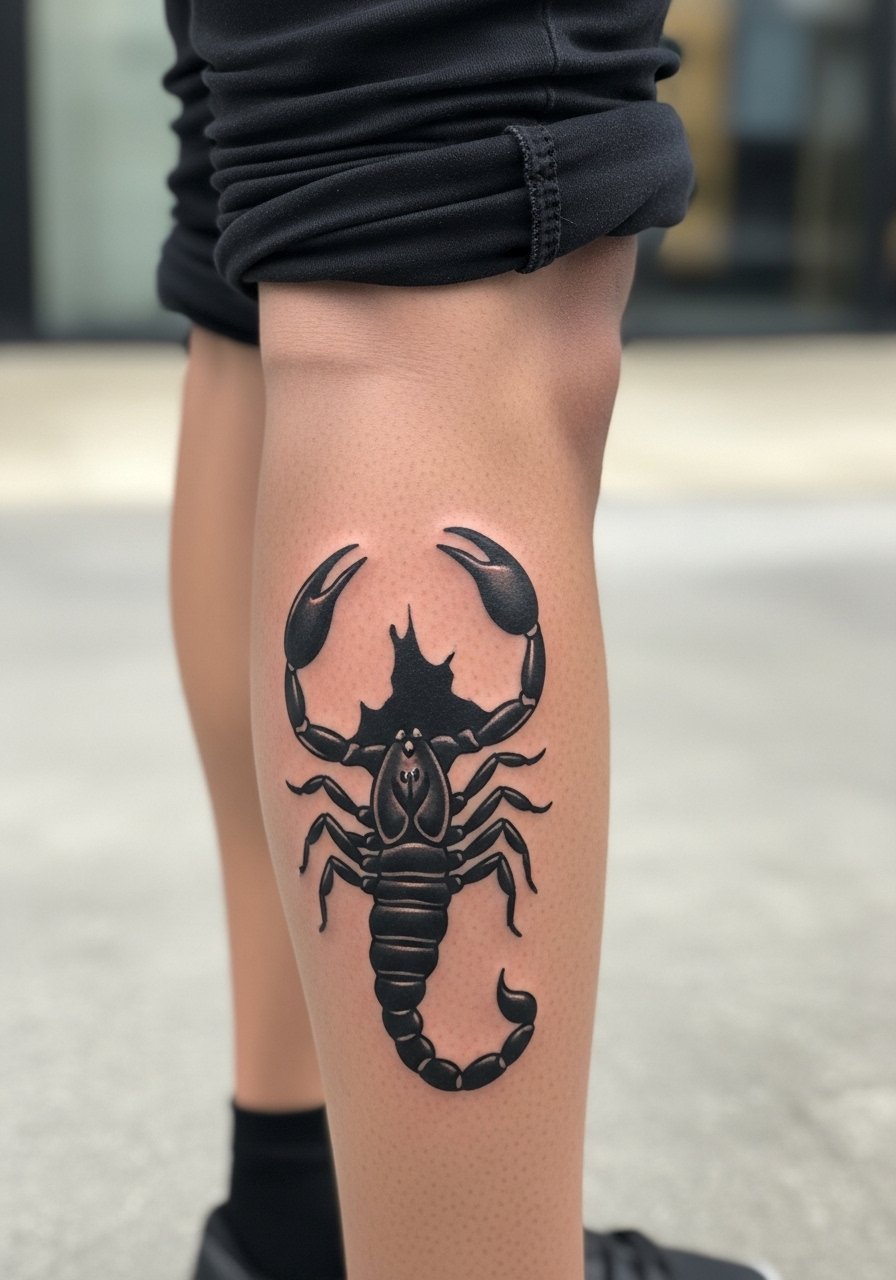
There is raw energy in ignorant style that resists daintiness and leans into contrast. The calf accepts bold black fills well and the area is forgiving on healing. A common mistake is asking for tiny details inside heavy black areas, which defeats the point and causes patchy healing. For consultation, emphasize negative space shapes and broad saturation to keep the design readable in photos. Session time is often a single hour for mid-sized calf pieces. This look ages strongly because black blocks hold up better than thin linework in high-movement limbs.
10. Traditional scorpion with rose thorns on the shoulder
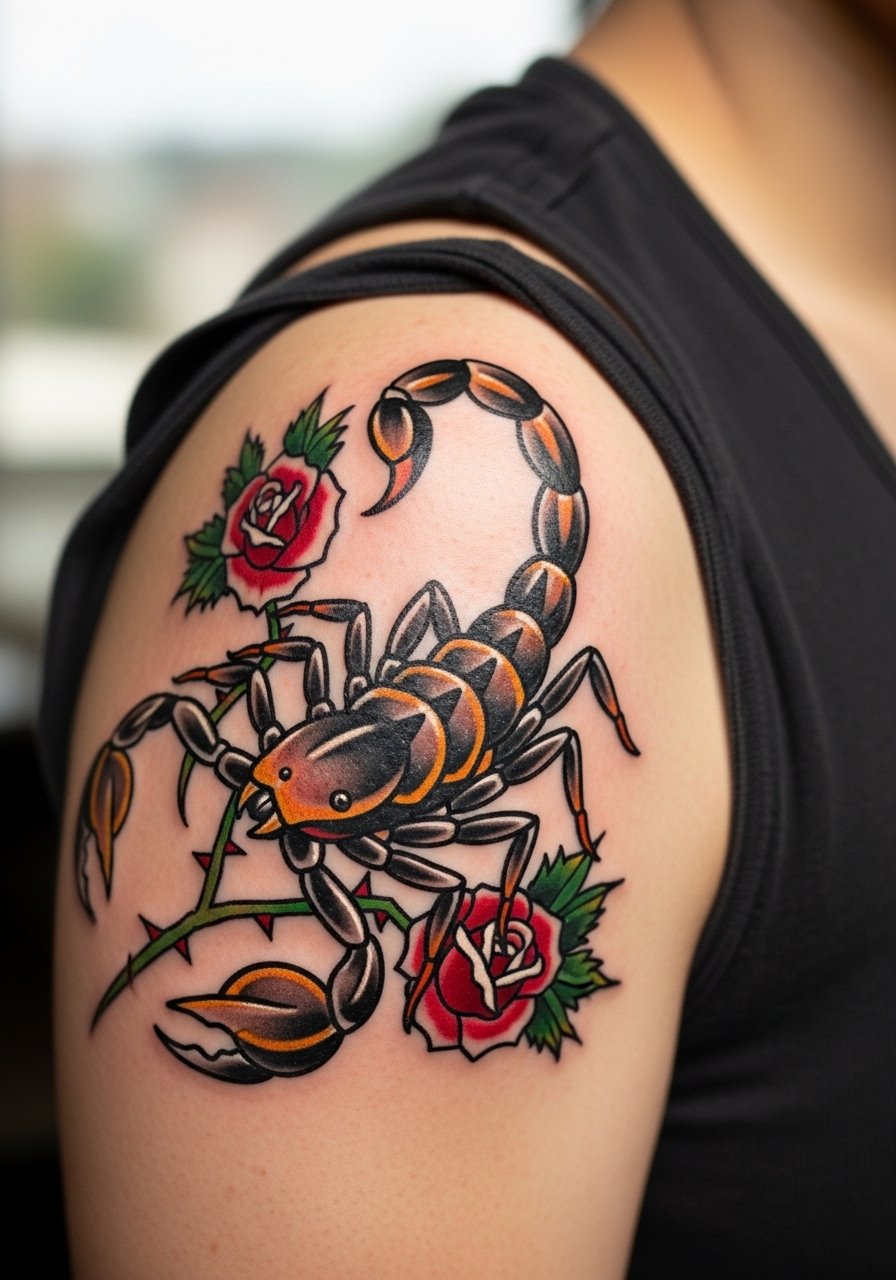
Pain here is mild to moderate and the shoulder is forgiving for color saturation. Visual impact comes from bold outlines and clean color fills. The mistake I see most is trying to shrink a traditional piece too small, which removes the intended scale of petals and thorns. For showing this style, a sleeveless sundress or asymmetric top frames the shoulder while keeping attention on the contrast. Ask for clear outline weight during consultation so the piece retains its classic look after five years. Touch-ups for color refresh are common around year two.
11. Curved spine scorpion with asymmetric tail flow

When you want the scorpion to read like part of the body, design the tail to curve with the spine so the piece moves with posture. Consultation tip is to request mockups of the stencil while standing and seated because curvature alters how the segments sit. This placement is sensitive and sessions can feel sharp along the vertebrae, so plan shorter passes or breaks. A frequent mistake is insisting on mirror symmetry when the spine needs an asymmetric tail to feel organic. Expect touch-ups if you gain or lose significant weight, since the vertical plane shows stretch changes more than a flat limb.
12. Birth-flower hybrid scorpion for a zodiac twist on the outer thigh

Visual impact lead here because pairing a birth flower with the scorpion makes the design feel bespoke without overt zodiac labeling. For consult bring the exact flower reference and ask the artist to integrate leaf shapes so the scorpion looks like it is naturally holding the bloom. Outer thigh gives room for larger scale which helps color sit without muddying. For showing this one try A-line mini skirts or high waist shorts so the piece gets the seasonal reveal. Common mistake is crowding a small thigh area with too many flowers which kills negative space and speeds color fade.
13. Dark skin optimized dotwork scorpion on the outer upper arm

I've noticed darker tones often benefit from increased contrast and considered dotwork rather than faint lines. The recommendation is to use saturated black outlines with stipple shading that creates texture instead of light gray washes which can vanish on camera. Common pitfall is picking single-needle fine line that disappears in photos. During the consult, ask to see healed examples on similar skin tones or ask for a small patch test for contrast. The session feels like a standard arm tattoo and usually wraps in one to two hours. Touch-ups for saturation are common but predictable when contrast is built from the start.
14. Ankle scorpion with vine accents for summer sandal season
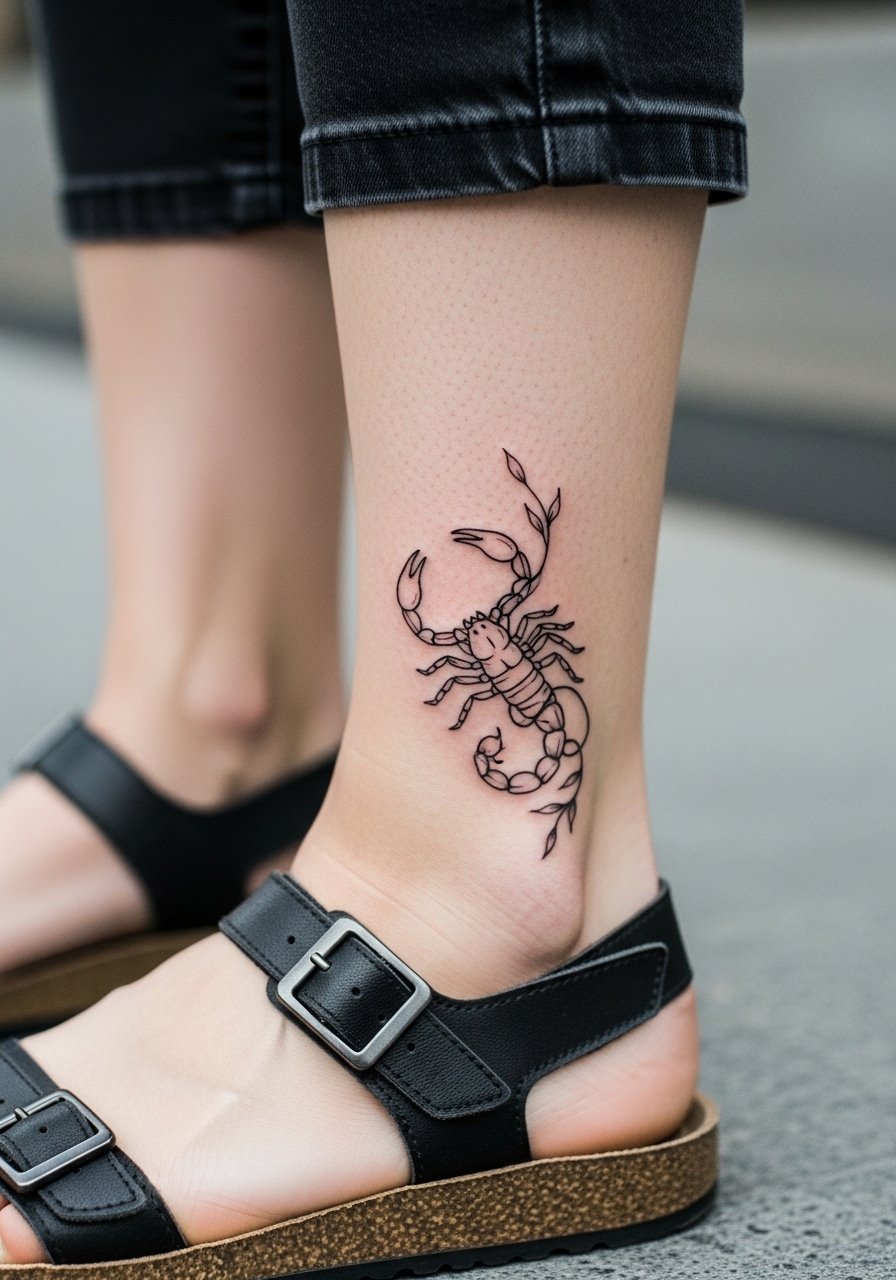
Aging and seasonal considerations matter for ankle pieces because they show in sandals but also rub against shoes. If you want the piece to last visually, ask for slightly denser anchor lines and leave extra breathing room between vine leaves. The session is short and the pain rates low to moderate. For showing the tattoo in summer pair with strappy heeled sandals or cropped pants so the ankle peek is intentional. A common mistake is too faint vine tendrils that fade into skin texture under daily shoe friction.
15. Small scorpion wrist piece for a first-timer
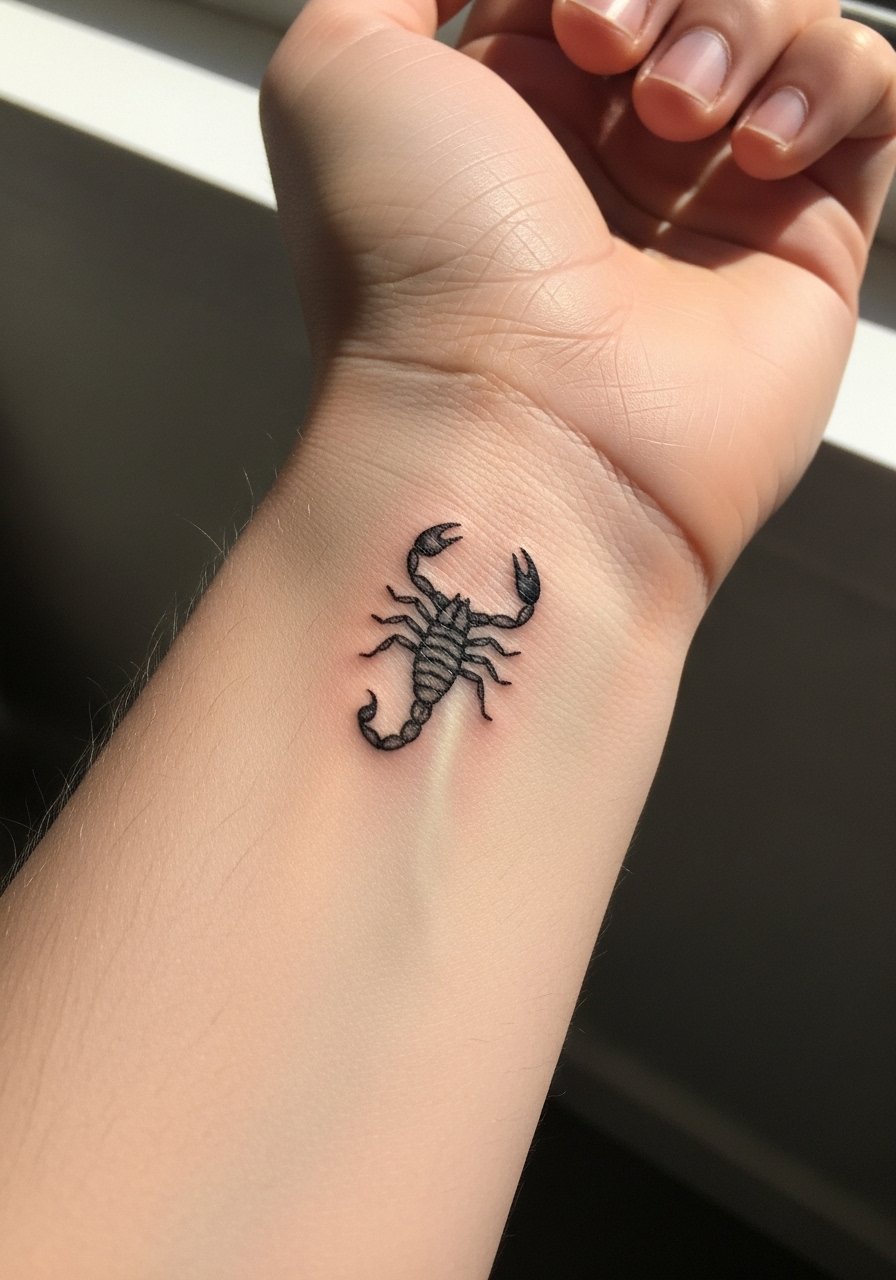
Decision-pressure lead because sitting in the chair for a wrist piece is where people finalize scale and line weight. If this is your first scorpion tattoo go small but not hairline thin. Ask the artist for a slightly heavier anchor line where the tail meets the body to preserve silhouette. Expect the wrist to be more sensitive than the forearm and a 30 to 45 minute session for a micro design. For showing off, a dainty chain bracelet on the opposite wrist complements without crowding the art. Plan for a touch-up at 6 to 12 months if the outline softens.
16. Scorpion mandala half-sleeve on the shoulder cap
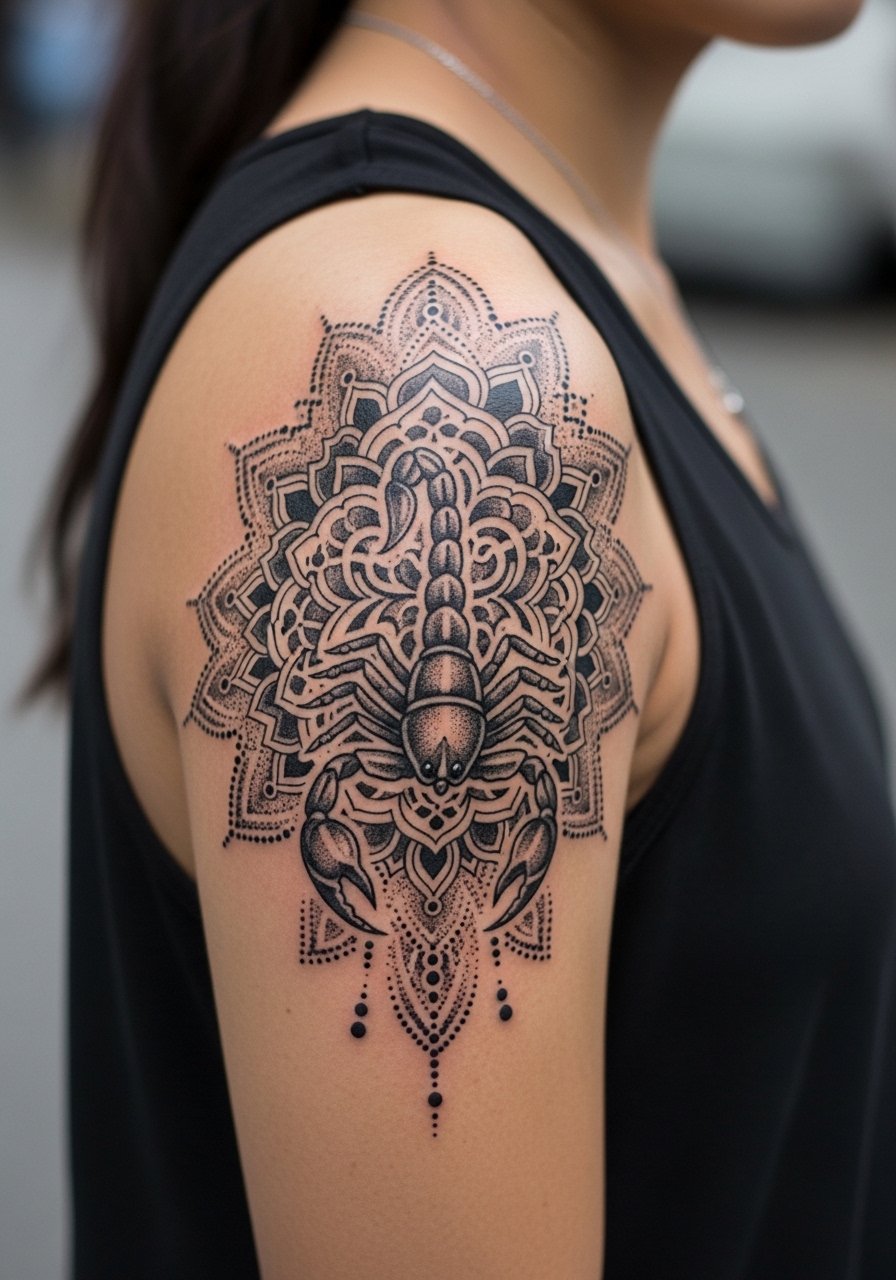
Consultation lead here because mandala spacing is everything. Ask your artist to map the mandala with a stencil overlay to ensure line intersections have breathing room. The session will likely need two or three passes and local soreness can linger due to wide coverage. Mistakes arise when artists compress mandala rings too tightly, causing visual merging over time. For placement that transitions into sleeve work later, lay the foundation with clear negative space so future additions do not fight for contrast. Touch-ups for crisp dots and ring edges are normal at year two.
17. Geometric negative-space scorpion on the calf with high-contrast fills
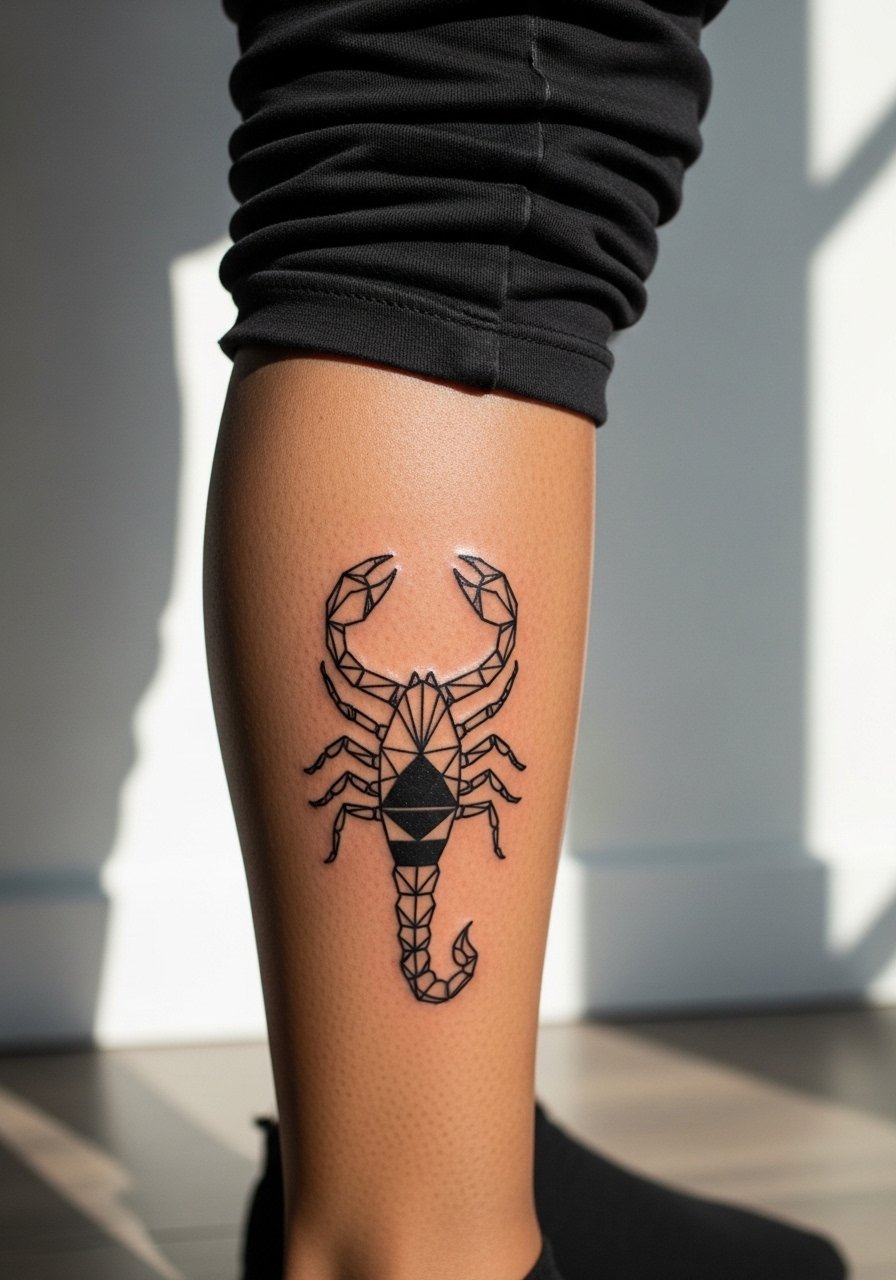
Styling lead to close the list because leg work reads strong with monochrome styling. The geometric approach uses negative space to shape the scorpion without tiny interior detail that can soften. When you consult, ask for bold blocks and precise spacing so the negative areas read crisp in motion. The calf tolerates saturation well and the session is usually efficient for medium-sized geometry. For a coordinated look try cropped pants and neutral footwear so the tattoo stands out. Expect long-term durability from bold fills, with occasional touch-ups to maintain clean edges where the skin creases.
Frequently Asked Questions
Q: Will a fine line scorpion on my wrist blur within a year?
A: It depends on scale and line weight. Fine line wrist pieces are at higher risk of early softening if the lines are single-needle and placed too close together. Ask for slightly thicker anchor lines and plan a touch-up at 6 to 12 months to keep the silhouette crisp.
Q: How should I adapt a scorpion design for darker skin tones so it photographs well?
A: Emphasize contrast and saturated black outlines rather than faint gray shading. Dotwork and stipple shading provide texture that reads on camera, and asking to see healed work on similar tones during consultation helps you set realistic expectations.
Q: Are there pain or healing differences between collarbone watercolor scorpions and upper-back blackwork mandalas?
A: Yes. Collarbone watercolor is more exposed to sun and clothing friction and usually needs gentler aftercare and possible color-top-ups. Upper-back blackwork takes more time to saturate but heals predictably under clothing that breathes. Both require sun protection once healed.
Q: What should I wear to a ribcage or thigh session for easy access and comfort?
A: For ribcage work a cropped athletic top that lifts slightly makes access clean and keeps exposure minimal. For thigh sessions choose loose shorts or a skirt you can shift without tight seams over the area. Comfort makes longer sessions more manageable.
Q: My artist cancelled my appointment twice. How do I avoid missing the healing window for a seasonal ankle or thigh reveal?
A: Use booking platforms with firm cancellation policies and keep a backup artist on your radar via local hashtags or community boards. If timing is critical, schedule with a shop that lists guest spots or events so you have multiple confirmed options.
Q: Should I use Saniderm for a fine line forearm piece or opt for dry healing?
A: Artists are split on this. One group prefers protective film for fewer scabs and cleaner early detail, while another group warns that trapped moisture can cause issues on humid skin. Ask your artist where they stand and choose a method that matches your lifestyle and local climate.
Q: How long until a blackwork scorpion mandala on the upper back looks its best healed?
A: Expect initial settling at about six weeks, with true maturation around six to twelve months as saturation evens and any minor scabs fall away. If you notice patchy saturation, a planned touch-up in the first year will restore even black density.