
Fine line Medusa tattoos are everywhere online right now, but the pieces that still look crisp after three years are usually not the flashiest ones. They were planned with spacing, needle choice, and placement in mind. These 21 soft small Medusa ideas focus on linework that reads as art at one month and still reads as shape at year three, with notes on what to ask your artist in the chair.
1. Mini Medusa Face on Inner Wrist
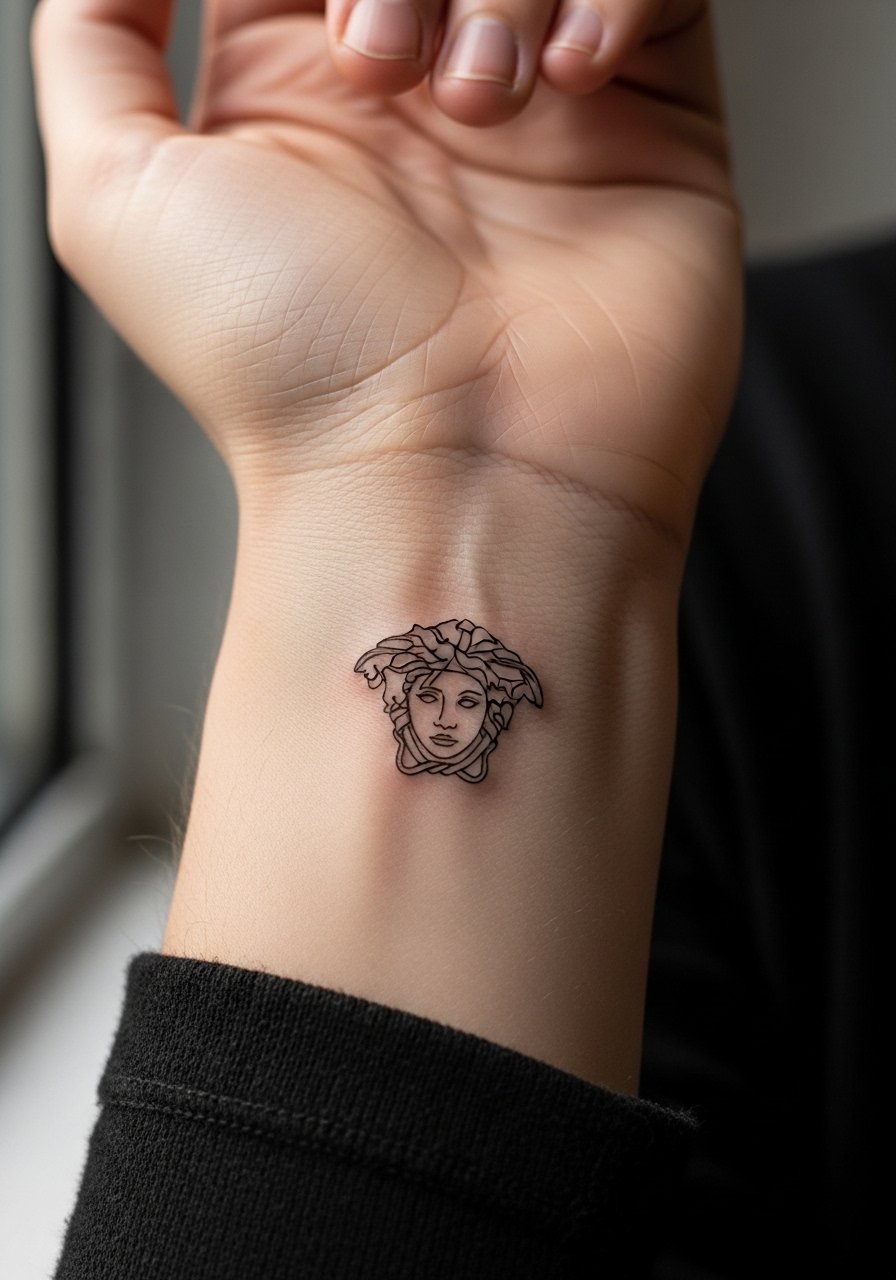
I recommend this when you want a readable face under two inches without a full portrait. Tell your artist you want slightly increased spacing around the eyes so the pupils stay defined as the piece settles. Common mistakes are packing too many tiny snakes into the forehead, which blurs into texture by year two. Expect a sharp look at six months and softer edges at two years, with a likely touch-up window around year three. Pain is low to moderate for the inner wrist. For the session wear, roll up a long sleeve or choose a solid long sleeve shirt you can pull back without tugging the skin.
2. Delicate Serpentine Crown on Upper Arm
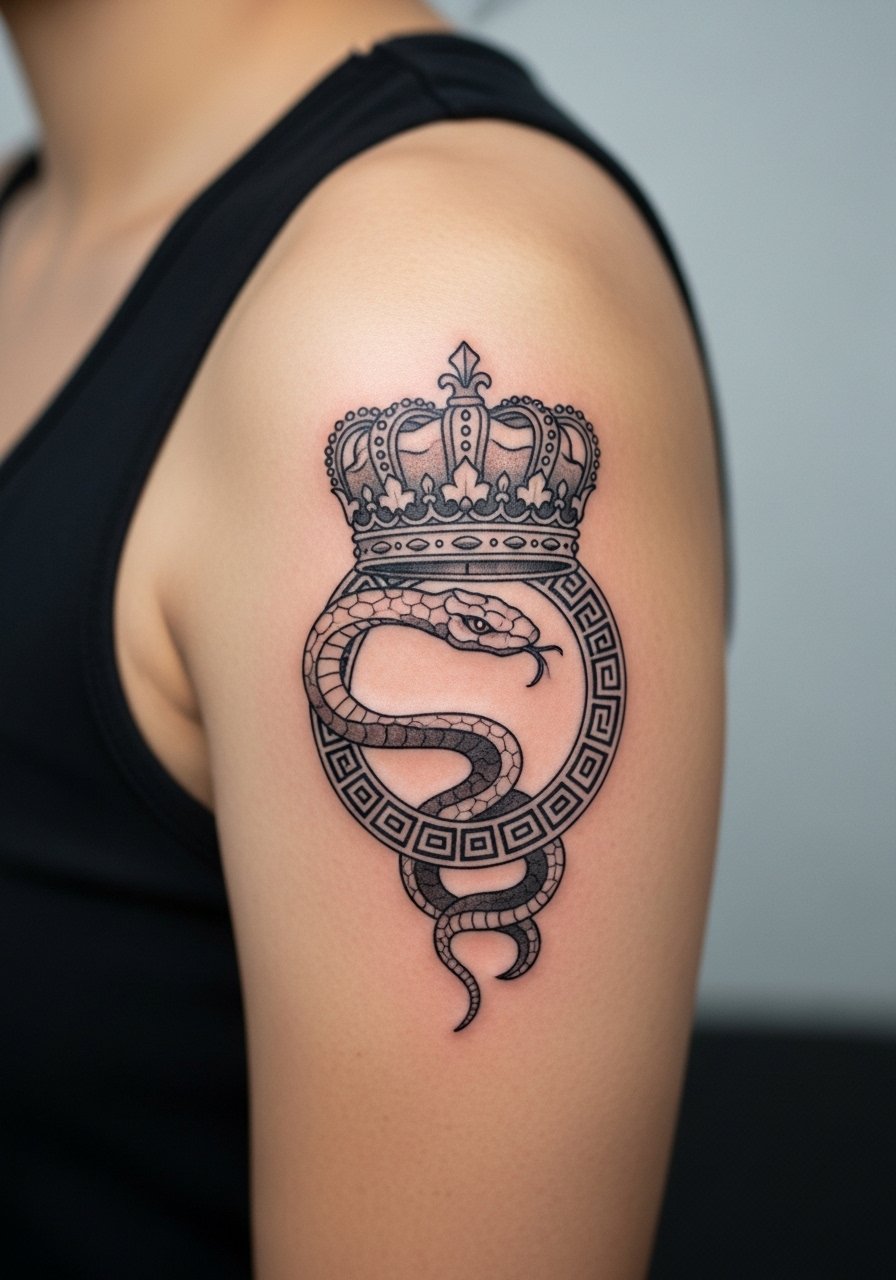
This version keeps Medusa implied through snake arches that form a crown rather than a full face. Ask for thin linework with slightly bolder anchors at junctions so the crown keeps its silhouette as the skin matures. The upper arm gives space so the piece breathes and avoids blowout along the edges. Session time is usually one to one and a half hours. A common aging problem is over-dense snake scales up front that fill in and read as a patch. For showing it off, pair the piece with a sleeveless tank top women and light jewelry to keep eyes on the crown.
3. Half-Face Medusa on Inner Forearm
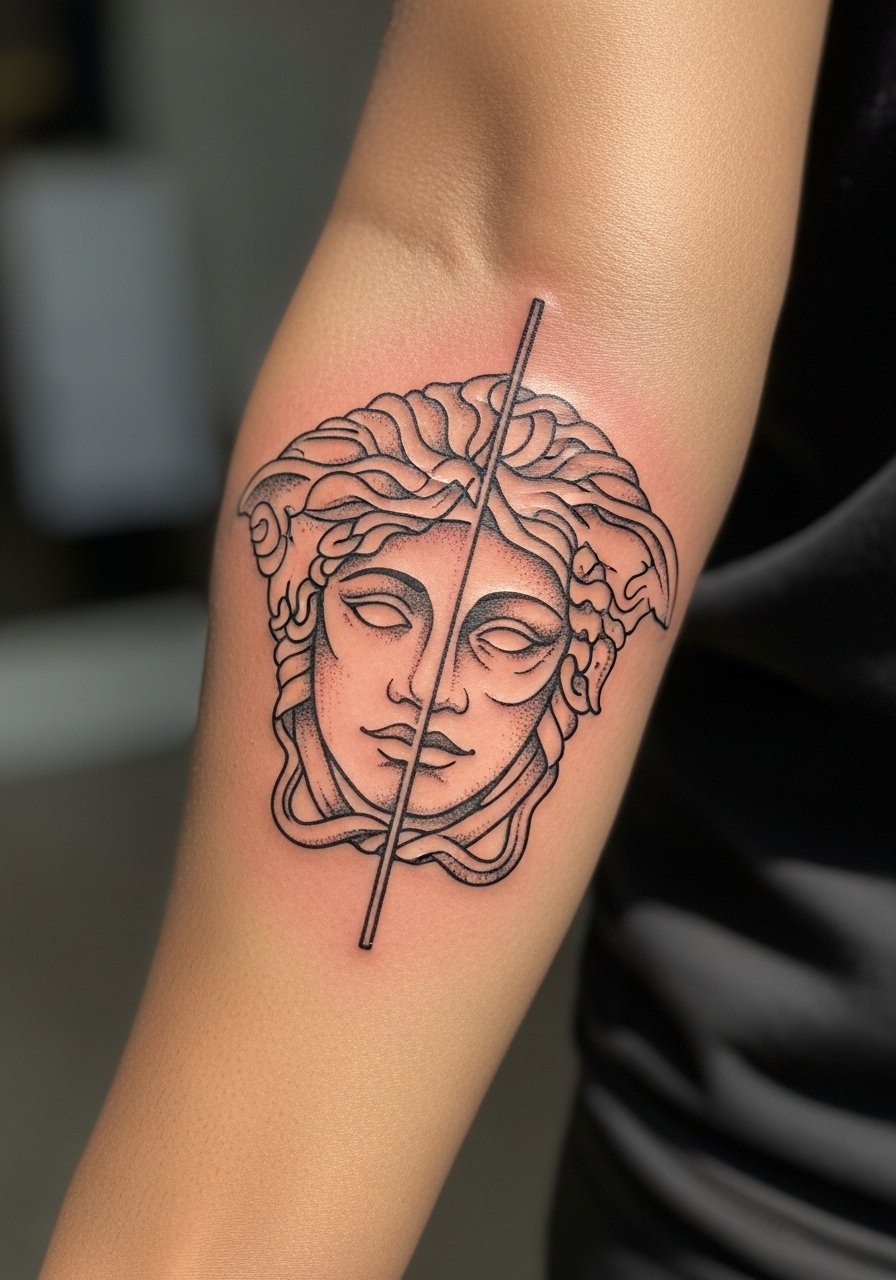
Split portraits read modern and keep detail without overcrowding. In consultation, bring a clean half-face reference and ask for stipple shading rather than heavy graywash so the half-face holds contrast on darker skin tones. The inner forearm is a forgiving placement, but avoid squeezing the jawline into under-an-inch widths. At six months the stippling will look soft, at two years it will maintain depth if the pointillism was done with appropriate spacing. The session feels moderate on pain. A real mistake is asking for watercolor fills on a half-face; the washes can obscure fine line contouring.
4. Micro Medusa Ankle Accent
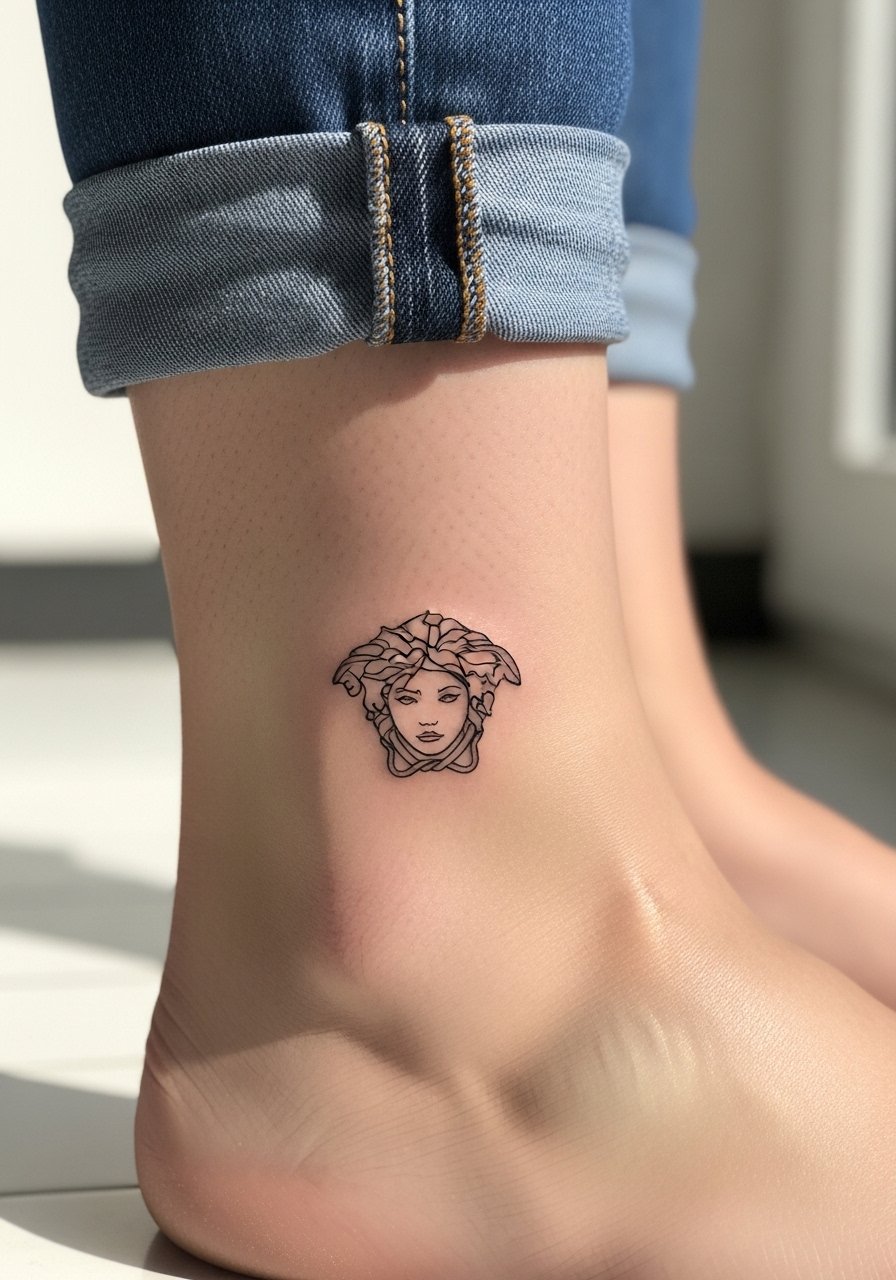
Ankle tattoos wear against shoes and socks, so I suggest a raised, slightly bolder outer line with delicate inner detail. Tell the artist you want the lines to sit a bit shallower near the edge to reduce scabbing, and keep the design under two inches. Common failure is making the snakes too dense, which clumps after repeated friction. Expect crispness at six months to depend on your footwear. Pain is moderate. For session comfort and display, wear linen cropped pants women you can roll up easily.
5. Medusa Eyes Peeking from Collarbone
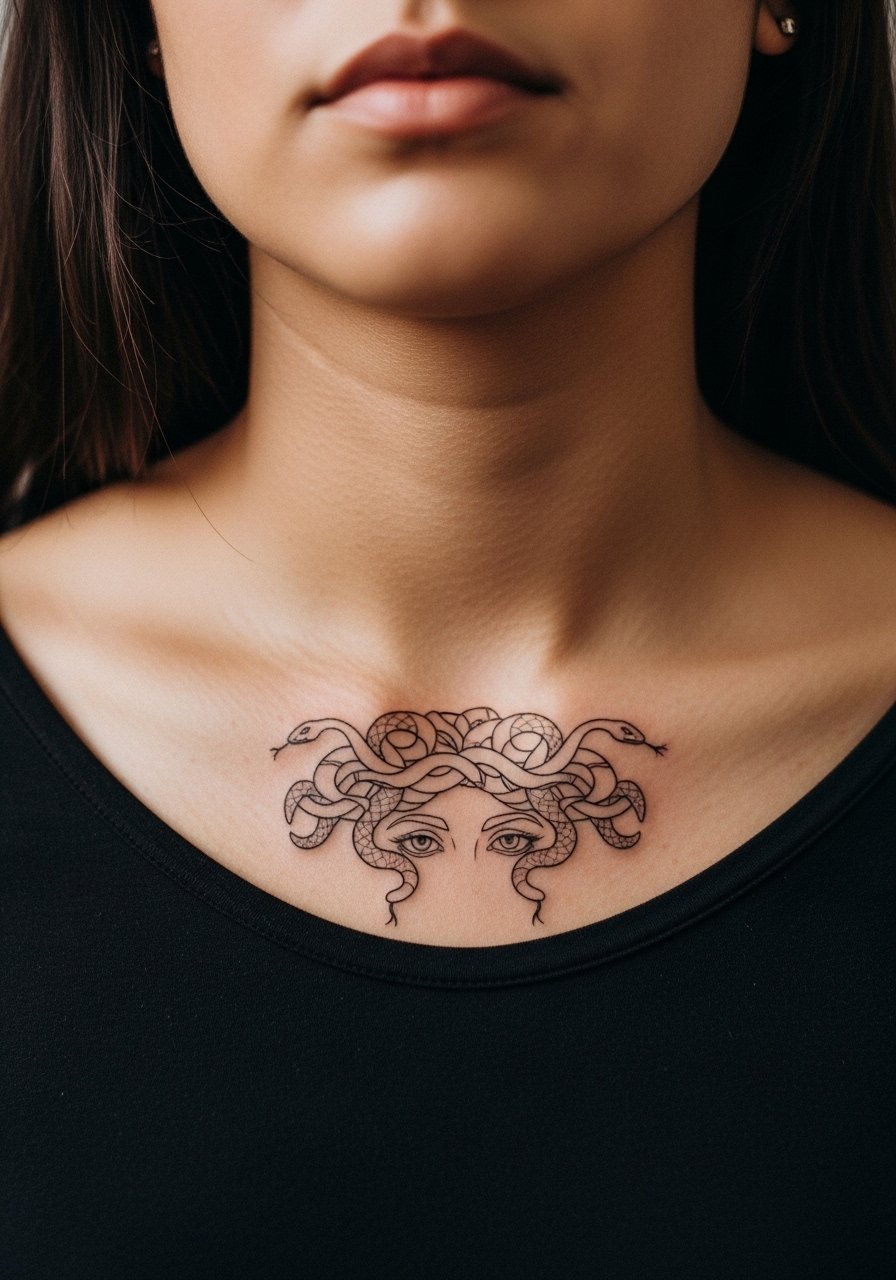
A collarbone placement reads intimate and directional. Ask for a composition that uses negative space under the eyes to keep the gaze readable as the skin shifts. The area has thin skin and variable contours, so a call-and-response with your artist about line weight is key. At six months the eyes should still read if the lashes and pupils were left intentionally uncluttered. Common mistake is too many tiny crosshatches which blur into shadow. For wardrobe, an open-back midi dress or wide-neck tops make the subtle gaze work in evenings.
6. Medusa in Water on Outer Shoulder
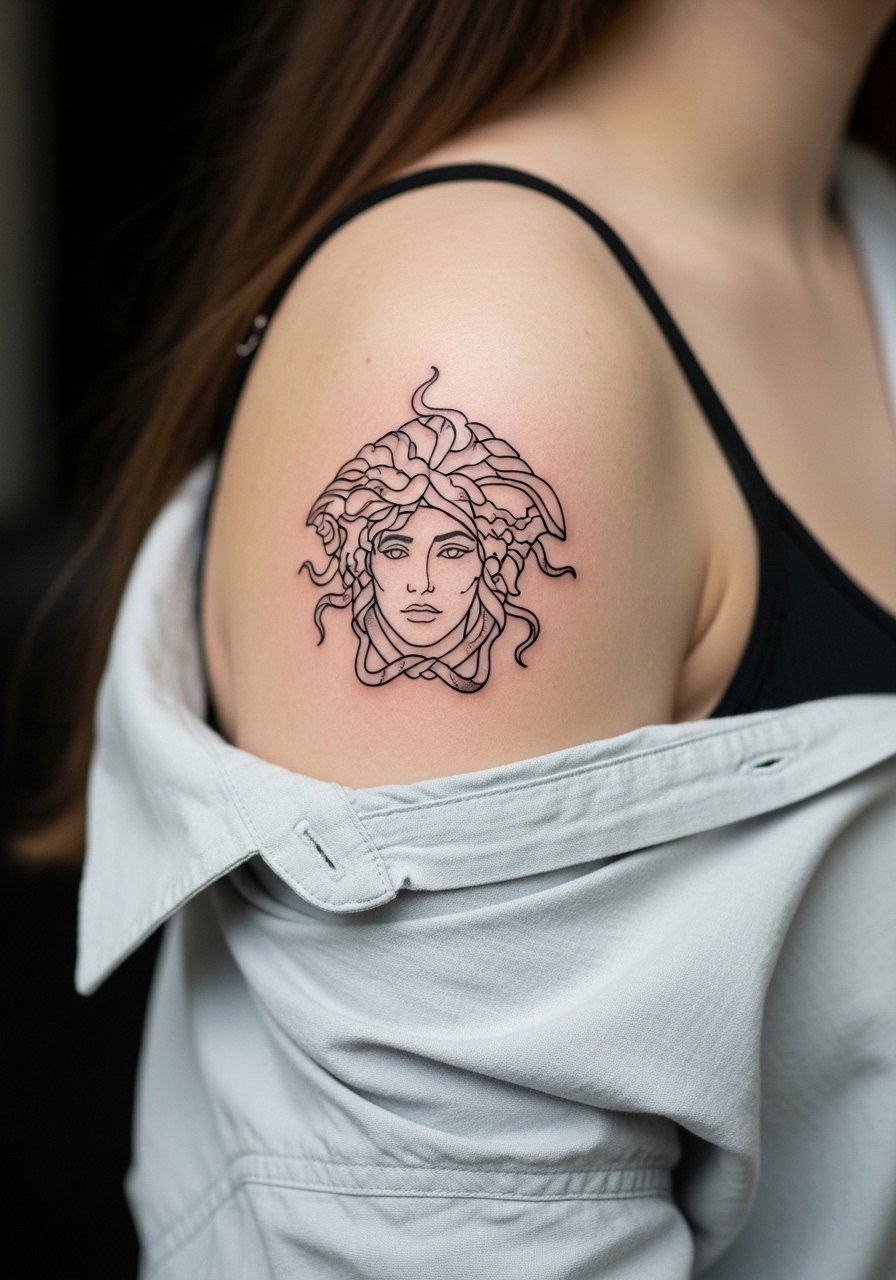
This floating, water-themed take keeps details soft by using flowing lines and minimal facial features. Tell the artist you want motion in the snakes rather than dense texture, and ask for whip shading to suggest water movement. The shoulder is low blowout risk and ages well when spacing is respected. A common error is drawing every snake scale; that level of detail on curved shoulder skin can patch in. Session time is one to two hours depending on length. For the chair, wear a loose button-down shirt you can pull aside without stretching the shoulder.
Studio Day Picks
The small wrist and collarbone pieces above need different prep than the shoulder work, so a few specific items smooth the session and the first week.
-
Stencil transfer paper kit. Lets you preview placement on wrists and collarbones, which matters for tiny eyes and crowns.
-
Topical numbing cream. Useful for ankle and sternum sensitivity when trimmed application is approved by your artist.
-
Thin protective film roll. Keeps wrist and ankle pieces cleaner in the first days of high friction.
-
Fragrance free gentle body wash. Gentle cleansing matters when fine line work needs minimal irritation during showers.
-
Aquaphor healing ointment. Thin application for the first few days helps lock in moisture for delicate linework without suffocating the skin.
7. Geometric Medusa on Upper Back
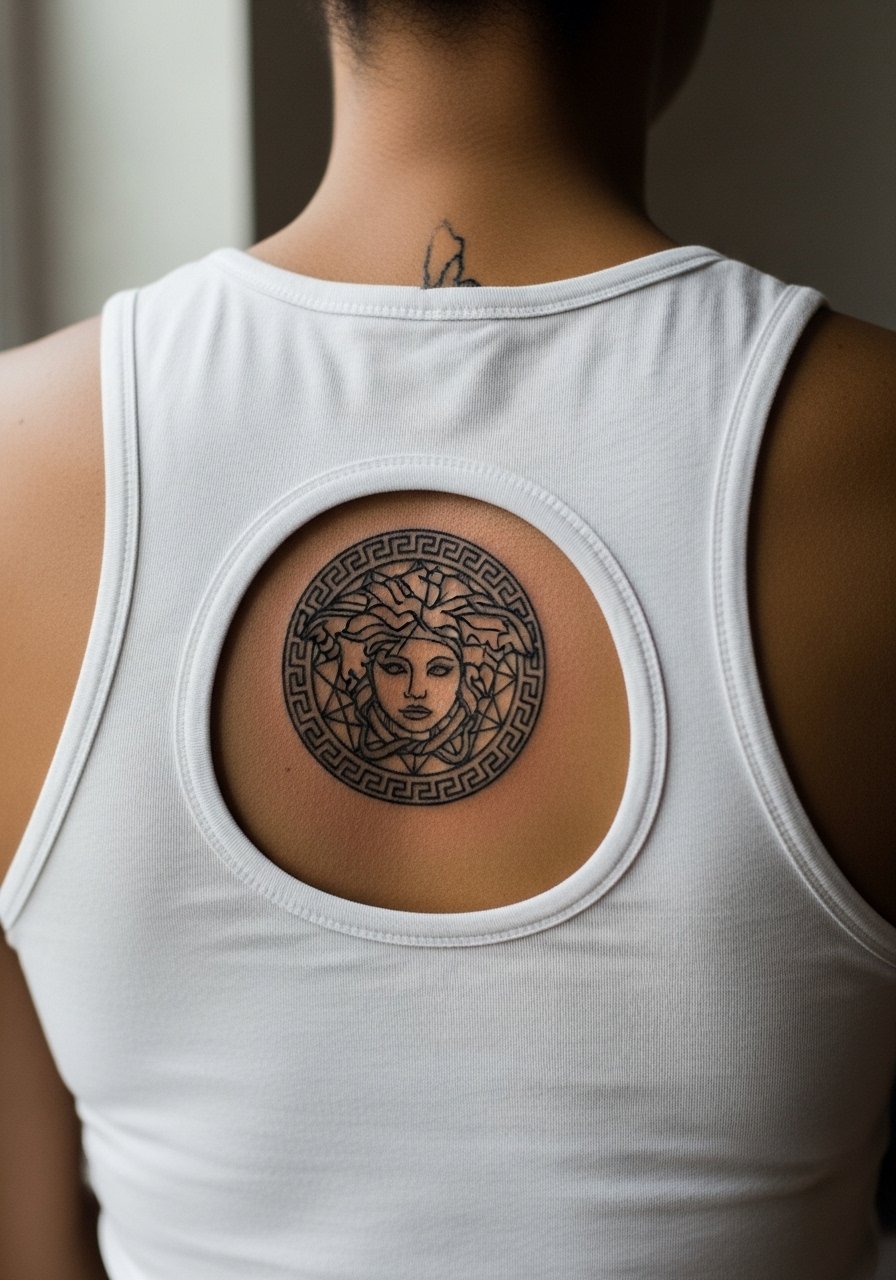
A medallion-style geometric interpretation benefits from symmetry and breathing room. Request spacing between geometric bands so lines do not crowd each other as they age. The upper back supports more complex symmetry without risking early blowout, but avoid tightening too many straight micro lines into a small circle. At six months the pattern will be readable, at two years the symmetry depends on consistent needle depth. Common mistake is compressing the pattern under three inches. Session feels moderate and you may want two short sittings for precision.
8. Medusa Hand Holding Snake on Forearm
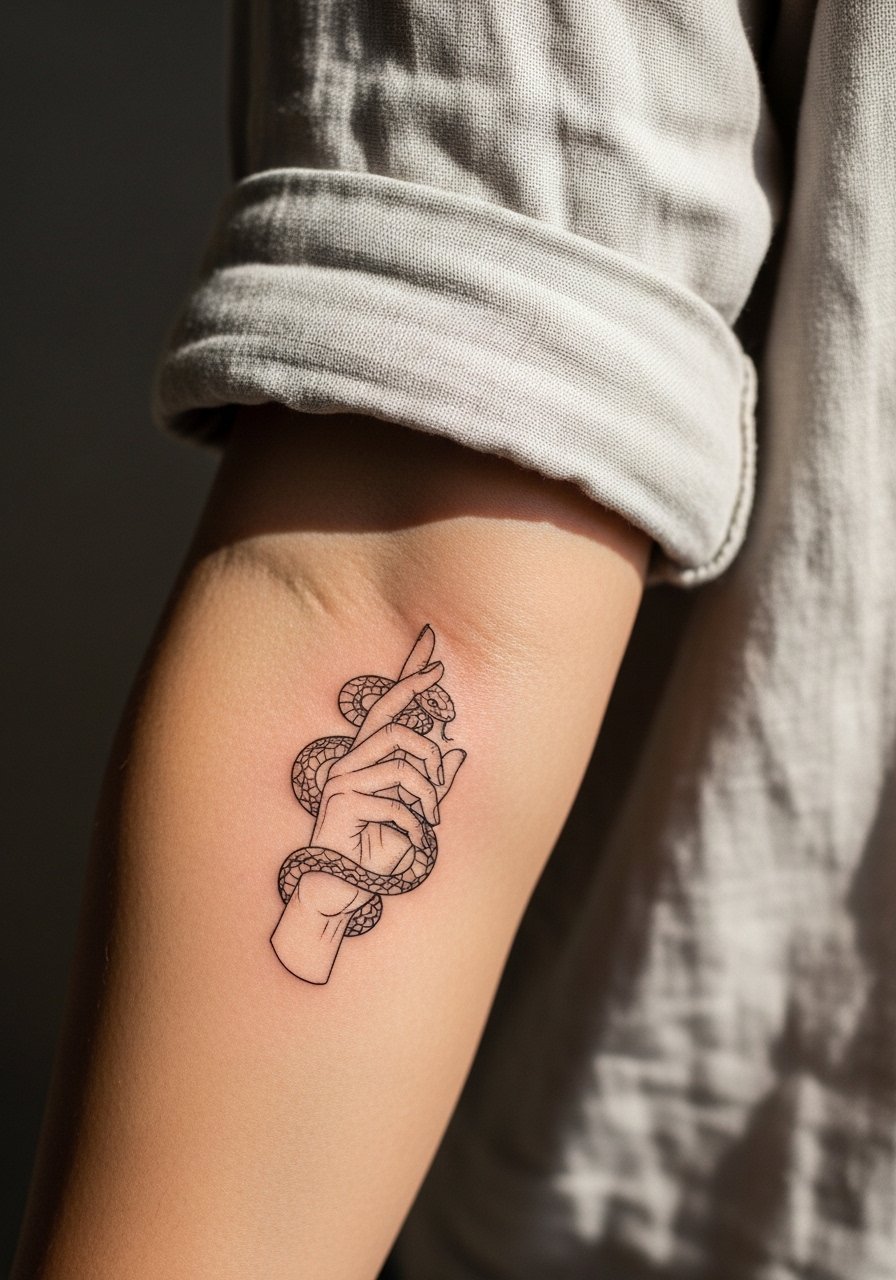
This symbolic fragment drops potency without a full face. In consultation, say you want the hand anatomy crisp and the snake to read with a single serpentine line. The outer forearm tolerates detail better than the wrist, but keep scales minimal to avoid texture fill-in. At six months the contour should still read well; at two years expect some softening of micro details and plan a touch-up around year three if you want the scales crisp. For display, rolled sleeves and a linen button down shirt women put the forearm on view without distraction.
9. Gothic Blackwork Medusa on Thigh
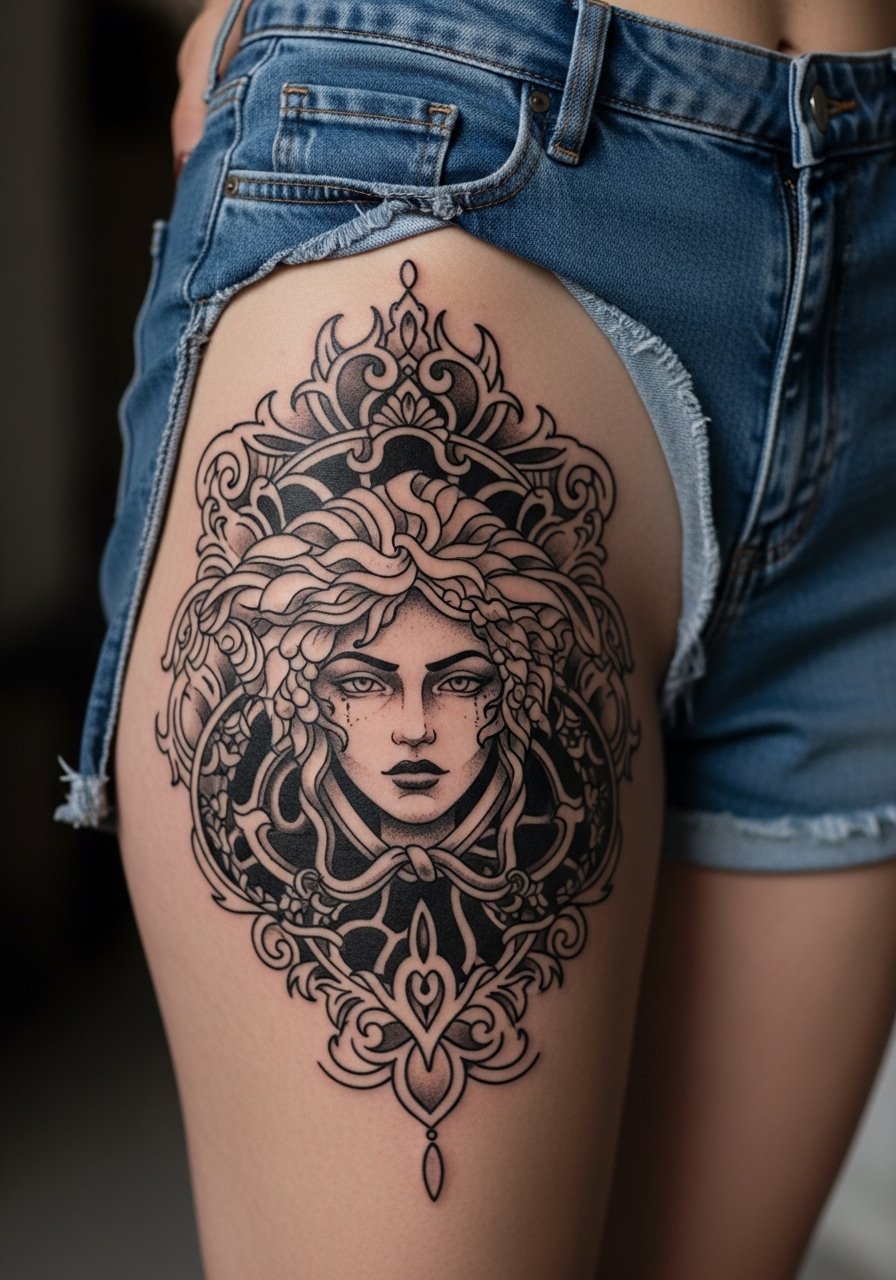
Blackwork Medusa uses negative space and heavy saturation to emphasize drama without tiny interior detail. Tell the artist you want bold silhouettes around the snakes and selective negative cutouts so the piece does not flatten into a solid mass. The thigh tolerates saturation well and holds touch-ups easily. Common regret is asking for heavy micro detail inside a black mass; those details vanish into saturation. Pain is lower on the thigh. This style glosses through showers with minimal mid-heal scabbing if you keep friction low.
10. Tiny Medusa Behind the Ear
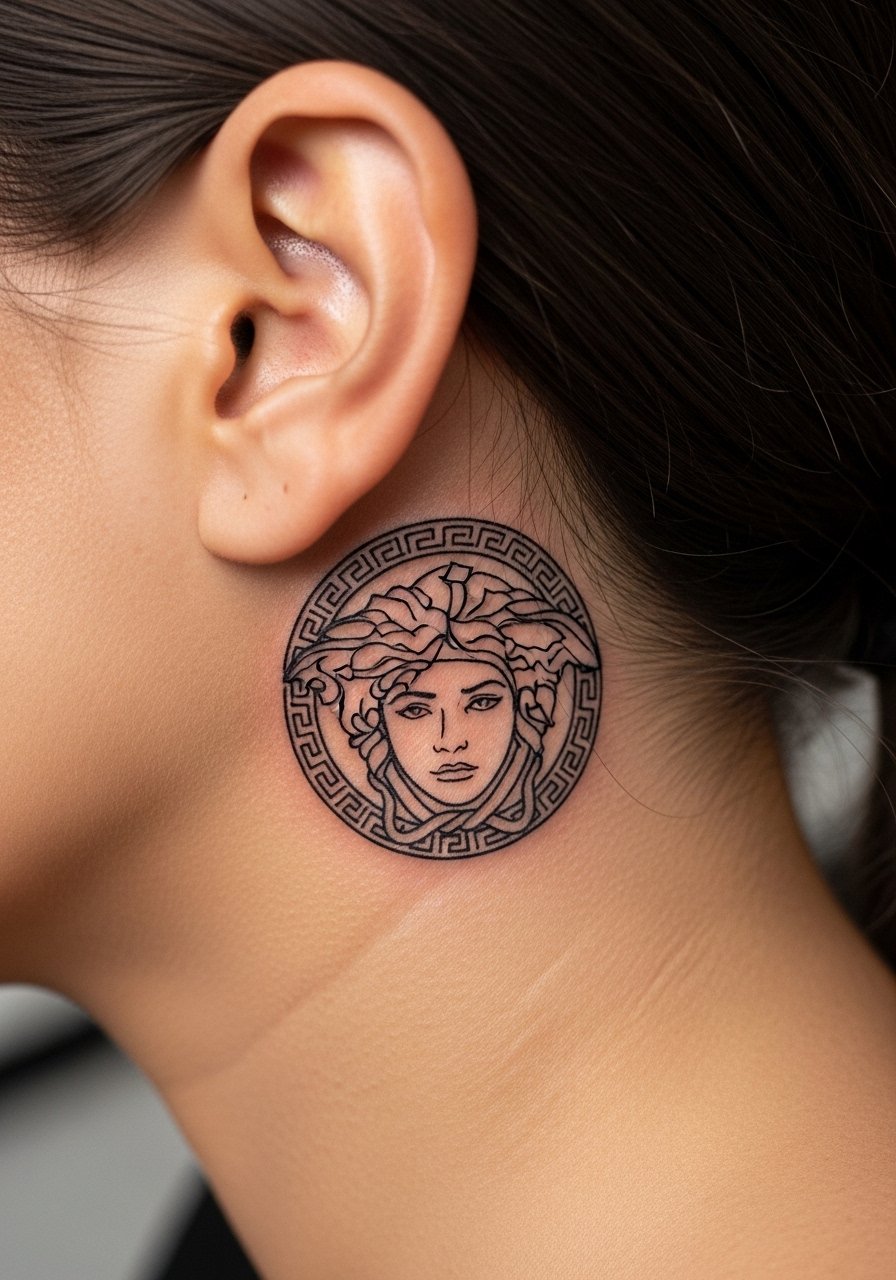
Behind-the-ear pieces read like secrets when tucked under hair. Be precise in the consultation and request minimal facial detail and larger negative spaces so the small snakes remain separate. Because of curvature and thin skin there is a risk of lines softening faster. Expect a crisp fresh look at six months and potential softening by two years. Pain is low but the area is sensitive to pressure. A pro tip is to grow hair long enough to let some cover hide early fading rather than force constant sun exposure.
11. Medusa Half-Moon at Nape of Neck
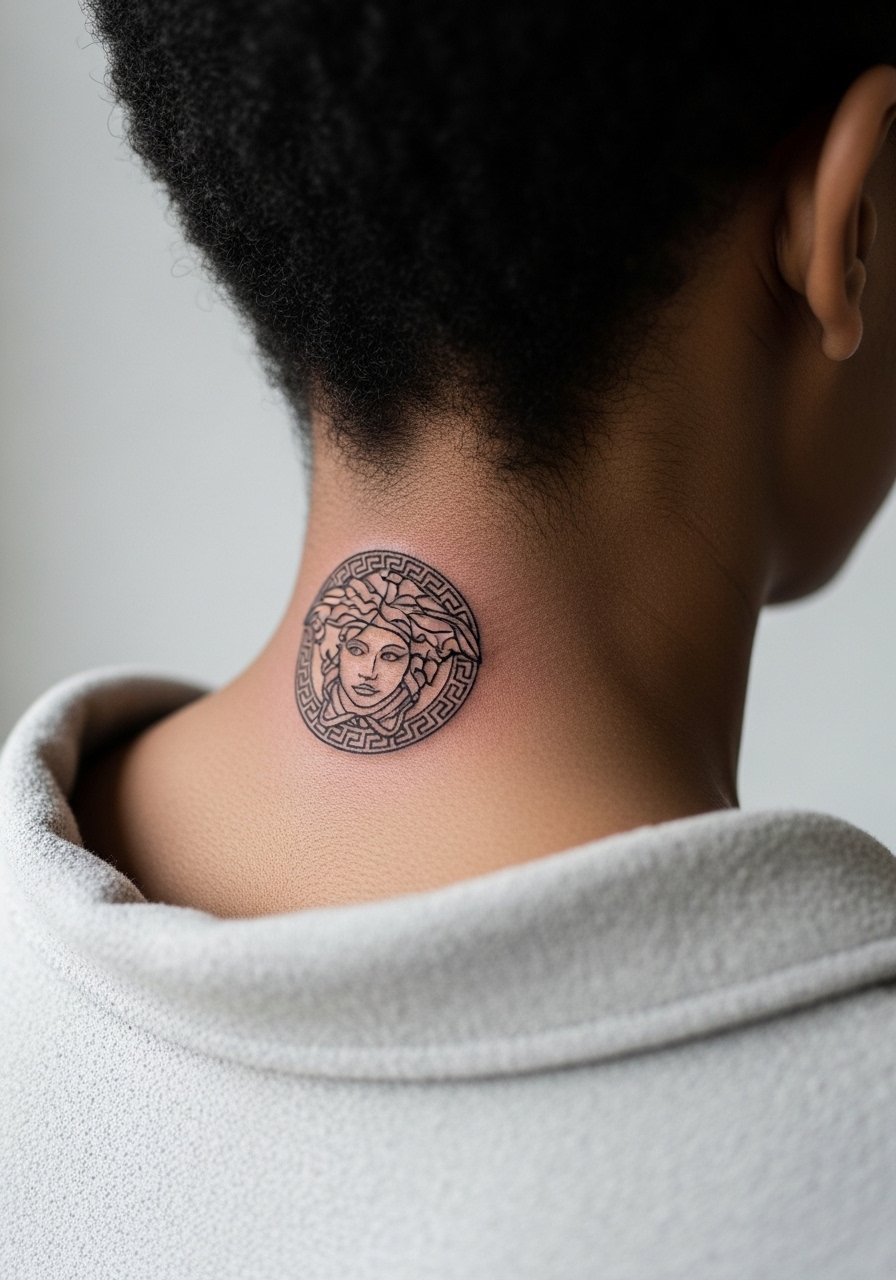
A nape placement gives an intimate peek when hair is up. Ask the artist to favor bolder junction points and open negative arcs to avoid tiny clustered scales. The nape sees sun and sweat, so UV protection and careful clothing choices help maintain definition. At six months the half-moon should still read; by two years anticipate softer outer curves. Pain is moderate. For session wear, choose a top you can lift or unbutton without pulling on the neck.
12. Stipple-Shaded Medusa on Inner Bicep
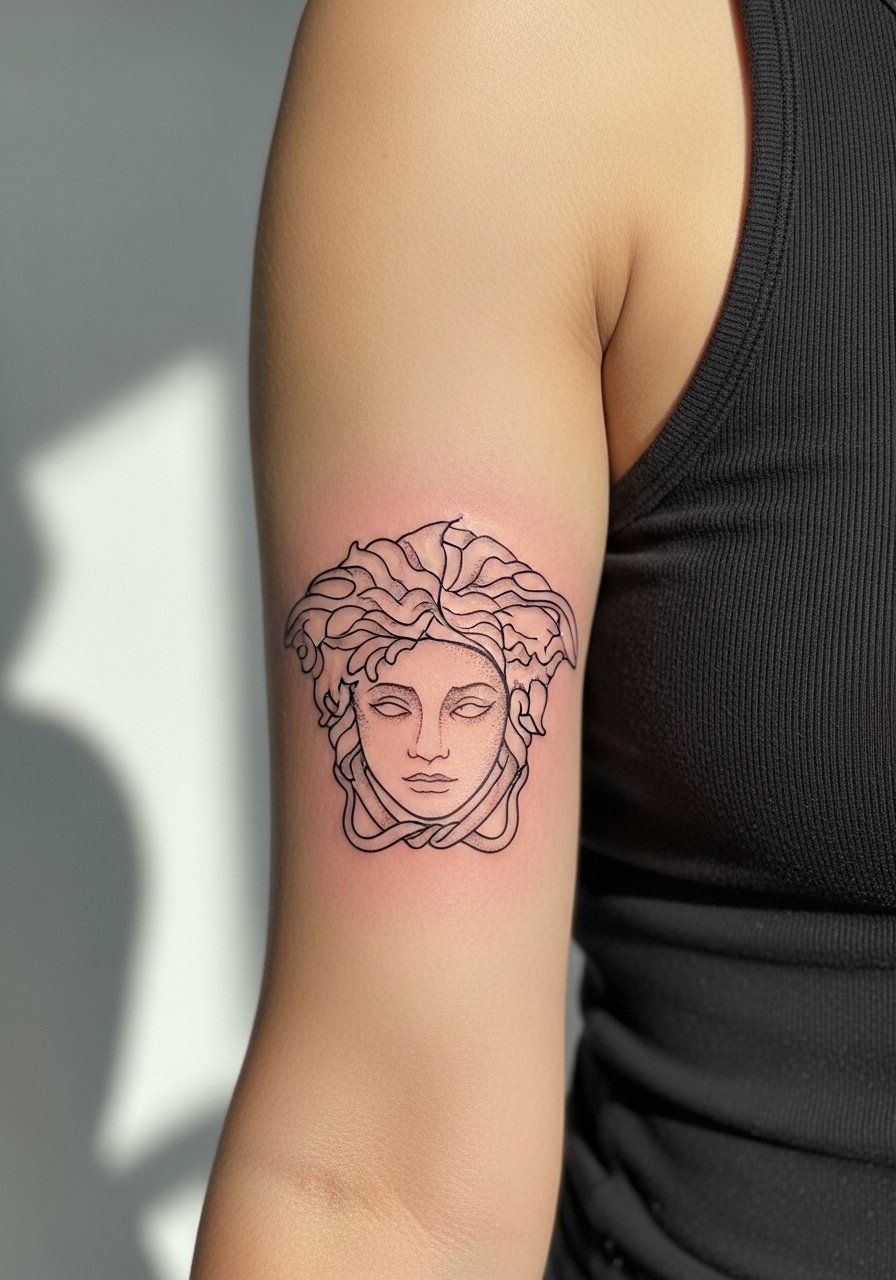
Stipple or dot work keeps tonal depth without heavy washes that can merge on thin skin. Ask for wider spacing between dots and for the darker areas to be built in layers so the artist can judge heal progression. The inner bicep can be prone to rubbing against clothing while healing, so consider session timing with wardrobe in mind. A common mistake is asking for dense stipple blocks under two inches, which fill in. Expect even-looking fades at six months and maintain contrast with occasional touch-ups.
13. Medusa Medallion on Sternum
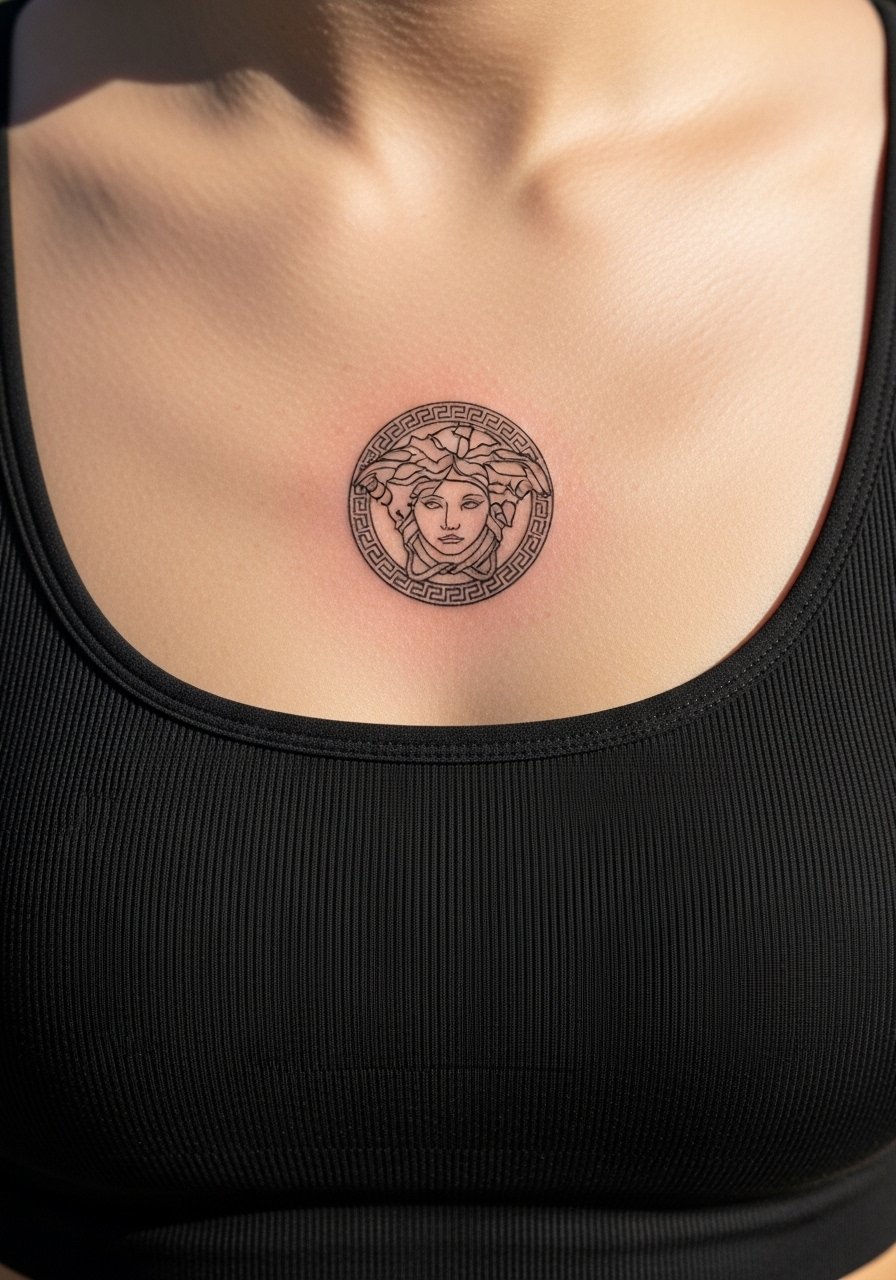
Sternum work demands attention to breathing and positioning during the session. Tell the artist you want the medallion centered and ask to test the stencil with relaxed and slightly expanded chest positions. Controversy exists about fine line here. One camp says fine line blurs on sternum quickly because of skin movement. The other camp believes careful needle depth and spacing make it hold. Ask your artist where they stand and review healed photos of their sternum work before booking. Pain ranges high to very high, so break the session if needed.
14. Minimalist Medusa on Finger
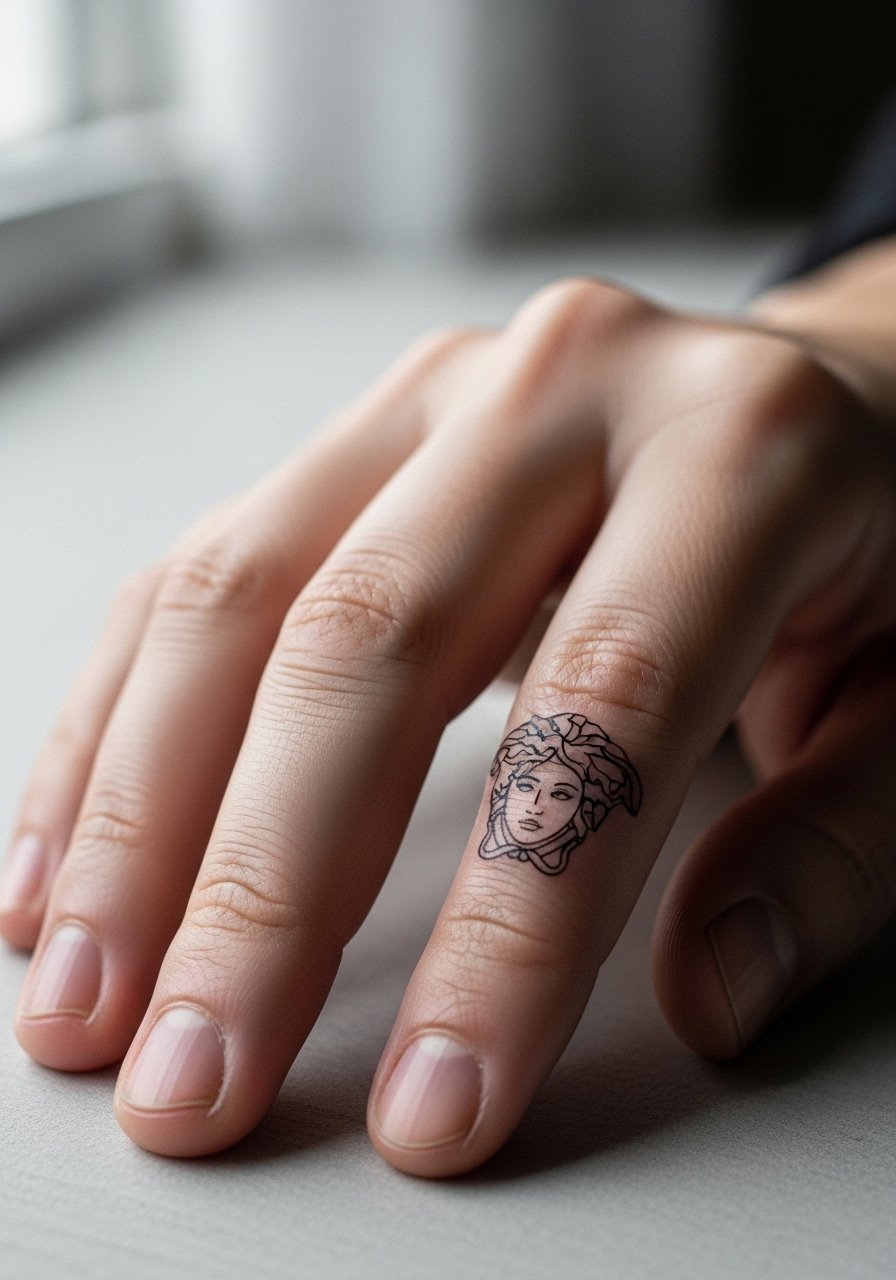
Finger tattoos are charming but age under constant washing and friction. Ask for slightly bolder anchors and simplified snakes so the essential shape remains when lines blunt. Expect the boldest clarity in the first six months and possible feathering or patchy fading by year two. A common mistake is over-detailing within a centimeter. Pain is sharp but brief. For the appointment, consider no rings on that finger to avoid pressure while the area is fresh.
15. Surrealist Half-Face on Outer Calf
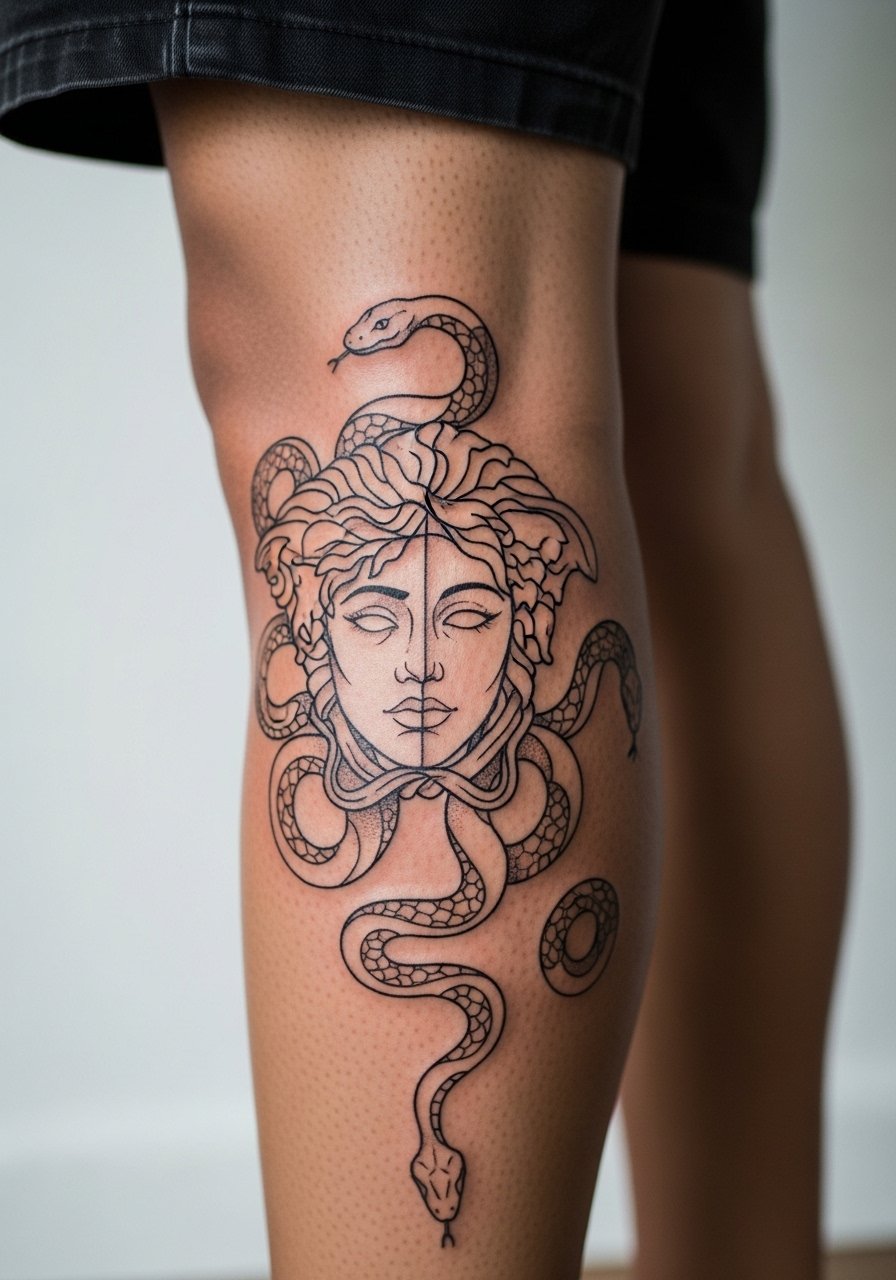
The outer calf supports length and surreal elongation without crowding. Tell your artist you want vertical movement in the snakes so the calf muscle complements the flow. The area heals with low friction if you avoid tight socks during the first week. Mistakes include overcompacting facial features into a narrow strip which makes the portrait unreadable after healing. Pain is low. Expect stable reads at six months and gentle softening in long-term photos.
16. Medusa with Floral Frame on Lower Back
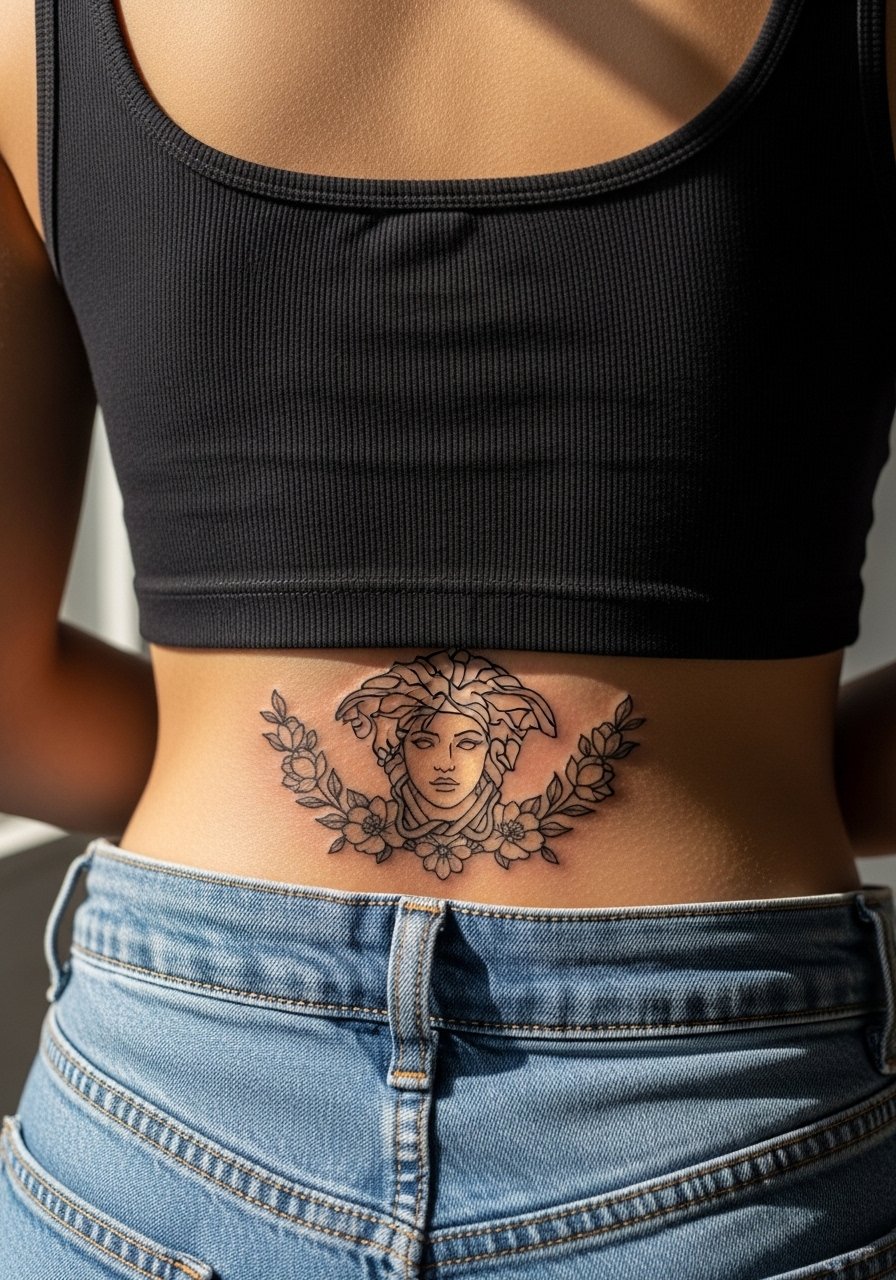
Lower back gives room for a framed motif that combines softness and edge. Ask for a floral border that provides contrast through negative space so the Medusa face remains the focal point. The lower back risks rubbing from waistbands, so plan clothing to reduce friction during the first ten days. Session time varies by size. A common mistake is asking for dense floral texture adjacent to delicate facial detail, which competes and ages unevenly. Consider open-back outfits like a low back tank top women for evenings out.
17. Micro-Realism Medusa on Ankle Side
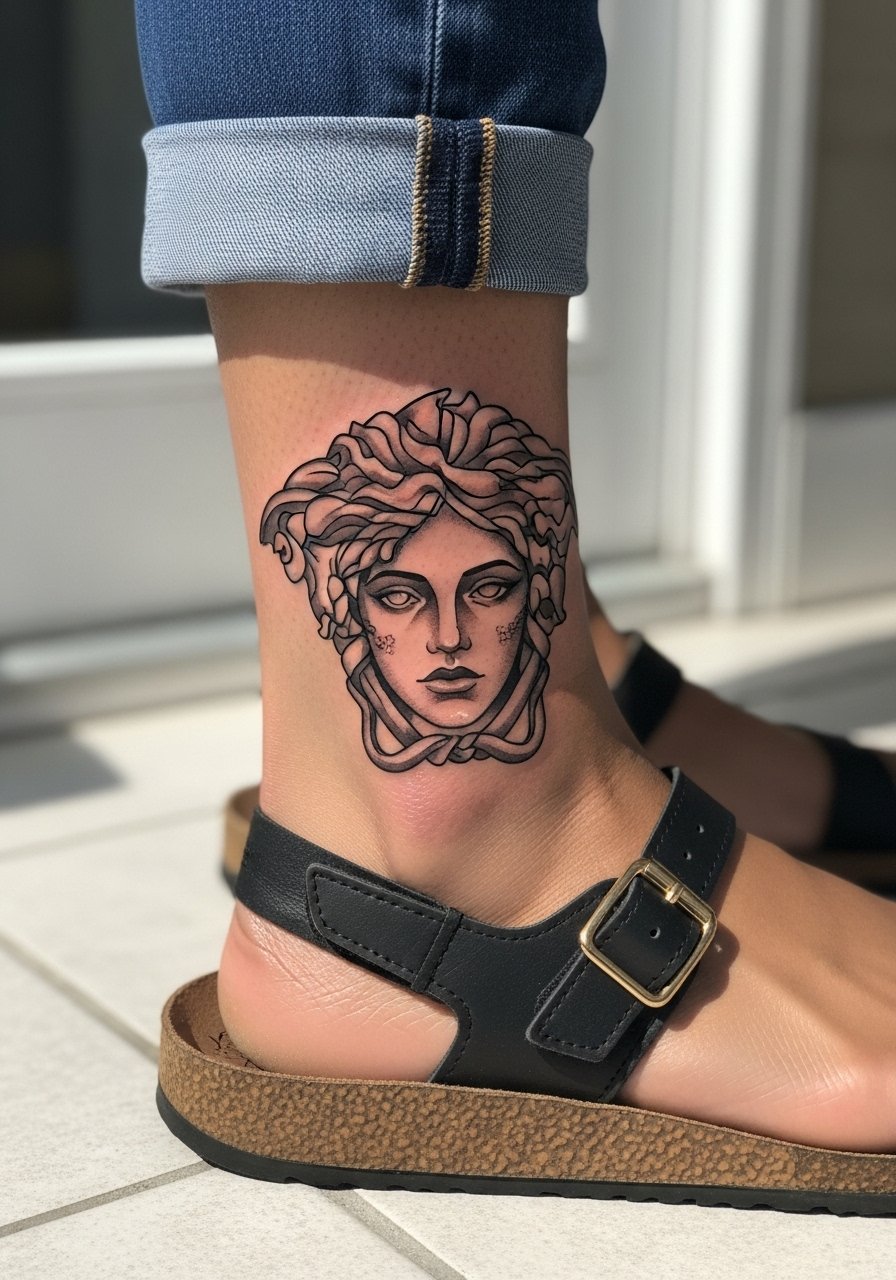
Micro-realism pushes detail into small spaces and needs the right artist. During consult, insist on healed photos of similar-scale portraits on ankles. The ankle sees boot and sock friction, so a slightly bolder outline helps preserve the silhouette. Expect excellent initial fidelity and possible softening by year two. Pain is sharp but short. For the session, wear footwear that is easy to remove and bring socks you can avoid if the area is fresh.
18. Single-Needle Medusa on Ribcage
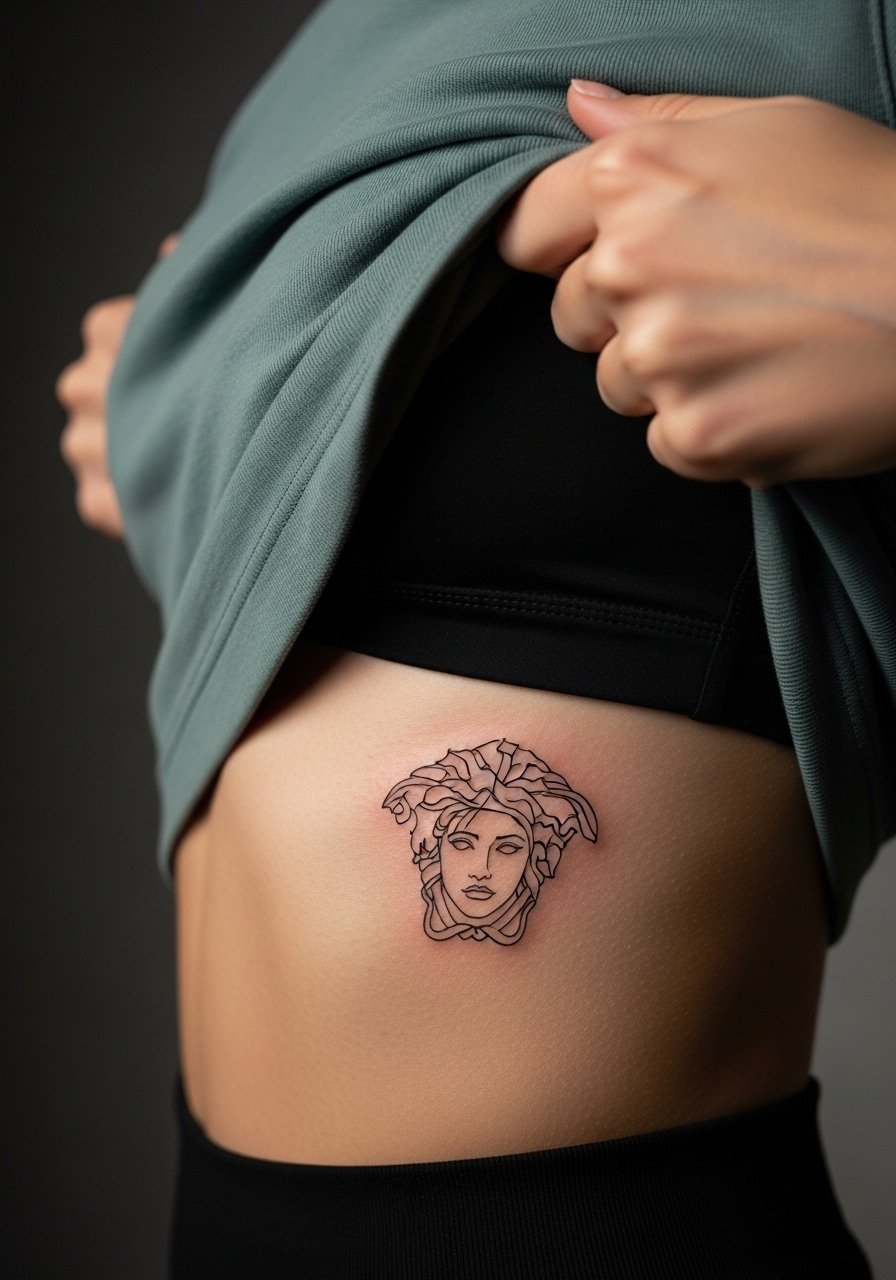
Ribcage placements come with a known debate. One camp says fine single-needle work on ribs blurs because the skin stretches and the needle depth varies with breathing. The other camp insists that experienced artists can control depth and spacing so fine line holds. Name both camps to your artist and ask for their healed rib photos before booking. Expect higher pain levels. If you want the look to last, plan for a touch-up at year two and limit dense internal detail.
19. Dot Work Medusa on Upper Thigh
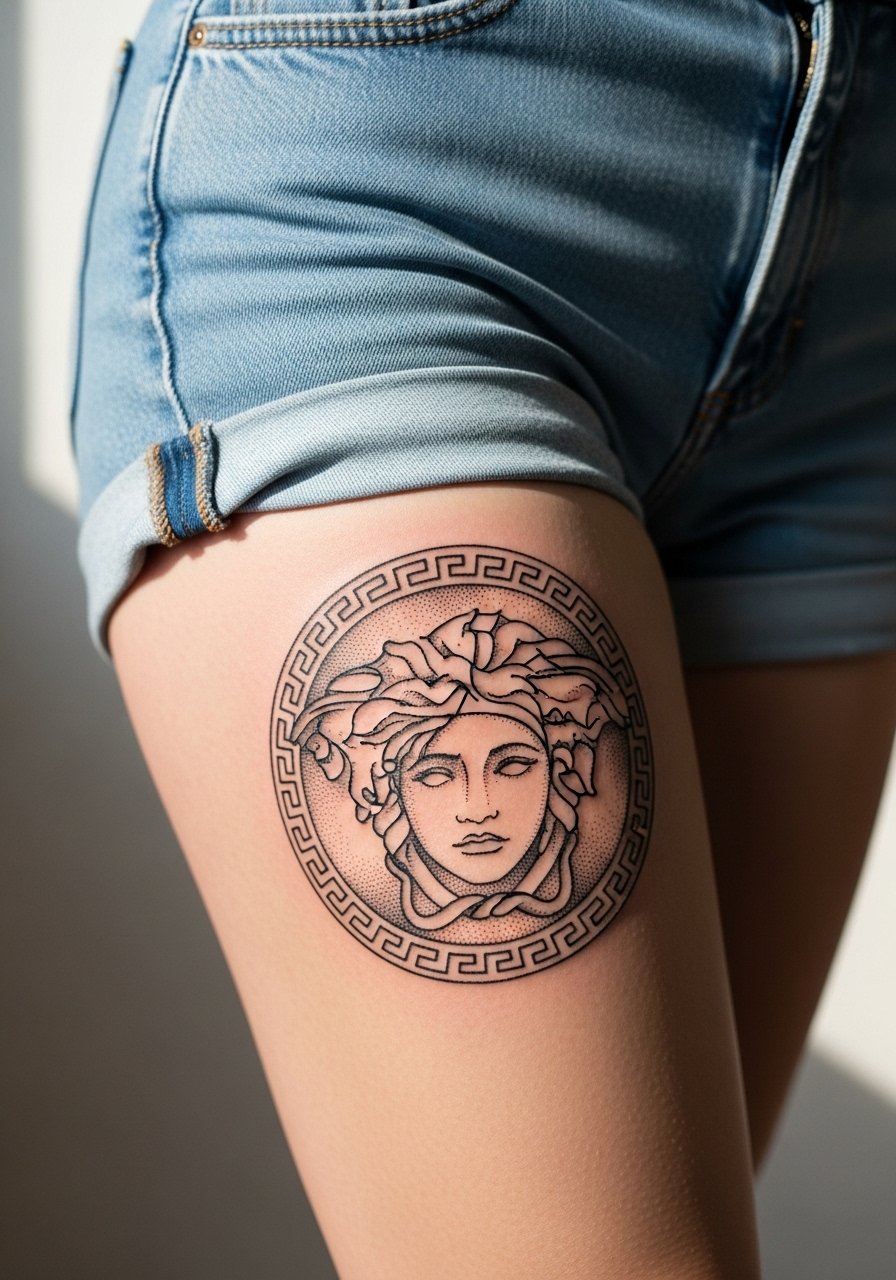
Dot work scales well on the thigh and creates tonal depth without heavy washes. Ask for layered stippling so darker areas are built gradually, which helps artists judge healing and saturation. The thigh tolerates touch-ups easily and resists blowout from weight changes. A common mistake is requesting intense black fill within dot gradients that removes the pointillism texture. Pain is moderate. For showing it off, summer shorts or skirts frame the piece without hiding the work.
20. Medusa Portrait Micro on Outer Forearm
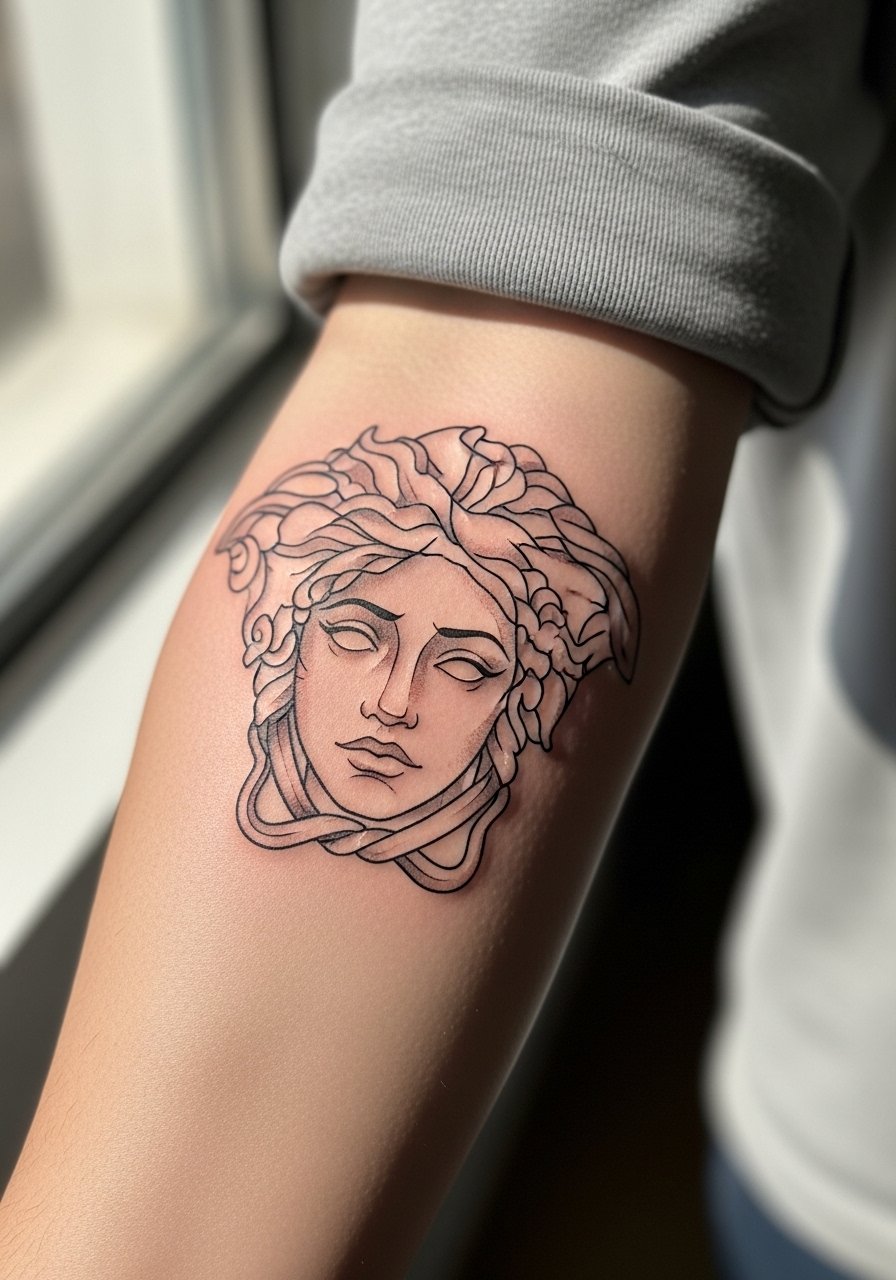
A micro portrait on the forearm needs spacing and a clear focal line like the eye or jaw to anchor the piece. Tell the artist to leave breathing space around the face and to avoid over-shading the cheek area. The outer forearm holds micro detail better than the wrist and usually needs only a single session. Common error is compressing the portrait under two inches. For display, rolled sleeves and a dainty gold bracelet on the opposite wrist balance attention.
21. Tiny Medusa Wrist Stack
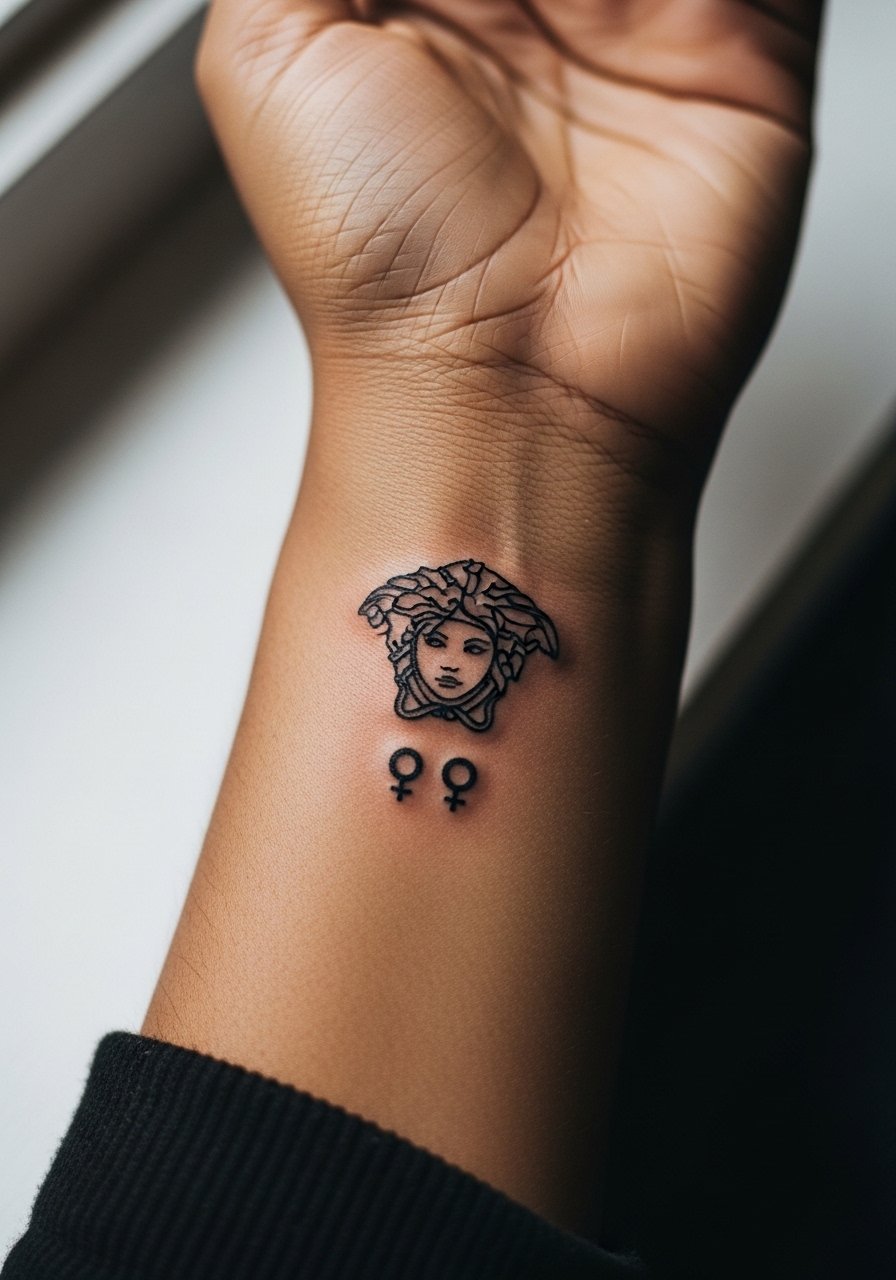
A wrist stack lets you combine a small Medusa with a companion piece like a moon or snake loop. Ask the artist to space elements so each symbol holds shape rather than merging into a band. The wrist is subject to frequent sun and washing, so anticipate touch-ups sooner than on protected skin. A common mistake is choosing identical line weight for every tiny symbol, which reads flat. Pain is low to moderate. For session wear and future showing, a minimalist watch women on the opposite wrist complements the stack without crowding.
Frequently Asked Questions
Q: Will a fine line Medusa on the wrist need touch-ups more often than a blackwork thigh piece?
A: Yes, wrist pieces see more friction and UV exposure so they often need touch-ups earlier. A small wrist Medusa may need a touch-up around year two to three, while a saturated thigh blackwork piece can hold color longer. Planning for a light refresh is normal.
Q: How does skin tone affect the choice between single-needle and stipple shading for a small Medusa design?
A: On darker skin tones stipple and slightly bolder anchors preserve contrast better than ultra-fine single-needle lines. Some artists prefer denser dot spacing for depth, and others adapt needle technique to the skin. Ask to see healed examples on a similar tone before booking.
Q: Can I prepare my wardrobe to make a sternum or ribcage Medusa session easier?
A: Yes, wear a fitted sports bra or a zip-up hoodie you can open to expose just the area without tugging. A fitted sports bra or bandeau makes positioning and after-session changes simpler for both you and the artist.
Q: Are tiny Medusa finger or ankle tattoos worth it if I want longevity?
A: They are worth it if you accept likely faster fading and plan for touch-ups. Fingers and ankles live in high-wear zones. Simplify the design and accept that top-up sessions may be part of the long-term plan.
Q: How should I find an artist who understands soft small Medusa work without naming anyone?
A: Look for portfolios filtered by style and placement, search hashtags that combine style and location, and check tattoo directories for fine line or micro-realism specialists. Spend time reading healed photos rather than just fresh shots and ask to see same-placement healed work before you book.