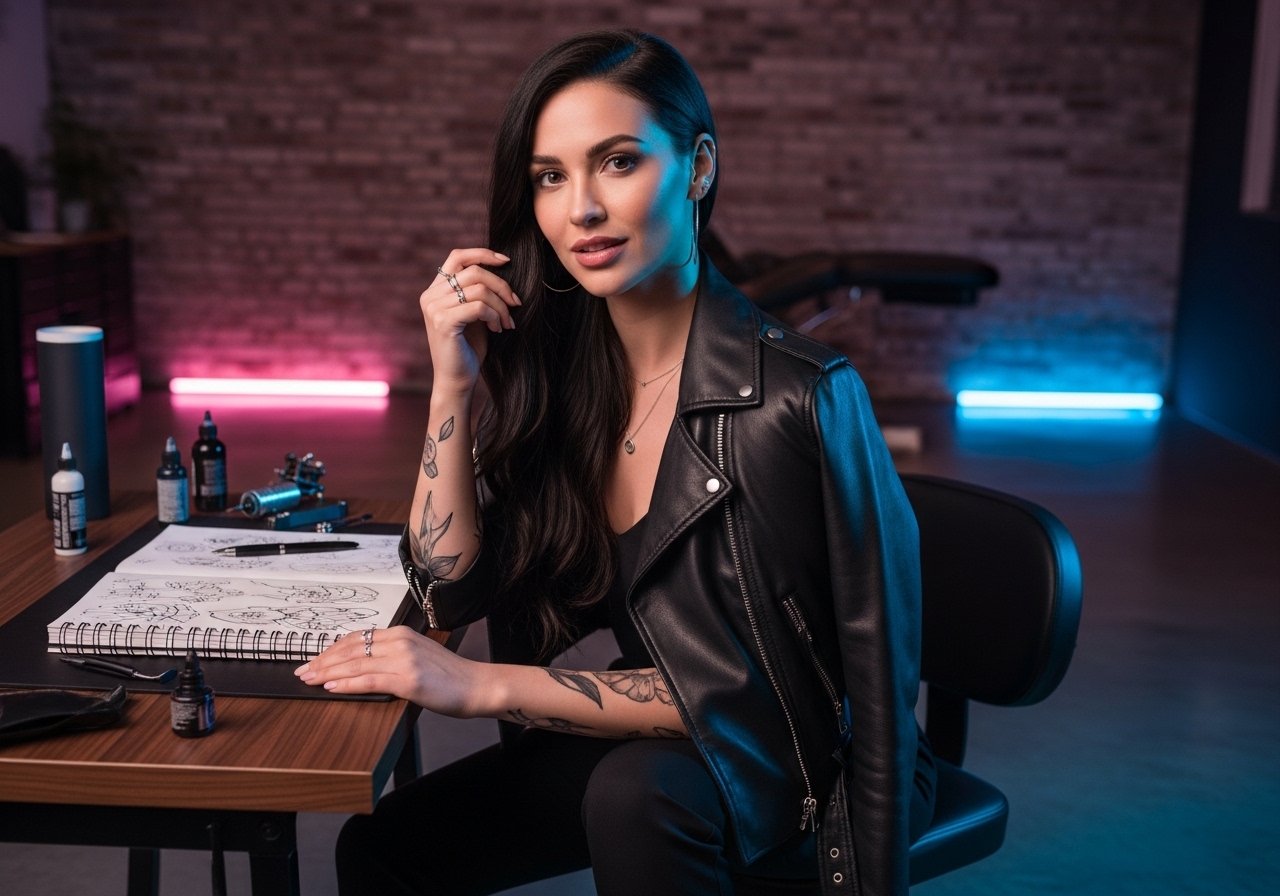
Fine line Flower of Life tattoos dominate saved boards right now, and the difference between a piece that still reads crisp at year five and one that blurs fast often comes down to spacing and placement. Trends push tiny mandalas and dense geometry, but real wear and sun exposure tell a different story. Flip through these 21 ideas and you will find versions that photograph well fresh and choices that actually age with skin, plus what to ask your artist in the chair.
1. Fine Line Flower of Life on Inner Forearm
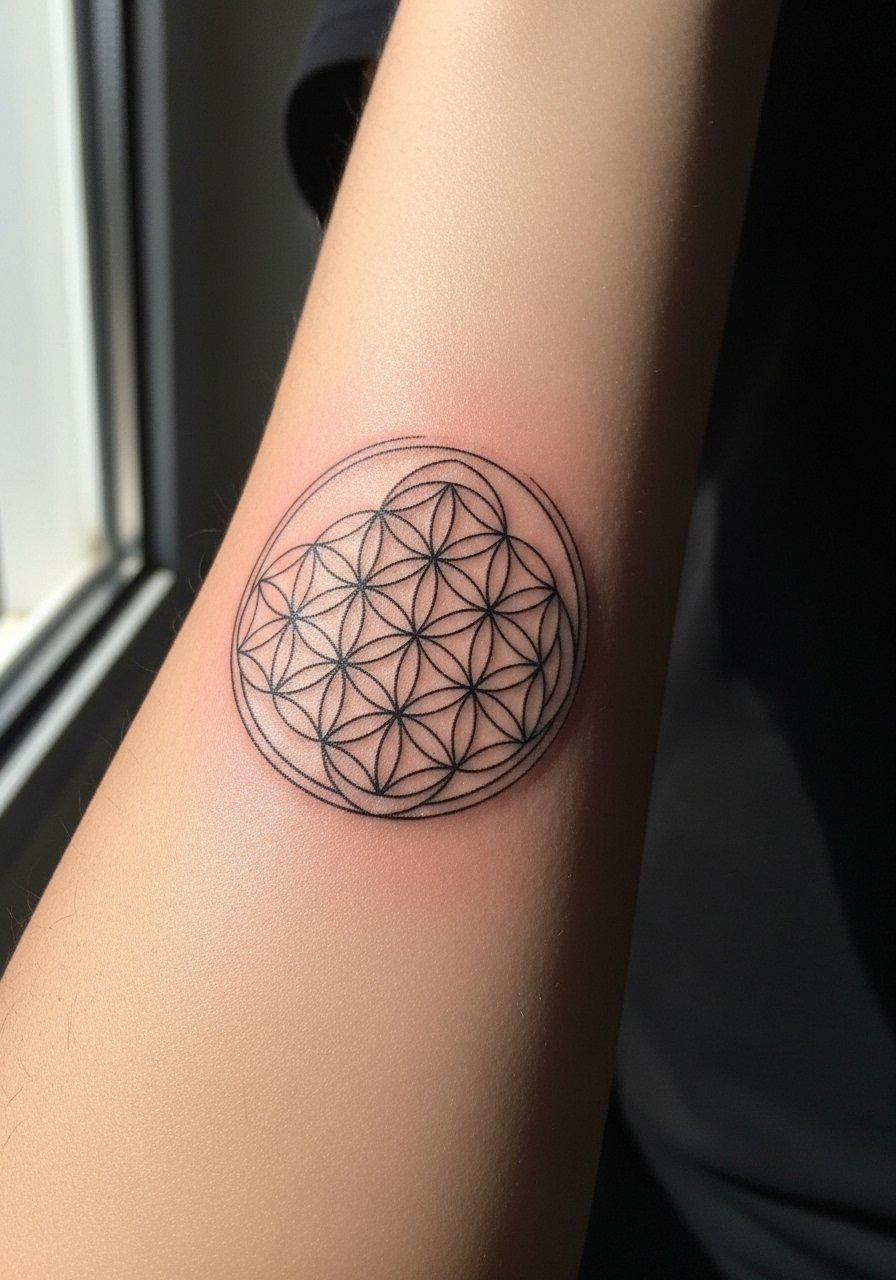
I recommend this if you want geometry that reads every day. Tell your artist you want slightly heavier primary circles with thinner connecting petals so the design keeps its negative space as it ages. Common mistake is asking for the full cell packed tiny, which leads to lines merging after a few years. Pain is low to moderate for the inner forearm and sessions usually fit under one hour. Expect a light touch-up at year two for very fine points. Pair with rolled-up sleeves or a racerback tank when you want to show it off.
2. Seed of Life Cluster Behind the Ear
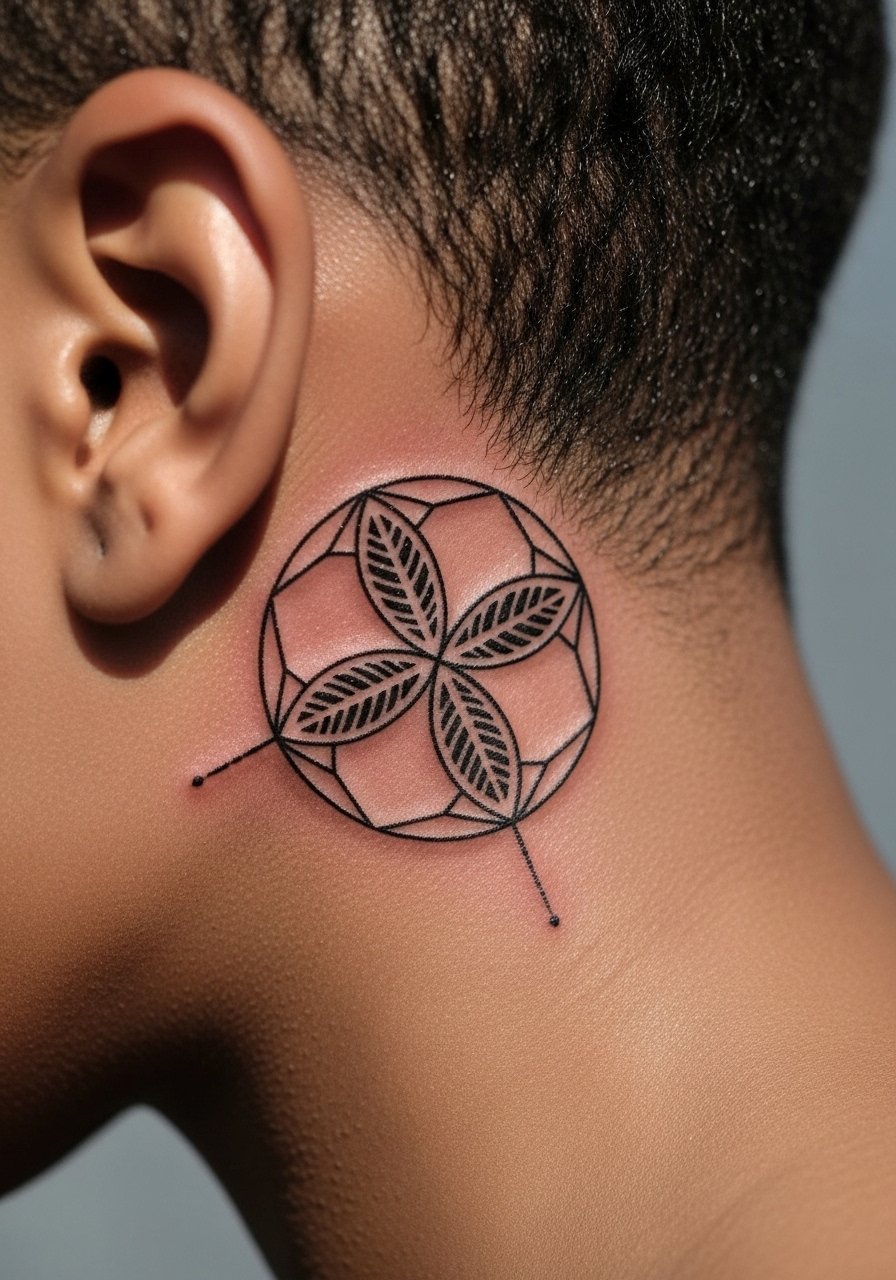
This tiny cluster works as a subtle statement under hair. Mention to your artist that you want the stencil placed slightly lower along the hairline so it peeks when you tuck hair behind the ear. Artists split on durability for this spot. One camp says the hairline area protects ink, the other camp warns about constant shampooing and friction. Expect touch-ups sooner if you swim or shampoo frequently. Session time is short and pain is low. For the appointment, bring a shirt with a collar you can pull aside from the back, and a wide-neck tee so access is simple.
3. Watercolor Flower of Life on Upper Thigh
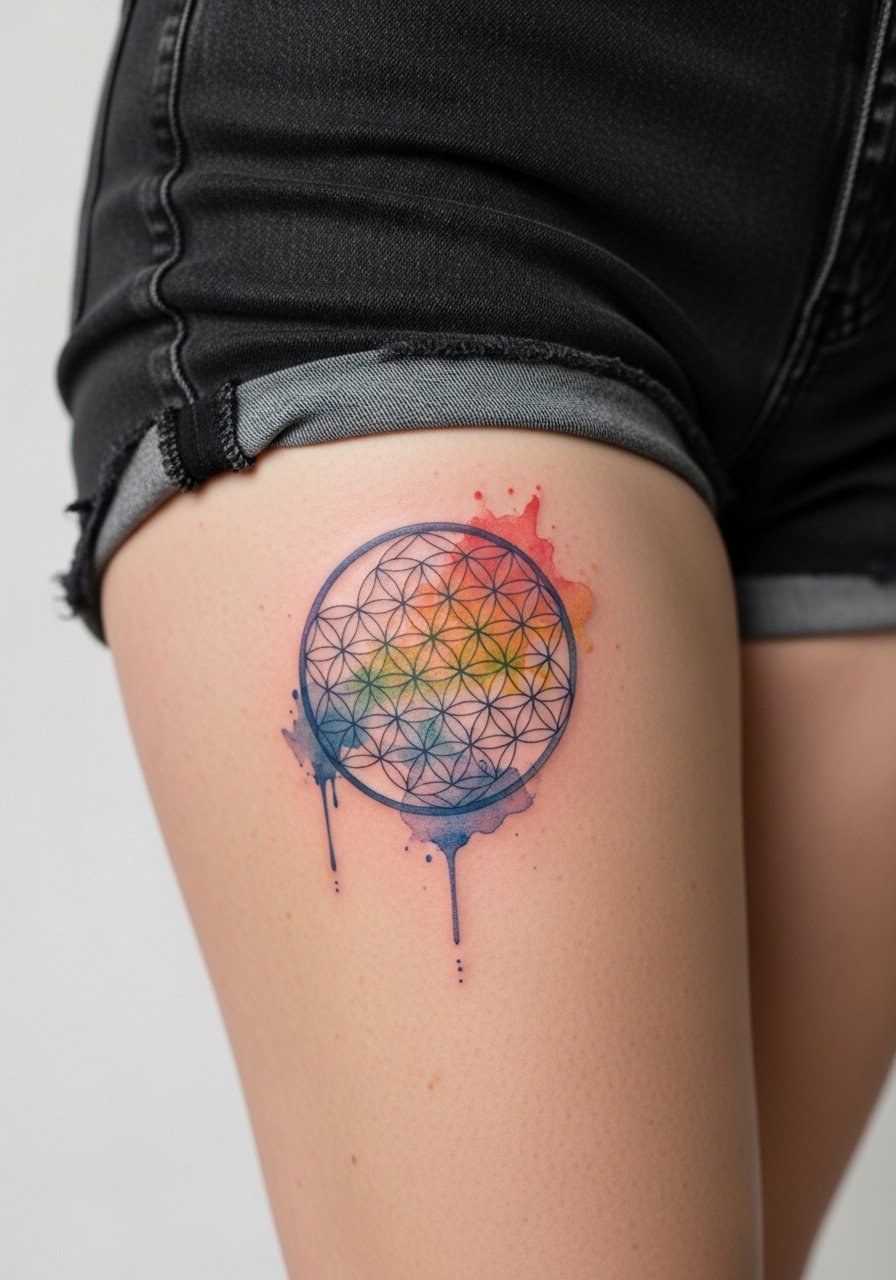
This placement lets you use saturated washes without daily sun exposure wearing thin the pigments. Ask your artist to anchor the watercolor with crisp black linework around the main circles so the geometry keeps definition as the color settles. Common mistake is using very pale washes without strong line anchors, which turn into muted bruises at six months. Pain is moderate and sessions can run one to two hours depending on color. For the session, wear high-waisted shorts you can shift easily and still feel covered.
4. Blackwork Flower of Life Centered on the Sternum
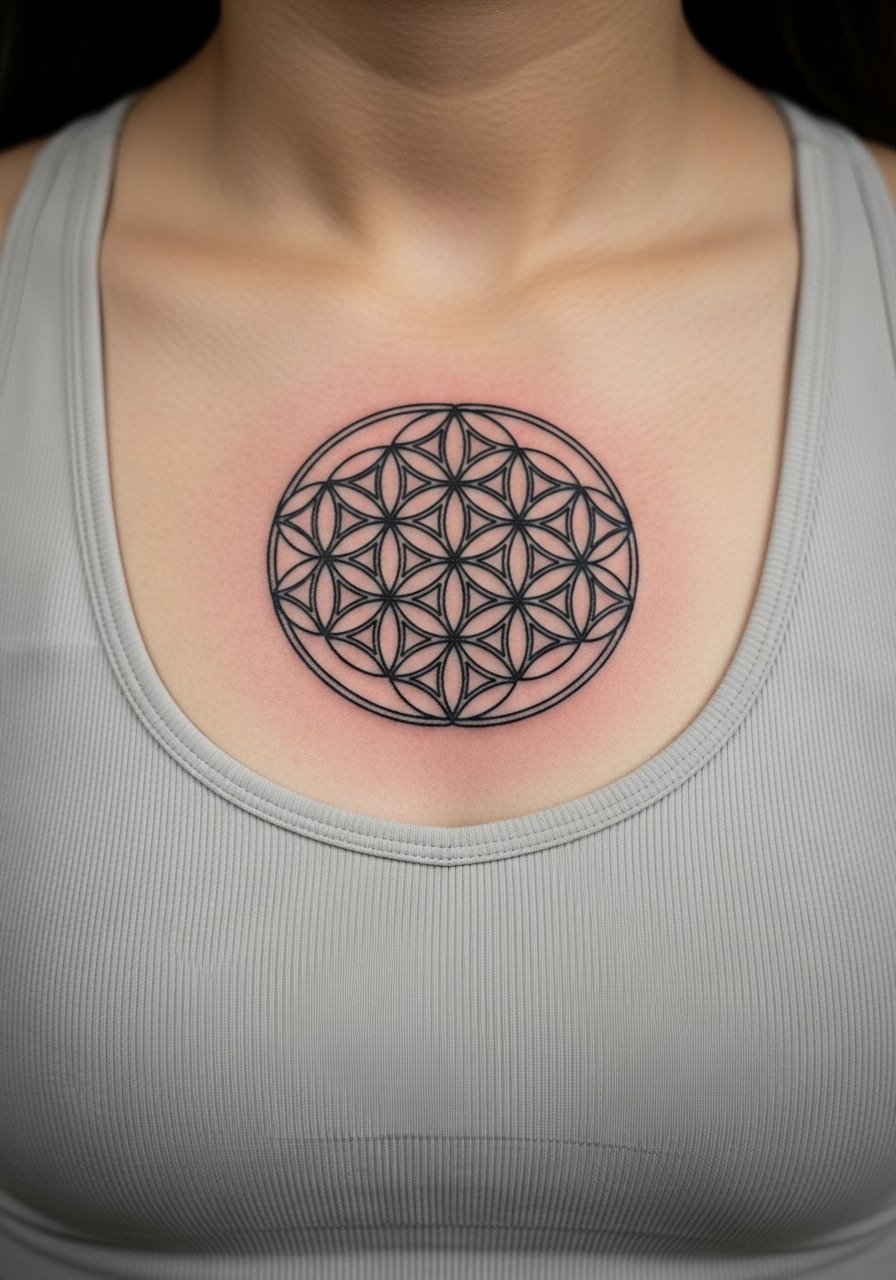
Fair warning, sternum work has higher sensitivity and longer sessions. I prefer bold blackwork here with clear spacing so the dense geometry does not bleed together as the skin moves. The biggest mistake is compressing too many stitches into the center. That leads to muddiness when the chest stretches or when the wearer moves frequently. Expect a multi-hour session and a touch-up window around year two if the central dots soften. For showing it off, pair with a bandeau top that frames the design without competing with it.
5. Seed of Life Wrist Band with Dot Work Accents
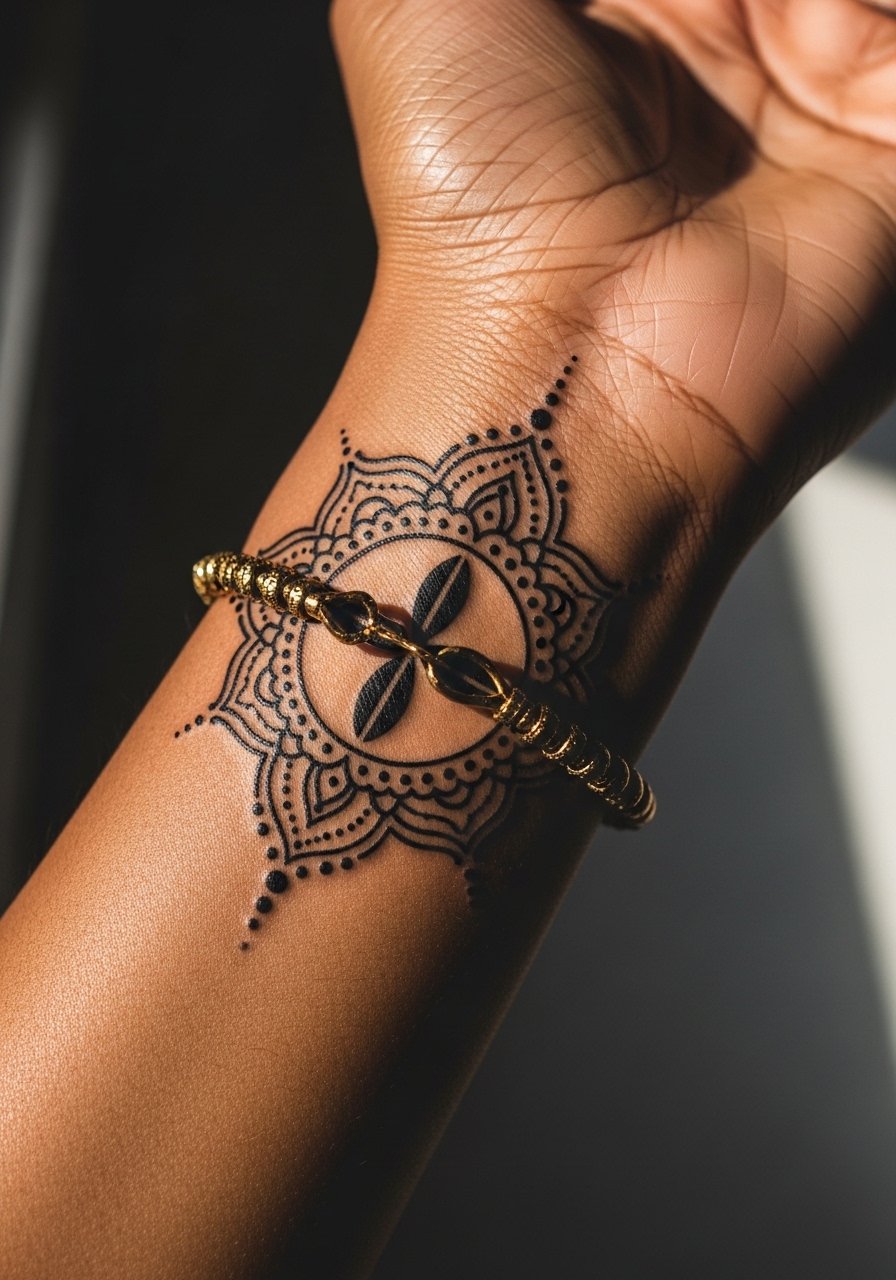
Wrist band geometry needs room between lines to survive hand washing and friction. Ask for slightly thicker outer circles and stipple shading between nodes to create visible depth at six months. A common error is requesting ultra-fine lines that disappear or blur within a year on the wrist. Pain is mild but the area sees heavy wear. Expect touch-ups at year two for edge sharpness. Style it with stacked dainty bracelets or a thin chain bracelet that sits beside the band without covering the ink.
6. Flower of Life Mandala on Upper Back
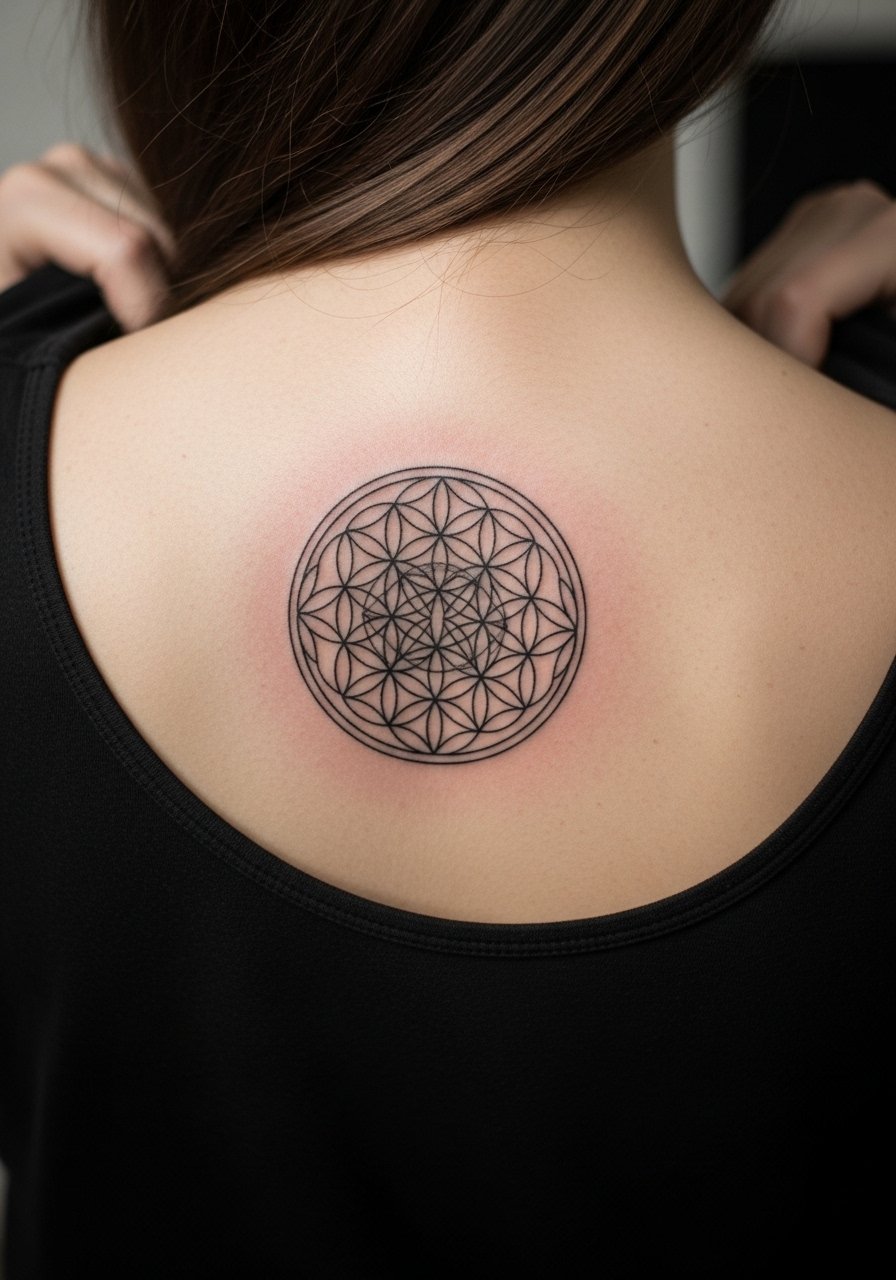
Upper back gives space for complex mandalas and layered dot work. Tell your artist you want a balance of whip shading and stipple shading in the outer petals to maintain a textured look without filling the center too densely. Mistake is packing too many concentric rings, which ages into a gray mass. Sessions run two to three hours and the pain is moderate. For the appointment wear a loose tank top you can pull down at the back for access and keep the front covered.
Studio Day Picks
The inner wrist, sternum, and upper thigh pieces above need different prep and a few simple items smooth the session and the first week.
-
Stencil transfer paper kit. Lets you preview placement on skin and test spacing, which is crucial for dense Flower of Life layouts on wrists and sternums.
-
Topical numbing cream. Applied about 45 minutes before the session it reduces edge pain on sensitive spots like the sternum and inner thigh.
-
Thin protective film roll. Keeps wrist and hand tattoos safe from friction during the first week of frequent washing and movement.
-
Fragrance-free gentle body wash. Cleanses the healing area without stripping pigment or irritating fresh linework on chest and back.
-
Aquaphor healing ointment. A thin layer for the initial days locks in moisture while letting very fine lines breathe for optimal healing.
7. Tiny Flower of Life Finger Tip
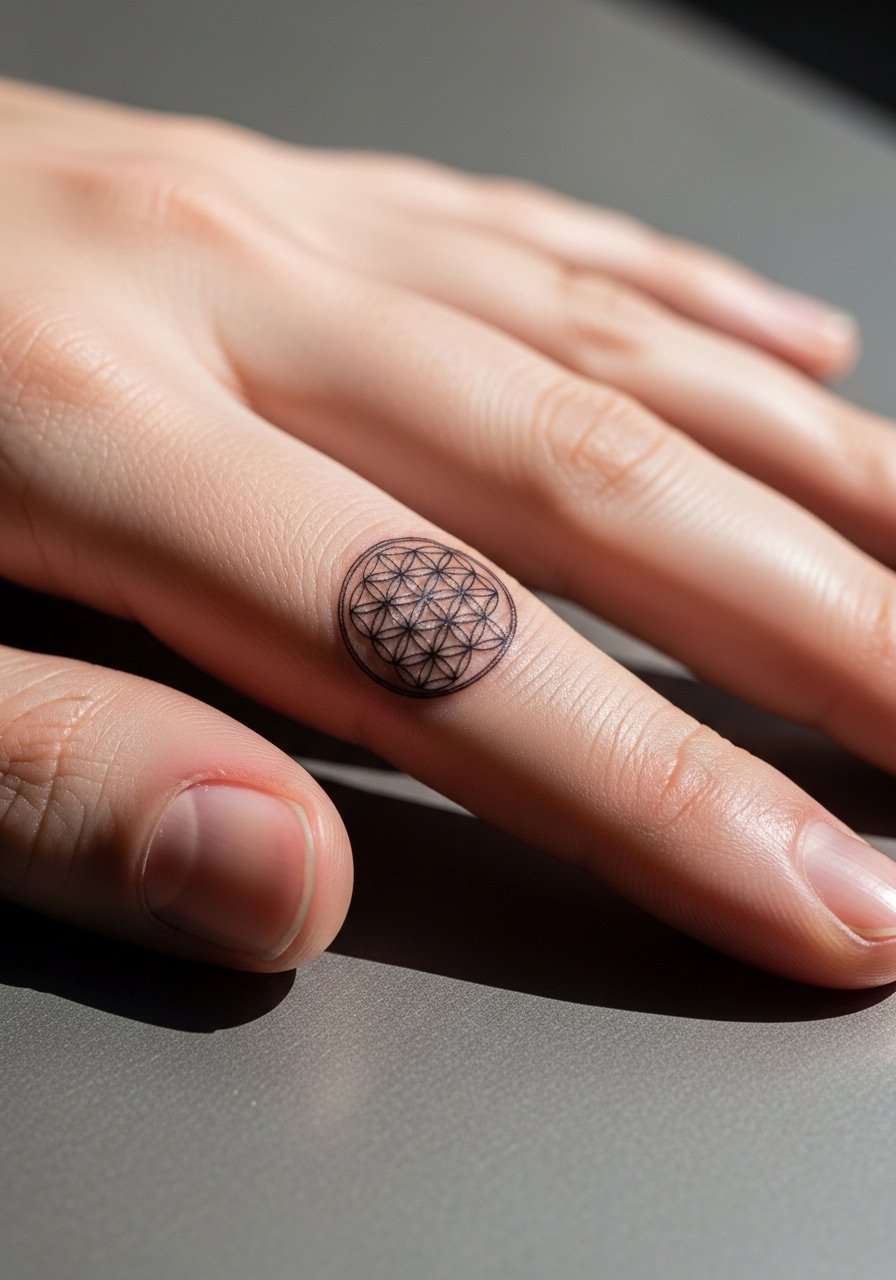
Finger tips are high risk for ink fade and partial loss. I only recommend this if you accept a quicker fade timeline and plan for annual touch-ups. Tell your artist you want the design slightly oversized compared to the reference so the central nodes have a fighting chance. The common mistake is asking for a micro version with hairline strokes that disappear under normal hand use. Pain is brief and sharp. For showing it off, a simple minimalist ring complements the placement without covering the art.
8. Flower of Life Half Sleeve with Botanical Overlays
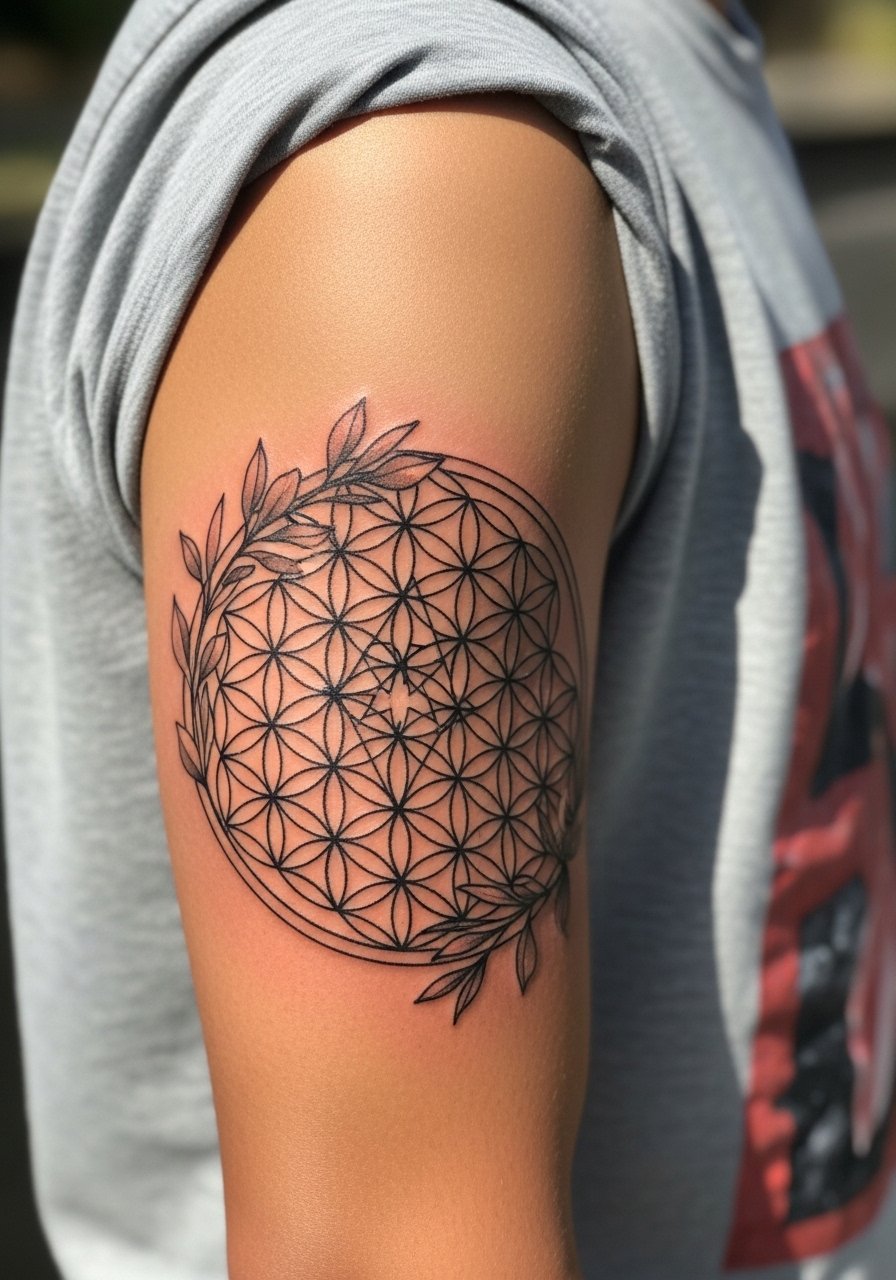
A half sleeve lets you combine geometric precision with organic shading and stipple fills. During consultation, ask for the Flower of Life to serve as the backbone and for the botanicals to flow outward so the geometry remains readable from a distance. A mistake is wrapping the mandala too tightly against other elements, which creates visual clutter once healed. Sessions vary from multiple two to three hour sittings. Pain is moderate and touch-ups for saturation are common at year three. Pair with short sleeves and a loose button-down shirt when you want the sleeve visible.
9. Delicate Flower of Life Collarbone Accent
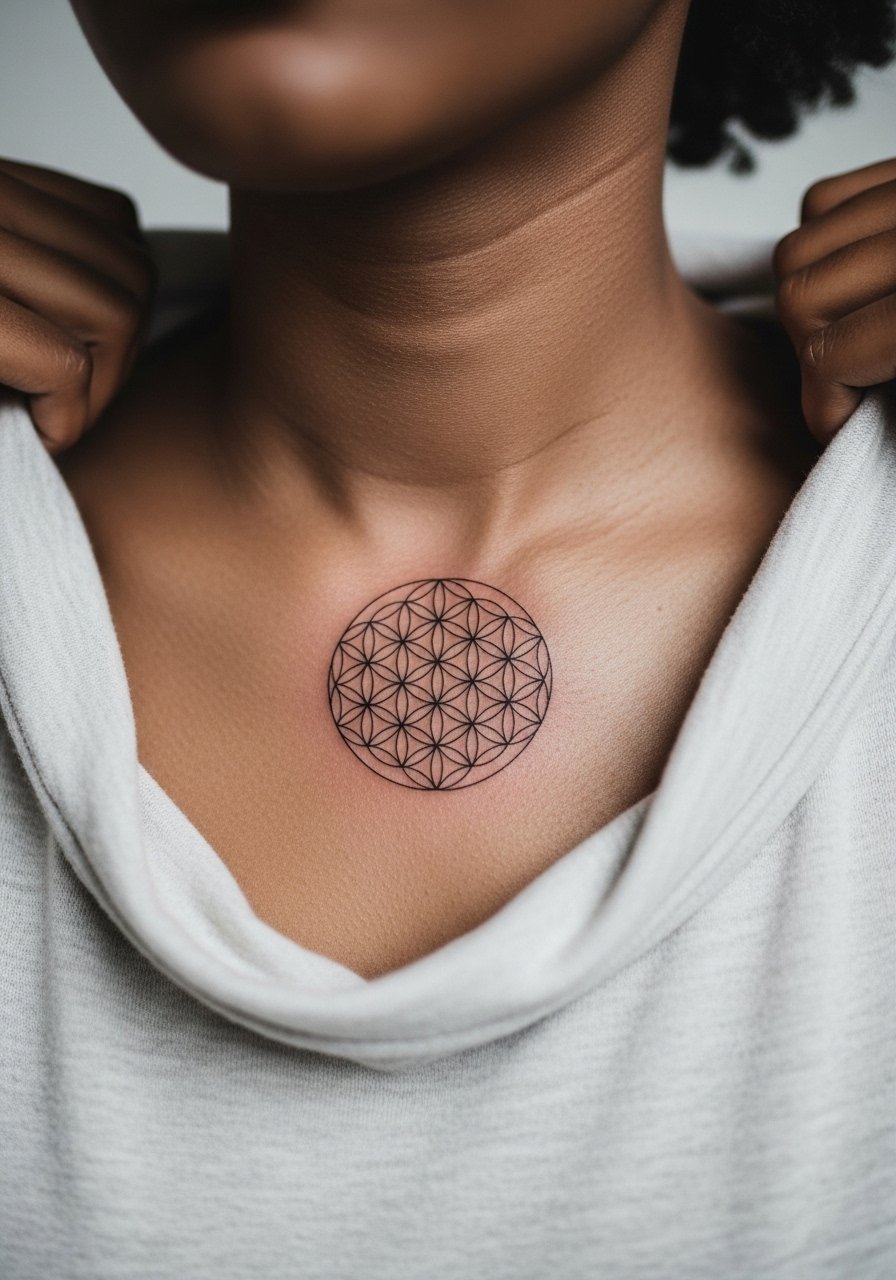
Collarbones read beautifully with small sacred geometry that follows the bone line. I suggest asking for horizontal orientation that matches the collarbone so it looks intentional under tops. Common mistake is centering it too high or low which fights natural clothing lines. Pain is moderate to high depending on proximity to bone. Sessions are short but the area is delicate, so expect a touch-up at year two for tiny dots. Style with open-neck tops or a thin chain pendant that sits above without crowding the design.
10. Geometric Flower of Life Over the Shoulder Blade
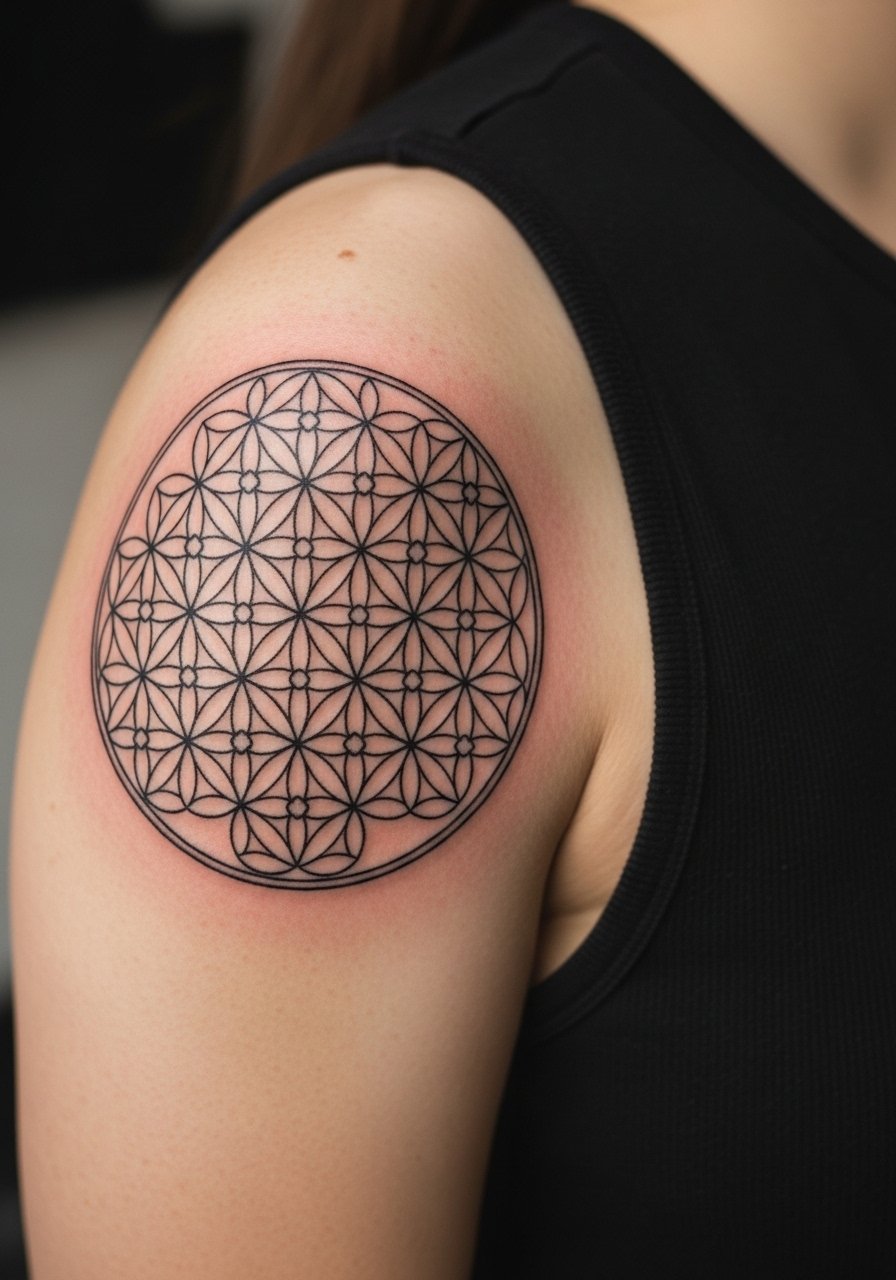
Shoulder blade work benefits from larger spacing and bolder outer rings to keep the geometry crisp when you move. Tell your artist you want the center slightly off to the spine for a dynamic look. Mistakes include making the pattern too circular and centered, which looks static and ages into a gray blur. Sessions are medium length and pain is moderate. For the session wear a loose button-down you can pull aside for access and keep the front covered.
11. Minimalist Seed of Life on the Ankle
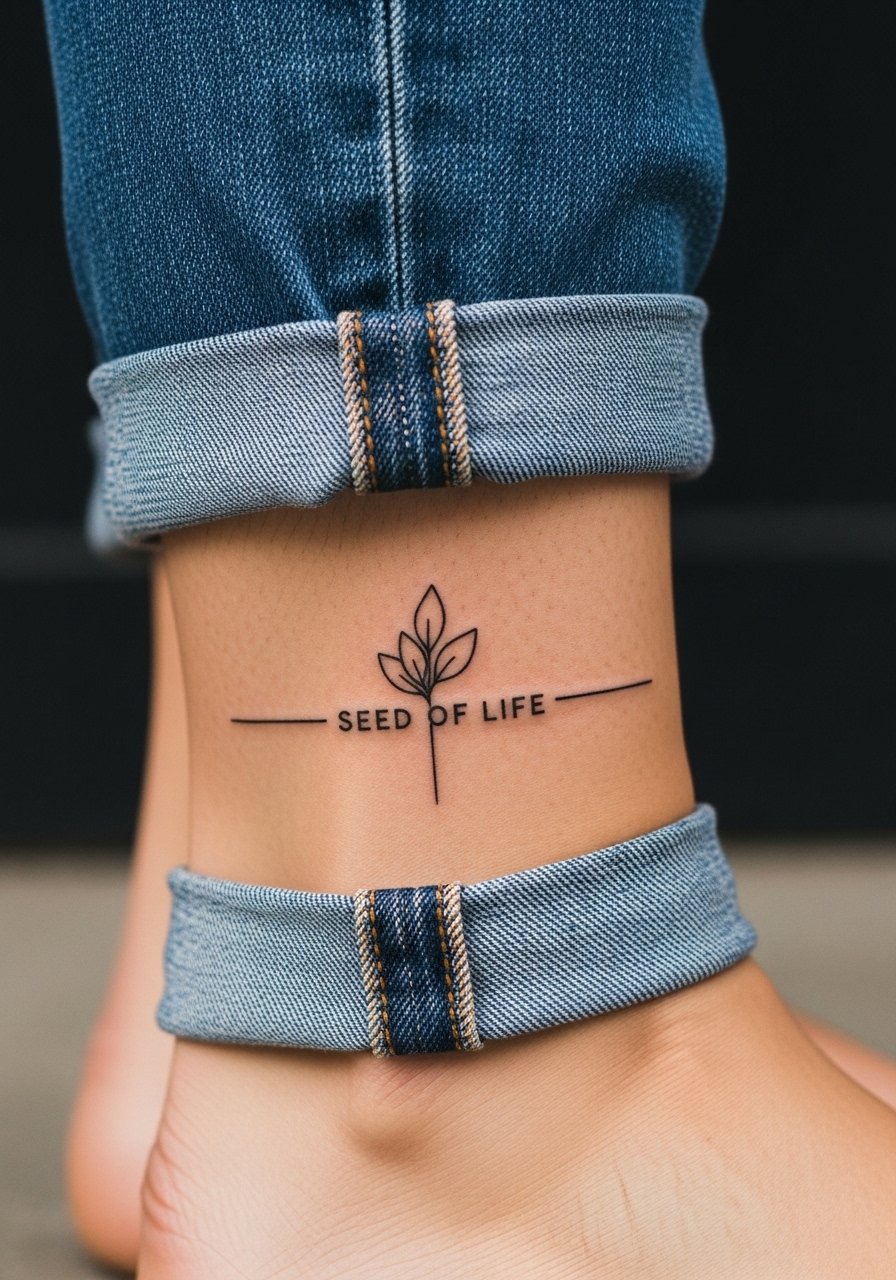
Ankle tattoos face frequent friction from socks and shoes which speeds fading. Ask for slightly denser outer circles and a protective plan for aftercare to preserve fine detail. A common error is pushing for hairline strokes that vanish under shoe friction. Pain is moderate for the ankle and sessions are brief. Expect touch-ups earlier than for arm work. For daily wear, pair with cropped pants or sandals and a simple ankle bracelet when you want the work on display.
12. Full Back Mandala Built from Flower of Life Geometry

A full back allows for complex tessellations and layered dot work that breathe. During consultation, ask your artist to map the main nodes to the spine and shoulder blades so the piece moves with your anatomy. Mistakes are trying to cram tiny concentric rings without enough negative space. Sessions are multiple and can span months. Longevity is strong if spacing is respected. For showing, open-back dresses or halter tops let the geometry read without distraction.
13. Tiny Flower of Life Behind the Ear with Micro Script
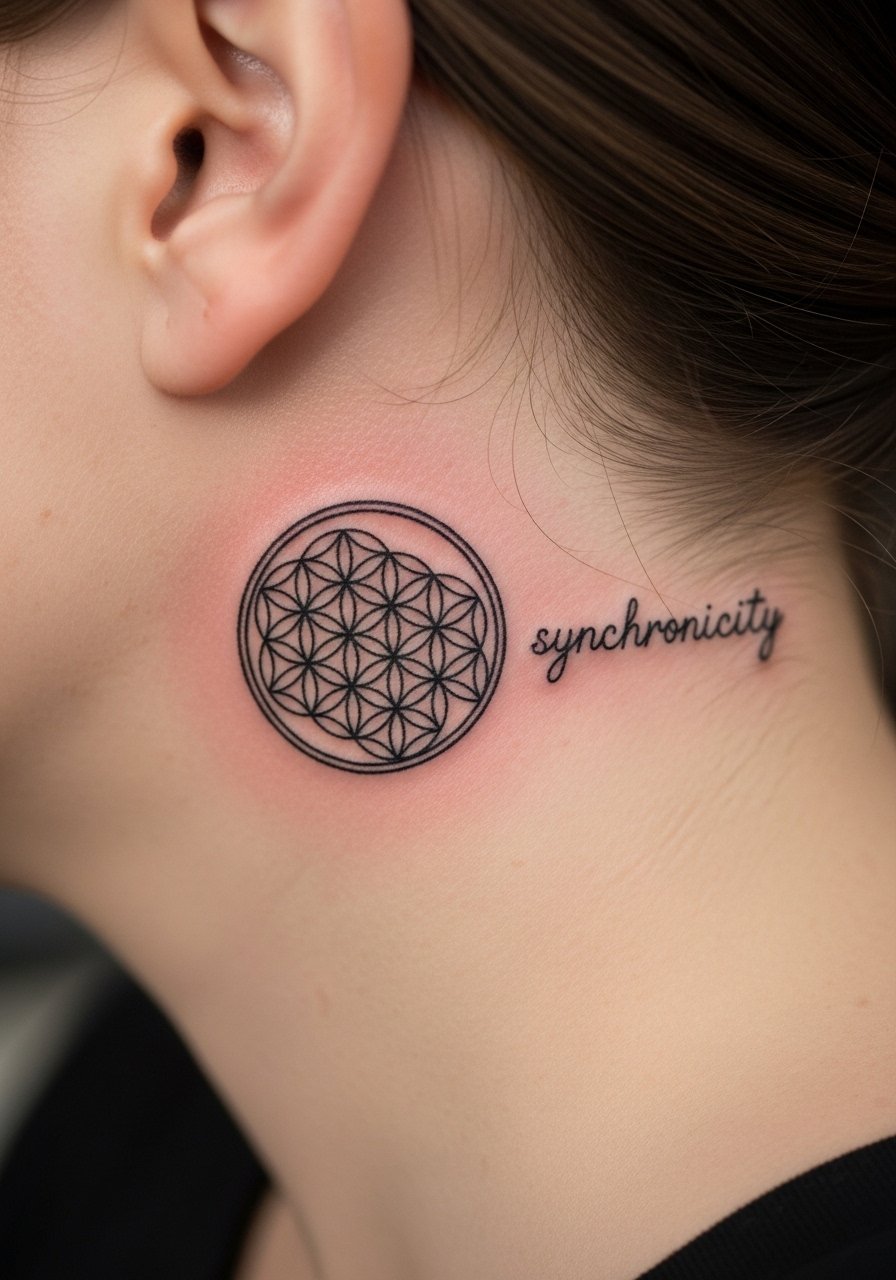
This pairs two delicate elements for a personal nod that stays mostly hidden. Tell your artist to place the micro script outside the mandala so it does not compete for space. The debate among artists applies here too. One side warns that constant friction and hair products will blur micro script and fine petals. The other side says careful depth and spacing avoids early blurring. Plan for a touch-up at year two. For the appointment wear a top with a simple collar you can adjust and a wide-neck tee.
14. Flower of Life as a Chest Band Across the Upper Ribcage
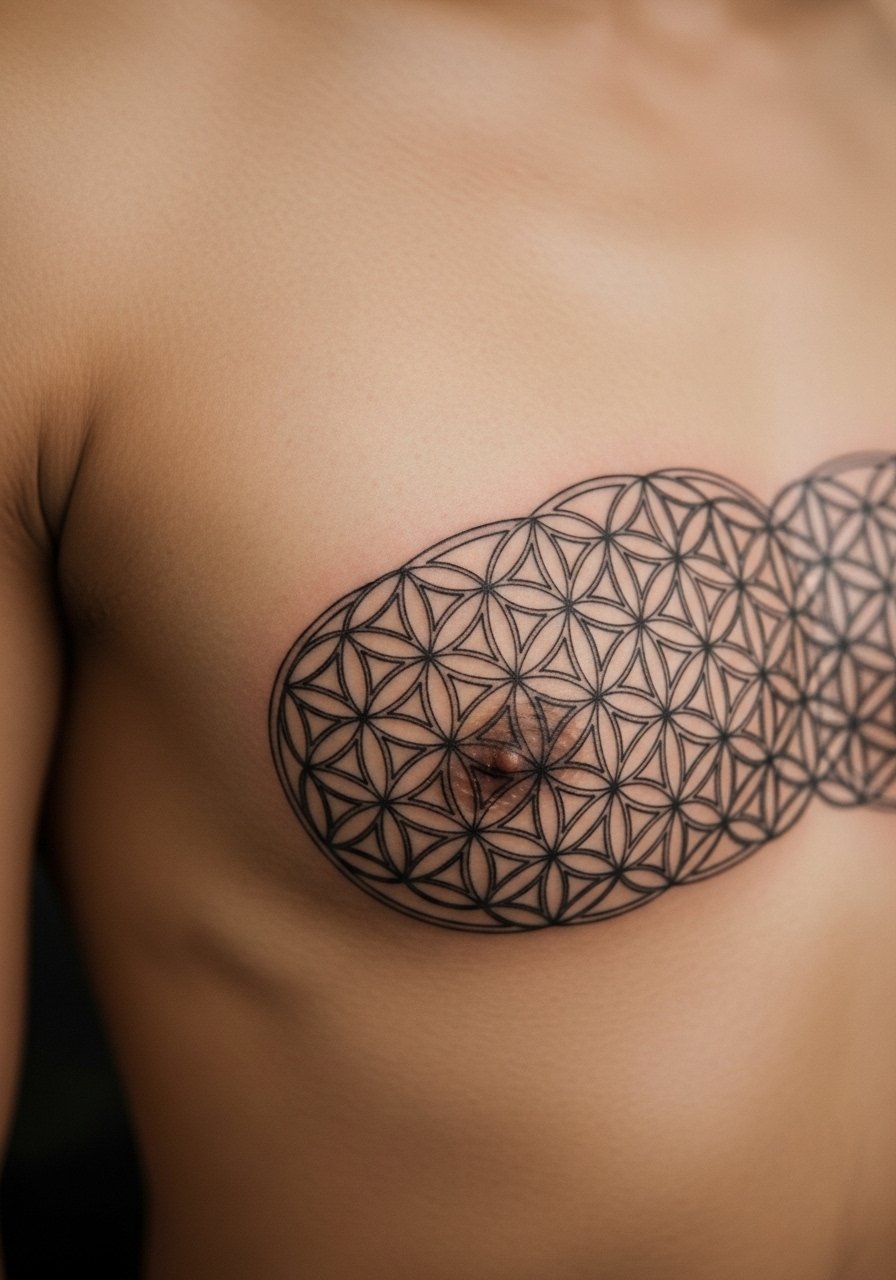
Ribcage work is painful and exposes the geometry to skin stretch. Artists disagree sharply on fine line here. One camp says ribs cause fast blur because the skin shifts with breathing. The other camp argues that with proper needle depth and spacing the lines hold. If you choose ribs, ask for more generous spacing and anchor points in the pattern. Sessions may be split across sittings and expect touch-ups at year two to three. For the session wear a cropped athletic top you can lift slightly without feeling exposed.
15. Flower of Life with Animal Motif Overlay on the Calf
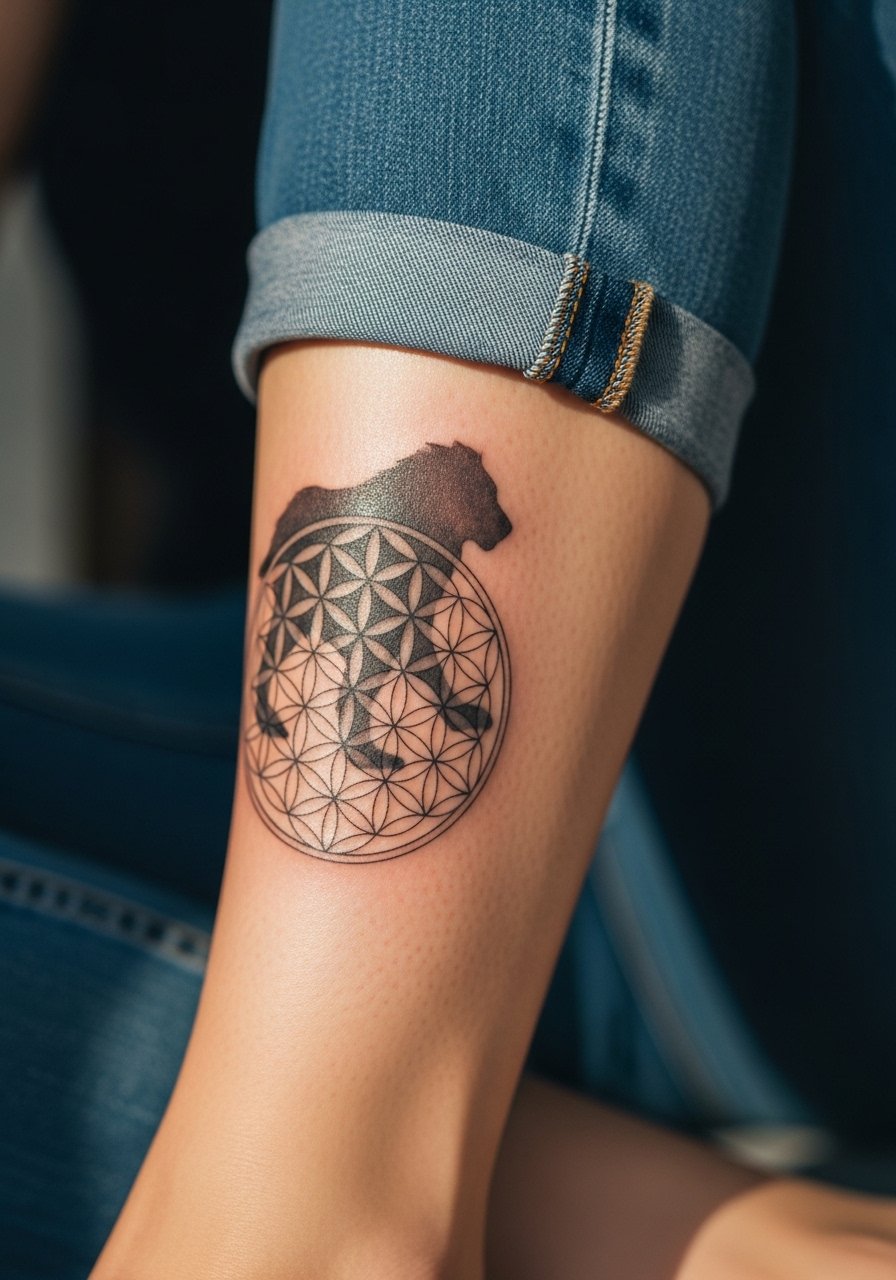
Calf pieces let you combine bold silhouettes with geometry. Tell your artist you want the animal silhouette slightly offset so the Flower of Life nodes peek through rather than sit beneath flat. A common mistake is centering both elements exactly, which causes visual competition and aging issues. Sessions are comfortable and pain is moderate. For the session wear loose drawstring shorts that let the artist roll the pant leg easily.
16. Micro-Realism Flower of Life with Single Petal Accent on the Wrist
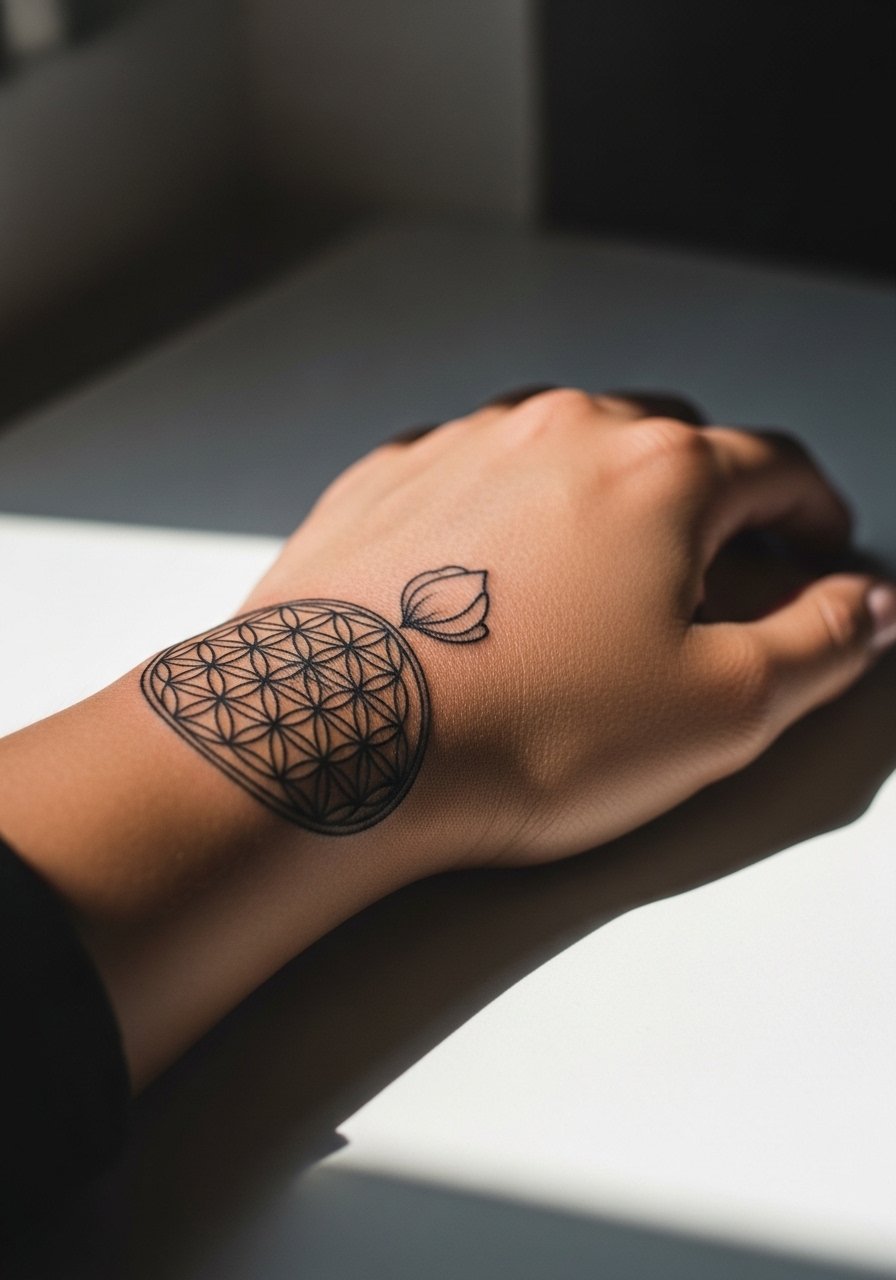
Micro-realism on the wrist requires precise depth and slightly increased spacing to avoid blowout. When you consult, request a practice stencil to check how the tiny nodes align with wrist movement. Mistake is compressing detail into a space that flexes a lot. Expect touch-ups in two years for crisp dots. Pain is low to moderate but the area sees lots of washing. For showing it off, stack with a minimalist watch that doesn't cover the tattoo.
17. Floral Flower of Life on the Hip
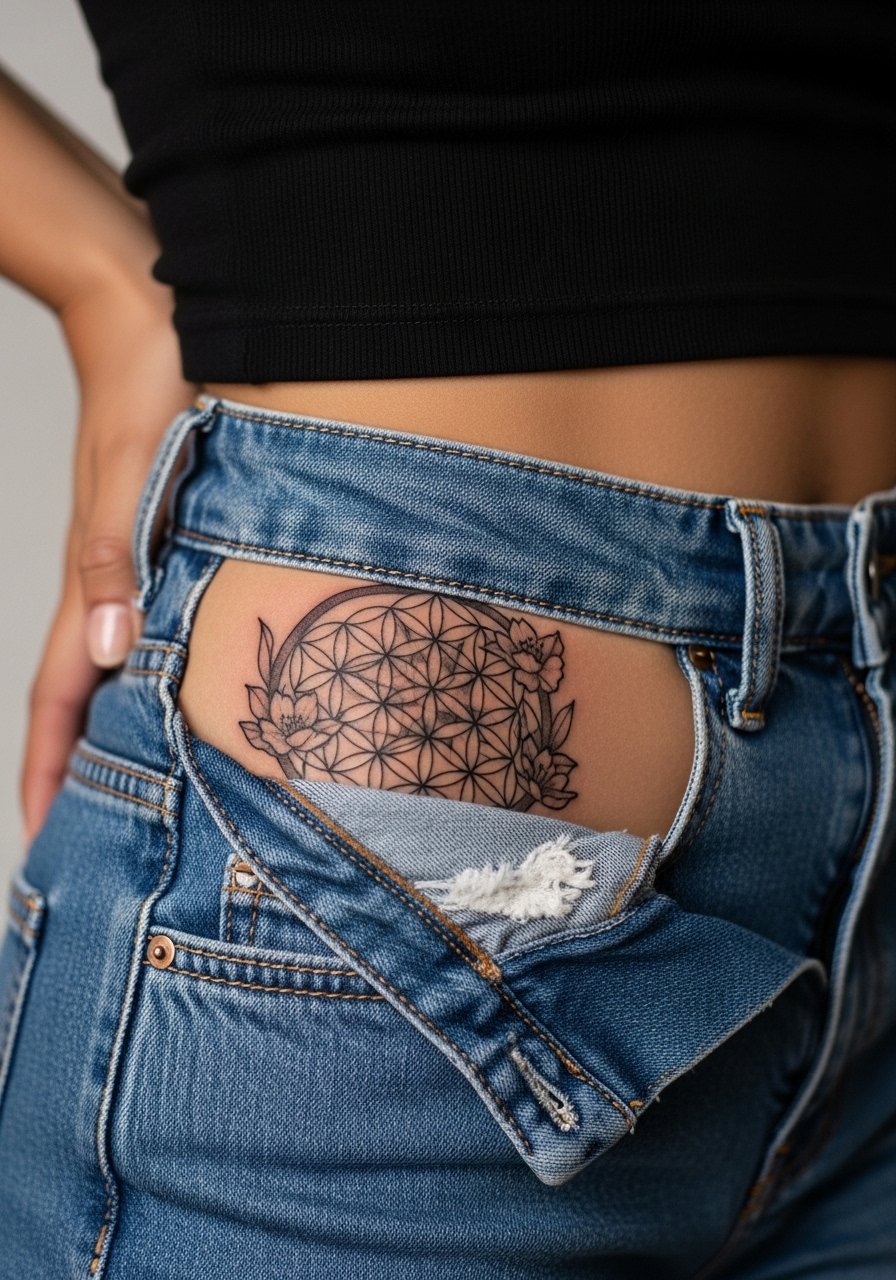
Hip tattoos age well when kept out of constant sun and abrasion. Ask your artist to scale the outer rings so they follow the hip curve rather than imposing a flat circle. A mistake is positioning the center directly over a bone bump which distorts the motif. Sessions are moderate and pain varies. For the appointment wear high-waisted bottoms you can shift slightly and a swimsuit bottom style if you prefer the same coverage during healing.
18. Flower of Life with Gold Leaf Fill on the Forearm
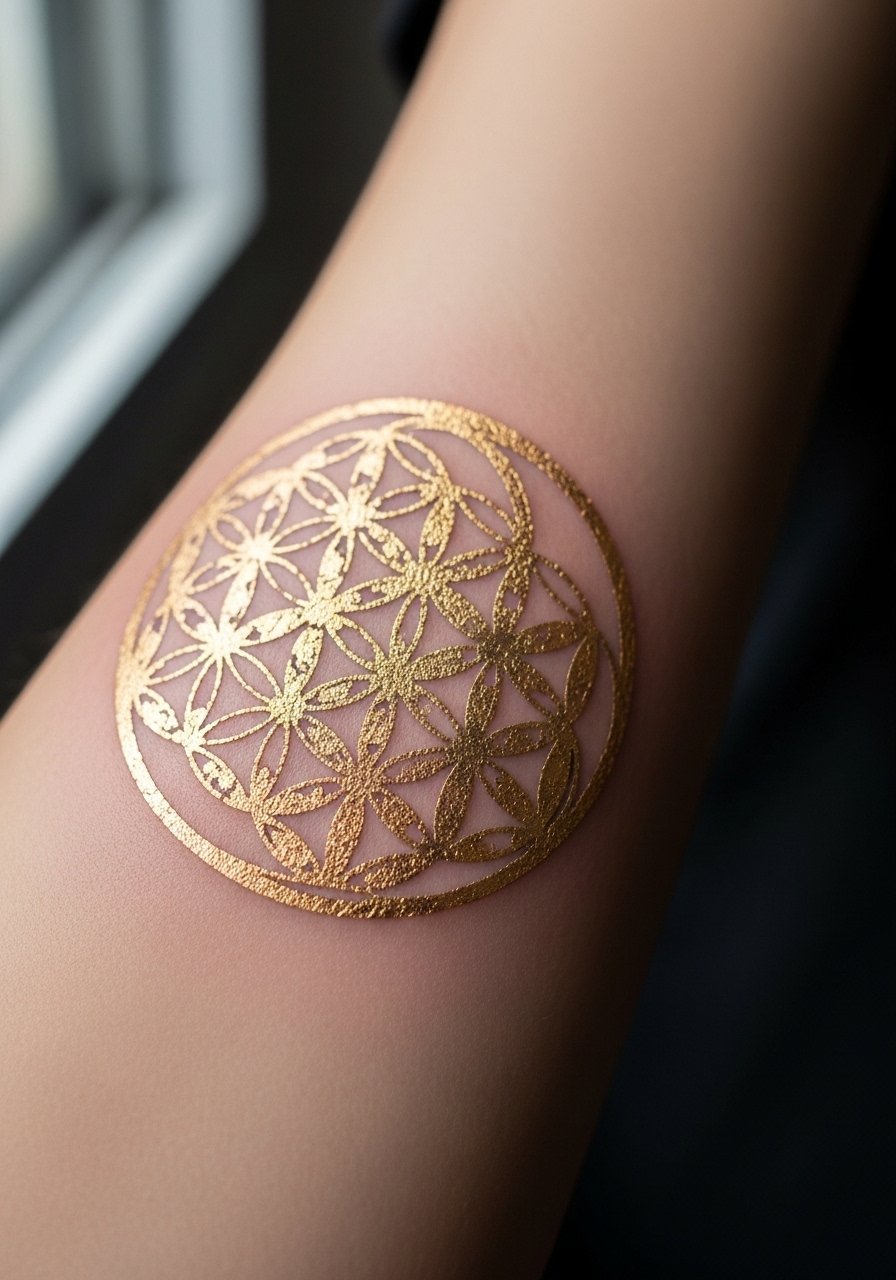
Metallic or gold leaf ink effects need careful saturation and small solid anchors to avoid patchy fade. Ask your artist for subtle metallic highlights rather than full metallic fill, which can look inconsistent as it heals. Common error is overusing metallic pigment in large fields. Sessions are medium length and pain is low. For showing off, roll up linen sleeves and wear a loose linen shirt in neutral tones so the metallic accents read without competing colors.
19. Geometric Flower of Life on the Back of the Neck
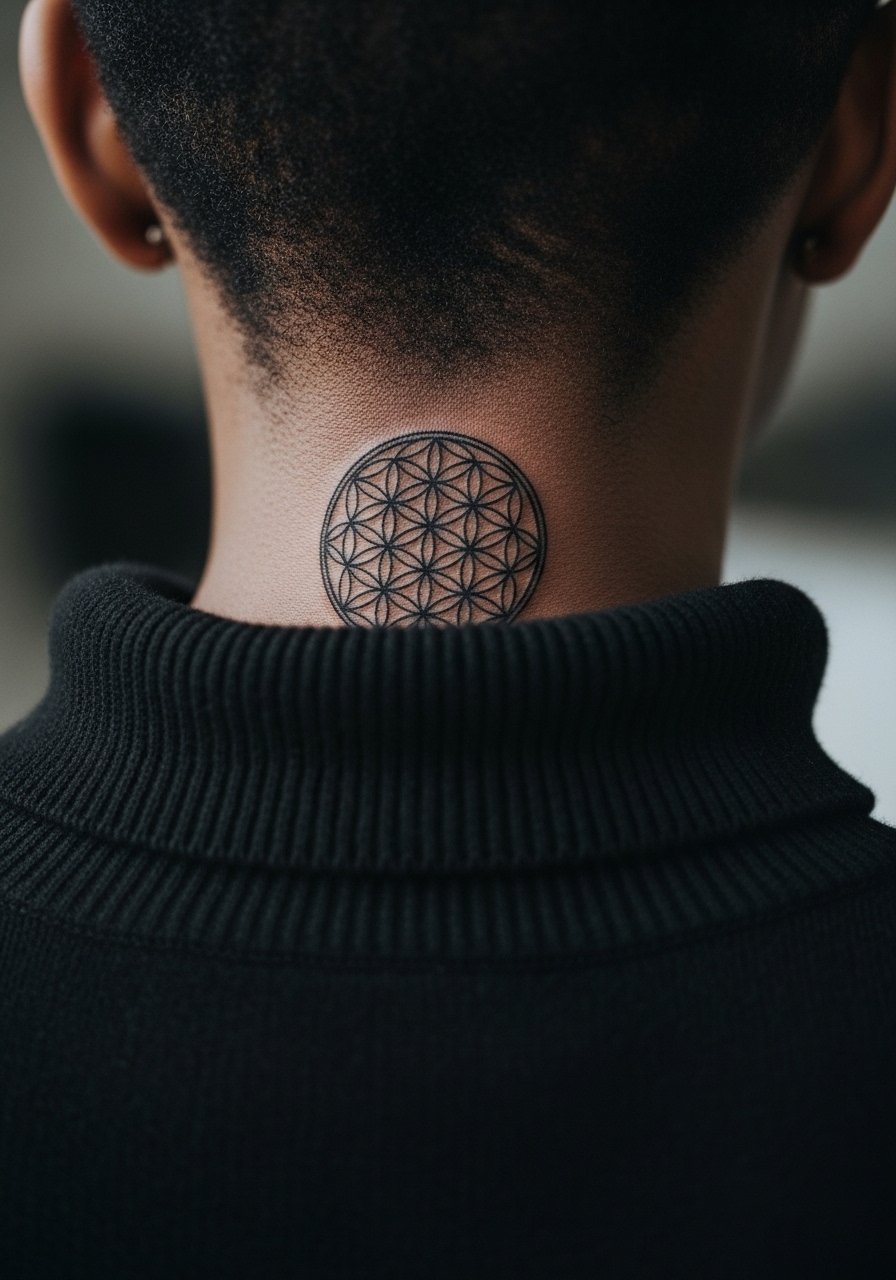
Neck tattoos require a skilled hand and careful placement to avoid blurring from collars and daily movement. Ask your artist to set the design a couple of centimeters below hairline for better protection. A mistake is centering it directly at the base of the skull where friction from collars kicks in. Pain is moderate to high. Expect touch-ups at year two. For the session wear a wide-neck shirt you can pull down easily but that still keeps you comfortable.
20. Finger Web Flower of Life Between Thumb and Index
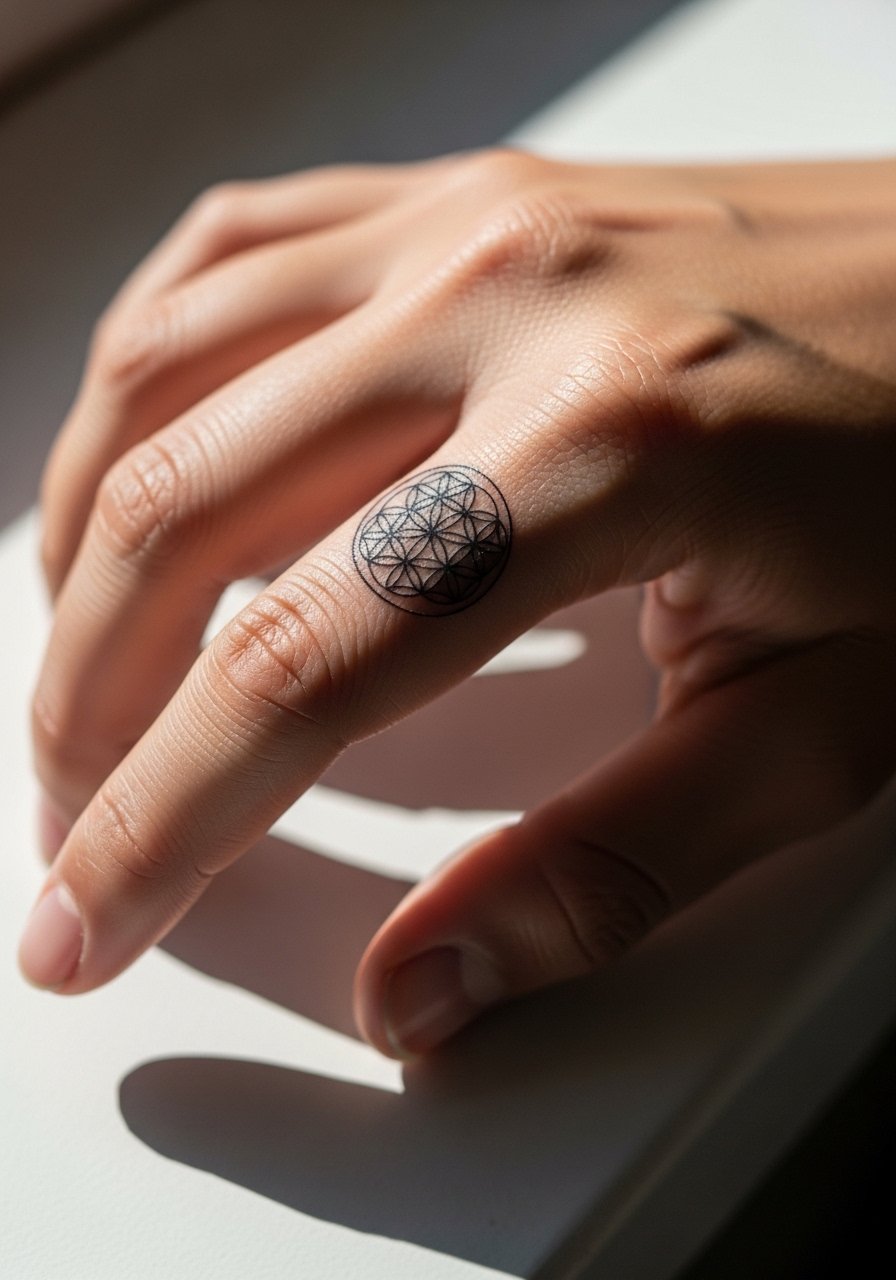
Webbing tattoos face heavy motion and constant washing which accelerates fading. If you want this spot, ask your artist to thicken the primary lines slightly and accept a more graphic version than a micro-detailed one. The error is insisting on hairline detail that disappears after normal use. Pain is brief and sharp. Touch-ups are likely within a year. For showing it off, simple rings or bare hands work better than heavy accessories.
21. Sacred Geometry Chest Plate Built from Flower of Life
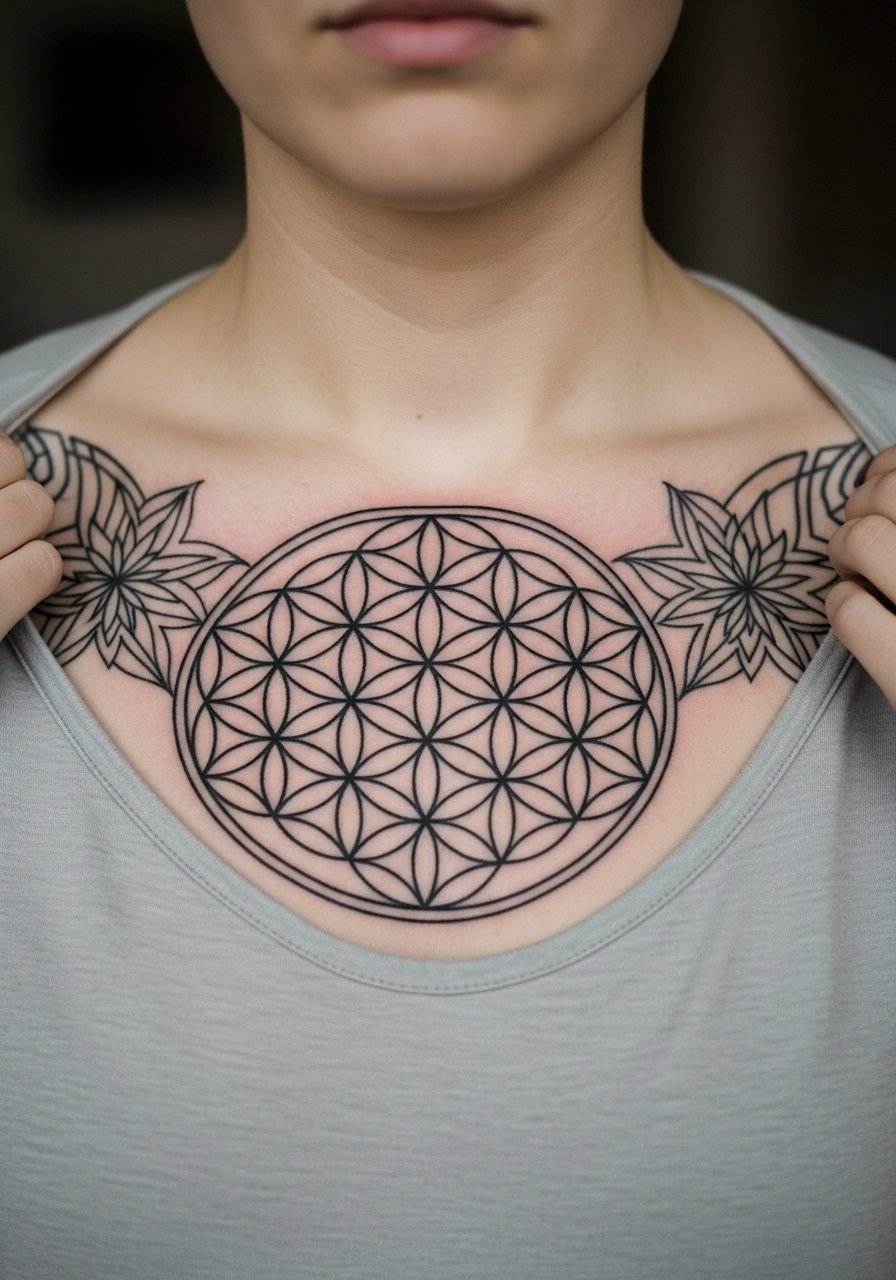
A chest plate uses anatomy as framing and can feel protective or decorative depending on placement. In consultation ask for the primary circles to sit over the sternum and collarbones in a way that respects breathing and movement. A common mistake is compressing too much central detail which leads to blurred dot work as skin stretches. Sessions are long and the area is sensitive. Expect touch-ups for fine stipple at year two to three. Pair with open-neck shirts when you want the structure to read, and consider a thin chain necklace that sits above the upper edge of the design.
Frequently Asked Questions
Q: Will a fine line Flower of Life blur faster on the ribs than on the forearm?
A: In my experience ribs are a higher-risk spot for early blur because the skin stretches and moves with breathing. Fine line pieces can hold on ribs with more spacing and deeper primary circles. Ask your artist directly which approach they use and expect a touch-up window earlier than for forearm work.
Q: How should I dress for a sternum or upper chest session to keep modesty and access balanced?
A: Wear a fitted sports bra or wide-neck top you can pull aside so only the tattoo zone is exposed. A fitted sports bra gives the artist clear access while keeping you comfortable and covered.
Q: Do watercolor Flower of Life styles need different long-term care than blackwork versions?
A: Watercolor tends to sit in the epidermis more than dense blackwork, which means color can fade faster. Extra sun protection and scheduled touch-ups help. In practice, leaving more defined black anchors in the design stabilizes watercolor washes over time.
Q: How often should I expect touch-ups for tiny finger or webbing Flower of Life pieces?
A: Plan on touch-ups within a year to maintain crispness. Those high-motion, high-wash areas are the first to lose density. Budget time rather than a fixed schedule because lifestyle affects timing a lot.
Q: Is there cultural sensitivity I should consider before getting a mandala-style Flower of Life tattoo?
A: The Flower of Life appears across traditions and spiritual practices. Some choose slight personal variations rather than direct copies of culturally specific mandalas. If you value origin respect, mention that in your consultation and ask the artist for a custom take that feels appropriate.