Watercolor tattoos look effortless in photos, but the truth people miss is they ask for different technical skills than solid black work. Bright bleeds, soft gradients, and outline-free washes show color and motion, not precise borders. I write this after seeing the same handful of mistakes in studios from Brooklyn to the Pacific Northwest. Below are 21 watercolor tattoo ideas for men, with the practical notes you need to get a result that still reads well after a few years.
1. Layered Watercolor Flower on Inner Forearm

I've seen this on more clients than any other floral piece because the forearm gives room for color bleeding without crowding. Tell your artist you want layered bleeds with a thin grayscale underlay so the color keeps depth as it heals. A common mistake is asking for too many tiny petal details that end up blending after a year. Expect moderate pain and a one to two hour session for a medium patch. For showing it off, roll up a loose button-down shirt and keep sleeves hitched to frame the art.
2. Outline-Free Fox on Upper Arm
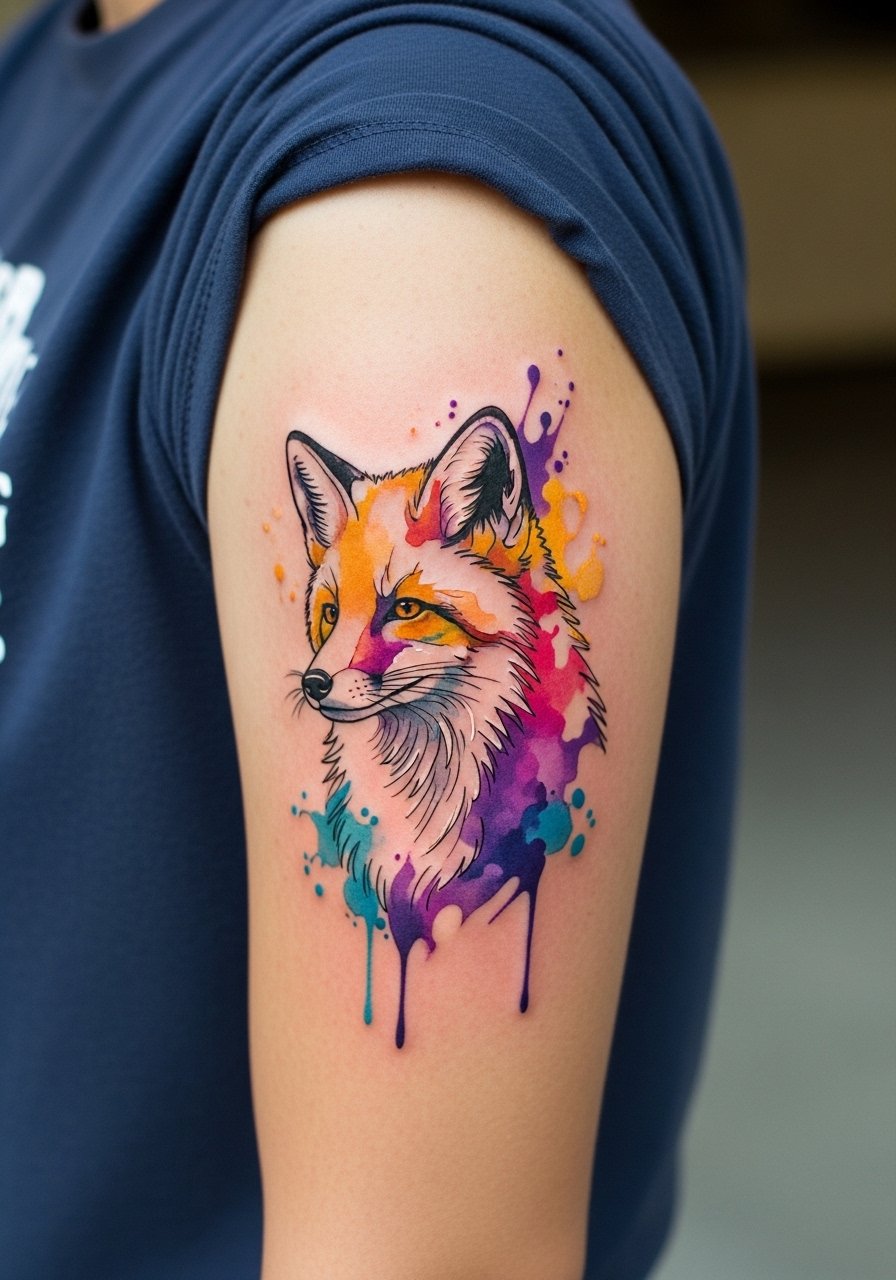
This animal piece rides on color and motion not crisp black lines. Artists split on whether outline-free work ages better than outlined versions. One camp says outline-free blurs faster and needs a grayscale underlay for longevity. The other camp argues that when the saturation and needle depth are right, the piece holds its shape without black framing. Ask the artist where they stand and look for portfolio shots of healed work. Upper arm is forgiving for touch-ups, and the session usually runs two to three hours. Pair with a rolled-sleeve tee when you want it visible.
3. Crane Back Piece with Ink Washes
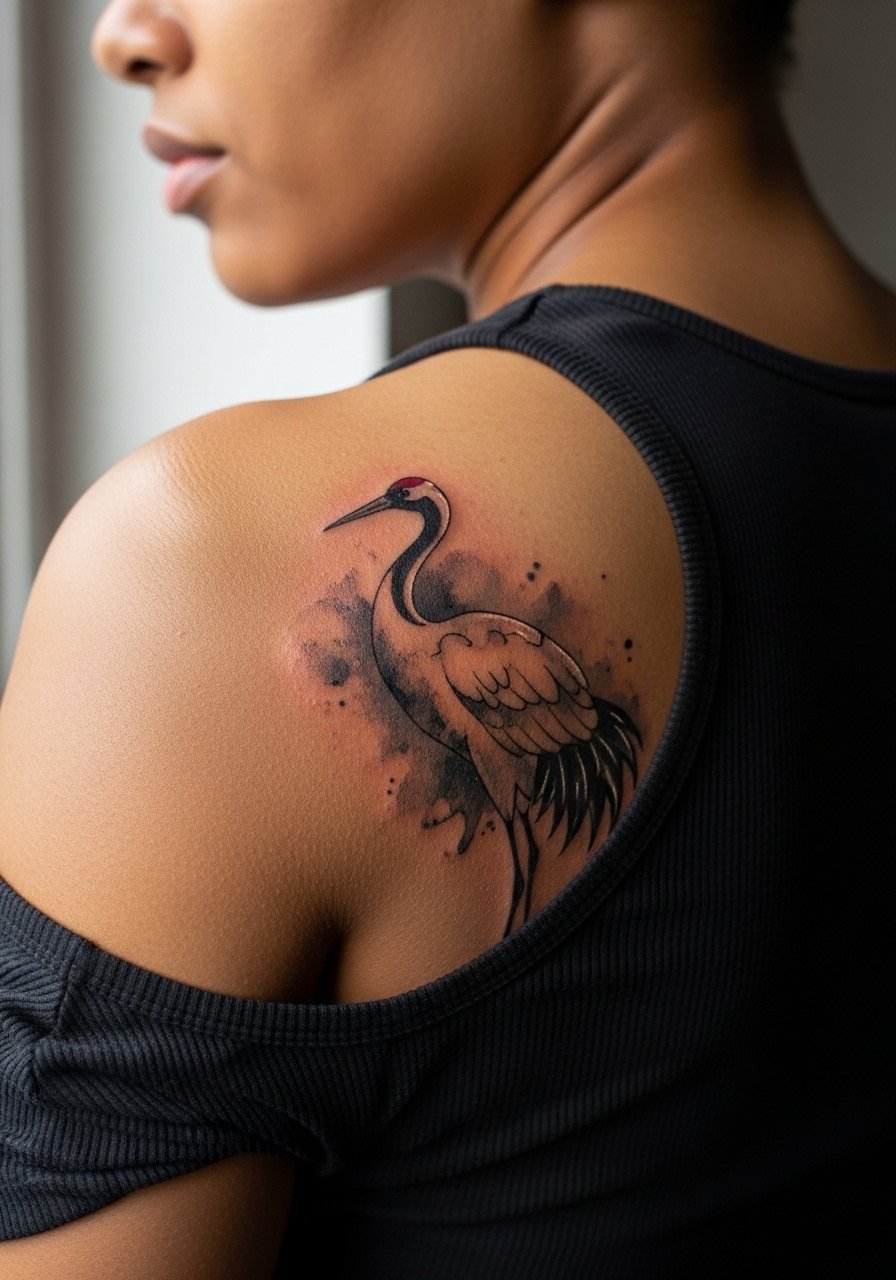
Large back pieces let watercolor breathe, which is the whole point of this style. For a crane, ask for ink washes and backblends to suggest motion instead of rigid outlines. A common error is compressing a crane into too small a patch that kills the wing motion. Big scale means longer sessions spread across two appointments and better saturation control. Back skin tolerates saturation well so touch-ups are less frequent than on hands or fingers. For the session, bring a loose button-up tank you can pull aside for access.
4. Moth Sternum with Subtle Color Bleeds
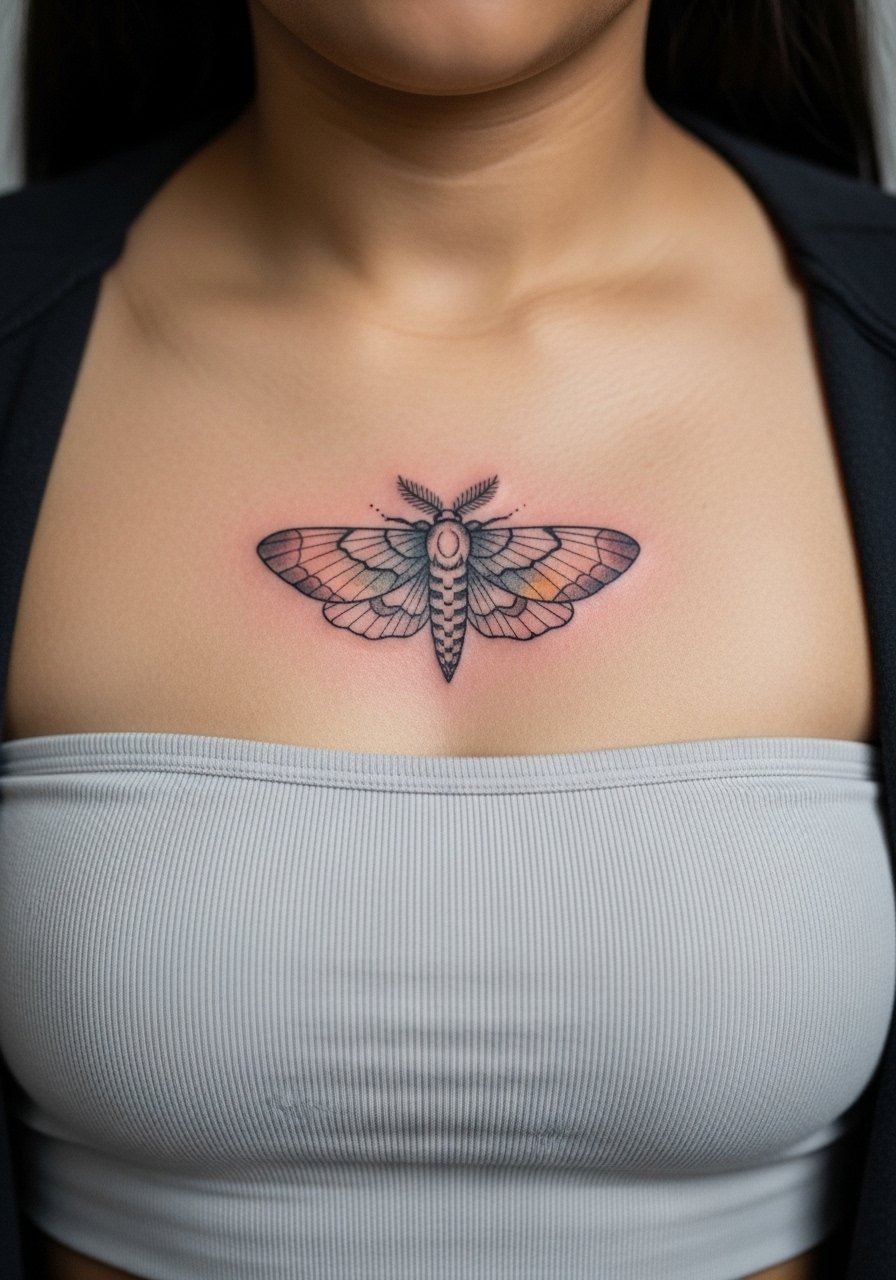
Sternum work asks for restraint because the area moves and stretches. The moth looks best when the color sits like a wash over a faint grayscale base. Sternum sessions hurt more than arm work, but the result reads like a single organic shape rather than a pasted-on image. The mistake is compressing dark color into the center which can bruise and mute the watercolor effect. Expect a longer appointment and plan for rest afterward. Professionals who specialize in watercolor know how to protect saturation in this zone.
5. Abstract Splash Sleeve Segment on Outer Bicep
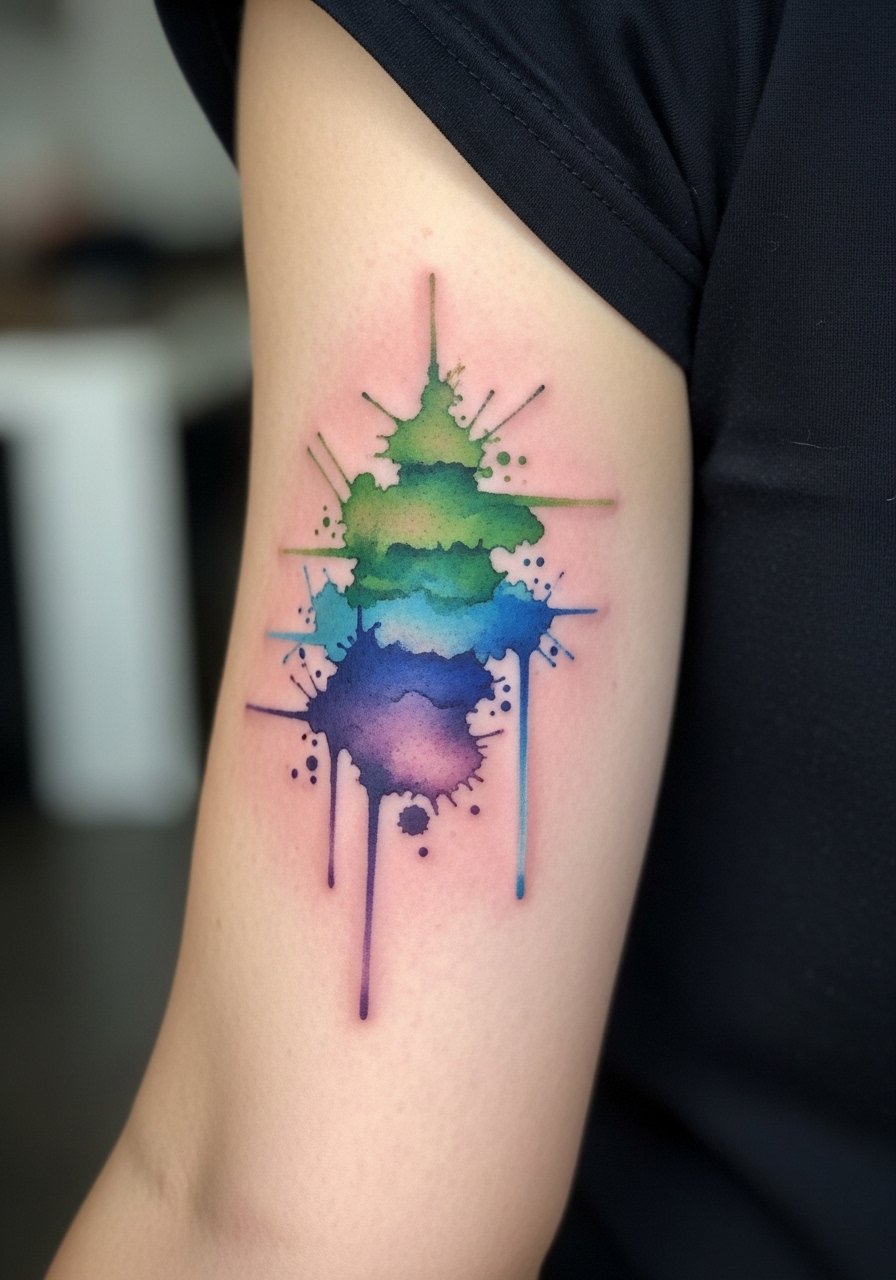
Abstract watercolor pieces are about movement and negative space, not filling every inch. Ask your artist for planned white space and a controlled palette. A common mistake is requesting every color in the same area which reads muddy after healing. Outer bicep handles saturation well and tends to be lower pain. Sessions can be modular, so schedule two shorter sittings if you do not want a marathon chair day. Roll sleeves up and wear a short-sleeve linen shirt to show it during warm months.
6. Minimalist Mountain Range on Inner Wrist

Wrist watercolor reads intimate and delicate, but minimalist does not mean simple. The inner wrist risks faster fade because of friction and washing. Ask for a subtle grayscale underlay to keep the silhouette readable, and expect touch-ups sooner than for larger pieces. The session is short but sensitive. For the appointment wear a racerback tank or anything that gives easy access to the wrist. Keep in mind that phones and watches add friction during healing so factor that into placement and sizing.
Studio Day Picks
The pieces above include wrists, forearms, and chest adjacent spots, and each of those areas benefits from small prep items that smooth the session and the first week.
- Stencil transfer paper kit. Lets you preview the line layout on skin so you can check scale and placement for forearm and wrist ideas before the needle touches the skin.
- Topical numbing cream. Applied as directed before chair time it can ease the sharp sting on thin areas like the sternum and inner wrist.
- Thin protective film roll. Useful for finger and wrist pieces that face constant washing and friction during the first week.
- Fragrance-free gentle body wash. Cleanses healed and healing skin without stripping the delicate pigments that watercolor relies on.
- Aquaphor healing ointment. A thin layer during the initial days helps prevent scabbing from dulling the fine washes used in these designs.
7. Watercolor Compass on Inner Bicep
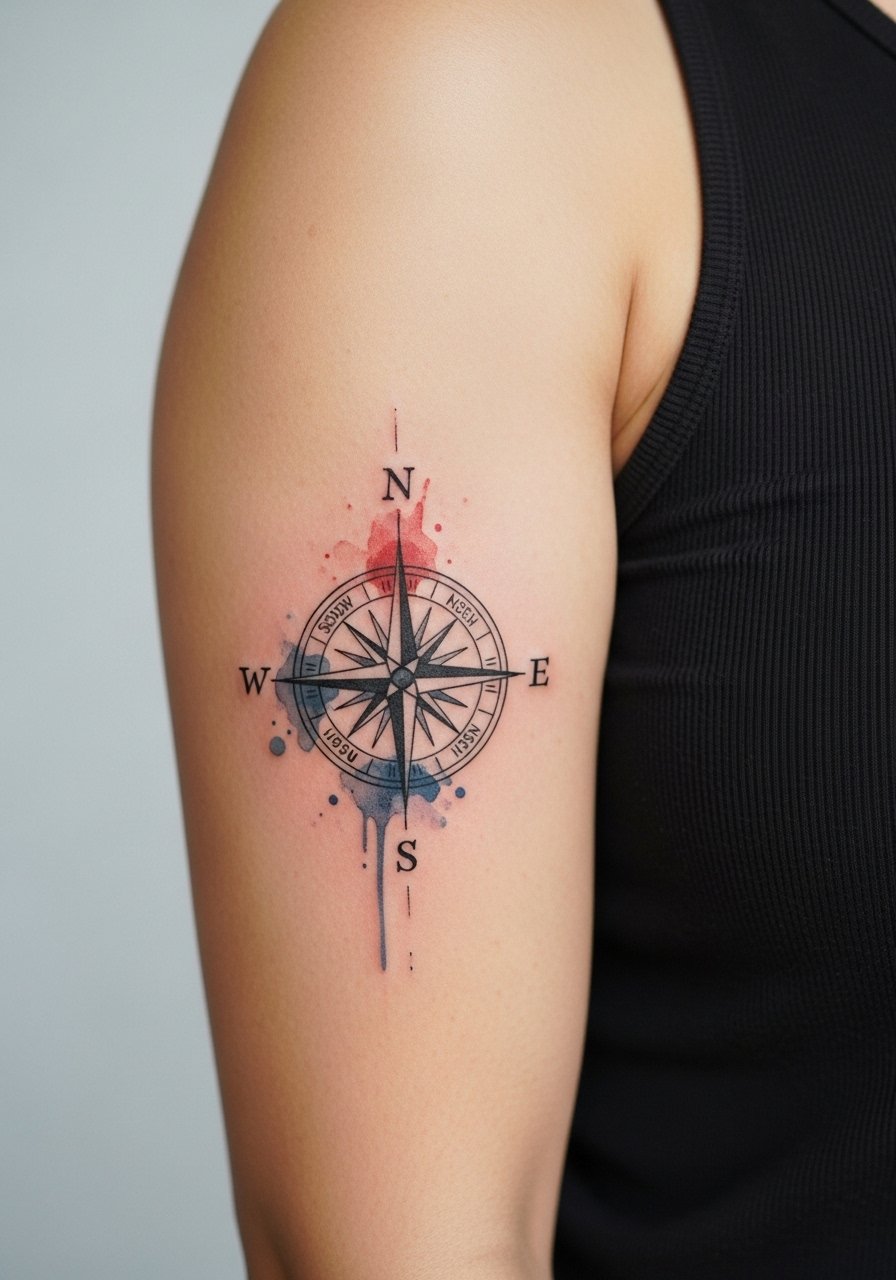
Inner bicep work is less exposed to sun but sees stretch when you lift your arm. For a compass, combine thin linework for the cardinal points with soft color bleeds behind it to avoid a flat look. The error I see most often is making the compass too small and then losing its legibility after a year. Expect moderate to high discomfort during the session. Wear a loose tank the day of the appointment so the artist can access the area without rubbing. If you want to style it, a thin chain bracelet keeps wrist attention away from the inner arm and lets the bicep read clean.
8. Watercolor Galaxy on Shoulder Cap
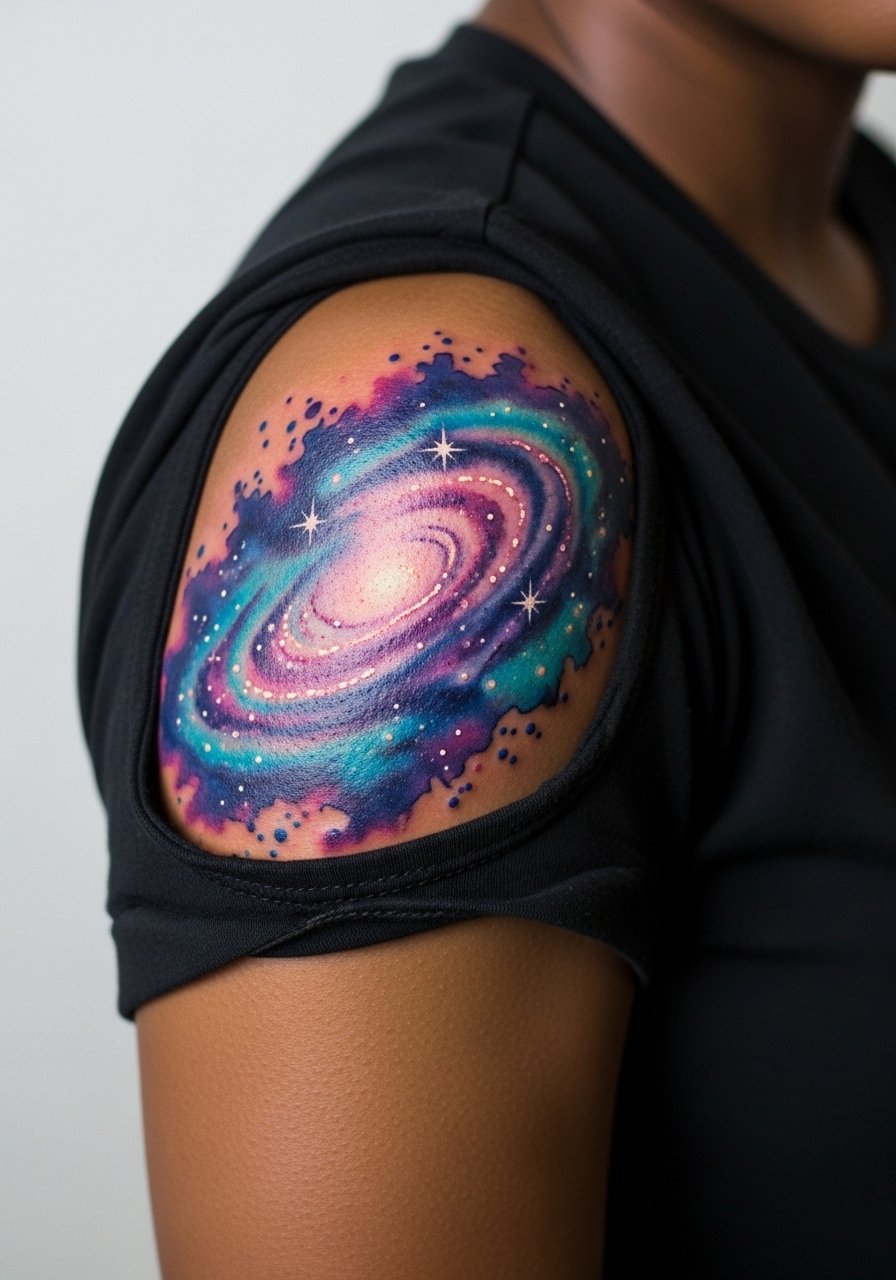
The shoulder cap is a forgiving canvas for saturated color and dot work stars. Ask for stipple shading and subtle white highlights to keep the galaxy feeling dimensional as it ages. A frequent mistake is packing white on top of dark color during the session which can flake and require touch-up. Sessions are medium length and pain is mild. For showing it off pick a muscle tank or rolled sleeve T that frames the cap without competing.
9. Watercolor Skull Accent on Upper Chest

Upper chest allows watercolor to spread while keeping a masculine silhouette. For skull work, a thin black outline can anchor the color so it does not read as a bruise later. The choice between outline and outline-free splits artists. One side says black outlines preserve shape and make long-term reading easier. The other side favors outline-free washes for a painterly effect that can look more organic if done well. Name which side you prefer and request healed photos. Chest skin tolerates sessions but can be sensitive near the collarbone. A wide-neck shirt pulled aside gives clean access for the session.
10. Koi Calf Piece with Layered Bleeds
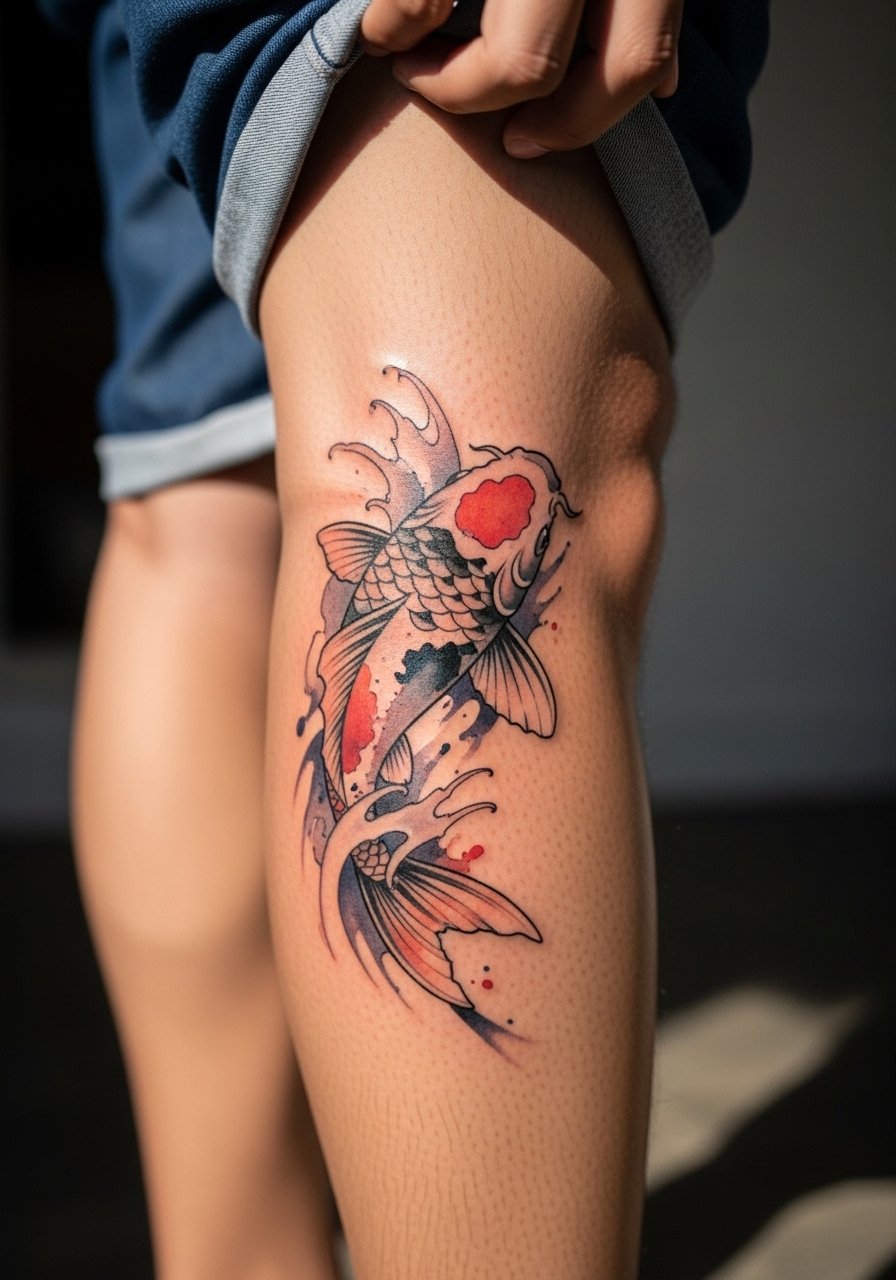
Calf tattoos age well because they get less daily sun and less friction than hands. Koi look dynamic when artists use layered bleeds to suggest scale texture instead of detailed line scales. The mistake is overworking the scales which kills the soft watercolor effect. Sessions can be split into two if you want a full koi wrapping the muscle. For the day, wear loose drawstring shorts so the artist can roll the hem without pressure on the area.
11. Geometric Watercolor Mandala on Ribcage
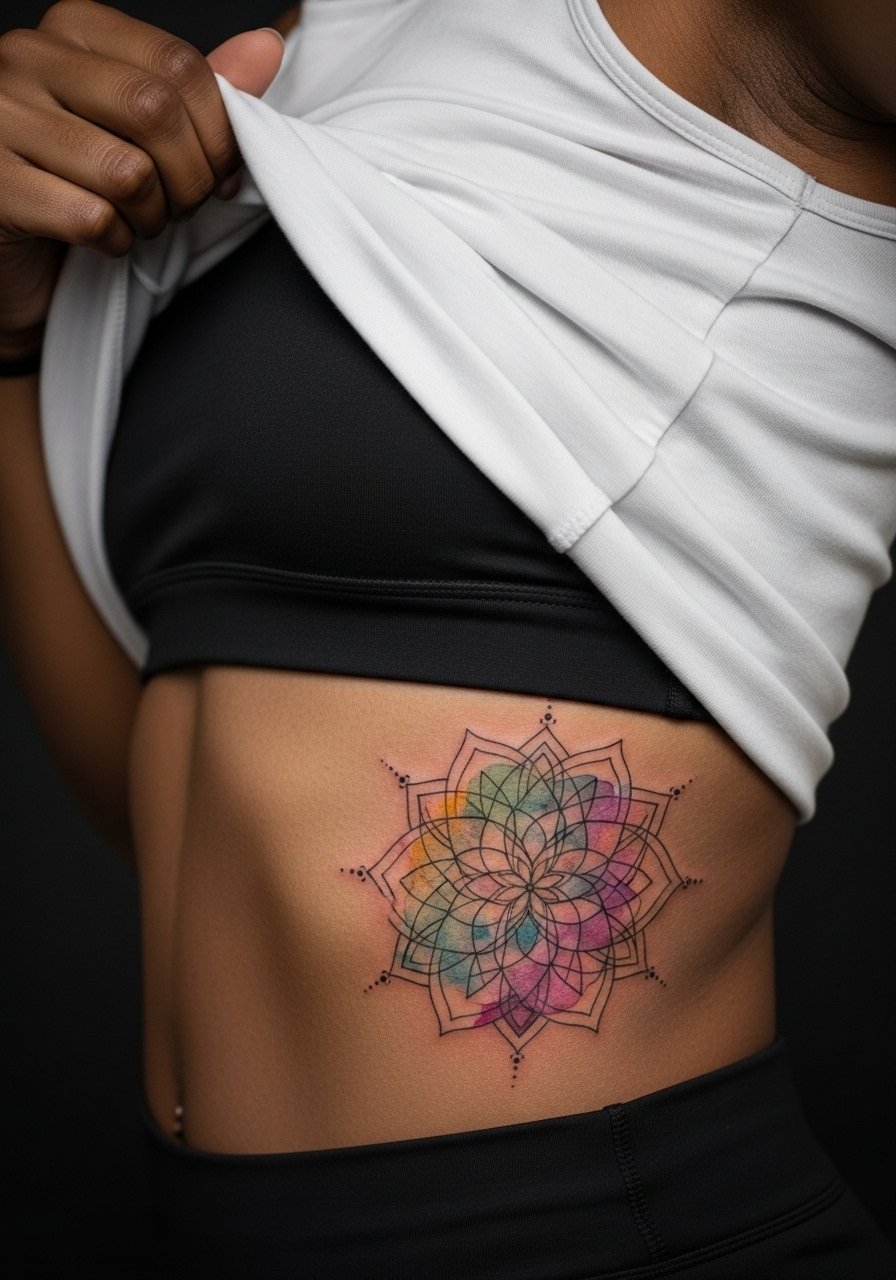
Ribcage is one of those placements where small mistakes age loudly. Geometric mandalas need spacing to avoid lines merging as the skin settles. Many artists avoid doing dense mandalas small on ribs for that reason. Expect higher pain and plan for a longer session with breaks. Ask your artist if they use spacing rules for mandalas on ribs. This placement benefits from a removable top on session day so the artist can access the area without stretching fabric.
12. Watercolor Phoenix Across Upper Back
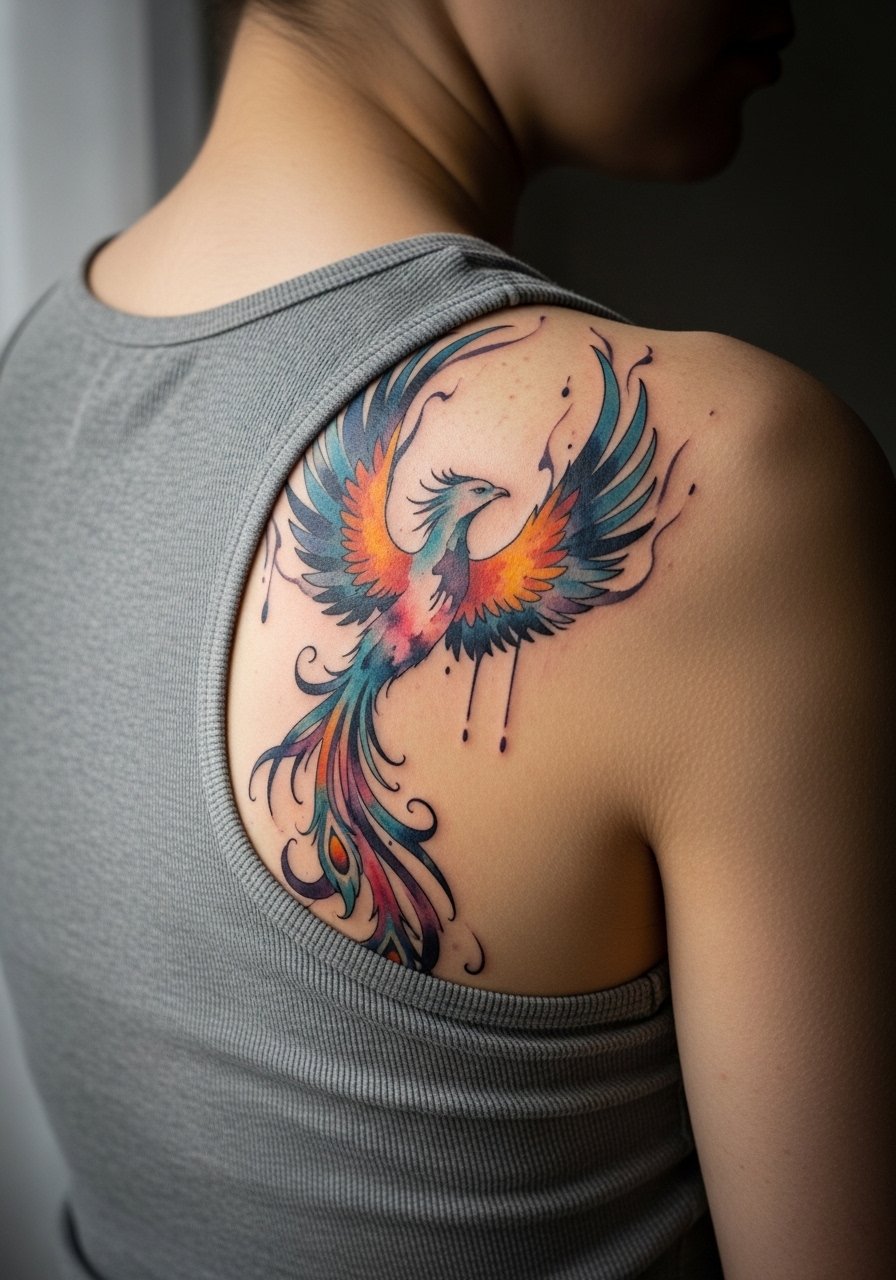
The upper back gives scale and drama, which suits a phoenix rebirth motif. Ask for patchy saturation and strategic grayscale underlays where you want structure. One common problem is full saturation across the wings which can look flat after healing. Break the color into layers and keep intentional gaps to let the skin read. Sessions are long and may require two visits. For recovery, a loose back-button shirt is helpful the first day and night.
13. Tiny Constellation on Ankle
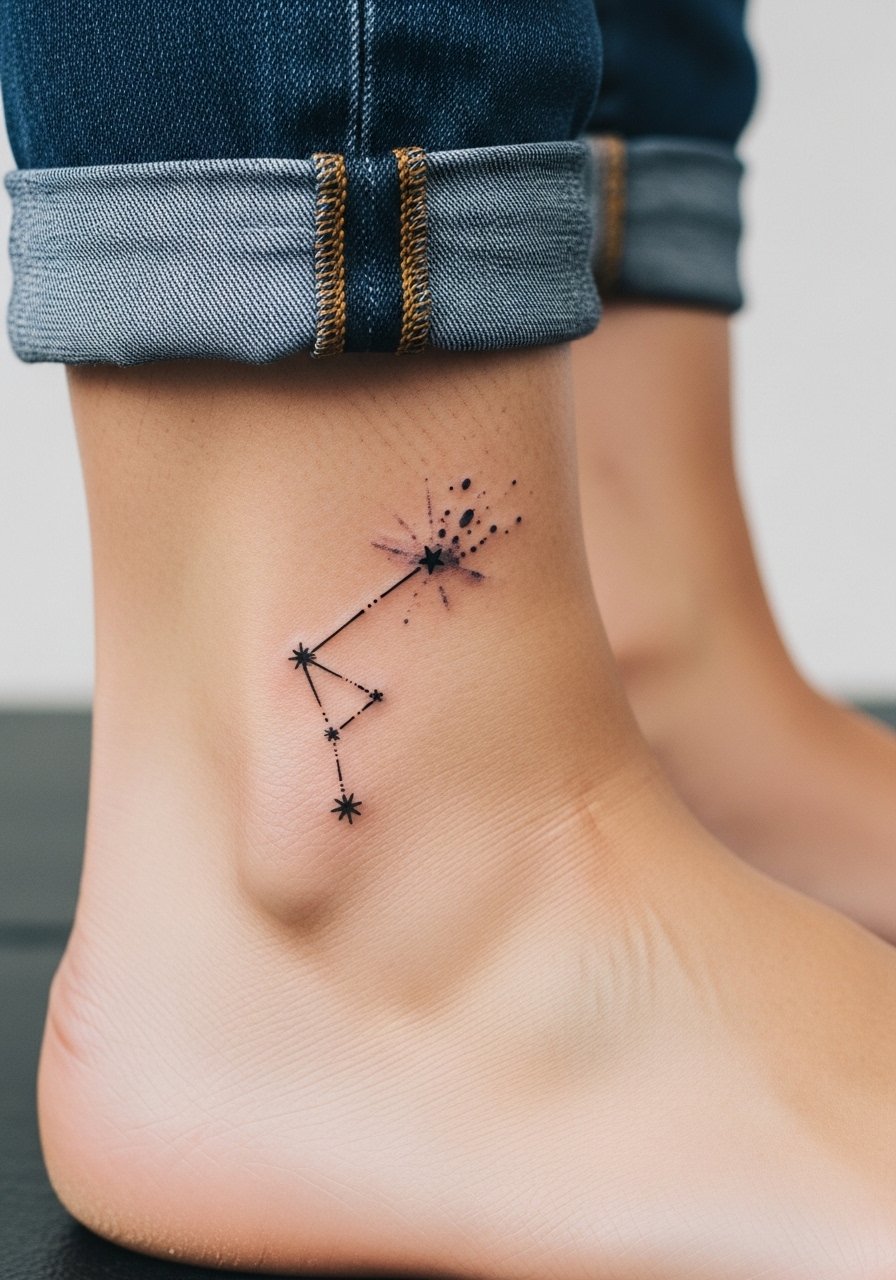
Ankle pieces are hard-working because socks and shoes add constant friction. For tiny constellation work, go simple and keep dots spaced so they stay distinct through wash cycles. Touch-ups are common at year two for small ankle dots. The session is short and the pain is low to moderate. For showing it off, wear rolled jeans or a pair of sandals to frame the ankle. Try a minimalist ankle bracelet if you want an accessory that complements without crowding the art.
14. Abstract Color Bar on Outer Thigh
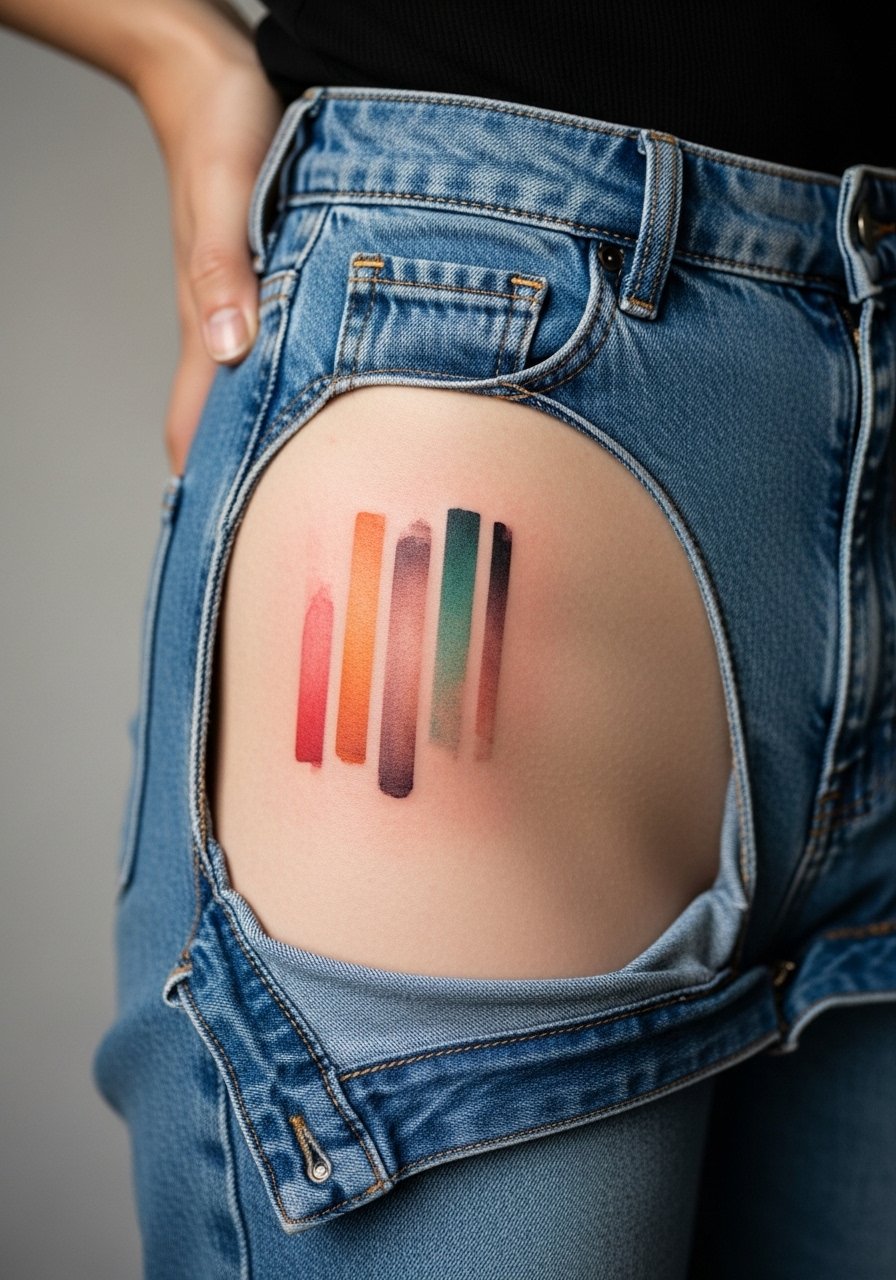
Thigh pieces let you explore scale without daily sun exposure. Abstract bars and gradients work well because the canvas is broad and the skin is forgiving. One mistake is placing a thin color bar where body movement will crease it during healing. Go slightly wider to let the wash age. Sessions are comfortable and recovery is easy for most men. Wear loose bottoms on the ride home and during the first few days.
15. Watercolor Script Along Collarbone
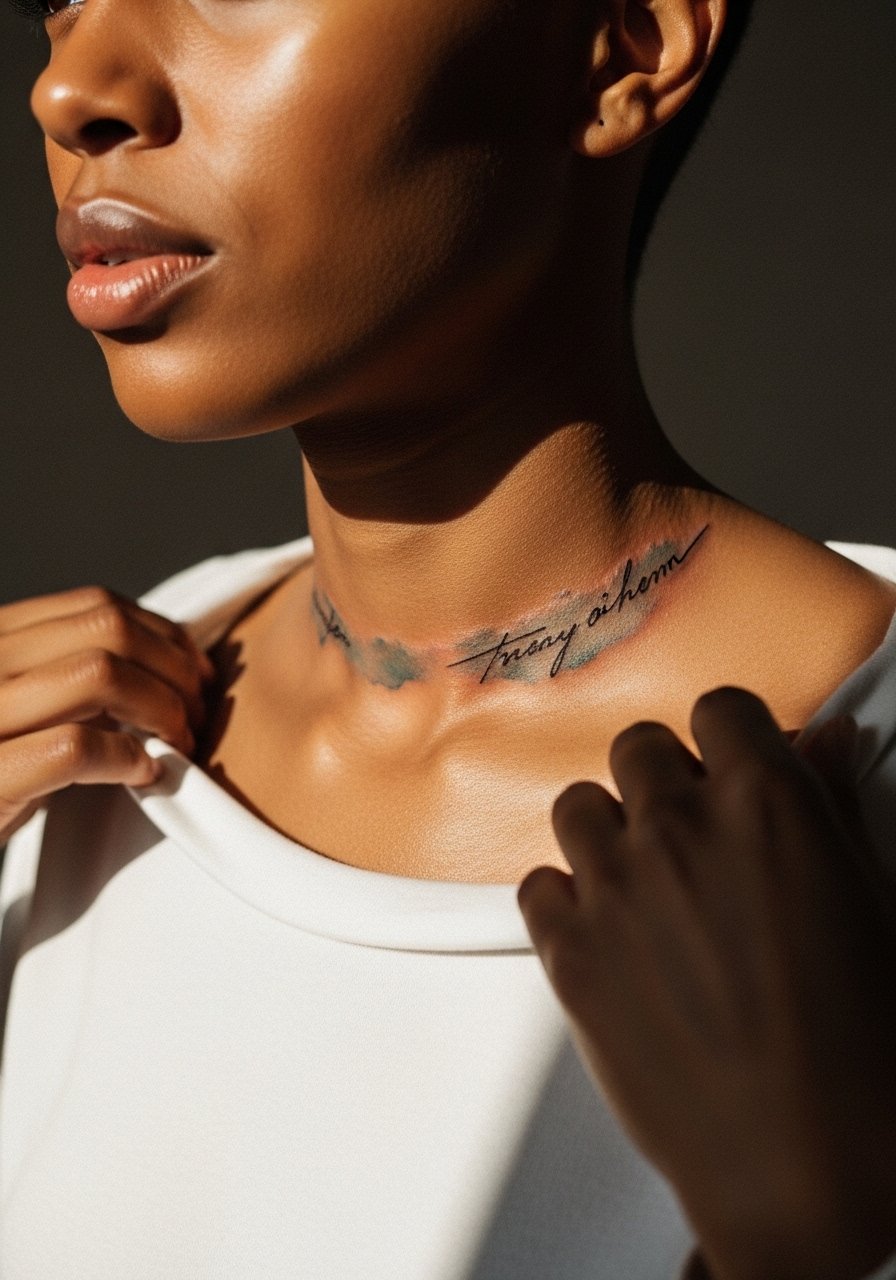
Collarbone script pairs delicate linework with soft color behind it for contrast. The error I see is asking for letters too close together which makes them unreadable once the skin settles. Ask for slightly wider letter spacing and a faint gray wash under the script to maintain legibility. Pain is moderate near the bone and the session is usually quick. A thin chain pendant necklace can sit above the script without competing when you go out.
16. Wolf Head with Watercolor Accent on Bicep
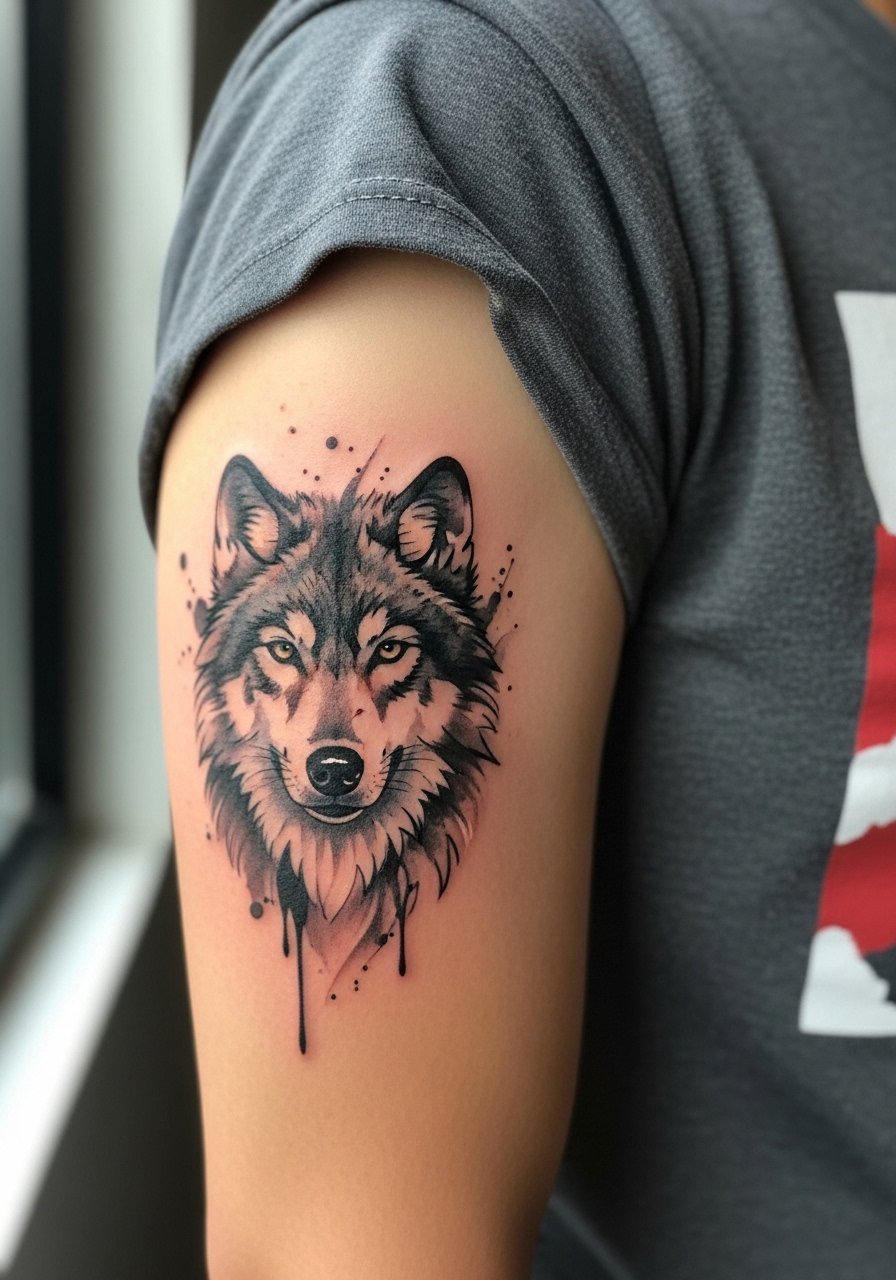
A wolf looks strong when the linework anchors the face and watercolor provides mood around it. Tell the artist to keep the face linework slightly bolder than surrounding washes to prevent feature loss. The common mistake is blending the face into color too early which reduces contrast. Sessions on the bicep are moderate in length and discomfort. Pair with a rolled-sleeve chambray to show the piece without competing textures.
17. Koi Thigh Wrap in Saturated Color
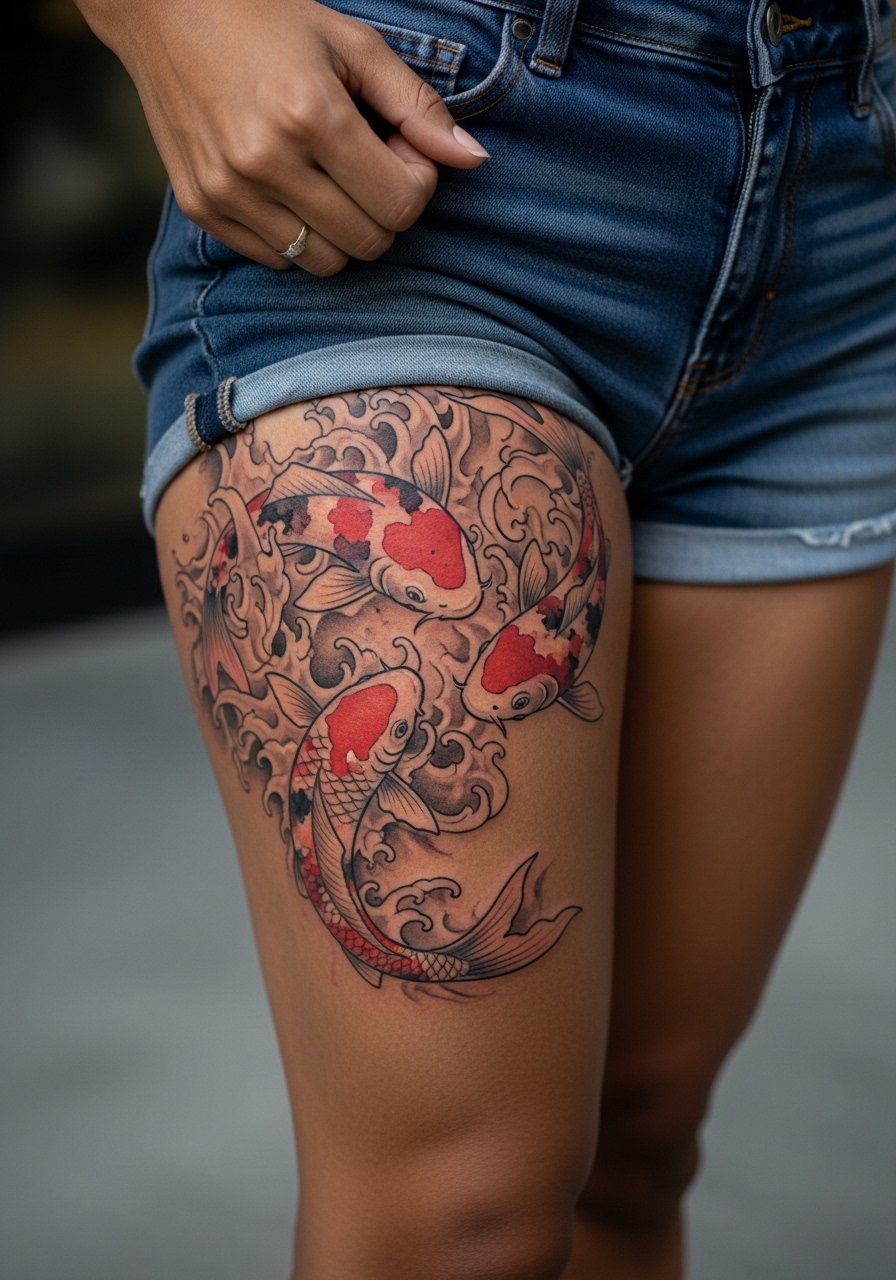
A thigh wrap can be bold while still maintaining watercolor subtlety. For koi that wrap, ask the artist to plan negative space that follows your muscle lines. Over-saturation in small areas is the usual mistake that causes the piece to look muddled. Thigh skin heals well and touch-ups are usually cosmetic. Wear loose shorts on the travel home and for the first day to avoid rubbing.
18. Tiny Watercolor Script on Finger
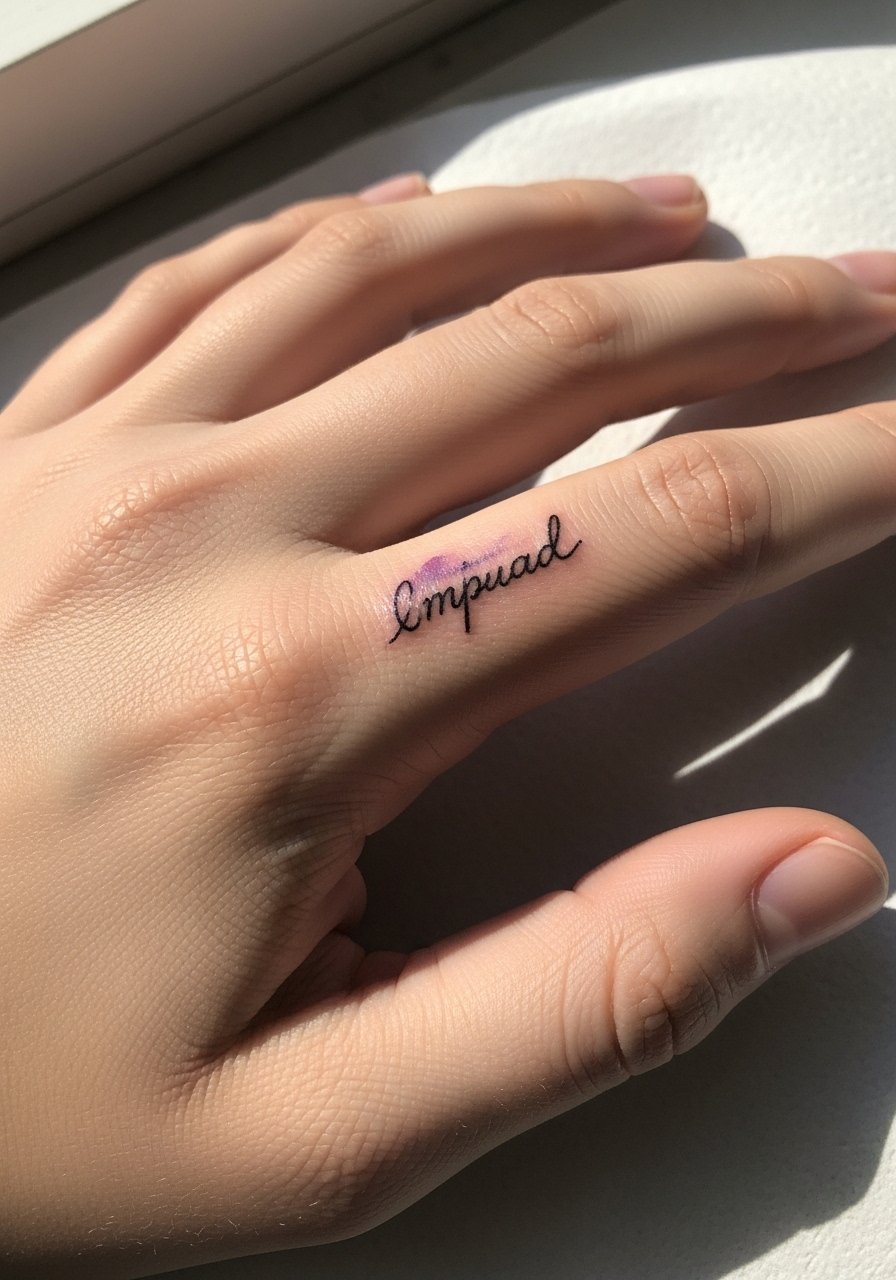
Finger tattoos live a rough life because of constant use and washing. Tiny watercolor scripts wear fastest on fingers. The practical approach is to size letters slightly larger than you want and accept that touch-ups will be part of ownership. A thin protective film can help early healing. Sessions are quick but the pain is sharp. For accessories try a minimalist signet ring that complements the finger art without covering it.
19. Watercolor Compass Ankle Wrap

An ankle wrap combines fine line and wash which means placement and scale matter to avoid blurring. The mistake is trying to fit too many directional details into a small circumference. Keep the compass simple and let watercolor suggest terrain or sea. Ankle sessions are short but healing is influenced by footwear. For showing it off use sandals or roll jeans up slightly.
20. Nebula Rib Accent with Dot Work

Rib nebula pieces look cinematic when artists add stipple shading and dot work to break up big washes. The rib is high-pain territory and small errors in spacing become visible later. Ask for preview mockups of spacing so you can see how dots and washes sit together. Expect breaks during the session and plan accordingly. A fitted sports top you can lift slightly helps the artist work without fabric interference.
21. Large Watercolor Phoenix Spine Piece

Spine pieces are dramatic but require artists who understand skin movement. For a phoenix that runs vertically, incorporate grayscale underlays where you want structure and let color flow outward. A frequent mistake is packing too much detail into the central spine line which can blur. Sessions can be long and should be split if you have low tolerance. A tank top you can pull aside works best for session access.
Frequently Asked Questions
Q: Do outline-free watercolor tattoos fade faster than those with black outlines?
A: Artists are split on this. One side argues black outlines preserve shape as the skin ages. The other side says outline-free work can look more organic if saturation and underlay are handled correctly. My practical take is to request healed photos from the artist and ask if they use a grayscale underlay for color stability.
Q: How often do watercolor pieces need touch-ups compared with traditional saturated blackwork?
A: In my experience watercolor often needs touch-ups sooner because it relies on fine color transitions that can soften with sun and time. Expect a touch-up within two to five years depending on placement, sun exposure, and how aggressively you protect the area.
Q: Will watercolor show up well on darker skin tones?
A: Watercolor can look beautiful on darker skin but the palette and saturation need adjustment. Artists who work across skin tones will choose deeper pigments and contrast points so the wash reads. Ask to see healed examples on a similar skin tone before booking.
Q: What should I wear to a session for a sternum or rib piece?
A: Wear a fitted sports bra or a cropped top you can lift slightly so the artist has clean access without you having to undress fully. That keeps the space focused and hygienic while giving the artist the visibility they need.
Q: Is there anything I should ask about before booking an outline-free watercolor piece?
A: Ask the artist to show healed photos of outline-free pieces at least one and three years post-tattoo. Also ask whether they recommend a grayscale underlay for the design to keep saturation and shape over time. Trust signals matter but be specific about the evidence you want to see.