
Fine line tattoos are trending for tarot designs, but what holds up is not always what earns the most likes the day it heals. I've seen tiny micro-realism cards lose crispness faster than bold blackwork that read clean for years. These realistic tarot card ideas lean toward placements and techniques that preserve detail long term while still feeling mystical, and the first one shows how to get that inner-forearm look right.
1. The Fool, Fine Line Inner Forearm
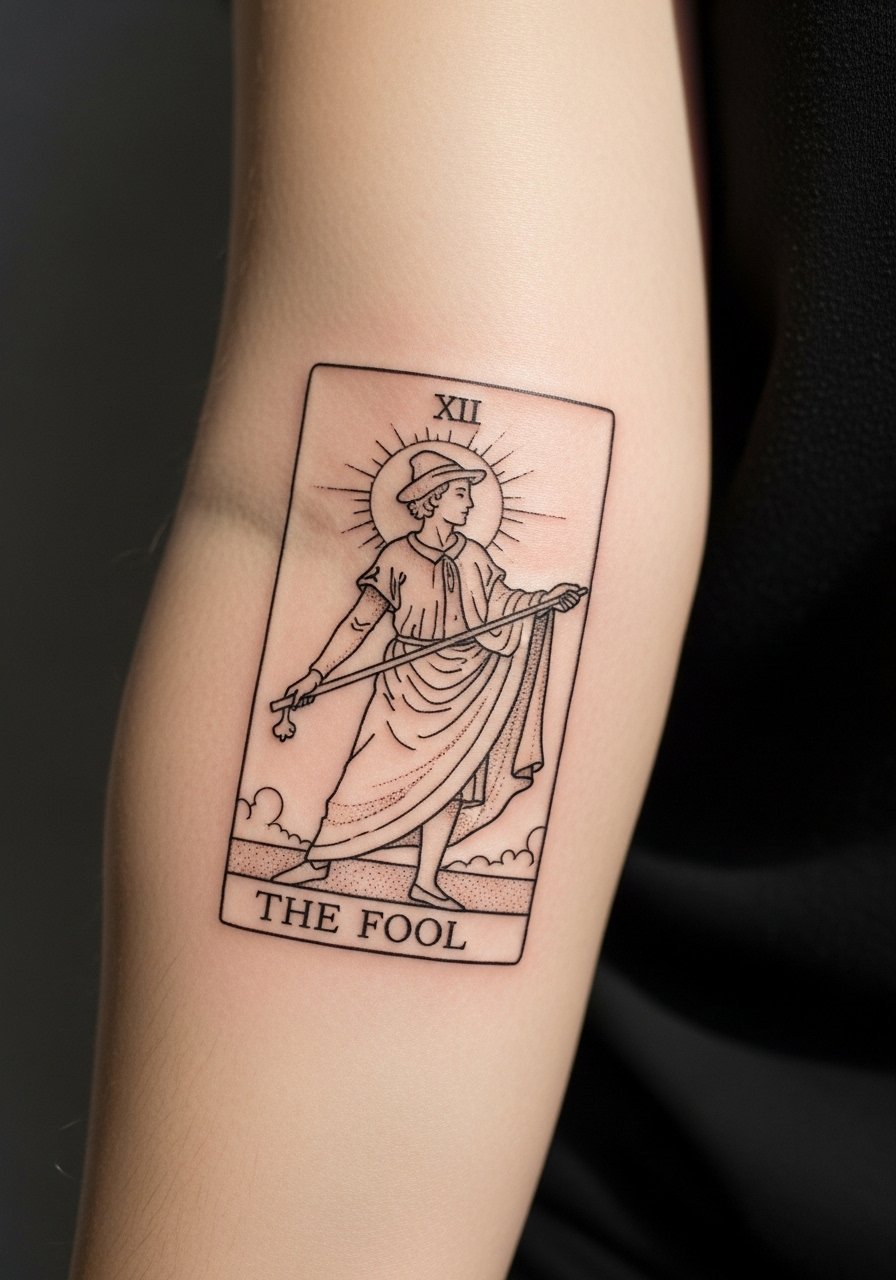
I recommend the inner forearm when you want the card visible and readable without crowding. Tell your artist you want slightly heavier outer borders and delicate interior linework so the card reads from a short distance. The common mistake is shrinking the art to wrist-card size and expecting detail to hold. Expect the first six months to look crisp, then subtle softening at year two that often benefits from a small touch-up around year three. Session feels like a steady, tolerable forearm placement. Pair it with a rolled sleeve or a loose button-down shirt to frame the artwork while keeping the arm accessible during touch-ups.
2. The Magician, Micro-Realism on the Upper Arm
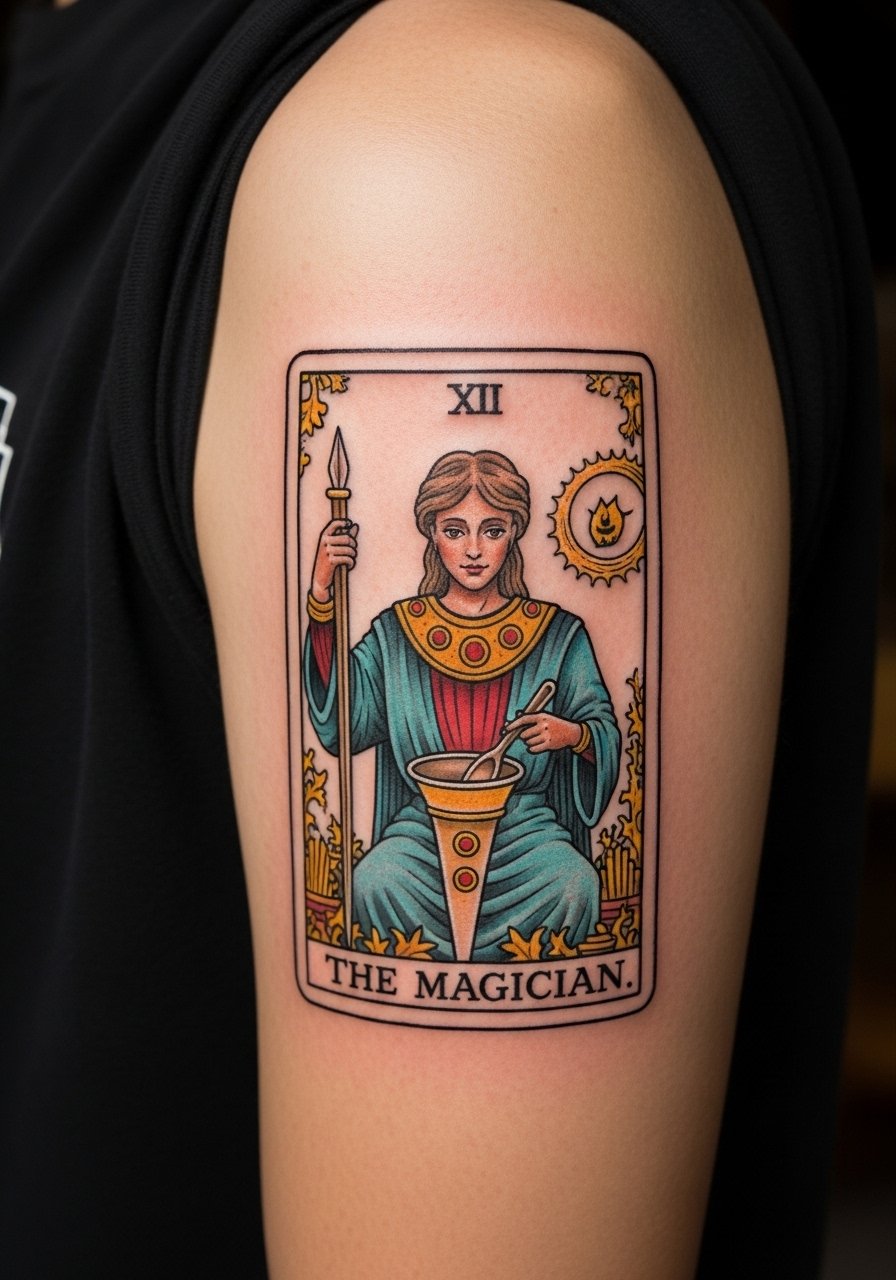
Upper arm pieces tolerate shading and saturation well and age more predictably than fine lines on thinner skin. Bring reference images that show exact contrast and tell the artist you want the card to read as a small painting rather than linework only. A common aging problem is over-finely rendered tiny details that blur. For this placement, heavier saturation in shadows keeps the composition readable at three to five years. The session is moderately paced and comfortable. For showing it off, short-sleeve tees or a racerback tank let the card sit centered on the arm without competing fabrics.
3. The High Priestess, Sternum Realistic Linework
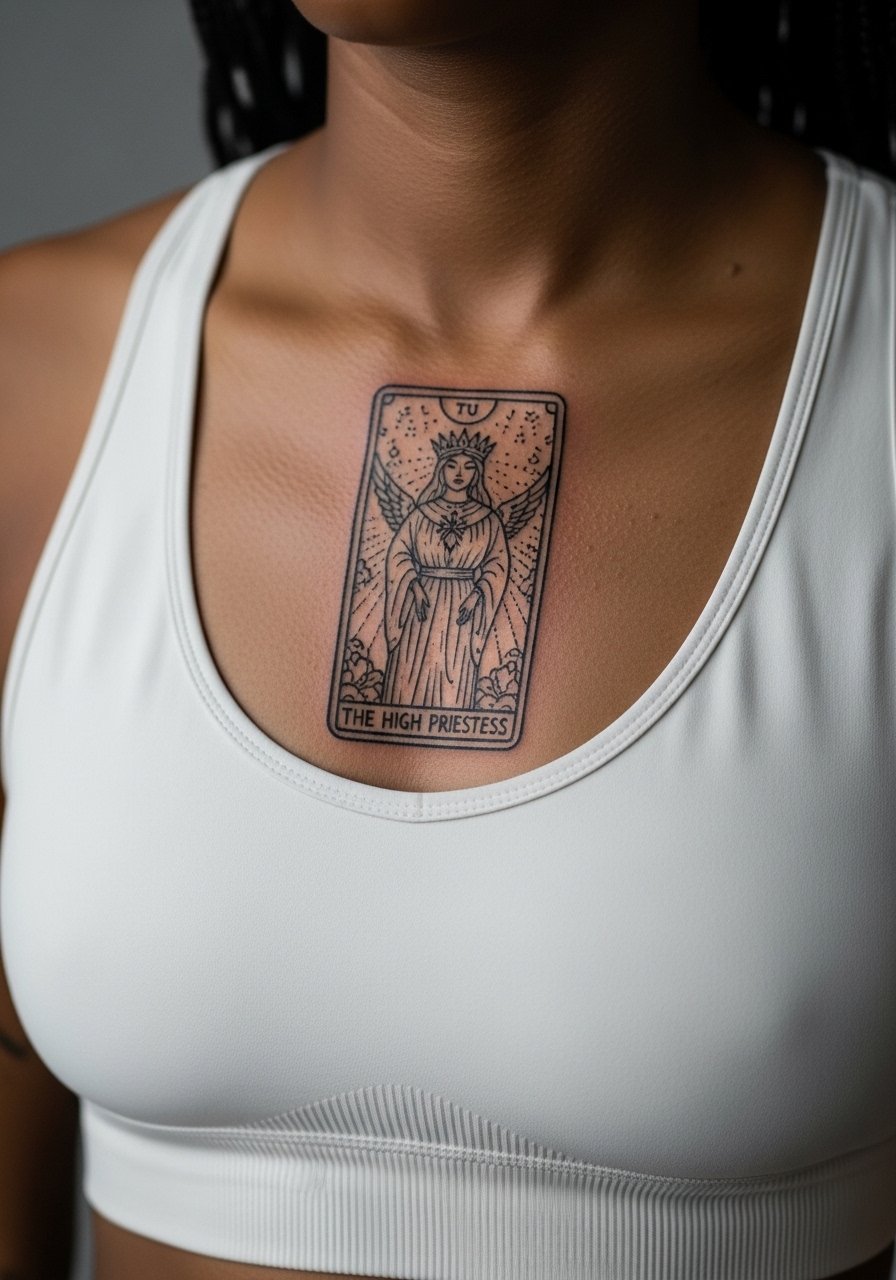
Sternum tattoos hold impact but require an artist comfortable with the contour and breathing movement of the chest. One camp says dense detail here blurs quickly because skin stretches with breath. The other camp argues that careful needle depth and spacing keeps lines sharp. Ask your artist where they land on that split before booking. The session is more sensitive than an arm piece and often needs breaks. Tell the artist you want negative space around the figure so the card reads even when the chest moves. For the studio visit, wear a fitted sports bra or a bandeau so the area is revealed safely and easily.
4. The Empress, Botanical Card on the Thigh
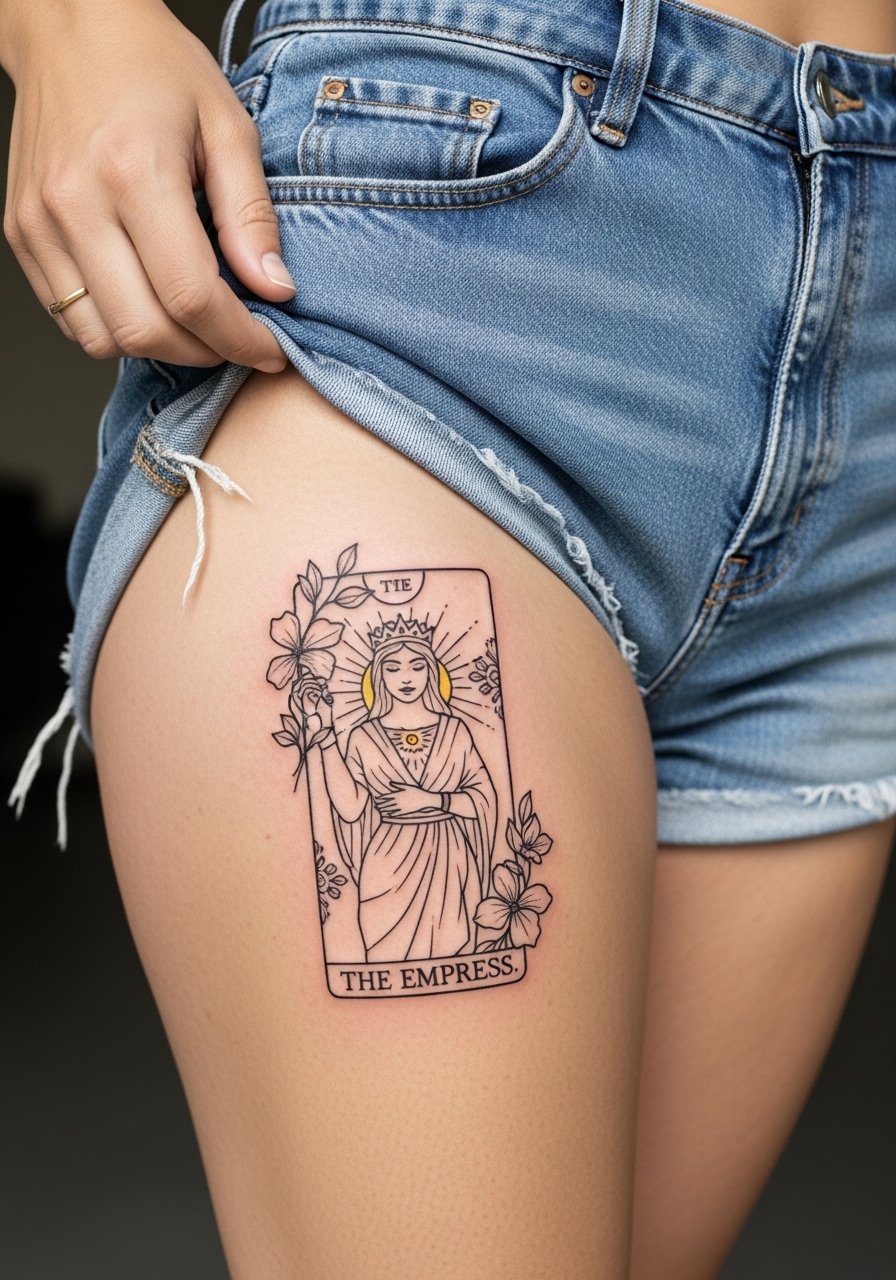
The thigh is forgiving for larger tarot cards and detailed botanical borders. I suggest a slightly larger card scale so dot work and stipple shading have room to breathe. A common mistake is trying to cram micro text or symbols into a tiny patch. The session tends to be longer but tolerable because the flesh cushions the needle. Expect touch-up windows to be longer than for wrist work. For the appointment wear high-waisted jeans you can shift or loose drawstring linen pants so the artist can access the outer thigh without discomfort.
5. The Moon, Fine Line Ribcage Card
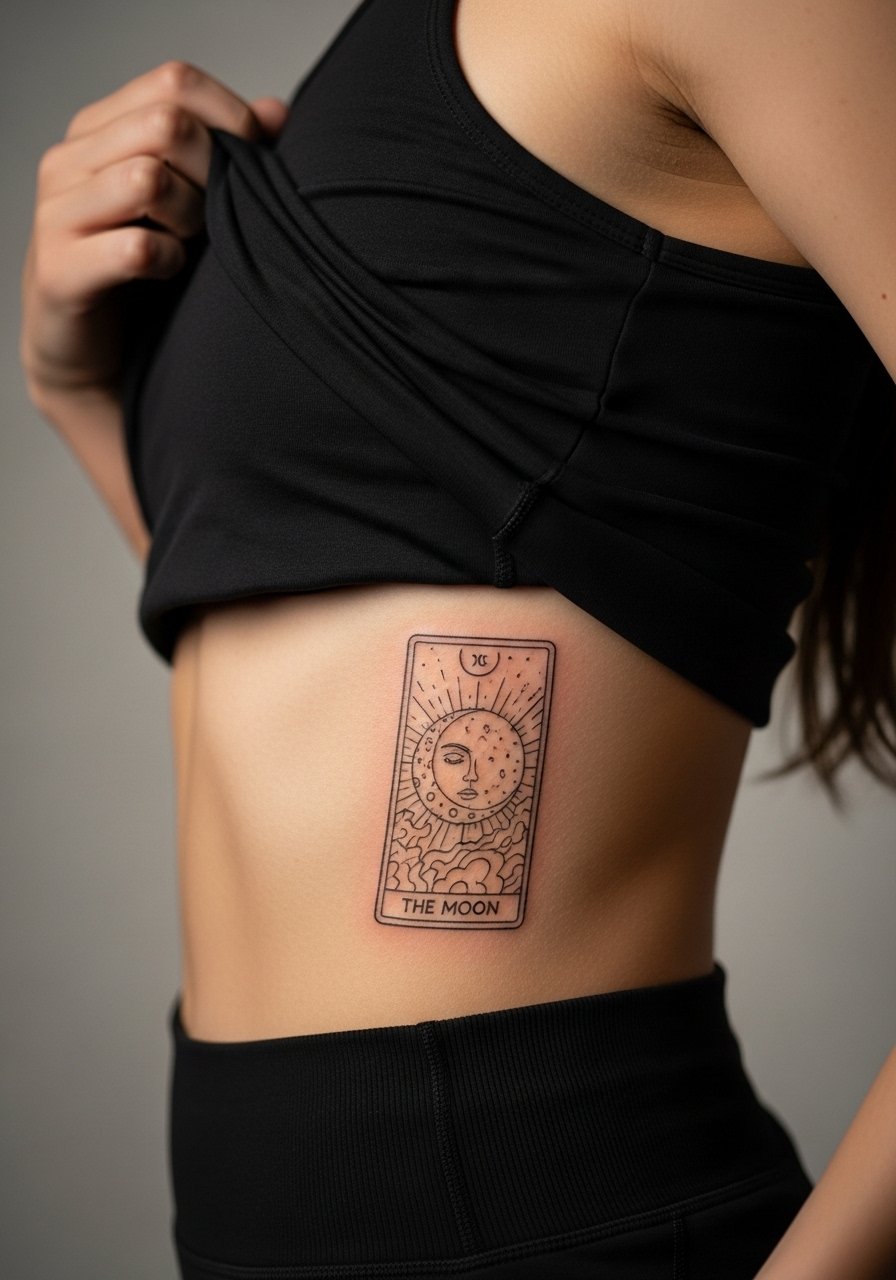
Fair warning, ribs are a high-sensitivity spot and fine line on ribs is controversial. One camp insists the skin stretch and thinness blur lines in two years. The other camp says spacing and proper depth make it last. I recommend larger spacing between detailed elements and slightly bolder outer lines to help longevity. The session can be painful but quick if the artist works efficiently. Tell your artist you want breath breaks and to preview the stencil while you move so placement reads natural. For the session, a cropped top that lifts easily keeps you comfortable and the artist unencumbered.
6. The Lovers, Pair of Mini Cards on the Collarbone
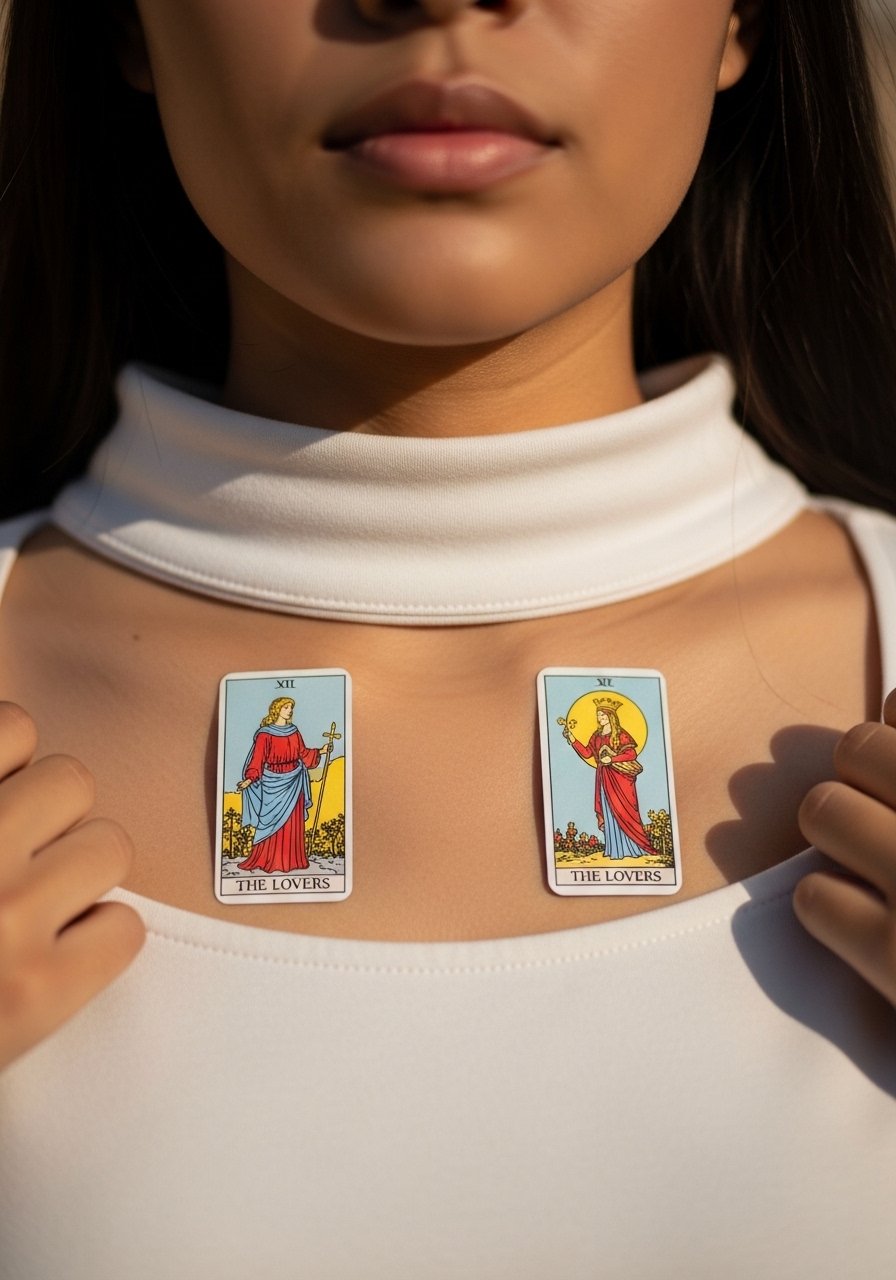
Symmetrical collarbone pieces look intentional when sized properly. The mistake is placing two cards too close so the bones and movement distort the negative space. Tell the artist you want the pair spaced to avoid merging when you change posture. Expect sharper appearance at six months and gradual softening by year three that usually only needs a small line touch-up. The session feels brisk but the area is bony and more sensitive than the arm. Pair the cards with an open-neck top or a thin chain pendant necklace that sits above the designs without crowding them.
Studio Day Picks
The inner arm, ribcage, collarbone, and thigh pieces above require different prep and first-week protection, so a short kit tailored to those placements makes the studio visit smoother.
-
Stencil transfer paper kit. Allows you to preview exact placement and scale on skin, which is critical for collarbone and forearm cards.
-
Topical numbing cream. Helpful for ribcage and sternum sessions to reduce sensitivity without affecting linework when used as directed.
-
Thin protective film roll. Keeps delicate wrist and finger cards clean from friction during daily activities in the first week.
-
Fragrance-free body wash. Gentle cleansing for large thigh and back pieces that keeps healing ink clear of irritants.
-
Aquaphor healing ointment. Thin application in the first days helps keep fine line work moisturized without clogging the healing channels.
7. The Chariot, Bold Blackwork on the Calf
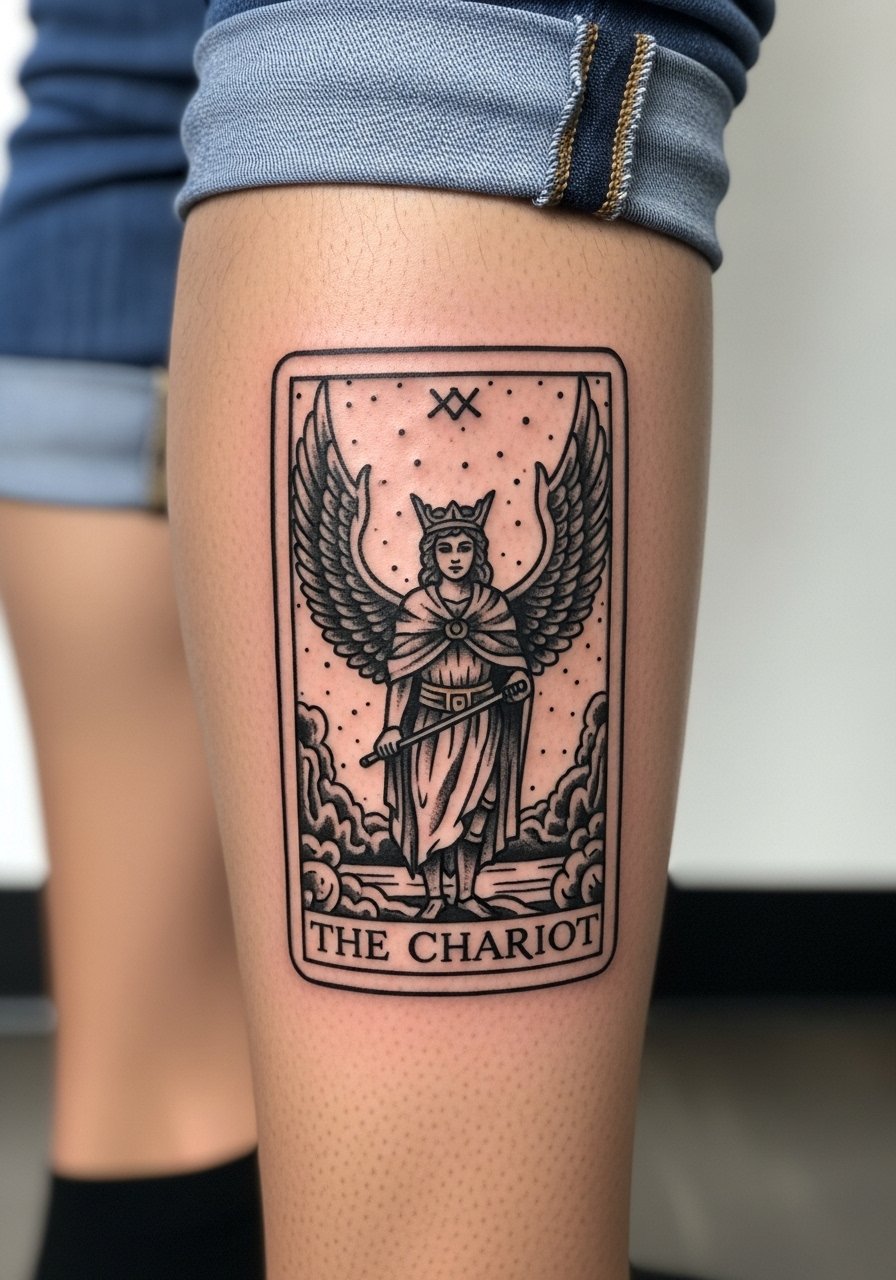
Calf placements handle saturation and bold fills well, which suits a more graphic tarot card. Tell your artist you want strong silhouette shapes and minimal interior micro-detail so it reads from a distance. A common error is insisting on tiny micro shading that the calf movement will blur. The session is medium-intensity and allows for longer stretches with breaks. Expect color saturation to settle in the first year and stay stable with sunscreen after healing. For show-off outfits, rolled-up jeans or shorts framed by a pair of sandals keep attention on the artwork without distraction.
8. Strength, Micro-Realism Wrist Card
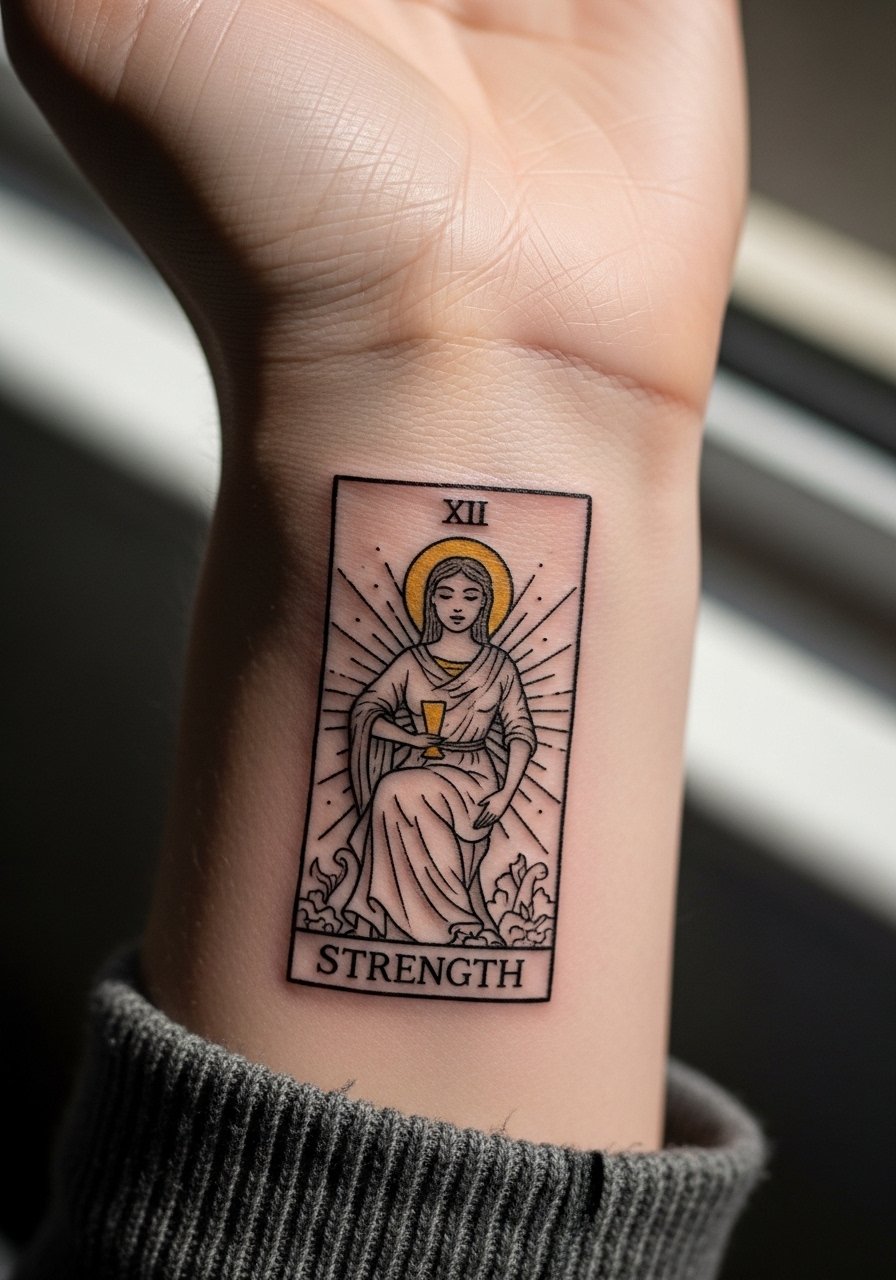
The wrist is visible but high friction from washing makes tiny detail vulnerable. I usually advise slightly thicker linework and reduced interior texture for wrists. The common mistake is tiny script and dot shading that disappears into smudging. Sessions are quick but may sting more due to thin skin. Plan for a touch-up at two years if you want the card to remain crisp. For daily wear, a minimalist watch or stacked bracelets can frame but not cover the design. Pair with a minimalist watch strap if you want accessories that complement without rubbing the tattoo constantly.
9. Wheel of Fortune, Back of Hand Tiny Card
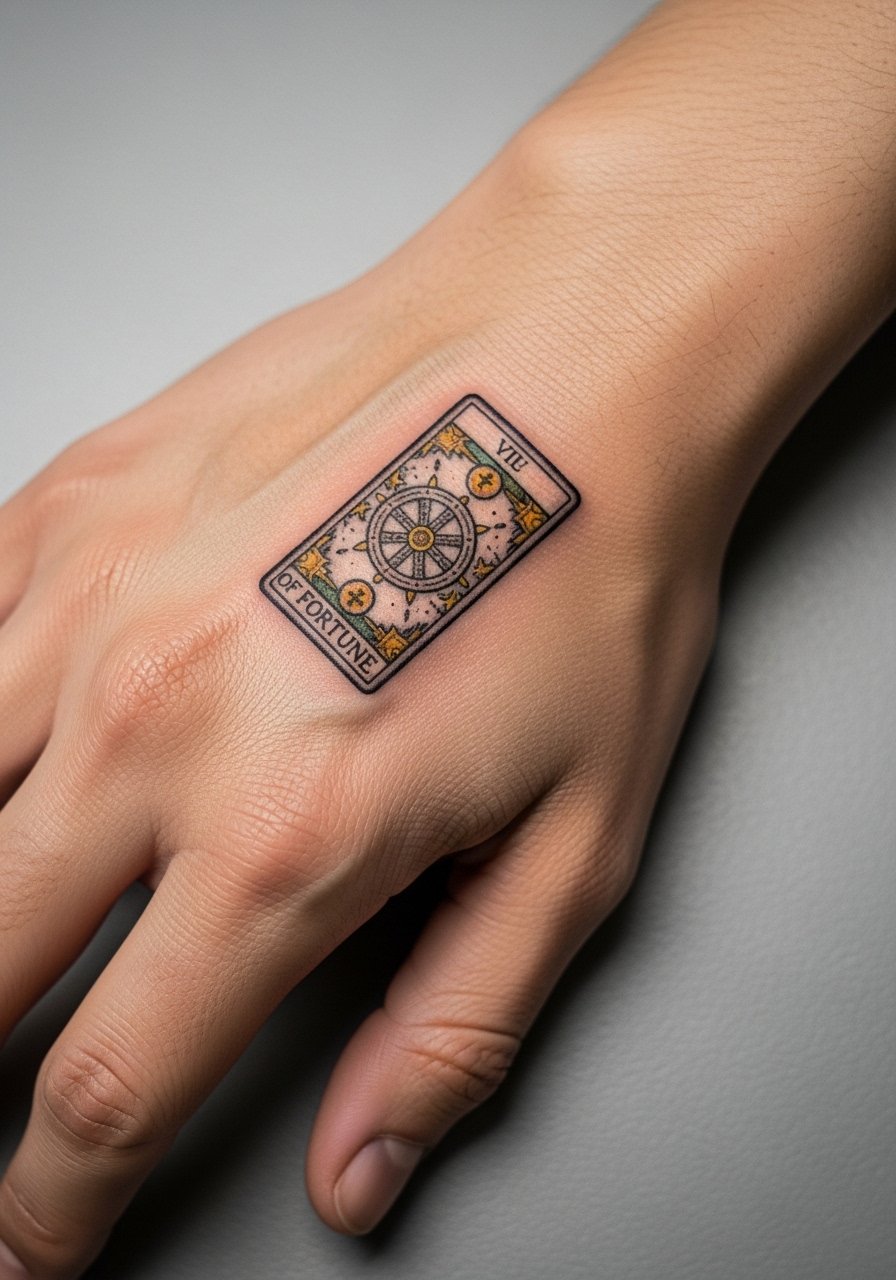
Hand tattoos are high touch and age differently than torso pieces. The biggest mistake is assuming a tiny, detailed card will behave like a forearm piece. Expect faster fading and higher chance of partial loss from daily use. Artists disagree on hand touch-ups. One camp treats hand tattoos like maintenance pieces that need regular refresh. The other camp avoids heavy detail and leans into bolder forms. Ask about the studio's touch-up policy. The session feels quick and sharp. For showing off, consider thin rings rather than wide bands so jewelry does not hide or abrade the card.
10. Justice, Vertical Spine Card
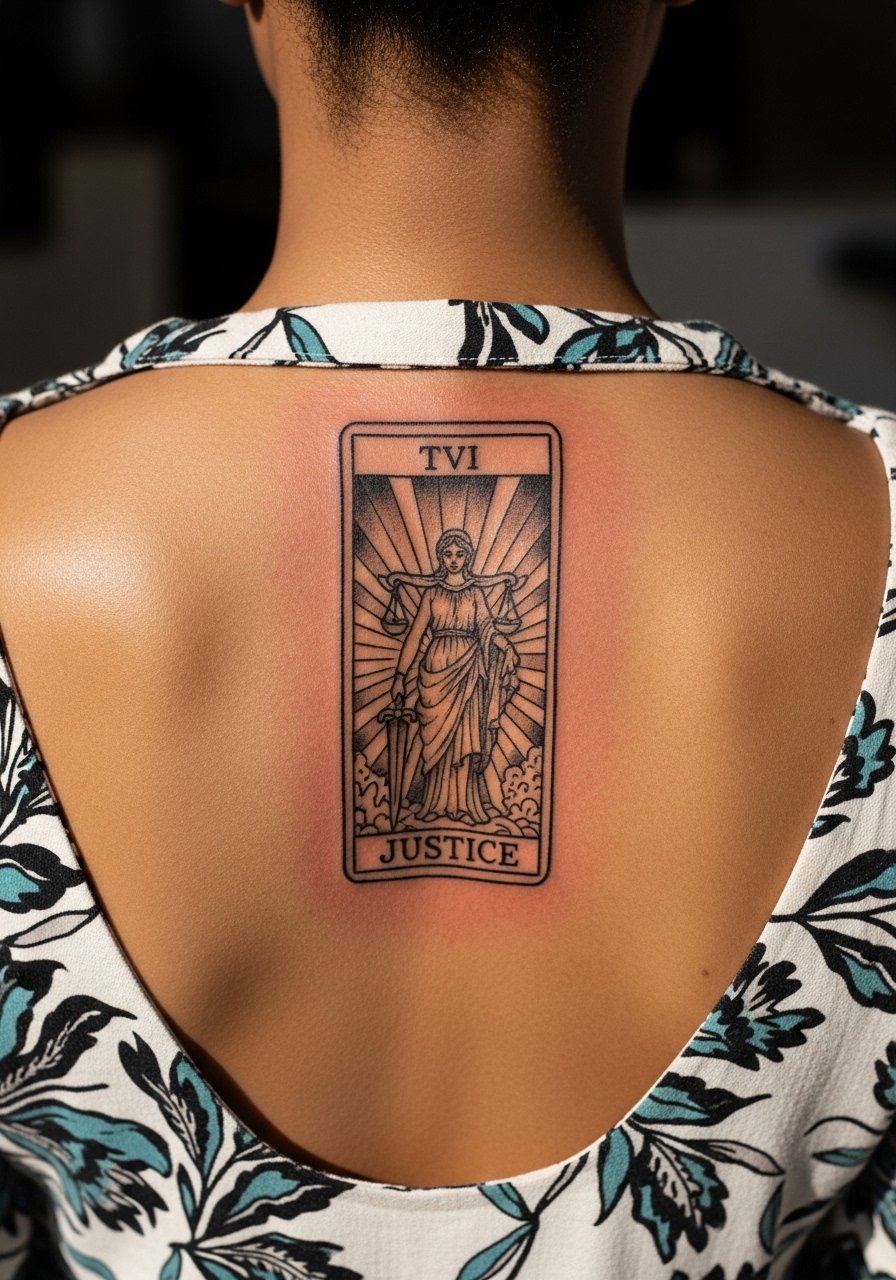
Spine placements need an artist experienced with curvature for the card to read straight when you move. Tell your artist you want the artwork tested with posture changes and for the stencil to be checked while you stand and sit. The common error is a straight stencil that later looks off when the back flexes. Expect a more sensitive session where pacing and breaks matter. For show-off styling, open-back tops are ideal. Try an open-back midi dress that reveals the card cleanly for evenings without overexposing the rest of the back.
11. The Hermit, Small Card Behind the Ear
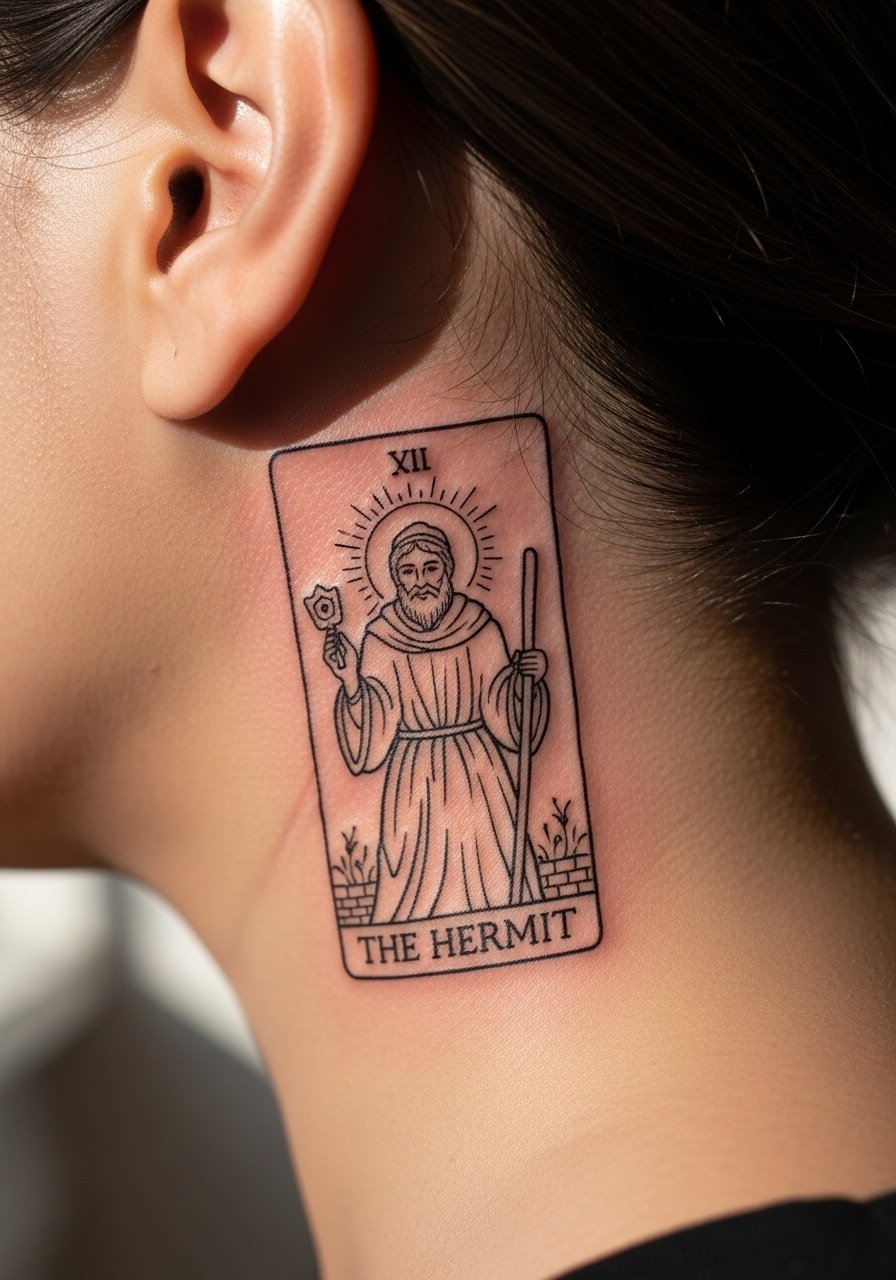
Behind-the-ear placements are discreet and intimate but require precise small-scale linework. The frequent mistake is asking for heavy detail where the canvas is too small. Artists will often scale down the interior and rely on silhouette to read. The session is quick and surprisingly tender. Consider career implications because some workplaces still view visible neck-area tattoos differently. For aftercare and sessions, keep hair tucked and bring a button-down shirt you can pull aside so the artist has clean access.
12. Death, Blackened Card on the Throat Side
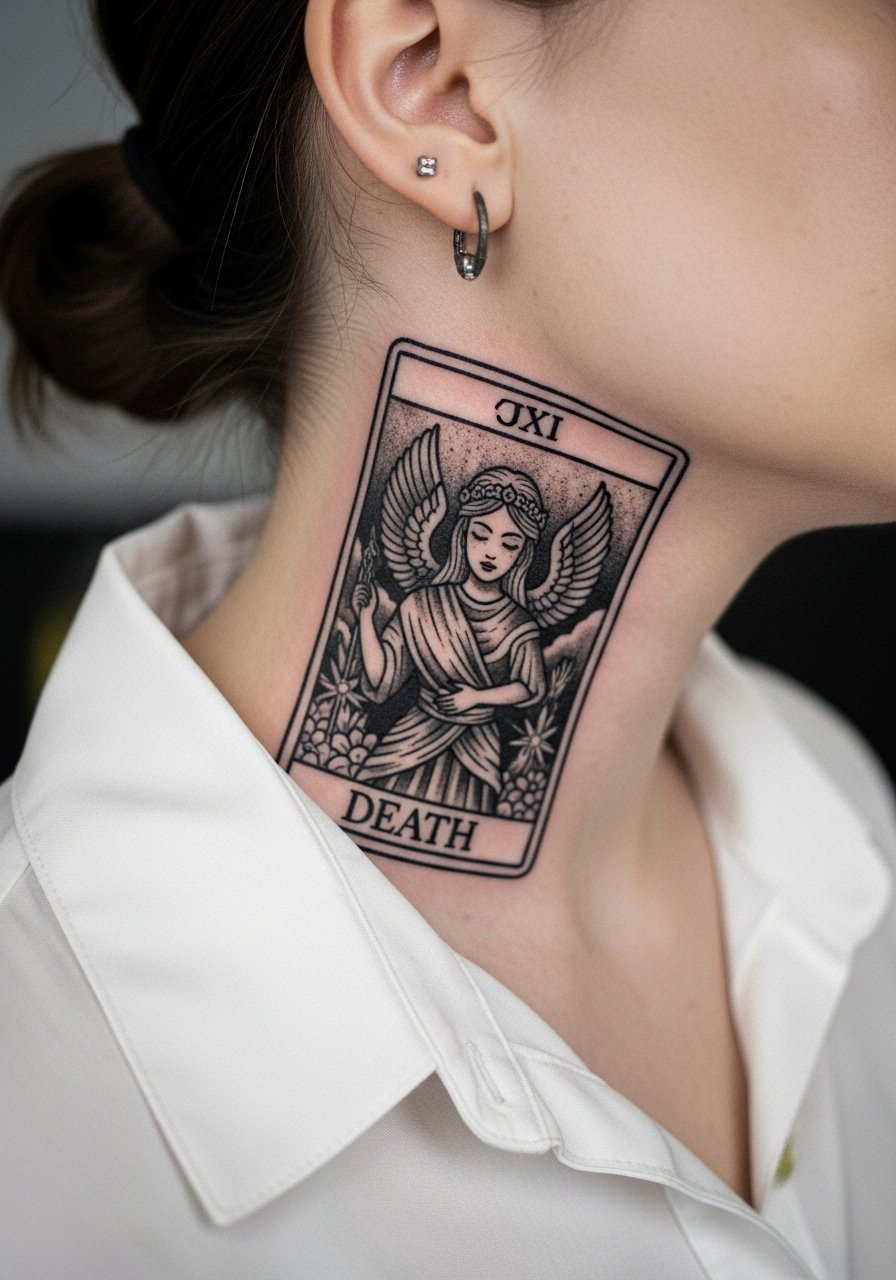
Neck placements are bold and require a conversation about visibility and professional contexts. The frequent error is underestimating how often clothing rubs the area during healing. Artists split on neck detail. One camp prefers bold simplified shapes that age predictably. The other camp will cautiously add micro texture if the skin type allows. Expect a sensitive session and plan clothing that avoids tight collars. For the appointment, a wide-neck shirt that pulls aside easily helps keep the area accessible.
13. Temperance, Watercolor-Adjacent Card on the Rib Flank
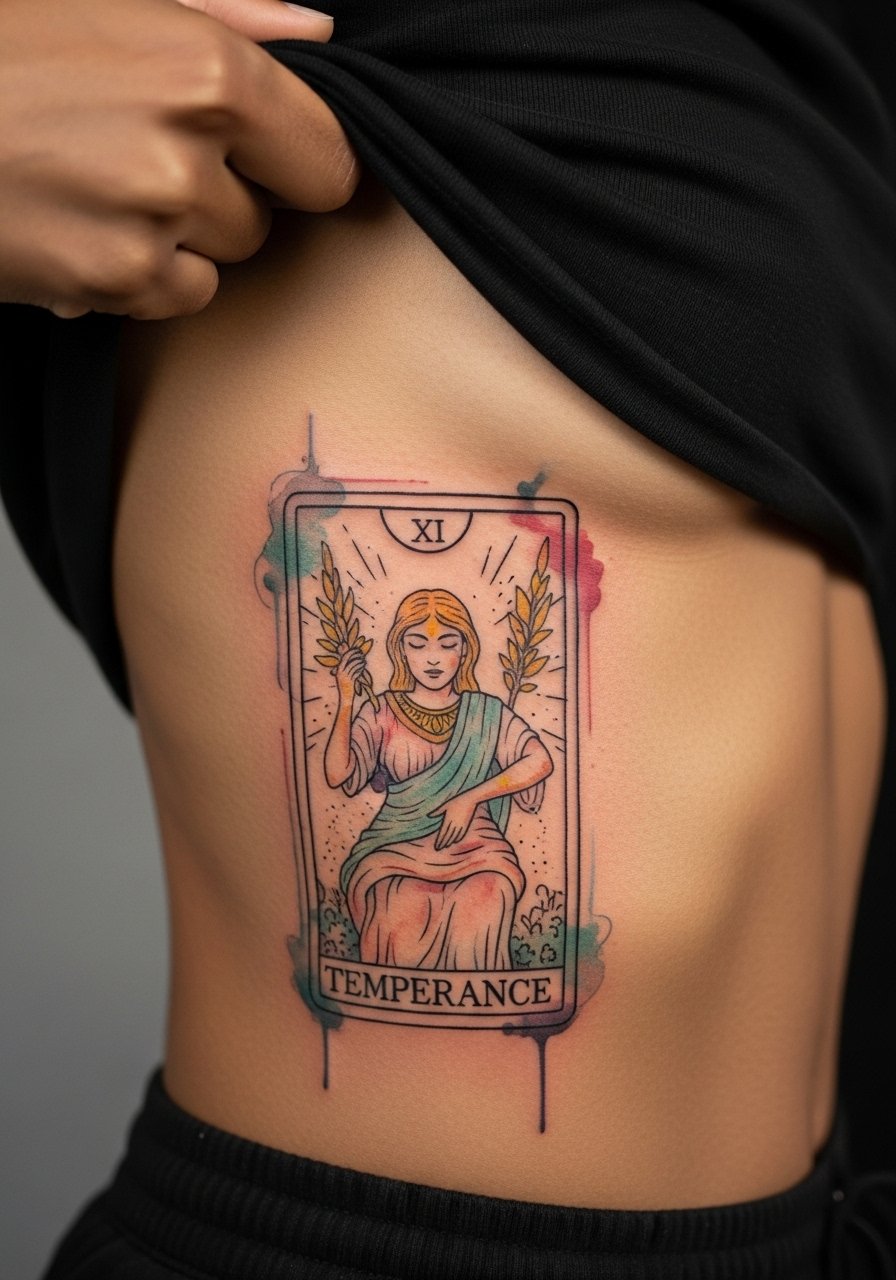
Watercolor-style touches can lend a mystical feel to a tarot card, but pigments that sit too shallow may fade into bruising tones over time. The common mistake is heavy watercolor fills without line anchors. I recommend fine border lines or light stipple shading to hold the composition. Artists are cautious about watercolor near thin skin like the ribs because color longevity varies. The session is more sensitive and requires careful aftercare routines. For the studio visit wear a cropped top that shifts easily so the artist can work without exposing more than the area needed.
14. The Star, Tiny Ankle Card
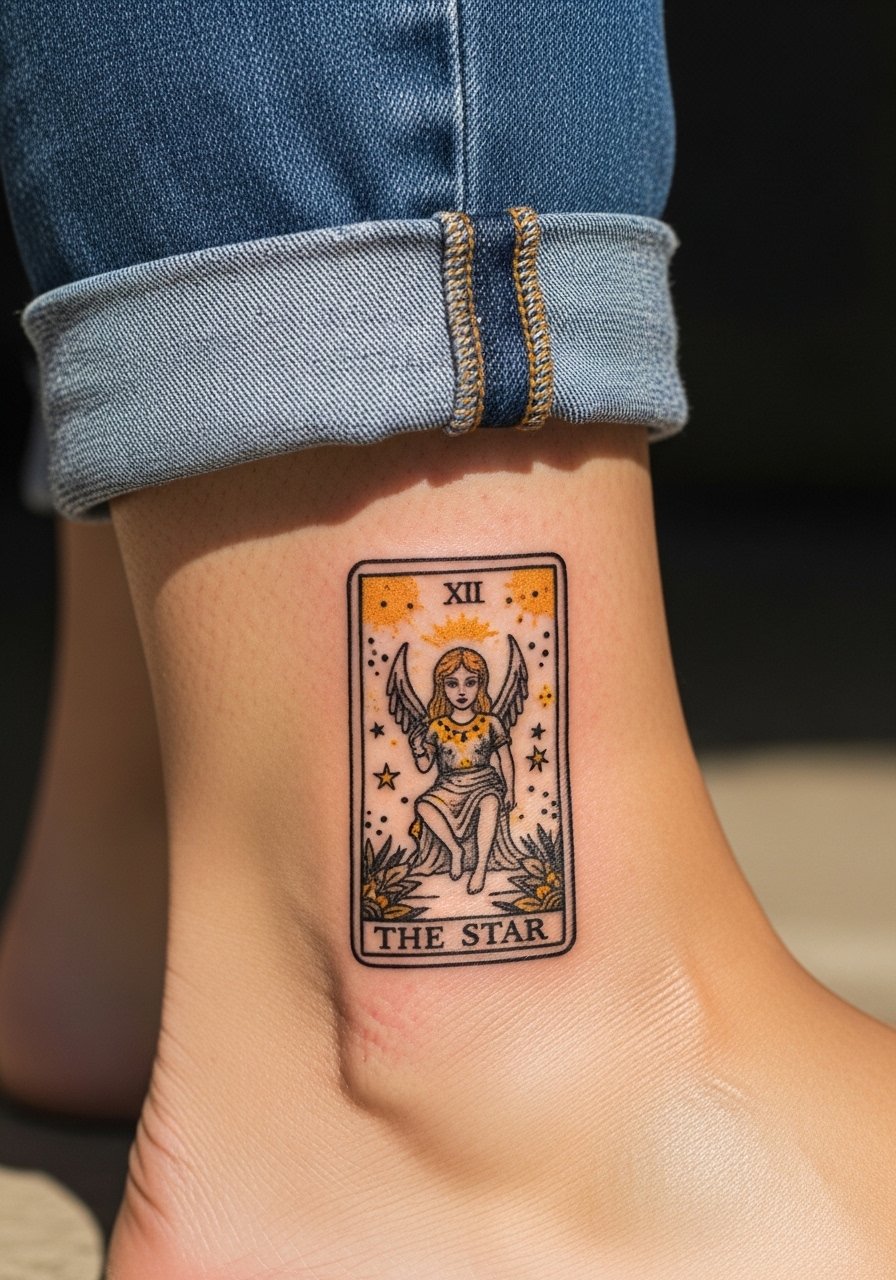
Ankle tattoos face constant rubbing from shoes and socks, which accelerates fading. The usual mistake is packing micro detail into a tiny ankle piece. Opt for simplified linework and a slightly larger scale to survive daily abrasion. Sessions are short and can be managed with careful positioning. For showing off the piece, rolled jeans or cropped pants work well. Try pairing with a pair of sandals or cropped trousers so the card stays visible without excessive rubbing.
15. The Sun, Back Shoulder Realistic Card
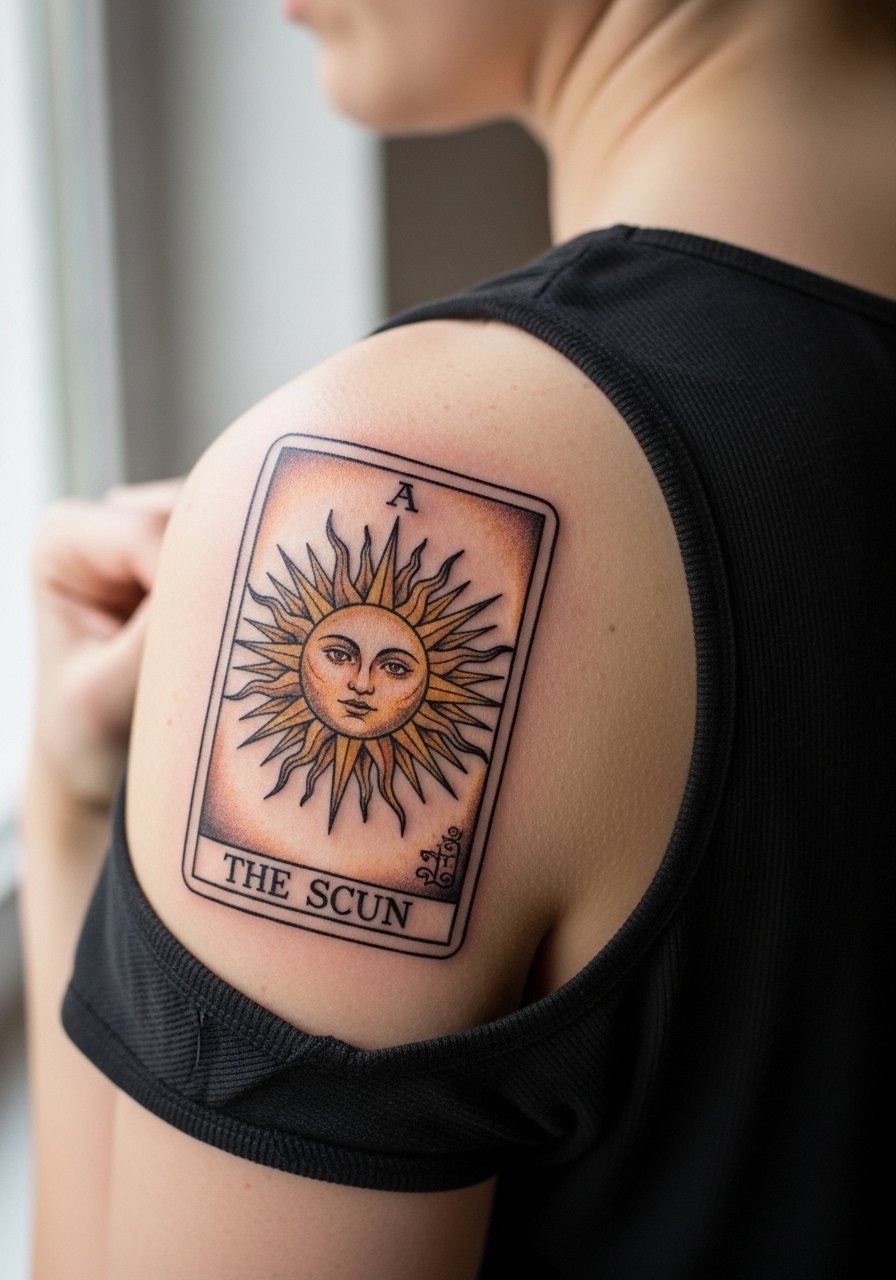
Shoulder blade placements accept larger card sizes and detailed shading without the same blowout risk as hands or ribs. The common error is overloading the piece with tiny script or micro ornamentation that the shoulder movement will distort. This placement is comfortable during the session and allows for longer blocks of work. Expect very steady aging with only occasional touch-ups in high-sun areas. For showing it off, tanks and halter tops work best. Consider a loose tank top for easy access at appointments and for framed reveals.
16. The Hermaphrodite, Miniature Card on the Inner Bicep
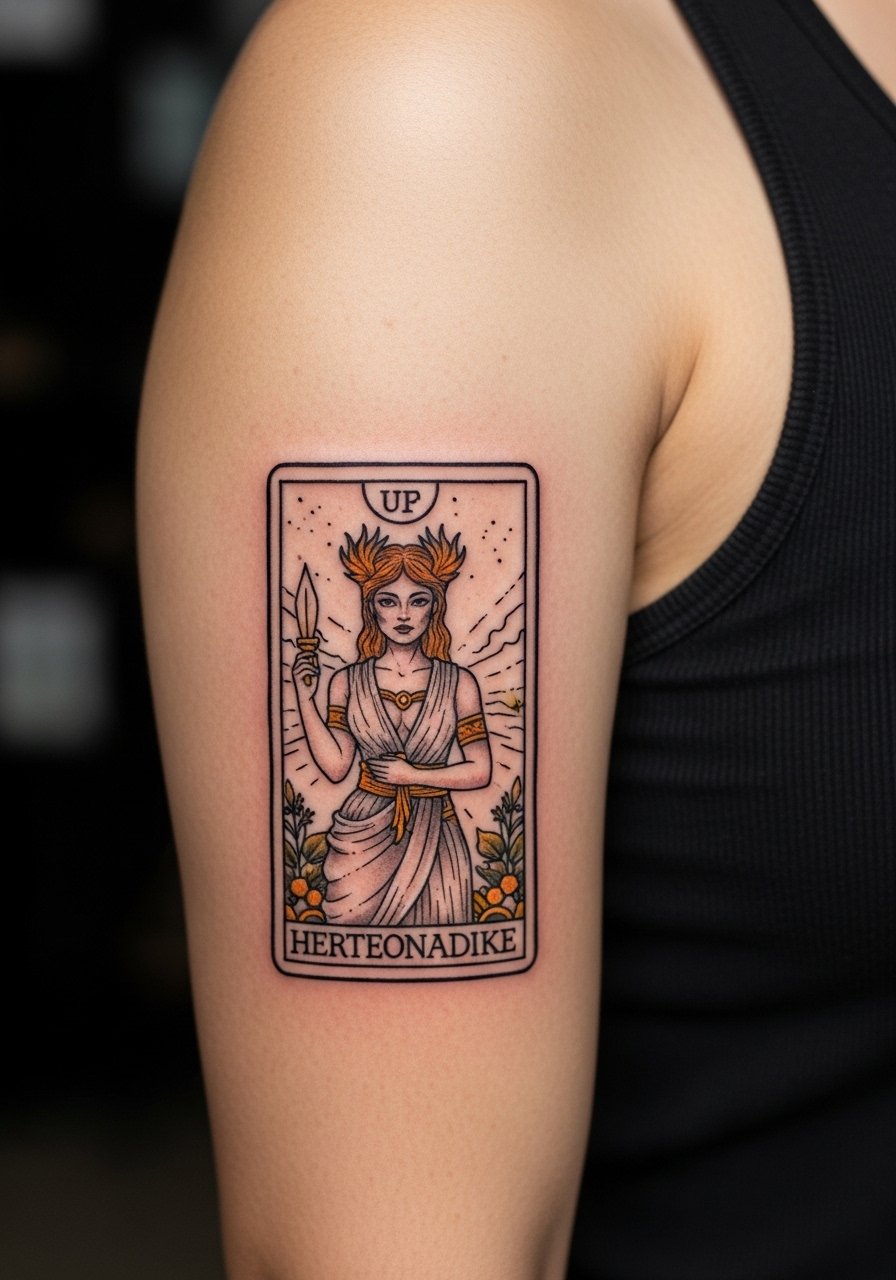
Inner bicep work sits on a softer canvas and needs an artist who manages stretch during the session. The typical mistake is choosing too small a scale, which causes lines to merge as the skin settles. Ask the artist to apply the stencil while your arm is relaxed and then flexed so you can see the final read. Sessions can be tender but not extreme. This placement is ideal for cards meant to remain private and revealed selectively. Wear a tank top on the day so the artist can position the arm comfortably.
17. The Moon Phase Spread, Sleeve Friendly Cards
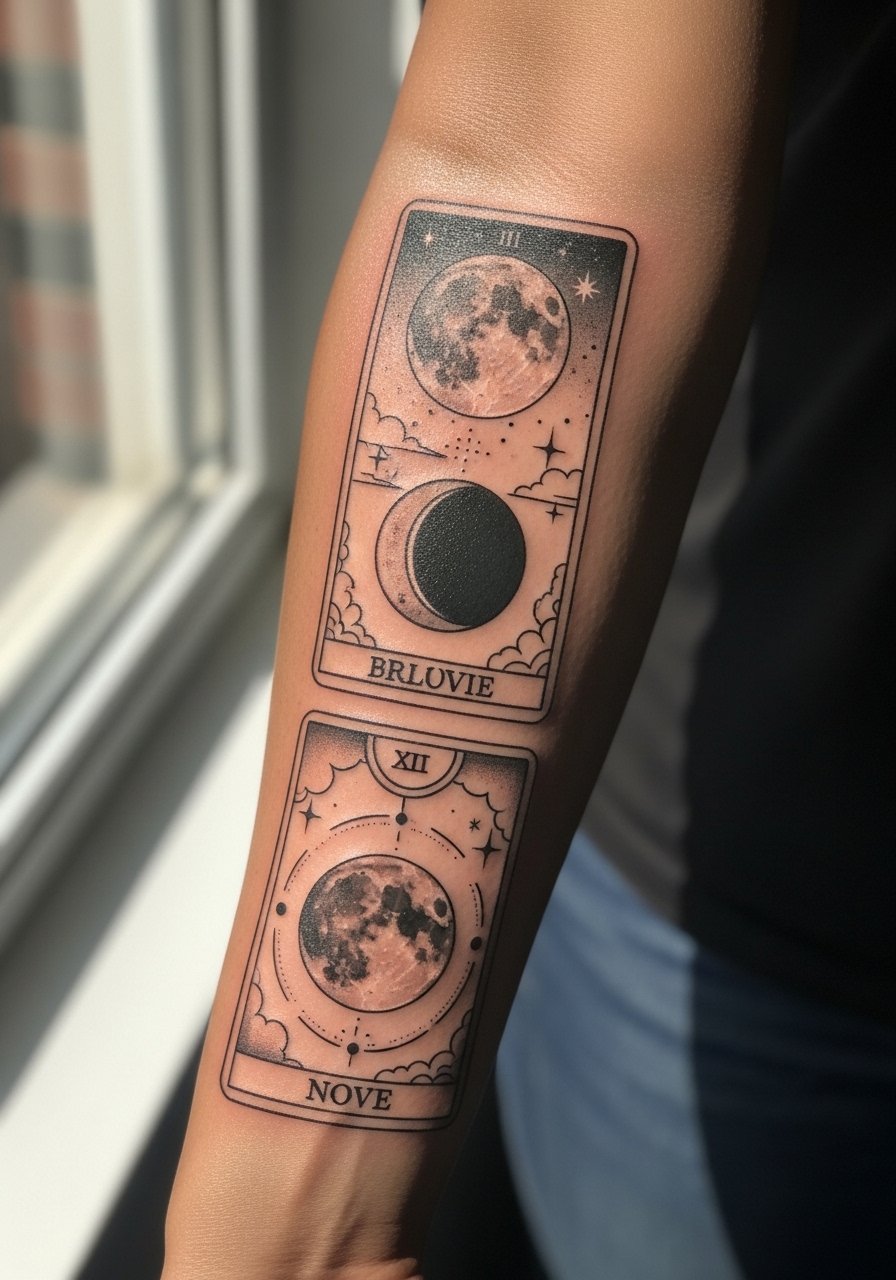
A sleeve-style arrangement of related tarot cards works best when each card has breathing room and consistent margins. The biggest mistake is trying to compress too many tiny cards into a short forearm segment. Plan spacing with your artist and map where seams between cards will sit when you bend your arm. Expect multiple sessions that allow layering and touch-ups as the piece heals in stages. For show-off outfits, rolled sleeves and lightweight shirts frame the sleeve. Consider pairing with a loose button-down shirt you can roll to mid-forearm to reveal the sequence without covering the borders.
Frequently Asked Questions
Q: Will fine line tarot cards on the ribs blur faster than on the forearm?
A: Yes, ribs are thinner and stretch with breathing, so fine lines need extra spacing and slightly stronger outer borders to last. Artists split on this. One camp recommends avoiding micro detail on ribs. The other will accept the challenge with careful depth control. Discuss spacing and expected touch-up windows with the artist during consultation.
Q: How should I prepare clothing-wise for a sternum or upper chest tarot card session?
A: Wear a fitted sports bra or a wide-neck top you can pull aside easily so the artist has access while you stay covered. A zip-up hoodie is also useful for warmth after the session. Comfortable layers let you manage exposure without compromising modesty.
Q: I want a tiny tarot card on my hand. What are realistic expectations for longevity?
A: Hands fade faster due to washing and sun. Expect more frequent touch-ups than torso pieces and plan on simplified shapes rather than heavy interior texture. Ask the studio about their hand tattoo touch-up policy before booking.
Q: Can watercolor-style washes work on dark skin tones for tarot cards?
A: Watercolor effects can read differently across skin tones. On deeper tones, contrast and negative space matter more than pale washes. Ask your artist to show healed examples on similar skin tones so you know what to expect. Adjusting the palette or increasing outline contrast often produces better longevity.
Q: Should I get a stencil proof of my tarot card placement before the session?
A: Absolutely. Request a full stencil proof and try the placement with movement. For collarbone, spine, and inner arm pieces, seeing the card while you stand, sit, and move reveals whether the scale and margins will hold up in daily life. A transfer preview saves regret later.
Q: What clothing pairs best with a forearm tarot sleeve when I want to show it off?
A: Rolled sleeves, short-sleeve linen shirts, or a loose button-down shirt frame the forearm without covering the borders. Lighter neutral colors let the linework read clearly while keeping the focus on the artwork.