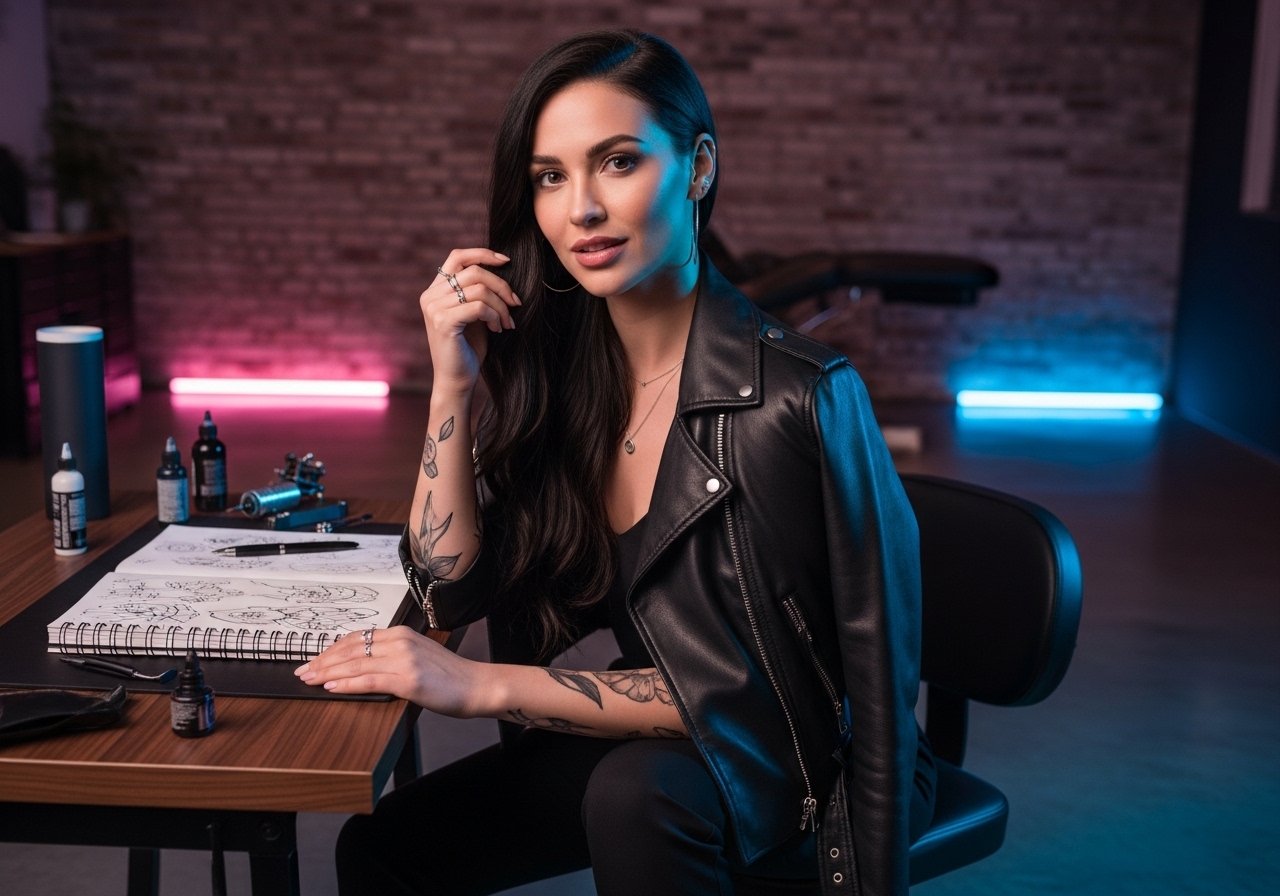
Fine line color and saturated color both look incredible on a lion design, but they age differently and you should plan for that when you book. I see people choose hyper-detailed rainbow manes thinking the color will stay electric for a decade. It does not. Placement, spacing, and the artist's approach to saturation decide whether a colorful lion still reads strong after five years. Below are 21 takes that balance impact with long-term wear.
1. Fine-Line Colorful Lion on Inner Forearm
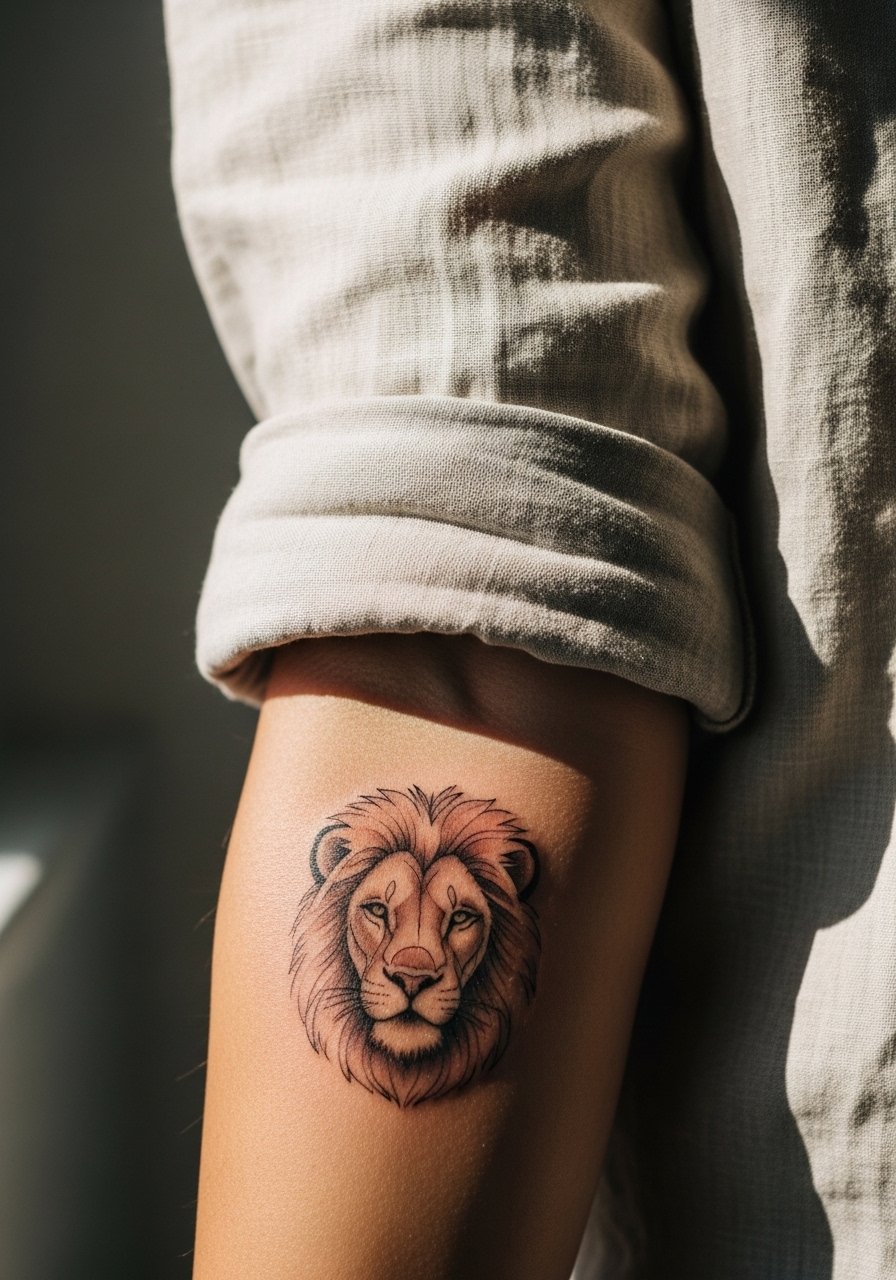
I recommend this when you want a delicate feel that still reads up close. Tell your artist you want confident linework around the face and softer stipple shading in the mane so the contours hold while color sits in the negative spaces. Fair warning, the inner forearm sees friction from sleeves and watches so expect a light touch-up around year three if you live in sun. The session is manageable for most people, about two hours, and the pain is moderate. For showing it off, pair with a rolled-up linen shirt or a thin cuff bracelet to frame the forearm without crowding the linework.
2. Saturated Neo-Traditional Lion on the Shoulder Cap

Choose this if you want color that reads from across a room. Ask for stronger outlines and deeper saturation in the mane and nose so the piece ages into a bold graphic rather than a blur of color. Shoulder skin tolerates heavier saturation well, so touch-ups tend to be less frequent than on the wrist. The session feels like steady vibration and bright color packing, expect three to four hours. For outfits, an open-back sundress or a loose tank top frames the shoulder without hiding the piece.
3. Watercolor Mane Thigh Piece with Dot Work
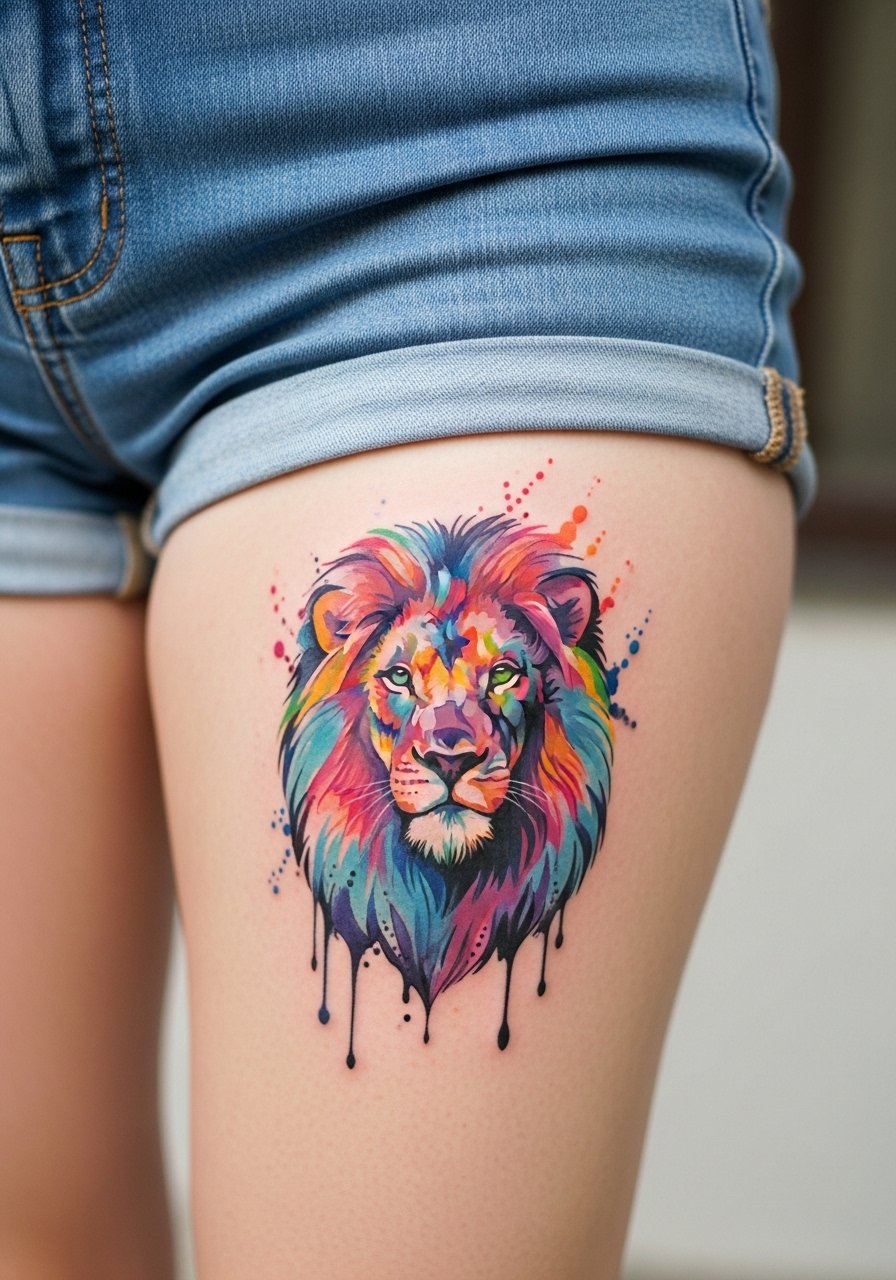
This one leans into painterly color mixed with stipple shading to give depth without heavy black outlines. The upper thigh accepts softer color well, but most watercolor approaches that lack structure fade into patches in a few years. I advise a subtle anchoring line around the muzzle so the facial features do not wash out. The session is comfortable if you wear loose shorts and can take two sessions for layering. Pair with high-waisted shorts to show the piece off or wear flowy skirts for a peek of color.
4. Ribcage Galaxy Mane Lion, and the Fine-Line Debate
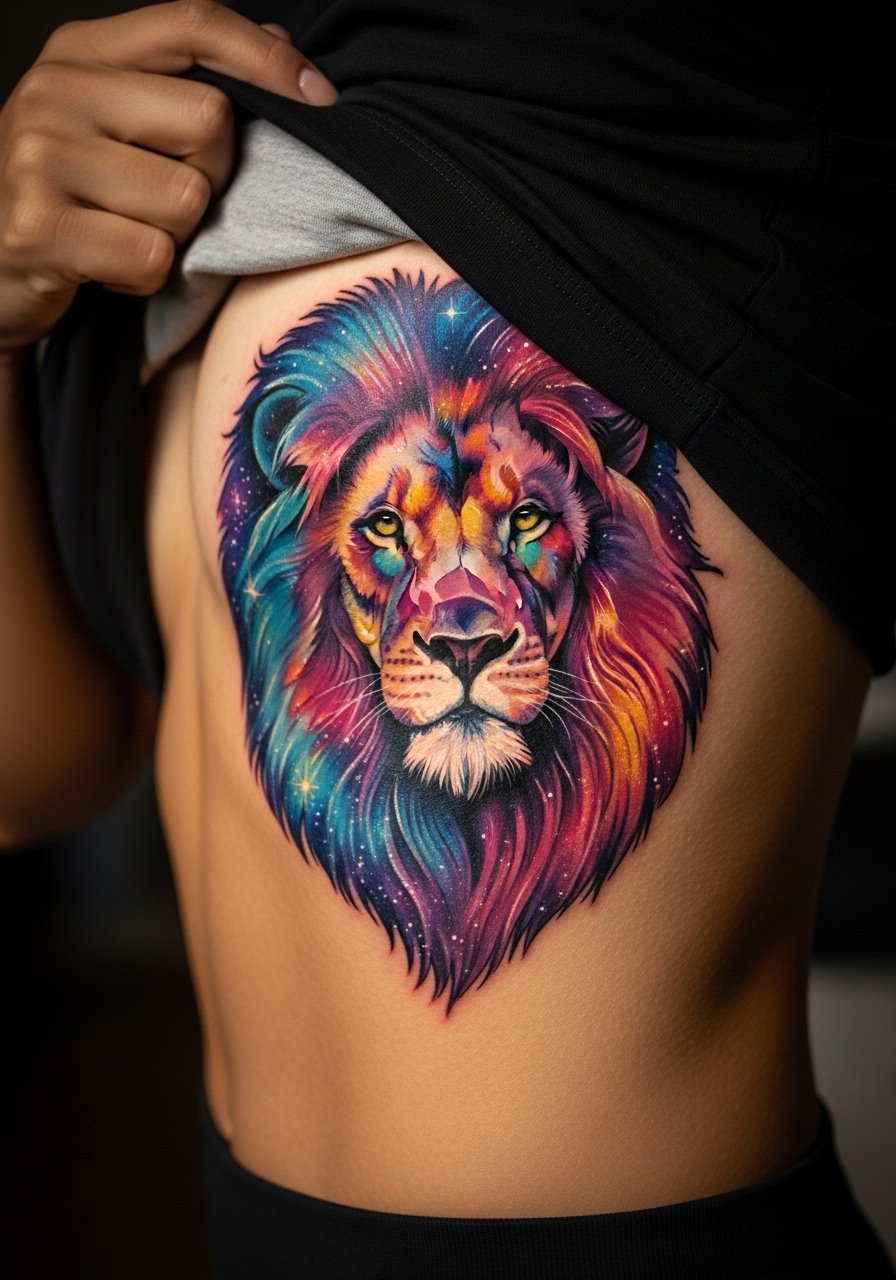
Fine line on ribs splits artists into two camps. One camp says the skin stretch and movement blur lines within two years. The other camp argues that with proper needle depth and spacing, fine line settles fine on the ribs. I find the truth sits between those views. If you pick a rib piece, ask for slightly bolder primary contours and for color to be layered rather than washed. Sessions here are tougher because the area is sensitive and breathing affects the needle. Expect a few hours and a higher chance of a touch-up than for the shoulder. Wear a cropped top you can lift easily so the artist has clean access.
5. Geometric Color-Block Lion over the Sternum
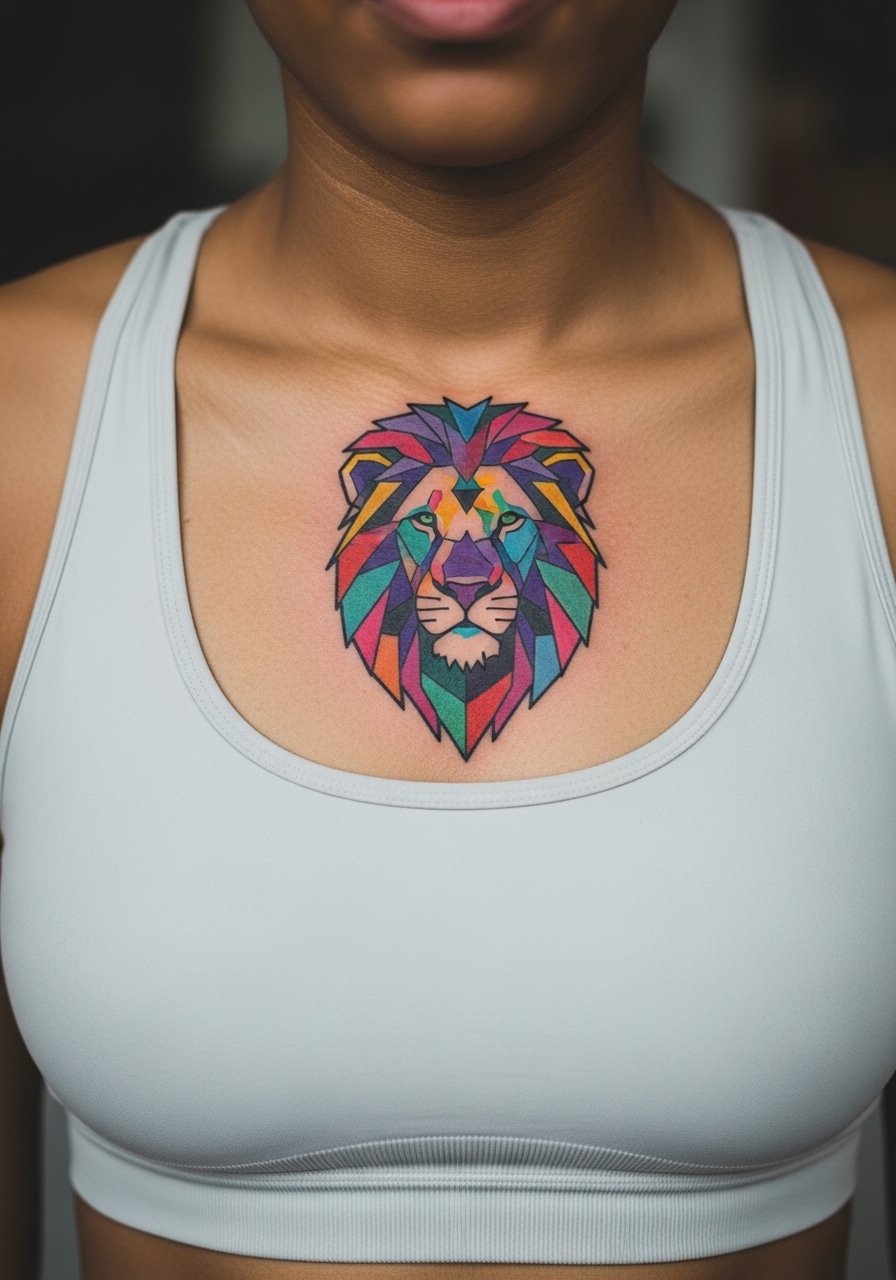
Sternum placements are intimate and require an artist comfortable working around curvature. The design uses color blocks to keep the lion readable as the body moves. Many people make the mistake of packing too many tiny details into this curved area, which causes merging of color over time. Ask for simpler planes and stronger edges where the face needs to remain legible. Pain is higher than the arm, and sessions may be split. For session wear, a fitted sports bra or bandeau that you can slightly lower makes access simple and preserves privacy.
6. Collarbone Accent Lion with Pastel Highlights
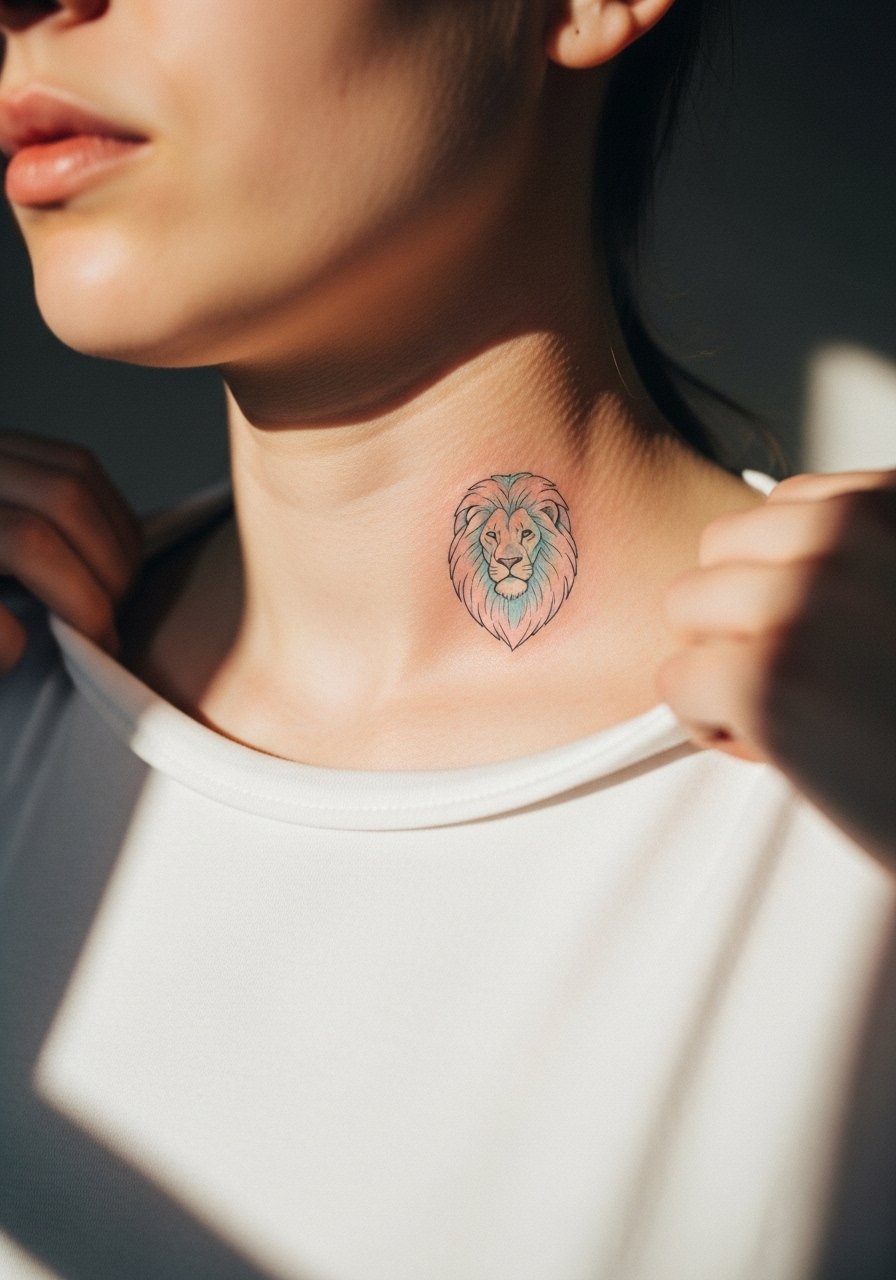
A collarbone lion reads delicate and modern. The biggest mistake is placing dense color too close to the bone where healed saturation looks patchy. I suggest clean facial linework and pastel mane accents that sit in the skin's flatter areas. The session is short, under two hours, and the pain is sharp over the bone but over quickly. Pair with wide-neck tops for evening wear, which naturally draws the eye to the collarbone.
Studio Day Picks
Those shoulder, collarbone, and ribcage designs above need different prep than wrist or ankle pieces, so a few chosen items smooth the session and the early healing.
-
Stencil transfer paper kit. Lets you preview line placement on skin before the needle goes down, which is useful for centered collarbone and sternum pieces.
-
Topical numbing cream. Applied per instructions before the appointment eases sensitivity for heck-sensitive ribs and sternum sessions.
-
Thin protective film roll. Helps keep ankle and wrist pieces cleaner during the first week of friction from socks and watches.
-
Fragrance-free gentle body wash. Cleanses healing color without stripping pigment, especially important for larger thigh or back pieces.
-
Aquaphor healing ointment. Thin layers protect fresh fine-line work while allowing the skin to breathe during the critical first days.
7. Shoulder Blade Lion with Floral Crown
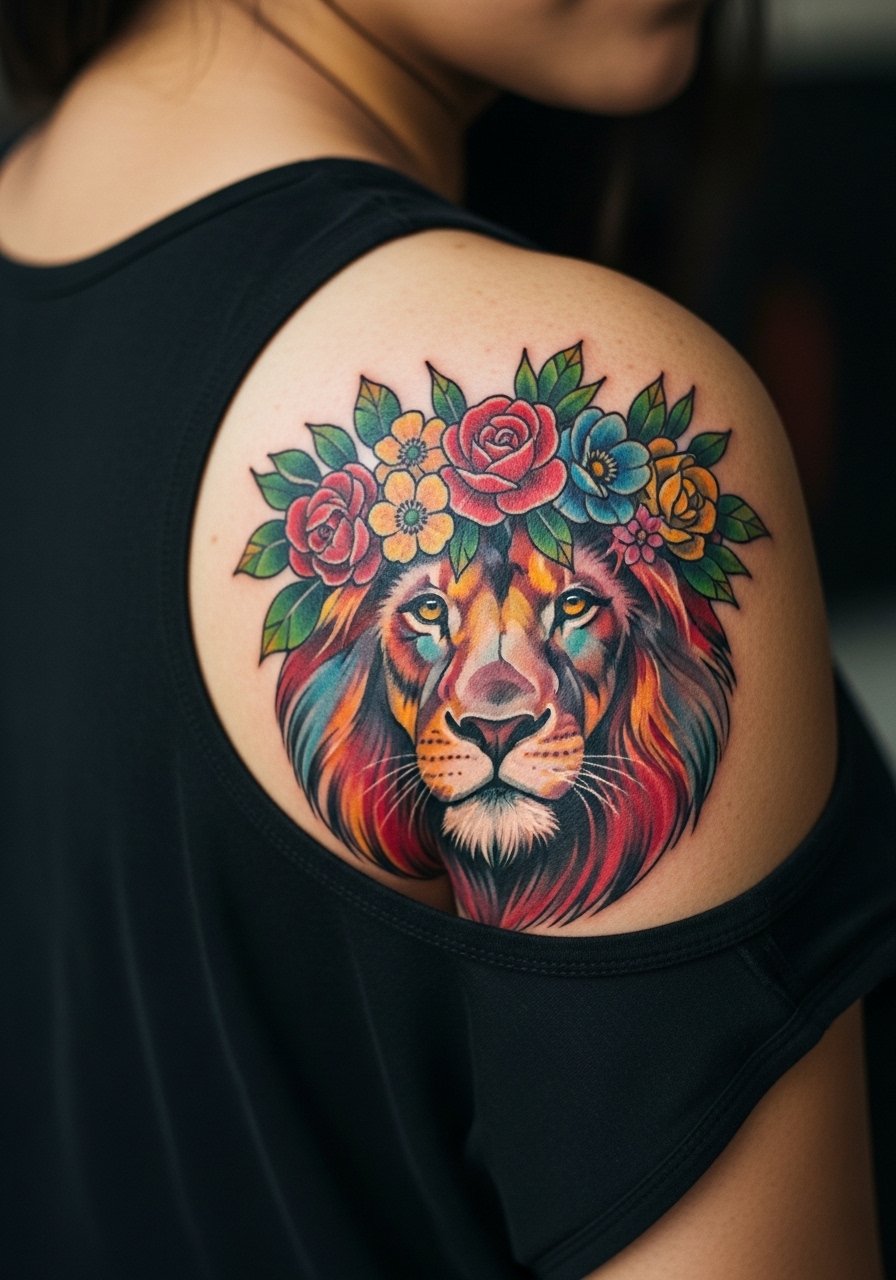
A shoulder blade mural gives room for scale and detail. I recommend combining saturated color in the mane with muted tones in the flowers so the lion remains the focus. Common mistakes are overcrowding with tiny flowers which compete with the facial features. Sessions are comfortable since you can lie on the table and the artist reaches easily. For showing it off, an open-back top or a halter dress highlights the shoulder blade cleanly.
8. Calf Portrait Lion with Color Gradient
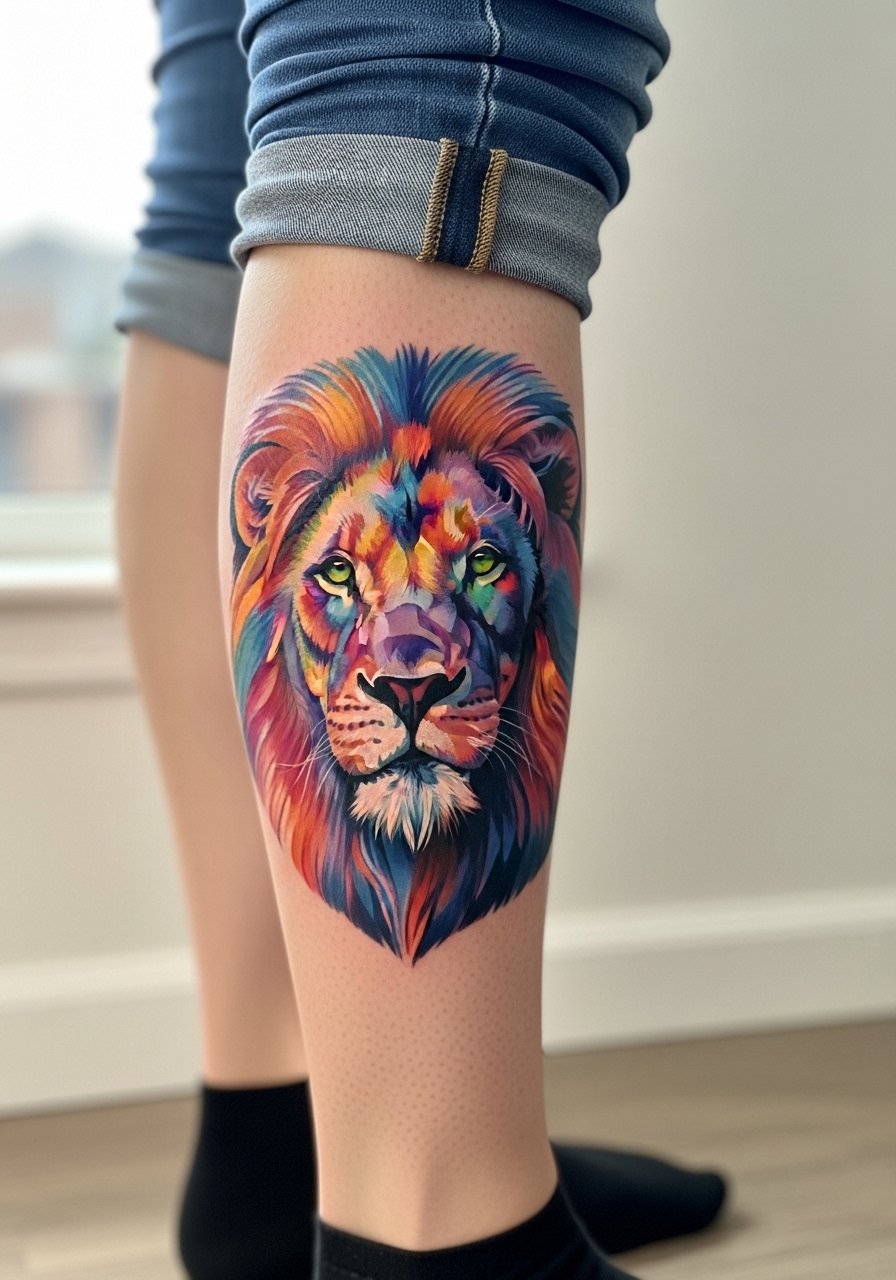
Calf skin handles saturation well and ages with less friction than ankles. Ask for gradual color gradients in the mane and stipple shading around edges so movement does not blur the portrait over time. The session can be long depending on realism, expect three to five hours for a detailed portrait. For session comfort wear loose drawstring linen pants so the artist can roll the pant leg without pressure on the area.
9. Bicep Half-Sleeve Lion with Bold Color Blocking
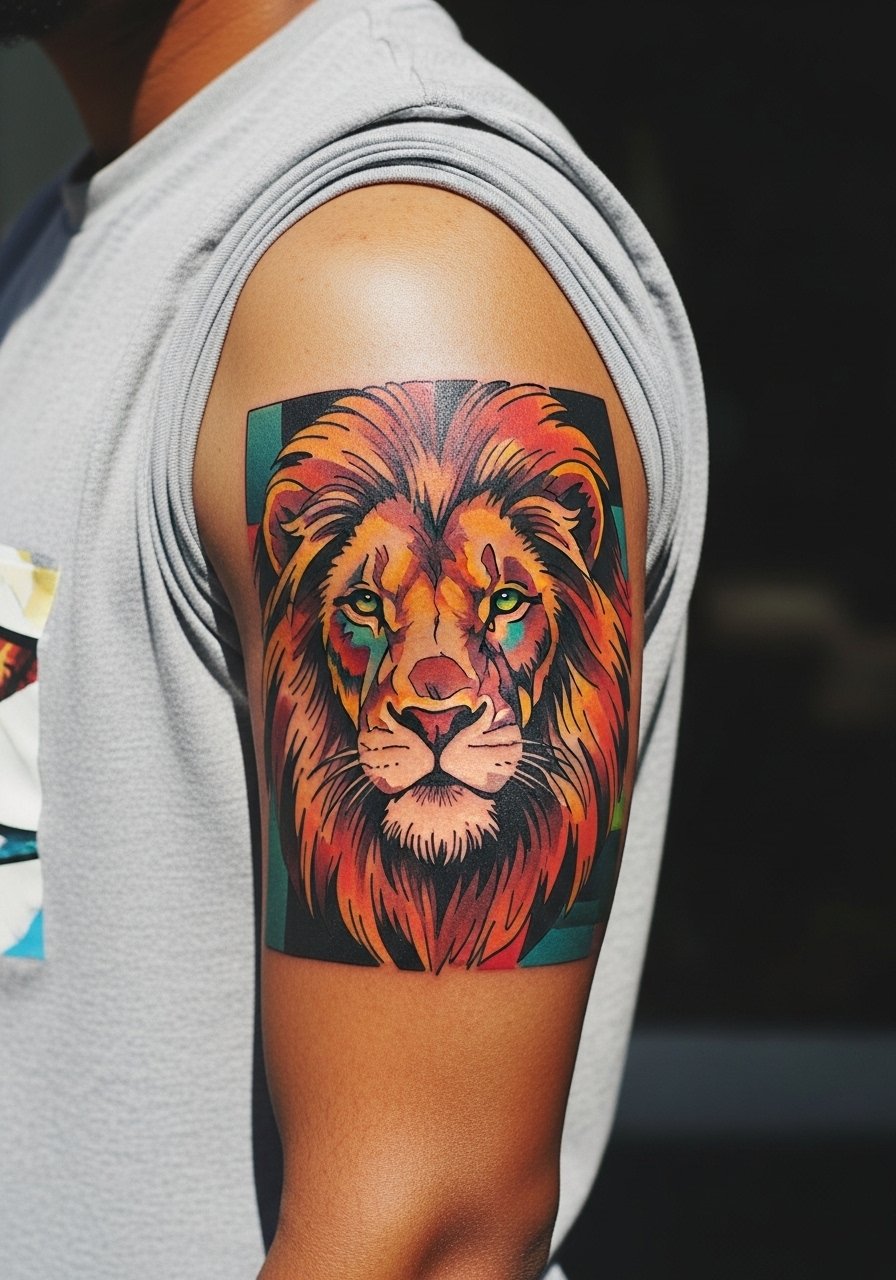
This placement is forgiving for saturated work and looks great in bold panels rather than tiny gradients. A common mistake is pushing too many tiny color transitions in a small bicep area. Tell your artist you want clear color fields and strong linework around key facial landmarks. Sessions are moderate in pain, usually several hours, and the piece may require a follow-up to deepen saturation. For showing it off, short-sleeve shirts or rolled sleeves make the half-sleeve pop. A short-sleeve button shirt frames the arm neatly.
10. Tiny Behind-the-Ear Lion Accent
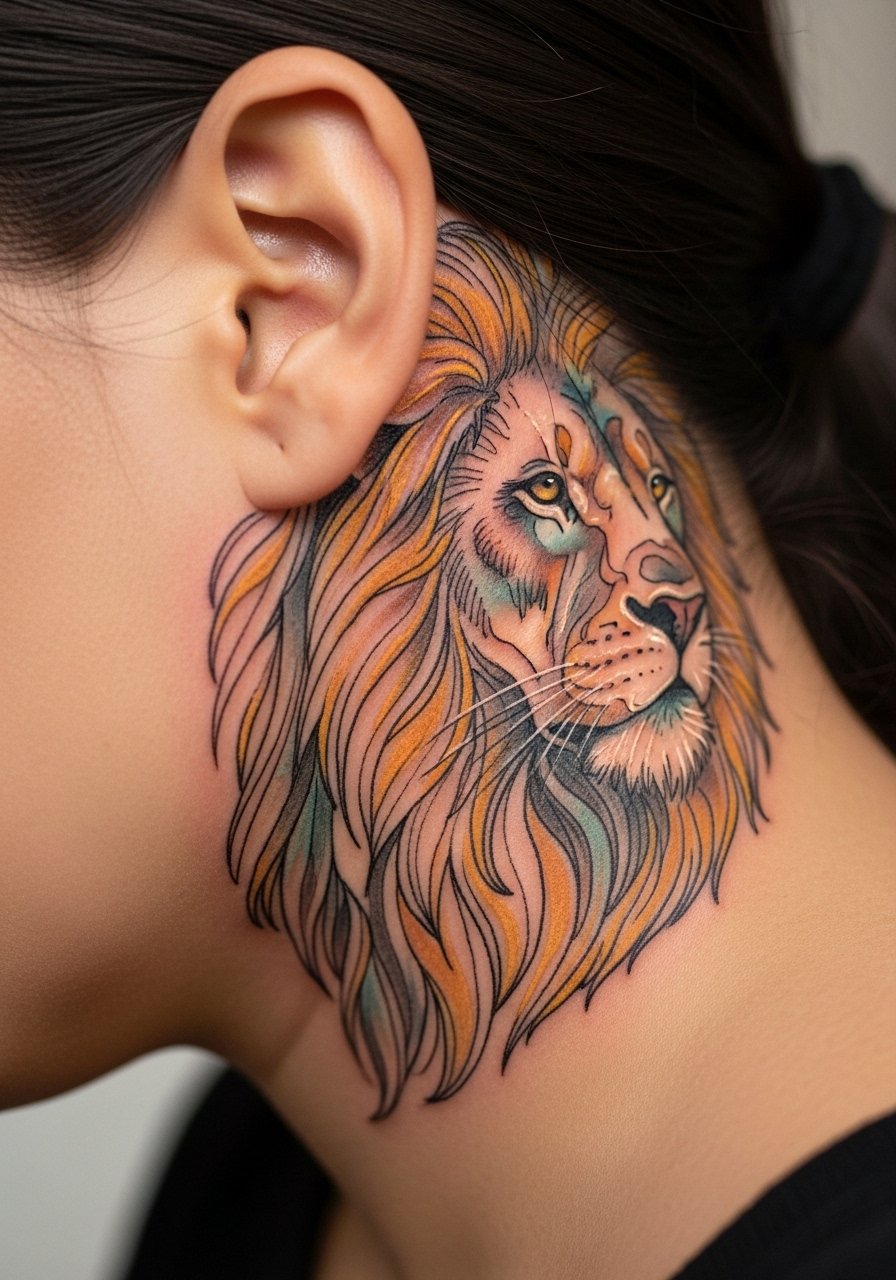
Behind-the-ear placements need precise framing. The area is small so the biggest mistake is loading it with too much color or tiny detail. Ask for a simplified heraldic face and a hint of color in the mane rather than full saturation. Sessions are brief but the skin is thin and sensitive. Also note that visibility is limited, which is great if you want a discreet accent. For session comfort, wear hair clipped up or a shirt with a wide neck so the artist can work without tugging.
11. Hand and Wrist Mini Lion Cluster
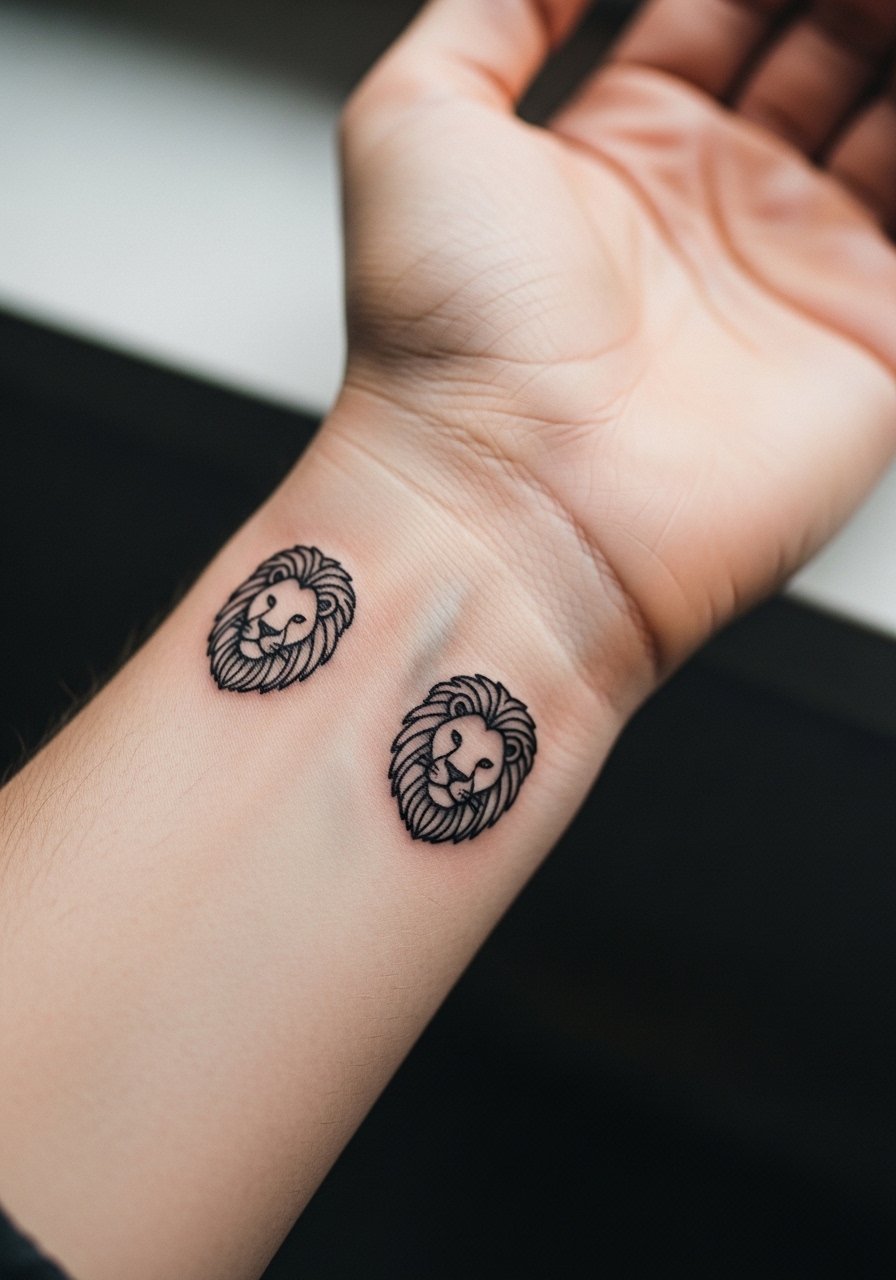
Hand tattoos still affect hiring in some industries, so think about career paths before committing. Hand skin is high friction and sees fast fading, especially with colorful fills. If you want color here, keep it minimal and rely on strong linework for the facial features. Expect faster touch-ups, often yearly for saturated spots. The session is quick but uncomfortable because the bones are close to the skin. For showing off, stack with a thin chain bracelet to create a balanced wrist look.
12. Ankle Constellation Lion in Pastels
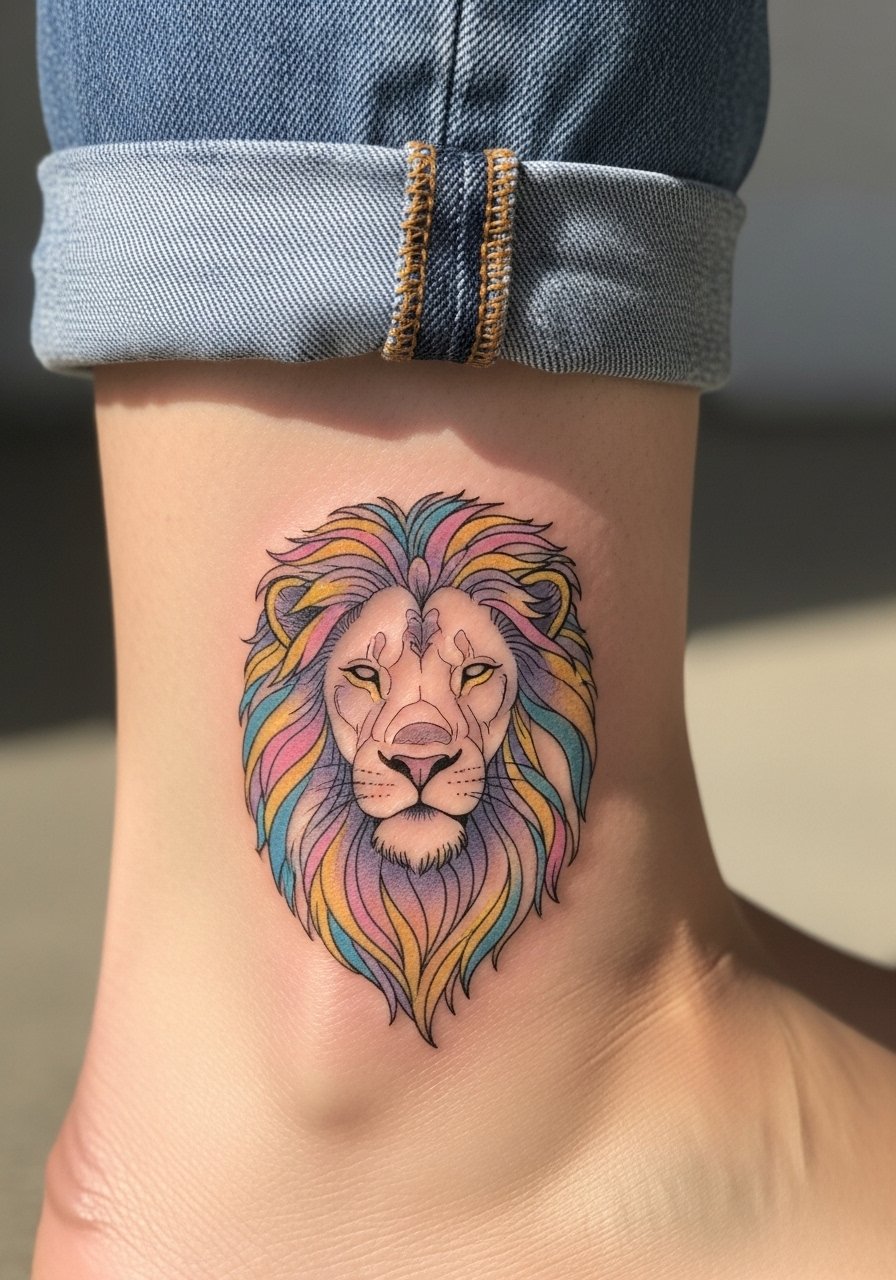
Ankle pieces look great with soft pastels, but the area endures friction from socks and shoes. The common error is too much watercolor detail that smudges after a few years. Keep the face simple and use color accents in the mane rather than full saturation. Sessions are short and the pain is localized. For showing it off, wear sandals or roll your jeans, and consider a minimal leather anklet to draw attention without overwhelming the tattoo.
13. Nape of Neck Lion with Neon Accents
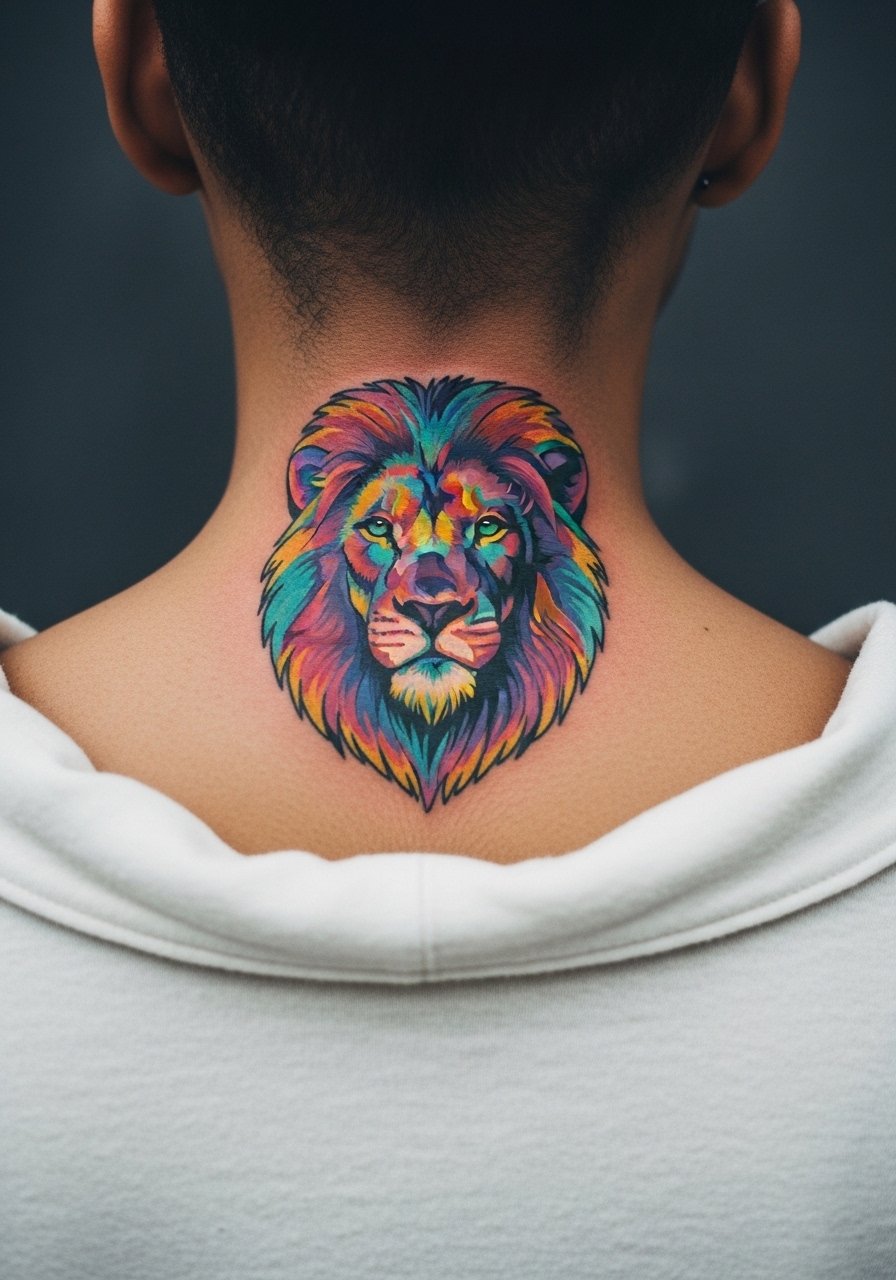
Neck skin moves a lot so neon accents must be applied with care. The mistake people make is asking for heavy neon fills without strong black anchors, which can read patchy over time. Request strong facial outlines and use neon as an accent only. The session is quick but the area is sensitive. For showing it off, a wide-neck top or a button-down worn slightly open frames the nape while keeping the rest of the back covered.
14. Hip and Upper Thigh Regal Lion
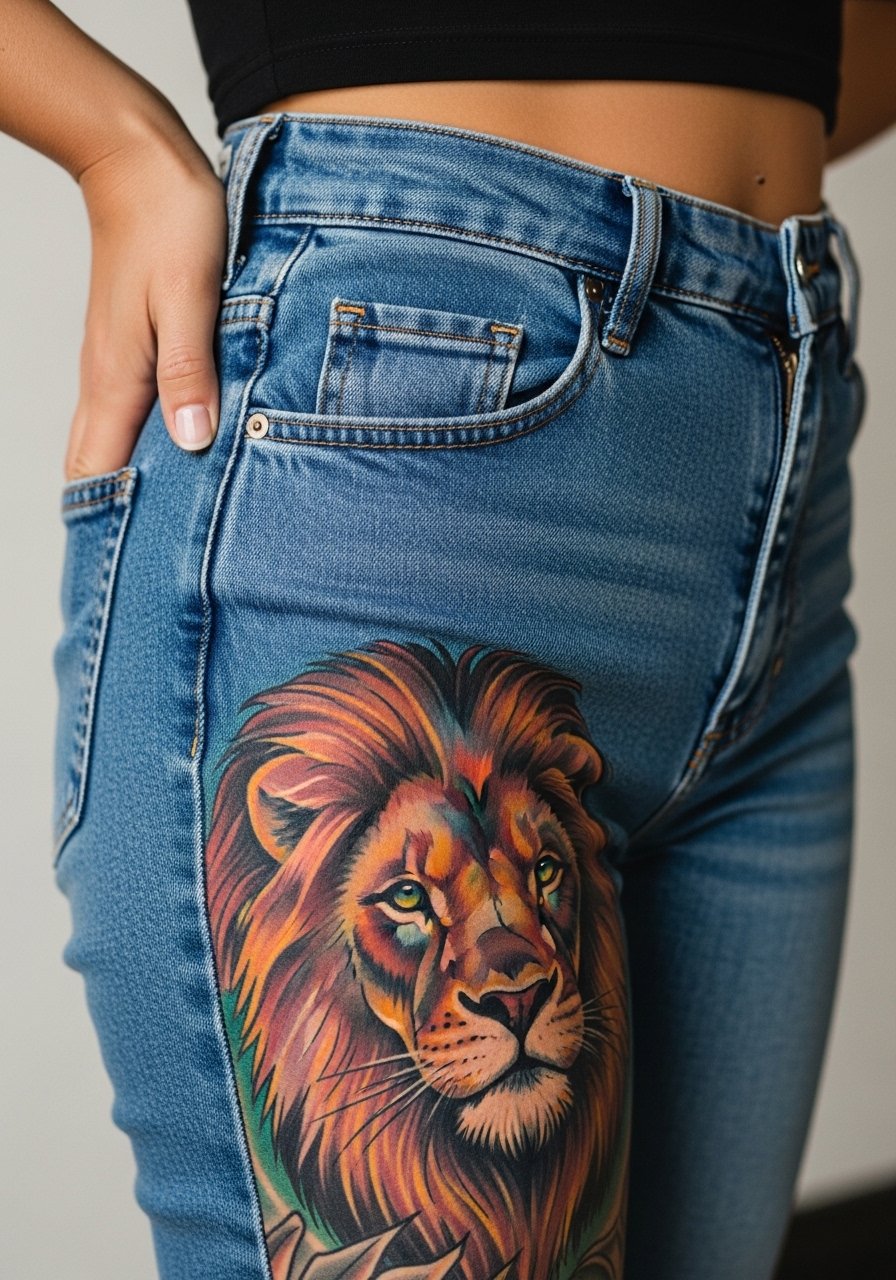
Hip-to-thigh work allows for scale and sweeping color. Because the area is sometimes hidden, people overload detail that later blends when stretched during weight changes. I suggest clear facial anchors and broad color planes in the mane. Sessions may be split and comfort is improved by wearing loose bottoms. For the session, bring an outfit like high-waisted shorts that you can adjust easily.
15. Inner Bicep Micro-Realism Lion
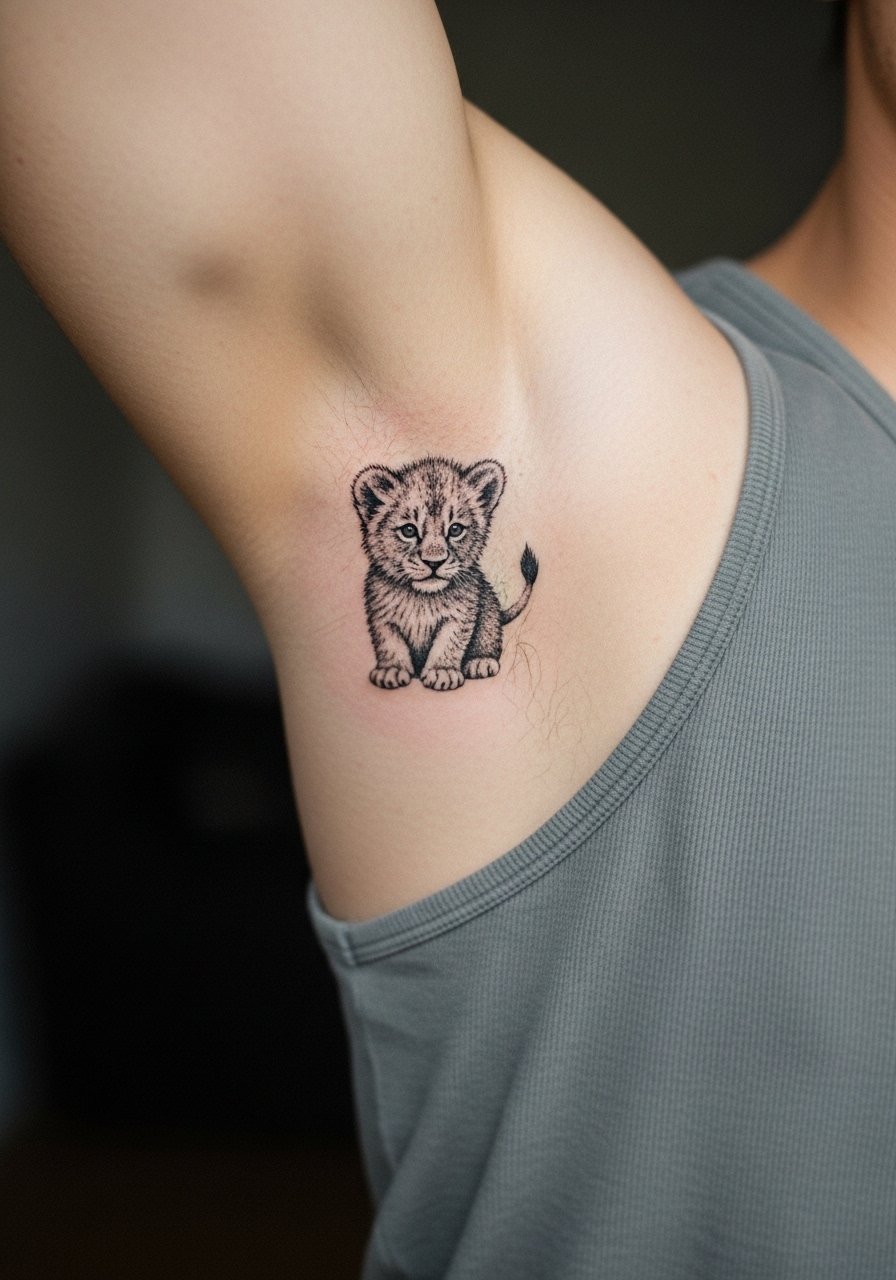
Inner bicep skin is softer and can make very fine detail look incredible for a time, but the area can blur if lines are too tight. The misstep is asking for hair-fine facial lines without spacing. Ask for slightly bolder micro contours and thoughtful negative space in the mane. Sessions are sensitive but short. Wear a tank top you can lift easily so the artist has clear access.
16. Full Back Lion Mural with Color Story
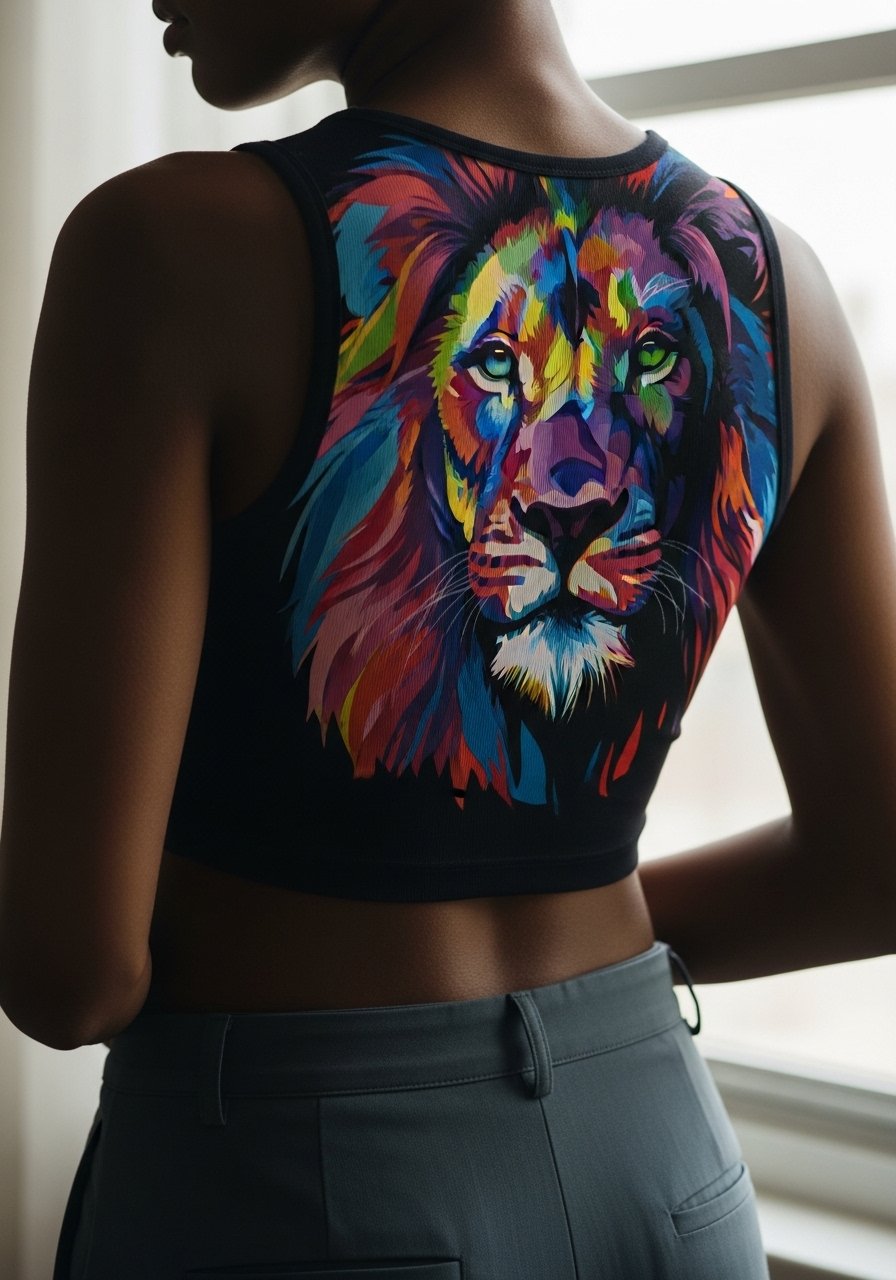
A full back mural is a commitment but offers the best canvas for narrative color. Plan color placement so the face stays dominant and the mane reads from a distance. People sometimes pack too many tiny elements that clutter the silhouette when viewed from afar. Sessions will be multiple long sittings and expect staged touch-ups to keep saturation deep. For sessions, a button-down or loose tank works best so the artist can access the back without you being uncomfortable.
17. Geometric Mandala Lion on the Wrist Cuff
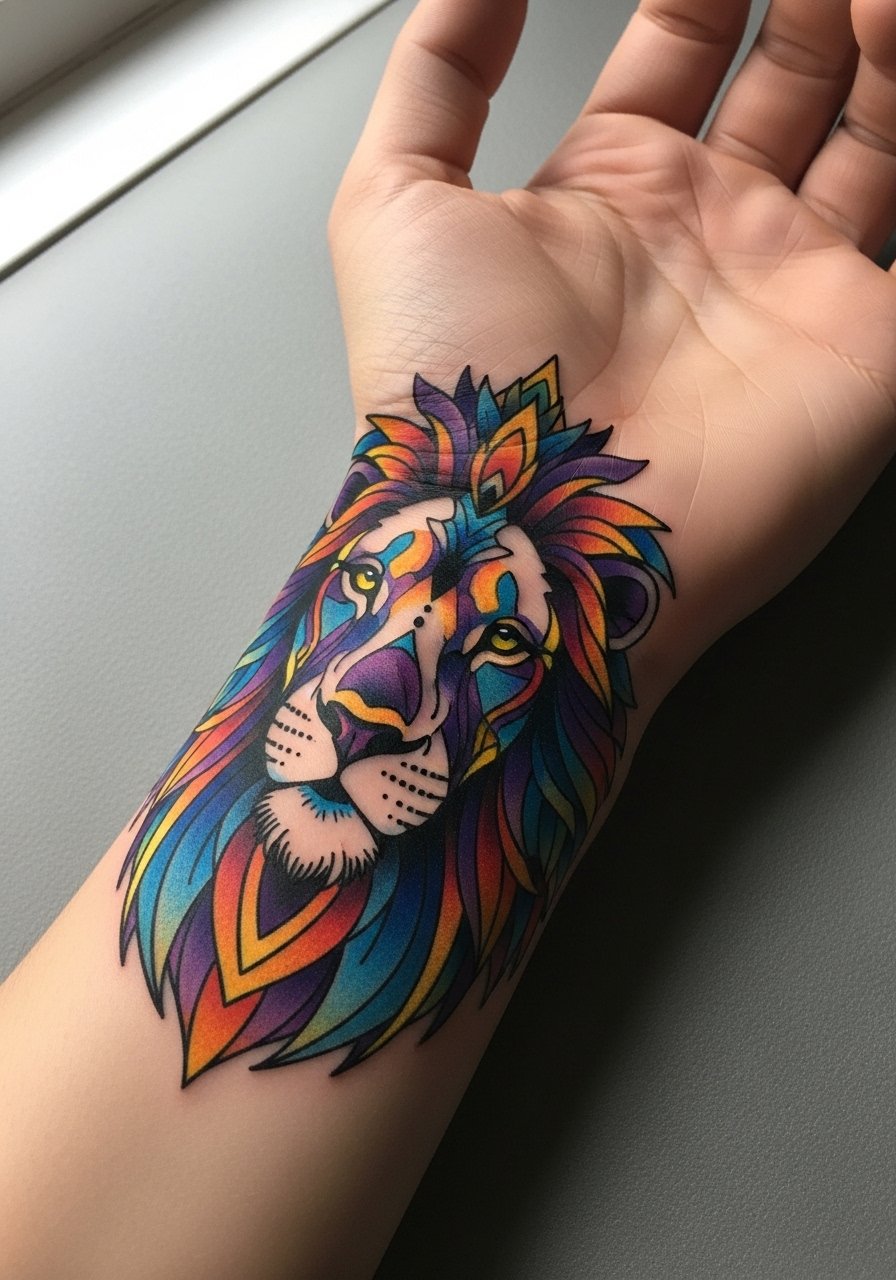
Wrist cuffs are visible and invite accessory pairings. The main mistake is over-detailing the band which makes future touch-ups tricky. Request bold primary lines where the design meets the cuff and color in shallow cells so touch-ups are straightforward. Sessions are brief and the pain is sharp but quick. Pair with a minimal leather bracelet or thin watch to balance the cuff without covering the tattoo.
18. Color-Blocked Mane with Negative Space on the Forearm
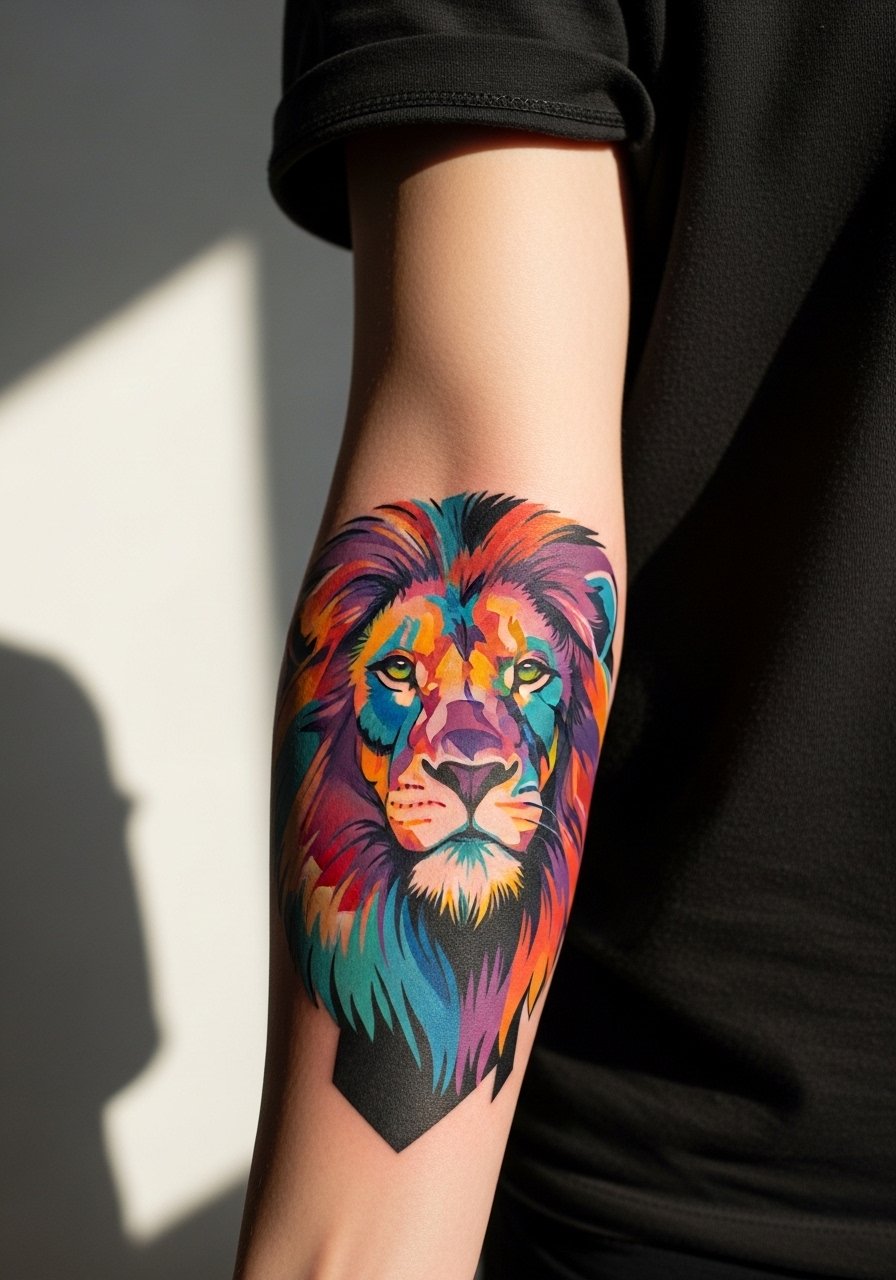
Negative space keeps colorful work readable over time because it gives pigment room to breathe. A common error is filling every gap with color which ages into a muddy block. Ask for planned negative shapes and strong linework around the face so the portrait remains legible as the color softens. Sessions are two to three hours depending on size. For showing it off, a racerback tank or rolled sleeves keep the forearm in view.
19. Calf Wrap Lion with Metallic Ink Accent
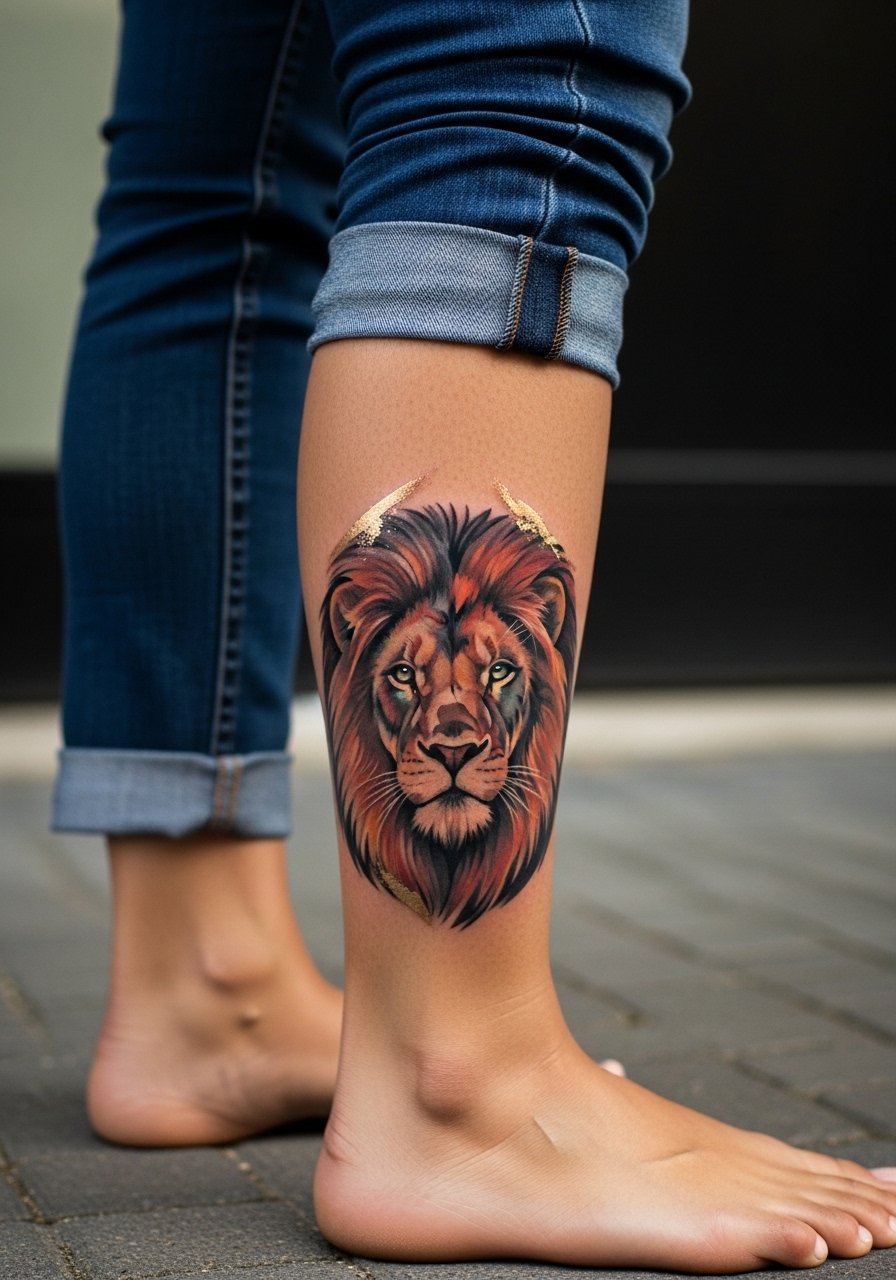
Metallic or sheen inks catch the light but can fade differently than pigment inks, so use them sparingly as accents rather than fills. The common mistake is asking for large metallic blocks which fade irregularly. Keep metallic to mane tips or whisker highlights and build the main color with standard pigments. The calf handles most saturation well and touch-ups are straightforward. For showing it off, roll your jeans or wear low boots.
20. Small Sternum Pocket Lion with Script
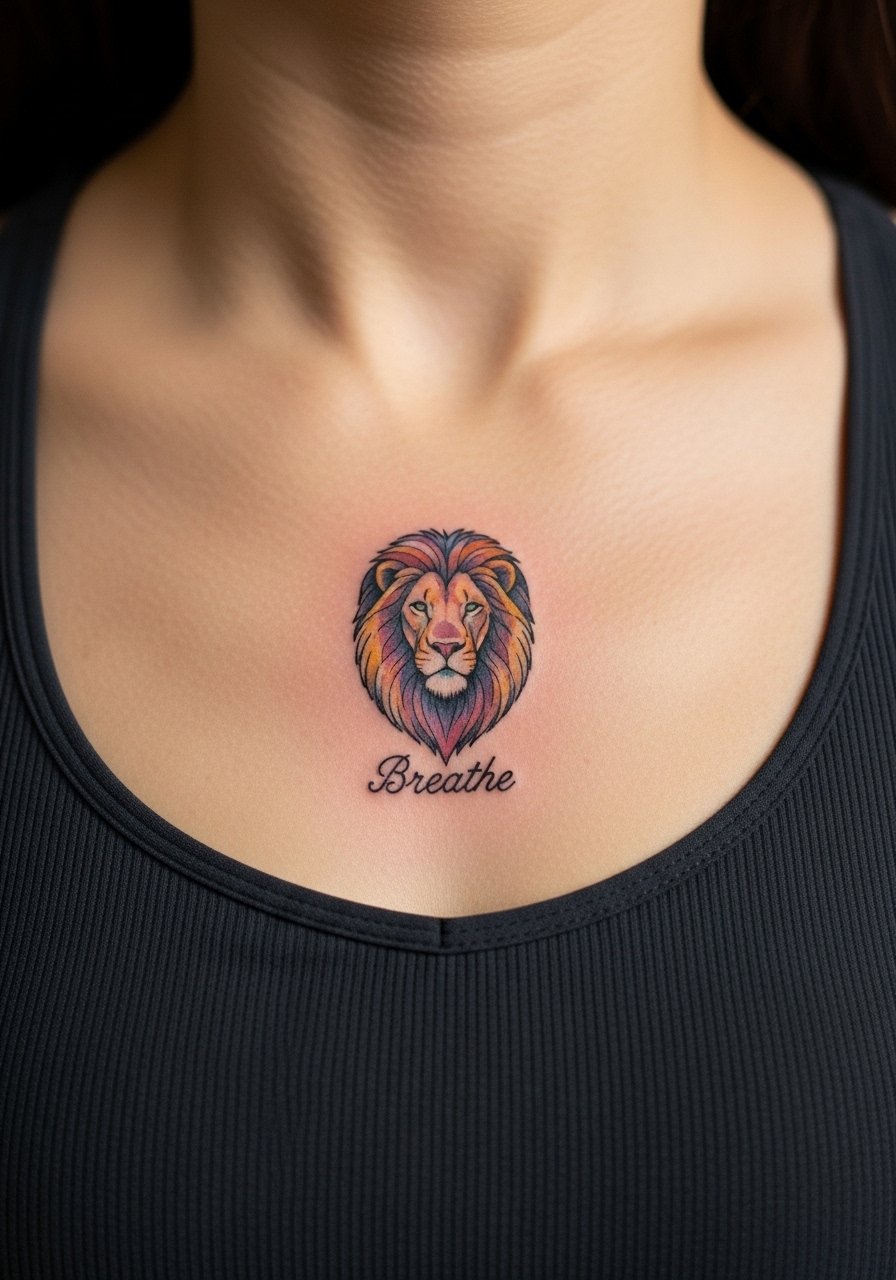
When text appears with a small sternum image, exact spacing matters. Specify the exact word and font weight to the artist so the lettering does not compete with the lion. The mistake people make is crowding the script close to the image on a curved surface. Sessions are sensitive and may need short breaks. For session wear, a sports bra or bandeau you can slightly lower is best.
21. Minimalist Color Accent Portrait on the Upper Arm
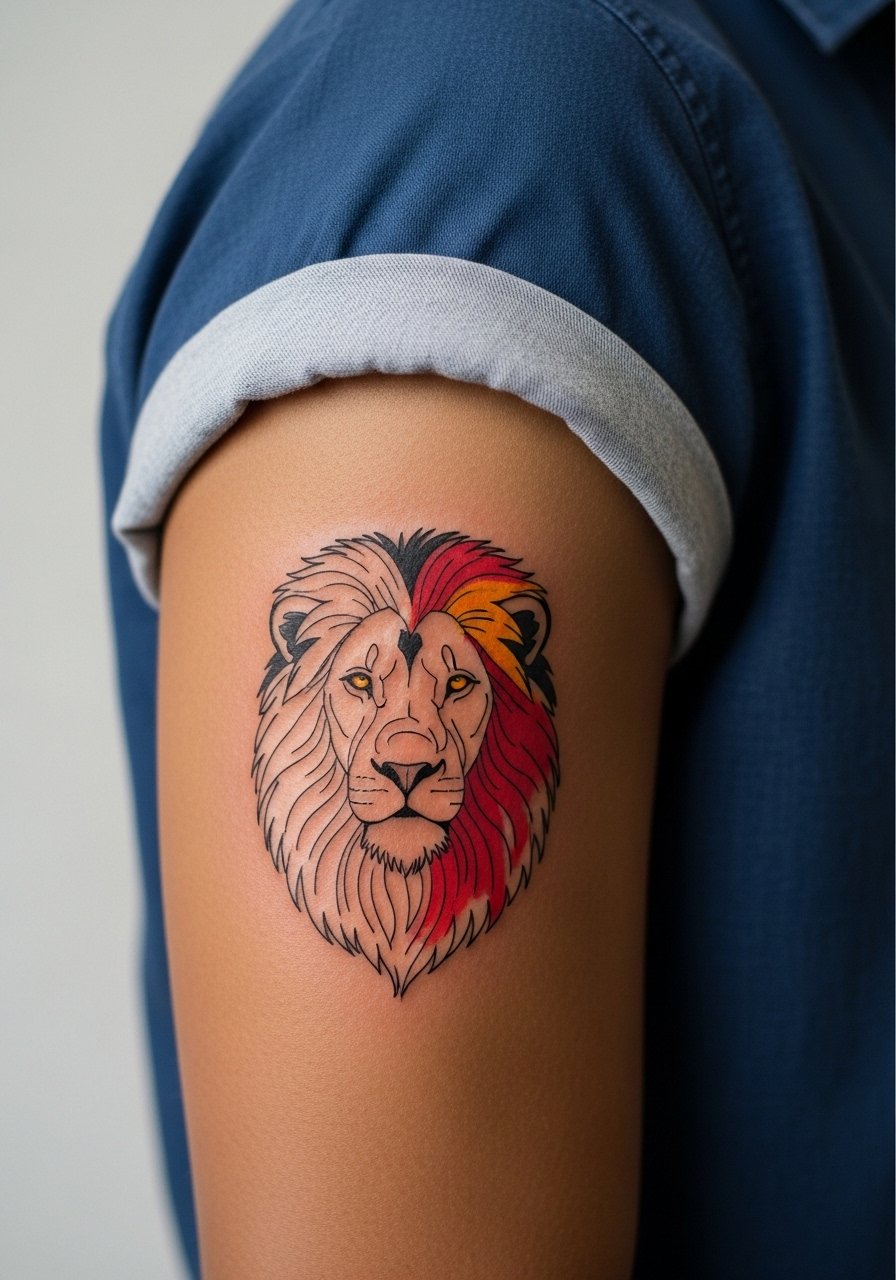
Minimalist accents let you have color without committing to full saturation. The common error is picking a color that lacks contrast with skin tone, which makes it vanish after healing. Ask for a complementary accent and for the artist to test ink visibility on your skin tone. Sessions are short and pain is moderate. For showing it off, a short-sleeve tee keeps the arm visible without distraction.
Frequently Asked Questions
Q: Will bright watercolor lion manes always blur faster than saturated neo-traditional work?
A: From what I've seen, watercolor approaches that lack structural lines tend to soften and look patchy sooner than neo-traditional pieces that use heavy outlines and saturation. If you want watercolor color with longevity, ask for light anchoring outlines or stipple edges so the face stays defined even as colors settle.
Q: Are ribcage lion tattoos worth the pain if I want fine detail?
A: It depends on your tolerance and the specific detail level. Ribs are a sensitive spot and some artists avoid ultra-fine hairline detail there because of skin movement. If you choose ribs, plan for slightly bolder primary contours and an expectation of a touch-up in a few years.
Q: How often do colorful lions on the hand or fingers need touch-ups?
A: Hand and finger color fades fastest because of washing and friction. Expect yearly touch-ups for saturated spots, while strong linework may last longer. If you want less maintenance, limit color and prioritize crisp linework.
Q: Can I mix metallic inks with regular color in a mane without issues?
A: You can, but use metallic inks only as accents. They react differently in the skin and can fade unevenly. Ask your artist for a test patch strategy or to save metallics for small highlights rather than large fills.
Q: What should I wear to a sternum or ribcage lion session?
A: Wear a fitted sports bra or a cropped top you can lower slightly so the artist has clean access while you stay covered. A zip-up hoodie or button-down works too if you prefer more coverage between sittings.
Q: How do I find an artist who respects cultural motifs if I want a mandala or tribal-inspired lion?
A: Use discovery pathways like local studio directories, convention listings, and hashtag research to find artists who list relevant experience. Look for portfolios that show respectful, informed adaptations rather than direct cultural copies. If you have questions, ask the artist about their approach to cultural patterns before booking.