
Fine line and heavy saturation both get applause on day one, but they do different things over time. From what I have seen, the eagle tattoos that still read strong at year five are the ones designed with aging in mind. That means spacing, contrast, and placement chosen for real skin movement. Below are 21 illustrative eagle takes that balance momentary impact with staying power, starting with a mid-flight full-back idea that keeps detail readable for years.
1. Dramatic Mid-Flight Eagle Across the Back
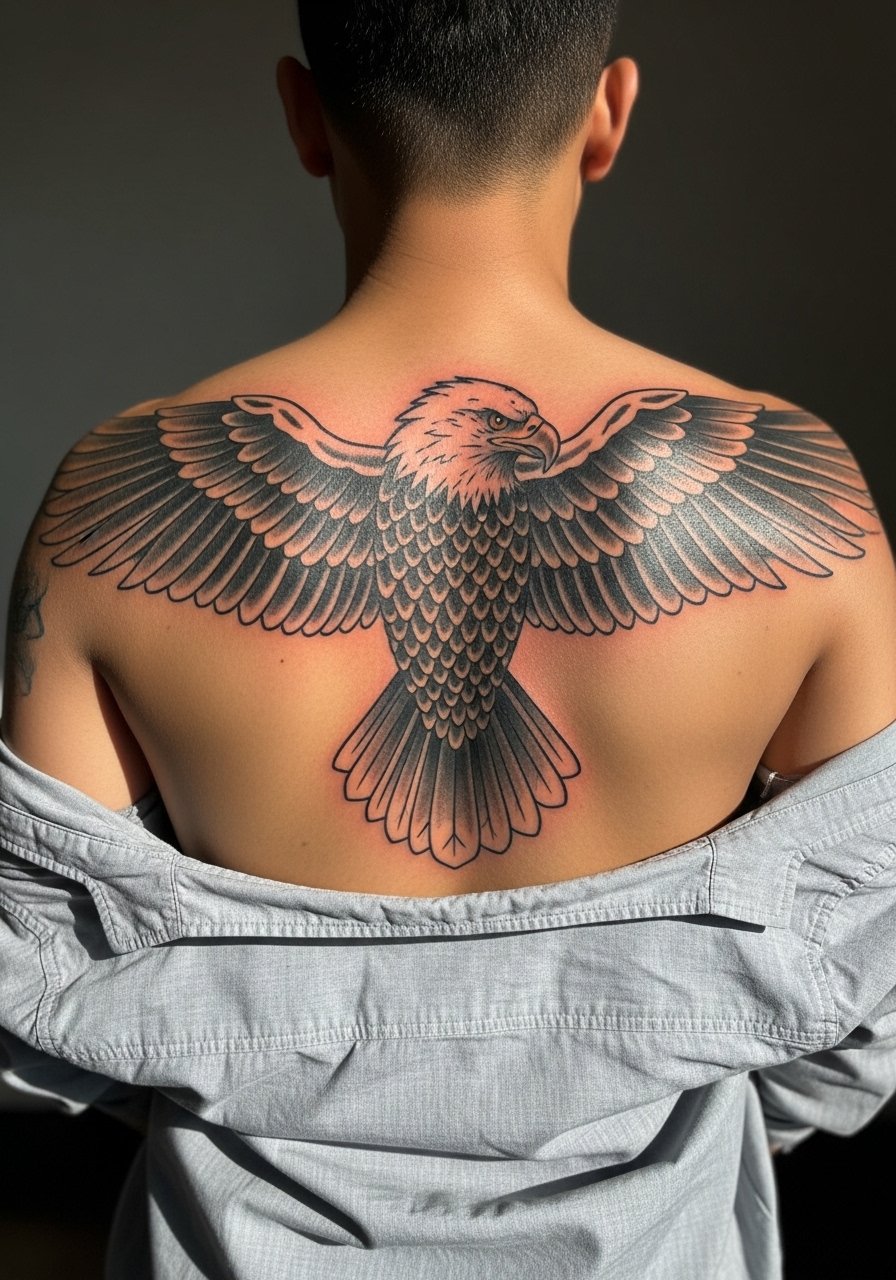
A full-back eagle in mid-flight uses sweeping wings and negative space to read from a distance while keeping detail in higher-contrast panels. Fair warning, the back is a long session for most people and feels like a steady pressure, not sharp pain. Tell your artist you want bold outer lines with stipple shading in the feather beds so the texture holds up instead of trying for tiny feather fringing that blurs over time. Common mistakes are packing too much micro-detail across the expanse and under-spacing adjacent feathers. Expect two sessions for linework and fill. For showing it off, an open-back top or a shirt pulled aside frames the wings without crowding the composition.
2. Eagle Head Micro-Realism on the Upper Arm
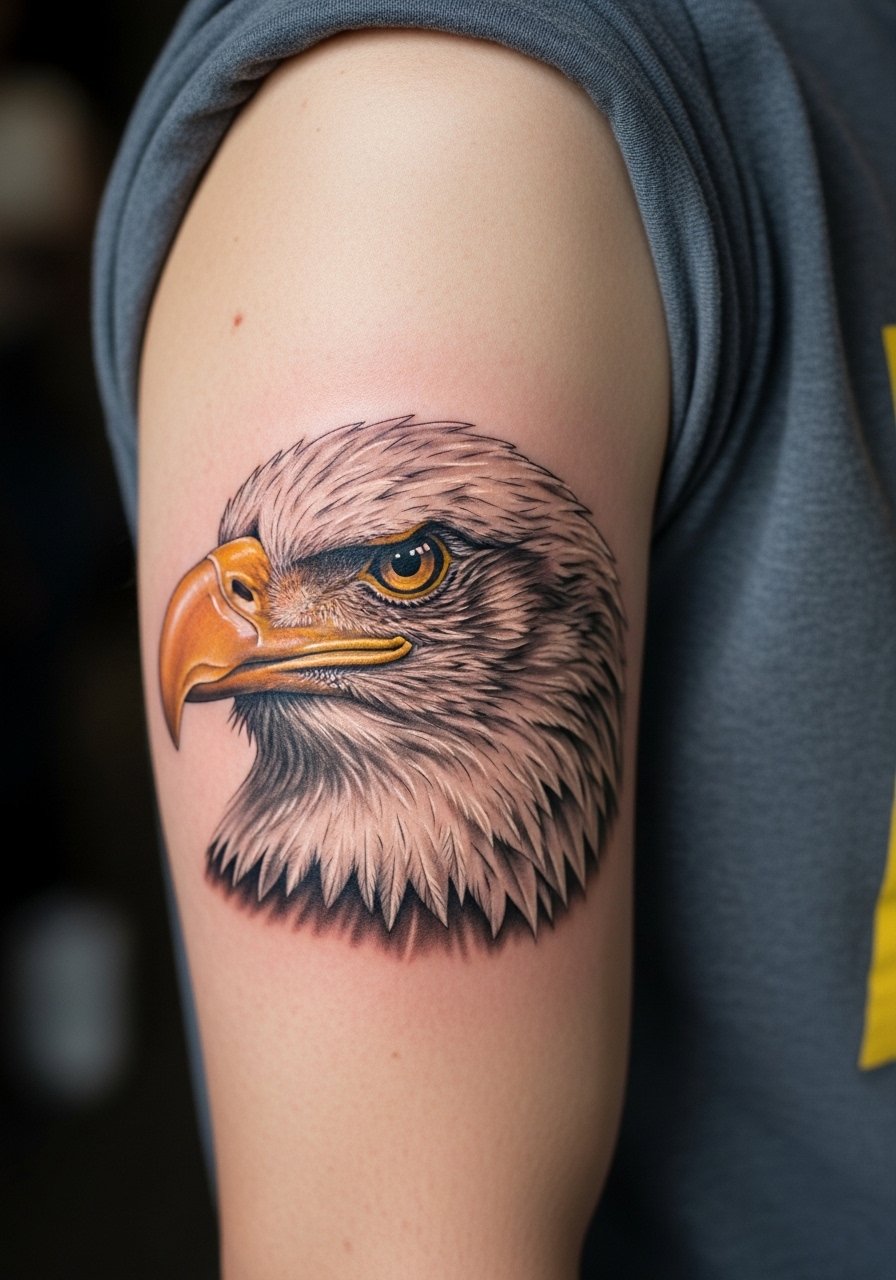
I've seen this placement work well because the upper arm stretches less than the shoulder blade. The piece reads like a portrait with whip shading around the eye and stipple for texture. In consultation, ask for stronger contrast in the pupil and beak so those focal points remain crisp at year two and beyond. A common version that ages poorly uses pale grey washes for the eye area and loses definition. Pain is moderate and session time is typically two to three hours. For casual dressing, pair with a short-sleeve linen shirt that lets the eagle peek out without feeling staged.
3. Traditional-Influenced Eagle on the Chest Near the Collarbone
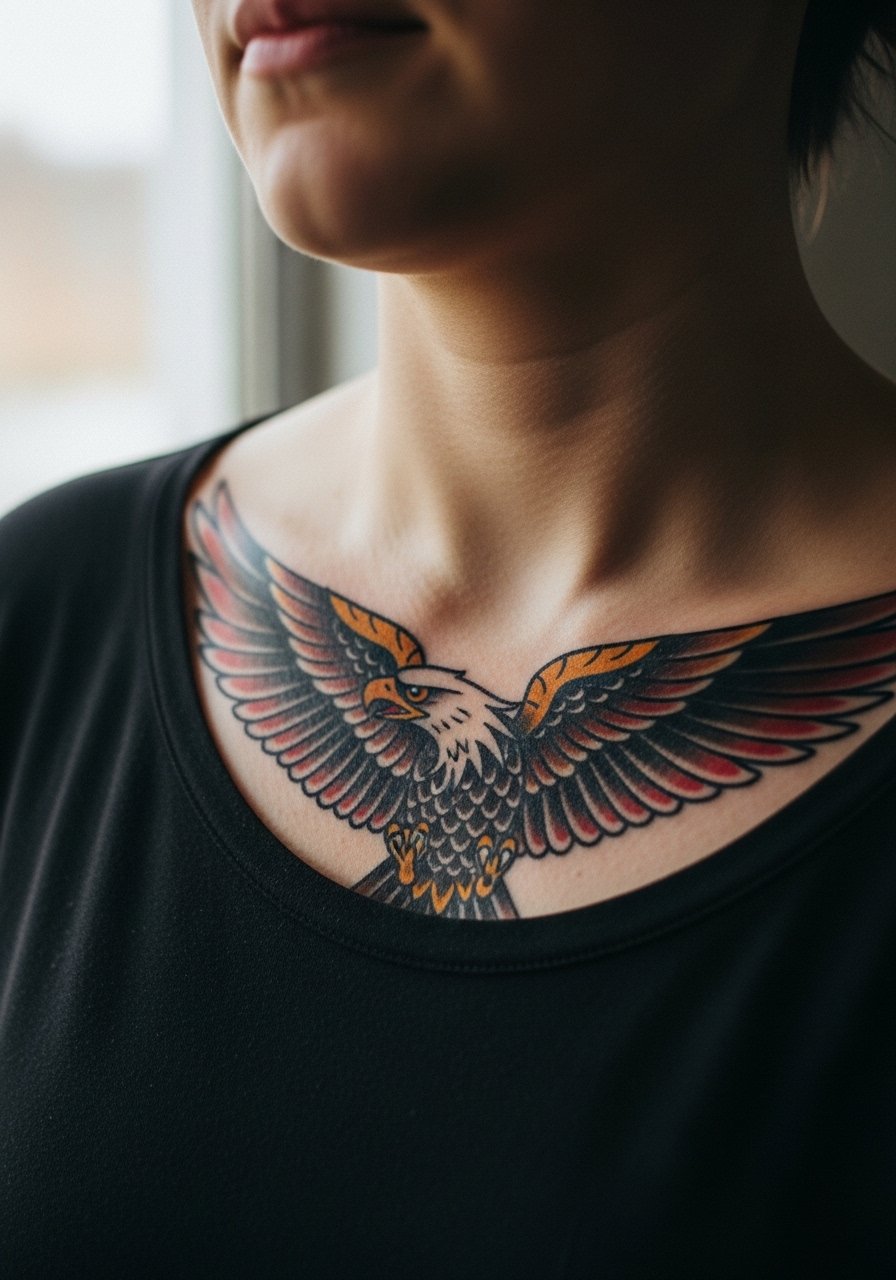
Most chest pieces benefit from clear outer lines and left open negative space around the wings. Pain on the upper chest is variable and can spike near the collarbone. One camp argues that fine line detail should never be pushed near the collarbone because the skin moves and blurs. The other camp believes bold contour and correct depth manages that motion. Ask your artist which approach they favor before booking. This design ages well when the artist emphasizes solid linework and leaves room between dense shading blocks. For evenings out, an open-back dress or wide-neck top highlights the placement without competing.
4. Small Eagle Finger Silhouette
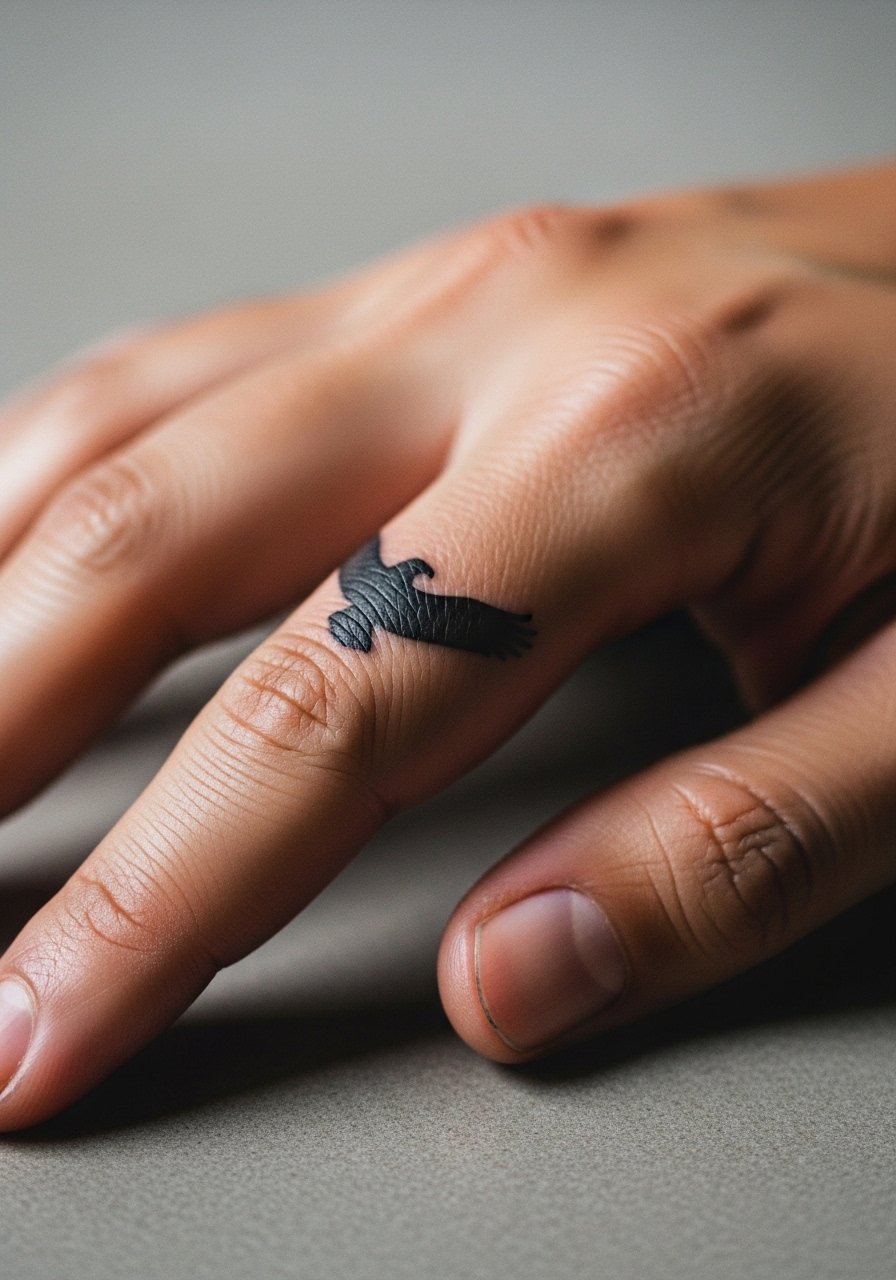
Tiny finger tattoos are high visibility and high friction. Fair warning, fingers and hands often need touch-ups because constant washing and movement wear down fine line silhouettes. The biggest mistake is insisting on hairline strokes for feathers on such a small canvas. Instead, request a simplified silhouette with slightly thicker linework so the shape survives everyday abrasion. Sessions are short but may sting more than larger areas. For a subtle complement try an anklet-style bracelet for other placements because minimal metal keeps attention on the hand piece.
5. Eagle with Flag Banner on the Ribcage

Ribcage placements are sensitive and prone to stretching with weight change. Pain here is on the higher end. Artists split on whether fine line works on ribs. One group says the constant expansion and contraction blurs very thin lines within two years. The other group says with proper needle depth and spacing fine line can hold. I recommend bold primary outlines for an eagle on the ribs and reserve micro detail for the banner's edges. Expect longer sessions with breaks. For the appointment wear a cropped athletic top you can lift without shifting the rest of your clothing.
6. Blackwork Eagle Sleeve Panel
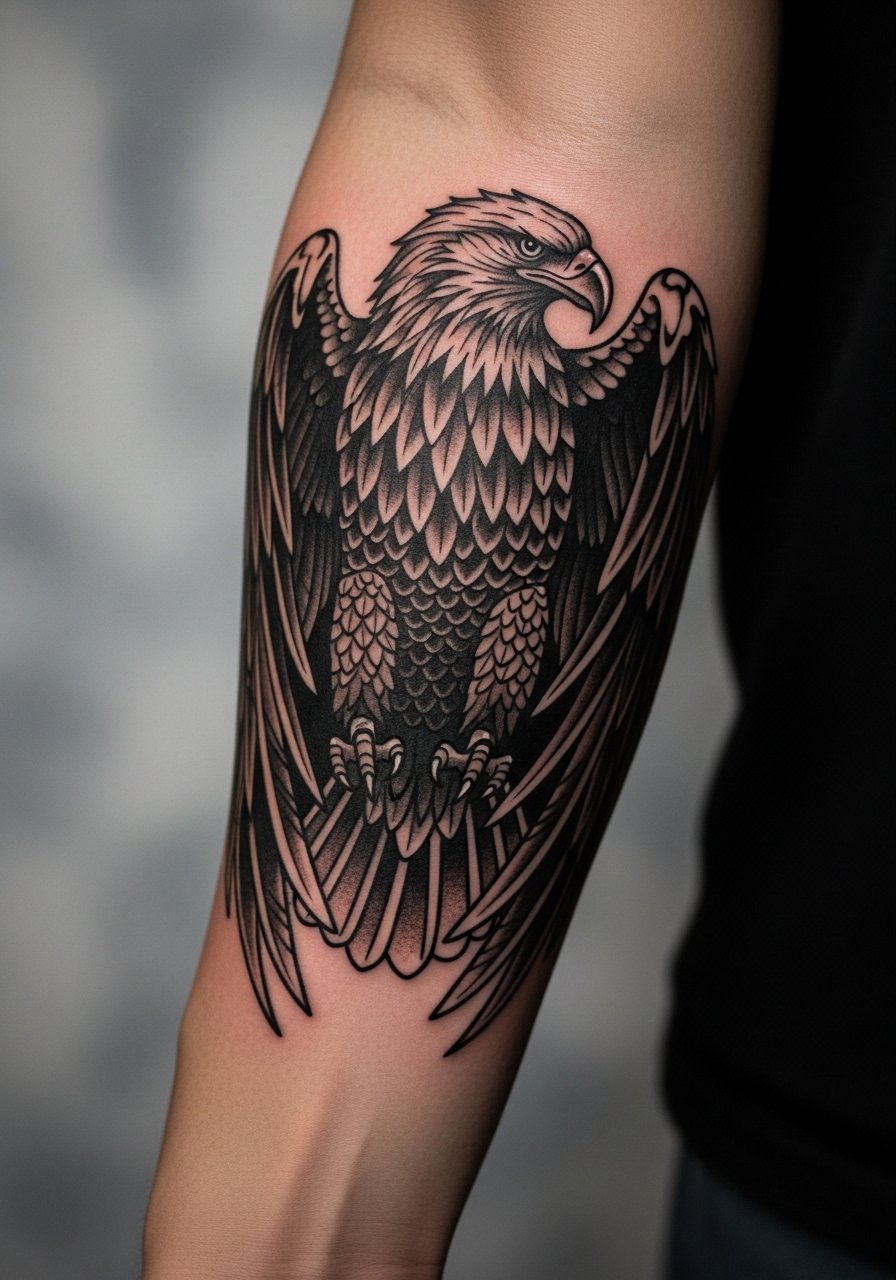
There is something about solid black saturation that ages predictably. For sleeve work on the forearm, the session feels steady and long but the outcome reads strong from across a room. Tell your artist you want areas of dense black and areas of negative space so the eagle reads at both short and long distances. A common mistake is layering too many small shaded feathers into one block without clear breaks. Expect two sessions for a balanced blackwork panel and a touch-up at year two if you want to refresh edges. Pair the forearm with a rolled sleeve linen shirt when you want the eagle visible but not loud.
Studio Day Picks
The chest, ribs, and forearm pieces above require different prep than small hand work, so a few targeted items make the session and the first week smoother.
-
Stencil transfer paper kit. Lets you preview the placement on skin before the needle hits, especially useful for the chest and rib banner pieces.
-
Topical numbing cream. Applied as directed 30 to 45 minutes before the session eases rib and sternum sensitivity for longer appointments.
-
Thin protective film roll. Helps protect hand and finger tattoos during the early healing days when friction from washing is highest.
-
Fragrance-free gentle body wash. Cleanses tattooed zones without irritating fine line work and supports even scab development on larger blackwork fills.
-
Aquaphor healing ointment. A thin layer in the first days keeps delicate line channels moist without clogging, which matters for micro-realism around the eye and beak.
7. Half-Sleeve Eagle with Geometric Background
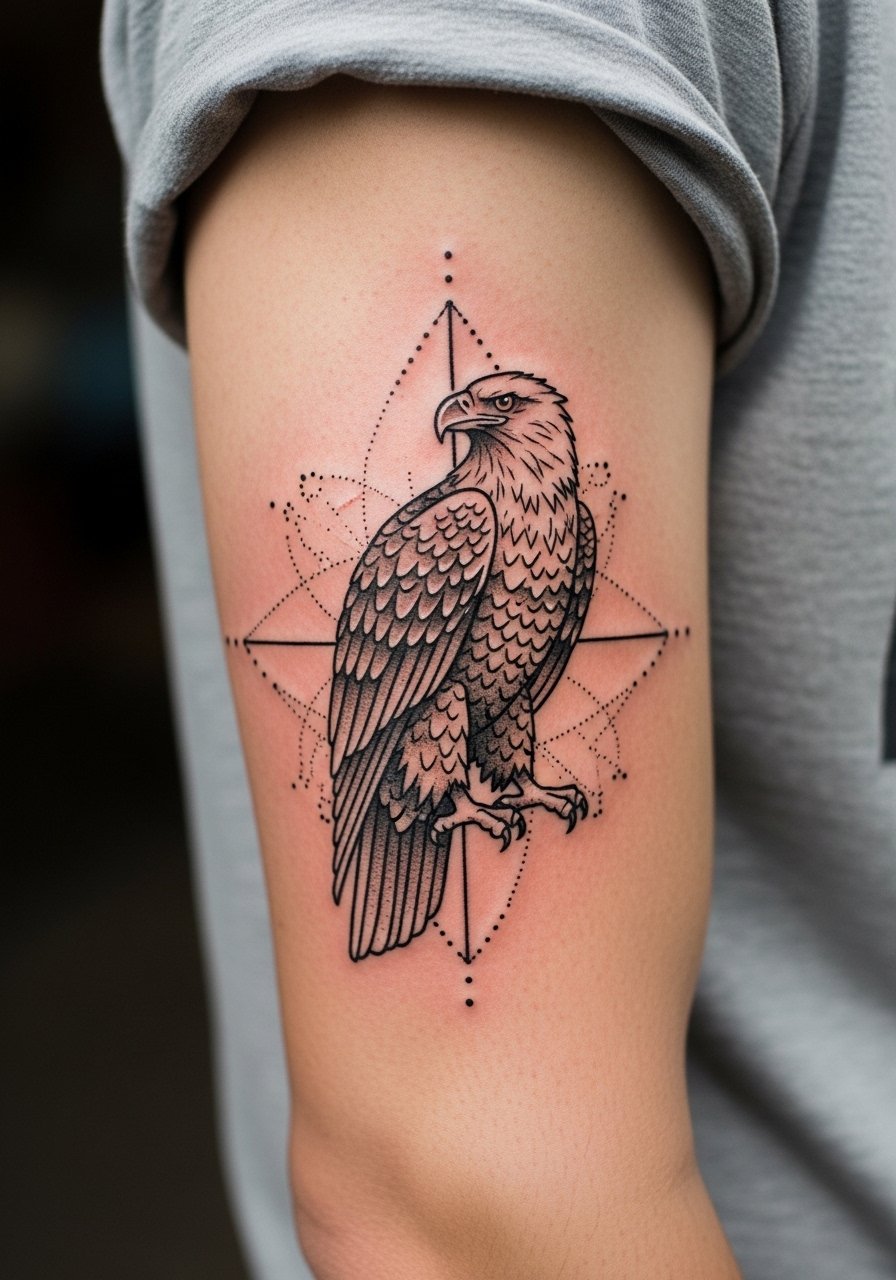
A geometric backdrop frames an eagle without competing with it. When I see successful pairings, the geometry is left in dot work and negative space so the bird remains the focal point. The biggest mistake is tightening the geometry so close to the wing edges that it merges after a few years. During consultation, specify seeding the geometry as dot work or stipple shading and asking for breathing room around feathers. Expect moderate pain and a two to three hour session. Pair this look with a rolled-up sleeve denim shirt to let the pattern peek without overwhelming your outfit.
8. Minimalist Single-Feather Eagle Accent on the Collarbone
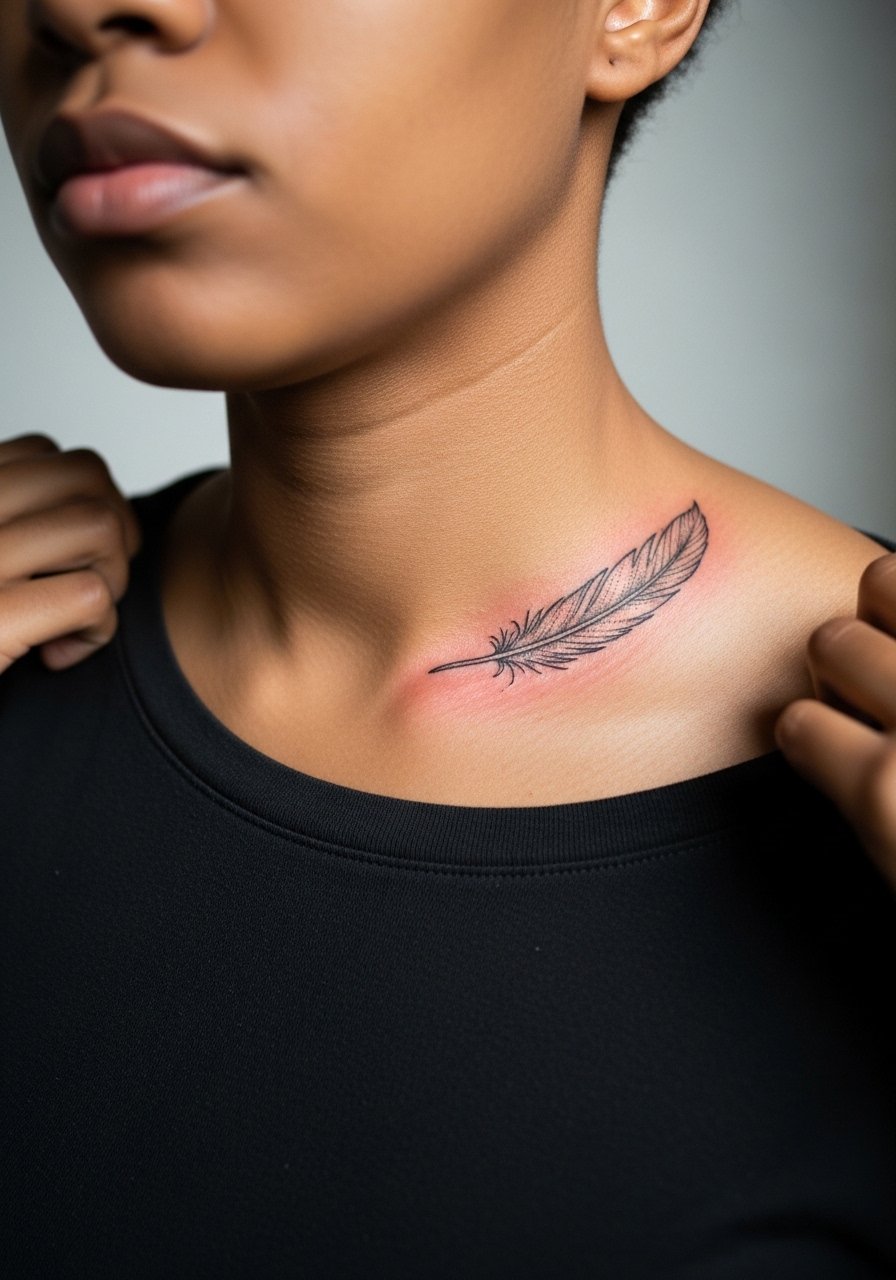
This placement reads delicate but is vulnerable to early blurring if the feather lines are too hairline. The mistake is asking for micro-hair strokes across the entire feather. Instead, request slightly heavier main barbs with tiny stipple detail inside so the silhouette remains. Sessions are short and pain is moderate near the collarbone. For showing it off, a thin chain pendant necklace sits above without competing with the feather.
9. Eagle Talon on the Inner Wrist
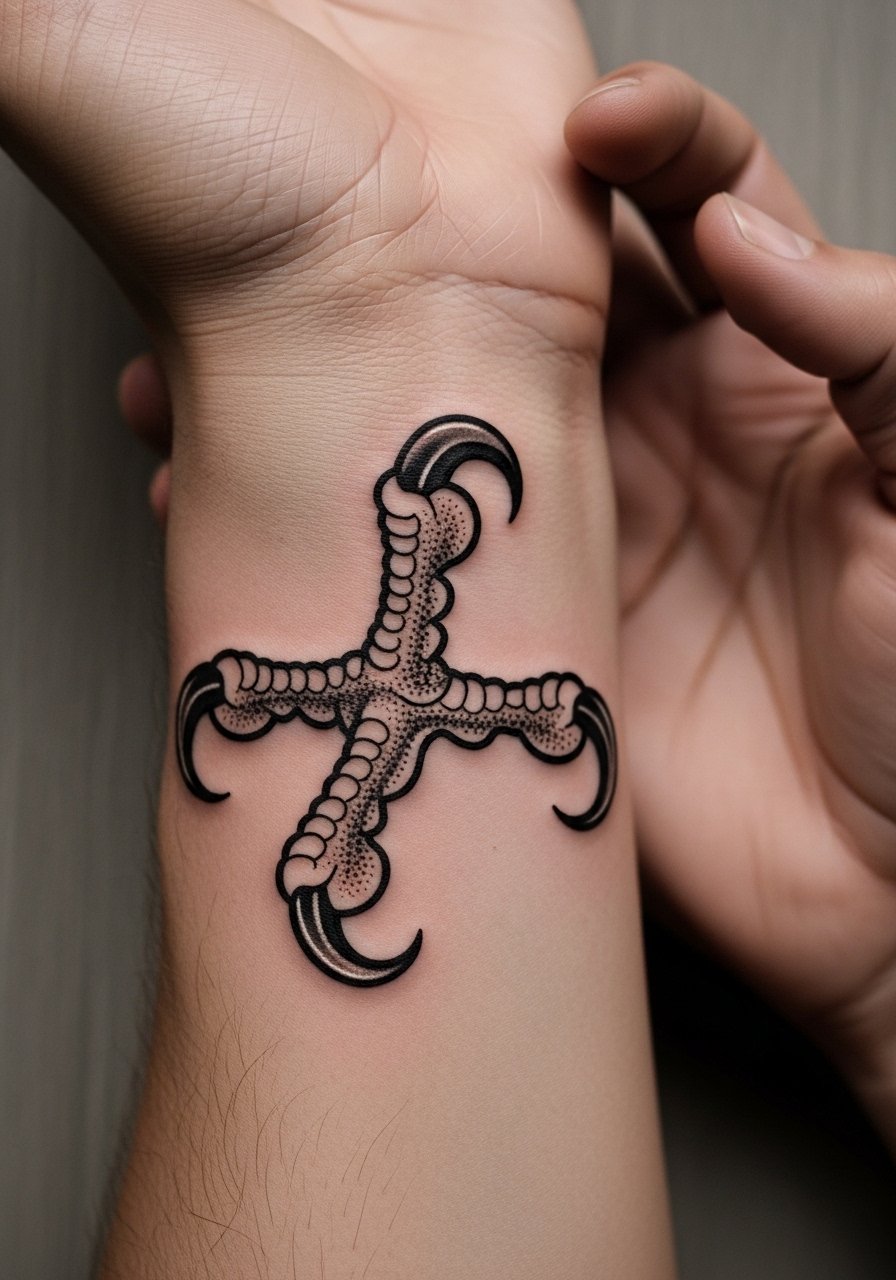
The wrist is a high-motion area that faces washing and friction. Most successful talon pieces use bold outer linework with inner texturing to survive daily wear. A common error is crowding the talon with tiny shadow strokes near the wrist fold. Expect a short, sensitive session and a likely touch-up at year two. For the session wear a loose button-down shirt you can pull up so the artist has clean access without rubbing the area.
10. Chest Sternum Eagle Crest
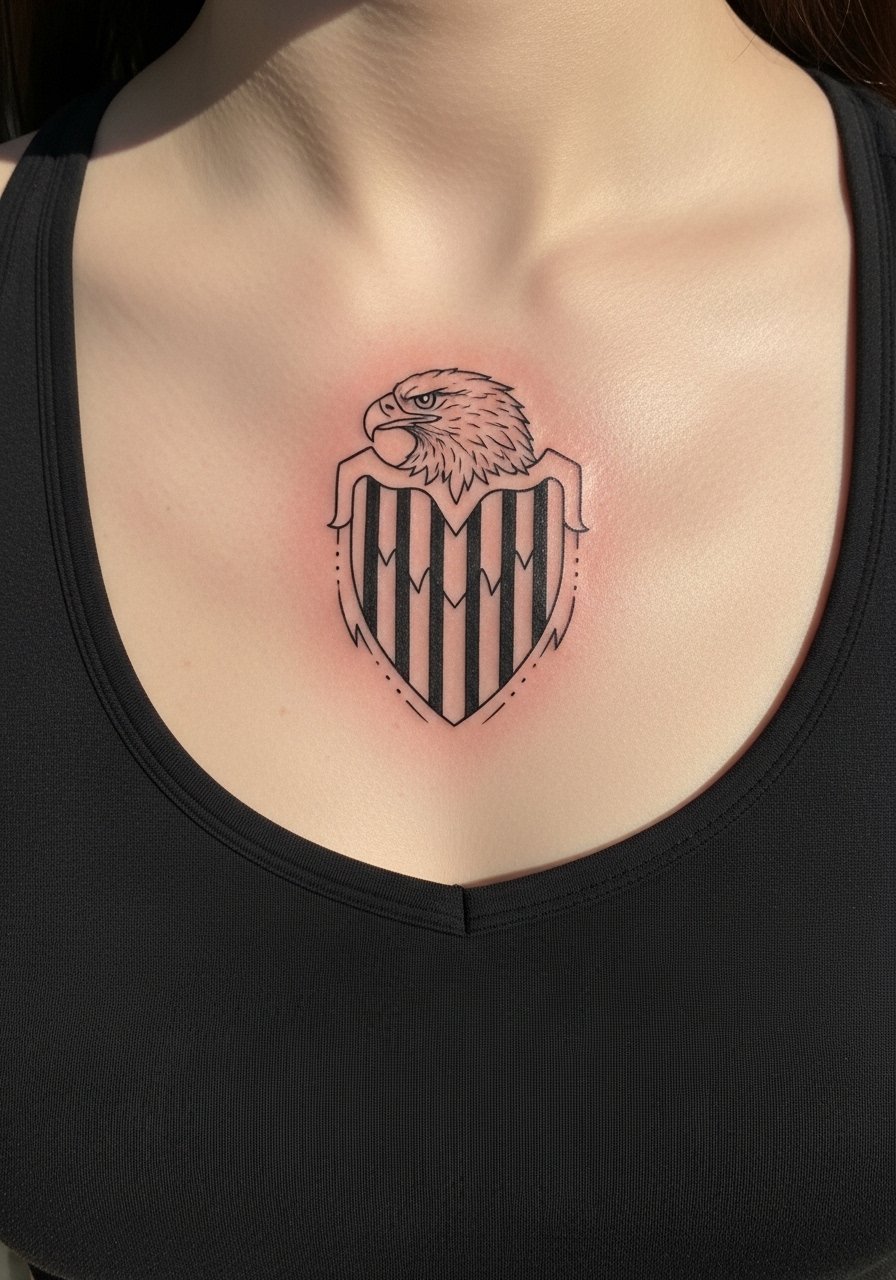
Sternum work is intimate and sensitive. One thing to know is that heavy shading across the sternum can feel tender in healing. Artists differ on the ideal spacing here. Some favor dense blocks for longevity. Others prefer airy composition to avoid a heavy scab across a small area. Ask how their healed examples look at year two. The right session plan breaks the piece into shorter sittings if needed. For the appointment choose a fitted sports bra that gives access while keeping you comfortable.
11. Eagle in Flight Over the Shoulder Blade
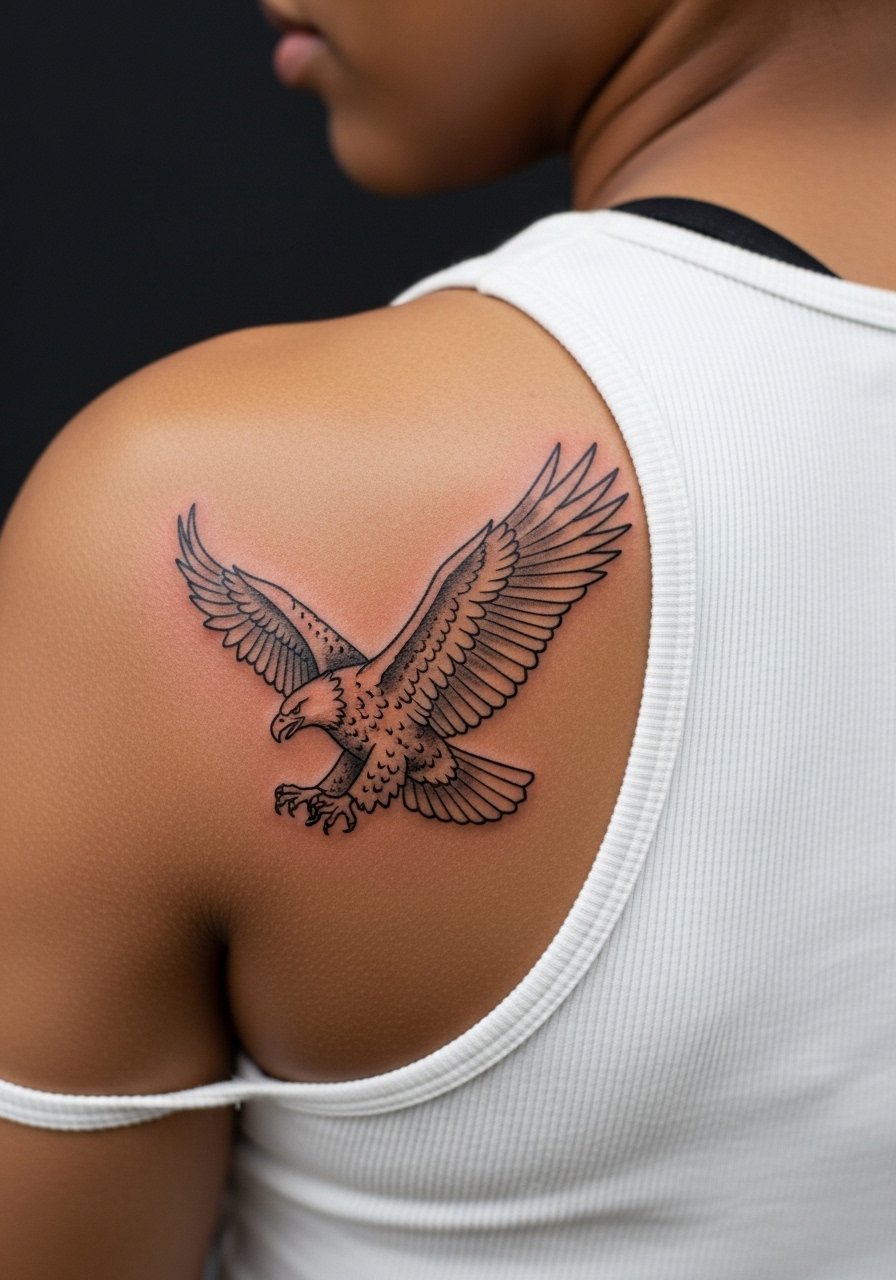
The shoulder blade allows wings to spread naturally with torso motion. The session feels like steady pressure and is moderately uncomfortable near the bone. Tell your artist you want the wing tips to taper into negative space so the piece breathes with movement. A common mistake is cramming symmetrical feathers without considering how the scapula moves. For outfits, a tank top with an adjustable strap makes the area easy to access on session day and shows off the placement later.
12. Neo-Traditional Eagle with Floral Elements on the Thigh
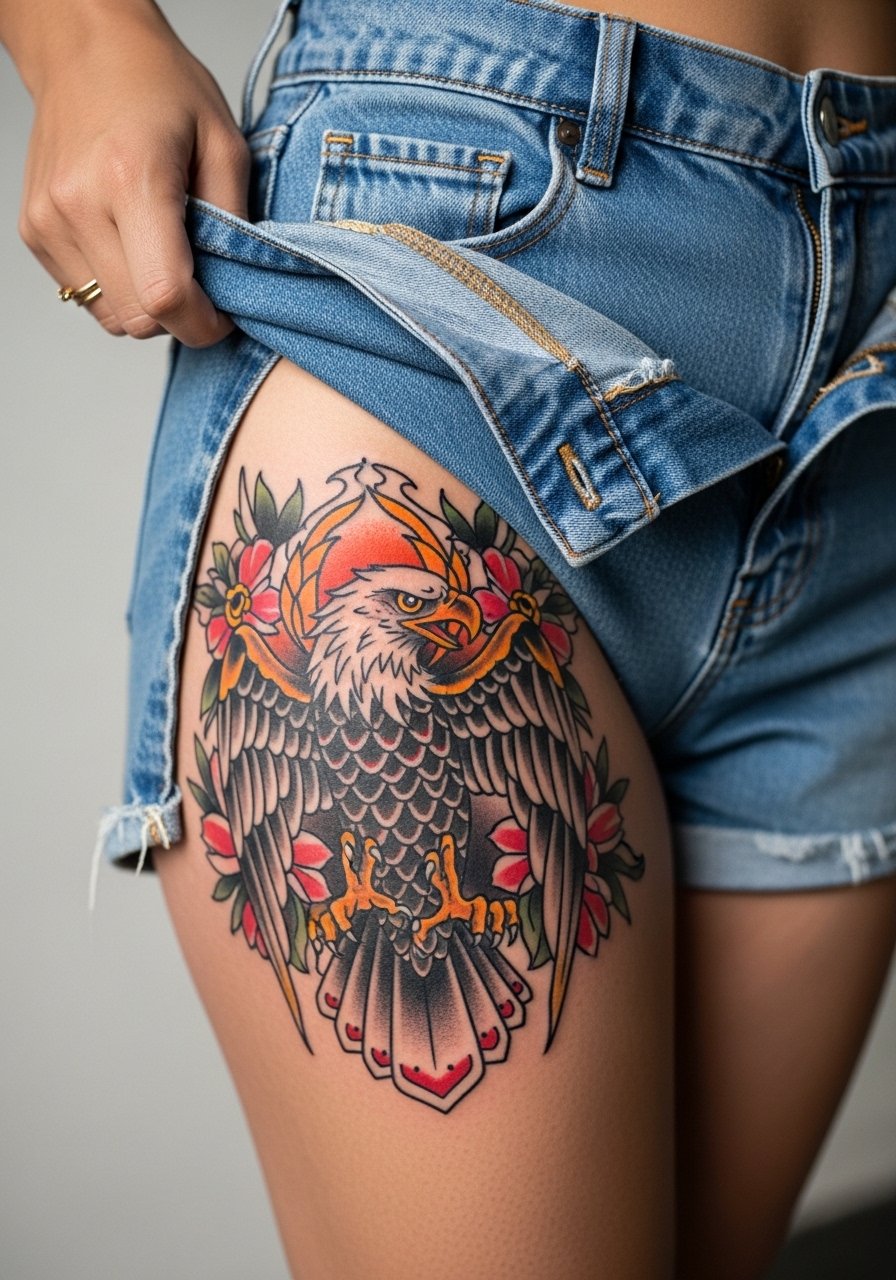
Thigh pieces sit in a lower-friction zone and can handle more color and detail. The advantage here is you can use denser stipple shading and color saturation without as much daily abrasion. The main mistake is putting too many tiny color gradients that need touch-ups after sweaty summers. For session-day comfort wear loose drawstring pants or high-waisted denim you can shift without pressure. Expect sessions to be longer and consider breaking the work into two sittings.
13. Small Eagle Behind the Ear, Neck Edge
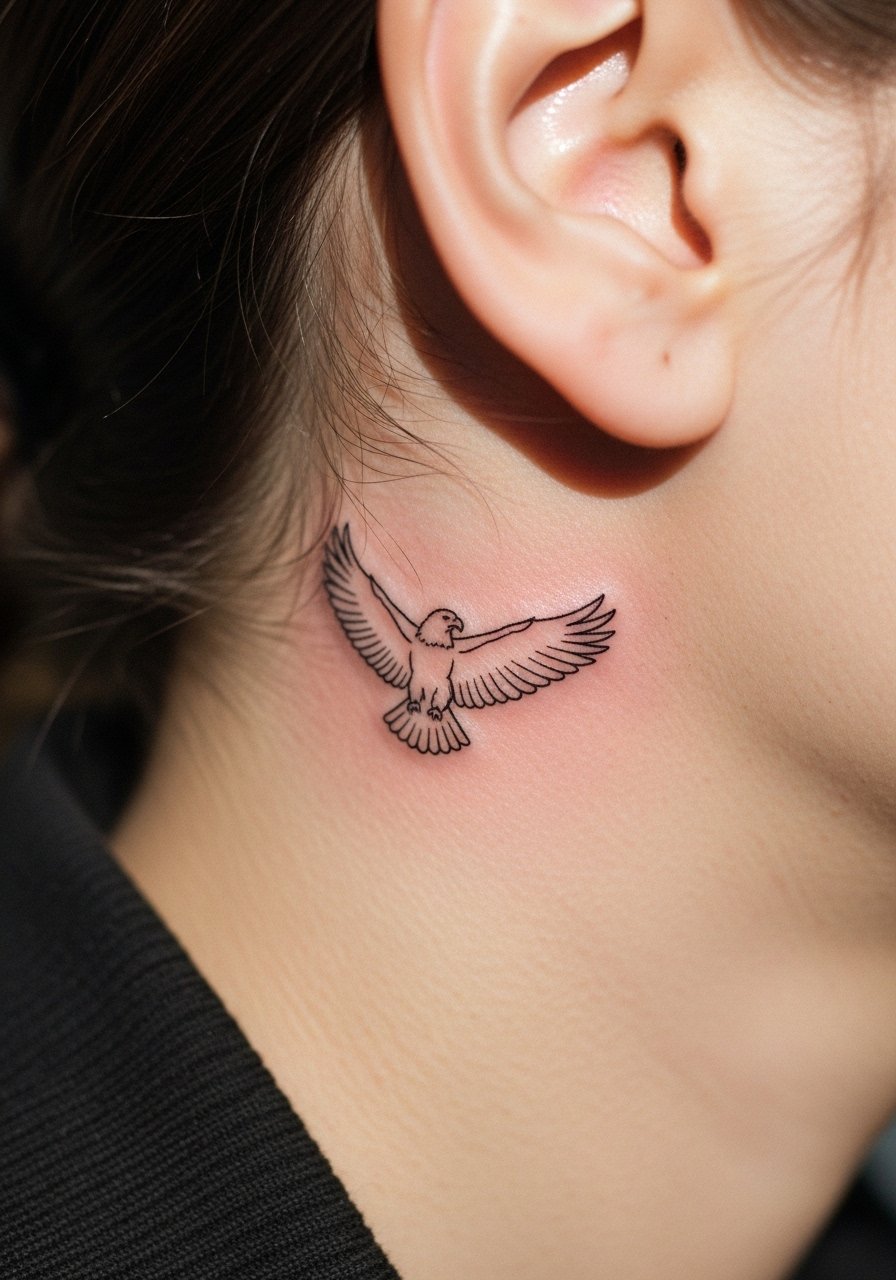
Behind-the-ear placements are subtle and need a delicate approach. Professional considerations and workplace visibility matter more here than in many places, so think about career implications. The skin there can blur fine detail faster because of hair growth and movement. Ask your artist to show healed examples in similar placements. Sessions are quick but may be ticklish. Keep the design simple so you avoid a patchy healed look.
14. Geometric Eagle Chest Panel with Stipple Shading

Geometric framing brings an editorial edge to chest eagles but requires spacing discipline. The error I see is letting geometry sit too close to detailed feathers, which causes merging as the tattoo settles. During consultation ask for distinct negative space buffers between geometry and feathered edges. Pain is moderate and session time may be two hours. For show-off outfits an open collar shirt pulled aside works well.
15. Small Realistic Eagle Eye on the Forearm
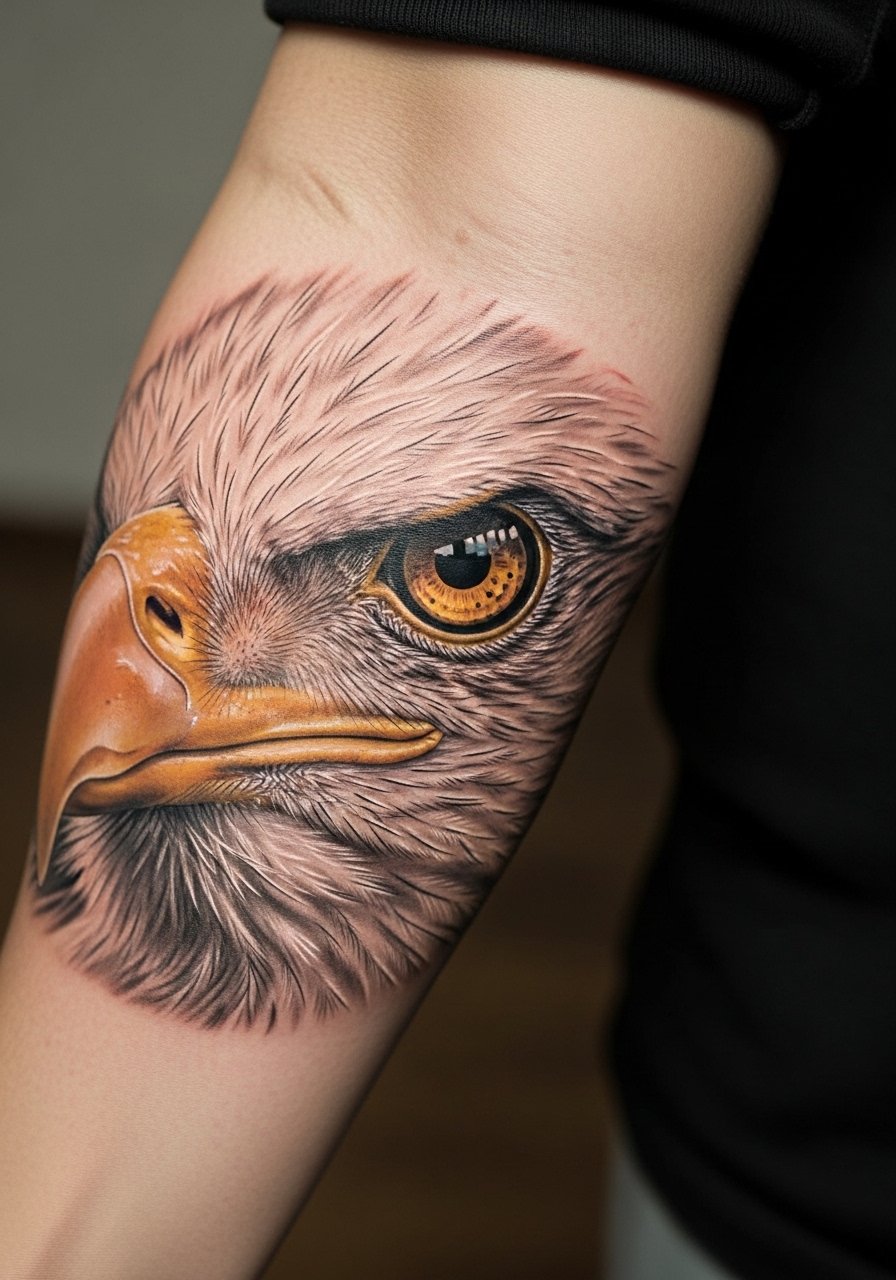
A focused eye piece acts like a portrait jewel on the forearm. It ages best when the artist builds slightly heavier contrast in the pupil and keeps surrounding feather detail suggestive rather than hyper-fine. The worst mistake is over-detailing the surrounding barbs, which softens in year two. Expect one to two hours and a sensitive spot when ink hits close to bone. Pair it with a minimalist watch that frames the forearm without crowding the eye.
16. Half-Chest Eagle Spanning Sternum and Upper Chest
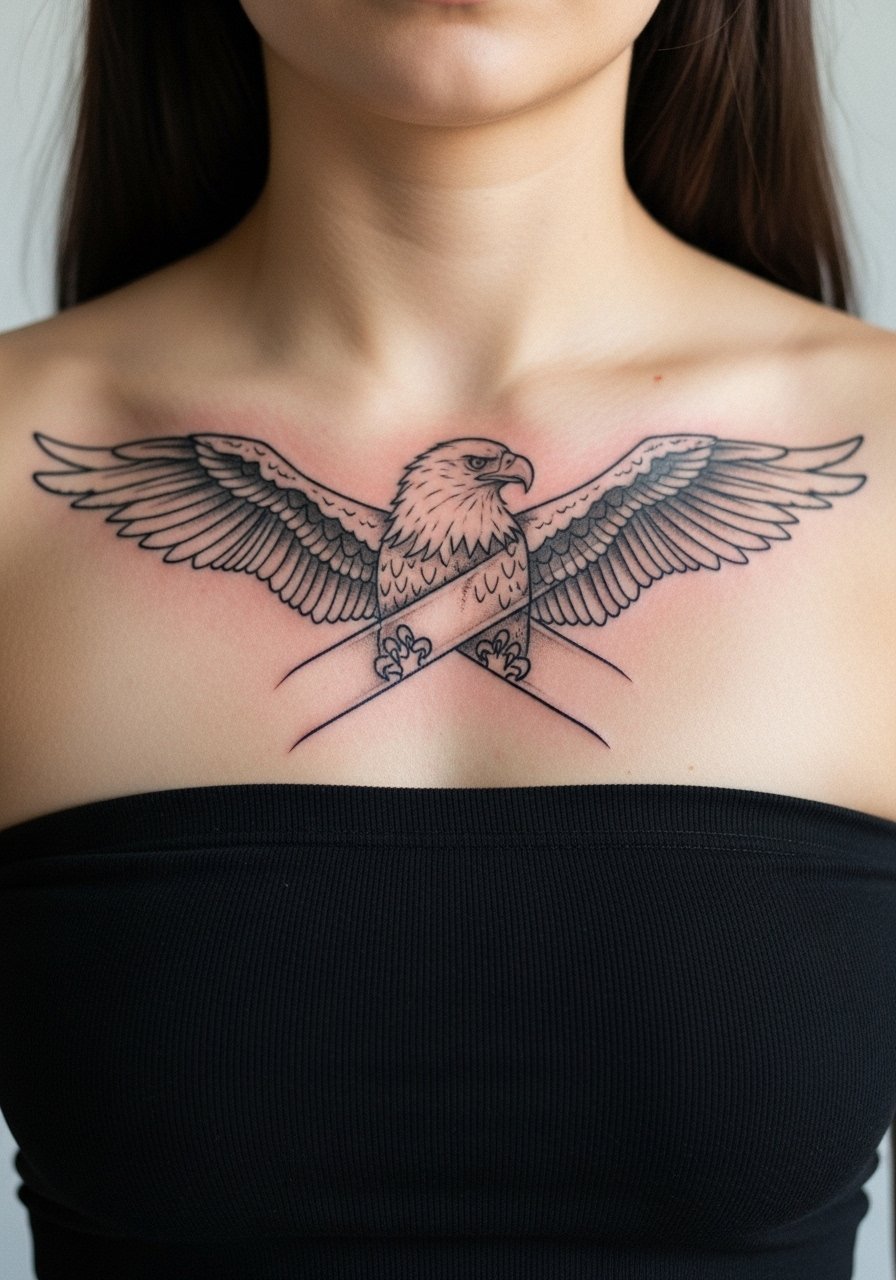
This composition reads strong because the sternum center anchors the design. The aging risk comes from heavy scabbing if too much dense shading is done in one sitting. Some artists split the session into two to avoid that. During the consultation ask how they phase large center pieces. For the appointment wear a bandeau or zip front hoodie you can open to give access without shifting the rest of your clothing.
17. Minimal Linework Eagle on the Ankle
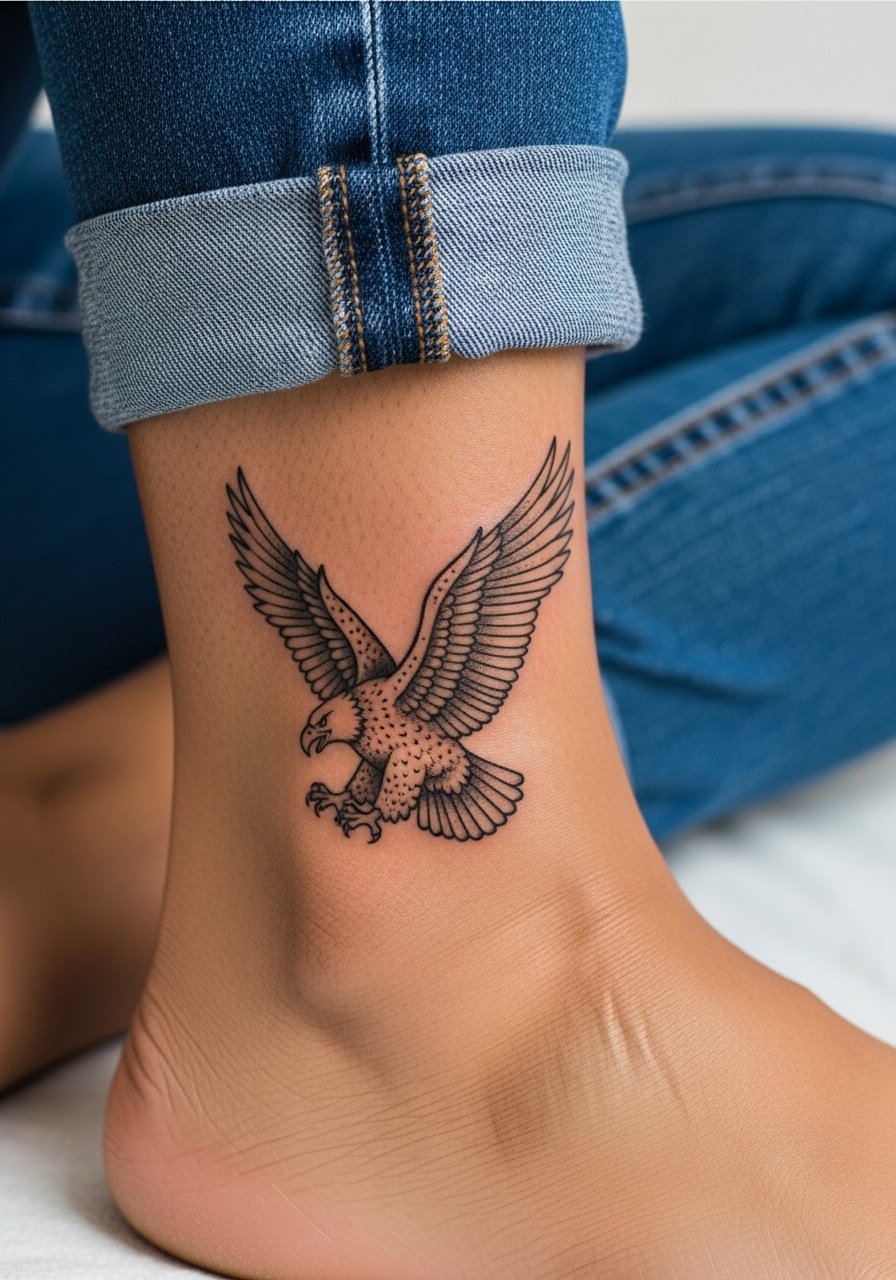
Ankle work is charming but gets rubbed by socks and shoes. The primary mistake is choosing ultra-thin hairlines for any small eagle detail. Instead, specify slightly bolder contours so the silhouette survives the first months of walking and rubbing. Sessions are short and pain can spike over bone. For show-off styling consider low-profile sandals or rolled jeans that reveal the placement without friction.
18. Illustrative Eagle on the Calf with Motion Lines

Calf placements handle motion-friendly designs because the area is muscular and less prone to daily abrasion. Motion lines added to an eagle enhance the sense of descent and age well if kept sparse. The common error is overworking motion lines so they become a shaded mess after a few years. Sessions are moderate in pain and can run two hours. For session comfort wear loose drawstring shorts you can adjust easily.
19. Irezumi-Inspired Eagle with Background Waves on the Back
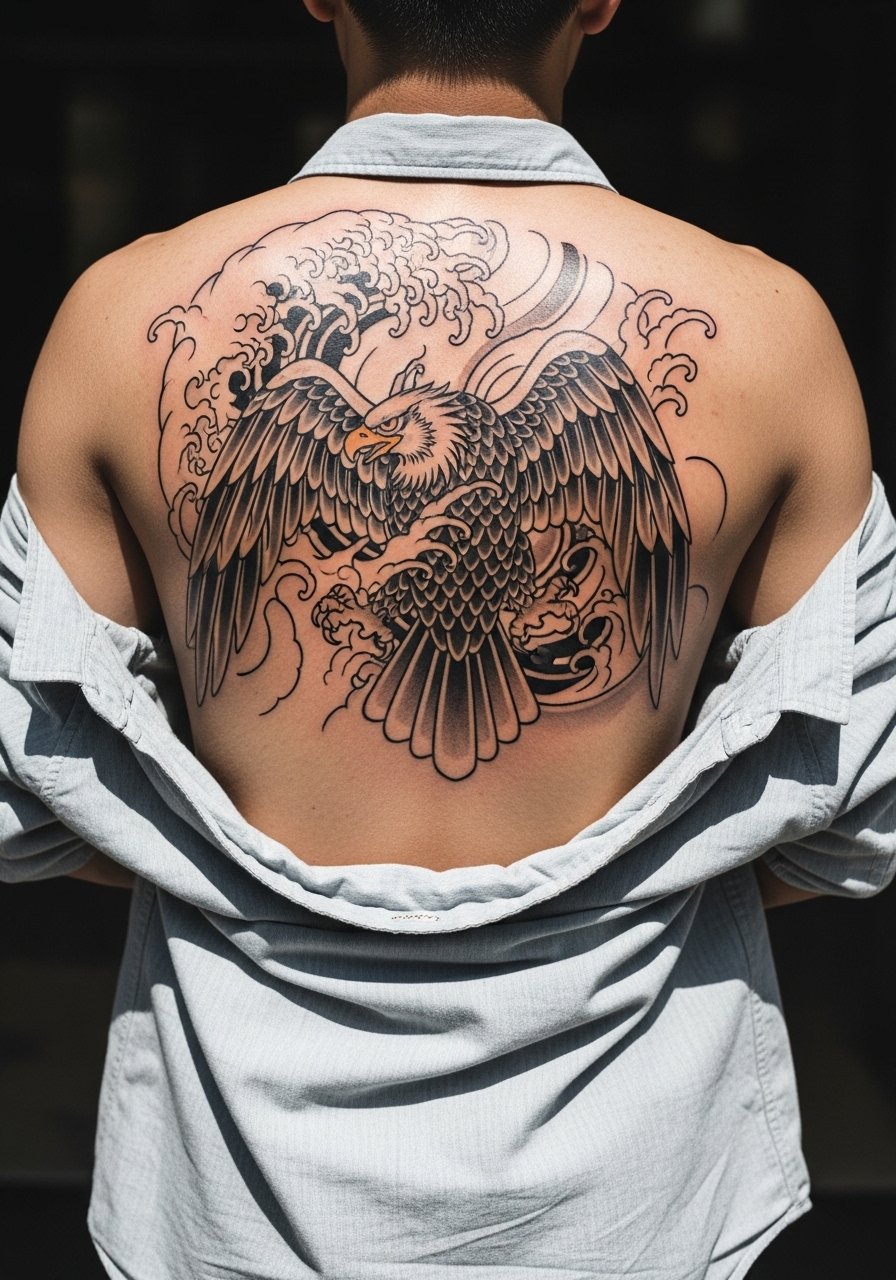
This design nods to a cultural visual language. If you choose a piece inspired by a specific tradition, be mindful of origin and opt for respectful interpretation rather than direct replication. A common mistake is borrowing sacred motifs without understanding placement significance. Ask your artist how they adapted motifs and where the references come from. Expect multi-session work and longer healing windows for large back panels.
20. Tiny Eagle Outline Behind the Knee
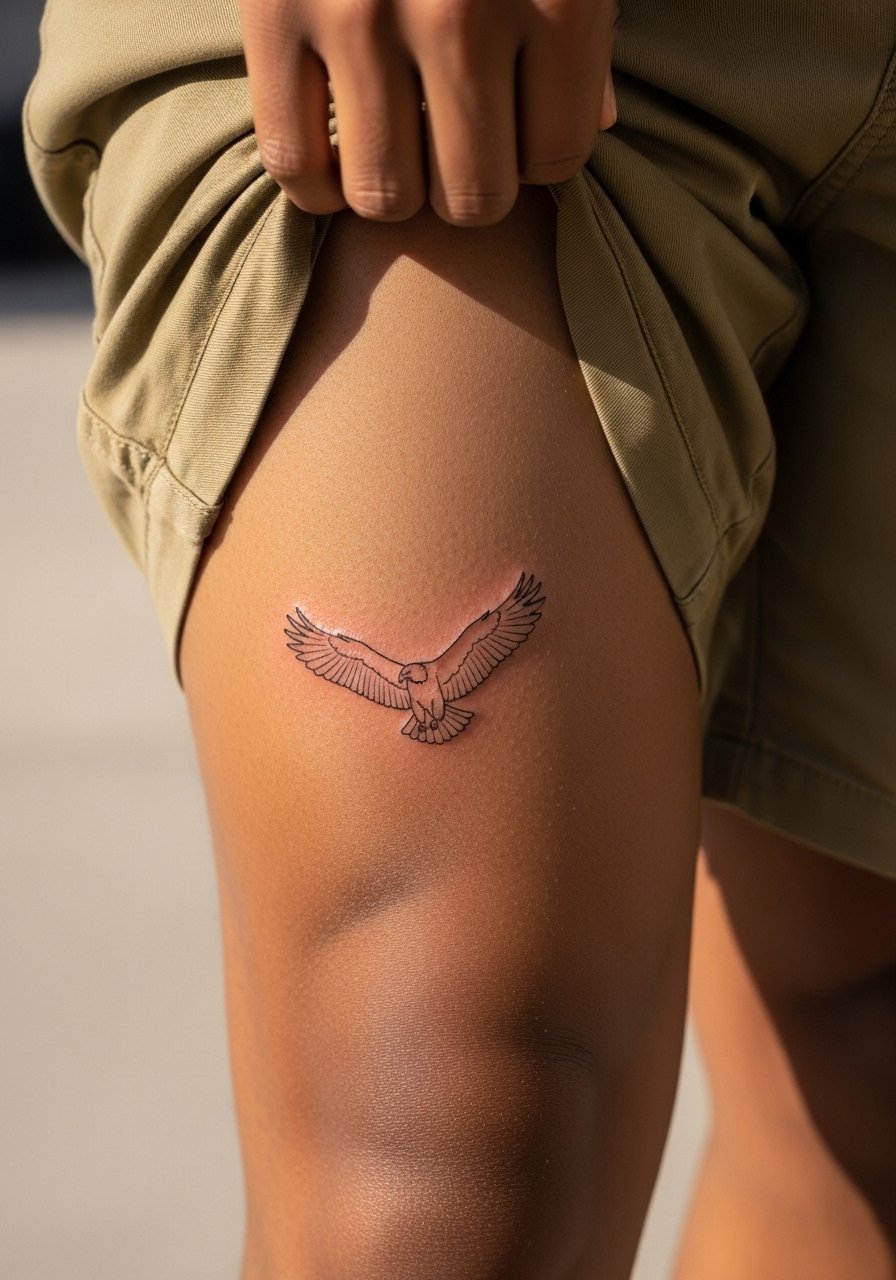
Behind-the-knee tattoos sit in a mobile area that bends constantly during the day. The design must account for creasing so outlines should be slightly stronger. Pain can spike when the needle gets close to the joint. The mistake is using faint line weights that fragment with movement. For the session, wear loose shorts you can move without constriction so the artist has an unobstructed field.
21. Small Eagle Crest on the Upper Chest Near the Collar
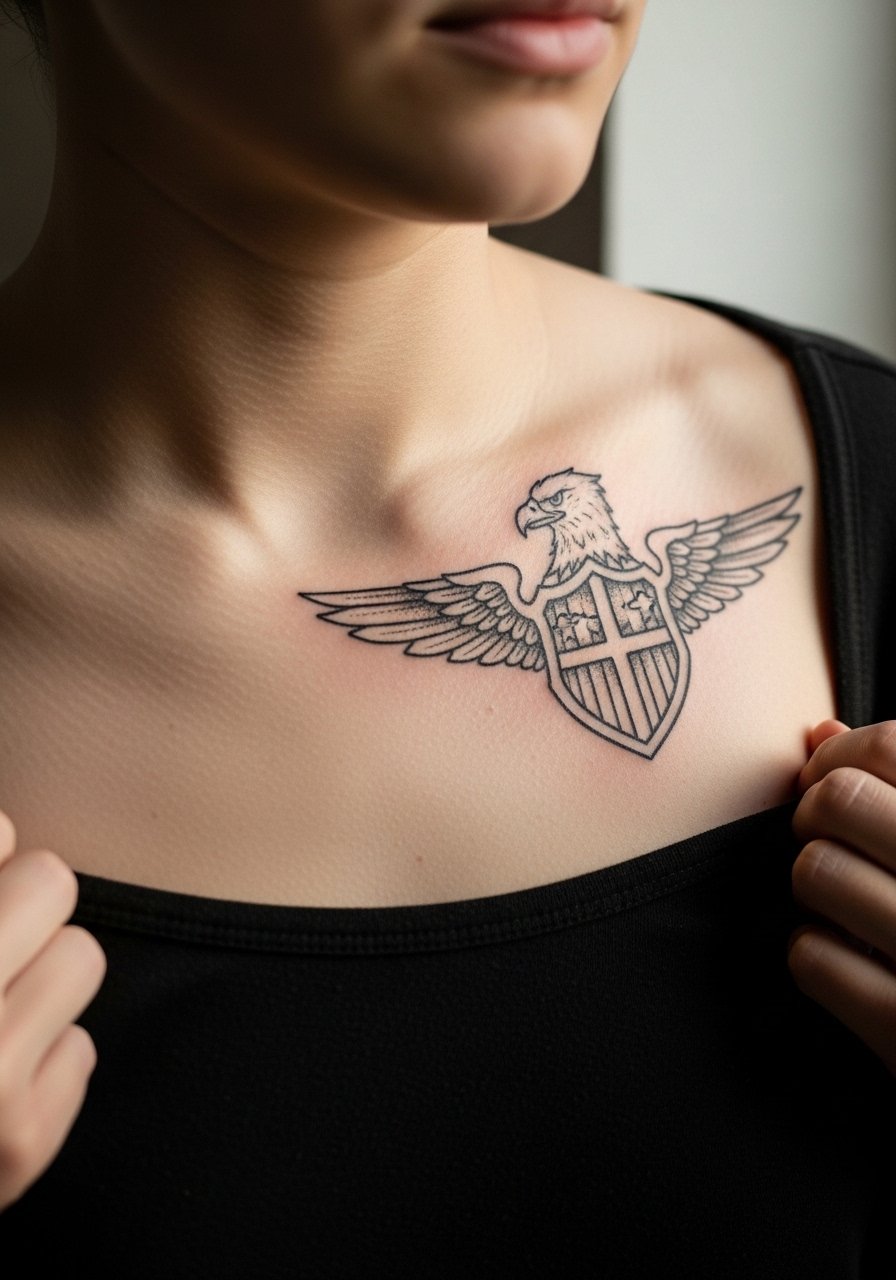
When space is limited near the collar, the trick is to design a compact crest that reads as a single shape from a distance. The common error is adding too many tiny shield and feather details that blur with time. Ask for consolidated shapes and slightly thicker outer lines in your consultation. For evening wear a wide-neck blouse frames the piece without pulling attention away from the neckline.
Frequently Asked Questions
Q: Will fine line feather detail on the ribs blur faster than on the forearm?
A: Yes, the ribs tend to blur faster because the skin stretches with breathing and weight change. One group of artists avoids ultra-fine feather detail on ribs for that reason. The other group says careful spacing and correct needle depth can keep lines intact. If you prefer fine detail, discuss staged sessions and spacing strategies with an artist who shows healed rib examples.
Q: How often should blackwork eagles get touch-ups compared with micro-realism eagles?
A: Blackwork tends to age more predictably and often needs fewer frequent touch-ups, usually a refresh around year two or three. Micro-realism with subtle shading and fine contrast can need earlier touch-ups because small tonal shifts are more visible. Your touch-up timeline also depends on sun exposure and placement.
Q: Are hand and finger eagles risky for professional settings?
A: Hand and finger tattoos are the most visible and still affect hiring in some industries, so think about career context before committing. If visibility is a concern consider a small placement that can be covered by a ring or sleeve during interviews and meetings.
Q: What should I wear to a sternum or upper chest session?
A: Wear a fitted sports bra or a wide-neck top you can pull aside without shifting everything else so the artist has clear access. That keeps you comfortable and prevents fabric rubbing the tattoo immediately after the session.
Q: Can I ask for a mix of geometric background and micro-realistic eagle head without it aging badly?
A: Yes if the geometry is done in dot work and kept separate from the eagle with negative space. The risk comes when the textures sit too close and merge. Ask for sample layouts showing spacing and insist on testing a small junction area if you are unsure.
Q: What discovery routes help me find artists who do strong illustrative eagles?
A: Look at local convention booth photos, check shop directories for illustrative portfolios, and scan hashtags focused on illustrative work for region-specific results. Also use community threads where people share healed examples so you can see real aging rather than only fresh photos.