
Sitting on the edge of the chair with the stencil warming to your skin is the moment clarity hits. The back of the thigh reads larger than the thumbnail reference, the dotwork stippling looks different under salon light, and your choice of placement will change how the piece settles over time. These 27 back-of-thigh dotwork ideas focus on what holds up, what to ask your artist, and the clothes that make the work sing during the first months of healing.
1. Mandala Halo on the Upper Back of Thigh
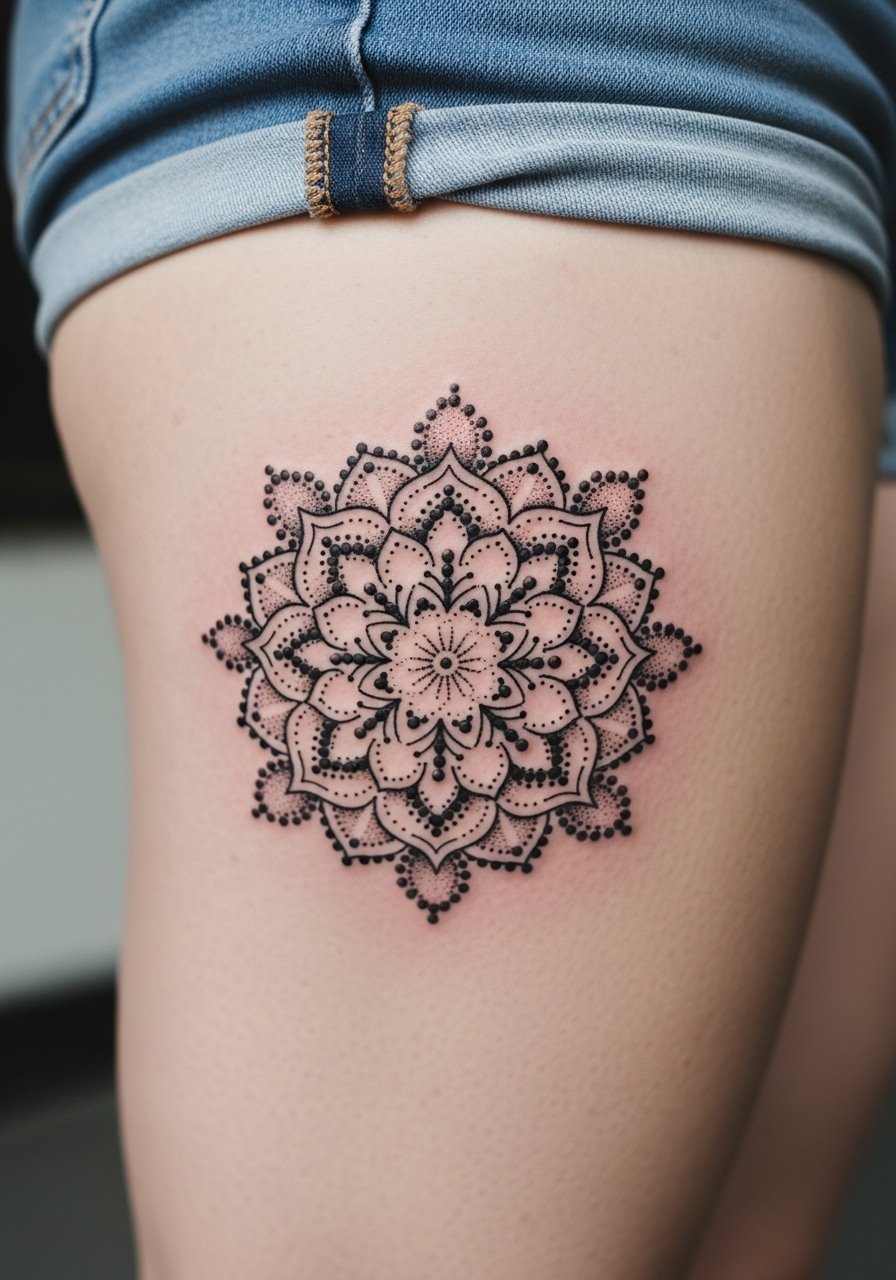
A concentric mandala in fine dotwork reads like a lace panel when placed high on the back of the thigh. For best longevity, ask the artist for spacing between rings so stipple clusters do not merge as the skin relaxes. Expect a session of moderate length and a medium pain level because the area has thin subcutaneous padding. A common mistake is pushing for too much tiny detail in a single session. Tell your artist you want negative space preserved between dots. For show-off wear, pair it with high waisted shorts that sit just above the design to frame it.
2. Crescent Moon Spine Along the Thigh Crease
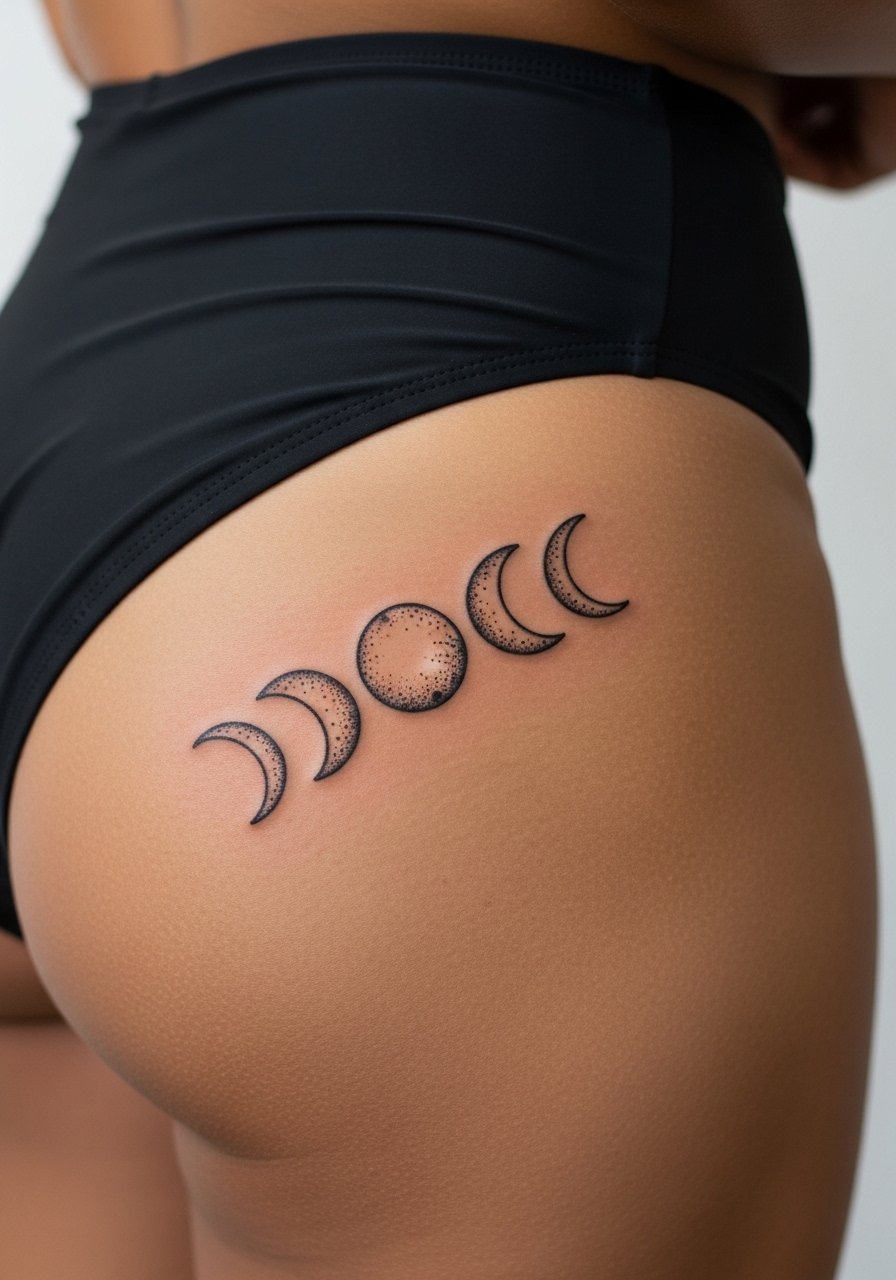
A vertical crescent chain looks delicate in stipple shading when centered on the fleshy part of the back thigh. During consultation, specify the gap you want between each moon to avoid overcrowding. The placement sits where friction from shorts can matte the ink during early healing. For the session, wear a swimsuit bottom high cut so the artist has clear access without full exposure. Expect touch-ups sooner if the dots are packed too tightly. The biggest mistake is asking for tiny moons with no spacing and then wondering why stippling merges after a year.
3. Floral Silhouette with Stipple Shading
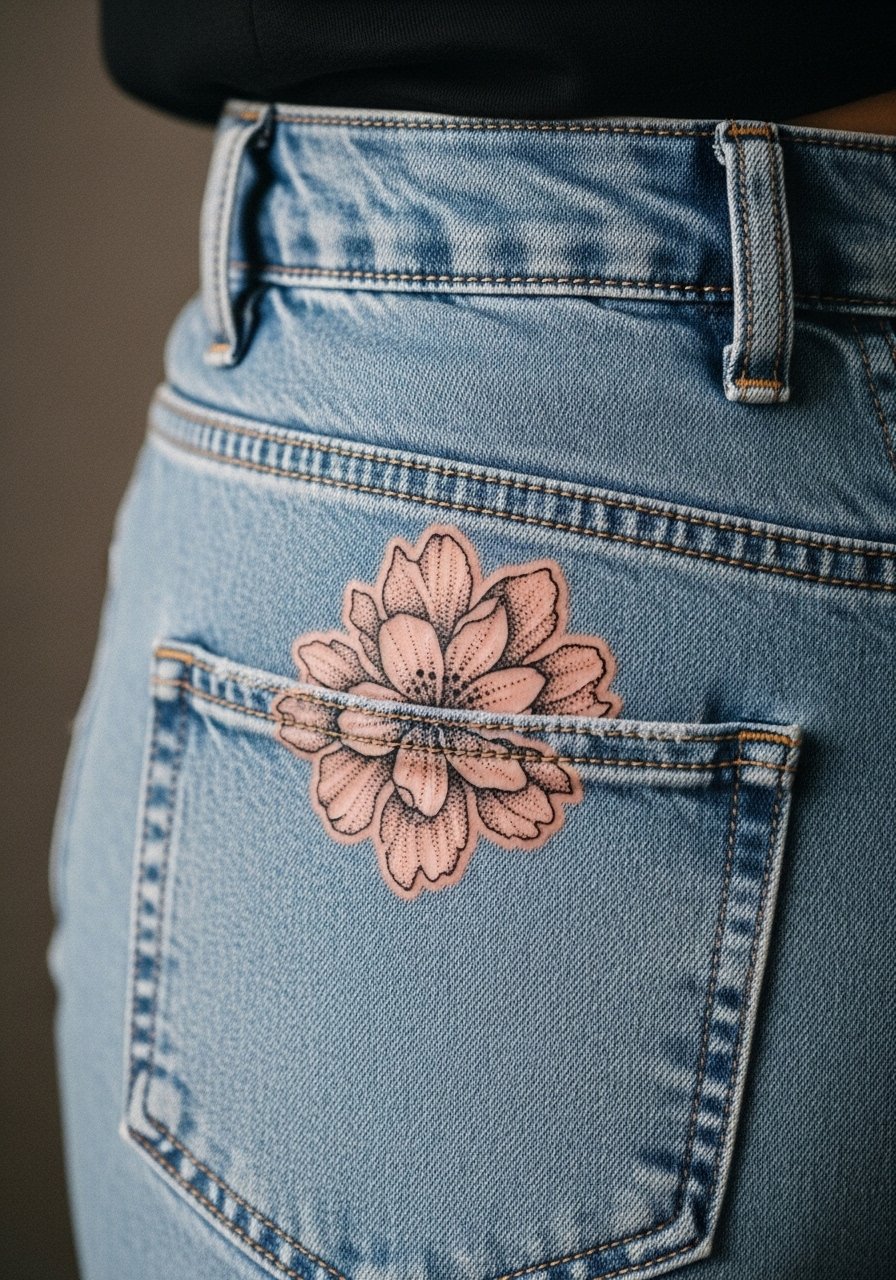
A floral silhouette done in dotwork lets the shapes breathe and avoids heavy linework that can distort over time. Tell the artist to use stipple shading for petal depth instead of solid black fills. The back of the thigh tolerates larger fields of stipple because the canvas is wide, but beware of blowout if the needle goes too deep. Session feel is steady throb with occasional sharp spots near the hamstring. For showing it off, pair this with wrap skirts that split at the side, letting the blossom peek during summer months. A common error is requesting fine white highlights that do not hold on this skin texture.
4. Geometric Honeycomb Panel
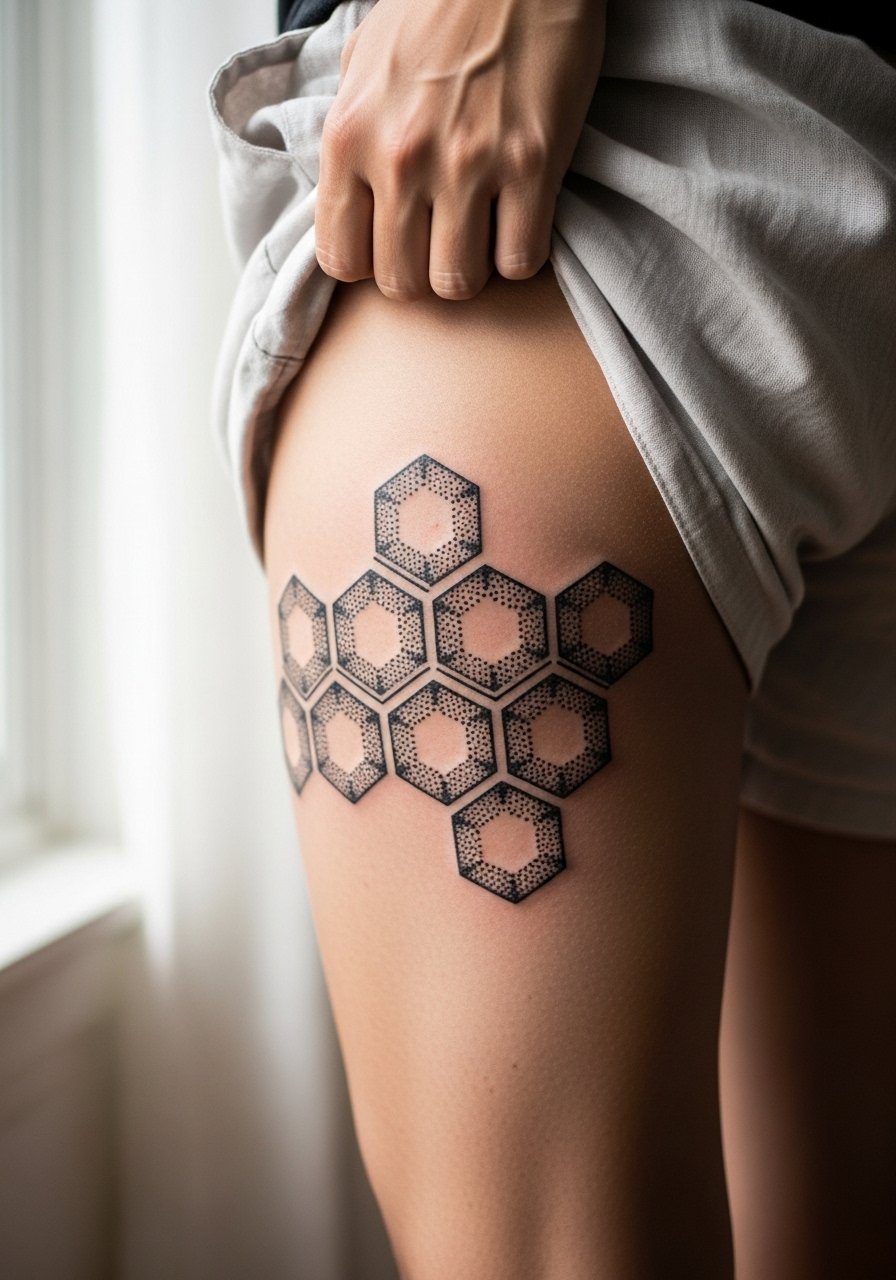
A honeycomb grid in dotwork reads architectural and holds well if you keep cell sizes generous. Ask the artist to scale the pattern so each cell has room for stipple texture. The back of the thigh moves when you walk, so tight, repetitive geometry can warp if placed near muscle fold lines. Pain is moderate and sessions can be long, so plan for breaks. For the session wear, choose loose linen shorts that the artist can lift and lower without tugging. The most common mistake is shrinking the pattern to fit a small tattoo size and losing clarity within months.
5. Botanical Vine Flowing Toward the Knee
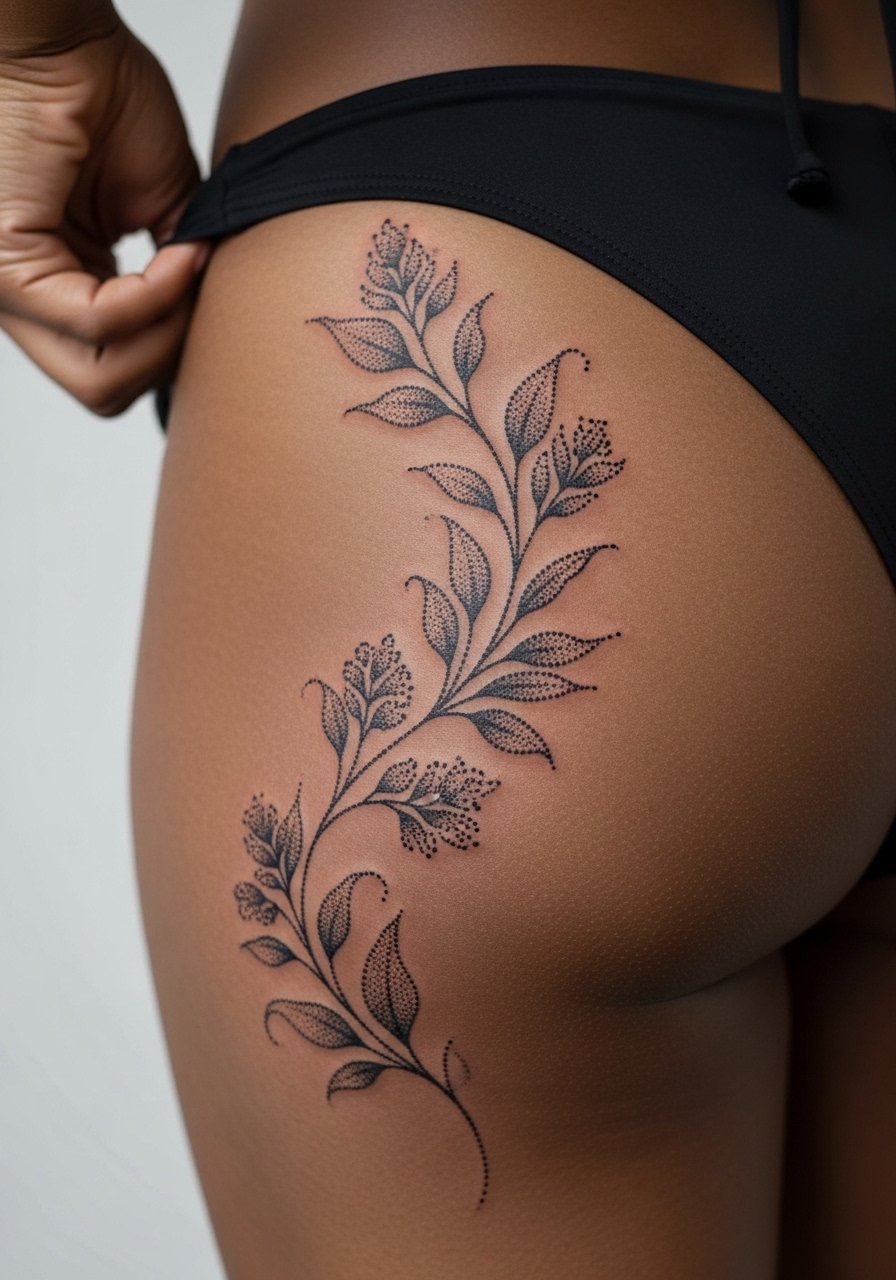
A trailing vine suits the back thigh because it moves naturally with stride. Tell the artist to orient the growth so leaves point downward when you stand. Expect localized soreness where the vine crosses bony areas near the knee. The design ages predictably if stipple density is moderate. For show-off styling, pair it with slip dresses or high-cut swimwear that reveal the vine without covering it. A frequent mistake is asking for hyper-detailed micro leaves that clog together during healing.
6. Dotwork Portrait Silhouette
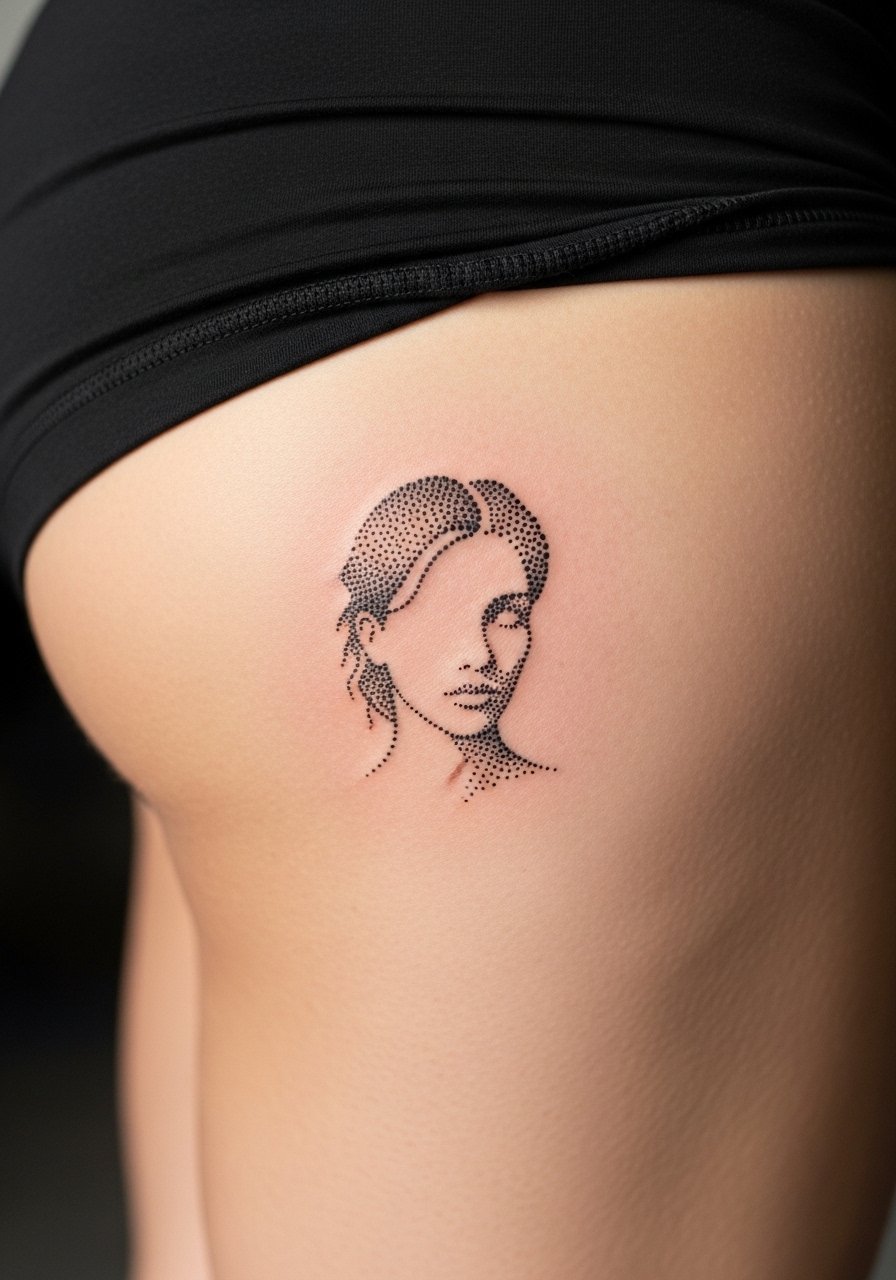
A portrait silhouette in dotwork relies on negative space and precise stippling to read from a distance. During consultation, bring reference photos that show clear contrasts so the artist can plan dot densities. This piece takes longer because stippling is layered slowly. The back of the thigh has medium blowout risk when dots are packed densely, so ask for slightly larger pointillist marks. For the appointment, slip into high cut athletic shorts so the artist can work without fabric rubbing. Many people expect crisp photo realism from dotwork portraits and then book touch-ups sooner than they planned.
Pack Smart
The pieces above sit where friction, movement, and garment lines matter, so a few session and healing supplies make the chair day and the first week easier.
-
Stencil transfer paper kit. Lets you preview placement on curved thigh areas before the needle starts, which is crucial for long vertical designs.
-
Topical numbing cream. Applied as directed before the appointment eases sensitivity on the fleshy thigh without changing how the artist layers stippling.
-
Thin protective film roll. Helps shield the back of the thigh from shorts rubbing during the first two days of healing.
-
Fragrance free gentle body wash. Cleans the area without stripping the delicate dotwork while the scabs form and fall away.
-
Aquaphor healing ointment. A thin layer locks in moisture during the initial healing window for fine stipple work without clogging pores.
7. Crescent Lace Panel Near the Hamstring
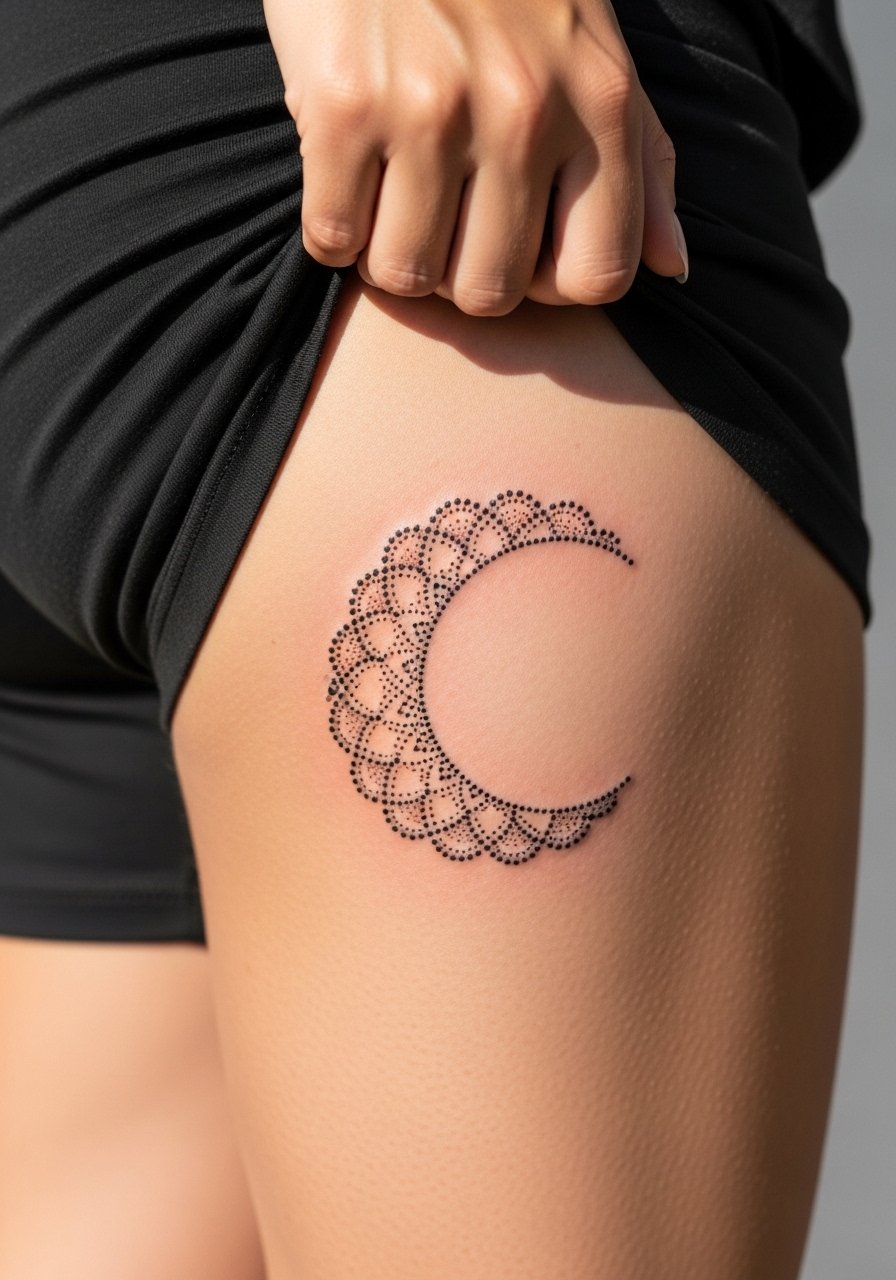
A lace-inspired crescent sits beautifully near the hamstring where muscle movement gives the design subtle animation. Tell the artist you want negative space between lace elements to avoid merge. The hamstring area can feel tender because of muscle shifts during sitting. For the session wear, opt for biker shorts you can roll without stretching the ink. Watch out for a common mistake where clients request ultra-fine lace nodes that the skin will not hold over years.
8. Stippled Compass Rose Facing Backwards
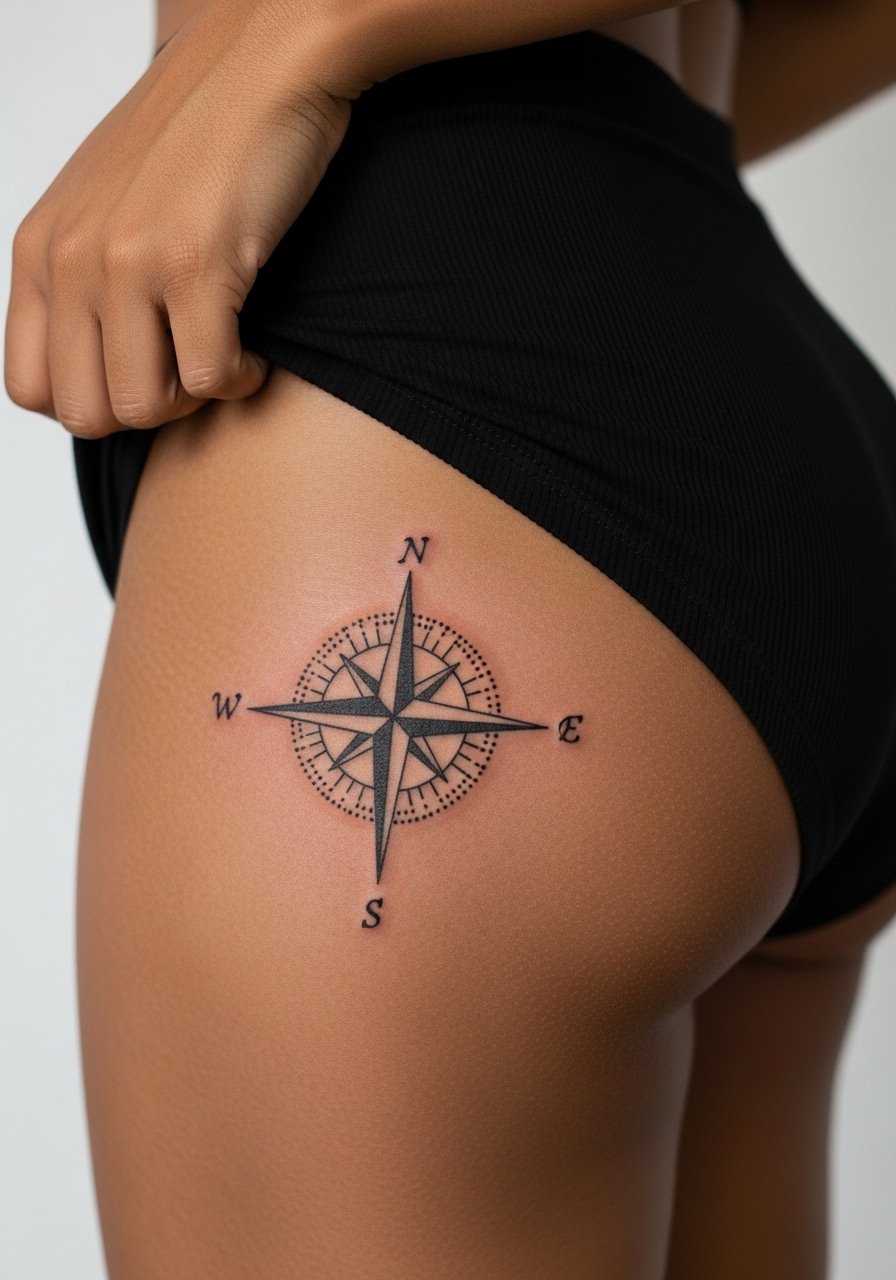
A compass rose rendered in stipple packs graphic punch while keeping shading soft. During consult, decide which cardinal points are essential because extra lettering crowds the stipple. Because the piece sits near a fold, expect a bit more fading along the edge over time. The session includes steady buzzing with occasional pressure spots. For showing it off, a high waisted brief that sits below the compass keeps the design visible and clean. Avoid the mistake of adding tiny script that disappears into stipple texture.
9. Constellation Map Curving with Muscle
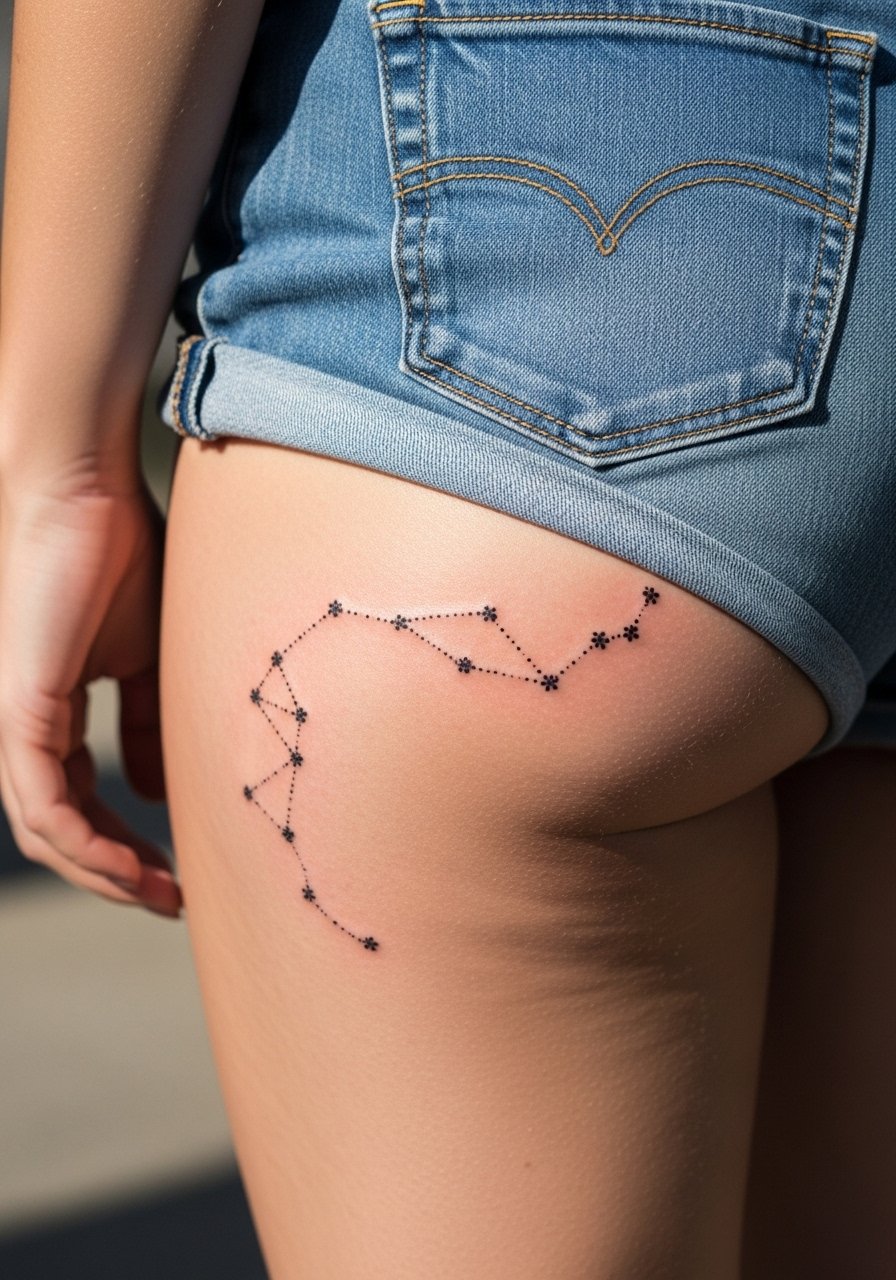
A constellation cluster uses single-point dots and small link lines that age depending on spacing. Ask your artist to space stars generously to prevent dots from merging under mild blowout. The placement follows muscle curvature, so the map reads differently when sitting versus standing. For session comfort, wear denim shorts lowered slightly at the hip rather than restrictive waistbands. People often request tiny, crowded stars and then need a touch-up once the dots soften.
10. Ornamental Arch Bordering the Upper Thigh
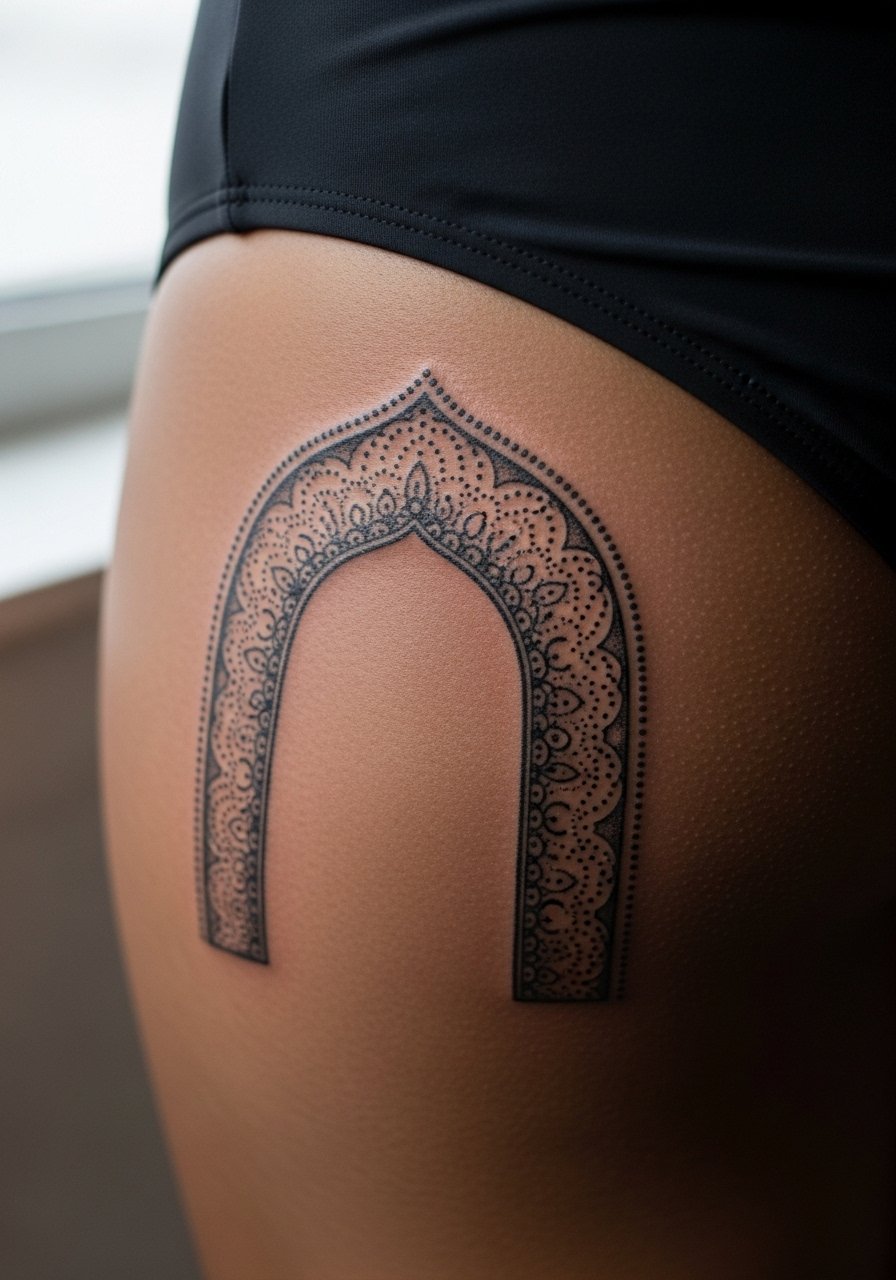
An ornamental arch frames the thigh and pairs well with thigh-high styling. During consult, state whether you want the arch to read as a frame or a focal point. The arch is resilient on the back of the thigh if stipple density is balanced. Expect moderate session time for clean stippling. For evening wear, pair the arch with thigh high stockings that sit just below or above the motif so the pattern appears intentional. A mistake is overworking the inner edge which causes muddying in the long run.
11. Celtic Knot Dotwork Band
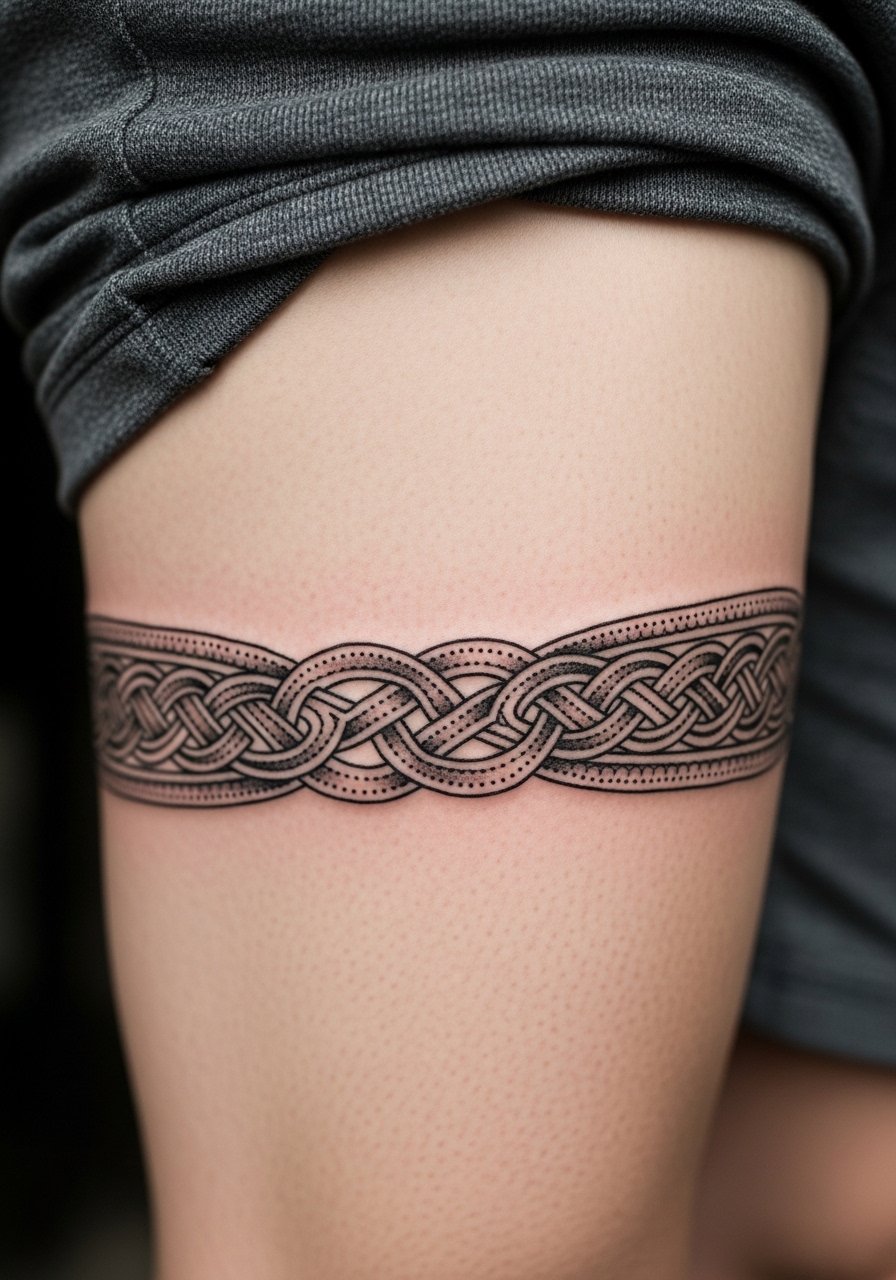
A knot band in dotwork blends linework and stipple to create texture that stays interesting from different distances. Ask for slightly wider knot paths so the pattern maintains clarity as skin ages. Bands across the back thigh can pull with movement and may require a touch-up within a few years if ink sits too deep. For the appointment, a pair of loose drawstring shorts makes positioning easier. The common error is shrinking the knot into a narrow band where lines collide.
12. Abstract Topographic Rings
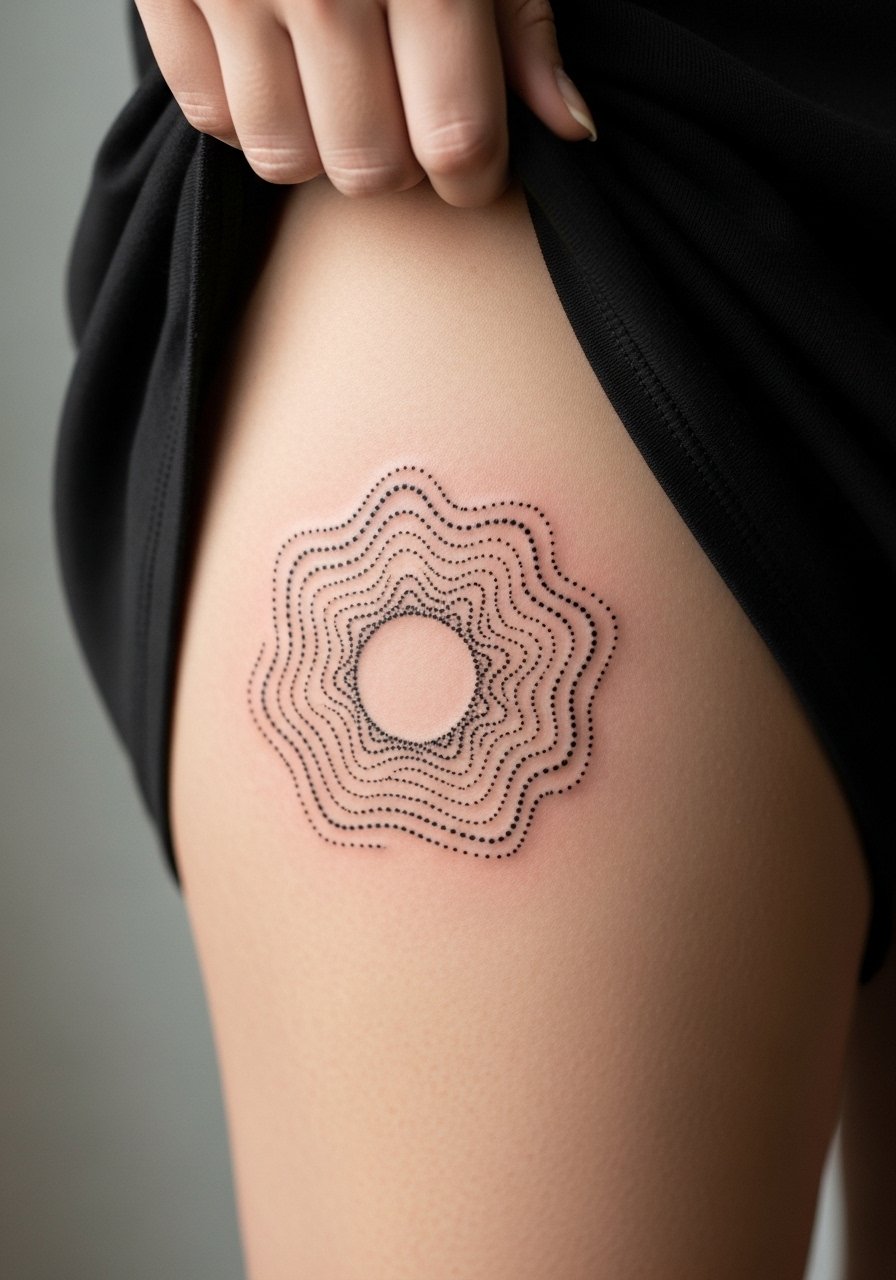
Topographic rings in stipple create movement and depth when allowed breathing room. Tell the artist to vary dot density so high contrast lines do not become a single shaded mass. Because the pattern follows contour, placement slightly off-center can alter the visual flow. Sessions are steady and can be completed in one longer sitting. For show-off styling, try an A-line skirt with a slit or a lifted hem that reveals the rings. A frequent mistake is requesting too many concentric lines which leads to a muddy look later.
13. Floral Skull Dotwork Panel
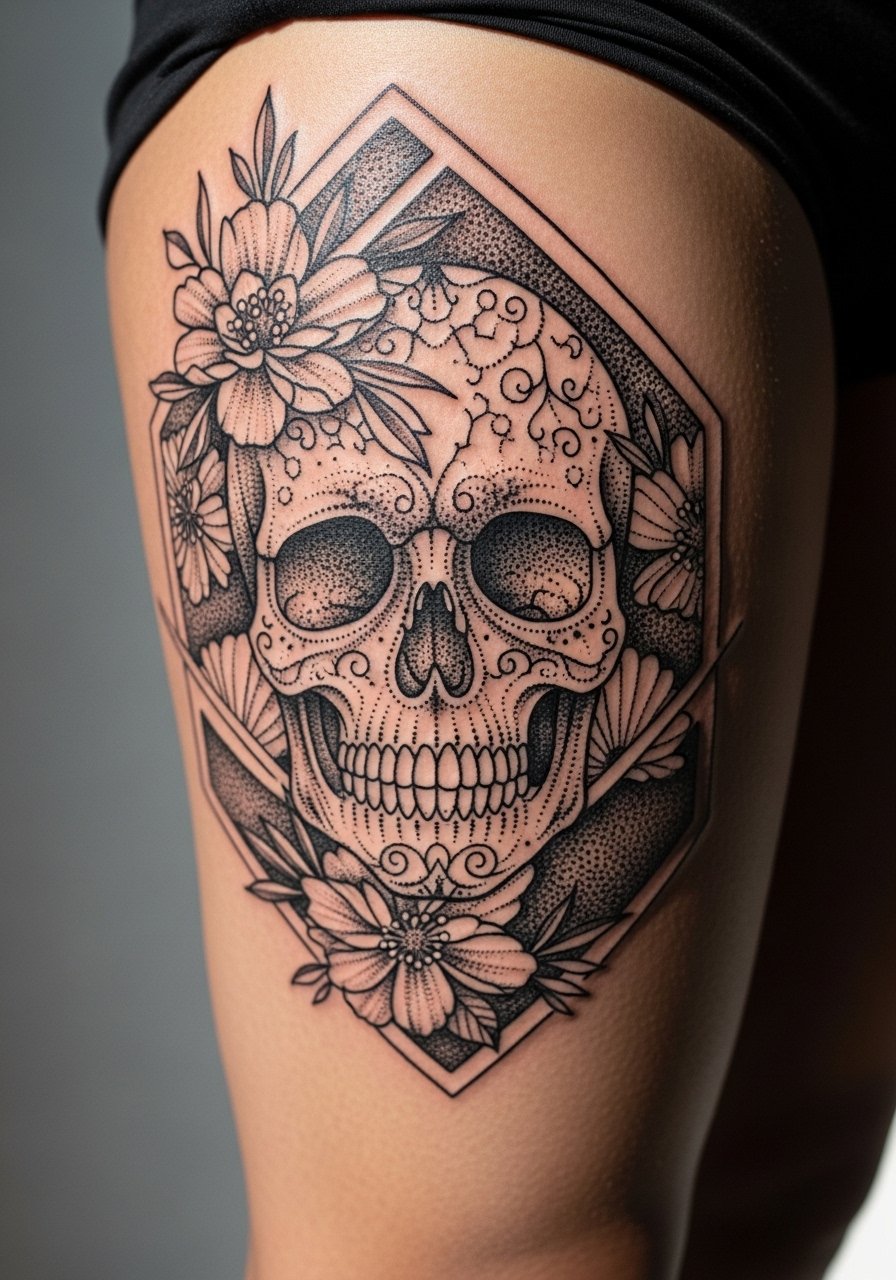
A skull softened with floral stippling balances edge and subtlety. Discuss with your artist how much anatomical detail you want versus silhouette. The back thigh handles larger, darker stipple fields well, but dense black areas can feel heavy. Expect a more intense session with heavier saturation in pockets. For outfit pairing, a slip dress with a thigh slit lets the panel peek without exposing the whole area. Avoid compacting small features that will blur into stipple over time.
14. Mirror Dotwork Lace Along the Inner Edge
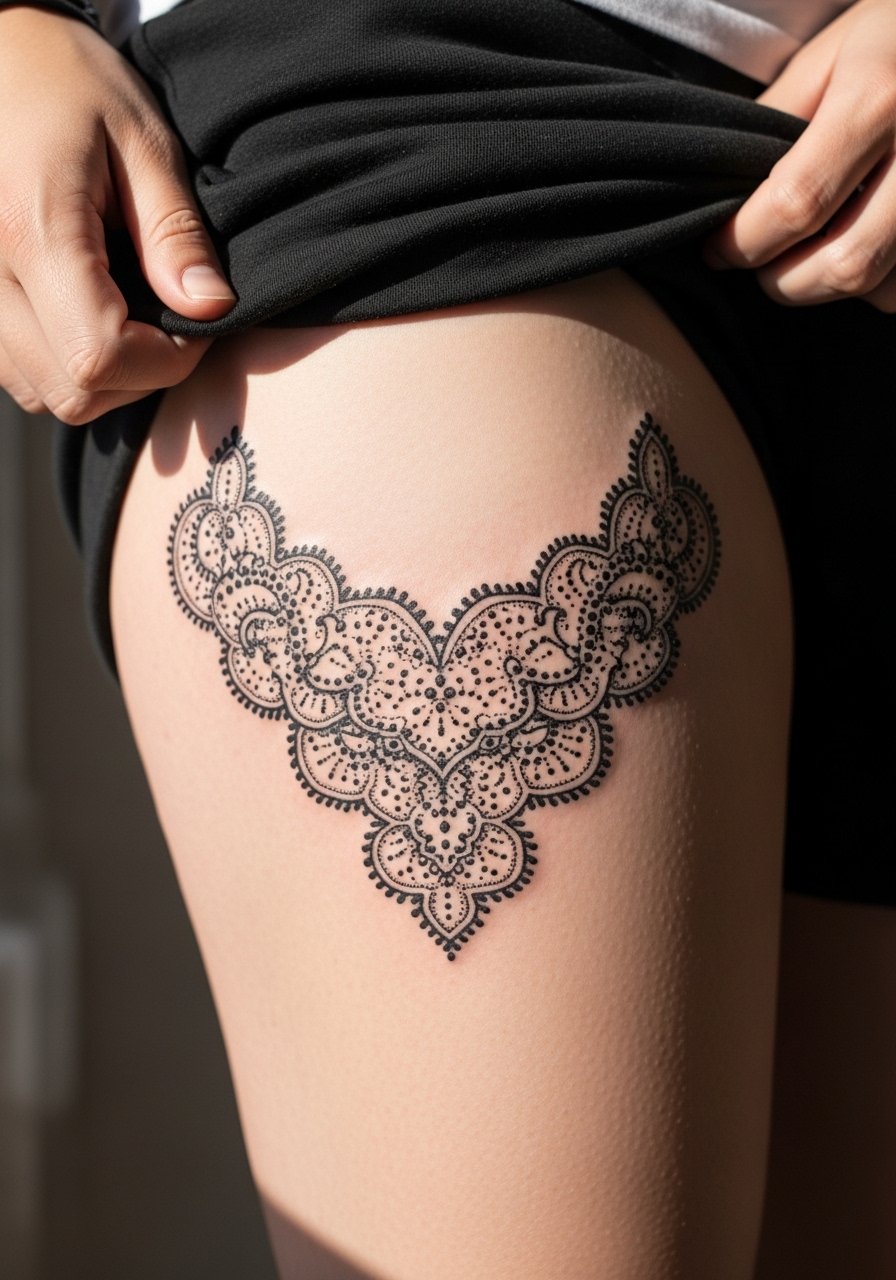
Mirrored lace benefits from symmetry and deliberate spacing. When you consult, ask the artist to mark both sides before inking so the mirrors align when you stand. The inner edge faces friction from inner thighs during walking, so plan for a protective wardrobe during early healing. For the session, choose soft cotton shorts that do not rub the area. A common mistake is expecting tight, micro-lace details to remain crisp without touch-ups.
15. Botanical Crescent with Negative Space Petals
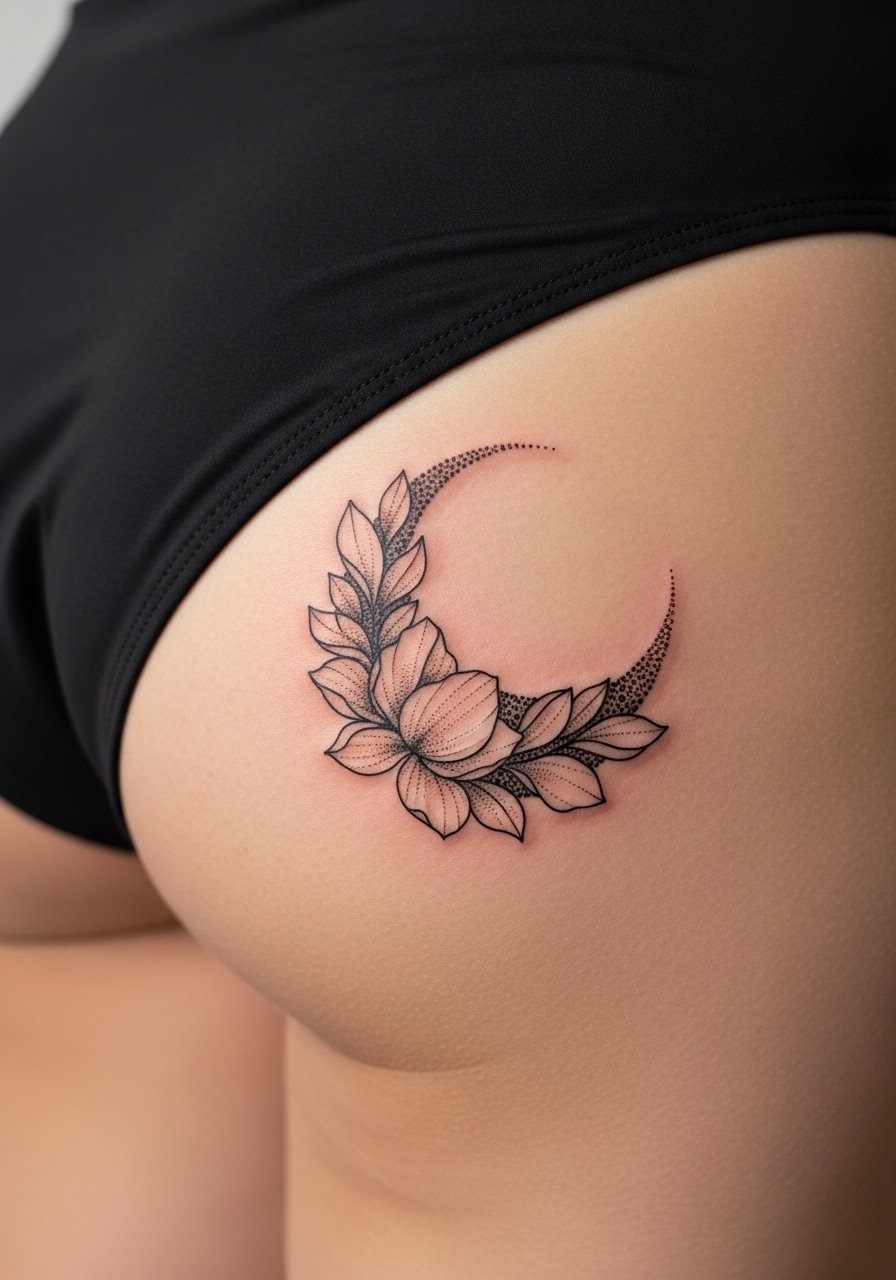
Negative space is a smart choice with dotwork because it preserves contrast as stippling softens. Request the artist leave defined gaps between petal clusters so the shape reads at distance. The back of the thigh tolerates this layout well, but be mindful of early garment contact. For showing it off, a high waisted bikini bottom draws attention to the crescent without covering it. The typical error is filling all areas with dots and losing the crescent silhouette over time.
16. Processional Dot Chain with Tiny Charms
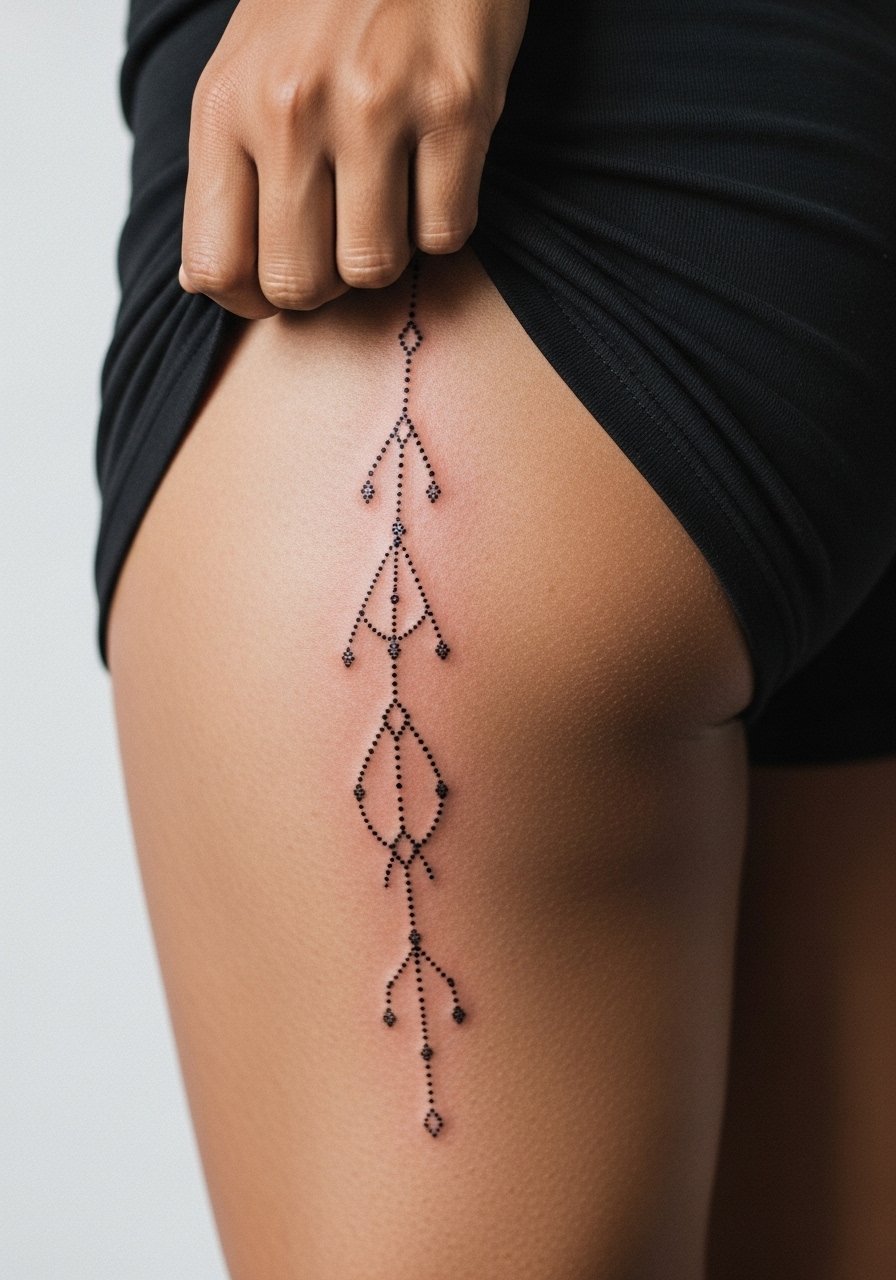
A processional chain reads like jewelry and moves with muscle when you walk. Specify charm sizes and spacing so each element remains distinct. Because the chain crosses variable tissue, some links may blur faster than others. Expect a steady, repetitive sensation during the session. For comfort, slip into stretch shorts you can adjust without pressure on the tattoo. The classic mistake is wanting ultra-small charms that merge under gentle blowout.
17. Sunburst Panel With Radiating Dots
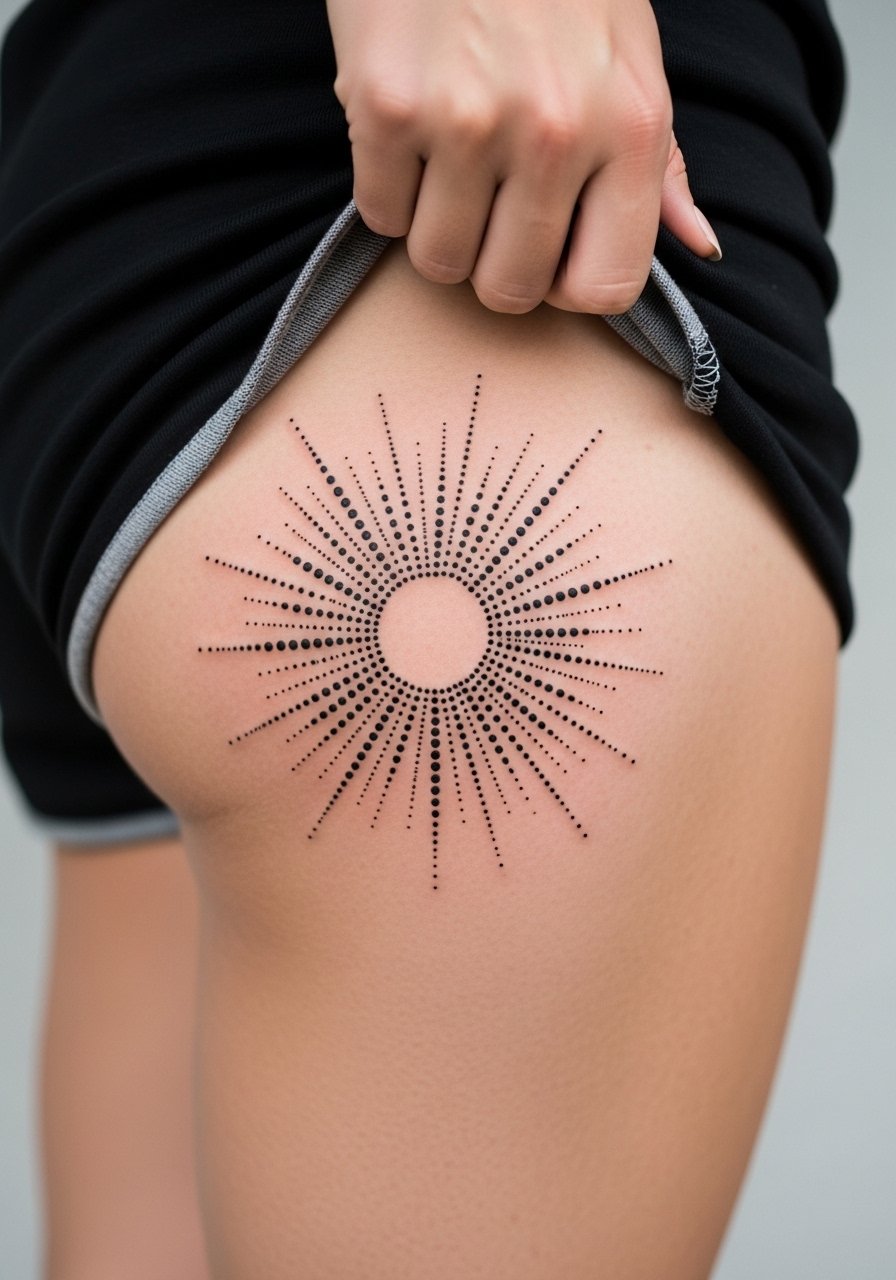
A sunburst uses radial stippling to create brightness that holds when dots are spaced outward. Tell the artist where you want the focal point so it complements thigh curvature. The area can show minor distortion when sitting, so place the center where muscle movement is minimal. For styling, pair with high waisted shorts that stop at the burst for a framed look. The usual misstep is compressing rays too close to the center where dots will smear over time.
18. Minimal Script Backed by Dot Halo

Tiny script can work when supported by a halo of stippling that keeps contrast. Specify exact text and font in the prompt to the artist, because lettering shrinks into a blur if too fine. The back thigh offers room so letterforms can be scaled to last. For session day, wear bikini bottoms you can shift so the composition stays intact. A contentious point among artists is how small script should be. One camp recommends bold letterforms that last longer. The other camp thinks careful shallow work can hold. Ask where your artist stands.
19. Ornamental Compass With Filigree Tail
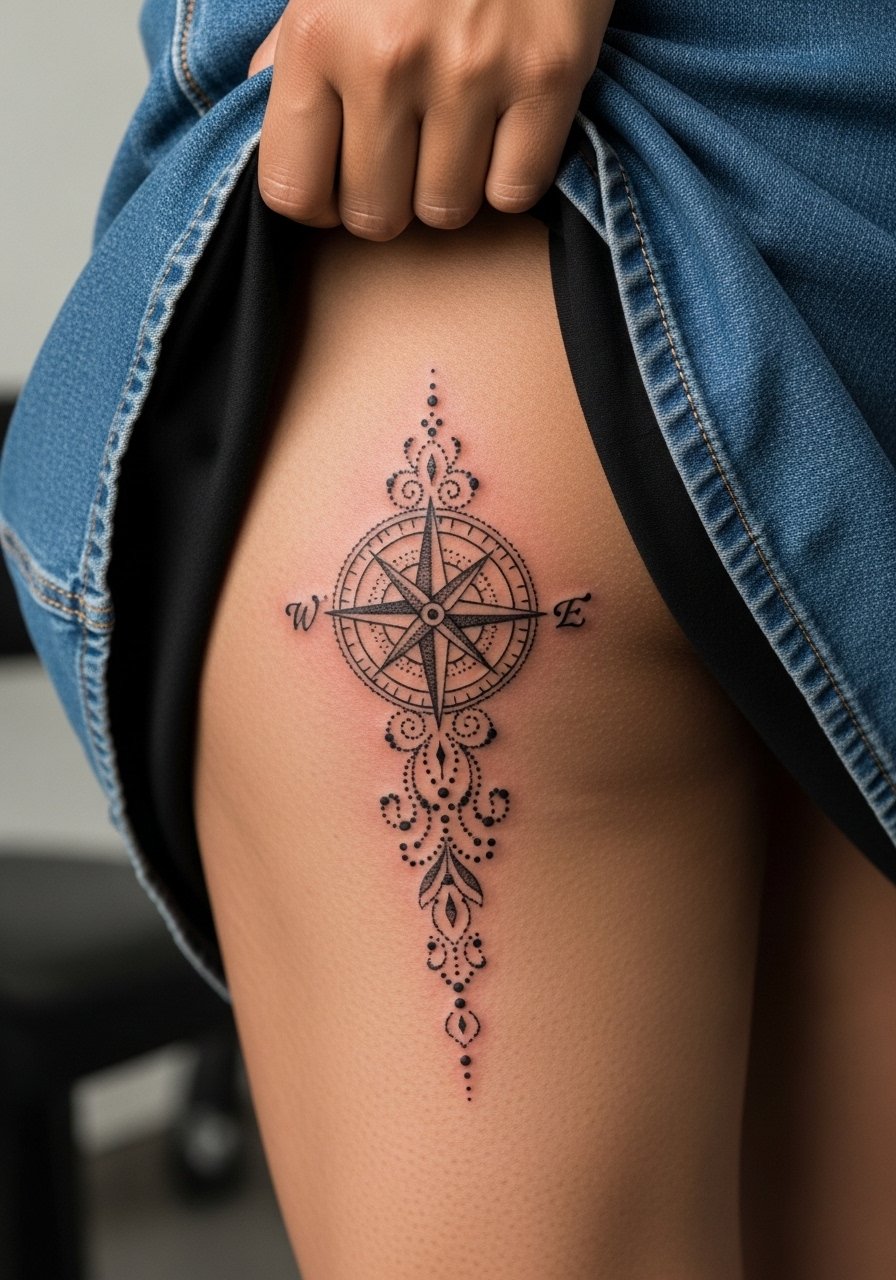
Combining an ornamental compass with a filigree tail gives directional meaning and decorative motion. Discuss focal weight so the compass does not get lost in filigree. Because the tail crosses the moving area, expect slight softening along its length in the first two years. For showing off at events, a skirt with a side slit or a high slit makes the filigree visible without exposing more than intended. Avoid asking for ultra-dense filigree that will look like a smudge after healing.
20. Botanical Mandala That Wraps Toward the Hamstring
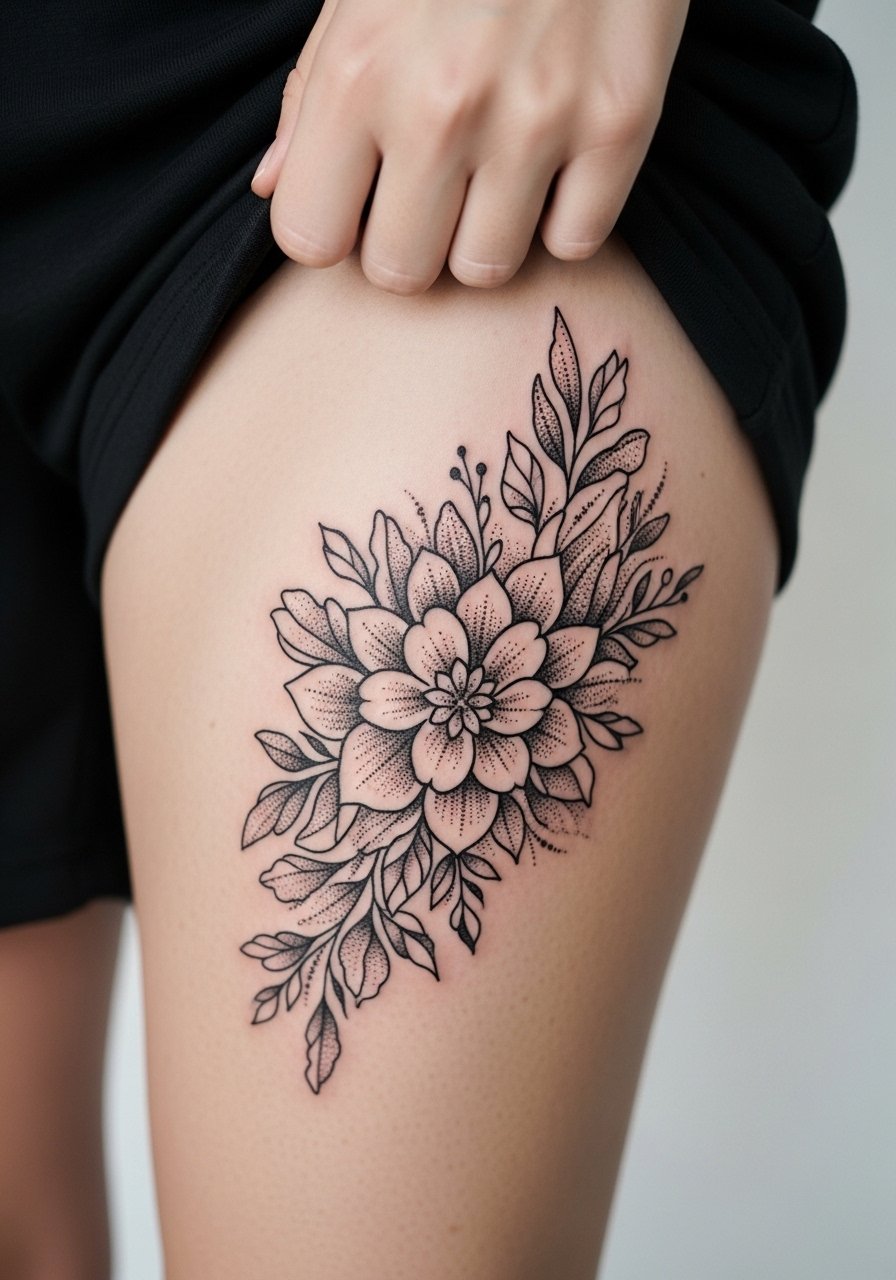
A botanical mandala that wraps toward the hamstring benefits from clear directional flow. Ask for outer petals to be larger to keep the silhouette readable over time. Expect longer sessions as stipple layers build. For the appointment, choose shorts you can shift without compressing the skin. The common error is mirroring a small photo reference exactly and losing the mandala's proportions on a curved thigh surface.
21. Interlocking Rings in Micro Dotwork
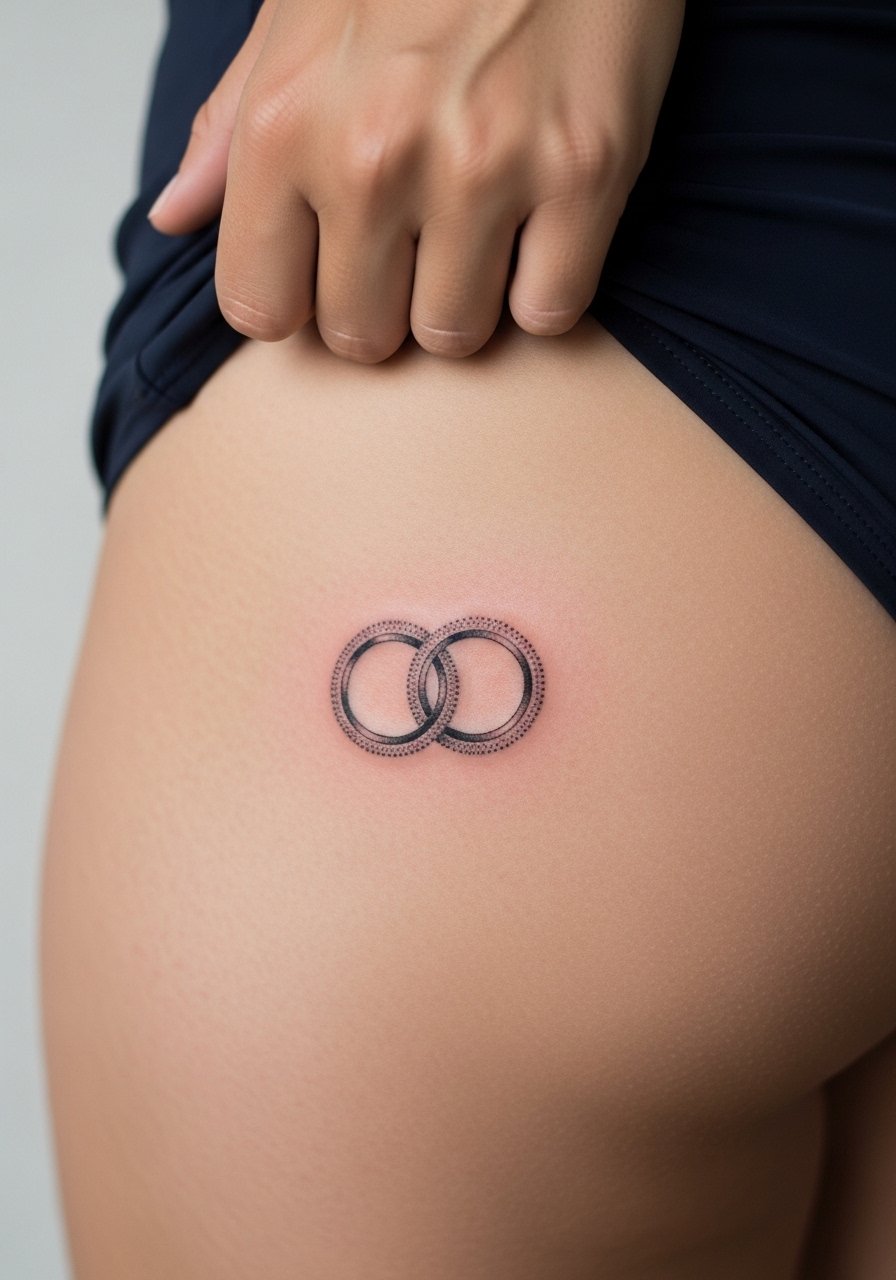
Interlocking rings need breathing room because micro dotwork can blend over time. Tell the artist you prefer ring widths that withstand mild blowout. The placement sees consistent movement, so expect a touch-up timeline of a few years for micro work. For showing it off, a swimsuit bottom that sits at the hip keeps the rings visible without constant rubbing. The mistake most people make is pushing for hairline dots that vanish when the skin relaxes.
22. Stylized Animal Silhouette in Stippling
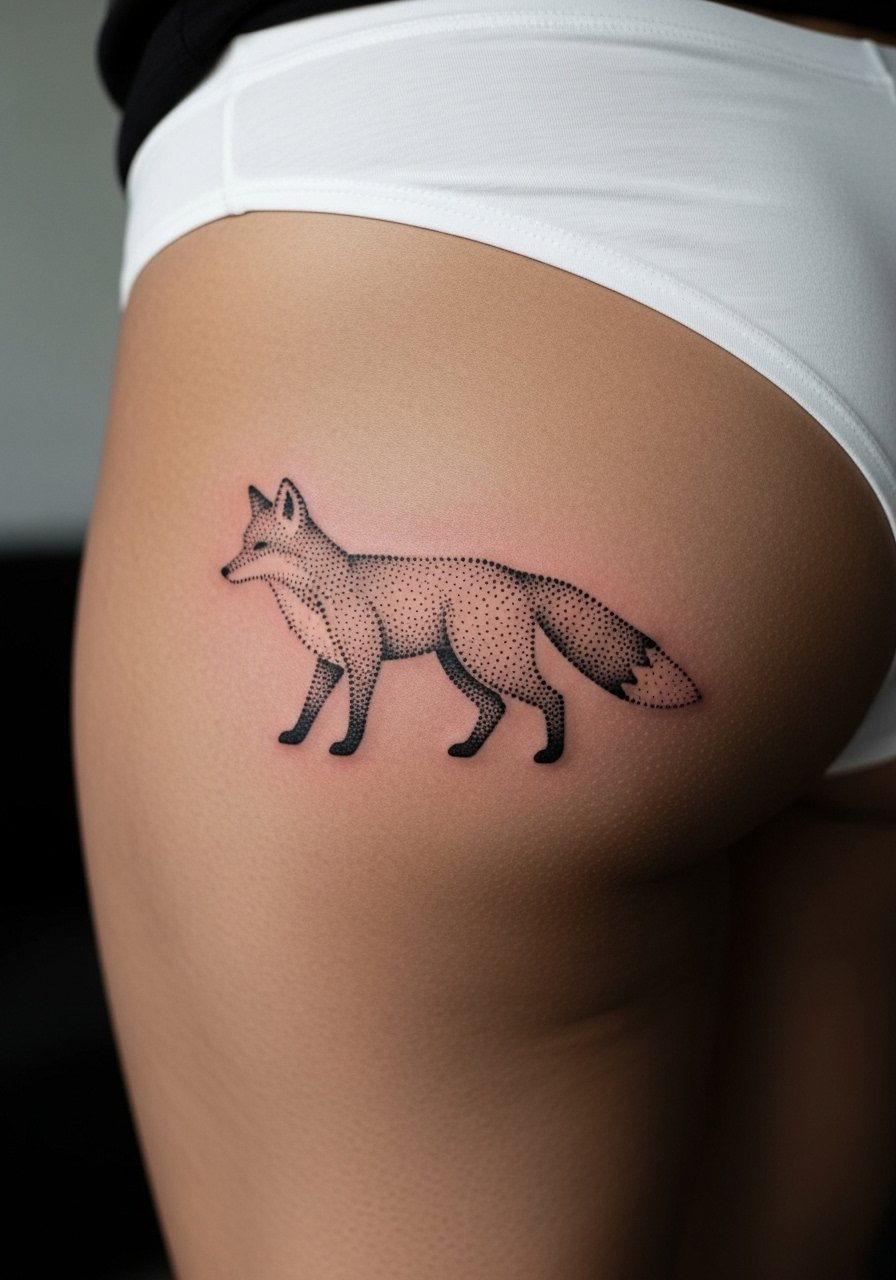
A stylized animal silhouette reads strongly when edges are kept bold and interior tones are stippled sparingly. During consult, agree on the silhouette scale so smaller features do not disappear. The thigh accepts larger silhouettes well and they tend to age predictably. For session comfort, choose comfort fit underwear that you can pull down slightly without affecting circulation. Avoid fine internal detailing that competes with the silhouette's outline.
23. Lunar Cycle Row with Stipple Gradation
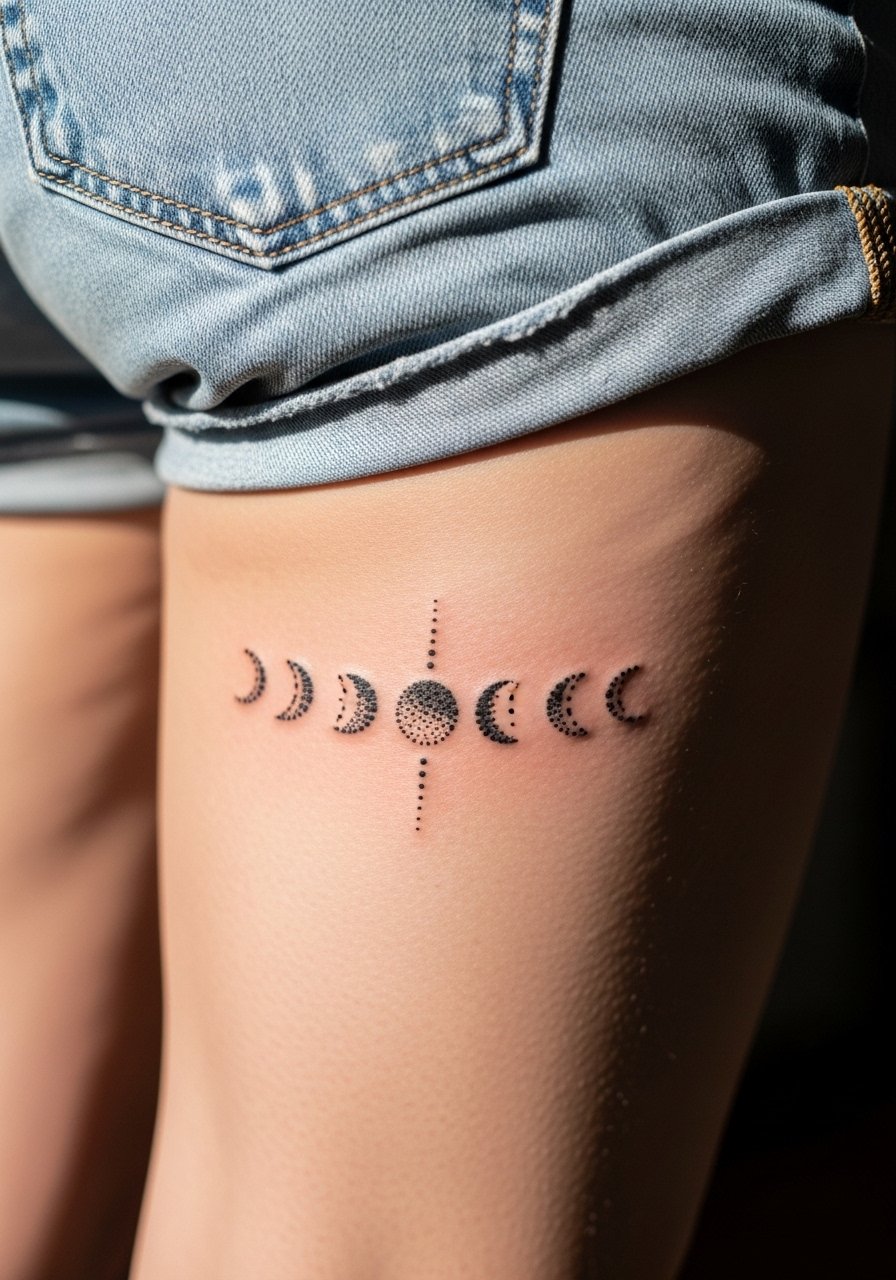
A lunar row benefits from deliberate gradation in dot density to show glow and shadow. Ask the artist for consistent negative spacing between phases to maintain legibility. Because the line runs horizontally across the thigh, placement can shift visually when seated. For showing it off, denim shorts lowered slightly at the hip pair well and keep the series visible. People often request micro shading that looks great fresh but softens quickly on this type of skin.
24. Abstract Mesh That Fades Toward the Knee
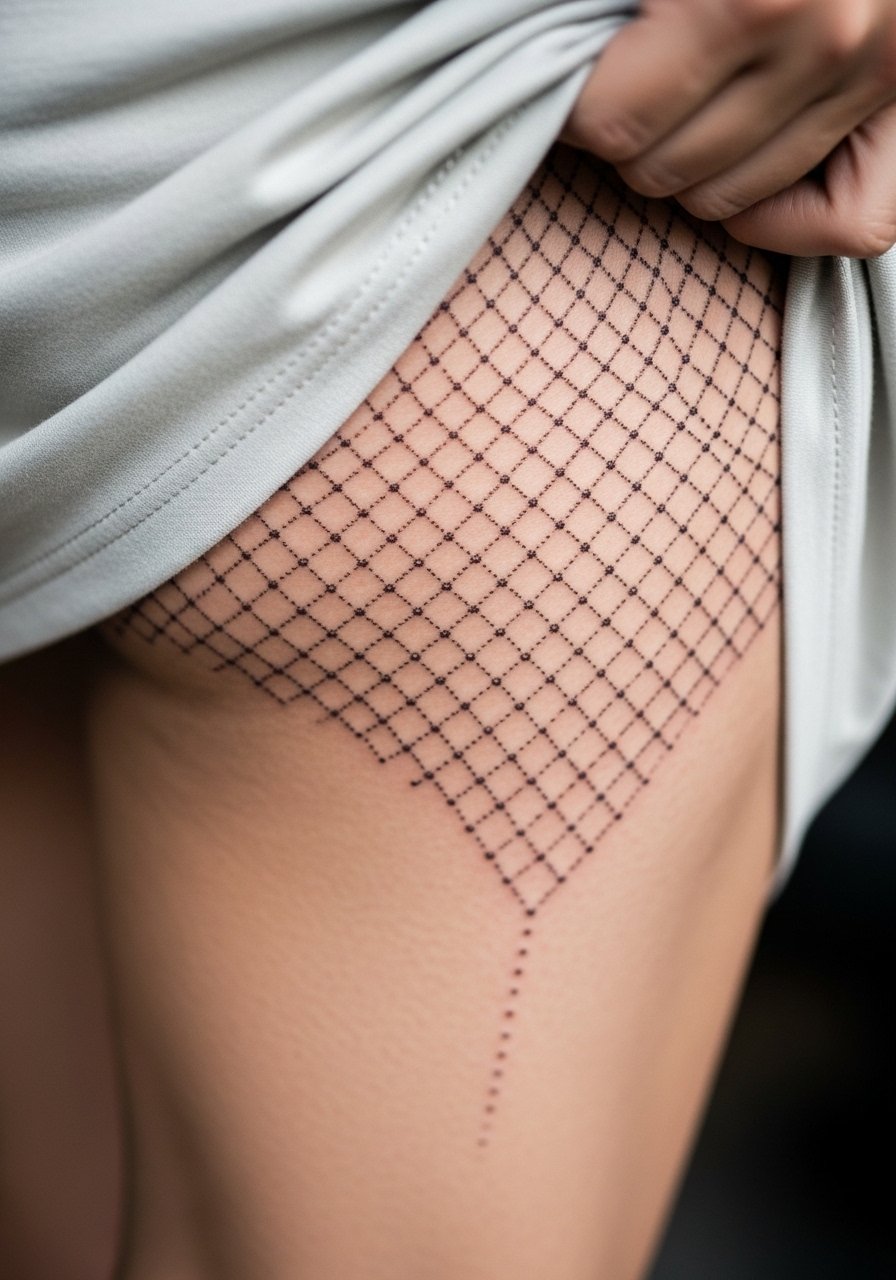
A mesh that fades toward the knee uses decreasing dot density to create motion. Tell your artist the exact fade point so it complements knee contours. Because the knee area is more active, expect faster softening near the fade. For session day, wear a skirt or shorts you can lift without tight waistbands. A frequent misstep is an abrupt fade that looks harsh once swelling subsides.
25. Botanical Sprig Paired with Tiny Coordinates
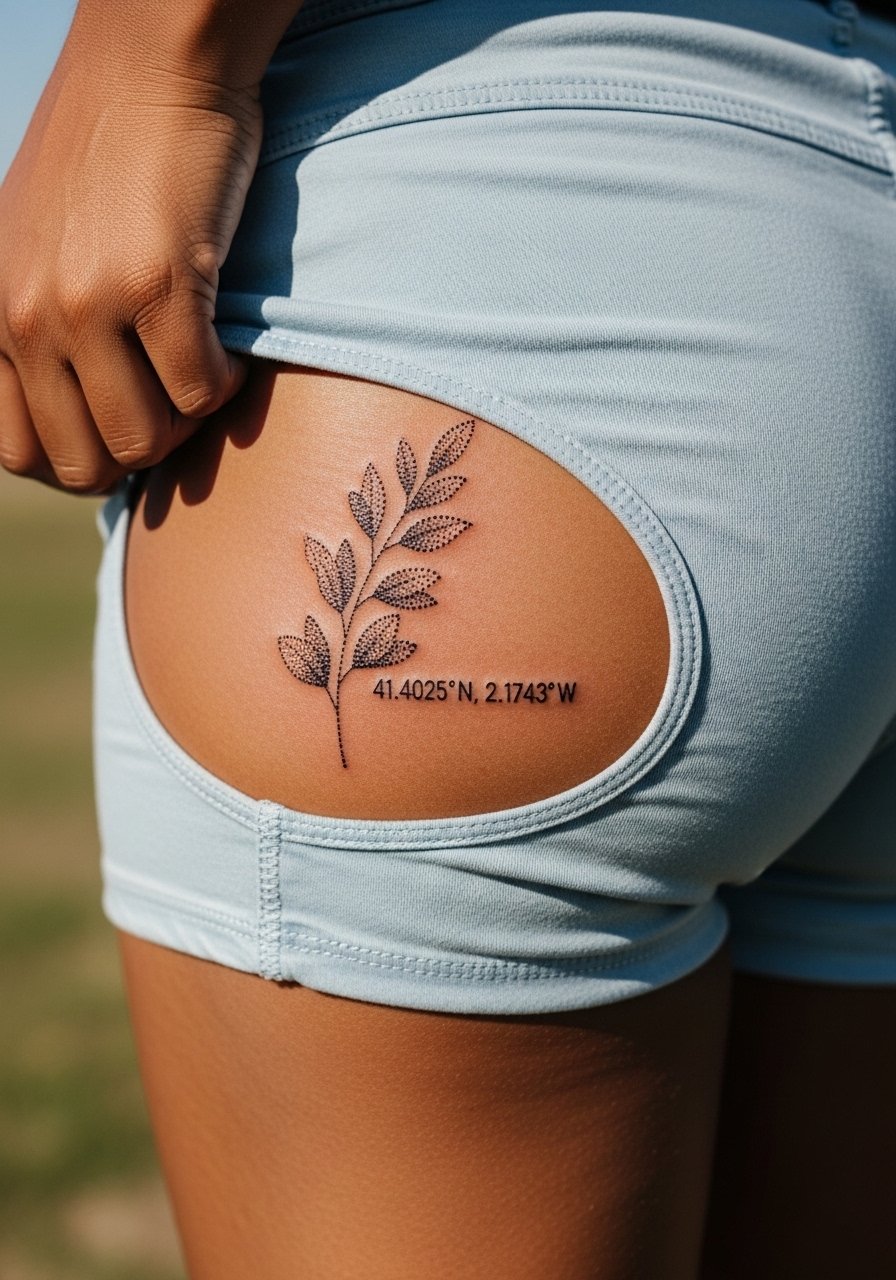
Combining botanicals with coordinates adds personal context. Provide the exact coordinate text to the artist so lettering is set correctly. Keep letterforms bold enough to survive skin movement. The back thigh holds the sprig well but minute numbers may need touch-ups sooner. For session wear, high-waisted shorts pulled just below the design work well. A mistake is insisting on ultra-tiny numerals that quickly blur in stippled surroundings.
26. Haloed Sigil With Delicate Stippling
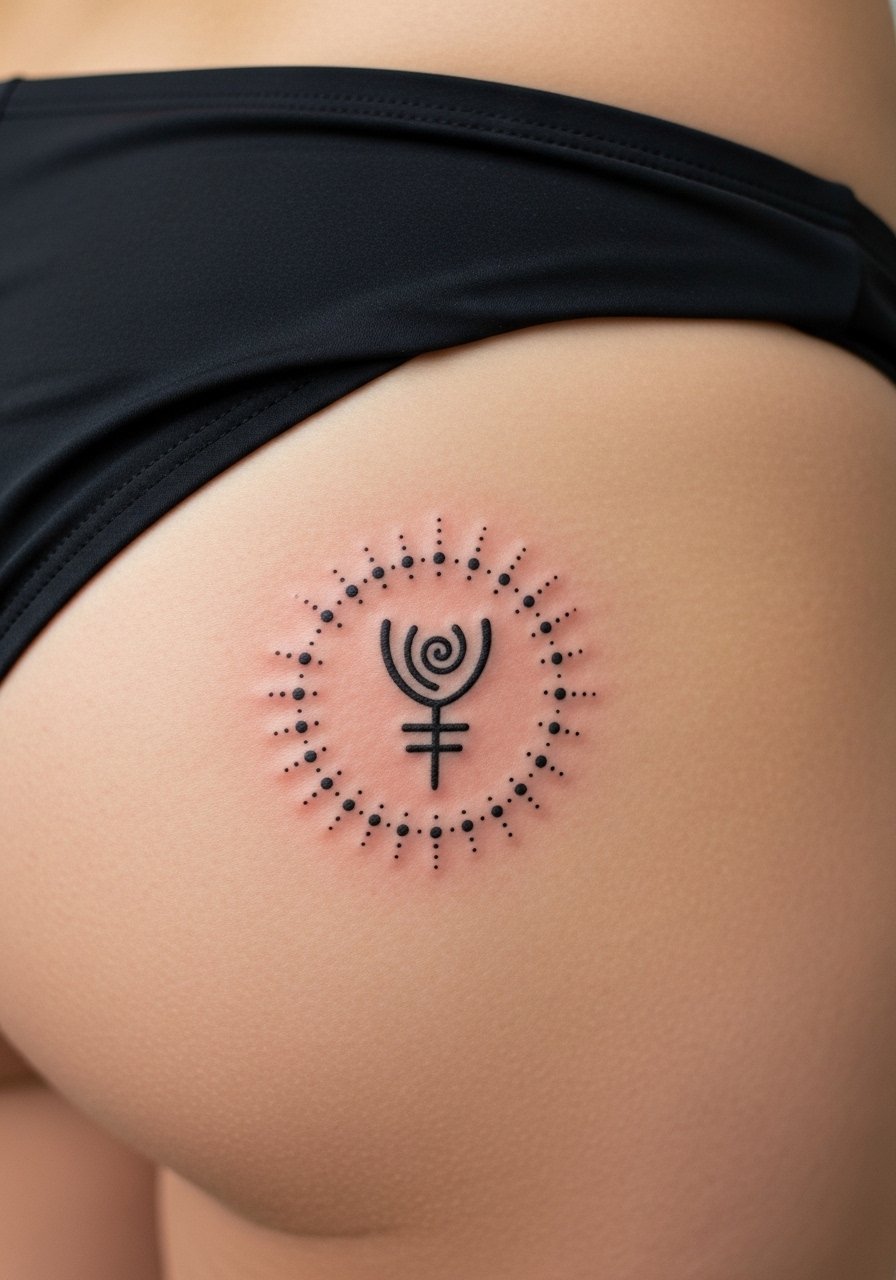
A sigil framed by a stippled halo stands out when the central mark is solid and the halo is airy. Decide on the symbol's scale during consultation because the central form anchors the halo. The area heals well with light halos, but heavy stipple can flatten the halo effect. For dressing, a bikini bottom you can shift keeps the halo visible while avoiding friction. Many people underestimate how quickly a dense halo will integrate into skin texture.
27. Quarter Moon Garland Ending Near the Knee
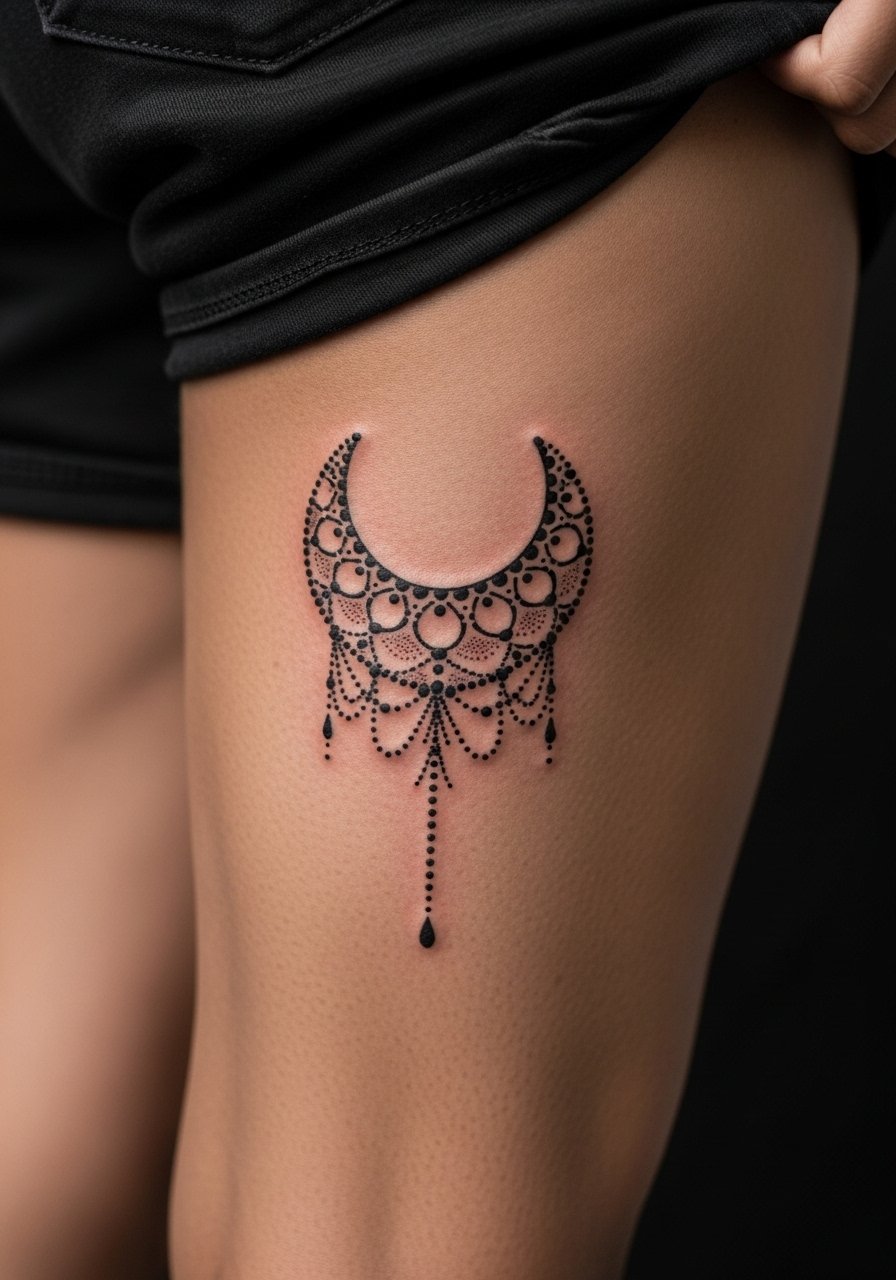
A garland of quarter moons creates a directional trail that reads well with leg movement. Ask the artist to balance moon sizes so the finale near the knee does not wash out. This placement can be sensitive as it approaches the knee joint, so expect localized tender spots. For show-off styling, a pair of casual shorts that sit just above the garland shows off the piece naturally. A final mistake to avoid is cramming too many moons into a short span and losing definition.
Frequently Asked Questions
Q: How does dotwork on the back of the thigh age compared with a solid black piece?
A: Dotwork tends to soften differently than solid black fills. The stipple texture loses crispness as dots spread slightly with time, but a well-spaced dotwork design often preserves pattern better than a compact solid that can grey out. Expect touch-ups in five years for dense work and sooner for micro dot clusters.
Q: What should I wear to the appointment for a back-of-thigh session?
A: Wear loose, easily adjustable bottoms so the artist can access the area without fabric tugging. A good option is loose drawstring shorts you can lower slightly and then pull back up without pressing on the fresh ink. Bring a pair that sits comfortably on your hips.
Q: Are there controversies about doing fine dotwork on the thigh?
A: Yes, artists divide into two camps. One camp warns that micro dotwork and fine details on moving thigh tissue blur sooner and require touch-ups. The other camp argues that with correct spacing and needle depth, dotwork can hold beautifully on the thigh. The right approach depends on the artist's method and your skin's behavior, so ask about past thigh pieces in their portfolio.
Q: Will friction from clothing ruin a back-of-thigh tattoo during healing?
A: Friction is a real concern for thigh work because shorts and rough fabrics can irritate scabs and pull pigment. During the first week wear soft, breathable fabrics and avoid tight waistbands. Protective film from the studio followed by loose clothing helps minimize rubbing while the skin stabilizes.
Q: How soon will I need a touch-up for dense stipple panels on the back of the thigh?
A: It depends on density and placement. Dense stipple patches tend to need a touch-up around year two to four if the dots were packed tightly. Lighter stipple with preserved negative space can stretch closer to five years before any work feels necessary. Talk specifics with your artist during consultation.
Q: Can I get large cultural patterns in dotwork on the back of the thigh respectfully?
A: You can, but it is important to approach cultural patterns with care. A good practice is to discuss origin and intent with your artist and opt for respectful variation rather than direct replication when appropriate. Many people choose to adapt elements into a personal composition that honors the source without copying sacred motifs.