
Fine line portraits and matching scripts look fragile when fresh, and that fragility is what makes them feel honest. What most people do not realize is the choices you make before the needle touches skin determine whether those small details still read at year five. These ideas focus on black and grey approaches that keep edges, emphasize contrast, and plan for aging so the mom and dad pieces stay legible and emotional.
1. Scripted "Mom" and "Dad" on the Inner Wrist

I recommend tight, slightly bolded script for inner wrist name tags because wrists see a lot of sun and friction. Fair warning, the wrist is a higher-motion spot and the thinnest lines will generally blur first. Tell your artist you want letters with a touch of weight where curves meet stems so the words keep their silhouette at one and five years healed. Expect a short session, about 45 to 75 minutes, and a likely touch-up at year two if you want them crisper. For the session wear, pull on a loose button-down shirt so sleeves roll easily and the wrist is accessible without tugging.
2. Micro-Realism Parent Portrait on the Inner Forearm

I've seen more forearm portraits hold up than those on high-movement zones because the inner forearm has steady skin and fewer friction points. Ask for micro-realism with stipple shading rather than dense greys so the highlights remain readable as the piece ages. The consultation line should include reference photos in the exact lighting you want the portrait to evoke. Typical session time is two to three hours depending on scale. A common mistake is trying to cram too much contrast into a tiny area. If you want to show it off, rolled sleeves pair well, and a long-sleeve cuff bracelet can frame the piece without covering it.
3. Interlocking Hands Silhouette on the Chest

The chest is emotional and reads like a statement. Pain varies, but upper chest work tends to be medium on the scale because of thin skin and bone proximity. Ask your artist for clean silhouettes with negative-space highlights to avoid muddied mid-tones. At six months the contrast will be highest, and by two to five years the edges soften; spacing the fingers slightly apart in the original design prevents them from merging later. For the session, wear a wide-neck shirt so the artist can pull fabric aside without full exposure.
4. Tiny Matching Coordinates on the Ribcage

Fair warning, ribs are a tough spot to tattoo. Pain is high and the skin moves with breathing, which can affect line consistency. Artists are split on fine line on ribs. One camp says the stretch and motion blur lines quickly. The other camp says with proper depth, spacing, and slightly bolder line weight the design settles fine. Ask where your chosen artist stands and bring a reference that shows slightly thicker numerals rather than hairline script. Sessions are often short but intense, and a touch-up at year two is common for tiny numerals. For the appointment wear a sports bra or cropped top so the area can be exposed without discomfort.
5. Black And Grey Rose with "Mom" Ribbon on the Shoulder Blade
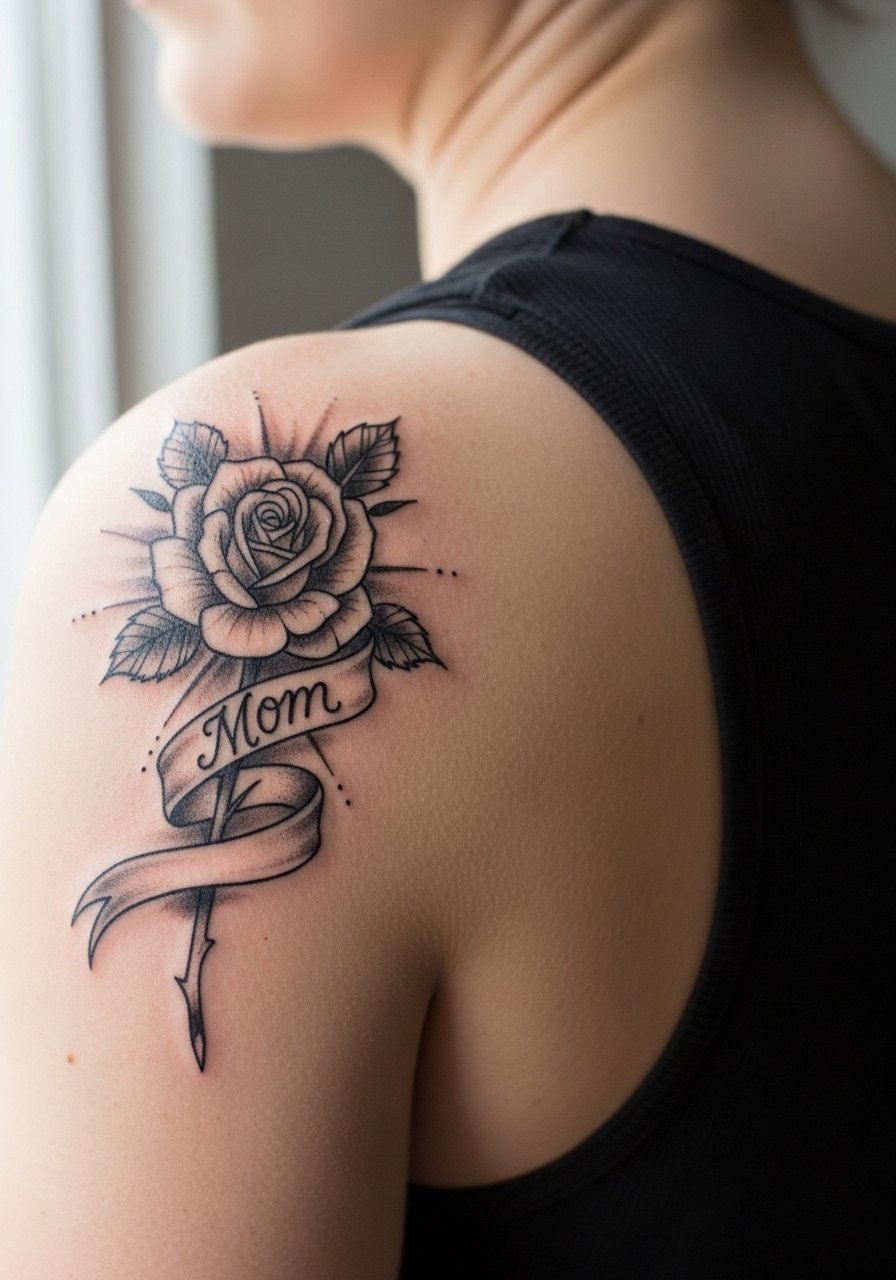
Shoulder blades take saturation well and age predictably if the petals have breathing room. Tell the artist to avoid filling fine petal veins with heavy grey in a tiny tattoo. That version tends to turn into a patch of tone after a few years. Instead, request a mix of solid blacks and stipple shading so the rose keeps shape without needing frequent touch-ups. Sessions here run one to two hours. For showing it off, an open-back or a tank with a low back highlights the piece without compromising clothing.
6. Parent Hand Holding Child Silhouette on the Calf
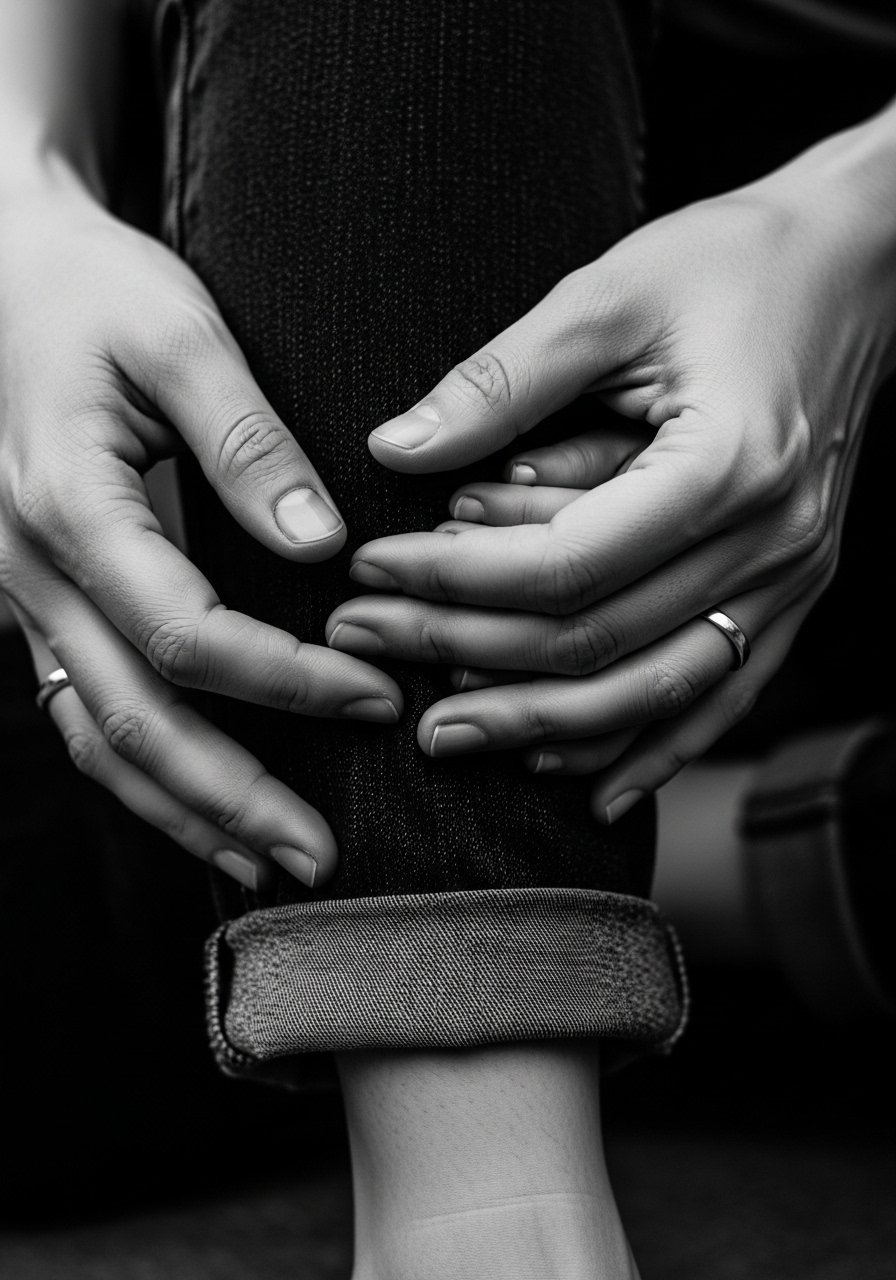
There's a visual quiet to silhouettes on the calf because the area is low friction and not sun-exposed as much as arms. When you ask for this, specify scale so the fingers are not rendered so close that they fuse over time. Expect a session under 90 minutes and a low blowout risk here. The common mistake is over-detailing the tiny child hand. Simpler shapes hold through years. For session comfort, roll up your jeans and consider slipping into loose drawstring linen pants that the artist can easily move around the calf.
Studio Day Picks
Those first six designs range from wrists to ribs, and a couple of them need different prep because of motion, access, and sensitivity.
- Stencil transfer paper kit. Helps you and your artist preview placement on the skin, which matters for scripted names and tiny numerals on wrists and ribs.
- Topical numbing cream. Use as directed about 45 minutes before rib or chest sessions to ease discomfort during short but painful passes.
- Thin protective film roll. Keeps small wrist and finger pieces clean during the first few days of frequent handwashing.
- Fragrance-free body wash. Gentle cleansing reduces irritation around delicate linework while healing.
- Aquaphor healing ointment. Thin layers during the first days lock in moisture for fine line work without clogging the needle channels.
7. Lock-and-Key Matching Pieces Behind the Ear

Behind-the-ear tattoos read very intimate and they are tiny enough that line weight matters more than detail. The placement requires precise needle depth because the skin there is thin and there is a risk of blowout if needle depth is inconsistent. When you consult, ask for a slightly thicker outline around the lock or key so the silhouette remains legible as the piece ages. Session time is short but expect tenderness. This placement needs an artist experienced with small pieces near ear cartilage. For coverage on the day, wear hair up and a hair claw or band so the area stays visible without tugging at the skin.
8. Fingered Initials with a Thin Band Accent

Finger tattoos are convenient but controversial among artists because of constant washing and thin skin. One camp warns of early fading and blowout. The other camp says with bolder, simpler marks and regular touch-ups they can remain crisp. If you want initials for mom and dad, pick one clean initial per finger and avoid micro flourishes that will fill in. Expect multiple short sessions rather than one long appointment. There is also a higher touch-up timeline, often at year one or two. Think about how rings and bracelets will sit, and consider a thin chain bracelet to frame the fingers without rubbing the inks.
9. Portrait in a Vintage Locket Frame on the Sternum
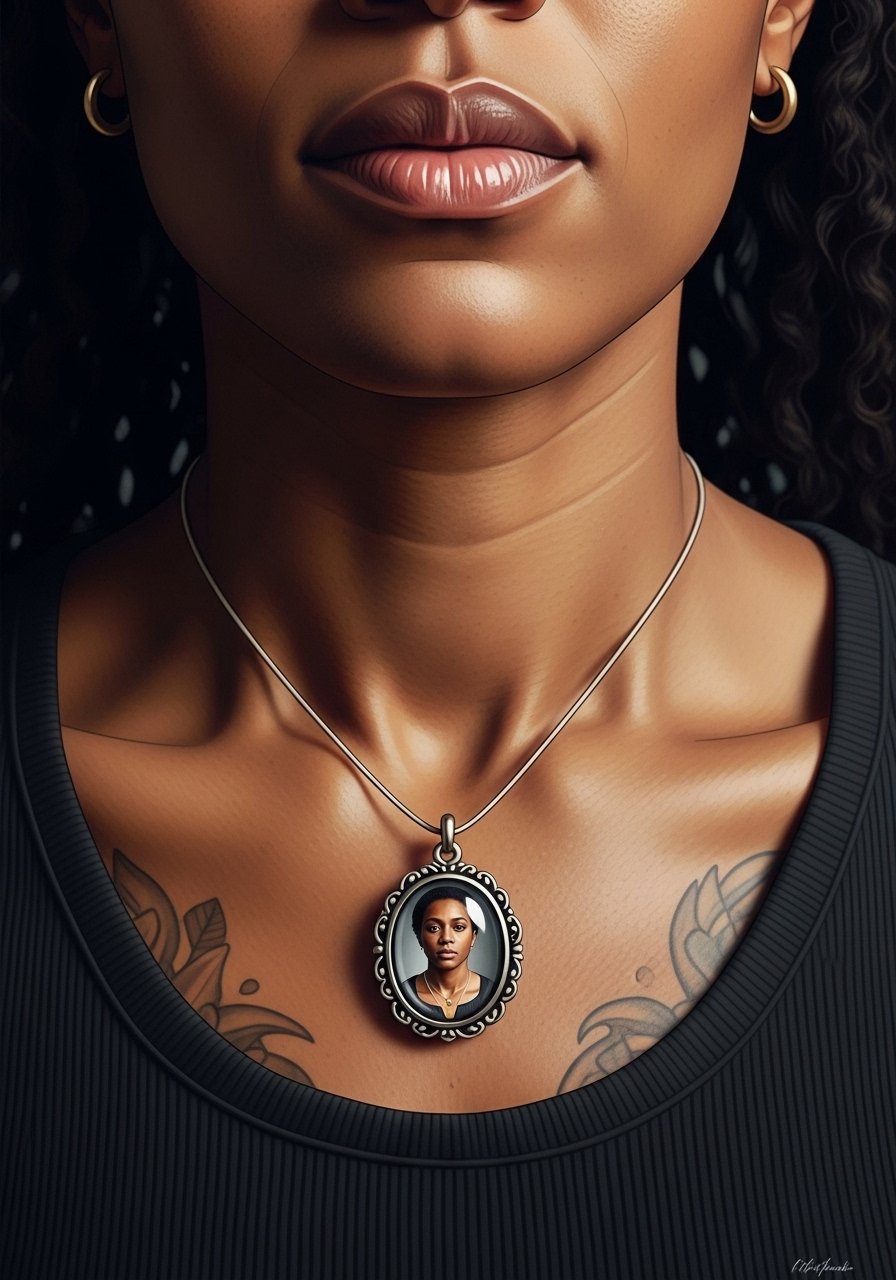
Sternum placements are intimate and can be painful because of the bone and thin skin. For a locket portrait, request a slightly raised frame line and lighter shading inside so facial detail does not collapse into mid-tone. The common mistake is cramming too much texture inside a small oval. Sessions can clock multiple hours with breaks. This placement often requires an artist who regularly does chest work and understands how the canvas shifts. For sessions, wear a fitted sports bra that you can pull down just enough to reveal the area without full exposure.
10. Matching Footprints on the Ankle
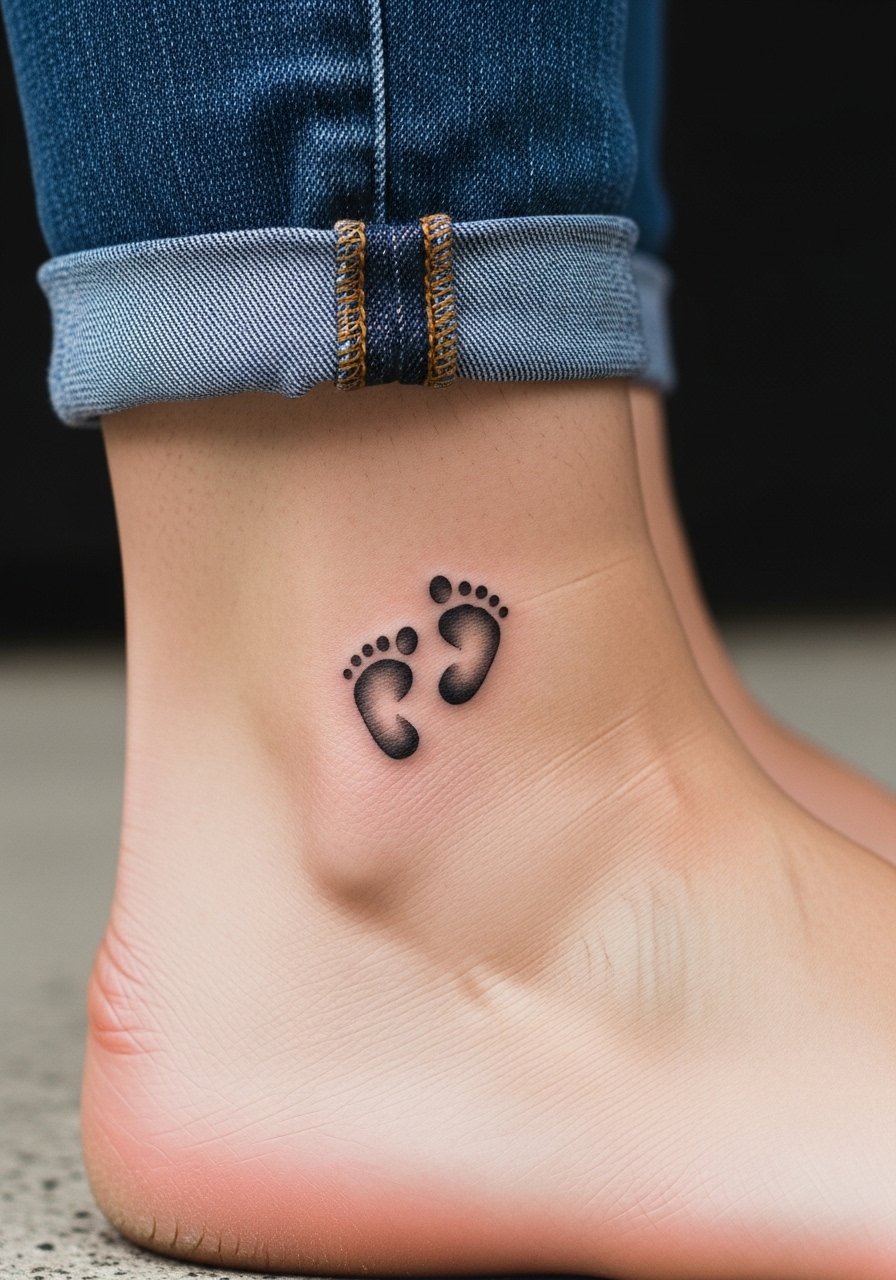
Ankle placement can be a sweet, low-profile way to commemorate parents becoming caregivers. The skin around the ankle moves and rubs with shoes, so keep the prints slightly simplified rather than ultra-fine detail. The session is quick and the blowout risk is moderate if lines are placed too deep. Over time expect some softening near the edges. For visibility with sandals, roll pant cuffs or choose low shoes on showing-off days.
11. Baroque Frame with Tiny Portrait on the Upper Arm

Outer upper arm work tends to be forgiving since it is a lower-friction area and the skin is thicker. For an ornamental frame, ask for open negative spaces within the pattern so the darks do not fuse as saturation settles. A common mistake is over-filling details that blur into each other when the piece ages. Session time is moderate, usually one to two hours, and touch-ups are less frequent. If you want to show it off in summer, a sleeveless tee or rolled sleeve shirt frames the ornament without competing.
12. Fingerprint Heart Split Between Two Hands on the Rib
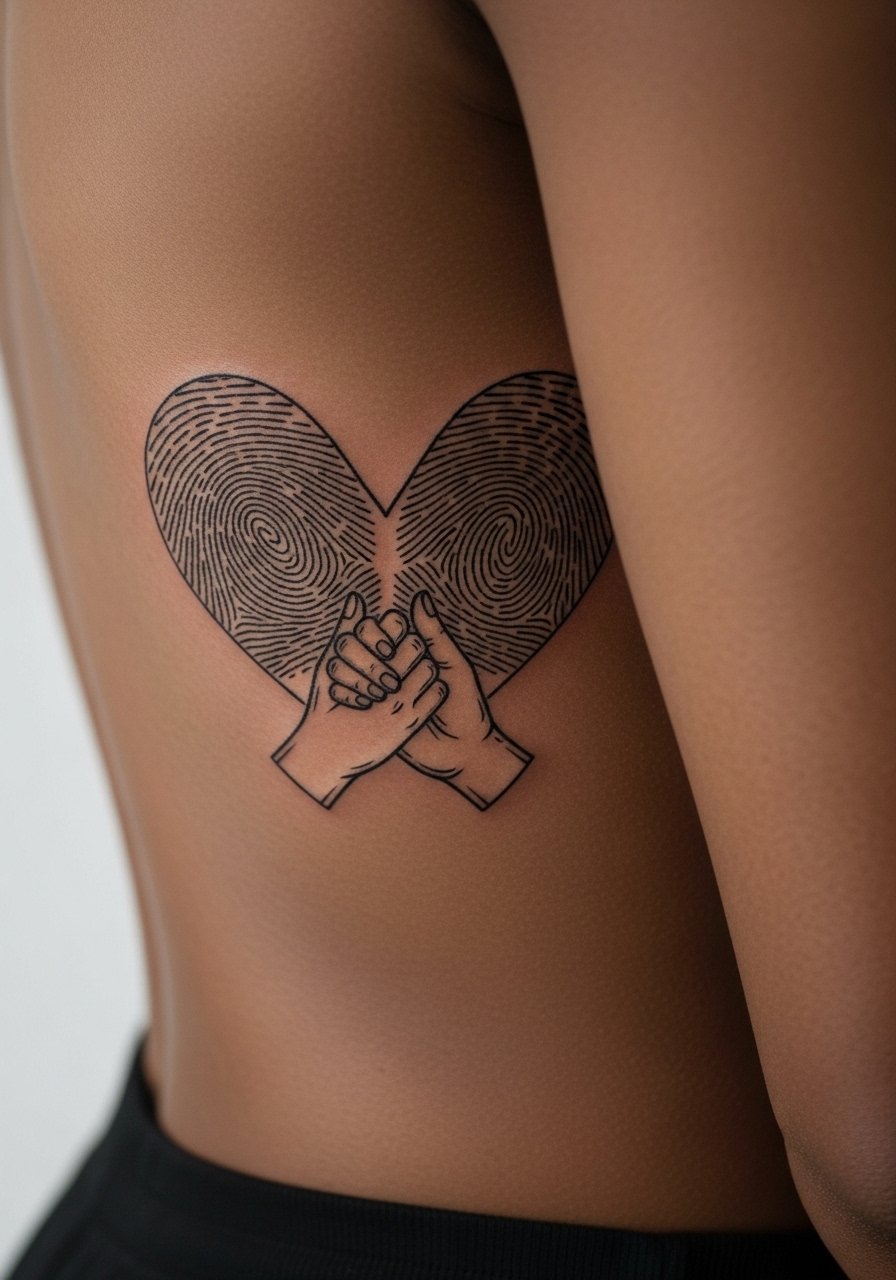
This is a personal concept that reads like a puzzle. The ribcage is a sensitive canvas, so plan for pain and the breathing motion. The biggest mistake is making each fingerprint half too intricate. That detail will often merge under normal skin movement. Ask for bold valley lines within the fingerprint so the pattern still reads as a fingerprint at distance. Sessions are typically short per side, and you'll want a restoration check at year two. Because this is an intimate placement, find someone used to fine work on torsos.
13. Small House Silhouette with "Mom + Dad" Script on the Collarbone
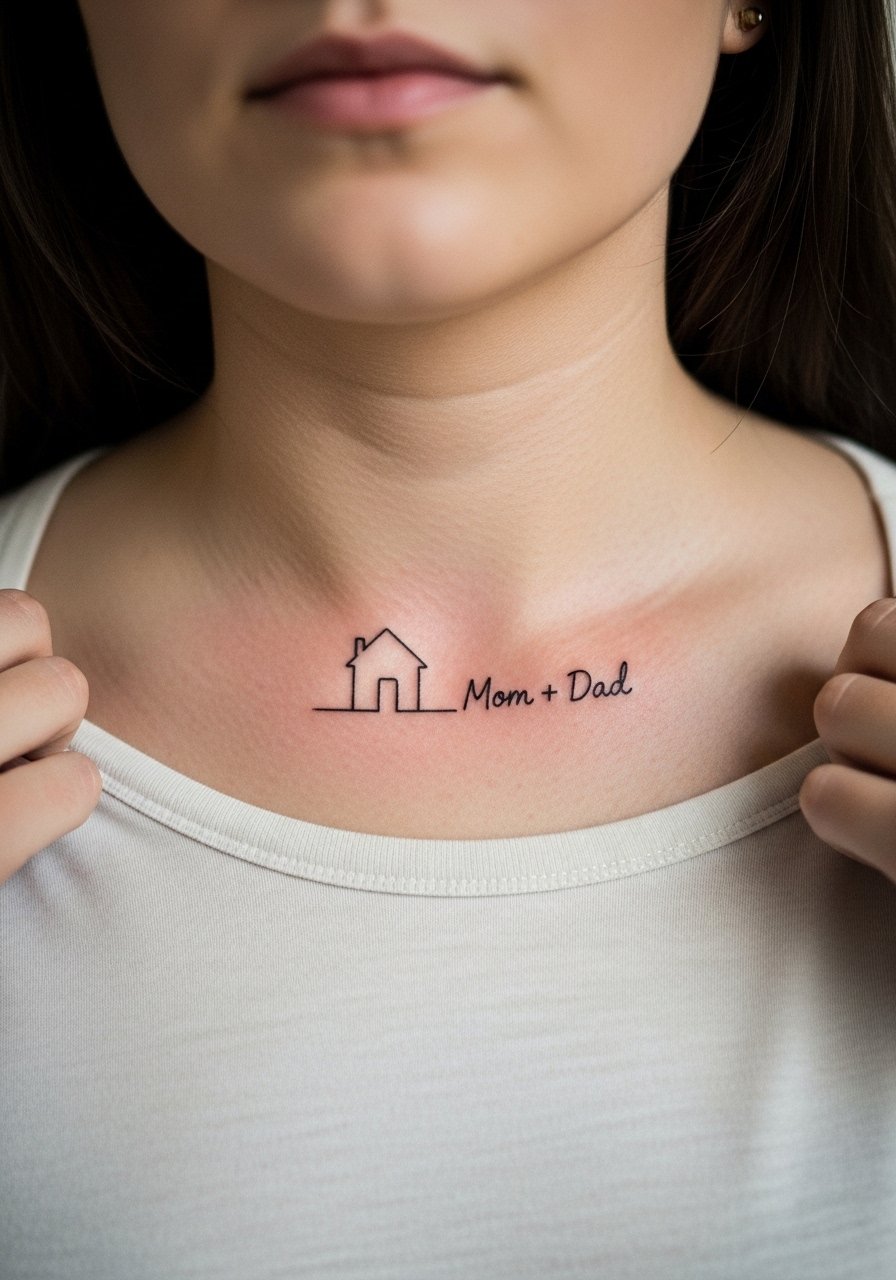
Collarbones show off family symbols nicely because clothing can frame or reveal them. Ask for a compact house outline with legible script that sits just under the clavicle so shirts can either cover or display it. Linework on the collarbone needs slightly more weight than hairline script because bone undercuts can make thin marks look broken. Sessions are usually under 90 minutes and touch-ups are occasional. For evenings out try an open-neck blouse that lets the piece breathe without competing.
14. Negative-Space Family Tree on the Lower Back

Lower back skin can be subject to stretching with movement and changes in body composition. Negative-space designs help because they rely on silhouettes rather than micro detail. Tell your artist to plan branch spacing so names or initials do not sit too close to each other. The session can be longer if you opt for multiple names, and touch-ups depend on how often the area sees sun or friction. For the session wear high-waisted bottoms that can be lowered slightly without exposing more skin than necessary.
15. Roman Numeral Dates in a Thin Band Around the Wrist
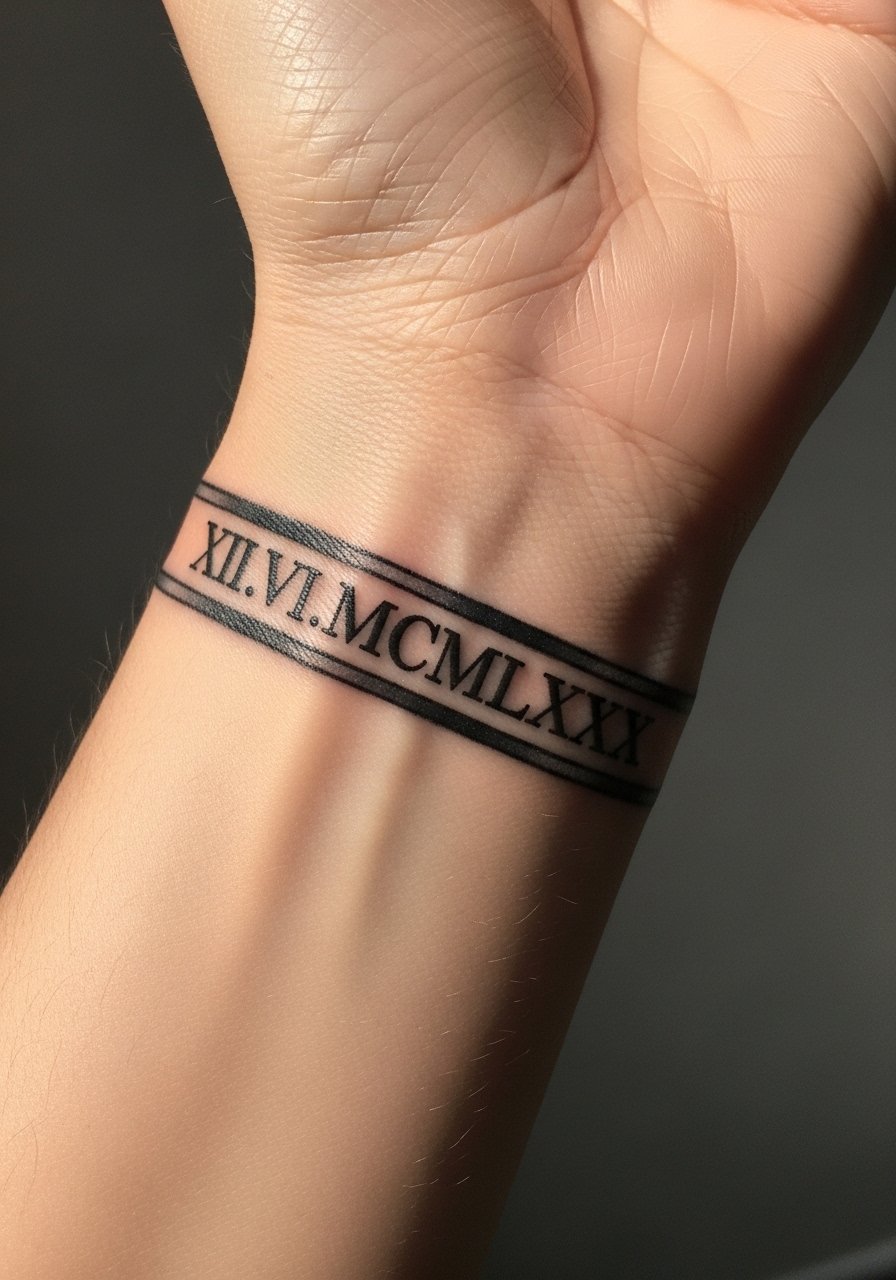
Bands made of text look secure when numerals have clear spacing. Ask for slightly expanded kerning between numerals. Tiny numerals placed too close will bleed into one another. Expect low session time but a higher chance of early softening if the band is ultra-thin. A common mistake is requesting a wrap that goes too far toward the palm where skin is thinner. For showing it off, stacked minimalist bracelets complement without competing, and a thin chain pendant can balance wrist and neckline.
16. Silhouetted Profile Series on the Spine

Spine work reads vertically and can be dramatic when done in tight silhouettes. Pain is moderate to high depending on proximity to bone. For a series of profiles, keep negative space between each to preserve individuality as lines soften. A session may be split into parts if the area is sensitive. The common mistake is too much internal facial detail in a silhouette. Keep it bold and consider a touch-up at year three. For sessions wear a back-friendly tank you can lower slightly without exposing more than necessary.
17. Minimalist Compass with Parent Initials on the Inner Bicep

Inner bicep pieces age well in terms of blowout risk because the skin is thicker and less exposed to sun. However, motion and stretch from lifting can alter line crispness. Tell the artist you want a compact compass with bold cardinal points and initials done in a slightly heavier hand. Sessions are moderate in length and the area can be tender. A typical mistake is trusting ultra-fine compass needles for a piece expected to be seen from a few feet away. For the appointment wear a loose tank top so the artist can access the inner arm easily.
Frequently Asked Questions
Q: How often will these black and grey mom and dad tattoos need touch-ups?
A: It depends on placement, skin type, and sun exposure. Fingers and ribs usually need touch-ups sooner, often within two years, while upper arms, calves, and lower back can go longer before a refresh. If you prefer less maintenance, pick bolder linework and simpler shapes to extend the time between touch-ups.
Q: Can a small micro-realism portrait truly age well on the forearm?
A: Yes, but size and shading choices matter. Micro-realism on a stable canvas like the inner forearm tends to hold better when artists use stipple shading and avoid packed mid-tones. Ask for slightly heavier contrast in facial outlines during the consultation so the portrait keeps definition as it heals and years pass.
Q: Are hand and finger tattoos appropriate if I work in a conservative office?
A: They can be problematic in some professional settings because hands are visible and hard to conceal. If your career path is a concern, consider collarbone, inner bicep, or calf placements instead. If you still want finger marks, tiny, discreet locations on the side of the finger are less noticeable.
Q: Should I bring original handwriting or a scan of a parent's signature for a script piece?
A: Yes. Bring a high-contrast scan or a clear photo of the handwriting. That gives the artist the best chance to replicate nuanced loops and strokes while letting them adjust line weight so the signature stays legible after healing.
Q: Do black and grey portraits require different aftercare than linework pieces?
A: The basic aftercare steps are the same but portraits often have more saturation and may benefit from slightly longer moisturizing during the first week to prevent scabbing that pulls at fine shading. The inline product picks above include gentle cleansers and ointments that work well for both types.