
Fine line half moon tattoos feel like a small design with a big presence, especially when the linework reads crisp and the placement complements your everyday wardrobe. Trends push ever finer strokes, but longevity depends on where you put it and how you plan to show it off. Start with a placement that fits your lifestyle, then use these minimal half moon ideas to picture how each one will age and play with your clothes.
1. Tiny Half Moon on the Inner Wrist
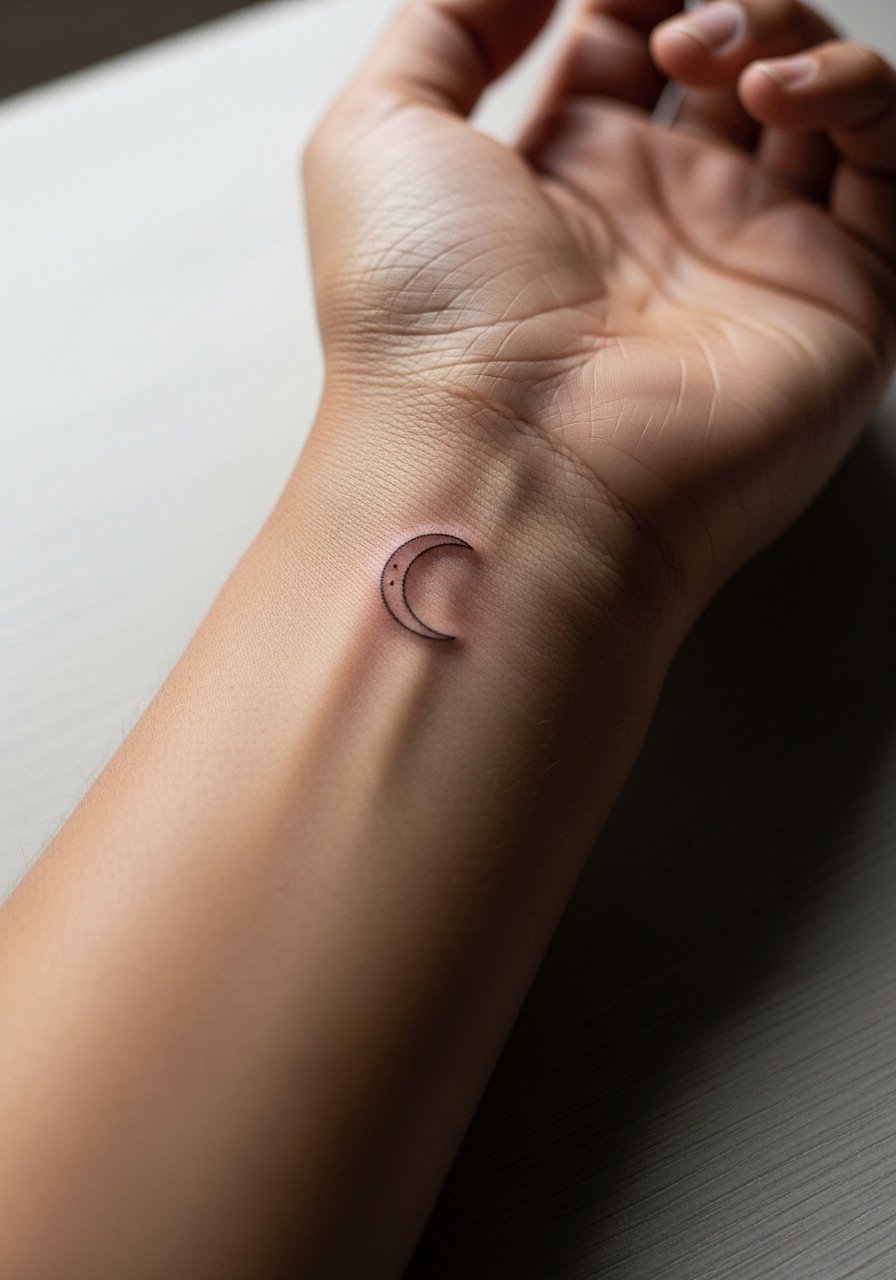
I've seen this placement on people who want something private but visible when they check their watch. The wrist is forgiving for thin linework, but mention to your artist that you want a slightly heavier outer contour so the shape reads at six months and two years. Pain is low to moderate, and sessions take under an hour. Common mistakes are asking for lines that are too hairline thin, which blur faster. For showing it off, pair with stacked dainty bracelets that sit above or below the tattoo so the moon remains the focal point. Expect a touch-up at year two or three depending on sun exposure.
2. Forearm Half Moon with Dot Work Trail
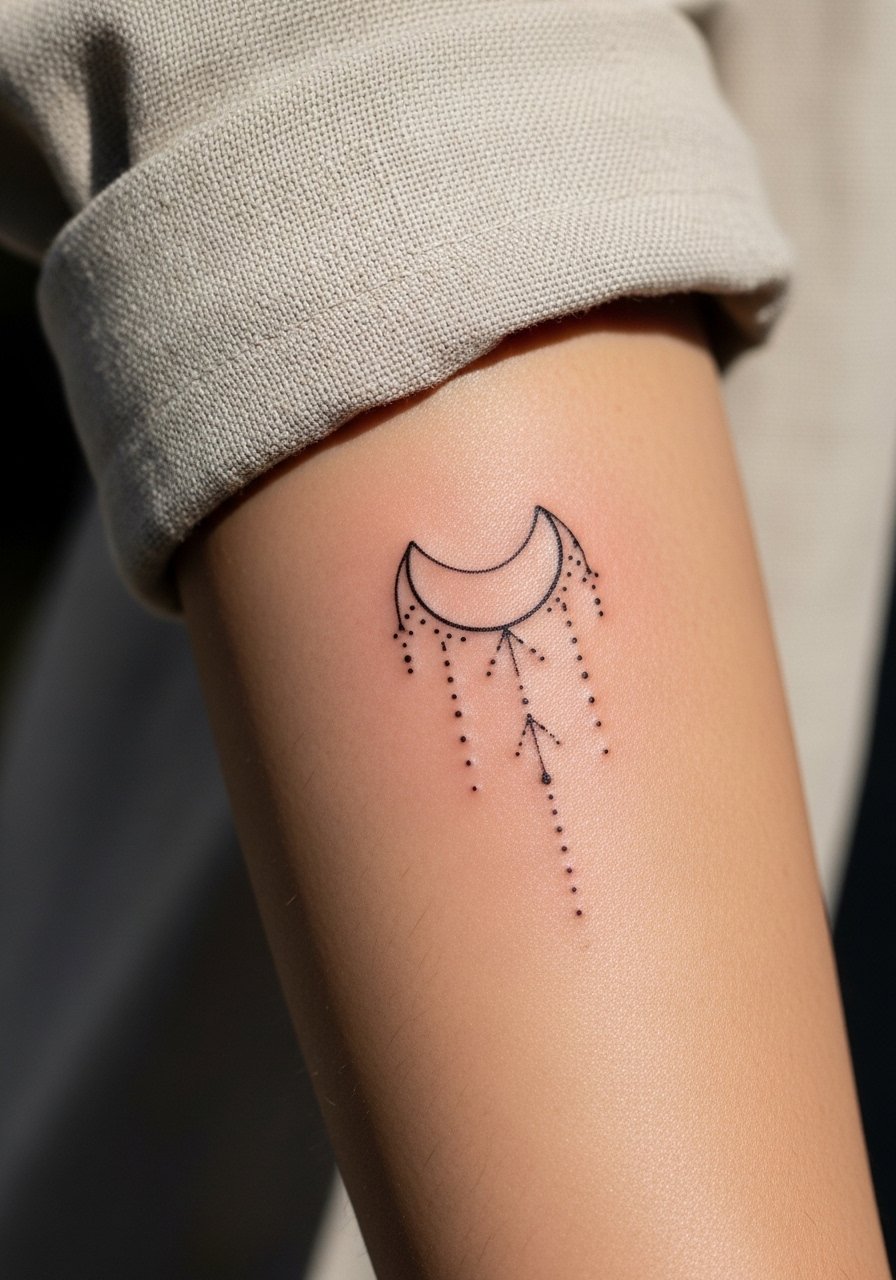
I recommend the inner forearm when you want the design to sit flat and be easy to show or cover. Tell your artist you want stipple shading for the trail rather than solid fill to avoid heavy saturation that can age into a blur. Pain is mild and a typical session lasts 45 to 75 minutes. The main mistake is compressing the dots too tightly, which merges over time. For casual outfits, roll sleeves and let a linen button-down or a racerback tank frame the forearm without drawing attention away from the linework. Plan for a light touch-up at year three if you spend time in sun.
3. Half Moon at the Collarbone
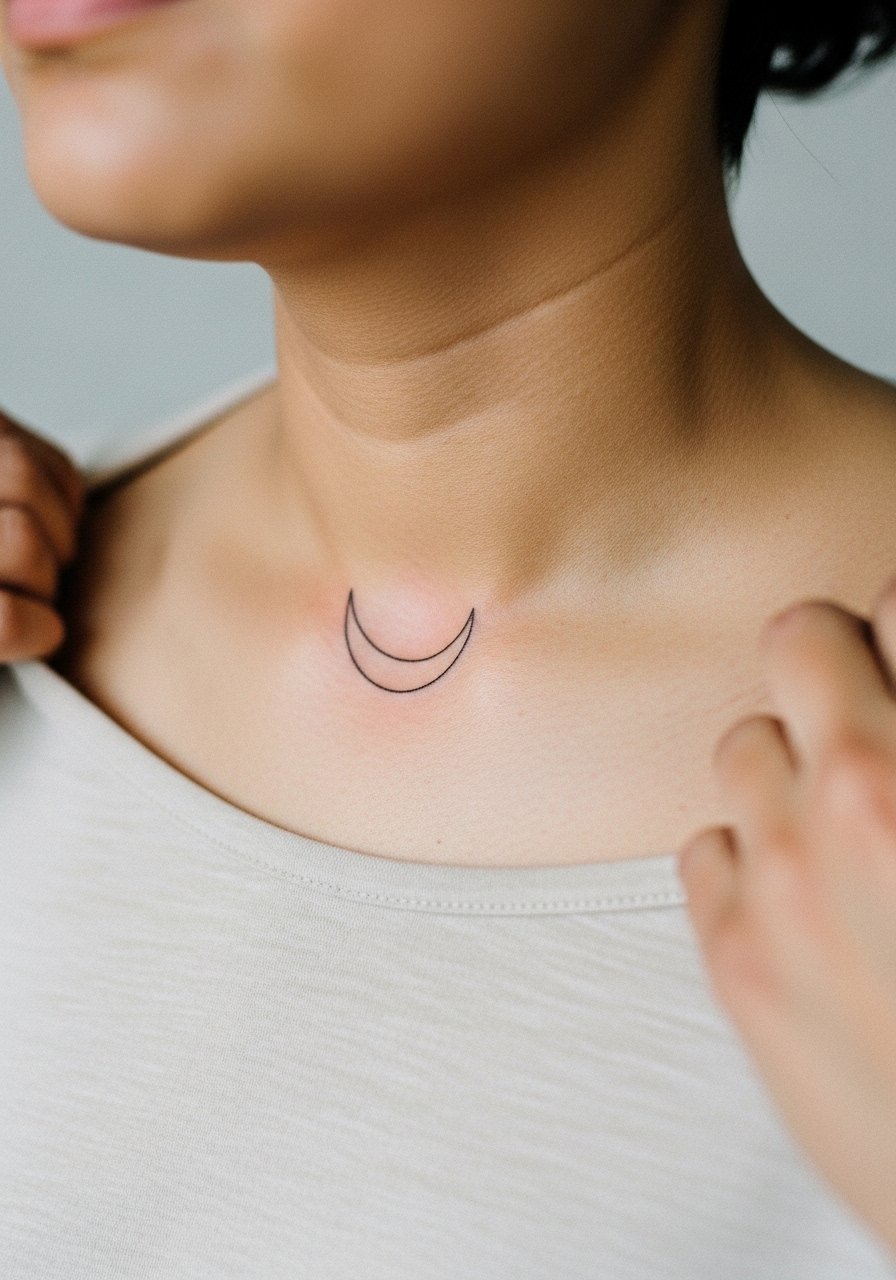
This upper chest placement sits well with the body's natural curve and flat surfaces, so the linework tends to hold. Mention to your artist that you want the crescent to arc with your collarbone rather than sit perfectly horizontal. Sessions are short, and pain is moderate because of thin skin. A common ageing issue is choosing a too-fine contour that disappears under natural skin movement. For evenings out, pair the piece with an open-back midi dress or a thin chain pendant necklace so the negative space around the moon reads clearly. If you work in a conservative environment, think about visibility before booking.
4. Ankle Crescent with Micro-Lines
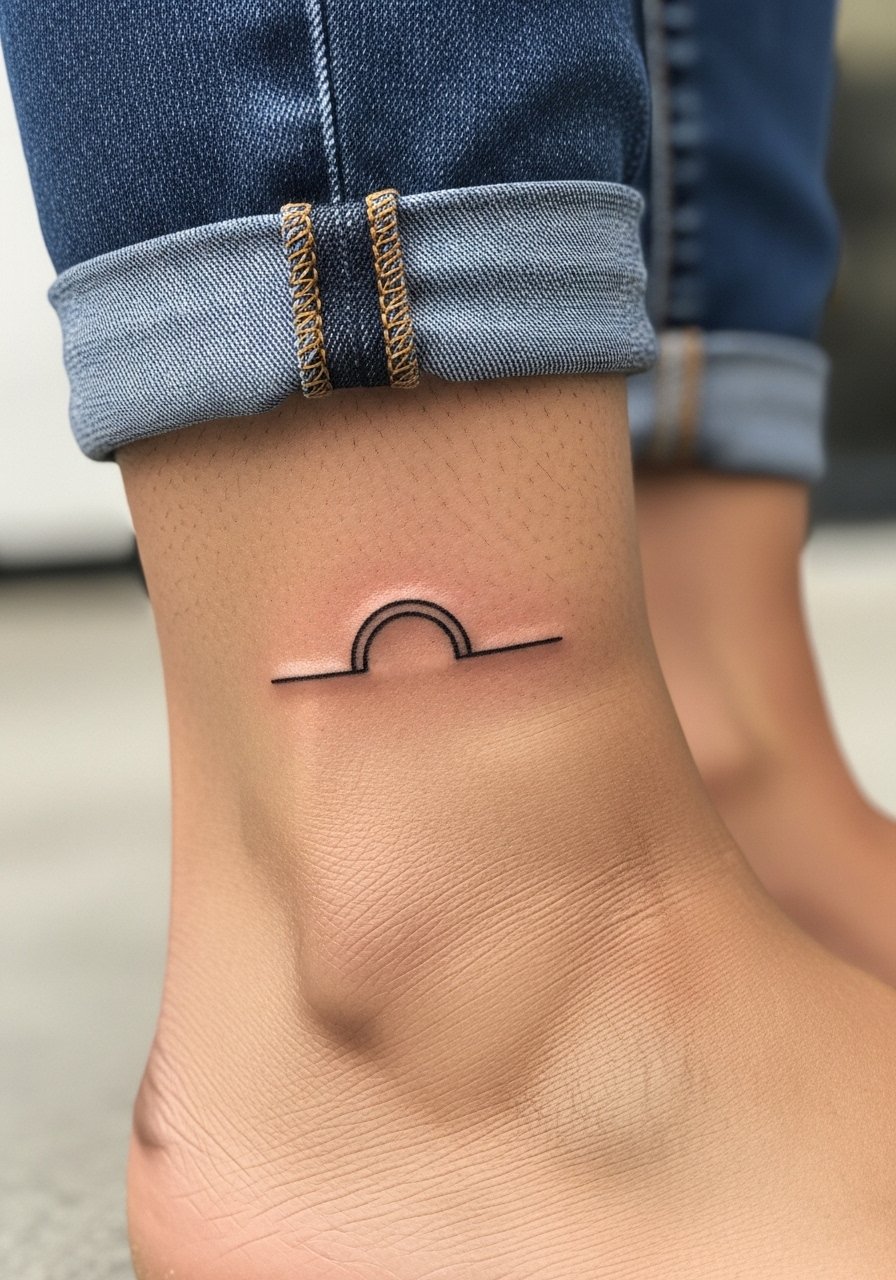
Ankle placements look delicate and photograph well, but they sit near shoes and socks so friction is a real factor. Tell your artist to avoid ultra-thin lines at the very edge and to keep the design slightly raised in width for longevity. Pain is moderate and sessions are quick. A frequent mistake is placing the moon too low, where rubbing from footwear speeds fading. Pair the design with sandals or cropped trousers so it stays visible without constant abrasion. Expect fading faster than arm placements, with touch-ups common at year two or three.
5. Ribcage Half Moon, Fine Line Variant
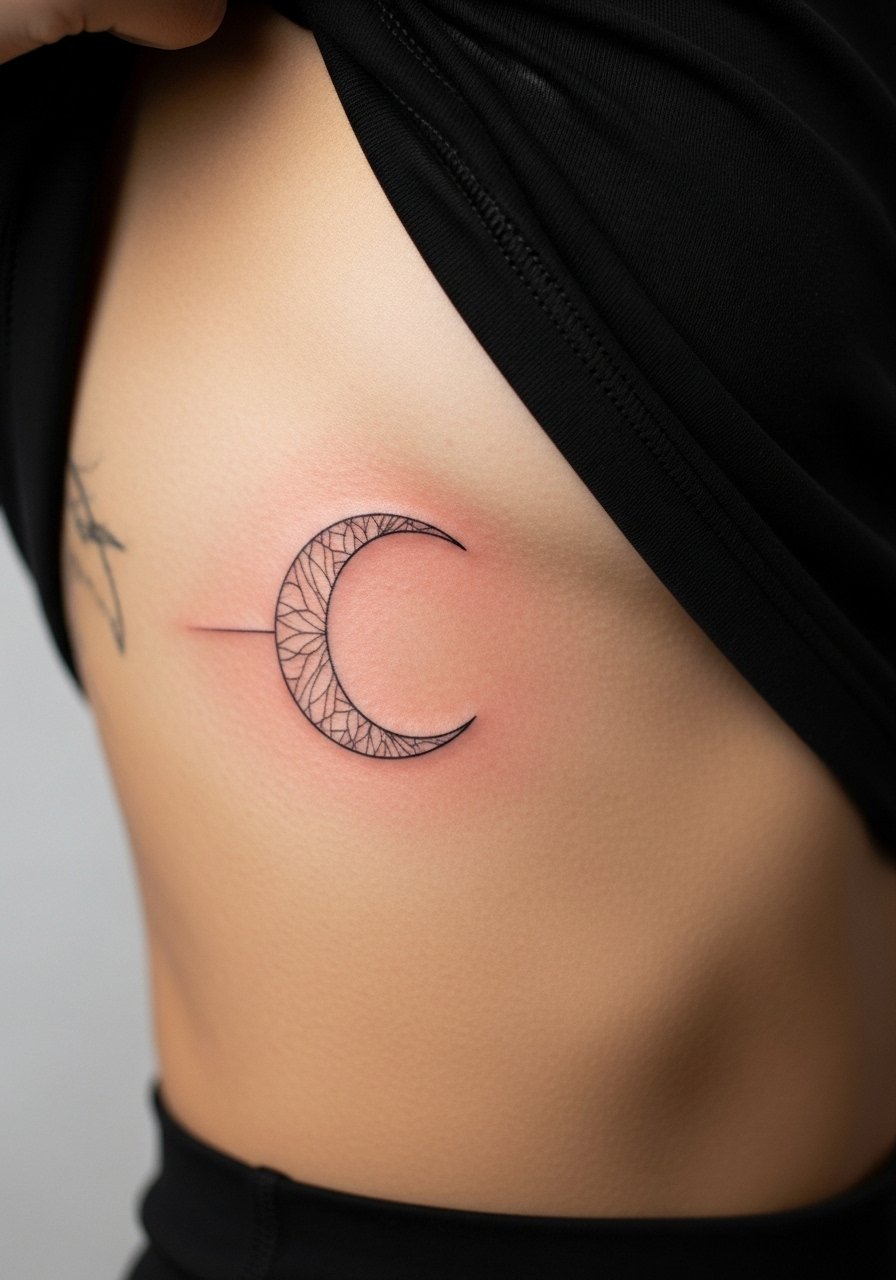
Fair warning, ribs are high on the pain scale and that affects session endurance. Fine line work here splits artists into two camps. One camp says the skin stretch and breath movement blurs fine lines within two years. The other camp argues that with proper depth and spacing the lines settle fine. Ask your artist which camp they fall into and request slightly more spacing between parallel strokes if they favor a conservative approach. The common mistake is squeezing too much detail into a small rib tattoo. For session wear, choose a top you can lift and replace easily so you do not stress the area during healing. Expect touch-ups sooner than forearm work.
6. Back of Hand Half Moon with Negative Space
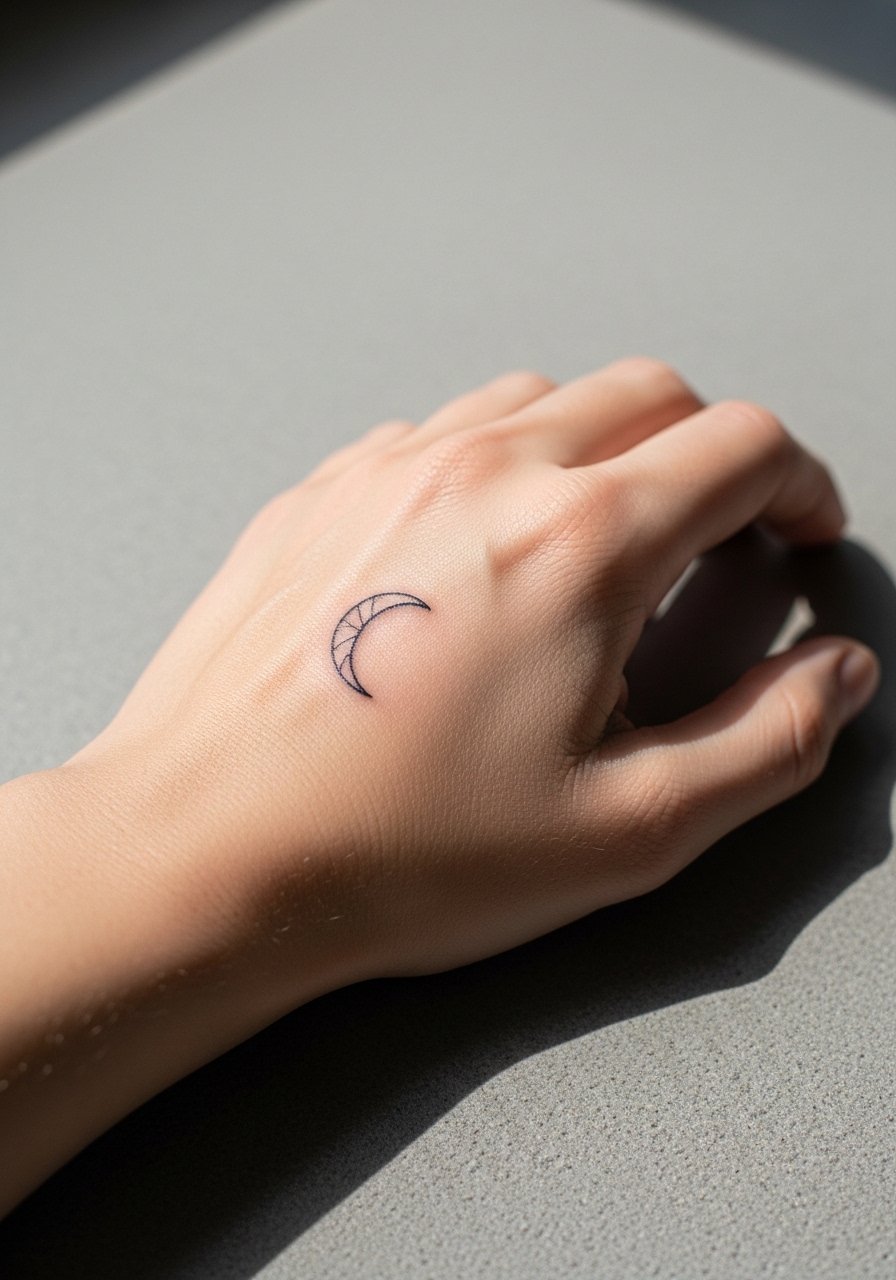
Hand tattoos make a statement but they also face constant washing and abrasion. Artists are split about hand work and employ different approaches based on skin thickness. Tell your artist you want clear spacing and minimal solid fill so the negative space survives daily use. Pain is higher here and sessions are short but intense. Common mistakes include requesting ultra-fine details that lose clarity quickly. Consider pairing the look with a dainty ring set that complements the crescent without crowding the knuckles. Be aware of workplace implications and plan for a higher chance of touch-ups.
Studio Day Picks
The wrist, forearm, collarbone, ankle, ribcage, and hand pieces above all have different prep and healing needs, so a few targeted items smooth out the session and the first week.
-
Stencil transfer paper kit. Lets you preview the linework on skin before committing, which is handy for inner wrist and collarbone placement decisions.
-
Topical numbing cream. Applied about 45 minutes before the session takes the edge off sensitive spots like ribs and the back of the hand.
-
Thin protective film roll. Keeps finger and hand tattoos cleaner during the first week of frequent washing.
-
Fragrance-free gentle body wash. Cleanses healing areas without irritating the delicate linework that minimal pieces rely on.
-
Aquaphor healing ointment. A thin layer for the first few days locks in moisture for fine line work without clogging the tattoo channels.
7. Outer Bicep Crescent with Subtle Whip Shading
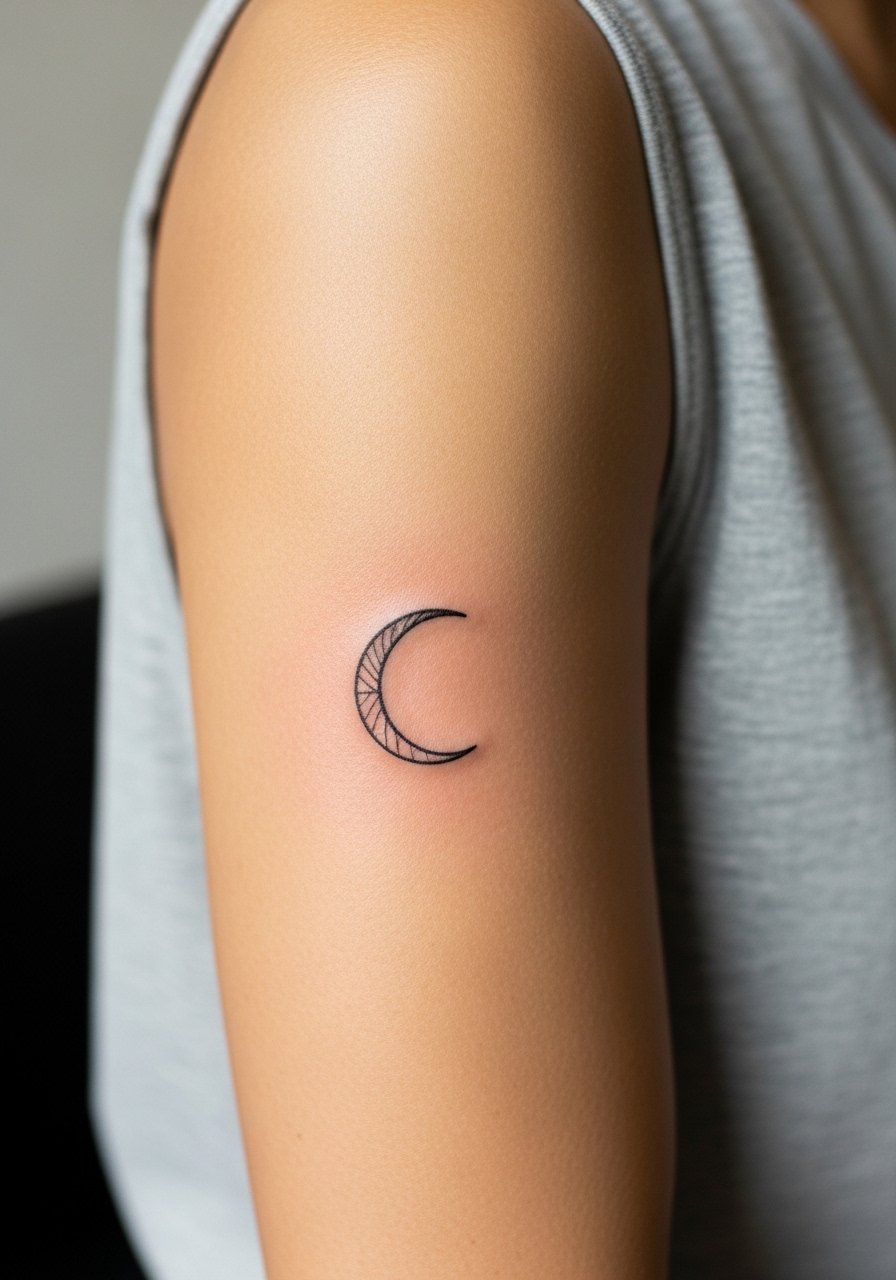
This placement handles slightly bolder contour because the skin is less mobile than inner bicep. When you consult, ask for light whip shading rather than dense fill to maintain crispness over time. Pain is low and sessions run about an hour. A common error is pushing for too many tiny decorative marks around the crescent, which can read cluttered after healing. For casual wear, a loose tank top frames the outer arm and lets the moon peek out without competing with sleeve prints. Expect a touch-up window between years two and four if you are outdoors often.
8. Shoulder Blade Half Moon with Tiny Stars
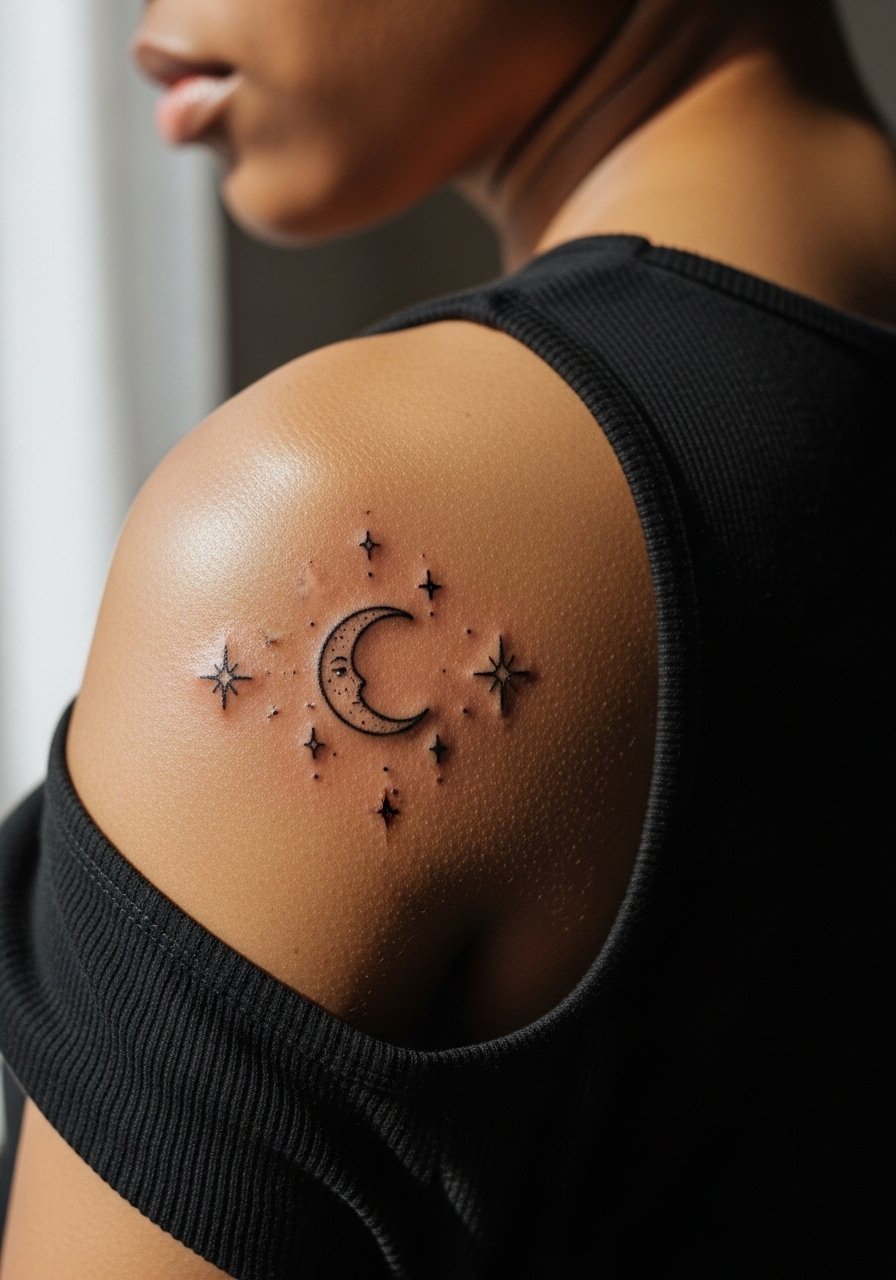
The shoulder blade is low-friction and ages gracefully, which makes it a top pick for delicate linework. Tell the artist you want separate star dots set with enough spacing so they do not merge into the crescent. Pain is low, and the session is relaxed since the canvas is flat. A mistake people make is compressing micro-dots close to the spine where skin movement can blur them. For shows and layering, pair with a strappy tank or bralette that reveals the design selectively. Touch-ups are rare here but still possible after several years of sun exposure.
9. Calf Crescent with Geometric Accent
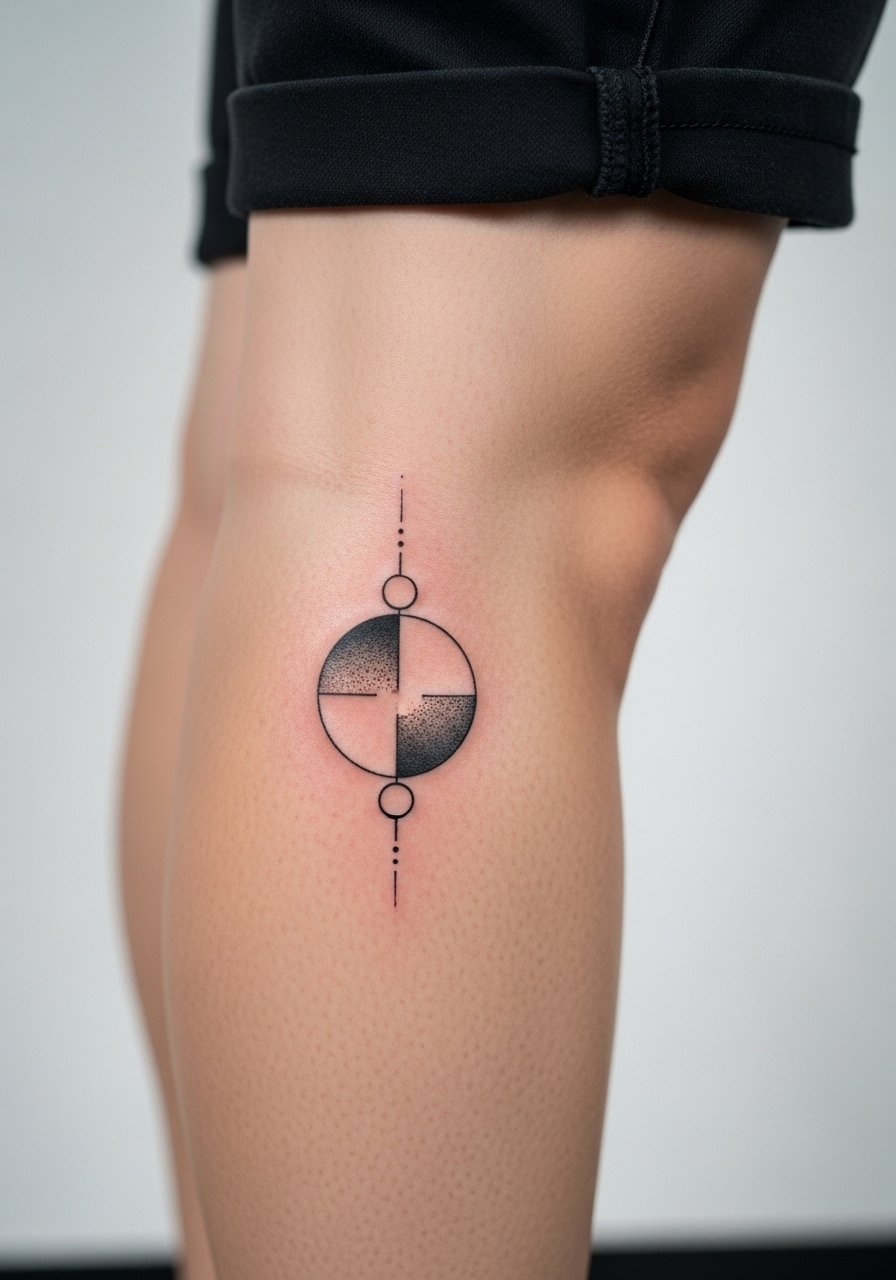
Calf placements offer space for a slightly larger crescent and a companion geometric motif. In consultation, explain you want clean linework with bold spacing between intersecting lines to avoid long-term merging. Pain is moderate and sessions can run an hour. A frequent mistake is choosing overly dense geometry that blurs when muscle shifts. For casual looks, pair with loose drawstring linen pants you can roll up to show the piece without rubbing it. Expect good longevity with occasional touch-ups if you wear low-cut shoes that press on the area.
10. Lower Back Crescent
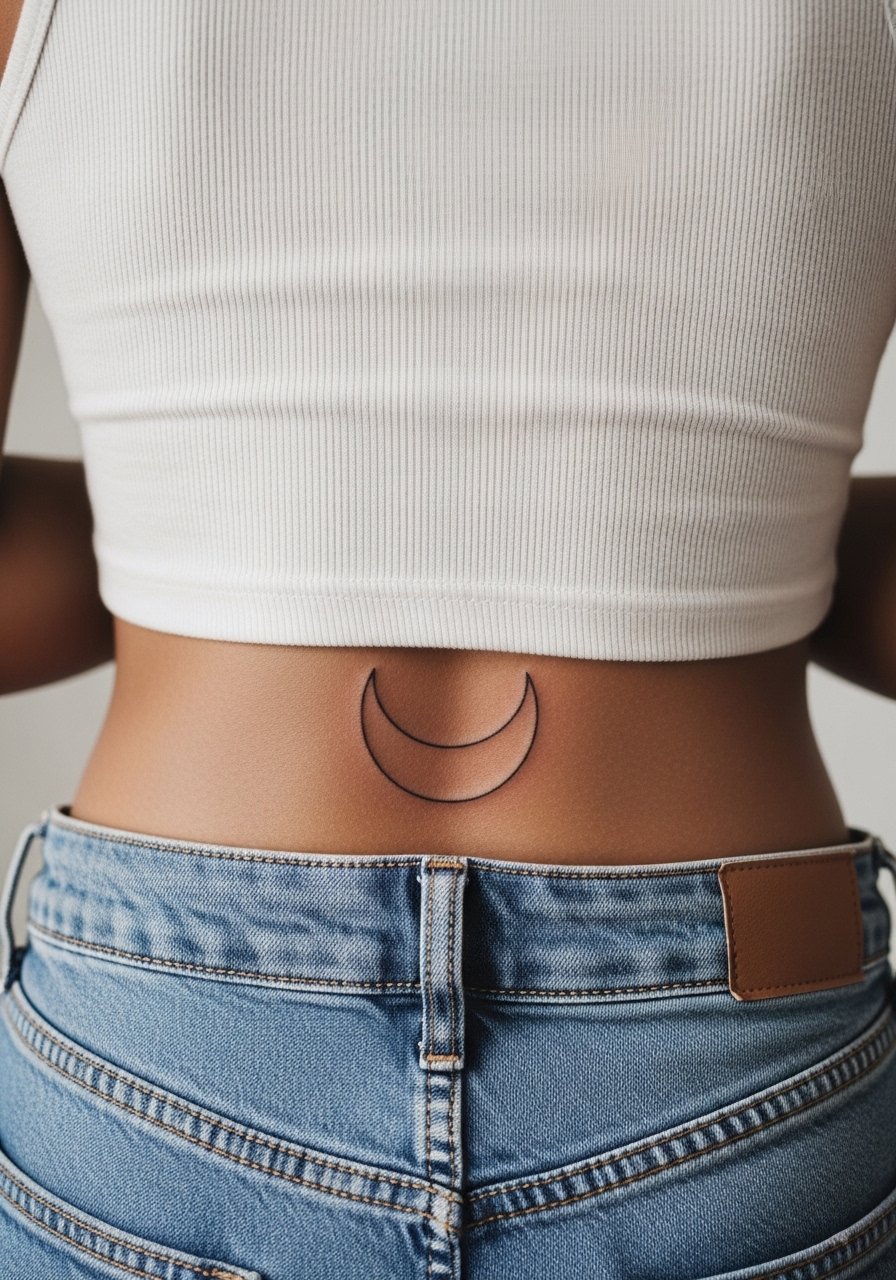
Lower back pieces sit in a zone that sees movement from bending and sitting. Ask your artist to map the curve to your posture so the moon remains balanced when you move. Pain is variable depending on how many sessions and how long you hold poses. A mistake is centering the design without considering lumbar curves, which can skew the shape visually. For sessions, wear pants you can lower slightly and a top that lifts without needing full undress. This area is private by default, so consider whether visibility matters to you before booking. Touch-ups are occasional and depend on friction from clothing.
11. Thigh Inner Crescent with Floral Fill
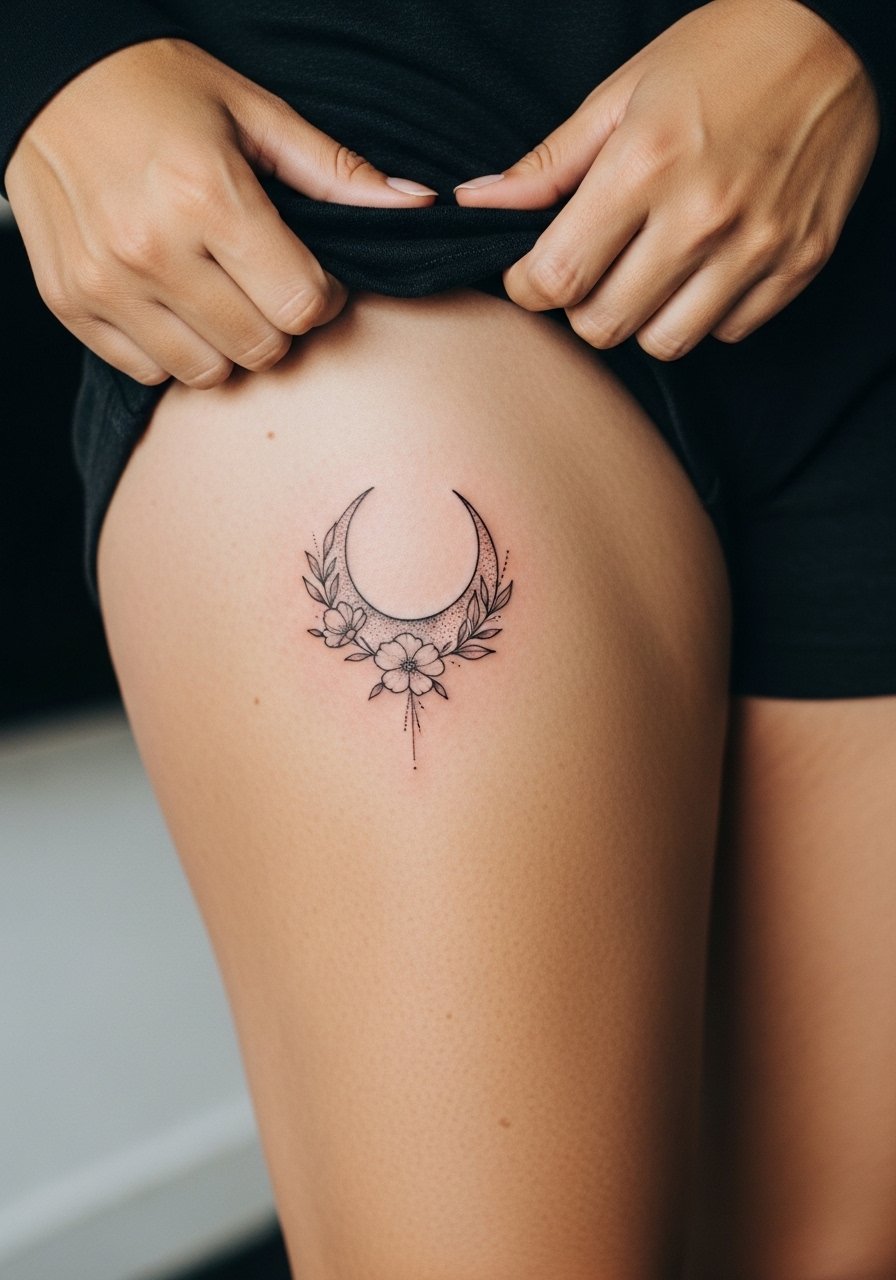
Inner thigh is intimate and holds linework well since it rarely sees sun. In consultation, ask for slightly spaced petals that avoid heavy shading to keep the crescent legible over time. Pain ranges from moderate to high for some people, and plan for a session where you can reposition easily. A common mistake is adding dense fills that age into a patchy look. For the appointment, wear high-waisted shorts so the artist can access the area while you stay covered. Expect slow fading if you protect the area from constant friction.
12. Hip Crescent Peeking from Swimwear
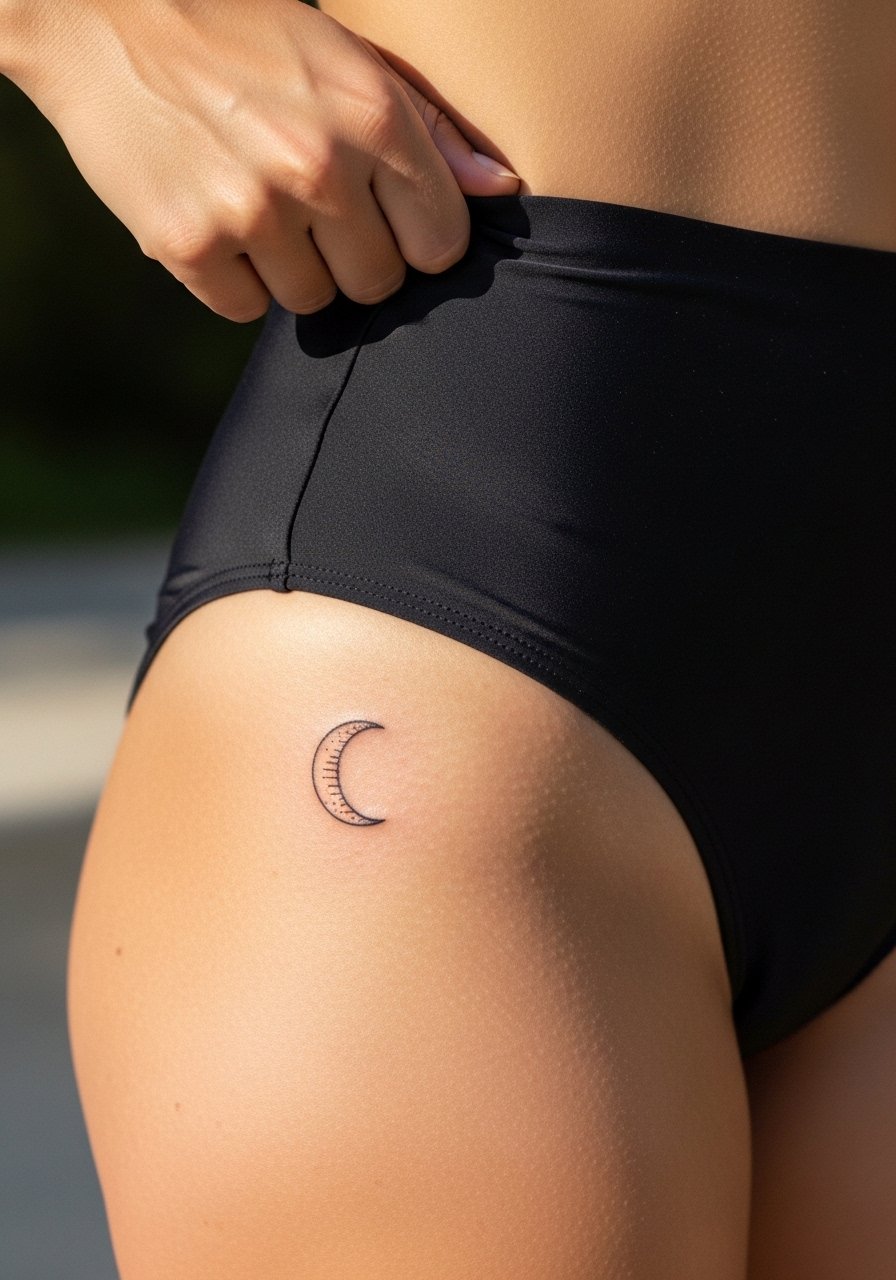
Hip tattoos sit in a transition zone between sun exposure and covered skin. Tell your artist you plan to wear it with swimwear so they should keep the crescent compact but bold enough to read from a short distance. Pain is moderate because of thin skin at the hip bone. People sometimes request too many micro details that fade under swimwear friction. Pair the design with high-cut swimwear or high-waisted bikini bottoms so it shows selectively and avoids constant rubbing. Touch-ups depend on exposure to salt and sun.
13. Finger Half Moon Accent
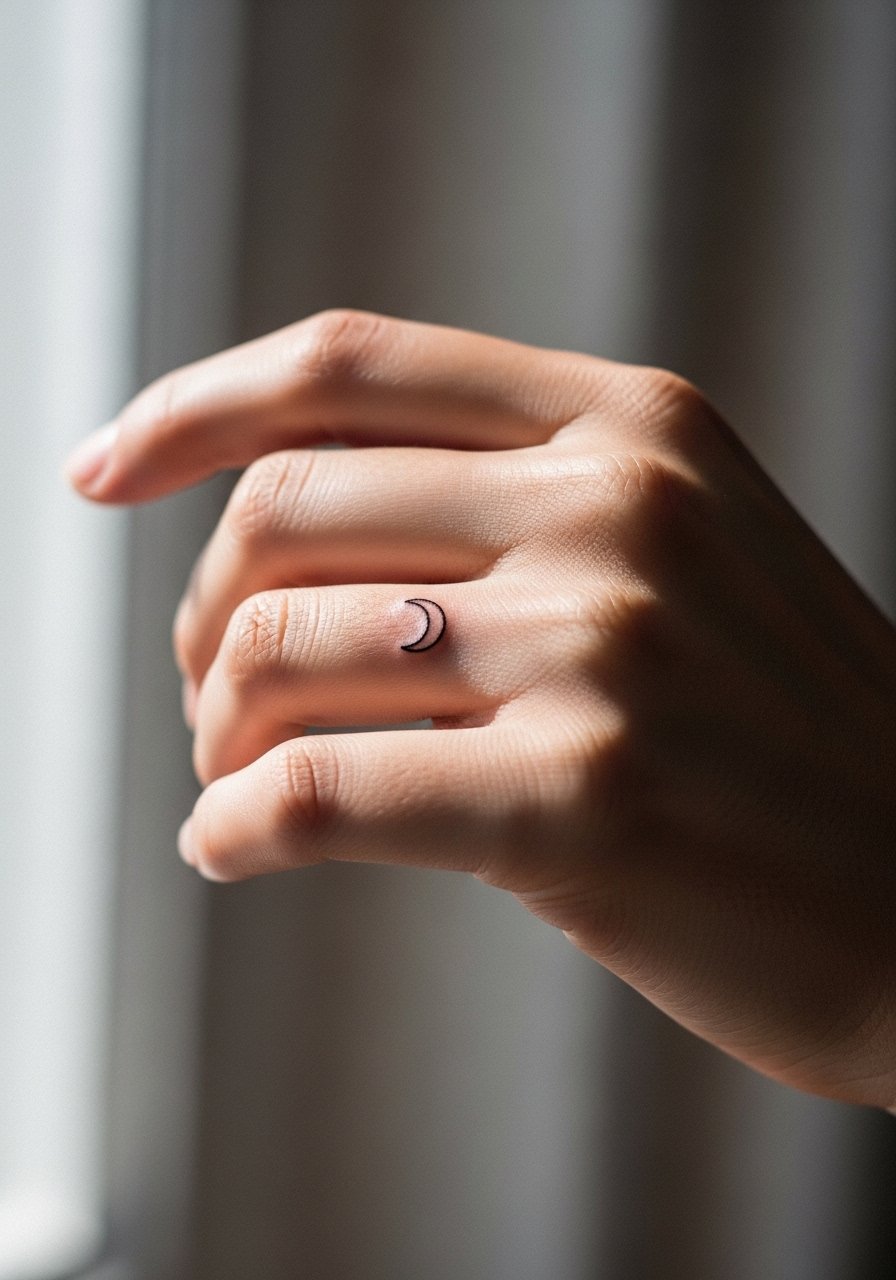
Finger tattoos are high maintenance and require clear expectations. Tell your artist you want simple, bold strokes rather than hairline details because the skin there migrates ink. Pain is high and sessions are brief but intense. The most common mistake is treating finger work like forearm work and asking for too much tiny detail. For styling, a minimalist midi ring can sit beside the crescent without obscuring it. Plan on touch-ups every year or sooner, especially if your hands see chemical exposure.
14. Behind-the-Ear Half Moon with Subtle Curve

Behind-the-ear placements are discreet and age with a combination of hair coverage and skin movement. When you talk to an artist, specify you want the tattoo placed below the hairline on the neck so it remains hidden when you let your hair down. Pain is low to moderate. A typical mistake is asking for dense detail in such a tiny spot which becomes a blotchy mark over time. For session wear, pull your hair back or bring a hair tie so the artist has clear access. Expect decent longevity but plan for touch-ups if you frequently expose the area.
15. Sternum Half Moon with Delicate Linework
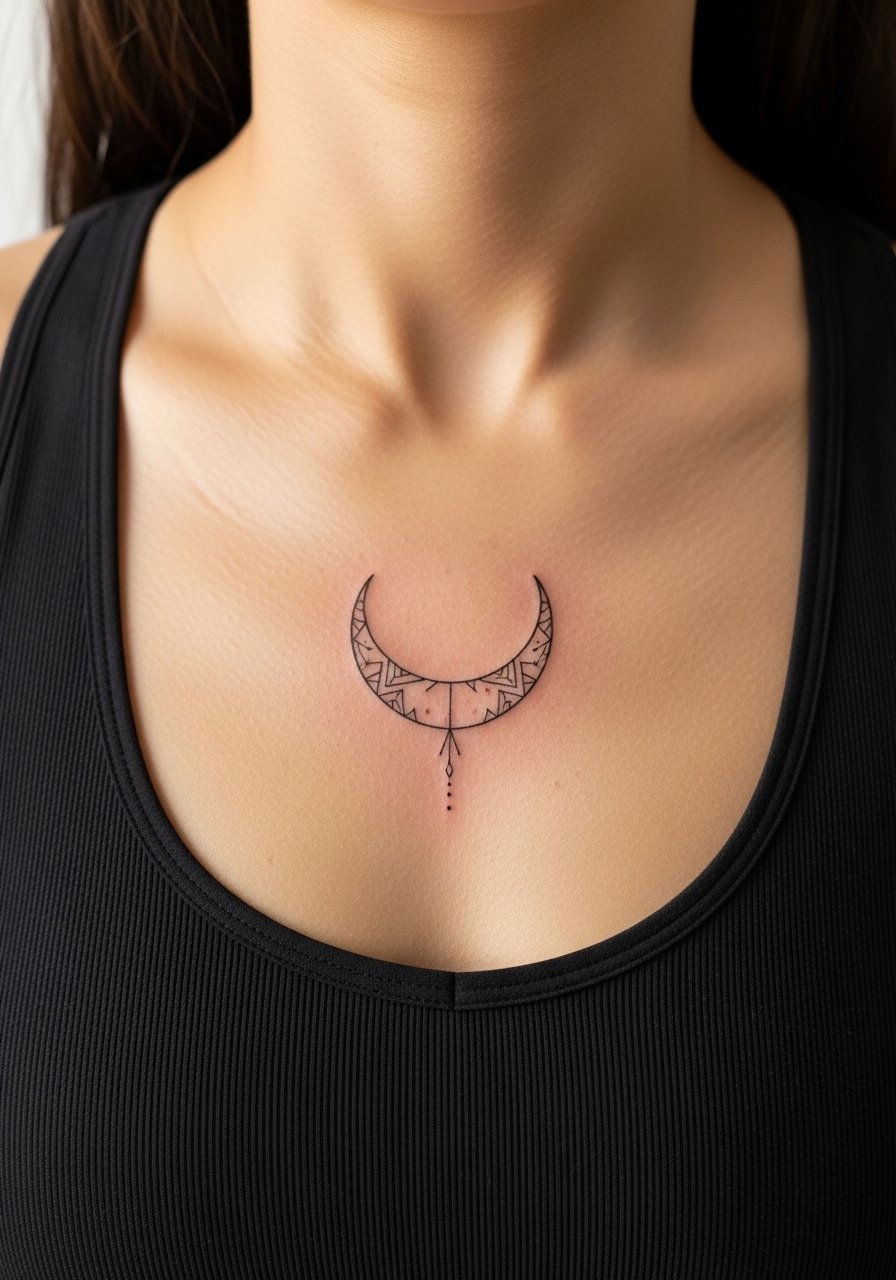
Sternum pieces need an artist experienced with chest curvature for lines that sit straight when you move. Pain is higher and sessions can be longer because of the sensitivity. One common mistake is compressing the crescent too small on the sternum, which causes ink to spread and lose shape. For session clothing, choose a fitted sports bra or a zip-up hoodie that you can remove easily without rubbing the area. This placement benefits from slightly bolder contour so the shape holds as the skin shifts while you breathe.
16. Inner Bicep Crescent, Micro-Realism Edge
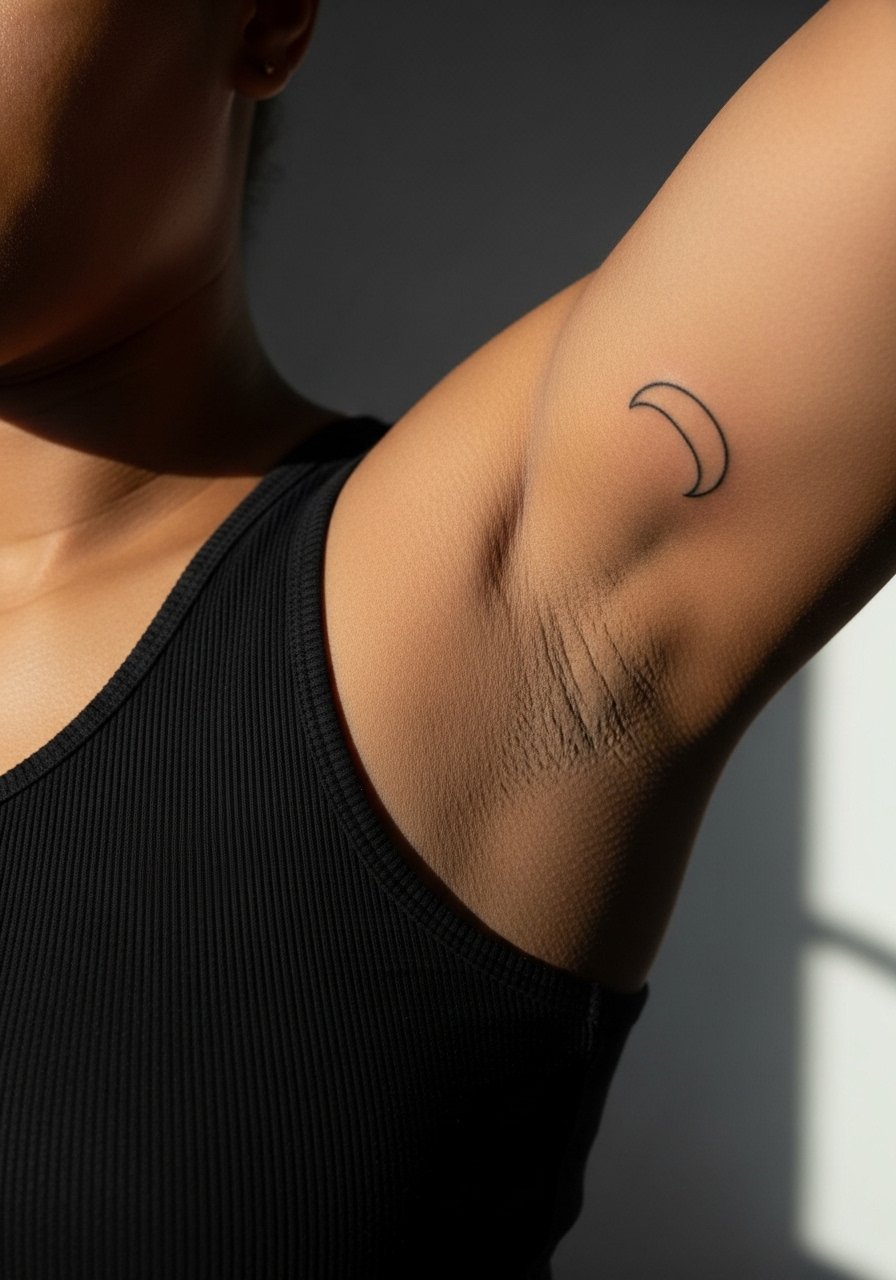
The inner bicep is tender and the skin is softer, so linework can blur if placed too fine. Tell the artist you want the crescent proportioned to the arm rather than to a photograph so it sits naturally. Pain can be high and sessions may be broken into shorter stretches. A mistake is choosing a hairline contour which disappears under natural stretch. For the appointment, wear a sleeveless top to allow easy access without exposure. Touch-ups may be needed in two to three years if you are active and sweat heavily.
17. Tiny Neck Crescent Near the Hairline
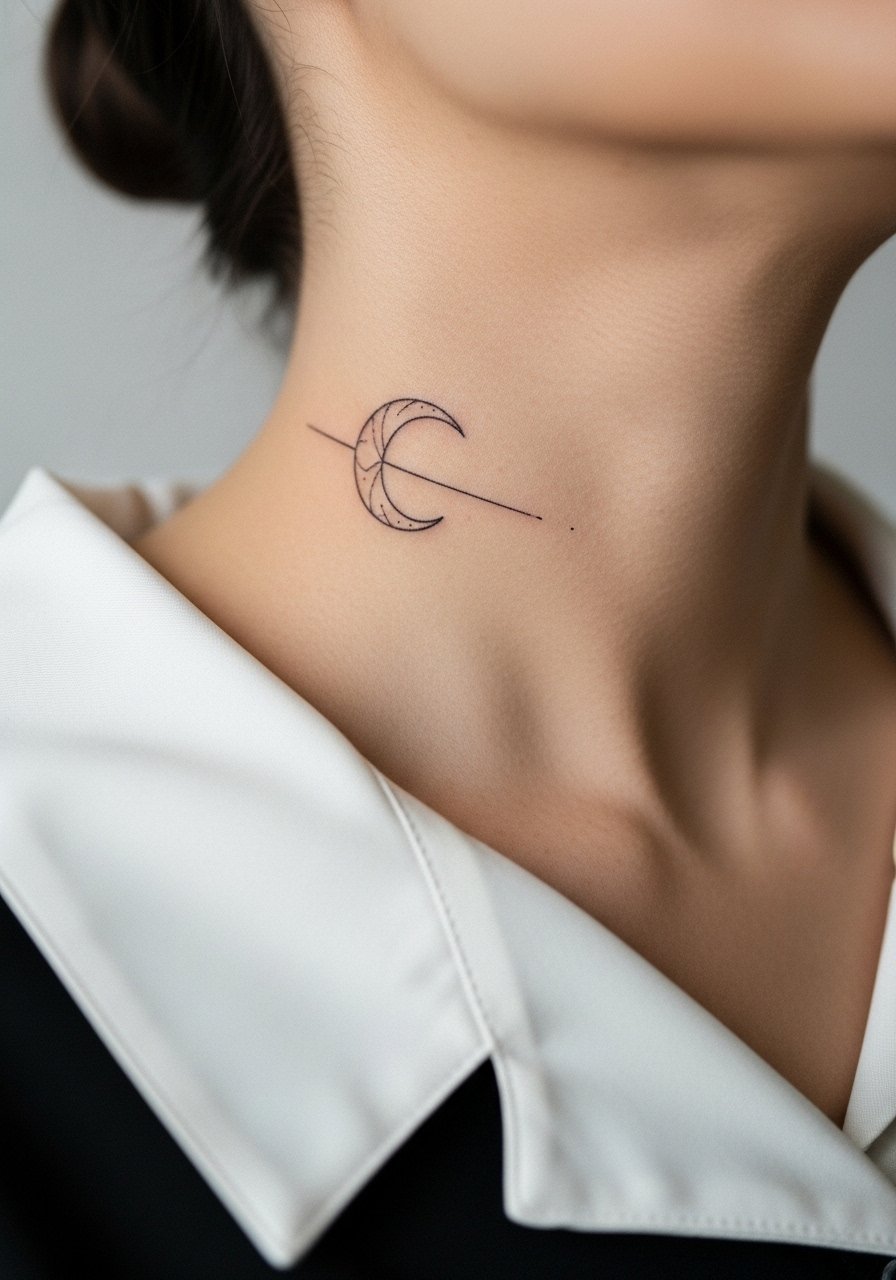
Neck tattoos are visible and demand careful consideration about career and style. Ask your artist to place the moon slightly off-center so it reads well with natural head movement. Pain is moderate to high and sessions are short. A common mistake is choosing ultra-fine text or tiny ornaments around the crescent that fade into smudges. For showing it off, a thin chain pendant necklace can complement the placement without covering it. Expect quicker fading if you frequently shave or exfoliate the area.
18. Spine-Adjacent Crescent with Vertical Flow
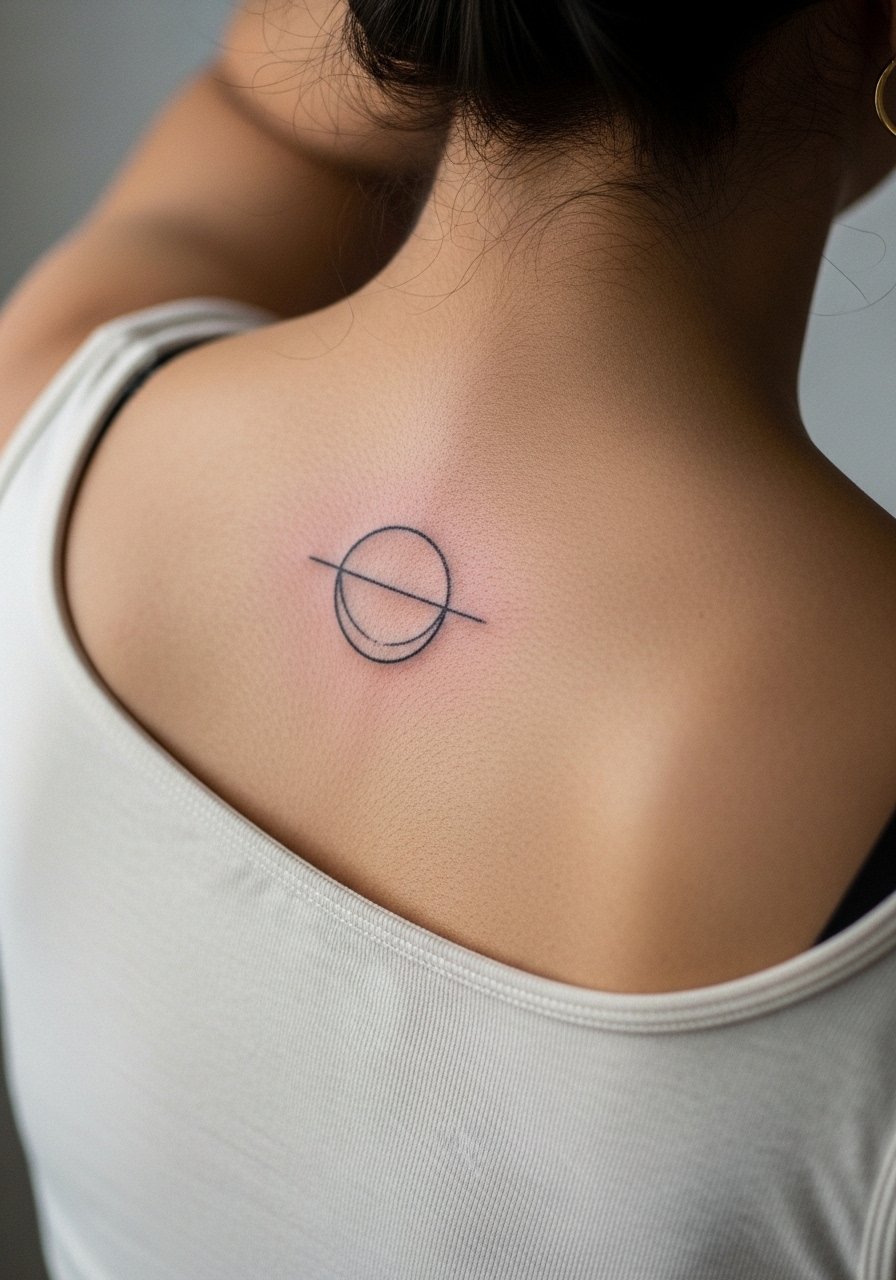
A crescent near the spine works well when you want a vertical flow for elongating the back silhouette. Tell the artist to keep the arc parallel to the vertebrae so it looks intentional when you stand straight. Pain is moderate and sessions are manageable because the canvas is stable. A mistake is placing the moon too close to the spine where movements can distort it. For sessions, a top that lifts up easily reduces friction and exposure. Longevity is generally good when the area is protected from heavy sun.
19. Clavicle Corner Crescent, Single-Line Style
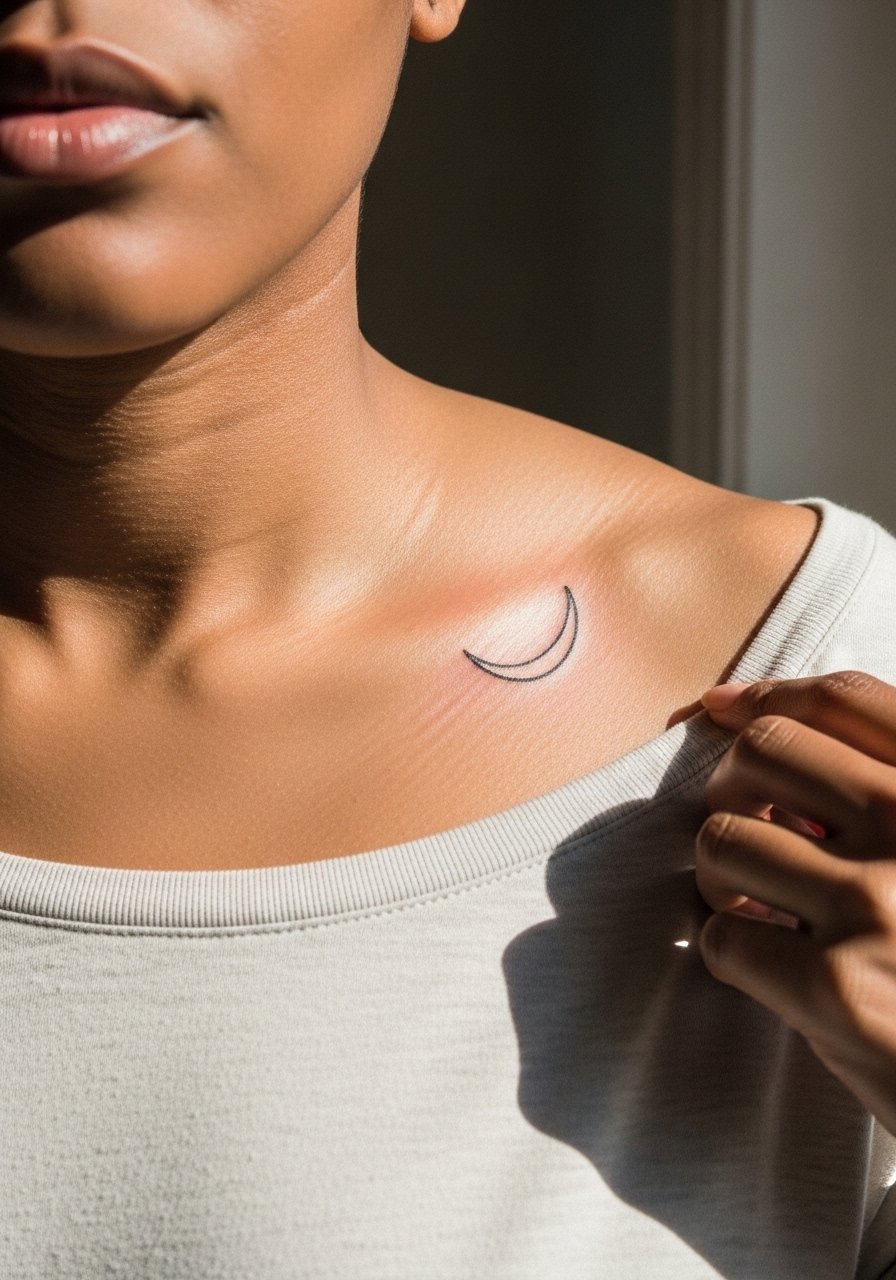
Clavicle corner tattoos sit on thin skin so line depth matters. Ask for a single-line contour with a slightly firmer stroke to keep the moon visible against skin movement. Pain is moderate and the session is quick. A common error is choosing a too-scaled design that gets lost among collarbones. Pair this piece with a v-neck or scoop-neck top to let the crescent peek through without overexposure. Touch-ups depend on necklace rubbing and sun.
20. Minimal Half Moon Behind the Knee
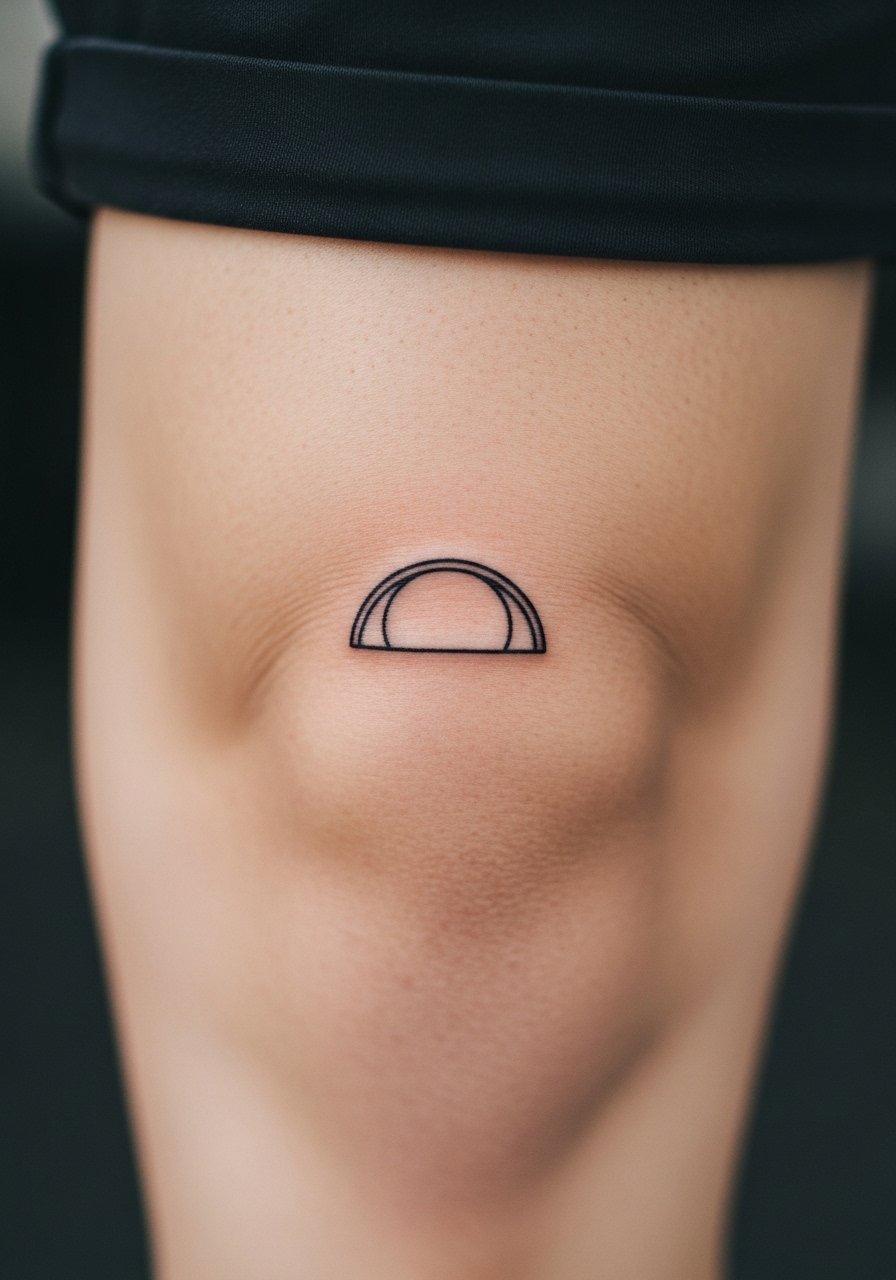
Behind-the-knee tattoos sit in a high-motion zone and need spacing to avoid line merging. Tell your artist you want a slightly wider contour and no dense fills. Pain is moderate to high when the needle reaches tender areas, and sessions might be uncomfortable for long positions. The usual mistake is compressing the design where bending will make it look distorted. For revealing it without strain, wear loose shorts that let the artist work and show the piece during warm-weather wear. Expect touch-ups due to constant flexing.
21. Crescent at the Nape of the Neck
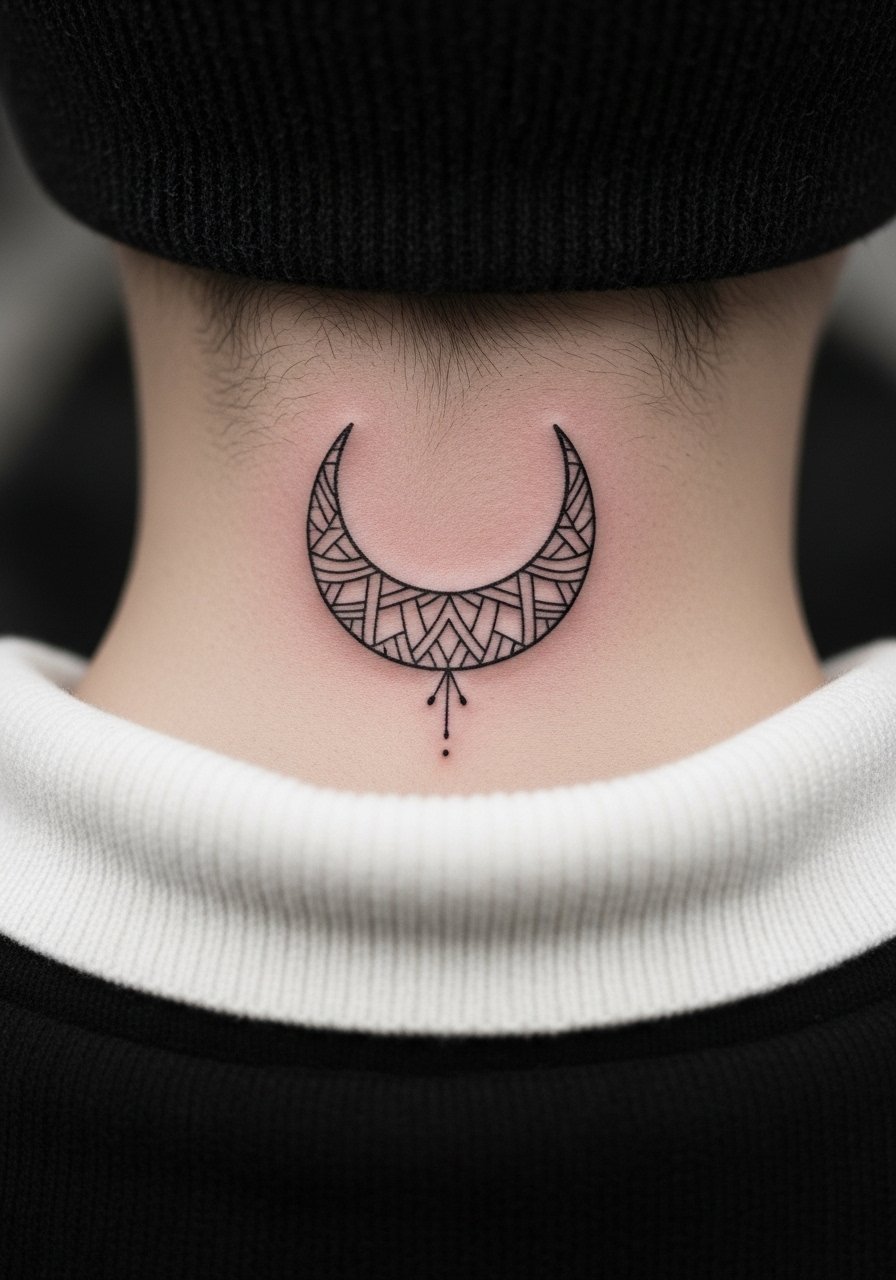
Nape tattoos are discreet and age well when kept small. Ask your artist to center the crescent along the hairline so it hides and reveals easily with different hairstyles. Pain is low to moderate and sessions are short. A common mistake is making it too wide, which becomes visible even when you prefer it hidden. For sessions, wear a shirt with an adjustable collar or a button-up you can shift aside without full removal. Longevity is solid when the area receives minimal sun.
22. Minimal Crescent on the Upper Thigh Sleeve Edge
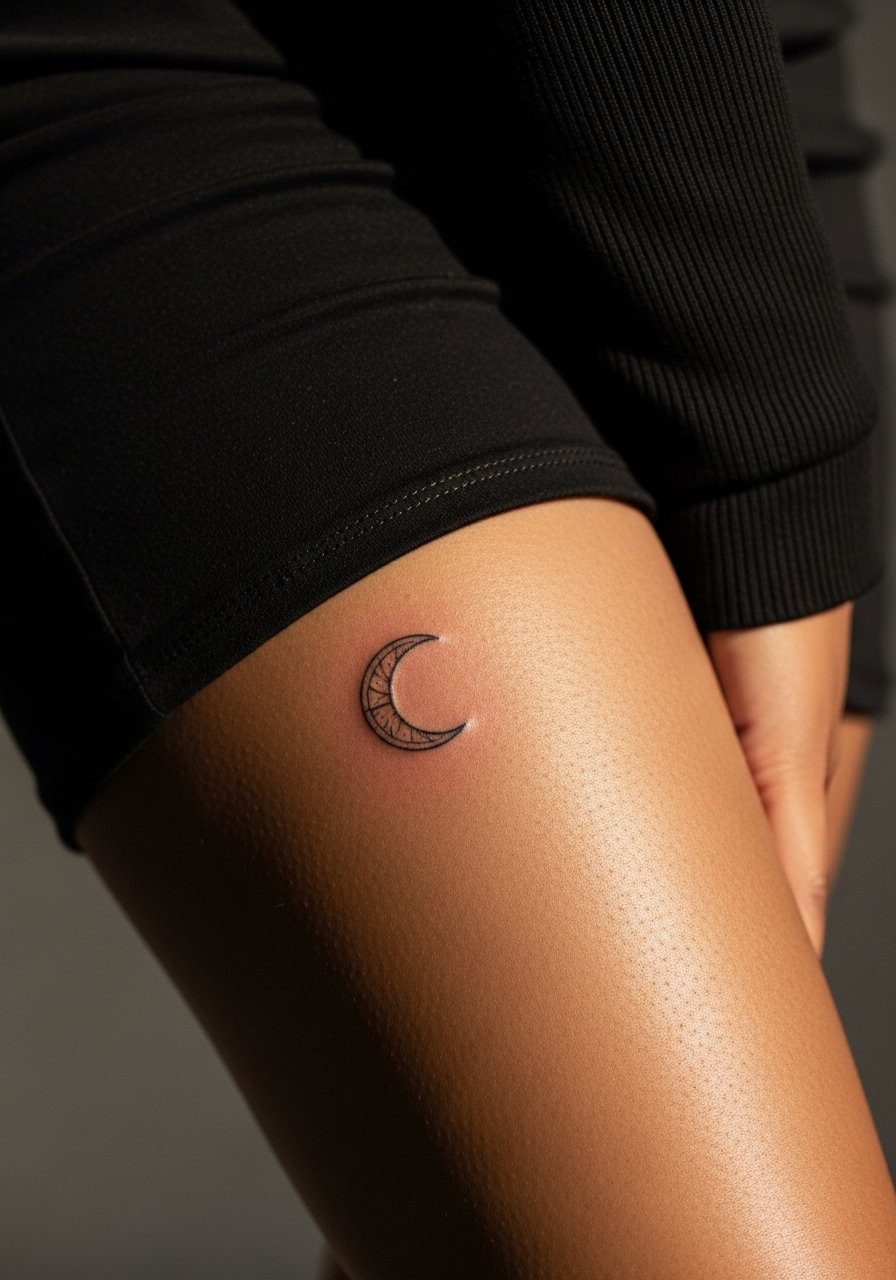
Placed at the edge of a thigh sleeve, a half moon can act as a punctuation mark. Tell the artist how it should align with adjacent pieces so the negative space reads clean. Pain is moderate and sessions can be longer if combined with other work. A mistake is failing to scale the crescent to surrounding tattoos, which makes it look like an afterthought. Show it off with skirts or shorts and consider a wrap skirt that exposes the area without constant rubbing. Touch-ups depend on how often you expose the region to sun.
23. Minimal Half Moon on the Side of the Foot
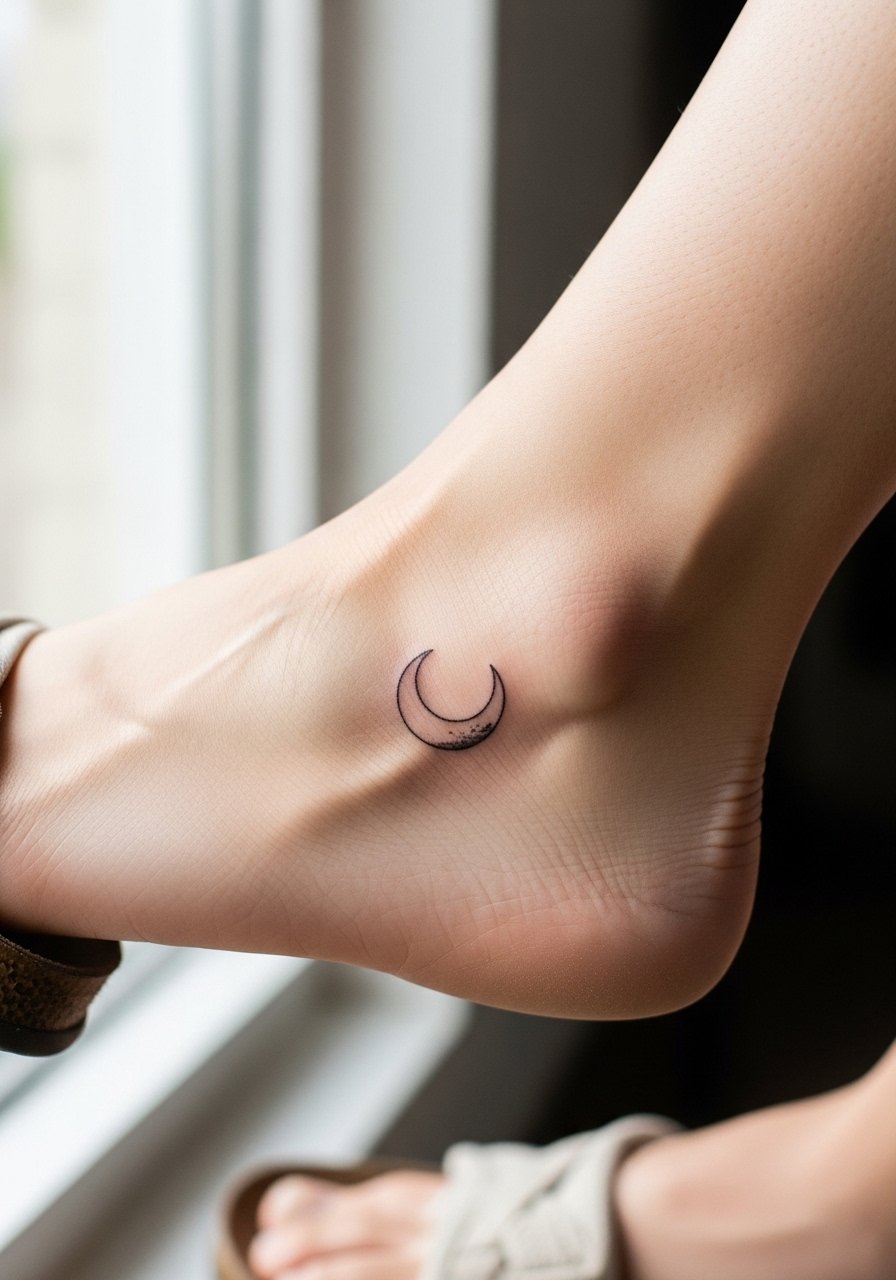
Foot tattoos face regular wear from shoes and pavement so they need bold, simple lines. Ask your artist for a slightly thicker outer arc and skip tiny internal details. Pain is high and sessions are brief. The common mistake is requesting intricate filigree that disappears under shoe pressure. For summer display, pair with simple sandals that avoid straps over the design. Expect faster fading and a higher chance of needing touch-ups after heavy use.
24. Micro Crescent on the Sternocleidomastoid
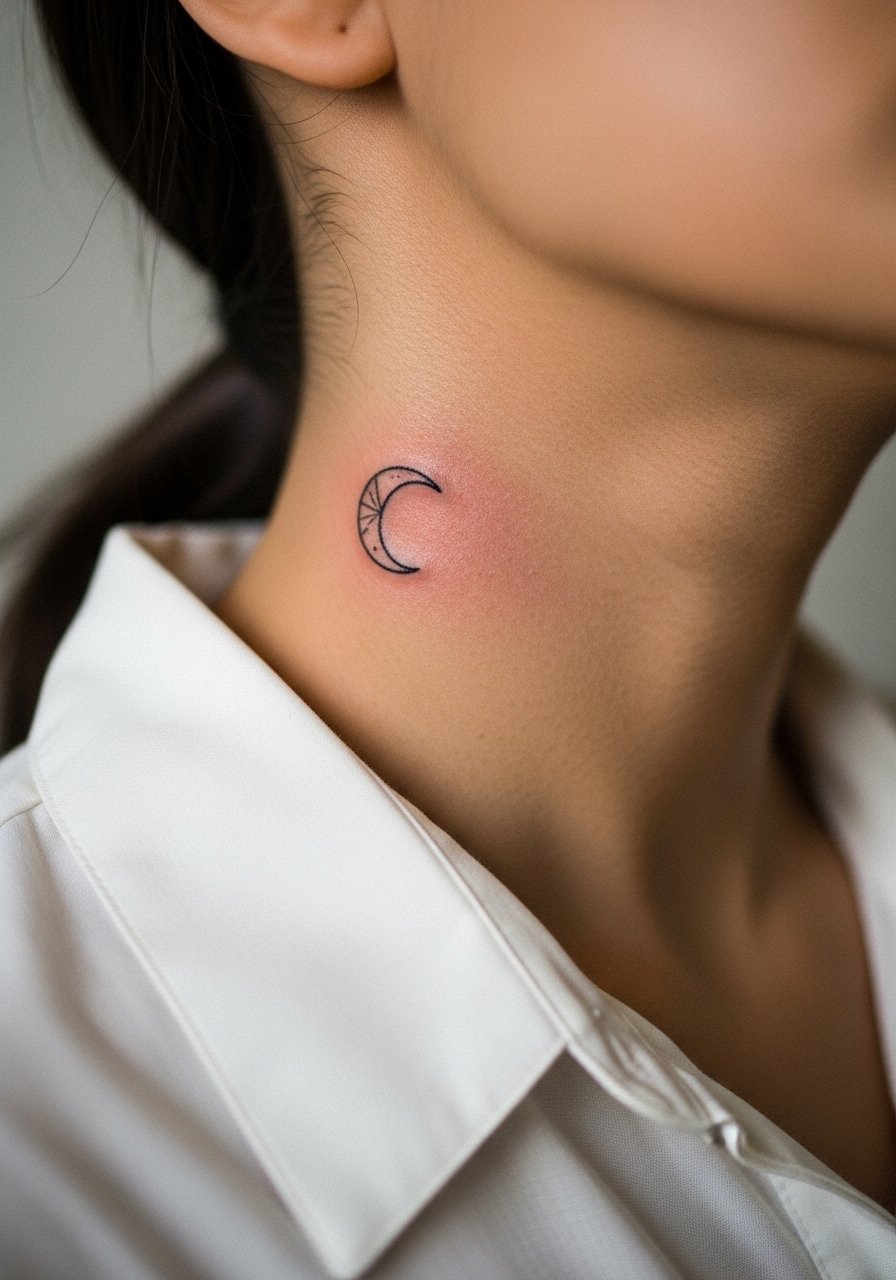
This vertical neck placement is visible but can be subtle if scaled right. When consulting, describe how it should look during turning and tilting the head so it does not warp. Pain is moderate and sessions are short. A mistake is pushing for decorative lines that age into indistinct smudges. For styling, a low-profile chain necklace can sit above the crescent without covering it. Plan for occasional touch-ups if you shave frequently in the area.
25. Minimal Crescent on the Outer Rib with Botanical Accent
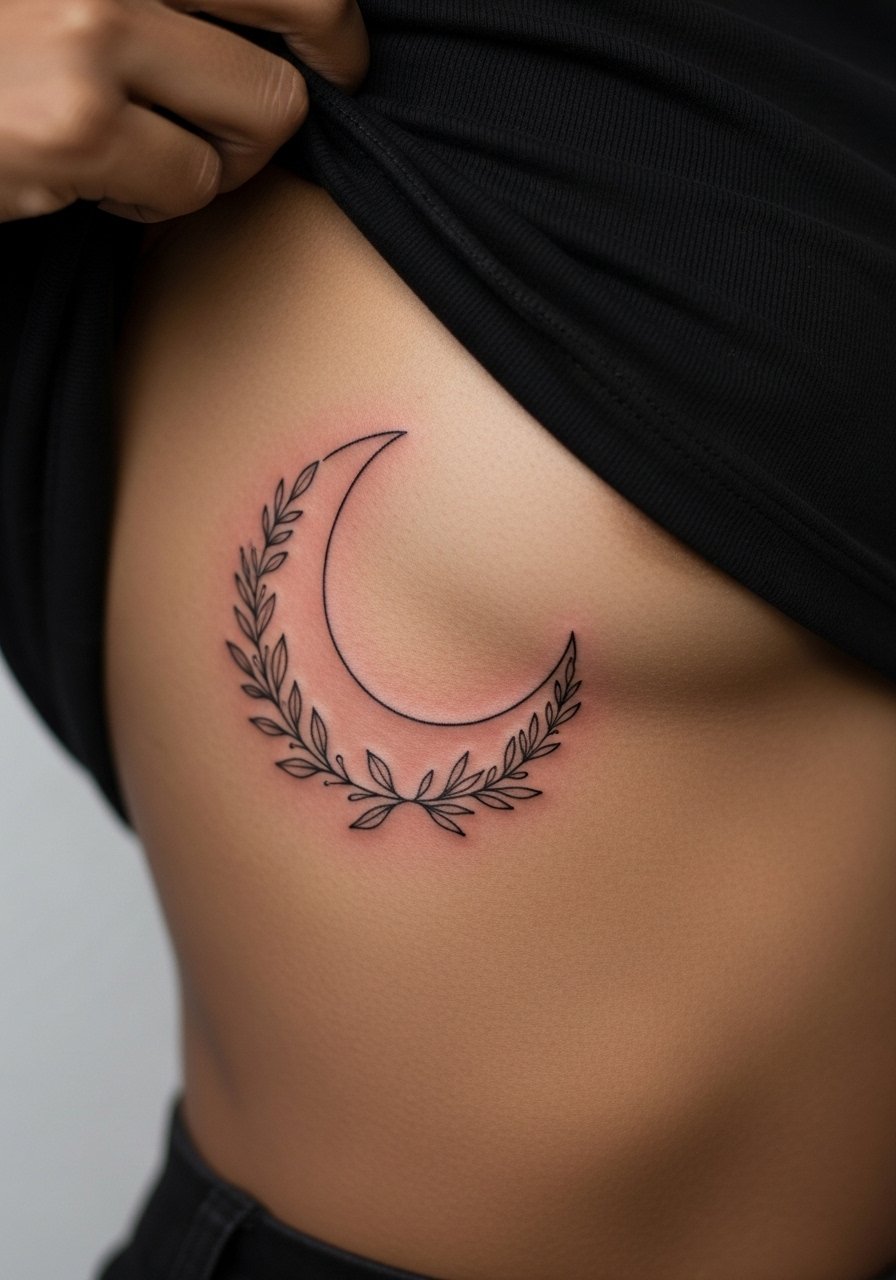
Outer rib pieces are intimate and dramatic but demand a conversation about longevity. The controversy around fine line on ribs applies here too. One group of artists recommends spacing and moderate depth to prevent blurring. The other group believes lines must be bolder to withstand stretch and breath. Ask which approach your artist prefers and show examples of healed work on similar skin types. Pain is high and sessions are often split. Skip dense shading and choose airy botanical touches rather than heavy fills. For sessions wear a top you can lift easily.
26. Minimal Crescent Near the Elbow Crease
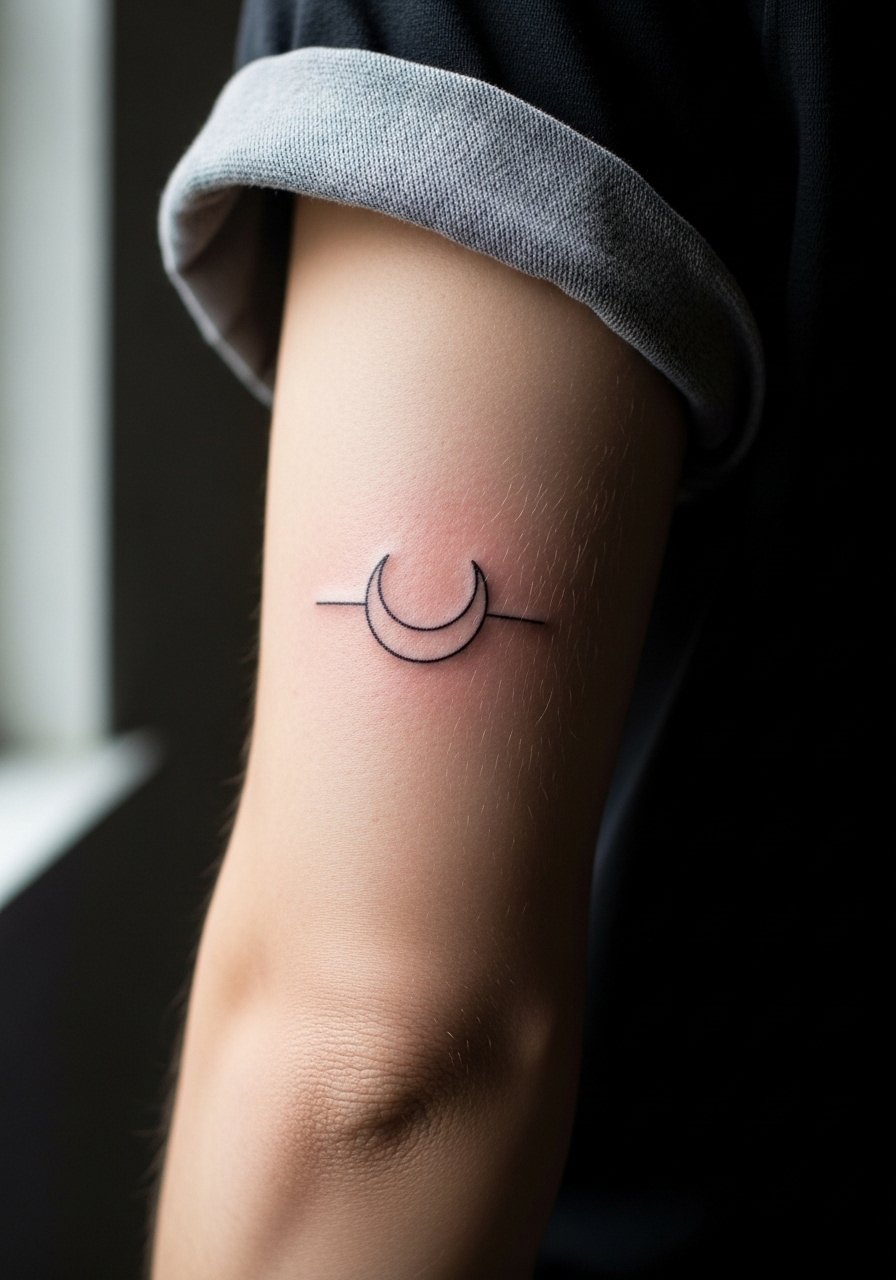
Placement near the elbow crease needs room so movement does not collapse the design. Tell the artist to place the crescent above the fold and give it slightly more arc width. Pain is moderate and the session is short. The most common mistake is crowding the crease which leads to messed-up lines when you bend the arm. For styling, rolled sleeves or a short sleeve linen shirt lets the piece show without constant friction. Expect touch-ups as the area flexes a lot.
27. Minimal Half Moon on the Back of the Calf
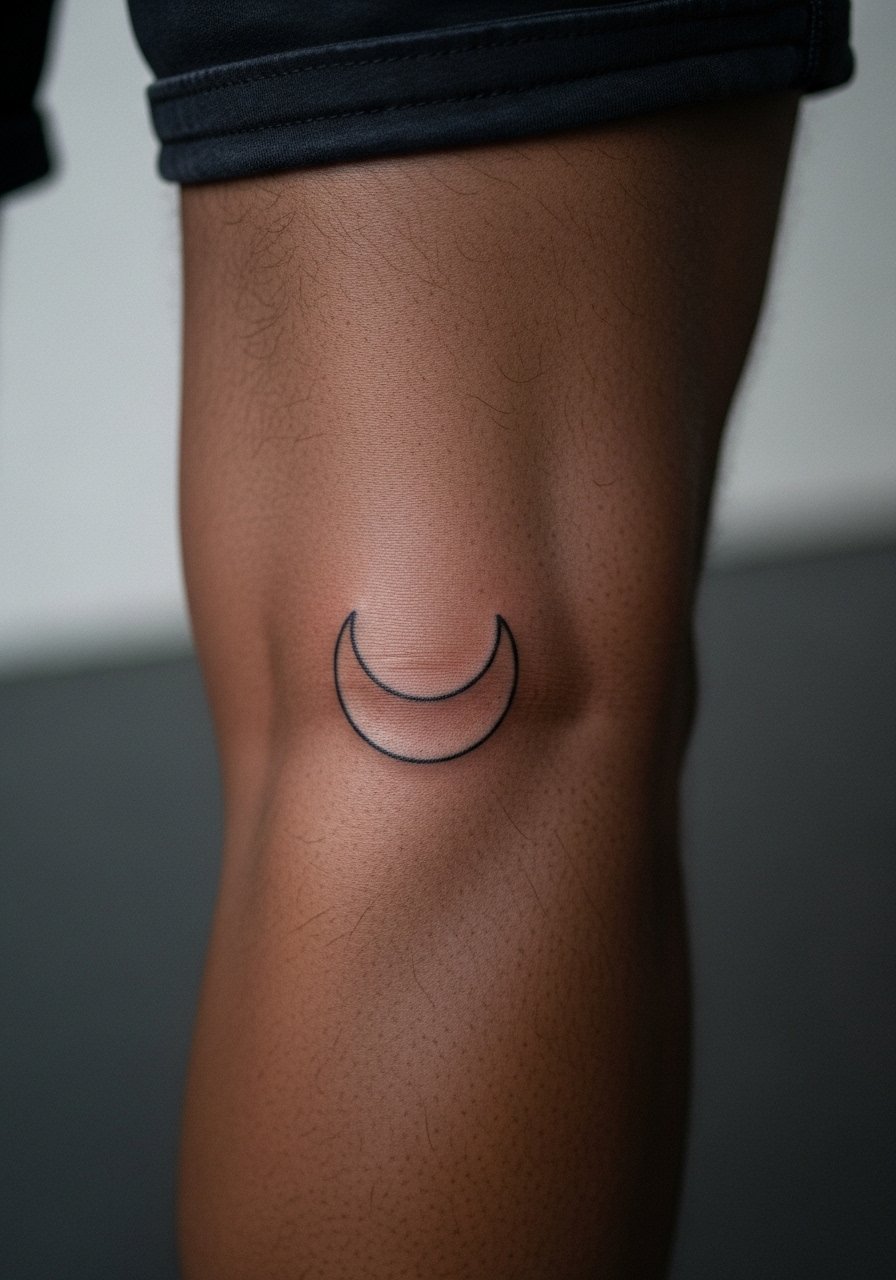
Back of the calf is a forgiving place for minimal linework and it photographs well in summer. Ask your artist to balance the moon with calf shape so it reads straight when standing. Pain is low to moderate and sessions are comfortable. A mistake is placing it too low where shoe collars rub. For showing it off, pair with shorts or casual sneakers to keep pressure off the skin. Touch-ups are rare but possible after heavy activity.
Frequently Asked Questions
Q: Will a minimal line half moon on the ribs blur faster than one on the forearm?
A: It depends on skin movement and spacing. Ribs move with breathing so very tight hairline work there tends to merge sooner. Forearms are flatter and less mobile so they usually hold finer details longer. Ask your artist for examples of healed rib work and whether they favor increased spacing or bolder contour.
Q: How often do hand and finger half moons need touch-ups?
A: Hands see constant washing and friction, so touch-ups are common yearly or bi-yearly. Fingers especially need frequent upkeep because the skin regenerates there faster. If you want lower maintenance, consider wrist or forearm versions instead.
Q: What should I wear to a clavicle or sternum session so the artist can work comfortably?
A: Pick clothing that reveals only the area needed. A wide-neck shirt or fitted sports bra works well. For a collarbone or sternum session, a wide-neck shirt or a zip-up hoodie you can adjust makes the appointment cleaner.
Q: Are there career risks with visible half moon placements like the neck or hands?
A: Yes, some industries remain conservative. Neck and hand placements are visible in most situations and can affect hiring in certain roles. Consider placement, the visibility of your design, and whether you are comfortable explaining it in interviews.
Q: Should I expect a touch-up for a minimal half moon done on the ankle or foot?
A: Yes, those areas face a lot of rubbing from shoes and socks so fading happens faster. Plan for a touch-up within two to three years depending on footwear and activity level.