
Fine line watercolor scorpions look delicate in photos, but the pieces that still read like art after three years are planned around placement, spacing, and color saturation. I have sat in five shops across Brooklyn and seen the small choices that matter, like pushing color deeper into the tail and leaving extra negative space around the pincers. Below are 27 feminine watercolor scorpion tattoo ideas, each with what to ask your artist and how to style or prepare for the session.
1. Tiny Watercolor Scorpion on Inner Wrist
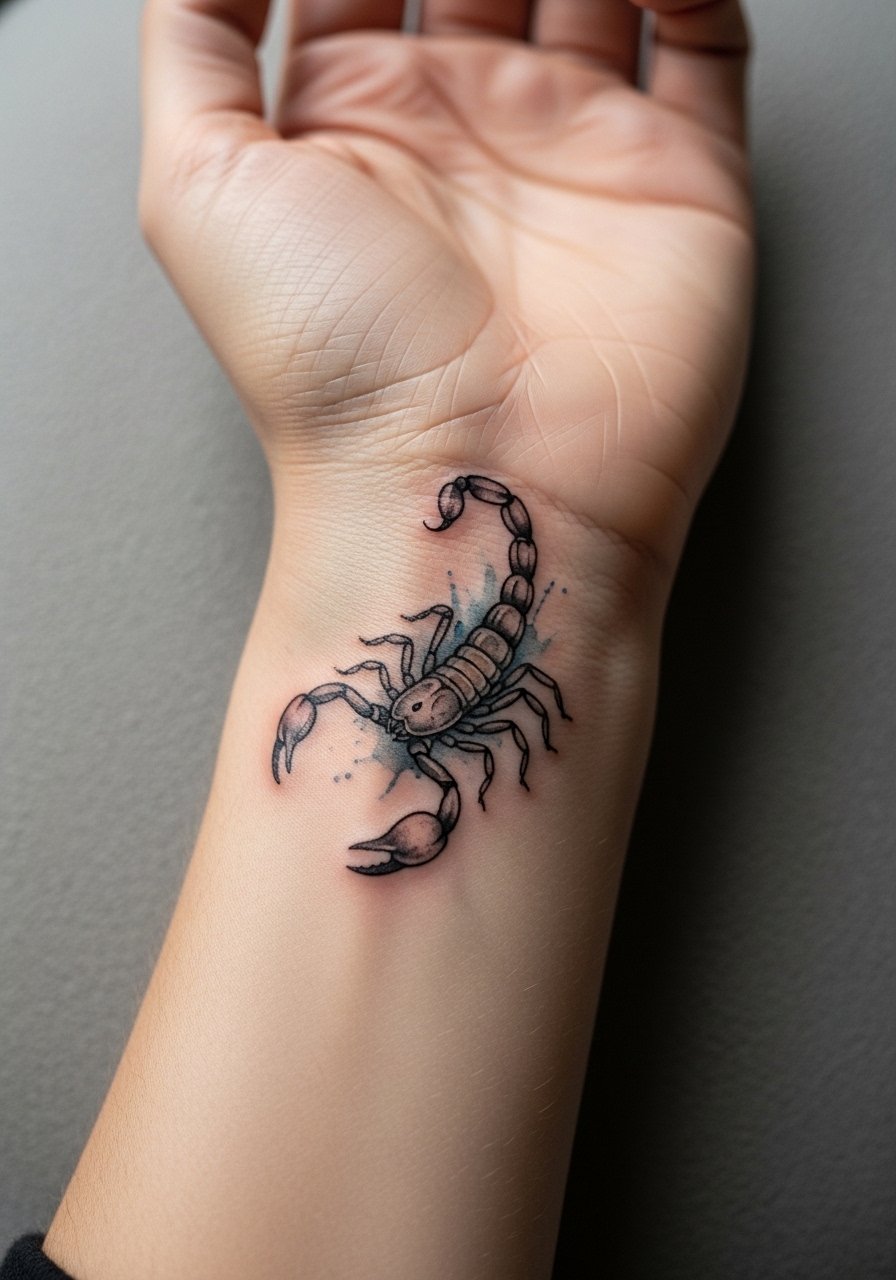
This tiny scorpion works as a neat, feminine accent for someone who wants an iconic motif without heavy blackwork. I recommend telling your artist to use a slightly looser watercolor fill rather than solid blocks so the tail reads soft over time. Fair warning, wrist skin sees a lot of movement and water exposure, so expect touch-ups around year two. For the session, wear a racerback tank you can roll the sleeve up easily and avoid pressure on the area. A common mistake is asking for ultra-fine legs too close together, which can merge into a blur as it heals.
2. Behind-the-Ear Mini Scorpion in Pale Wash

This spot reads like a secret charm when done small and pale. The behind-the-ear area needs a specialized hand because the skin is thin and curves under the hairline. Expect a quick session but higher sensitivity. Artists split on how pale watercolor holds here. One camp says subtle washes last if pigment is placed wisely. The other camp worries light pigments vanish fast. Ask about pigment depth during consultation and plan a touch-up at year one if the color softens. Keep hair loose the first week to avoid rubbing against the fresh ink.
3. Watercolor Scorpion Spiral on Outer Forearm

The outer forearm gives room for a gentle spiral composition where color pools behind the body and tail. I usually tell clients to bring reference photos that show the exact watercolor bleed they like, because "soft" can mean many things. Pain is low and sessions run 45 to 90 minutes depending on saturation. For showing it off, roll up your sleeves and try a loose button-down shirt that lets the piece breathe. Watch for a common mistake of overloading the legs with color; leaving small gaps preserves the scorpion silhouette after healing.
4. Collarbone Scorpion with Watercolor Flare
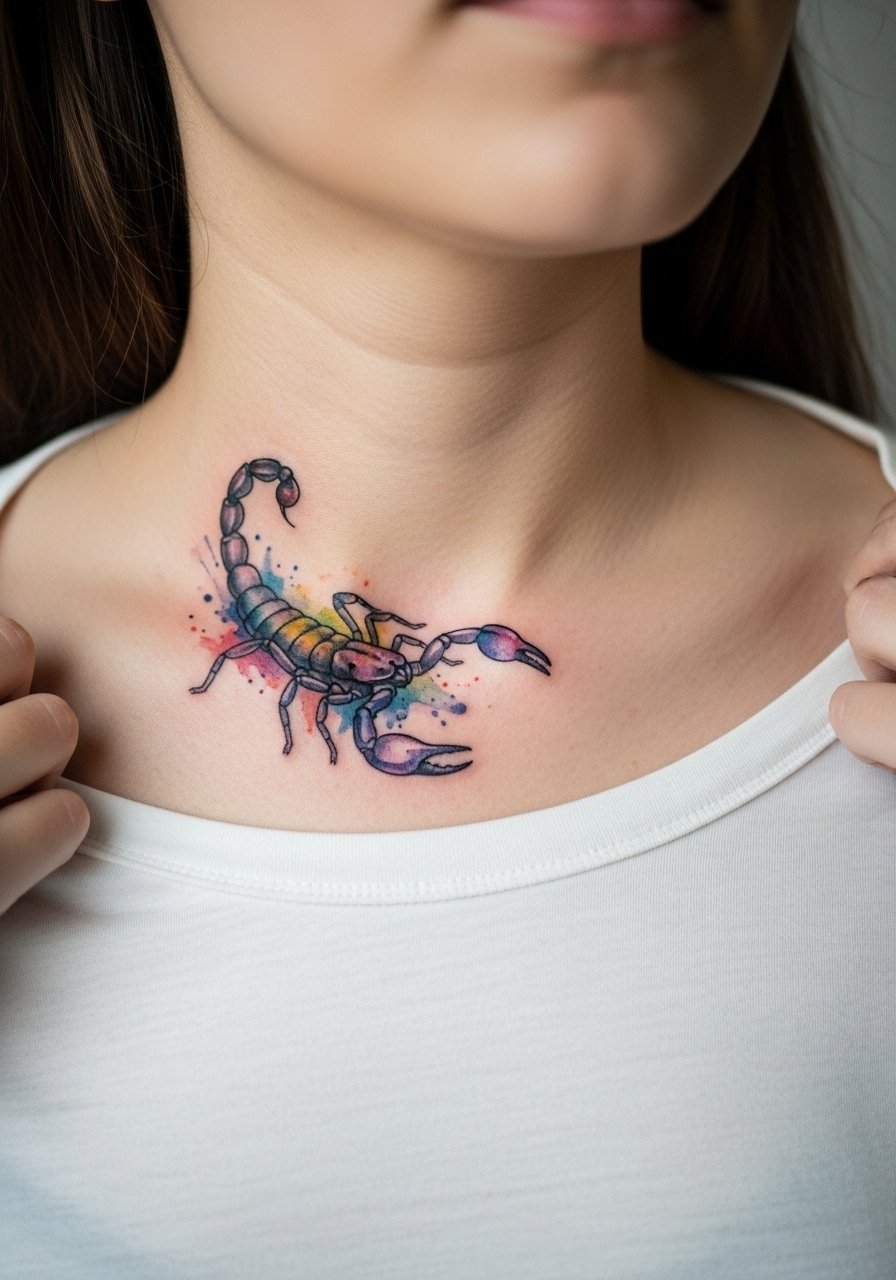
A collarbone placement reads delicate and feminine when the scorpion is elongated along the bone. The area is moderately sensitive and moves with breathing. Tell your artist to keep the watercolor wash under control and to anchor the design with subtle linework along the spine of the scorpion. For evenings out, an open-back midi dress or a wide-neck top frames this placement without hiding it. The biggest mistake I see is packing dense color into the collarbone shadow, which can flatten the composition after year two.
5. Ankle Band Scorpion in Pastel Swirls
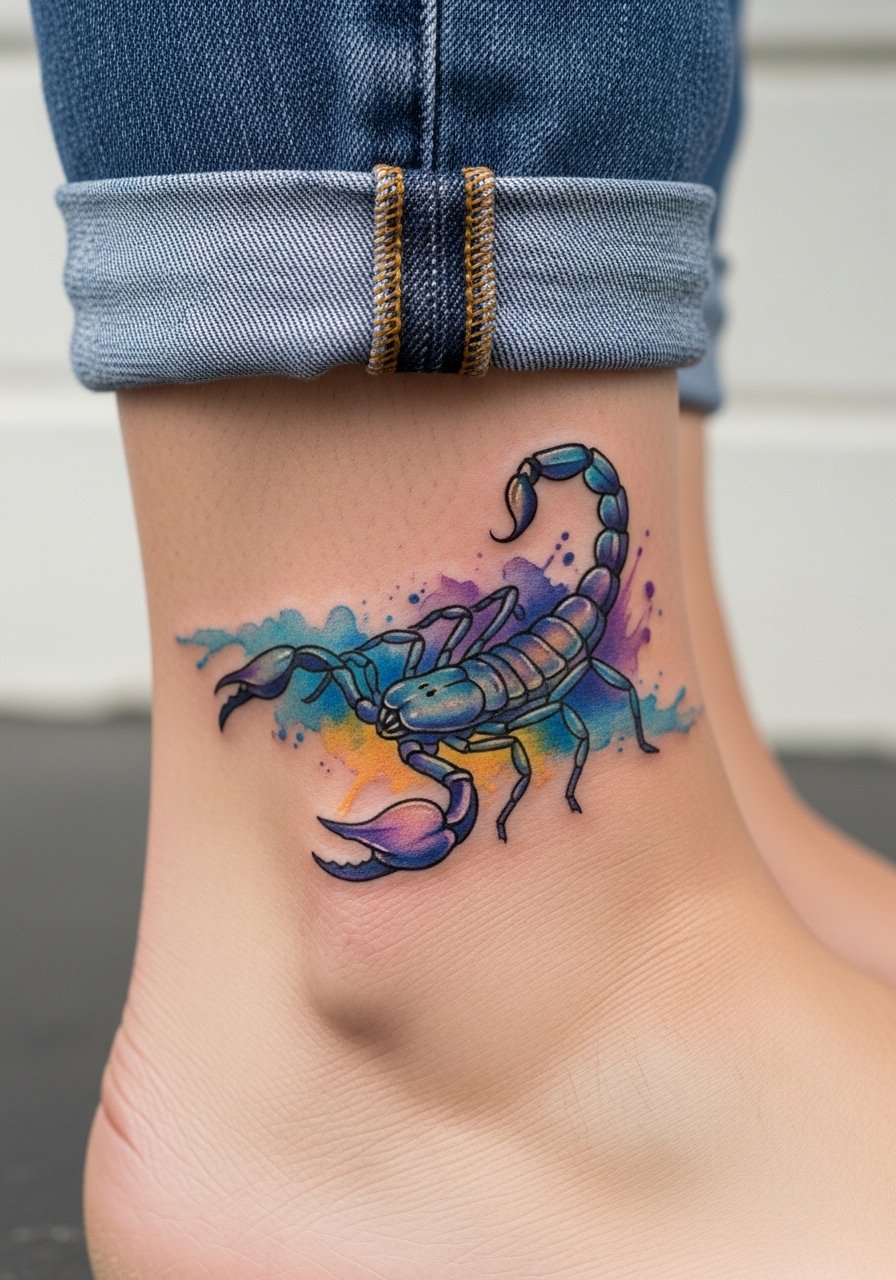
An ankle band is playful and easy to show. The skin here gets friction from socks and shoes, so plan for a longer first-week care routine. For the studio, wear pants you can roll up easily and a loose drawstring linen pant if you prefer full-leg access without pressure. A common error is asking for too tiny a tail; the lines need breathing room to avoid blowout where the ink spreads. Expect touch-up potential around year two if you favor pale washes.
6. Sternum Watercolor Scorpion Framed by Petals

Sternum pieces look intimate and delicate when softened with watercolor florals. Session pain is moderate to high, so plan for breaks and wear a fitted sports bra to give the artist access without exposing more than the area. Artists debate whether sternum watercolor fades faster because of chest movement. One group says the motion pulls pigment; the other argues depth control solves most issues. Ask your artist how they layer color on the sternum and expect a follow-up touch-up at twelve to eighteen months. For showing off, a bandeau top sits just right.
Studio Day Picks
The wrist, ankle, and sternum pieces above each ask for different prep, and a few targeted items smooth the session and the first week.
-
Stencil transfer paper kit. Lets you preview placement accurately on curving areas like the collarbone and sternum before the needle hits skin.
-
Topical numbing cream. Applied about 45 minutes before can take the edge off ankle and sternum sensitivity without compromising linework when used as directed.
-
Thin protective film roll. Useful for wrist and ankle pieces that face friction during the first week of healing.
-
Fragrance-free gentle body wash. Cleanses delicate watercolor fills without added fragrances that irritate healing skin.
-
Aquaphor healing ointment. A thin layer in the first few days helps keep fine wash areas hydrated without smothering the linework.
7. Thigh Splash Scorpion with Gradient Tail
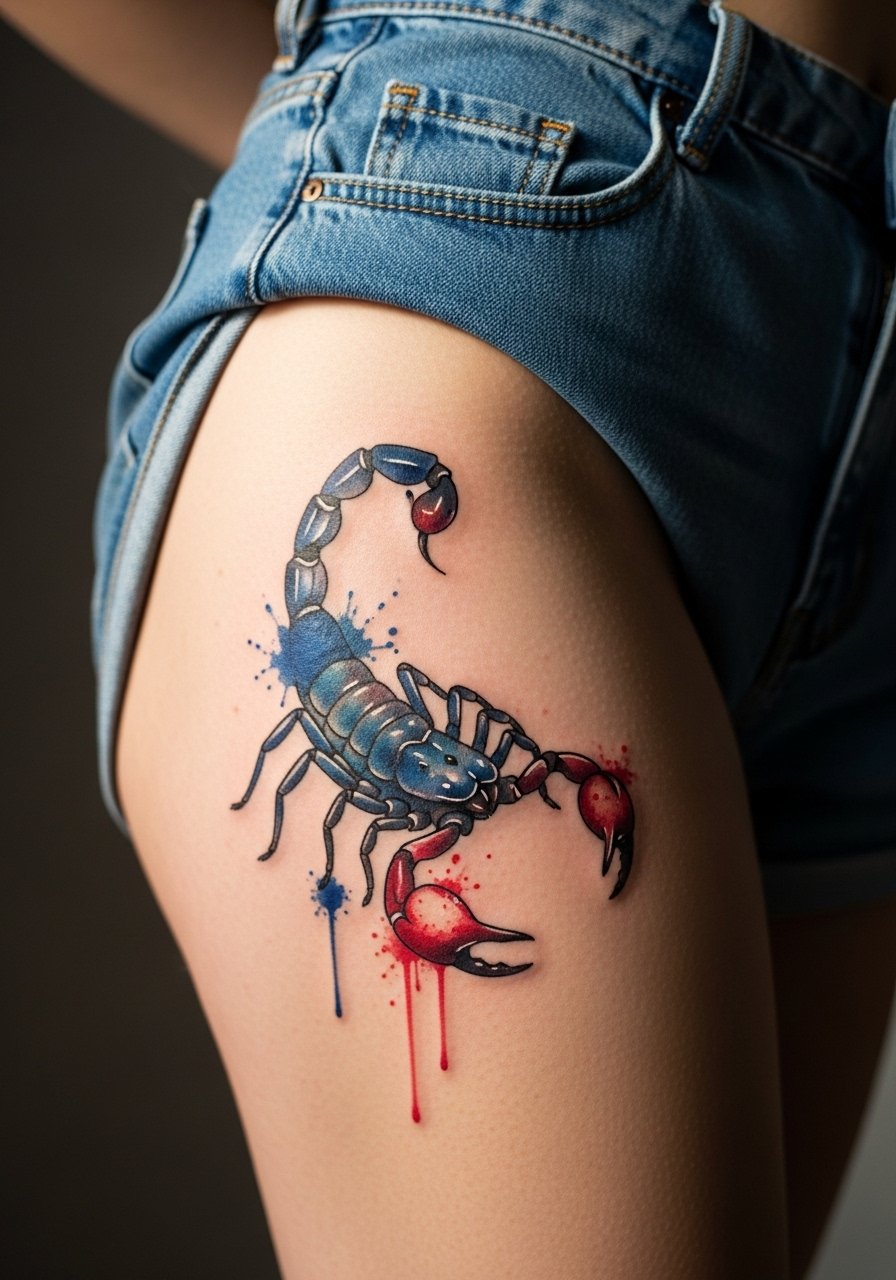
The outer thigh lets watercolor spread into a large, painterly tail. Session time can run longer, often around two hours, and pain is moderate. For the appointment, wear high-waisted shorts or a skirt so the area is easy to access without full exposure. A common mistake is requesting too many tiny dots around the tail, which can look muddy after settling. If you want this piece to age well, ask for slightly increased color saturation in the middle of the wash and lighter edges. Pair it with a skirt that rides above the ink when you want it visible.
8. Side Rib Scorpion in Soft Blues and Purples

Rib placements are famous for high pain and dramatic presence. Watercolor here looks ethereal, but the skin stretch during breathing can thin lines if the artist goes too fine. Artists split on whether fine line holds on ribs. One camp says spacing and depth must be increased to prevent early blur. The other camp uses very careful needle pacing and reports good longevity. If you pick ribs, bring a plan for breaks and consider scheduling a shorter session over two visits. For the session wear, choose a sports bra or cropped top you can lift briefly.
9. Inner Arm Scorpion with Light Washes
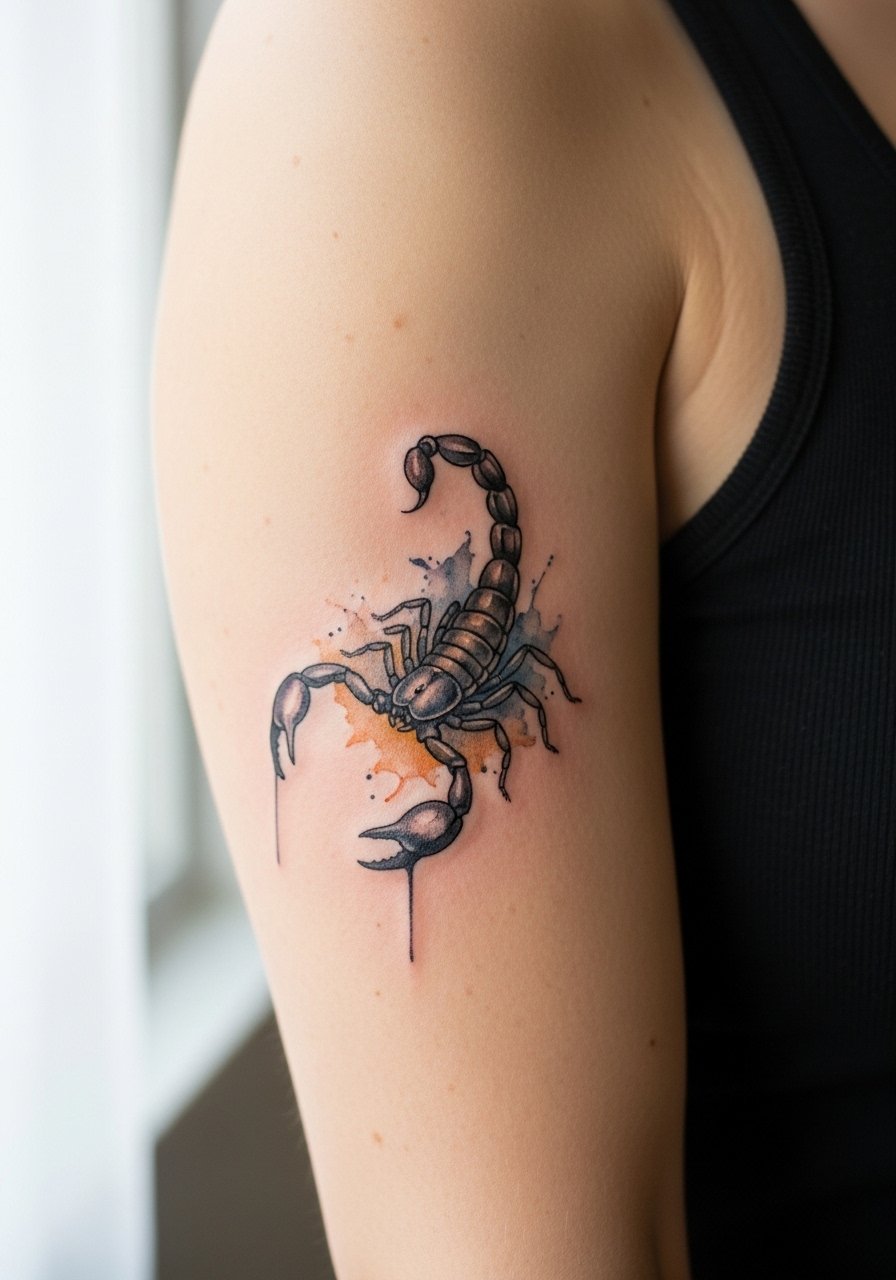
Inner bicep placements read intimate and reveal in motion. Pain is moderate and the skin is softer here, so slightly deeper color placement can help keeps washes visible. Tell your artist you want the scorpion to look like a soft illustration rather than a water stain. Expect some fading in the underarm crease, so schedule a touch-up at year two if needed. For the session, wear a loose tank top so you can lift the sleeve without catching fabric on the area. Avoid asking for too many thin hairlines near the inside curve, which often merge when healed.
10. Hip Scorpion Peeking from Swimwear Line

Hip placements frame the body and lend themselves to pieces that peek out under swimwear. Expect moderate discomfort and a longer session if you want color saturation. For after the session, loose high-waisted shorts let the area breathe and avoid chafing during the first week. A good showing option is a high-waisted bikini bottom that intentionally reveals the tip of the tail. A frequent misstep is compressing the scorpion into the exact swimsuit curve, which may look different once you stand and move.
11. Low Back Scorpion with Watercolor Halo

Lower back scorpions can be bold while still feminine when softened with a halo of color. This area is forgiving on linework but is subject to friction from waistbands. Ask for the halo to be feathered and not a dense block of pigment. Pain is low to moderate and sessions are comfortable. For showing off, a low-rise or cropped top balances the piece. The common mistake is too much contrast between linework and watercolor, which can make the scorpion look disconnected from its wash after healing.
12. Crescent Scorpion Along the Clavicle Edge

This arcing placement flatters many body shapes and reads delicate with light watercolor. The clavicle area is bony and can feel sharp during the needle work. Ask the artist to use a slightly thicker anchor line along the body to prevent early blurring. For showing off, a thin chain pendant necklace sits above the scorpion without competing. The biggest mistake is centering the design too low in the hollow, which can change how it moves with posture.
13. Vertical Spine Scorpion in Pastel Gradient
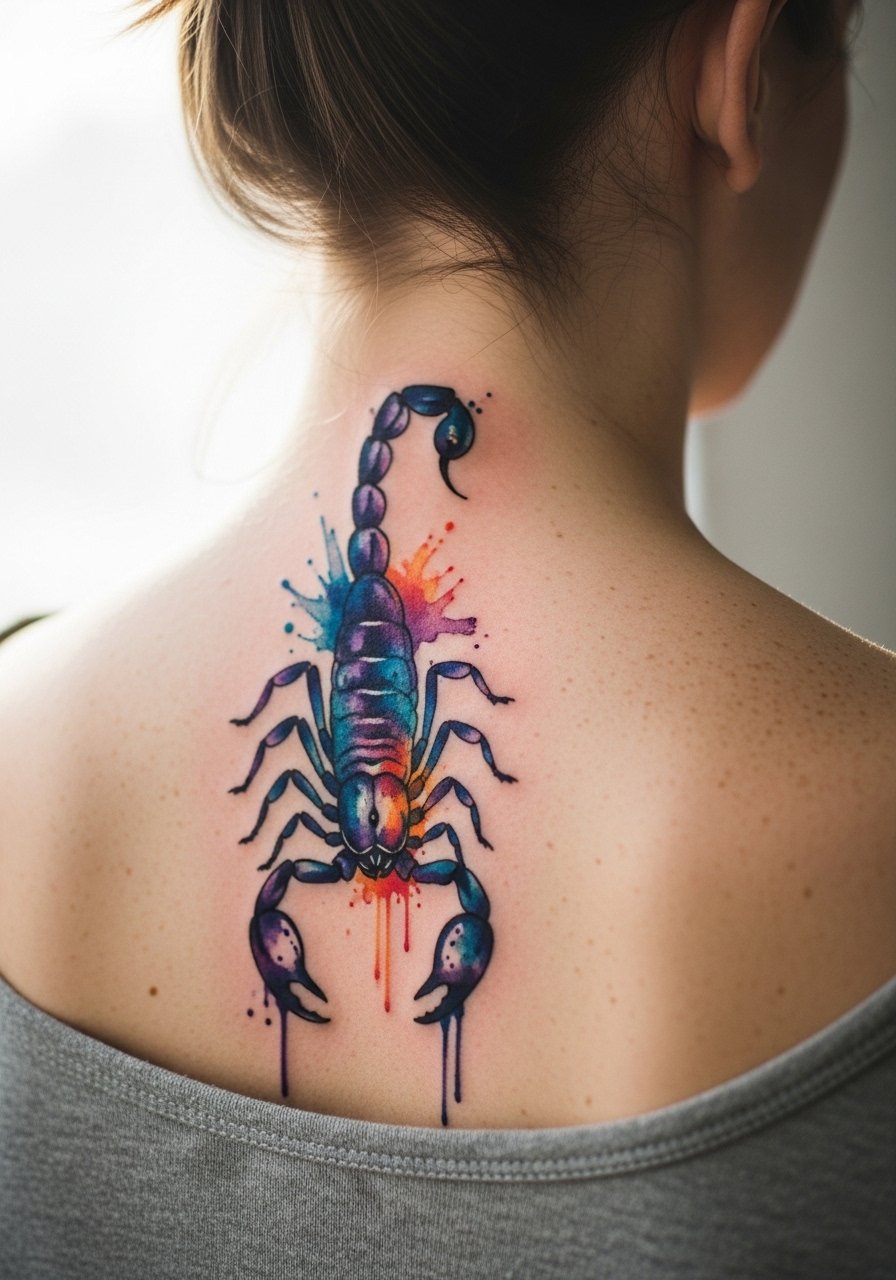
A spine placement elongates the scorpion into a striking vertical composition. Sessions can be uncomfortable when working near bone, and healing takes longer due to friction from clothing. Tell your artist you want color gradients that read from a distance, because micro-pigments vanish on busy backs. For evenings, an open-back dress shows the vertical flow well. Common mistakes include overly fine central spines that lose contrast against the wash over time.
14. Watercolor Scorpion on the Outer Calf
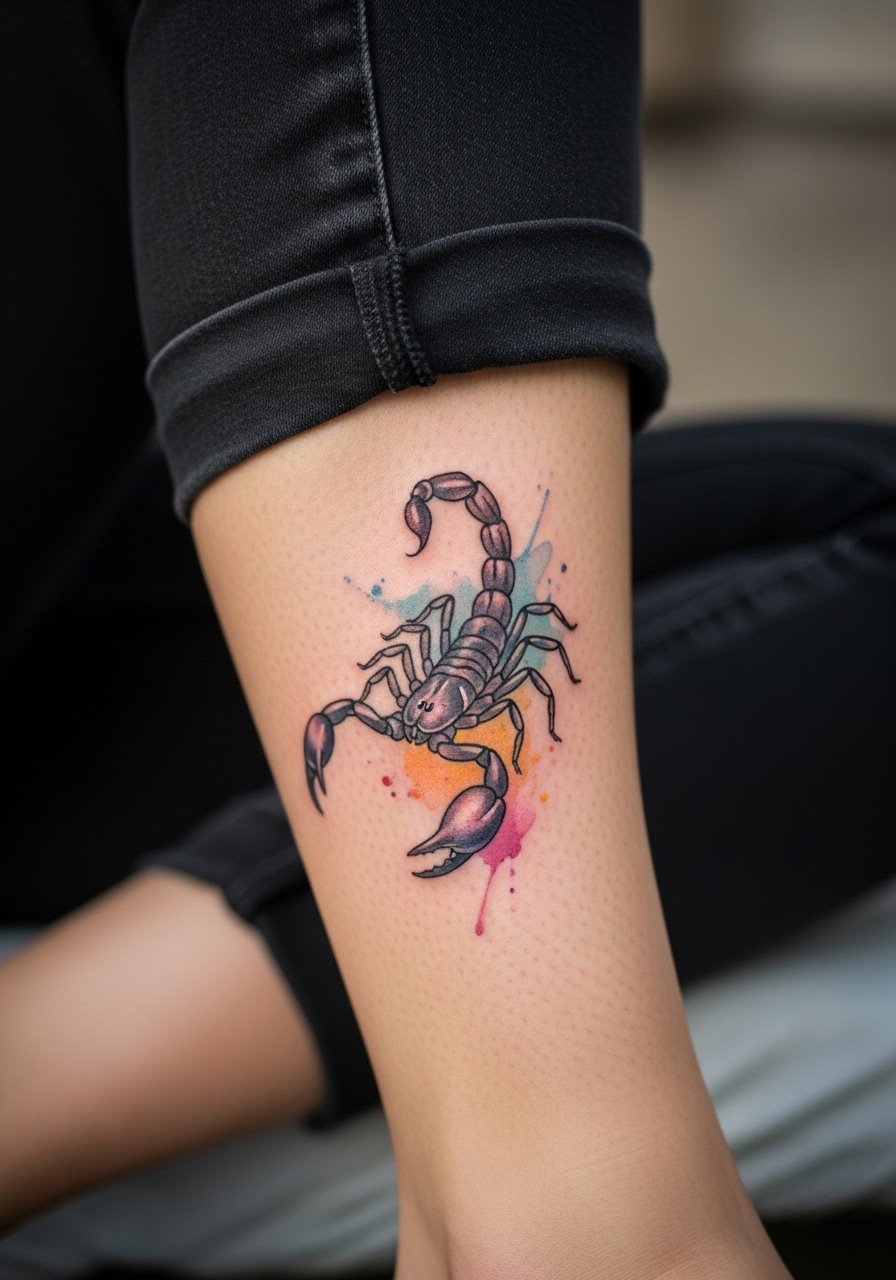
Calf placements allow larger watercolor fields and last well because the skin is relatively stable. Sessions feel manageable and you can sit or lie depending on artist preference. For casual showing, rolled jeans or a midi skirt work well. Try a midi skirt with a slit to showcase the piece without overexposing the area. Avoid asking for micro-detailing in a large wash zone, since too much tiny work disappears into saturated color over the first year.
15. Minimal Finger Scorpion Accent in Faint Wash

Finger tattoos are high maintenance. The skin regenerates quickly and washes cause fading, especially for watercolor. If you want a faint wash on a finger, plan for yearly touch-ups and a very simple silhouette that does not rely on complex washes. For the session, keep in mind the tip of the finger is sensitive and quick. Many people pick a ring-style placement so the scorpion tracks along motion. A common mistake is asking for too much color detail, which often blurs or fades entirely in months.
16. Shoulder Cap Scorpion with Loose Color Bloom

Shoulder caps take watercolor beautifully and age predictably because they see less friction. Sessions are comfortable and short for medium-sized work. For the appointment, wear a loose button-down shirt you can slide aside. The common error is too dark a background wash that competes with the scorpion lines. Ask for a lighter outer wash and a slightly more saturated center so the shape reads against fabric and skin tones.
17. Watercolor Scorpion Ringed Around the Thigh

A wrap-around thigh piece gives a flirtatious, wearable look. Pain is moderate and sessions can be long when you include broad washes. For the session, choose shorts or a skirt that allow the artist access without full exposure. Ask for breaks in pigment to preserve negative space around the pincers. A frequent mistake is packing color where fabric will rub, causing premature fade. Plan for a touch-up at one year if you favor very pastel washes.
18. Inner Thigh Watercolor Scorpion with Floral Edge
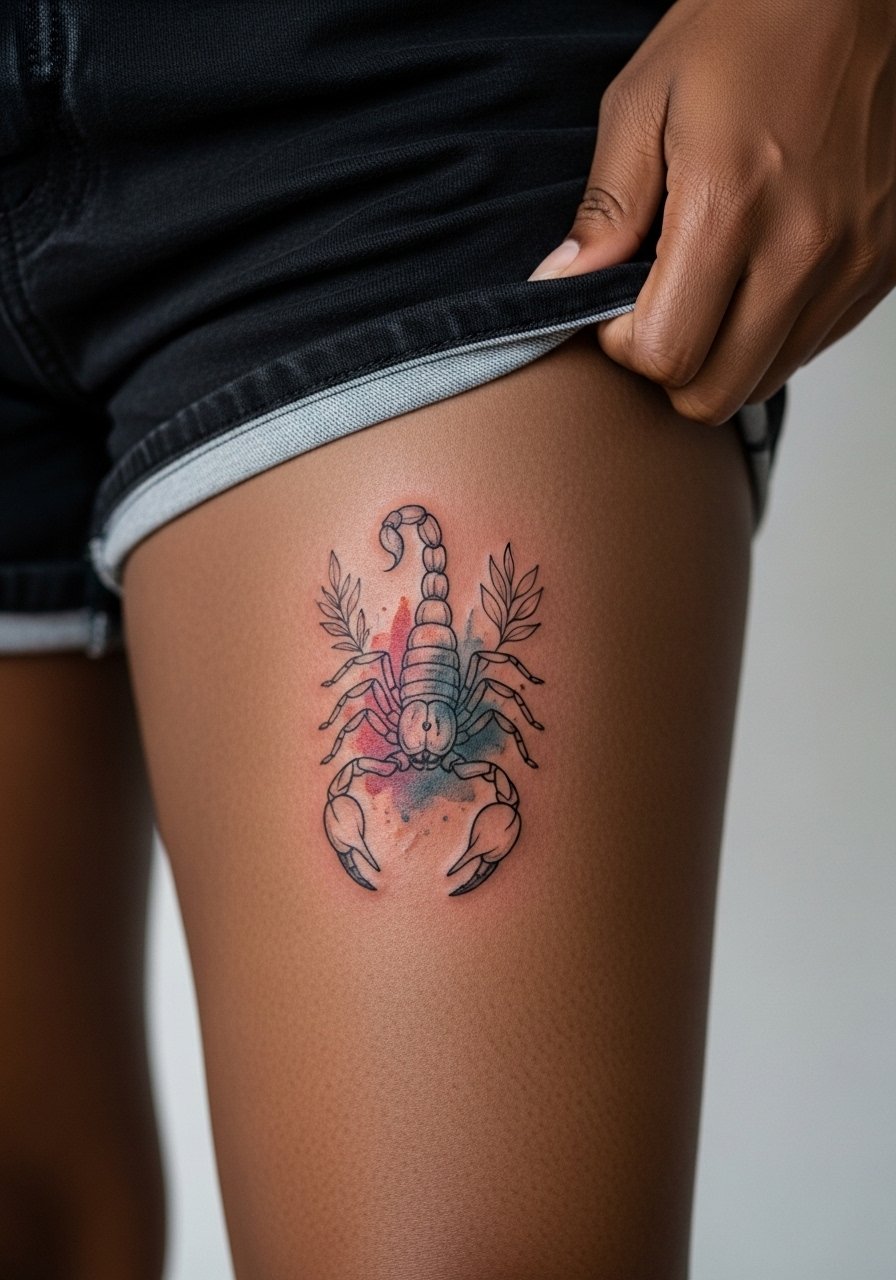
Inner thigh work is intimate and can feel tender during the session. The skin is soft and pigment can appear deeper right after the session. For the appointment, wear shorts you can shift slightly to expose only the area to the artist. Consider that inner thigh tattoos require careful aftercare because movement causes friction. The mistake many make is choosing extremely pale washes that vanish here. Ask for a medium saturation touch and expect to rest the area more than you would for arm pieces.
19. Tiny Scorpion at the Wrist Crease with Blended Hue

Placed at the wrist crease, the scorpion is constantly noticed while you gesture. The area sees soap and sunlight, so tell your artist you want a wash that tolerates frequent washing. A common mistake is placing too much color exactly on the crease, which accelerates fade. For the session, a thin chain bracelet can frame the piece without rubbing. Expect a touch-up at year two if you favor pale pastel tones.
20. Watercolor Scorpion Across the Shoulder Blade

The shoulder blade offers a broad canvas for painterly washes. Sessions are comfortable and healing is straightforward. Tell your artist you want the wash to sit mostly on the scapula and not bleed into the spine crease. For casual showing, a loose tank top or halter top highlights the area. The common error is asking for a tiny scorpion in a large wash field, which looks out of proportion once healed. Plan slightly larger composition to let color and linework breathe.
21. Watercolor Scorpion Finger Band Behind a Stacked Ring
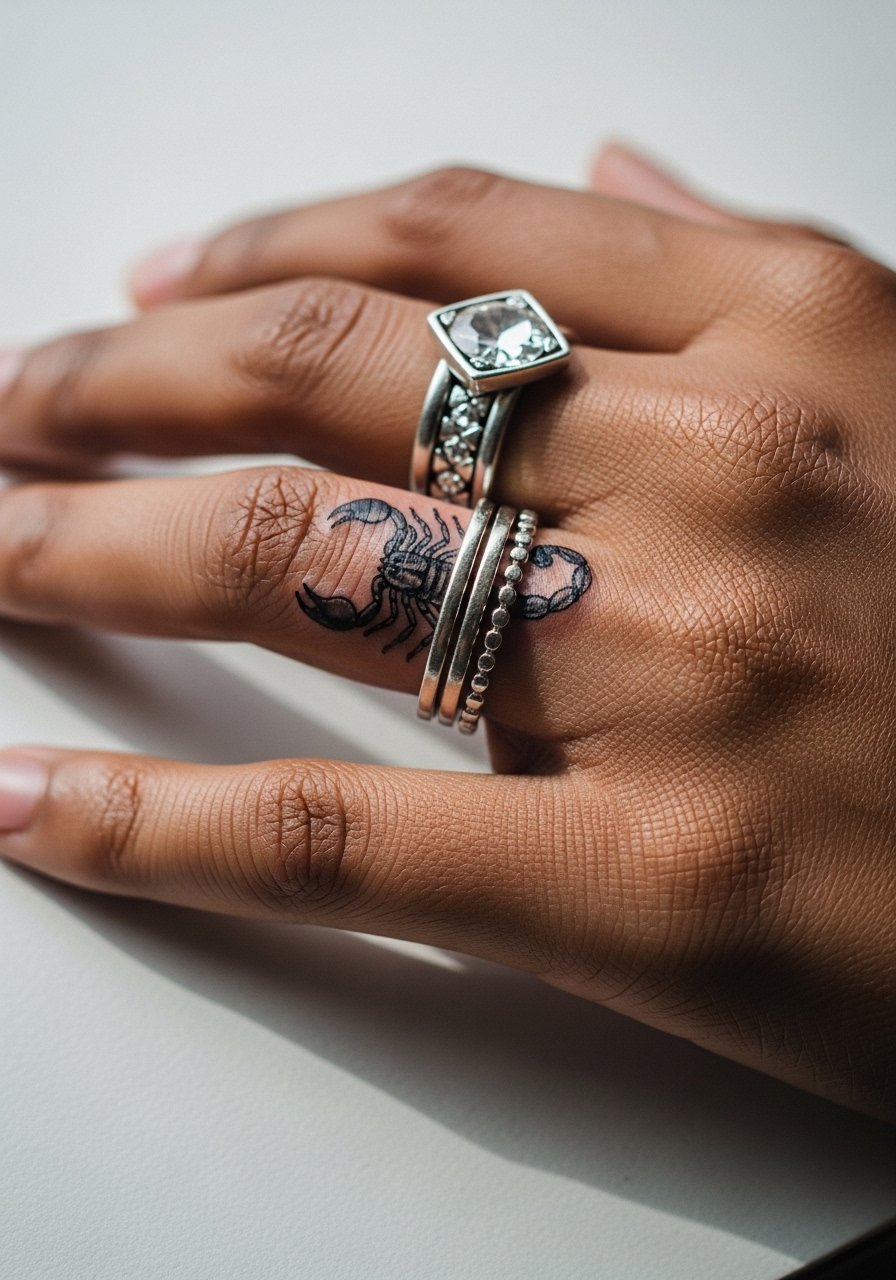
Finger band placements need the simplest compositions because the skin on fingers renews rapidly. If you place the scorpion as a narrow band, keep the wash minimal and the silhouette clear. Expect yearly touch-ups and discuss with the artist how they handle edge retention. A common mistake is relying on watercolor gradients for a ring-style placement, which tend to blur. Keep the design bold in the center so it holds under rings and detergent exposure.
22. Aquarius-Style Scorpion Along the Forearm
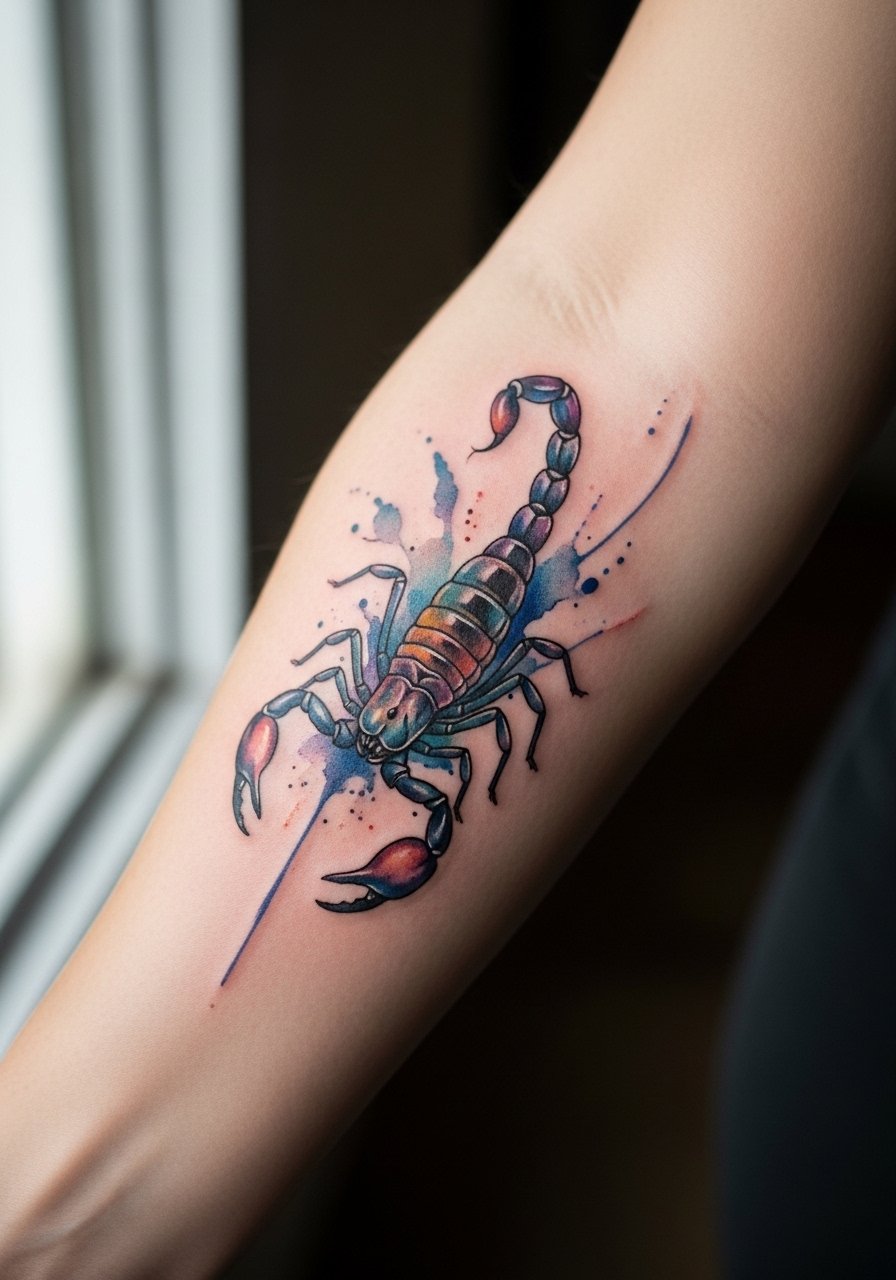
An elongated forearm scorpion reads like a piece of wearable art. Sessions are predictable and day-of clothing is straightforward. For showing off, roll sleeves or opt for a loose linen shirt you can push the cuff up. The biggest mistake is compressing too many small details into a linear shape. Tell your artist you want open spacing around each pincer and tail segment to avoid early merging.
23. Watercolor Scorpion With Constellation Dots
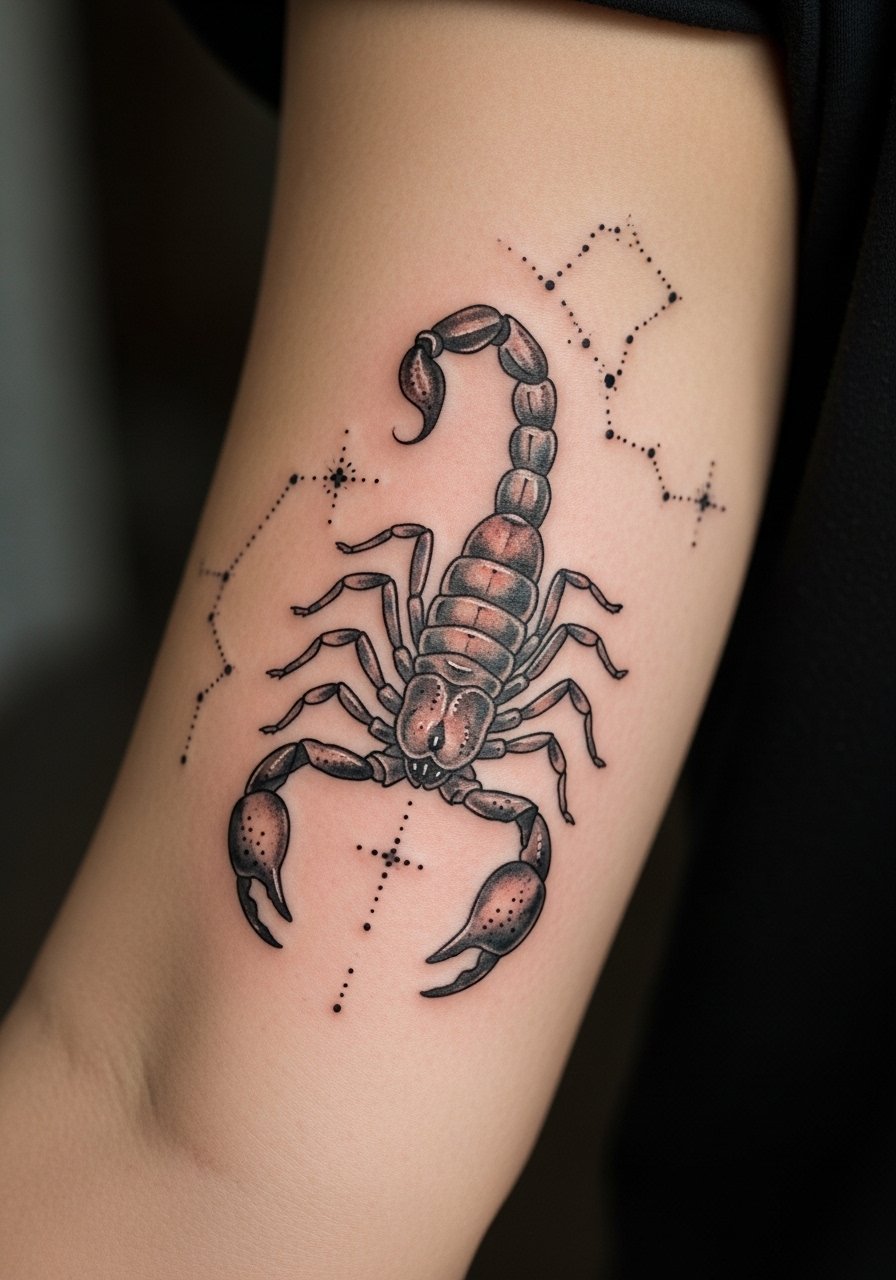
Pairing constellation dot work with watercolor softens the scorpion into an astro-inspired talisman. The dot work should be stippled rather than tightly packed so it ages without turning into a smudge. For the session, bring reference showing the exact dot spacing you like. One practical tip is to plan dot clusters away from high-friction zones. A lightweight bracelet can complement but avoid tight bands that will press against fresh dots.
24. Sternum-to-Upper-Rib Scorpion in Soft Sepia Tones

This vertical sternum-to-rib layout creates a dramatic feminine silhouette. Pain is higher and sessions may be split into multiple sittings for color layering. The sensitive placement calls for an artist familiar with chest movement and pigment retention. Avoid requesting over-fine linework near the ribs, which can blur quickly. For the session wear, a fitted sports bra or zip-up hoodie you can open briefly is ideal. Expect a touch-up at around the year mark for pale wash areas.
25. Petite Scorpion Behind the Knee with Soft Halo
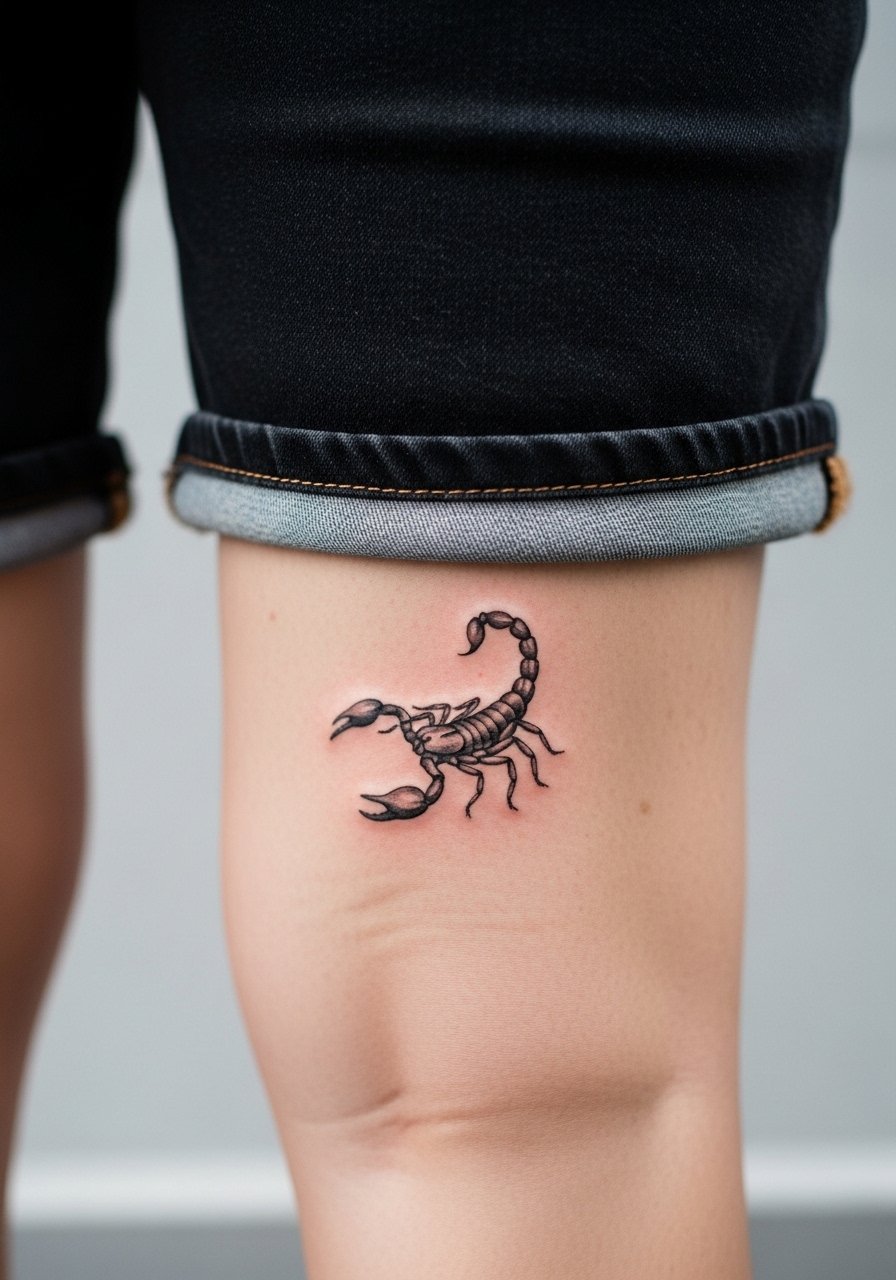
Behind-the-knee pieces are playful but tricky for healing because of constant bending. The pigment needs to be placed slightly deeper and space allowed around lines to handle skin folding. During the session, the position can feel awkward, so plan for breaks. A common mistake is choosing too dense a wash that separates when the leg flexes. For the first week, avoid tight leggings and favor loose shorts so the area breathes and the halo stays soft.
26. Upper Arm Scorpion with Foil-Like Watercolor

The upper arm is forgiving and shows watercolor washes clearly. Sessions are usually comfortable and healing is straightforward. For the appointment, wear a loose button-down shirt you can slide off the arm easily. Avoid overworking metallic-looking pigments that read patchy once healed. The common mistake is wanting a foil effect that photographers enhance but that does not hold on skin long term.
27. Watercolor Scorpion Behind the Shoulder Near the Neck
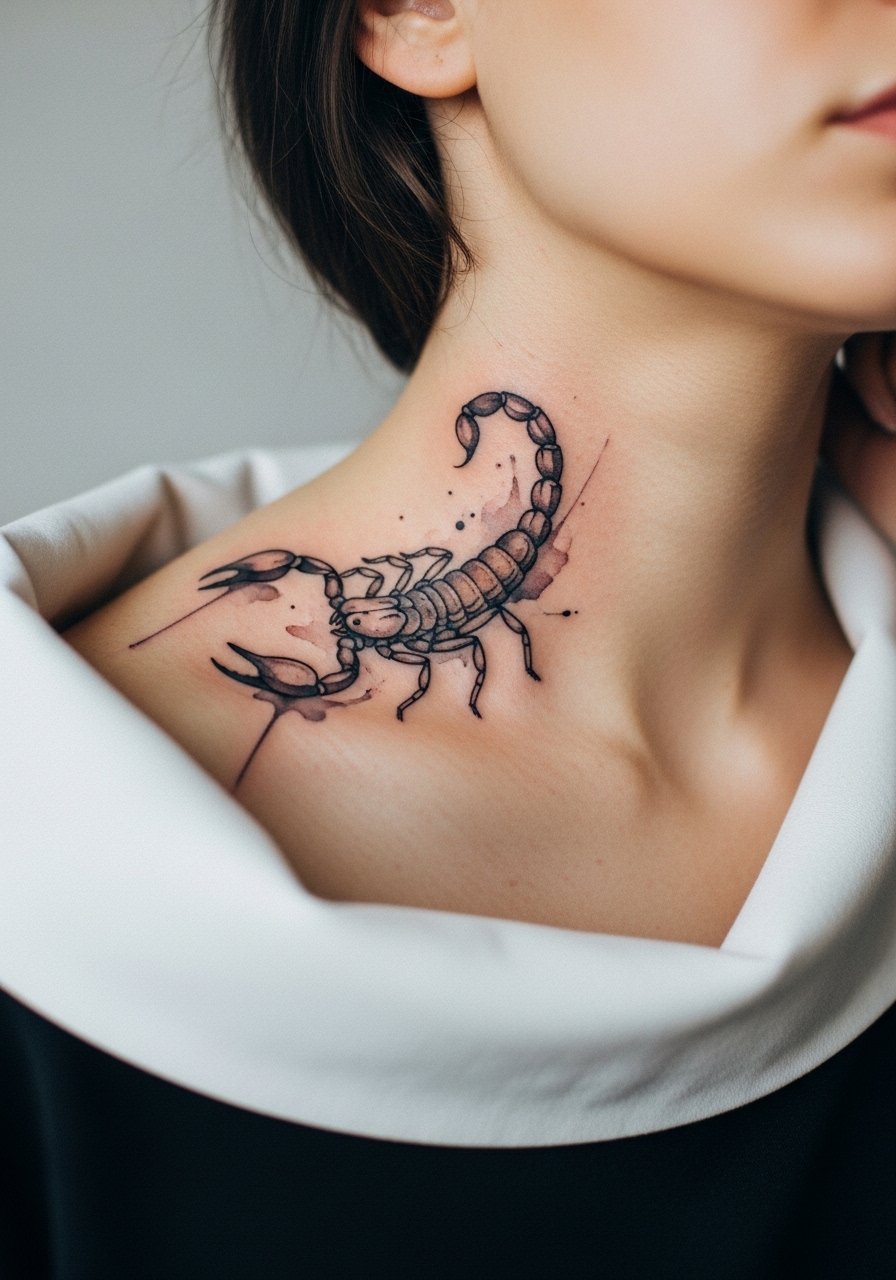
This placement feels like a peek of personality when the collar shifts. It is moderately sensitive and requires careful placement to avoid collar chafing. For the session, wear a wide-neck shirt you can adjust. The controversy here is aesthetic. One camp favors bold black scorpions for longevity and clarity. The other camp argues that watercolor softens the symbol into a feminine emblem. Ask your artist which approach they recommend for neck-proximate skin and expect a touch-up if you choose a very pale palette.
Frequently Asked Questions
Q: Do watercolor scorpion tattoos need different aftercare than traditional blackwork pieces?
A: Watercolor fills are more vulnerable to early fading because the pigments are often lighter. In my experience, gentle cleansing, avoiding long sun exposure during the first month, and keeping friction minimal are especially important. Use the specific aftercare items listed in the product block above for the first week.
Q: Will a small watercolor scorpion on a finger or wrist require more touch-ups than one on the thigh?
A: Yes, fingers and wrists are high-motion, high-wash zones so they typically need touch-ups more often. Expect annual or biannual touch-ups for finger pieces and occasional color boosting at year two for wrists depending on how often you expose the area to sun and soaps.
Q: How do I find an artist who understands watercolor techniques for scorpion designs without naming specific shops?
A: Search tattoo shop directories and local convention listings, browse hashtag portfolios, and spend time in community forums to see healed photos rather than just fresh shots. Ask the artist for healed examples of watercolor work on similar placements and for a discussion about pigment depth during consultation.
Q: Are there career considerations for visible scorpion tattoos like hands, neck, or behind the ear?
A: Yes, hand and neck tattoos still carry more visible stigma in some industries. Think about job expectations and future interviews before choosing a highly visible placement. If you want a visible piece but need discretion, pick an area that can be covered with simple clothing choices.
Q: How often should I plan for touch-ups for watercolor scorpion pieces in soft pastels?
A: Soft pastels tend to need refreshing more frequently than saturated color. From what I have seen, plan for a color boost at one to three years depending on placement and sun exposure. Keep in mind that darker anchor lines may hold longer, which can help the piece read well between touch-ups.