
Fine line Medusa portraits look like they belong on a mood board, but the pieces that age well usually start with spacing, contrast, and placement chosen for longevity. Small geometric Medusa designs can balance iconography with modern minimalism, if you plan where the snakes sit, how dense the linework is, and what clothing will show them off. Start with a readable scale and the right placement notes in your consultation.
1. Tiny Geometric Medusa on Inner Forearm
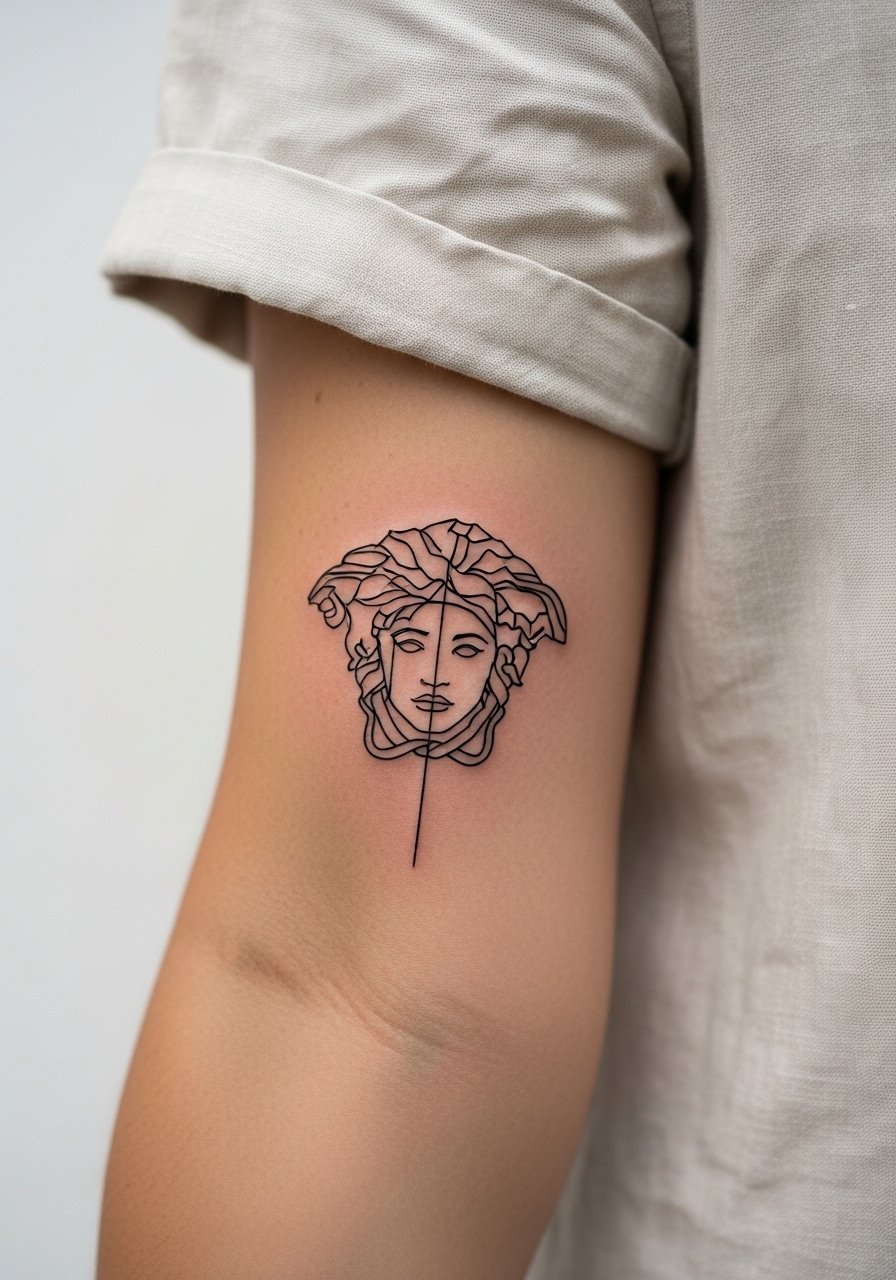
I recommend this placement when you want a daily visible piece that still hides under long sleeves. Tell your artist you want slightly heavier outer lines around the face so the portrait reads from a distance, and ask them to space the snake details to avoid tight knotting. Common mistake is going too small with dense snake detail, which leads to merging after a couple of years. Expect the session to feel moderate in pain, about 45 to 75 minutes depending on shading. For showing it off, roll sleeves or wear a short-sleeve linen shirt in neutral tones to keep attention on the linework.
2. Micro Geometric Medusa on the Wrist
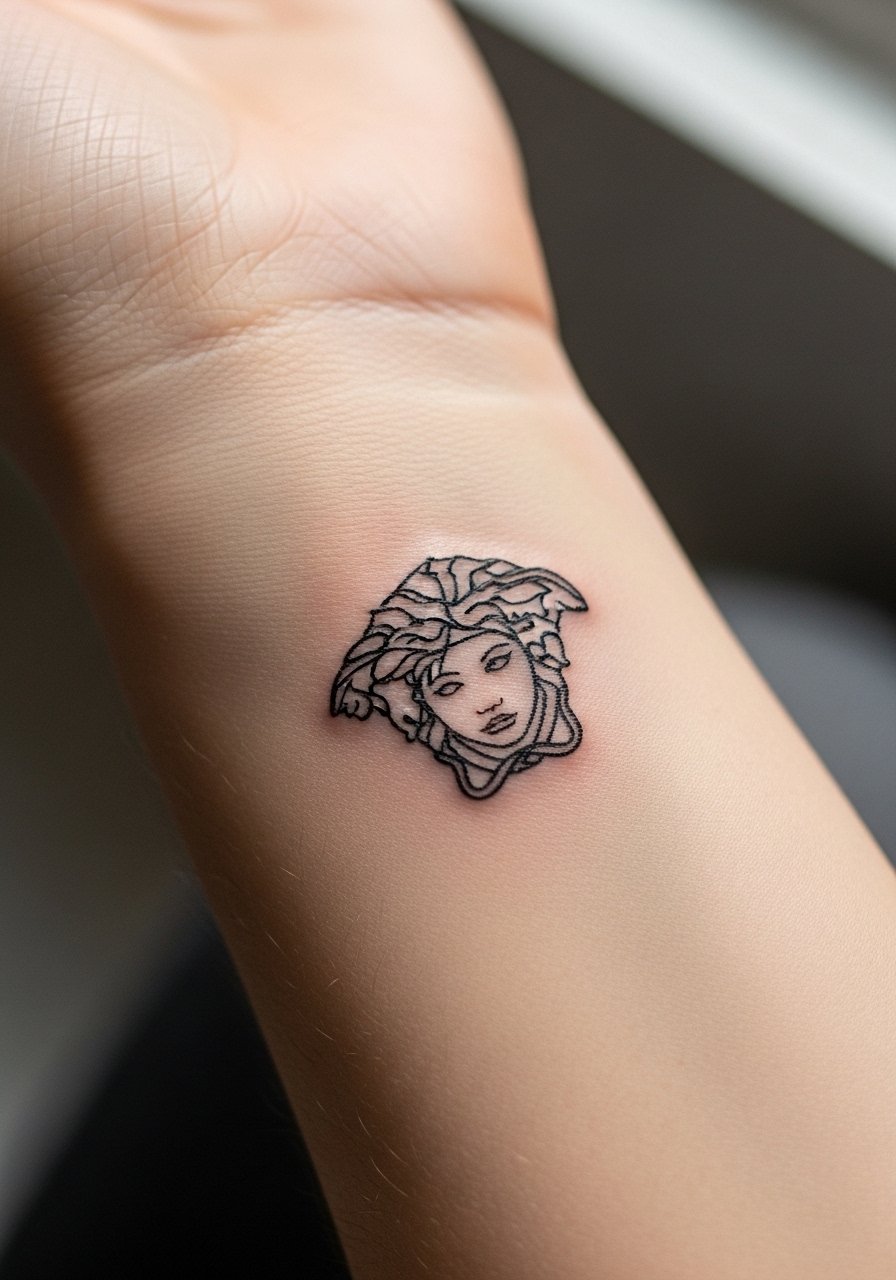
Fair warning, the wrist is a high-motion zone so blowout risk is real for micro detail. For this spot, ask the artist to simplify the snakes into clean, repeating geometric forms rather than tiny scales. The session is short but sharp, and touch-ups are more likely around year two for fine elements. A common version that ages poorly is a dense face with tiny hairline snakes. For showing it off, pair the wrist piece with a minimalist bracelet or a thin chain watch so jewelry frames rather than crowds the design.
3. Behind-the-Ear Geometric Medusa Accent
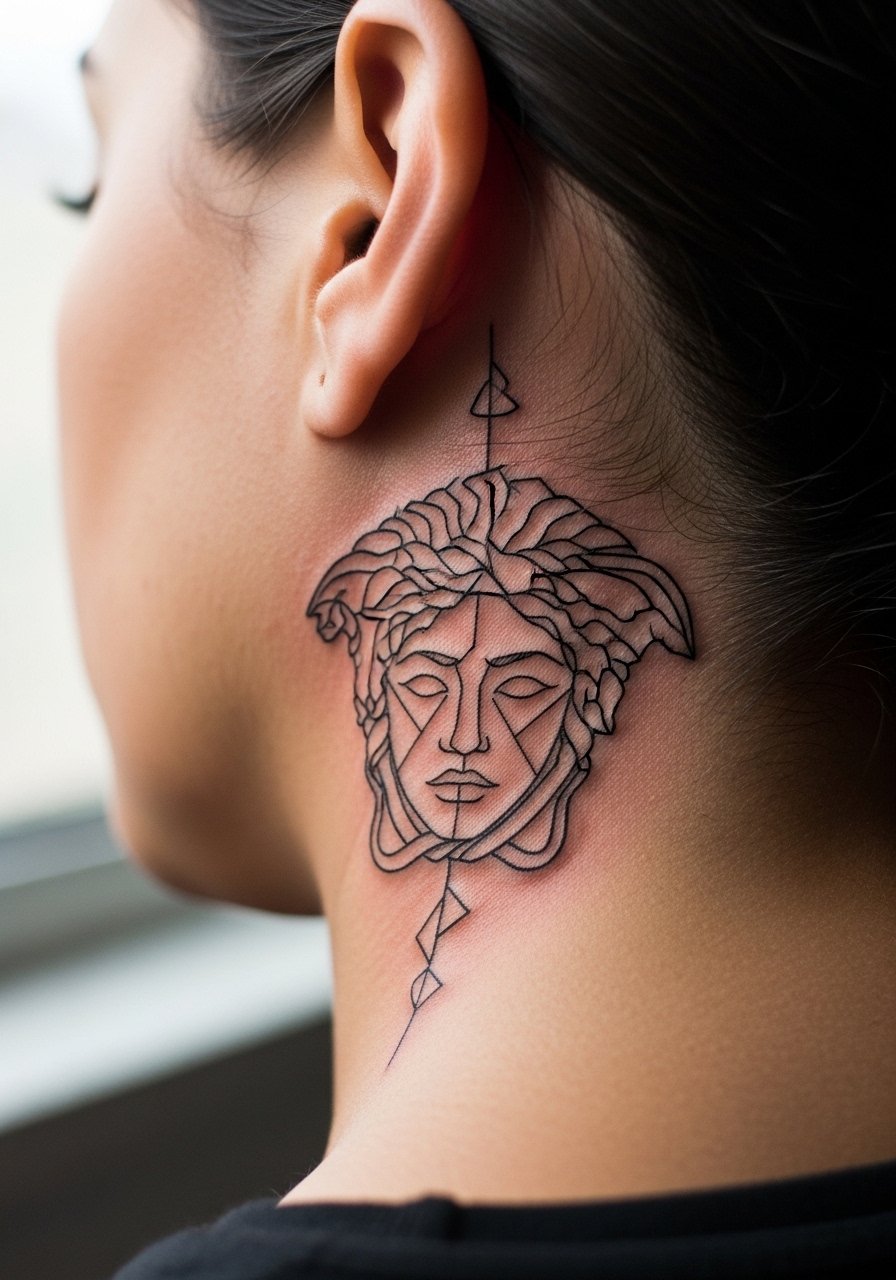
This tiny placement reads like an Easter egg and costs little chair time, but it needs a specialist touch. The controversy here shows up in consultations. One camp says tiny facial elements behind the ear blur because of skin texture, and the other camp says simplified geometry holds fine with proper depth. Name both camps during your consult and ask where your artist stands. Wear your hair up for the session so the area is fully accessible. For session comfort, bring a stretchy hair tie scrunchie to keep hair off the spot while the artist works.
4. Collarbone Geometric Medusa Medallion
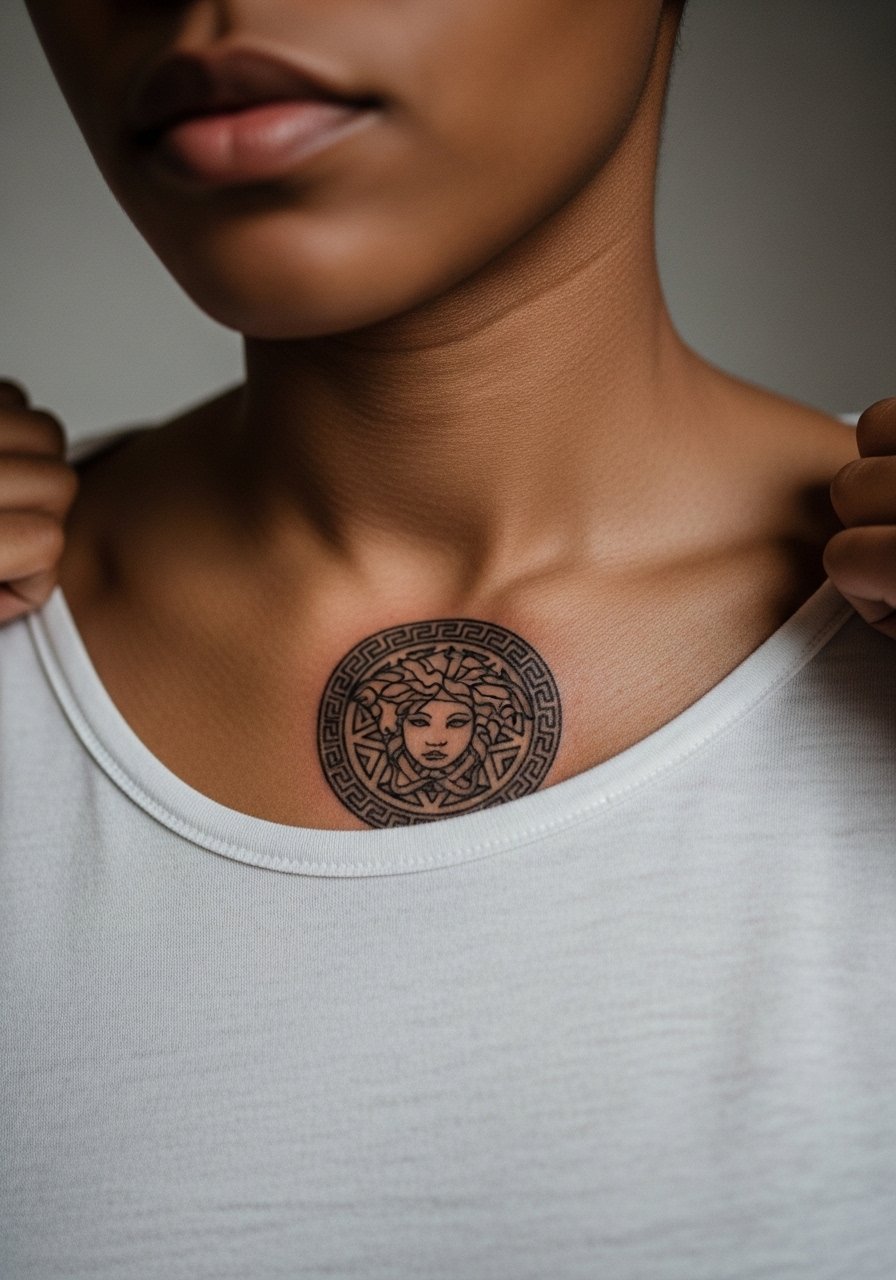
Collarbone pieces age based on how much sun they see and how thin the skin is across the bone. For a medallion, ask for an inner band of negative space to prevent dense dot work from merging over time. The session is light to moderate, often under an hour for a small medallion. A frequent mistake is placing too much stipple shading directly on the bone, which softens faster. This area looks great with layered necklaces. Pair the medallion with a thin chain pendant that sits above the piece so the jewelry complements without competing.
5. Ankle Geometric Medusa with Constellation Snakes
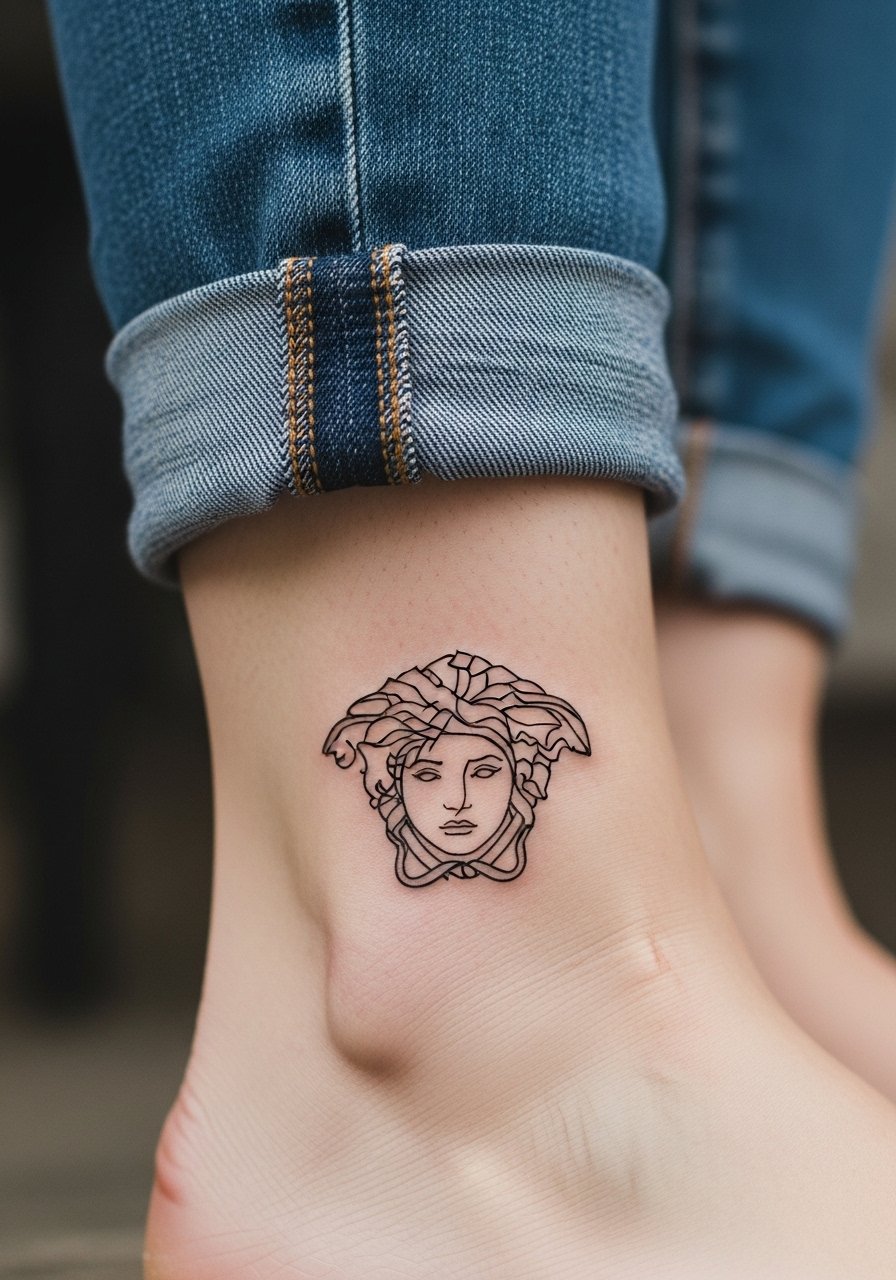
Ankle work takes a beating from socks and shoes, and tiny dots can bleed from friction. Ask the artist for slightly bolder outer lines and fill the snake motifs with open geometry instead of tiny stippling. Sessions run quick but hurt near the bone, so expect sharp spikes during inking. For the week after, footwear choice matters. Wear open sandals to avoid constant rubbing and style the ankle with a delicate anklet when you want to highlight the piece.
6. Small Geometric Medusa on the Shoulder Cap
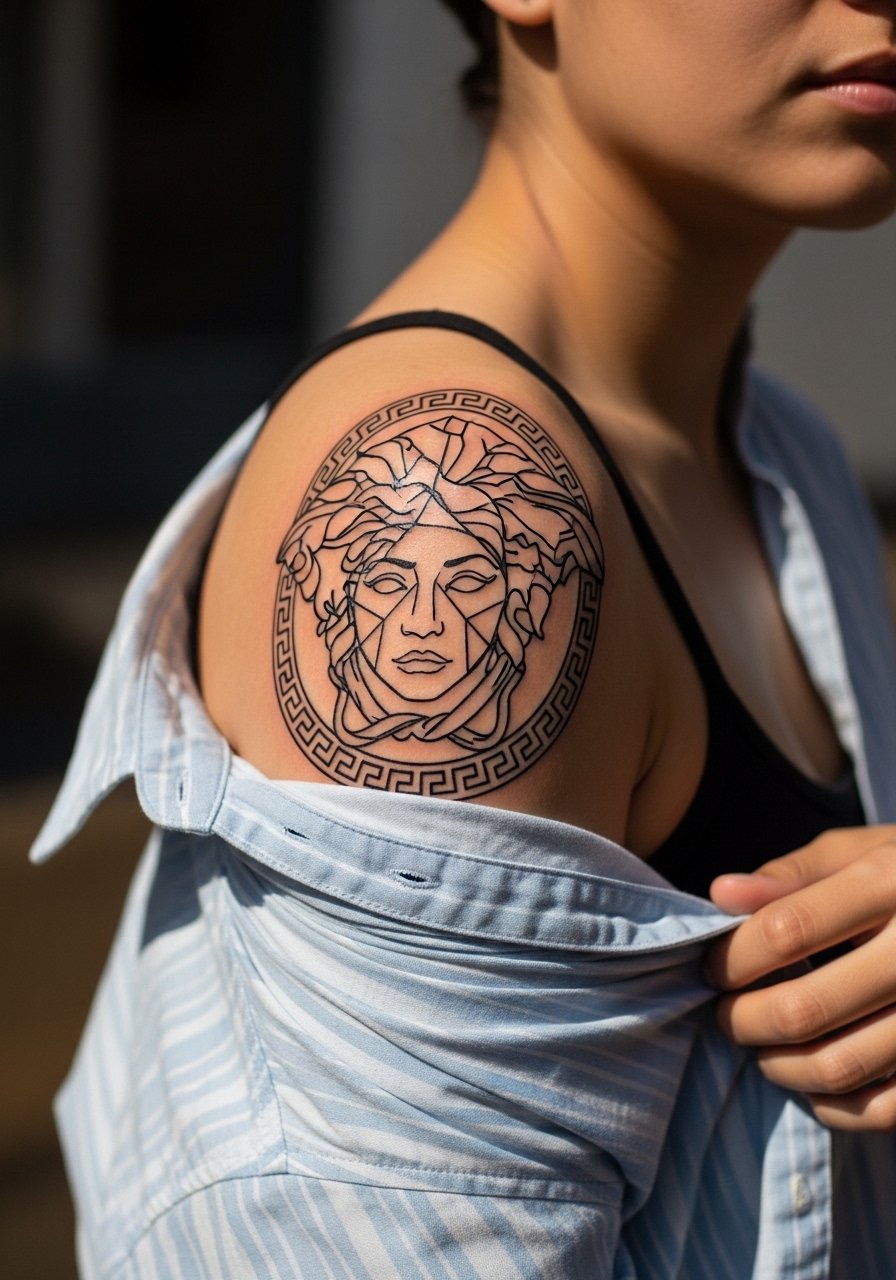
The shoulder cap is forgiving, it holds linework well and tolerates tighter geometry. For longevity, request a touch of contrast between the face and snakes so the portrait does not wash out into a single mass. Sessions here are low to moderate pain and can be booked as a quick add-on with an appointment. A common mistake is cramming a lot of tiny negative-space detail into a small shoulder piece. For showing it off, wear a loose button-down shirt pulled slightly aside so the shoulder reads clearly when you move.
Studio Day Picks
The upper body and limb pieces above require different prep and session comforts, so a short kit helps smooth the day.
-
Stencil transfer paper kit. Lets you and your artist preview line placement on the arm or shoulder so the geometric layout reads as intended.
-
Topical numbing cream. Useful for thin-skin wrist or ankle sessions to take the edge off without changing how the ink sits.
-
Thin protective film roll. Helps protect small wrist and hand placements from friction during the first week.
-
Fragrance-free gentle body wash. Cleans healing areas without adding irritation to fine line work on forearms and collarbones.
-
Aquaphor healing ointment. Thin layers in the first days keep small geometric lines from drying and scabbing heavily.
7. Micro-Medusa on the Side of the Finger
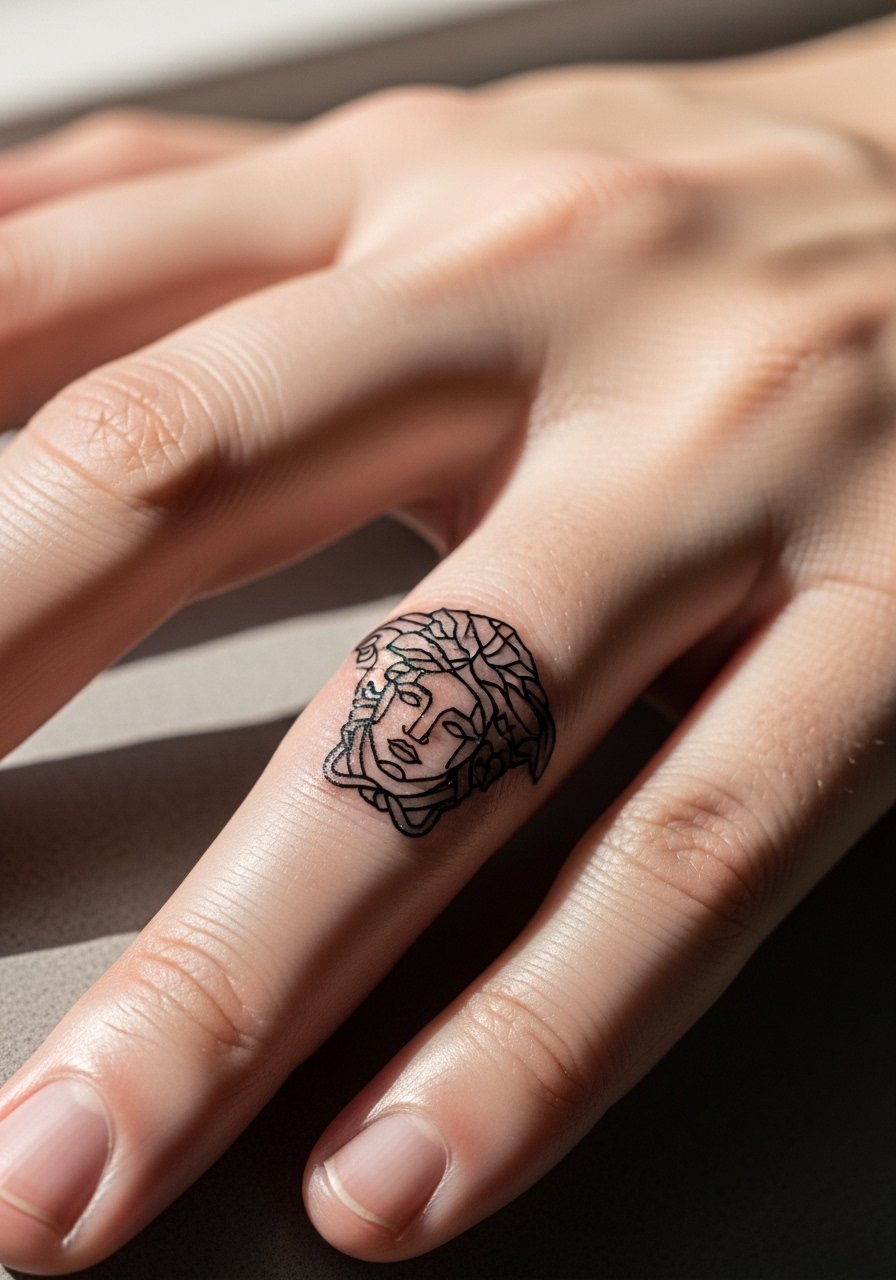
Fingertip and side-finger tattoos are notorious for fading and callus interference. For a finger Medusa, simplify the snakes into a repeating linear motif that reads even if some pigment lightens. Tell your artist you accept possible annual touch-ups, because fingers are high-friction and sun-exposed. The session is quick but uncomfortable given thin skin and bone proximity. A common mistake is asking for hairline snakes and dense facial detail. For styling, the finger pairs with a thin stackable ring to keep attention on the portrait without covering it.
8. Mini Geometric Medusa at the Nape
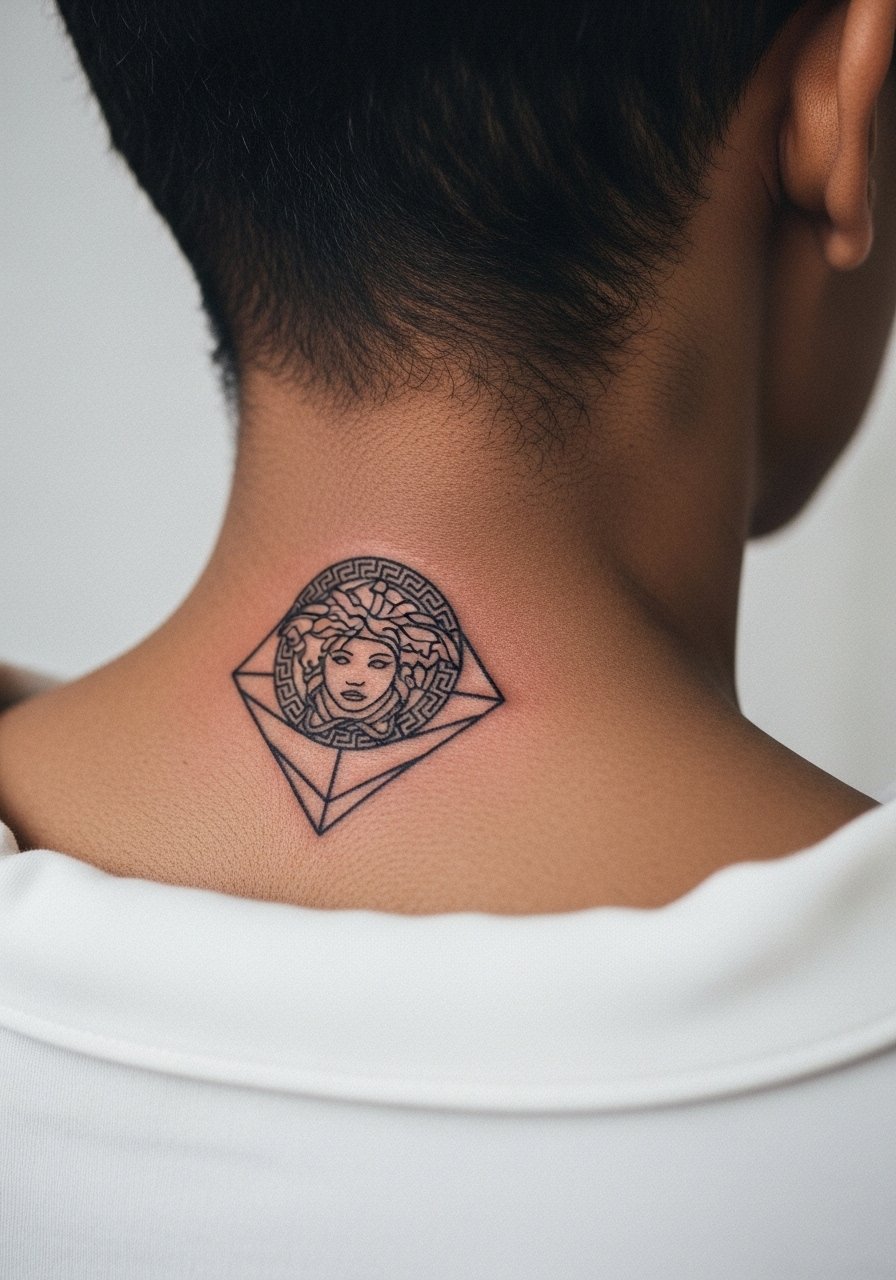
Neck placements demand an artist comfortable with curved anatomy. The debate splits here too. Some say the back of the neck stretches and distorts thin line details, while others point to successful small geometry that holds when placed away from major fold lines. Ask the artist to show healed neck examples from their portfolio. Expect moderate pain and a session that is brief but precise. For showing it off, short hair or a low bun frames the nape. Bring a wide-neck shirt to the session so you can reveal the area with minimal fuss.
9. Geometric Medusa on the Inner Bicep
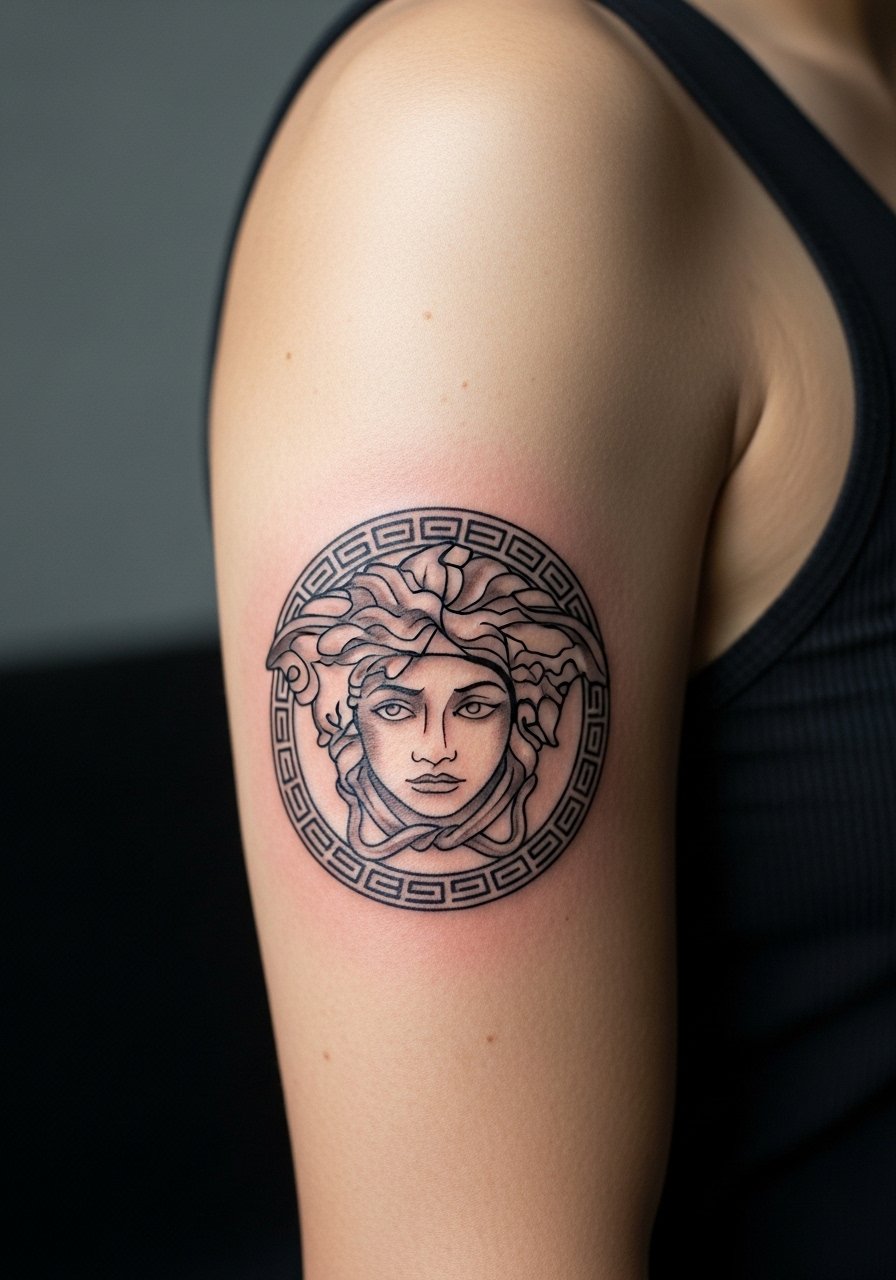
Inner bicep skin is softer and tends to move with muscle, which affects line placement. Ask your artist to plan for slight expansion when the arm is relaxed. The session is more comfortable than ribs but can be awkward because of positioning. A common mistake is packing too much detail into a tight oval. For the look at six months versus two years, expect crisp edges at first and slight softening in dense areas by year two. For session ease, wear a loose tank top you can lift without pressure on the area.
10. Tiny Geometric Medusa on the Calf

Calf tattoos are durable and display well with movement. For geometric Medusa work here, heavier outer contours and open interior geometry keep the portrait legible over time. Sessions are low to moderate pain and can accommodate a bit of shading without risking blowout. A common mistake is over-stippling, which can soften under workout friction. For showing it off, shorts or a skirt that stops above the calf work best. Pair with a loose drawstring short when you want the piece visible.
11. Small Geometric Medusa on the Sternum
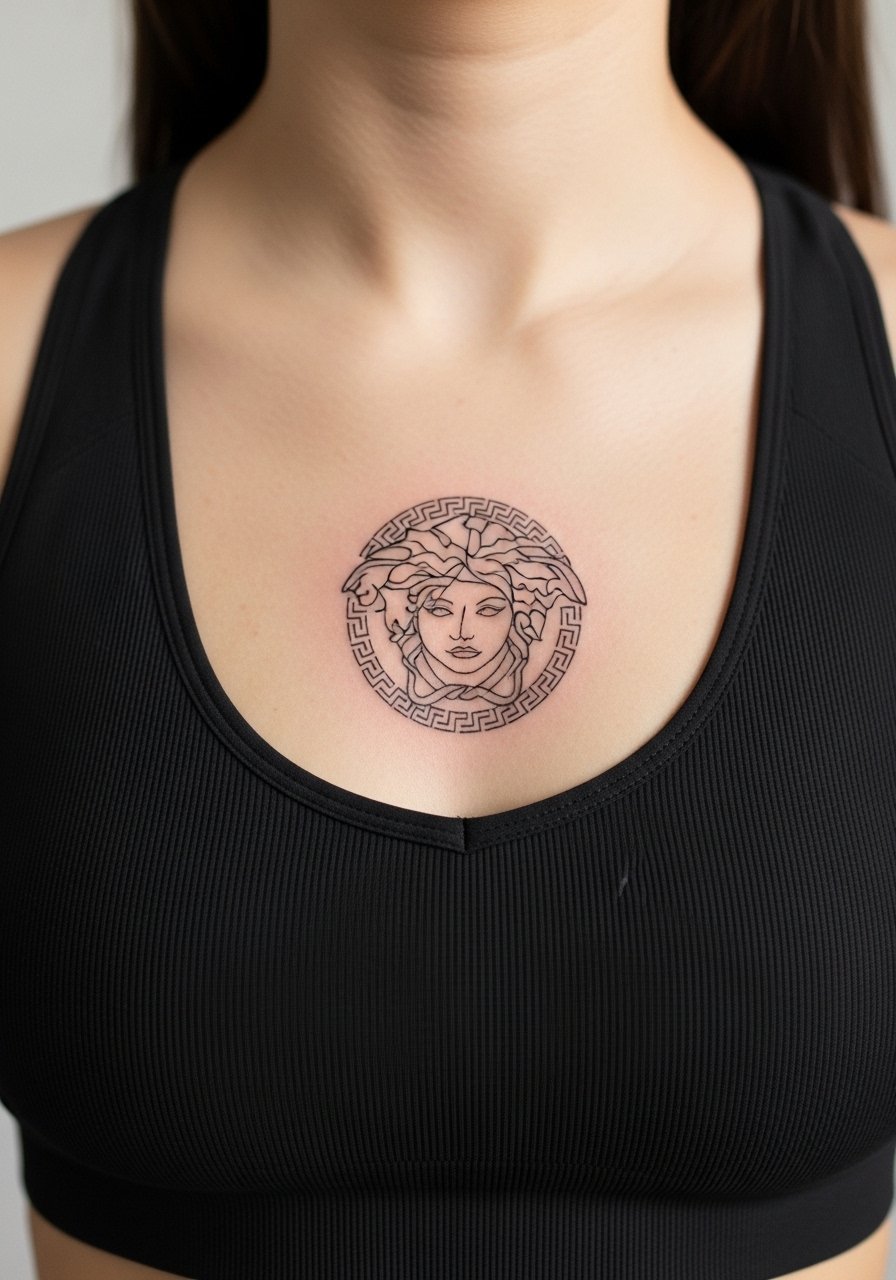
Sternum work needs careful conversation about visibility and pain. This placement is intimate and often more painful due to the bone and thin tissue. Artists split on technique for sternum portraits. One camp favors bold simplified shapes to resist stretching, and the other uses denser micro-line to keep the iconography intact. Ask which approach your artist prefers and why. Expect a session that ranges from moderate to high pain, and plan to wear a fitted sports bra to the appointment so the area is exposed precisely.
12. Hip-Side Geometric Medusa Accent
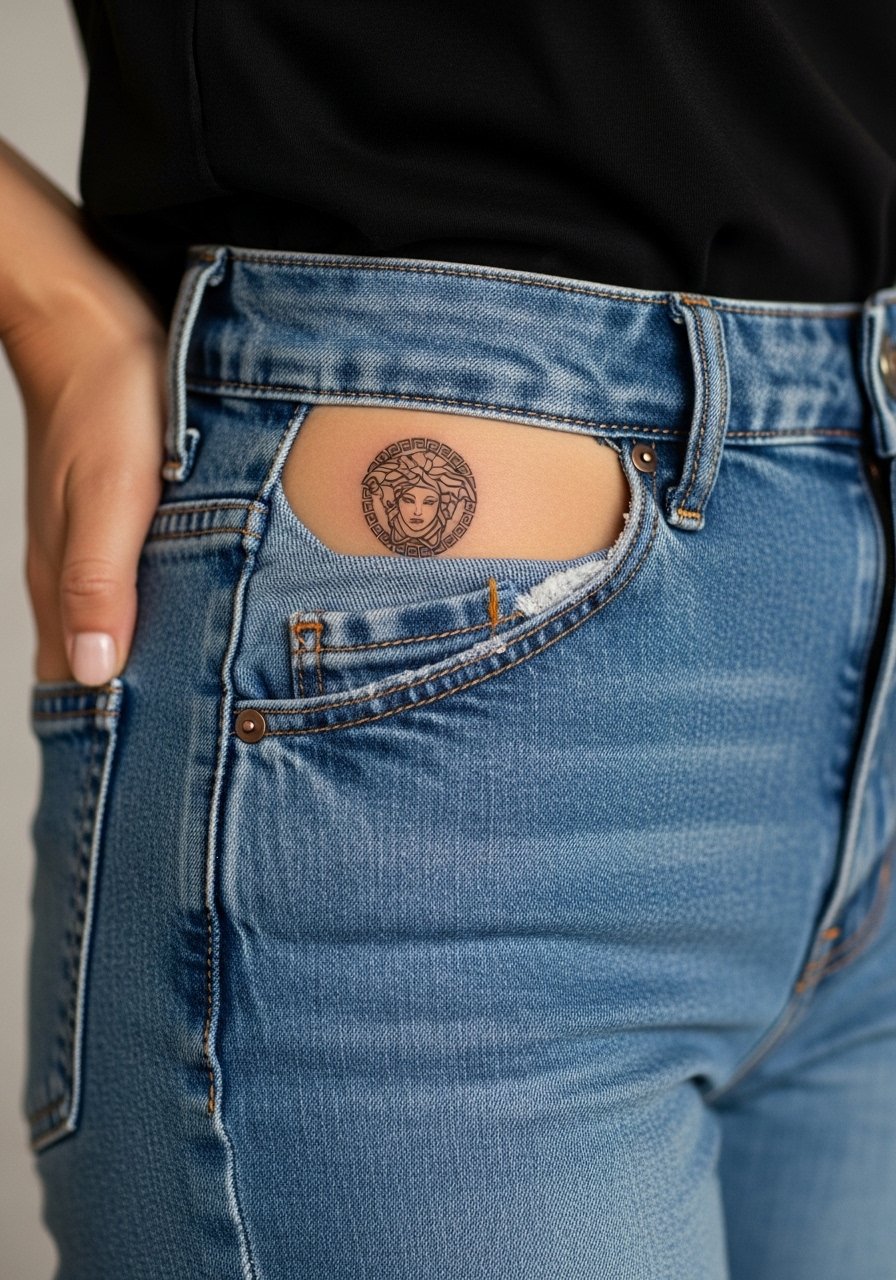
Hip placements age depending on weight fluctuation and clothing friction. For a small Medusa, place the snakes toward the outer hip so seams from jeans do not rub directly over the design. The session is low to moderate pain and positioning is easy with loose bottoms. A common mistake is placing the piece too close to the waistband. For session wear, bring a pair of high-waisted jeans you can lower just enough to reveal the art without discomfort.
13. Micro Geometric Medusa on the Ribcage
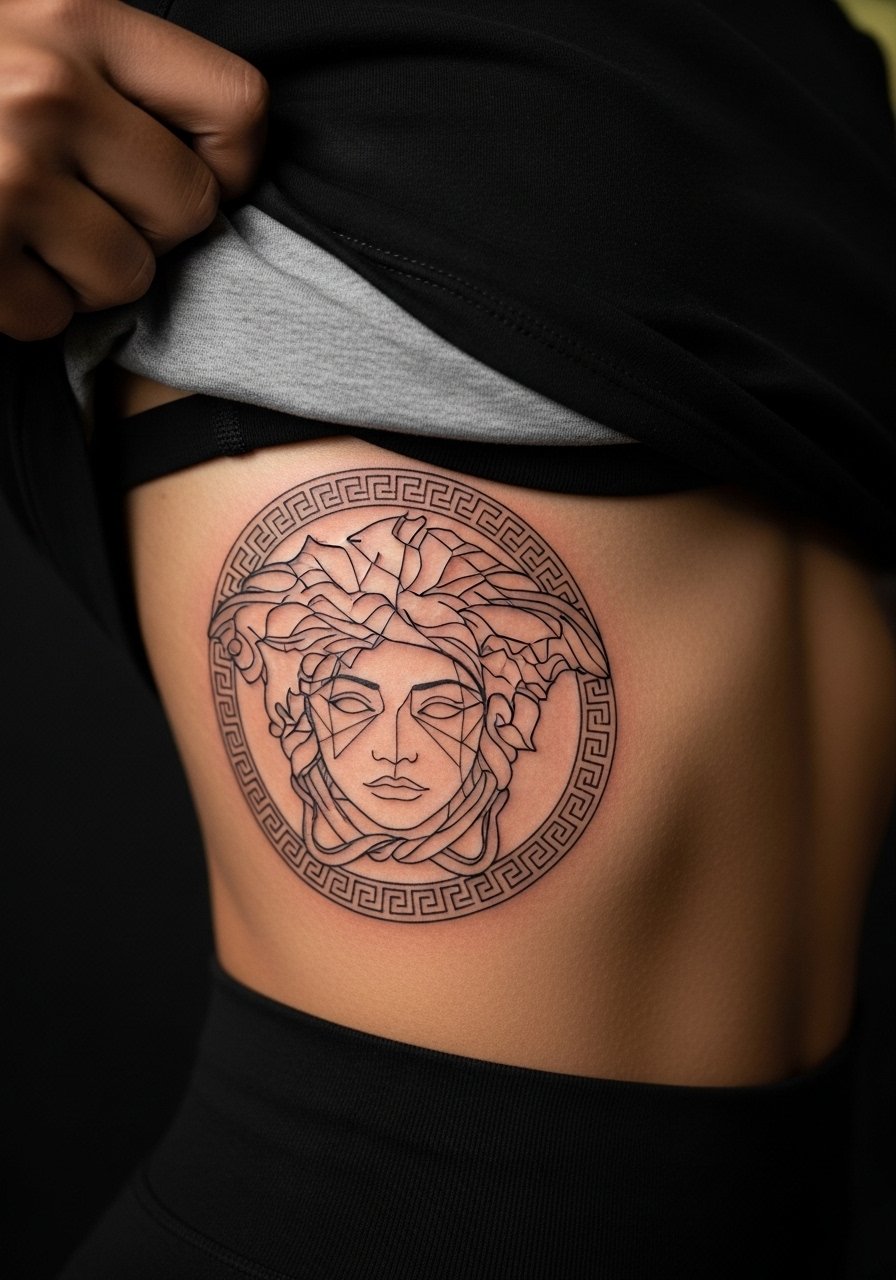
Ribcage tattoos are a known controversy zone. One camp argues small fine line portraits will blur here because the skin stretches and breath makes precise needlework uneven. The other camp insists that with correct needle depth and spacing, geometric work can stay clean. Name both positions in your consult and ask for healed rib photos. Pain is higher on the ribs and sessions may need breaks. To protect the piece in clothing, avoid tight waistbands that sit over the area during healing.
14. Tiny Geometric Medusa on the Hand Back
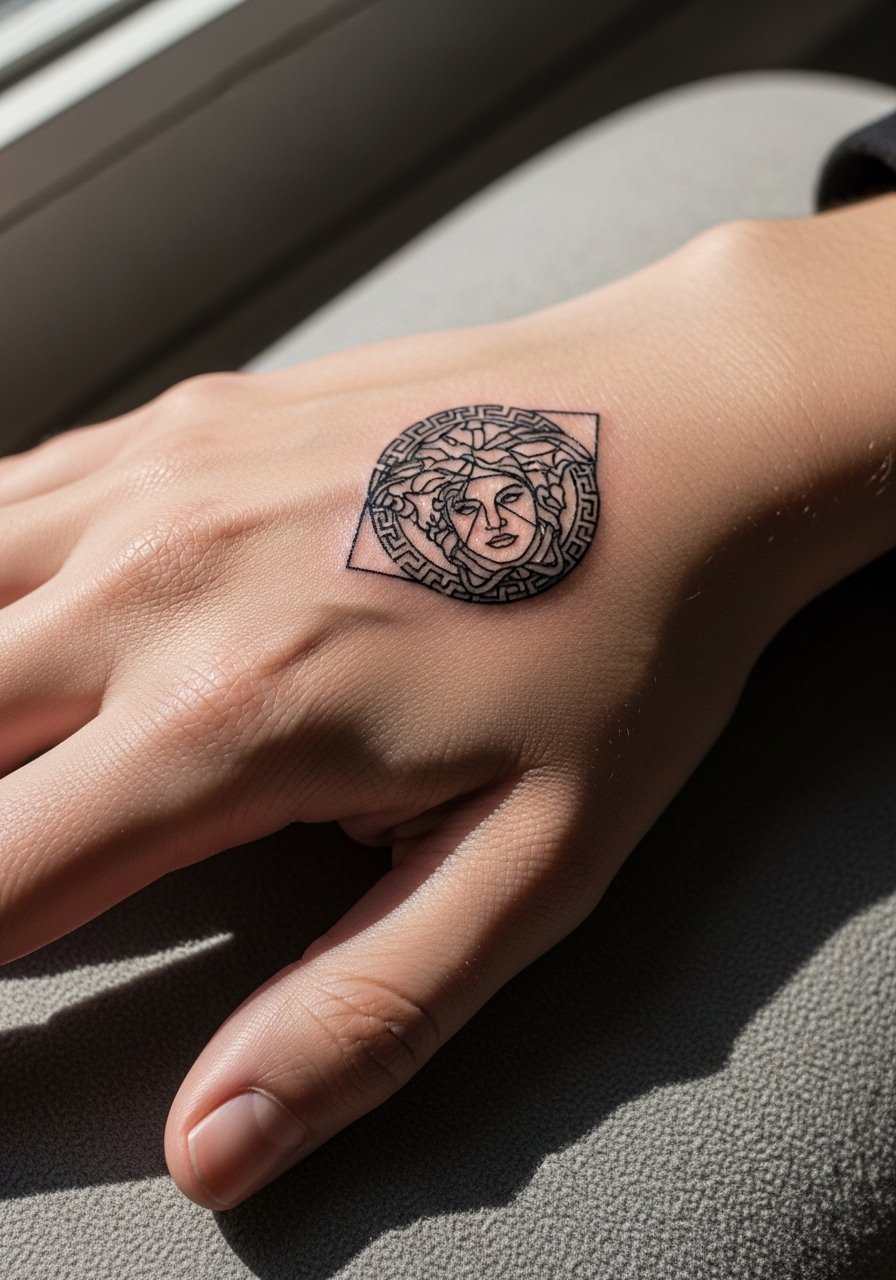
Hand tattoos are subject to heavy sun and washing, which accelerates fading. For a hand Medusa, simplify the snakes and prioritize bold contours so the face stays readable. Expect a faster fade curve and possible annual touch-ups. The session is sharp because skin is thin. For styling, keep the hand jewelry minimal and consider a minimalist ring set that draws attention without covering the piece.
15. Small Geometric Medusa Above the Hip Bone
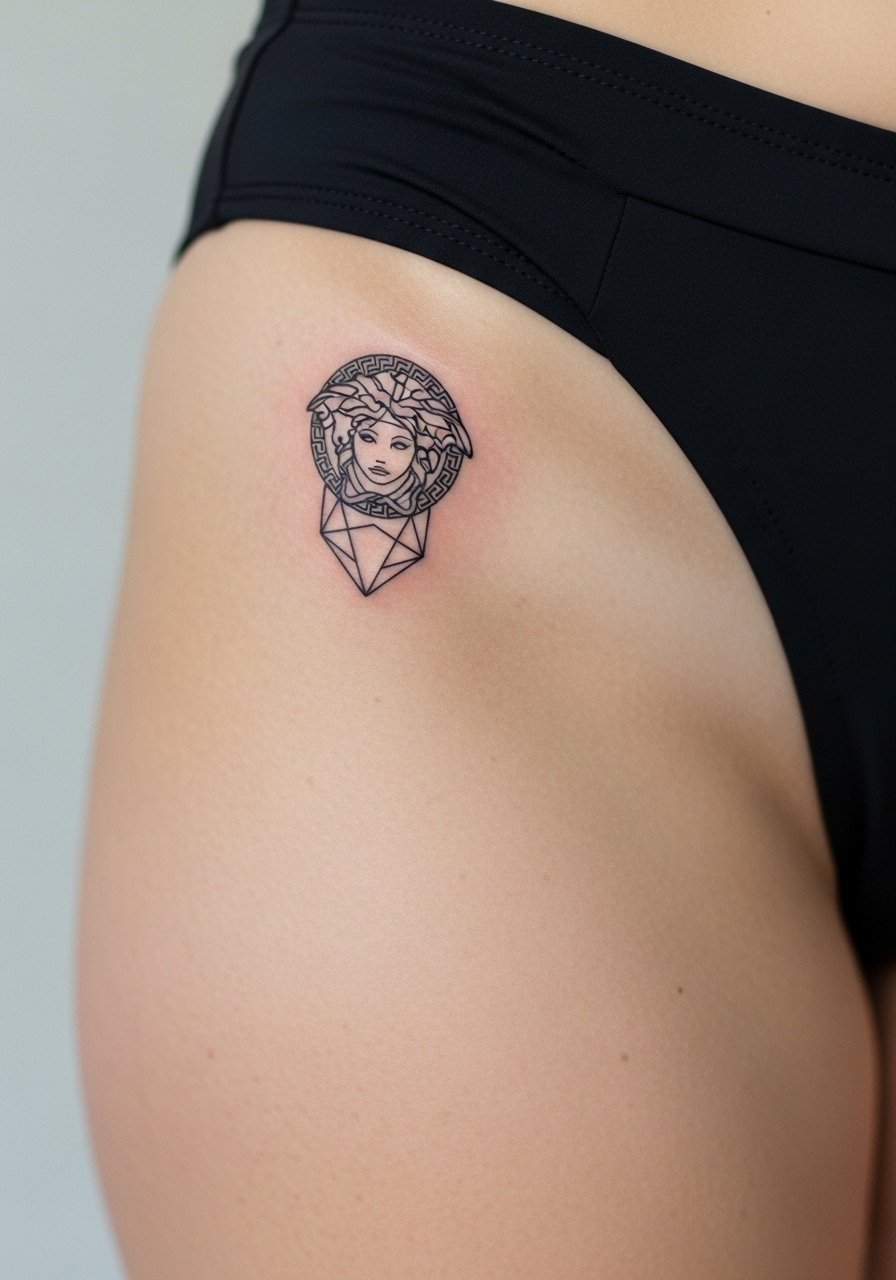
This flange area moves with sitting and bending, so give negative space around the portrait to let it breathe. Tell your artist you want the snakes simplified into angular shapes to resist distortion. Sessions are low to moderate pain, and the area heals well when clothing is loose. A common mistake is placing the face too close to the waistband where repeated friction will rub pigment out. For revealer outfits, pair the piece with high-cut swimwear that frames but does not press on the tattoo.
16. Minimal Geometric Medusa on the Calf Inner Curve
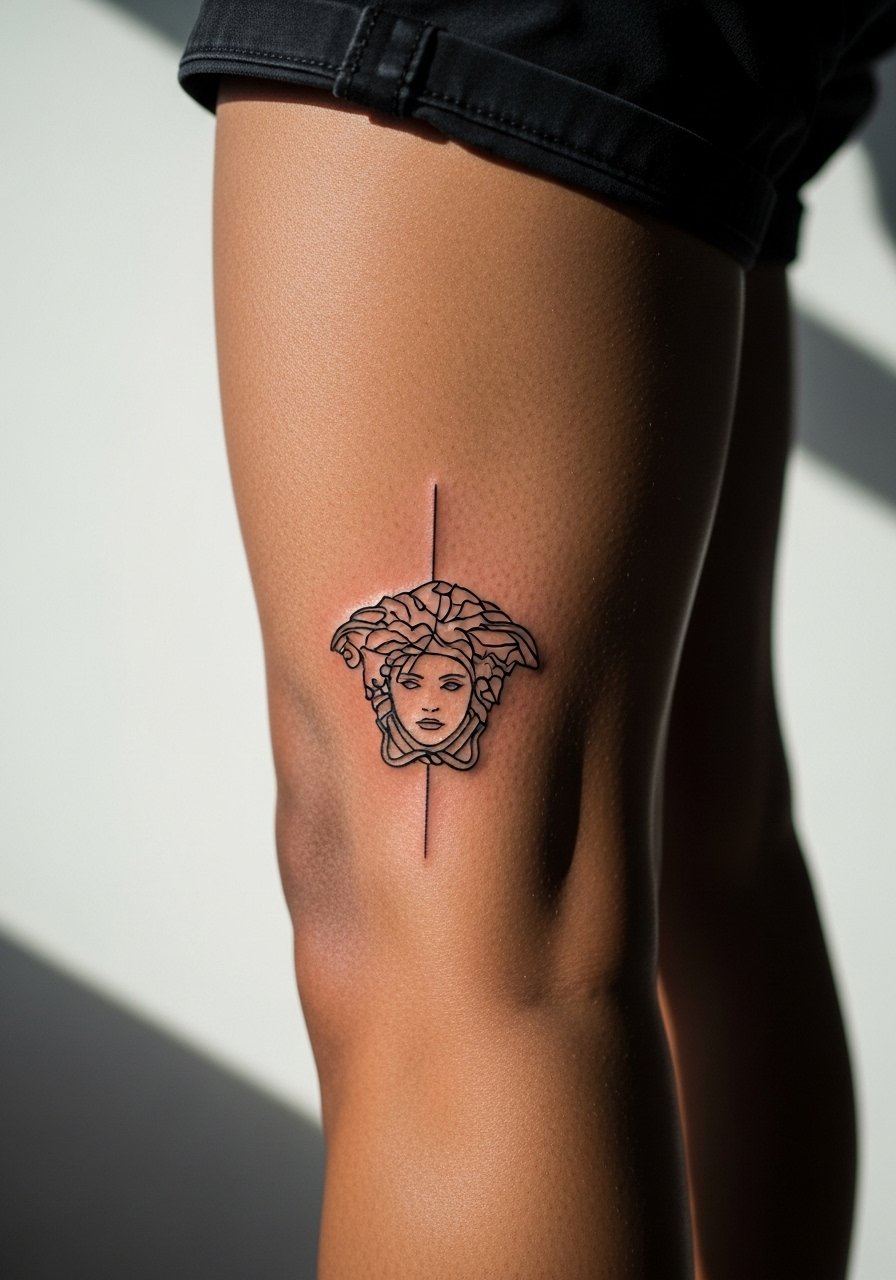
Inner calf is a stable canvas with less sun exposure than the outer calf. For geometric motifs, the curve can emphasize the snakes in profile. Tell your artist you want a slight contrast in saturation along the jawline so the face keeps definition over time. Sessions here are straightforward and usually low to moderate pain. A frequent mistake is overworking shading, which can soften the geometry. For style, wear athletic shorts so the design is visible without rubbing.
17. Tiny Geometric Medusa Near the Collarbone Center
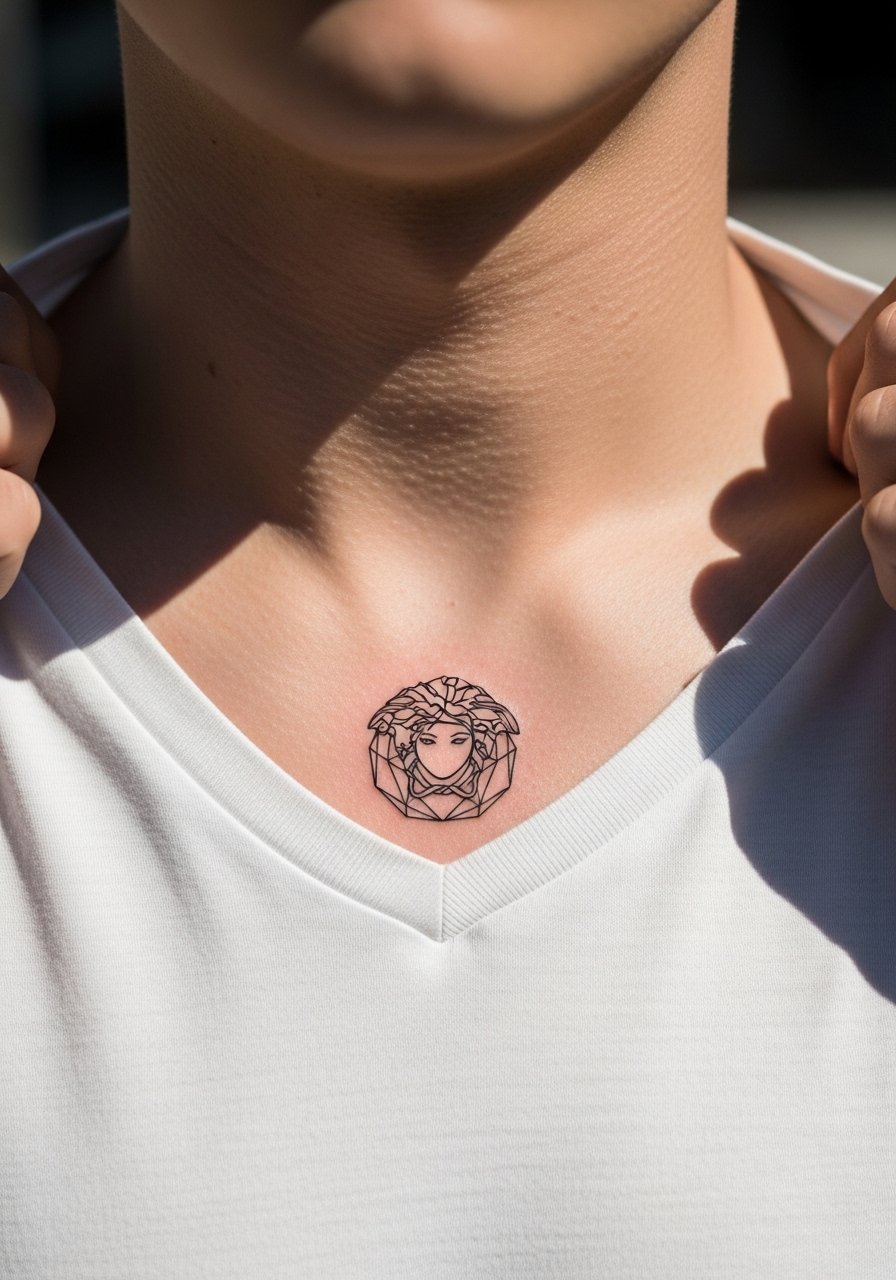
Center collarbone placements sit between visible and intimate. For a tiny Medusa here, plan for slightly bolder outer lines to counteract the high-movement area of the chest. The session is moderate and the piece reads well with low-profile necklaces. A common mistake is using dense stipple in the chest center which can fog the face over time. For showing it off, a V-neck shirt that frames the clavicle keeps attention on the portrait without overexposing the area.
Frequently Asked Questions
Q: How small can a geometric Medusa portrait go before detail is lost?
A: From what I've seen, once the facial plane and at least two snakes are smaller than a thumbnail the portrait becomes an abstract texture within two years. Ask your artist to test the scale on tracing paper and to simplify interior snake detail so the face remains readable at years three to five.
Q: Will fine line geometric Medusa work on my ribs if I want a subtle piece?
A: It depends on your skin elasticity and the artist's approach. One camp warns that ribs cause fine lines to blur, and the other camp says correct spacing keeps the geometry intact. Request healed rib photos from the artist and plan for a higher pain tolerance and possible touch-up at year two.
Q: What should I wear to a session for a collarbone or sternum Medusa?
A: For collarbone work wear a wide-neck top you can pull aside, and for sternum bring a fitted sports bra or bandeau that reveals only the target area. These choices let the artist access the zone without you feeling exposed during breaks. A loose button-down shirt is handy for shoulder or upper-arm sessions too.
Q: How often do small Medusa tattoos need touch-ups?
A: Expect touch-ups sooner for high-friction placements like fingers, wrists, and hands. Durable spots such as the shoulder cap and calf often hold longer. Realistically, plan for a possible touch-up around year two to three for fine geometric elements.
Q: Are there cultural considerations for a Medusa motif in geometric style?
A: The Medusa image pulls from Greek myth and has been used in many contexts. Some people prefer to change compositional elements rather than reproduce classical iconography verbatim. If the origin matters to you, mention it during the consult and ask for a variation that respects the source while fitting your aesthetic.