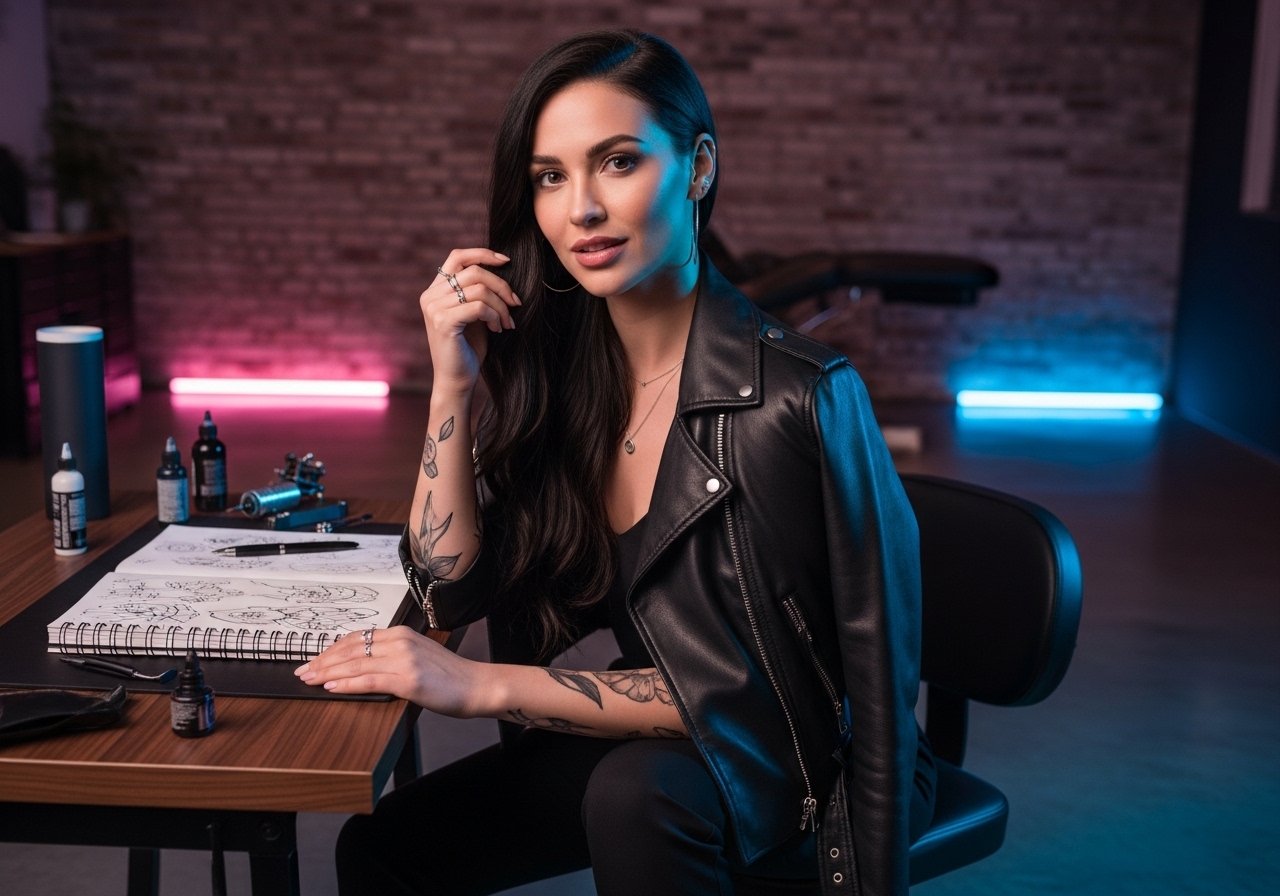
The tattoos that still read clean at year ten are usually the ones built with bold linework and saturated black, not the hyper-detailed pieces that get the most likes fresh. Fine line pieces can look fragile after a few seasons of sun and gym time. Prices creep up too, and placement choices matter more than people expect when muscle or weight shift is coming. Read on for 17 strong angel ideas with real notes on aging, session prep, and what to tell your artist.
1. Neo-Traditional Forearm Portrait of a Protector
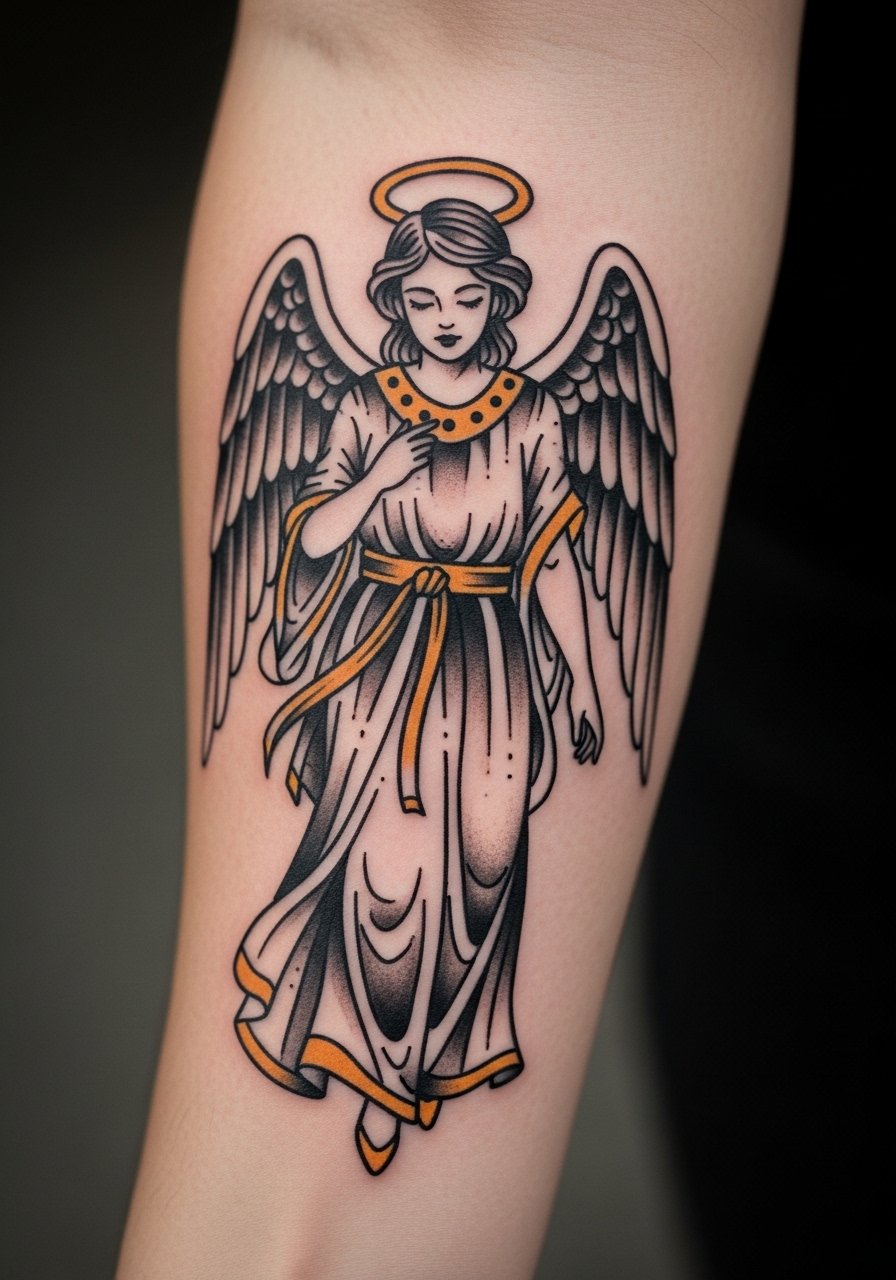
A forearm portrait gives you a readable face every time you raise your arm. I recommend neo-traditional lineweight and moderate saturation for that reason. Tell your artist you want slightly heavier contour lines around the jaw and halo so the facial details keep contrast as the piece heals. Common mistakes are asking for micro-detail in a 6-inch piece and expecting it to hold. For most guys this placement is a 3 to 4 out of 10 on the pain scale and usually fits into a single two-hour session for a 6-inch portrait. For showing this off, pair it with a fitted crewneck tee men with sleeves rolled to mid-forearm, and a leather cuff bracelet to add rugged contrast.
2. Realistic Upper Back Span with Feathers in Motion
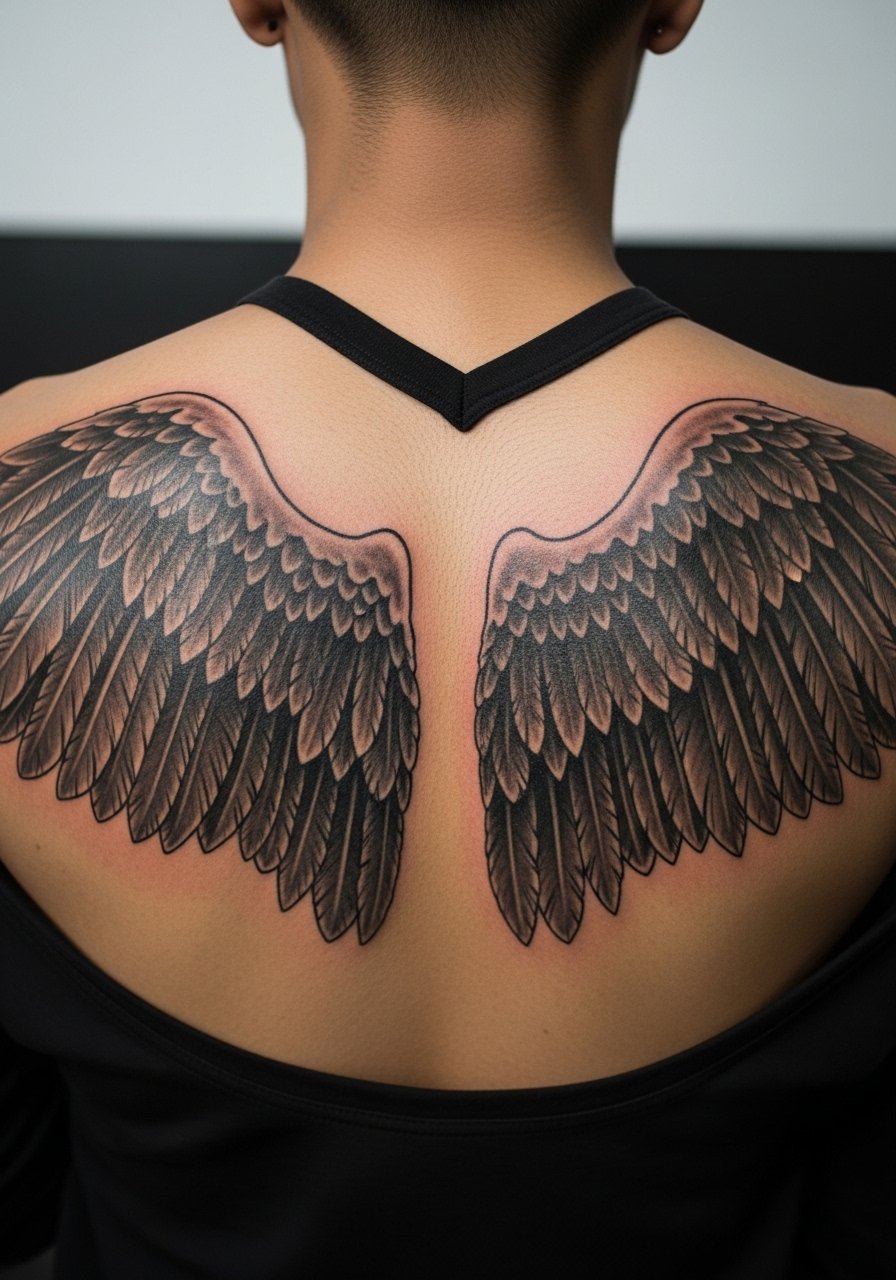
A full back span is where realism pays off. Scale is everything here. Ask for feathers that have negative space between barbs so the wings read from distance and still show micro texture up close. Expect this to be a multi-session commitment with long sessions. The trade-off is you get a memorial-quality canvas that holds detail if you prioritize saturation and shading over tiny cross-hatching. A common error is squeezing too many tiny feathers into a tight span, which blurs with time. Show this off with a backless tank top men or a V-neck muscle tee when you want the wings visible without full exposure.
3. Blackwork Single Wing on Outer Bicep
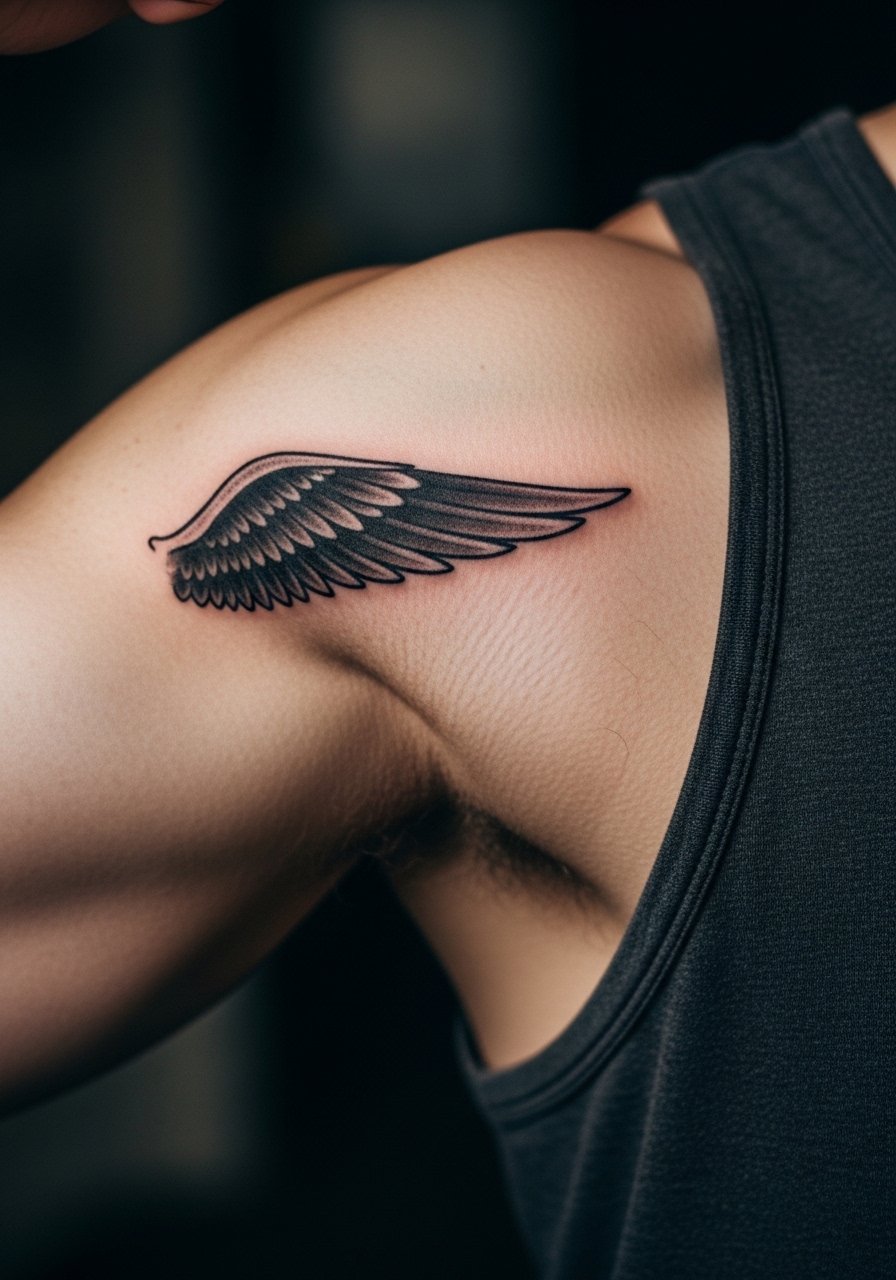
A single blackwork wing on the outer bicep reads masculine and scales well with muscle. For longevity, ask for solid fills with clean edge work rather than sketchy strokes. The outer bicep moves less than the inner bicep, which reduces blowout risk. Typical session time for a 4 to 6 inch solid piece is one to two hours. A mistake I see is trying to convert a finely shaded reference into a single-sitting blackwork piece without spacing for saturating the ink. For style, the wing pairs nicely with a slim fit henley shirt with sleeves pushed up and a minimalist chain necklace.
4. Neck Outline: Angel and Skull Blend
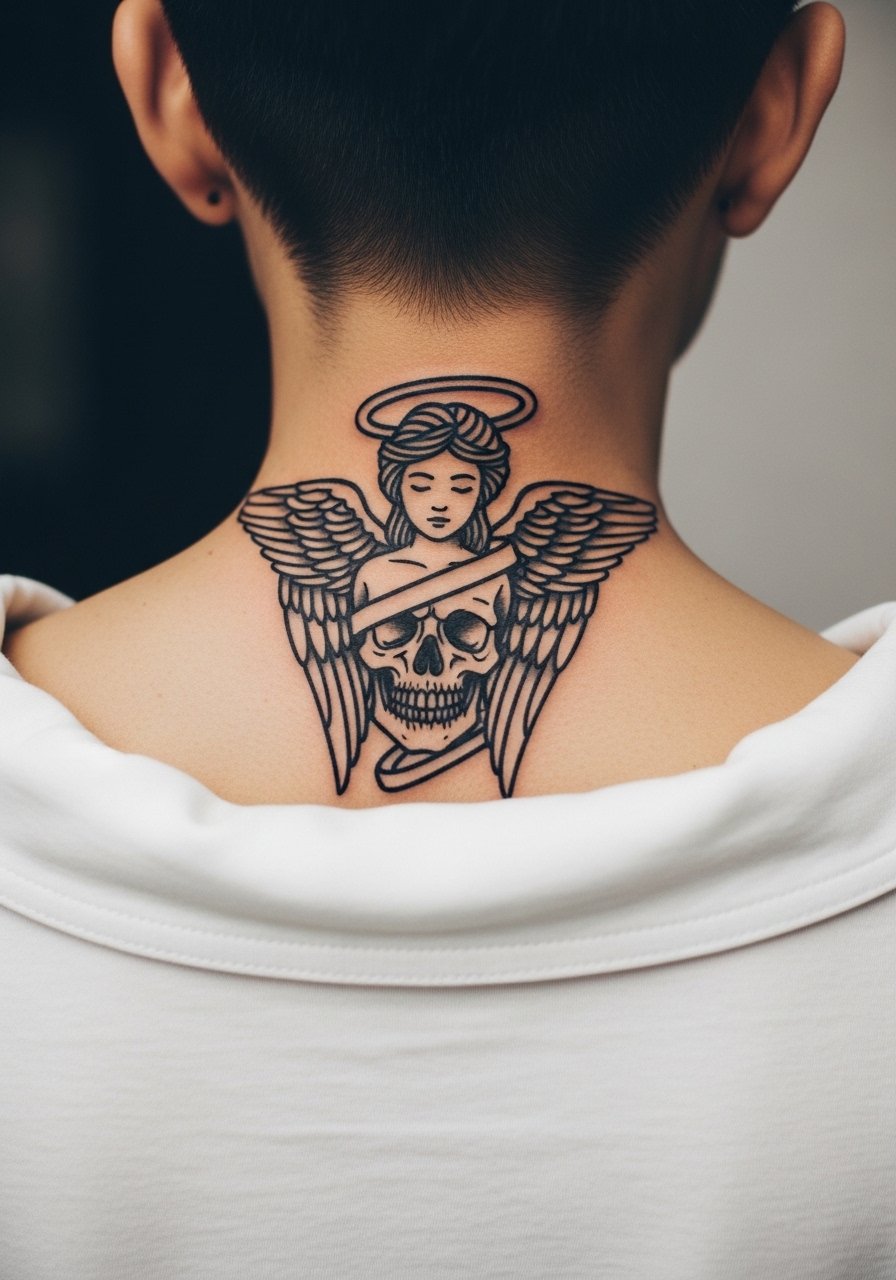
Neck pieces are bold statements and they age under heavy daily exposure and friction. The design that holds best uses confident, thick contour lines with a gray wash instead of tiny stipple that will soften. Ask your artist about how they handle line depth for neck skin specifically. A common professional warning is that neck tattoos face more social visibility and sunlight, so expect more frequent touch-ups for high-contrast details. Pain is moderate. If you plan to hide it sometimes, keep the composition compact and centered on the nape rather than down the sides.
5. Micro-Realism Fallen Chest Panel
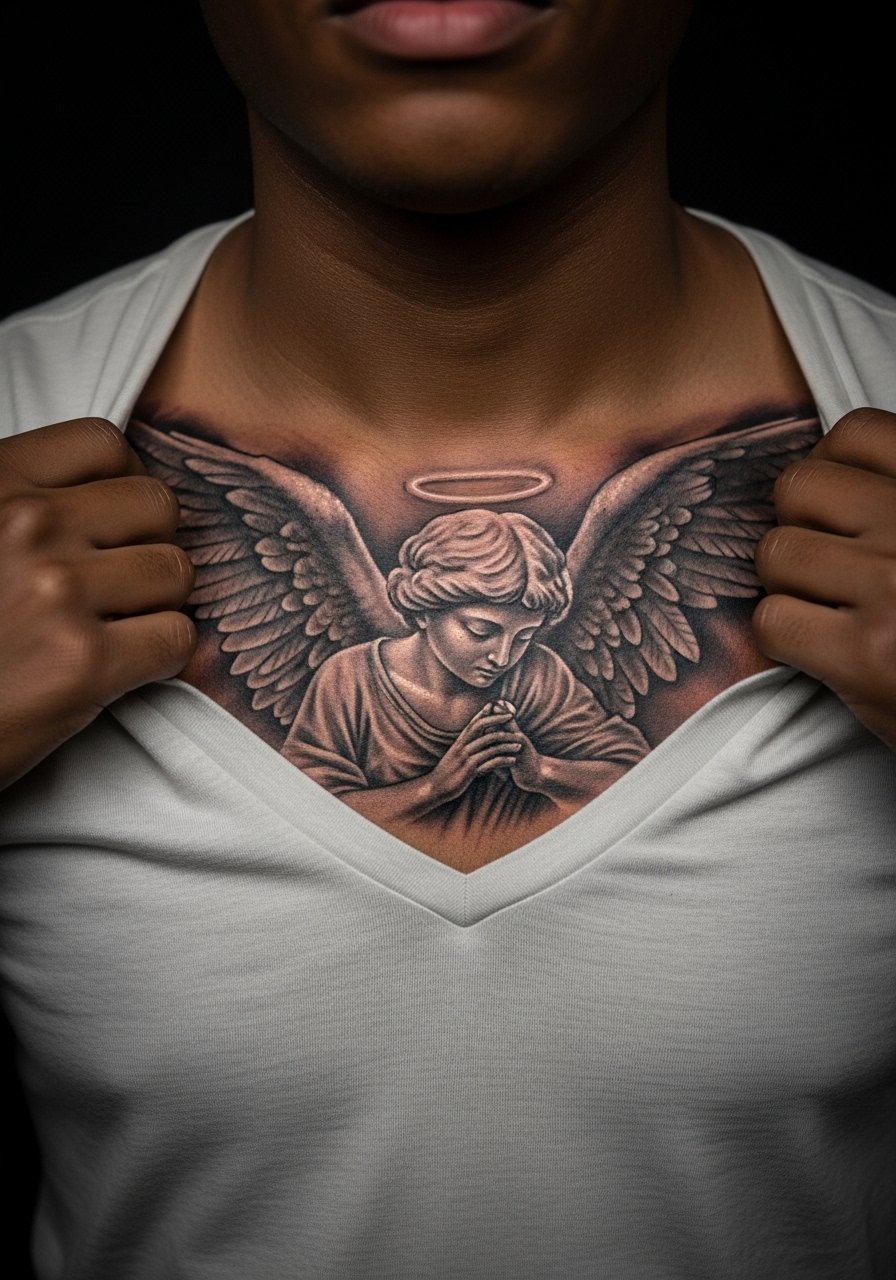
A chest panel lets you tell a story with subtler facial expression and posture. For fallen angel themes I suggest micro-realism with controlled contrast so shadows read but do not muddy. Fair warning about pain: the upper chest near the sternum is one of the more sensitive zones. The numbing cream debate comes up here often. One camp says a topical takes the edge off and helps first-timers, the other camp refuses it because it changes skin tension during the needle pass. Ask your artist where they stand before booking. Expect two to three sessions for a 5 to 7 inch hyper-detailed panel. Show it with a deep V neck tee men and an unbuttoned flannel shirt unbuttoned for casual reveals.
6. Archangel Forearm Sleeve Outline
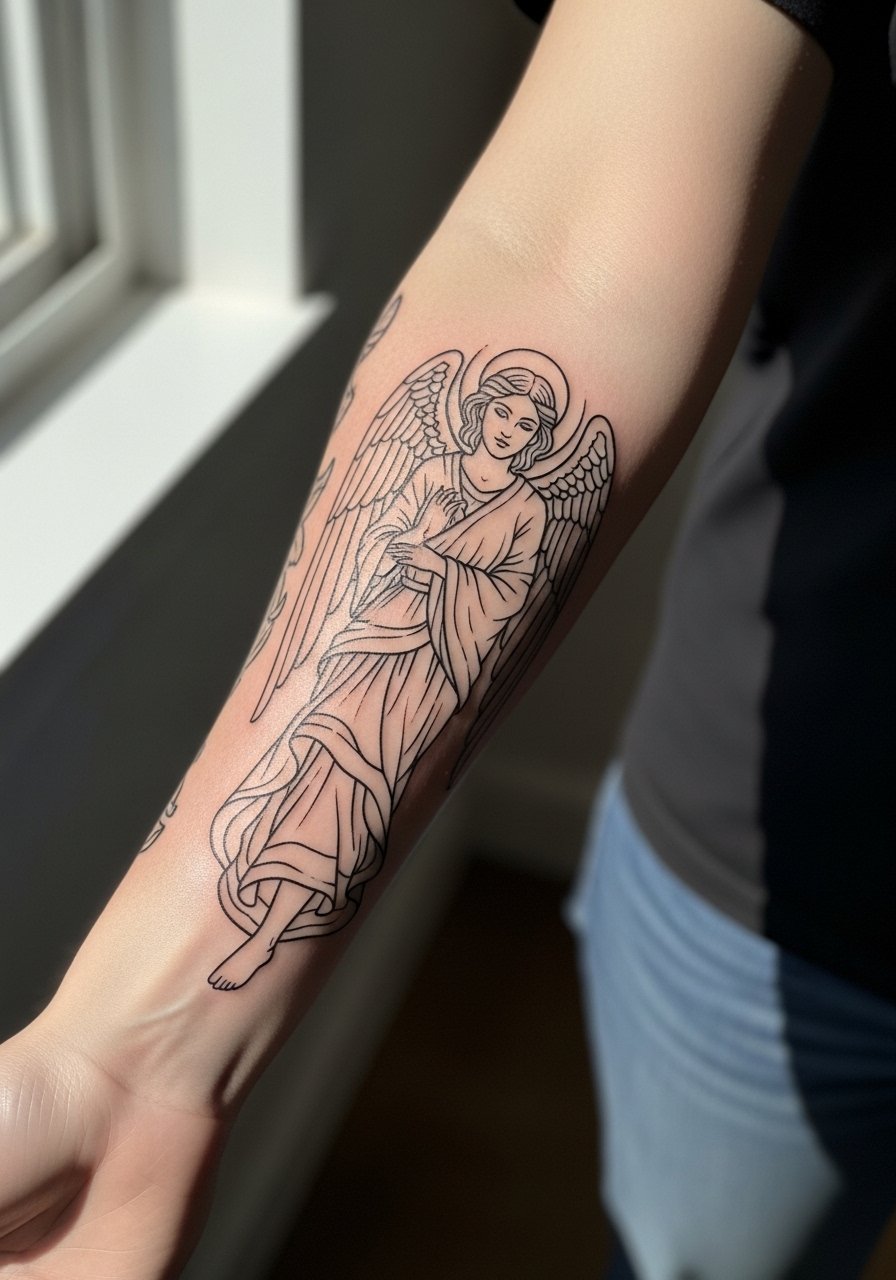
An archangel sleeve outline is about flow and negative space. For forearm coverage, prioritize clear primary motifs and breathing room between armor, ribbons, and wings. The biggest mistake with sleeves like this is asking for too many micro elements in the first session. Start with a strong outline and block shading in earlier sessions so you can assess movement and aging. Outer forearm is lower on the pain scale and responds well to bold outlines. Expect three sessions for a full forearm outline plus shading. For the session, wear an athletic short sleeve shirt so the artist can roll the sleeve cleanly.
Studio Day Picks
The forearm, chest, and neck pieces above all ask for slightly different session prep, so these items smooth out the day in the chair and the first week afterward.
-
Stencil transfer paper kit. Lets you preview the linework on skin before committing, which helps with portrait placement and sleeve flow.
-
Topical numbing cream. Use only if your artist approves. It can make sternum and rib sessions more bearable when applied correctly and timed.
-
Thin protective film roll. Keeps edge-prone placements like neck and forearm from rubbing on collars during the first week.
-
Fragrance free gentle body wash. Good for showers after forearm and chest work to avoid irritants on fresh lines.
-
Aquaphor healing ointment. Thin application right after the first cleaning helps keep fine lines from drying into thick scabs that pull ink.
7. Fine Line Halo Crown on Inner Forearm
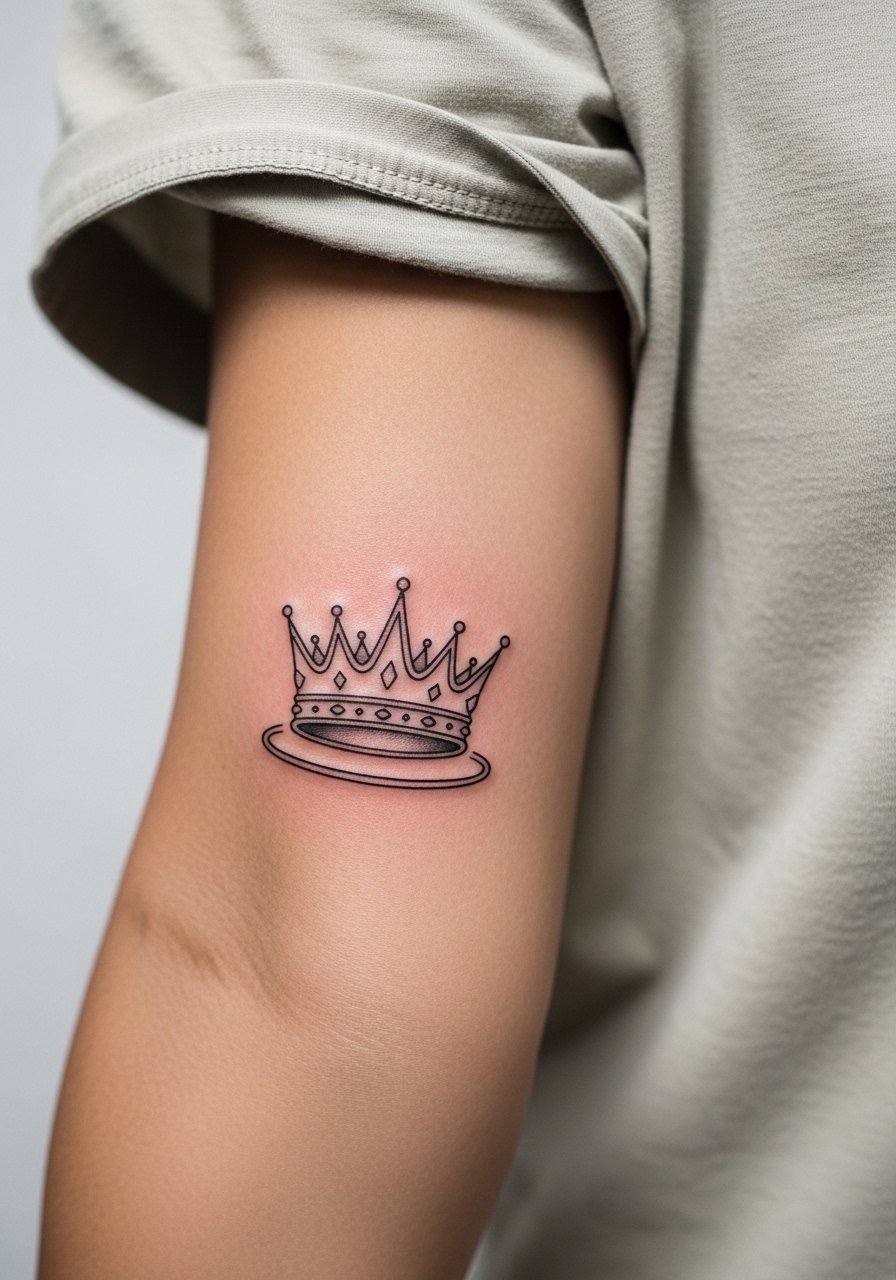
A halo crown on the inner forearm reads delicate up close. The trade-off is longevity versus aesthetic. Fine line fans argue that subtle pieces age in a graceful way. The bold camp argues that on an active skin zone like the forearm, stronger lineweight will maintain legibility twice as long. Name both camps to your artist and ask where they position their needle depth and lineweight. For a 3-inch halo expect a single one-hour session and plan a touch-up around year three if you keep the original thin look. For session clothes, go with a loose short-sleeve shirt so the artist can access the inner arm easily.
8. Ornamental Outer Thigh Panel with Geometric Halo
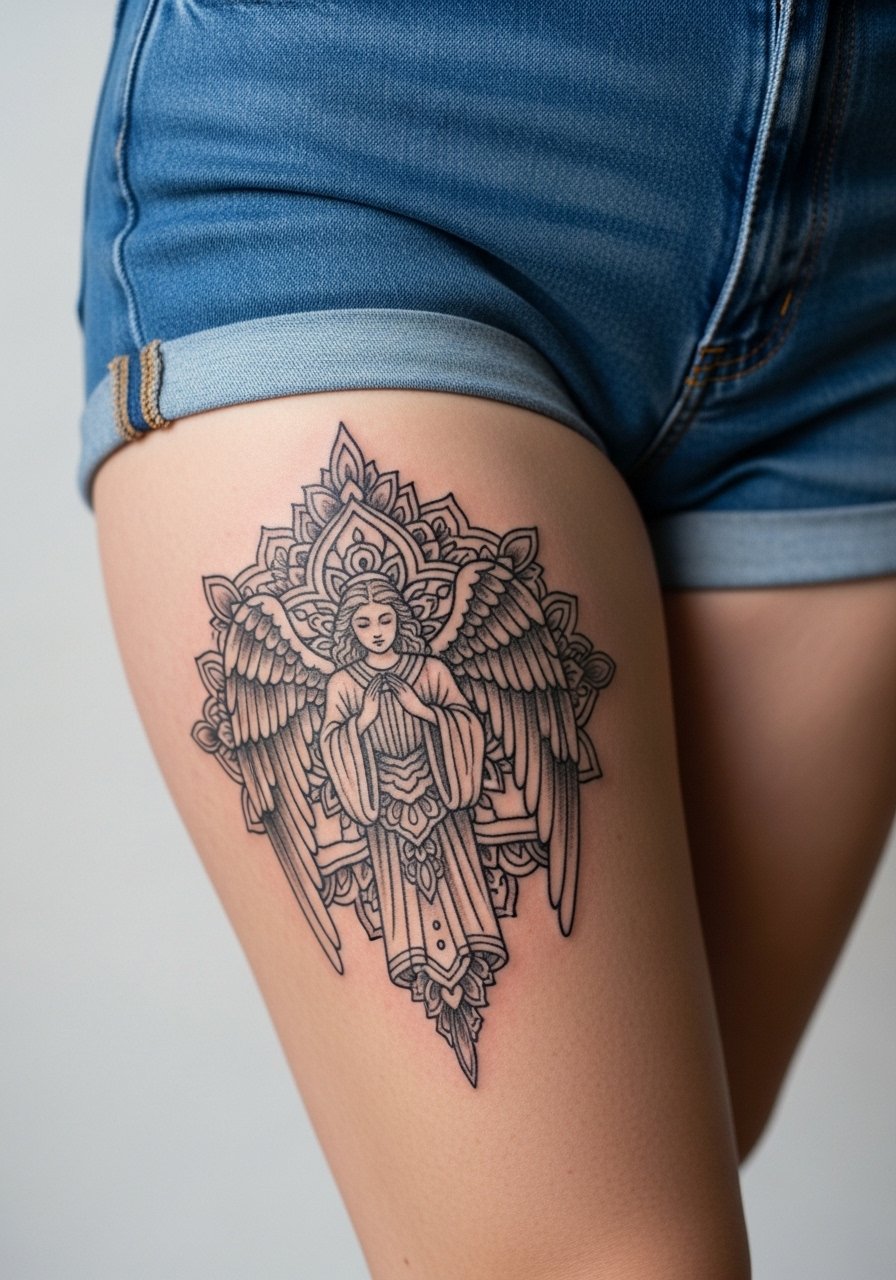
Thigh pieces are underrated because they give room for pattern and scale. Ornamental work breathes on the outer thigh and holds detail because it is not exposed to constant sun. If you want geometric elements, ask for slightly thicker outer circles and open inner spacing so stipple shading does not turn to mush over time. Session wear matters here. Wear slim joggers men or athletic shorts gray so the artist can roll fabric without digging into the area. Typical sessions run two hours and most outer thigh pieces finish in two sessions.
9. Realistic Cherub Shoulder Cap
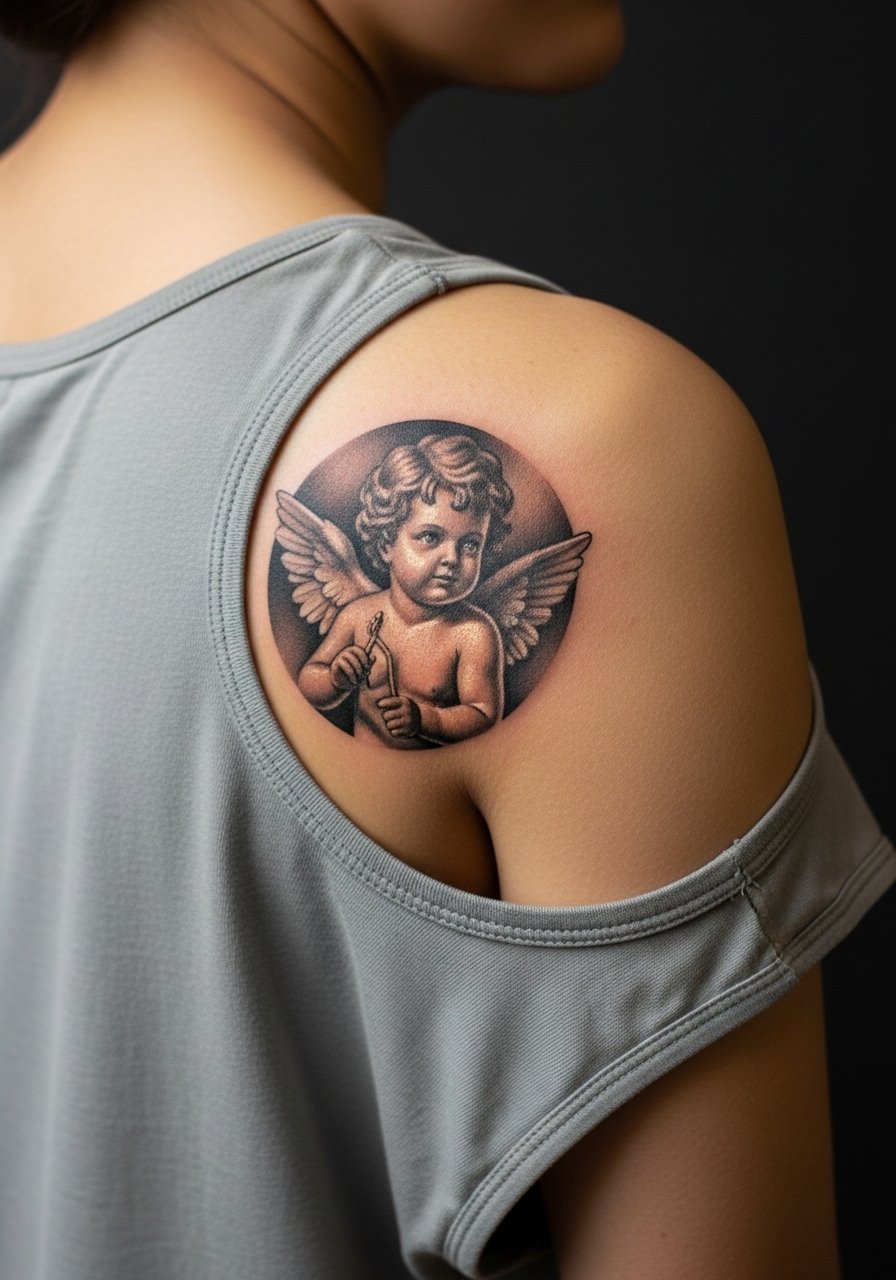
A shoulder cap lets you keep a compact scene while getting hyper-detail. Realistic cherubs read well if you limit fine texturing to shadow areas and keep the primary contours strong. Pain is moderate and the shoulder heals predictably. A common mistake is oversizing facial features in a small circle, which leads to loss of identity after healing. One session often suffices for a 4-inch cap if your artist preps the stencil properly. Consider how this sits with a sleeve if you plan to expand later, and ask about patchwork compatibility in the consult.
10. Watercolor Winged Torso Abstract
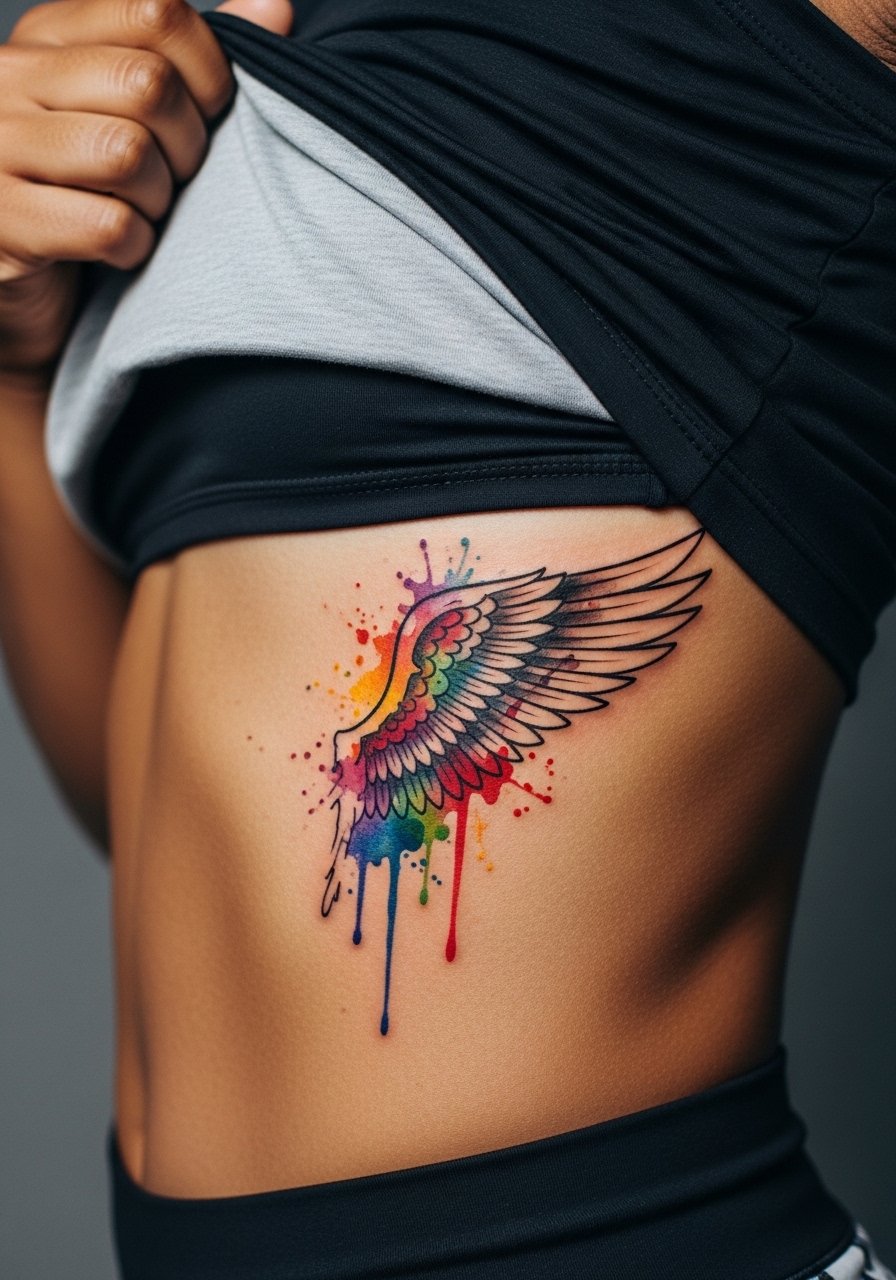
Side-torso and rib work gives dramatic vertical movement, but it also asks a lot from skin elasticity. For watercolor abstract wings, ask for stronger black anchors that will keep the color readable as the pigment fades. The ribs are higher on the pain scale, so session pacing matters. Expect three shorter sessions rather than one marathon. A common issue is asking for heavy splashes of pale color without a supporting black structure, which tends to wash out in two years. If you want this look but are worried about pain, plan sessions around recovery and bring a comfortable robe for the chair.
11. Minimalist Guardian Silhouette on Calf
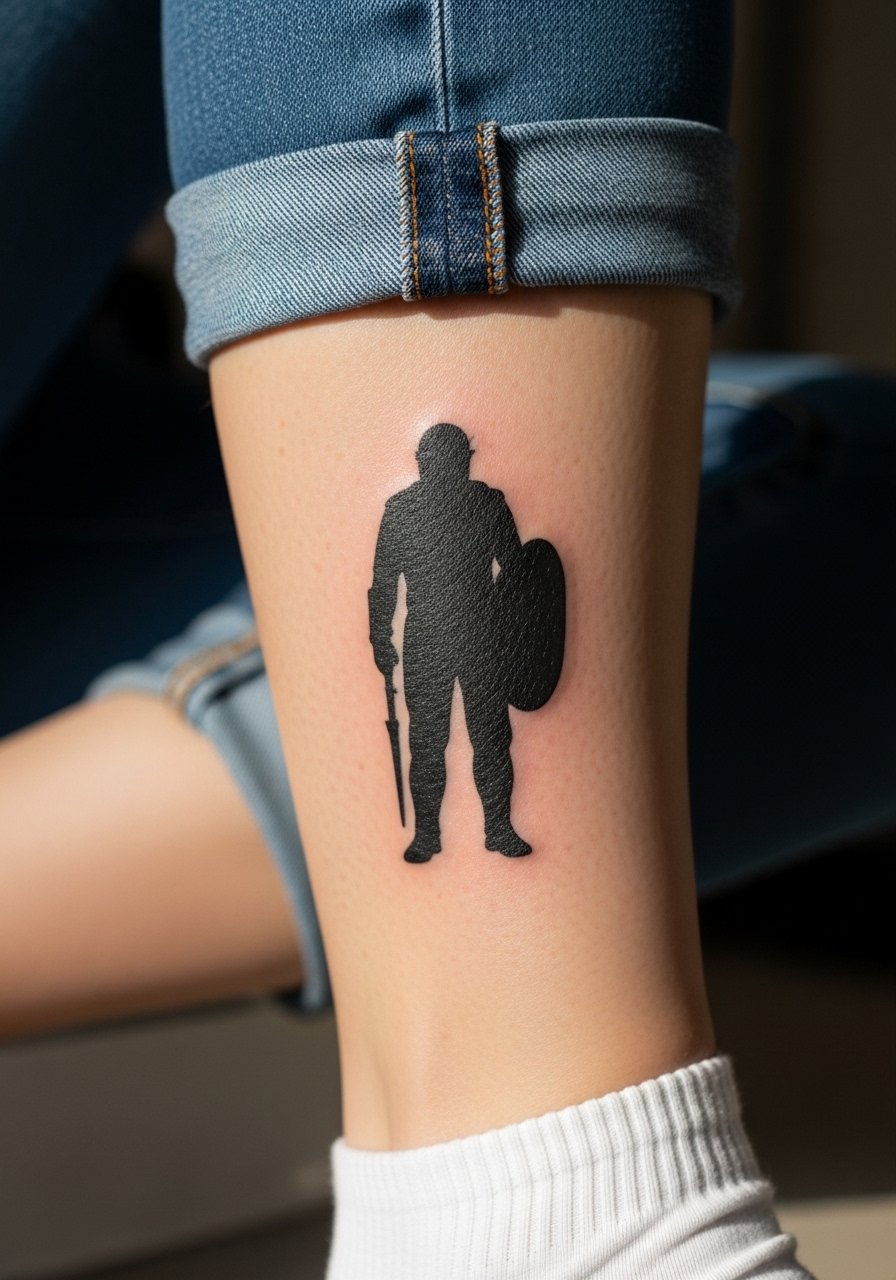
Calf pieces are great for athletic guys and runners because the muscle keeps linework taut. A silhouette here reads at distance and scales easily if you add details later. Ask for crisp outer edges and a simple internal negative space to avoid doming. Typical session time for a 5 to 7 inch silhouette is one to two hours. For casual shows or summer wear, cuffed pants frame the calf nicely so the design sits above the shoe line. Consider pairing with cuffed chinos men and ankle socks men when you want it visible without overdoing the reveal.
12. Knuckle Halo Crowns and Tiny Symbols
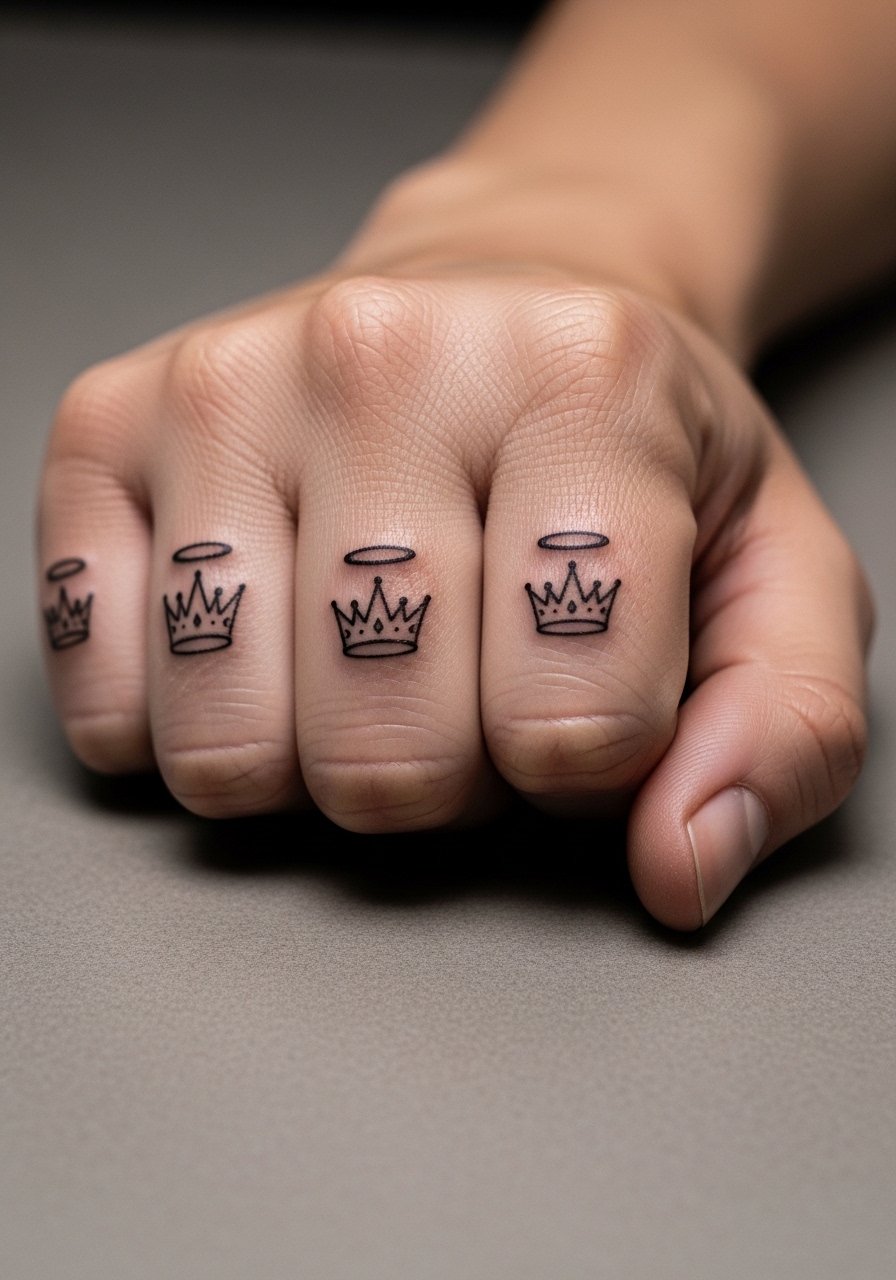
Knuckle or finger halo symbols are subtle devotionals and a clever use of space. These pieces age through friction from washing and typing so expect line softening sooner than larger placements. Keep motifs tiny and bold rather than overly intricate. The biggest mistake is asking for thin script across a finger without discussing touch-up cycles. Hands and fingers often need a touch-up at year one or two to keep edges crisp. If you work with materials that stain, factor that into placement and timing. These are quick one-session walk-ins when the artist has space.
13. Side-Rib Transcendence Panel with Abstract Feathers
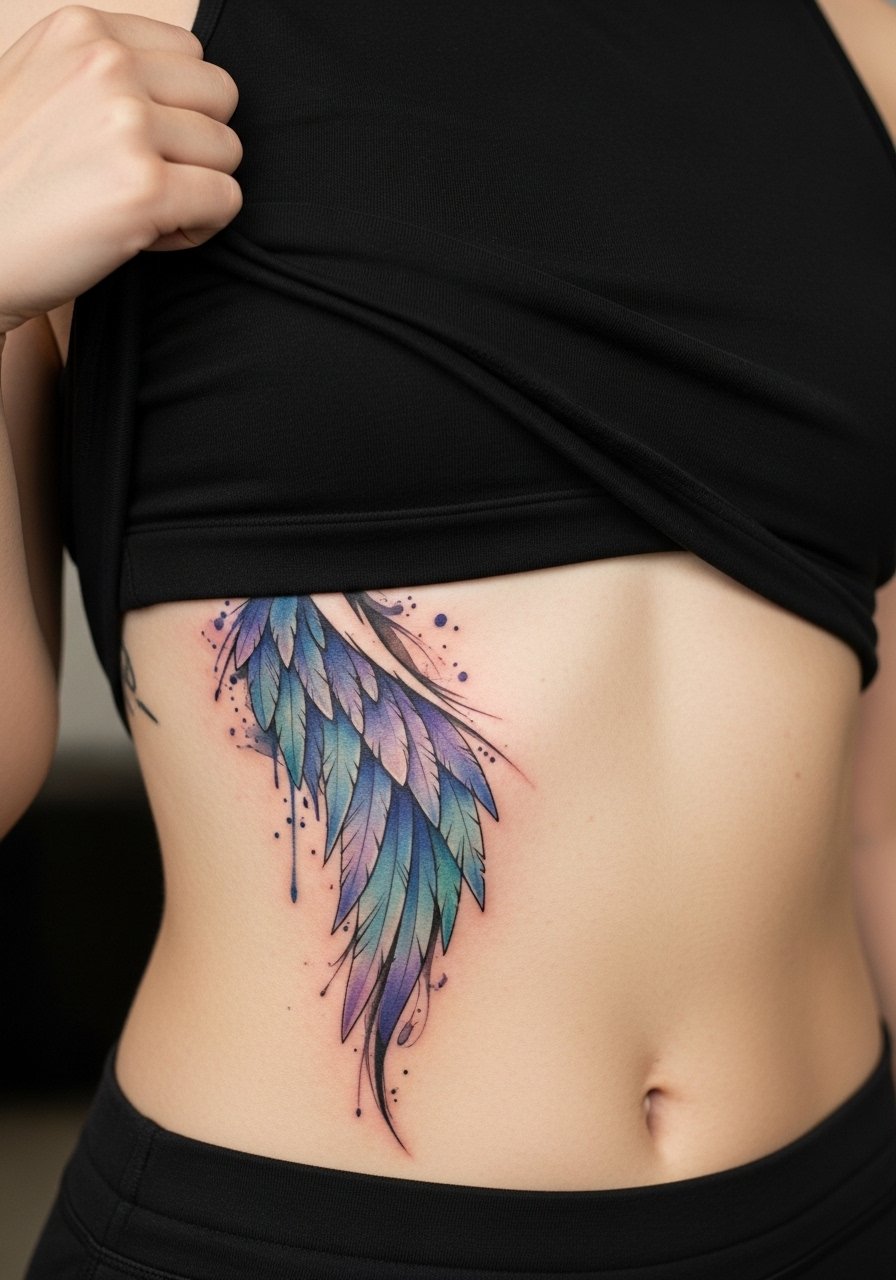
Ribcage work gives dramatic verticality but comes with high sensitivity and movement. For abstract feathered wings, spacing between strokes is crucial so the lines do not fuse as the skin moves. The common error is compressing feather bars into a narrow band which will merge in a few years. Expect numb cream debate here again. If you go fine line on ribs, plan a touch-up window at year two to three. Bring a robe or an open button-down to the session to stay comfy and allow the artist unobstructed access.
14. Patchwork Sleeve Connector Piece
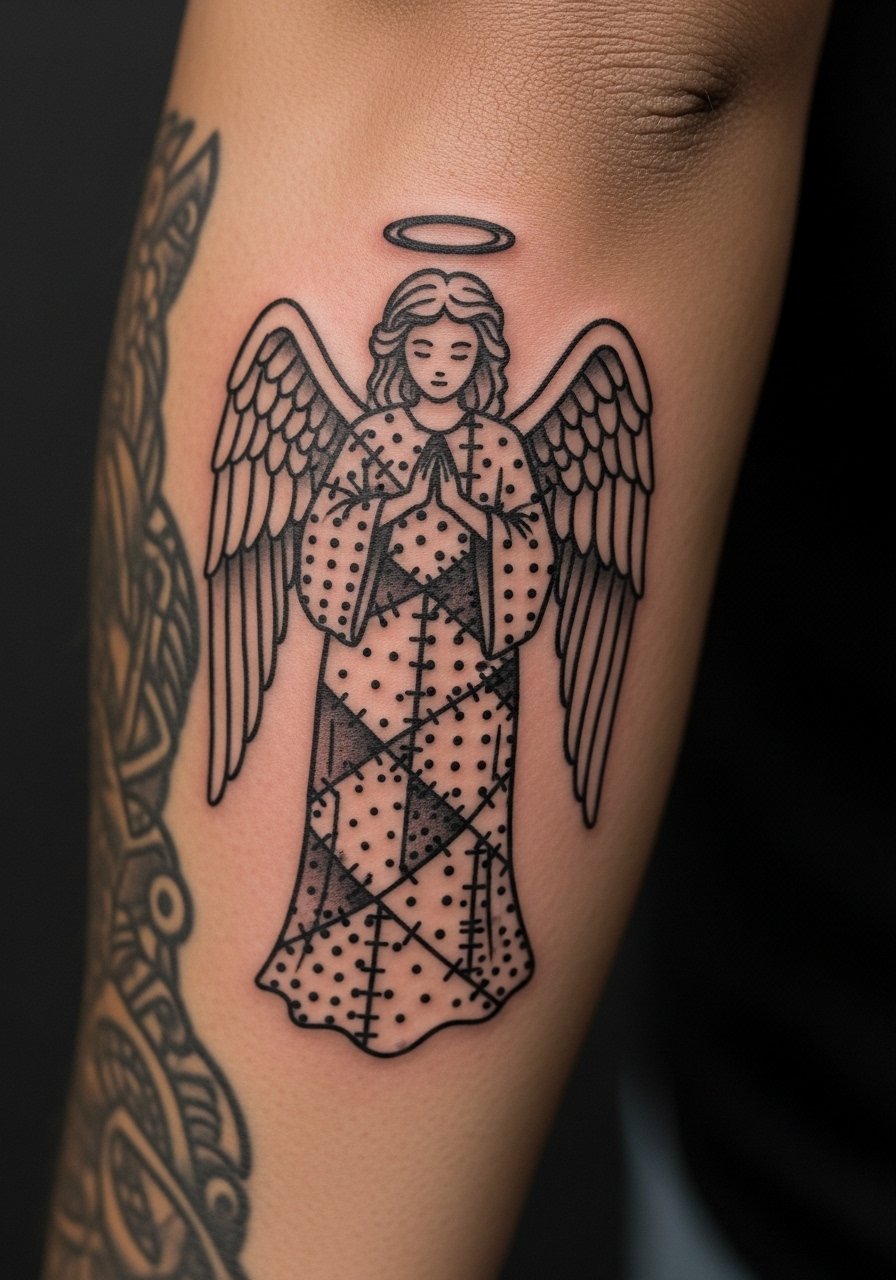
Patchwork connectors are the unsung heroes of sleeves. When you have mixed flash and custom motifs, an angel-themed connector uses rhythm and repeating shapes to hide gaps while respecting the original work. Tell your artist which existing elements you want framed and where you expect negative space for future additions. A common misstep is asking for a filler that competes with the main motifs. Sessions for connectors are flexible and often shorter, which makes them good for touch-up days. For comfort and access, a loose button-down shirt mens you can pull aside is ideal.
15. Collarbone Halo Script with Small Wing Accent
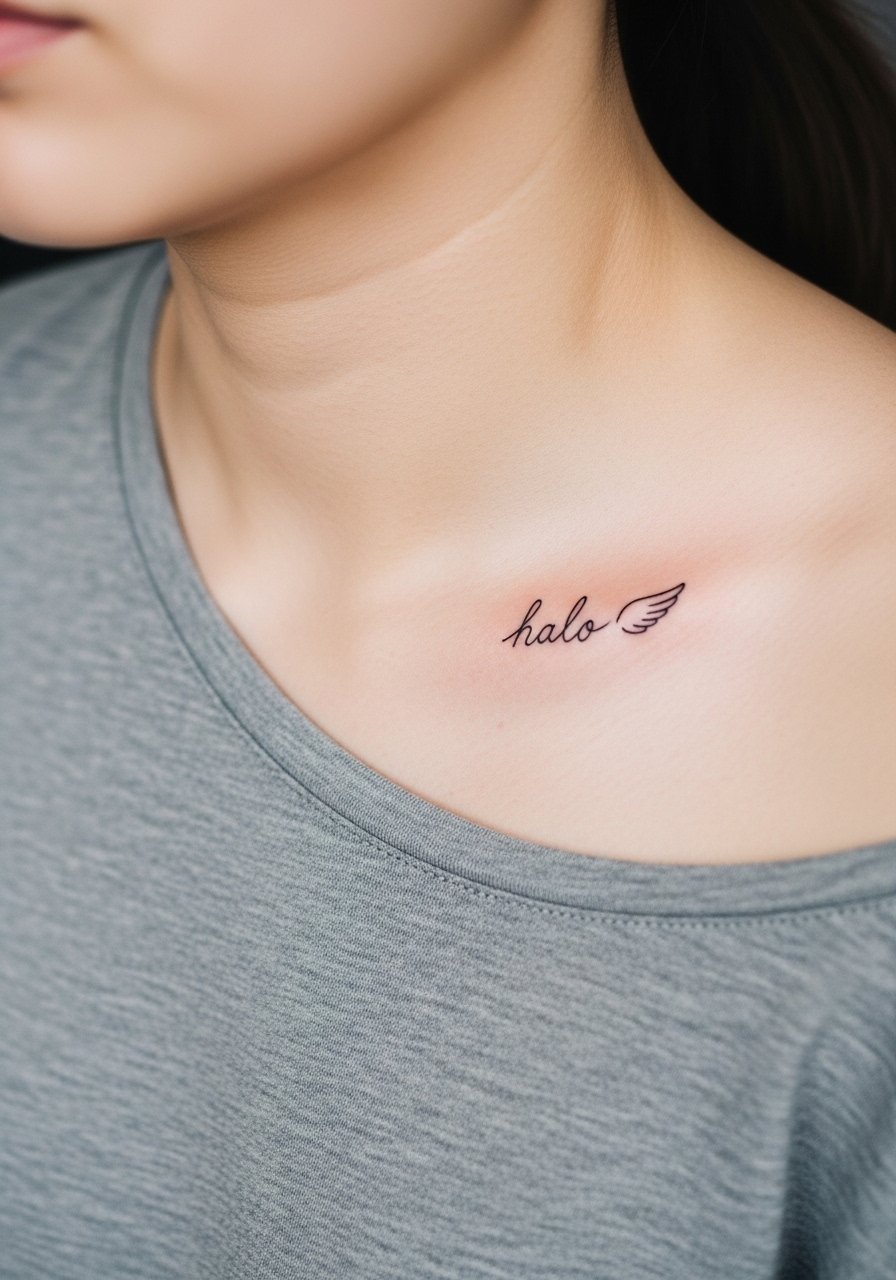
Collarbone pieces frame the chest and read nicely with necklaces. Small script or a single wing accent benefits from slightly bolder stems so the letters do not blur into the surrounding skin over time. This area can be sore depending on proximity to bone, so plan a short first session and assess healing before adding fine fill. Think about how necklaces sit because hardware can rub the fresh lines. If the phrase is important, have the exact text ready and request a stencil preview for spacing.
16. Minimalist Wrist Wing Debate
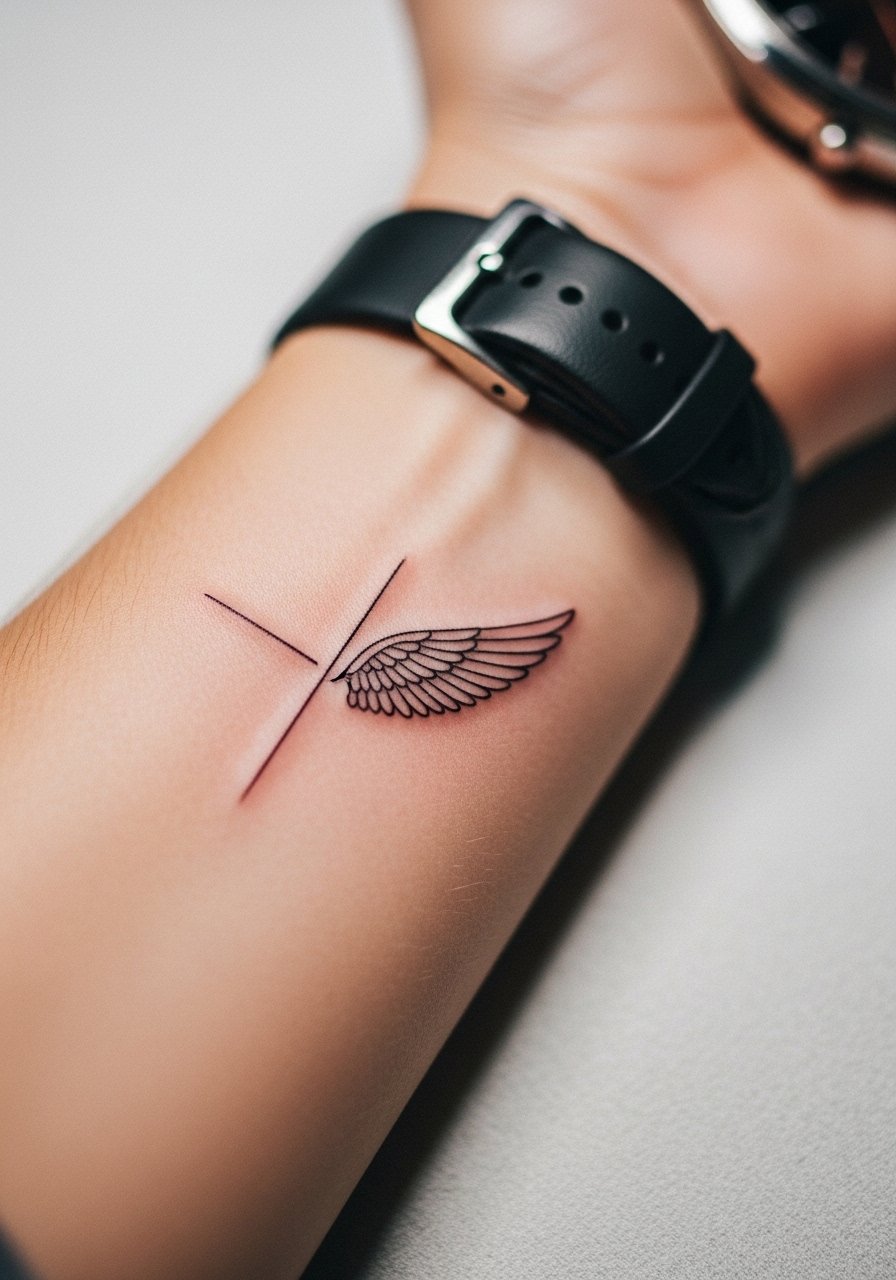
Wrist pieces are a classic first-timer move and they split opinion on technique. The fine-line camp likes the delicate look, while the bold-line camp wants heavier contour to avoid the "fading into blur" scenario. Name both camps in the consult and ask about expected touch-up timelines. For small wrist wings, expect a one-hour appointment and a likely touch-up at year two depending on exposure and friction. One often-missed point is how watches or bracelets will interact with healing skin, so remove accessories for the week after the session.
17. Memorial Upper-Back Panel with Layered Wings
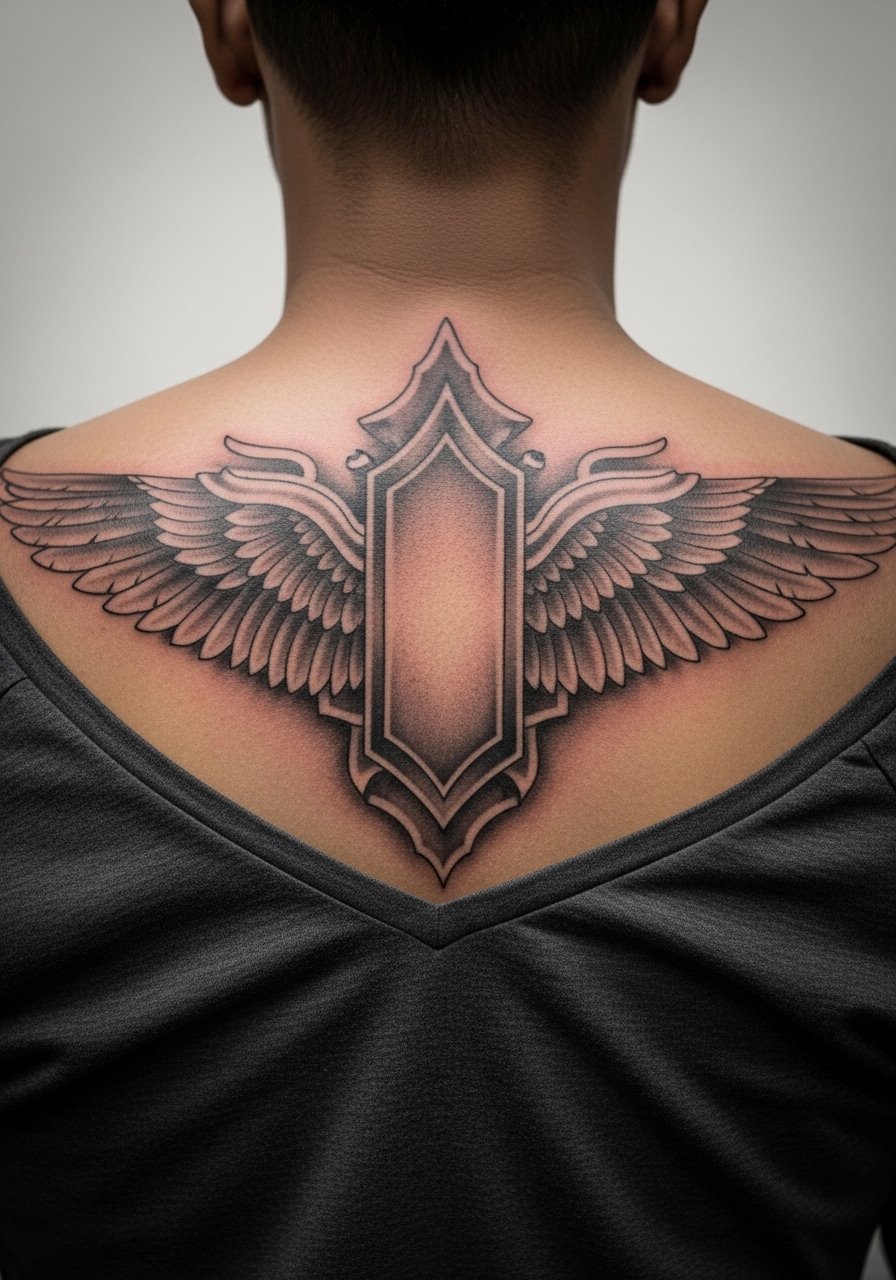
A memorial upper-back panel gives breathing room for layered wings and inscriptions. For memorial work keep lettering larger and blacker than you think so names and dates remain readable in photos and healed shots. The regrettable version is tiny script mixed into dense feathers. Plan for multiple sessions to build saturation and keep a long-term touch-up window in mind. Back pieces handle touch-ups well because the skin changes less with age than limbs. Ask about how the design will sit if you later add a shoulder cap or sleeve on one side.
Frequently Asked Questions
Q: Will fine line wings on a forearm blur faster than a bold blackwork version?
A: It depends on placement, daily exposure, and how aggressive the original lineweight was. Fine single-needle wings look beautiful at first but will often need a touch-up at year two to three on active forearm skin. Bold blackwork will usually stay legible longer, though it changes the aesthetic. Discuss lineweight and touch-up expectations in your consult.
Q: How should I dress for a chest or rib session to stay comfortable in the chair?
A: Wear something the artist can move aside without you getting cold, like a deep V neck tee men or a loose button-down you can open. A robe is also fine. Comfort and easy access to the area speeds the session and helps the artist maintain steady work.
Q: I worry my forearm angel stretched after muscle gains. Where should I place a guardian portrait to avoid that?
A: The outer forearm and shoulder blade are generally better than inner forearm for future muscle shifts. Outer placements have less skin compression during flexing. If you expect significant size change, plan for a slightly larger stencil and thicker contours so the image retains its proportions.
Q: Are back wing realism pieces worth the multi-session price compared with single-session blackwork wings?
A: If you want ultra-detail and a memorial scale, realism wings on the back are worth the extra sessions because they let artists render depth that holds up when done with proper saturation. Single-session blackwork wings are more economical and last well, but they offer a different visual language. Choose based on what you want the piece to read like five years from now.
Q: How do I approach the numbing cream disagreement for sensitive placements like ribs or sternum?
A: Name both camps to your artist and ask for their policy. Some artists accept topical numbing when applied with proper timing. Others refuse because it slightly alters skin tension. Be prepared to follow the studio rule and plan for shorter, staged sessions if you do not use numbing.
Q: What is a realistic touch-up timeline for small finger or knuckle halo symbols?
A: Hands see more washing and friction, so expect to need touch-ups sooner than other placements. A realistic plan is a check at six to twelve months, with likely rework at year one or two to refresh edges and saturation. The exact timeline depends on exposure and how much the area is used daily.