
Bold trends on boards do not always survive the years. Fine line halos and watercolor washes look amazing fresh, but what holds up is usually bold saturation, considered placement, and a design that accounts for skin movement. Below are 21 fallen angel tattoo sketches that lean into rebellion, loss, or quiet defiance, with notes on how each option heals and what to say at your consultation to avoid common mistakes.
1. Realistic Fallen Angel with Broken Wings on Inner Forearm
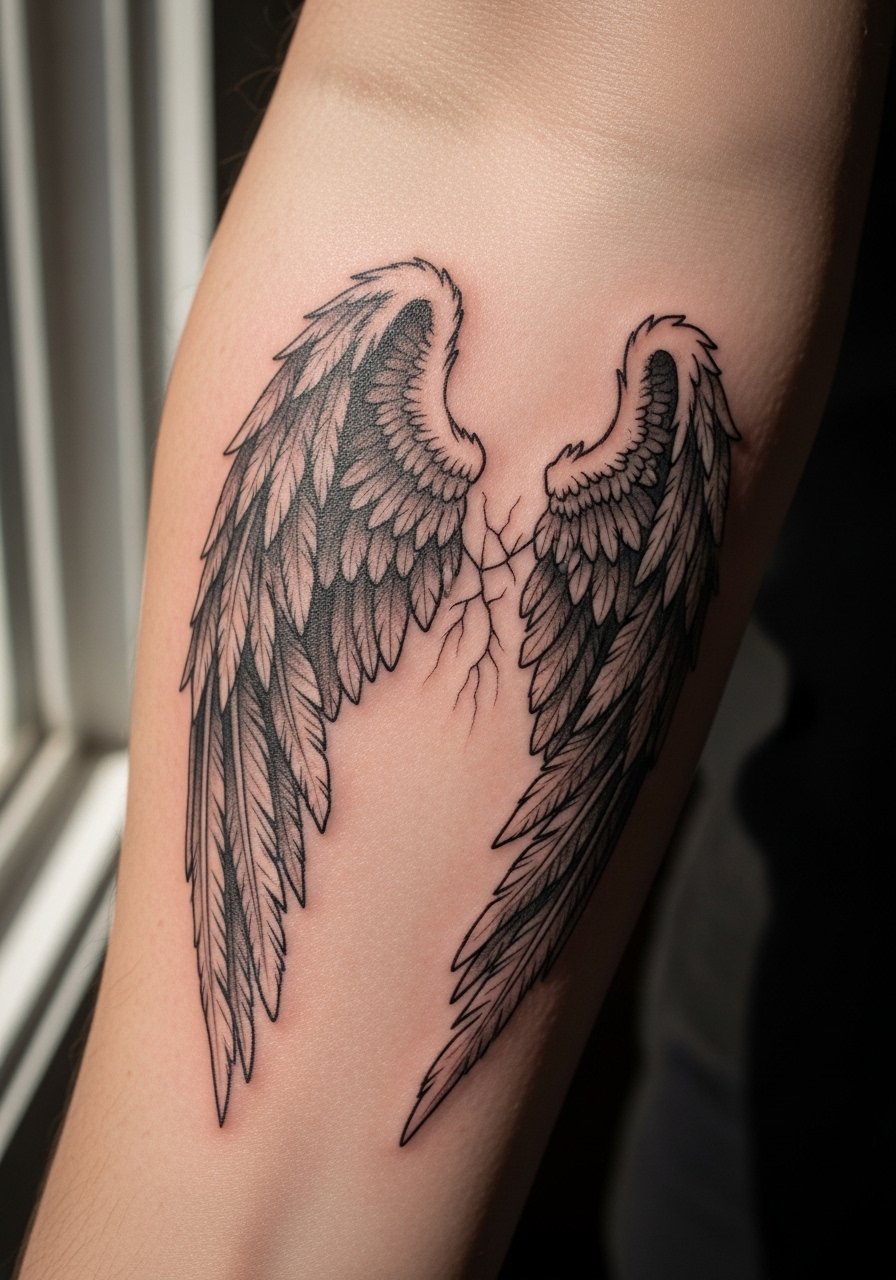
I recommend this for someone who wants emotional clarity without oversized commitment. Tell your artist you want 4-6 inches of negative space between feather clusters so the wings do not merge as they soften. Expect a 2-4 hour session and a 6 month touch-up for feather tips. A common mistake is asking for ultra-fine feathers that look amazing fresh and then blur into a muddy patch by year three. For the appointment wear a men's black fitted tee you can roll to mid-arm so the artist can work the inner forearm easily. Pain sits around 4 to 5 out of 10 but the forearm is forgiving compared with ribs.
2. Gothic Fallen Angel with Chains on Upper Arm
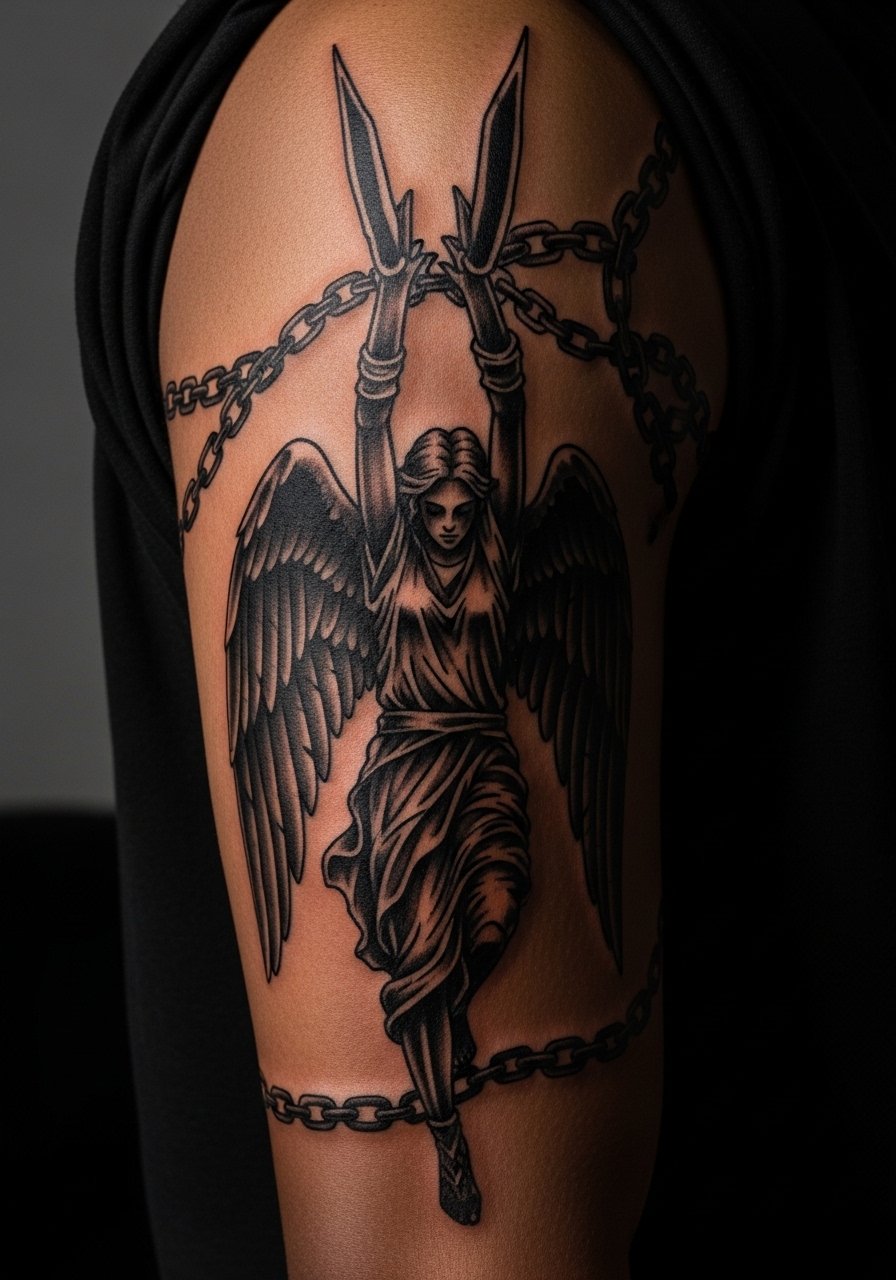
This blackwork choice reads graphic and holds well over time because the thick fills resist blowout. Ask the artist for saturated fills and crisp negative-space gaps where the chains overlap feathers. Expect three sessions for medium 6-8 inch pieces. The upper arm feels like a 3 out of 10 on most pain charts, so session comfort is easy. For showing it off, try an off shoulder crop top that frames the arm without pulling attention away from the silhouette. Artists sometimes undercut chain contrast which makes the chains look flat after a year. Specify contrast levels during consultation.
3. Watercolor Fallen Angel Portrait at the Collarbone
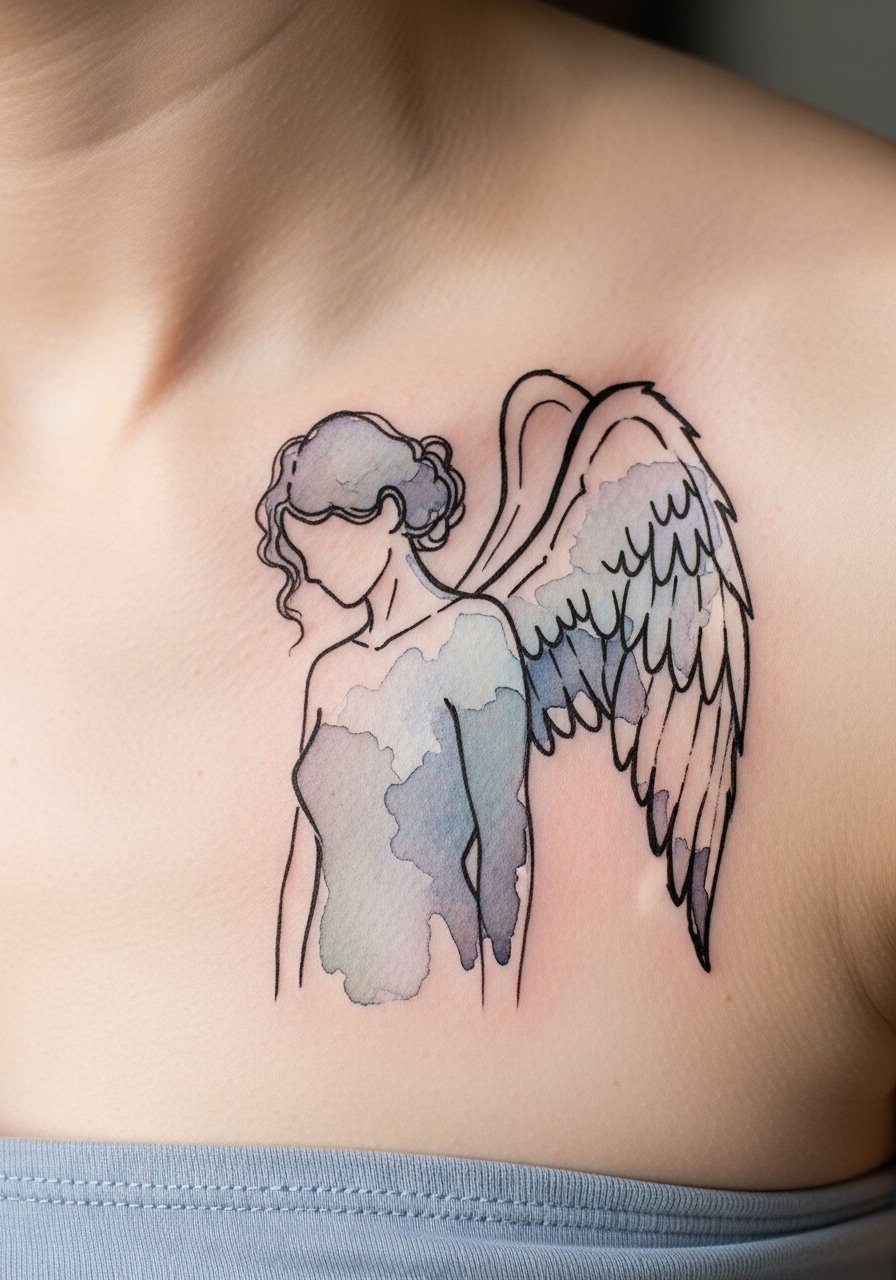
Watercolor softens the theme and looks poetic when fresh, but it can fade unevenly if placed on high-movement zones. Choose a 3-5 inch collarbone placement and ask for a black-outline underpainting so the color has structure. Session time is usually one to two hours for small portraits. Watercolor needs touch-ups sooner than black and gray, often around year two, especially in direct sun. For evenings pair the piece with a strapless tube top to keep the focus on the wash and neckline. Be explicit about longevity expectations in consultation.
4. Traditional Fallen Angel with Halo on the Calf
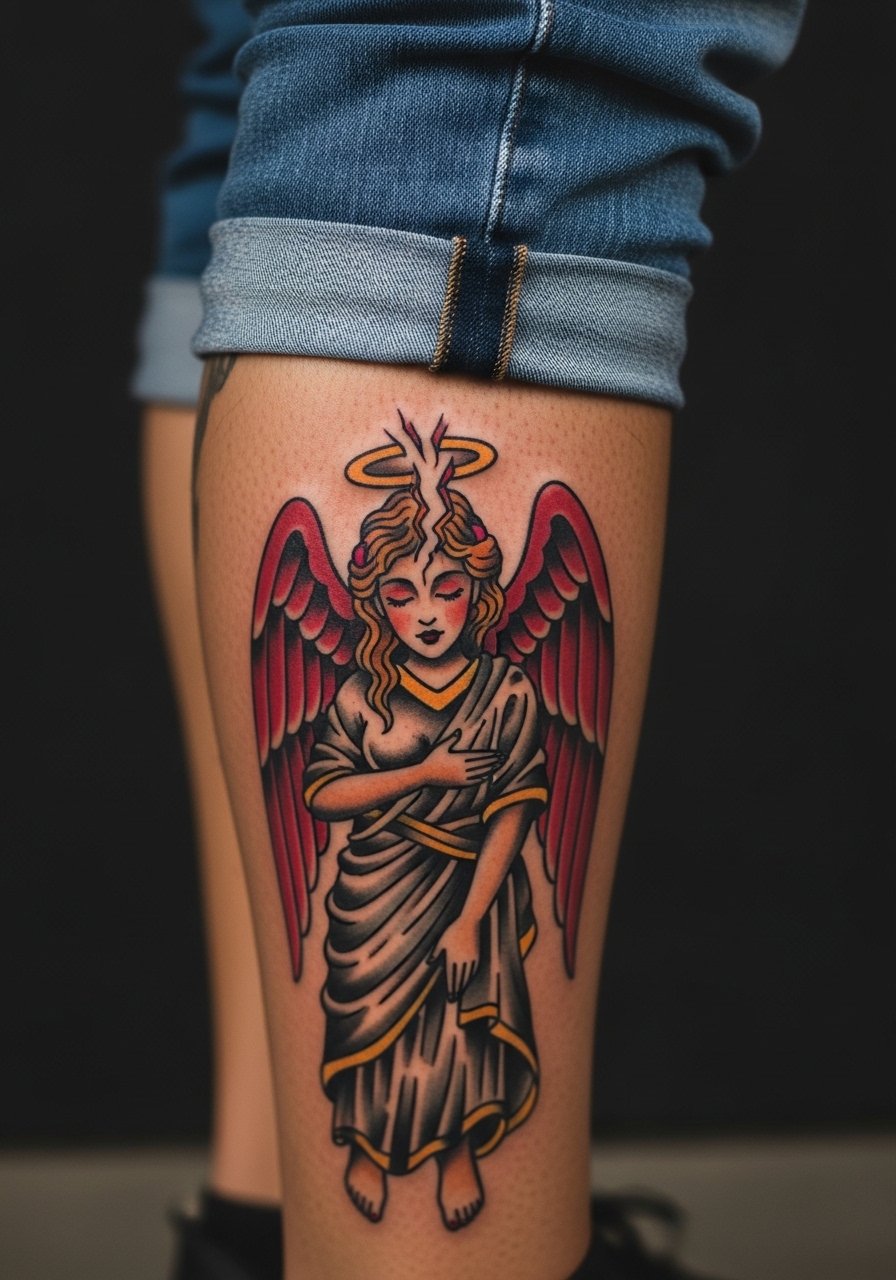
Traditional saturation and heavy outlines are a solid bet if you want something that ages predictably. A 5 inch calf piece usually takes two sessions with solid color packing. The calf is lower on the pain scale and it tolerates saturation well. Avoid asking for tiny details inside the halo. Tiny interior elements are a mistake that disappear as the ink spreads. When showing it off, rolled skinny jeans and combat boots black frame the calf and keep the bold palette readable from a distance. Plan for a touch-up in two to three years to refresh the reds.
5. Neo-Traditional Fallen Angel in Flight Across the Back
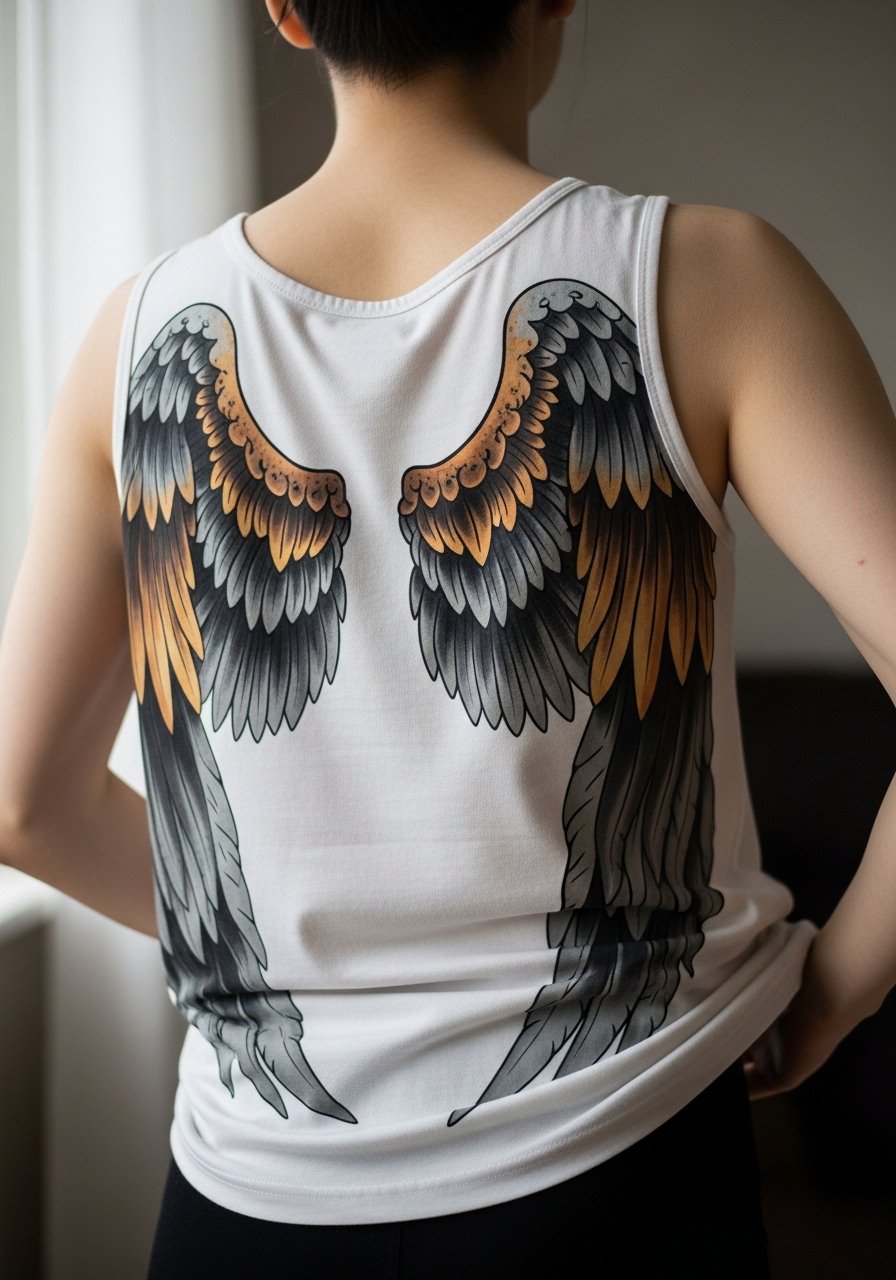
This is for someone ready to commit to a large canvas and layered storytelling. Neo-traditional pieces use broad saturation and strong linework so they photograph well and age into a cohesive whole. Expect multiple sessions, often four to six, and plan around seasonal healing to avoid sweaty sessions that slow recovery. For the session wear a backless halter top or a loose tank you can pull aside so the artist can work comfortably. Large back work can show uneven healing if you do it during very hot months, so pick cooler months or an experienced artist who manages aftercare tightly.
6. Black and Gray Angel with Celestial Background on the Ribcage
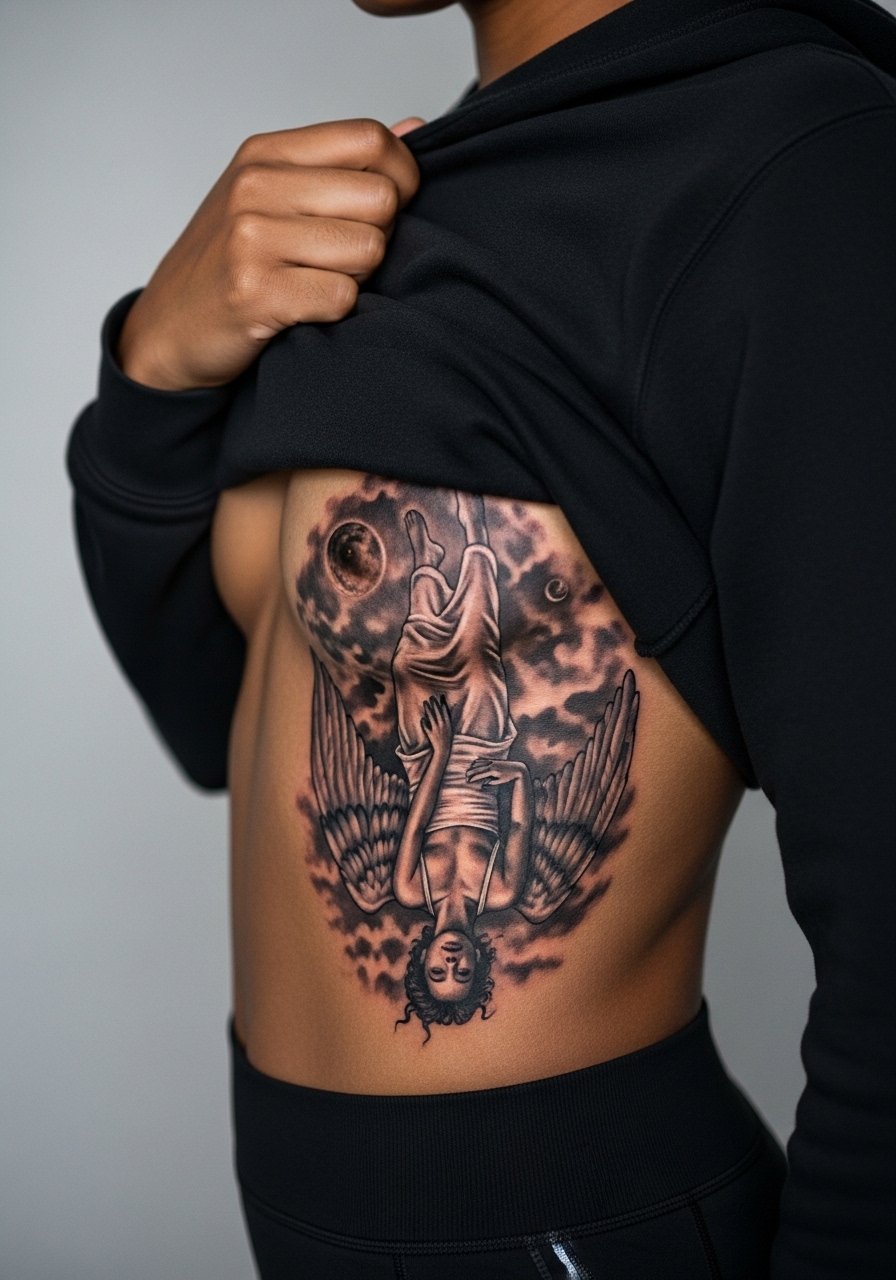
Fair warning, the ribcage is one of the more painful spots, often 7 to 9 out of 10. That said, black and gray gradient work reads somber and holds up if the shading is clean and not too packed. Artists are split on Saniderm versus dry healing for large rib pieces. One camp recommends protective film for less itching and a cleaner first week. The other says dry healing helps scab formation and better texture. Ask your artist their preference and why. Expect three sessions and a touch-up at the six month mark. For the appointment wear a cropped athletic top you can lift to reveal just the working area, and plan rest afterward because the breathing motion makes sessions longer.
Studio Day Picks
The first six ideas above include forearm, upper arm, collarbone, calf, back, and ribcage work, so these items smooth the chair day and the first week of healing.
-
Stencil transfer paper kit. Lets you preview line placement on skin before the needle and is useful for inner forearm and collarbone layouts.
-
Topical numbing cream. Applied before a session it can reduce edge pain on ribs and sternum without altering linework when used correctly.
-
Thin protective film roll. Keeps smaller pieces like wrist or finger work clean during the first few days of washing and movement.
-
Fragrance-free gentle body wash. Cleans healing areas without stripping saturation, which matters for black and gray and watercolor washes.
-
Aquaphor healing ointment. A thin layer in the first 48 hours helps seal tiny needle channels for fine line sections like inner forearm sketches.
7. Minimalist Fallen Angel Silhouette on the Wrist
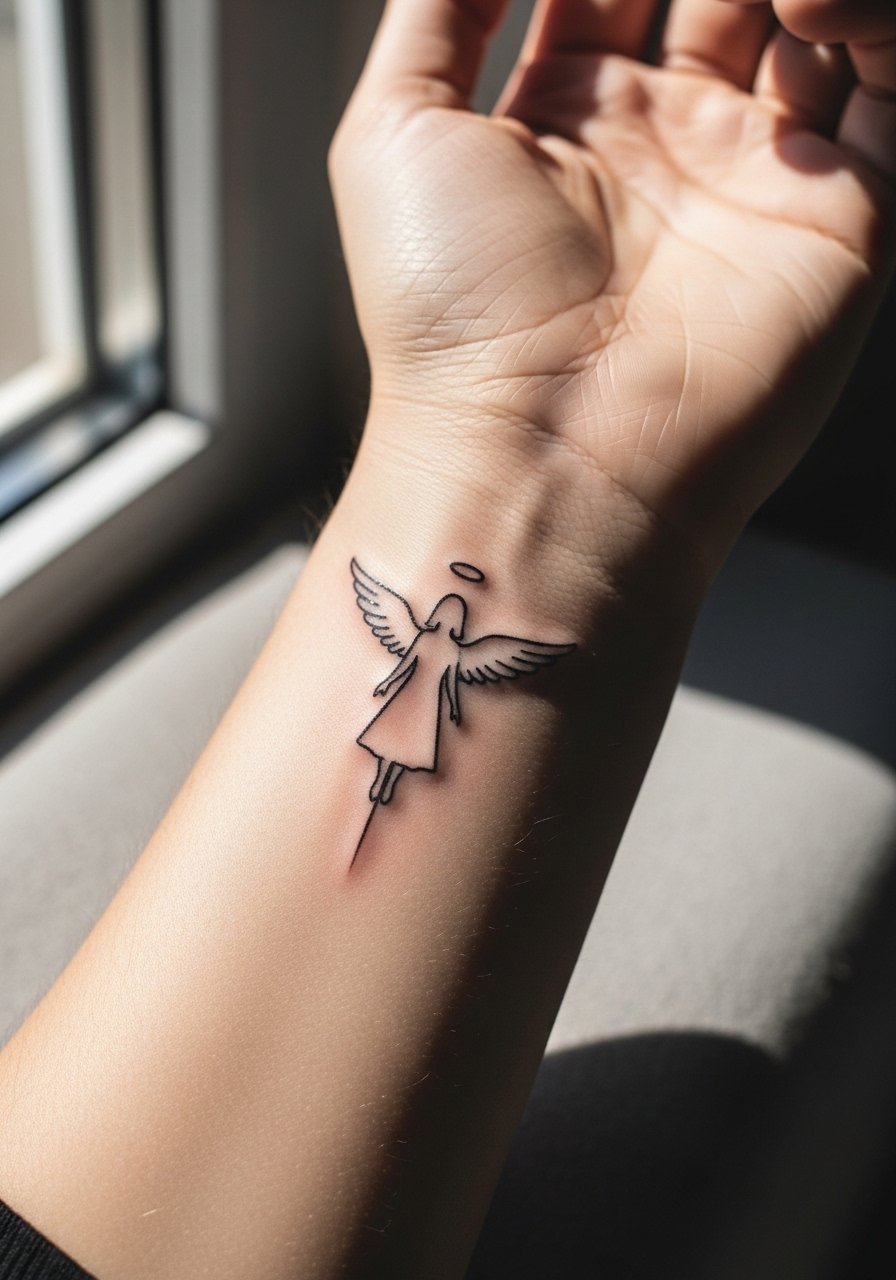
Wrist pieces are tiny statements that can blur if they are overdetailed. For a silhouette, ask for negative-space breathing room and slightly bolder linework than you think you need. The wrist sees constant friction from watches and sleeves so plan to avoid tight bracelets during healing. Session time is short, often under an hour, and pain is around 3 to 4 out of 10. For showing the piece, add a thin silver cuff on the opposite wrist so attention stays balanced. Expect a touch-up at year two if you chose very fine single-line work.
8. Ornamental Fallen Angel Wings on the Shoulder Blade
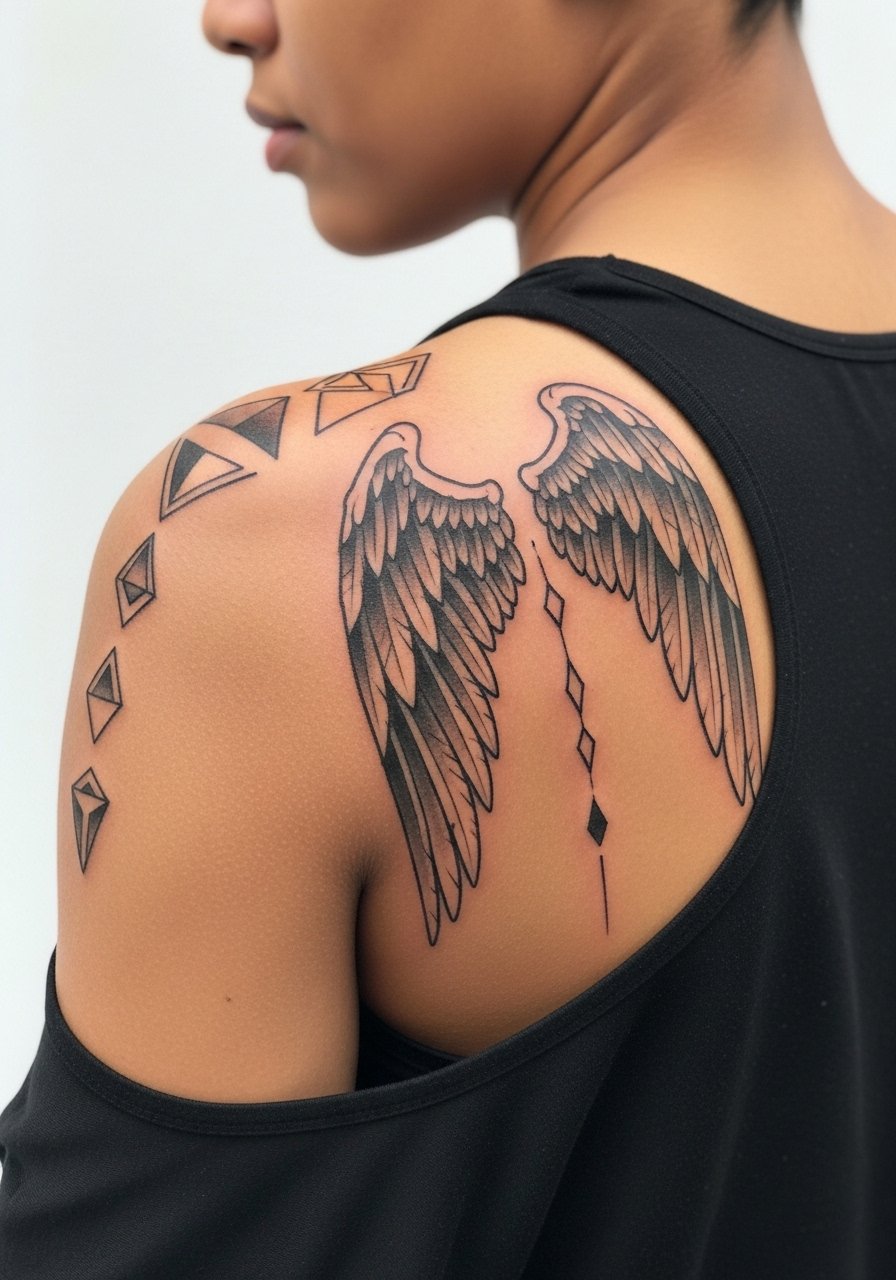
Shoulder blade pieces allow for elongation and fine detailing that breathe with the shoulder blade movement. Ask for elongated feathers and geometric negative space so the pattern does not compact into a dense block. The area is forgiving for lines and tends to heal well in two to three sessions. For the session wear a loose tank top so the artist has clear access without rubbing freshly tattooed skin. A common mistake is trying to compress an 8 inch concept into a smaller piece which ends up losing the geometric rhythm.
9. Illustrative Fallen Angel with Tears on the Side Neck
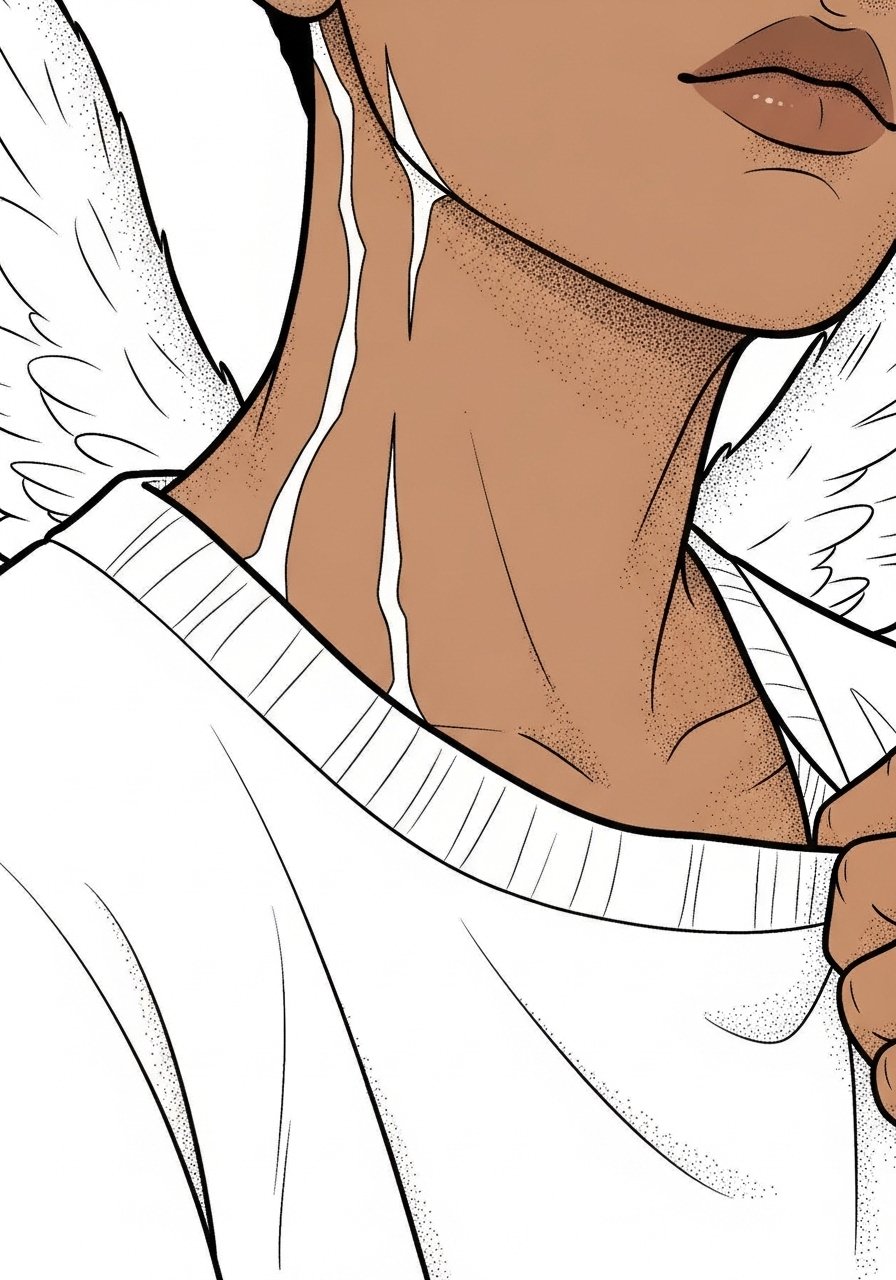
Neck placements need a careful conversation about visibility and career considerations. This illustrative approach uses stipple tears and expressive faces which read intimate up close. Ask the artist to show healed examples on skin similar to yours. Expect a short session but higher sensitivity and a slightly higher chance of touch-up because neck skin is thin and moves constantly. For the session wear a wide-neck shirt you can pull aside to reveal only the side of the neck. Mention to your artist any job constraints before booking so you both agree on visibility and size.
10. Dark Art Fallen Angel with Flames on the Sternum
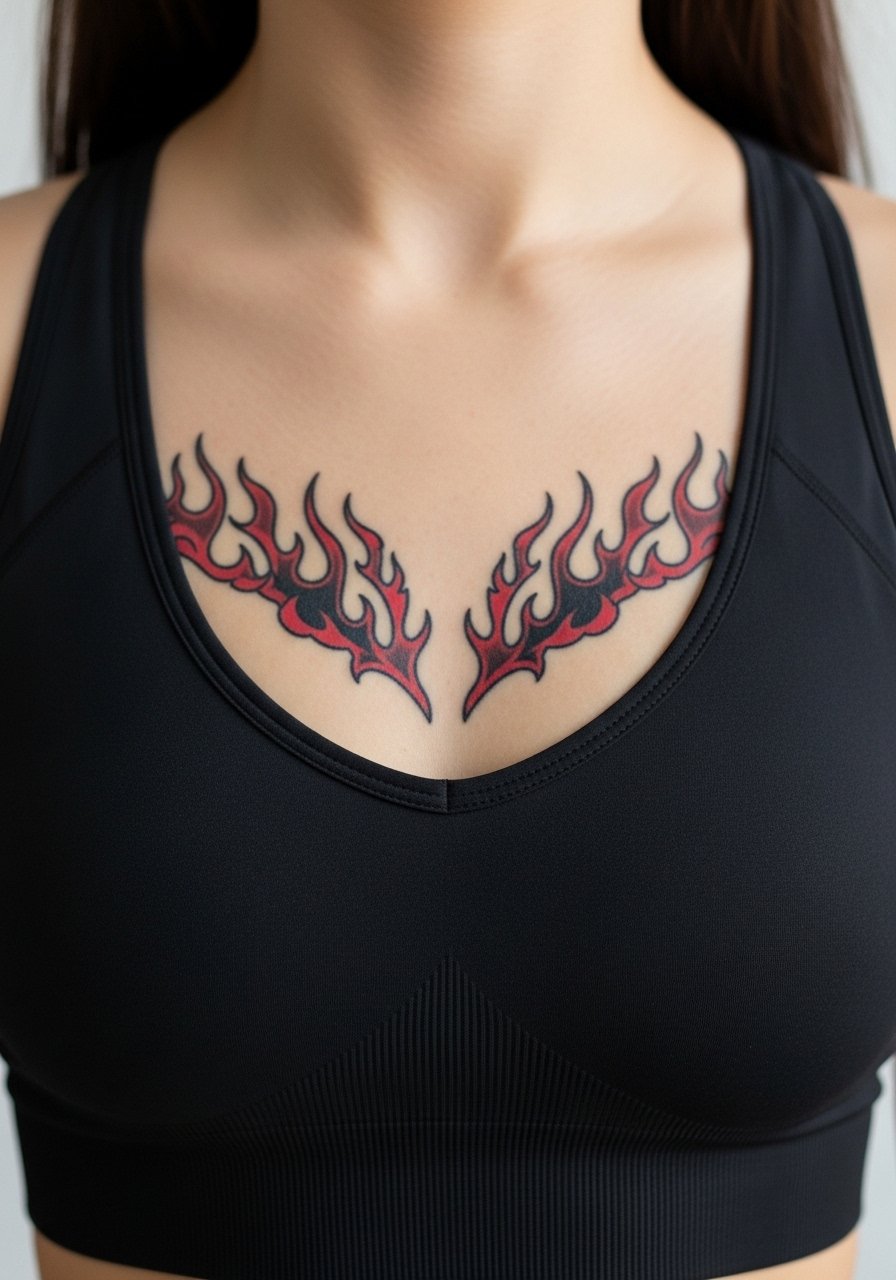
Sternum work is painful and intimate, often a 7 to 9 on pain scales, but it reads dramatic when executed with layered shading. Ask for strong anchors in black and measured color placement to prevent blotchy red areas over time. Sessions are long and you should break them up. A common mistake is overloading the center with tiny details that compress during healing. For the session wear a fitted sports bra or bandeau so the area is accessible and covered otherwise. Recovery on the chest can be sensitive to sleeping position so plan for a week of careful rest.
11. Fine Line Fallen Angel Halo Break Behind the Ear
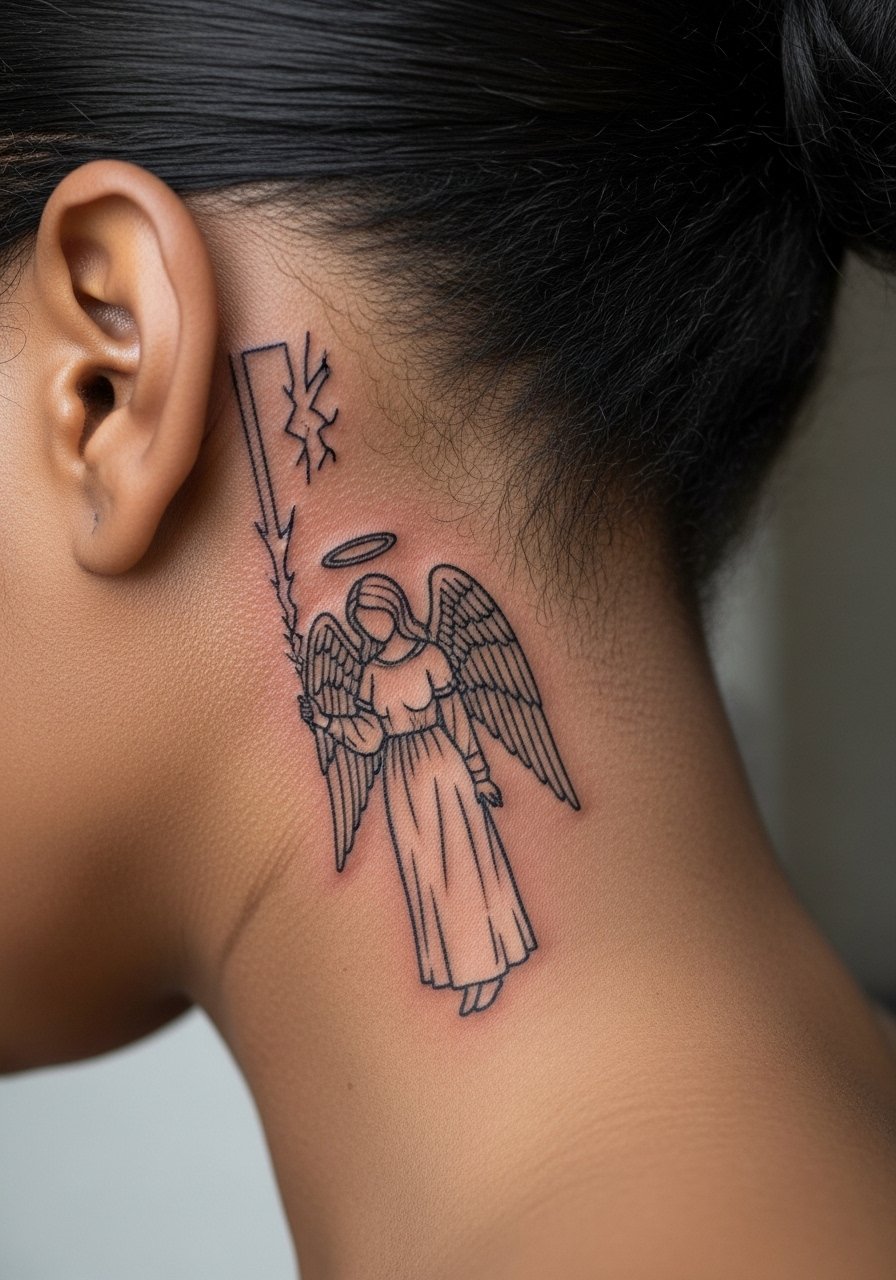
This micro placement is subtle and ideal for first-timers who want discretion. Artists are polarized on fine line behind the ear. One group says it blurs quickly because of thin skin and movement. The other group says with precise depth and spacing it can settle cleanly. Ask your artist which camp they fall into and to show healed portfolios on similar spots. Expect 15 to 30 minutes of work and a potential touch-up at year two. Behind-ear tattoos require careful styling during sessions, so keep hair tied and wear a collarless top to give the artist room.
12. Patchwork Fallen Angel Sleeve Integration on the Arm
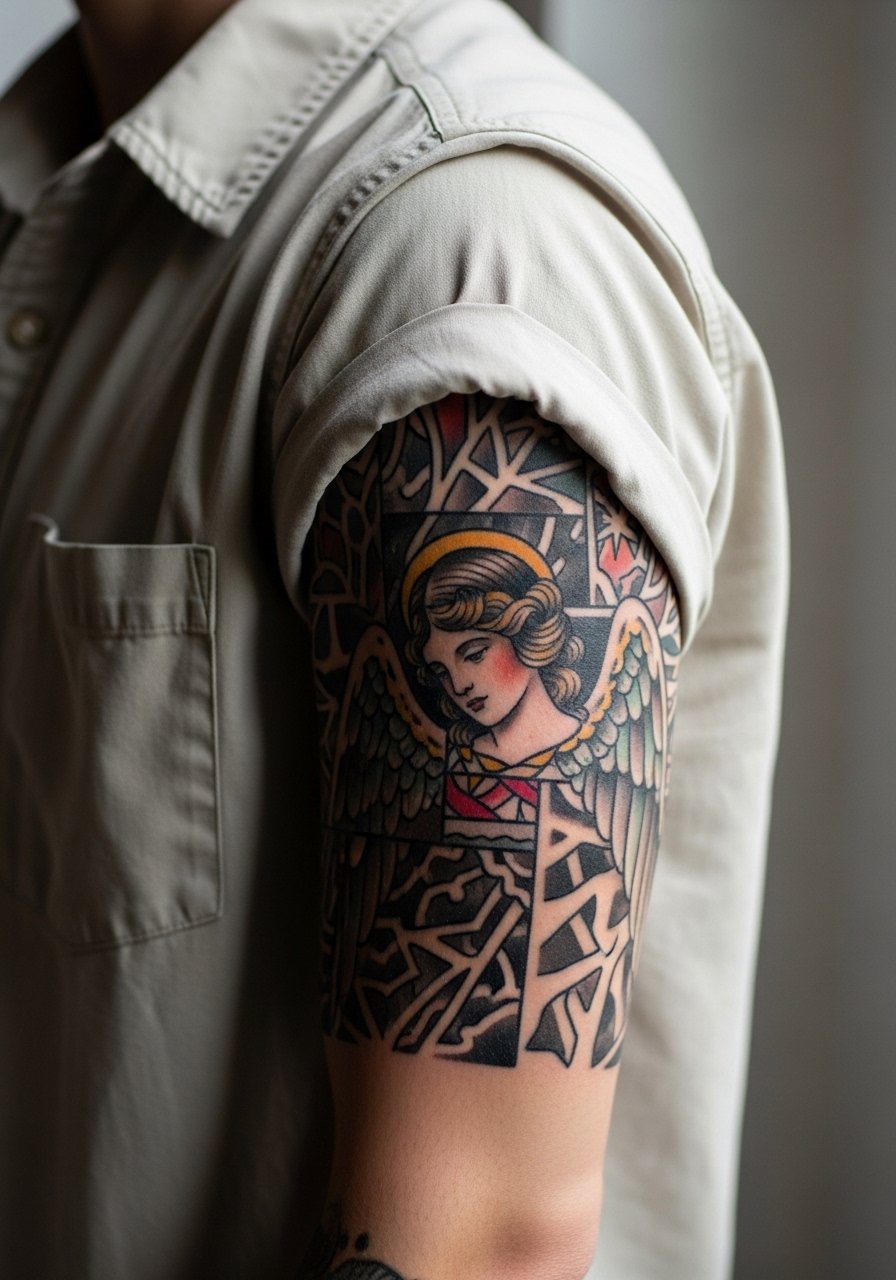
Sleeve integration is a practical solution when you want the fallen angel motif to sit with existing flash. The main consultation point is reference harmonization. Bring images that show line weight and saturation you like. This multi-session project can run 6 or more appointments. The arm tolerates heavy work but watch for blowout where dense blacks meet soft shading. For session comfort, wear a loose short-sleeve button-down shirt so the artist can roll and access the entire arm. Expect periodic touch-ups as you complete adjoining panels.
13. Fallen Angel with Broken Halo and Chains on the Bicep
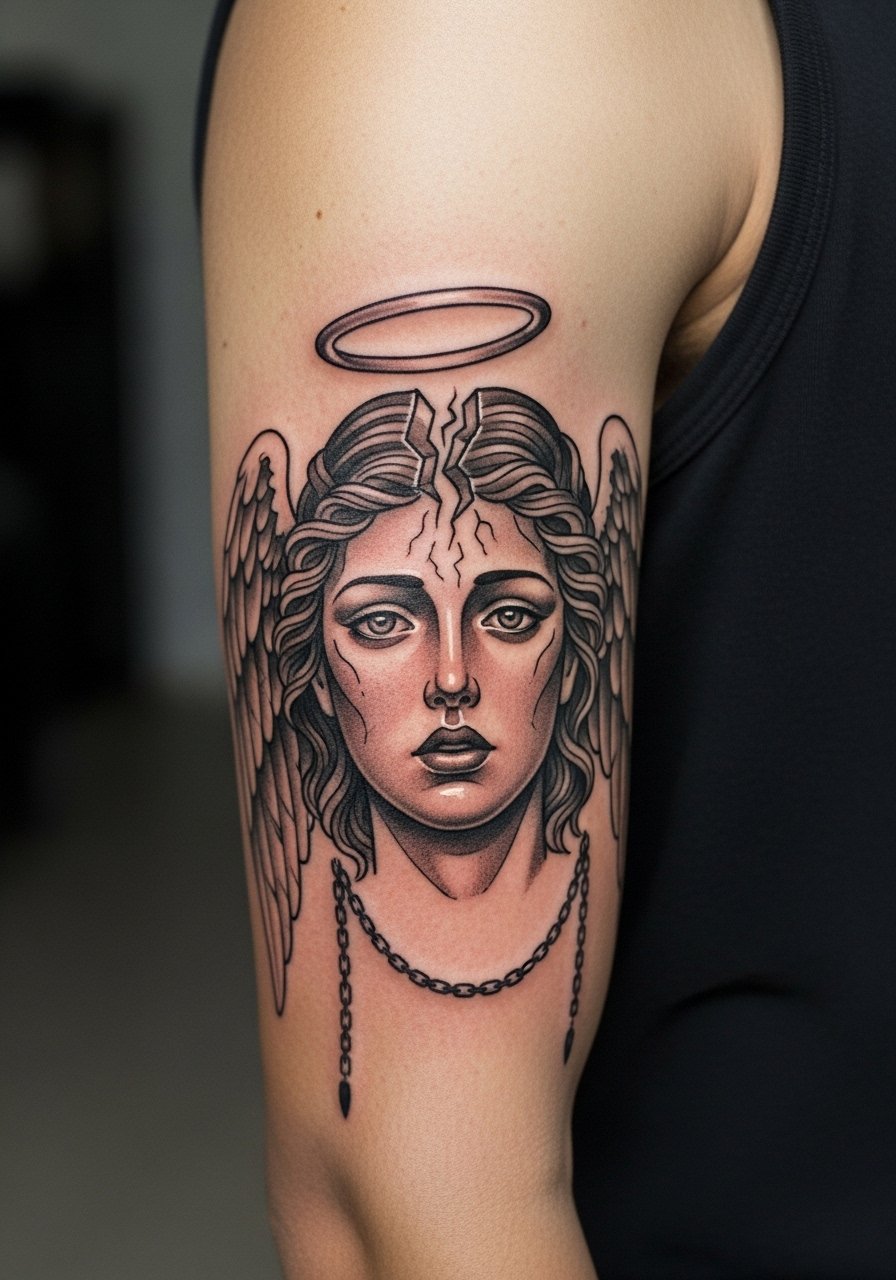
The outer bicep is a great compromise between visibility and healing ease. Ask for slightly heavier linework around the halo so it reads against skin texture over time. Sessions run one to two hours and pain is moderate. A frequent error is requesting too many tiny chain links which blur into a single dark line after a couple of years. Specify chain thickness and request a sketch that shows scale against your muscle. For showing it off, sleeveless or rolled sleeves keep the focus on the bicep contour.
14. Renaissance-Inspired Fallen Angel Motif on the Shoulder and Upper Back
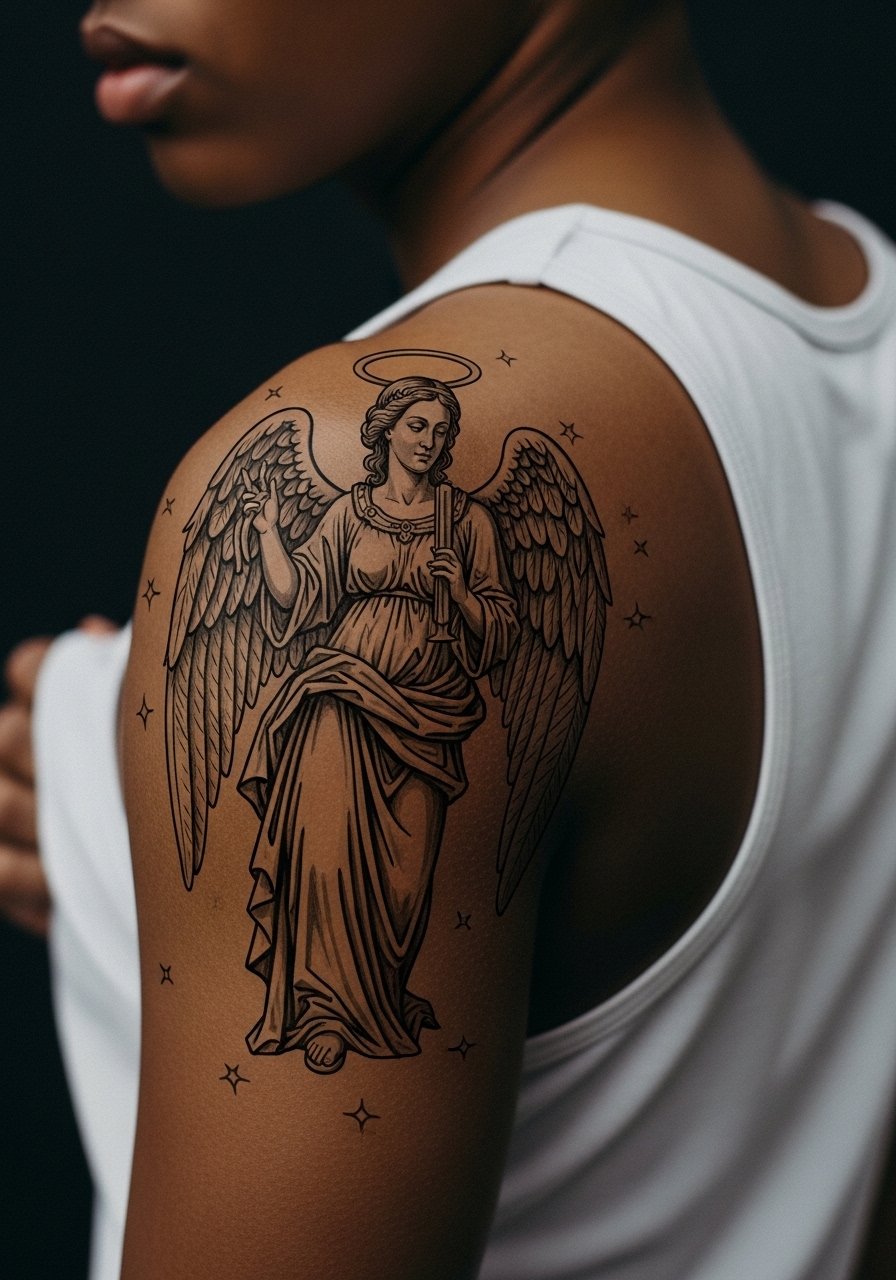
Renaissance motifs bring historical depth and require a careful balance between fine detail and readable composition. Large shoulder to upper back pieces need space to breathe so the figure does not compress. Request reference images that show posture and negative space. Multiple sessions are typical and planning around seasons helps avoid sweat interference. A common mistake is crowding classical detail into a small patch which loses its nuance. Wear a tank top you can pull aside for the session and leave room in the design for future expansion.
15. Memorial Fallen Angel with Subtle Script on the Sternum Edge
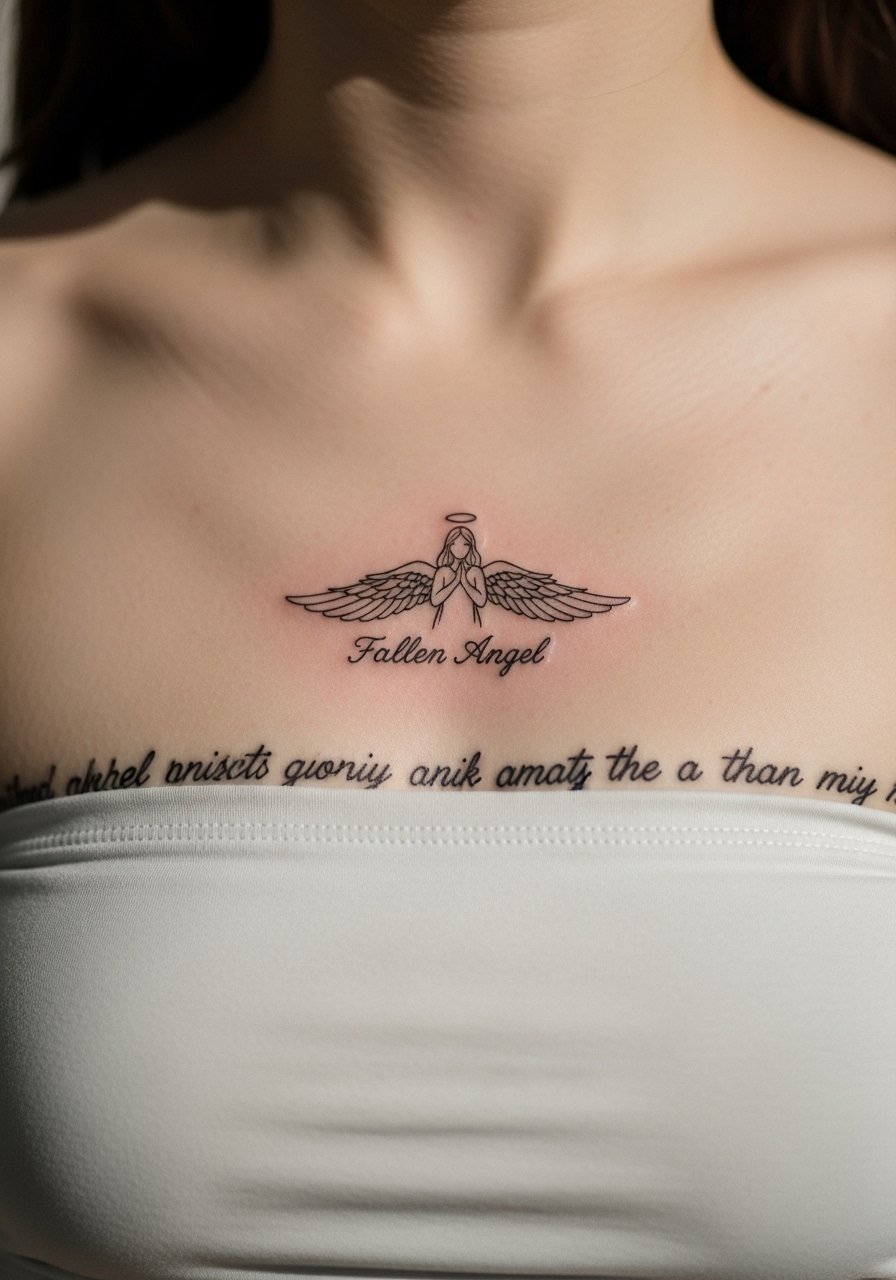
When a piece includes a name or date, clarity matters. If you plan text, specify the exact wording during consultation and ask the artist to stencil it at full size first. Sternum-adjacent memorials read intimate but require higher aftercare diligence. The design often blends a small figure with a tiny line of script so pick a font that stays legible at scale. Session time is moderate and plan for night-sleep adjustments because pressure can aggravate healing. For modest showing, pair with a low back dress black if you want the area visible for special occasions.
16. Winged Ornament with Geometric Accents Along the Spine
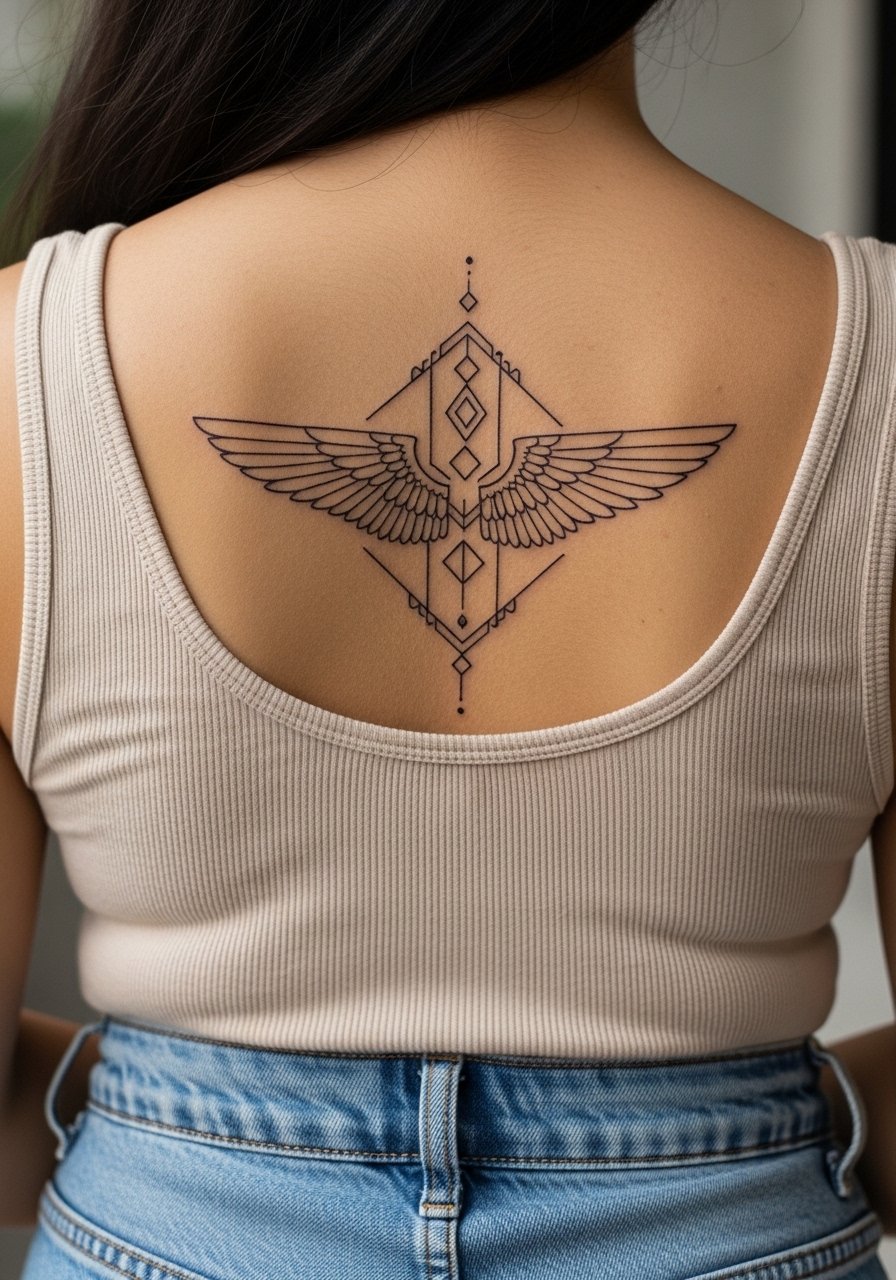
Spine work demands careful spacing because the skin stretches differently along the column. For geometric accents, ask for breathing room between shapes so dots do not merge. Pain is higher close to the vertebrae so expect shorter sessions. An accessible mistake is requesting dense dot work without enough spacing, which merges into a shaded strip over time. Wear a tank top that allows the artist access and consider staged sessions to avoid long single sittings. Discuss touch-ups at the six to twelve month window.
17. Fallen Angel in Flight Over a Cityscape on the Thigh
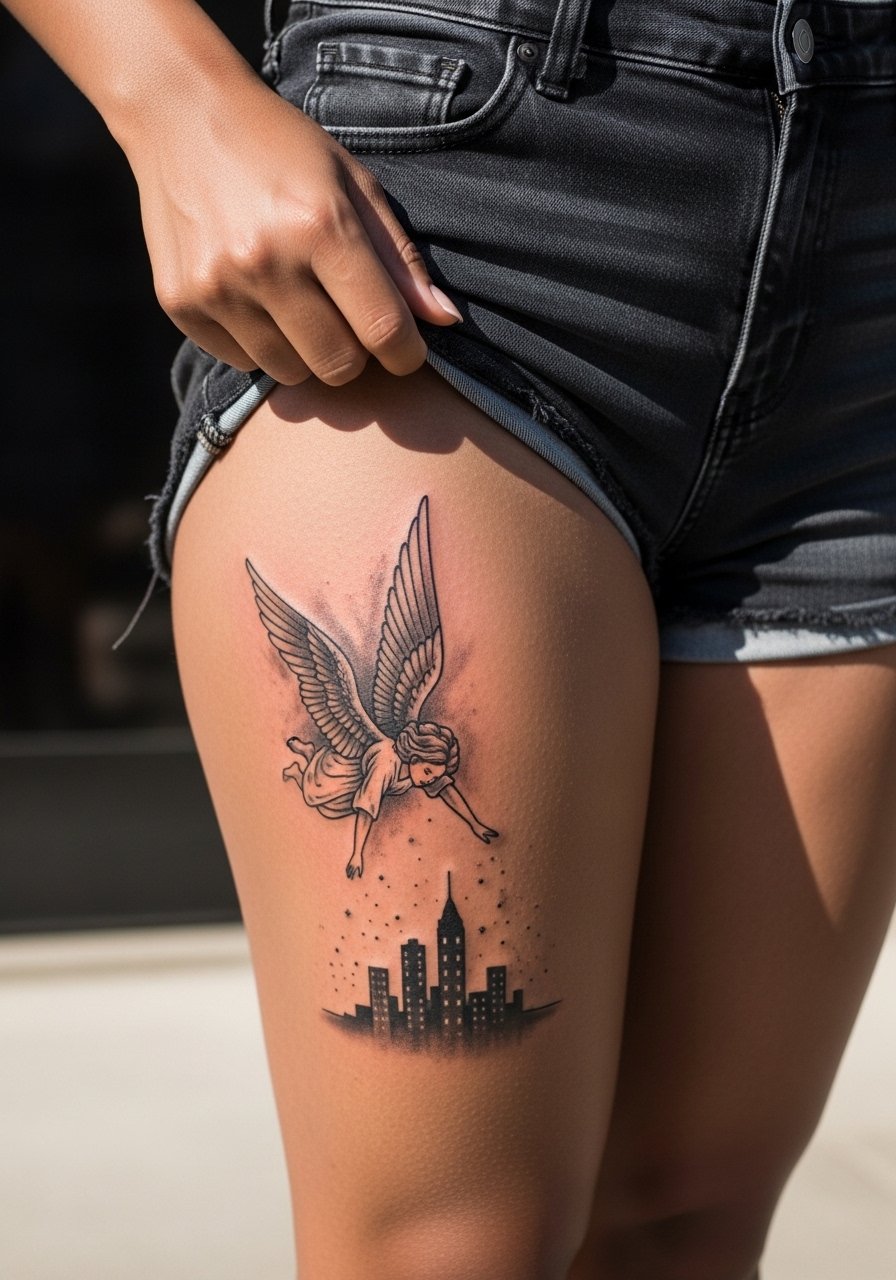
Thigh pieces give space for storytelling and are comfortable to heal for most people. For a flight-over-city concept, plan foreground and background separation by asking for a strong contrast line around the angel so it reads against the skyline after a few years. Sessions are long but the thigh tolerates saturation well. A frequent mistake is cramming too many skyline details at small scale which later blur. For the session wear loose joggers so the leg can be elevated and the artist can access the site without fabric rubbing during healing.
18. Stipple-Shaded Fallen Angel Bust on the Inner Bicep
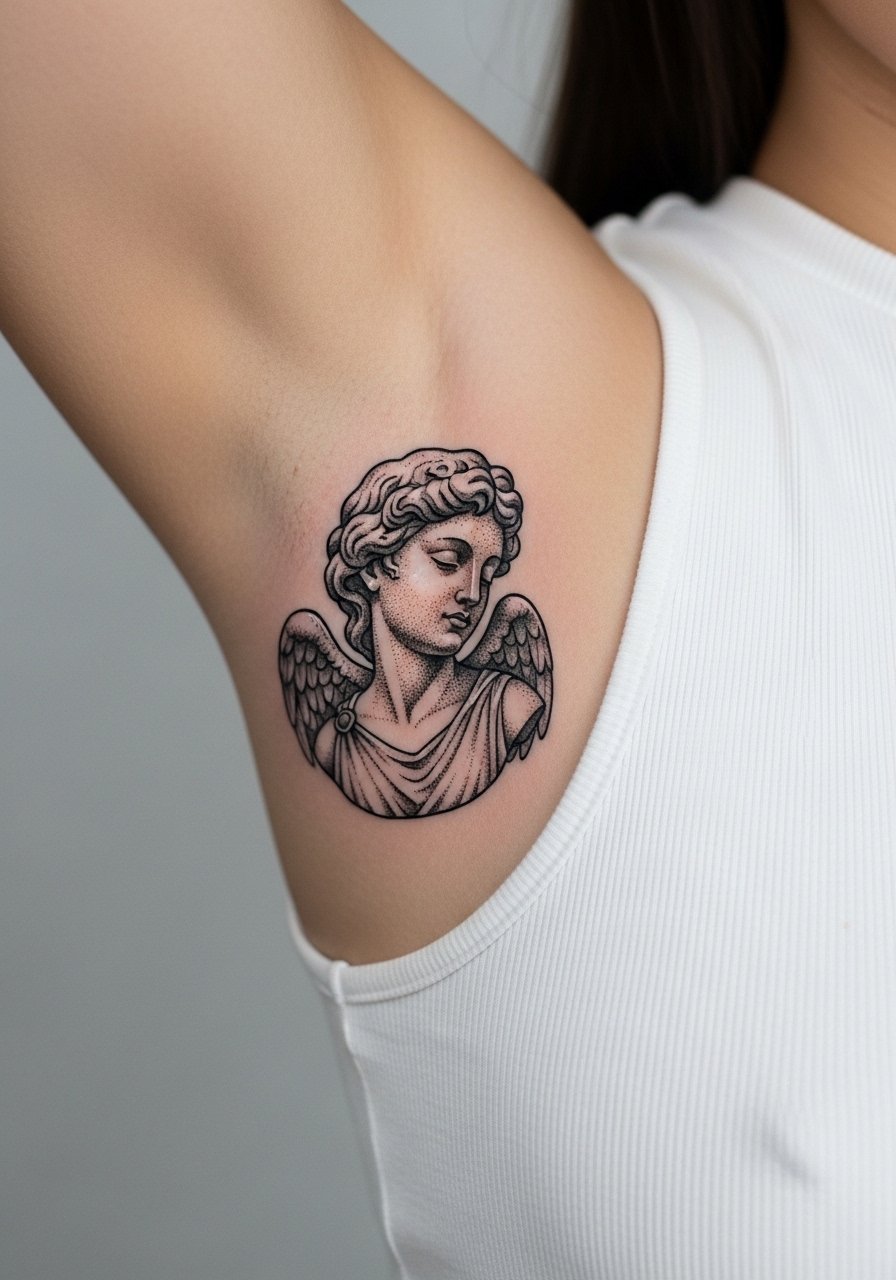
Inner bicep work is intimate and can be tender during sessions. Stipple shading reads beautifully when the dots are spaced intentionally. Tell your artist you want stipple density shown on healed examples before booking. The inner bicep can blur if dots are packed too closely. Sessions are often shorter but expect some sensitivity. Wear a sleeveless shirt and be prepared to rest the arm afterward. A touch-up at one year is common for dot work that sits near high-movement zones.
19. Bold Blackwork Fallen Angel with Masked Face on the Upper Arm
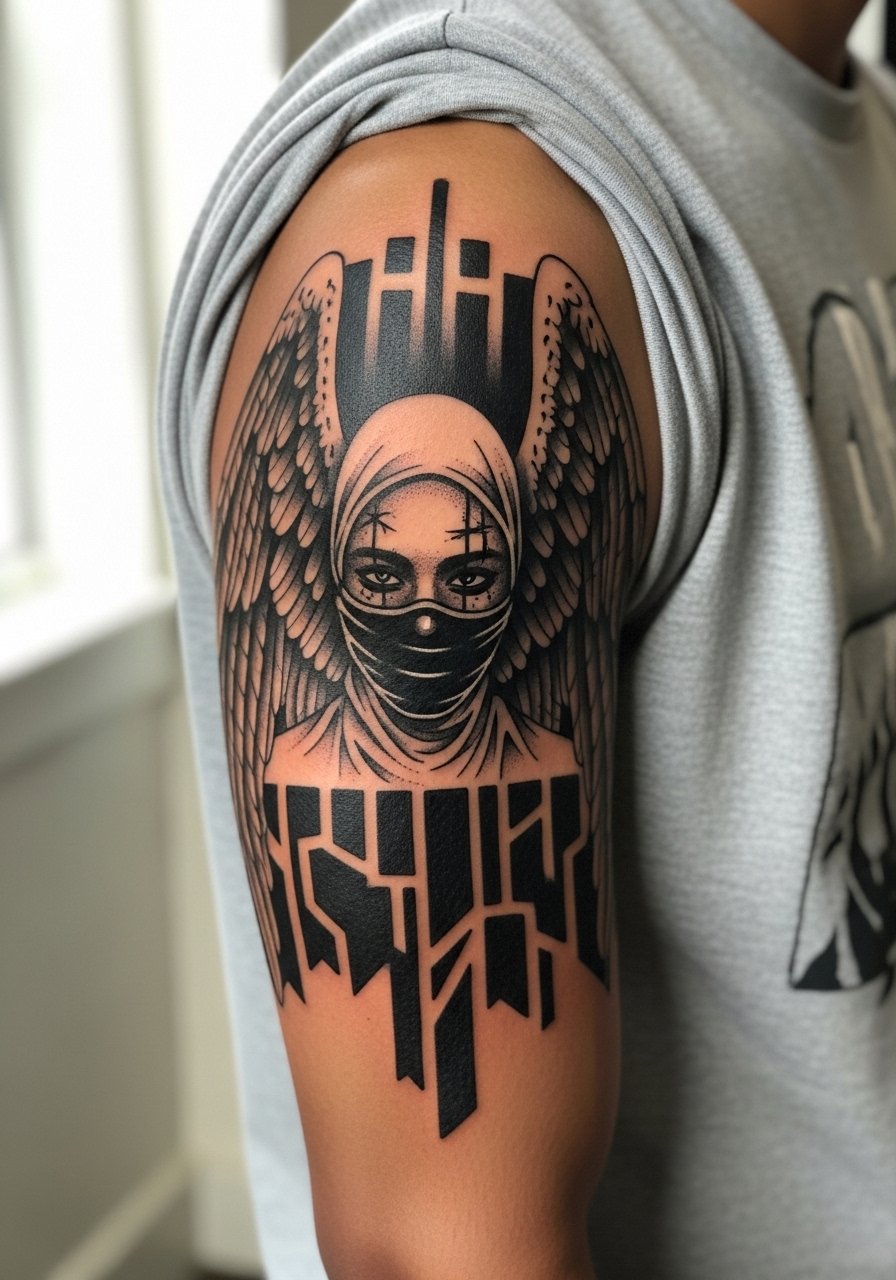
If longevity is your priority, bold blackwork and strong negative space are dependable. Masked faces and stark contrast age into readable shapes rather than mush. Ask for deliberate spacing between black fills so the negative shapes remain visible as saturation settles. This is a low-pain placement and usually finishes in one to two sessions. For showing it off, rolled sleeves or a vintage band tee keep the look cohesive while keeping the tattoo readable from a distance. Expect a low touch-up frequency compared with fine line pieces.
20. Minimal Script Halo and Feather at the Ankle
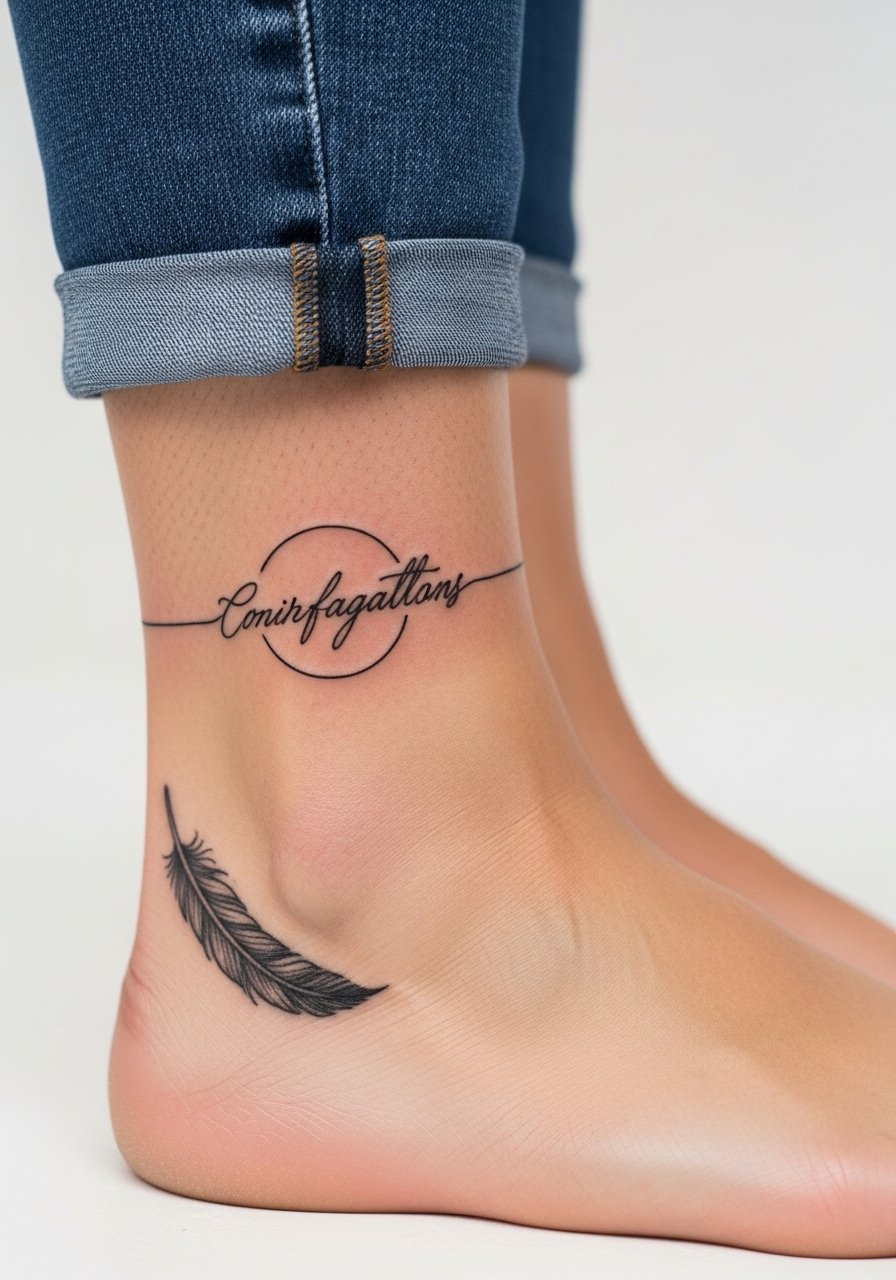
Ankle tattoos face friction from shoes and socks so pick bolder line weight than you might choose for a wrist script. Ask for slightly thicker contour lines around the halo so the tiny feather does not vanish into fabric abrasion. Sessions are short and the ankle is often a 4 to 6 pain rating. For showing the tattoo wear rolled jeans or sandals and consider pairing with a rolled cuff jeans look that frames the ankle. Expect touch-ups within the first two years if you wear tight footwear frequently.
21. Full-Back Fallen Angel Spanning Shoulder to Hip
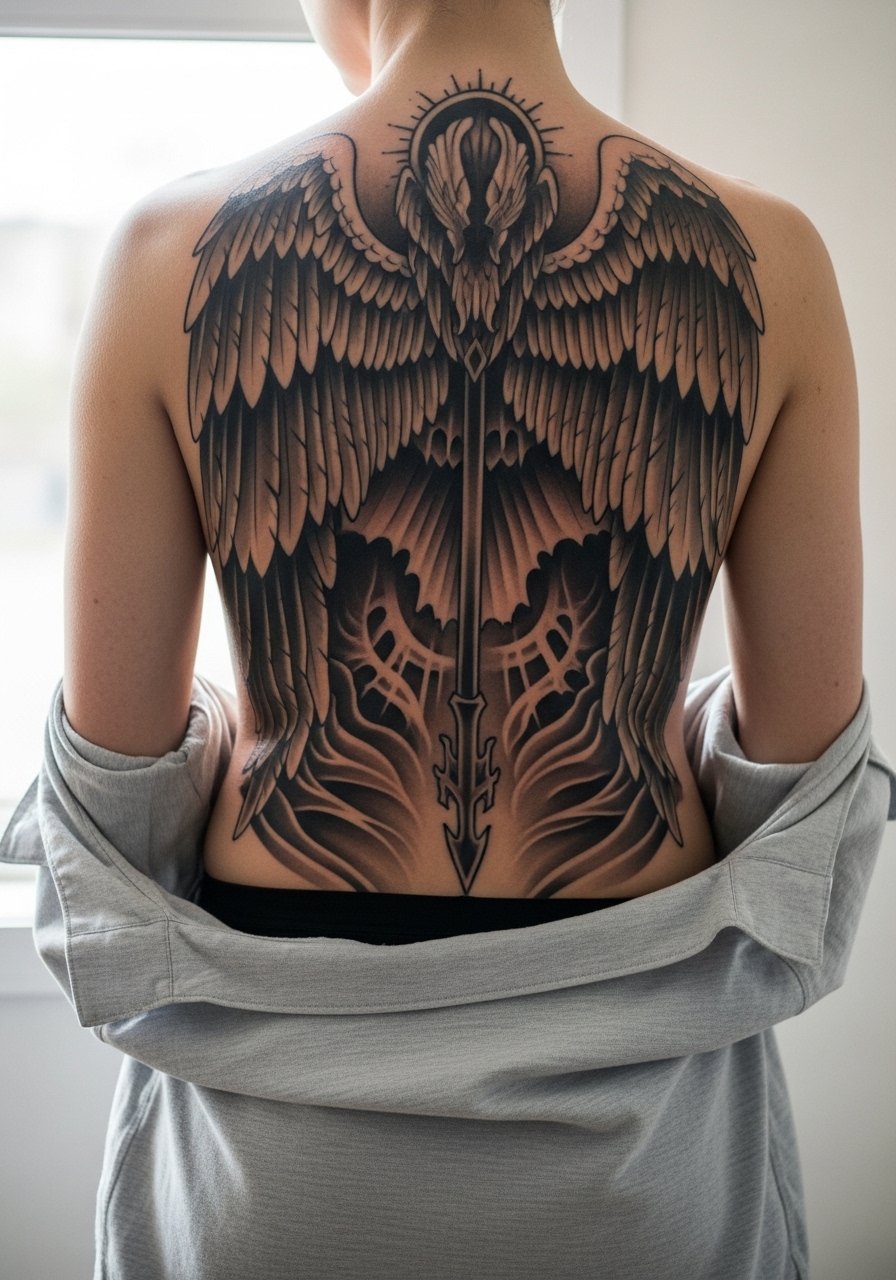
This is the most immersive option and it requires long-term planning. Full-back pieces are best approached in stages with a mapped timeline and reference panels. When you consult, ask for a plan that shows how each session will build the image in clear phases. Expect 4 to 8 sessions and a focused healing schedule. A common issue is rushing the color stages which can lead to inconsistent saturation and longer total healing. Wear a loose open-back shirt for sessions and block calendar days around appointments so you can rest and let the skin recover after each major sitting.
Frequently Asked Questions
Q: Will fine line fallen angel details blur faster on darker skin tones?
A: Fine line can lose clarity faster on darker skin because contrast behaves differently. That does not mean you cannot get delicate work. Ask your artist to show healed examples on similar skin and discuss slightly bolder line weight or blackwork anchors to keep definition. If you want delicate lines, plan for touch-ups at year two.
Q: How should I prepare for a ribcage or sternum fallen angel session?
A: Expect longer sessions and higher pain with ribcage and sternum work. Wear a cropped top or sports bra that exposes only the area and allows the artist to reposition easily. Hydrate and eat before the session and consider splitting large sessions into shorter sittings if you find breathing pain overwhelming. Ask your artist about their preferred aftercare method, whether film or dry healing.
Q: Are watercolor fallen angel portraits worth it if I want longevity?
A: Watercolor looks beautiful but fades faster than saturated black and gray. A hybrid approach that locks color into a light black outline tends to hold better. If longevity is important, ask your artist to plan a black structure beneath the wash or pick placement that receives less daily sun.
Q: Can I integrate a fallen angel sketch into an existing sleeve without starting over?
A: Yes, patchwork integration is common. Bring clear photos of the existing work and show the exact areas you want altered. An experienced artist will map how new elements can sit with current saturation and linework. Expect multiple sessions and a plan for touch-ups to harmonize tones.
Q: What should I wear to show a collarbone or shoulder fallen angel once healed?
A: For collarbone pieces a deep purple bandeau or strapless tube top frames the wash without competing. For shoulders, off-shoulder tops in charcoal or black highlight the silhouette while keeping the look cohesive.
Q: How long before a full-back fallen angel is considered finished?
A: Most full-back projects wrap in a few months to a year depending on session cadence and how the skin takes saturation. Plan for staged touch-ups and a clear session timeline with your artist so color sits evenly and you avoid rushed healing windows.
Q: Do hand or finger fallen angel sketches affect job prospects more than forearm ones?
A: Hand and finger tattoos are more visible and still carry bias in some industries. Forearm pieces can be covered more easily with shirts and sleeves, so consider placement in relation to career needs. If visibility is a concern, pick an area that can be concealed on demand.