
Fine line and bold blackwork are both trending for symbolic pieces, but what lasts and what falls apart is not obvious from saved boards. Some styles look brilliant fresh and fade into a blur within a few years, while others gain clarity as saturation settles. These 21 ideas map the options that balance visual intent, placement realities, and what to ask for in the consult so the piece still reads the way you meant when it heals.
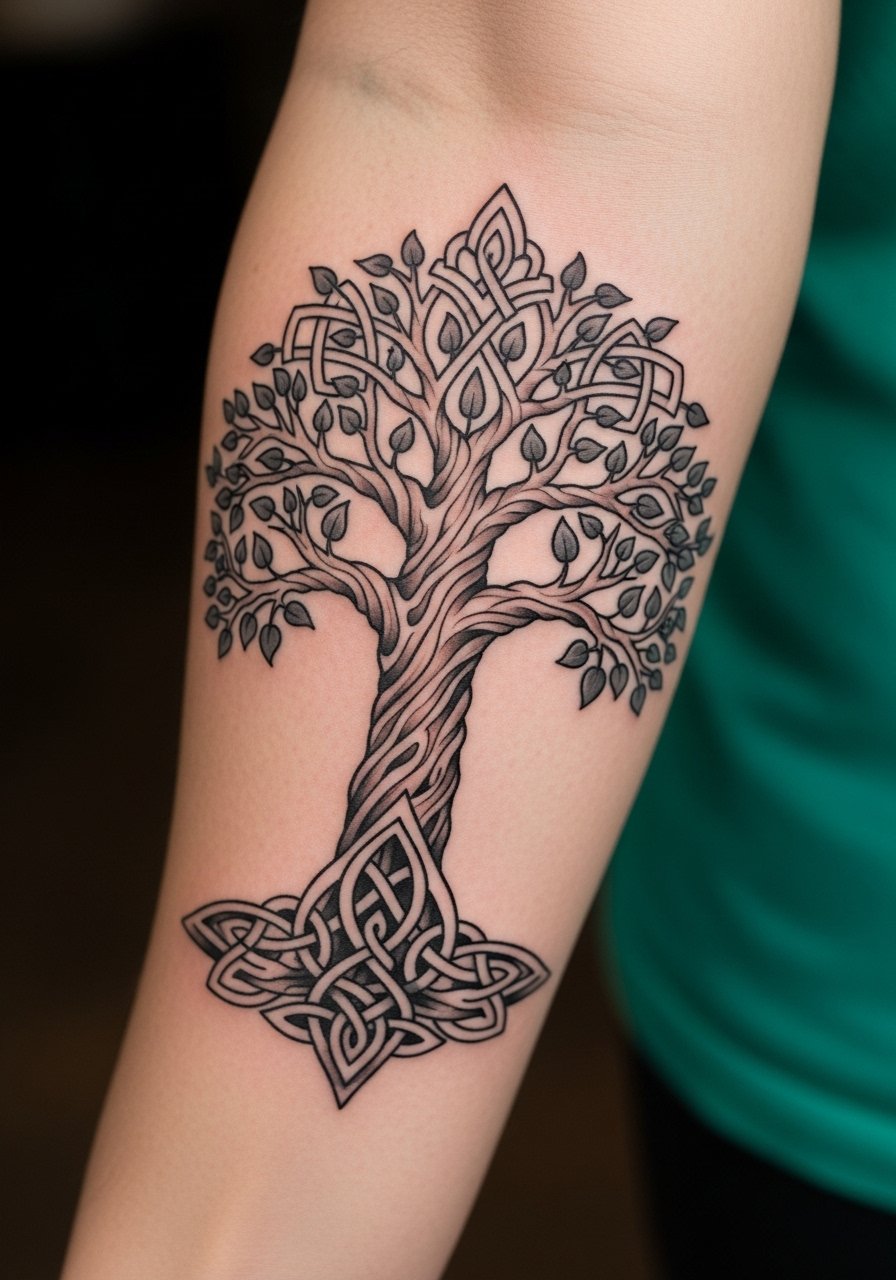
1. Celtic Knot Tree on Outer Forearm
I've seen Celtic knot trees hold up remarkably on outer forearms when artists use slightly bolder linework and clear negative space between knots. Ask your artist for simplified knot intersections and a medium line weight so the knots do not close up after a few years. Fair warning, the biggest mistake is requesting ultra-fine knotwork at a small scale; that looks intricate on a phone but the knots merge when healed. Expect one session for a medium piece and a touch-up around year two if you want crisp knot edges. For showing it off, pair the piece with a fitted short-sleeve henley in earth tones that frames the forearm without competing with the knots.
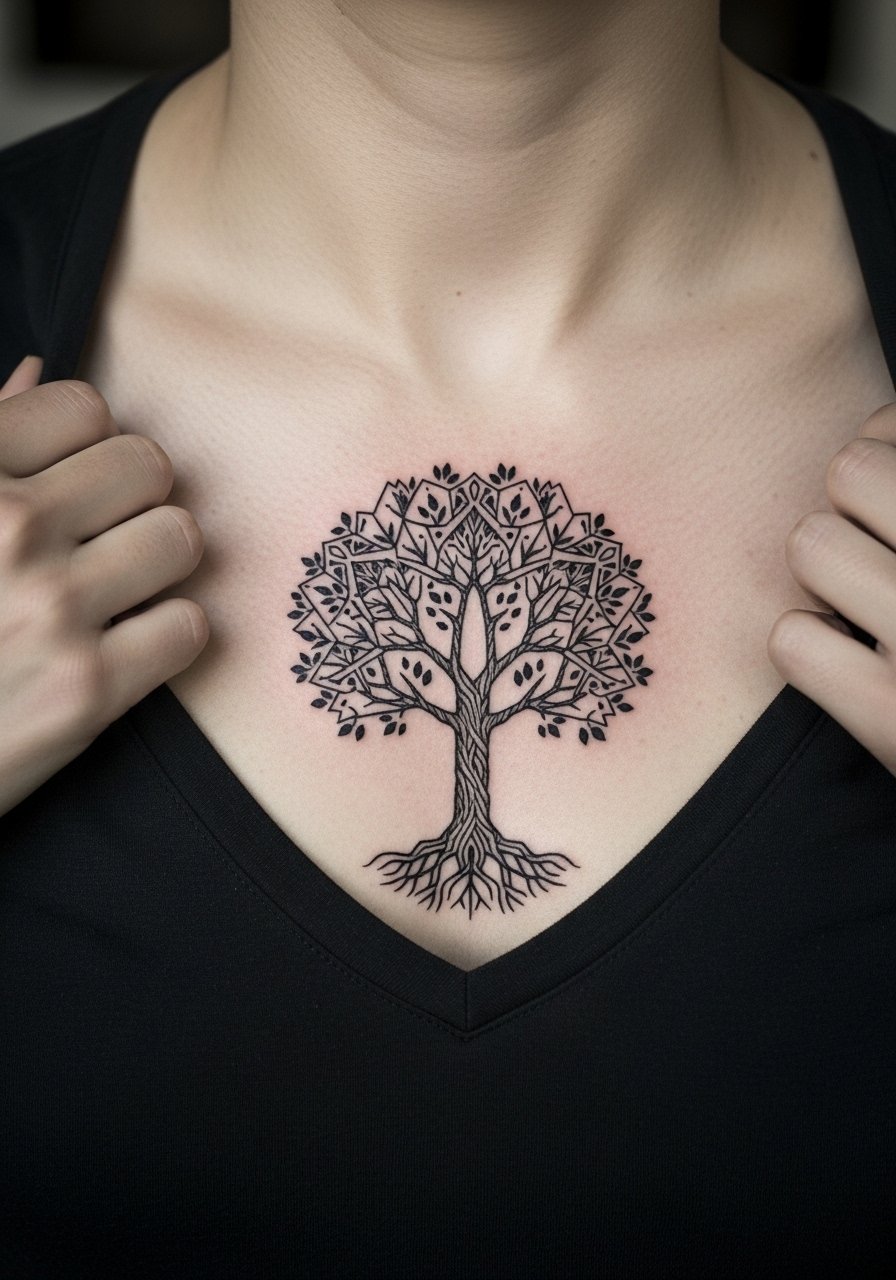
2. Geometric Mandala Tree Centered on the Chest
Most geometric mandalas demand scale to keep their symmetry readable, so a chest placement works well if you want the pattern to breathe. In consultation, specify where the central axis should sit relative to the sternum so the mandala does not ride off-center as your body moves. Artists sometimes go too tight with radial lines, and those dense zones tend to merge by year three. Expect two to three sessions for a larger blackwork mandala and touch-ups on dense segments at year three. For reveal outfits, the design plays nicely with a deep V-neck tee or an unbuttoned linen shirt that hints at the geometry without exposing the whole chest.
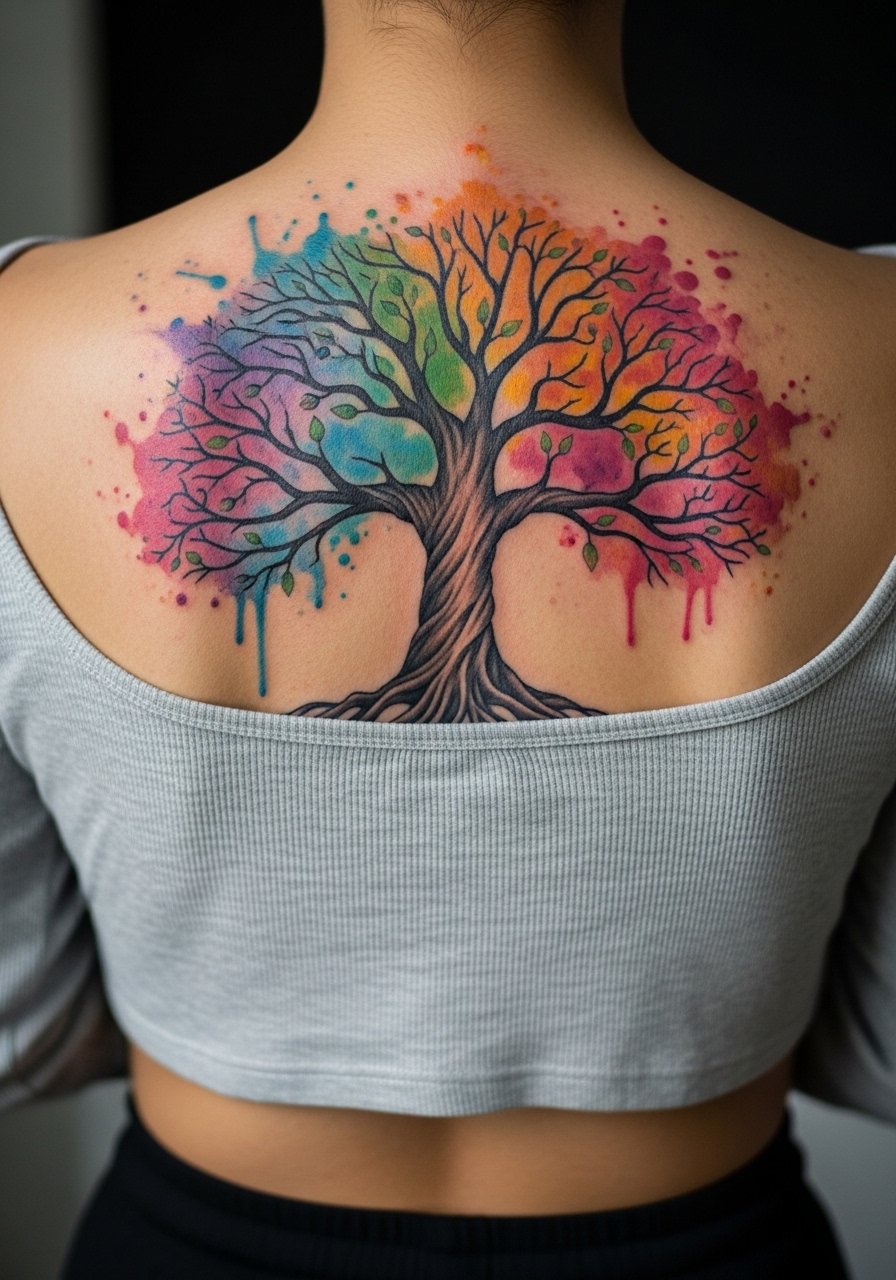
3. Watercolor Canopy Across the Upper Back
Most watercolor approaches on the back should be treated like paintings, not stencils. Tell the artist you want painterly washes that follow muscle planes, and ask for stronger anchor lines in the trunk so the piece keeps structure as colors fade. The common error is tiny blotches of color with no anchor, which bleed into each other after sun exposure. Large upper-back placements age better because there is more canvas; expect three to five sessions for a saturated watercolor piece and occasional touch-ups to revive color after heavy sun years. For summer show-off looks, layer a backless crop top that keeps focus on the color field.
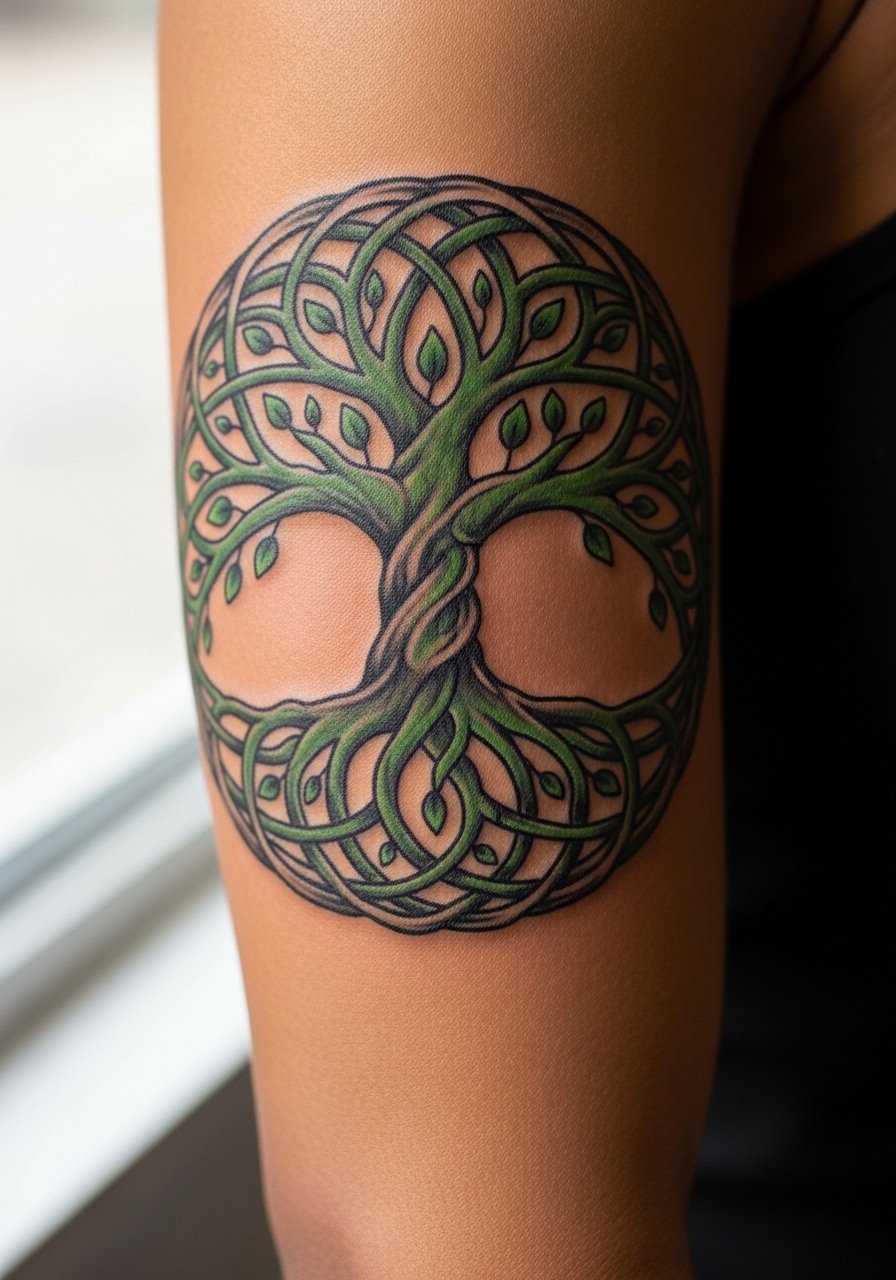
4. Circular Traditional Tree with Roots, Full Sleeve
There is a timeless clarity to bold outlines and saturated fills on a sleeve that tends to age predictably well across seasons. If you want a sleeve, ask for bold trunk outlines and solid green shading for canopy areas rather than broken stipple fills that soften early. A mistake is packing too many tiny details into a sleeve's lower half; sleeves sit close to areas that rub, and small elements fade first. Plan for multiple sessions across months and expect touch-ups on high-wear zones like the inner elbow in two to three years. Sleeve work pairs with rolled sleeves for photos, so bring a short-sleeve henley or fitted tee to your session for access and later show-off shots.
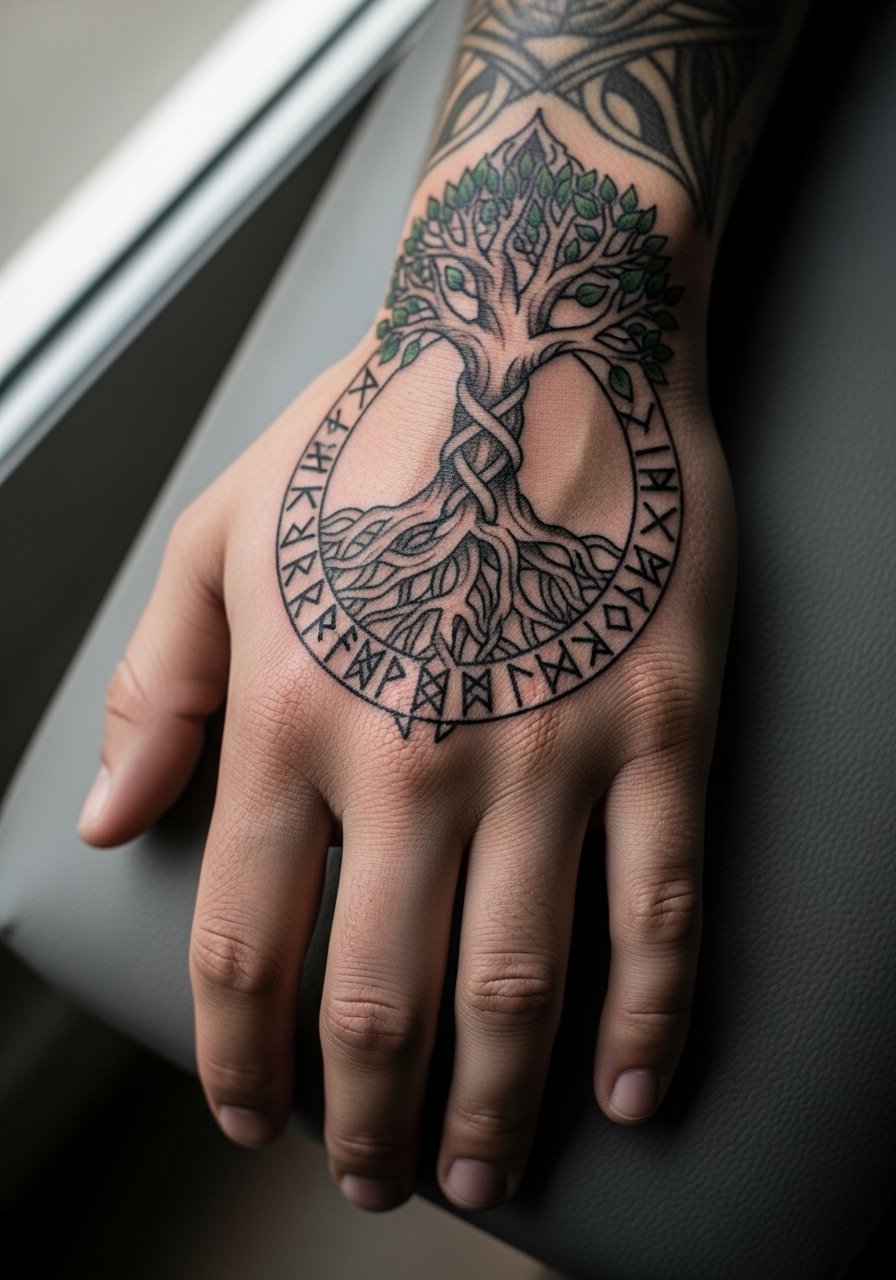
5. Norse Rune-Infused Tree on the Top of the Hand
Hand placements read immediately but they also demand honesty about longevity. Hands face constant washing and friction, so expect faster fading and more frequent touch-ups. When booking, tell the artist you want simplified rune motifs integrated into trunk lines rather than tiny separate runes that disappear. Artists are split on how long hand ink holds exactly. One camp says hand pieces need frequent maintenance and accept the trade-off. The other camp treats hand work like a living canvas and plans for annual touch-ups. If your work requires less upkeep, scale back the rune detail and keep bold contours.
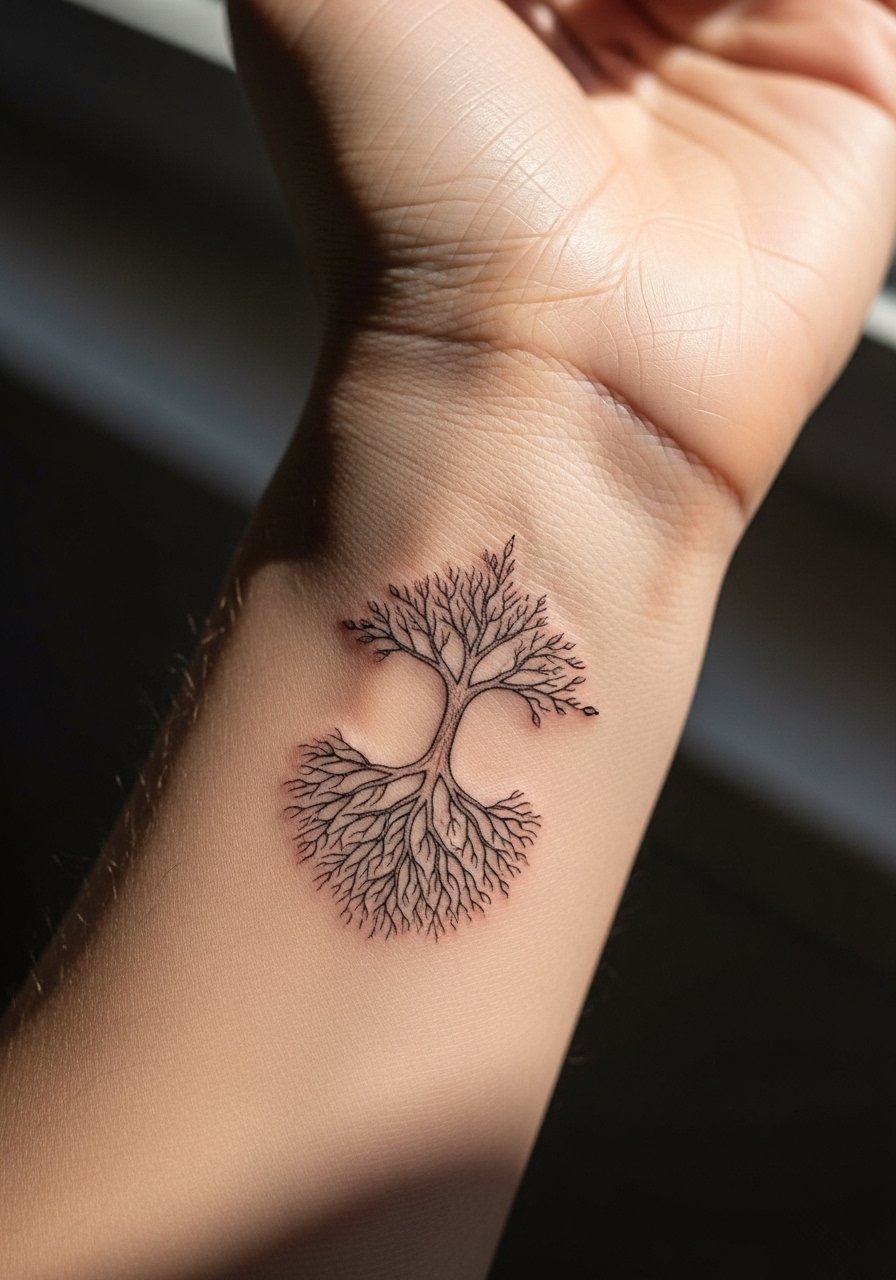
6. Inverted Fine-Line Wrist Tree Mimicking Nerve Roots
Most clients want this inverted wrist version for its visual echo of the nervous system, but fine line on the inner wrist can blur without spacing. Specify slightly wider spacing between main root lines and ask for controlled depth so the needles do not sit too shallow. The common mistake is requesting ultra-fine hairlines that look delicate fresh and then merge into shaded smudges by year two. Healing is quick on wrists but sun exposure and wrist motion accelerate fading, so expect a touch-up if you want crispness long term. For session comfort and later styling, wear a thin cuff bracelet on the opposite wrist and come in sleeveless or with short sleeves you can roll up.
Studio Day Picks
The forearm, chest, hand, and wrist pieces above each have different prep needs, so pack a few things that make the session smoother and the first week easier.
- Stencil transfer paper kit. Lets you preview placement on skin, which is especially useful for precise forearm and collarbone alignments from ideas above.
- Topical numbing cream. Applied before hand or wrist sessions can reduce sensitivity in those brisk spots without changing linework if used correctly.
- Thin protective film roll. Keeps small hand and finger pieces protected from daily friction while you sleep or type.
- Fragrance-free gentle body wash. Mild cleansers help the delicate fine-line wrist work stay calm during showers in the first week.
- Aquaphor healing ointment. A thin layer for initial days can lock in moisture for fine-line and blackwork spots without clogging.
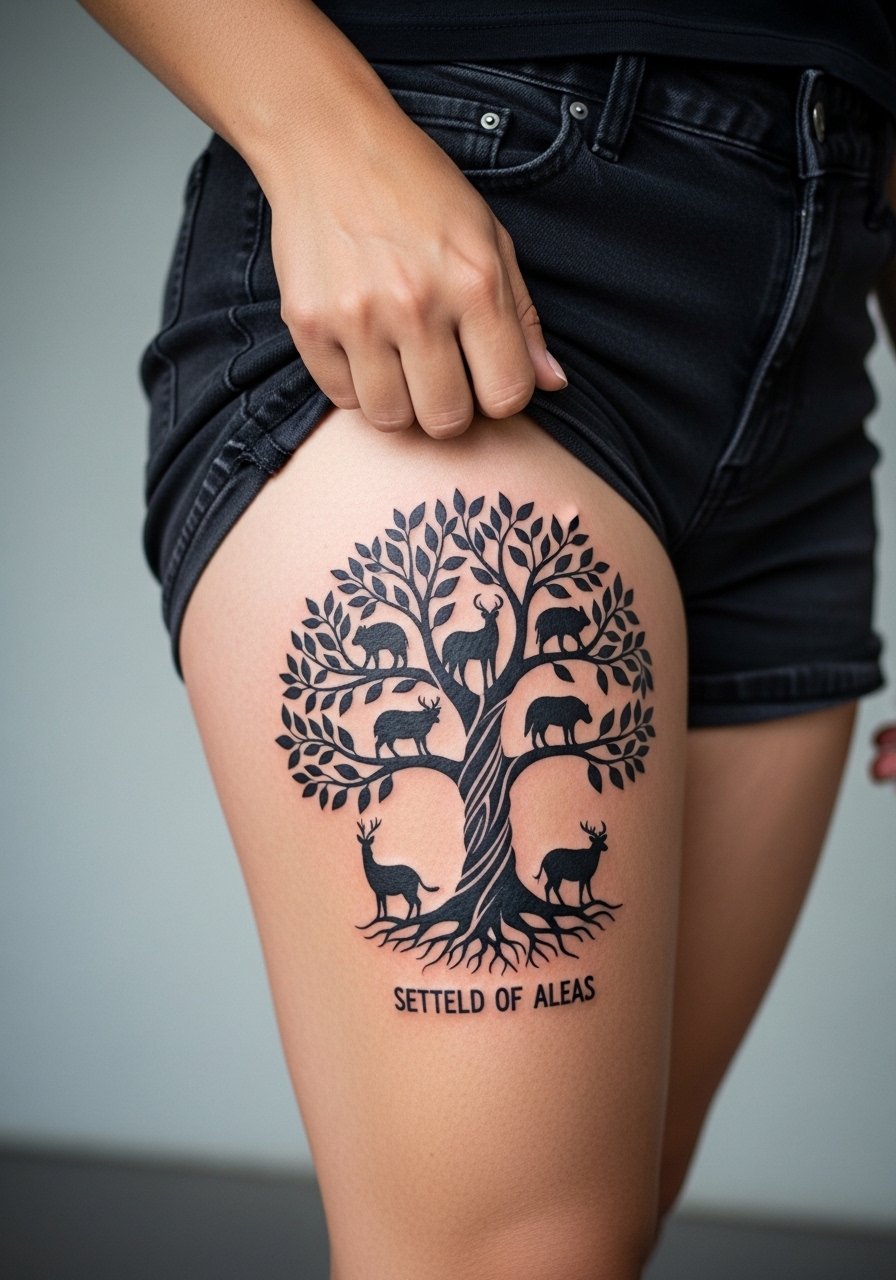
7. Blackwork Thigh Piece with Wildlife
There is a strong narrative pull when you combine a blackwork tree with local wildlife weaving through the roots. I recommend sizing this medium-large so the animal silhouettes retain clarity and do not compress into the rootwork. A frequent error is cramming several small animals into a tight space, which loses detail as the skin moves. Thigh pieces are forgiving for saturation and typically need two sessions. For summer reveals, pair it with high-waisted shorts or a slit skirt in a solid color so the tattoo reads against fabric without pattern clash.
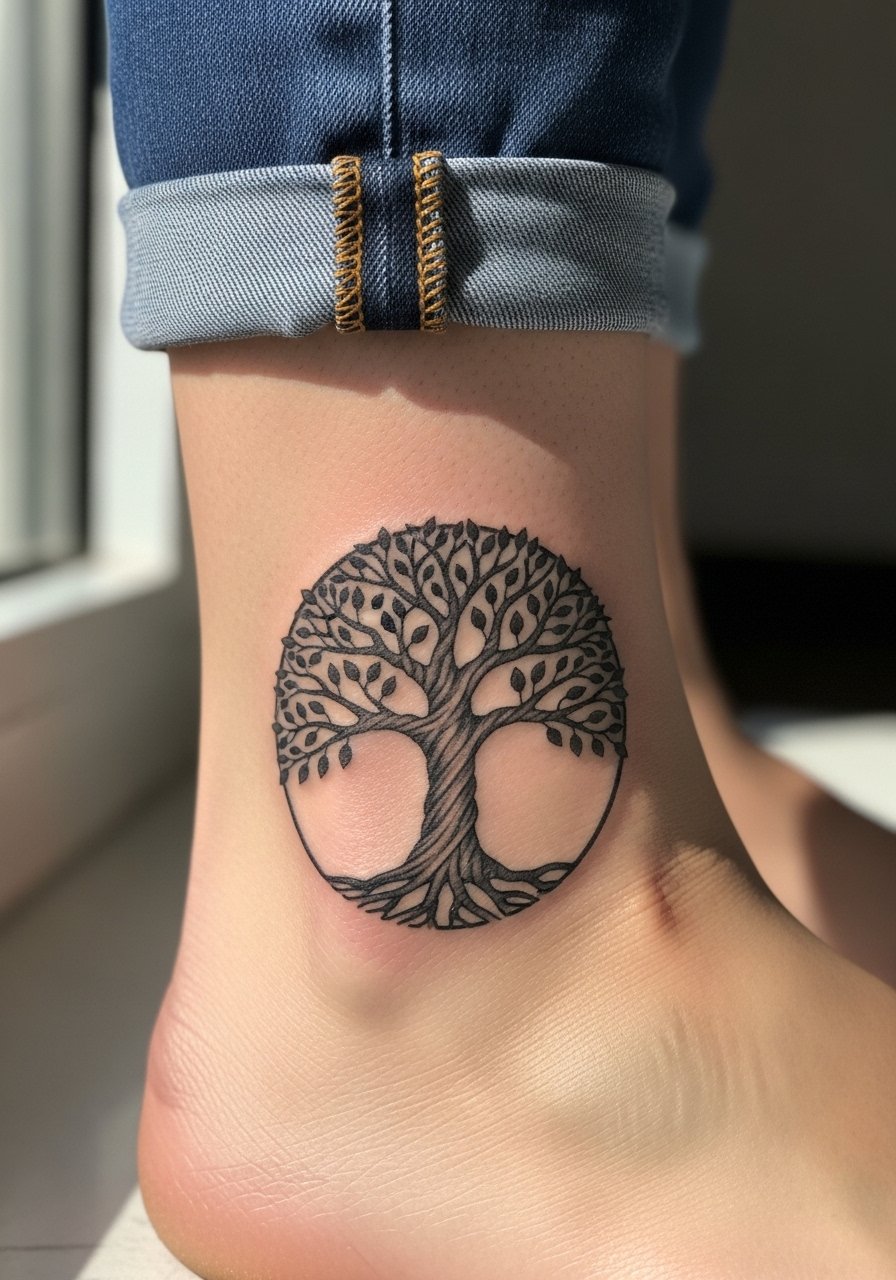
8. Micro-Realism Ankle Tree with Intricate Roots
Micro-realism on the ankle can look unexpectedly detailed because the skin there holds small contrast fairly well, but the area is prone to rubbing from shoes. Ask for slightly heavier contrast in root shadows so the small details do not flatten with everyday wear. A common mistake is over-detailing at a tiny scale; that detail disappears in two to three years. Session time is short, one to two sessions, but expect touch-ups sooner than larger pieces. Show it off with ankle strap sandals or cropped pants that reveal the work during warmer months.
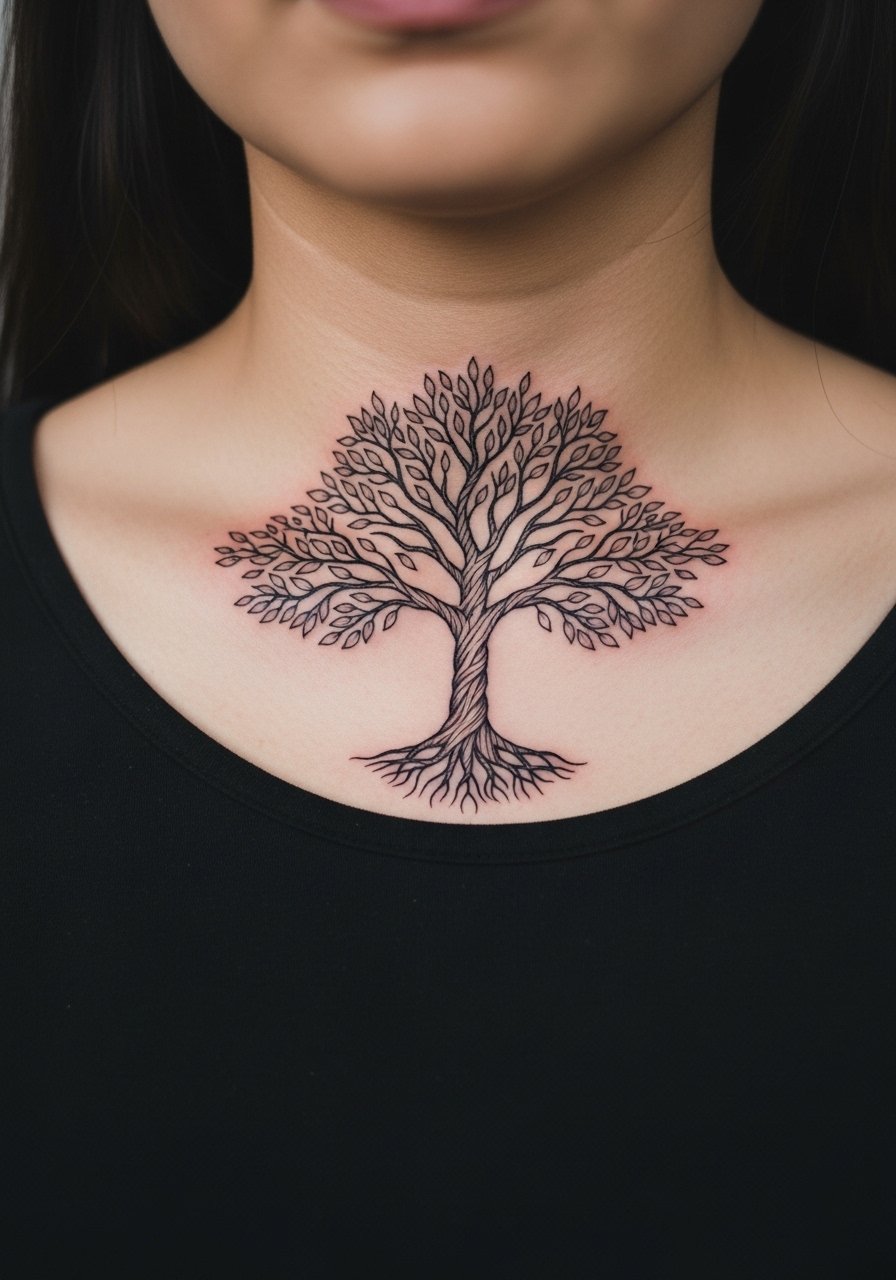
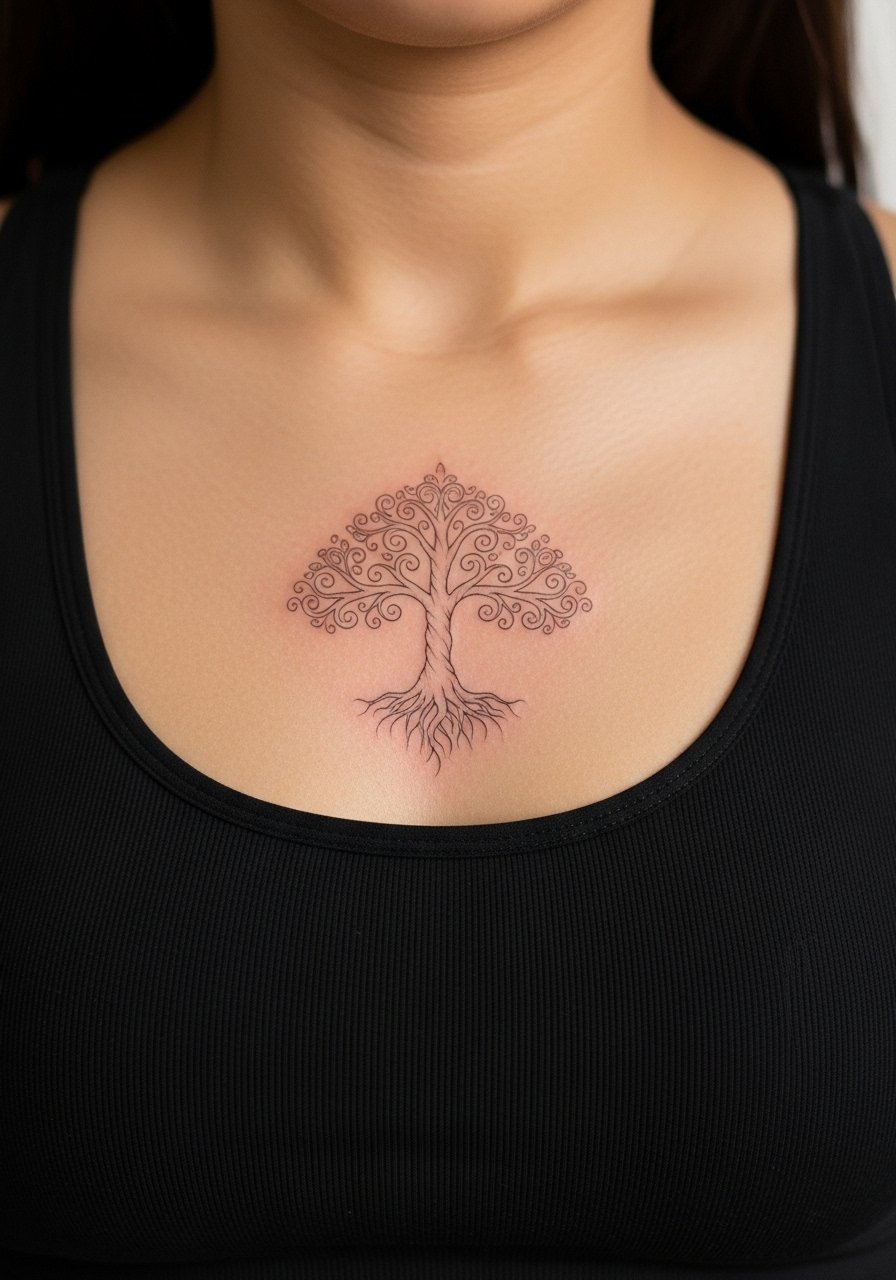
9. Ornamental Collarbone Tree That Frames the Neckline
There is a quiet elegance when linework follows the collarbone arc and adds ornamental filigree to the branches. Tell your artist where you want the highest branch apex relative to the clavicle so the pattern does not climb too high or sit too low. The mistake is tiny ornamental loops that look busy on the collarbone and blur with regular clothing friction. Expect two sessions and a light touch-up at year two for thin filigree. Pair the piece with a thin chain pendant necklace that sits just above the design and does not clash with the linework.
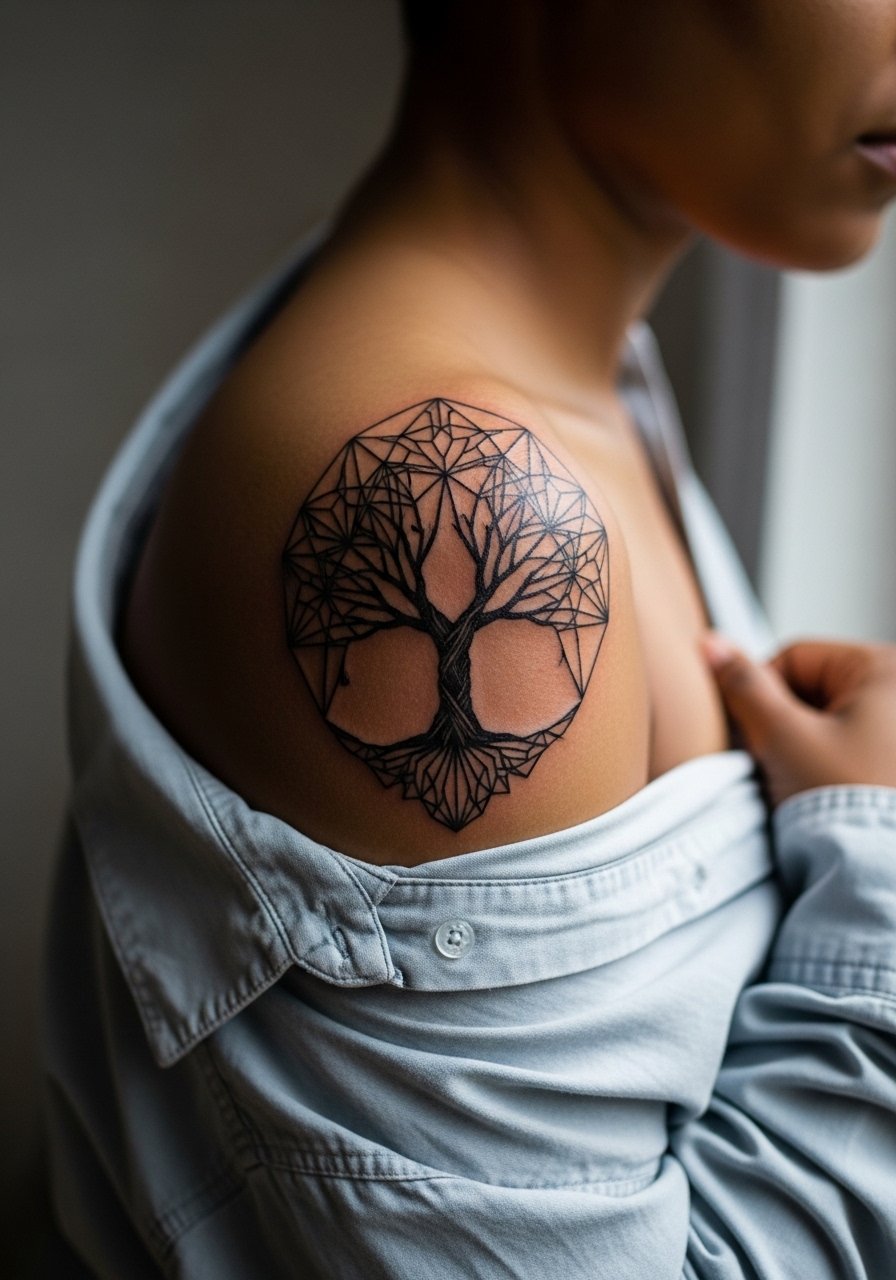
10. Abstract Geometric Shoulder Cap Tree
The shoulder cap is forgiving for geometric abstraction because the rounded plane allows the pattern to curve with muscle. When consulting, bring examples of how geometry follows shoulder contours rather than stopping at the edge. A mistake is insisting on perfect radial symmetry that cannot sit naturally on the curved deltoid. One to three sessions depending on scale, with minimal touch-up needs if spacing is generous. For both comfort and later photos, show up in a loose button-down shirt you can pull aside so the artist has clear access and you can frame shots afterward.
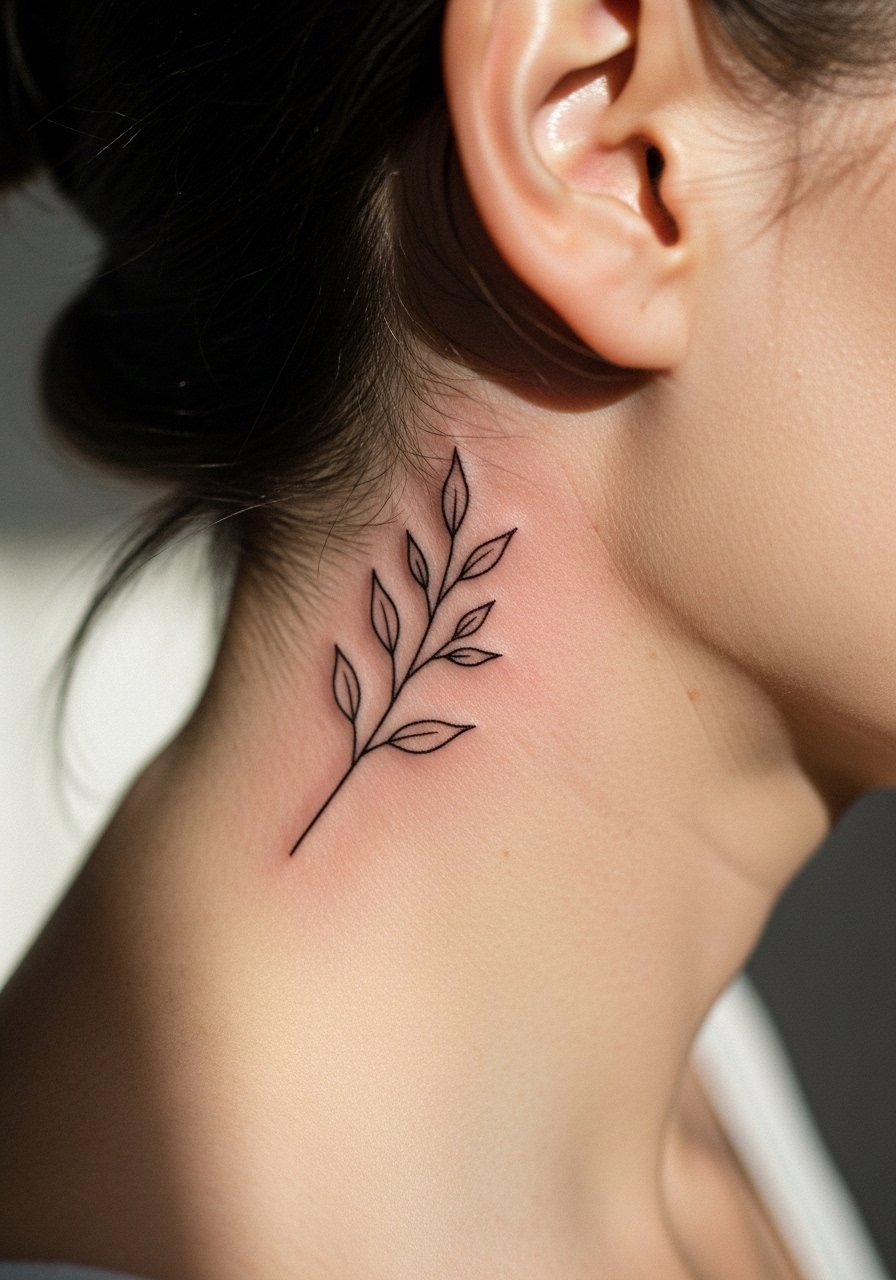
11. Behind-the-Ear Sapling for a Subtle Accent
Subtle placement behind the ear reads intimate and requires careful scaling. When you ask for this, specify that the sapling sits on the skin below the hairline on the neck so the artist frames the piece correctly. The common mistake is asking for too much detail in a very tiny spot, which looks fine for a few months and then softens. Healing is quick because of the thin skin, but the area can blur so expect occasional touch-ups. For this sensitive zone, make sure the hairline can cover or reveal the piece depending on your comfort.
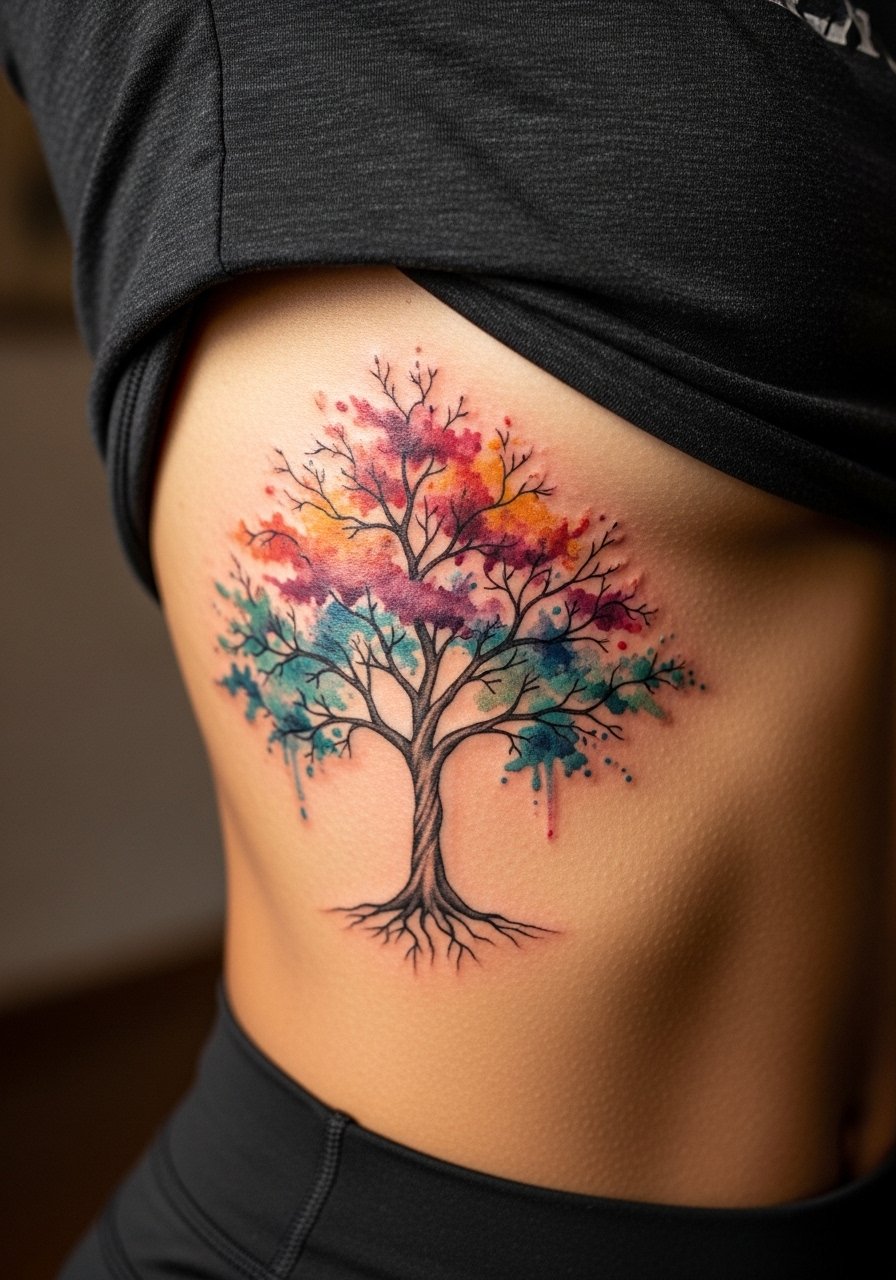
12. Painterly Ribcage Tree with Colorful Roots
Fair warning, the ribcage is a higher-pain area but it gives one of the most dramatic canvases for rootwork that flows with the torso. Tell your artist to use longer sweeping strokes and to avoid tight micro-detail against the ribs. Artists split on fine line there. One group says ribs stretch and blur lines within a couple of years. The other group says precise depth and spacing keep lines readable. Ask your artist where they stand and how they plan to space the roots. For the session, wear a halter tank top women you can lift slightly so they can work without excess fabric rubbing the area.
13. Sternum Tree with Delicate Symmetry
Sternum placements can read like jewelry when the piece is centered and mirrored across the chest. When you sit in consult, clarify how far the lowest root should reach relative to the fabric line of your usual clothing. A mistake is pushing too much dense detail into the sternum pocket; that area moves with breathing and small lines can blur. Expect a single session for a small symmetric sternum piece and touch-ups on the center line at year two. This placement benefits from artists who have experience with torso symmetry and consistent needle depth.
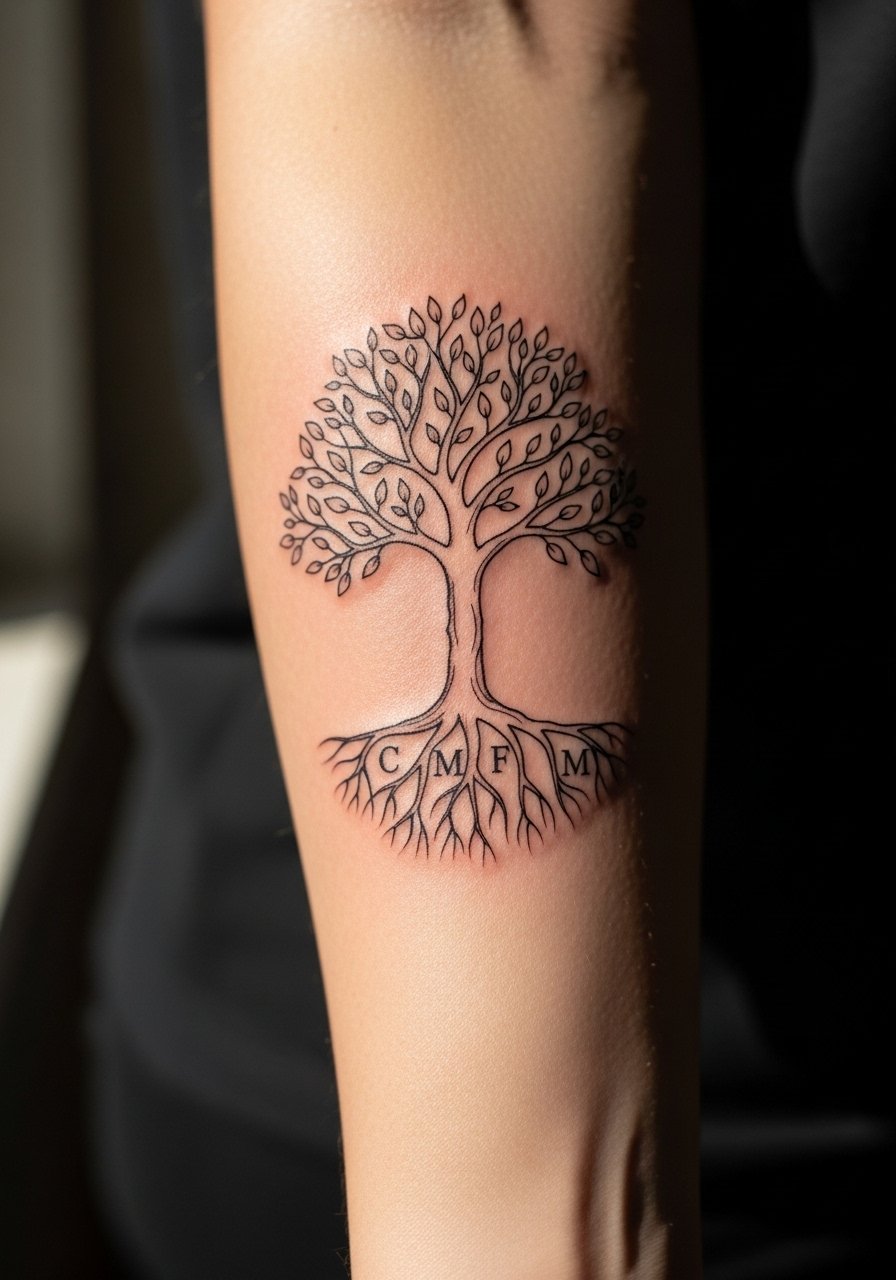
14. Family-Branch Tree on the Inner Forearm with Initials
When people want a family-branch concept, embedding initials into the root structure feels tidy if the letters are spaced and sized intentionally. During consultation, show examples of lettering styles at actual scale so the artist can proportion initials to the branches. A common error is forcing cursive initials so small they lose legibility as the branches settle. Inner forearm heals well and tolerates finer detail, but expect touch-ups on tiny letters at year three. For session comfort and later photos, bring a loose button up shirt you can roll to expose the inner forearm.
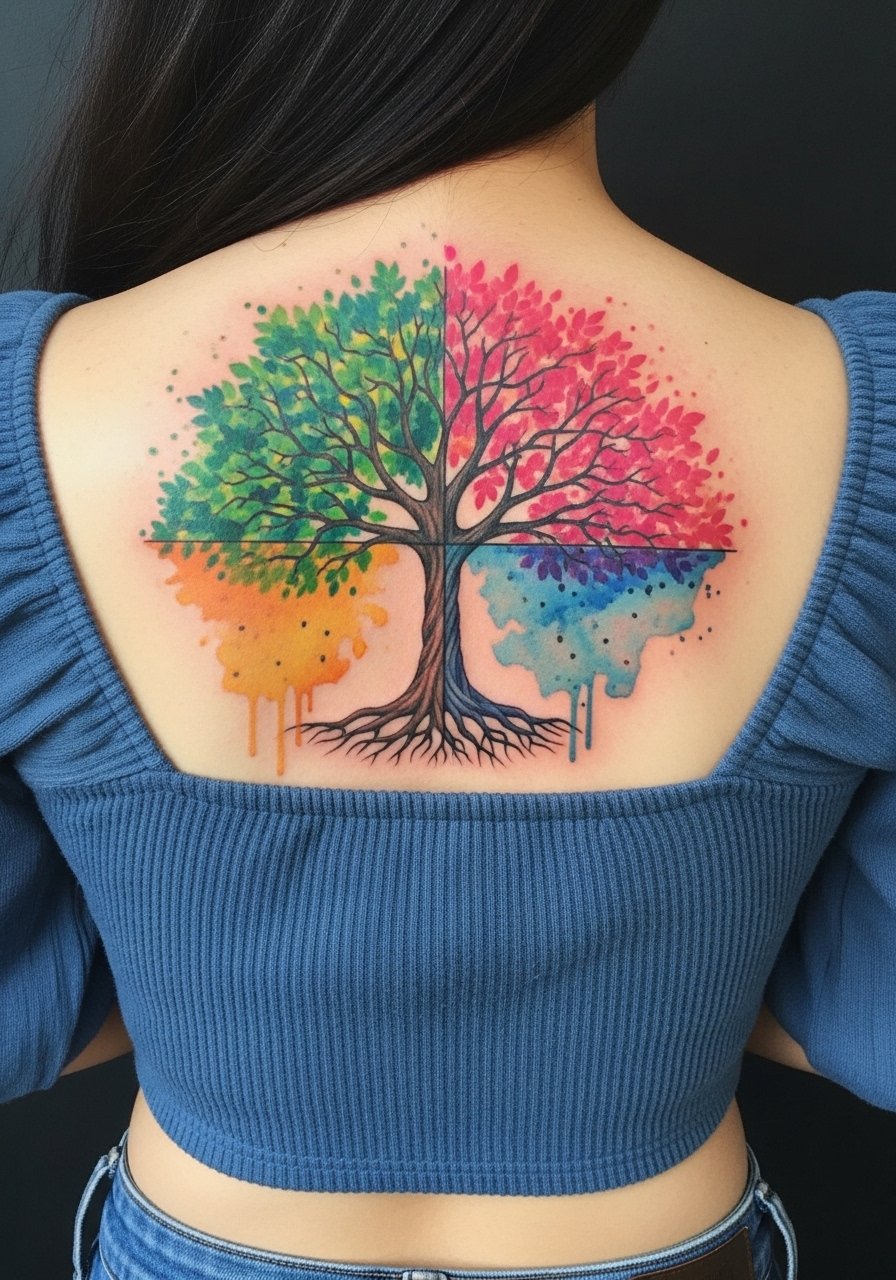
15. Four-Season Tree Across Upper Back Panels
Designing a four-season tree that spans upper back panels lets each quadrant breathe with a distinct palette, and the scale reduces the risk of color muddle. Tell the artist how defined you want each season to be so they balance saturated color with structural black anchors. The mistake is compressing all four palettes into too small an area, which creates muddy healing as pigments bleed into each other. Expect multi-session work and plan for periodic color refreshes after heavy sun exposure. For show-off looks, a backless crop top keeps the panels visible and lets the colors read.
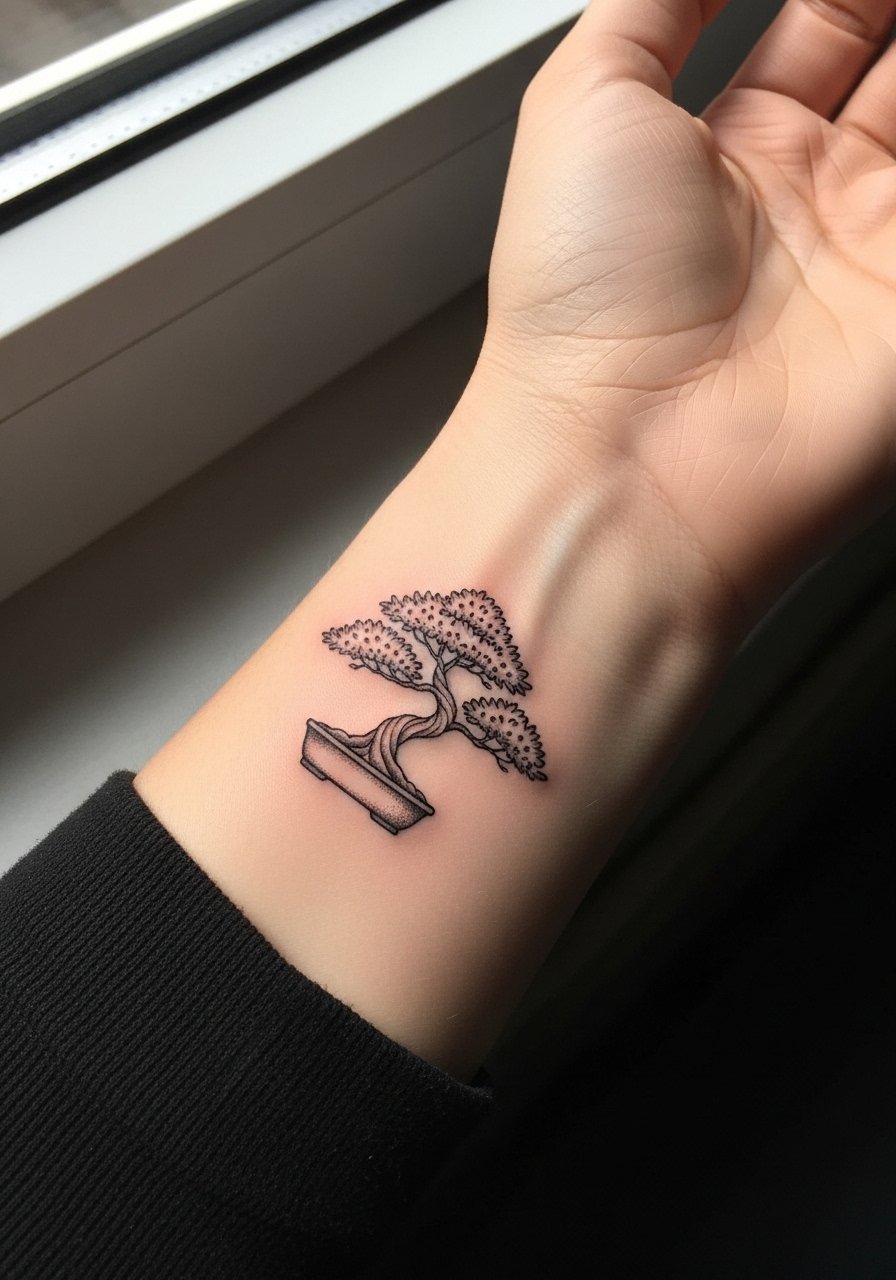
16. Petite Bonsai on the Wrist for Minimalists
A wrist bonsai can feel intentional without shouting. The key is to ask for confident trunk shadowing rather than intricate leaf stipples at a tiny scale. The most common mistake is overcomplicating the canopy, which becomes a gray smudge. Healing is straightforward but the wrist is a high-motion area so expect a touch-up in two to three years. Pair this petite work with a thin cuff bracelet on the opposite wrist for balance in photos and daily wear.
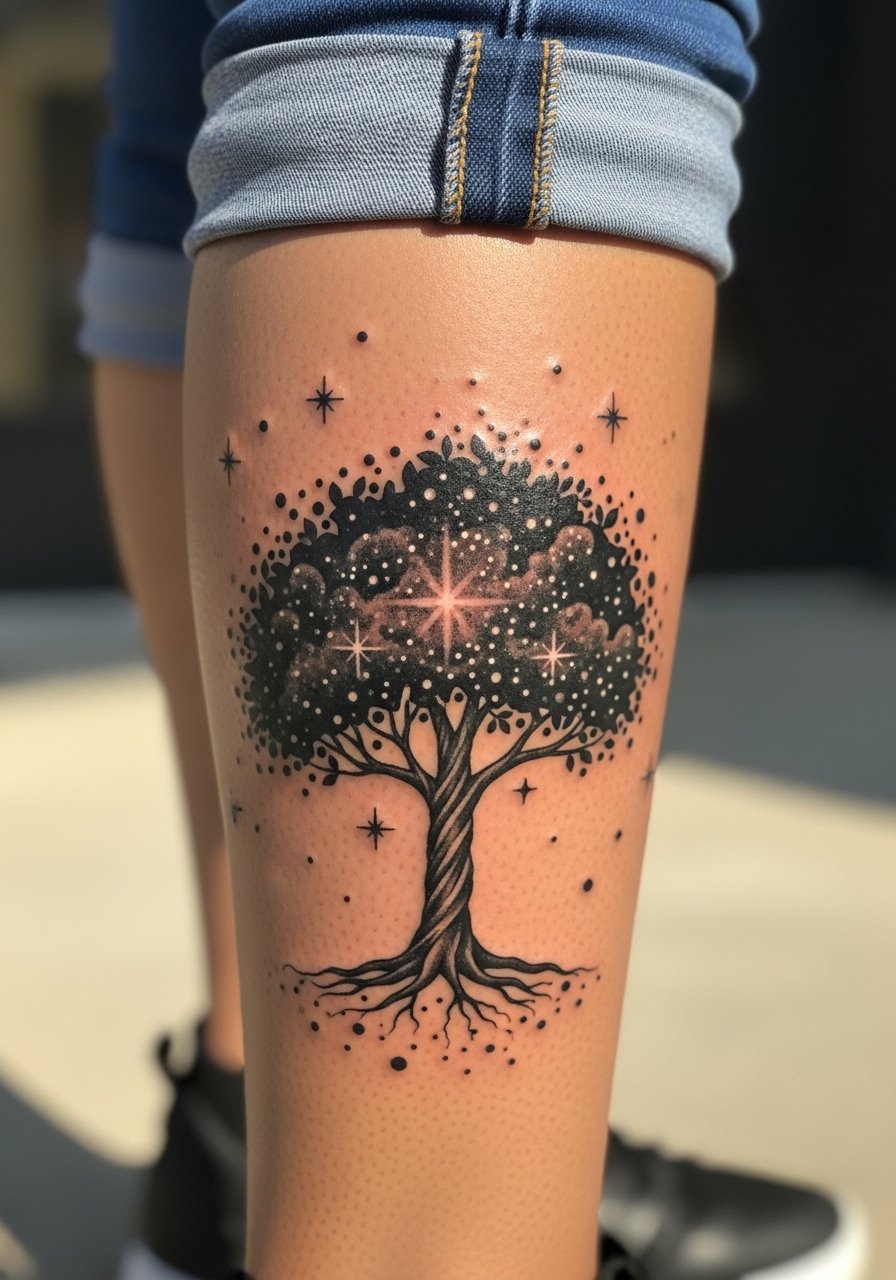
17. Cosmic Tree with Starfield on the Calf
Calf placements give vertical pieces room to breathe and they tolerate both blackwork and micro-detail. When you discuss this look, decide if the starfield should be negative space or white-ink highlights so the artist can plan contrast. A mistake is packing too many tiny white highlights that fade quickly or look patchy on darker skin. Expect two sessions if you combine fine dot-work stars with denser trunk shading. For casual reveal outfits, choose cropped pants or rolled cuff jeans that show the calf cleanly without distracting patterns.
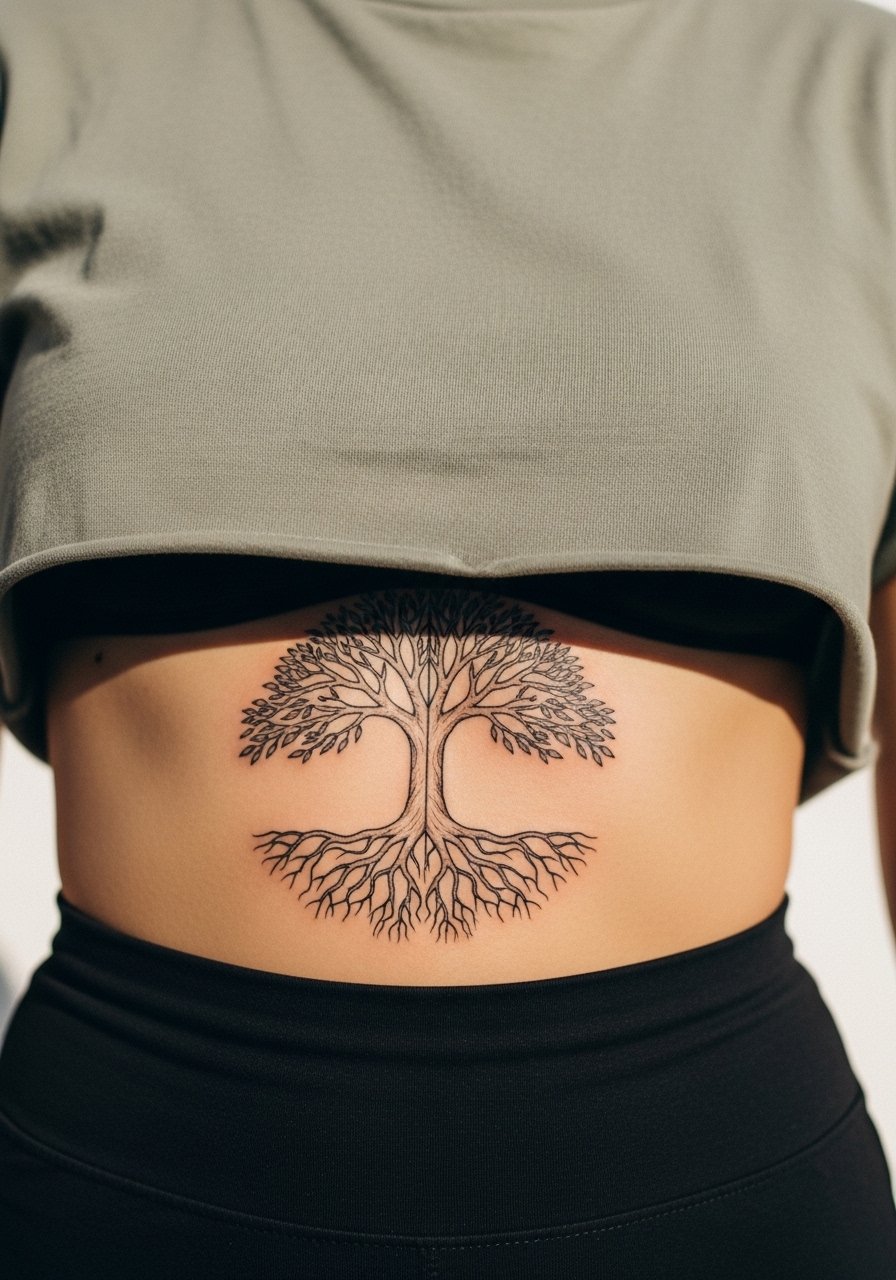
18. Split-Composition Tree Across Sternum and Upper Stomach
Split compositions play with negative space, placing trunk elements over the sternum and roots spilling onto the upper stomach. This placement needs a coordinated plan so the two halves read as one image when you are standing. A common error is mismatched scale between the halves so the trunk looks disproportionate. Healing differences between sternum and abdomen mean artists may prefer doing the halves in separate sessions. For professional considerations, note that some shops require experienced artists for torso continuity work.
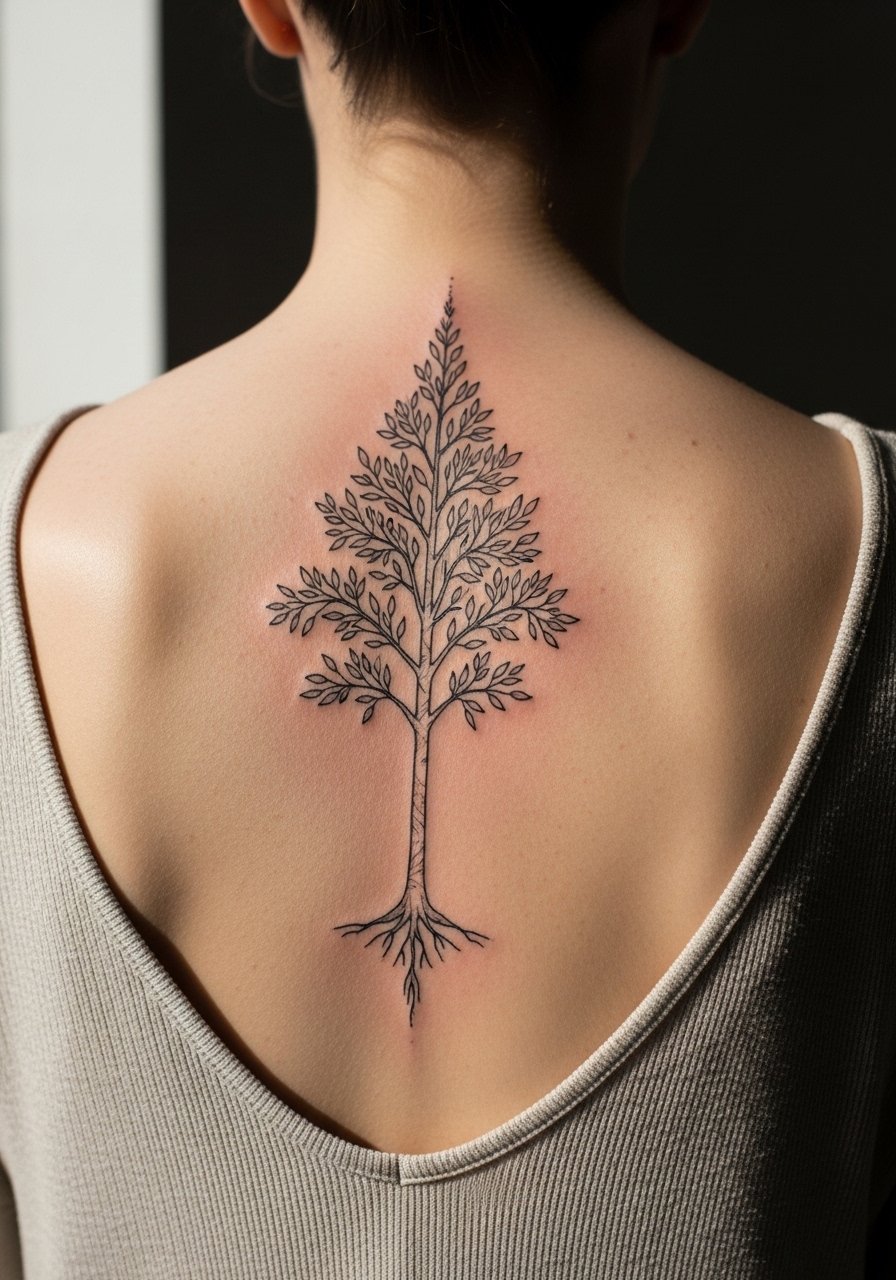
19. Nervous System Spine Tree Running Up the Back
Vertical spine work reads dramatically when branches mirror the spinal column, but precision is essential so the piece reads centered. In consult, ask your artist how they will compensate for skin movement and curvature along the spine. The typical mistake is not accounting for spinal flexion, which distorts the trunk when you bend. Sessions are usually multiple and touch-ups depend on how much sun exposure the area gets. For evening shows, the design pairs with open-back dresses or a backless crop top to let the spine line read.
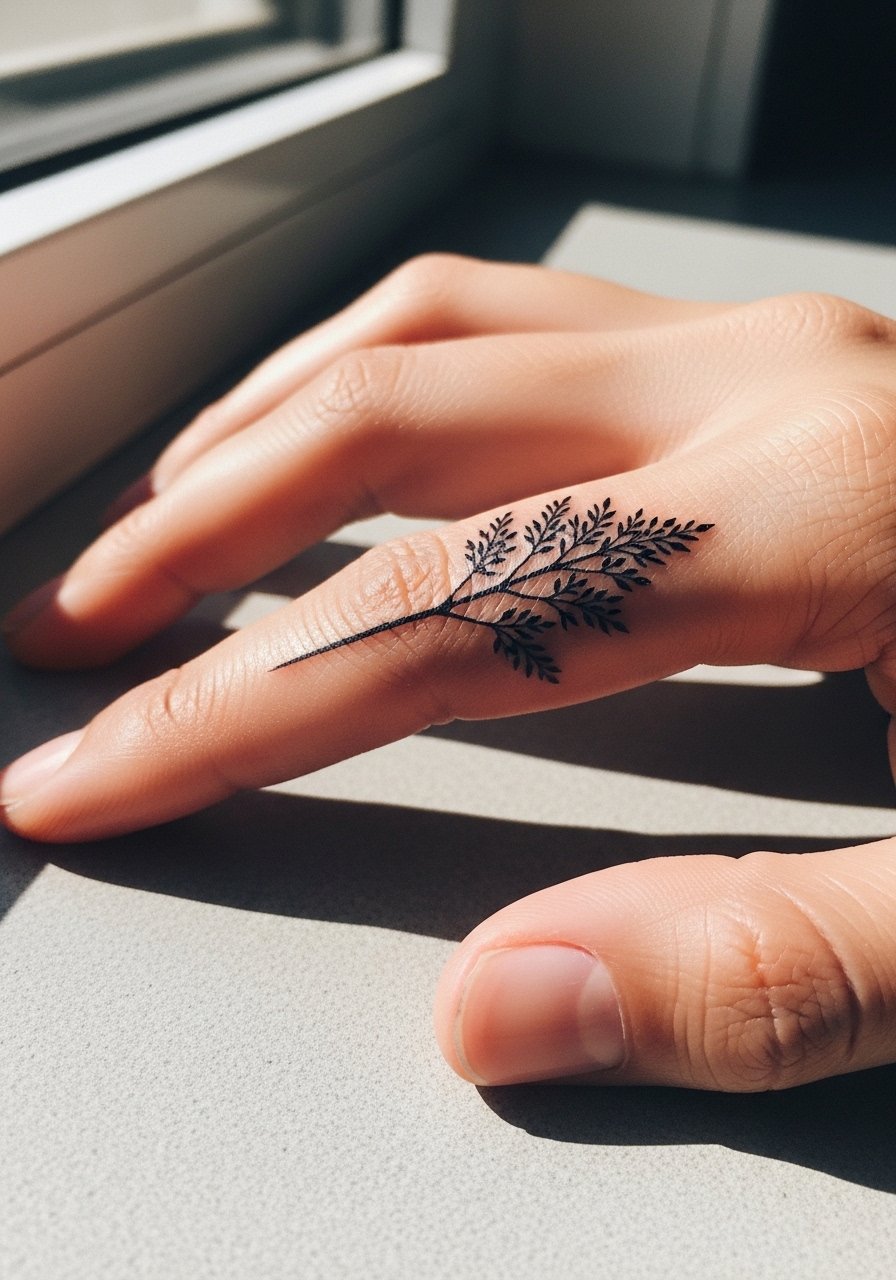
20. Tiny Silhouette Finger Tree for a Quiet Mark
Finger placements are honesty checks. The skin there is thin and in near-constant use, so ask for simplified silhouettes rather than branchy scenes. The mistake is requesting too many tiny branches and then being surprised when they blur in months. Expect the shortest sessions but the highest chance of early fading; annual touch-ups are common. Rings can complement the piece but think about metal contact when healing. If you want the tattoo to peek with jewelry, choose simple bands that do not rub the ink.
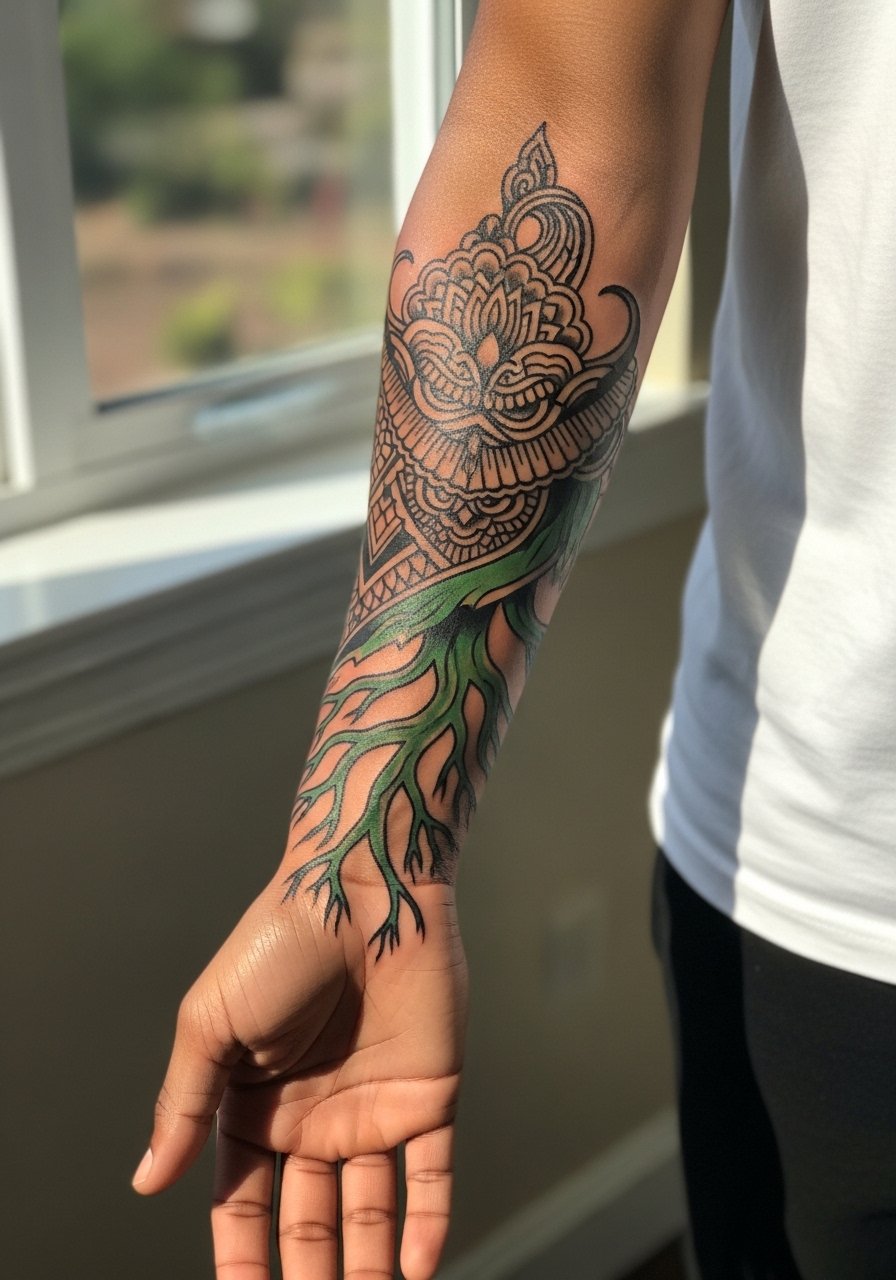
21. Full Wrap Roots Sleeve That Tapers into Hand Lines
A wrap-around sleeve that lets roots taper into hand lines creates a narrative from arm to hand, but it demands coordinated planning so root thickness reduces as it approaches the fingers. In consultation, request a taper plan with the artist that maps where thick roots become hairline branches. The usual mistake is not accounting for hand wear; the hand portions will need maintenance. Expect this to be multi-session and accept that the hand end will require yearly touch-ups if you want it to stay readable. For session wear and later framing photos, a fitted short-sleeve top works best to show the cascade from sleeve to hand.
Frequently Asked Questions
Q: Will a geometric mandala on the chest need touch-ups more often than a traditional blackwork tree?
A: It depends on density. Dense geometric mandalas have more close parallel lines, which can merge over time and need touch-ups on dense nodes around year three. Traditional blackwork with larger saturated planes tends to age into readable forms for longer, though both styles benefit from UV protection.
Q: How does fine-line work on the ribs compare to fine-line on the wrist for longevity?
A: Ribs and wrists behave differently. Ribs can stretch and shift with breathing and weight changes, so thin lines there risk early softness unless spaced properly. Wrists move a lot and face friction, which also accelerates fading. Both placements require careful spacing and an artist who understands needle depth.
Q: For a watercolor back piece, how often should I plan color refreshes?
A: Plan on checking color at two to five years depending on sun exposure and your skin. Patches that get direct sunlight will fade faster. Regular sunscreen on exposed tattoos and occasional color touch-ups keep a large watercolor piece vibrant.
Q: Are hand and finger tree tattoos wise for people who work in client-facing jobs?
A: Hand and finger tattoos still carry varied workplace consequences depending on industry and region. If your job has strict visible-tattoo policies, consider placements that are easier to cover or smaller, highly simplified marks that are less likely to draw attention.
Q: How should I dress on session day for an upper-thigh blackwork piece?
A: Wear loose shorts or a skirt so the artist can access the outer thigh without fabric tugging. A loose drawstring linen pant works well for travel to and from the studio and lets you roll the leg up comfortably.
Q: What should I ask my artist about combining cultural knotwork with modern geometry?
A: Ask how they will simplify cultural knots so they sit comfortably with geometric elements and whether they have experience balancing cultural motifs with abstraction. Mention that you want respectful adaptations rather than literal copies of sacred symbols so the design sits well visually and culturally.