
Fine line roses are all over saved boards right now, but the pieces that age best usually start with room to breathe and strong linework from the stencil stage. Pick a placement that suits how often you want it visible, tell the artist the future you have in mind, and plan for a touch-up window instead of assuming forever. The first idea below shows a forearm approach that keeps thin lines readable long term.
1. Fine Line Rose on Inner Forearm
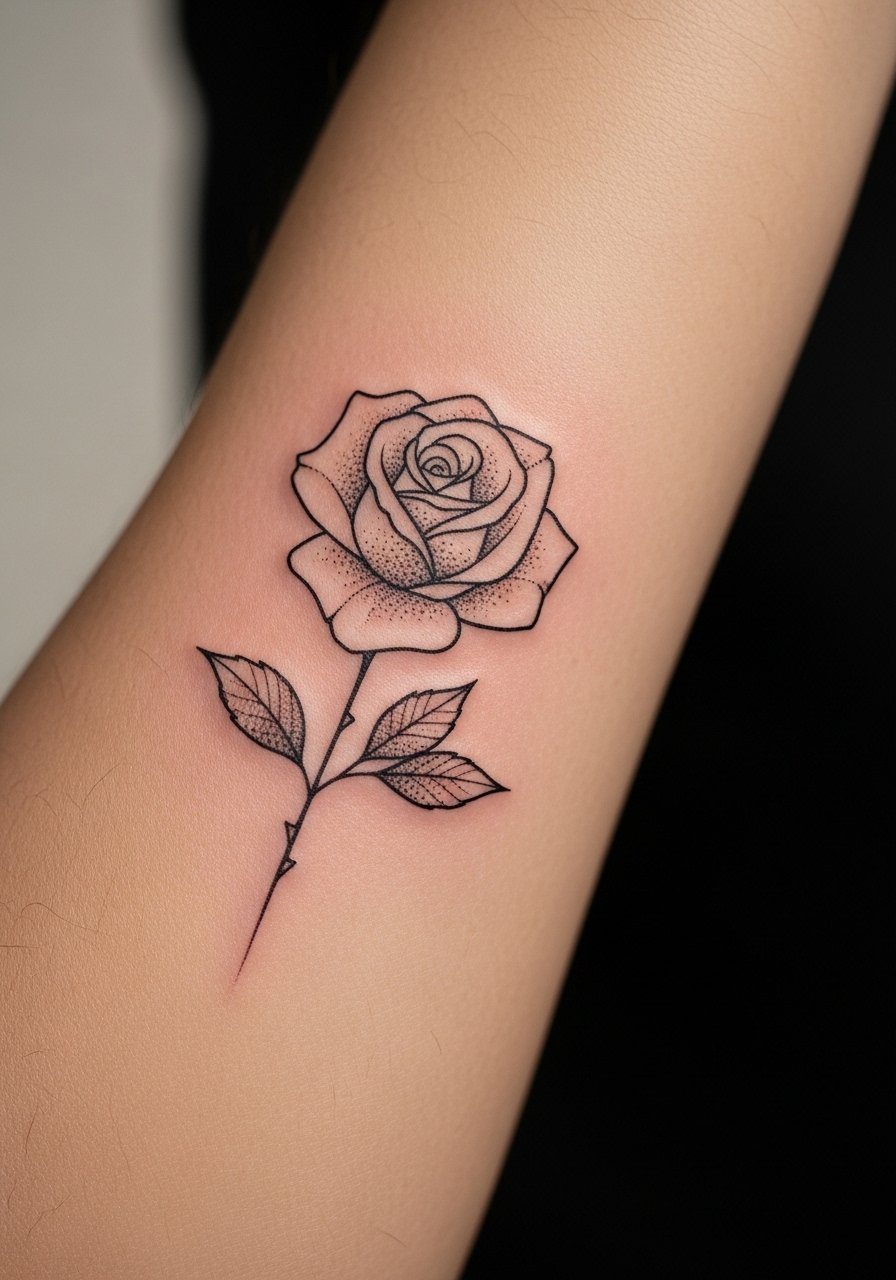
I recommend this when you want a delicate rose that reads personal without shouting. Tell your artist you want slightly heavier anchoring lines on the stem and very light single-needle petals so the piece keeps definition at year two and five. Common mistake is asking for ultra-micro detail too close together, which blurs into a gray wash as skin regenerates. Expect a one to two hour session and a likely touch-up by year three for the hair-thin highlights. For showing it off, roll sleeves and pair with a loose button-down shirt so the forearm sits naturally in photos.
2. Traditional Bold Rose on Upper Arm
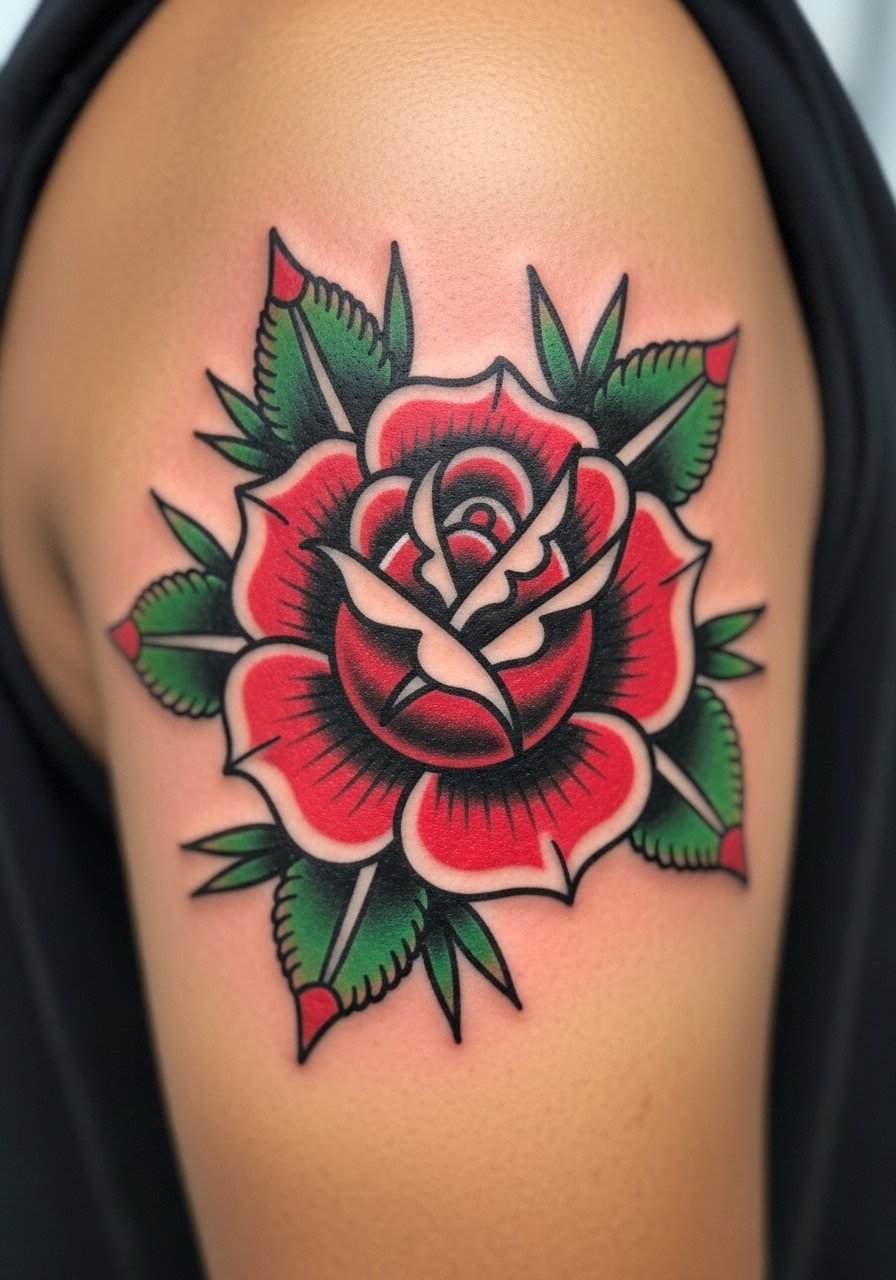
This style favors saturated color and thick linework for longevity. The session usually runs two to three hours depending on color blocking and shading. Artists use heavier saturation to age into a readable shape, so tell them you want the classic weight rather than micro detail. A common aging issue is overwork in small areas that turns crisp petals into muddy patches. For wardrobe, short-sleeve tees or a rolled sleeve tee frame this placement well and keep the arm visible without overstating the look. Expect good durability and touch-ups rarely before year five.
3. Black and Grey Realism Rose on Upper Chest
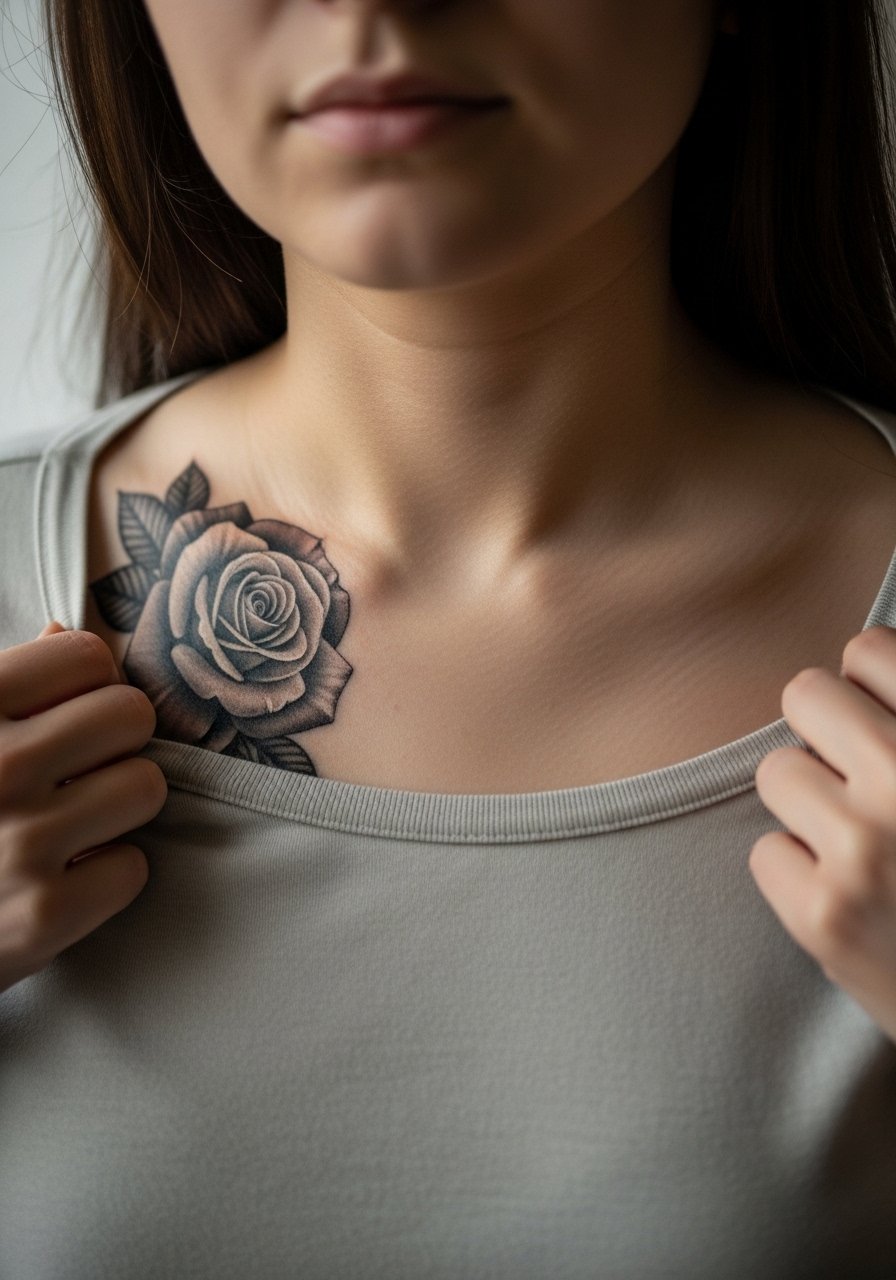
This placement gives room for detailed petal work and gradual shading. The chest moves with breathing so shading needs to be placed with anatomy in mind. In consultation, point out whether you want high contrast or soft blended shading because that decides needle depth and session pacing. Pain on the chest varies, most people say moderate for the upper chest. Watch for blowout risk along curving rib edges if the artist works too deep in narrow bands. Over time the midtones soften, so expect subtle loss of crisp tiny highlights by year three. Because the piece sits near the collarbone, a wide-neck shirt works for reveal and protection during healing.
4. Micro-Rose with Script on the Ribcage
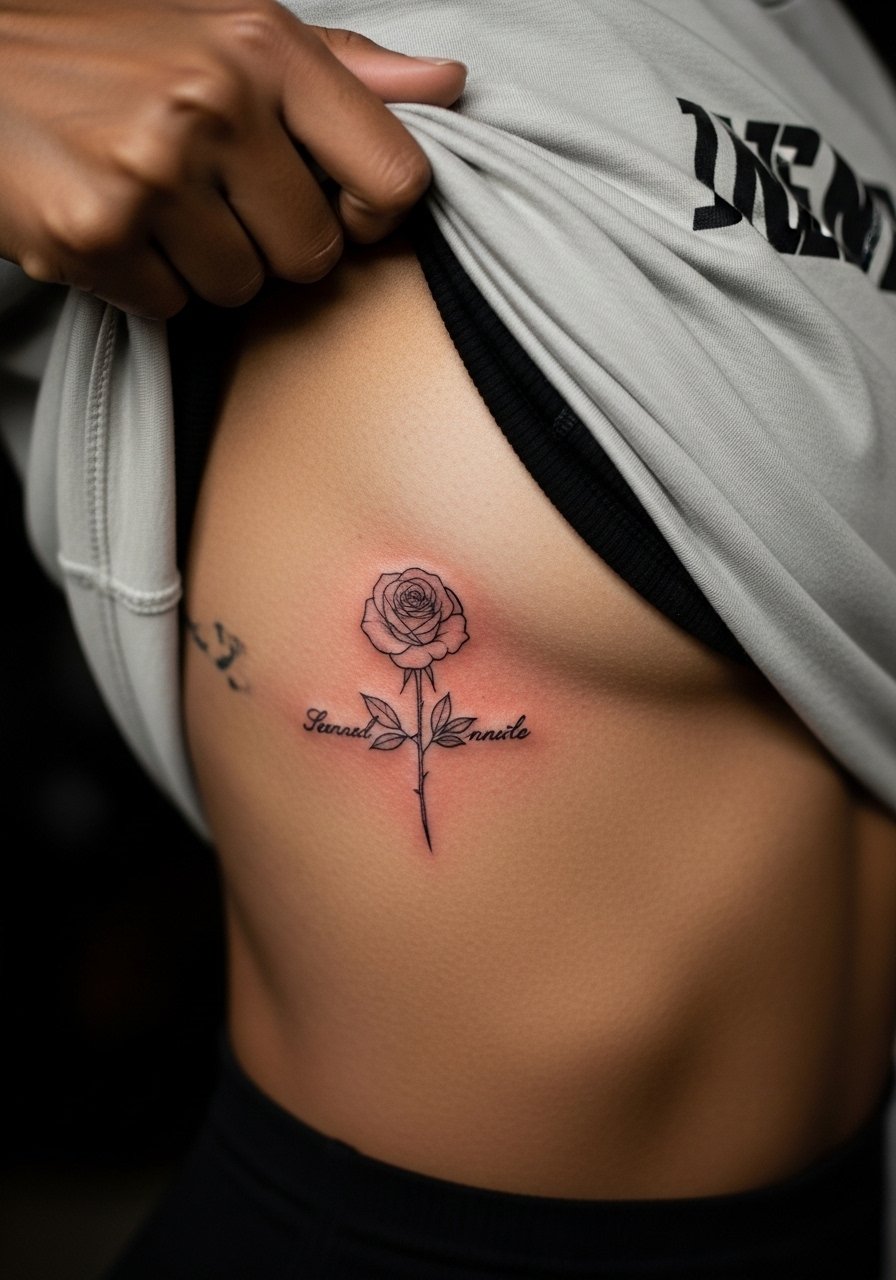
Fine line on ribs splits artists into two camps. One camp argues the skin stretch and movement blur fine work within two years. The other camp says with exact spacing and correct needle depth it settles well. I tell clients to name their camp before booking so expectations match technique. The rib is a high pain area, so expect broken-up sessions and an hour glass of breathing control. A common mistake is asking for extremely tiny script intertwined with petals, which crowds the lines. Plan for a touch-up at year two, and wear a light cropped top to sessions for easy access without full exposure.
5. Minimalist Single-Needle Rose on the Wrist
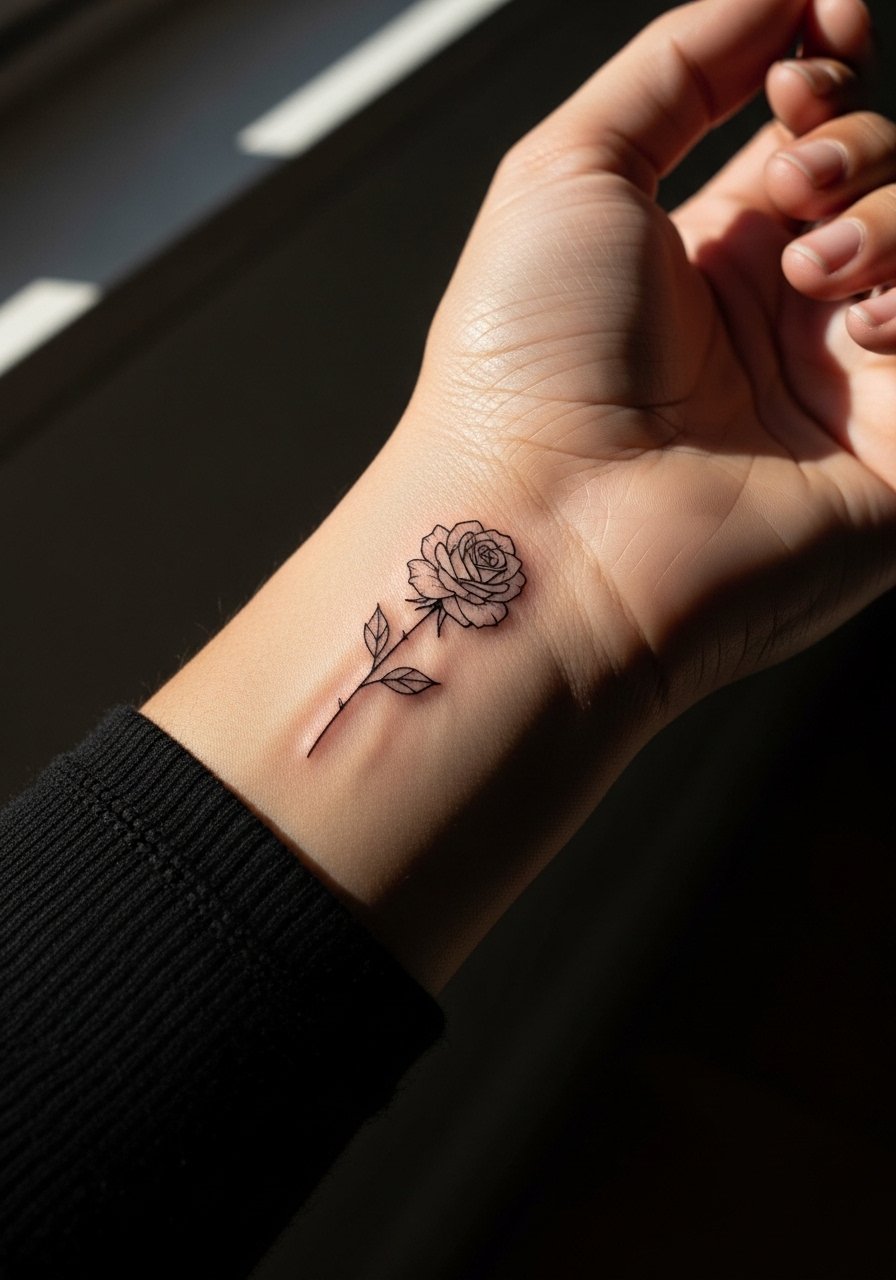
Wrist tattoos are unforgiving for ultra-thin work because of constant washing and friction. Ask for slightly bolder anchor lines near the stem so the silhouette stays legible. The session is short, often under an hour, but the aftercare window matters more here than for larger pieces. A common mistake is placing too many tiny details that time and soap will average out. For showing it off, a thin chain bracelet sits above the rose without crowding the linework and keeps focus on the tattoo. Expect touch-ups around year two for head-on detail restoration.
6. Neo-Traditional Rose and Dagger on the Calf
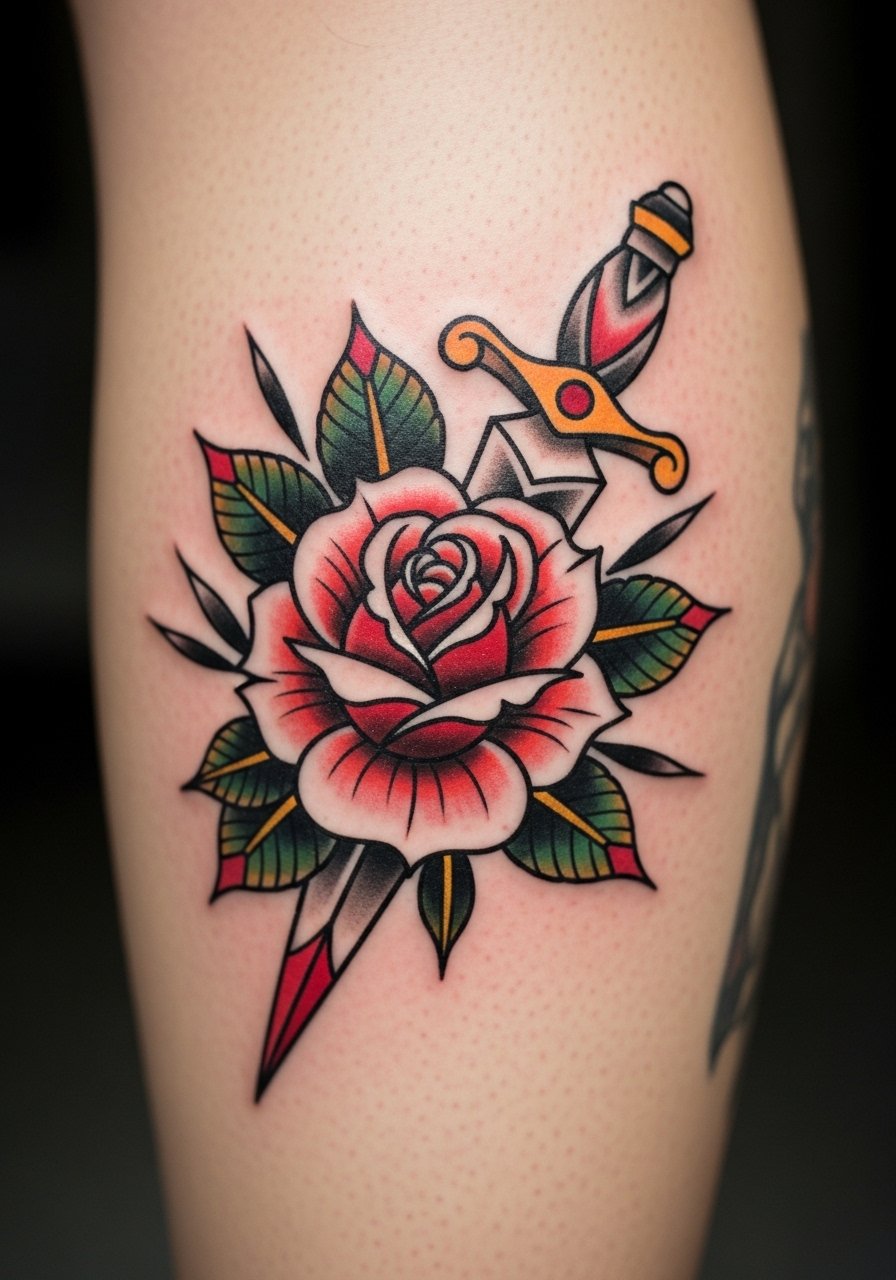
Calf pieces allow more saturation and layered color work without as much risk of blowout. They usually run two to three hours when combining heavy outlines with soft shading. In consultation, specify whether the dagger edge should be crisp or slightly worn for age effect, since that changes shading approach. Mistakes include packing too many small elements into a narrow calf area, which compresses shading and raises the chance of patchy healing. For sessions, wear loose drawstring shorts so the artist can roll the fabric without discomfort. Calf pieces hold saturation well and often only need touch-ups after five years.
Pre-Session Essentials
The first six ideas include a mix of wrist, forearm, chest, rib, calf, and upper arm work, so a few focused items smooth the session and the first week.
-
Stencil transfer paper kit. Lets you preview linework placement on skin before the needle starts, which is crucial for the fine line forearm and wrist pieces above.
-
Thin protective film roll. Keeps finger and wrist tattoos protected from constant hand washing and clothing friction during the first days.
-
Topical numbing cream. Useful for sensitive zones like ribs and sternum when your artist agrees it will not interfere with ink placement.
-
Fragrance-free gentle body wash. Cleanses healing areas without stripping the natural oils that help fine line work settle.
-
Aquaphor healing ointment. A thin layer during the first few days keeps the surface supple for tiny single-needle lines and prevents excessive crusting.
7. Watercolor Rose Shoulder Blade

Watercolor roses trade crisp outlines for painterly washes, but that choice means the piece can lose contrast faster. I suggest asking the artist to add micro anchor lines in key petal edges so the composition keeps reading at six months and two years. Shoulder blade sessions are moderate in pain and usually done in one to two passes, which helps color saturation. Mistakes include asking for a full watercolor wash without any anchor lines, which often turns into a faded bruise over time. For the session wear a tank top you can pull aside so the artist can work without full shoulder exposure.
8. Geometric Rose Accent on Outer Bicep
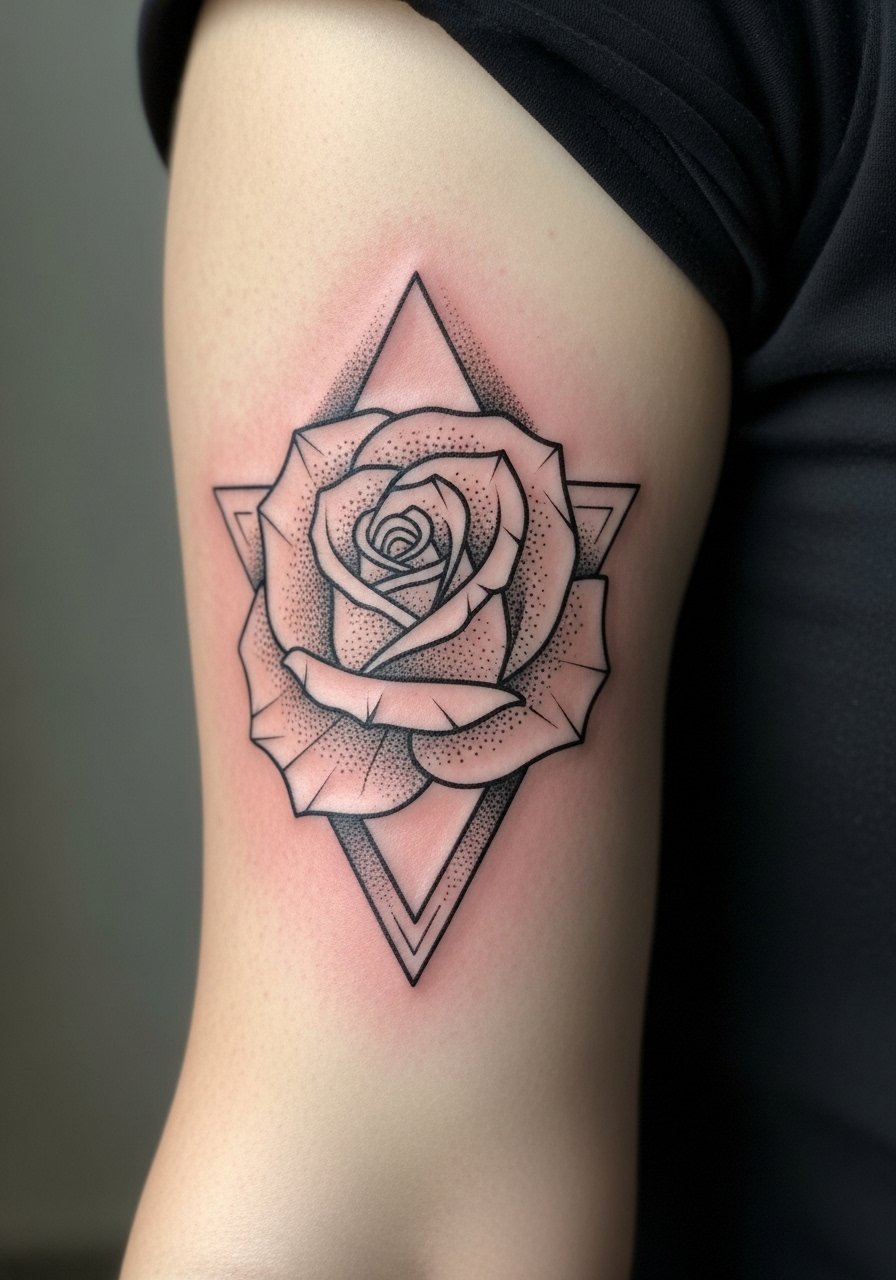
Geometric accents bring crisp structure to floral motifs but need breathing room. Tell your artist to scale the geometry slightly larger than you think so the negative space does not close up with natural skin movement. Outer bicep sessions are lower pain and usually one to two hours depending on dot work density. The big mistake is compressing dense stipple and geometry into a tiny patch, which leads to merging dots at year two. For daily wear, rolled sleeve shirts or a short-sleeve linen shirt put the bicep on display while keeping form casual.
9. Tiny Finger Rose with Negative Space
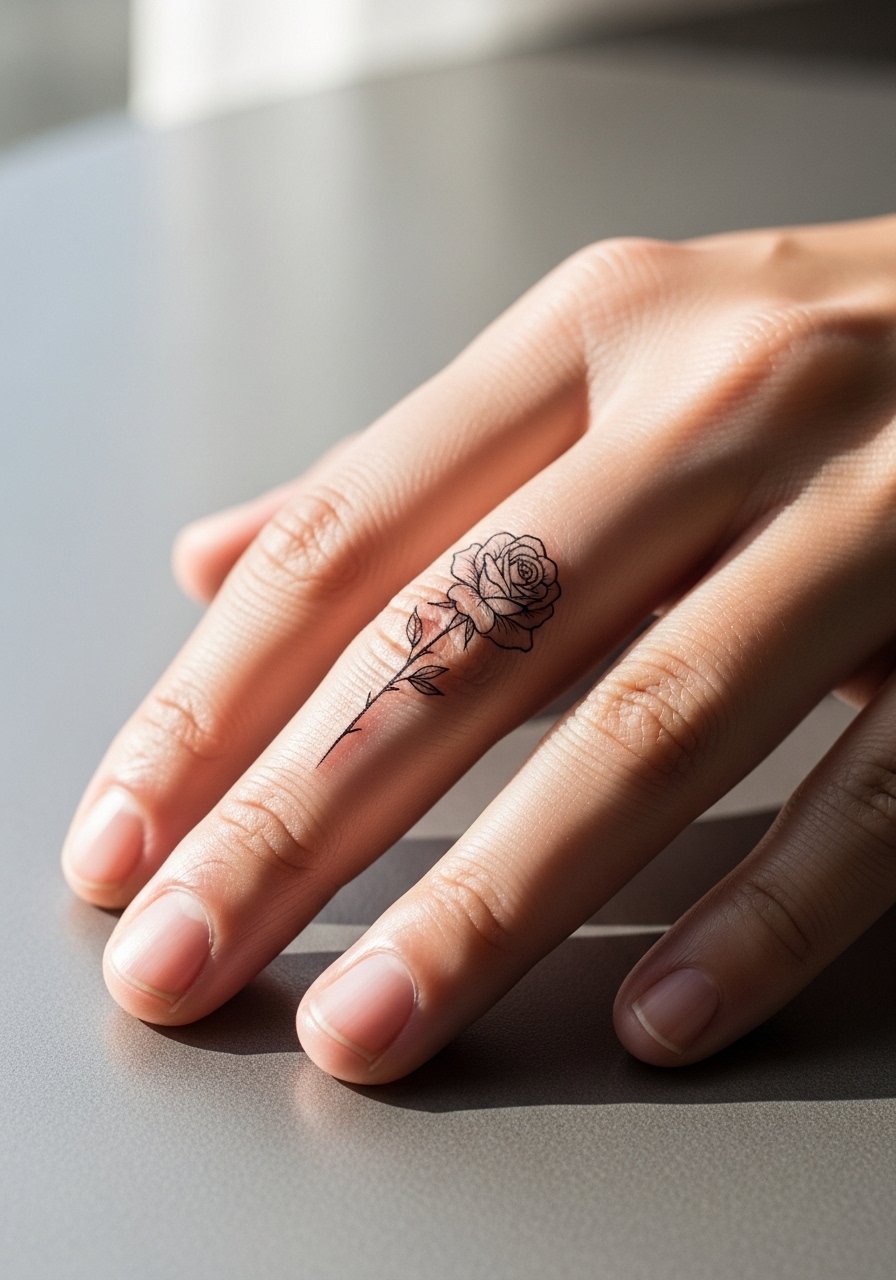
Finger placements are high friction areas that face constant washing and wear. Expect the first session to last under an hour, but plan for a touch-up at six to twelve months. The most common mistake is expecting single-needle detail to last without regular touch-ups. For visibility concerns, note that some workplaces treat hand tattoos differently, so weigh professional considerations before committing. If you want longevity, ask the artist to use slightly bolder stem lines and avoid dense inner petal detail.
10. Stipple-Shaded Rose on the Back of the Hand
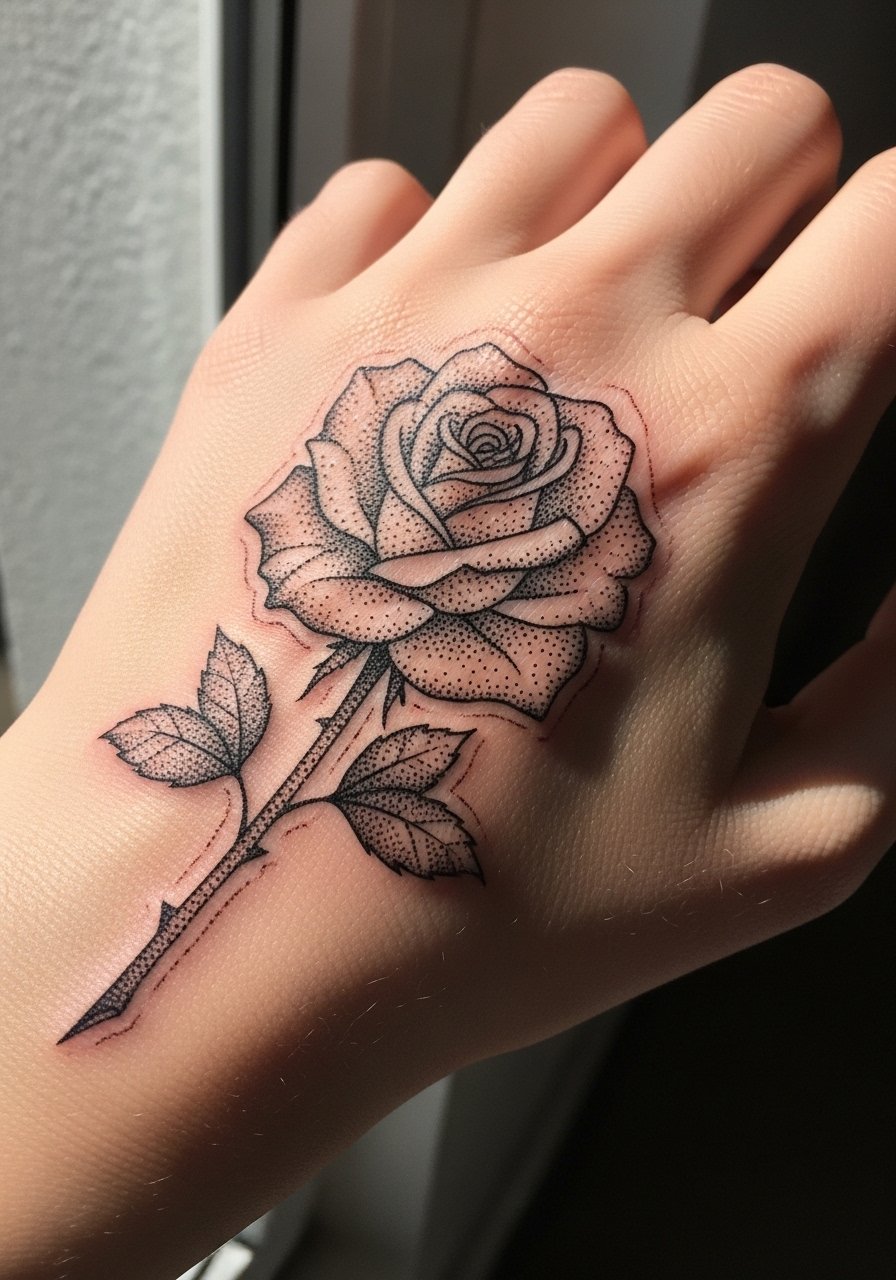
Hand work is one of the more controversial spots. One camp argues hands age poorly because of constant sun and washing, raising the need for frequent touch-ups. The other camp says with bold blackwork and simplified shapes, hands can look intentional for years. I tell clients the reality is somewhere between those camps. Sessions are short but painful near the knuckles. Expect touch-ups every one to three years. Also consider your career path since some employers still react to visible hand tattoos.
11. Blackwork Rose Cluster on Sternum
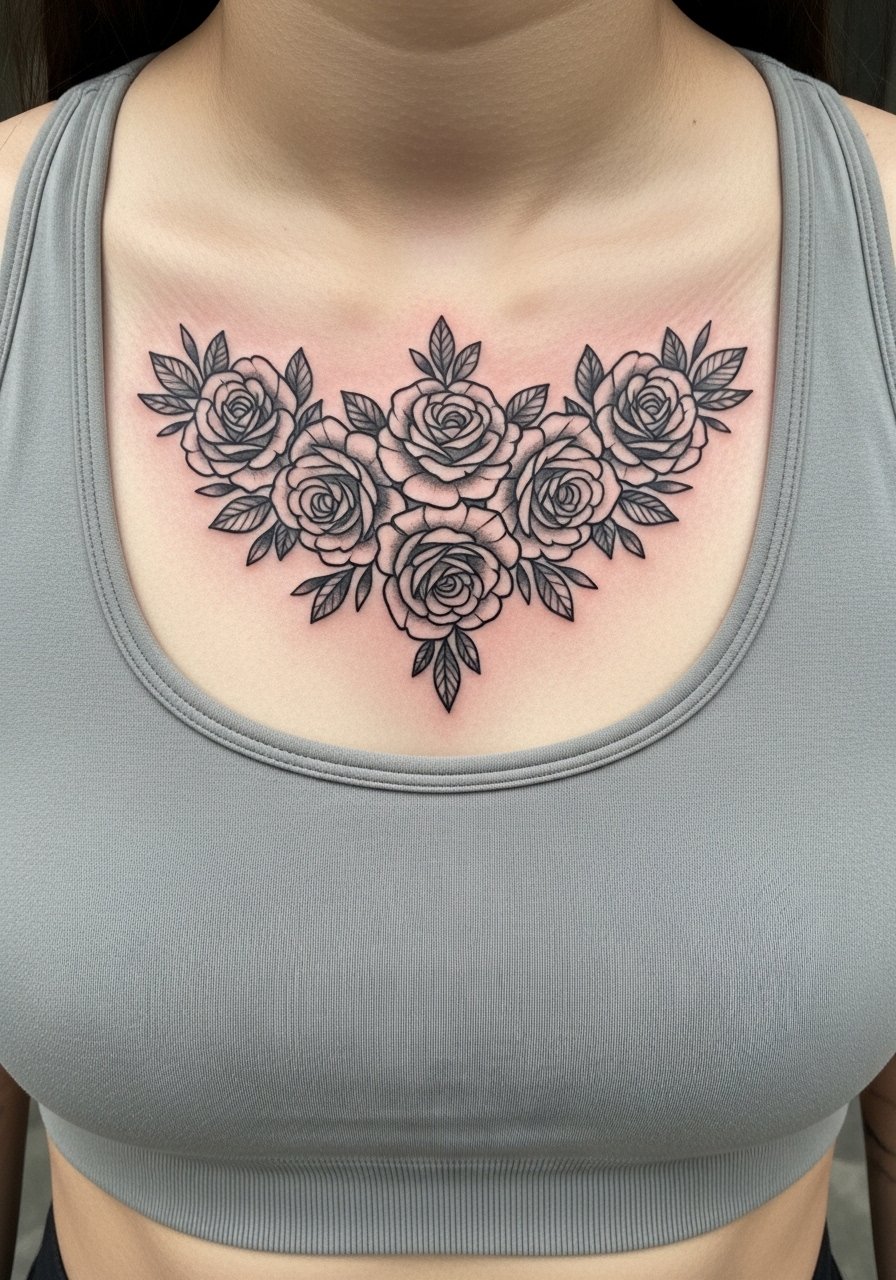
Sternum and underbust tattoos sit on skin that moves with breath and posture, so composition must accommodate stretching. The main error is cramming dense detail onto a curved plane. Sessions here can be intense and may be split across appointments for comfort. Many clients choose heavier outlines and strong negative space so the design reads clean after healing. Because this area requires careful exposure control, book with a shop that regularly does chest pieces.
12. Single-Needle Rose Behind the Ear
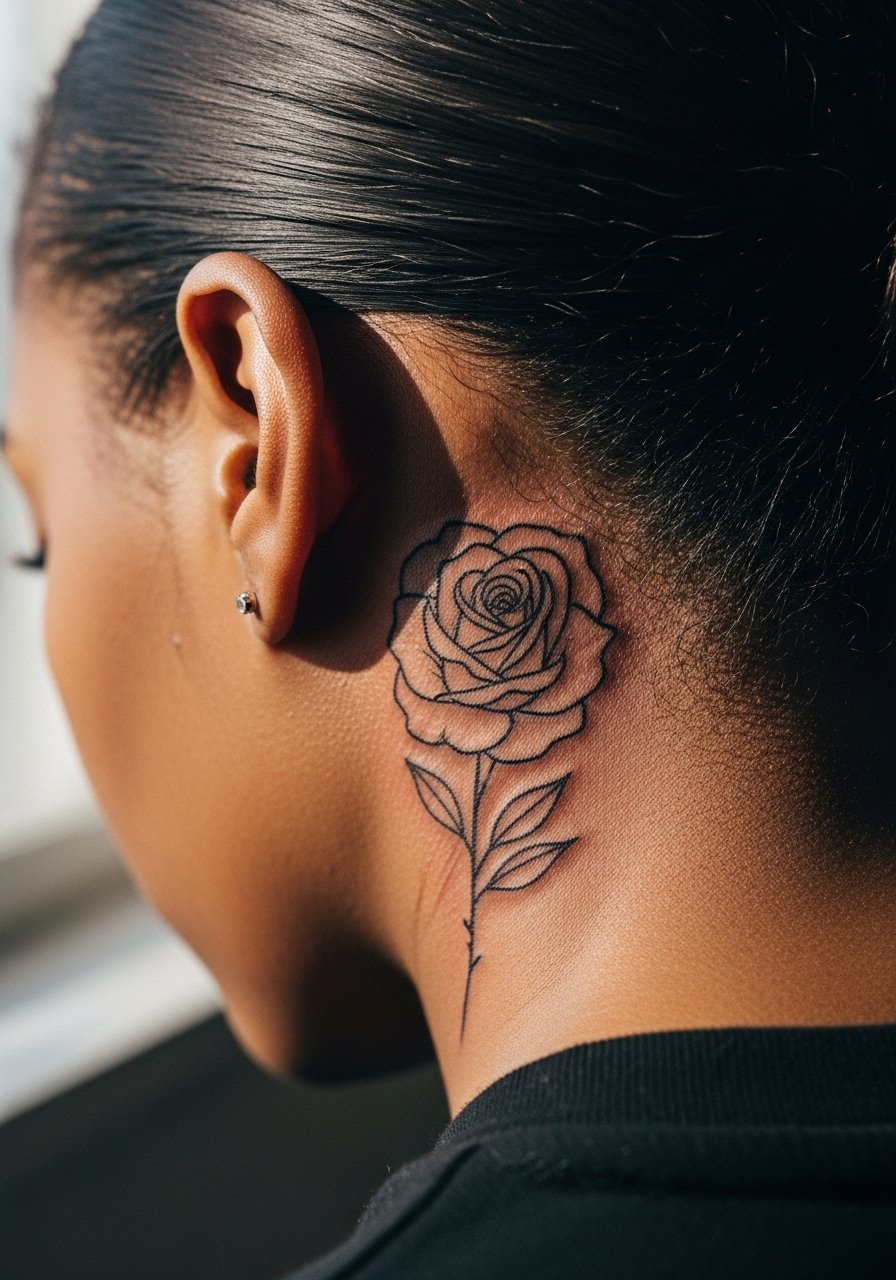
Behind-ear roses are subtle and age well when composed small and strategic. The area demands light, precise passes because the skin is thin and tends to spread ink if worked too deep. Expect a short session and a potential touch-up at year two. For the appointment, wear your hair up or a zip-back top so the artist can access the area without full exposure. A common mistake is asking for dense shading behind the ear, which often blows out into soft gray rather than crisp petal edges.
13. Rose and Skull Sleeve Transition on Upper Arm
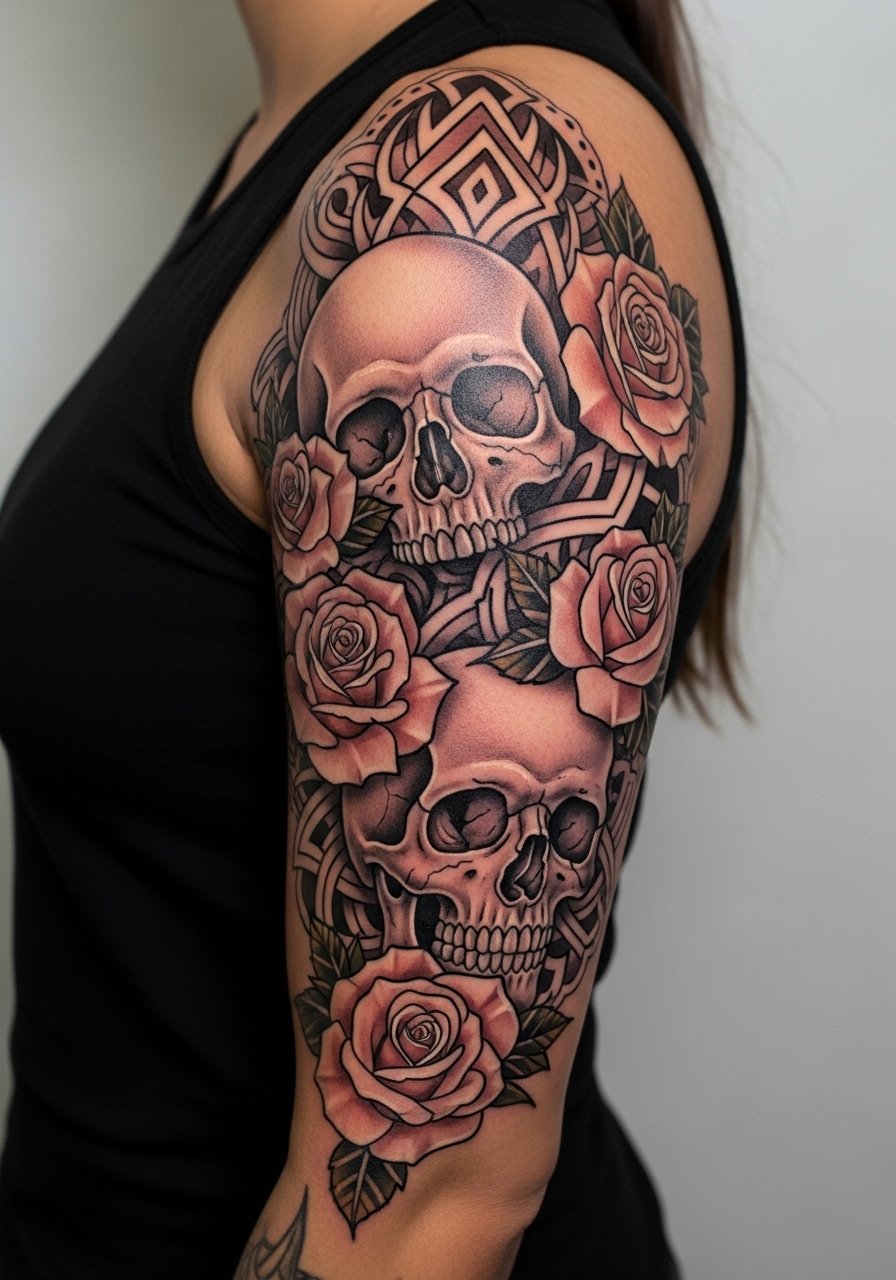
Combining roses with skulls gives a classic contrast of life and mortality, and sleeve transitions demand thoughtful negative space. Tell your artist where you want the focal rose and which elements should recede into shadow so the sleeve reads at arm length. Sessions for a transition panel are multi-hour affairs and often done over several visits. The typical mistake is trying to cram too many focal points into a short arc, which makes the sleeve read busy. Proper spacing and staged saturation keep the rose readable at six months and after several years.
14. Minimalist Ankle Rose with Fine Line Vines
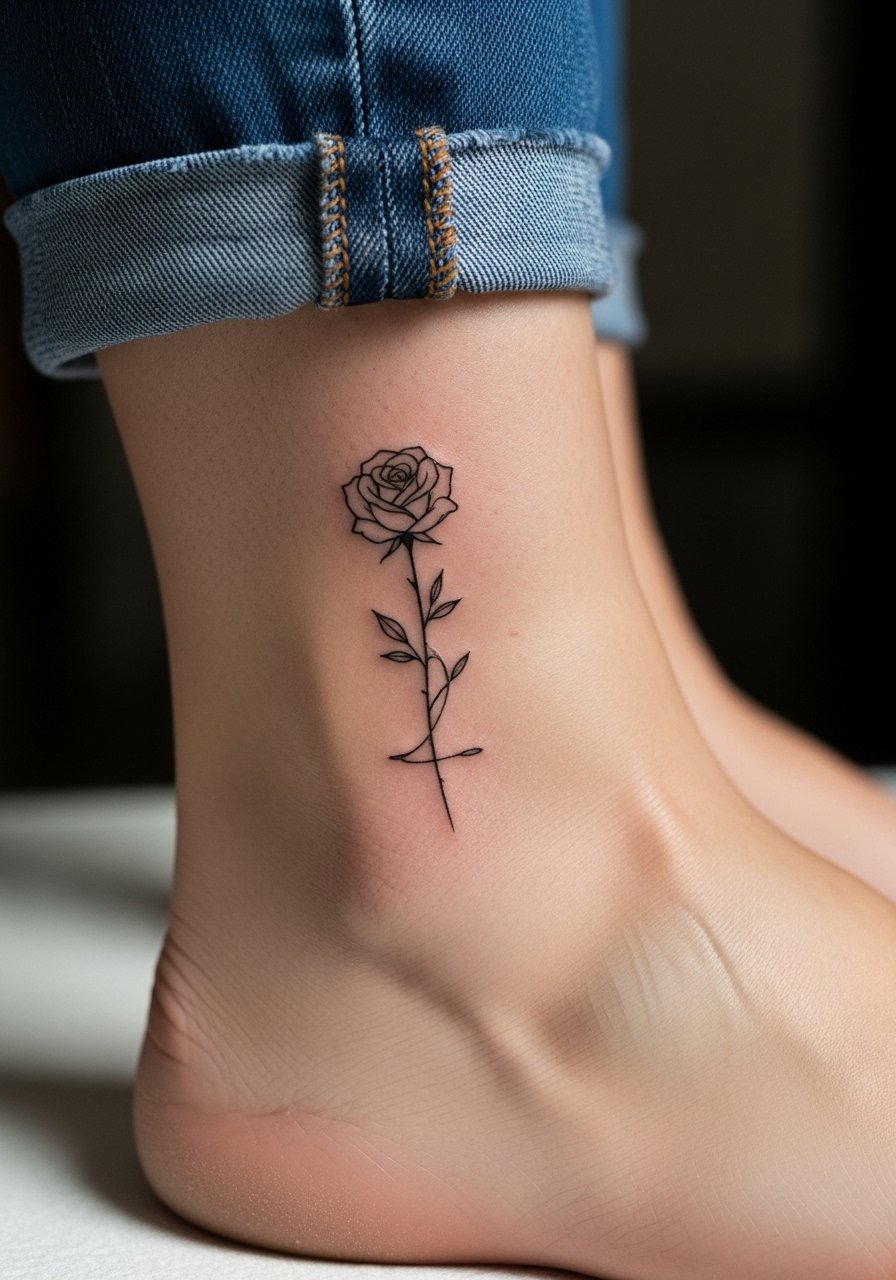
Ankle tattoos are small and visible but suffer from friction from socks and shoes. Ask for slightly reinforced anchor lines at the base so the vine does not blur into the ankle crease. The session is quick but aftercare matters because swelling and rubbing can affect early healing. A common mistake is choosing dense vine detail that the ankle cannot hold over time. For showing it off, wear rolled jeans or a pair of low-cut canvas sneakers that keep the ankle visible without excess rubbing. Expect touch-ups around year two.
15. Script-Wrapped Rose on the Sternum
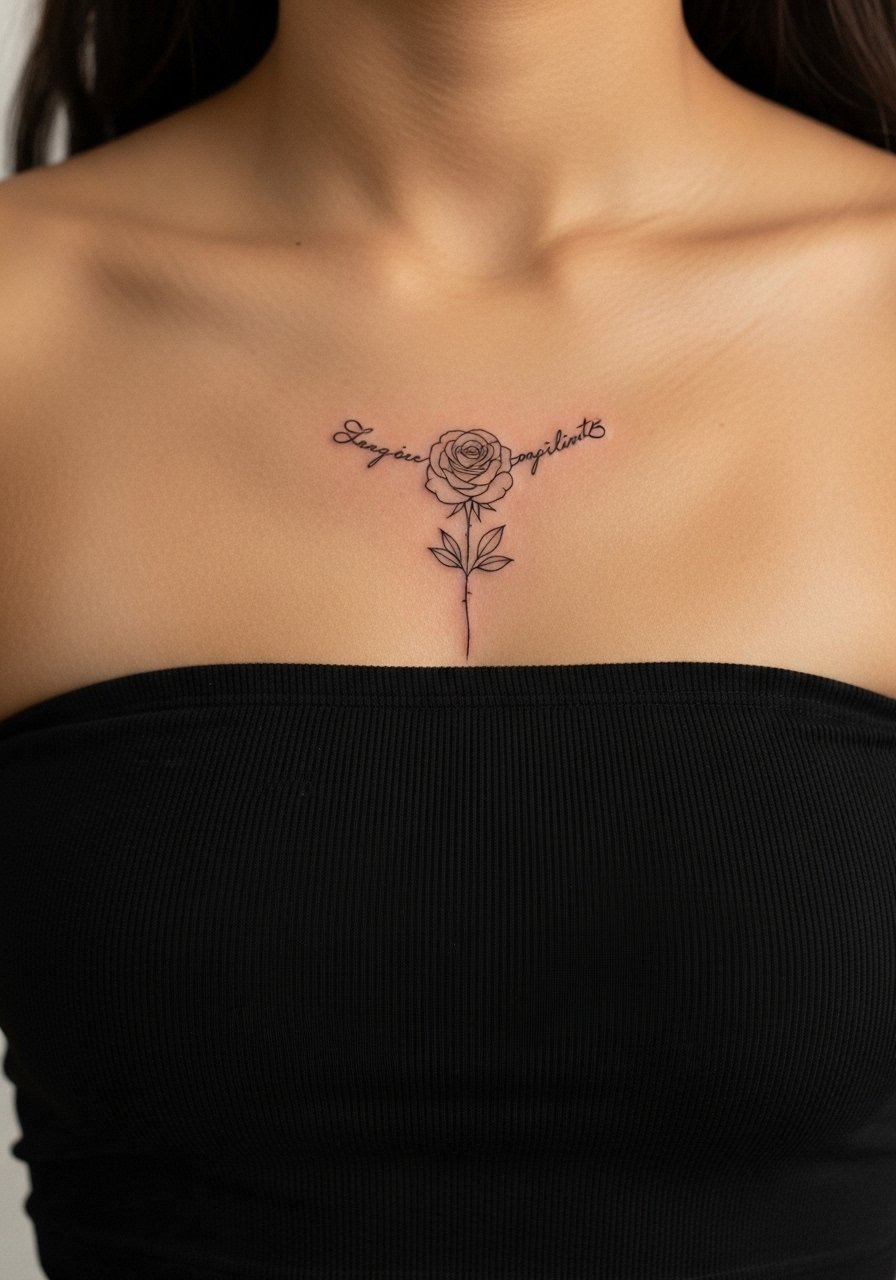
Placing script close to a rose on the sternum requires clear spacing and font sizing that respects skin movement. The biggest mistake is asking for very small script next to tight petal detail. Sessions for this area usually need breaks for comfort. Many artists will push for simplified lettering and slightly larger spacing so both elements age without merging. If you want the piece to remain intimate, keep the line weight consistent and plan for a touch-up in two to three years.
16. Geometric Rose Thigh Panel
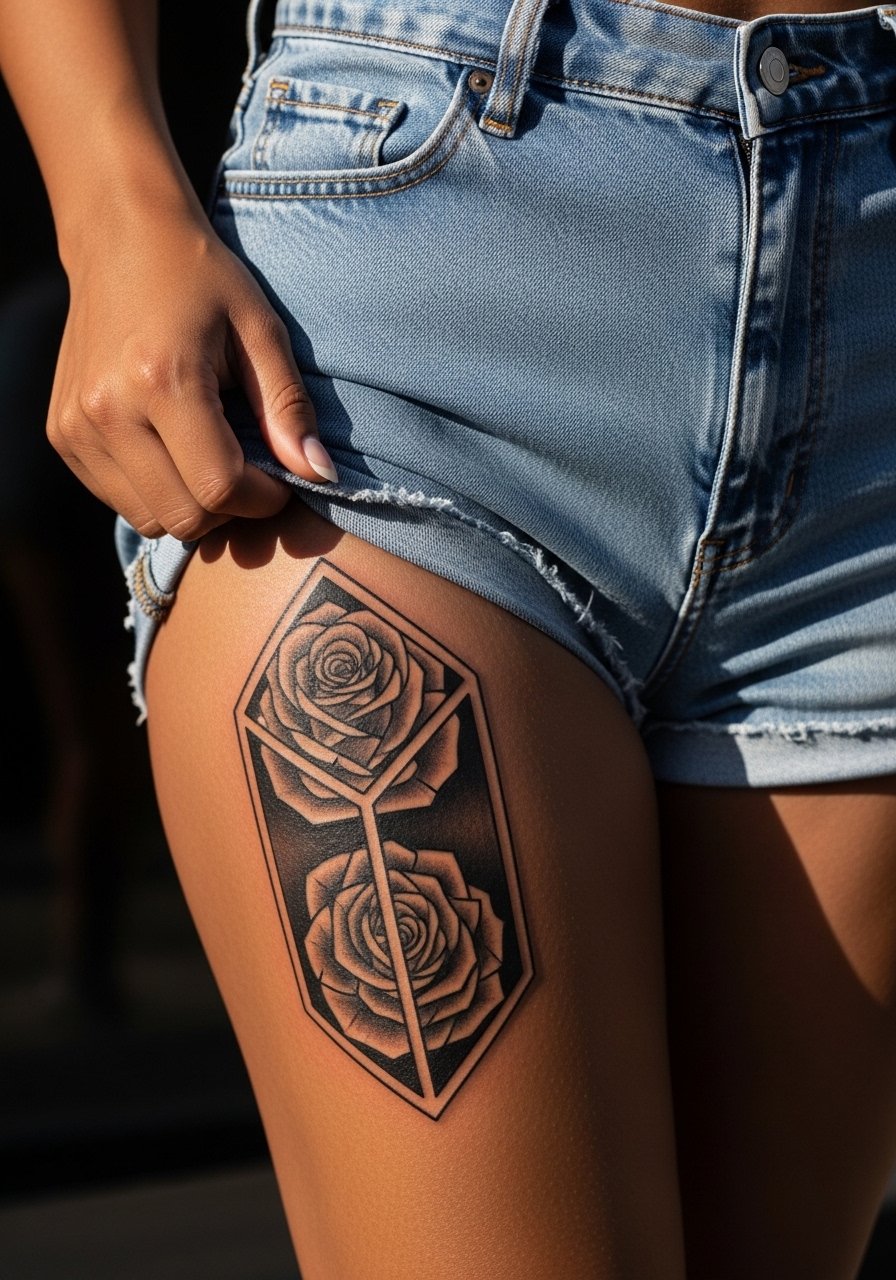
The thigh is forgiving for scale and dense geometry, which lets you include dot work, whip shading, and layered shapes without immediate blowout risk. A full panel can take multiple sessions and is often scheduled in two to four hour blocks. A common mistake is underestimating how the thighs sit when seated, which can distort fine symmetry. For session comfort, wear loose drawstring shorts so the artist can adjust the fabric without pressure. Thigh pieces usually hold saturation well and only need touch-ups after several years.
17. Tiny Constellation Rose on the Collarbone
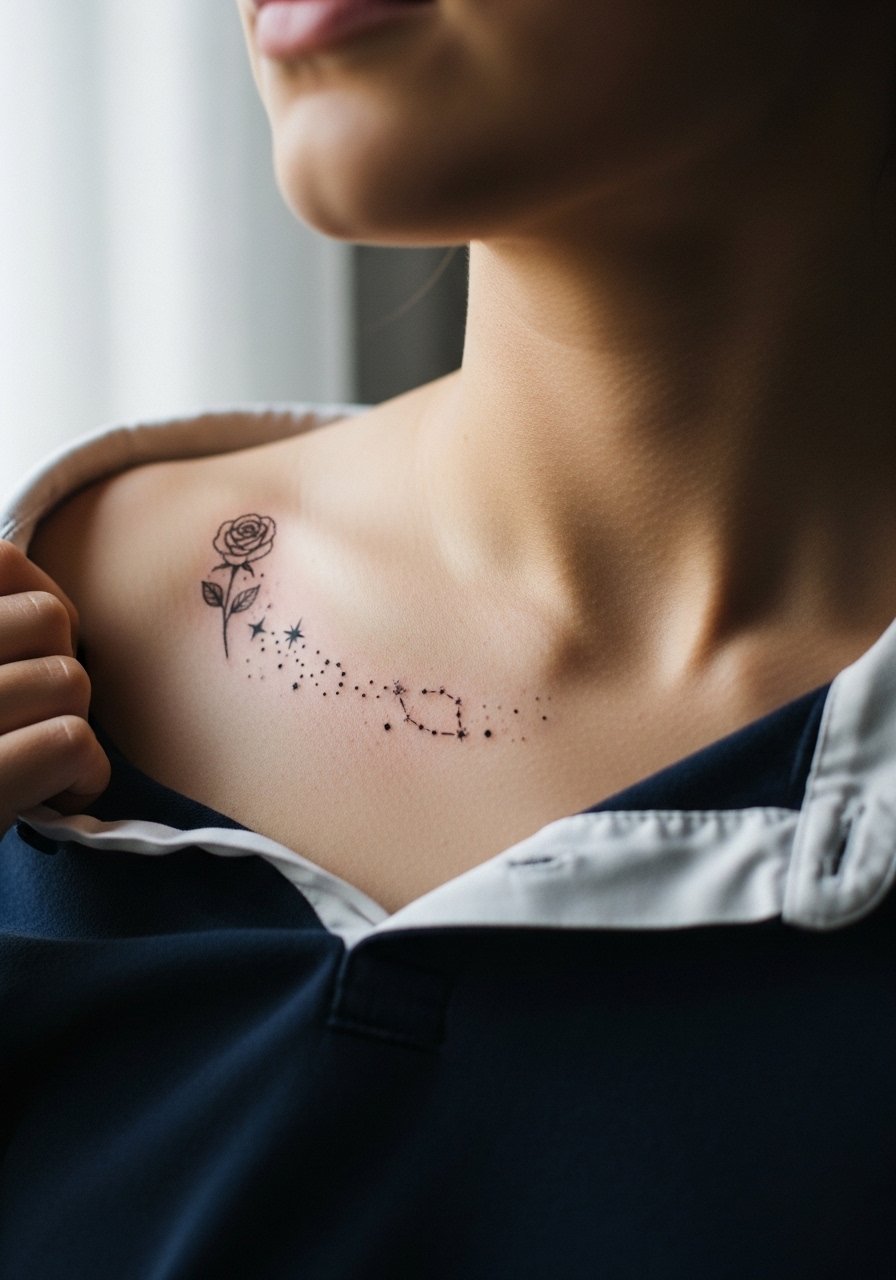
Collarbone placements show nicely with jewelry and layered necklaces, but the thin skin there means linework must be deliberate. During consultation, point out whether you want the constellation to sit above or below a necklace so the piece composes with daily accessories. Expect moderate pain and a short session. A common mistake is crowding the collarbone groove with too many tiny dots, which can read as a blur after repeat sun exposure. For wearing, a thin chain pendant necklace complements the placement without overlapping the ink.
Frequently Asked Questions
Q: Will fine line roses blur faster than traditional saturated roses on areas like the wrist and ribcage?
A: From what I have seen, fine line work is more sensitive to placement and daily abrasion. On wrists and fingers the combination of washing and friction makes single-needle detail fade faster. On ribs the debate among artists is active. Some say stretch causes blur, others say careful spacing and proper depth keep lines crisp. Plan for touch-ups and pick the approach that fits how visible and low-maintenance you want the piece to be.
Q: How should I dress for a ribcage or sternum session to make things easy for the artist?
A: Wear clothing that gives clear access without exposing more than necessary. For ribs, a cropped athletic top or a shirt you can lift slightly works well. For sternum pick a fitted sports bra or bandeau so the artist can work around the fabric line. I often recommend a cropped athletic top that you can adjust easily during the session.
Q: What touch-up timeline should I realistically expect for hand and finger roses?
A: Hands and fingers usually need the earliest maintenance. Expect a first touch-up within six to twelve months and then periodic refreshes every one to three years depending on exposure and how well you protect the area from sun and abrasion.
Q: Are watercolor roses a bad choice if I want longevity?
A: Watercolor will always trade some longevity for painterly effects. If long-term clarity matters, ask your artist to add micro anchor lines or faint outlines to key petal edges. That hybrid keeps the watercolor feel while preserving structure.
Q: Do I need to worry about blowout on the inner forearm or thigh?
A: Blowout risk depends on needle depth and skin tension. Inner forearm is lower risk when artists use correct depth and avoid overworking. Thigh is forgiving because of thicker skin and muscle, but very dense dot work can still spread if the artist goes too deep. Ask about their touch-up policy and portfolio examples for similar placements.
Q: Can I mix geometric elements with a rose and still have it age well?
A: Yes, if you give the geometry space and avoid ultra-dense dot fields packed next to single-needle petals. The key is scale and contrast. Geometric pieces need slightly more room between elements so negative space remains effective as the skin settles.