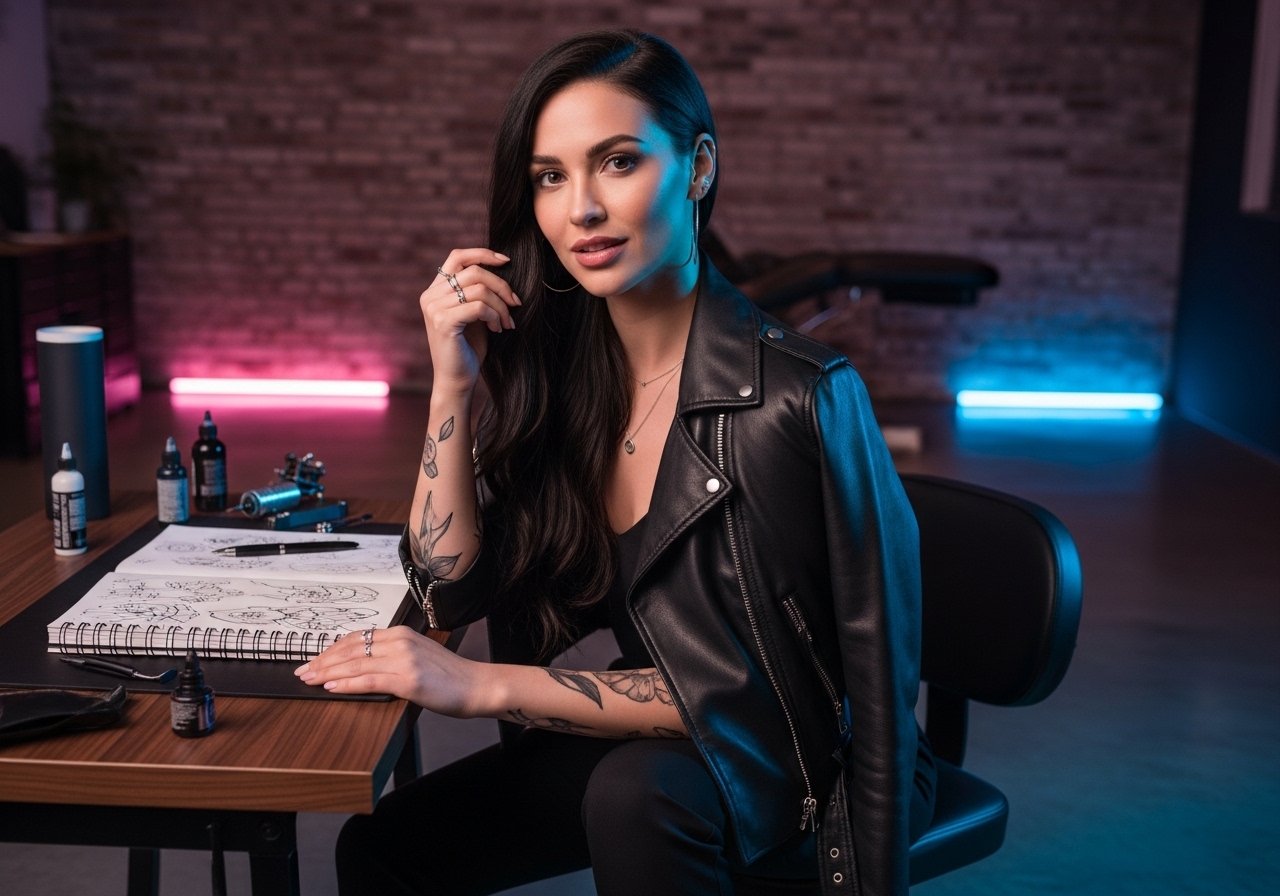
Fine line angels are all over saves and reels, and they look irresistible when fresh. The reality is they age differently on shoulders that rub against straps, or on skin that stretches after weight gain. Pain around the shoulder cap surprises first-timers more than they expect. Below are 17 shoulder-friendly angel designs, how each holds up, what to tell your artist, and outfit pairings that actually show the work off.
1. Guardian Angel on the Shoulder Cap
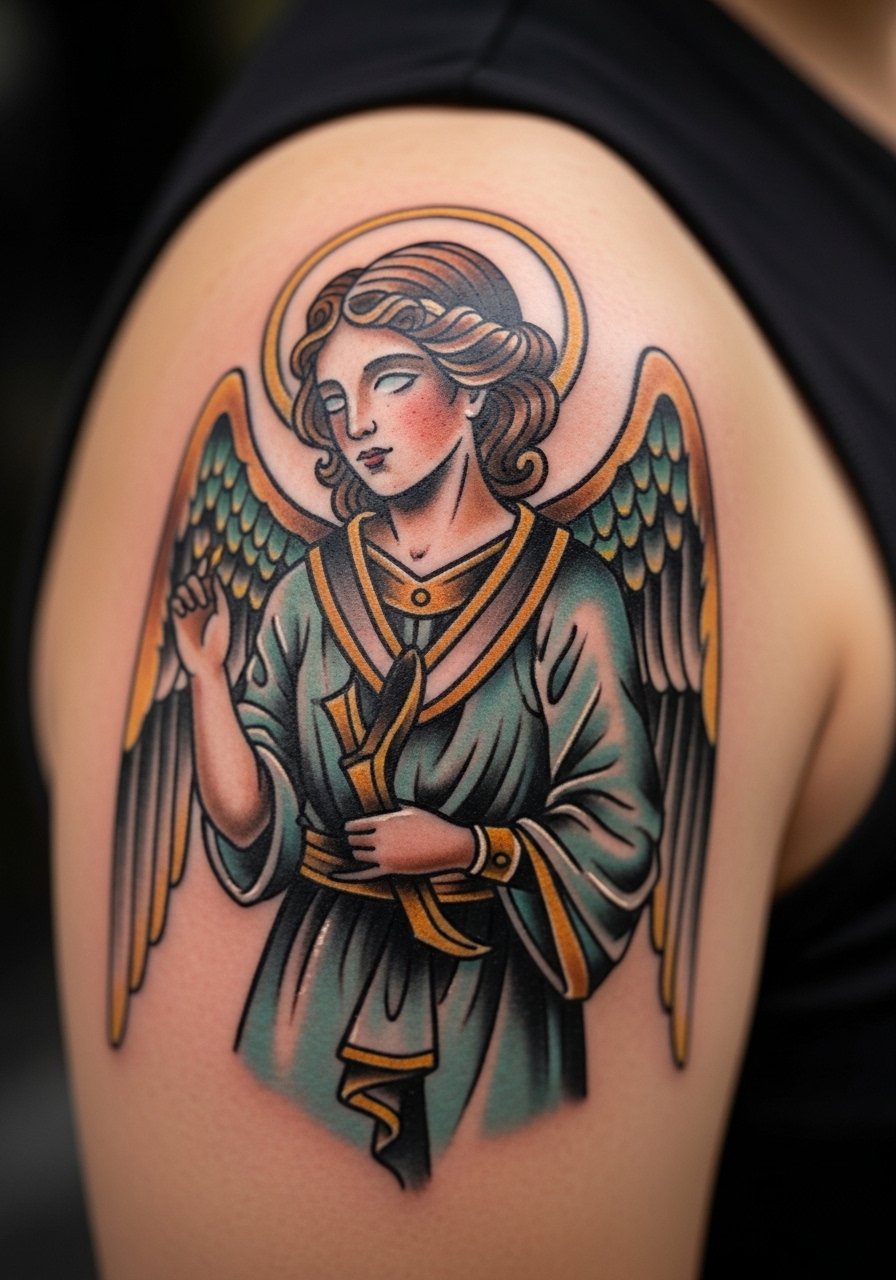
I recommend this neo-traditional guardian when you want a piece that tucks under tees yet pops in tanks. Tell your artist you want heavier outlines around the wings and restrained color saturation so the piece reads clearly as it heals. Common mistakes include asking for overly intricate facial detail at a small scale, which blurs with motion across the deltoid. Expect two sessions and moderate pain near the bone. For session day, wear a loose button-down linen shirt you can roll aside so the artist has clear access and you stay comfortable.
2. Realistic Guardian Figure on the Outer Shoulder
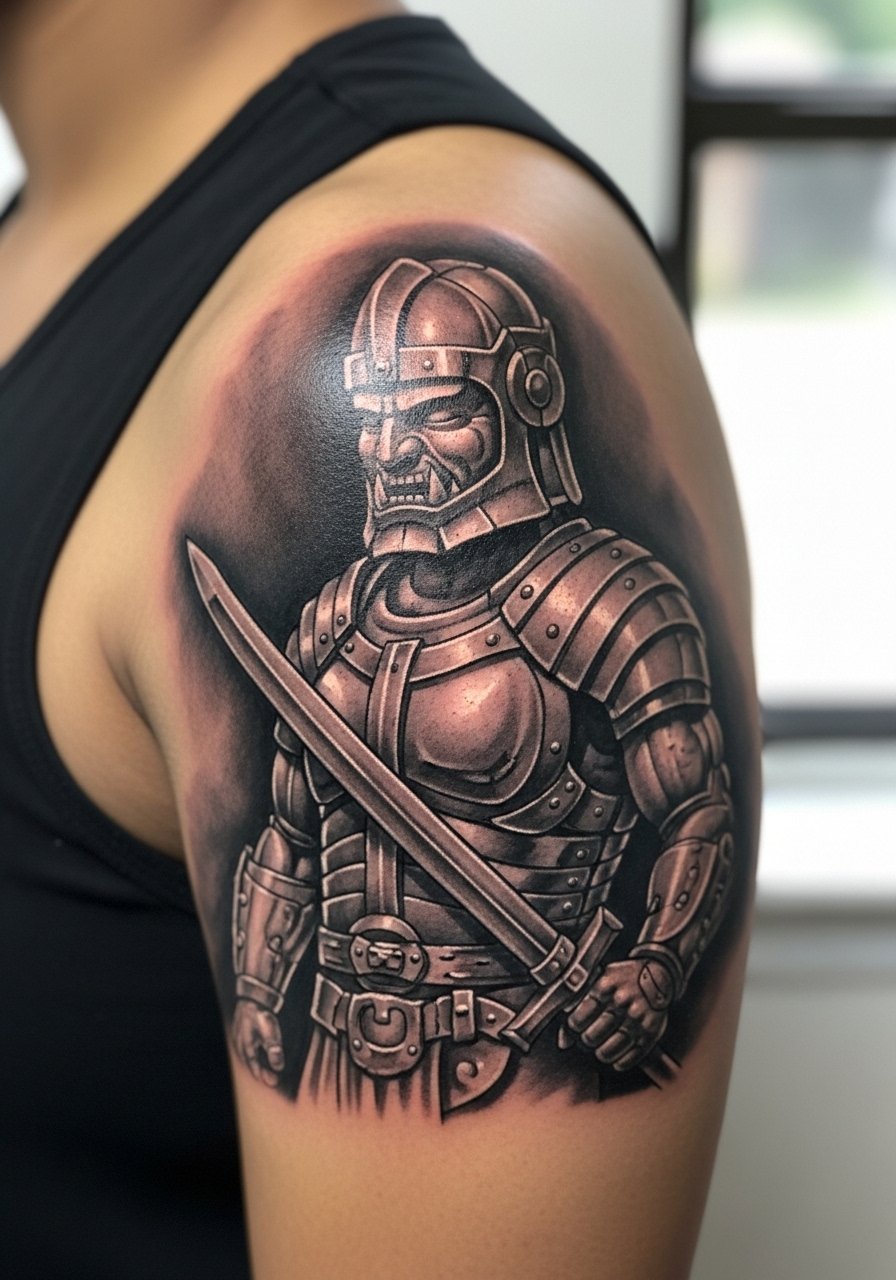
I've seen realism translate beautifully on the outer shoulder when artists scale faces to five to seven inches tall. In consultation, bring portrait-style references and specify black and gray shading rather than washy color. The outer shoulder flexes with the deltoid so avoid tiny facial detail under 5 inches. Expect three sessions and a heavier aftercare routine for saturation retention. Pair this with a sleeveless muscle tee for summer showing and a thin silver chain necklace to frame the neckline when you wear tanks.
3. Delicate Winged Silhouette on the Shoulder Blade
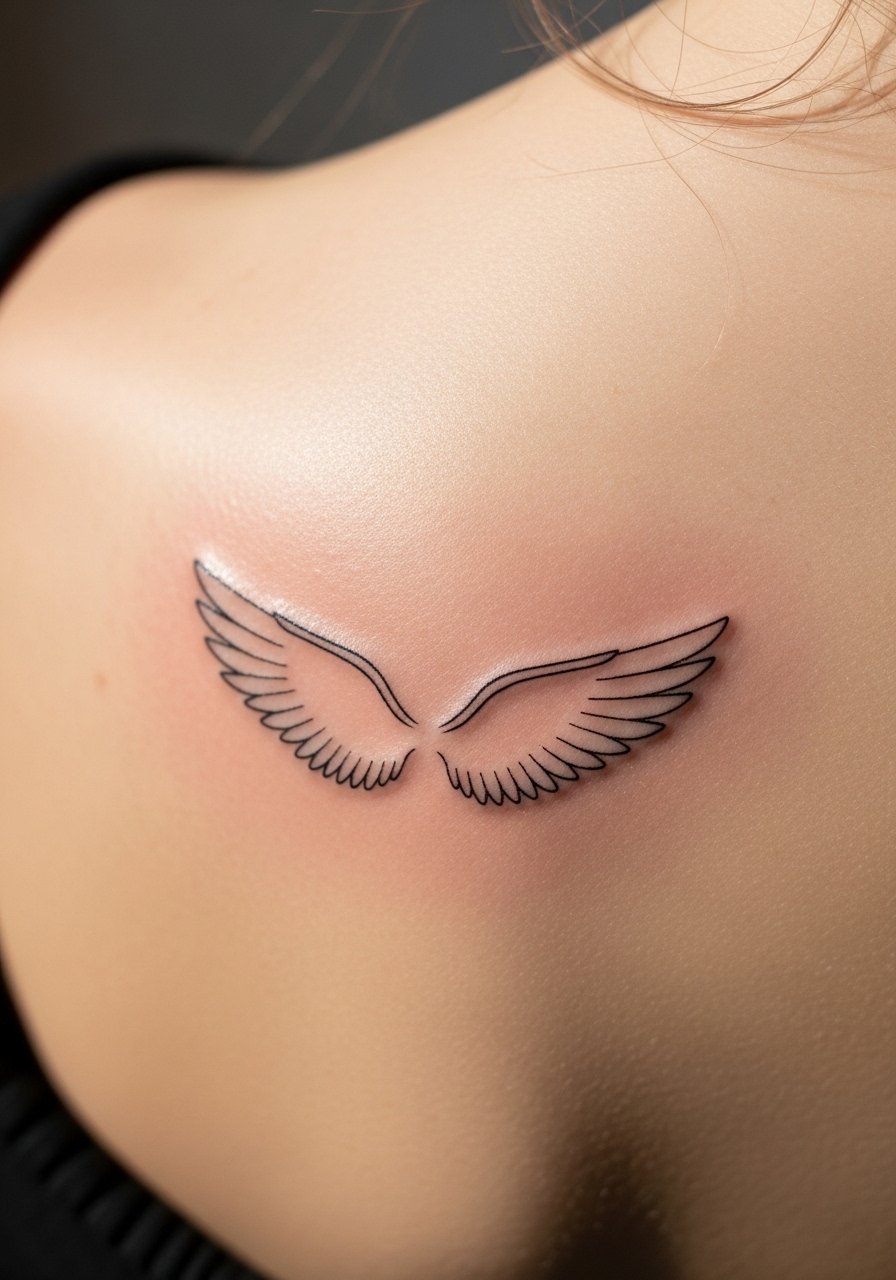
Fine line on the shoulder blade is popular with first-timers because it tucks under straps. Artists are split on this one. One camp says fine line ages elegantly with light touch and spacing. The other camp argues the shoulder blade's movement and skin texture blur single-needle work faster than on the forearm. If you prefer subtle wings, ask for slightly increased line weight and spacing between feathers to reduce early merging. Wear an off shoulder blouse to show the piece without rubbing it during daily wear. Expect low to moderate pain and a likely touch-up at year two or three depending on sun exposure.
4. Warrior Angel with Sword on the Deltoid
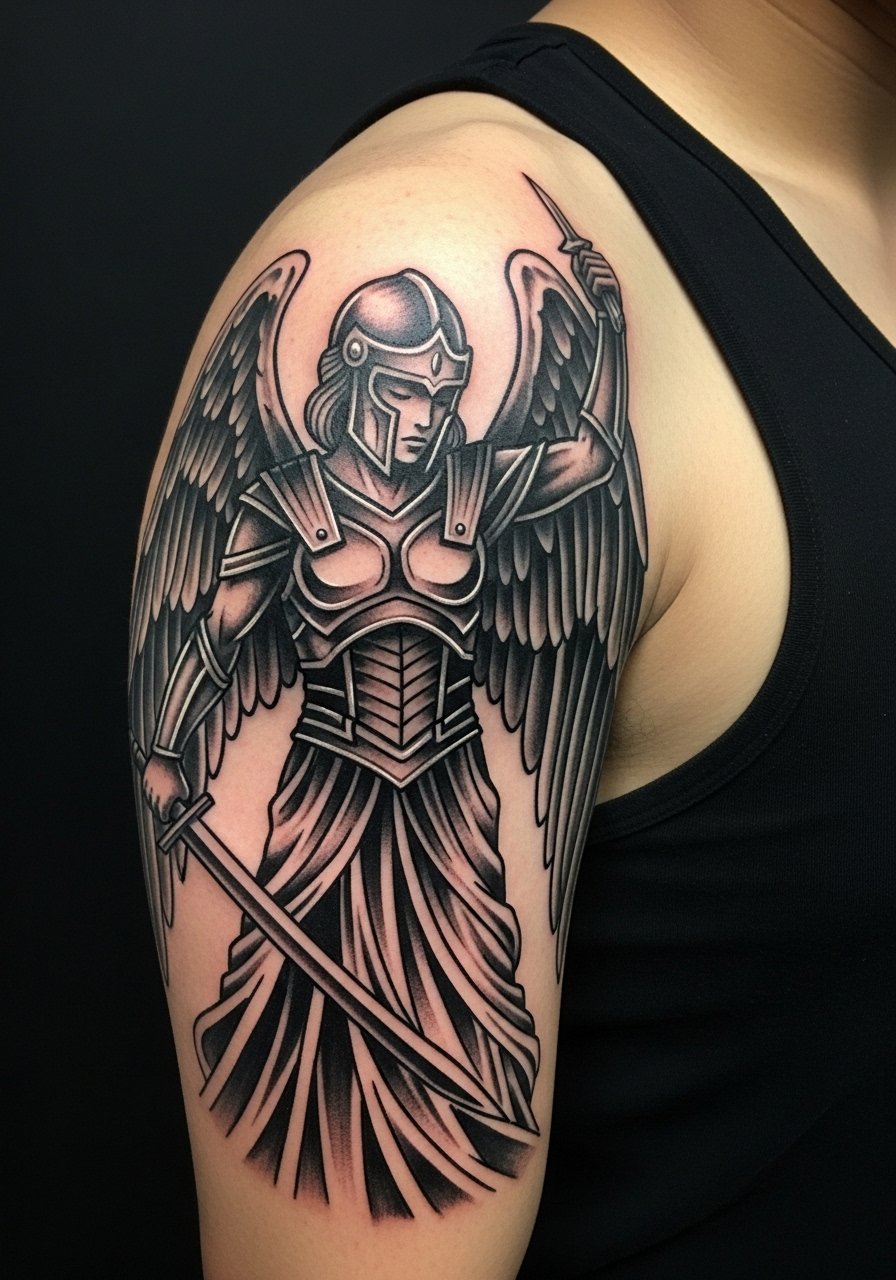
There is a raw visual impact with blackwork warrior pieces that travel naturally into upper arm sleeves. When you consult, be explicit about solid fills rather than stipple shading if you want longevity on mobile skin. A common mistake is shrinking the sword and armor elements too small for the deltoid, which loses detail as the skin moves. Sessions are usually two medium-length sittings and the shoulder cap will feel sharp in places. Show it off with a rolled sleeve henley that frames the bolder silhouette.
5. Ethereal Angel with Halo and Clouds Transitioning to Upper Arm
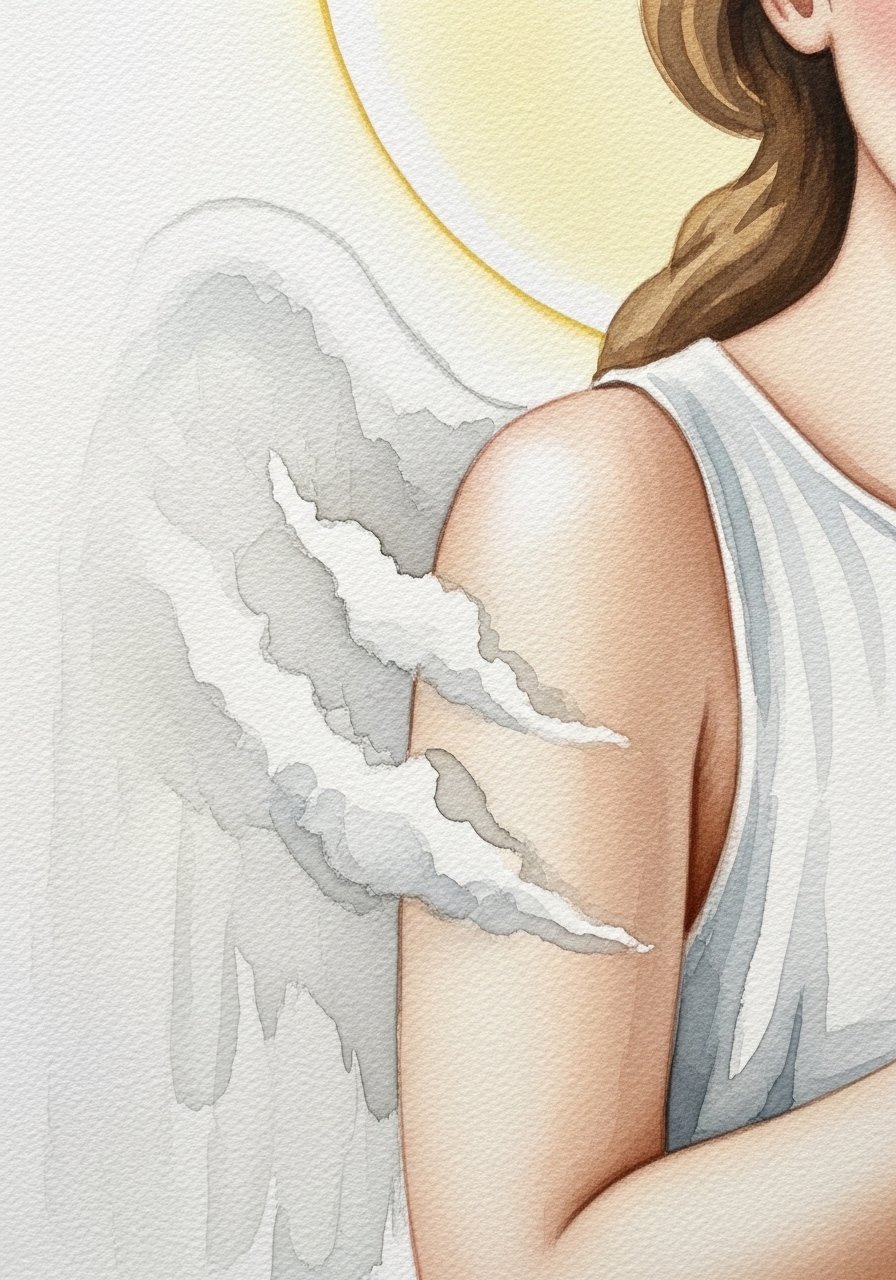
Watercolor washes read dreamy in the chair but they test shoulders in humid climates and on mobile skin. I advise asking for stronger anchor outlines where color meets skin so the form stays readable as pigments soften. The typical regret I hear is choosing watercolor for a shoulder with frequent sun exposure, which dulls soft washes faster than saturated realism. Session time is two to three sittings and short breaks help with shoulder soreness. For evenings out, pair the piece with a crop top halter to let the watercolor flow without fabric competing.
6. Fallen Angel Draped Over the Shoulder Blade
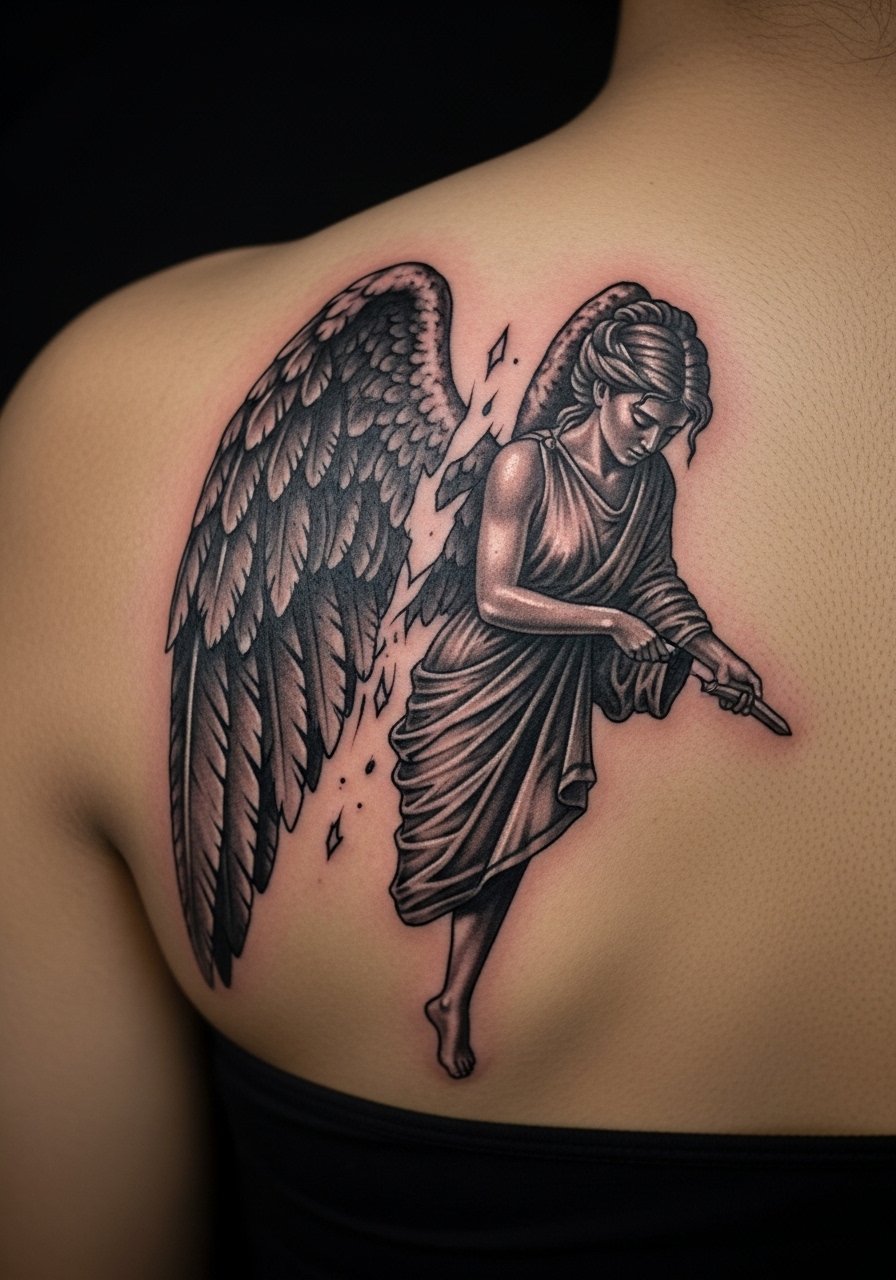
Most people pick this for themes of resilience and recovery because micro-realism captures delicate facial expression. Keep this design around 4 inches so the micro detail still reads. A frequent mistake is overloading the piece with tiny textures that the shoulder skin cannot hold. For a solid result, ask the artist for a simplified focal point and leave background textures airy. Pain is lower on the fleshy shoulder blade, but healing can bump under tight straps. Session wear that helps is a racerback tank so nothing rubs the fresh ink.
Studio Day Picks
The guardian, realism, and micro-realism pieces above demand careful prep and different first-week needs than the softer silhouettes.
-
Tea tree balm tattoo salve. People who sweat under straps like this for its lighter feel and anti-itch effect during that first restless week.
-
Lanolin-free tattoo salve. Better for humid climates because it breathes more than heavy petroleum ointments and reduces clogged pores on mobile areas.
-
Rice bran ointment for tattoos. Trusted by some folks with deeper skin tones to help color retention without the greasy residue that traps sweat.
-
Mushroom extract serum for inflammation. Gentle anti-inflammatory support for bony shoulder spots where swelling can be uncomfortable.
-
Hustle Butter original. A mainstream, thinner balm some artists recommend for the shoulder because it moisturizes without heavy pore clogging.
7. Ornamental Wings Framing a Shoulder Wrap
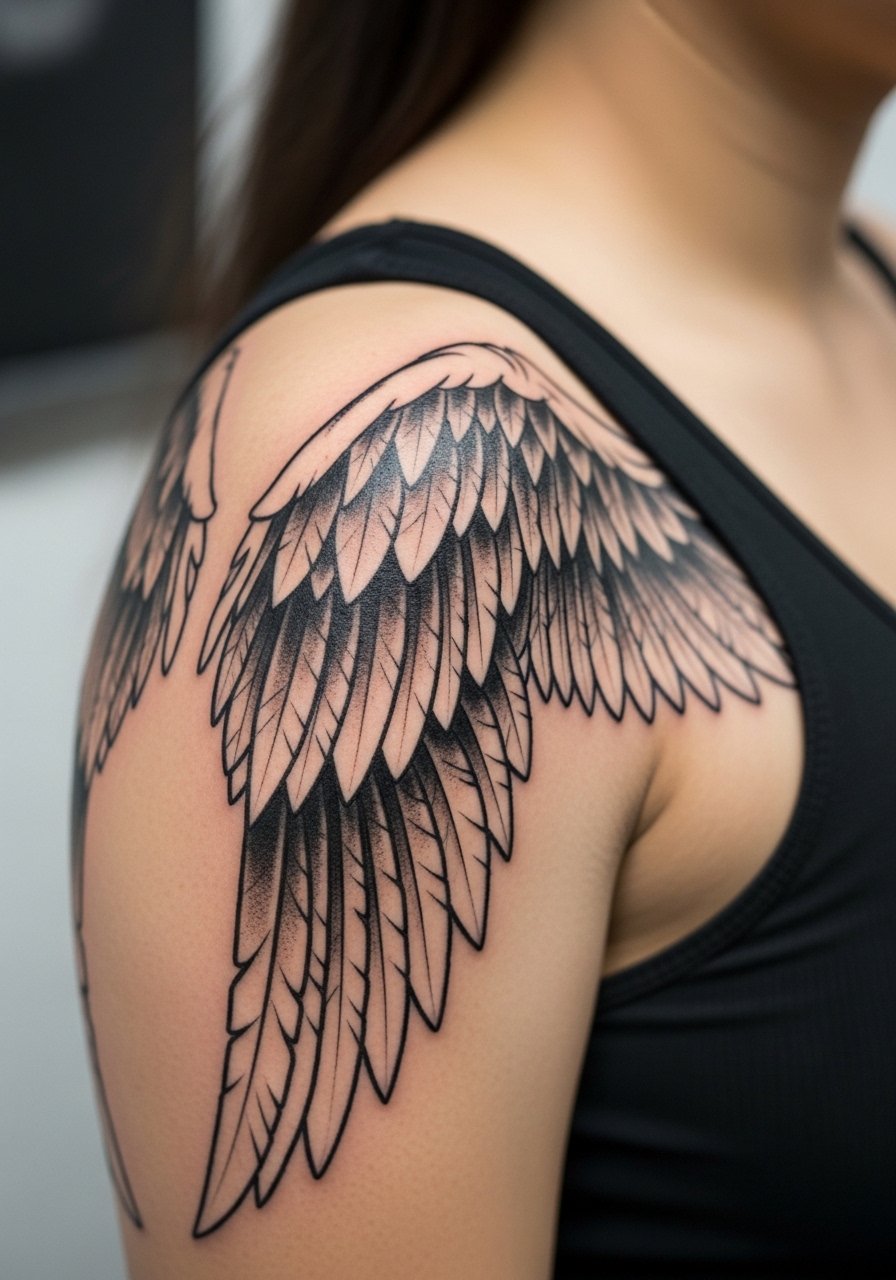
There is a collector appeal to ornamental wings that frame the shoulder and connect into sleeves later. Tell the artist you plan a sleeve expansion so the wing tips have clear negative space for future elements. One mistake is requesting maximal filigree at the tips, which crowds later additions. Expect three sessions for a full eight-inch wrap and moderate pain during longer fills. For showing it off, a fitted tank top men or a leather jacket slung over one shoulder can give the ornamental patterns room to read.
8. Minimalist Angel Outline on the Trapezius
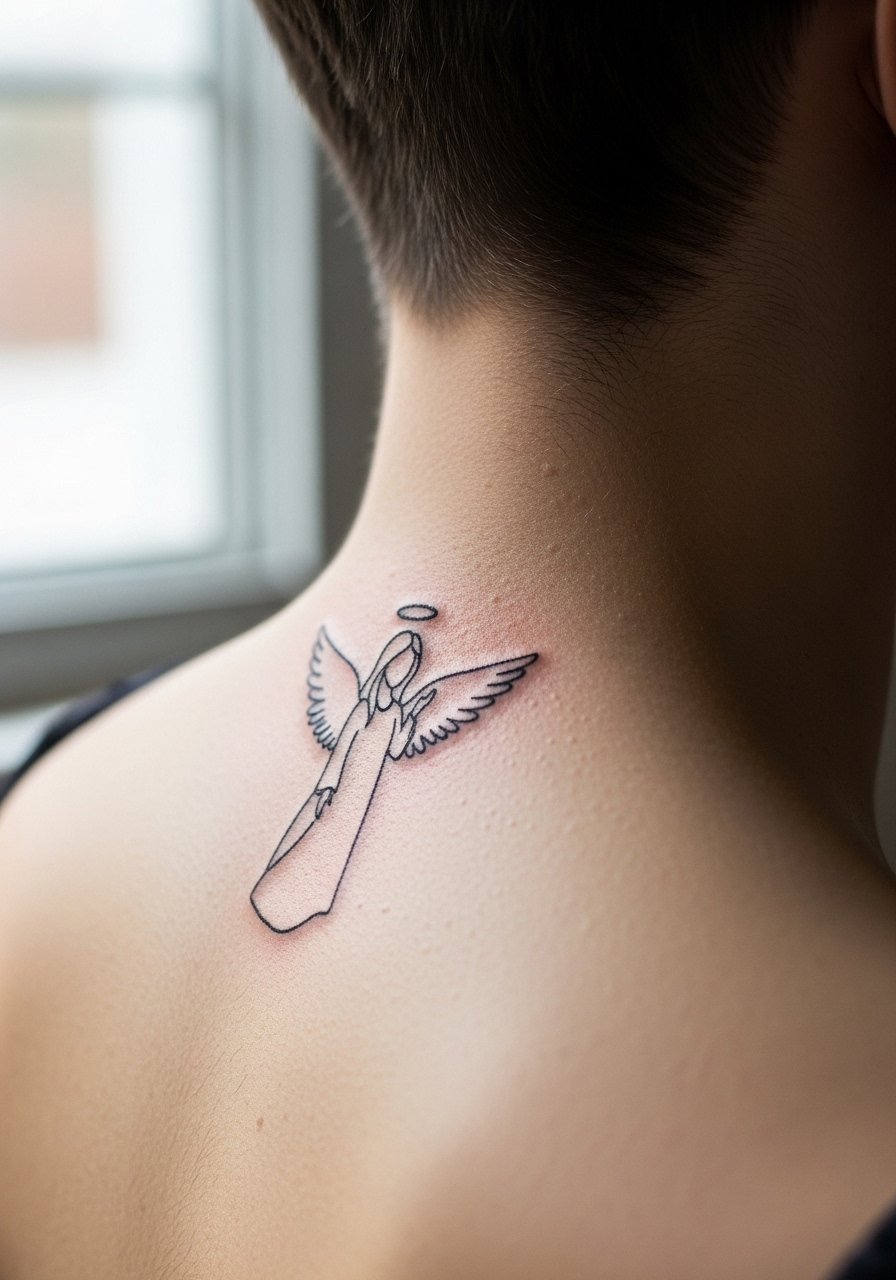
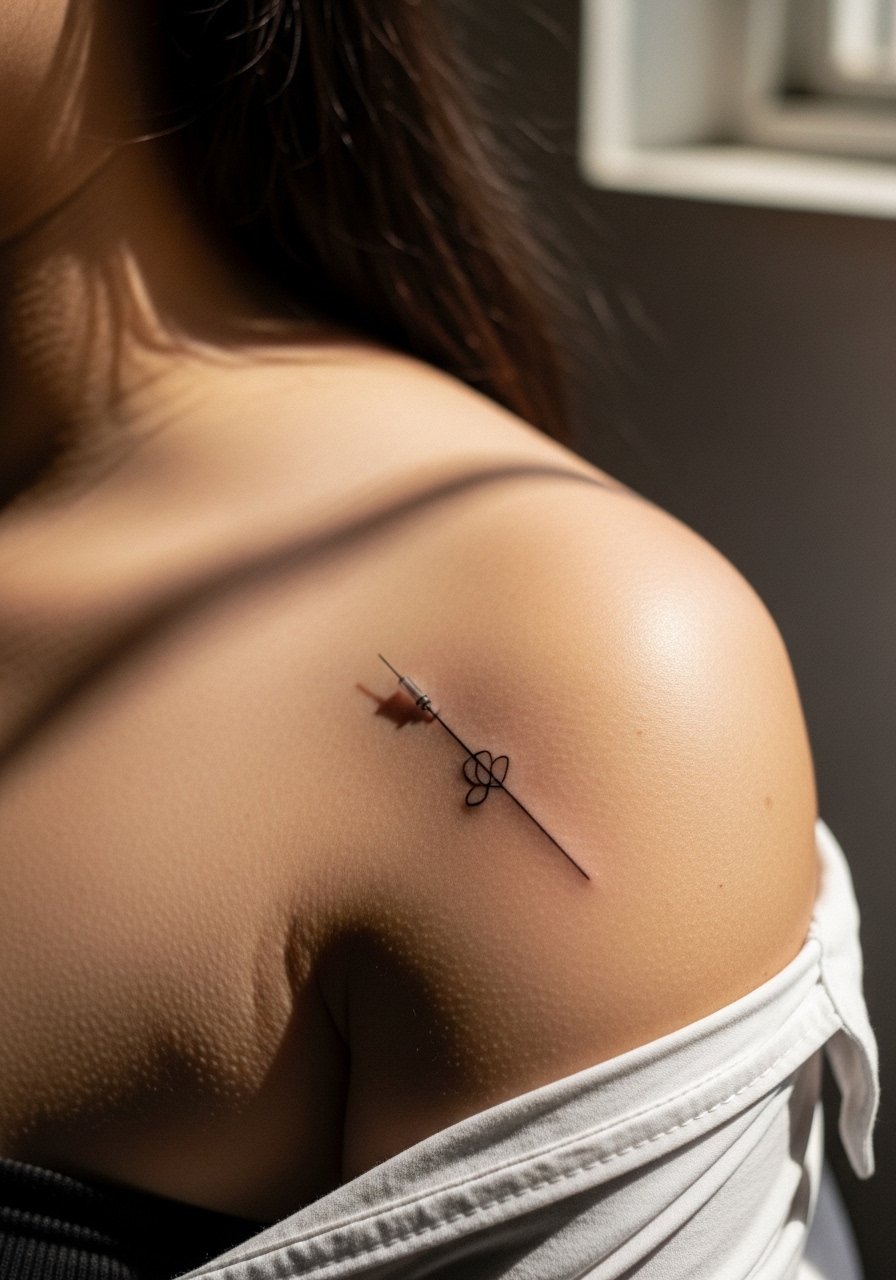
Minimalist trapezius work is a low-commitment option that heals clean when scaled properly. The big trap is making the outline too thin for that shoulder area, which experiences friction from straps and necklaces. Ask for a slightly thicker single-needle line and test how your necklace sits over the stencil during consultation. Pain is moderate because of proximity to bone. For session comfort, wear a sleeveless athletic tee you can lift without tugging at the neckline.
9. Neo-Traditional Angel with Vibrant Robes on the Deltoid
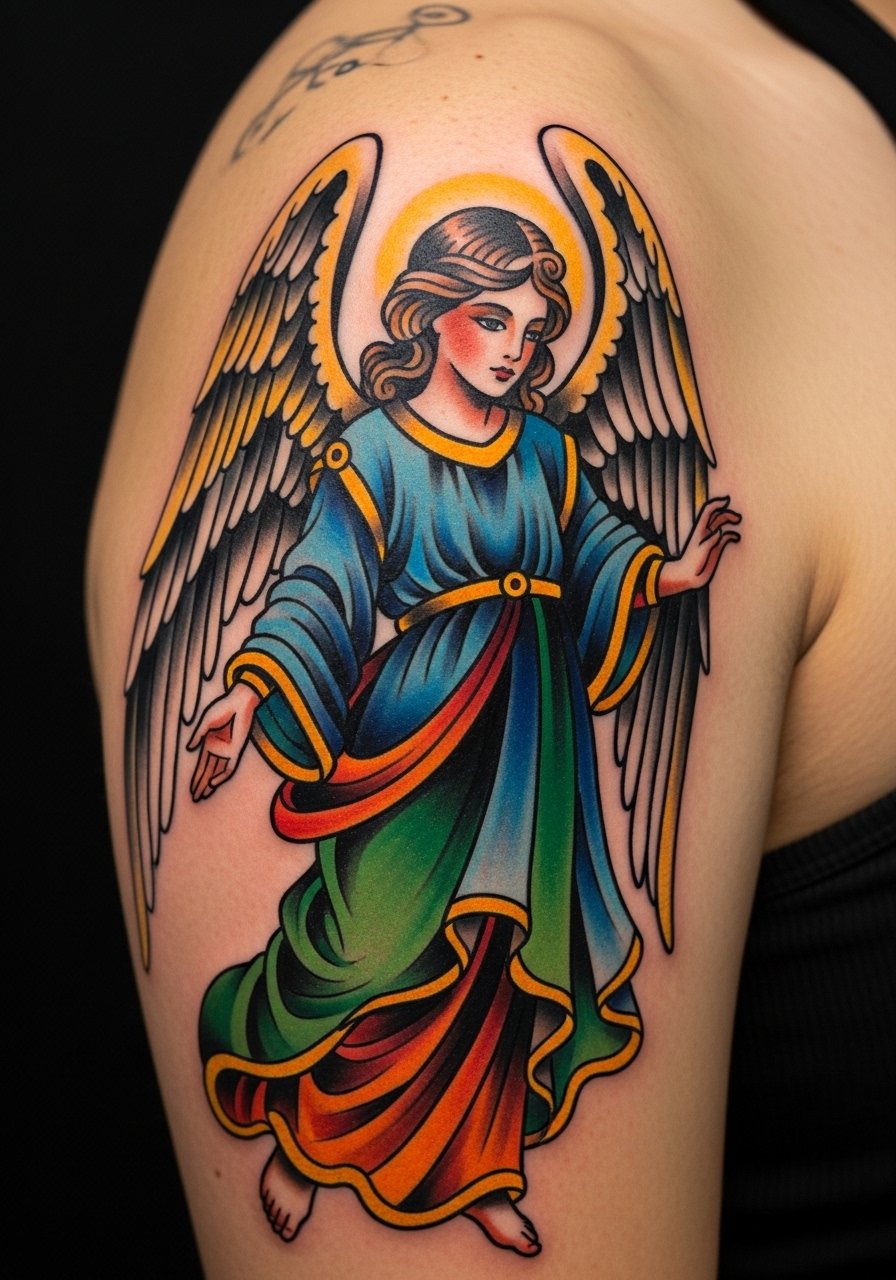
There is something about saturated neo-trad robes that reads from across a room and keeps shape as muscles move. In consult, say you want bold color blocks with clear black outlines rather than micro shading inside robes. The common misstep is asking for tiny ornamental dots inside robes that blur with shoulder motion. Sessions often take three sittings and color saturation can require a touch-up after sun exposure. Show this off with a fitted tank top men in dark tones to make colors pop.
10. Black and Gray Guardian with Feathered Details on Rear Shoulder
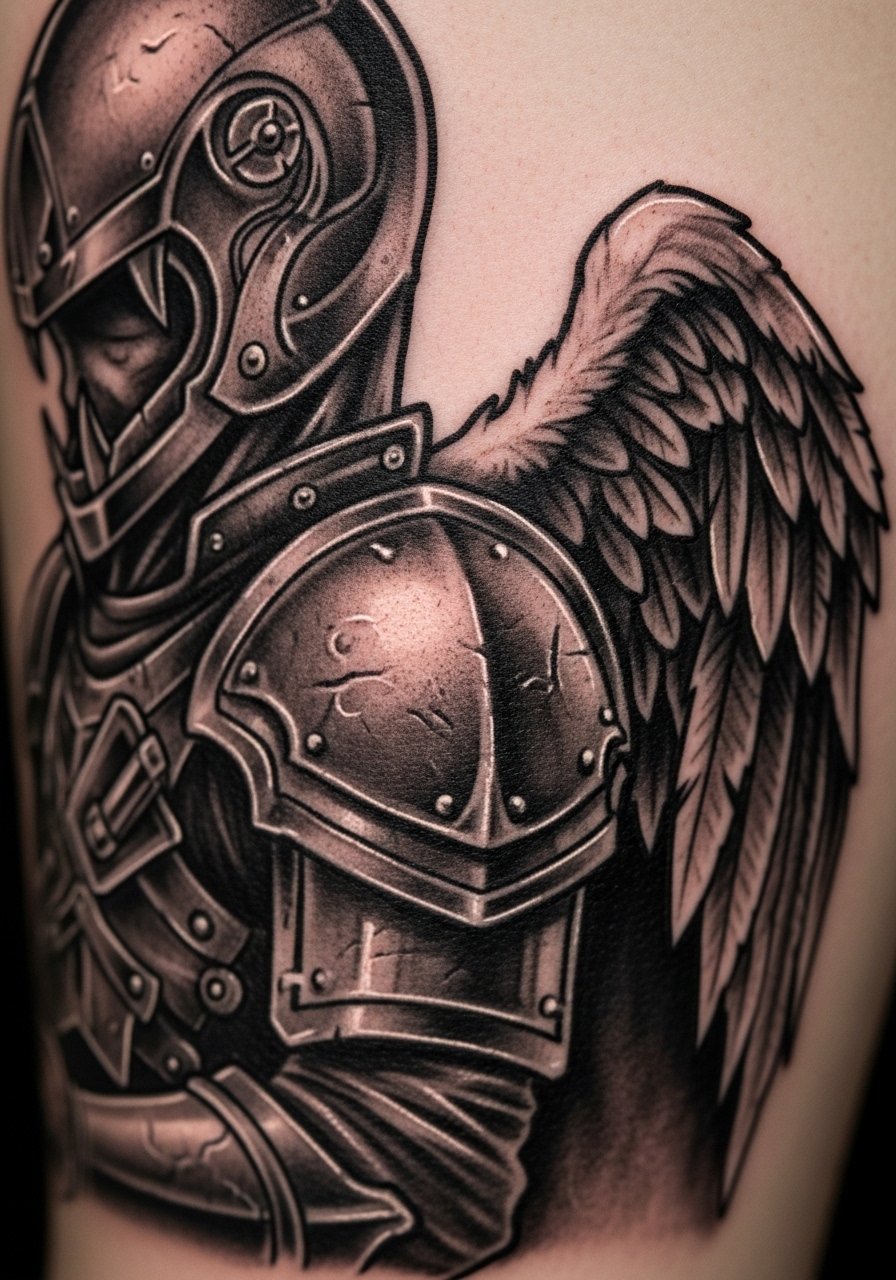
Photorealistic black and gray guardians do well on the rear shoulder because the fuller canvas supports feather gradation. Tell the artist to keep feather edges bold enough so individual barbs do not merge as the piece ages. A typical mistake is cramming too many tiny feather strokes into a small area, which reads as texture rather than feathers later. Expect four sessions and a careful touch-up plan. For dressy display wear a wrap shirt in neutral tones that reveals the back when you want to show the shading.
11. Ignorant Style Blocky Angel on the Shoulder Cap
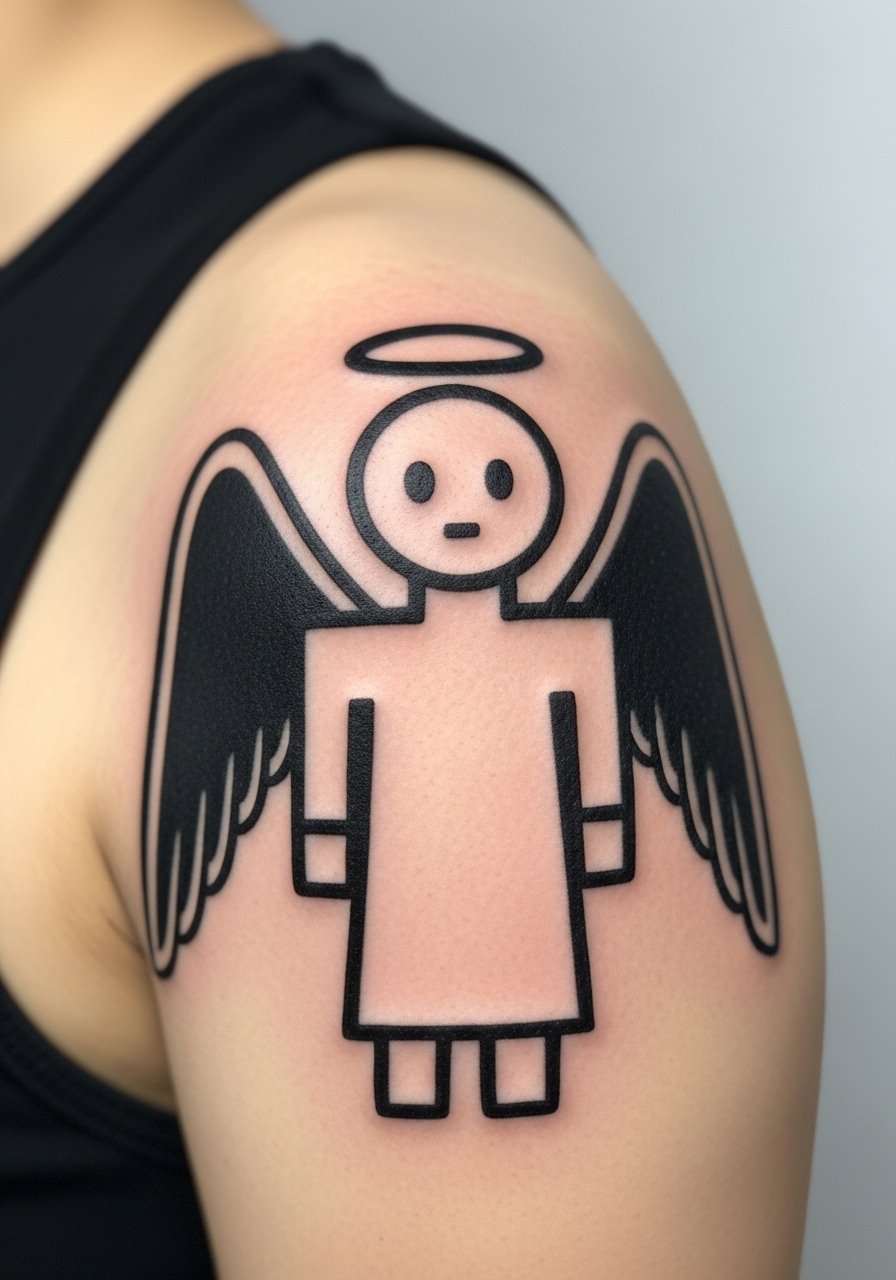
Ignorant style gives the classic guardian a gritty, modern twist with blocky fills and rough edges. When requesting this, say you want bold negative space and solid blocks rather than delicate shading. People sometimes ask for tiny expressive strokes within blocks that lose their intent after healing. Session time is generally two sittings and pain is concentrated along the bone area. Pair this with a short sleeve button down you can wear rolled to frame the bold silhouette.
12. Traditional Angel with Stars from Upper Back to Shoulder
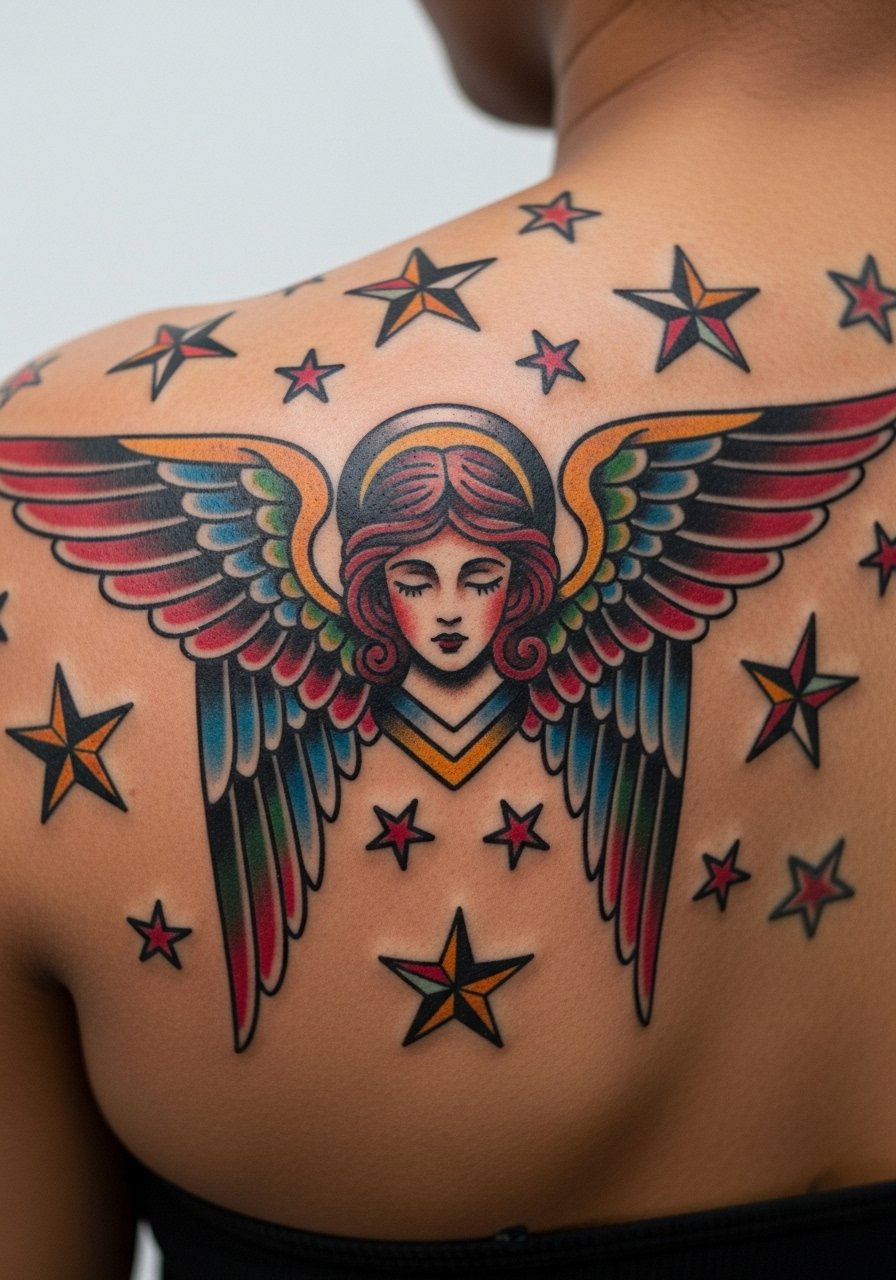
Traditional sailors' angels age predictably because of their strong outlines and simple color palette. Ask for classic solid black outlines and restrained color fills to avoid the patchy look that sometimes happens on mobile skin. A mistake is cramming too many tiny stars into the transition area which creates visual noise as the pigment settles. Sessions are two to three sittings and touch-ups are common for red and yellow pigments. For evenings, an open-back dress or a simple halter shows the upper-back sweep without covering the work.
13. Inverted Mirror Angel for Shoulder Symmetry
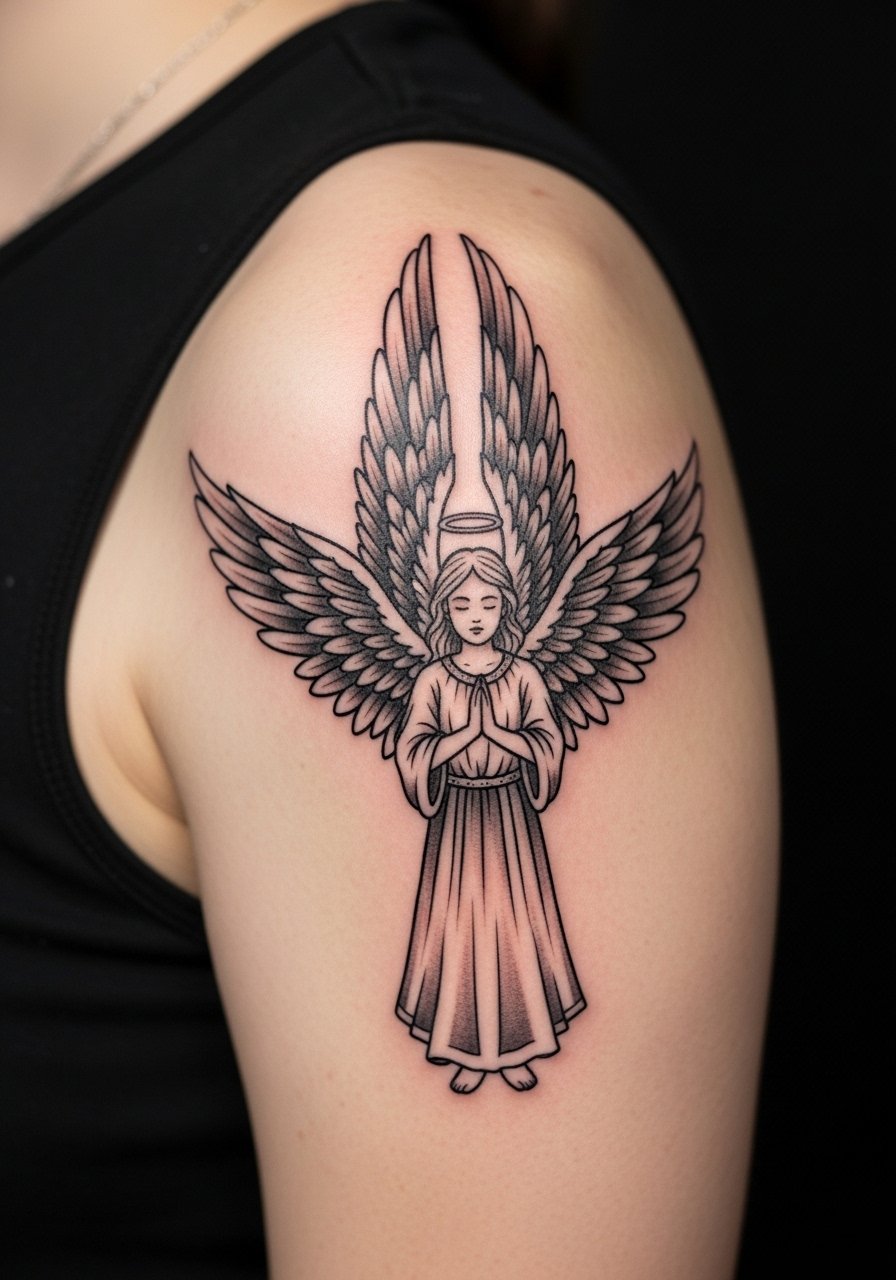
This is a niche but elegant option if you want the design to balance when arms are relaxed. The trick is in the reverse orientation so halos or wing tips read right-side-up when viewed in a mirror. A common mistake is failing to test the stencil with both arms relaxed during consult, which leads to unexpected asymmetry. Pain and sessions are similar to other shoulder cap work and you should discuss future expansion into sleeves. For daytime wear a button up linen shirt can be pulled aside during appointment and layered to display the mirrored effect.
14. Birthstone Halo Gem Angel on the Shoulder
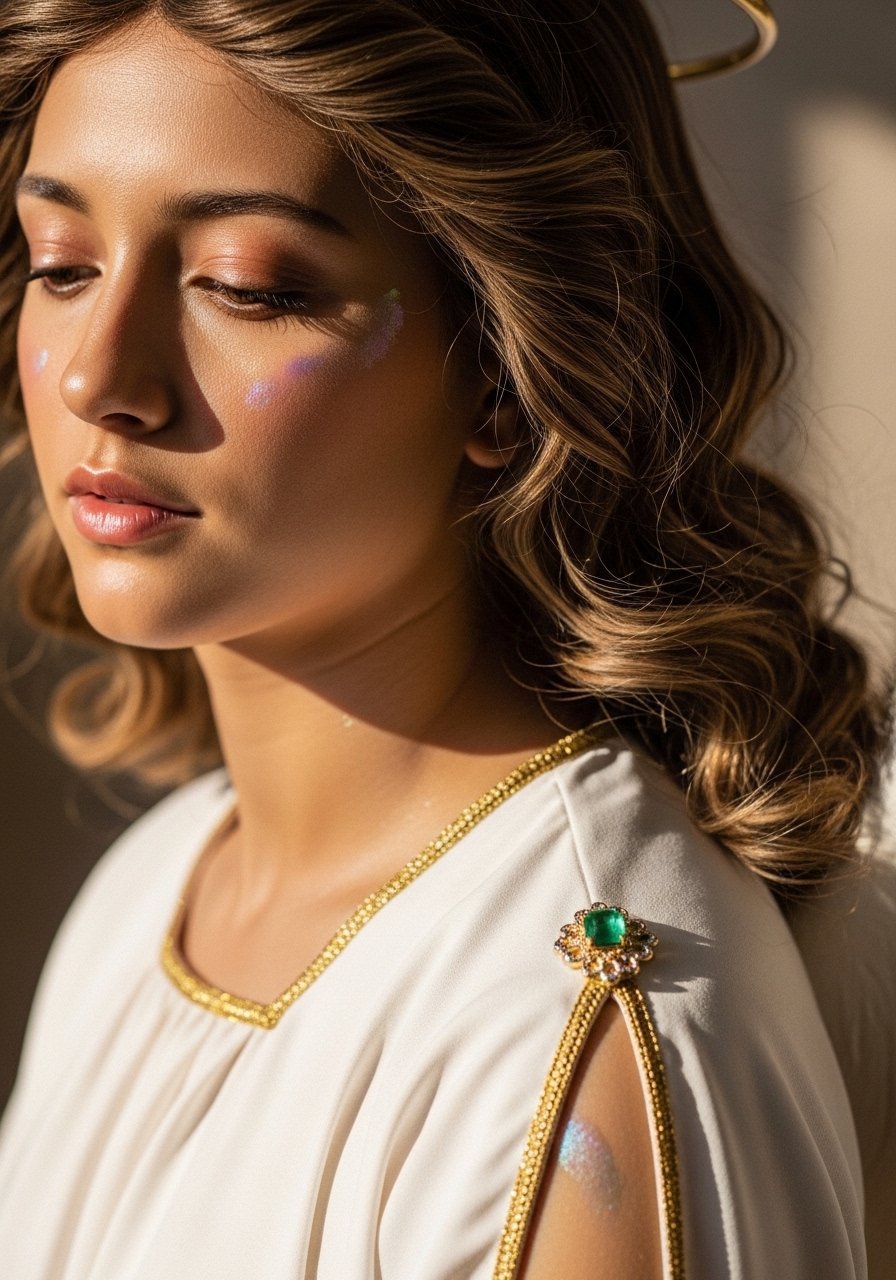
Adding a birthstone as a halo gem is a subtle personalization that avoids scripted dates but keeps meaning visible. In consultation, specify the hue and placement of the gem and ask for slight outline reinforcement around colored dots so they remain distinct as color fades. People sometimes expect tiny gemstone detail at very small sizes and then lose the hue after a year. Session time is short for the added gem, and the piece pairs nicely with a thin chain pendant necklace that sits above the halo without crowding it.
15. Hybrid Guardian with Pet Silhouette Embedded in Wings
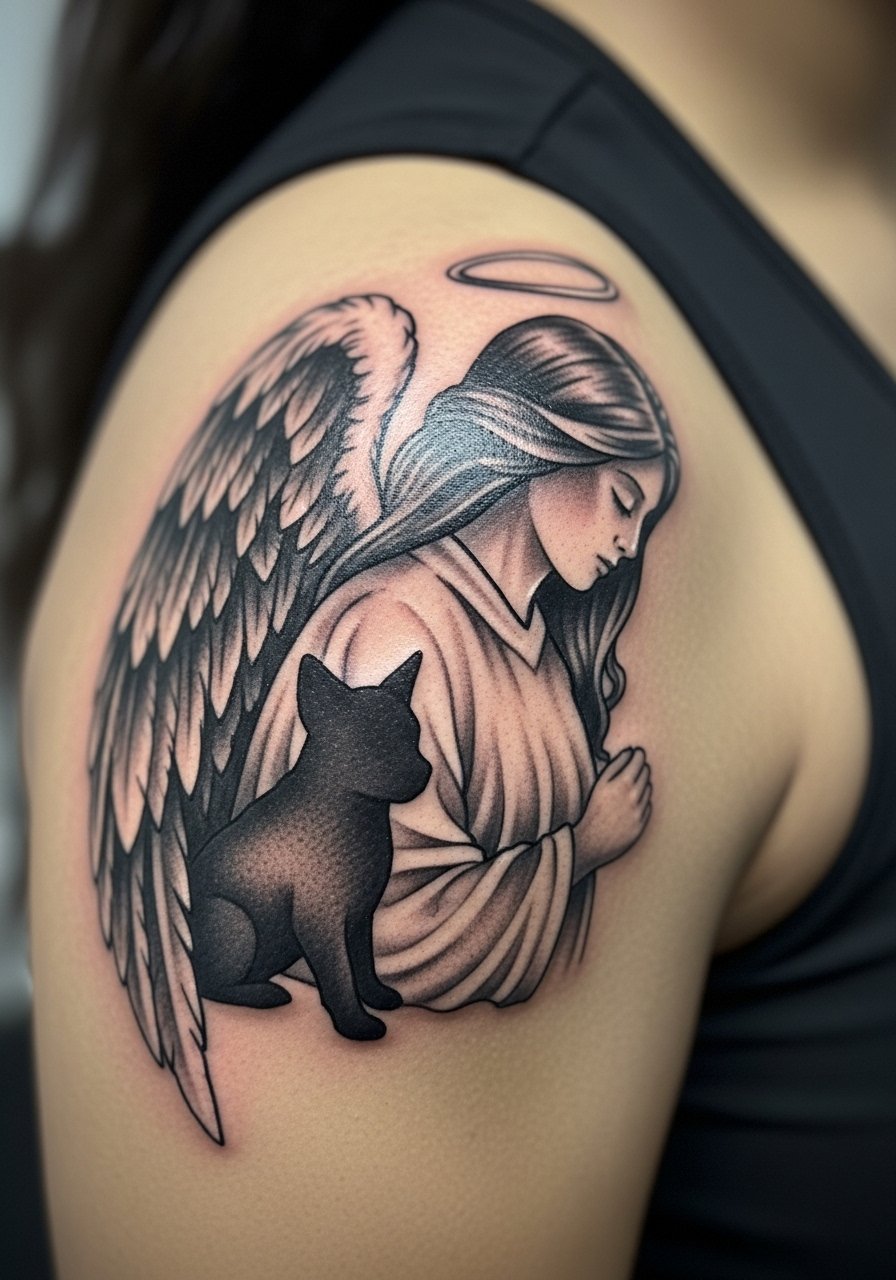
For pet loss memorials, embedding a tiny silhouette inside wing feathers is poignant and discreet. Tell your artist you want the pet element readable at a distance rather than microscopic. The usual wrong move is burying the silhouette in heavy shading where it becomes indistinct. Keep the pet motif as a bold negative space or a small solid silhouette to age well. Pain is moderate and session planning should include a reference photo of the pet to guide proportions. Wear an open cardigan over a tank for session access and for casual reveal.
16. Curved Deltoid Placement for a 3D Wing Lift Effect
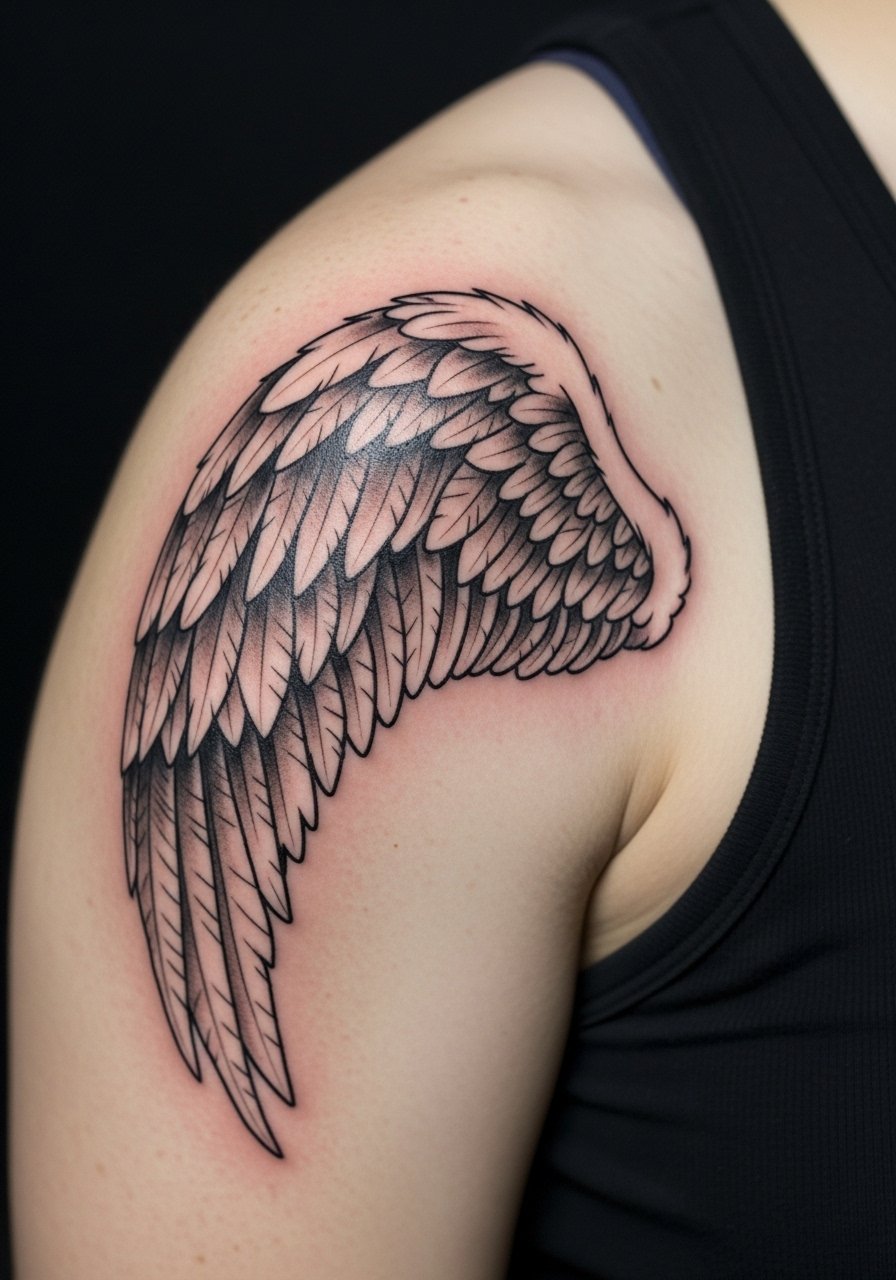
Using the deltoid curve to create lift gives wings a three-dimensional look when you flex. During consult, ask the artist to sketch the stencil with your arm relaxed and flexed so you can preview motion. A mistake is applying a flat, symmetrical stencil to a rounded muscle which flattens the illusion. Sessions are usually two sittings and touch-ups may be needed where the skin creases. For showing the lift, roll a sleeve with a short sleeve button down so the wing follows the arm line.
17. Dark Skin Optimized Bold-Line Angel on the Shoulder
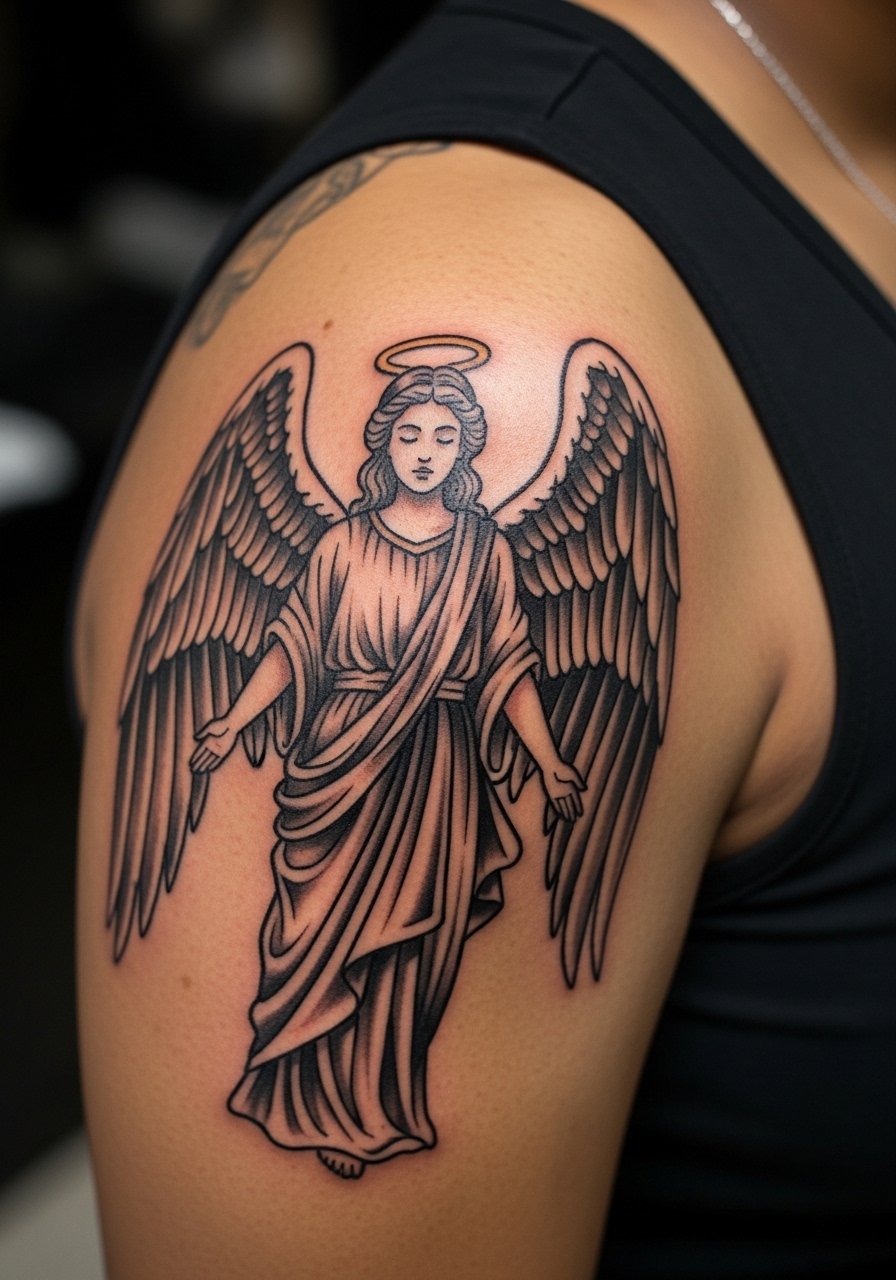
I've seen fine line angels that vanish too quickly on darker tones, so this approach leans into bolder line weights and clear contrast to preserve form. Artists are split on technique for dark skin. One camp recommends thickened outlines and richer pigments to keep the design legible. The other camp wants to test small patches of color or UV inks to see how the skin takes them. Ask for patch tests if you are unsure and specify stronger outlines for longevity. Expect low to moderate pain and plan for a realistic touch-up timeline around year two if needed.
Frequently Asked Questions
Q: Will a fine line angel on the shoulder need touch-ups more often than a bold-lined design?
A: It depends on placement and skin type. Fine line work usually requires touch-ups sooner on shoulders that rub against straps or see frequent sun. If you want the look but prefer fewer touch-ups, ask for slightly increased line weight and spacing during your consultation.
Q: Which healing method is better for shoulder tattoos, Saniderm or dry healing?
A: Artists and inked communities split into two camps. One camp favors Saniderm because it keeps the area clean and reduces scabbing. The other camp prefers dry healing for sweaty or mobile zones because film can trap moisture and bacteria. Consider your climate, how much you sweat, and what your artist recommends based on shoulder placement.
Q: How do I prevent a shoulder angel from stretching or warping if I gain weight or build muscle?
A: Placement and size matter. Outer shoulder and deltoid placements flex less dramatically than the shoulder blade or areas adjacent to the chest. If you expect body changes, ask your artist to design the wings with broader shapes and avoid extremely tight symmetry that warps with tissue change.
Q: Are there wardrobe choices that help new shoulder tattoos heal better during the first week?
A: Yes. Choose loose, breathable tops that do not rub the fresh ink. A loose button-down linen shirt or a racerback tank during the session reduces friction. Avoid tight straps and heavy backpacks until the area is healed.
Q: For dark skin tones, should I choose realism or bold blackwork for an angel?
A: Bold blackwork and strong outlines often read better over time on darker tones. Realism can look stunning but may need stronger contrasts and realistic expectations about touch-ups. Ask for a skin tone mockup and, if possible, a small patch test for any color accents.