
Fine line hand work looks beautiful in photos and then surprises a lot of people at year two when the lines start to soften. I've noticed the designs that actually keep character on hands are the ones planned with spacing, bold anchors, and sensible placement. Below are 17 reader-focused book tattoo ideas for the hand, with what to ask your artist, how they age, and when to plan touch-ups so your pages still read clearly years from now.
1. Open Book with Wings on Side of Hand
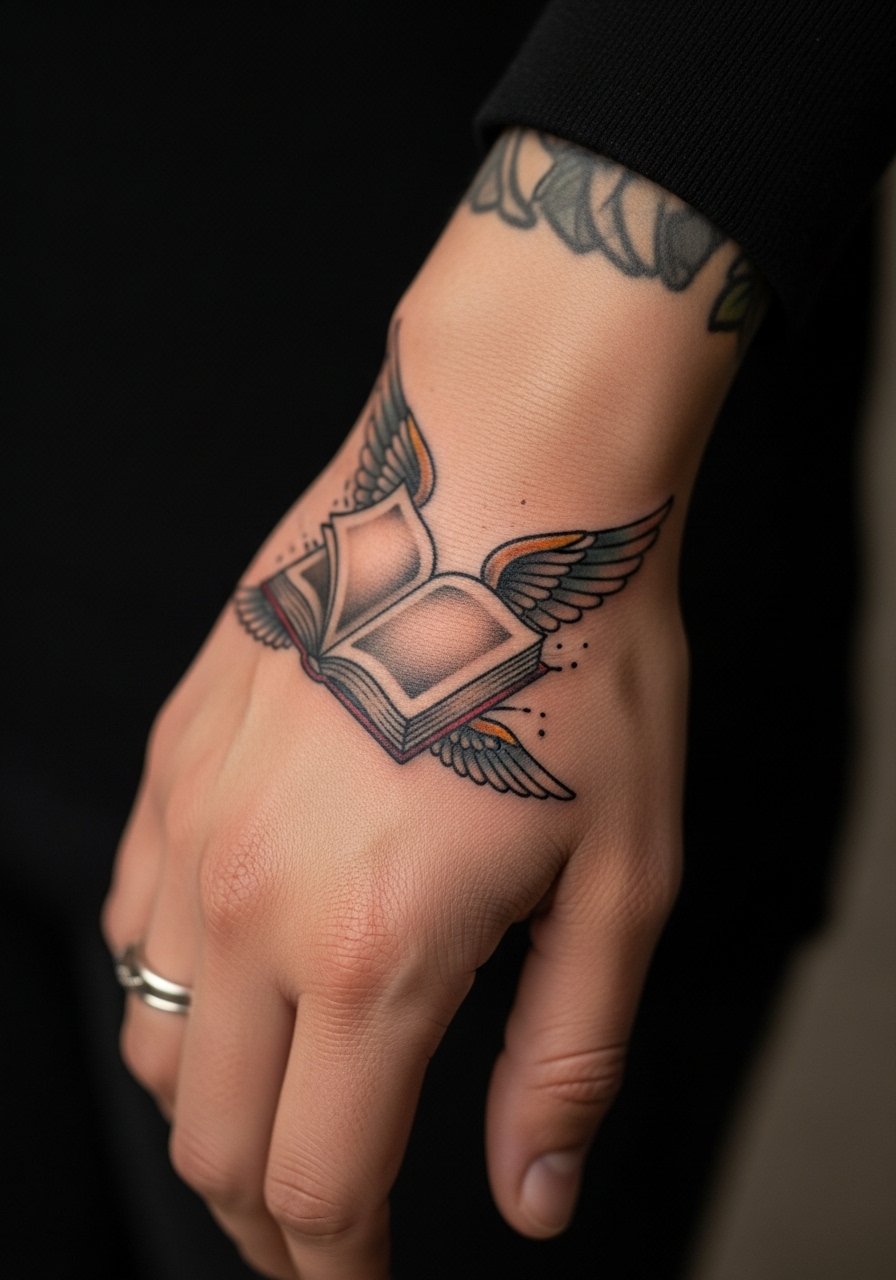
This neo-traditional open book reads bold without getting fussy, which is why I steer readers toward it for side-of-hand placement. Tell your artist you want a clear silhouette and slightly thicker outer linework so the wing accents do not bleed into the page detail as it heals. Expect the session to be quick, about 45 to 90 minutes, and the pain to be moderate because the skin is thinner on the side of the hand. A common mistake is insisting on ultra-fine details that vanish with daily washing and typing. Plan a touch-up at year one or two if you notice the wing tips losing saturation.
2. Magical Sparkle Book at Thumb Base

The fantasy-ink style with watercolor fills looks great at the thumb base when colors are kept saturated and the linework stays bold enough to hold the shape. Bring references showing the exact color intensity you want and ask the artist to prioritize contrast between the page lines and the washes so the book still reads after six months. Expect a short single-session appointment and a sharp sting near the base of the thumb. Watercolor fades faster on hands, so plan for touch-ups earlier than you would for arm work.
3. Book and Flower Combo on Top of Hand
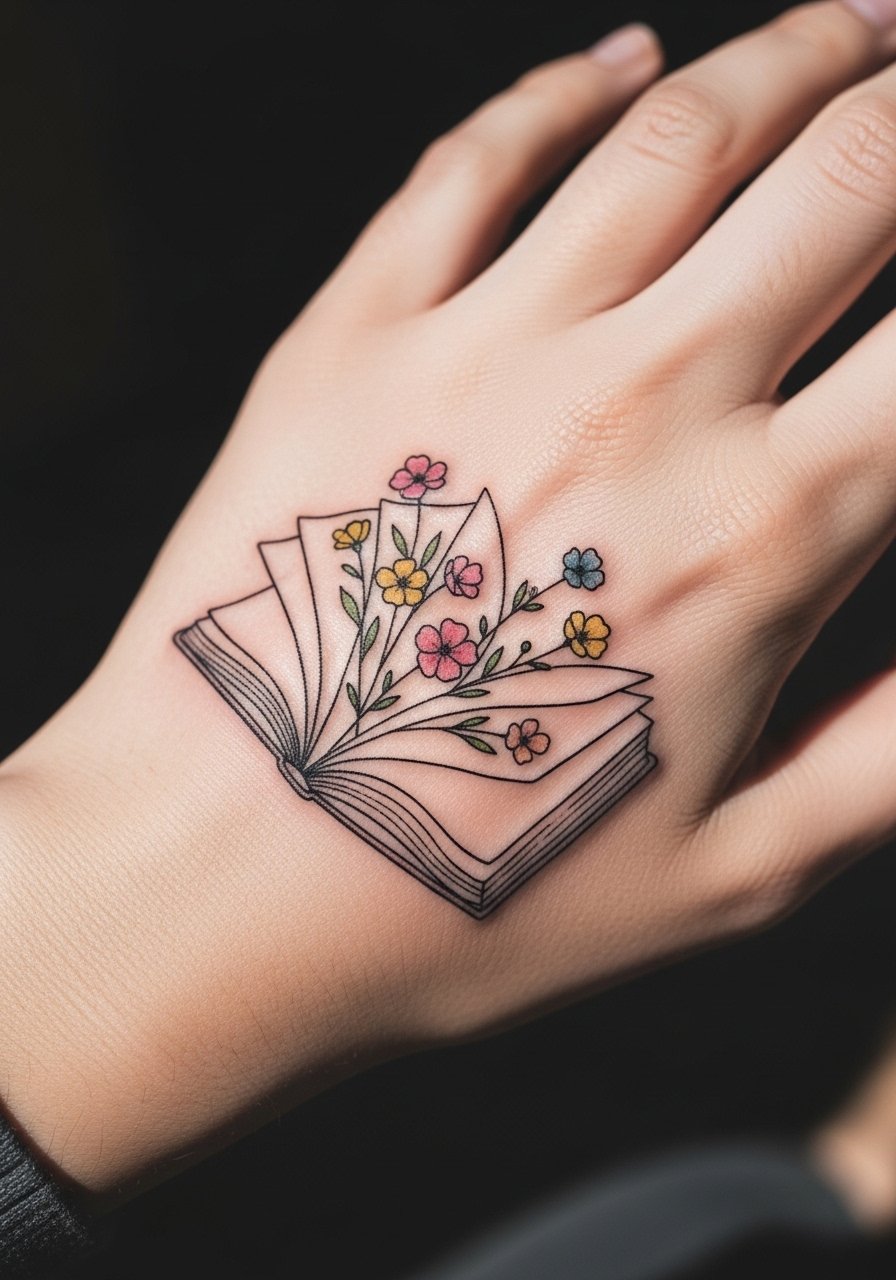
This mix gives a narrative feel without being densely packed. When consulting, ask for slightly bolder stems and leave the petal colors soft so the linework reads even as the pigments soften. Top-of-hand placement is visible and ages faster from sun and friction. The biggest error I see is putting tiny script between petals that blurs within a year. Wear a white linen button down when you want to show it off and choose a session top you can roll up easily so the artist has clear access.
4. Library Shelves Miniature on Back of Hand
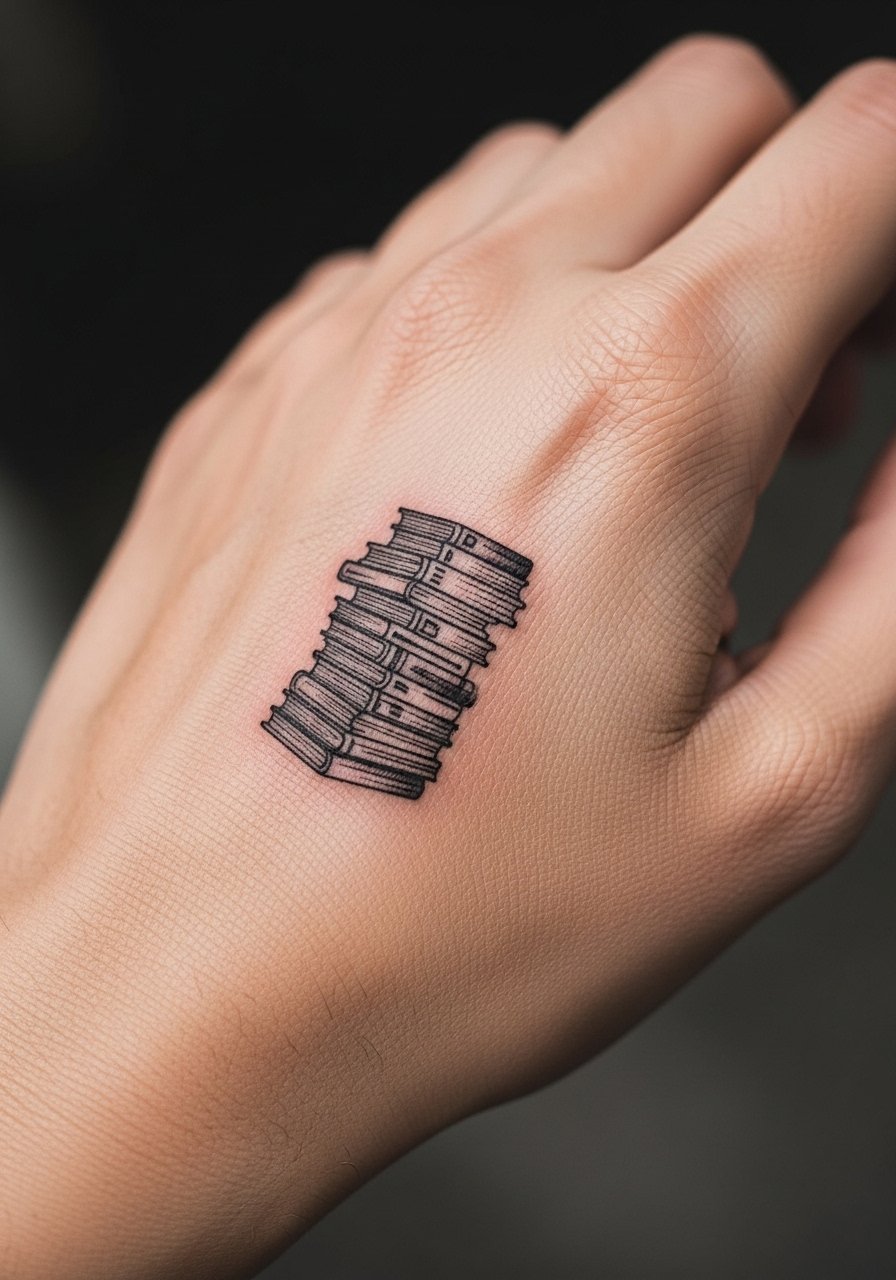
A 1-inch library shelf is tiny but delightful when done with confident blackwork. I recommend keeping spacing between spines wider than your eye wants at first so the stack does not merge after healing. This placement is forgiving for modest size, and touch-ups are usually simple. A frequent mistake is squeezing in titles or micro script; that detail often blurs. For appointments, wear a short-sleeve shirt so the artist has full hand access and plan for a 30 to 60 minute session.
5. Heart-Shaped Book on Knuckles
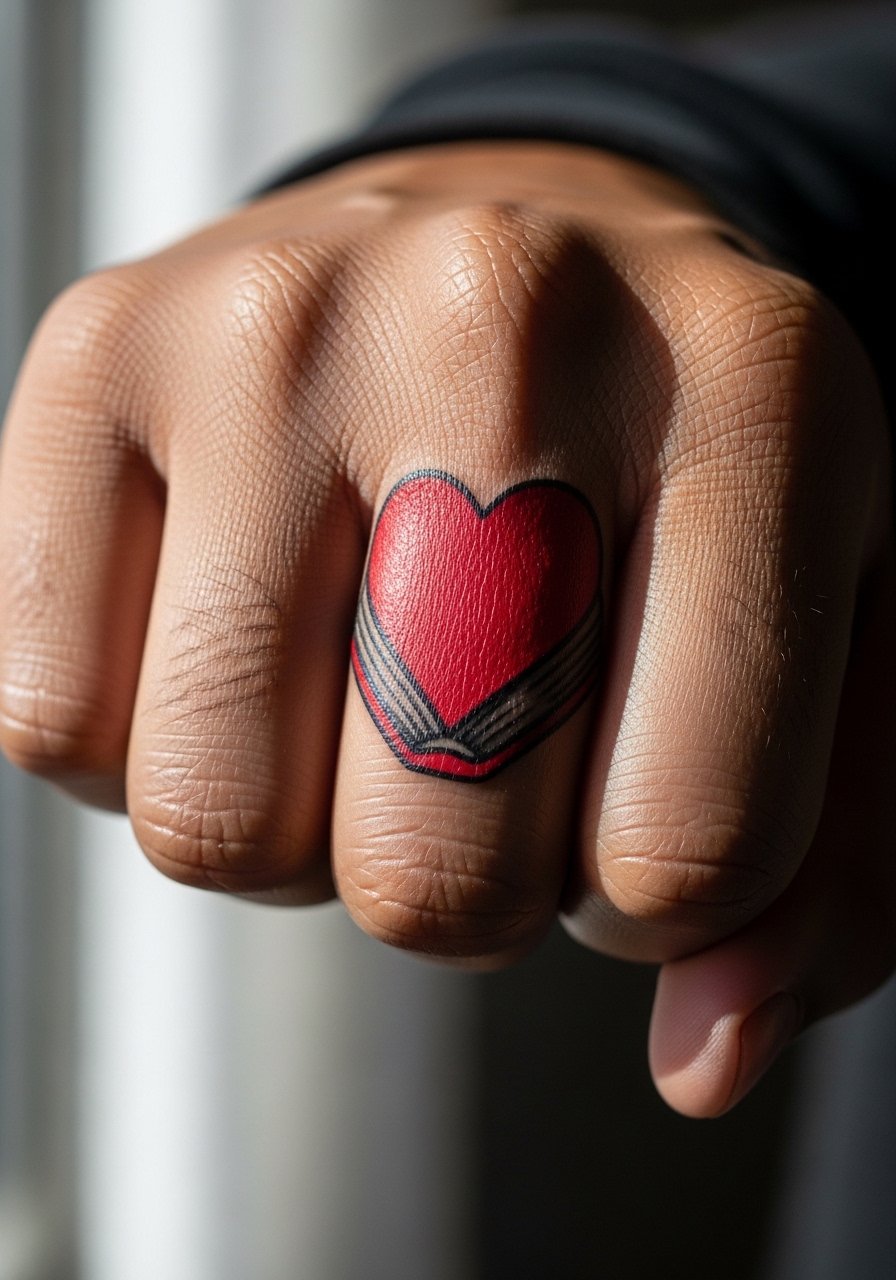
Knuckle work hurts more than you expect and it also ages uniquely because knuckles move constantly. If you want this bold traditional look, ask for thicker outlines and simplified shading to reduce blowout risk. The session is short but intense, and many shops will split time across two sittings to minimize discomfort. Artists disagree about numbing on knuckles, so ask where they stand before booking. Keep fingers ring-free during the session so nothing interferes with stencil placement.
6. Feather Bookmark in Hand Web
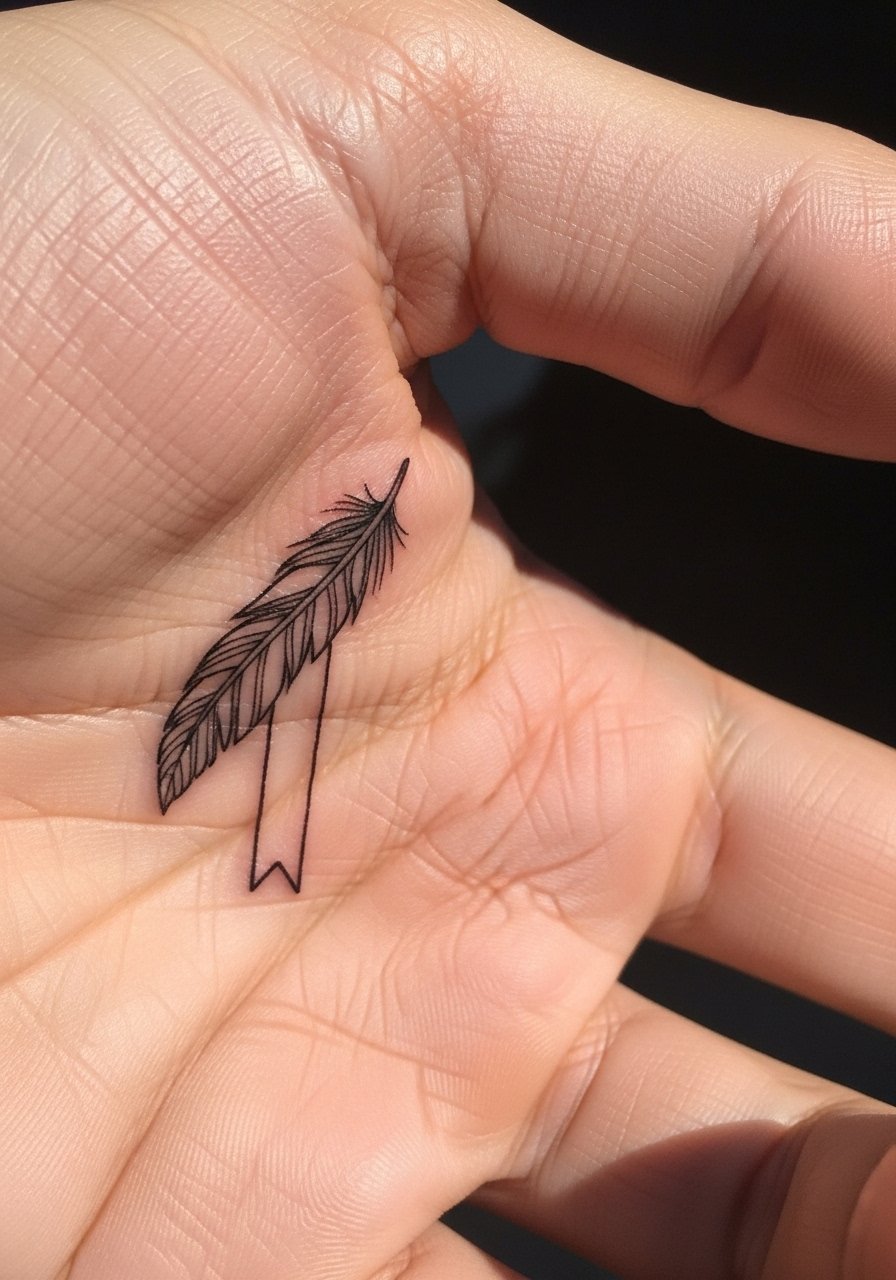
This hidden spot is clever and low-profile until you reach for a coffee. Hand web skin moves a lot and is prone to fading. One camp recommends bold outlines for web pieces for longevity, and the other camp says with exact needle depth and spacing a fine single-needle tattoo can hold. Name both camps in your consultation and ask the artist which approach they use. For the session, plan for a quick single visit and wear a short-sleeved top. Pair the finished piece with a neutral manicure and a thin bangle stack to frame it.
Pre-Session Essentials
The wrist and finger pieces above heal differently from larger hand work, so a few specific items smooth the session and the first week.
-
Frida Healing Tattoo Butter. A thinner balm that many people find less greasy than heavier ointments, helpful for finger and web placements that endure frequent washing.
-
Tattoo Goo Aftercare Cream. Absorbs quickly and keeps fine line work from getting over-saturated during the first week, which matters for top-of-hand and wrist details.
-
Cicaplast Multi-Balm. Good for dry climates when established hand pieces need targeted moisture without heavy residue.
-
Revertat Tattoo Cream. Lightweight option some clients prefer for bony hand areas that itch during healing.
-
Aquaphor Healing Ointment. A thin layer for the immediate post-session window helps protect fine line placements on the wrist and thumb base without leaving a thick film.
7. Typewriter Outline Crossing the Top of Hand
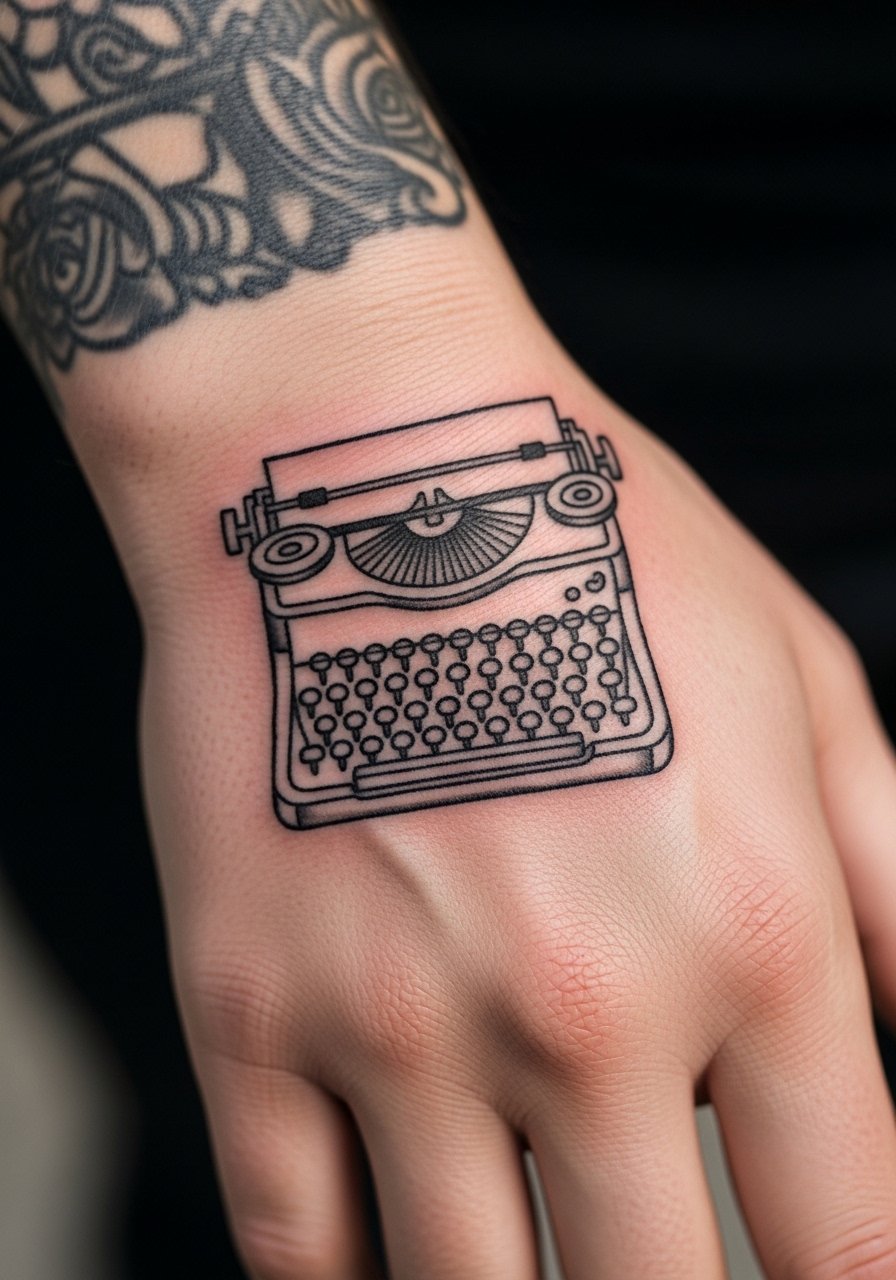
Vintage typewriter work reads like a writer's stamp when placed across the top of the hand. Ask your artist to simplify the smallest keys and to keep contrast high between body and key details for longevity. Top-of-hand motion causes some softening, so expect a touch-up in two years. The session may be around 60 to 120 minutes depending on size and gray shading. A common error is insisting on tiny text on the keys. For showing it off, pair with a slim minimalist watch worn on the opposite wrist.
8. Book Stack with Tiny Quote on Back of Hand
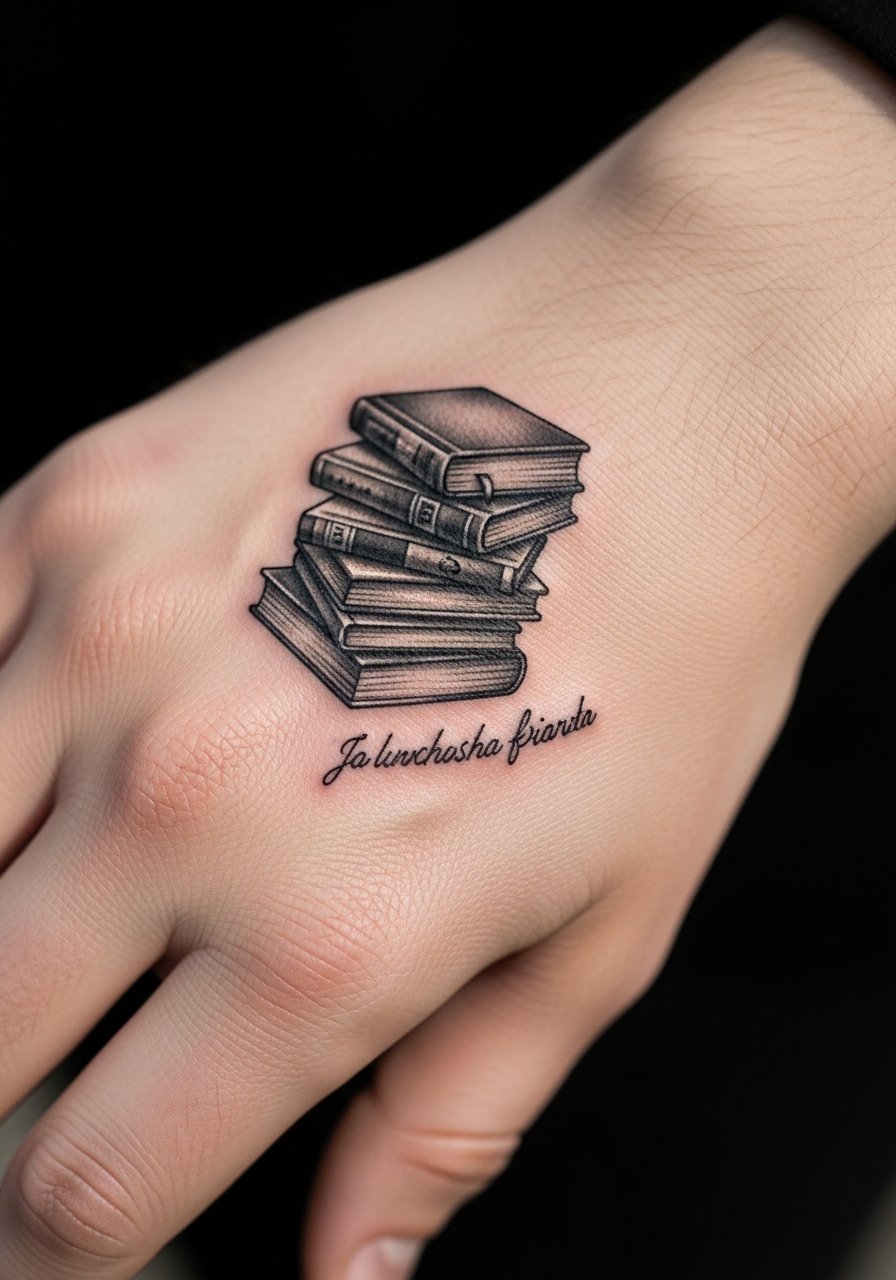
Two things make this idea succeed. First, the stack needs firm black anchors at the edges. Second, the quote must be intentionally large enough to survive healing. I tell readers to pick short, high-contrast script and to accept that script may soften into a texture rather than remain razor-sharp years later. Plan for a two-session approach when you want both realistic shading and legible script. If you have darker skin, ask the artist for examples of healed work on similar tones before booking.
9. Open Pages Flipping on Inner Wrist
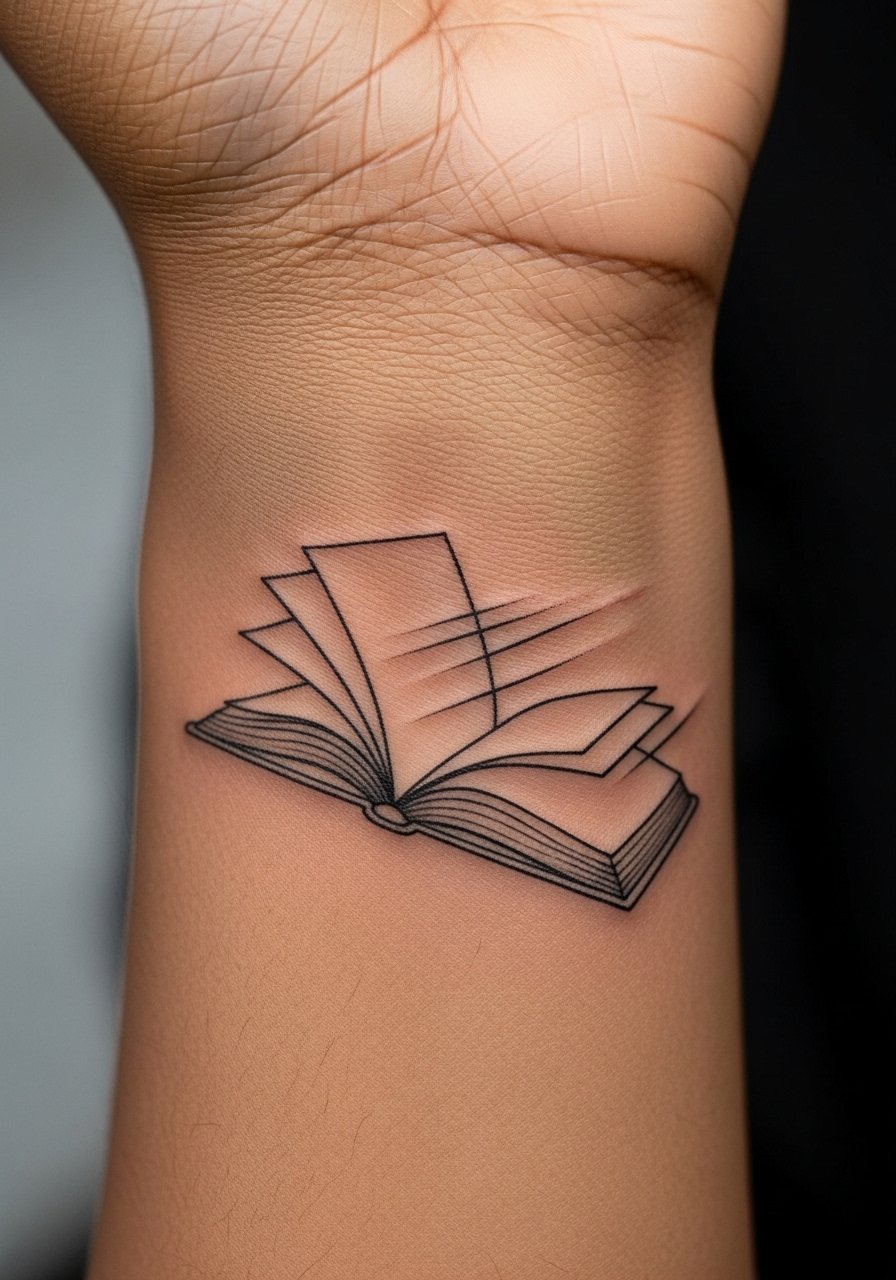
An inner wrist flip conveys motion and ongoing chapters. Because wrist skin sees frequent movement and washing, I recommend spacing motion lines and anchoring page corners with darker linework. The pain is low to moderate and the session is usually under an hour. The main mistake is cramming too many motion strokes into a narrow band. For showing it off, slide on a dainty chain bracelet on the opposite wrist so the tattoo stays the visual focal point.
10. Bibliophile Owl Perched on a Book Over Knuckles
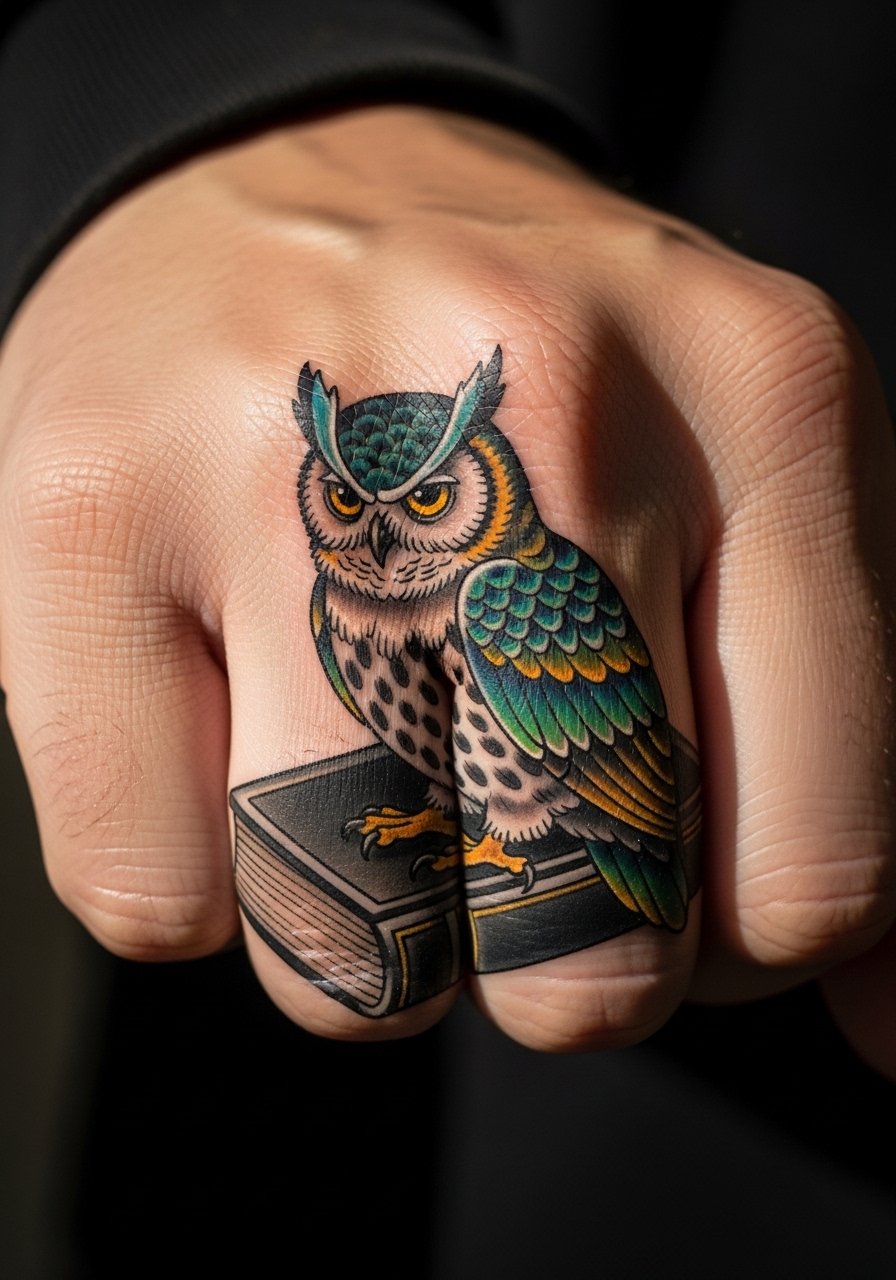
Combining an owl and a book is a statement on wisdom and reading. Knuckle and upper-hand placements demand simplified composition and bold outlines to resist blowout. Expect significant pain and possibly two short sittings. The common issue is over-detailing feathers or tiny eyes. Tell your artist you want readable shapes at arm's length, not micro-realism. This style benefits from strong black bases and selective color accents to retain contrast.
11. Vintage Book Spine Tattoo Along the Side Finger
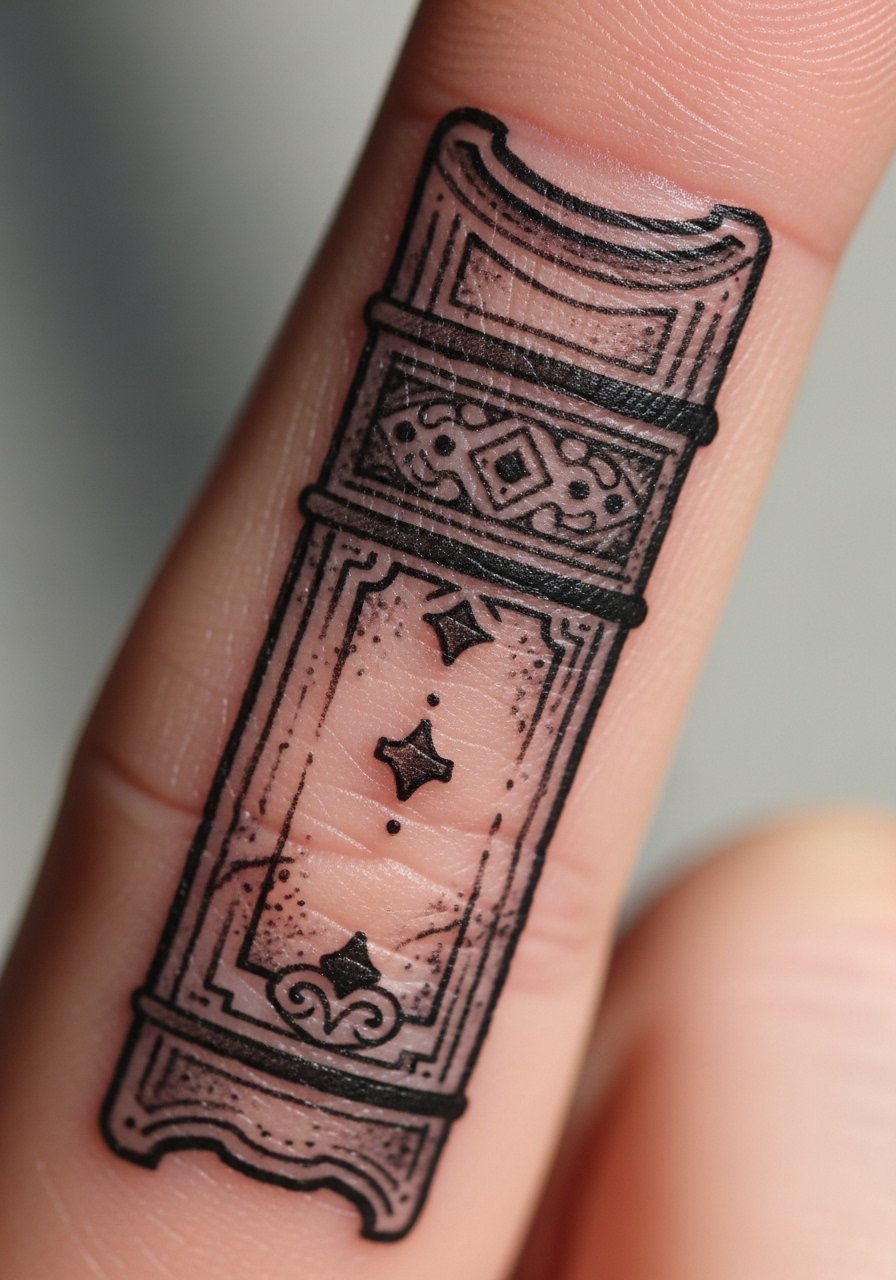
A spine on the finger is playful and private, but fingers heal differently because of skin thickness and movement. Request thicker spine borders and skip micro lettering unless the artist can show healed finger scripts. Sessions are short but the area often needs multiple touch-ups. Common mistakes are trusting the initial sharpness to last without planning for a yearly refresh. For the appointment, wear a loose cotton tee so sleeves do not rub the area while it heals.
12. Reading Glasses Resting Over a Book on Top of Hand
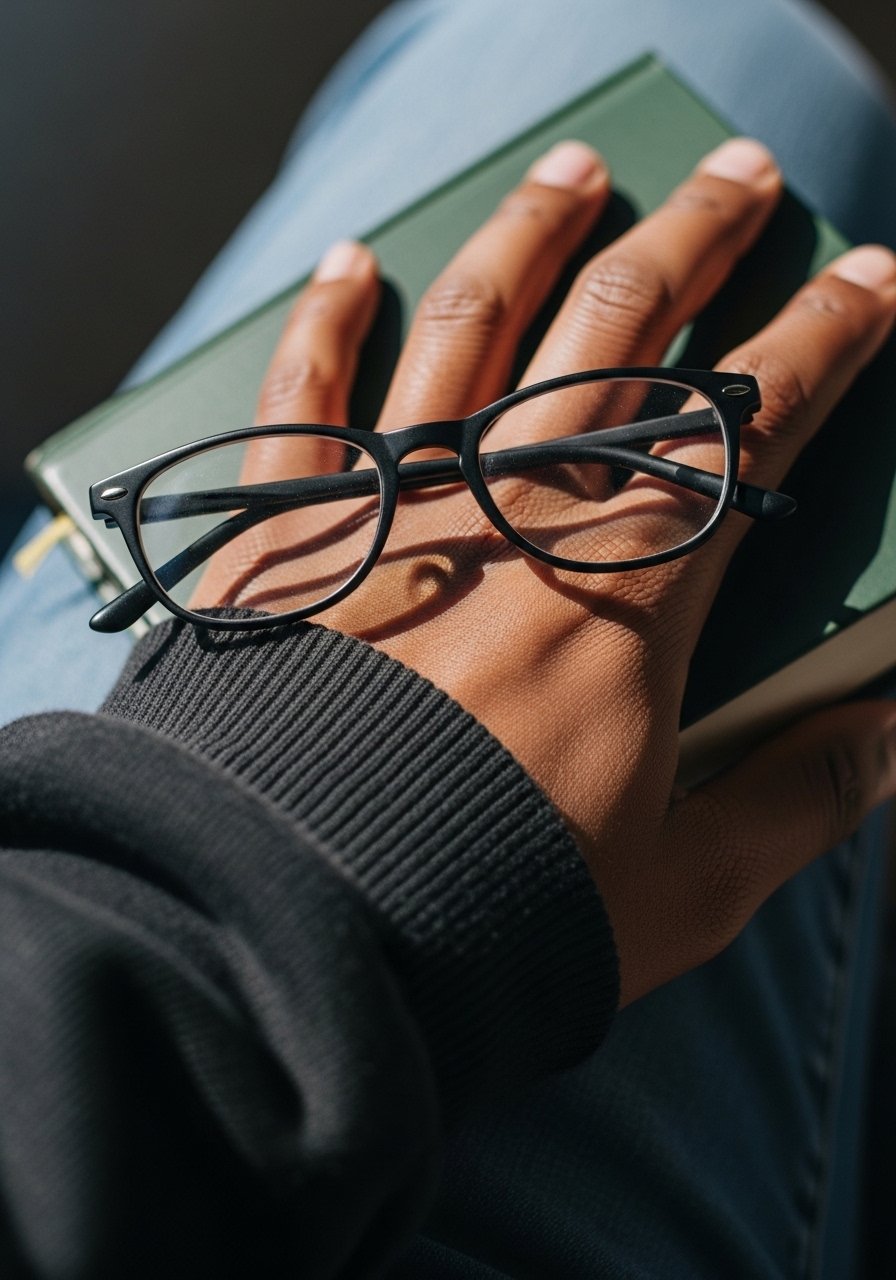
This minimalist cartoon-style idea is great for people who want a whimsical nod without heavy commitment. Keep lines simple and avoid shading that could smudge into the glasses frame. The session is quick and the pain is tolerable. The most common mistake is pushing for tiny lens detail that becomes a dark blur later. If you want to emphasize humor, choose a slightly bolder outline so it reads clearly in photos.
13. Quill Pen Dripping Ink Along Thumb Base
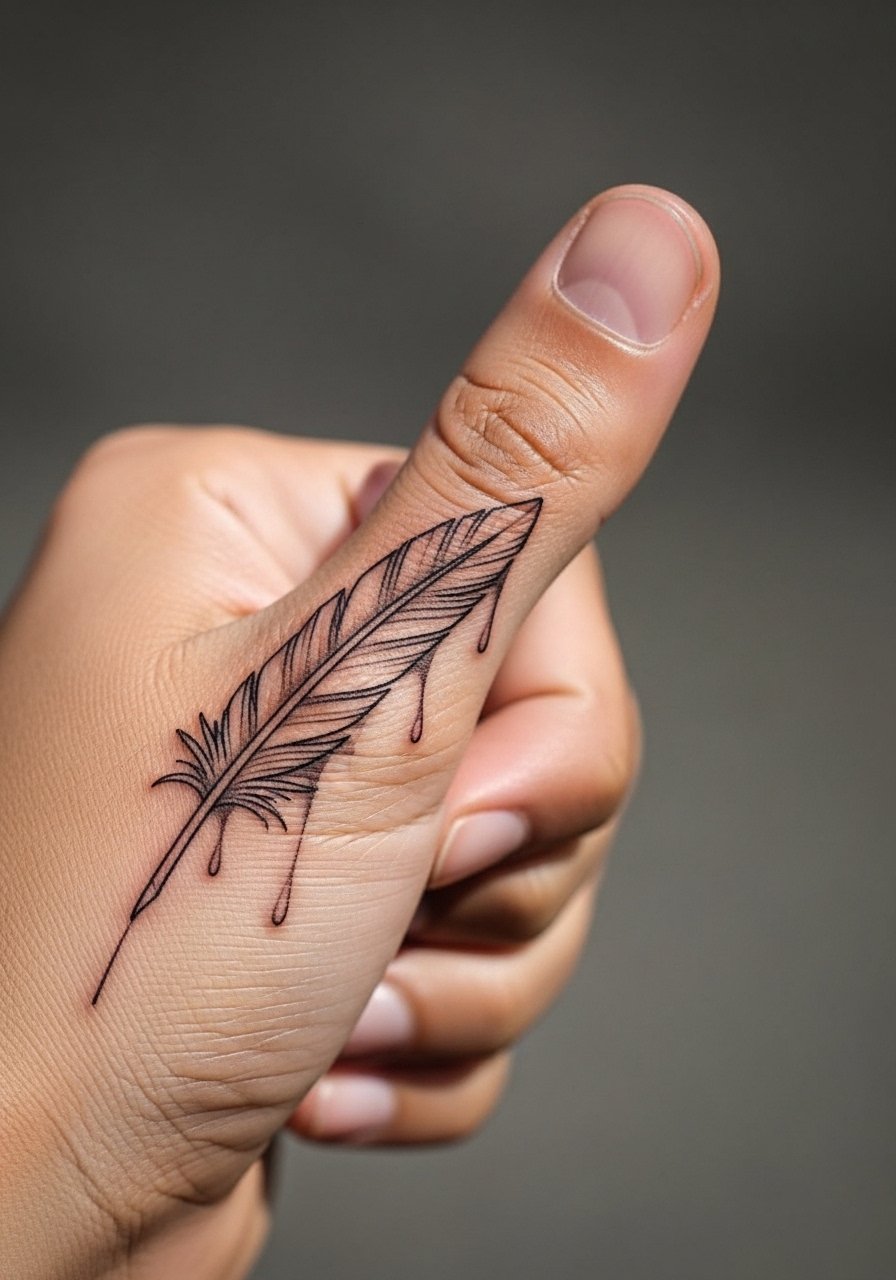
Quill motifs work well as elongated thumb-base pieces because the shape follows the hand's natural lines. Tell your artist to keep the drip elements simple and to anchor the quill shaft with a thicker line. The area can sting and the web movement accelerates fading, so expect a review touch-up at the one-year mark. A good session plan is to numb if you are anxious and to avoid rings that interfere with stencil alignment. Pair the finished piece with a minimal thumb ring if you want an accessory that does not crowd the art.
14. Braille-Inspired Pages for Tactile Tribute
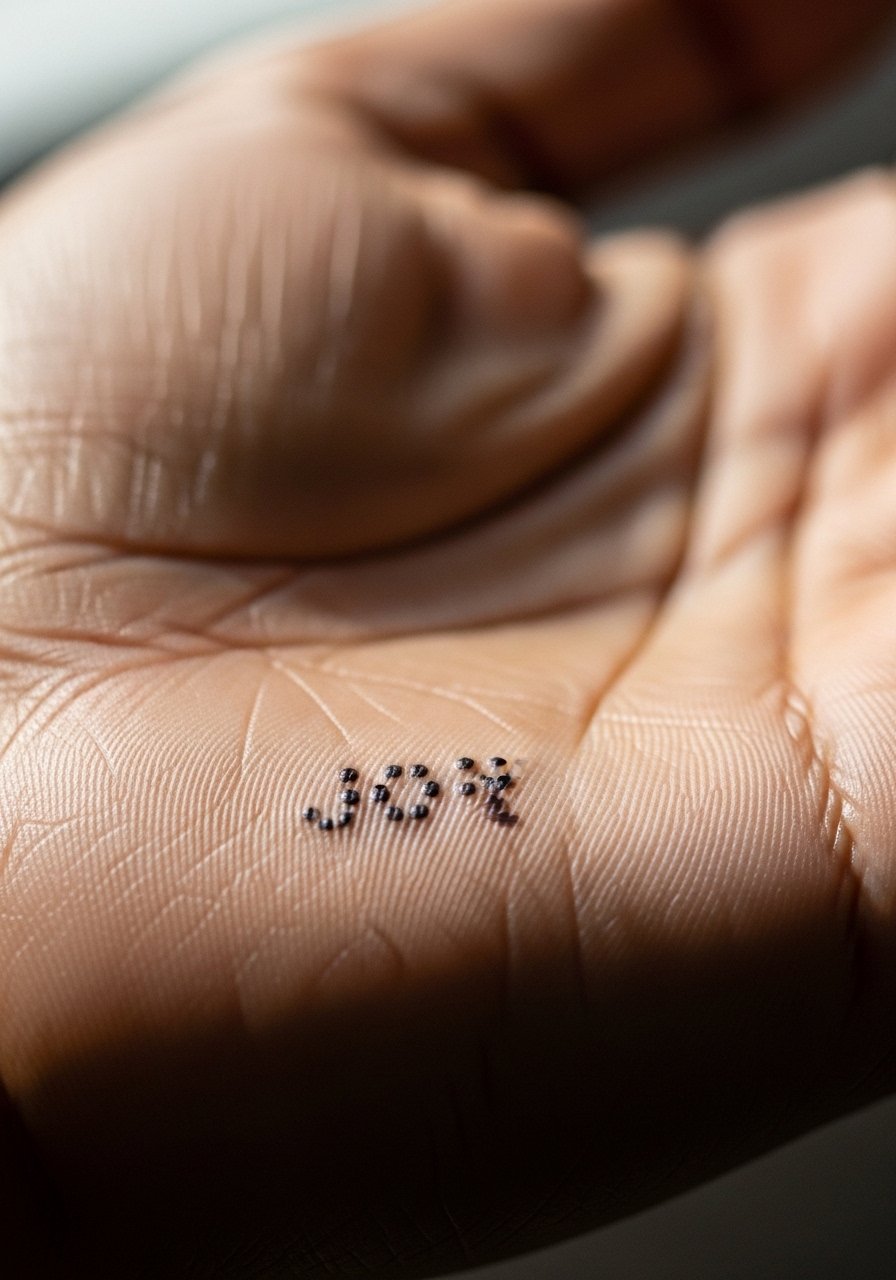
This under-covered idea incorporates raised dot work that references Braille while staying respectful. If you explore this, consult with communities and be deliberate about meaning and placement. Dot work needs slightly deeper placement and some artists charge extra for tactile consistency. The common mistake is assuming simple dots will last without planning density. Be explicit with your artist about how the texture should feel after healing and ask to see healed dot work from their portfolio.
15. ASL Symbol with Tiny Book Motif on Top of Hand
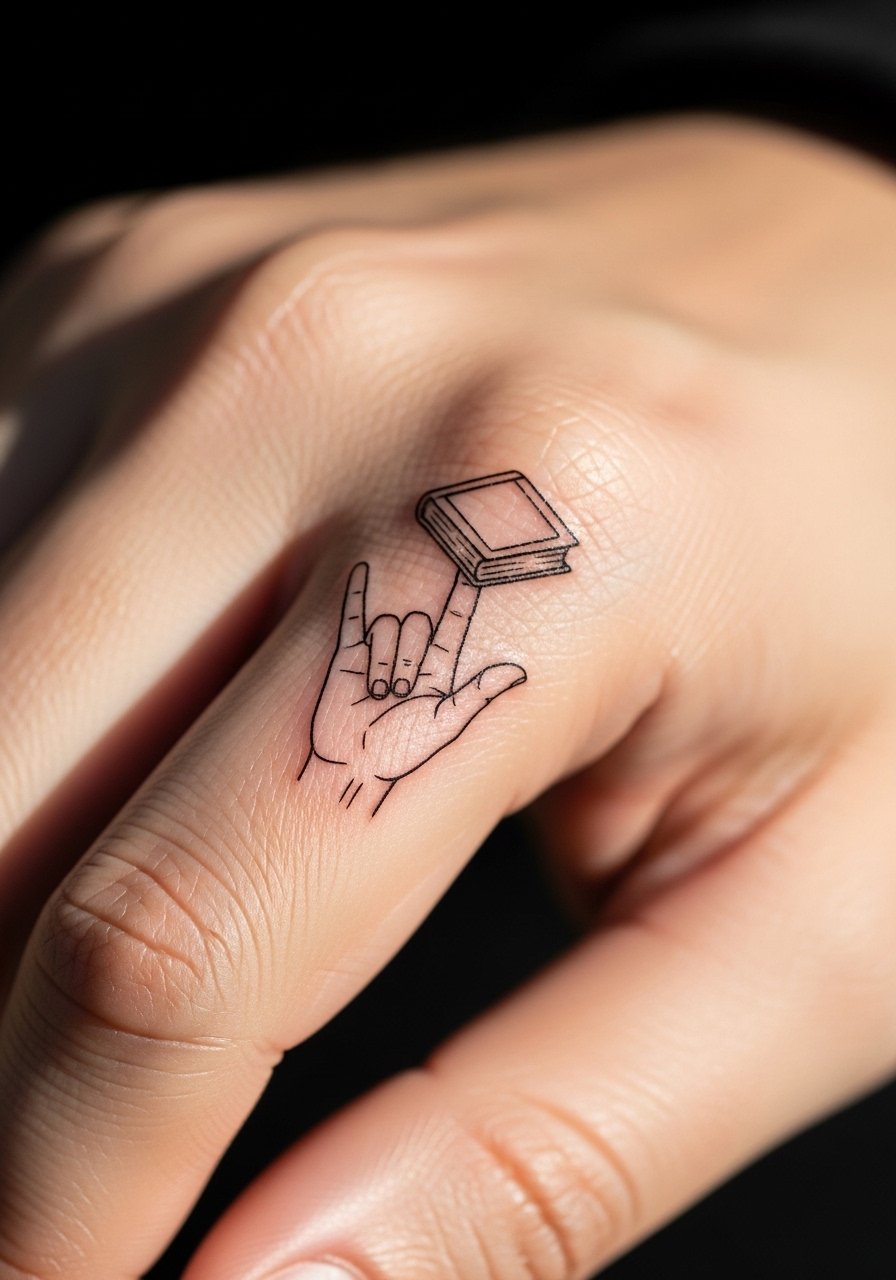
Combining ASL elements with a book is a meaningful pairing for readers who sign. Keep the ASL symbol clear and simplified so it remains legible as the ink settles. Discuss origin respect and intent with your artist and consider minor stylistic shifts that honor the symbol without copying ceremonial forms. The session is brief and the pain moderate. A frequent mistake is over-embellishing the sign so it loses recognizability at a glance.
16. UV-Reactive Book Pages Hidden Under Watch Band
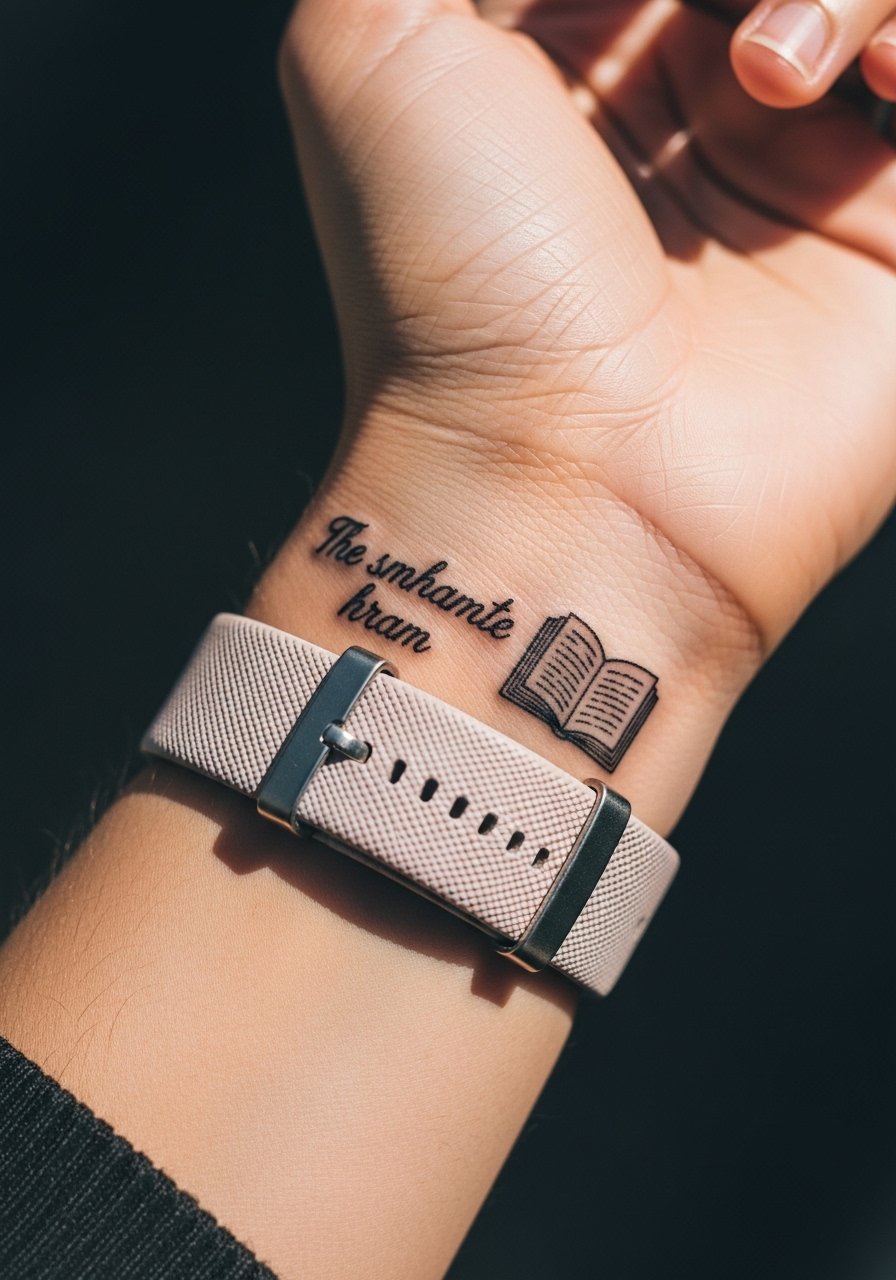
Placing UV-reactive or discreet pieces under a watch band is clever for readers who want privacy. If you pursue UV ink, discuss pigment longevity and how it shows under different lighting. The piece under a band avoids constant sun exposure but experiences friction, so choose linework that tolerates occasional rubbing. This is a good option for people mindful of professional or family contexts. During the session wear a racerback tank or loose short sleeve so the artist can access the wrist comfortably.
17. Hidden Book Stack in Hand Web That Peeks Out
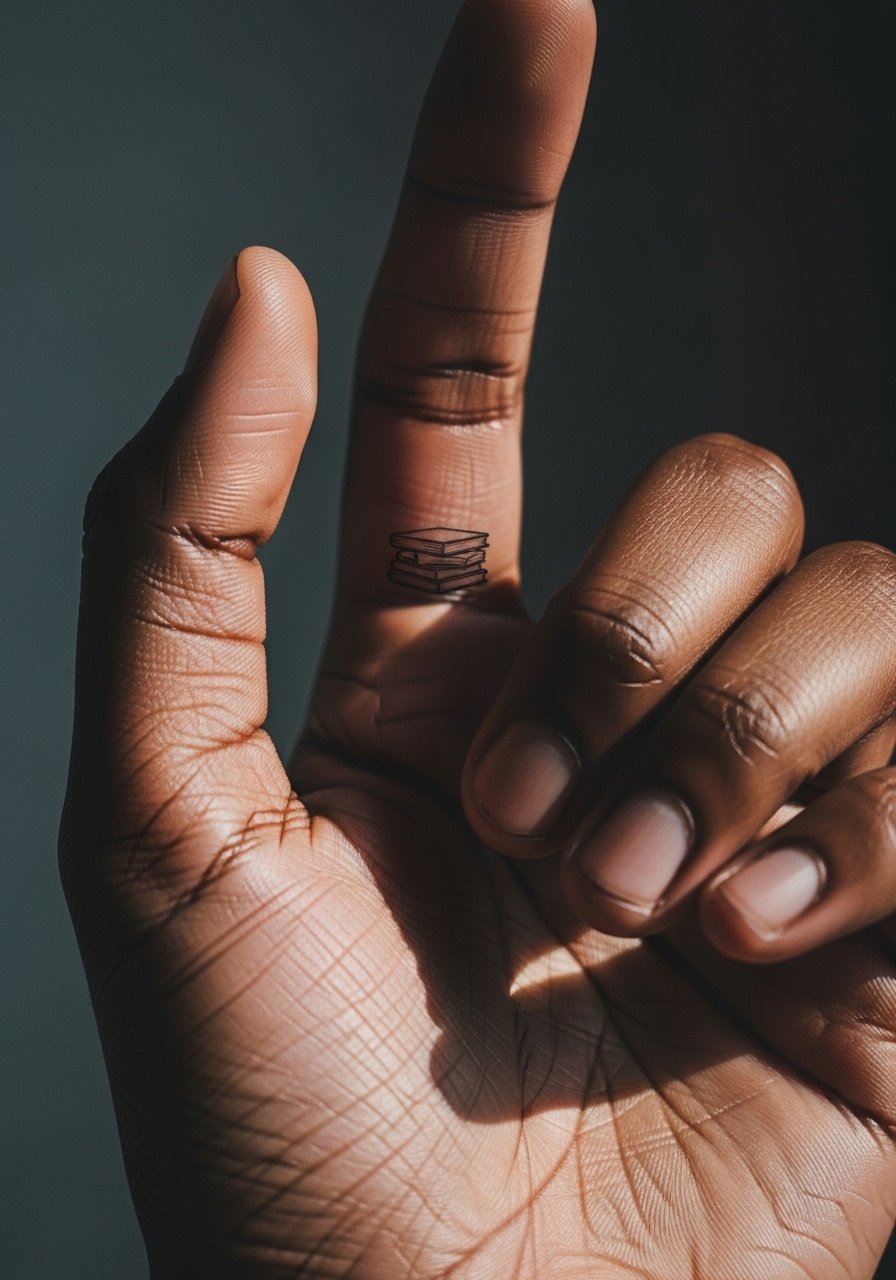
A hidden web placement is one of my favorite low-commitment spots for bibliophile motifs. The trick is to keep the stack ultra-simple and avoid micro script or tiny spines. Tell your artist you want it readable only when the hand opens and to avoid too much negative space that invites ink migration. It heals quickly but suffers from consistent hand use, so expect touch-ups sooner than back-of-hand work. This is also a great place for combining a small ASL mark or Braille dot sequence in the same composition for a layered meaning.
Frequently Asked Questions
Q: Do fine line book stacks on the back of the hand fade faster than bolder blackwork?
A: Yes, fine line pieces generally soften faster on hands due to friction and frequent washing. Bold blackwork and slightly thicker outlines hold definition longer. If you love the fine look, build in a touch-up at year one or two and ask your artist to place the most delicate strokes where skin moves least.
Q: Is Saniderm or dry healing better for hand tattoos given the controversy?
A: Artists split into two camps on this. One camp favors Saniderm for hand work because the sealed environment can reduce scab picking and speed early healing. The other camp prefers dry healing for sweaty or high-friction hands to avoid trapped moisture that could cause irritation. Discuss both approaches with your artist and follow the method that aligns with their hand-specific experience.
Q: How bad is the pain for knuckle and web placements compared with the top of the hand?
A: Knuckles and hand webs tend to register higher on pain charts because the skin is thin and there is less cushioning. The top of the hand is still sensitive but often more tolerable. A short numbing cream can make a big difference for knuckle work if your artist allows it.
Q: What should I wear to the appointment for a side-of-hand or thumb-base book tattoo?
A: Wear short sleeves or a loose shirt you can roll up easily and avoid rings or bracelets on the tattooed hand. For style ideas after healing, a nude nail polish set helps the ink stand out without competing accessories.
Q: Will my hand book tattoo look different on darker skin tones and how should I adjust the design?
A: On darker skin tones, bolder outlines and higher contrast shading help the design remain visible as it heals. Ask to see healed work on similar skin and prefer blackwork anchors over tiny gray shading. Artists experienced with diverse skin tones can adapt line weight and spacing to improve longevity.
Q: How often do hand tattoos need touch-ups and what influences that schedule?
A: Expect touch-ups every one to three years depending on placement, line weight, daily hand use, and sun exposure. Fingers and webbing typically need the most frequent refresh. Planning for a touch-up is practical and common for maintaining clarity on hand pieces.