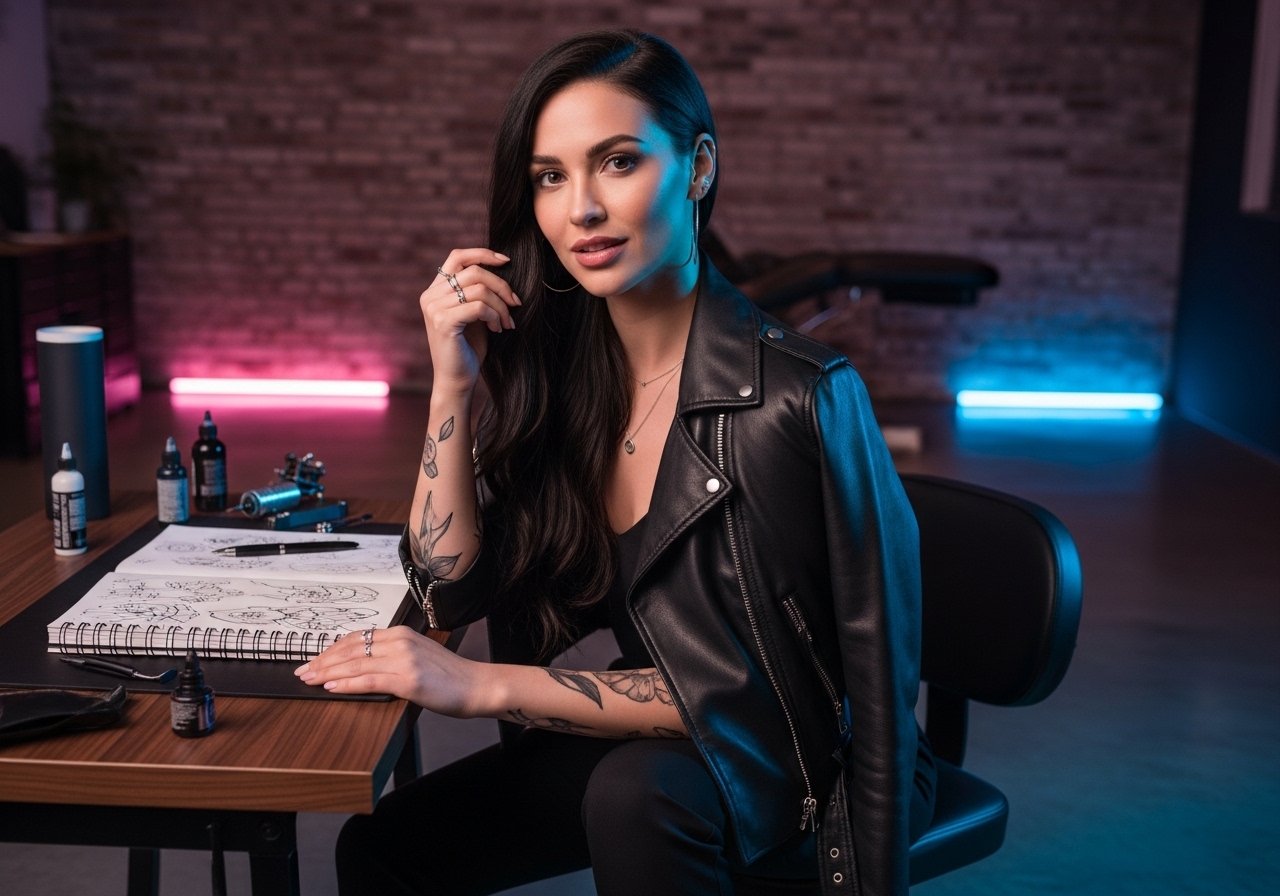
Fine line is trending hard right now, and the pieces that actually look sharp after three years are often the ones people scroll past on day one. Bold calligraphy holds up, careful spacing beats tiny detail, and placement matters more than the font you fell for at midnight. Below are 27 Arabic quote concepts with practical notes on longevity, touch-ups, and what to wear on session day so the stencil lands exactly where you want it.
1. Muqatil, Bold Thuluth on Outer Forearm

I’ve seen Muqatil hold graphic impact for years when it is done with confident stroke and spacing. Tell your artist you want Thuluth with heavier downstrokes and clear counters so the diacritics do not bleed together as the skin ages. Fair warning, the inner forearm can show some softening at year three if the script is too fine. For showing it off, roll a sleeve and pair with a rolled cuff button up that keeps the arm visible without glare. Expect a one to two hour session and a touch-up at 12 to 18 months.
2. Tumuh, Fine-Line Kufic on Inner Wrist
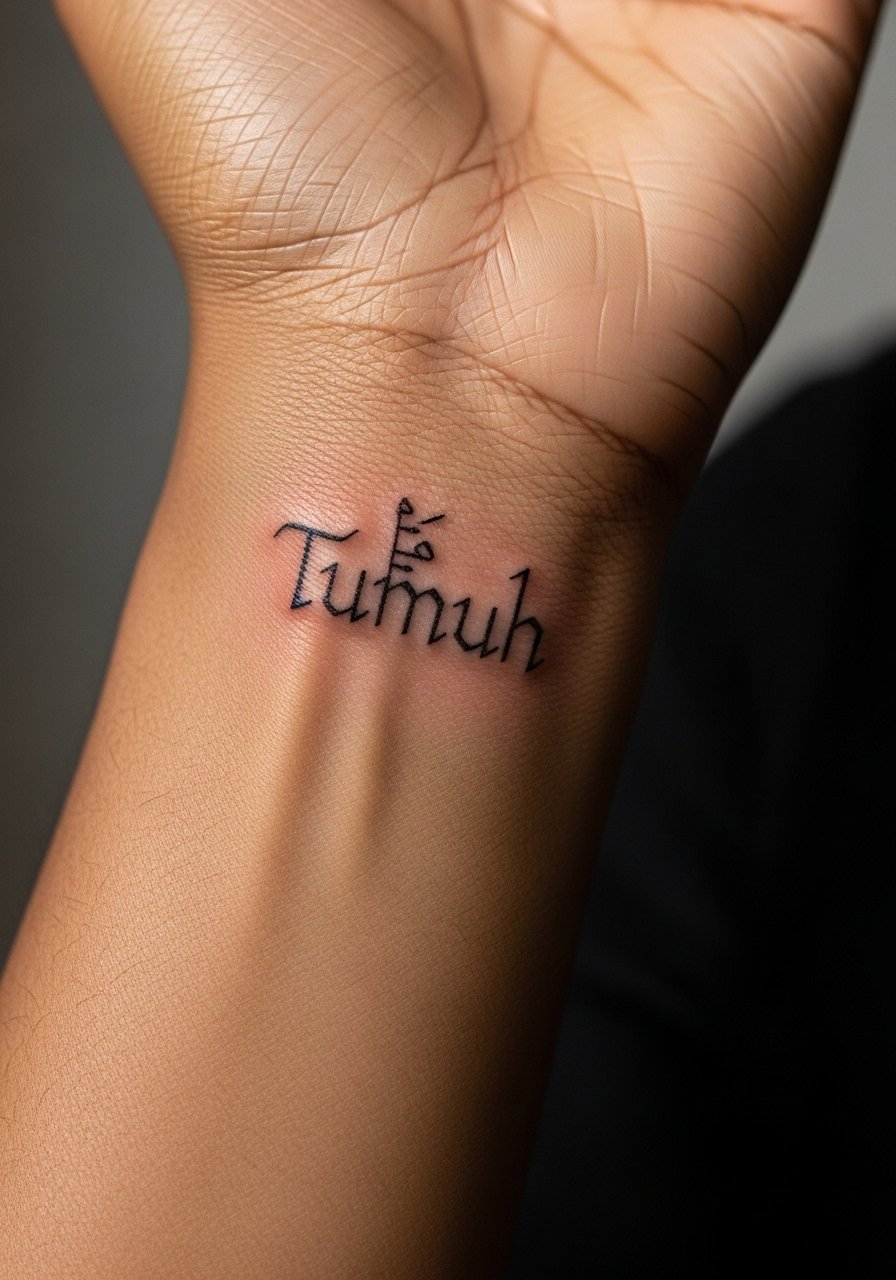
Fair warning, tiny Kufic on the wrist trends but it risks softening if placed too close together. When you consult, ask for slightly increased line weight and avoid micro diacritics that sit on the edge of the stroke. The wrist is a high-friction zone, so plan to protect it during the first week. For the session, wear a sleeveless top and bring a spare shirt, and for nights out pair the tattoo with a thin leather cuff bracelet on the opposite wrist to frame the script. Expect 30 to 60 minutes and a likely touch-up at year two.
3. Harir 3aqlak, Flowing Naskh on the Collarbone
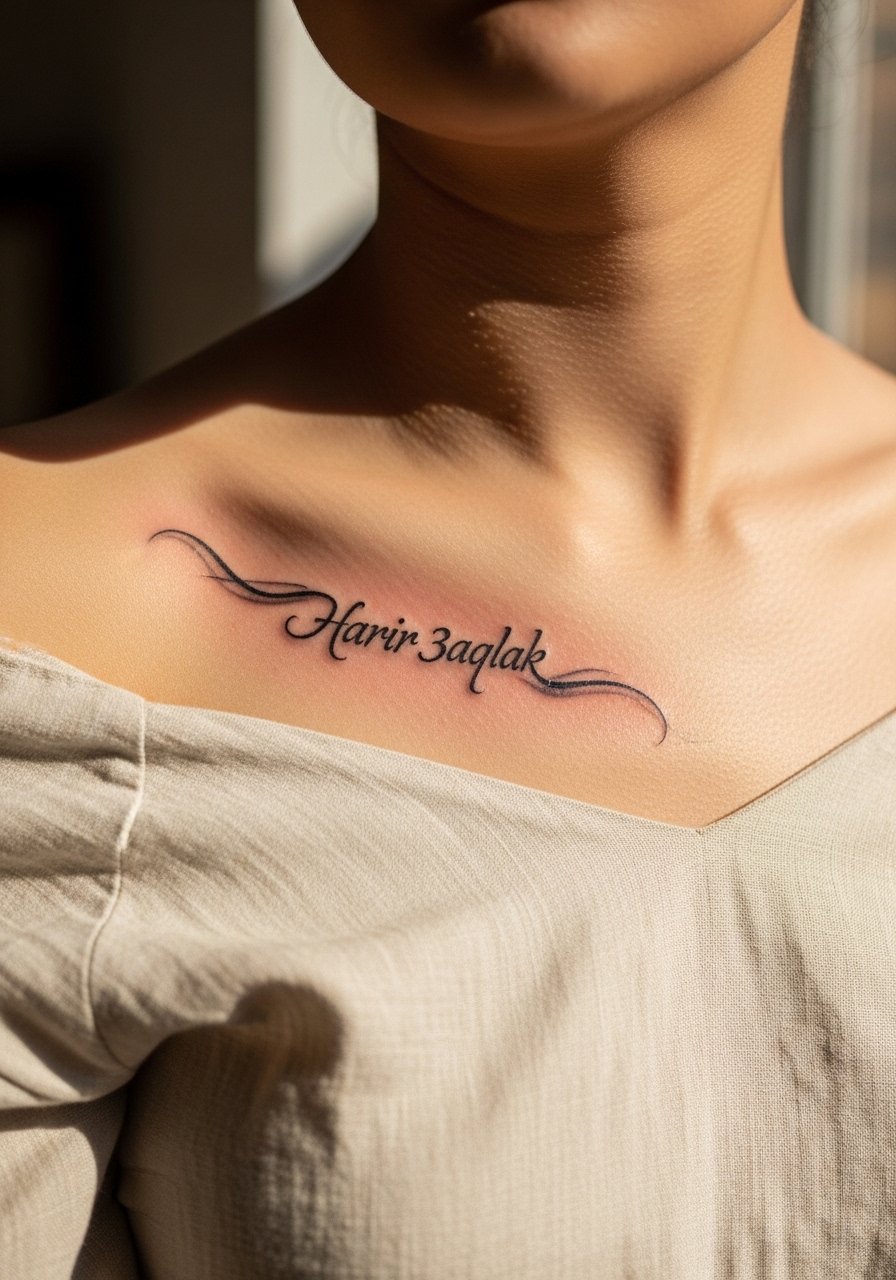
The collarbone gives Naskh room to breathe if the composition follows the clavicle curve. Tell your artist you want the baseline to follow the bone and to space the letters horizontally, not compact them into a block. Healing in summer can be tricky because sweat sits in the area, so plan loose fabrics. For evenings, an off shoulder linen blouse shows the line without covering it. Expect two sessions for layout and gentle gray shading, and anticipate touching up the faintest hairlines after 18 months.
4. "Allah" in Diwani with Geometric Frame on Upper Arm
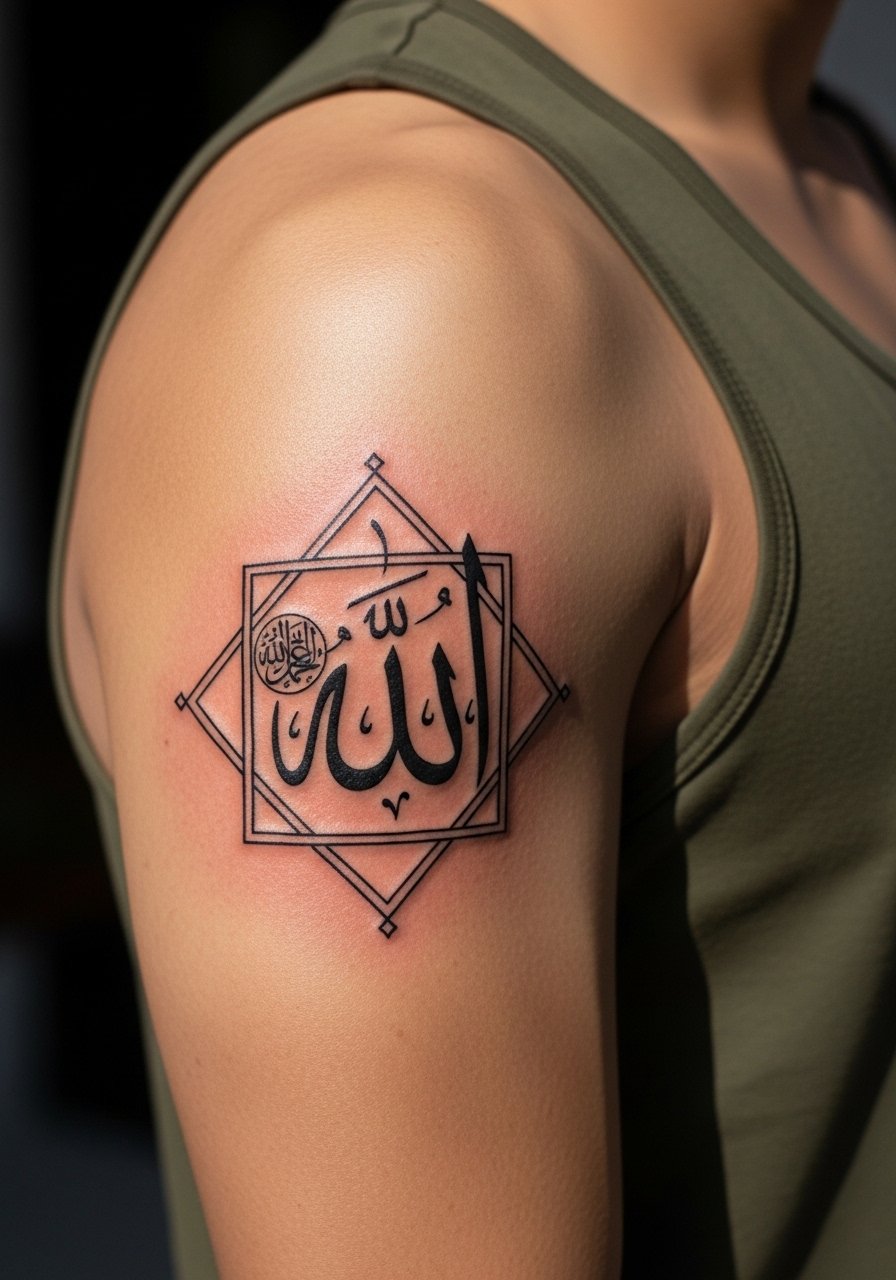
Upper arm blackwork is forgiving because of its thicker canvas and lower daily abrasion. Ask for Diwani ornamentation inside a simple geometric frame so the script reads clearly from a distance and still reads fine close up. For session access wear a olive muscle tank so the artist can reach the area without tugging. This piece usually takes two to three sessions and holds well, but expect a small touch-up after a year if you want crisp edges in the frame.
5. Hayat, Minimal Single-Line Ankle Script
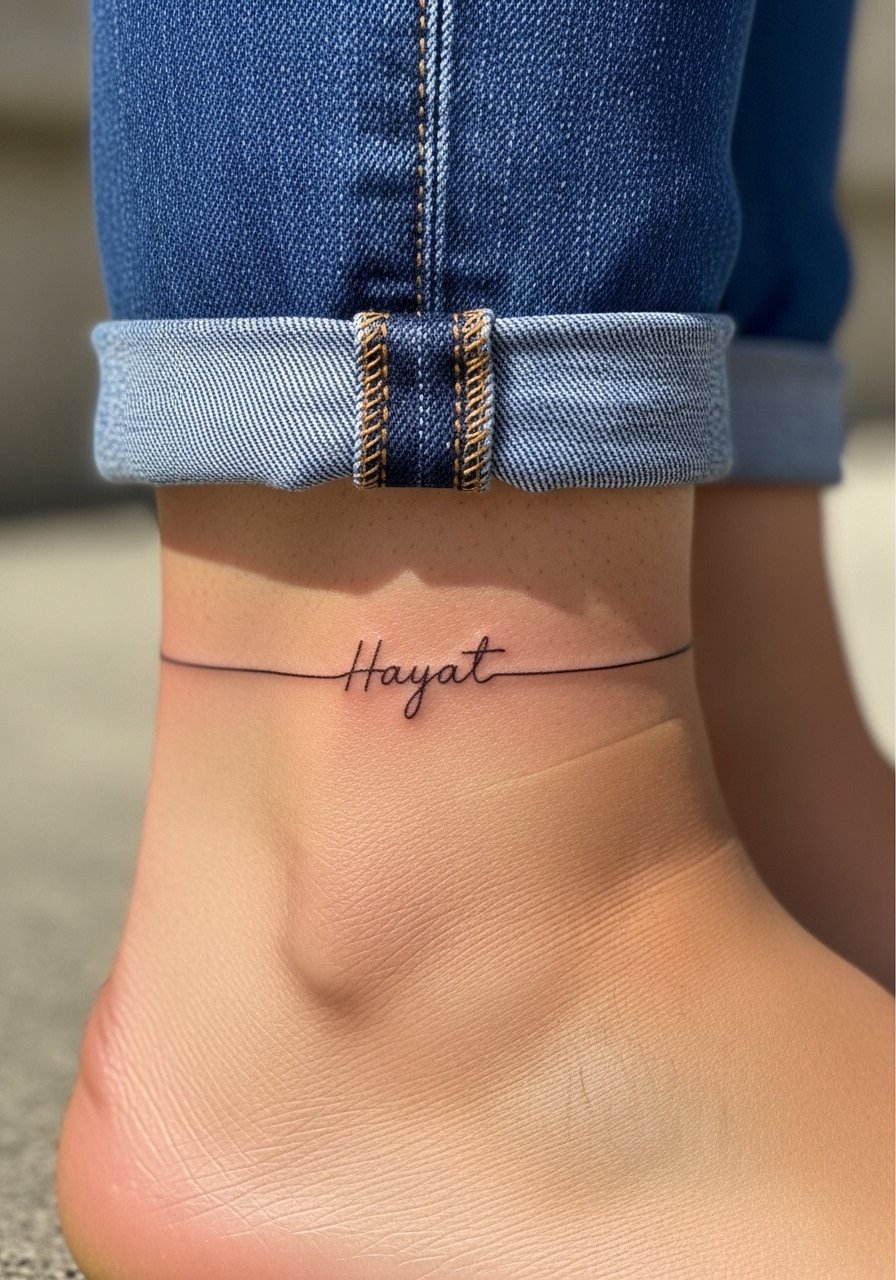
Ankle placement reads delicate and discreet, but thin lines there can fade faster because of constant rubbing from socks and shoes. For a single-line approach, ask the artist for slightly heavier linework and avoid micro diacritics. For show-off looks, go with high-waisted cropped pants and a gold anklet chain on the opposite ankle to balance the look. Session time is short, usually under an hour, but the area may need a touch-up at year two depending on activity level.
6. Qalb with Arabesque Vines on the Ribcage
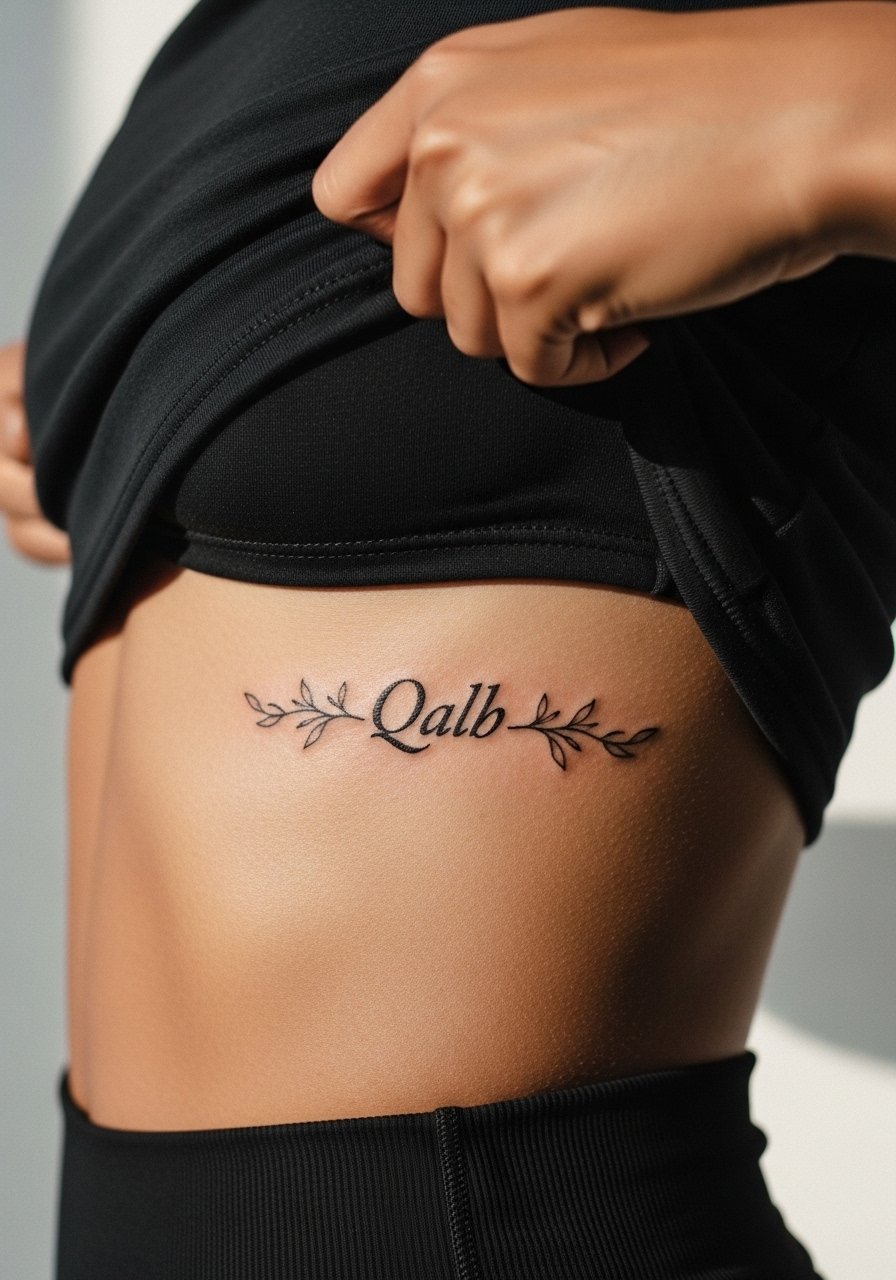
Fair warning, ribs are a high-pain, high-reward spot and the skin there can move during breath. The ribcage kinks with posture, so plan for an artist who sketches the layout on the body rather than pasting a flat stencil. Many artists split into two camps about fine line on ribs. One side says the stretch blurs thin lines within two years. The other side argues that controlled depth and spacing lets fine scripts settle cleanly. Ask your artist which camp they fall into before booking. Expect longer sessions and a possible touch-up at year two.
Studio Day Picks
The wrist pieces, collarbone script, and ribcage work above all need slightly different prep. These items help with stencil checks, sensitivity, and the everyday wear that threatens fine line work.
-
Stencil transfer paper kit. Use it to preview placement and proportion on the actual skin, which is critical for collarbone and ribcage pieces where curvature changes the baseline.
-
Topical numbing cream. Applied per instructions this takes the edge off wrist and rib sessions that might otherwise force you to shorten the shading pass.
-
Thin protective film roll. Keeps ankle and wrist scripts clean during the first week of friction from socks and daily washing.
-
Fragrance-free gentle body wash. Cleanses delicate script areas without irritating the skin or stripping pigment when you shower during the first week.
-
Aquaphor healing ointment. Thin layers for the first few days protect fine line work without suffocating the tattooed channels.
7. Sabrr with Tile Motifs on the Calf
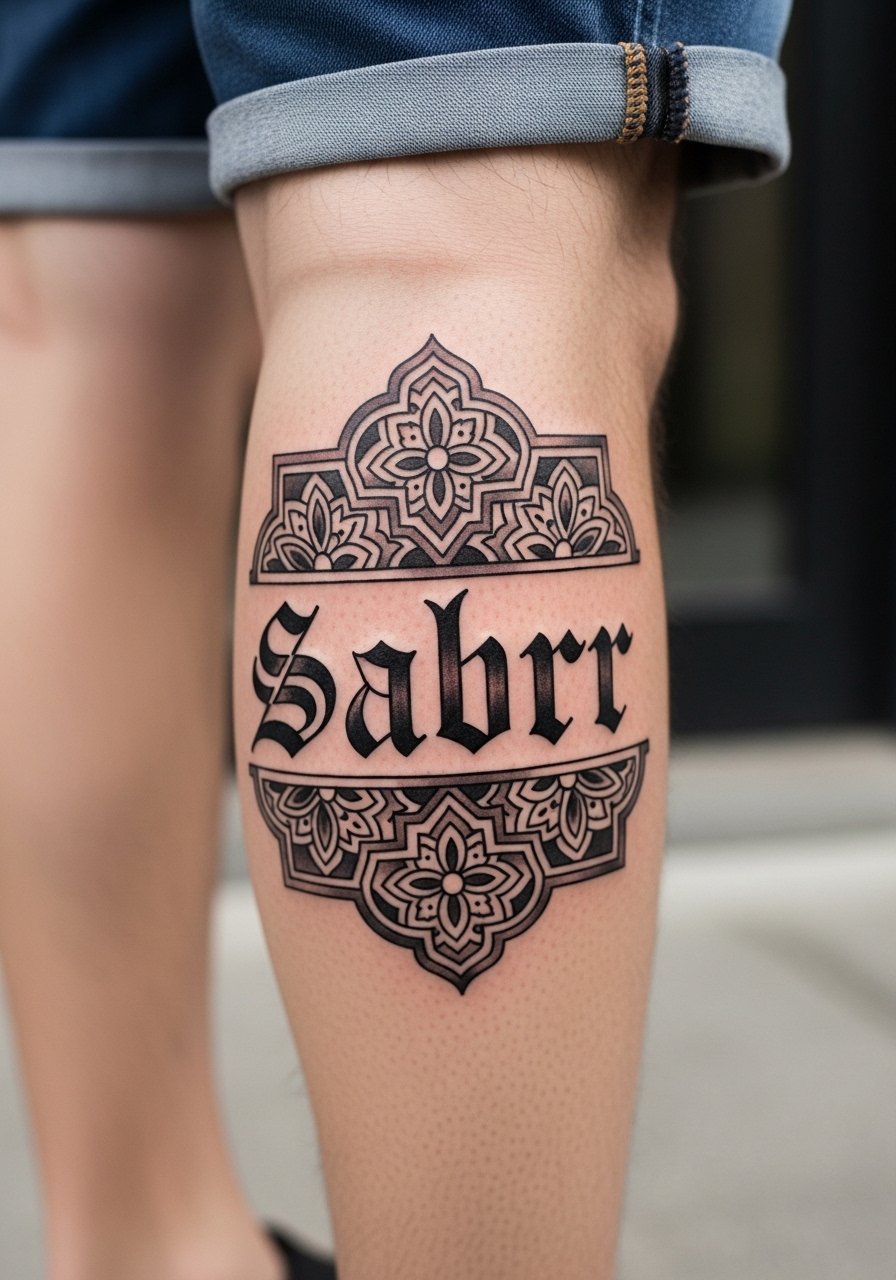
The calf is an excellent canvas for neo-traditional script with ornamental fills because it handles saturation well. I recommend bold letters with negative space so the tile motifs do not muddy over time. During consultation ask for moderate spacing between motifs and the letters so touch-ups, if needed, are simple. For a polished look roll chinos at the hem and pair with slim chinos men and boat shoes to show the calf without covering it. Sessions run longer due to shading, and touch-ups may be needed at year two to refresh saturation.
8. Noor in Micro-Realism Behind the Ear
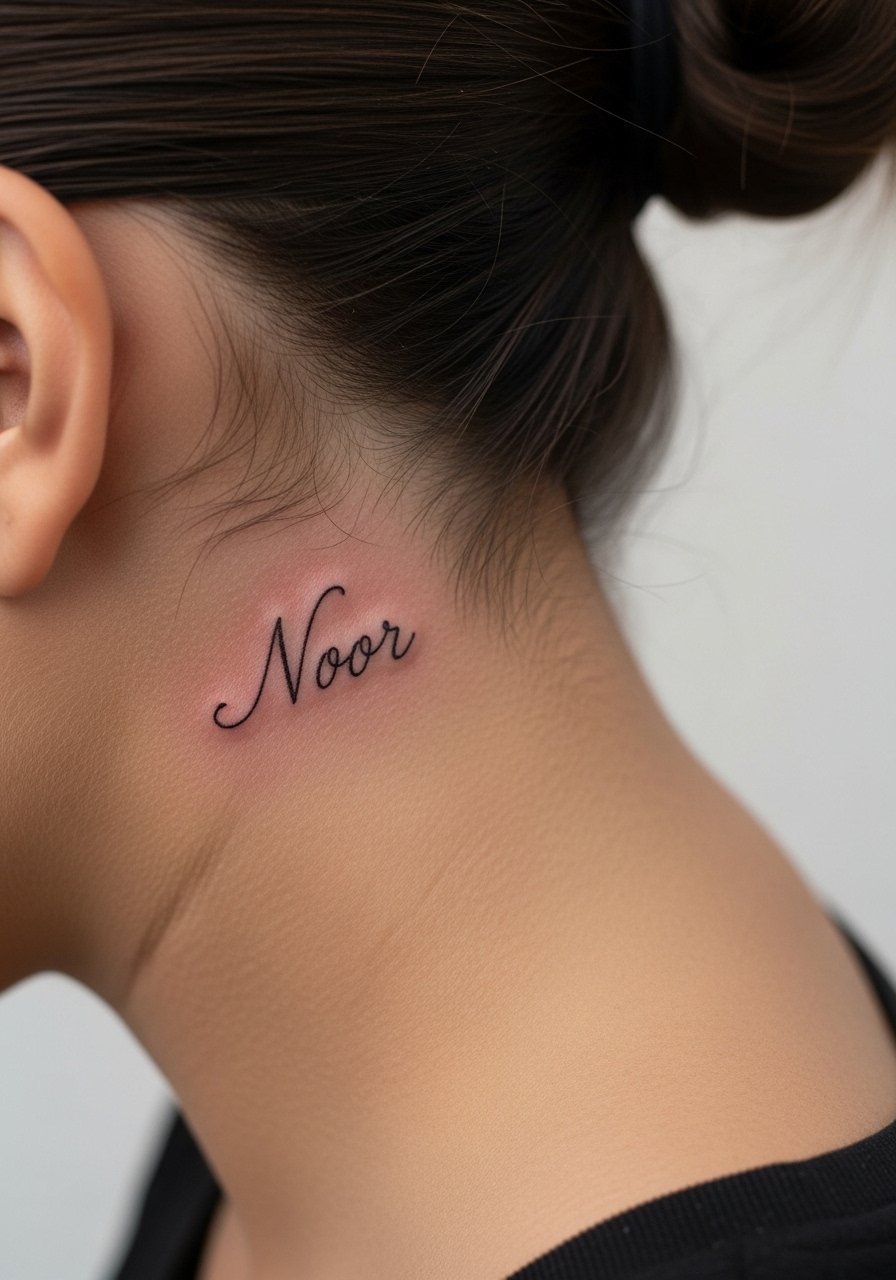
Behind-the-ear pieces read tiny and intimate, and the surface there is unforgiving to jittery linework. The prompt placement must be exact and the artist needs steady single-needle skills. This spot is sensitive, so expect a short but sharp session. Because it sits near hair and sweat, prioritize an artist who can place diacritics without crowding the letters. This area heals well visually but can require a small touch-up at year two if the diacritics fade. Include a short note in the consultation asking the artist to test the stencil on skin before inking.
9. Hubb with Heart Arabesque on the Inner Thigh
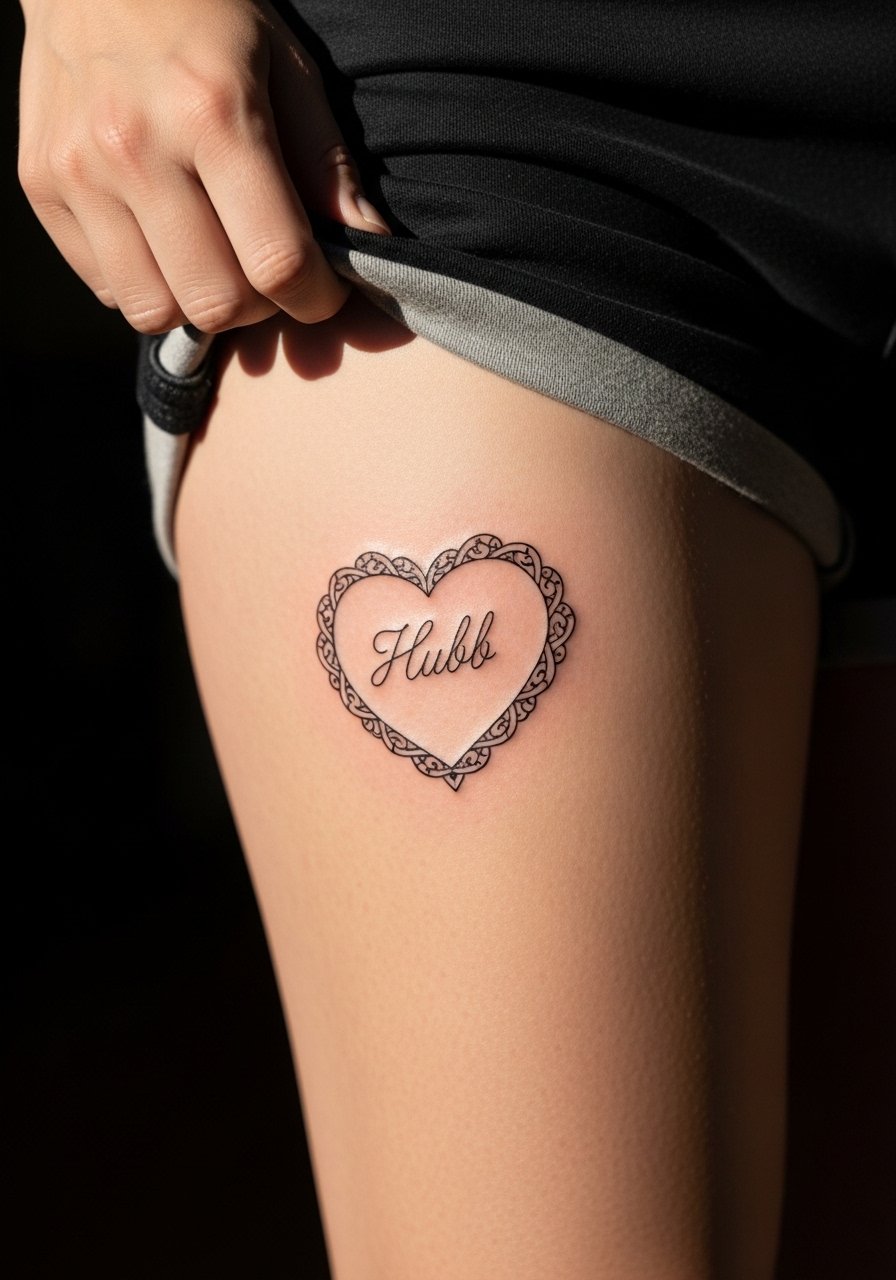
Inner thigh pieces are intimate and can age beautifully if spaced for skin movement. Expect a high sensitivity rating and plan session wear accordingly. Ask to preview the stencil while standing and while lying down to catch how the letters stretch. Many people forget that friction from clothing can lighten delicate shading, so plan for protective covers while healing. Because of the placement, some artists require privacy for this work, so bring a comfortable wrap skirt or loose shorts for the session. Touch-up timelines vary, but a single touch-up within two years is common.
10. Aziz in Traditional Block on the Shoulder
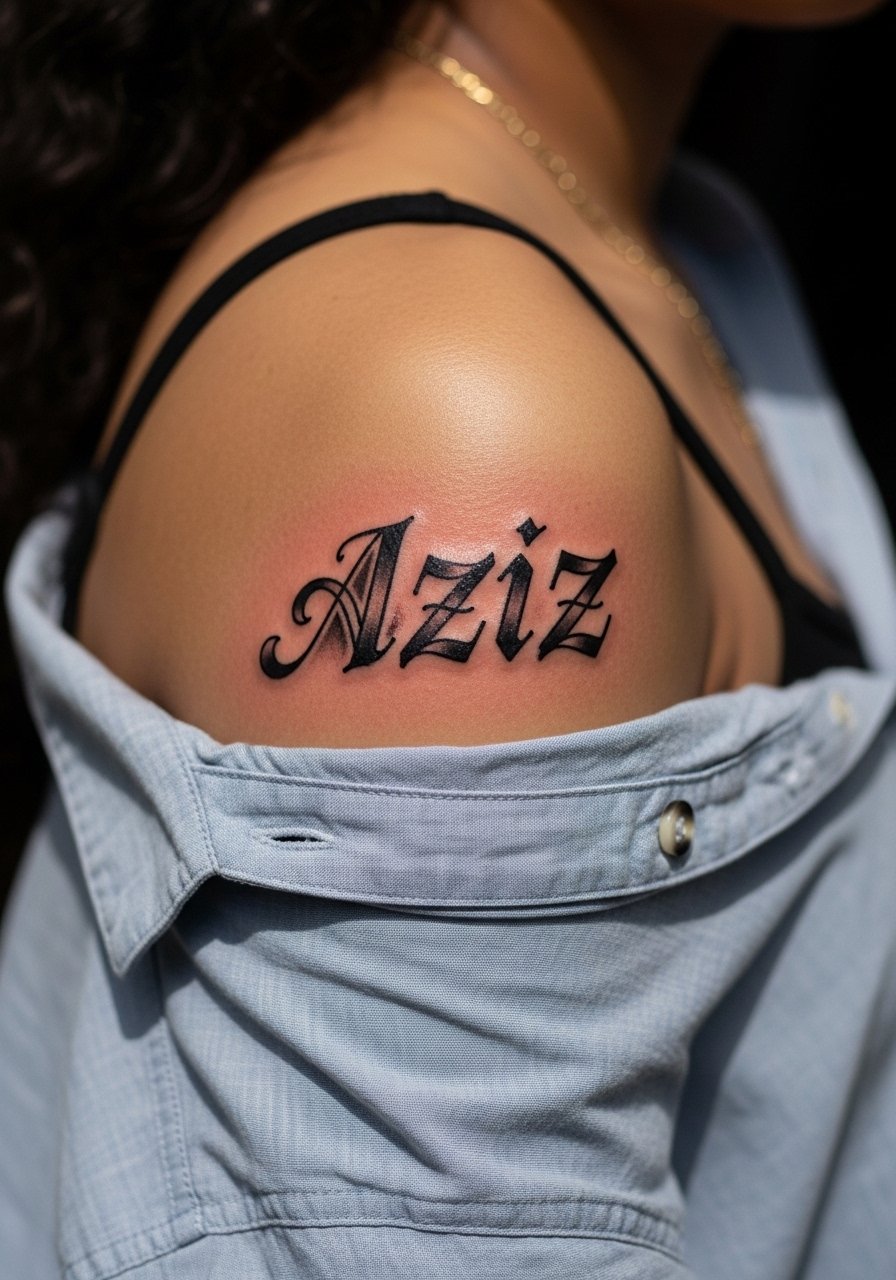
Shoulder placements take saturated blackwork well and are forgiving with aging. For a vintage block script ask for slightly heavier linework and a soft gray wash to add depth without filling the counters. For the session, wear a loose button-down shirt that you can pull aside so the artist has clean access without full undressing. Expect one to two sessions depending on shading and a touch-up around the one-year mark if you want sharper edges.
11. Rahma Vertical Spine Blackwork with Crescent
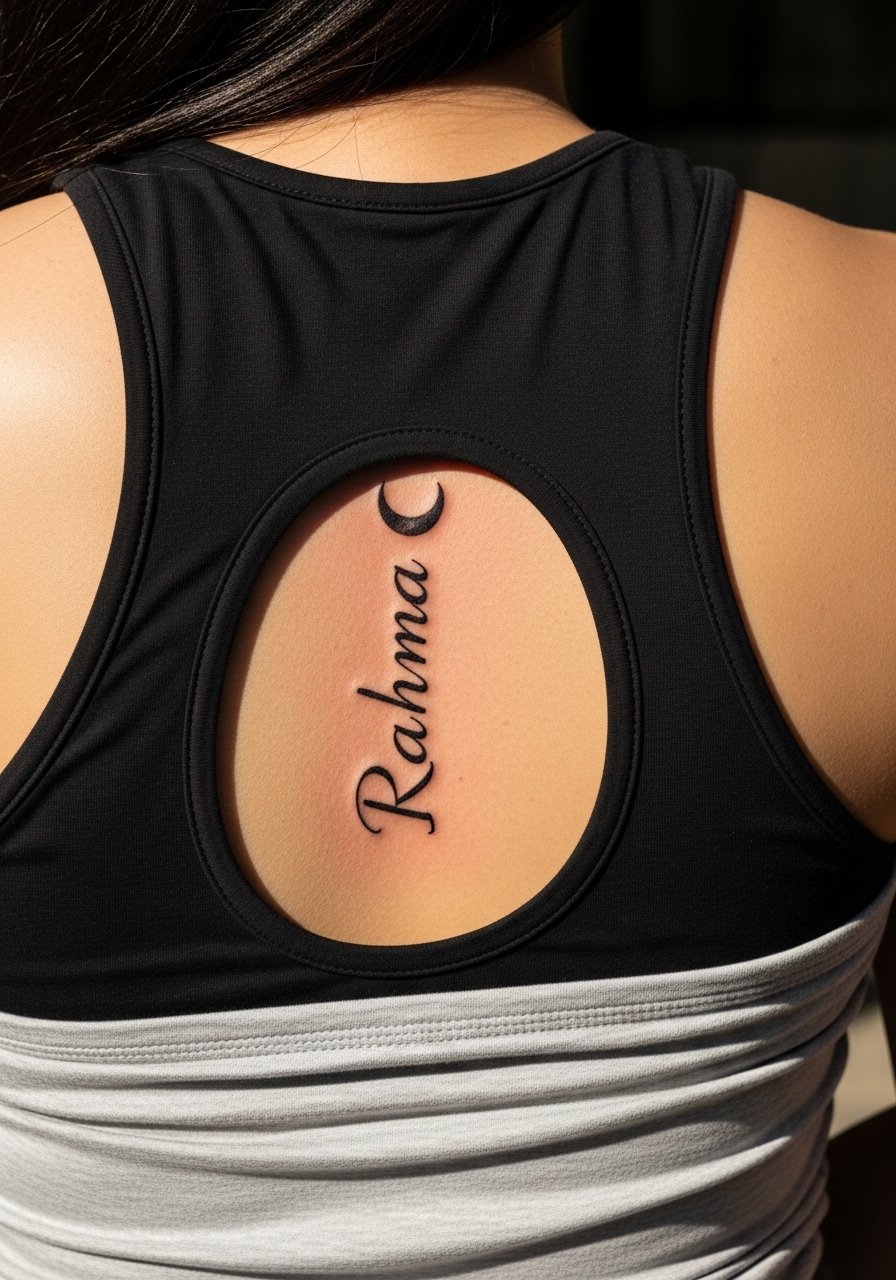
A vertical spine layout gives poetic space to short phrases and reads strikingly when placed carefully along the vertebrae. The spine area shifts with posture, so check the layout sitting and standing. For sessions wear a racerback tank to keep muscles relaxed and provide clear access. This piece usually takes two sessions for linework and fill, and blackwork on the spine keeps its contrast longer than fine line there. Expect a touch-up after 18 months if you want the crescent and tighter counters crisp.
12. Shukr in Ignorant Style on the Outer Forearm
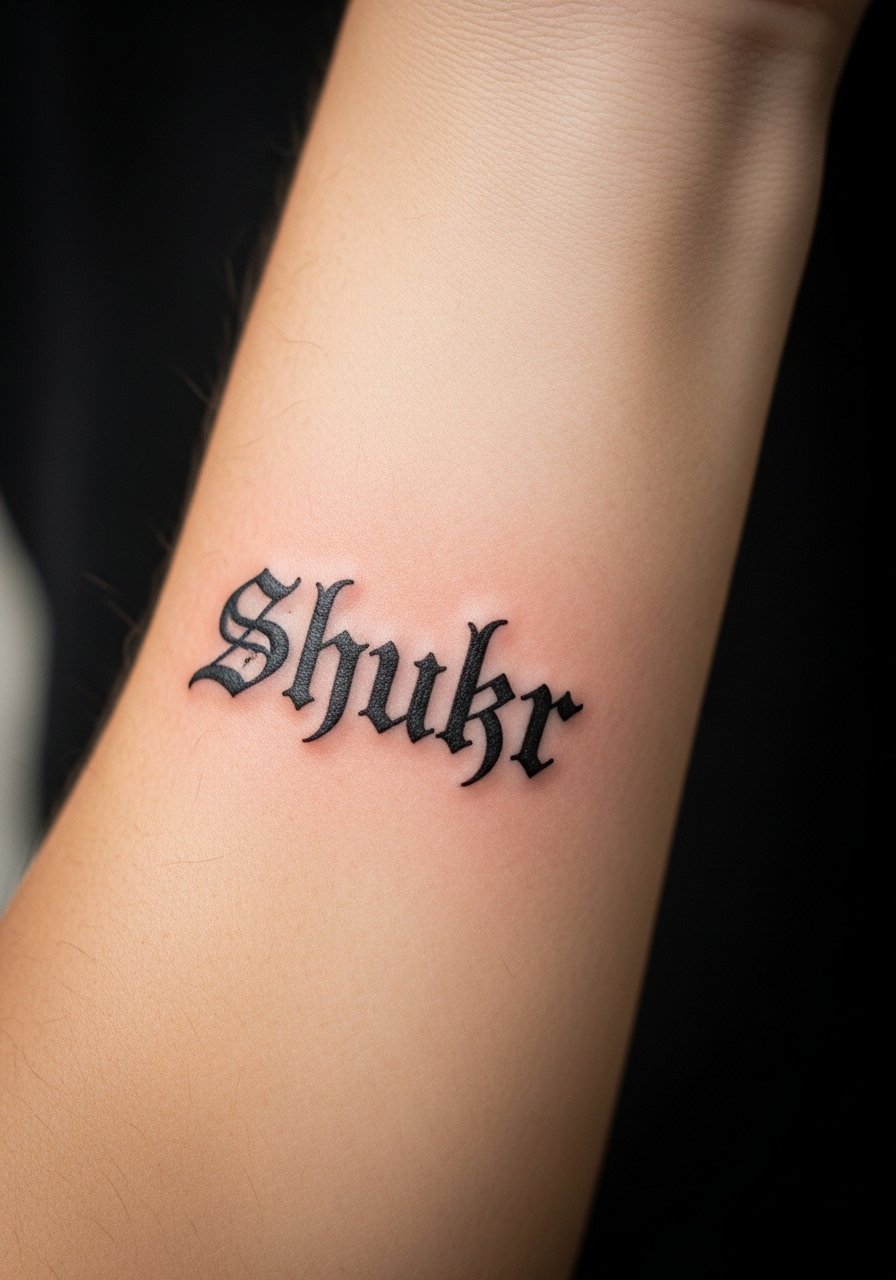
Ignorant style leans into raw edges and imperfect counters, which can hide aging because the aesthetic already reads rough. Still, avoid asking for micro letters because the look depends on legible weight. In consultation, show examples of the roughness you like and ask the artist to roughen the outline intentionally instead of overworking details. For everyday wear pair the piece with rolled sleeves or a rolled cuff button up that frames the forearm without hiding it. Sessions are typically one hour and the style often needs minimal touch-ups.
13. Vertical Poem Line with Harakat Marks on the Sternum
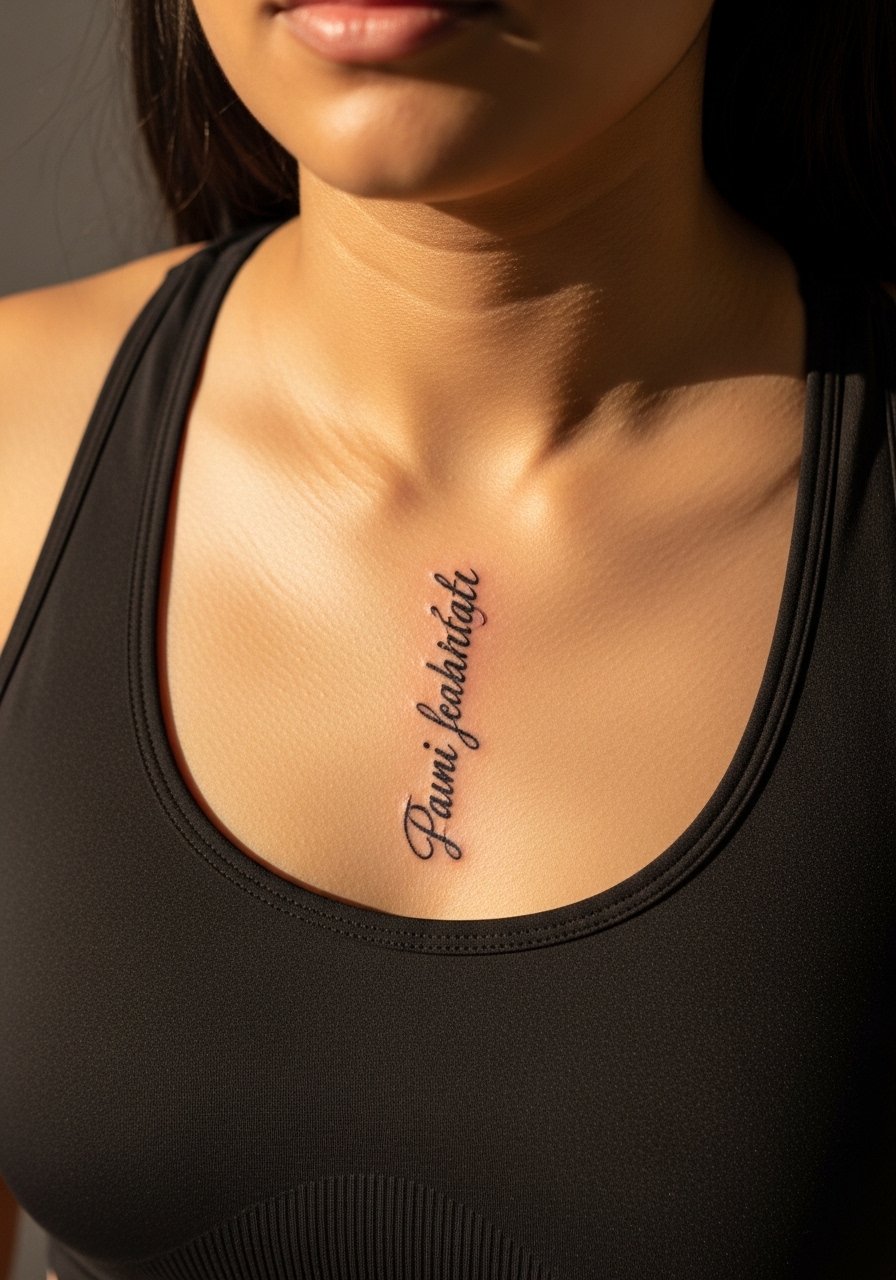
Using harakat vowel marks in a tattoo can lock in pronunciation and reduce mistranslation regret. The sternum is sensitive and moves with breathing, so place the vowels with extra spacing. Session wear should be a fitted sports bra so the artist can work without excessive repositioning. This vertical layout benefits from a slightly heavier script so the small harakat do not vanish as it heals. Plan for longer touch-up conversations because the tiny marks sometimes need refreshing at year two.
14. Maktub in Small Kufic on the Side of the Neck
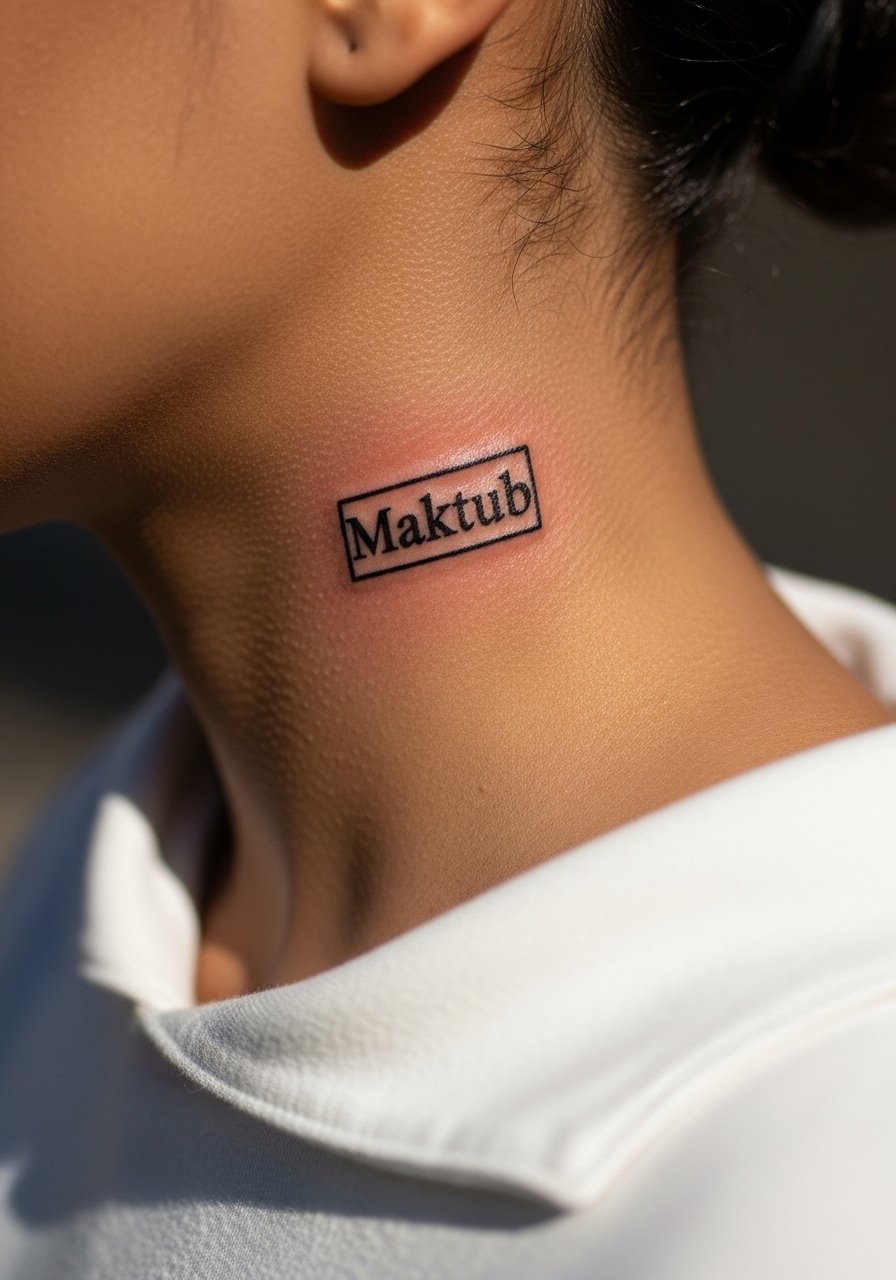
Neck work reads bold and cannot be easily hidden, so think about career implications before booking. Neck skin is thin and healing can be slower, which risks slightly softer edges if done too tiny. In consultation ask for compact letters with confident weight so the glyphs age into readable shapes. For session wear, a wide-neck shirt you can slide aside works best. Expect one session and a touch-up at 12 to 18 months depending on sun exposure.
15. Gray-Under Black Script for Olive Skin on the Collarbone Ridge
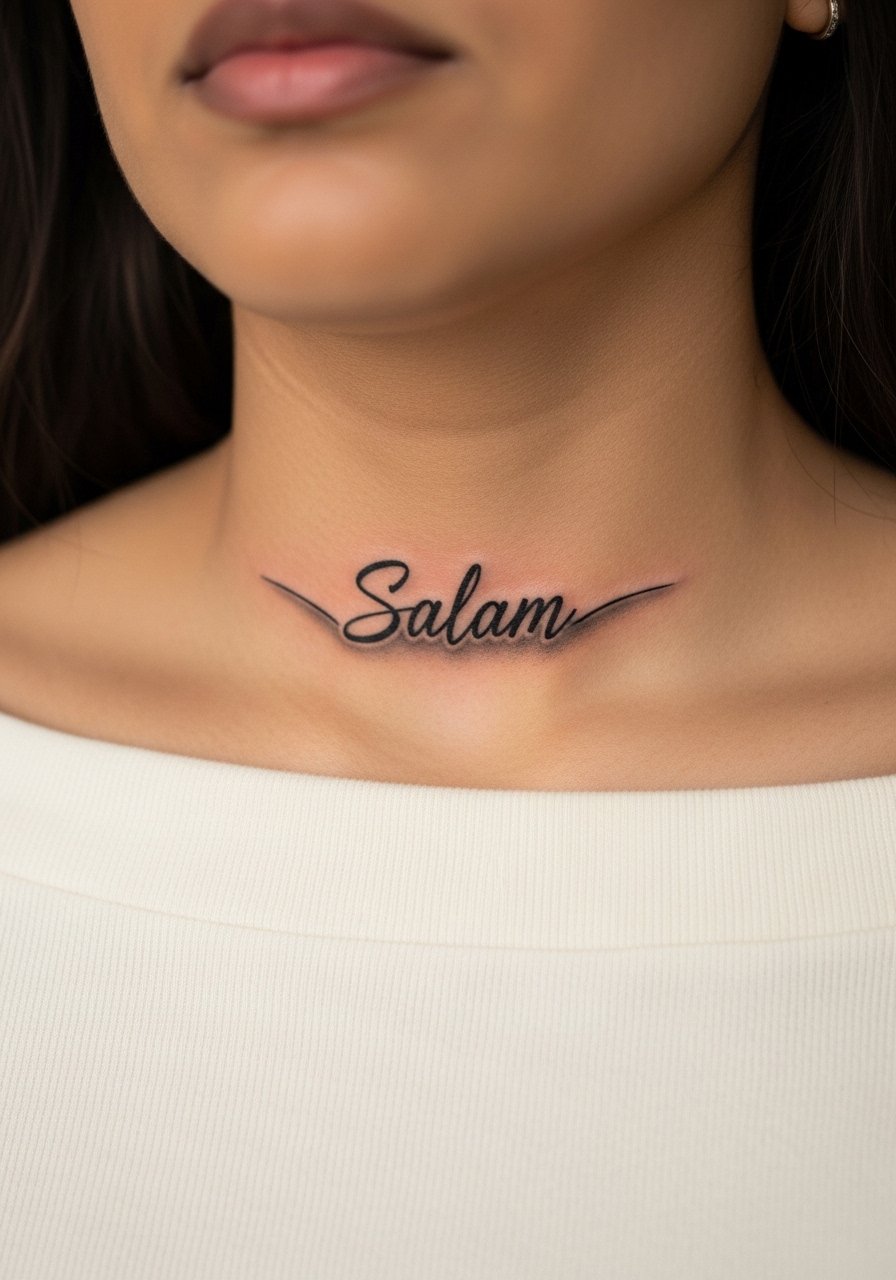
I often suggest gray underpinning beneath black script for olive skin tones because it creates contrast without adding bright color. Ask your artist for low-contrast gray wash under the letters instead of color that can shift over time. This approach is particularly effective on the collarbone where sunlight is common. For showing it off pair with a cream linen top that keeps the palette soft and complementary. Expect two short sessions and a minor touch-up within two years if the gray softens.
16. Single-Word "Sabr" in Bold Kufic Across the Forearm
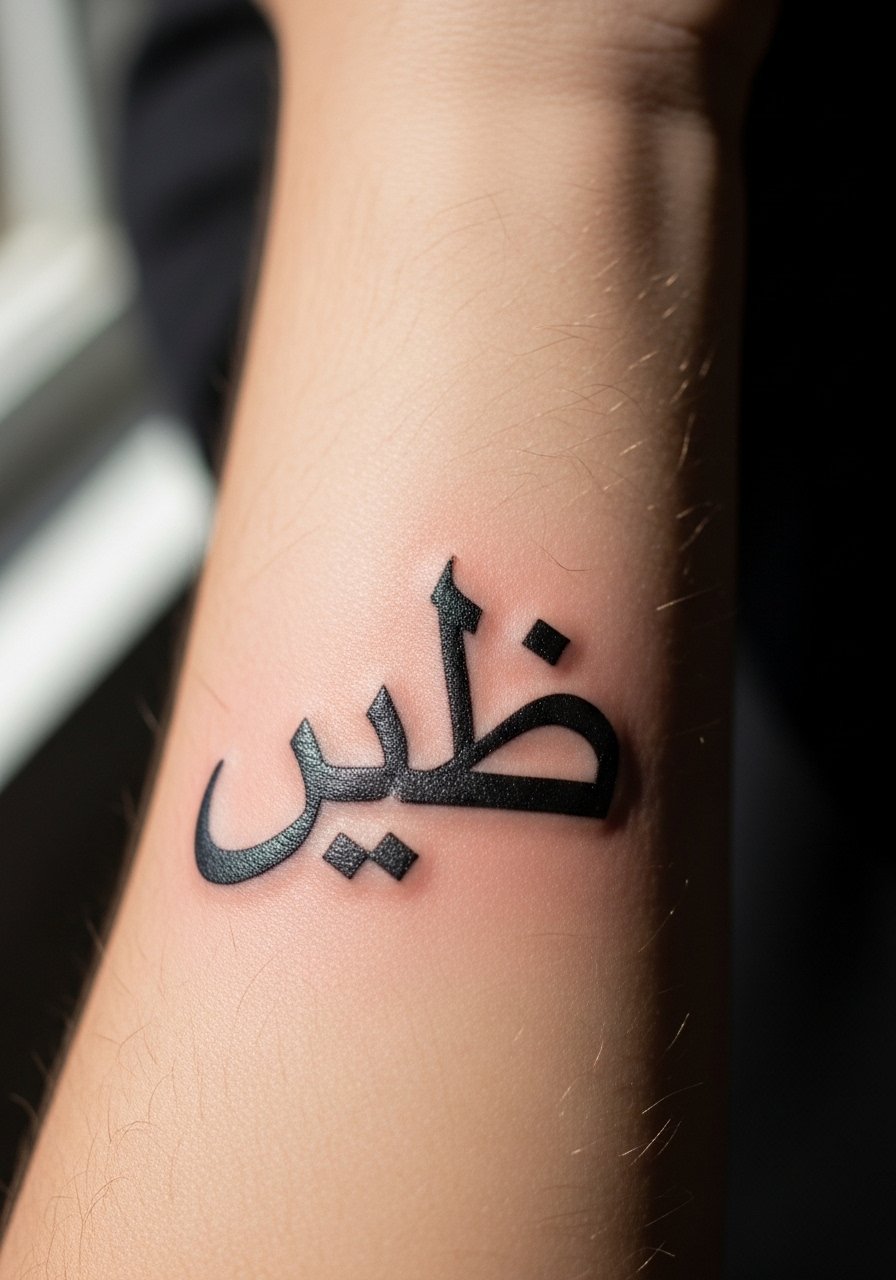
I've noticed single-word forearm pieces age best when letters have breathing room and thicker stroke terminals. Tell the artist you want contrast between thick and thin strokes and to avoid micro flourishes that fill negative space. For session wear go with a short-sleeve button-up to expose the area easily. For evenings, a simple fitted tank top complements the bold work while keeping the aesthetic quiet. Sessions are usually 60 to 90 minutes and expect a touch-up after 18 months for edge sharpening.
17. Micro-Star Fade from "Noor" Behind the Ear into Hairline
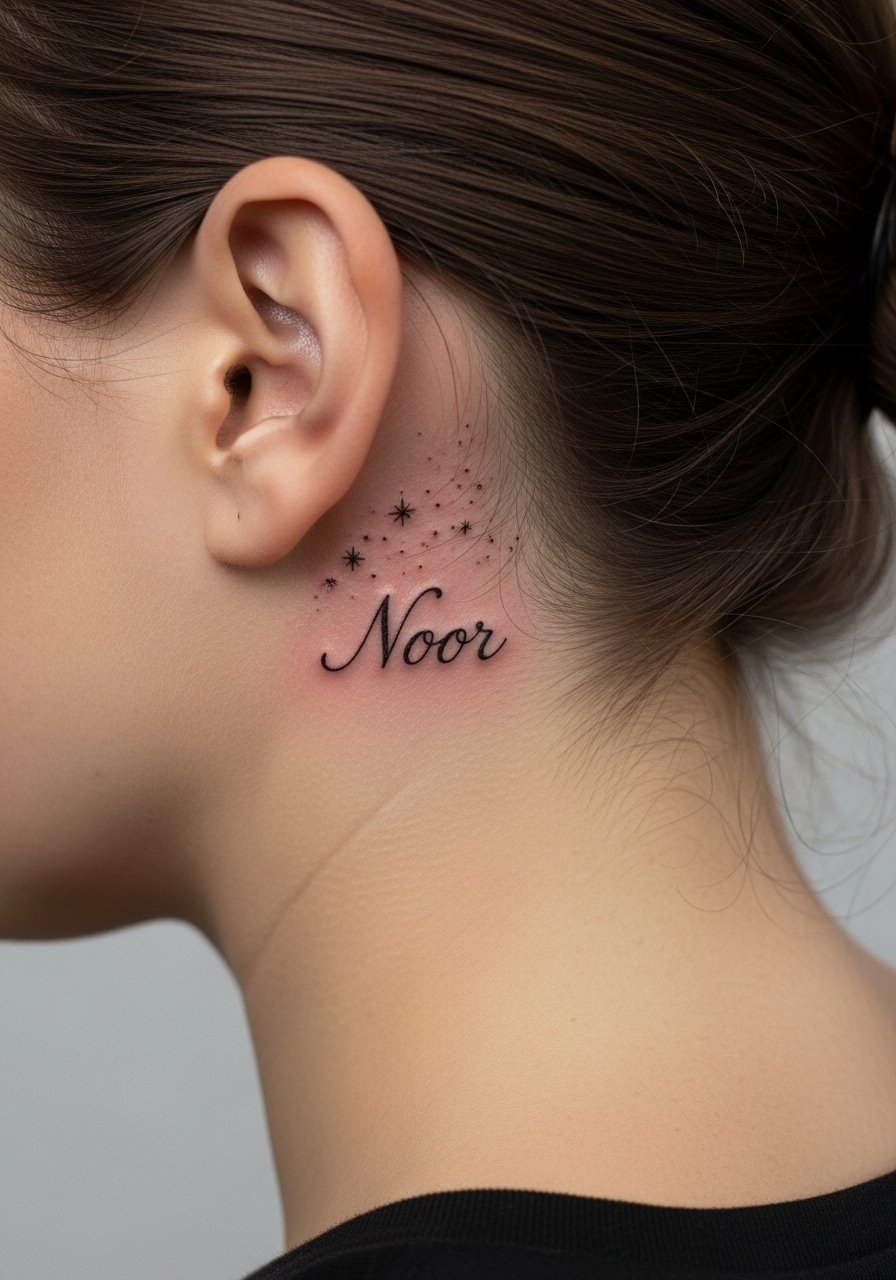
Micro stars that trail into the hairline create a soft, healing-friendly composition when kept tiny and spaced. Because of the placement, the artist must avoid heavy saturation near hair to prevent follicle irritation. This is a quick session but requires a careful stencil check and a steady single-needle hand. Because the piece sits under hairline moisture is higher, so keep aftercare dry in the first week. Expect a small touch-up if the stars blur after six months.
18. Minimalist Line "Hayat" Looping Around the Ankle Bone
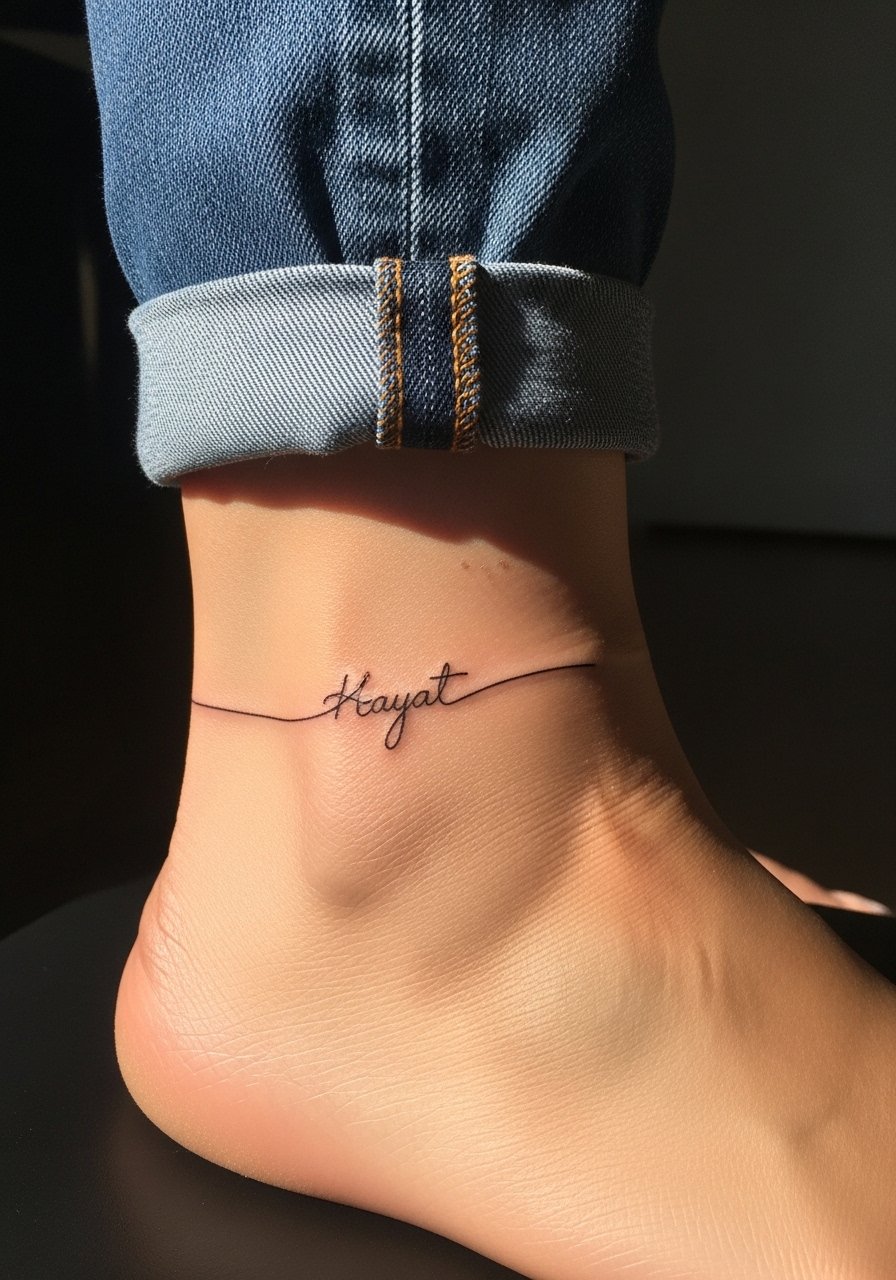
Ankle lines need a little extra weight to defend against sock and shoe abrasion. In the consult ask for a single-line that is slightly bolder on the lower stroke where rubbing occurs. For the session, wear pants you can roll easily. For showing off, pair with high waist cropped pants or sandals to keep attention on the ankle. Sessions are brief and a touch-up at year two is common.
19. "Ya Latif" in Curved Thuluth on the Inner Bicep

Inner bicep sessions are notorious for sensitivity but the skin there accepts ink well and heals with depth. Ask your artist to follow the arm curve and to keep baseline spacing so the letters do not compress when the arm moves. Wear a tank top with a loose fit to the appointment so the artist has clear access. The piece usually takes one session and may need a small touch-up at one year to preserve fine hairlines.
20. "Maktub" Stacked Vertical on the Side Torso
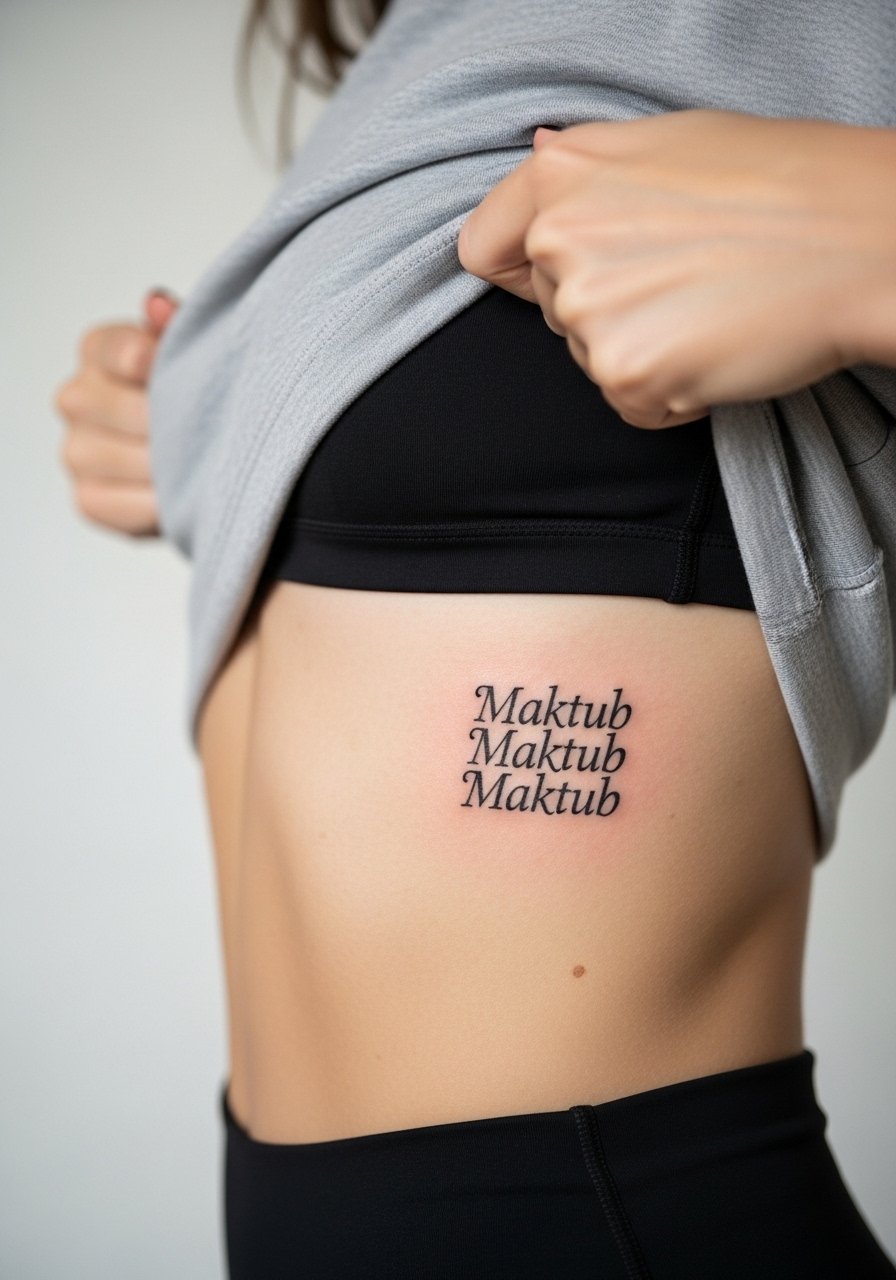
Side torso text looks elegant when stacked vertically and spaced to accommodate breathing and body shifts. The common mistake is compressing the letters too tightly. Ask for generous leading between lines and preview the stencil in multiple positions. Sessions are longer because the area is sensitive, but black ink with moderate line weight ages better here than single-needle lettering. Expect to discuss touch-ups, as thin vertical stacks sometimes need refreshing at year two.
21. "Ana Ma'ak" Script Wrapped Above the Heart
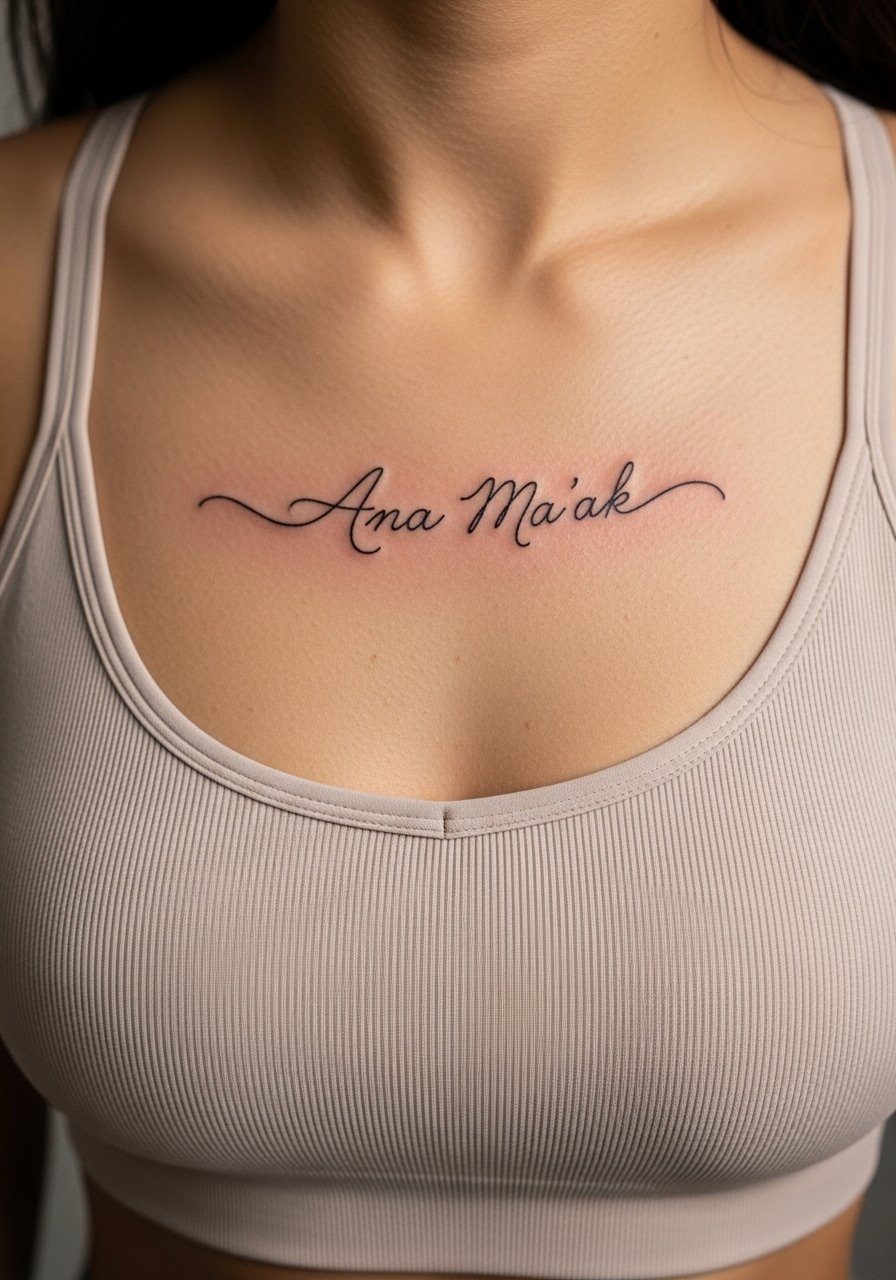
Placement above the heart requires careful centering and consideration of chest movement. Ask your artist to place the stencil while you breathe normally and while you hold a straight posture. For session comfort wear a fitted sports bra that gives the artist clean access without full exposure. This area heals predictably but may need a touch-up if the baseline shifts with weight fluctuation. Expect one to two sessions depending on shading and a touch-up at 18 months for tight scripts.
22. "Aziz" Script with Vintage Frame on the Shoulder Blade
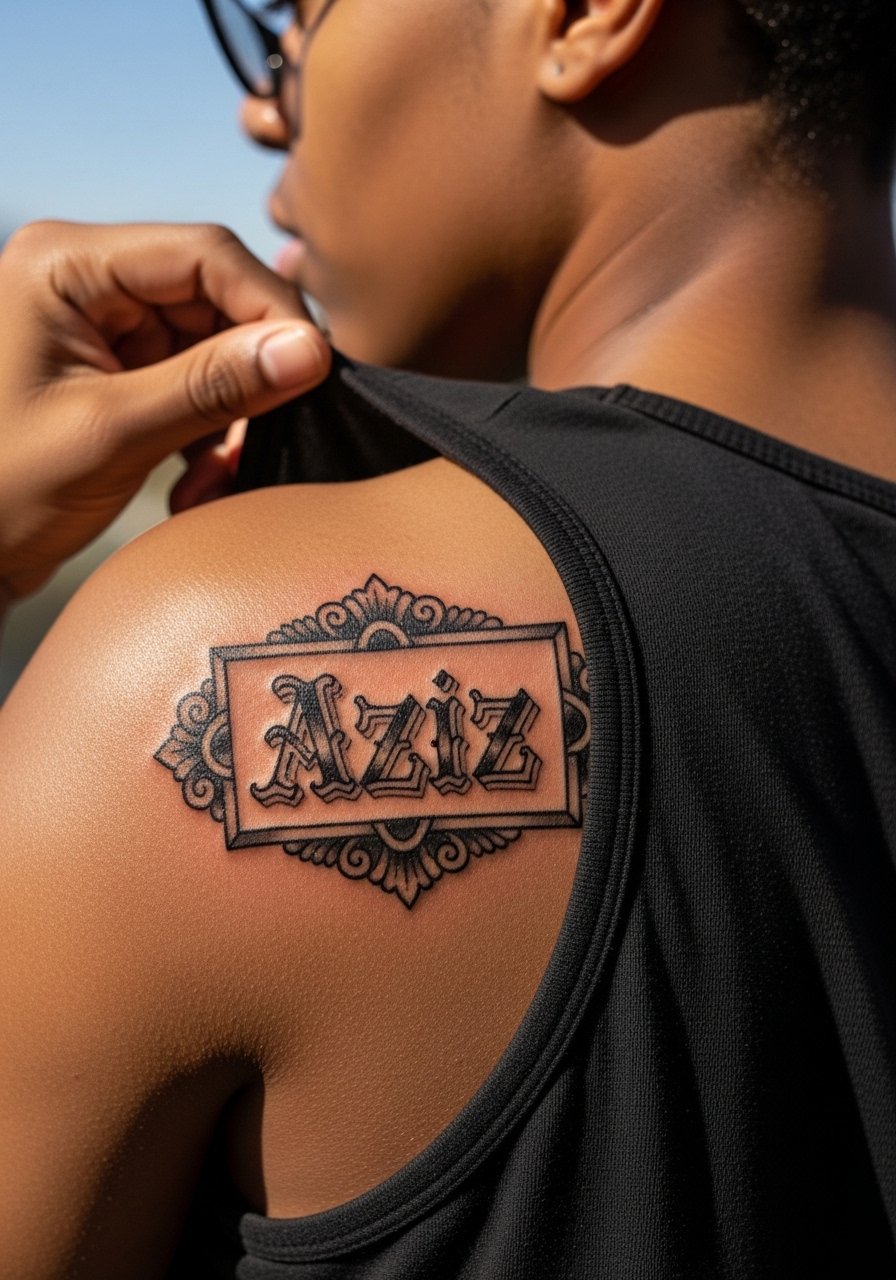
Shoulder blade pieces allow for slightly larger frames and ornament around a short name. The biggest mistake is crowding the frame into a tight border which can look muddy after healing. Ask for a wider negative margin so the block script holds its edges. For the session, a loose tank top works. To show it off, pair with sleeveless tops that keep straps minimal. Sessions run one to two hours and a touch-up after a year keeps the frame lines clean.
23. Vertical Poem on the Spine with Subtle Dot Work
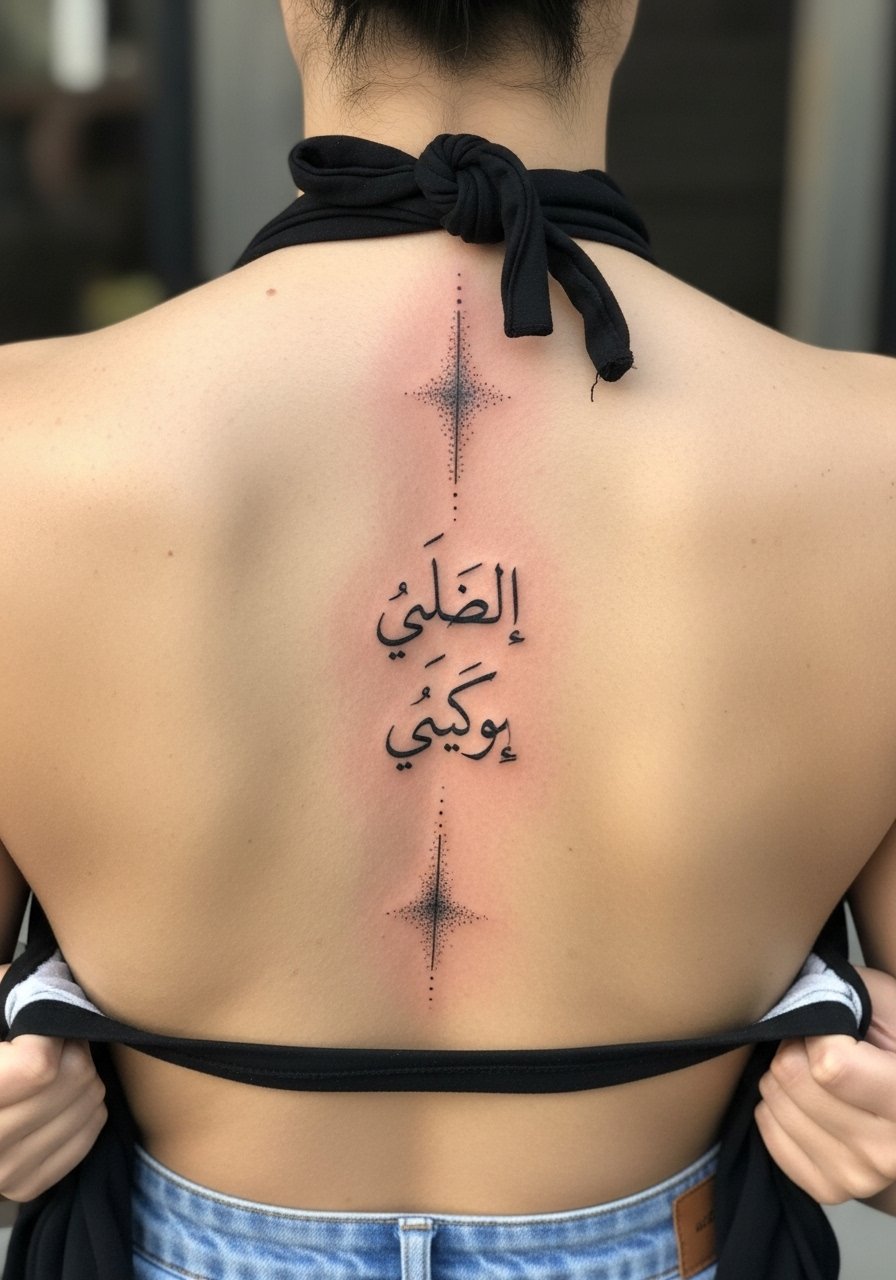
Spinal pieces with dot work look very refined when the spacing between dots is consistent and the script baseline follows the vertebrae. The controversy about fine line on the spine echoes other areas. One camp thinks the skin stretch will blur tiny details. The other camp maintains that with proper depth and spacing, stippling and linework settle well. Ask to see healed photos of the artist’s vertical work before booking. Wear a backless halter or racerback top for the session so the artist has clear access.
24. "Rahma" Small Script with Crescent on the Back Spine
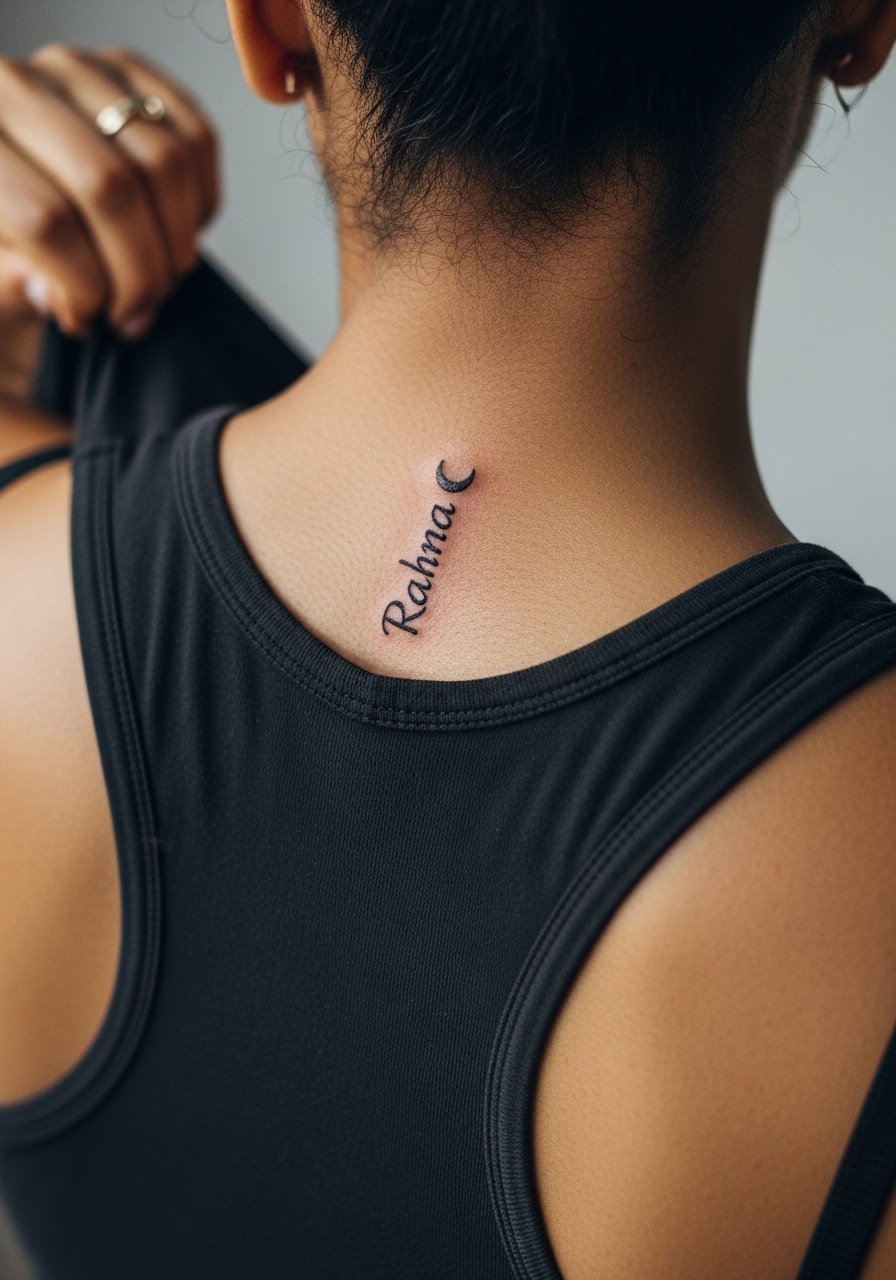
Upper spine pieces are slightly less abrasive than the lower spine and take blackwork marks cleanly when placed with attention to posture. Ask your artist to preview the placement standing and leaning forward so the crescent sits centered. For the session wear a racerback tank so shifting is easy. Sessions are short for small pieces, and a one-year touch-up for the crescent is common if you spend time in sun.
25. "Shukr" Raw Script on Outer Forearm with Negative Space
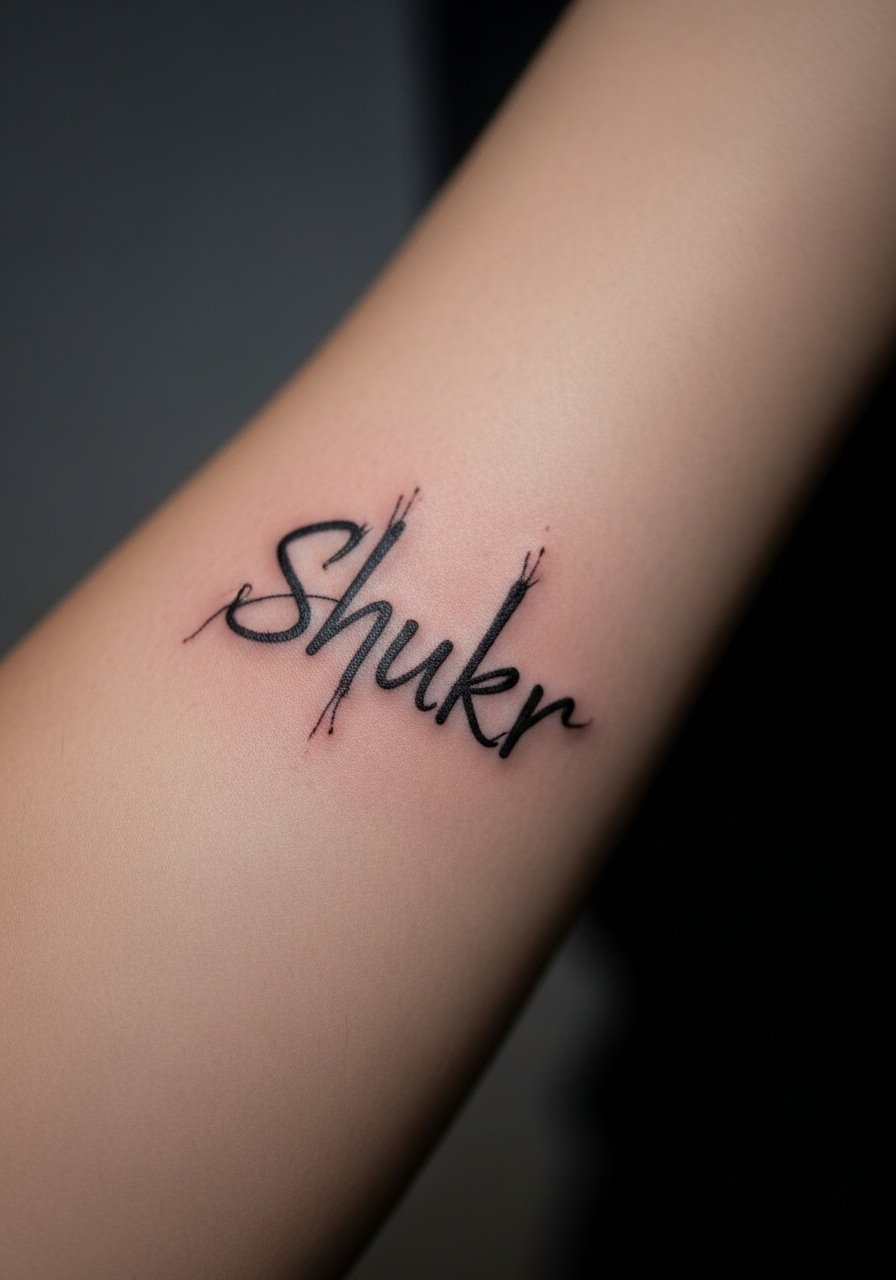
Negative space can make a raw script read bigger without adding heavy saturation, which helps with longevity on the forearm. The mistake is too many tiny gaps that blur into noise as the skin ages. Ask the artist to balance voids with solid terminals so the word reads at a glance. For casual showing pair with a short-sleeve linen shirt or a fitted tank top. Expect one session and a minor touch-up at 18 months.
26. "Noor" Micro-Realism Star Trail Behind Ear to Neck Transition
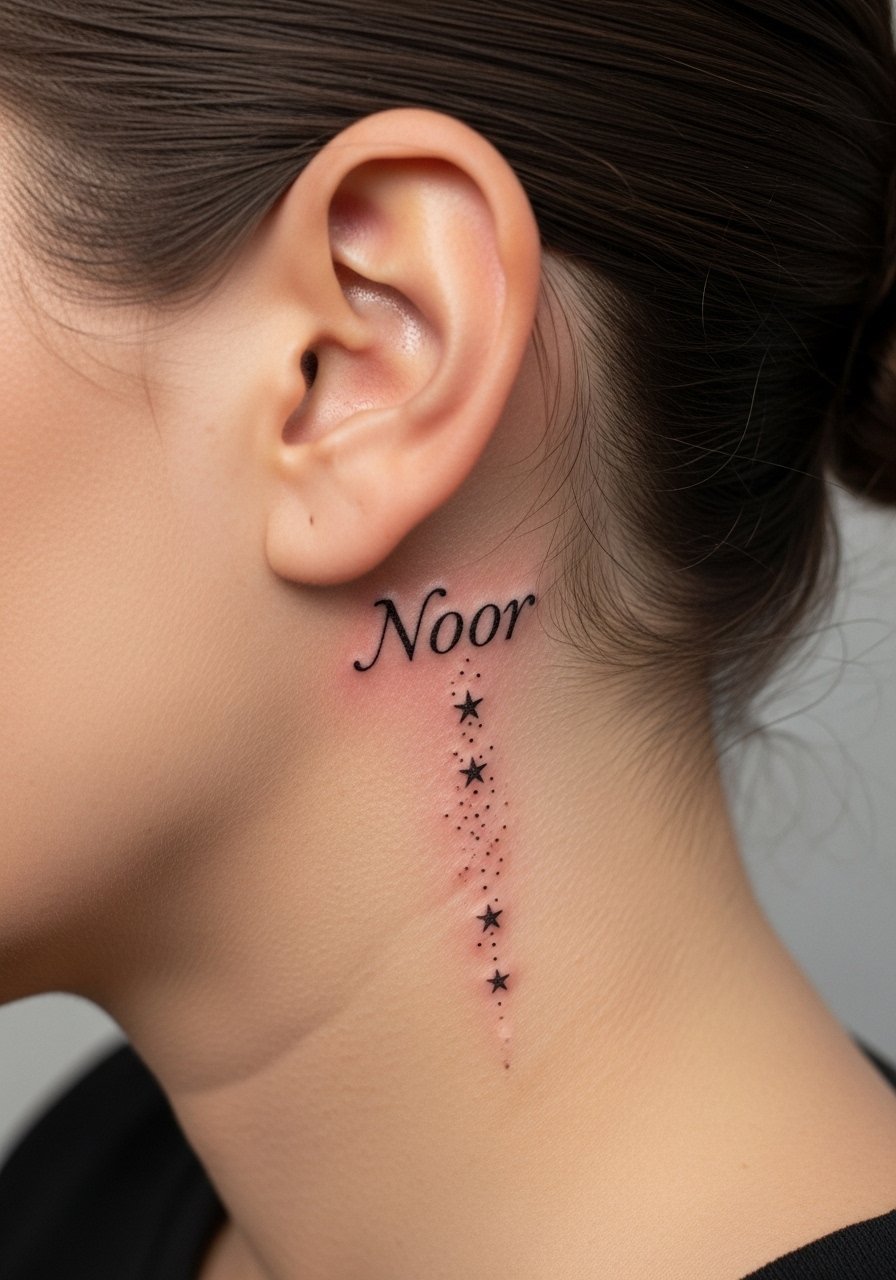
When micro elements transition into the neck, the artist must respect hairline moisture and angles. Keep the script slightly bolder at the anchor point and let the stars breathe outward. This area heals quickly but may lose the faintest dots if aftercare is neglected. For the session plan short standing breaks and a precise stencil check. Expect a quick touch-up if any of the micro stars soften after six to twelve months.
27. Vertical Tribute Phrase with Harakat on the Back Spine
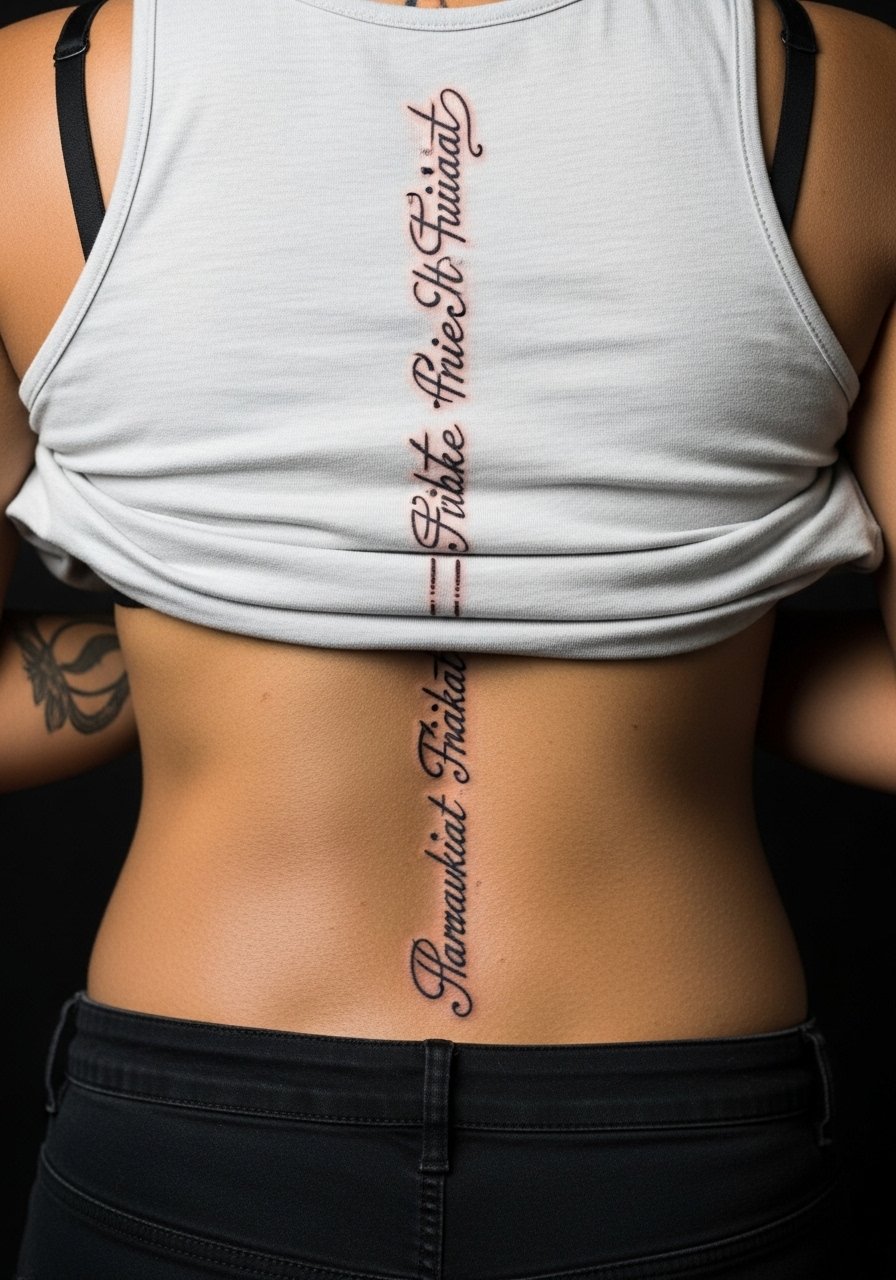
A vertical tribute with harakat marks is a strong way to lock pronunciation into the design and reduce mistranslation risk. The mid-back gives the lines room and resists the daily abrasion of clothing. Ask your artist to place vowels with extra spacing so they do not crowd the letters as the skin moves. For the session wear a loose tank top you can shift easily. Sessions may run longer depending on line density and a touch-up at year two helps preserve the tiny vowels.
Frequently Asked Questions
Q: Will fine-line Kufic on the wrist blur faster than bold Thuluth on the forearm?
A: In my experience fine-line Kufic on the wrist is more likely to soften sooner because of friction and thinner skin. Bold Thuluth on the forearm benefits from more tissue and less daily abrasion. If you love fine line, ask for slightly increased line weight and plan for a touch-up at year two.
Q: How can I avoid mistranslation when getting an Arabic quote?
A: Verify the exact spelling and diacritics with multiple native readers and ask the artist to show you the stencil on skin before inking. Use transliteration as a backup and consider including harakat marks if pronunciation matters to you.
Q: Is numbing cream acceptable for script sessions and does it affect the tattoo?
A: Artists split on this. One camp says topical numbing helps long wrist and rib sessions without harming results. The other camp worries that numbed skin reacts differently under certain techniques. If you plan to use numbing cream, mention it to the artist ahead of time and follow their guidance on application.
Q: What should I wear to a collarbone or ribcage appointment?
A: For collarbone pick a wide-neck or off-shoulder top you can pull aside. For ribcage a cropped top or sports bra works so the artist can reach the side torso with minimal repositioning. Comfortable, loose clothing that leaves the area accessible is the goal.
Q: How often do Arabic script tattoos need touch-ups?
A: It depends on style and placement. Bold blackwork typically needs less frequent work than single-needle fine line. Expect a small touch-up around 12 to 24 months for delicate scripts and every few years for maintenance if you want sharp counters and diacritics preserved.