
Fine line work looks gorgeous fresh and fragile, but the reality is that fingers are a busy place. Hands wash, type, slide into pockets, and rub against rings, and those motions make ink behave differently than on the forearm. That matters when you pick a tiny heart, a script initial, or a dotwork triangle. Below are 17 small ideas built for how fingers move, what ages well, and what to ask for in the consultation.
1. Fine Line Heart on Side Finger
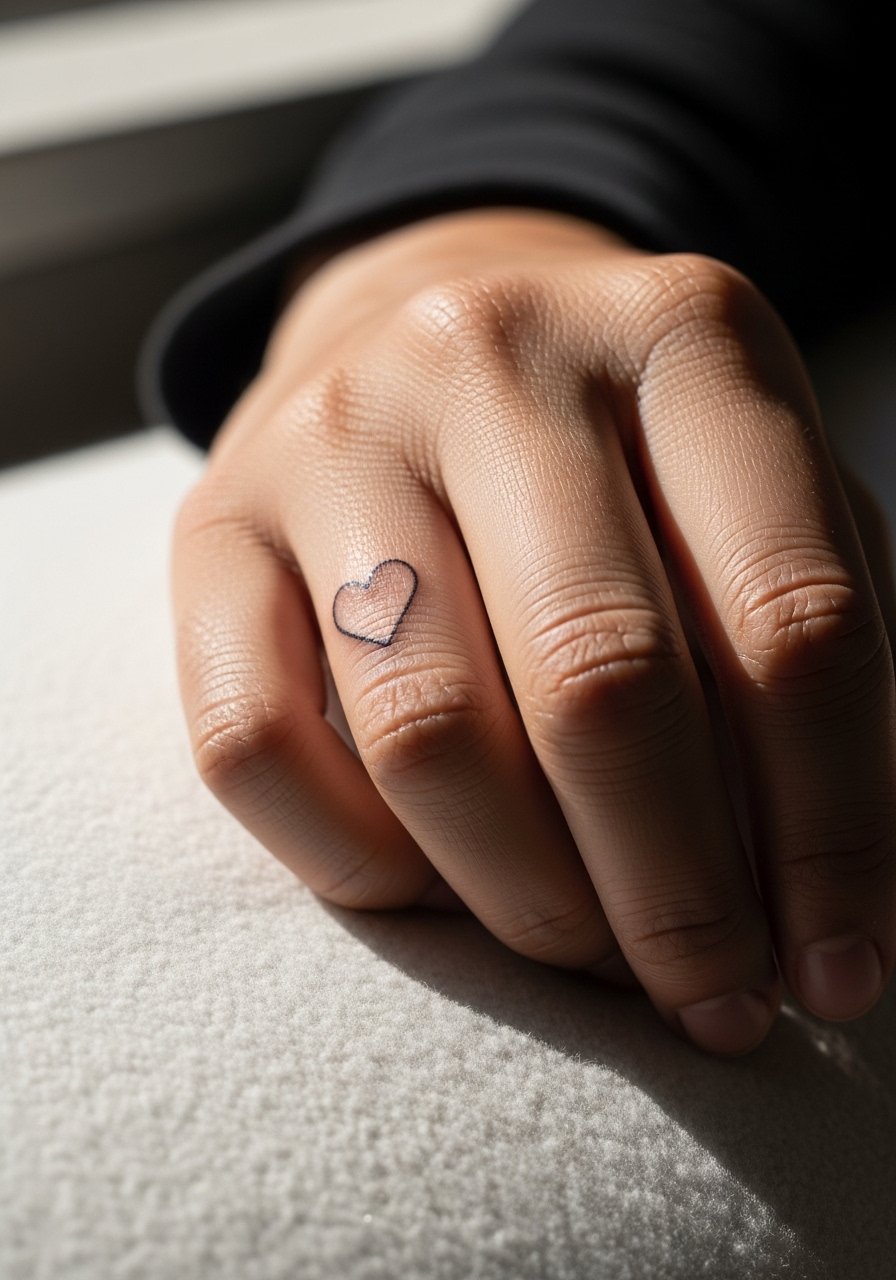
This tiny side-heart reads like a ring substitute and stays subtle with thin single-needle linework. Pain is low to moderate for most people, and the session often takes under 20 minutes. Tell your artist you want the outline lifted slightly off the crease so the lines do not sit inside constant folds, and ask for a single-session layout with a slightly heavier anchor point at curve ends to reduce early fading. A common mistake is asking for ultra-hairline weight that the skin on fingers cannot hold long term. Expect a touch-up around year two to keep the contour crisp. For showing it off, bare hands with a thin silver ring stack and a nude manicure frame the heart without competing.
2. Minimal Floral Sprig on Ring Finger Top
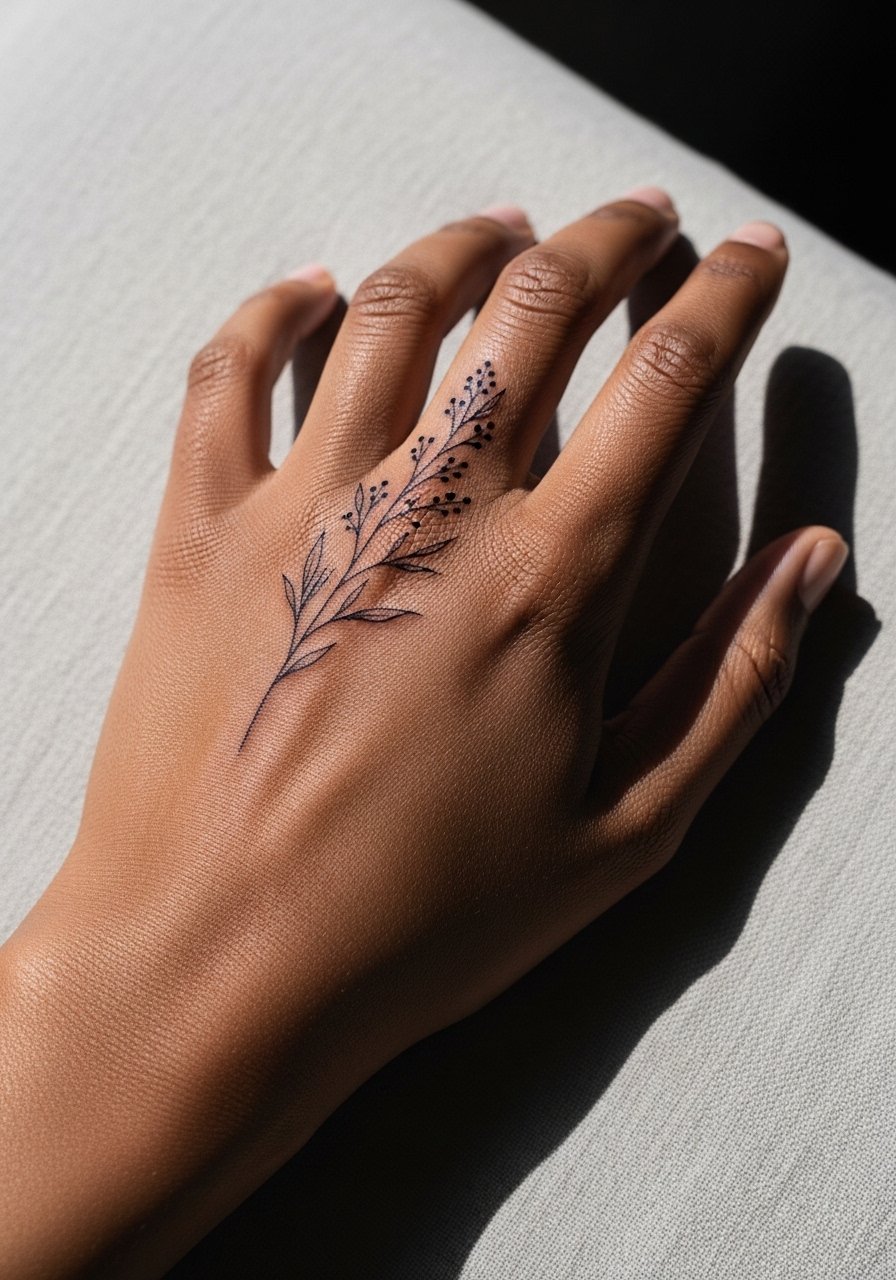
A vertical sprig along the finger top feels romantic without covering knuckles. The placement is good for first-timers because the petals and tiny dot accents age more gracefully than dense shading on fingers. During consultation, show photos that emphasize spacing between petals and ask for slightly larger gaps than you want so the design has breathing room when it blurs a little. Expect moderate tenderness when the needle crosses the bony ridges near the knuckle. Avoid asking for heavy stipple in that small space because dense dots tend to merge. For a polished look, keep nails in soft tones and try a nude gel nail polish to keep attention on the botanical linework.
3. Single Line Butterfly on Index Side
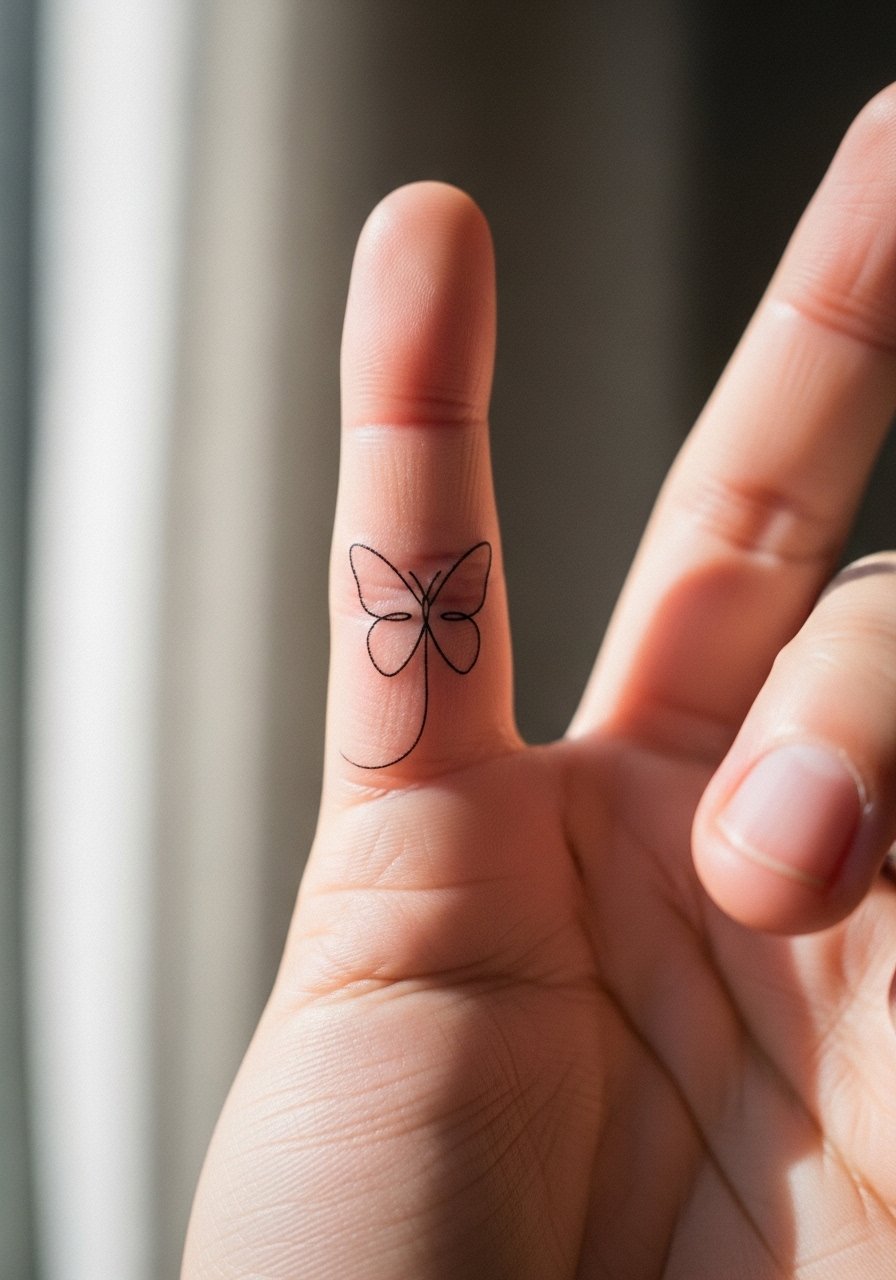
A continuous single-stroke butterfly feels whimsical but stays tiny enough to remain readable. The session is quick and the pain is mild on the fleshy index side. Ask the artist to map the single line so it avoids sharp micro-corners, because tight turns are where line weight gets inconsistent over time. One aging pattern to expect is softening of the wing tips by year two; plan a light touch-up if you want to preserve the crispness. For casual styling, this placement pairs with fingerless gloves and off-shoulder tops. Try a fingerless gloves leather look for nights out, or a flowy tank for daytime.
4. Dotwork Triangle at Thumb Base
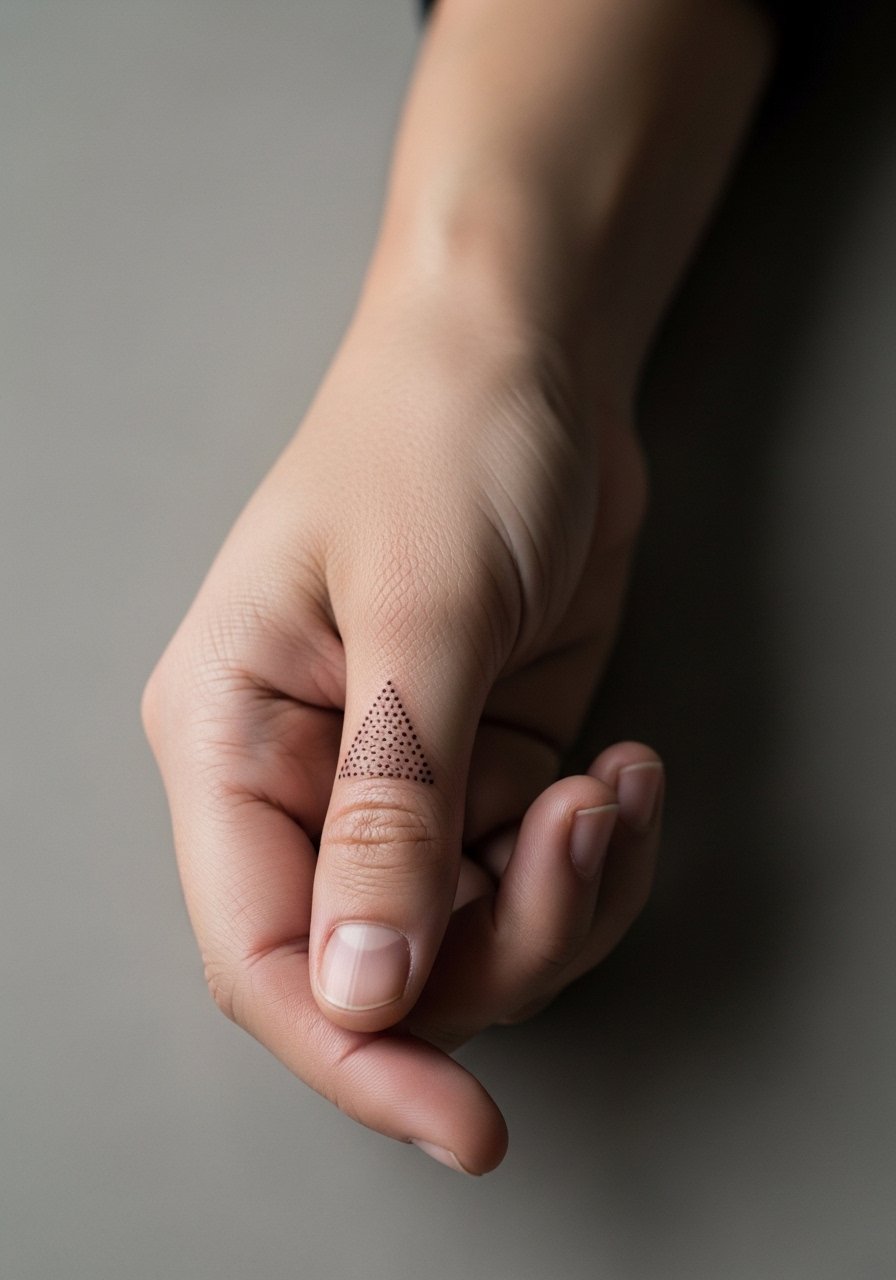
Dotwork on the fleshy thumb base gives an abstract feel without crowding knuckles. The technique relies on many micro dots instead of continuous strokes, which means the artist must pace to avoid overworking the tissue. The area tolerates dotwork well because the skin there is less prone to the constant creasing that causes blowout on finger sides. A mistake is placing the triangle too small with dense dots; that compresses over time and looks muddy. In practice this piece usually needs a smaller, precision touch-up at year three in most cases. During the session, wear a loose sleeve like a linen blouse you can roll up so the artist can angle the thumb comfortably.
5. Script Initial on Inner Middle Finger
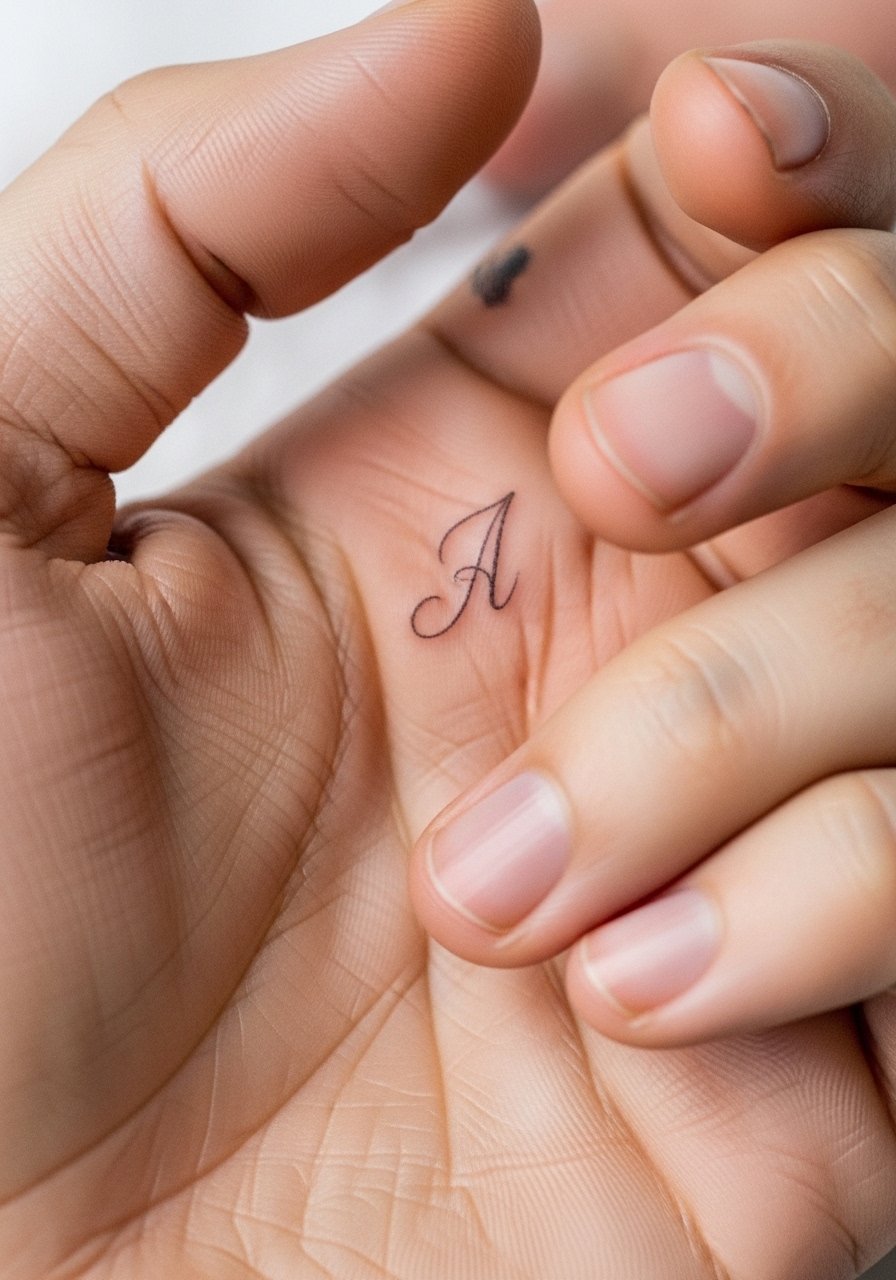
A script initial tucked on the inner side reads discreet and pairs naturally with rings. This spot can be one of the trickiest because the inner finger sees frequent contact and oils. Tell your artist you prefer slightly bolder single-stroke script rather than whisper-thin calligraphy so the letters hold. The most common mistake is asking for extremely delicate flourishes that simply do not survive daily wear. Expect a touch-up at year one or two depending on your job and washing habits. For showing it off, a minimalist cuff bracelet sits just below the hand without stealing attention, and a minimalist cuff bracelet lifts the editorial vibe.
6. Tiny Star Cluster on Pinky Top
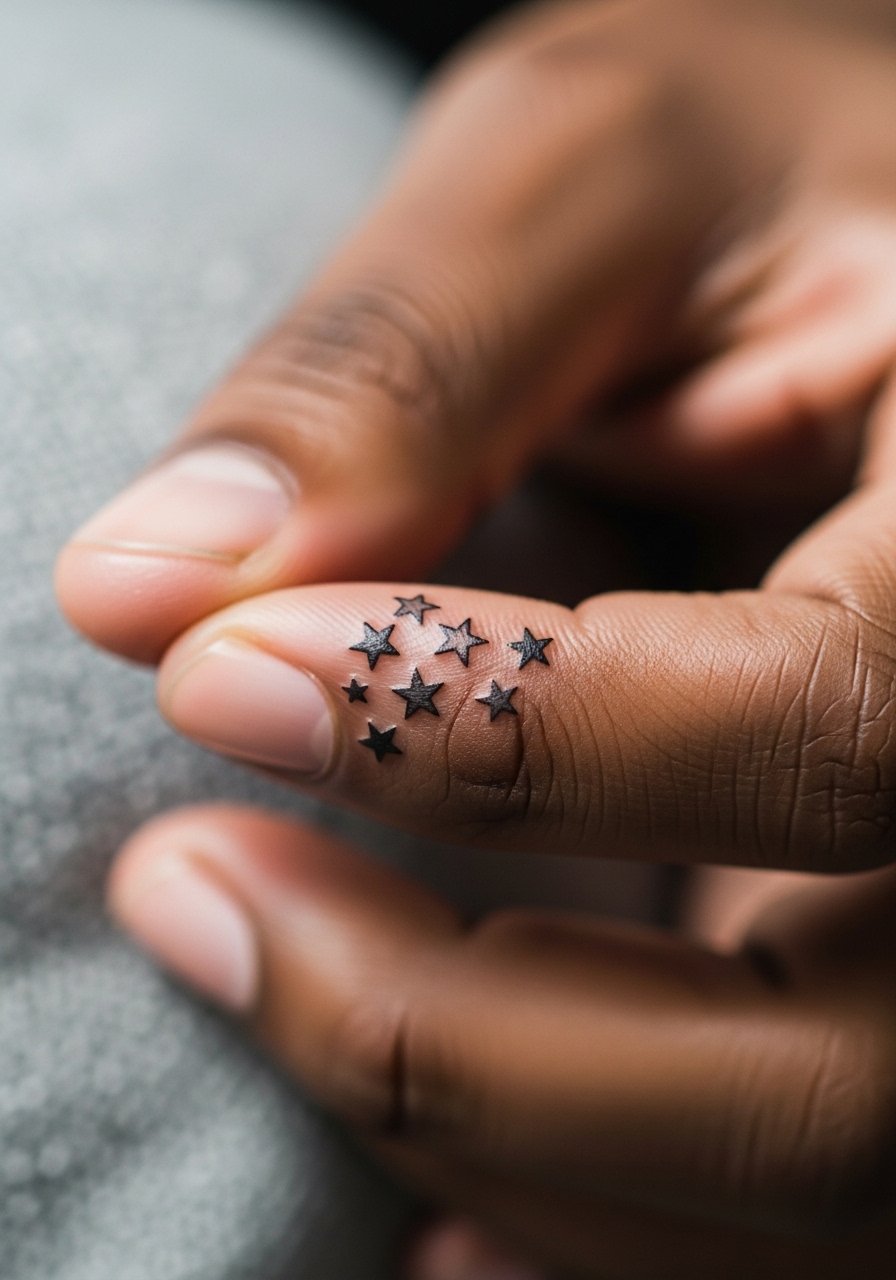
A cluster of micro stars gives a playful celestial nod without being literal. The top of the pinky heals fast because movement is limited there, but constant contact with phone cases and pockets is a real aging factor. Ask for varied star sizes and spacing, and avoid filling the area with tiny pin dots that sit too close. A common aging complaint is that clustered small marks can blur into a single smudge if placed too tightly. Plan a light touch-up at year two to keep separate points. To accent the cluster, a matte black manicure pairs well, and wearing a dainty finger rings set on adjacent fingers frames the stars without overcrowding.
Before You Book
The finger and thumb pieces above heal differently from larger arm work, so a few small items make pre-session prep and the first week much easier.
-
Stencil transfer paper kit. Lets you test exact placement on the finger before the needle goes down, which is crucial for tiny script and heart placements in the first six ideas.
-
Topical numbing cream. Applied per instructions before the appointment it reduces sharp sensation on bony finger spots without changing how the ink sits.
-
Thin protective film roll. Small strips help shield finger ink from friction during the first days of healing when typing and handwashing are unavoidable.
-
Fragrance-free gentle body wash. Use for shower cleanses so delicate fine line work in this group does not get irritated by scented ingredients.
-
Aquaphor healing ointment. A thin layer in the first 48 hours keeps flexible finger linework hydrated without clogging the surface.
7. Outline Crescent Moon on Pointer Side
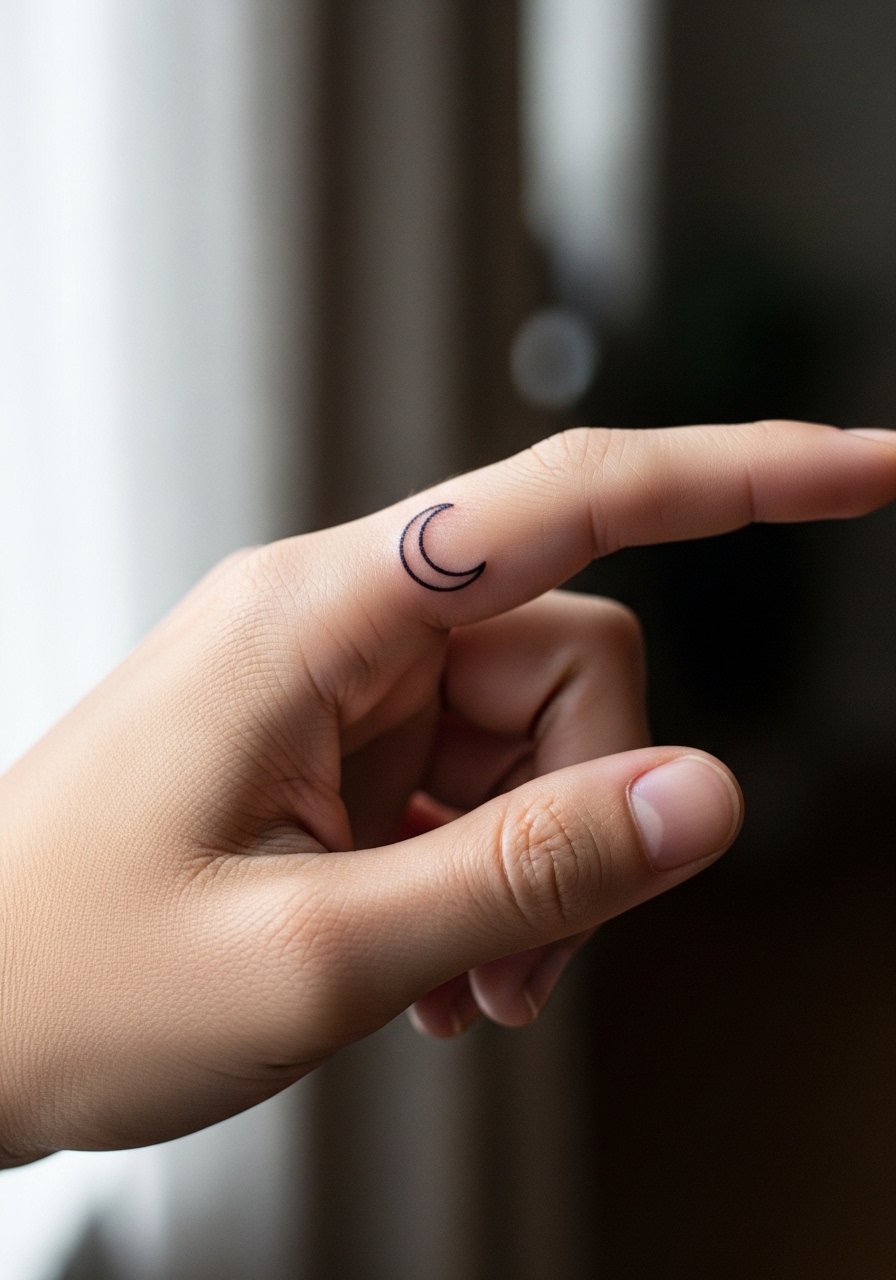
A slim crescent on the pointer side reads clean and symbolic. This placement copes with daily movement but is vulnerable to smudging if lines are too thin. Ask the artist to keep a touch of weight on the crescent curve where it crosses the knuckle line so the visual remains when the skin stretches. Artists disagree on how fine is too fine for this spot. One camp says the constant flexing softens linework quickly. The other camp argues that with measured depth and slight spacing the crescent will hold. Name this concern in consultation and ask where your artist stands. For casual outfits, rolled-cuff denim shirts and thin chain rings complement the linear shape.
8. Micro Arrow on Ring Finger Side
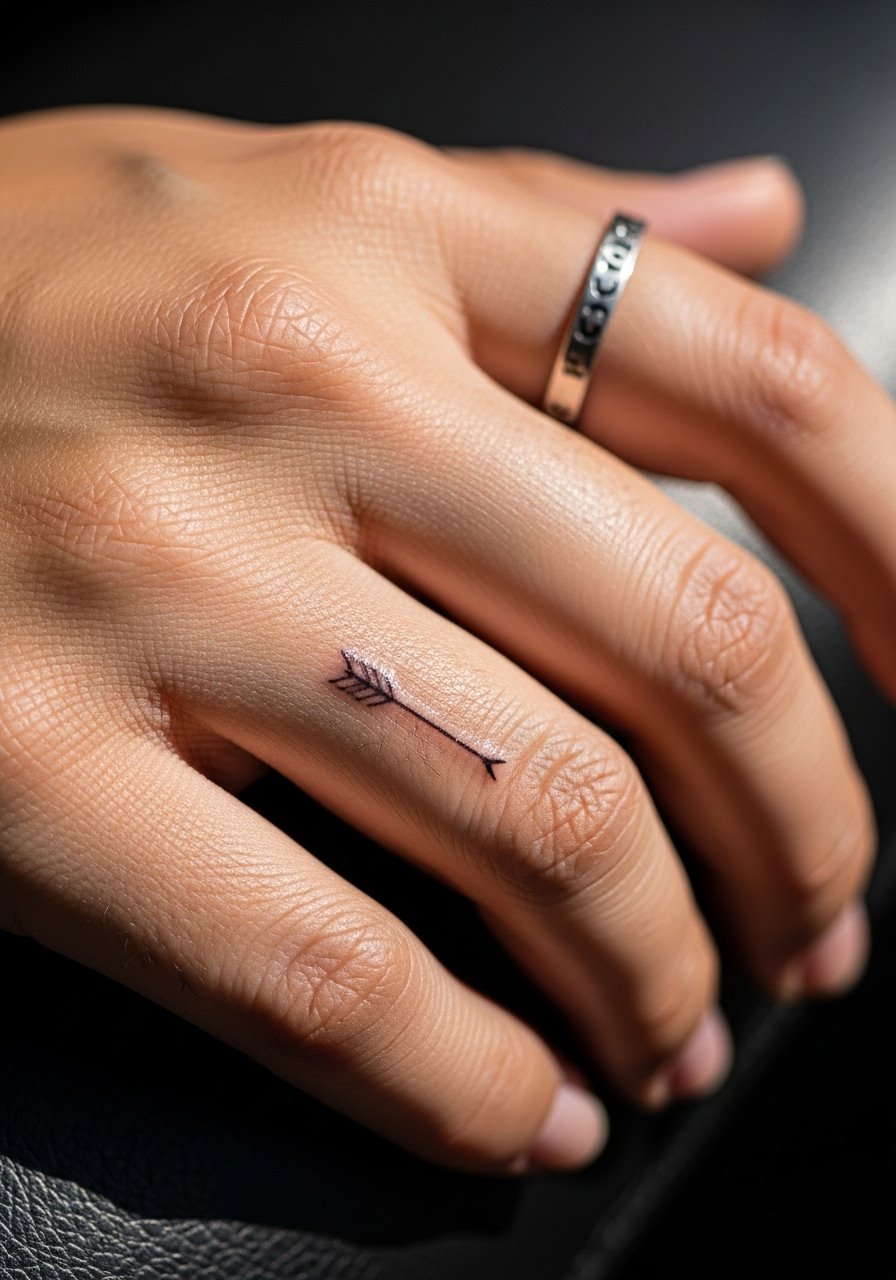
A vertical arrow reads like a discreet reminder and suits people who want directional symbolism. The ring finger side is a high-motion area, so request a slightly bolder shaft with minimal feathering. The session feels quick but sharp when crossing bony ridges. A frequent mistake is asking for extra tiny arrowheads and fletching inside that small vertical space because detail collapses over time. Expect a touch-up window around year two if you use that hand heavily. For the appointment wear a short-sleeve button-up or a loose tee so the artist can stabilize the hand. A thin chain rings look on other fingers echoes the arrow's linework.
9. Delicate Wave Line on Thumb Curve
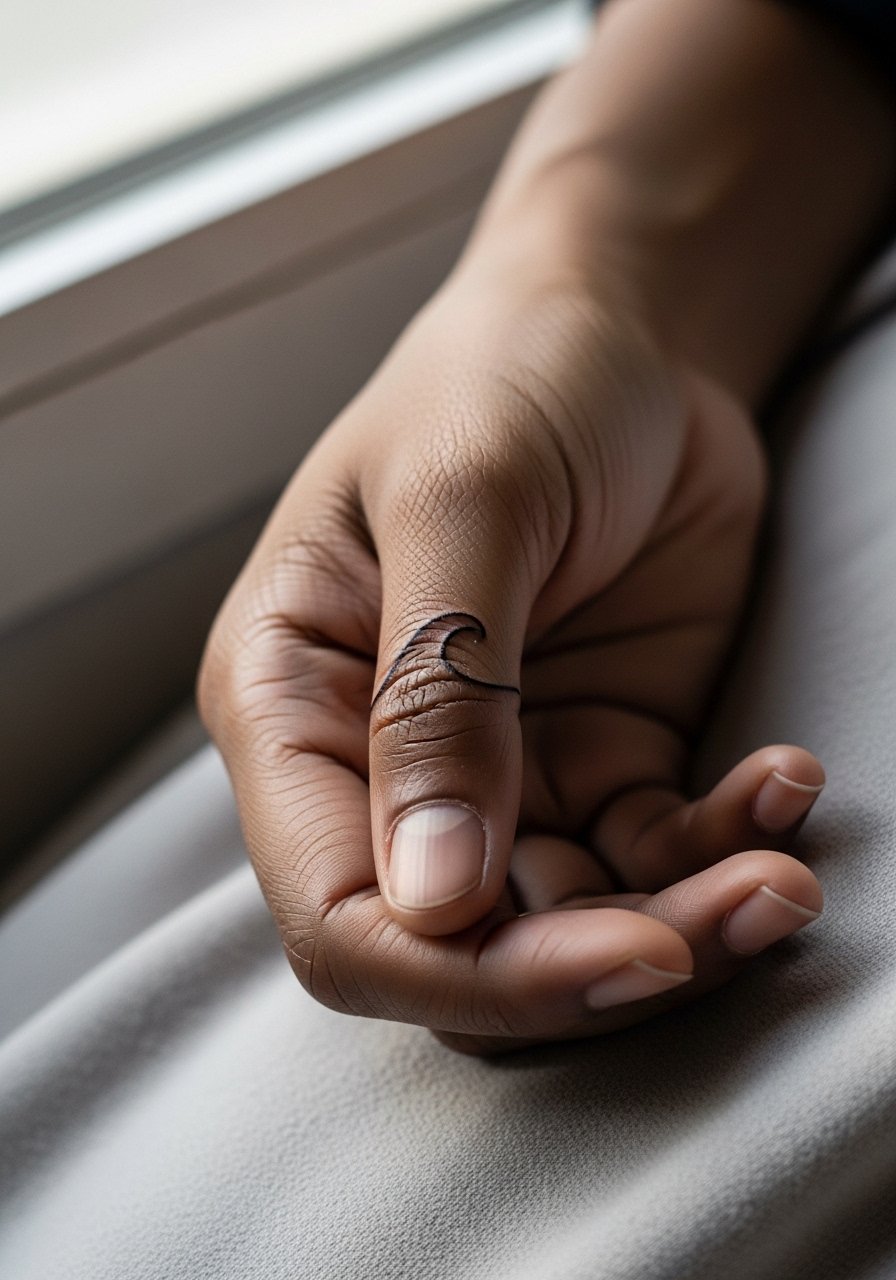
A small fluid wave along the thumb curve suits people drawn to ocean motifs. Thumb skin is thicker but moves a lot, so ask for a gentle flowing stroke rather than tiny repeated loops. The wave often settles well for the first two years and then softens at peak friction points where the thumb meets the palm. A common error is packing the curve with micro-shading in that small zone. For the session wear a sleeve you can roll up easily, like a loose blouse fabric, so the artist can pivot the thumb without pressure.
10. Tiny Rosebud Outline on Index Inner
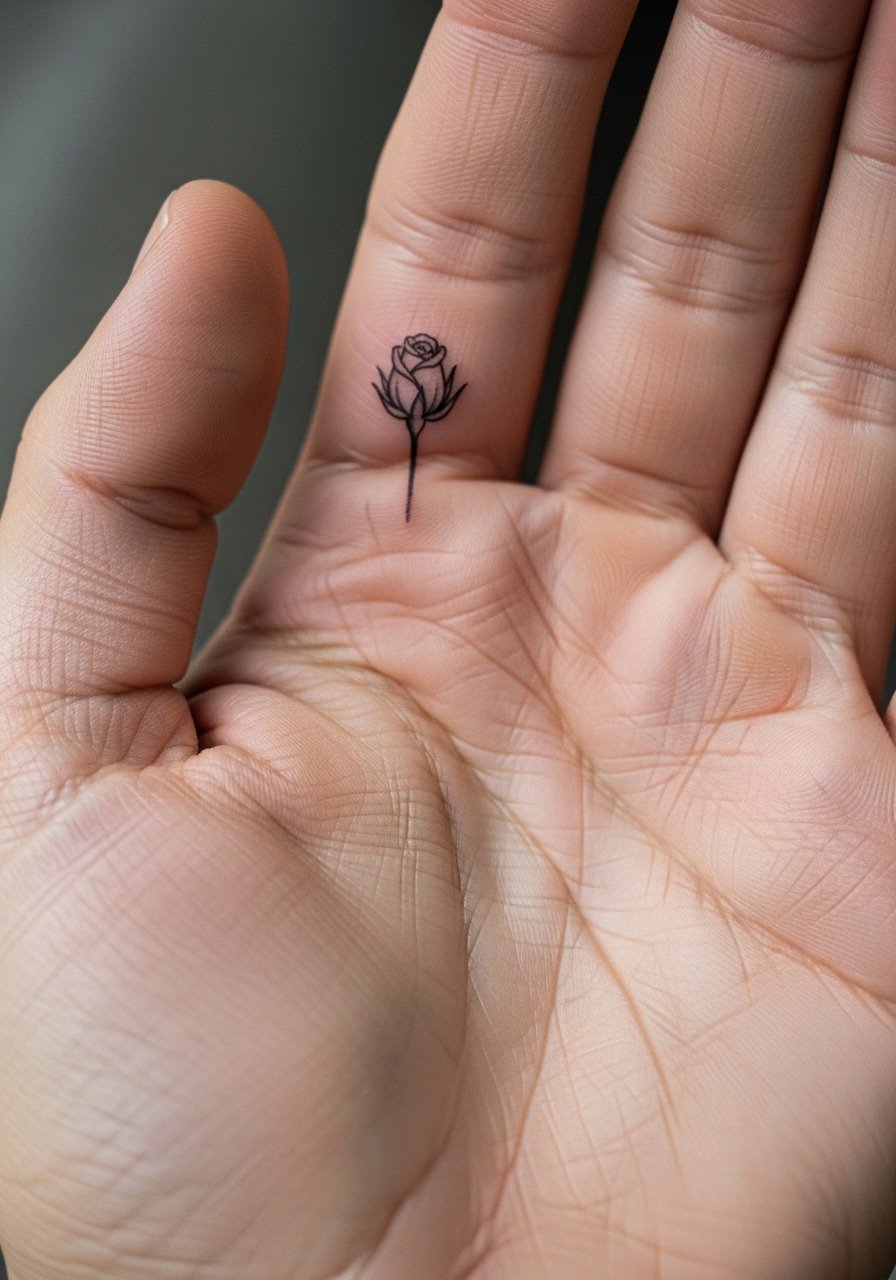
A petite rosebud on the inner index is a classic romantic choice that heals into a soft relic of linework. The inner index sees oils and contact from object handling, so tell your artist to space petal outlines slightly and to avoid dense stipple. Visually this spot ages with the contours of the finger, so petals may blur at two to three years. A smart ask in consultation is to keep petal edges open rather than closed loops. For showing the bud off, an off-shoulder cream top and a pointed taupe manicure balance femininity, and a taupe nail polish pointed maintains the editorial look without competing.
11. Heartbeat Line on Pinky Side
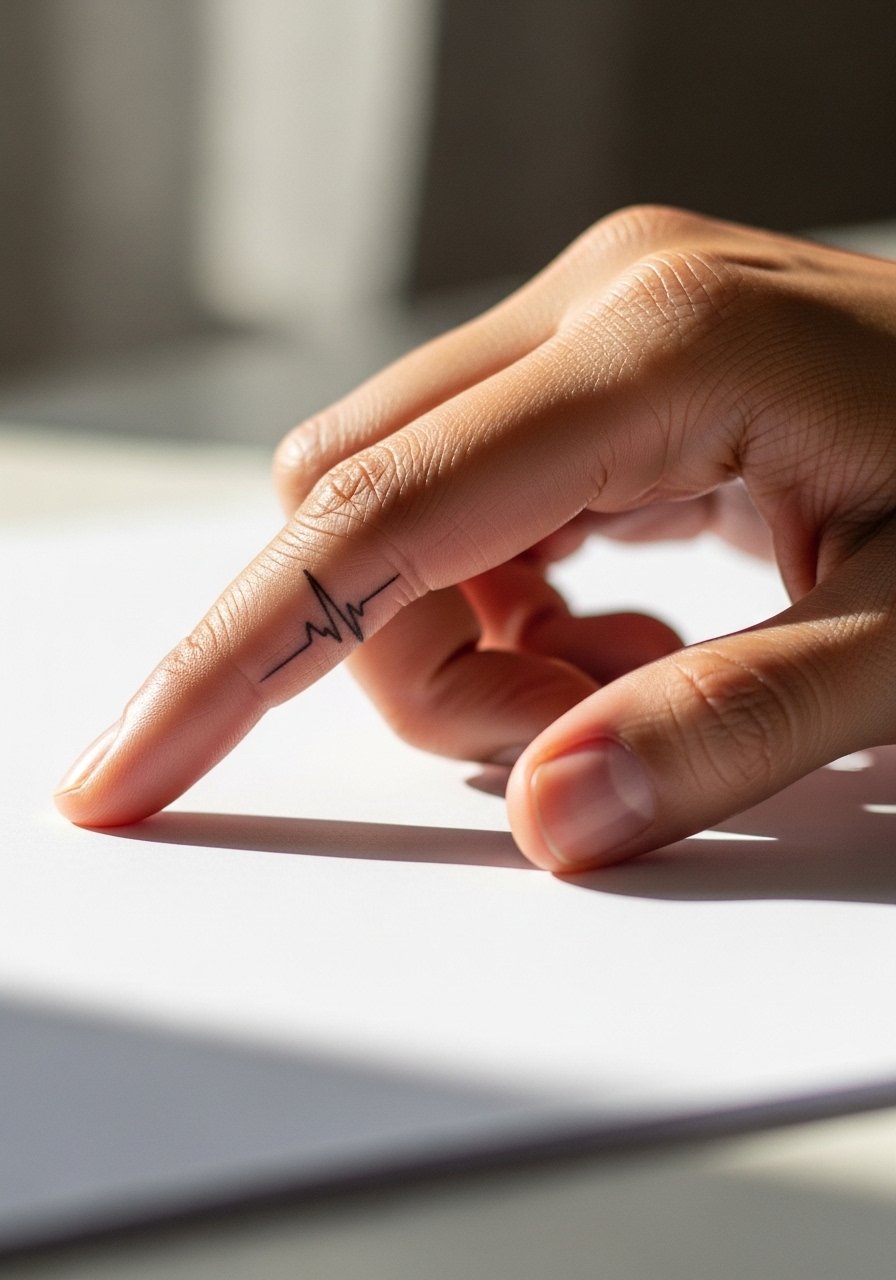
A tiny heartbeat line translates energy into micro-graphic form. The pinky side is compact and tolerates short linear motifs well, but repeated pressure from phone grips can fade it faster. In consultation ask for the peaks to be slightly wider than you think so the shape stays readable when time softens the points. One real mistake is requesting ultra-tight amplitude and expecting it to read five years out. Touch-ups are common for these micro linear pieces if you use that hand often. This is a good choice for someone who wants visible symbolism without a ring.
12. Single Pearl Dot on Middle Finger Top
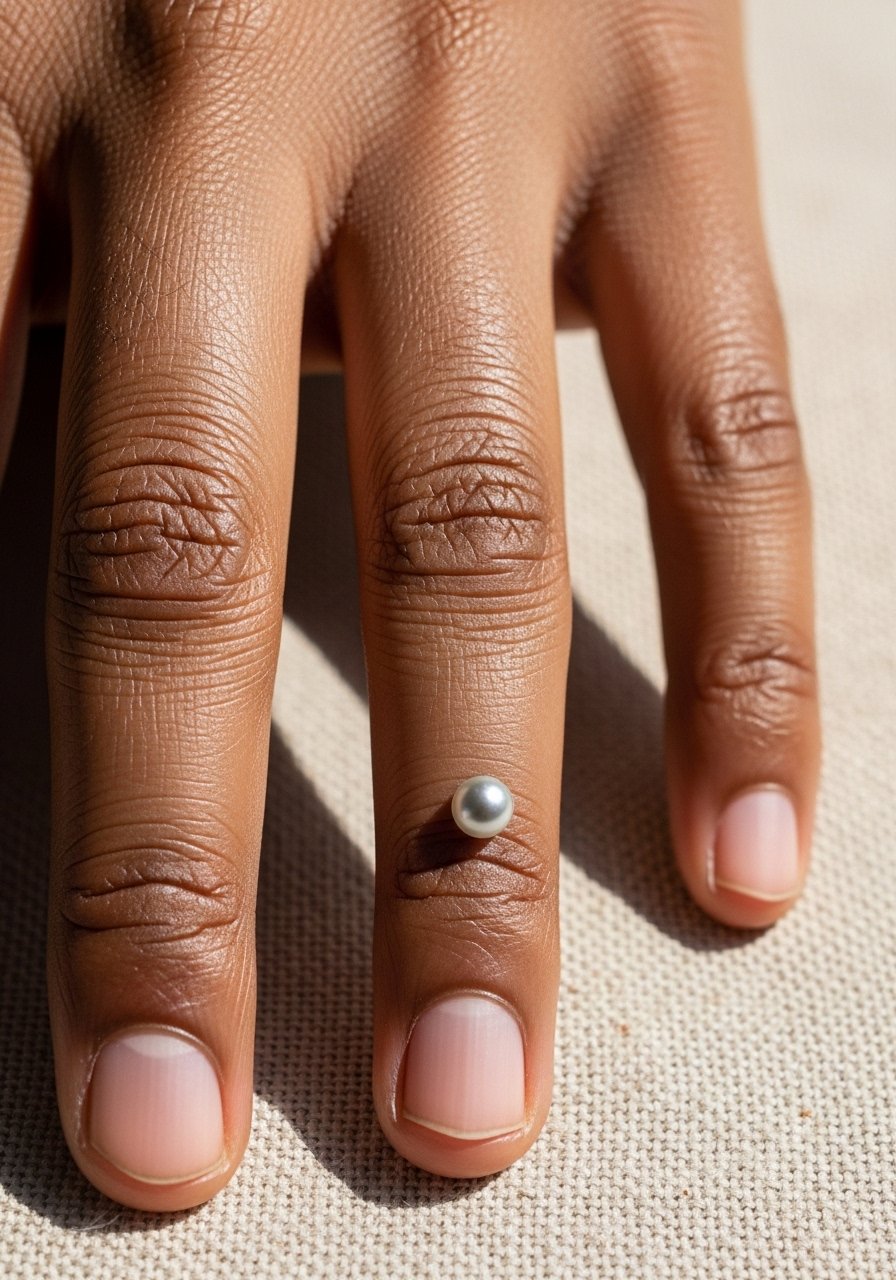
A micro-realism pearl mimics jewelry and solves the desire to wear a subtle accent every day. The top of the middle finger holds a dot well because the location is less creased than inner sides. Ask your artist for soft shading and a tiny highlight rather than a flat dark spot so the dot reads as a jewel rather than a smudge. A common mistake is an overdarkened core that looks heavy after healing. Expect a check-in touch-up at year two if the highlight loses contrast. For styling, a thin cuff below the wrist keeps attention moving up the arm without crowding the finger.
13. Constellation Across Two Fingers
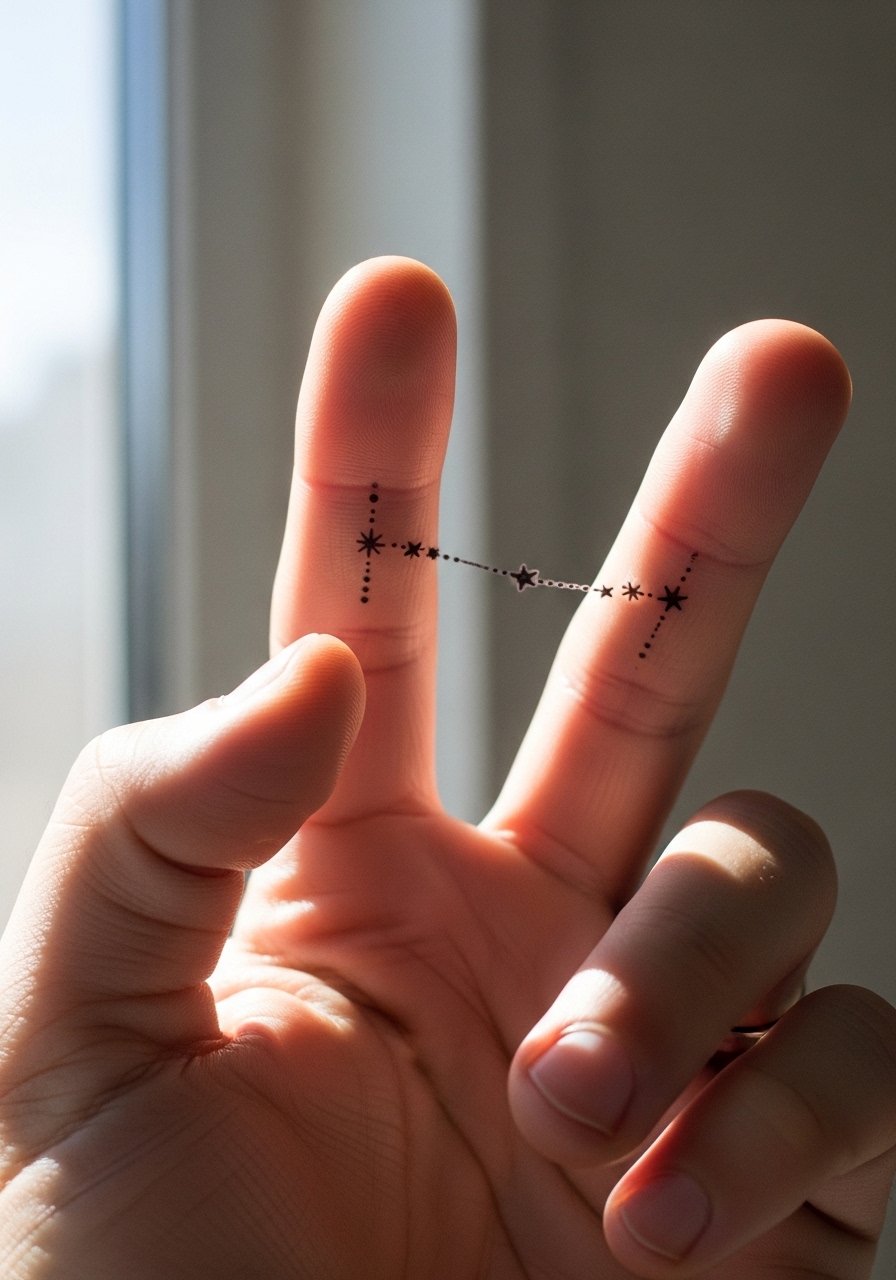
A stitched-together constellation across adjacent fingers creates a small, visible story when the hand spreads. It needs careful spacing because two moving fingers mean connecting points may shift slightly when you make a fist. Ask for the connecting lines to be short with slightly larger anchor dots so the pattern reads when healed. Artists sometimes debate whether tiny connecting lines between digits should be avoided entirely. The safe route is short links with anchor points that can be retouched later. Show-off styling pairs well with rolled-up sleeves and delicate stacks, and a dainty finger rings set on the adjacent fingers frames the constellation nicely.
14. Morse Code Initial on Side Finger
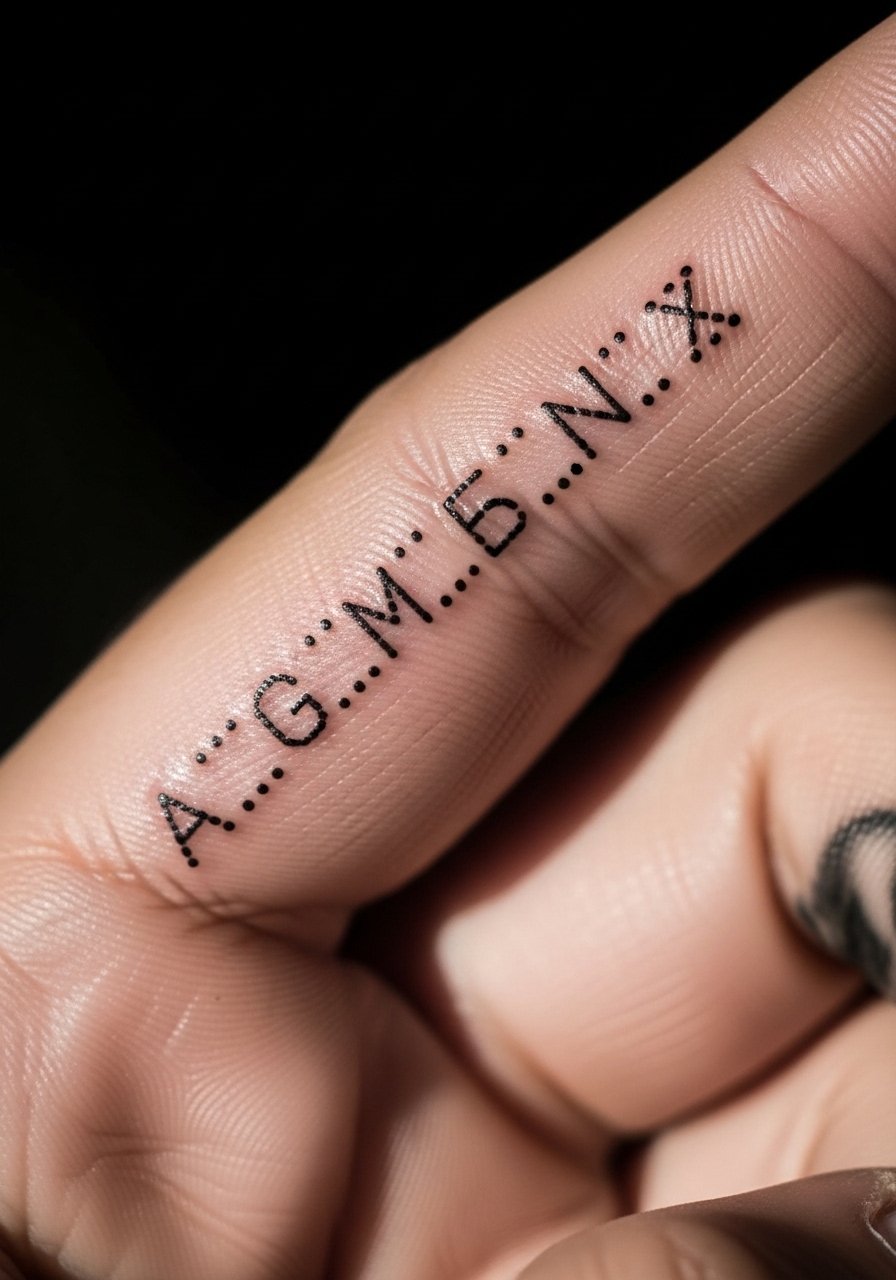
Morse code offers an understated, almost private message in dot-and-dash form. The side of the finger is ideal because the linear pattern follows the digit. Ask your artist to space the dashes wider than dots so they remain readable when tiny blurs occur. A frequent mistake is compressing the code too tightly. Plan for a small refresh after two to three years if you rely on that piece to remain legible. For subtle accessorizing, thin chain rings echo the linear script and keep the look minimal without competing.
15. Tiny Anchor on Thumb Fold
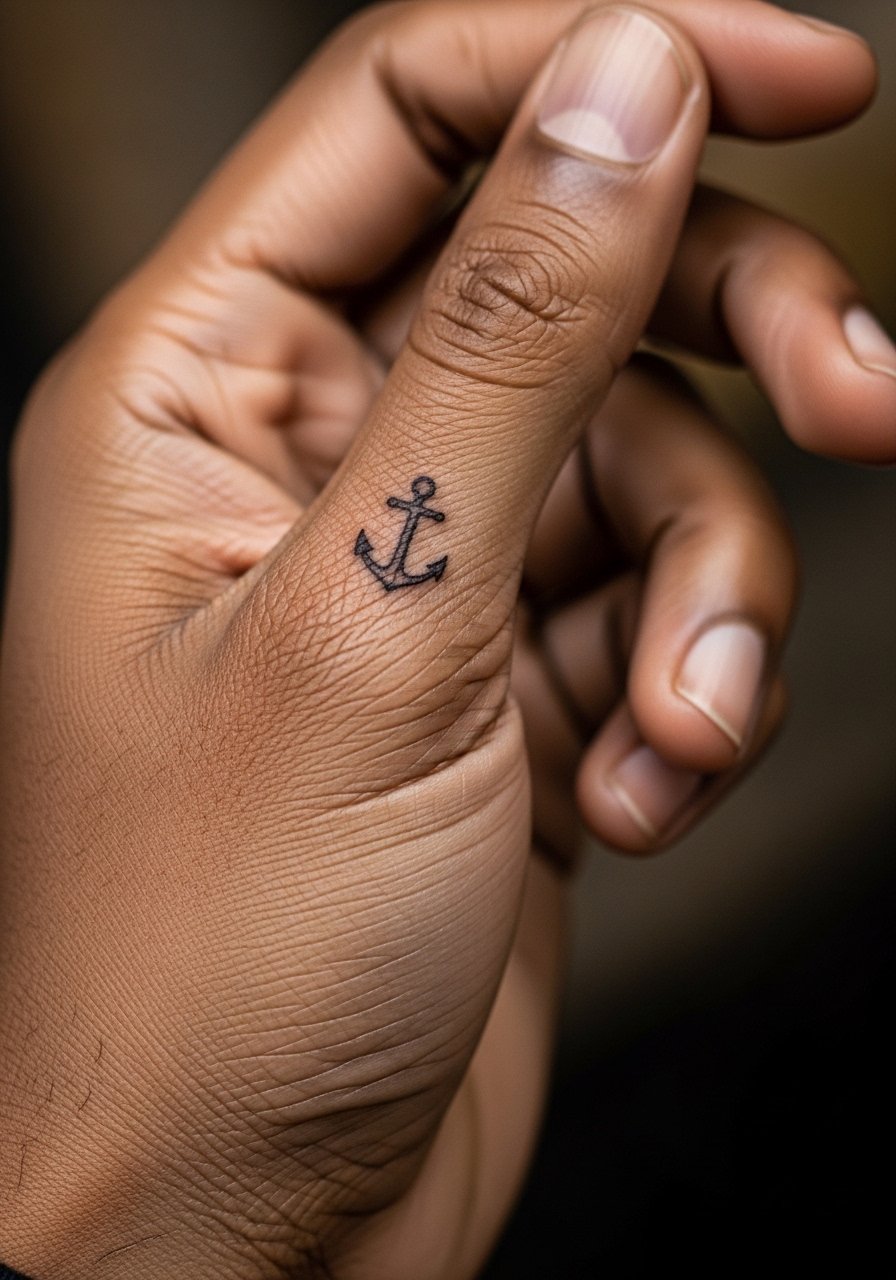
An anchor near the thumb fold is nautical and compact. The fold area experiences movement but not the same knuckle abrasion as the finger top. During consultation say you want the anchor slightly offset from the crease so the stem does not sit directly in a fold line. The session feels sharp when the needle crosses the thicker skin near the webbing. A common error is squeezing too many anchor details into a micro space. Expect a light touch-up if the tiny crossbar softens after months of use.
16. Minimal Vine Wrap on Ring Finger
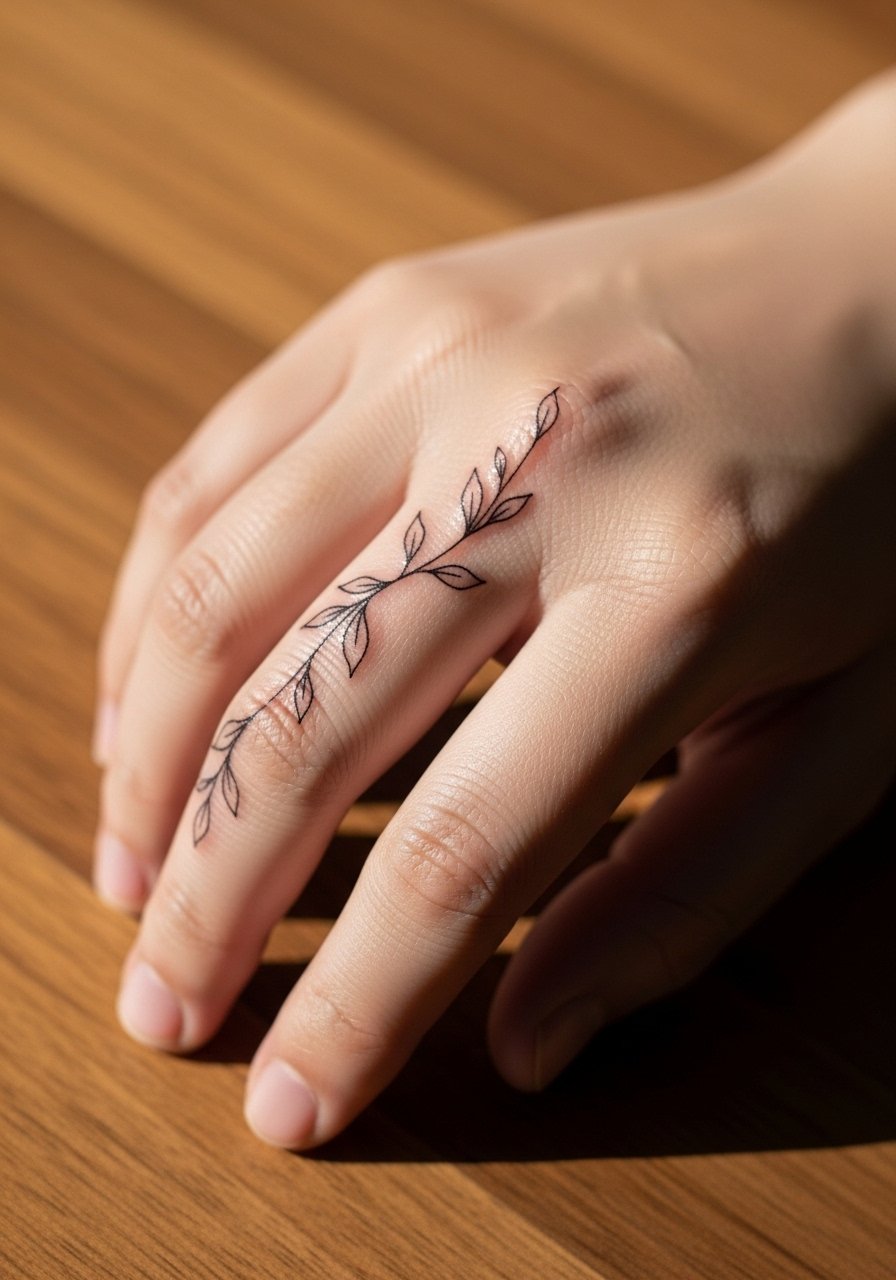
A thin vine that wraps subtly around the finger reads like a micro band without the permanence of metal. The wrap placement means the artist must avoid tight spirals that cut into creases. Tell your artist you prefer a single gentle loop with spaced tiny leaves to avoid dense ink in a narrow zone. The main risk is over-wrapping which accelerates blurring where lines overlap after healing. A practical session tip is to wear a loose sleeve you can roll above the wrist. For wearing out, a stack of thin rings on other fingers complements the botanical feel and keeps the vine as the focal accent.
17. Micro Roman Numeral on Side Finger
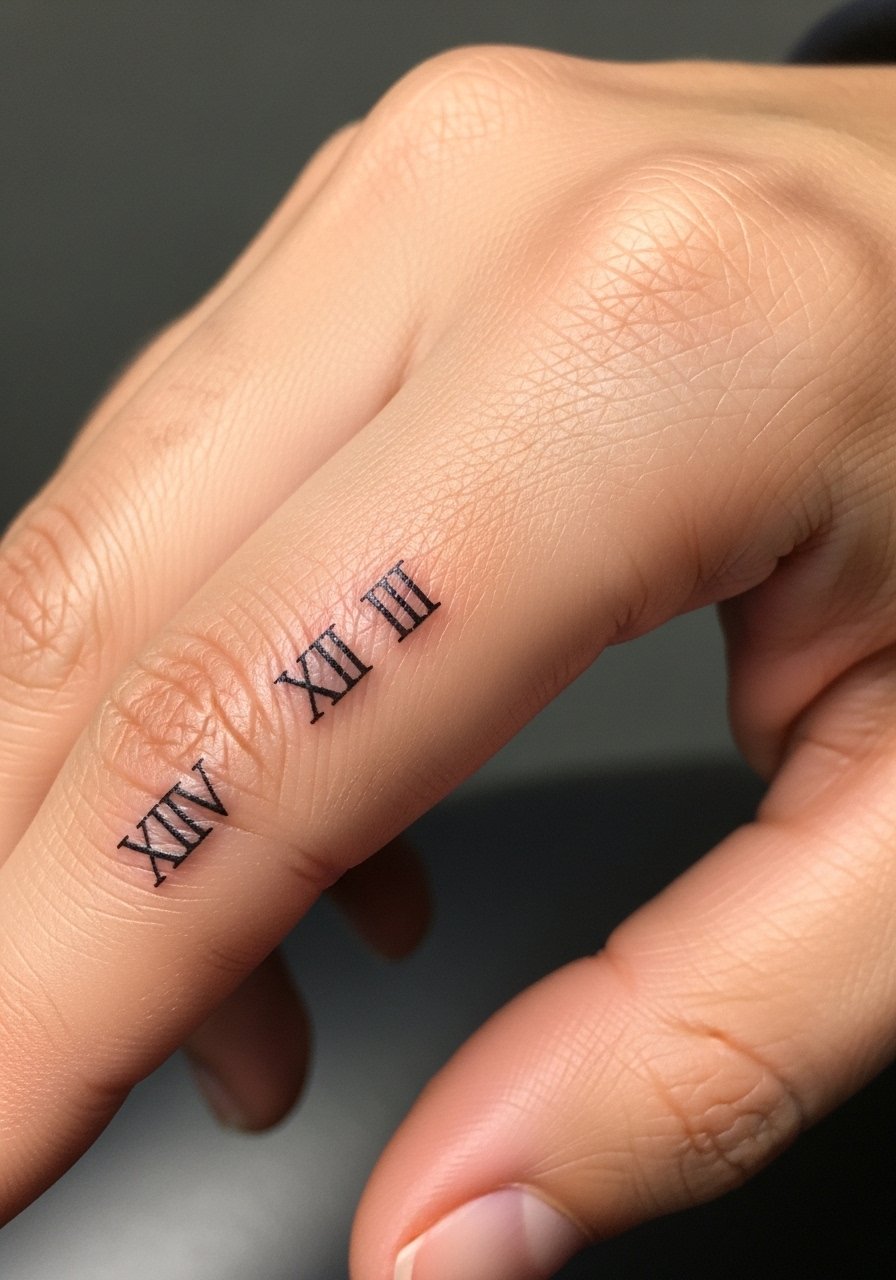
Roman numerals translate dates into a tidy, geometric script that sits naturally on a finger side. The key instruction is to keep numerals spaced and slightly bolded rather than whisper-thin, so I would ask for small but steady serif strokes that read clearly as digits after a few years. A mistake is choosing an ornate font with thin serifs that merge into a single line over time. Touch-ups at two to three years are normal if the numbers are meaningful and you want them preserved.
Frequently Asked Questions
Q: Will fine line work on fingers blur faster than bolder pieces?
A: Yes, fine line on fingers tends to soften faster because the skin there moves and is washed often. One camp of artists says fingers are too mobile for ultra-hairline work. The other camp says measured depth and spacing can make fine line survive. Ask your artist about their touch-up policy and plan on small refreshes around year one to three for most micro pieces.
Q: How should I dress for a finger or thumb session?
A: Wear short sleeves or a loose blouse you can roll up so the artist has clear access without fabric tugging. For thumb base work a loose sleeve linen blouse is ideal. Avoid jewelry on that hand and skip fresh polish so the artist can work on clean skin.
Q: Do ring placements affect the look of script or vine wraps over time?
A: Yes, ring-wear and constant contact with metal change how ink settles. For script or vine wraps keep lines spaced and avoid tiny flourishes where rings sit. If you plan to wear a ring on that finger often, mention it so the artist can place key elements away from direct contact points.
Q: How often should I expect touch-ups for micro finger pieces?
A: It depends on activity, washing, and exposure. In my experience small finger linework commonly needs a light touch-up between year one and year three. Heavy hand use shortens that window. Discuss a realistic timeline with your artist.
Q: Where can I look for local portfolios that specialize in small hand work?
A: Search style-specific hashtags and local location tags on social platforms, check tattoo directories for artists listing micro or fine line work, and scan forum threads where people share healed photos. Hashtags like #finelinetattoo or #dotworkfinger and directories help you find portfolios and healed examples.