
Bold fine line trends look great on feeds, but they do not always last the same way on every body. The sharp ophanim wheels and multi-eyed cherubim people post for likes can soften into blur if you choose the wrong placement or go too small. Read the notes below to pick a biblically accurate angel design that will hold up, what to ask your artist, and how to wear it so your new piece reads the way you expect.
1. Ophanim Wheel on the Outer Forearm
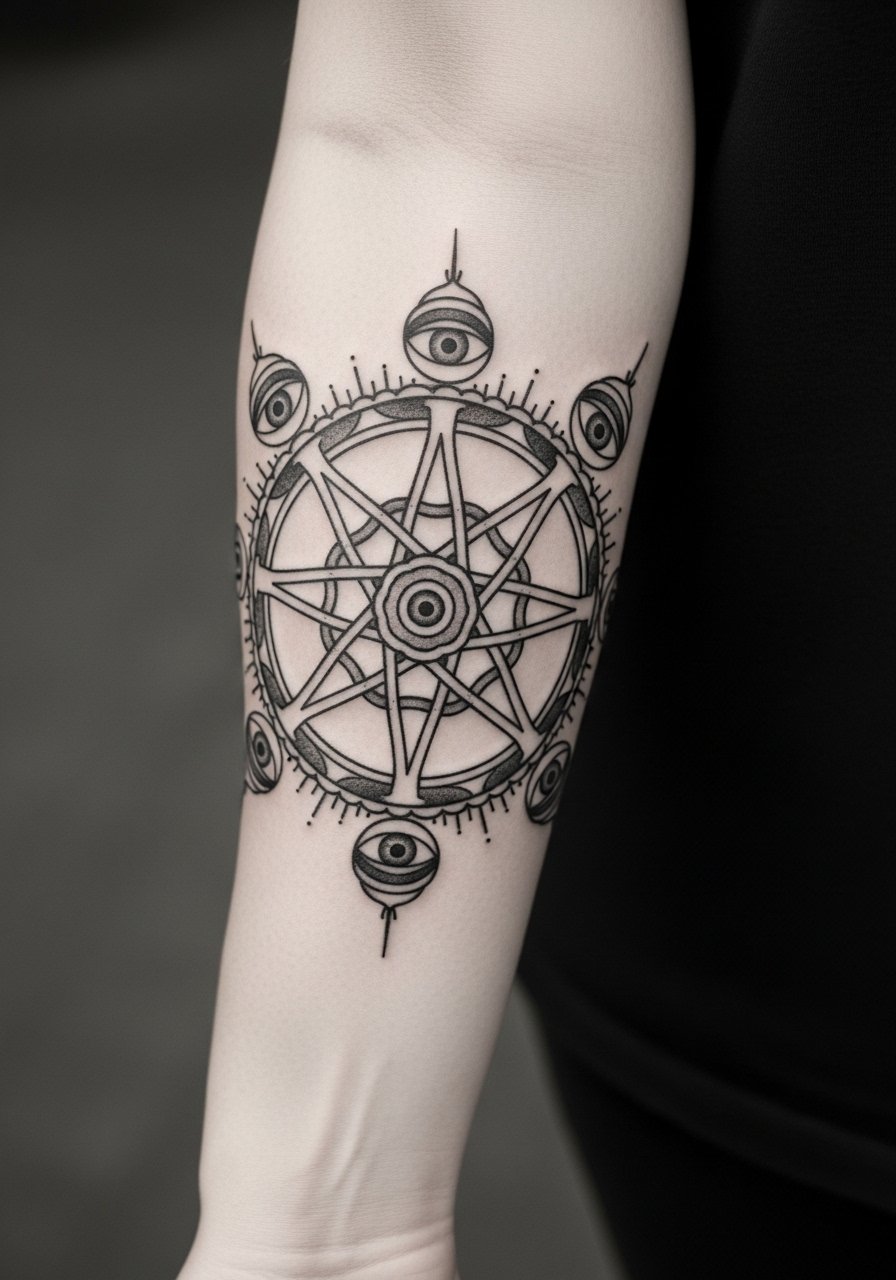
The ophanim wheel reads best when given scale and bold linework. I suggest a 4 to 6 inch diameter on the outer forearm, not a tiny wrist sticker. Tell your artist you want heavier primary linework and dot work for the inner rings, and ask them to show a printed stencil so you can check spacing before ink. The common mistake is compressing too many eyes into a small circle. At six months the dot work looks crisp, at two years tiny dots will feather a bit, and expect a touch-up around year three for tight eyes. Pair this with a rolled sleeve black tee for nights out and wear a loose tank to the session so the artist can reach the whole arm easily, such as rolled sleeve black tee.
2. Fiery Seraphim Across the Shoulder Blade
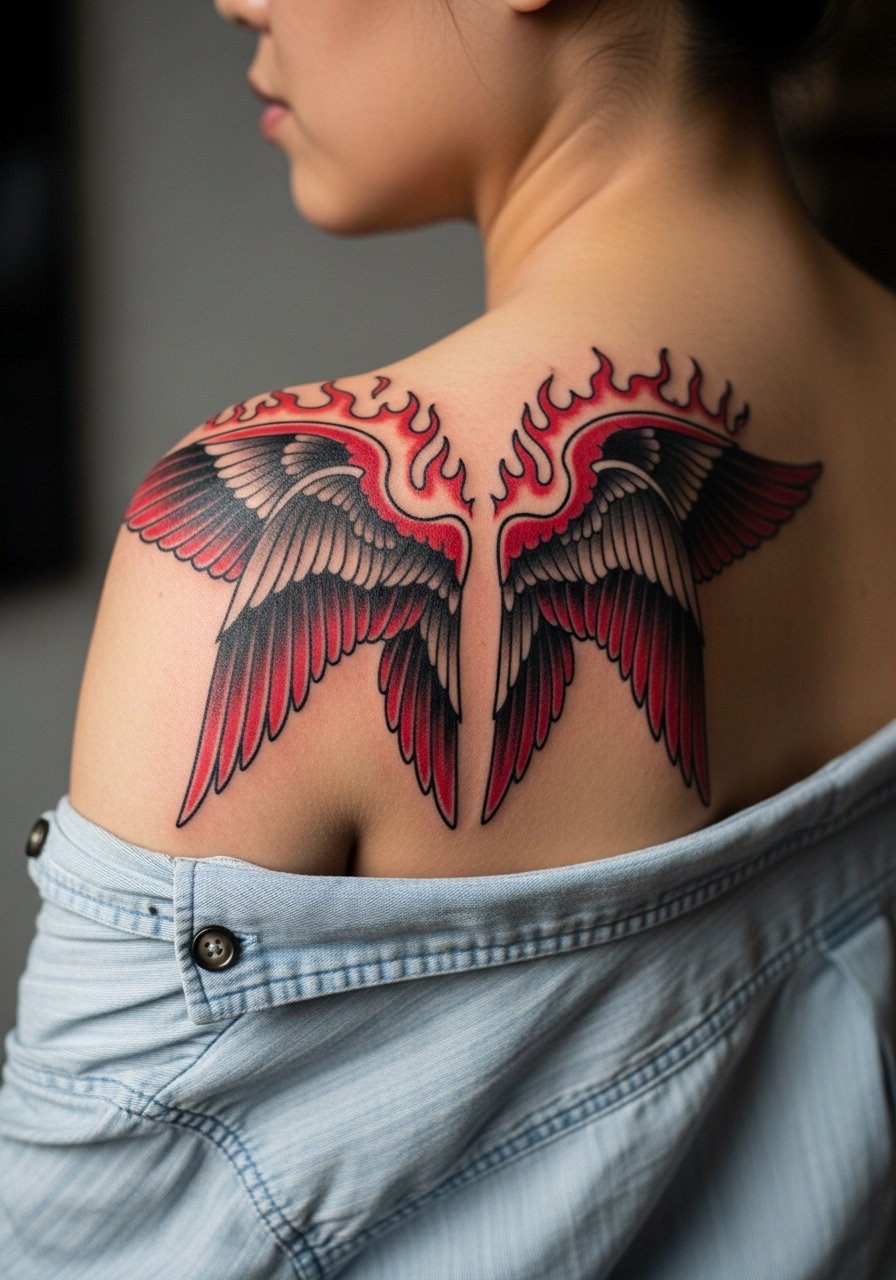
Shoulder pieces feel like a weekend project compared with chest work. For a seraphim with red flame accents, book a two to three hour session and request color patches that sit under black outlines. Artists debate whether bright red fades differently during the healing window. One camp says build color slowly over sessions. The other prefers one saturated pass and touch-ups later. Mention which approach you prefer and ask how the artist manages red fade. Expect moderate soreness during the session and minimal blowout risk if the artist uses clear lineweight separation. For showing it off, try an off shoulder crop top on nights out.
3. Cherubim Multi-Faced Mini on Inner Bicep
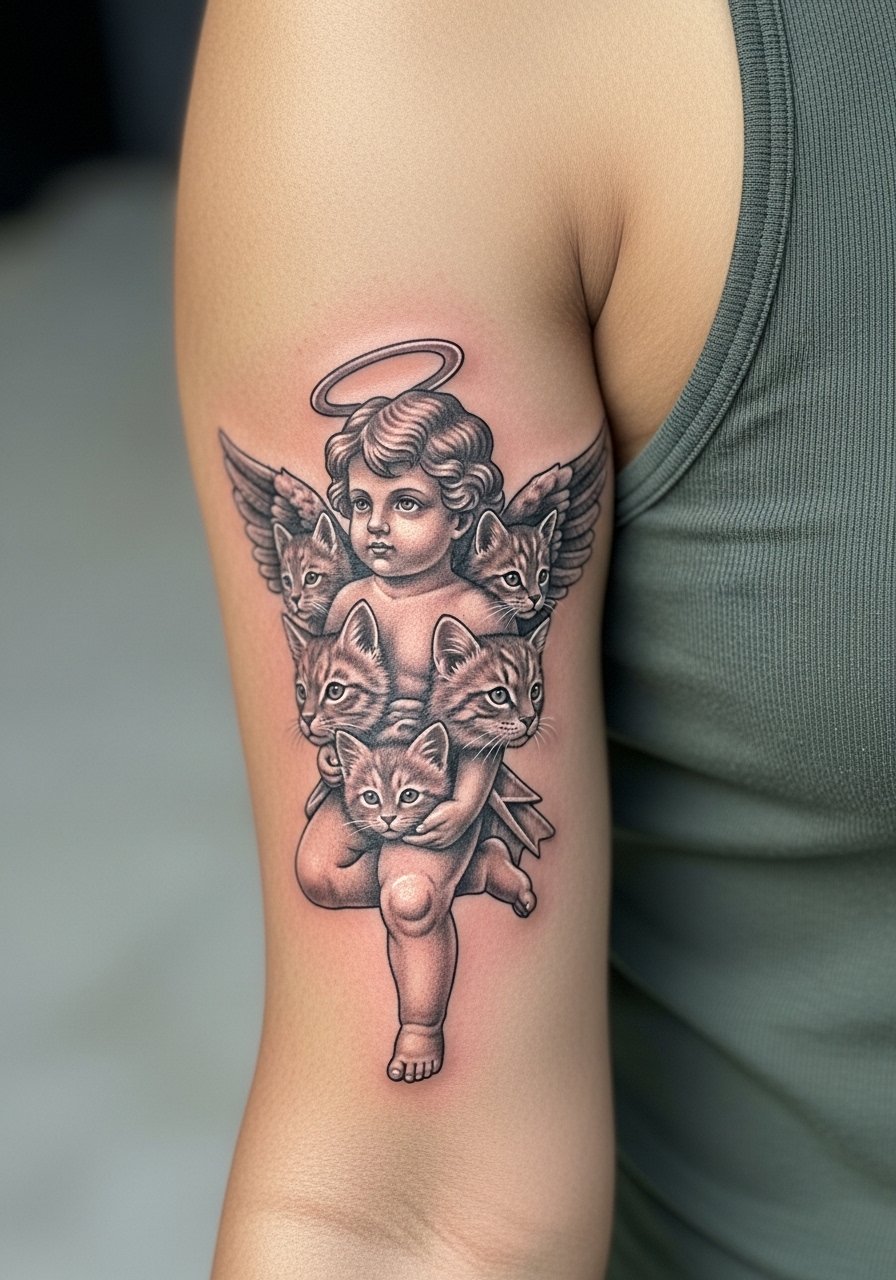
Inner bicep micro-realism is intimate and can age poorly if the linework sits too close together. I recommend a 3 to 5 inch piece with clear negative space between faces. Tell your artist you want denser value in the shadows and lighter stipple shading on the faces. The biggest mistake is asking for maximum detail in a tattoo that will be small. At six months the micro details look great. At two years, micro lines can blur if the needle depth was inconsistent. Touch-ups at year two or three are common. For the appointment, wear a tank so the artist can lift the sleeve easily.
4. Throne Eye Cluster Mandala on the Upper Back
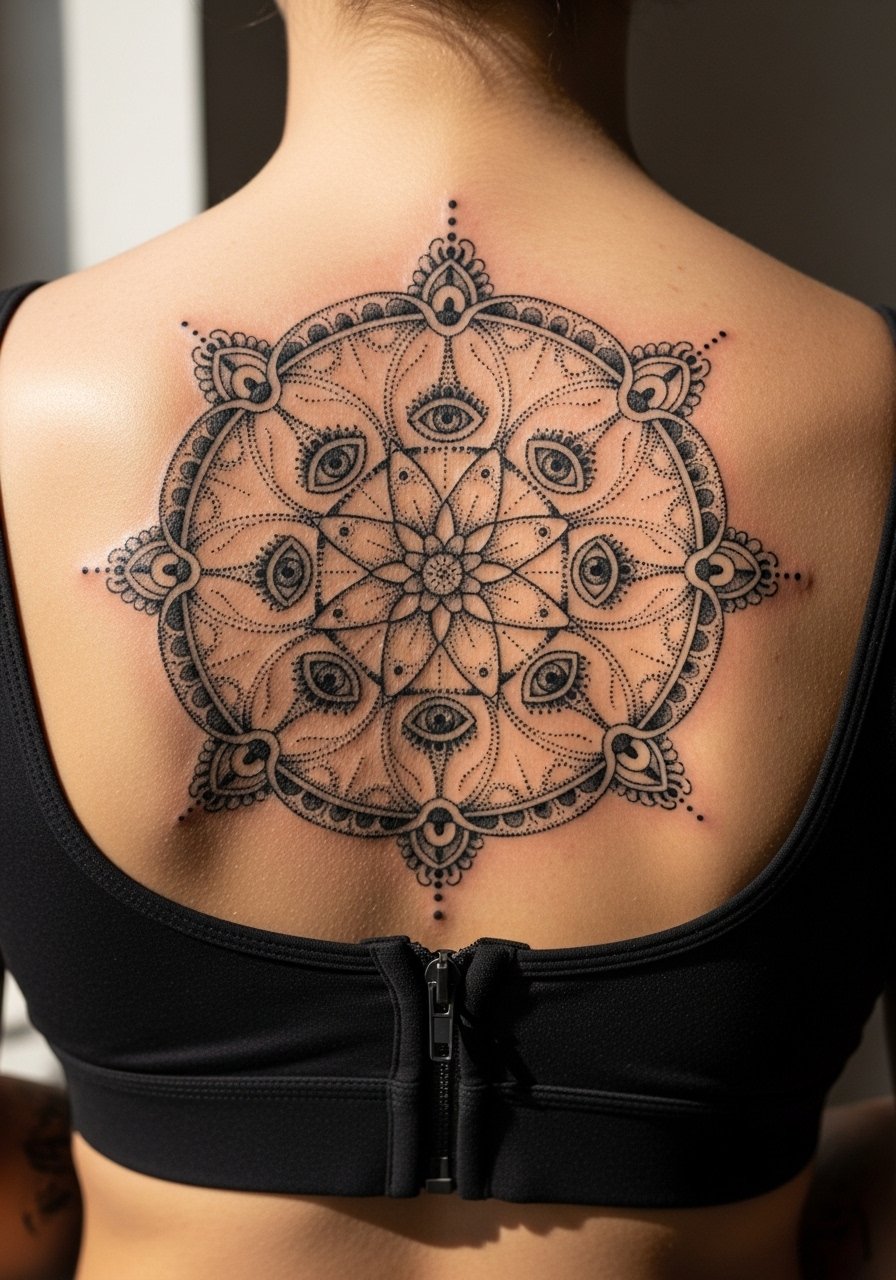
Large ornamental mandalas demand spacing and session planning. For a six inch or larger back piece, expect two sessions. Ask your artist to map symmetry on a photo of your back so the central eye sits on the spine or offset, whichever you prefer. The common aging issue is overcrowding the center with too many tiny dots. At six months dotwork holds nicely, at two years tightly packed dots may soften and need a refresh. For show-off outfits, a backless halter top frames the mandala without competing for attention.
5. Malachim Sword-Wielding Mini on the Wrist
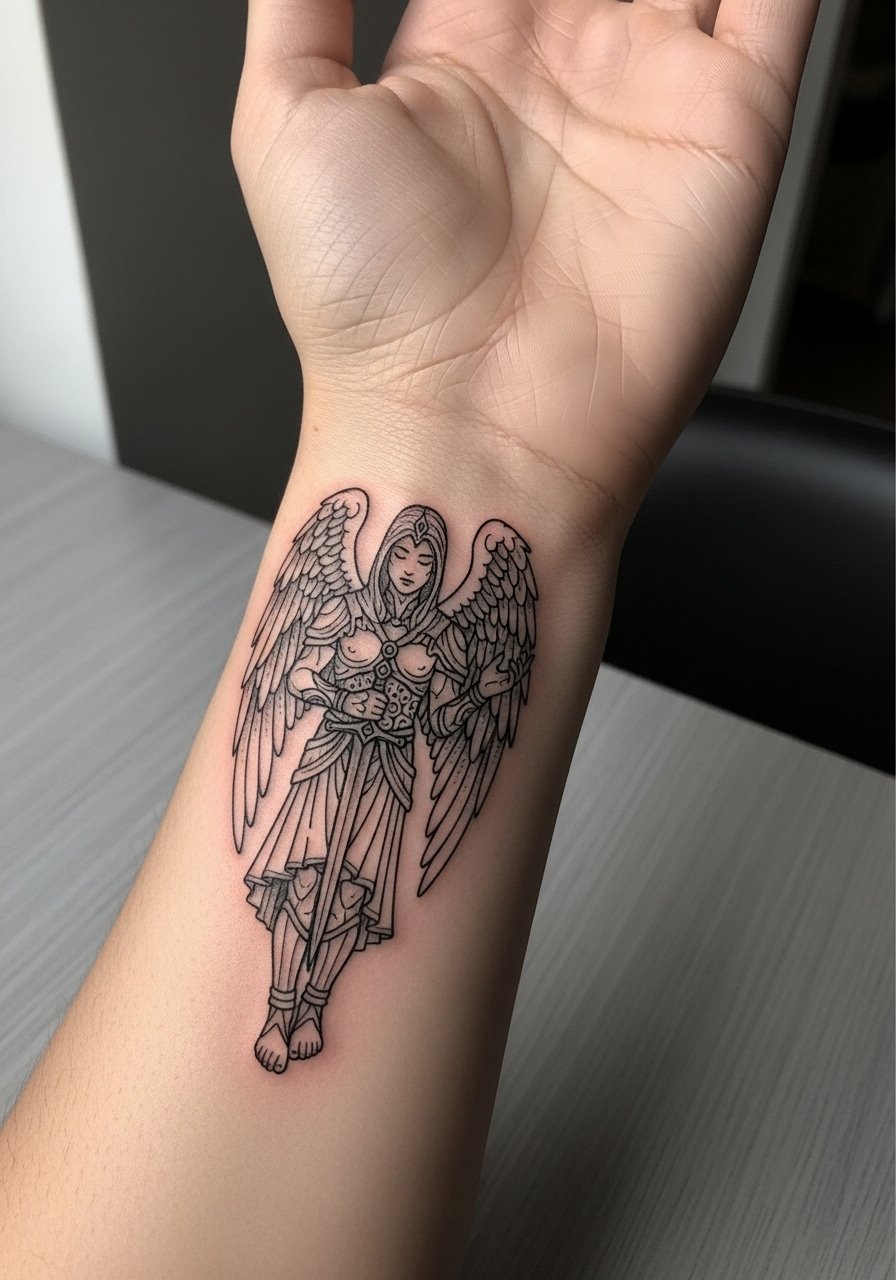
Wrist pieces are great as first biblically accurate tattoos because they can be small and expandable. Expect a single session, brief sting, and a touch-up chance at year two. Tell your artist you want slightly bolder outer contour to prevent early blur. The rookie error is picking ultra-thin single-needle lines with no outline. For showing it off, pair the piece with a thin leather cuff bracelet that complements without crowding the linework. Hands and wrists face friction, so keep that in mind when scheduling a busy week at work.
6. Fiery Serpent Angel Coils Along the Ribcage
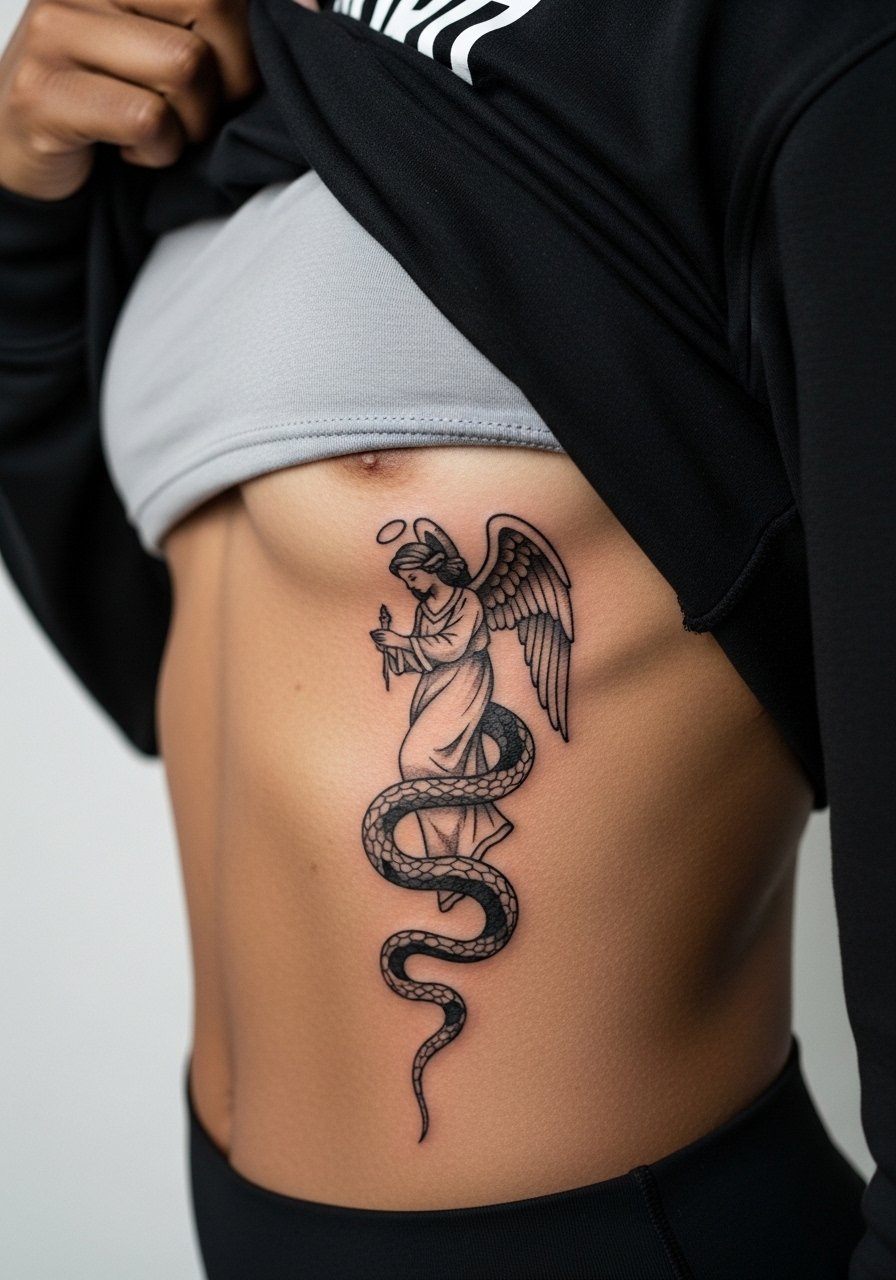
Ribcage work is painful for most people, but the vertical canvas suits elongated serpent coils. Session time is longer, expect two to three sessions depending on length. Artists split on numbing cream and healing bandaging. One camp favors topical numbing for long ribs sessions. The other insists numbing changes skin responsiveness. Ask your artist about their approach and whether they recommend short breaks. The typical mistake is compressing coils into a narrow band. That makes stretching and weight changes distort the wings over time. Wear a strapless or zip-front top to the session so access is easy.
Studio Day Picks
The forearm, shoulder, wrist, and ribcage pieces above each ask for different prep and first-week management, so pack a few items that make the session and first days easier.
-
Stencil transfer paper kit. Lets you preview scale and spacing on skin, which helps with complex eye clusters and wheel symmetry.
-
Topical numbing cream. Helpful for longer ribcage or back sessions when you want to keep still for detailed passes.
-
Thin protective film roll. Useful for wrist and hand tattoos that face daily friction from washing and typing.
-
Fragrance-free body wash. Gentle cleansing prevents irritation around fine line work during showers.
-
Aquaphor healing ointment. Thin layer in the first days locks in moisture while avoiding heavy buildup on dotwork and fine lines.
7. Ezekiel Vision Eye-Wheel Mandala, Full Back
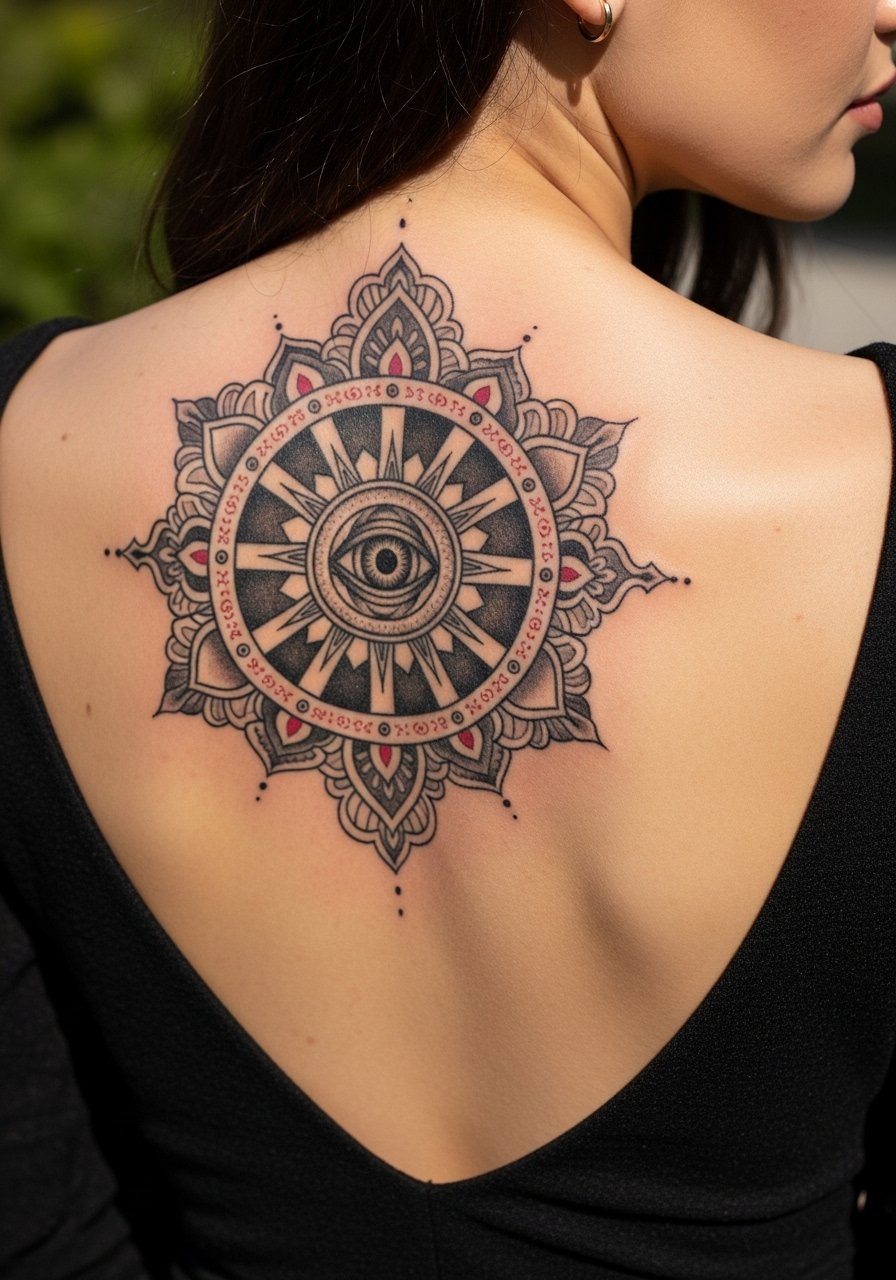
A full back mandala is a commitment that pays off when planned as four or more sessions. Expect long appointments with progressive layering of dot work. Tell your artist you want a session plan on paper that breaks the piece into quadrants. A common mistake is trying to finish it in one marathon and sacrificing saturation control. At six months the geometry looks meditative. At two years some tiny dots need reinforcement. This is a design where touch-ups over time are part of the plan. For show-off looks try a low back dress when it is healed.
8. Minimalist Multi-Wing Collarbone Silhouette
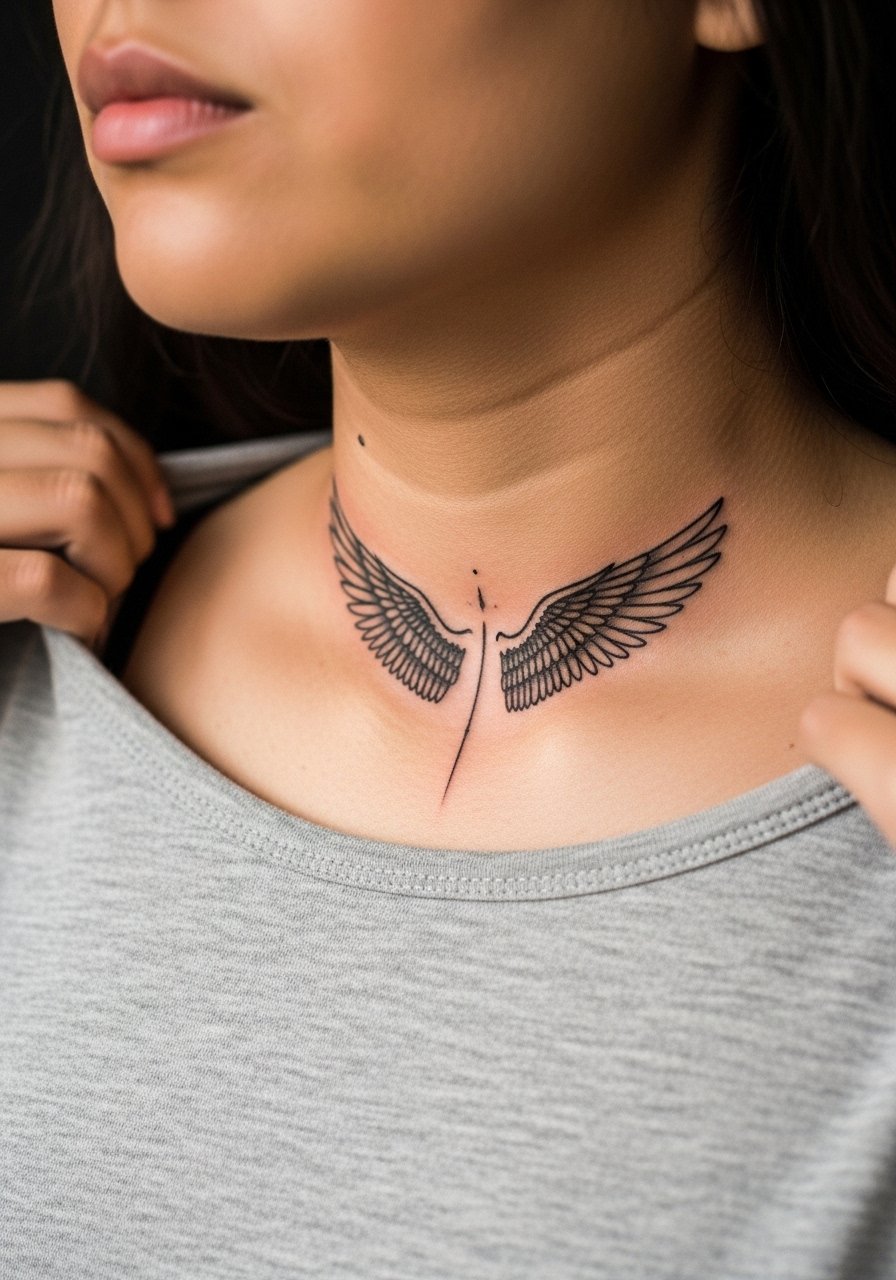
Collarbone placements suit minimalist silhouettes that read from across a room. Pain is mild to moderate and sessions are short. The frequent mistake is placing dense feather detail too close to the clavicle where movement blurs lines. Ask for open negative space between wing feathers and a slightly thicker outer contour to protect against early feathering. At six months the silhouette keeps its shape, at two years fine inner feathers might need a touch-up. Pair with a v neck silk blouse for evenings when you want the collarbone to show.
9. Dominion Geometric Flame Form on Outer Thigh
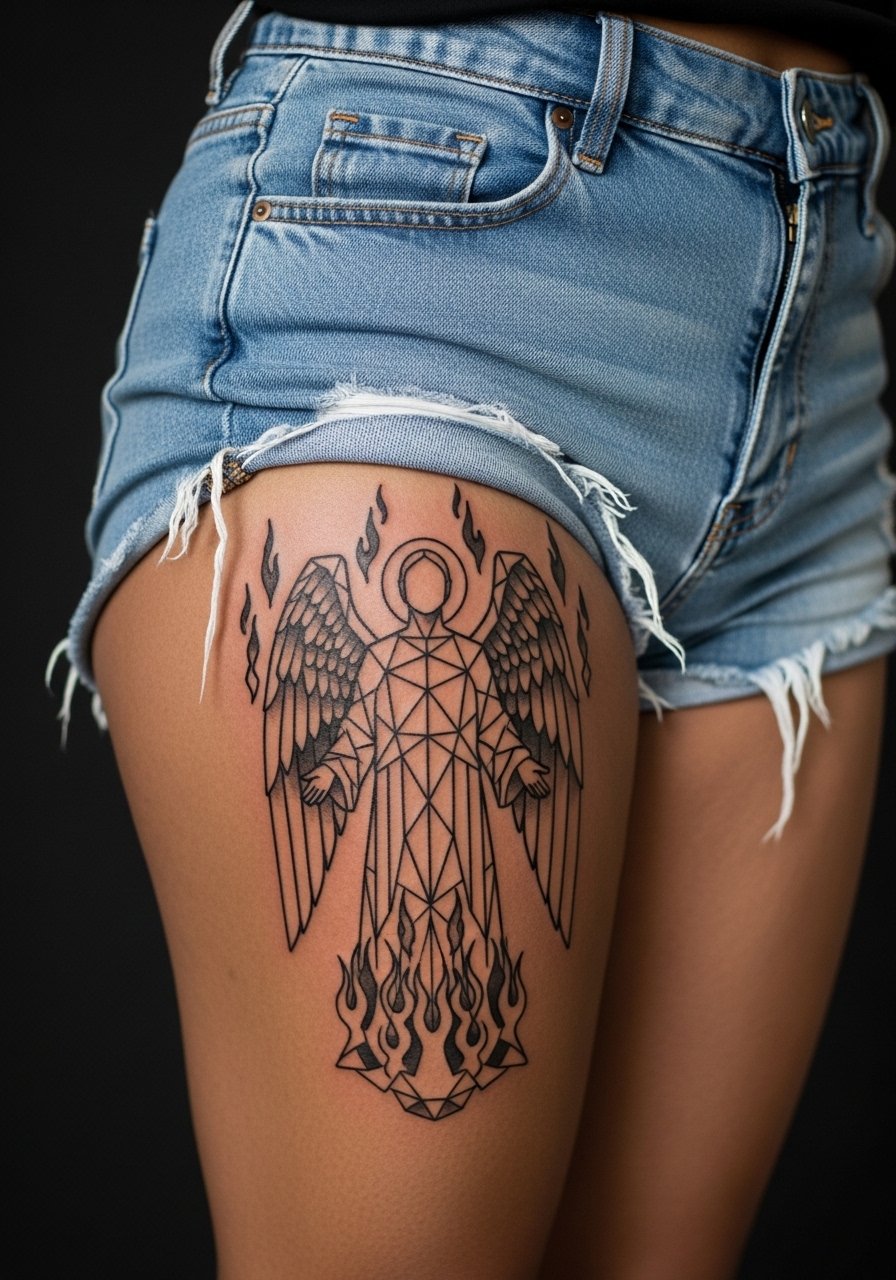
Thigh pieces offer room for tight geometry and negative space. When you get a mid-thigh dominion form, tell the artist you want clear negative channels so the flame geometry does not collapse with time. The main mistake is making lines too close in dense geometry. At six months crisp, at two years the negative gaps are the key to legibility. Weight fluctuation can distort long wings, so prefer compact composition over an elongated full-thigh layout if you plan to carry weight changes. Show it off with high waisted denim shorts.
10. Isaiah Seraphim Coal-Touch Hand or Forearm Piece
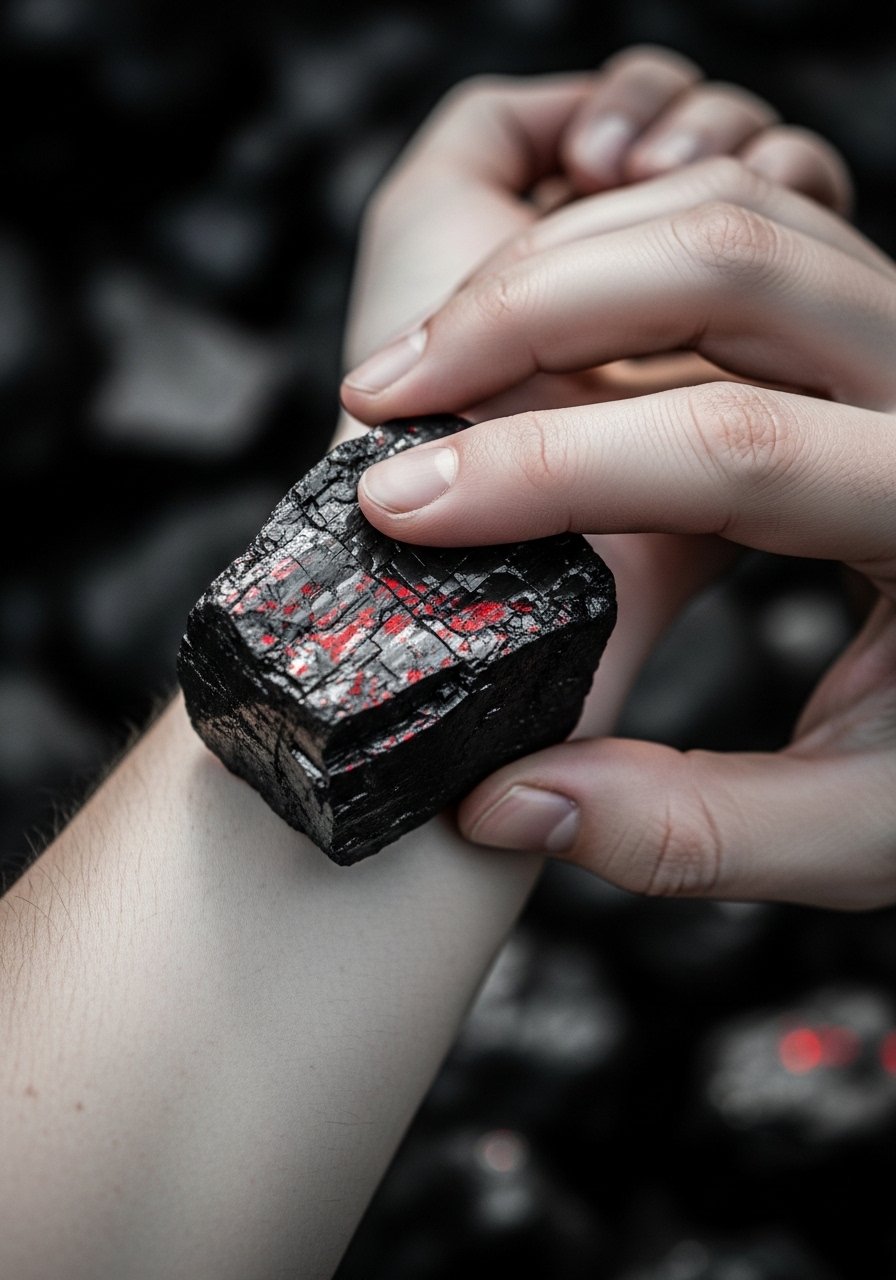
Hand and forearm realism requires solid saturation to age well. Expect some fading on the hand because of frequent washing. For forearm placement, size the piece to at least four inches so shading keeps separation. Ask your artist to map value ranges on a printed reference so highlights read long-term. A typical mistake is under-saturating shadows in small realism pieces. At six months shading looks cohesive, at two years pale highlights can disappear and need a touch-up. Wear a loose tank to your session and avoid jewelry on tattooed hand days while healing.
11. Multi-Wing Covering Angel Silhouette at the Nape
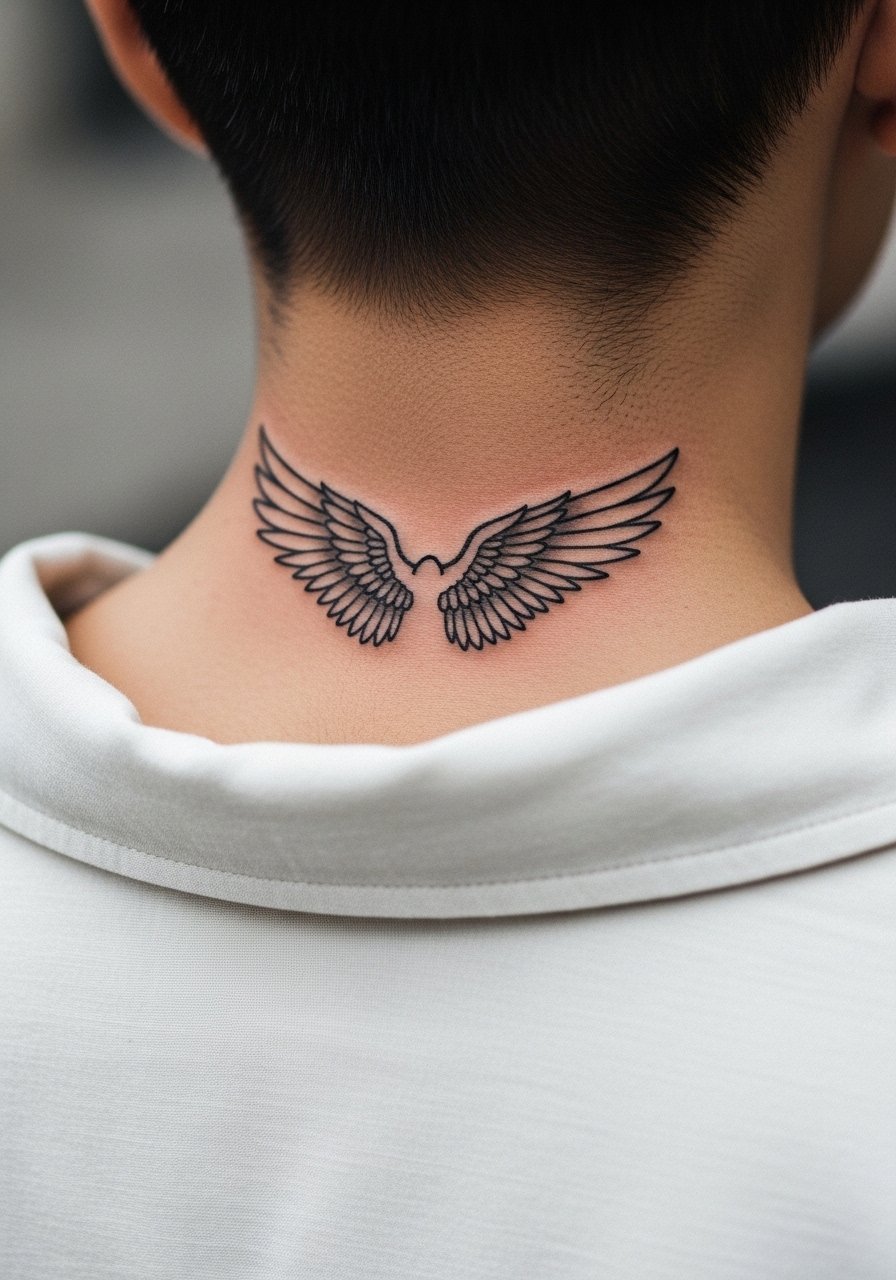
Nape and back-of-neck pieces are discreet and expand well into upper-back work later. Pain is moderate during the session and touch-ups can be easy. Ask your artist for a slightly bolder outline so the silhouette keeps its clarity under collared clothing. One mistake is asking for micro-feather detail right against the hairline where regrowth changes how the piece reads. At six months the silhouette is strong, at two years it still reads if the outline was thickened slightly. For everyday wear, narrow collar shirts or an open front cardigan keep the area visible without exposing the full back.
12. Handheld Coal-Touching Seraph on the Palm Edge
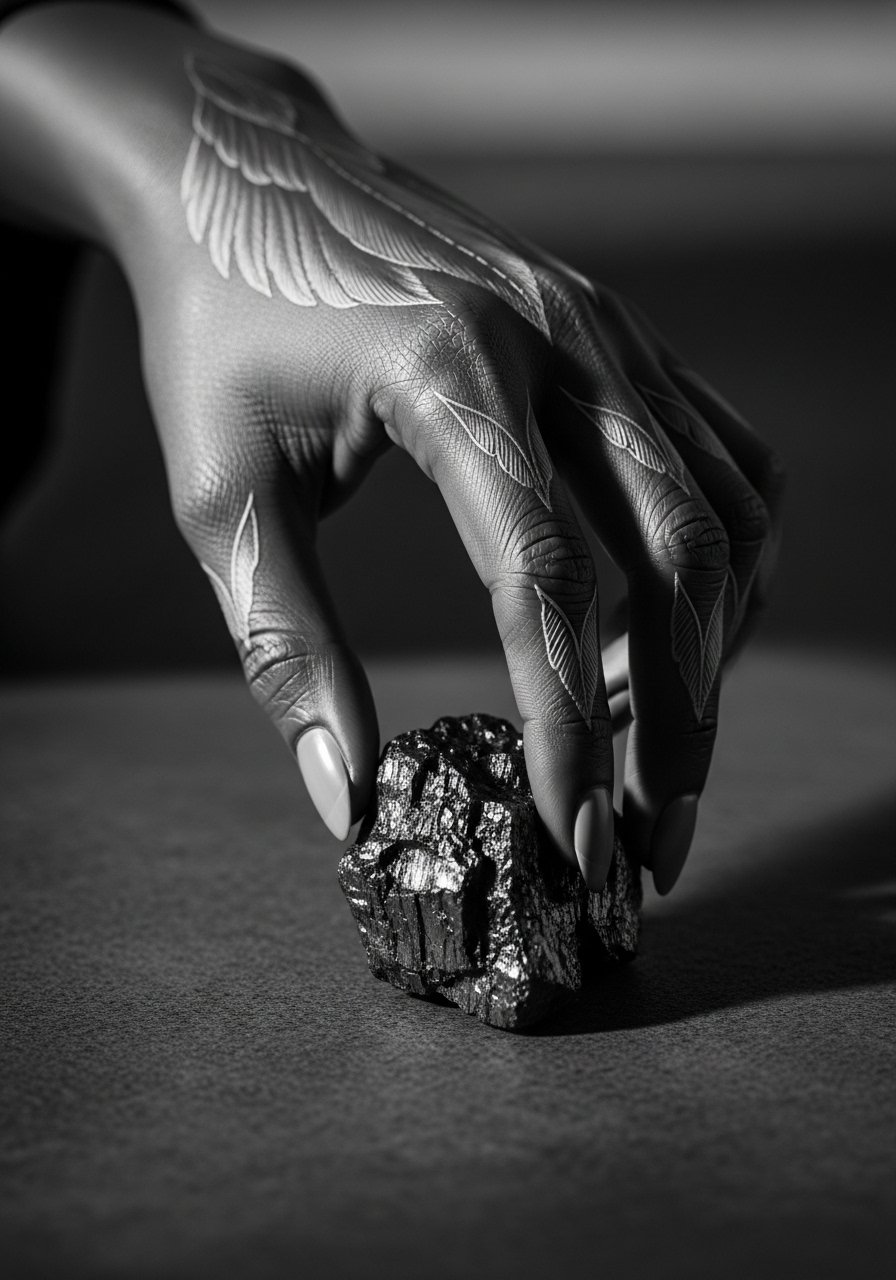
Palm and finger-adjacent placements are high friction and often require multiple touch-ups. If you want a coal-touching hand motif near the palm, expect fading and plan for a maintenance pass within a year. The common mistake is choosing dense black blocks on the palm where skin sheds rapidly. Ask for a version that respects hand anatomy and uses negative space for longevity. Sessions are short but may sting more because of nerve density. For work weeks after the session, avoid heavy manual tasks to limit rubbing.
13. Ophanim Calf Wrap with Geometric Bands
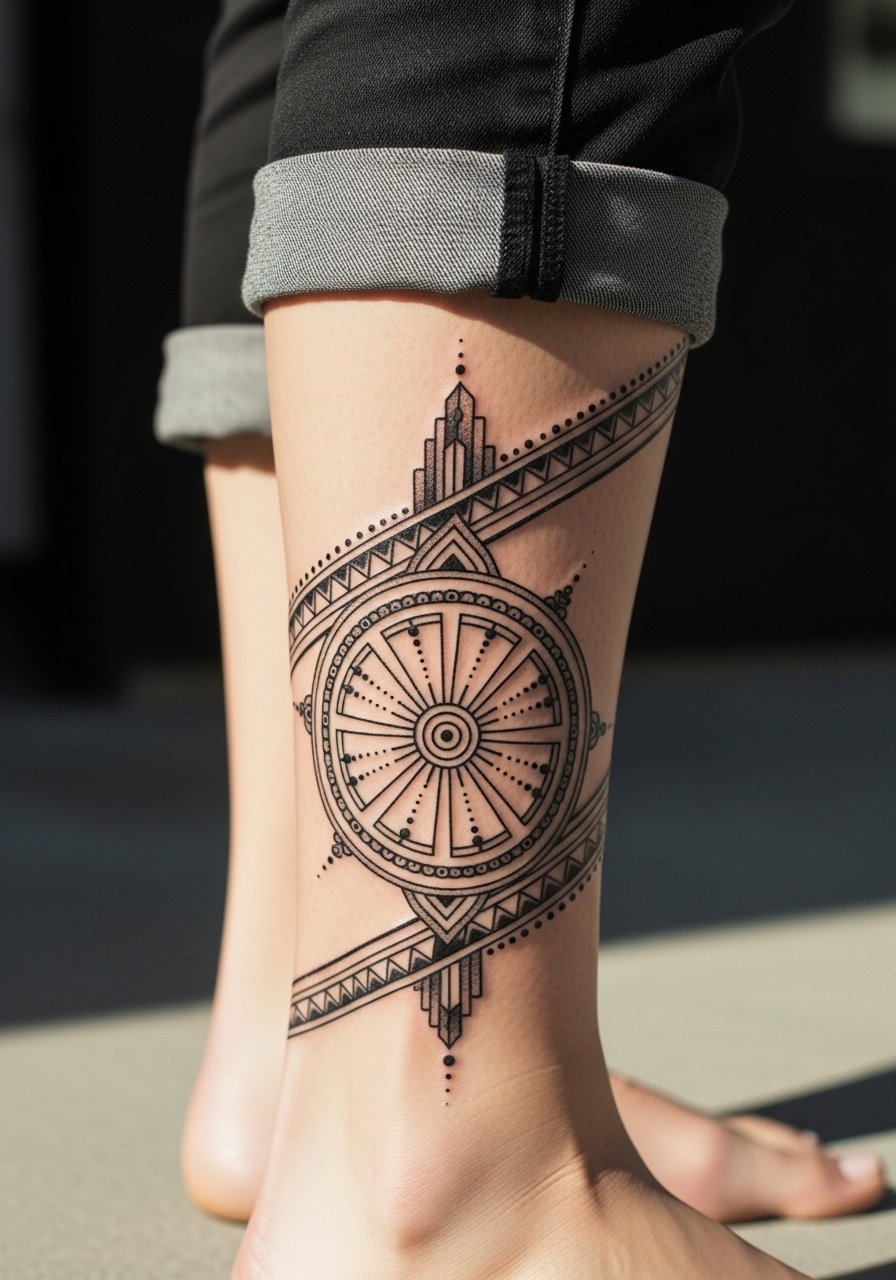
Calf wraps let the wheel breathe with peripheral bands that guide the eye. Tell the artist you want the central eye slightly larger than peripheral ones so it retains dominance as lines soften. The usual error is tight banding that compresses over muscle movement. At six months the dotwork is clear, at two years you may want to darken the central eye for contrast. Pair with cuffed ankle pants to show off the wrap on casual days.
14. Ribcage Seraph with Flame Accents, Narrow Version
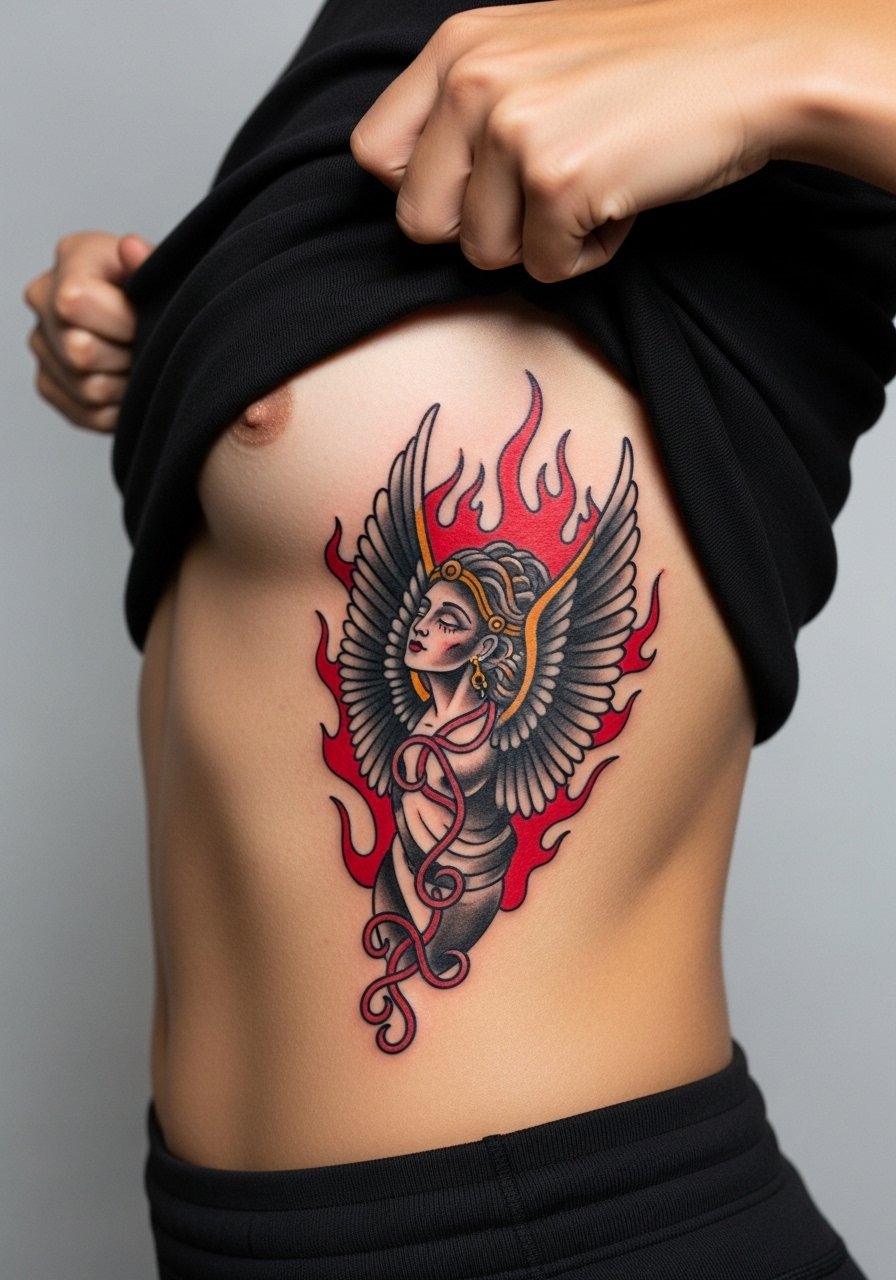
Ribcage is a natural place for flame motifs that flow with breath. Pain is high, so break the work into shorter sittings. Artists disagree about using numbing cream on ribs. One side says it helps in long sessions. The other worries it changes the skin feel. Ask where your chosen artist stands and schedule shorter passes if you want to avoid numbing. A mistake is cramming intense red into one pass. Build color slowly and plan a touch-up six to twelve months in. Wear a zip-front or band-style top for easy access.
15. Cherubim Ankle Mini That Walks With You
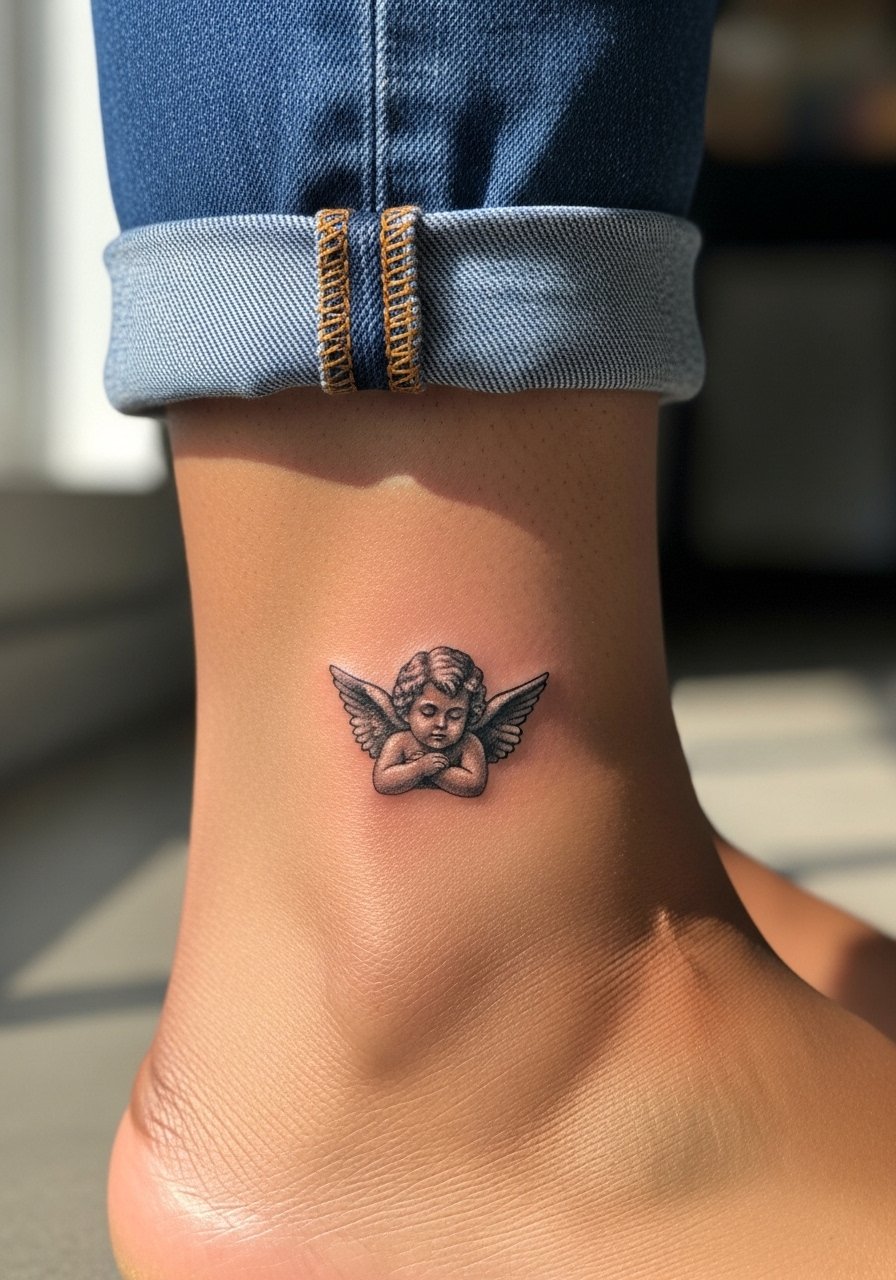
Ankle tattoos age unevenly because of shoes and socks. For a walking cherubim hybrid keep the design compact and avoid too much tiny facial detail. Tell the artist you want clear outer contours and light stipple inside. The common mistake is requesting maximum micro-detail at a scale that will blur. At six months the small faces look tidy, but between two and three years you may need spot touch-ups. For session comfort, bring slip-on shoes and wear pants you can roll, like jeans rolled up to the ankle.
16. Sternum Isaiah Seraphim Hand Motif
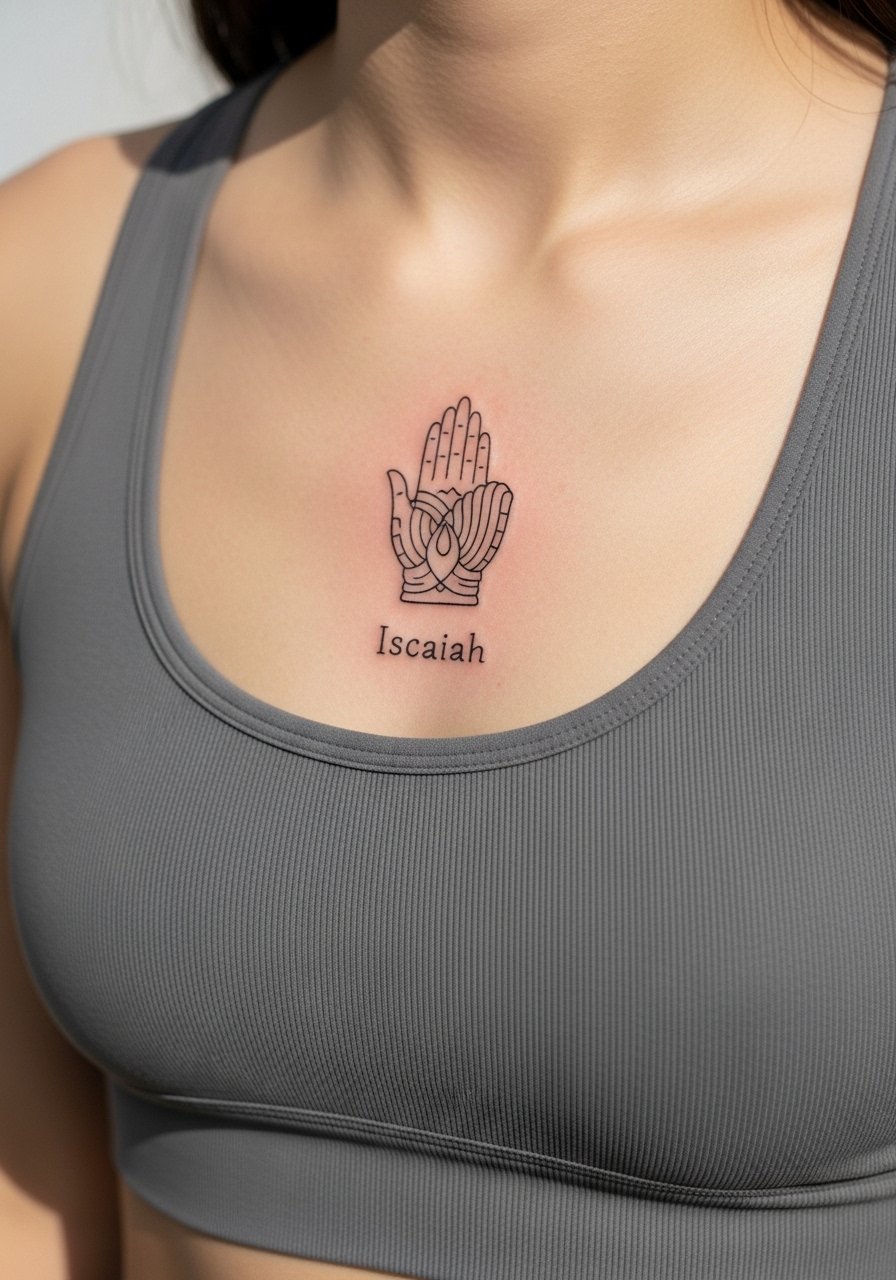
Sternum pieces read as personal statements and need an artist who does chest anatomy well. Expect sharper pain and careful session planning. At consultation, specify whether the piece should sit centered on the sternum or slightly offset. A mistake is asking for ultra-fine lines in a high-movement area. At six months the lines settle, at two years thin strokes can merge if not reinforced. Choose an artist experienced with chest work and plan a touch-up at the year mark if necessary. Wear a fitted sports bra to the session for modest exposure and secure positioning.
17. Malachim Small Sword on the Ankle or Foot
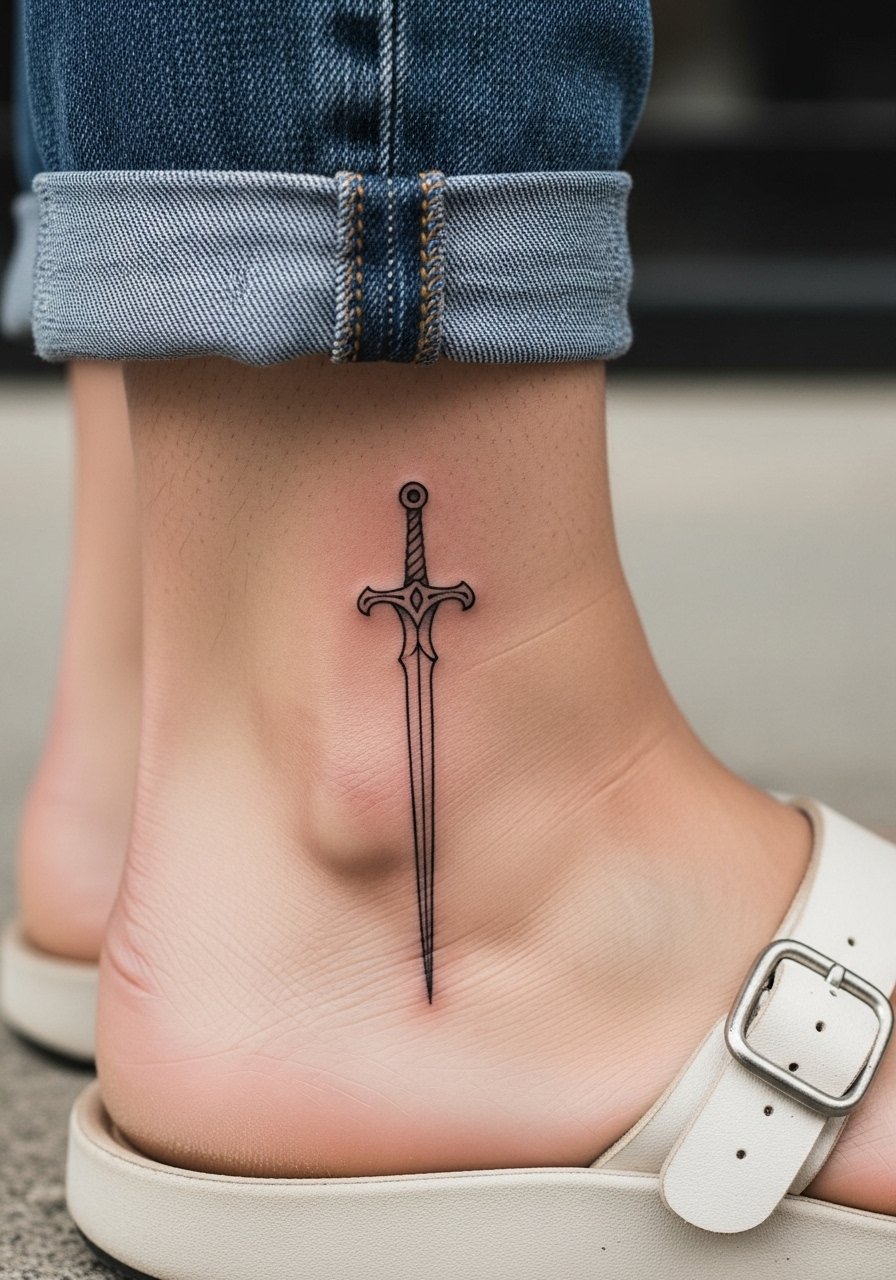
Ankle and foot pieces need special care because of friction and footwear. For a small sword motif, request a reinforced outline so the shape does not feather with movement. The usual error is choosing ultra-fine internal detail where shoes will rub. At six months the piece looks crisp, at two years edges may need to be refilled. Plan lightweight footwear the first week and ask your artist about when normal shoe use is safe again.
18. Ophanim Eye Cluster on the Chest Near the Heart
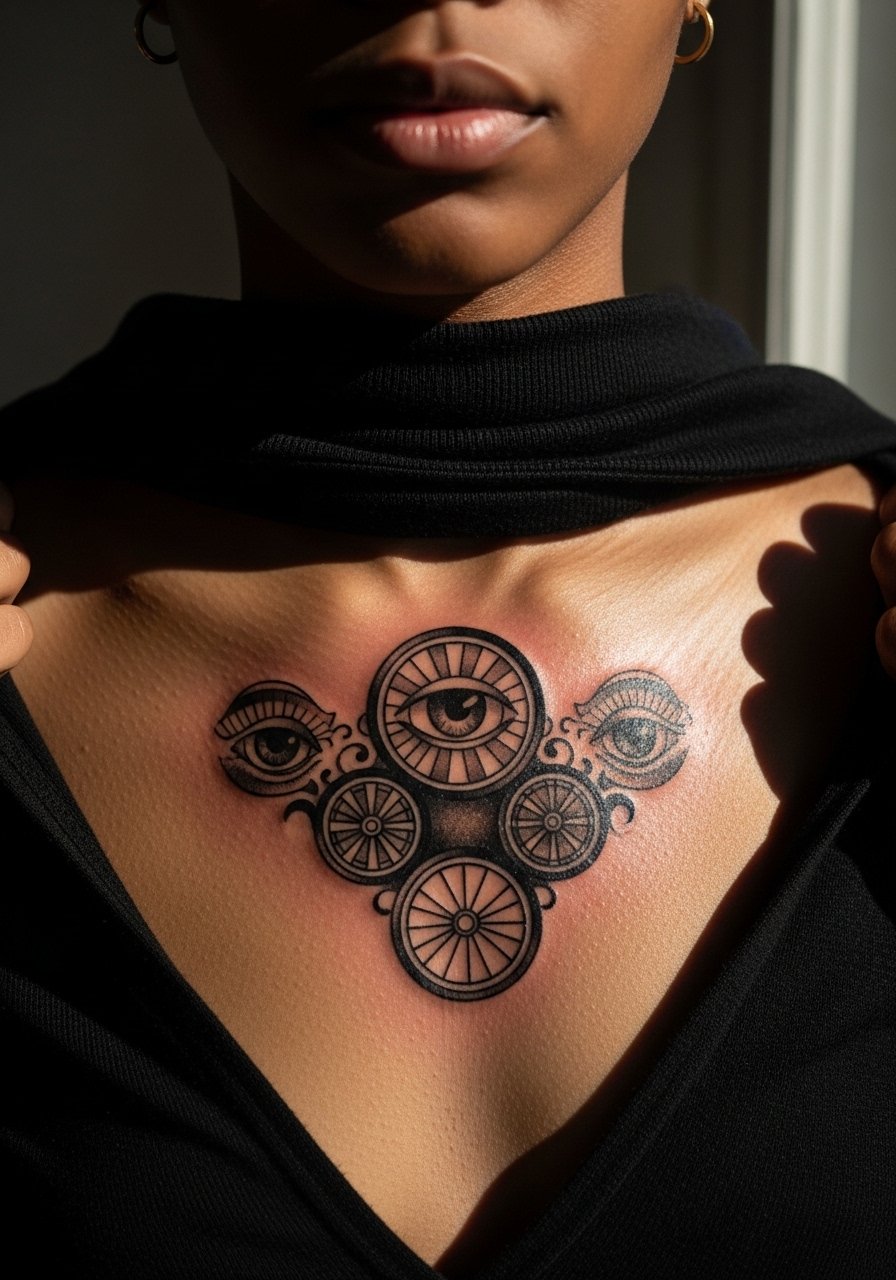
Chest placements near the heart have a personal gravity. For an eye cluster, get a bold primary outline and spaced internal dots so the pattern keeps its structure. A mistake is overcomplicating the cluster without preserving negative space. At six months the contrast holds, by year two smaller dots may soften. Discuss breathing and positioning with your artist to ensure the piece sits where you want when standing and lying down. A front-zip sports bra makes first-session positioning easier.
19. Fiery Halo Seraph Over the Shoulder Cap
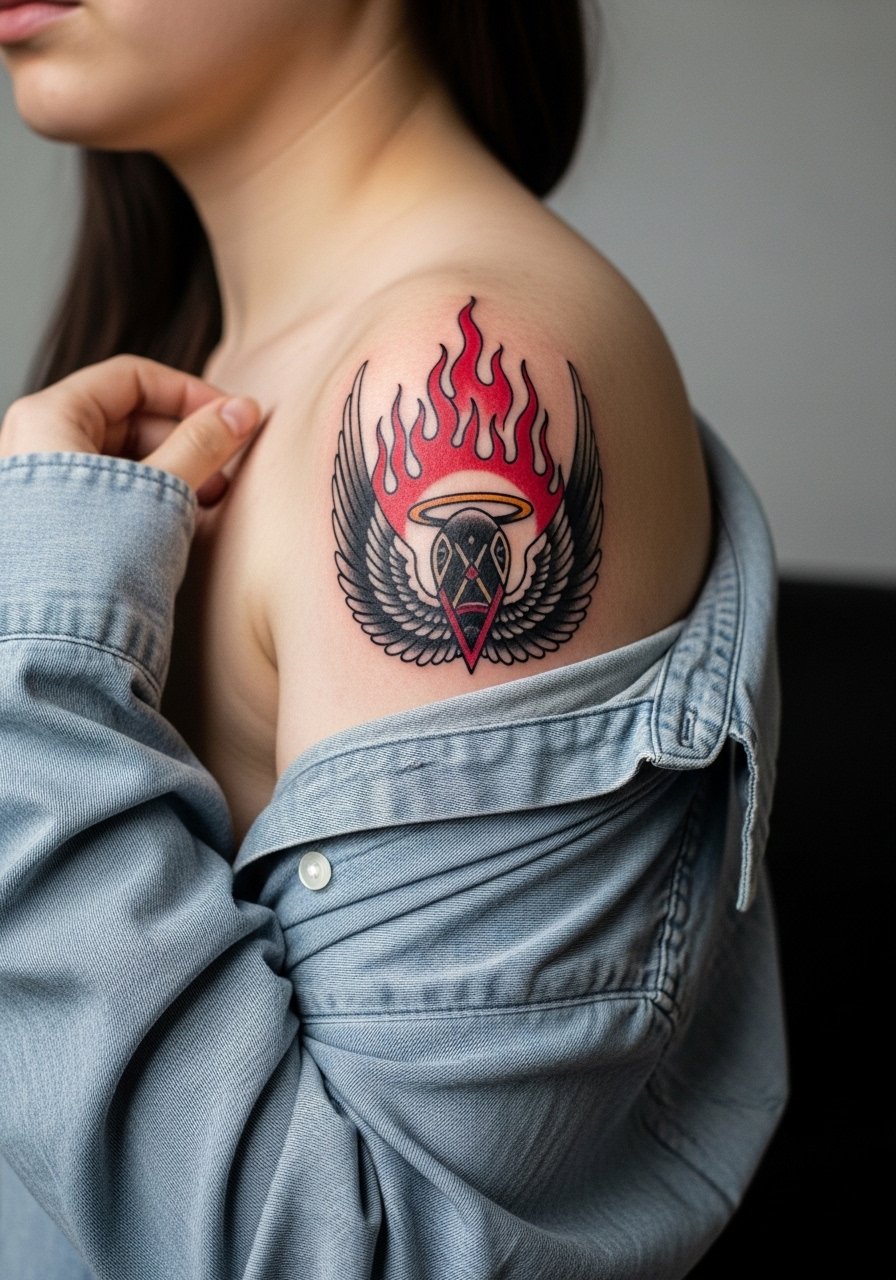
Shoulder cap placements let flame halos arc over muscle in a way that reads dynamic. Tell the artist you want flow rather than rigid symmetry, and map how the halo moves when you raise your arm. A common mistake is forcing perfect symmetry that looks stiff on a curved surface. At six months color softens slightly but the halo still reads. At two years the red may need refreshing. For the session, wear a loose button-down shirt you can pull aside.
20. Dominant Seraphim Portrait on the Upper Arm
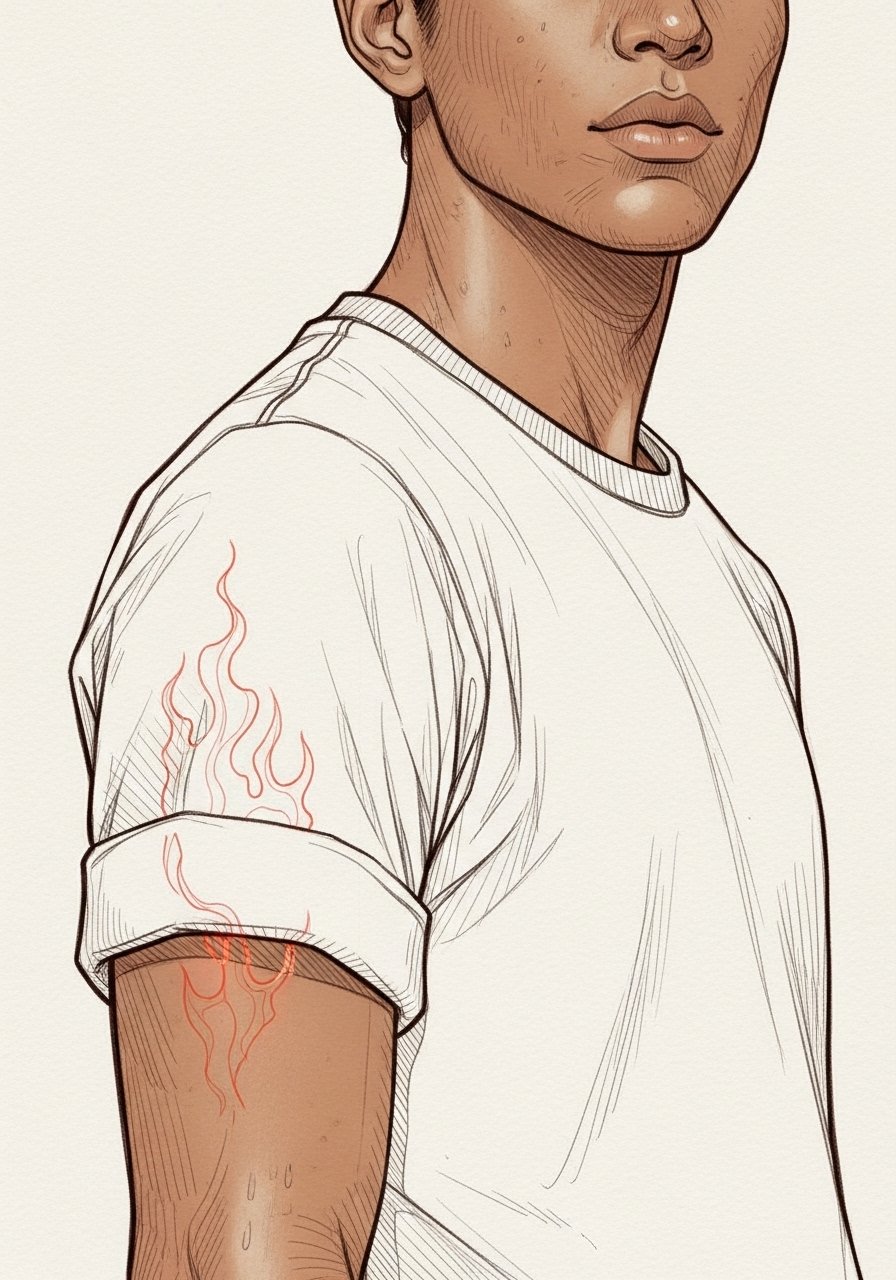
Upper arm portraits are forgiving because of muscle mass and lower friction. Ask for consistent saturation and reference photos with the lighting you prefer. The mistake is cramming too many tiny facial highlights that will soften. At six months the portrait is cohesive. At two years midtones might need touch-up. Upper arm work is a good place to experiment with modest color accents. Wear a sleeve you can roll up and keep the area out of tight clothing for the first week.
21. Fiery Serpent Spinal Column Coil
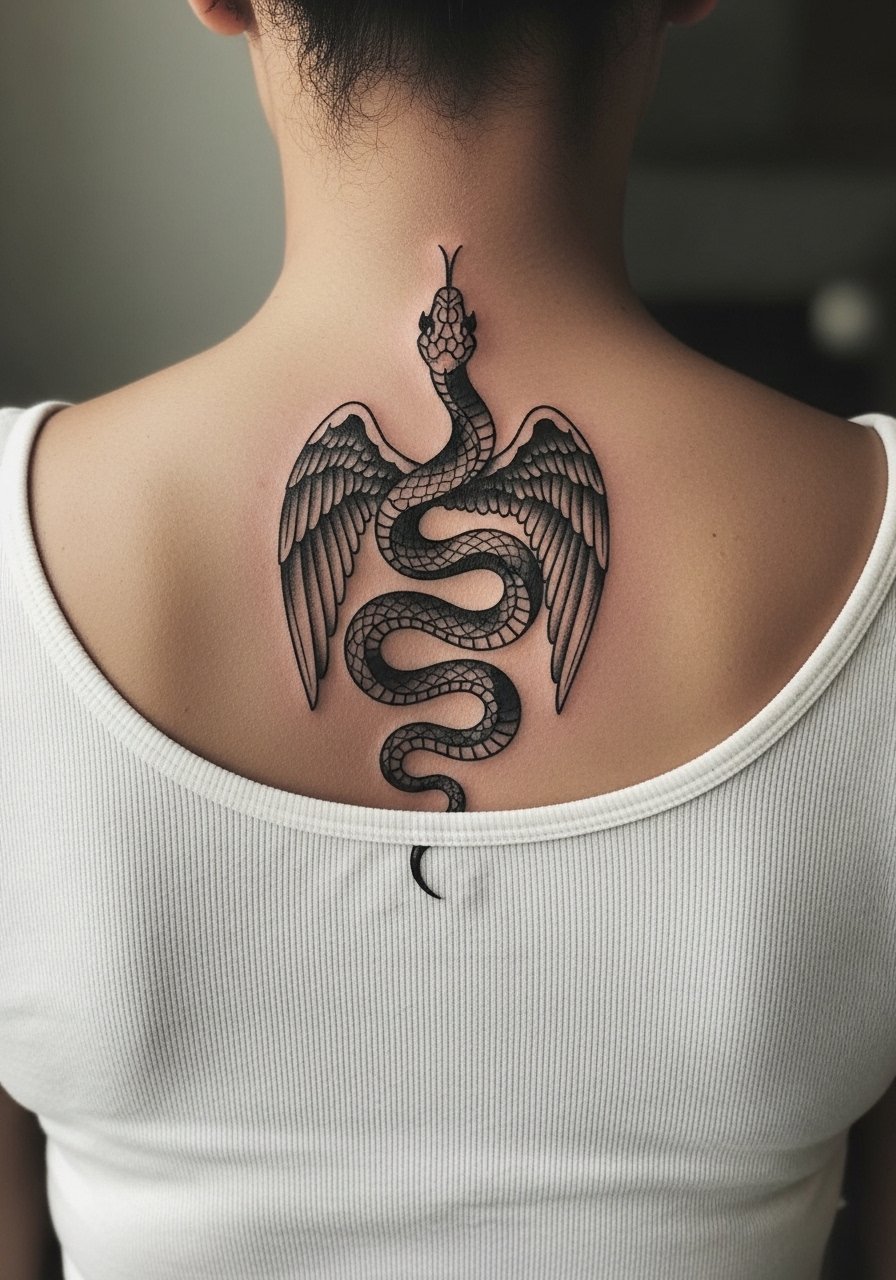
Spine pieces have strong vertical drama and they look best when the design follows vertebra alignment. Pain varies by spot but expect sensitivity over bone. Tell your artist to map the coil and avoid heavy saturation over bony prominences in the first pass. The mistake is pushing dense black across the whole spine in one session which can cause uneven healing. At six months the coil reads clean, at two years you may want to darken some scales. Wear a front-zip sports bra for prone positioning during the session.
22. Micro-Ophanim on the Inner Wrist
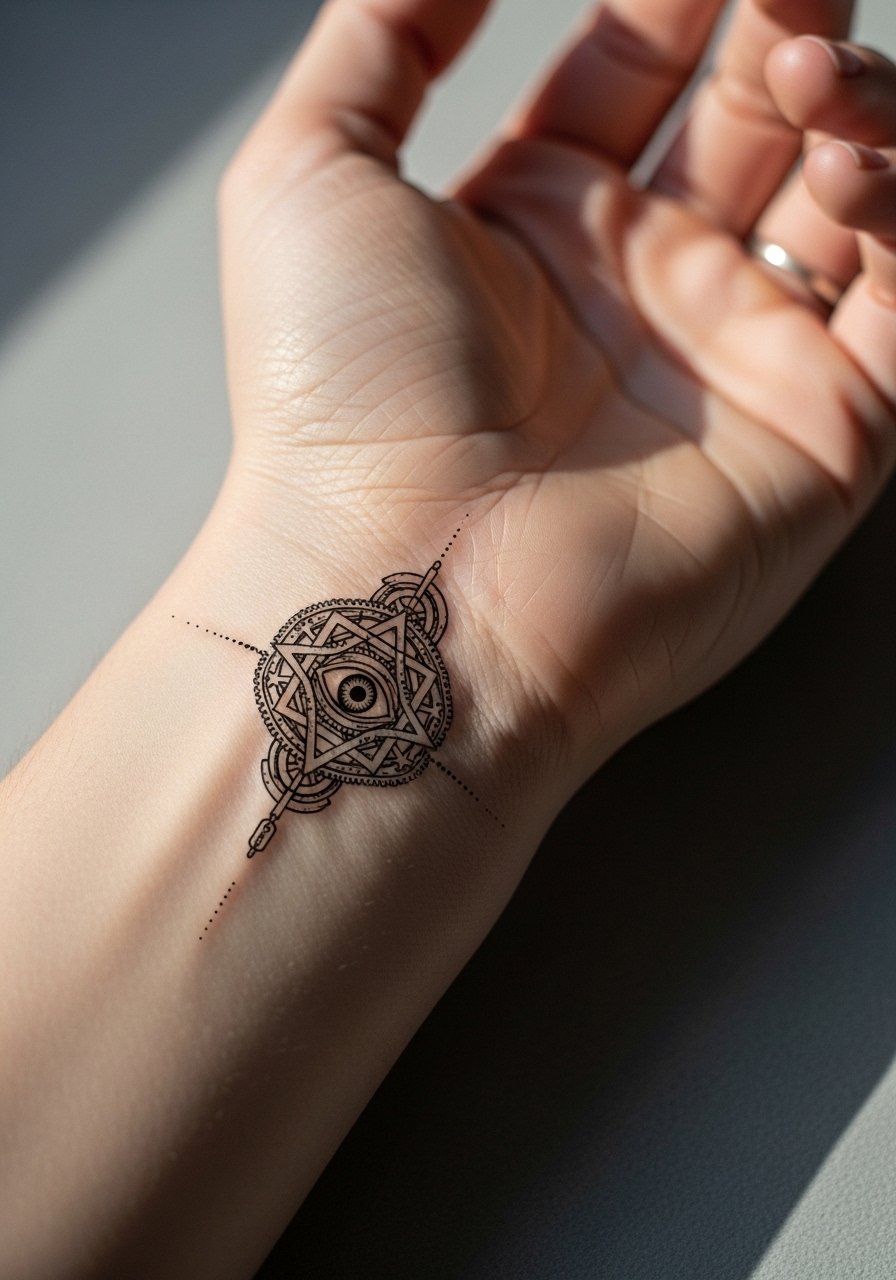
The inner wrist is a popular place for micro ophanim, but small circles need enough lineweight to resist early blur. Ask for a slightly bolder outer ring and minimal inner dots. The frequent mistake is over-detailing at postcard scale. At six months the mini looks distinct, but between two and three years very fine inner dots can merge. Keep this piece visible with dainty jewelry on the opposite wrist and avoid tight watches on the tattooed side while it heals.
23. Collage Cherubim Thigh Panel for Expansion
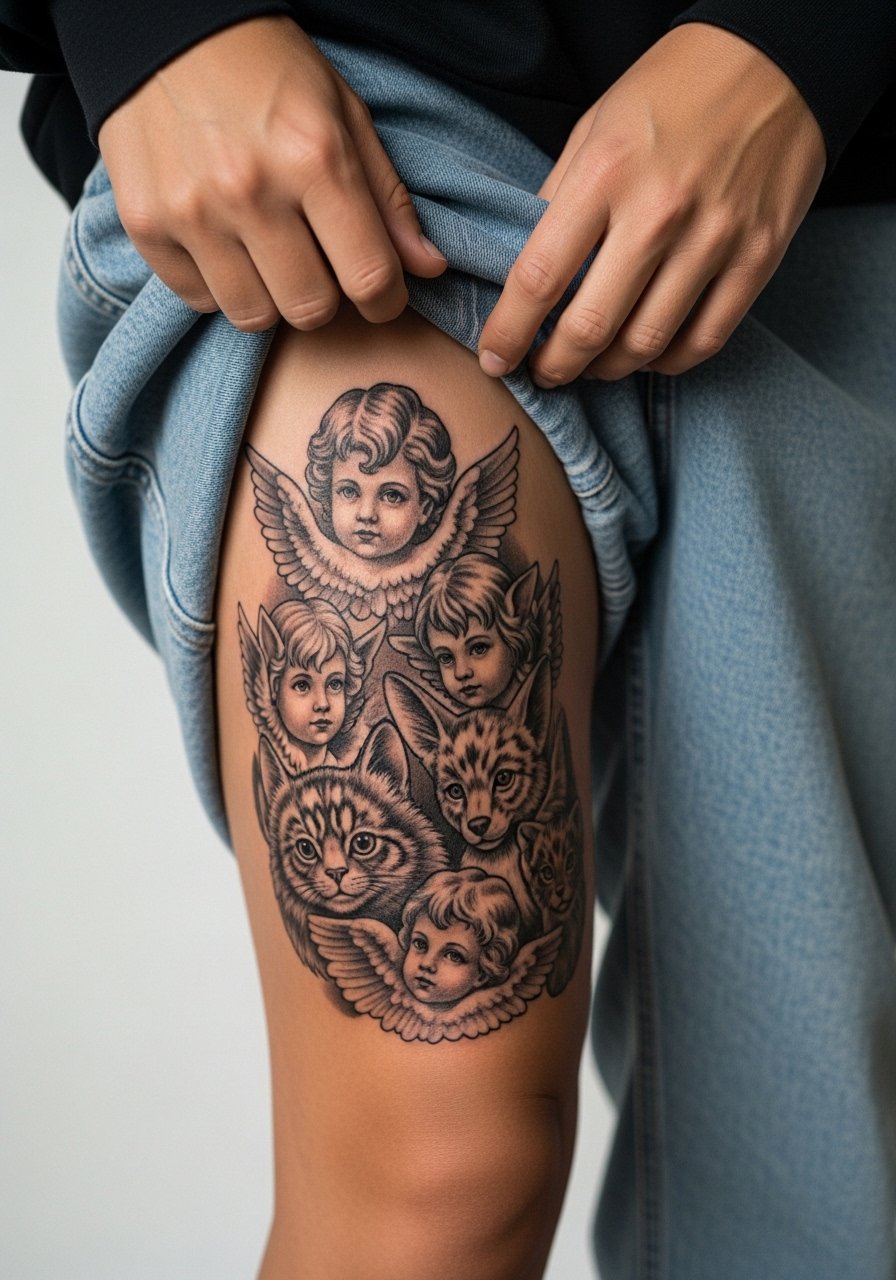
Thigh collage panels are forgiving for future sleeve-style additions. Tell your artist you want spacing that allows new elements to be added later. The rookie error is packing the panel so tight new work cannot attach cleanly. At six months the grouping looks cohesive. At two years contact points between elements may need clean lines if they softened. High-waisted shorts are great for showing healed thigh work, and wear loose jogger pants to the session for comfort.
24. Tiny Malachim on the Ankle Side
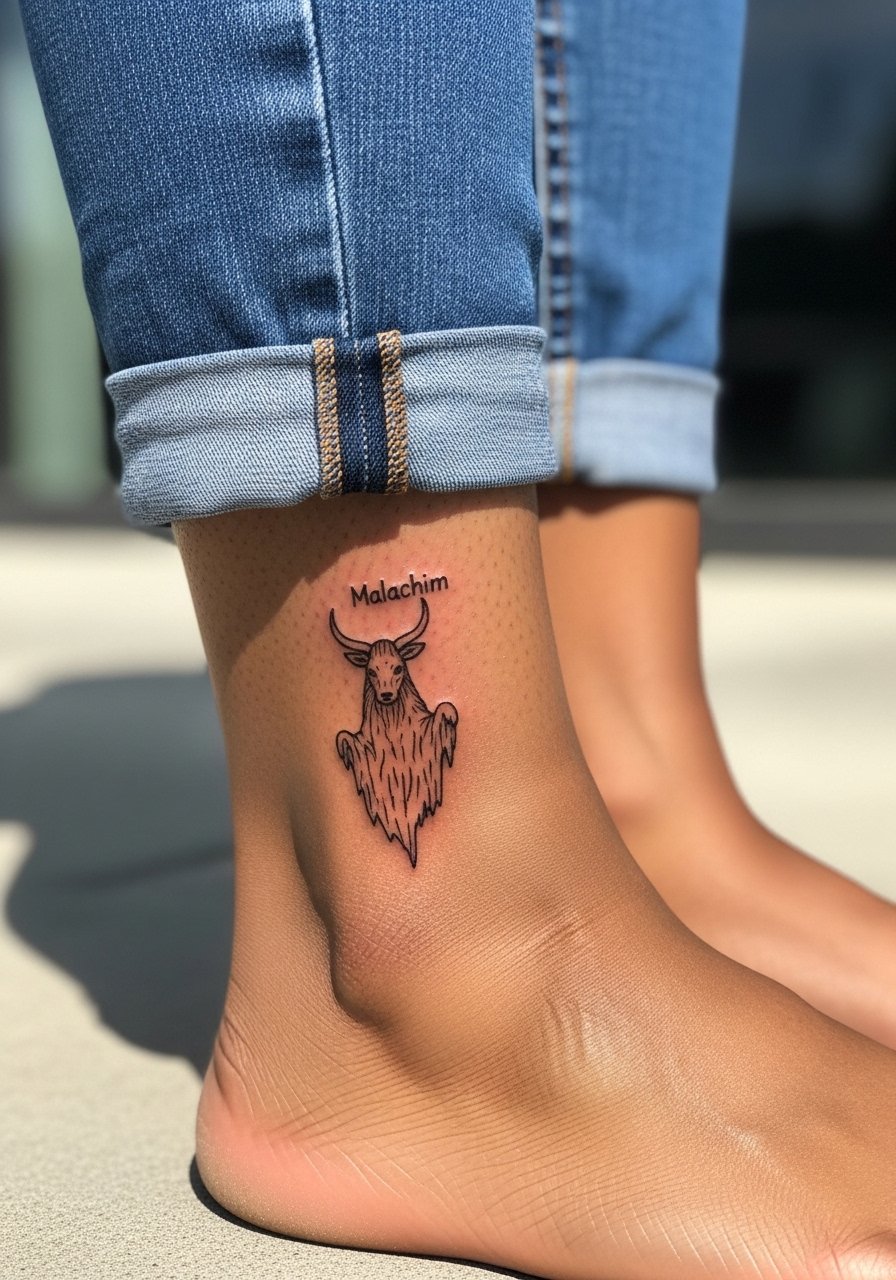
Side ankle pieces are discreet and low-risk for blowout, but they do meet footwear. Ask for a slight outline boost so shape reads when the skin stretches. The mistake is choosing ultrafine shading that fades from shoe rubbing. At six months the small Malachim reads neatly. At two years edges may need a touch-up. Keep shoes loose the first few days and avoid tight socks.
25. Ornamental Throne on the Chest, Small Diameter
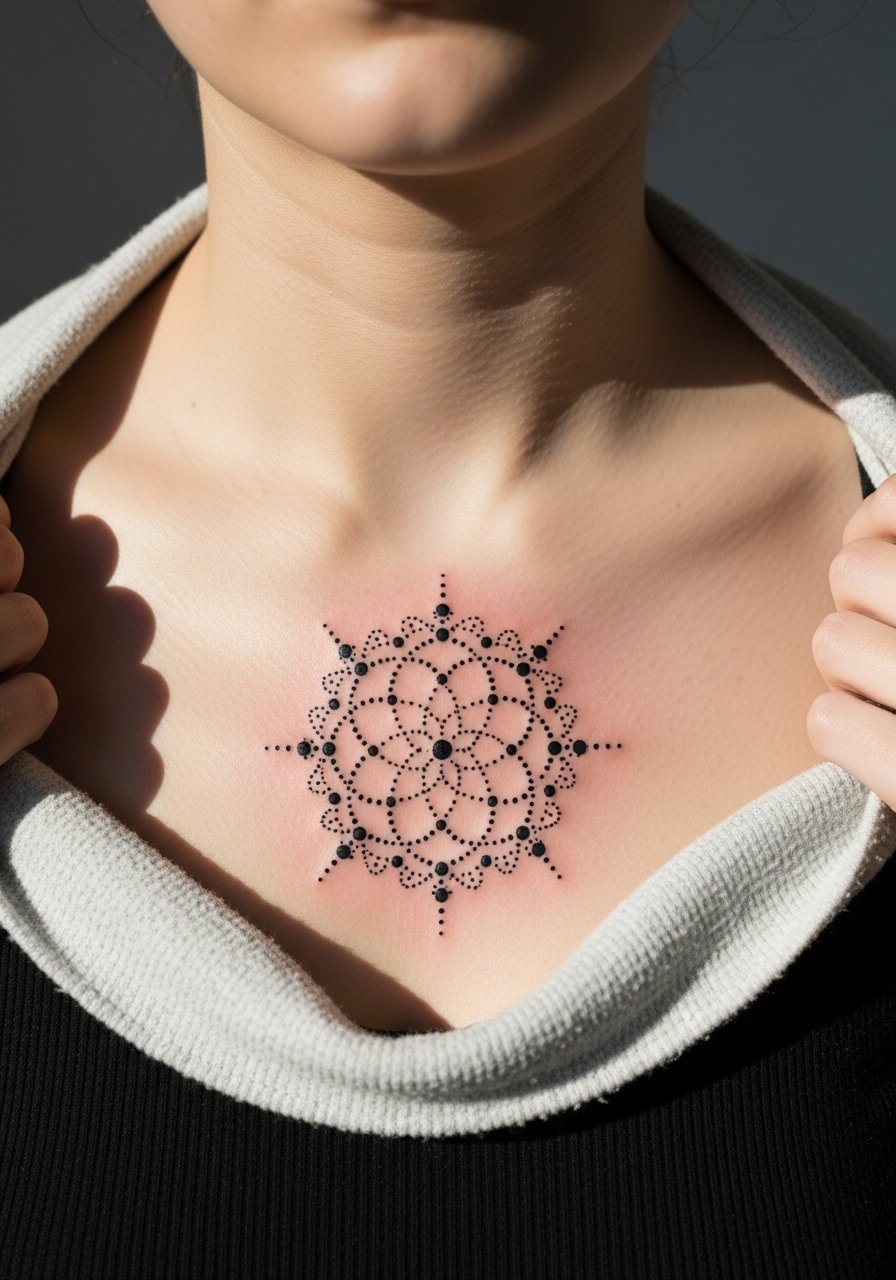
Small chest mandalas need careful spacing so dotwork does not compact on the rounded upper chest. Tell your artist you want negative rings between dot clusters so the throne retains its radial structure. The mistake is overpacking the center which leads to a blotchy appearance later. At six months the geometry is strong. At two years tiny dots near the center might require reinforcement. For session access a wide-neck top is easiest.
26. Calf Dotwork Cherubim Panel
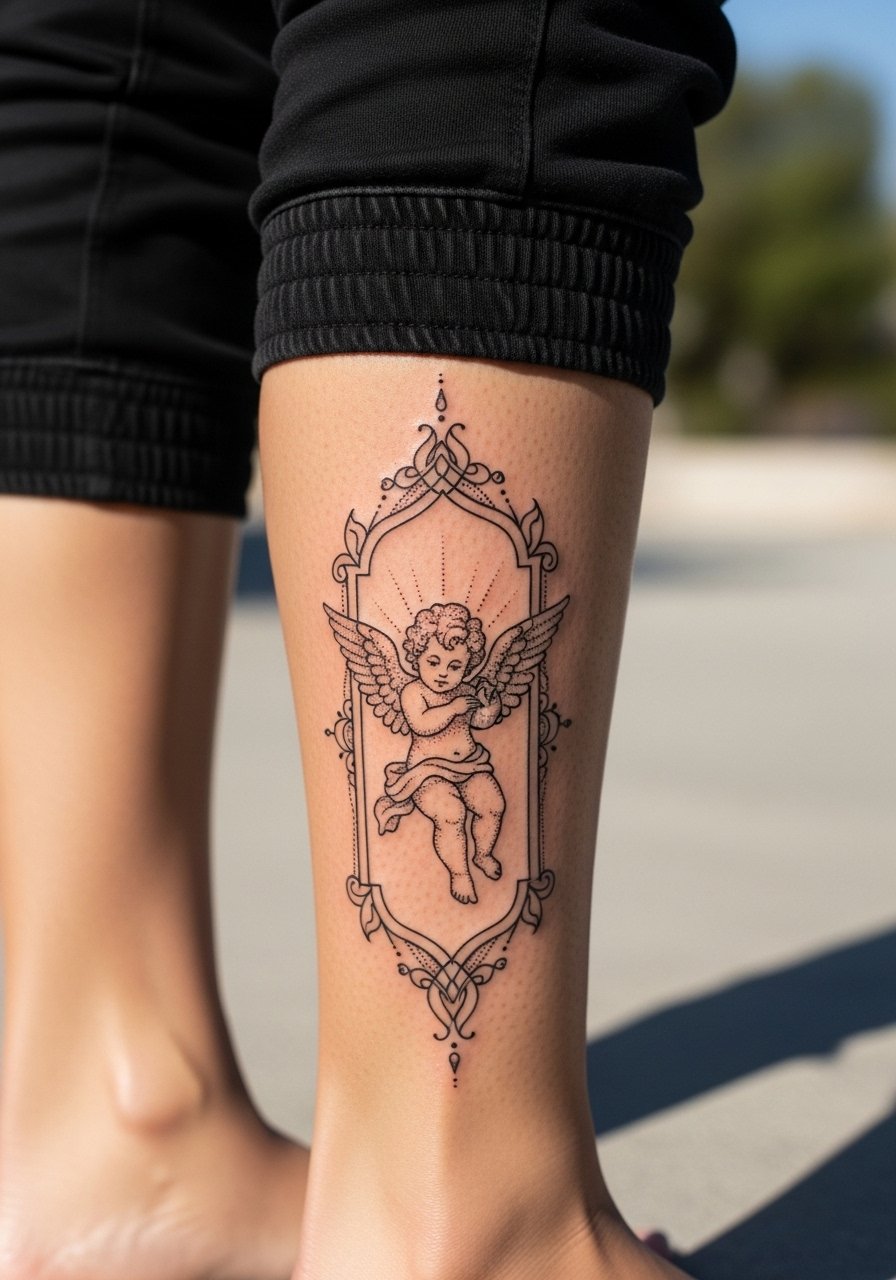
Calf dotwork holds well if the artist spaces the stipple and varies dot density. Tell your artist to plan negative bands that act like breathing room for the pattern. A common error is uniform dot density which blurs into a gray block over time. At six months the texture is rich. At two years a touch-up to reestablish crisp rims is common. Pair with cropped joggers when it is healed to show motion.
27. Minimal Wing Cluster Behind the Ear, Hairline Edge
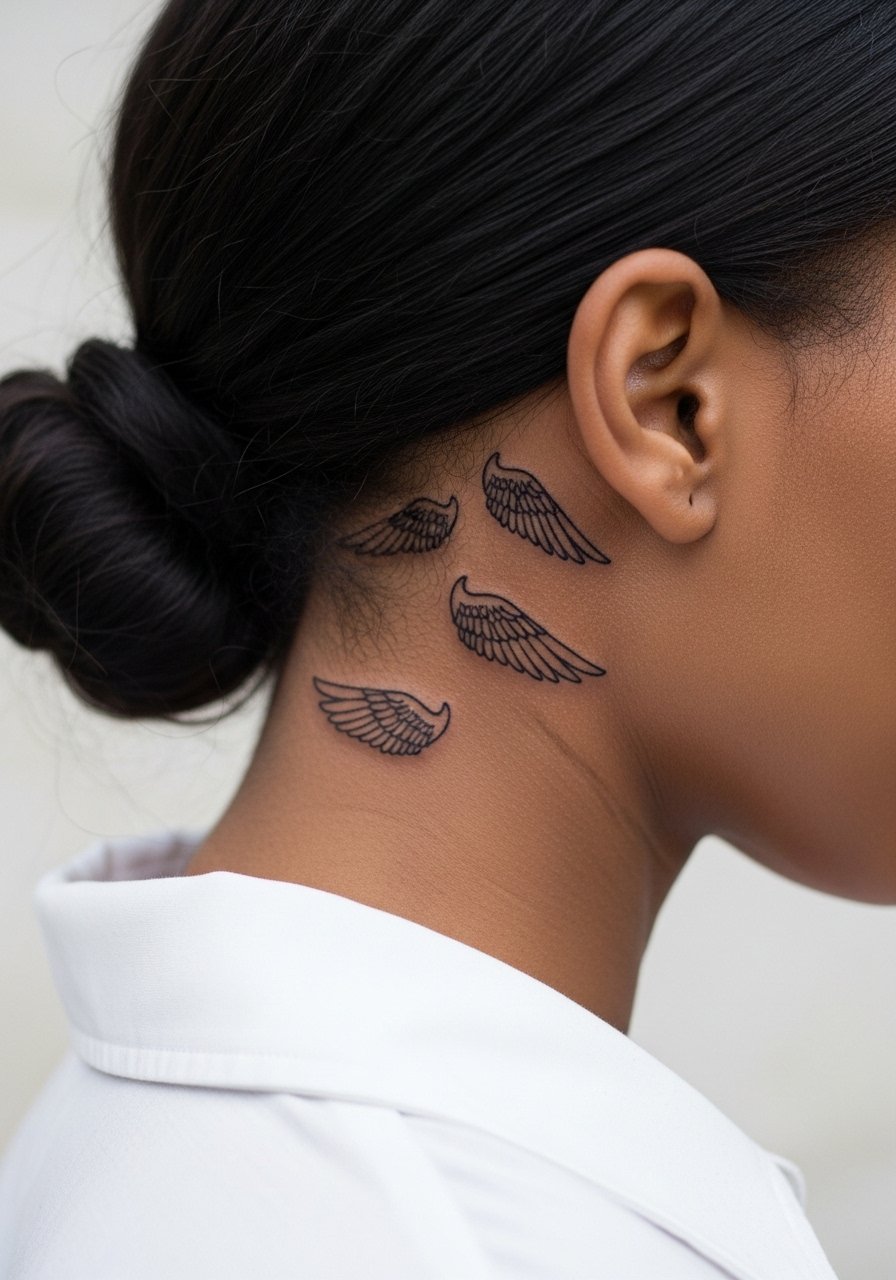
Behind-the-ear pieces are discreet and age subtly with hair growth patterns. Make sure you frame the placement as "on the skin just behind the ear below the hairline" during consultation so placement is precise. The common mistake is pushing too much micro shading where hair and sweat will interfere. At six months the cluster sits tucked under hair, at two years the outline usually needs minor reinforcement. This spot is a good candidate for a minimalist silhouette that can grow into a small neck panel later. For session comfort, ask about short breaks and wear your hair up so the artist can access the area.
Frequently Asked Questions
Q: Will a fine line ophanim wheel hold up on medium to dark skin tones?
A: Yes, but line weight matters more than the art itself. On medium and dark skin choose slightly bolder primary outlines and stronger negative space in the inner rings so the eye clusters remain readable as they age. Ask your artist to show healed photos on similar skin tones.
Q: How does a ribcage serpent coil heal compared with a forearm ophanim wheel?
A: The ribcage is higher on pain and movement, so it may take longer to settle and needs careful session planning. Forearms face less stretch and are easier to keep protected, so they often need fewer early touch-ups. Both benefit from staged color work instead of a single heavy pass.
Q: Artists argue about Saniderm versus dry healing. Which should I pick after a seraphim or dotwork mandala?
A: Both camps have reasons. Some artists prefer Saniderm for detailed dotwork because it keeps the stencil clean and reduces scabbing. Other artists prefer dry healing to avoid ink lift and to let scabs form naturally. Ask the artist which aftercare they have had consistent results with for the specific style you choose.
Q: I want a collarbone multi-wing silhouette but I work in a conservative office. How visible will it be and how should I dress?
A: Collarbone silhouettes can be concealed under collared shirts and light knit layers. For show-off moments choose V-neck tops or a v neck silk blouse. During healing keep bandages covered by loose clothing.
Q: How often should I expect touch-ups for biblically accurate realism versus blackwork?
A: Realism with small tonal ranges often needs a touch-up every two to three years, especially on high-friction areas. Dense blackwork and geometric pieces can last longer before refreshes. Plan touch-ups based on how the piece looks at the one-year mark rather than a fixed schedule.
Q: Can I combine an ophanim wheel with a personal scripture quote without it looking cluttered?
A: Yes if you use negative space thoughtfully. Place the quote in a clean band outside the wheel or in the negative gaps between eyes. Ask your artist for layout options on a photo of your skin so the script has breathing room and does not compete with dotwork.
Q: Where should I look to find artists who specialize in biblically accurate angels?
A: Search community hashtags, short videos, and local directories. Use tags like #BiblicallyAccurateAngel and #OphanimTattoo on social platforms, filter portfolios on tattoo apps, and check regional forum threads for artists who show consistent healed photos of wheels, seraphim, and micro-realism.