Fine line trends and neon palettes dominate feeds, but the shoulder tells a different story. On that rounded canvas movement, sun exposure, and muscle change rewrite a design faster than most people expect. If you worry about fading, how a piece stretches with bulk, or hiding ink for work, these 21 upper shoulder ideas balance what looks good now with what actually lasts. Start with the dragon cap and you can plot expansions that hold up over years.
1. Dragon Shoulder Cap Tattoo
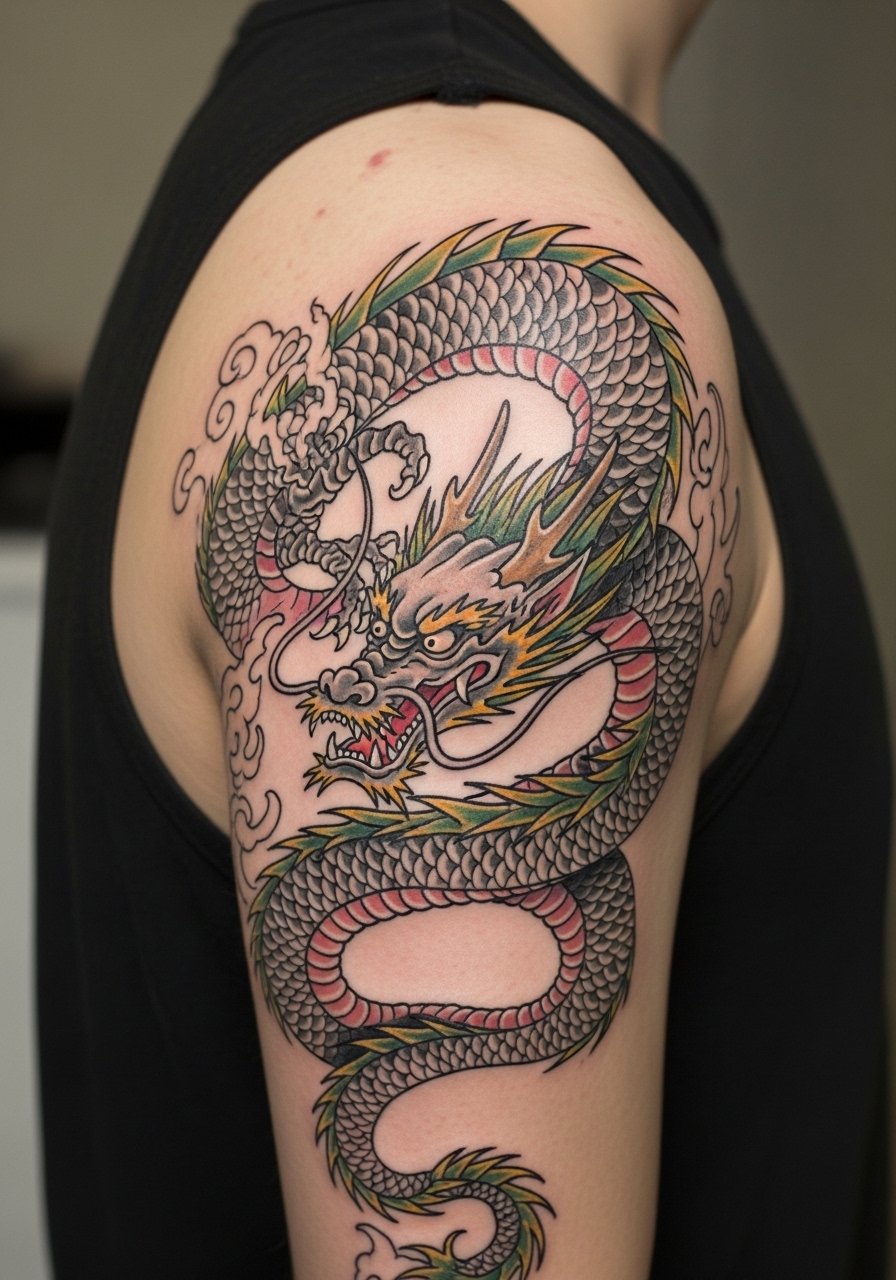
A dragon works with the shoulder's curve, not against it, so request flowing scales that follow muscle direction. Tell your artist you want strong outer linework and slightly looser interior texture so the scales read even after a few years of sun exposure. Fair warning, the cap can sting where bone sits close to skin, so expect two short sessions rather than one marathon. For showing it off, pair the piece with a mens fitted tank top black and a slung leather jacket for nights out. Common mistakes are forcing tiny detail into a 3-inch space and underestimating touch-up needs at year three.
2. Phoenix Rising Shoulder Piece
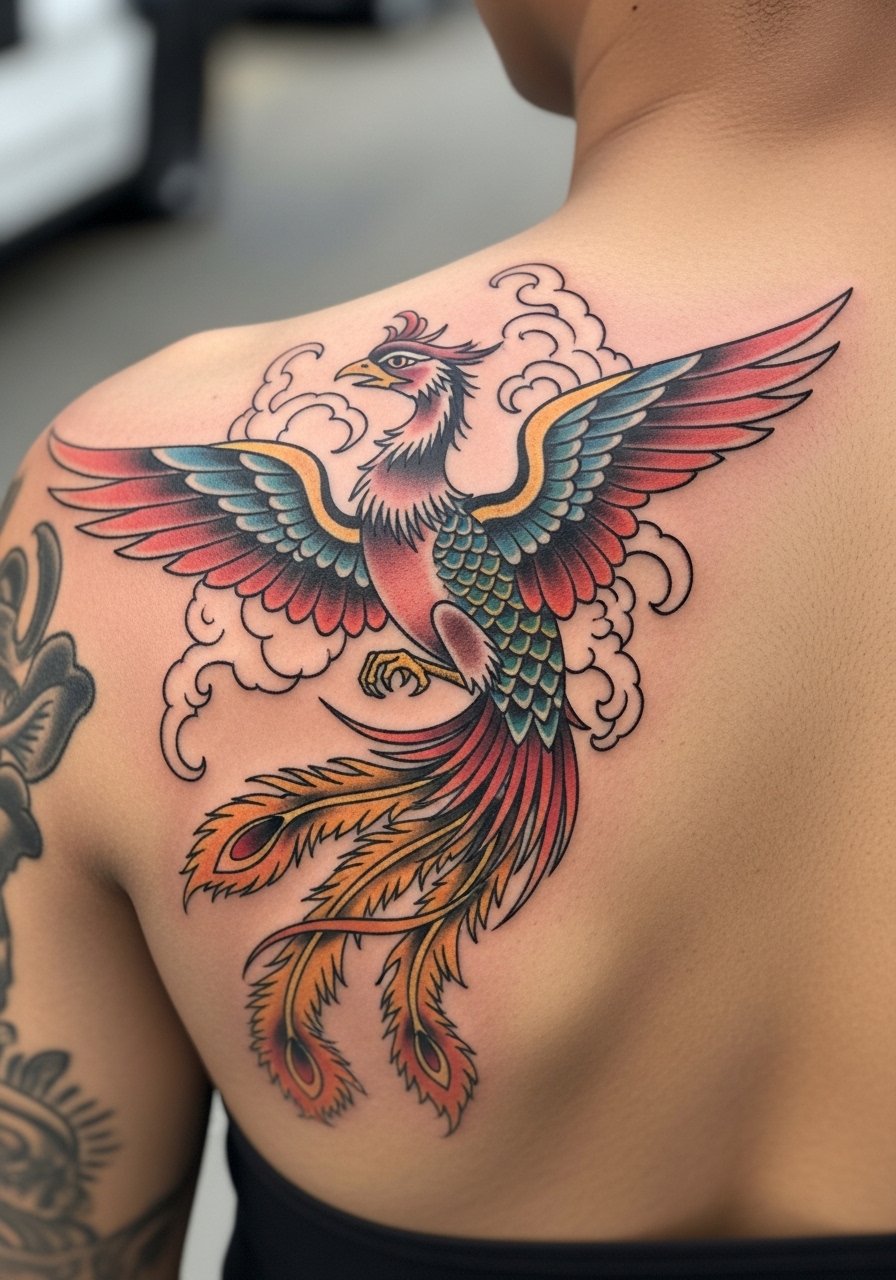
Go big with a phoenix across the upper back and shoulder if you want movement when you lift your arm. In consultation, emphasize feather flow over photoreal detail so the heat colors age into a cohesive wash rather than patchy spots. Expect 2 to 3 sessions and heavier saturation near the wing tips. For session comfort, wear an open button down shirt you can pull aside without rubbing fresh ink. The piece reads dramatically at six months and keeps its form at two years with SPF discipline, but vibrant reds may need a touch-up sooner than black outlines.
3. Angel Wing Upper Shoulder
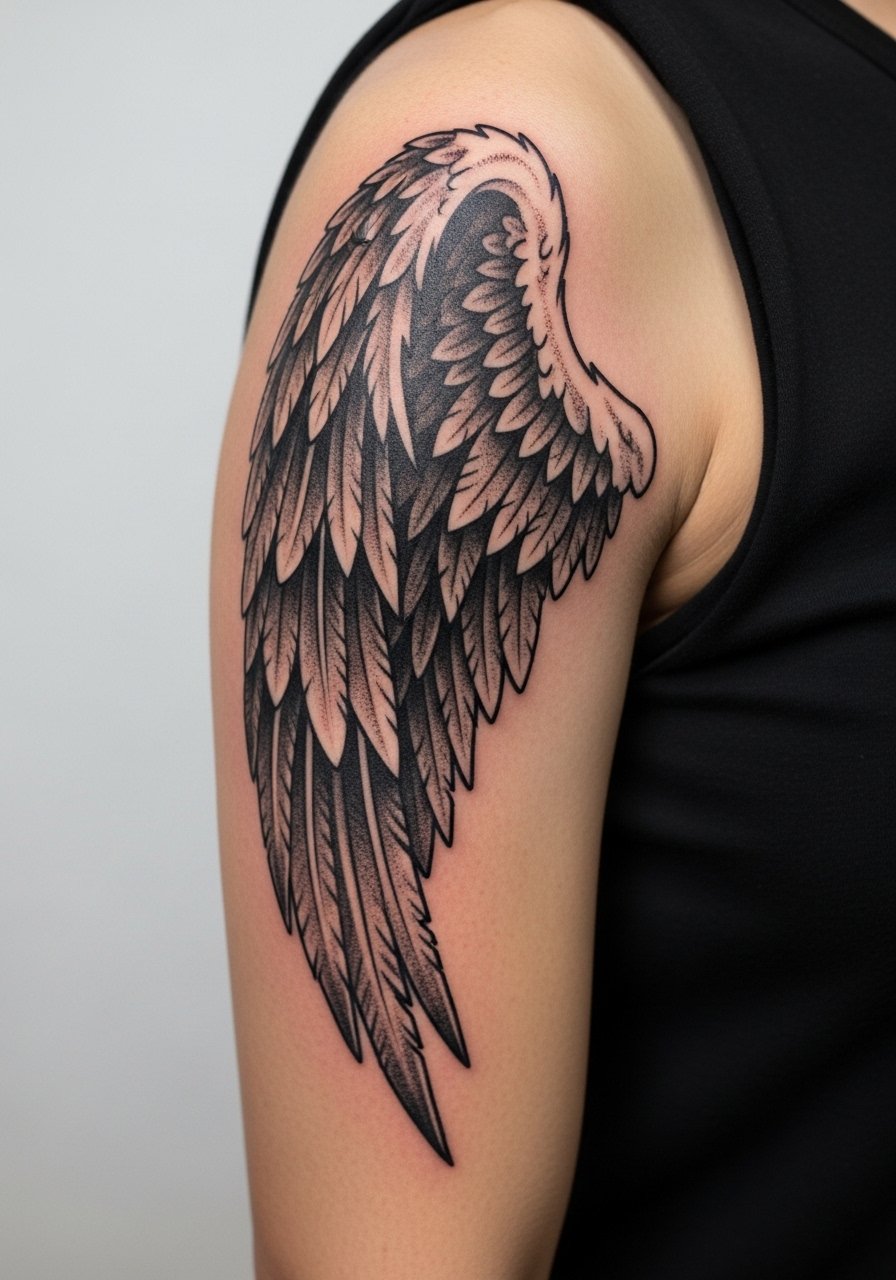
Angel wings on the upper shoulder translate well from deltoid toward the tricep. Ask for feather edges defined by stipple shading and moderate contrast so the wings keep separation as they age. Most people notice the piece at six months looks crisp, at two years the soft gray areas mellow, and at five years the edges need a touch-up to restore definition. The common mistake is packing too many tiny feather lines that blur. If you need partial work concealment for a job, a deep V or mens v neck tee white gives an understated peek without flashing the whole wing.
4. Tribal Geometric Shoulder Flow
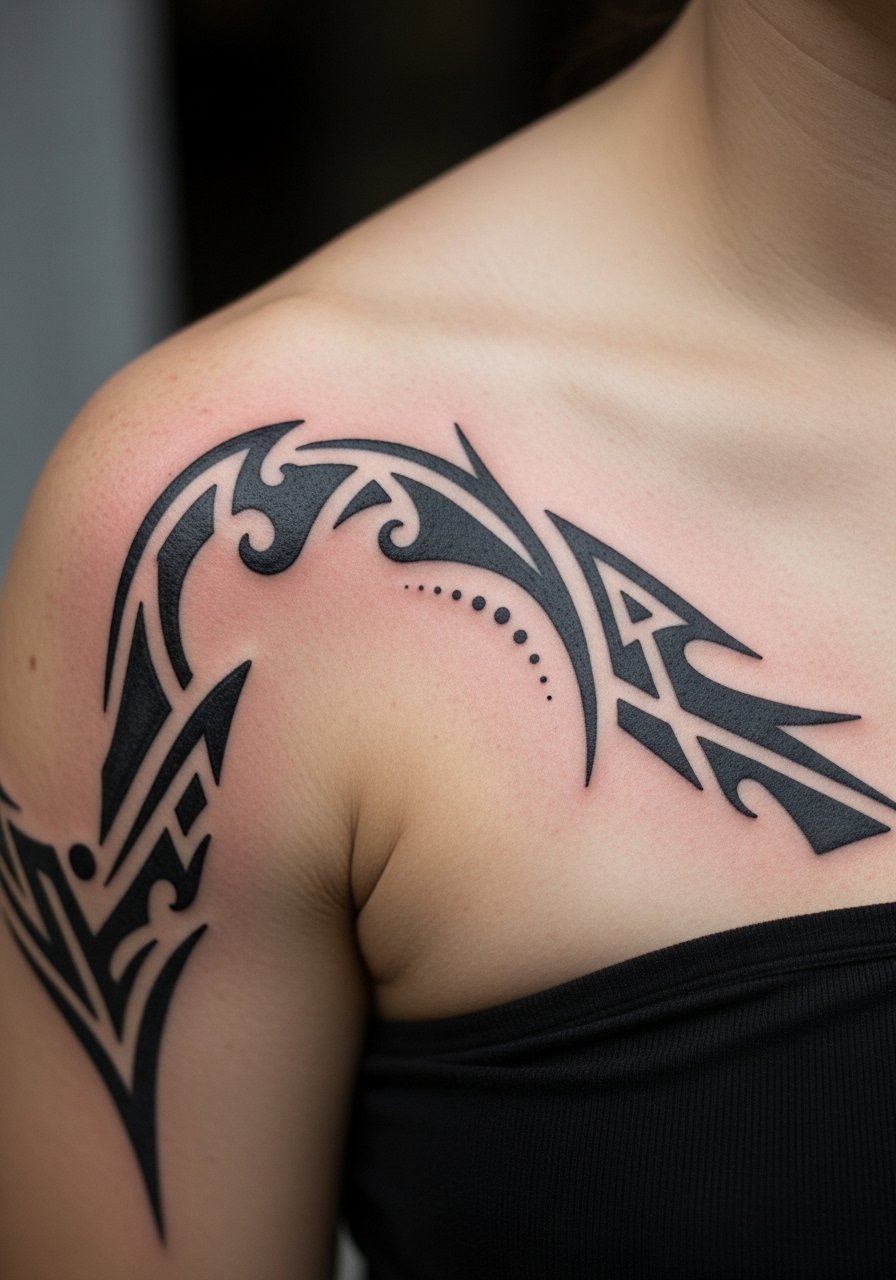
Modern tribal patterns shine on the shoulder because they can be mapped to muscle geometry. During the consult, ask your artist to draft lines that wrap the deltoid rather than lay flat across it. That avoids distortion if you bulk up. This style fares well over time since solid blackwork resists sun fade more than pale color. For showing it off, a zip hoodie gray unzipped halfway or a sleeveless workout shirt keeps the flow visible without busy patterns stealing attention. The biggest mistake is making elements too small, which risks blowout.
5. Lion Head Deltoid Tattoo
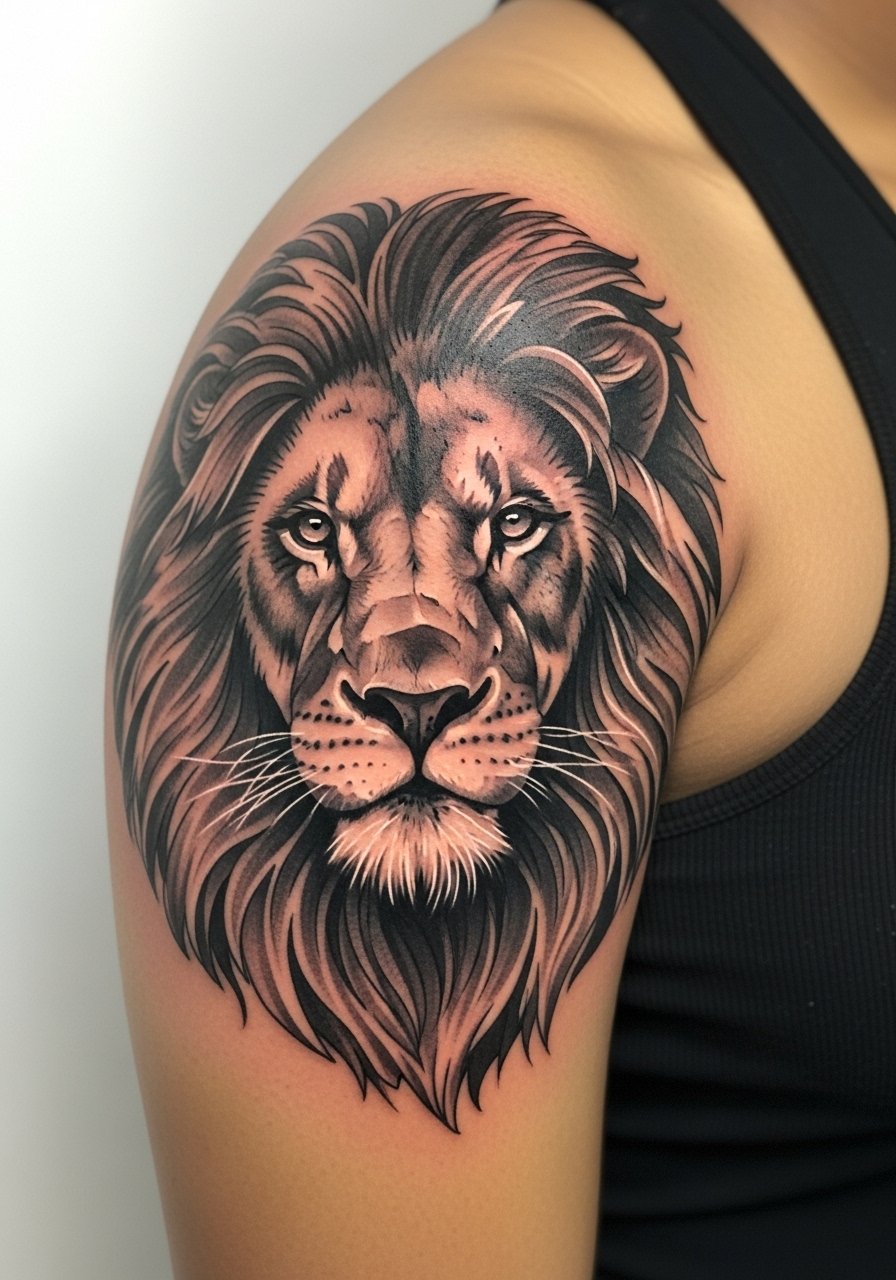
A lion on the deltoid reads like a crest when the head sits at the cap. Request strong linework around the muzzle and softer shading inside to protect the facial features from merging over time. Sessions feel like medium pressure on the muscle belly, and expect 1 to 2 sittings. For casual outfits, roll the sleeve of a olive short sleeve henley to frame the deltoid without distraction. People often ask for hyper-real fur in a small area and then regret the early softening of tiny strokes. Plan larger shapes and bold contrast for longevity.
6. Eagle In Flight Shoulder
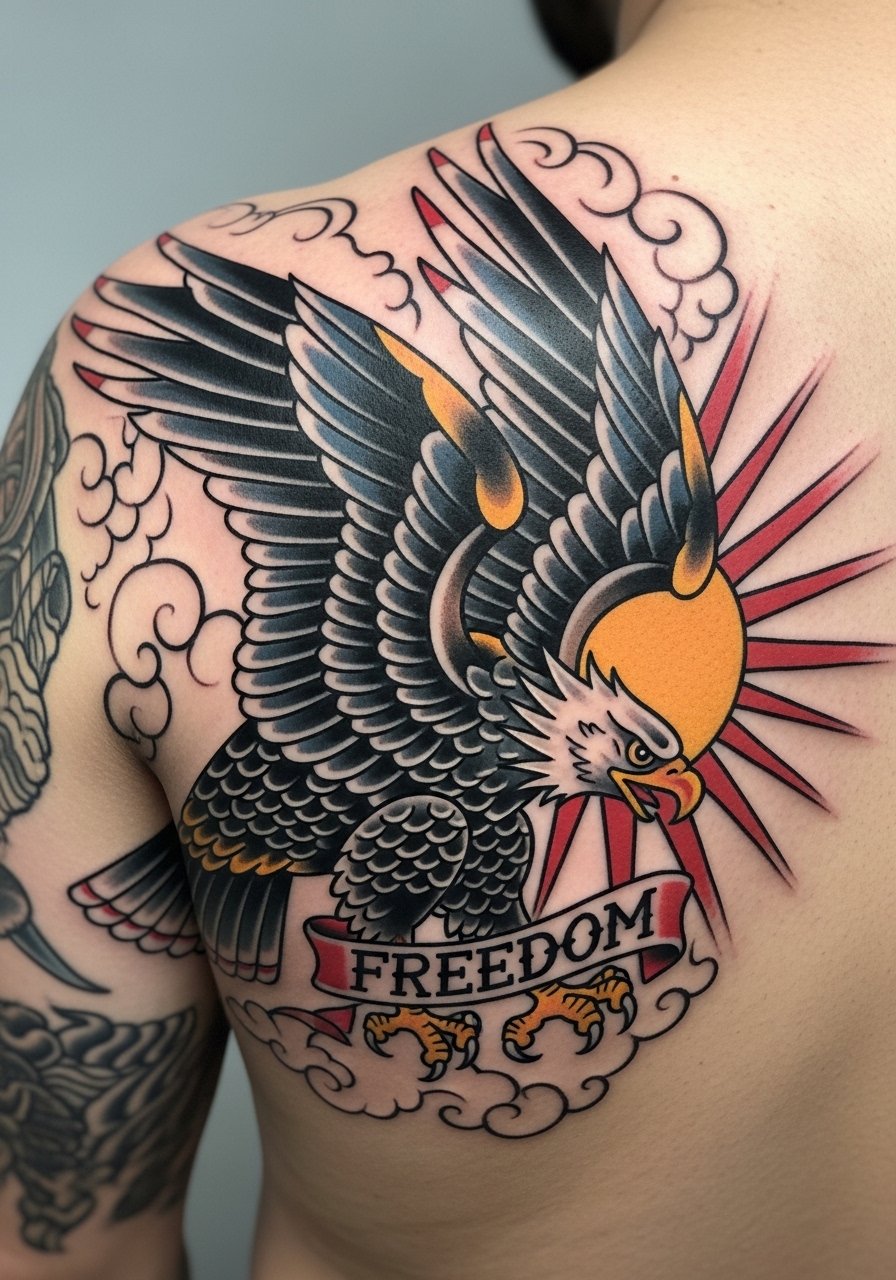
An eagle in motion benefits from the shoulder's natural range. Tell the artist you want exaggerated wing sweep and strong black anchors so the motion stays legible as saturation softens. Two sessions usually capture both outline and color fill. During the session wear an open button down shirt you can slide aside for access without fabric drag. A common error is crowding feathers with small filler elements that age into gray smudges. This placement works well if you plan future upper-back extensions.
Studio Day Picks
The dragon through eagle pieces above involve both high-contrast blackwork and color saturation, and a few small prep items make those sessions easier and the first week cleaner.
-
Stencil transfer paper kit. Lets you preview placement on rounded shoulder caps before the needle hits, which matters when you want scale and curve to match muscle flow.
-
Topical numbing cream. Useful for short stints over bony cap areas to reduce sting without forcing marathon sessions.
-
Thin protective film roll. Helps keep deltoid pieces clean during the first days when clothing rub can rub at delicate linework.
-
Fragrance free gentle body wash. Cleanses the area without perfumes that irritate fresh ink or affect color retention.
-
Aquaphor healing ointment. A thin layer during the very first days locks in moisture and helps fine line work avoid scabbing that pulls ink.
7. Mythological Creature Shoulder Wrap
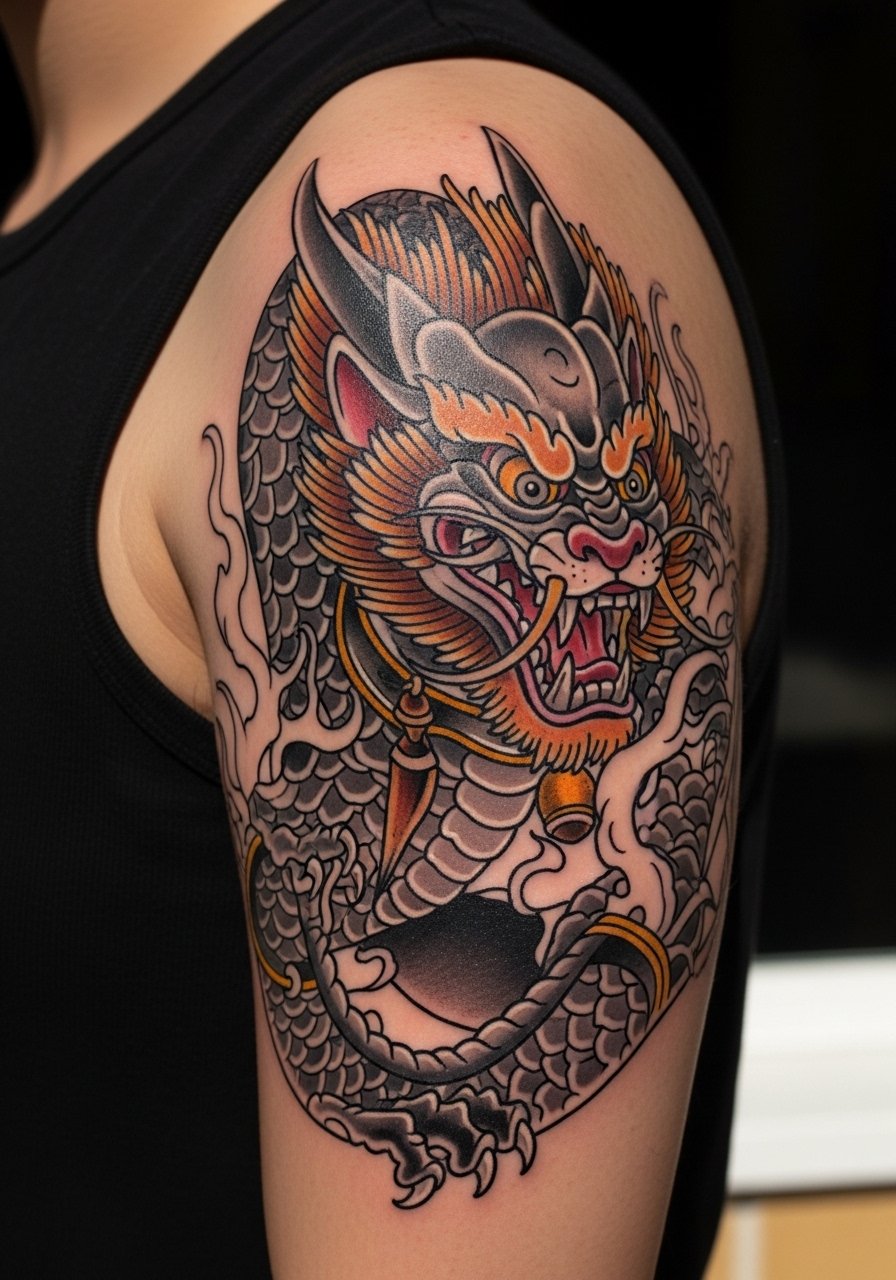
Wraps that take the shoulder to the upper arm tell a story and they ask for more planning. Bring references that show how the creature bends around a rounded muscle. During consultation say you want motifs spaced so expansion into a sleeve in the future is possible. Sessions often split across three sittings for color depth and linework. For career-conscious concealment plan starting pieces lower on the cap or keep the central motif under 4 inches. People sometimes over-detail the wrap in the first session and then feel boxed in when they want a sleeve later.
8. Modern Armor-Style Shoulder Plate
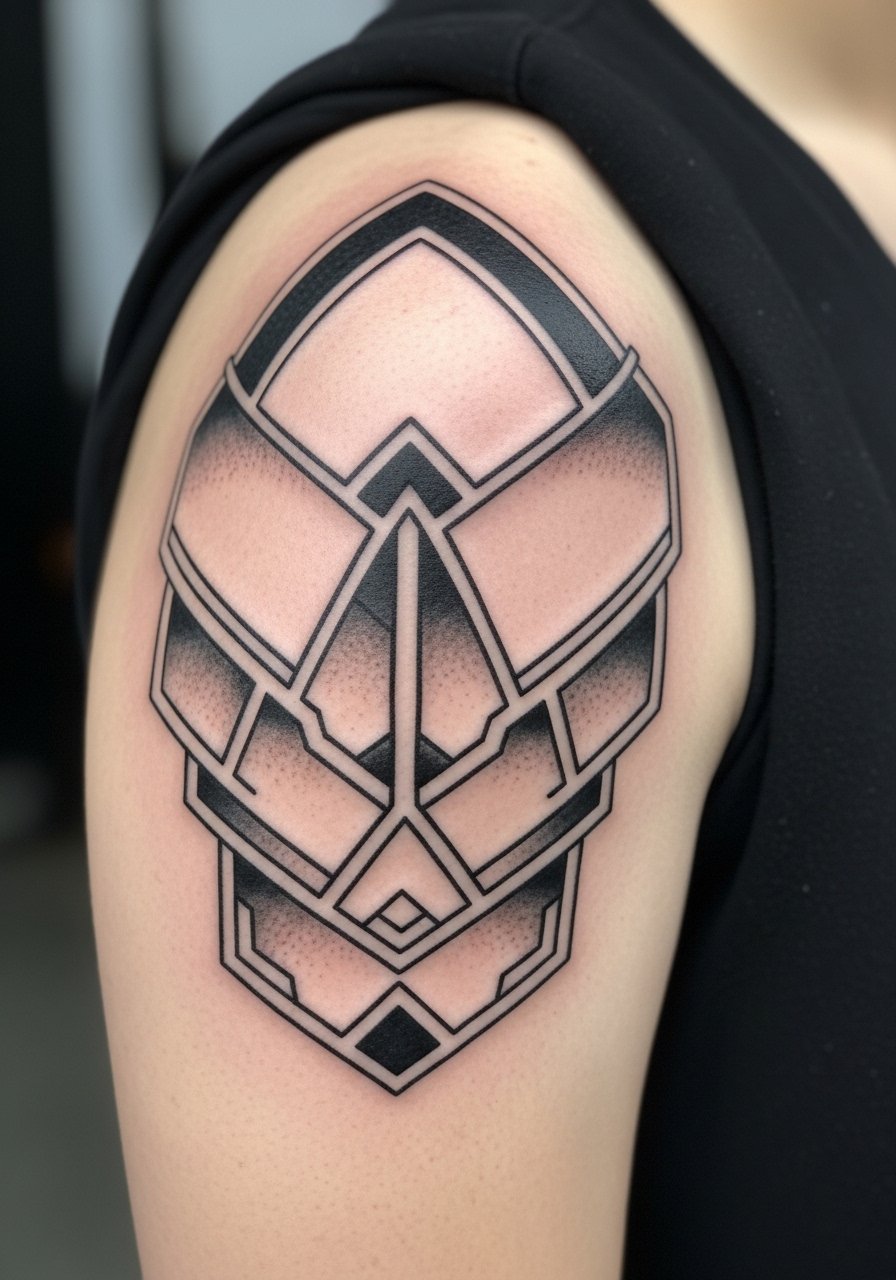
Armor-style plates use geometry to mimic a pauldron that sits naturally on the shoulder. Ask for thicker outer lines and measured negative space so the plate reads three-dimensional as you move. Pain is moderate across muscle areas but rises where bone meets skin, so plan for two sessions. For showing off wear a leather jacket men slim slung over one shoulder to frame the plate. The common error is too many micro-angles, which can blur into a muddle at year three. Keep shapes larger and spacing intentional.
9. Bold Lettering Shoulder Band
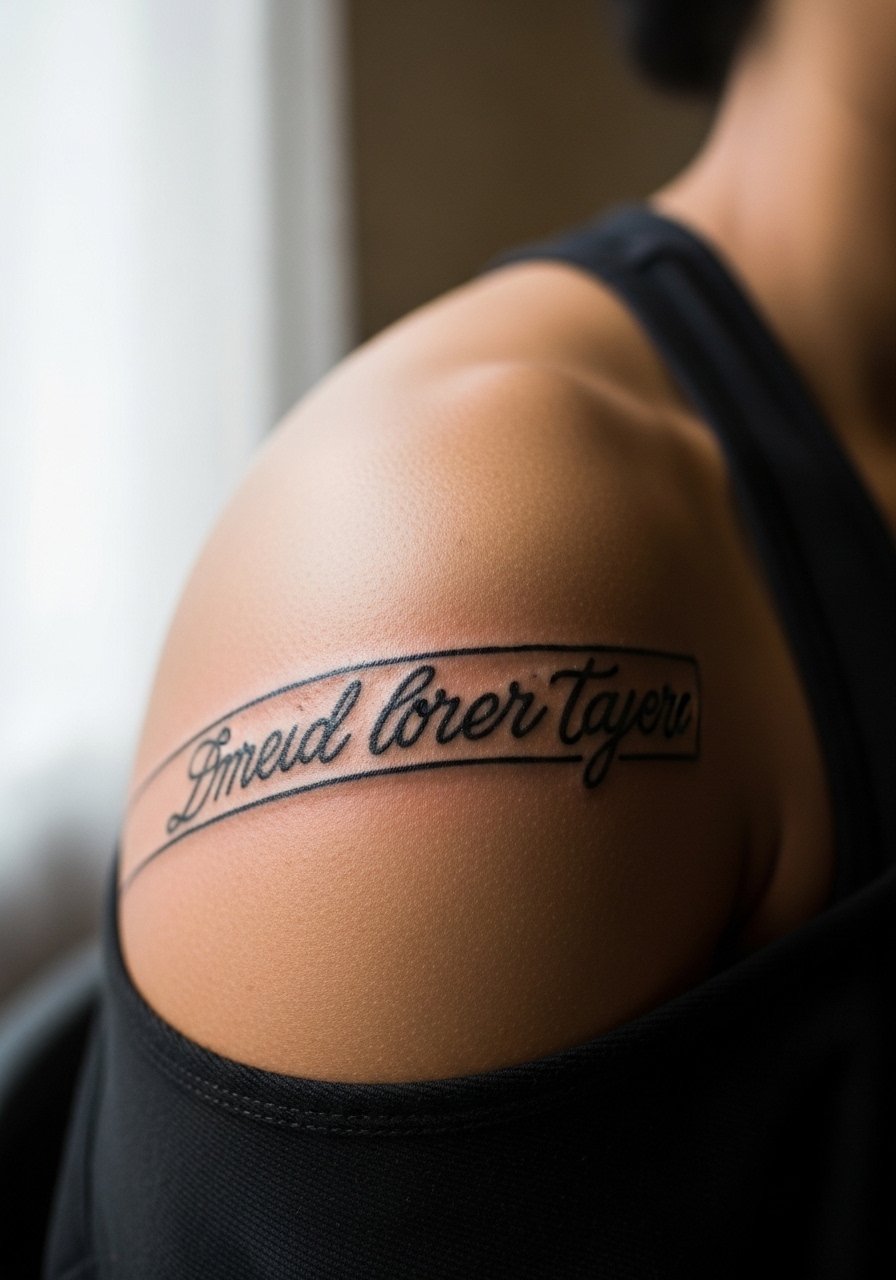
Lettering across the shoulder band reads best when letterforms are scaled for motion. Tell the artist the exact font weight you want and insist on thicker counters so the letters do not fill in over time. This area feels less painful than bony cap locations, and a one-session band often does the job. For casual wear, a mens crewneck sweatshirt neutral keeps the band just visible. A frequent mistake is requesting ultra-fine script that loses legibility after a year or two. Plan for a modest touch-up at three to five years.
10. Minimalist Symbol Deltoid
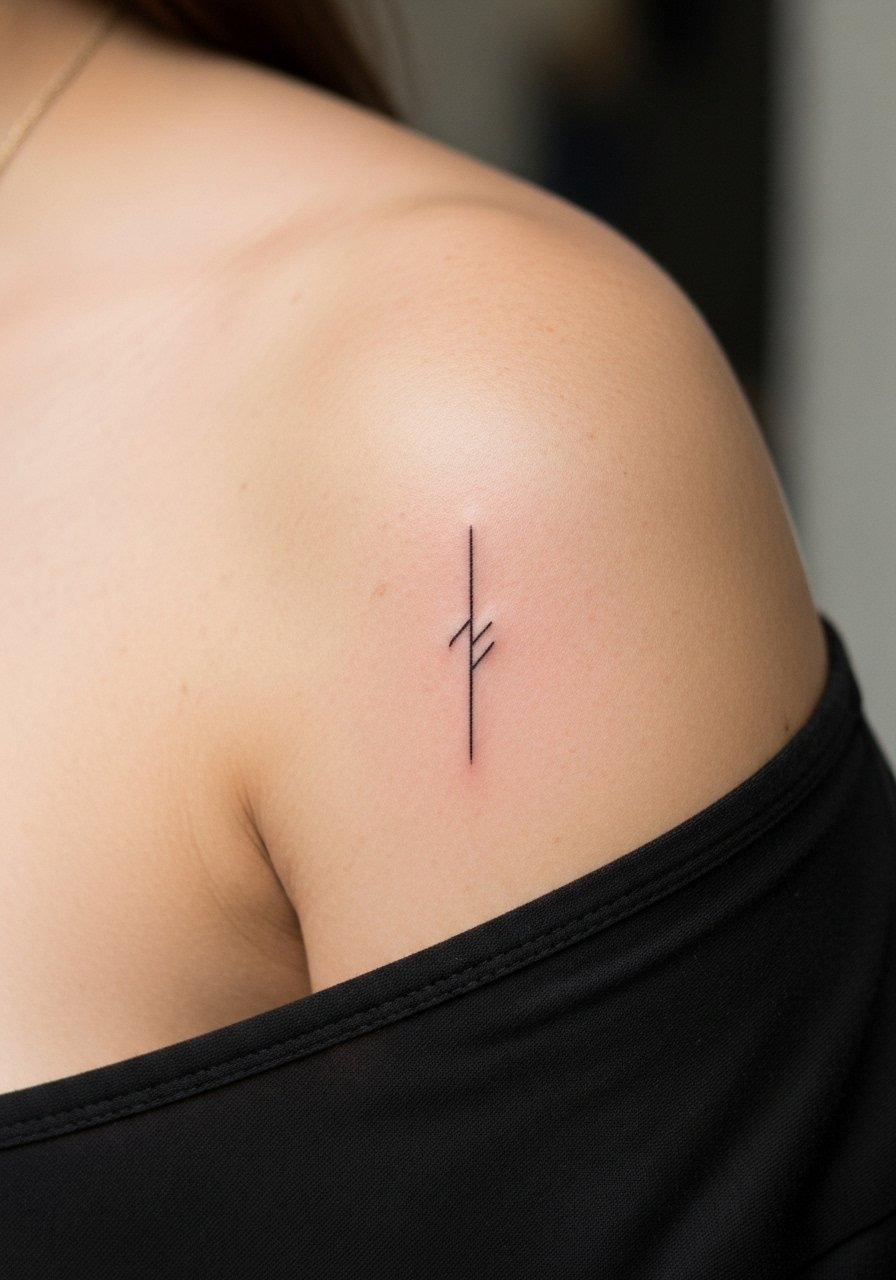
Minimalist symbols are compact and expandable, ideal for first-timers who want future options. Artists are split on fine line on shoulders. One camp says fine lines blur faster on shoulders because the skin stretches and has more sun exposure. The other camp argues that with proper needle depth and spacing fine line can settle well. When you bring a tiny symbol, ask the artist which approach they use and plan for a touch-up at year two or three. For session ease wear a loose neck t shirt so the deltoid is easy to access. The most common error is asking for micro-detail in a space that cannot hold it.
11. Knight Silhouette Shoulder
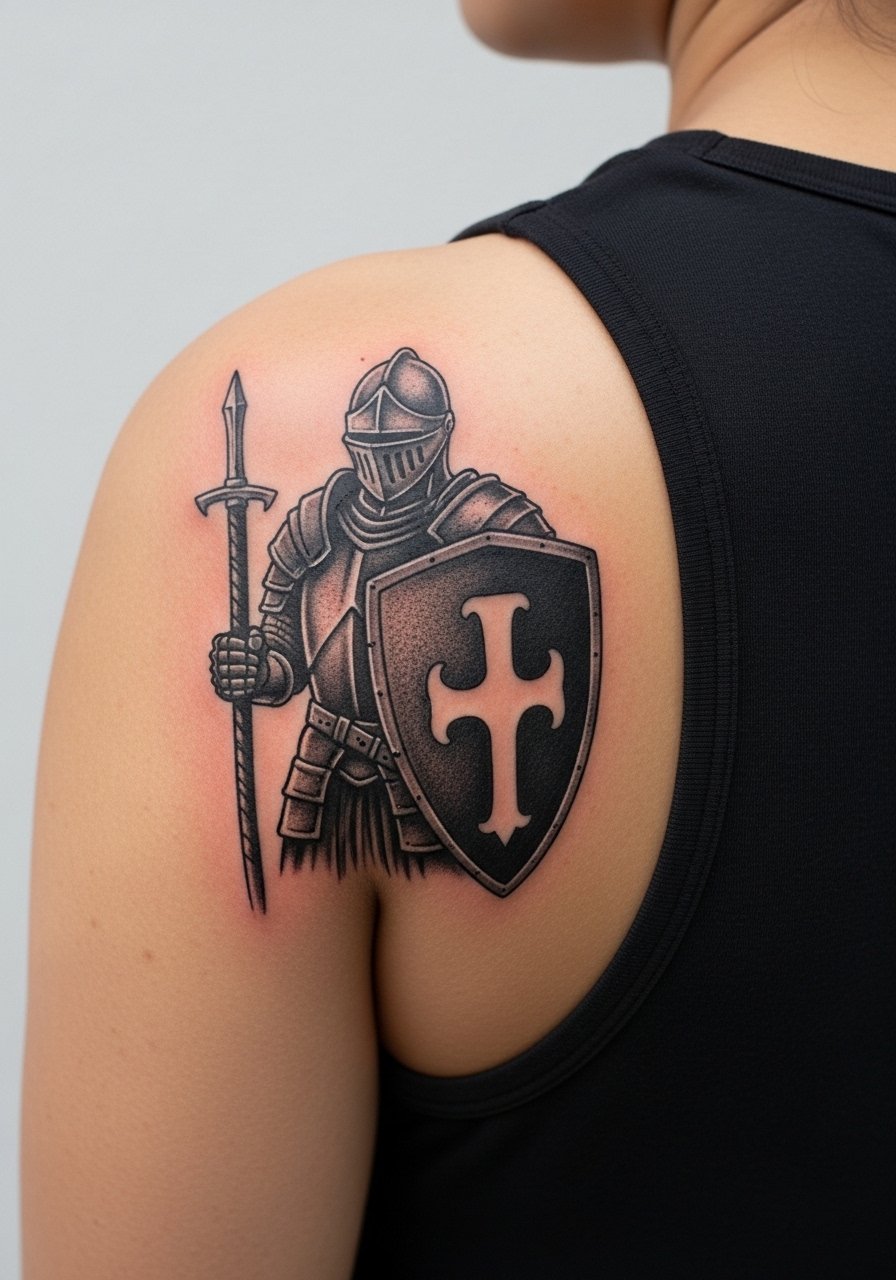
A knight silhouette reads like a badge and benefits from strong contrast between figure and background. Tell the artist you want negative space around the shield so it stays distinct as grays soften. Expect 1 to 2 sessions depending on size. For show-off outfits try a rolled sleeve henley shirt men rolled sleeve to reveal the silhouette without competing patterns. New tattoo mistakes include cramming background texture into the silhouette, which blurs into an indistinct mass later.
12. Video Game Icon Shoulder Patch
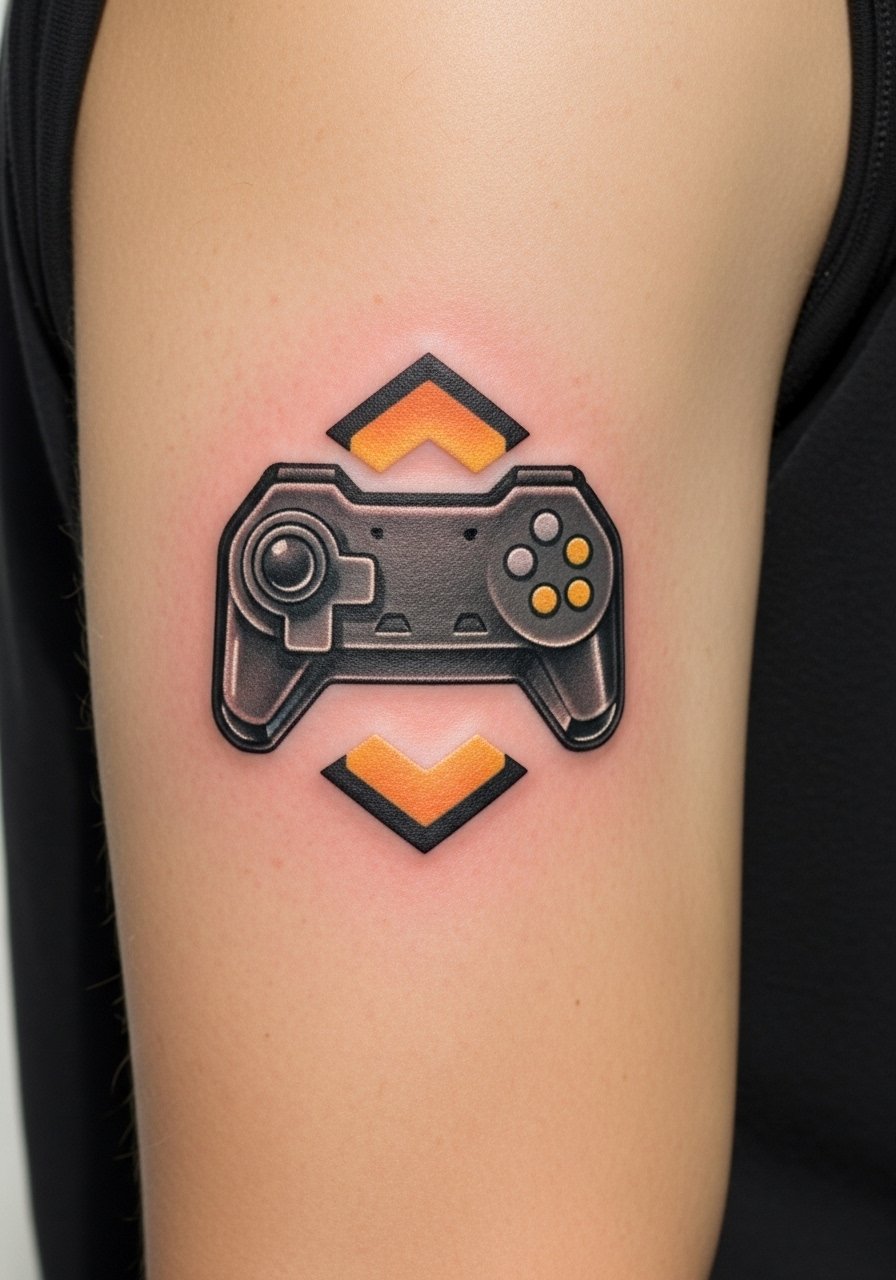
Niche patches work well on the deltoid as a conversation-starting spot that remains expandable. For micro-realism ask for a simplified color palette and slightly bolder outline than a screen icon to handle washes and sun. One session often handles smaller patches. Wear an open button down shirt to the session so the artist can access the deltoid without catching fabric. A common mistake is insisting on pixel-perfect detail in too small an area. Make scale your friend so the icon ages into a clean emblem rather than a blur.
13. Samurai Crest Shoulder Cap
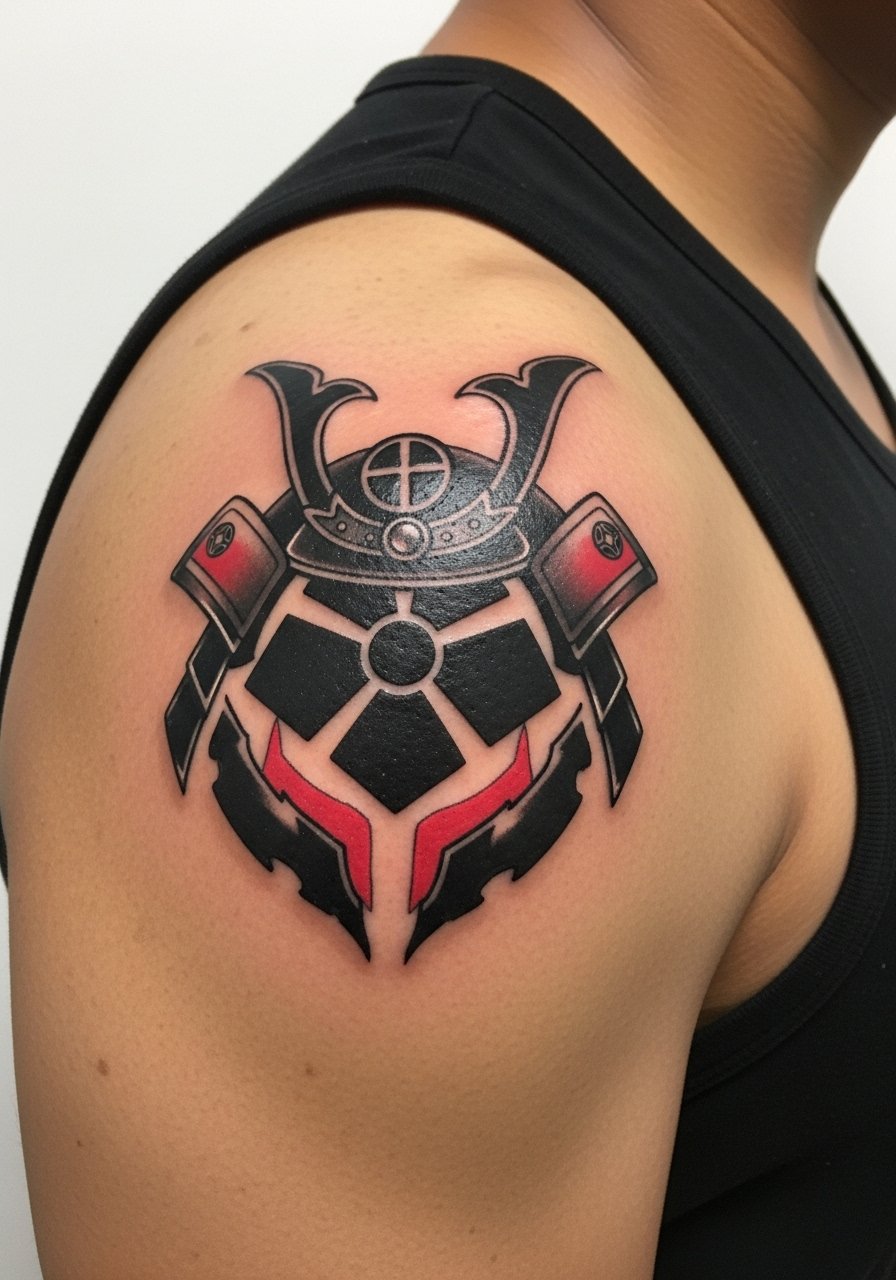
A samurai crest benefits from strong shapes that echo armor lines. Ask for a central negative space to protect the emblem from muddling and request color saturation focused in the red accents only. Sessions feel medium due to solid fills. If you later want more Japanese-inspired work extend outward from the crest lines. A mistake people make is layering tiny background motifs too soon. Keep the crest bold and let additions happen on their own timeline.
14. Nautical Compass Shoulder Patch
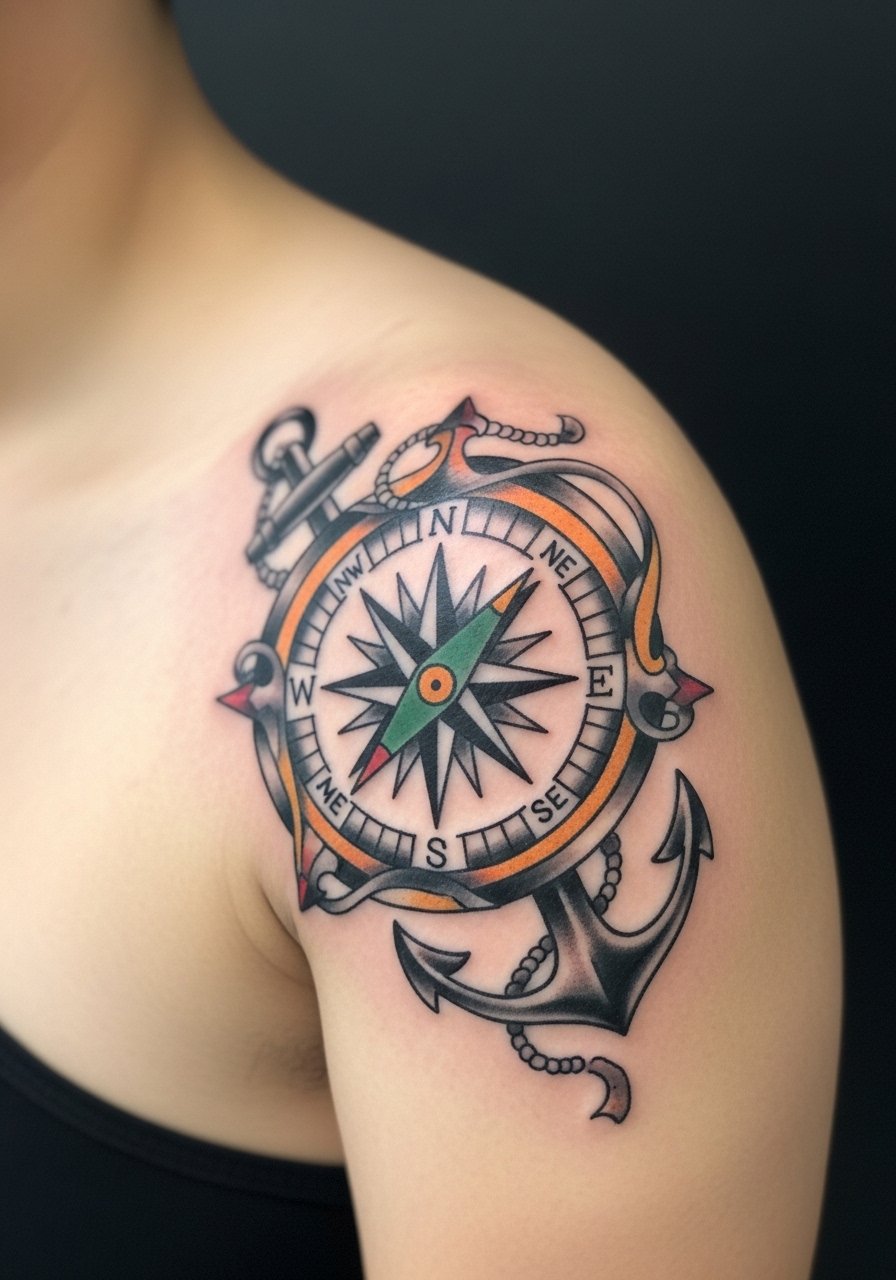
A compass centered on the deltoid reads well with strong cardinal points and clear negative spacing between markers. Tell the artist you want slightly thicker outer points so the compass keeps direction as shading softens. For evenings out try a plain crew tee with the sleeve rolled to frame the patch. The common error is over-detailing the compass face in a small area. Keep numerals minimal or omit them to avoid future legibility issues.
15. Celtic Knot Shoulder Flow
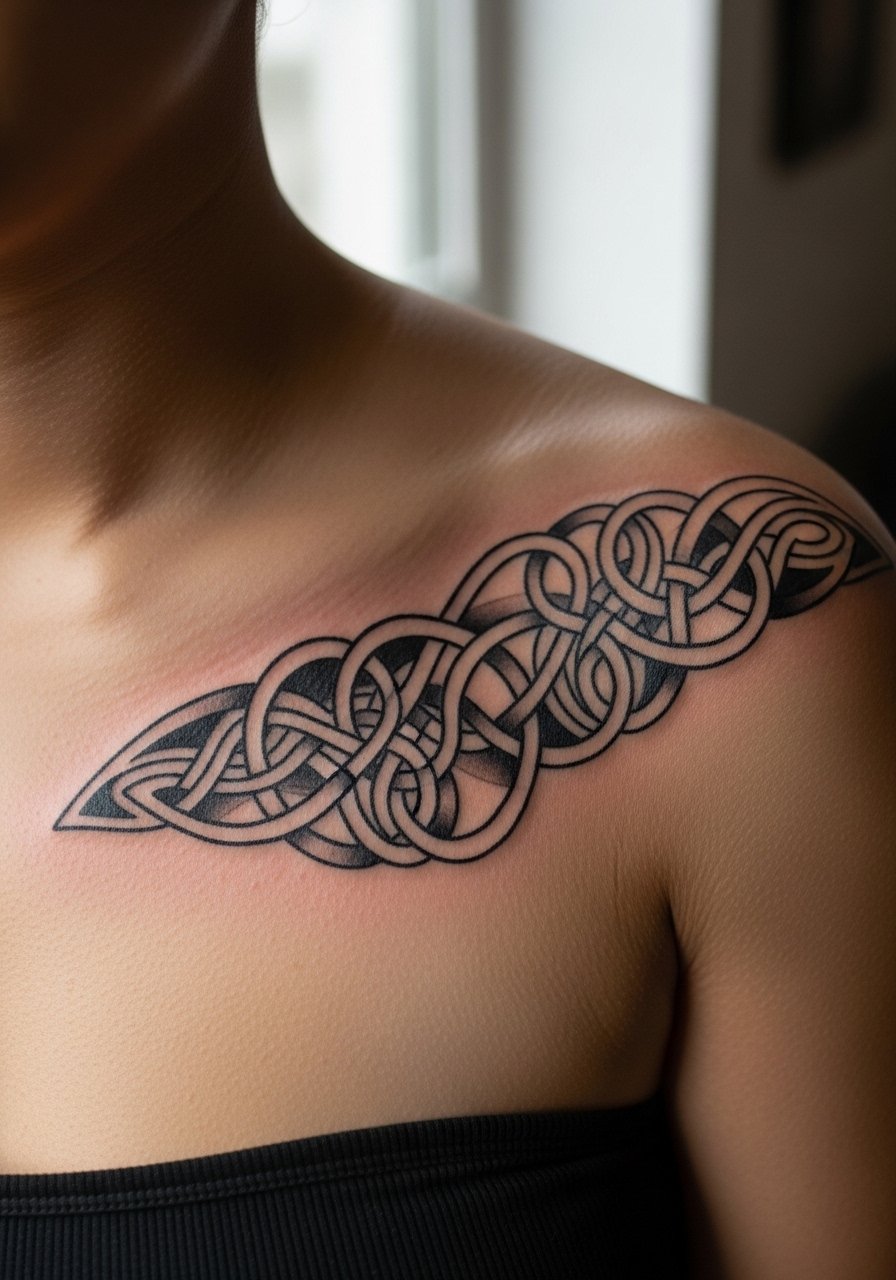
Celtic knots work when the artist maps weave over the deltoid arc so strands do not compress with muscle movement. Ask for wider braid widths and deliberate breaks so the pattern can age without merging. For casual reveal, an open front shirt or unbuttoned flannel frames the knot without clutter. A mistake is insisting on ultra-tight weaves that the shoulder cannot hold. Larger braids with space age into clearer designs.
16. Stipple Shaded Mountain Range
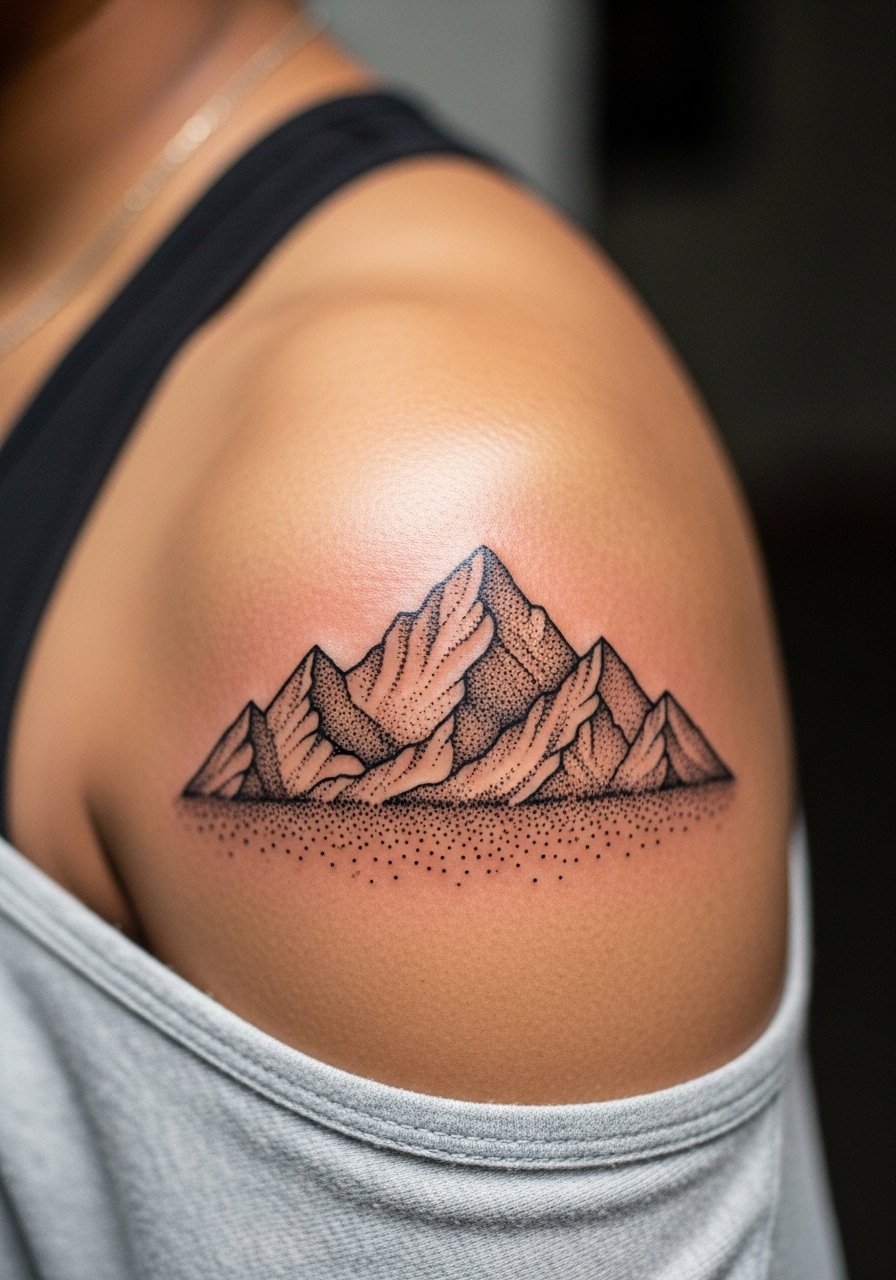
Dot work mountain ranges look sophisticated when the stippling density accounts for future softening. Tell the artist you want broader dot spacing on shaded slopes to avoid merging in years of wear. The session feels lighter than solid blackwork, but stipple takes time and patience. Some artists favor protective film healing for dot work while others prefer dry healing. One camp says protective film helps prevent scabbing and preserves dots, the other prefers breathability and minimal covering. Ask your artist which method they use and why. Frequent mistakes include packing dots too tightly.
17. Geometric Mandala Shoulder Halo
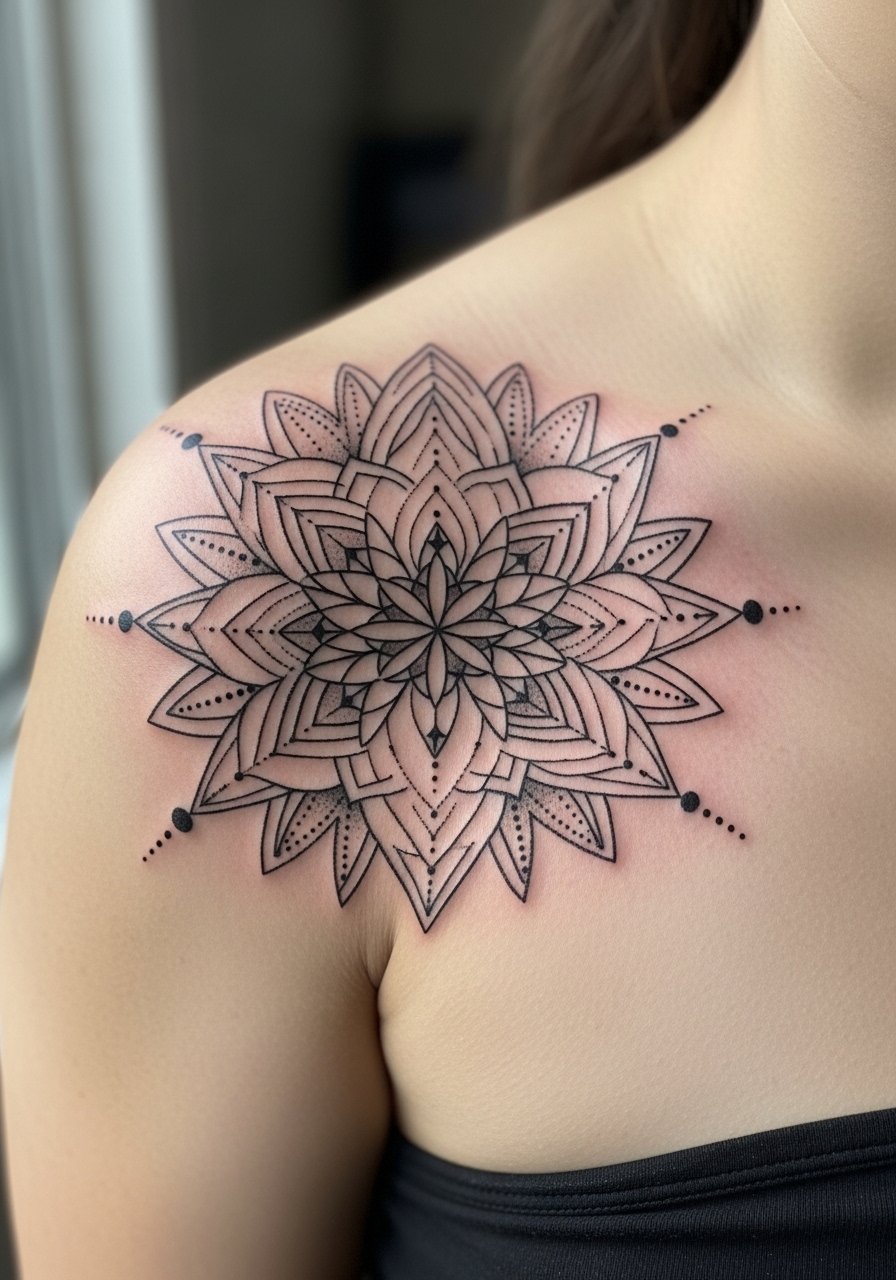
Mandala halos must be scaled to the shoulder so inner rings have room to breathe. During consult show photos of mandalas on rounded anatomy so the artist knows to offset symmetry slightly for movement. Expect medium pain during inner ring work and 1 to 2 sessions. For daytime wear a mens v neck tee white lets the halo peek without dominating clothing. The common mistake is compressing too many rings into a small radius then wondering why lines blurred by year two.
18. Blackwork Tiger Shoulder Head
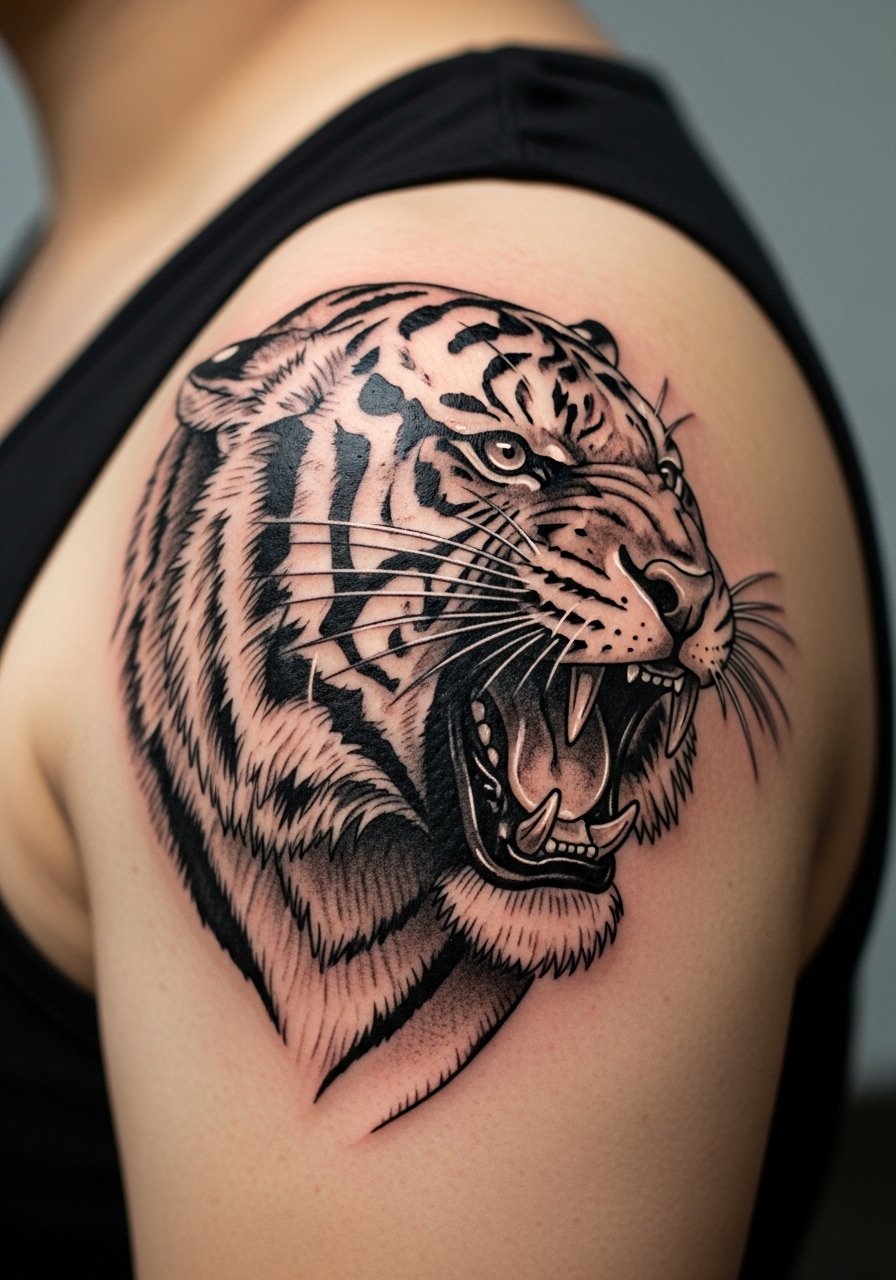
A blackwork tiger uses solid fills to hold a menacing silhouette that ages predictably. Ask for contrast edges and some negative fur highlights to keep facial features readable. Sessions will include heavy shading which can feel intense near bony areas. For casual framing choose a charcoal athletic tee with a rolled sleeve. Avoid asking for micro-hair detail in a small piece, which is a frequent reason tigers soften into an indistinct dark patch.
19. Surrealist Eye Shoulder Accent
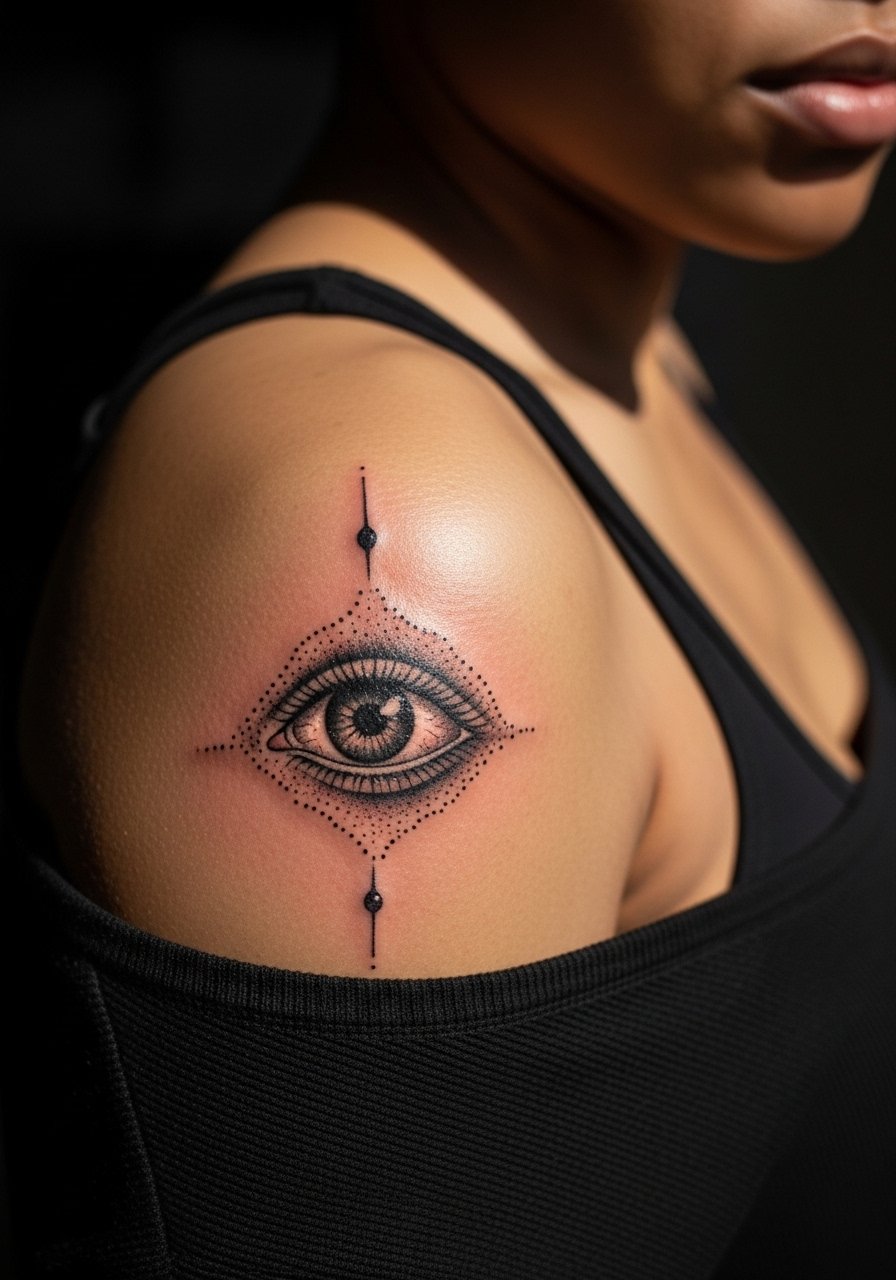
A single eye motif plays with placement to create optical pull as you move. Request a slightly thicker outline around the iris so it remains a focal point after a few years. The session feels like precise needlework rather than broad shading. A common mistake is packing too many tiny highlights that dissipate. If you want the effect visible with casual shirts, center the eye nearer the cap so tank tops and rolled sleeves will reveal it.
20. Cutaway Mechanical Shoulder Plate
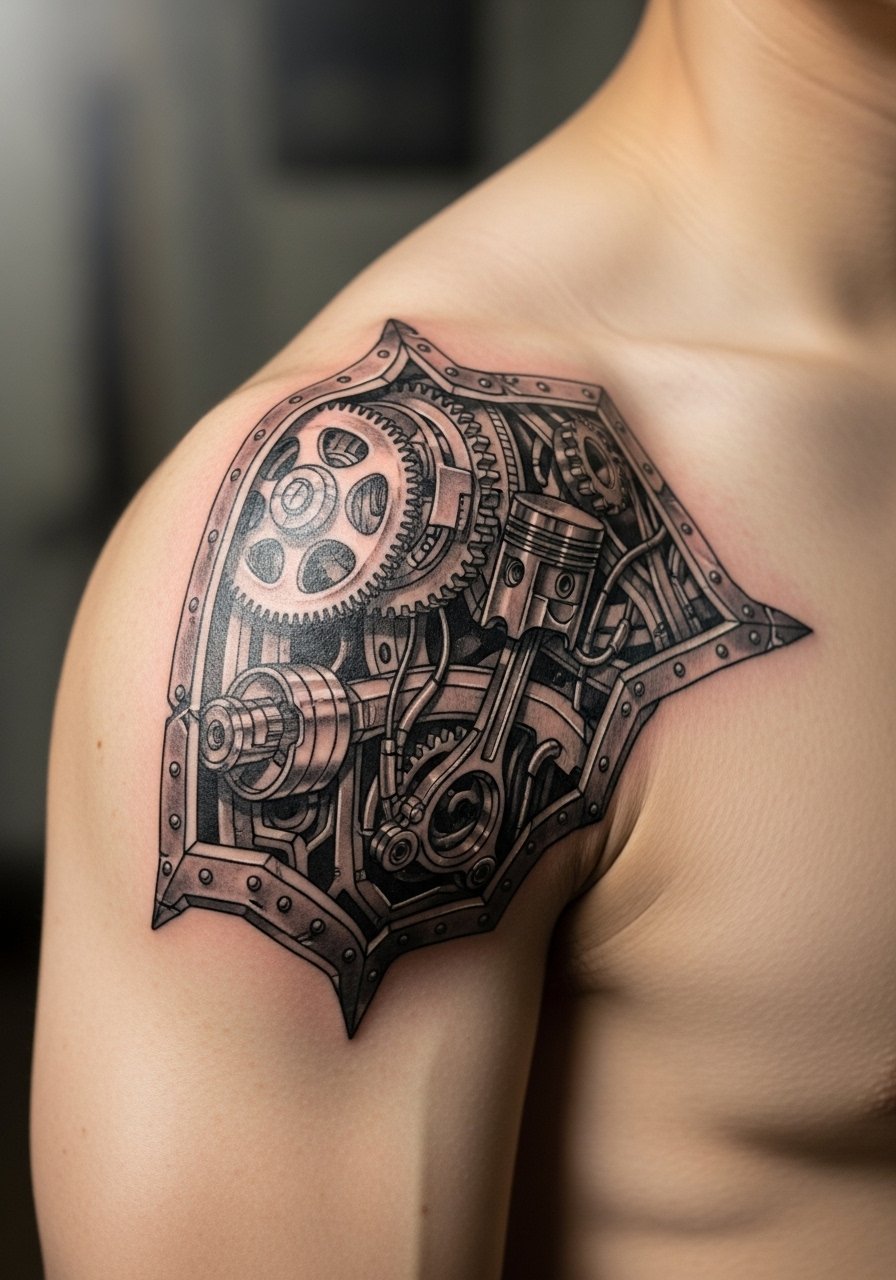
A mechanical or cutaway plate reads well if the artist keeps gear edges crisp and reserves negative space between interlocking parts. Tell them you want distinct separation rather than continuous stipple so the parts do not blur together. Sessions often require two sittings for depth and shading. For show-off gear pairings a mens fitted tank top black frames the deltoid plate and keeps focus on the mechanics. The usual mistake is overcomplicating inner gear lines that softens with time.
21. Modular Flash Starter Deltoid
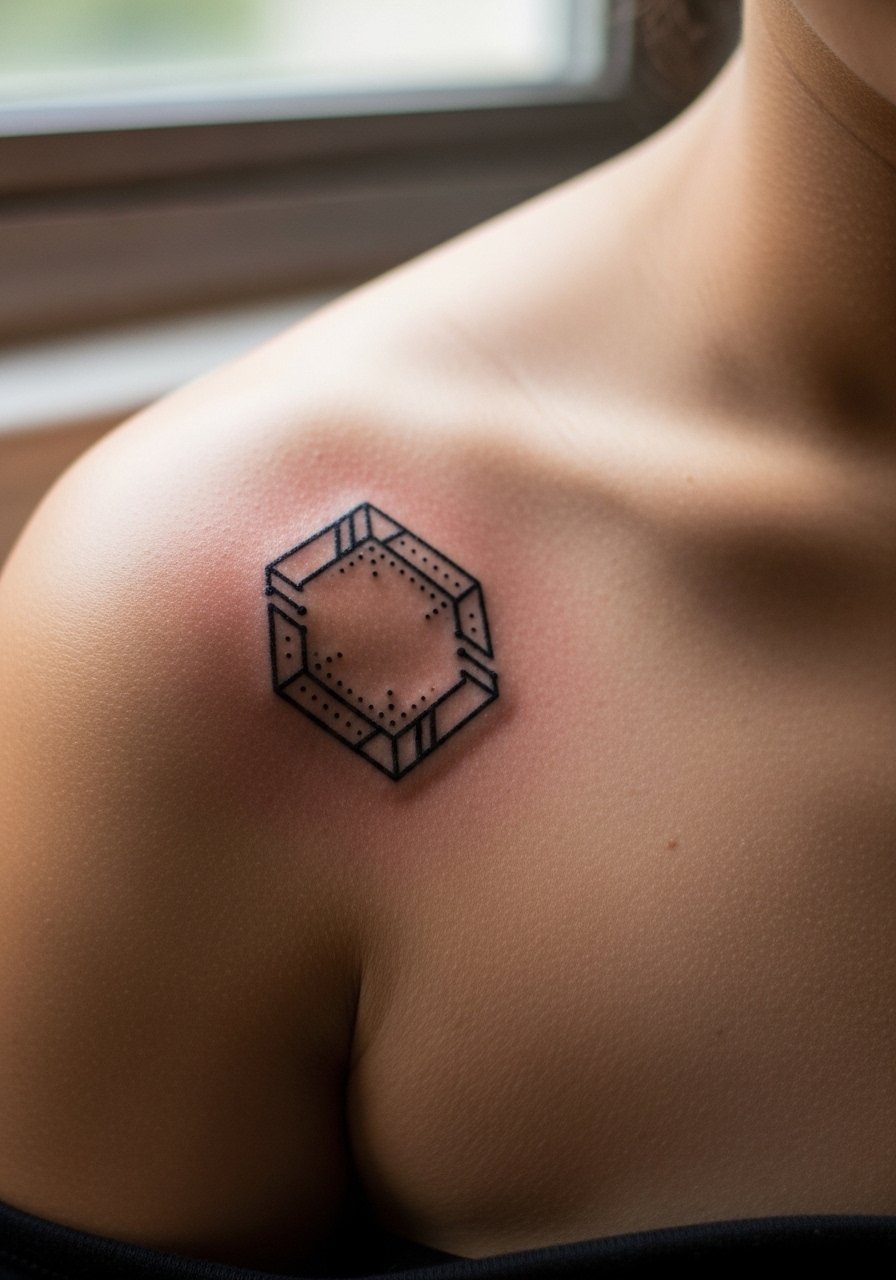
A modular starter flash is strategic. Begin with a 2 to 3 inch emblem that leaves room for future additions. During the consult ask the artist to draft expansion paths so the starter piece can be scaled into a wrap or sleeve later. Sessions are short and approachable for first-timers. For the session, wear a loose button down shirt that you can slide off the shoulder easily. People often try to cram too many ideas into a starter, which removes flexibility for future work.
Frequently Asked Questions
Q: Will fine line shoulder tattoos blur faster than bold pieces, and what should I expect for touch-ups?
A: Fine line tattoos are more susceptible to softening on shoulders because of movement and sun exposure. One approach is to increase letter or line weight slightly at the start so the aesthetic survives a few years. Expect touch-ups around year two to four for very delicate work, while bold blackwork can go longer between refreshes.
Q: How do I conceal an upper shoulder tattoo for conservative workplaces?
A: Plan placement under a 4 inch cap or keep the main motif tucked toward the rear upper shoulder so dress shirts hide it. A structured button-down or a mens crewneck sweatshirt neutral keeps visibility low while letting you reveal the piece outside of work.
Q: If I bulk up with muscle, will a shoulder tattoo stretch badly and which designs handle growth best?
A: Designs that follow anatomy like flowing tribal or armor-style plates handle muscle gain best because they are drawn to move with the muscle. Solid shapes and larger negative spaces adjust more gracefully than dense micro-detail. Discuss your future training plans with your artist so they draft with expansion in mind.
Q: Does healing method matter for upper shoulder dot work versus blackwork?
A: Yes, opinions split. Some artists prefer an occlusive film for the first 24 to 48 hours to protect dot work and prevent scabs, while others favor dry, breathable healing for areas prone to sweat. Ask your artist which method they use and why, and follow a consistent routine for the type of shading you received.
Q: How should I dress for a shoulder session to make the artist's life easier?
A: Bring a shirt you can slide off one shoulder or an open button down shirt so the artist can access the area without fabric drag. If the session involves upper-back work, choose a top you can remove without stretching the healed skin.