
Fine line butterflies and bold blackwork both show up in saved boards and on street corners, but they age very differently. The pieces that photograph best the day after inking are not always the ones that still read clean at year three. I prefer designs that plan for the wash-and-wear life of hands while keeping the look Instagram-friendly, and the first section below shows a common approach that balances crisp linework with real-life wear.
1. Fine line monarch butterfly on back of hand
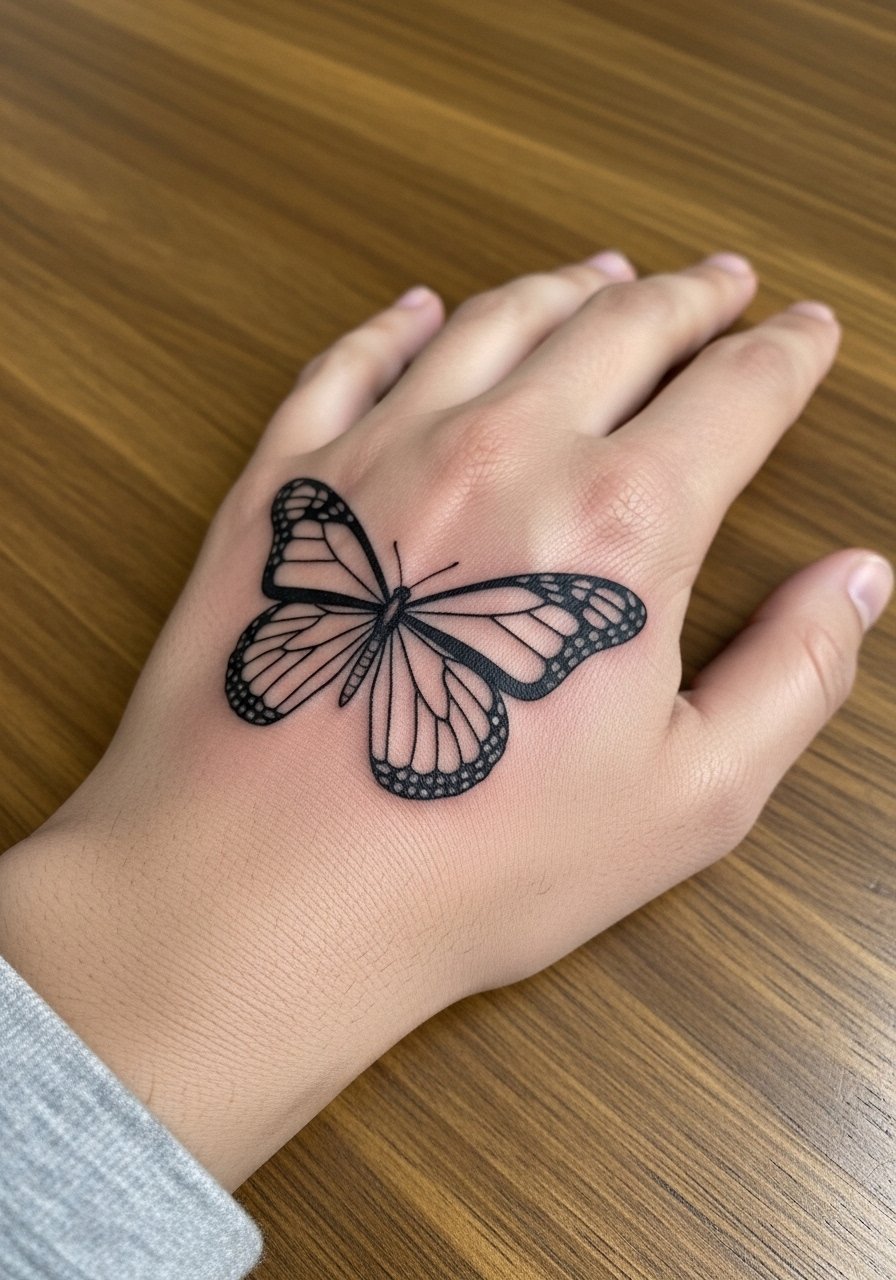
I recommend this one when you want a recognizable silhouette without heavy saturation. Tell your artist you want slightly thicker primary vein lines but keep the wing filigree single-needle, that way the main shape holds up and the delicate details age into readable texture. Expect the back-of-hand to feel sharp during the session near the knuckles, and plan short breaks so the artist can adjust depth on bone areas. A common mistake is asking for ultra-micro veins that vanish after frequent washing. For show-off outfits, try a rolled cuff silk blouse and a dainty silver ring set on the opposite hand to frame the piece. Touch-ups are normal around the 6- to 18-month mark depending on how much you wash and scrub.
2. Single-needle blue morpho on inner wrist
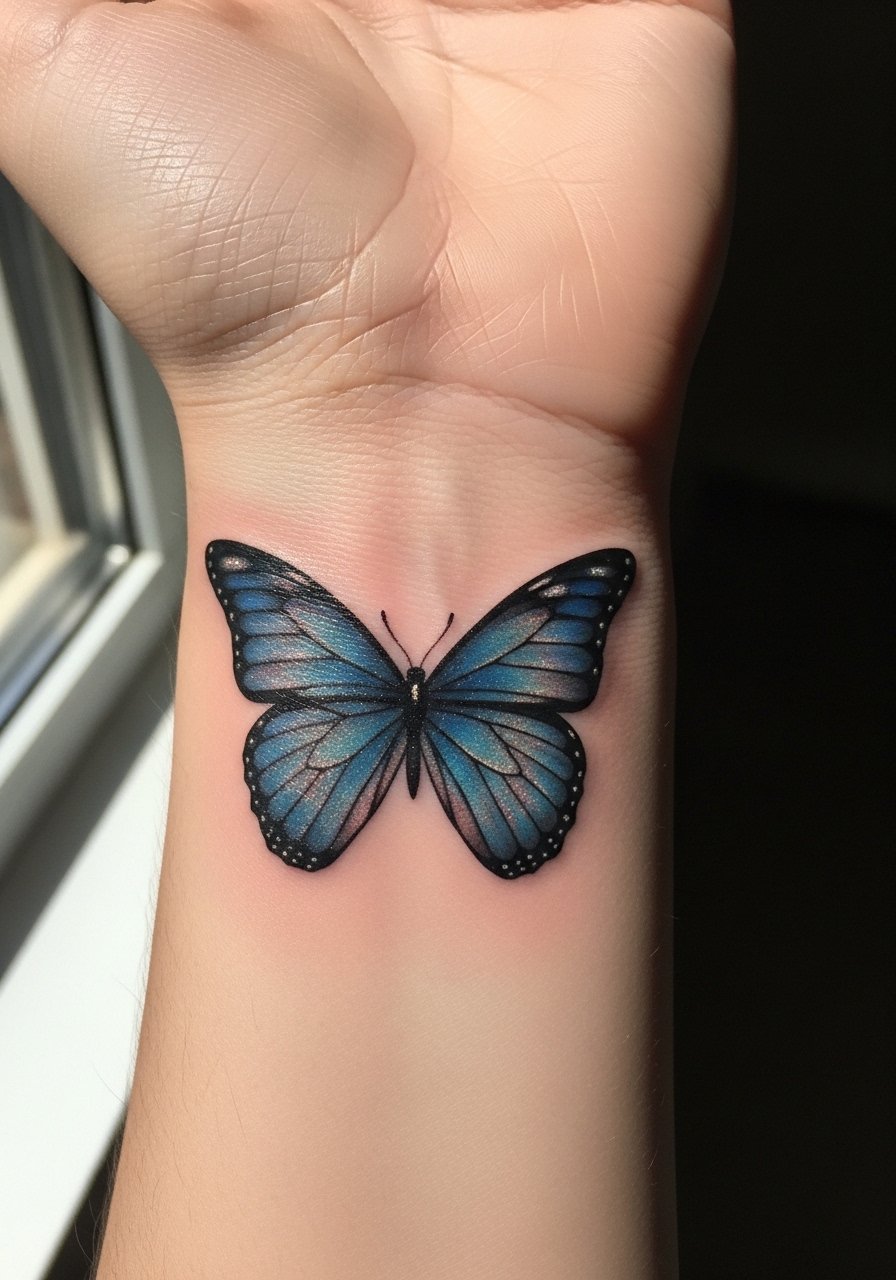
Most people pick this for wrist visibility with low bulk, but the inner wrist sees constant motion. Ask for a micro-realism reference showing contrast in the wing base so the pattern reads on camera. Pain is moderate because the wrist has thin soft tissue, and sessions usually finish in under an hour. The fading debate matters here: one camp prefers single-needle fine line and schedules touch-ups, the other recommends bolder outlines to resist blur. In practice I tell clients to test a small bold outline in the draft stencil. For outfits, pair with a linen wrap dress and a minimal chain cuff bracelet on the opposite wrist to balance delicacy and contrast.
3. Floral frangipani butterfly on top of hand
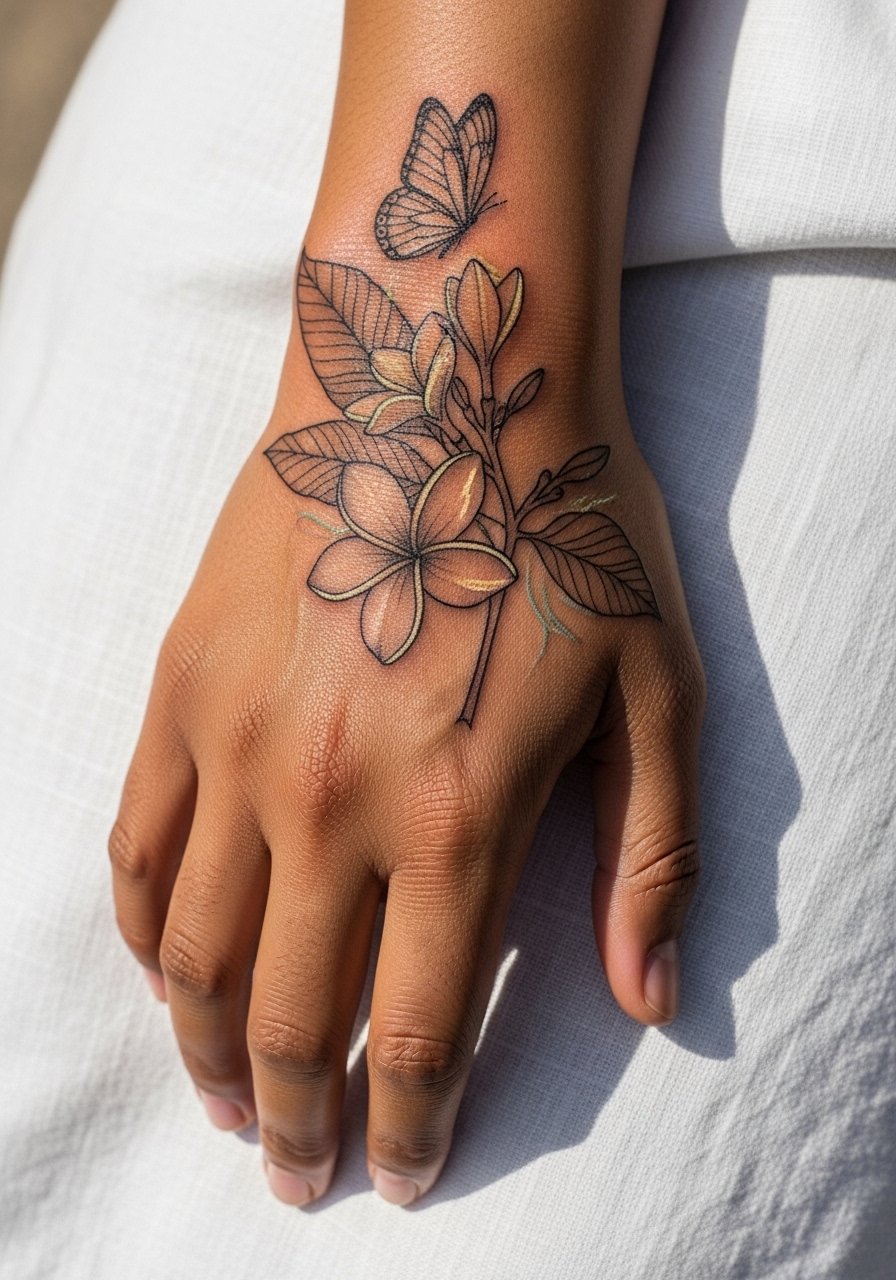
This tropical pairing reads like a small scene rather than an isolated insect, which helps it survive the first year by spreading visual interest across the hand. When you consult, bring both flower and butterfly references and ask the artist to anchor the frangipani petals into the wing edges, that overlap hides early color loss. The top-of-hand placement can sting around knuckles and tendons, so expect tensing during longer fills. For session wear, a loose ivory sleeveless kimono gives the artist full access without cold drafts. Avoid asking for saturated watercolor washes too close to the center of knuckles, those areas tend to muddy faster.
4. Minimalist outline swallowtail on finger side
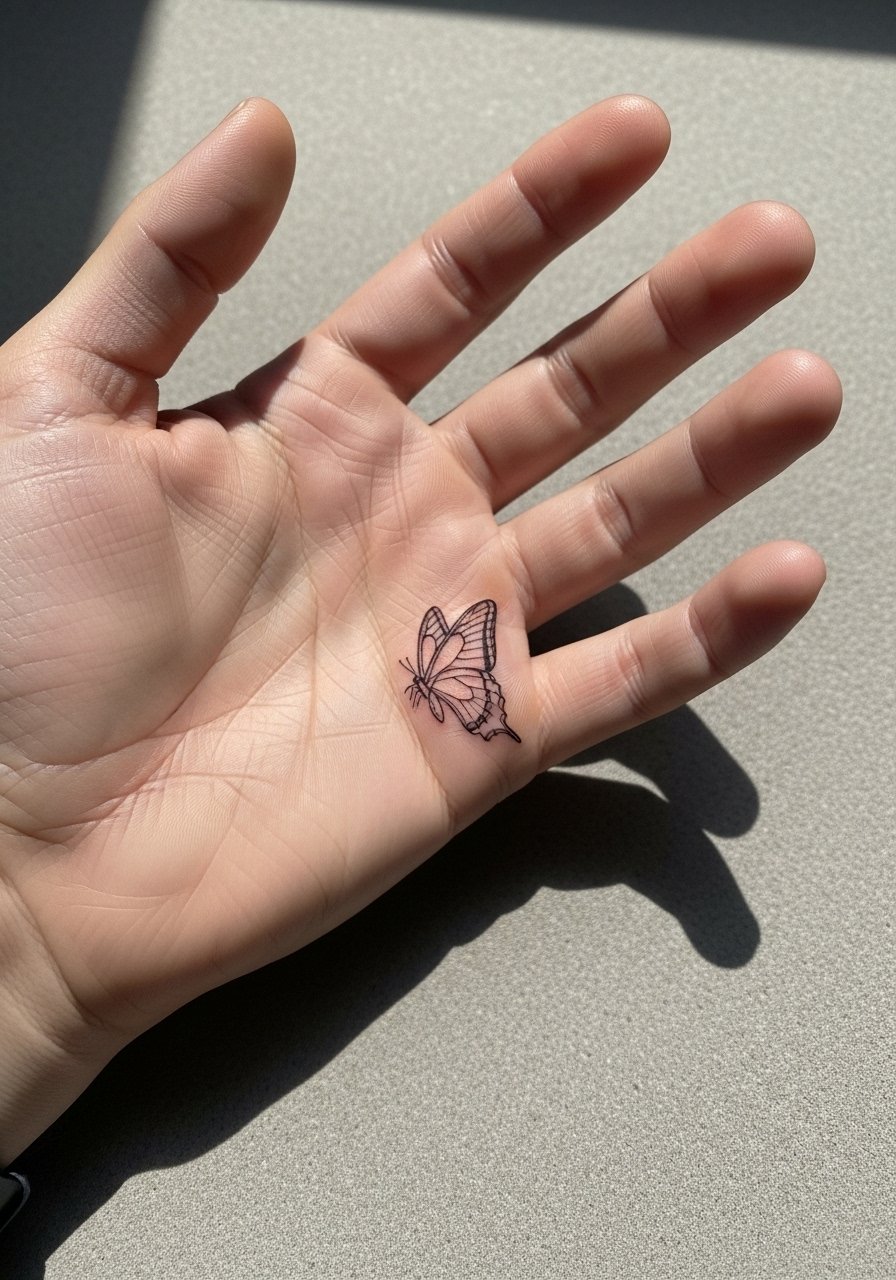
Finger-side designs age differently than back-of-hand pieces because they bend and contact surfaces constantly. For this micro size ask for single confident strokes rather than a jittery sketchline, that steady line reduces early blur. The session is quick but painful at the fingertip bones. Common mistakes include shrinking the design too much, which leads to rapid fading and early touch-ups. Show-off styling works with fingerless leather gloves or slim rings on adjacent fingers. Expect touch-ups around the 6- to 12-month window depending on workload and friction.
5. Black and gray 3D realism butterfly on palm edge
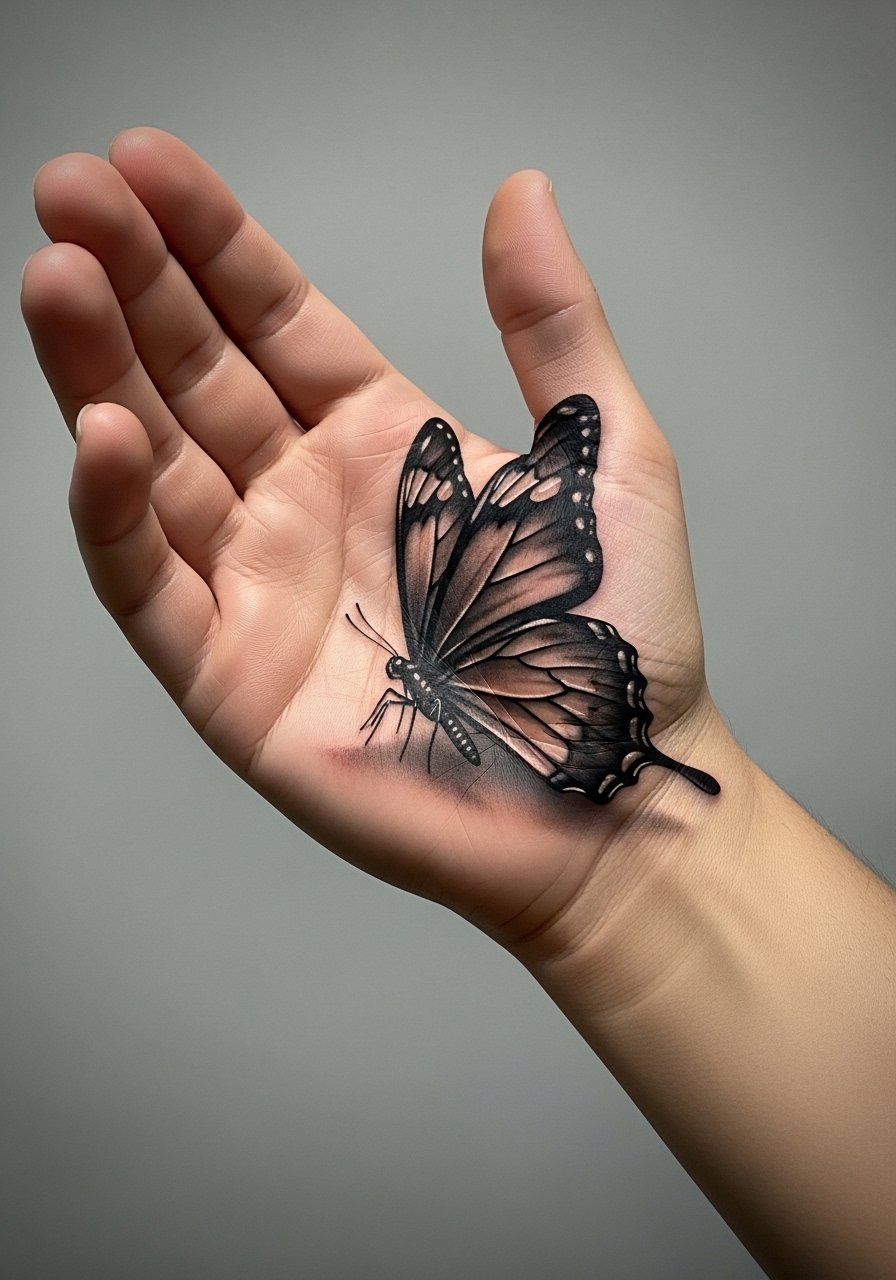
This one tricks the eye into hovering above the skin because of gradient shading and crisp contrast. Ask your artist for multiple depth references so they can plan where to preserve negative space to maintain the 3D effect over time. The palm-to-wrist junction is a high-friction zone, so go heavier on saturation near the wrist and let the palm edge use denser shading that tolerates washing. Sessions are usually longer and may span two visits. For an everyday complement wear a matte black minimalist watch on the opposite wrist to echo the tone without crowding the hand visually. Blowout risk is higher on softer palm tissue, so discuss needle depth clearly in consultation.
6. Watercolor hibiscus butterfly cluster on knuckles
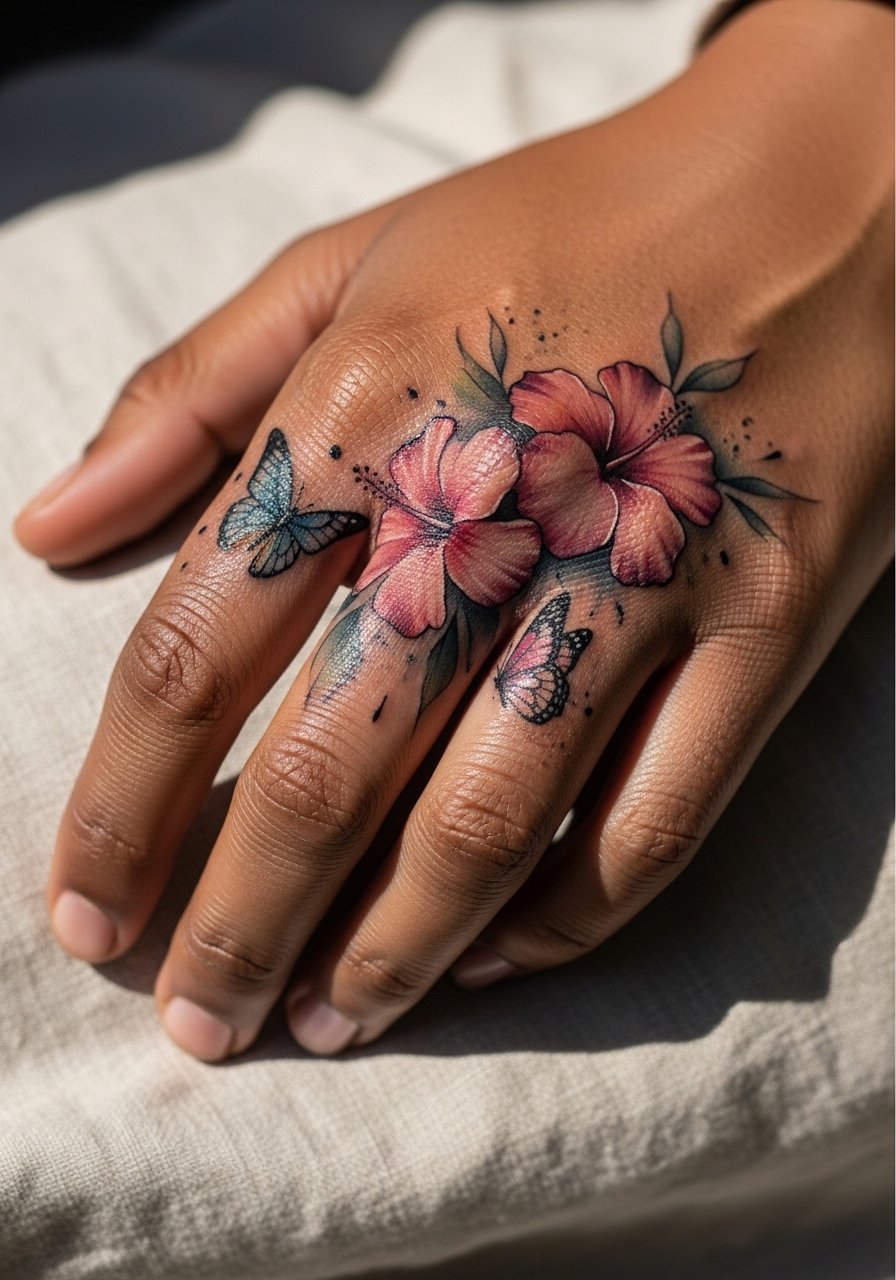
Knuckle tattoos are statement pieces and they demand bold composition to survive constant flexing. Ask the artist to place color washes across flatter knuckle planes and keep linework minimal where the skin folds. Pain spikes on knuckles are common, so short sessions help you manage. Colors in watercolor styles can migrate and dull faster on hands, which is why many clients regret overly pastel palettes after 12 months. For showing it off try an oversized linen shirt women with sleeves pushed up and a neutral enamel ring stack on the opposite hand to frame the cluster. Plan a likely touch-up timeline around one year.
Pre-Session Essentials
The wrist- and knuckle-focused pieces above heal differently than larger back-of-hand or wrist-to-forearm work, so a few thoughtful items smooth the session and the first week.
-
Bali Butter Balm. Lighter than thick ointments, handy in humid climates for preventing sweat-clogged scabs on exposed hand tattoos.
-
Single-use healing pods. Great for finger and wrist tattoos because they avoid peeling mess while you wash hands frequently.
-
Indie dotwork salve. Thicker formula that helps dry winter hands stay supple without feeling greasy on small linework.
-
Lidocaine gel patches. Pre-cut patches take the edge off bone-heavy spots like knuckles and the thumb base.
-
Aquaphor healing ointment. A thin layer for the first few days keeps fine line ink moist while you follow your artist's cleaning routine.
7. Neo-traditional geometric butterfly on thumb base
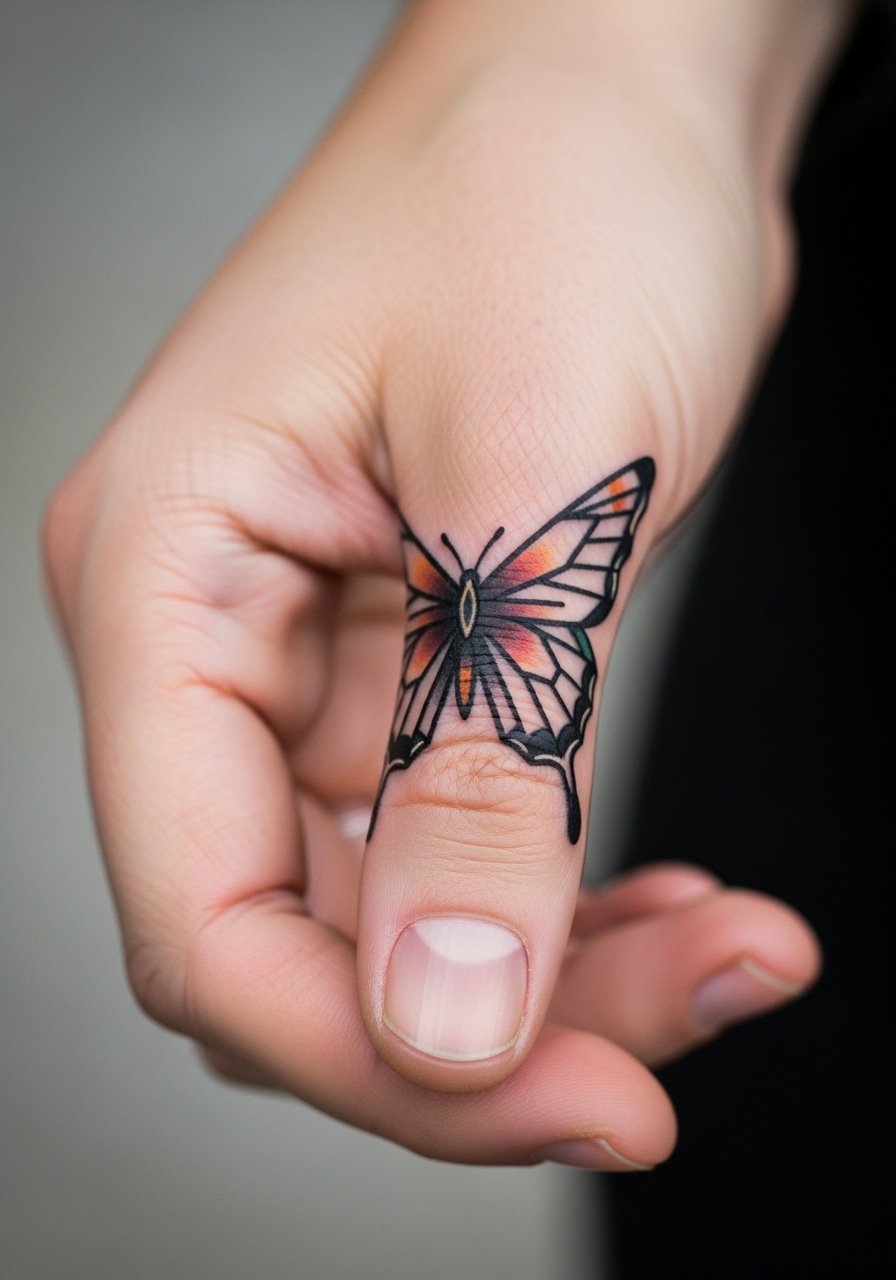
This placement reads strong because it uses symmetry and geometry to match the thumb's pivot. In consultation ask for clear negative-space separators around the patterns so the geometry does not blur into a single mass. The thumb base is bony and sensitive, so expect short bursts of discomfort and a session under an hour for a one-inch piece. A common error is packing too many tiny shapes into a compact area. For wardrobe, chunky geometric rings and a tailored button down shirt with cuffs you can roll give the thumb room to show without looking crowded. Plan a touch-up at the one-year mark if you wear gloves or handle rough materials.
8. Ornamental dotwork butterfly trail on hand fingers
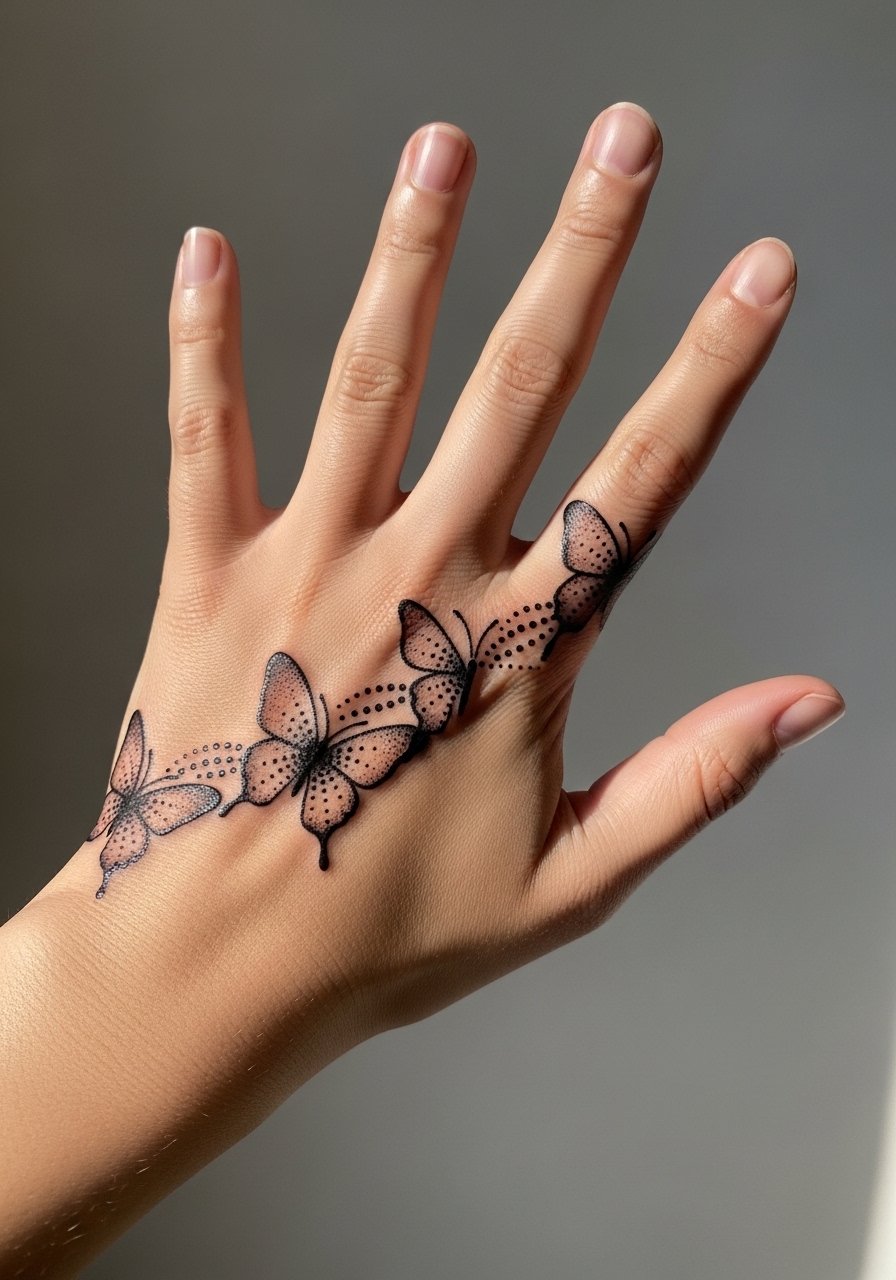
Dotwork creates motion that plays well with finger gestures, but it needs breathing room. When you bring references ask the artist to space the dots so they do not converge into gray patches after a year. Fingers flex constantly which can push dots together, so plan smaller groups of dots rather than dense fields. Session time is short per finger but the full trail may take a bit longer overall. For showing off, pair this with a slim fit crewneck and let the sleeves sit just high enough to reveal the motion. Expect touch-ups in 6 to 12 months depending on how often you wash.
9. Ignorant style thick-line butterfly on wrist cuff
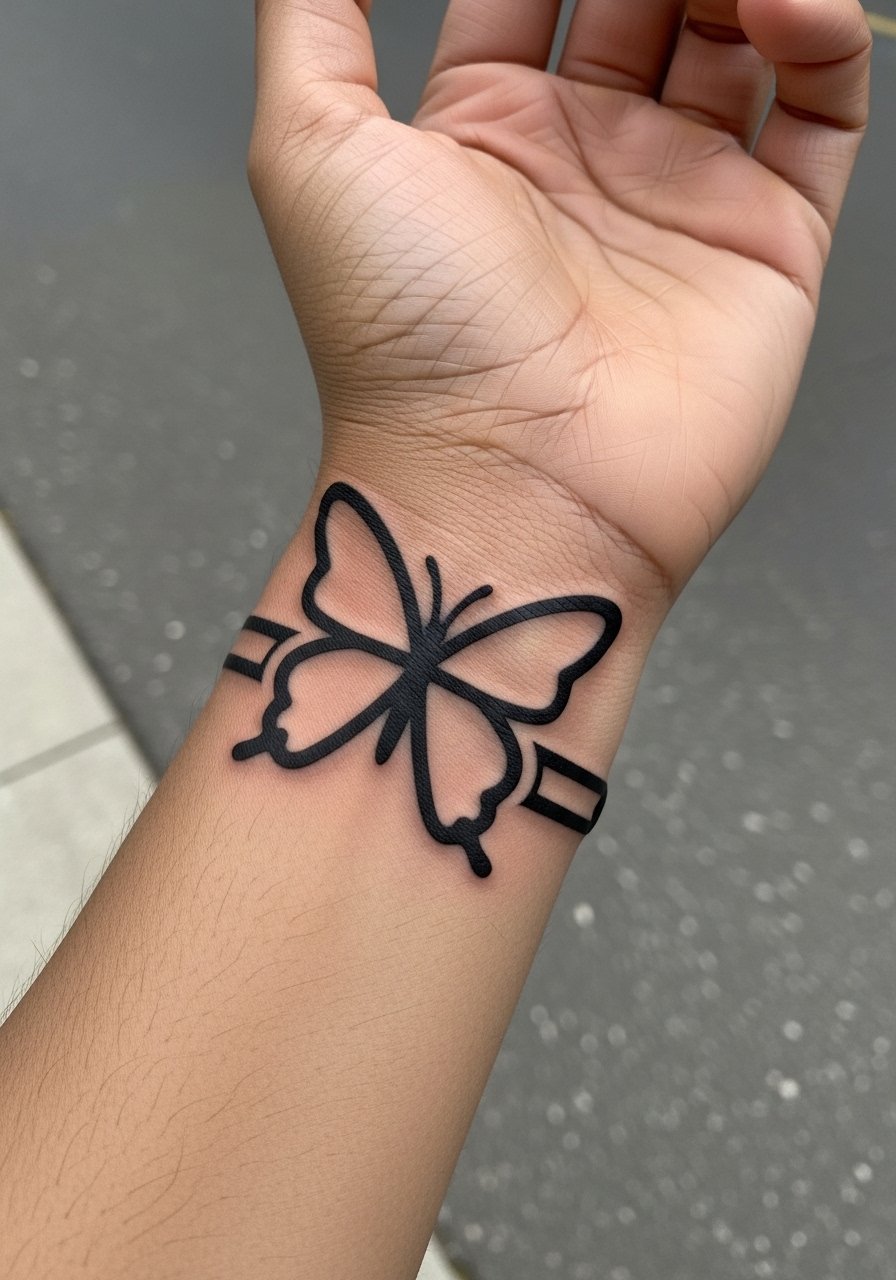
Ignorant style leans into imperfect strokes, which can actually help longevity on high-wear spots because the design already embraces raw edges. Tell your artist you want intentional unevenness rather than accidental shaky lines, that keeps it looking deliberate as edges soften. Wrist cuff placement sees constant rubbing against sleeves and watches, so heavier outlines are an advantage here. A mistake people make is asking for both busy fill and thick outlines, which competes visually. For session comfort try a cut off sleeve tee so you can roll sleeves without tugging fabric against the fresh ink. Touch-up needs tend to be minimal if the black remains saturated.
10. Micro-realism moth variant on side hand
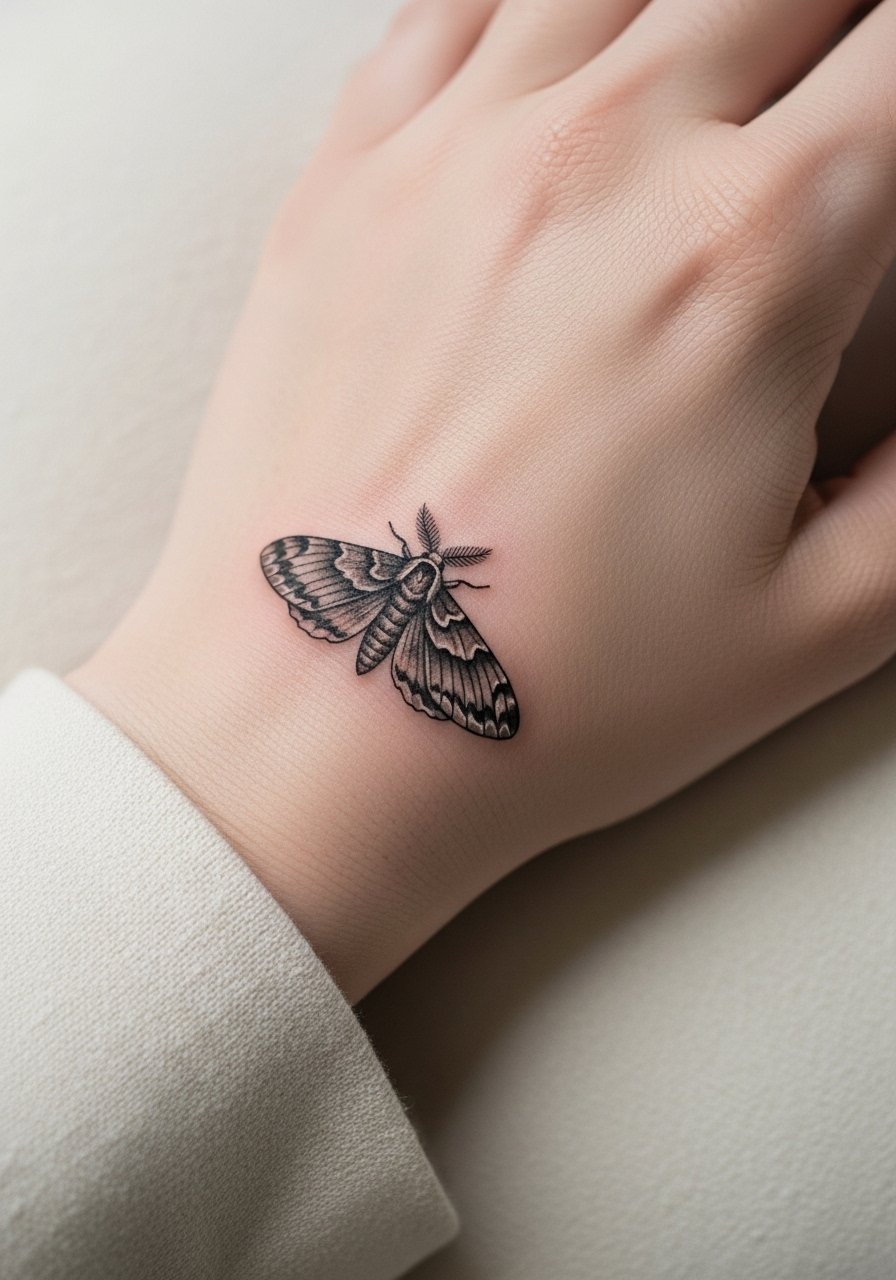
Moths sell as moody alternatives to butterflies and they photograph especially well on the outer hand edge. For consultation specify contrast at the thorax and antennae so tiny details stand out in photos. The outer edge is less abrasive than knuckles but more vulnerable than the back of the hand, so midweight shading holds best. Sessions are usually quick, under an hour, but micro-realism requires steady handwork. For outfits, a sheer mesh top cream or thin hoop earrings create a soft pairing without stealing focus. Expect a touch-up window around 8 to 18 months based on sun exposure.
11. Blackwork symmetrical butterfly pair on back hand
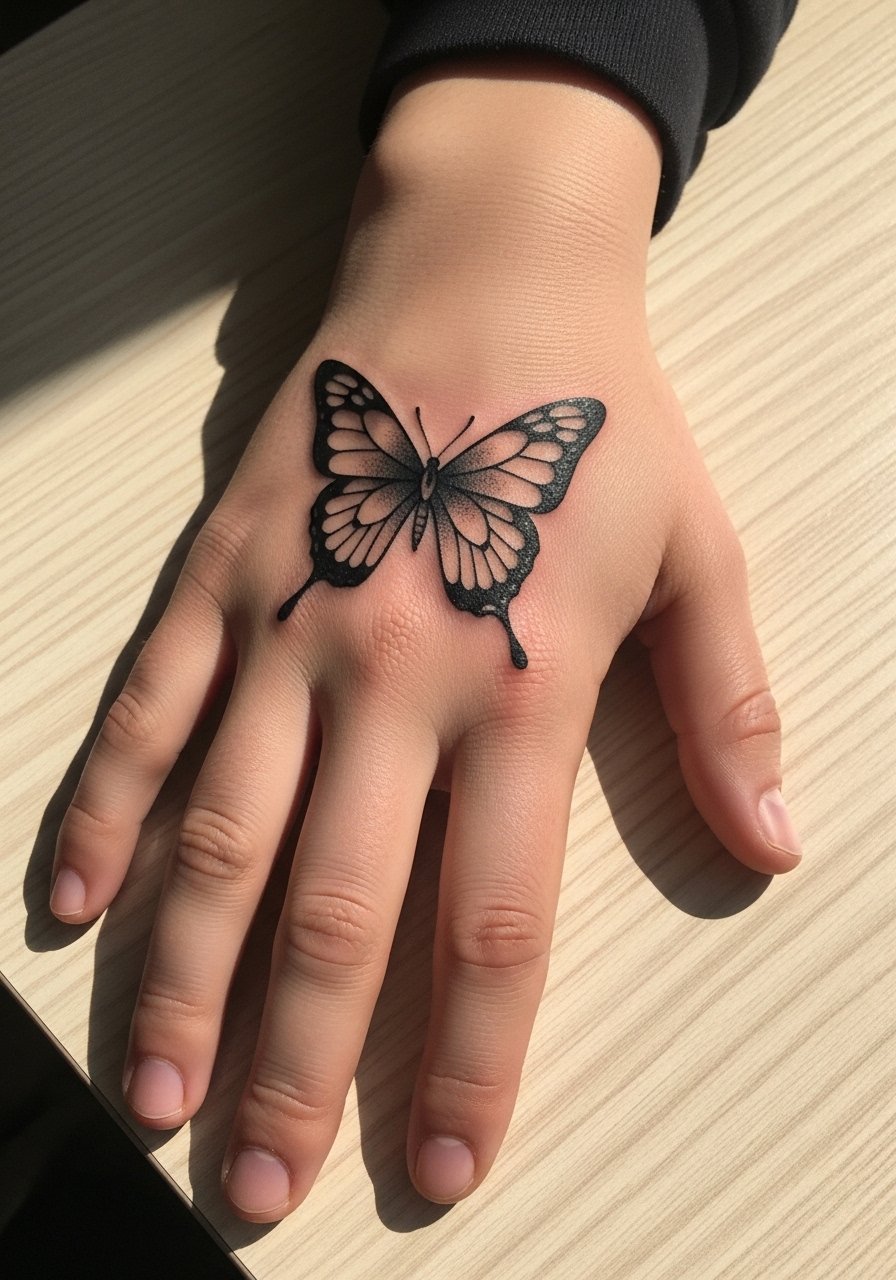
Symmetry uses the hand's natural anatomy to enhance balance, but solid black fills demand careful placement to avoid future patchiness. Tell the artist you want clear breaks between each wing and the hand bones so the piece ages like two mirrored shapes instead of a single dark blob. This style can withstand exposure better than fine line because saturation resists quick fading. The session may take longer because of heavy fill, and two sessions are common if you want crisp edges. A common oversight is squeezing the wings too close to the wrist crease, where motion causes early softening. No accessory advice here keeps the focus on the graphic form.
12. Fine line butterfly with flight dots on inner wrist
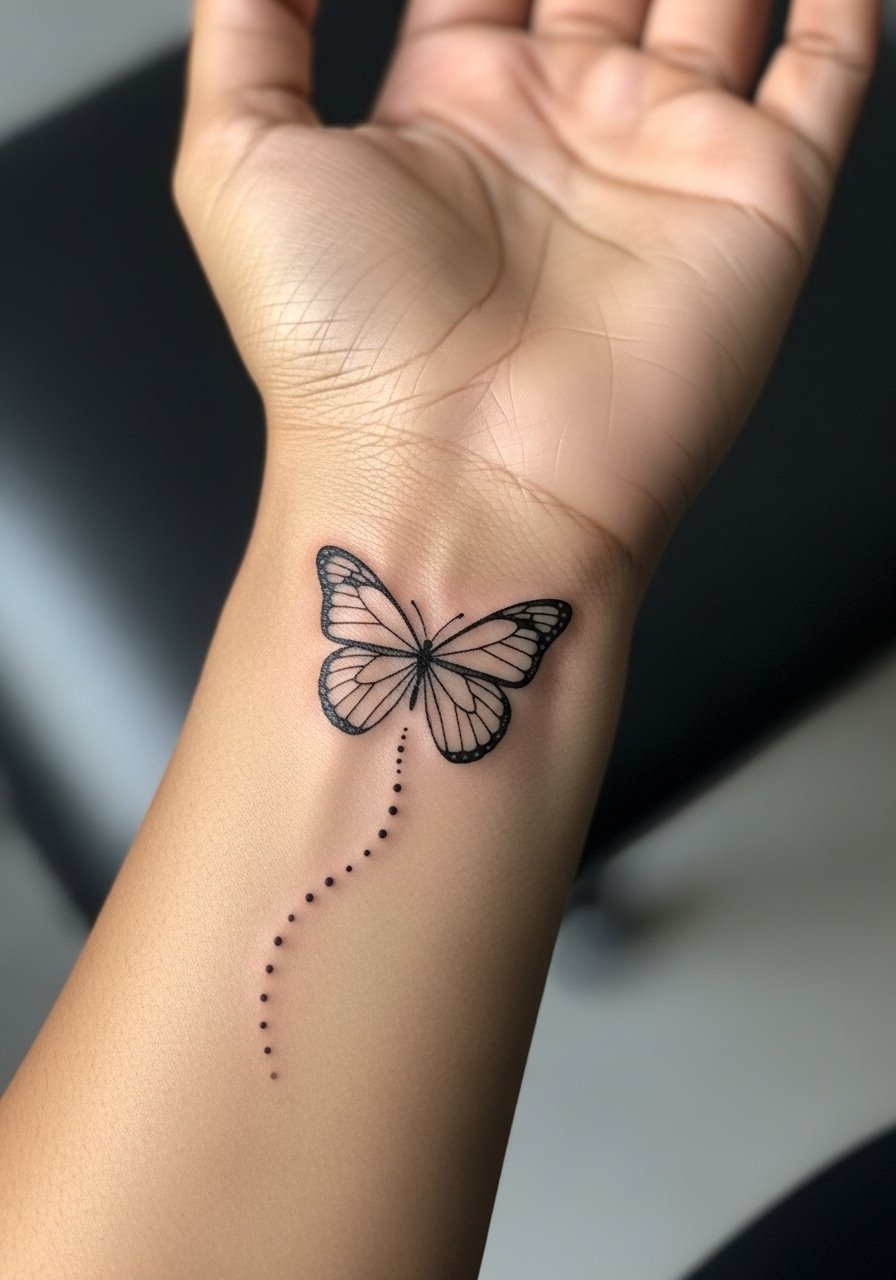
This storytelling layout reads like motion across skin, which makes it forgiving as details soften. Ask for the dot trail to thin out gradually, that helps the narrative age naturally instead of becoming a single smudge. Inner wrist sensitivity is moderate and the session is usually under an hour. One camp will say single-needle details here need routine touch-ups, the other will argue a tiny bold anchor keeps longevity. I suggest a hybrid approach with a slightly bolder body and delicate flight dots. For styling, a minimal chain cuff bracelet on the opposite wrist complements the trail without crowding it.
13. Flight trail with sparkles hand-to-wrist
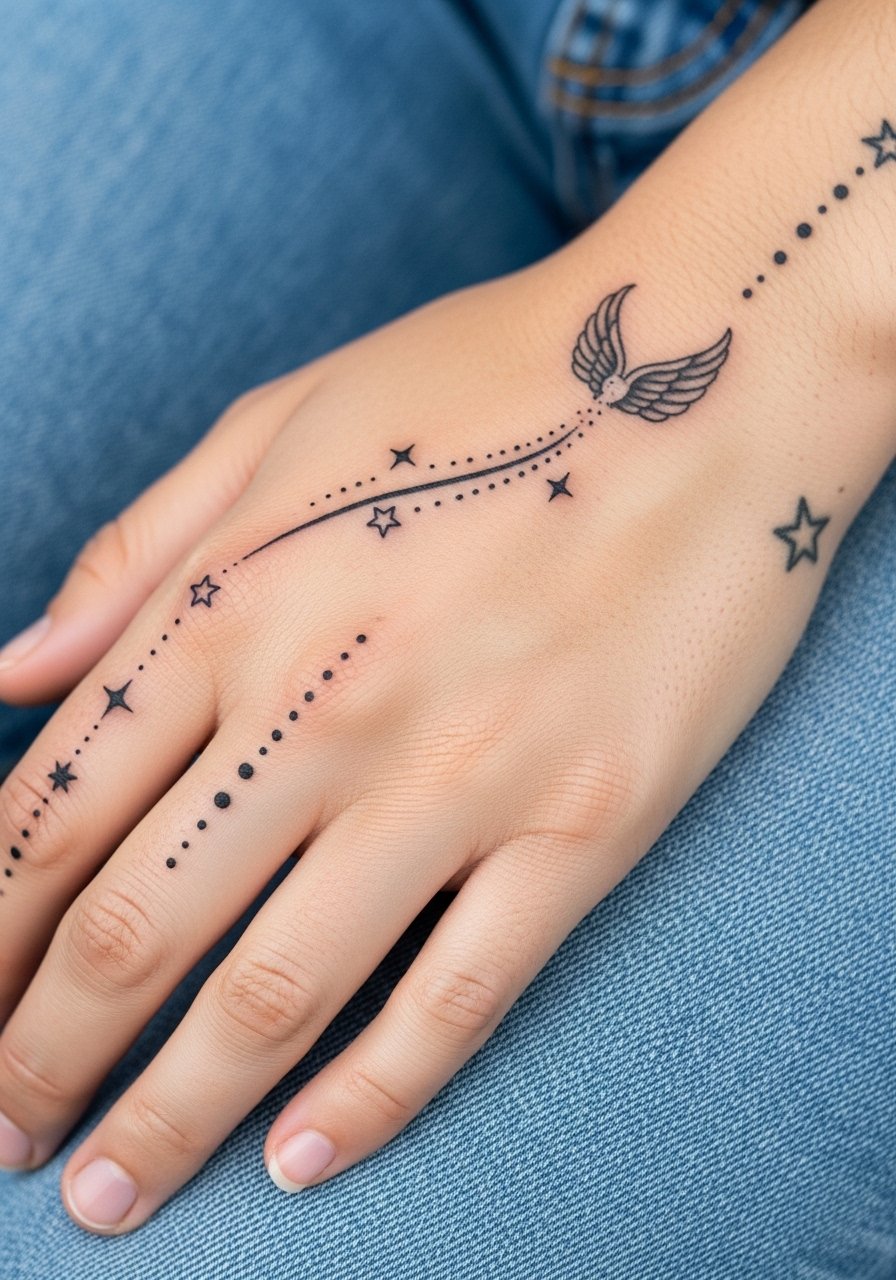
This motion-focused idea borrows from Bali portfolios and looks deliberate when the trail follows natural gestural lines. In consultation ask the artist to map the trail so it flows with finger movement, that way the illusion strengthens during everyday gestures. Expect quick needle time per dot but cumulative session length depends on trail length. Avoid clustering sparkles too close together because they can merge into a gray cloud after heavy washing. For showing off, roll up cargo pants and match the piece with olive cargo pants rolled cuff and a neutral top so hand gestures pop.
14. Symmetrical pairs framing hand bones
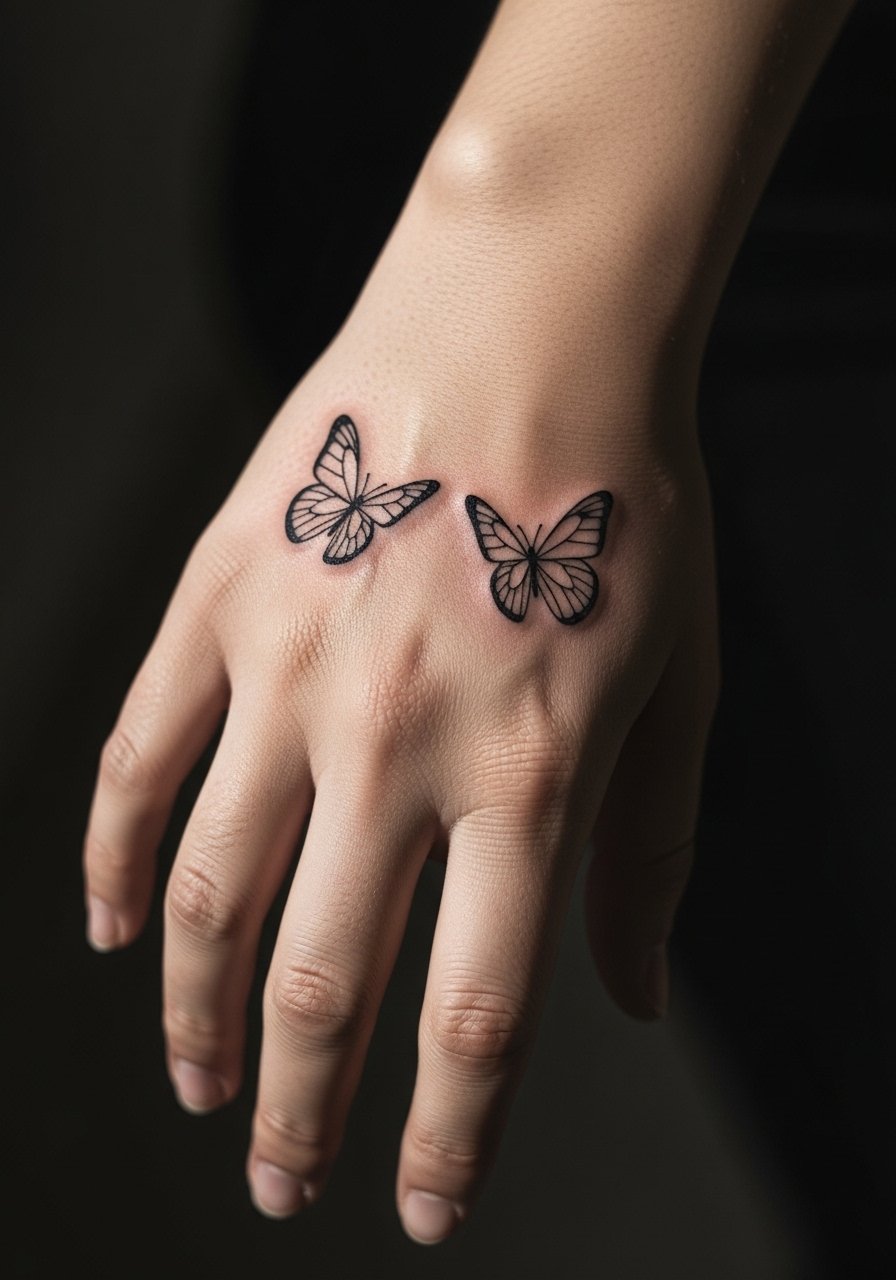
Framing around the hand bones plays with negative space and can look architectural, which helps masks small shifts as the skin changes. During the consult highlight the bone landmarks so the artist frames rather than fights the anatomy. Pain on the back of the hand is variable because of tendons and thin tissue, and sessions for paired designs often need careful pacing. A frequent misstep is matching mirror images without accounting for dominant hand differences, so ask the artist to mirror but not duplicate exactly. This layout ages well when the spacing remains generous.
15. Dark skin contrast gradient butterfly
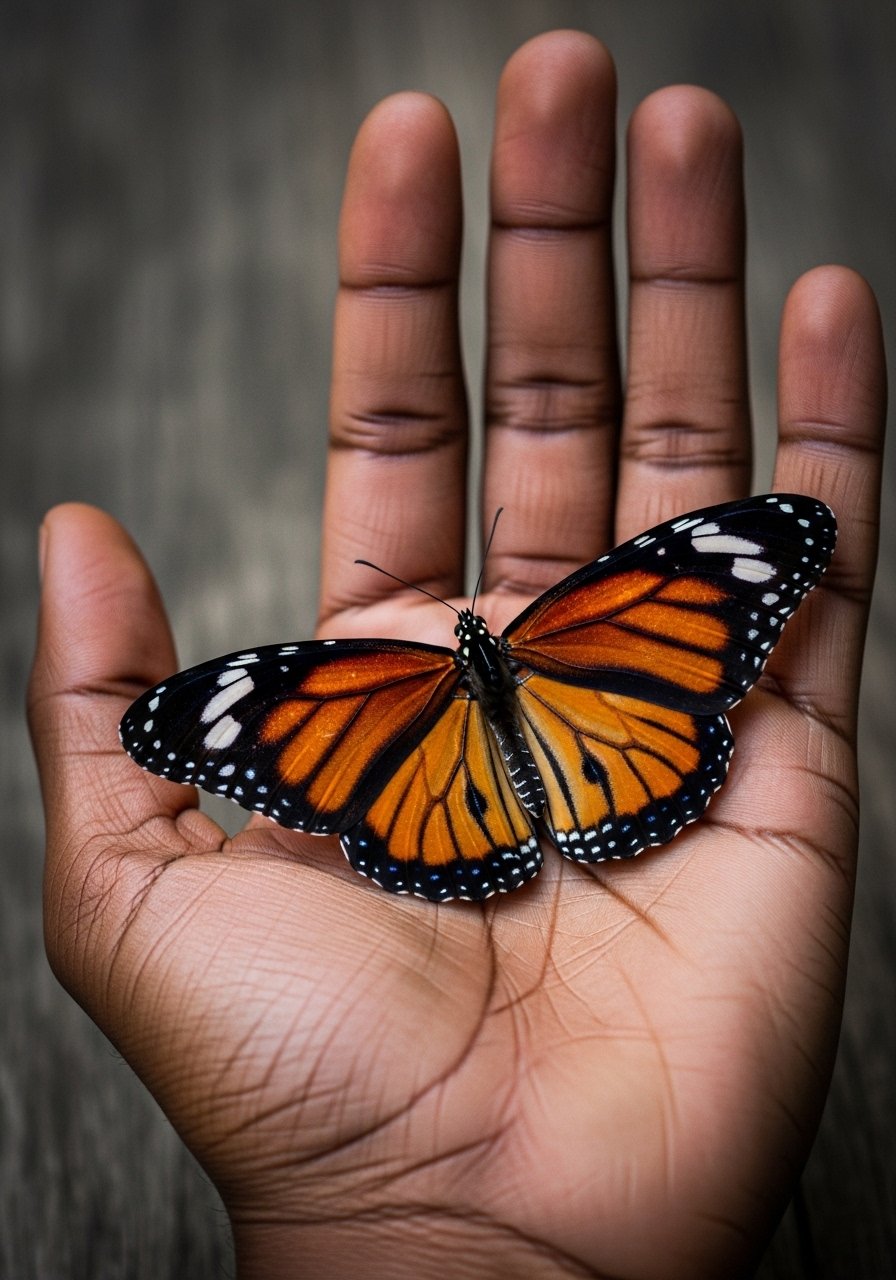
Clients with darker skin tones often report fine line details fading photographically even when the piece looks great in person. Artists split into two camps on approach. One camp recommends higher contrast blackwork and gradient shading to preserve visibility. The other camp keeps single-needle details but schedules earlier touch-ups. I suggest prioritizing contrast and test-stencil photos under flash lighting during consultation so you see how it photographs. For accessories, a thin gold hoop earrings pairing can echo the warm tones without crowding the hand.
16. Finger-side micro moth for a nocturnal alternative
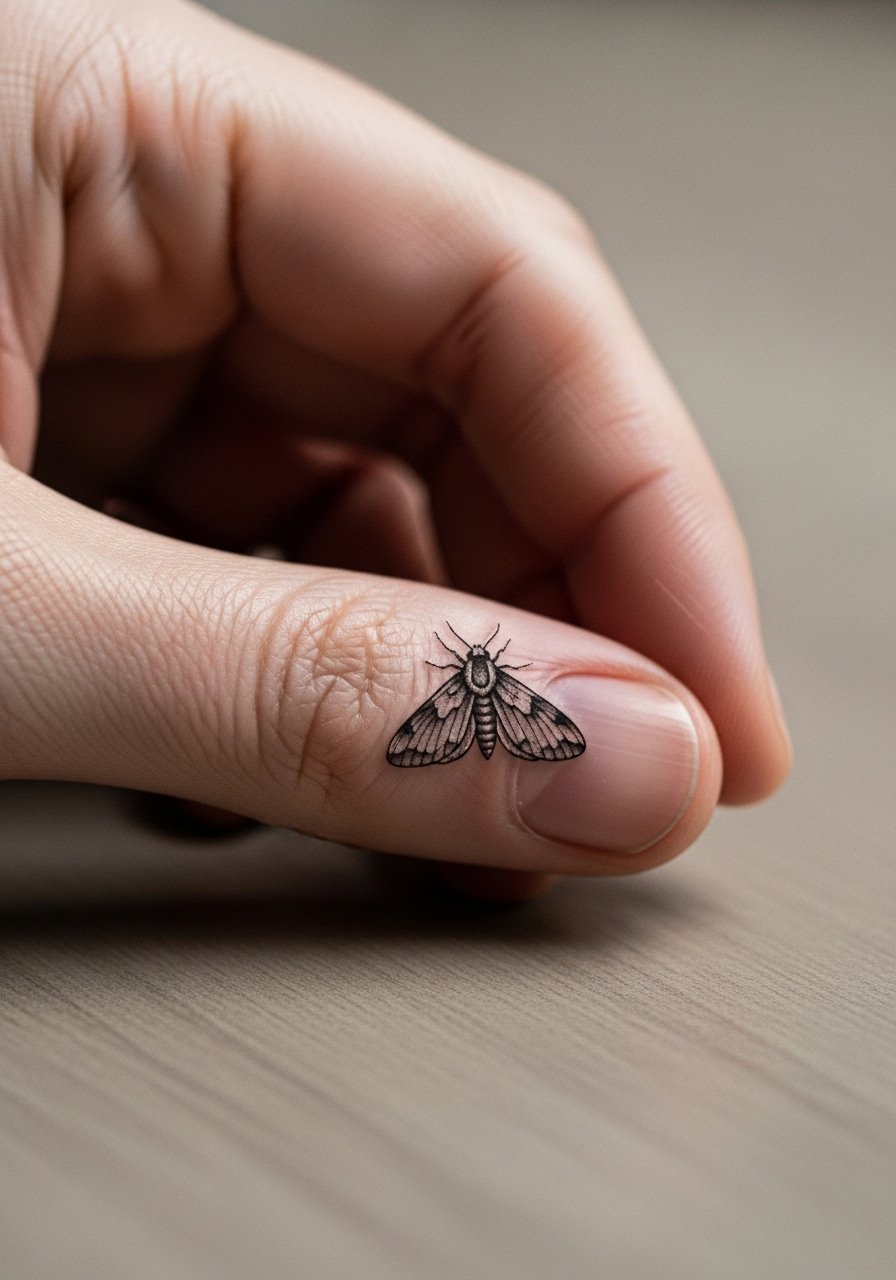
The finger-side moth plays into nocturnal motifs and offers an understated alternative for people who want something less literal than a bright butterfly. The main consult point is antenna and edge contrast so the tiny texture lasts through daily contact. Pain is sharp at the finger bones and sessions are brief. A common mistake is adding tiny fill near joints where the ink is prone to migrate. Because this placement faces constant mechanical wear, expect touch-ups within the first year.
17. Motion trails in dotwork across fingers
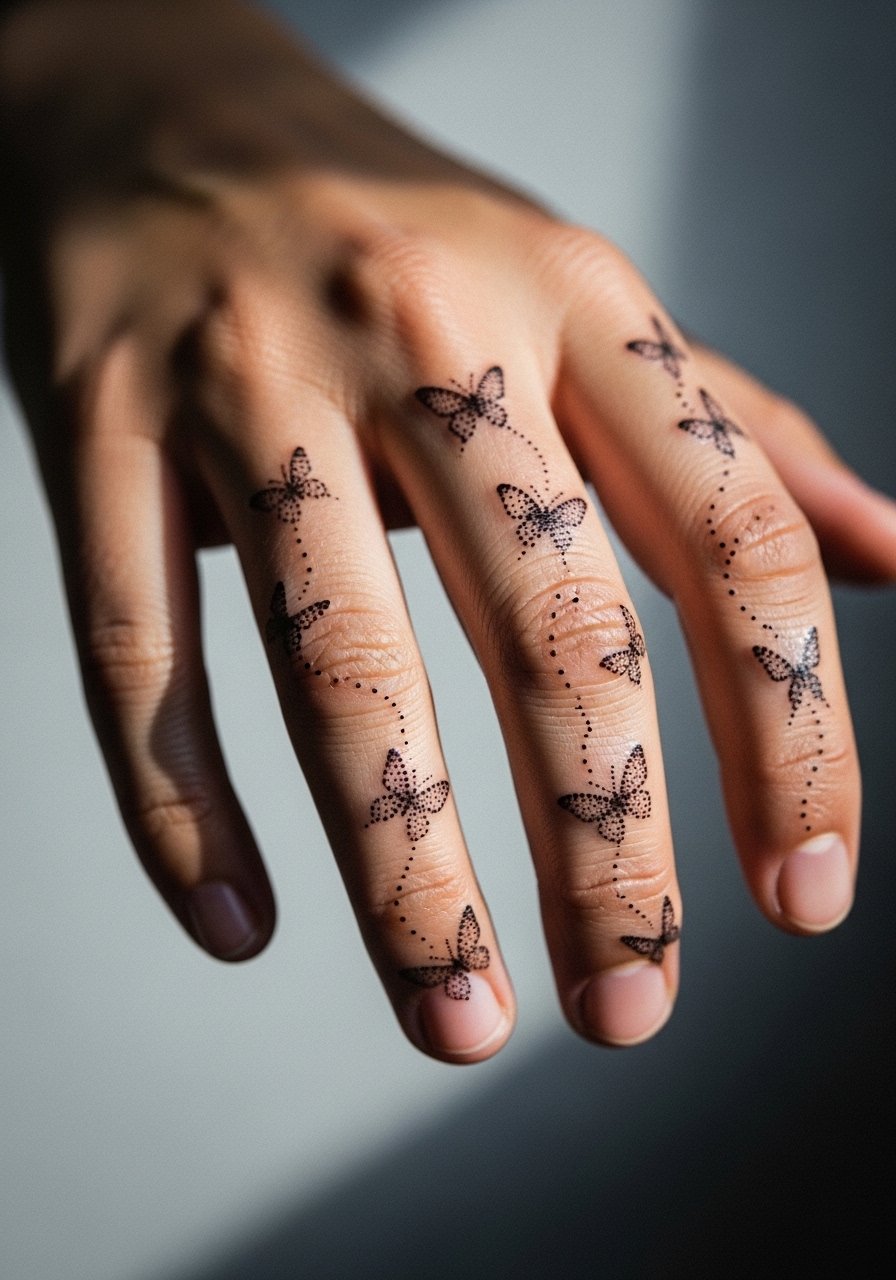
This idea emphasizes movement rather than a single focal butterfly, which means it tolerates fade better as the eye follows the trail. Tell your artist you want negative space between clusters and avoid dense stippling near crease lines. Sessions are fragmented by finger placement but each cluster is quick. A mistake I see often is planning the trail purely for looks without testing gestures, and that can make the motion read awkwardly when you move. For a balanced look skip heavy jewelry on the tattooed hand and let the trail be the visual anchor.
Frequently Asked Questions
Q: Will a fine line butterfly on the back of my hand blur faster than blackwork?
A: From what I have seen, fine line tends to soften sooner on hands because constant washing and friction wear down the thinnest strokes. Blackwork and heavier outlines generally hold a readable shape longer. If you like fine detail, ask your artist for slightly stronger anchor lines and plan for a touch-up within 12 to 24 months.
Q: How should I dress for a knuckle or wrist butterfly session to keep the area accessible?
A: Wear loose, easy sleeves so the artist can work without tugging fabric. For wrist and knuckle work a short sleeve button shirt or a loose tee that can be pushed above the elbow works well. A loose button-down shirt is a practical option because you can pull it aside without risking pressure on the fresh ink.
Q: Does Saniderm or dry healing work better for hand tattoos?
A: Artists are split. Some recommend Saniderm for hands because it shields the area from constant contact and speeds early protection, while others on forums warn it can trap sweat and cause issues. My advice is to follow the artist's routine and, if you sweat a lot, discuss shorter Saniderm windows or single-use protective pods.
Q: How painful is thumb base and knuckle work compared with the inner wrist?
A: Thumb base and knuckles are often sharper because of proximity to bone and thin tissue, while the inner wrist is more of a dull ache for many people. Short sessions, topical numbing patches, and breaks help. Lidocaine patches are a common tool for bone-heavy spots but check with your artist first.
Q: What is a realistic touch-up schedule for hand butterflies?
A: Expect a touch-up anywhere from 6 months to two years depending on line weight, placement, and daily wear. Fingers and knuckles commonly need earlier refreshes, while heavily saturated blackwork on the back of the hand can stretch the interval. Plan for at least one touch-up if you want long-term clarity.