
Fine line moons are everywhere on socials, but the tattoos that actually look crisp after two years are not always the ones with the most likes the day they go viral. Placement and line weight matter far more than the reference photo. Read these 21 half moon ideas with realistic aging notes and outfit tips so you can pick a design that still reads like you after a few touch-ups.
1. Half Moon with Stars Outline on the Wrist
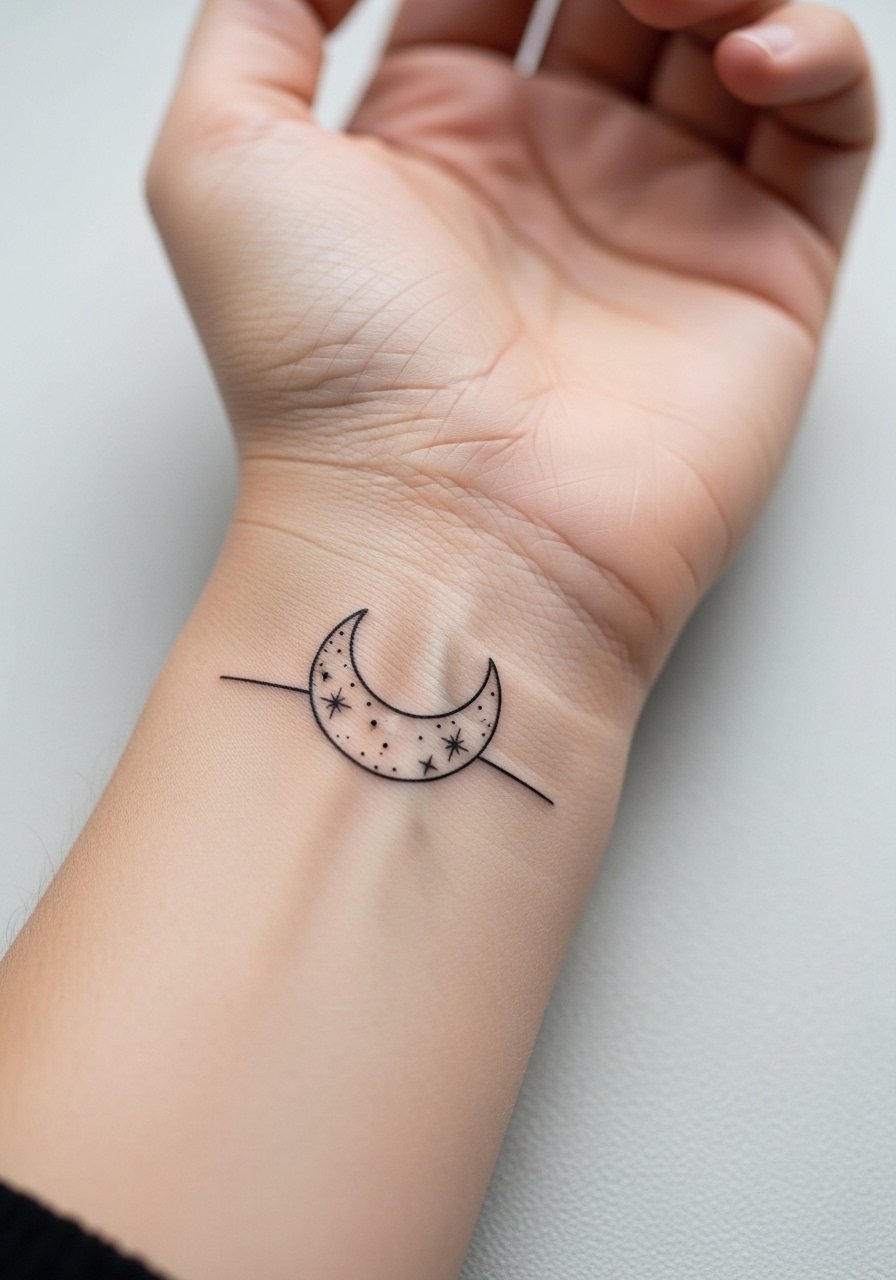
This is the go-to small piece for first-timers because it reads clean at micro scale. If you want it to age, ask the artist for slightly stronger linework than the thinnest flash option. Common mistake is requesting ultra-micro thin lines that blur from frequent hand washing and sun exposure. Expect a quick 30-45 minute session and a touch-up chance at year one if you use your hands a lot. For showing this off, stack a thin silver chain bracelet on the opposite wrist so the moon reads as deliberate, not accidental.
2. Geometric Half Moon Mandala on the Forearm
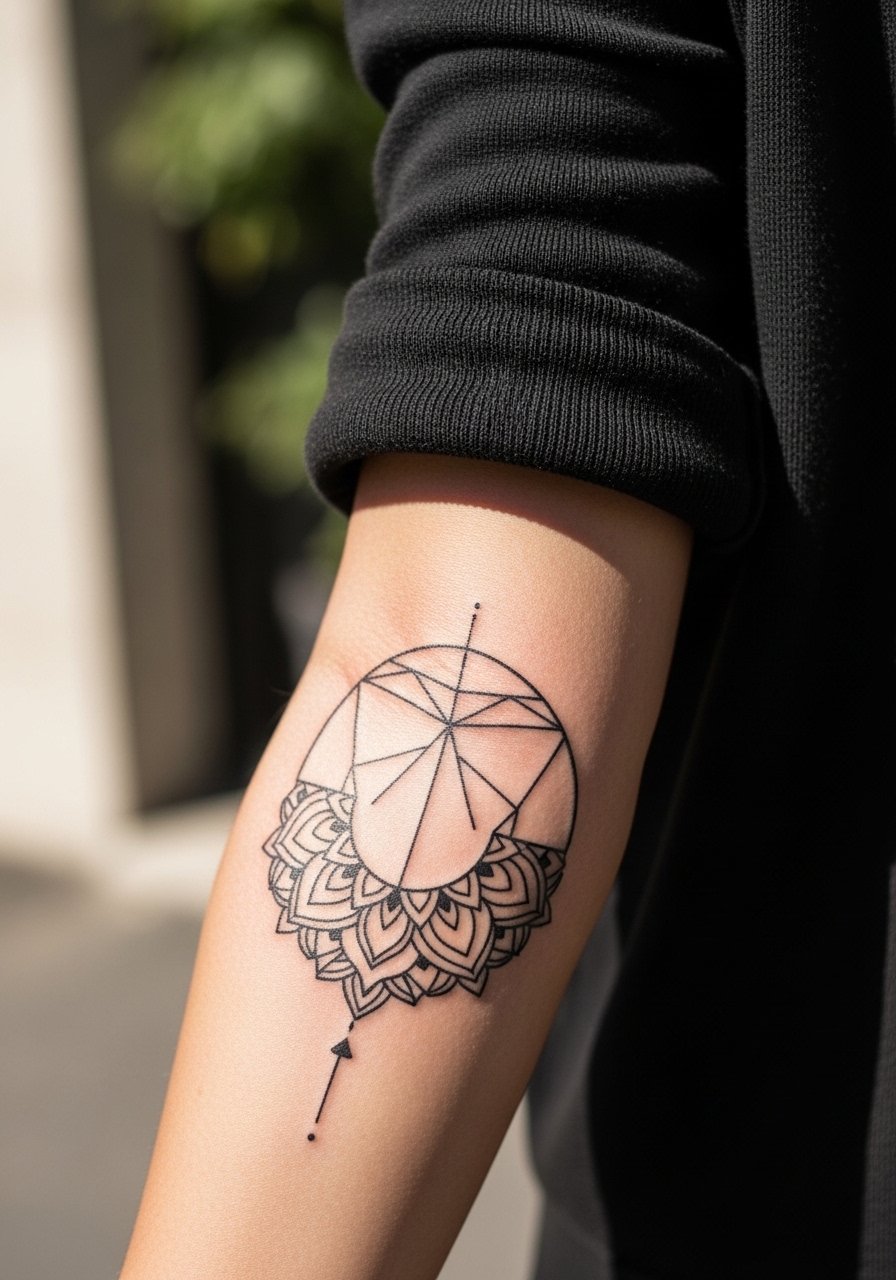
This version needs breathing room. The biggest error is compressing too many spokes into a four-inch piece. Tell your artist you want spacing for future touch-ups and ask to see a printed flash at actual size. Healed at six months the mandala will hold clarity if the lines were given room. Pain is low on the forearm and a single 1-2 hour session usually does it. Pair it with a linen button down shirt worn half-rolled for photos that frame the geometry without crowding the design.
3. Dotwork Half Moon Texture on the Shoulder
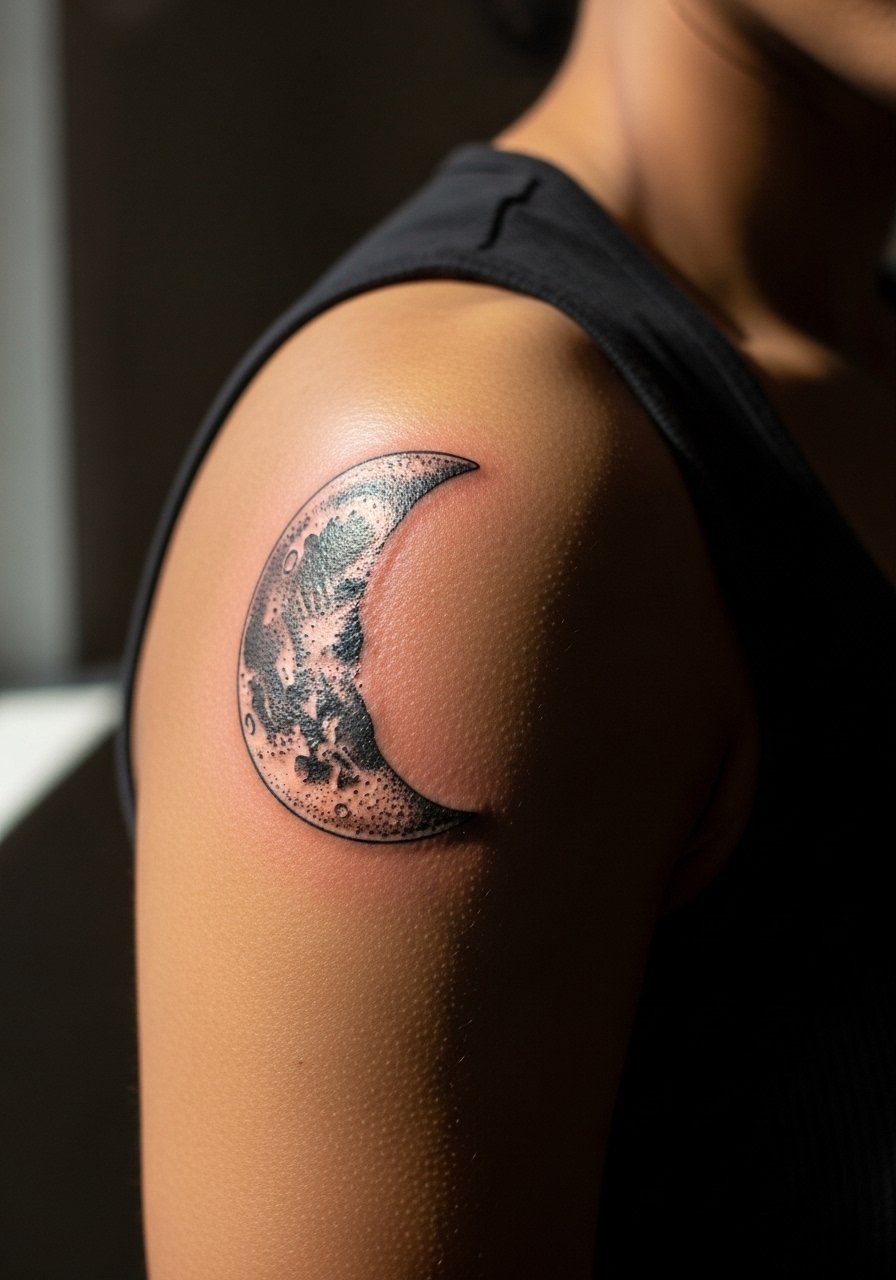
Dotwork is forgiving because the texture ages differently than single lines. Tell the artist you want denser stippling toward the inner curve and lighter dots near the edge. A common version that fails scales the dots too tightly and ends up muddy after two years. Shoulder sessions are moderate on pain and usually complete in 1-2 hours. For session comfort wear a sleeveless tank top so the artist can angle without fabric tugging, and later show the piece with wrap tops that echo the dotted texture.
4. Neo-Traditional Half Moon with Flowers on the Thigh
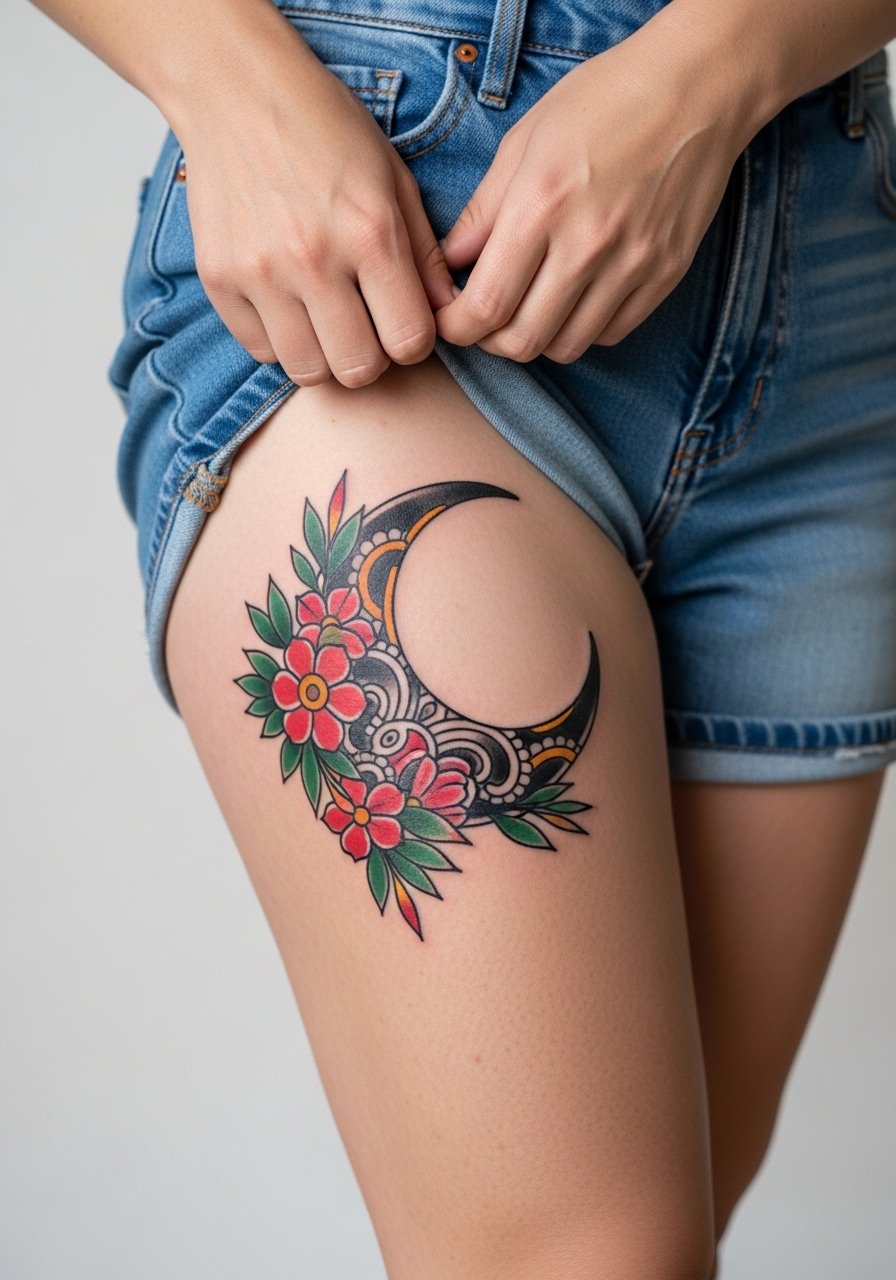
Thigh pieces let color work breathe and last well if you avoid tight waistbands rubbing during healing. The typical mistake is asking for tiny petals in a five-inch piece, which lose detail when the skin shifts. Two sessions are common: an outline pass then a color and saturation pass. Pain ranges from moderate to low depending on thigh curvature. For summer display choose high waisted denim shorts and for the session wear loose joggers you can slide down without squeezing the area.
5. Fine Line Half Moon Phases Sequence on the Inner Forearm
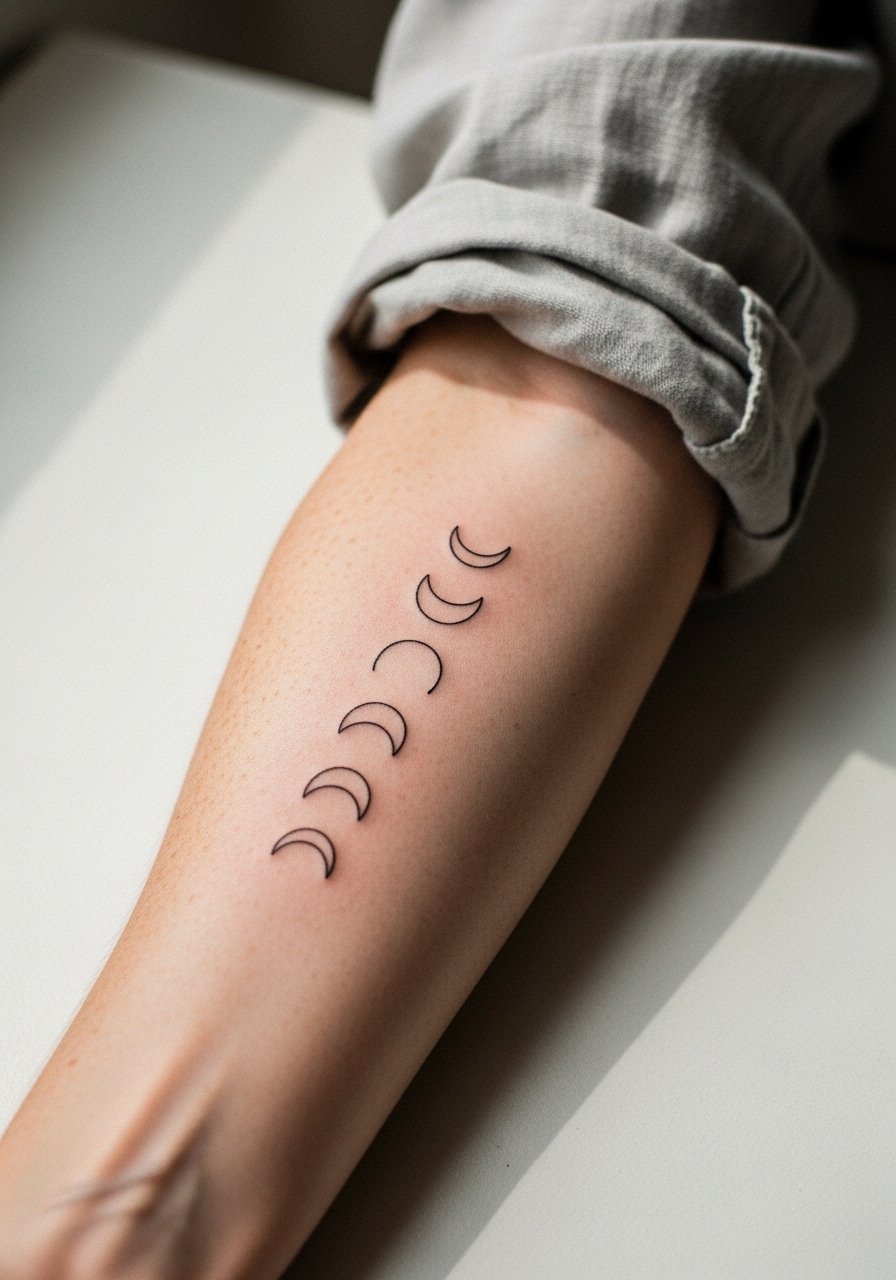
Fine line phases are trending, but the style has a known split in opinions. One camp says fine line blurs faster on exposed spots and will need touch-ups at two to three years. The other camp argues that with slightly deeper placement and proper spacing the sequence can settle finely for many years. Ask the artist which approach they use and plan for a small touch-up window. This piece is an easy one-session job and looks great with rolled-up sleeves or a linen button down shirt for clean, editorial shots.
6. Blackwork Half Moon Silhouette on the Ribcage
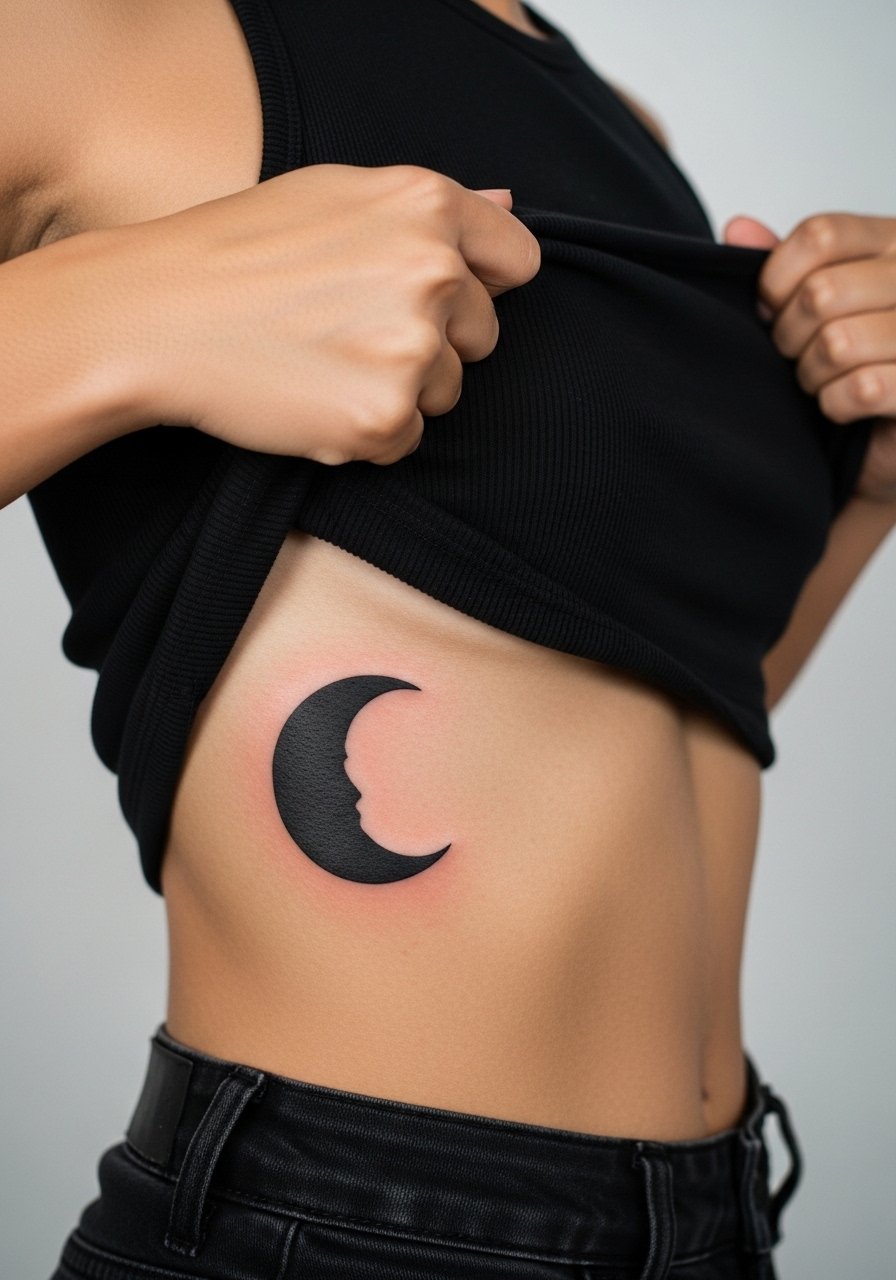
Fair warning, the ribcage rates higher on most pain scales, but the blackwork payoff is dramatic and ages into a bold shape rather than soft lines. Common mistakes include going too small, which makes solid fills patchy after healing. Expect a 1-2 hour session and a possible second pass for even saturation. For the appointment wear a cropped tank top or sports bra so the artist can work without fabric shifting.
Studio Day Picks
The contrast between small wrist pieces and the ribcage silhouette above means different prep and first-week needs. These items smooth the session and protect fine line work during the initial healing window.
-
Hustle Butter Deluxe. A non-greasy balm many people prefer for fine line pieces because it keeps ink channels clear while providing light moisture during the first week.
-
Indie Australian Tea Tree Balm. Good for dotwork shoulder pieces that can look inflamed from heavy stippling, as it soothes without smothering the skin.
-
Ink Fix Lotion. Handy before touch-ups for faded lines if you want a quick primer the artist can evaluate at consult.
-
Japanese Rice Bran Aftercare. Lighter than heavy ointments and useful for color work on the thigh that can bleed under thick gels.
-
Aquaphor Healing Ointment. Thin layer applied during the first 48 hours can protect wrist and finger micro work from friction while you sleep.
7. Watercolor Half Moon Splash on the Collarbone
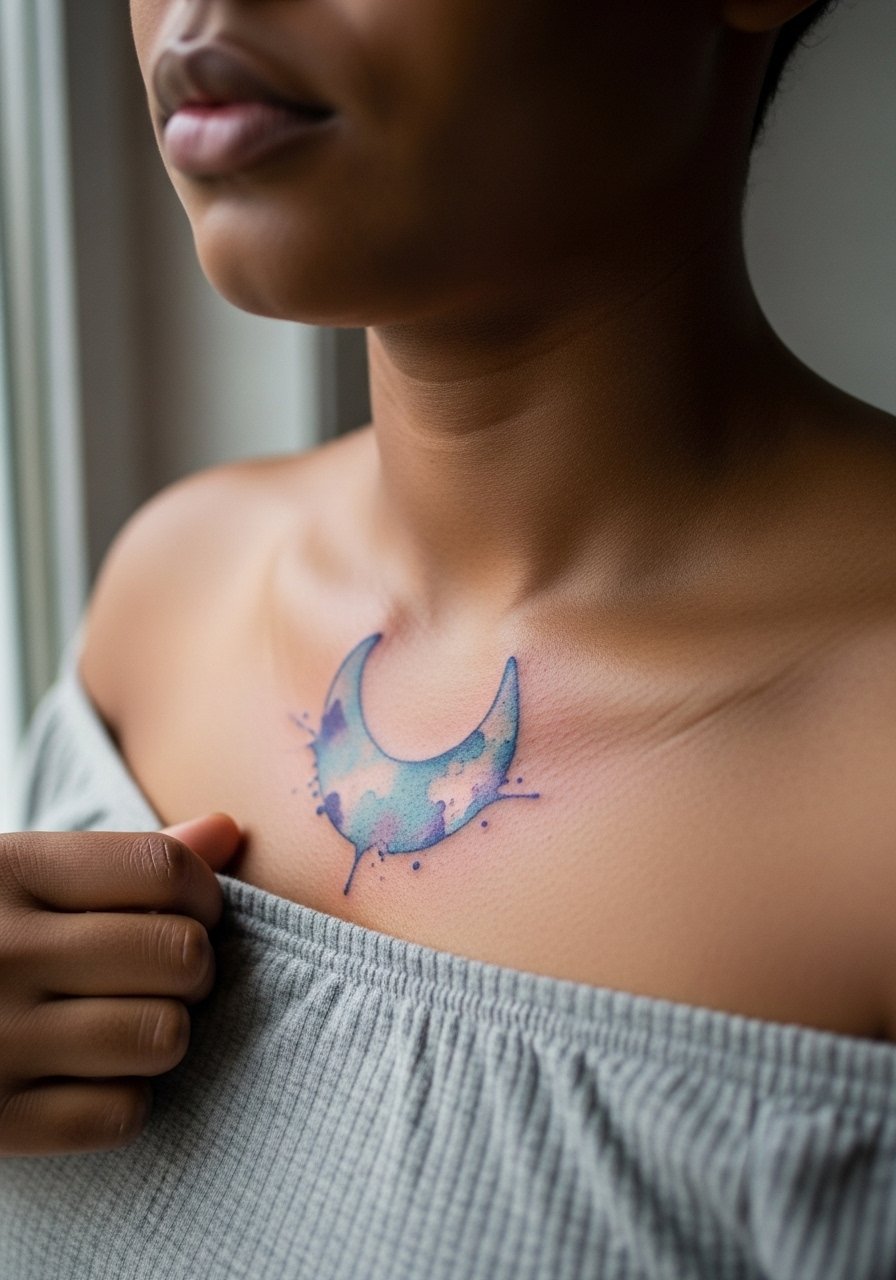
Watercolor moons look painterly when fresh but require thoughtful placement to avoid wash-out under sun. Artists and hobbyists split on healing approach. One group uses protective film or gels to keep color moist; the dry healing camp worries about trapped bacteria and prefers lighter products. If you choose watercolor, ask your artist which method they use and plan for sunscreen after the four-week mark. Collarbone sessions are a single 1-2 hour pass for small pieces. For showing off, an off shoulder top puts the wash on display without competing neck jewelry.
8. Minimalist Crescent Alone on the Finger
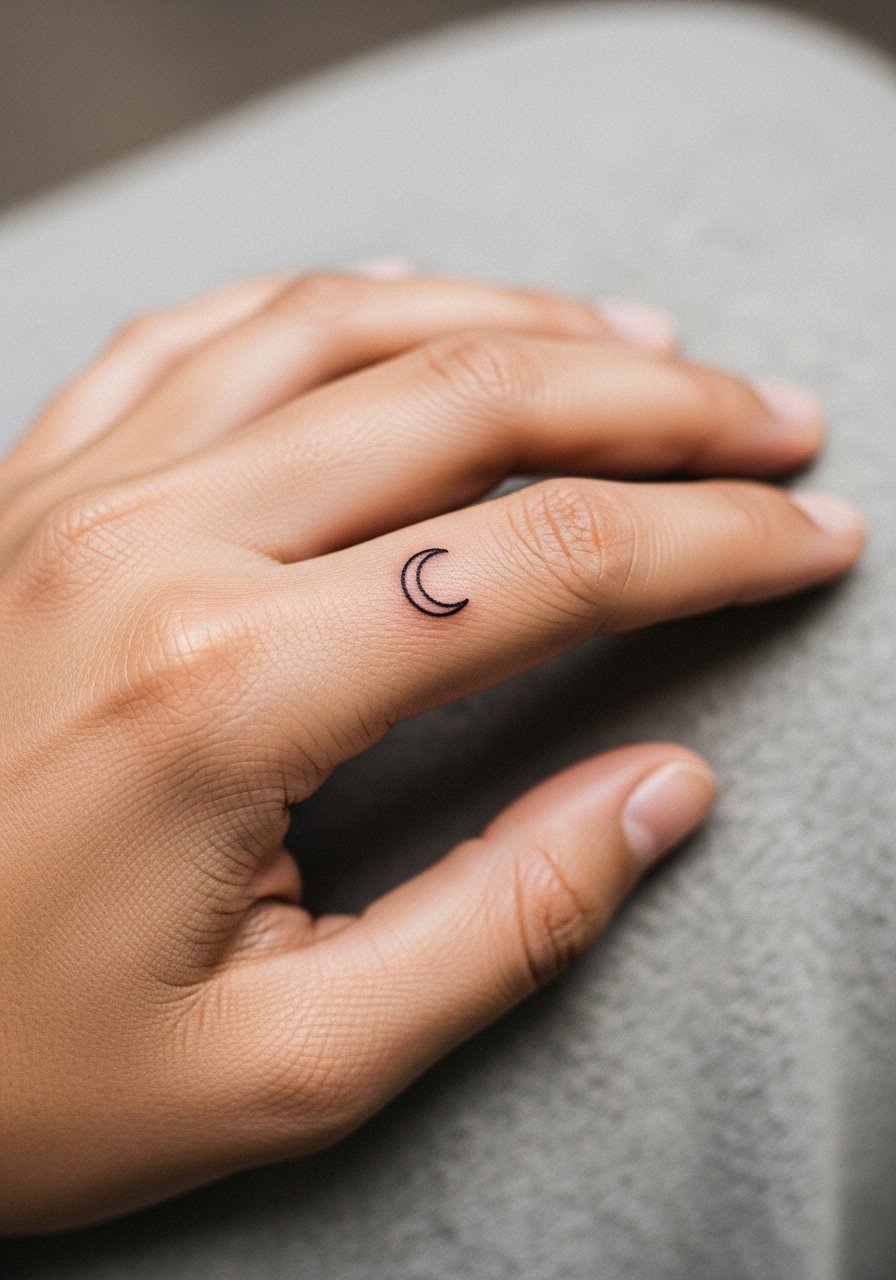
Finger tattoos are intimate for daily wear but they also face friction and more rapid fading. The usual error is choosing extremely thin open crescents that need frequent touch-ups. Expect a short session under 30 minutes and plan a touch-up within a year for most people. Pain is sharp but brief. For the appointment avoid rings and wear short sleeves so the artist can access the hand easily.
9. Ornamental Half Moon with Vines at the Ankle
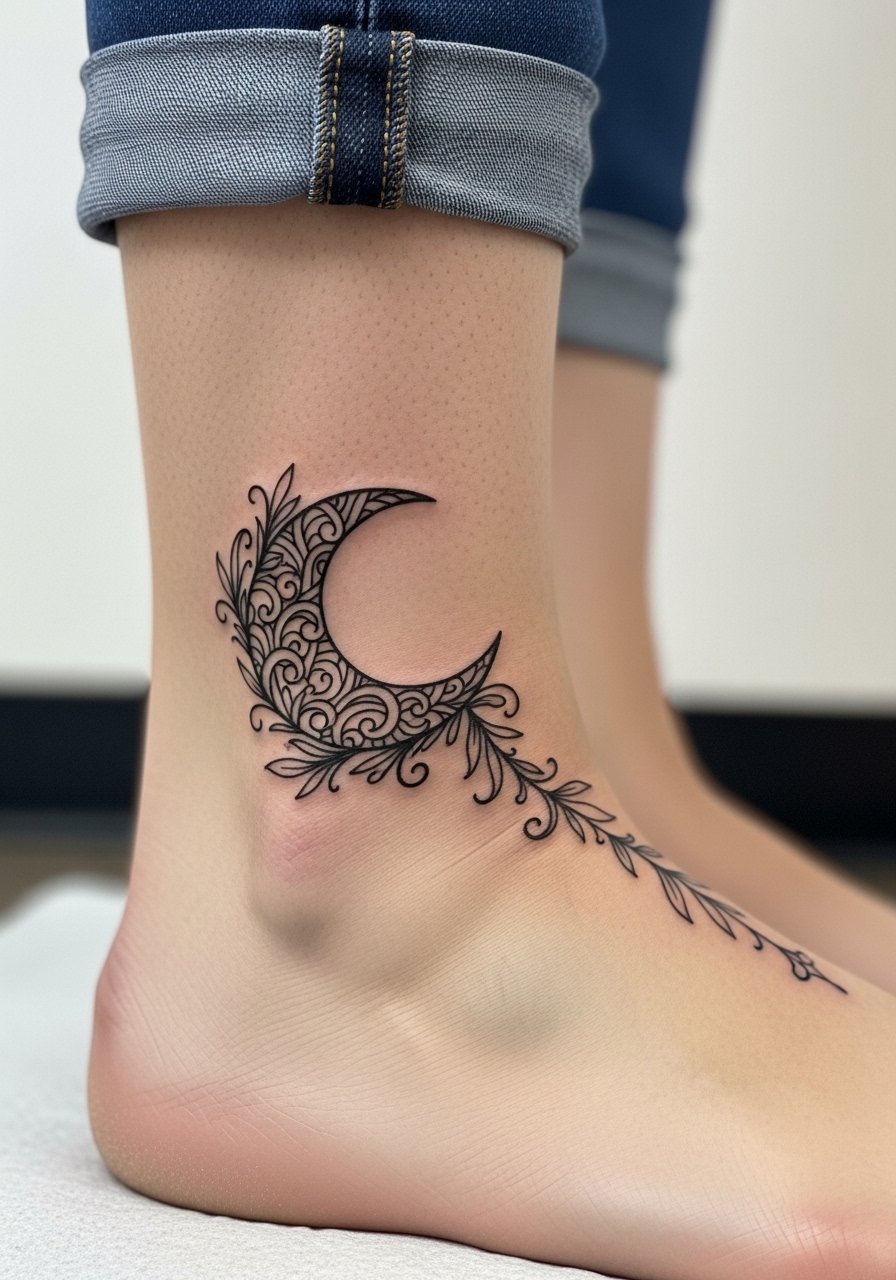
Ankle work suffers from boot and sock rubbing during healing, so sizing and placement matter. The common problem is putting too many tiny vine loops into a small patch, which blurs under friction. Expect two sessions if you want extended vine tails. For summer show-off pair it with strappy ankle sandals and during the session wear shorts or pants you can pull up comfortably.
10. Micro-Realism Half Moon Craters Behind the Ear
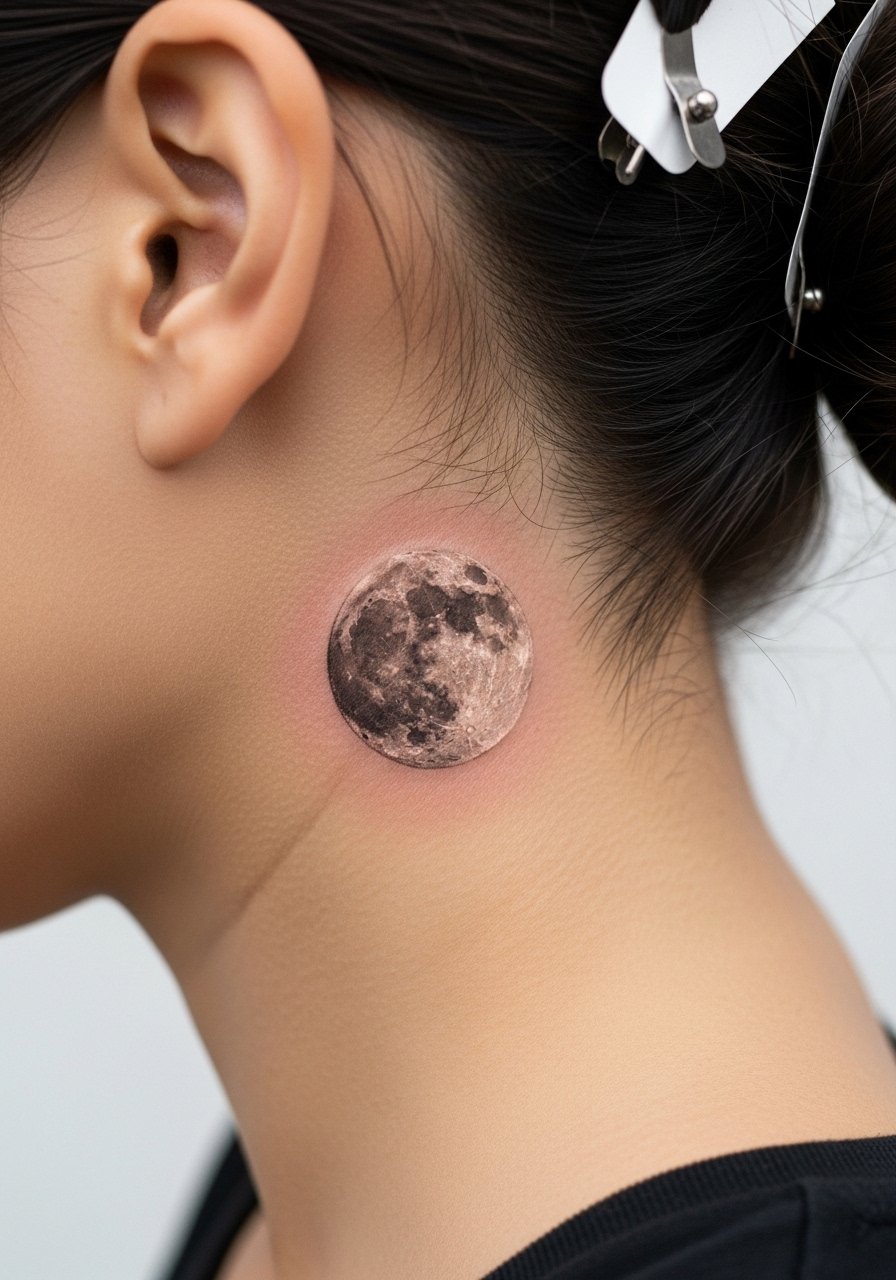
Behind-ear pieces are subtle and feel like a secret. The mistake is asking for too much detail in a postage-stamp space. Keep scale tiny and contrast high for the crater impression to hold. Sessions are short but require steady hand placement. Note that behind-ear work needs hair up during the session and aftercare that avoids greasy products near the hairline. If job visibility matters remember it only shows when hair is pinned up.
11. Line Art Half Moon with Fairy Silhouette on the Inner Wrist
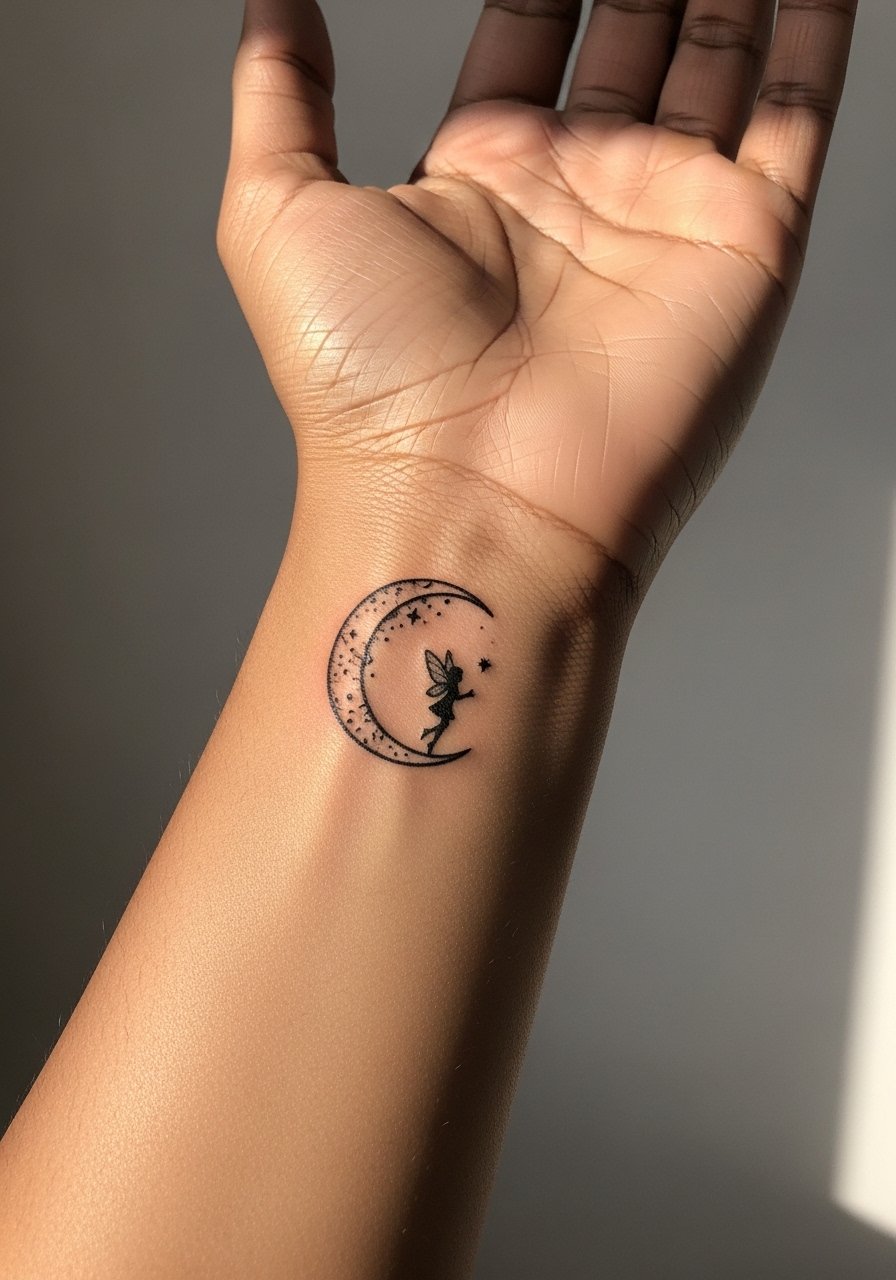
This one tells a short story and works best small. In consult say you want negative space around the fairy so the figure does not merge with the moon as it settles. The inner wrist is a visible, low-pain spot and a single session usually suffices. For outfits the moon pairs well with a thin chain pendant necklace sitting a few inches above the wrist when your arm is down.
12. Black and Gray Half Moon with Stars on the Shoulder Blade
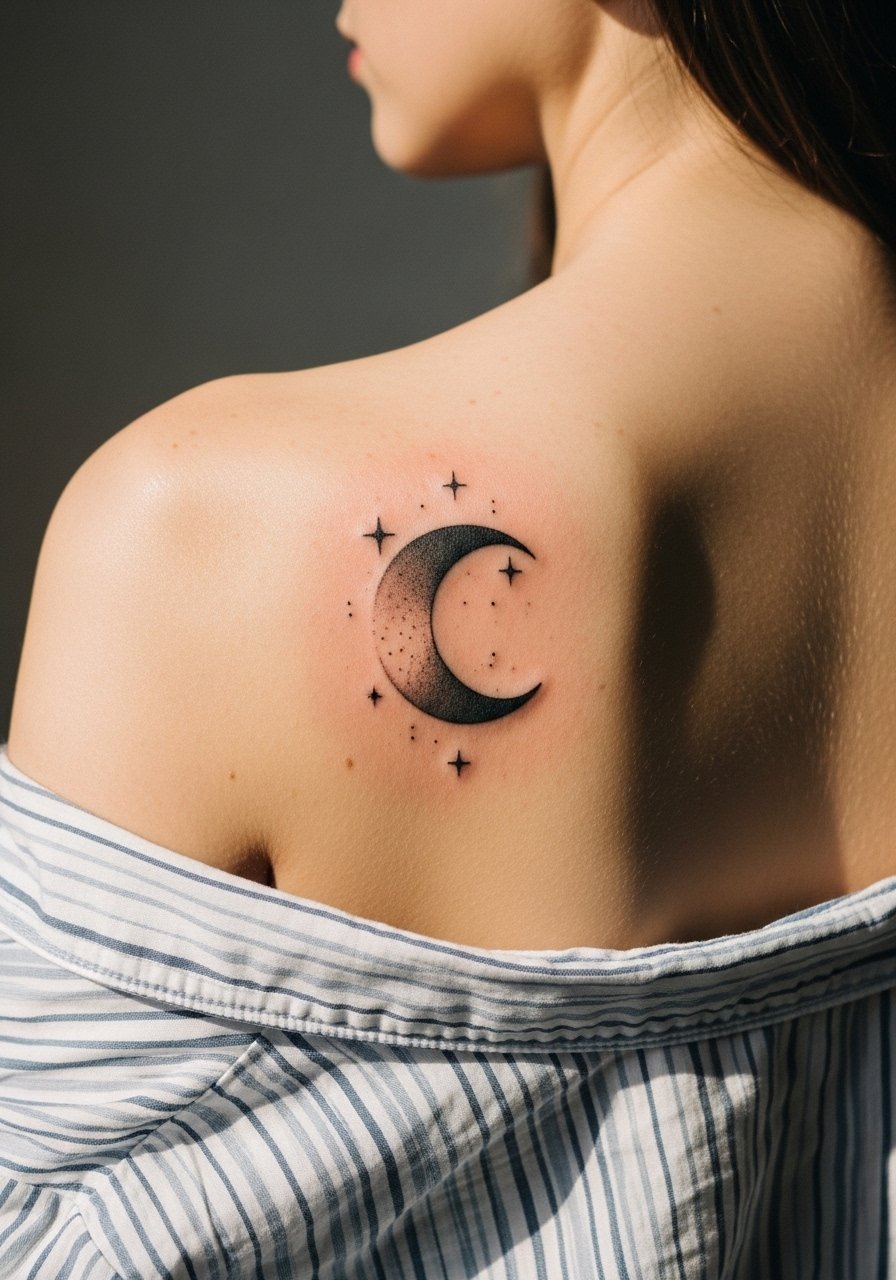
Shoulder blade placements give a large canvas for subtle shading that ages into a soft depth rather than stark lines. A typical error is asking for extreme micro-shading placed too close to the spine of the hair follicle, which can pucker on oily skin types. Two sessions may be needed for layered gray washes. Wear a loose button-down to the appointment so the artist can access the area without fabric moving.
13. Ignorant Style Chunky Half Moon on the Calf
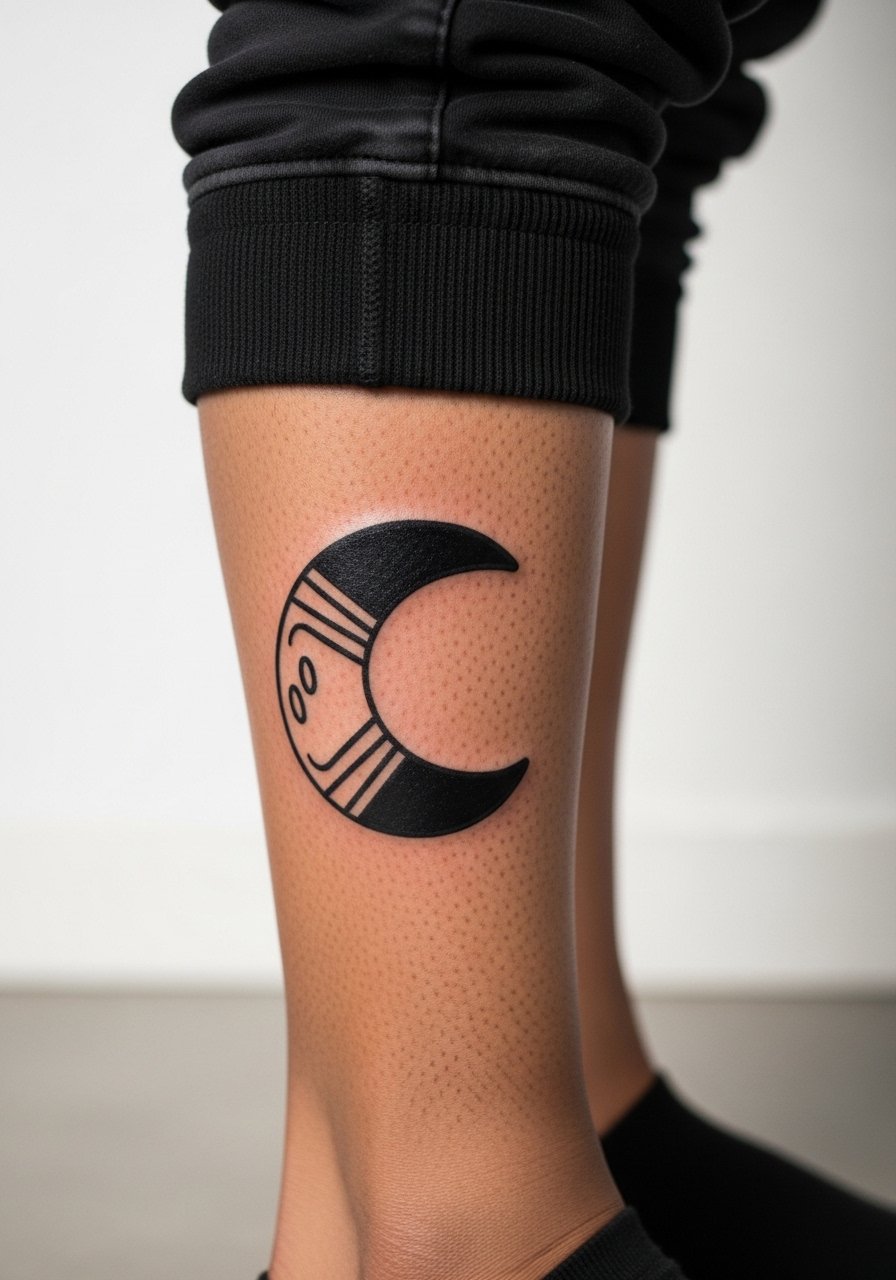
Bold, naive lines are forgiving and age into a graphic silhouette rather than a smudge. They work well on larger limbs because the bold shapes tolerate skin movement. The common misstep is trying to miniaturize this look into a tiny spot, which loses the style's character. Expect a single quick session and low follow-up. For summer styling pair with wide-leg pants or a wide leg linen pant for breezy photos.
14. Embedded Birth Phase Half Moon on the Spine
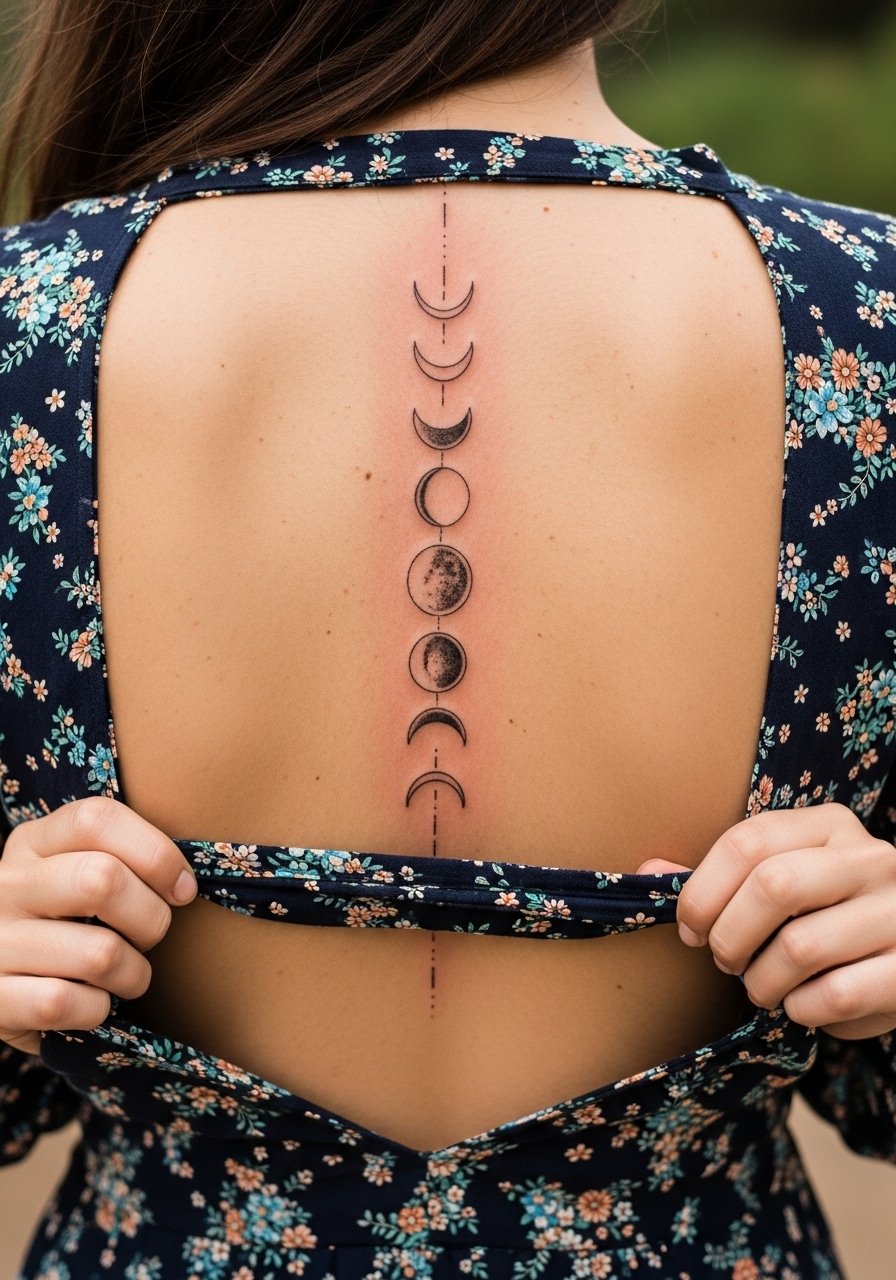
This is a personalized take that few galleries show. Ask your artist to mark the specific phase with a small dot or star so the meaning is obvious without text. Spine placement reads well with vertical sequences but carries higher pain and may need two quick passes for consistent linework. For evening wear an open-back dress frames the sequence like a living column.
15. Subtle UV Half Moon Accent for Festival Wear
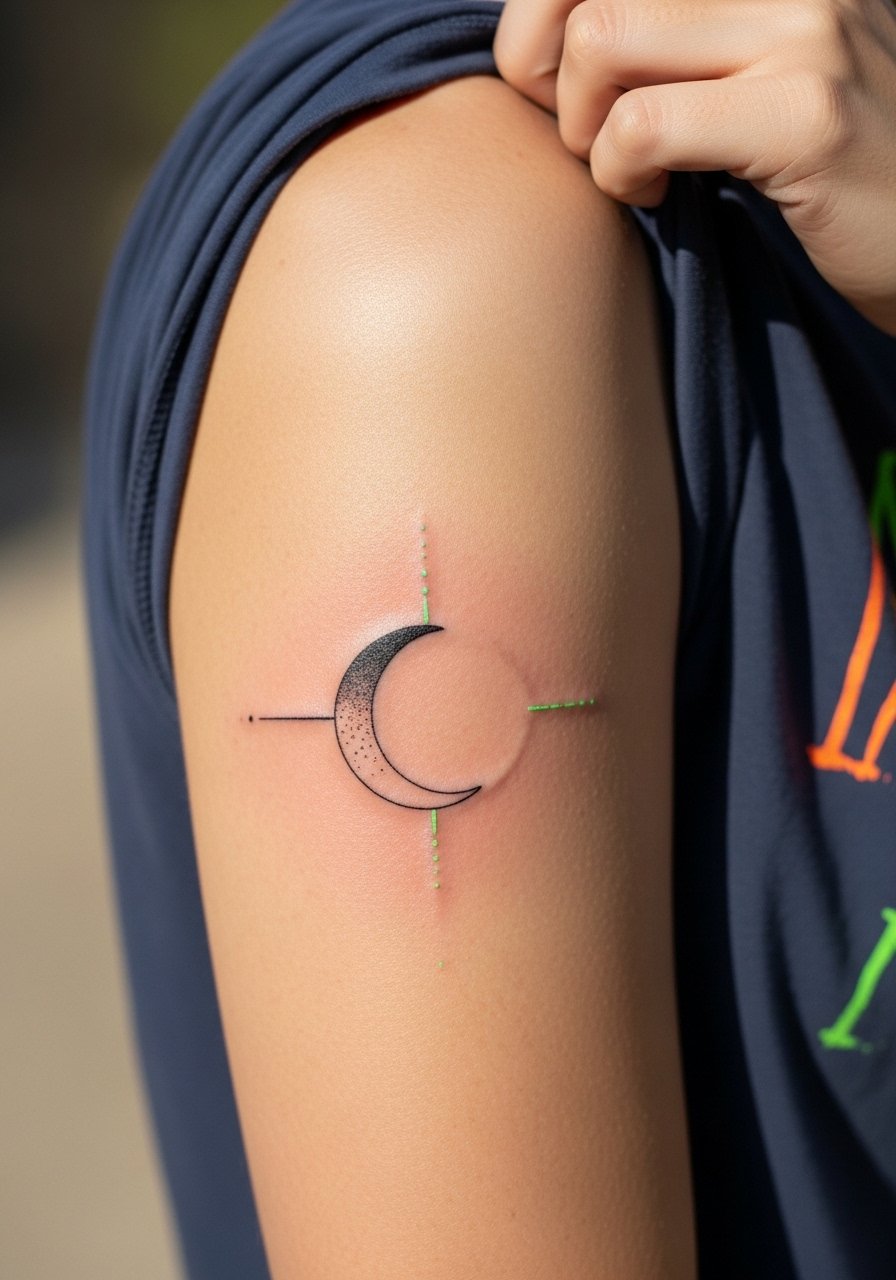
UV ink is rare and fun for festival or performance contexts. The risk is uneven visibility in regular light and fading under heavy sun. Discuss expectations with the artist because UV pigments behave differently in healing. This is a novelty layer, not a longevity hack. For discovery look at tagged content on social platforms before committing.
16. Half Moon as a Cover-Up Base on the Upper Back
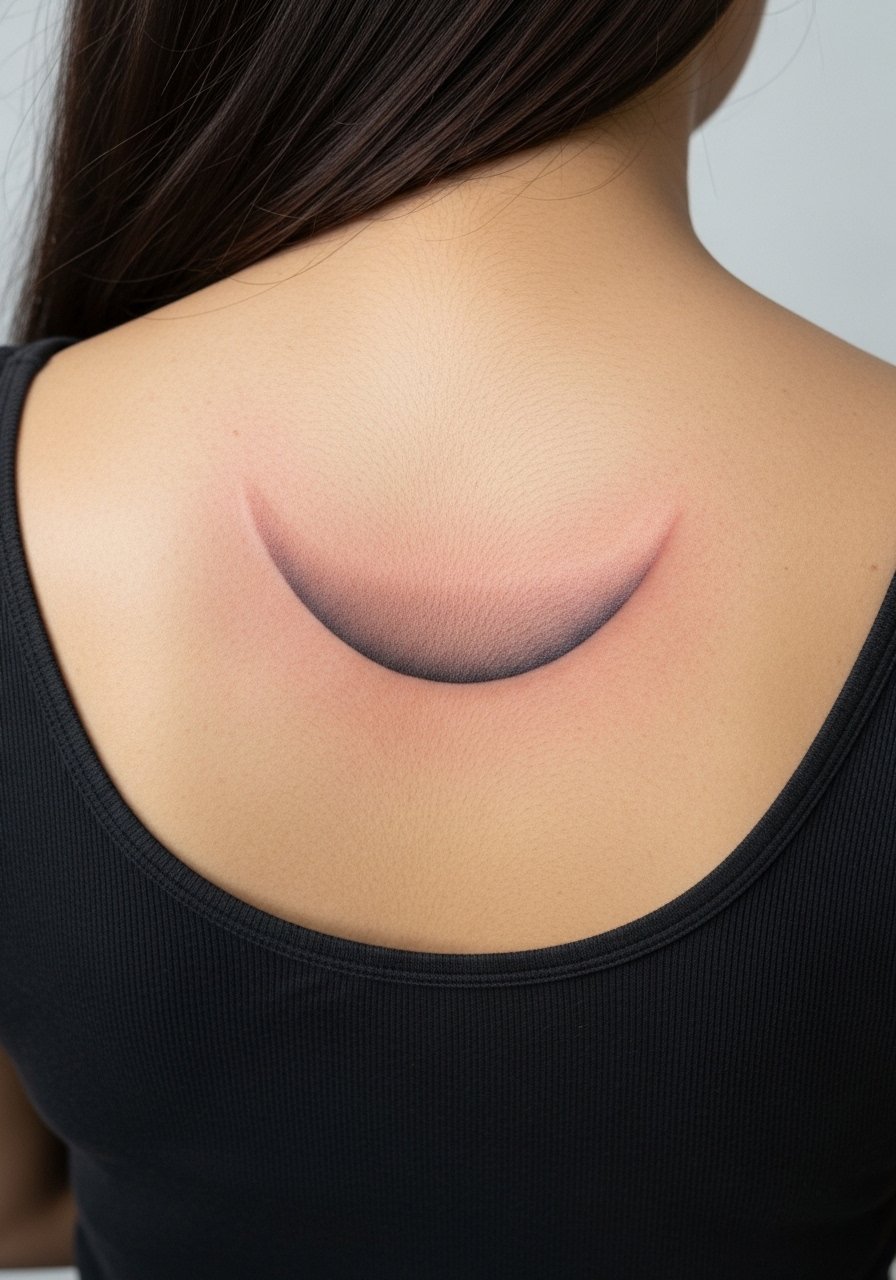
Using a half moon as a cover-up anchor can be smart when trying to mask old sun/moon pairs. The technique is to design the crescent so it overlaps the faded area and adds new value with texture or floral elements. The common error is planning a cover-up without testing how old ink lifts under new saturation. Sessions vary by old-ink density and may need multiple passes. For sessions wear a loose tank so your back is accessible without worry.
17. Curved Half Moon Mimicking the Collarbone Contour
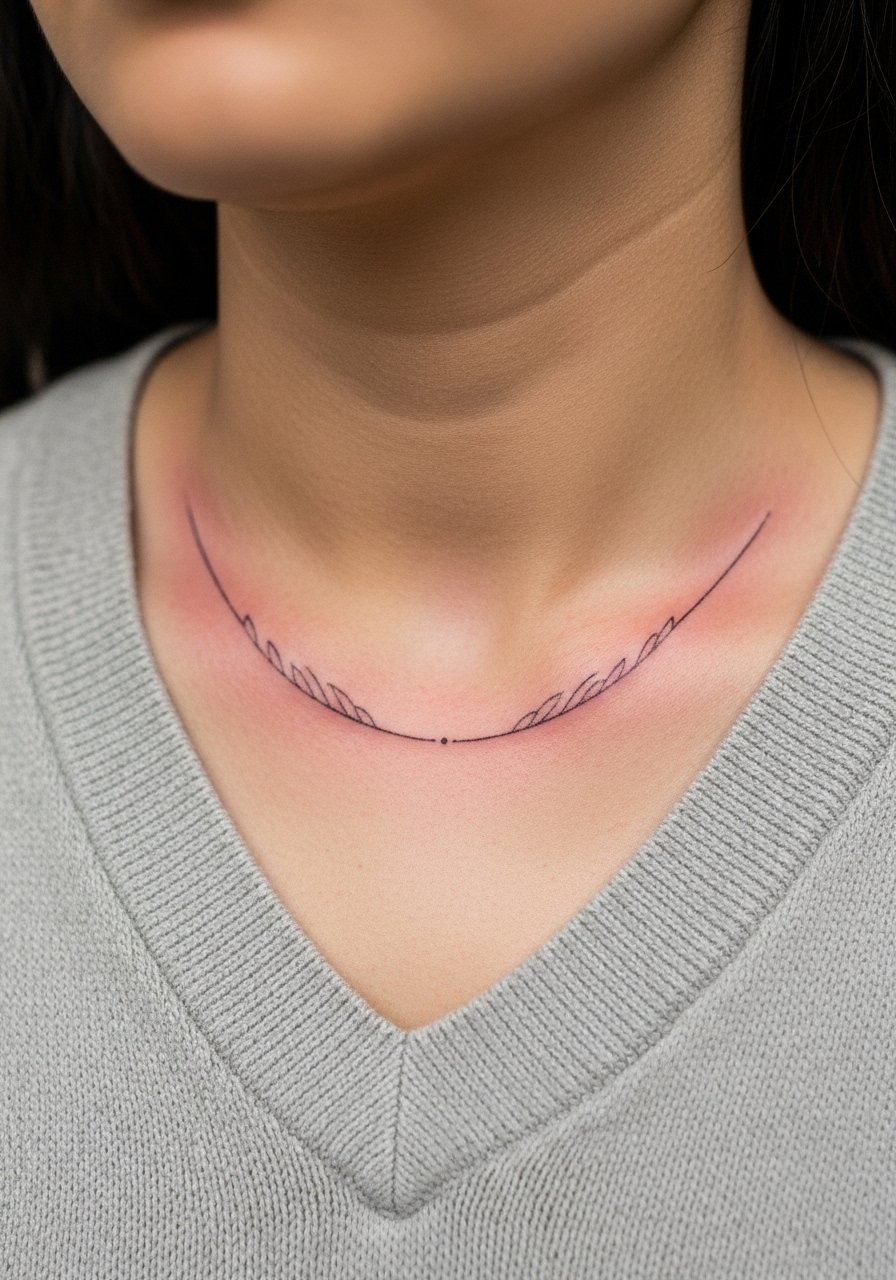
Designing the crescent to match anatomy makes the tattoo feel like it belongs. Ask to see the stencil while standing so you can check the curve with your posture. The error is approving a flat reference that looks off when you move. Collarbone work ages well if you avoid heavy color washes directly on the bone. Pair photos with a V-neck sweater for a cozy, flattering frame.
18. Micro Half Moon Behind the Ear as a Secret Piece
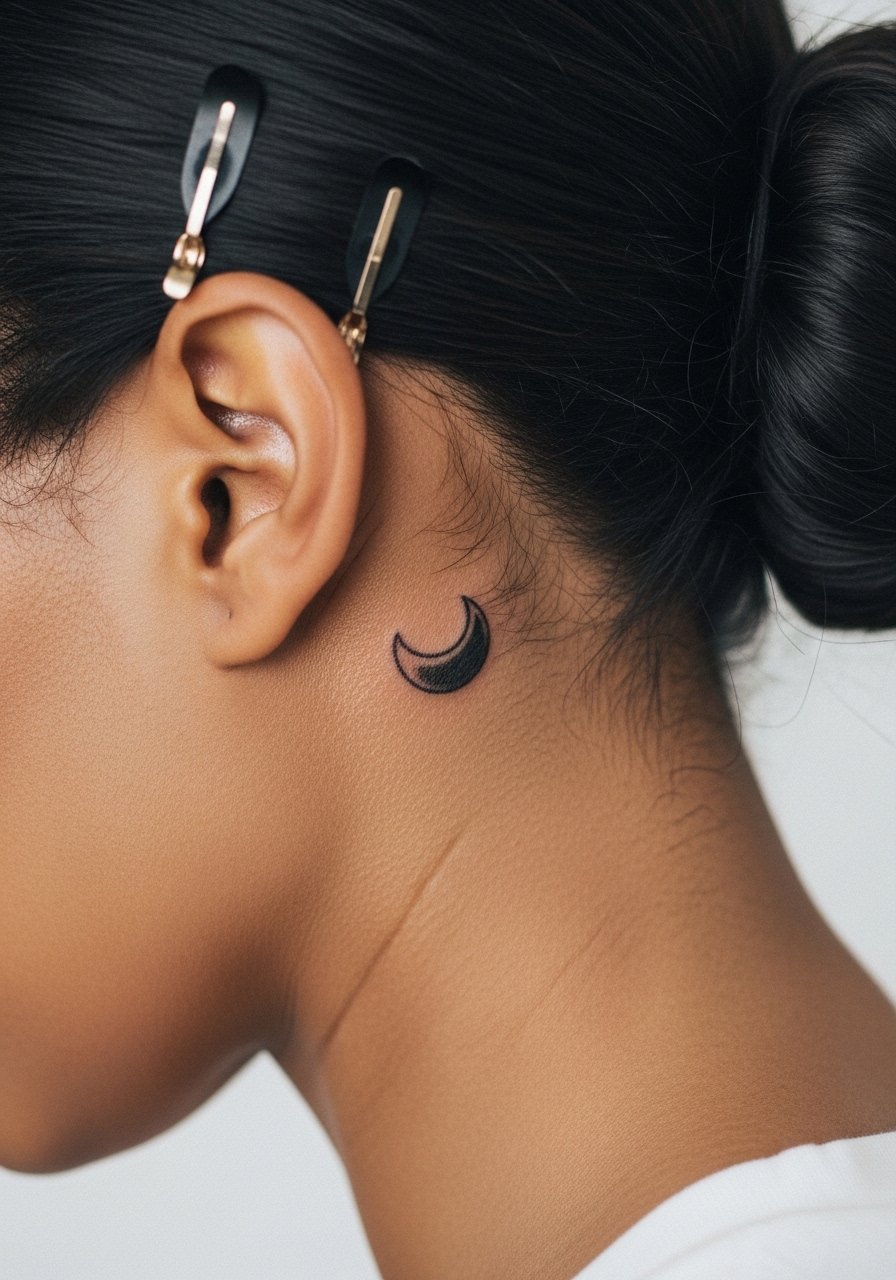
Behind-ear moons are discrete and feel private. The main mistakes are over-detailing and poor contrast against darker hair tones. Keep it tiny and bold enough to read when hair is tied up. Sessions are short and you need to keep hair away during healing. For appointment day tie your hair up and bring hair ties so the artist can work unobstructed.
19. Geometric Mandala Half Moon That Builds Over Sessions on the Forearm
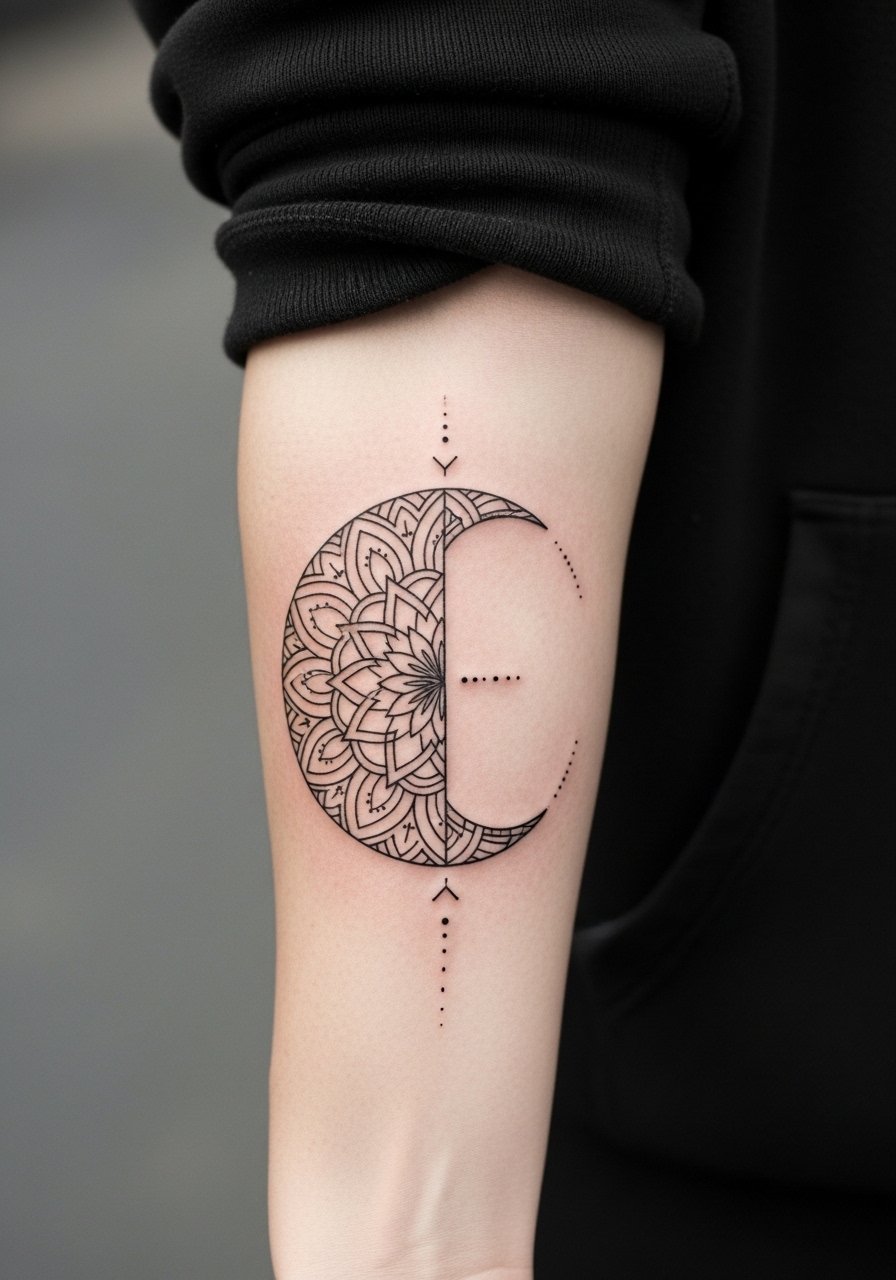
Planning a mandala in stages lets you add density without overcrowding early work. Tell your artist you want a phased build plan and ask for spacing that anticipates future layers. The mistake is asking for full saturation in the first session and then running out of room. Pain is moderate and sessions are scheduled months apart to let skin settle.
20. Stipple Shaded Half Moon on the Shoulder Cap
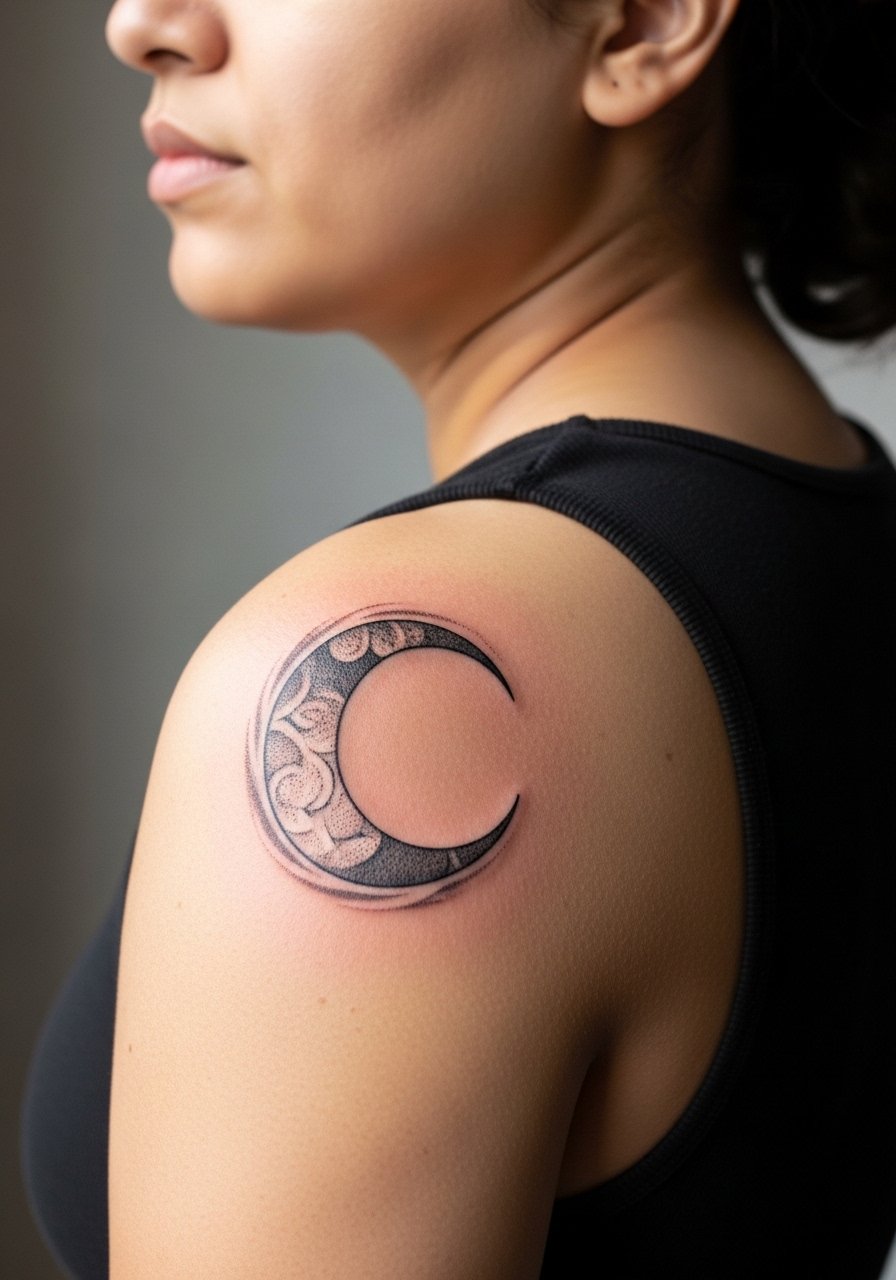
Mixing stipple and whip shading creates a tactile surface that reads well on textured skin. The biggest issue is applying too much contrast in one pass which causes blowout on thin skin. Ask the artist for gradual layering and expect a two-pass approach for depth. Session wear should include a loose tank so the shoulder is free.
21. Ornamental Half Moon with Vines Wrapping the Calf
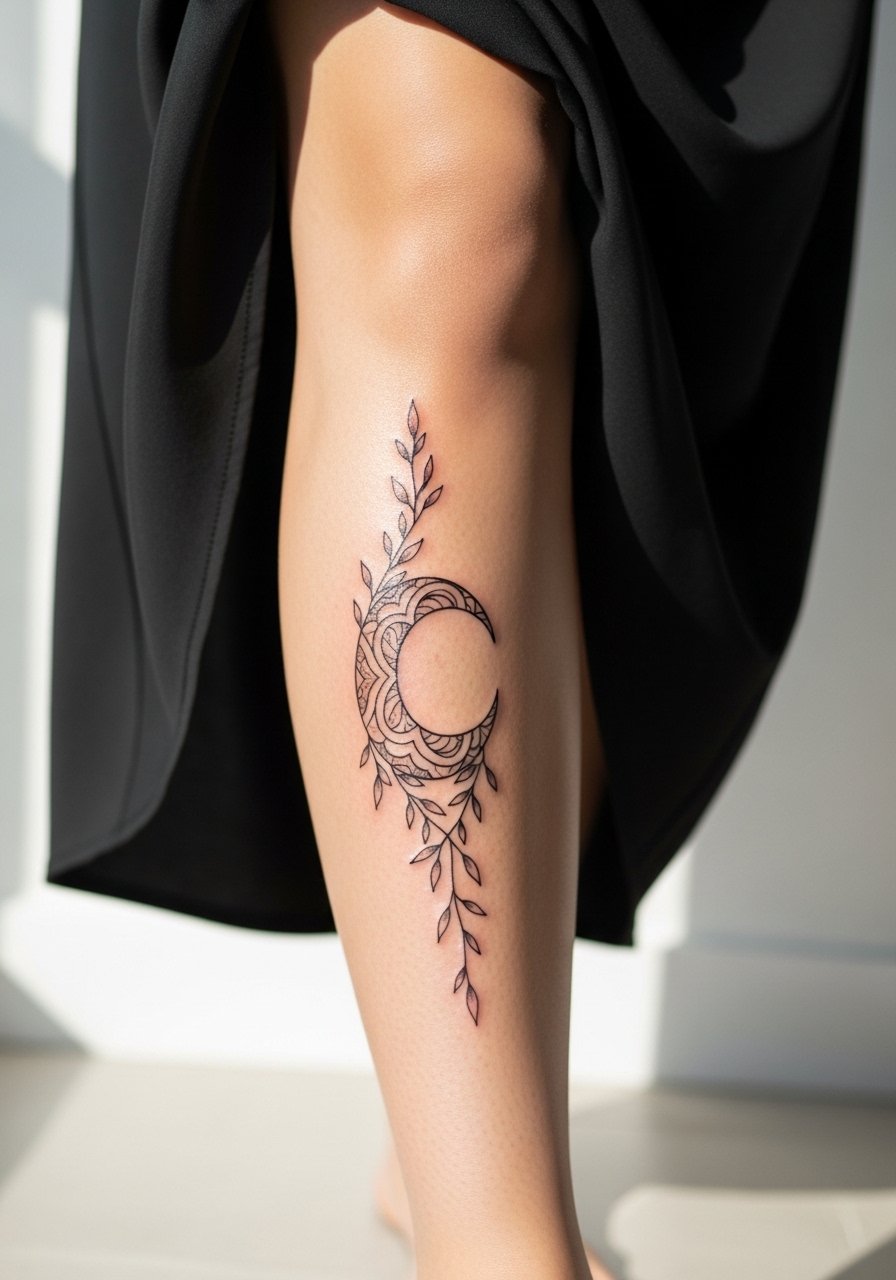
Calf pieces tolerate elongated vine work because the skin there moves less than the thigh. The error is adding too many tiny leaves that lose definition as the skin rubs against jeans. One session often covers outlines and a fill pass later for continuity. For display pick side-slit dresses or a side slit dress so the wrapping vines read from multiple angles.
Frequently Asked Questions
Q: Will a fine line half moon on the wrist need touch-ups sooner than a blackwork ribcage piece?
A: Yes, typically fine line work on exposed spots like the wrist fades faster than saturated blackwork on the ribcage. Exposure and friction are the drivers. Plan for a small touch-up window around year two for wrist work and expect blackwash silhouettes to hold longer with fewer interventions.
Q: Should I use protective film or dry healing for a watercolor collarbone piece?
A: Artists and hobbyists split into two camps. One camp favors protective film to keep washes moist and reduce scabbing. The other camp prefers dry healing to avoid trapping bacteria in delicate color washes. Ask which method your artist uses and follow their post-session window for the specific paint-like pigments.
Q: How do I make a micro-realism crater moon show up on darker skin tones?
A: Increase contrast and avoid the faintest gray washes. Ask for stronger black anchors and slightly larger crater shapes so the texture reads in photos. A pre-stencil test on your skin in natural light helps you judge visibility before the needle goes down.
Q: What should I wear to a thigh neo-traditional session to keep the area accessible and comfortable?
A: Wear loose bottoms like joggers or a skirt you can slide down easily. A side slit dress or loose shorts work for quick access and keep pressure off the area afterward while dressing.
Q: Is a half moon a good base for a cover-up of an old sun/moon pair?
A: It can be a very practical base because the crescent shape overlaps faded elements naturally. The key is designing the new work to add saturation and pattern where the old ink sits. Expect multiple passes depending on how saturated the old piece is.