
The boldest phoenix pieces I see are the ones that treat the bird as an idea, not a picture. Abstract phoenix tattoos let the flames become shapes and the wings become linework, so the design still reads from across a room and ages into texture instead of a muddy image. Below are directional ideas, how they heal, what to ask your artist, and how to show them off without overdoing it.
1. Fragmented Line Phoenix on Inner Forearm
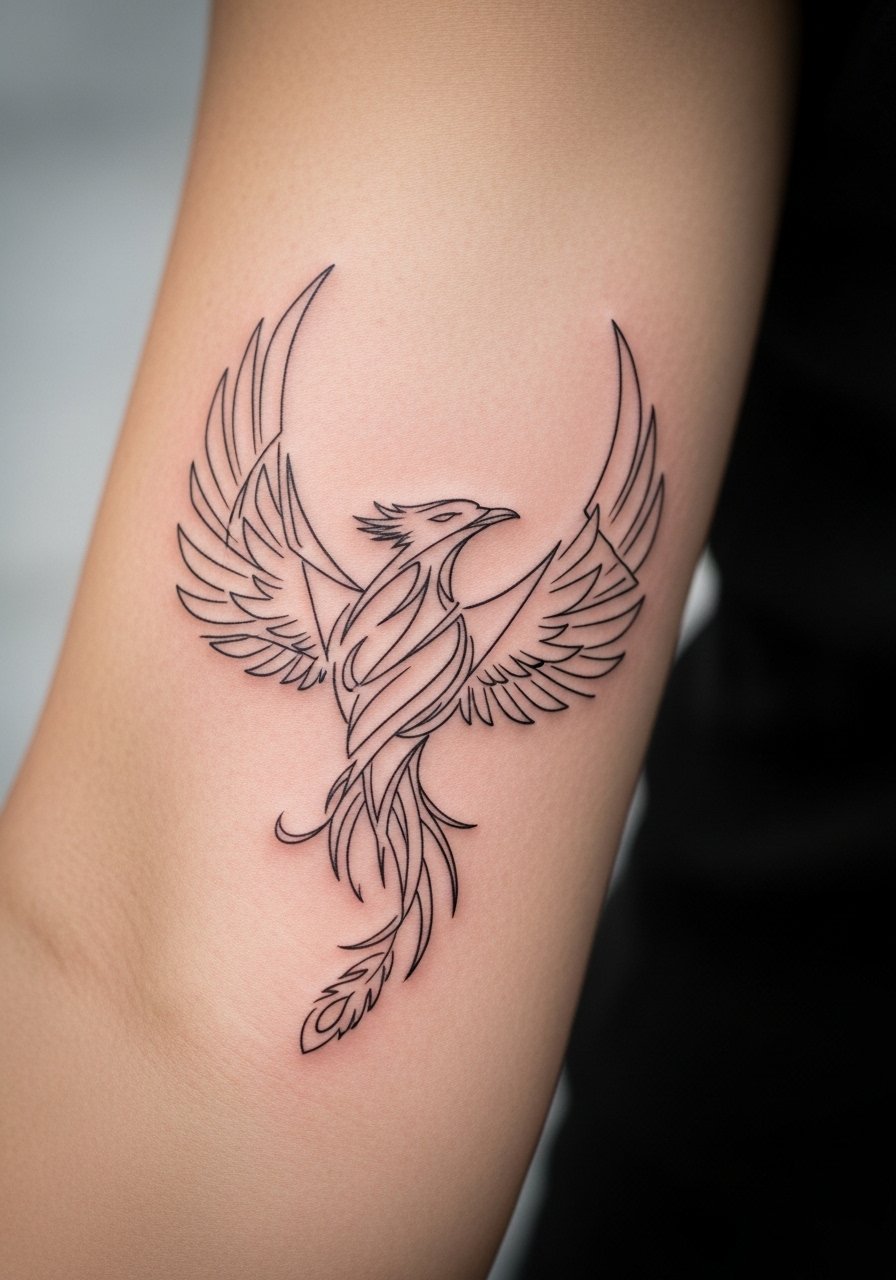
I've seen this placement hold detail well for three years when the linework has room. Ask your artist for slightly varied line weight across the fragments and stipple shading in the negative spaces so the image reads from a distance. Pain is moderate, and a single 90 to 120 minute session usually covers a mid-length forearm piece. A common mistake is asking for ultra-tiny fragments that merge into a blur after a year. For showing it off, roll up sleeves or go with a loose button-down shirt you can pull aside to reveal the design.
2. Flame Geometry Across the Chest

Fair warning, upper chest skin shifts when you move, so line spacing matters for longevity. The session can be slightly more painful than the arm, and you might split it into two visits if you want dense saturation. Tell your artist to avoid tiny parallel lines close together, and instead use layered geometry and negative space. One camp thinks dense linework here blurs fast, the other says deeper placement and deliberate spacing solve the problem. For nights out, pair this with a wide-neck tee to let the collarbone framing do the work.
3. Inked Rib Phoenix With Stipple Shading
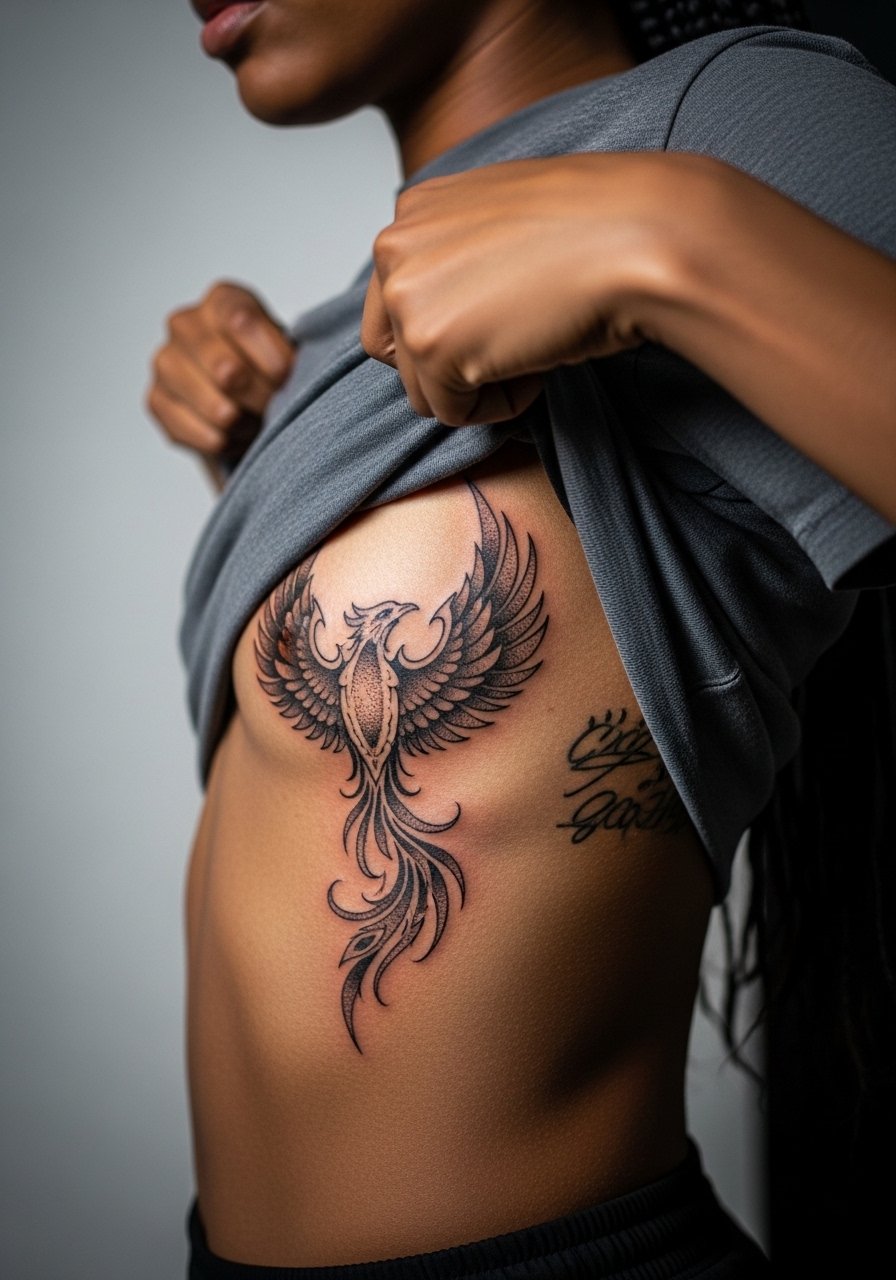
Pain here is real, most people rate the ribs high on the scale, but the visual payoff is dramatic. Ask for stipple shading and wider gaps between lines in dense areas. Many watercolor or fine-line ribs from a few years back blurred into smudges. This abstract approach uses negative space to age more gracefully. Session time typically runs longer, so bring comfortable clothing you can adjust for access and warmth. For the appointment wear, a zip-up hoodie pulled open works well so you stay warm between passes.
4. Minimalist Phoenix Crest on the Nape
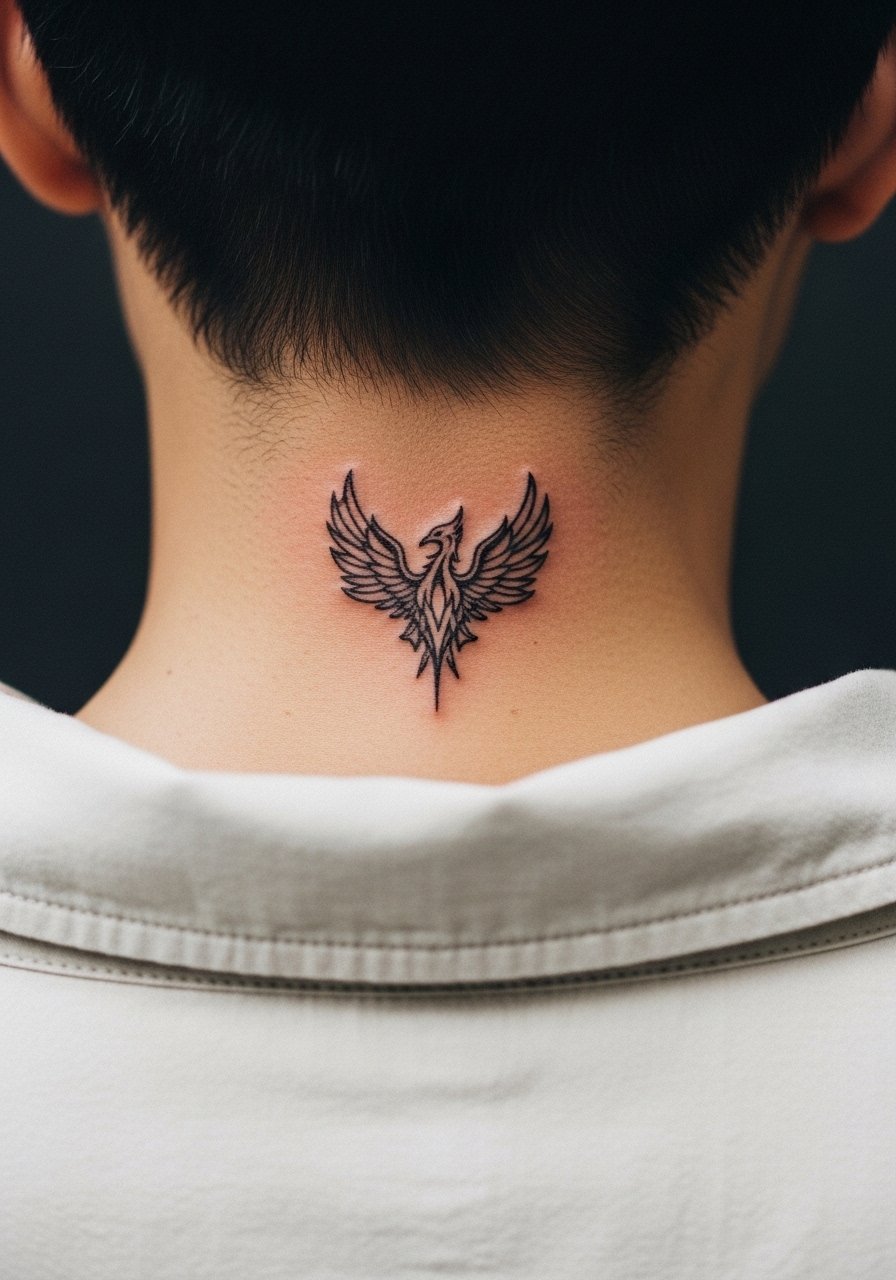
A nape piece reads compact and refined when you keep the composition vertical. The skin here moves with neck motion, so slightly stronger line weight prevents early fading. Sessions are brief if you keep the piece small, but the touch-up timeline may be shorter than for arm work. Hand-line mistakes show fast in this zone, so review healed photos in artist portfolios before booking. For everyday wear, a crew neck tee that can sit off the shoulder occasionally shows the crest without exposing too much.
5. Fragmented Phoenix Sleeve Accent on Outer Bicep
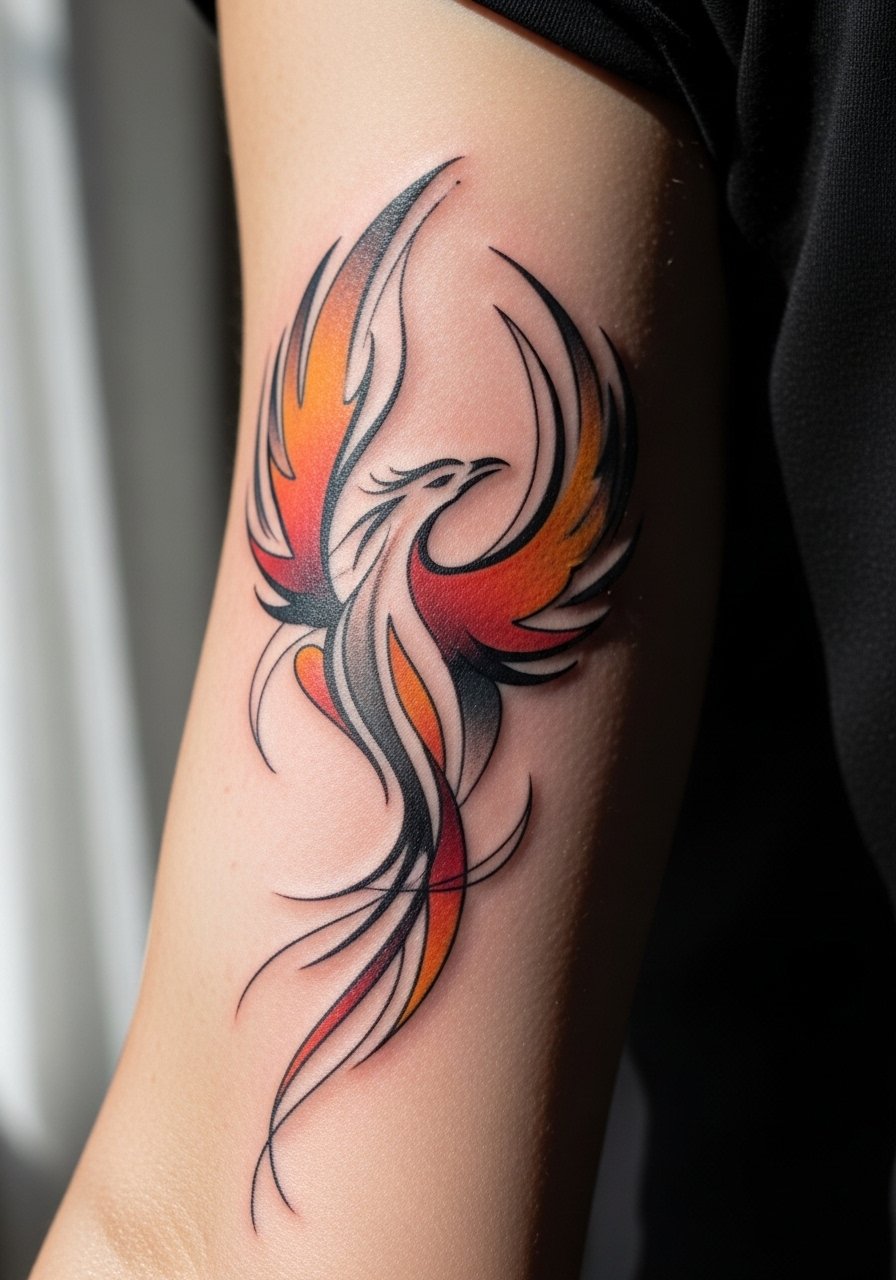
This is a versatile spot for building into a larger sleeve later. Pain is mild to moderate and sits well with a single long session or two shorter ones. Tell your artist you want bold anchors and airy negative zones so the piece does not turn into a heavy block of ink as it ages. A common mistake is over-saturating the midtones, which makes touch-ups trickier down the line. For showing it off casually, roll sleeves or go with a short-sleeve linen shirt that highlights the outer arm.
6. Geometric Phoenix on the Shoulder Blade
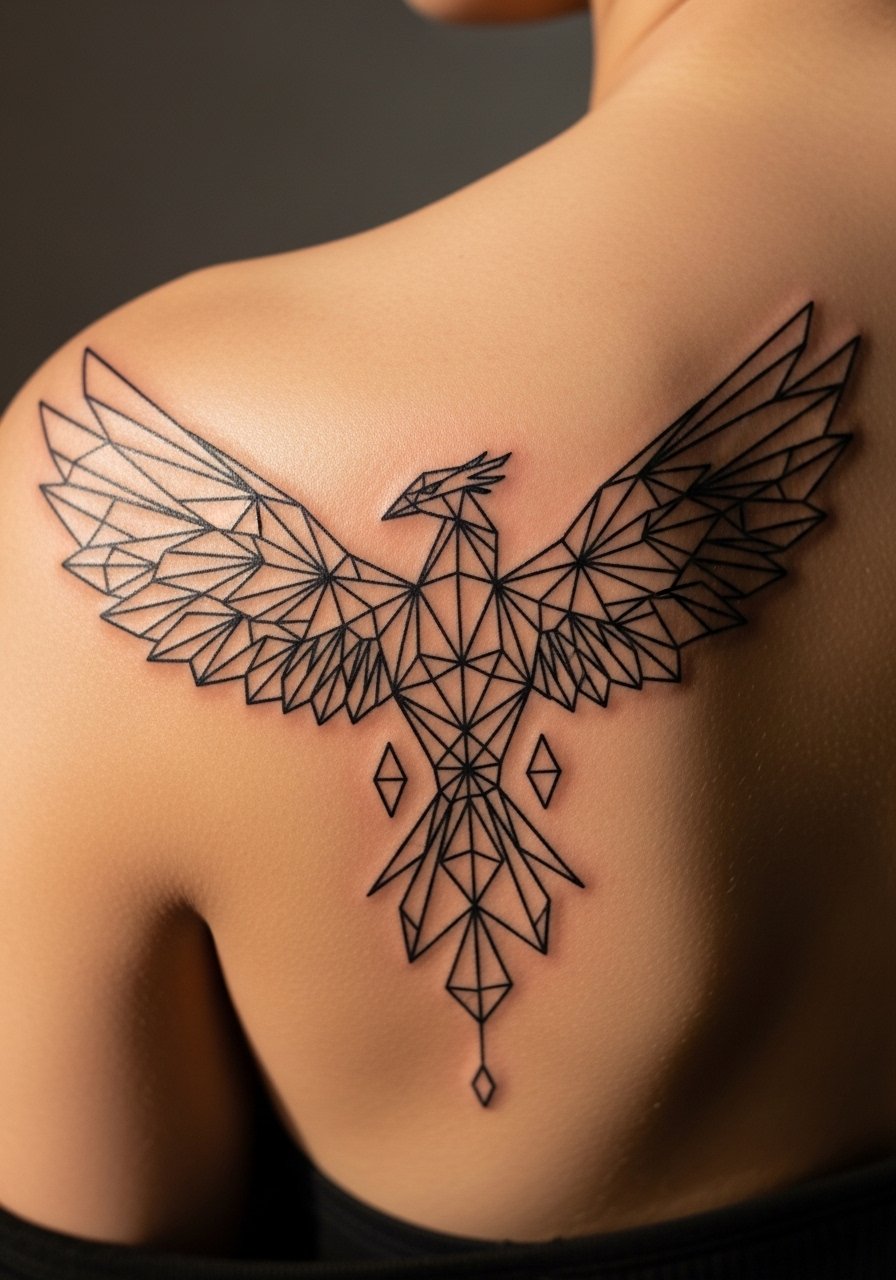
When you sit down with your artist for this one, bring references that show the flow across the shoulder blade. The area is forgiving for line density, but heavy black fills can feel stiff with movement. Session time is typically 90 to 180 minutes depending on size. A mistake I see is trying to cram too much tiny detail into the curvature of the blade. For the session, wear a tank top you can pull aside so the artist has clear access while you stay comfortable.
Studio Day Picks
The forearm, chest, ribs, and shoulder blade pieces above ask for different prep and healing strategies, so pick items that match those placements.
-
Stencil transfer paper kit. Lets you preview placement directly on skin, which is helpful for forearm and shoulder blade layouts.
-
Topical numbing cream. Applied before a rib or chest session eases the first pass without affecting the artist's linework.
-
Thin protective film roll. Useful for finger or wrist pieces to reduce friction during daily tasks in the first week.
-
Fragrance-free gentle body wash. A mild wash keeps large areas like chest and shoulder blade clean without irritating fresh linework.
-
Aquaphor healing ointment. Thin application in the first days helps keep fine line work on the forearm from drying into scabs.
7. Negative Space Phoenix on the Rib to Hip Sweep
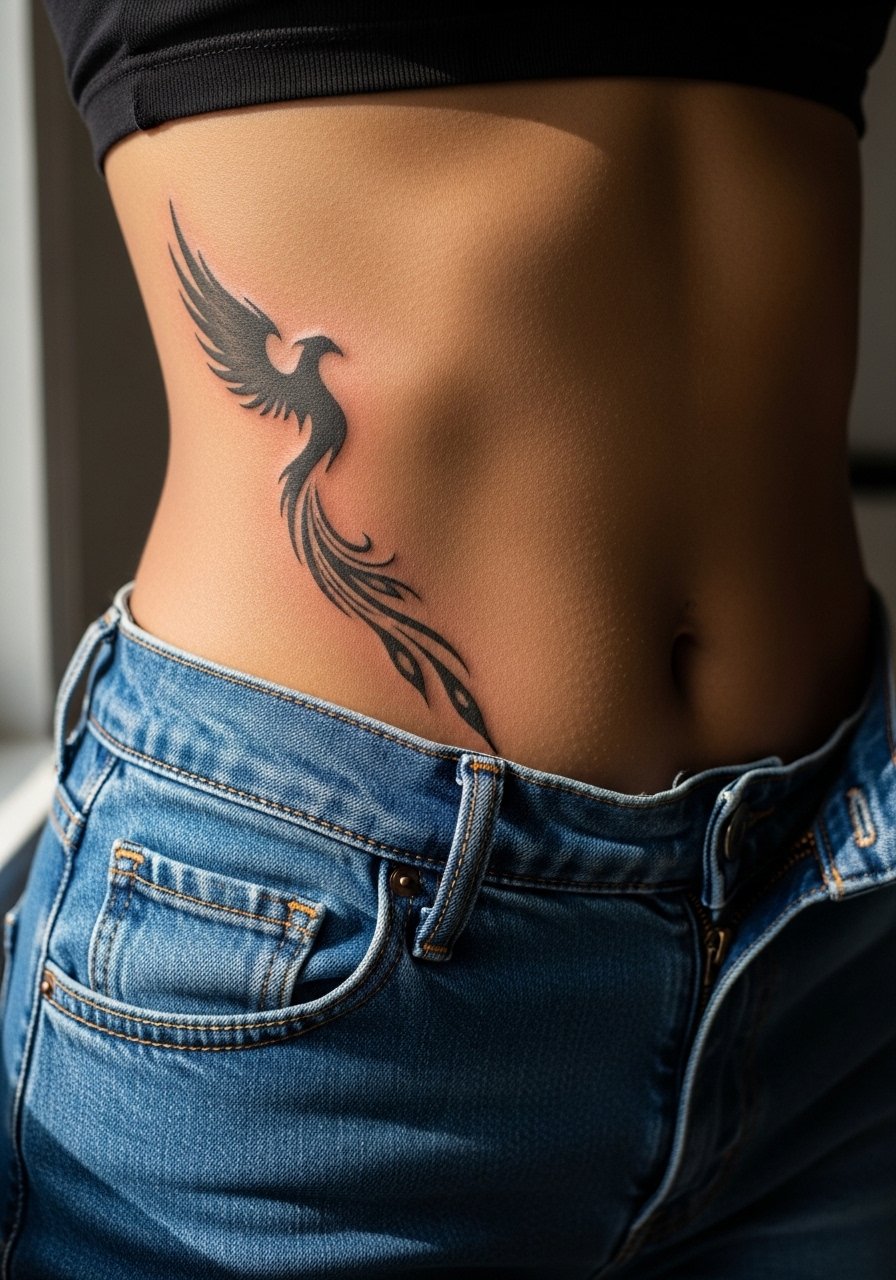
Visual impact lead. There is something about a phoenix that reads as motion when the negative space does the heavy lifting. This placement blends ribs and hip, which means session time will be longer and pain varies across zones. Tell your artist you want broad negative channels to avoid dense areas that could contract and blur. A practical session tip is to bring clothing you can adjust for both ribs and hip access. For showing it off later, high-rise shorts or a low-rise waistband frames the sweep nicely with a high-waisted denim that sits below the design.
8. Abstract Phoenix Band Around the Calf
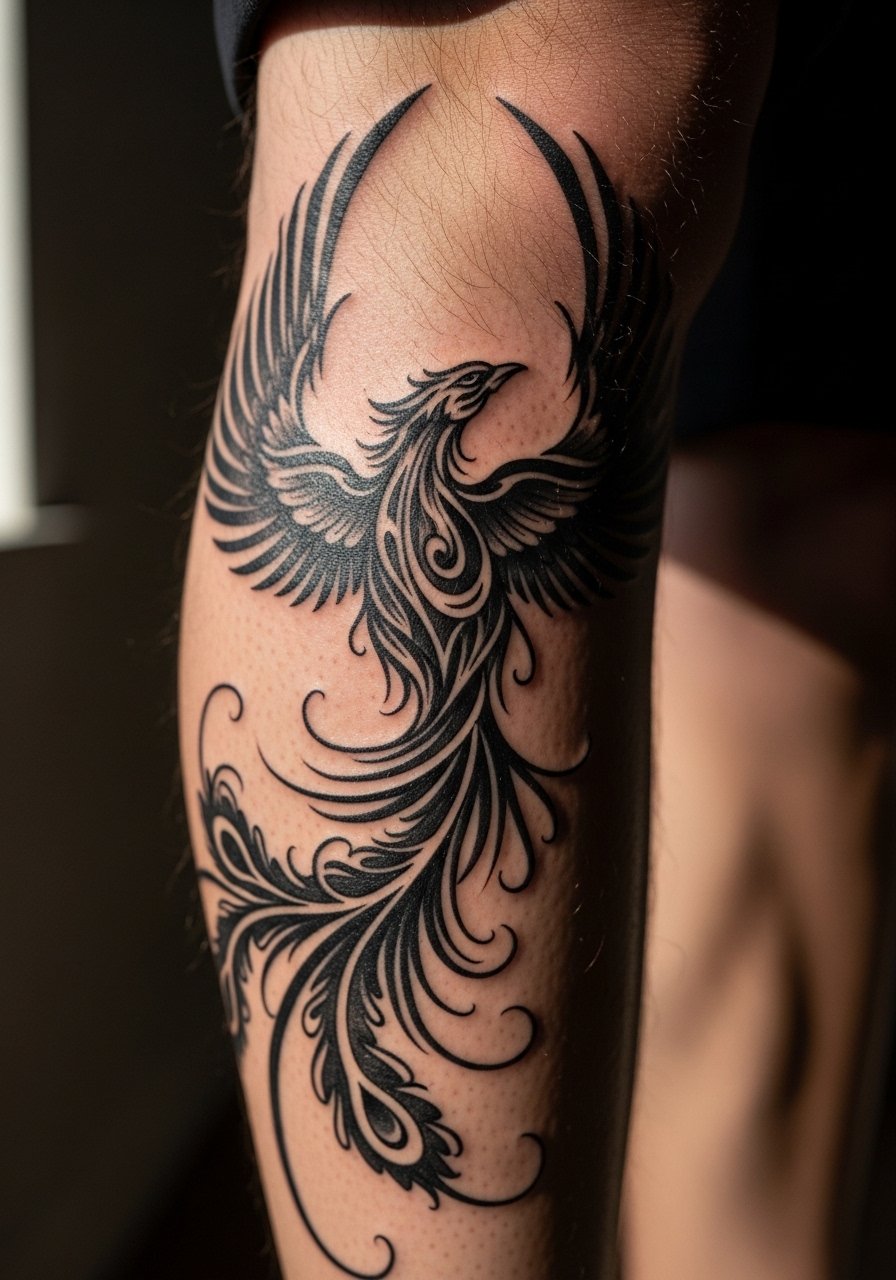
A banded calf piece can be surprisingly low on pain and high on visibility in shorts. The round shape helps the design read from multiple angles if the linework is continuous and not too busy. Sessions are moderate in length, often completed in one visit. Avoid adding tiny interior details that will blur with muscle movement. For show-off wear, sandals and rolled-up jeans work well, and a pair of slide sandals keeps the focus on the lower leg.
9. Minimal Phoenix Linework on the Wrist
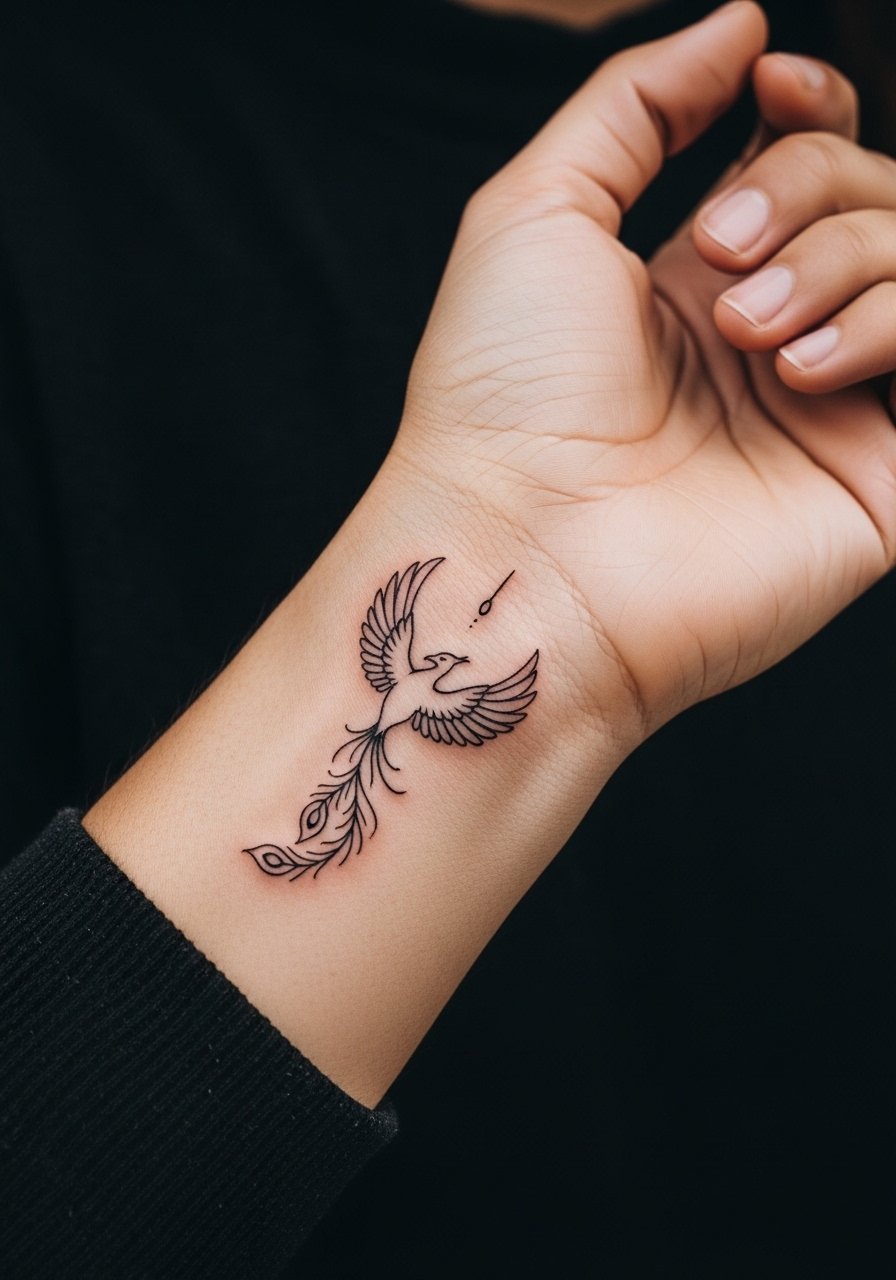
Pain warning lead. The wrist is sensitive, and fine lines here need slightly bolder weight to survive daily washing and friction. Sessions are brief, but the touch-up timeline can be sooner than for larger placements. A frequent mistake is requesting ultra-thin single lines that disappear after frequent soap and sanitizers. For showing it off, stacked minimalist bracelets work well, and you can slip on a thin chain bracelet to frame the piece without covering it.
10. Abstract Phoenix Tail on the Side Thigh
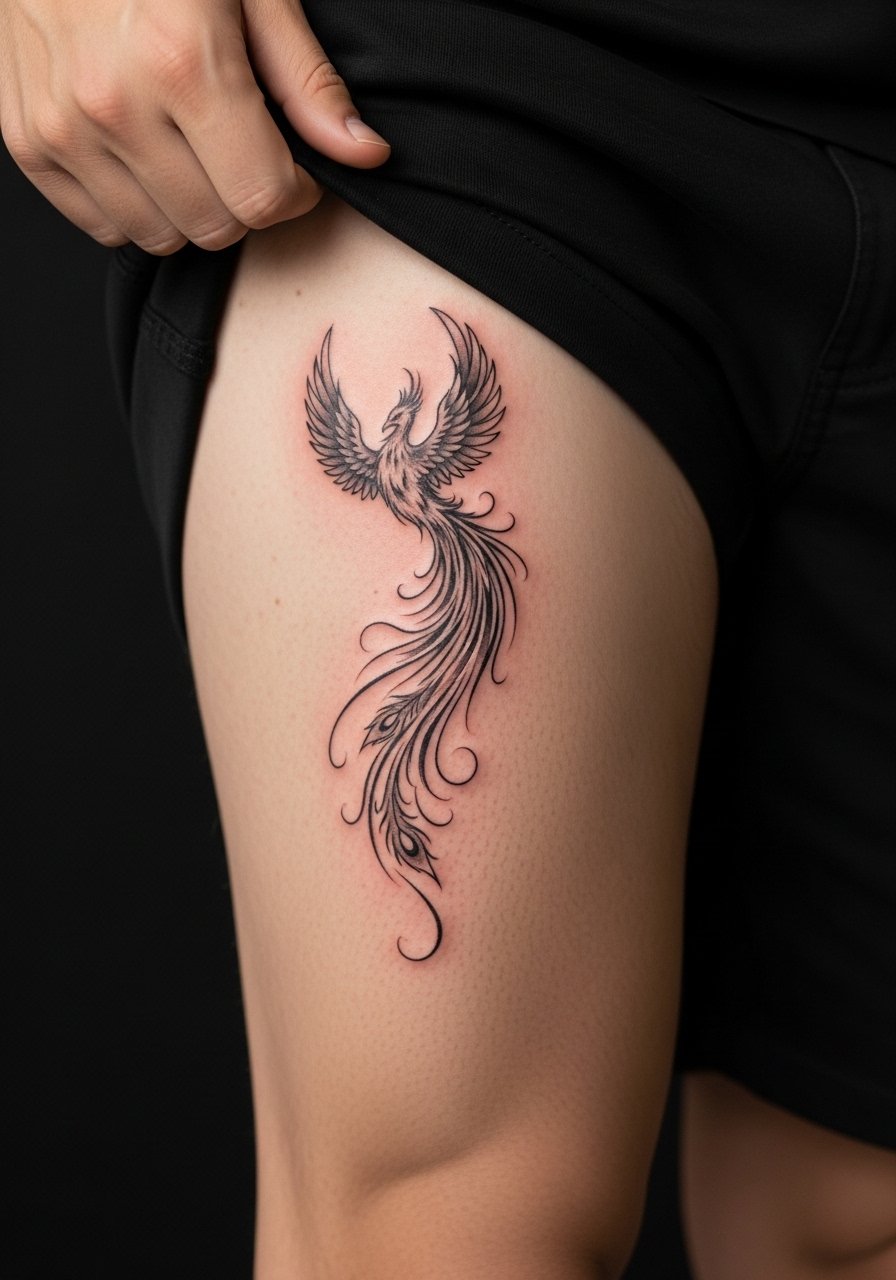
Consultation lead. The thigh handles larger pieces with less blowout risk, so it is ideal for elongated abstract tails and flowing elements. Sessions are comfortable for most people, and the area heals with less friction than hands or wrists. A mistake is choosing too little negative space for long curves, which leads to heavy blocks of ink over time. For the session, wear loose shorts or a pair of loose drawstring shorts so the artist can access the area without discomfort.
11. Fragmented Phoenix on the Upper Chest Sternum Edge
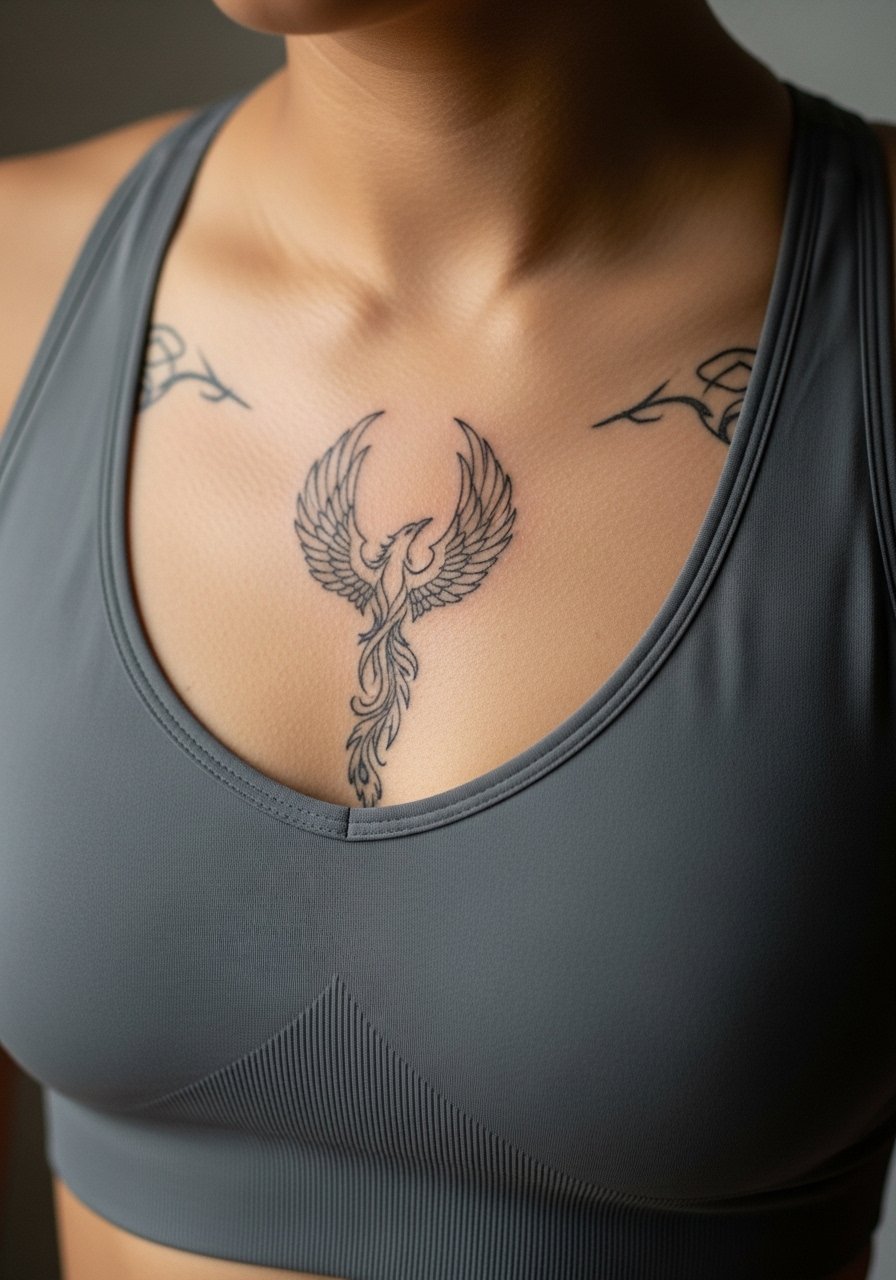
Aging lead. The sternum area can show dense detail clearly at first, but skin tension and movement affect long term clarity. One camp says delicate linework at the sternum blurs quickly. The other camp maintains that with proper depth and spacing it keeps form. If you choose this spot, ask for clean negative space and avoid micro-detail near the center. Session time can be longer, and dress for access with a strapless or sports bra. For evening looks, a low-cut shirt that sits along the chest line can frame the piece subtly.
12. Abstract Phoenix Collarbone Fragments
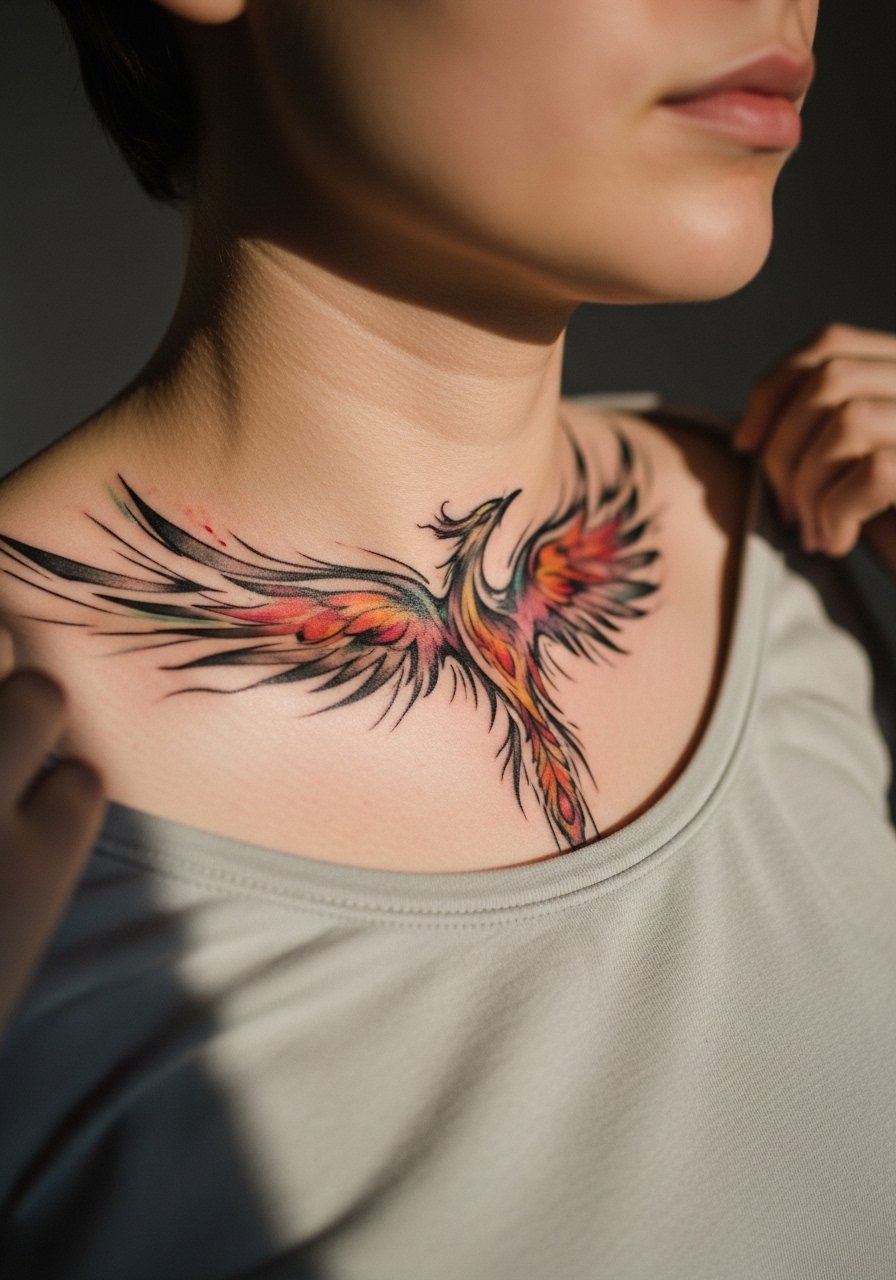
Visual impact lead. Collarbone placements catch light and shadow, so crisp linework and minimal saturation keep the piece readable as you age. Pain is moderate and session lengths are usually short. A common mistake is heavy black fills right over the bone, which can look blocky later. For showing it off, a thin pendant or an open-neck shirt can highlight the fragments, and a thin chain pendant necklace sits well above small collarbone markings.
13. Single-Needle Abstract Phoenix on the Finger Side
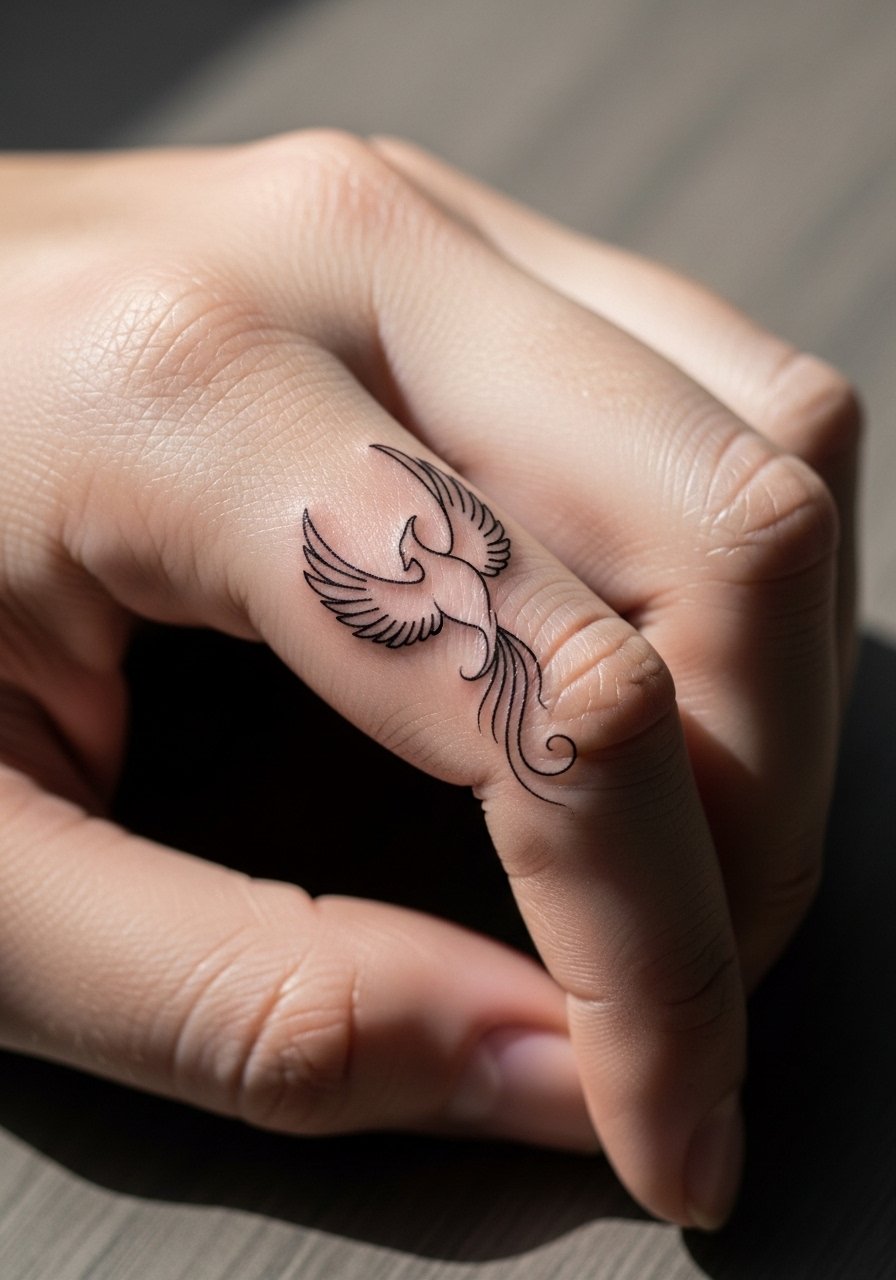
Mistake lead. Finger work is tempting, but tiny single-needle pieces on the finger side often lose crispness fast because of constant washing and friction. If you insist, ask for slightly thicker linework and expect touch-ups. Session time is short but the number of needed touch-ups is higher. Consider placing a fragment on the finger base instead of the tip for better longevity. For day-to-day wear, avoid tight rings rubbing the area for the first months and choose a minimal band ring that does not sit over the ink.
14. Abstract Phoenix Back Panel With Dot Work
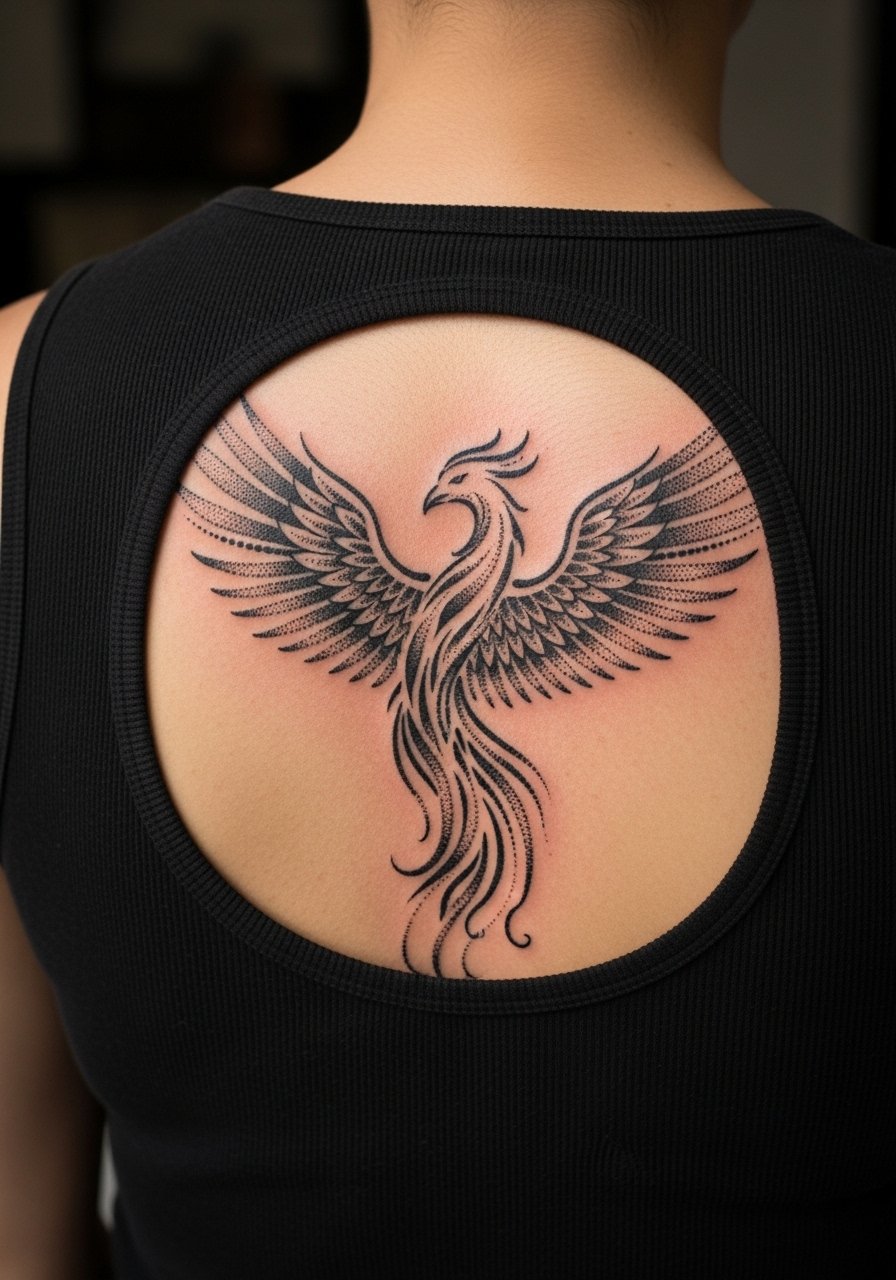
Personal observation lead. I have seen dot work on the back age well when artists leave breathing room between clusters. The upper back tolerates denser compositions, but heavy saturation across a wide area can feel flat over time. Sessions will likely be multiple and may require breaks for comfort. Ask for staged shading passes and for the artist to show healed photos from similar work. For the appointment, a button-down shirt you can pull aside helps with access while staying modest.
15. Phoenix Wing Wrap on the Bicep With Whip Shading

Visual impact lead. Whip shading gives motion to feathers without solid blocks of ink. This area is forgiving for gradient techniques, and pain is usually moderate. A common error is packing too much black into the wing base, which can flatten movement. Request feathered transitions with stipple and whip shading to preserve texture. For casual display, rolled-up sleeves or a short-sleeve tee keeps the arm visible without spotlighting.
16. Minimalist Phoenix on the Side of the Hand
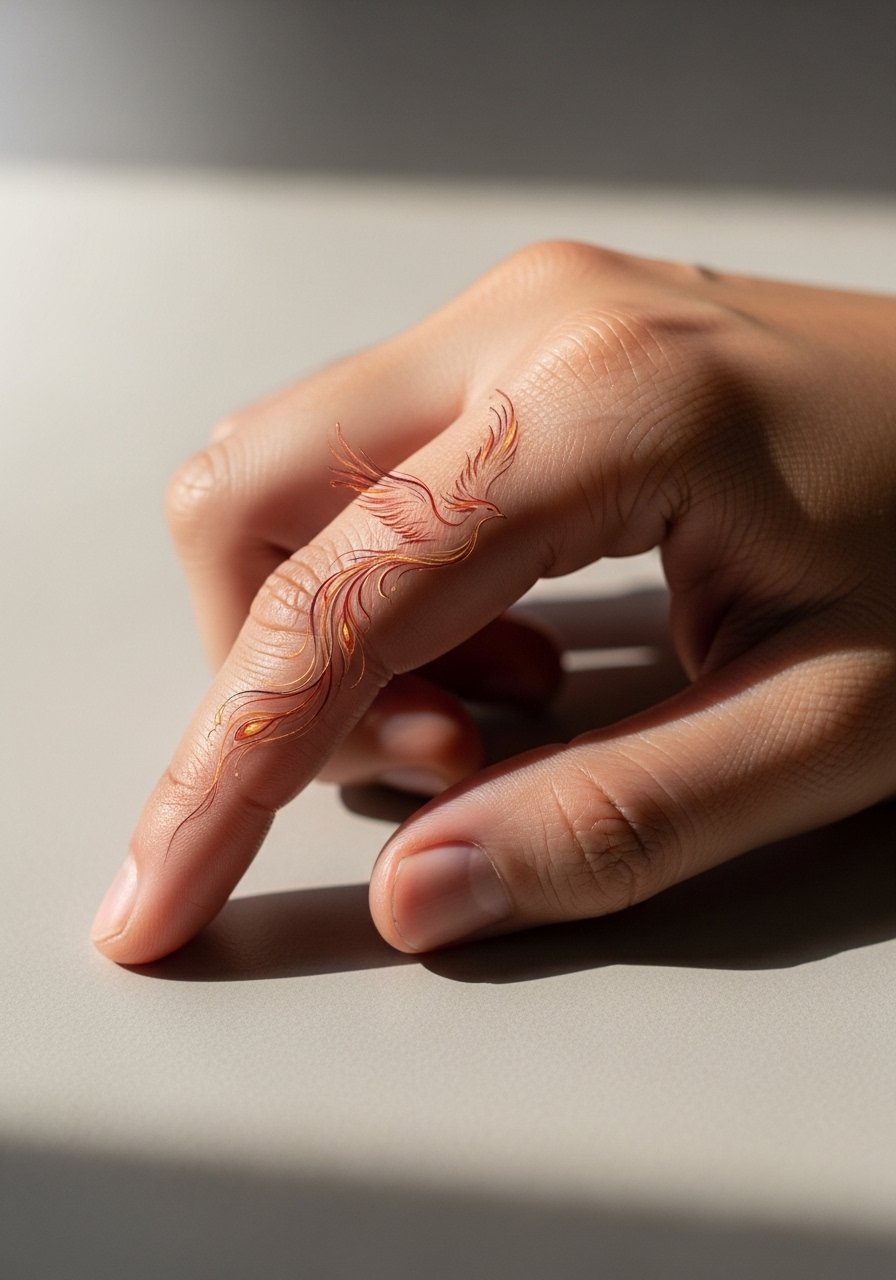
Pain warning lead. Hand tattoos face constant friction and exposure, so plan for touch-ups. The side of the hand is a slightly better spot than the fingers for longevity, but still high maintenance. Sessions are quick, and keeping lines slightly bolder helps them survive. Consider a compact version that can be refreshed. Also think about workplace visibility before booking. For a subtle look, pair with a simple leather bracelet that draws attention without rubbing the ink.
17. Angular Abstract Phoenix Over the Sternum
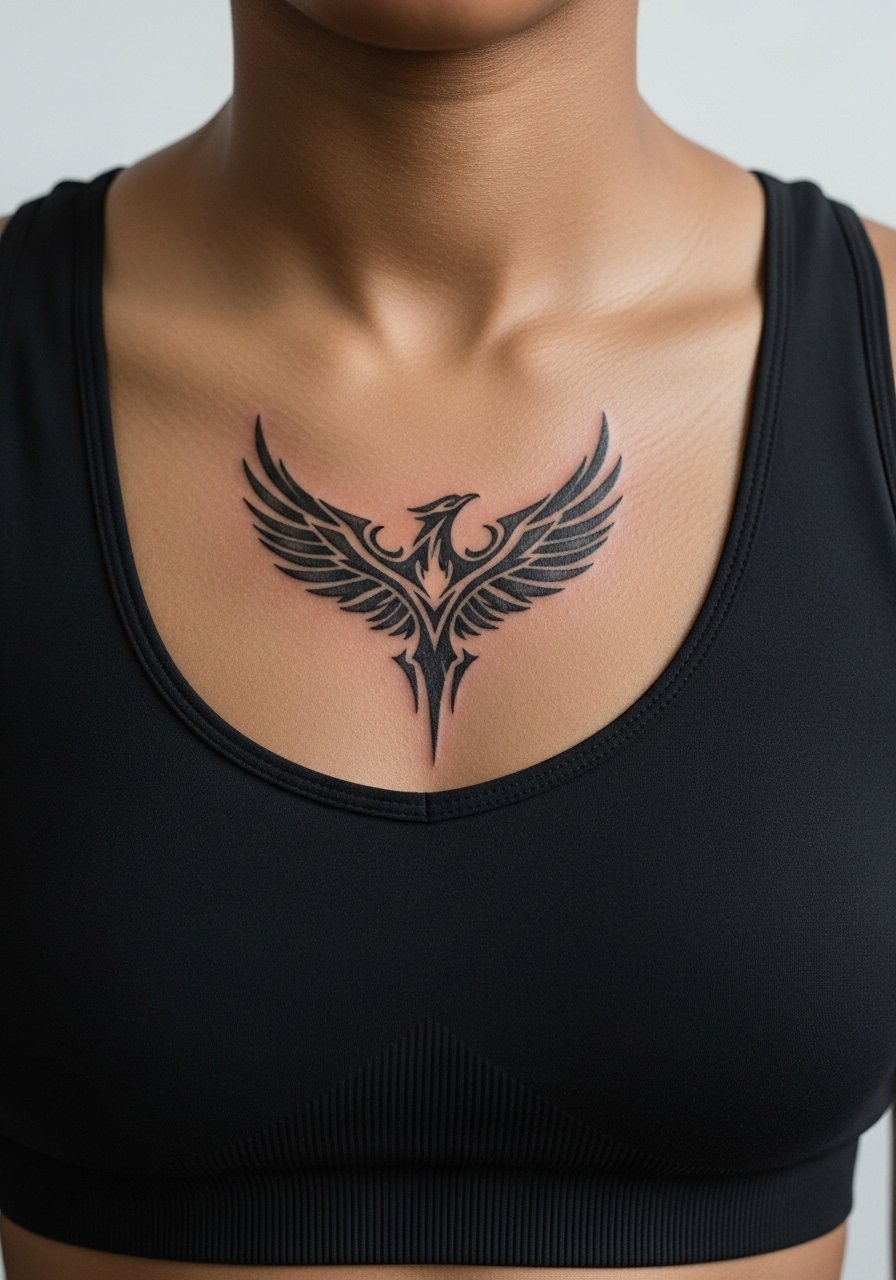
Controversy lead. Artists split on intense angular work over the sternum. One group warns the central tension pulls lines apart as the skin stretches. The other argues that when set with correct needle depth and spacing, the angles hold. If you like hard edges here, ask for slightly softer connecting shapes to avoid early distortion. Session time is substantial and the area needs careful aftercare. For show-off outfits, a low-cut shirt or fitted top frames the central piece without exposing more than intended.
18. Phoenix Neckline Accent Along the Side Neck
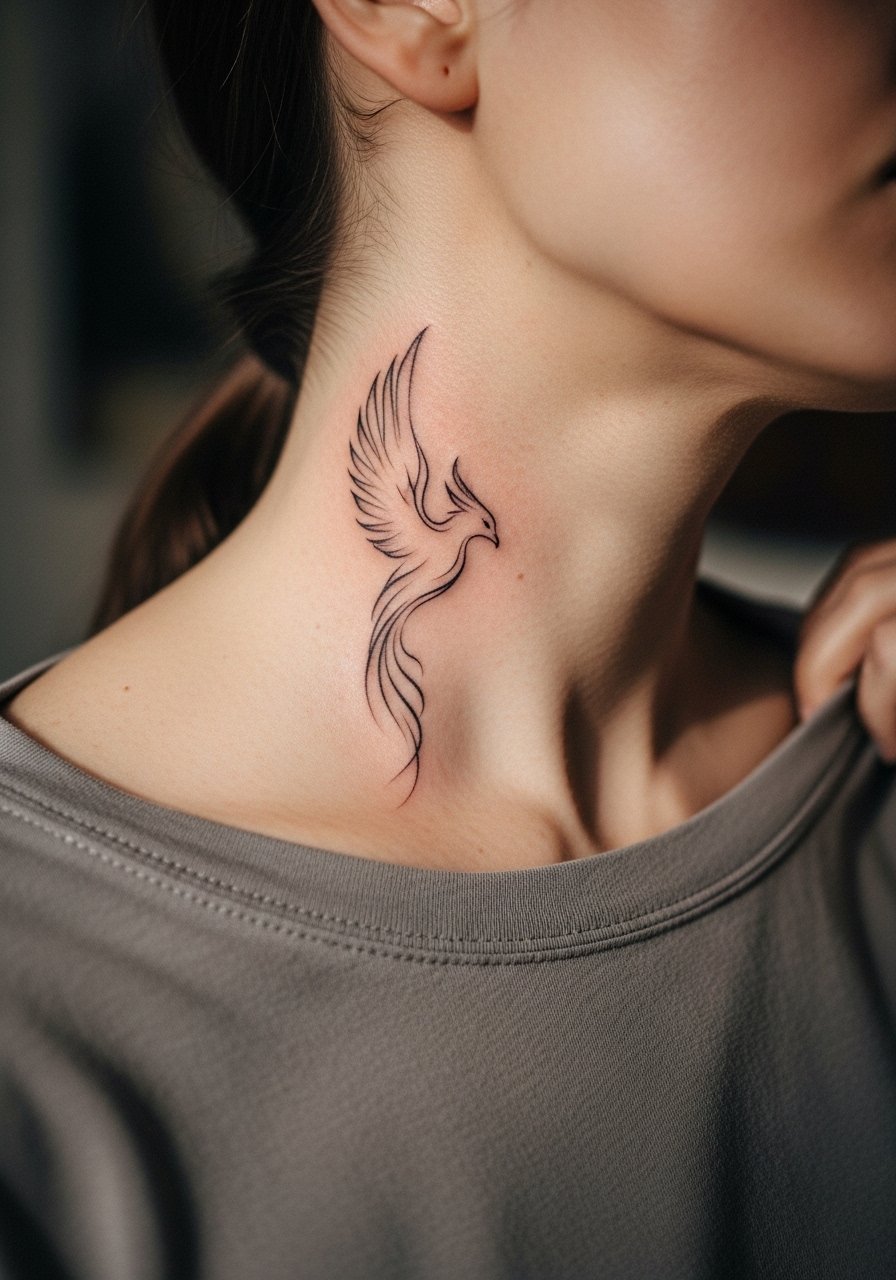
Consultation lead. Neck pieces read bold even when small, so line clarity is essential. The skin here moves and is exposed to sun, so expect faster fading. Ask for touch-up planning at the consultation. A mistake is asking for too many micro lines. Sessions are short but consider career implications due to visibility. For subtle show-off looks, a crew-neck shirt you can pull slightly to frame the accent keeps it tasteful.
19. Abstract Phoenix Ribcage Panel With Layered Negative Space
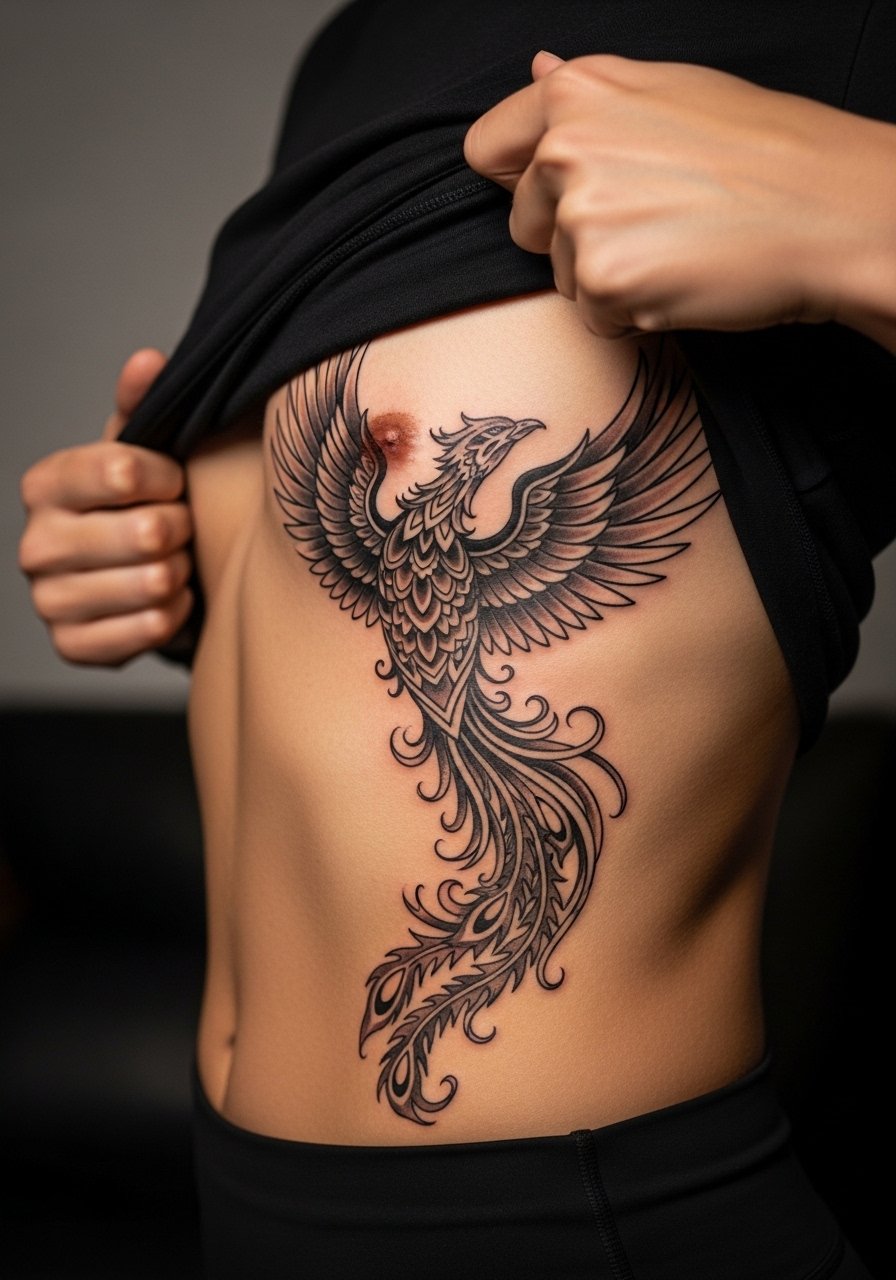
Aging lead. Dense designs on the ribs can collapse into a muddled field without clear negative channels. Layering negative space creates depth that survives stretching. Sessions will be longer and more intense. One frequent mistake is adding too many micro textures near the sternum where skin tension is highest. Plan for staged shading in separate visits. For the session, wear a sports bra that you can adjust so the artist has full access and you stay supported.
20. Abstract Phoenix Shoulder Cap With Saturated Blackwork
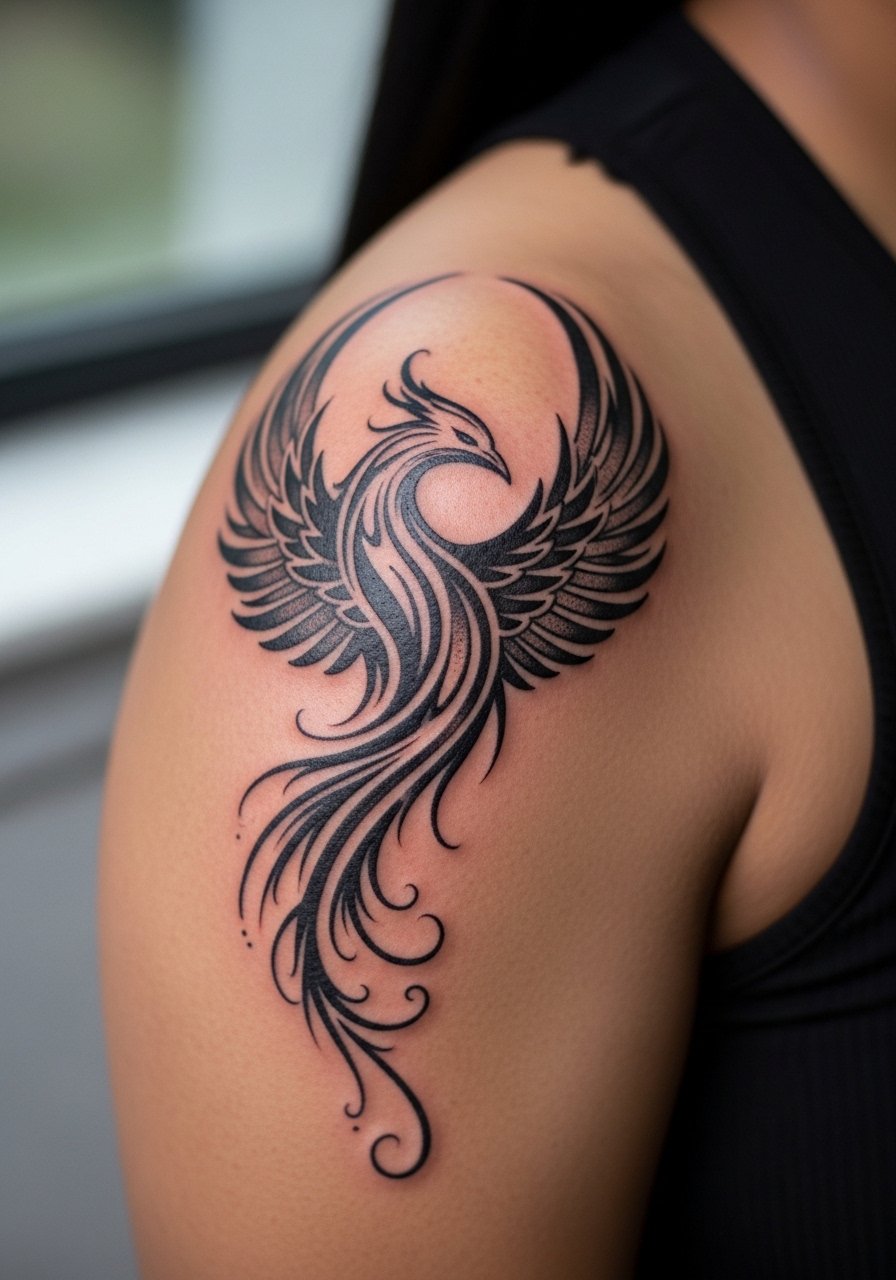
Visual impact lead. The shoulder cap takes saturated black well and reads from a distance, which is great for bold abstract shapes. Pain is typically low, and a solid session can achieve a crisp anchor look. Avoid trying to add tiny linework inside dense blacks or the contrast will get lost. For showing it off, a muscle tank highlights the curve and keeps the edge visible.
21. Stippled Phoenix Spine Runner
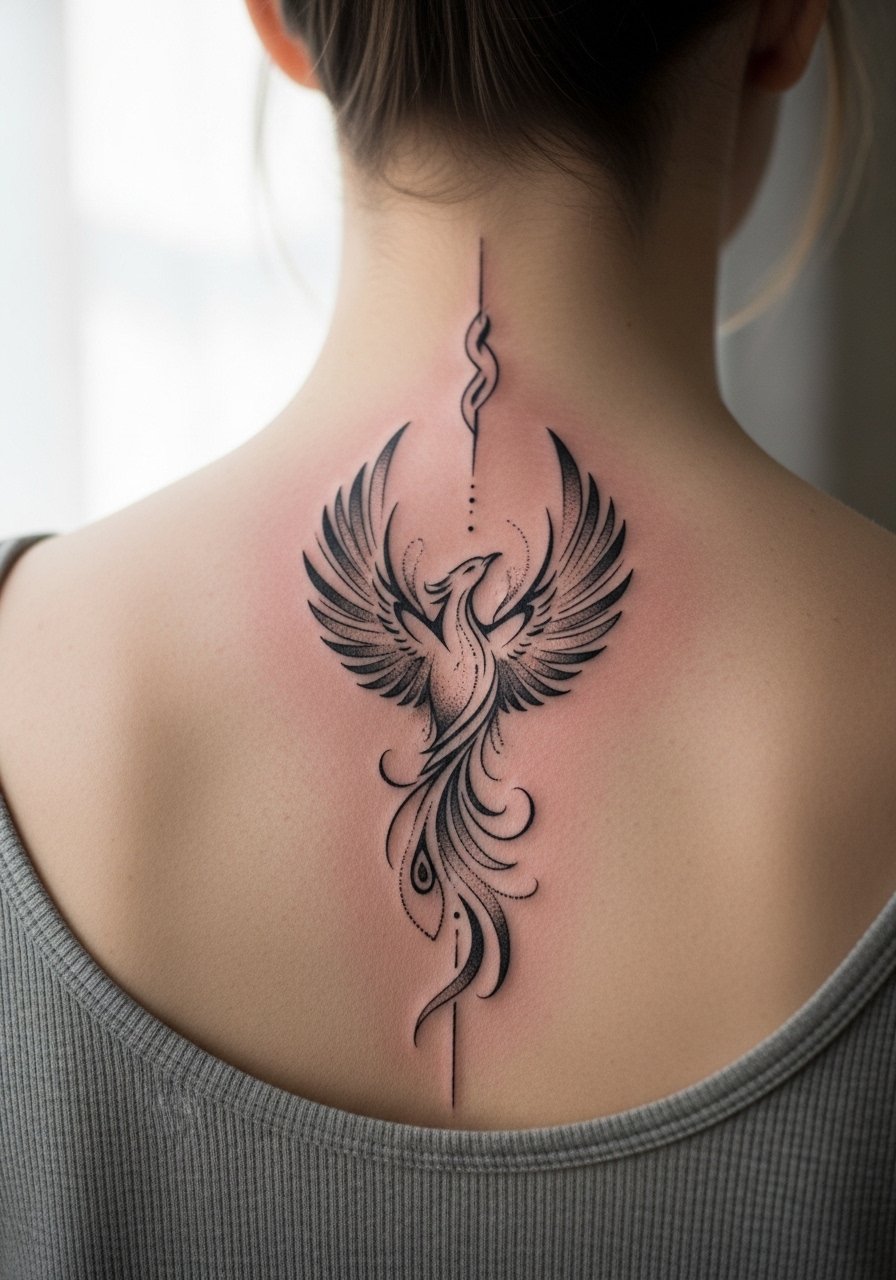
Personal observation lead. Spine runners with stipple shading age into texture rather than patchy blocks when the artist spaces dot work correctly. The area can be tender, and sessions may require breaks. Avoid heavy saturation directly over the spine unless you want a large black anchor. For showing it off, open-back tops or a halter shirt frame the centerline without being revealing.
22. Abstract Phoenix Collarbone to Shoulder Sweep
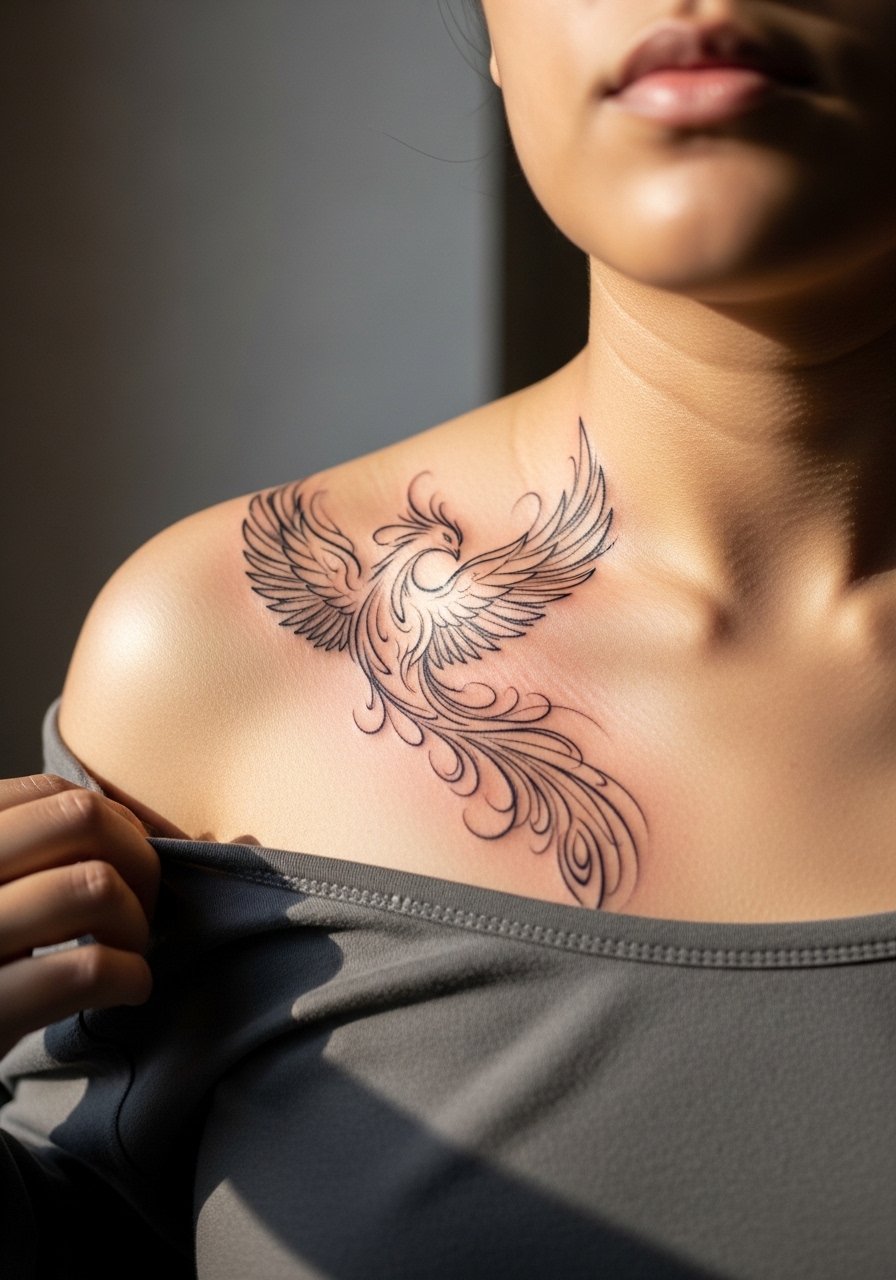
Mistake lead. The biggest error with sweeping collarbone pieces is letting the midsection get too dense. Keep negative space free to preserve lightness. Sessions are moderate and often finished in one visit if the artist works cleanly. For daily wear, a loose linen shirt with the sleeves rolled helps the sweep read naturally.
23. Abstract Phoenix Ankle Motif
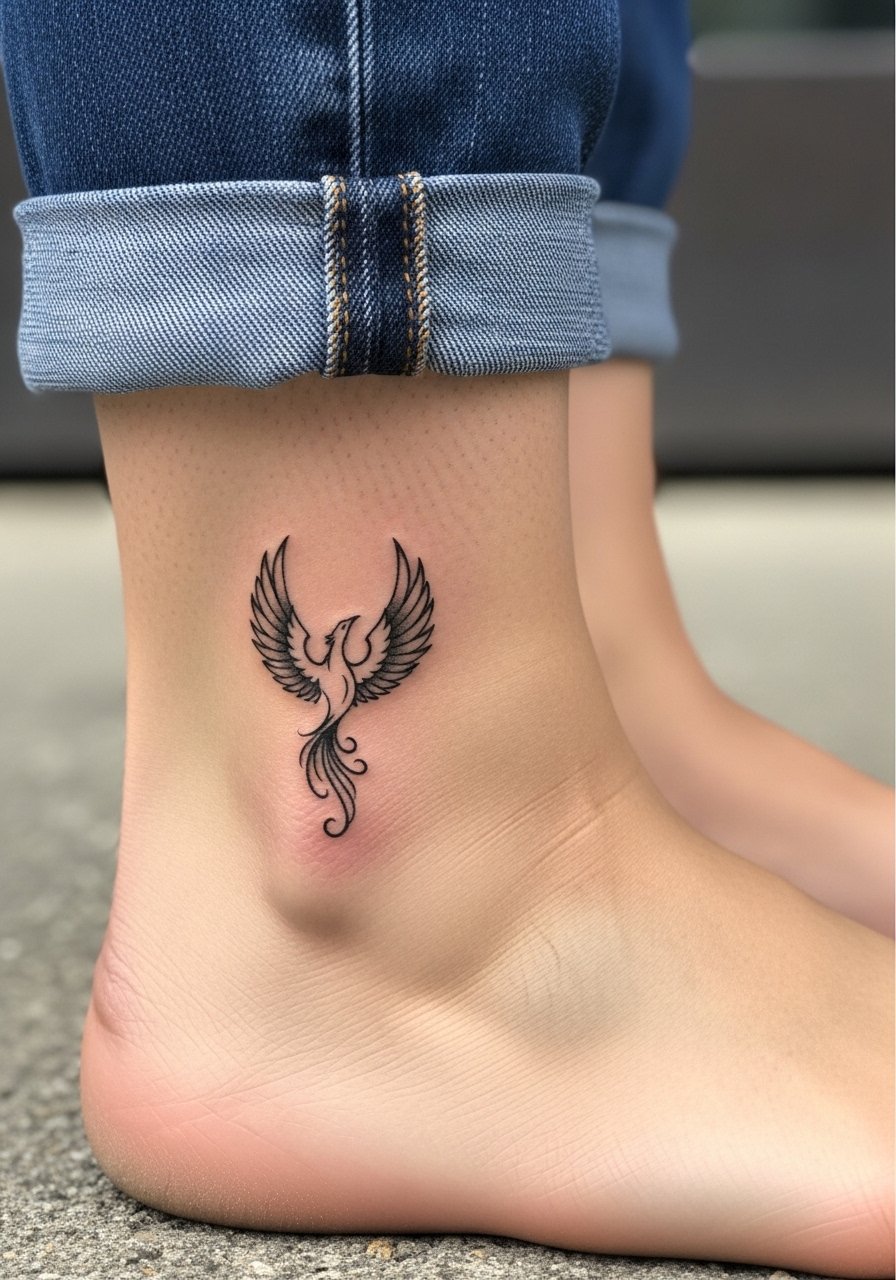
Pain warning lead. Ankle tattoos are bony and can sting, but small abstract motifs are popular because they peek out with shorts or boots. Expect slightly more touch-up needs due to shoe friction and socks. A common mistake is placing the design too low where shoes rub constantly. For footwear that shows the piece, try a pair of canvas sneakers or low sandals that keep the area visible without rubbing.
24. Phoenix Thigh Band With Negative Cutouts
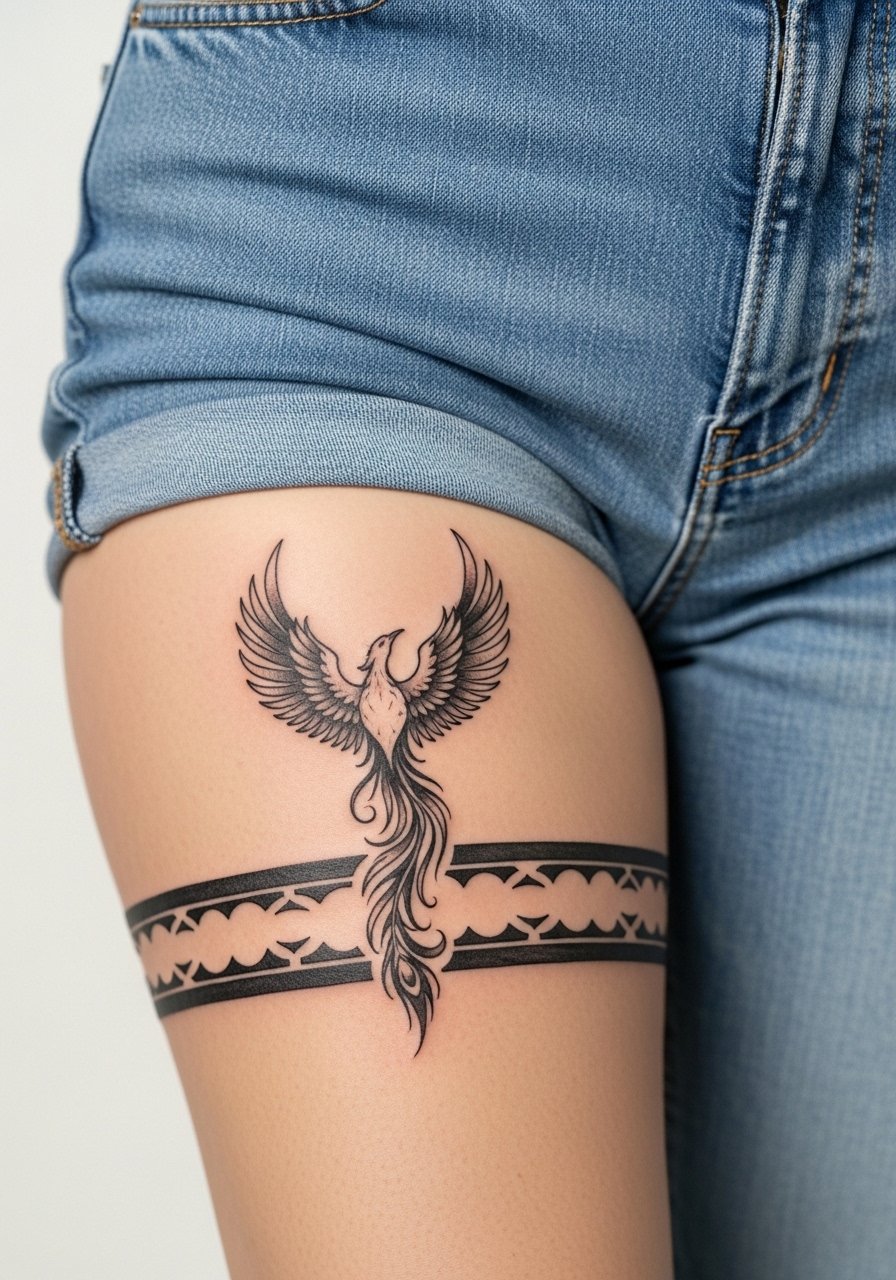
Consultation lead. Thigh bands give you surface area to play with cutouts and negative shapes. The skin heals predictably and sessions are comfortable. Avoid packing small details into curves that will crease when you sit. If you plan to build a sleeve later, talk about how the band will integrate. For casual show-off, a pair of high-waisted shorts that sit below the band does the job.
25. Phoenix Ribcage Fragment Near the Underbust
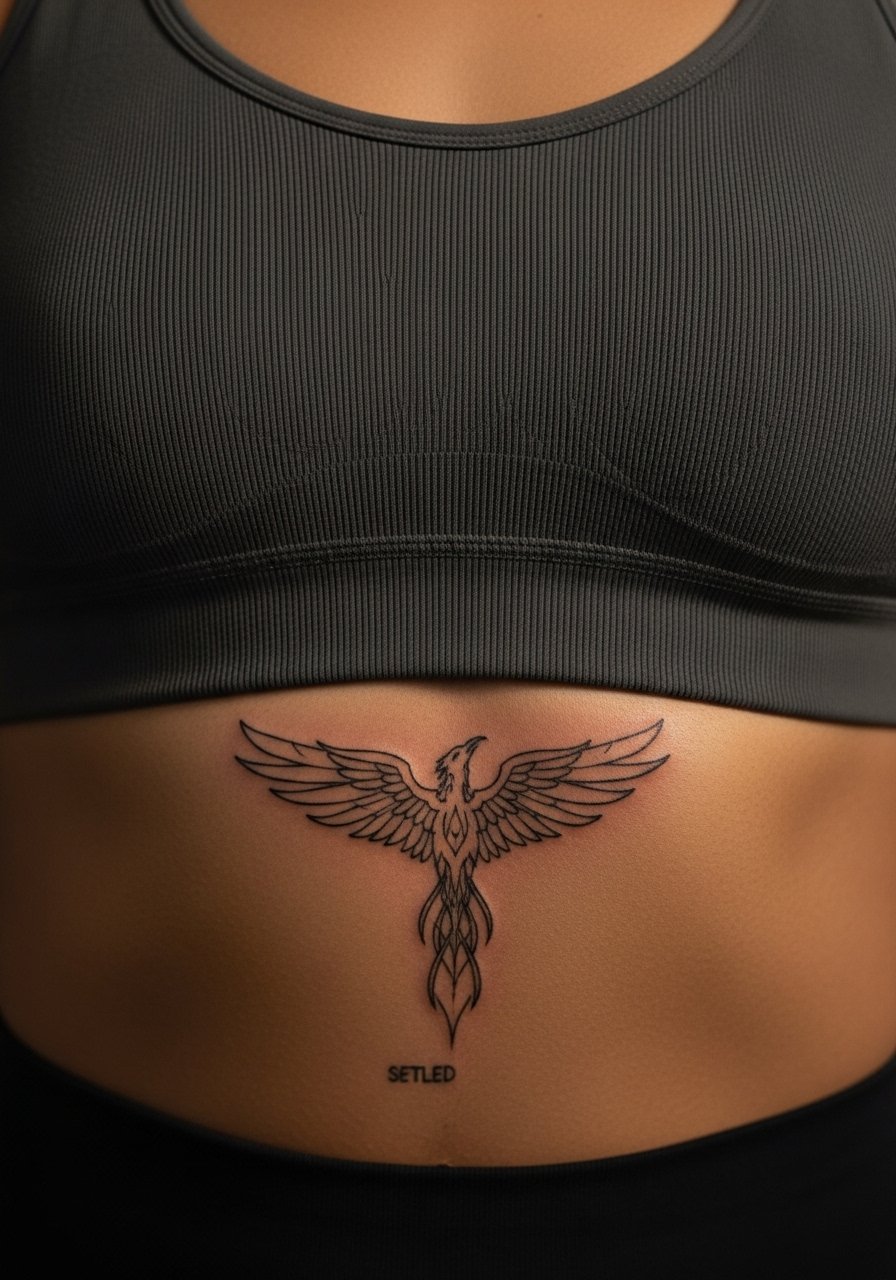
Aging lead. Underbust and upper rib fragments can look crisp initially, but repeated movements and fabric pressure change the ink over time. One camp worries that underbust placements are prone to early blurring. The other says careful spacing and minimal saturation avoid this. Ask your artist about how they manage depth in that zone. For session wear, a fitted sports bra that you can slightly shift is practical, and for nights out a bandeau top frames the area without revealing more than intended.
26. Abstract Phoenix Lower Back Accent
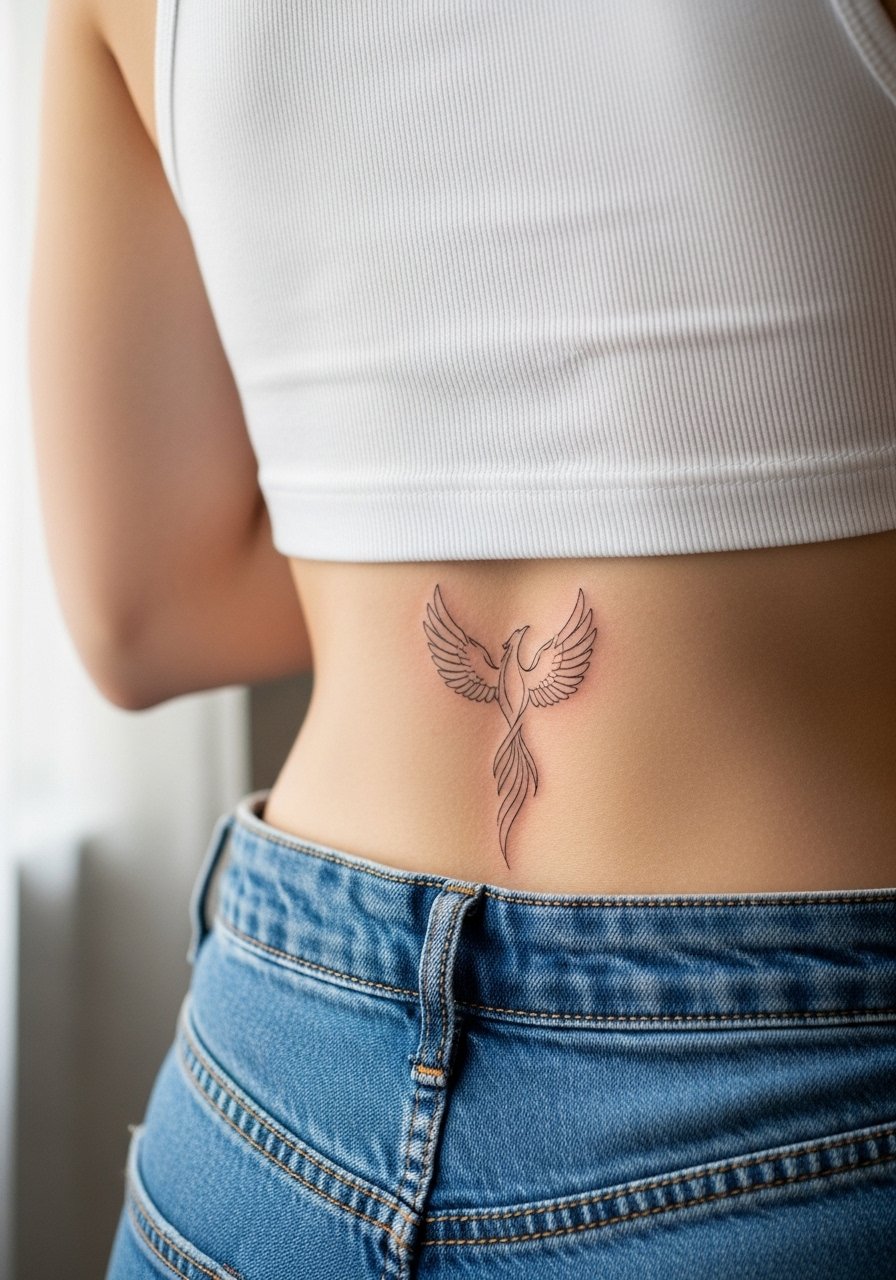
Visual impact lead. Lower back pieces read well under clothing and are easy to hide when needed. The skin is stable and accepts detail nicely, but avoid heavy saturation that can look dated. Sessions are comfortable and usually done in one sitting. For the appointment, wear pants you can lower slightly and a tank top so only the tattoo zone is exposed.
27. Abstract Phoenix Collar Accent With Dot and Line Balance

Mistake lead. People often try to combine too many techniques in a tiny collar accent, which muddies the result. Keep one dominant language, either dot work or bold linework, and use the other as a supporting voice. Sessions are short, and touch-ups are modest if you avoid over-detailing. For showing it off, thin layered necklaces draw attention to the collar without covering the tattoo, so consider a thin chain necklace.
Frequently Asked Questions
Q: Will fine line abstract phoenix work on the ribs without blurring?
A: It depends on the spacing and needle depth. One camp says ribs blur fast because skin stretches and breathes differently. The other camp says careful spacing and slightly stronger line weight solve that. Plan for touch-ups and ask an artist to show healed rib photos that match your style.
Q: How soon should I expect a touch-up for wrist or finger phoenix fragments?
A: Expect touch-ups earlier than for larger placements. The wrist and fingers face daily washing and friction that fade fine lines faster. From what I have seen, a realistic plan is a touch-up within one to three years depending on exposure and care.
Q: Are there cultural concerns with abstract phoenix designs I should know about?
A: The phoenix appears in many myth systems, so the main consideration is respect. If the design borrows specific cultural motifs, mention that to your artist. Many people adapt the symbol in abstract ways to avoid direct replication of culturally specific iconography.
Q: What should I wear to a sternum or ribcage session to stay comfortable and give the artist access?
A: A fitted sports bra or a zip-up hoodie you can open works best. The idea is easy access while staying warm between passes. For sterner areas, a sports bra that you can adjust is simple and effective.
Q: How do abstract phoenix pieces age compared with traditional photo-realistic phoenix tattoos?
A: In my experience, abstract work that uses negative space and bold anchors tends to age into texture better than intricate photo-realism. Very fine photoreal pieces can lose the small details and look blotchy over time, whereas abstract forms retain the sense of motion and shape.