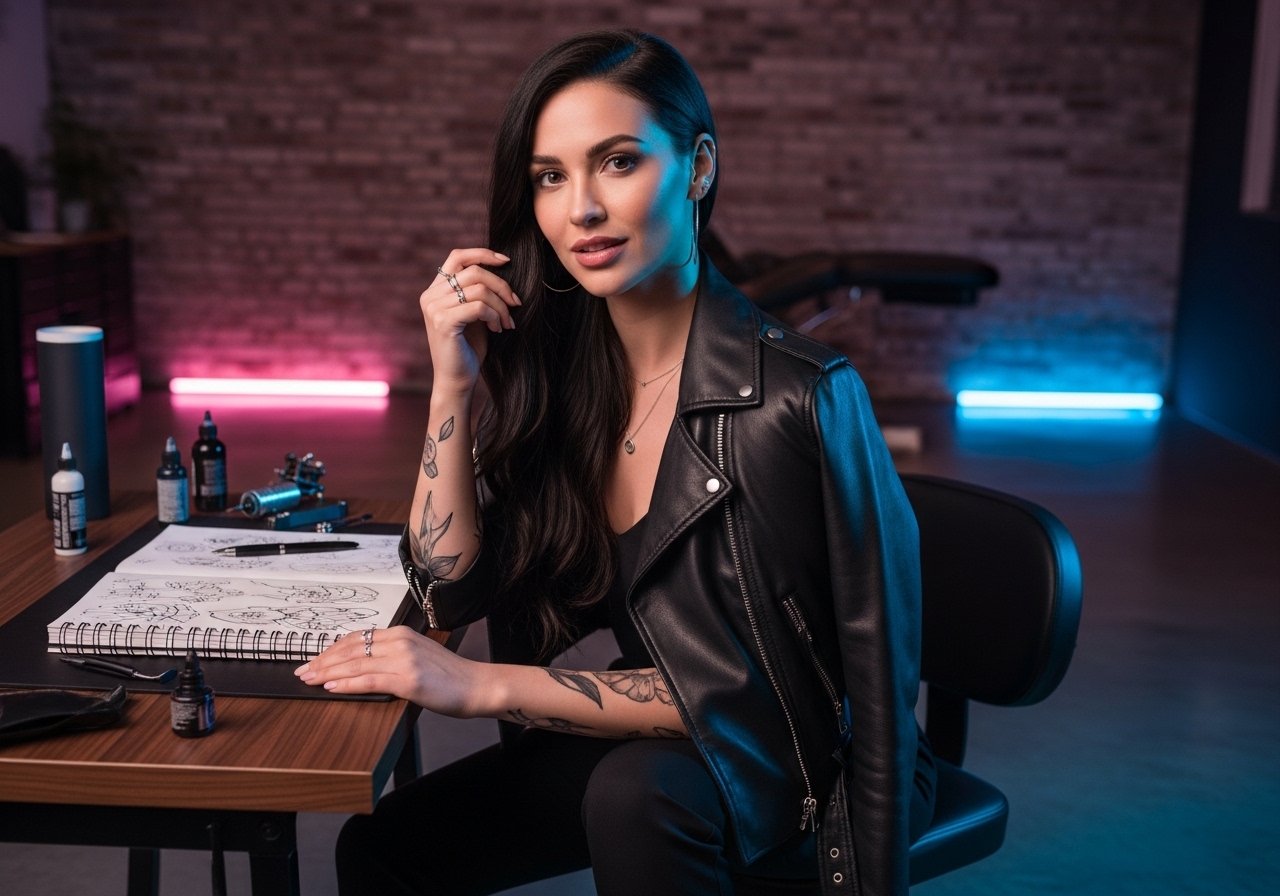
Fine line Hello Kitty references are everywhere online right now, and the design you pick matters more than the color palette. Some pieces look incredible fresh and then need touch-ups early. Other versions that start simple and bold hold their shape for years. Read these ideas with placement, aging, and what to say at consultation in mind so the version you love now still reads well after a few summers.
1. Minimalist Hello Kitty Outline on the Wrist
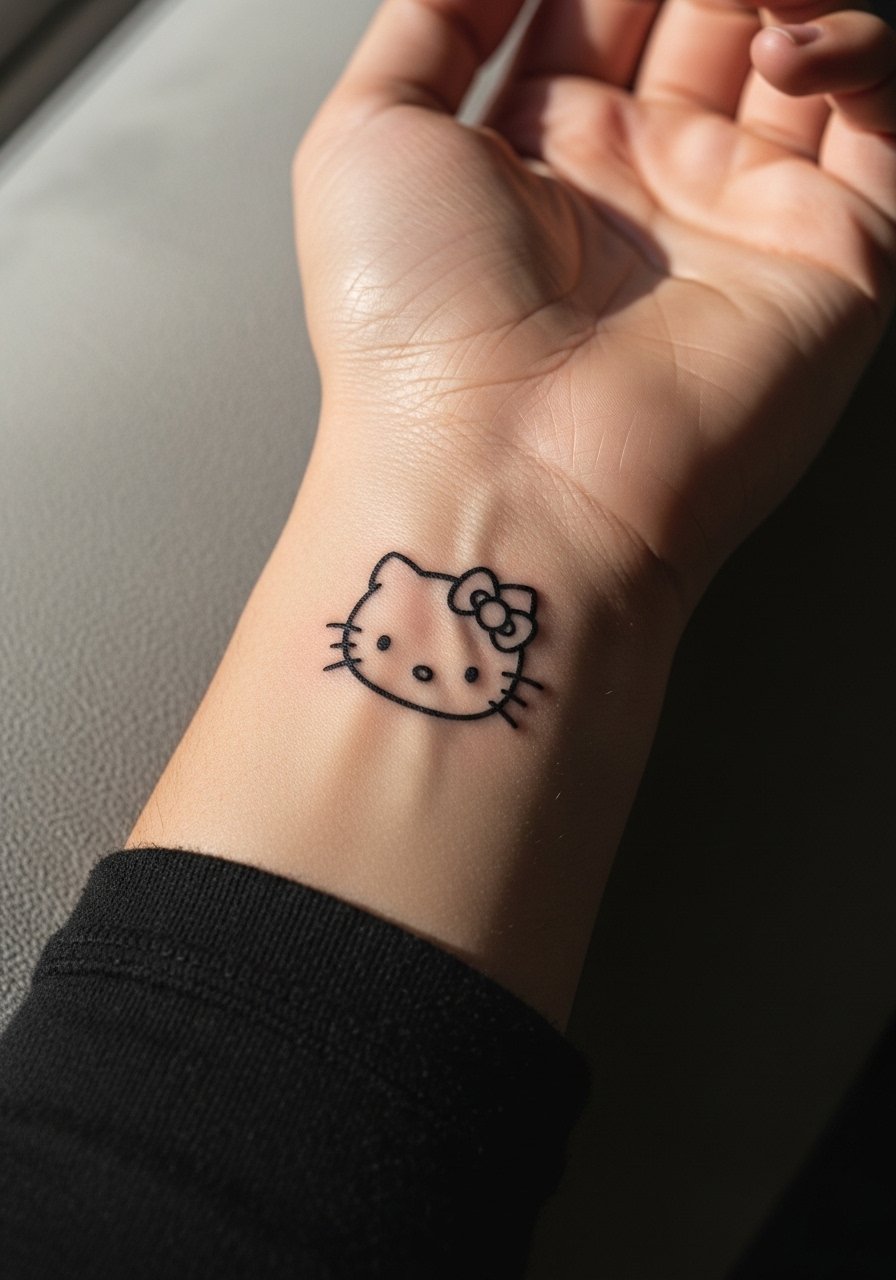
The minimalist outline is the easiest Hello Kitty to wear if you want a subtle nod without a long session. I recommend this for a first tattoo because the session is short and the linework reads clean for about a year before you might want a light touch-up. Tell your artist you want slightly more spacing around the bow so the micro lines do not merge over time. Fair warning, the wrist sees lots of washing and friction, so expect a touch-up around year two for the crispest contour. For showing it off, pair the piece with a thin chain bracelet on the opposite wrist so the tattoo stays the focal point.
2. Black and White Hello Kitty Silhouette on the Outer Arm
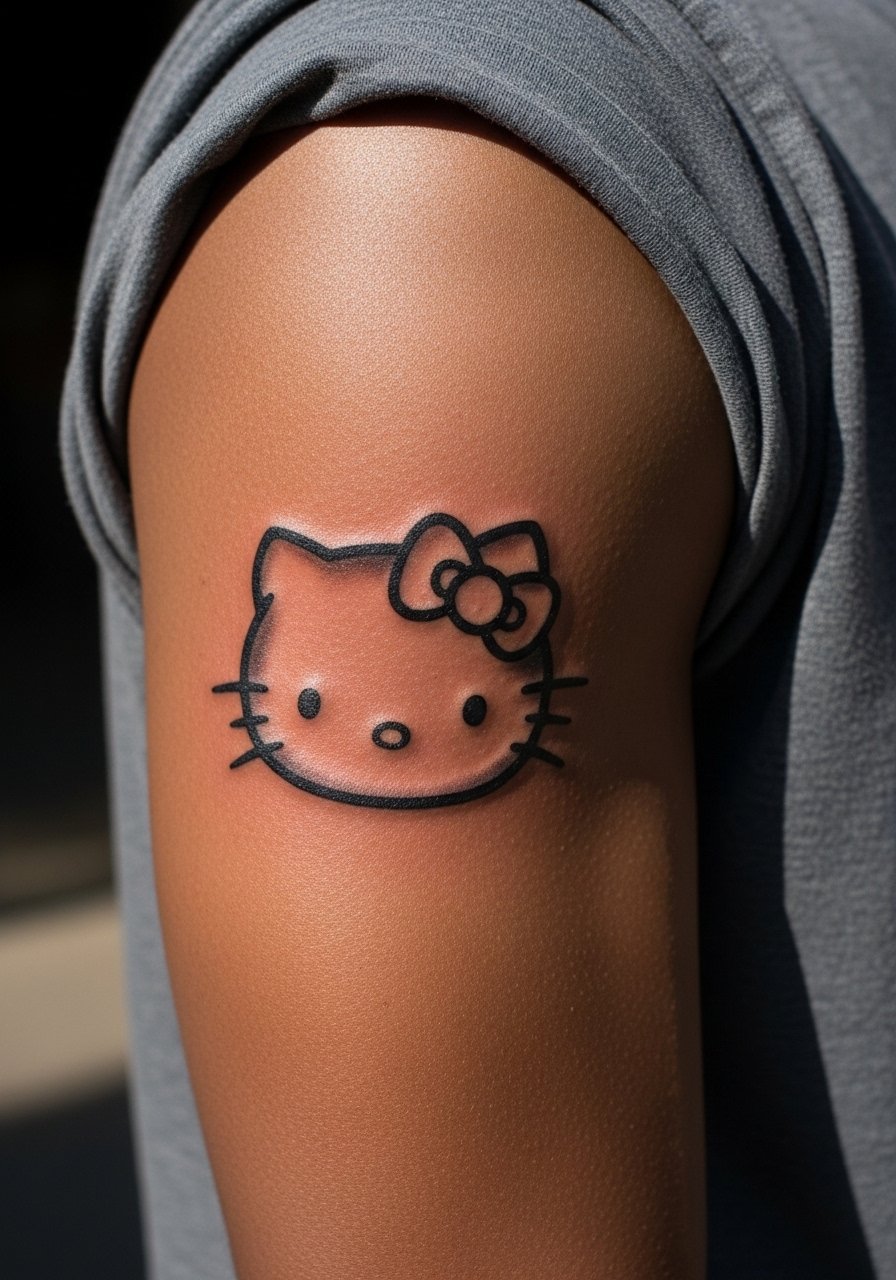
A silhouette keeps saturation high without worrying about pastel fading. I suggest this if you want contrast that still looks strong at year five. During consultation, ask for a slightly thicker outline than you think you need so the silhouette keeps shape as the skin ages. The most common mistake is asking for hairline outlines that blur into a single dark patch after a few years. The session is usually one sitting under an hour for a three-inch piece. Show this design off with a rolled sleeve t-shirt to keep the silhouette visible without competing prints.
3. Kawaii Hello Kitty with an Exaggerated Bow on the Forearm
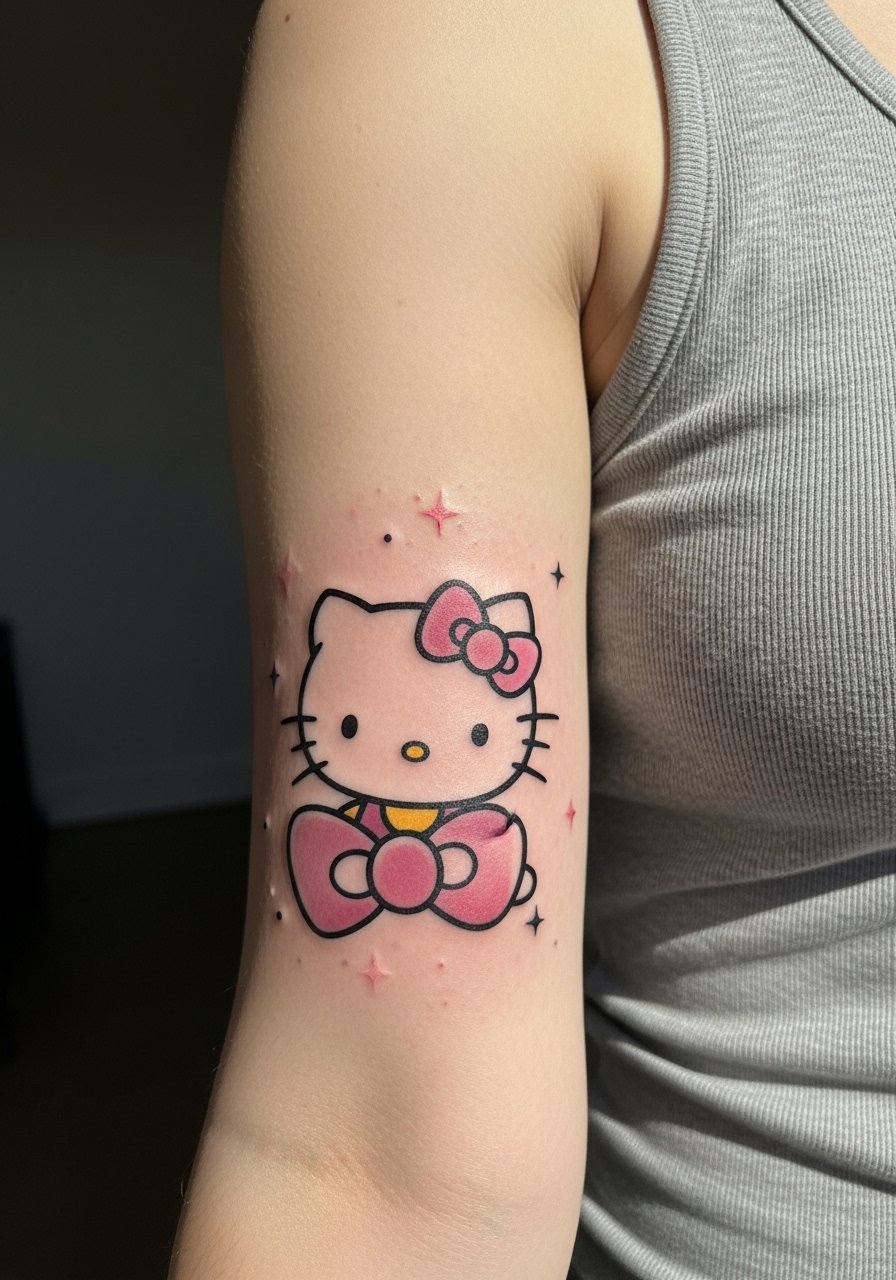
New school color and exaggerated bow give Hello Kitty an energetic presence that reads well from a short distance. Ask your artist for saturation in the pinks but with plateaus of lighter tones so the piece does not look muddy when it starts to fade. Forearm placement is forgiving for touch-ups compared with fingers. A common mistake is packing too many tiny sparkles into a small area, which ages into a grainy patch. For session day, wear a cotton tank top so the artist has unobstructed arm access.
4. Watercolor Hello Kitty Splash on the Shoulder
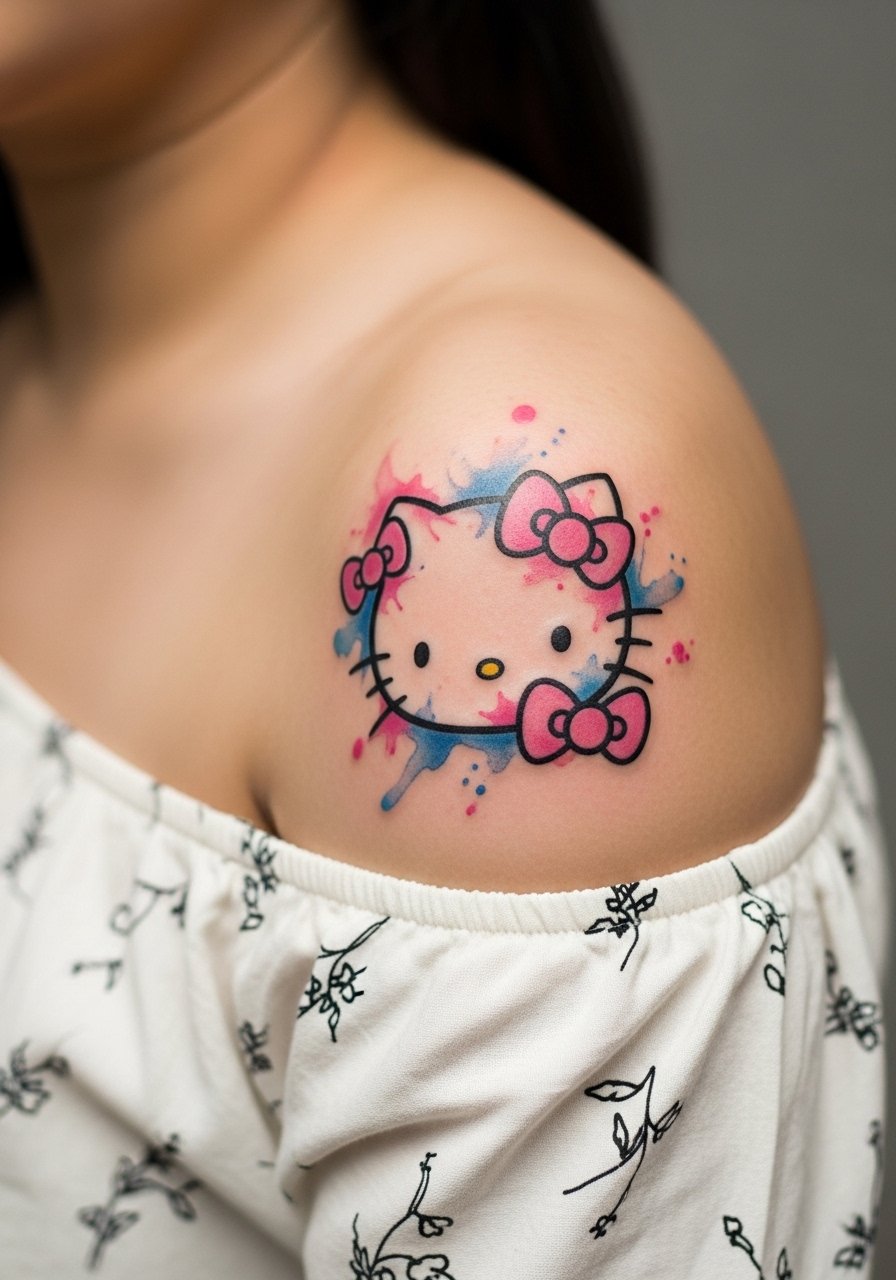
Watercolor effects give a painterly feel but they need more space and more touch-ups than solid fills. I recommend a medium-size shoulder piece and tell your artist you want defined black linework around the face, with watercolor splashes sitting outside the outline. That contrast helps the face stay readable as pigments soften. Expect color to fade faster than black, so plan for a color refresh at year three or four if you want the same punch. To highlight this placement, try an off shoulder blouse when you want the color on show.
5. Neo-Traditional Hello Kitty with a Floral Bow on the Ankle
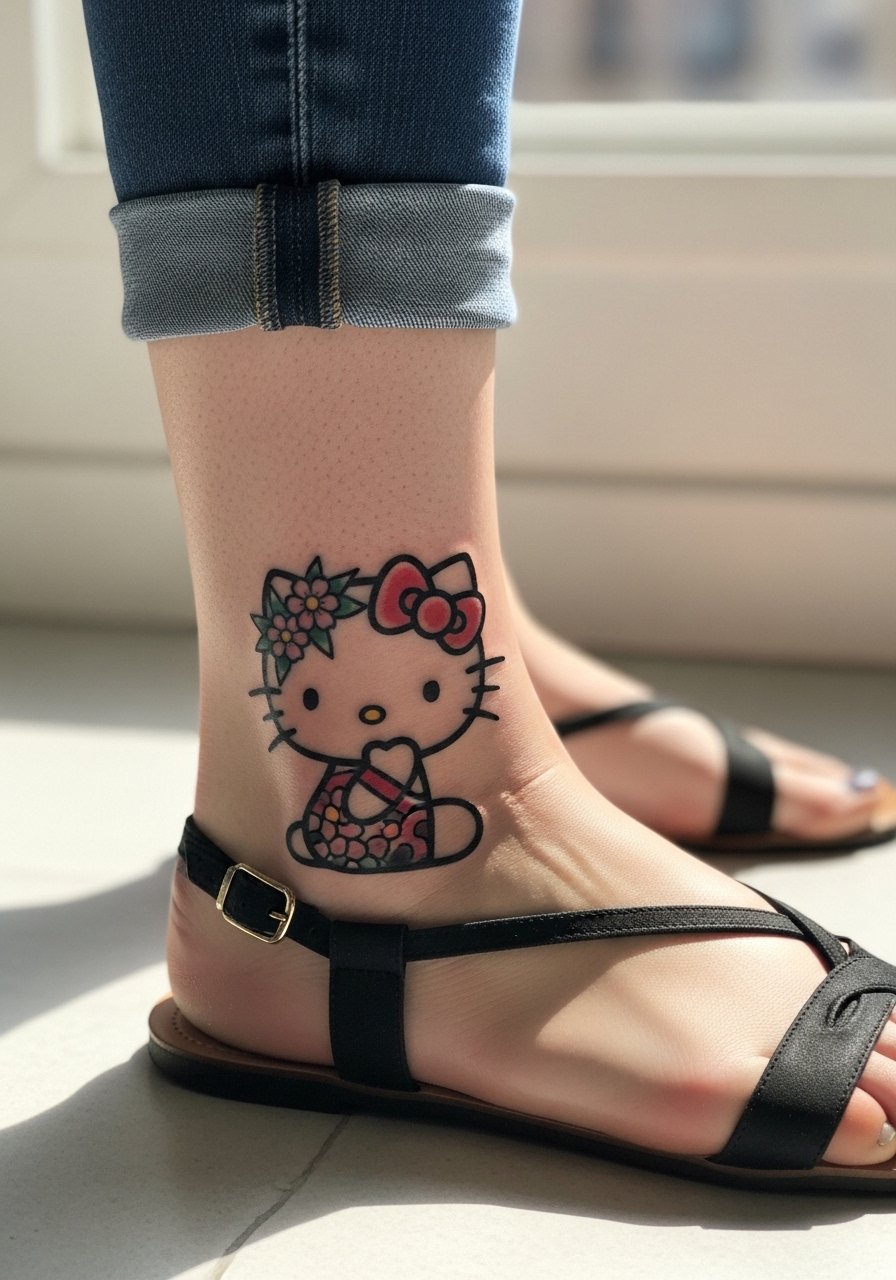
Neo-traditional lines and floral details let Hello Kitty sit comfortably next to other bold pieces. The ankle placement is charming but vulnerable to friction from shoes. Ask for slightly higher saturation and a thicker outline near the base of the design to reduce early feathering. A common mistake is going too small on a design with many petals, which collapses into a blotchy shape. For evenings out, pair the ankle piece with strappy flat sandals. During the session wear loose pants or shorts so the artist can position your leg without pressure on the area.
6. Fine Line Hello Kitty Bow Behind the Ear
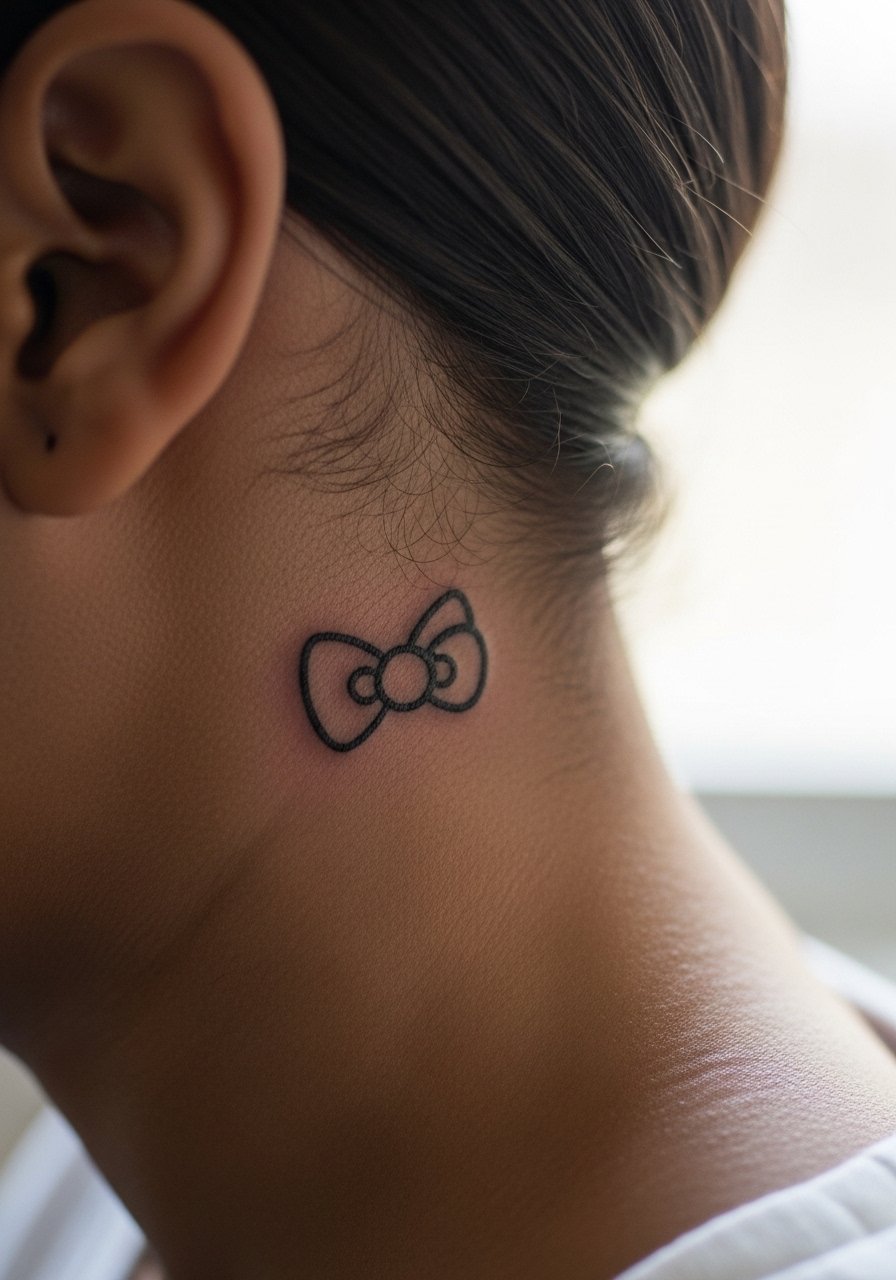
A bow-only motif behind the ear is a great option for people who want secret nods. This placement is tiny and delicate, and the skin is thin, so ask for slightly bolder line weight than a standard micro tattoo so the bow remains legible after healing. Artists are split on whether micro fine line in this spot lasts without early fading. One camp says the thin skin and hairline movement blur lines quickly. The other camp says proper needle depth and a little extra line weight help it settle fine. Ask your artist where they stand and check healed portfolio shots. For the session, tie your hair up and bring a spare thin hoop earrings to style it without hiding the area afterward.
Studio Day Picks
The wrist, ankle, and behind-ear pieces above need different prep than shoulder work, so these five items smooth the session and the first week.
-
Stencil transfer paper kit. Lets you preview the line placement on skin before the needle, which is helpful for tiny wrist and behind-ear designs.
-
Topical numbing cream. Applied before an ankle or ribcage session eases the initial sting and helps you stay relaxed during longer shading.
-
Thin protective film roll. Protects small wrist and finger tattoos from constant handwashing and friction during the first few days.
-
Fragrance-free body wash. Gentle cleansing prevents irritation around delicate linework while you shower.
-
Aquaphor healing ointment. A thin layer in the first 48 hours helps micro linework on wrists and behind-ear areas retain moisture without clogging.
7. Anime-Inspired Hello Kitty Face on the Inner Wrist
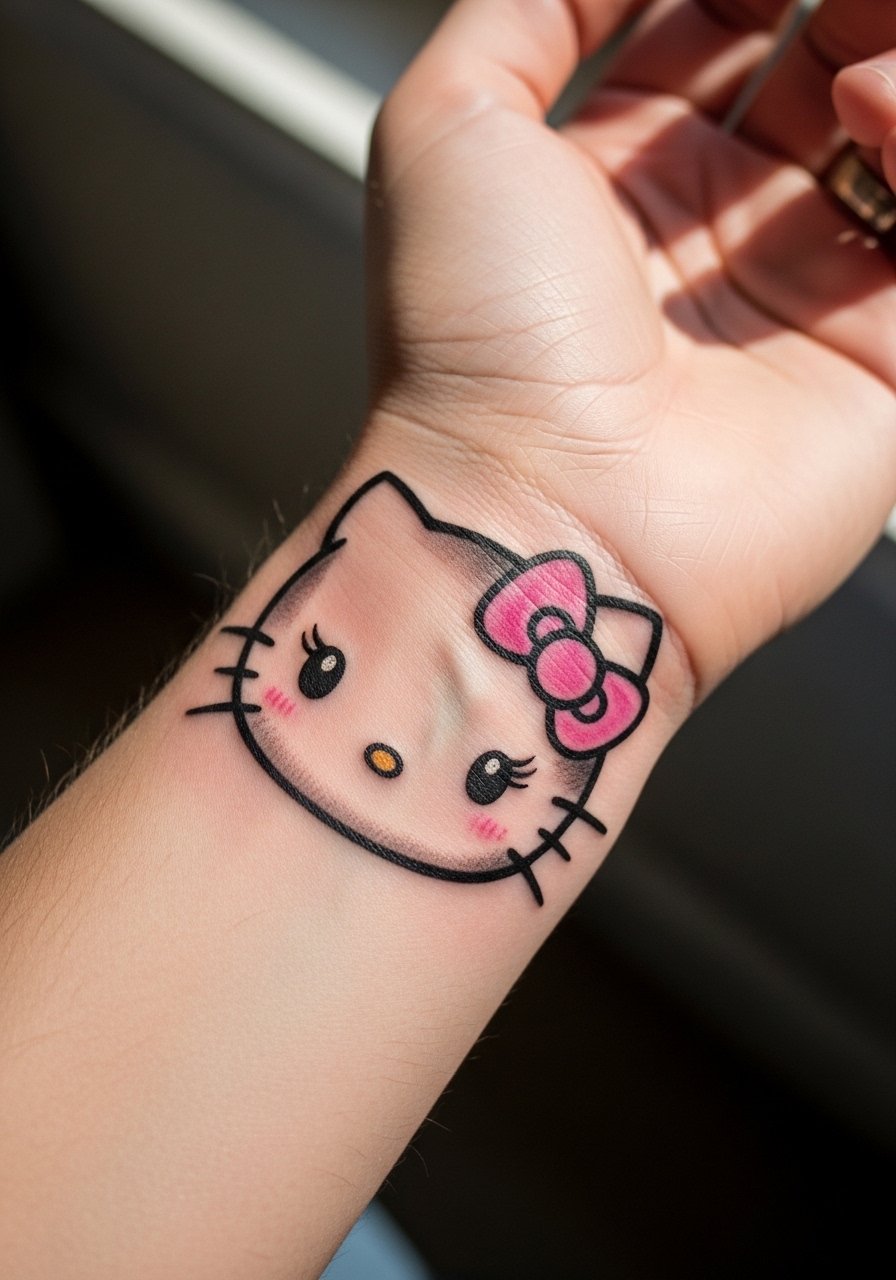
An anime-inspired Hello Kitty emphasizes eye shape and expression, which works well in a small inner wrist piece. Tell the artist to keep the eyes simplified so tiny details do not merge as the skin moves. The inner wrist sees more stretch and motion than the outer forearm, so expect some softening at six months and more at five years if you skip touch-ups. For display, a thin chain bracelet or a minimalist watch places the piece at eye level without overpowering it. Pain is mild to moderate and sessions are usually under an hour.
8. Gangster Hello Kitty with Tough Accessories on the Upper Thigh
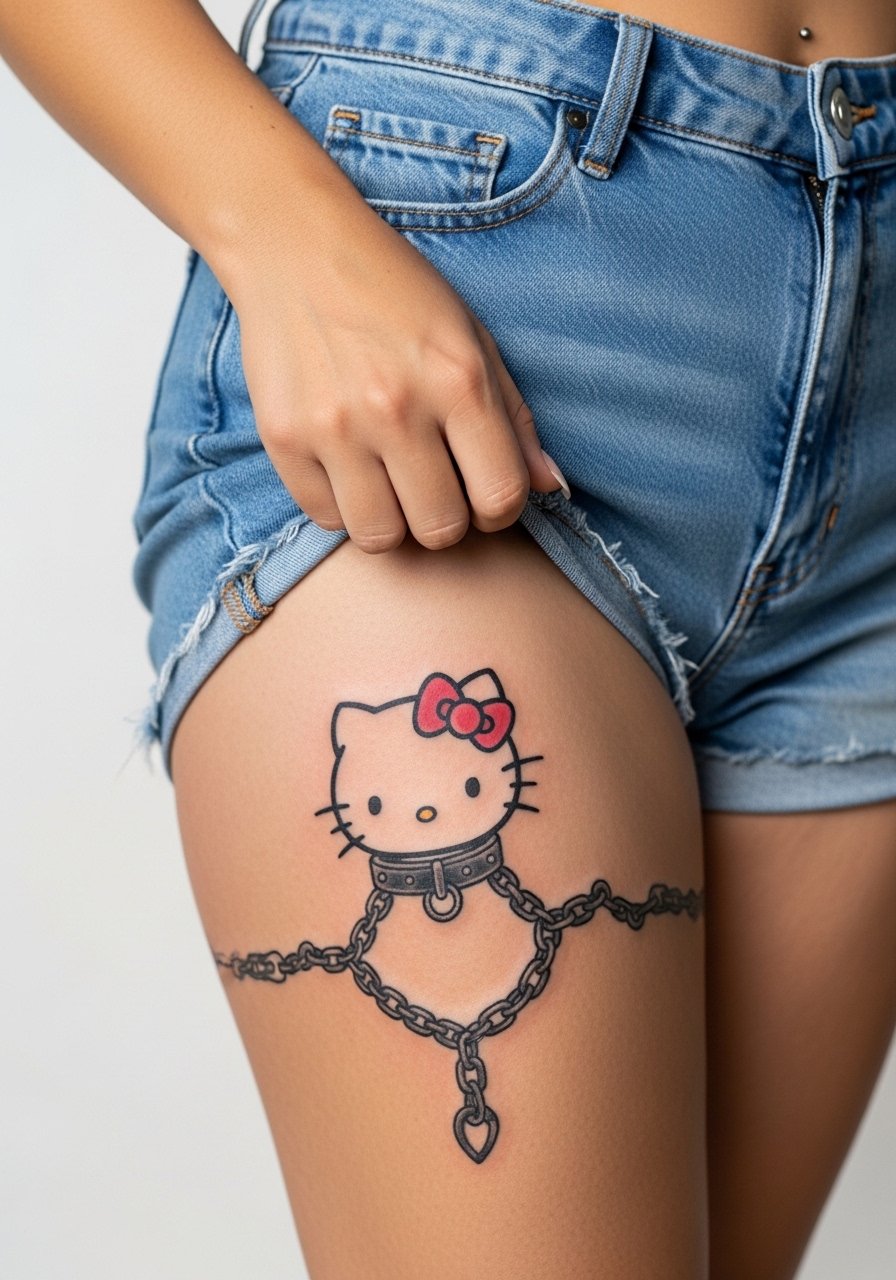
Ironic contrasts like a "gangster" Hello Kitty lean into attitude and sit best on larger canvases such as the thigh. The upper thigh tolerates saturation well and lets artists build bold fills without risking blowout. The most common error is compressing too many tiny accessories into a small piece, which loses detail over time. Session pain is low to moderate and usually comfortable under one or two hours. Pair this design with high waisted denim shorts for a summer look that showcases the artwork.
9. Hidden Ribcage Hello Kitty Silhouette for Private Nostalgia
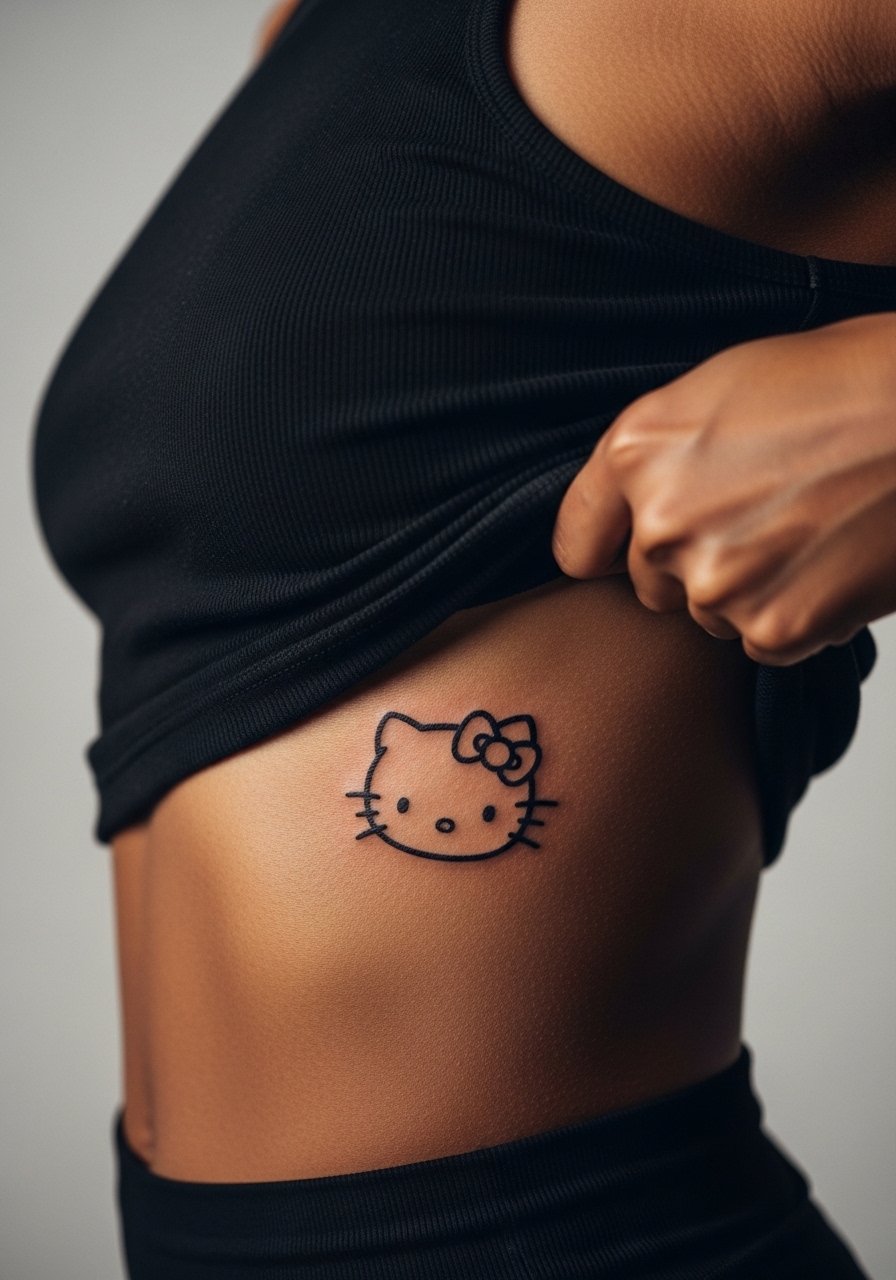
A ribcage spot is perfect for people who want a private piece that they can reveal selectively. This placement is notorious for sensitivity, so be ready for a higher pain rating. Artists split into two camps on fine line here. One camp says the skin texture and movement blur micro lines within two years. The other camp says proper spacing and deeper placement solve the issue. The right approach is to plan for slightly bolder outlines and to accept a possible touch-up at year two. For appointment day, wear a cropped tank top so the artist can access the side cleanly.
10. Sternum Hello Kitty with Floral Anchors
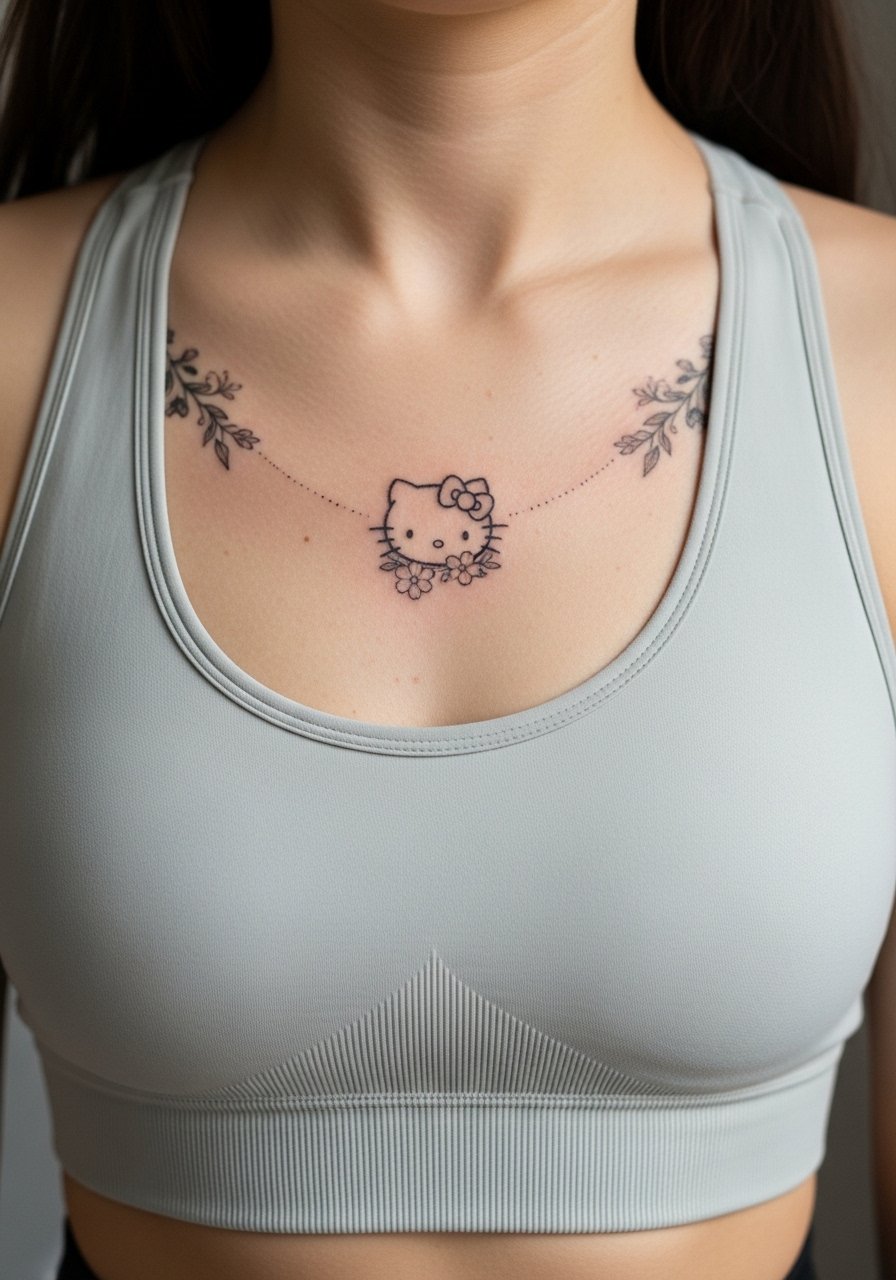
Sternum pieces read intimate and they are heavily influenced by body shape and garment lines. Expect a challenging healing window because clothing rubs the area frequently. I recommend a slightly larger spacing between bow and face lines to avoid early blur. The sternum may need a touch-up sooner than a shoulder piece. During the session wear a fitted sports bra that you can easily slide for access. Some clients find the pain sharper but brief because the area is mostly bone and thin tissue.
11. Lower Back Hello Kitty with Subtle Vine
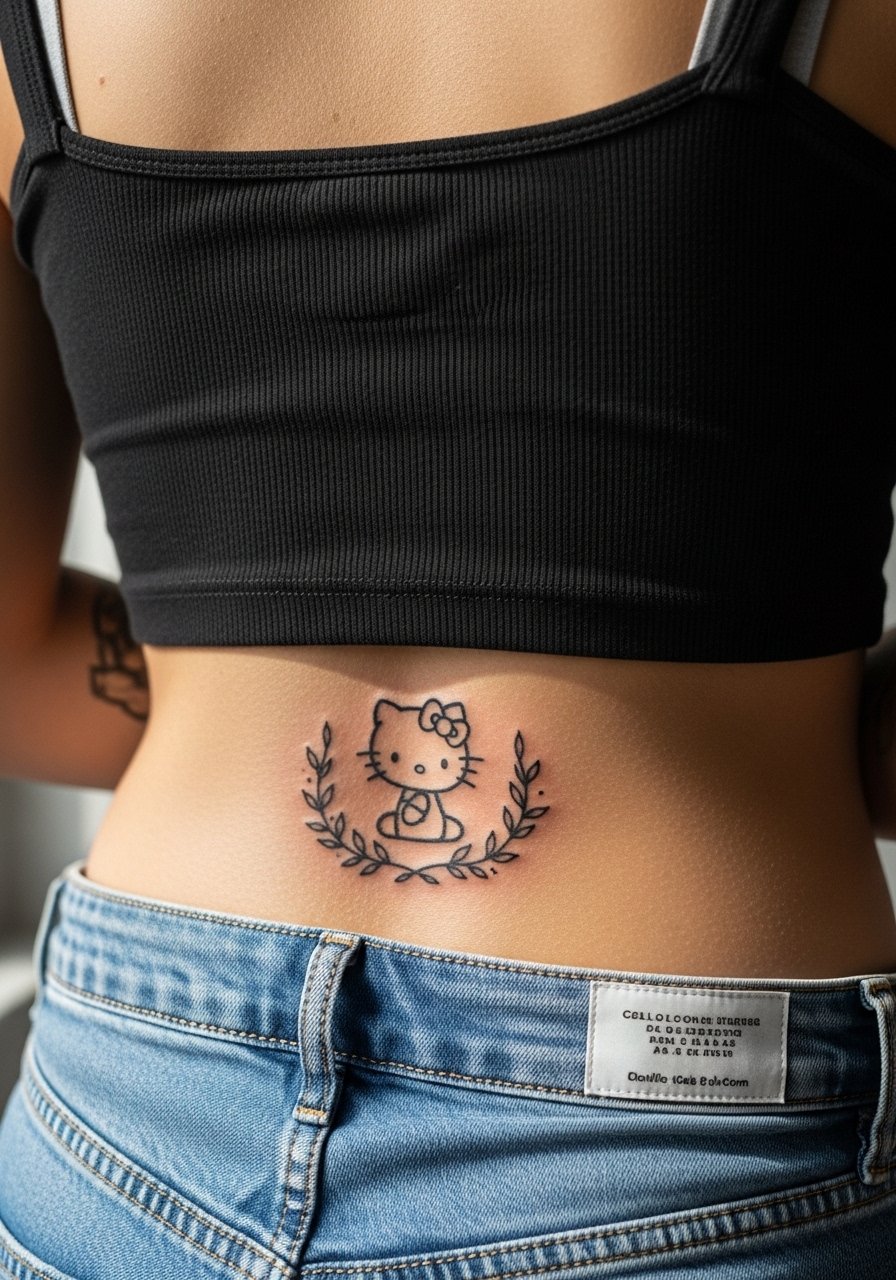
Lower back placements let you play with horizontal compositions that sit under clothing lines. This area tolerates larger pieces and saturation well, but stretching and weight fluctuations affect how a design reads over time. Tell your artist you want a balanced horizontal piece so the vine follows the curve of the lower back. A common mistake is centering a long vertical element there, which shifts with movement. For sessions wear a loose tank top and low-rise bottoms so the artist can expose only the necessary strip.
12. Hip Hello Kitty with Candy Accents
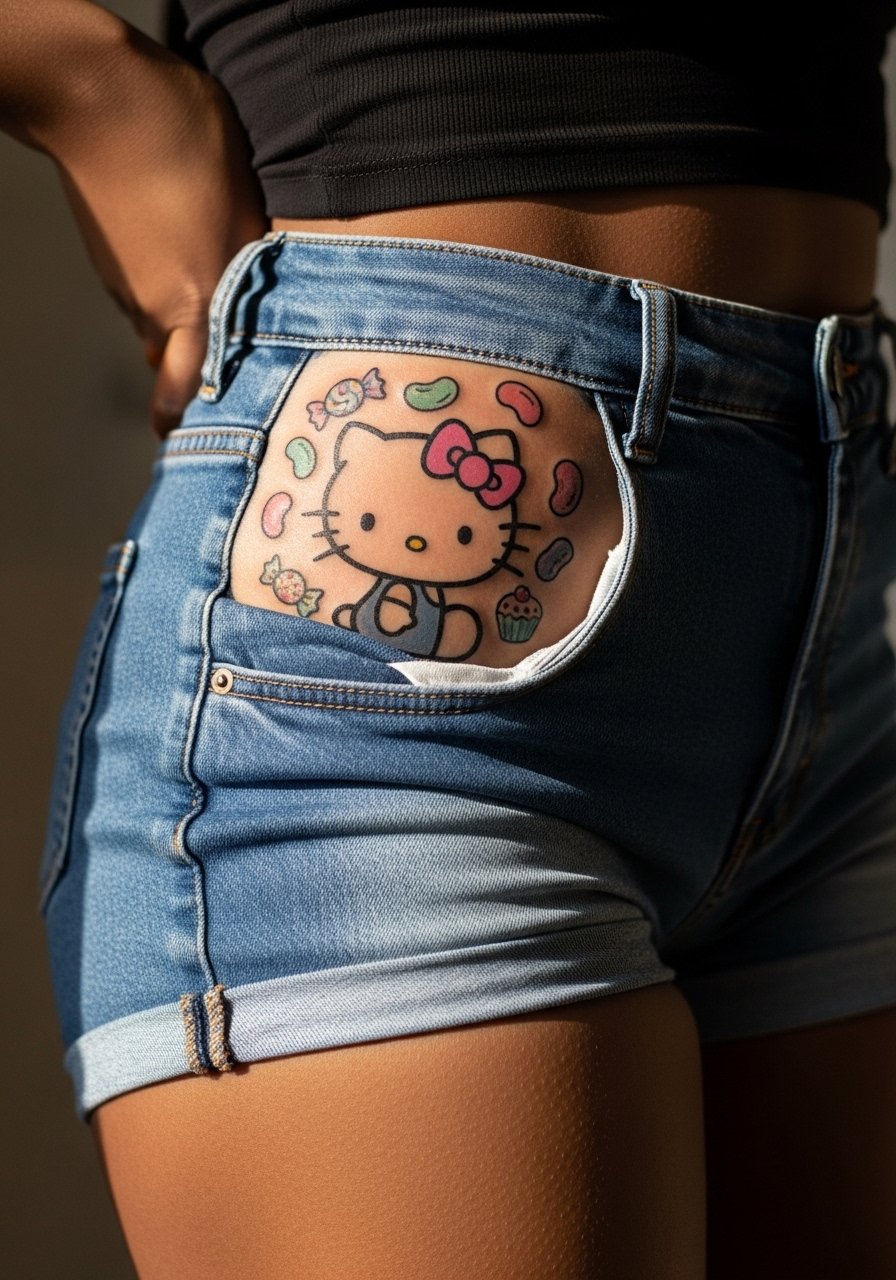
Hip placements are flirtatious and give you privacy when you want it. The skin here moves with hips and clothing, so plan for areas of friction if you wear tight waistbands. I suggest asking for a slight elevation in line weight near edges to avoid early feathering. Sessions are usually quick for micro to medium sizes, and pain is moderate. Show this piece off in high-cut shorts or a swimsuit when you want a small reveal.
13. Inner Bicep Vintage Hello Kitty Portrait
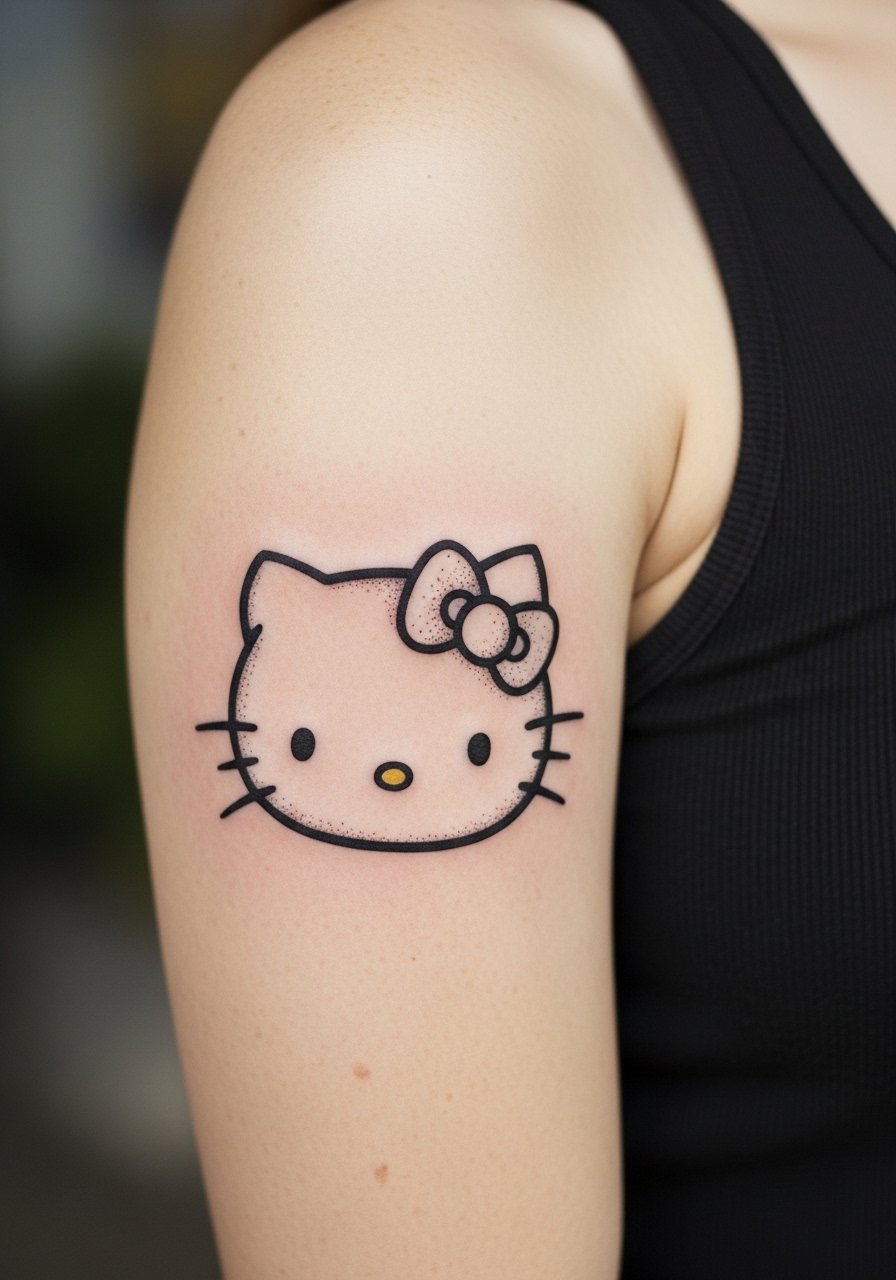
The inner bicep is a private spot that looks striking when you lift your arm. Skin there is softer and can hold stipple shading nicely, but the motion of the arm means dense lines can migrate if placed too shallow. I advise asking for stipple or whip shading with modest saturation for longevity. The common mistake is overcomplicating the portrait in a tiny space. Sessions here can be slightly more uncomfortable because the area is tender, and you might need a touch-up at year three if you want the detail preserved.
14. Back of Neck Tiny Hello Kitty Outline
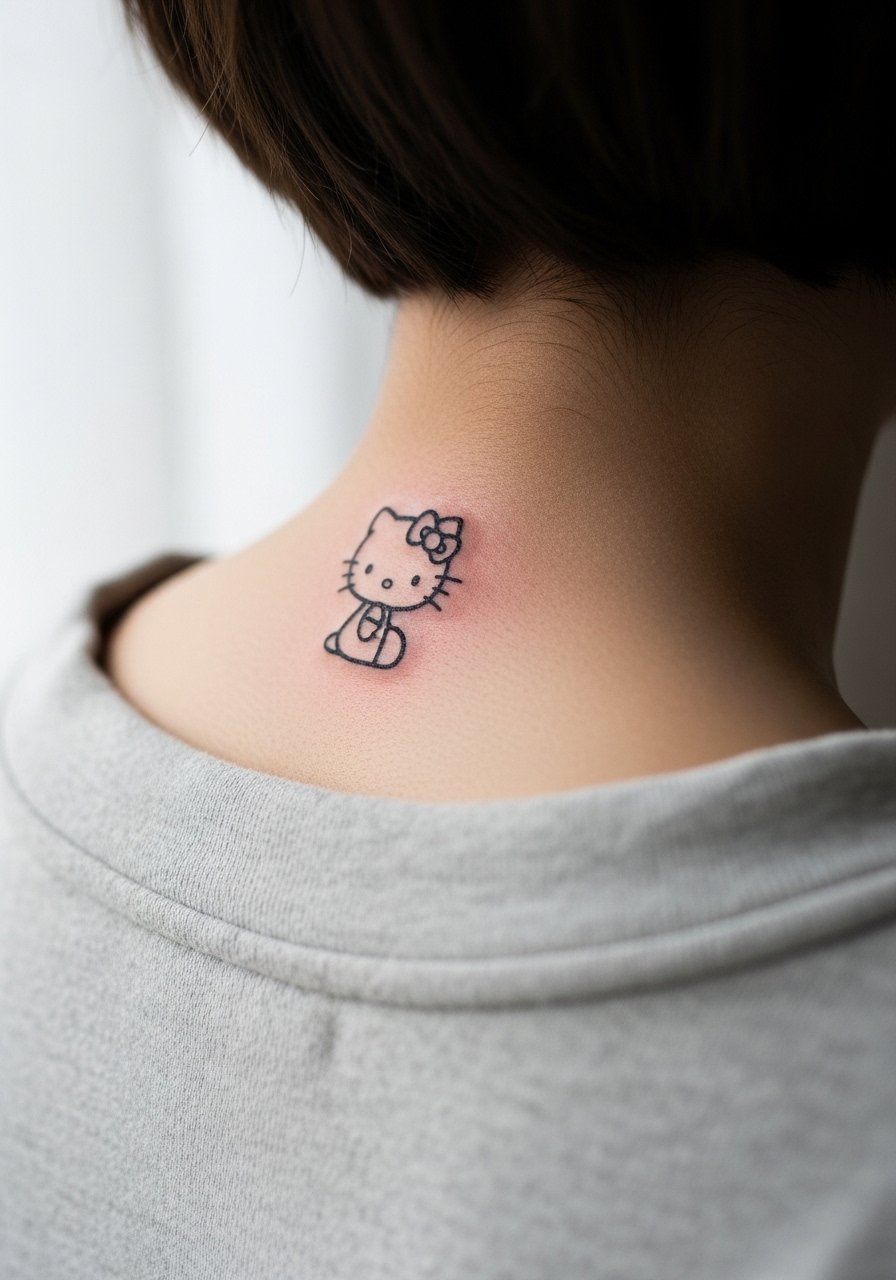
A back of neck piece is visible when hair is up and easily hidden when down. The area handles small single-line pieces well if you avoid hairline thin strokes. Ask for slightly increased line weight and simple negative space around the bow so the design breathes. The biggest mistake is crowding the area with additional small symbols that age into a blur. For the session wear a wide-neck shirt that you can pull to one side so the artist can access the spot cleanly.
15. Calf Hello Kitty with Background Pattern
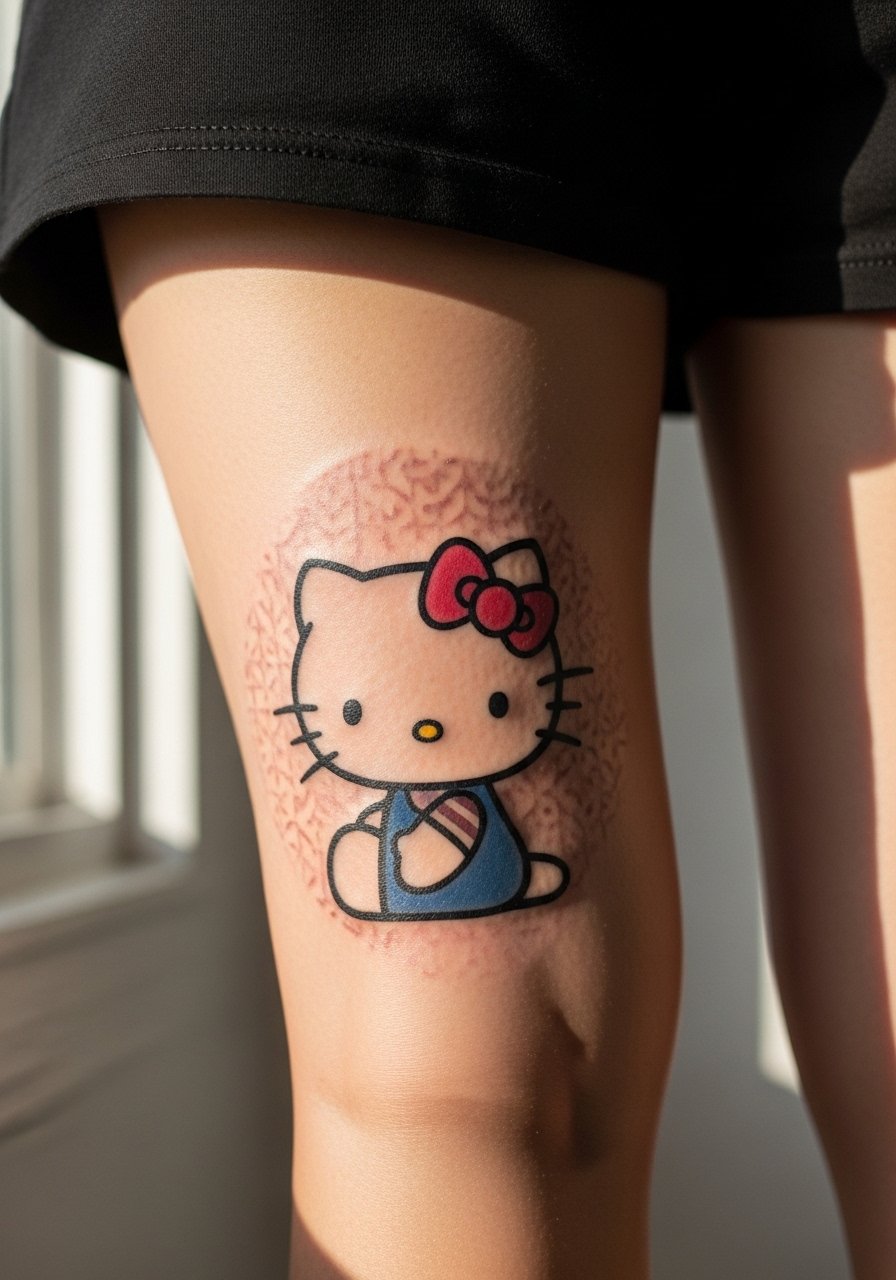
Calf placements give room for decorative backgrounds such as subtle geometric fills or patterns that support the main cat. Tell your artist you want the background lighter in saturation so the face remains the focal point as the piece ages. The calf is forgiving for saturation and touch-ups, but heavy fills near the ankle can show early wear from shoes. Sessions can be spread across two sittings for detailed backgrounds. Pair with skirts or cropped pants when you want the full image visible.
16. Micro Hello Kitty Face on the Finger
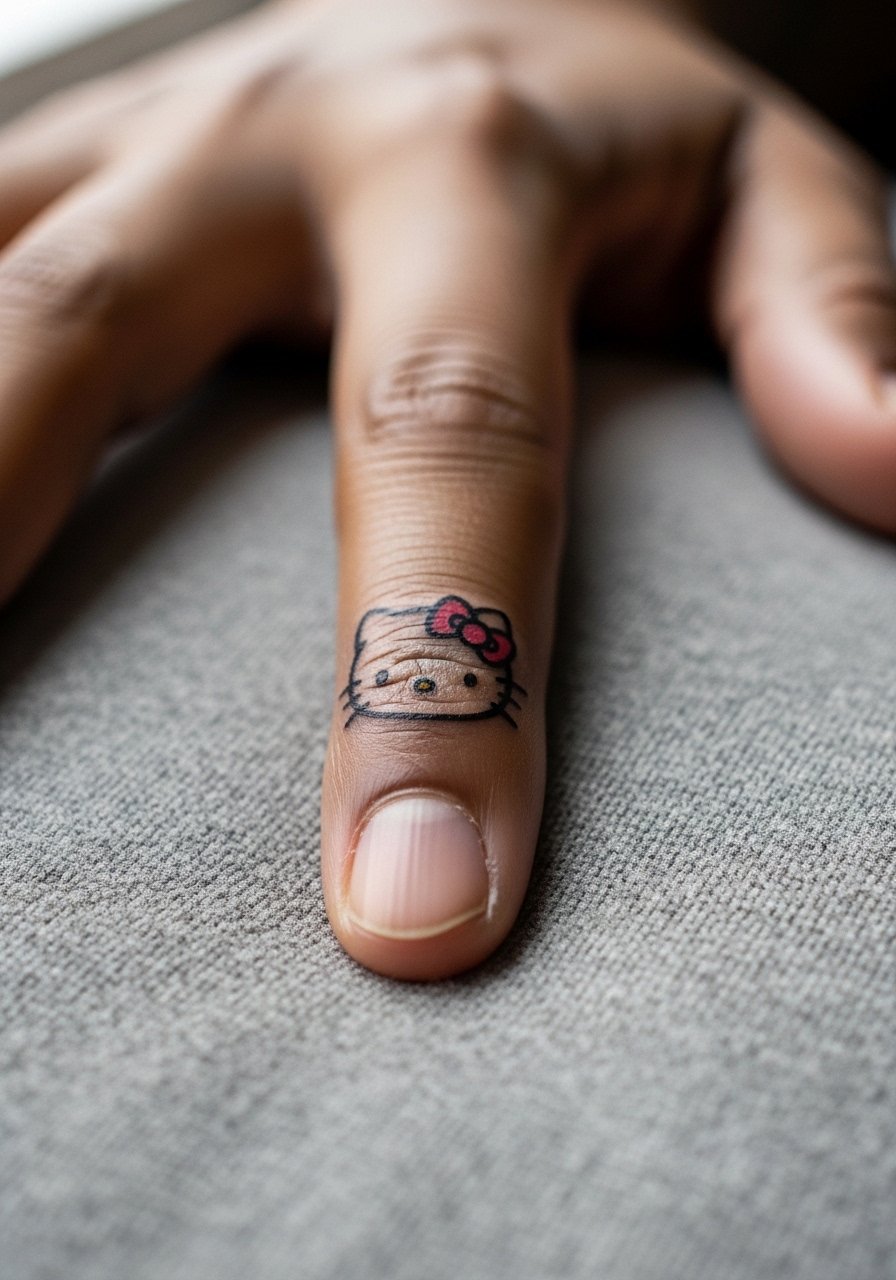
Finger tattoos are risky in longevity because of constant use and washing. If you pick a micro Hello Kitty for the finger, expect a touch-up sooner than wrist or arm pieces. Ask your artist for slightly thicker lines and fewer tiny interior details. The common mistake is requesting tiny shading that disappears into the skin texture. Sessions are short but the healing process is trickier due to friction. Keep expectations realistic and plan for a touch-up within a year.
17. Collarbone Hello Kitty with Soft Watercolor Bow
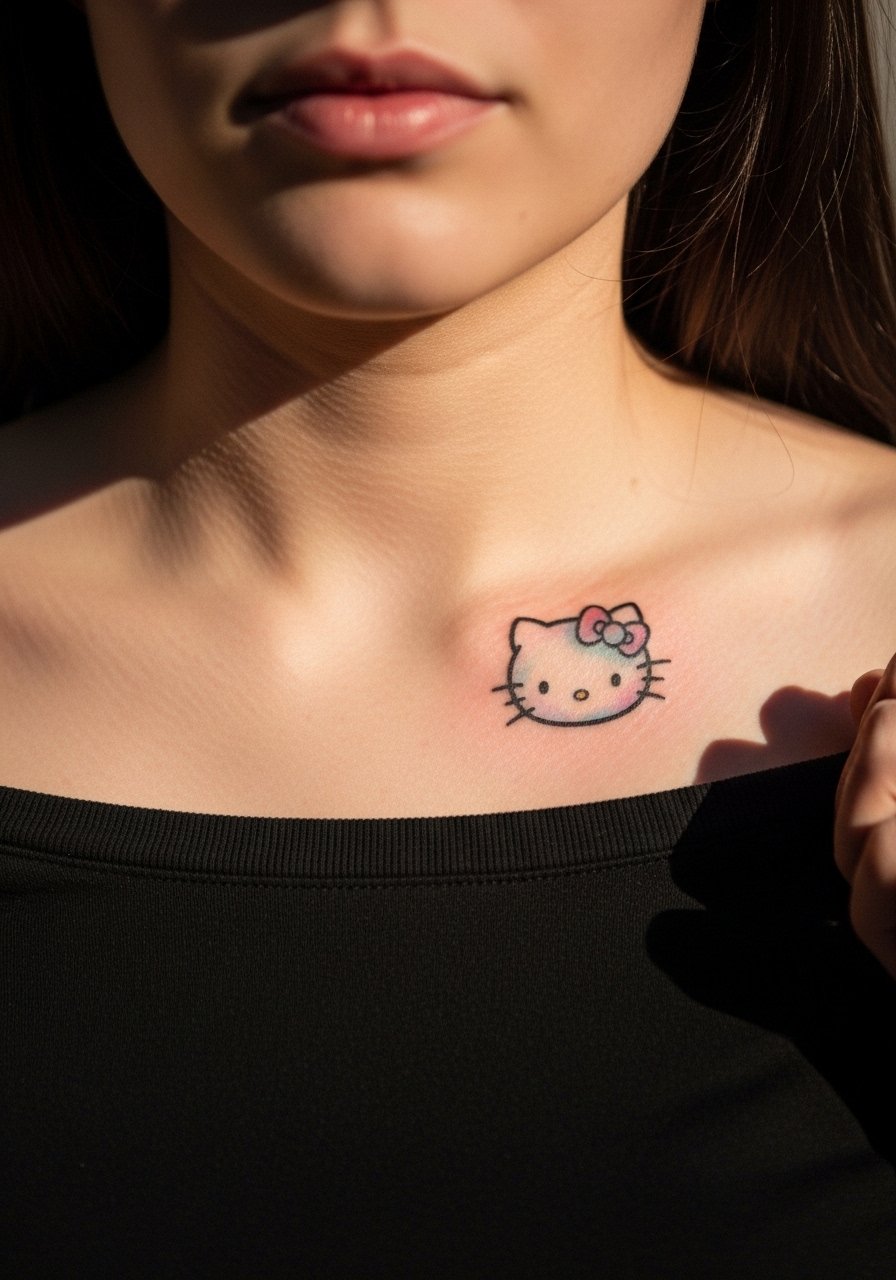
Collarbone placements offer elegant visibility and a natural frame with jewelry or open necklines. Because the area moves with breathing and shoulders, plan slightly more spacing inside the design so lines do not crowd over time. The watercolor bow looks lovely here but needs less saturation than a shoulder piece to avoid early patchiness. For the session wear a loose button-down shirt you can pull aside for access. Expect moderate pain toward the bone and a possible touch-up at year three if you want color retention.
Frequently Asked Questions
Q: Will a fine line Hello Kitty blur if I put it on my ribcage?
A: Fine line on the ribcage is debated. One group of artists says micro lines blur quickly because the skin stretches and moves. Another group says proper spacing and slightly bolder line weight prevent that. My advice is to ask to see healed ribcage photos from the artist and plan for a possible touch-up at year two if you want super crisp lines.
Q: How long does watercolor pink tend to last on shoulders versus wrists?
A: Watercolor holds better on shoulders because the skin sees less friction and sun exposure than wrists. On the wrist expect color to soften by year two or three unless you commit to sun protection and occasional refresh sessions. On the shoulder a refresh at year three to five often keeps the hues lively.
Q: I want a tiny bow behind my ear. What should I tell my artist in the consult?
A: Mention exact size and ask for slightly heavier line weight than a typical micro tattoo so the bow reads after healing. Ask to preview the stencil placement below the hairline. Also ask about their experience with hairline movement in that area and check healed photos before booking.
Q: Are thigh pieces easier to heal than ankle designs?
A: Generally yes. The thigh has more padding and less daily friction from footwear, so color and linework tend to settle with fewer complications. Ankles face constant rubbing from shoes and socks, so expect a higher chance of early pigment loss and a possible touch-up.
Q: What should I wear to a shoulder watercolor session?
A: Wear a loose button-down shirt or a top you can pull aside so the artist has clean access without exposing more skin than necessary. Loose fabric reduces post-session irritation and makes dressing after the appointment easier.
Q: Do finger Hello Kitty tattoos need special aftercare compared with wrist pieces?
A: Finger pieces need more careful protection because the area is washed frequently and gets friction. Expect a longer initial healing timeline and plan for at least one touch-up within a year if you want crisp edges.