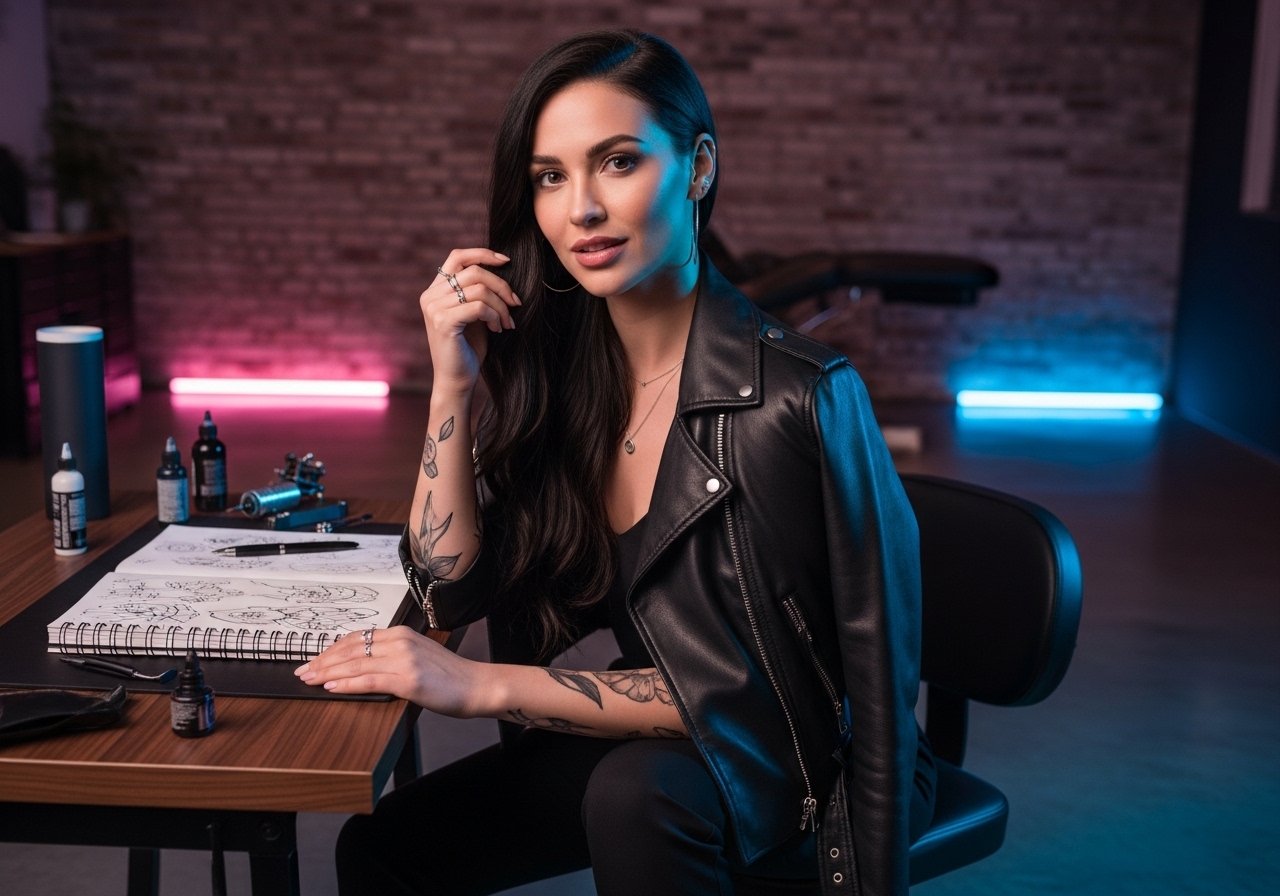
The fine trends you see online often collapse into real-life maintenance questions. Fine line and watercolor pieces look fragile after a few summers of sun exposure, while bold blackwork keeps its edge longer. Choosing an Archangel Michael sketch is as much about how the design ages as it is about how it reads the day you walk out of the shop, and the first idea below jumps straight into a durable option.
1. Fine Line Archangel Michael on Inner Forearm
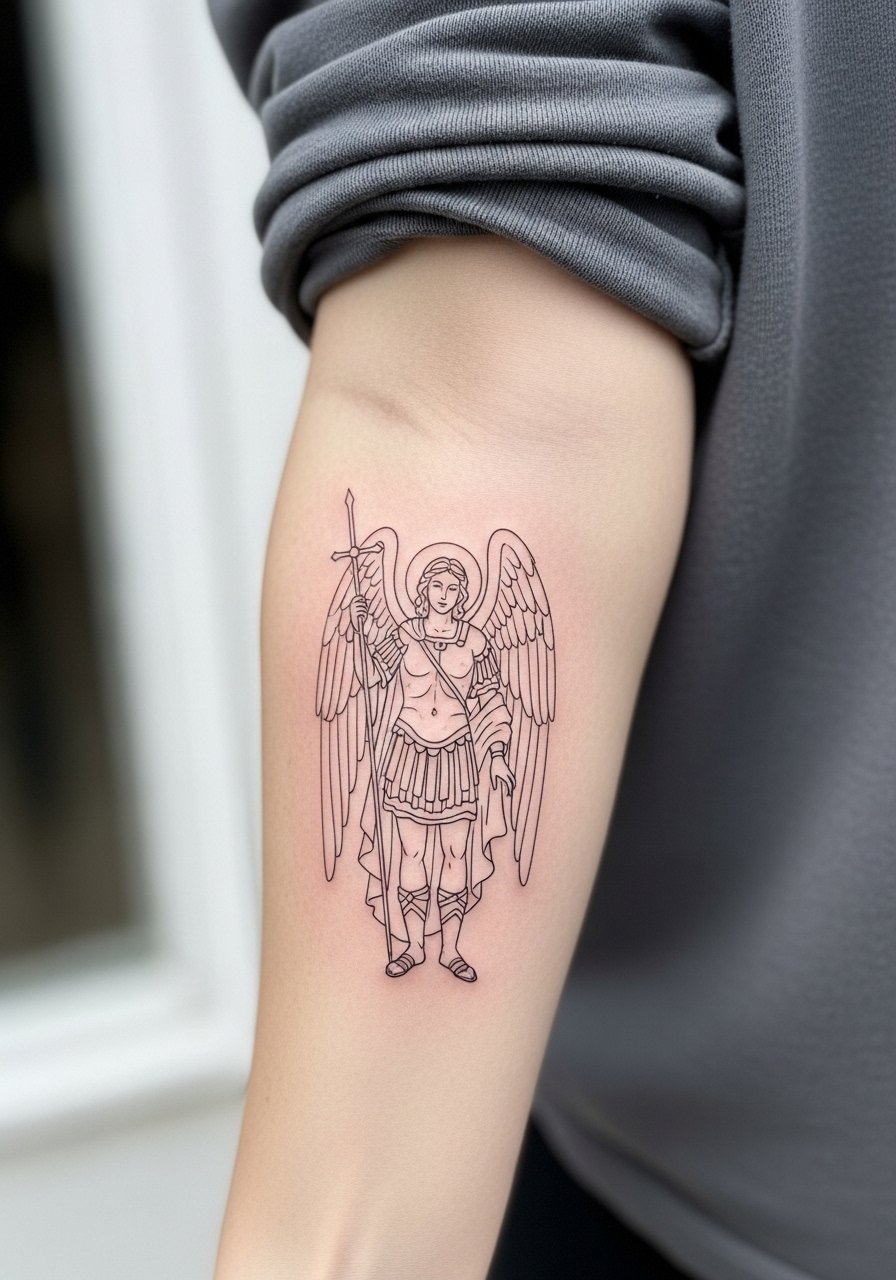
I've seen inner forearm fine line work hold best when the stencil emphasizes slightly thicker primary contours. Tell your artist you want crisp linework with modest negative space around armor edges so the lines do not merge over time. Common mistake is asking for ultra-thin detail that will blur by year three on active skin. Expect a single two-hour session for a medium-sized sketch and a touch-up around year two if you spend time in sun. For the appointment, wear a loose button-down shirt you can roll up without compressing the forearm.
2. Neo-Traditional Full Chest Michael with Armor Accents
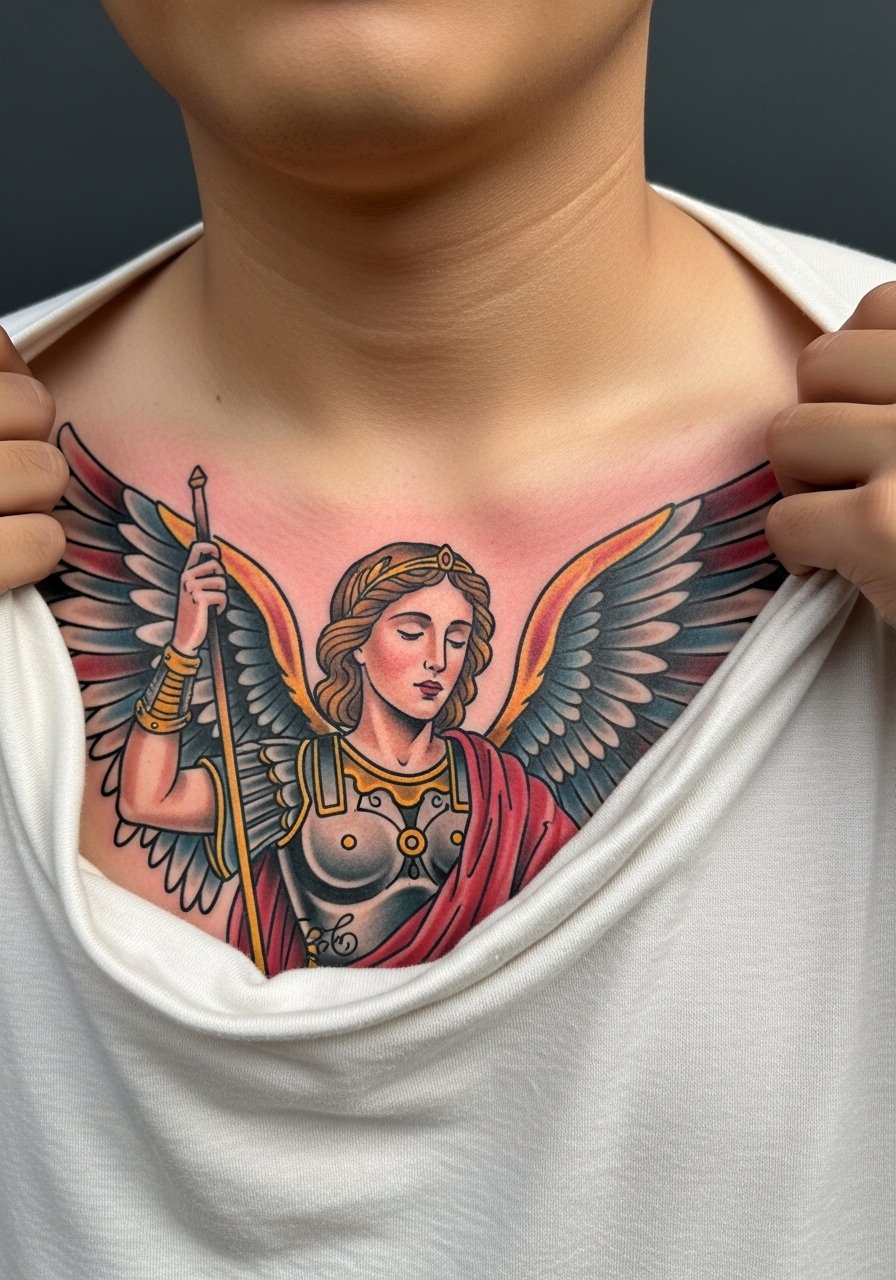
Visual impact is the point here. Neo-traditional armor reads from across a room when the outlines are bold and saturation is deep. Fair warning, chest placement is a higher pain area than the arm, but the payoff is dramatic. Ask your artist for layered saturation rather than a single flat fill so color ages more evenly. The session usually runs multiple hours across two visits. For showing this piece off, an open-back midi dress or a wide-neck shirt pulled aside keeps attention on the upper chest without overexposing the rest of the torso.
3. Black and Grey Realism Back Panel, Michael in Battle
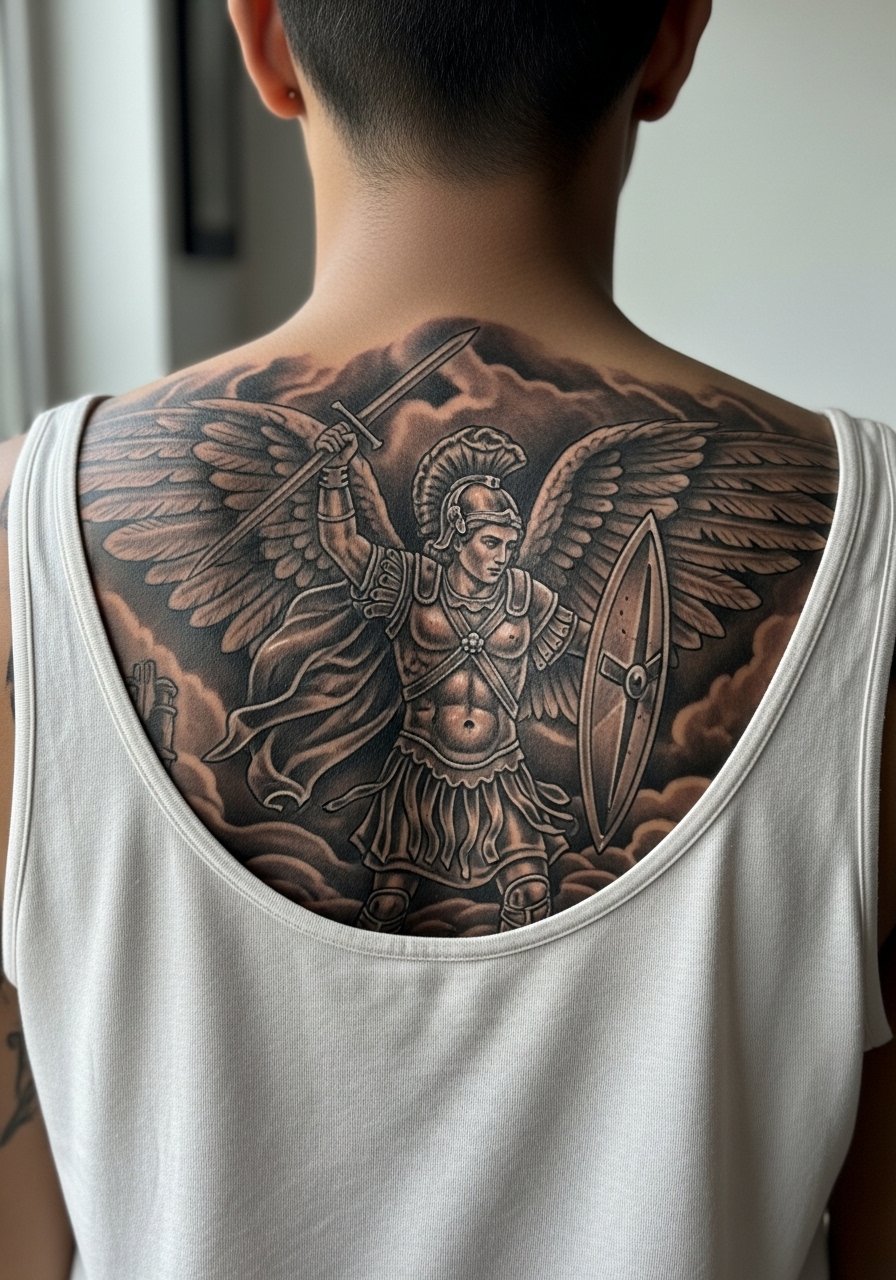
A back panel gives the space for dramatic armor detail and a full wing composition. When you sit down with the artist, bring references showing the exact helmet and sword styling you want and ask where they place the focal highlights. The common version that ages poorly skews too much detail into tiny areas; that detail fills in over years. Large back pieces demand multiple long sessions and higher touch-up likelihood along edges where shirts and straps rub. For the session wear an easy-to-remove loose tank top so the artist has full access without you feeling exposed.
4. Watercolor Archangel Michael Clavicle Accent
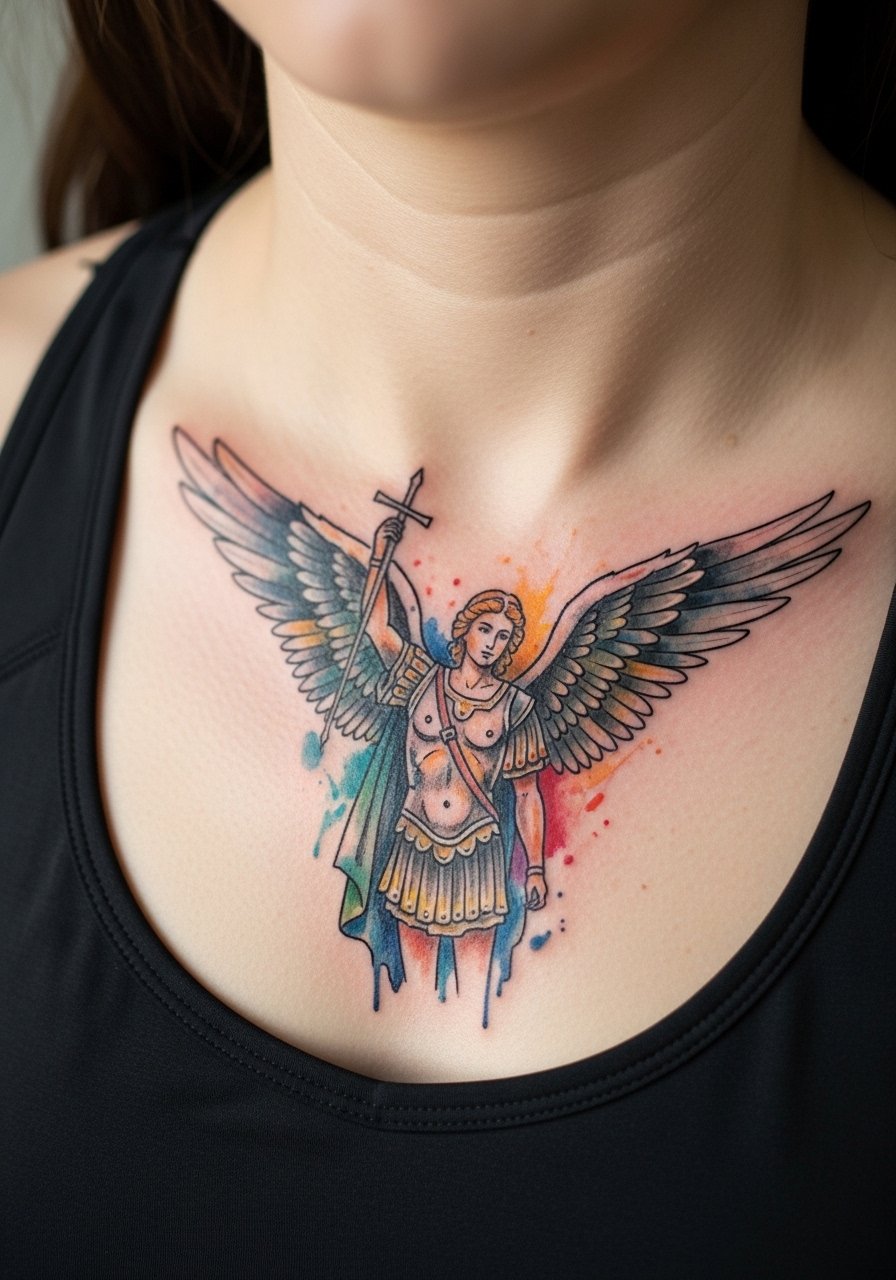
Aging is the key concern for watercolor pieces. The blended washes look ethereal fresh, but they can fade into soft blurs faster than saturated color. If you want watercolor around the clavicle, ask the artist to combine watercolor washes with a subtle black line for structure so the silhouette remains readable at year five. Sessions are typically shorter but may need a top-up for color at year two or three. For evenings out, a thin chain pendant necklace sits above the wash without competing for attention.
5. Minimalist Michael Script and Small Wing on Wrist
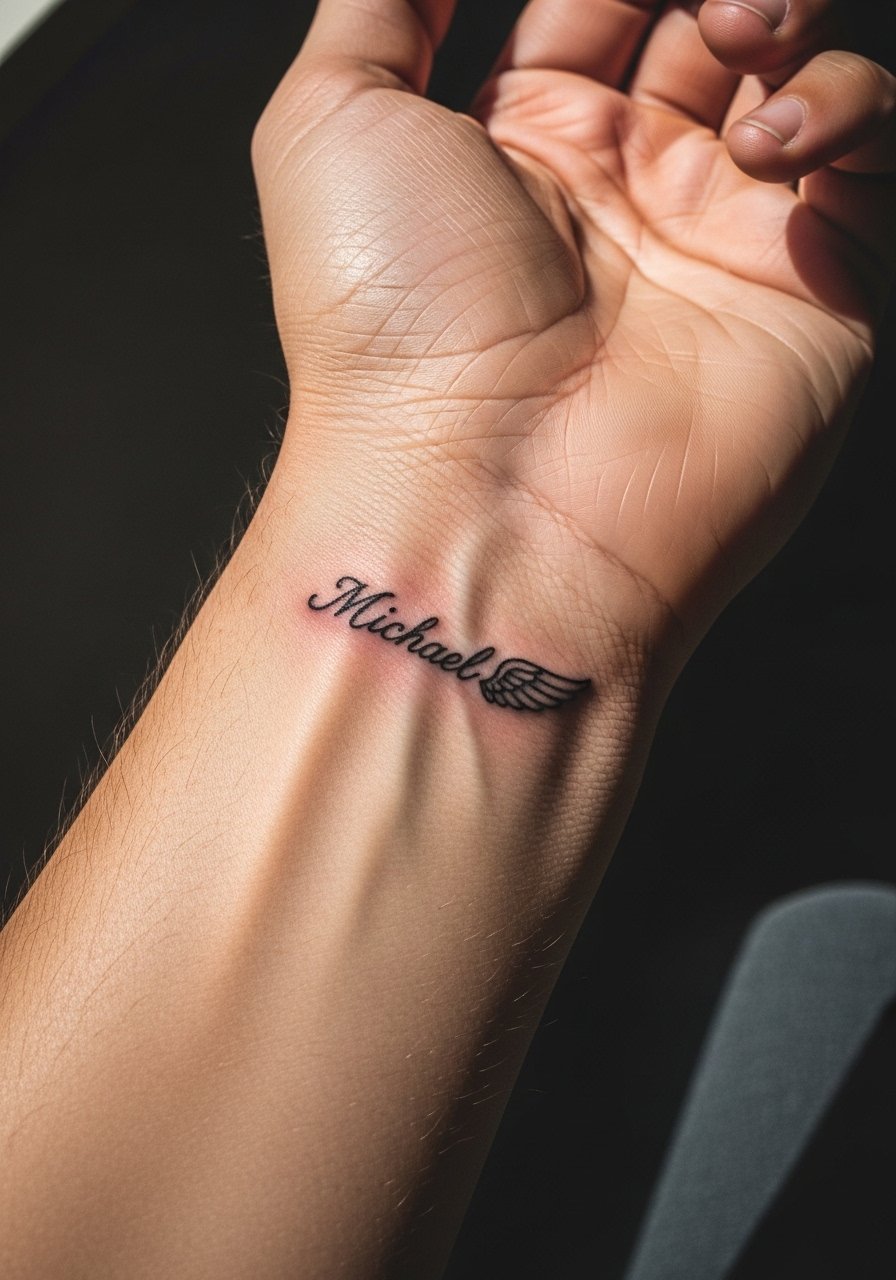
Wrist tattoos involve daily friction and frequent washing so scale matters. The smallest script that looks elegant day one often softens into an unreadable line by year three if the strokes are too thin. Ask for slightly heavier downstrokes and avoid ultra-tight cursive. Plan for a short touch-up at 18 to 24 months. For the appointment wear a racerback tank you can pull sleeves away from the wrist easily.
6. Geometric Michael with Dotwork Halo on Upper Arm
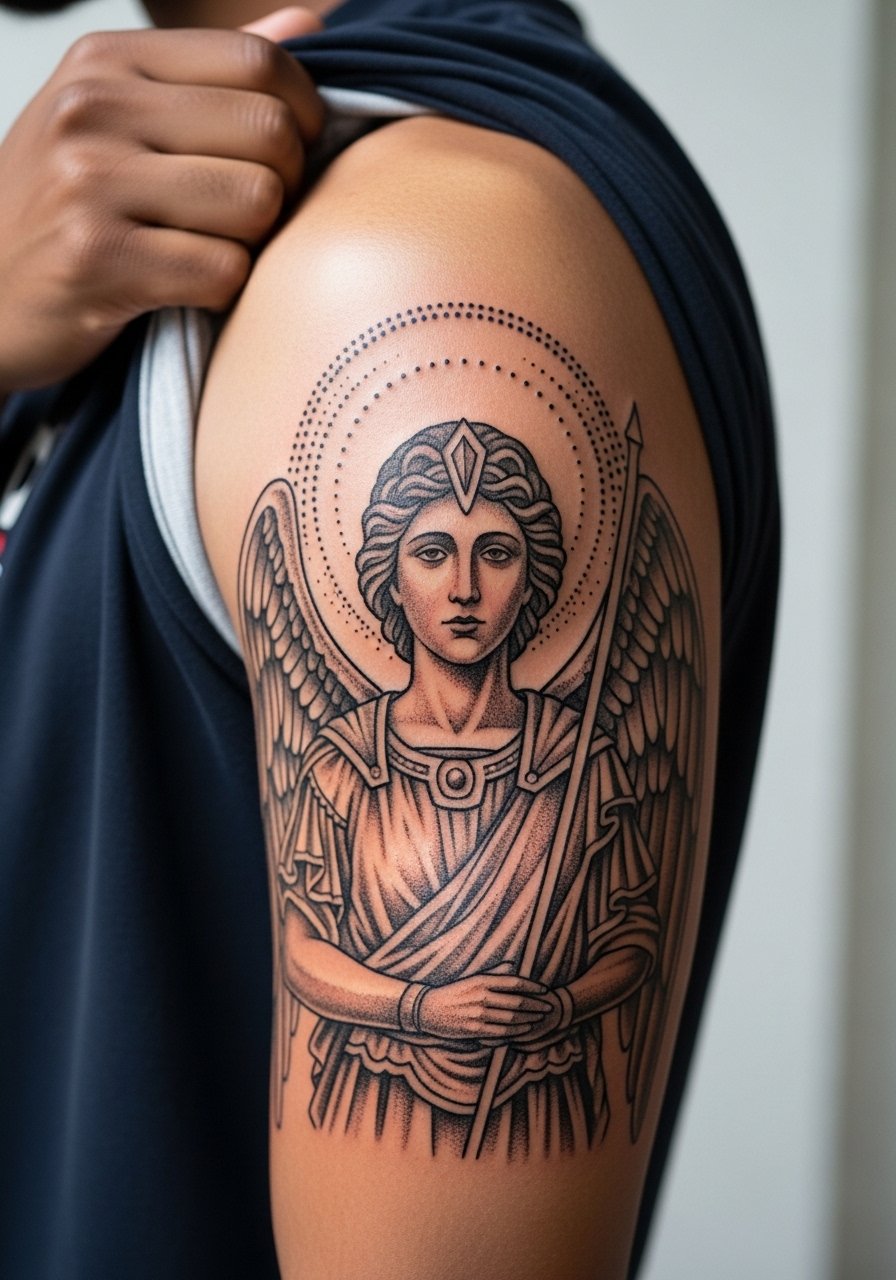
When I recommend geometric and dotwork combos it is because the halo pattern gives breathing room. Tell the artist you want spacing between dots in dense areas so stipple shading does not pool into a gray block over time. The biggest mistake is packing too many dots into a small circle. Outer arm placement is lower pain and great for showing during warm months. Pair this design with rolled-up short sleeves or a loose linen short to keep the focal area visible without friction from straps.
Studio Day Picks
The smaller wrist, clavicle, and forearm pieces above need different prep than large back panels, so a few focused items smooth the session and the first week.
- Stencil transfer paper kit. Lets you preview placement and line weight on real skin before the needle starts, which is useful for delicate forearm and wrist sketches.
- Topical numbing cream. Applied per the product directions it eases sensitivity on clutchy spots like the clavicle without changing how the ink sits.
- Thin protective film roll. Helps keep wrist and hand pieces clean during the first week of heavy washing and typing.
- Fragrance-free gentle body wash. Cleanses the healing area without irritation for small linework and stipple shading.
- Aquaphor healing ointment. Thin applications in the first days lock in moisture for fine line pieces while letting the skin breathe.
7. Micro-Realism Michael Portrait on Shoulder Blade
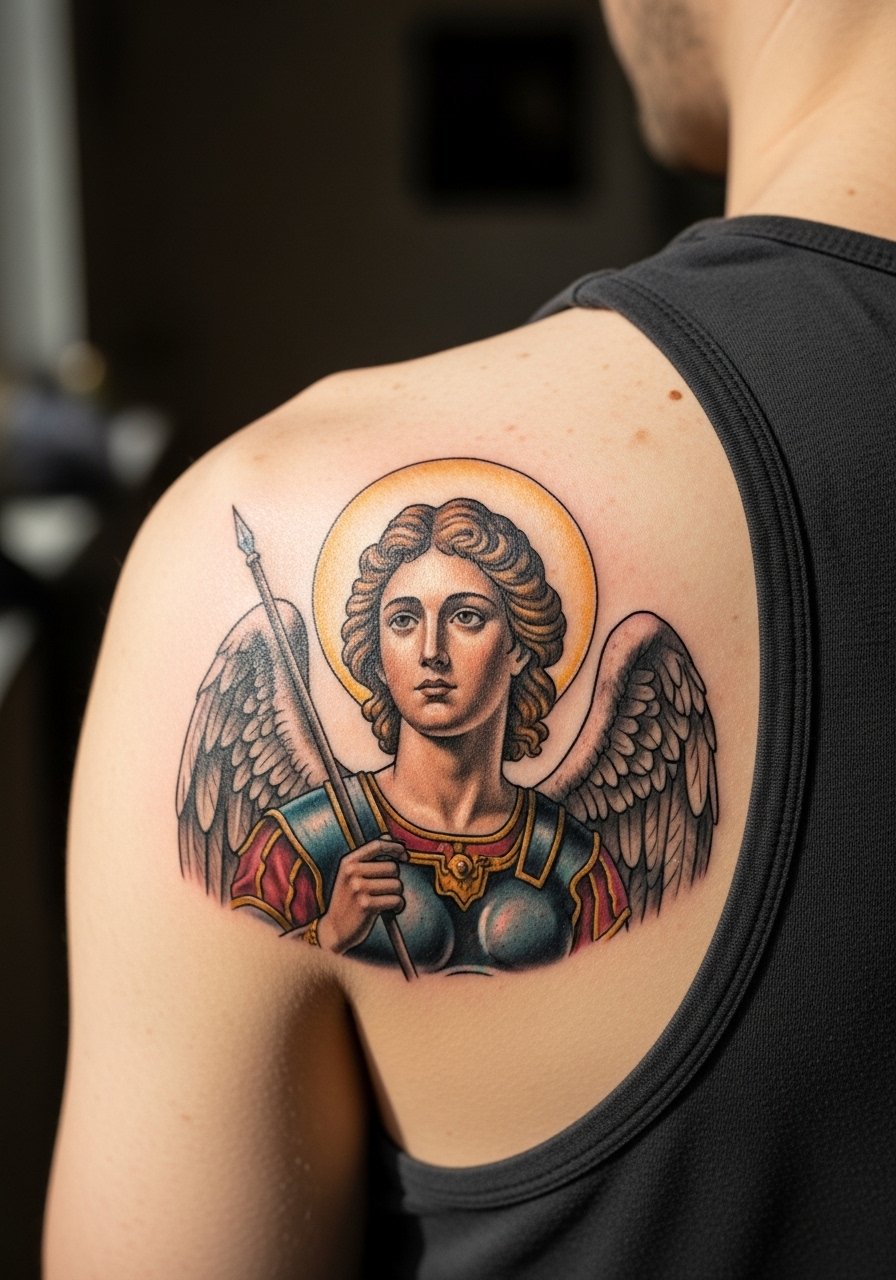
Personal observation tells me micro-realism needs real skin canvas like the shoulder blade to breathe. During consultation request sample images at the same scale you want so you and the artist align on detail. A frequent error is shrinking portrait reference too small for the chosen placement. Expect a focused two to three hour session and a likely touch-up at year two for crisp facial lines. For the session wear a loose tank top you can shift without discomfort.
8. Bold Blackwork Michael Sleeve Element
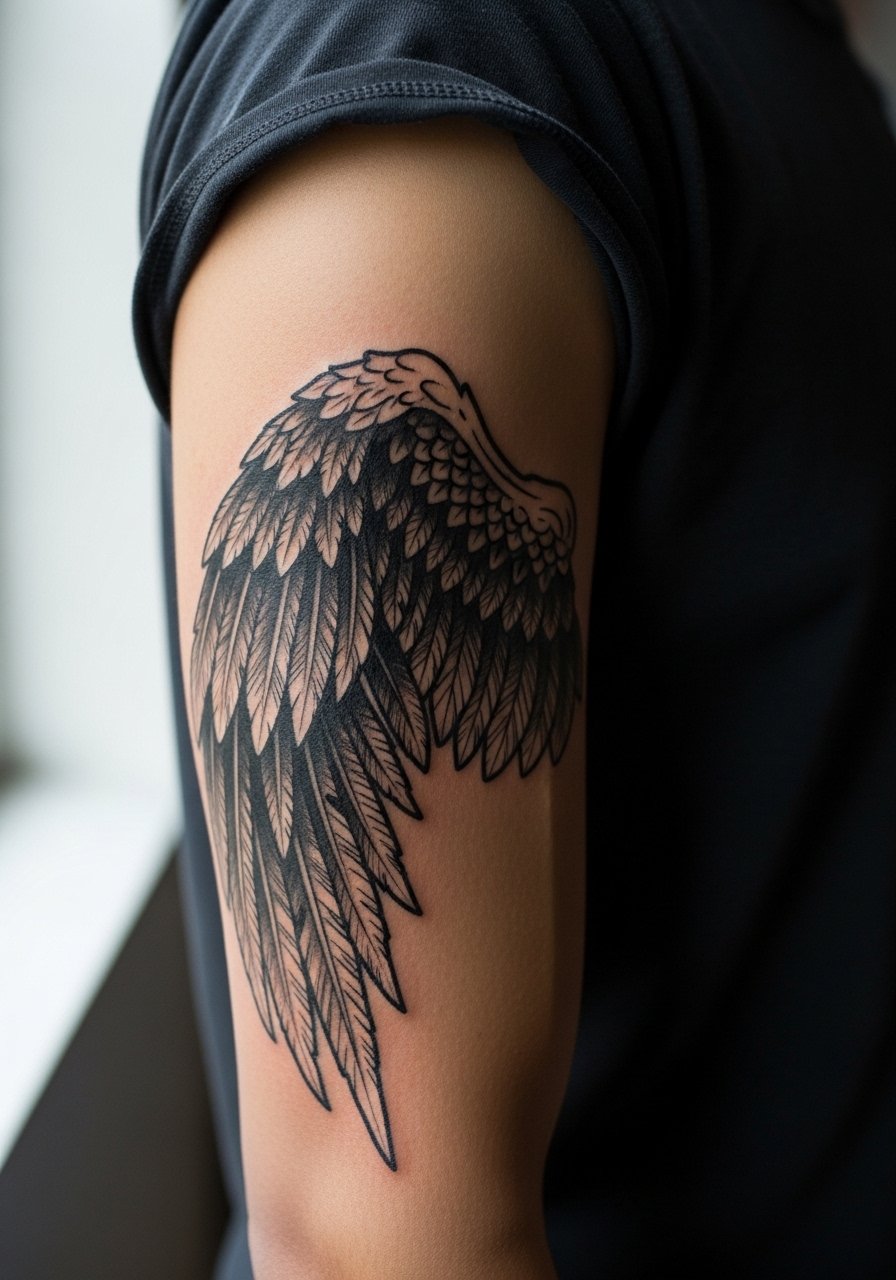
Bold blackwork is the counterpoint to fragile watercolor. The saturation and strong linework here age into a graphic silhouette that keeps reading for years. When you discuss the sleeve, be direct about which areas should read darkest so the design keeps hierarchy as it fades. Sessions will be longer and may require multiple color-saturation passes. This placement pairs well with rolled-up sleeves and a fitted black tee that frames the arm without compressing the ink.
9. Winged Back-of-Neck Michael Emblem
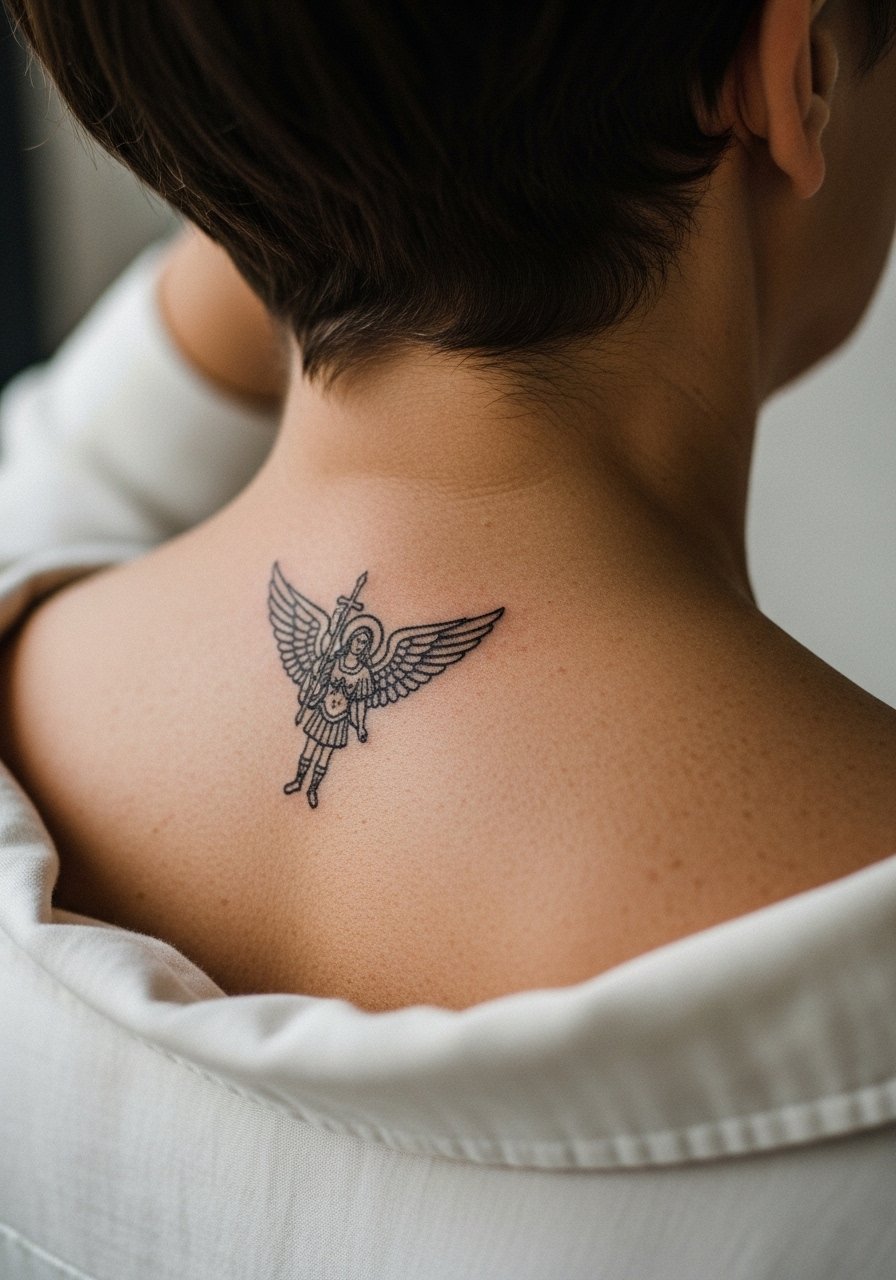
Decision-pressure applies at stencil time for neck emblems. The back of the neck is visible in certain jobs and less so in others, so check your daily wardrobe before committing. Artists disagree about fine line on the neck versus bolder strokes. One camp says the skin there rubs and blurs quickly. The other camp says proper depth and spacing make it hold. Ask where your artist stands and expect a small touch-up window at year two. For showing this emblem, choose shirts with a wide neck that let the piece peek out when you want it to.
10. Sternum Michael with Stippling and Lace Motifs
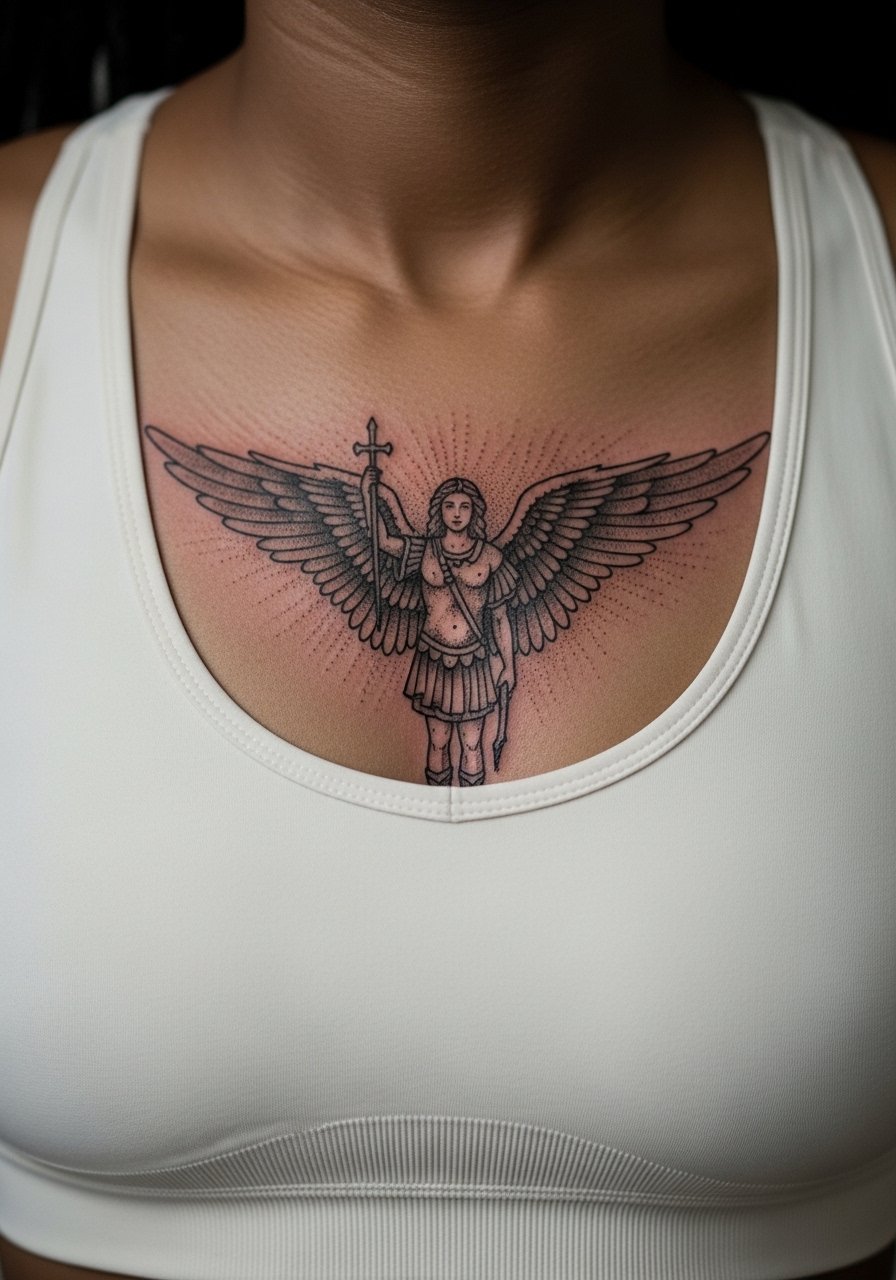
Sternum work is intimate and technical so find someone experienced with center-chest pieces. The biggest mistake I see is packing too much dense detail into the central strip which then softens into a muddy area after a few years. Tell your artist you want deliberate negative space and graduated stipple shading that breathes. Expect high sensitivity during the session and one or two shorter touch-ups as the torso moves and stretches. For the appointment, wear a fitted sports bra that gives access while keeping you comfortable.
11. Thigh Michael with Flowing Cape
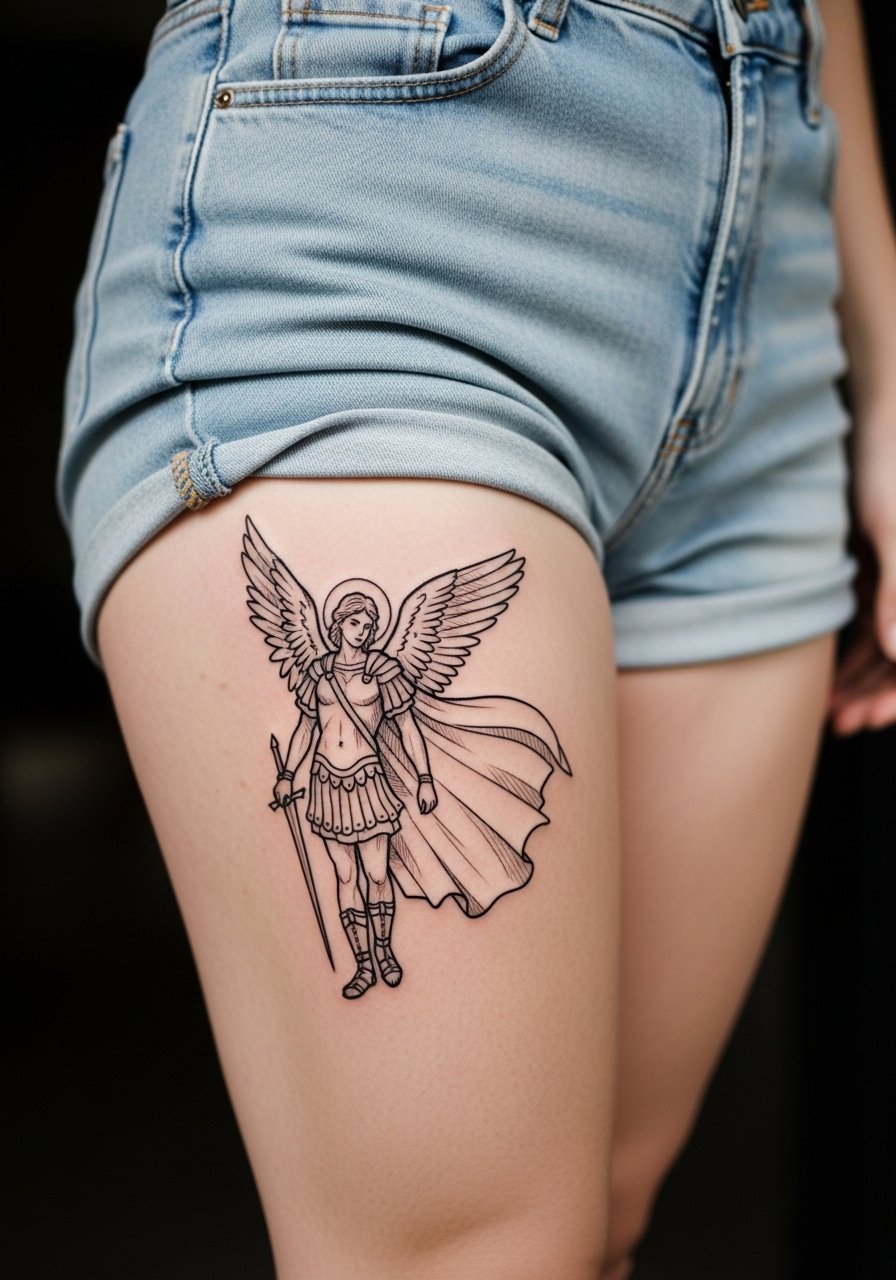
Visual impact lead works for the thigh because larger sweeping shapes age predictably. If you want movement in the cape ask the artist to use longer flowing strokes rather than a mesh of tiny details. A common error is tightly packed detail on a curved surface which blurs with time and movement. Thigh pieces heal well with less friction if you avoid tight pants while settling. For the session wear high-waisted shorts so the artist can access the area without you being uncomfortable.
12. Collarbone Michael with Single Sword Linework
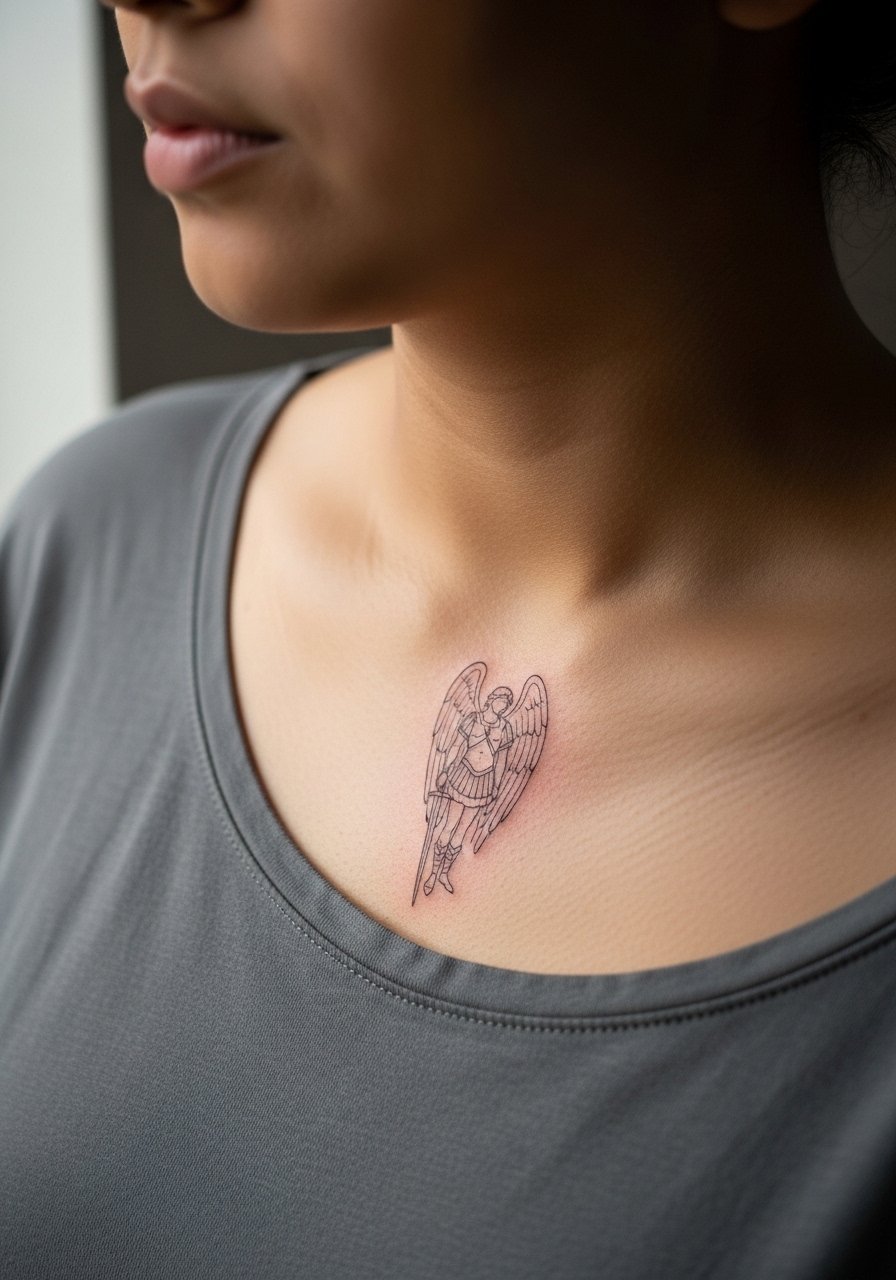
Aging lead matters on collarbone lines because skin stretches differently over bone. The smallest single-line sword can look elegant at first but thin lines will fade into faint scratches by year four. Ask for slightly heavier primary strokes and a faint shadow to keep the edge. Sessions are short and healing is fast but expect more sun exposure there so use cover regularly. Pair the piece with open-neck shirts or a thin chain pendant necklace that sits above the design.
13. Hand and Finger Michael Iconography
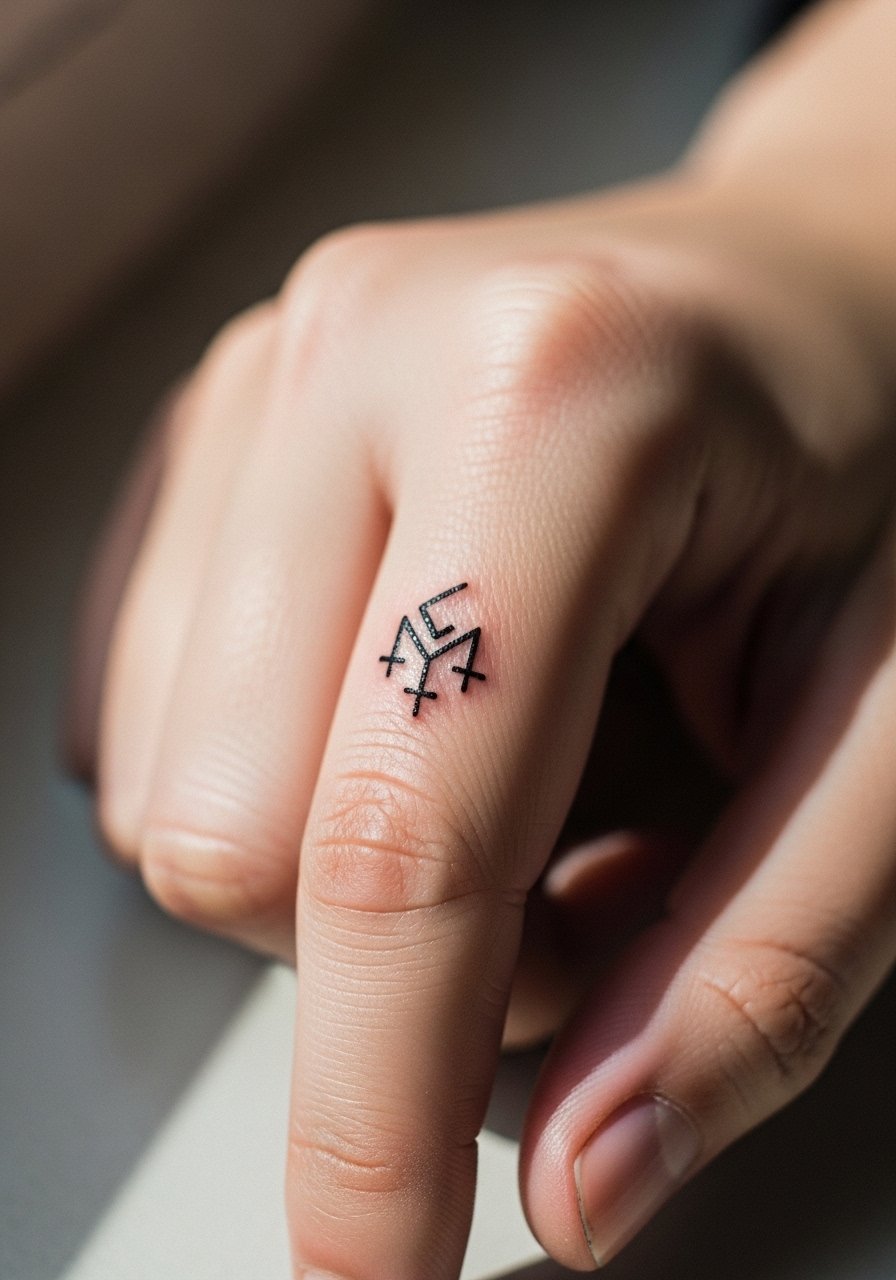
Hand and finger tattoos demand patience. The skin regenerates quickly there so fine details fade faster than on softer canvases. The real mistake is expecting a lifetime of crisp micro detail on fingers. Expect touch-ups more often, possibly annually. If you get a glyph or symbol, ask for slightly bolder strokes and accept that maintenance is part of ownership. For the session wear comfortable clothing you can use one-handed, and consider a slim minimalist ring to complement the tiny design when it is healed.
14. Surrealist Michael with Fragmented Wings on Ribcage
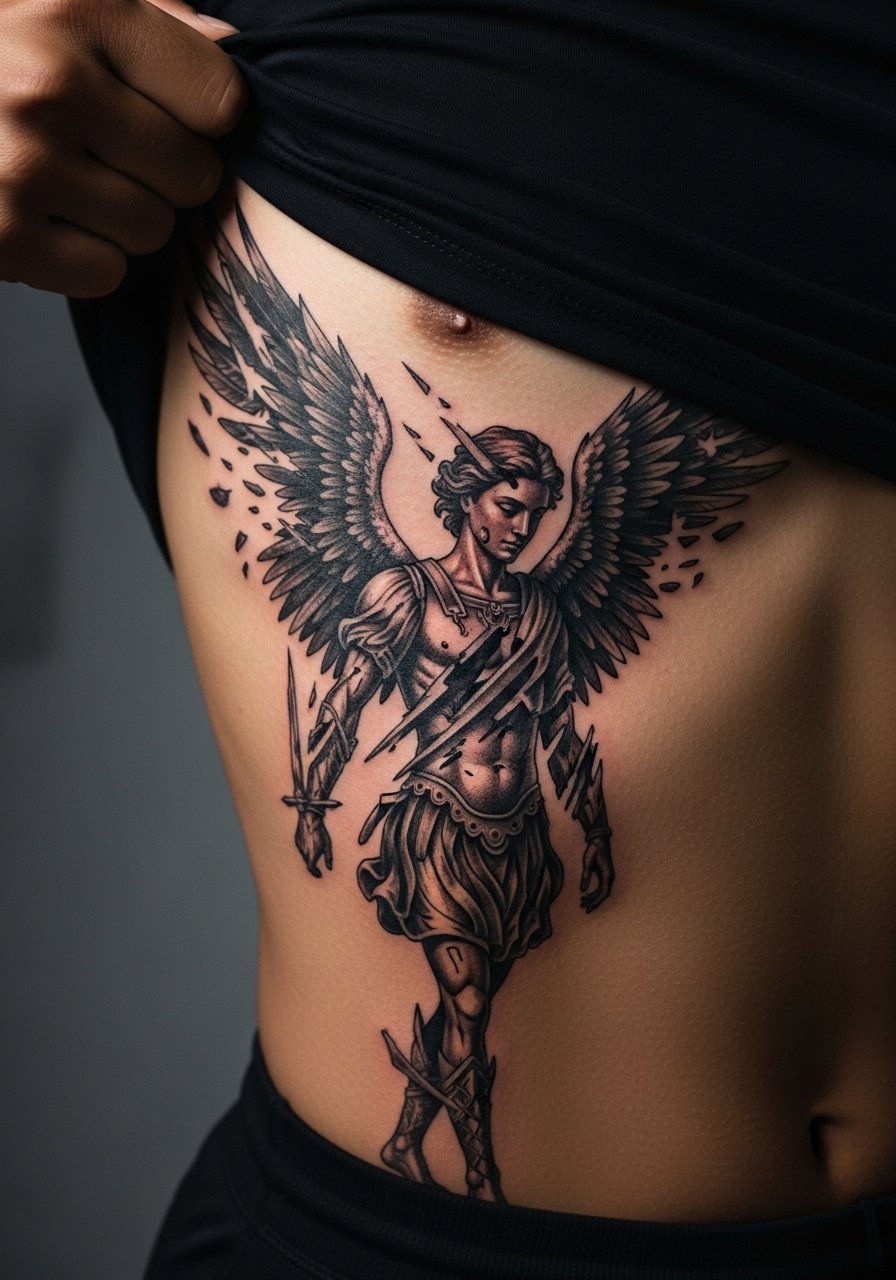
Controversy lead suits ribcage work because artists split on fine line durability there. One camp warns that flexing skin causes early blurring. The other camp says precise depth and spacing make it last. The truth is it depends on placement, your skin, and the artist's method. If you choose a surreal fragmented wing, space the fragments to allow future settling. Rib sessions hurt more than arm work so plan for breaks and shorter sittings. For the appointment wear a cropped athletic top that gives access without feeling exposed.
15. Throat or Side-Neck Michael Script
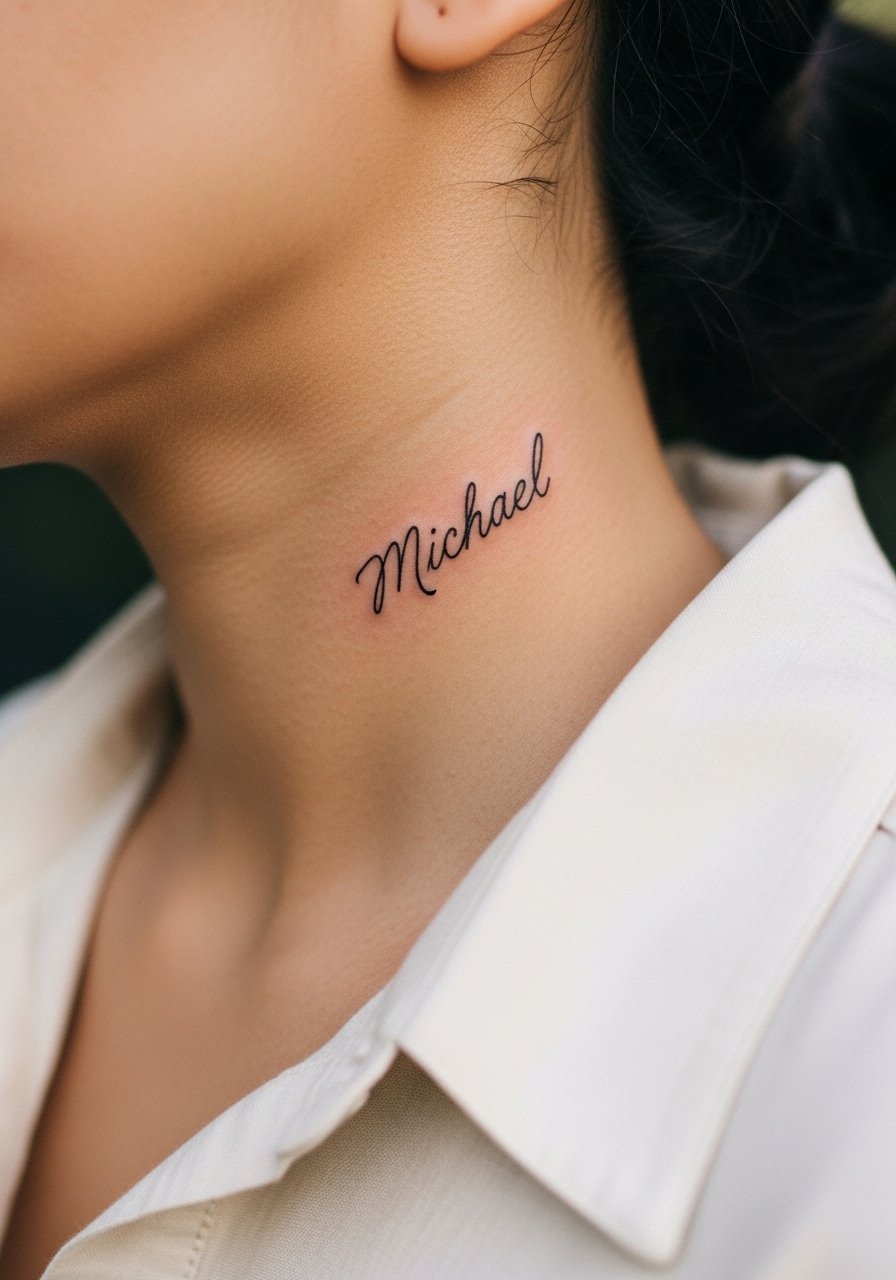
Decision-pressure holds here because neck visibility intersects with professional considerations. Hand tattoos and neck tattoos still affect hiring in some fields, so weigh that against personal meaning. The common mistake is selecting very thin script in an ultra-visible spot. Opt for a slightly heavier line and discuss touch-up plans with the artist. Sessions are sensitive and brief. For the look, try a wide-neck shirt that lets the script show selectively.
16. Lower Back Michael with Flowing Feathers
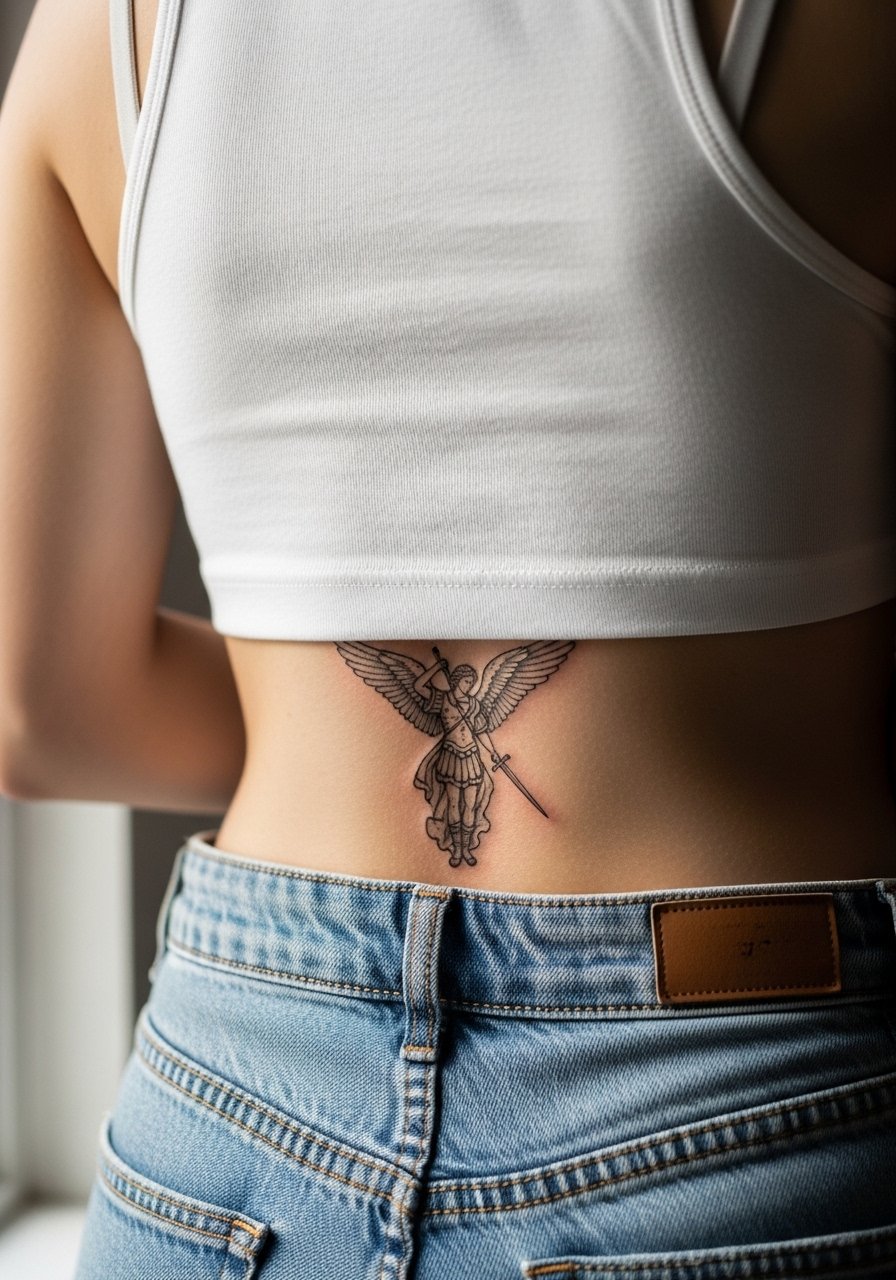
Lower back placements need clothing consideration during healing. The common error is tight waistbands that rub the design in the early weeks. Ask your artist to place the lowest edge slightly higher if you wear low-rise clothing to avoid constant chafing. Sessions are moderate in pain and usually finish in one to two sittings. Pair with open-back or low-rise casual wear like high-waisted jeans for evenings out so the piece reads without being constantly compressed.
17. Calf Michael with Sword and Light Rays
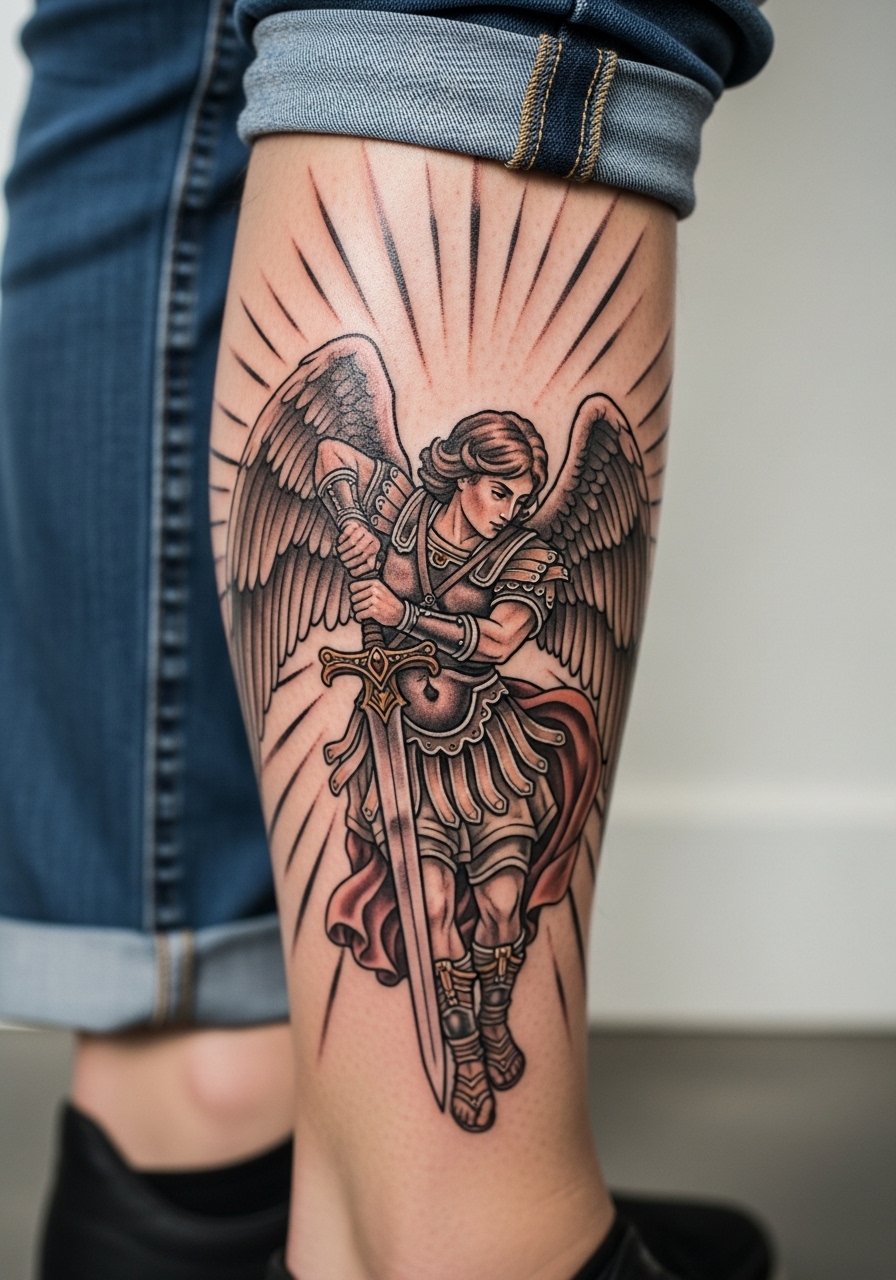
Visual impact lead fits calf placements because the vertical composition complements leg lines. Tell the artist to keep the rays spaced so they do not blur into a single washed band as the piece ages. Mistake to avoid is packing too many thin lines into the rays. Calf sessions are lower pain and heal well with minimal friction if you avoid tight socks right after. For casual show-off wear, roll up jeans or pick sandals that let the calf breathe.
18. Sleeve Accent: Michael in Negative Space
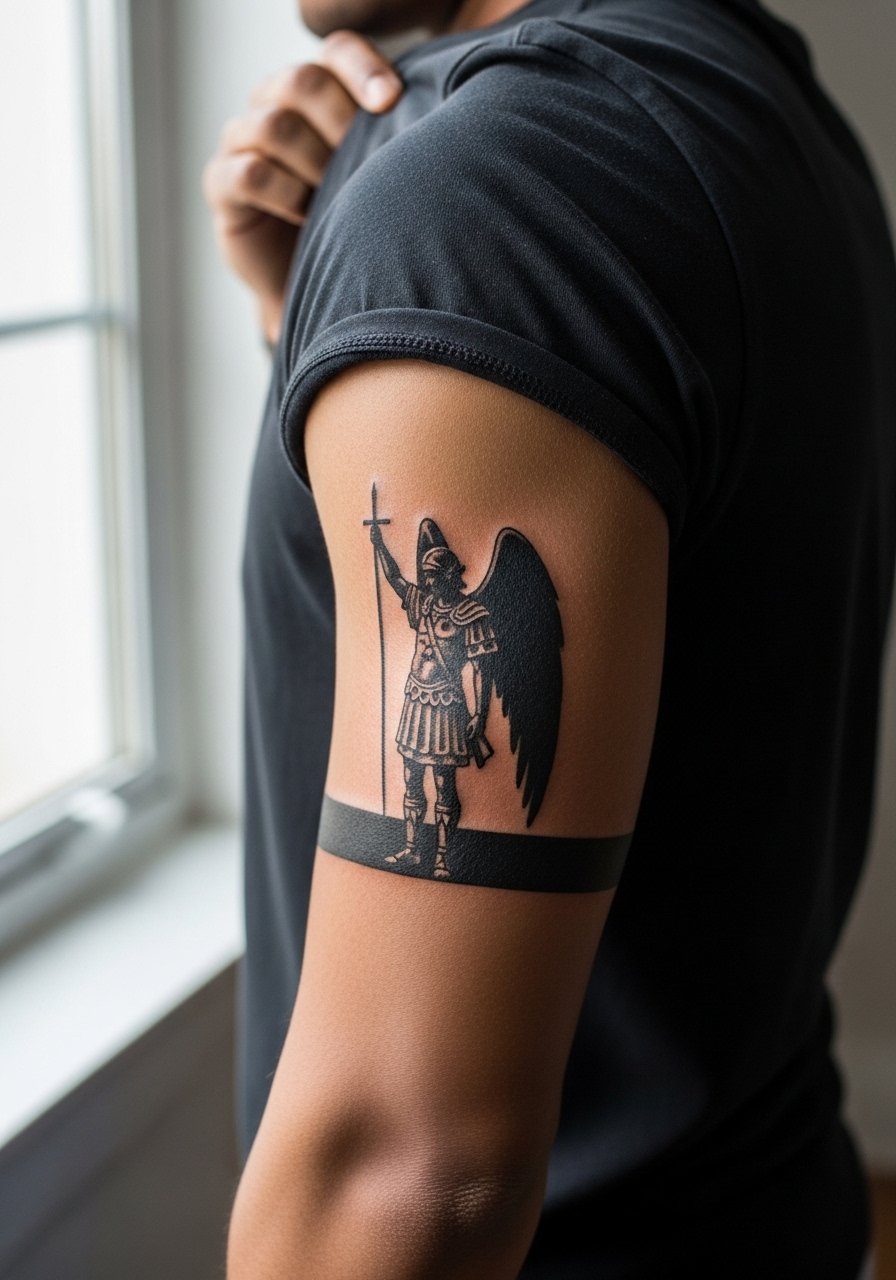
Mistake lead works here because negative space pieces need room to read. The error is too tight negative shapes that merge into the black fill with time. When you consult, point to examples that show the exact spacing you want. Bold black holds up well and gives a graphic silhouette as color fades. Sessions are long but the long-term maintenance tends to be lower than ultra-fine work. Roll sleeves or wear a fitted black tee to frame the sleeve without friction.
19. Micro-Script 'Guardian' with Tiny Halo on Ankle
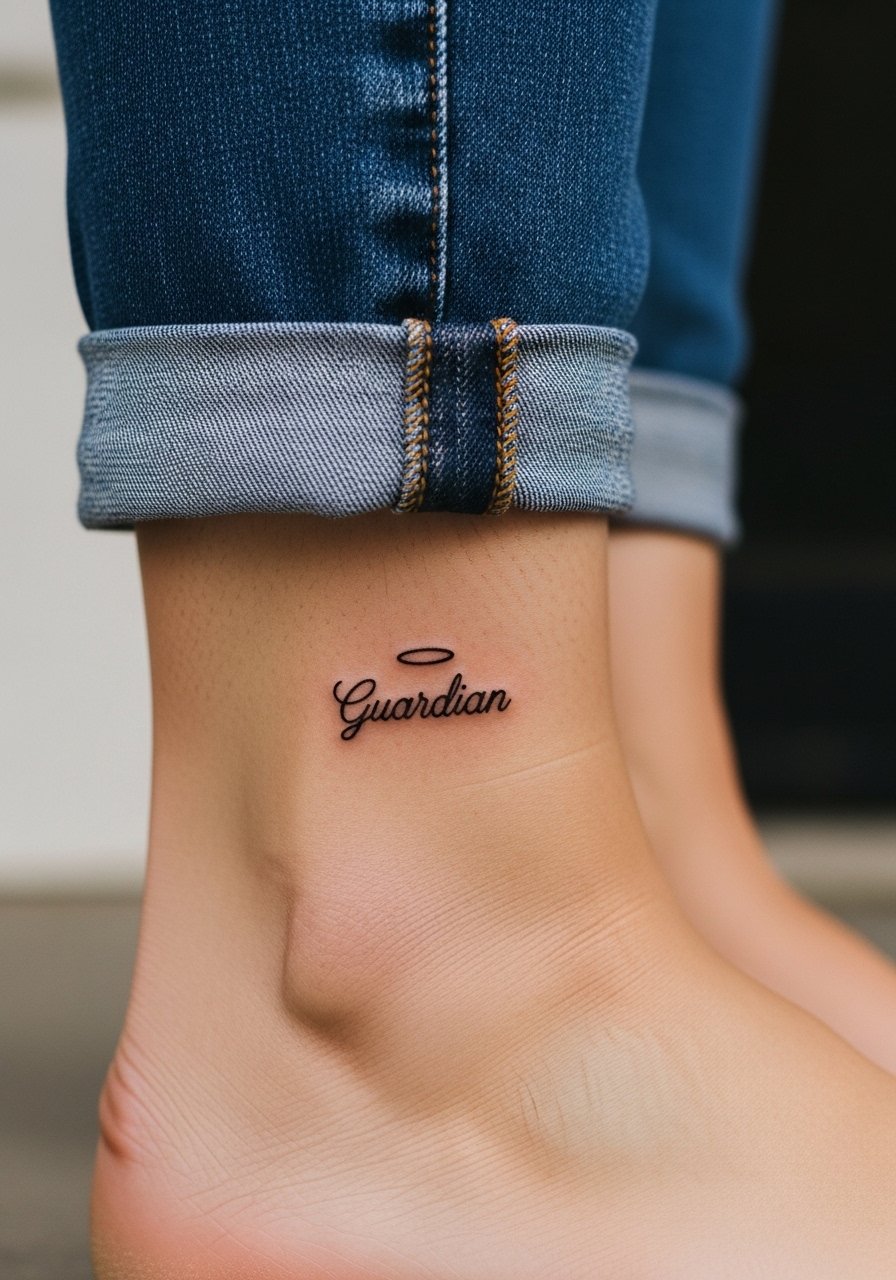
Aging lead again: ankles face lots of washing and sock friction so micro script needs to be bolder than it looks in mockups. The real mistake is asking for hairline strokes around a joint. Expect annual touch-ups if you keep the original thin style. For the session wear jeans you can easily roll up and consider a delicate ankle bracelet after healing to highlight the area.
20. Ribcage Back-Side Michael with Armor Silhouette
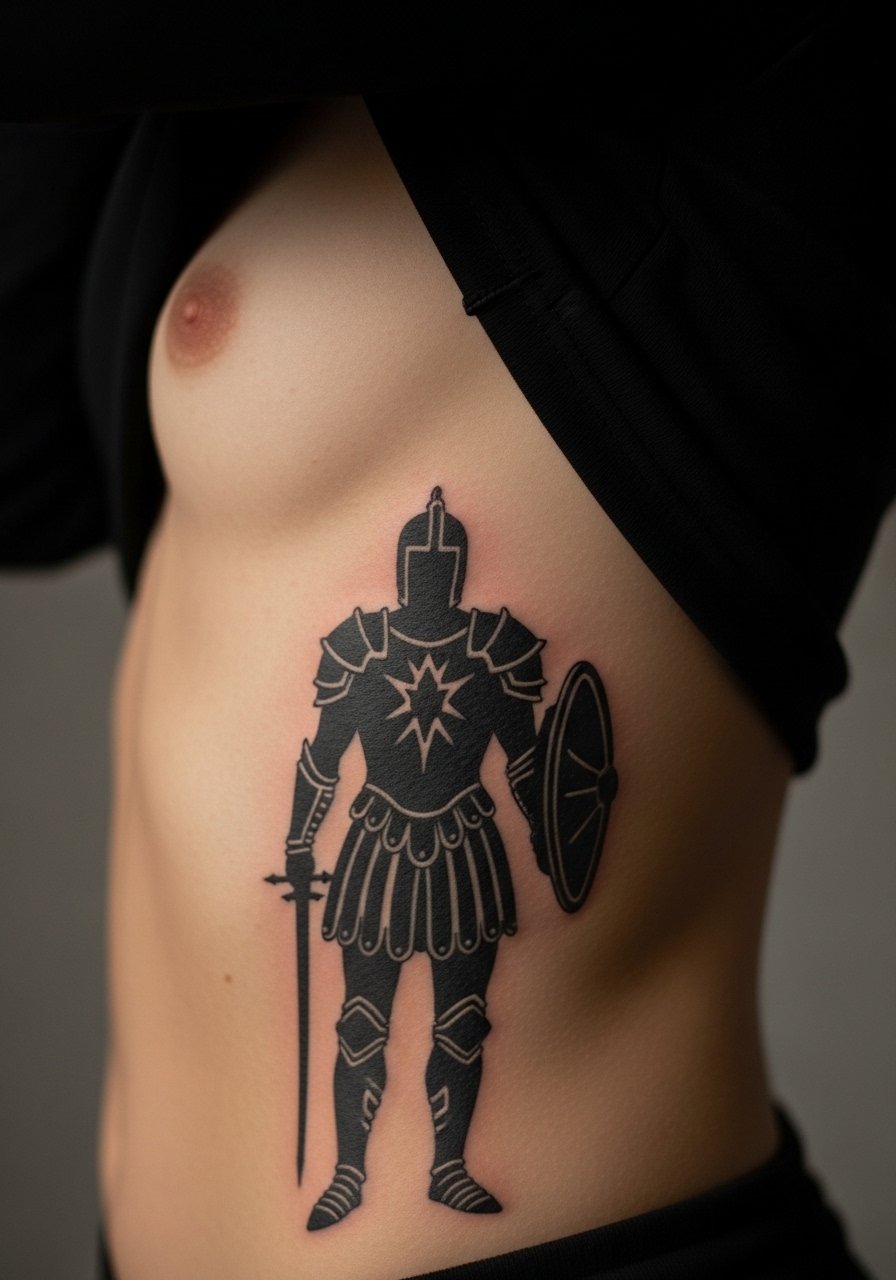
Personal observation suggests silhouette pieces on ribs age more predictably than dense micro shading. Tell the artist you prefer a clean silhouette with minimal internal detail so the shape stays readable over five years. The session will be painful and you should plan for breaks. Space in the design prevents the usual blurring problem that affects tiny internal lines on the rib.
21. Half-Sleeve Michael with Filigree and Script
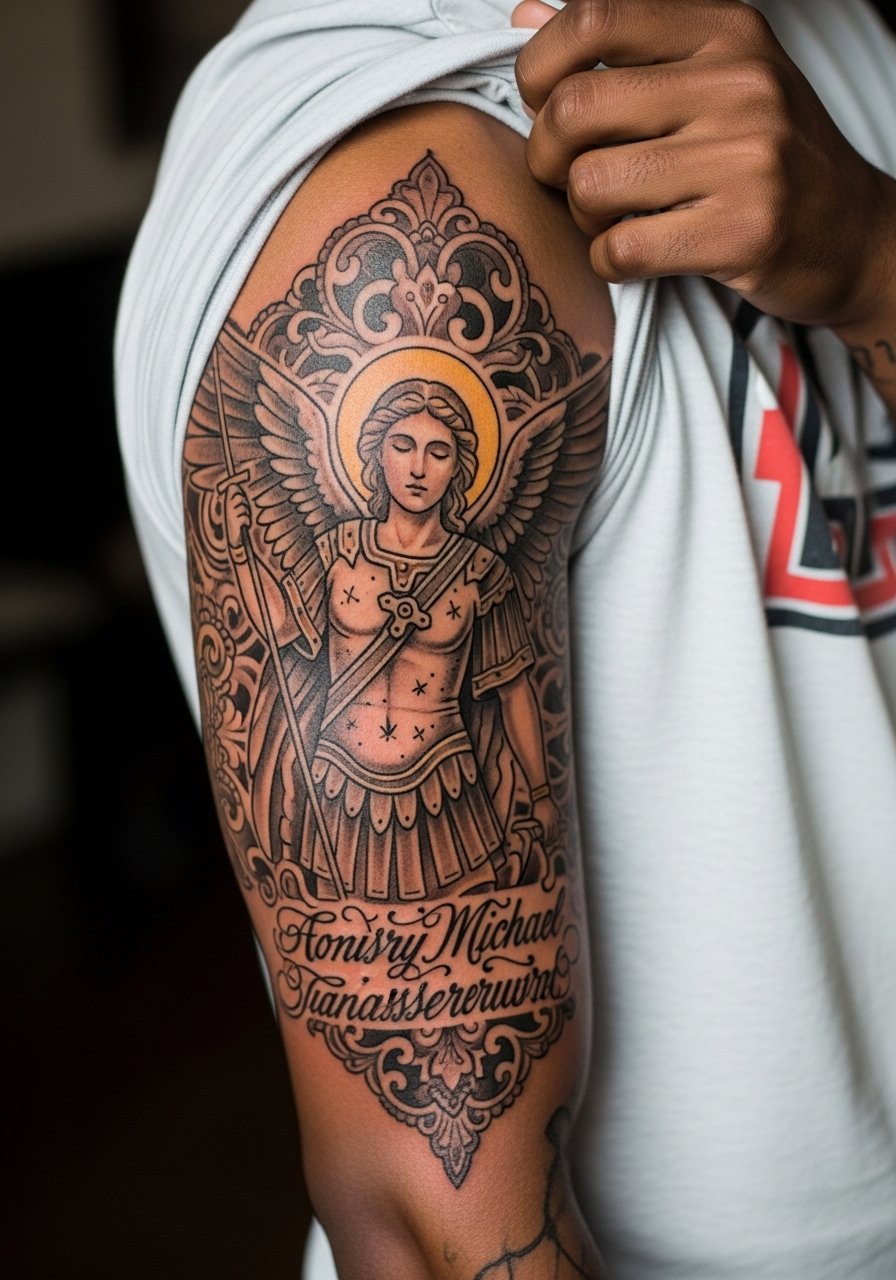
Consultation lead fits half-sleeves because you need a clear plan for how script will weave into filigree. Bring exact font samples and ask where the artist will place script to avoid awkward curves at joints. A common error is allowing script to run into dense ornamentation with no breathing room. Sessions run in multiple parts. For style pairings, rolled sleeves or a loose button-down shirt frame the half-sleeve while staying casual.
22. Chest-to-Shoulder Spread Michael with Wing Overlap
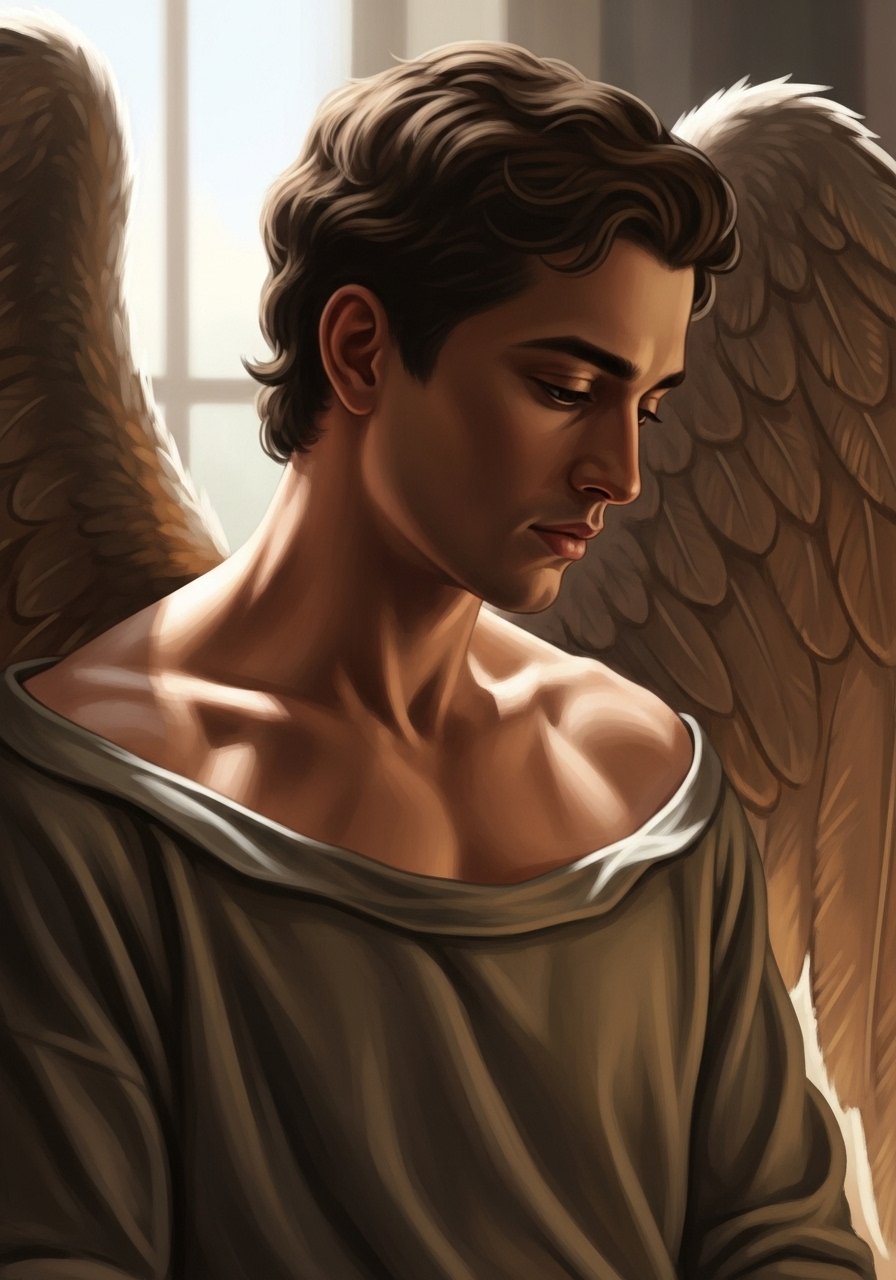
Visual impact lead is useful for chest-to-shoulder spreads because wing overlap must honor musculature. The mistake people make is forcing symmetrical wings on an asymmetrical chest. Ask the artist to mock up the wings aligned with shoulder contours so motion and aging keep the composition balanced. Sessions can be long and may require several sittings to complete saturation.
23. Calf Script Ribbon with Small Michael Icon
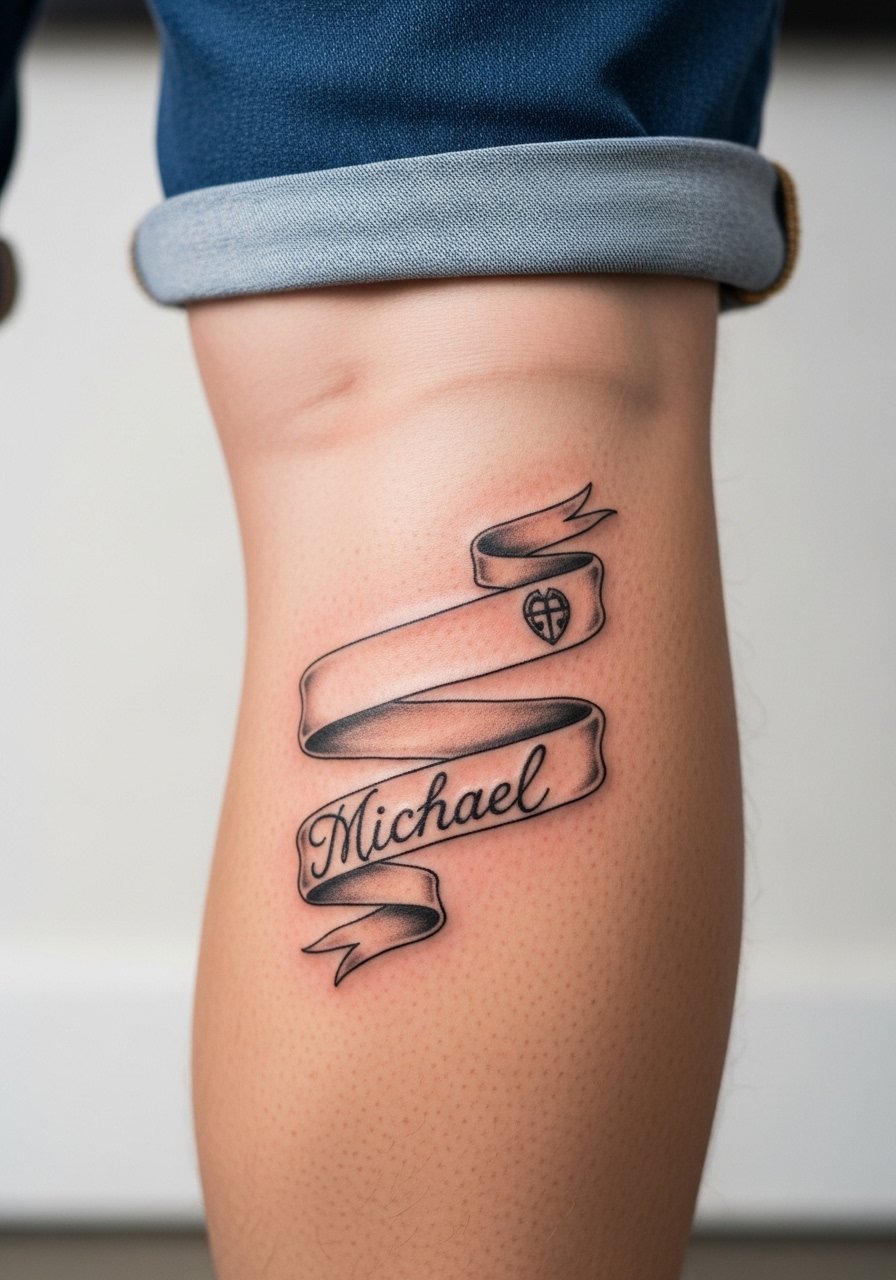
Mistake lead again: ribbons wound too tightly become unreadable where the calf curves most. Request mockups at life size and check the curvature while standing. Healing is straightforward but you should avoid tight socks during the first week. For display, pair with rolled pant legs or loose linen drawstring pants you can roll up to show the ribbon line.
24. Inner Bicep Michael Sketch with Light Shading
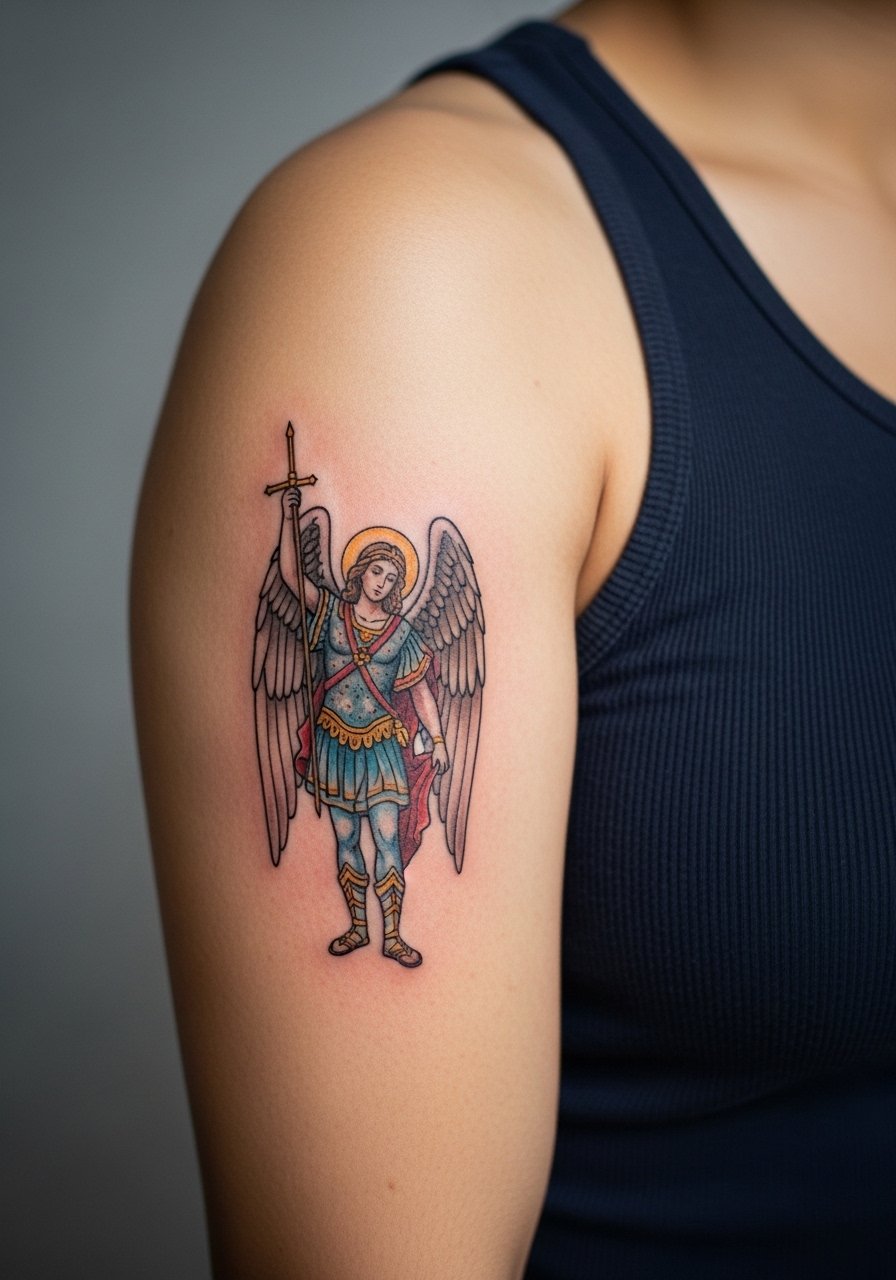
Pain warning applies for inner biceps because sensitivity can change the session pace. The biggest mistake is choosing too small a composition for an area that flexes. Ask for slightly more spacing and moderate shading rather than dense stipple. Healing requires gentle movement but the inner arm heals well when protected. For the session wear a loose tank top that you can adjust without strain.
25. Hip Michael Crescent with Floral Accents
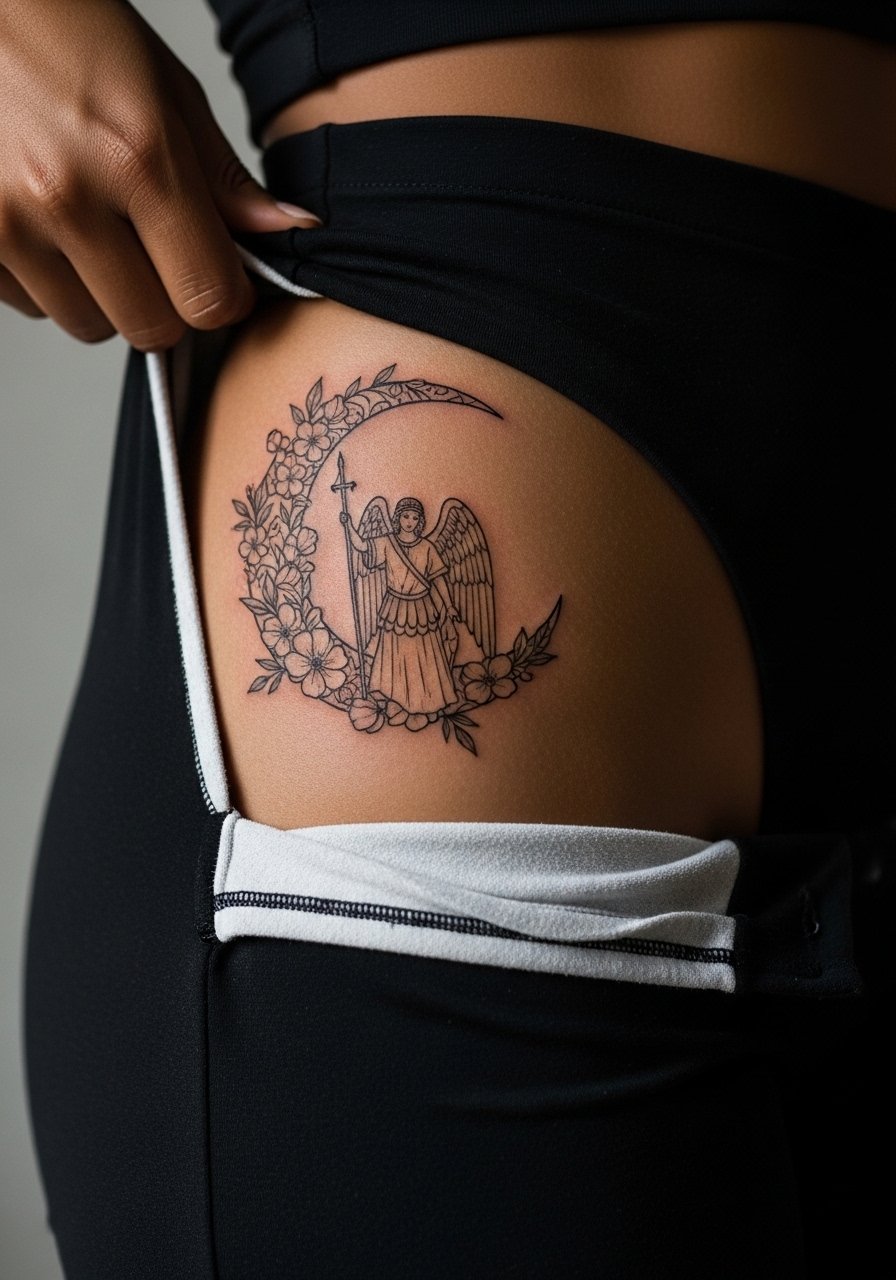
Styling lead suits hip pieces because they are often shown in swimwear. The error is placing the lowest element where waistbands rub constantly. Tell the artist to position the crescent so it sits naturally with your clothing choices. Hip tattoos can be easily hidden if needed or shown with high-cut swimwear. For sessions pick high-waisted bottoms you can shift, like high-waisted swimwear.
26. Small Foot Archangel Michael Linework
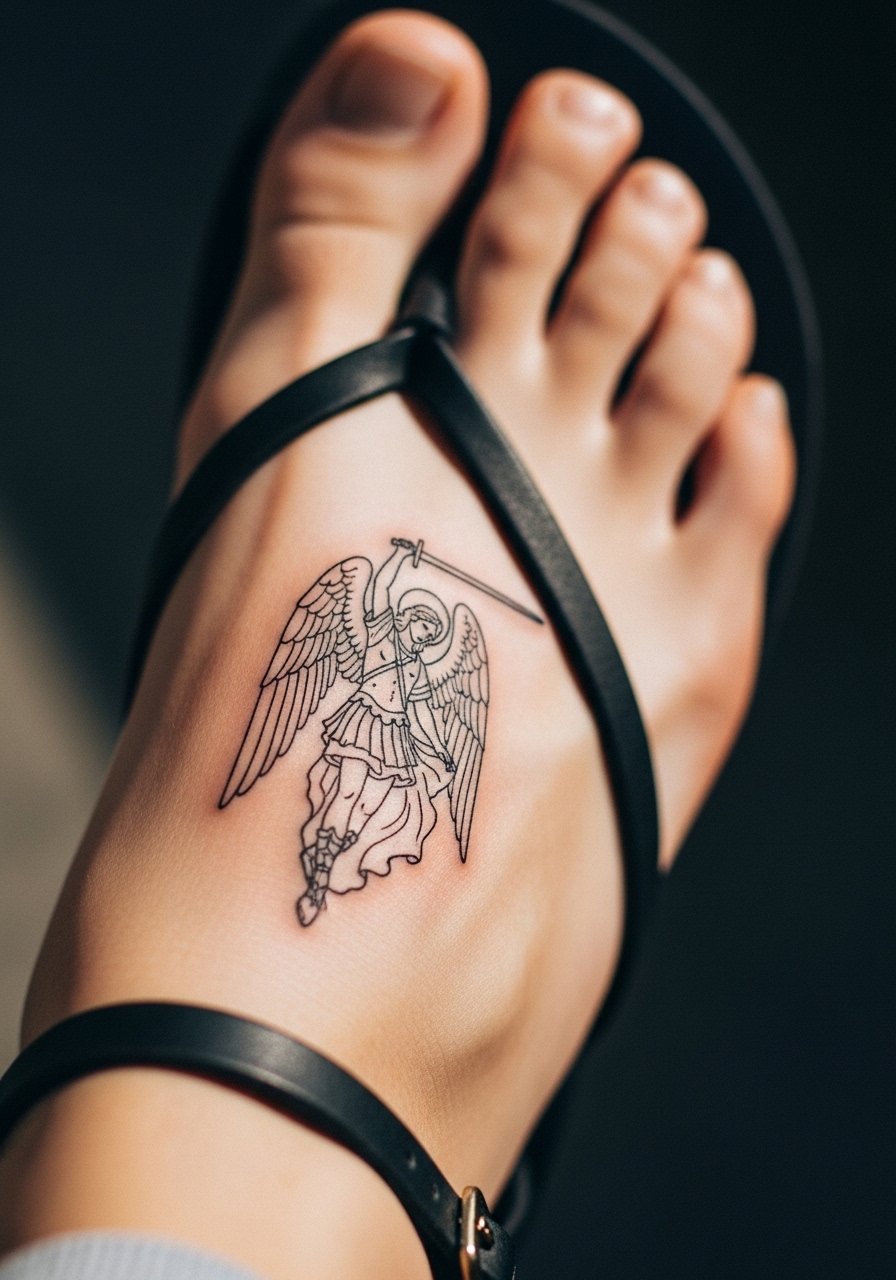
Foot tattoos face constant friction from shoes and exposure to outdoor elements. The common mistake is expecting delicate linework to remain crisp under socks and sneakers. Expect faster fading and a likely touch-up in the first year. For the appointment wear open footwear like sandals to avoid rubbing the fresh ink and to let the area breathe.
27. Minimalist Michael Back-of-Shoulder Blade Emblem
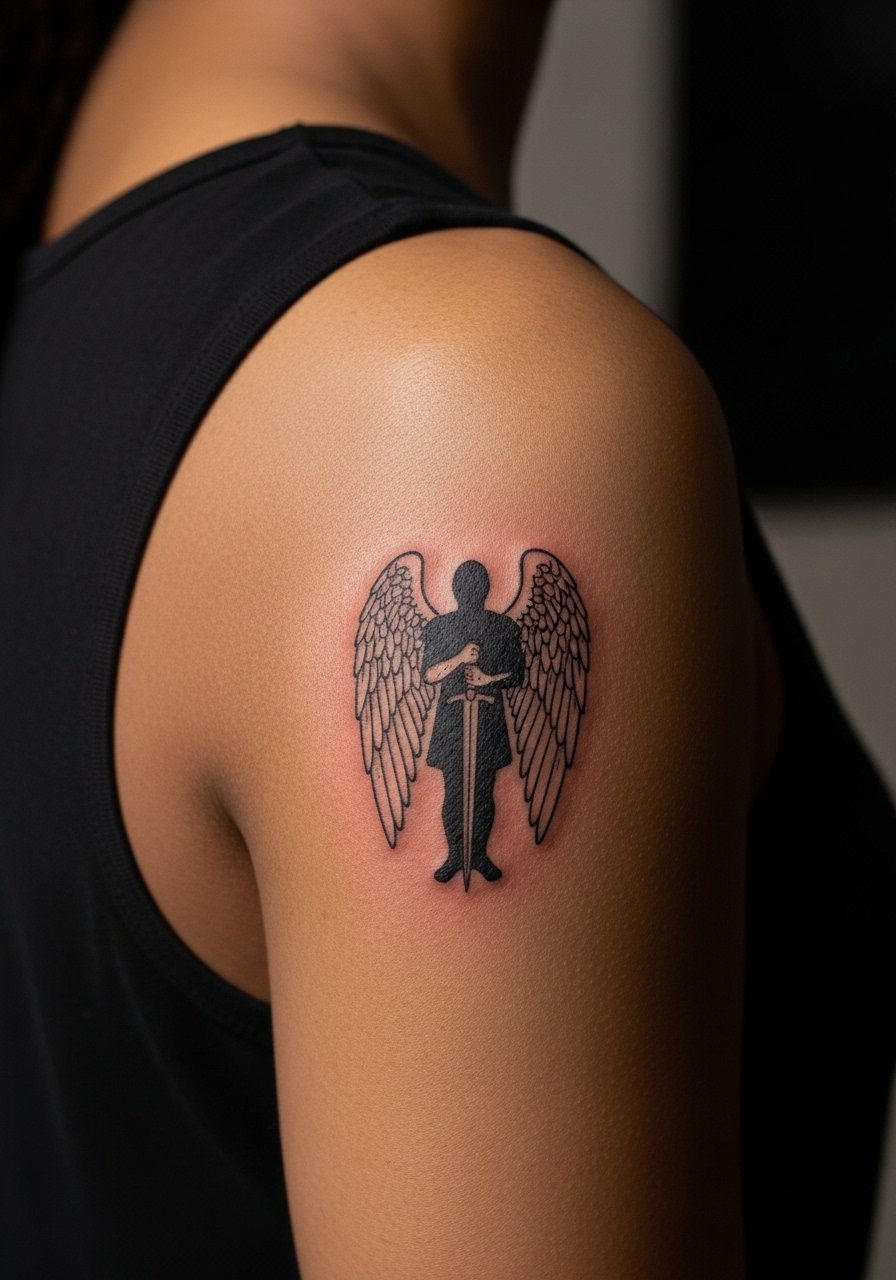
Consultation lead closes the set because the back of shoulder is a forgiving spot for minimal emblems. The mistake is tiny details squeezed into the blade where friction from straps can wear edges down. Ask for balanced negative space and a modest outline thickness. Sessions are short and healing is straightforward if straps are avoided during the first two weeks. For the session pick a loose tank top you can shift so the area is accessible without aggravation.
Frequently Asked Questions
Q: Do Archangel Michael tattoos carry cultural or religious sensitivity for non-believers?
A: There are two common views. One group says religious imagery should be chosen with respect and cultural understanding, especially for symbols that are sacred to others. The other group feels personal meaning matters most and that religious iconography can be an expression of heritage or protection even outside formal belief. If you are unsure, discuss how to adapt motifs with the artist and consider subtle personalization rather than direct replicas.
Q: How often will I need touch-ups for fine line versus bold blackwork?
A: From what I have seen, fine line work typically needs touch-ups sooner, often around year two to three, while bold blackwork can go longer before needing refresh, sometimes five years or more. Placement and sun exposure matter more than style in many cases. Ask your artist for a realistic timeline based on your daily habits and the exact placement.
Q: Where should I look to find artists who specialize in religious or iconographic work?
A: Start by searching style-specific portfolios on sites like Tattoodo and by exploring Instagram style tags for neo-traditional, micro-realism, or watercolor Archangel Michael pieces. Reddit threads in tattoo communities can reveal real client experience and common red flags. Bring a shortlist of portfolio images to consult and ask how an artist adapts religious imagery respectfully.
Q: Will watercolor Michael tattoos fade faster on darker skin tones?
A: Watercolor can be less visible on darker skin if the hues are too pastel or applied too lightly. That does not mean it is impossible. Ask artists experienced with your skin tone for pigment choices and contrast strategies, or consider combining watercolor washes with darker outlines for longevity. A consult with examples on similar skin tones is the simplest safeguard.
Q: What should I wear to the appointment for a sternum or ribcage Michael design?
A: For chest and ribcage work pick a fitted sports bra or a cropped athletic top you can lift slightly without full exposure. Those items let the artist access the area while keeping you comfortable. For show-off outfits post-healing, a strapless top or a bandeau works well to frame the artwork without rubbing.
Q: Are there specific red flags when choosing a shop for intricate Archangel Michael work?
A: Yes. Look for clear portfolio images of healed pieces on skin tones like yours and ask about touch-up policies. Avoid artists who promise impossible detail in a single tiny session. If a portfolio shows a lot of identical flash pieces with no healed photos, probe deeper. Trust your artist is useful advice but also ask concrete questions about longevity, spacing, and healed examples.
Q: Do I need to avoid certain clothing during the healing window for back or hip placements?
A: Yes. Tight waistbands and backpacks cause friction on hips and lower back which can scab and affect healing. Loose garments and high-waisted bottoms that can be shifted are better. For back pieces choose button-down shirts that open easily so you can avoid pulling fabric across fresh ink during the first two weeks.