Fine line beach looks are everywhere online and they can read great the day you get them, but what holds up on a sweaty back over years is a different story. Back pieces shift with body changes, fine lines can fade faster on olive and darker tones, and scheduling a multi-session back project around summer heat is its own headache. Read on for ideas that account for stretch, skin tone, and booking realities so you pick a back tattoo that still reads the way you meant it after a few seasons.
1. Neo-Traditional Wave Crashing With Palm Silhouette
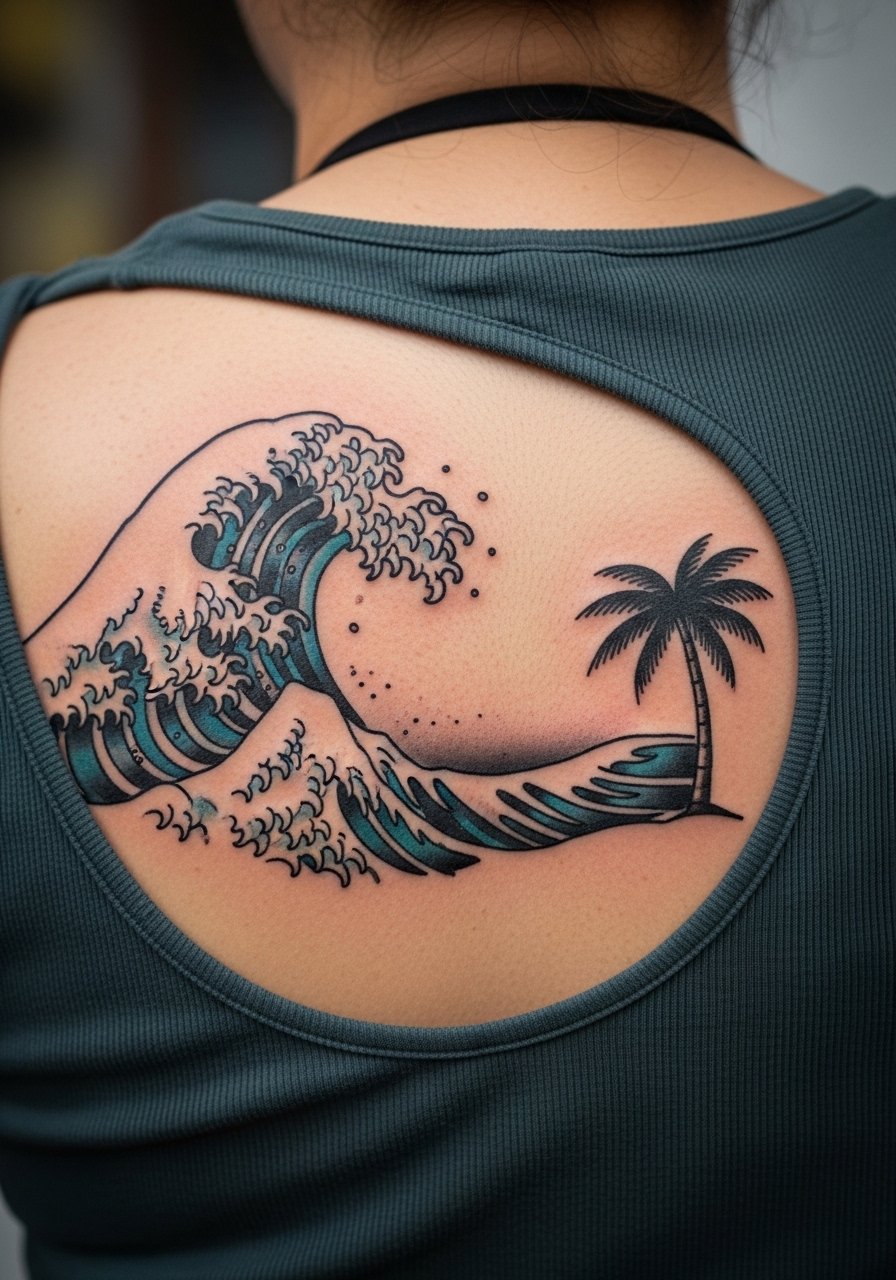
Start here if you want bold shapes that still photograph well from distance. I recommend upper back placement to avoid the stretch problems that hit lower-back waves after body changes. Tell your artist you want thick outlines with sunset color fills and a palm silhouette cut out of negative space so the piece keeps definition as it ages. The session feels moderate on pain because the shoulder blade sits lower on most pain charts, and a typical sit runs two to three hours. For showing it off, pair with a strappy linen tank top that frames the top of the piece without busy prints.
2. Minimalist Beach Horizon Line Across Lower Back
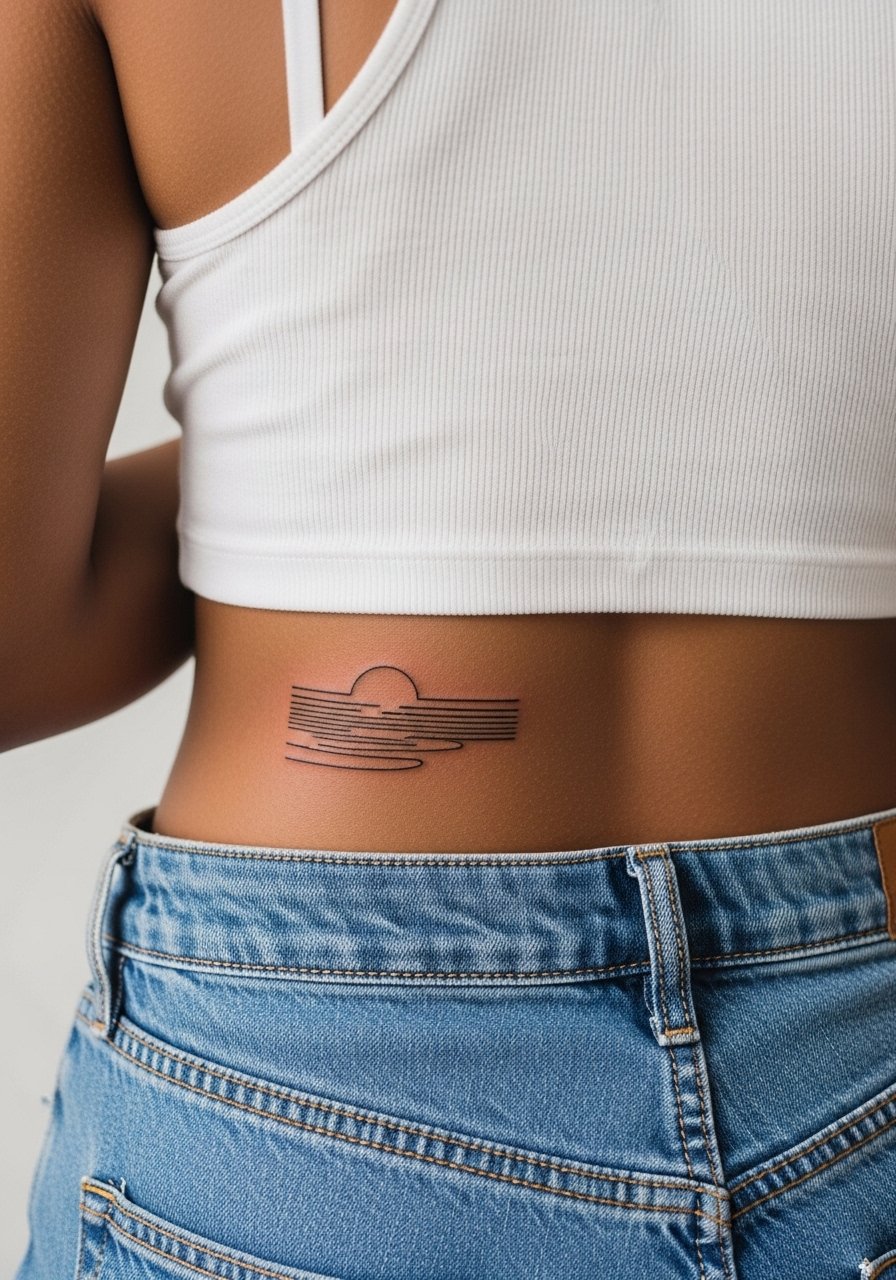
Fair warning, lower back sees more stretch from weight changes and some gym routines. The clean horizon looks crisp when done about 4 to 6 inches wide with slightly bolder single-needle lines, not ultra-gossamer. Ask for a touch-up slot at the six-week mark to lock in the fine work. Sessions are short and usually one appointment. If you want to reveal it casually, a high waist crop top with low-rise jeans makes the horizon peek out without overexposing the area.
3. Realistic Ocean Sunset Over Sand Dunes on Shoulder Blade
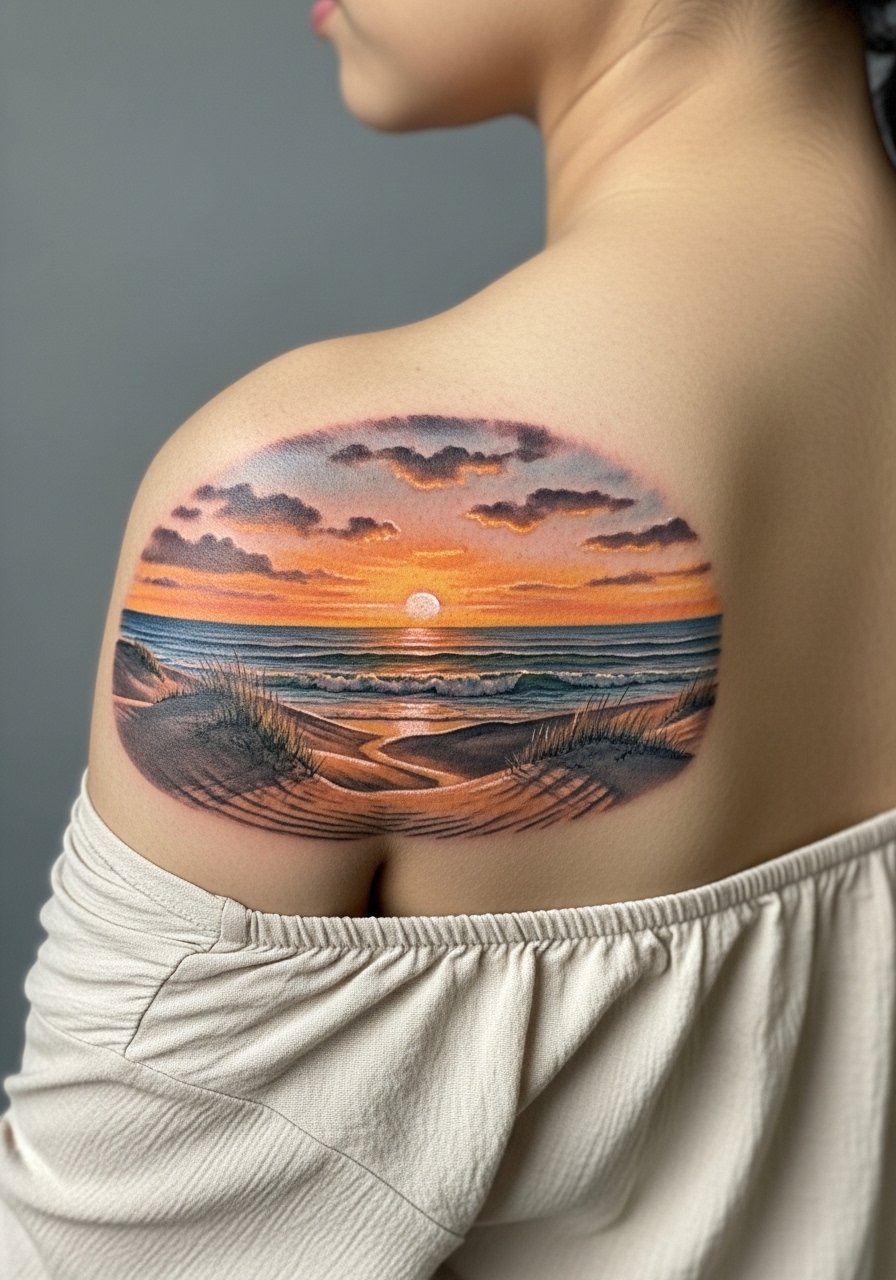
This one is for collectors who want photoreal color but also understand it takes work. Expect multiple sessions and careful seating prone on the table. A common mistake is packing too many tiny highlights into one pass. Ask your artist to map the composition on the actual shoulder blade curvature so the dunes read naturally when you move. Color pieces on the back can need a touch-up around year two, especially if you spend a lot of time in sun. For evenings out, try a backless halter dress that keeps the realism the focal point.
4. Ornamental Seashell Mandala Centered on the Spine
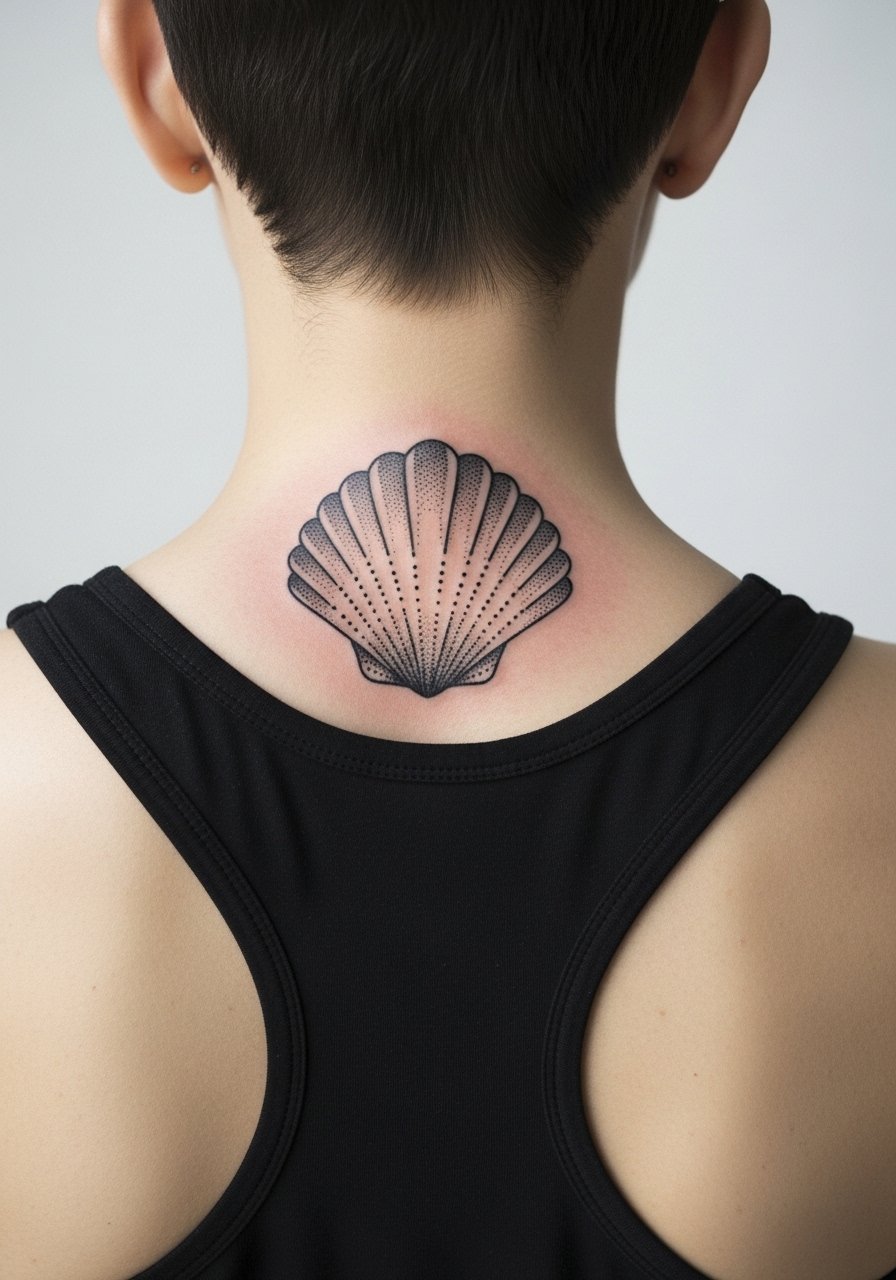
When you want symmetry and a subtle nod to the coast, a mandala built from seashell shapes reads as ornamental rather than literal. Scale matters more than detail here. Too-small dots in the center compress into a gray blob after a few years. Ask for slightly wider spacing and stipple shading rather than ultra-tiny dots. Sessions are low to moderate pain because of the spine proximity and usually two sittings. This design pairs nicely with sheer mesh layers, so wear a racerback tank top when you show it off.
5. Blackwork Palm Tree Forest That Spans the Middle Back

Blackwork is forgiving on darker tones and holds up better through sun exposure. For a full mid-back forest, ask the artist for bold silhouettes and negative space breaks so shirts with thinner fabric do not wash out the design. Sessions are longer and can be split across several days. The main risk is heavy saturation causing tight scabbing, so plan heals away from sweaty summers. For bold contrast, wear a black tube top or high-coverage one-piece that makes the black shapes pop.
6. Watercolor Beach Umbrella Scene Mid-Back

Watercolor gives a faded-edge softness straight off the table, but it can blur faster than saturated realism. If you love the painterly look, ask for more defined anchors around the umbrella so the composition keeps shape as it settles. The session is gentle to moderate and often requires two hours per color pass. For session wear, throw on a loose button-down shirt you can shift aside so the artist has clean access.
Studio Day Picks
The first six ideas include a mix of fine line, color realism, and blackwork, so pack items that make sessions easier and healing cleaner.
-
Hustle Butter Deluxe. A lightweight balm people favor for large back areas because it hydrates without leaving a heavy film that traps sweat during warm weather sessions.
-
Indie tattoo salve. A thinner, less greasy option that reviewers mention for wide blackwork pieces where breathability during healing matters.
-
Tea tree balm for tattoos. Antiseptic properties help with scabbing control on coastal-themed pieces that sit in friction zones.
-
Plain cocoa butter sticks. Simple, additive-free moisture for sensitive backs without strong scents that irritate healing skin.
-
Aquaphor healing ointment. Useful for the first 24 to 48 hours on small fine line spots before switching to a lighter balm for broad back areas.
7. Traditional Anchor With Crashing Waves Lower Back Extension
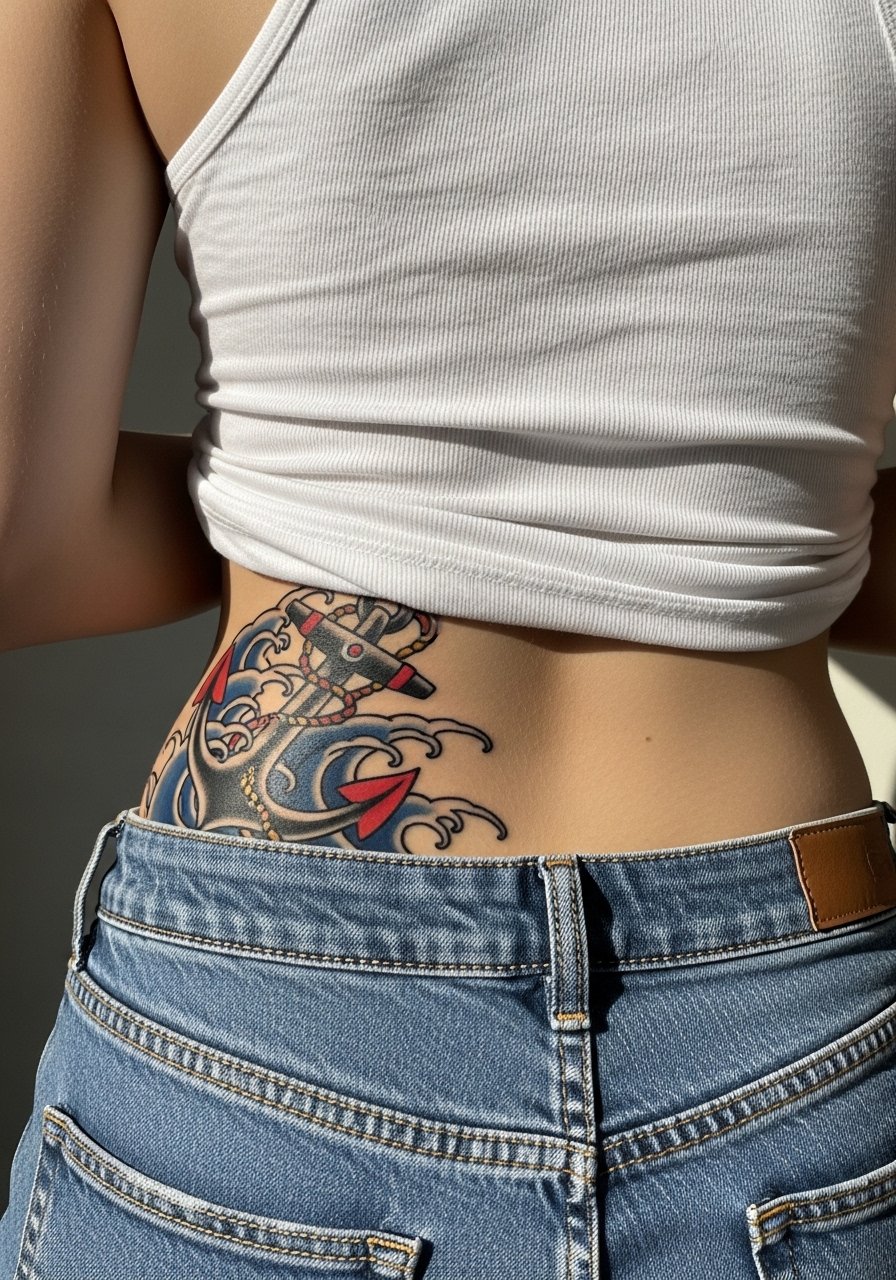
Traditional work is a good call if you want something that reads well over time. The lower-back extension into the hip can warp with body changes, so plan the anchor shape to account for a few inches of movement. The session feels moderate and usually needs one to two sittings depending on color. Bring up touch-up policy during booking so you are clear about any future blending. For casual wear, high-waist crop tops and low-rise jeans work well and keep the composition visible.
8. Ignorant-Style Sandy Footprints to the Horizon Across Upper Back
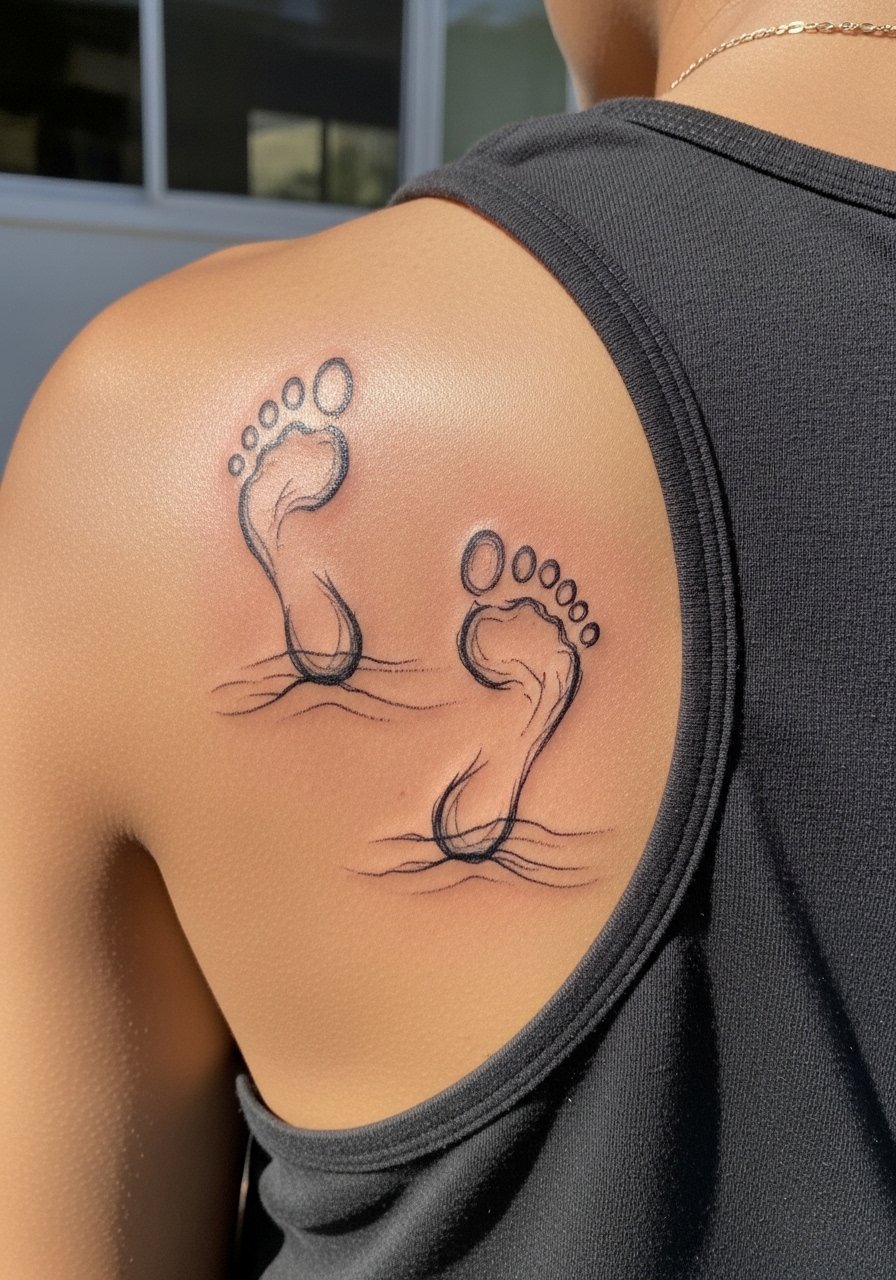
Ignorant style has a raw sketch texture that masks small healing inconsistencies. It ages into character rather than needing perfect touch-ups. Tell your artist you want uneven, sketchy strokes with variable pressure to emphasize imperfection. Sessions are quick and forgiving, typically one appointment. The design pairs easily with a loose button-up shirt worn open or a tank for beach days.
9. Fine Line Lighthouse on the Shoulder Blade
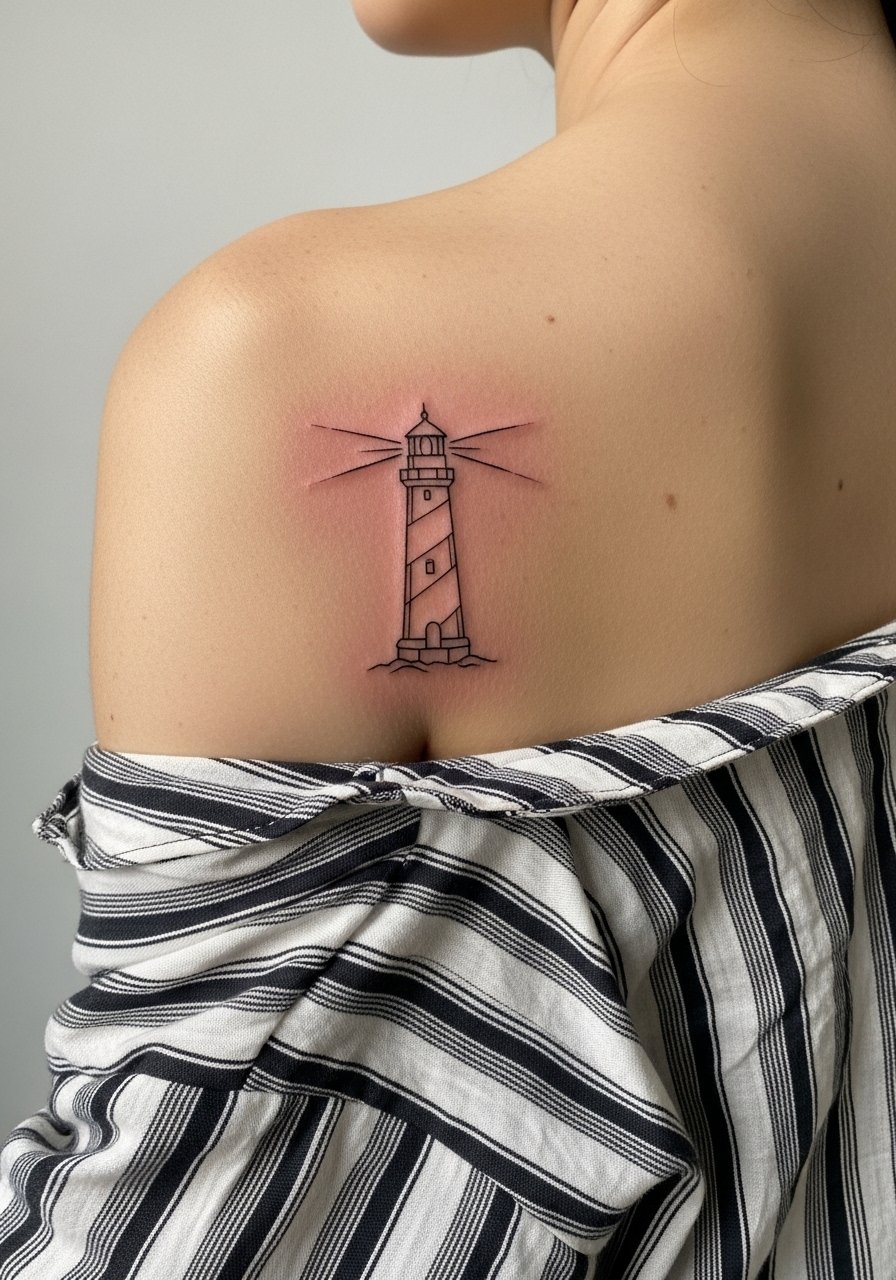
Fine line on shoulder blades can read delicate and symbolic, but on darker tones it may fade faster. One camp of artists says single-pass fine line holds if the depth is precise. Another camp warns that the back sweat and movement blur single-needle work faster than bold lines. Ask the artist which approach they prefer for your skin tone and request a follow-up at six weeks. For showing off, an off shoulder blouse cream keeps the silhouette visible without pattern competition.
10. Neo-Traditional Surfing Dolphin Pod Across Upper Back
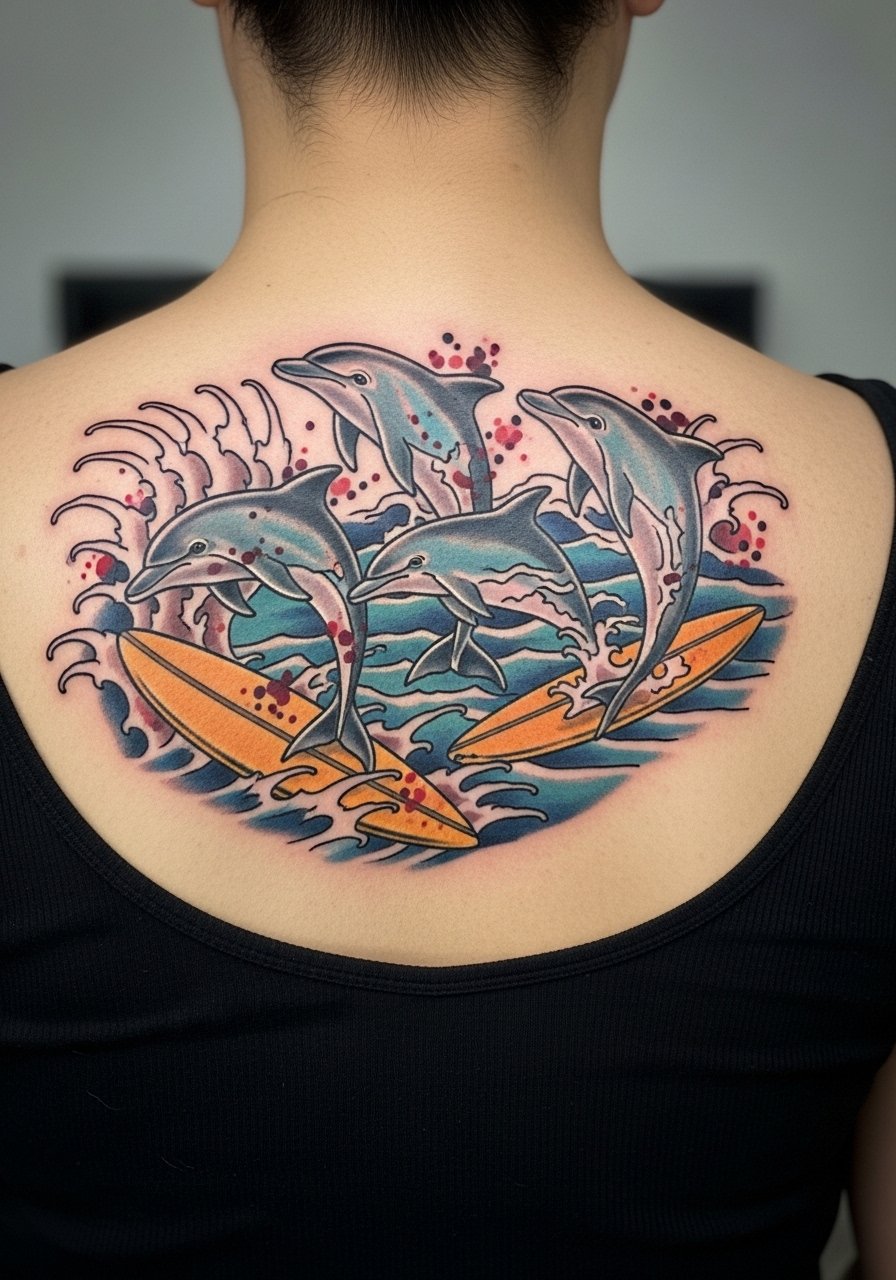
If you want motion and color, neo-traditional dolphins add play without losing boldness. Because it sits on the upper back, the piece can be larger and still look coherent across posture changes. Tell your artist you want thick outlines and strategic negative space between dolphins to avoid visual muddiness later. Sessions will likely be split into multiple passes for color. Pair with an open back crochet top when you want to show movement in the piece.
11. Black and Gray Beach Bonfire Gathering Mid-Back
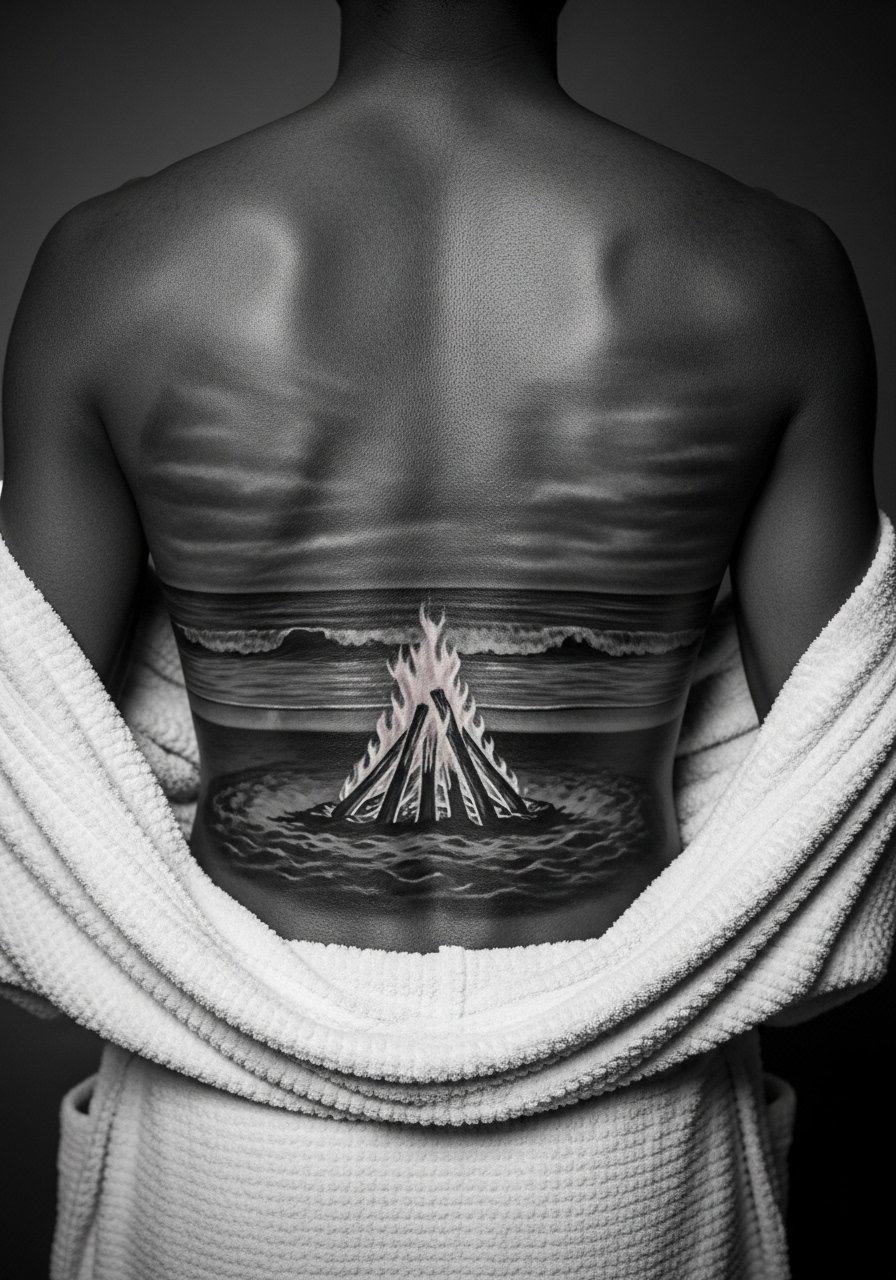
Moody black-and-gray scenes age gracefully compared with fragile color fades. The trick is to avoid over-detailing smoke and small ember dots too densely. Ask for broad gradient staging so the scene keeps depth even as tiny highlights soften. Sessions are moderate and usually multiple sittings for shading. If you camp or travel with this piece, choose clothes that do not rub the area during the first week.
12. Minimalist Wave Crest Outline Down the Spine
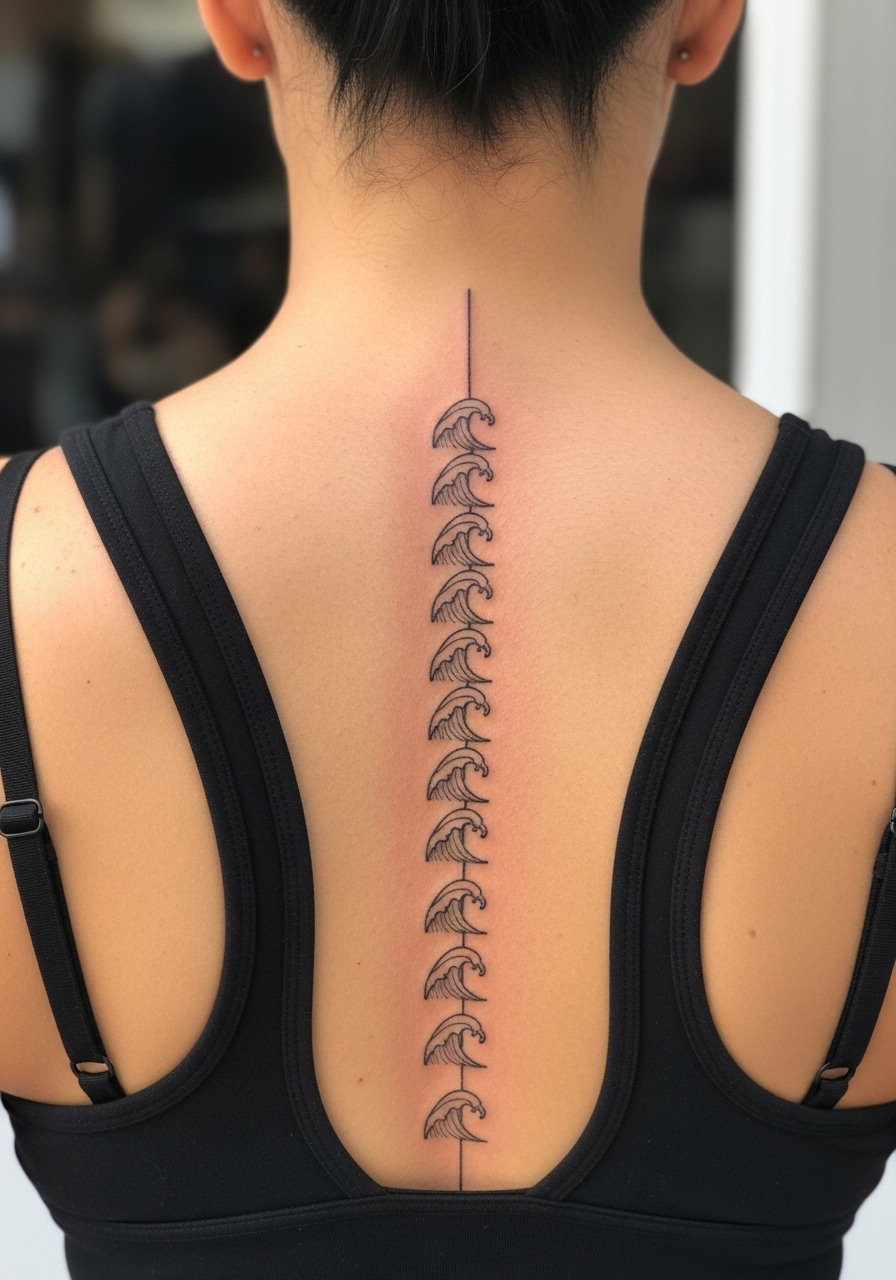
A vertical pattern along the spine looks graphic and suits yoga-friendly silhouettes, but spine placement can be sharper on pain charts. Expect some extra sensitivity. For longevity, request slightly heavier line weight than the paper reference and schedule a touch-up six weeks out. The pattern works with a halter sports bra or backless tops that let the repeat sit visually along the spine.
13. Curved Spine Wave Design That Moves With Your Back Arch
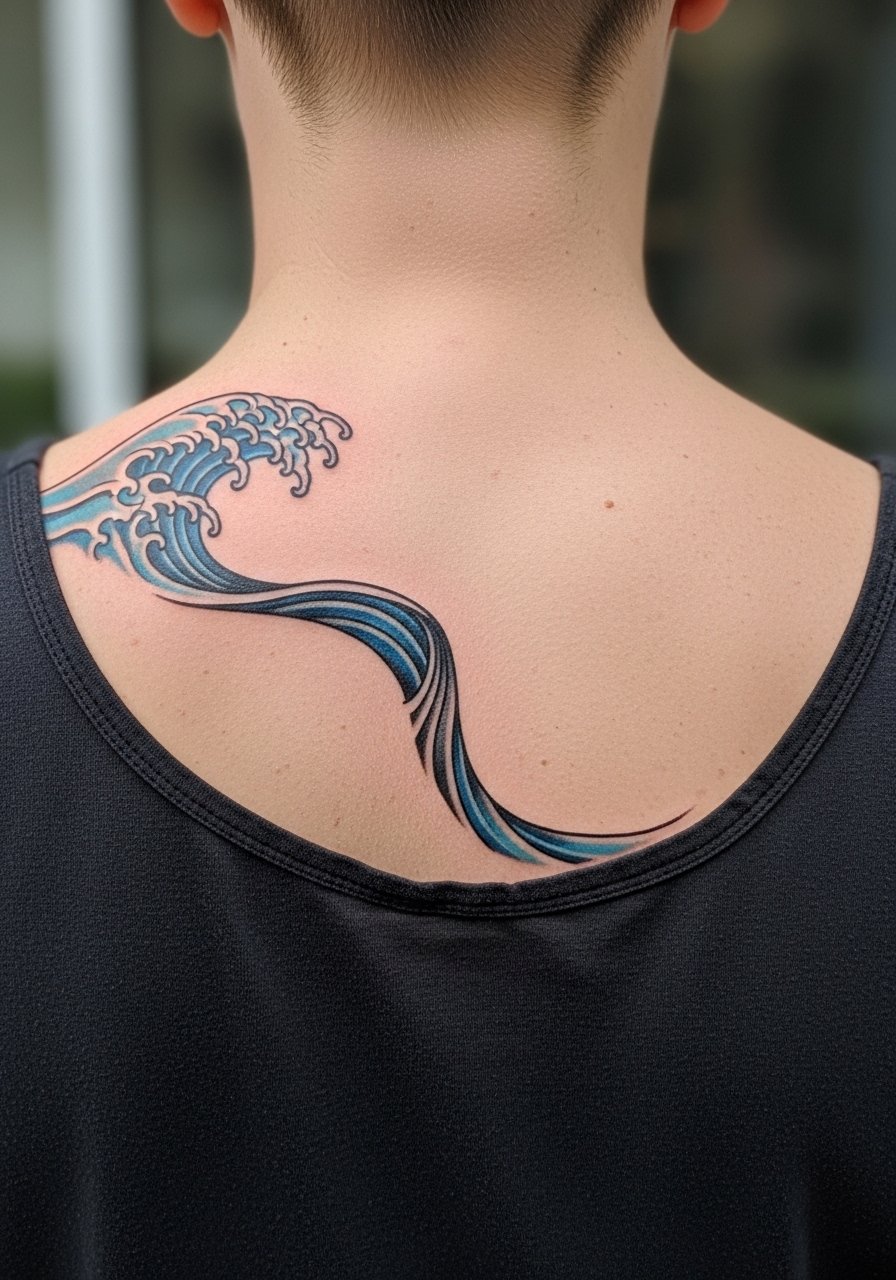
This one is a design that anticipates movement. I advise mapping the wave to your natural curve so it flows when you bend or twist. The common mistake is centering a straight horizon on a curved canvas. Sessions are moderate and often require the artist to adjust the stencil while you move. For session comfort, bring a small neck pillow and wear a sleeveless flowy tank so the artist can angle easily.
14. UV-Reactive Upper Back Accent for Nighttime Glow
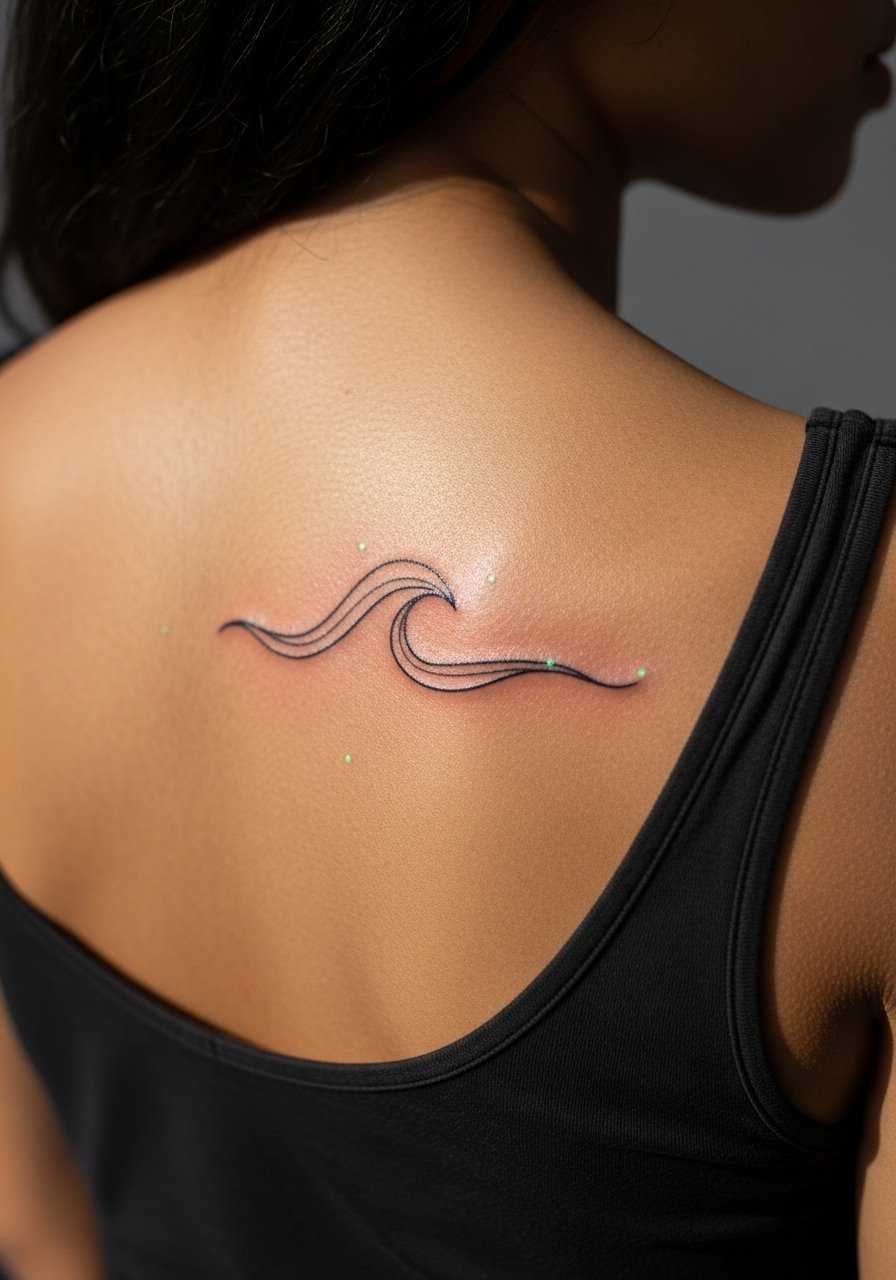
UV-reactive ink is a niche choice that pops under blacklight and reads subdued in sunlight. Not every artist uses it and some shops avoid it, so ask up front about availability and any safety notes. It can be a fun addition to a small patch on the upper back. Expect a shorter session for placement but an extra pass if the ink needs layering. For show-off wardrobe, a strappy linen tank top keeps the area visible at evening events.
15. Lower Back Sand Dunes as a Cover-Up Base
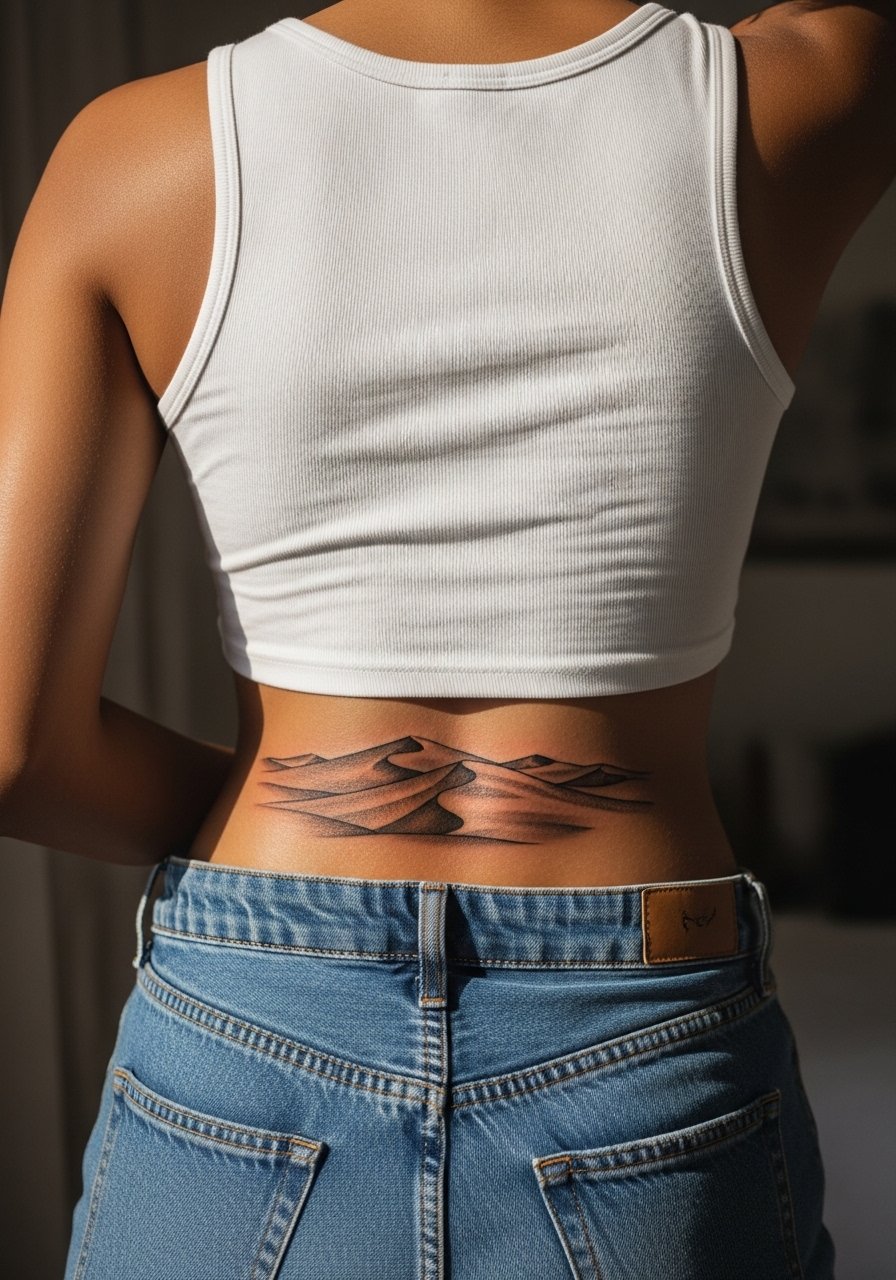
Lower back dunes can be an elegant solution when you need to mask an older tribal mark. The key is to plan scale and curvature so the new art overlays previous lines without looking patchy. Consult an artist who shows cover-up experience and bring clear photos of the old work. Sessions depend on how much rework is needed. For appointments wear drawstring lounge pants so the artist can access the area without tight waistbands.
16. Scarification Texture Paired With Subtle Beach Realism
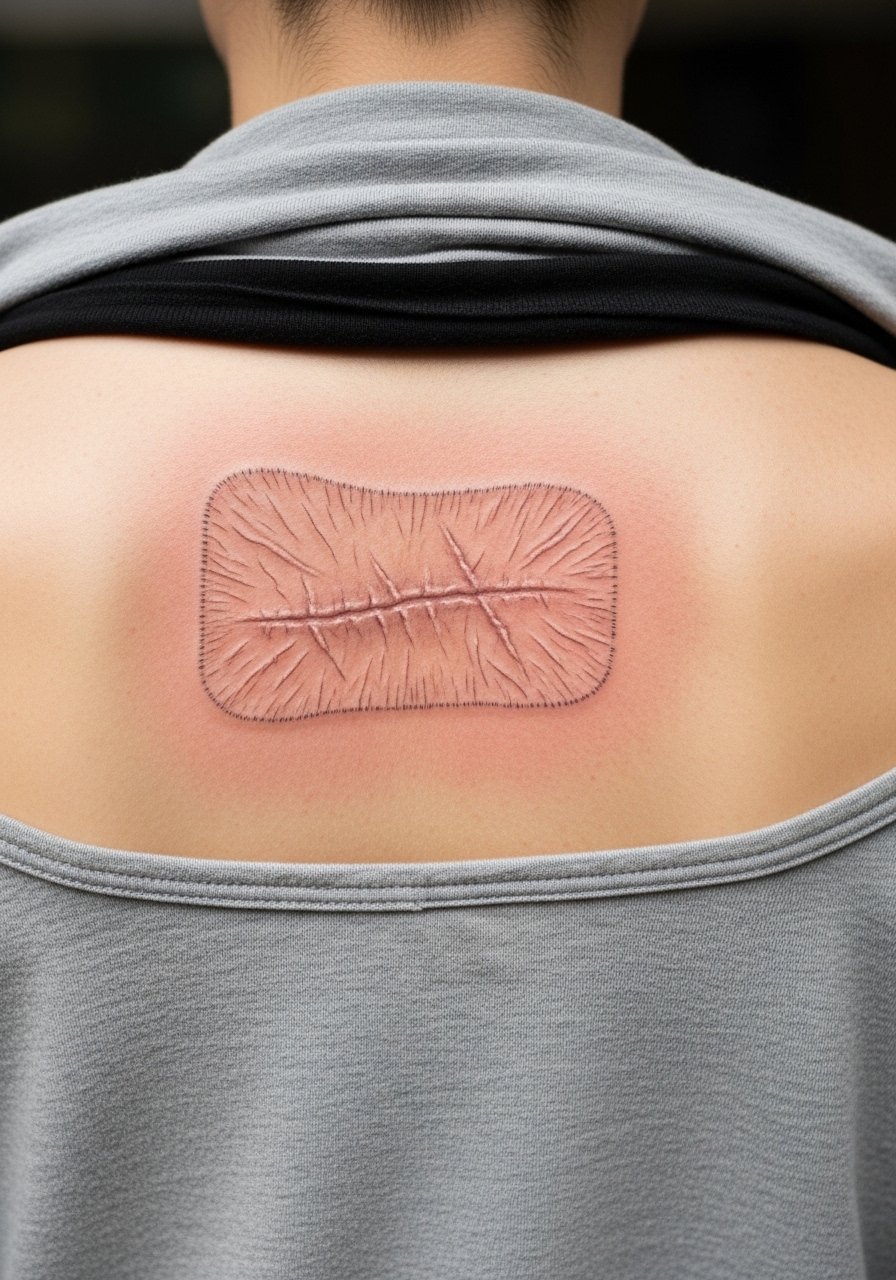
This is an advanced concept that mixes shallow scar work with inked realism for tactile contrast. It is specialized and not every studio will do it. If you are curious, discuss safety and healing differences with a studio that offers both modalities. The session can be longer than average and the healing protocol differs from standard tattoo aftercare. Because of the technique gap, use discovery pathways like convention guest lists or community threads to find practitioners.
17. Spine-Aligned Ornamental Shell Column
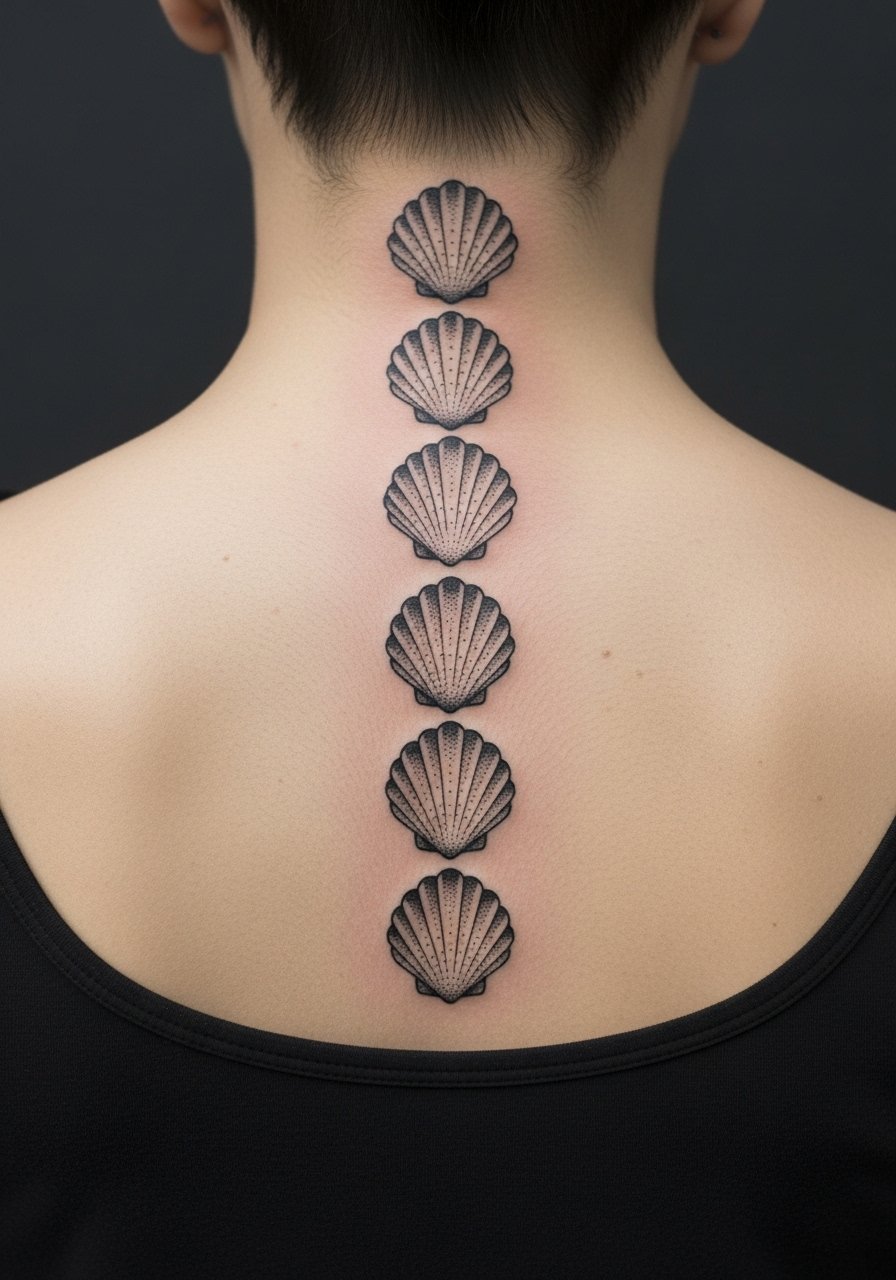
A spine column has a striking graphic presence and plays well with body symmetry. Expect more sensitivity as you approach the vertebrae but minimal movement issues if the design follows the vertical axis. Ask for slightly heavier spacing between dotwork elements to prevent merging over five years. For sessions, wear a racerback tank top so the artist has full access and your shoulders stay comfortable.
18. Shoulder Blade Mini Beach Scene in Micro-Realism
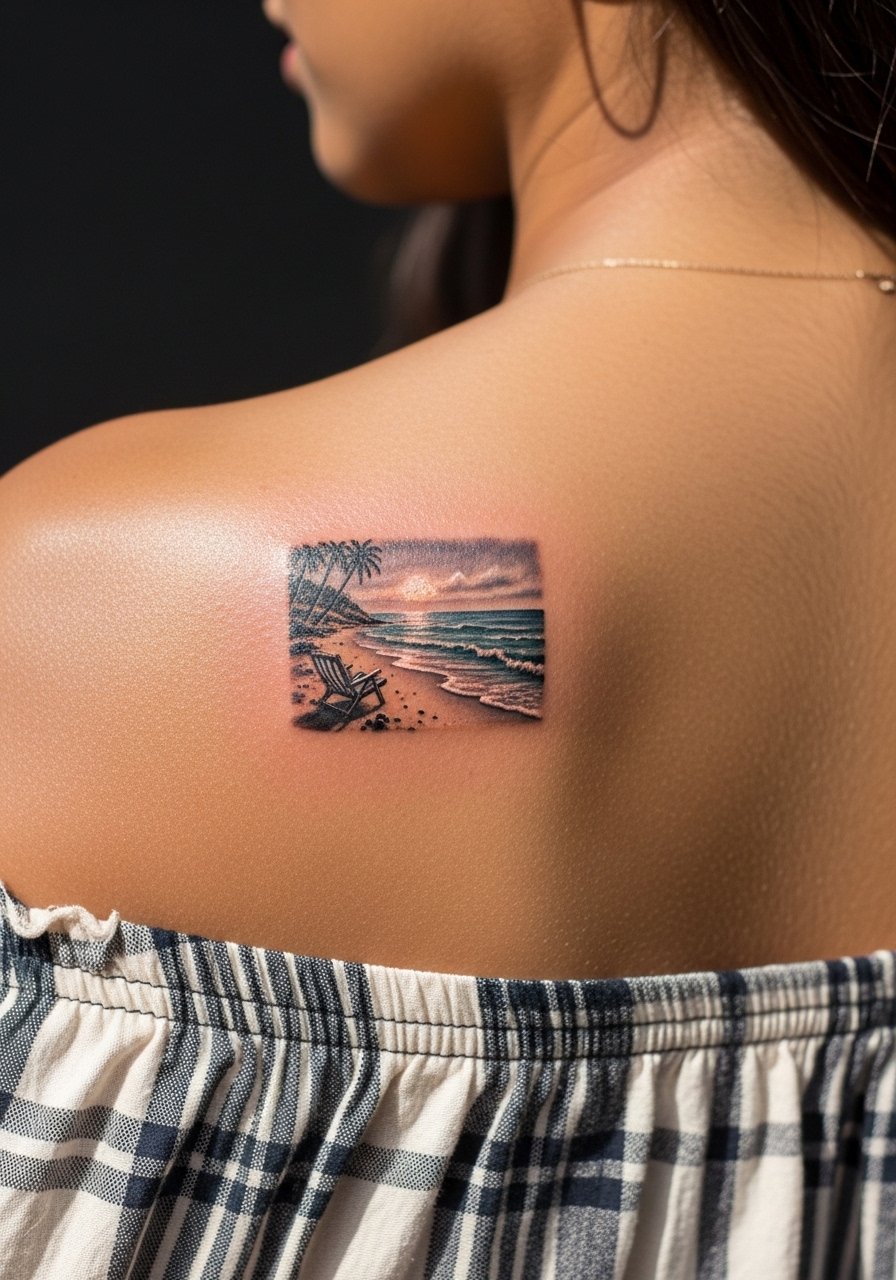
Micro-realism can be incredible on a shoulder blade because the canvas is flat and discreet. The risk is packing too many highlights into a small area. Tell your artist you want clear focal shades and leave softer areas implied rather than detailed. Sessions are short but require steady handwork. For showing it off, an off shoulder blouse cream frames the tiny scene without distraction.
19. Patchwork Minimalist Horizons Across the Upper Back
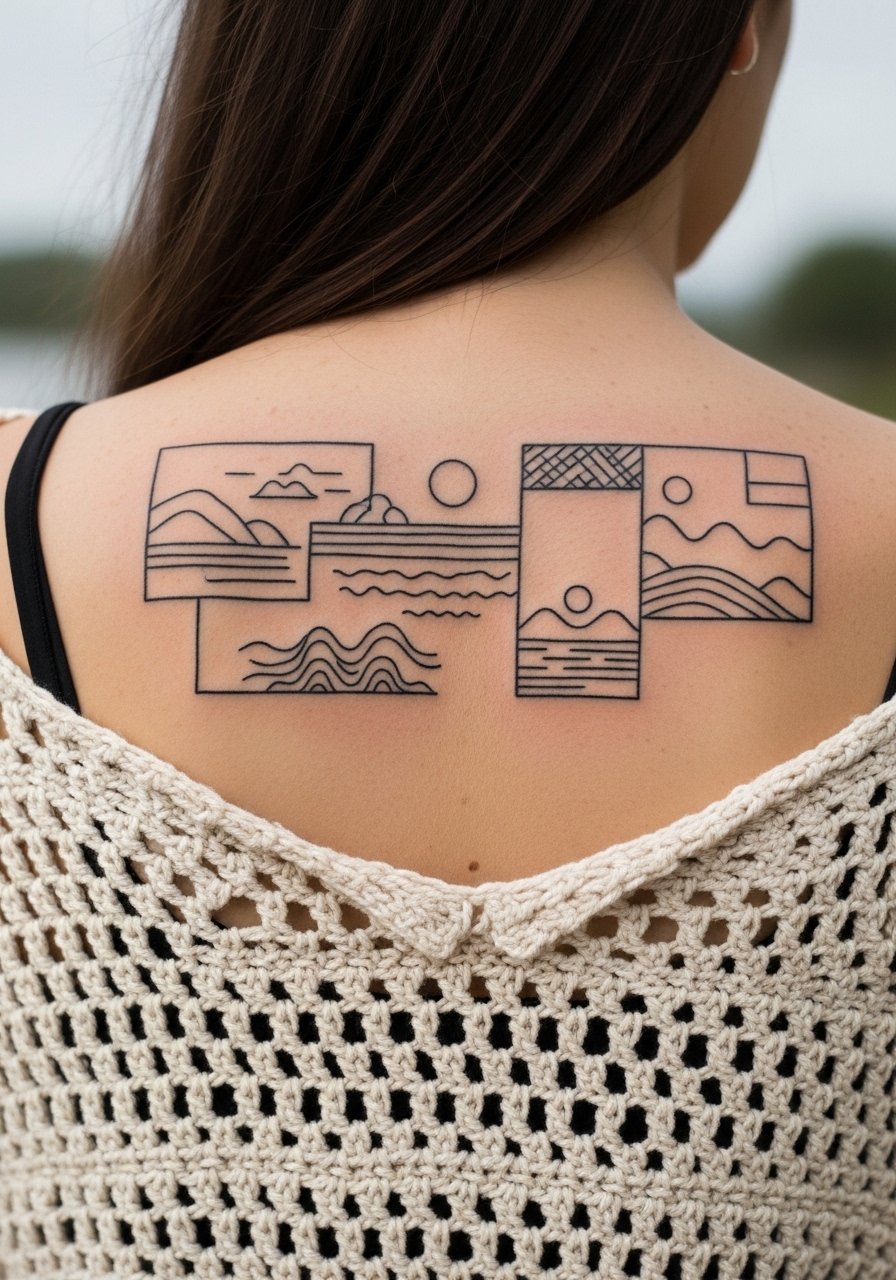
Patchwork horizons let you tile multiple small motifs so each has room to breathe. The trick is spacing and consistent line weight across pieces so they read as a set. I recommend telling the artist how wide you want the total band so nothing is crowded. Sessions can be split into several quick appointments. For styling, layer with an open back crochet top to show the pattern while keeping skin mostly covered.
20. Vintage Surfboard With Bold Outline on Middle Back
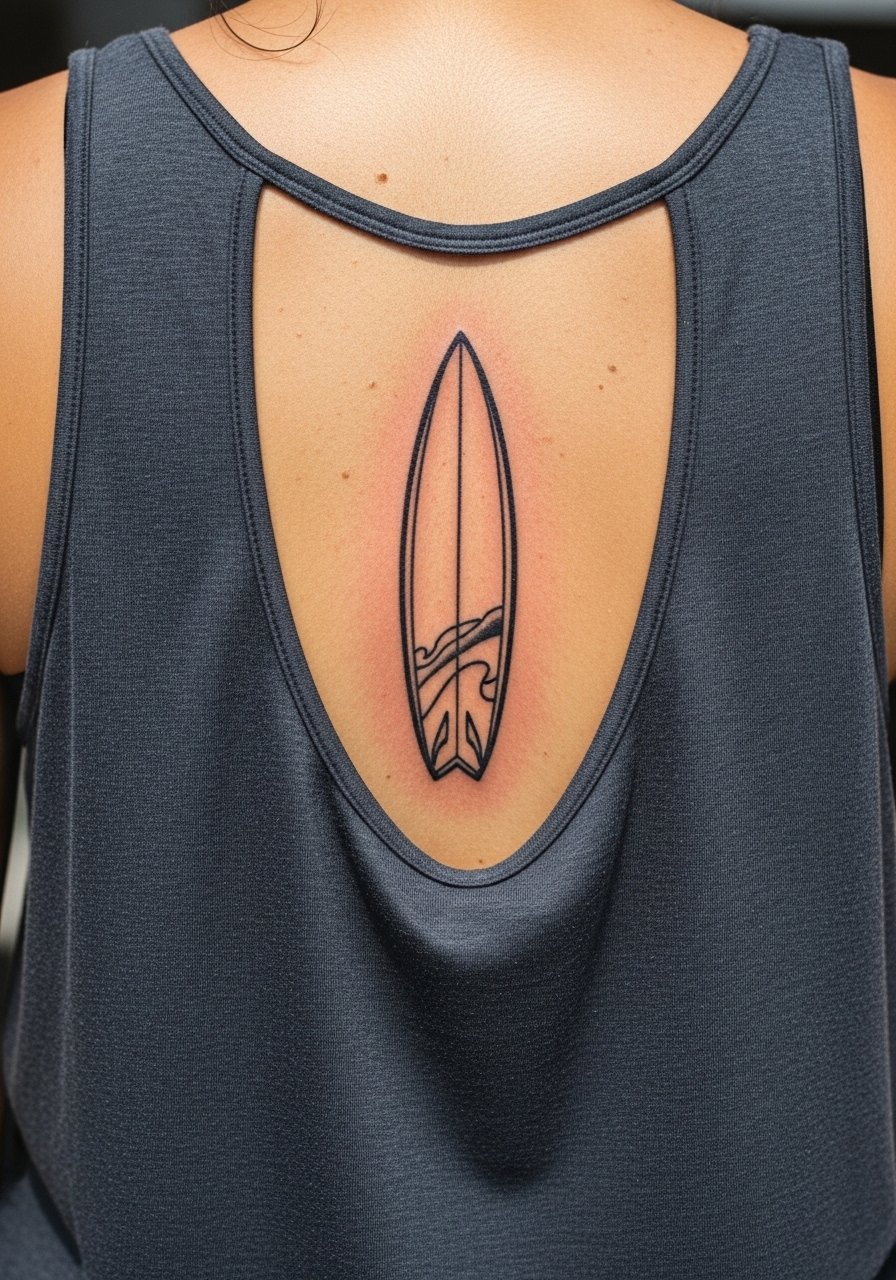
Vintage surfboard art reads like Americana and tolerates time better than fragile script. Ask for a thicker border and less micro-detail inside the board to maintain clarity over years. The sit is moderate and often single-session for medium sizes. If you carry a travel case or bag over that area often, mention that to your artist so they can place the board away from typical friction zones.
21. Nautical Compass With Tiny Wave Accent Near the Lower Spine
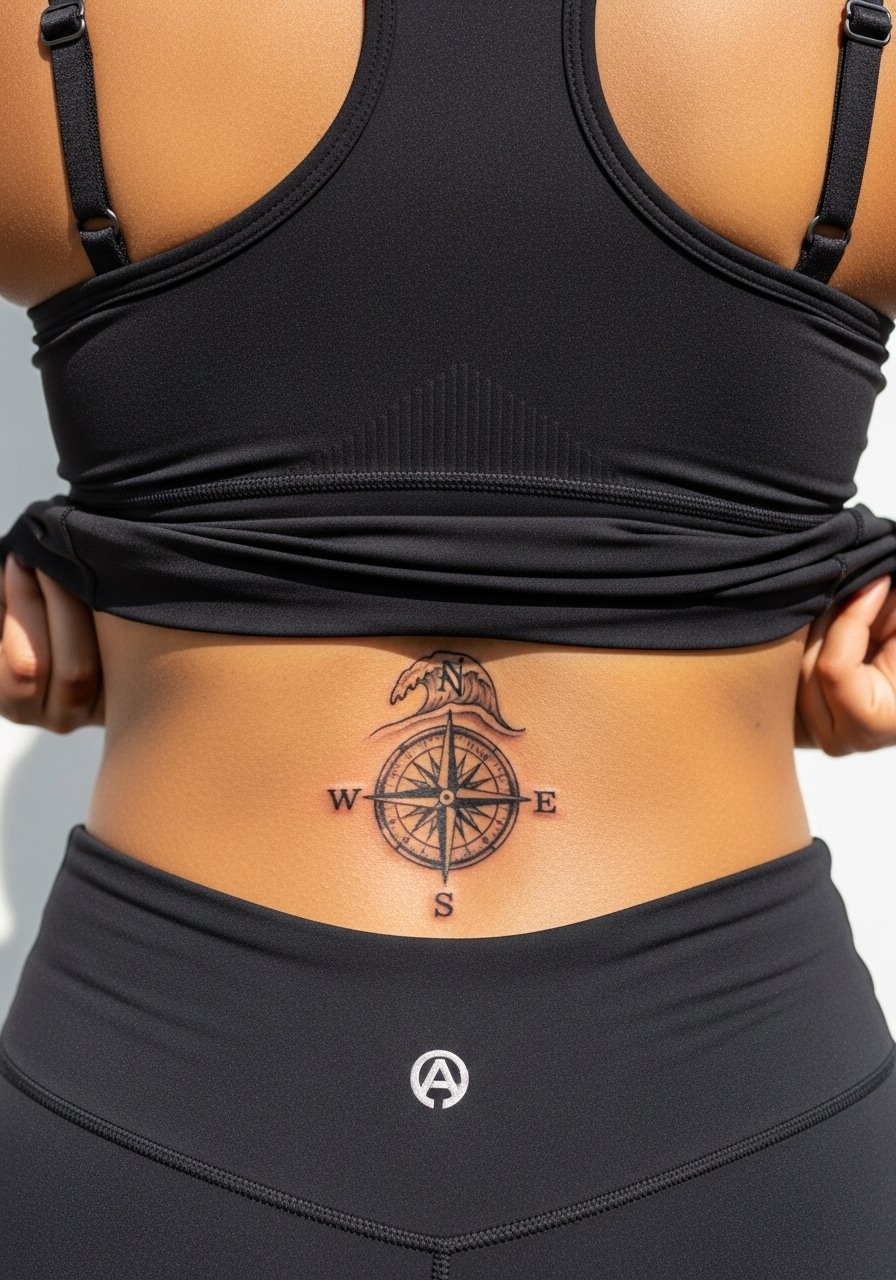
Compasses are symbolic and play nicely alongside small nautical accents. Lower-spine placements should be mapped to sit above the waistband to avoid distortion from clothing. A common mistake is centering the compass too low where hip movement shifts the image. Sessions are short and generally low to moderate pain. For session wear, a sports bra that can be adjusted makes the artist's setup easier.
22. Tiny Shell Cluster Along the Left Lower Back
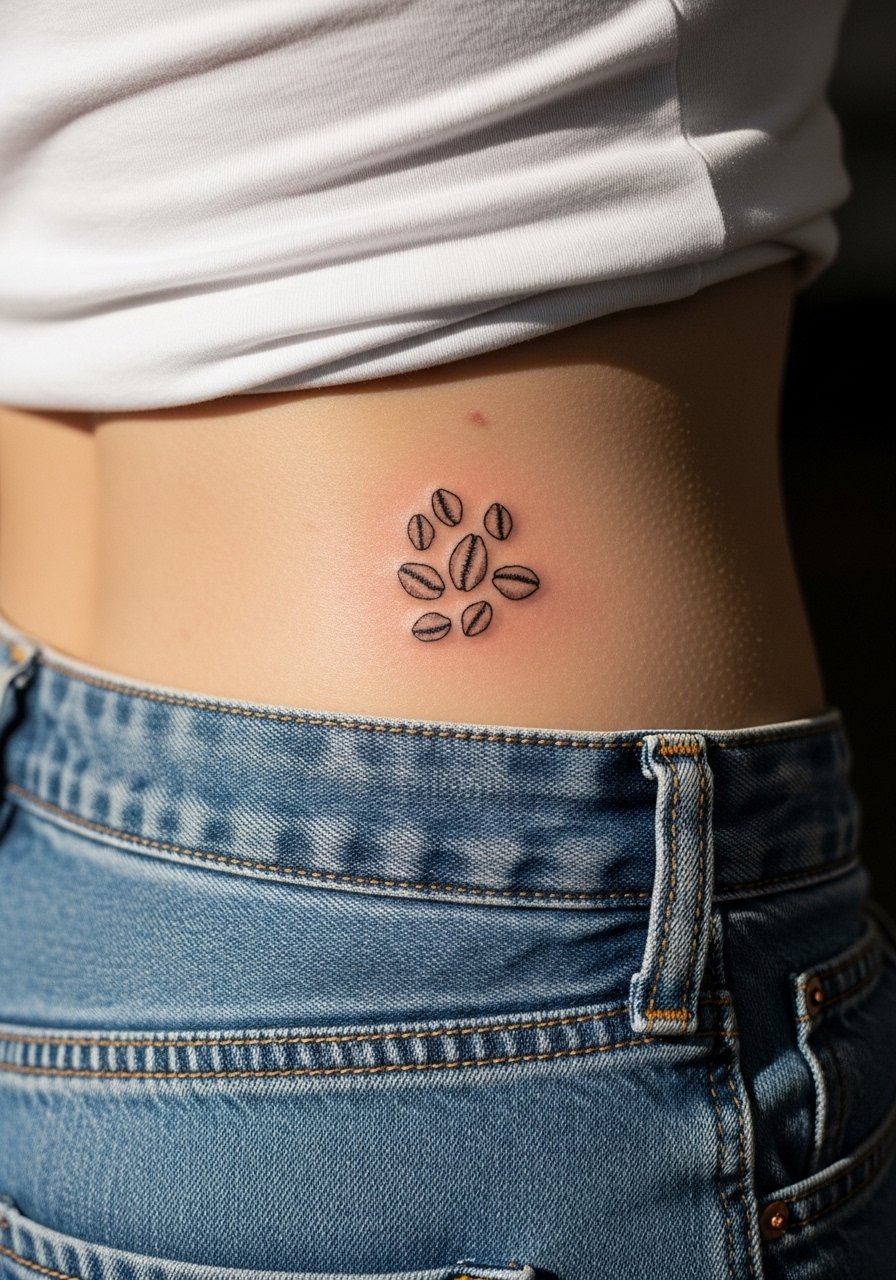
Small clusters are cute and discreet but vulnerable to the lower back's stretch dynamics. If you want longevity, space the shells and use bold mini outlines rather than ultra-thin single-needle traces. Touch-ups at the one-year mark are common for tiny lower-back work. For pairing, low-rise denim and a high waist crop top let the shells peek out.
23. Sun and Moon Over the Ocean Across the Upper Back
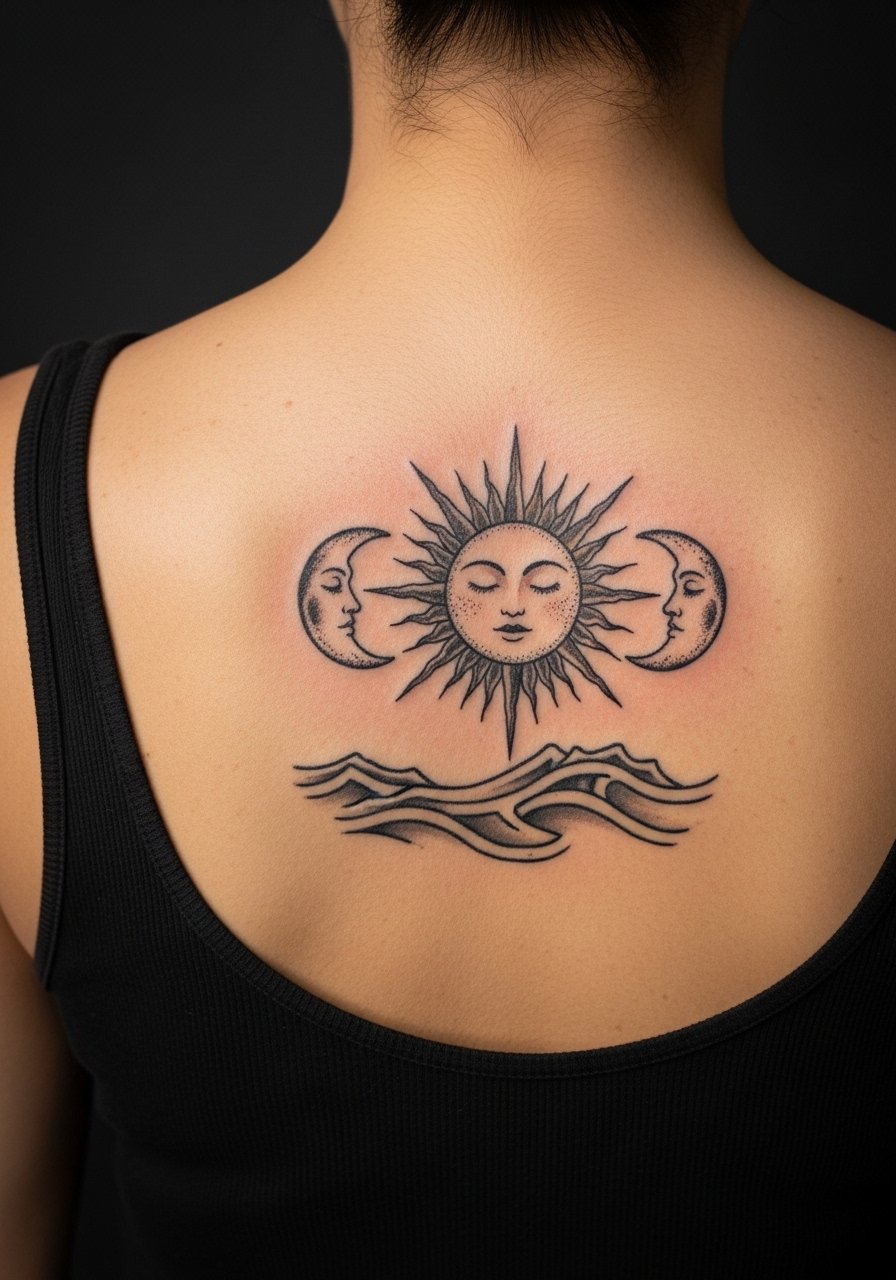
A sun and moon duo gives you day and night symbolism without leaning on literal beach scenery. Spread the composition across the upper back so each symbol has breathing room. The biggest mistake is squeezing both icons into a tiny patch. Sessions are moderate and often done in one or two passes. For evenings out, a strappy linen tank top works well to showcase both elements.
24. Wave Pattern Scaled for Yoga Flexibility
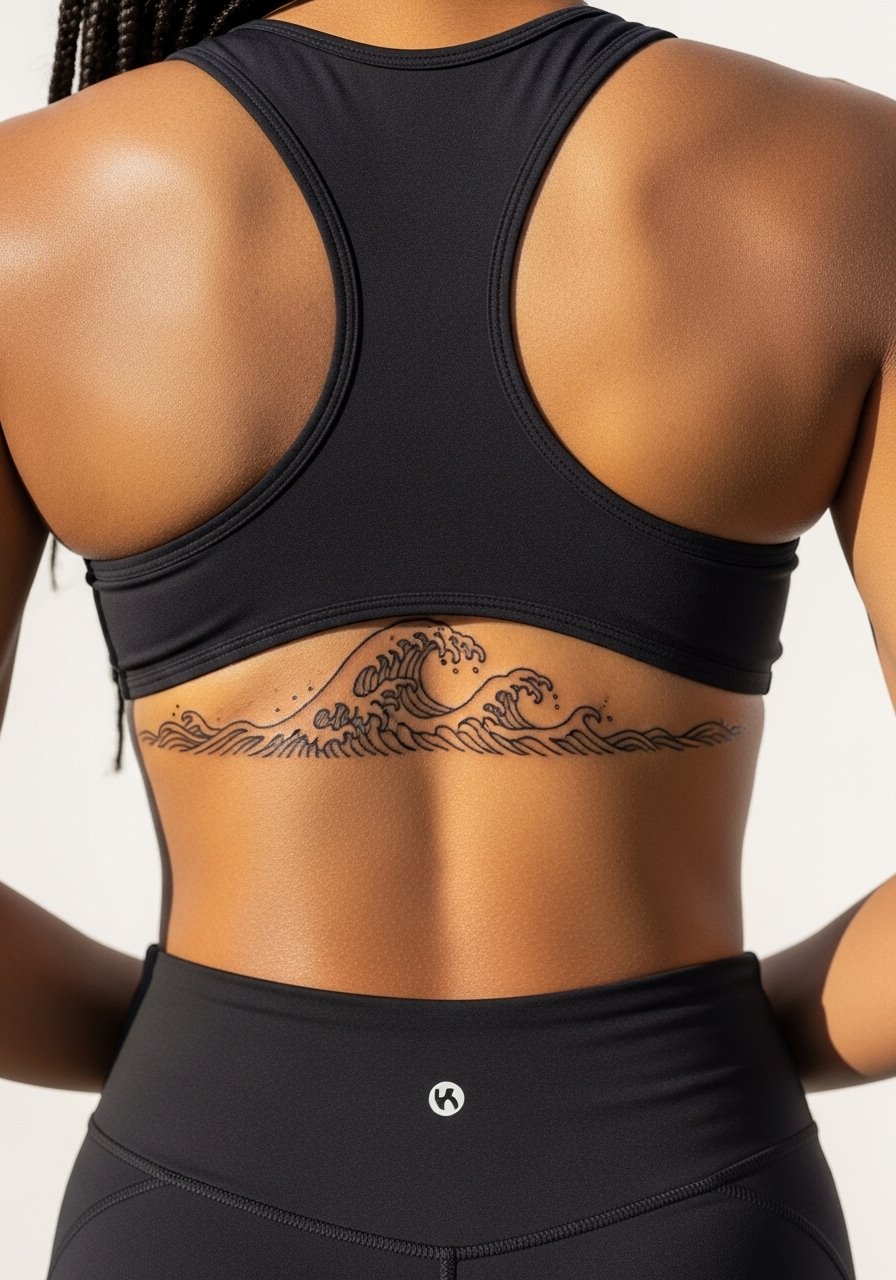
If your practice includes deep backbends, design the wave so the peaks land off the joint lines. I recommend a slightly larger scale and spacing that anticipates extension. Artists who sketch while you move can get placement right. Sessions are low to moderate pain and often single appointments. For sessions wear, pick a racerback tank top so the artist can check how the design reads with movement.
25. Nautical Chart Map Spread Across the Full Back
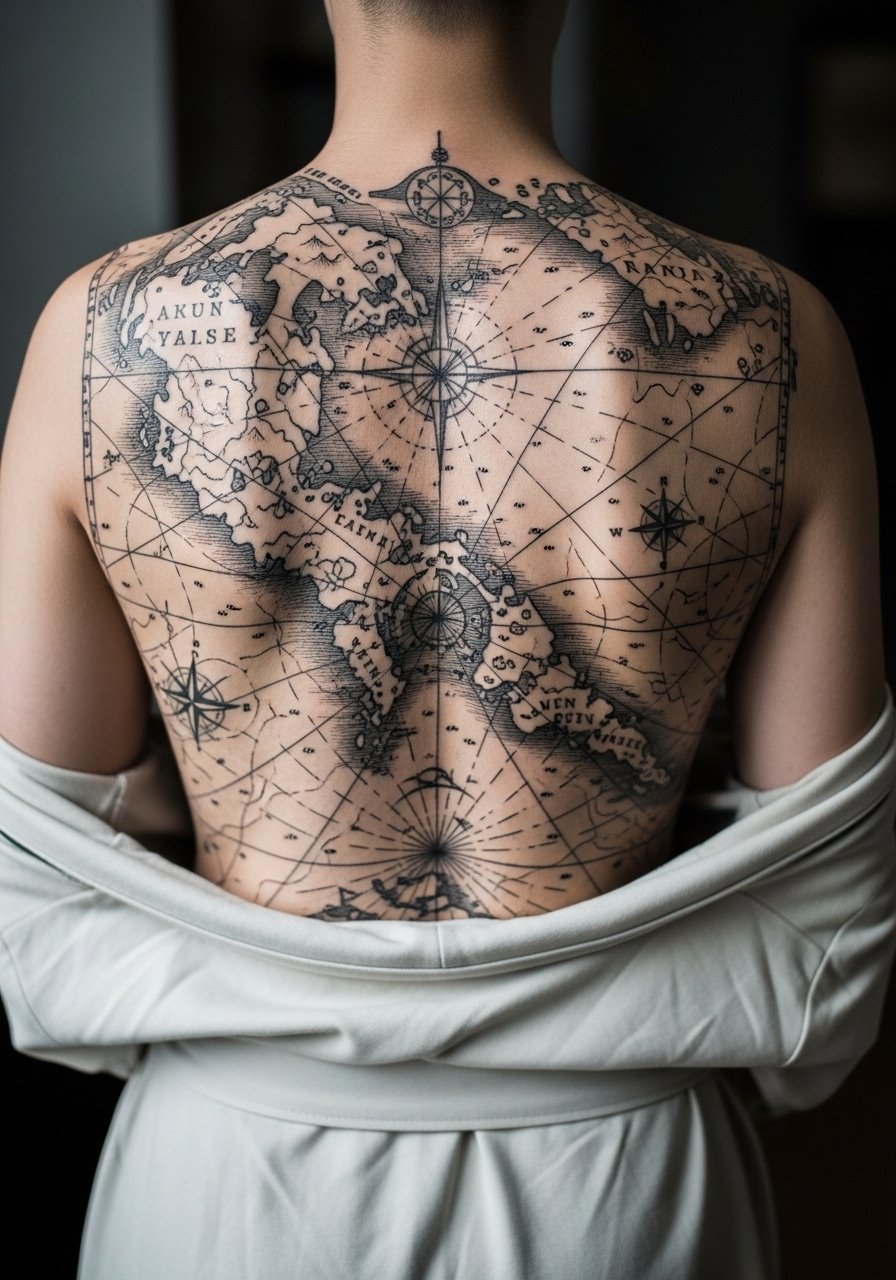
Full-back charts are commitment pieces that photograph beautifully but require staged sittings and clear scheduling. The common error is overloading with tiny symbols that merge later. Ask for larger anchor points, labeled sparingly, and block shading that holds up. Expect multiple sessions and a higher tolerance for chair time. Book guest spots if your regular artist is fully booked during summer.
26. Palm Silhouette Band Across Shoulder Blades
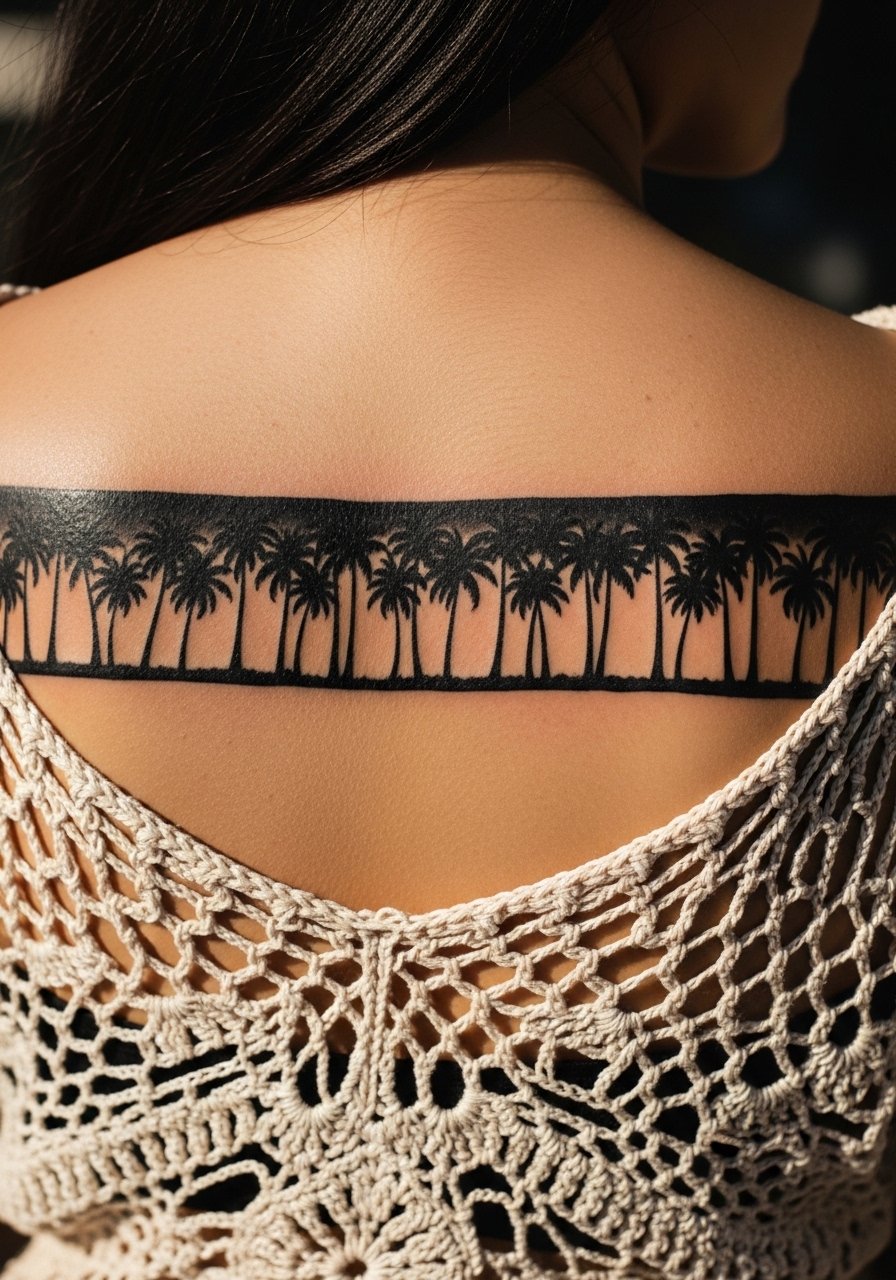
A band of palms reads graphic and is visible under many tops. For durability, keep the palms bold and avoid thin fronds that can blur. This type of blackwork ages well and is low-maintenance. Sessions are quick for medium bands and may be split into two if you want crisp saturation. Pair with a black tube top to maximize contrast when showing it off.
27. Constellation Tide Line Tracing the Spine
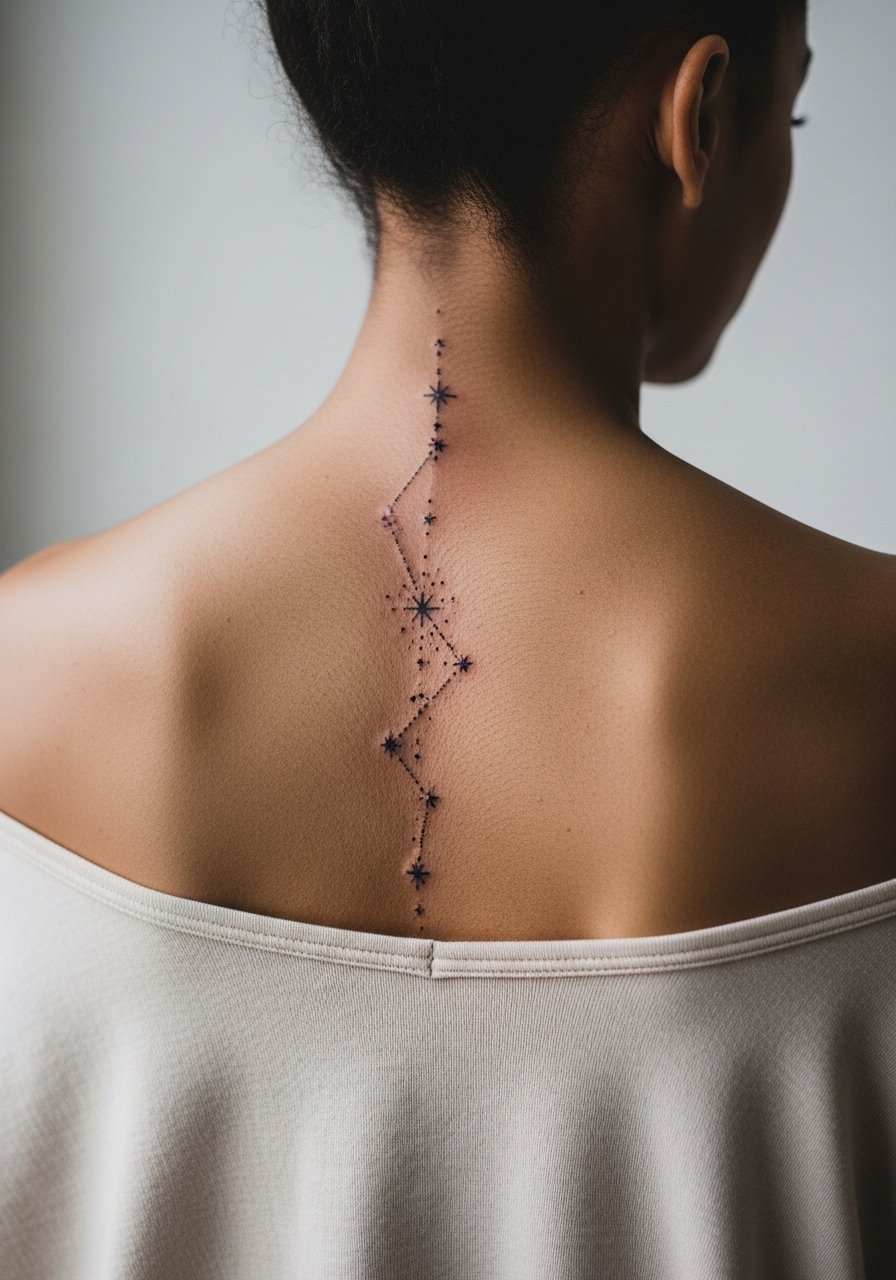
Constellation tides give a celestial twist to ocean motifs with minimal coverage. Dotwork in the spine area needs spacing so dots do not merge into gray over time. One camp prefers slightly larger dots for durability. Discuss that trade-off with your artist. Sessions are precise and can be one appointment for small runs. For show-off nights, a wide-neck shirt pulled to one side displays the vertical line.
Frequently Asked Questions
Q: Will fine line beach horizons on the lower back blur if I gain weight or do squats?
A: It depends on placement and scale. Lower-back horizons are more prone to distortion from major weight shifts and high-squat routines. If you plan to change body composition, opt for the upper back or ask the artist to increase line weight and spacing so the design retains definition as skin stretches.
Q: Which back beach styles hold up best on medium to dark skin tones?
A: Bold blackwork and stronger outlines tend to maintain contrast better on medium and dark tones. Micro-realism and ultra-fine single-needle work can look great but often need touch-ups sooner. Tell your artist your skin tone and ask them for examples in similar tones during consultation.
Q: Saniderm or dry healing for a large back piece, which camp should I pick?
A: Artists split into two camps. One group says a breathable film like Saniderm speeds recovery, especially in humid summers. The other group prefers dry healing for large areas to avoid trapped moisture. Ask where your chosen artist stands and follow their protocol since they know their technique and how their work heals.
Q: How do I manage booking and cancellations for multi-session full back tattoos?
A: Expect multi-session scheduling and consider booking guest spots at conventions if your regular artist is full. Put cancellation and deposit policies in writing before you pay. If an artist cancels repeatedly, use discovery pathways like guest spot listings and community threads to find a reliable replacement.
Q: What should I wear to a full back realism session to stay comfortable during long sits?
A: Wear clothing that gives full front coverage and easy back access, like a loose button-down shirt you can pull aside, or a disposable robe the shop provides. Small comforts like a neck pillow and layered tops make multi-hour prone sessions manageable.