
The tattoos that hold their edge after five or ten years are often the ones people least expect. Bold blackwork, heavy saturation, and deliberate negative space read more clearly over time than ultra-fine micro detail that blurs. If you worry about pain, placement that shows off, and how a Donnie Darko motif will age, these ideas balance longevity, impact, and wardrobe so you can pick a piece that still reads in real life.
1. Minimal Rabbit Silhouette on Inner Forearm
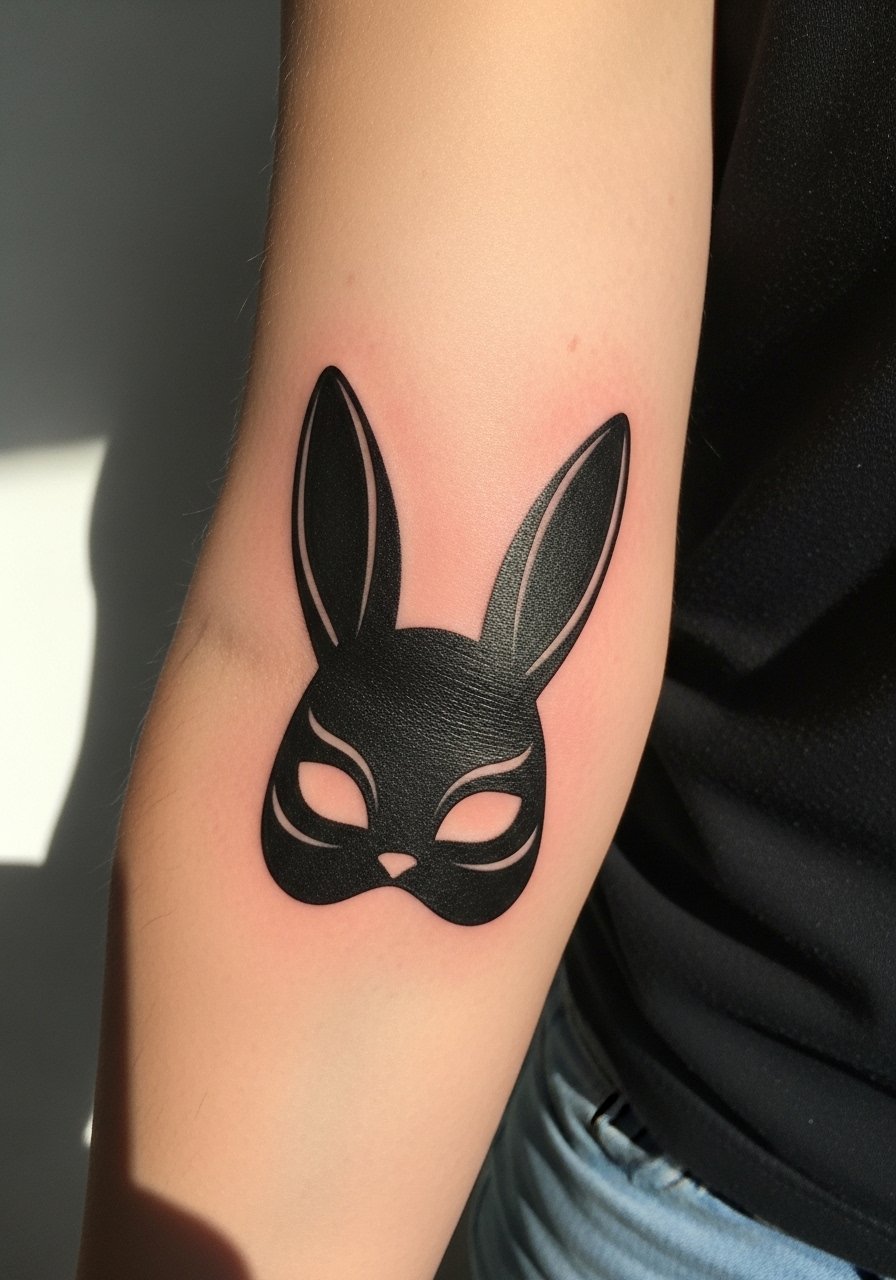
I recommend this when you want a Donnie Darko reference that reads from a distance without leaning on tiny detail. Fair warning, the inner forearm is visible every day and gets sun exposure, so expect touch-ups around year three for pieces that live in direct sunlight. Tell your artist you want solid saturation and a narrow band of negative space to keep the eye-shape intact as the skin ages. For the session wear, pick a rolled linen shirt so the sleeve slides up cleanly and does not rub the fresh lines while you travel home.
2. High-Contrast Frank-Style Mask on Upper Bicep
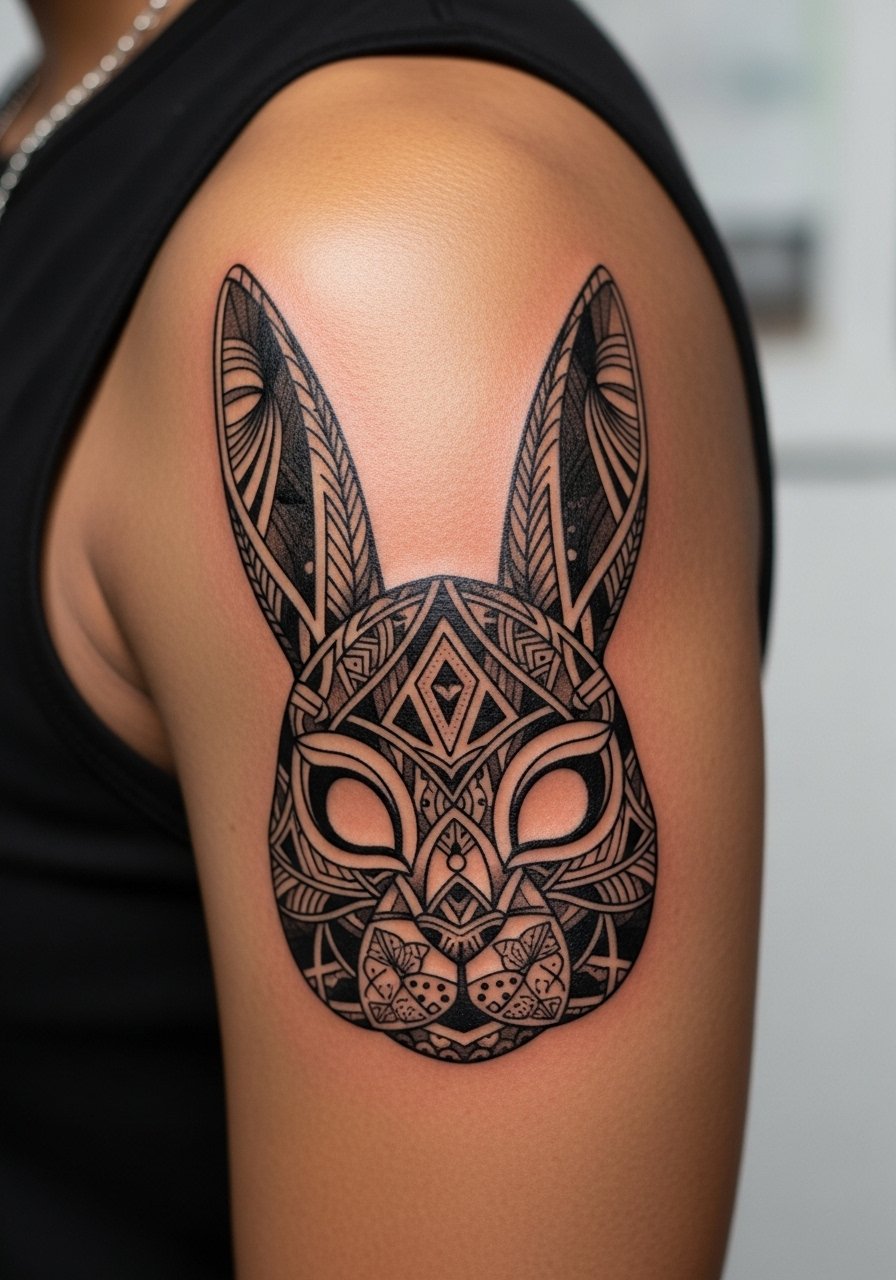
Fair warning, the upper bicep tolerates bold saturation well but it can be a long session. Expect a medium pain level and plan for a two-hour block or longer for larger black fills. A common mistake is requesting micro detail inside the mask that ends up muddy as the ink settles. Ask for solid blocks of black and stipple shading around the edges to hint at texture. If you plan to show it off, a sleeveless top on warm days frames the piece, but during the session wear a loose tank so the artist can access the area without you stripping down.
3. Negative-Space Clock Face on Inner Wrist
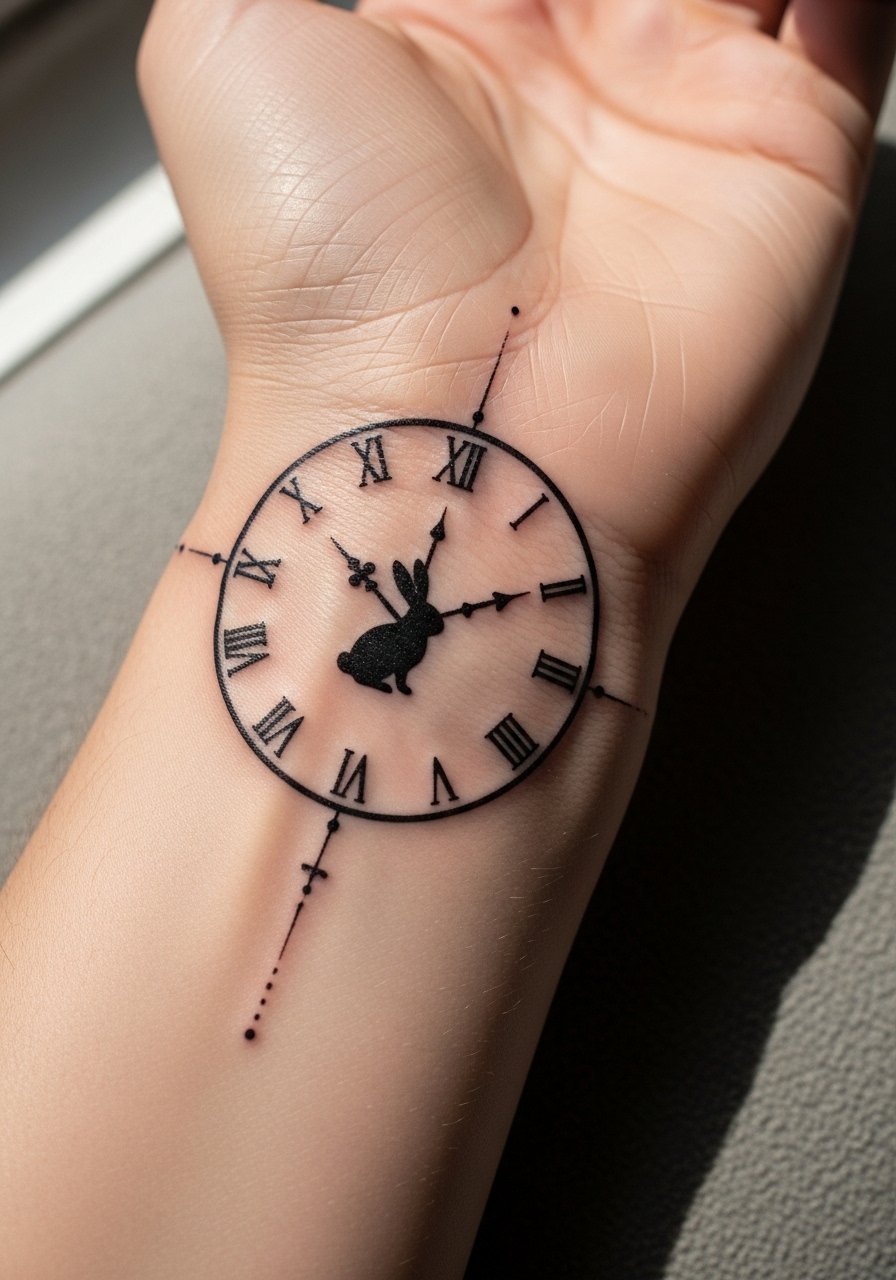
There is a reason wrist pieces read like jewelry. The inner wrist is a small canvas that demands bold, simple shapes to avoid early blur. Most people try to cram too many numbers or thin ticks into the dial. Request wider linework and a clear ring of negative space around the rabbit icon so the face still separates at two years. For showing it off, pair the wrist with stacked dainty bracelets that frame the tattoo without covering or rubbing it while it heals.
4. Ribcage Blackwork Panel with TV Static Fill
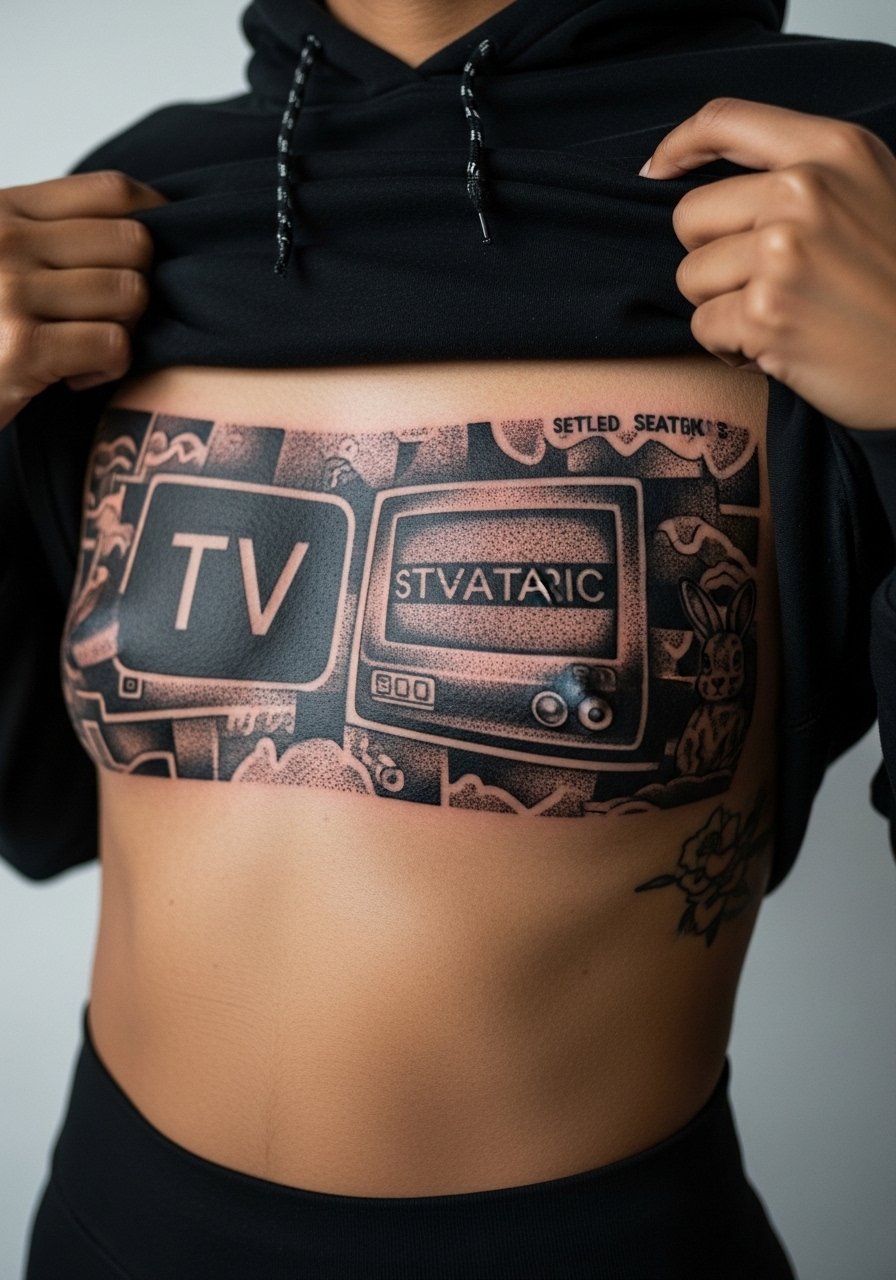
Artists split into two camps on ribs. One camp says fine line on ribs blurs fast because the skin stretches and breathes differently. The other camp argues that with correct depth and spacing, bold blackwork and stipple textures can hold remarkably well. If you lean into the second approach, make the piece larger with airy static texture to reduce blowout risk. Expect a higher pain score for ribs and bring a long playlist. For the session, wear a cropped top you can briefly lift so the area is exposed only when needed.
5. Collarbone Rabbit Mask with Geometric Grounding
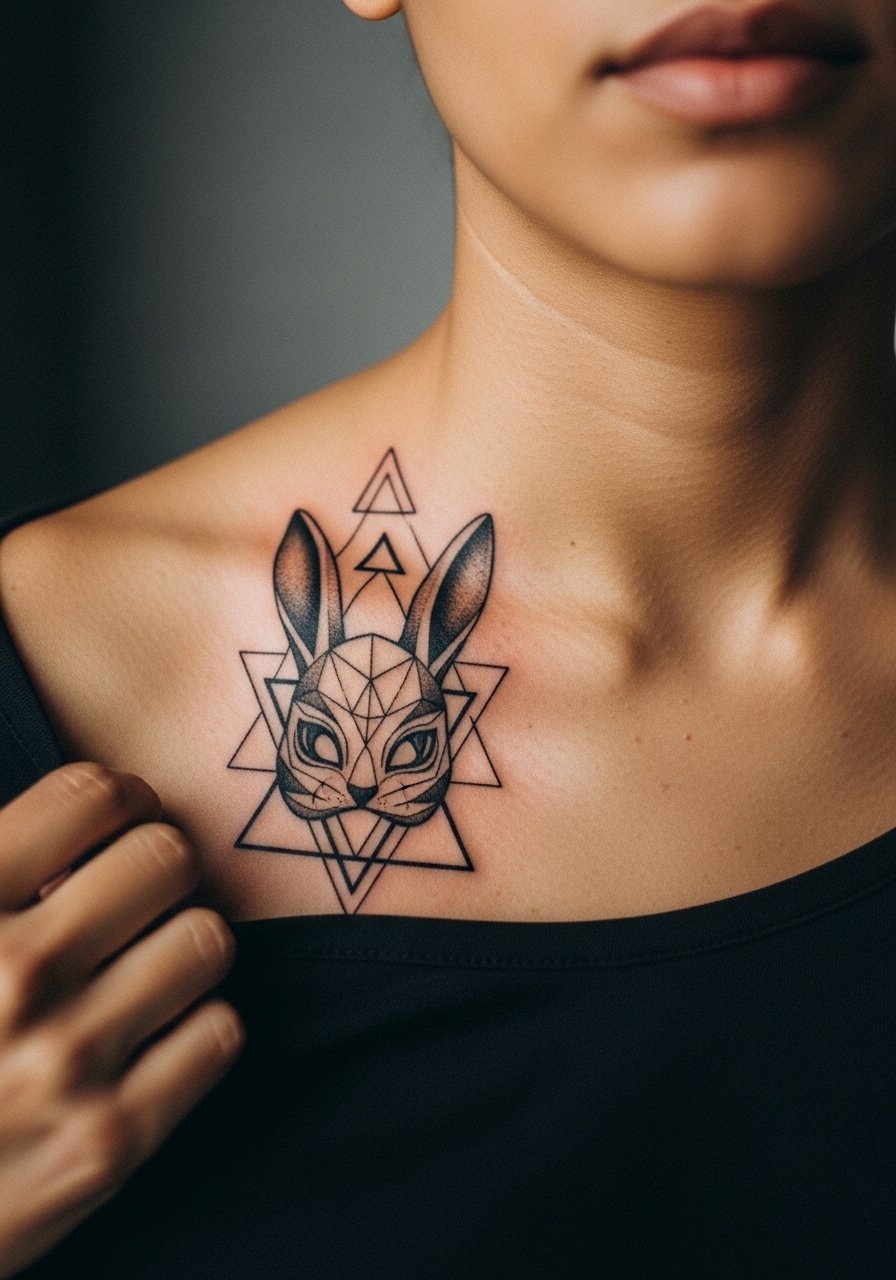
There's impact in pairing organic mask shapes with simple geometry to anchor placement over the collarbone. The collarbone reads best when the main mass sits just off the bone rather than directly over it. Tell your artist to place the heaviest black slightly below the collar ridge so it settles into the motion of the chest. For showing off evenings out, a wide-neck shirt that can be pulled aside frames the piece without exposing more than you want. Expect touch-ups earlier if you frequently wear necklaces that rub the area.
6. Full Sleeve Panel: Time Loop Montage
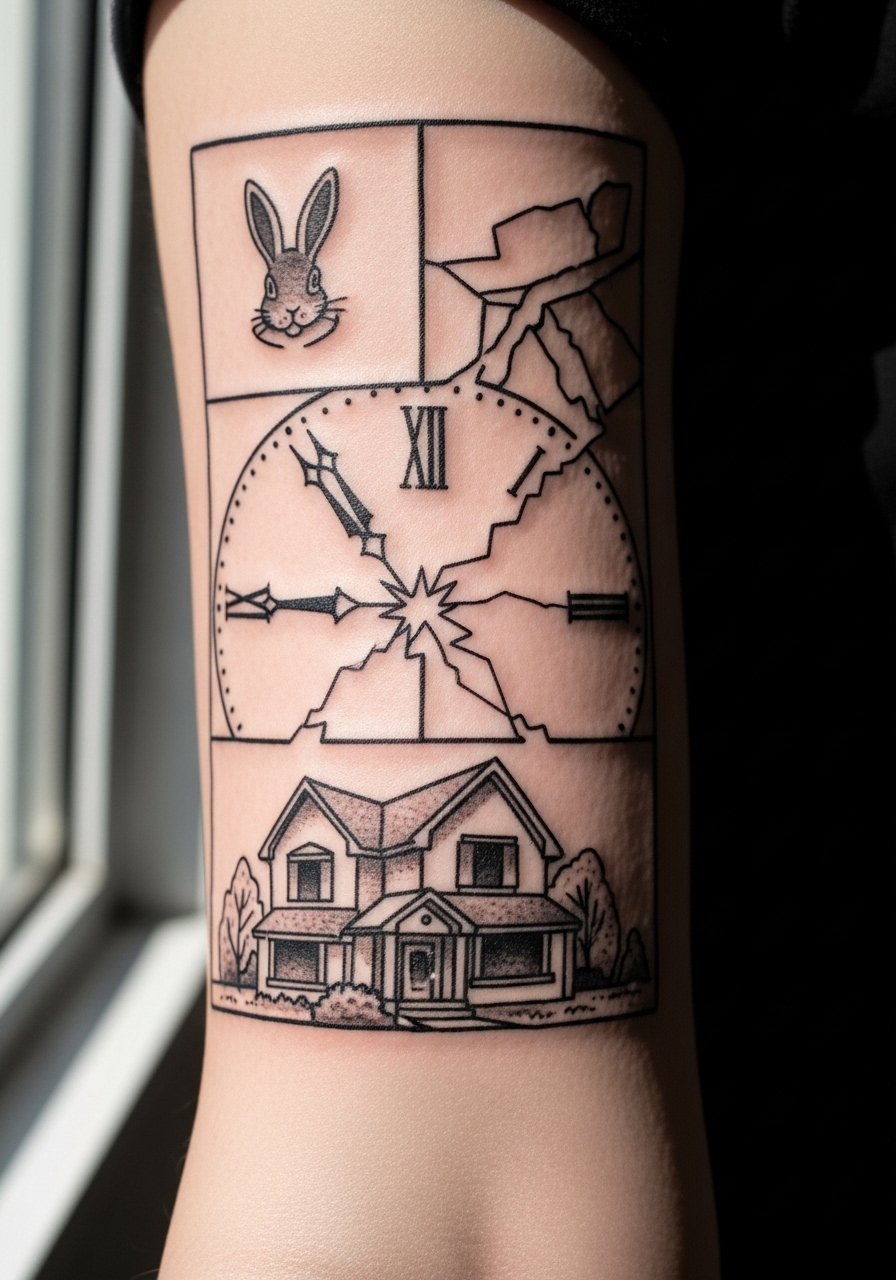
This is for someone committed to a narrative sleeve rather than a single glyph. The visual impact comes from strong linework hierarchy, with heavy black anchors and smaller stipple textures linking scenes. A common mistake is trying to fit micro-realism into sleeve panels that need bold separation to avoid merging over time. Expect multiple sessions spread over months and a touch-up after the piece fully settles. For placement, the outer arm handles saturation well and ages predictably compared with the inner arm.
Studio Day Picks
The inner forearm, wrist, and collarbone ideas above have different prep needs than a rib or sleeve. A few deliberate items make the studio day and the first week easier.
-
Stencil transfer paper kit. Lets you preview how the rabbit mask and clock face linework sit on the skin before the needle goes down, which is vital for visible placements.
-
Topical numbing cream. Applied according to the product instructions it eases the edge on rib and sternum sessions without changing the artist's linework.
-
Thin protective film roll. Protects wrist and finger tattoos from friction during the first few days of healing.
-
Fragrance-free gentle body wash. Cleans healing zones without irritating the fresh linework on forearms and collarbones.
-
Aquaphor healing ointment. Thin layers in the first 48 hours lock moisture for tight blackwork without clogging channels.
7. Donnie Darko Rabbit Mask as Chest Medallion
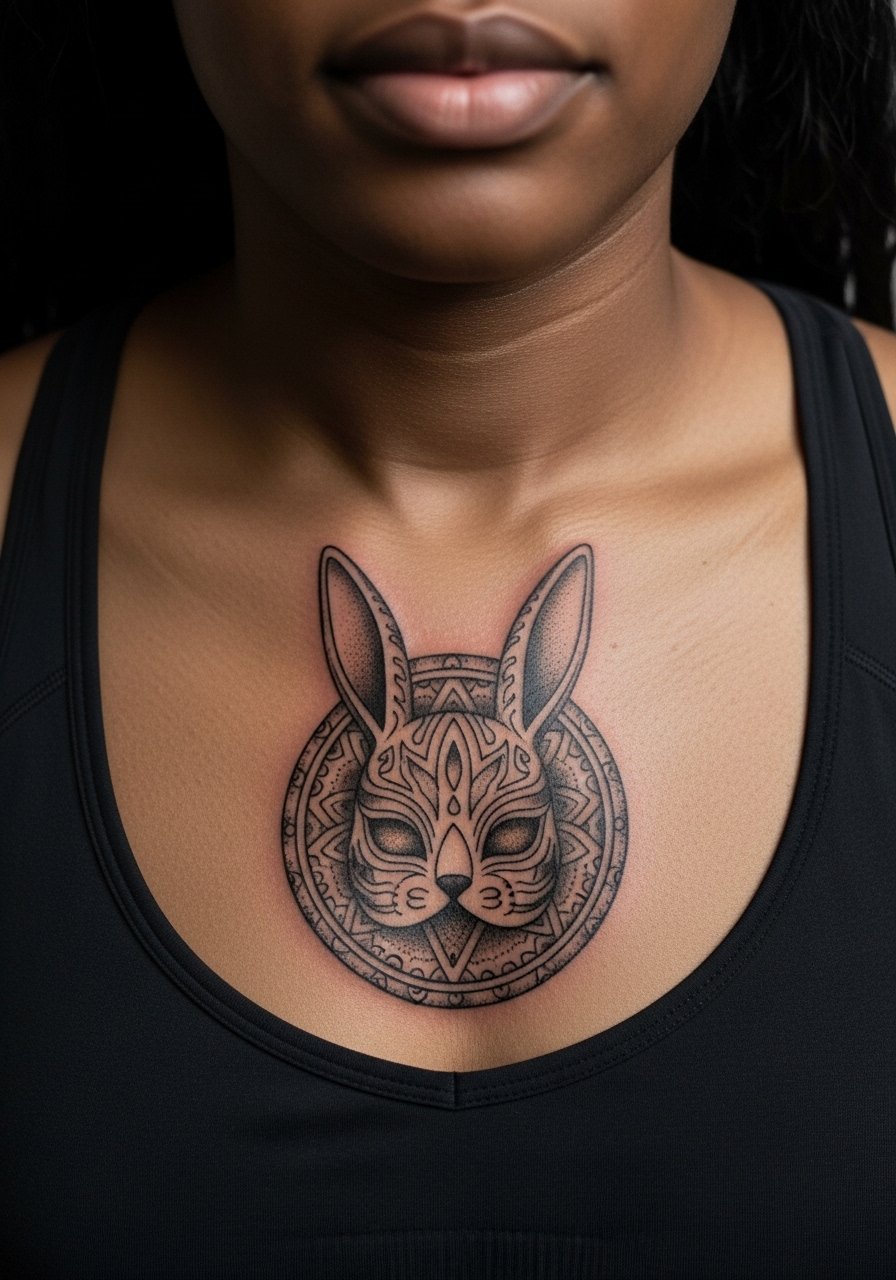
This placement reads like a statement piece when scaled to the sternum line. The trick is to keep surrounding elements minimal so the medallion does the heavy lifting visually. Pain is moderate to high across the chest, and sessions can feel drawn out because of the bone proximity. During consultation ask for strong linework with subtle stipple shading rather than fine interior detail. For session comfort, pull on something like a button-down that you can open briefly so the artist has access without you getting too cold.
8. Thigh Panel with Suburban House Silhouette
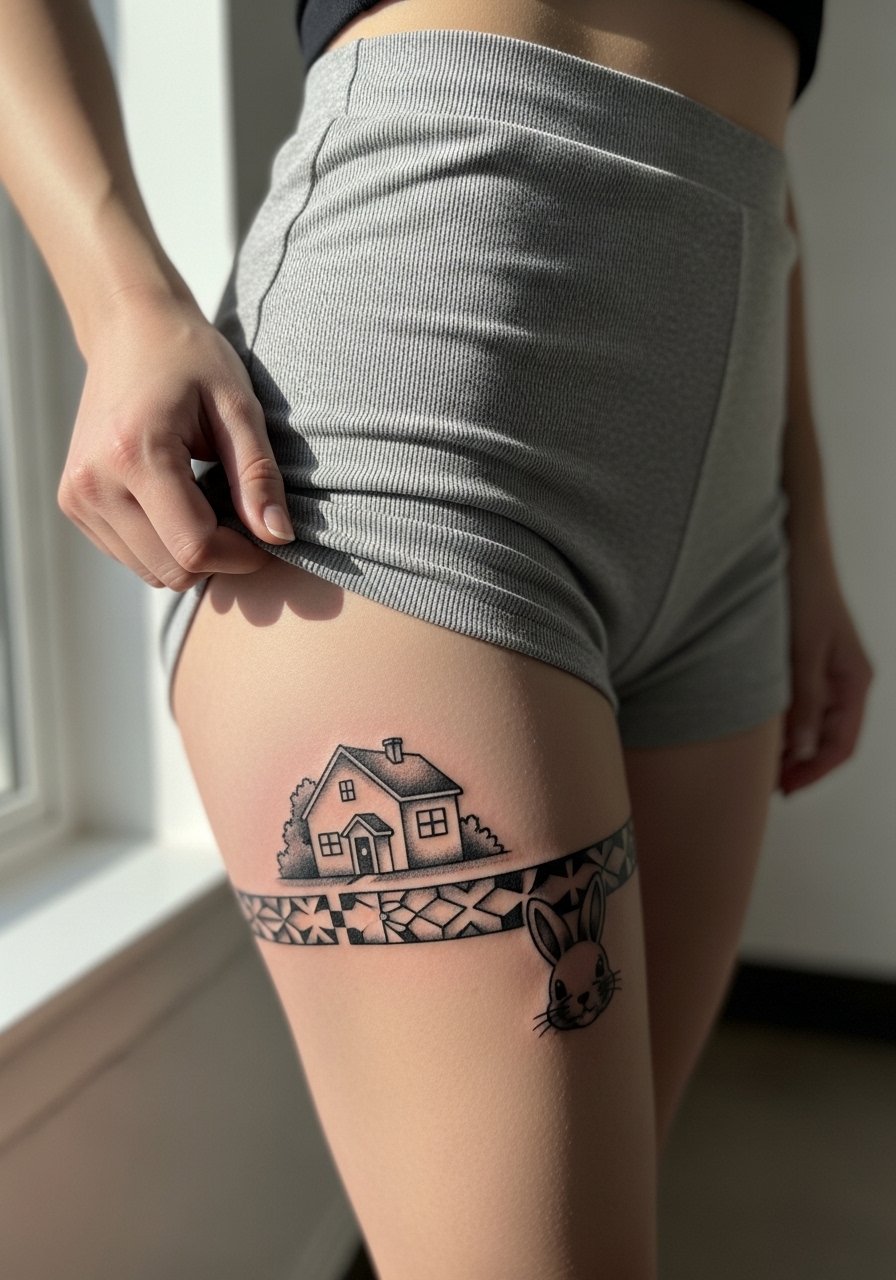
Thigh pieces are forgiving on healing and hold black saturation well because the skin there suffers less sun and daily friction. A common mistake is making the house too detailed. Large simple shapes and textural fields translate better over the long run. Session feel is lower on pain compared with ribs and chest. For the appointment pick loose shorts that you can shift so the artist can roll the leg up without tight seams pressing on the area.
9. Ankle Band with Hidden Rabbit Glyph
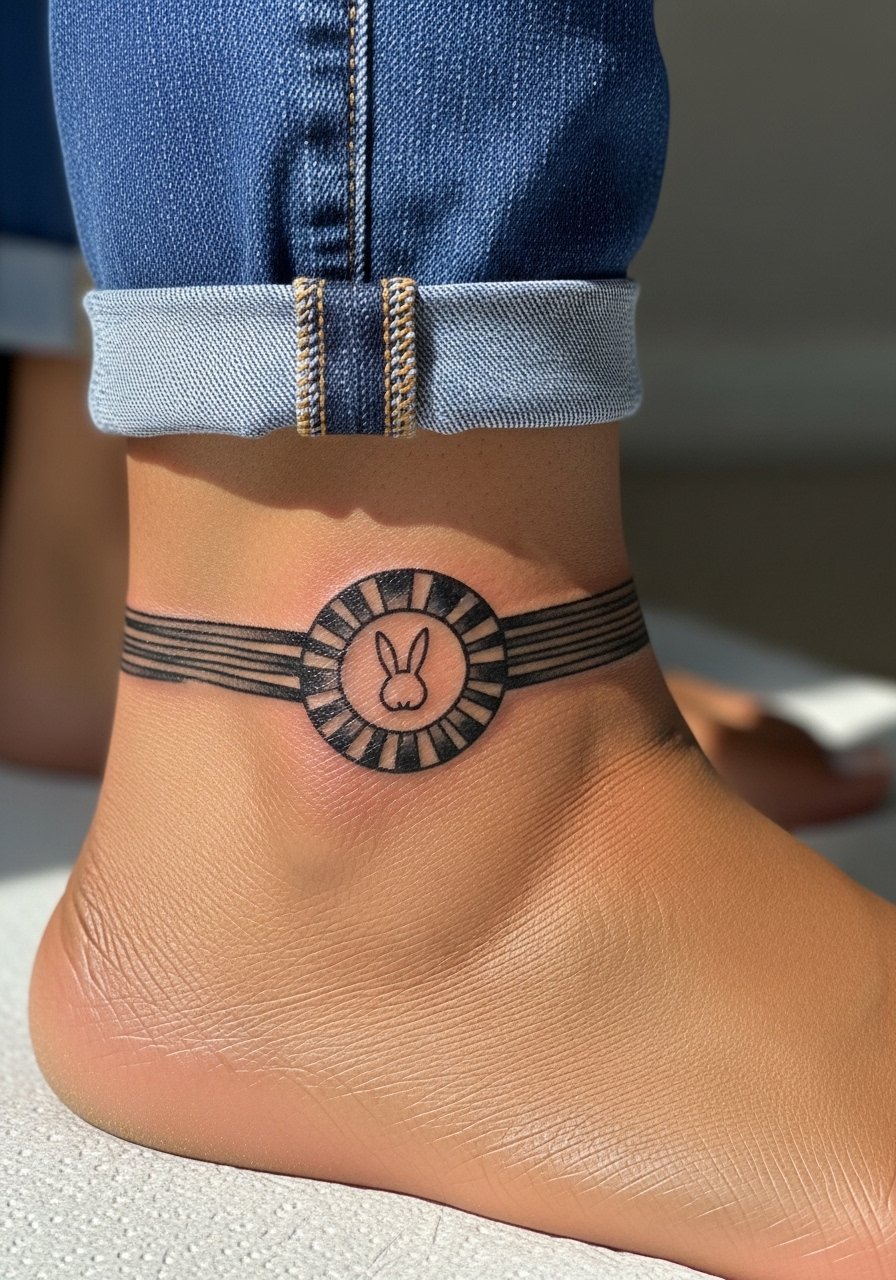
Ankle work lives in high-friction zones. The ring band approach gives a bold silhouette that resists early breakdown from footwear and socks. The main mistake is using thin linework that gets worn by shoes. Keep line weight bold and expect touch-ups earlier than on upper arm pieces. For showing off, roll your jeans and wear low-profile sandals or a slip-on. A narrow band reads like jewelry and pairs well with ankle chains if that is your aesthetic.
10. Forehead-Edge Micro Panel Behind Hairline
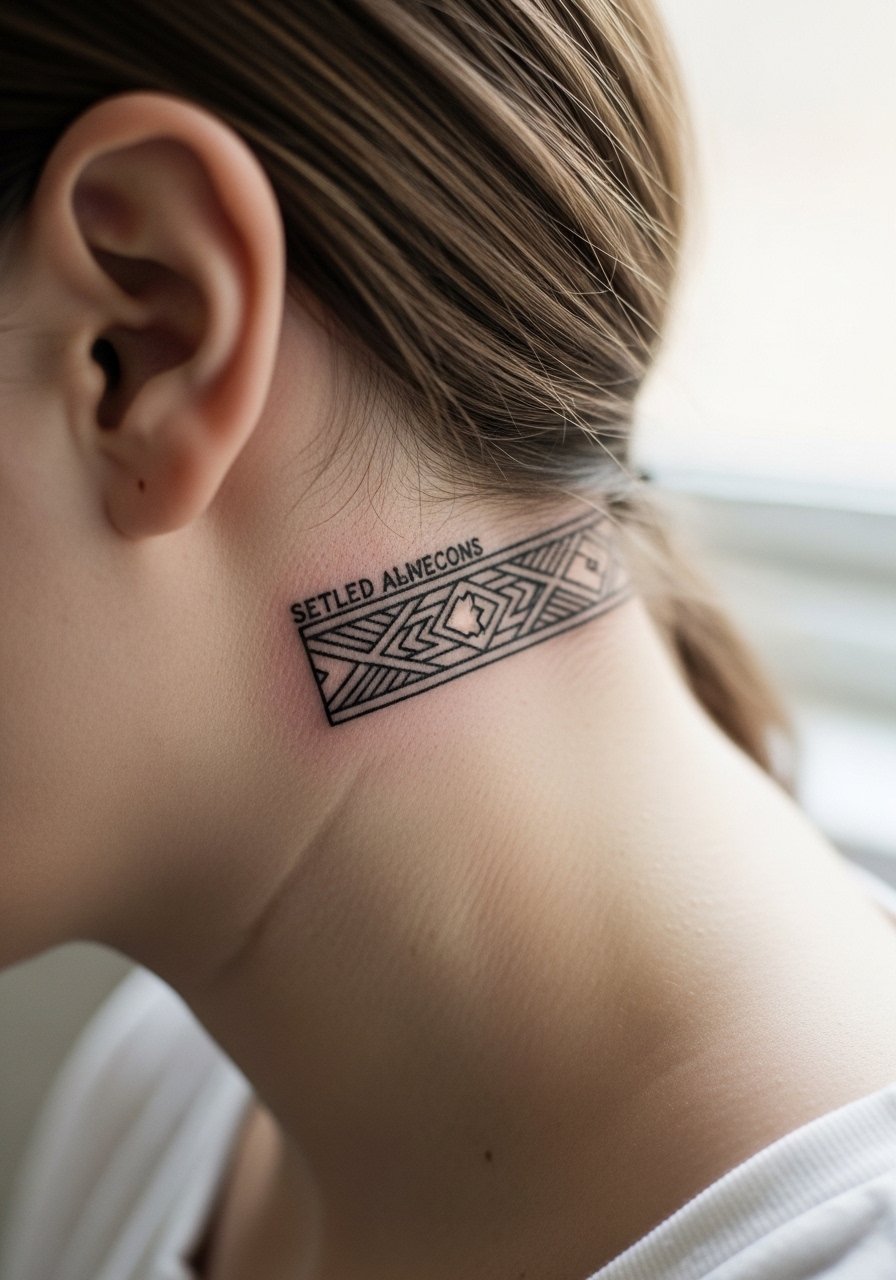
Controversy exists around neck and behind-ear placements in the Donnie Darko community. One camp sees them as bold statements that complete a portrait vibe. The other camp warns about professional consequences and faster blur due to movement and hair oils. The reality is that small blackwork patches can hold if placed on flatter planes with minimal friction. Discuss long-term visibility with your artist and consider a placement slightly behind the hairline where daily exposure is lower. If you keep hair that covers the area you can control how often it is seen.
11. Calf Scene with Stippled Night Sky
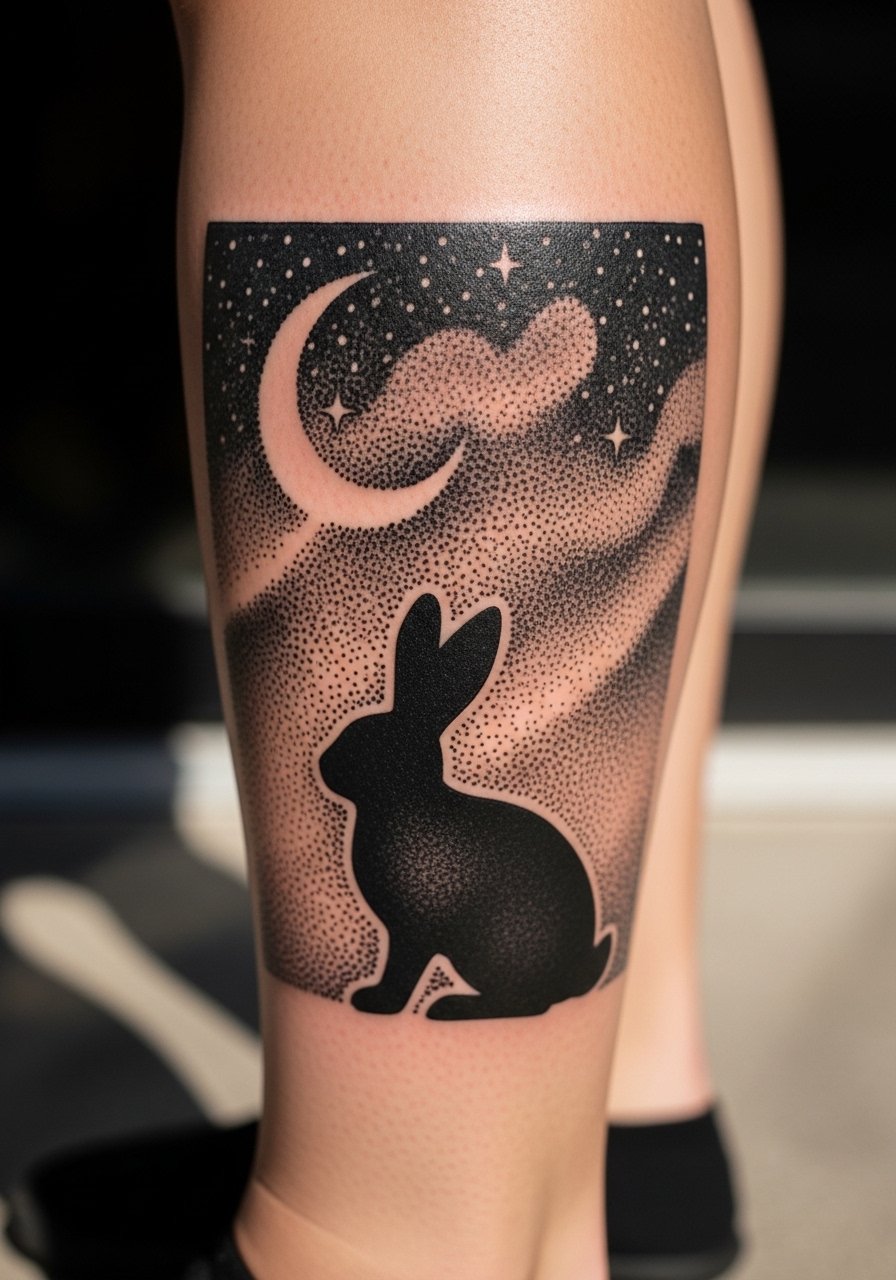
Calf pieces age well and have room for texture. Stipple shading gives the sky depth without relying on gradients that fade. A mistake I see is asking for fine dots too close together, which can merge over time. Tell your artist you want spaced stippling and solid black anchors to protect the silhouette. For the session wear loose drawstring pants that can be rolled up easily so the artist has uninterrupted access to the area. Recovery is simple because the calf avoids constant friction from clothing.
12. Hand-Side Linework Rabbit on the Side of the Hand
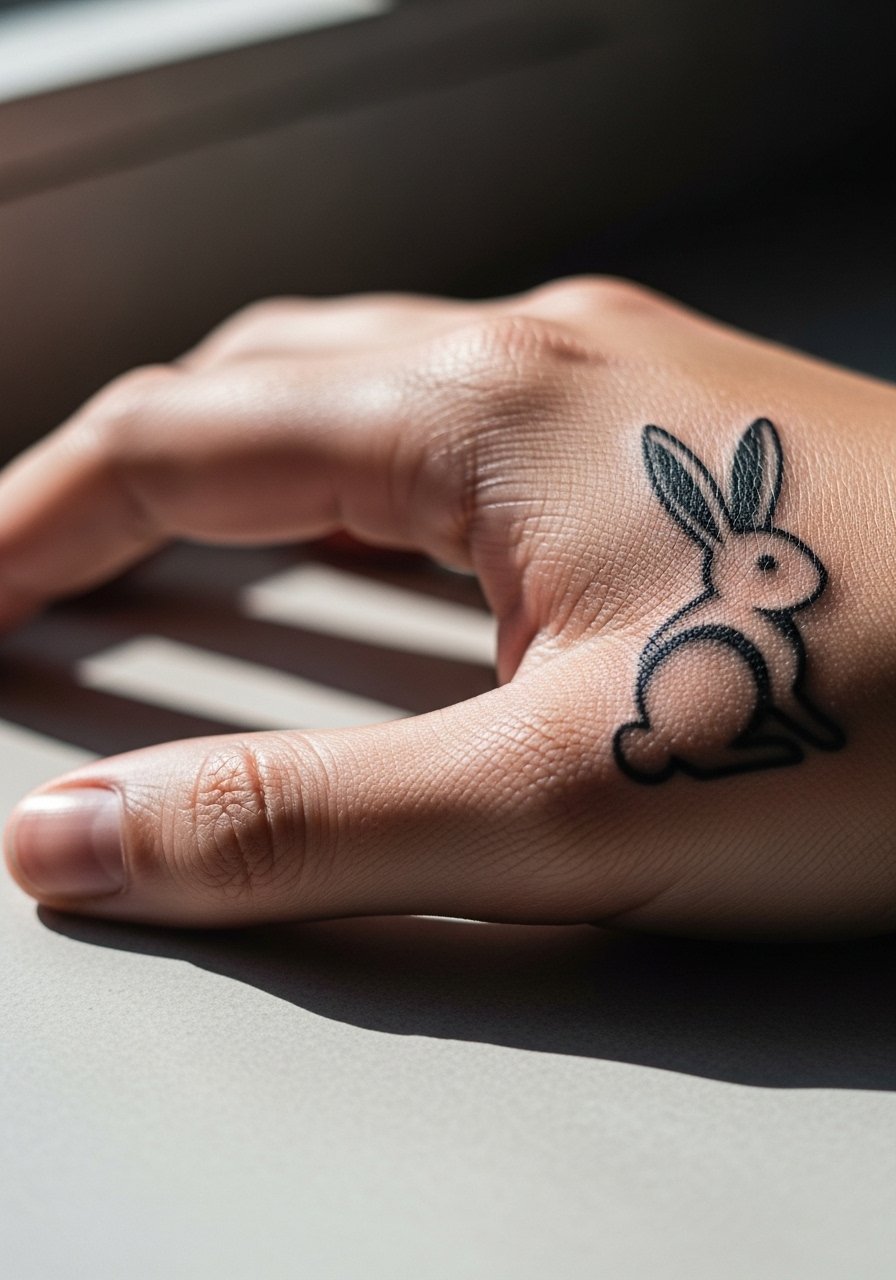
Hand tattoos still affect hiring in some industries, so think about your career and daily interactions before committing. Hands also sit in a high-wear environment. Expect faster fading and more frequent touch-ups than other placements. The right move is to design a bold, small black shape that can be re-inked without losing identity. A one-session small block is often better than an intricate finger wrap when longevity matters. Ask the artist about their hand-specific touch-up history and follow a low-friction routine while it heals.
13. Back-of-Neck Rabbit Crest with Baroque Fill
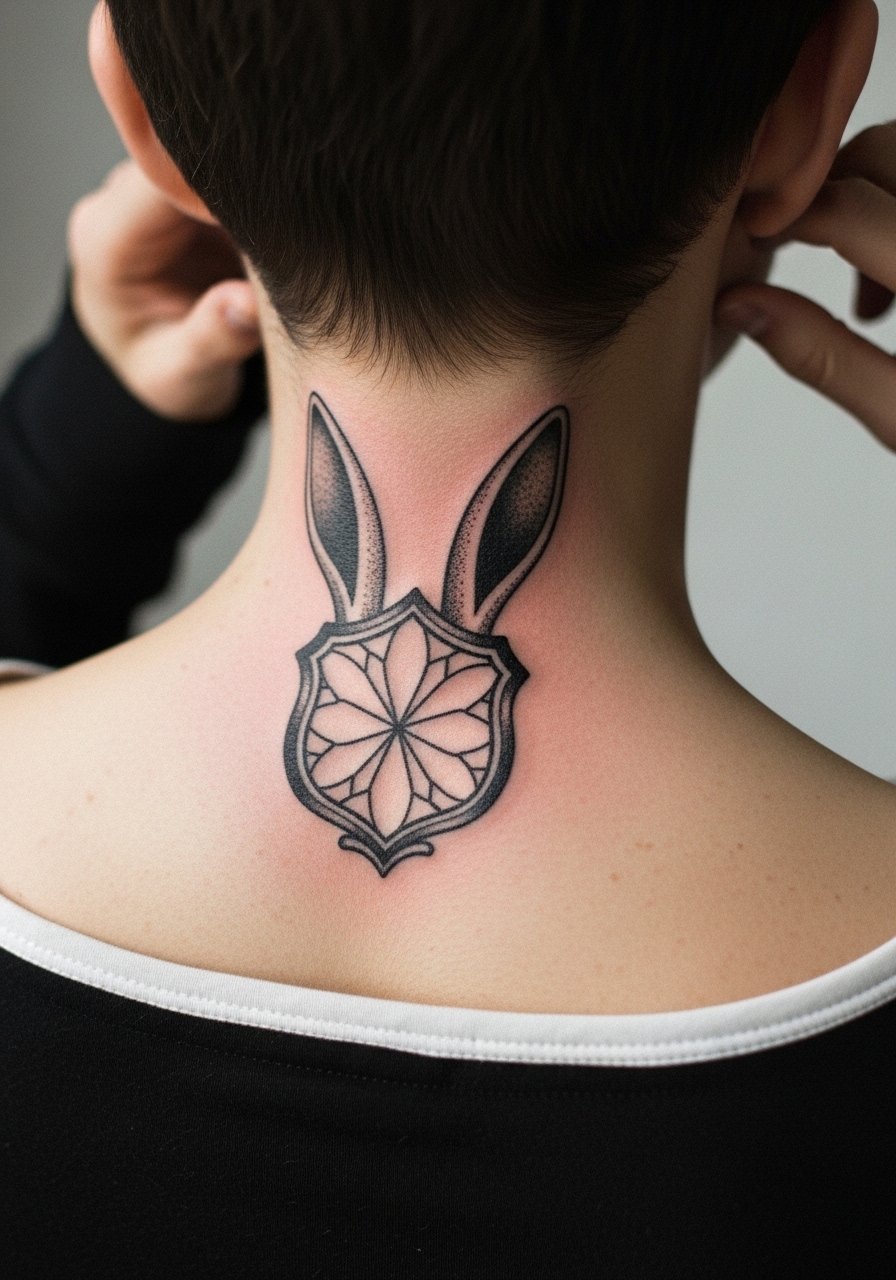
A back-of-neck piece reads best as a crest rather than a tight portrait. The area moves and bends, so heavy blackwork accessible across a slightly larger patch is more reliable than fine detail. If you want ornate fill, ask for baroque-inspired blocks that use negative space to keep motion from collapsing the image. For session logistics wear a t-shirt you can slide down slightly so the artist exposes only the neck area.
14. Negative-Space TV Static Band Across Sternum
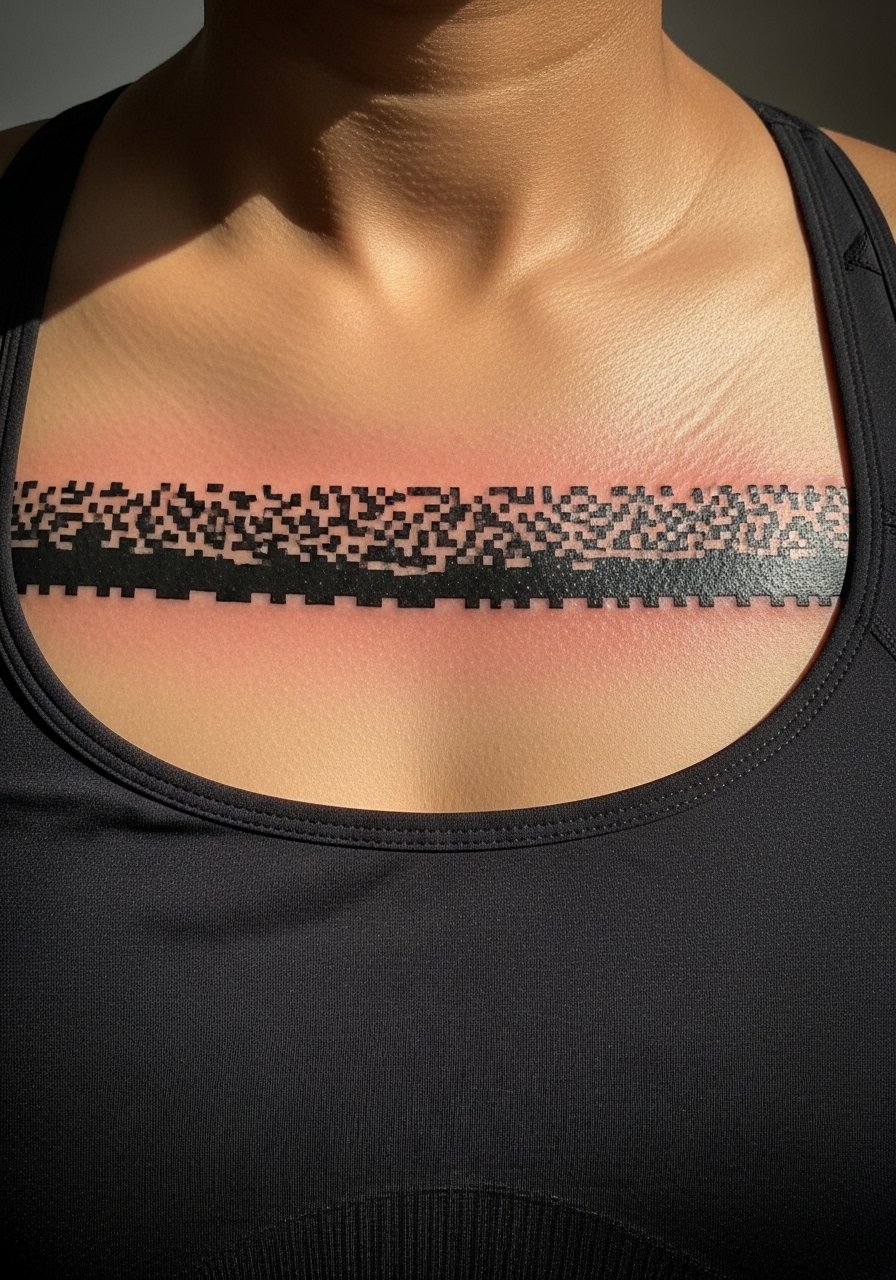
Sternum work needs careful placement to avoid uncomfortable healing and unnecessary blowout. A band that uses negative space gives an immediate Donnie Darko feel without demanding micro detail. The sternum sits near bone and can sting more during the session. Avoid dense dots pressed directly on the midline. If you like the look, consider a slightly off-center placement to reduce the sensation and the risk of early migration.
15. Small Finger Rabbit Accent
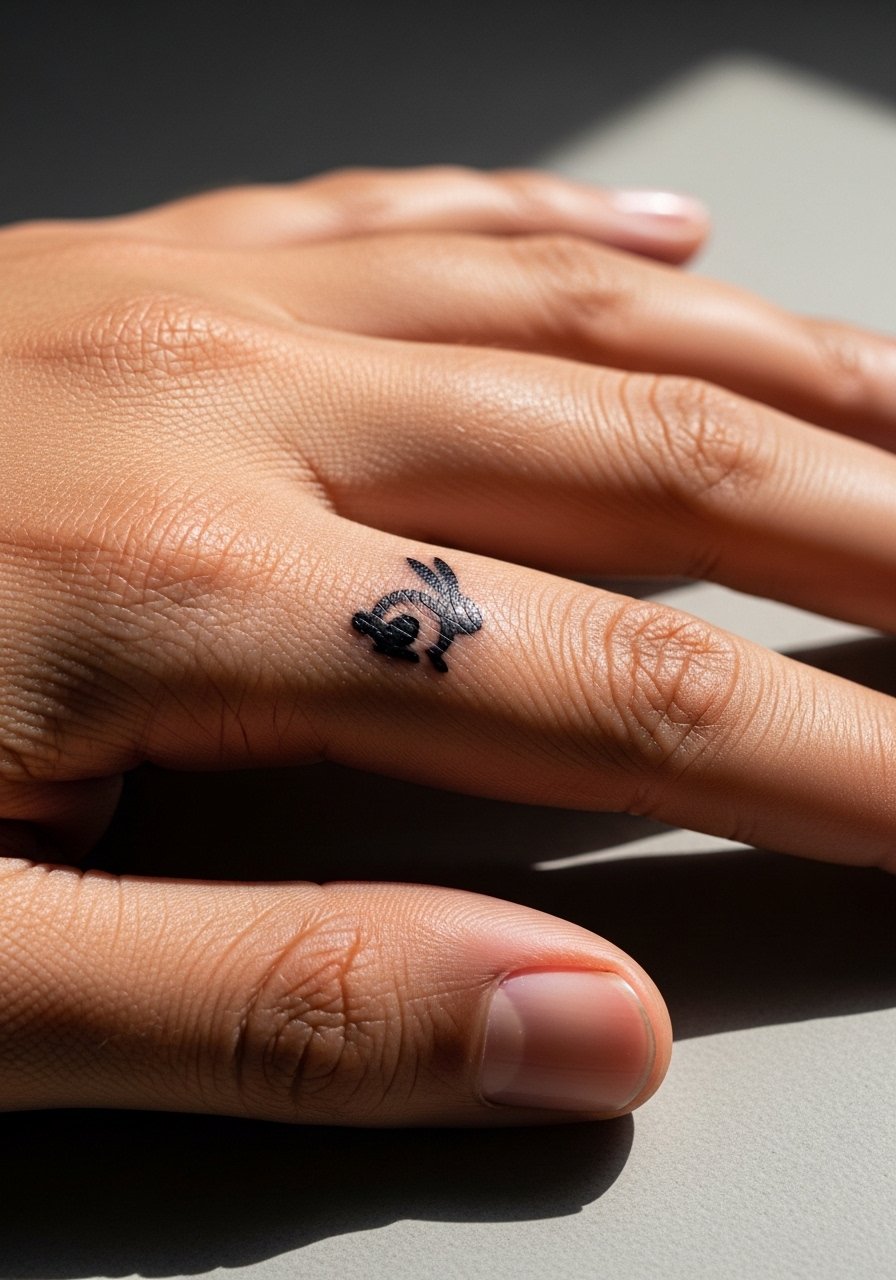
Finger accents are intimate and fragile. The skin there sheds faster and the lines can blur with repeated washing and work. If you want a finger mark, keep the design minimal and bold rather than detailed. Ask for a single-session small block that can be refreshed later. If you want to frame the finger piece with accessories try a minimalist watch on the opposite wrist to balance attention and avoid rubbing the fresh ink.
16. Throat-Lateral Panel with Silenced TV Lines
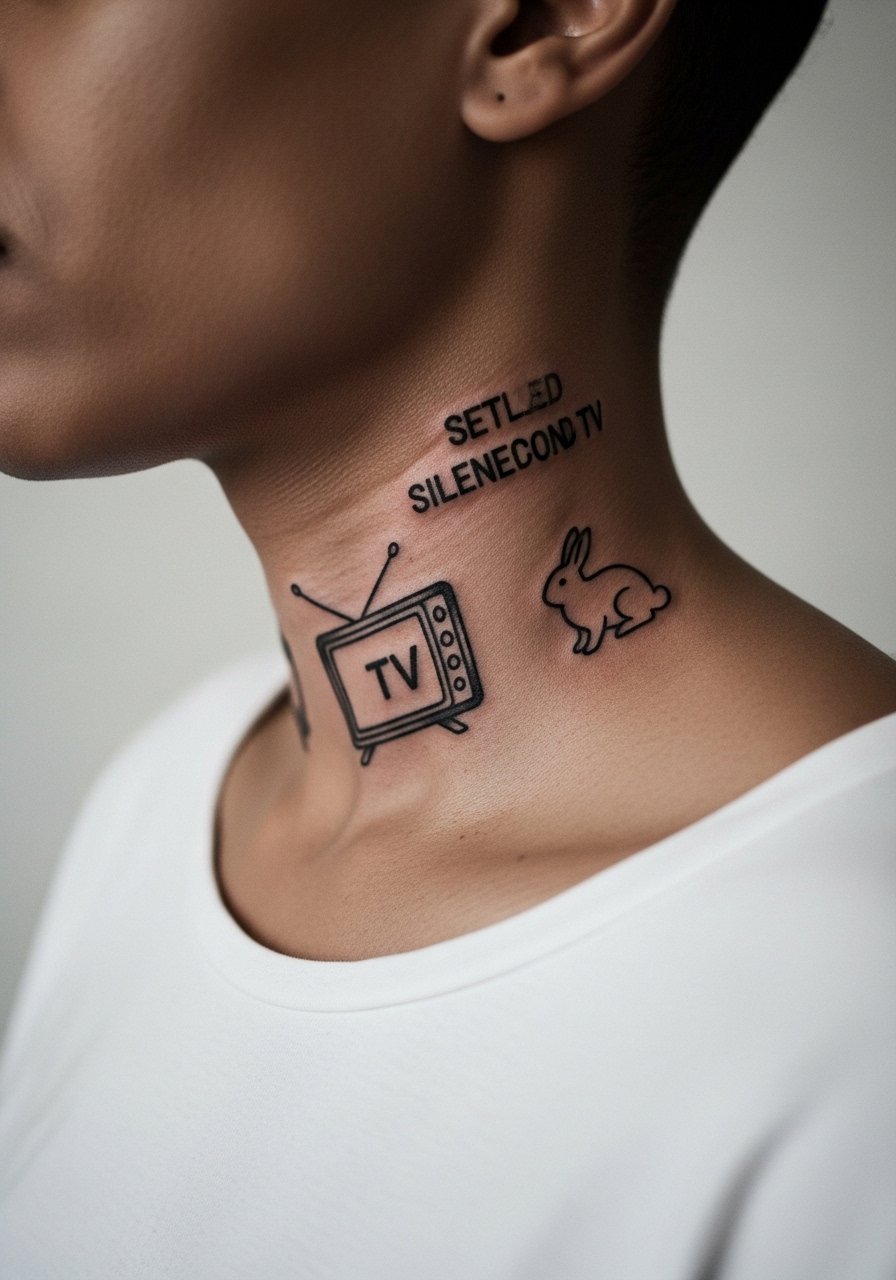
Neck placements are visible and can limit some career paths. The lateral neck tolerates elongated panels better than the front because it sees less direct pressure from collars. A common error is placing heavy black directly where shirts rub. Ask to keep the darkest mass tucked slightly towards the shoulder. Expect faster fading than upper arm work and plan for a touch-up in the first two years in many cases.
17. Hip-Adjacent Rabbit with Architectural Lines
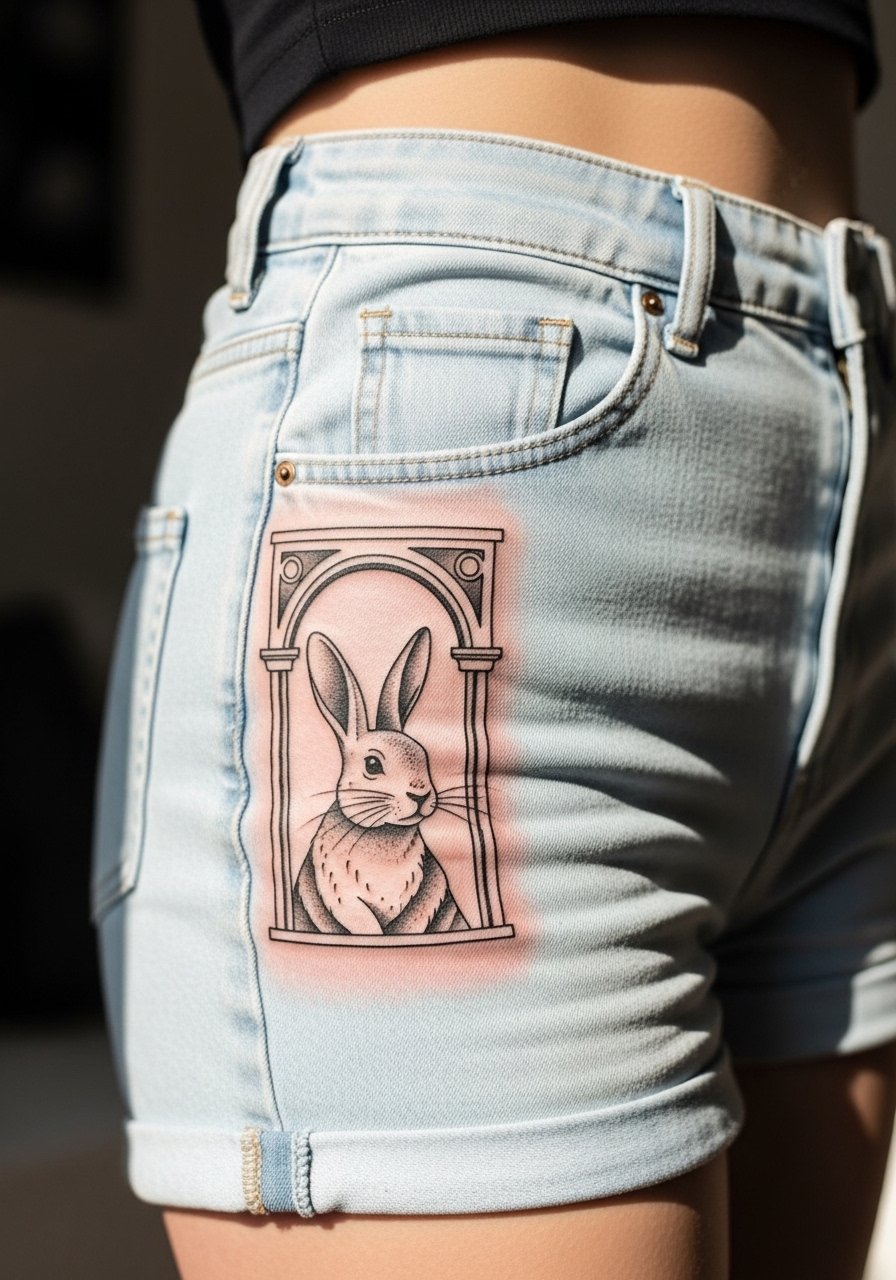
Hip pieces can be private and grand at the same time. The skin there behaves more predictably through weight changes than the abdomen. I like architectural straight lines framing the rabbit so the silhouette keeps its presence as the body moves. During consultation mention how the piece will sit under swimwear so the artist can place it for swim trunks or high-waisted bottoms. For the session wear high-waisted shorts that you can shift slightly so only the tattooed strip is exposed. Expect a moderate session length and a calm healing window.
Frequently Asked Questions
Q: How long will bold blackwork Donnie Darko pieces stay crisp before needing a touch-up?
A: From what I have seen, bold blackwork that prioritizes solid fills and clear negative space tends to read well for five to ten years before a visible touch-up is needed. Smaller placements and high-friction zones like hands and ankles often need touch-ups earlier. Plan for a routine check at year two to see if any areas need refresh.
Q: Is fine line Donnie Darko imagery a bad idea for ribs or sternum?
A: Many artists split into two camps on this. One group warns that fine line on the ribs or sternum blurs quickly because of skin movement. The other says that with correct depth and careful spacing, a cleaner line can hold. If you prefer delicate work in those spots, ask your artist for slightly heavier line weight and extra spacing so the design has room to age.
Q: What should I wear to a session for a sleeve that includes a Donnie Darko montage?
A: Wear loose, layered clothing that you can move without removing. For arms a loose button-down or a tank you can slide off easily works best. For lower body pieces choose drawstring shorts you can roll up so seams do not press on fresh ink.
Q: Can a Donnie Darko motif be subtle enough for professional settings?
A: Yes. Placing a small rabbit glyph on the inner forearm, hip, or behind the hairline keeps the reference discreet. Stick to bold, simple shapes that are easy to hide under sleeves or clothing when needed.
Q: Do blackwork pieces hurt more than fine-line tattoos?
A: Pain depends more on placement than on style. Solid blackwork can sting because of the longer time spent in one area, but many people prefer that to the repeated passes required for ultra-fine detail. If you have low tolerance, consider breaking a large piece into shorter sessions to manage discomfort.