
Fine line tattoos dominate saved boards, but the memorial pieces that actually keep meaning across years are often the bolder ones that hold shape when skin shifts and sun gets involved. If you want a pet tribute that reads the same at a glance five years from now, think silhouette, paw mark, or saturated blackwork rather than tiny script alone. Below are 27 bold pet memorial tattoo ideas, each with what to ask your artist, how it ages, and wardrobe tips so the piece reads like it belongs to you.
1. Bold Paw Print on the Inner Wrist
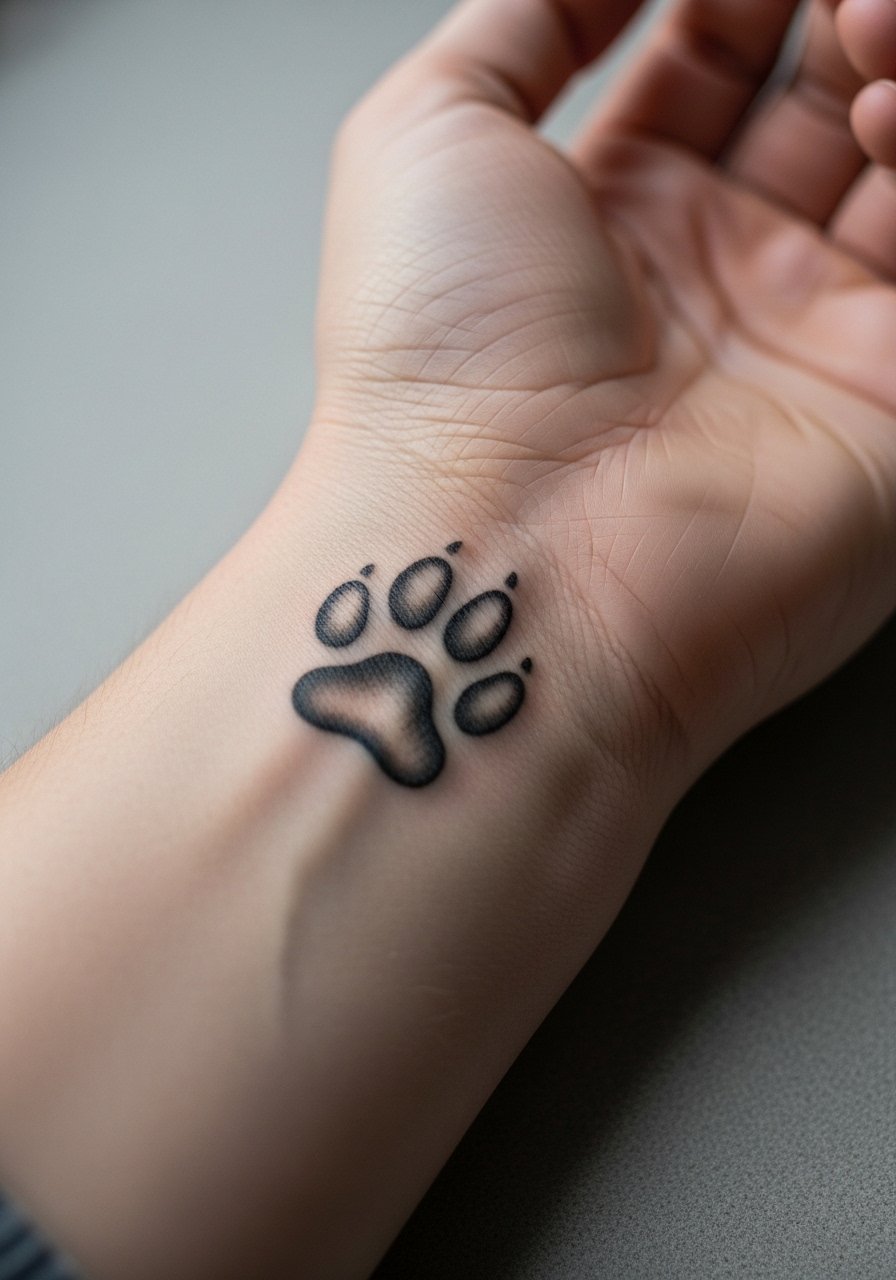
A simple, saturated paw print reads like a personal crest and survives friction better when the lines are bold. Tell your artist you want solid black saturation and a slightly oversized pad so the negative space holds up. Expect the wrist to be a three out of ten on pain with one short session. Common mistake is going too small with fine line detail, which blurs by year two. For showing it off, rolled sleeves or a thin chain pendant bracelet keep attention on the wrist without crowding the print.
2. Micro-Realism Portrait on the Forearm
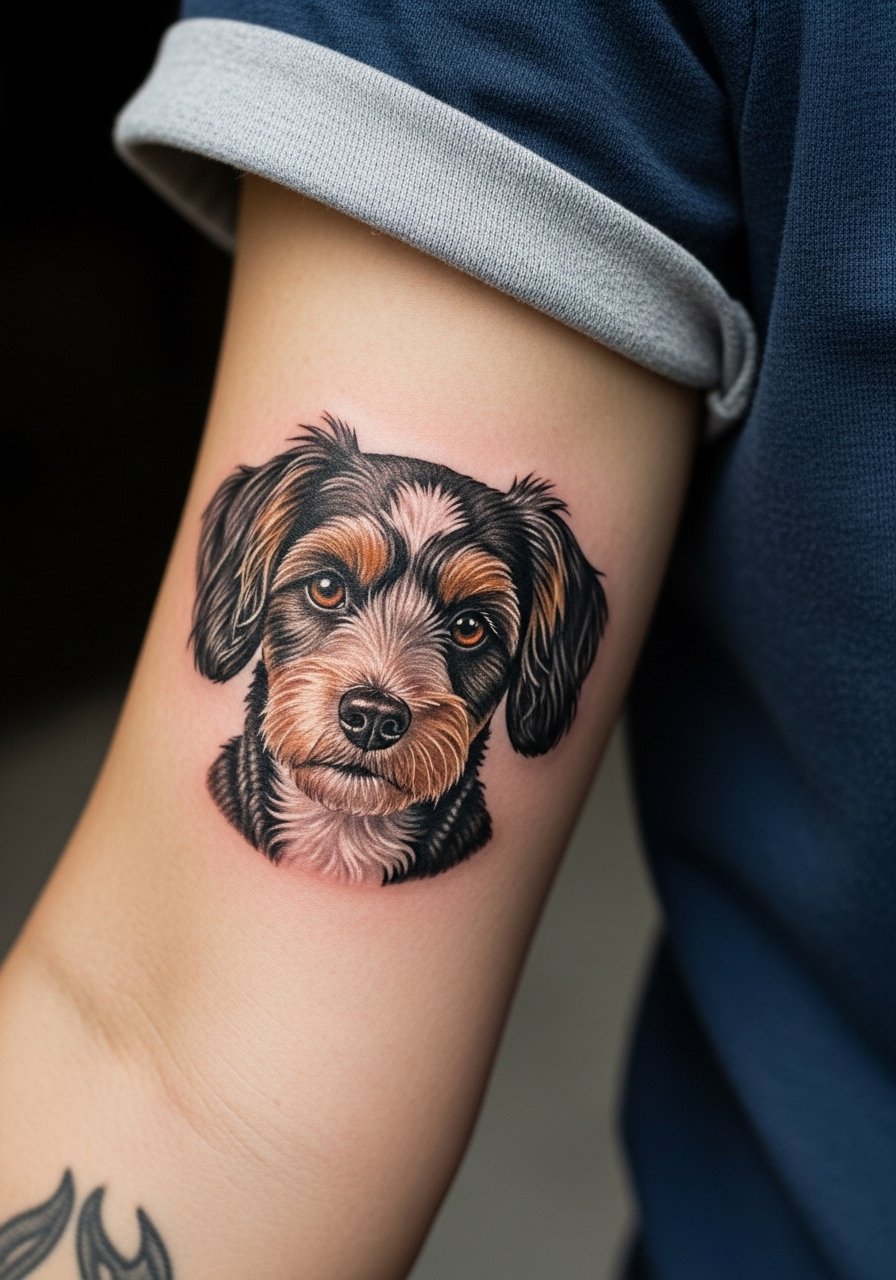
A micro-realism portrait can feel like your pet is still in the room, but the realism camp and the stylized camp disagree on sizing. One group says portraits need room to breathe, the other says tiny micro-realism is possible with the right needle work. Ask for a reference photo with high contrast and request a proof stencil before the needle. Forearm pieces are easy to touch up at year three if small areas lose contrast. Wear a rolled sleeve linen shirt when you want the portrait visible without fuss.
3. Script Name Under a Paw on the Collarbone
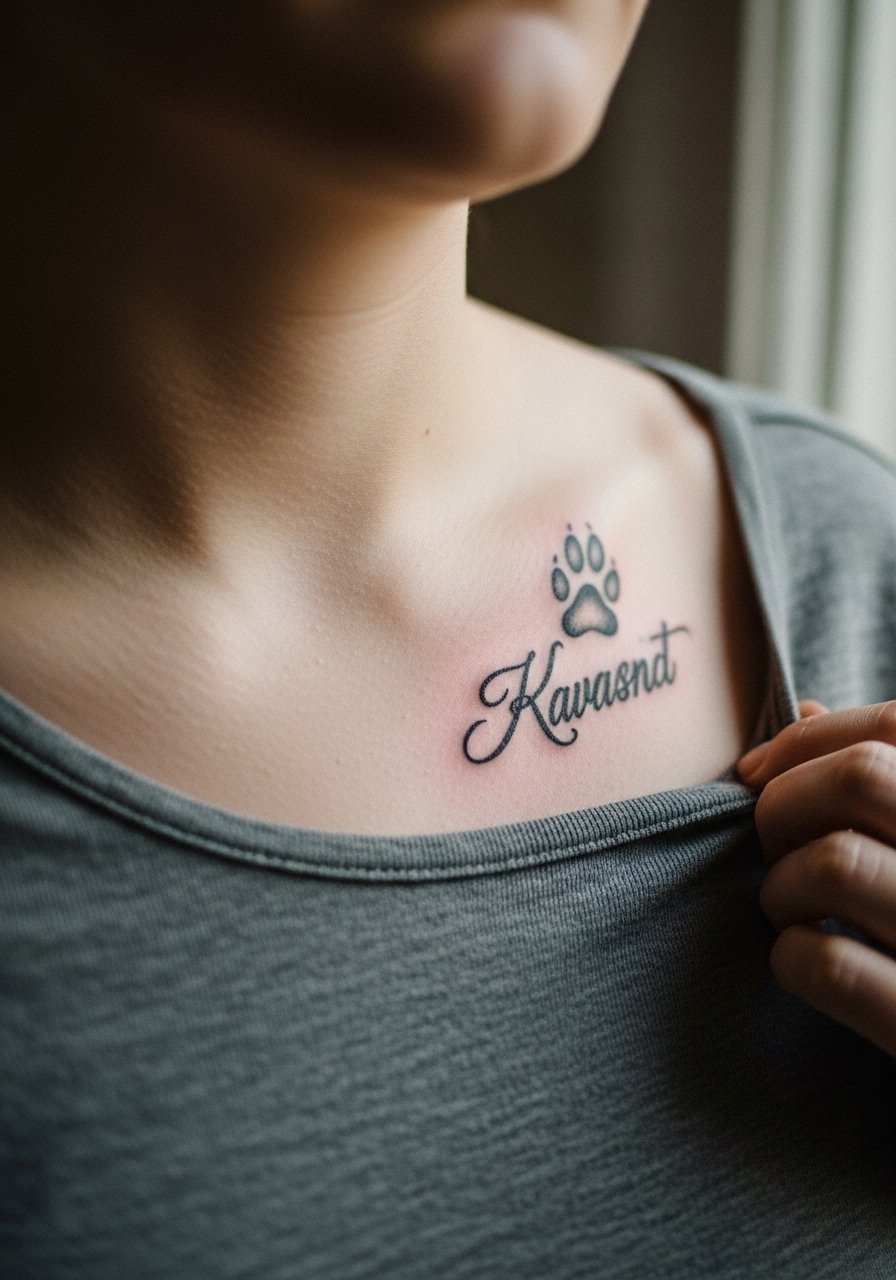
Pairing a paw with a name on the collarbone gives a personal reading without dominating your chest. Ask for a slightly thicker script weight than the reference so letters stay legible after two years. The collarbone is a four out of ten on pain and often needs one short session. A common error is choosing ultra-thin lettering that becomes patchy. For nights out, an open-neck midi dress or a wide-neck tee frames the piece nicely and keeps the linework visible.
4. Minimalist Paw + Heart on the Ankle
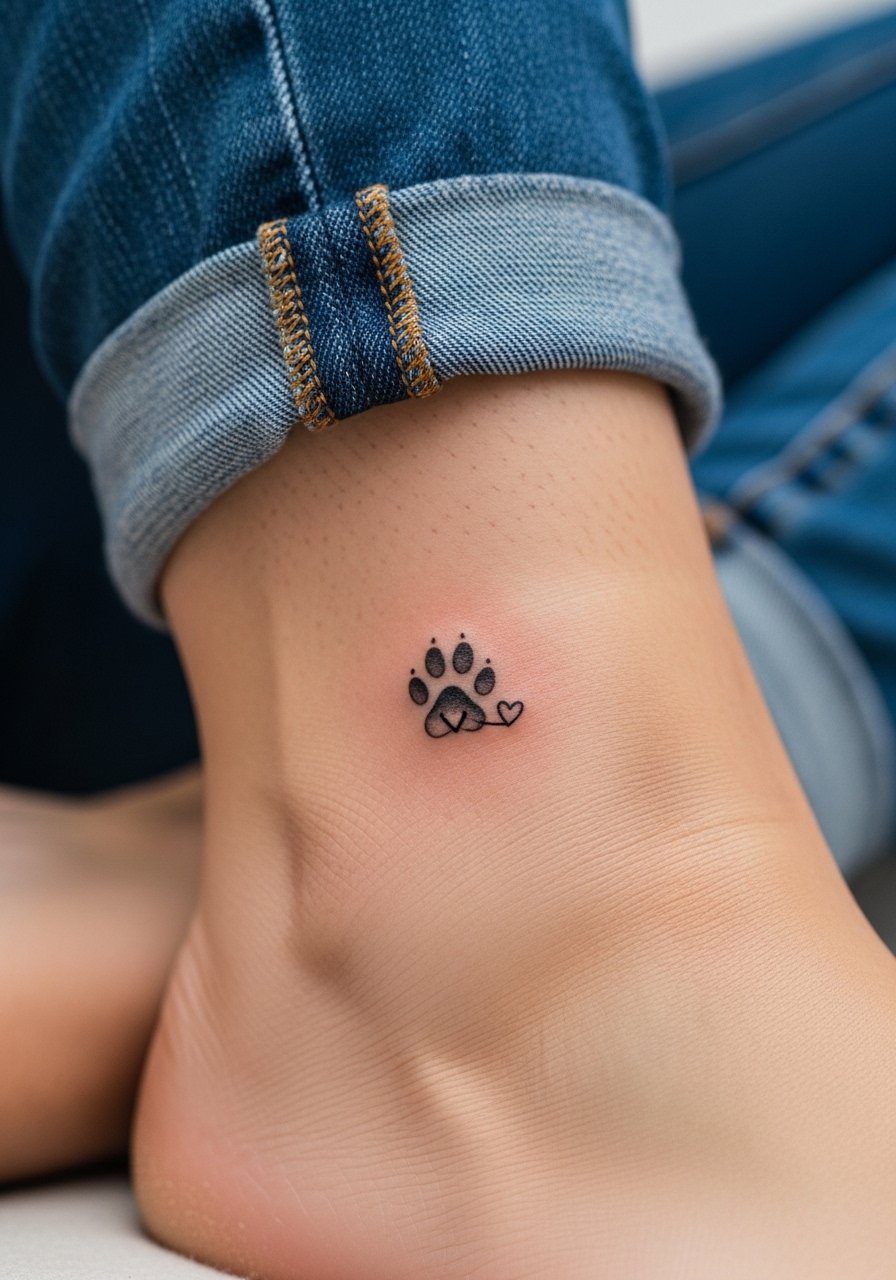
Ankle pieces are low commitment visually but high on rubbing and shoe friction. Request denser black fill and slightly bolder heart lines to resist fading from socks and shoe collars. Pain is moderate for the ankle and the session is usually quick. The common mistake is using sketchy, hairline strokes that vanish with weekly wear. Pair with low sneakers or a woven ankle bracelet when you want to highlight the memorial.
5. Bold Silhouette on the Upper Arm
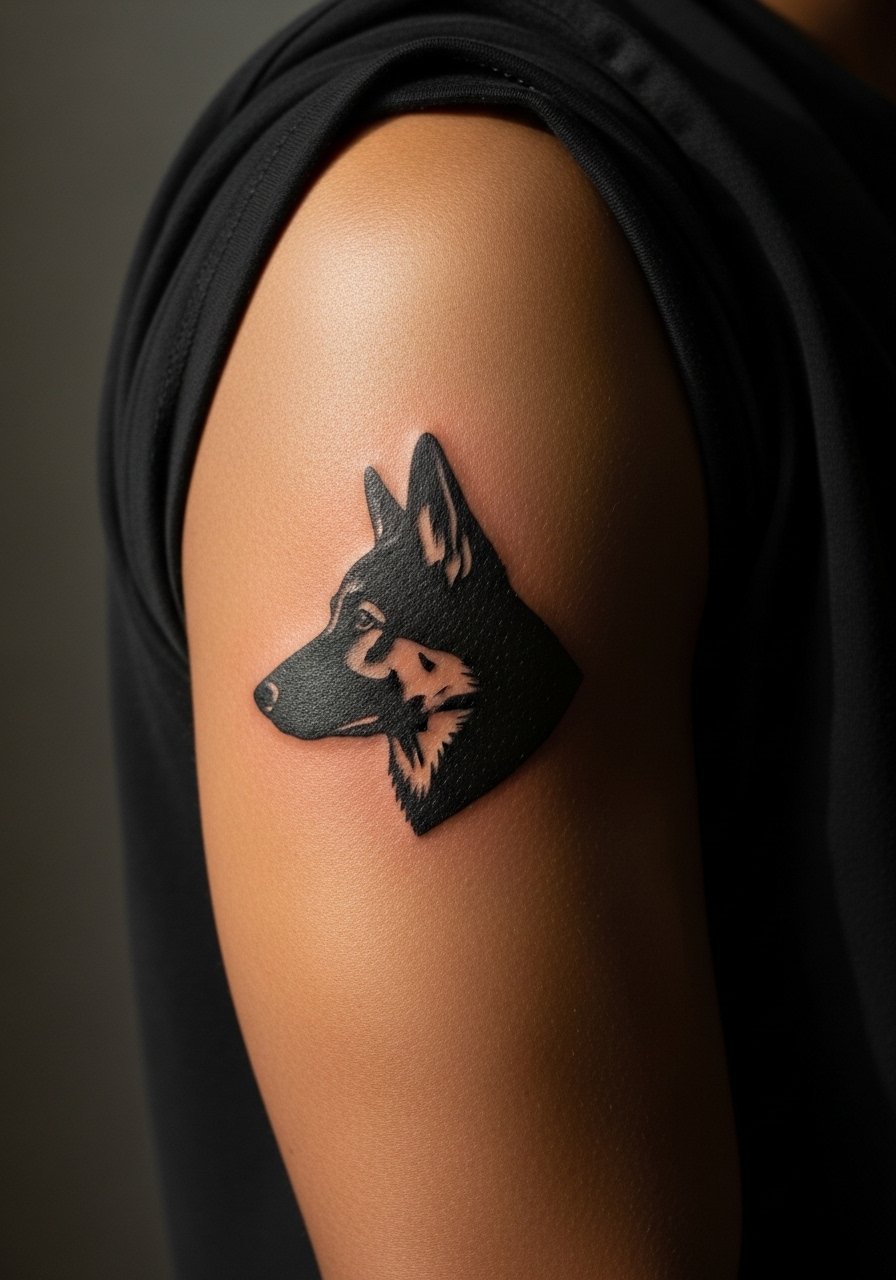
A silhouette works well if you want instant recognition from a distance. Tell your artist you want dense saturation and crisp negative space around the silhouette edges. Upper arm sessions are manageable and often done in one sitting depending on size. Avoid the mistake of adding tiny internal detail that competes with the silhouette. A loose button-down shirt you can pull aside for the session keeps the area accessible and looks effortless when the shirt sleeve is rolled.
6. Paw Print Trail Along the Side Rib
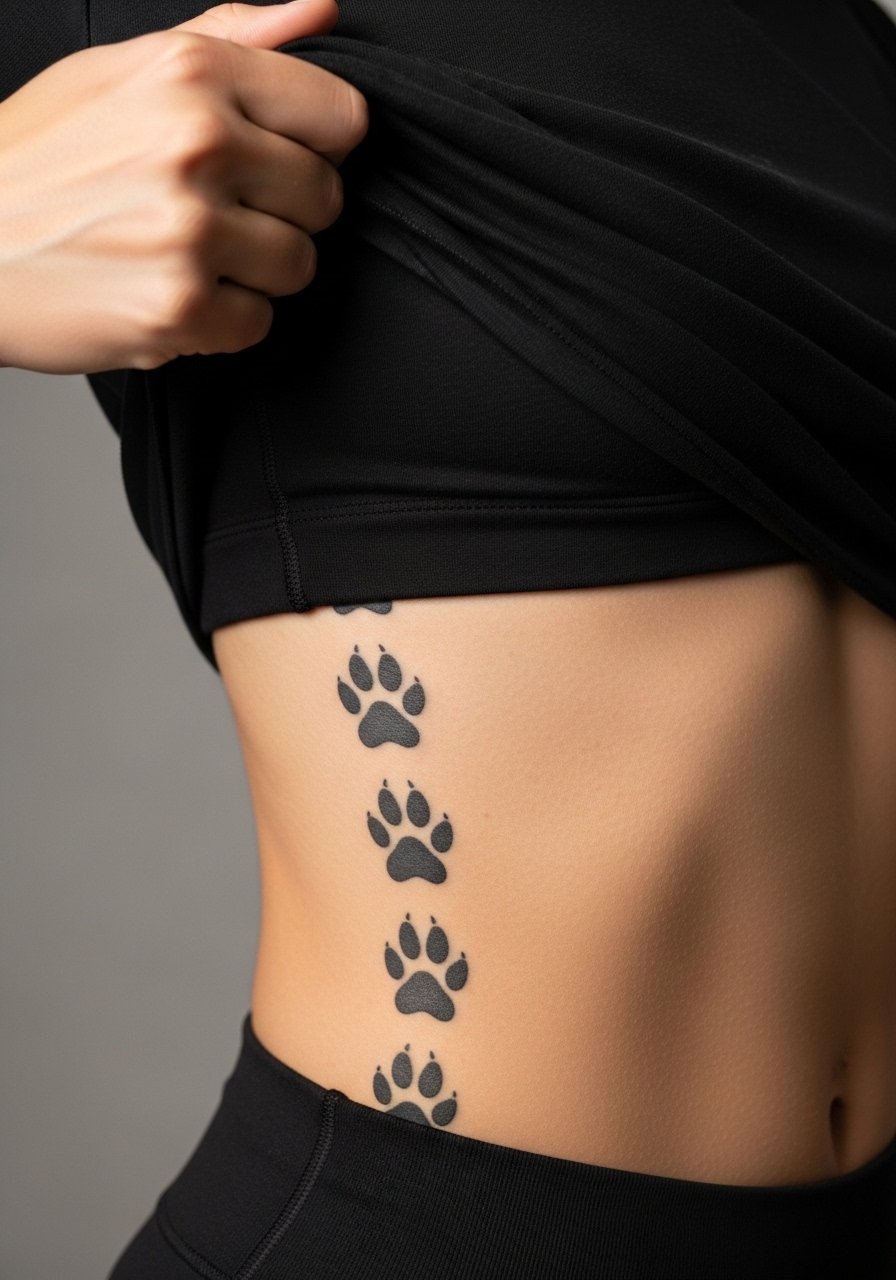
Ribcage pieces have two camps about fine line work. One camp argues that skin stretch and motion blur thin lines within a couple of years. The other camp says proper depth and spacing make fine line settle fine. For memorial paw trails, prefer bold, slightly spaced prints. Expect high pain and plan for multiple short passes. The mistake is packing prints too close together. For the session, wear a cropped top you can lift so access is clean.
Studio Day Picks
The wrist, forearm, and ribcage pieces above each ask for different prep, so these items smooth the session and the first week.
-
Stencil transfer paper kit. Lets you preview line placement on the exact skin area, which is useful for wrist and collarbone designs before the needle goes down.
-
Topical numbing cream. Applied as directed an hour before helps with sensitive ribs and inner arm sessions so you can sit through longer shading.
-
Thin protective film roll. Useful for ankle and finger pieces exposed to constant friction from shoes and keyboards during the first week.
-
Fragrance-free body wash. Cleanses healing skin without stripping saturation, which matters for saturated silhouettes and micro-realism.
-
Aquaphor healing ointment. A thin layer in the first days can lock in moisture for dense black pieces without smothering the linework.
7. Linework Paw Band Around the Wrist
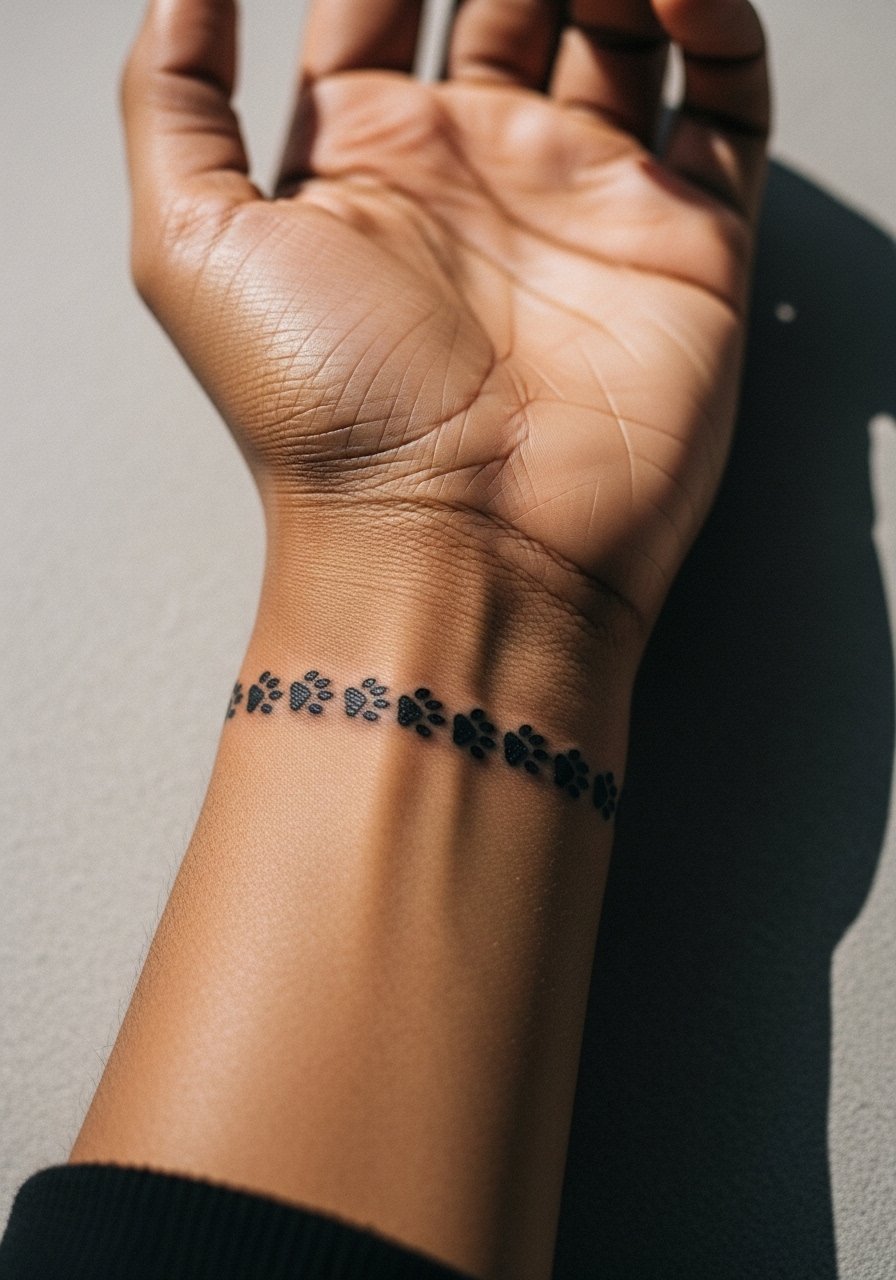
A paw band reads like a bracelet and can replace jewelry. Ask for slightly larger prints within the band and moderate spacing to prevent line merging. The wrist is exposed to washing and sunlight, which can soften thin lines fast. Avoid the mistake of hairline strokes. For styling, stacked delicate bracelets or a minimalist watch keep the wrist readable without covering the memorial.
8. Tiny Paw Behind the Ear
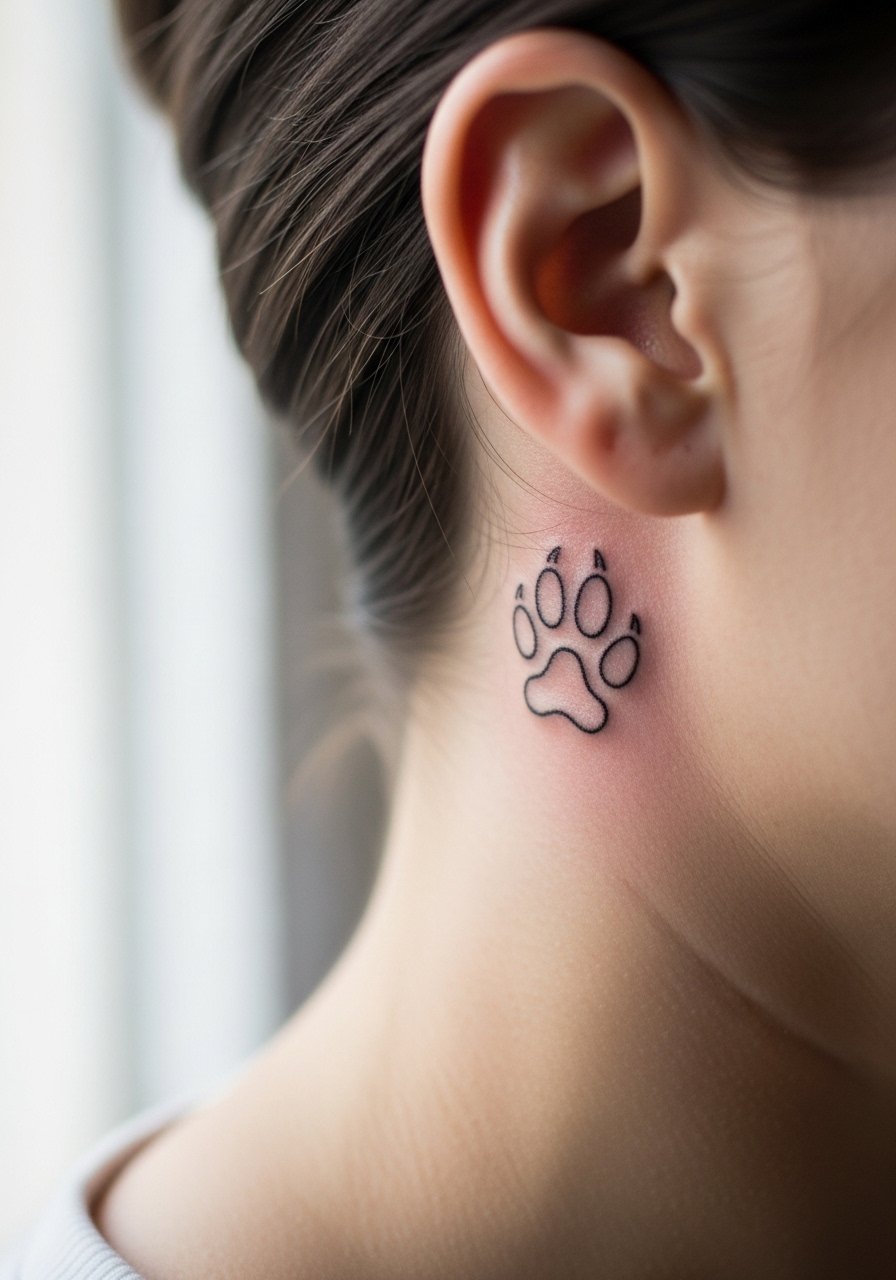
Behind-the-ear placements are intimate and require precise stenciling. Ask for a simple silhouette rather than shaded detail. This spot is low on visibility but ages gently due to limited sun exposure. A common error is choosing heavy shading that looks muddy in that small zone. Note the specialized skill set needed for close-quarters work and search local studio directories and community hashtags when picking an artist.
9. Bold Paw with Floral Frame on the Shoulder Blade
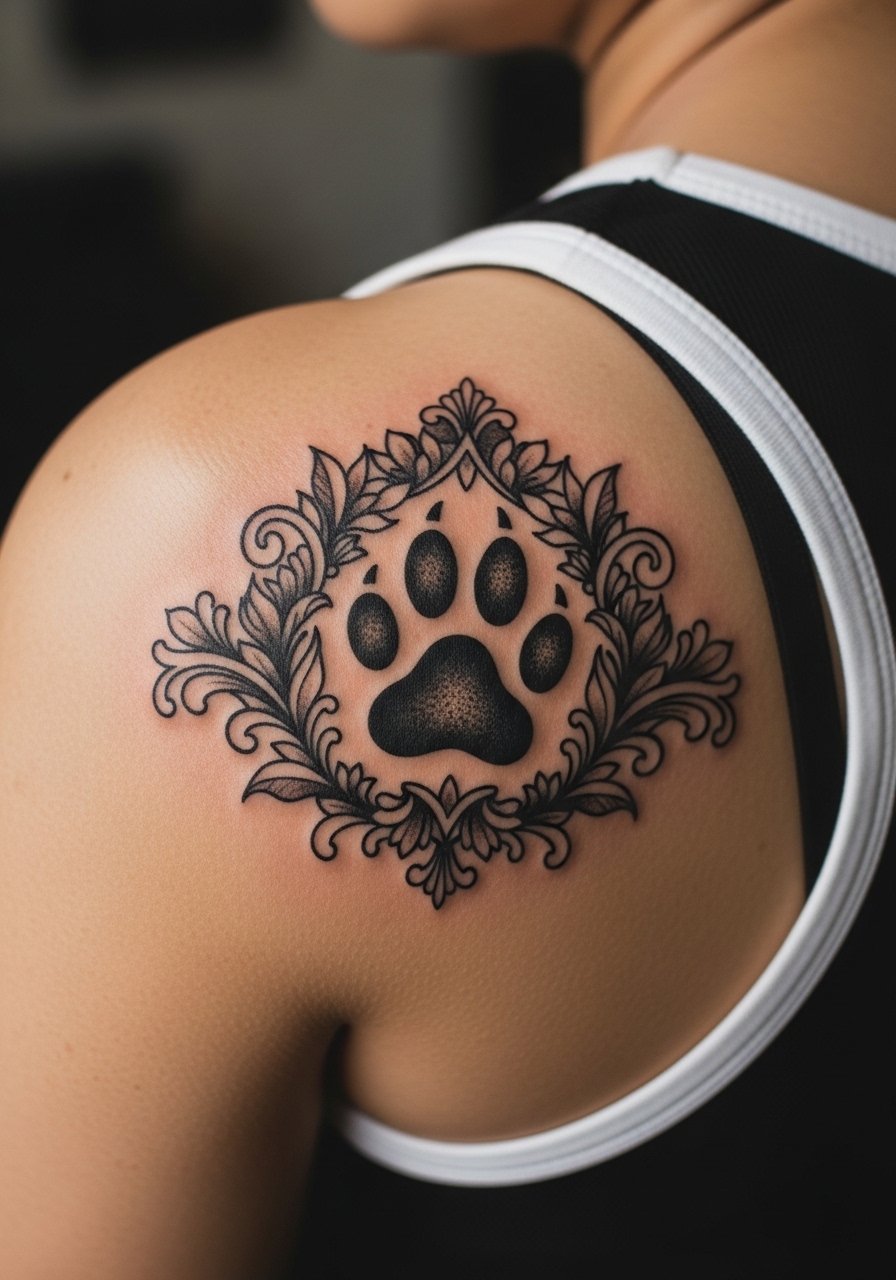
Shoulder blade pieces give room for composition and age well when shaded with solid blacks and mid-tone grays. Ask your artist for stipple shading in the flora to avoid dense blocks that flatten over time. Sessions are comfortable and usually handled in one visit if moderate size. Mistakes include crowded florals that eat into the paw silhouette. To show it off, a tank top that slips off one shoulder frames the piece without exposing more skin than intended.
10. Paw Print Incorporated into a Memorial Coordinates Spine Piece
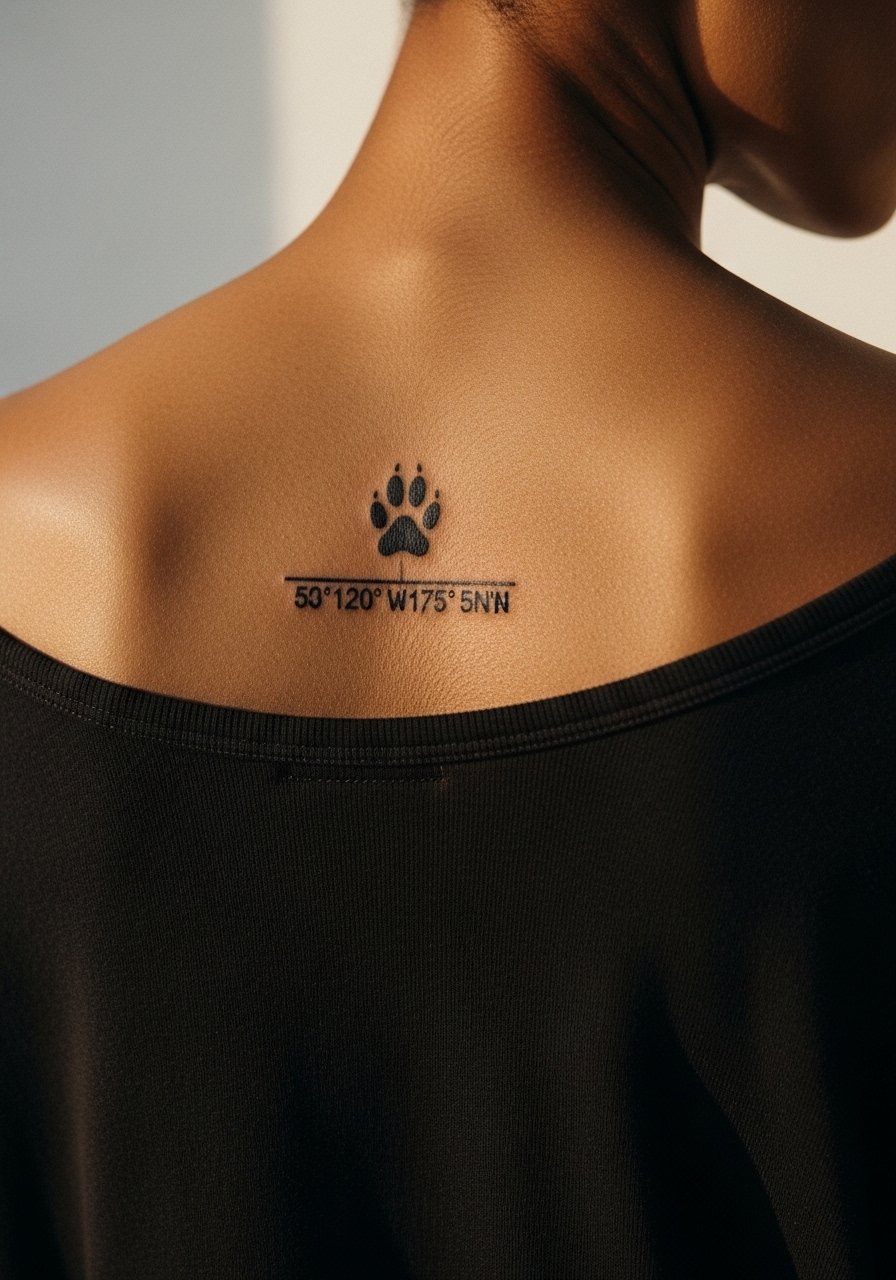
Coordinate tattoos are quiet but unforgettable. For a spine placement, choose slightly larger numerals and a bold paw to keep everything legible as the skin moves. Spine placements can be sensitive and may require two sessions for shading. Avoid tiny script numerals; they blur with time. If you plan to wear an open-back dress or halter, those outfits make the coordinates read like a deliberate design choice.
11. Large Back Silhouette of a Pet
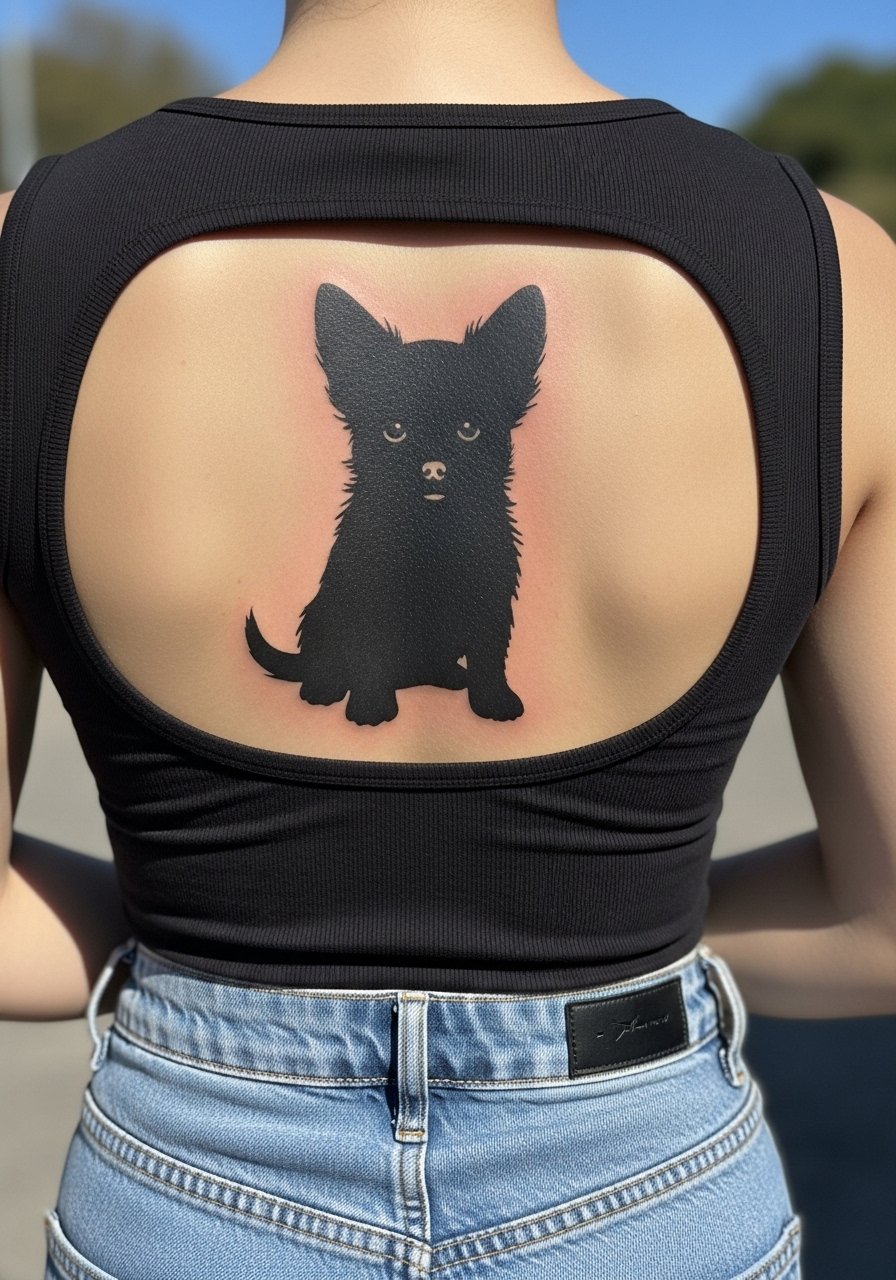
A full pet silhouette across the back is a commitment that reads like a mural and handles aging well when saturated. Ask for bold outer lines and a backup plan for touch-up in year three, especially where the shoulders crease. The session will take longer and may need breaks. A common mistake is adding fragile inner detail that loses clarity. For summer, an open-back dress or a racerback tank makes the silhouette a feature.
12. Paw Print on the Top of the Hand
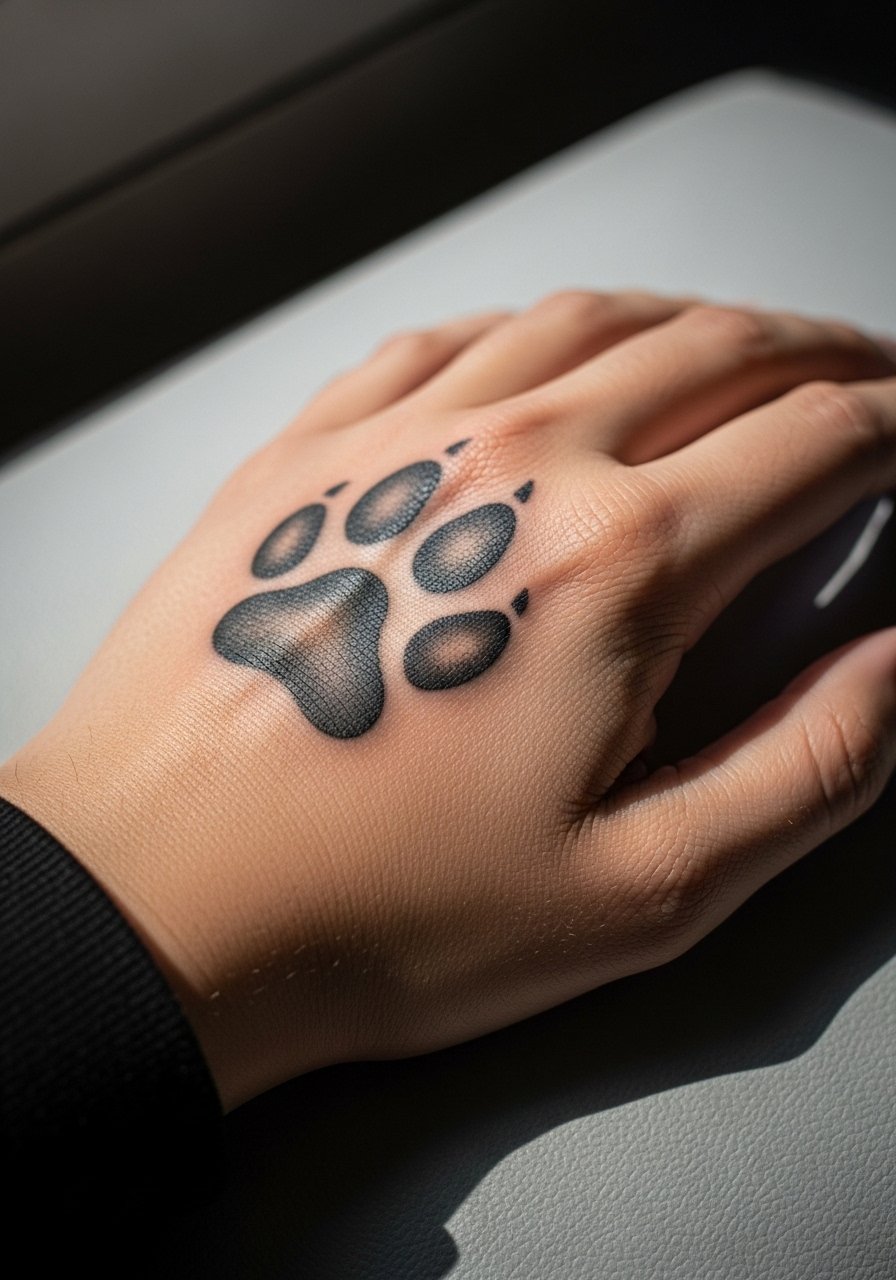
Hand tattoos are visible and exposed to constant washing and abrasion, which accelerates fading. Request heavy saturation and accept that touch-ups will be needed sooner than other placements. The mistake is choosing thin lines that disappear under daily use. Expect the session to be short but possibly uncomfortable. Pair with discreet rings or let the paw speak for itself when you wear a simple band ring to frame the top-of-hand piece.
13. Calf Portrait Silhouette with Bold Fill
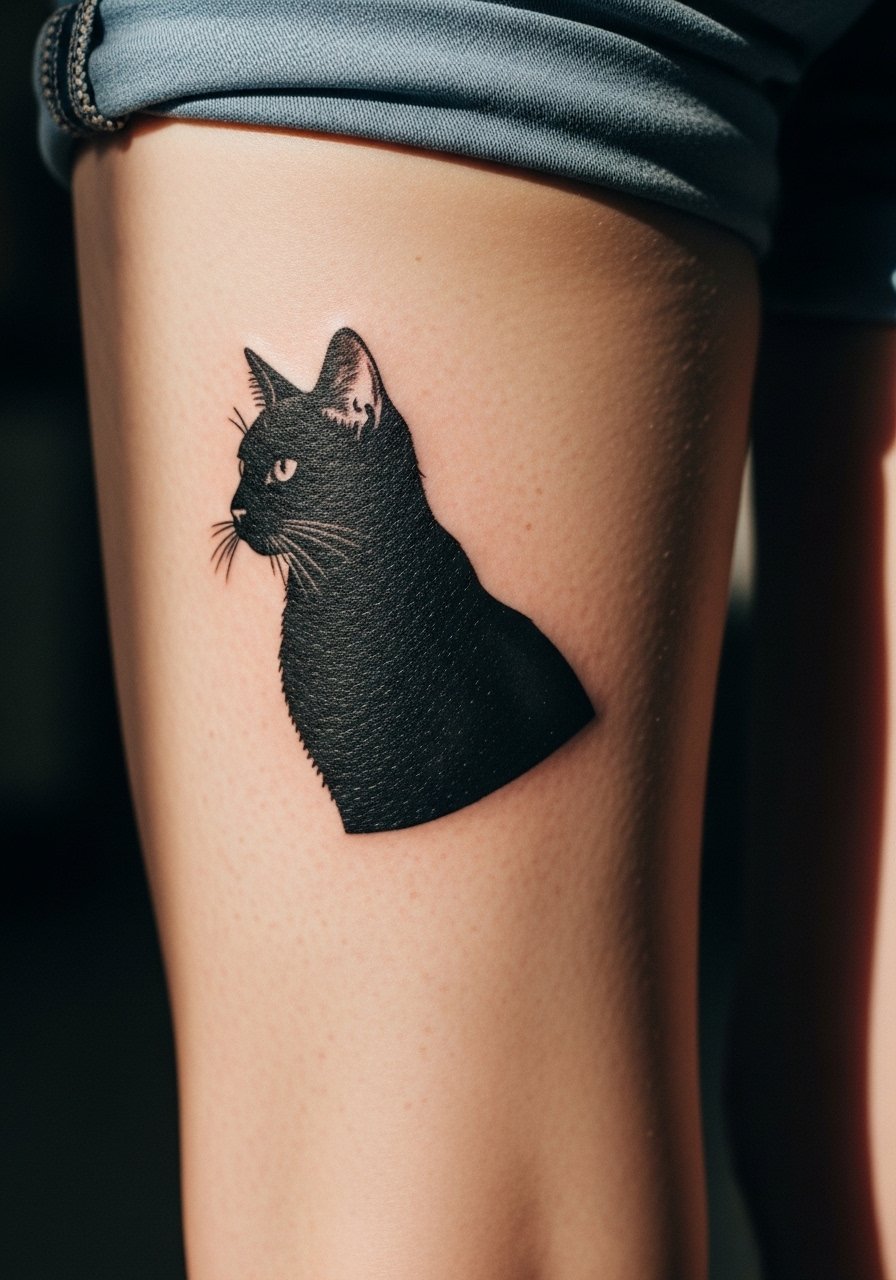
Calf placements allow for larger silhouettes that maintain clarity even with detail. Ask for a strong black fill and soft gradient shading if you want depth that still reads at distance. Sessions are usually comfortable and can be done in one visit. Common mistakes are over-detailing where the calf's curvature will distort the image. For visibility, pair with high socks or a wrap skirt that reveals the calf in warmer months.
14. Tiny Paw on a Finger Joint
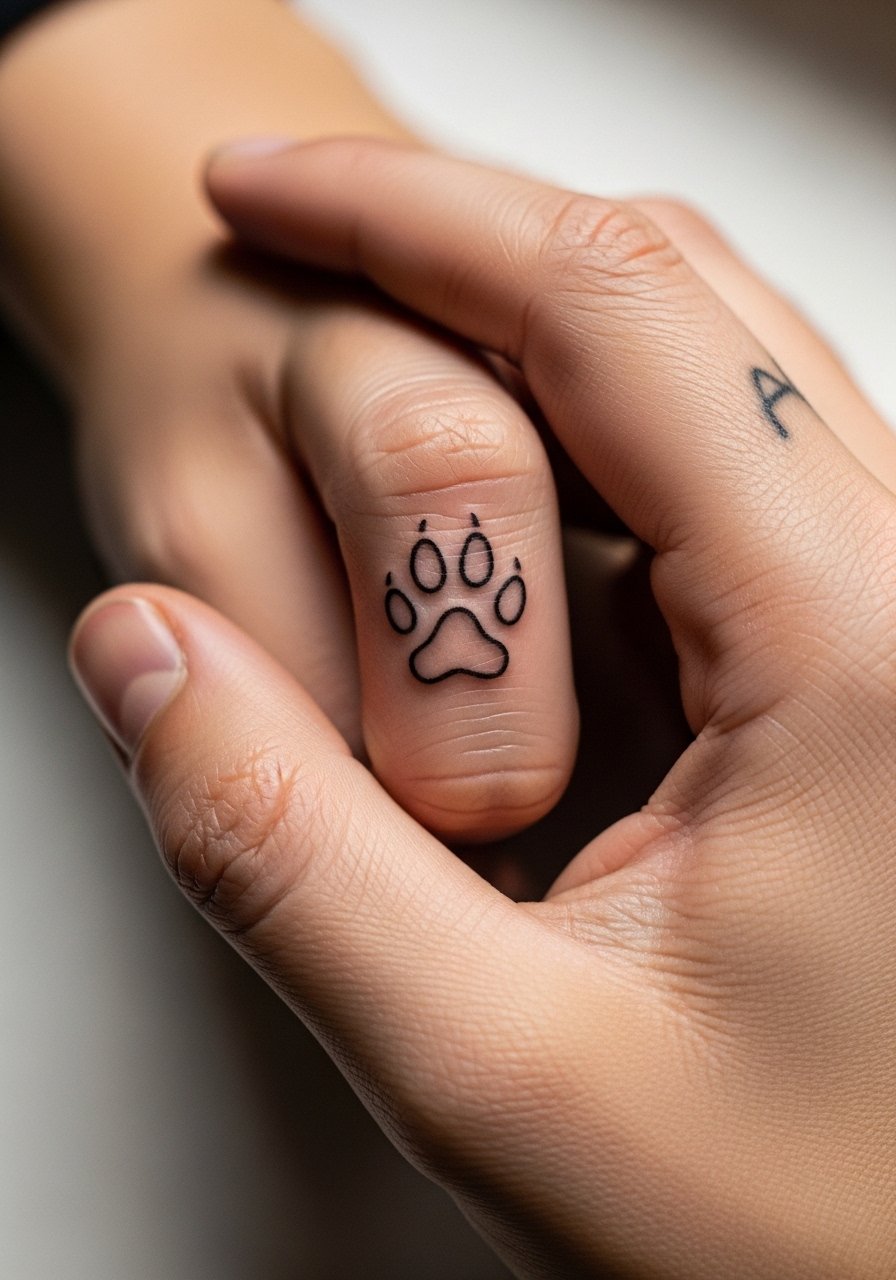
Finger tattoos fade faster than most spots because of constant washing and skin renewal. If you choose this, make the paw slightly oversized for the joint area and prepare for touch-ups at year one or two. The mistake is believing finger tattoos are low maintenance. For the session, keep in mind the area will be tender and quick. A thin, stacked ring can highlight the finger tattoo without covering it.
15. Paw Print on the Outer Ear Lobe
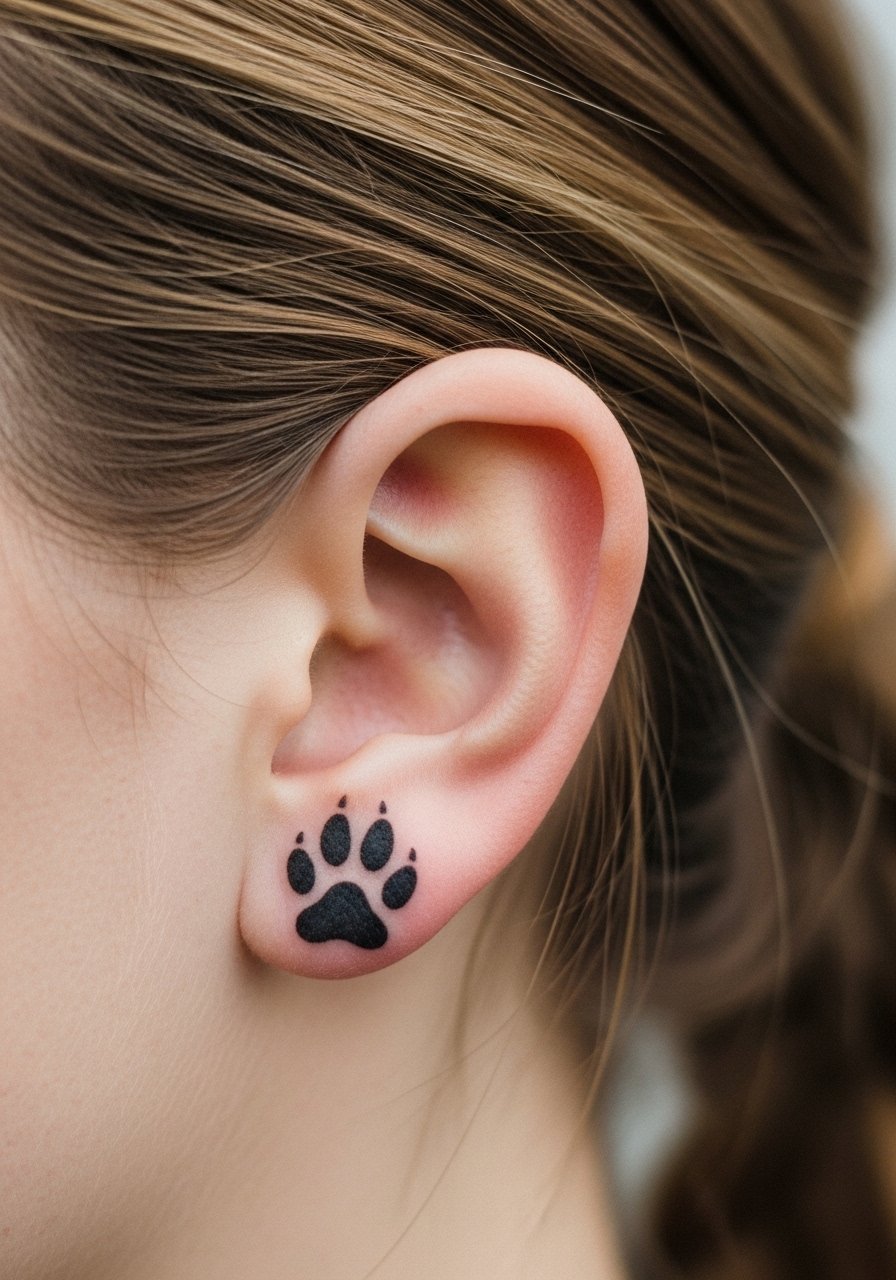
Ear lobe placements are delicate and need tiny, confident linework and minimal shading. This spot gets low sun and ages slowly, but piercings and earrings can interfere during healing. A common error is choosing heavy shading that swells in such a small area. For placement discovery, use community hashtags and local shop directories to find professionals comfortable with small ear placements.
16. Sternum Paw with Subtle Linework
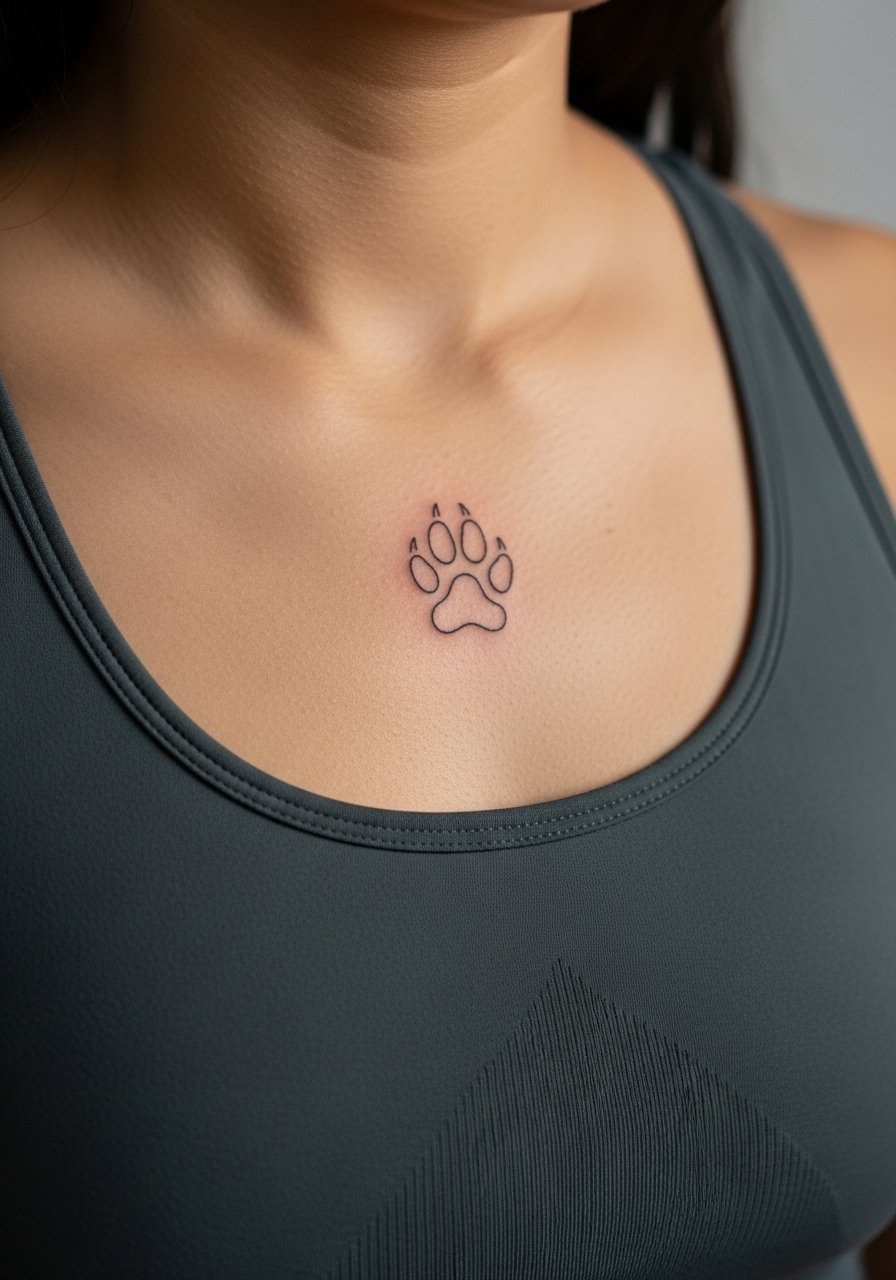
Sternum pieces sit on a sensitive plane that moves with breathing and posture. Ask for slightly bolder lines than your favorite reference and expect higher pain. The wrong choice is ultra-fine linework that will lose crispness as the area shifts. Because this is intimate, pick an artist experienced with chest placements and bring session wear like a sports bra for access.
17. Back of Neck Paw with Short Script
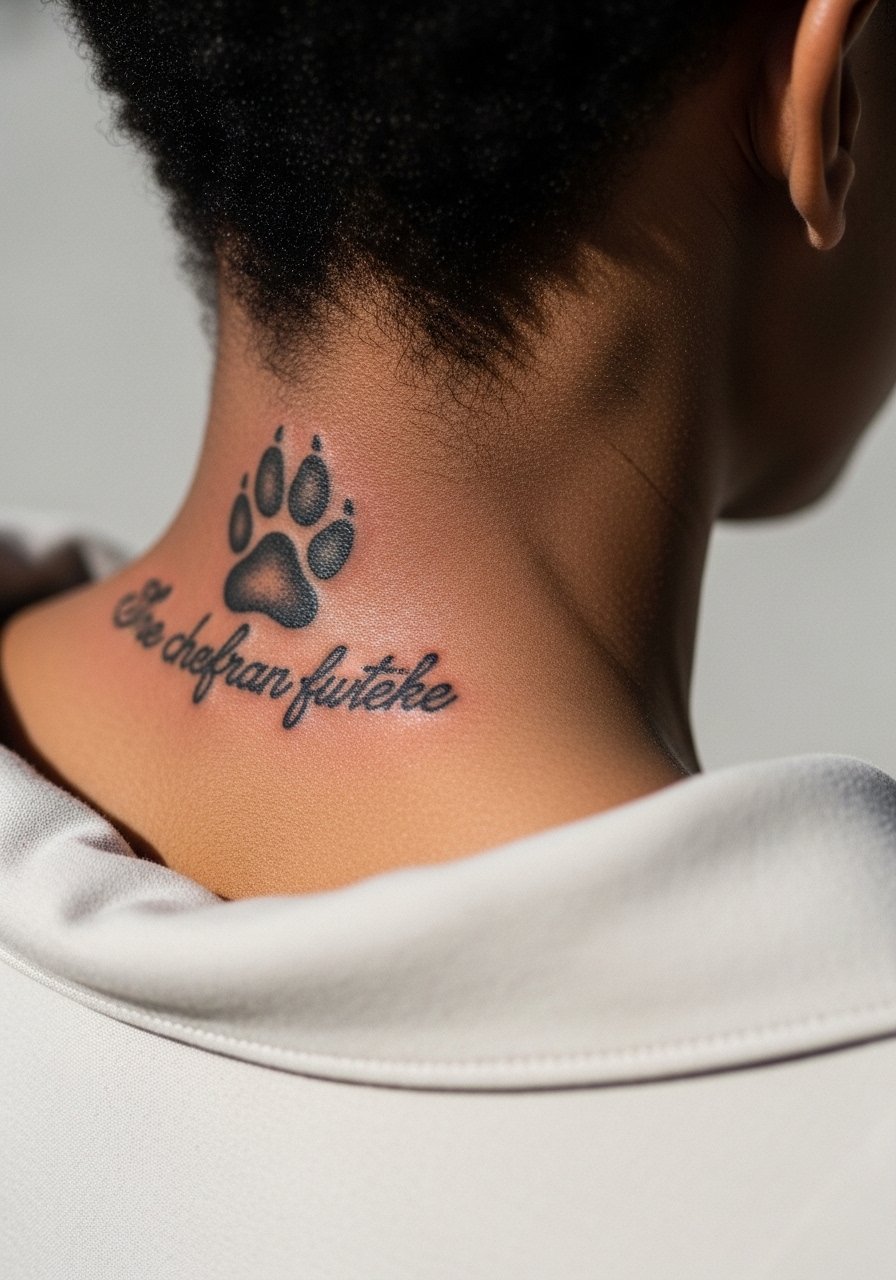
Back-of-neck tattoos are discreet unless you pull hair up. Ask for a clean stencil and slightly heavier script to keep letters legible when healed. The area can fade with sun exposure if hair is worn up often. Mistakes include too-narrow lettering and cramped spacing. Pair with high collars or a wide-neck shirt on cooler days to make the memorial feel like a hidden signature.
18. Geometric Paw Cluster on the Forearm
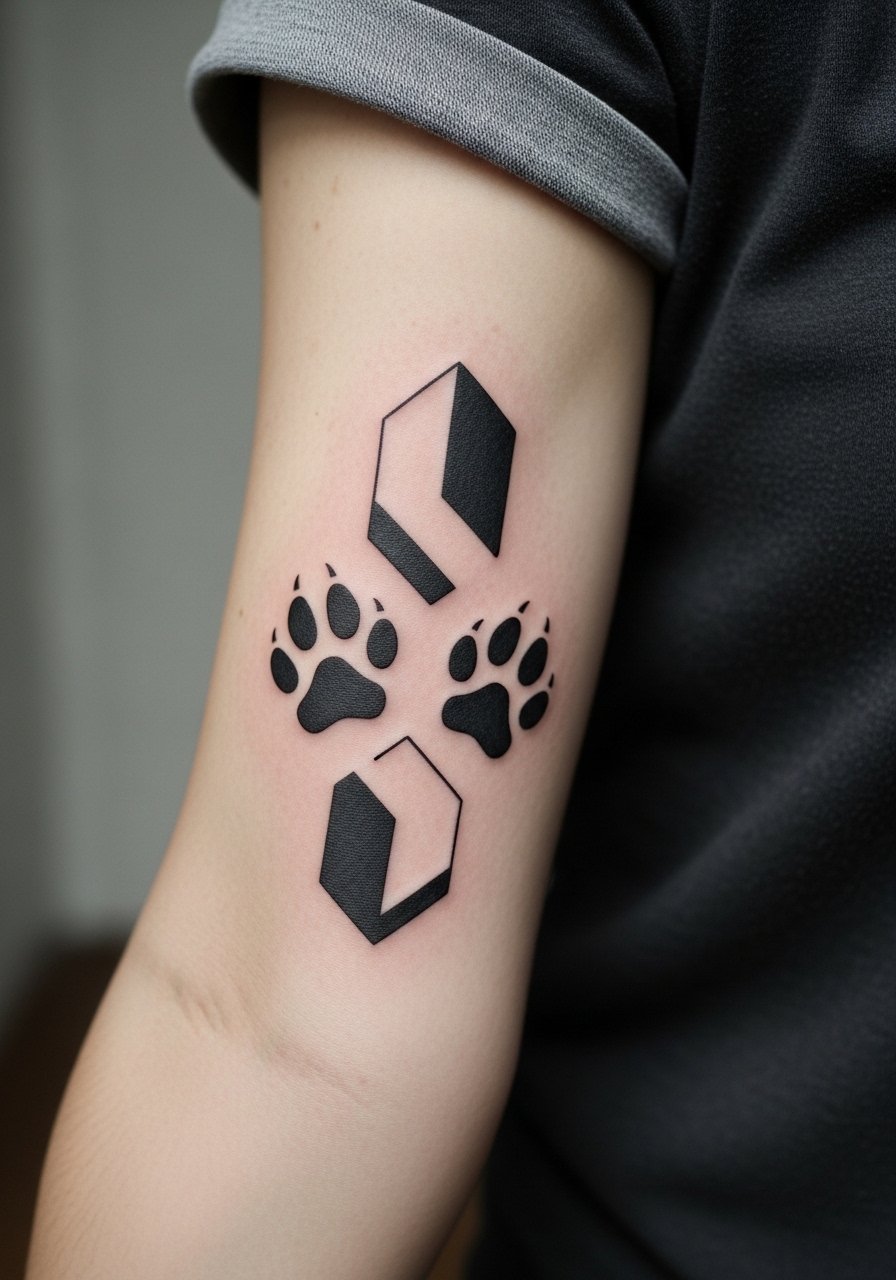
Geometric treatments modernize a memorial while keeping strong edges that hold up. Ask for clear spacing between shapes so linework does not merge as it heals. The forearm is forgiving and usually needs one session. The mistake is cramming detail that cancels the geometry. Show the design off with a short sleeve button shirt rolled to the elbow.
19. Matching Paw Rings for Pet Parent and Partner
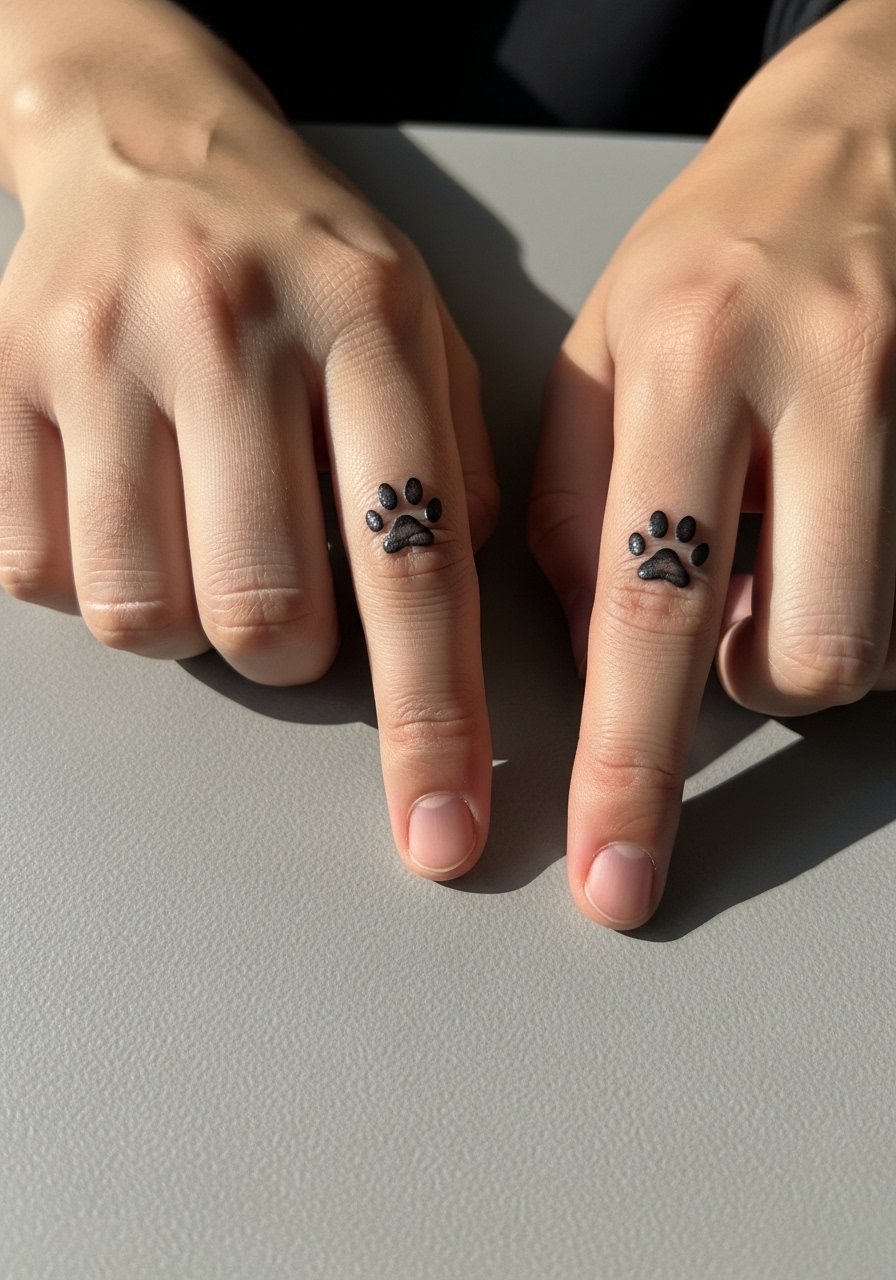
Matching paw ring tattoos are symbolic and tiny, so favor bold shapes rather than ornate detail. Fingers need frequent touch-ups and the mistake is thinking the design will stay crisp forever. Discuss timing with your artist and ask whether micro-saturation or periodic touch-ups fit your plan. This is a visible, daily reminder and works well with simple stackable rings.
20. Chest Paw with Floral Heart
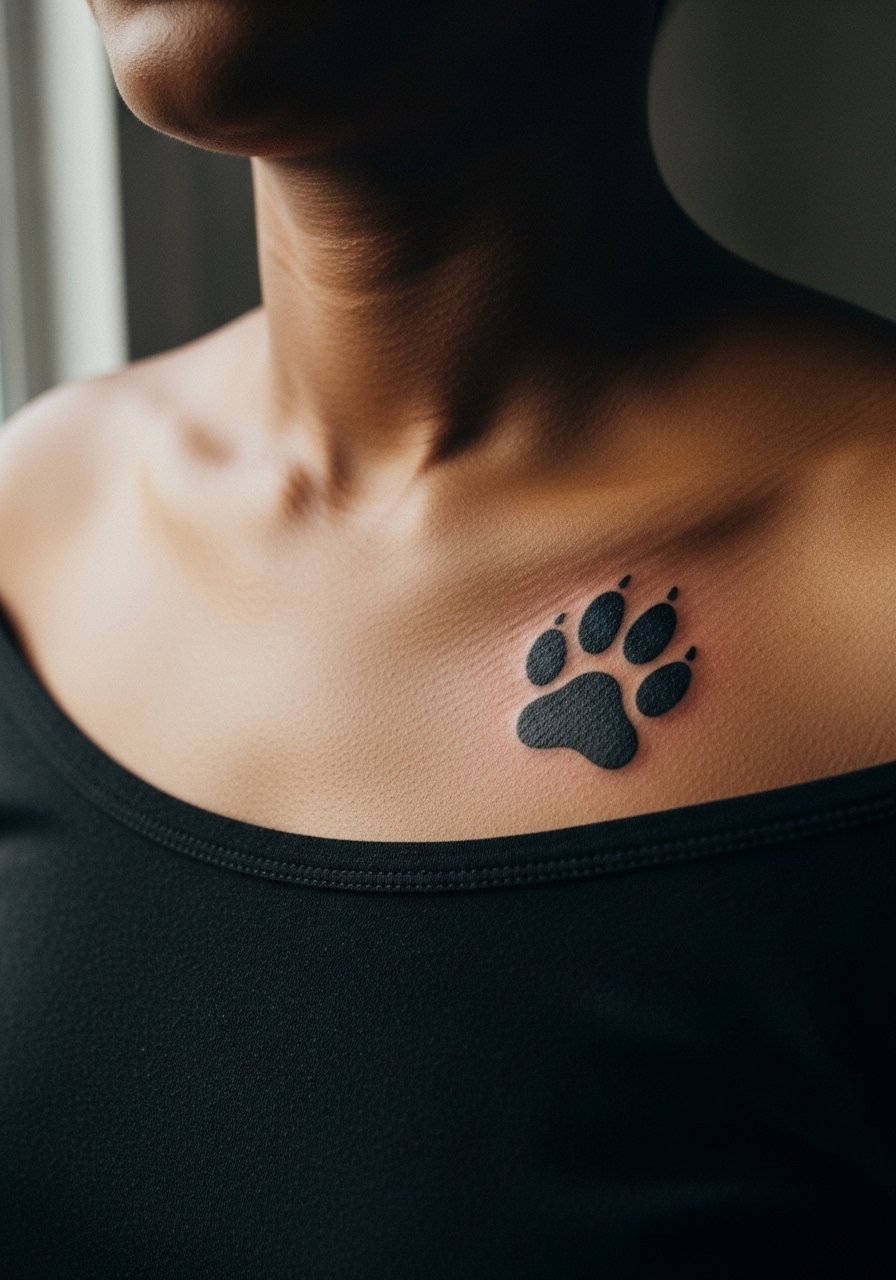
Chest placements let a memorial feel central and intentional. Request solid black for the paw and softer floral shading that does not touch the primary mark. The chest moves with respiration and posture so expect a longer session and some swelling initially. Avoid thin floral detail that will soften into blur. For showing the piece with minimal exposure, wear a wide-neck shirt or a lightweight cardigan that sits open.
21. Paw and Soundwave on the Inner Forearm
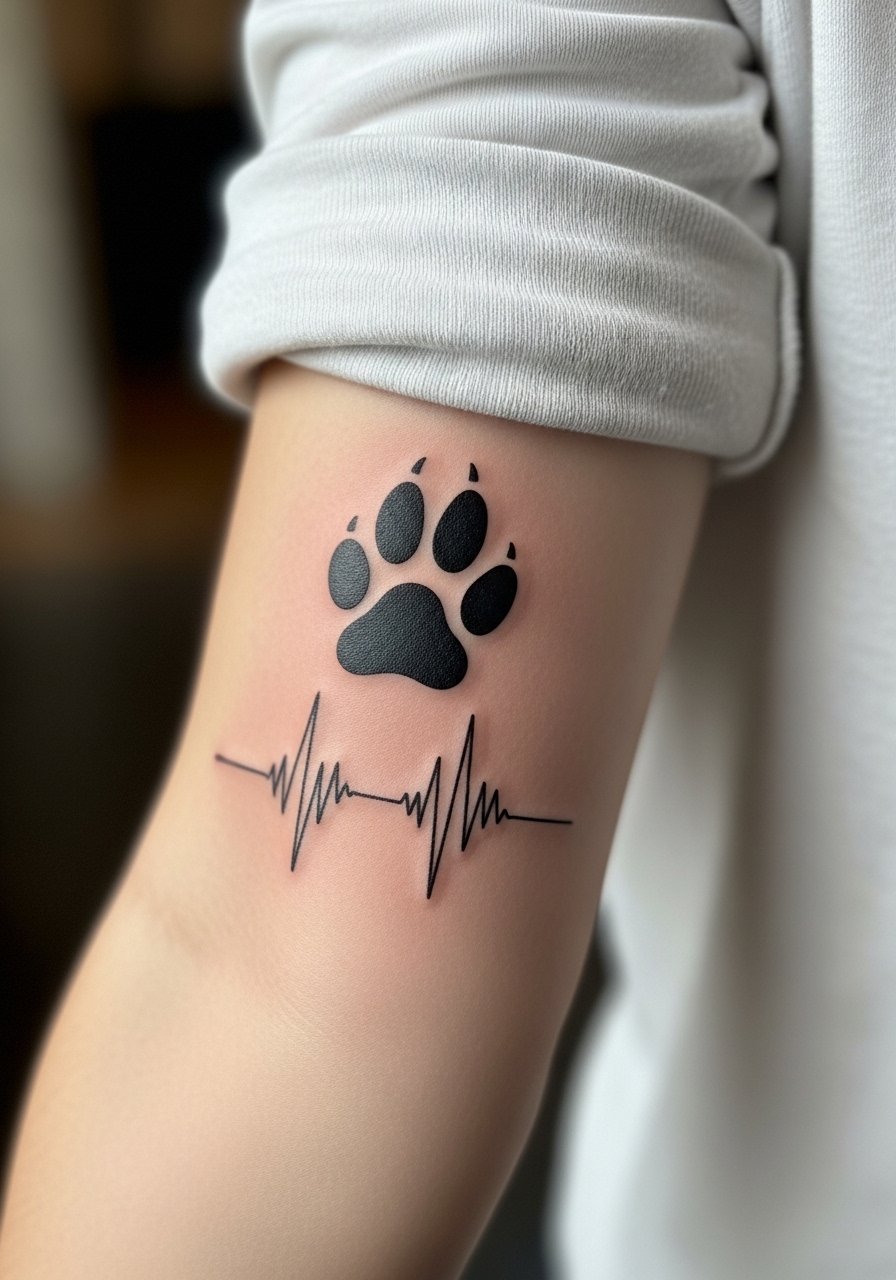
Encoding a bark or purr as a soundwave next to a paw is a personal touch. Ask your artist to test the soundwave at scale to assure the waveform reads after healing. Inner forearm pieces heal predictably and are easy to photograph. A regular mistake is shrinking the waveform so detail disappears. For sessions, wear a loose button-down shirt you can slide aside for clean access.
22. Paw in Negative Space on a Blackwork Patch
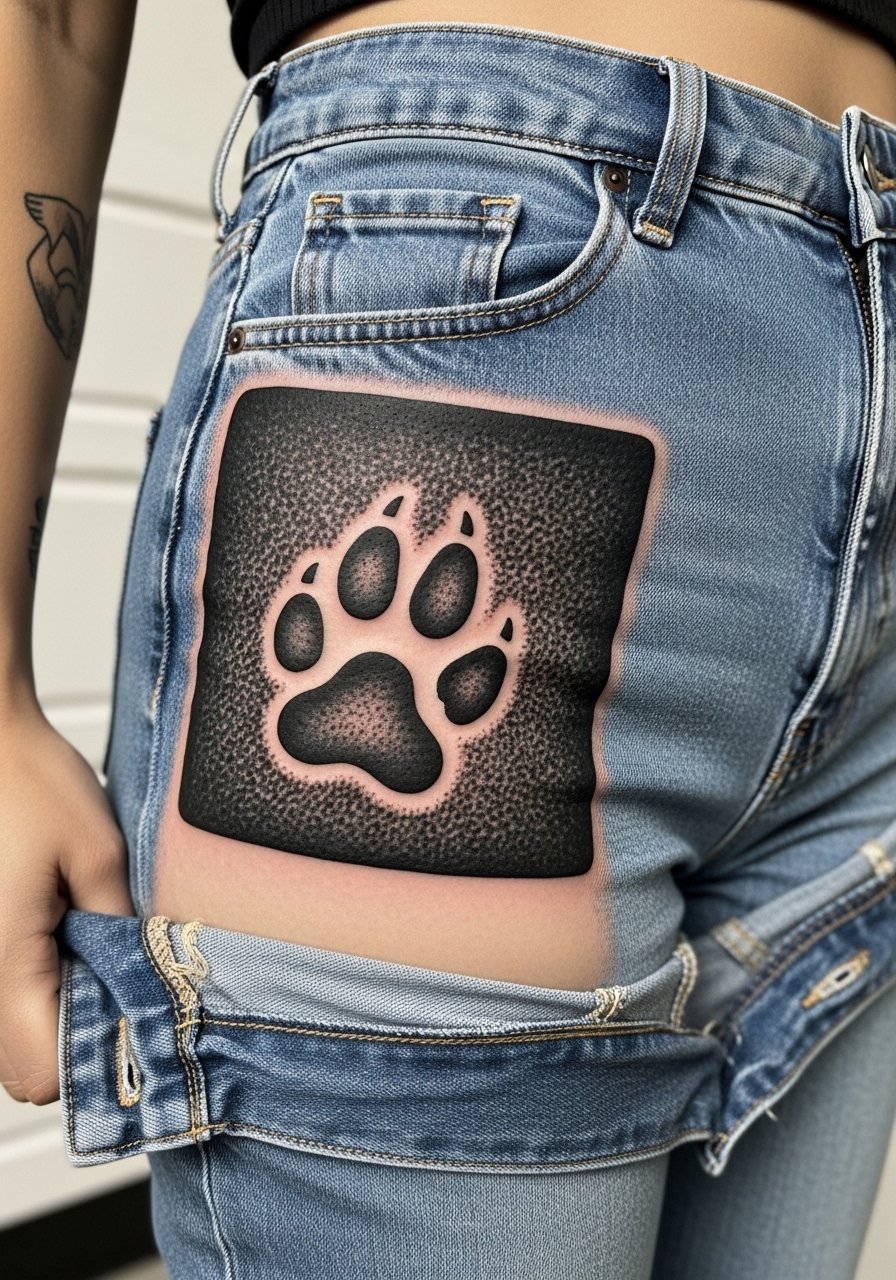
Negative space paw marks inside a black block look striking and age well because the black holds contrast. Thigh placements tolerate saturation and generally heal with less abrasion. The common mistake is too small a negative paw that looks indistinct once healed. For session-day comfort, slip on high-waisted pants you can lower a touch if the artist needs access.
23. Paw with Roman Numeral Date on the Collarbone Side
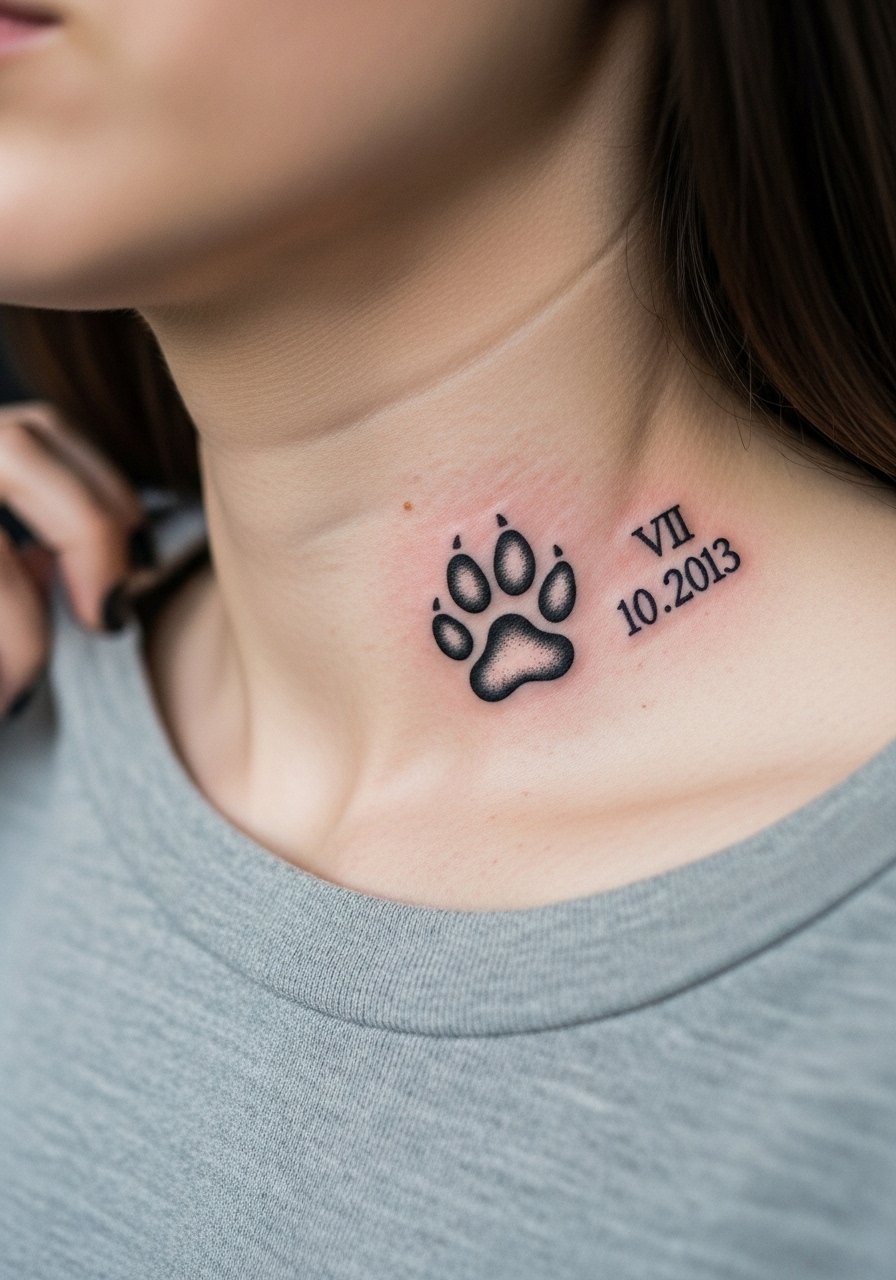
Roman numerals need clear spacing and slightly heavier strokes to remain readable. Collarbone skin is mobile and lines can lose precision if too fine. Expect one short session and minor soreness. Avoid ornate fonts with hairline strokes. A simple thin chain pendant necklace sits above the ink without crowding it.
24. Tiny Paw on the Inner Bicep
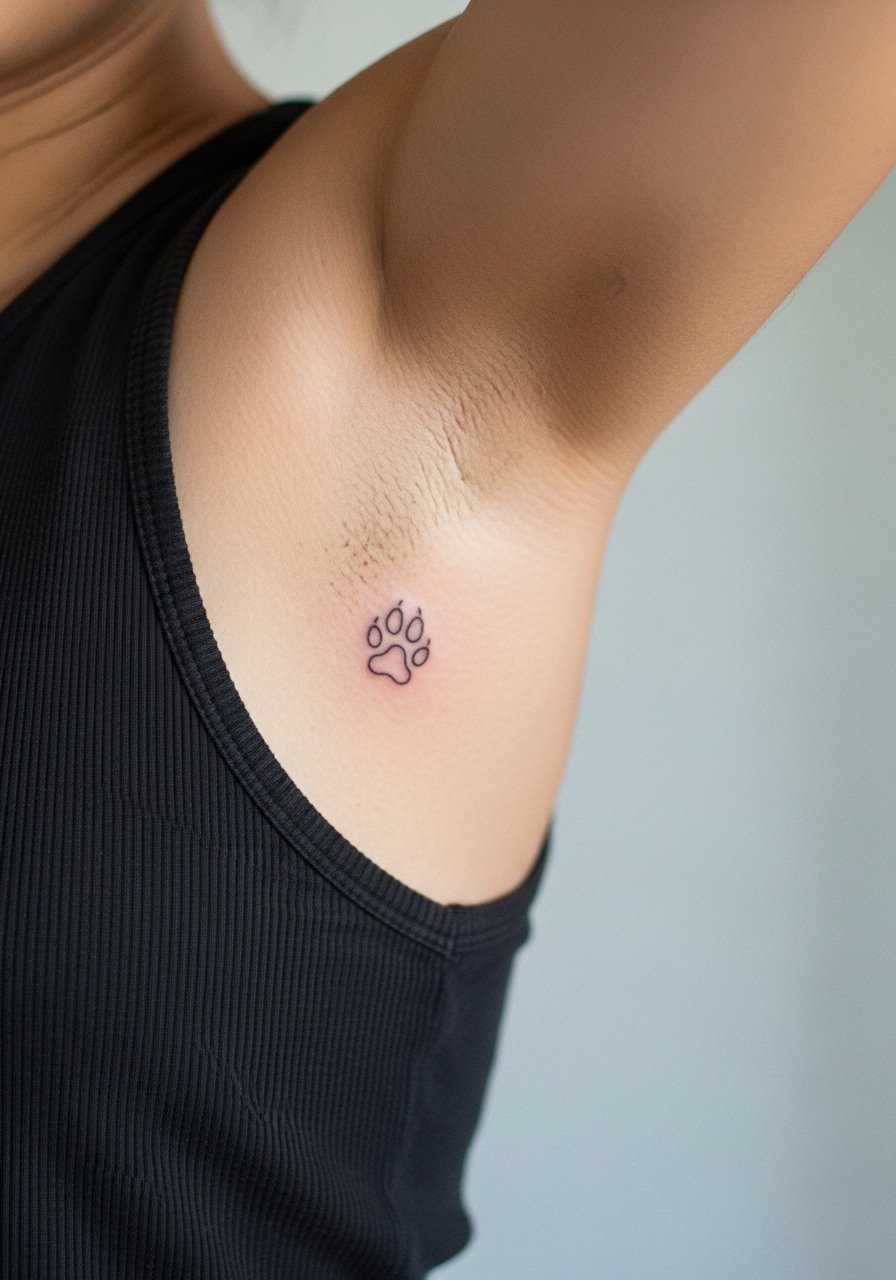
The inner bicep has softer skin and can blur fine lines if not spaced properly. Choose a bolder outline for a small paw and be prepared for slightly more pain than the outer arm. The mistake is relying on ultra-fine hairline strokes. Bring up portfolio examples in consultation and ask the artist for their inner bicep experience.
25. Constellation Paw on the Ankle Side
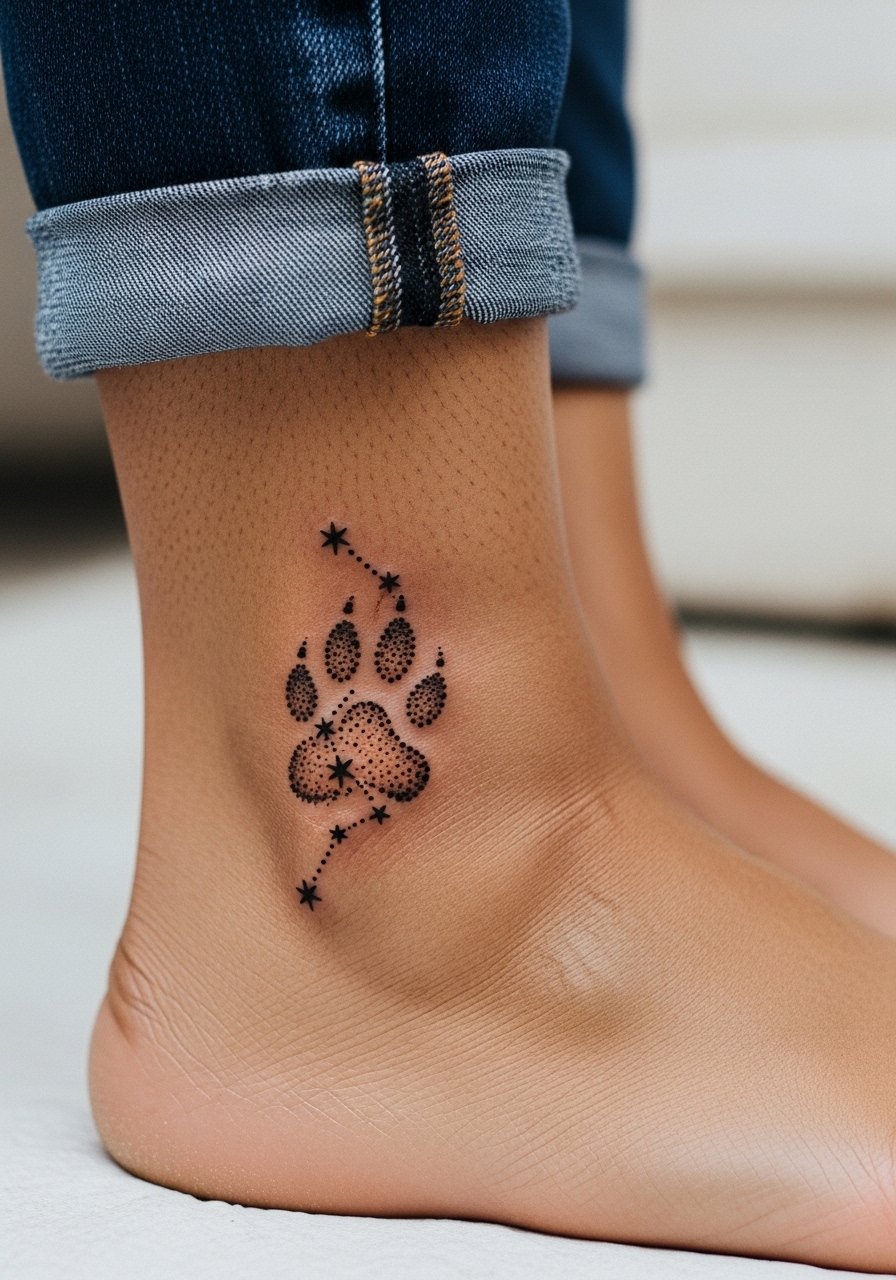
A constellation treatment is decorative and subtle but benefits from slightly bolder star points for longevity. Ankles rub against shoes and socks so expect earlier fade. The common error is over-delicate dots that fade quickly. For wearability, pair with low-cut sandals or a woven ankle bracelet when you want to show the piece.
26. Negative Space Paw in a Geometric Medallion on the Thigh
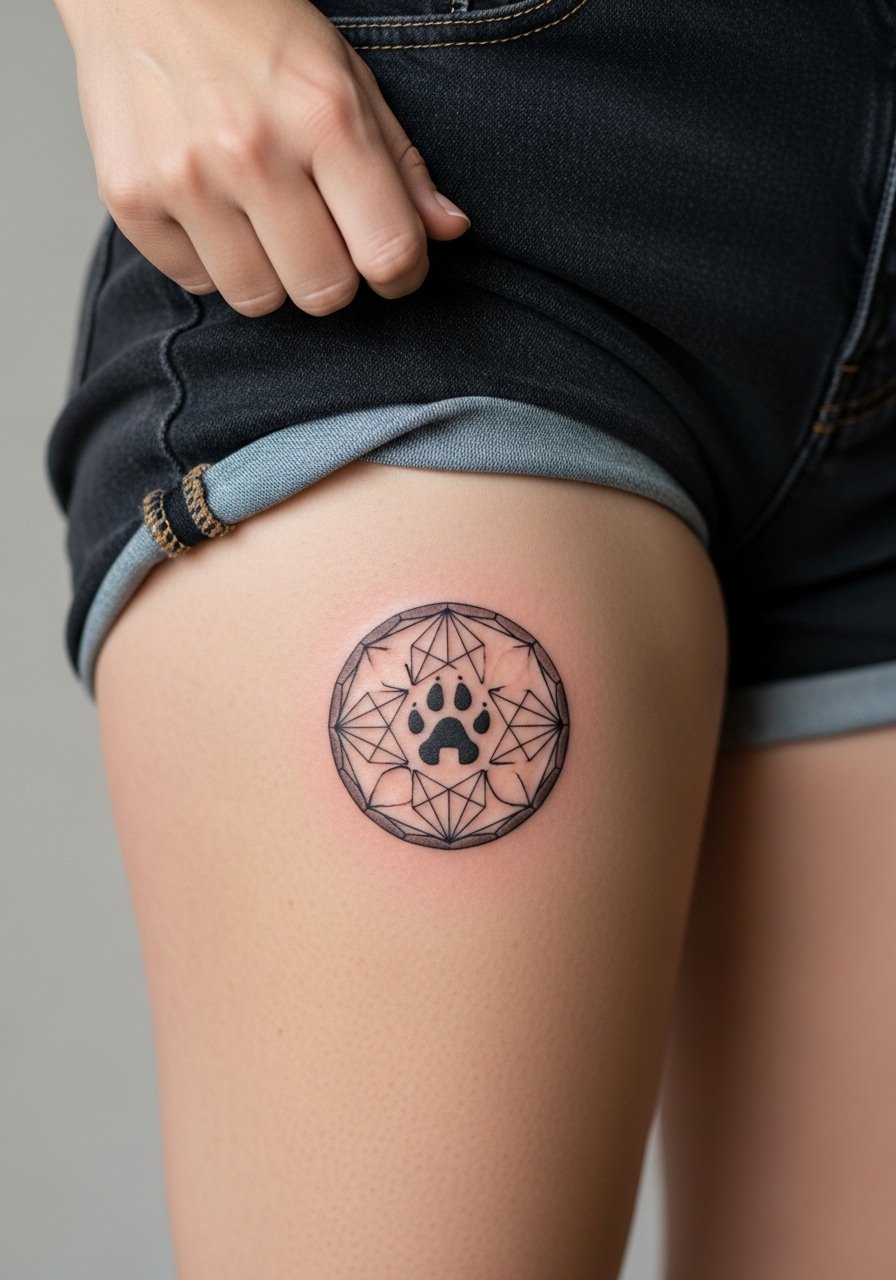
Thigh placements allow for complex geometry that still reads because of scale. Ask for strong negative space edges and leave breathing room between medallion details and the paw. Sessions are comfortable and usually one long sitting. Avoid packing small filigree too close to the central paw. A wrap skirt or high-waisted shorts are great for showing the piece.
27. Bold Paw with Floral Halo on the Lower Back
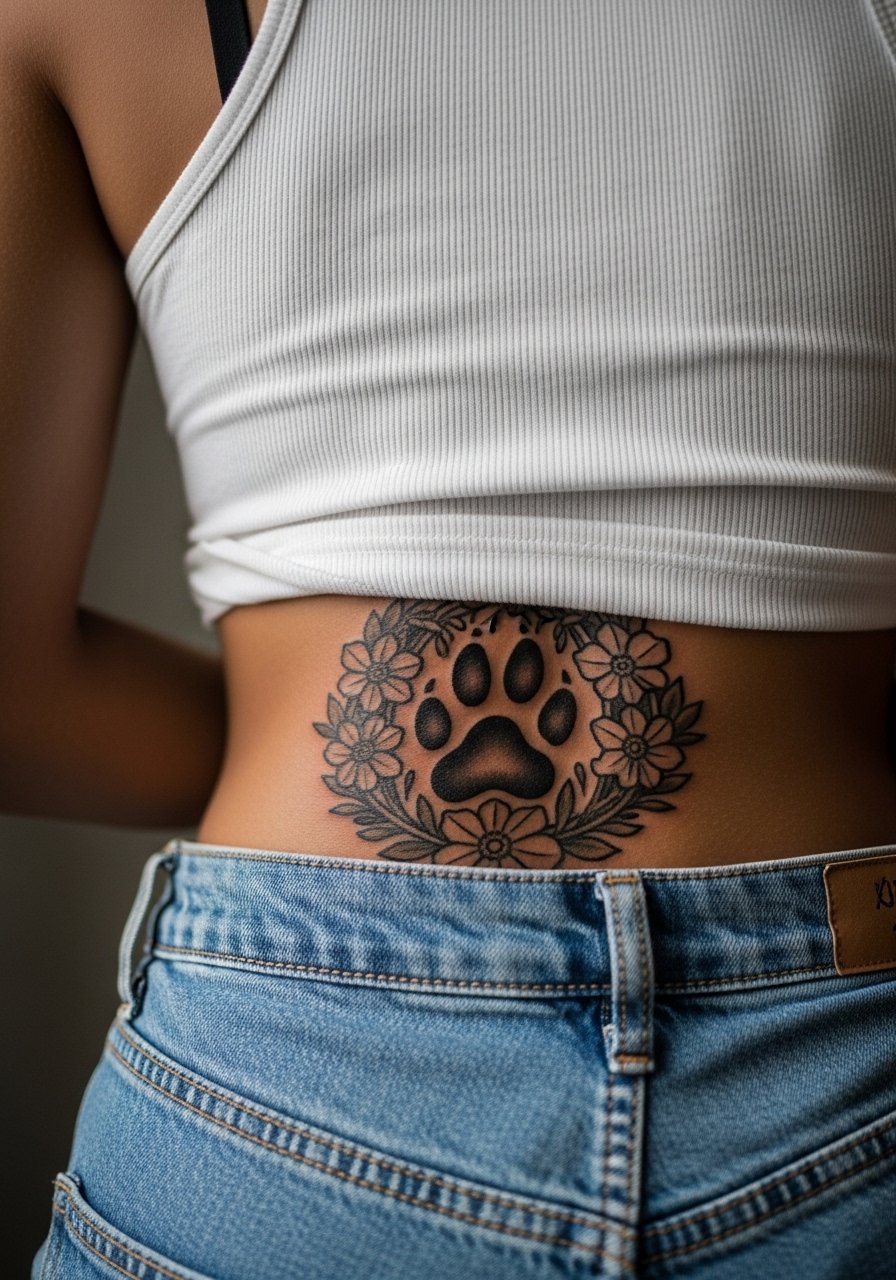
Lower back pieces can sit hidden or be shown intentionally. Choose saturated black for the paw and airy floral shading that does not touch the central mark. The area heals well but avoid tight waistbands during the first week. A common mistake is positioning the design too low under clothing lines. Plan outfit choices like a crop top and high-waisted jeans for showing the tattoo selectively.
Frequently Asked Questions
Q: Will a bold paw print fade faster on the hand or the ankle?
A: Hand tattoos generally fade faster than ankle tattoos because of constant washing and friction. Hands may need touch-ups sooner, while ankle pieces still face shoe rub but usually retain more saturation. If longevity matters, ask for heavier black saturation and a planned annual check with your artist.
Q: Is a micro-realism portrait worth it if I want a long-lasting memorial?
A: Micro-realism looks incredible when fresh but often needs precise sizing and touch-ups to stay crisp. If you want longevity, increase the scale slightly and choose a portrait style with defined contrast. Discuss touch-up plans and portfolio examples during consultation.
Q: Are there placement choices I should avoid if I work in a conservative industry?
A: Visible locations like hands, neck, and face still carry workplace implications in some fields. Collarbone, forearm, and shoulder blade can be hidden or shown depending on wardrobe. Consider placement relative to your job and pick a spot that fits both your life and memorial intent.
Q: How do I find an artist who can handle pet portraits and bold blackwork without overpromising longevity?
A: Use local studio directories, tattoo convention pages, and Reddit threads to see healed photos and ask about touch-up policies. Look for artists who show healed work in portfolios and who discuss realistic aging. Ask where they have experience with both portraiture and saturated blackwork before booking.
Q: When should I plan for a touch-up on bold blackwork versus fine line script?
A: Bold saturated blackwork typically needs touch-ups less often than fine line script. Expect to revisit fine line areas around year two to three, while dense black may hold through year five before a refresh. Your artist can give a personalized timeline based on your skin type and placement.