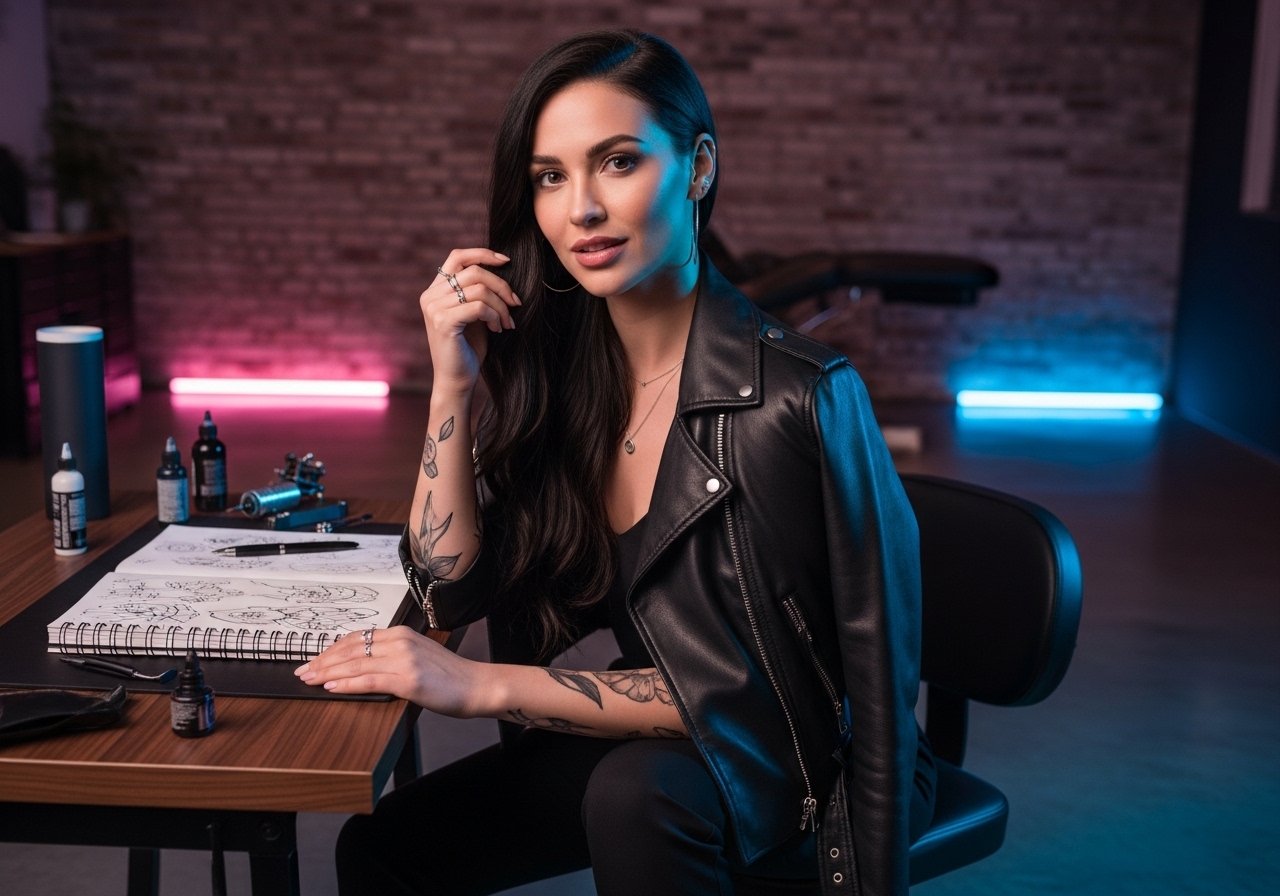
Fine line clover tat trends look gorgeous on screens, but the reality is messy for some people. On darker skin the tiniest single-needle clovers can soften into a gray smudge faster than expected. Booking problems and last-minute cancellations are common, and wrist or ankle placements stretch or blur when your body changes. Read on for cute black clover tattoo ideas that factor in longevity, placement choices, and what to ask at the consult so your piece actually heals the way you want.
1. Fine Line Four-Leaf on Inner Wrist
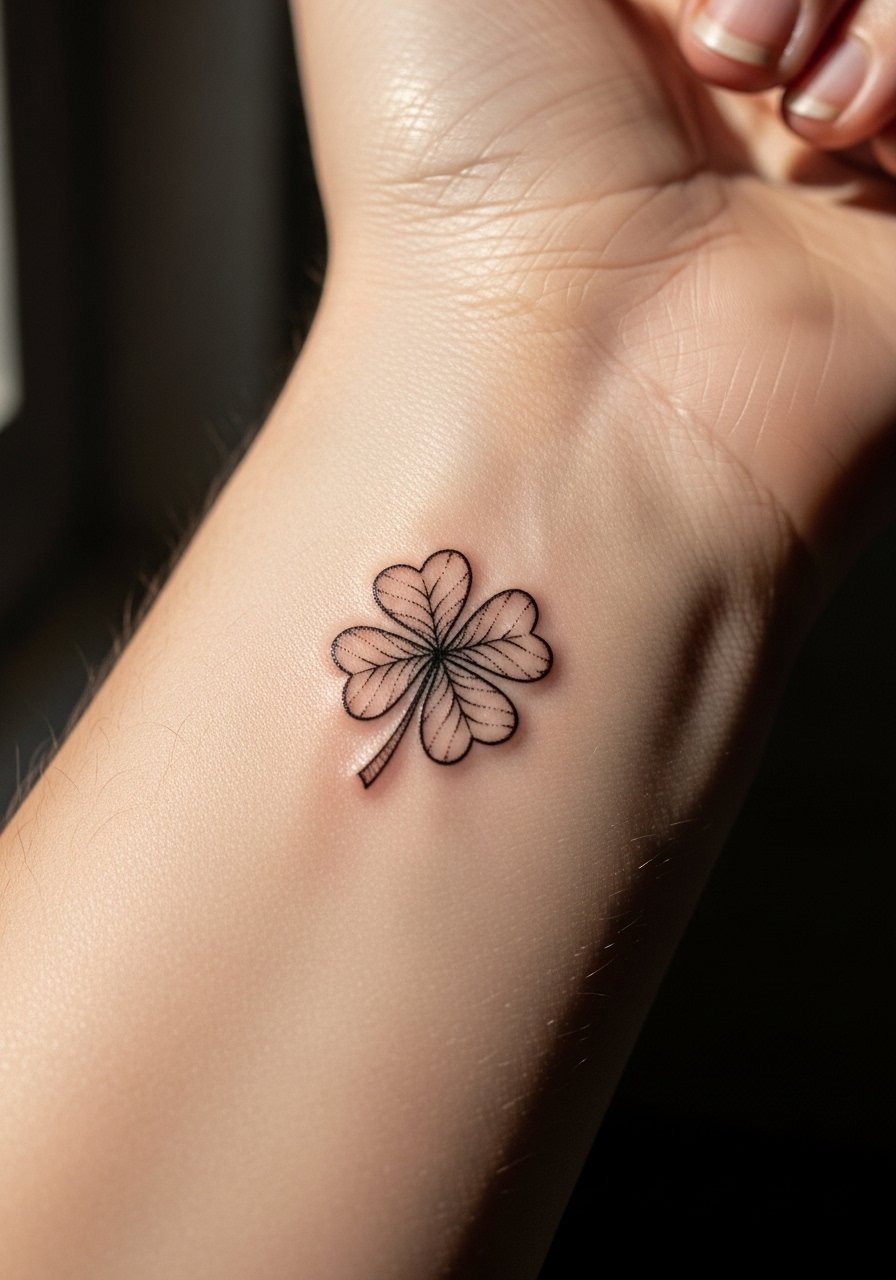
I've seen tiny wrist clovers fade fastest when clients insist on the smallest size possible. For a wrist piece go slightly larger than the saved photo so the single-needle weight has room to breathe, which reduces early loss of definition. Tell your artist you want clean linework with a single-needle weight and ask to preview the stencil under natural light. Fair warning, wrists move a lot so expect a touch-up around year one to three depending on activity. For the session wear a sleeveless tee so the artist can access the area easily.
2. Minimalist Clover Ankle Cluster
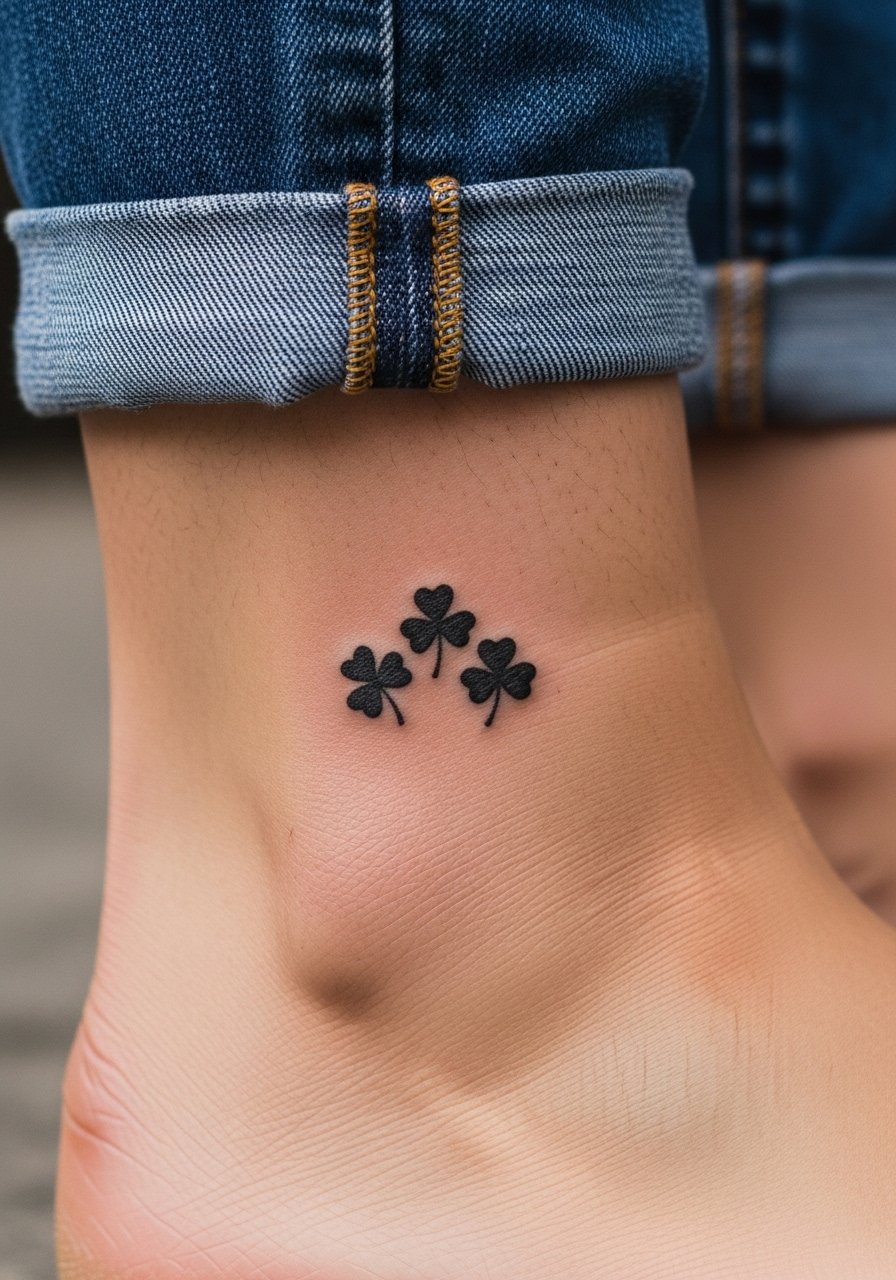
Ankle placements show off in summer but suffer from friction and sweat. I recommend a small cluster rather than one tiny plant so each leaf can keep its separate linework. Ask for slightly bolder outlines than the flash you saved so the ink survives shoes and socks rubbing. The common mistake is insisting on ultra-thin lines and then wondering why the piece looks patchy at six months. For showing it off, cuffed slim jeans look great, and pairing with an espadrille or summer sandal frames the tattoo without crowding it.
3. Traditional Blackwork Clover on Forearm
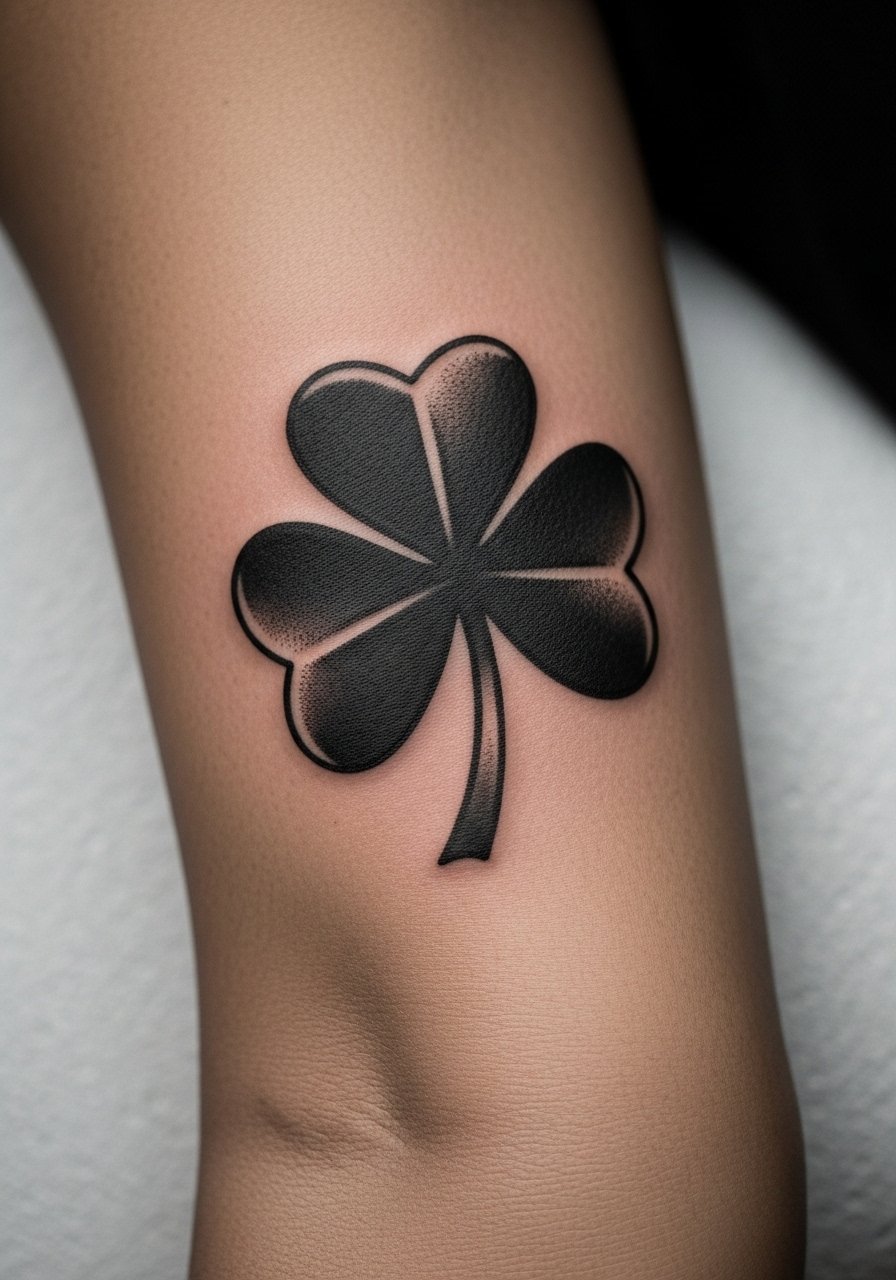
Bold blackwork holds up the best on forearms because saturation resists early fading. If you want clarity at year five, ask for solid fill and confident linework rather than hairline detail. A common version that ages poorly uses tiny negative veins and thin stems. Tell the artist you prefer saturated fills and steady linework so blowout becomes less visible over time. Forearm pain is low to moderate and sessions are usually one to two hours. Pair with a rolled cuff chambray shirt to frame the piece when you want it noticed.
4. Neo-Traditional Clover Kingdom Emblem on Shoulder
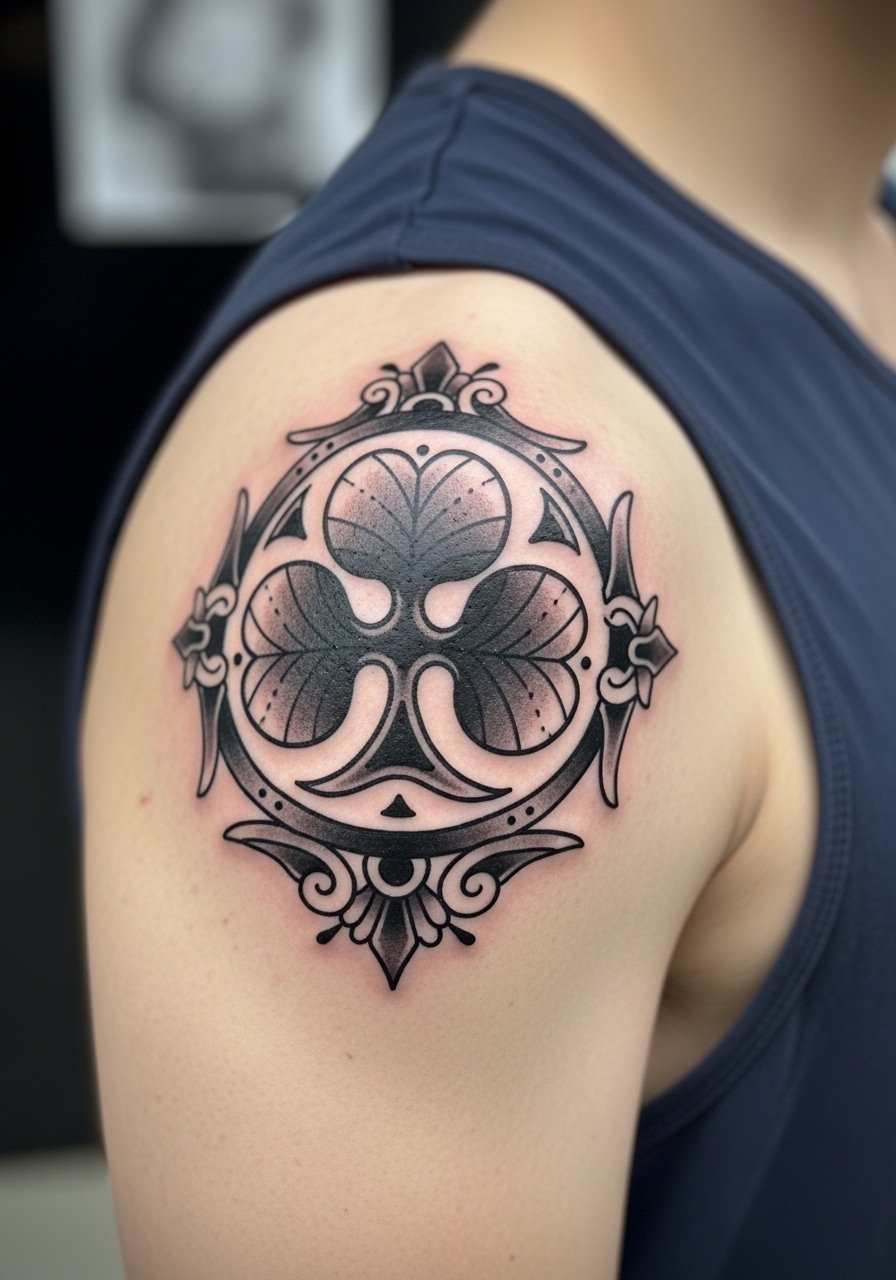
Neo-traditional pieces give an anime emblem more presence without relying on color. I recommend this for upper arm or shoulder placements because the flatter canvas lets stipple shading and whip shading read clean. During consultation, ask for the emblem adapted to your shoulder curve and request reference photos of healed neo-traditional pieces on similar skin tones. The mistake people make is copying a flat image without asking how the design will sit on rounded anatomy. For session day, a tank top lets the artist access the upper arm without fuss.
5. Sketch-Style Tiny Clover Behind the Ear
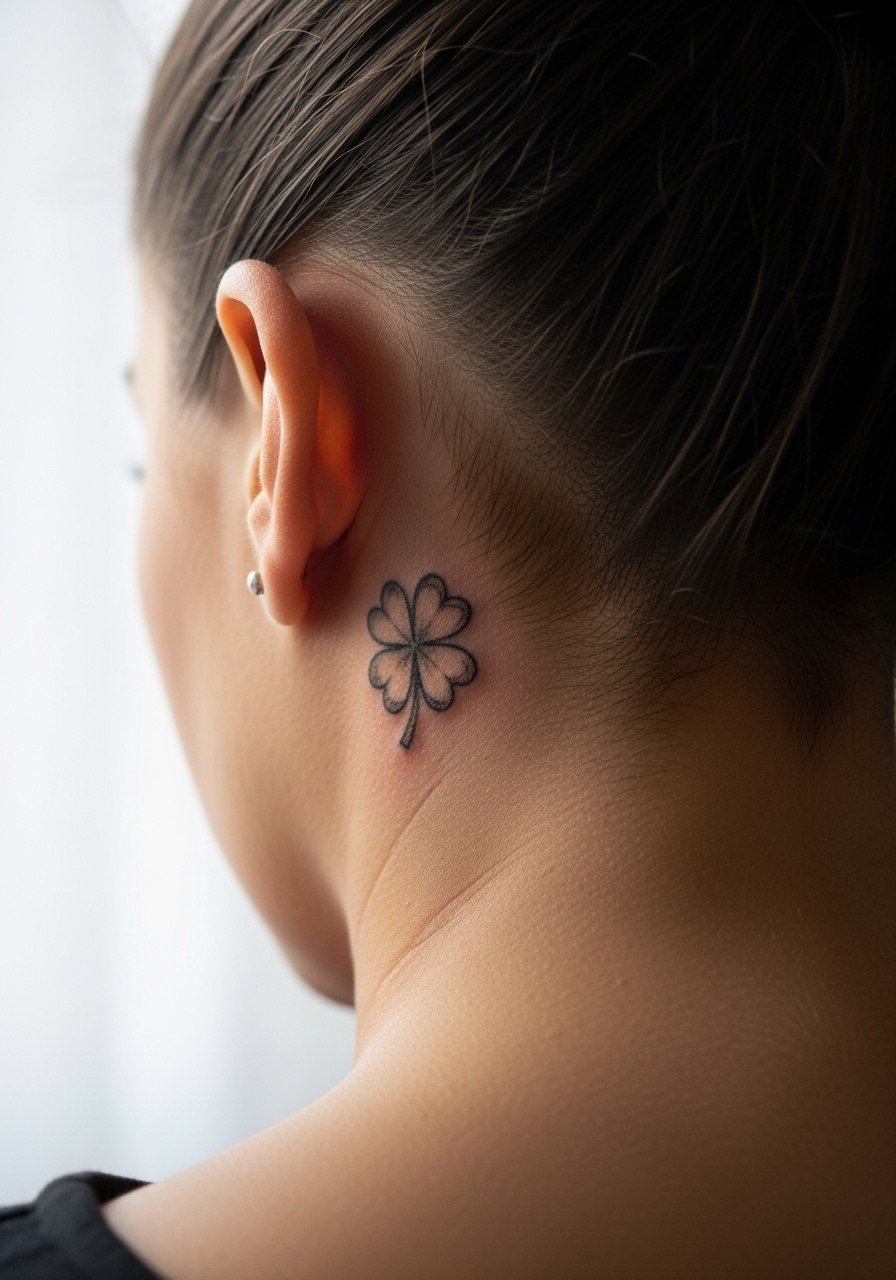
Behind-ear micros feel like a secret nod to the fandom and the pain is usually minimal when the artist works quickly. The sketch style uses loose, imperfect strokes to suggest motion which ages into soft gray lines if placed too close to the hairline. When you book, ask for a slightly thicker starting stroke so the sketch retains character after healing. The session is short, often under 30 minutes. For showing it off, pull your hair into a half-up style and add small stud earrings to keep attention near the placement.
6. Micro-Realism Clover on Collarbone
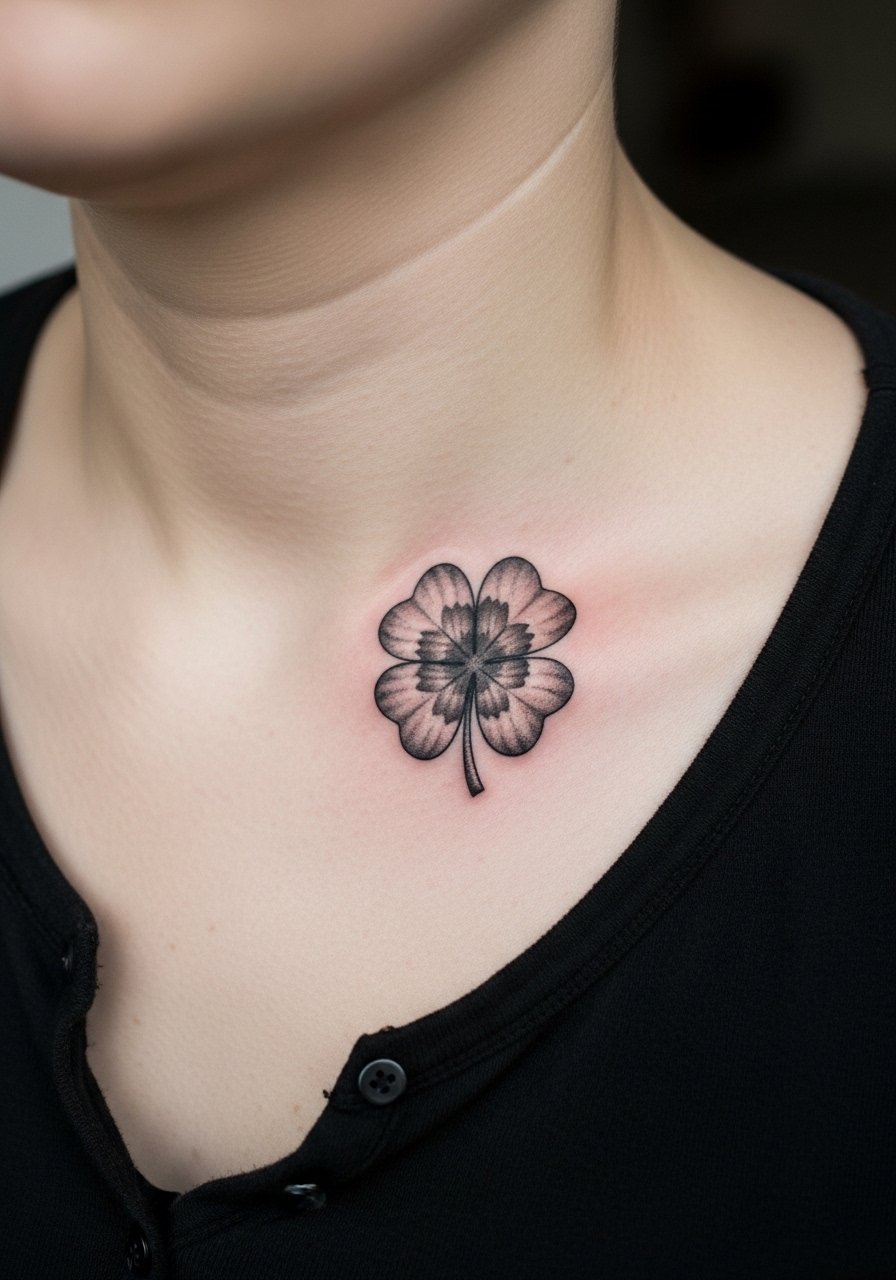
Collarbone pieces read as delicate but demand precise depth control from the artist to capture leaf texture. Expect moderate pain over bone and two sessions if you want layered shading. A big mistake is asking for an over-saturated dark piece that sits flat against the collarbone and looks heavy. Instead request micro-realism with subtle highlights and stipple shading so the clover has depth without turning into a bold black patch. Pair this with an off-shoulder blouse when you want to show it off.
Before You Book
The small wrist, ankle, and behind-ear pieces above heal differently from larger shoulder and collarbone work, so a few targeted items make the session and first week smoother.
- CeraVe Healing Ointment. Thinner than heavy balms and recommended by many people for dry healing on small clover pieces without leaving a white cast.
- Green Sheep artisan balm. Fast-absorbing balm that artists mention for blackwork because it does not sit on top of the ink.
- Australian tea tree salve. Useful for itch control in humid climates without greasy residue.
- Japanese rice bran lotion. Lightweight moisturizer that users prefer on fine line pieces after the first week.
- Tattoo Goo healing ointment. Breathes better than some heavier balms and helps manage humidity-related irritation for the forearm pieces above.
7. Blackwork Clover with Celtic Knots on Shoulder Blade
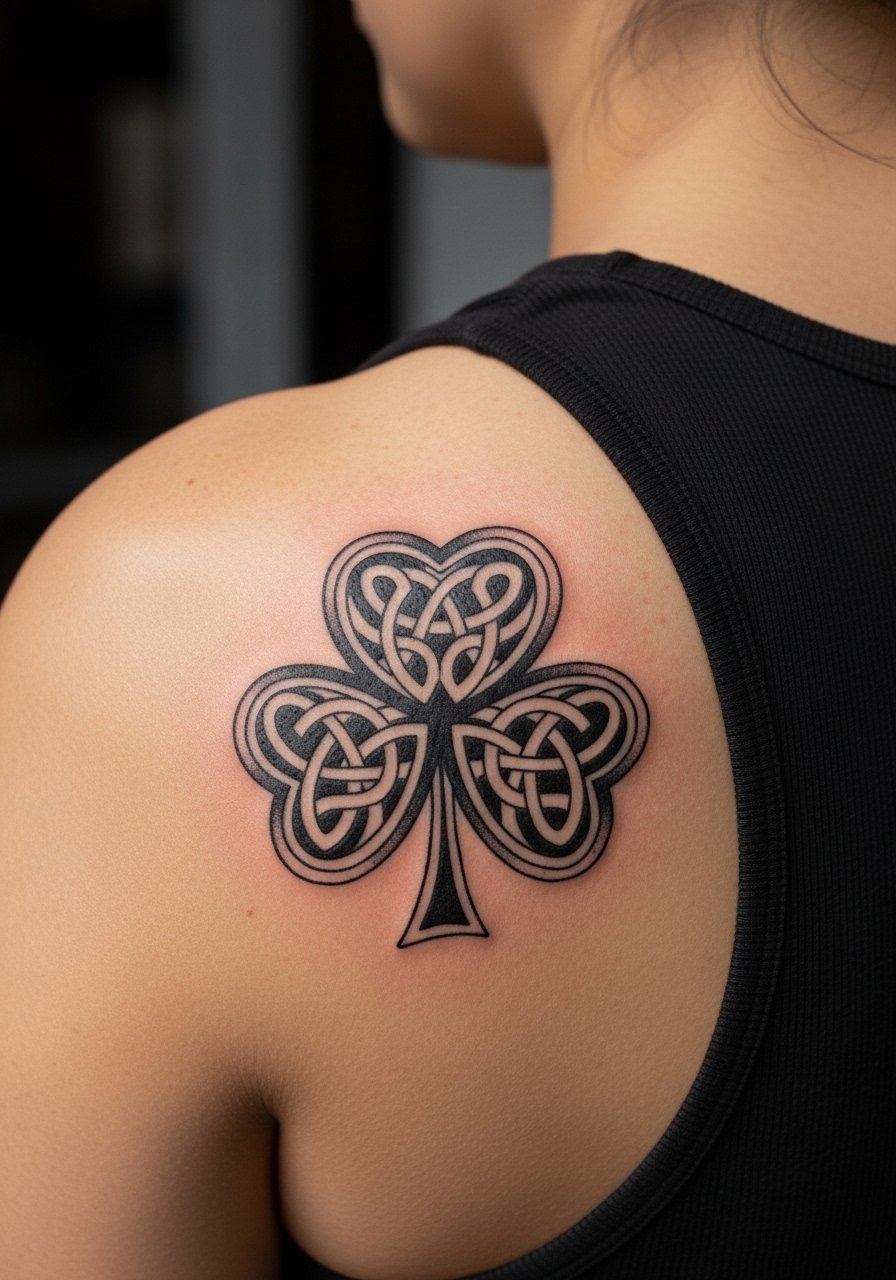
This ornamental approach merges luck motifs and knotwork for a bold shoulder blade piece that ages well when the lines are spaced. The shoulder blade stretches less than the ribs so complex knots retain their shape. Tell the artist to separate knot crossings enough to prevent merging as the tattoo settles. A mistake is squeezing too many knot loops into a small canvas which creates muddy saturation later. For the session wear a loose button-down shirt you can pull aside easily.
8. Realistic Textured Clover on Collarbone Edge
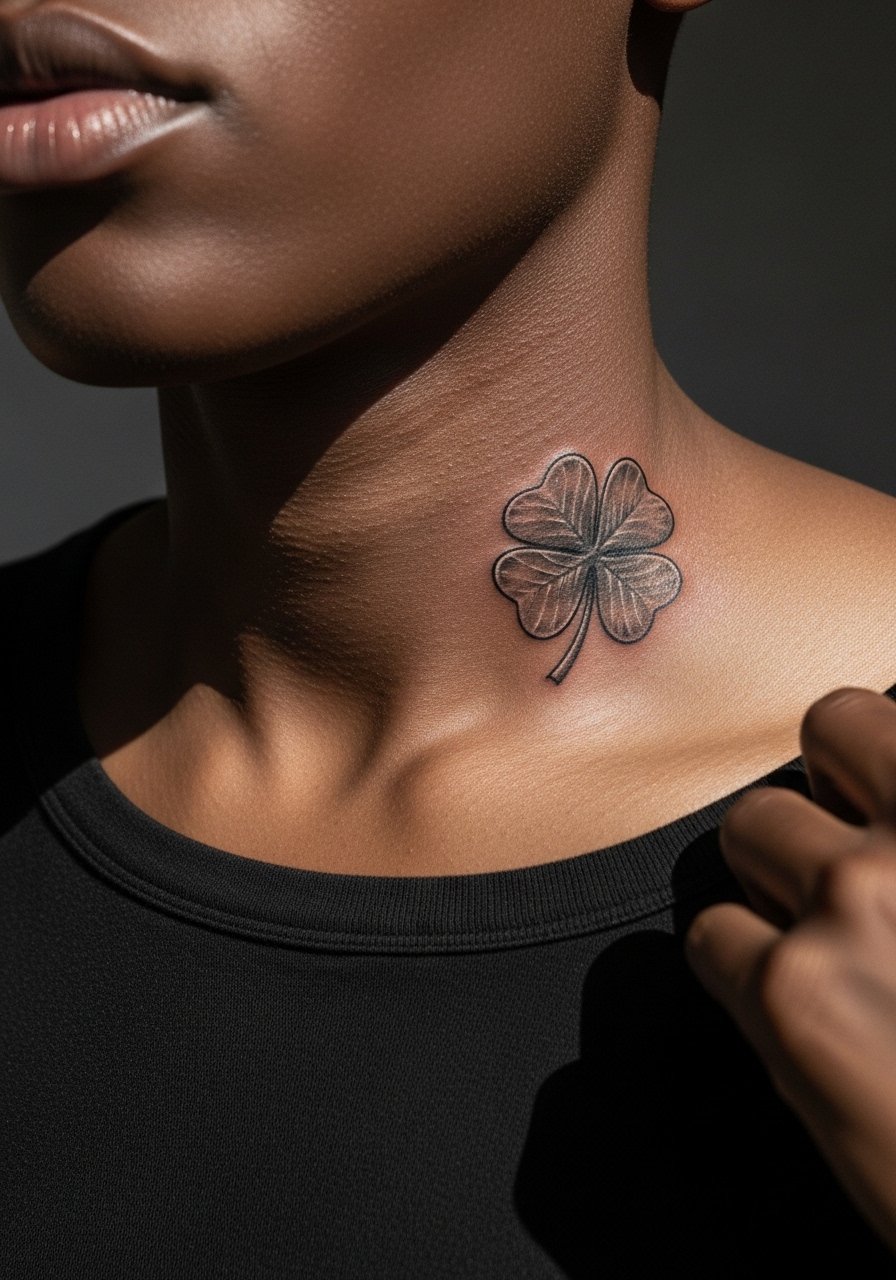
I rarely see realistic collarbone clovers done well because the area is bony and unforgiving. When executed correctly the texture mimics a real leaf and the shading sits in the soft tissue beside the bone. Tell your artist you want layered gray washes with a touch of stipple shading for texture. Expect a sensitive session and plan for a possible second pass to refine depth. Avoid asking for overly crisp highlight dots that vanish after healing. Pair with a delicate drop necklace that sits above the piece.
9. Neo-Traditional Asta-Inspired Outer Forearm
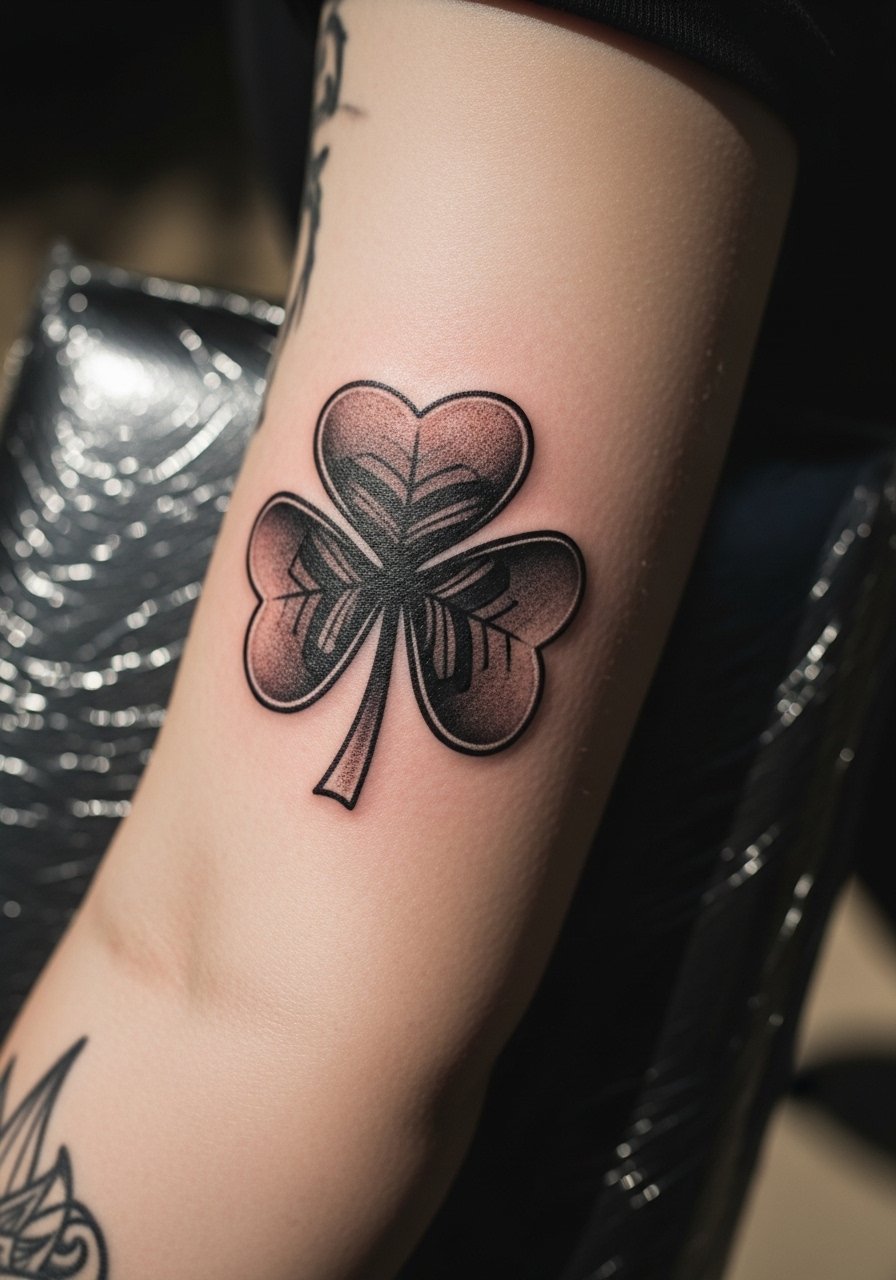
Fans who want character energy favor this for visibility and storytelling. Neo-trad gives you bold linework and controlled saturation so motifs stay readable as the piece ages. In consultation, ask the artist to emphasize silhouette and strong black contrast rather than tiny anime details that blur. Forearm pieces are low pain and usually finish in one long session. For outfit framing, roll sleeves and wear a slim gold chain bracelet on the opposite arm to balance attention.
10. Watercolor-Inspired Clover on Thigh
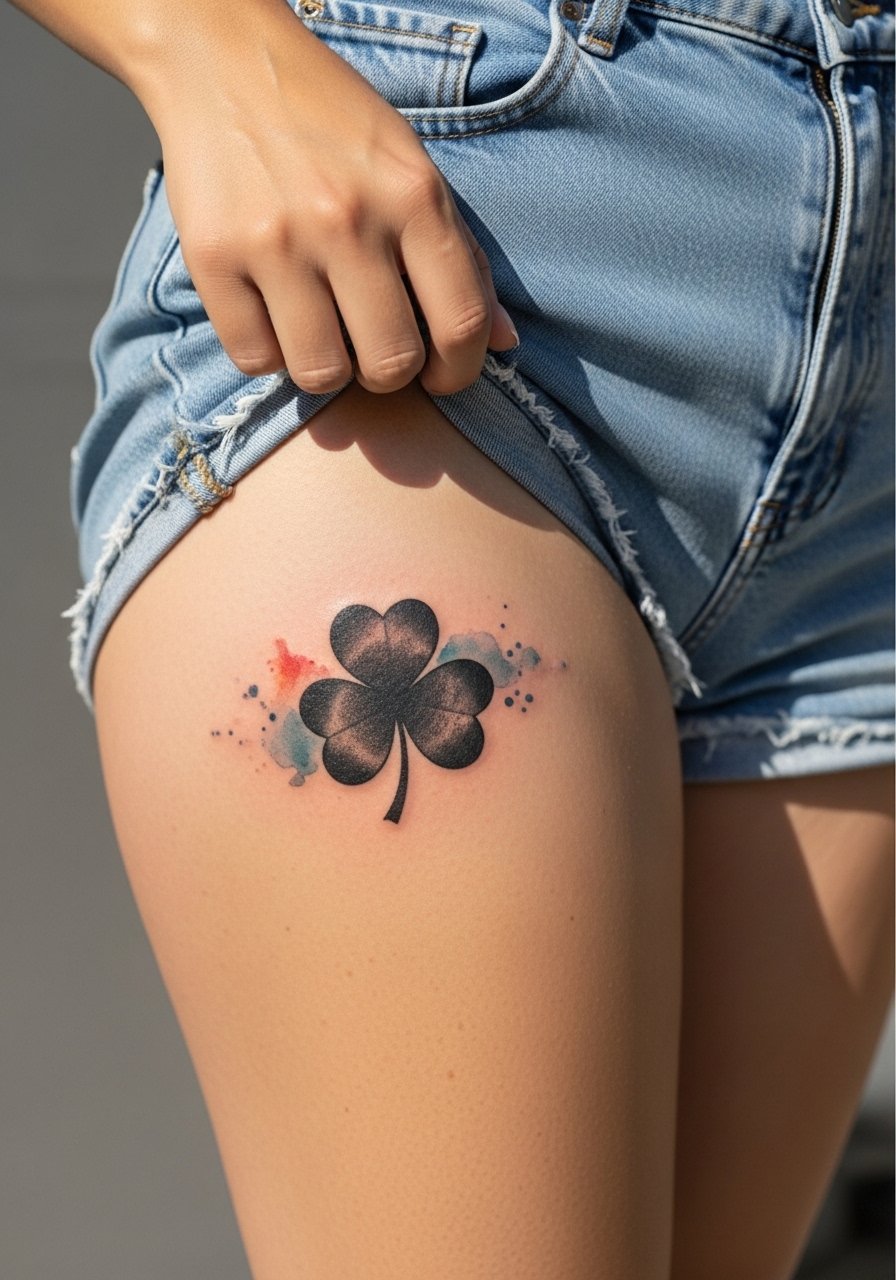
Watercolor clovers look magical but the washes fade faster than blackwork, especially on high-movement areas. If you want the color effect, ask for a black base layer under the washes so the silhouette stays readable after pigment loss. The controversy here is color longevity versus immediate aesthetic. One camp prefers pure blackwork for durability. The other camp loves the fresh look and plans touch-ups. Be honest about rebooking touch-ups at year two if you pick watercolor. Session wear should be loose shorts or a skirt for quick access.
11. Blackwork Tribal Clover on Calf
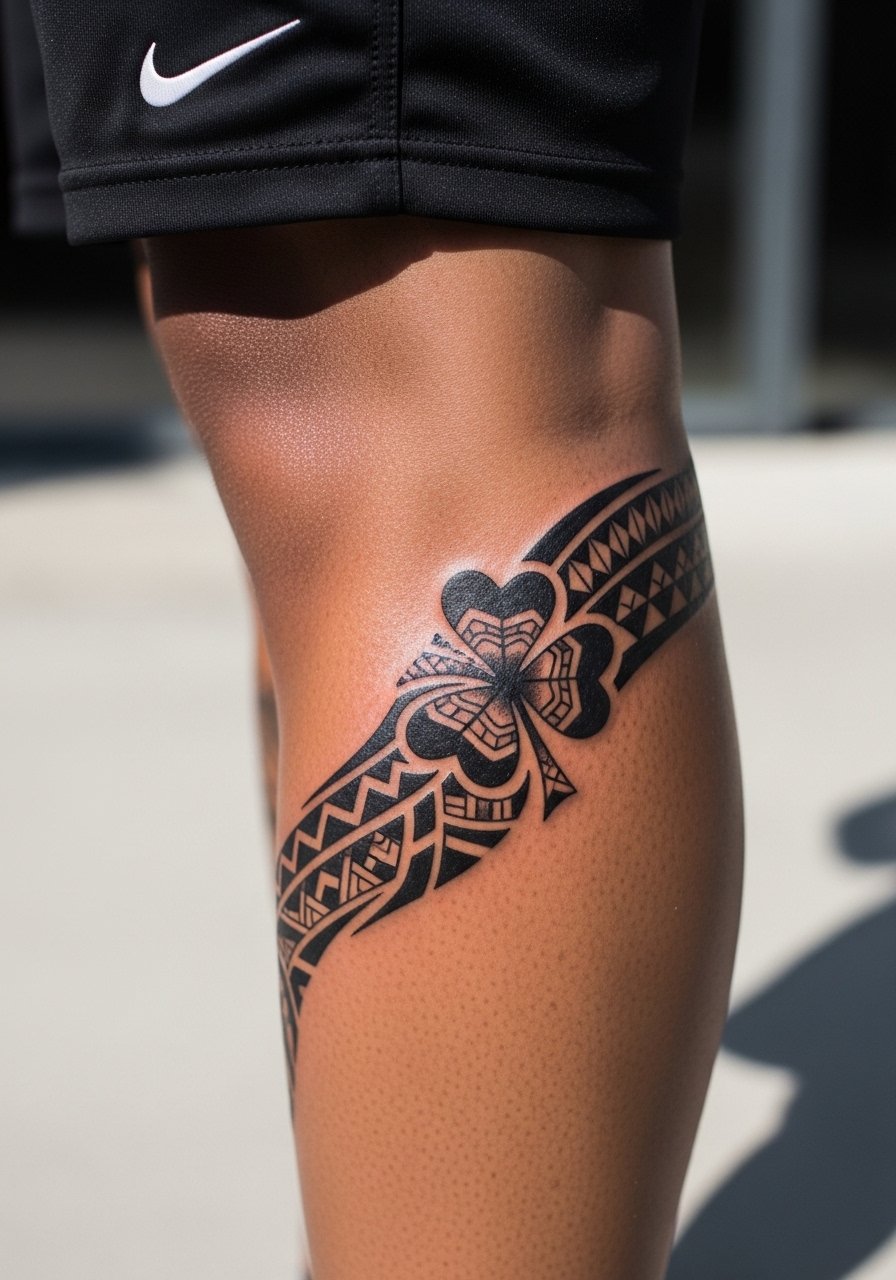
Large calf work is perfect for tribal motifs because the leg gives room for bold geometry and heavy saturation. Calves handle saturation well and often read better after aging, unlike fine lines on ankles. Tell your artist you want clear negative space and ask to see healed examples on darker tones when possible. A common mistake is compressing intricate tribal fills into a narrow band which leads to patchiness. For session day wear loose joggers you can pull up easily and protect the area afterward.
12. Stippled Four-Leaf on Inner Bicep
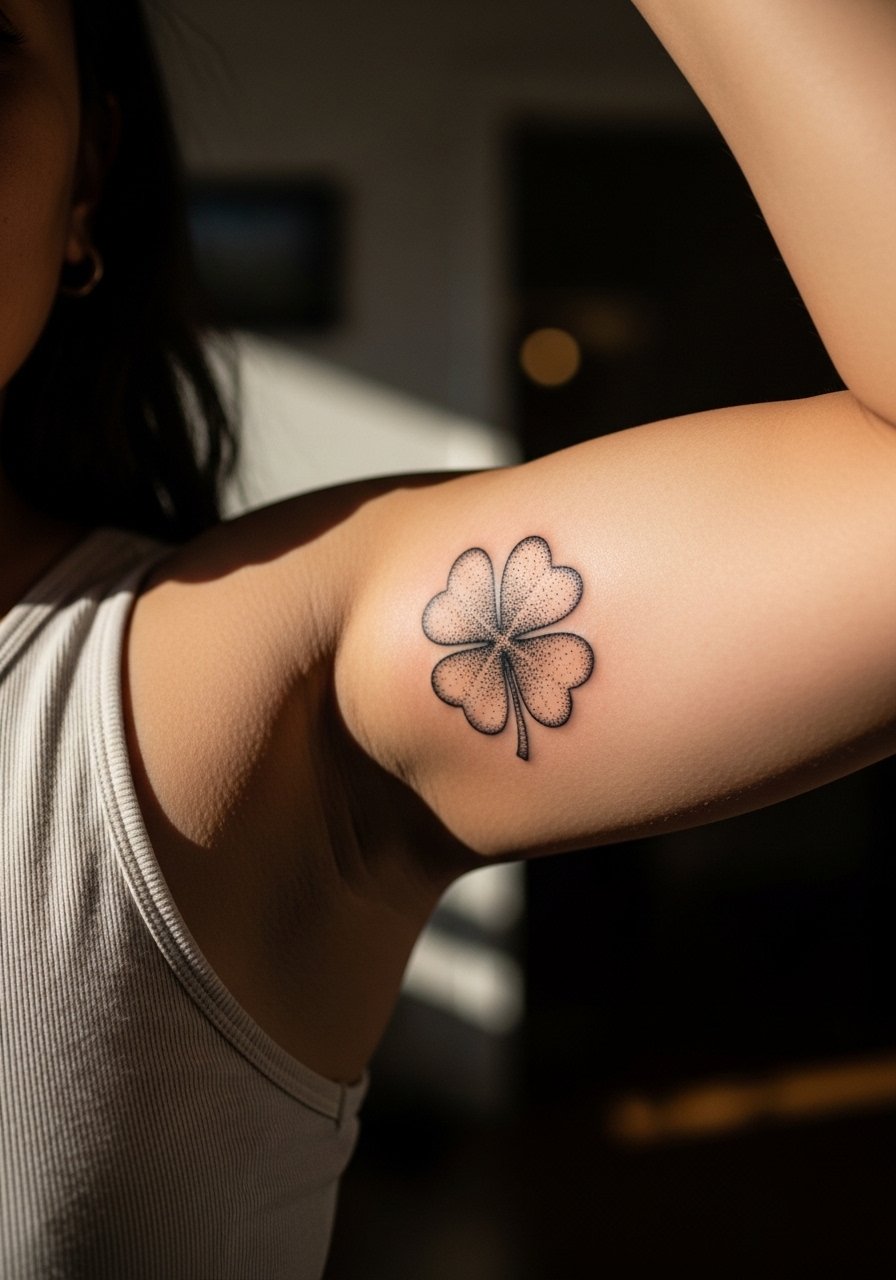
Inner biceps give a softer canvas that suits stipple shading and dot work. The area is less exposed to sun which helps longevity, though sweat during workouts can aggravate healing. Ask for stippling density to be moderate so the texture reads at six months without turning into an indistinct wash. Pain is moderate and sessions are typically under an hour. For the appointment, wear a loose long-sleeve button-up you can remove or pull aside without rubbing the fresh tattoo.
13. Sketchy Micro Clover Near the Ear Lobe
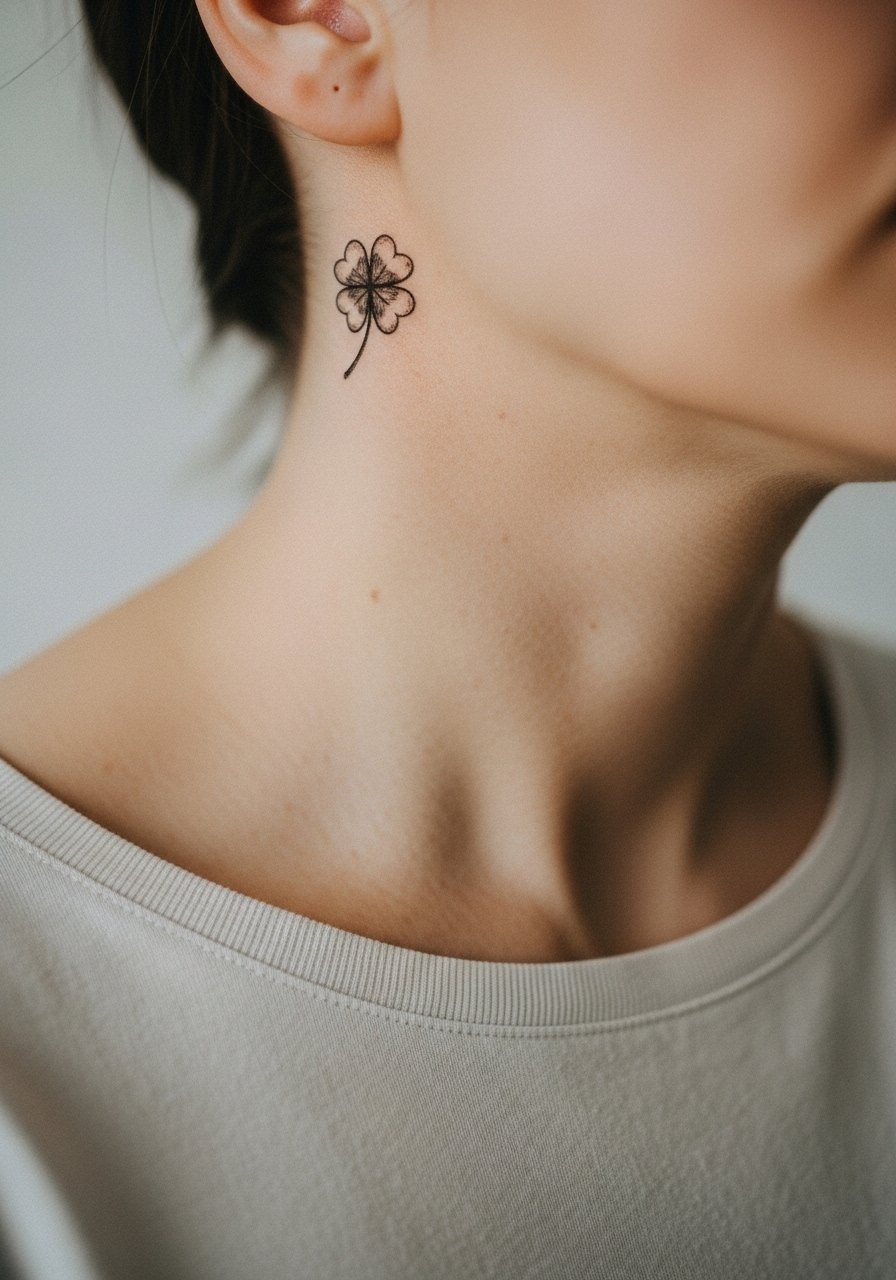
Tiny sketch clovers near the ear feel playful but require careful placement so the lines do not migrate into the jawline shadow as they age. Ask the artist to keep strokes slightly separated and to show a healed stencil mockup against your jawline. The biggest mistake is trusting a flash that was meant for a flat area. Sessions are short and low pain. For showing it off, a half-up hairstyle pairs well and keeps the area visible without forcing daily exposure.
14. Minimalist Clover Behind Knee
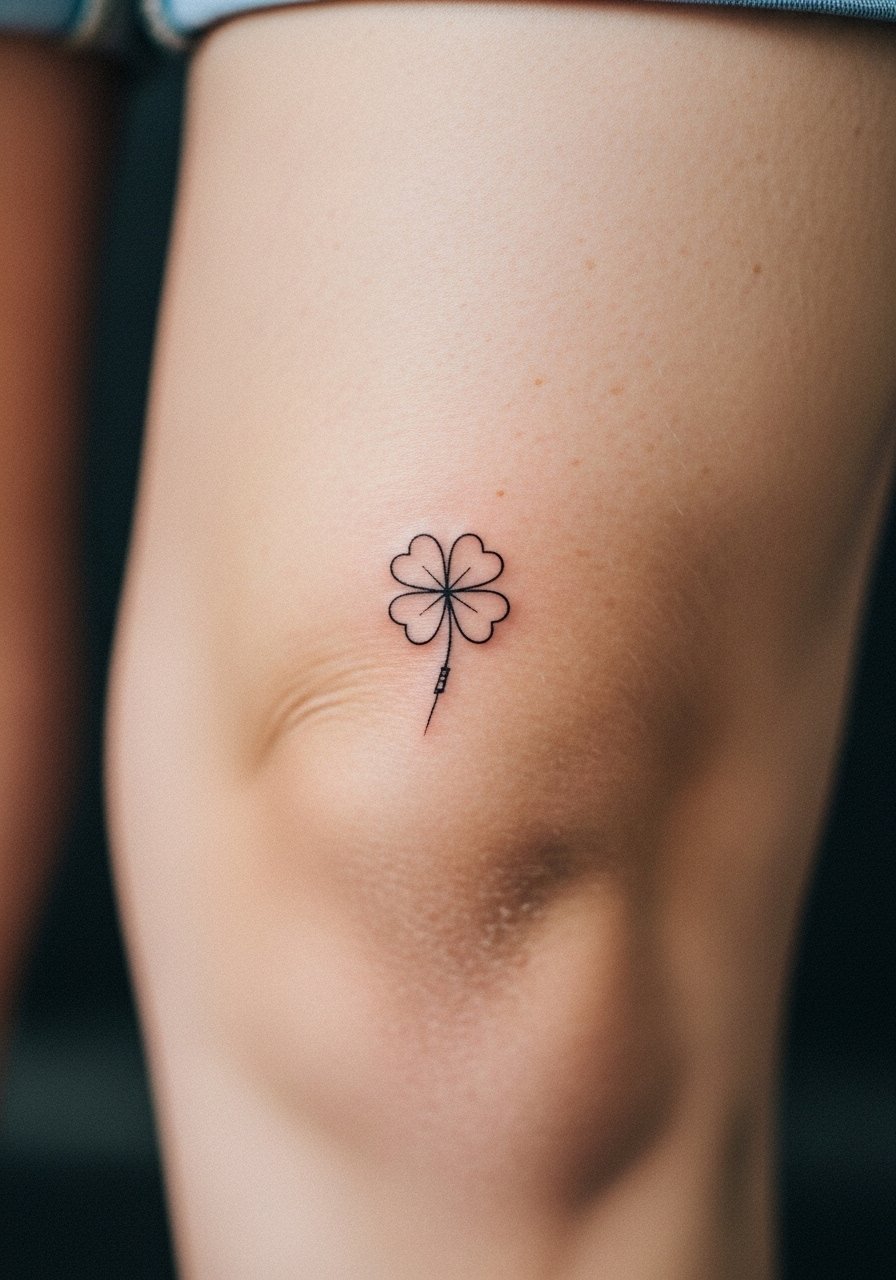
Behind-knee pieces are underrated but require caution because the skin folds a lot. I recommend slightly bolder lines than a 0.25 mm single-needle for this spot to avoid excessive softening. Tell your artist you want the clover centered where the skin lies flat when standing. Many people mistake the area for low-motion, but bending and exercise create micro-movement that affects fine detail. During the appointment wear loose shorts that can be shifted without pinching.
15. Grimoire-Integrated Clover on Upper Arm
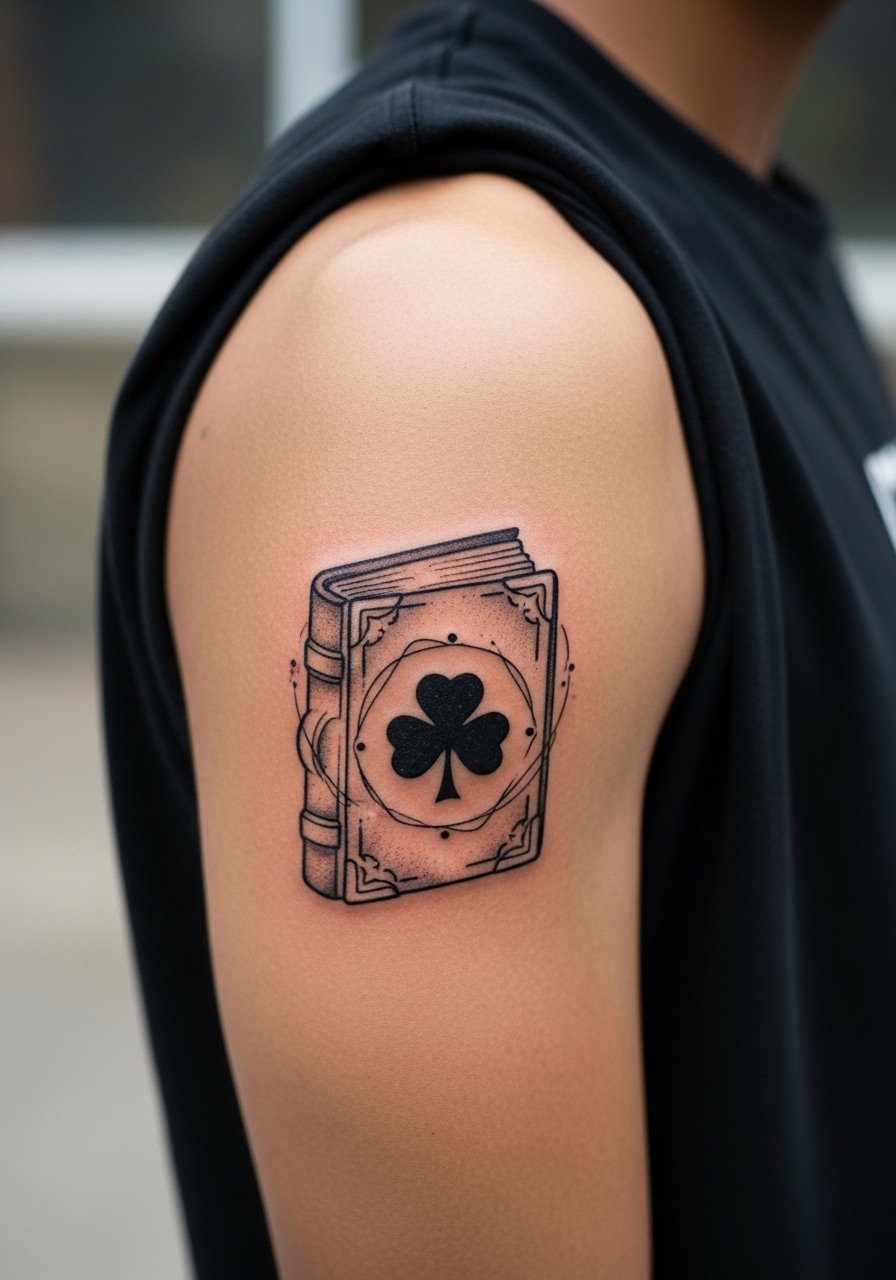
This under-covered idea ties the clover into a larger anime grimoire motif for collectors who want an ongoing sleeve. The upper arm gives room for surrounding spells or script so the clover reads as part of a narrative. Ask the artist to reserve negative space around the clover so future elements can be added without overcrowding. A common mistake is planning a dense sleeve in one sitting. Build in sessions and leave breathing room. For session day a sleeveless hoodie is easy to remove and comfortable during long passes.
16. Geometric Clover with Dot Work on Calf
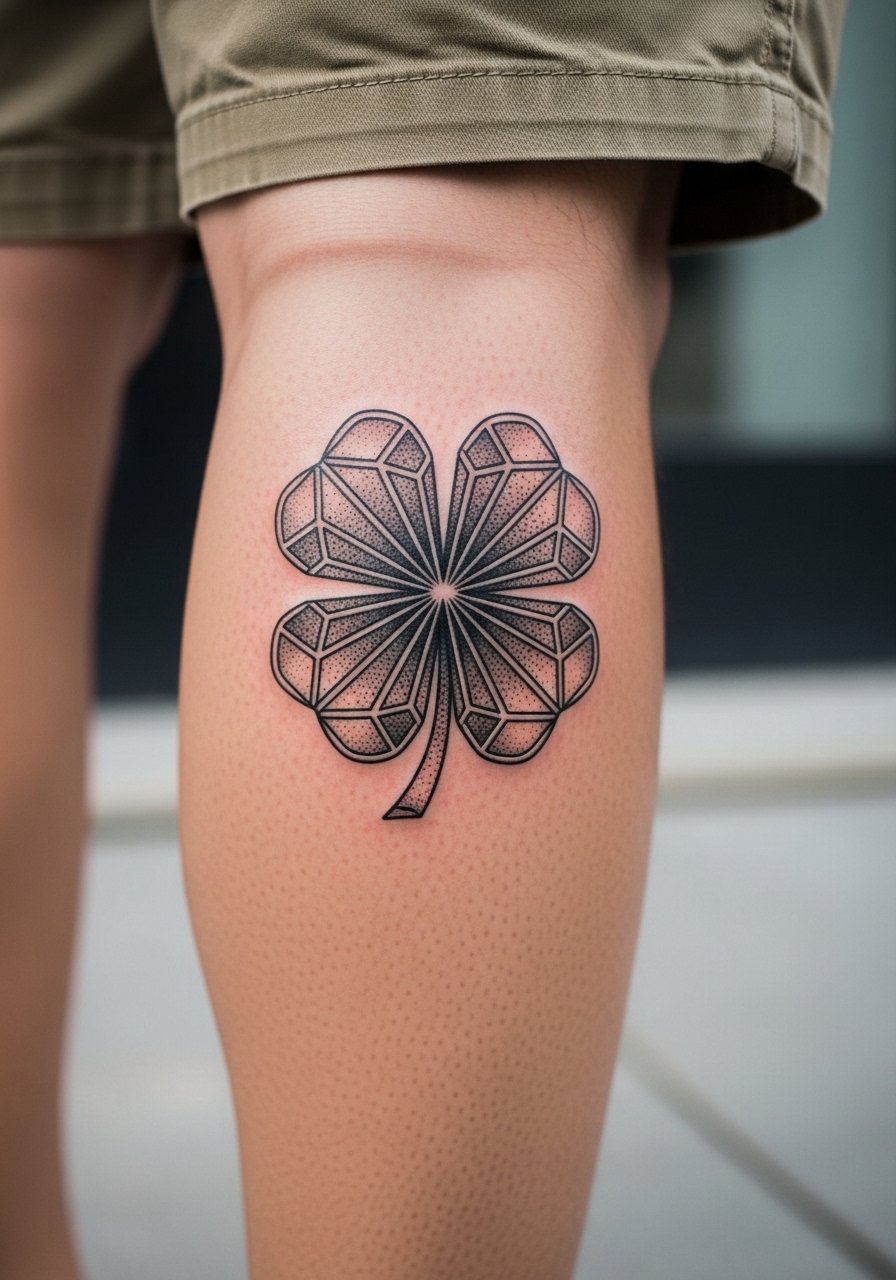
Geometric treatments keep the motif modern and are forgiving when scaled correctly. Calf placement makes it easy to go larger which preserves geometric spacing as the piece settles. Tell your artist you want crisp linework with measured negative space between elements to avoid merging. The error I see is shrinking geometry to fit a small space. For display, roll jeans up and wear crew socks pulled low to show the calf art without crowding.
17. Tiny Clover on Finger Side
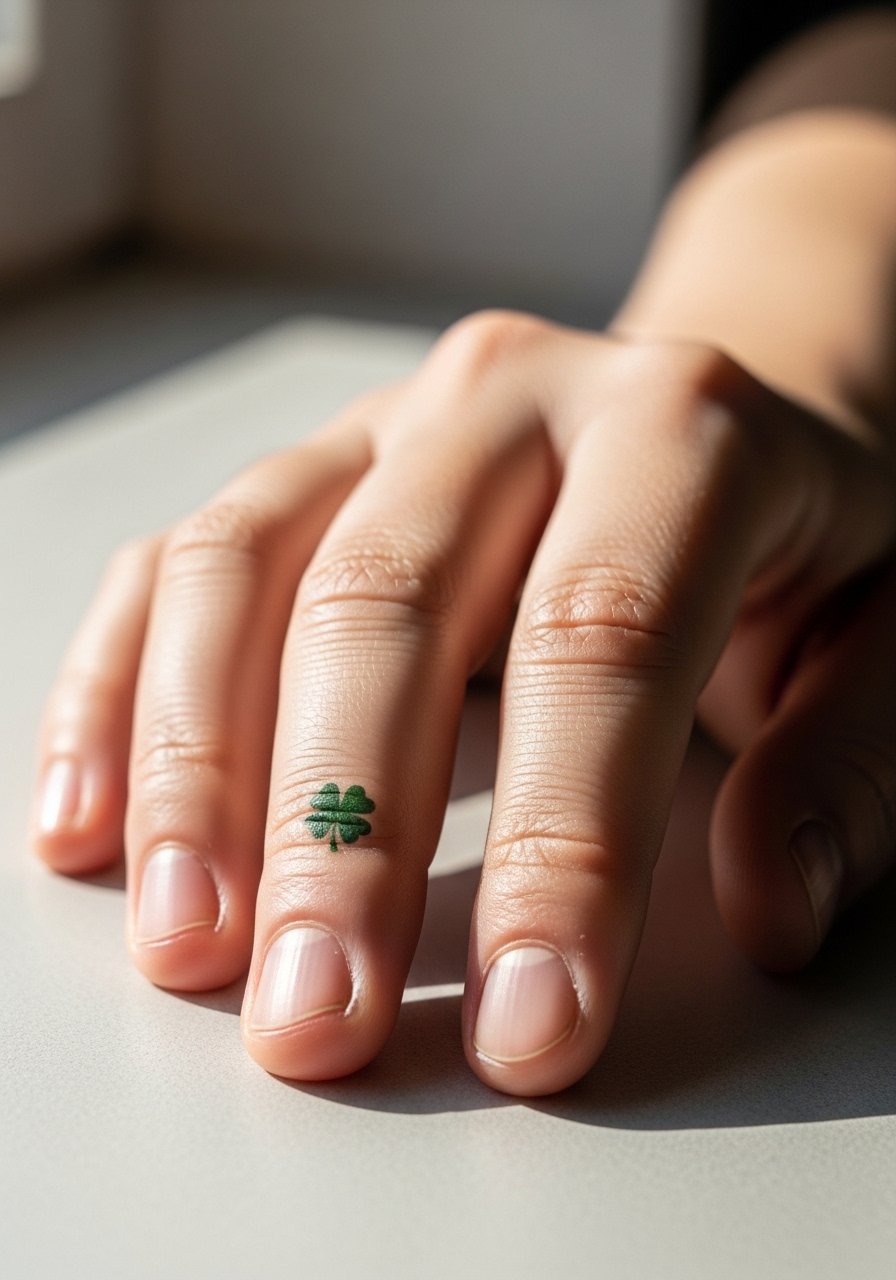
Finger side tattoos are cute but high-maintenance. The skin there renews faster and fine work often needs touch-ups within a year. Ask the artist about their experience with hand and finger longevity and plan for a touch-up timeline at six to twelve months. One camp says finger work is worth it despite touch-ups. The other warns against hands if you want low maintenance. Know both perspectives before booking. For the session, remove rings and rest the hand on a neutral surface for steady work.
18. Collarbone Script Frame with Clover Accent
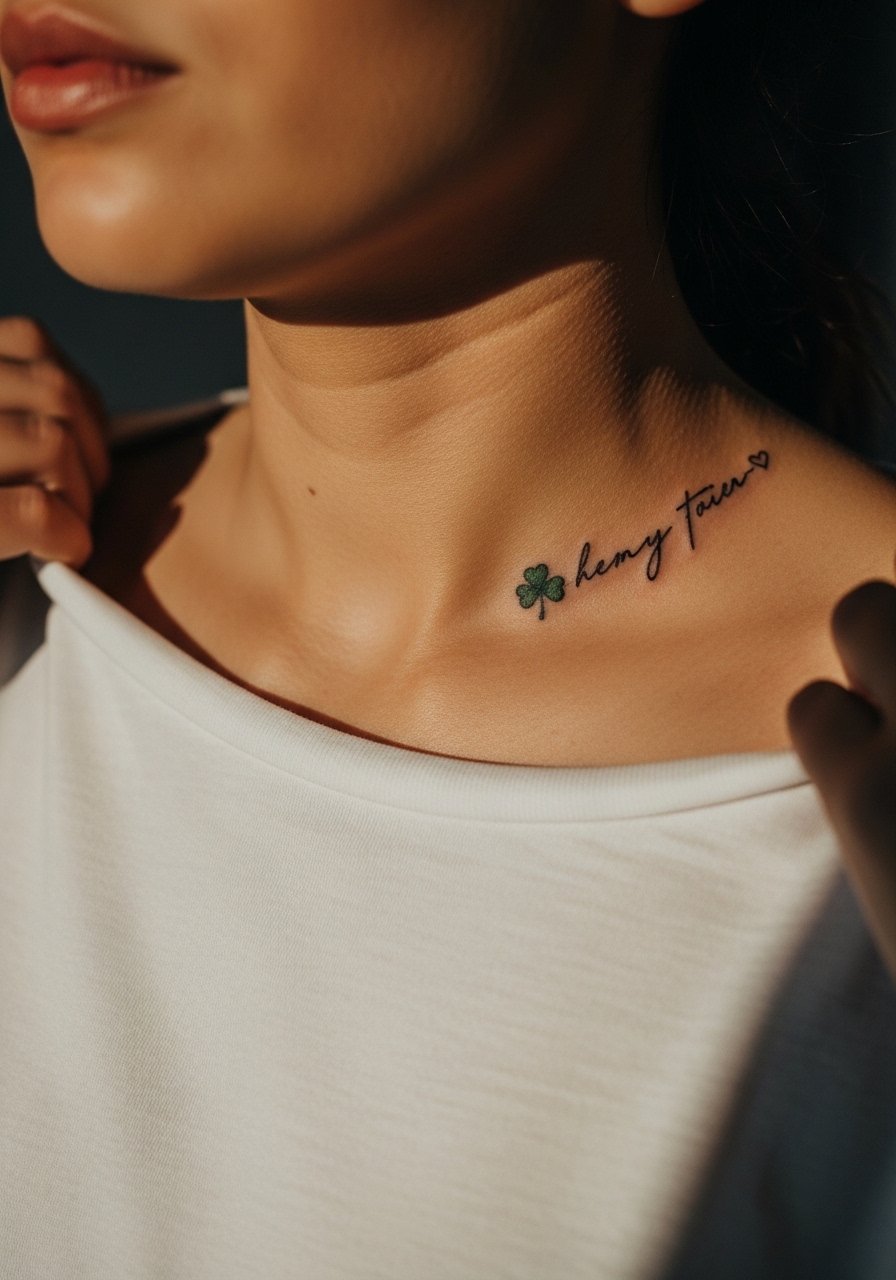
Pairing a tiny clover with a short word or date along the collarbone creates an elegant composition when spacing is considered. Ask the artist to set letters at least 6 mm apart from the clover so ink migration does not blur the separation. The major mistake is squeezing script right next to fine line imagery. For the session, a strapless bralette or wide-neck top keeps access clean and comfortable.
19. Blackwork Clover with Tribal Bands on Thigh
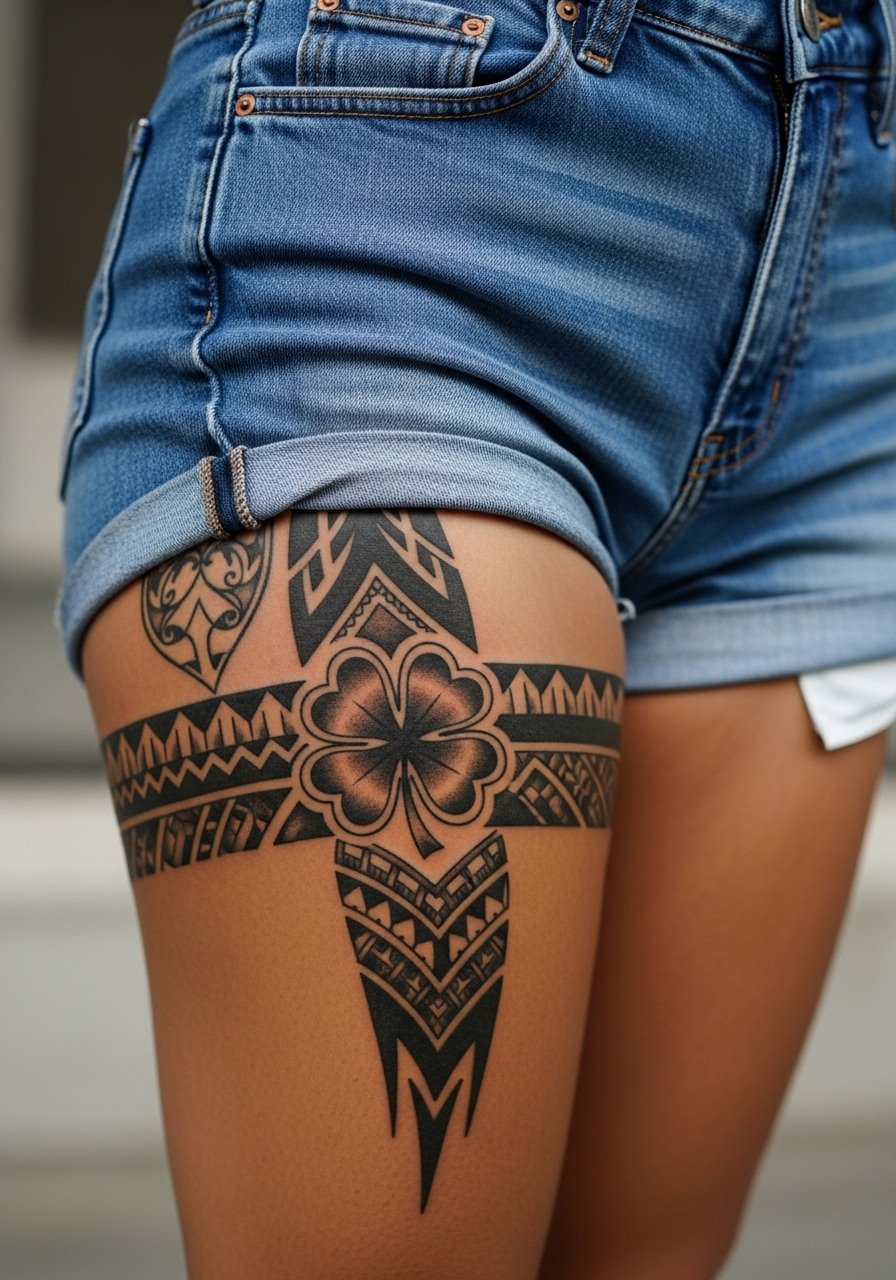
Thigh canvas allows large blackwork patterns that withstand years of movement and weight changes better than wrists. For a tribal band look, request clear stop points and steady saturation to keep negative patterns crisp. Avoid overly compressed fills that can pepper or scar in tight spaces. Thigh pain is moderate and sessions can be split. For showing it off, high-waist denim shorts make the placement seasonal and wearable.
20. Back-of-Neck Micro Clover
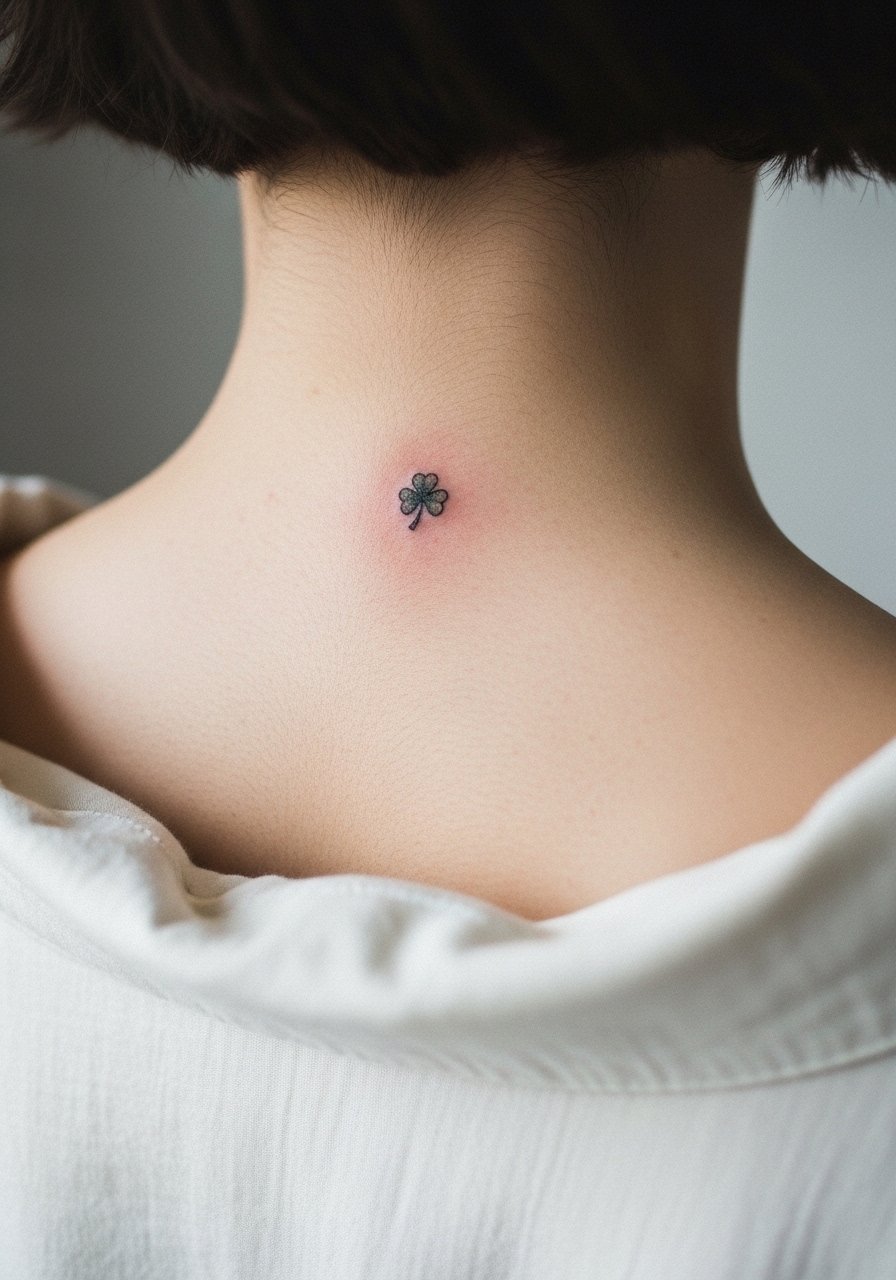
Back-of-neck micros are discreet and heal well when sun is avoided in the first two weeks. Ask for a slightly stronger outline than your reference to allow for skin movement and hair friction. The common oversight is forgetting to plan haircuts or styles that might constantly rub the area. For the appointment wear a wide-neck shirt so the artist can access the spot without tugging.
21. Tribal Clover for Darker Skin Contrast
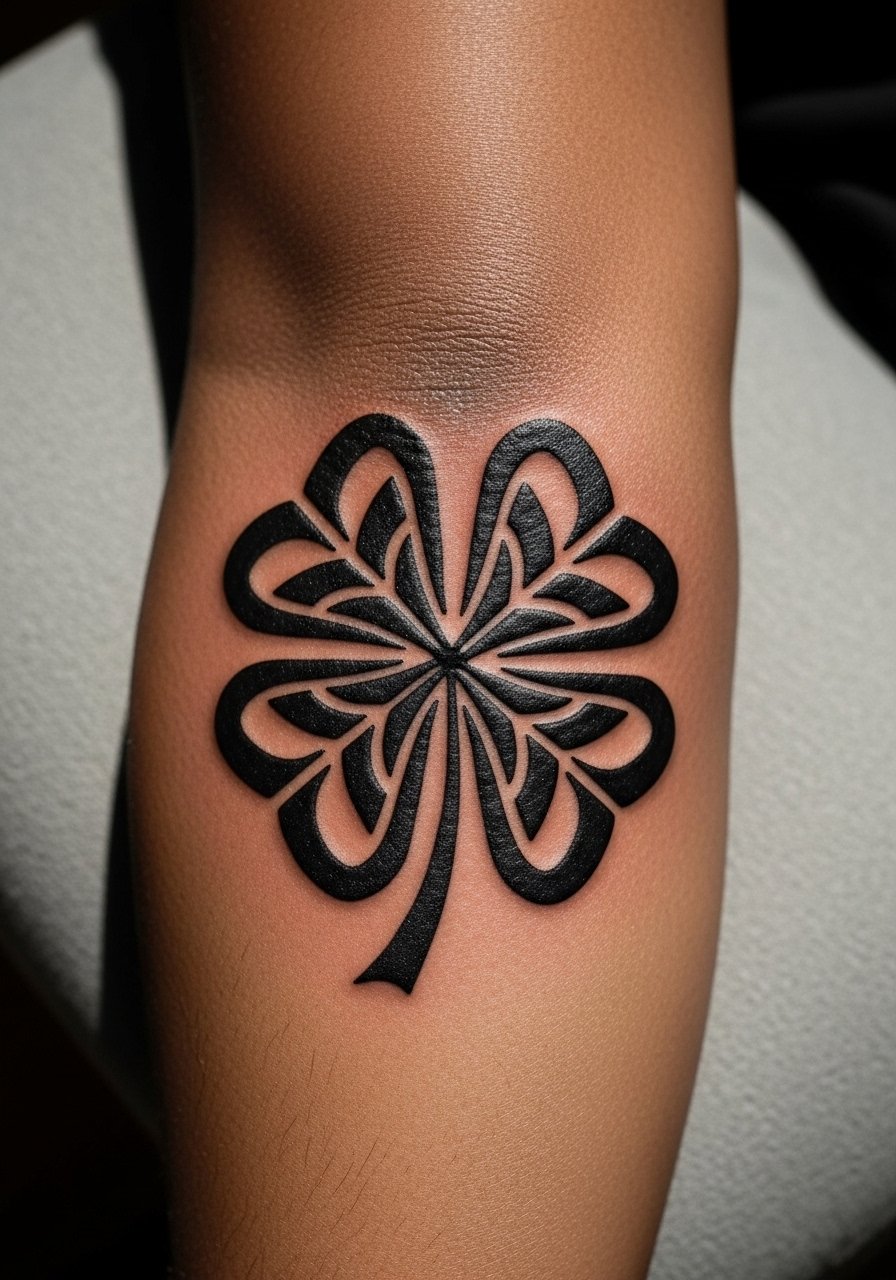
For darker skin tones, bold blackwork keeps contrast and clarity. I've seen clients pay extra for thin single-needle work that fades into gray on darker skin within a year. Instead, ask for heavier lineweight and solid saturation so the clover reads clearly after healing. This approach respects how pigment settles across melanin-rich skin. If you care about visible contrast, choose saturated blackwork over ultra-fine detail. Forearm placement keeps it visible and manageable for touch-ups.
Frequently Asked Questions
Q: Will a fine line black clover fade faster on dark skin than on light skin?
A: Fine line tends to soften with time regardless of tone, but on darker skin the contrast can reduce faster. Ask to see healed portfolios on similar skin tones and favor slightly bolder line weight or blackwork fills for longevity. If you want the delicate look, budget for a touch-up at year one to two.
Q: How do I choose between watercolor and blackwork for a thigh clover if I want it to last?
A: Watercolor washes are beautiful fresh and require touch-ups more often. Blackwork holds better over time. A hybrid approach with a black silhouette undercolor washes keeps shape as the color fades. Plan for a touch-up schedule if you pick color.
Q: My wrist clover stretched after weight gain. Which placements resist body changes best?
A: Areas with less frequent stretch like the forearm, calf, and thigh generally resist visible distortion better than wrists and ankles. If body change is possible, size up and place on a flatter canvas when you can, or ask your artist to design with natural stretch lines in mind.
Q: Are tiny behind-ear or collarbone clovers more painful than forearm pieces?
A: Behind-ear pieces are usually low pain and quick. Collarbone is higher because of bone proximity and tends to be moderate to high on pain scales. Forearms are among the least painful and a good spot for first-timers.
Q: Should I use Saniderm or dry healing for a small black clover?
A: Artists and collectors split into two camps. One camp prefers protective films like Saniderm for a sealed, clean first 24 to 72 hours. The other prefers dry healing to avoid trapped moisture and irritation. Your best move is to ask your artist which method they use routinely and to see healed examples from that exact process.
Q: How can I find artists who specialize in Black Clover styles without following specific handles?
A: Search hashtags like #BlackCloverTattoo and #FineLineClover on Instagram, use the Tattoodo or Inked app filters, and check Reddit threads asking for regional recs. Booking guest spots at conventions is another reliable path when your local shop has long waitlists.
Q: If I want to show my new collarbone clover in summer outfits, what should I wear to accent it?
A: Off-shoulder tops and wide-neck blouses frame collarbone work without competing. A delicate pendant can sit above the tattoo for balance. Consider an off-shoulder blouse when you plan to show it off.