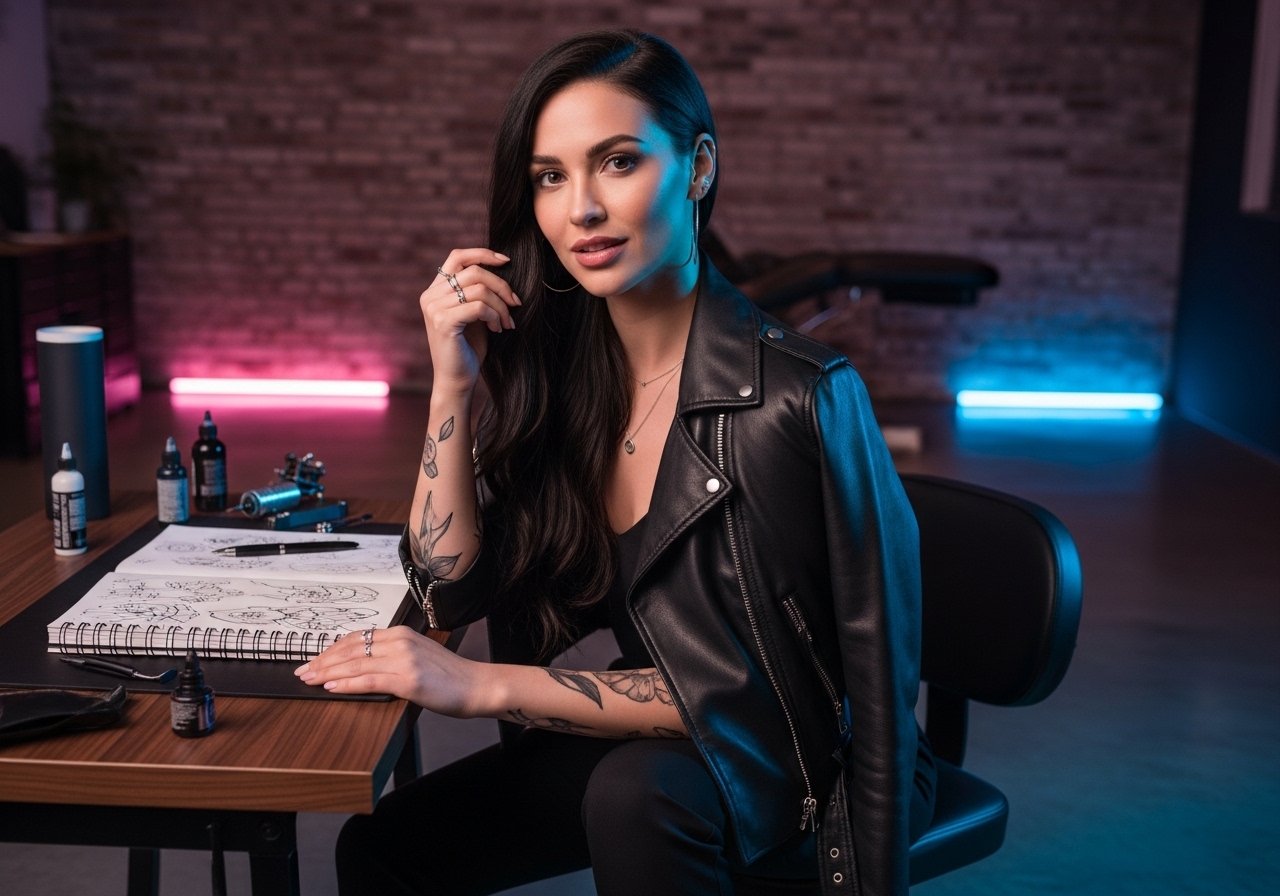
Fine line moons are everywhere on saved boards, and the trend pressure shows up in the chair when people ask for the exact same tiny crescent. The thing is, the pieces that still look crisp at year three are rarely the ones that photographed the best fresh. Fades, last-minute guest-artist cancellations, and rising walk-in minimums are real. Start with small choices that make a moon last, beginning with the wrist-friendly first idea below.
1. Fine Line Half Moon with Subtle Stars (Wrist)
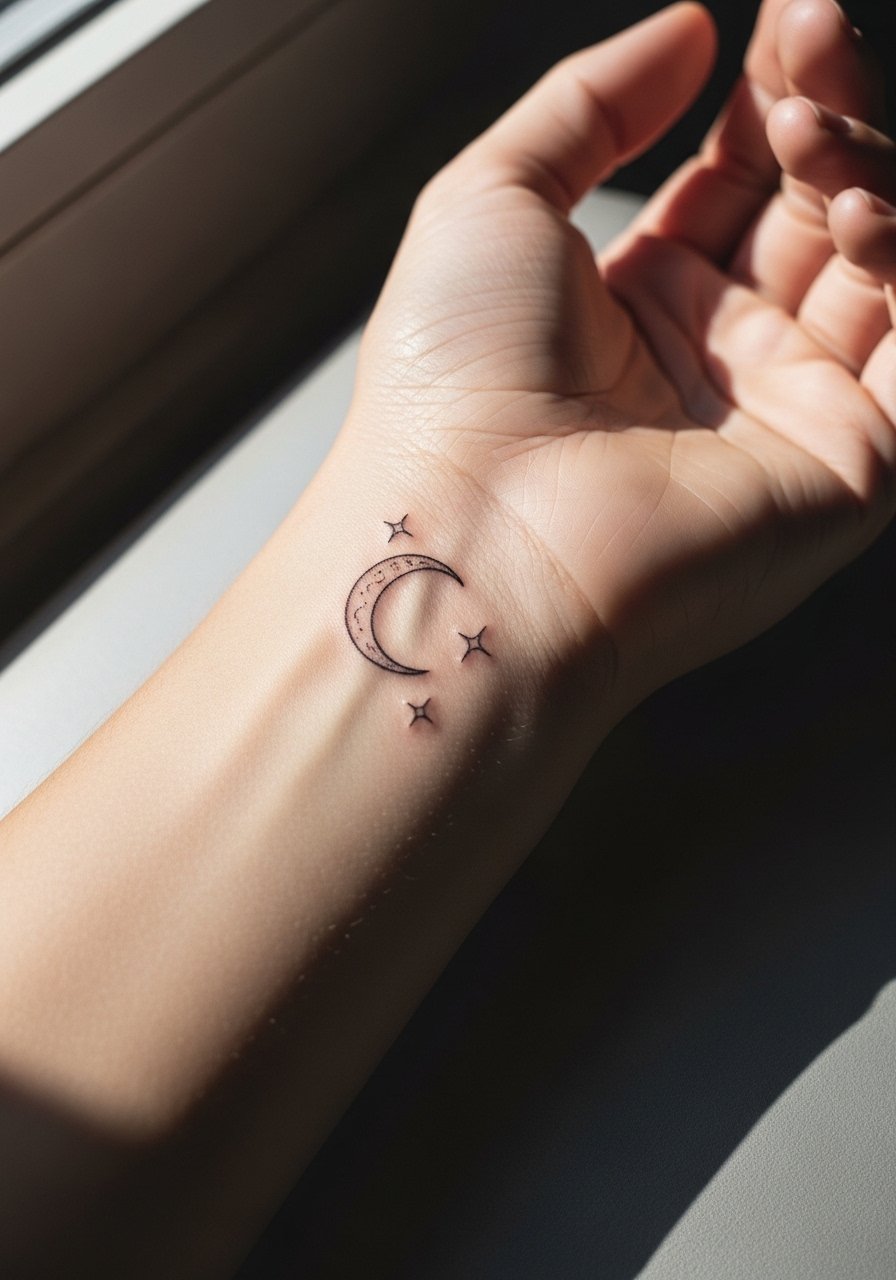
I see this one on wrists all the time because the scale reads delicate without stealing space. For longevity ask your artist to increase the line weight slightly over a true micro line and to avoid extremely dense star dots that sit too close to the crescent. Wrist skin and constant hand washing mean a touch-up around 6 to 12 months is common for very fine lines. One camp argues these fine lines age gracefully, the other says thicker work keeps definition longer. Tell your artist where you want the stars placed so spacing prevents merging, and plan to show it off with a thin gold chain bracelet on the opposite wrist when it heals.
2. Dotwork Half Moon Crescent (Nape of Neck)

When you book a nape piece, bring photos that show the curve you want followed rather than a flat crescent. Dotwork gives texture that keeps detail from blurring the way thin continuous lines sometimes do on moving skin. The session feels like short, repetitive passes rather than continuous linework, and pain is moderate because of the thin tissue there. Ask for a slightly larger overall scale so stipple shading has breathing room. For showing it off, style your hair with a low ponytail holder or an open-back top to reveal the curve.
3. Geometric Half Moon Outline (Forearm)

Geometric outlines need space to read, so resist shrinking them into a one-inch motif. The biggest mistake is asking for too many intersecting lines in tiny areas. On the forearm a one-and-a-half to three-inch design keeps angles crisp as the skin settles. Tell your artist you want clear negative space between angles to reduce risk of lines merging at two years. Forearm sessions are low on pain and quick, often a single visit depending on complexity. Roll sleeves and pair the finished piece with a linen button down shirt with sleeves pushed up to frame the work.
4. Blackwork Half Moon with Shading (Thigh)
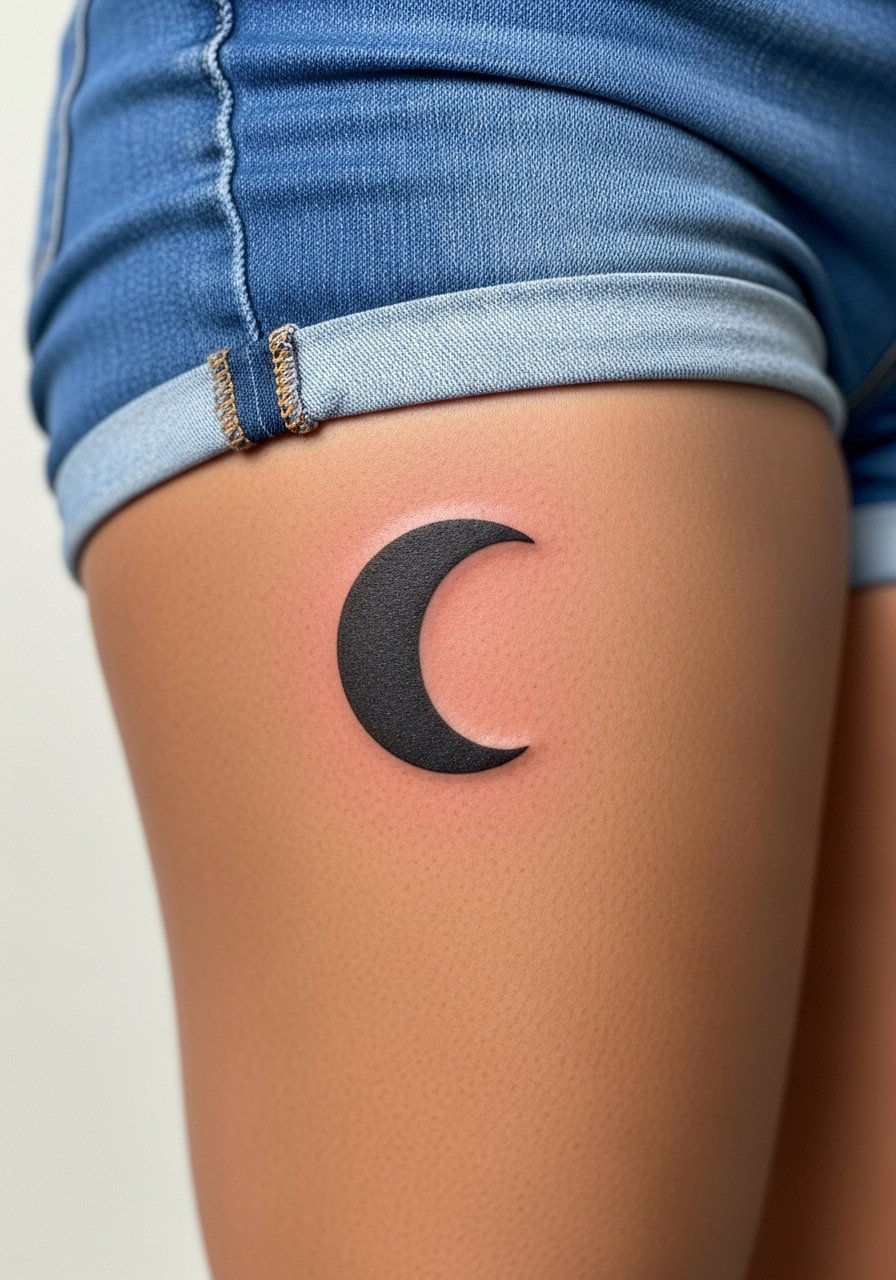
Bold blackwork is forgiving on thicker skin and darker tones, so it is a strong option if you want contrast that lasts. Thigh placement hides healing and reduces friction from daily movement during the first week. Expect a single-session block for a three-inch piece and moderate pain that eases as the session progresses. A common error is requesting tiny internal detail inside a large black mass, which can read as texture loss later. For outfits, high-waisted shorts or a slit skirt keeps the black shape framed without competing prints, try a pair of high waisted shorts after it heals.
5. Watercolor Half Moon Phases (Shoulder)
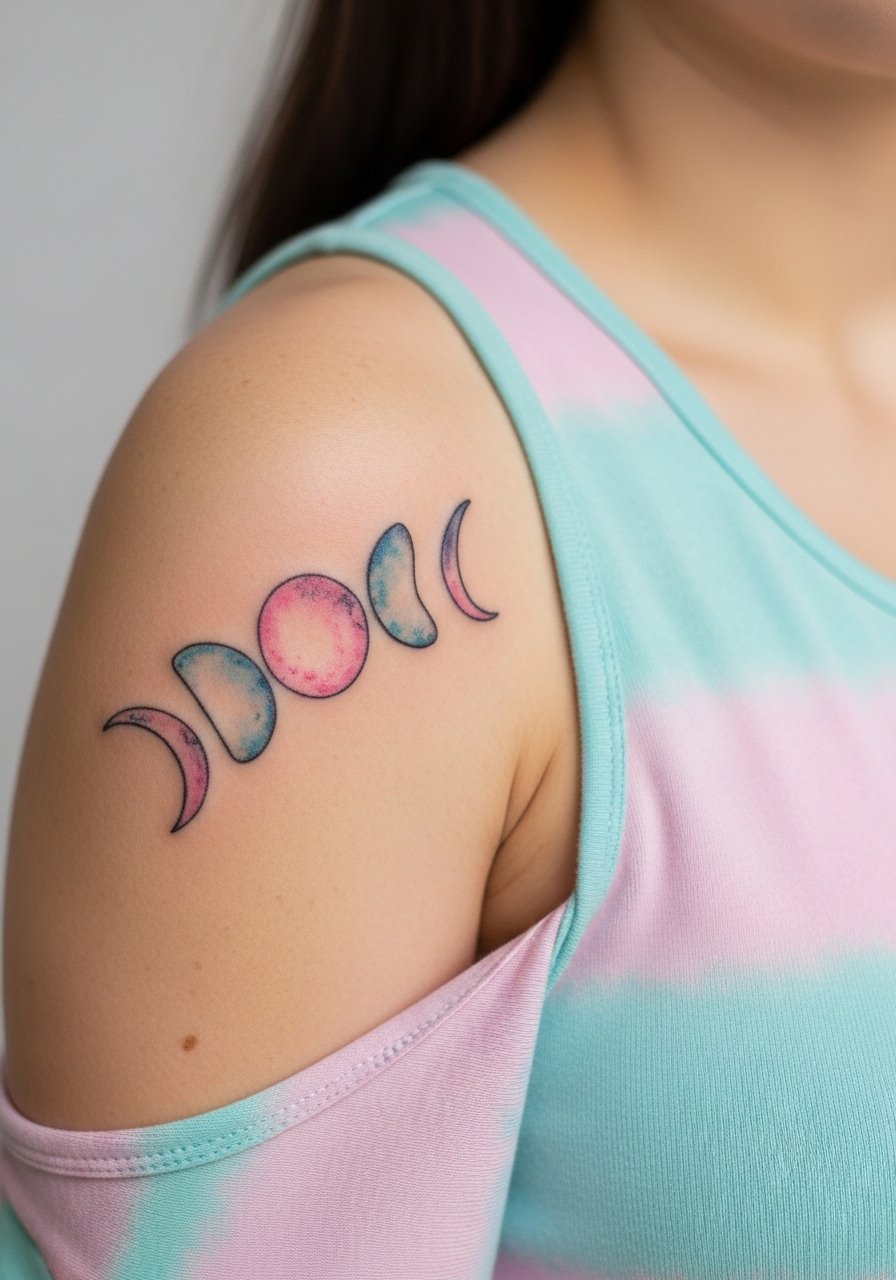
Watercolor moons photograph beautifully fresh, but pigments can diffuse faster on sun-exposed zones. If you love the blended look, ask for stronger outlines or spot-dot anchors in the palette to preserve shape over time. Many collectors are shifting toward dotwork or subtle outlines for better longevity, so this style sits between an editorial choice and an upkeep commitment. Session time for a two-to-four inch shoulder piece usually spans two visits for layering. Pair the healed piece with a sleeveless tank pastel to match the palette and let the colors peek under summer tops.
6. Minimalist Single Line Half Moon (Ankle)

Sitting down with the stencil on your ankle is when sizing matters most, because joints can distort tiny arcs as you move. The ankle is a visible summer win but it faces lots of friction from socks and shoes during healing. If you want a one-inch minimalist crescent, ask for a slightly bolder single stroke so it does not fade into a soft line within a year. Expect brief, sharp needle sensations on the bone. Show-off style is simple and effective with strappy sandals flat and cropped pants that expose the area without rubbing it.
Pre-Session Essentials
The wrist, ankle, and shoulder pieces above all ask for different prep, so having a short kit tuned to small work keeps the session smooth and the first week less stressful.
-
Tattoo Goo. A lighter balm option that users praise for not balling up on very fine line areas during early healing, helpful for the wrist and ankle pieces above.
-
Indie Balm by Rescue. Breathable balm recommended by people who heal in humid climates, which helps shoulder watercolor and ankle micro work avoid extra shine.
-
Green Sheep Balm. Natural-ingredient salve noted for gentle care on sensitive wrist skin, useful when the inner wrist pieces are visible and healing.
-
Australian Tea Tree Salve. Anti-itch, light salve that some people use on ankle irritation in humid summers without steroids.
-
Hustle Butter. A mainstream, non-greasy option many recommend for locking in moisture on densely shaded thigh pieces without the pore-clog feel of heavier ointments.
7. Crescent Moon with Floral Accents (Collarbone)

Collarbone pieces read as feminine without being fussy and they curve naturally with the bone. The most common mistake is asking for too many tiny petals that sit right on the clavicle, which is a high-movement area. Ask for slightly larger floral shapes and clear spacing so the petals do not blur into the crescent over time. Pain is sharp at first because of shallow bone, then eases. For evening looks pair the healed ink with an off shoulder top and a delicate necklace layer that ends just above the design.
8. Half Moon and Star Duo (Inner Wrist)

Micro duos are great for stacking with other small pieces, but inner-wrist skin bleeds fine lines quickly. If you want crisp separation between the moon and the star ask for slightly spaced composition and modest dot size. The session is short and the pain is mild but constant because of tendons under the skin. A typical mistake is requesting identical tiny dots across multiple elements which can merge as they heal. Keep your placement deliberate and consider a tiny negative-space gap to preserve clarity.
9. Ornamental Half Moon Mandala (Upper Arm)

Mandala moons depend on even spacing to avoid crowded centers that go muddy with time. Ask your artist to scale the design to four inches or larger on the upper arm so the symmetry has room to breathe. The session can take two to three visits for clean stipple and linework. A common error is requesting full mandala detail in too small a circle. Upper-arm placements hide well during recovery and offer a forgiving canvas for touch-ups if needed.
10. Neo-Traditional Half Moon with Clouds (Calf)
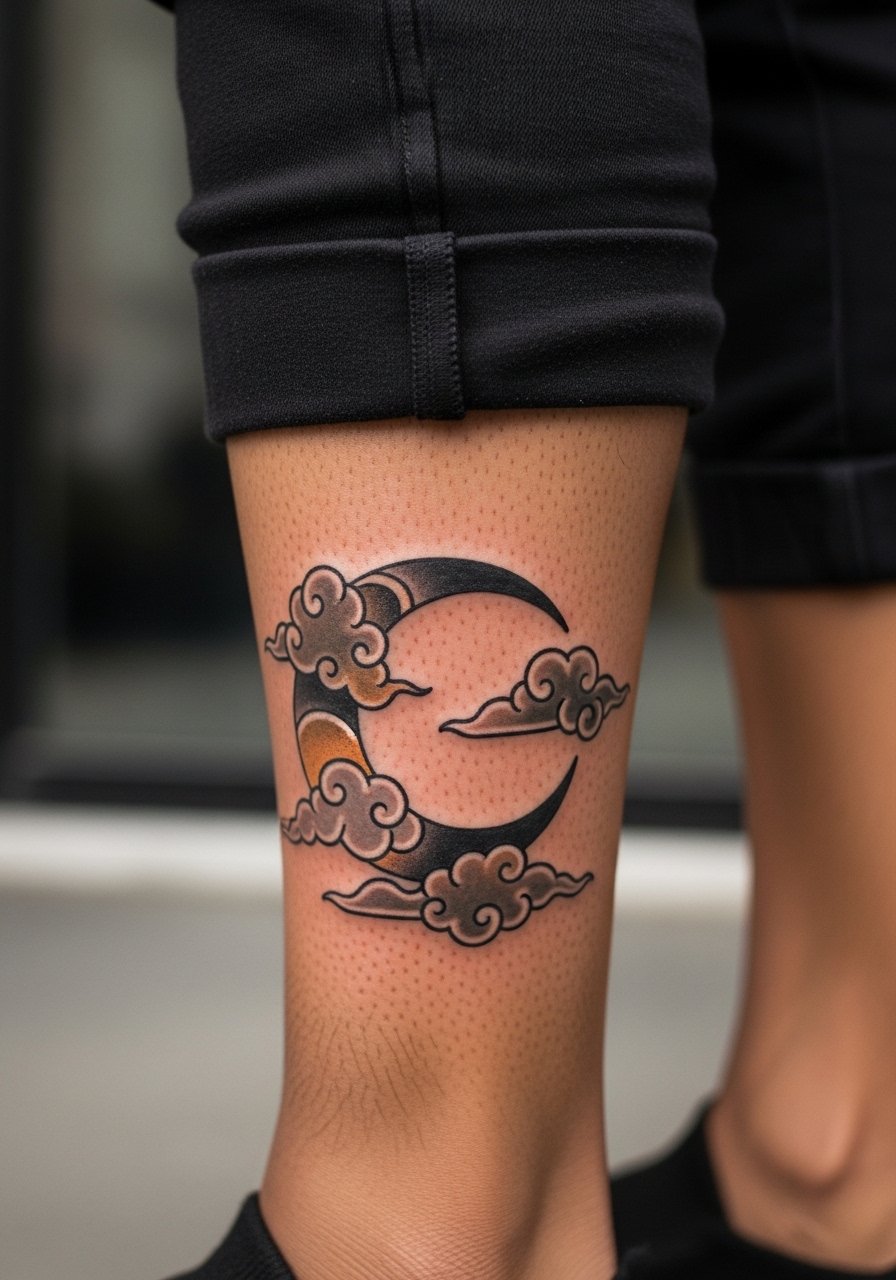
Calf pieces let artists play with scale and color without the same friction issues as ankles. This style benefits from bold outlines and saturated color blocks that age into a nice patina. The session is longer for color layering and can require multiple appointments. If you want a playful cloud shape ask for clear border lines and avoid tiny dot highlights that fade fast. Show it off with rolled joggers or skirts above the knee, like a pair of rolled jogger pants for casual days.
11. Ignorant Style Half Moon Scribble (Ribcage)

Ribcage tattoos are notorious for pain, and ignorant-style scribble can feel more intense because the hand repeatedly layers contrast. Artists are split on numbing cream use here, with one group saying it helps anxious clients and the other cautioning it hides subtle feedback during depth work. Name both positions to your artist and ask their preference before booking. This placement also needs a coil of time for healing because of clothing friction, so plan sessions when you can rest and avoid tight waistbands.
12. Fine Line Half Moon Phases Sequence (Spine)
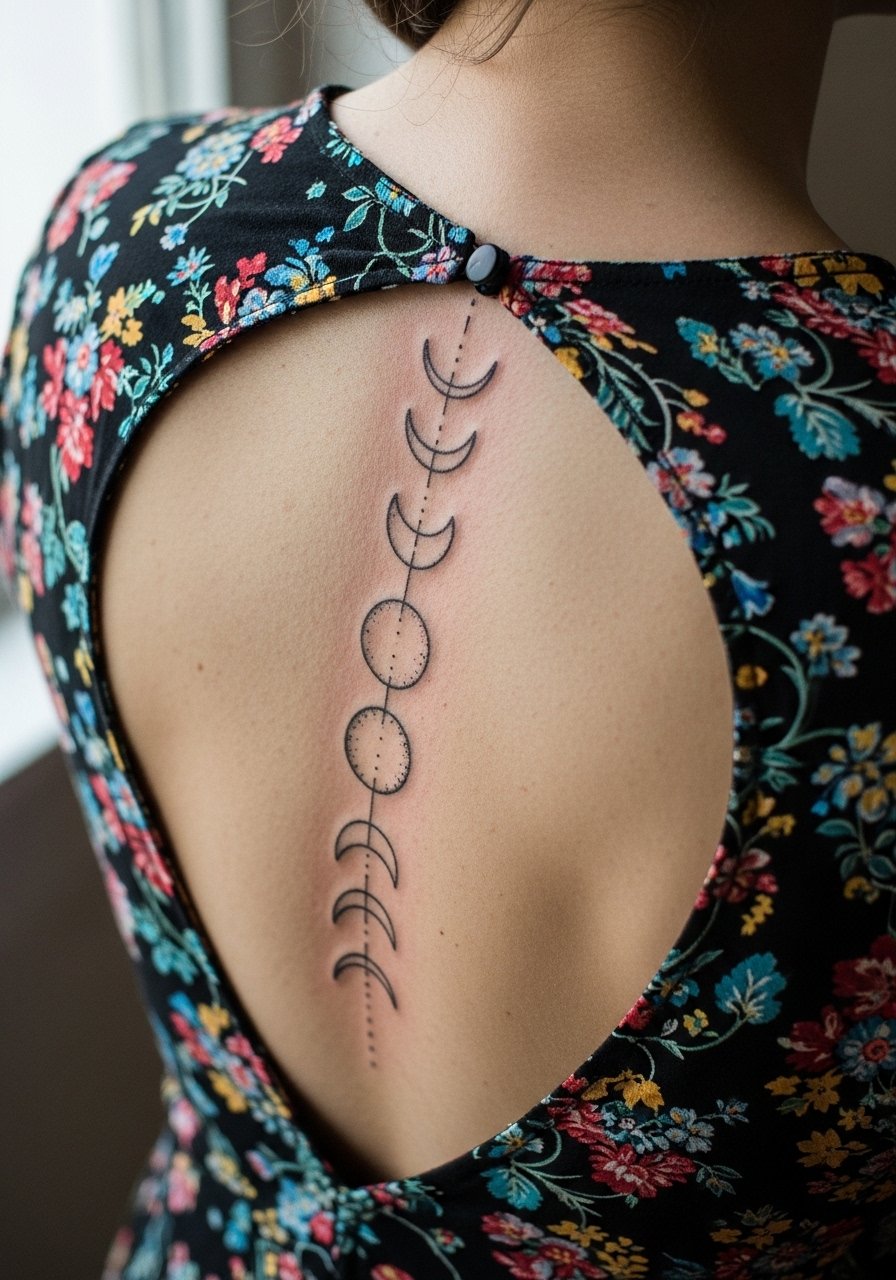
Spine sequences tell a story when spaced correctly, but skin along the spine moves and can make dense detail blend into soft shading over time. The aging fix is to widen spacing between phases and to keep each moon at a consistent, slightly larger scale than a micro dot. Sessions are usually a single longer appointment for a four-inch vertical band. For nights out, pair the healed work with an open back dress so the progression reads uninterrupted.
13. Micro Half Moons as Stackable Phases (Inner Forearm)

Stacking micro moons is a neat way to build a sleeve over time, but the trap is crowding them too close so their edges fuse later. Ask your artist for defined negative space between each moon and for slightly varied sizing to create rhythm. Inner forearm sessions are low on pain and easy to touch up. For a day-to-day look roll a cream linen button down sleeve to the elbow so the stack gets natural attention without loud prints.
14. Geometric Crescent That Follows Nape Curve (Nape)

Designs that track body curves look more custom when the artist plans the arc to match your posture. The nape needs clear notes in consultation about hairline and how often you wear your hair up. A mistake is using a perfectly symmetrical template without accounting for the natural tilt of one shoulder. Sessions here are quick but require careful stencil placement. Ask for slight scale increases so the geometry survives the first year without blurring.
15. Dark Skin-Specific High-Contrast Shaded Half Moon (Forearm)
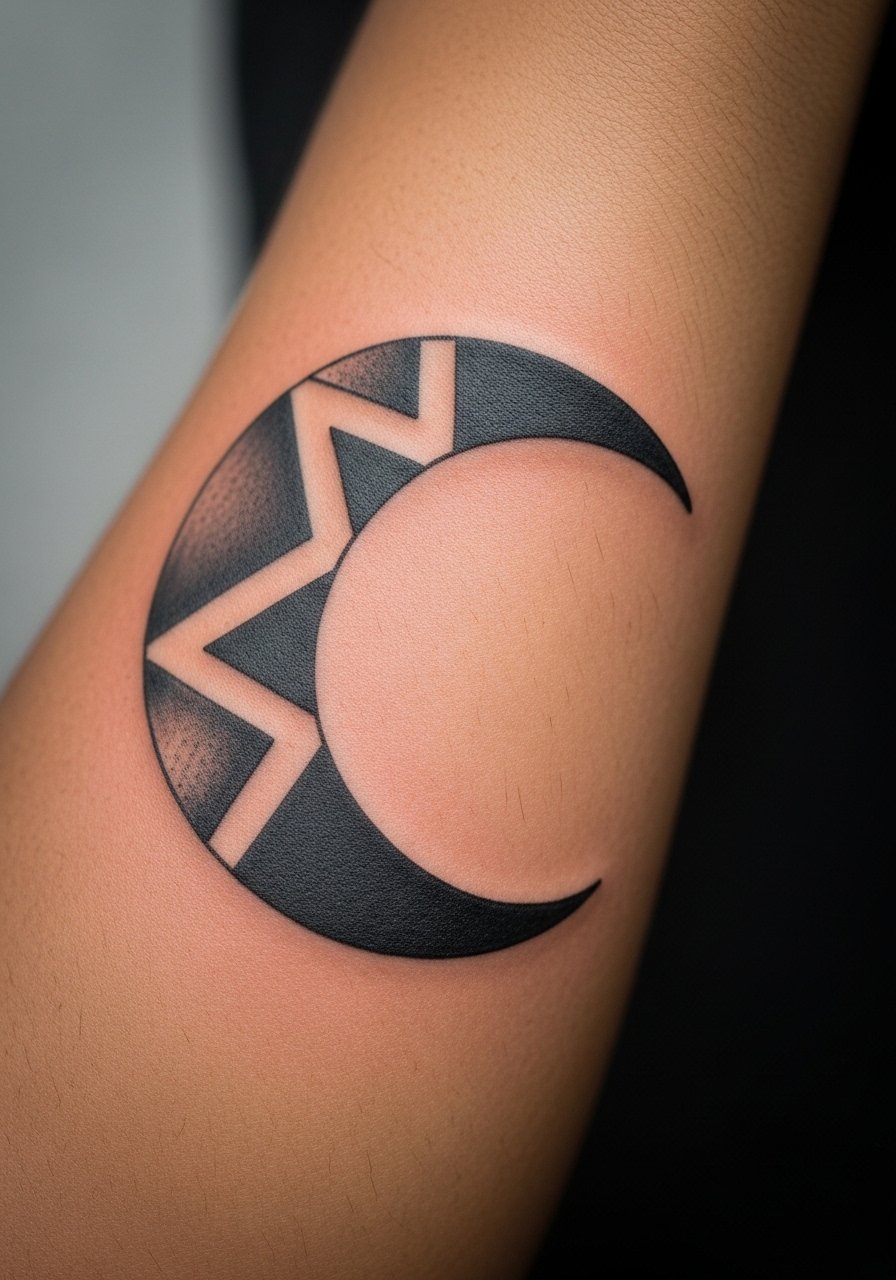
Darker skin tones benefit from stronger saturation and high-contrast edges so details read well in photos. A frequent mistake is copying a light-skin reference without adapting contrast and fill. Tell your artist you want heavier saturation and clear borders to maintain visibility in photos as the piece settles. Touch-ups are less about line clarity and more about re-saturating midtones, so plan to check the piece within 6 to 12 months. Forearm placement keeps it visible and easy to protect from sun.
16. Half Moon Paired with a Personal Constellation Map (Shoulder)

Pairing a crescent with a personalized constellation adds a bespoke layer without becoming literal. Bring coordinates or a birth chart print to the consult so the artist can scale stars to match your chosen map. The common issue is crowding many small stars near the moon so the map becomes noisy in photos. A shoulder placement lets the lines breathe and keeps the map readable with moderate session time. For easy showing try tanks that leave the shoulder exposed to frame the map.
17. Summer Ankle Moon and Humid Climate Healing Timeline (Ankle)

Ankle tattoos are prone to sweat and friction during hot months, which can soften very fine detail as the scabs form and shed. If you live in a humid climate ask your artist for slightly bolder lines and a conservative scabbing strategy. A realistic timeline is more frequent checks during the first two weeks and a touch-up at six months for micro pieces. For the session wear cropped pants or shorts that you can pull up without rubbing the area to keep the first week tidy.
Frequently Asked Questions
Q: Will a fine line half moon on my wrist need touch-ups faster than a bolder crescent?
A: It depends on placement and daily habits. Fine line work on the wrist sits near frequent washing and sun exposure, so touch-ups at six to twelve months are common. Ask your artist for slightly heavier line weight if you want less frequent maintenance.
Q: Are dotwork crescents a better option than watercolor for long-term color retention?
A: In my experience dotwork usually holds detail longer because it relies on black pigment placement rather than fragile pastel blends. Watercolor can look softer over time, which some people prefer. For longevity choose dot anchors or subtle outlines within the watercolor to keep shape.
Q: How should I dress to the studio for a thigh or ribcage half moon session?
A: Wear loose shorts or a skirt for thigh work and a cropped athletic top or zip-up hoodie for ribcage sessions so the artist can access the area without you changing outfits. Comfortable, easy-to-shift clothing makes longer sessions less awkward.
Q: I have darker skin and want a small crescent. What should I ask the artist to ensure it photographs well?
A: Ask for higher contrast, stronger saturation, and clear negative space around the crescent so edges read in photos. Request portfolio examples of healed work on similar skin tones and ask where they recommend placing heavier fills or borders.
Q: Does Saniderm or dry healing work better for fine line wrist tattoos in humid weather?
A: People split into two camps. One group prefers Saniderm for a controlled, moist healing window that limits excess scabbing. The other camp favors dry healing to let scabs form naturally. In humid climates some artists lean toward breathable balms and shorter occlusive windows, so ask your artist which method they use and why.
Q: Can I style a collarbone crescent for date nights without covering the tattoo?
A: Yes, an off-shoulder top or a delicate layered necklace set keeps attention on the collarbone crescent without covering it. Try an off shoulder top that sits just below the design so it frames rather than hides the tattoo.