Fine line henna-style hands are everywhere on Pinterest, and they look gorgeous fresh. The reality is that hands get washed constantly, guest-spot bookings fall through, and the same thin lines that pop on lighter skin can disappear faster on darker tones. I picked 17 henna tattoo hand ideas that balance what trends online with what actually heals and holds up, plus practical notes to bring to your consult.
1. Fine line mandala on the palm
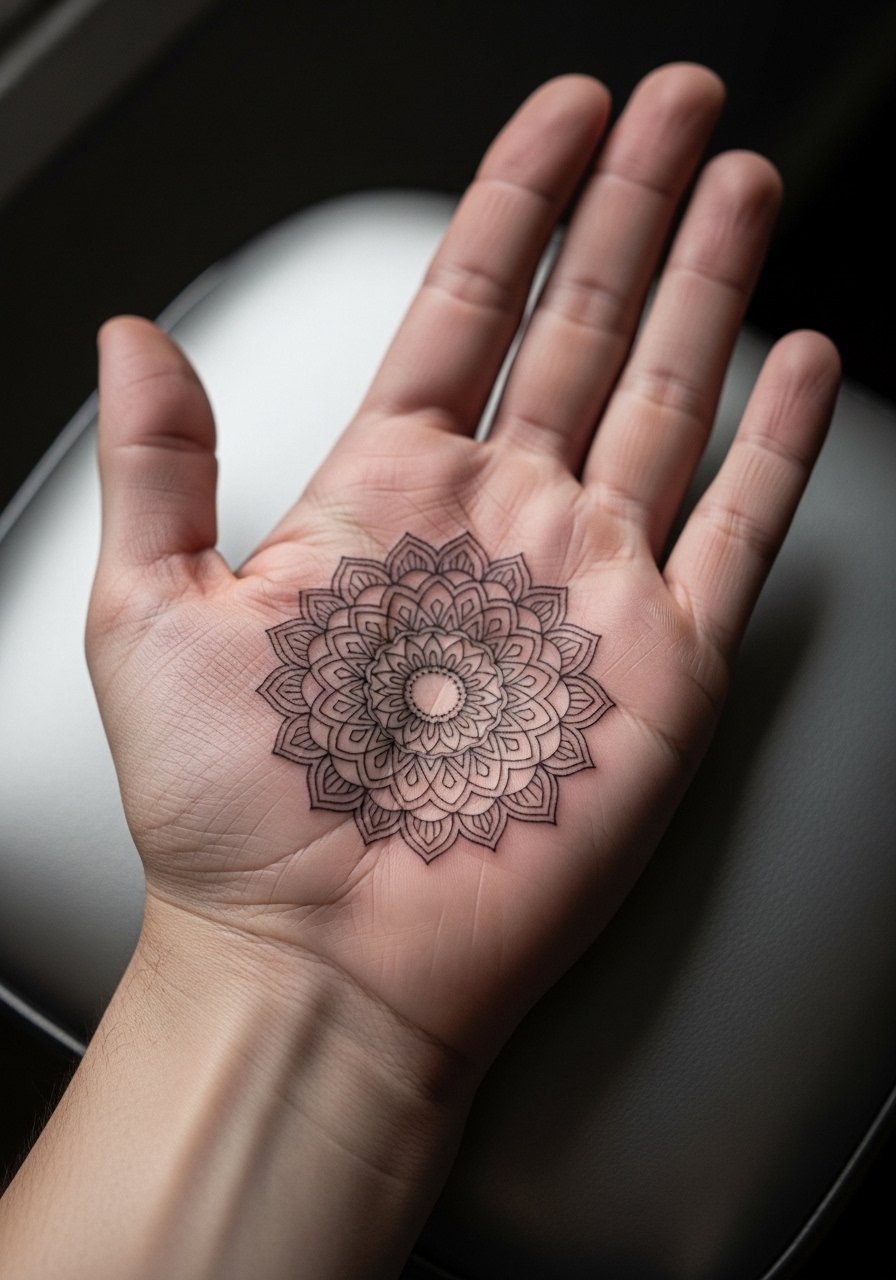
I've seen palm mandalas done two ways. One is super-tight, single-needle detail meant to mimic henna. The other opens the radial spaces slightly so the lines have room as the palm wears. Tell your artist you want spacing between the radial rings and slightly heavier linework toward the center. The common mistake is asking for hairline detail and then wondering why the design blurs after six months. Pain is moderate because the palm has many nerve endings, and session time is usually under two hours if you keep the piece small. Expect touch-ups sooner than forearm work, and wear a sleeveless top to the appointment so the artist can keep the hand fully visible when they stencil. boho linen blouse women and thin ring stacks pair well for photos.
2. Floral vine wrapping fingers
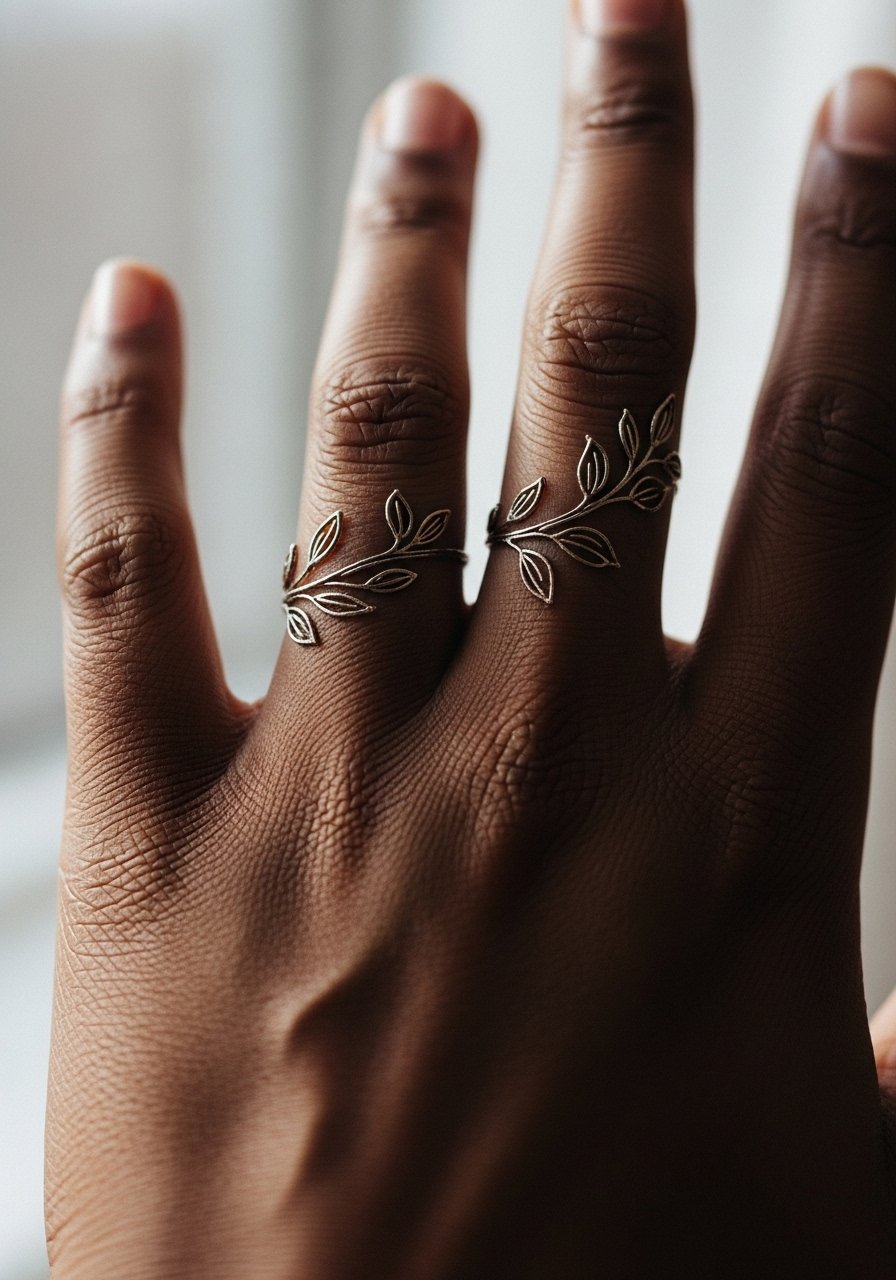
Fair warning, fingertip and finger-base work sees the most abrasion from daily tasks. I recommend asking for a slightly bolder single-needle line rather than hairline detail so the vine still reads at six months. The session is quick, thirty to sixty minutes depending on how many fingers you include. A common mistake is bringing multiple references with different line weights and expecting the artist to mash them together. For the session wear no rings and keep nails bare. For showing this off, pair with a neutral nail polish set and a statement ring on the opposite hand.
3. Dotwork paisley on the back of hand
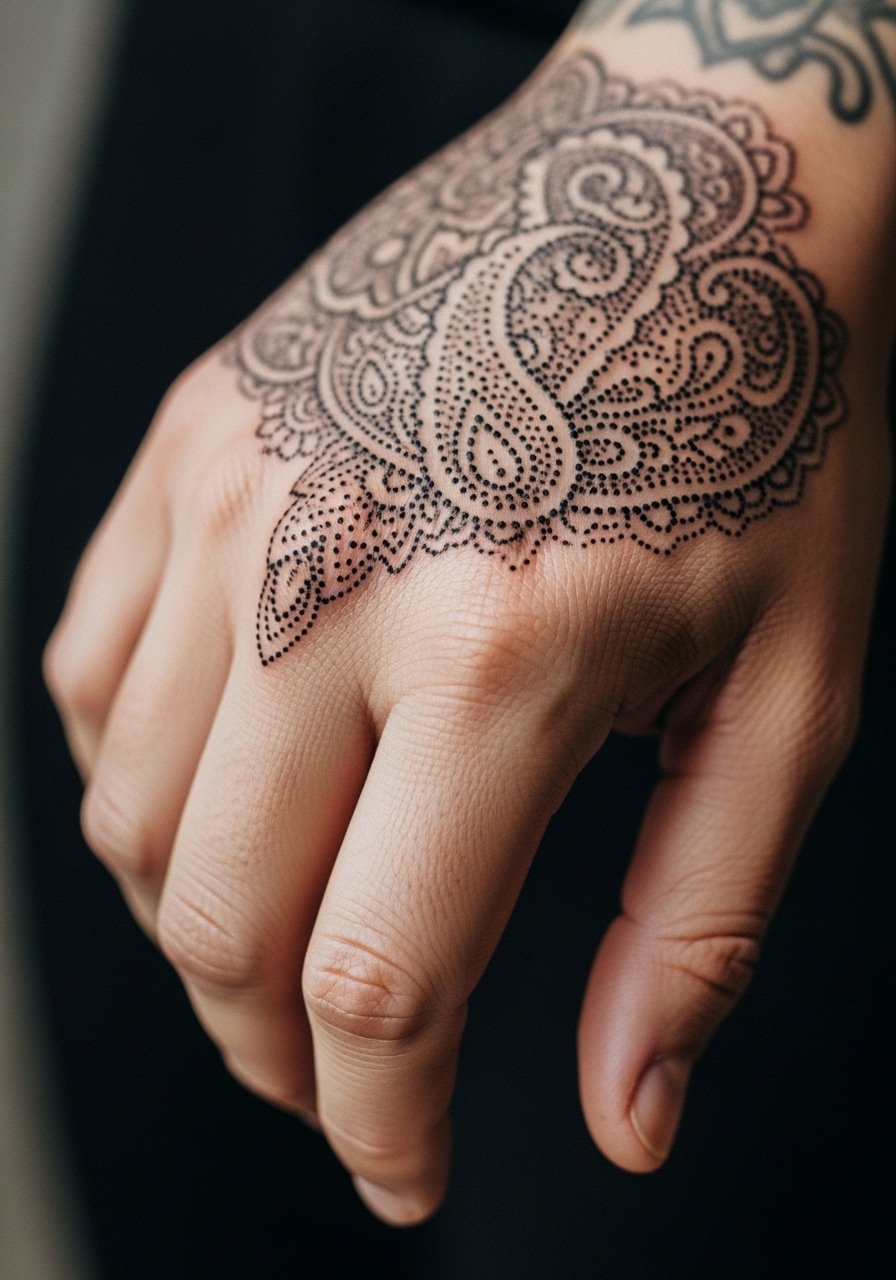
Dotwork paisleys give texture without relying on thin outlines that can fade. If you have medium to dark skin, ask the artist to increase dot density in shadowed areas so contrast holds over time. The session can take longer than simple linework, often one to two hours, because stippling builds slowly. A mistake people make is compressing the paisley into too small a space. The design needs breathing room or stipple becomes muddy. For wardrobe, clean button-downs with cuffs undone frame the back-of-hand texture nicely. Slip into a crisp cotton button down to photograph the detail.
4. Minimalist lotus on wrist extending to palm
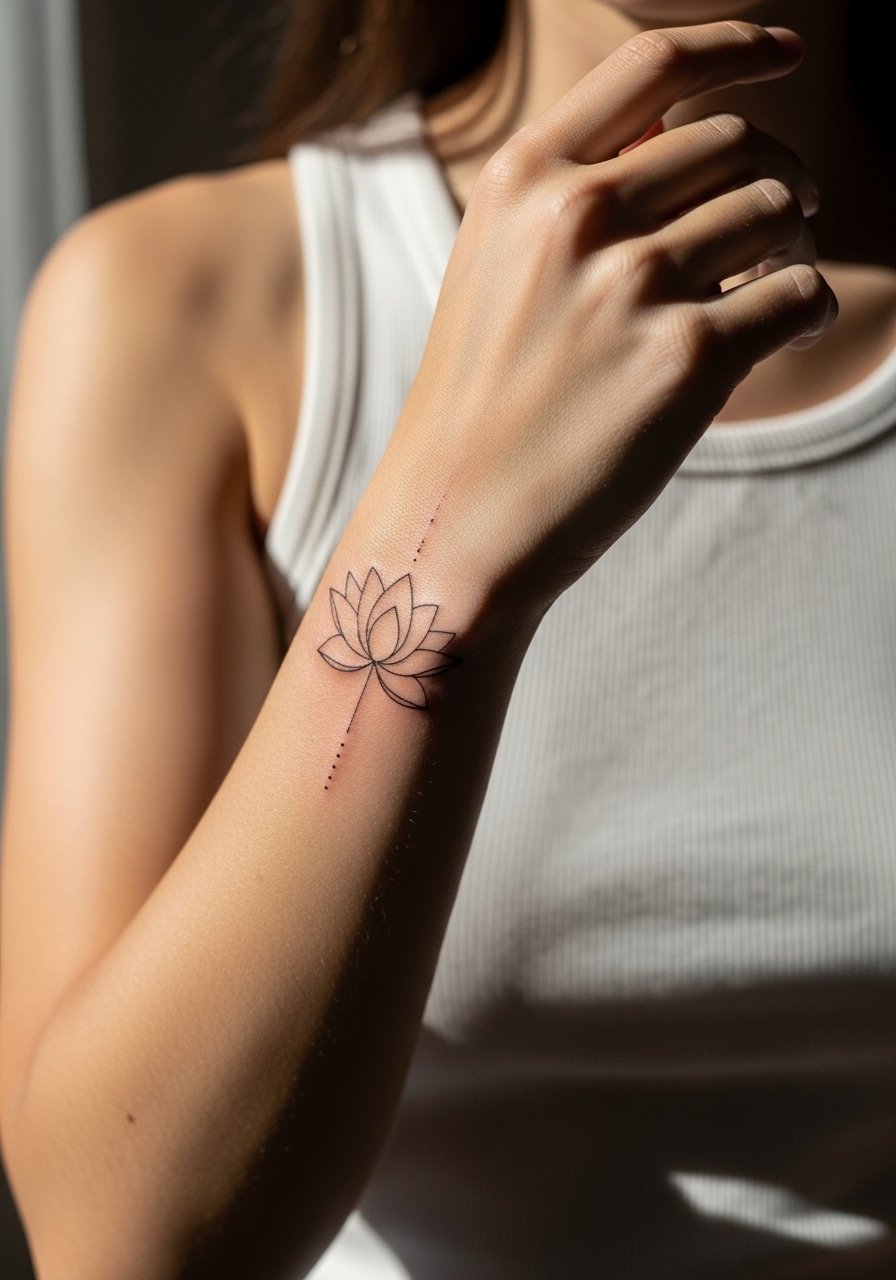
A wrist-to-palm lotus reads elegant when the lines are kept simple and the center is slightly bolder. The risk here is stretching if weight fluctuates or if you sleep with pressure on that area. During consult, ask for a small test stencil and to avoid hairline spokes in the center. Session time is usually under an hour. The debate around fine line longevity comes up here because some artists advocate thicker lines for wrists. Name the trade-off you prefer at booking. For showing this off, rolled-up sleeves and a thin gold ring stack keep attention on the lotus without crowding it.
5. Geometric henna-inspired bracelet on wrist
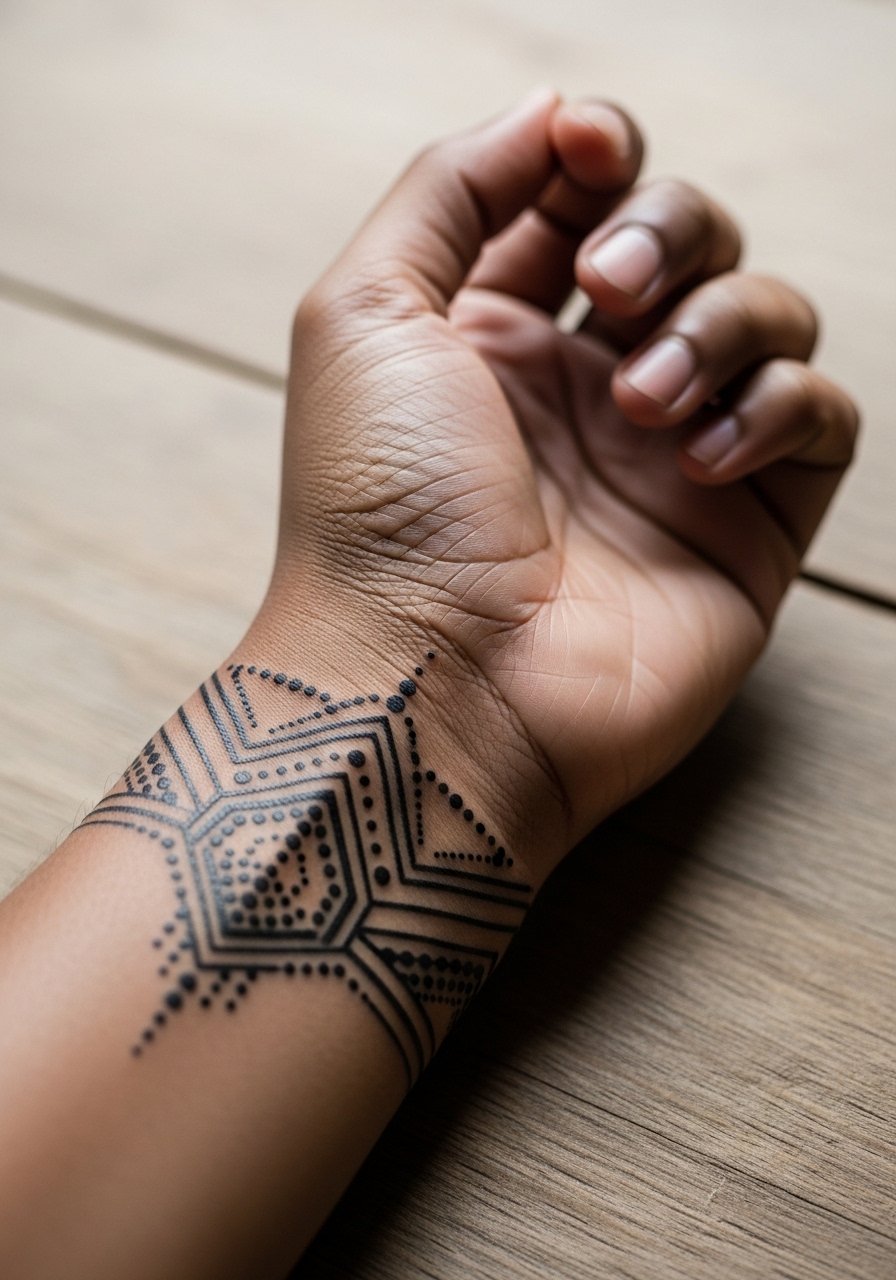
Bracelet cuffs are great for daily wear because they function like faux jewelry. The most common error is making the pattern too tight for the wrist circumference. Ask your artist to map the cuff while you make a fist so they can check how the repeat looks in motion. Pain is low to moderate and a single-session cuff often takes forty-five minutes to an hour. The Saniderm versus dry-heal argument is relevant here. One camp says protective film speeds up clean healing on wrists and prevents scabbing. The other camp worries film traps sweat and bacteria on palms and wrists. Ask your artist which method they use and why. For styling, rolled cuff denim shirts photograph well with geometric cuffs, try a rolled cuff denim shirt.
6. Peacock feather outline on fingers
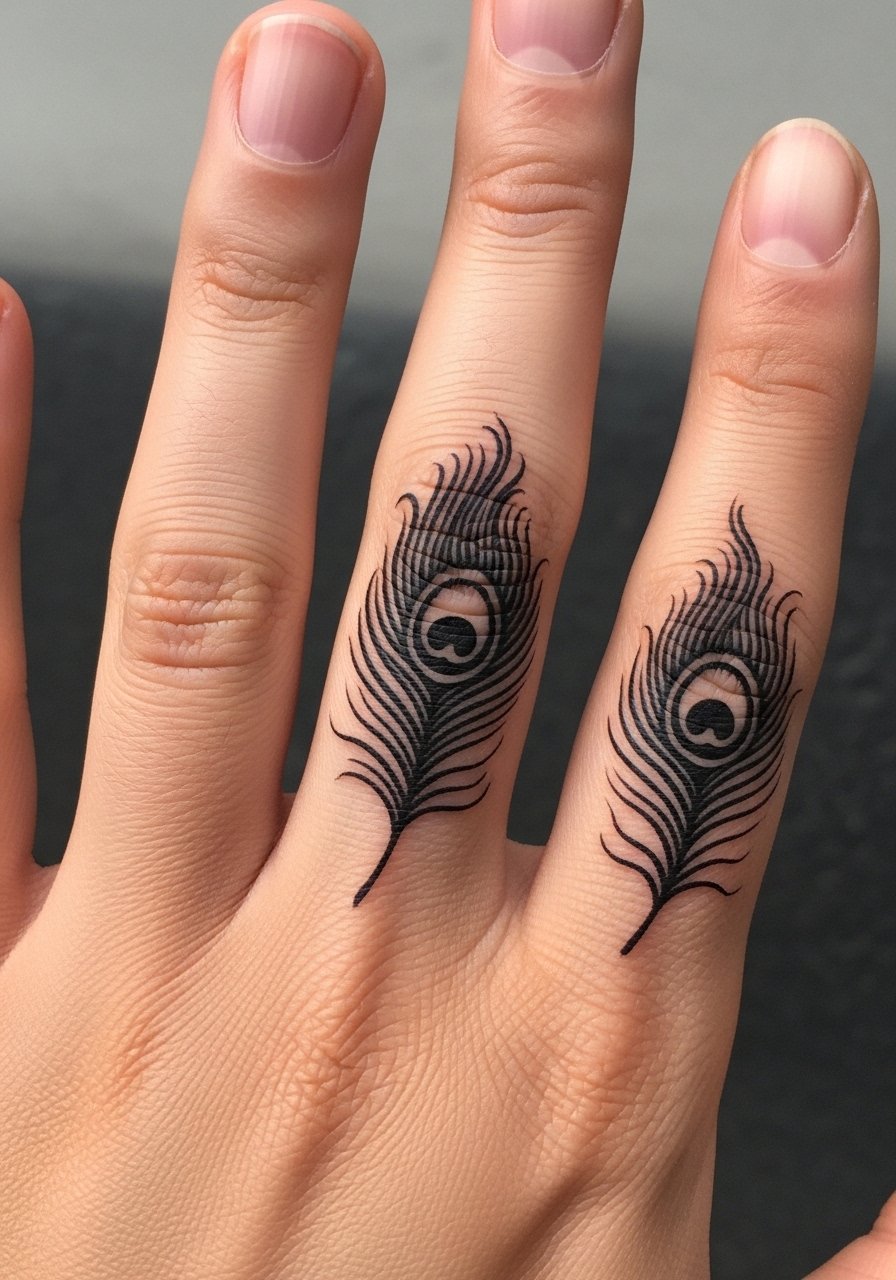
This outline reads like mehndi without heavy fill and it moves with finger gestures. The big mistake is asking for filigree too close to the knuckle where flex causes the ink to spread. Tell your artist you want the tip delicate and the shaft slightly thicker for contrast. Pain on the fingers can spike near the knuckle, so expect sharp moments, but the session is typically brief. For session wear, remove all rings and bring gloves only if you need them after. After this section the product block below lists a few items that help with session prep and early healing.
Pre-Session Essentials
The wrist, fingers, and palm pieces above need different prep than larger forearm work, so a few targeted items smooth out the session and the first week.
-
Frida's Tattoo Balm. A lighter, non-greasy option that several people prefer for hand areas because it absorbs without leaving a heavy film while at a desk.
-
Ink-Ice Spray. Handy for cooling swelling after a tight finger or knuckle session without wet mess from ice packs.
-
Australian Tea Tree Salve. Lightweight antibacterial properties can help during sweaty summer weeks on wrist work, but try it cautiously the first week.
-
H2Ocean Spray. A no-touch spray some people use during showers to avoid rubbing delicate fine line wrist edges.
-
Thin-tip applicator cones. Useful for pre-session henna mockups or for artists doing micro dotwork on fingertips, the thin tip helps maintain predictable dots and lines.
7. Spiral mandala center palm radiating to fingers
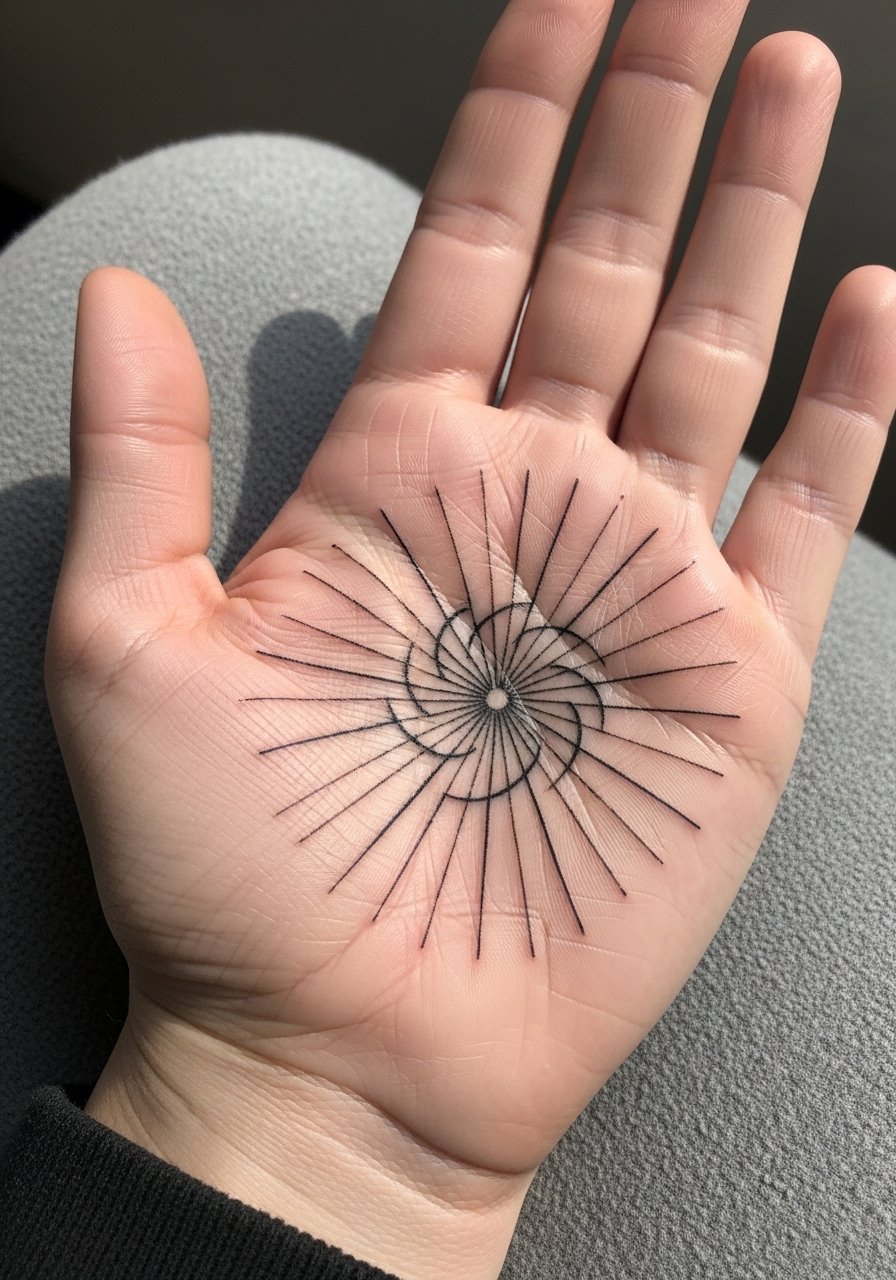
There is a hypnotic flow to spiral mandalas that activate when you move your hand. For longevity, ask the artist to leave slightly more space between dense spirals near the palm center. The common aging issue is dense fills merging into a darker patch by year two. Tell the artist you prefer spacing for future-proofing. Expect moderate pain across the palm with a session of one to two hours for a medium-sized spiral. For show-off styling, flowy sleeves rolled to the elbow highlight radial symmetry and a flowy sleeve crop top pairs well in photos.
8. Abstract floral paisley on knuckles
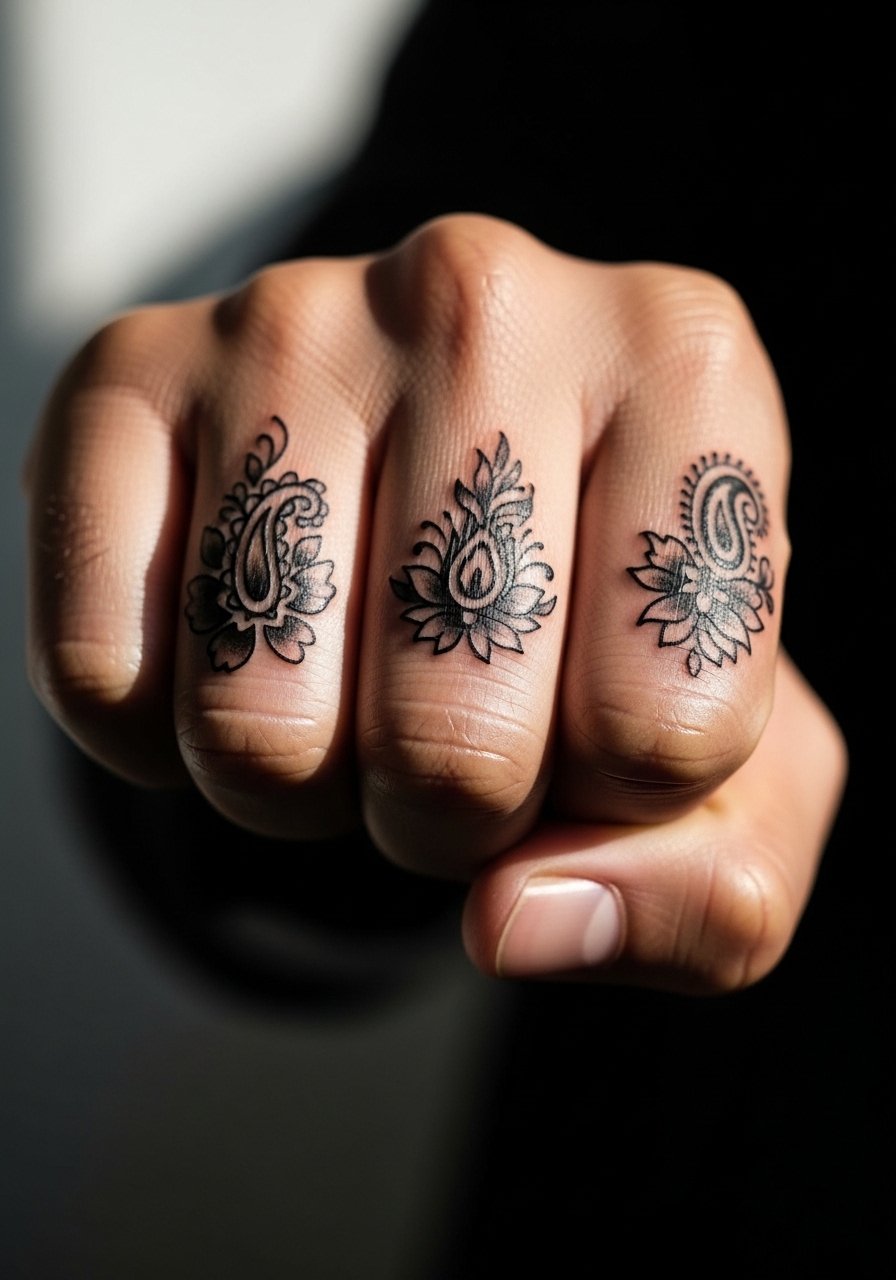
Knuckle work is visible but vulnerable. The biggest mistake is going too detailed on a tiny canvas. Ask for simplified motifs with negative space between elements. Knuckles see constant movement, so lines can soften within a year. Pain is high on knuckles, and sessions are short but intense. Boxers or manual laborers should consider thicker outlines or alternative placements. If you need a practical take, one knuckle-only approach I like uses a single paisley thumb-to-index and micro dots instead of full shading.
9. Ring-like patterns at finger bases

Ring tattoos at the finger base act like permanent jewelry without the bulk. A common error is setting the ring too low where it rubs against wedding bands. During consult, show your daily ring habits and ask the artist to place the band where it avoids constant contact. These micro pieces heal fast but are the first to thin with friction. Session time is brief. For showing off, pair the look with a statement ring gold on the opposite hand and neutral nails.
10. Starburst center palm with vine trails
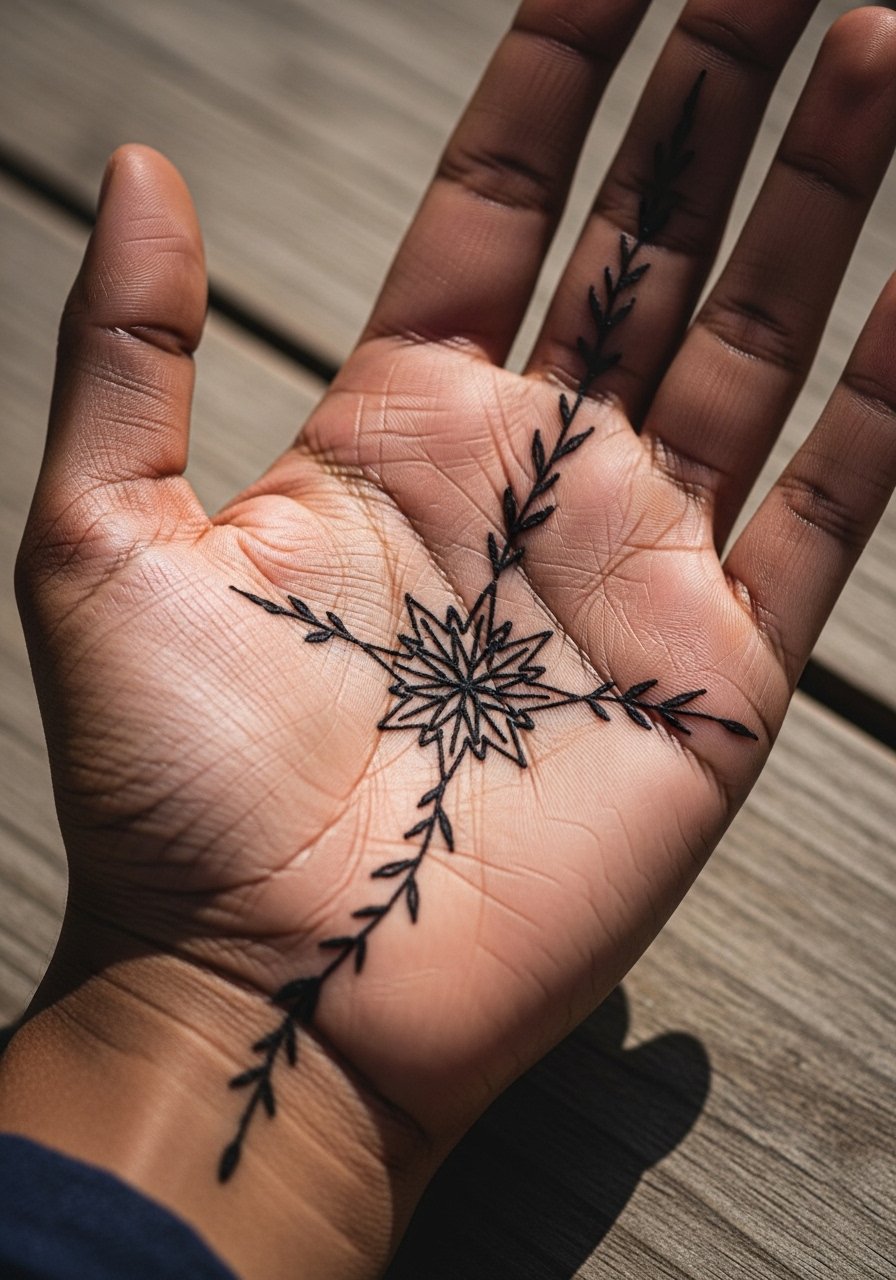
Starbursts make a bold central statement and let you personalize the trailing vines with initials or tiny symbols. The usual mistake is making the trails too thin where they meet high-friction zones. Ask for slightly stronger stem lines where the design hits the palm edge. Expect moderate pain and a session that can stretch to ninety minutes for medium coverage. Over time the center usually holds better than the trailing vines, so plan touch-ups for the edges.
11. Intricate lace cuff on inner wrist
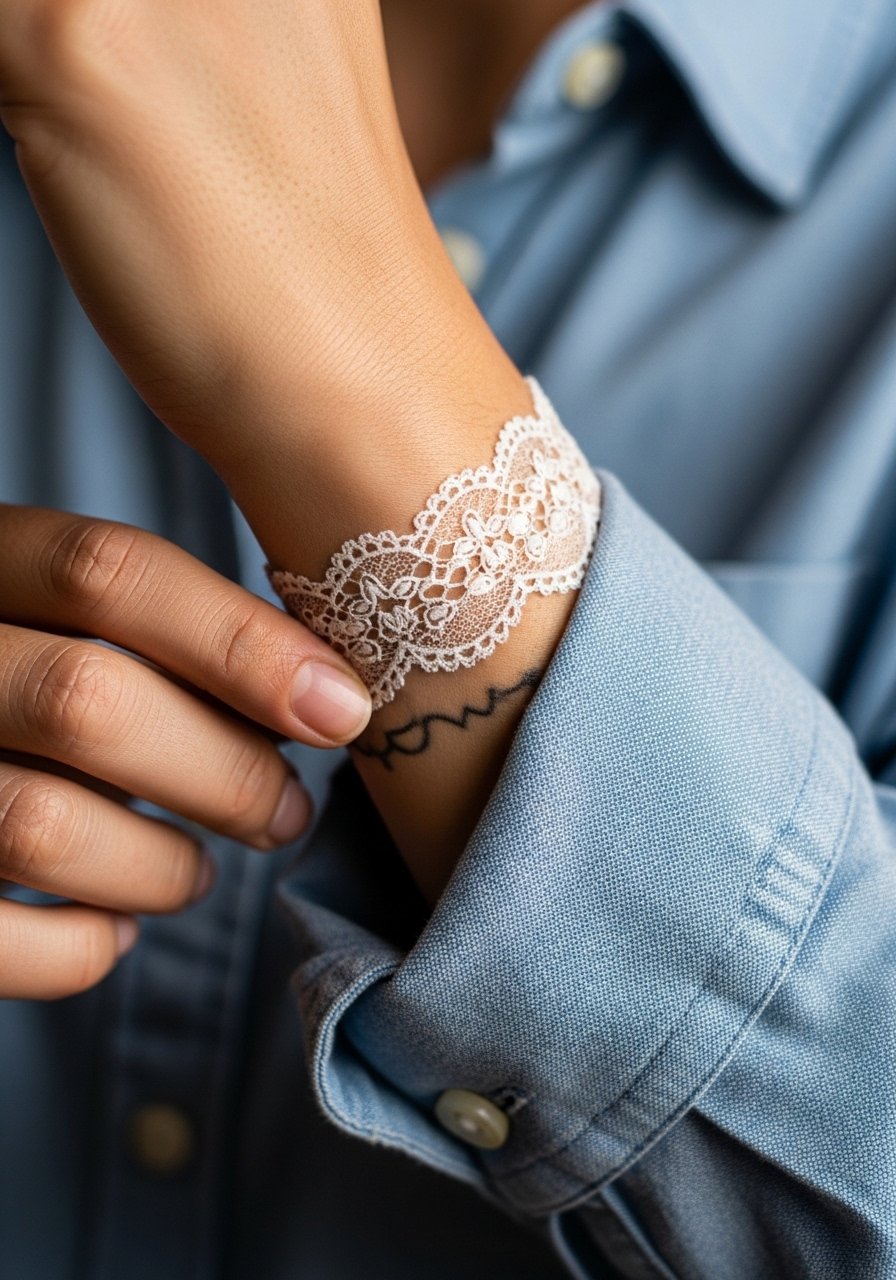
Inner wrist lace reads bridal-inspired without needing a full sleeve. The biggest mistake is crowding tiny teeth and loops into a narrow band. Request simplified negative space and slightly thicker connector lines so the lace breathes. Pain is moderate and sensitive on the inner wrist. For session wear, a button-down you can pull aside is ideal. For showing off, try stacked bangles opposite the tattoo and a thin bangle stack silver.
12. Micro dots and swirls on fingertips
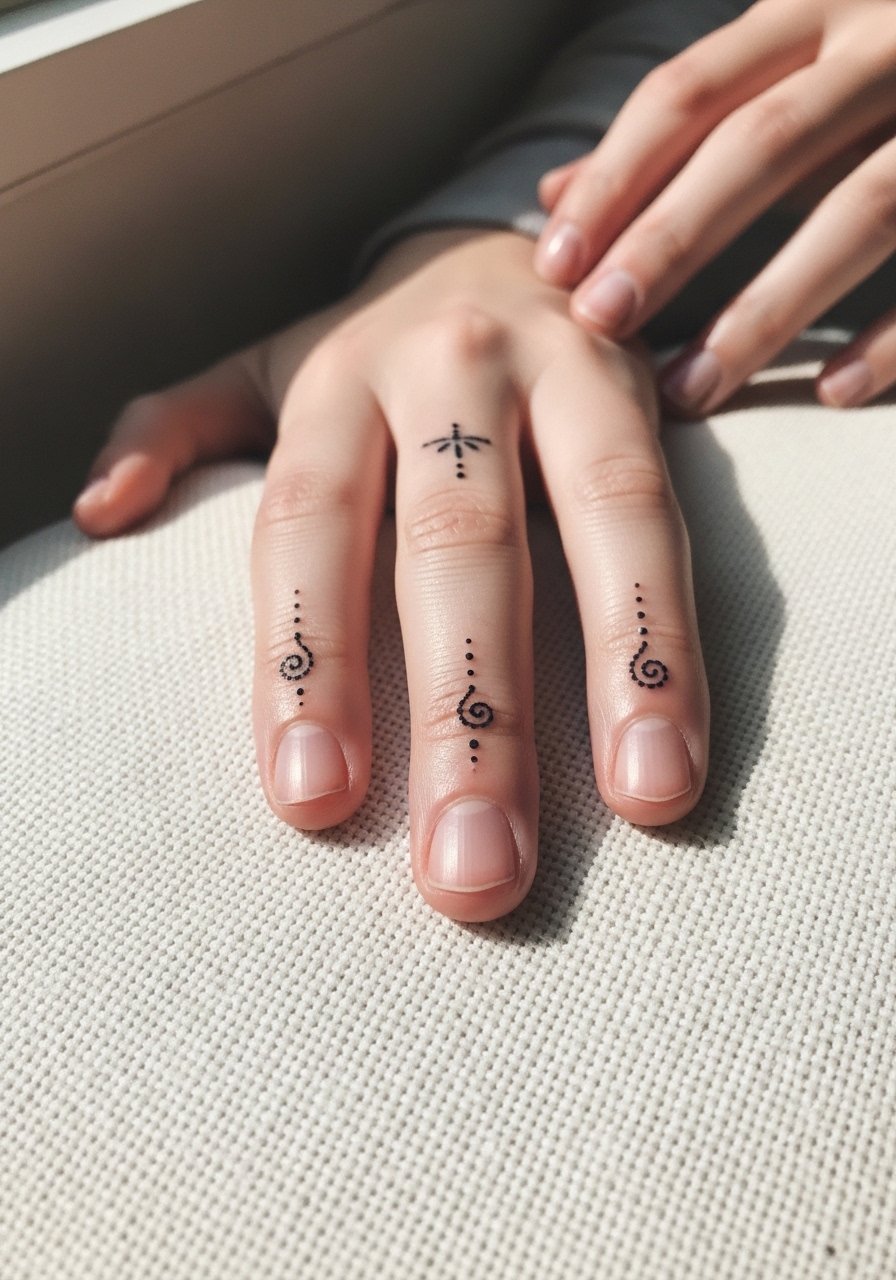
Fingertip dots are festival-ready but they fade the fastest. If you want longevity, ask for slightly denser dot clusters and avoid placing dots directly on the pad where the skin sheds more. Sessions are very short. The usual regret is expecting fingertip work to last like forearm ink. Think of these as the most ephemeral permanent pieces and plan a touch-up at year one if you want them to persist.
13. Central flower radiating spirals on palm
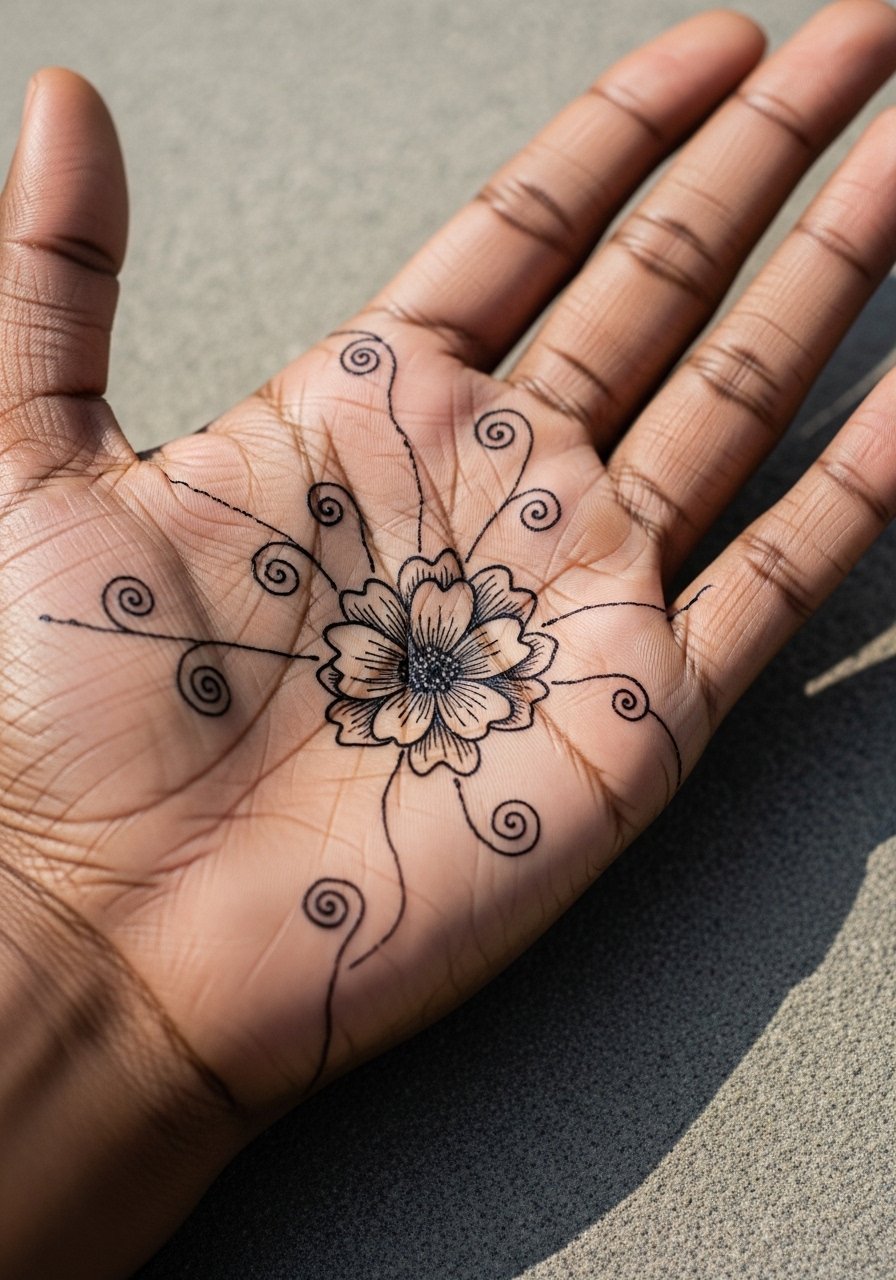
A central flower with spirals captures that classic mehndi focus while keeping the palm breathable. When you consult, bring a photograph of the exact petal spacing you want because artists will scale petals differently. A frequent mistake is overscaling the bloom so it crowds finger bases. Pain is similar to other palm work. For session comfort, wear a sleeveless top so the artist can reposition your arm easily. To photograph the healed piece, neutral tones and layered thin rings work best.
14. Abstract henna-style knuckle vines
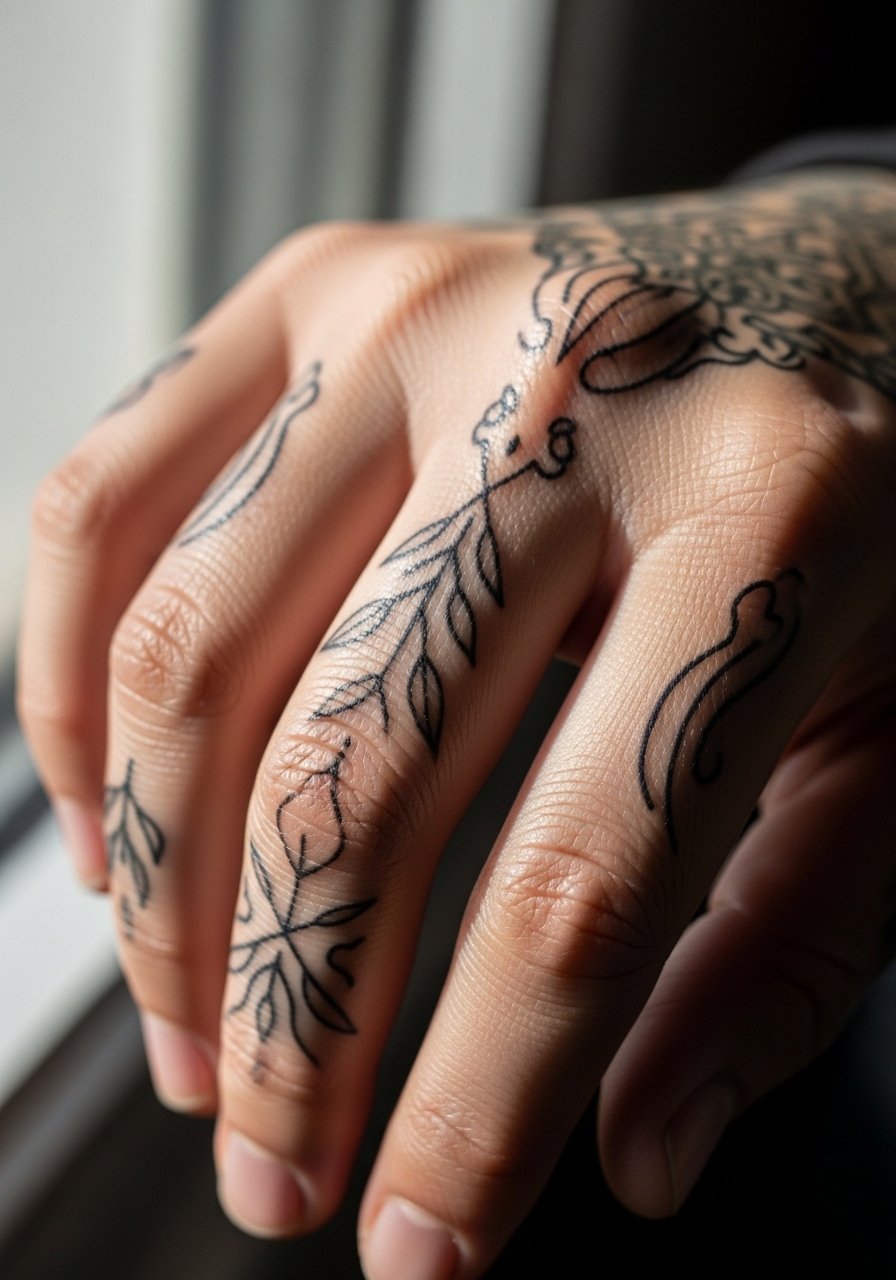
Abstract vine knuckles keep the look organic while avoiding dense shading that breaks down quickly on knuckle skin. Tell the artist you want negative space between vine leaves so the pattern still reads when you clench. Knuckle skin moves a lot, so thicker connectors help. Pain is sharp but quick. If your job involves heavy gripping, consider moving the design to the base of the finger. For aesthetic pairing, fitted tanks frame fist views nicely.
15. Fingertip spiral accents for subtle gestures

Micro spiral accents are subtle and gesture-friendly. The session is short and the pain is minor because the area is small, although the tip of the finger can sting. The common mistake is wanting too many spirals close together, which speeds fading. Ask for single spirals spaced out and request denser dot centers to aid longevity. They photograph best with short nails and cream blouses for soft contrast.
16. Knuckle paisley for practical wearers

This option appeals to people who need their grip to remain functional. Keep the paisley shapes bold with minimal internal detail. Artists sometimes make them too fussy for the small knuckle canvas. Pain is high and healing needs close monitoring because scabs on knuckles can catch on clothing. If you box or handle tools daily, request a mockup or temporary henna test to see how the pattern moves with a closed fist.
17. Asymmetric pair: one hand full mandala, the other micro dots
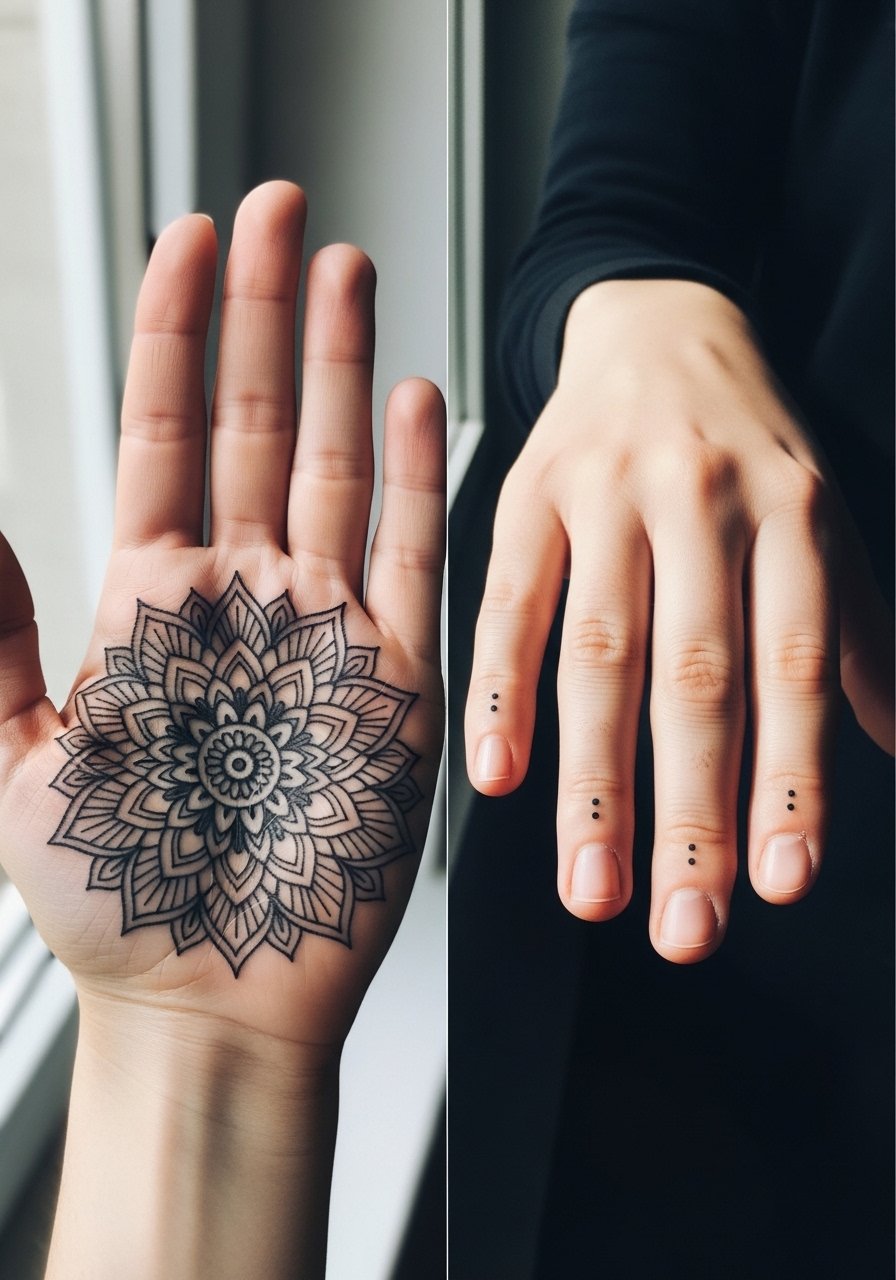
Asymmetry is an underused strategy for balance. One hand with a full mandala and the other with micro dots gives presence without overcommitting on both sides. The practical win is you can test how a large palm piece ages while keeping the opposite hand low-commitment. When you book, ask for the artist to do a temporary henna mockup on both hands so you can live with the placement for a day. This approach also solves the regret some people feel when both hands age differently.
Frequently Asked Questions
Q: Will fine line palm or wrist work blur faster than bolder blackwork on hands?
A: Fine line variants often soften faster on high-use areas like palms and wrists. One camp says thicker lines age better and need fewer touch-ups. The other camp argues that precise depth and spacing let fine line settle cleanly. In practice it depends on your daily friction, sun exposure, and the artist's spacing choices. Expect touch-ups sooner for hairline work.
Q: How do I book a reliable guest spot without losing travel money?
A: Use verified booking platforms and ask for a clear deposit that is refundable or transferable if the host cancels. Many people limit deposits to twenty percent for guest spots. Also check recent threads in tattoo communities and filter recent reviews for cancellations before committing travel.
Q: My hand tattoo seemed to vanish on darker skin after a few months. What helps contrast?
A: Artists who work regularly on melanated skin will increase dot density or use heavier linework in key areas to preserve contrast. Ask for a test patch or a temporary henna mockup from the same artist so you can see how spacing and saturation translate before committing.
Q: Do I need to use protective film like Saniderm on wrist and hand work?
A: Artists split into two camps. One group prefers protective film for clean healing and reduced scabbing. The other group worries it traps sweat and bacteria, especially on palms. Follow the method your artist uses and raise any concerns during consult so they can adjust for your sweat levels and daily routine.
Q: What should I wear to a wrist or hand session to make the artist's job easier?
A: Wear clothing that gives clear access to the area. For wrist pieces, a rolled cuff denim shirt you can pull aside or short sleeves work well. For palm or finger sessions, remove rings and wear a sleeveless or loose-sleeved top so the artist can position your arm comfortably.
Q: How often will I need touch-ups on hand henna-style tattoos?
A: Plan for touch-ups more often than for forearm work. Many people schedule a touch-up around year one to maintain crispness, and then every one to three years after that depending on activity and sun exposure. The exact timeline depends on line weight, placement, and how gentle you are with the area.
Q: Are temporary henna mockups useful before committing to a permanent hand tattoo?
A: Yes. A same-artist temporary henna mockup is one of the best ways to test scale, placement, and how the design moves with your hand. It also reveals whether a placement will rub against daily items or if it catches on clothing. If a mockup shows a problem, adjust the stencil before inking.