
Fine line book tattoos have exploded online, but the designs that stay graceful over time are the ones planned with placement, spacing, and wardrobe in mind. Trends push tiny text and watercolor washes, and reality pushes back with touch-ups and careful sun care. Read these ideas for dainty book motifs that work now and still look intentional years from now.
1. Mini Open Book on the Inner Wrist
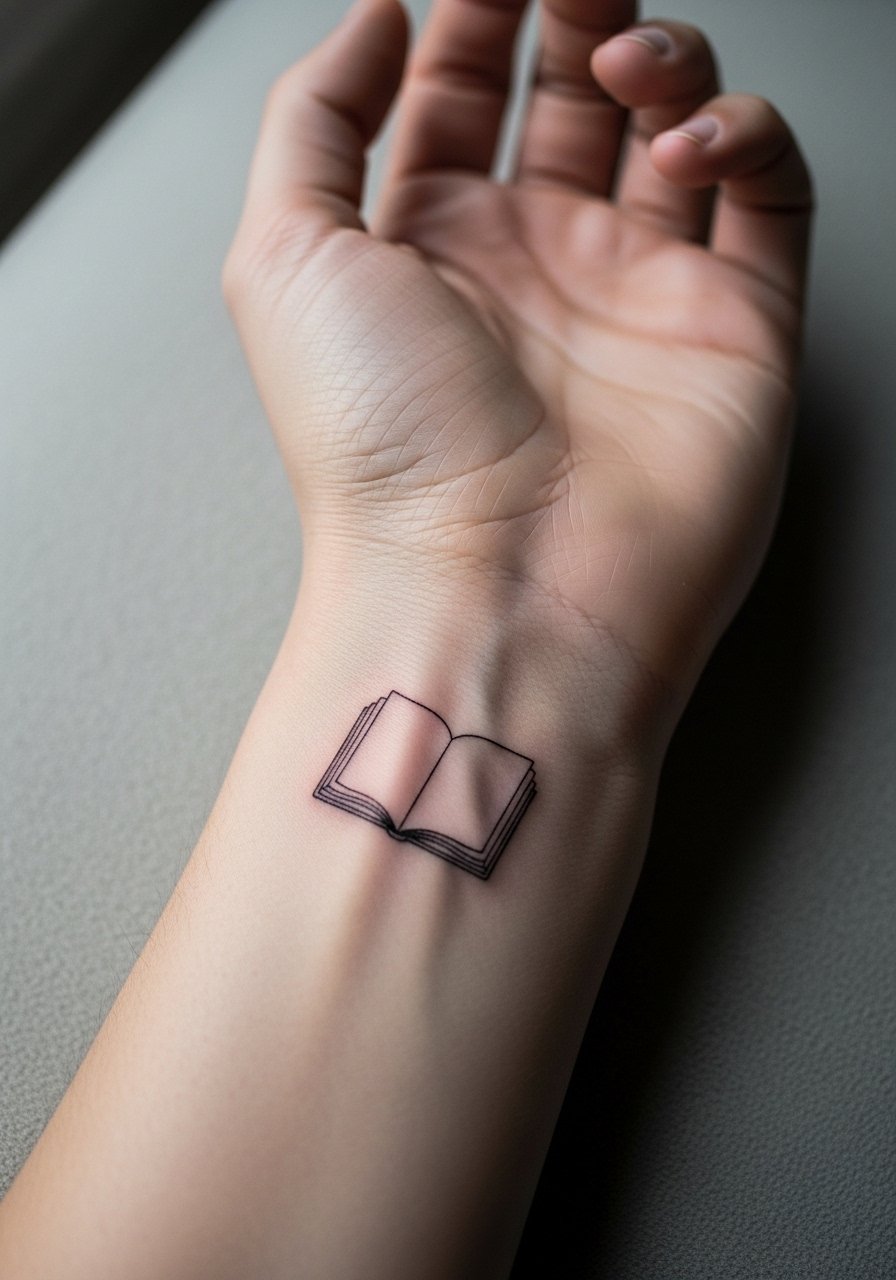
I’ve seen tiny open books hold their clarity best when the pages are suggested by two or three thin lines rather than dense miniature script. Tell your artist you want slightly heavier outer linework and very light inner page lines so the shape reads even as the inner marks soften. Expect wrist sessions to be quick and stinging, but manageable for most people. For showing it off, rolled-up sleeves and a thin chain pendant necklace frame the wrist without stealing attention.
2. Stacked Books on the Ankle
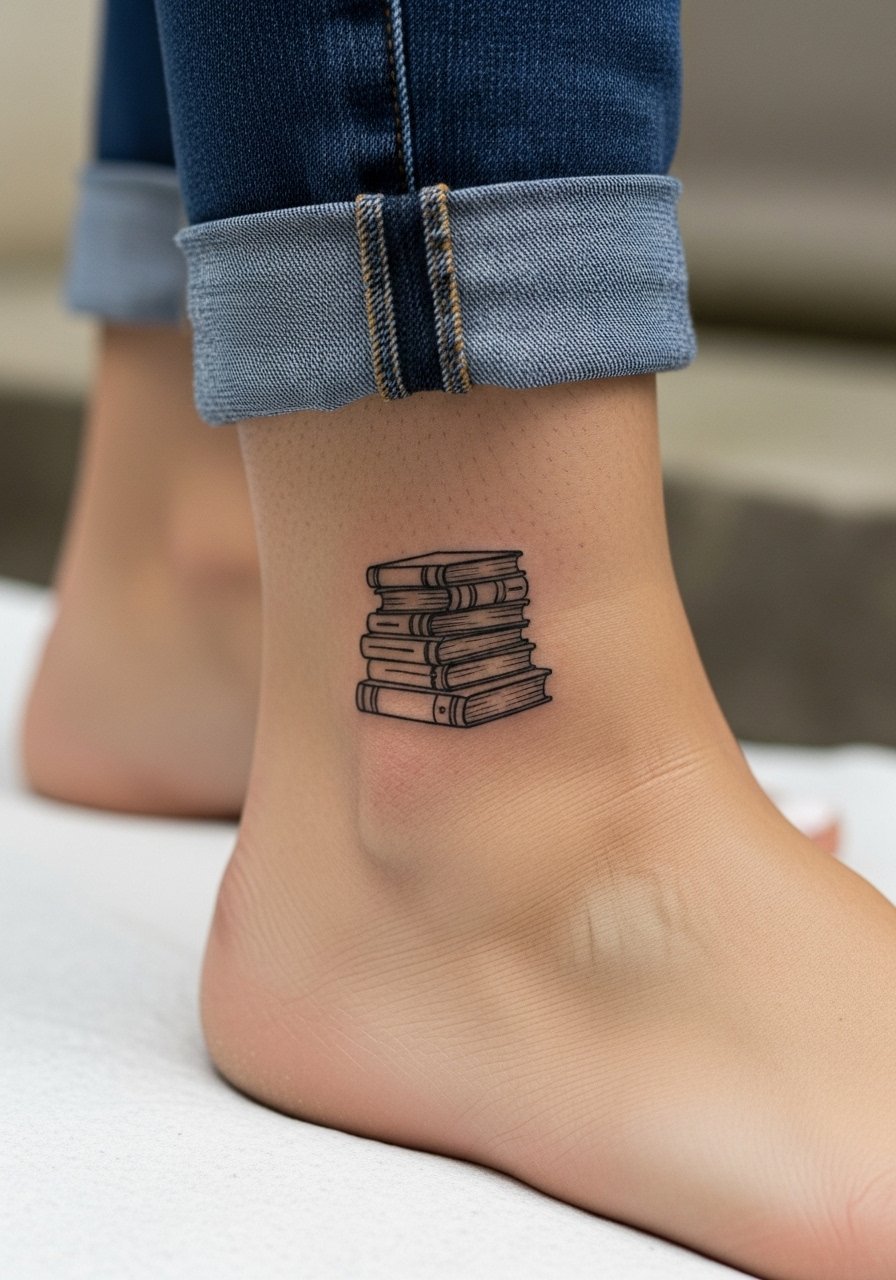
Fair warning: ankle ink experiences a lot of rubbing from socks and shoes, which can accelerate fading. I recommend asking for slightly bolder linework along the book spines and a tiny bit of dot shading between volumes to keep depth as the piece fades. Sessions here are brief but sensitive when the needle grazes the bone. Pair this with rolled jeans or flat leather sandals to give the stack room and the right silhouette when you want people to notice.
3. Book and Teacup Micro Scene on the Forearm
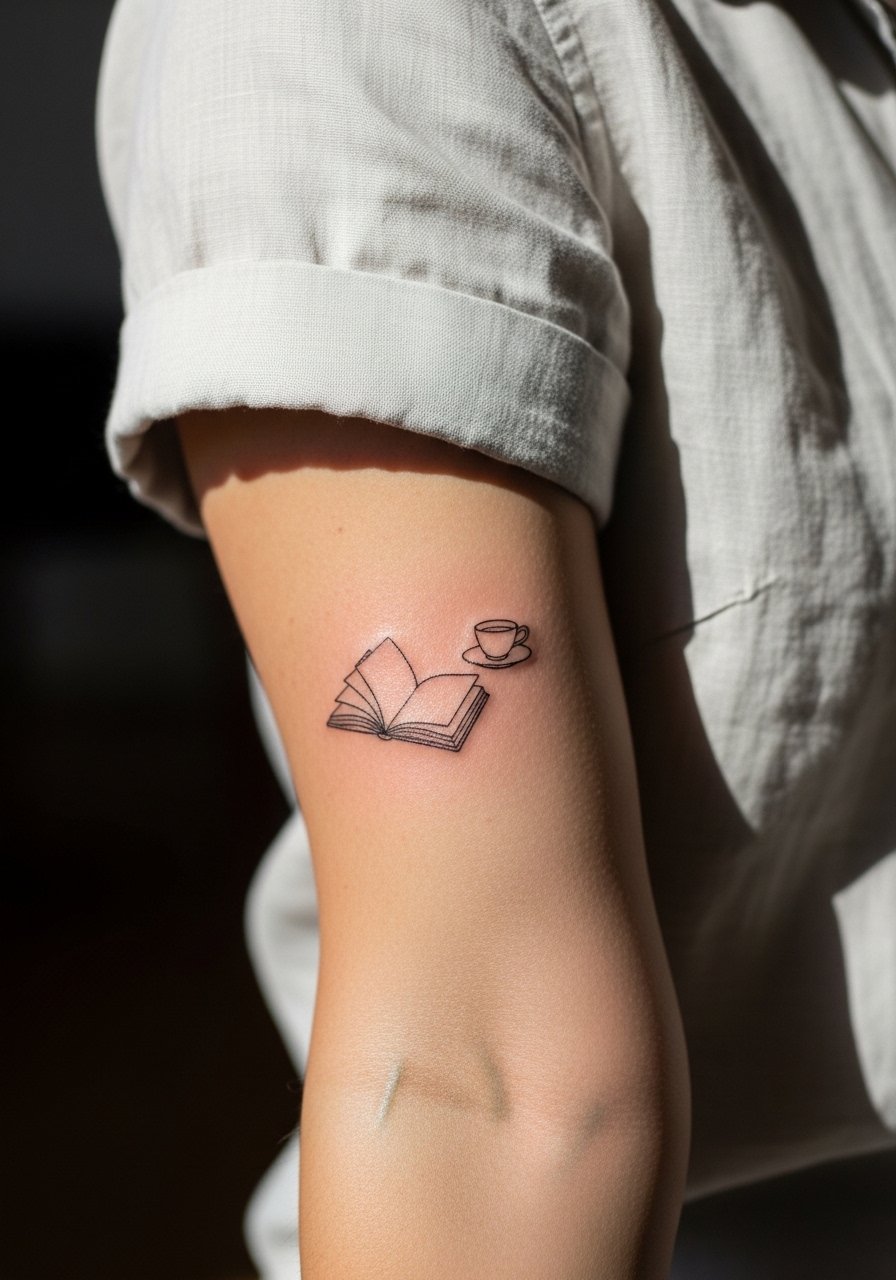
When you want a small vignette that still reads from a short distance, avoid filling the teacup with watercolor. Ask your artist for clear negative space inside the cup and crisp linework around the book edges. The forearm is forgiving and ages predictably. The common mistake is packing too many elements into a tiny patch. During the consult, bring a reference showing scale next to a wrist or coin. Show it off with rolled sleeves and a loose button-down shirt you can pull up to the elbow.
4. Books Turning into Birds on the Shoulder Blade
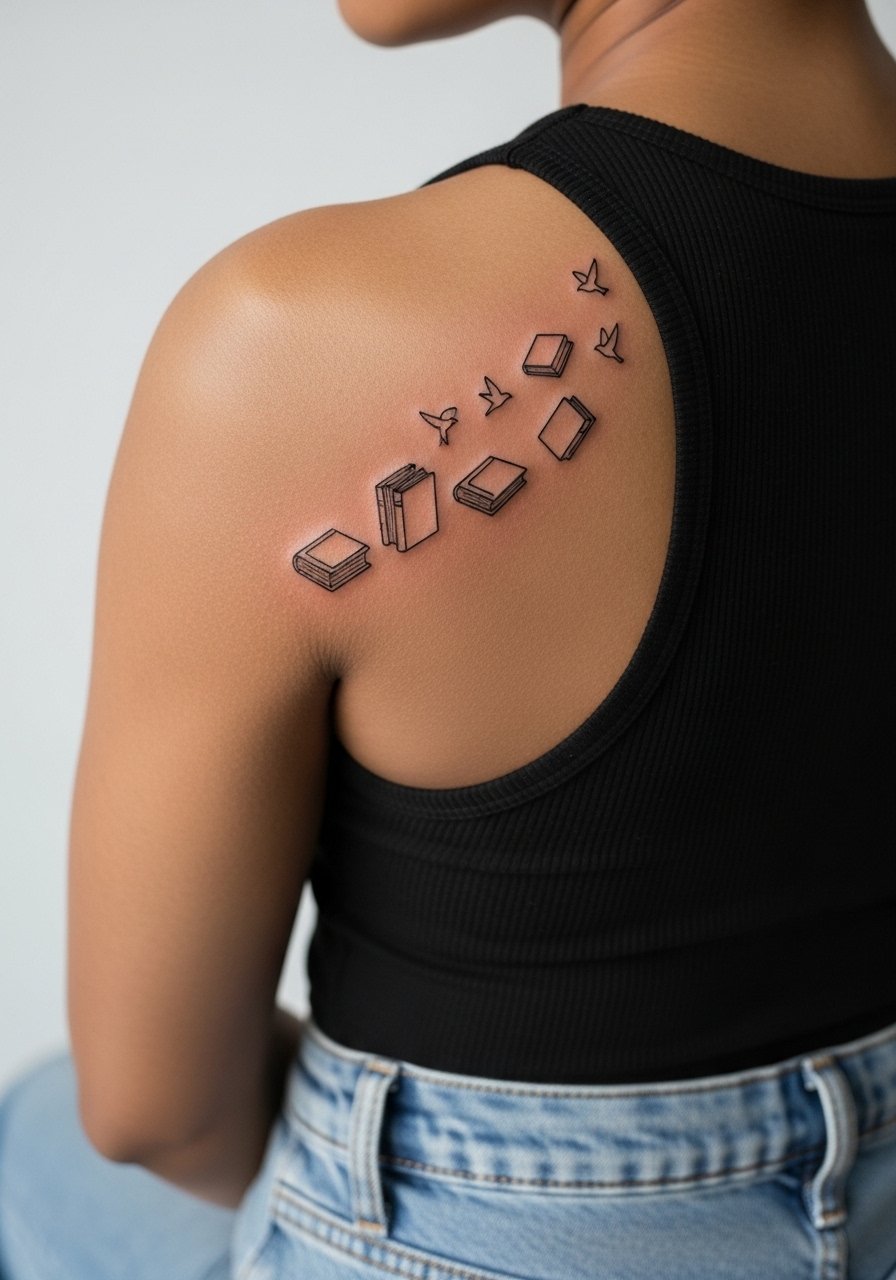
There is a clear visual payoff when a stack of pages breaks into flight, but spacing matters. Ask for birds spaced farther apart toward the wing tips so they do not blur into a solid shape over time. Shoulder blade sessions are longer than a wrist piece and feel like sustained vibration rather than sharp pins. The main mistake is compressing the birds too close to each other. Wear an open-back midi dress to show this piece without competing straps.
5. Botanical Open Book on the Collarbone
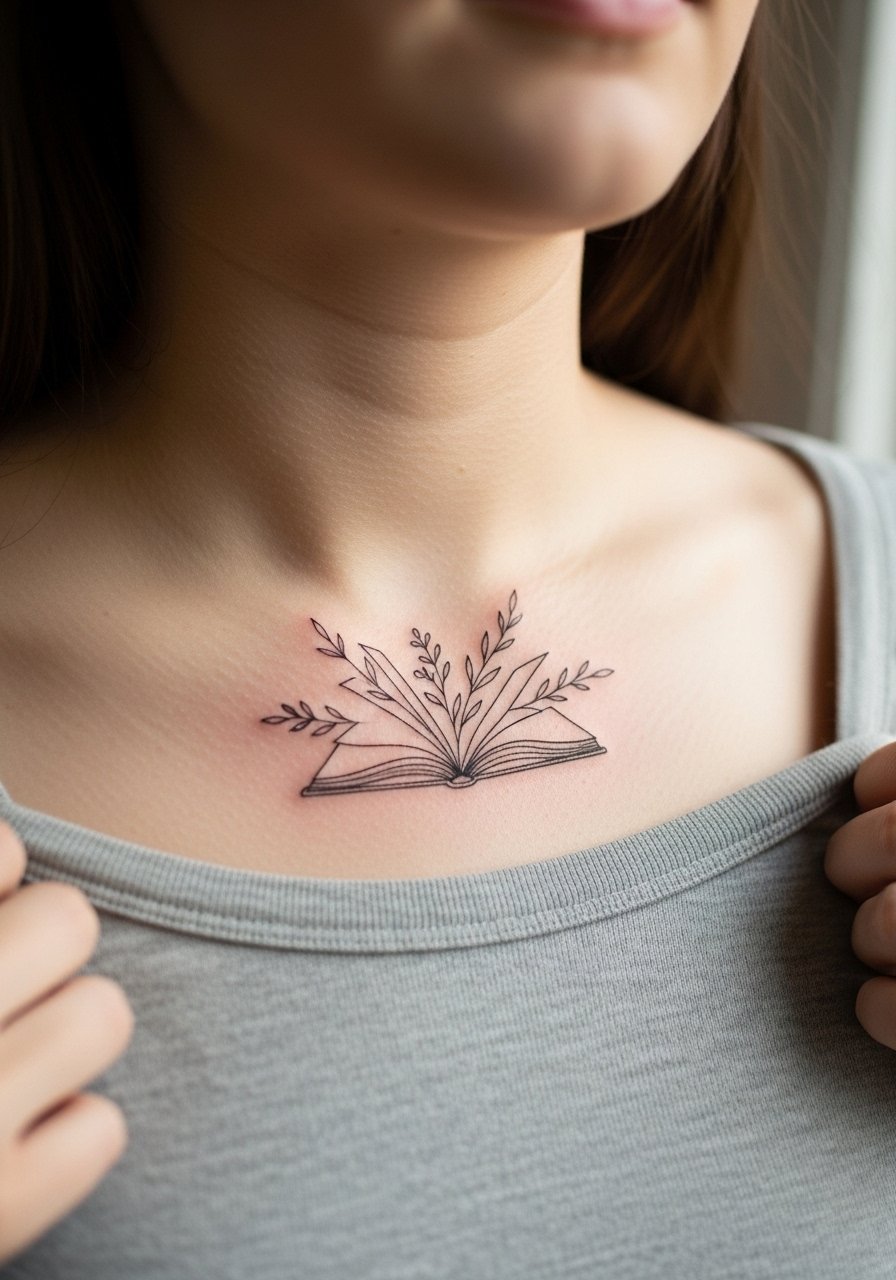
Most collarbone pieces age well when the lines are kept simple and the flowers use negative space as highlights. During consultation say you want the flower stems to flow with the collarbone rather than sit squarely on top of it. The area is sensitive but shallow, so expect moderate discomfort. A frequent error is adding heavy shading right at the bone, which can look muddy later. Pair this with wide-neck blouses to let the linework sit cleanly against skin.
6. Tiny Closed Book Finger Tattoo
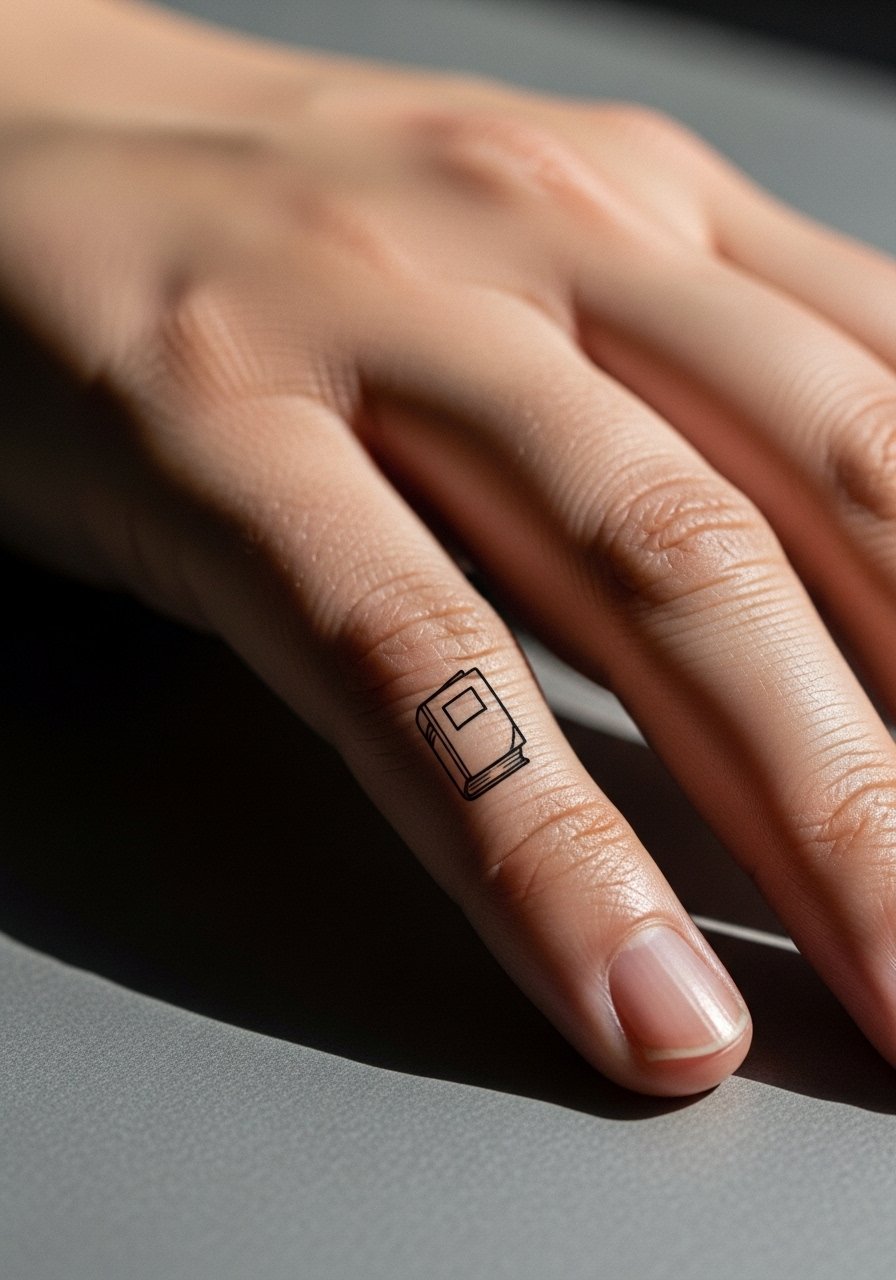
Finger tattoos are notorious for faster wear and frequent touch-ups. The split in the artist community is explicit here. One camp says fingers are fine for tiny simple shapes if you accept annual touch-ups. The other camp recommends avoiding fingers for any detailed work because the skin there moves and sheds differently. Tell your artist you prefer a bold silhouette rather than interior detail, and be prepared for a touch-up timeline of around one year. For session comfort, bring a thin cotton glove to protect the rest of your hand in transit.
Studio Day Picks
The wrist and finger pieces above heal differently from larger forearm and collarbone work, so a few small items make the session and first week smoother.
-
Stencil transfer paper kit. Lets you preview the scale on skin during consults so the tiny book and teacup scene above will sit at the correct size.
-
Thin protective film roll. Useful for ankle and wrist pieces where friction from shoes and clothing can mean the first night is rough.
-
Reusable cooling gel eye pads. Helps manage swelling after longer shoulder blade or chest sessions without applying ointments that could clog lines.
-
Breathable session compression sleeve. Keeps arm access clean during forearm and inner bicep work and limits accidental rubbing on the way home.
-
Aquaphor healing ointment. A thin layer in the first two to three days keeps skin supple for fine line pieces while you avoid heavy creams.
7. Book Spine Script Along the Side Rib

Ribcage line work can look elegant but it is a high-pain area. The common mistake is asking for tiny script with no breathing space between letters. When you sit with your artist, describe the letter spacing and request a mock stencil you wear while standing so you see how the text follows your curve. Artists are split on fine line ribs. One side thinks the skin stretch blurs lines within two years. The other group says with the right depth and spacing it can settle well. Expect a longer session and plan for touch-up discussion.
8. Watercolor Open Book on the Outer Thigh

Most watercolor washes fade quicker than saturated black linework. If you want that painterly look, ask for a defined black outline to anchor the design so the color can age without losing form. The thigh is forgiving and holds color well because it sees less sun. A mistake is requesting extremely light washes that become indistinct after a year. For the session, wear loose shorts or a wrap so the artist can access the area easily.
9. Tiny Book Locket on the Sternum
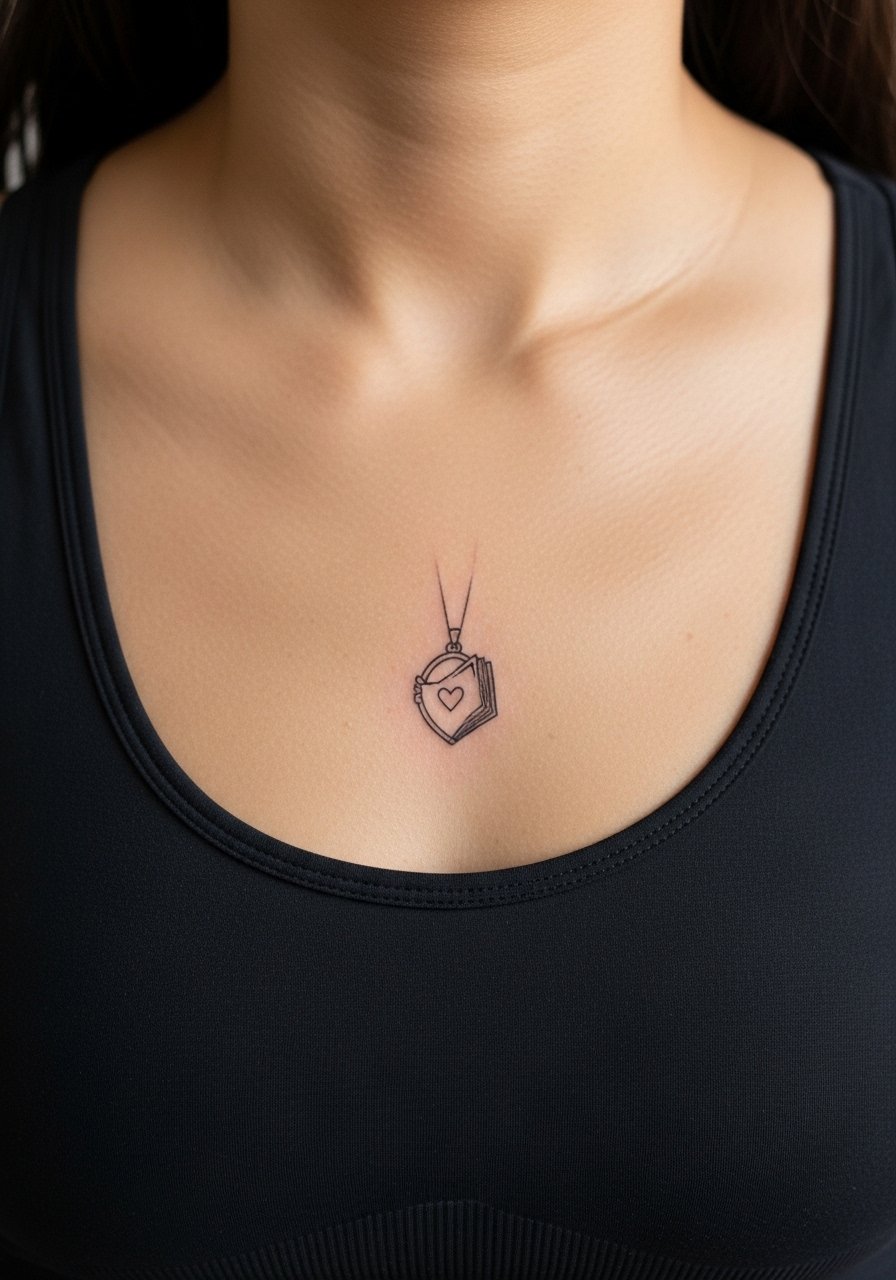
Sternum placements need a specialist touch and clear expectations. Pain is higher because the skin sits close to bone and sessions can cause deep vibrations. One common error is over-detailing a piece that will eventually settle into a softer visual. During consults insist on a single focal line and reserve micro-detailing for touch-ups after full healing. For wardrobe on the show-off side, a thin pendant or strapless top will sit above the locket without crowding it.
10. Tiny Hardcover Book on the Calf
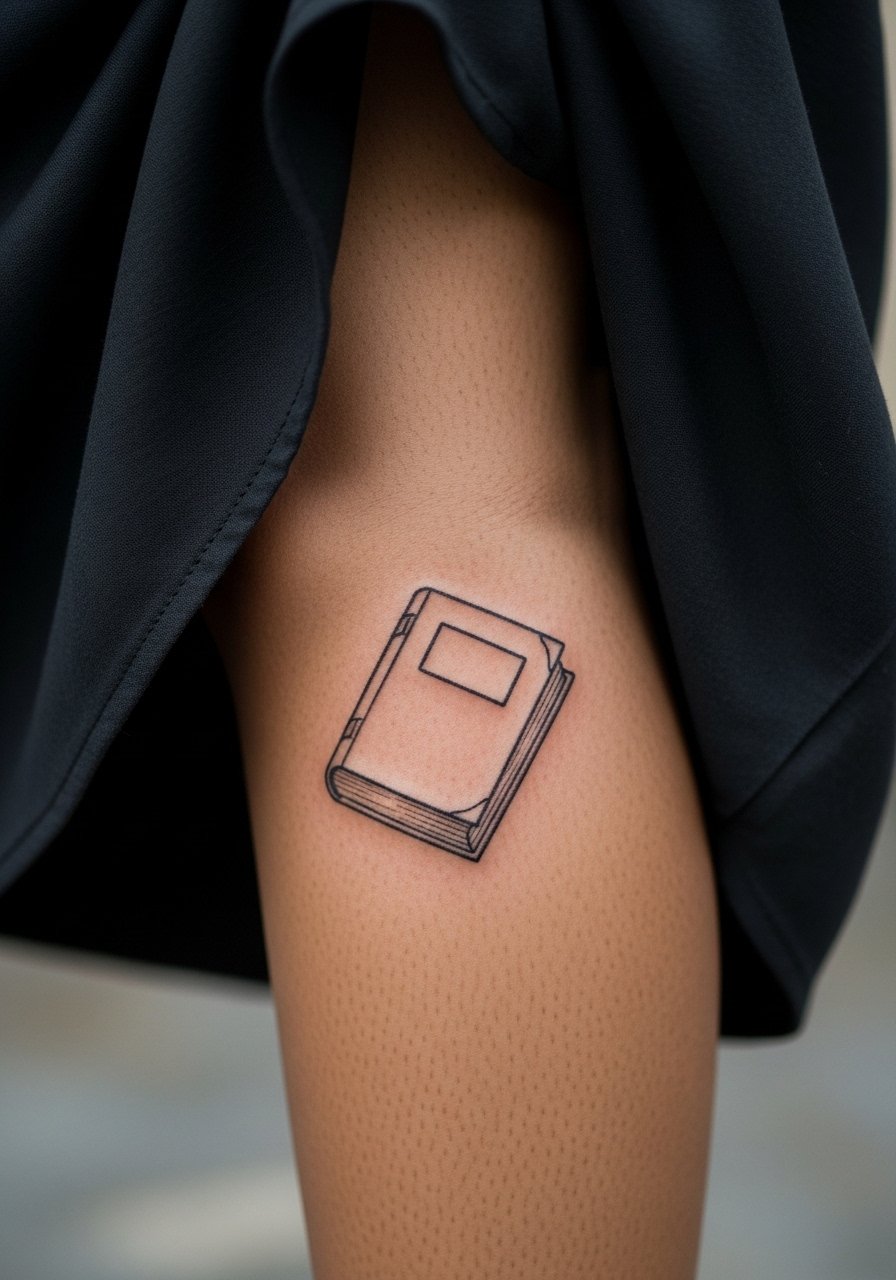
Calf tattoos hold up well because the skin there sees less daily abrasion. Tell the artist to orient the book vertically if you want it visible when you wear skirts or shorts. Sessions are moderate in duration and feel like continuous tapping rather than sharp jolts. A big mistake is asking for ultra-fine internal page detail at a very small scale. For showing it off, pair with midi skirts or high-waisted denim shorts that leave the calf visible.
11. Open Book with a Bookmark Script on the Back of the Neck
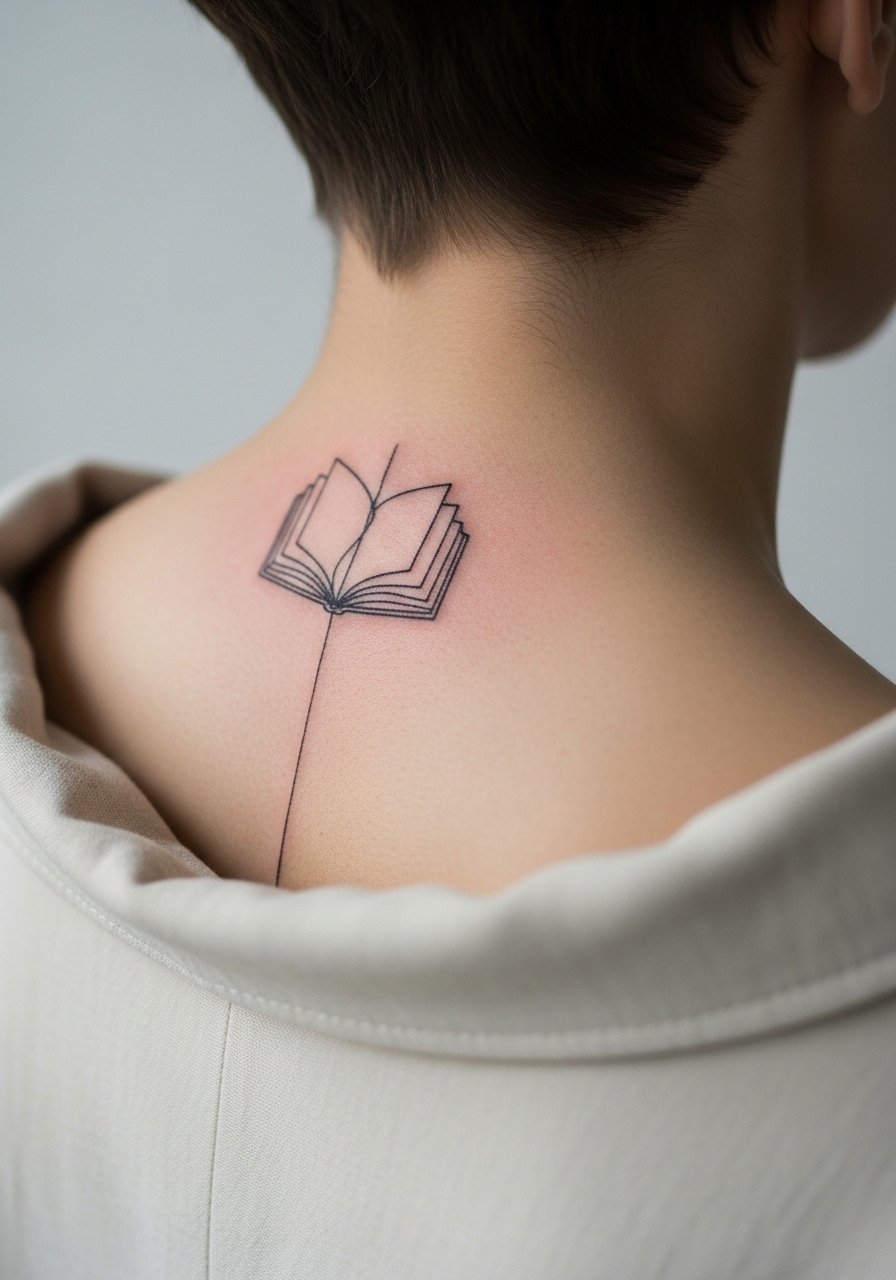
Neck pieces demand conversation about career context and visibility, and the skin there moves with sleeping and clothing contact. The usual error is overcomplicating the bookmark text at tiny scale. Ask for bold bookmark edging and simple lettering that can be read from a short distance. Sessions here are brief but sensitive. For showing off on cooler days, pull the collar of a wide-neck sweater to one side.
12. Micro-Realism Book with Reading Glasses on the Upper Arm
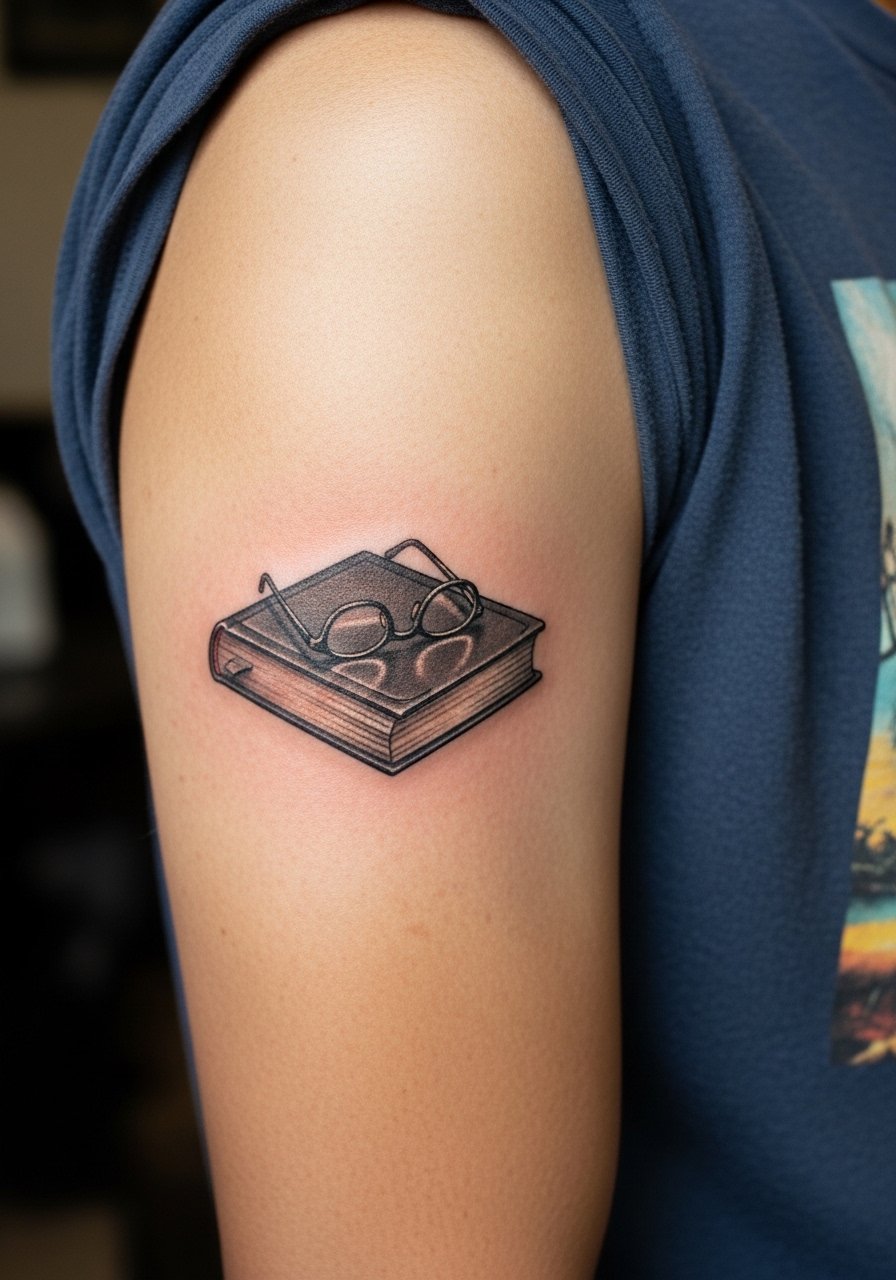
Upper arm canvas allows for slightly denser detail, but micro-realism requires contrast to survive. I advise a tiny shadow under the glasses and a slightly darker spine edge. A common mistake is asking for near-photorealism at a scale too small for the skin to hold. Session time is moderate and the pain is usually low. Pair with rolled sleeves or a racerback tank to show the piece naturally.
13. Tiny Book Tree on the Inner Bicep
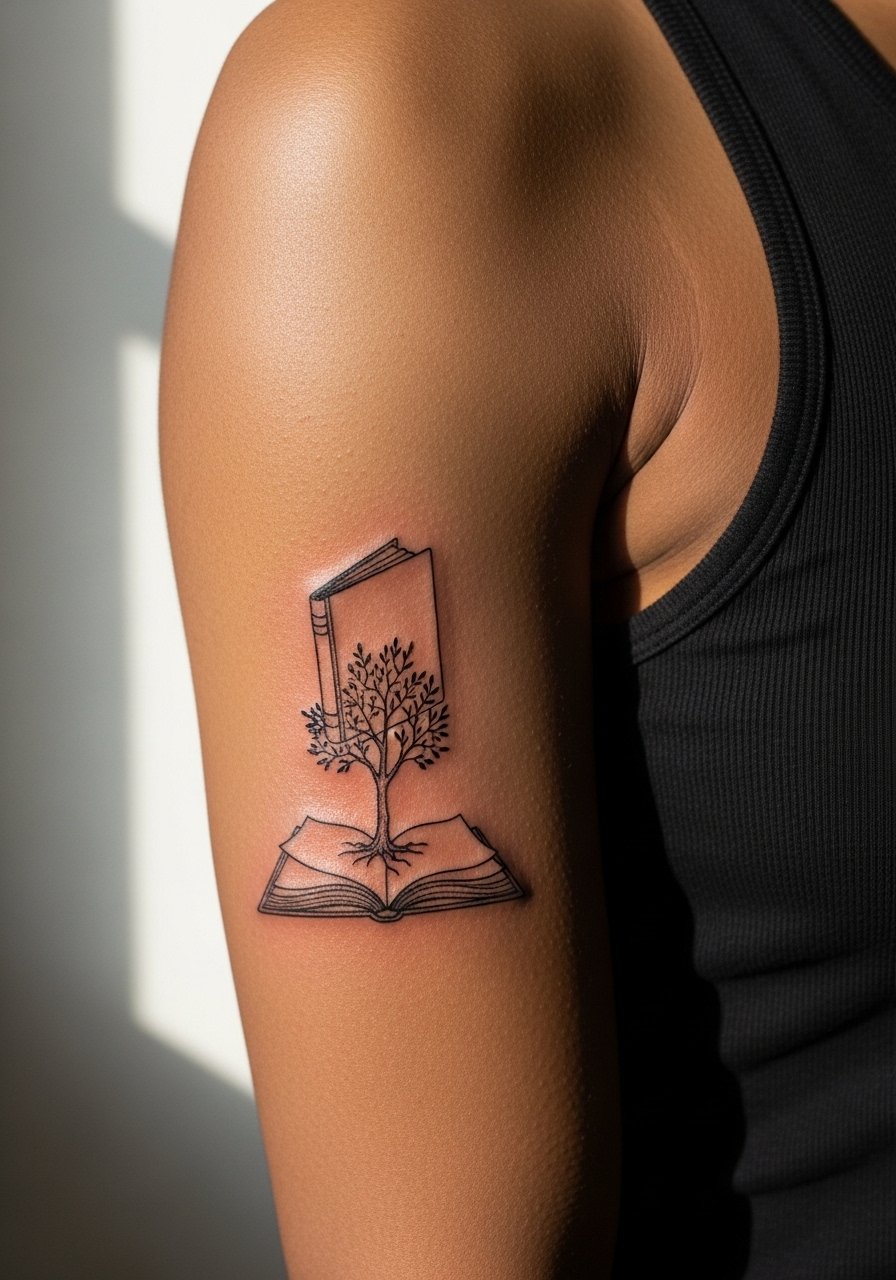
Inner bicep skin is softer and shifts with movement, so spacing is critical. I recommend instructing your artist to keep the trunk slightly thicker and to place branches with breathing room. The inner bicep can be tender, expect higher pain than the outer arm. A frequent error is cramming the tree canopy into too small an area, making it look muddled after a year. For the session wear a loose tank top that allows the arm to lift without constraint.
14. Open Book with Constellation Pages on the Ribcage
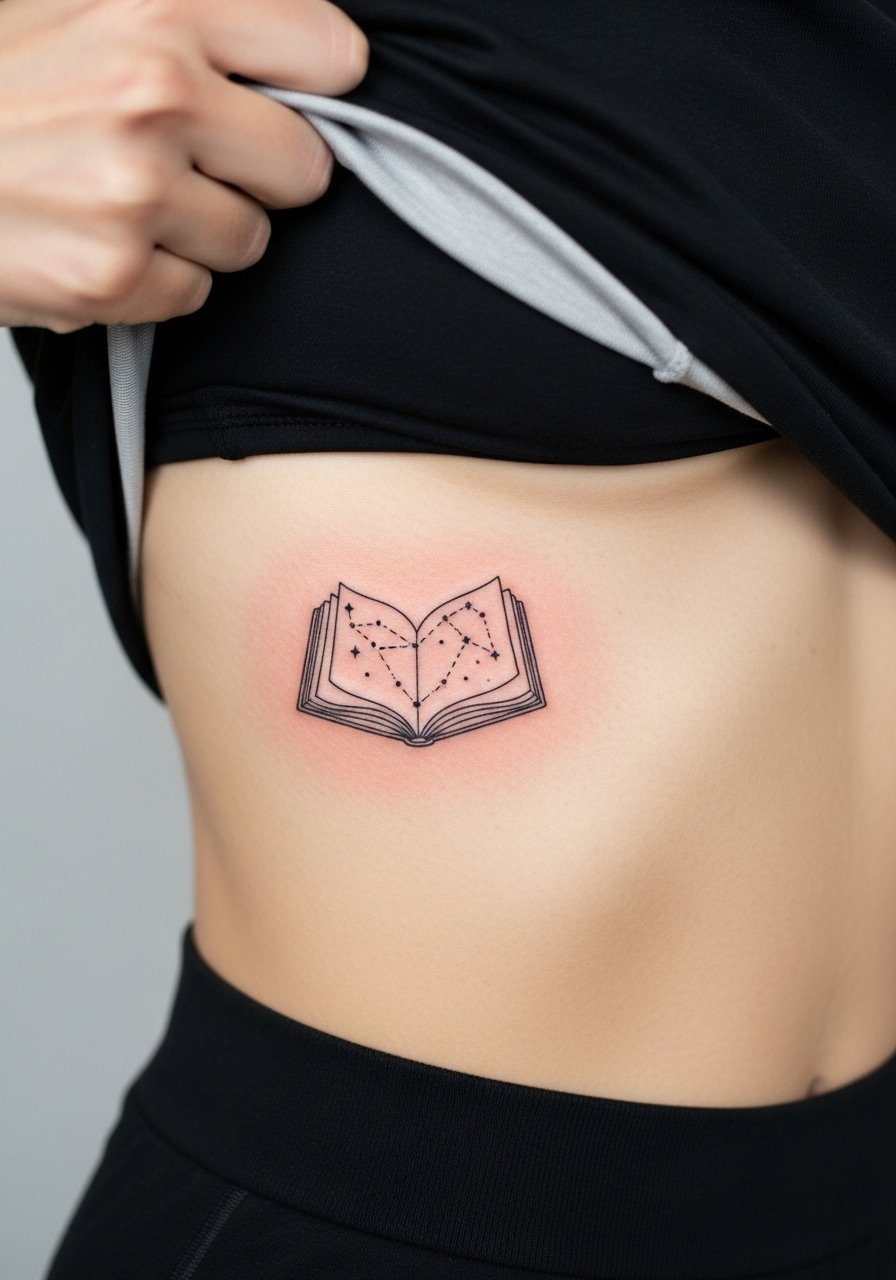
Ribcage is a high-movement zone and the wrong fill pattern will turn into a gray blur. The safer route is to use spaced star dots with small negative space between them. Pain will be intense at points where the needle brushes bone. People often request dense dot work there and then regret the touch-ups needed. Ask your artist about staging the session over two sittings if you want lots of stars.
15. Tiny Closed Book Behind the Ear, Below the Hairline
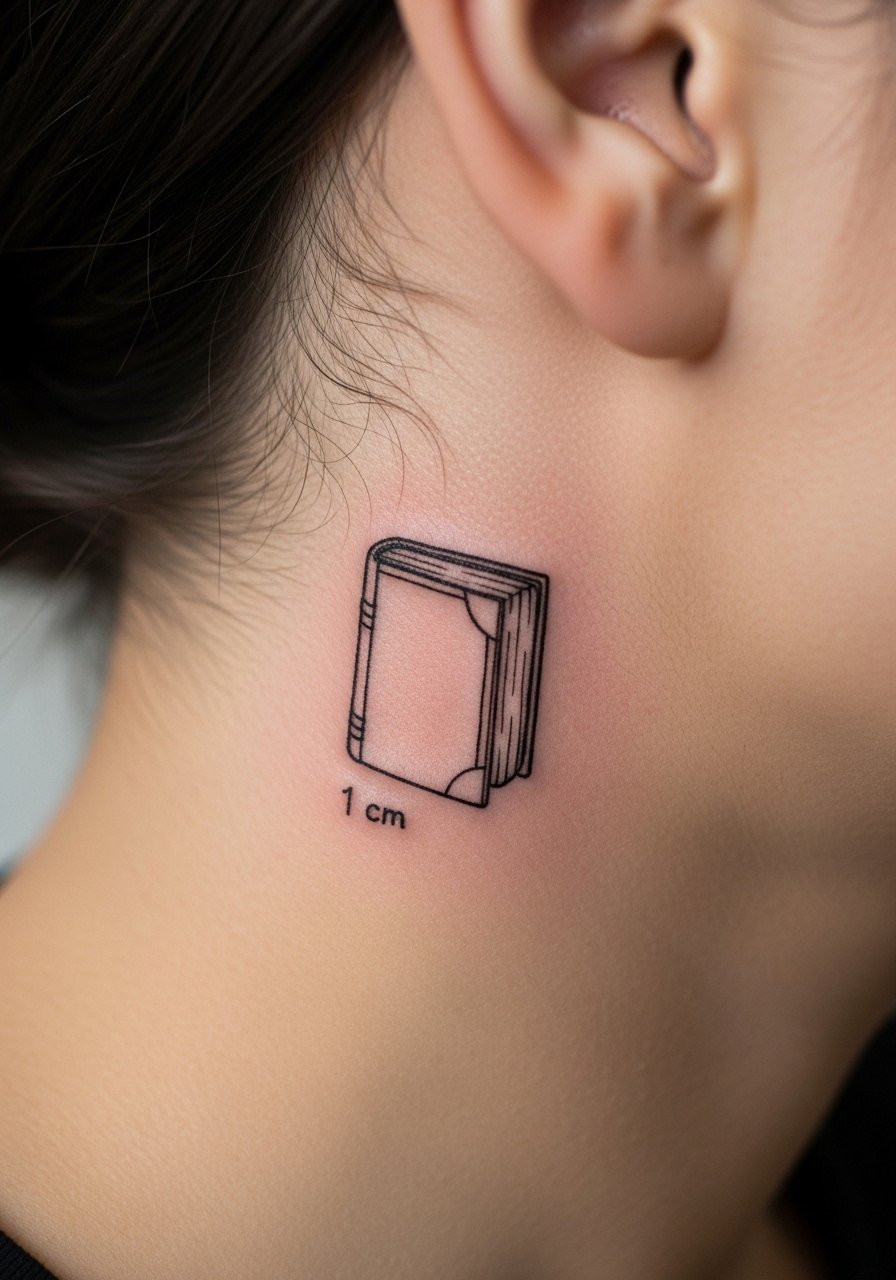
Behind-the-ear placements require a precise stencil because visibility is limited. Always ask the artist to show you the exact placement and to test it with a washable marker. The pain is sharp but short lived. A common mistake is assuming the piece will read the same from every angle. Keep the design simple and let that area stay micro-scale. You can hide or reveal it with your hair easily.
16. Watercolor Book and Moon on the Outer Forearm
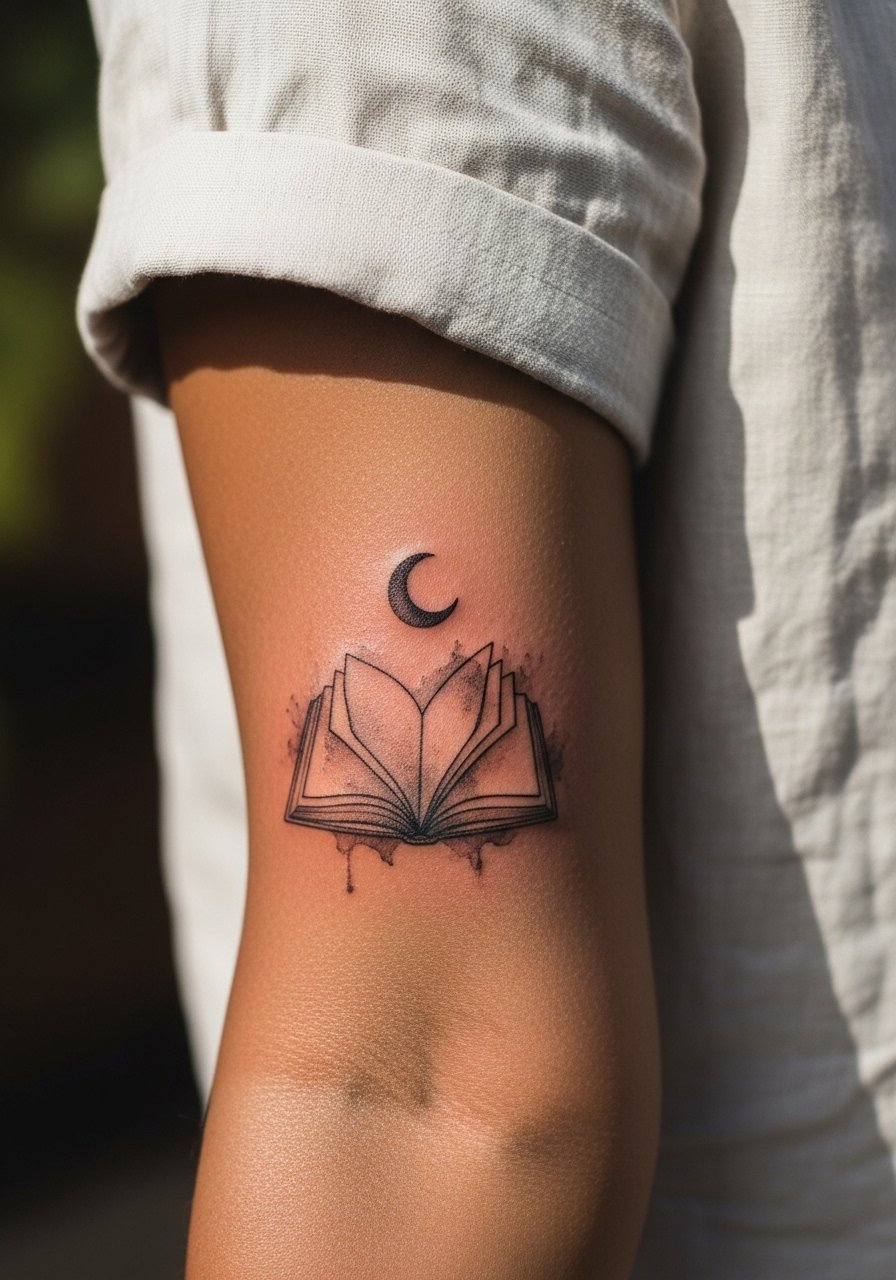
Watercolor elements look gorgeous when placed where sun exposure is limited. Forearm exposure varies, so ask for a slightly darker keyline to keep the moon readable as the wash fades. The common issue is relying solely on pale pigment which disappears faster than expected. Expect a gentle vibration during the session rather than sharp stabs. For show-off looks, roll sleeves or wear a linen short-sleeve shirt.
17. Tiny Book with a Key on the Hip
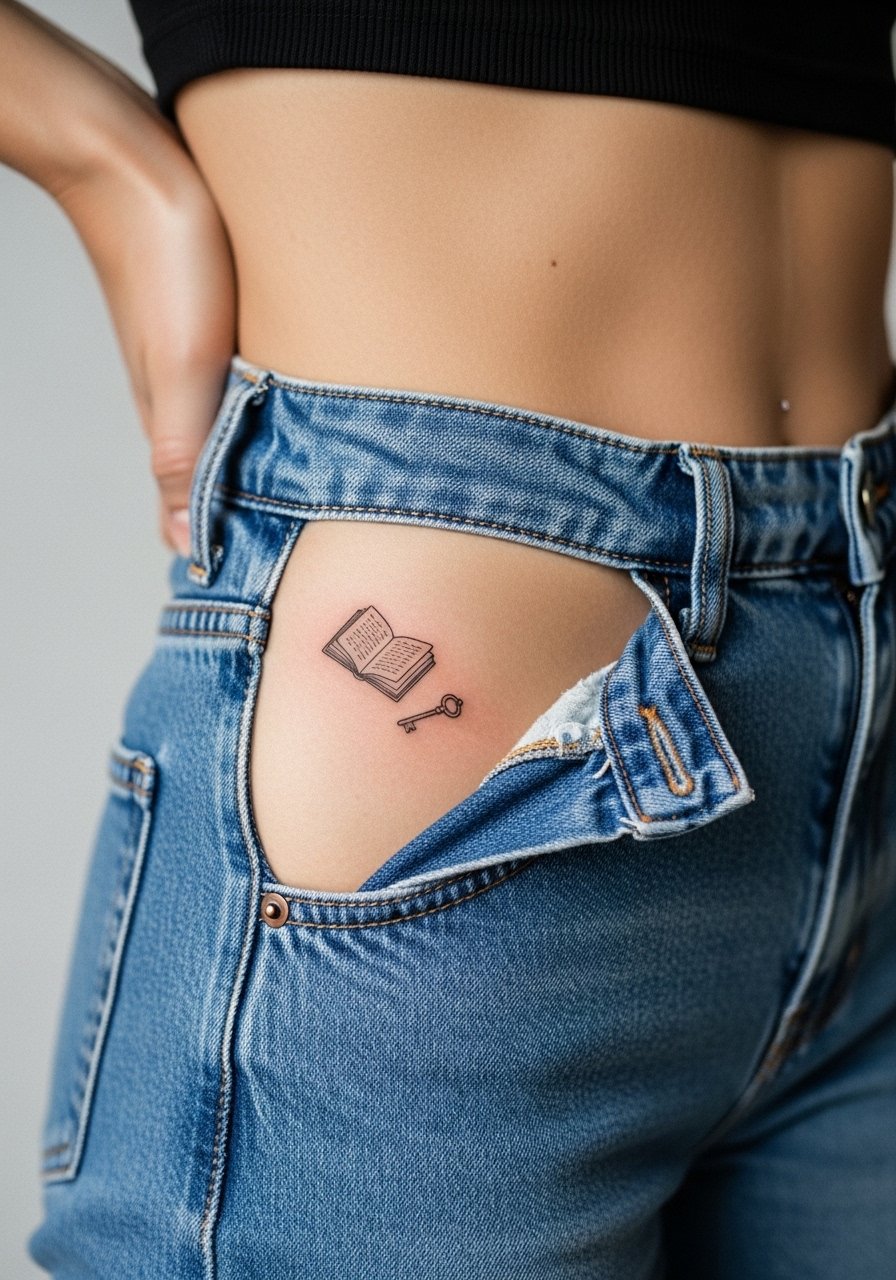
Hip pieces can be awkward for session access. Wear clothing you can shift easily so the artist can work without you feeling exposed. The skin there tends to hold fine lines well if the design has breathing room. People often try to force too much lettering into this small spot. Keep the key simple and ask about orientation so it reads correctly when you stand. The area is moderate in discomfort and usually heals without extra fuss.
18. Tiny Book and Candle on the Inner Wrist
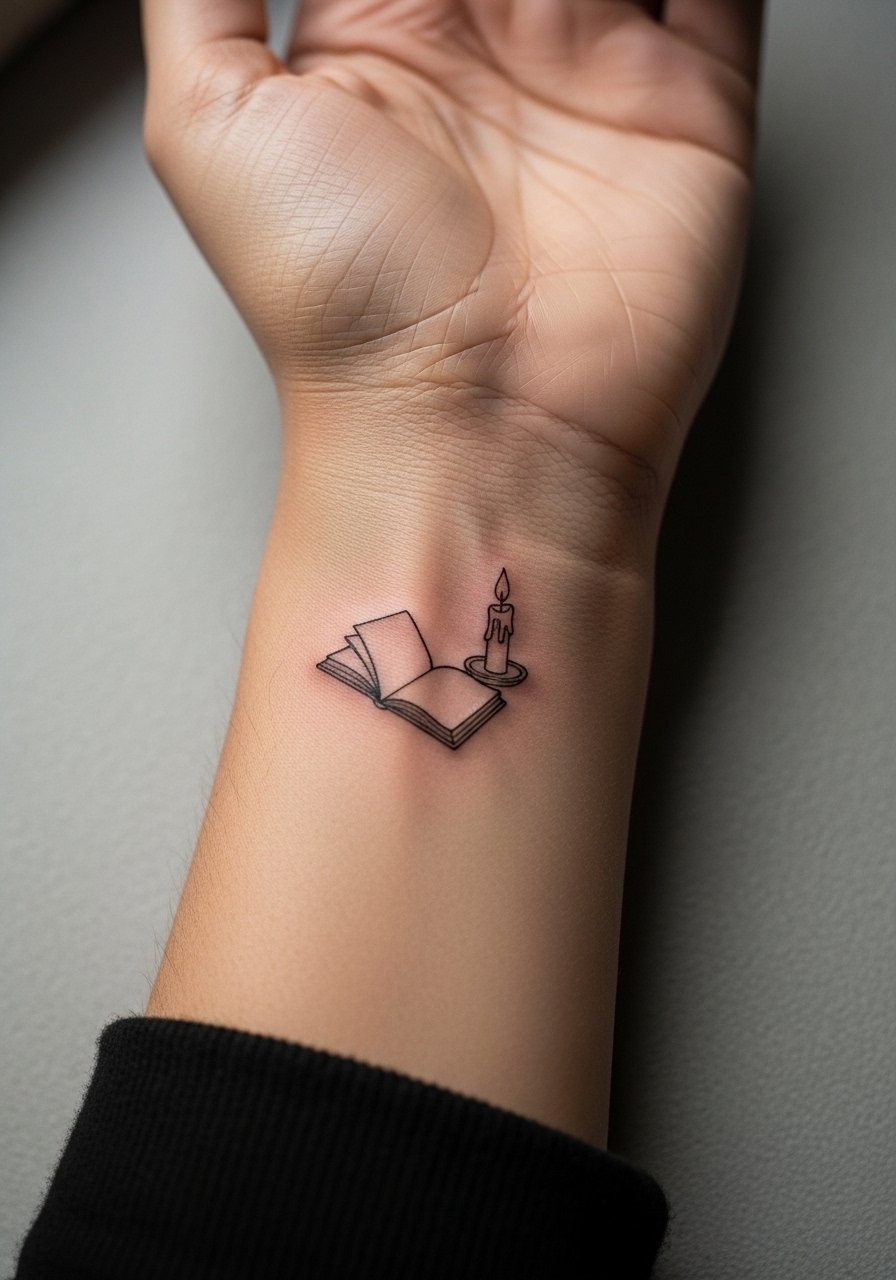
Inner wrist skin will show any micro-blurring earlier than thicker skin. Request a strong outer outline for the candle flame and lighter internal details for the book pages. Sessions feel sharp but brief. A common misstep is choosing color washes around the flame that age into a muddy patch. For the session wear a thin bracelet you can remove and bring a bandage that does not rub the fresh work.
19. Micro Script Title on the Side of the Finger

Side-finger script is one of the highest maintenance micro placements. Expect fading and potential blurring where skin flexes. The safer choice is a minimalist single word in a robust script rather than hairline cursive. Talk to your artist about letter height and ask for a slightly heavier main stroke so the title remains legible. Sessions are short and sharp. Plan for touch-up conversations from the start.
20. Tiny Open Book with Floral Margins on the Shoulder Cap
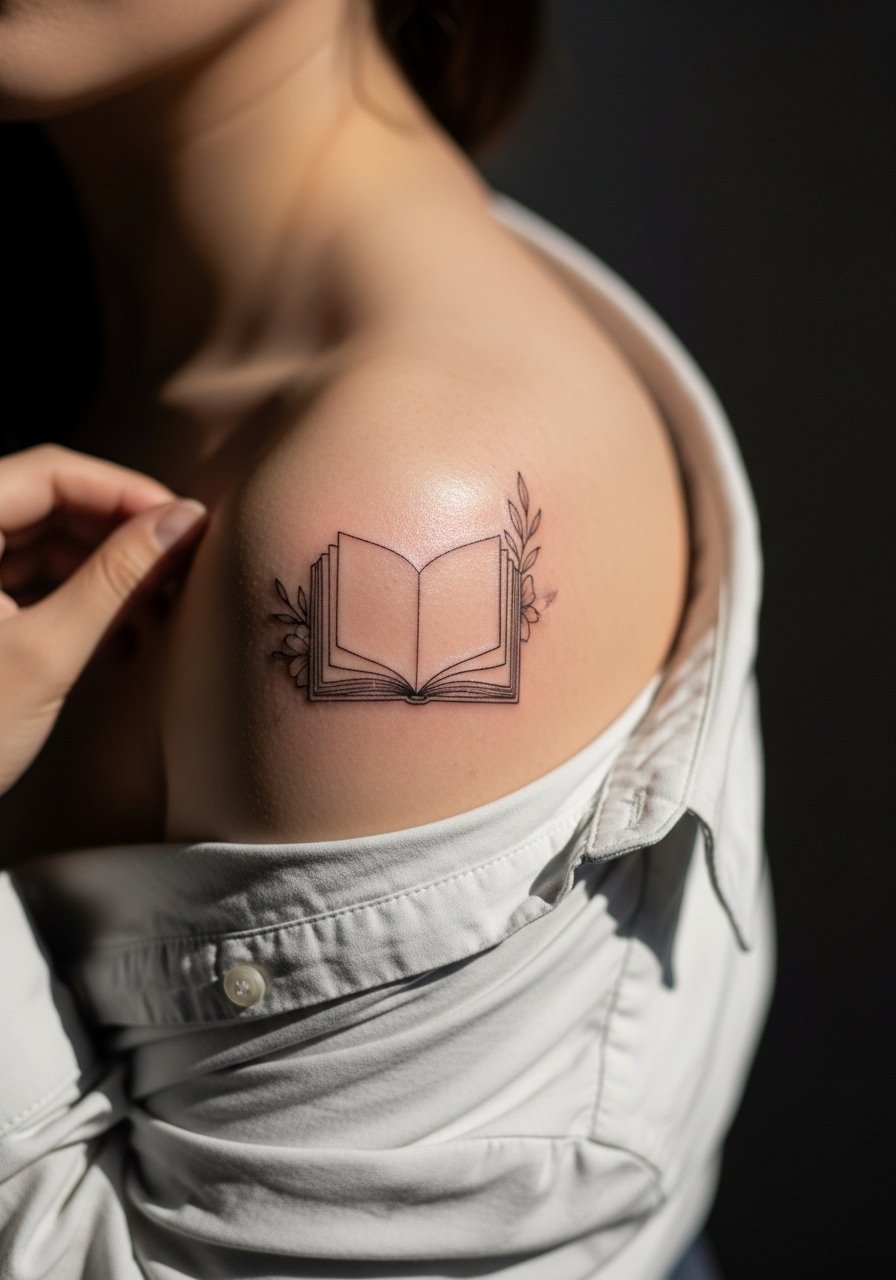
Shoulder cap skin is stable and often keeps line clarity, but heavy shading close to the edge can look overbearing. Ask for delicate floral accents with open negative space so the book remains the focal point. Sessions are comfortable and brief. The usual mistake is over-detailing flower petals that later merge. Pair with sleeveless tops or a loose button-down shirt when you want to reveal the work.
21. Tiny Hardcover Book on the Outer Hand
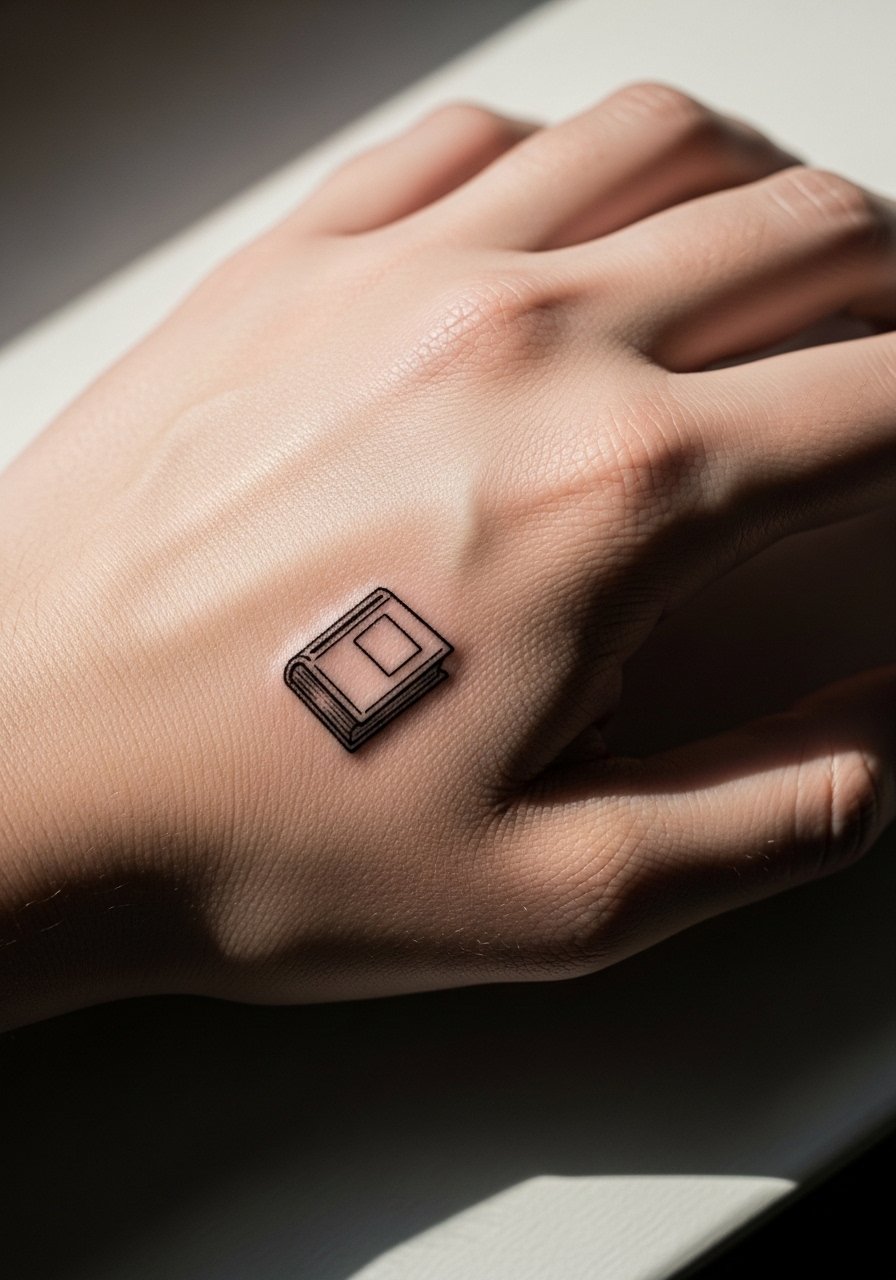
Hand tattoos are high visibility and tend to blur faster than forearm or calf pieces. There is a real debate in the community. One camp accepts faster touch-ups and prioritizes visual impact. The other says hands are poor long-term canvases for fine detail. If you choose the hand, request bolder lines and agree on a realistic touch-up plan. Expect discomfort and an initially swollen area. Wear gloves when carrying rough materials for the first week.
22. Tiny Map Book on the Upper Back
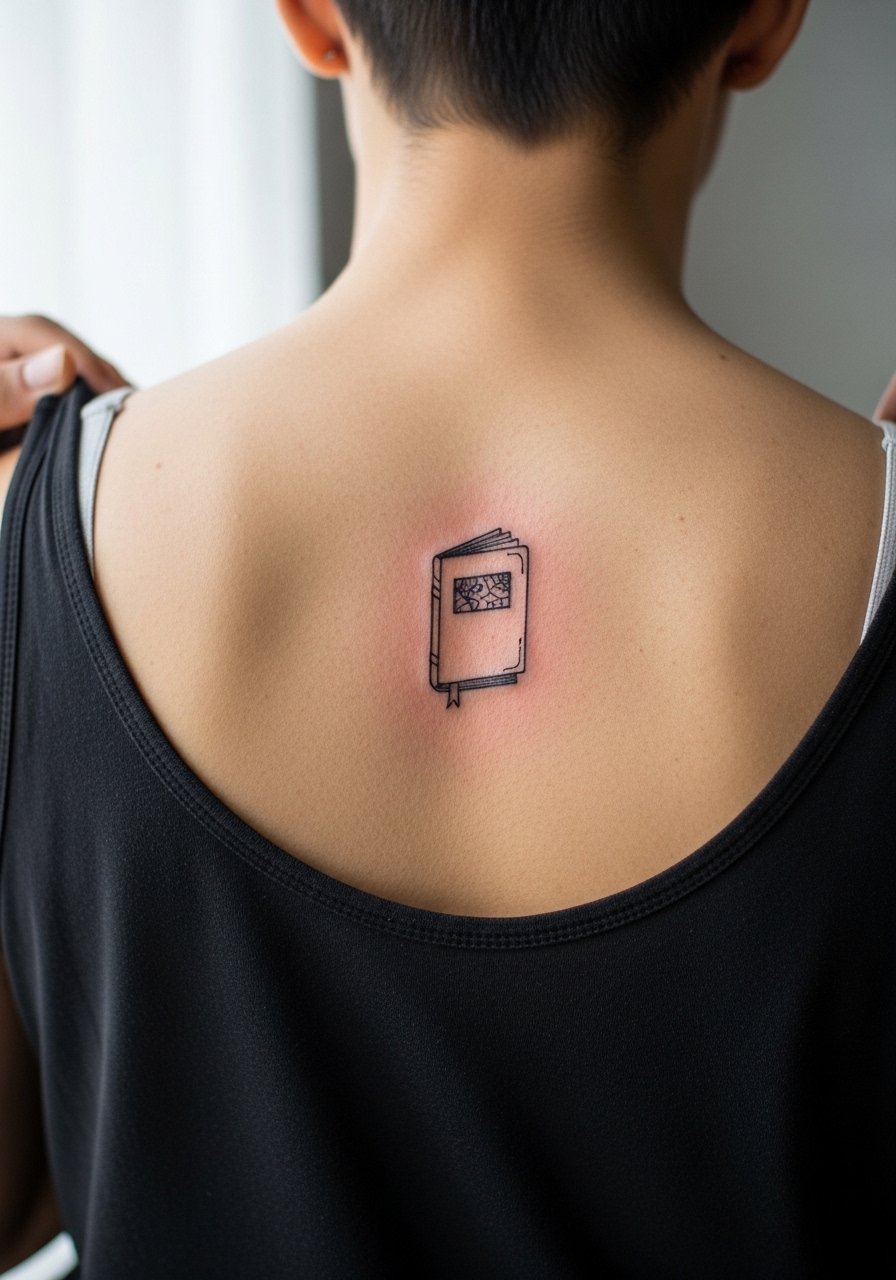
Upper back gives room for slightly more interior detail because it experiences less daily abrasion and sun. Ask for clearer negative space around the map lines to prevent them from bleeding together as the piece ages. Sessions may be longer if you want lots of small lines. A common mistake is cramming too many tiny features that make touch-ups necessary. For showing it off, a low-back top or tank is ideal.
23. Tiny Open Book with a Butterfly on the Inner Thigh
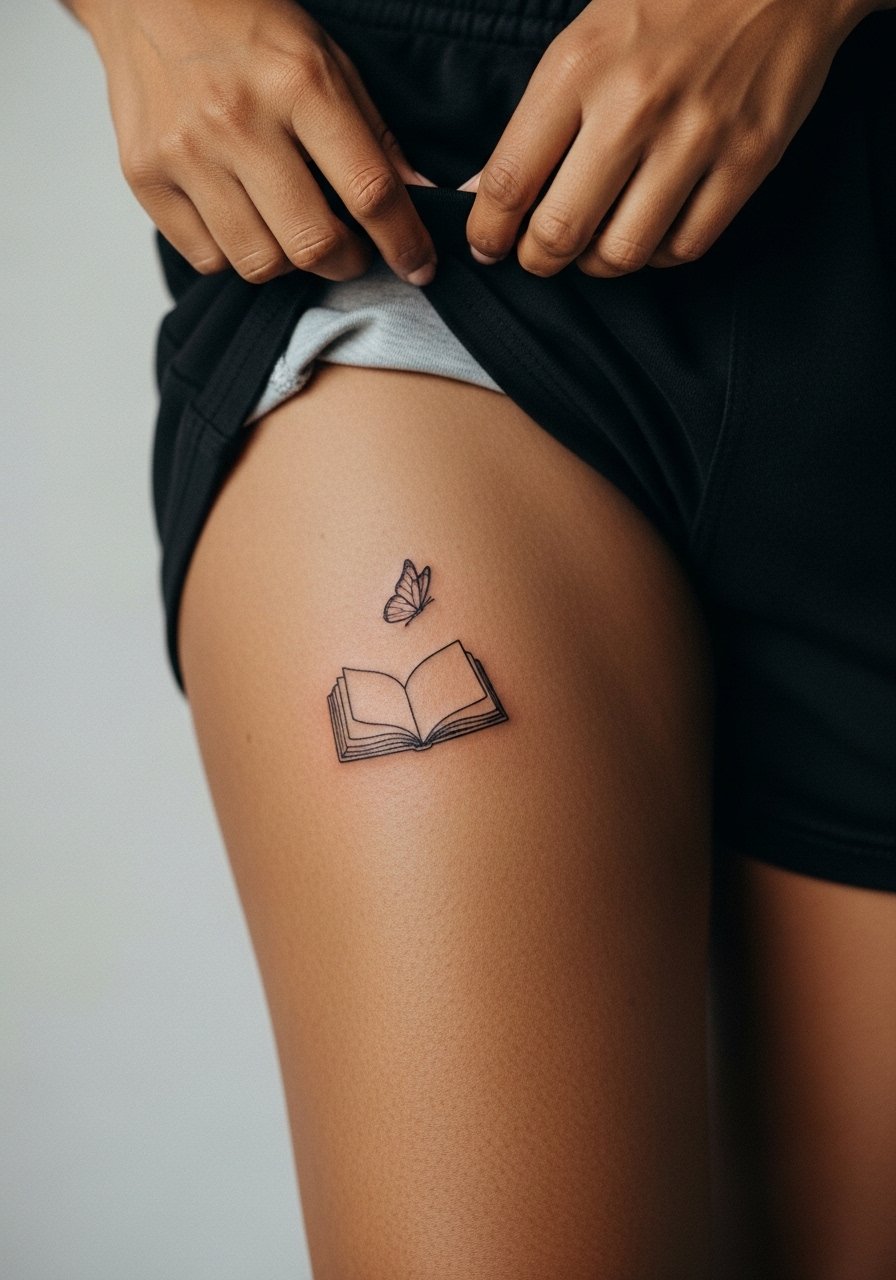
Inner thigh skin is soft and can hold delicate work well if spacing is considered. It is also an intimate area that needs careful consultation. Pain varies, often higher when the piece is close to the crease. A mistake is adding tiny stipple shading that merges during healing. Ask your artist for crisp wing outlines and reserve stipple for later touch-ups. Wear shorts or a wrap to the session for easy access.
24. Tiny Hardcover Book with Moon Phases on the Wrist Crease
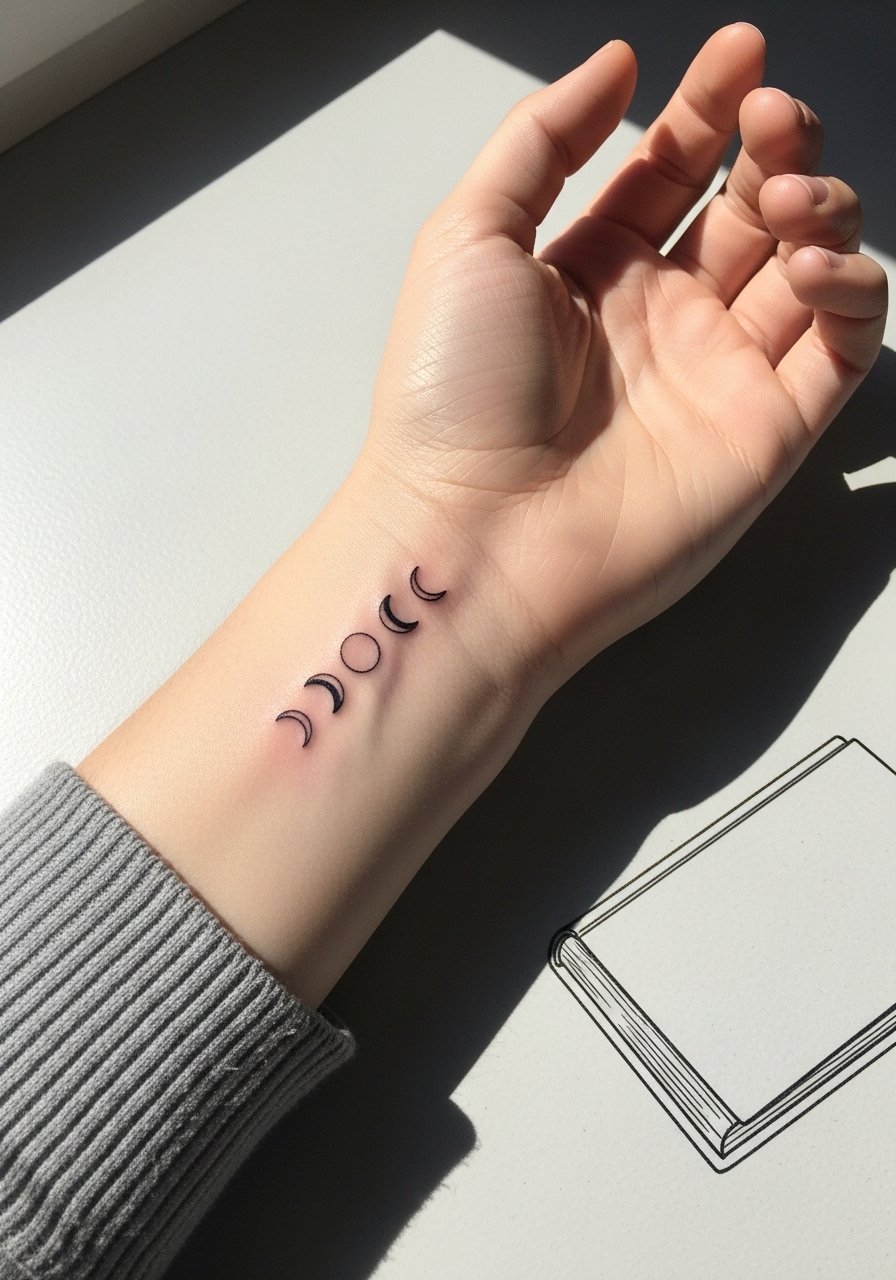
Wrist crease design must consider movement and frequent flexing. Place moon phases slightly above the crease so they avoid constant folding. During consultation ask for a scale test you can wear for an hour to see how it sits when you move. The common error is placing too much detail right on the crease. For showing it off, thin stacking bracelets work well and keep attention on the piece. Try a stacked dainty bracelet.
25. Tiny Leatherbound Book on the Shoulder Blade Edge
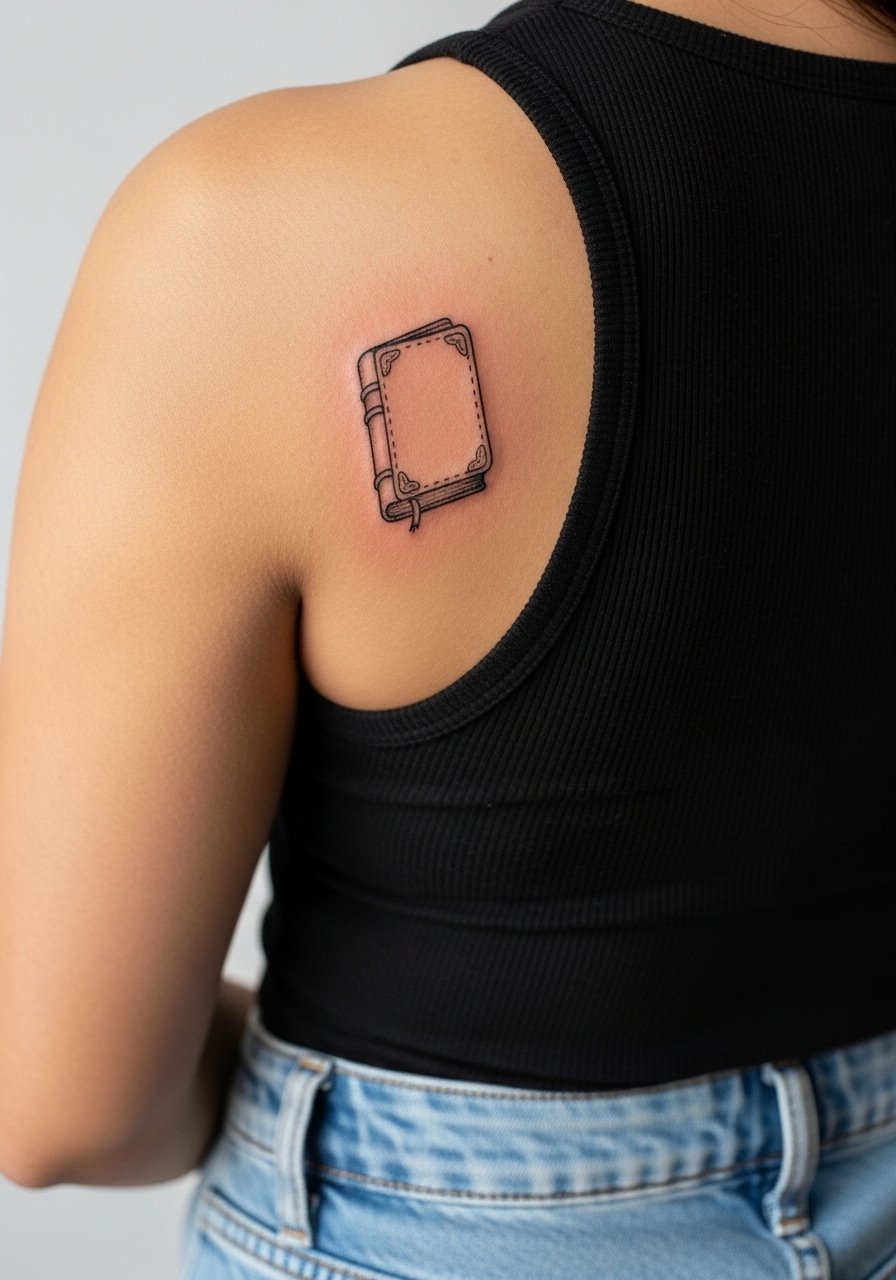
Edge-of-shoulder placements look deliberate when the cover has a slight shadow line and restrained inner detail. Ask your artist to orient the spine so it reads when you stand naturally. Sessions are comfortable and usually quick. The mistake people make is compressing lettering into the spine area. For showing it off, an open-back top reveals the silhouette without competing straps.
26. Miniature Open Book on the Inner Ankle
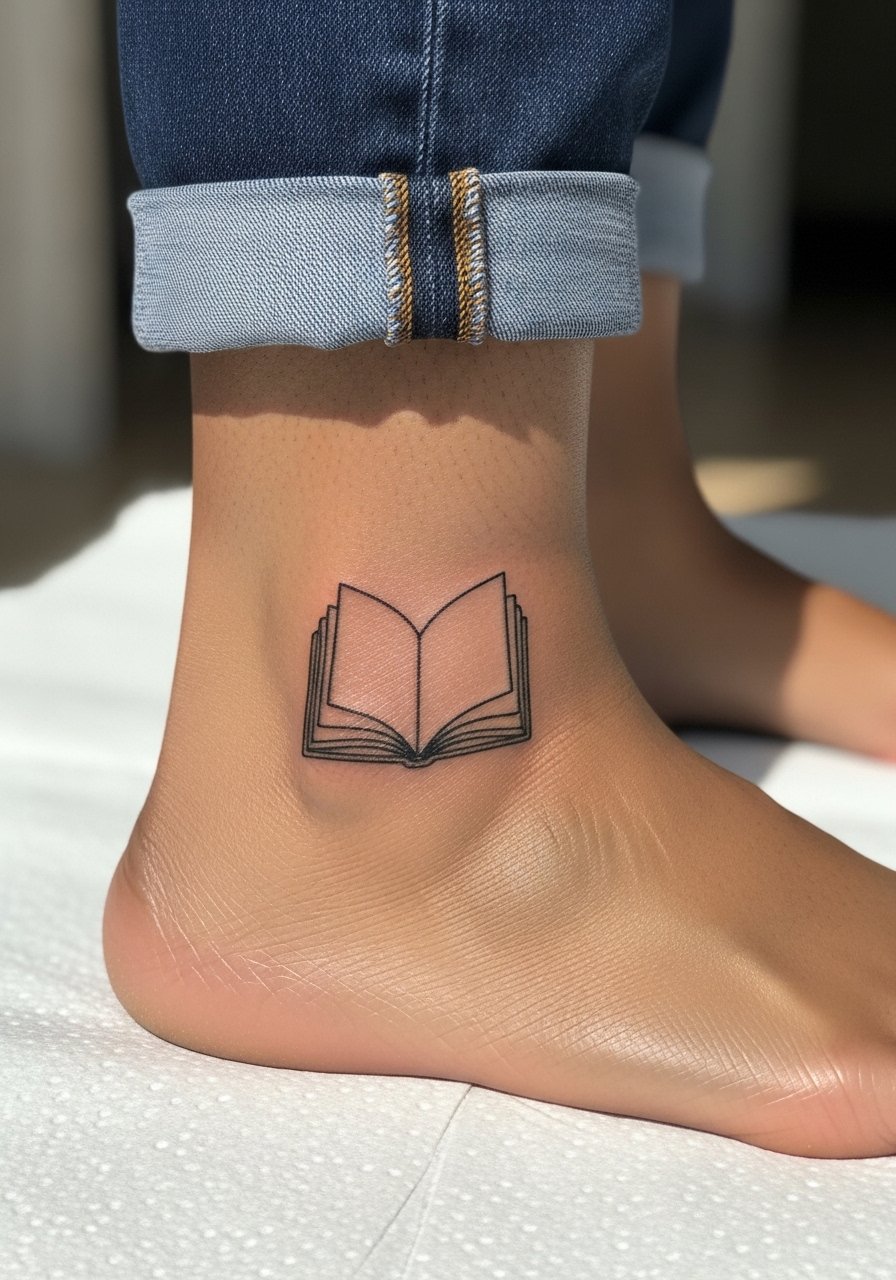
Inner ankle tattoos must survive constant contact with footwear. Ask for a slightly bolder outline and keep interior marks sparse. The main mistake is choosing a hairline script that disappears with normal wear. Sessions are short but potentially sharp near bone. Pair with rolled pants or ankle strap sandals when you want the area visible.
27. Tiny Book with a Daisy on the Rib Side
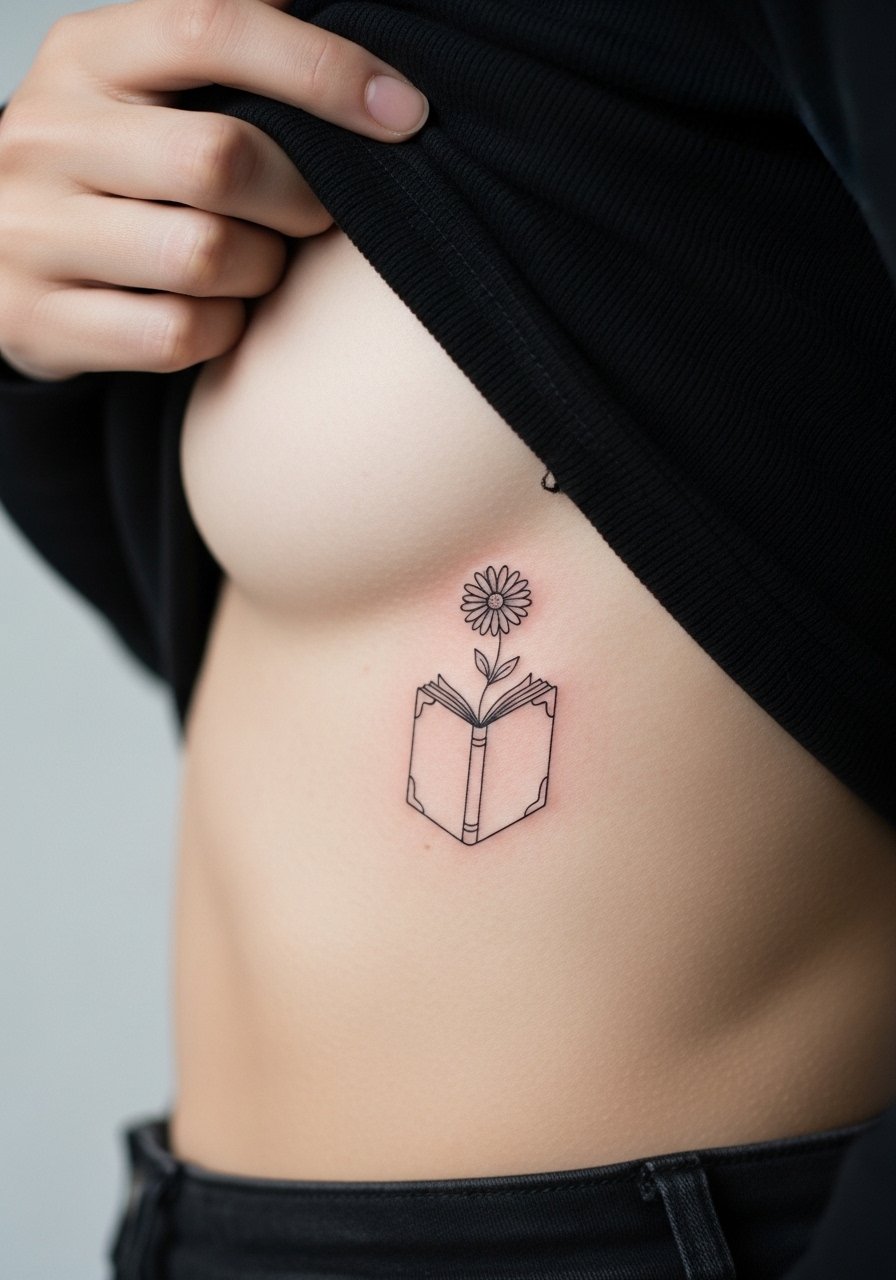
Rib-side small florals need breathing room. Ask for the daisy stem to follow the torso curve and for the book to sit slightly forward so it reads while you stand. Pain is significant and sessions may be split. A frequent misstep is overcompacting floral petals into a tight spot, making them lose shape after healing. Discuss touch-up timelines during the consult so you know what to expect.
Frequently Asked Questions
Q: How long will a fine line mini book on the wrist stay legible before a touch-up is needed?
A: It depends on sun exposure and daily wear. From what I’ve seen, a simple open-book silhouette can start to soften around year two to three, especially if you spend a lot of time outdoors. Ask your artist about slightly stronger outer linework and plan a possible touch-up at year two.
Q: Are ribcage watercolor book pieces a bad idea because they fade faster?
A: Watercolor fades faster than black lines in general, and ribs add movement that accelerates that process. If you want a watercolor feel, ask for a defined anchor line or consider saving the wash for a larger thigh or back piece that sees less friction.
Q: Will a finger book title make it hard to keep a professional appearance at work?
A: Finger tattoos are visible and will attract notice in some settings. If workplace discretion matters, consider a placement that stays covered by a ring or sleeve. For a small compromise, side-finger placements read smaller and can be easier to hide.
Q: What should I wear to a session for a sternum or upper chest book tattoo?
A: Wear a fitted sports bra or a wide-neck shirt you can pull aside, not a loose top you have to remove. That makes the artist’s access cleaner and keeps you comfortable during longer sessions. A racerback tank is a practical option.
Q: Are hand and finger book tattoos worth the maintenance if I want dainty visible ink?
A: They are worth it if you accept realistic maintenance. Hands and fingers require more frequent touch-ups and will soften faster than forearms or shoulders. If you prefer fewer follow-ups, choose an adjacent placement like the outer hand edge or wrist.