Fine line and dotwork Hello Kitty tattoos keep popping up in saved boards, and the surprise for most people is how much placement and spacing decide whether those dots still read sharp after a few years. Trends push micro detail, and what ages well usually gives up some of that breathless fresh look. Read on for focused dotwork Hello Kitty options that balance charm with longevity, starting with pieces that work especially well on forearms.
1. Dotwork Hello Kitty Outline on Forearm

I've seen this approach on forearms for years and the geometric dot spacing is what keeps the figure readable as it heals. Ask your artist to leave slightly more space between stipple clusters so dense areas do not merge after a few years. The session feels steady rather than needle-heavy, expect one session around an hour for a small to medium piece, and plan a touch-up at year two for high-motion forearm areas. For showing it off, roll a sleeve up and wear a rolled sleeve cotton tee so the dots read against clean skin without distraction.
2. Single Needle Hello Kitty Face on Wrist
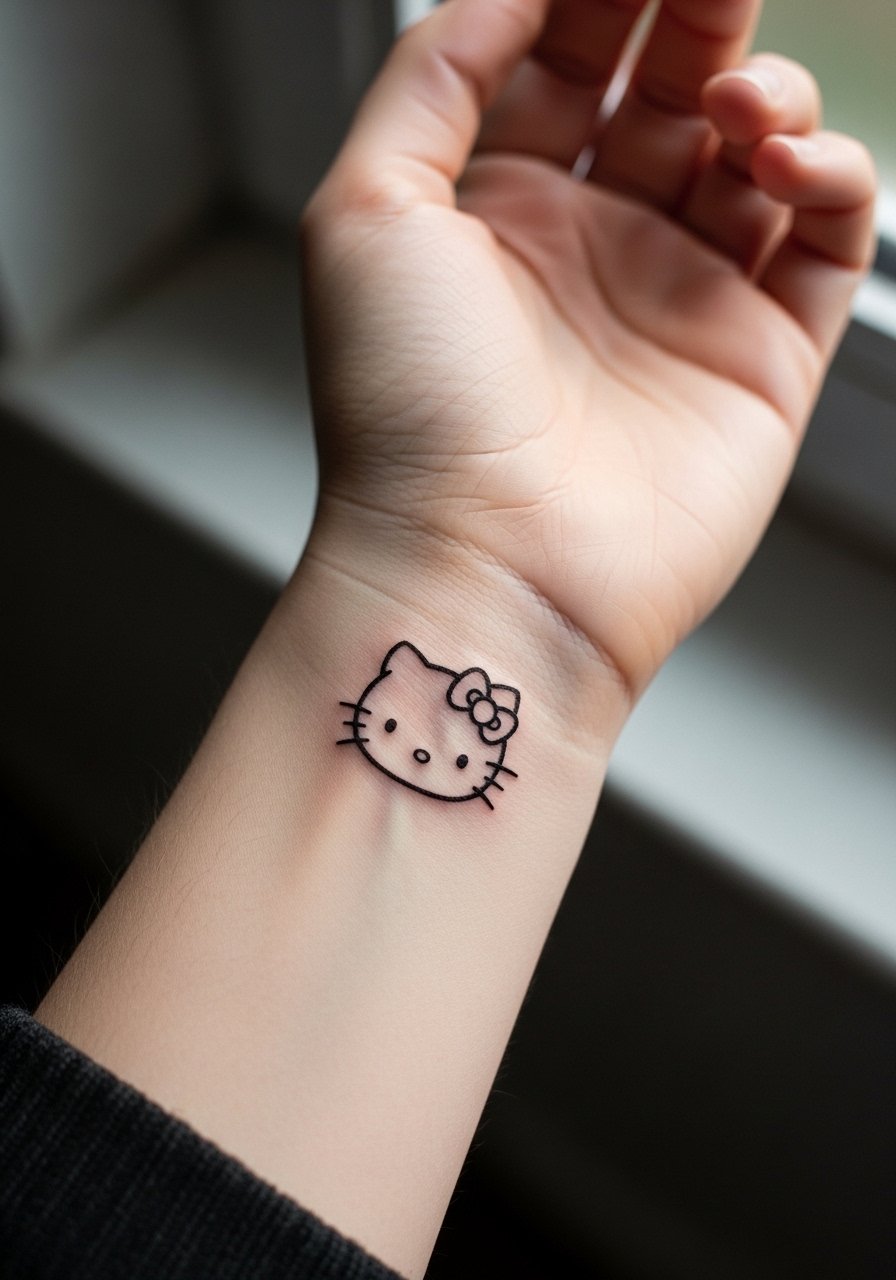
Fair warning, the wrist is a high-movement zone so single needle pieces need slightly larger line spacing than they look like on the screen. One session usually covers a micro face, but expect the need for a minor touch-up around year two. During the consultation, ask the artist to show healed wrist examples in their portfolio and to set the bow and eyes with enough negative space. For the appointment wear a sleeveless tank top so the area is easy to reach and you do not fidget with sleeves.
3. Dotwork Hello Kitty with Mandala Border on Shoulder
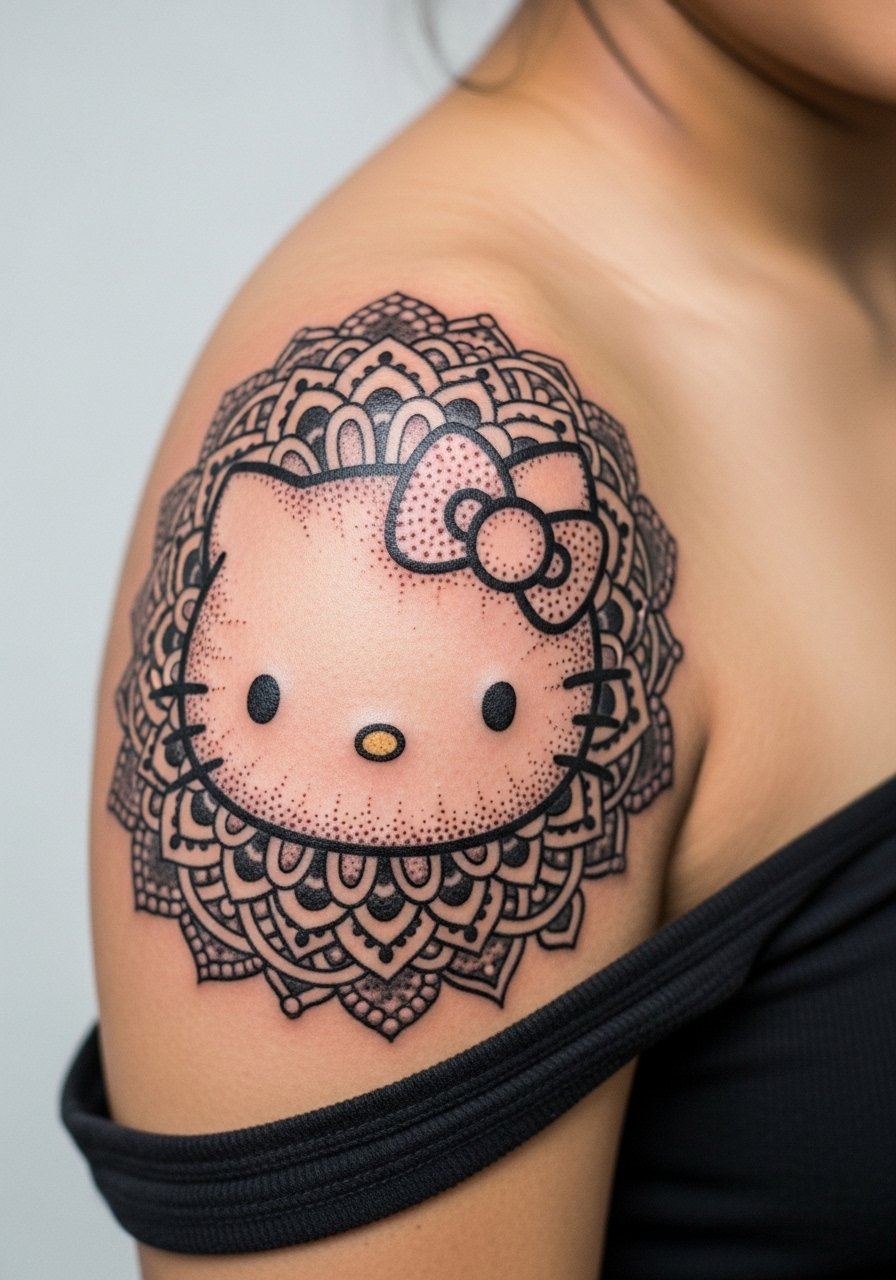
Most people choose this to add structure around the character and to offset any "too childish" read by giving it an ornamental frame. Two to three sessions are common for a medium mandala border and stipple shading, and you will feel a dull pressure rather than sharp stinging on the top of the shoulder. A common mistake is cramming the mandala too tightly around the face, which causes dense stippling to blur over time. For post-heal display, pick an off shoulder top so the mandala sits neatly in the exposed area without necklace overlap.
4. Blackwork Hello Kitty Silhouette at the Ankle
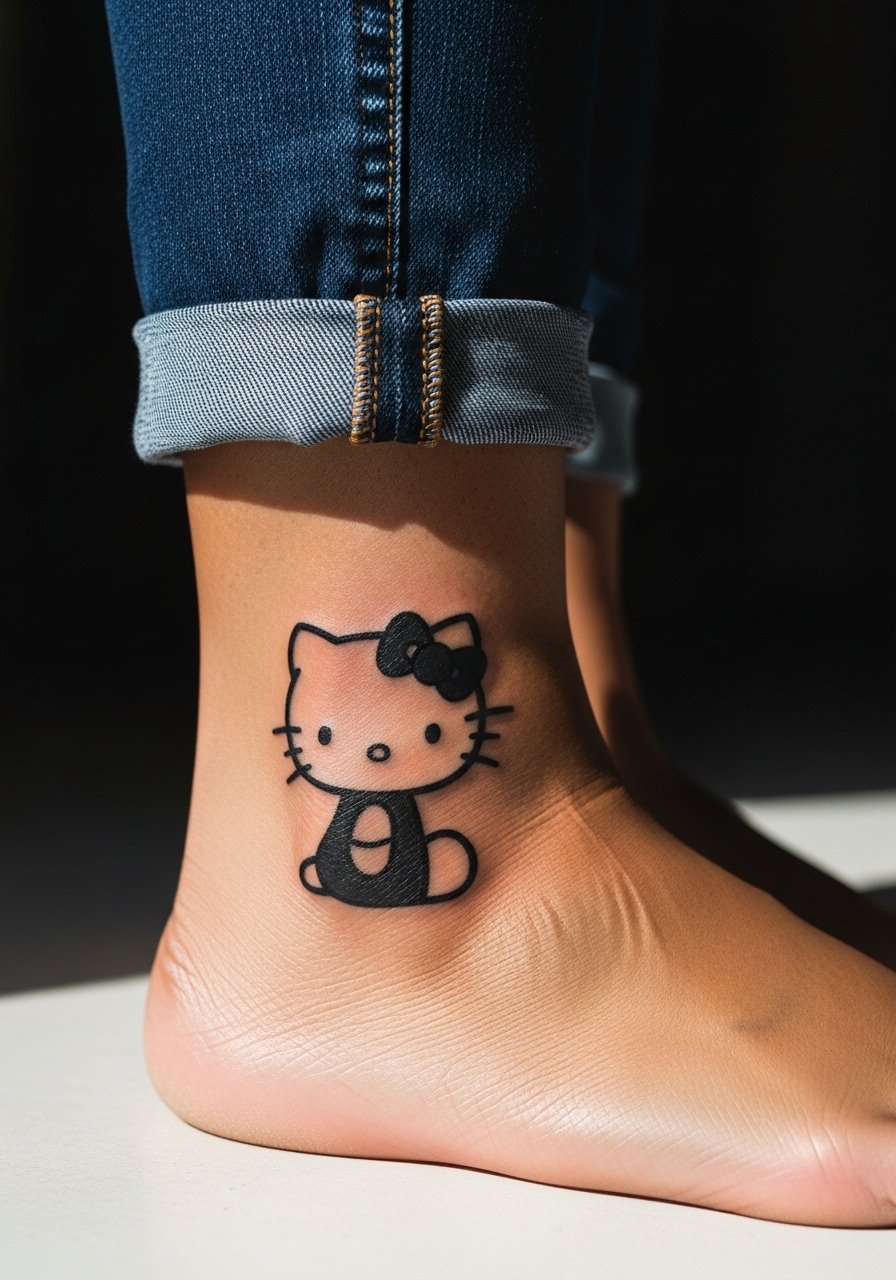
Ankle placements favor bold silhouette work because solid fills age into a clear shape even on darker tones. Expect a one-session result for a small silhouette, though the artist may pack the ink a bit more to prevent patchy fade. A real mistake is going too thin with the shape, which leaves small sections that lighten with footwear friction. For showing it off, cropped pants and strappy flat sandals expose the tattoo cleanly and avoid rubbing against the zone.
5. Neo-Traditional Hello Kitty with Flowers on Outer Forearm
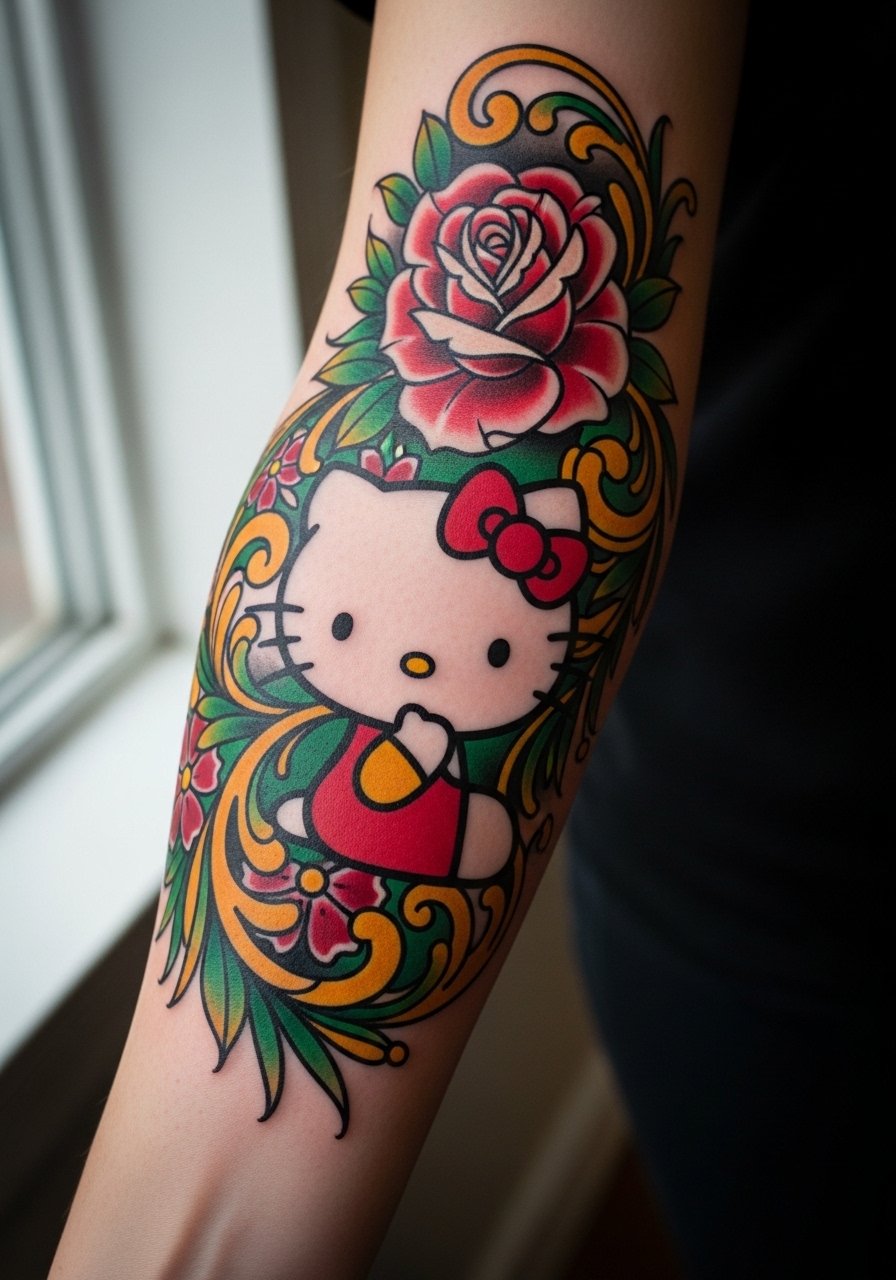
This is a heavier visual than pure dotwork but mixes well when the Hello Kitty figure keeps dot shading in the bow and face while flowers receive saturated color. Two sessions are normal for medium pieces with color accents. The session feels longer because color saturation demands more passes, and you should ask your artist about how the chosen pigments behave on your skin tone. If you want to frame casual looks, roll sleeves and pair with a thin silver chain bracelet on the opposite wrist so the arm reads balanced.
6. Minimalist Dotwork Kitty Bow on Inner Wrist
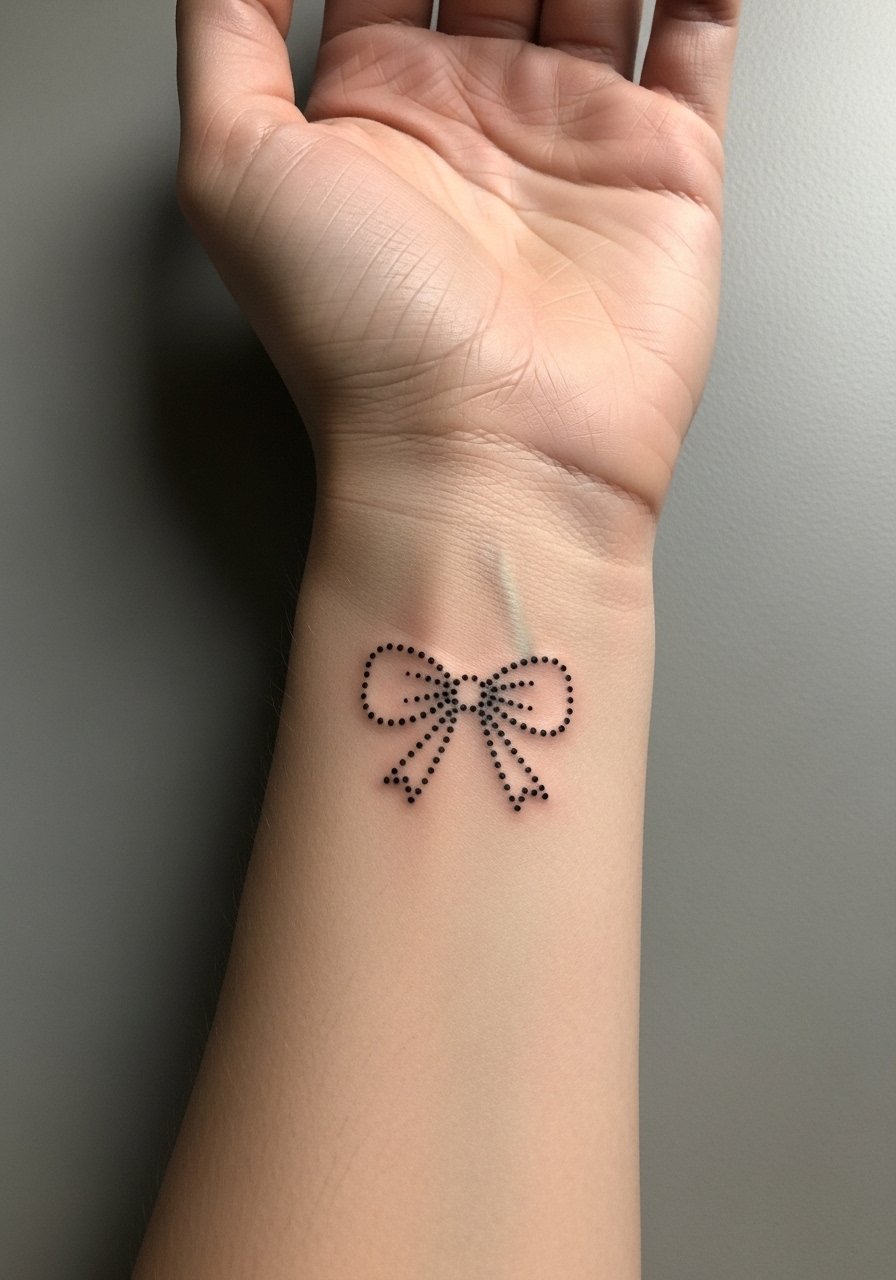
This micro option is beginner-friendly and fast, typically one short session that still needs careful spacing because wrists blur faster than forearms. The most common error is insisting on hyper-tiny dots that have no room to settle. Expect less pain than forearm rib zones, but still account for movement during the first week. For the consultation say you want negative space around each dot and ask to see healed wrist bow examples in the artist portfolio.
Studio Day Picks
The ankle and wrist pieces, plus the shoulder mandala above, all ask for slightly different studio prep so a few targeted items smooth the session and the first week.
-
Stencil transfer paper kit. Lets you preview placement on skin before the artists inks so you can adjust line weight and spacing for dotwork pieces.
-
Topical numbing cream. Used 30 to 45 minutes before a sensitive wrist or ankle session it takes edge off without changing how the needle tracks.
-
Thin protective film roll. Helpful for ankle and wrist work during the first few days to reduce friction from socks and bracelets.
-
Fragrance-free body wash. Gentle cleansing for healing dotwork so the fine stipple holes do not get irritated by harsh soaps.
-
Aquaphor healing ointment. Thin application in the first 48 hours keeps micro linework hydrated without smothering the tiny stipple channels.
7. Stitched Dotwork Hello Kitty on Thigh
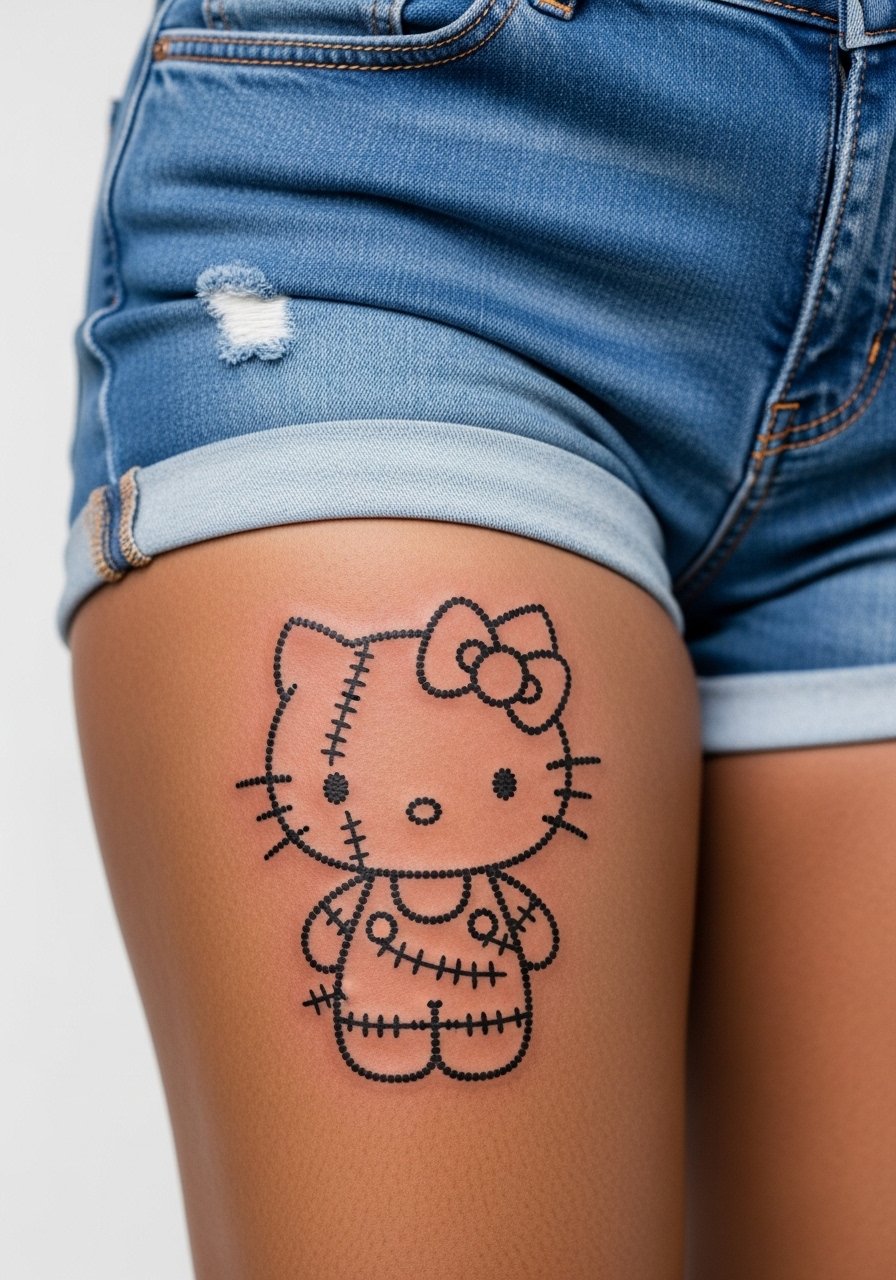
This "darkly cute" hybrid gives a playful edge while staying readable when done with clear stitch lines and spaced dots. Thigh pieces handle more detail than wrists so artists can take their time across two sessions if needed. The inner thigh needs care during healing because friction from clothing can cause scabbing to pull at dots. For the session wear loose athletic shorts so the artist can roll fabric without compressing the fresh ink.
8. Anime-Style Dotwork Hello Kitty Eyes on Calf
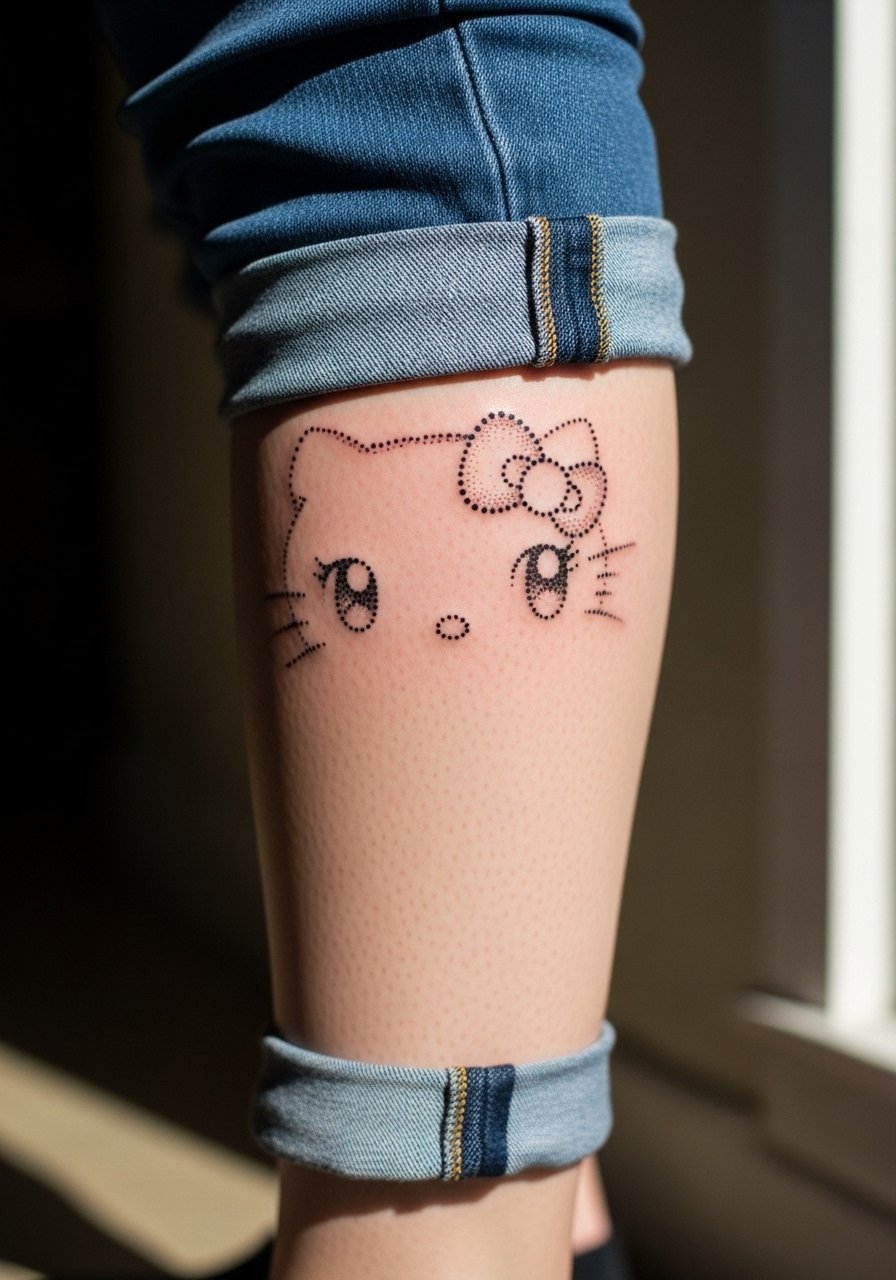
There is real drama when the eyes are treated with geometric stippling, because they create a focal point from a distance. Single session pieces here mostly hold well, but calves react differently if you sit often or wear tight pants. Ask your artist to account for muscle movement and to space dense dots in the iris. For showing it off roll cuffed jeans or wear bootcut jeans so the curve of the calf frames the gaze.
9. Ignorant Style Hello Kitty Outline on Outer Forearm

Ignorant style uses thick, confident lines that age well compared with micro detail. One session usually suffices but ask for evenly weighted strokes to prevent irregular fill later. The common mistake is trying to compress the naive look into too small a scale, which removes the intended visual confidence. Pair this with casual sleeves rolled up and a loose button down shirt for studio comfort and showing off the bold silhouette.
10. Ornamental Dotwork Hello Kitty with Stars on Back

Back pieces allow more breathing room so ornamentals gain clarity and age predictably. Two to three sessions may be needed for medium back work and stippling across a wide area. A mistake to avoid is crowding many small star dots too close to each other because tension across the back can cause merging. For the session wear a strapless tank so the artist can access the back without fabric dragging over fresh ink.
11. Micro-Realism Hello Kitty Portrait on Neck Nape
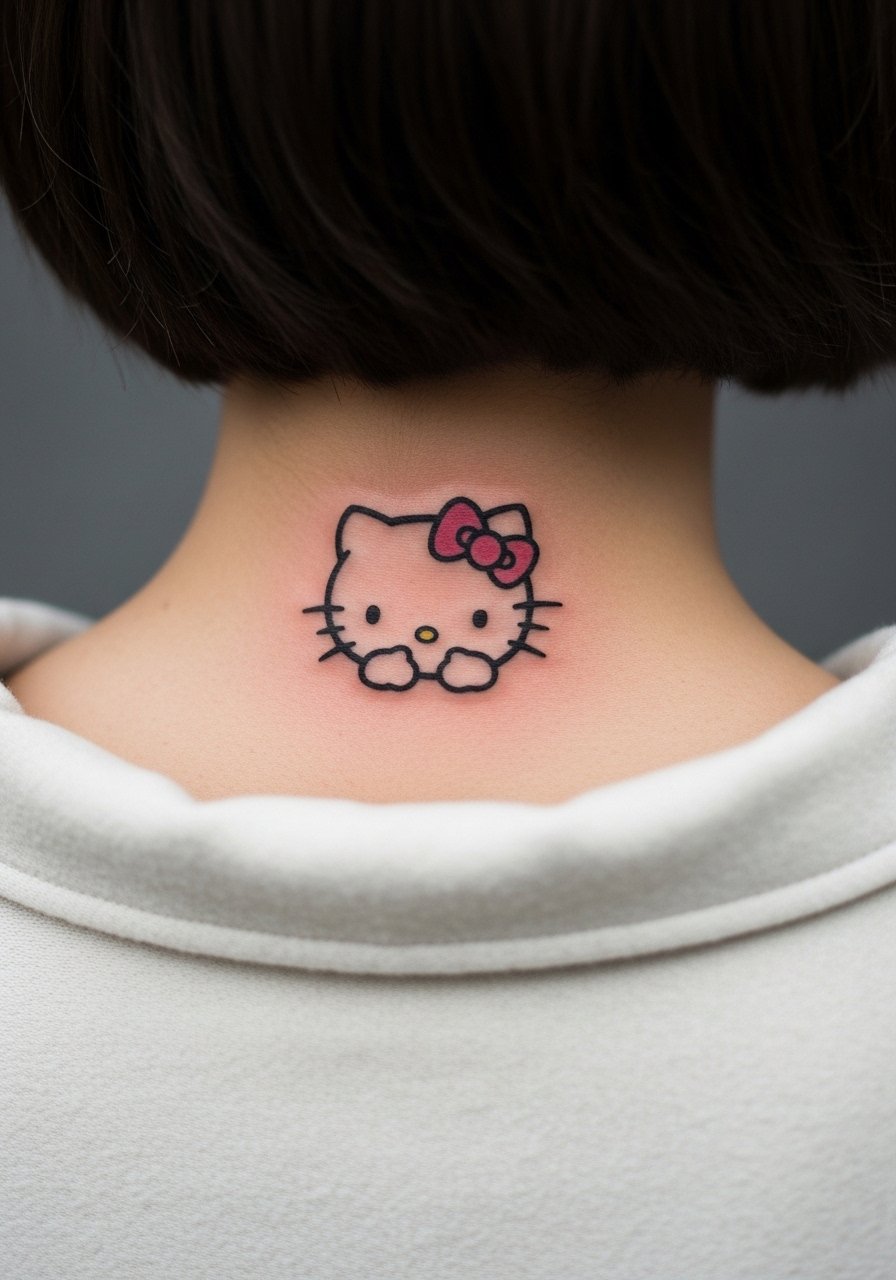
The nape handles micro detail if you plan carefully, but it is a sensitive spot that can require a gentle hand. One to two short sessions are typical and touch-up rates can be higher because of sun exposure on that area. When you consult, ask to see healed nape portraits so you know how tiny texture settles. Keep in mind career visibility and choose placement slightly lower or higher if you need it hidden under collars.
12. Micro Dotwork Kitty Bow on Finger
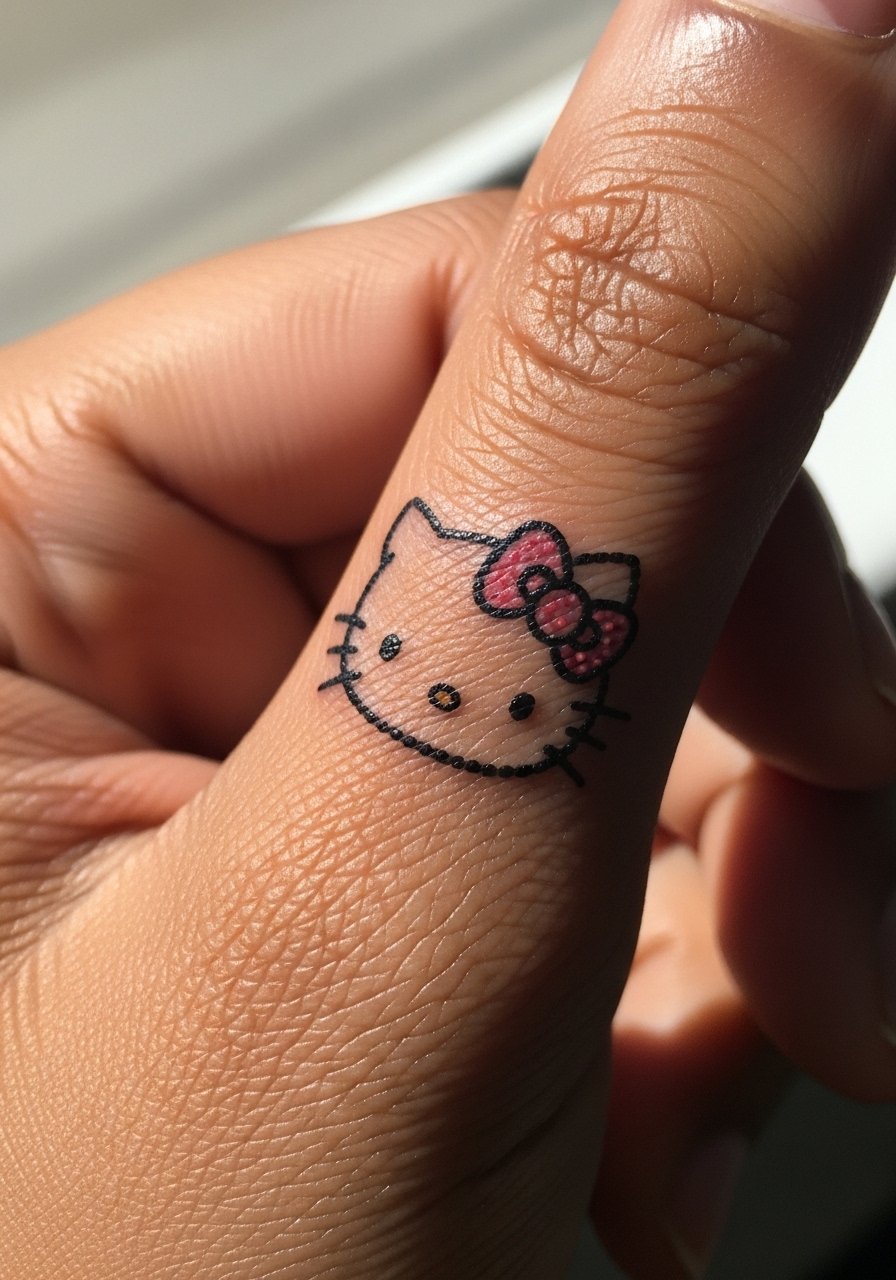
Finger skin is thin and mobile, so micro dotwork can blur more quickly than other small placements. A common mistake is attempting too many tiny dots in a narrow band, which leads to smudging inside a year. Expect a faster touch-up timeline, often within 12 to 18 months, and budget accordingly. For the session keep the hand rested and avoid jewelry that rubs the area until healed.
13. Watercolor Hello Kitty Splash near Collarbone
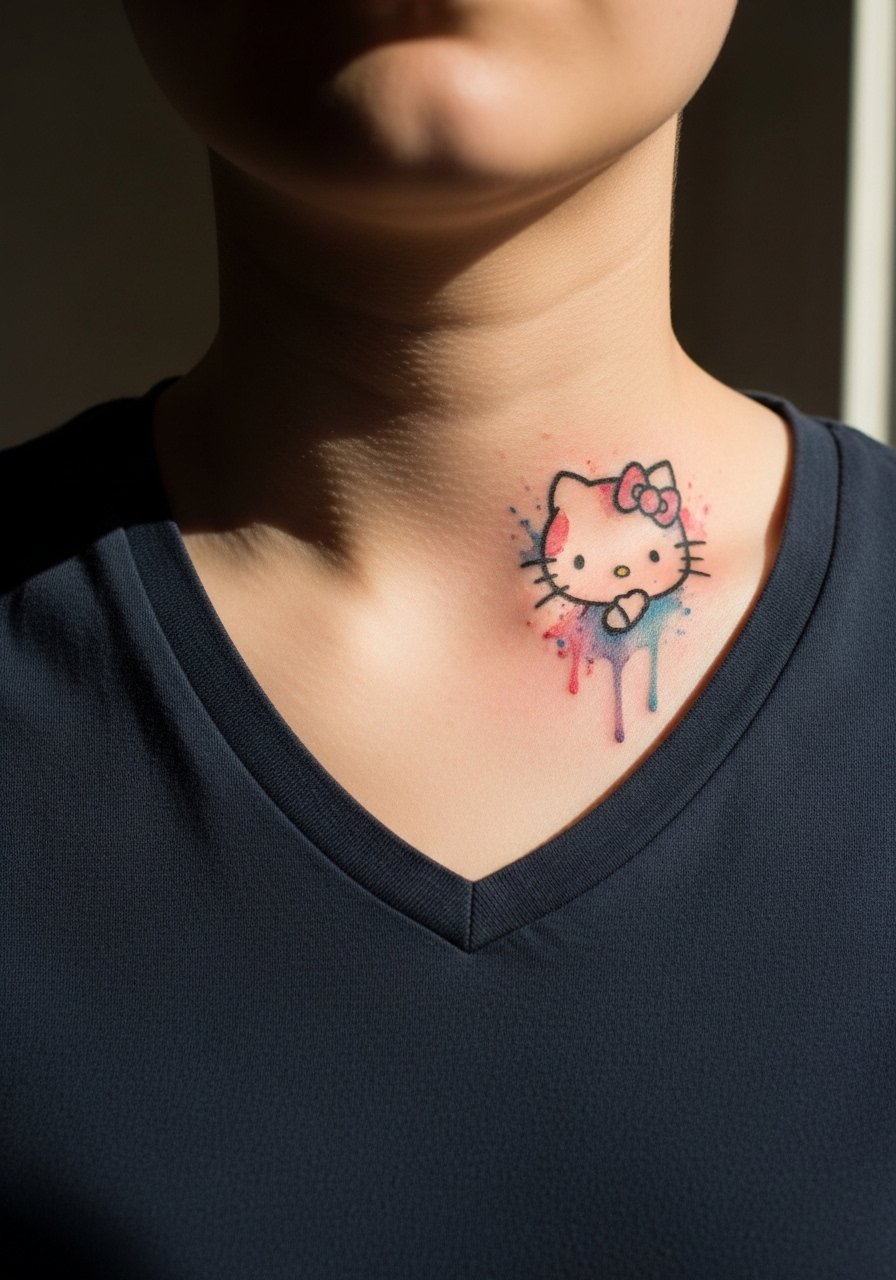
Watercolor brings color that sings against the skin but fades faster than blackwork, so spacing between splash elements matters. One to two sessions usually achieve the soft pastels, and you will want a sunscreen routine for long-term preservation. The collarbone is a great seasonal show-off zone so pair it with a v neck t-shirt to keep the color visible without necklace overlap.
14. Dotwork Hello Kitty with Mandala Halo on Upper Arm
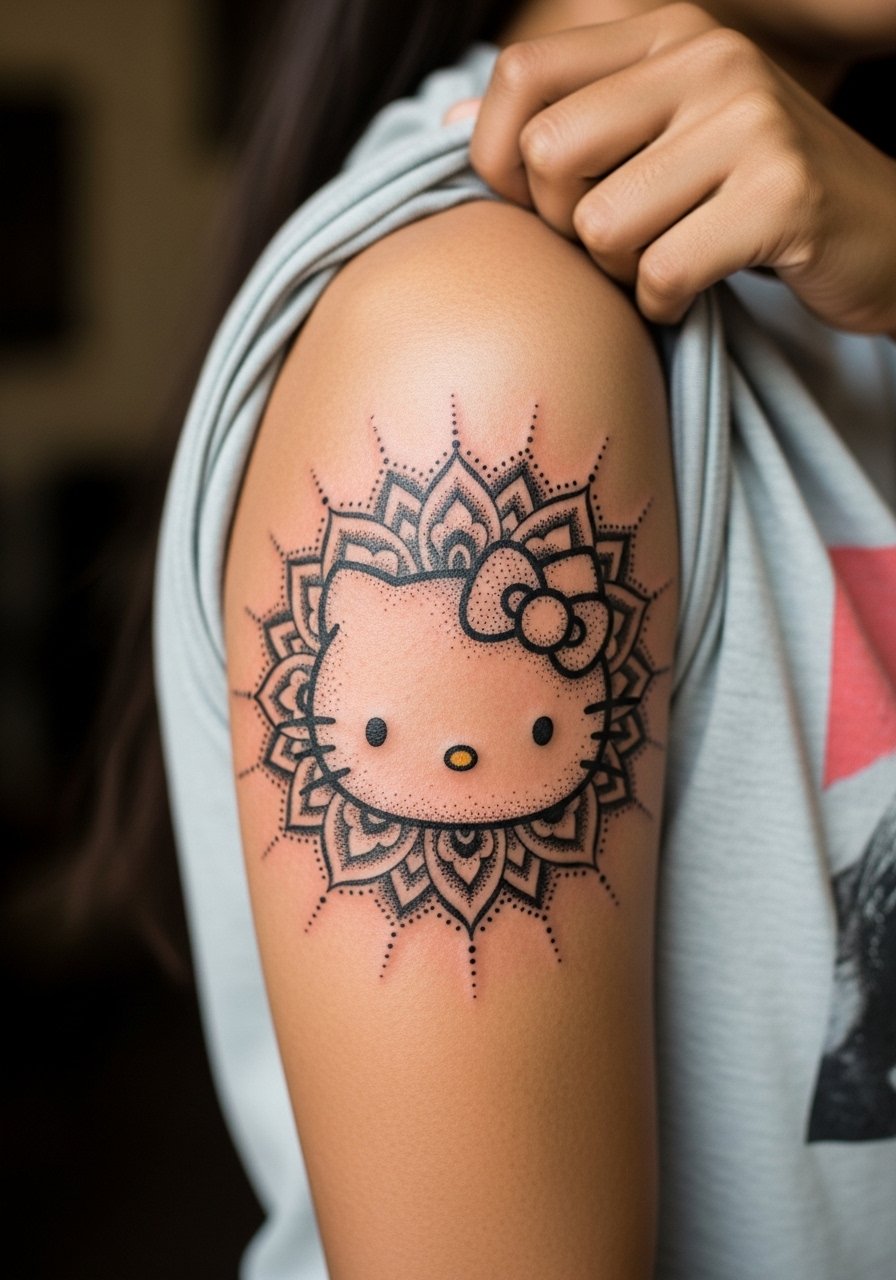
Upper arm skin tolerates dense stipple better than wrists, so mandala halos look crisp for longer. Two sessions are common for medium pieces, and the session is tolerable for most people with breaks between passes. One mistake is over-detailing the halo without leaving breathing room to prevent stipple collapse over time. For the session and after, a loose short sleeve button-up makes access easy without pressure on fresh ink.
15. Anime Dotwork Kitty Eyes on Calf Wrap
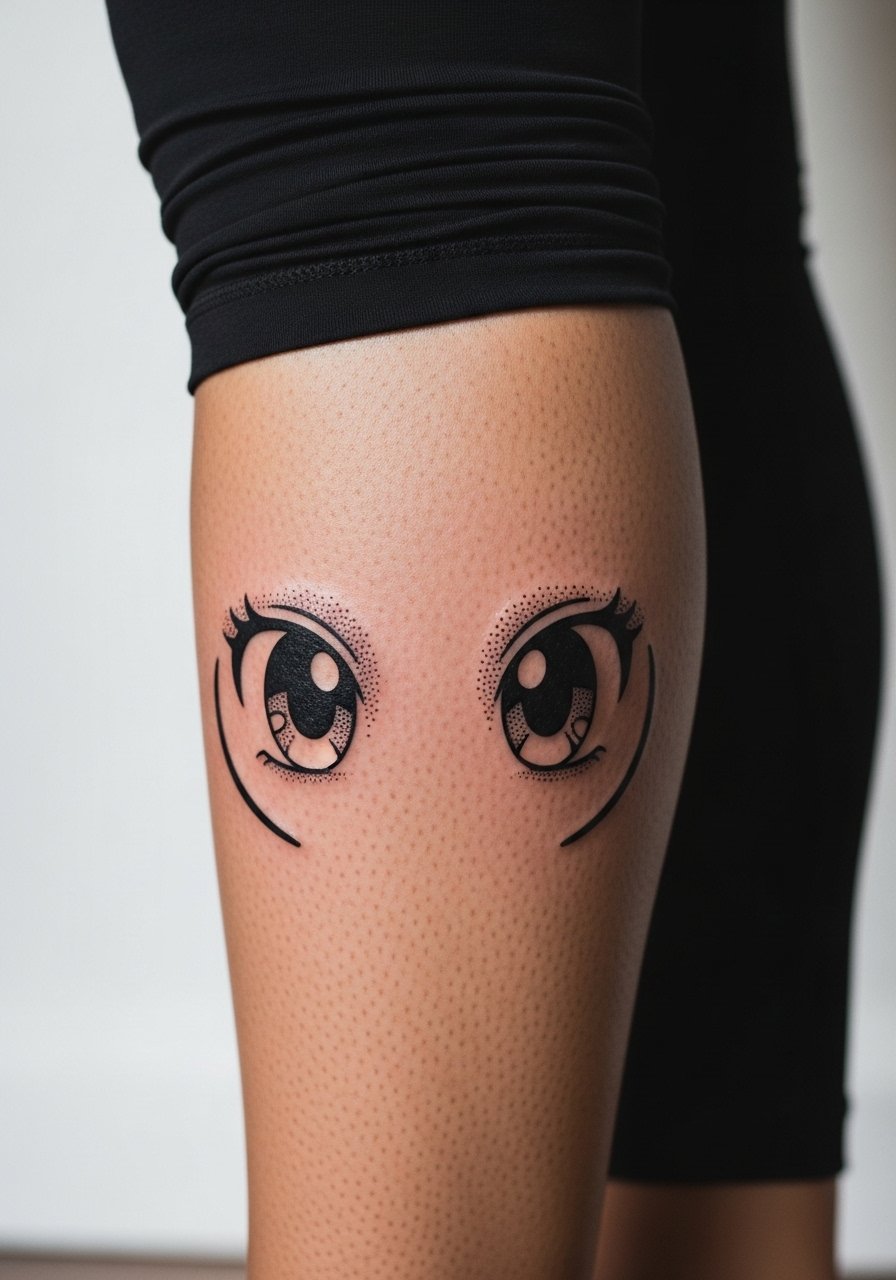
Wrap placements need careful stencil placement since muscle shape changes how dots align when you move. Single session pieces are possible but ask the artist for a standing mockup to check curvature. A visual mistake is plotting the eyes without testing them around the calf axis which can skew the gaze. Wear compression leggings to the session so you can stand and check alignment without fabric interference.
16. Ignorant Style Stipple Hello Kitty on Shoulder Blade
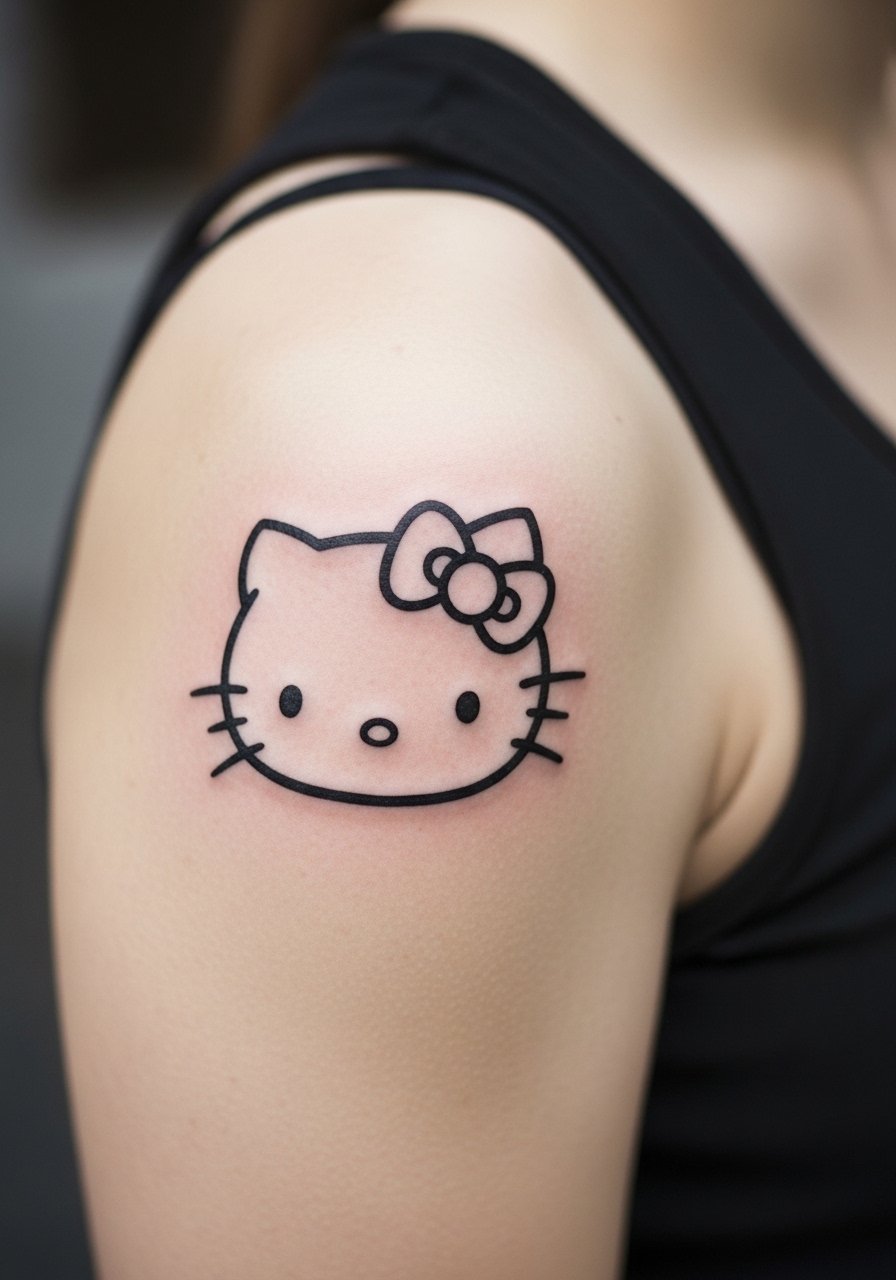
The shoulder blade offers a broad flat canvas so naive thick lines with supportive stippling keep their character over time. Sessions are comfortable and usually short for medium pieces. A common error is trying to force tiny detail into the ignorant language, which dilutes the intended rawness. For easy access on session day, a strapless tank makes positioning simpler for both you and the artist.
17. Ornamental Back-Center Hello Kitty Medallion

Central back medallions can be designed large enough that negative space becomes part of the pattern, which helps long-term legibility. Two to three sessions are normal if the piece spans the upper back. One real mistake is making the medallion too tight and dense, which invites merging in a few years. During booking search local studio tags for "[city] dotwork tattoo studio" to find artists who photograph healed back medallions.
18. Micro-Realism Hello Kitty Portrait on Finger Side

Finger portraits carry the highest touch-up expectation because of hand washing and constant movement. One tiny session can do it but accept that touch-ups are part of ownership. Avoid asking for extreme fur texture at this scale because the skin will soft-focus those details quickly. For work-life balance consider a placement slightly away from the dominant hand to slow fading.
19. Stipple Hello Kitty with Floral Accent on Thigh
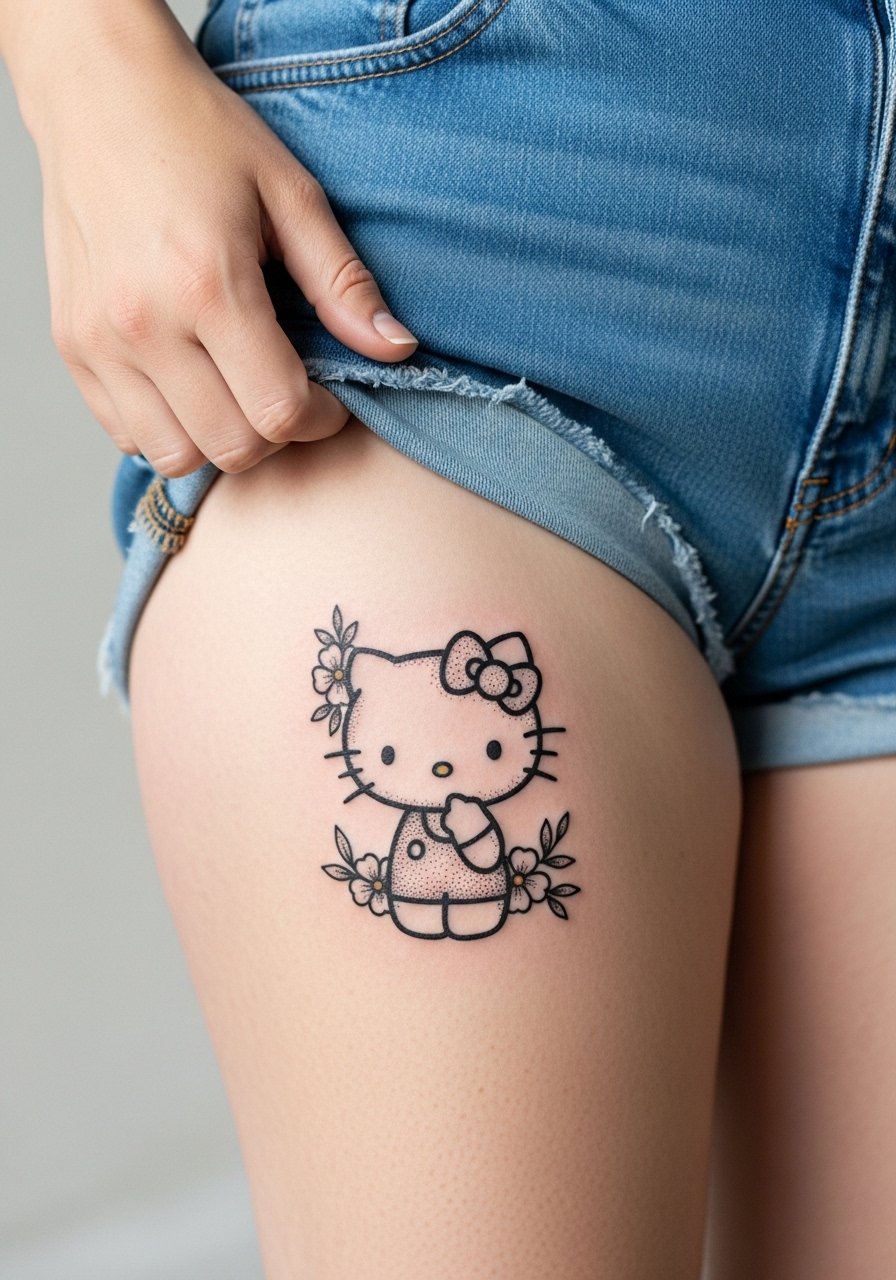
Thigh placements allow decorative additions like small flowers without overcrowding the figure. Two sessions can give you crisp dot transitions and room for a follow-up if needed. One session mistake is overloading the area with tiny filler dots that create a muddy texture over time. For showing it off in summer pick high cut shorts that sit above the placement and keep friction minimal.
20. Neo-Traditional Hello Kitty Bust on Forearm Wrap
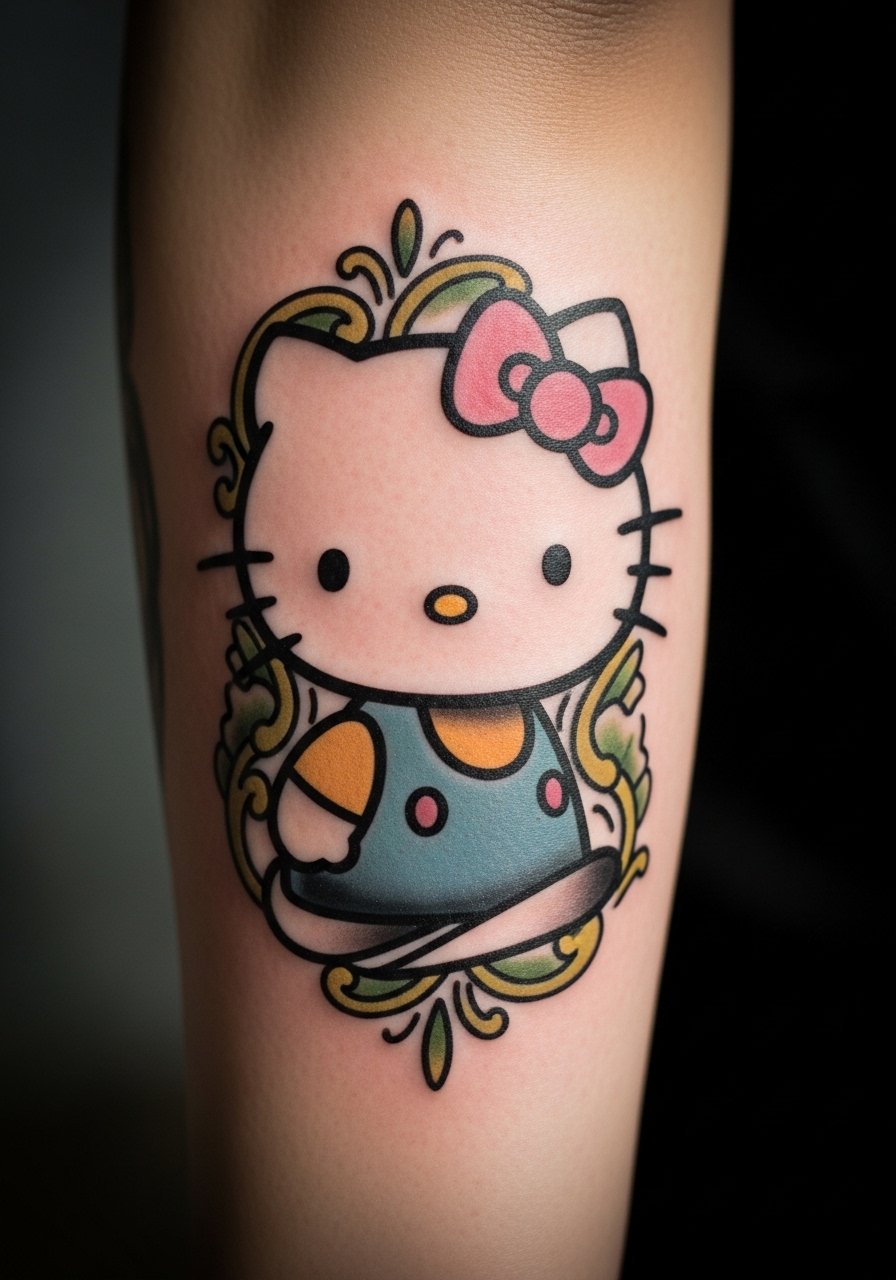
Forearm wraps present a chance to blend dotwork faces with saturated neo-traditional elements. Expect two sessions for color and dot transitions and ask about color choices for long-term vibrancy on your skin tone. A typical mistake is asking for too many small colored highlights that fade out, leaving odd shadows. During the consultation ask how the palette behaves on medium tones so you get predictable saturation.
21. Ornamental Dotwork Kitty on Lower Leg
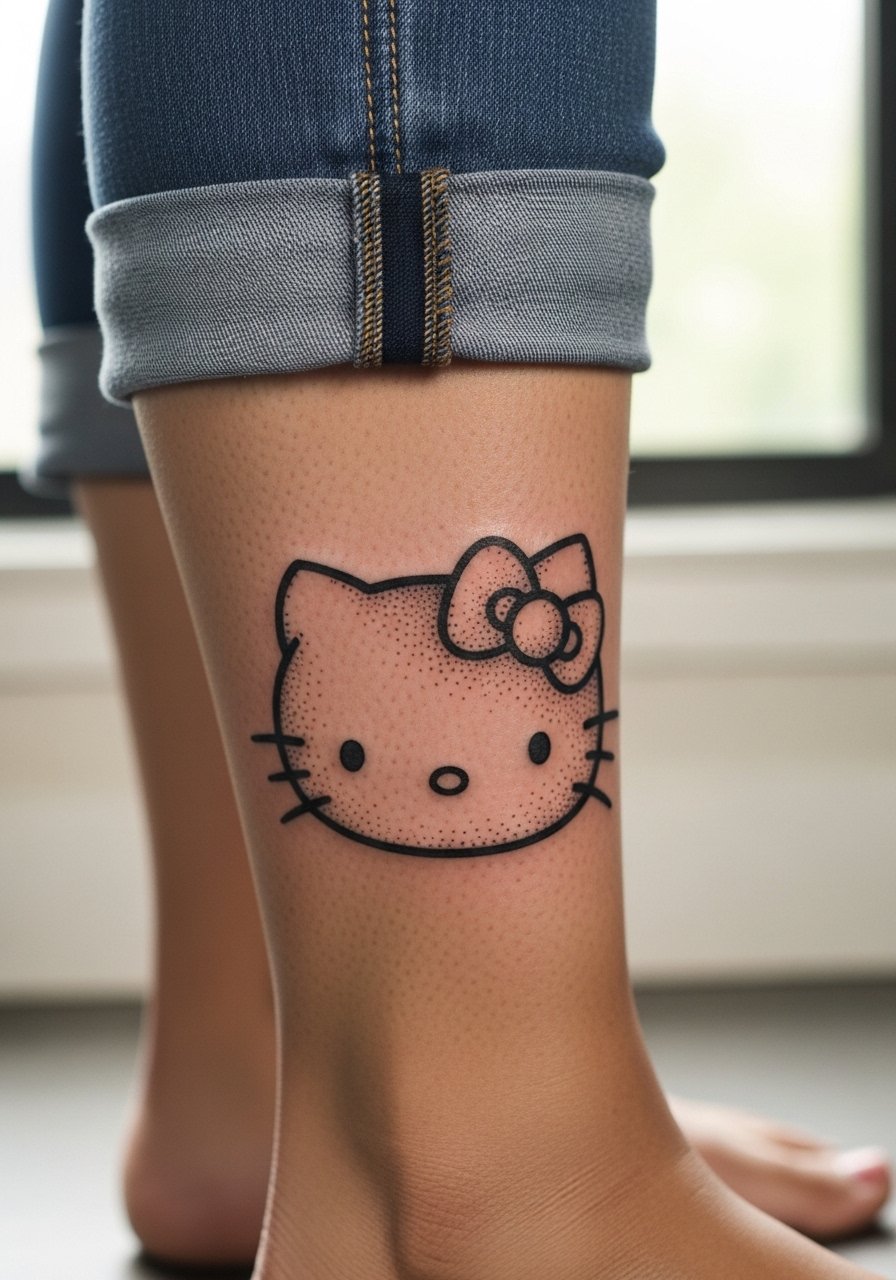
Lower leg work benefits from a vertical composition so the dot pattern follows the bone structure and reads cleanly from a distance. One session often covers a small to medium piece but plan for a follow-up if you want extra halo dots. Avoid cramming tight stipple into thin bands which causes future merging. For casual display, ankle-baring pants and rolled cuff jeans frame the area without rubbing.
22. Tiny Dotwork Hello Kitty Back of Ear Nape

Behind-the-ear placements look discrete and delicate but the skin turns and the area sees hair oils, so expect a small touch-up window. One short session can suffice, but ask your artist about aftercare that avoids heavy hair products on the zone. A common oversight is forgetting that this spot sits near hairlines which can trap residue during healing. If visibility matters, plan for slightly larger dots to keep the shape legible.
23. Blackwork Hello Kitty Sleeve Accent on Outer Bicep
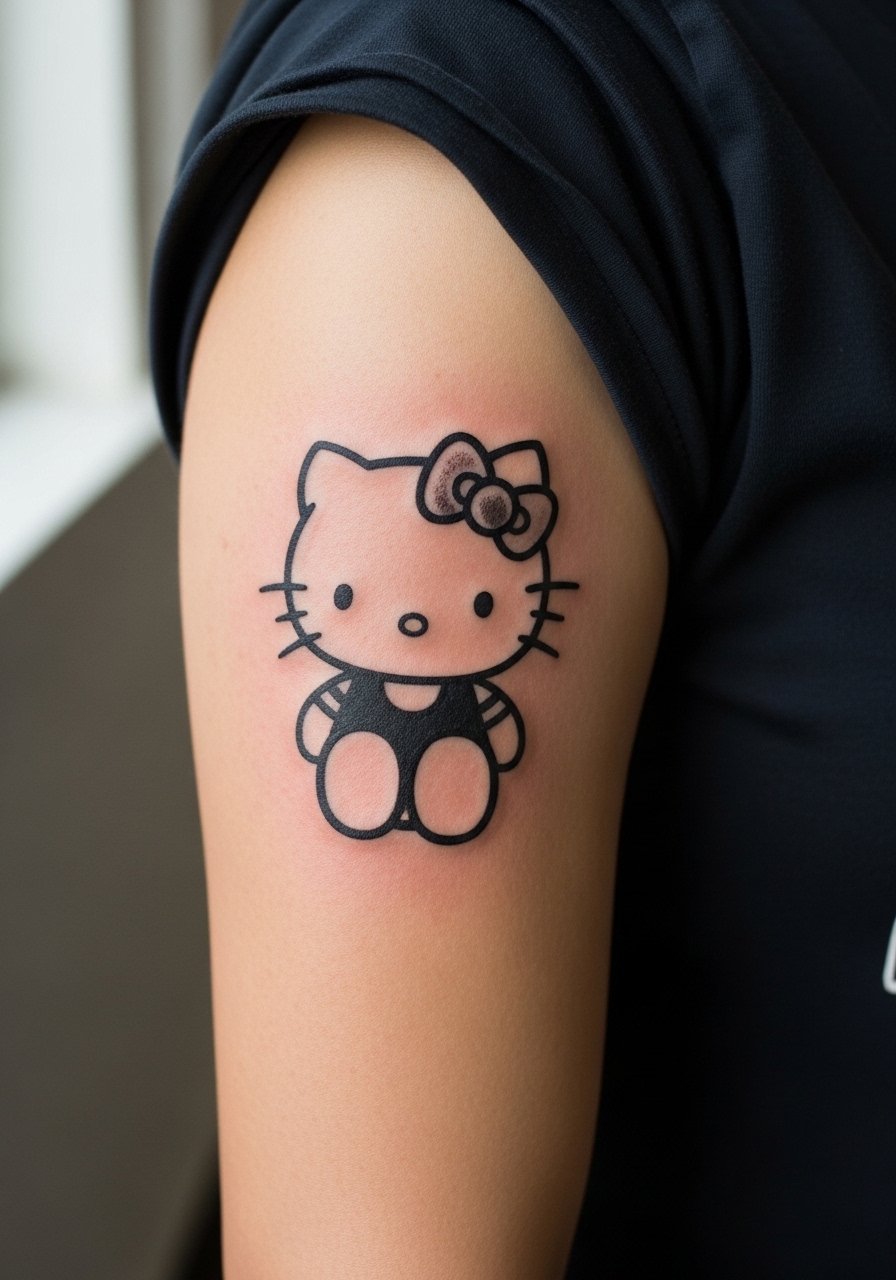
Blackwork accents hold up well on biceps where the skin is less likely to blur from repeated stretching. One session can nail a strong silhouette, but for sleeve cohesion discuss how the figure integrates with existing pieces. A mistake is placing thin negative spaces next to large black fills which can seem imbalanced over time. For the session wear a loose button down shirt you can pull aside so the artist has full access without tugging.
24. Anime Dotwork Kitty Eyes over Calf Tendon
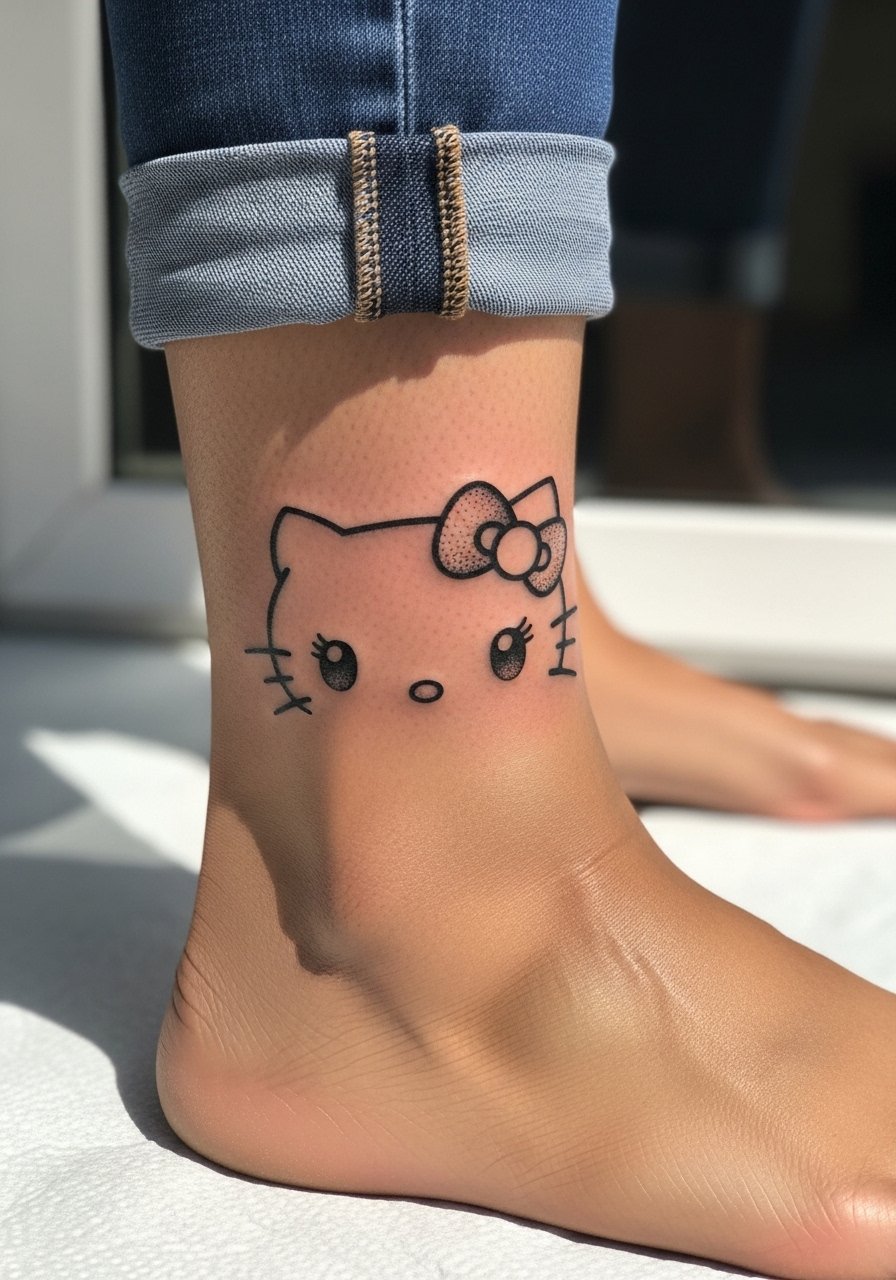
Sites near tendons need extra planning because skin movement is different and dots can thin if placed too near high-tension zones. Single session pieces are possible but ask the artist to test the stencil in standing and seated positions to confirm alignment. A typical mistake is underestimating how footwear and ankle motion will affect the healed dots. Consider placement slightly higher or lower to reduce friction from shoes.
25. Micro-Realism Kitty on Sternum Edge
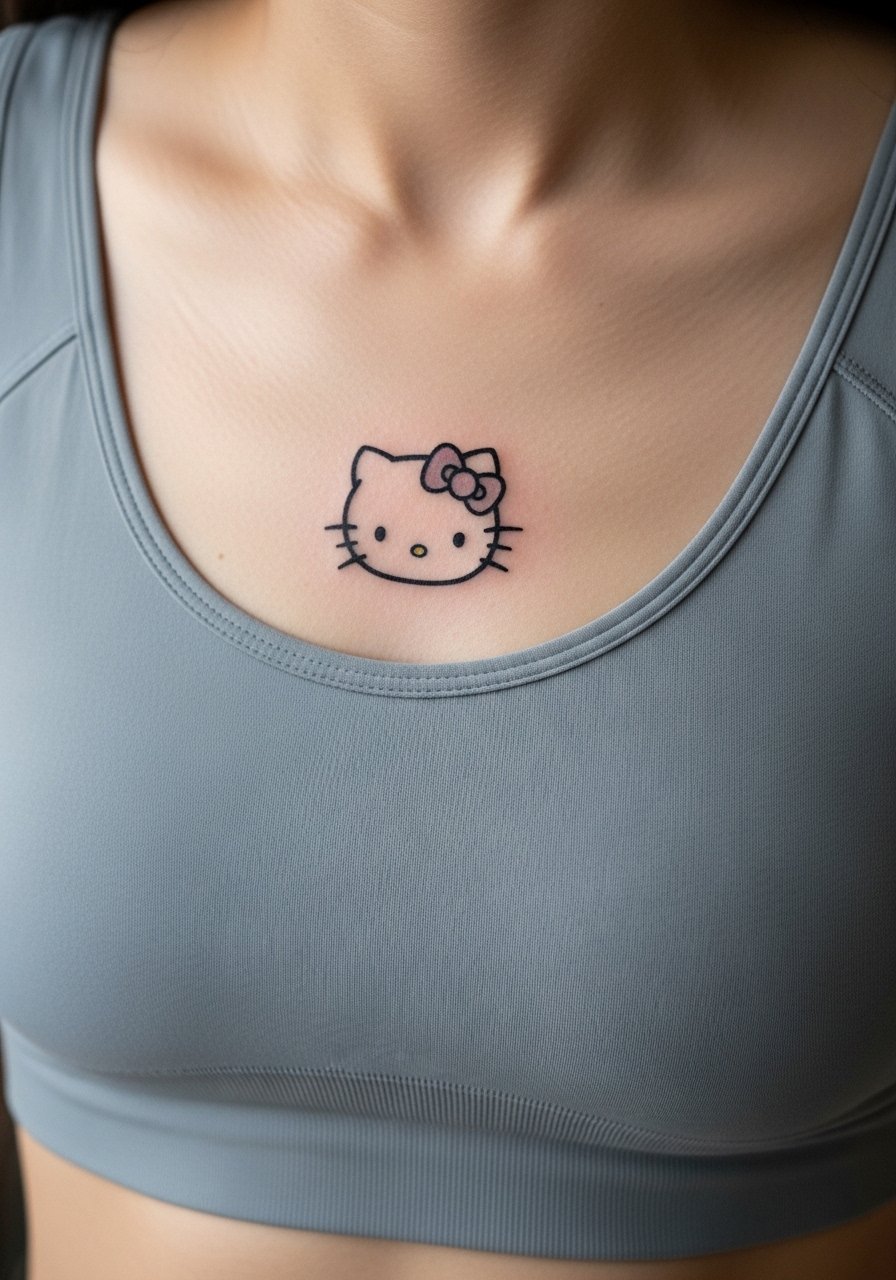
Sternum micro-work can be dramatic but demands an artist comfortable with delicate shading near the chest. Expect to book two shorter sessions and plan for increased soreness during the first 48 hours. One reported mistake is attempting extreme micro texture where the skin moves too much for fine detail to hold. For session comfort pick a fitted sports bra you can loosen slightly while still offering coverage.
26. Stipple Hello Kitty Face on Lower Back
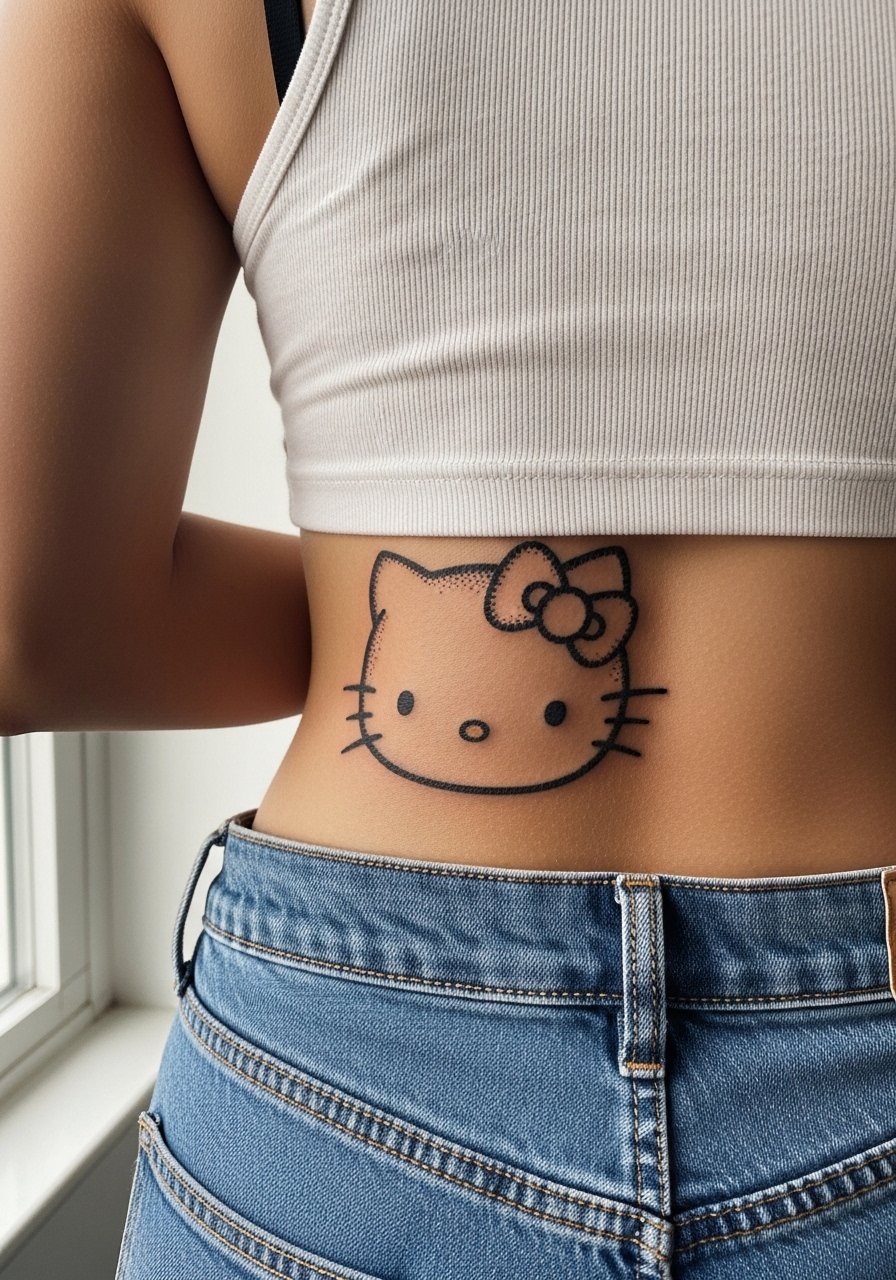
Lower back placements let stipple breathe and avoid early blurring if the design leaves open zones. Two sessions are typical for medium designs and it is easy to check healed samples from other clients. A mistake is adding too many micro fillers that create a blurry plane after a few years. For placement discovery search studio directories for "kawaii blackwork near me" to find artists used to that aesthetic.
27. Micro Dotwork Hello Kitty on Collar of the Neck
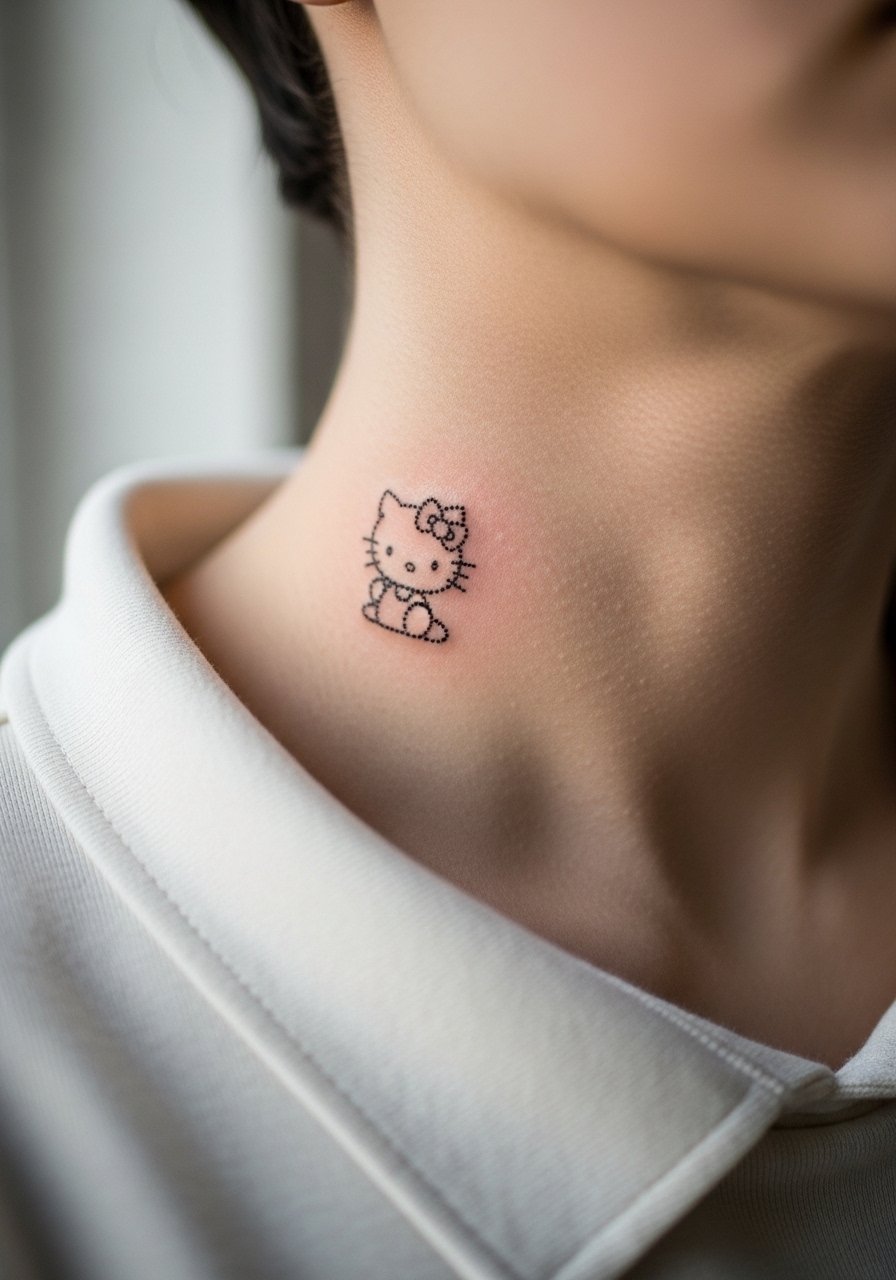
Neck placements age under constant sun and clothing abrasion, so micro dotwork there asks for slightly bolder dots than you might request on the wrist. Expect higher touch-up probability, and discuss visibility concerns with the artist before booking. One camp of artists recommends avoiding micro neck work entirely, arguing that daily movement and exposure blur edges within a couple years. The other camp says that with correct depth and spacing it can settle well. Ask your artist which approach they prefer and to show healed neck examples before committing.
Frequently Asked Questions
Q: Will a dotwork Hello Kitty on the wrist blur faster than one on the forearm?
A: Yes, wrists typically blur sooner because skin there moves and receives more washing and friction. Forearms give dotwork more space and stability, so if longevity matters pick slightly larger spacing for a wrist piece or choose the forearm instead.
Q: How should I brief an artist if I want the stitched "darkly cute" Hello Kitty look?
A: Bring images that show the exact stitch pattern and stipple density you like, and say you want clear seam lines with open space between clusters. Ask about healed photos for similar stitched pieces so you see how shading settles.
Q: Do watercolor Hello Kitty tattoos need different aftercare than dotwork ones?
A: Watercolor tends to lose saturation faster, so sun protection and thin, consistent moisture matter more. The mechanics of aftercare are the same, but plan periodic color refreshes if you want the pastels lively long term.
Q: How often do micro-realism Hello Kitty finger tattoos need touch-ups?
A: Fingers commonly need touch-ups around 12 to 18 months because of constant use and washing. Expect that as part of ownership rather than a sign of poor technique.
Q: Are mandala-bordered Hello Kitty designs culturally sensitive?
A: Mandalas trace to meditative traditions, and many people choose to adapt motifs rather than use exact sacred templates. If cultural origin matters to you, discuss respectful variation with the artist and consider a custom pattern that nods to the style without direct replication.
Q: What should I wear to a shoulder mandala session so the artist has clear access?
A: Wear a strapless tank or a button-down you can pull aside so the artist can work without fabric rubbing the fresh ink.