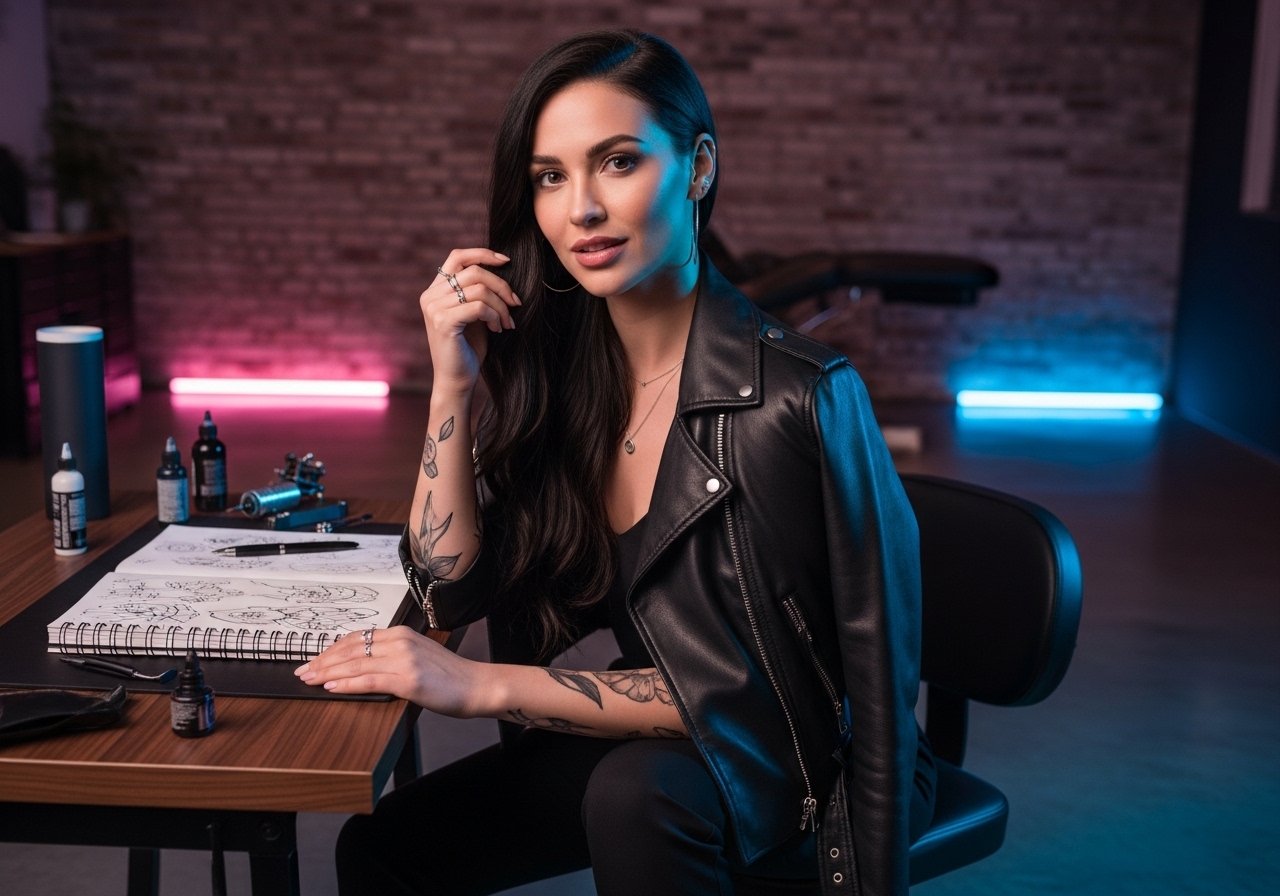
Fine line trends look flawless on saved boards, but the reality in the chair is messier. Artists I know will steer clients away from tiny, dense details on ribs and hands, and for good reason. What reads delicate at the stencil stage can merge into a gray wash if the placement and spacing are wrong. Below are 21 female lion tattoo drawings that balance current trends with what actually holds up on skin, plus what to ask for in consults so your piece ages the way you expect.
1. Roaring Lioness with Floral Crown on Outer Forearm
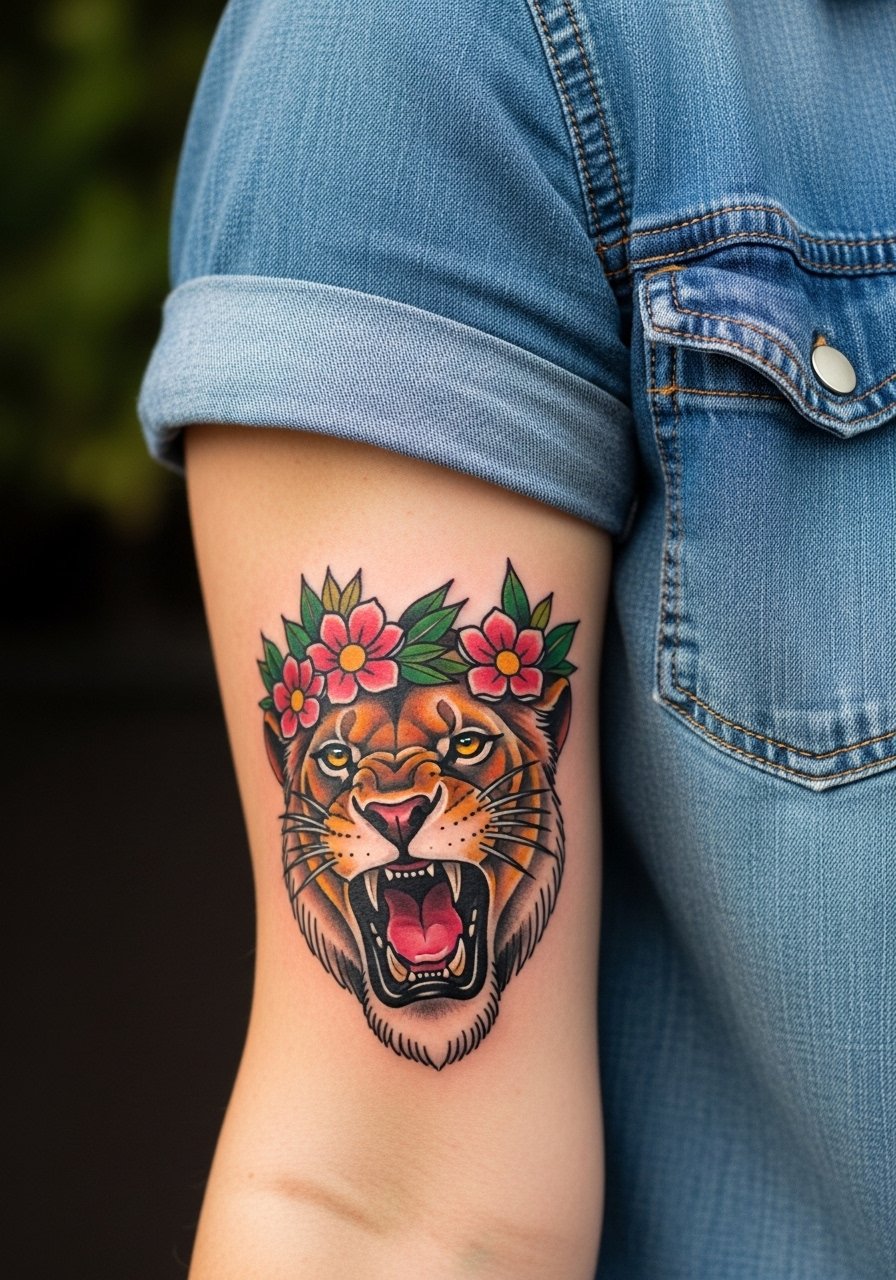
I recommend this neo-traditional forearm piece when you want high contrast that reads from a distance. Tell your artist you want mid-weight linework and a palette with high saturation so the roses hold color through the first two years. Common mistakes are packing too many small petals into the crown or asking for ultra-thin outlines, which both speed fading and invite early touch-ups. Expect one to two sessions depending on size. Forearm sessions feel manageable for most people. Pair it with rolled sleeves for showing off the piece and wear a loose short-sleeve button-up to keep the area accessible on session day.
2. Minimalist Lioness Silhouette on the Wrist
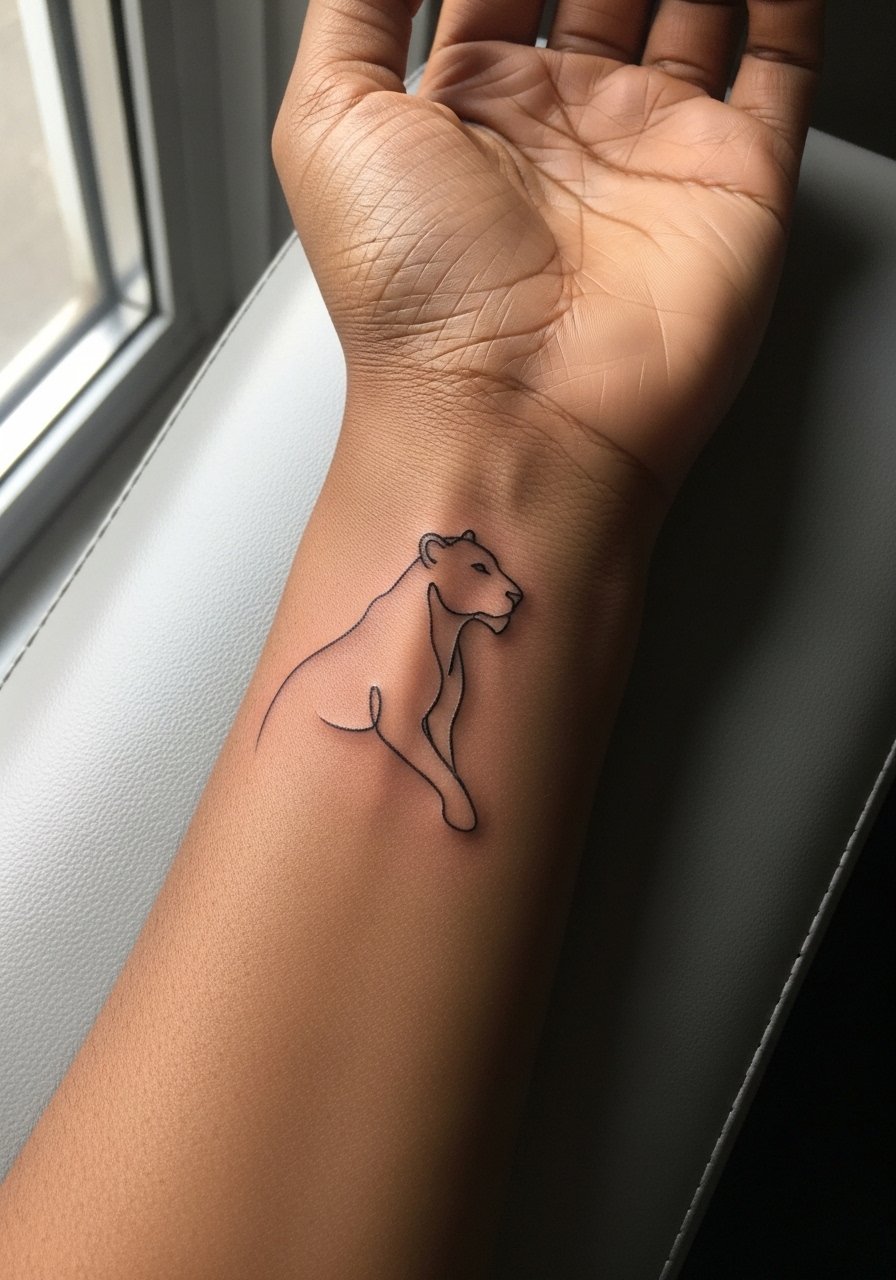
Small wrist silhouettes are a good first-tattoo choice because the design reads simply and sessions end quickly. During consultation ask for a slightly heavier single-needle gauge and a bit of negative space around the jaw so the silhouette does not blur into an indistinct shape. A frequent error is scaling this too small with tight curves. That invites early softening and the need for touch-up within a year. Wrist pain is lower to moderate and touch-ups are common at 12 to 24 months. Stack with thin silver bangles when showing it off and wear a sleeveless tank for the appointment so the artist has clear access.
3. Hyper-Realistic Lioness Face on the Shoulder
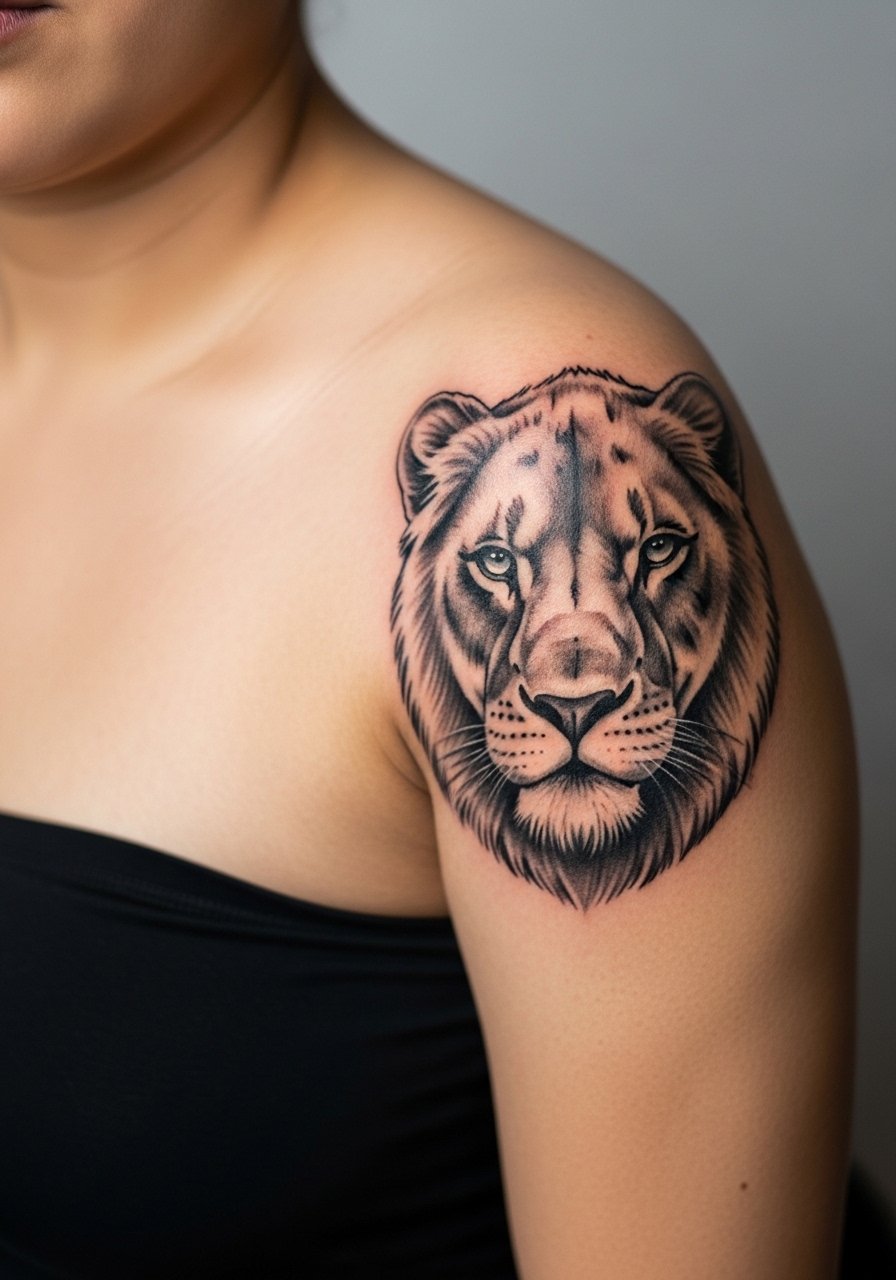
Realistic portraits demand accurate reference photos and an artist experienced in tonal transitions. In consults bring eye-closeups to nail the gaze and ask the artist to map shadow planes for shoulder curvature. The shoulder tolerates sessions well and allows larger pieces without awkward wrap. A common mistake is squeezing a full portrait into a small area which loses breathing room for shading. Expect two to three sessions and plan a touch-up around year two for saturation refresh. For session wear, choose a strapless tube top or a button-down you can pull aside to reveal the shoulder cleanly.
4. Geometric Lioness Head with Tribal Patterns on Upper Arm
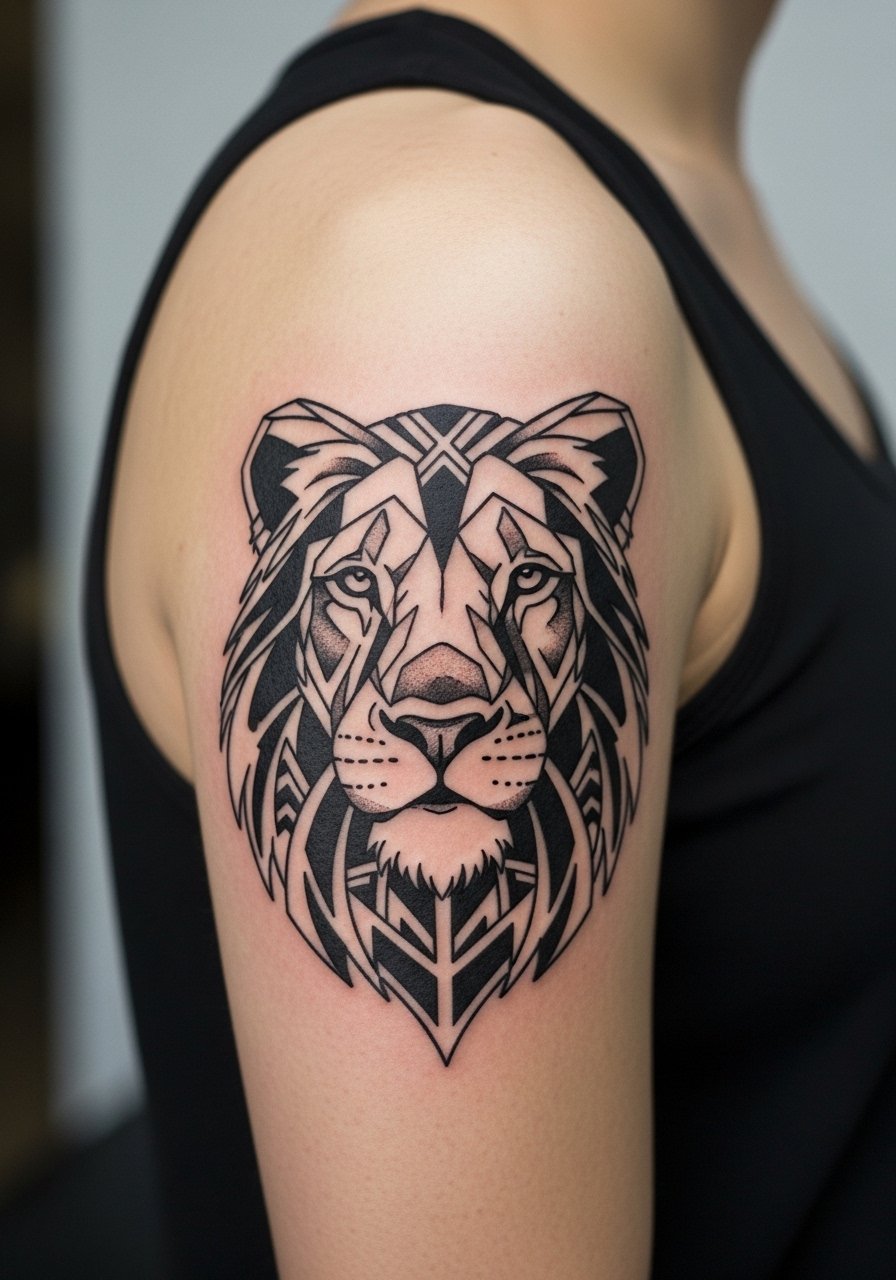
Geometric compositions need breathing room. If you want bold graphic rhythm, ask for thicker anchors and negative space between repeated shapes. Too often clients request overly compact geometry, and the fine intersections blur after sun exposure. The upper arm gives this style enough canvas to keep elements distinct and lowers blowout risk. Sessions are usually one to two sittings depending on fill. Pair with rolled sleeve linen or an off-shoulder blouse to highlight the shape when showing it off. For session day, bring a loose tank top you can lift without stretching the outline.
5. Watercolor Mane Splash on Outer Thigh
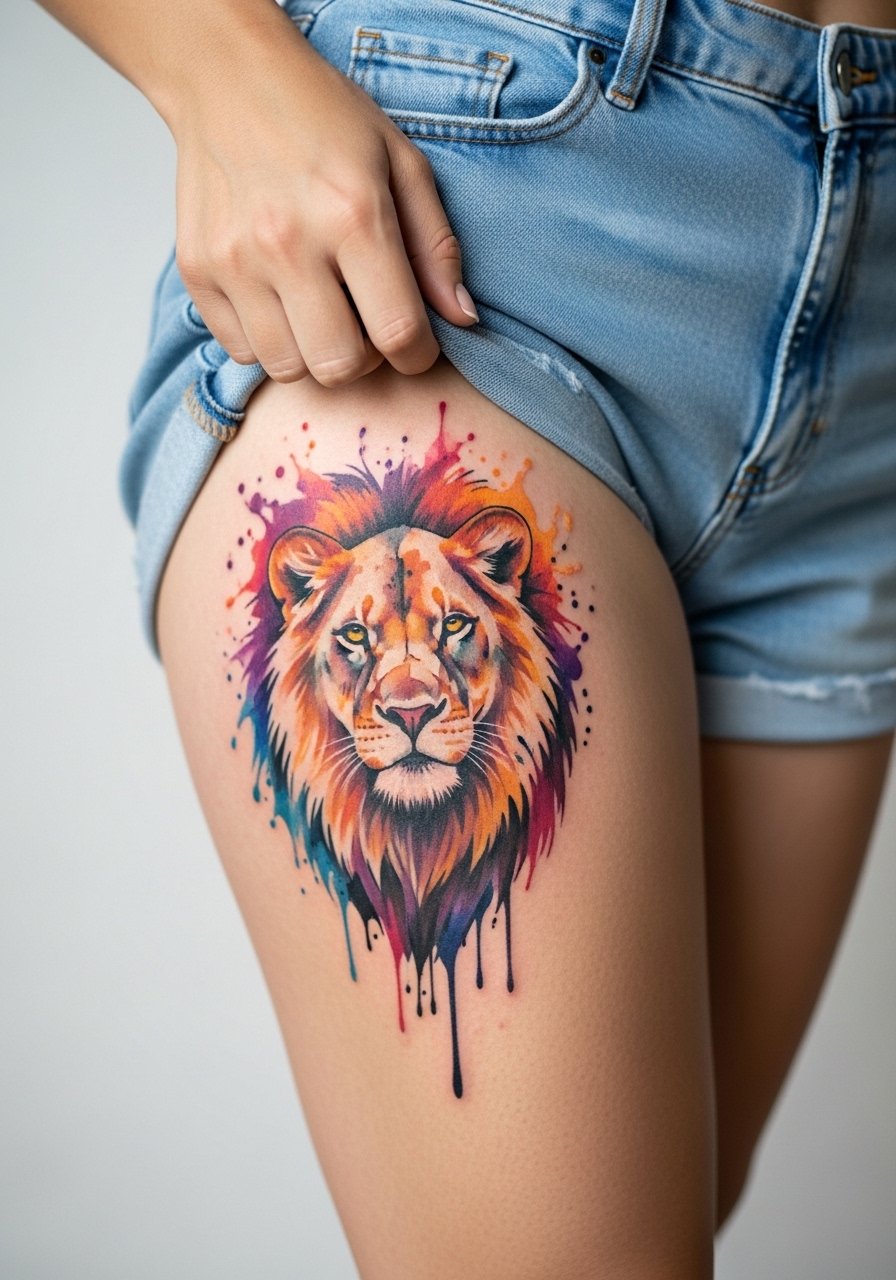
Watercolor on thigh looks painterly, but the style trades crisp edges for painterly fades so plan with longevity in mind. In consults ask the artist to anchor the composition with a strong black or dark gray outline in key areas so the face retains definition as the colors soften. Thigh placement handles saturation well and tolerates longer sessions. A mistake is choosing low-contrast color blends that disappear on darker skin tones. If you plan summer sessions, avoid heavy sweating for the first week to limit raised scabbing. Show it off with high-waisted shorts in khaki or black, and for a session wear loose drawstring shorts so the artist can work without fabric pulling.
6. Fine Line Lioness Profile on the Collarbone
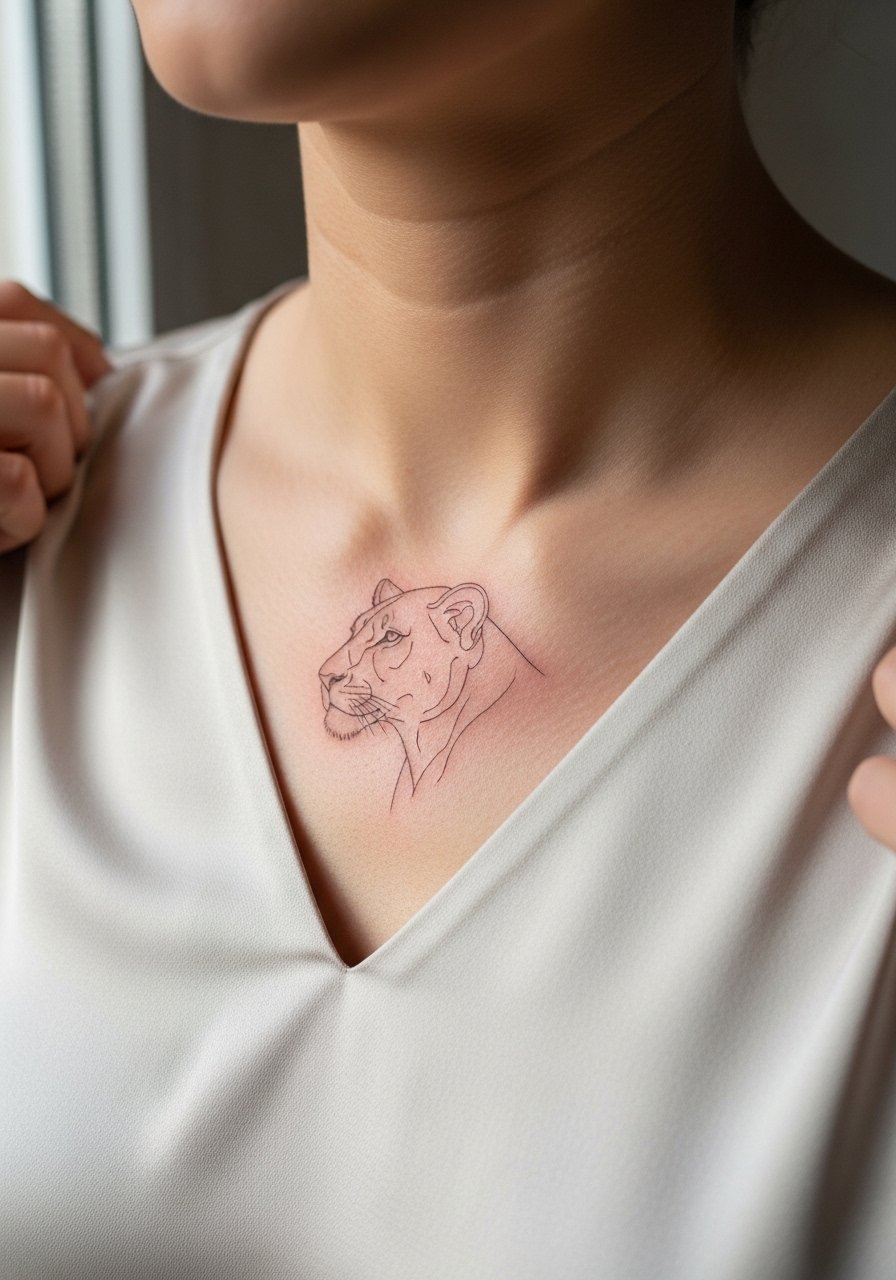
Fine line collarbone pieces look elegant but they expose the debate over longevity. One camp says single-needle profiles blur on thin, mobile skin. The other camp insists proper depth and spacing make them last. I suggest asking your artist for slightly increased line weight and spacing around whisker details to reduce the chance of merging. Collarbone sessions feel like a mid-range sting and healing is sensitive to friction from necklaces. Expect a light touch-up at year two if you want the lines crisp. Pair with a v neck silk blouse to frame the profile, and remove necklaces during the session.
Studio Day Picks
The forearm, thigh, and collarbone pieces above need different prep. A few targeted items make session day smoother and the first week less fussy.
-
Stencil transfer paper kit. Lets you preview placement on the skin before the needle starts, which matters for collarbone and facial-profile stencils.
-
Topical numbing cream. Useful for thigh or rib sessions that run long, apply per the product instructions before the appointment.
-
Thin protective film roll. Keeps outer forearm or wrist pieces protected from friction during the first 48 hours after the session.
-
Fragrance-free body wash. Gentle cleansing avoids irritation around fine line collarbone tattoos during showering days one to seven.
-
Aquaphor healing ointment. Thin application for the first few days helps keep thin linework moist without clogging the needle channels.
7. Neo-Traditional Lioness with Roses on Outer Thigh
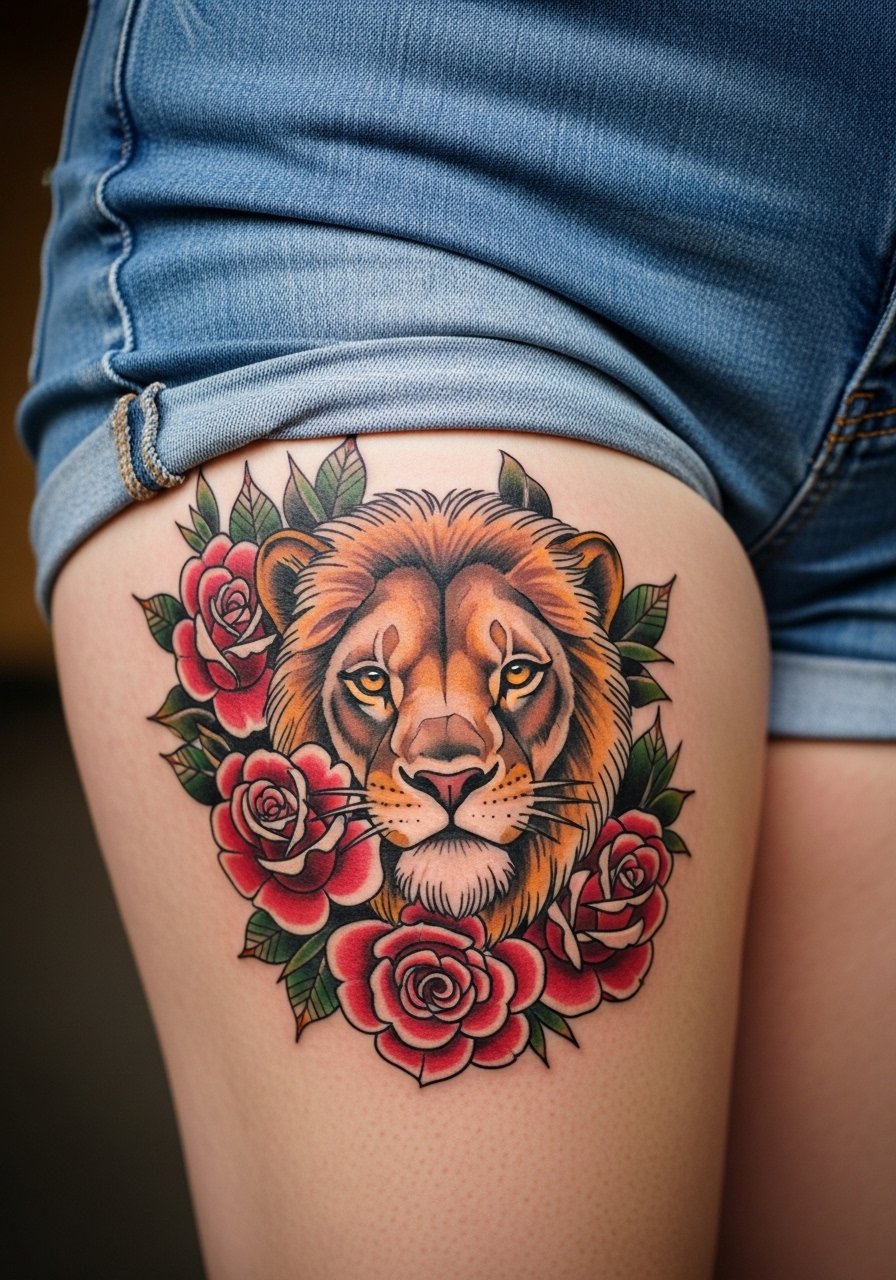
Outer thigh gives neo-traditional pieces space to breathe and lets artists push saturation safely. When you consult, specify which colors you want preserved in shadows rather than blended into brown tones. A classic error is over-detailing small petals near heavy saturation, which can muddle as the tattoo ages. Thigh sessions can run long and might be split across two sittings. Weight fluctuation affects thigh pieces, so talk through future body changes with your artist. To show the work, wear high-waisted shorts and cropped tanks. For the session itself pick high waisted denim shorts so the artist can reach the outer thigh without obstruction.
8. Ornamental Lioness Mandala Frame on Upper Back
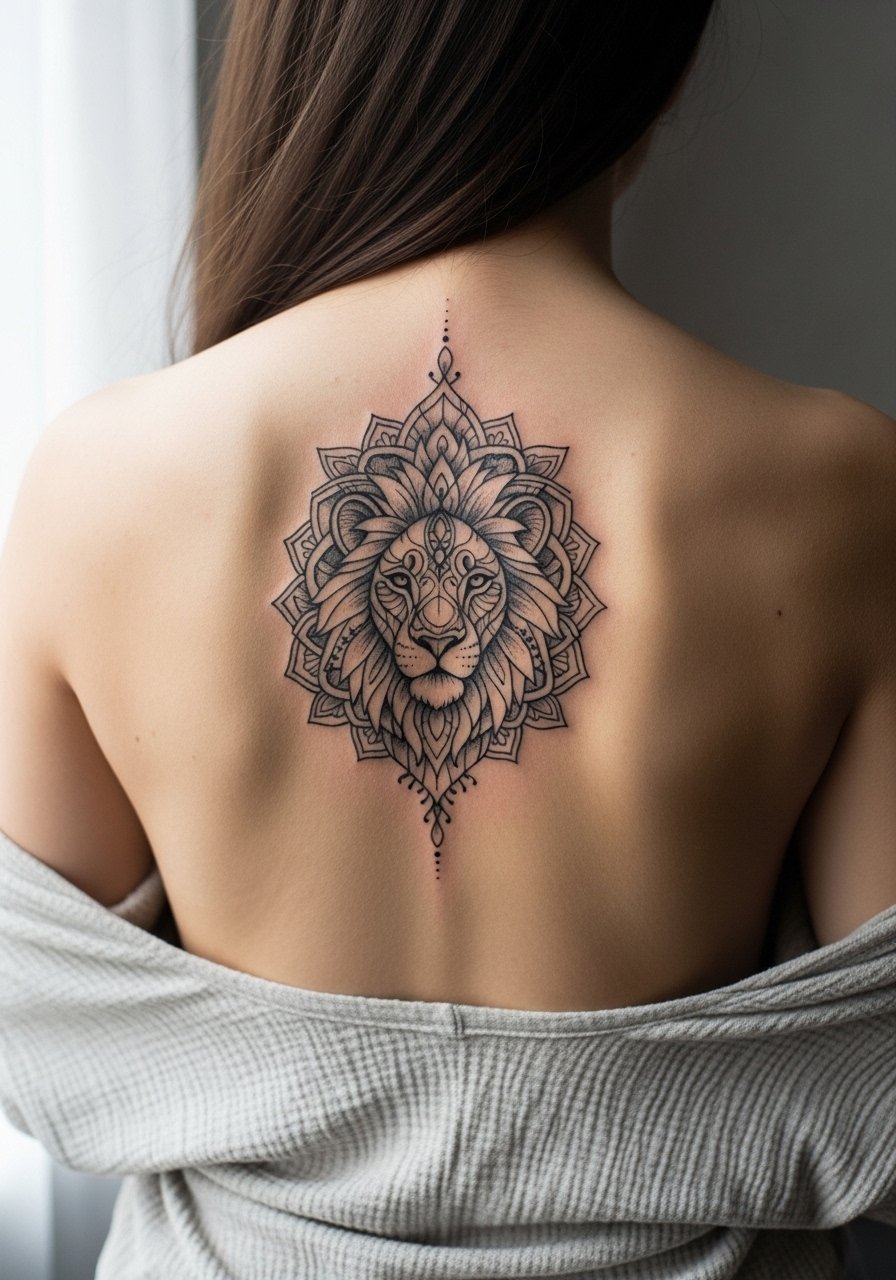
Large ornamental frames are a good choice if you want symmetry that fills the back without looking top-heavy. Tell the artist you want open negative space between mandala rings so dense dots do not merge into a shaded block after a few years. A mistake is insisting on maximum detail in a small back panel; scale matters for legible stipple shading. Back sessions usually span multiple sittings. For evenings out wear backless halter tops to reveal the composition. During sessions choose a front-opening shirt or a sports bra you can remove and replace easily.
9. Blackwork Paw Print Trail Along the Spine
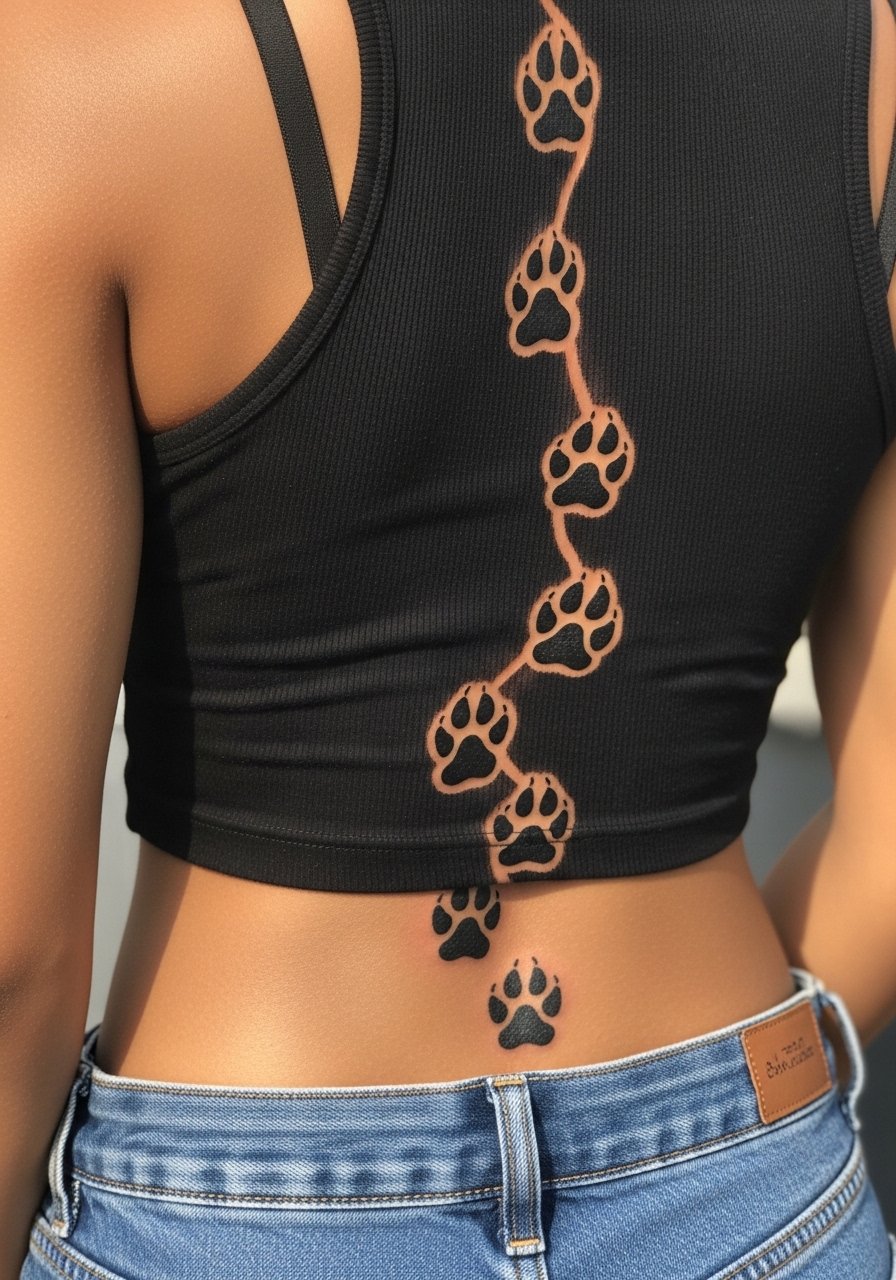
Narrative paw trails work well on the spine because the line can lead between vertebrae and create motion. Ask your artist to vary print sizes and stagger the trail so each print maintains solid saturation. Common errors include crowding the prints too close which risks merging into a single dark line with movement. Spine sessions are more uncomfortable than arm work, so plan short breaks. Expect one to two sessions. For showing it off, low-back dresses reveal the trail neatly and for the appointment wear a tank top with high-waisted jeans that you can lower slightly without full disrobing.
10. Ignorant Style Cartoon Lioness with Crown on Ankle
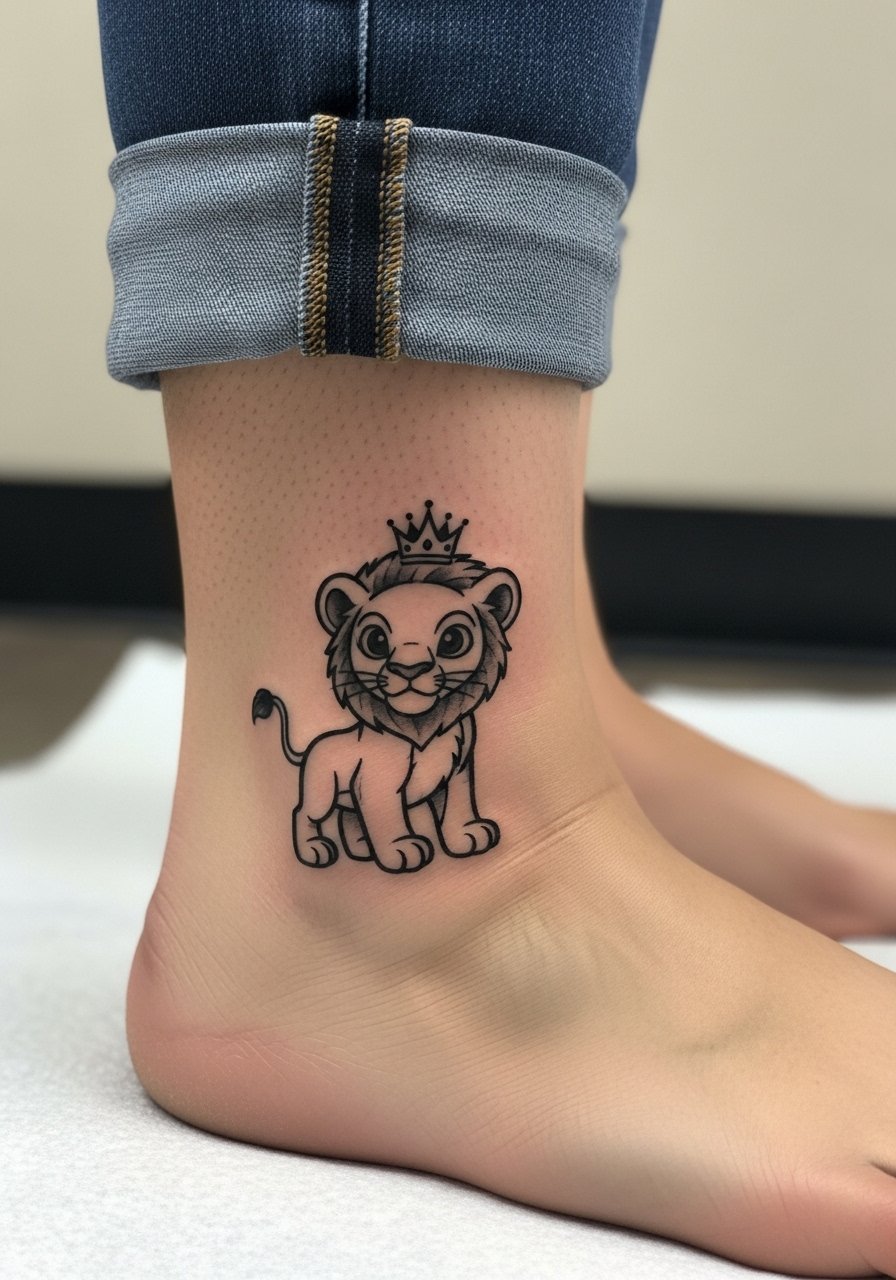
Ignorant style is playful and ages predictably because of heavy outlines. For ankle pieces ask for a slightly thicker outline so the tiny crown does not blur with movement. People often make the mistake of shrinking the crown too small, losing character. Ankle pain is sharp but short lived and sessions are quick. Expect a single sitting for a 2-4 inch piece. Pair with sandals or rolled jeans for visibility, and roll your pants rather than wear tight cuffs on the day of the session to avoid rubbing.
11. Traditional Lioness Head Flash on the Bicep
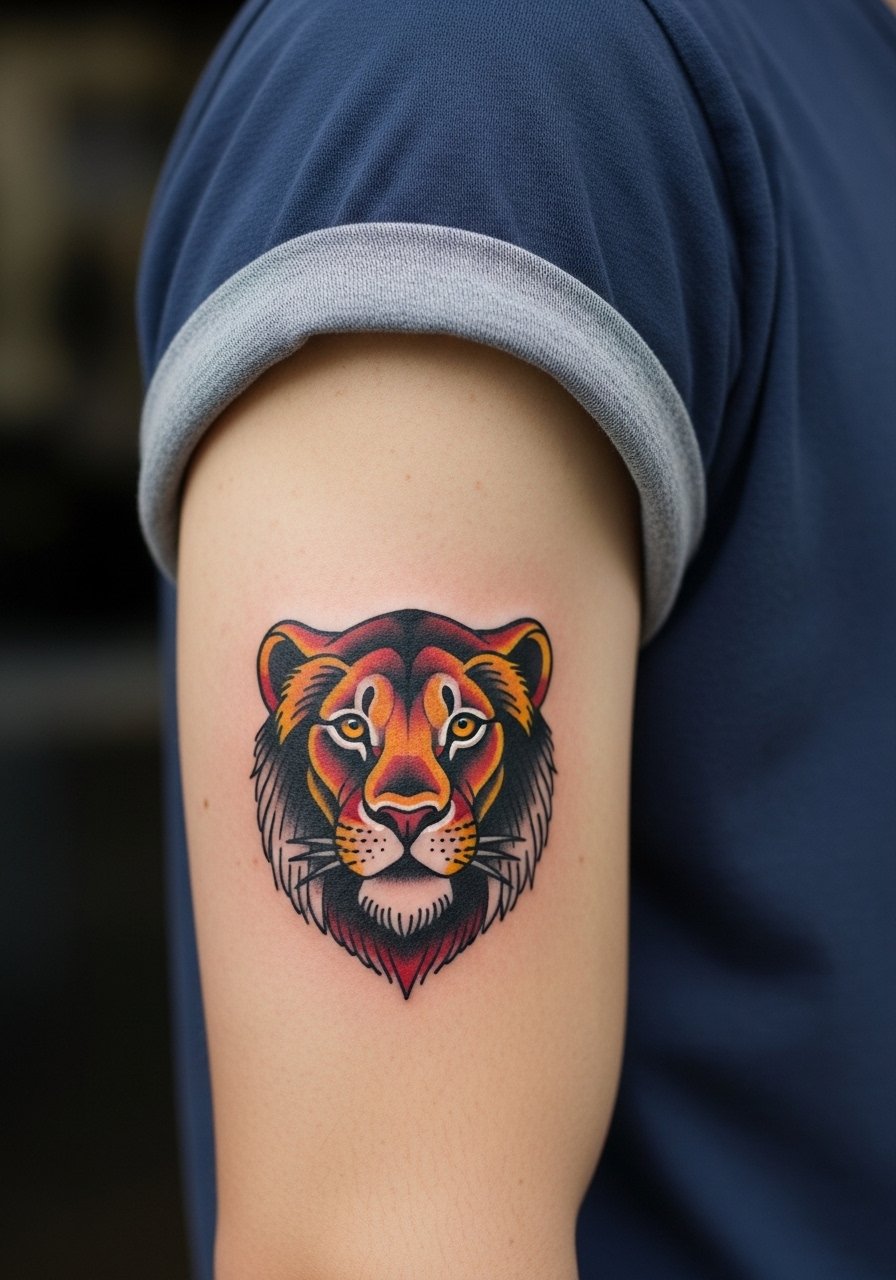
Traditional flash reads well in bright color because the simple palettes hold over time. During consults confirm the palette and ask for a thick outline to protect against edge scatter. A mistake is requesting too many tonal gradients within a small area which can muddy the classic flash look as it ages. Bicep sessions are tolerant of saturation and typically finish in one sitting. For showing it off use rolled short-sleeves or a sleeveless top. For the appointment put on a cotton crewneck tee you can lift without stretching the artwork.
12. Dotwork Lioness with Starry Mane on the Forearm
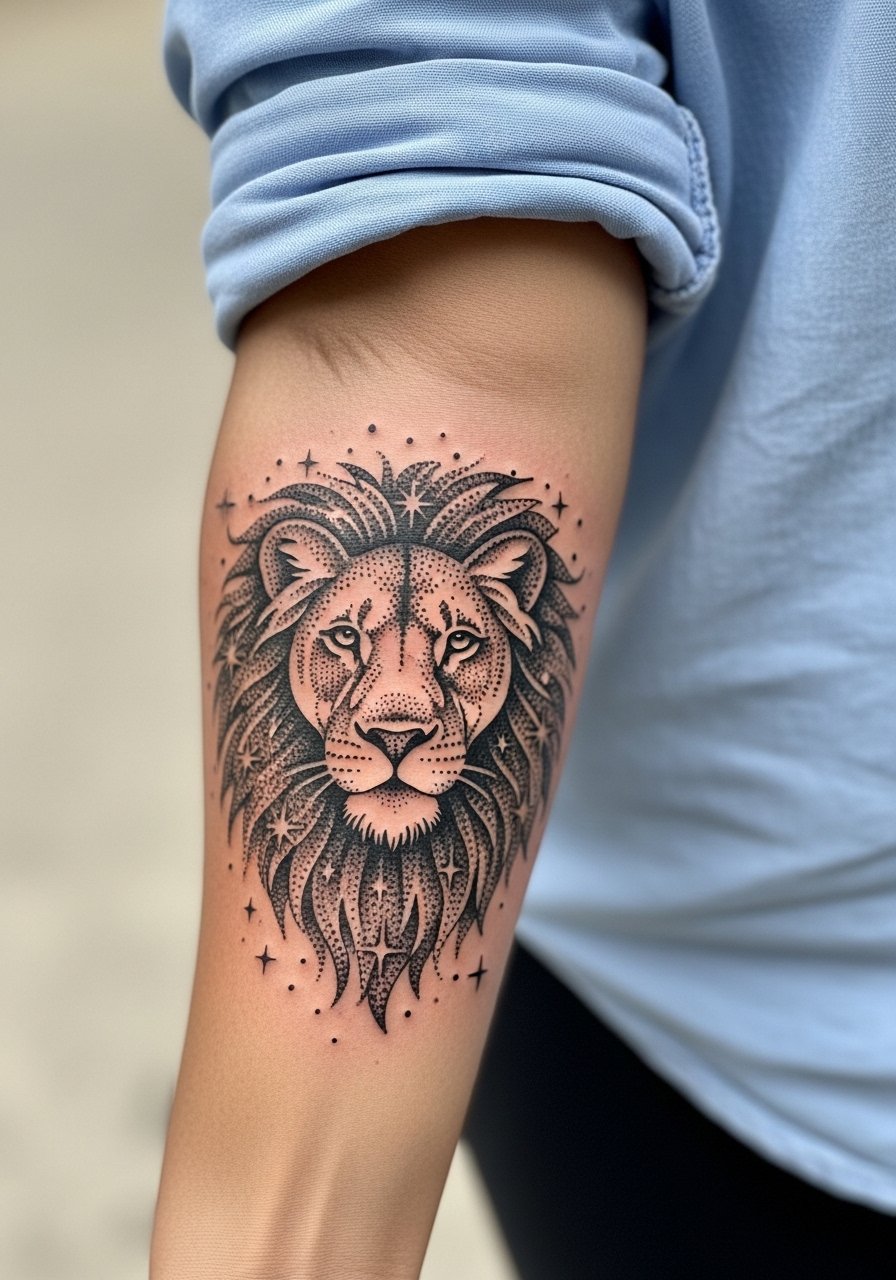
Dotwork creates texture that evolves as the skin settles, and forearm spacing helps maintain the dot grid. Ask the artist to place clusters with intentional density variations so the pattern remains readable at 6 months and five years. A common mistake is overcompressing dots into too small an area, which flattens into gray. Forearm sessions are mid-pain and usually fit into a single long sitting. Pair with rolled cuffs and accessorize sparingly. For session day wear a loose button-down shirt so the artist can roll the sleeve without creasing the skin.
13. Minimalist Line Portrait on the Inner Bicep
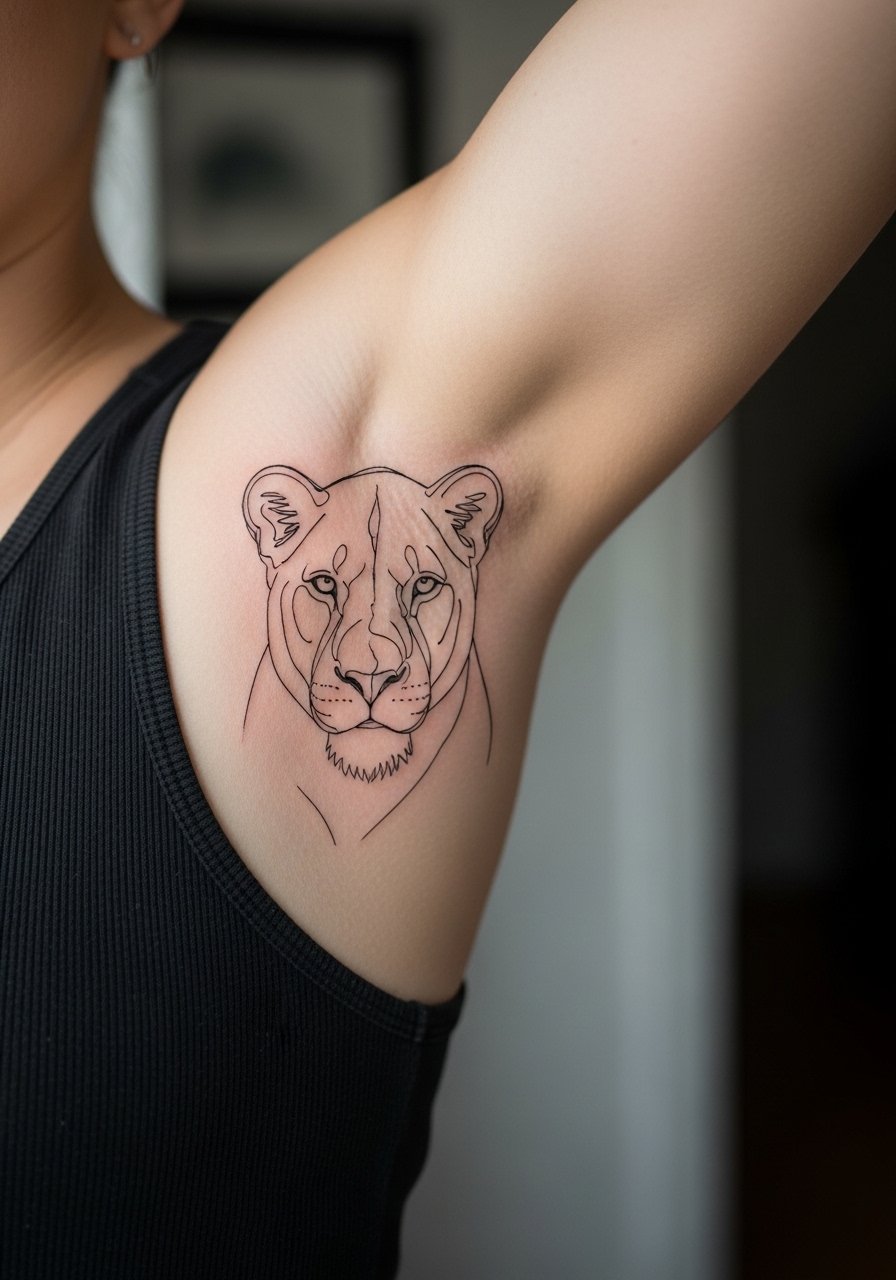
Inner bicep is forgiving for delicate single-line portraits because the skin is less sun-exposed, but it moves a lot during daily life. Tell your artist to allow extra spacing around the jawline and whiskers to prevent merging. A common misstep is letting reference images dictate too many thin details. Sessions here feel more sensitive than outer arm work. Plan for a touch-up at year two if you expect heavy arm movement. For the appointment choose a loose tank top that you can lift to give full access without stretching the area.
14. Micro-Realism Paw Close-Up on the Calf
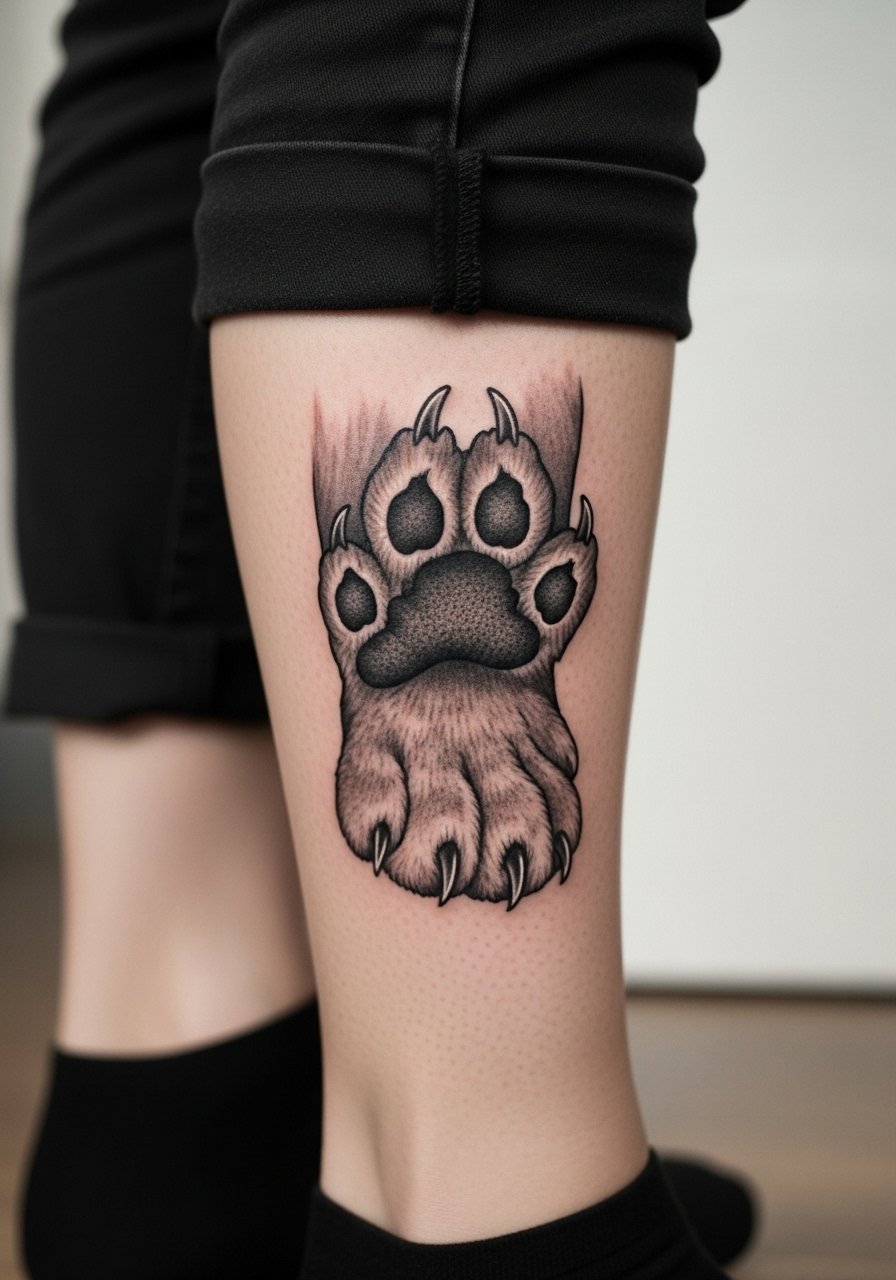
Calf portraiture shows texture well because the skin takes shading consistently. For micro-realism request contrast maps from the artist so highlights and deep shadow read at different viewing distances. A mistake is compressing too many tiny details into a small calf patch which softens into muddiness after healing. Sessions can be one to two sittings and the calf tolerates longer times. Pair with rolled ankle pants or midi skirts. For your session wear rolled ankle pants so the artist can access the calf cleanly.
15. Ornamental Sternum Lioness with Filigree
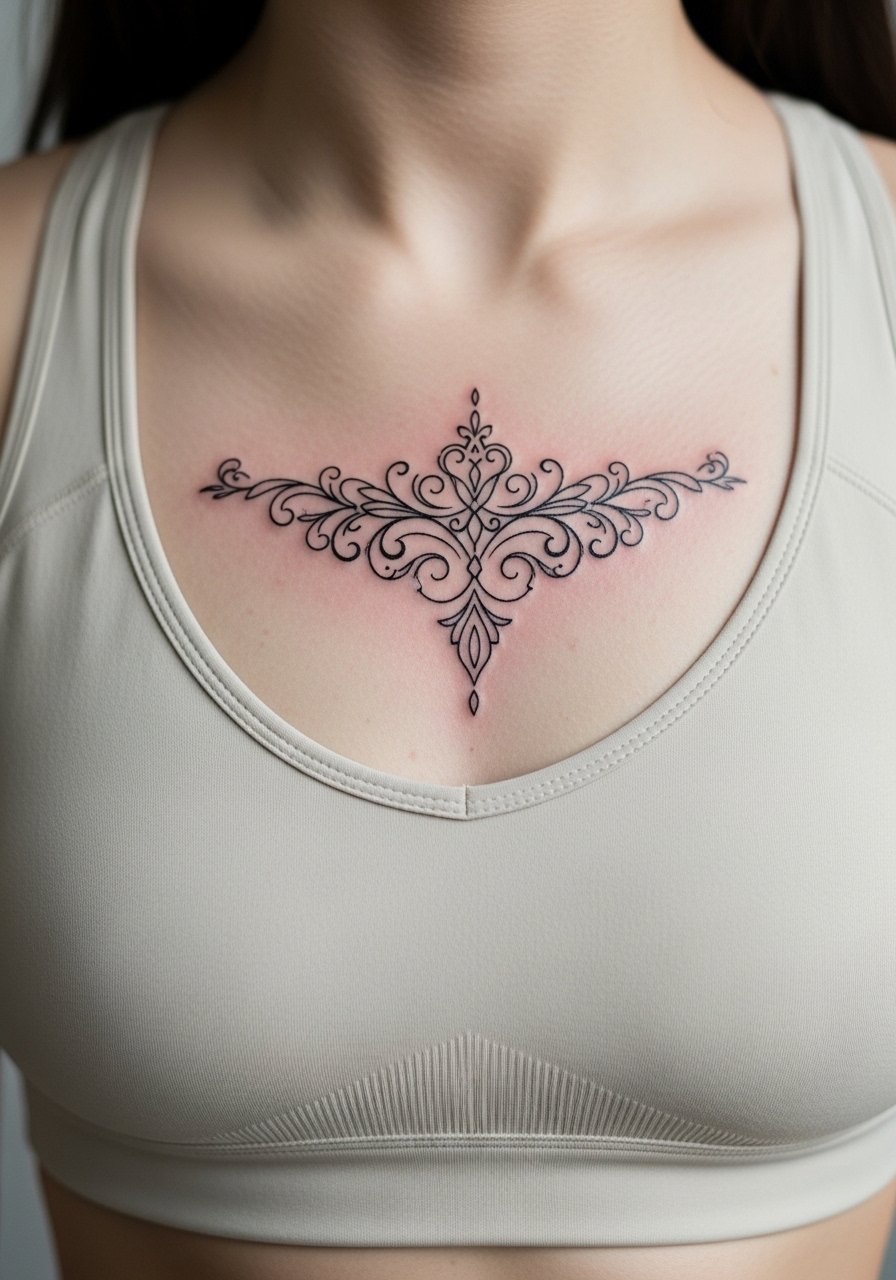
Sternum pieces demand precision and a specialist who has done central chest work before. Note that this placement can be more painful and the skin shifts with breathing, so ask the artist about session pacing. A common error is trying to cram dense ornament into a narrow sternum band which typically loses clarity. Expect multiple sittings for large filigree. Because this placement is intimate and visible, check for any cultural patterns in filigree that you want to adapt respectfully. For the session wear a fitted sports bra you can remove if needed or replace easily.
16. Small Constellation Lioness on the Ankle Bone
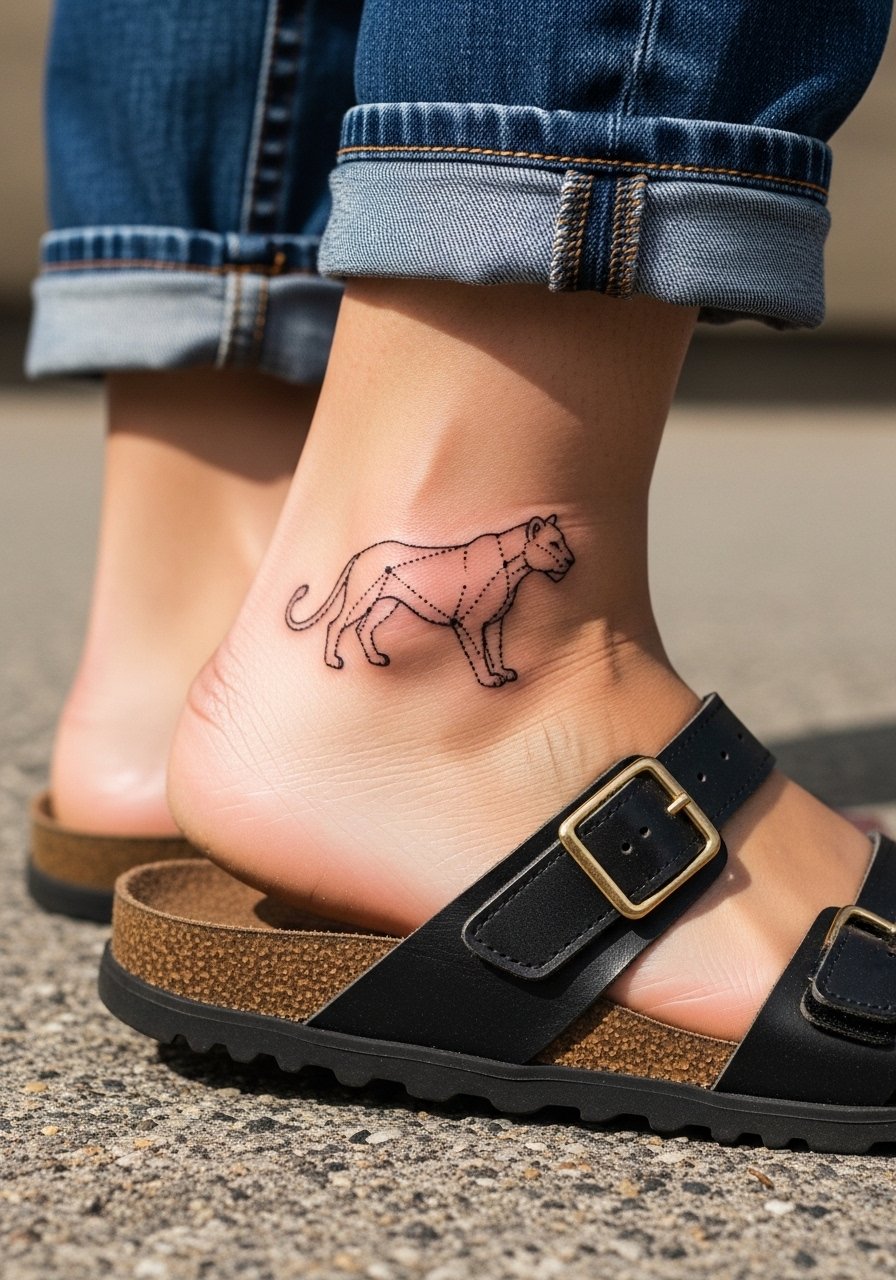
Ankle constellations are subtle and photograph well with studio lighting, but they face friction from socks and shoes during healing. Tell the artist you want anchor dots slightly heavier than the lines so each star point stays visible. Too small spacing is the frequent mistake that leads to loss of constellation shape. Ankle sessions are quick but sharp. For showing it off choose sandals and for the appointment roll your pants or wear sandals or slip-ons to avoid rubbing the area after the session.
17. Geometric Blackwork Mane on the Calf
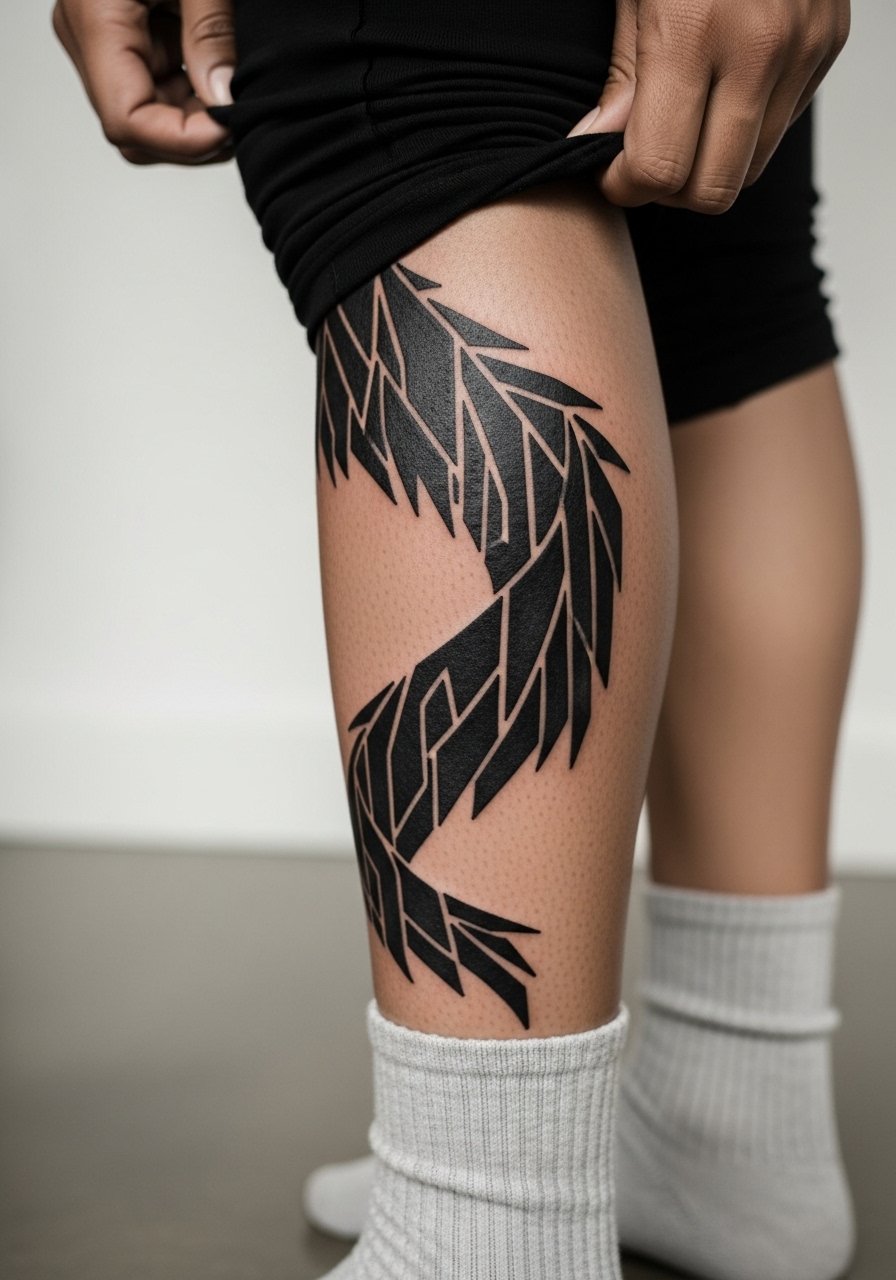
Bold blackwork on the calf ages well because larger solid areas maintain contrast. Ask for crisp edges and a plan for how solids meet negative space so the mane does not become a flat dark patch. A mistake is filling too many adjacent solids without breathing room. Calf sessions are comfortable for longer sittings and often finish in one go. To show the work, choose midi skirts or cropped pants. For the appointment, wear joggers you can pull up or remove easily.
18. Dotwork Starry Mane on the Neck Side
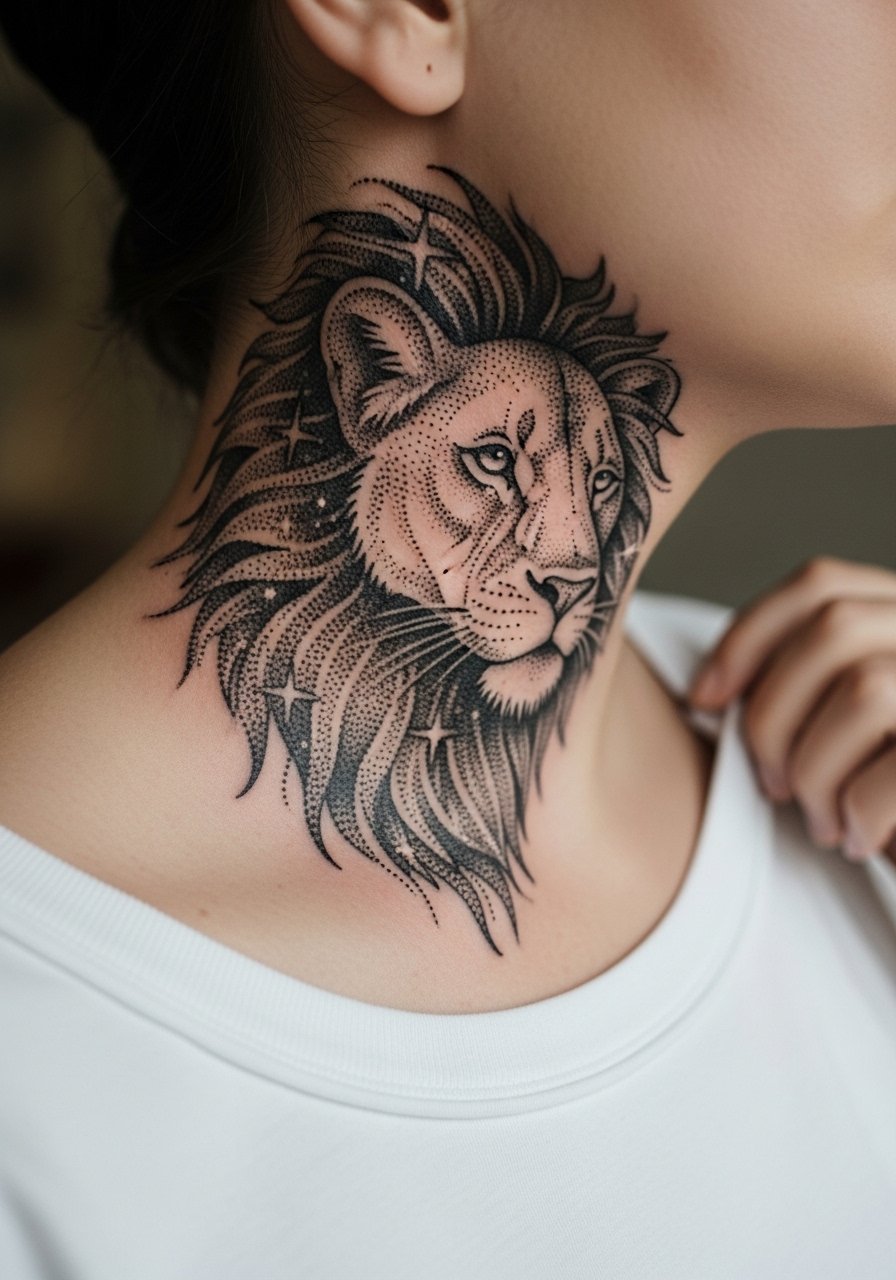
Side neck work is visible and requires cautious placement because of career considerations for some people. Dotwork translates beautifully here when the artist spaces stippling to account for skin movement. Artists disagree on neck durability, so ask where they stand about touch-ups. A common error is overly dense dot clusters near the jaw line. Neck sessions feel sharp and quick. For showing the piece, wear wide-neck shirts and for the session pick a wide-neck shirt so the area is accessible without full disrobing.
19. Traditional Flash Lioness on the Chest
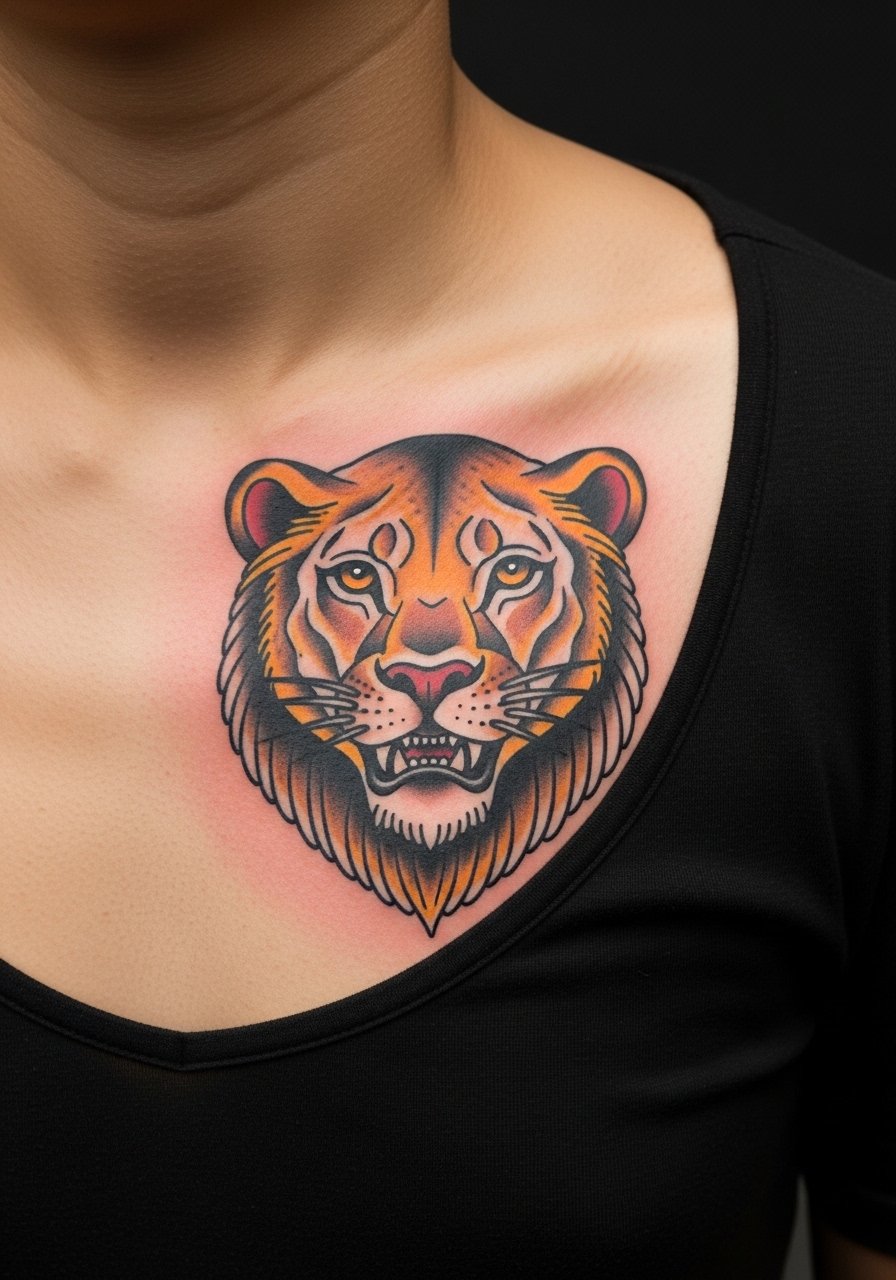
Chest flash pieces benefit from thick outlines that protect color and keep the motif readable as the skin ages. In consultations confirm the scale across the sternum and collarbones so the face aligns with the body's contours. A common mistake is misplacing the focal point too high which stresses the neckline and collarbone lines. Chest sessions can be painful but yield strong results. Show it in wide-neck or off-shoulder tops. During the session wear a wide-neck shirt you can shift aside to expose the work while staying covered.
20. Minimalist Inner Thigh Profile with Subtle Whiskers
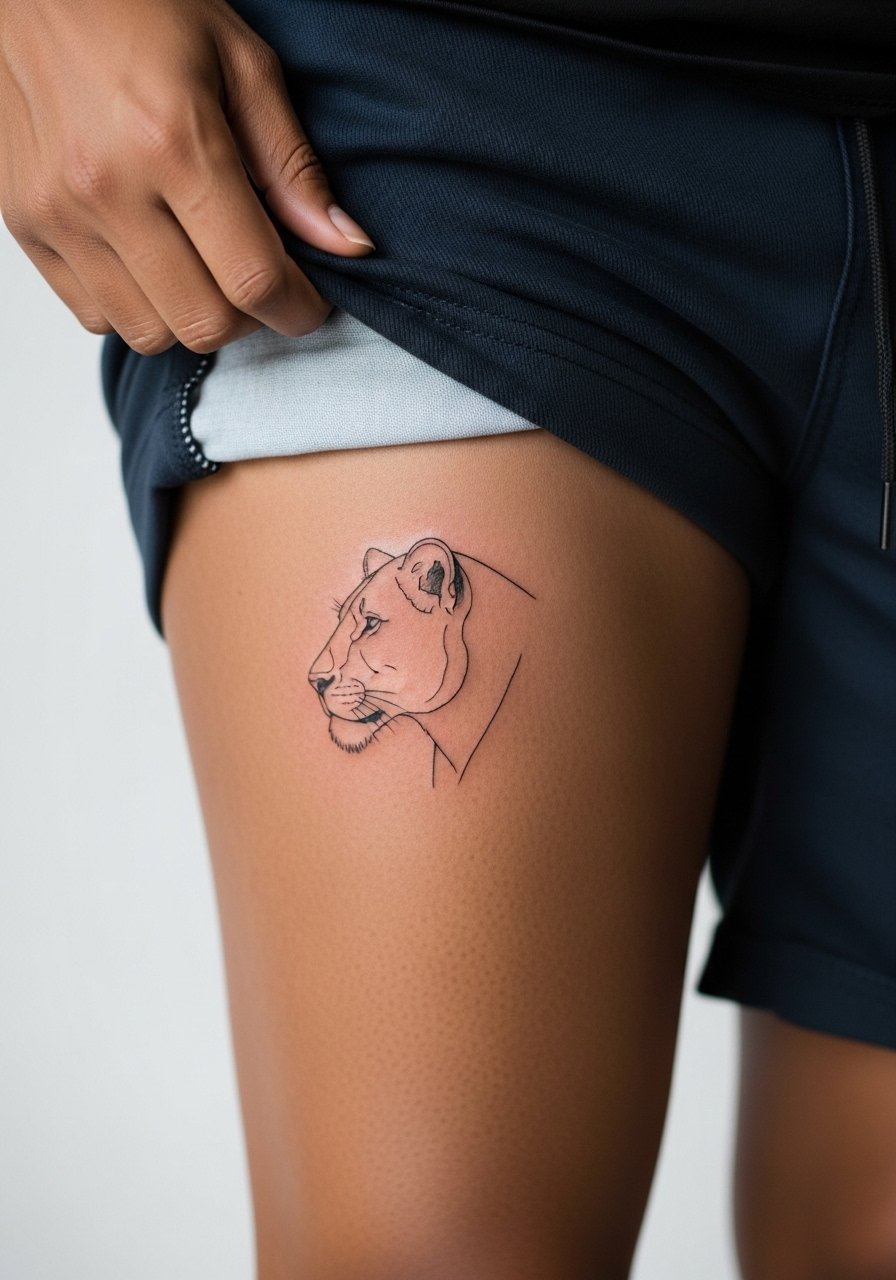
Inner thigh is an underused area for profiles because it hides well and heals in low-sun conditions. Tell your artist you want slightly increased spacing between whisker strokes and ask for a clear referral for how the line will sit when you stand and sit. A common error is placing too close to crease lines which causes distortion with movement. Inner thigh sessions feel tender and may be more prone to raised scabs if friction resumes too soon. For session wear shorts you can adjust easily and bring comfortable bottoms that do not rub the new piece.
21. Micro-Realism Eye Close-Up at the Collarbone Edge
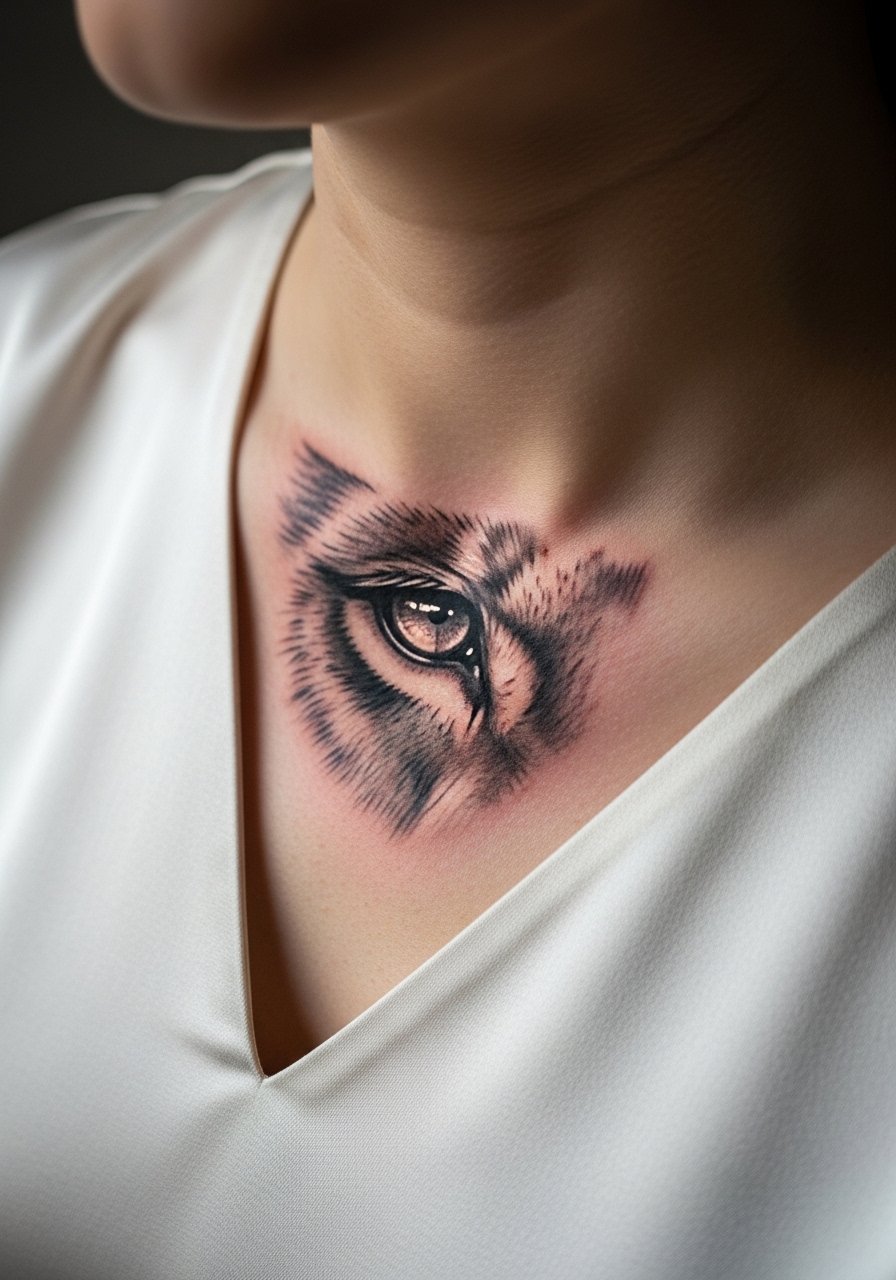
A single-eye micro-realism is a powerful focal detail that pairs well with collarbone placement because of the natural frame the bone provides. In consults ask for a focus on highlight placement so the eye keeps its depth at different angles. A mistake is cramming too many surrounding details which distract from the gaze. Collarbone work tends to need careful aftercare because necklaces can rub during healing. Expect a short session plus a touch-up at year two for crispness. Pair with layered delicate necklaces when showing it off and remove jewelry for the appointment.
Frequently Asked Questions
Q: Will fine line lioness tattoos blur faster than neo-traditional or blackwork pieces?
A: From what I have seen, fine line pieces can soften sooner, especially in high-movement or sun-exposed spots. Blackwork and neo-traditional styles tend to hold up longer because they use heavier outlines and saturation. Discuss line weight and placement with your artist to balance the look you want with expected longevity.
Q: How should I choose between a thigh watercolor lioness and a forearm neo-traditional piece if I want something that lasts?
A: If longevity is your priority, forearm neo-traditional with defined outlines and strong saturation typically fares better with sun exposure. Thigh watercolor looks amazing but needs careful color planning and sun protection year one. Think about clothing you wear daily and whether the area will see friction or stretch.
Q: Are there special concerns for getting lion tattoos on darker skin tones?
A: Yes. Bold blackwork and higher contrast palettes usually photograph and heal with more visible definition on darker tones. Ask artists to show healed examples on similar skin and request stronger anchors rather than relying on low-contrast shading.
Q: Do I need to bring anything to the appointment for access when getting a collarbone or shoulder lioness?
A: Wear a v neck silk blouse or a button-down you can open for shoulder and collarbone work. This keeps the area exposed without you having to fully disrobe and it helps the artist maintain body positioning during the session.
Q: How often should I realistically expect touch-ups for fine line and micro-realism lioness tattoos?
A: Expect a touch-up window around 12 to 36 months depending on placement and sun exposure. Fine line and micro-realism often need a refresh sooner than bold blackwork. If you pick low-sun placements and use sunblock routinely, touch-ups stretch out longer.