
Fine line florals rule a lot of saved boards right now, but what holds up over time is rarely the prettiest thing on day one. Bold blackwork and considered spacing often age cleaner, and placement across the upper back changes that math more than most people expect. Read on for 27 upper back ideas that balance what looks lovely now with what still reads well after a few seasons.
1. Delicate floral mandala centered over the upper back
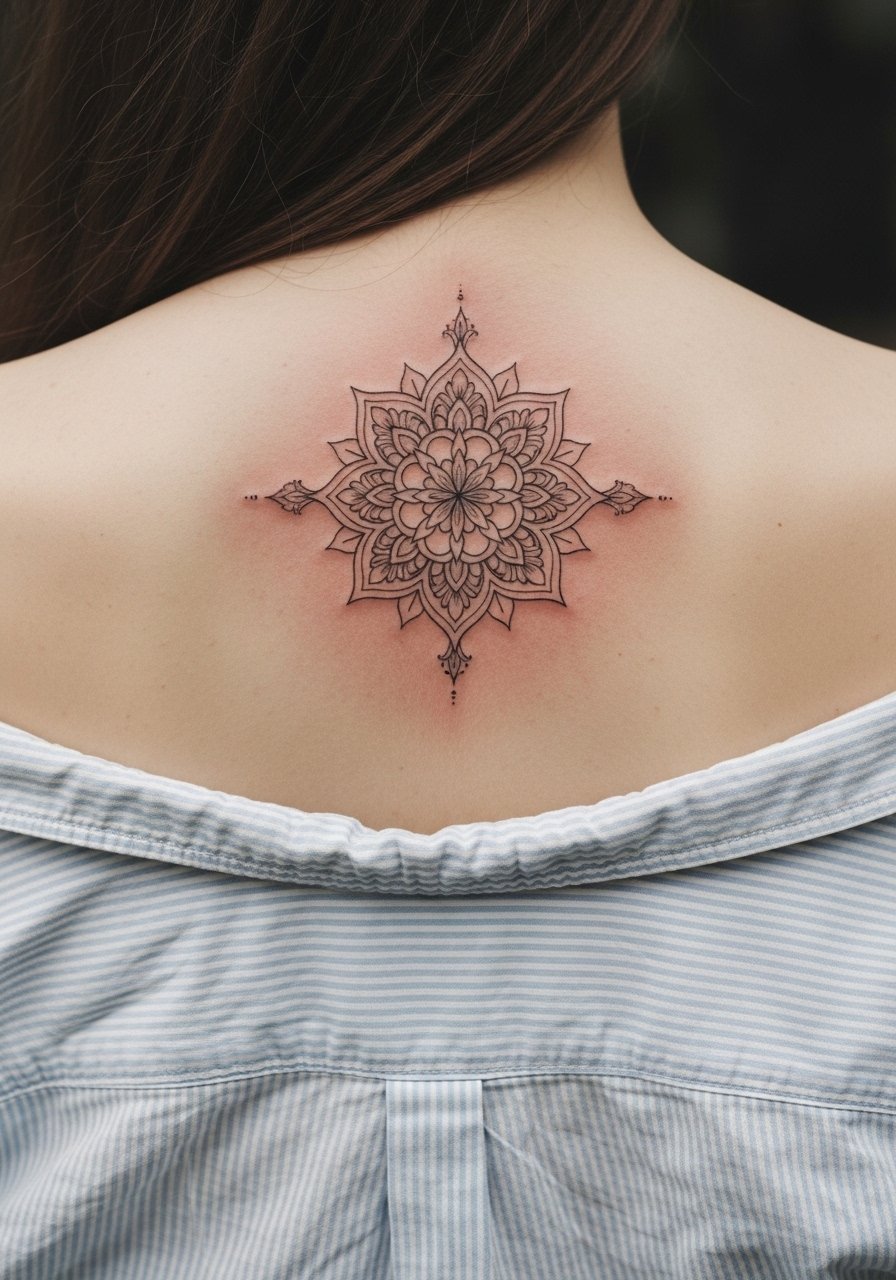
A mandala in fine line can frame the shoulders without overpowering them, but get the proportions right. Tell your artist you want a 4 to 6 inch diameter and ask them to plan spacing between petals so the dense areas have breathing room. The common mistake is packing too many tiny details, which leads to merging around year two. Expect one long session for the stencil and touch-up at year two if linework softens. For the appointment, slip into a loose button-down shirt you can pull aside so the artist has clean access.
2. Shoulder-blade angel wings, compact and shaded
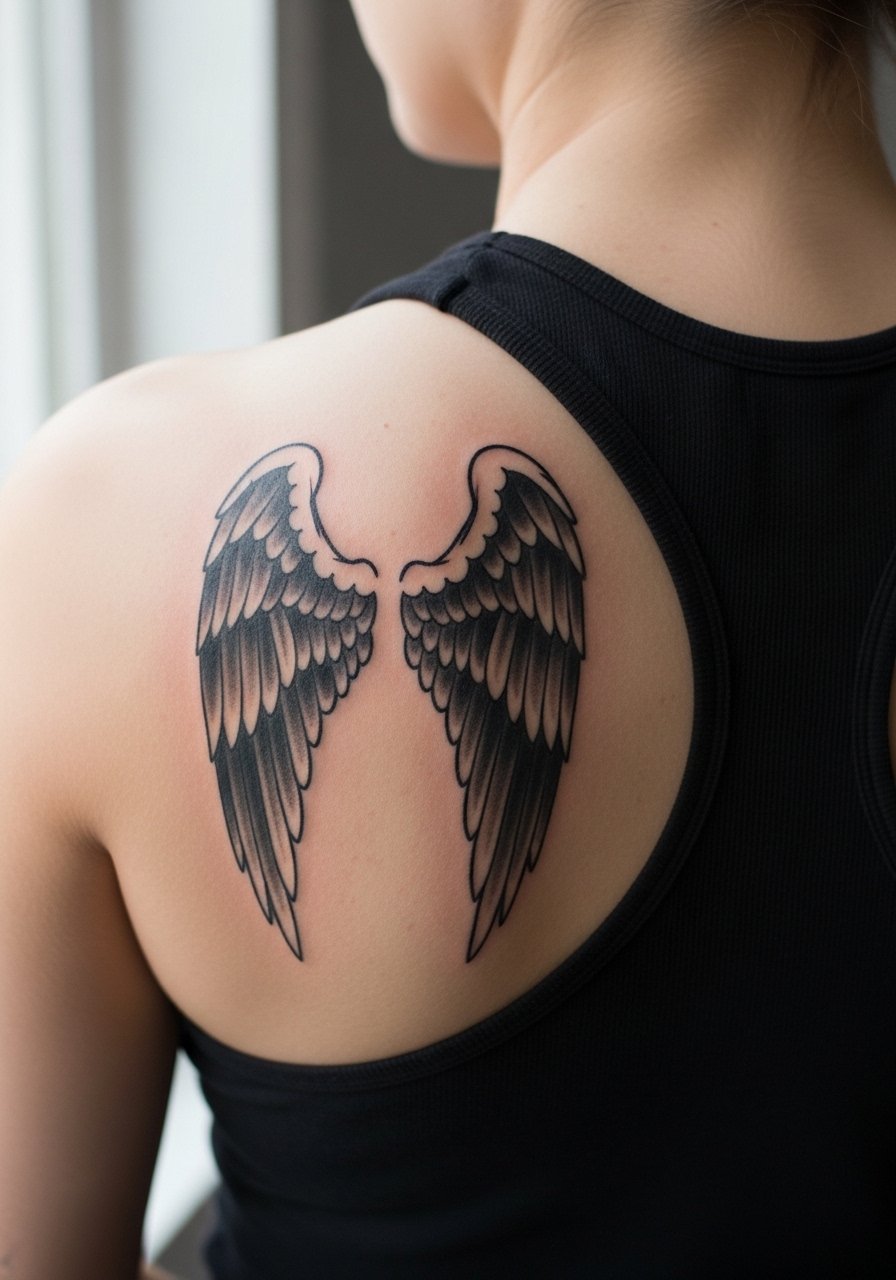
Wings over the shoulder blades read wide and graceful when kept compact, about eight to twelve inches across. Ask for softer gray highlights and avoid tiny feather details that blur with sweat and friction from straps. Artists disagree about wings as memorial pieces, with one camp favoring bold strokes for longevity and the other pushing intricate feather work for realism. If you prefer to show them off, pair the design with a halter tank top or racerback crop top to frame the shoulders.
3. Spine-trailing vine and rose that elongates the silhouette
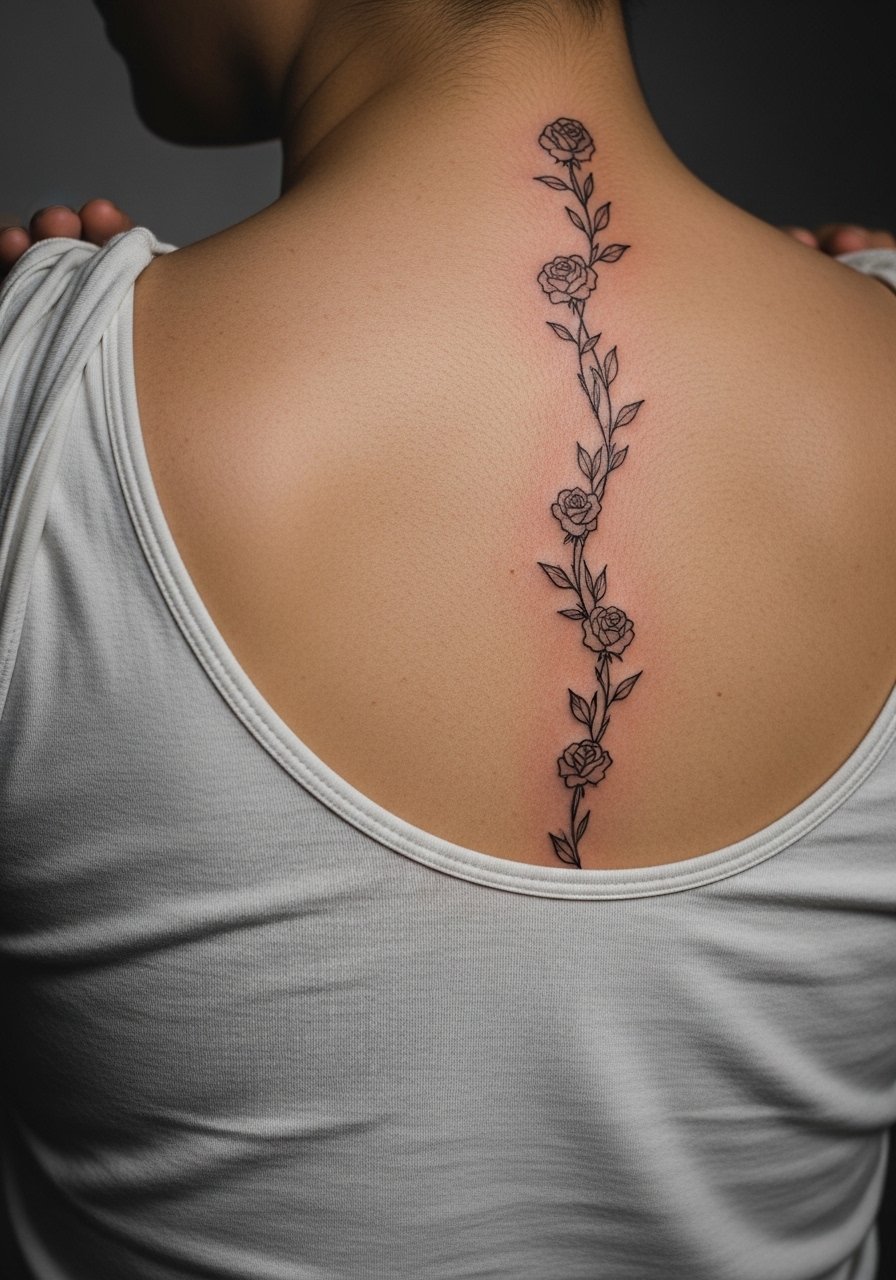
A vertical vine along the spine works if you want an elongating effect in low-back dresses. Be ready for a sting over bony areas and plan brief breaks during a session. The most common error is starting the vine too high or too low relative to the shoulder blades, so bring photos of the dress silhouettes you wear. Fine line advocates claim finesse is possible on the spine, while critics point to faster blur from movement. Expect one to two sessions and a touch-up after the skin settles. For showing it off, a low back evening dress works beautifully.
4. Butterfly cluster across the upper shoulders in soft color
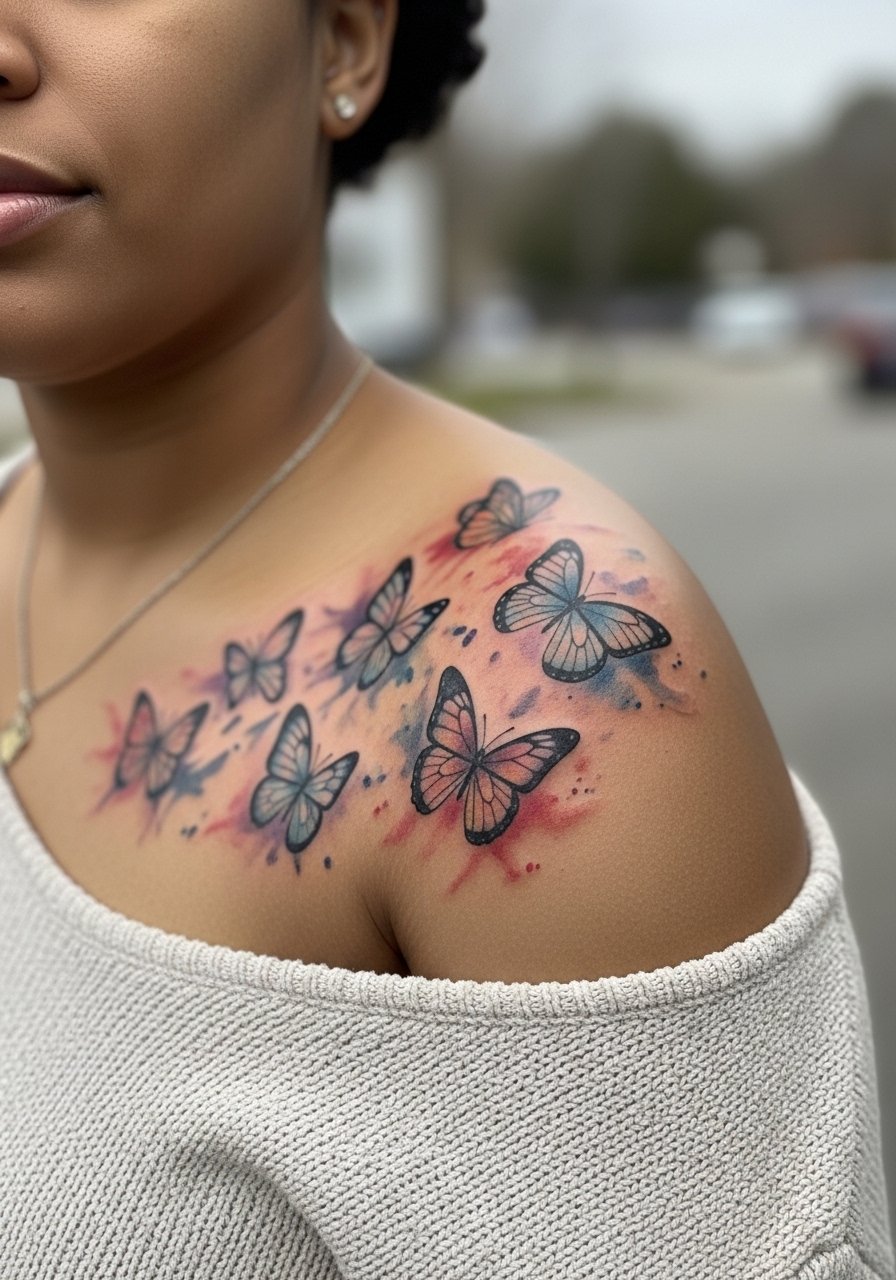
Watercolor butterflies feel airy and move with the body, but they can fade or blur faster on active skin. Ask your artist to anchor each butterfly with a subtle black outline so the shapes keep reading as the colors soften. If you live sweaty summers or frequent the pool, consider bolder fills instead of pigment washes. Session time is usually a single long appointment. For off-duty looks choose an off-shoulder sweater or a pastel cropped hoodie that highlights the color transition.
5. Geometric lotus above the shoulder blades in bold blackwork
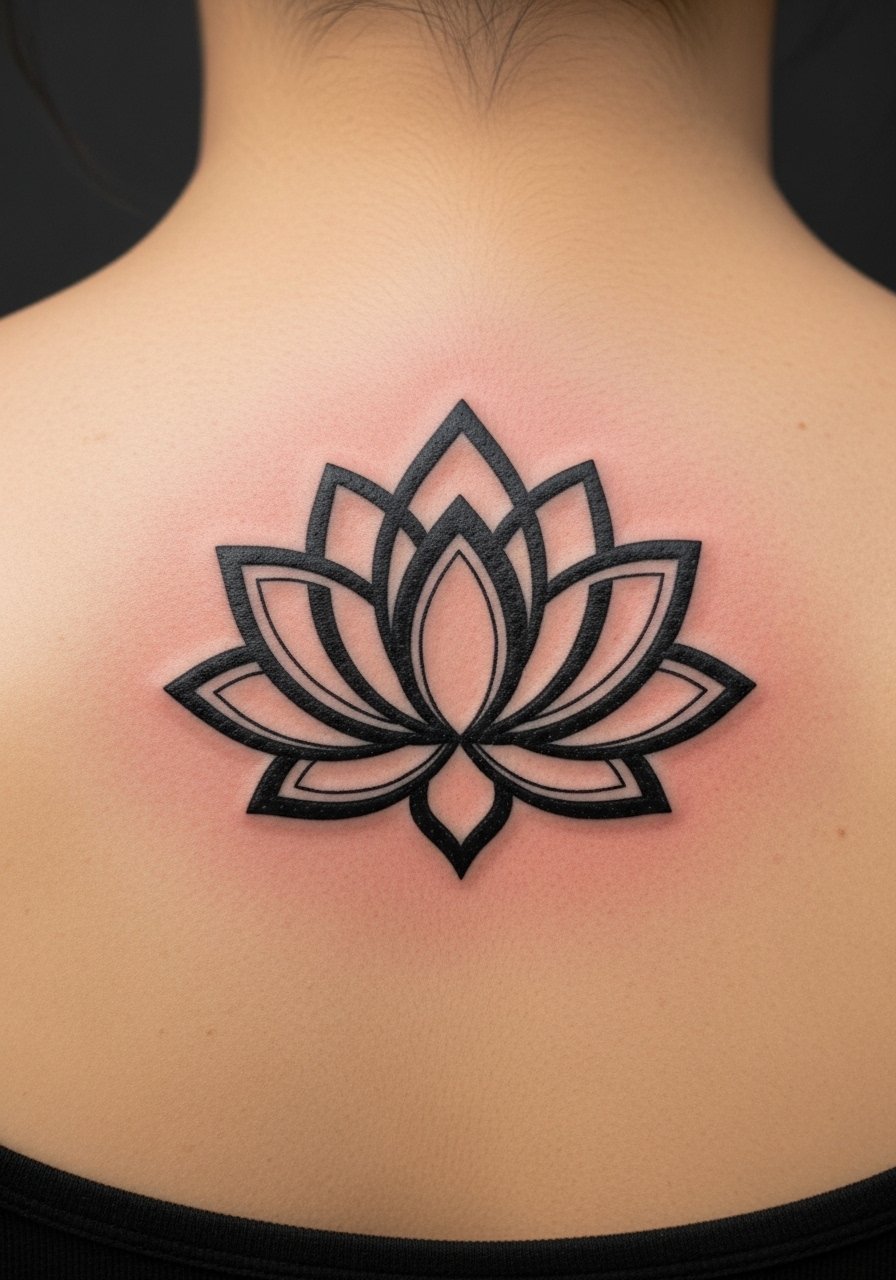
A compact geometric lotus aged well because strong black fills resist fade. The usual mistake is making the piece too small for the dense geometry, which causes shapes to smudge. Tell your artist you want crisp negative space and at least a 4 inch base so the petals hold. Pain is moderate since the shoulder blade area is relatively forgiving. Pair the piece with a backless jumpsuit or a high neck tank for contrast.
6. Feather and script quote spanning the upper back
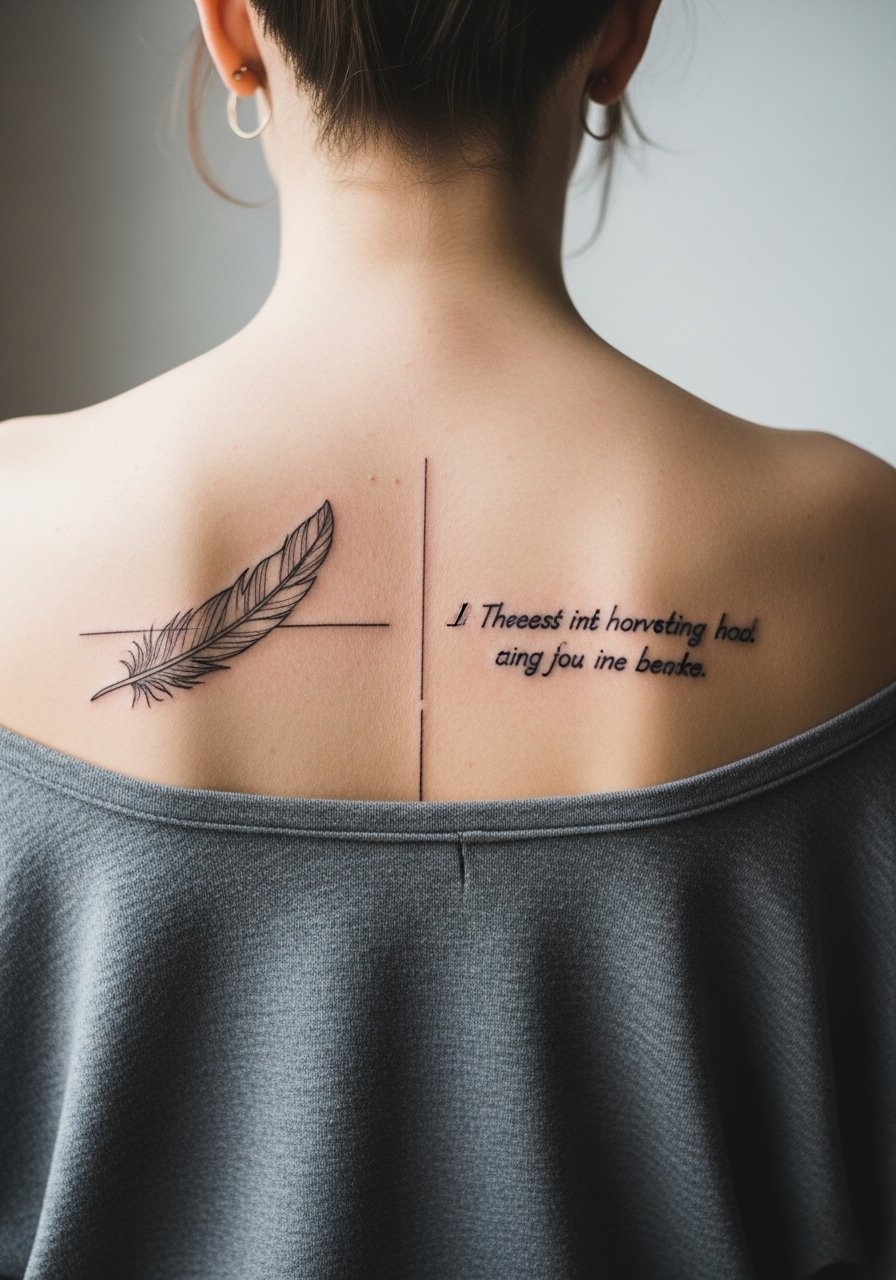
A feather morphing into a short quote feels airy and personal, but script needs room. The common error is choosing a tiny script font that blurs into the feather after a year. Bring the exact wording and preferred font size to consult so the artist can scale letters for healing. One session is typical if the quote is under six inches. For the session wear, a wide-neck shirt you can pull aside will make life easier for both of you.
Studio Day Picks
These first six upper back concepts are a mix of fine line and color work, and a few items smooth the session and the first week of healing for both dense blackwork and soft washes.
-
Tattoo Goo balm. Loved by forum users for non-greasy protection during sleep, this balm helps keep medium-sized floral and script areas hydrated without sliding across sheets.
-
Australian tea tree salve. A gentle anti-inflammatory option for bony spine spots and tender shoulder blade shading, used by some people who prefer less sting than heavier ointments.
-
Ink-Eeze no-touch spray. Handy for upper-back work you cannot reach easily yourself, it absorbs fast and reduces the need to rub lotion into tight linework.
-
Hada Labo moisturizing lotion. Praised in forums for hydrating without shine on darker skin tones, it can help color pieces in medium to dark skin retain vibrancy after the initial heal.
-
Fragrance-free Cetaphil lotion. A thinner option to switch to after the first few days, it helps avoid clogged pores on sweaty upper-back zones without leaving a greasy film.
7. Ornate peony bouquet centered with soft color pops
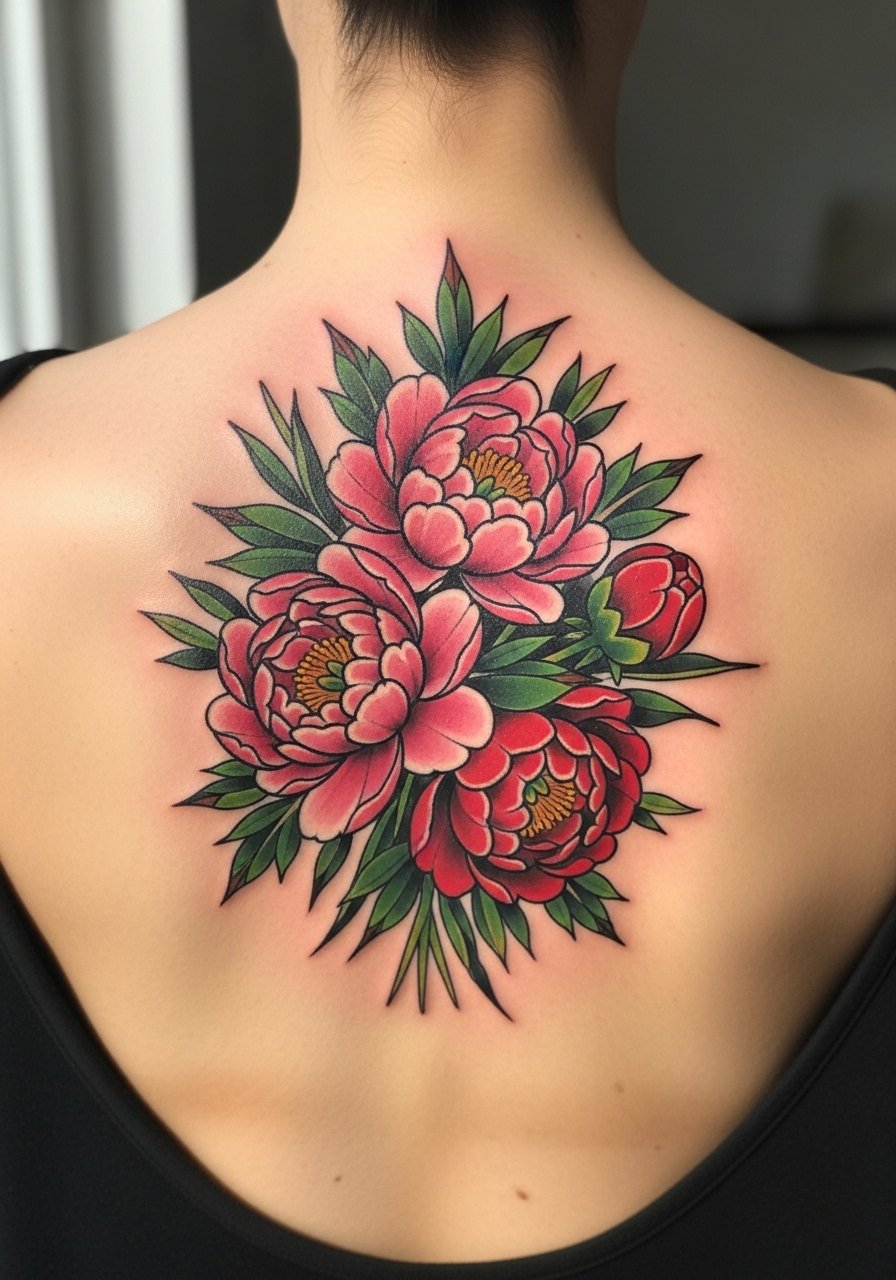
A peony bouquet gives volume and shows beautifully in photos, but color choices matter for longevity. Ask the artist to pair saturated edges with darker outlines so the petals retain shape as pigments fade. The typical mistake is requesting pure pastels across a large floral cluster, which tends to wash out. Plan two sessions if you want layered color depth. For evening looks, a strapless linen midi dress or an off shoulder blouse women keeps attention on the composition.
8. Symmetrical phoenix rising across the upper back
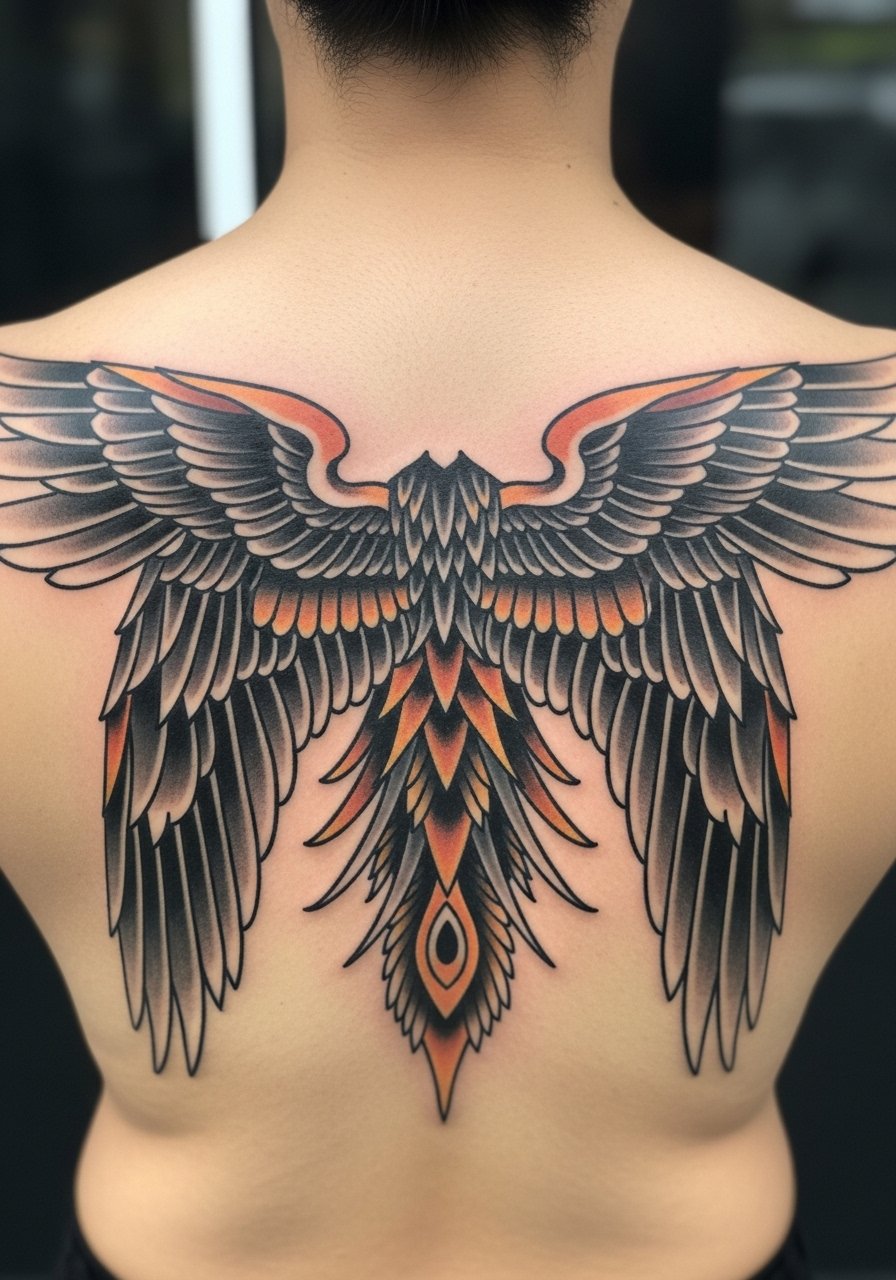
A phoenix that spans the upper back makes a dramatic visual statement and benefits from strong linework and saturated fills. The main error is compressing detail into narrow feathers, which leads to muddiness over time. Prepare for multiple sessions if you want full color and gradient transitions. This style pairs well with casual tops like vintage band tee women and tanks that let the bold silhouette show.
9. Lace-like ornamental pattern over the shoulder blades
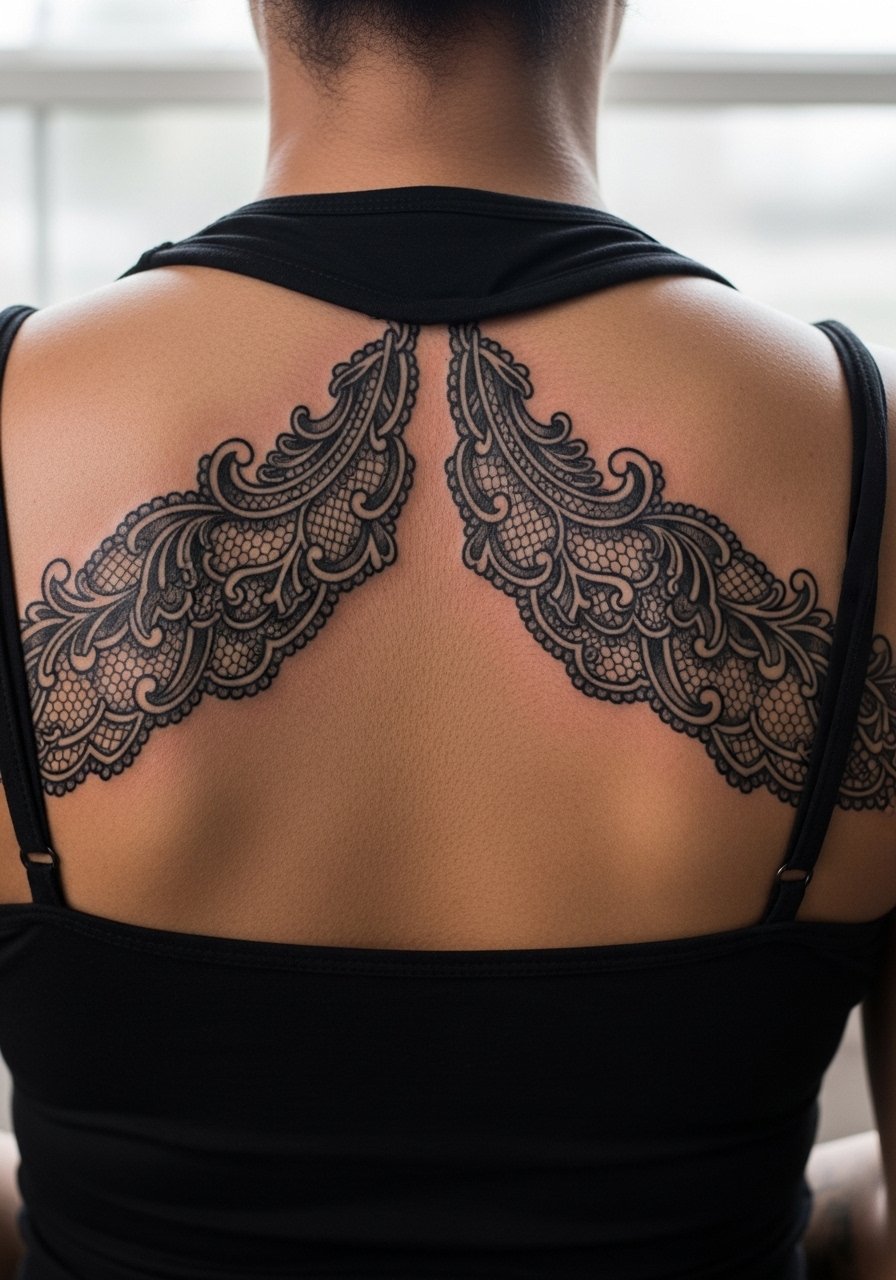
Lace motifs mimic apparel and can read as an accessory all year round. The trick is using negative space instead of over-inking fine lace meshes, which otherwise close up as the skin ages. Ask for slightly bolder connecting lines to prevent blowout in high-friction zones. Two shorter sessions usually get the pattern and the fill right. For bridal or formal looks consider pairing with a halter tank top or a racerback style.
10. Micro-realism bird perched near the shoulder
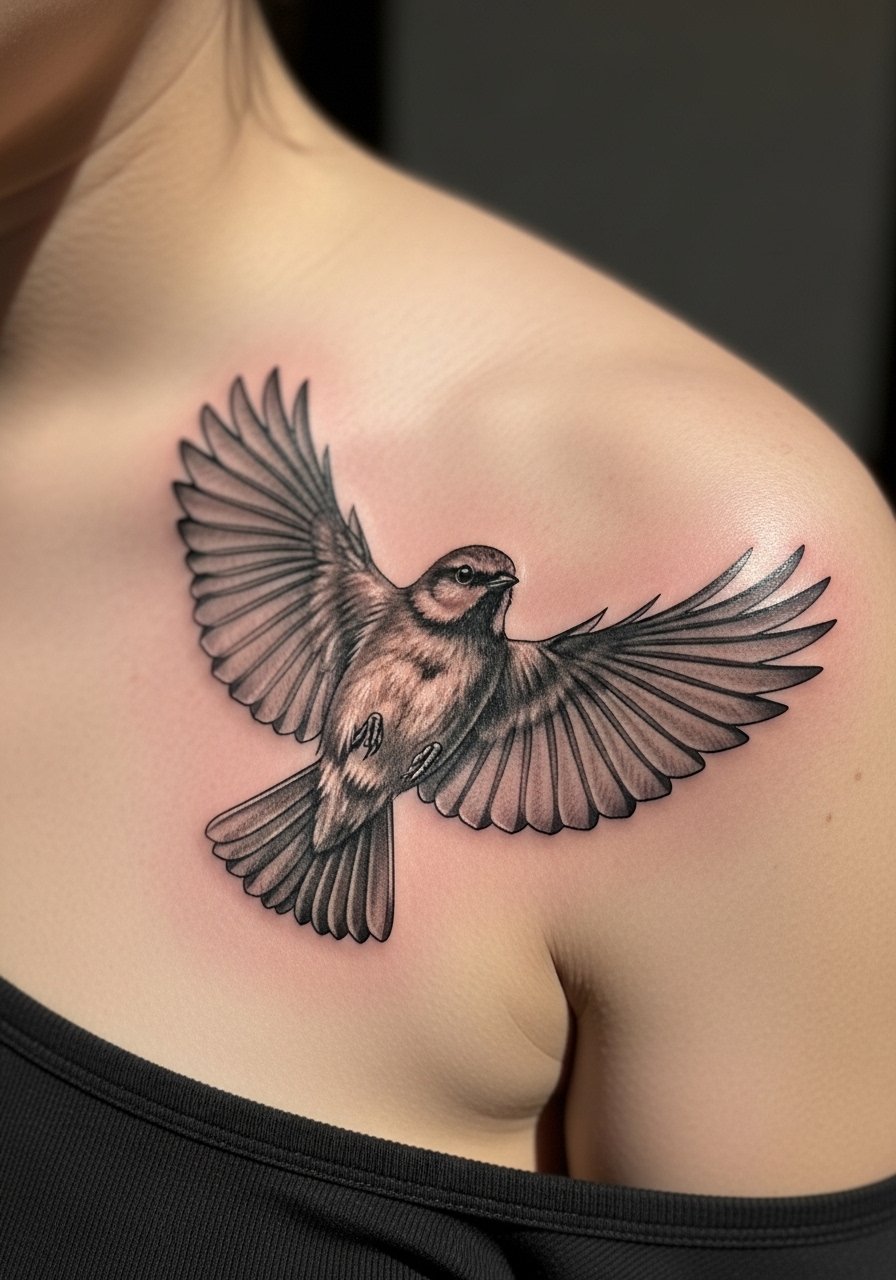
Micro-realism reads ethereal, but it relies on the artist's skill and skin stability. The common mistake is asking for micro realism on very mobile skin where feathers blur. Keep the bird compact, about three inches, and confirm the artist's healed photos on similar tones. Expect one to two sessions depending on detail. For casual showing off, a racerback tank top exposes the placement cleanly.
11. Watercolor galaxy swirl centered with soft fades
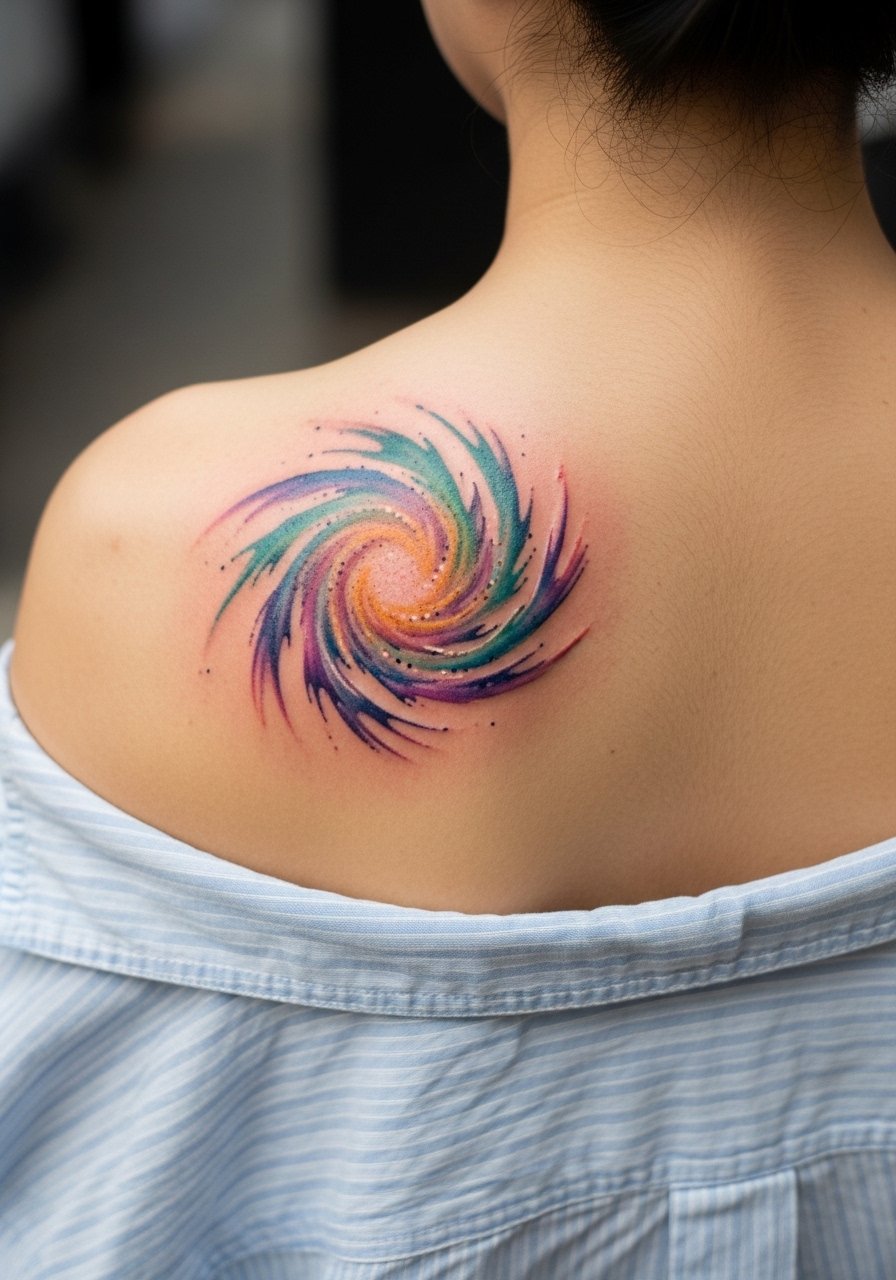
A galaxy swirl is dreamy but risky for longevity on an area prone to sweating. If you love the painterly effect, ask the artist to anchor the placement with minimal black outlines at focal points so the composition keeps reading as pigments soften. Watercolor pieces often need touch-ups sooner than blackwork, so plan that in your timeline. Session time varies by coverage. For wardrobe, an off shoulder blouse women highlights the fade pattern.
12. Fine line tree of life branching across the shoulders
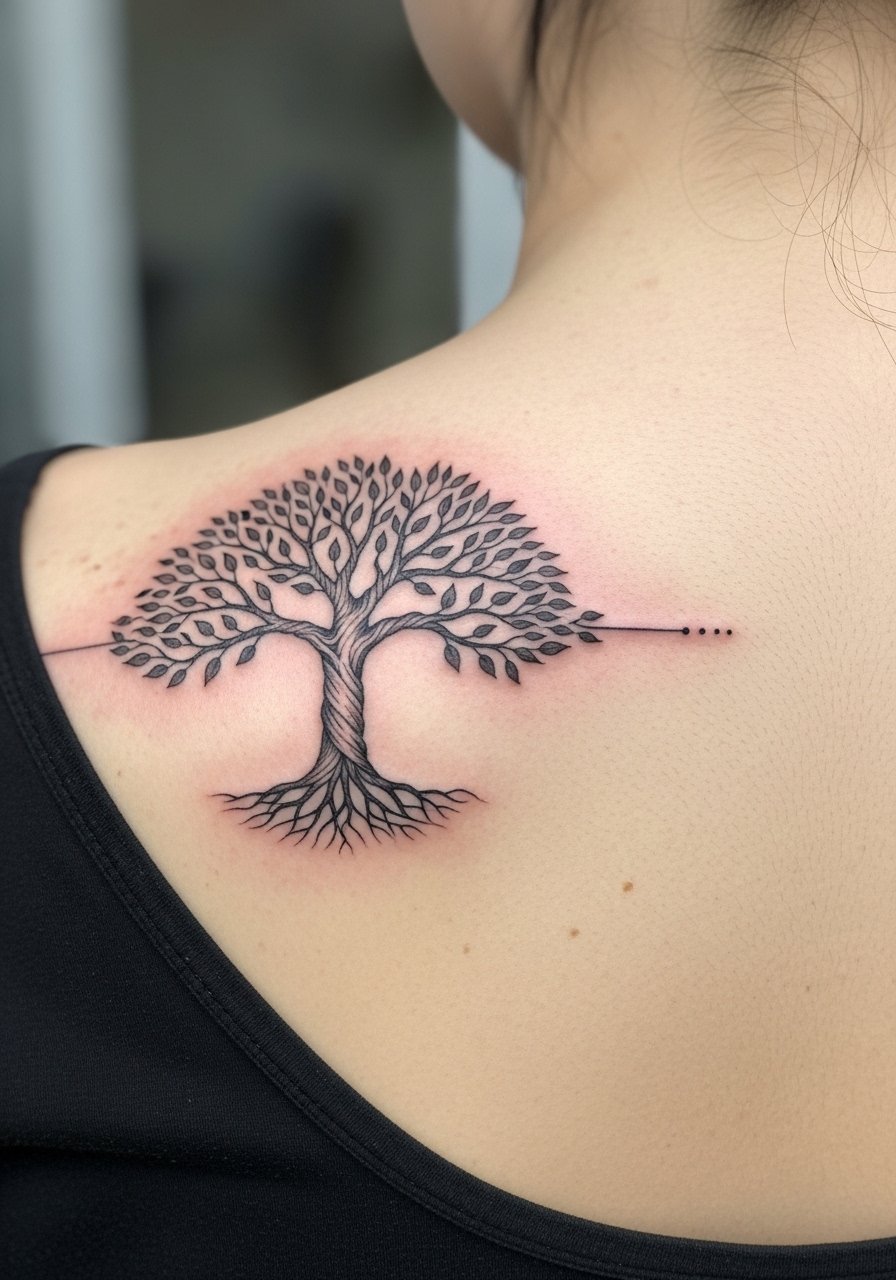
A tree of life can play with asymmetry while still balancing across the upper back. Tell the artist you want slightly thicker main branches and thinner offshoots so the silhouette reads at a distance. People often err by packing leaves that age into a green blur, so prefer linework with minimal color. One session for outline and a short follow-up to clean edges is common. The piece pairs with wide-neck shirts or off shoulder blouse women to reveal the branching.
13. Ignorant style heart with thorns at the center
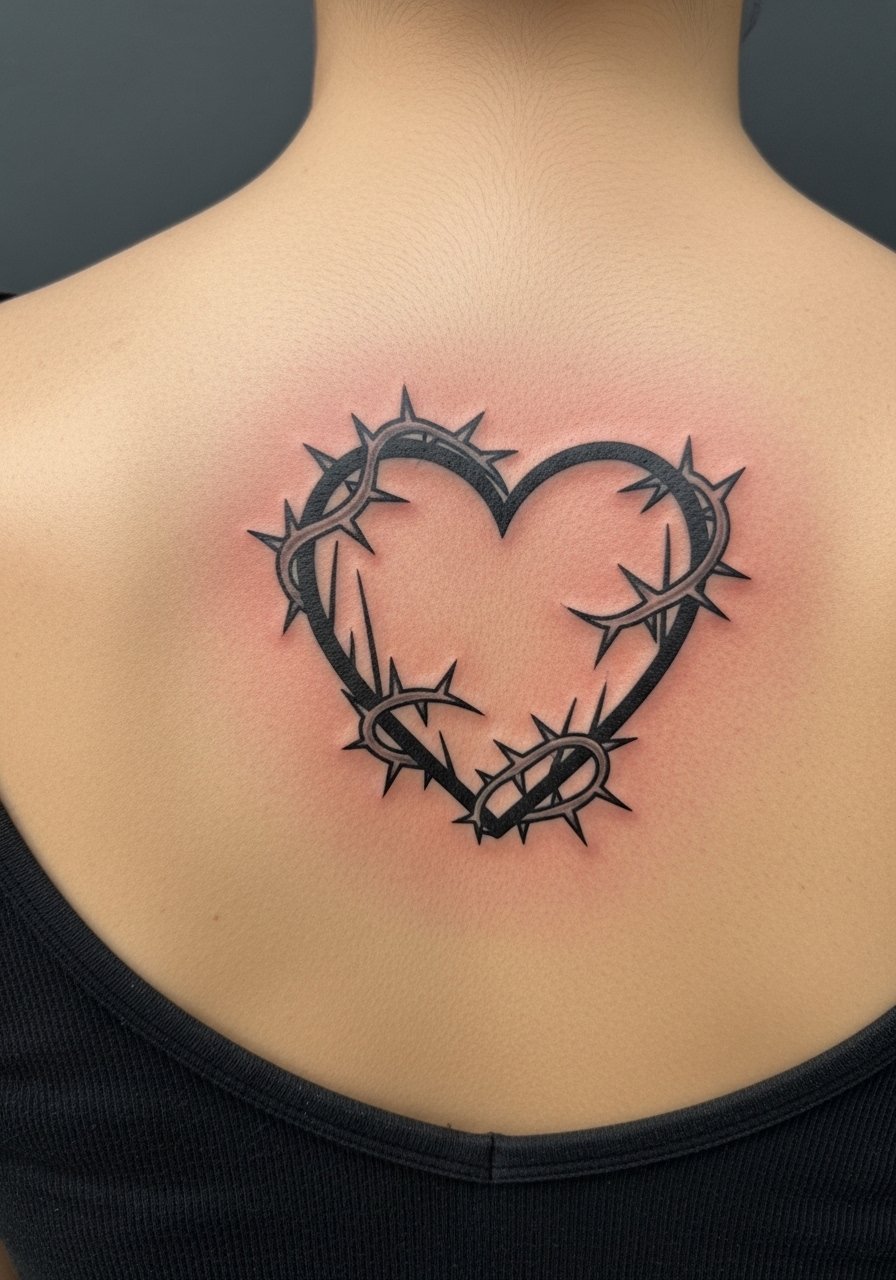
Ignorant style embraces imperfections and thicker lines, which actually helps with longevity on the upper back. The pitfall is asking for intricate thin details inside a deliberately rough outline, which undermines the aesthetic. Compact designs of around four inches hold up and need only a single session. This style pairs well with vintage tee looks like a vintage band tee women.
14. Expansion-ready medium panel that leaves room for additions
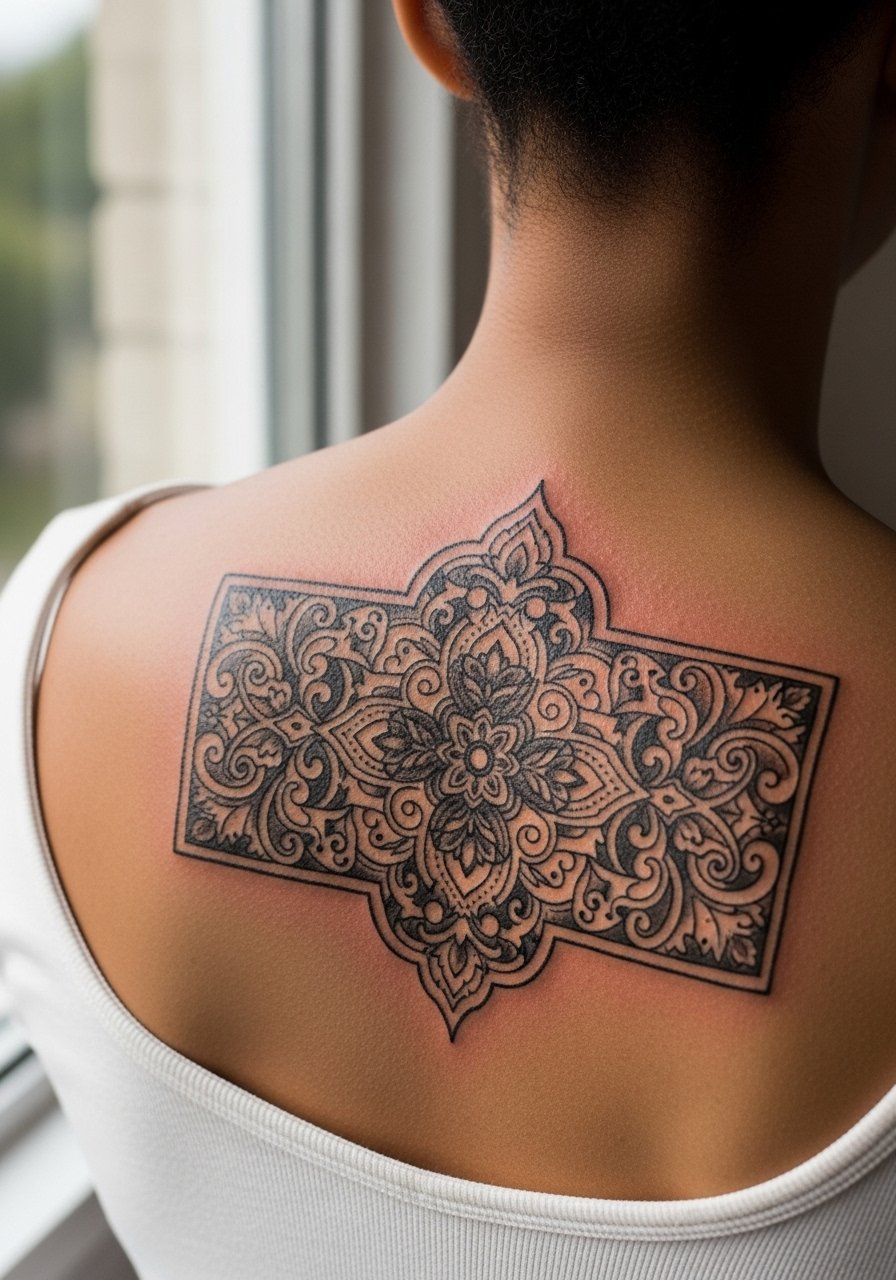
If you plan a larger mural later, start with a medium piece that intentionally leaves margins. The frequent mistake is filling every inch right away, which prevents harmonious future expansion. During consultation, say you want "expansion-ready" borders and ask the artist to sketch suggested filler placements. Session time is shorter for a medium panel and touch-ups help the piece sit right before additions. For session wear a loose button-down shirt for access.
15. High-contrast blackwork for darker skin tones
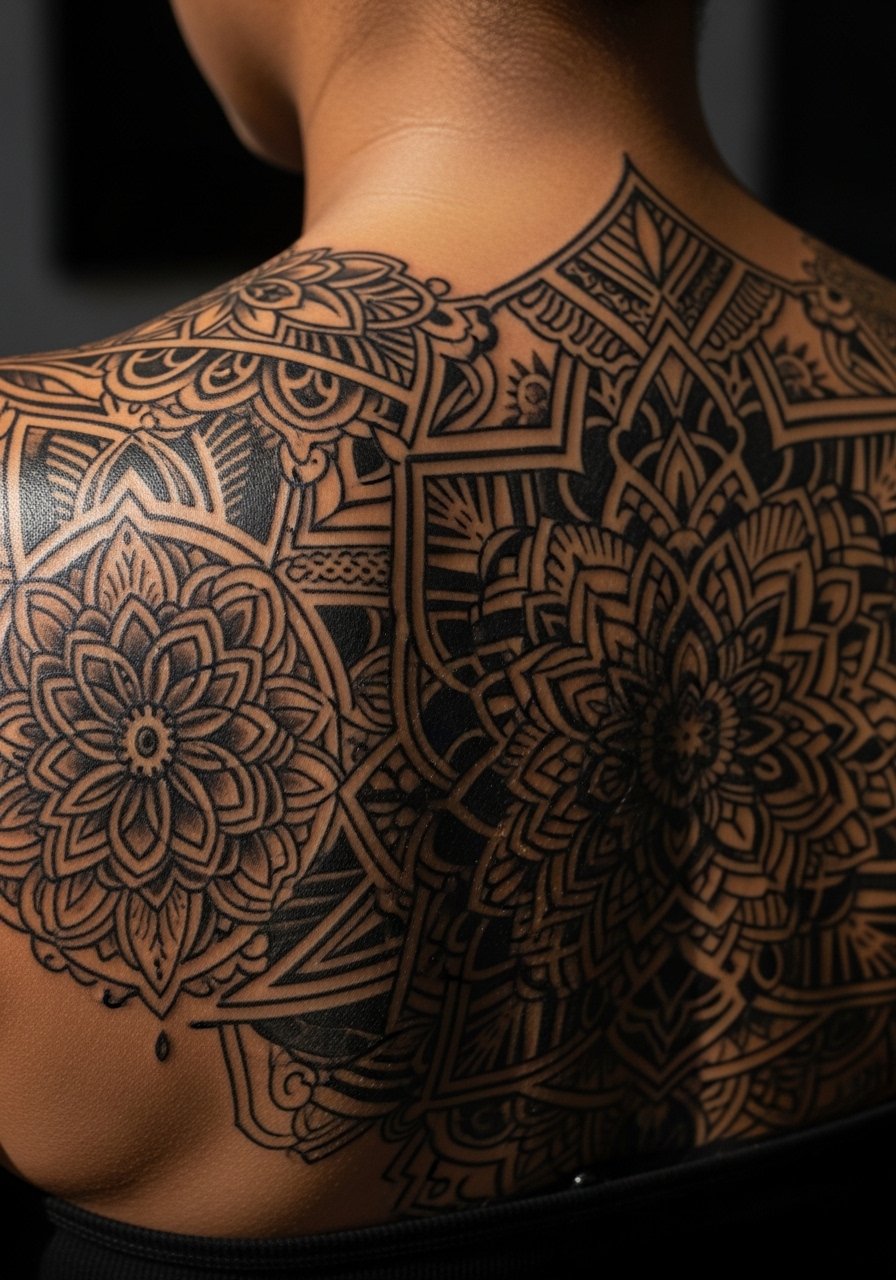
On medium to dark skin, high-contrast blackwork reads sharply in photos where fine white highlights might not. Ask for denser fills and allow more spacing between tiny lines so photos keep clarity. The common regret is choosing too-fine linework that disappears in images. Blackwork often needs fewer color touch-ups but may require saturation refreshes at year three to maintain depth. Pair with a backless jumpsuit to let the bold shapes dominate.
16. Micro-constellation across the upper shoulders
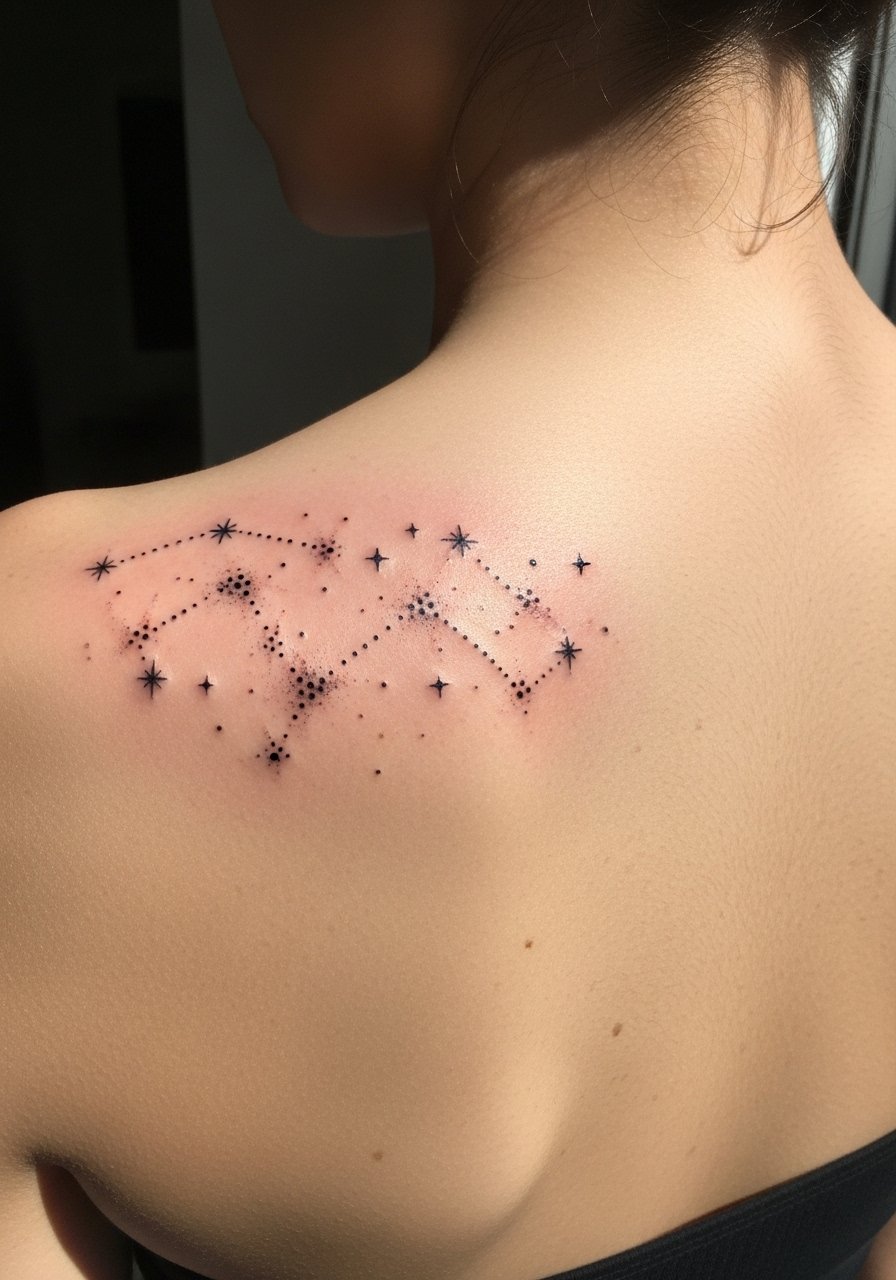
Tiny constellations are cute, but dot work relies on spacing. Too-close dots will fill into a blotch. Ask your artist for a dot scale and to place stars with breathing room. These are usually single-session pieces but note they can fade with sun exposure. For casual wear pick an off-shoulder sweater or cropped hoodie to show the spread.
17. Lace choker mimic across the upper back top line
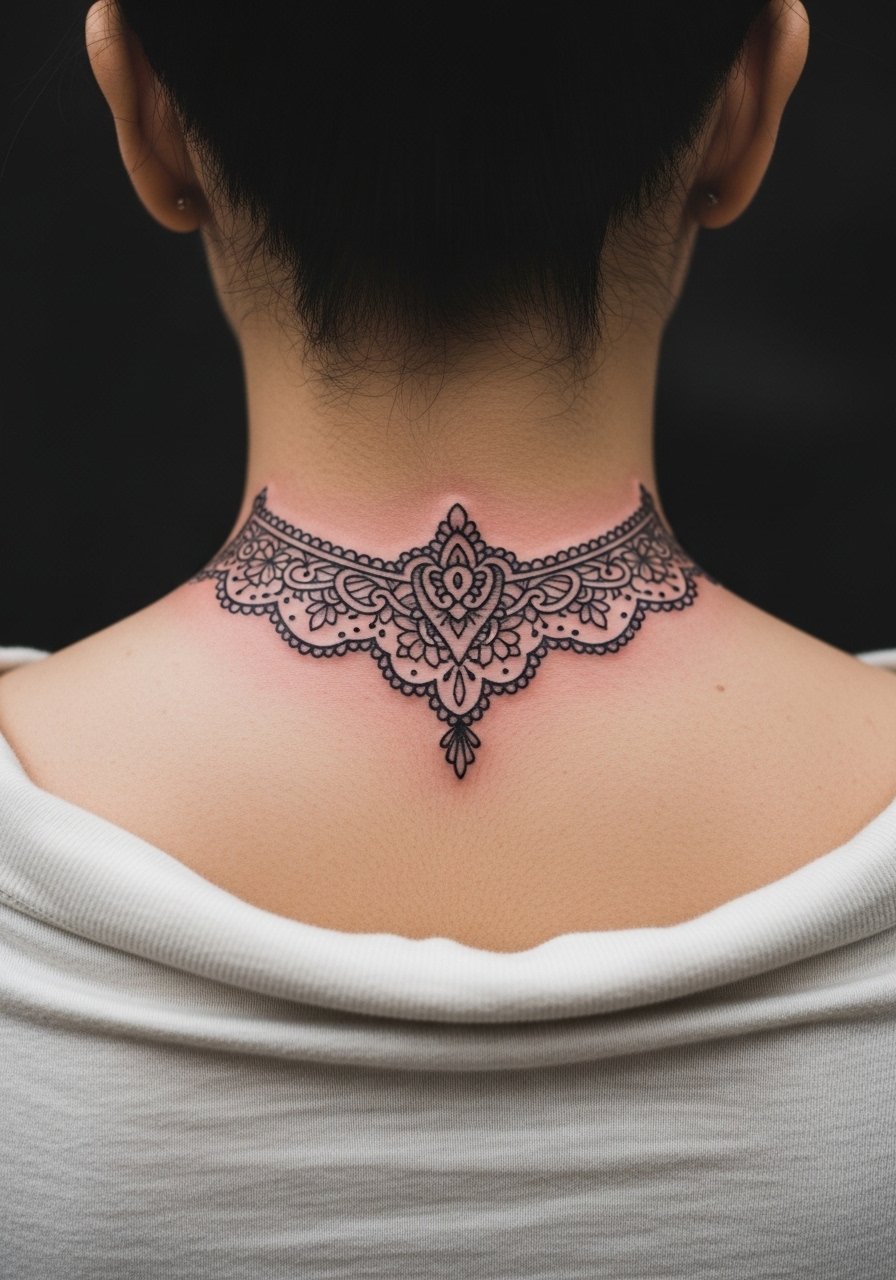
A choker-style tattoo that sits high can echo jewelry and looks deliberate when placed just under the neck. Ask for a slightly bolder outline to prevent the lace from closing up. The error is making lace too intricate for the upper back's movement. One session is typical and touch-ups rarely needed if spacing is generous. For styling, wear a wide-neck shirt or a slightly off-shoulder top.
18. Crescent moon trio across the shoulder sweep
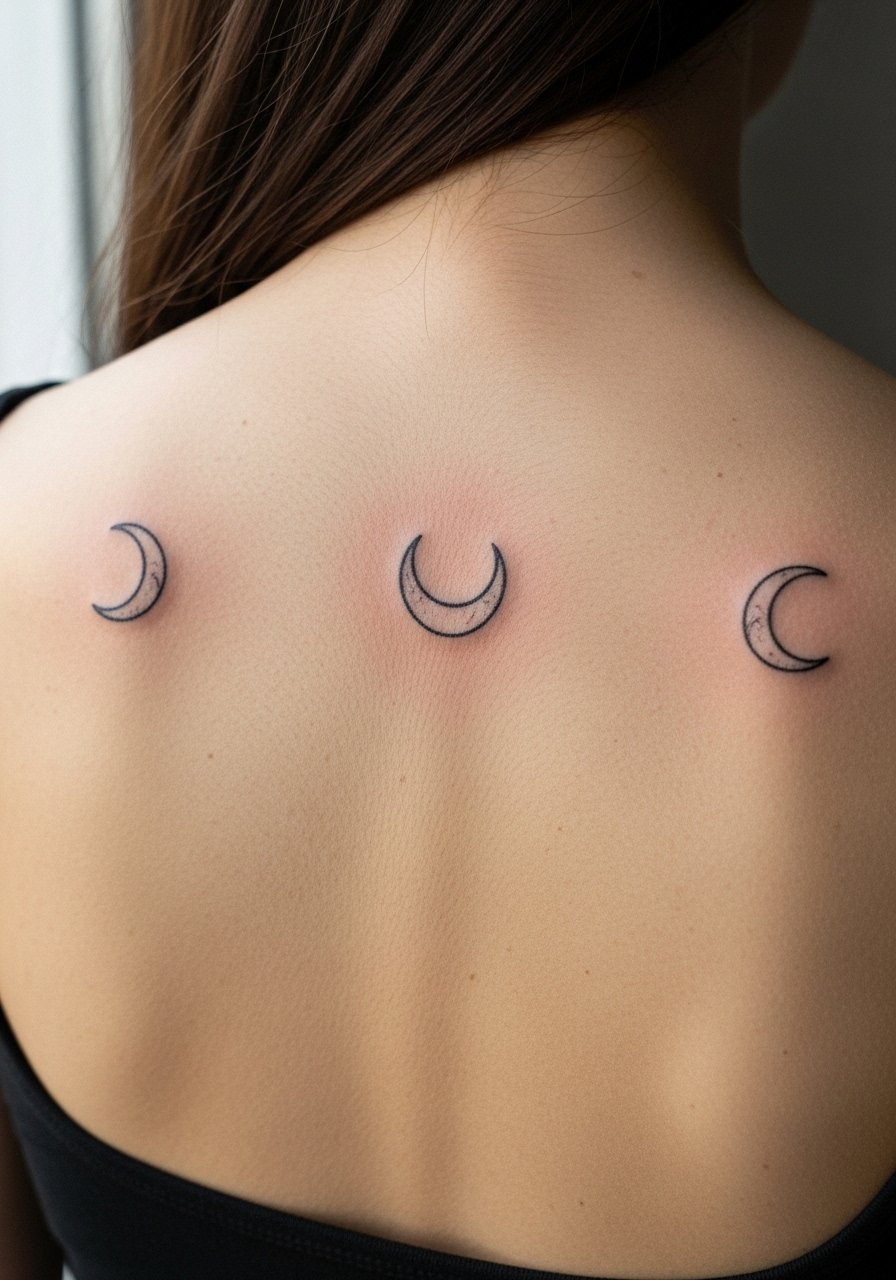
A trio of moons reads minimal and elegant, but fine lines on the shoulder area can diffuse over time. Request slightly thicker crescent edges and confirm the spacing so they do not blur together. These need only one session and minimal aftercare. For daytime outfits, a racerback tank top shows the sweep nicely.
19. Ornamental filigree baroque panel at the top center
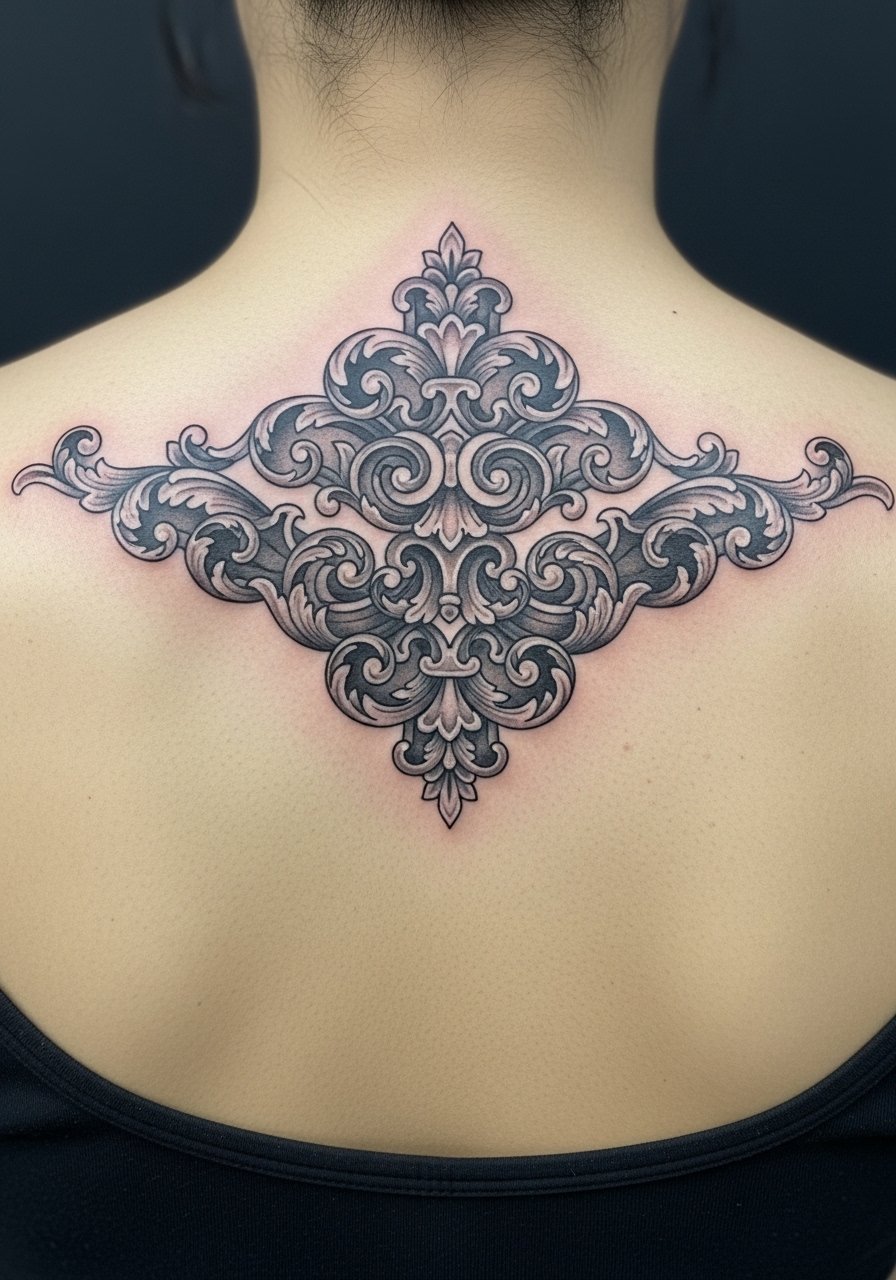
Baroque filigree reads like vintage jewelry and benefits from clear negative spaces. The common mistake is over-detailing small curls, which age into a muddle. Ask your artist to test a small section at scale so you can see how curls settle. Two shorter sessions give the artist room to refine shading. For evening events a strapless linen midi dress frames the panel.
20. Small portrait window near the shoulder blade
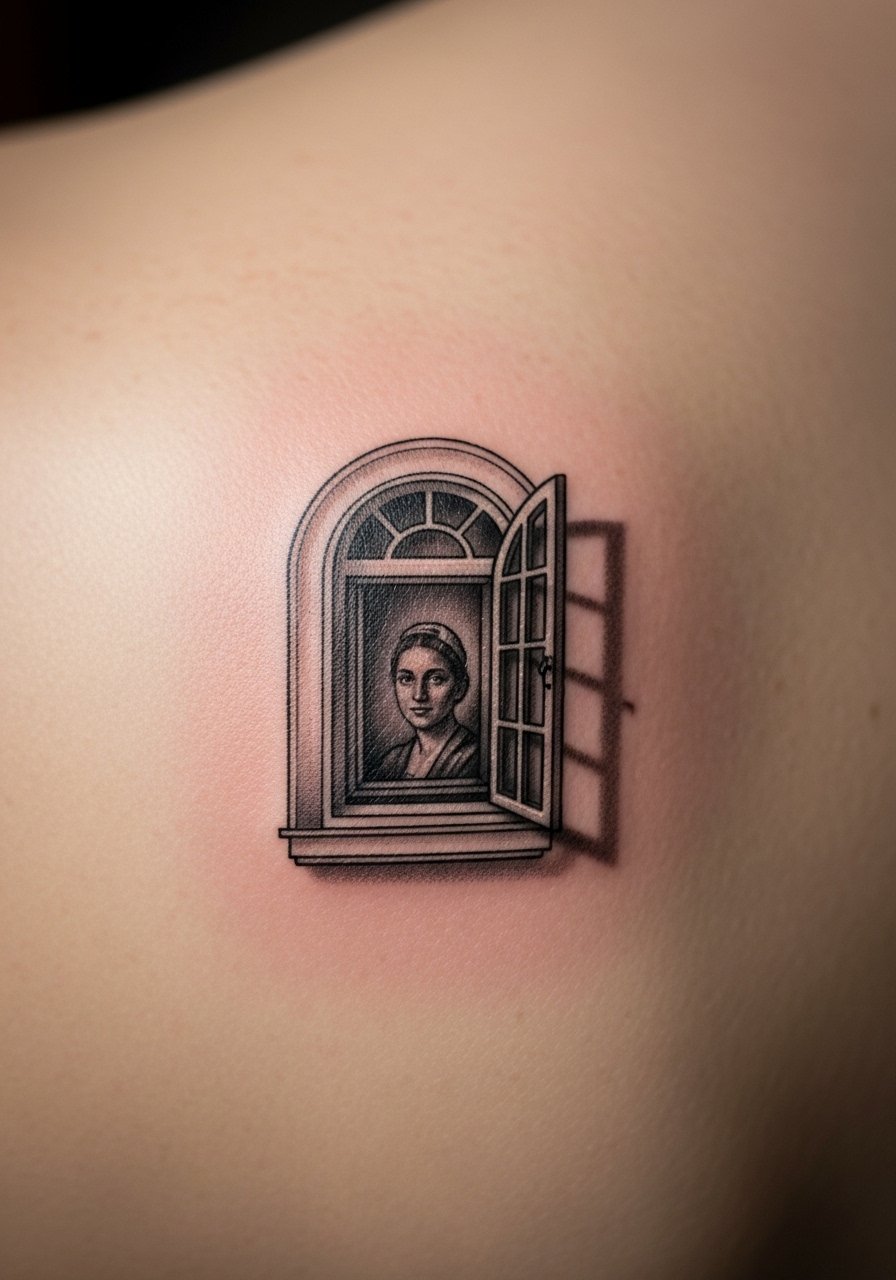
Portrait windows demand an artist experienced in micro-realism and healed examples on similar skin tones. The mistake is choosing portrait size too small for facial features which then merge. Plan one dedicated session and discuss reference contrast so the face keeps recognition. If career visibility matters, consider a placement slightly lower or more covered. Session wear of a loose top that the artist can move aside helps.
21. Moth motif over the spine nexus
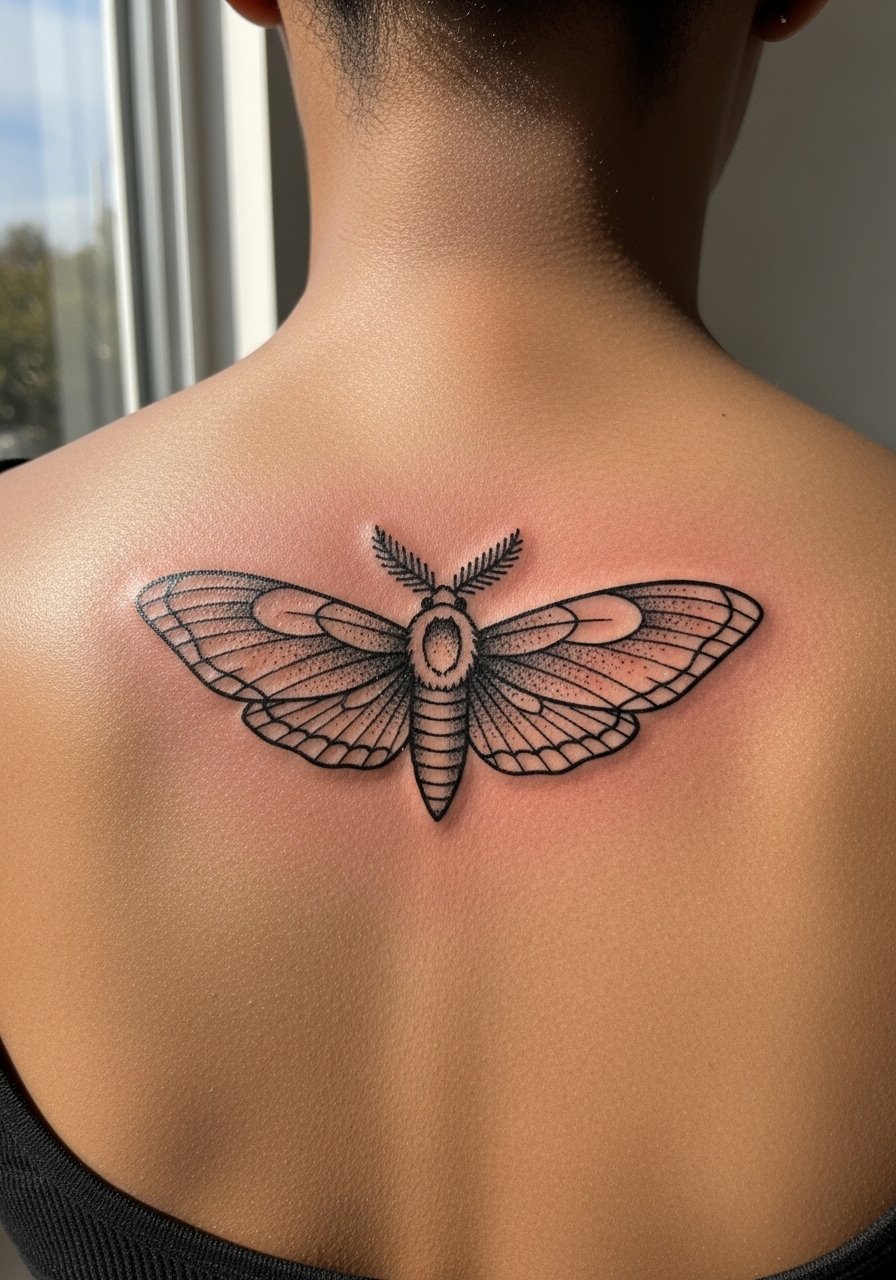
Moths over the spine combine symmetry with an edgier mood. They are sensitive to placement over bone, so expect sharper pain during the session. Many people regret over-detailing the thorax area which can blur, so opt for clean wing patterns and stipple shading. One session often suffices for a medium moth. For styling, a low back evening dress displays the vertical motif.
22. Compass with floral corners across the upper back center
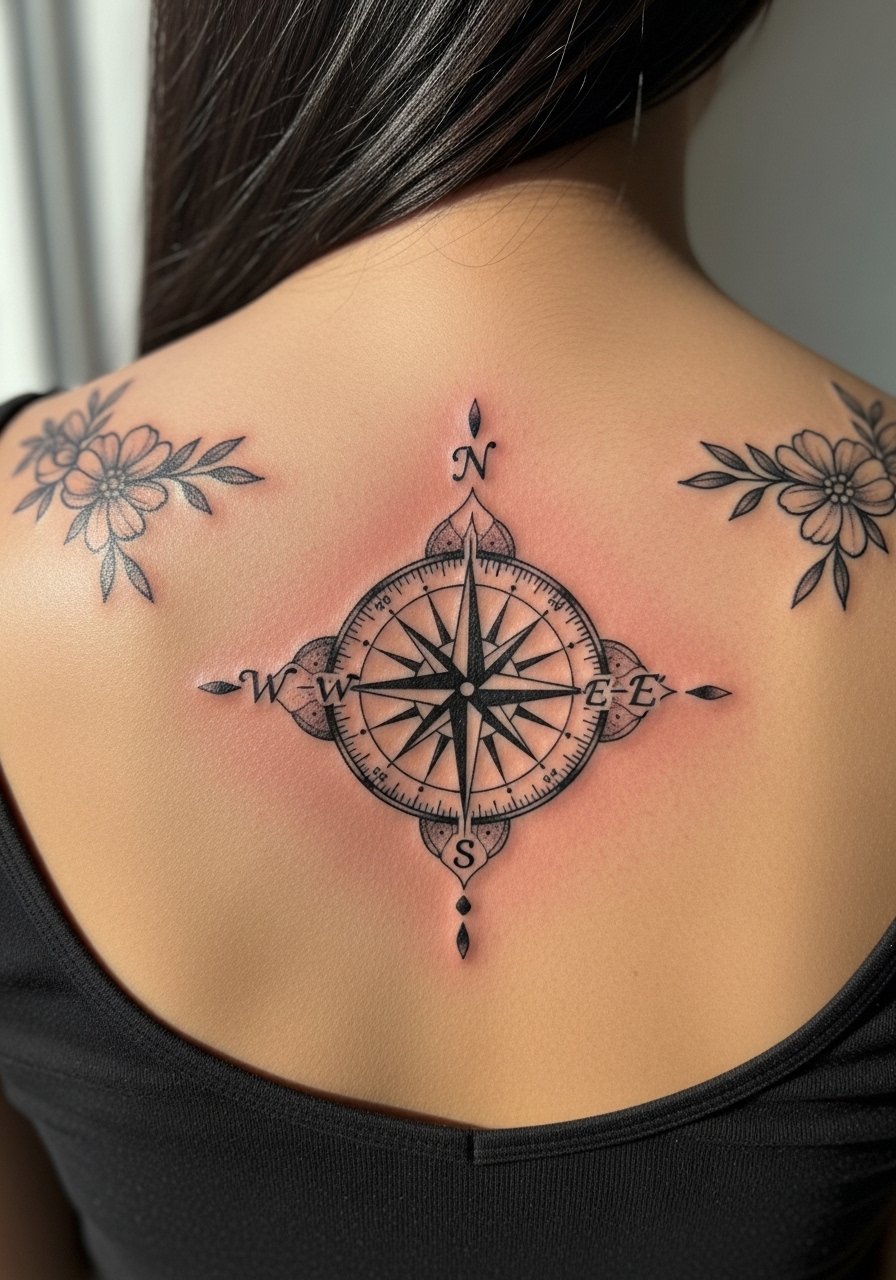
A compass grounded by floral elements combines direction with softness. Keep the compass lines bold so the point markers stay crisp. People sometimes ask for extensive tiny lettering around a compass which blurs; instead choose minimal text or a small year in Roman numerals. One to two sessions depending on size. Throw on an off shoulder blouse women to frame the centerpiece.
23. Overlapping mandalas that tuck behind the shoulders
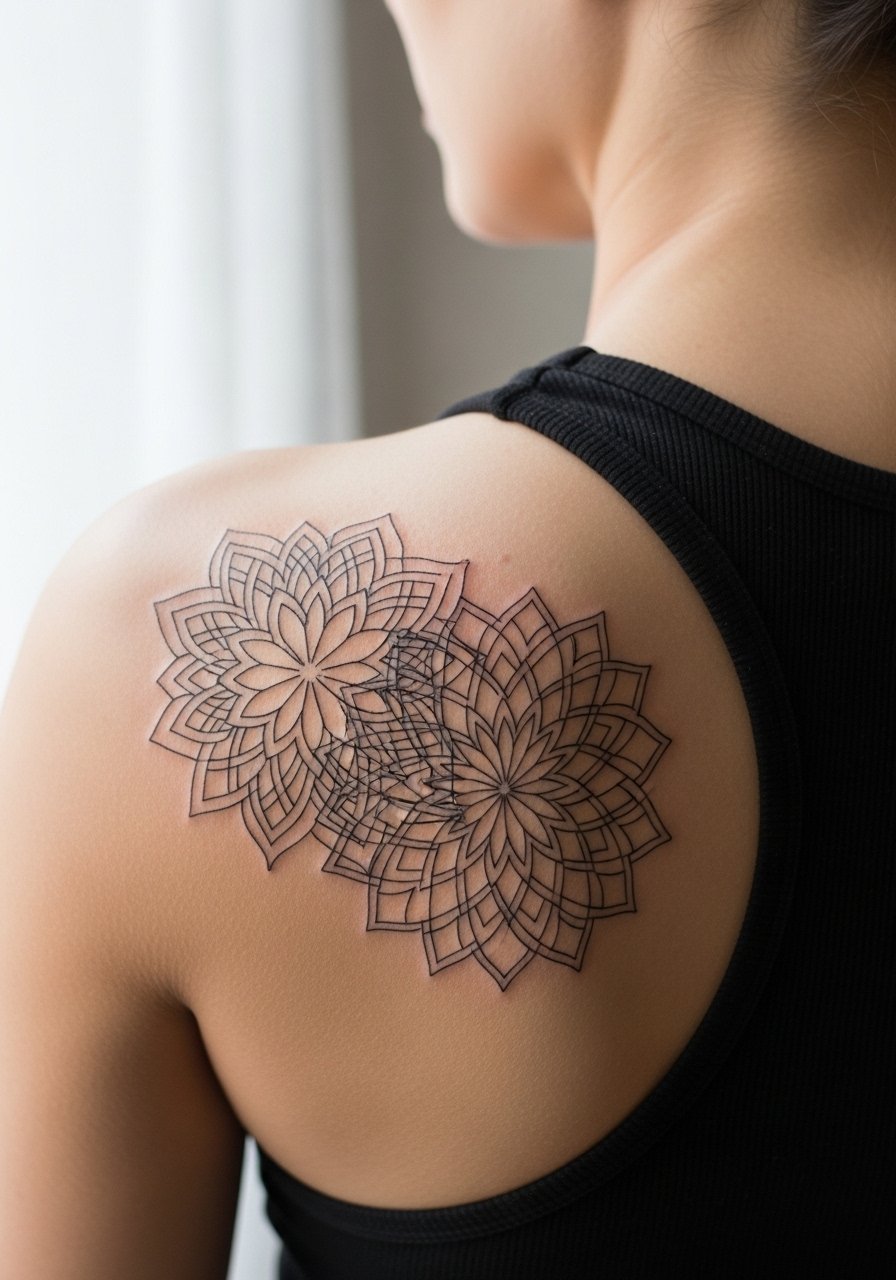
Overlapping mandalas can balance asymmetry from bra straps if positioned thoughtfully. Request mapping while standing and sitting so the artist adjusts for curvature. The typical error is tight overlaps that create dense rings which merge after healing. Two sessions may be needed for symmetry and for a precise touch-up. For showing off, a racerback crop top keeps shoulders exposed.
24. Minimalist arrow cluster pointing down the spine
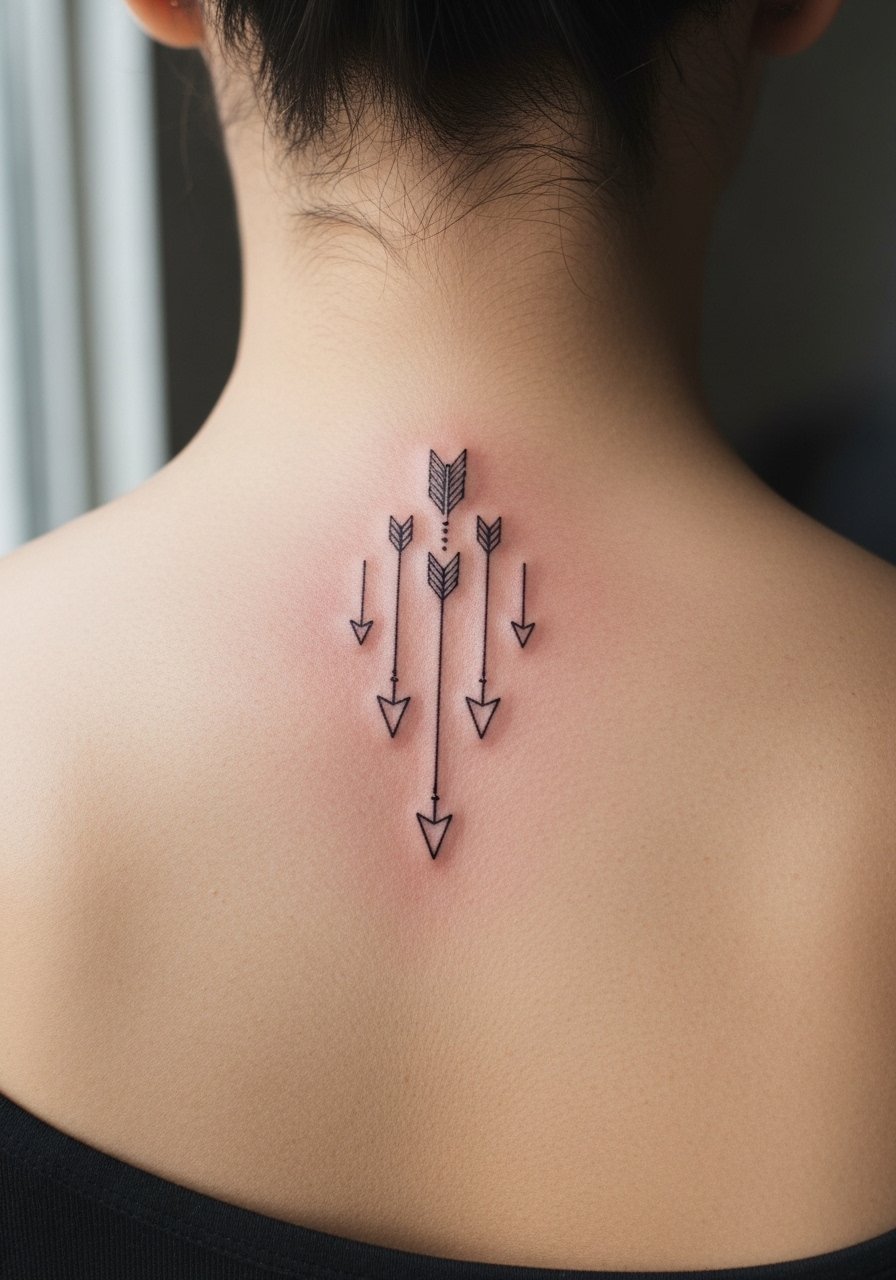
Small arrow motifs are low commitment but need spacing to avoid merging. Tell your artist the distance you want between shafts and confirm line weight to hold at year two. Pain is moderate over the spine with sharper moments on bone. This is a quick single-session piece and looks neat with an olive green tank if you want a casual reveal.
25. Barbed vine semicircle hugging the shoulder arch
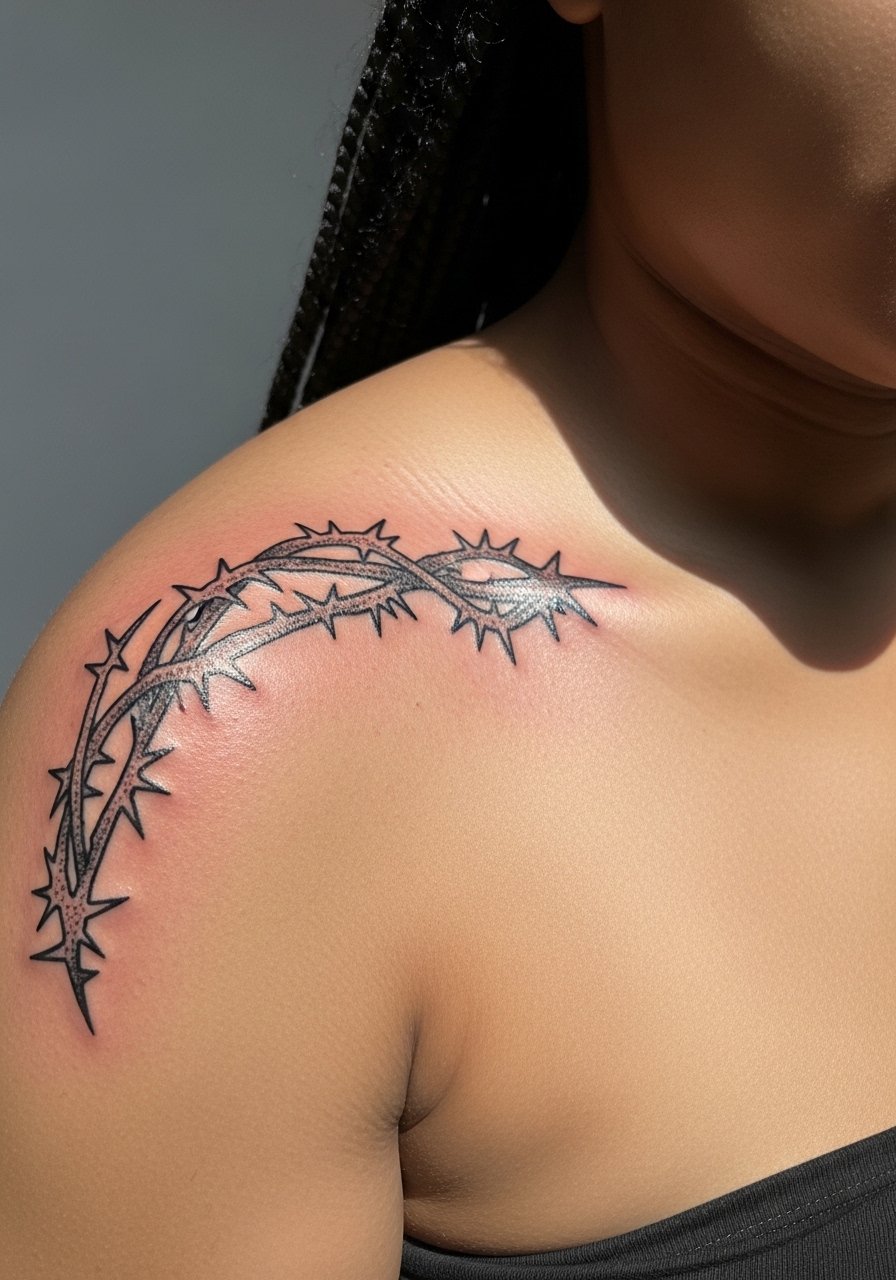
A barbed vine can feel edgy and frames the shoulders when wrapped as a semicircle. The mistake is packing too many barbs close together which increases blowout risk in thin skin. Ask the artist to space each barb and to use stipple shading for softer transitions. One session typically covers this size. A halter tank top shows off the arch shape.
26. Small portrait of a flower bud near the shoulder seam
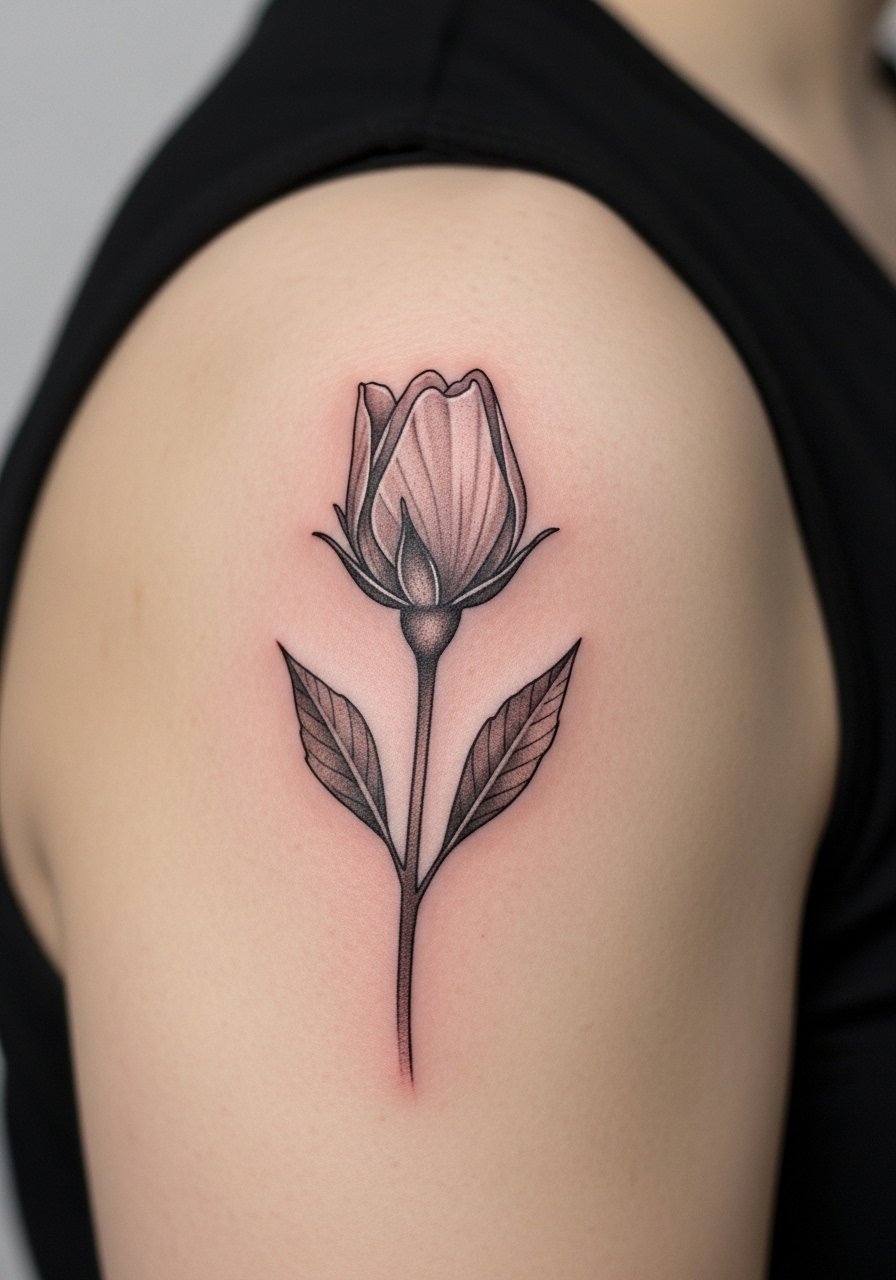
A single bud reads intimate and timeless if executed with confident shading. Avoid overly tiny petals that lose form. Bring a clear reference so the artist can judge scale and contrast. This is a one-session piece and photographs well when the shoulders are bare or in a scoop-neck top. For session comfort choose a loose button-down shirt you can pull aside.
27. Ornamental crescent spine panel that leaves room below
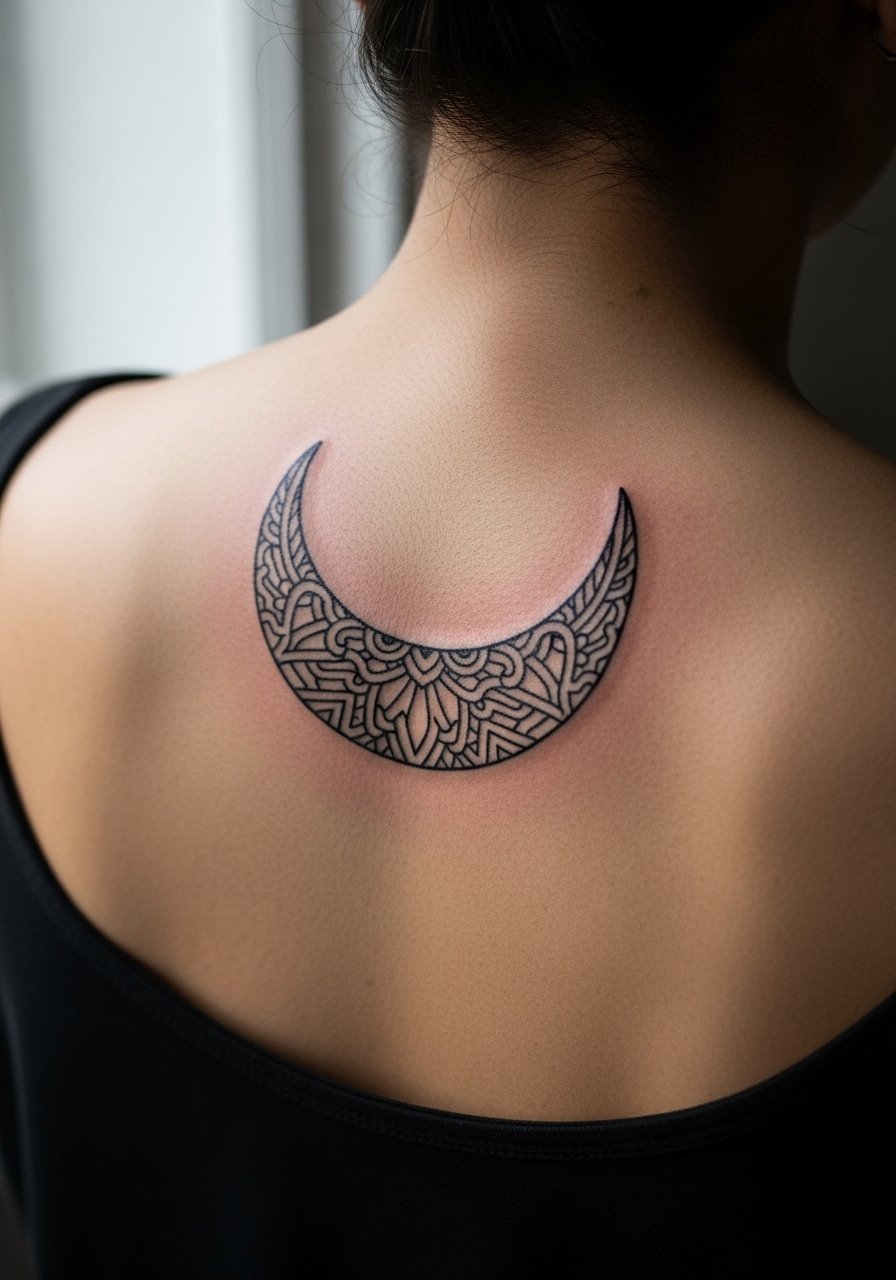
A crescent panel centered on the spine gives a structured focal point and leaves a natural gap for lower back expansion later. The common error is compressing too many filigree elements into the crescent which creates a muddy heal. Opt for bold outline anchors and simpler interior patterns. Expect one to two sessions and plan your touch-up after the first full heal. A low back evening dress will highlight the curve.
Frequently Asked Questions
Q: Will fine line upper back tattoos fade faster on darker skin tones and how can I avoid blurry photos?
A: Fine line can read softer on darker tones in photos because contrast behaves differently. Ask for slightly thicker line weights and healed portfolio examples on similar skin tones. Strong black anchors and selective negative space help designs retain shape without changing the aesthetic.
Q: Saniderm versus dry healing for an upper back piece, which camp should I follow?
A: There are two camps. Some studios prefer protective films because they keep the area clean on hard-to-reach backs. Forum users argue dry healing avoids trapped sweat and irritation. Talk to the artist about your sweat pattern and sleep position, and follow the protocol they use in their healed examples.
Q: How does spine placement change pain and healing compared with shoulder-blade tattoos?
A: Spine pieces hit bone and usually score higher on pain scales, while shoulder blades are generally less painful. Healing is similar but spine areas can be more sensitive to friction from clothing. Plan shorter sessions with breaks for spine work and wear loose tops for the first week.
Q: I love watercolor butterflies, but I hear they blob over time. What should I ask for instead?
A: If longevity matters, request subtle black outlines or slightly denser pigment at wing edges so the shapes keep reading as colors fade. Ask your artist for healed pictures of watercolor pieces two years or older to see how they hold.
Q: What should I wear to the studio for an upper back appointment to make the session easier?
A: For most upper back work a loose button-down shirt or a wide-neck top you can pull aside works best. If the piece sits on the shoulder blades a racerback tank makes positioning simpler. Packing a soft pillow for comfort during prone positions helps too. You can preview options like a loose button-down shirt that doubles as easy session wear.
Q: How often should I budget touch-ups for watercolor versus blackwork on the upper back?
A: Watercolor pieces often need touch-ups within two to three years depending on exposure and activity. Dense blackwork can go longer before needing refreshes, sometimes four to five years for saturation boosts. Expect fine line pieces to need an intermediate touch-up around year two to three if they live on active or high-friction zones.