
The stencil sits on skin a beat too big and you realize the image you loved on a screen reads different in real life. Sleeve designs look huge, tiny dragons look cartoonish, and color that glows under studio lights can dull fast in sun. If you worry about stigma, fading, or commitment cost, these 21 japanese dragon tattoo ideas include realistic aging notes, styling tips for both the session and showing off, and the discovery paths to find the right studio before the needle goes down.
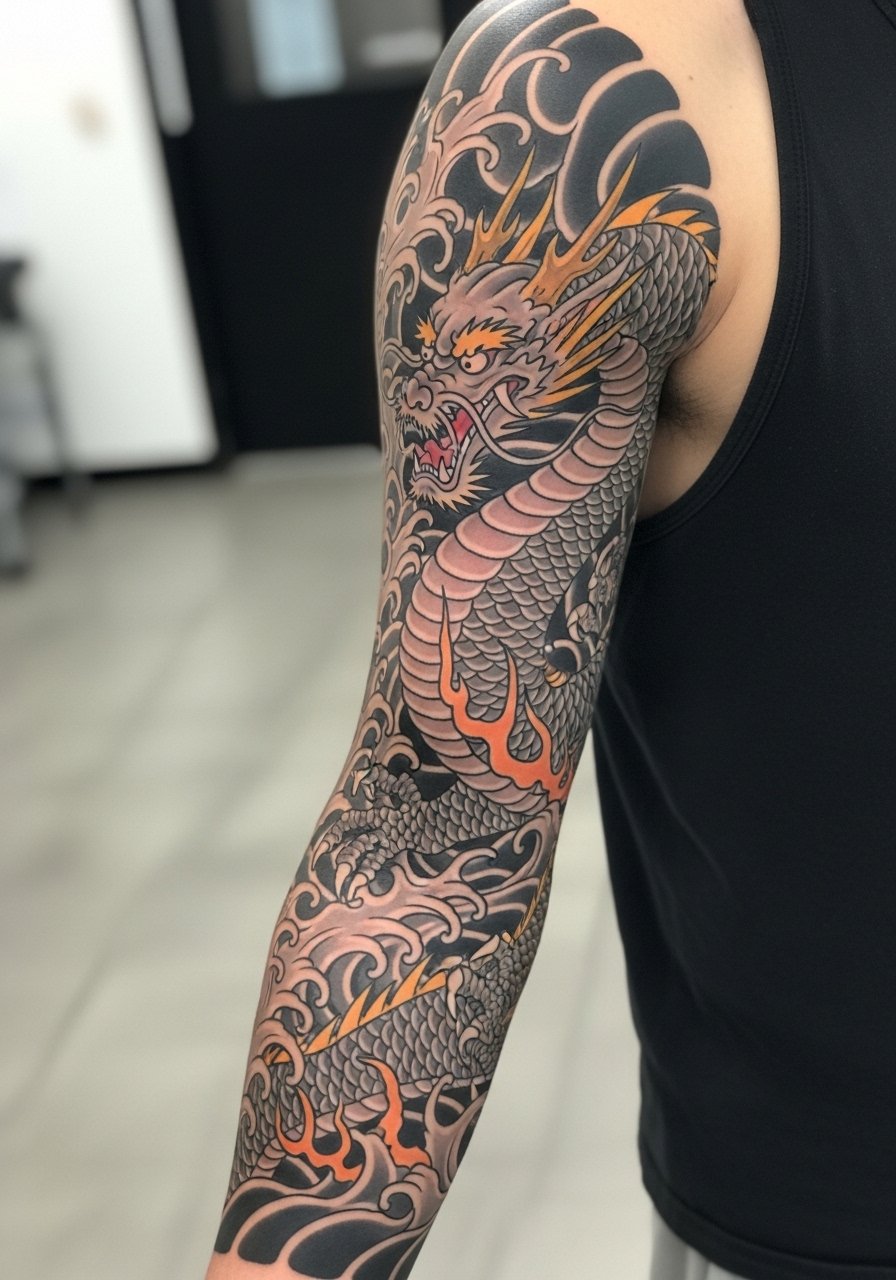
1. Dragon Emerging from Waves, Full Sleeve Statement
I've seen this one on arms that weathered months of sunlight and on arms kept shaded, and the difference is obvious. For a sleeve that reads like motion, request sweeping wave backgrounds that wrap the arm and interlock with the dragon's body so the composition reads in a glance. Avoid tiny scales and overly complex fins, those details can soften into blur after a few years. Expect multiple sessions and a touch-up two to three years out if the piece sits on an exposed forearm. For sessions wear a loose athletic tank so the artist can access the full arm easily, and show-off the finished sleeve with a fitted black tank top that frames the waves without competing for attention.
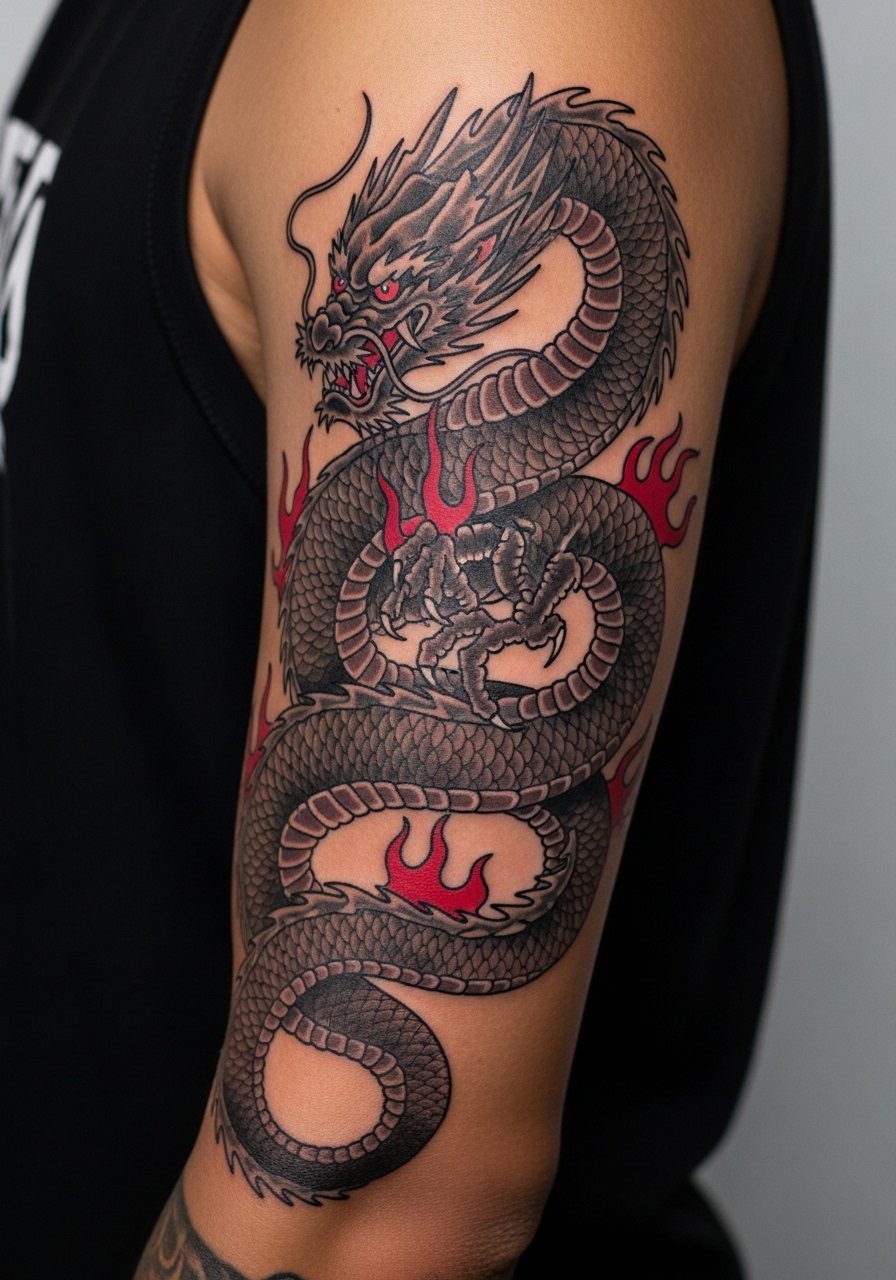
2. Coiled Dragon Sleeve for Compact Storytelling
Fair warning, building a coherent coiled sleeve takes planning across sessions. This version wraps around the arm like an ouroboros, so consult about where the head and tail meet to avoid awkward seamlines when you bend the elbow. The neo-traditional approach uses dense black and grey saturation with small color pops to hold up against UV. Most people feel moderate discomfort on the outer arm, and sessions run long, but the payoff is a design that reads from several angles. A common mistake is compressing too many background elements, which makes the dragon lose its silhouette. For showing it off, roll a chambray roll cuff shirt to the elbow, the indigo helps the dragon stand out.
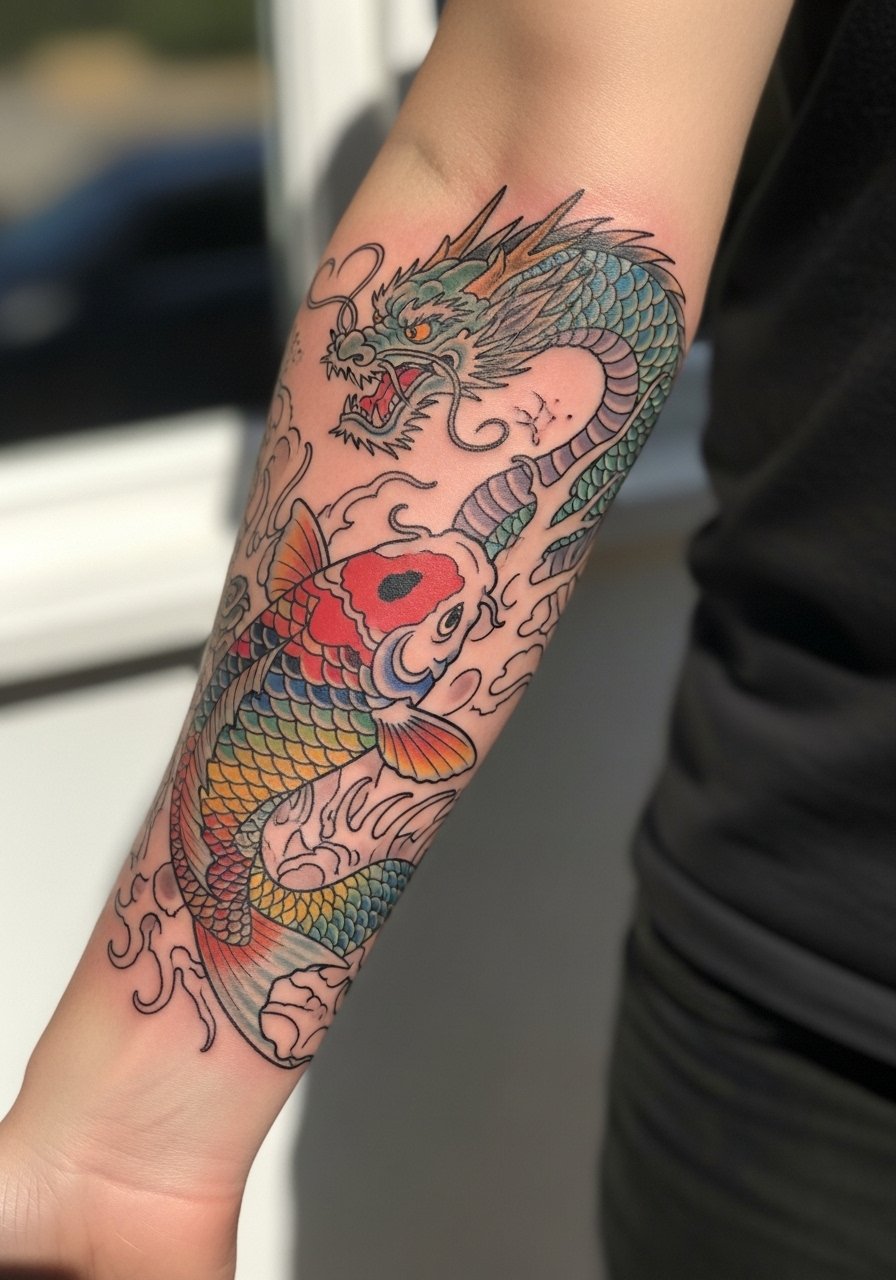
3. Dragon and Koi Transformation on Forearm
When a koi morphs into a dragon it tells a story of grit. Pick the forearm if you want a narrative that reads left to right as the koi turns into scaled form. Tell your artist to exaggerate the koi's fins in the first panel and to tighten scale detail as the dragon form arrives. Small forearm pieces older than medium size often age better because linework has room to breathe, so avoid crowding this area with tiny filler. Expect two medium sessions and a touch-up later if the forearm gets heavy sun. For the appointment, wear a sleeveless chambray shirt so the artist has clean access and you can check the composition without a mirror.
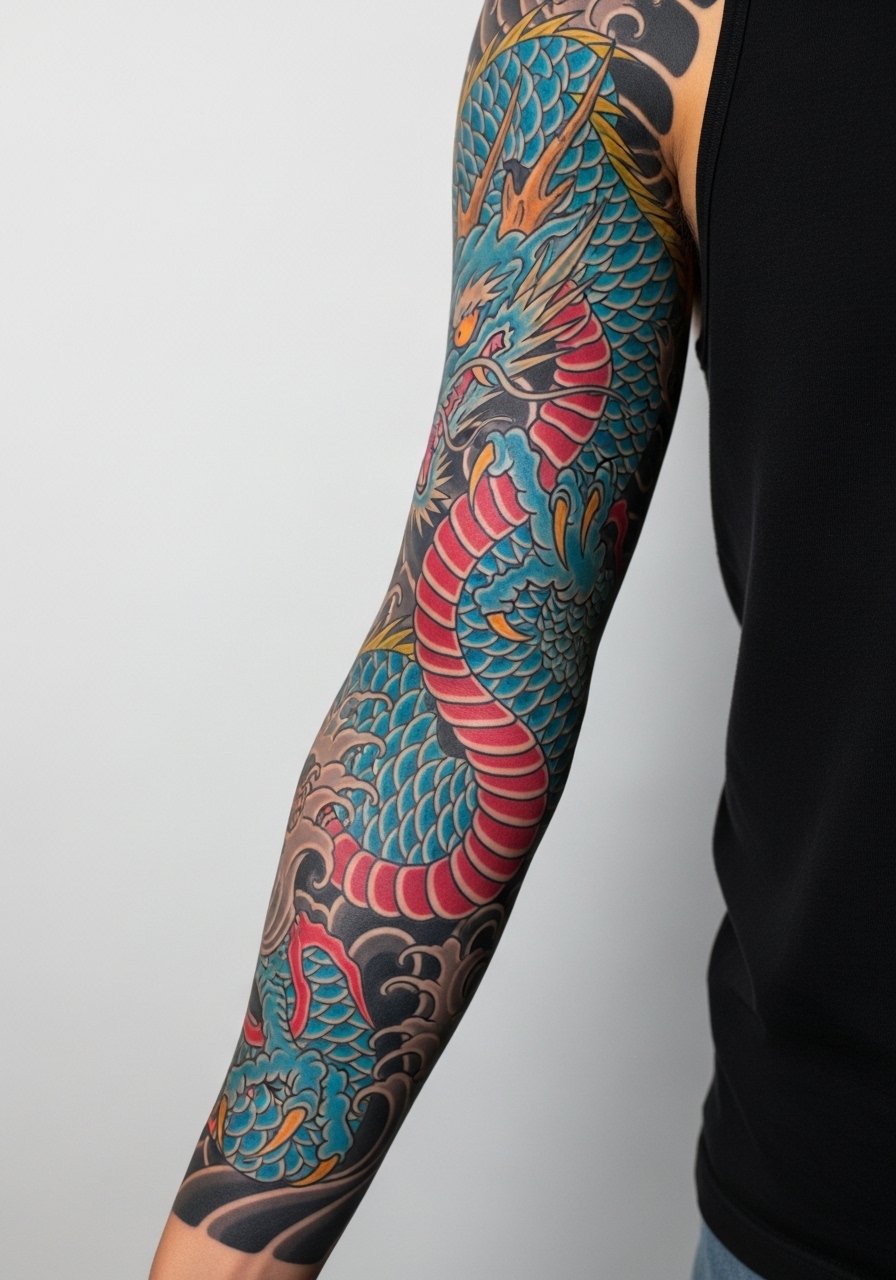
4. Three-Clawed Sea Dragon Sleeve with Ocean Palette
A controversy worth mentioning is accuracy versus reinterpretation. One camp insists on three claws to identify Japanese dragons; the other prioritizes visual impact over literal count. Be explicit in your consultation about claw count so the piece reads the way you want. The sea dragon motif uses deep blues and teal for scales and crashing wave backgrounds to anchor the composition. This placement is a commitment, expect longer sessions and strong saturation to fight future fading. Wear a loose tank top for the session, and show it off with rolled sleeves to let the vibrant ocean hues pop.
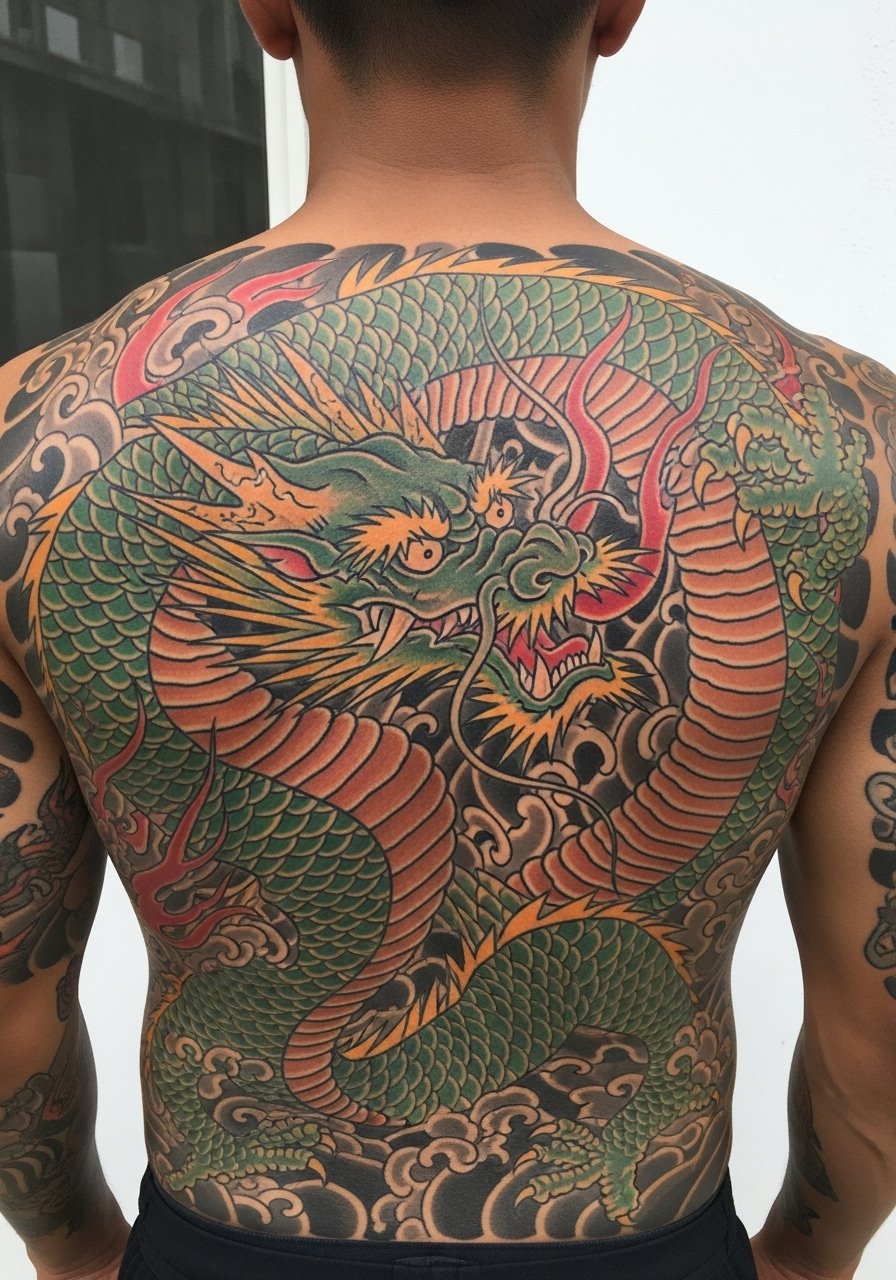
5. Dragon with Clouds and Waves on Back Panel
There's a high visual reward for a back panel because the background elements can breathe. For a large, upper-back panel ask for clouds that stack vertically and waves that curl toward the spine to create depth. The rib-to-shoulder transition can soften if the linework is too tight, so the artist should leave wider spacing near the spine. This placement can be painful on the ribs but reads majestic from across a room. For the session, bring a loose kimono robe or a front-open shirt so you can lie face-down without fabric pressing the fresh ink.
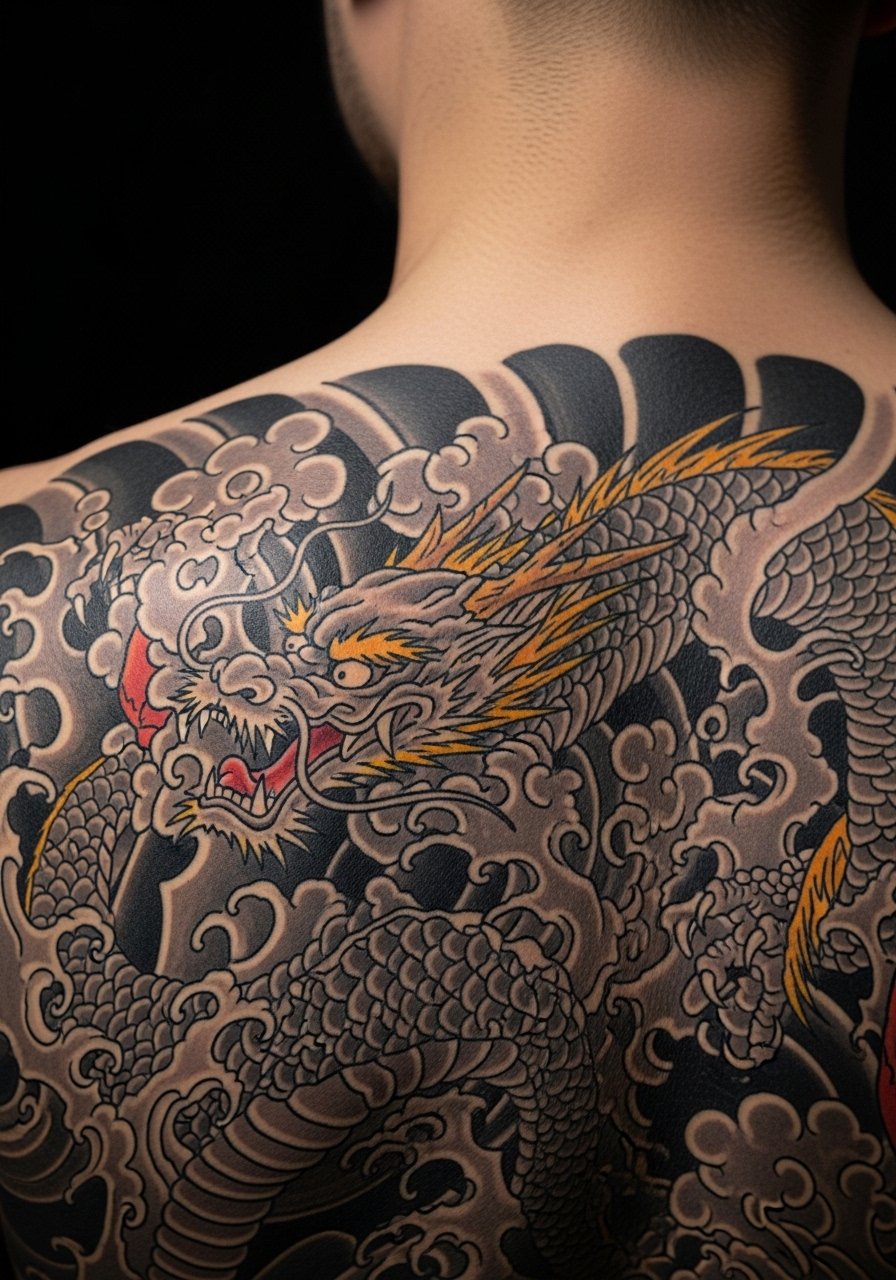
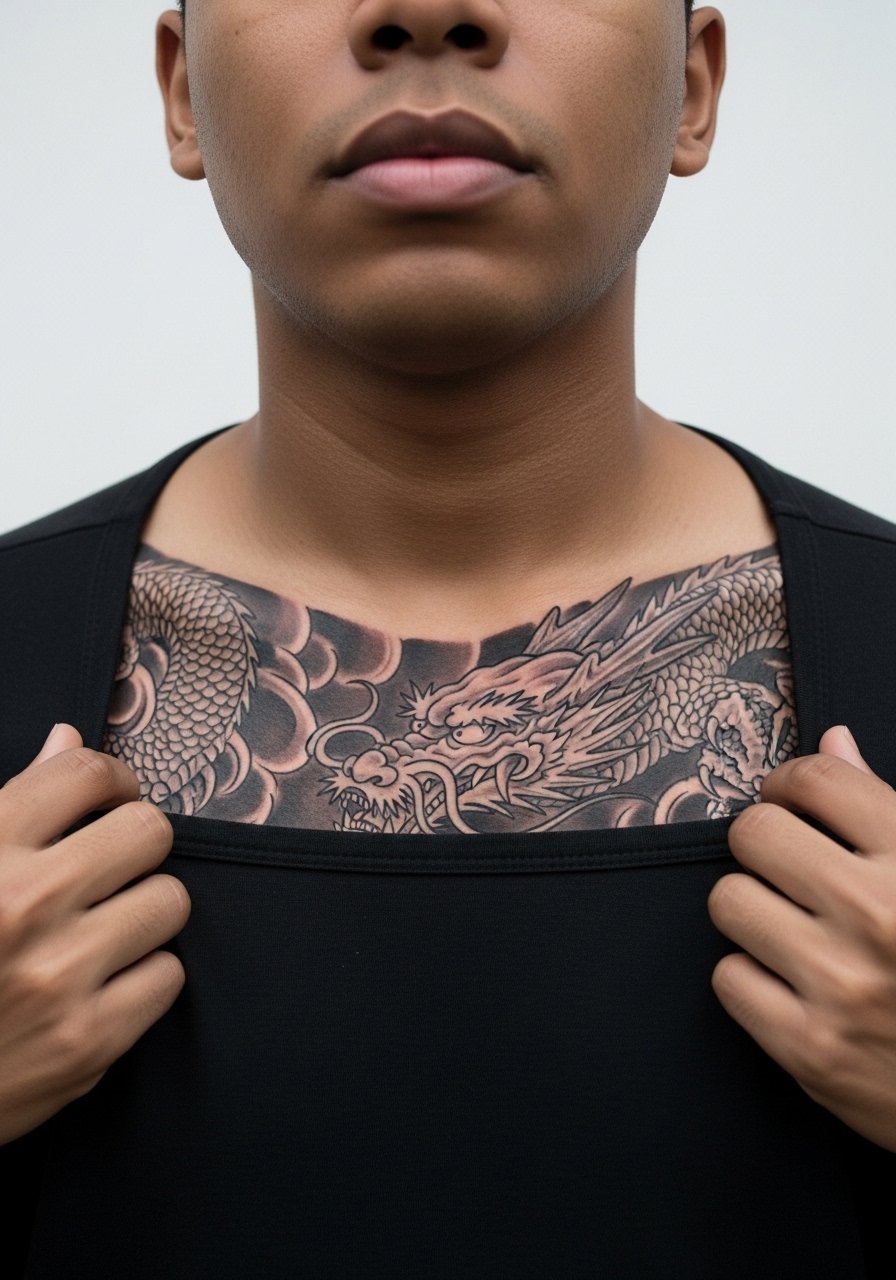
6. Black and Grey Realistic Dragon on Chest
Most people choose black and grey here for longevity. The chest reads well with subtle stipple shading and soft transitions that age into a lived-in look. One mistake is over-detailing tiny facial features on the dragon; at chest scale those details hold, but only if the artist spaces them correctly. The sternum and upper chest can be sensitive, expect a solid session with mild-to-high discomfort. For session day, wear a wide-neck shirt you can pull to the side without exposing more than necessary. Consider how the piece works with necklines when you pick the exact placement.
Studio Day Picks
These items help with the arm, chest, and back placements above and keep the early days manageable.
-
Stencil transfer paper kit. Lets you test line placement on the skin before the needle touches it, which is handy for sleeve junctions and chest panels in ideas above.
-
Topical numbing cream. Use per the artist's guidance before sensitive rib or sternum sessions to reduce discomfort without affecting linework.
-
Thin protective film roll. Useful for forearm and wrist pieces that get rubbed by clothing or keyboards during the first few days.
-
Fragrance-free gentle body wash. Cleans the healing area without the irritants that can dull fine shading in neo-Japanese work.
-
Aquaphor healing ointment. Thin layers in the early window help protect tight linework on smaller forearm and wrist dragons.
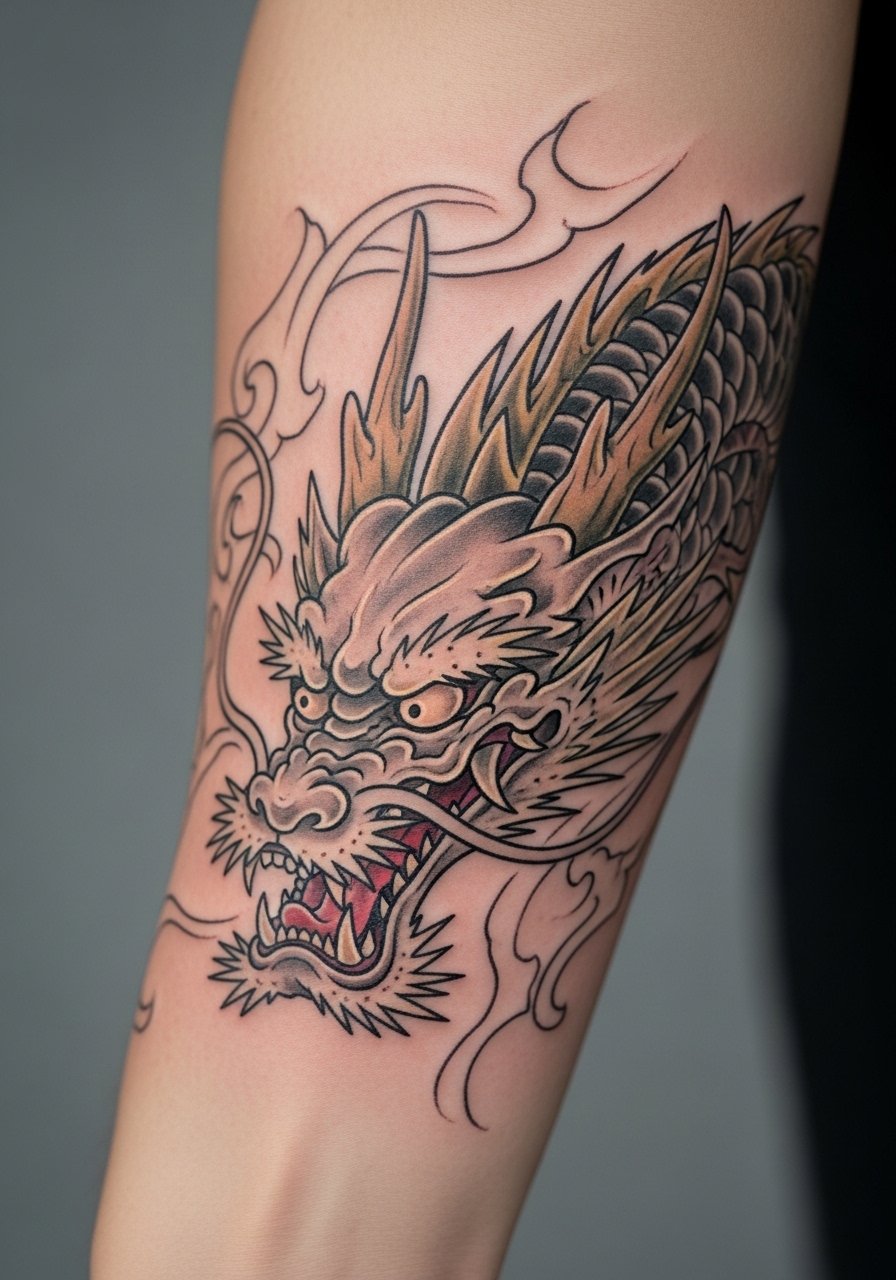
7. Neo-Japanese Dragon Head, Neck or Forearm Accent
When artists modernize Irezumi motifs the head becomes the focal point. The neo-Japanese head uses sharp contouring and soft gray washes to suggest volume. Pain on the neck can be higher than the forearm. One camp worries about neck visibility and career questions, the other sees it as a bold canvas. If you pick the neck, ask for a version that sits just below collars so you control visibility. For a forearm head, a leather cuff bracelet pairs well with the heavier contour lines, so try a leather wrap cuff bracelet when showing the piece off.
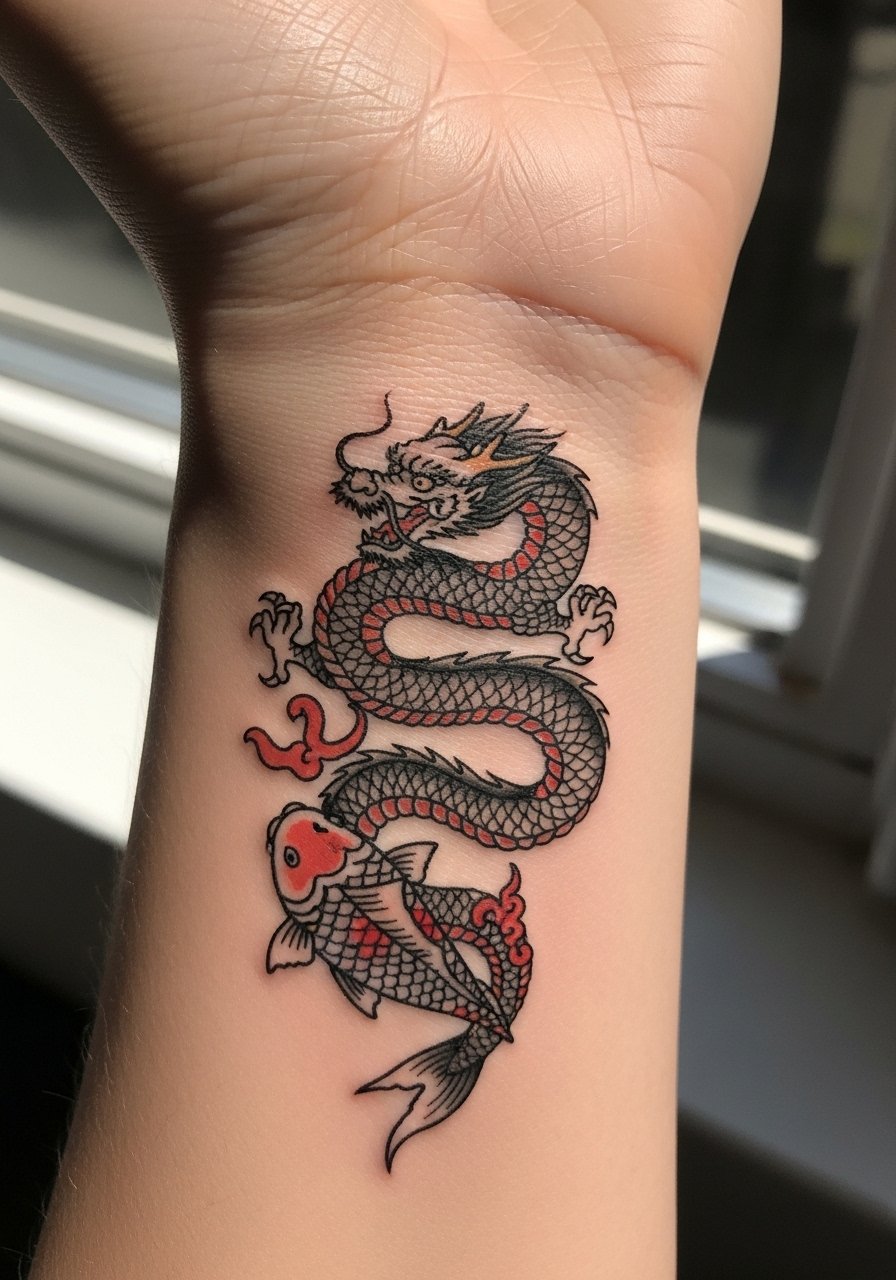
8. Dragon Coiled Around Koi, Wrist or Ankle Mini
Small formats need breathing room to avoid getting cartoonish. A coiled dragon around a koi works at wrist or ankle if the lineweight is slightly thicker and the scales simplified. People often request tiny micro-detail that disappears at these spots. Ask for bolder primary contours and softer interior texture. Expect a quick single session but a follow-up touch-up is common for friction zones like the ankle. For session wear, pull on loose shorts or roll jeans to ensure the artist can reach the ankle comfortably.
9. Full Back Dragon Panel Inspired by Scrolls
If you want an epic narrative pick a full back panel that reads like a scroll. Layers of dragon scales, waves, and cloud banks give the piece depth. A common mistake is making the dragon too centered; offset the head toward one shoulder for motion. Sessions are long and can push into multiple days. The back gives room for background breathing, which helps long-term legibility. For the session, a front-open robe or loose button-up is the easiest way to get comfortable while the artist works on your back.
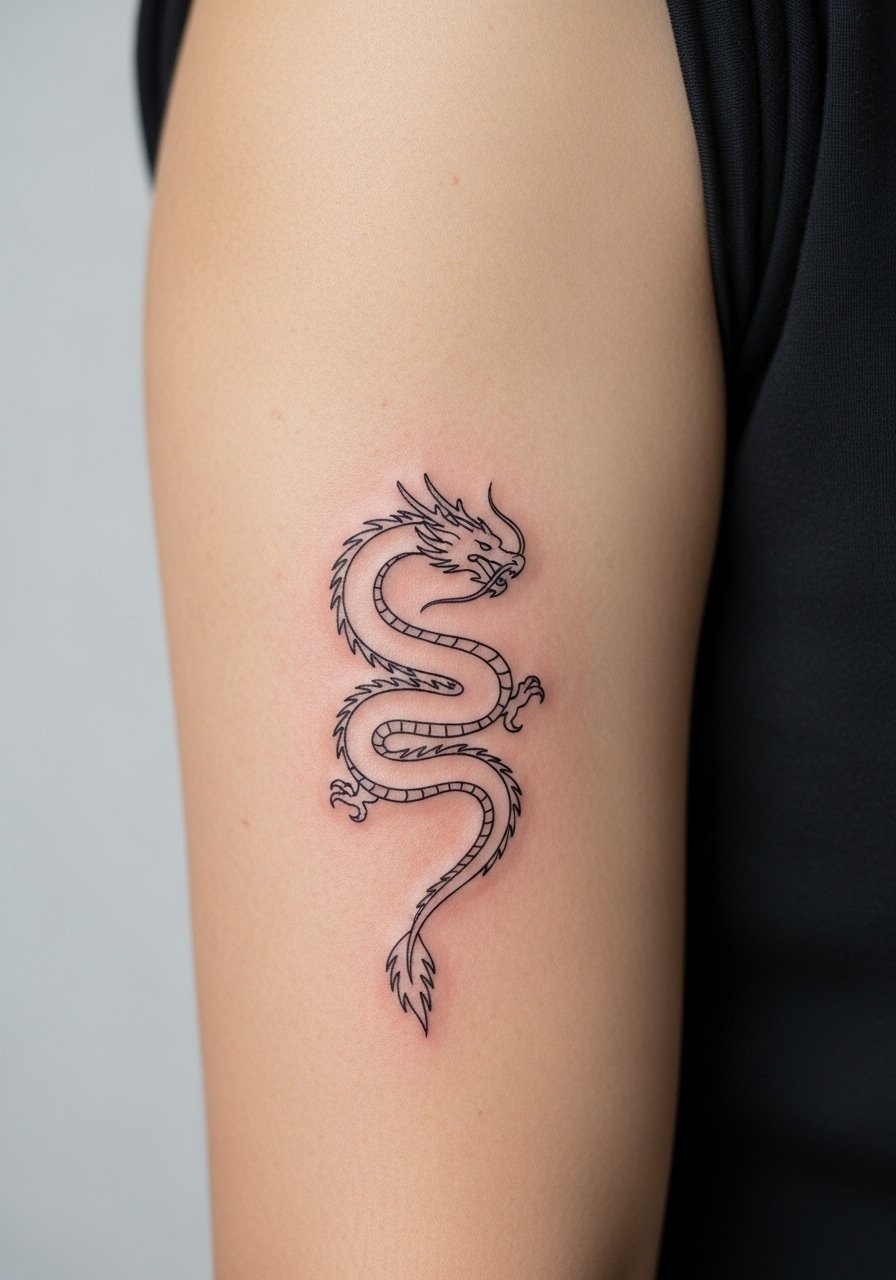
10. Minimalist Dragon Outline on Inner Bicep
Minimalist outlines are trending because they can be discreet, but they demand precise spacing to avoid blurry lines later. The inner bicep is a forgiving spot for thin linework if you keep the design moderate in length. Most people feel mild-to-moderate pain here and healing is straightforward. Ask your artist about leaving tiny gaps in dense areas to prevent ink merging at year two. For the session, wear a tank top with loose armholes so the artist can reach the inner arm without friction.
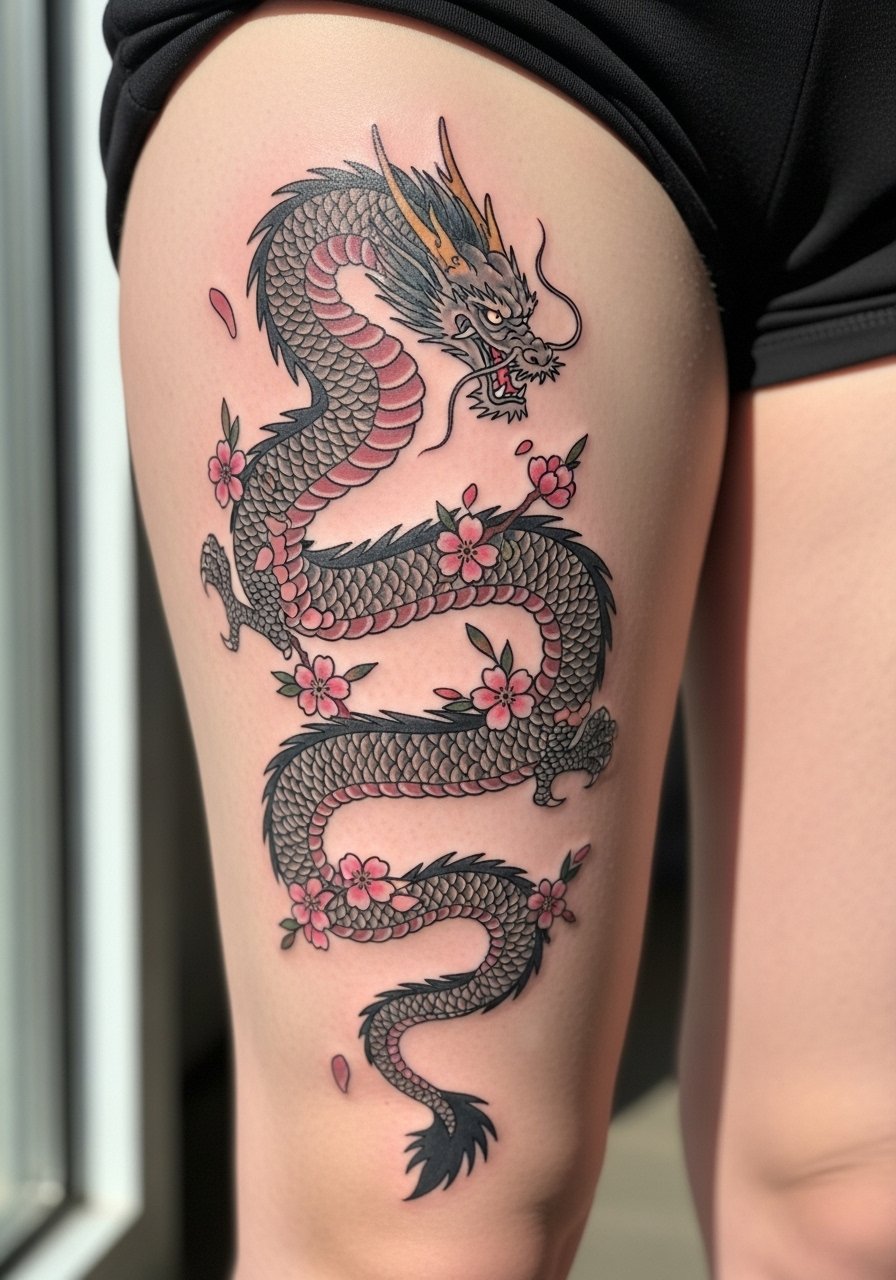
11. Dragon with Cherry Blossoms on Thigh
A floral pairing softens the dragon motif and gives it seasonal context. The thigh is great for medium-to-large pieces because body changes affect stretch less than ribs. One mistake is clustering petals into dense fills that flatten in a year. Ask for space between blossom clusters and for the artist to map petals along muscle curves. If you plan to show it off, try a high-slit maxi skirt or thigh-high shorts for evenings out. Session wear should be loose joggers so you can roll the leg up without pressure.
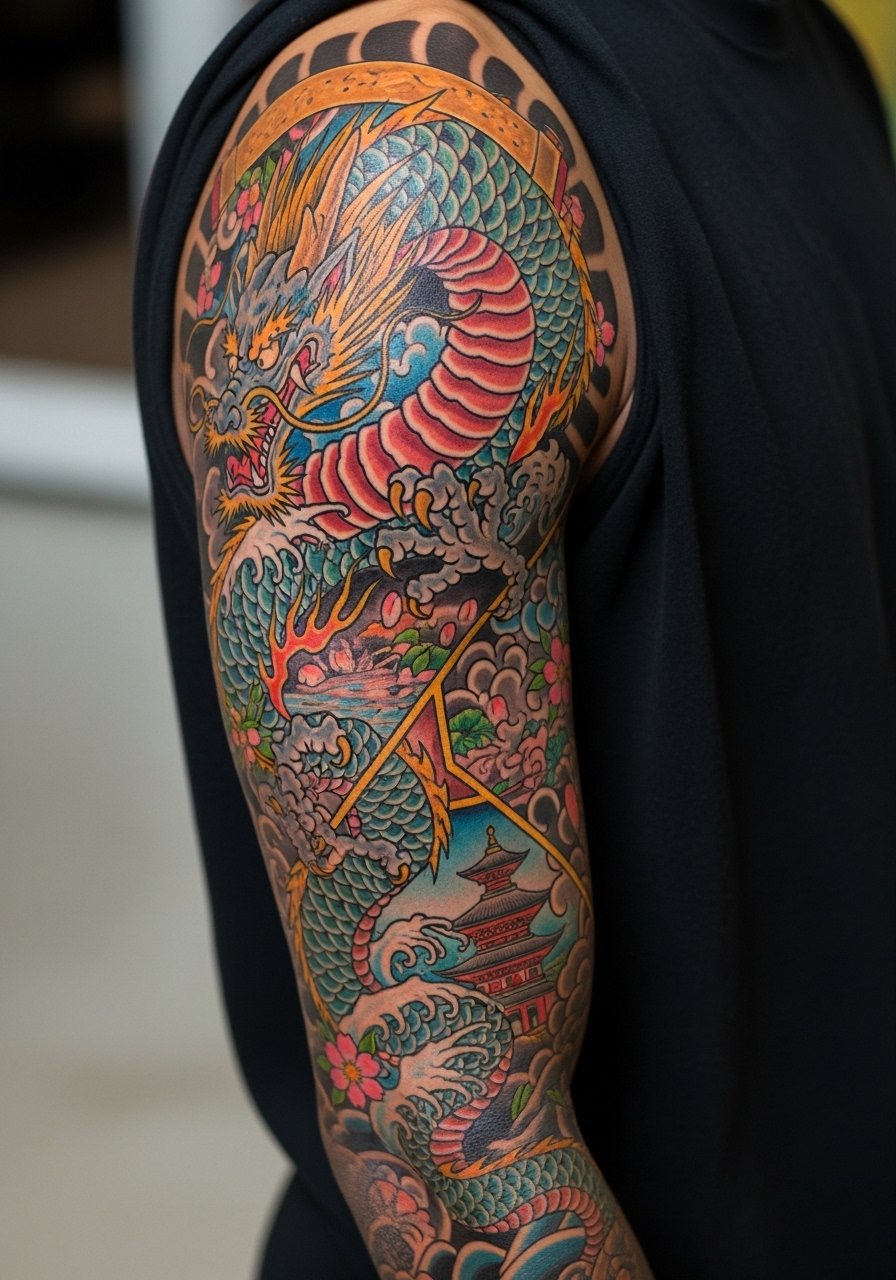
12. Scroll-Style Arm Dragon for Historical Feel
This arm approach mimics scroll compositions with narrative panels and repeating wave motifs. The continuity lines matter most here. When you book, bring references that show how panels stack vertically. A common aging problem is inconsistent saturation across sessions if different artists touch the piece. If you plan modular patchwork over time, ask your primary artist to design connector elements to avoid visible seams. For showing off, a loose button-down shirt with sleeves rolled displays sections without revealing the whole arm.
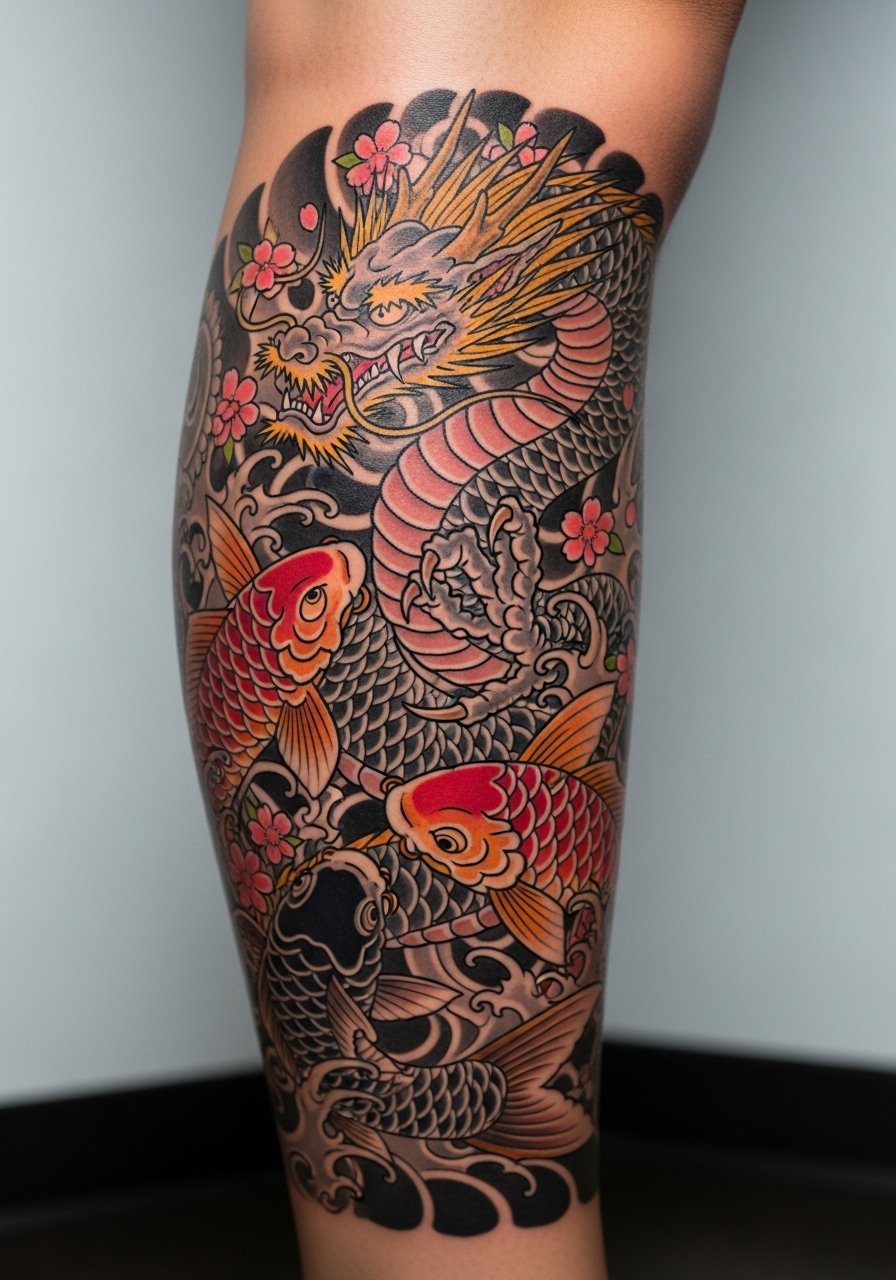
13. Small Calf Dragon with Koi Accents
The calf gives nice vertical space for a medium dragon plus koi accents swimming below. Calf pain is usually moderate and sessions can be single to double depending on color. Avoid overly thin scales that read as texture blotches later. At six months the contrast will be clearer than in the first two weeks. Roll jeans or wear capri linen pants to show the finished piece easily and keep the area exposed for aftercare in the immediate days without constrictive fabric.
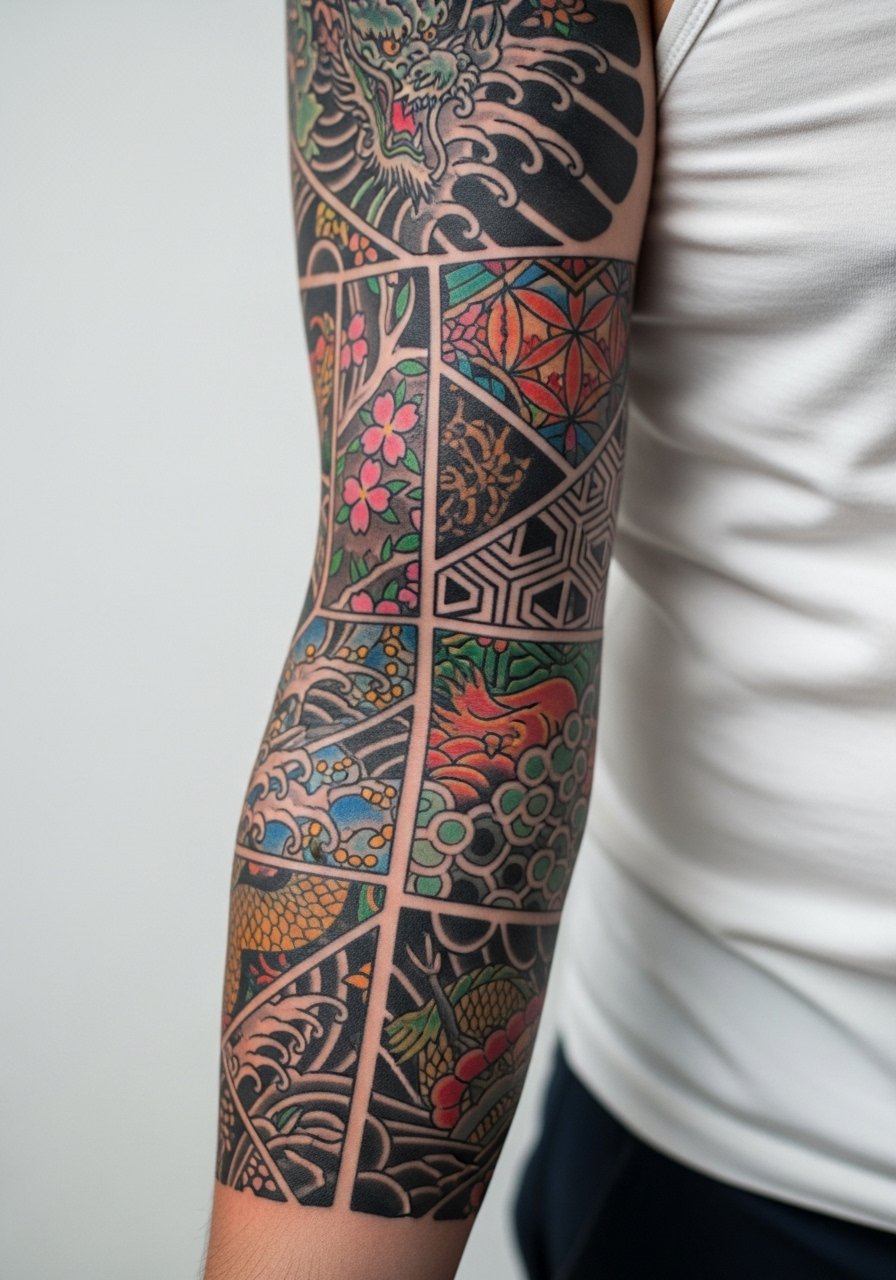
14. Neo-Japanese Sleeve Patchwork for Modular Builds
If budget or time is a concern build the sleeve modularly. The trick is to plan negative spaces and common motifs so later additions flow naturally. People make the mistake of treating each session like an isolated tattoo, which leads to mismatched backgrounds and awkward junctions. Ask your artist to sketch a rough map showing where future panels will sit. For session wear and partial reveals bring a loose tank to avoid pressure on fresh work and to let the artist access multiple zones quickly.
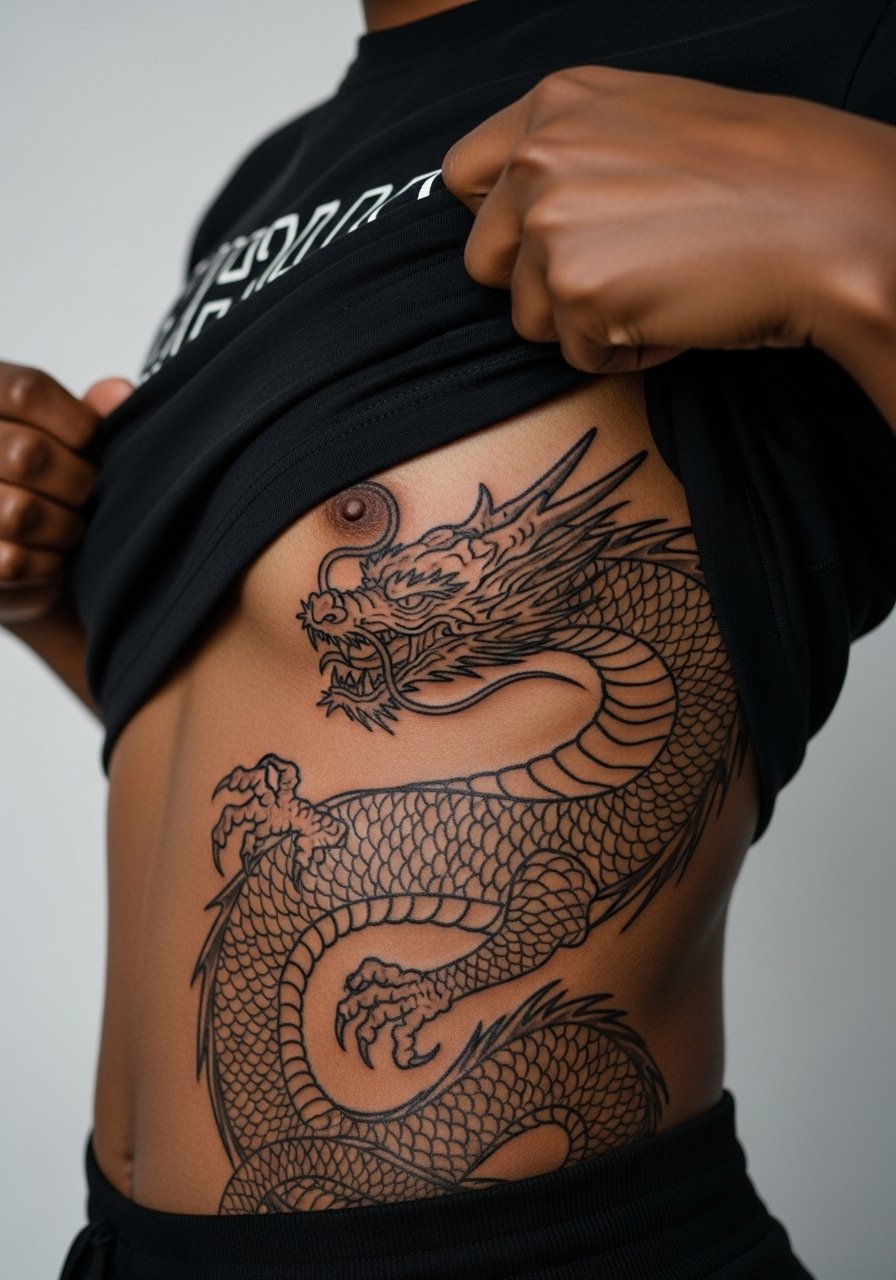
15. Dragon Wrapped Around Ribcage for Curved Motion
Fair warning, ribs are a 7 to 9 on most pain scales but the curvature gives dramatic flow. Fine line here splits artists into camps. One camp says the skin stretch blurs detail within two years. The other says with proper depth and spacing it settles fine. Ask where your artist stands and how they plan needle depth. Keep elements slightly larger than you think to maintain clarity. For the session wear a cropped athletic top lifted slightly that exposes only the rib area to keep modesty and allow precise access.
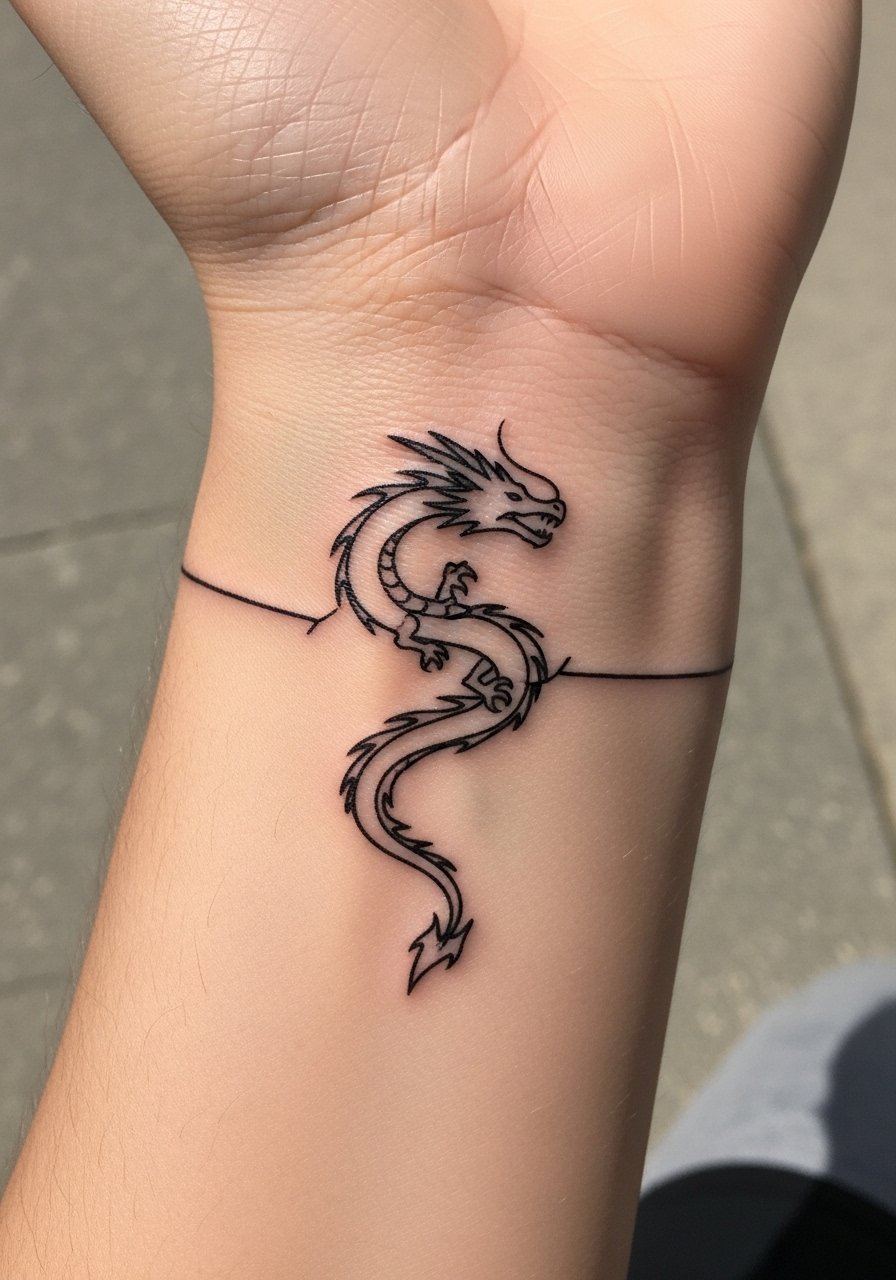
16. Minimal Dragon Wrist Band for Subtle Repeats
A wrist band dragon can be a quiet nod to the motif without committing to a larger piece. Keep linework slightly thicker than usual to resist washout, and avoid tiny interior scales. Friction from watches and bracelets accelerates fading, so plan touch-ups at year two for high-use wrists. For showing off, stacked delicate bracelets look good, but a single thin chain pendant necklace near the collarbone keeps attention off the wrist if you prefer subtlety.
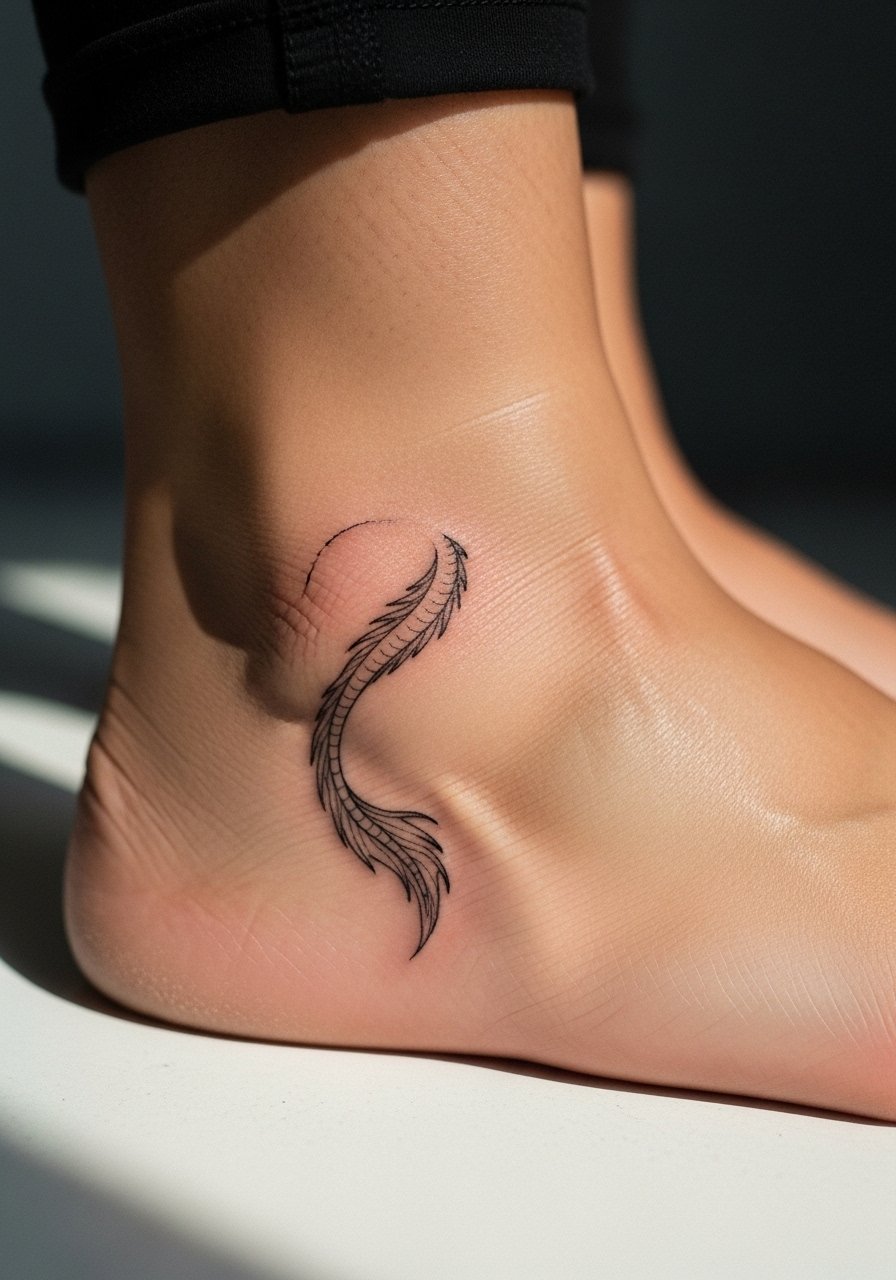
17. Dragon Tail Curling on the Ankle
An ankle tail curl is discreet and elegant but sits in a high-friction zone. Expect slightly faster fading and potential for scabbing from shoes or socks. A common mistake is placing the tail too low near footwear seams. Position it higher on the ankle bone so footwear does not rub the fresh ink. For session wear roll up jeans or pick sandals and consider a cutout ankle boot when showing the piece off to frame the curl without crowding it.
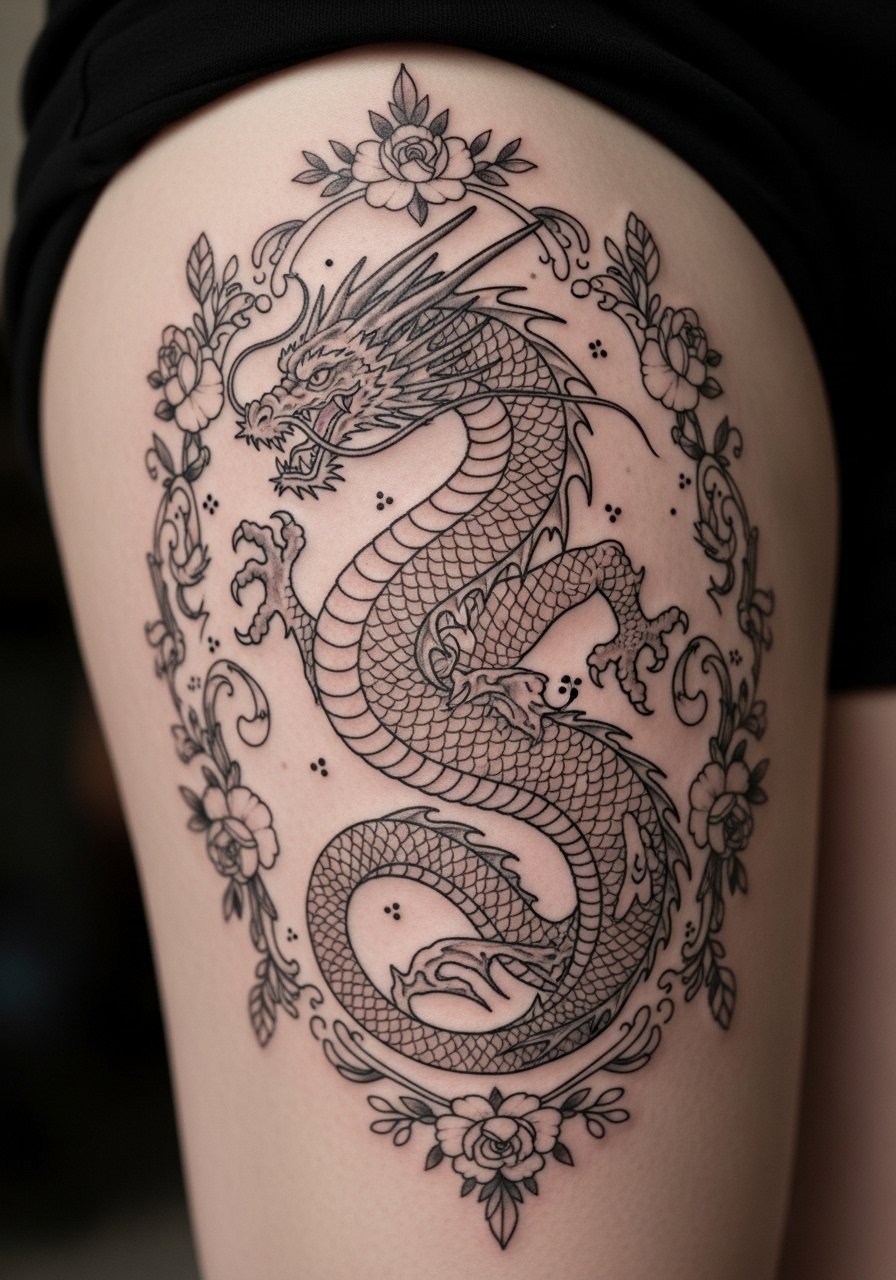
18. Dragon with Floral Borders on Thigh Panel
Combining florals gives softer edges for thigh pieces that otherwise read intense. The thigh tolerates bigger fills and tends to age sturdier than ribs. One oversight is underestimating how clothing seams can rub the outer thigh during the first week. Ask for a placement slightly toward the front so high-waist garments avoid constant friction. For nights out pair the piece with a high-slit maxi skirt to reveal ribs of the design without fully exposing the area.
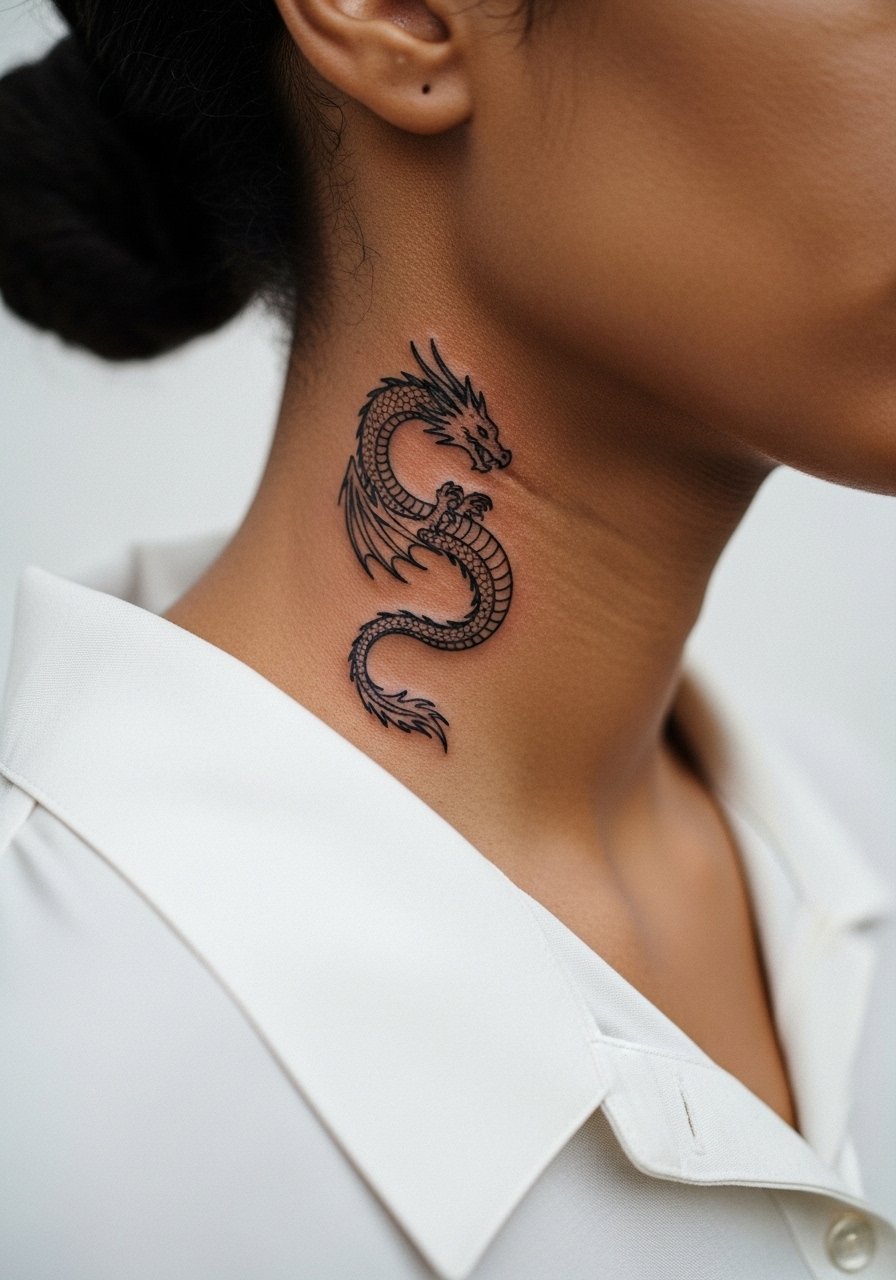
19. Tiny Dragon on the Side Neck for Minimal Edge
Neck placements are visible and can affect first impressions in some industries. If visibility concerns you, place the design on the side neck where collars conceal it. The tiny dragon head or a curled tail reads crisp if kept simple. Pain is higher than forearms but lower than ribs. For the session, wear a wide-neck shirt you can pull aside; for showing off consider a v-neck tee or a choker to frame the area.
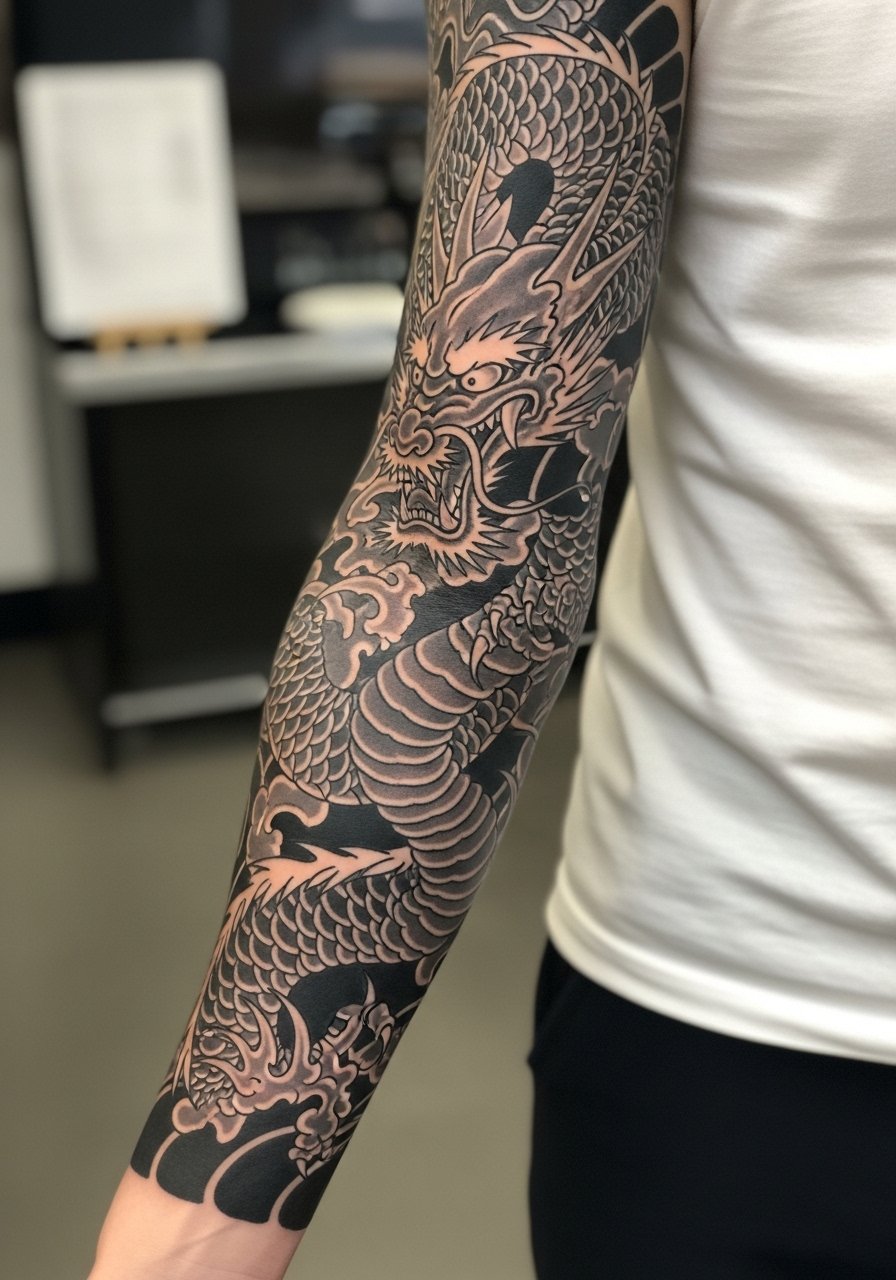
20. Blackwork Dragon Sleeve for Longevity
If you're focused on aging, blackwork keeps contrast for years. Solid saturation and negative space make a dramatic statement that survives sun exposure better than thin color washes. A common mistake is layering patchwork blacks without a consistent fill technique, which can create patchiness. Ask about consistent saturation plans across sessions. For a casual reveal, a navy muscle tee or rolled shirt sleeve helps the texture read clearly.
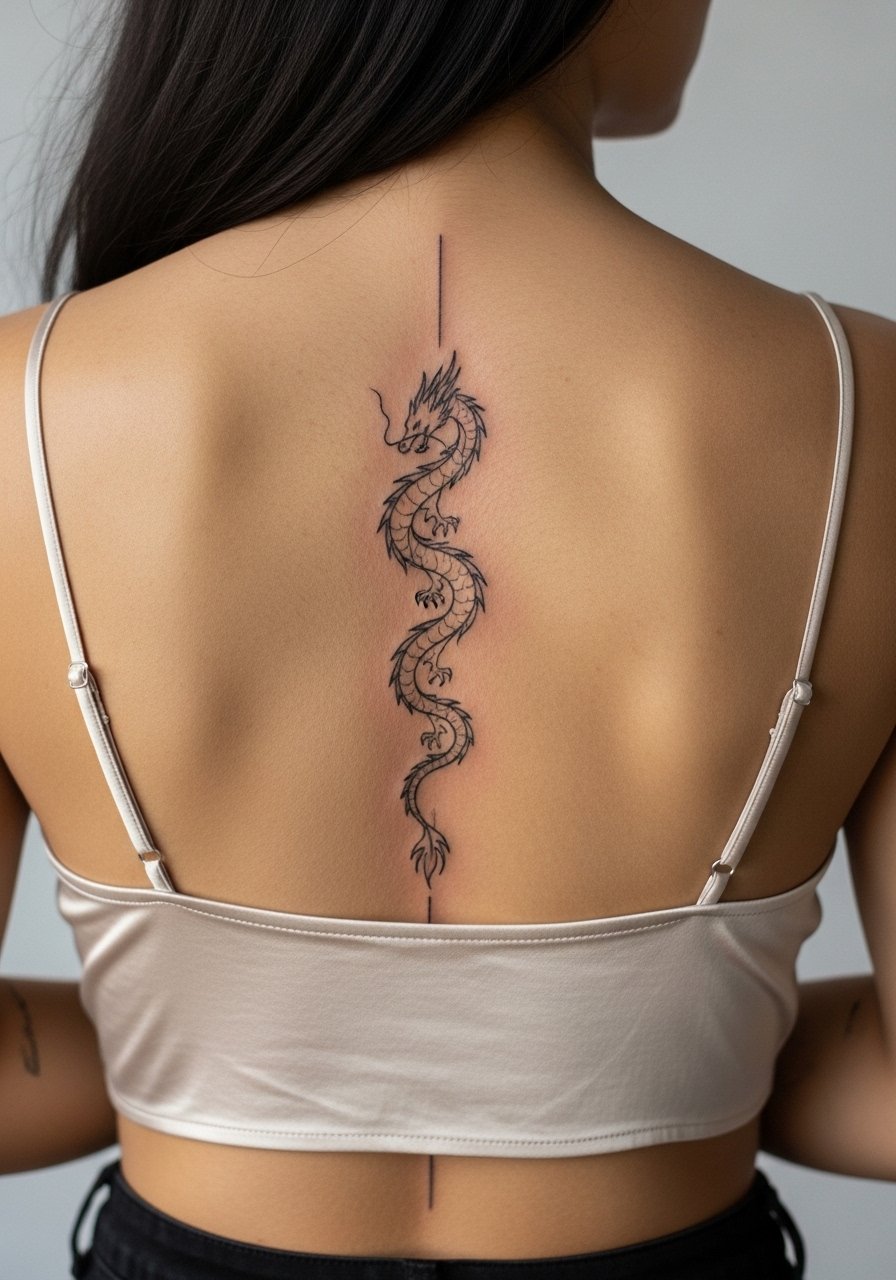
21. Minimalist Spine Dragon Panel for Vertical Drama
The spine offers one of the most cinematic canvases for a vertical dragon. The downside is sensitivity and occasional skin stretch with weight fluctuation. Plan for vertical flow that follows vertebrae lines and avoid packing too much fine detail inside narrow panels. People often forget how lingerie or waistbands sit over this area during healing, which can irritate fresh ink. For showing it off choose open-back tops or a backless silk crop top so the verticality remains the focus.
Frequently Asked Questions
Q: How do I avoid a Japanese dragon tattoo reading like a cartoon if I want a small piece?
A: Keep the design simple and increase primary contour thickness so the silhouette holds. Tell your artist you want fewer internal scale lines and more open negative space. Small dragons work best as stylized silhouettes rather than dense realism.
Q: Will color fade faster on sleeves than black and grey, and what can I do about it?
A: From what I've seen, exposed sleeves with frequent sun contact tend to lose vibrancy quicker than black and grey pieces. Choose heavier saturation up front, plan for a touch-up around year two to three, and protect the area with regular sunscreen once healed.
Q: I'm worried about cultural sensitivity and the Yakuza association. What are the respectful options?
A: There are two camps. One advises avoiding traditional full-body Irezumi imagery if you are not from the culture. The other supports informed appreciation with respectful motifs and consultation. A middle path is to pick neo-Japanese adaptations that reference forms without replicating sacred iconography, and to discuss cultural origins with your artist before booking.
Q: How do I vet an artist for claw accuracy and Irezumi-specific work?
A: Use discovery paths like searching #Japanesedragon or #Irezumitattoo on social platforms, check portfolios on Tattoodo or Inked App, and read r/tattoos threads for recent experiences. Ask the artist to show healed photos and to explain how they handle three-claw specifics and background elements.
Q: What should I wear to a ribcage or sternum session to be comfortable and protect the area?
A: Wear clothing that exposes only the tattoo zone. For ribs, bring a cropped athletic top you can lift slightly. For sternum, a fitted sports bra or bandeau is useful so you stay modest and the artist has access. Loose clothing after the session reduces friction while healing.
Q: Can I build a sleeve over time and still have it look cohesive?
A: Yes, but plan connectors and repeat motifs from the start. Ask your primary artist to sketch negative-space guides and decide on a color or blackwork palette before unrelated sessions. That way you avoid visible seams and patchiness.
Q: Do minimalist dragon outlines need touch-ups more often than blackwork?
A: They often do because thin lines sit closer to the surface and can soften with time. Expect to discuss a realistic touch-up timeline, usually around two to three years for visible areas, depending on exposure and skin type.