
Counterintuitive truth first: the Medussa back pieces that still read clean after five years are often the simpler, better-spaced ones, not the busiest Instagram portraits. Back tattoos age under friction, sweat, and movement, and that matters more than a viral reference. Below are 17 dark Madussa tattoo design on back ideas that balance visual impact with real-world healing, what to tell your artist, and how to show the piece off when it’s finished.
1. Full Medussa Head with Flowing Snakes on Upper Back
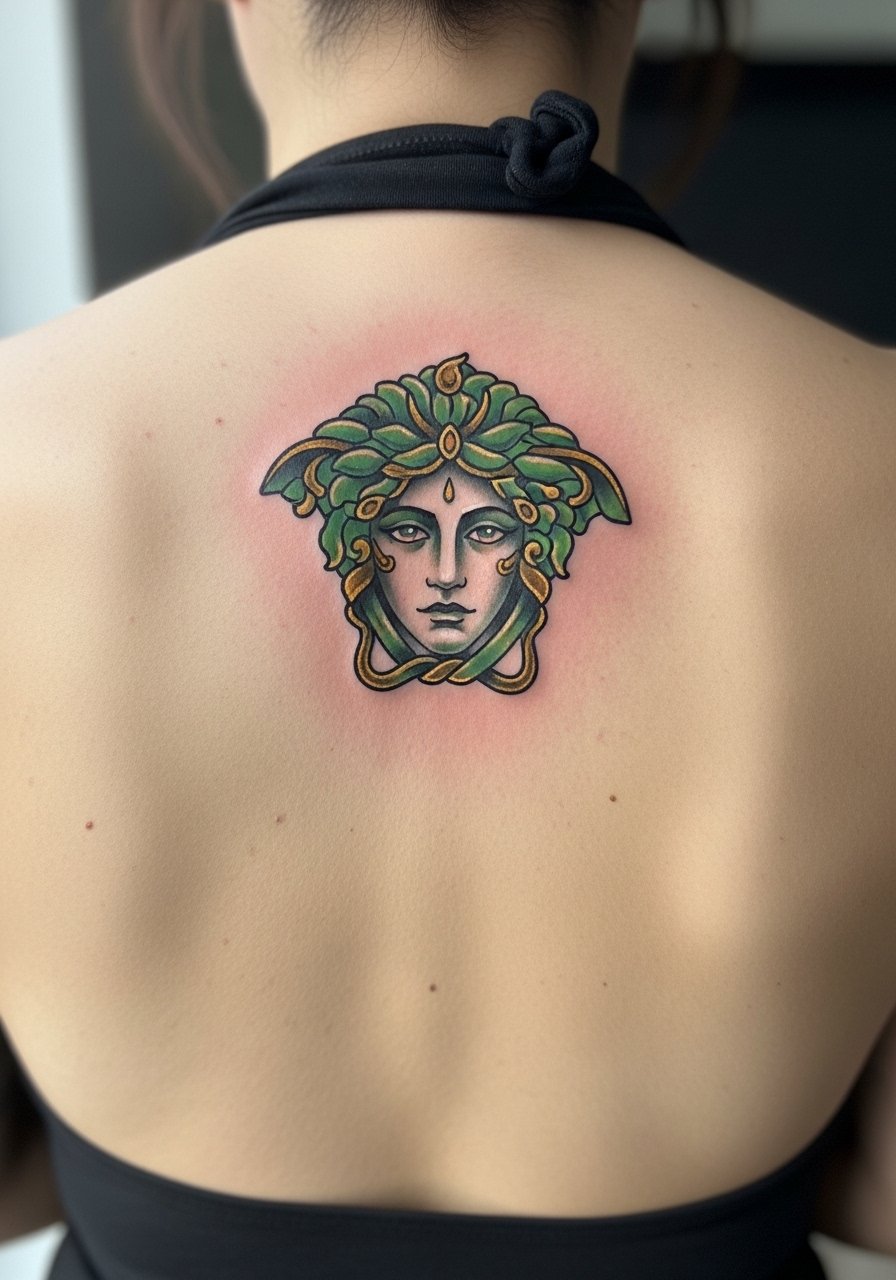
There is a reason this neo-traditional treatment is a classic for upper back canvases. I recommend it for anyone who wants a single focal piece that reads across shoulders. Tell your artist you want strong linework, heavier saturation in the snakes, and negative-space highlights around the crown so the face keeps contrast as it heals. Common mistakes are crowding the hair with tiny scales and going too small, both of which merge into blur after two years. Expect 2 to 4 sessions and a touch-up at the six to twelve week mark. For showing it off, try a backless halter top and bring a loose tank for the session so the artist has clear access.
2. Minimalist Medussa Silhouette on Lower Back
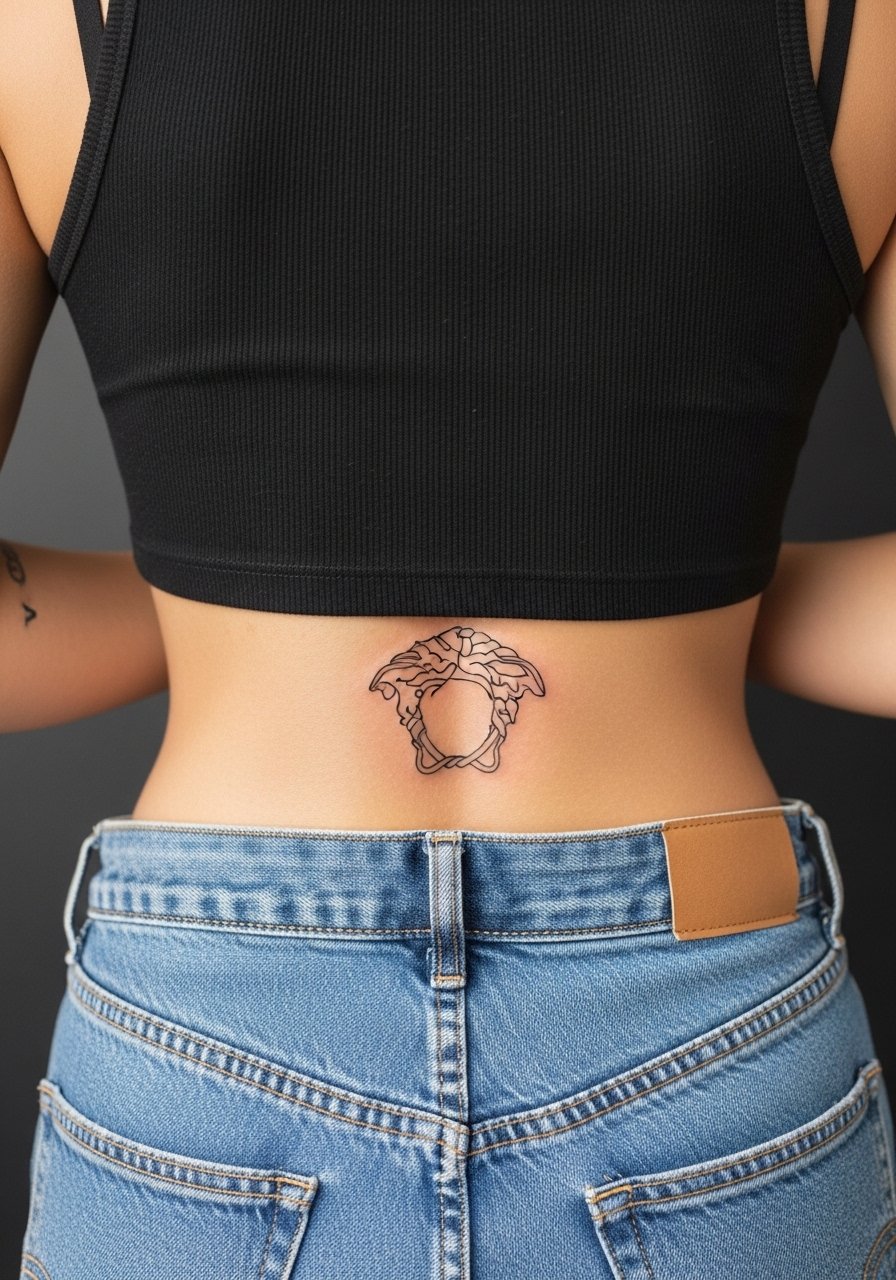
If you want mythology without a full canvas, the lower spine silhouette is discreet and fast. Fair warning about lower back placement: weight shifts and waistbands can stretch or compress the design, so choose a higher placement on the lumbar curve if you anticipate body changes. The session is short, often finished in one visit, but healing requires care because you cannot reach the area easily. Use mirror selfies to check moisture and expect a touch-up at three to six months if the single-needle lines soften. Avoid tiny internal details, and during the tattoo wear elastic-waist bottoms you can pull down without pressure on the fresh ink.
3. Realistic Medussa Portrait with Gaze on Shoulder Blade
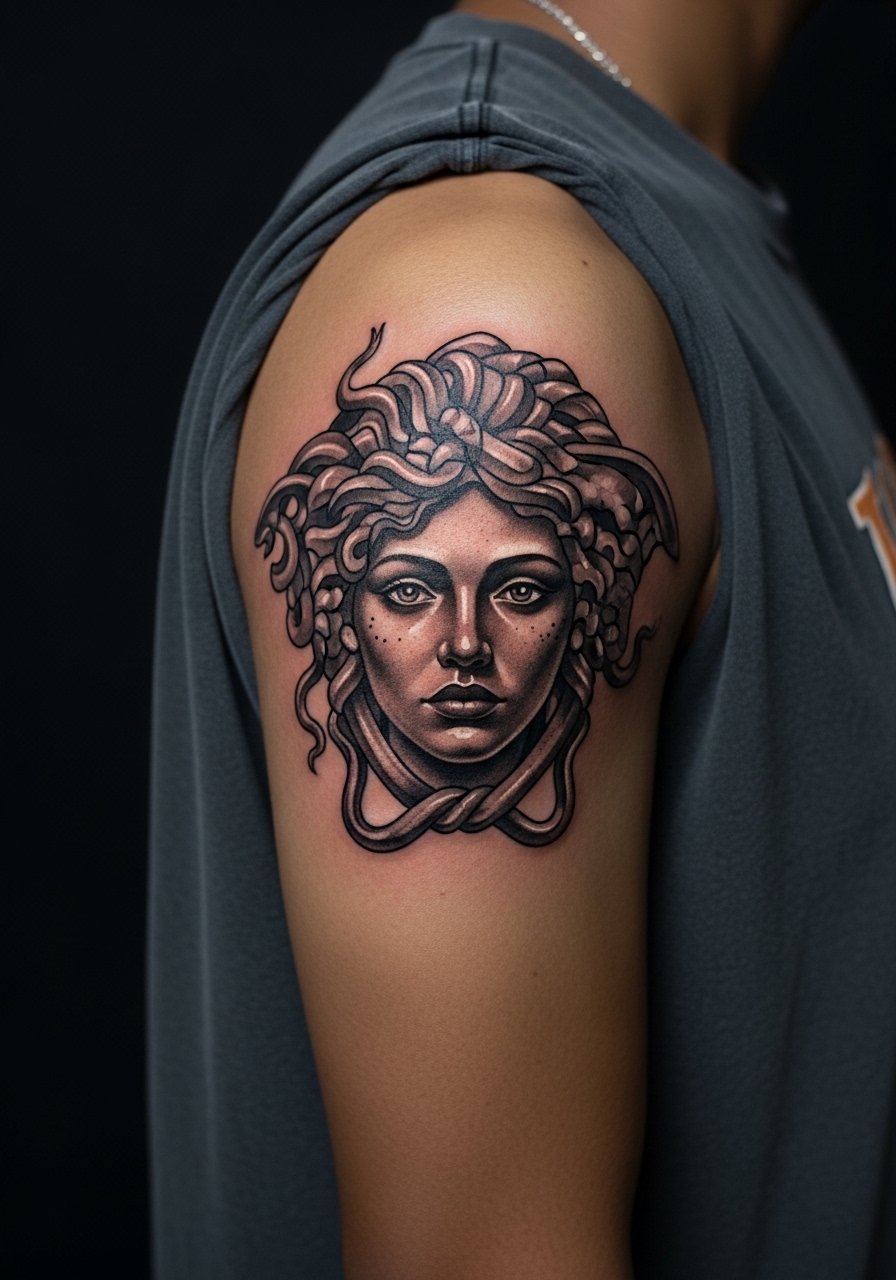
I see this style hold up when artists favor density over micro stippling in the darkest regions. Ask your artist for deeper saturation in shadow planes and soft stipple shading for the snakes so the gaze keeps depth after healing. Shoulder blade sessions are comfortable enough, but expect 3 to 5 hours per sitting depending on facial detail. A common mistake is asking for ultra-fine hairline details without full contrast, which disappear by year two. When you want to show it off, an off shoulder sweater or an asymmetrical top balances the portrait without blocking the view.
4. Neo-Traditional Medussa with Snake Crown Across Full Back
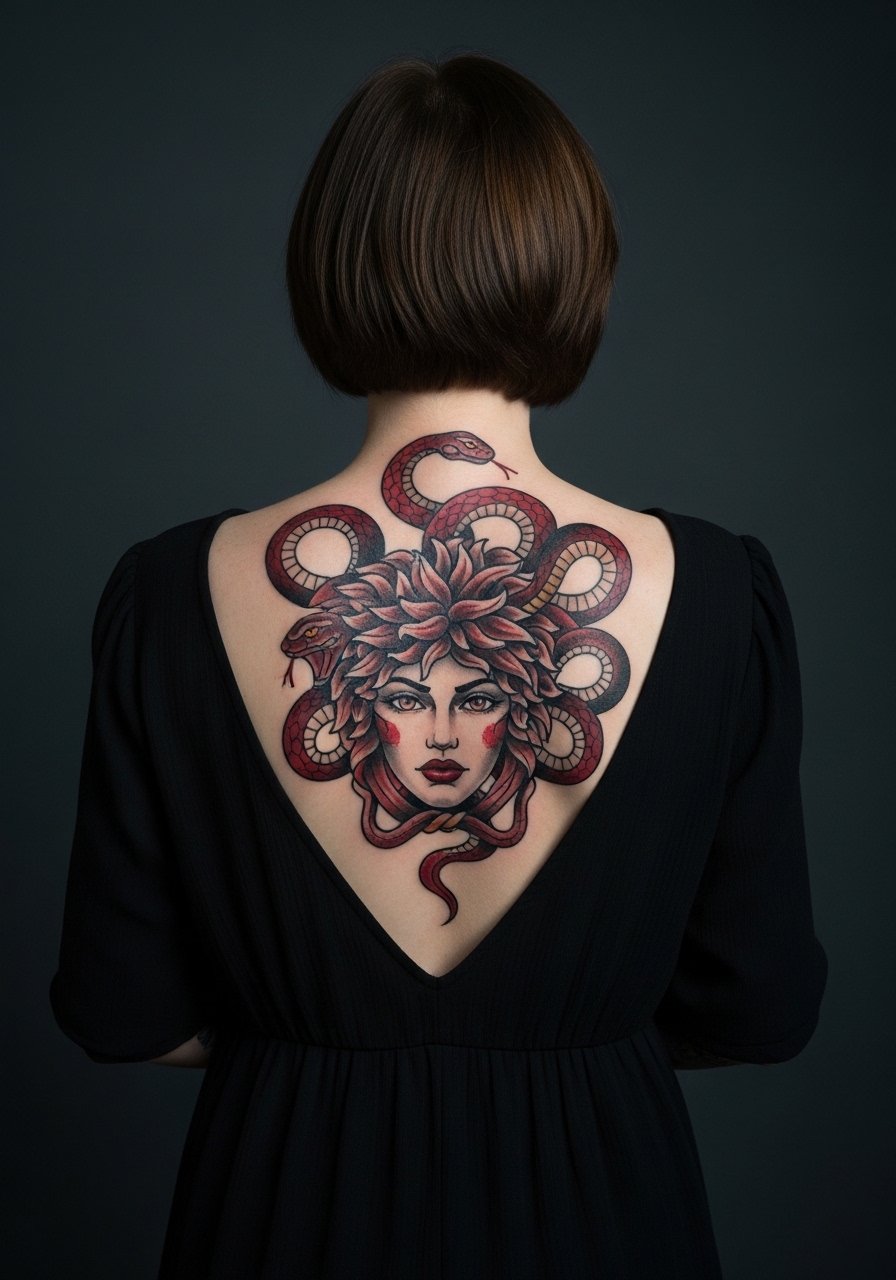
This is a commitment piece that works best when you book an artist who does multi-session back canvases. In consultations, discuss composition so the crown flows with shoulder blades and the lower abdomen contours. The biggest mistake is packing too many mid-scale motifs into the lumbar area, which causes early visual clutter. Expect long sessions and scheduled rest days between visits. If you train frequently, mention that to your artist so they can plan for thicker outlines in high-friction zones. For nights out, an open back dress keeps the full span visible while not competing with the palette.
5. Blackwork Medussa Outline with Geometric Snakes on Mid-Back
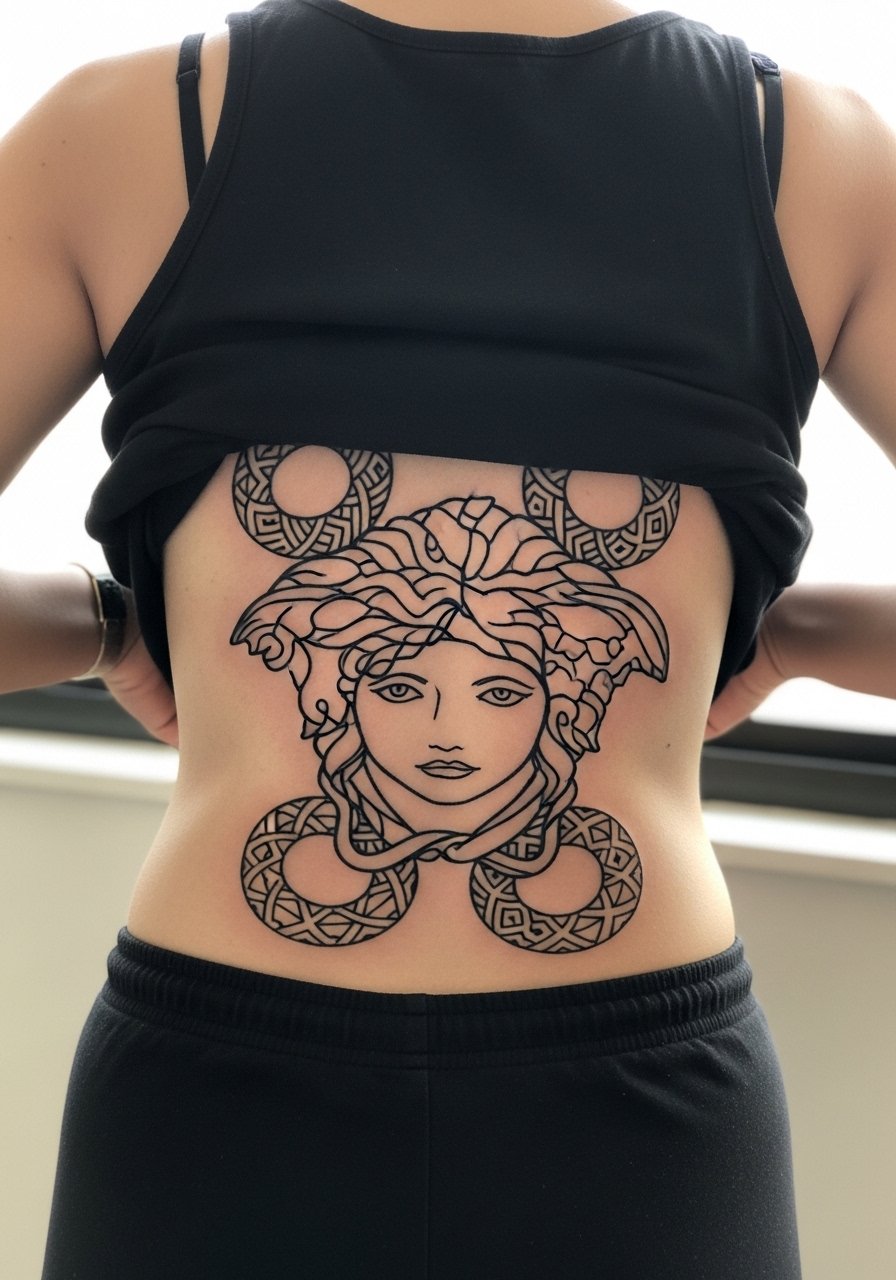
Blackwork is a reliable choice if you want longevity on a middle-back piece. The strong lineweight and filled areas resist the softening that comes from sun and gym friction. During consultation, request negative-space geometry between snakes to preserve separation as the piece ages. The mid-back has a moderate blowout risk if lines are too fine. Most of these hold well with 2 to 4 sessions and a single touch-up six weeks out. For session comfort, bring a front-open top so the artist can access the area without tugging straps.
6. Watercolor Medussa Face with Bleeding Snakes on Upper Back
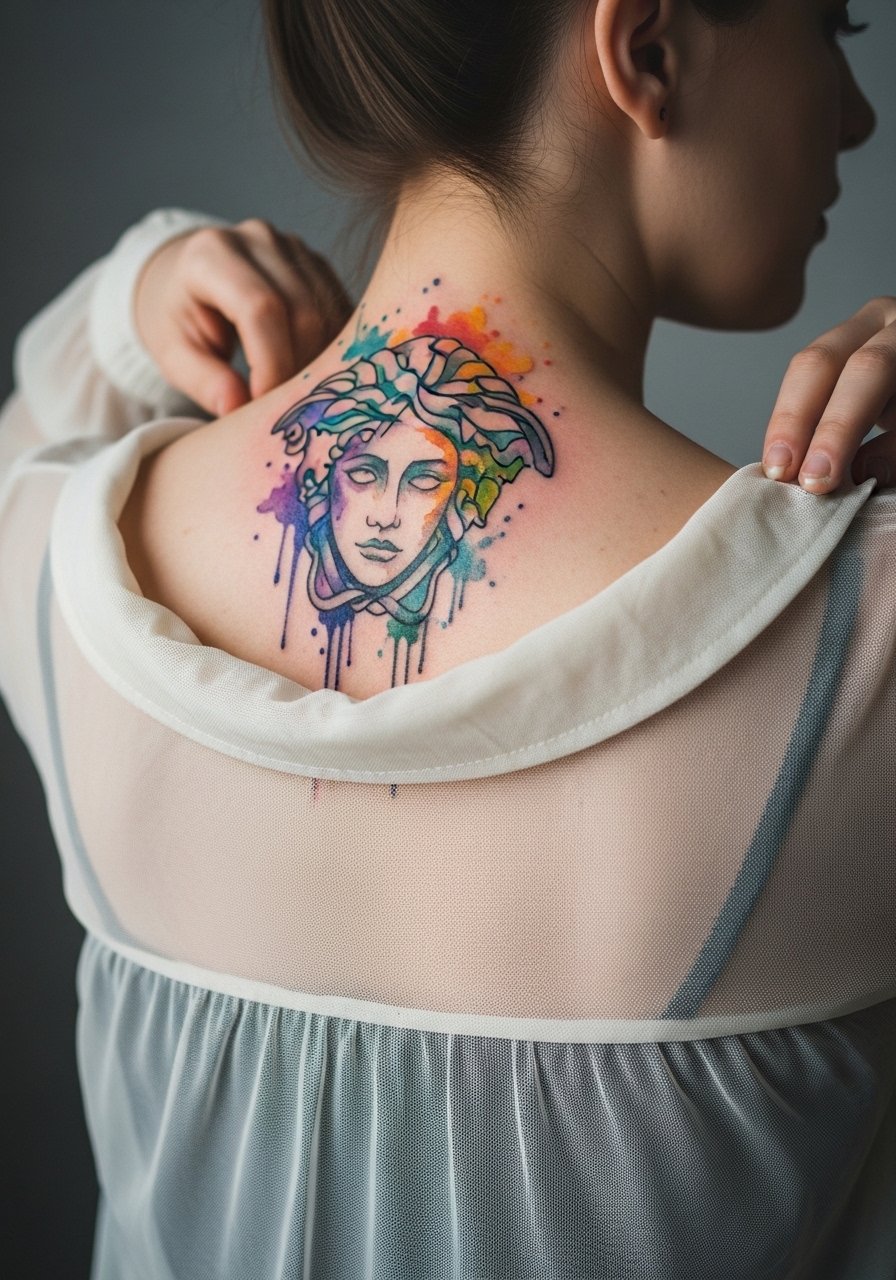
Watercolor effects look cinematic fresh but ask specifically for intentional outlines around key elements so the washes keep shape with time. Upper back watercolor is more forgiving than torso washes because you can protect it from daily abrasion with clothing. The common version that ages poorly skips contrast lines, which then fade into indistinct color. Sessions average 2 to 3 visits. For showing the colors, a sheer mesh blouse frames the palette without blocking the delicate washes. If you sweat during workouts, discuss saturation choices with your artist since gym friction accelerates wash fade.
Studio Day Picks
These items smooth the practical hurdles that come up with the full and upper-back designs above.
- H2Ocean Piercing Aftercare Spray. A non-greasy mist helps you reach and cleanse upper and lower back zones during the first few days when lotioning by hand is awkward.
- Indie Snake Oil Tattoo Balm. Faster-absorbing than petroleum balms, it helps textured snake scales settle without leaving a heavy film under clothing.
- Green Sheep Organics Balm. A solid choice for dry winter healing on a full-back piece, it soaks in without clogging sweat pores.
- After Inked Lotion. Lightweight and non-greasy, this works well for clients who return to the gym and need breathable moisture.
- Saniderm Protective Film. Useful on long sessions to protect large back areas overnight, though artists are split on film versus dry healing so discuss it first.
7. Ornamental Medussa with Mandala Snakes on Spine
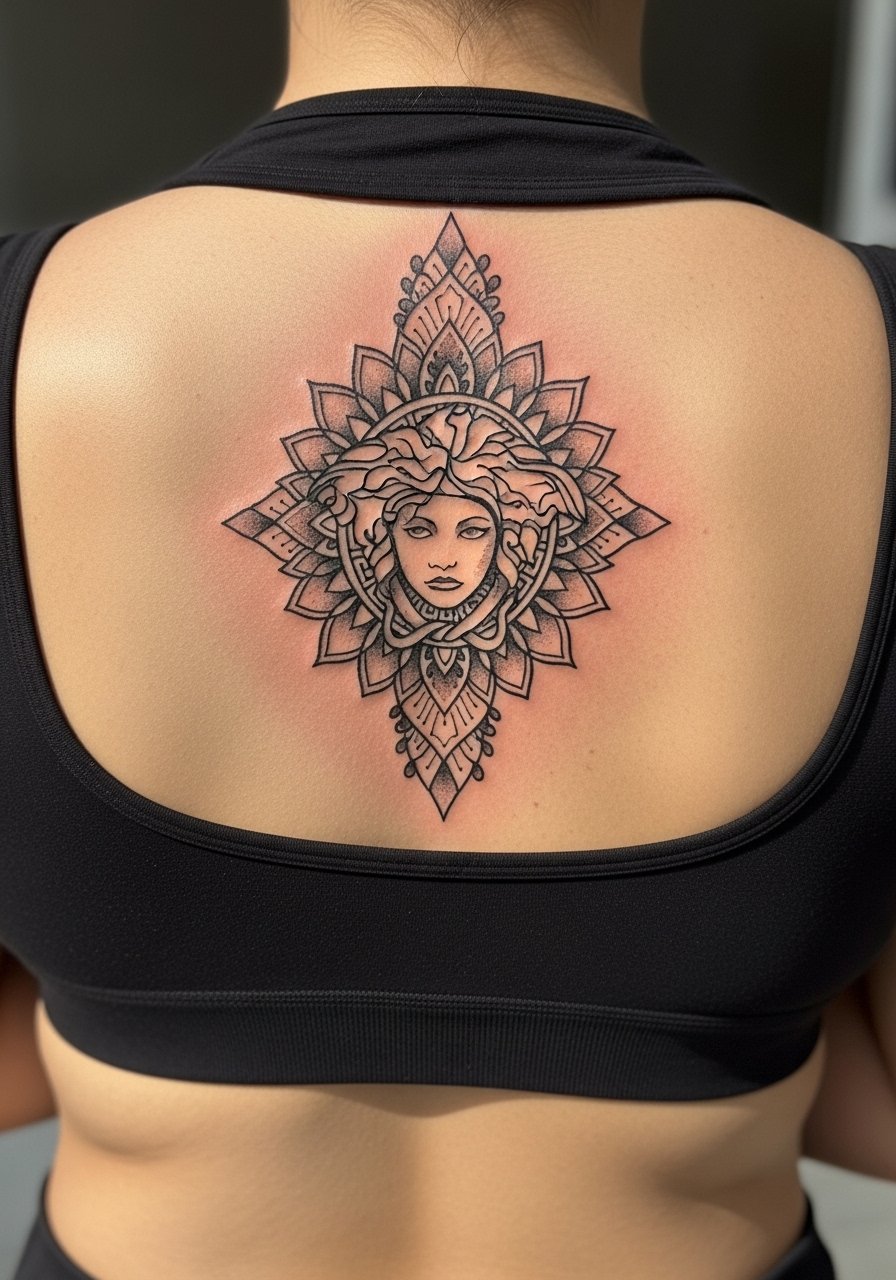
A vertical mandala around a Medussa face reads beautifully on the spine because it respects anatomical flow. Ask for symmetrical spacing and stipple shading rather than dense black fills in the central column to avoid early merging. The spine is unforgiving for blowouts if needles sit too deep directly over bony segments. I usually tell clients to expect a slower session pace and a touch-up at six weeks for symmetry corrections. If you plan to wear high-neck halters after healing, ask about how far the pattern should extend so it sits under the neckline.
8. Traditional Medussa Pin-Up Style on Lower Back
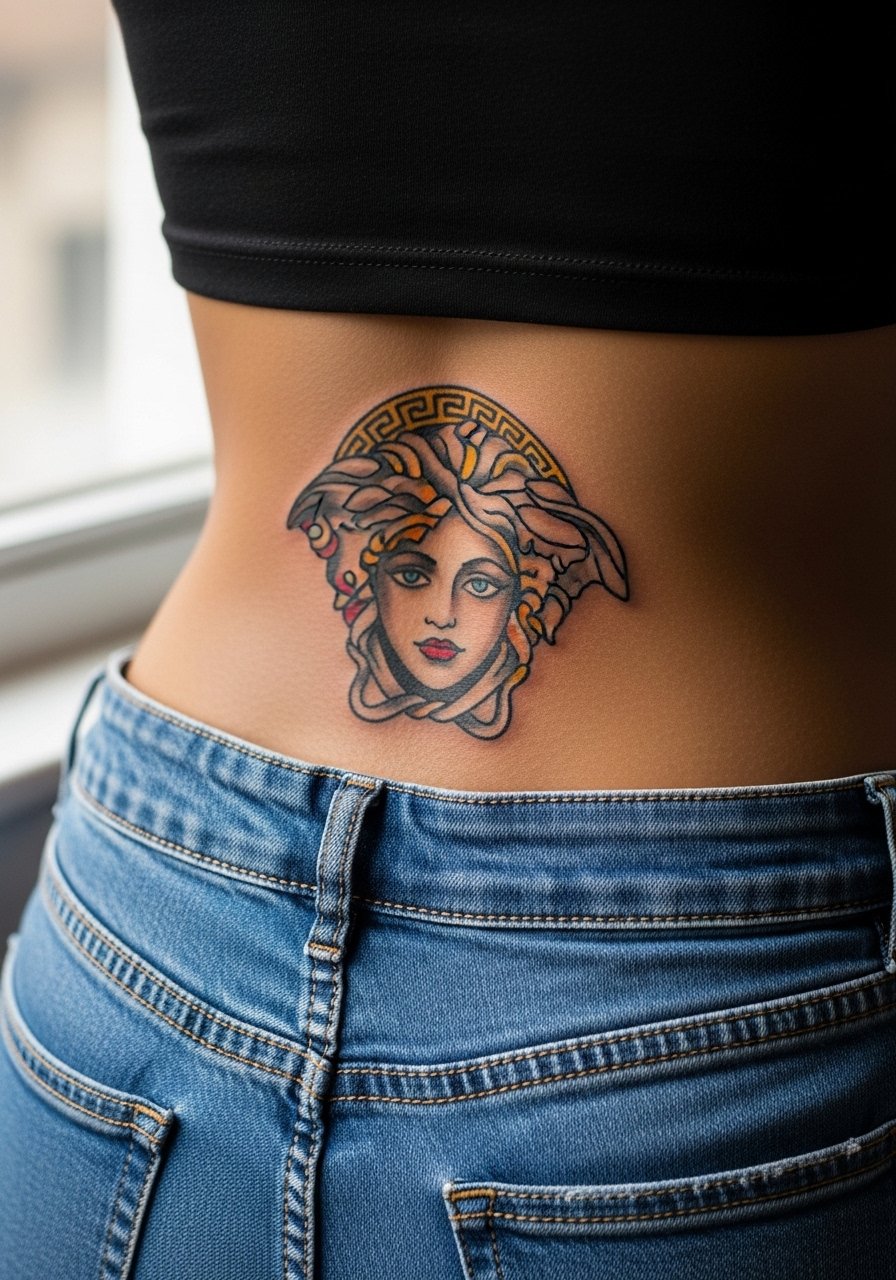
This fusion flips sailor-jerry charm into a back piece that sits right in the dimple area. For longevity, ask for slightly heavier outlines than a true small traditional flash. Lower back fat shifts and waistbands cause the biggest distortion risk here, so position higher on the lumbar curve if you expect changes. Sessions are usually short and punchy, but the area can be sensitive when the artist works along the spine edge. Pair with low rise jeans or a gold waist chain for summer shows.
9. Fine Line Medussa Profile with Subtle Snakes on Back Ribs
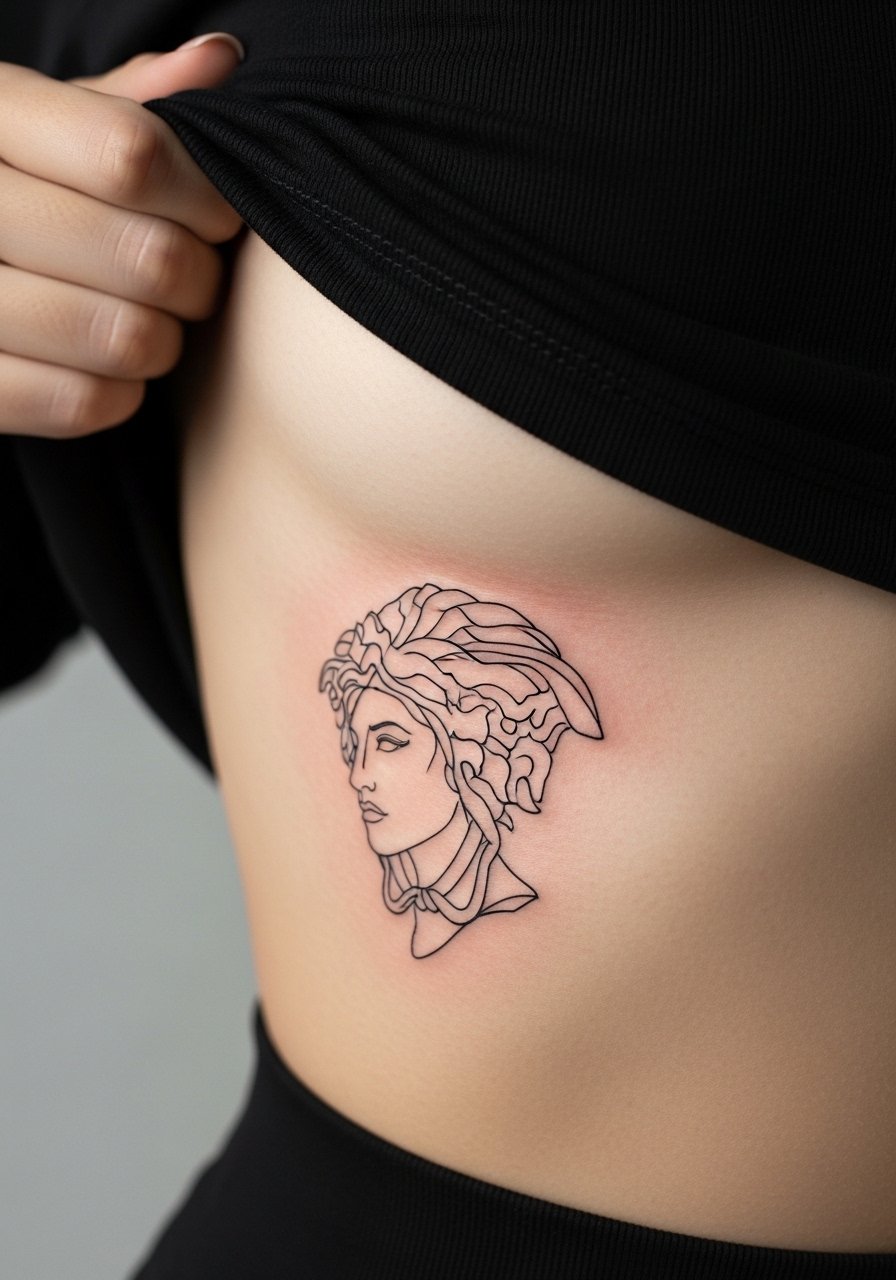
Artists split on fine line on ribs. One camp says the constant stretch and movement blurs delicate lines within two years. The other camp argues that with proper needle depth and spacing, fine line survives the rib area just fine. Ask your artist which approach they use and for examples of healed ribs from at least a year out. Ribs are a high-pain placement and a higher-risk area for migration if the lines are too tight. If longevity matters, consider slightly thicker line work that still reads delicate but has room to settle.
10. Ignorant Style Medussa with Abstract Snakes on Full Back
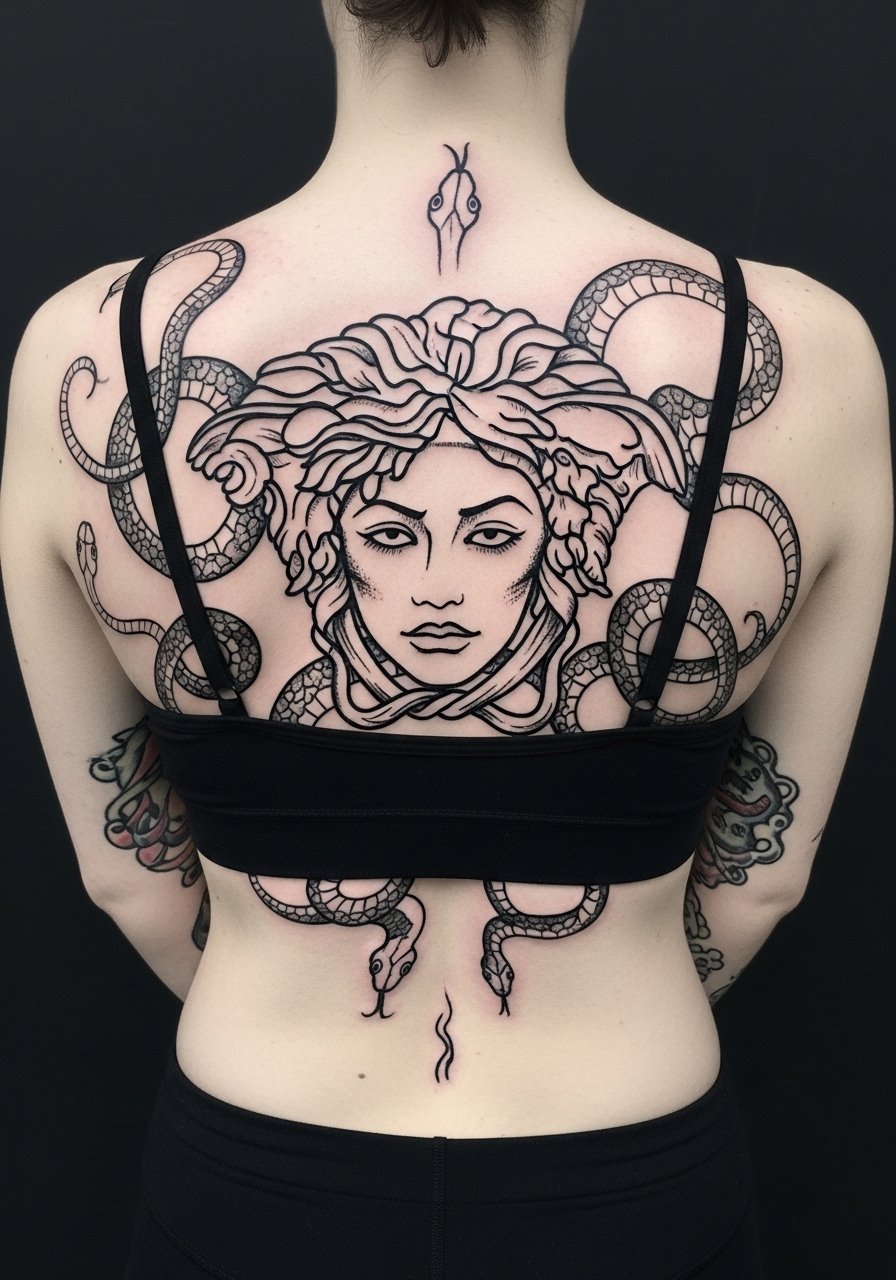
Ignorant style thrives on raw energy and looks intentional when the composition leaves breathing room. The main risk is scale: too many micro scribbles across a full back becomes a dense block rather than a readable image. For session strategy, plan multiple sittings and ask for progressive stops so you can evaluate negative space between visits. This style pairs well with a strappy sports bra for casual showing. If you repeat motifs across the spine, leave clear negative channels so the snakes do not merge over time.
11. Hyper-Realistic Medussa Eyes on Upper Back
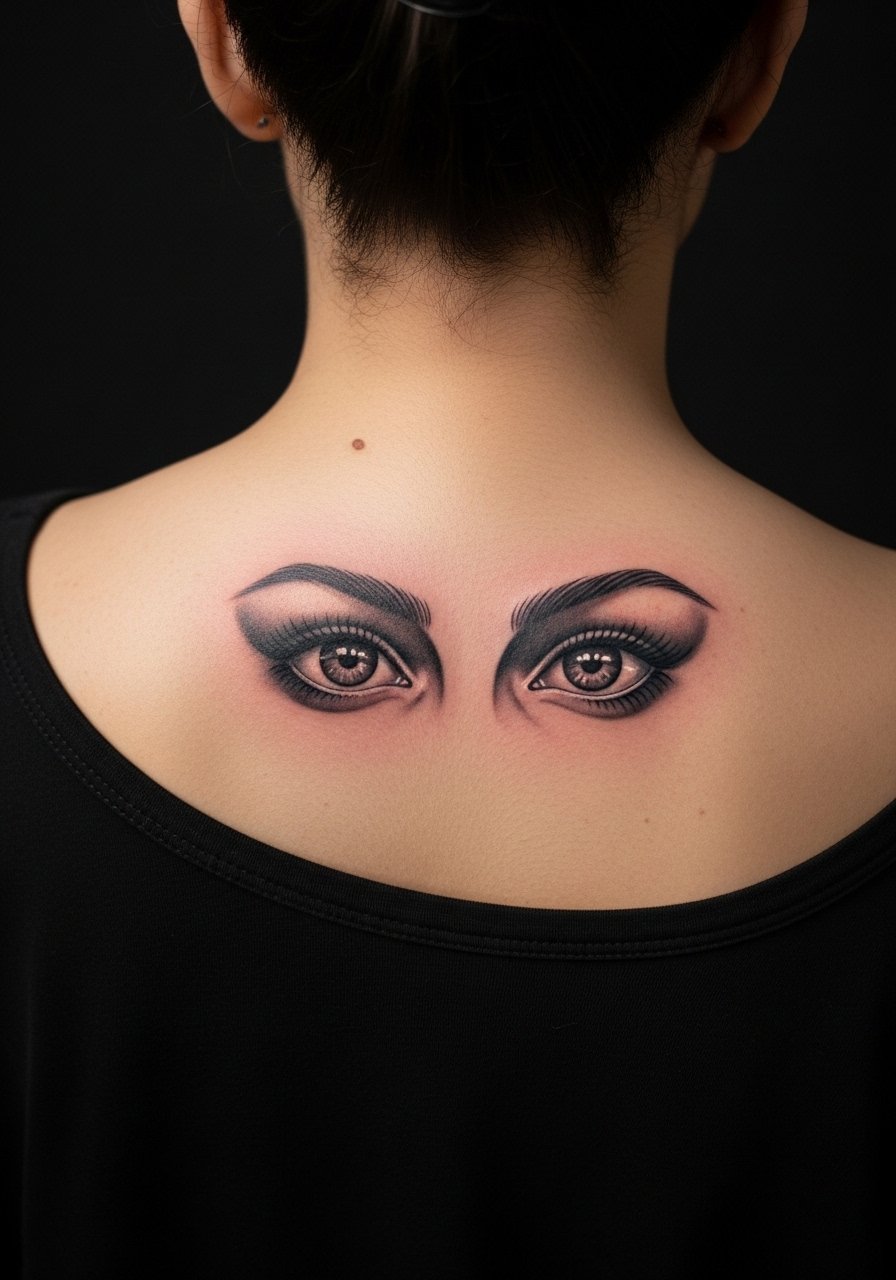
Hyper-realism demands long sessions and meticulous saturation to keep pupils and skin textures sharp. There is a debate about numbing creams for marathon sessions. One camp welcomes topical numbing as a tool to keep clients comfortable and still going for long hours. The other camp says numbing creams dull the area and change skin feedback, which can lead to overworking. Discuss numbing openly with your artist so they can share how it affects their shading and timing. Expect 5 to 7 hours across multiple visits and schedule breaks to preserve both the art and your endurance.
12. Dotwork Medussa with Snake Patterns on Shoulder to Back
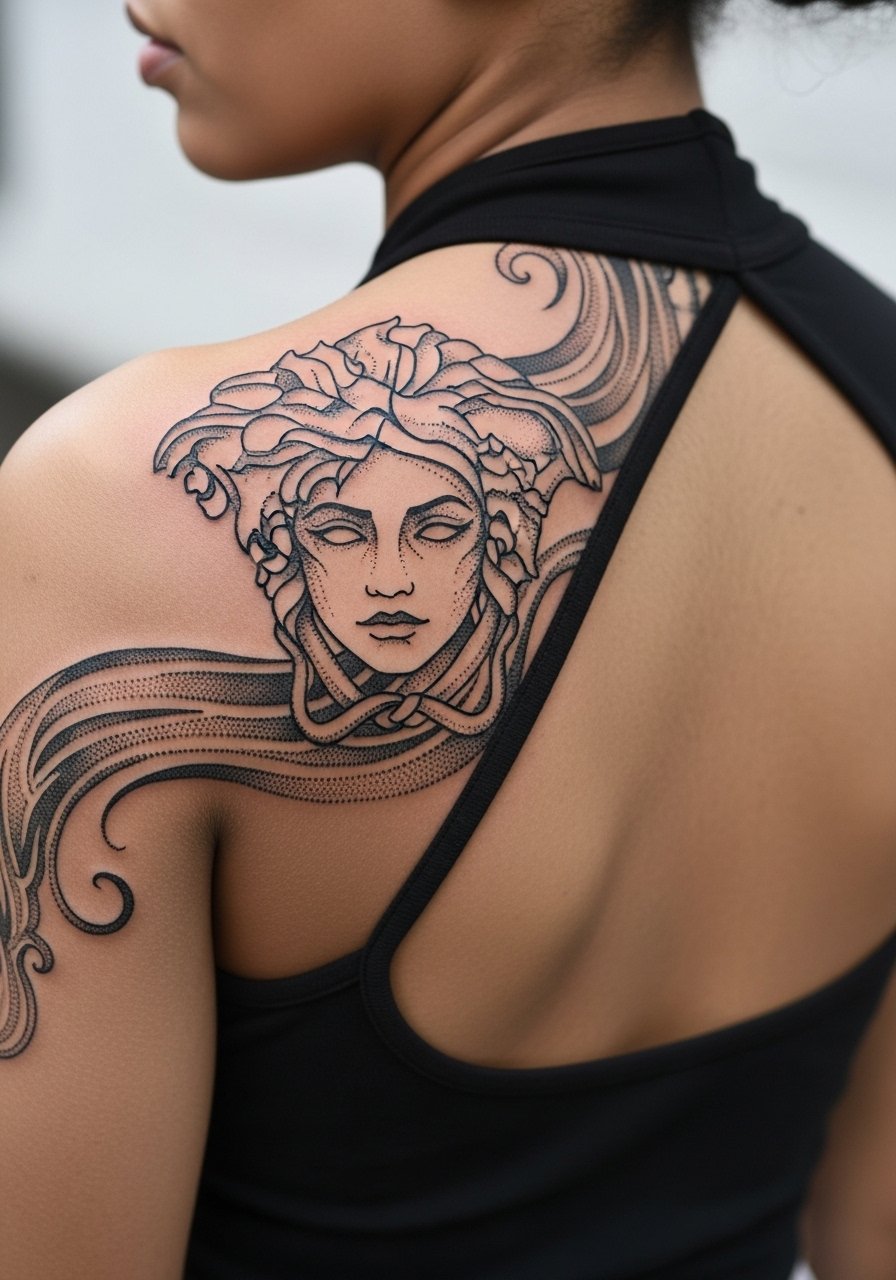
Dotwork takes patience but yields hypnotic gradients that age predictably when spaced properly. Tell your artist to use stipple shading with intentional gaps rather than packed dots, which can fill in with time. Shoulder-to-back flow benefits from a cut that follows muscle lines so the snakes read dynamically when you move. For showing, a cut out back halter highlights the sweep. Sessions are steady and slower than filled blackwork, but touch-ups are usually minor if spacing was planned well.
13. Inverted Medussa for Mirror Viewing on Back
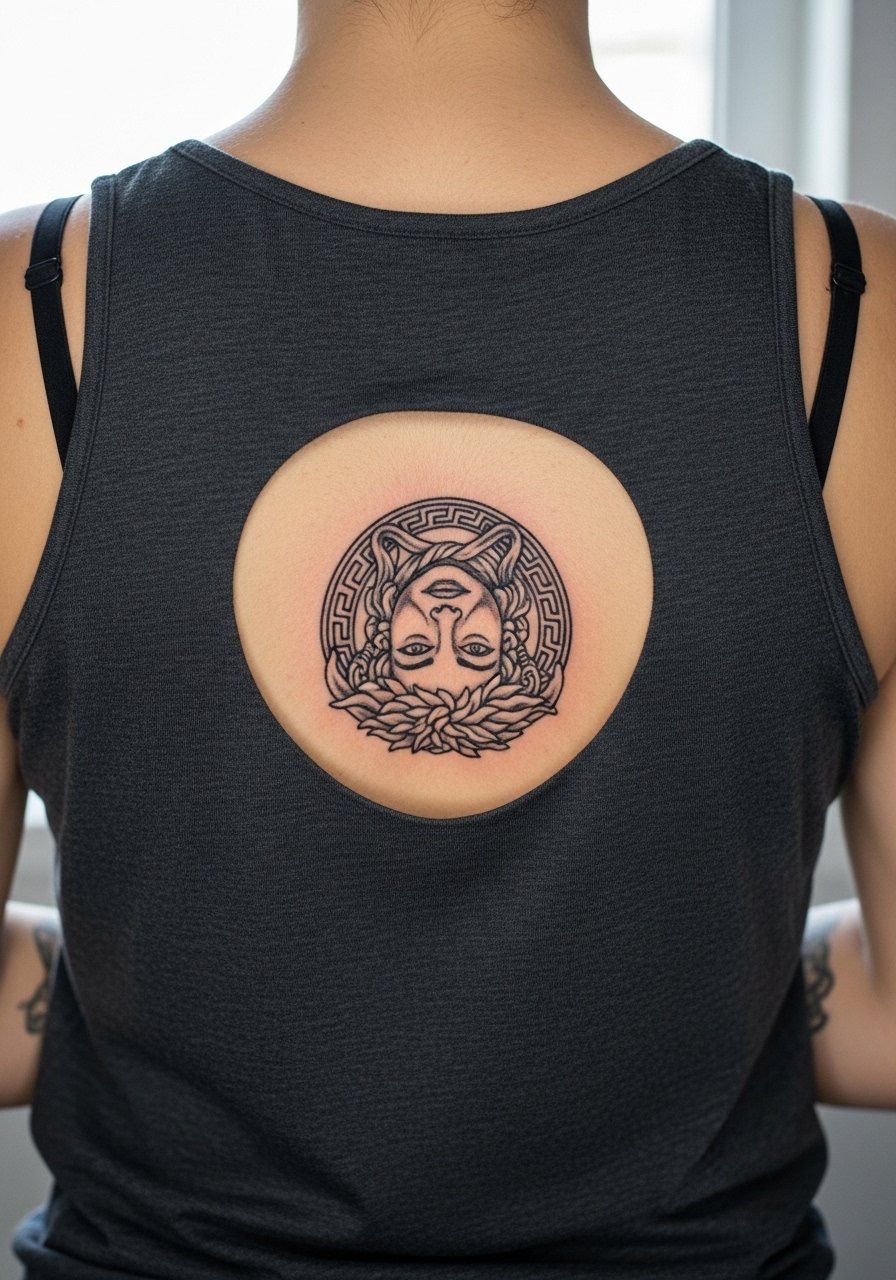
This is a clever fix for the "I can never see my own back tattoo" complaint. Ask for a mirror-oriented composition during the stencil stage so the face reads toward the center when you look over your shoulder. The real consultation detail is orienting the gaze so it lines up with shoulder blades and does not skew when you arch. Practical downside is that others see the upside-down composition without a mirror, so be deliberate about which audience you want to prioritize. Expect a single touch-up at six weeks for stencil alignment tweaks.
14. Snake Wraps Along the Spine for Anatomical Flow
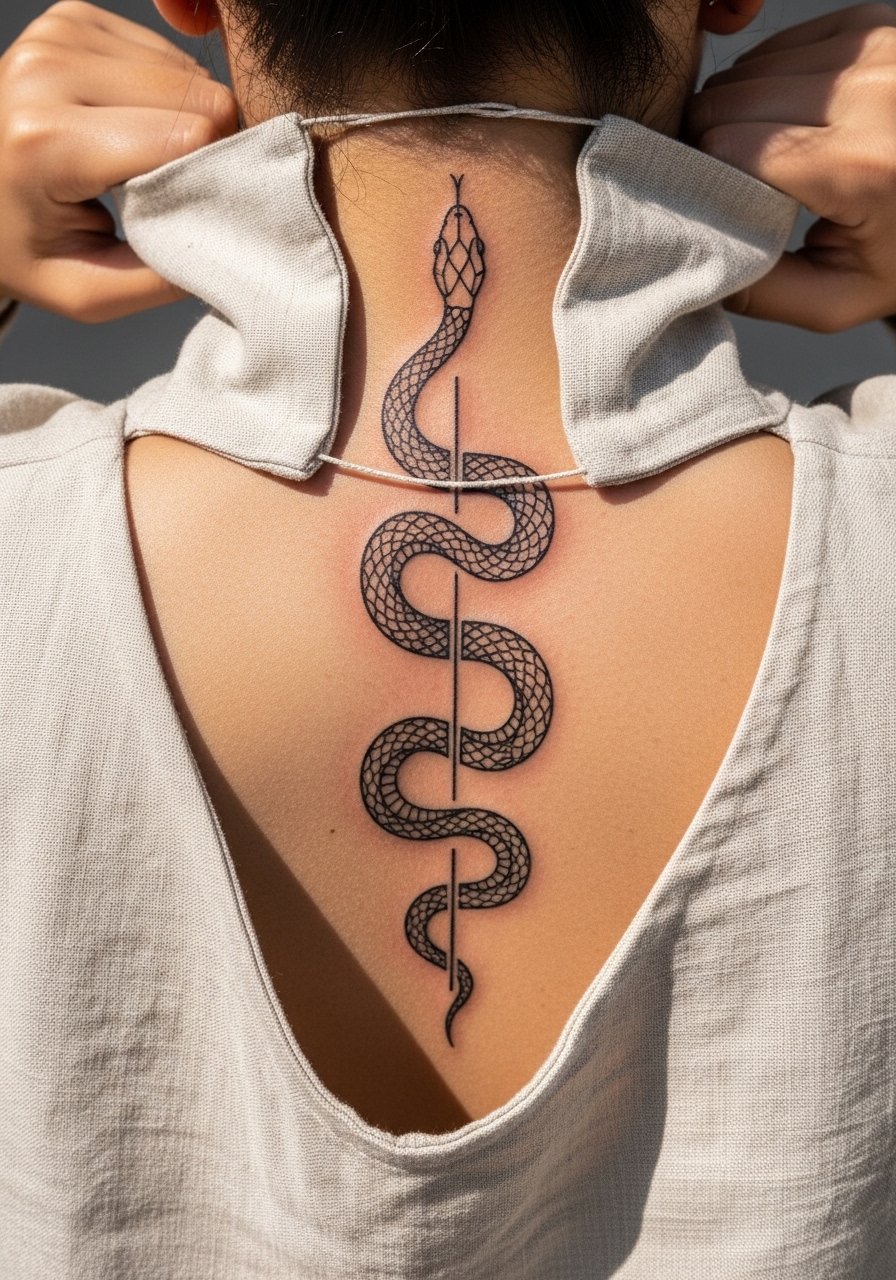
When the pattern follows spinal curvature, the piece moves with posture instead of fighting it. During your consult ask for staggered coil widths so every loop keeps its shape after healing. The spine area can be sensitive over bone, so expect short bursts of work and breaks. For nights out or simple framing, a linen high neck top with an open back or low backline drapes elegantly over the vertical composition. Keep the coils spaced to reduce the risk of long-term merging.
15. Medussa with UV Ink Petrification Effects on Back
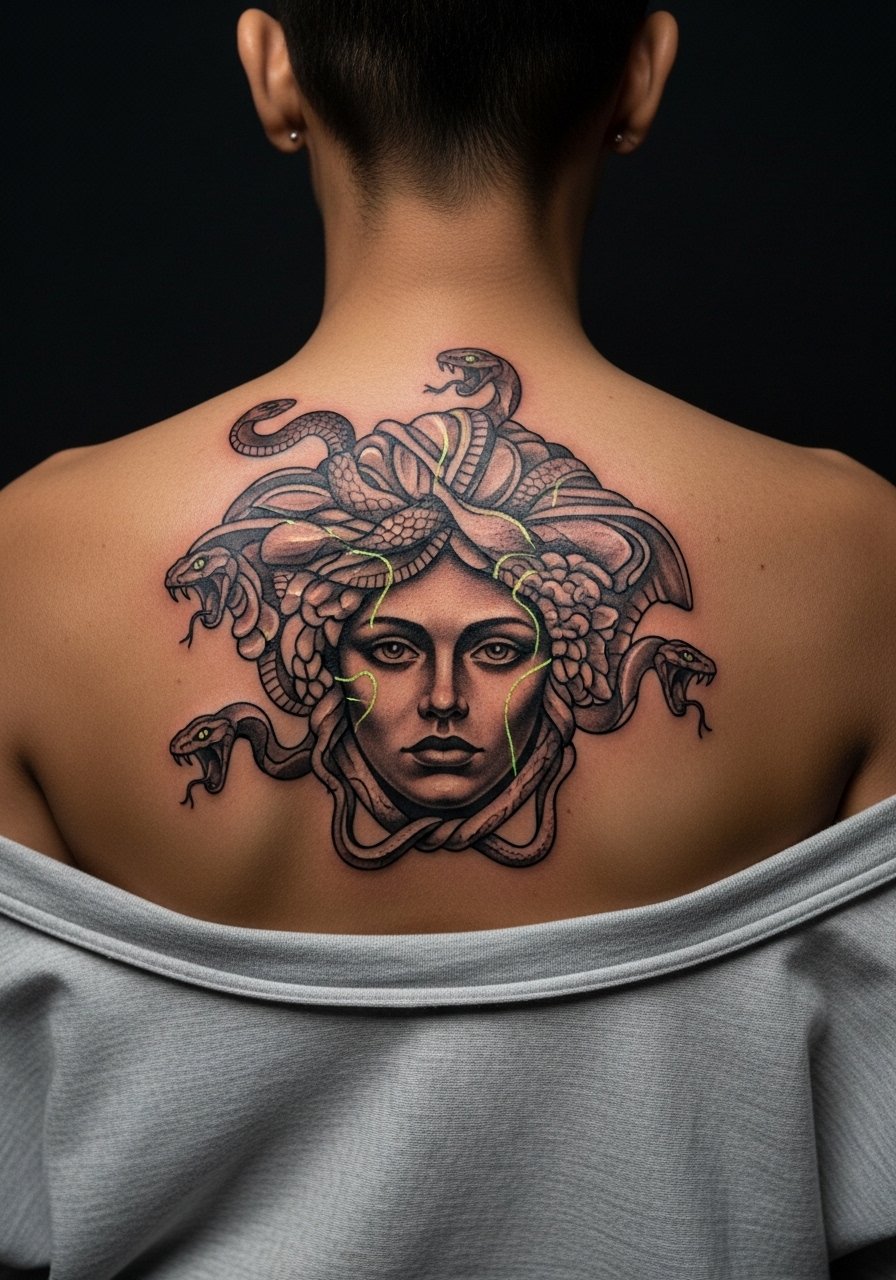
UV ink can be a fun party trick for club nights, but it ages differently and requires a specialist who knows pigment longevity. If you go this route, ask for the UV only as accent lines so the main design reads cleanly without it. Not all studios work with UV pigments, so use discovery pathways like convention calendars and hashtag searches to find a properly experienced artist. Expect the UV highlights to need more maintenance than the black and gray core, and discuss how that fits with your lifestyle before committing.
16. Placement Mockup Showing Medussa Gaze Following Body Curve for Dynamic Movement
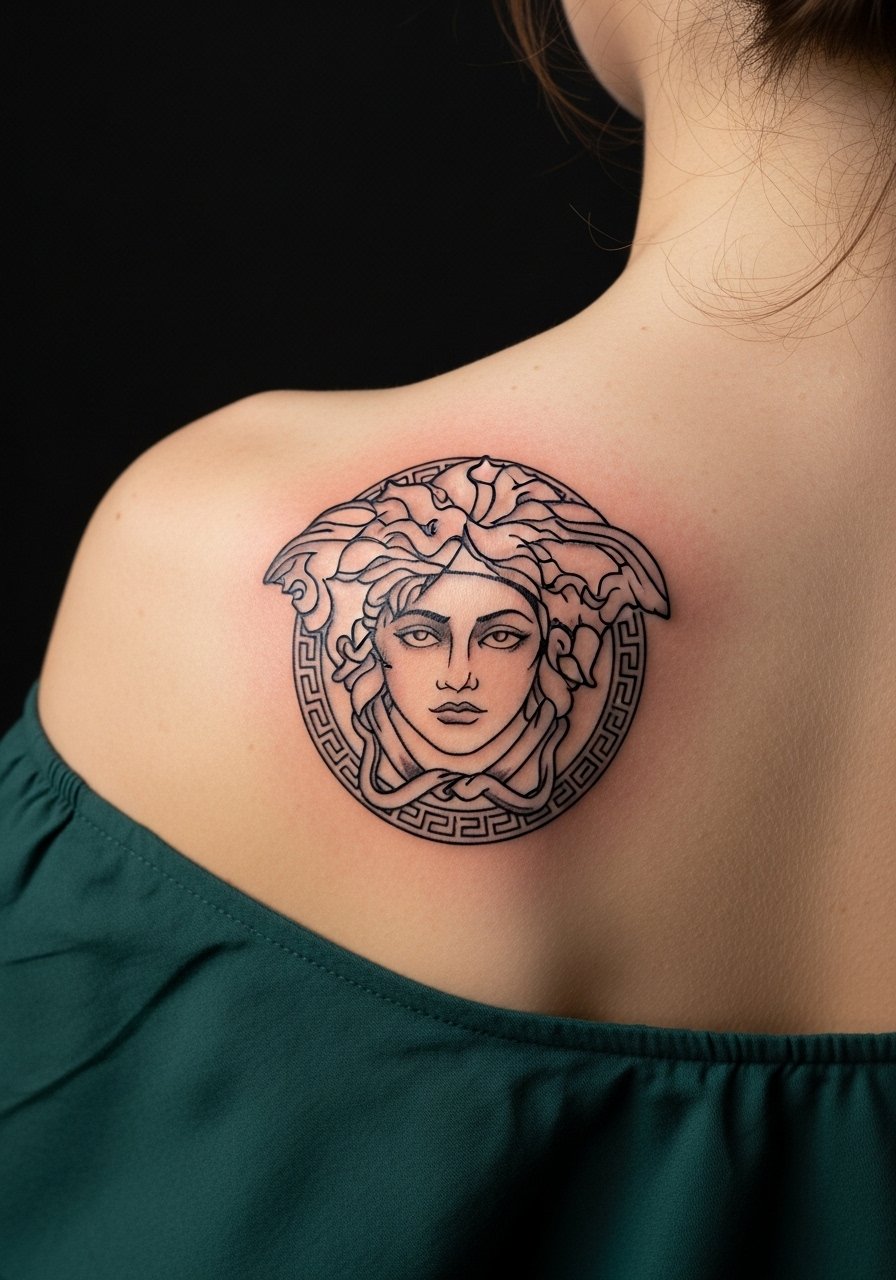
This is a planning-forward idea that solves the "it looked off once I moved" problem. Bring movement photos or video to your consult so the artist can mock the gaze across different postures. The design may be mirrored or slightly rotated to respect shoulder slope when you raise your arms. Common mistakes include transferring a flat reference without accounting for the curve, which makes eyes appear misaligned in three dimensions. A fitted open back dress shows the adjustment beautifully once healed.
17. Ornamental Mandala-Medussa Hybrid Centered on Upper Back
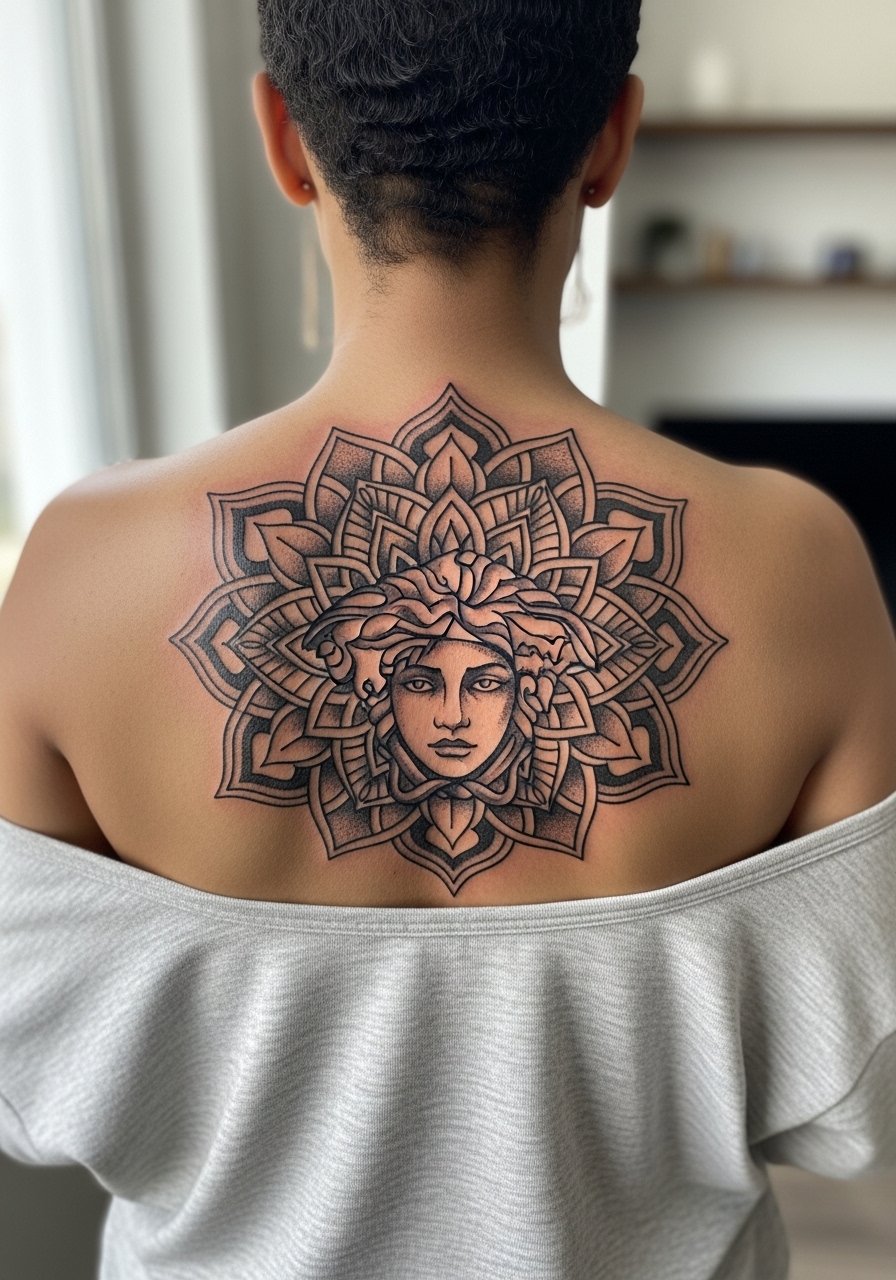
Because mandalas carry cultural roots, be intentional about borrowing motifs. Consider subtle variations rather than direct replication of sacred patterns, and discuss origins with your artist so the design reads as respectful and personal. For placement, the upper back lets the mandala breathe and keeps edges away from constant waistband or bra friction. Expect a two to three session plan with a small symmetry touch-up at six weeks. If you want a lighter finish, ask for negative-space points rather than dense fill to maintain crisp geometry.
Frequently Asked Questions
Q: How should I manage aftercare on a Medussa full-back piece when I cannot reach it easily?
A: Use mirror selfies and set reminders to moisturize twice daily, and consider a long-handled lotion applicator for the first two weeks. Some people find a partner helps with initial cleaning. If you plan to use protective film, discuss it with your artist because opinions split on film versus dry healing for large back areas.
Q: Will my back Medussa warp if I gain or lose weight?
A: It depends on where the piece sits. Designs anchored higher on the upper back or along the spine shift less than pieces at the lower lumbar. Tell your artist about recent body changes and future plans so they can place major focal points away from predictable stretch zones.
Q: Fine line on ribs sounds risky. If I want subtle detail, what are realistic expectations?
A: Subtle detail on ribs can be beautiful, but expect some softening over two to five years. Ask for slightly wider spacing and sample healed photos from your artist. Schedule a touch-up at the three to six month mark to restore any lines that blend.
Q: Are specialty effects like UV ink or full-back watercolor worth it for longevity?
A: Specialty inks and washes need more maintenance. UV highlights and broad watercolor washes tend to require earlier touch-ups than solid blackwork. If longevity is a priority, combine specialty accents with solid contours so the design remains readable as accents fade.
Q: How do I find an artist who actually takes large back Medussa commissions without multiple cancellations?
A: Use hashtag searches and convention calendars to find artists who list guest spots. Filter portfolios for healed photos of full-back work and check recent booking activity. When booking, ask about deposit policies and whether the studio has another artist who can step in so you do not lose sessions if someone gets sick.