
Fine line medieval motifs are trending on shoulders, but what lasts is often the opposite of what looks best in the stencil photo. Heavy linework and thoughtful spacing keep detail readable as skin settles. Below are 27 shoulder-focused medieval ideas that balance historic charm with real-world aging, plus practical consultation notes, what to wear to the session, and the common mistakes to avoid for each look.
1. Heraldic Shield on Outer Shoulder
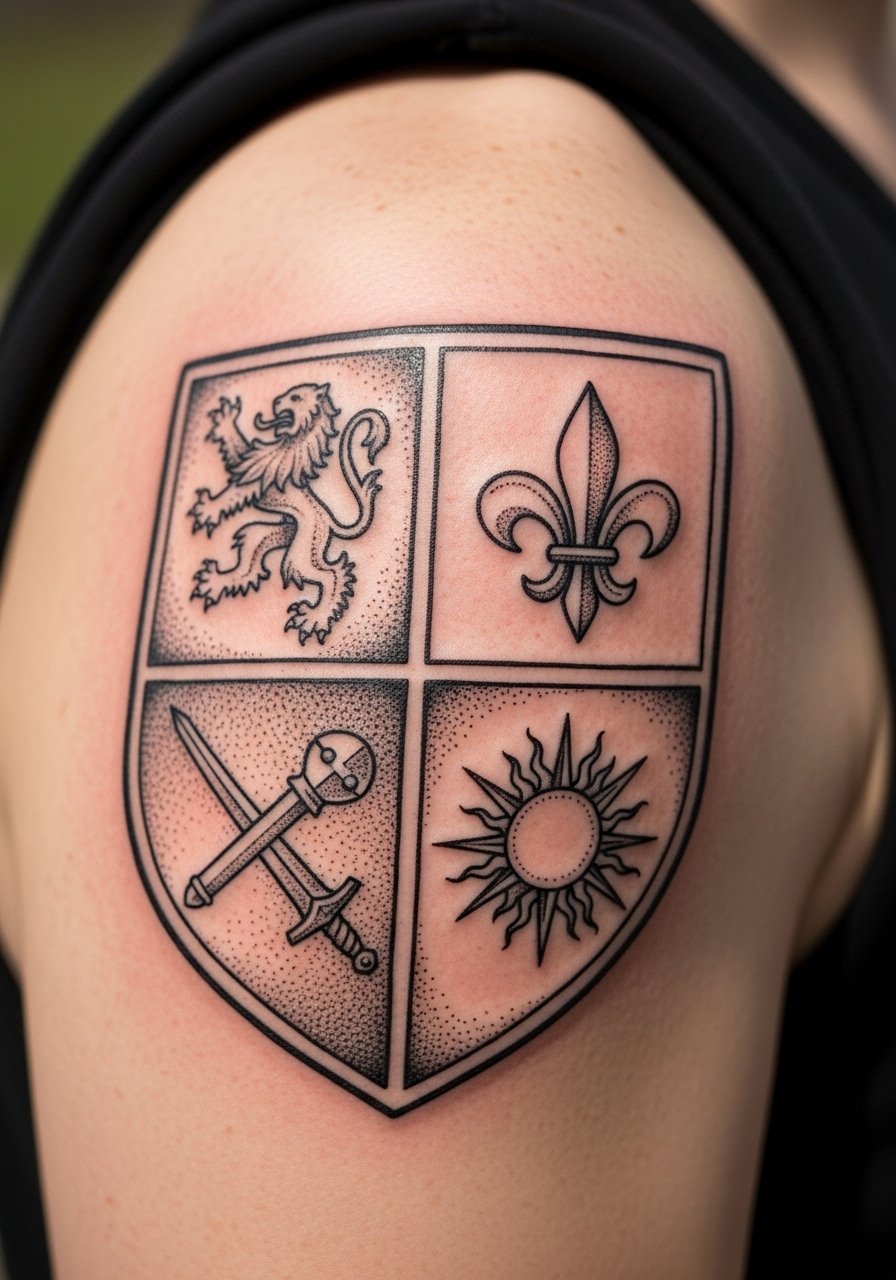
A compact coat-of-arms fits the shoulder cap cleanly and reads well with bold outlines and mid-tone stipple fill. Tell your artist you want slightly simplified charges so the elements do not merge as the skin moves. Pain on the shoulder cap is moderate. A typical session runs 1.5 to 3 hours, depending on ornamentation. Common mistake is shrinking the shield too small. Expect the crispest look at six months, some softening at two years, and a visible outline at five with touch-up likely by year three. For showing it off, pair with an off-shoulder top that exposes the cap area.
2. Knight Helmet in Blackwork
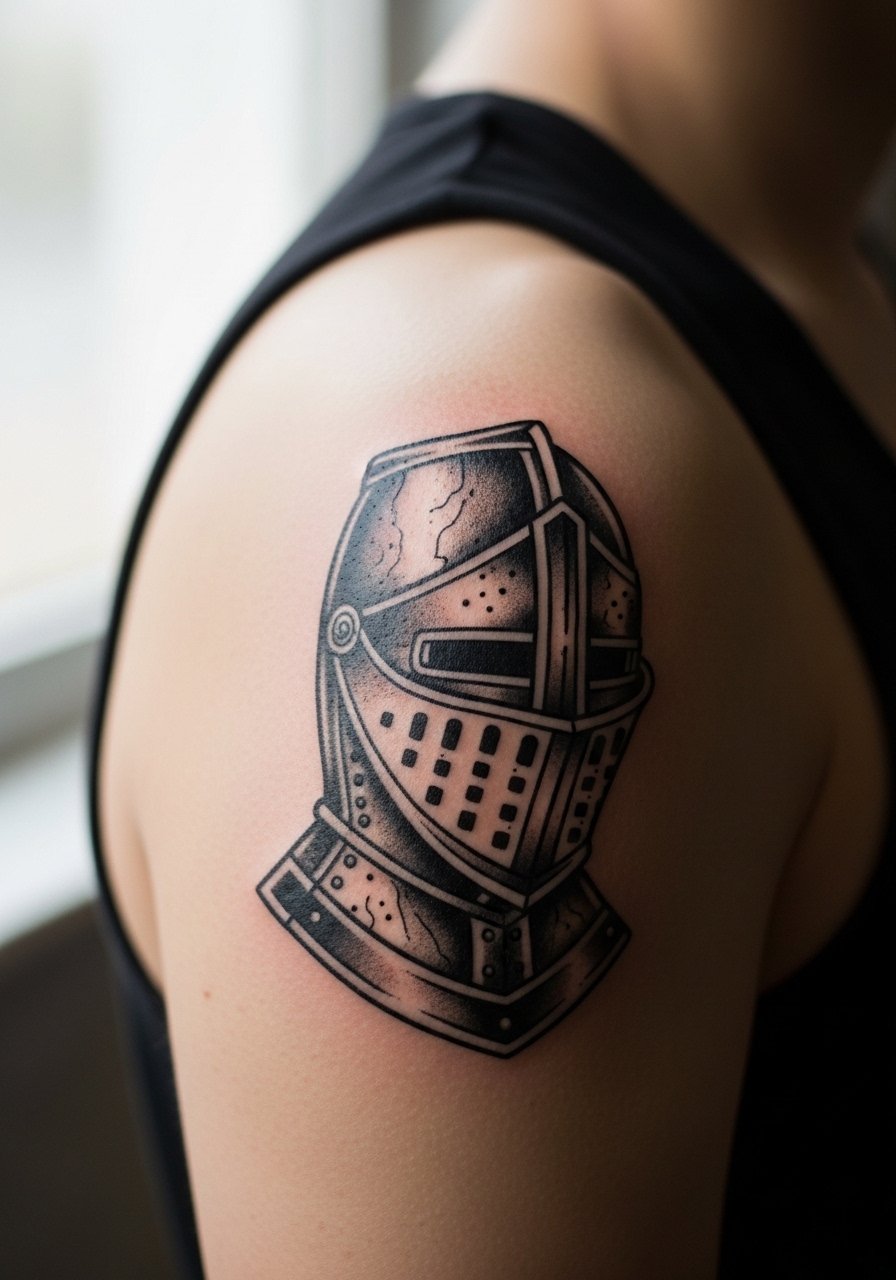
A helmet in blackwork uses heavy saturation to age into a clean silhouette. I recommend telling the artist to use varied line weights so the visor and rivets separate without tiny detail. Pain is moderate and a single session can often finish this at two to three hours. The aging advantage is clear, the solid areas stay legible longer than micro-detail fills. A common error is over-etching ornamental filigree, which blurs. For easy access at the appointment, wear a button-down shirt you can slide aside.
3. Fleur-de-Lis with Ribbon Banner
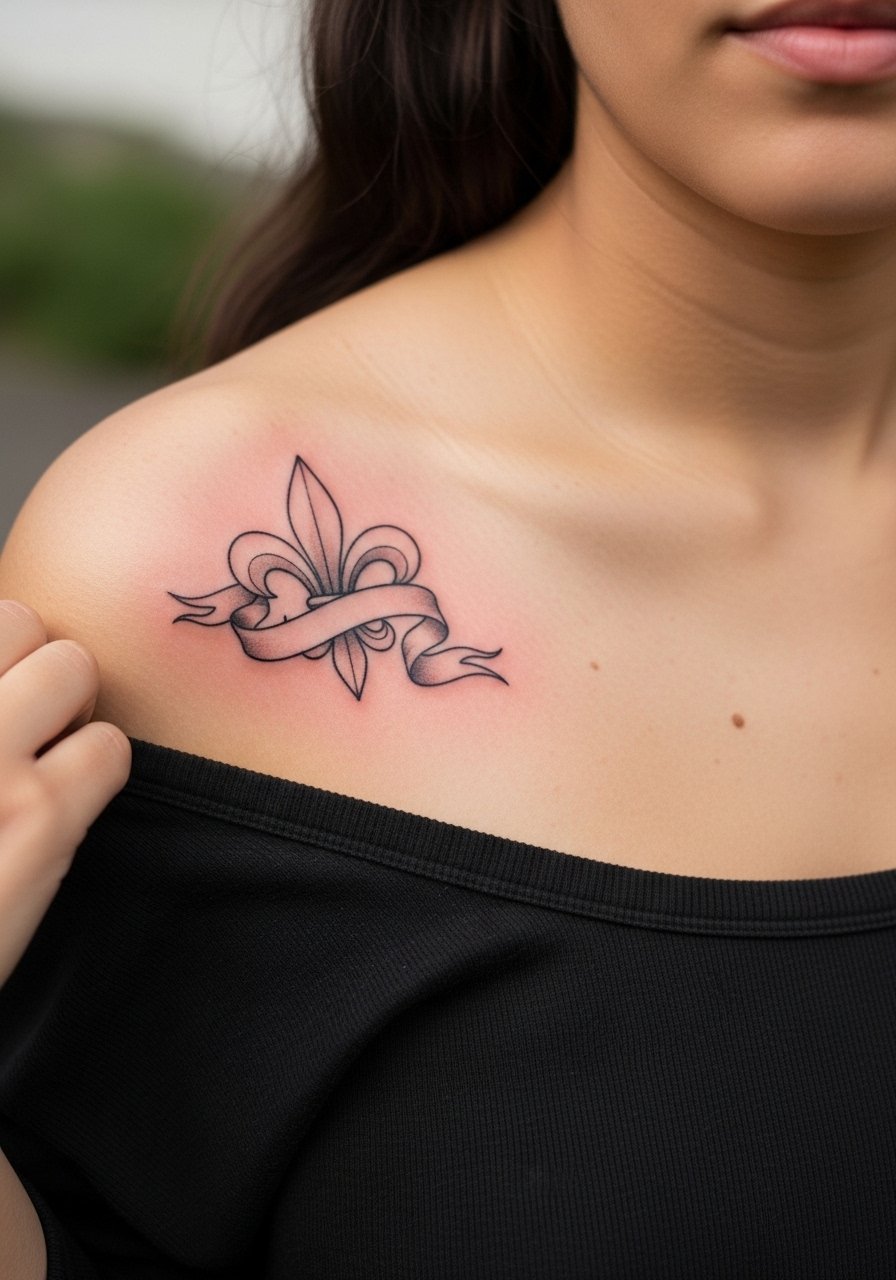
This emblem reads classic on the rounded shoulder slope and pairs nicely with a name or date on the banner. Request bolder linework for the fleur-de-lis and thinner script on the banner so the lettering does not fill in. Session time is often under two hours. A frequent mistake is using cursive that is too small. Expect the symbol to hold longer than the script, with a likely lettering touch-up at year three. For evenings out, this sits well with an open-neck blouse.
4. Illuminated Manuscript Fragment
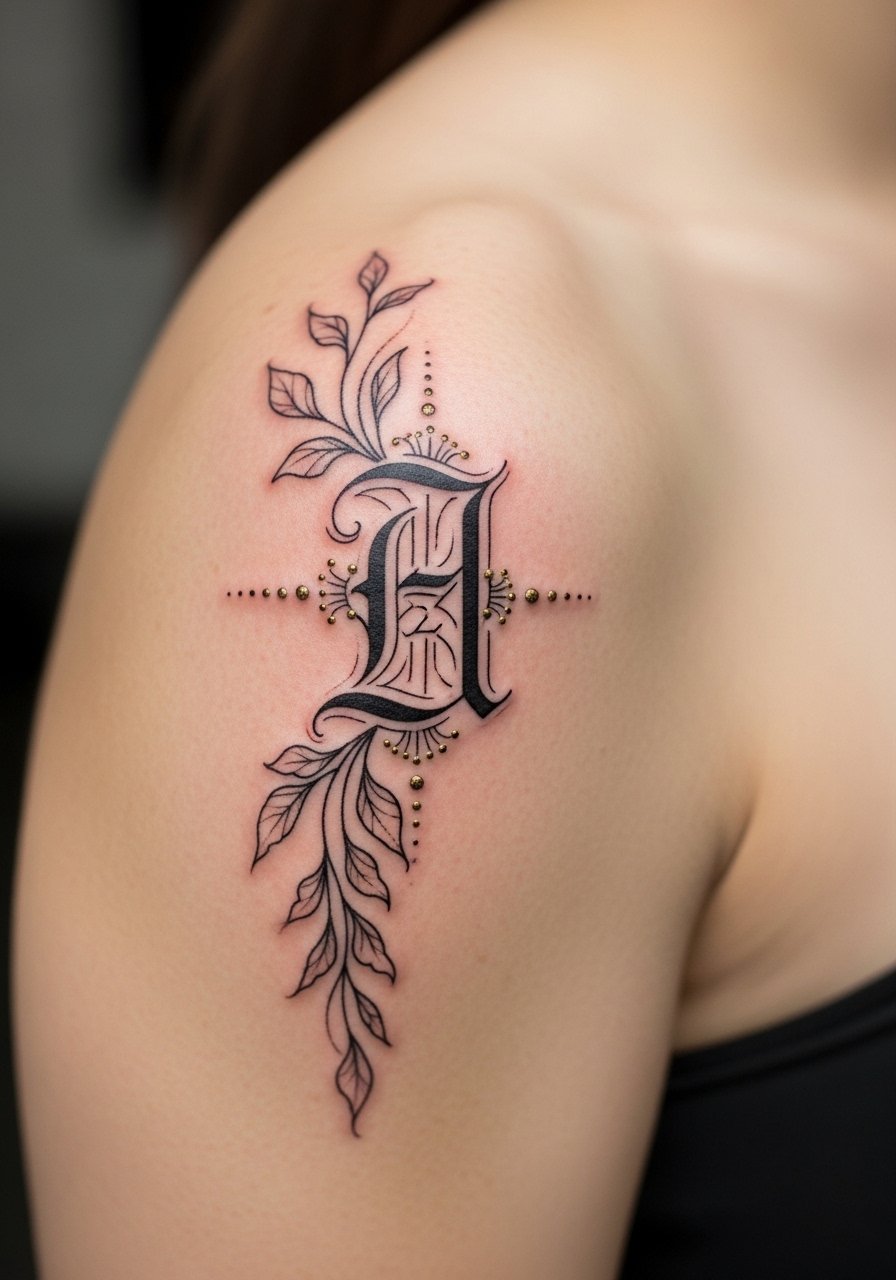
A fragment of manuscript art leans into decorative linework and selective saturation for a vintage feel. Ask for slightly increased spacing between vine elements so the tiny flourishes do not merge over time. Pain is moderate. Expect a careful two- to four-hour session for the color suggestions and dot work. Common mistake is compressing too much ornament into a small area. The medieval letter itself tends to age better than tiny gold dots. Pair with a slip dress with thin straps to show the art cleanly.
5. Heraldic Lion in Mid-Sleeve Placement
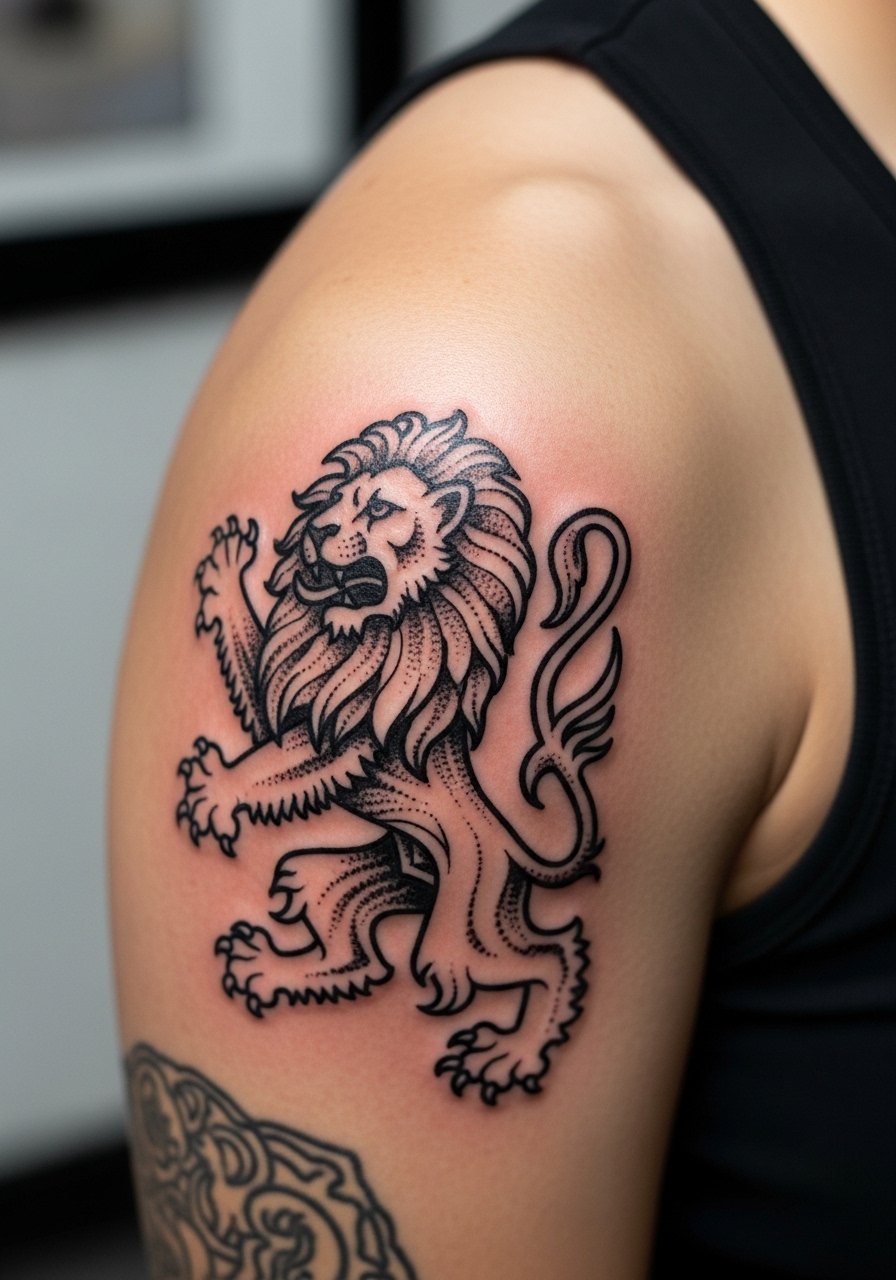
A roaring lion in a heraldic pose benefits from the shoulder's rounded canvas and reads across movement. Tell your artist you want exaggerated negative space around the mane to prevent visual crowding. Session time is usually two to three hours. A mistake is adding too many tiny teeth or whiskers that blur. Healed at six months this looks strong, with some softening at five years that still keeps the silhouette intact. For session comfort, wear a loose tank top you can remove without tugging.
6. Sword and Rose Motif on Shoulder Cap
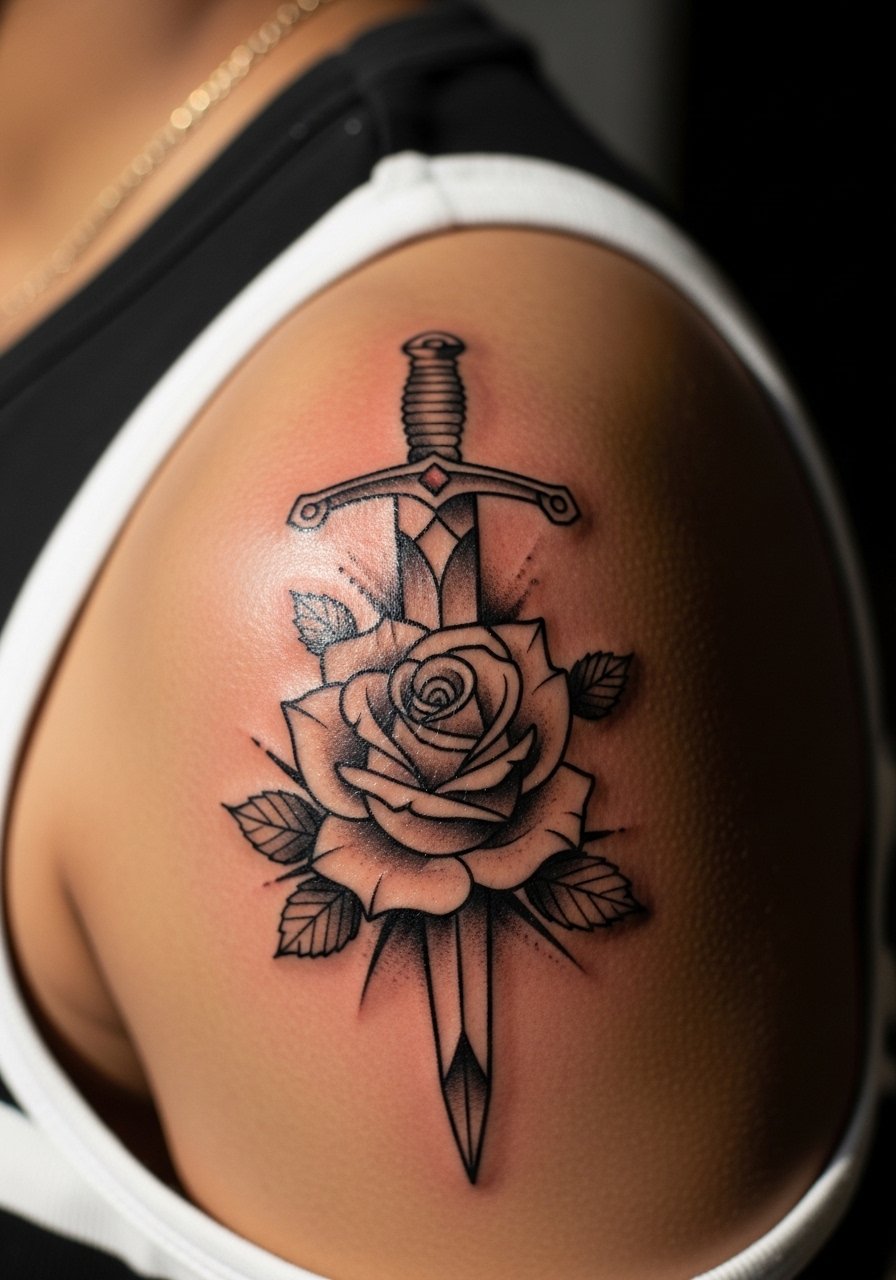
A sword and rose mixes martial and floral medieval language and sits well along the shoulder curve. During consult, specify the sword's spine as a single bold line and keep rose petals slightly open to resist compression. Pain is moderate and this piece often finishes in two hours. The common mistake is over-detailing the petals too tightly. Expect the blade silhouette to remain crisp longer than petal texture. Style it with an off-shoulder sweater for a balanced reveal.
Pre-Session Essentials
The shoulder pieces above are easy to access, but a few items smooth the chair time and the first week of healing.
-
Stencil transfer paper kit. Lets you preview placement on the rounded shoulder before inking, which matters for curved shields and helmets.
-
Topical numbing cream. Applied per instructions eases the first thirty to sixty minutes of tight-line work on the cap.
-
Thin protective film roll. Keeps shoulder pieces clean when clothing rubs during the first few days.
-
Fragrance-free gentle body wash. Cleansers without irritation help delicate linework heal evenly along the shoulder ridge.
-
Aquaphor healing ointment. A thin first-layer ointment prevents crusting on tight line areas like banners and script.
7. Gothic Archway Window
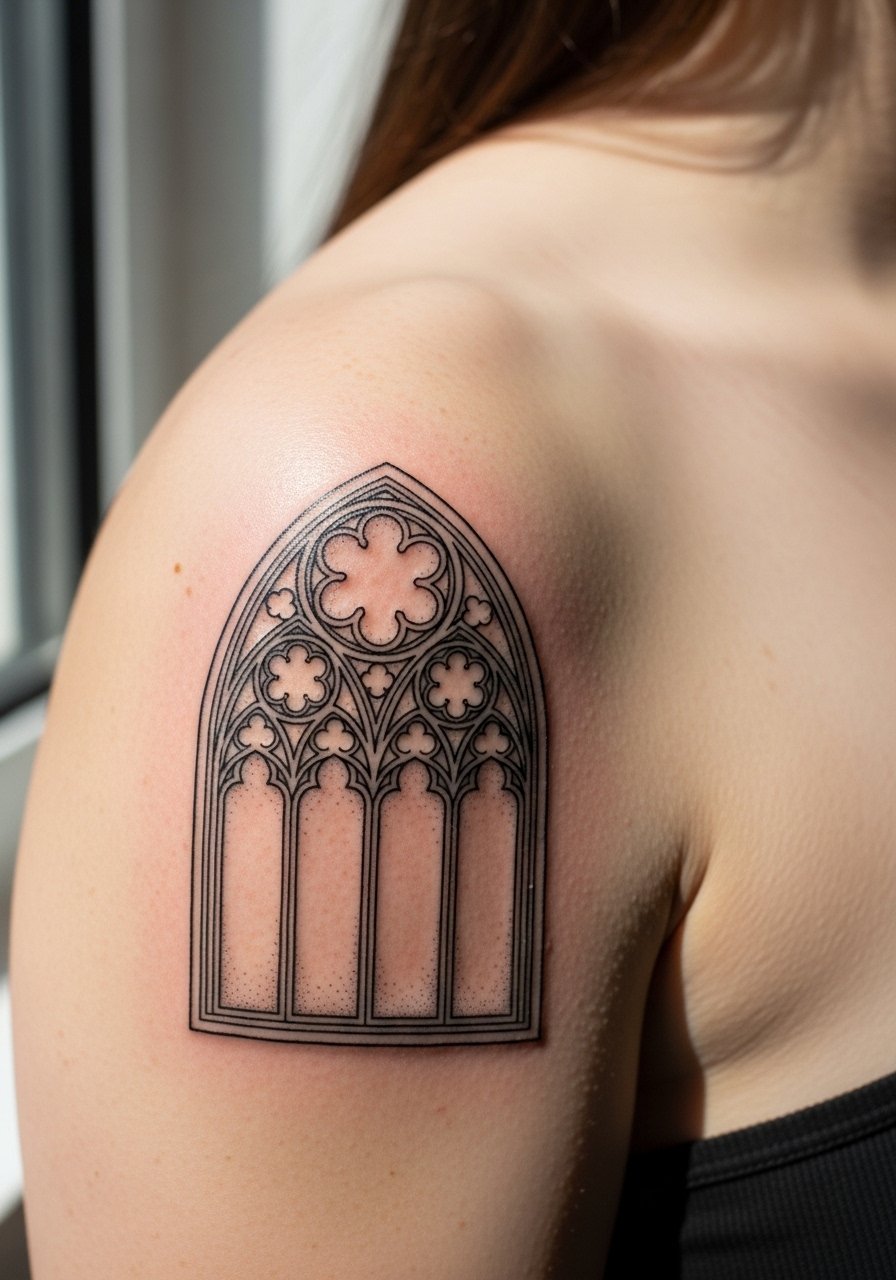
An archway motif frames negative space in a way that ages well if the tracery is spaced. Ask for deliberate spacing between the lancet tracery to avoid merging. Session time ranges from one and a half to three hours depending on intricacy. A typical mistake is cramming a stained-glass pattern into a tiny arch. Over time the silhouette remains readable while tiny color panes may blur. For trips out, an asymmetric tank dress exposes the arch cleanly.
8. Stained Glass Panel, Stylized
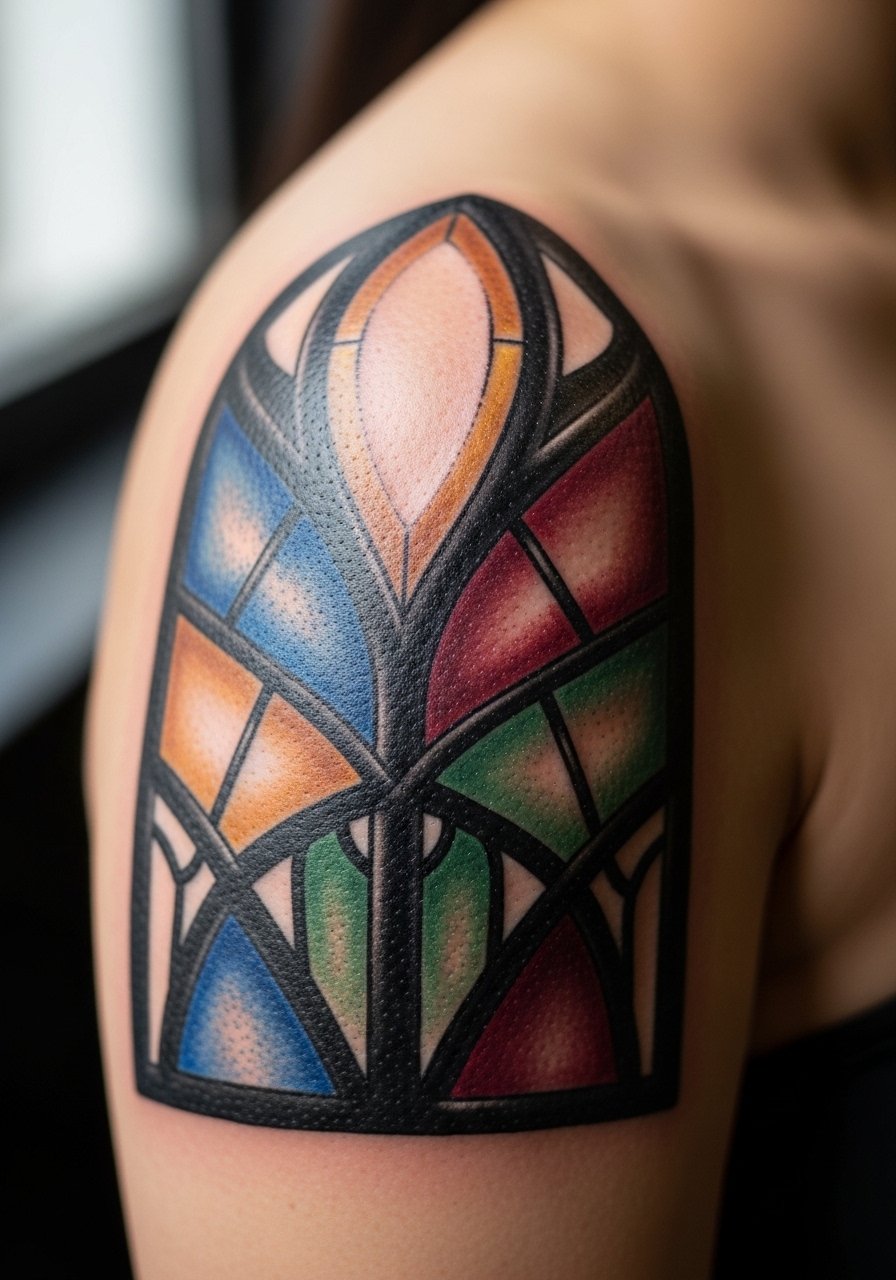
Stained glass relies on strong black leading between color fields, which is ideal for shoulder placement. Tell your artist you want larger color fields rather than tiny mosaic cells so the hues do not merge. Pain is moderate to low. The risk is tiny color dots softening, while the leading remains prominent. A session might take two to four hours. Avoid asking for photorealistic glazing at a small scale. Pair with a scoop-neck top that frames the colorwork.
9. Medieval Map Fragment with Compass Rose
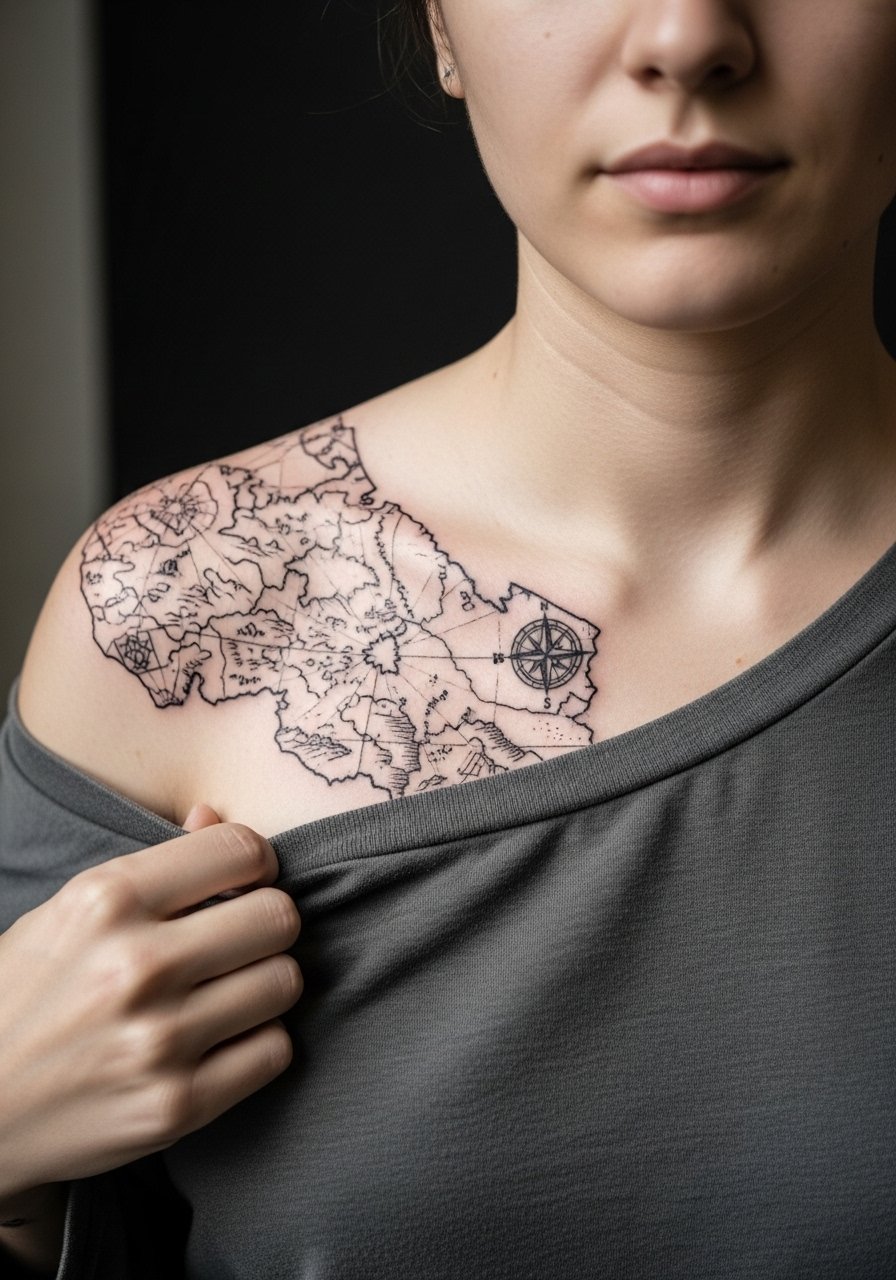
A map fragment works well near the shoulder collar junction and ages best when the map lines are simplified. In consultation, pick a single bold compass rose as the focal point and keep coastlines suggestive rather than micro-detailed. Pain is moderate where the shoulder meets the chest. Session time usually under three hours. The common error is too many tiny place names. For showing off, wear a wide-neck shirt pulled aside so the compass sits visible.
10. Crossed Banners and Motto
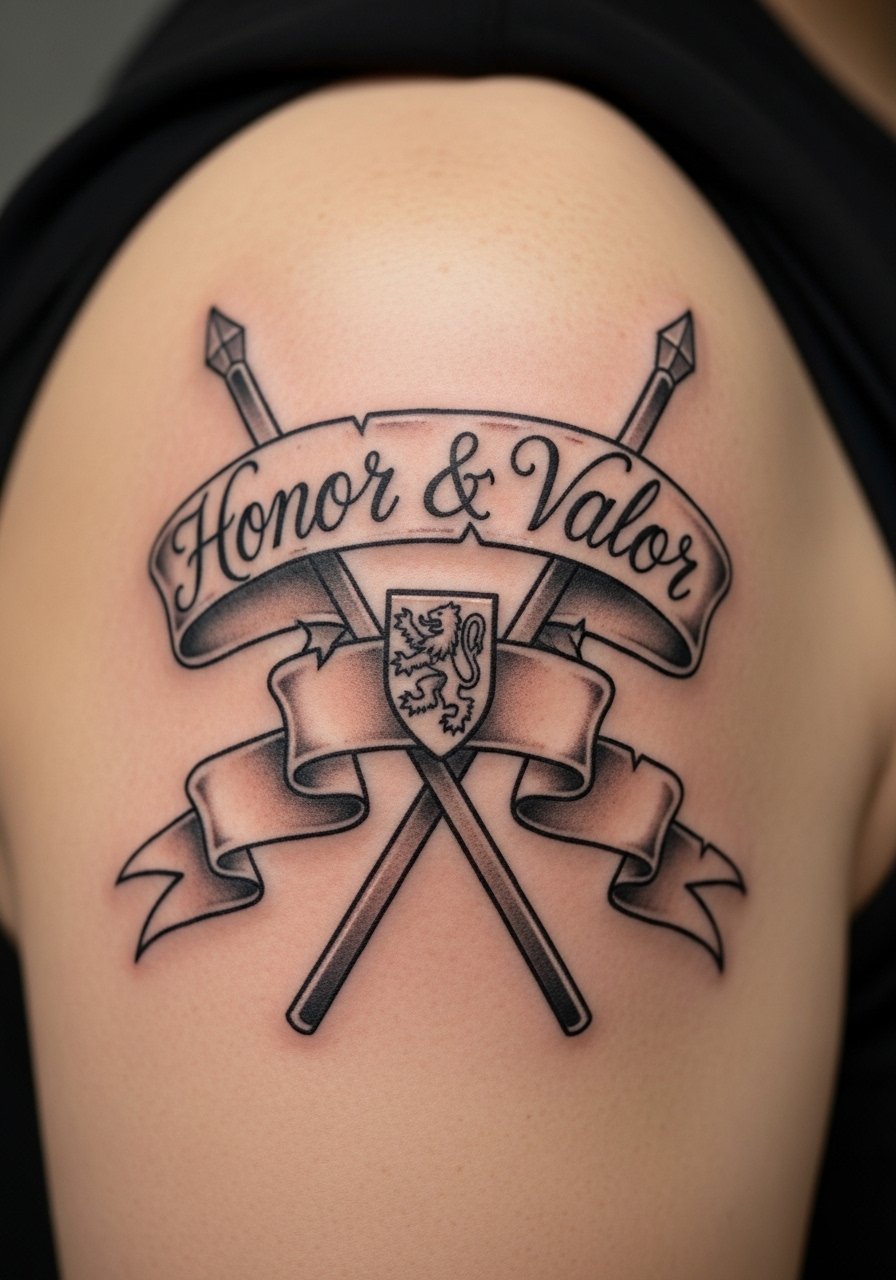
Two crossed banners form a compact shoulder emblem that tolerates movement. Ask for simpler lettering with clear spacing and bolder banner edges. Pain is moderate. A common mistake is overly ornate lettering that fills in. At six months the banners sit clean, with faster degradation in very thin script. During the session wear a button-down you can unbutton easily for access.
11. Gargoyle Silhouette on Shoulder Blade Edge
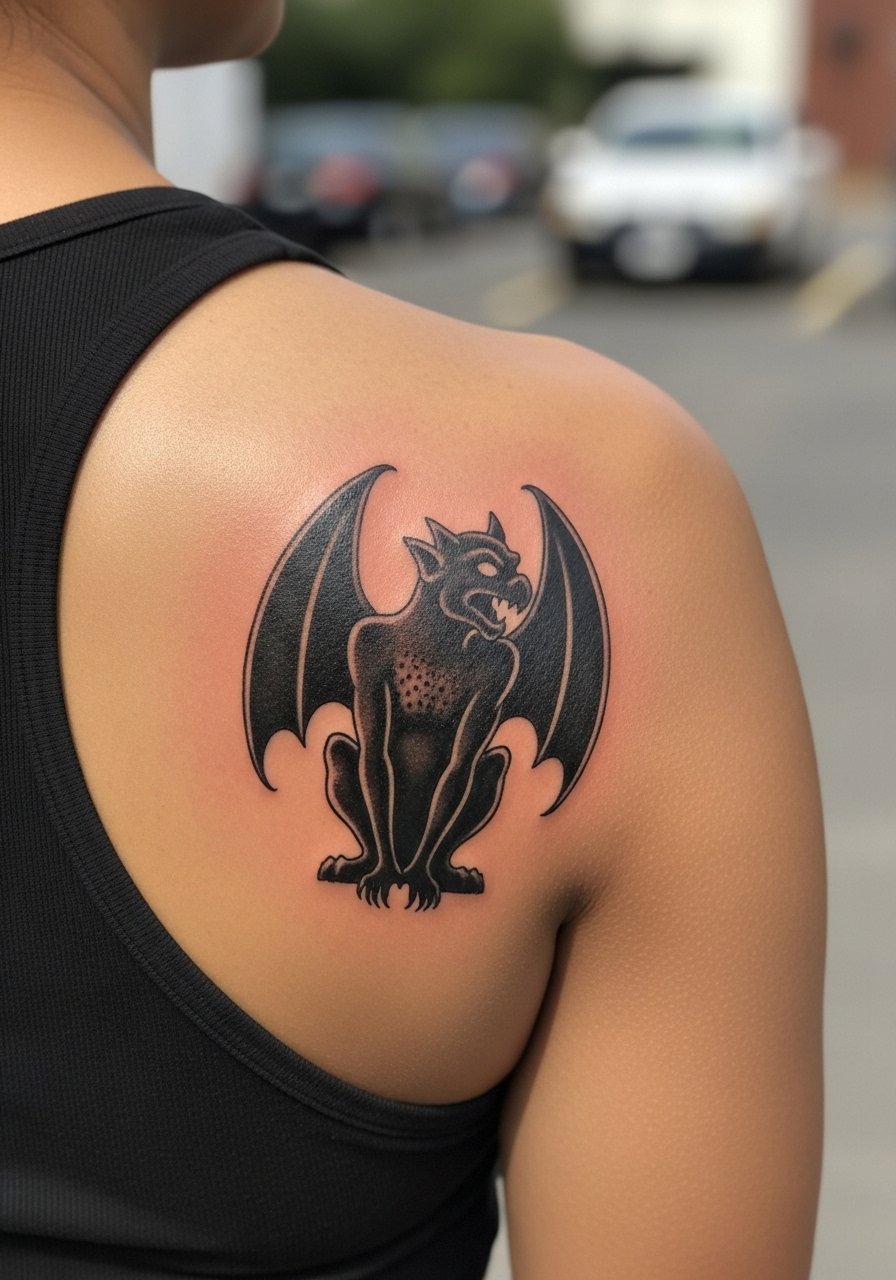
A silhouette gargoyle plays with shadow and keeps detail minimal so it ages into a readable shape. Tell the artist you want negative space between wings and body to prevent margin merging. Pain can be higher toward the shoulder blade edge. Sessions often go one to two hours. The biggest mistake is trying to include facial micro-detail that blurs. Style it with a wide-back top that lets the creature peek out.
12. Wyvern in Flight, Wraparound
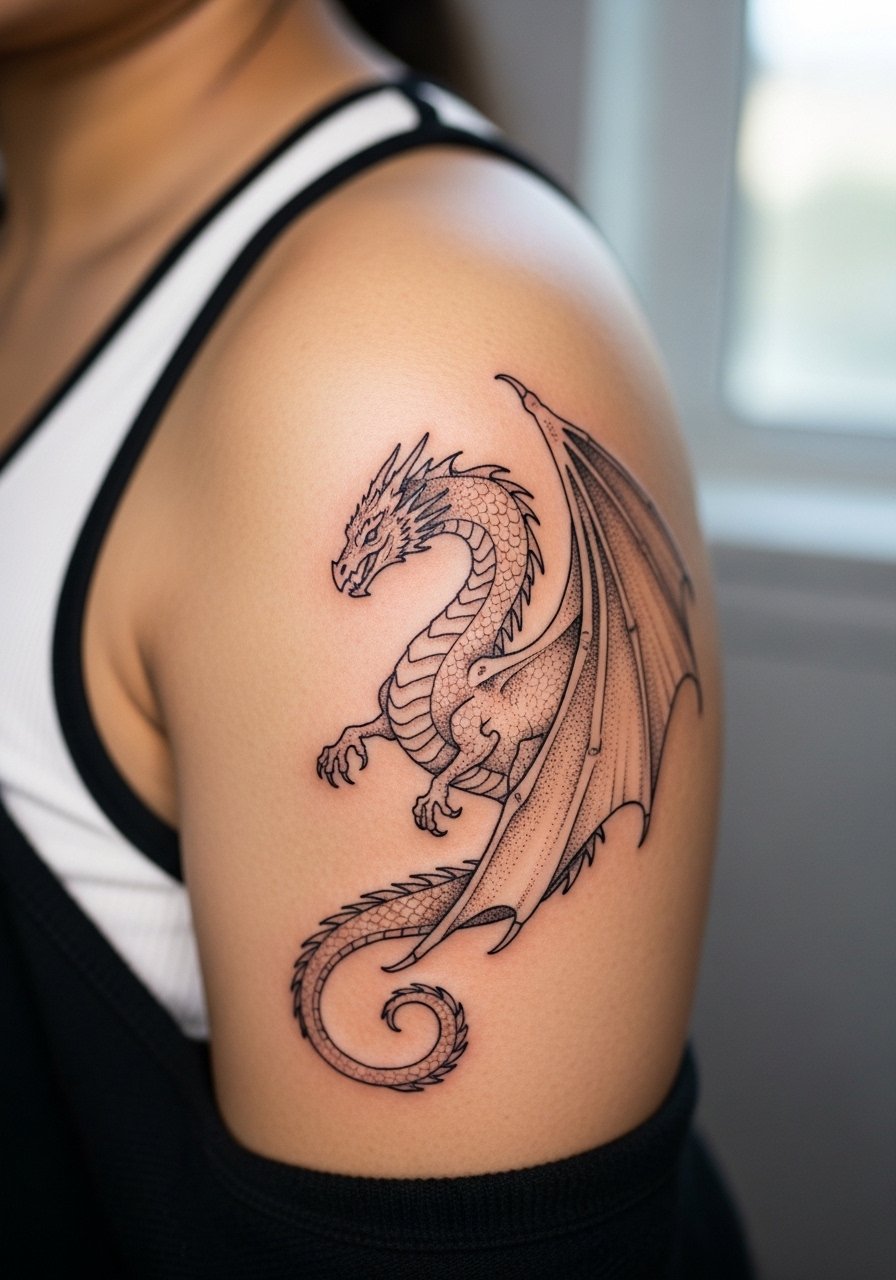
A flying wyvern uses the shoulder curve to show motion. Request simplified wing membranes and stronger outlines around joints so the main anatomy reads as the skin moves. Pain is moderate. Sessions can be longer at three to four hours if you want extended wrap. Over-detailing wing texture is a typical mistake. Expect silhouette retention with loss of micro texture over time. For the appointment, choose a sleeveless tee that offers clear access.
13. Chalice with Floral Garland
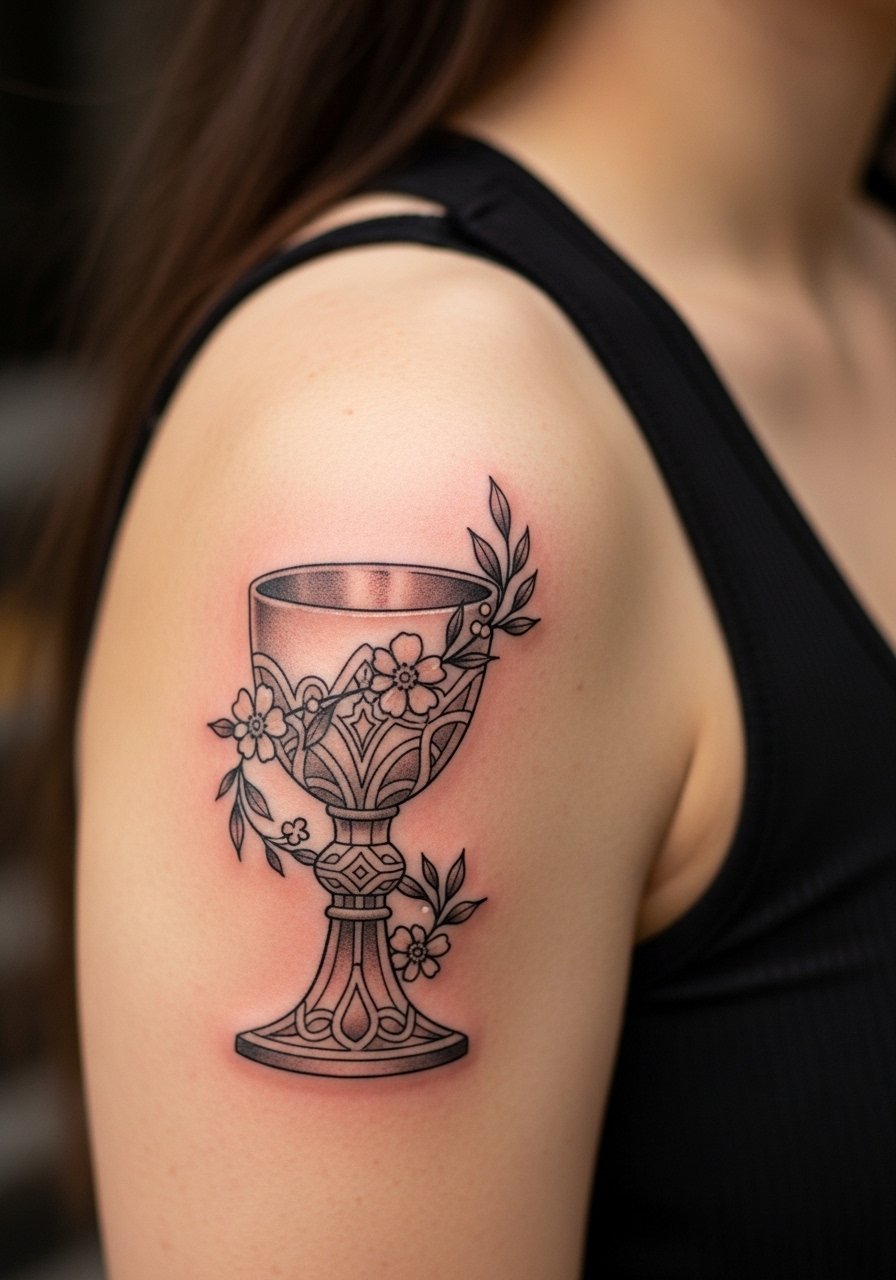
A chalice sits well on the shoulder mound and pairs with small garland work. Ask for a modest level of metallic shading rather than tiny reflective dots. Pain is moderate and the session is usually under two hours. A common misstep is tight garland detail that fills in. Over five years the chalice silhouette tends to remain recognizable while floral texture may need touch-up. Wear an off-shoulder blouse to display the garland.
14. Chainmail Texture Band
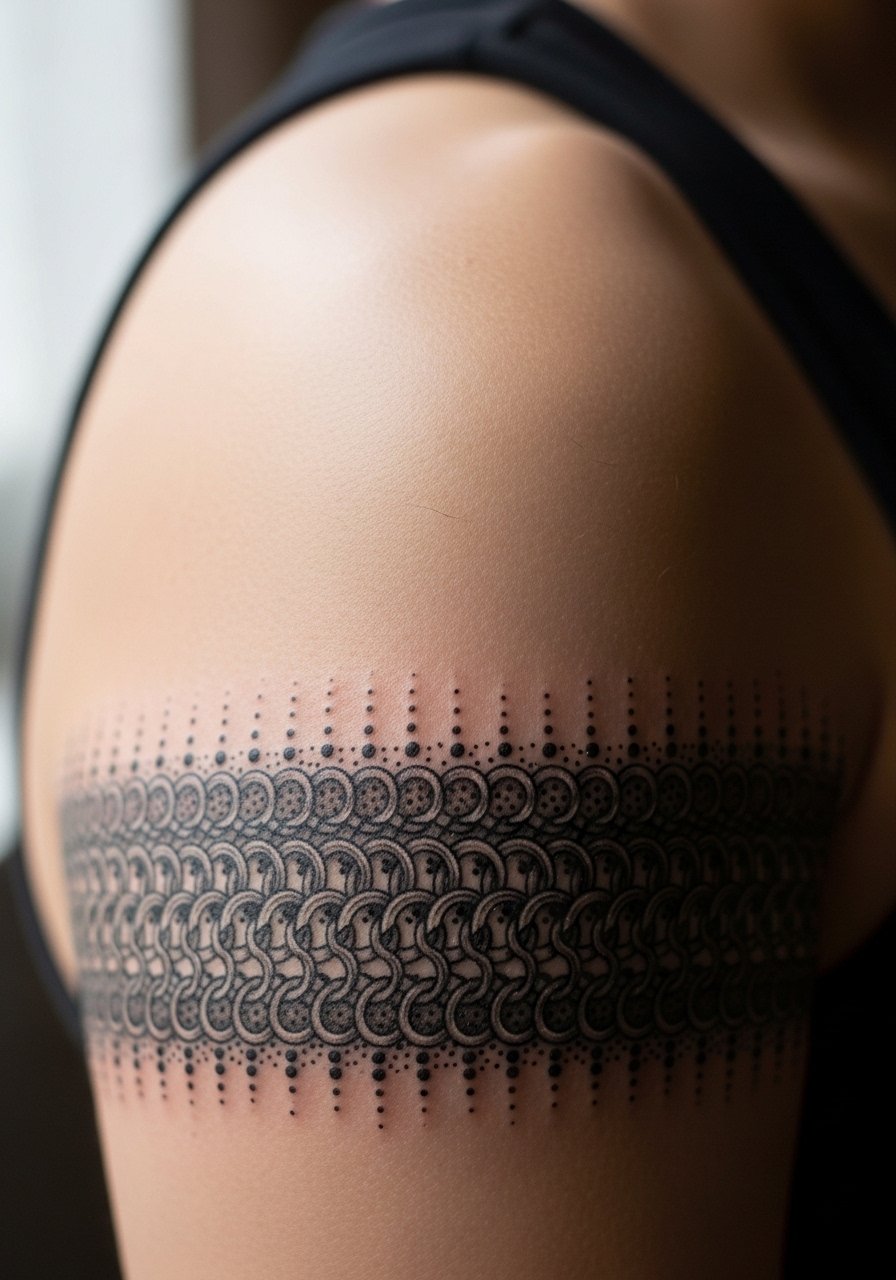
A narrow chainmail band uses repeated patterns that need breathing room. Tell your artist to scale each ring larger than a micro-gauge so rings do not merge. Pain is low to moderate. Sessions can be arrayed into short blocks. The common error is making the pattern too dense. Expect gradual softening where rings meet, requiring a touch-up at years three to five if you want crisp repeat detail. Pair with a halter tank that frames the cuff.
15. Illuminated Initial with Marginalia
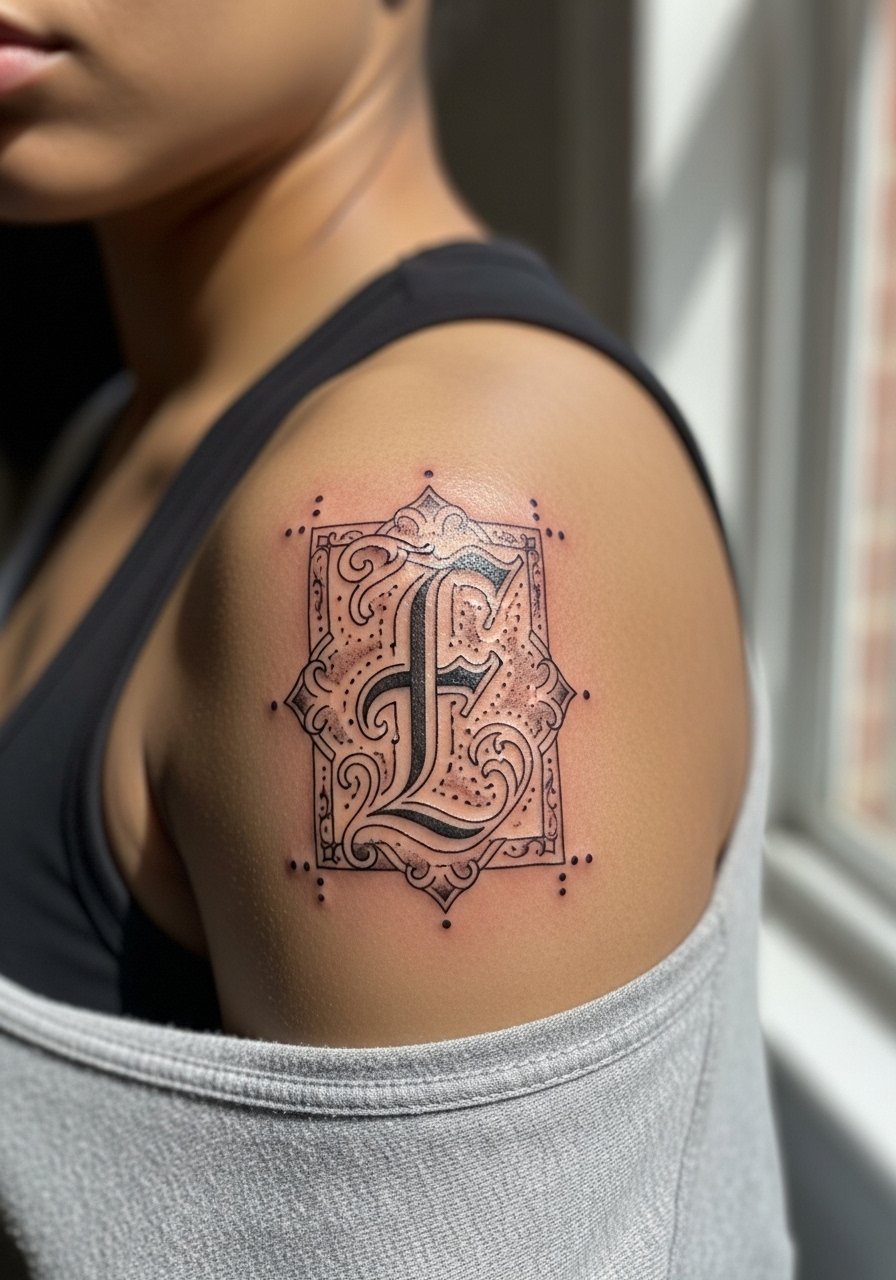
An oversized illuminated initial is a strong shoulder statement. In consult ask for simplified marginalia and larger inter-letter counter space to preserve legibility. Pain is moderate. Sessions might be one to two hours. The most common mistake is tiny decorative flourishes around letters that fuse. The letter form usually stays readable longer than the marginal micro-detail. For showing it off, choose a spaghetti-strap top.
16. Memento Mori Skull with Rosary
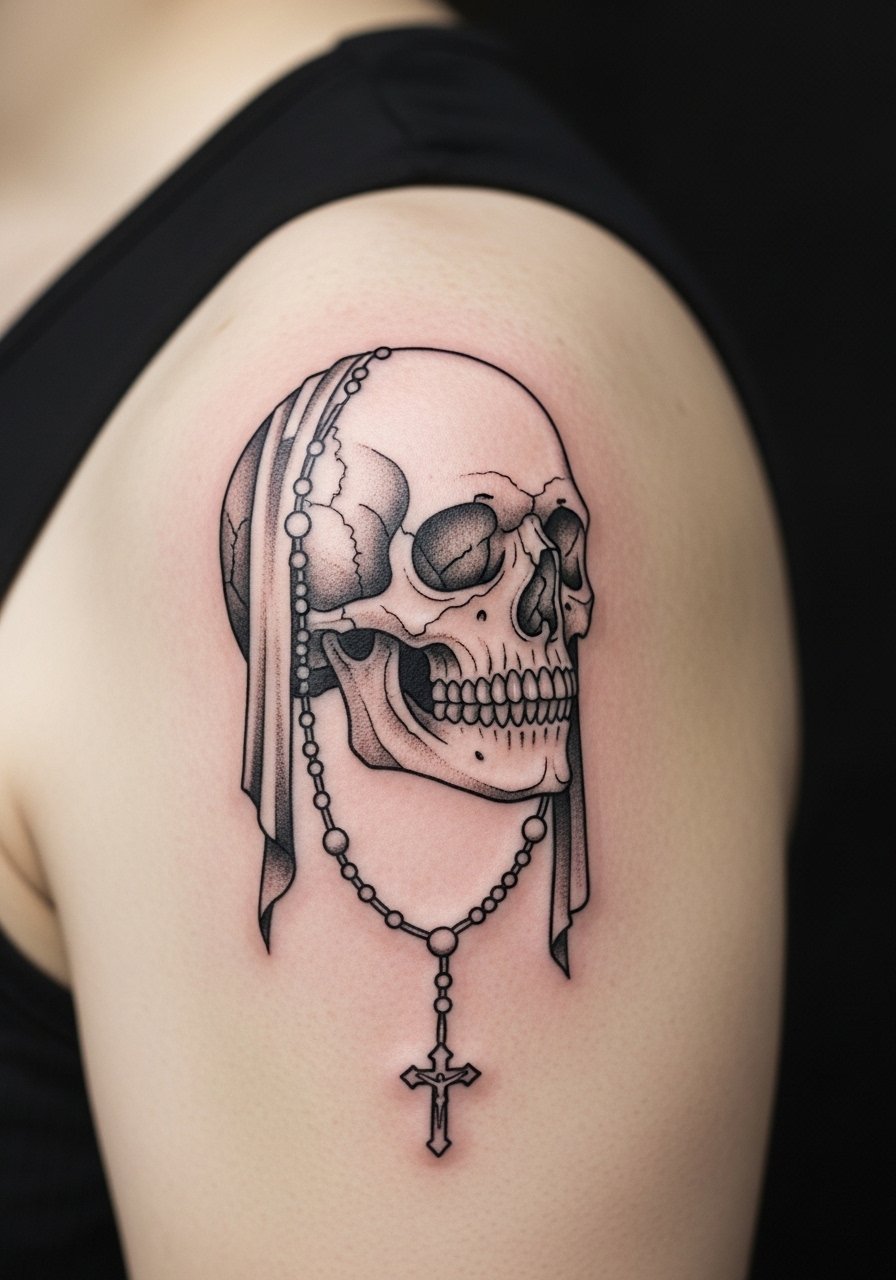
A skull motif with a rosary can feel medieval and solemn. Ask for clear separation between beads and skull contours so the rosary stays distinct as the skin settles. Pain is moderate. Expect a two-hour session. People often request tiny bead loops that blur into the skull over time. The rosary strand will likely need a touch-up before the skull outline does. This piece pairs with a crew-neck tee pulled aside at the appointment.
17. Celtic Knotwork Border
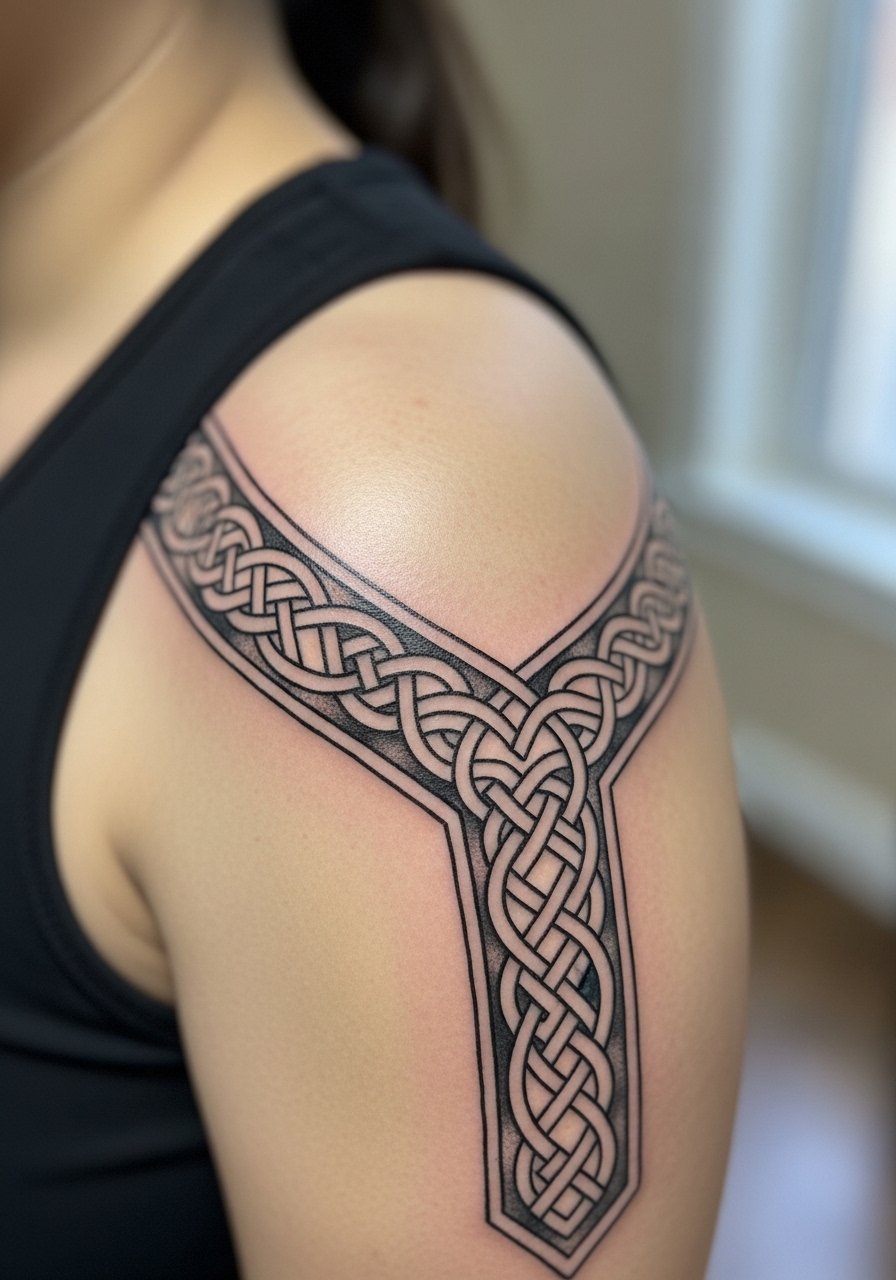
Knotwork benefits from larger loops on the shoulder so the over-under pattern stays readable. Tell your artist to draw expanded interlace and avoid tiny overlaps. Pain is low to moderate and the piece can be completed in one long session or split. The frequent mistake is compressing the knot scale. Over time the overall band reads as pattern rather than as tangled lines. Pair with a scoop-back top.
18. Crusader Cross with Banner
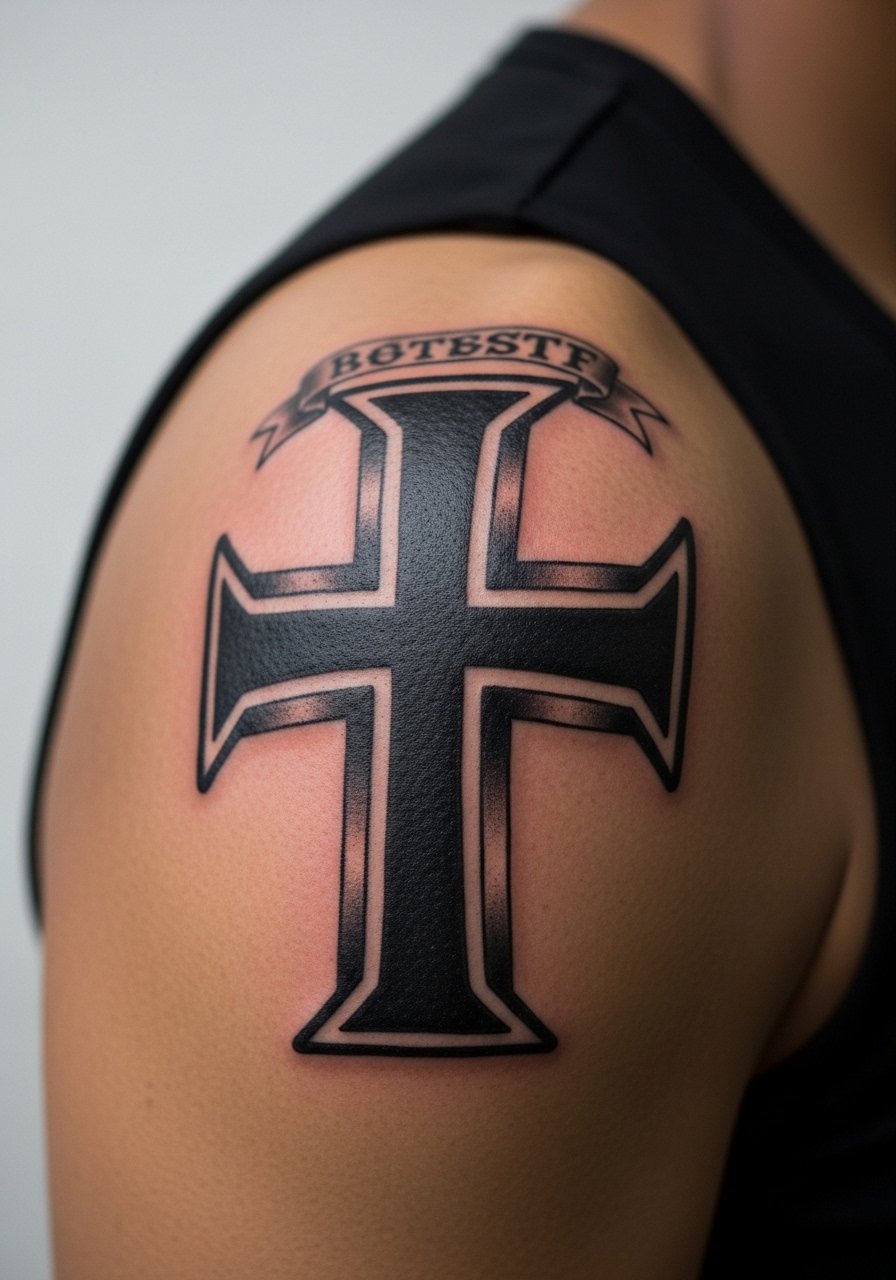
A crusader cross is a strong silhouette that tolerates bold edges. During consult say you want an open interior and a clear banner to avoid cramped lettering. Pain is moderate. Sessions usually run under two hours. Controversy can arise with religious symbols, and artists split into two camps. One camp says these designs are personal devotion and acceptable as rendered. The other camp cautions about context and recommends adapting symbols with sensitivity. Have a conversation in advance to align on intent. Wear a button-down or loose tank for access.
19. Tudor Rose Emblem
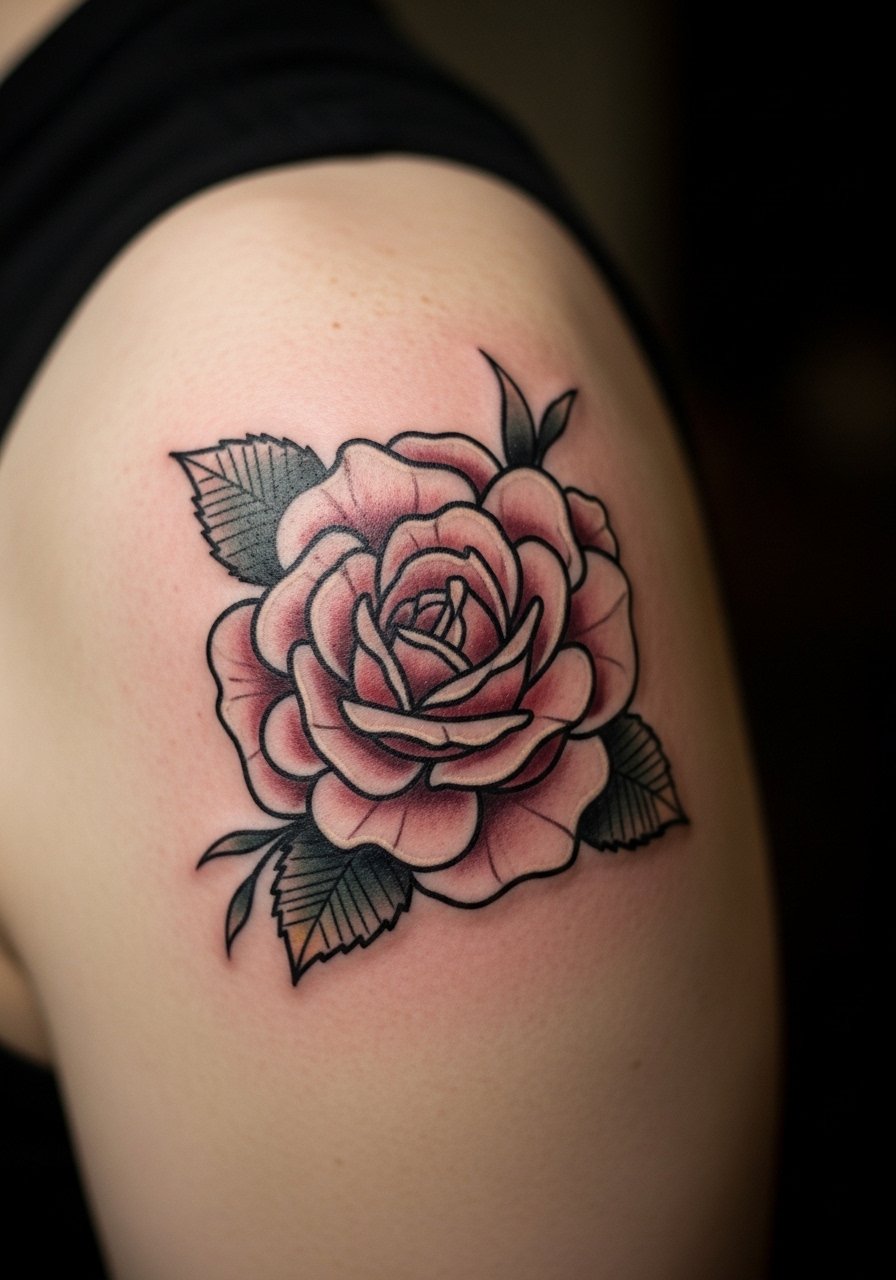
A Tudor rose reads well in simplified layers of petals. Ask the artist to keep petal outlines slightly thicker than ultra-fine lines. Pain is moderate. Sessions vary from one to two hours. The usual error is packing the petals with tiny veins that blur. Expect the outer petals to last longer than inner texture. For show, pair with an off-shoulder dress.
20. Angelic Herald on Shoulder Cap
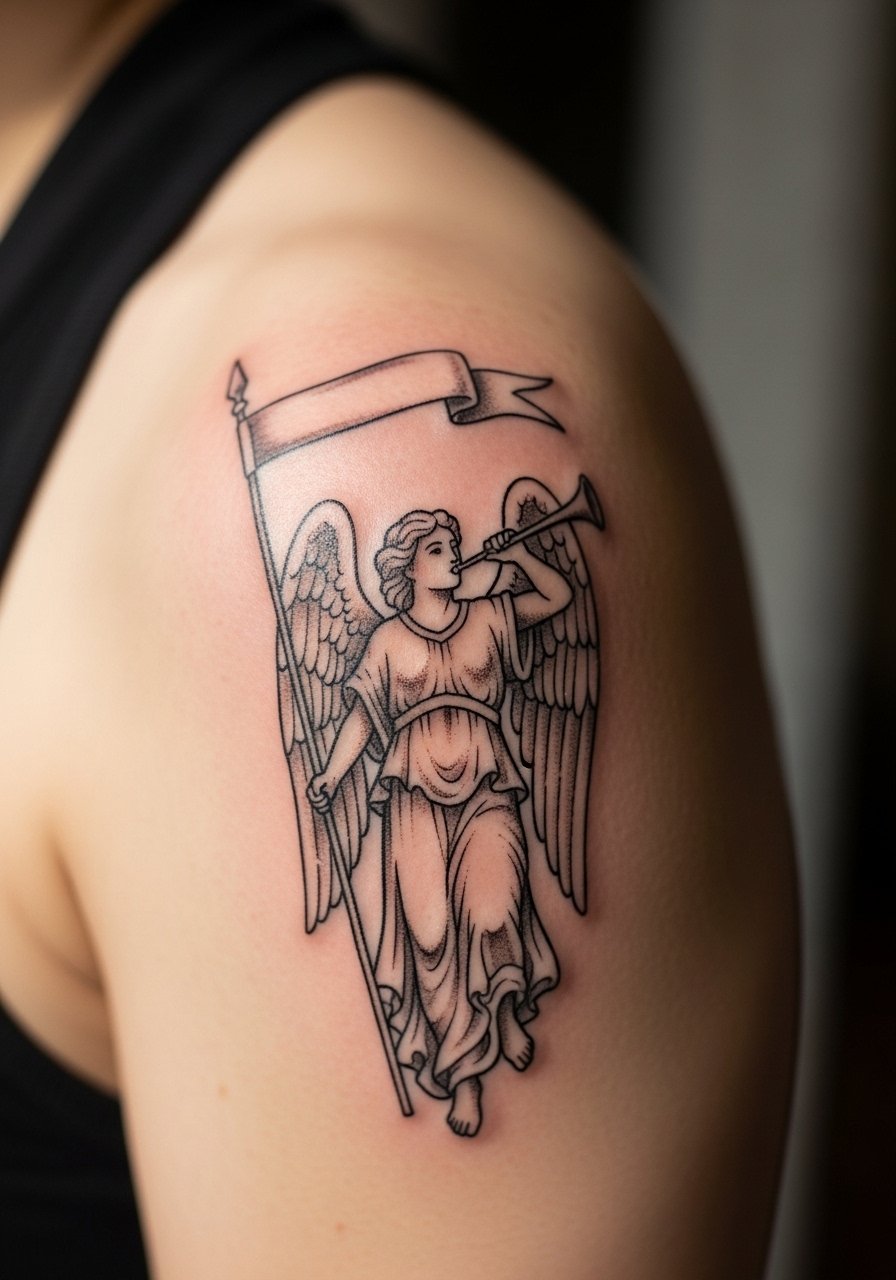
An angelic herald combines figure work and iconography. Tell your artist to stylize the face and keep wings slightly abstract to avoid tiny feathery detail that fades. Pain is moderate and session time can be two to three hours. The common mistake is insisting on photo-realistic faces at small scale. Faces tend to soften faster than silhouettes. For the session pick a tank top or button shirt for access.
21. Unicorn Rampant, Medieval Line Art
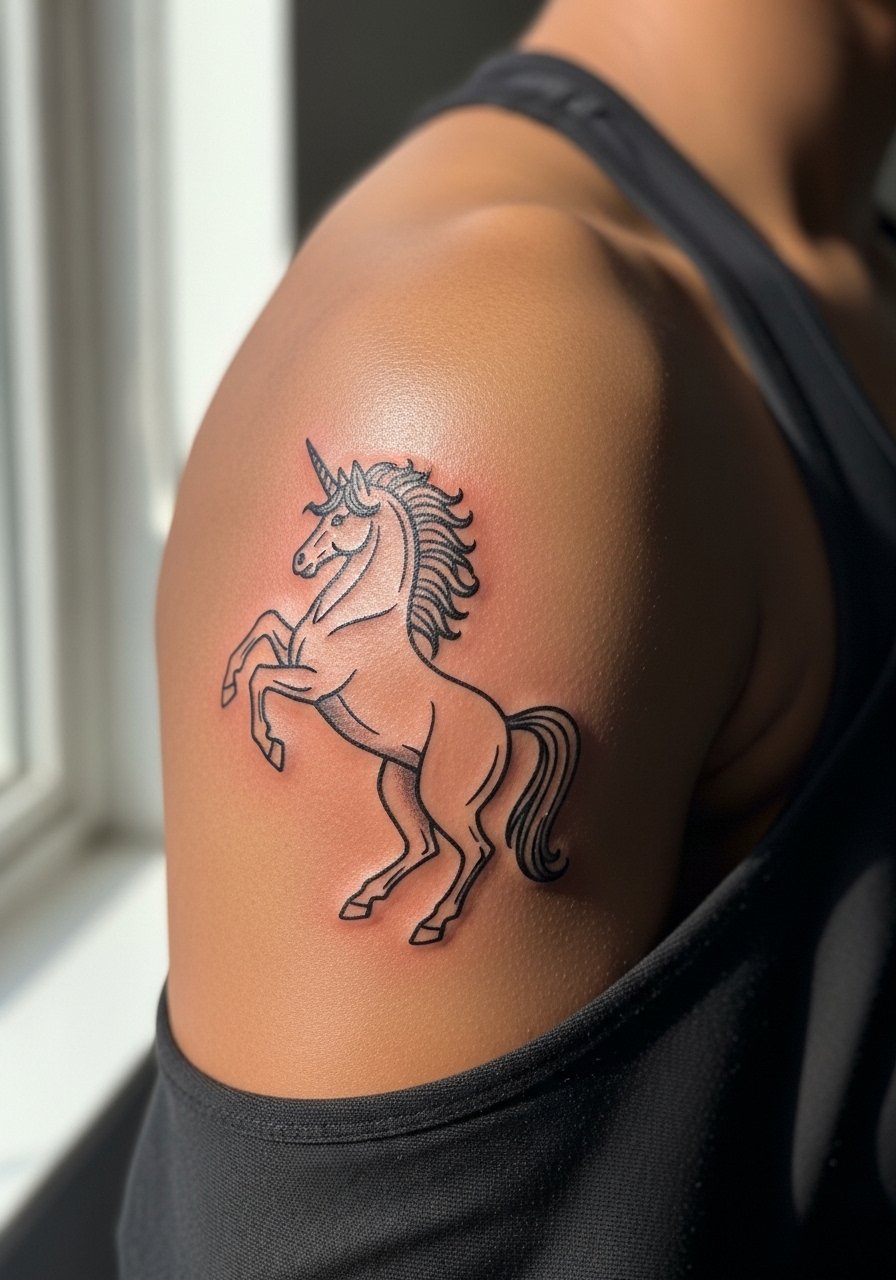
A unicorn rendered in medieval line style reads as an emblem rather than a realistic creature, which helps longevity. Ask for larger white space around legs so lines do not crowd. Pain is moderate. Sessions often finish in one to two hours. Over-detailing the mane is a typical mistake. The linework remains legible longer than tiny textural strokes. For display, an off-shoulder knit keeps the silhouette visible.
22. Green Man Mask Fragment
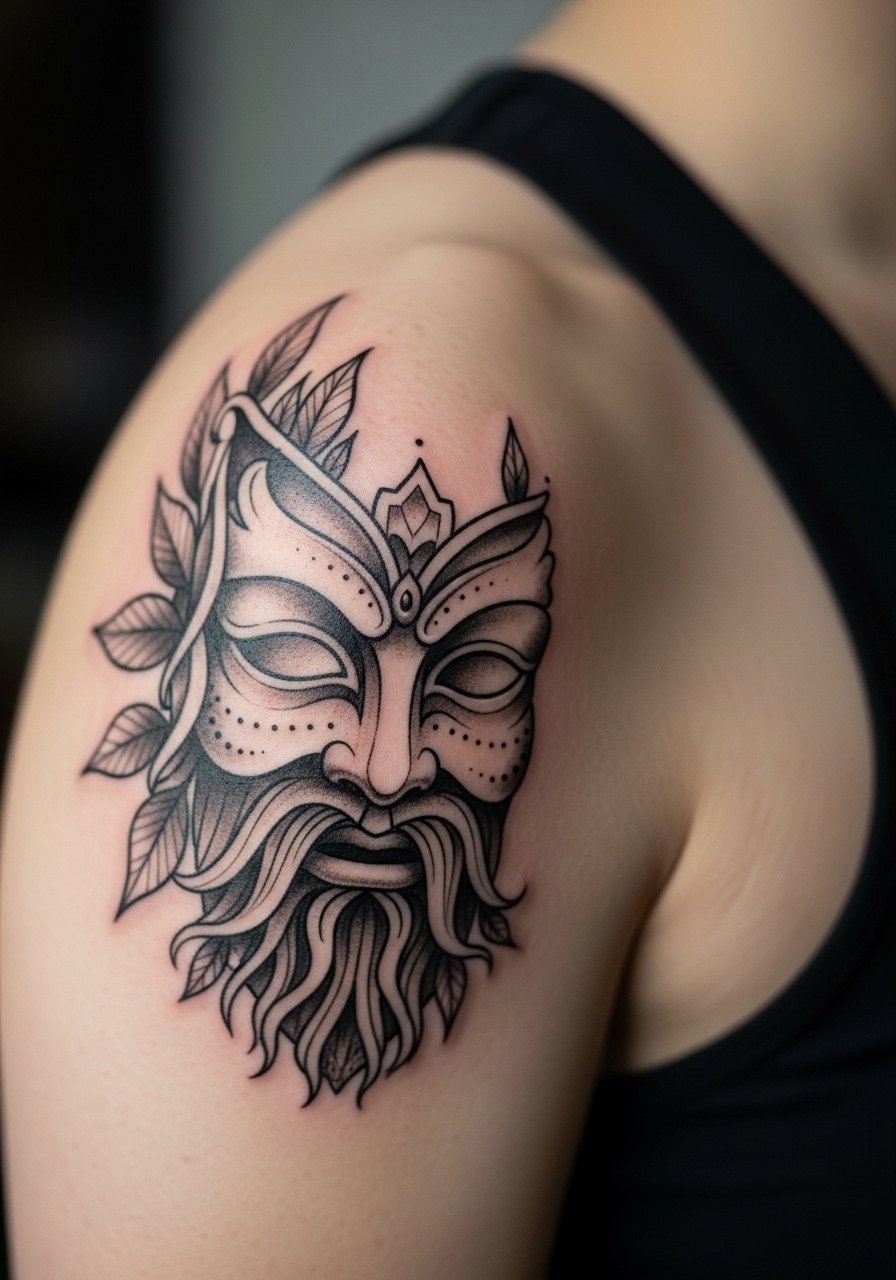
The Green Man motif pairs foliage and visage, which benefits from avoiding miniature leaves. Request clear leaf shapes with space for aging. Pain is moderate and session time is usually under three hours. A frequent mistake is trying to pack too many tiny veins into each leaf. Over time the leaf shapes hold while tiny veins may blur. Pair with a woven tank or blouse to show the leafy edge.
23. Medieval Ship with Bannered Sails
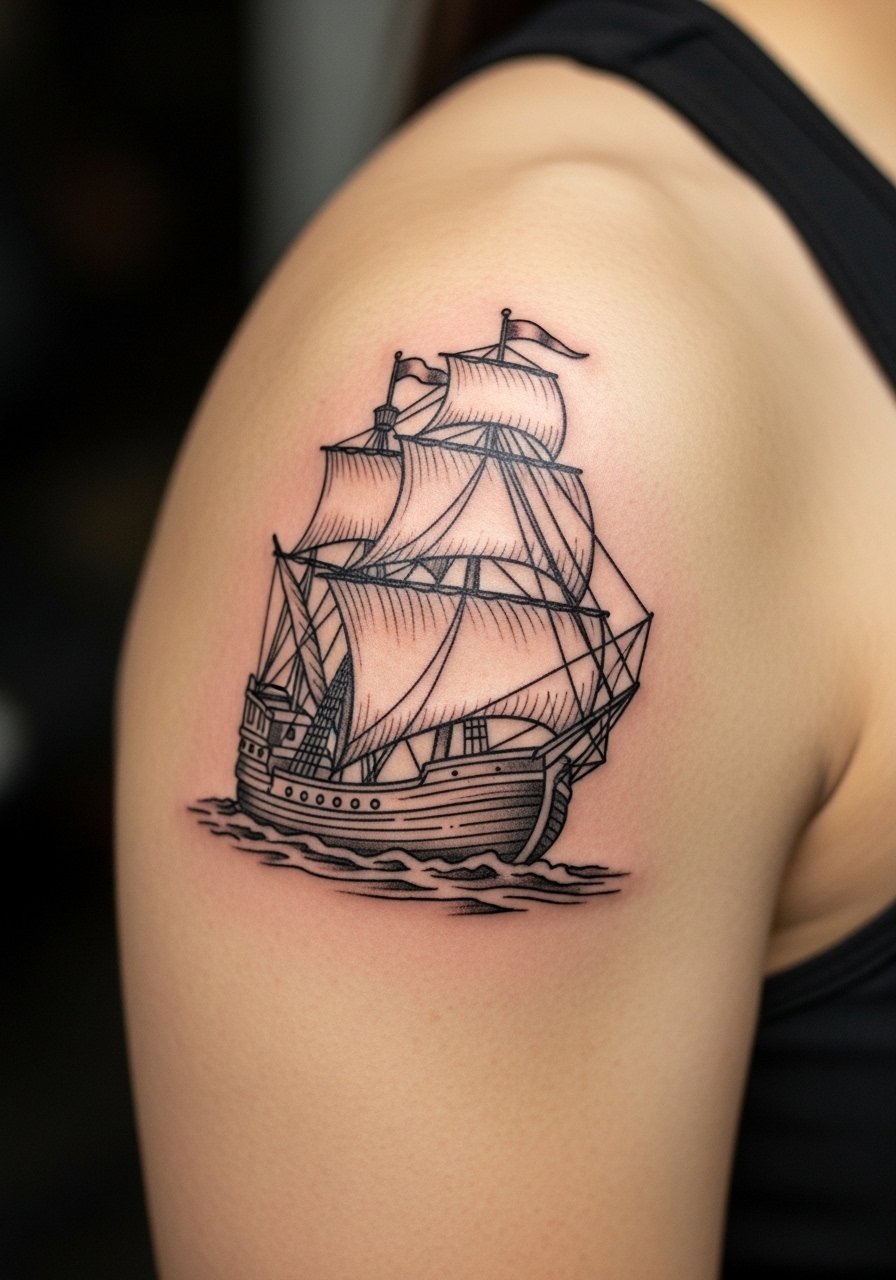
A ship uses the shoulder slope to suggest motion and works best with simplified rigging. Tell the artist to emphasize the hull silhouette and avoid tiny line rigging that will not hold. Pain is moderate. Sessions can run two to three hours for waves and banners. The common mistake is intricate rope work that blurs into a mess. For dressing, a strap blouse shows the prow cleanly.
24. Gargoyle and Heraldic Ruin Scene
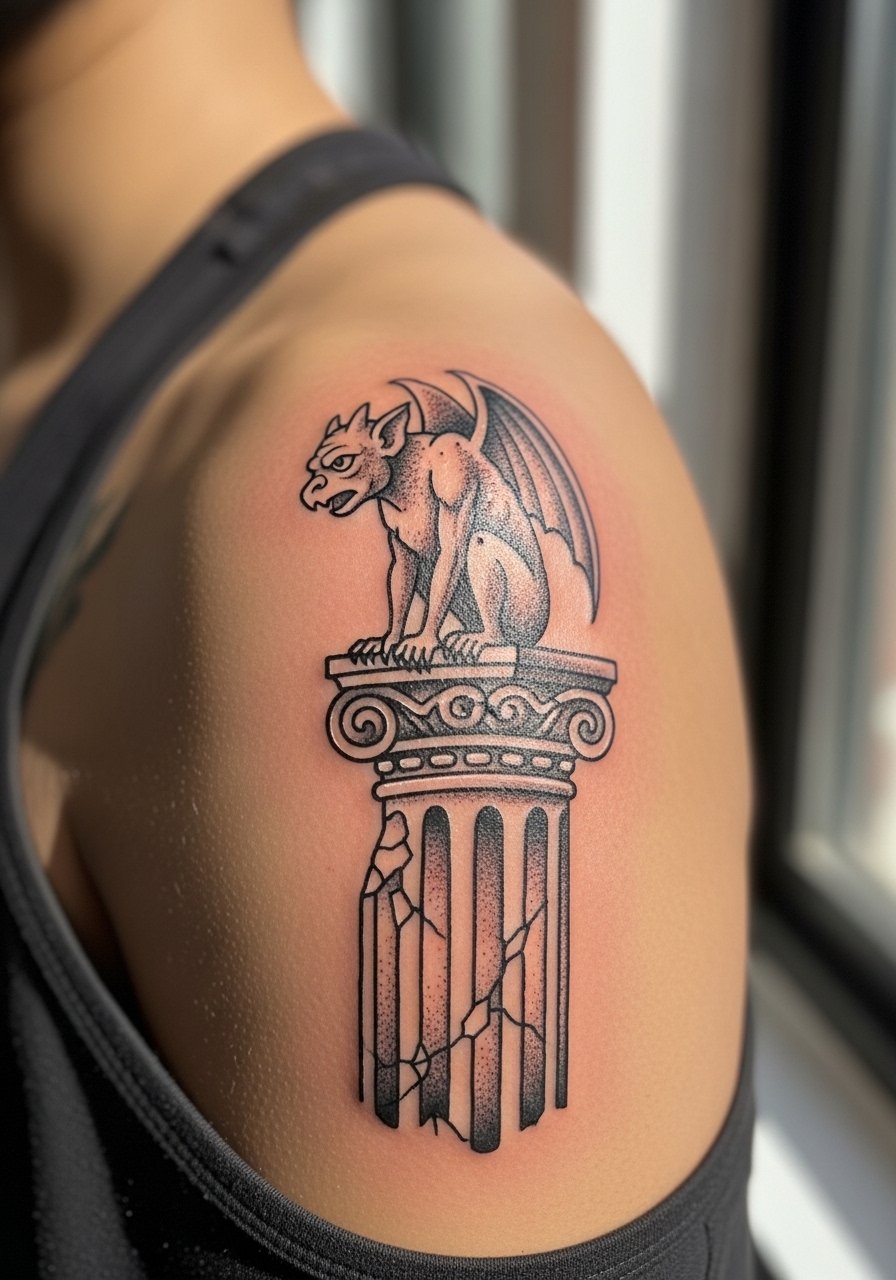
A small scene combines figure and architecture. Request scaled-back background so the gargoyle remains the focal point. Pain can be moderate to high near the shoulder blade edge. Sessions may take two to three hours. People often try to cram a full ruin into a small canvas. Over time the ruin's tiny masonry softens faster than the gargoyle silhouette. Wear a wide-neck top to expose the scene.
25. Medieval Knot and Sword Monogram
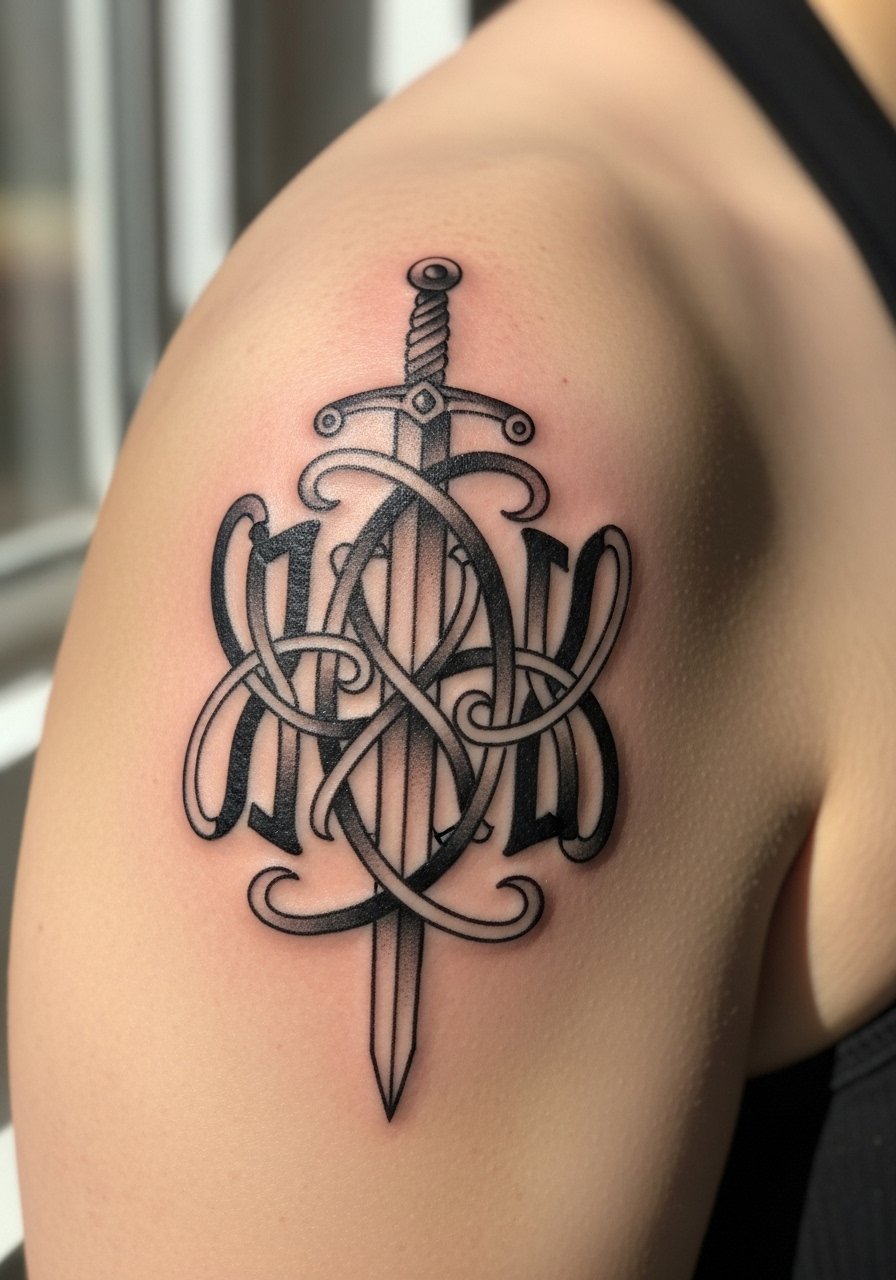
A personalized monogram works when the letters are large and negative space is prioritized. During consult, request enlarged counters in the letters so the knot does not fill into the sword. Pain is moderate and sessions run under two hours. The common error is tight letterforms that merge. Expect the sword silhouette to last longer than inner knot texture. For the session, a button-up you can slide aside is practical.
26. Mandorla with Saint-Like Figure
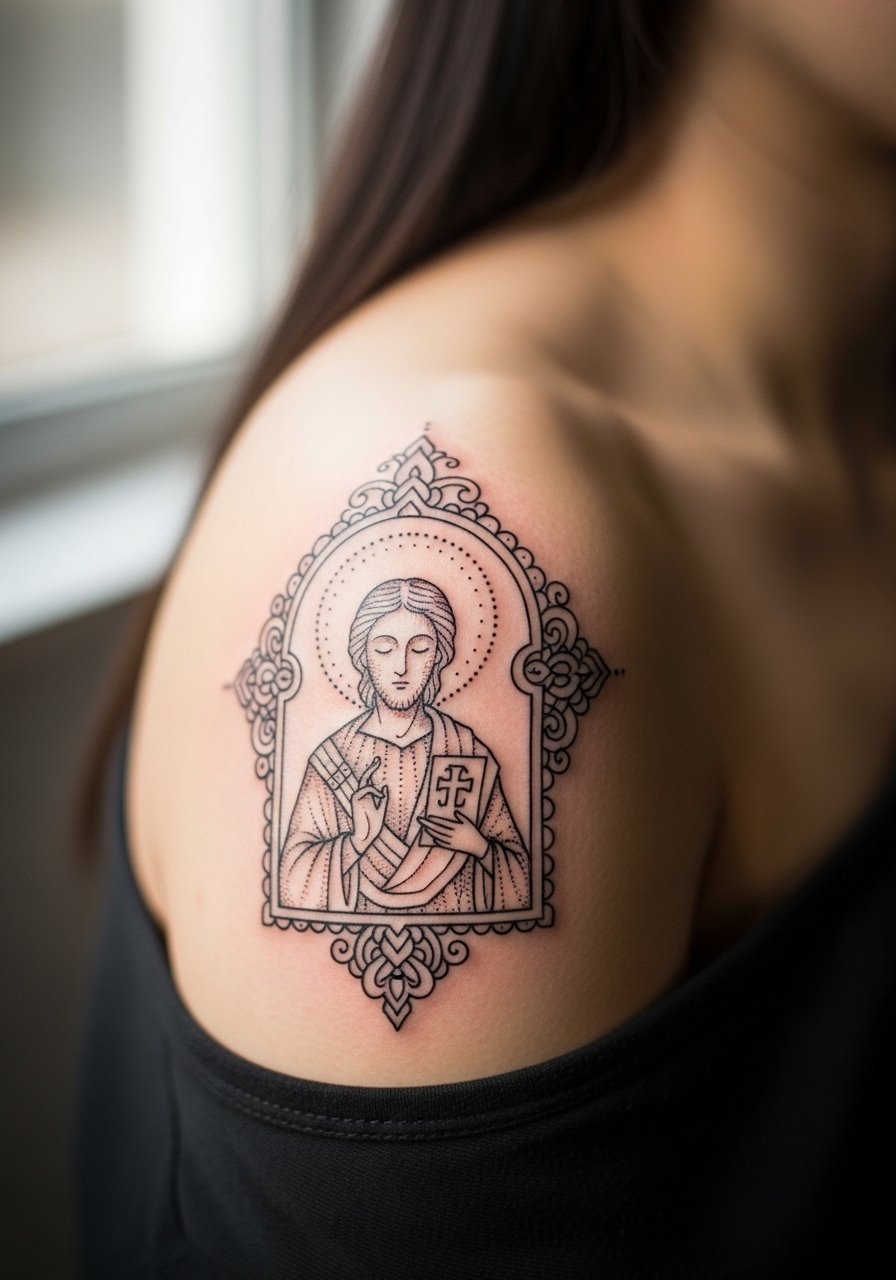
A mandorla acts as a spiritual frame and benefits from simple inner figures. Ask for stylized features and broader lines inside the mandorla so faces do not blur. Pain is moderate and a session may take two to three hours. Controversy sometimes appears with direct religious portraits. One camp treats such imagery as devotional and appropriate. The other camp asks for adaptation to avoid exact replicas of sacred figures. Clarify intent in your consult. Pair with a wide-neck shirt pulled slightly aside for reveal.
27. Medieval Marginalia Beast, Small and Playful
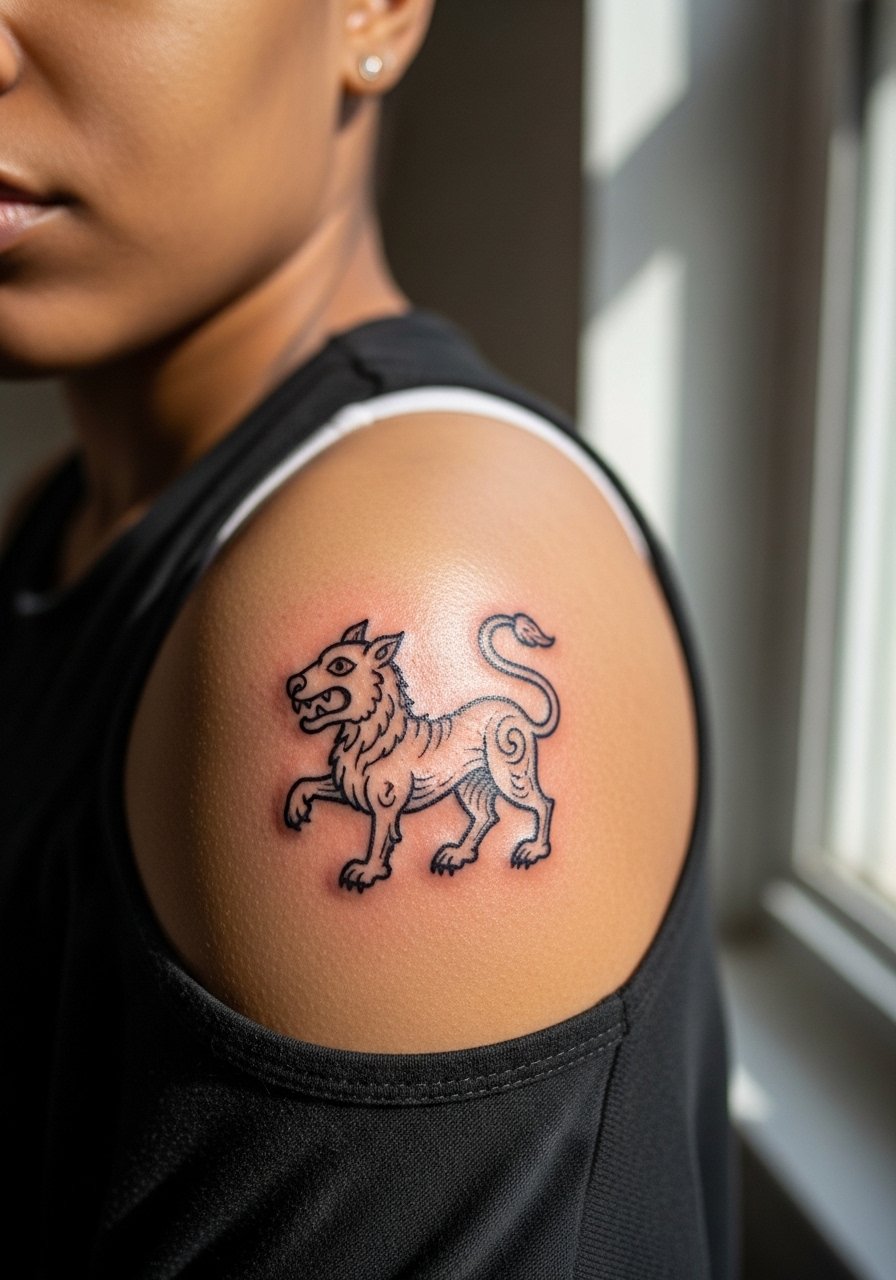
Marginalia beasts are great as compact shoulder pieces that still carry medieval character. Tell your artist to keep the creature bold and avoid micro-leg ornamentation. Pain is moderate. The session usually runs under ninety minutes. The typical mistake is insisting on tiny claws or teeth that melt into the background. Over time the beast silhouette endures while tiny appendages may need a touch-up. Style it with a crop tank or rolled sleeve top to show the playful edge.
Frequently Asked Questions
Q: How does fine line medieval detail hold up on the shoulder compared with bold blackwork?
A: From what I have seen, fine line ages faster than bold blackwork on the shoulder because skin movement can make tiny strokes merge. If you want intricate medieval detail, ask for slightly heavier line weights and more spacing. Bold blackwork silhouettes usually remain legible longer with fewer touch-ups.
Q: Will color in a stained-glass or illuminated piece need frequent touch-ups on the shoulder?
A: Color tends to fade faster than solid black on the shoulder, especially in small panels. Larger, simpler color fields last better than tiny panes. Expect a color refresh before outlines need much work, often several years in depending on sun exposure.
Q: Are religious or culturally specific medieval symbols controversial to tattoo on the shoulder?
A: Yes, there are two camps. Some people view such symbols as personal expression and accept faithful renderings. Others recommend adapting or reinterpreting those symbols to avoid appropriation or unintended offense. Be explicit about intent during your consult and consider a slightly personalized take.
Q: What should I wear to a shoulder session to make the artist’s life easier?
A: Wear something that gives clear access without being too tight. A button-down, loose tank, or a wide-neck top works well. If you plan to show the piece afterward, an off-shoulder top is a simple choice that frames the cap.
Q: How often should shoulder heraldic or emblem tattoos get touch-ups?
A: Realistically, expect touch-ups on detailed areas at around three to five years. Large bold motifs can go longer, while thin scripts and tiny flourishes often need earlier work. Sun protection and minimal friction extend the interval.
Q: Do shoulder tattoos interfere with clothing or bras during healing?
A: Friction from straps can irritate a new shoulder piece. Use loose straps or slide them off the area for the first week when possible. For sleep comfort pick soft, non-restrictive tops and avoid tight backpack straps.