
Fine line trends look great on a feed, but small religious motifs on visible spots age on skin, not pixels. Small "In God's Hands" tattoos can carry a quiet weight without shouting, if planned with placement, spacing, and lifestyle in mind. Below are 17 micro takes that keep the symbolism intact while thinking ahead about healing, wardrobe, and long term wear.
1. Tiny Hands Cradling a Seedling on the Inner Wrist
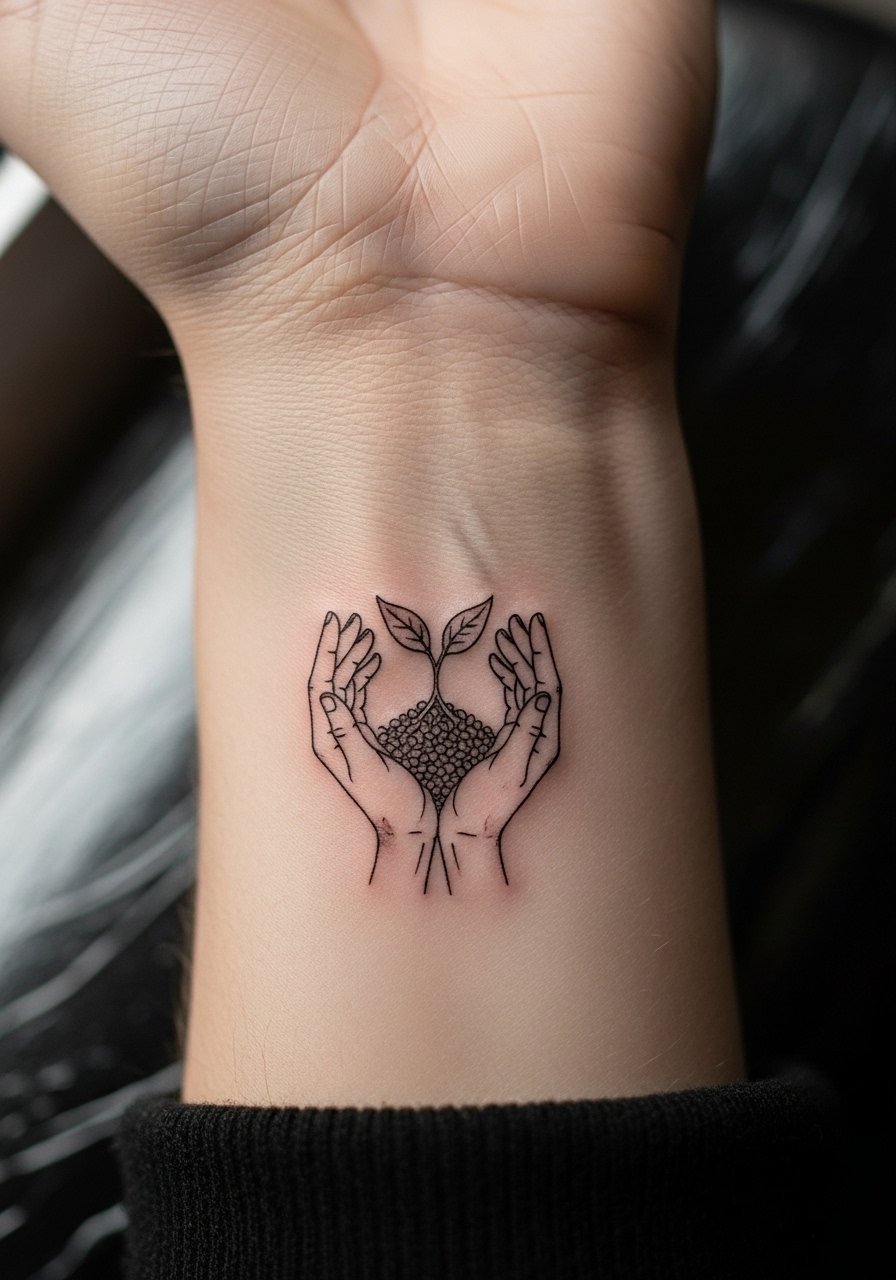
I've seen this placement over and over because the wrist is readable without being loud. Ask your artist to keep the negative space between the fingers and the seedling, so the tiny elements do not merge as the piece heals. Fair warning, wrists get daily sun and washing, so plan for touch-ups at year two or three for the most delicate stems. For the appointment wear a loose button-down shirt that you can slide the sleeve up easily. Common mistake is requesting extremely thin stems that become soft lines over time. Expect a 30 to 45 minute session and moderate sensitivity on the inner wrist.
2. Micro "In God's Hands" Outline on the Side of the Finger
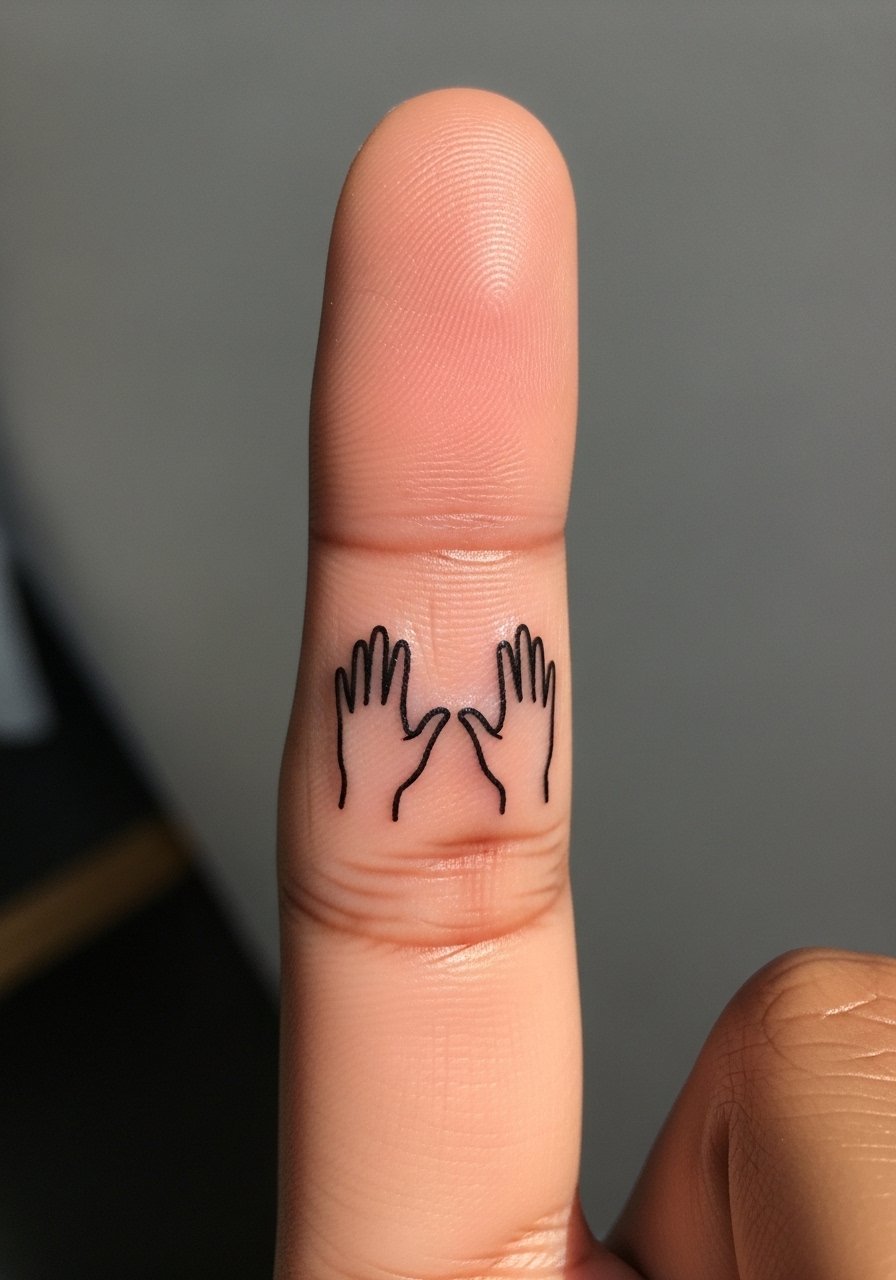
Finger placements look intimate and symbolic, but they live in high-friction territory. When you ask for an outline only, know that ink there tends to fade faster and can need touch-ups as often as every 12 to 18 months. A common error is asking for text with the hands on a single finger. Tiny text blurs sooner than linework, so keep script off the finger. The session is short and stinging. If visibility at work matters, consider placement on the side of the finger where it reads private. Hand and finger tattoos split the community into two camps. One group says visible hand ink impacts professional opportunities and fades quickly. The other group treats hands as prime real estate for meaningful micro work. Decide which side you land on before booking.
3. Palm-Size "Hands" Motif on the Upper Forearm
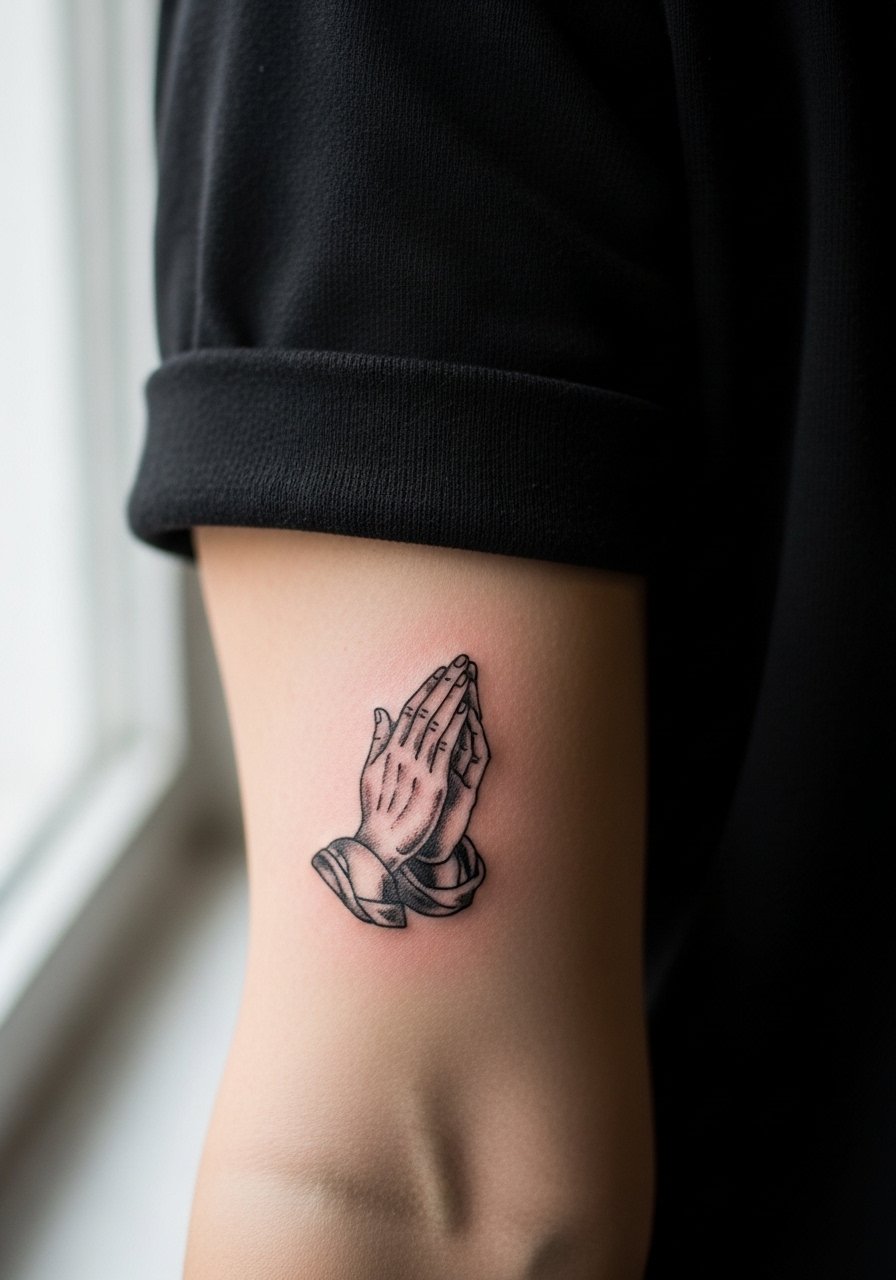
When the motif sits on the upper forearm it reads like an intentional badge rather than a flash. Tell your artist to scale the hands so details like knuckles and nails have breathing room. The forearm tolerates fine line better than the wrist because the skin is flatter and sees less abrasion. Expect moderate pain and a single one-hour session for a micro-realism approach. Over time the edges will soften, but the silhouette should remain readable at five years if saturation is solid. For showing this off try a rolled sleeve linen shirt that frames the artwork without competing with it. A common mistake is compressing too many tiny details into a palm-size composition.
4. Micro-Realism Hands Holding a Tiny Cross on the Sternum
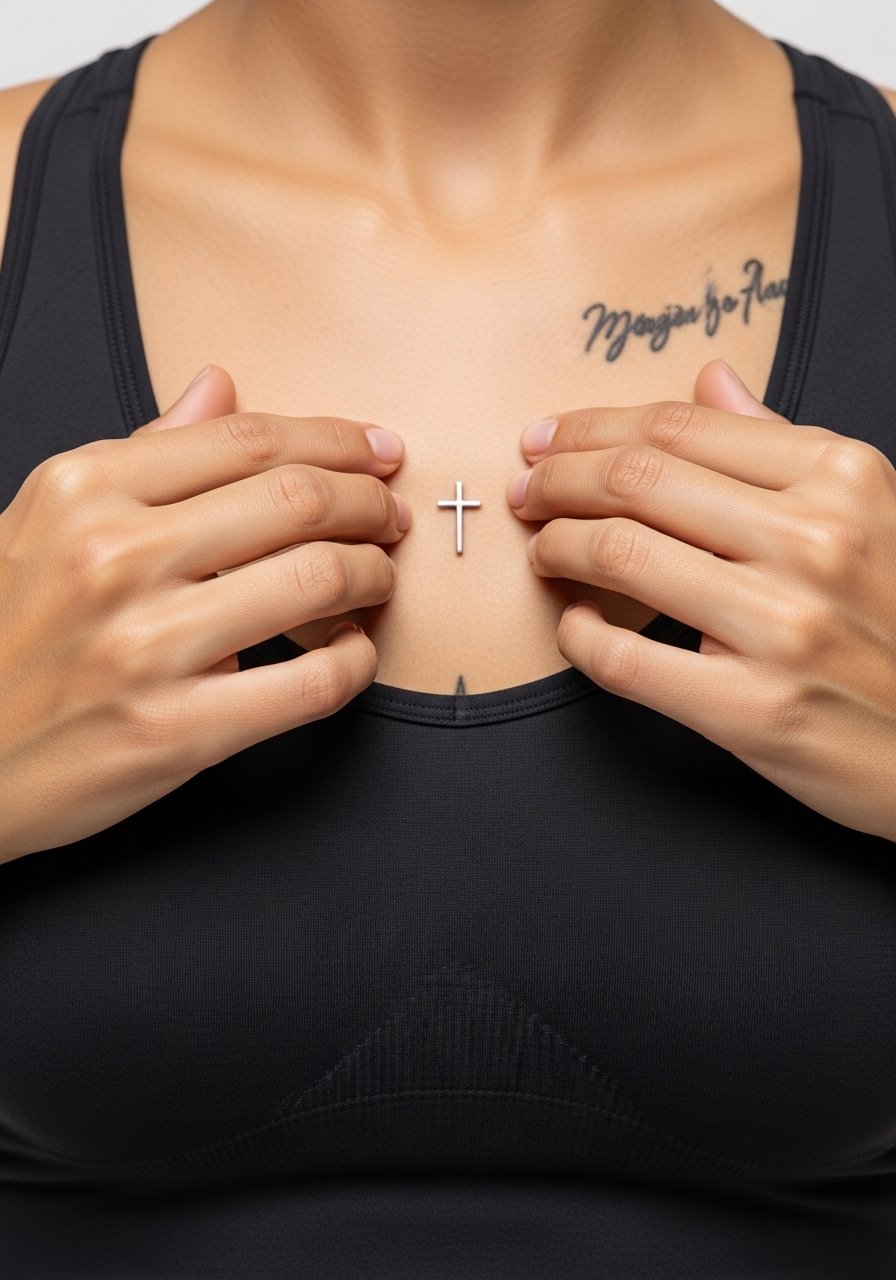
Sternum placements carry a lot of emotional weight so pick proportions carefully. For this placement tell the artist you want slightly heavier contour lines around the hands and a softer interior for the cross. The skin across the sternum moves with breathing so expect higher sensitivity and a session that can run longer than wrist pieces. The biggest mistake is making the cross too detailed; small geometric accents tend to blur there. For the session wear a fitted sports bra so the artist has access while you stay comfortable. Some people prefer the sternum for private devotion, others like it for the way it sits beneath jewelry.
5. Tiny Line Hands Framing a Single Word on the Ribcage

Rib work is a commitment. Pain is higher and the skin flexes with breathing, which affects how thin lines settle. Artists split on whether fine line holds on ribs. One camp argues the skin stretch causes lines to blur within a couple of years. The other camp insists that with correct needle depth and spacing, fine line can remain crisp. Ask your artist which approach they prefer and why before you sit. The usual mistake is shrinking the composition to fit a smaller stencil. Keep the word and the hands spaced so each element breathes. Plan for at least one touch-up at year two to maintain clarity.
6. Micro Blackwork Hands on the Back of the Hand
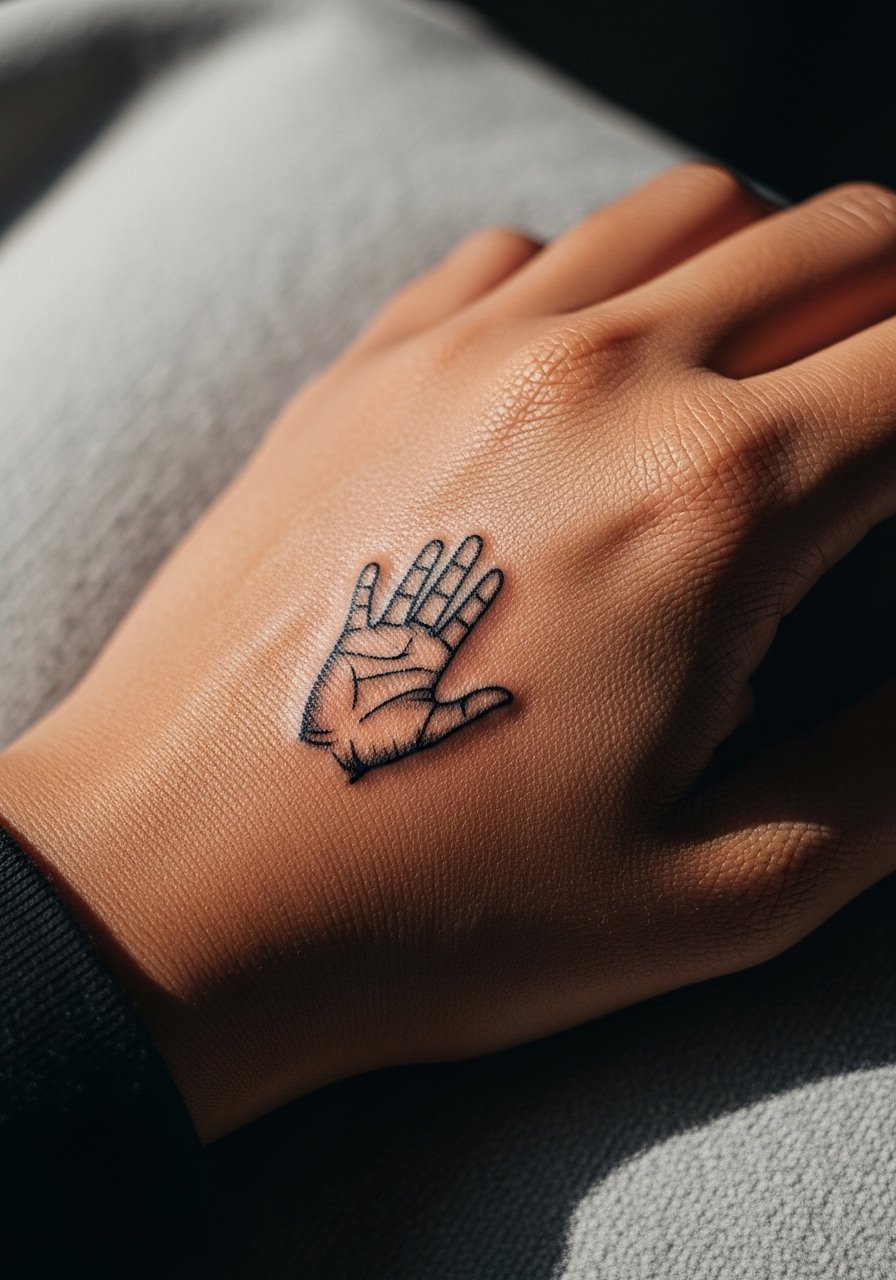
Back-of-hand pieces read boldly even when tiny, so simplicity helps them age better. Tell the artist to favor slightly bolder outlines rather than whisper-thin lines that vanish under wear. Fine line on the back of the hand competes with constant washing and sun exposure, so expect touch-ups sooner than other arm placements. The session is quick but the sting is real because of minimal soft tissue there. For the session and after, cover is limited so plan wardrobe accordingly. Career considerations come up here too. Some employers still frown on visible hand tattoos while others accept them. Weigh the context you live in before committing.
Pre-Session Essentials
The wrist, sternum, and ribcage pieces above require different prep and a few studio items make sessions smoother.
-
Stencil transfer paper kit. Lets you test positioning on skin before the needle touches down, which is crucial for the narrow spacing in ideas 1 through 6.
-
Topical numbing cream. Applied as directed before the appointment it can ease the rib and sternum sessions without changing line clarity.
-
Thin protective film roll. Useful for small hand and wrist pieces that meet frequent handwashing, it shields the area while it scabs.
-
Fragrance-free gentle body wash. Cleans healing skin without irritating the delicate linework of micro pieces on the forearm and sternum.
-
Aquaphor healing ointment. Thin applications during the first few days help keep micro linework from drying into hard scabs that pull pigment.
7. Tiny Hands Sketch on the Outer Ankle
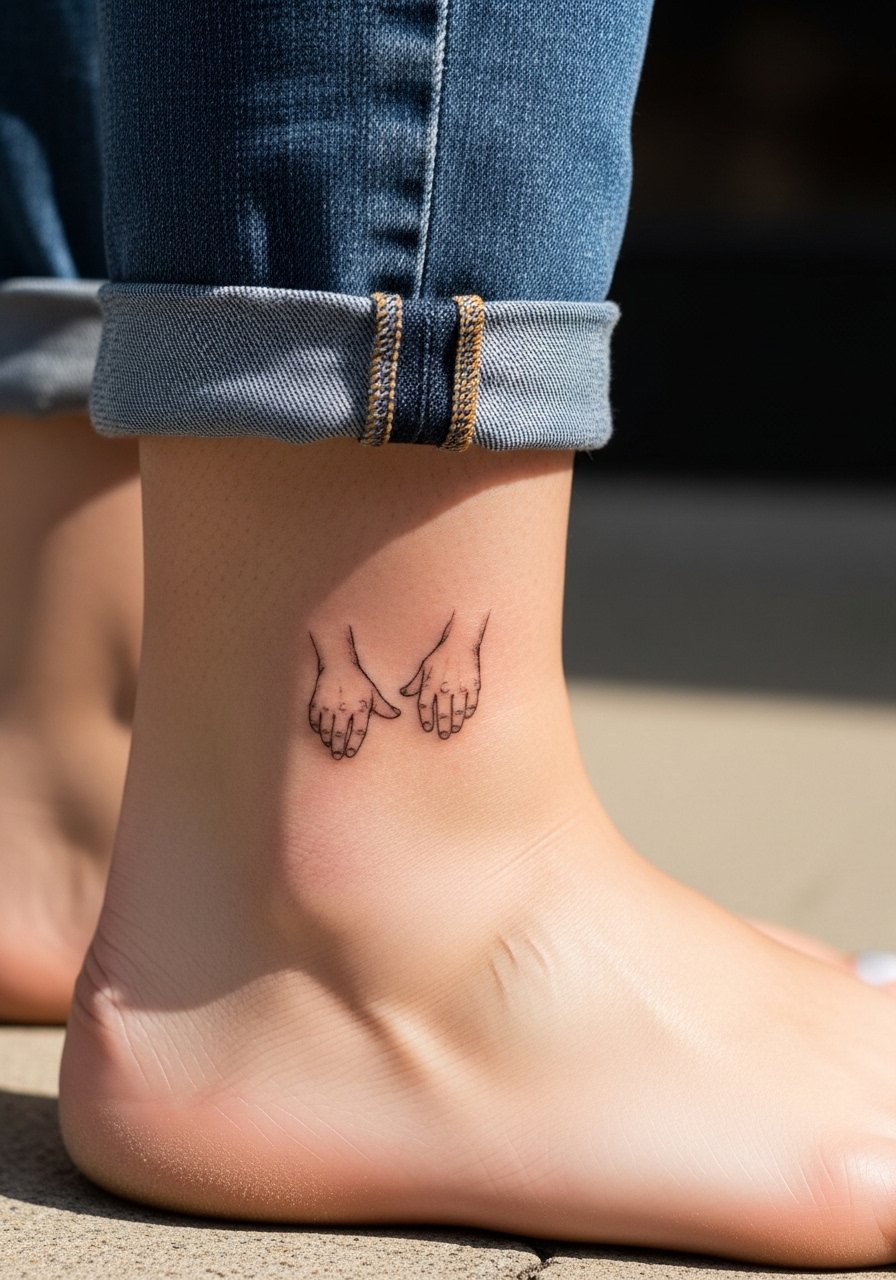
Ankle placements are low visibility and good for people who want a private symbol that pops when barefoot or in sandals. Ask for a slightly simplified sketch to avoid thin cross-hatching that can merge under friction from socks. Sessions are brief and the pain is moderate. The usual mistake is placing the design too close to the bone where blowout risk is higher. For showing this off, a pair of strappy sandals or rolled jeans frames the artwork without covering it. Expect clarity to hold well if you protect the ankle from constant rubbing.
8. Micro Dot-Work Hands Around the Collarbone
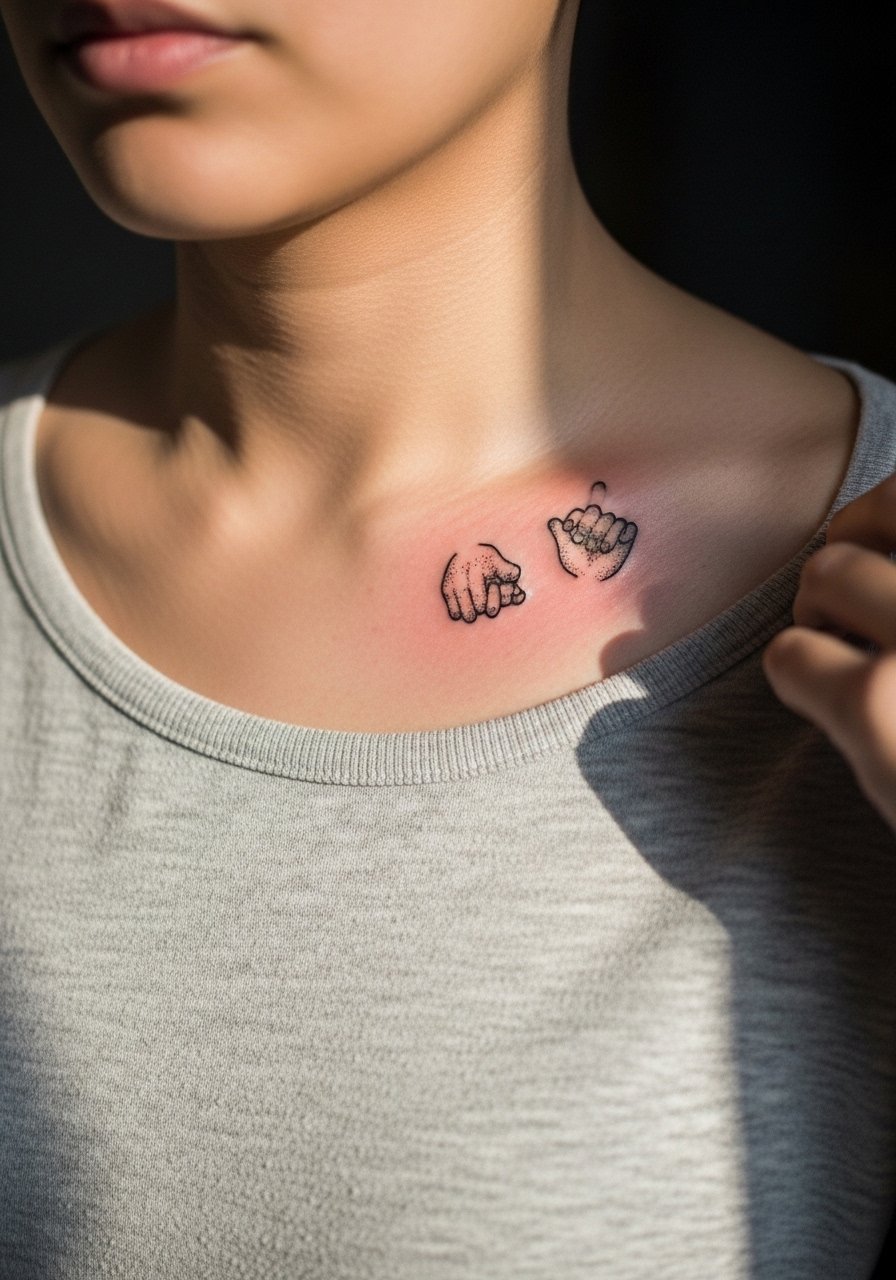
Dot-work creates texture that reads like a subtle emblem near the collarbone. Tell the artist you want dots for shadow rather than lines for contour, so the piece keeps contrast as it ages. Collarbone skin moves with posture so plan for a slightly longer session and a higher tenderness score. A common mistake is packing the shading too tightly which can turn into a muddy patch after a few years. Pair this placement with open-neck tops. Try a thin chain pendant necklace that sits above the hands and keeps attention where intended.
9. Micro Script Between Two Tiny Hands on the Side Rib
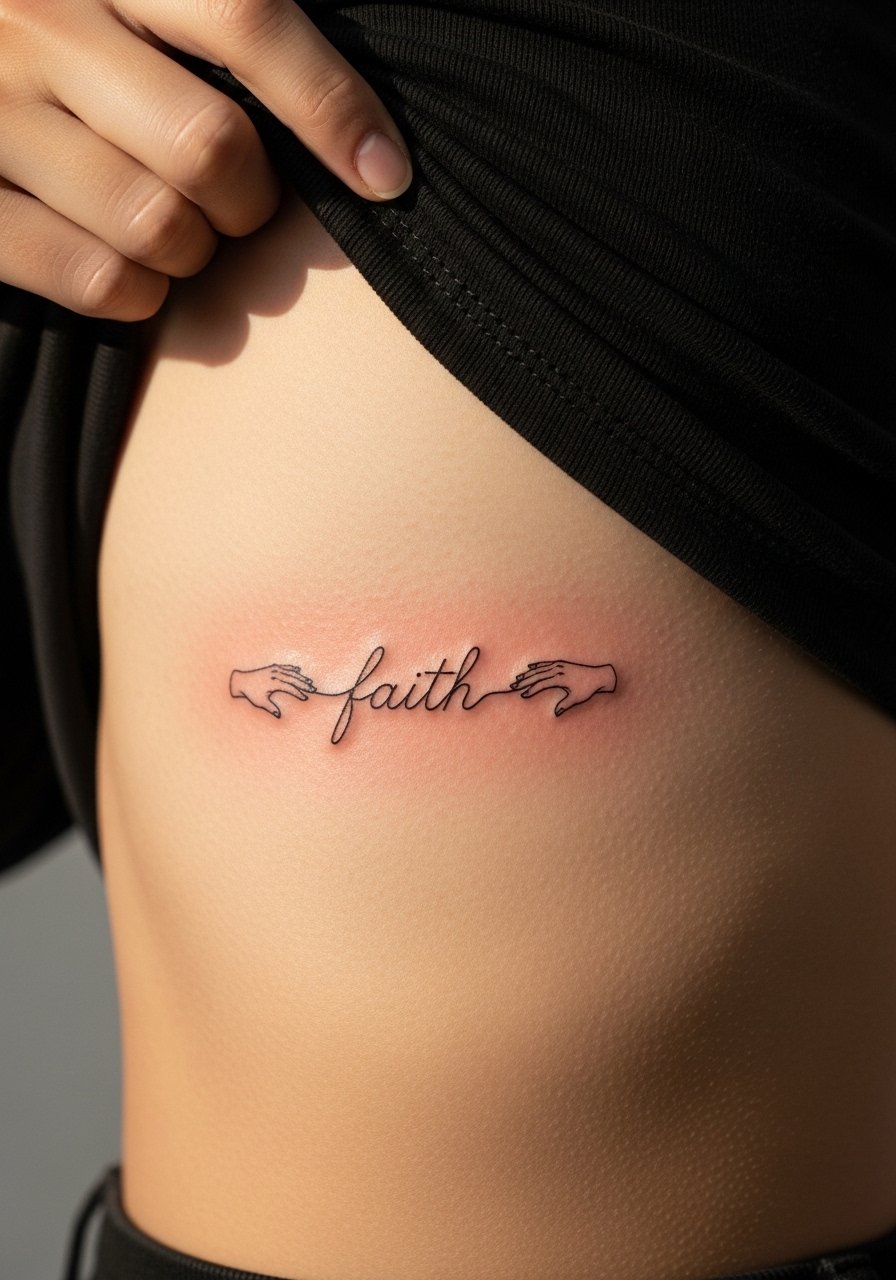
Small script combined with line hands looks intimate on the side rib, but minimal lettering competes with skin movement. Ask for bolder spacing around each letter and keep the script lowercase and simple. The session will be sensitive and longer than a wrist piece. A common error is choosing a script font with lots of swashes. Those flourishes blur quickly on ribs. Expect touch-ups to be a part of long-term upkeep for thin script in this placement.
10. Micro Etching of Divine Hands on the Inner Bicep
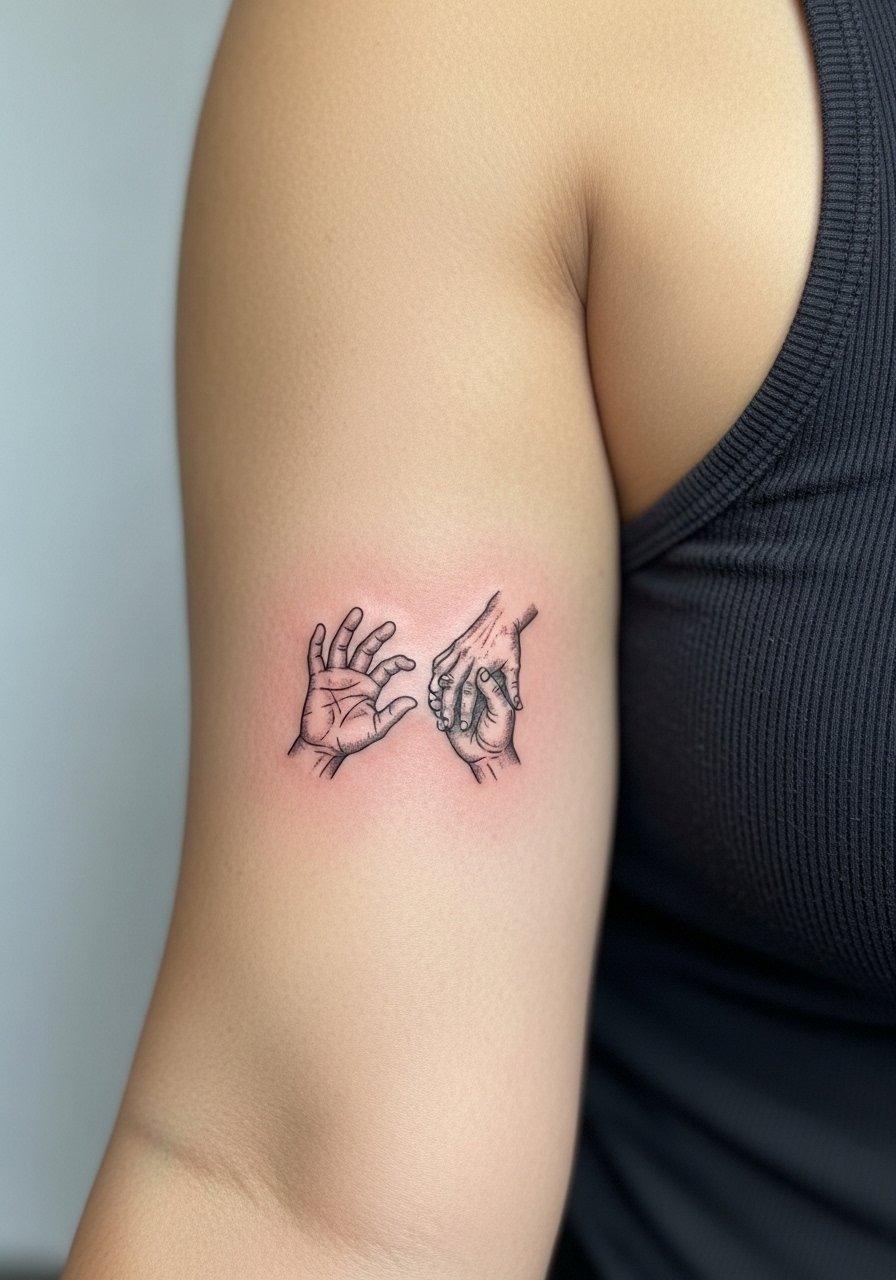
Inner bicep skin is forgiving for fine line because it sees less sun and abrasion. When you discuss the stencil mention the arm movement and how much space will be visible with the arm relaxed. Sessions are moderate in time and sensory level. The mistake I see is over-detailing knuckles in a tiny scale. Keep the etching suggestive rather than literal. For the appointment wear a racerback tank so the artist can access the area without tugging.
11. Micro Shadow Hands Behind the Ear, Below the Hairline
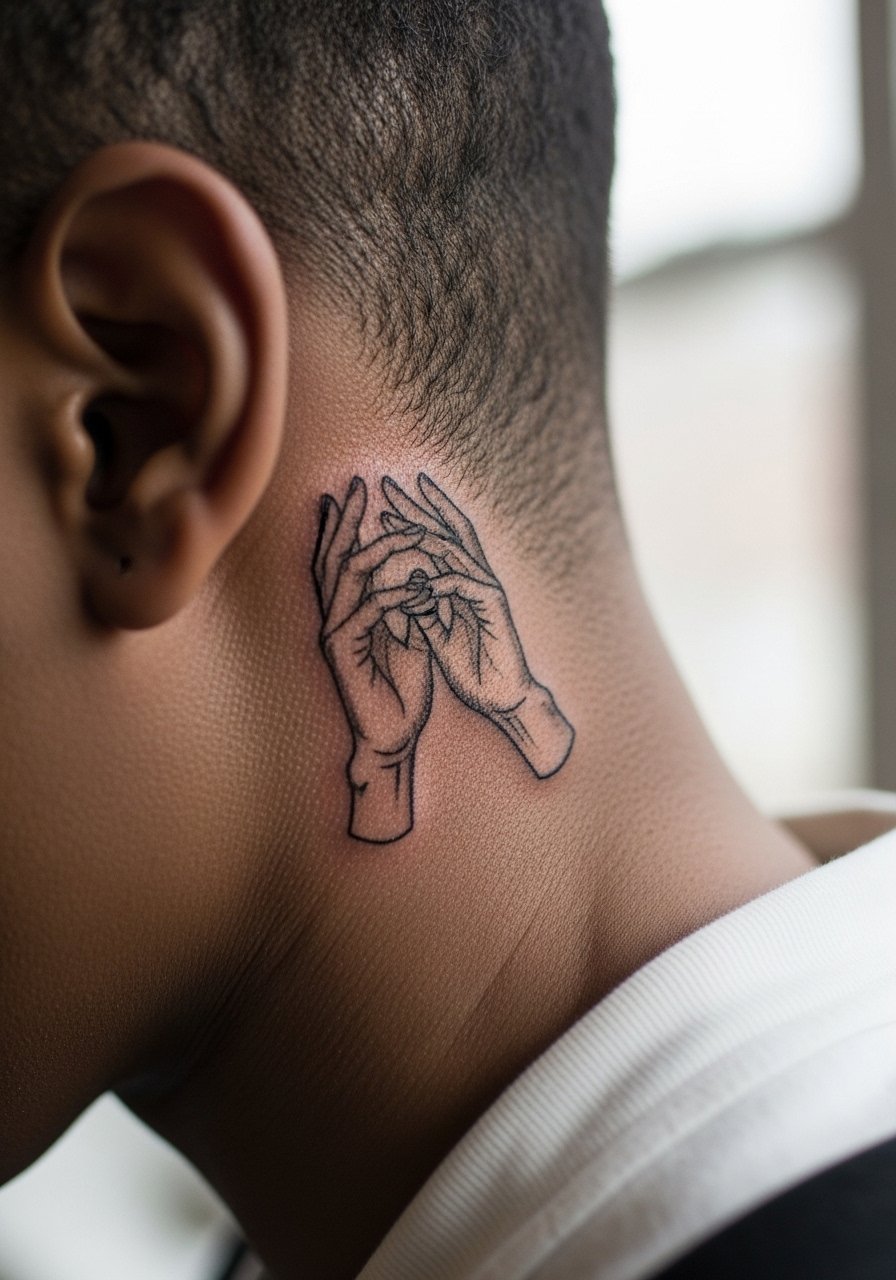
Behind-the-ear placements are discreet and carry personal resonance. The image prompt frames the area with hair and avoids exposing the ear itself. Tiny tattoos there often need touch-ups because hair follicles and thinner skin can disturb pigment retention. The session is quick but can feel sharp given the proximity to bone. If the design uses religious imagery consider whether direct iconography makes sense in this very visible pocket. Some people choose a simplified emblem instead of a literal depiction to honor origin without direct replication.
12. Micro Hands Holding a Tiny Lantern on the Calf
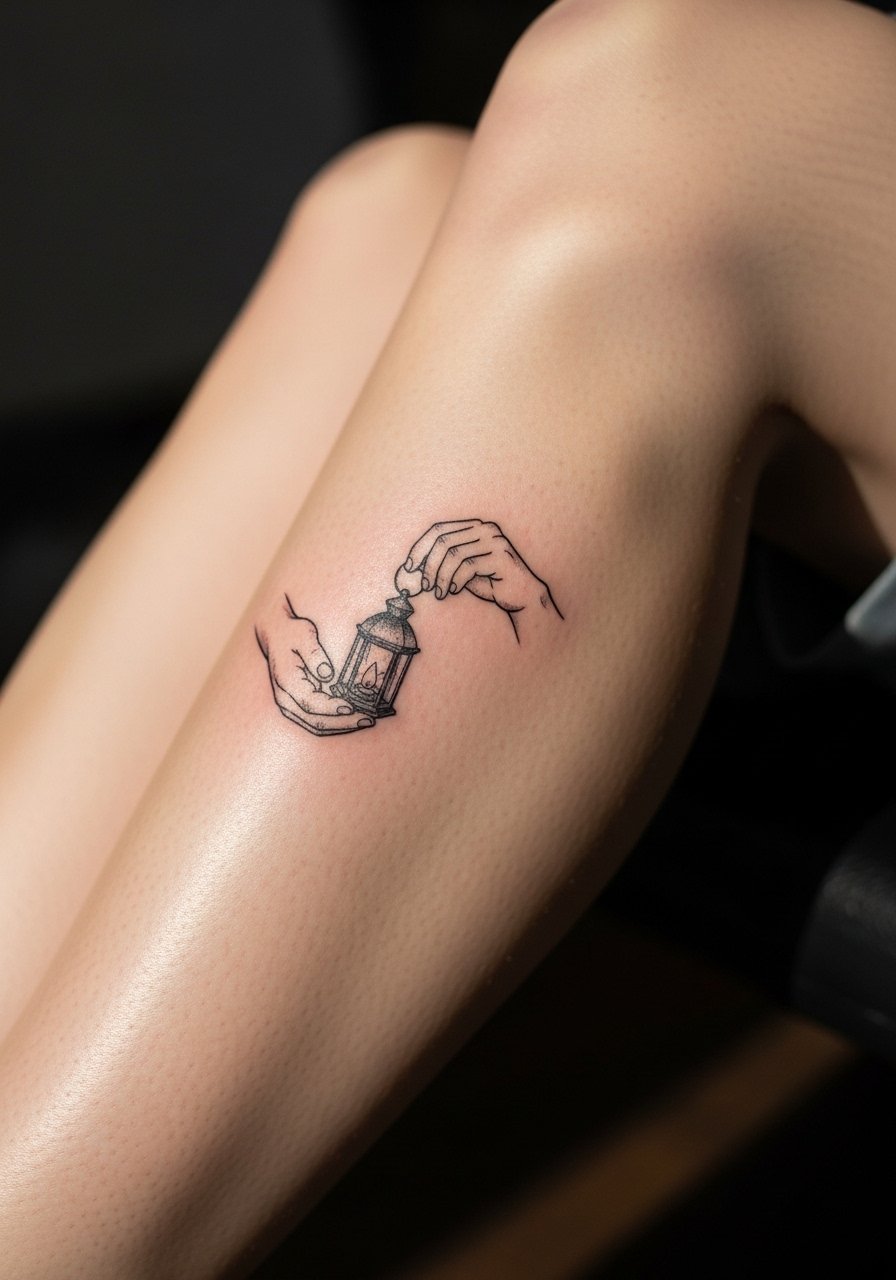
Calf placements let micro pieces breathe visually because the skin is flat and muscles protect the tattoo from frequent abrasion. Tell your artist you want the lantern simple and roomed with negative space to prevent dark fill from dominating. The session is low to moderate in pain and usually done cleanly in under an hour. A common mistake is crowding the hands and lantern with extra filigree that ends up blurring. For casual show-off pair with loose drawstring shorts so the tattoo appears naturally when you move.
13. Micro Hands Cradling a Tiny Heart on the Upper Back, Near the Shoulder Blade
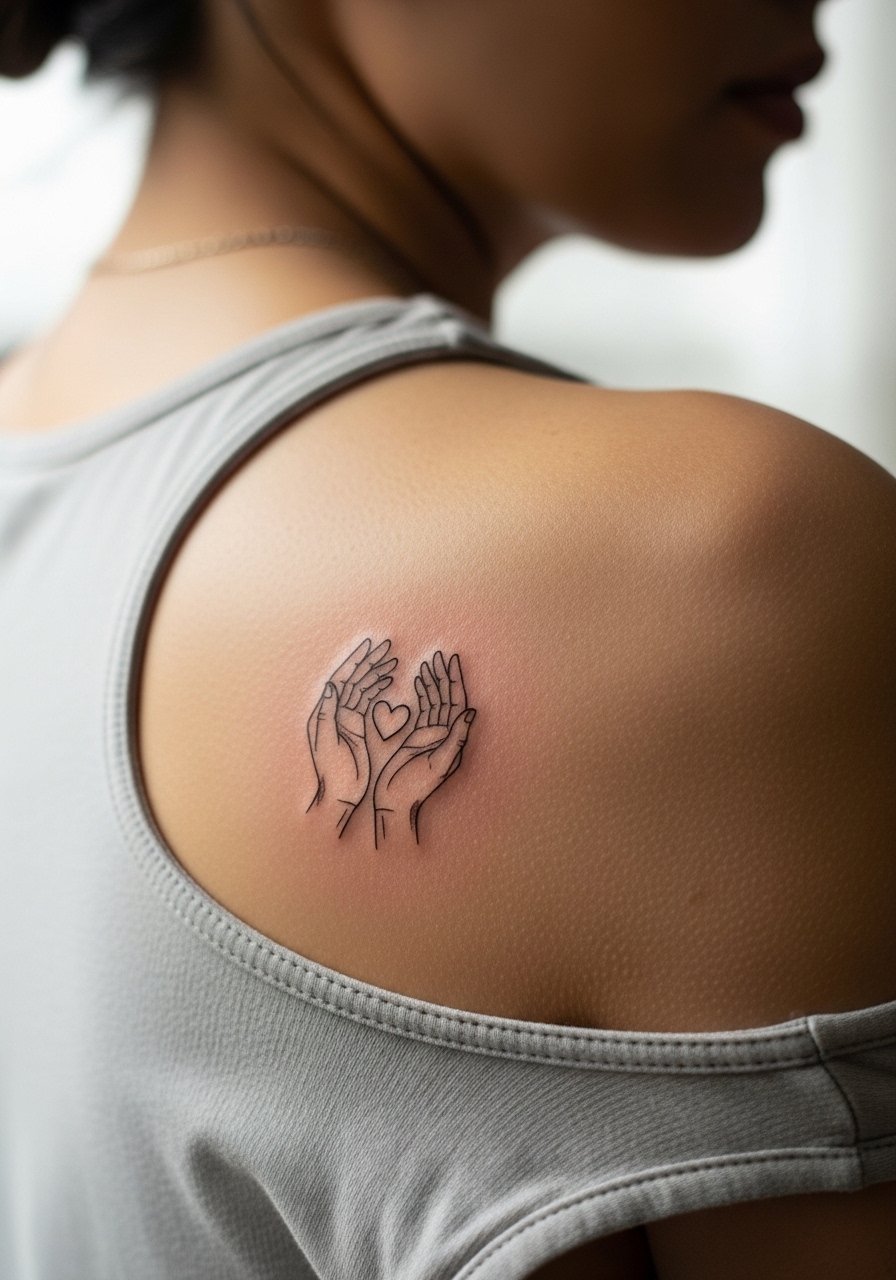
Upper back placements are private most of the time but show nicely with open-back or tank tops. The shoulder blade area tolerates fine detail and tends to heal cleanly. When consulting ask your artist about stencil placement for movement when you lift your arm. Sessions are moderate and easy to manage. The mistake some make is compressing the hands into too small a footprint. Keep the heart small but clear. A loose tank top during the session gives access without exposing more than needed.
14. Tiny Hands in a Linear Row Along the Spine
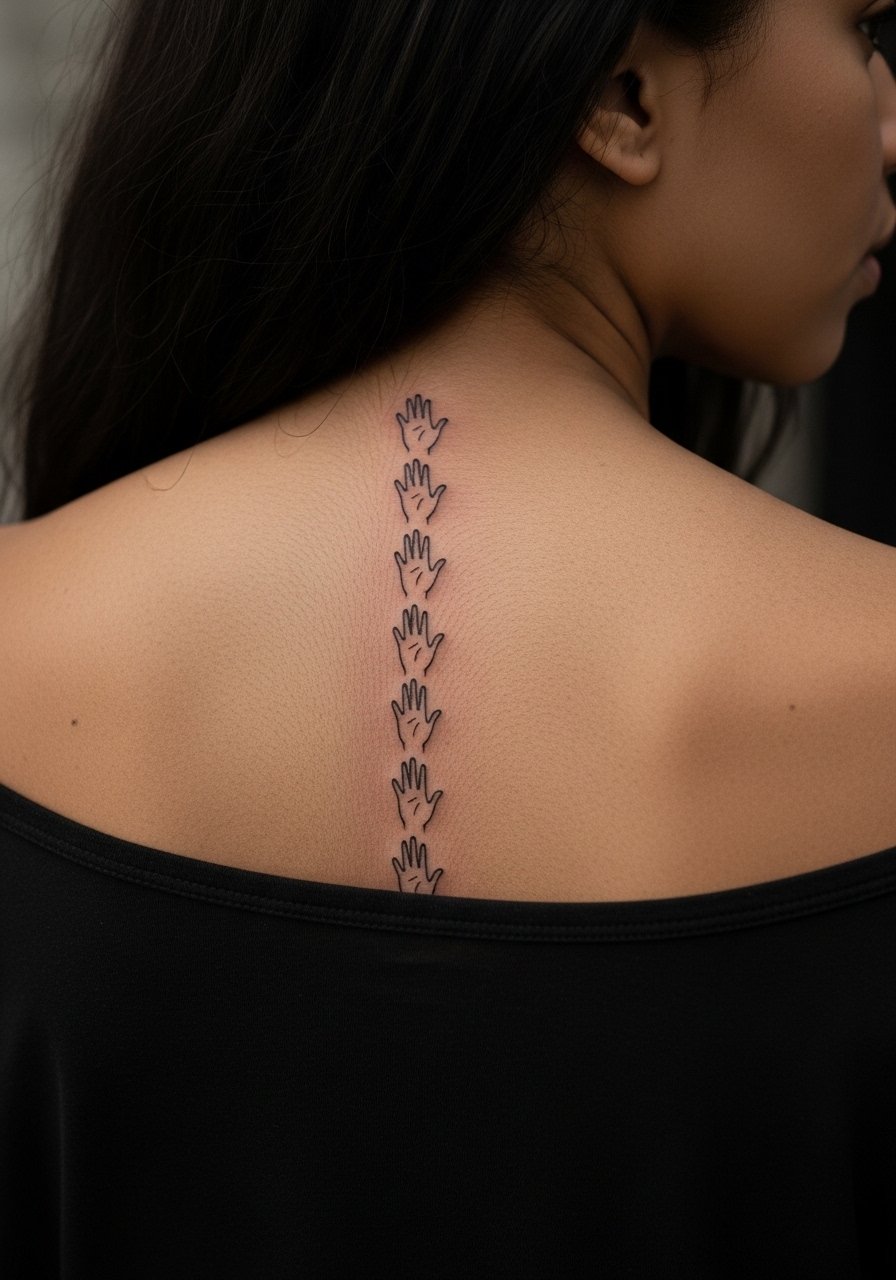
Spine placements give a visual rhythm to repeated micro motifs. Tell the artist you want even spacing so the line of hands reads from a distance and does not blur into a single shape as the skin ages. Pain varies depending on how close the needles get to bone, so expect a higher sensitivity rating and possibly two short sessions rather than one long one. A frequent error is asking for varying scales within the row which confuses the eye. Keep the sequence consistent to preserve the intended effect.
15. Micro Hands Tattooed as a Tiny Ring Around the Wrist
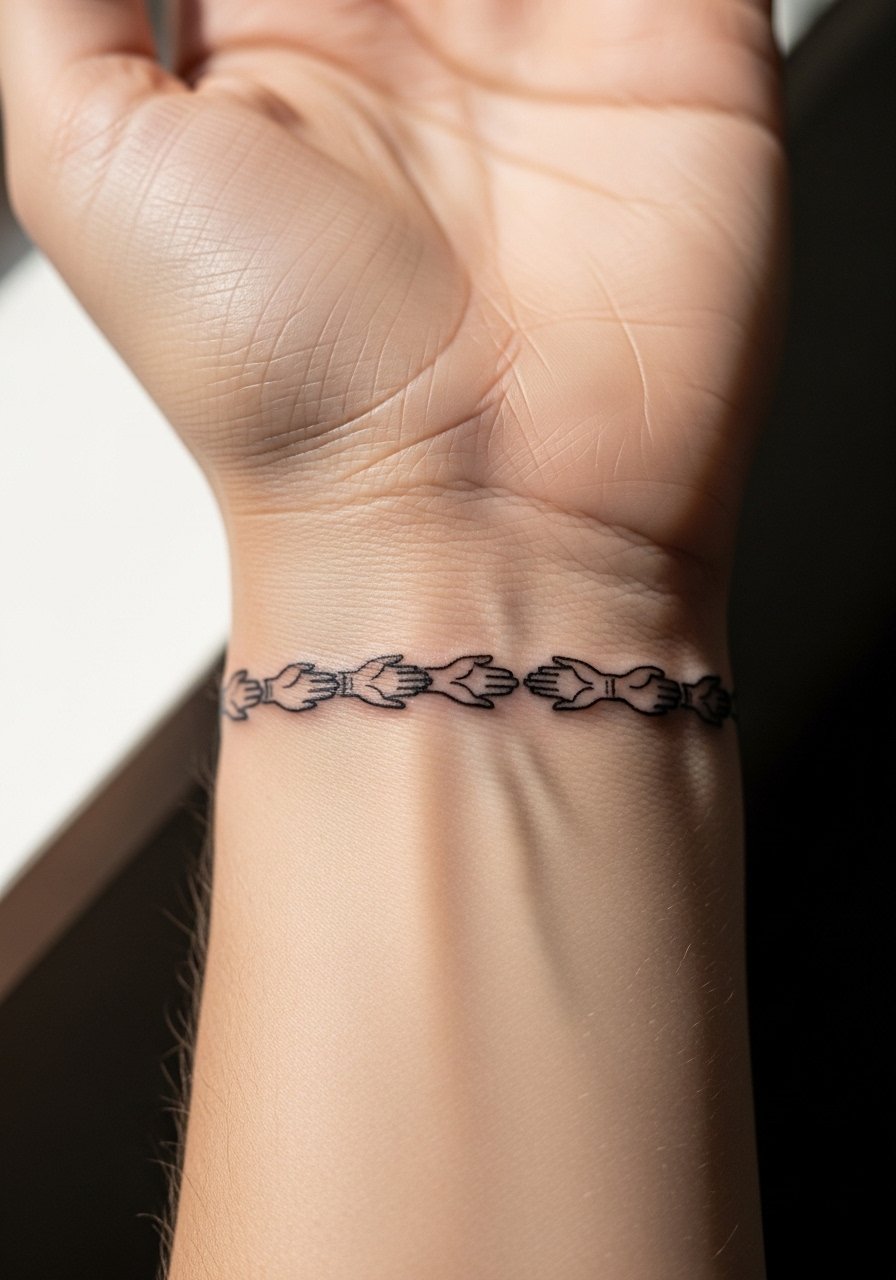
A wrist ring of tiny hands reads like jewelry but behaves differently because wrists are constantly flexed and washed. Ask for slightly thicker outer lines on the band so the motif survives friction. People often forget that a continuous wrap can separate at the seam where the band meets itself. Plan for a small gap or a clear focal point instead of a perfect loop to avoid merging over time. The session is quick and moderately sensitive. For showing this pairing try a minimalist watch that sits just above the band without crowding the art.
16. Micro Hands Over a Small Sun Motif on the Lower Thigh
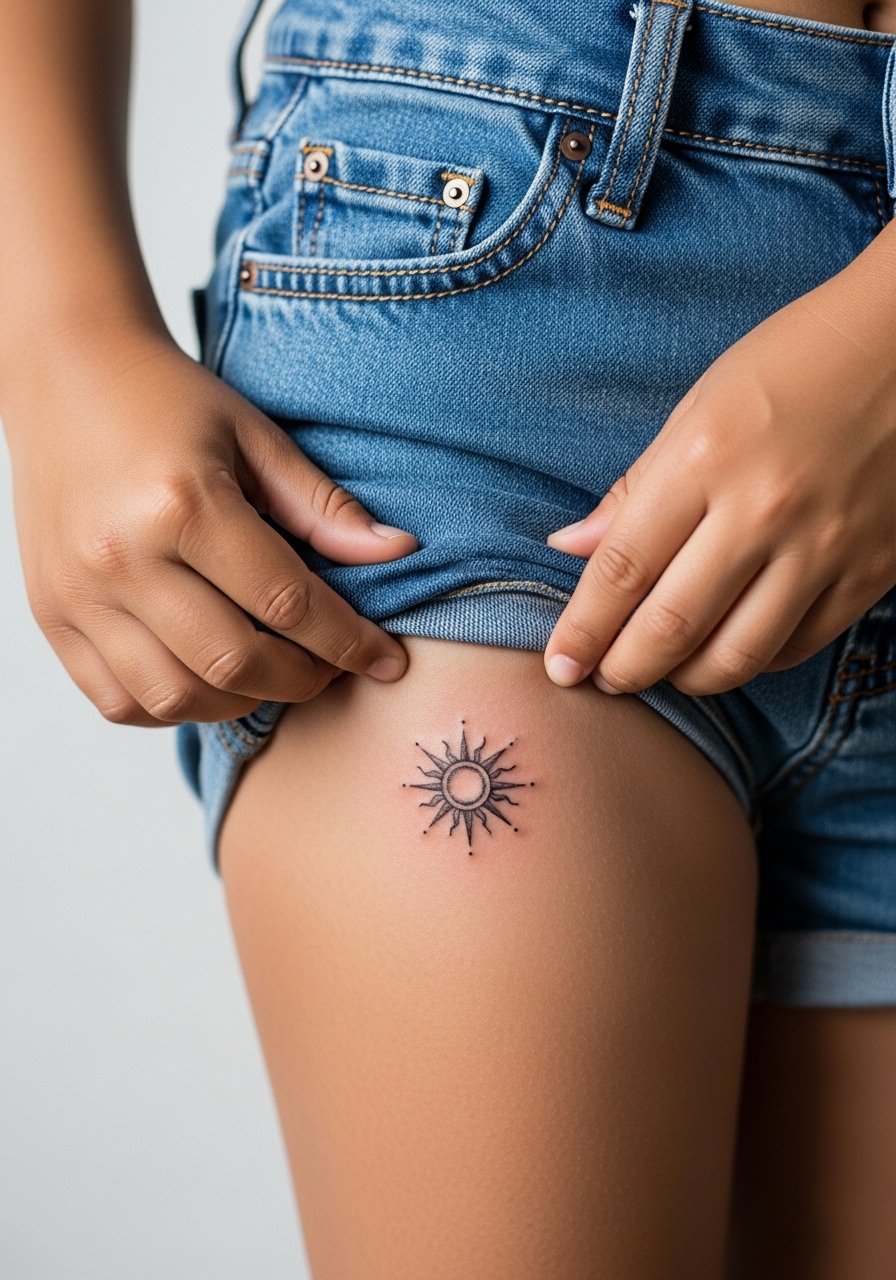
Upper thigh placements let you choose intimacy or visibility with clothing. During consultation ask the artist to consider how the piece looks when seated and standing so the sun's rays do not distort. The session is lower on the pain scale for many people and healing is straightforward because of fewer friction points. Mistakes include placing the sun too close to pant seams which rub during healing. For session comfort wear high-waisted shorts or a skirt so the artist can access the area without you being uncomfortable.
17. Micro Hands as a Tiny Chest Medallion Above the Heart
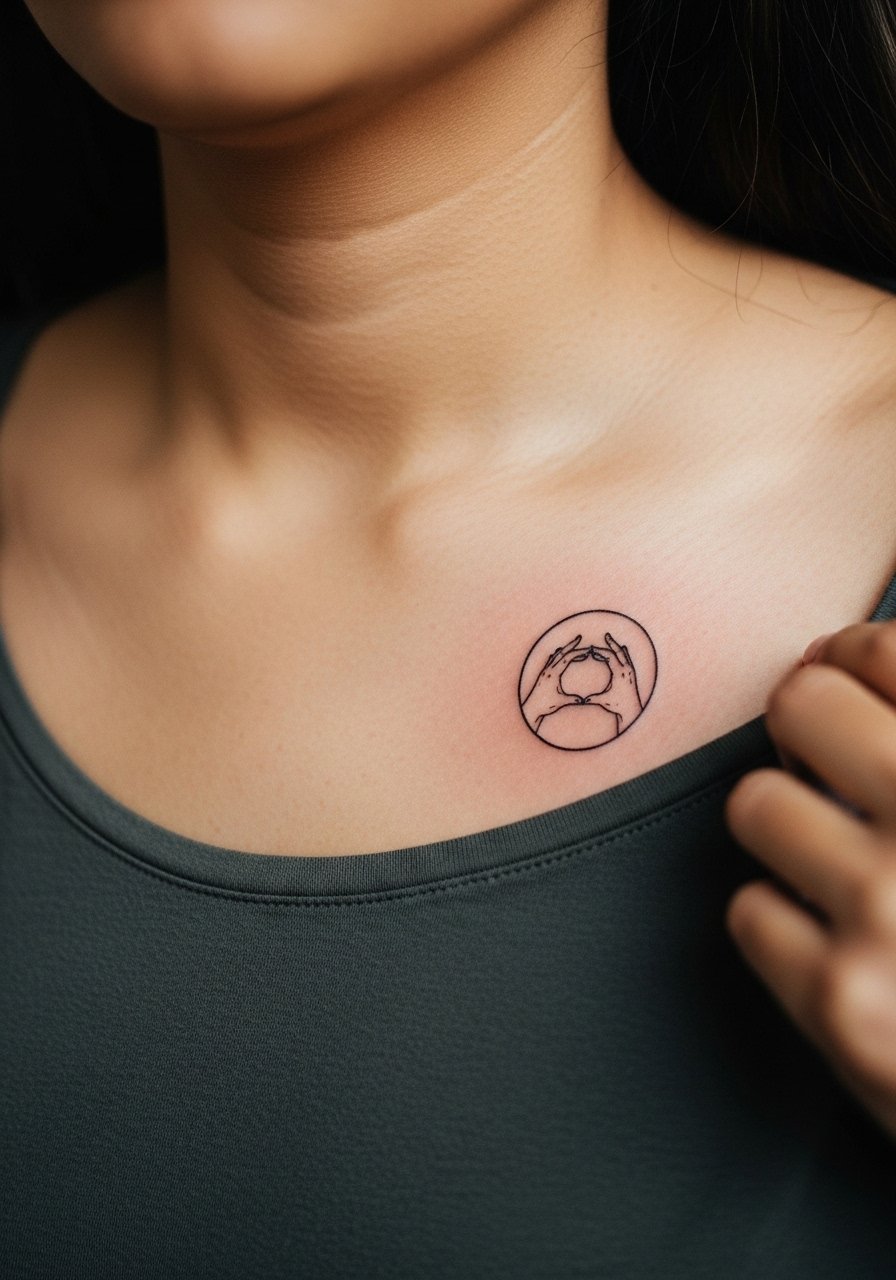
A small chest medallion sits close to the heart and feels intentional. Ask for a compact composition with slightly bolder edges so the medallion retains form as the skin stretches with movement. The sternum and chest area can be sensitive, so expect a higher pain score and possibly breaks during the session. The common error is over-detailing within the medallion. Keep negative space around the hands so the symbol reads as a single unit at a glance. Jewelry like a thin chain pendant complements the placement without overwhelming the piece.
Frequently Asked Questions
Q: How long do micro "In God's Hands" tattoos typically stay readable on the wrist and fingers?
A: It depends on placement and daily habits. Wrist and finger ink live in high-friction zones and meet frequent washing, so expect visible softening in two to three years and plan for touch-ups if you want crisp lines beyond that. Protective habits like sunscreen and avoiding abrasive straps help extend clarity.
Q: Are there religious or cultural concerns with using "In God's Hands" imagery?
A: Yes. Some communities treat specific religious motifs as sacred and may prefer variations rather than direct replicas. If a design borrows from a particular tradition, consider simplifying the elements or discussing respectful adaptation with the artist. Using discovery pathways like community forums and religious art references can guide a thoughtful approach.
Q: Will fine line hands hold up on the ribs compared with the forearm?
A: Fine line on ribs is trickier because the skin flexes and the area experiences more movement. The forearm generally keeps fine line cleaner over time. If ribs are important to you, ask the artist about spacing and slight line weight increases to preserve definition.
Q: How should I prepare clothing-wise for a sternum or upper chest session?
A: Wear something easy to adjust on the day of the appointment, like a zip-up hoodie for sternum work or a wide-neck shirt for upper chest pieces. The goal is access without full undressing, and comfortable layers make breaks easier.
Q: What is the realistic touch-up timeline for micro pieces on the back of the hand versus the calf?
A: Back-of-hand work usually needs touch-ups sooner, often within one to two years because of constant use and exposure. Calf pieces can go longer between touch-ups, typically three to five years, assuming good sun protection and minimal abrasion.
Q: Where should I look to find artists who specialize in micro religious motifs without naming anyone directly?
A: Use discovery pathways like vetted shop directories, hashtag searches, and local convention lineups. Search hashtags that pair "micro" with the style you want, browse portfolios on studio pages, and read forum threads for recent client reports. Meeting artists in person at shops or pop-up events also gives a clearer sense of their micro work quality.