
Fine line micro trees are flooding feeds, but trends and longevity often pull in different directions. I keep hearing the same complaints at consults: delicate wrist lines that need touch-ups, surprise session add-ons, and ankle pieces warped after weight change. If you want a small tree that keeps its character past year two, these 17 micro Tree of Life options show which details to ask for and which placements actually hold up.
1. Micro Fine Line Tree on the Inner Wrist
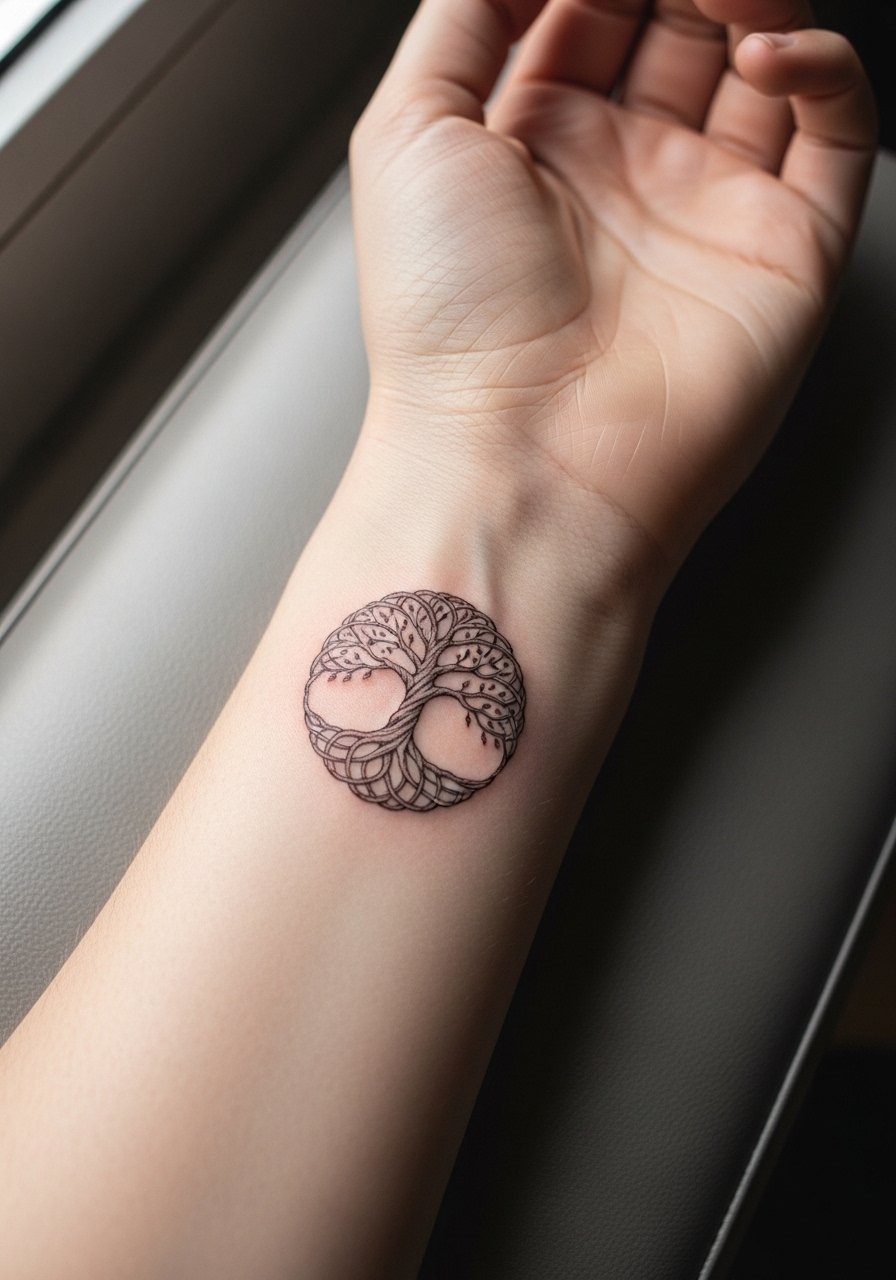
I recommend this for first-timers who want discretion and easy concealment. Fair warning, the wrist is a mild pain point around a three out of ten for most people, and fine line there often needs a touch-up sooner than forearm work. Tell your artist you want slightly bolder primary branches and thinner secondary twigs so negative space stays readable as it heals. For the session wear a sleeveless tank so the artist has full access and you avoid rubbing from sleeves afterward. Hands and wrists are high-contact zones, so expect a touch-up window at year one to three depending on daily friction.
2. Geometric Dotwork Tree on the Inner Forearm
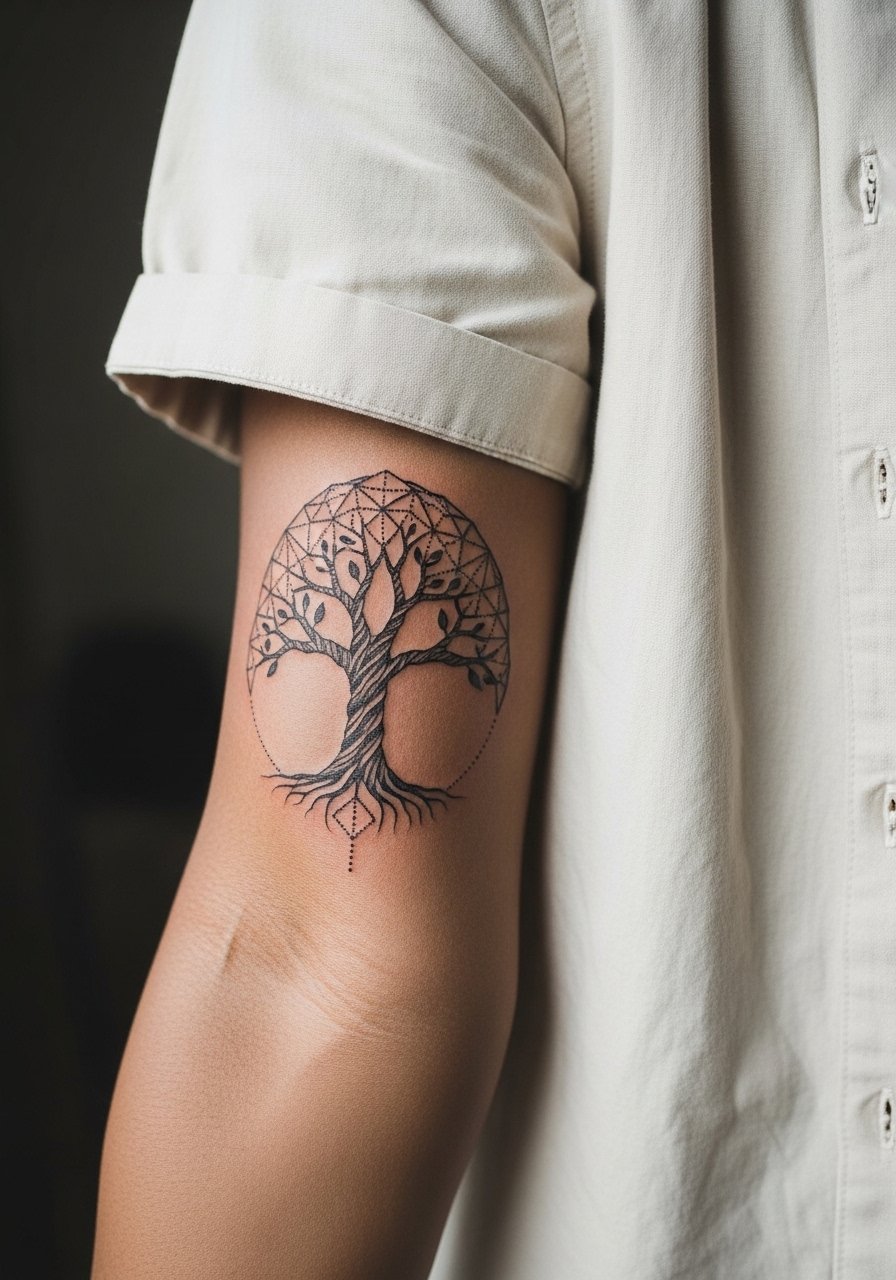
This is great when you want sacred symmetry without a heavy color palette. The forearm gives breathing room for stipple shading and dot work, so the mandala center and root ring can keep crisp spacing. The biggest mistake is requesting dense dot fields too small. Ask for one to two millimeter spacing between dense dot areas to avoid merging after a couple of years. The session usually runs an hour to ninety minutes depending on mandala complexity. Pair the healed piece with rolled organic cotton tees, and consider a organic cotton tee sage when you want to frame the work for daily photos.
3. Micro-Realistic Bark and Roots on the Inner Bicep
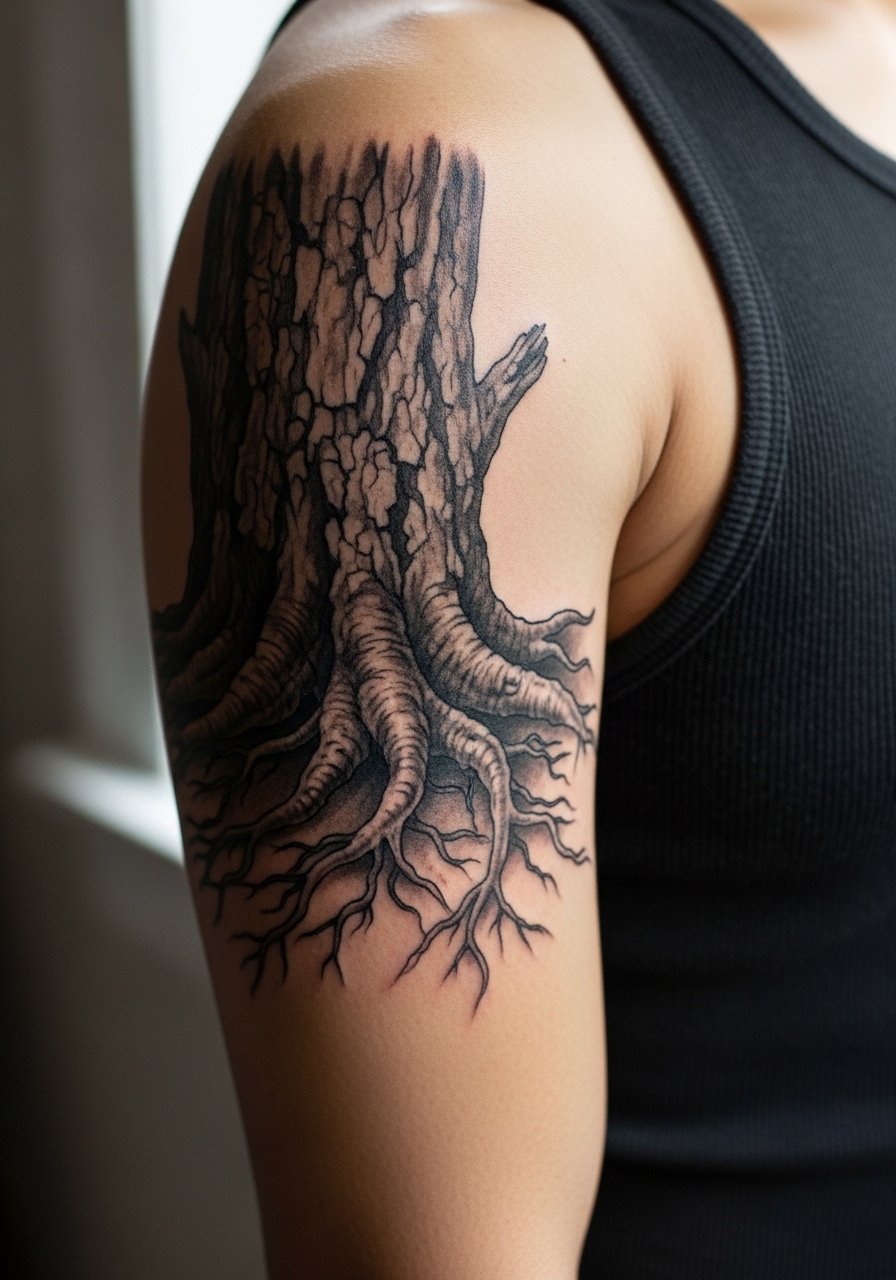
Inner bicep skin holds micro-realism surprisingly well when the texture is kept simple. Expect the session to feel like medium discomfort because you are near nerve lines, and the artist may recommend shorter passes to prevent swelling. During consultation ask for contrast between the trunk and the root tips, not extra micro detail across the whole piece. That contrast preserves the bark texture at six months and keeps the roots readable at five years. For session wear pick a loose tank so the arm can be adjusted without rubbing. If you plan on working out frequently, discuss touch-up timelines since repeated motion can soften fine shading faster than on the forearm.
4. Celtic Knot Tree in a Circular Frame on the Shoulder Blade

For heritage-inspired geometry that still reads small, the shoulder blade is forgiving. Expect two sessions for intricate knot work because artists build the knot negative space in layers. Artists split on what holds up best for tiny knots. One camp says dense knots blur when scaled below two inches. The other camp says precise spacing and slightly heavier primary outlines keep the pattern readable. Bring references that show knot spacing and ask your artist which knot density they recommend for a two-inch circle. Show-off pairing is a backless dress or a sleeveless muscle tank, and for nights out a backless dress black highlights the round frame without competing accessories.
5. Watercolor Branches Across the Collarbone
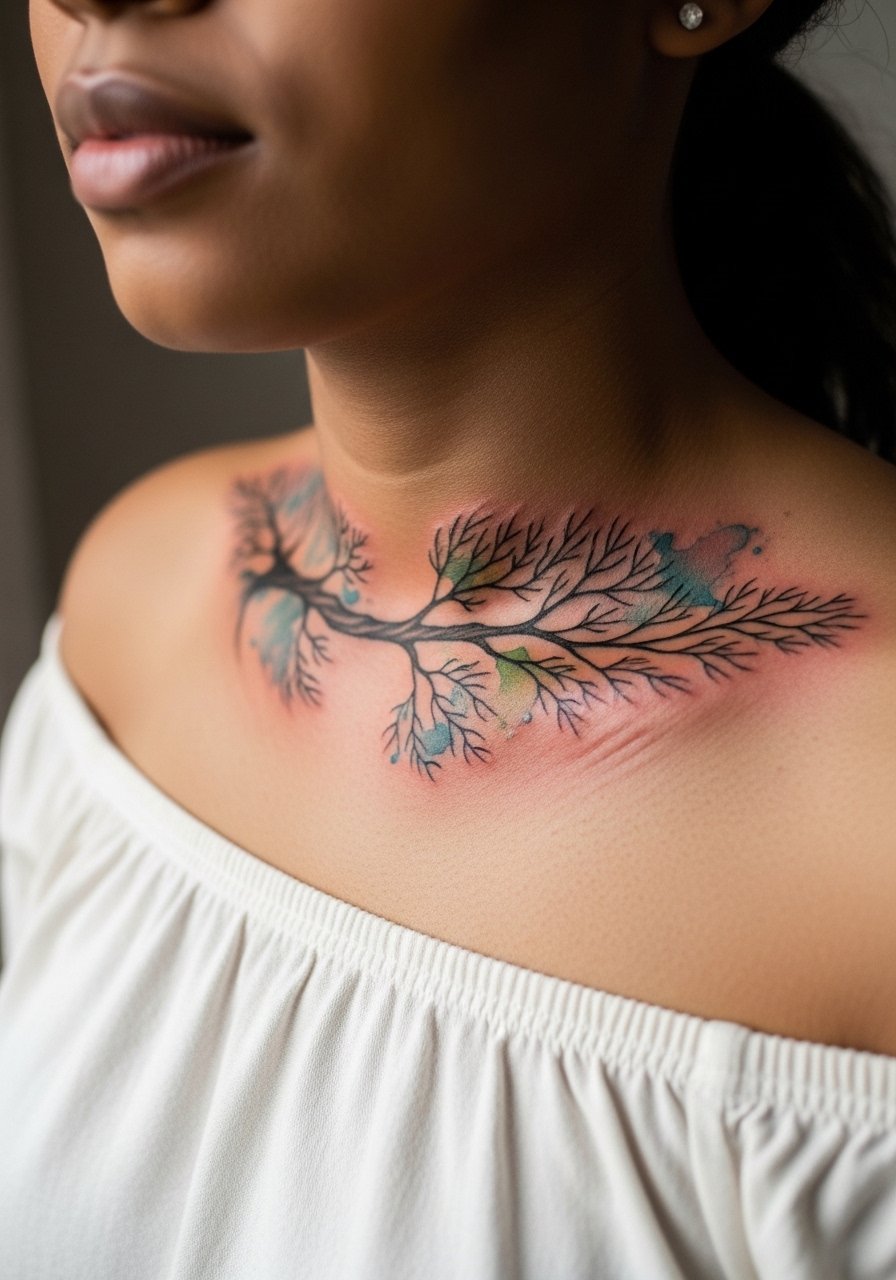
Watercolor micro trees look painterly right away but can bleed over time on thin linework. If longevity matters, ask for a black outline anchor around the branches so saturation has a frame to age into. Most fading complaints I hear come from people who went color-only with no outline. For showing it off, off-shoulder blouses in cream or pastels work best, and a delicate chain necklace sits above the branches. Bring a delicate chain necklace if you want the piece to sit in album shots without clutter. Keep sun exposure low during the first year for better color retention.
6. Minimalist Tree Silhouette with Roots on the Ankle
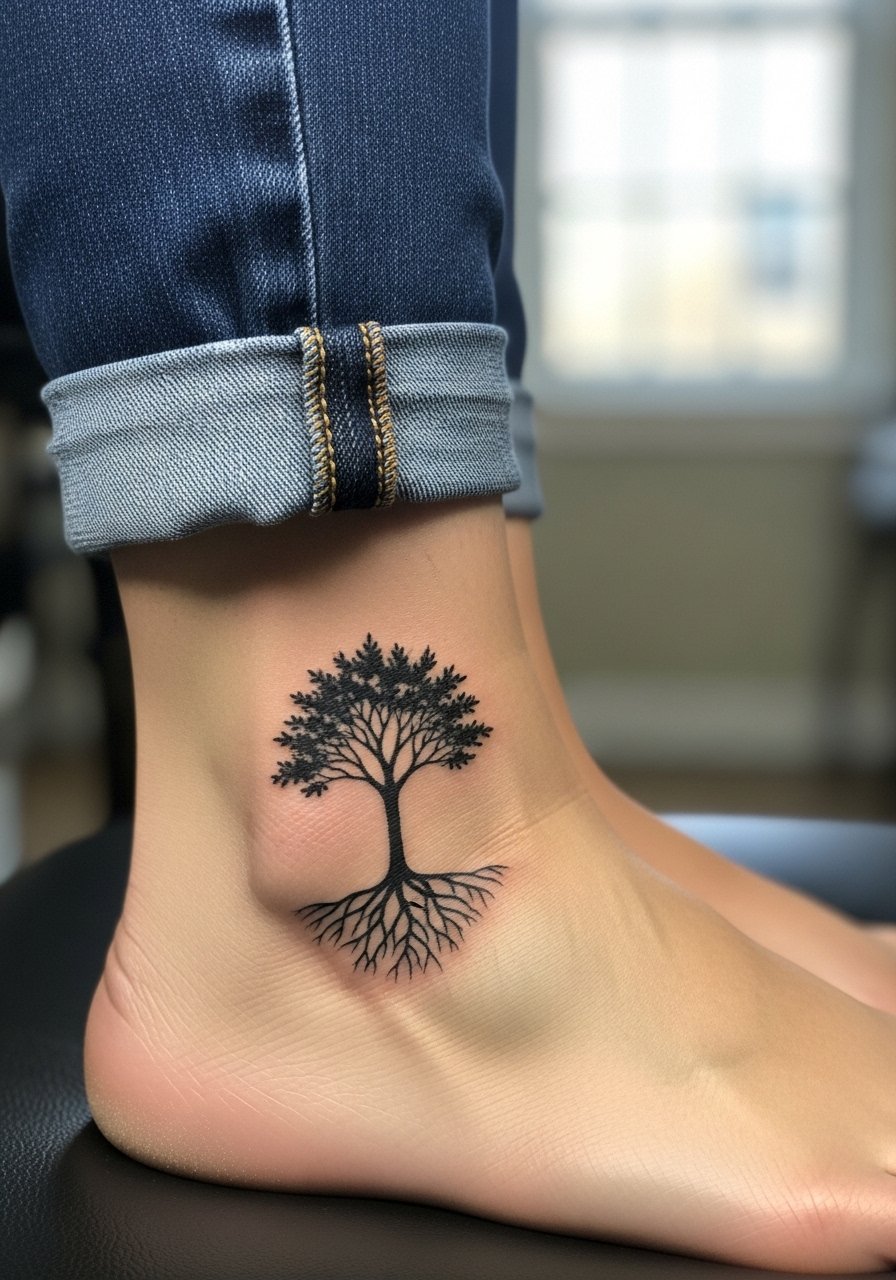
Ankle micro silhouettes are festival favorites because they peek out with cropped jeans or skirts. The trade-off is skin movement and daily friction from socks and shoes. When you consult ask your artist to place the thickest parts of the silhouette on the outer ankle where fabric rub is lighter. For the session wear loose joggers or a skirt so the ankle can be elevated comfortably. When showing it off, cropped straight-leg jeans or a midi skirt summer frames the design and keeps the silhouette readable. Expect distortion risk if you plan major weight shifts, so discuss placement that tracks stable contours.
Studio Day Picks
The wrist, collarbone, and ankle pieces above each have different prep needs, so a few targeted items make the session easier and the first week less fussy.
-
Tea tree soap bar. Gentle cleansing during the first week helps small wrist and finger lines avoid excess drying that can pull ink from fine needle channels.
-
H2Ocean tattoo spray. Lightweight spray is handy for ankle and collarbone spots after showers when you want non-greasy moisture without rubbing balm into tight lines.
-
Green Sheep travel tattoo balm. A thinner balm that absorbs fast is useful for micro-realism and dotwork where heavy greases can obscure stipple shading.
-
Fragrance-free gentle body wash. Use on shower days for areas like inner bicep and collarbone to avoid irritation to newly healed color accents.
-
Saniderm protective film pack. For tiny wrist or finger pieces some people prefer a protective film the first few days to reduce scabbing friction and external contaminants.
7. Blackwork Tree with Intertwined Roots on the Ribcage

Ribcage blackwork reads dramatically and actually helps micro details survive because bold fills age into texture rather than blur. Fair warning, the ribcage is a higher pain area often rated seven out of ten, and sessions can be taxing. I suggest breaking the work into two shorter passes for comfort and better saturation control. The main mistake is trying to cram delicate knots or stipple into a piece meant for bold negative space. If you want both, ask for a bold outline with inner stipple that stays decentralized from the heaviest fills. For intimate placements like ribs pick an artist comfortable with long stretches of solid black to avoid patchy saturation.
8. Neo-Traditional Tree with Leaf Veins on the Outer Thigh
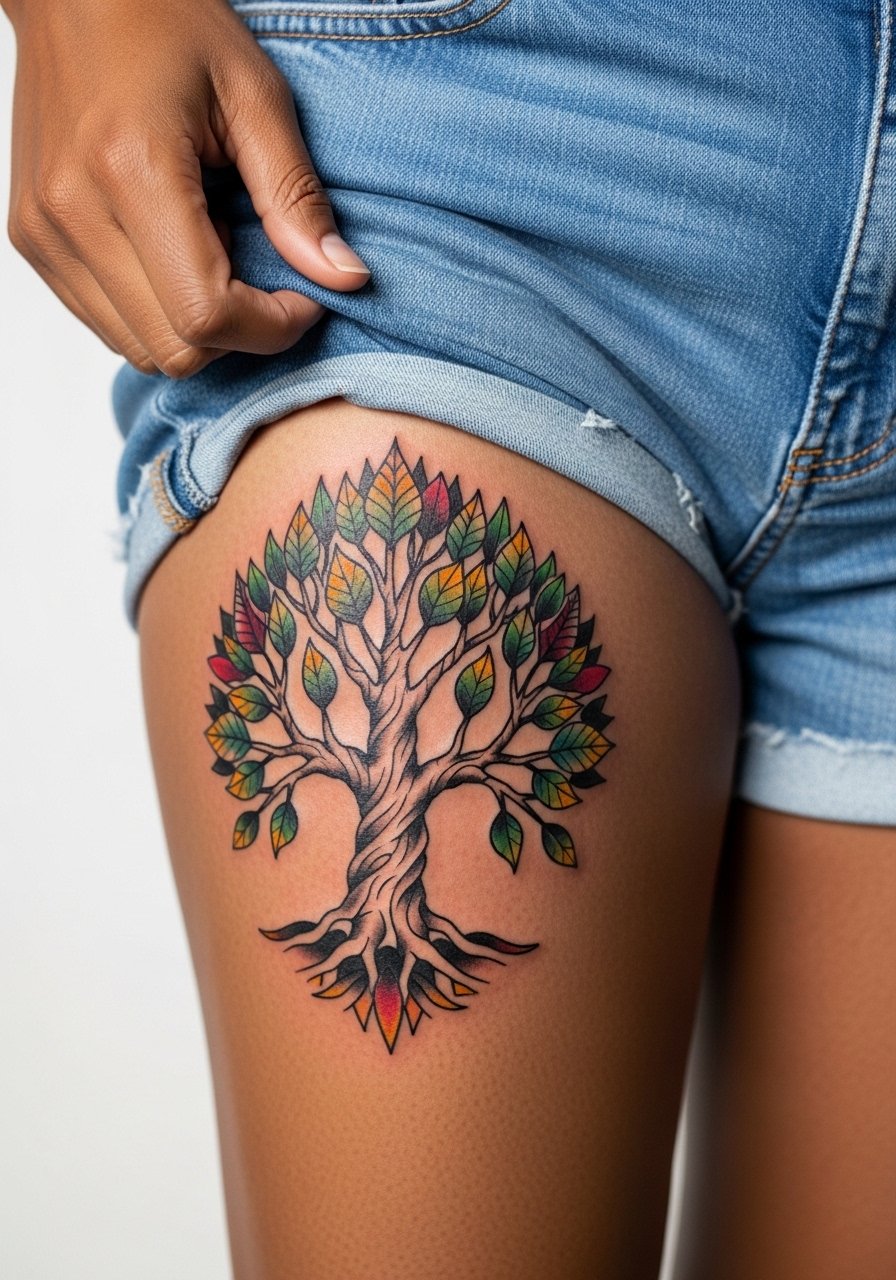
Outer thigh is forgiving for color saturation and keeps micro details from warping with moderate weight change. Sessions can feel like low to medium discomfort, and you can lie comfortably for longer blocks. Tell your artist which vein details you want emphasized so they avoid micro cross-hatching that blurs in high-motion zones. For showing this piece pair it with high waisted shorts or an A-line skirt rolled up to spotlight the work. If you have significant planned weight changes mention that to your artist because thigh flesh can shift the composition subtly over time.
9. Dotwork Mandala Tree on the Upper Back
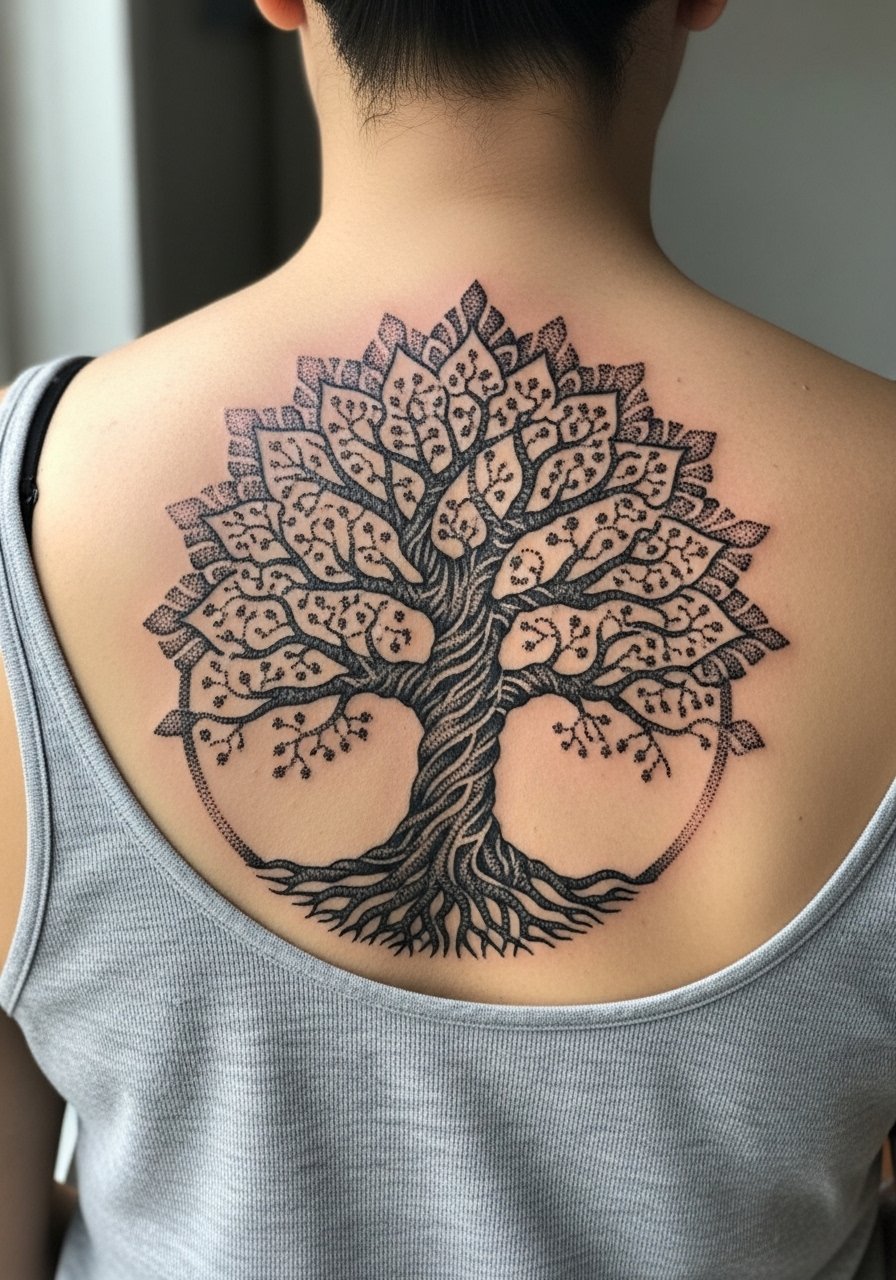
Upper back offers the real estate for symmetrical mandalas and dense dot work. The main error is compressing the mandala into too small a radius which causes dot clusters to merge. Ask for a mandala diameter that gives at least a finger-width of negative space between rings. Pain is low to medium and sessions are often single visits for a two-inch scale mandala. This area handles dot density well, and in two to five years the stipple still reads if the spacing was planned from the start. For wardrobe, an open-back dress works for evening reveals, but for daily wear a sleeveless muscle tank keeps the upper back visible.
10. Fine Line Inverted Tree on the Inner Wrist

An inverted tree with roots pointing up reads like a neural metaphor and looks striking in micro formats. Inner wrist anatomy makes this delicate because veins and thin skin can make needles feel sharper. The common mistake is asking for identical lineweight from root to branch. Instead, ask for slightly heavier root lines and very fine branch extensions so the silhouette endures. Expect the same friction-based fading risks as any wrist piece, and plan for a touch-up window at one to three years. For session wear bring a loose button-down shirt you can roll so the wrist lays flat for the artist.
11. Ornamental Tree with Rune Accents on the Calf

Calf placements suit ornamental small compositions that need vertical space. The design benefits from rune accents as visual punctuation that stays legible if the runes are slightly bold. The main user error is tiny rune detail that becomes unreadable after a couple of years. Ask your artist to thicken rune strokes to at least one millimeter for longevity. For gym-goers and runners the calf is durable, but heavy friction from tight compression socks can affect early healing. For casual show-off try cuffed cigarette pants or leather riding boots in cooler months.
12. Micro Black and Gray Tree Trunk Slice on the Side of a Finger
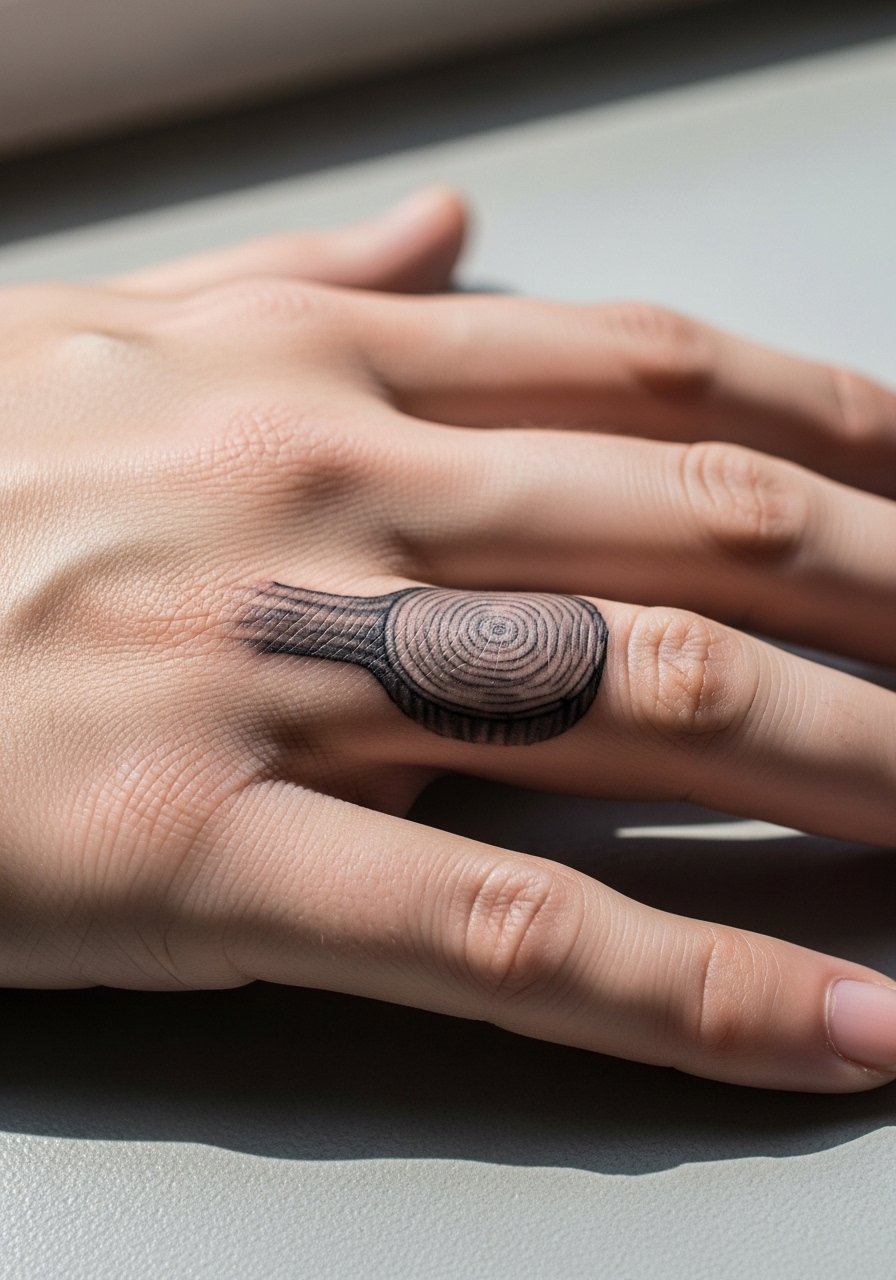
Finger work is notoriously high-maintenance but low-profile trunk slice micro designs can look crisp when kept compact. Fingers blister easily in the first week, and many folks find dry healing helps avoid peeling that distorts tight shading. Artists split about Saniderm use on fingers. One camp favors a protective film for the first few days to limit scab disturbance. The other camp prefers dry healing to encourage scab adhesion and less ink loss. Ask your artist which they use for fingers and why before booking. For session wear keep the hand clean and expect touch-ups more often than for arm work.
13. Hybrid Constellation Branches for Astrology Fans on the Top of the Foot
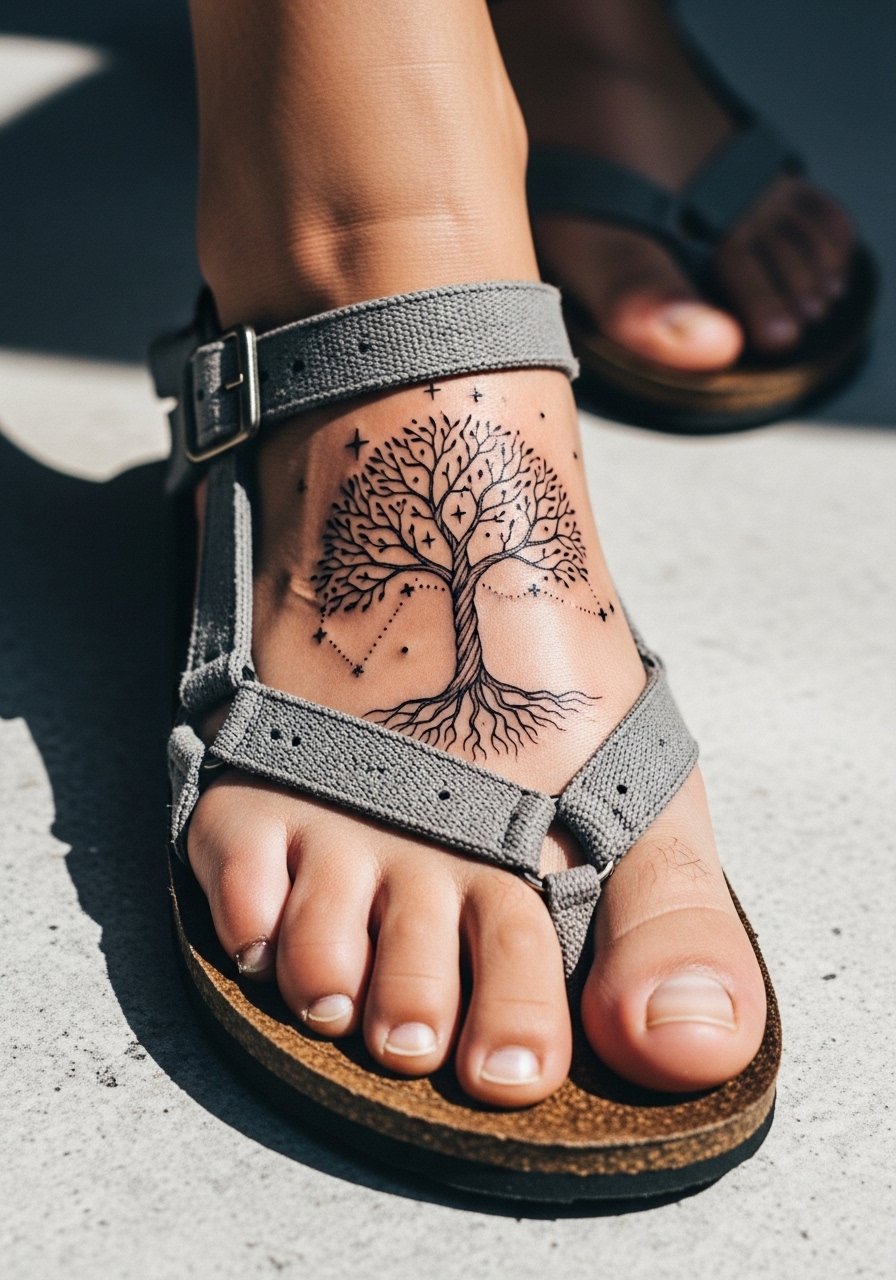
Top-of-foot placements read delicate with constellation branches that echo star patterns. The risk is shoe friction and outdoor exposure during the first weeks. For sessions wear sandals to the shop so the area is accessible and stays dry during transit. The main mistake is expecting dense star clusters; keep node spacing open to avoid blur over time. Pair casual looks with sandals or cropped trousers that draw attention to the top of the foot. If you live in a humid climate discuss healing routines with your artist because marine exposure can affect scab timing.
14. Inverted Neural-Style Root Tree Behind the Ear
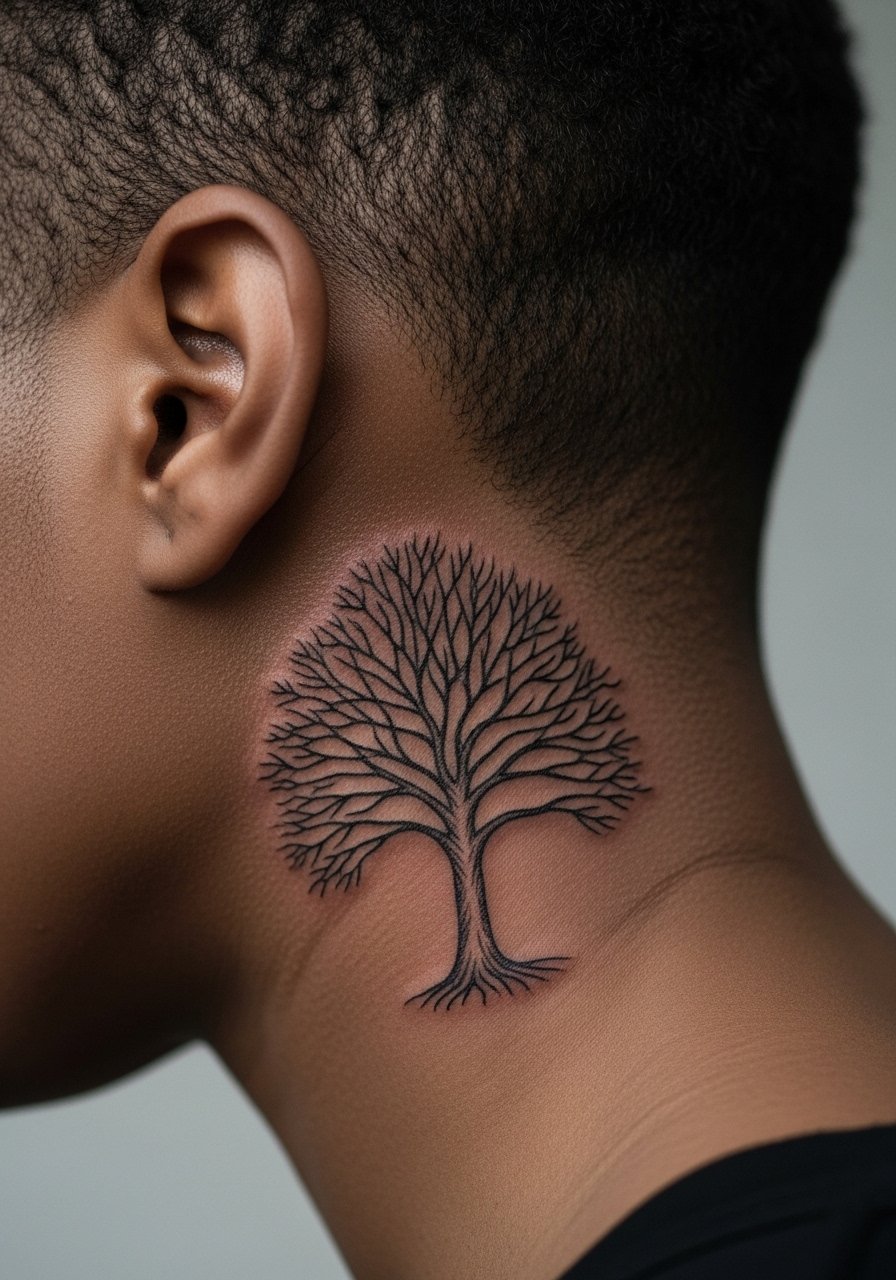
Behind-the-ear placements are subtle and personal. The skin there is thin and the area is tricky for tiny continuous lines. When you consult, ask the artist whether they recommend slightly heavier anchor lines so the neural-like roots do not fade into blur. For session comfort bring headphones and a layered shirt so you can lower a collar for access. Because this area sits near hairlines, discuss ink migration risks and realistic touch-up windows. Many clients love the discreet peek of an inverted micro tree in this location.
15. Small Tree Silhouette on the Lower Back

Lower back tattoos carry fewer friction issues than ankles or hands and they tolerate slightly denser detail. The common issue is choosing a composition that will still read when wearing higher waisted clothing. Ask for vertical balance with roots that taper into the spine line so the tattoo reads when partially covered. For appointment day wear a tank that you can pull up or a button-down worn backwards so the artist can reach the area without you undressing. If you plan major midsection changes discuss placement mapping to avoid composition drift.
16. Stylized Root Initials Hidden in a Micro Tree on the Inner Thigh
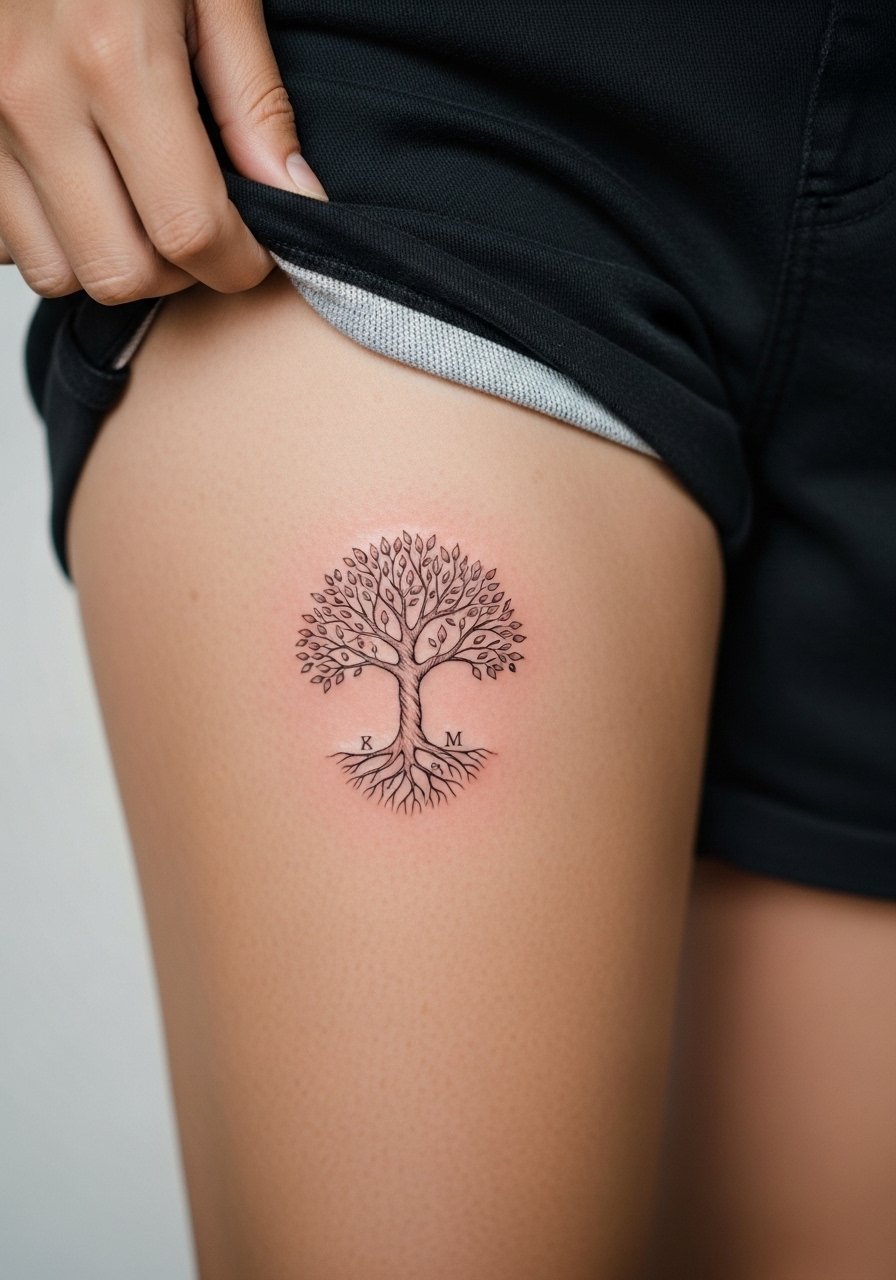
Embedding initials inside roots is a neat personalization that stays discreet on the inner thigh. Inner thigh skin takes ink well when artists work with the natural grain. The most common mistake is making initials so tiny they become blur when healed. Tell your artist which letters to emphasize and ask them to sketch the initial strokes as slightly bolder than surrounding twigs. For session wear bring shorts you can shift so the thigh is exposed but the rest of your body stays covered. Because this is intimate placement, find an artist who shows inner thigh work in their portfolio.
17. Micro-Realistic Cross-Section Trunk on the Back of the Arm
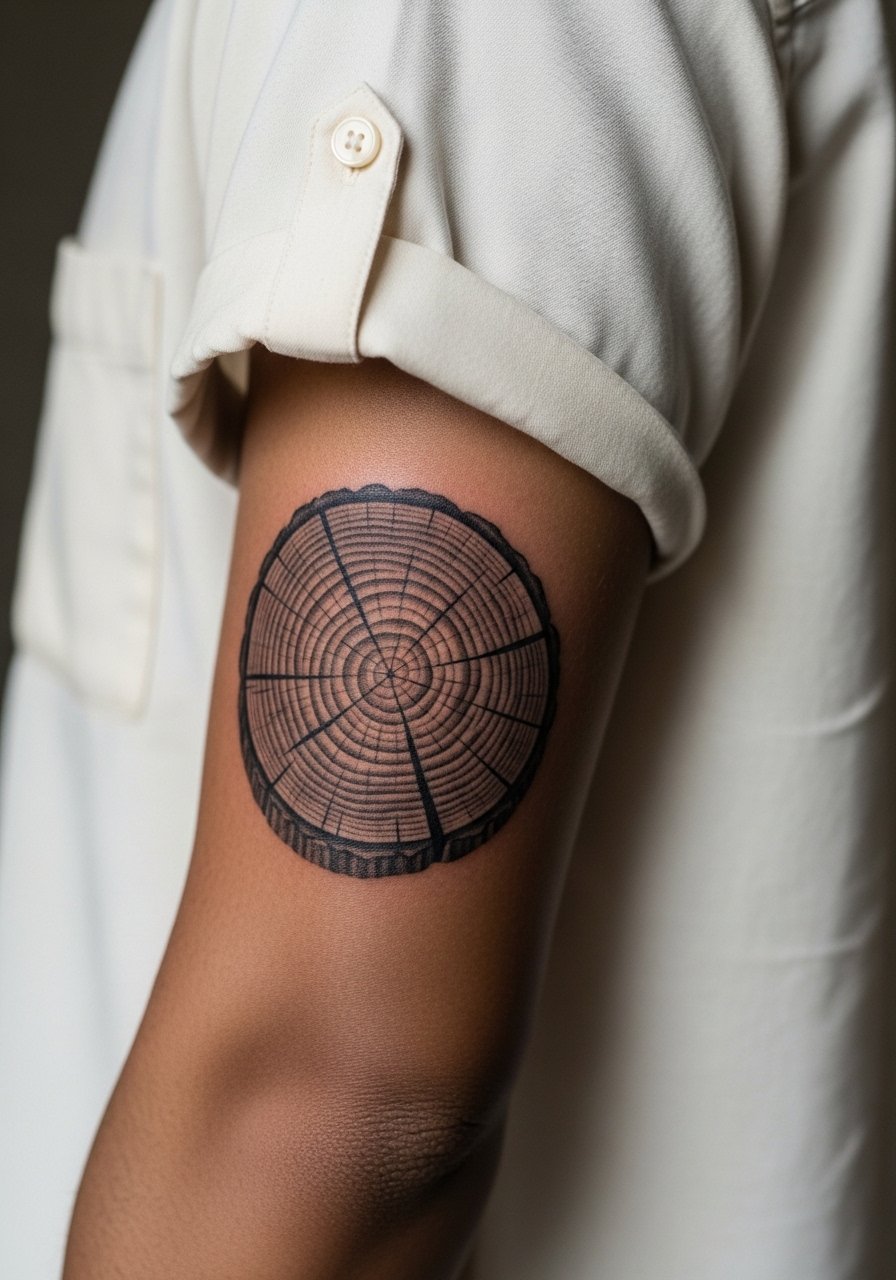
A trunk cross-section on the back of the arm gives a grounded, emblematic feel while staying small. The area tolerates dense black and gray shading if the artist spaces growth rings with intentional gaps. The typical error is over-detailing rings too close together which blurs with time. Ask for higher contrast between early and late rings so the slice reads even after subtle ink migration. For session wear a loose button-down you can roll up. For active people who use that arm a lot, plan a touch-up at two to three years for crisp ring definition.
Frequently Asked Questions
Q: Will a fine line wrist tree fade faster than a small blackwork tree on the forearm?
A: Yes, fine line on wrists generally needs touch-ups sooner because wrists get constant contact and washing. Forearms have more surface area and less friction, so the same design often keeps its contrast longer. If longevity matters, request slightly heavier primary lines on wrist pieces and plan a realistic one to three year touch-up window.
Q: How can I avoid surprise session upcharges for a micro tree?
A: Get a clear quote before you pay a deposit and confirm scope in writing. Ask how many passes and whether shading or extra touch-ups are included. If an artist says they price by session blocks, ask how many minutes that covers so you can compare estimates fairly.
Q: My skin is darker and I want a small tree that reads in photos. What should I ask for?
A: On melanated skin, stronger primary outlines and bold negative space help micro details pop without overloading the design. Ask to see healed examples on similar skin tones and favor blackwork or higher saturation over faint gray washes. Artists who specialize in darker skin are best for these decisions.
Q: Is Saniderm better than dry healing for micro tattoos like these?
A: Artists split into two camps. One side prefers Saniderm or protective films for micro work because they reduce mess and protect against external friction in the first days. The other side favors dry healing, saying it helps scabs adhere and lowers ink loss risks. Ask your artist which method they use and why so you get consistent post-session instructions.
Q: Will an ankle or thigh tree warp after major weight change?
A: Tissue changes can alter any tattoo placed across joints or elastic areas. Thigh placements generally tolerate moderate shifts better than ankles, which can show distortion after significant fluctuation. If you anticipate big weight changes, place the core of the design over more stable contours and discuss mapping options with your artist.