
Fine line medieval motifs are everywhere online, but the pieces that still read crisp after years are the ones that respect spacing and skin movement. Minimal medieval designs ask for restraint in the stencil and patience in placement. These 17 small, line-forward ideas focus on motifs that feel age-proof when sized, spaced, and placed with intention. Start with the inner forearm and you will see how a small change in weight or spacing changes the way a design settles.
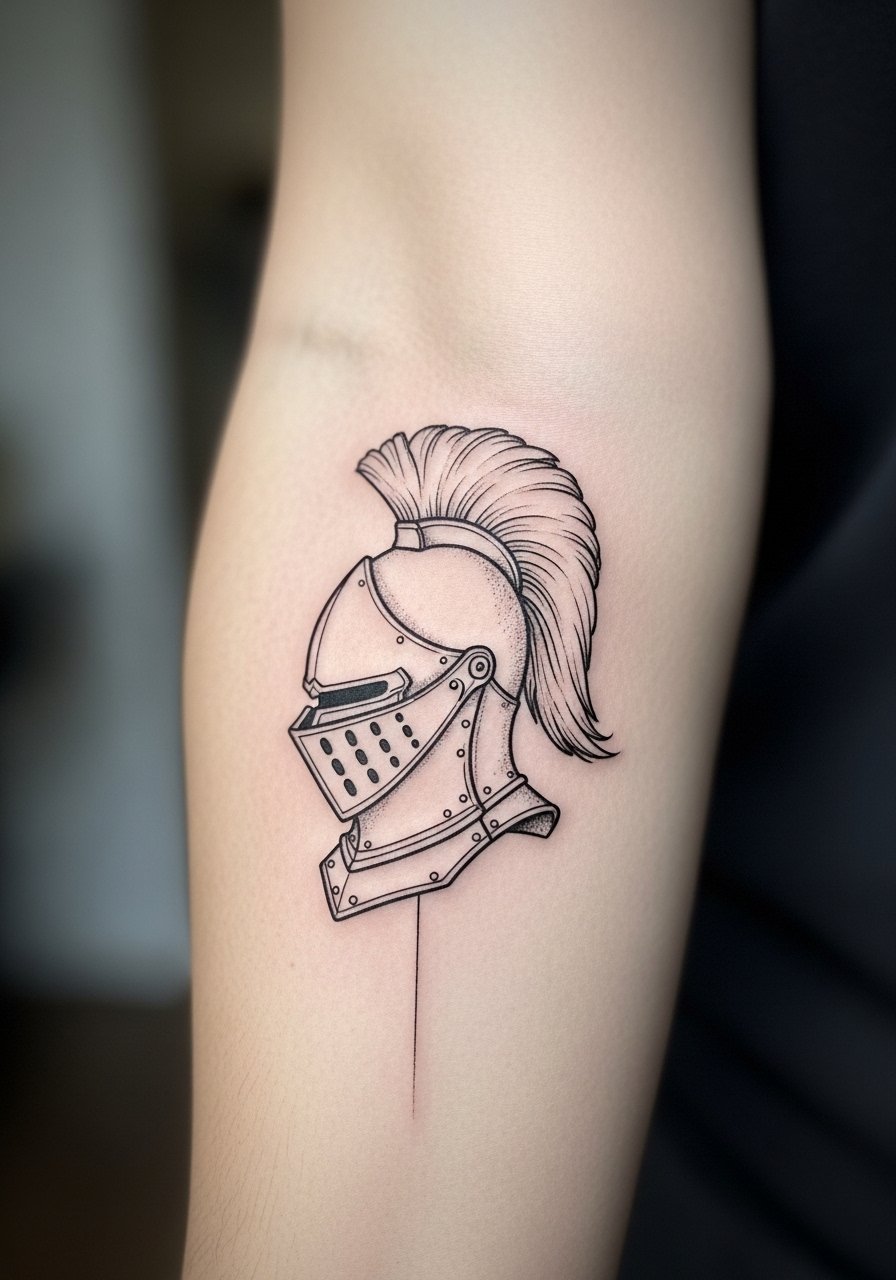
1. Tiny Knight Helmet on Inner Forearm
I pick a tiny knight helmet when someone wants medieval flavor without a full sleeve. The inner forearm is forgiving for minimal line details, pain is moderate, and a single session often suffices. Tell your artist to keep the helmet about the size of a quarter and to use slightly heavier linework for the helmet rim so it stays clear after two years. A common mistake is packing too many decorative flourishes into a small helmet, which blurs over time. After six months the helmet reads crisp, at two years the thinner accents may soften, and a touch-up at three to five years is normal. For showing it off, roll up sleeves and pair with a loose button-down shirt to frame the forearm without covering the art.
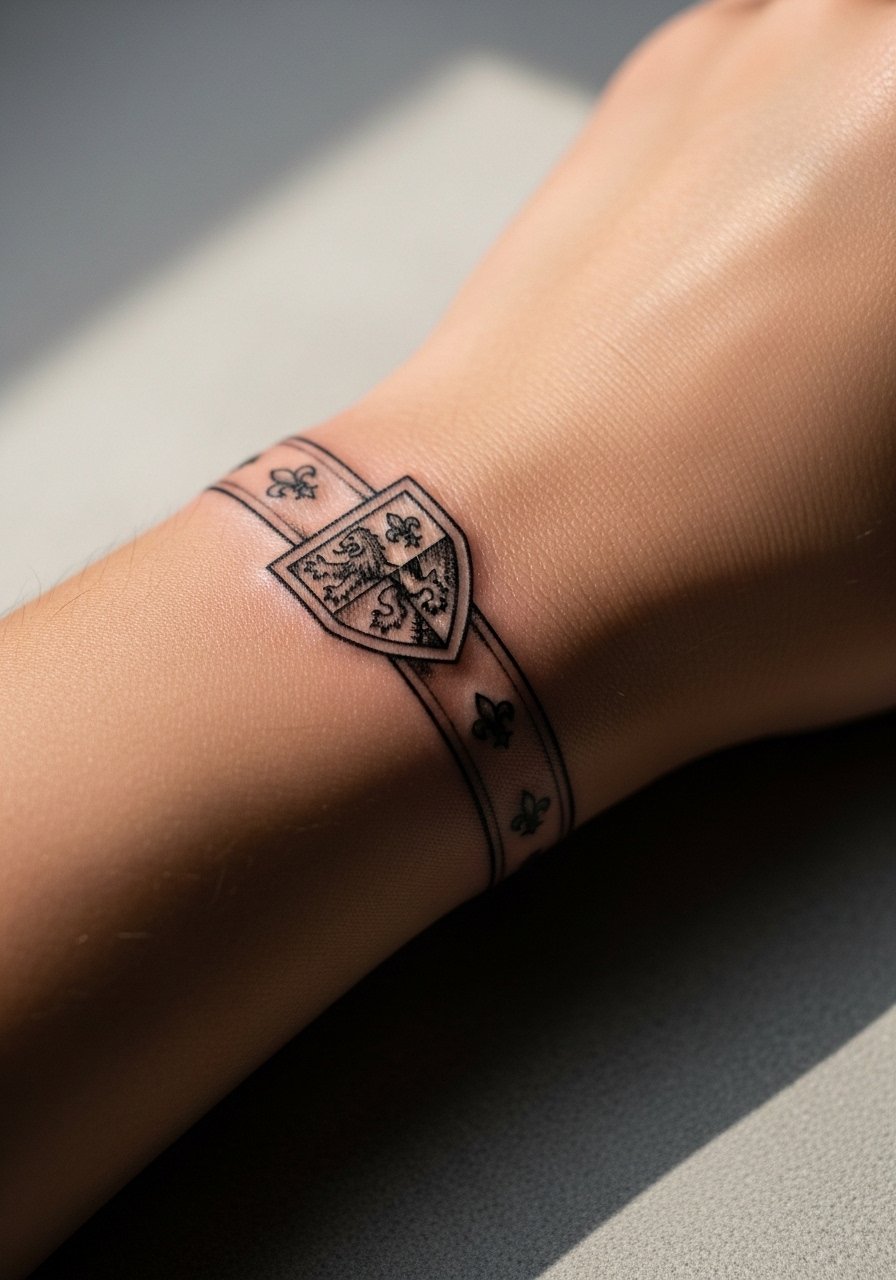
2. Heraldic Shield Wrist Band
A narrow heraldic shield wrapped as a wrist band reads like a concise statement. Fair warning, the wrist is higher on the sensitivity scale so expect tingling and shorter sessions. Ask the artist to leave a small gap between repeating motifs so the band does not merge after a year. One common mistake is making the band too tight in detail. At six months the band keeps clear contrast, by two years the tiny crests can soften and need touch-up. This placement pairs easily with stacked jewelry. Try a minimalist gold chain bracelet to highlight the band without crowding the linework.
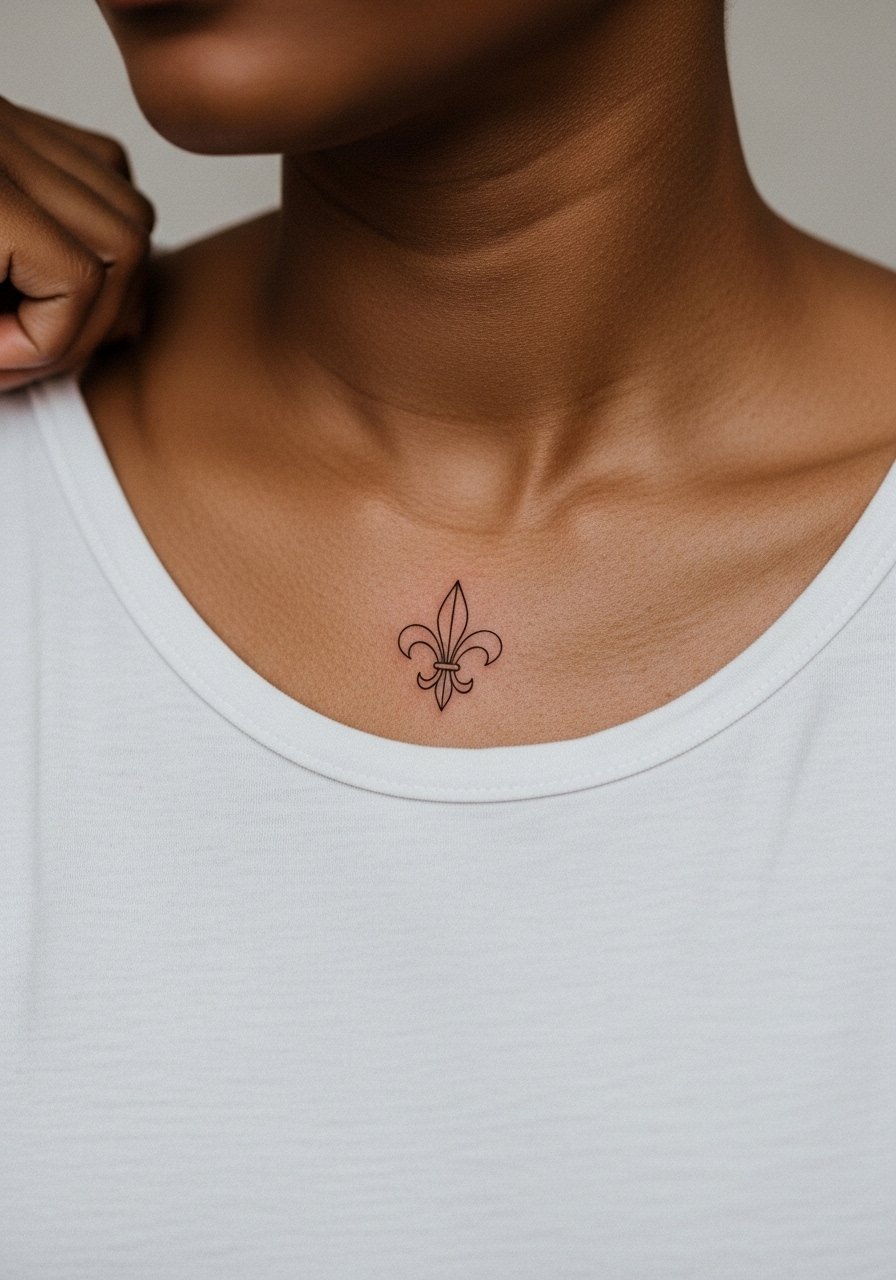
3. Delicate Fleur-de-Lis on Collarbone
A small fleur-de-lis near the collarbone reads classic and stays visible beneath clothing choices. Pain is low to moderate and session time is short. When consulting, specify spacing from the bone so the motif sits on soft skin rather than directly on the collar. The aging pattern is kind to this spot when lines are slightly bolder than "hairline" weight. The biggest mistake is asking for super-fine filigree that the collarbone movement will turn into smudges. For evenings out, this piece pairs well with an open-back midi dress or a wide-neck top pulled aside to show just the motif.
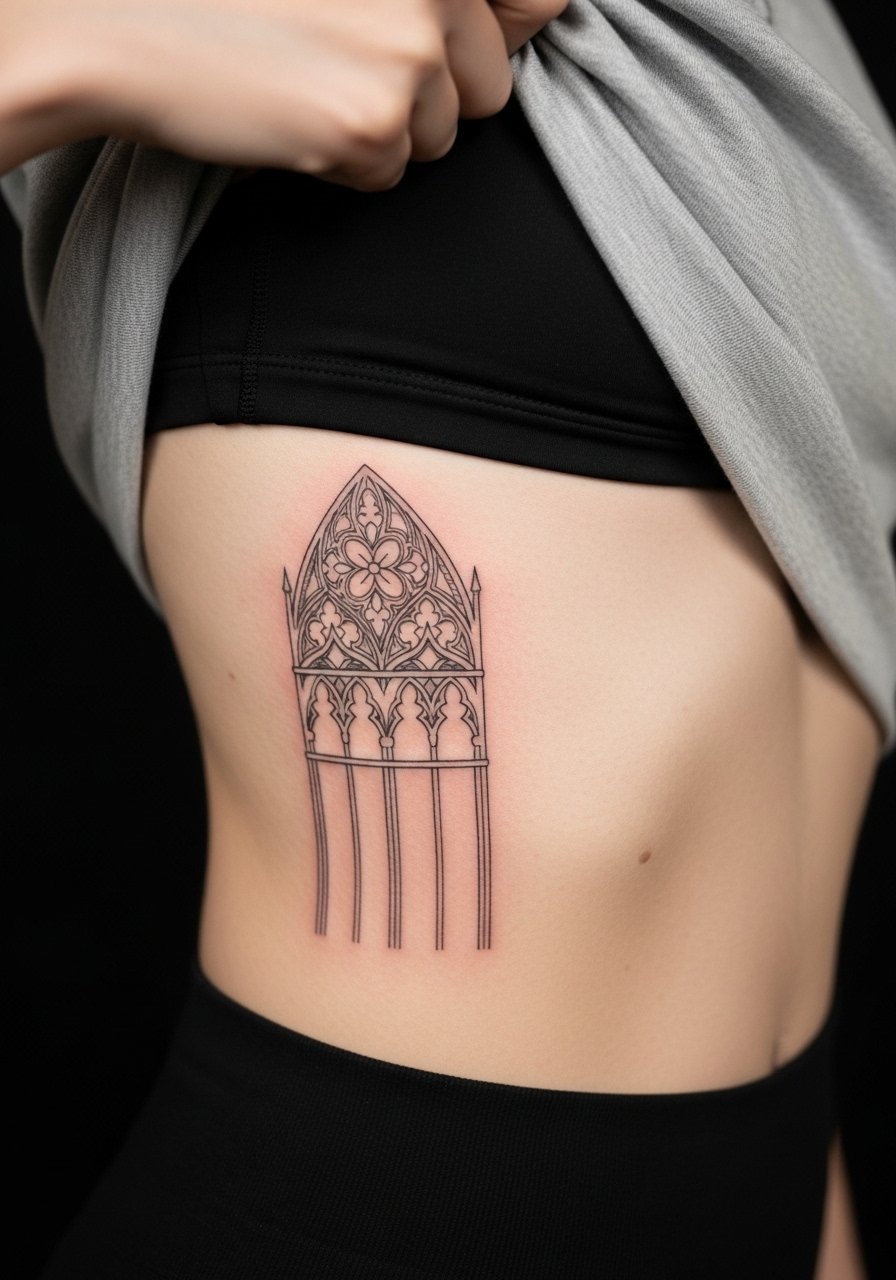
4. Stippled Cathedral Tracery on Ribcage
Fair warning, ribs are a sensitive canvas and session time can be long. Stipple shading works well because it keeps the design airy and avoids dense black fields that bruise. Artists are split on fine line on ribs. One camp says the skin stretch and motion blur thin lines within two years. The other camp says careful depth and spacing make fine line settle fine on ribs. Ask where your artist stands and show photos of healed rib work from their portfolio. For the session wear a cropped athletic top you can lift or a zip hoodie you can pull aside. Because ribs are sensitive and move a lot, expect potential touch-ups by year three.
5. Miniature Sword on Outer Ankle
The ankle is great for a vertical, minimal sword. Pain is noticeable near bone and session time is short if the piece stays small. Tell your artist to keep a slight gap between blade hatching lines so they do not bleed into one another with movement. A common mistake is placing the blade too close to the ankle joint, producing early blowout. At six months edges look crisp, at two years expect the thin crossguard to need a touch-up. For showing it off, roll pant cuffs or wear sandals with a simple leather ankle strap sandal to keep attention on the linework.

6. Tiny Scripted Motto on Side of Finger
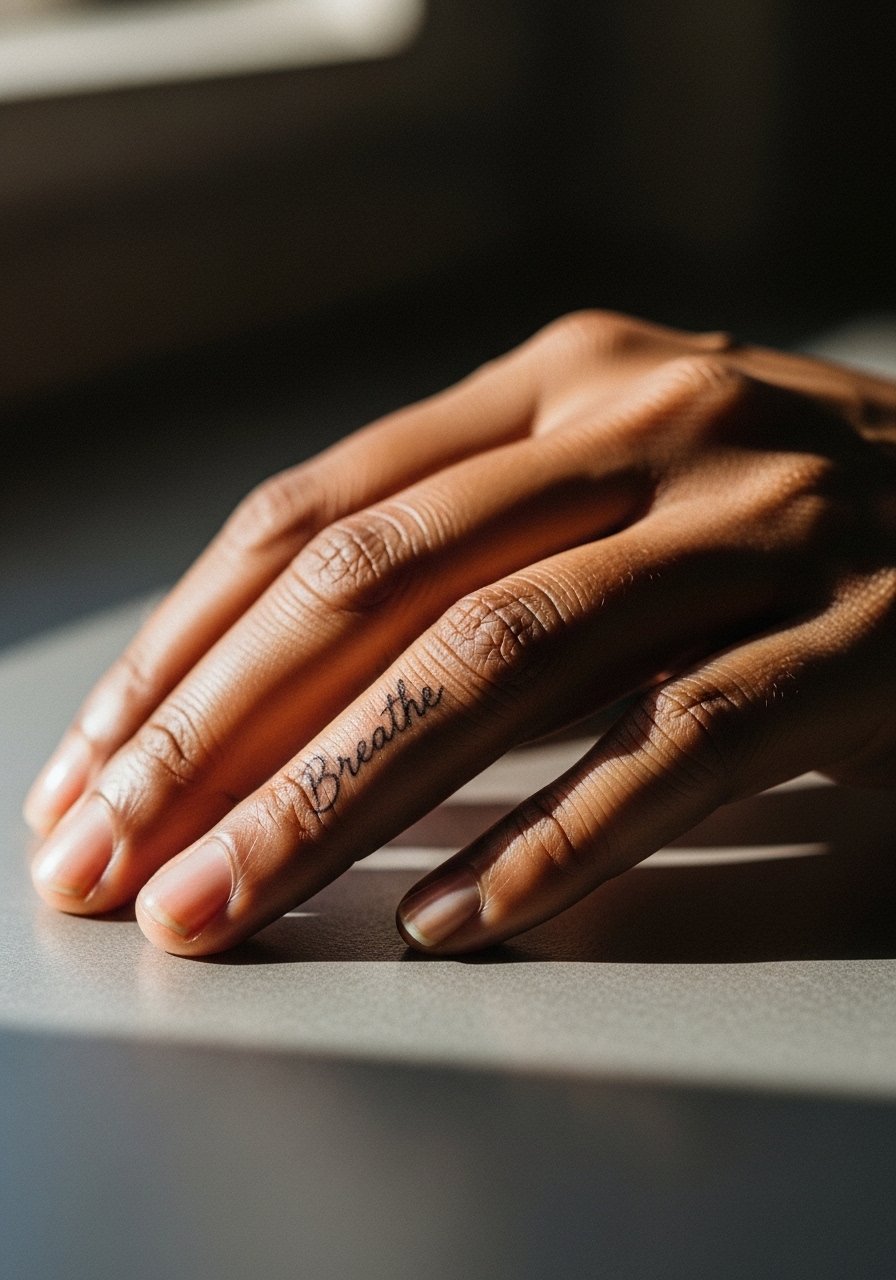
Finger script reads intimate and medieval mottos translate well into small, strong lettering. Expect sharp pain and quick session time. The mistake is asking for very thin script or long phrases. The skin on fingers moves and washes often, so letter spacing must be generous and line weight slightly bolder. Fingers are controversial for fine line because one group says daily use guarantees early fading and blur, and another group has kept neat script with frequent touch-ups. If you choose this, plan for a likely touch-up in year one or two. For the appointment wear a thin chain pendant necklace only if you want to avoid wrist bracelets that might rub during healing.
7. Micro Dragon Head Behind the Ear
This tiny dragon head carries medieval symbolism and fits behind the ear when you want a hidden accent. For safety the image must be described as on the skin behind the ear, below the hairline on the neck. Pain is low, session time tiny. Ask for simplified contours rather than scales to keep the piece readable over time. A mistake people make is pushing scale detail into a space that cannot hold it. After six months the silhouette stays clear, by two years some thin interior lines may soften. For session comfort wear hair up in a soft claw clip so the artist has clear access to the area.

8. Illuminated Initial on Upper Arm
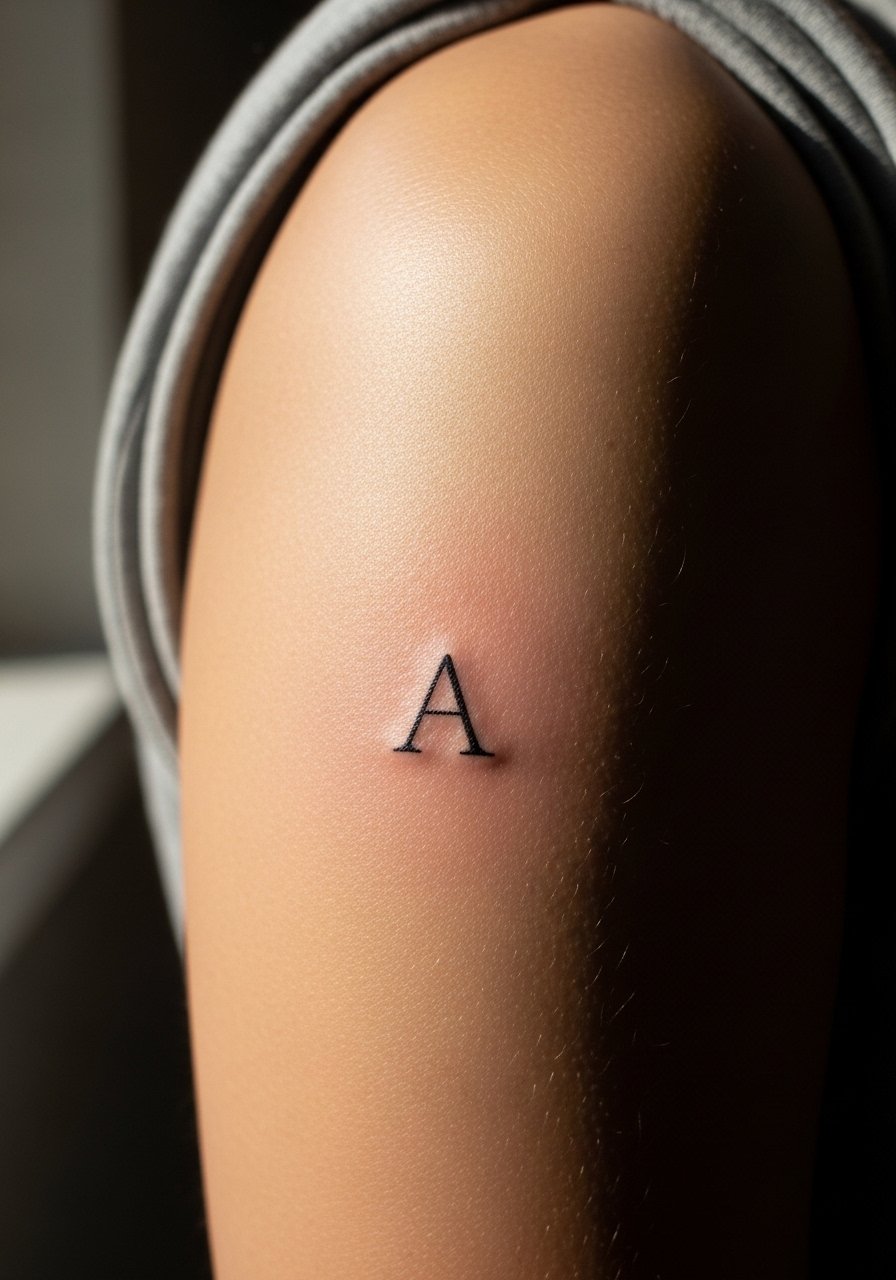
An illuminated initial pairs medieval script with tiny decorative flourishes. The outer upper arm handles detail well and pain is low. In consultation, bring exact lettering and explain how much ornament you want around it. The common aging issue is over-ornamentation in a small initial that fills and blurs. If you keep ornaments open and favor stipple shading, the motif reads at two and five years. Session time is moderate and touch-ups are uncommon unless you want bolder contrast later. For the session choose a loose drawstring linen pant or a tank top so the artist can access the arm without tight clothing.
9. Thin Laurel Wreath Around Wrist
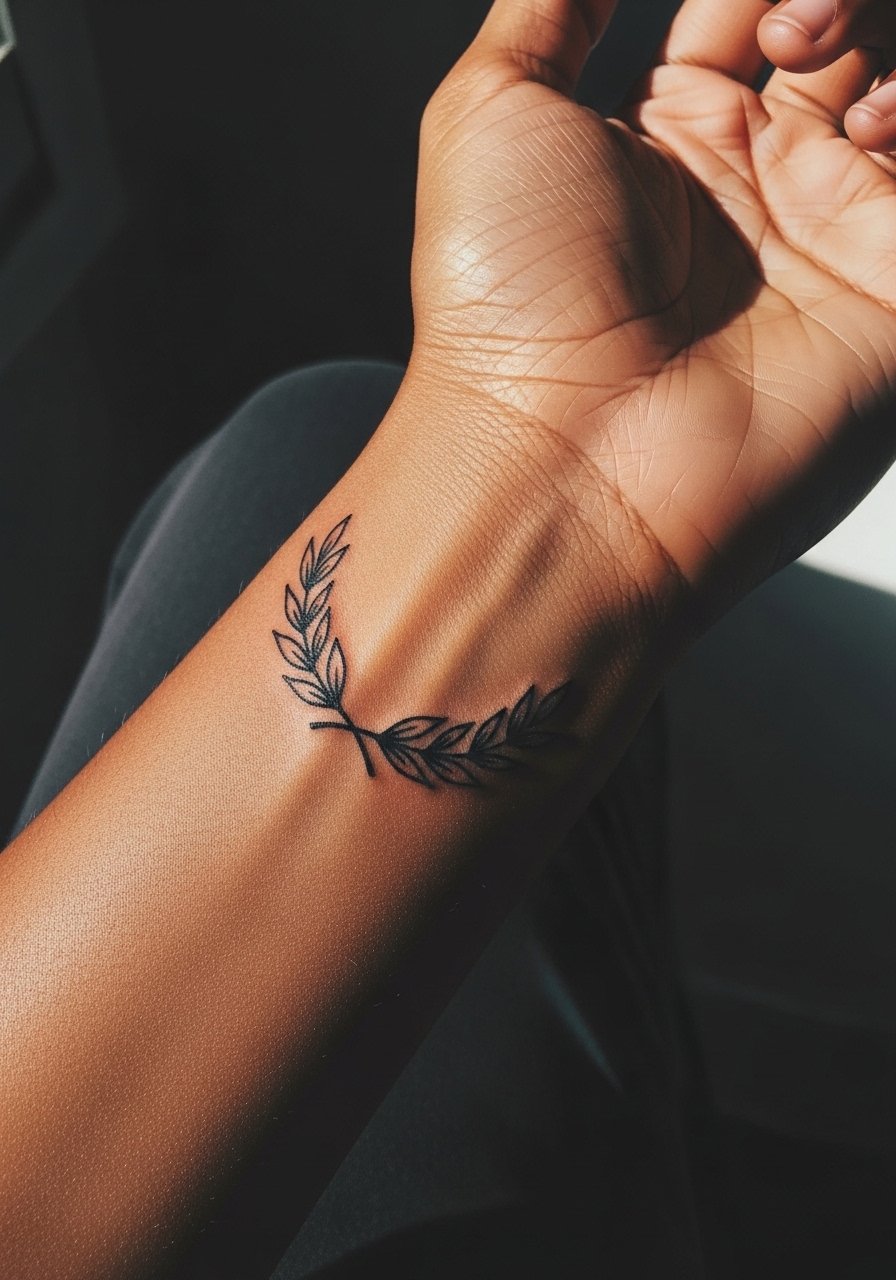
A laurel wreath band that uses clean linework reads like subtle heraldry. Wrist location means frequent movement and exposure. Tell your artist to keep each leaf slightly separated and to avoid micro-detail on the leaf veins. A common mistake is a continuous tight pattern that merges after repeated motion. At six months it looks tidy, by two years expect softening where skin creases occur. For show-off pairing use a minimal leather watch strap that sits above the wreath so the band remains visible.
10. Single-Line Dragon Spine Accent
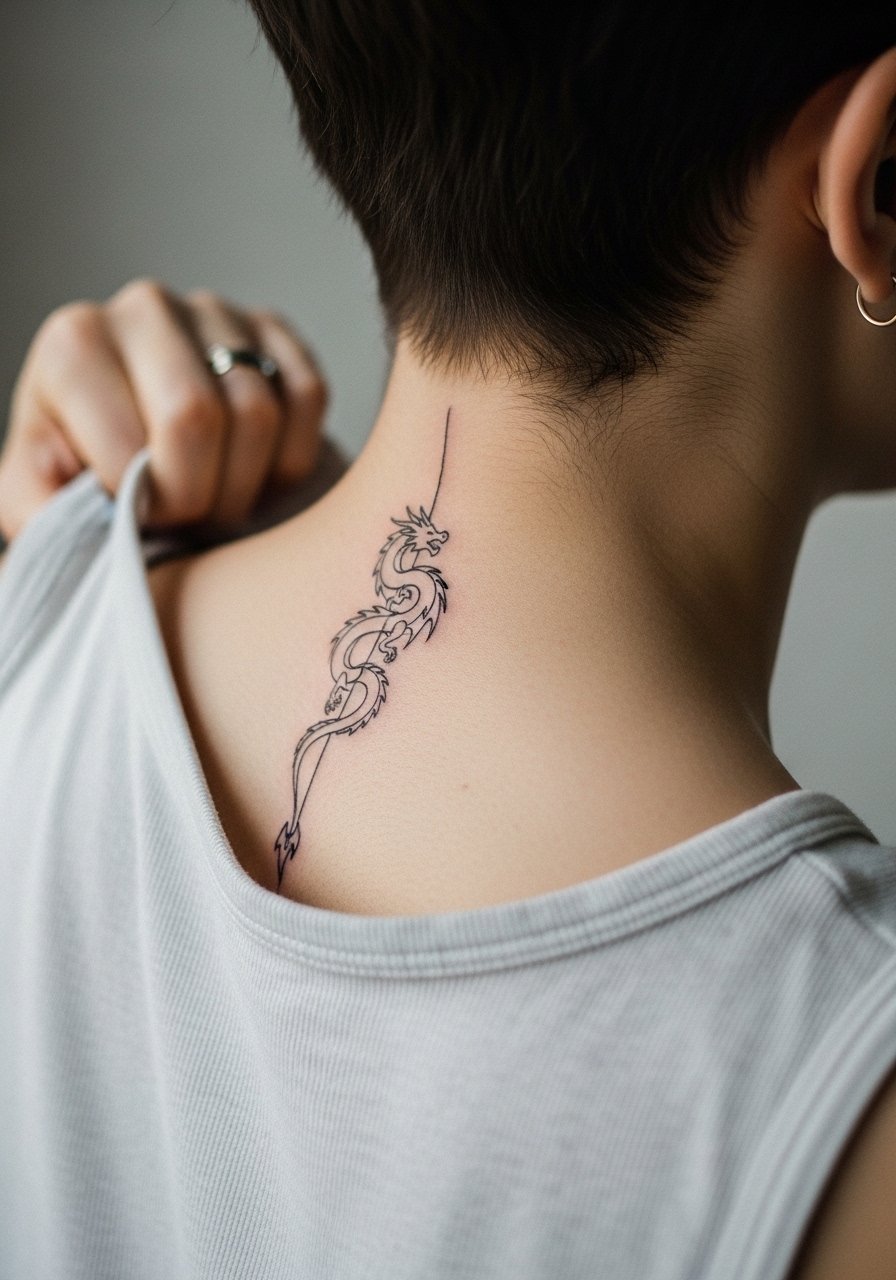
A tiny single-line dragon that runs along the spine makes a discreet medieval nod. Spine pieces can be sensitive in spots and session time varies by length. Ask your artist to keep the dragon narrow with consistent line weight and to avoid dense fill. A common mistake is adding too many scales or shaded areas that bruise and take longer to heal. The spine moves a lot so expect slight softening in the thinner tails by year two. For session wear a loose button-down shirt you can pull aside if the tattoo sits higher on the back.
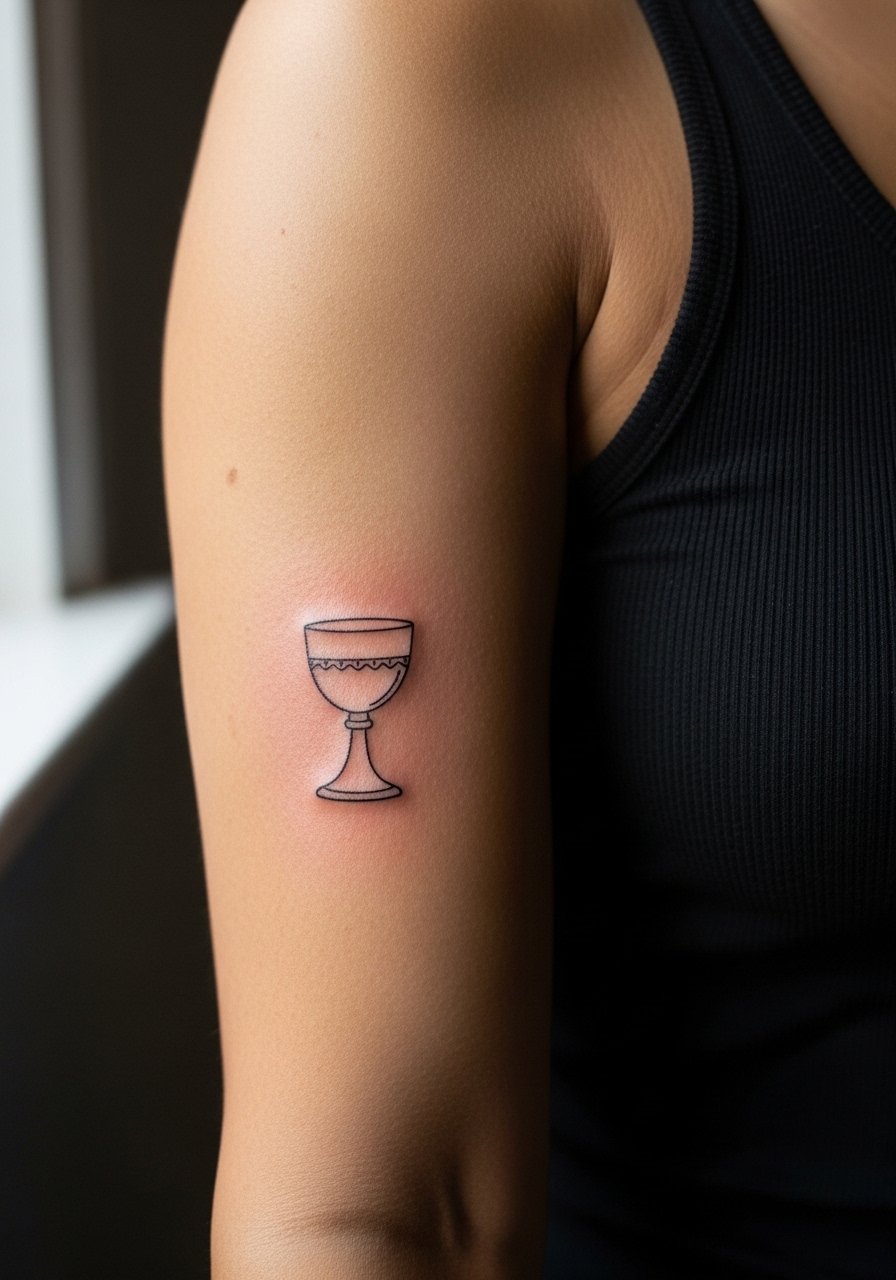
11. Chalice Outline on Inner Bicep
Inner bicep is a soft surface that holds line work well when done in the right scale. Pain is moderate and sessions are short for small outlines. Tell your artist to keep the chalice wide in the bowl area so lines do not converge. The mistake is asking for tight filigree inside the chalice, which converges into blotches after healing. After six months the outline keeps its silhouette, at two years expect minor softening at the thinnest points. For the appointment wear a tank top so the artist can lift the sleeve without discomfort.
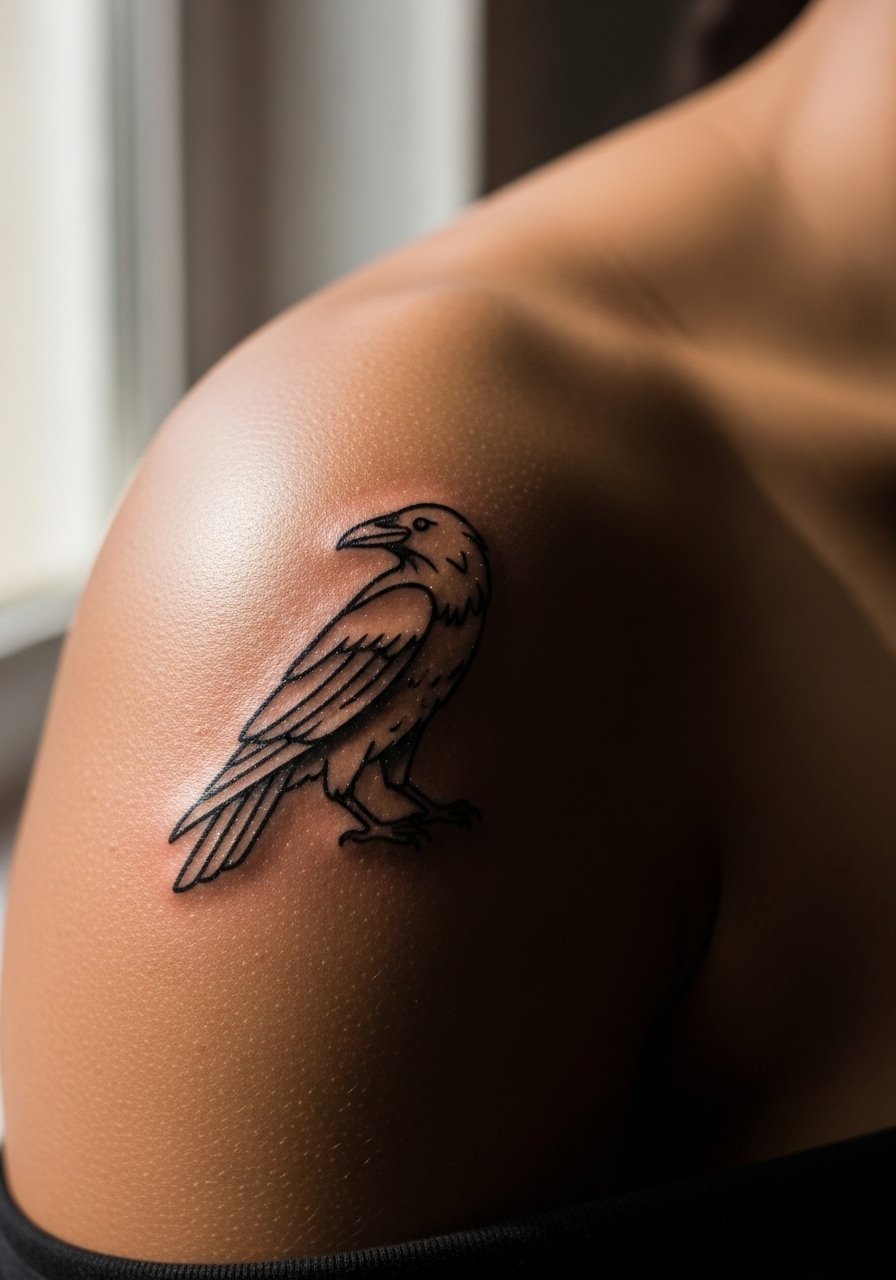
12. Heraldic Raven on Upper Shoulder
A fine line raven perched within a tiny shield suits the upper shoulder. Pain is low and the shoulder handles thin linework well. In consultation, specify contrast over detail so wing markings are suggested rather than overloaded. The common mistake is heavy cross-hatching in a small bird that turns into a dark patch after a year. At six months the raven reads clear, by five years minor touch-ups can restore crisp wing separations. For showing it off, pull back a loose button-down shirt or wear an open-sleeve top.
13. Narrow Gauntlet on Outer Forearm
A gauntlet motif, simplified to essential plate lines, ages well on the outer forearm because the skin is relatively stable. Pain is moderate and a single session often finishes it. Tell the artist to emphasize the main seams and drop smaller rivet detail. The mistake people make is packing rivets and tiny staging lines that occupy limited space and blur over time. At two years the gauntlet should retain structure though small rivet dots may need a clean-up. Pair this with rolled sleeves and a classic denim jacket to show off the forearm without covering the piece.

14. Tiny Key with Gothic Bow on Hip
Hip pieces listen well to minimal lines when framed correctly. For safety the image must show the subject wearing high-waisted bottoms or jeans pulled slightly down at the hip to reveal only the tattoo area. Pain on the hip can be moderate and session time is brief. Ask for a slightly larger bow on the key so the negative space keeps the shape over time. The common mistake is making the key tiny and intricate which fades quickly. For the session wear high-waisted bottoms you can lower slightly and keep movement minimal during the first 48 hours.

15. Celtic Knot Mini on Inner Thigh
Inner thigh tattoos can be intimate and hold line work when scaled properly. For safety the image must show shorts pulled up slightly to reveal only the inner thigh area. Pain varies and sessions are private. Tell your artist to simplify crossings so the knot reads from a short distance. Mistakes come from cramming a large knot pattern into a tiny patch. At six months the knot keeps form, though tiny internal lines can soften by year three. For the session choose breathable shorts like athletic shorts you can shift slightly without discomfort.

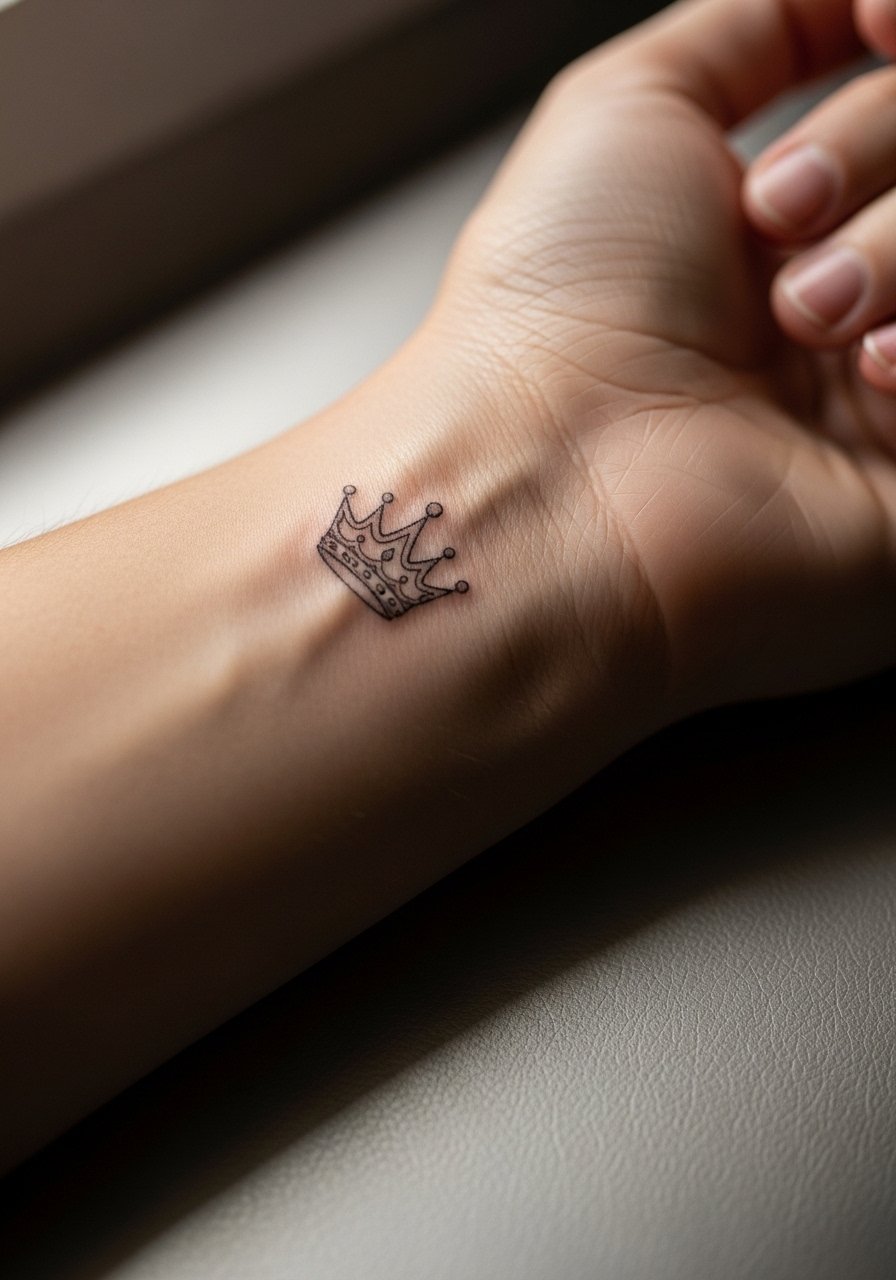
16. Small Crown Above the Wrist
A tiny crown sits neatly above the wrist and reads like a medieval signature. Pain is low, session time is short. Ask for a flattened silhouette and avoid micro-engraving inside the crown. The common aging mistake is too many tiny dots inside the crown rim which can merge. At two years the silhouette holds and minor refill of the rim may keep it crisp. For showing it off wear a minimalist watch strap that sits below the crown so the tattoo remains visible.
17. Tiny Triskelion Knot on Ankle Bone
A triskelion knot near the ankle bone uses curved linework that ages gracefully if scaled properly. The ankle can be tender near bone and session time is brief for a small knot. Tell your artist to keep each arm of the triskelion spaced and to avoid interior hatch marks. The biggest mistake is shrinking the knot so the curves touch. At six months the arms read smooth, by three years thin inner lines may need a touch-up. For footwear pair this with sandals or a low-cut sneaker so the ankle remains visible while you heal.

Studio Day Picks
These first six ideas range from wrist bands to ribcage and benefit from specific prep and first-week products that protect fine line work and reduce friction.
-
Stencil transfer paper kit. Lets you preview placement on skin and adjust scale, which is especially useful for the wrist band and finger script above.
-
Topical numbing cream. Applied before a wrist or ribcage session eases initial sensitivity so you can hold steady during the first pass.
-
Thin protective film roll. Keeps wrist and finger tattoos clean through repeated handwashing while letting the skin breathe.
-
Fragrance-free gentle body wash. Cleanses healing areas like the forearm and collarbone without irritating fine line channels.
-
Aquaphor healing ointment. Thin layers in the first days lock in moisture for delicate linework without overly smothering the area.
Frequently Asked Questions
Q: Will a minimal medieval motif on the ribs need touch-ups more often than the forearm?
A: It depends on placement and your skin. Ribs move with breathing and clothing so thin details tend to soften faster than on the forearm. If you want ribs, ask for slightly bolder line weight and plan for a possible touch-up in two to three years.
Q: Are hand and finger medieval motifs safe for professional environments?
A: Hand and finger tattoos remain visible and some workplaces still enforce rules. If career flexibility matters, consider the inner finger or a placement that can be covered. For small script on fingers, expect more frequent touch-ups because of washing and daily abrasion.
Q: How does a minimal line piece like a tiny knight or crown behave in humid climates?
A: In my experience humid climates speed the fading process because skin exfoliates more and sun exposure is often higher. Keep pieces covered in direct sun and consider annual checks with your artist for minor refills.
Q: What should I wear to a ribcage or sternum session to stay comfortable and give the artist access?
A: Wear a cropped athletic top or a zip hoodie you can lift slightly. For sternum work a fitted sports bra works well. These options let the artist reach the area without you being fully undressed.
Q: Can medieval script be translated into a different language or alphabet without losing aesthetic balance?
A: Yes, but spacing and character width matter more than the language. Bring the exact text and an example of the letterforms you like. A good artist will scale and breathe the letters so the script ages cleanly.
Q: Are there medieval motifs you should avoid because of cultural sensitivity?
A: Some symbols have clear cultural or religious roots. If a motif traces to a living tradition, consider subtle variations or ask the artist about respectful adaptations. It is better to adapt than to copy a sacred design directly.