
Fine line spinal pieces have exploded online, but trends and longevity do not always match. What looks razor-fine in a mirror the day after a session can soften within a few years if placement and spacing are ignored. I want to show 27 minimalist spine ideas that balance immediate impact with realistic aging so you can pick a design that still reads clean after the first touch-up.
1. Fine Line Floral Stem Along the Upper Spine
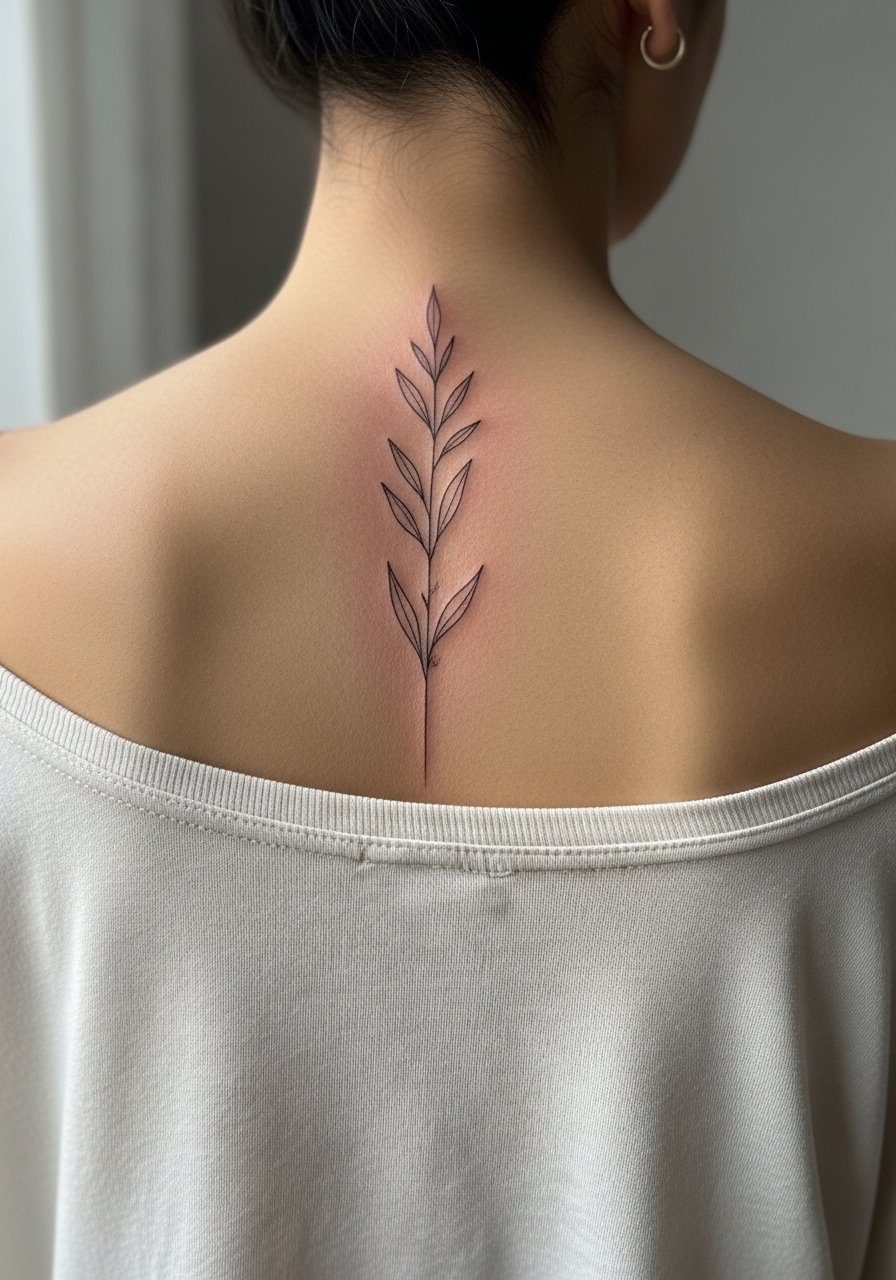
A vertical botanical stem works when the flowers are spaced so the petals do not crowd the vertebrae. Tell your artist you want 3–5 millimeters between major elements to avoid compression as the skin ages. Expect the session to feel like a steady, medium discomfort because the spine has less padding. The common mistake is packing tiny petal details too close together, which leads to blurring by year three. For show-off outfits, an open-back halter dress frames the spine without covering the stem and keeps attention on the vertical flow.
2. Tiny Vertebrae Icons, One Per Segment
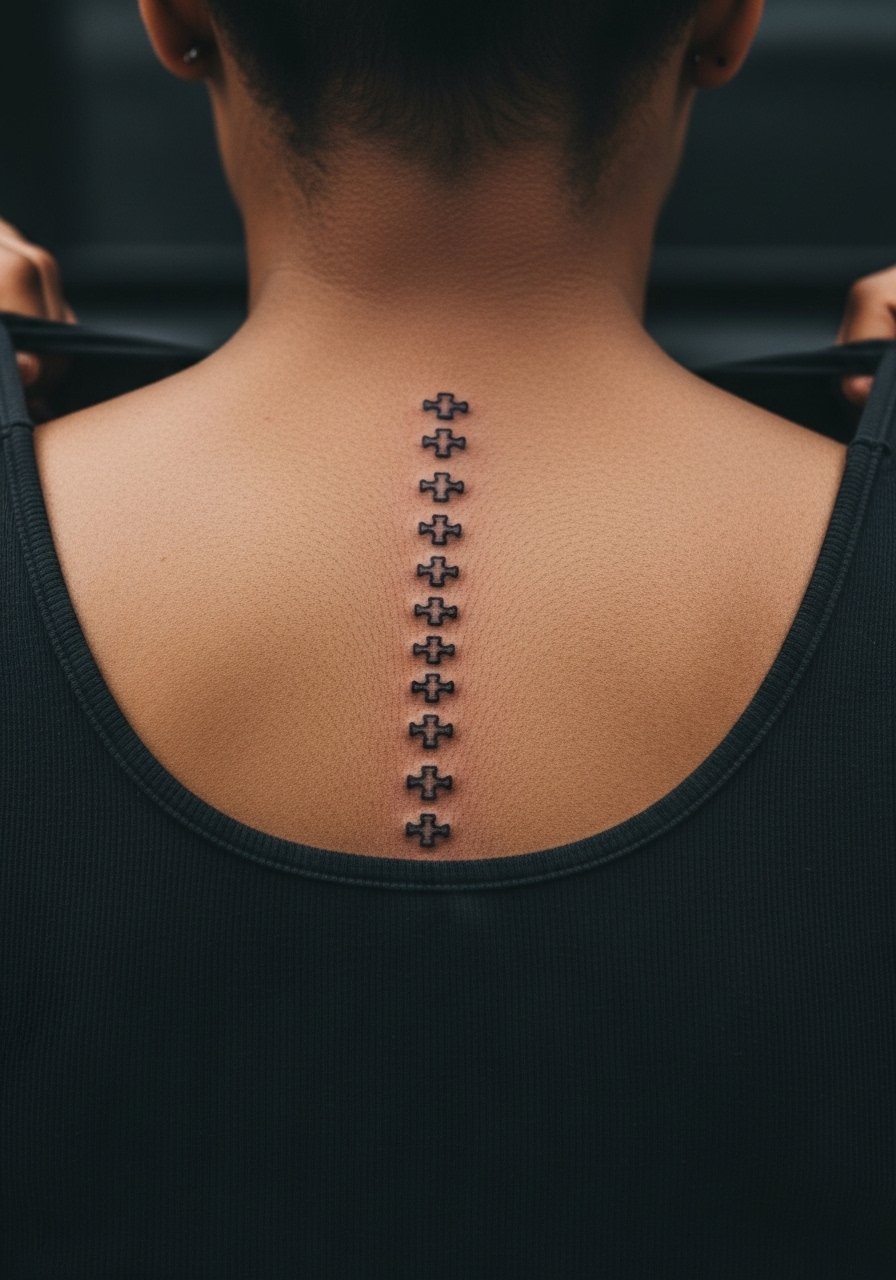
This piece reads like a subtle anatomical nod when each vertebra icon has clean negative space. In consultation, ask for slightly thicker outer linework than you think you need so the shapes remain distinct after a year. Pain on the thoracic spine is moderate, and sessions are short, often under an hour for a mid-spine run. A frequent error is requesting ultra-thin lines that the skin cannot hold, which leads to touch-ups sooner. Pair this look with a low-back open-back bodysuit when you want to show the vertical rhythm.
3. Delicate Script Running Down the Spine
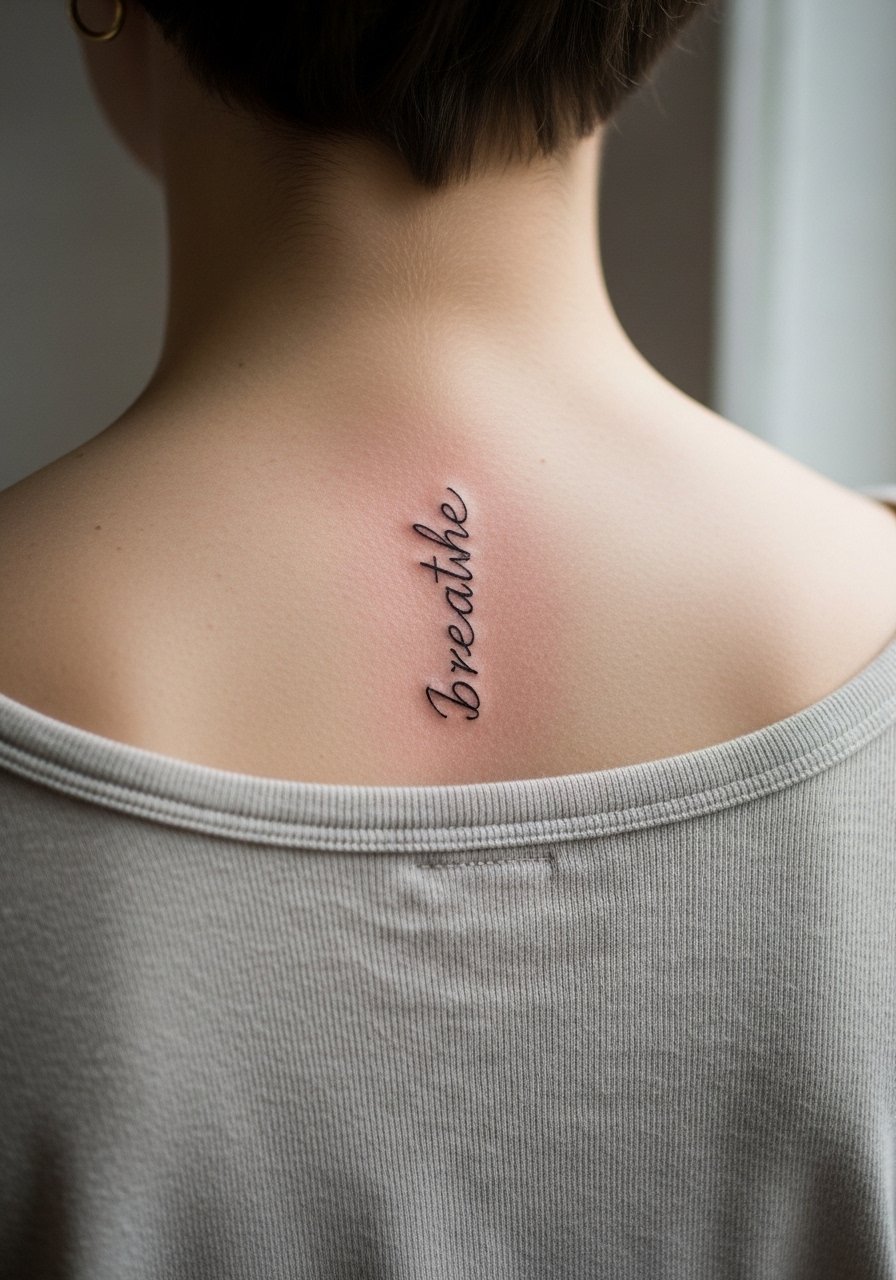
A vertical script can be elegant if letter spacing is increased for longevity. Tell your artist to scale each letter so loops do not touch adjacent letters after healing. Expect sharper sensitivity near the vertebrae and a session that usually runs 45–90 minutes depending on length. The shared controversy is whether script should be done ultra-fine or slightly bolder. One camp says ultra-fine is modern and delicate. The other camp says slightly bolder letters prevent early blurring. Ask where your artist stands during the consult. For showing off the phrase, a thin chain pendant necklace sits just above the top stroke and keeps the line readable.
4. Single-Needle Dot Work Column
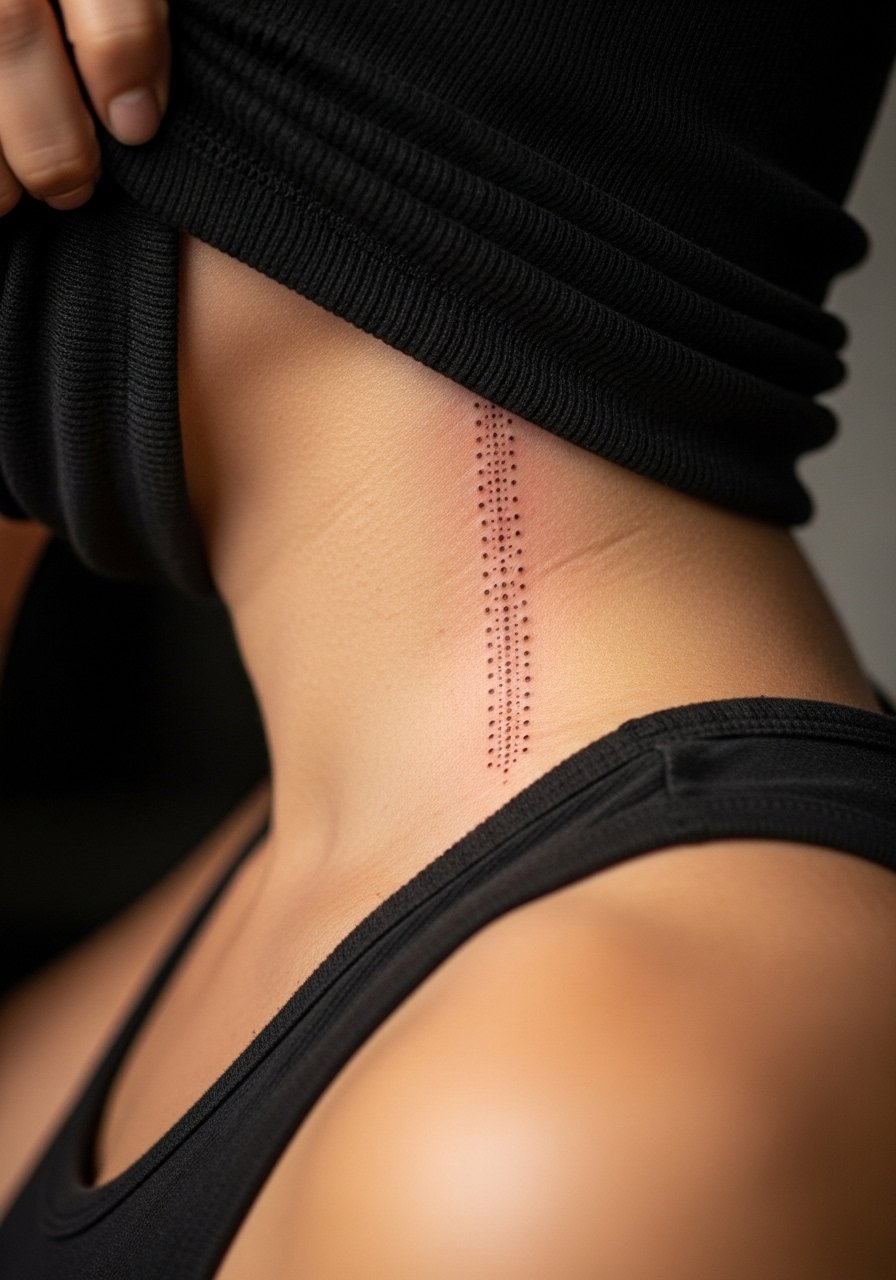
Dot work down the spine uses negative space to suggest shape rather than explicit form. For longevity, request slightly larger dots than flash images show, because tiny dots can merge over time. The session feels like repeated light taps, and the pain ranges from moderate to sharp at the vertebrae. A common mistake is asking for excessive stipple density, which ages into muddiness. Wear an open-back linen shirt to highlight the soft texture of the dots without overwhelming them.
5. Minimal Crescent Spine with Tiny Stars
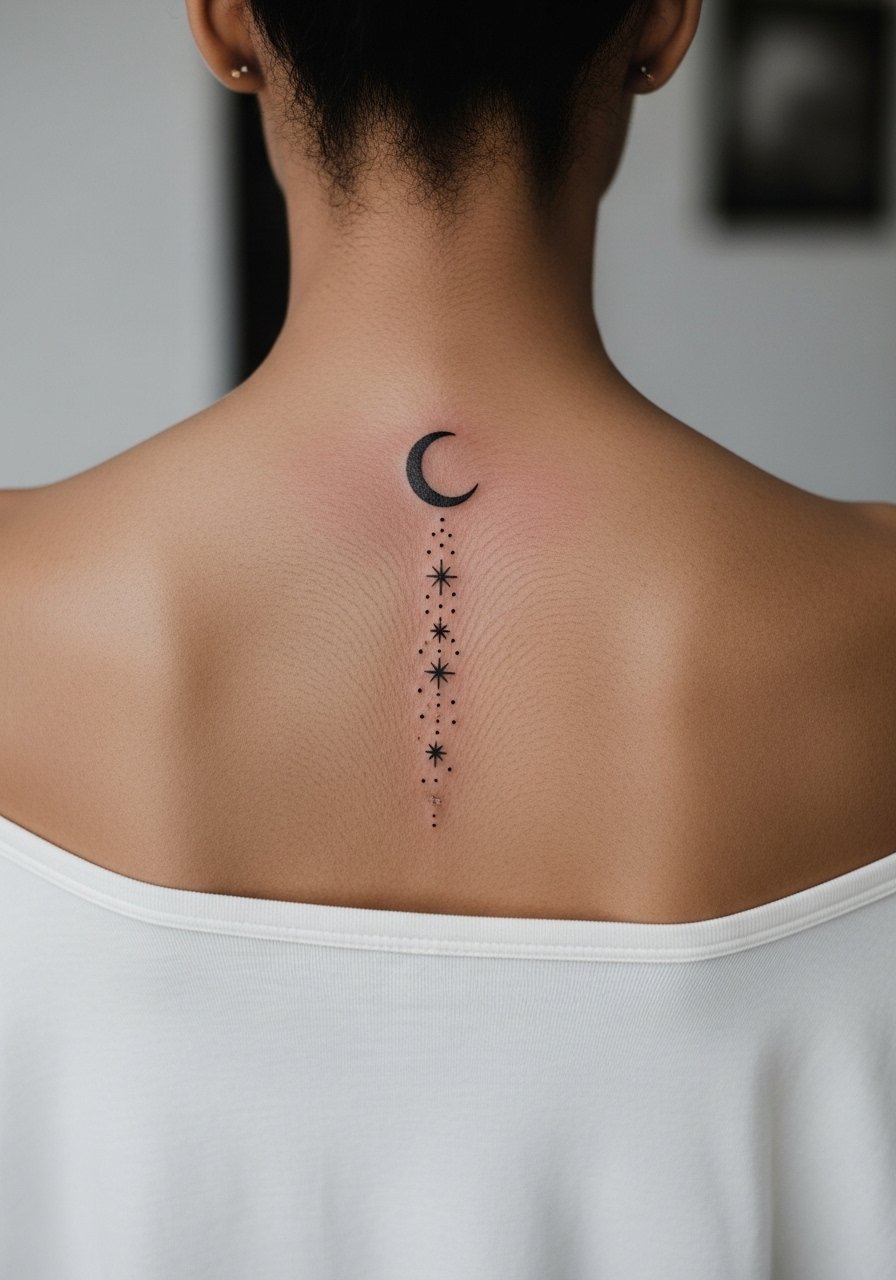
This celestial combo reads as a single composition when the moon is scaled to anchor the top vertebra. Tell your artist you want the stars spaced to avoid cluster blur in two years. Sessions are quick, often under an hour, but placement over bony areas increases sting. The mistake is crowding many stars into a tight line. Show this with an open-back midi dress for evenings, or a simple racerback top on casual days.
6. Geometric Line Pairing Along the Spine
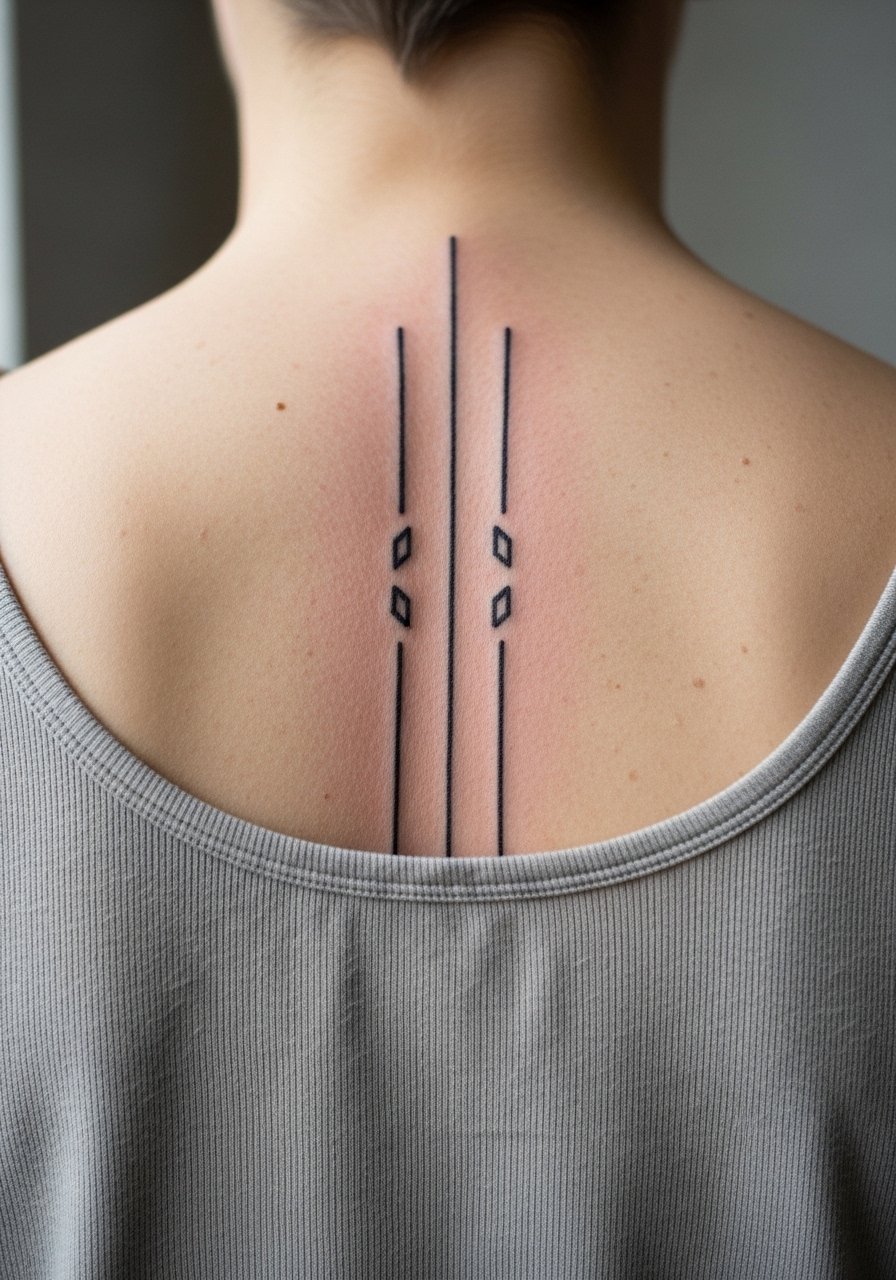
Parallel lines can emphasize posture and work when spacing allows the skin to move without compressing the negative space. In consults I advise slightly heavier lineweights than the client expects so the pair stays crisp after healing. Pain is steady along the spine, and a full run can take 60–120 minutes. The common mistake is choosing lines too close to each other, which invites merging. For outfit pairing wear a racerback tank so the lines read cleanly against bare skin.
Studio Day Picks
These spine pieces above sit along the back, and a few small items smooth both the session and the first week of healing.
-
Stencil transfer paper kit. Lets you preview placement and scale on the skin, which is crucial for vertical spine work so the composition sits where you expect.
-
Topical numbing cream. Applied an hour before can take the edge off sensitivity around the vertebrae for longer sessions without impacting the artist's linework.
-
Thin protective film roll. Keeps lower back and mid-spine areas clean during the first days, which helps avoid excess scabbing from clothing friction.
-
Fragrance-free gentle body wash. Cleanses healing back tattoos without stripping moisture from fine line work that needs a balanced pH.
-
Aquaphor healing ointment. Lightweight barrier for the very first 48 hours that helps keep fine line work from drying out while allowing the skin to breathe.
7. Tiny Mandala Anchor at the Base of the Neck
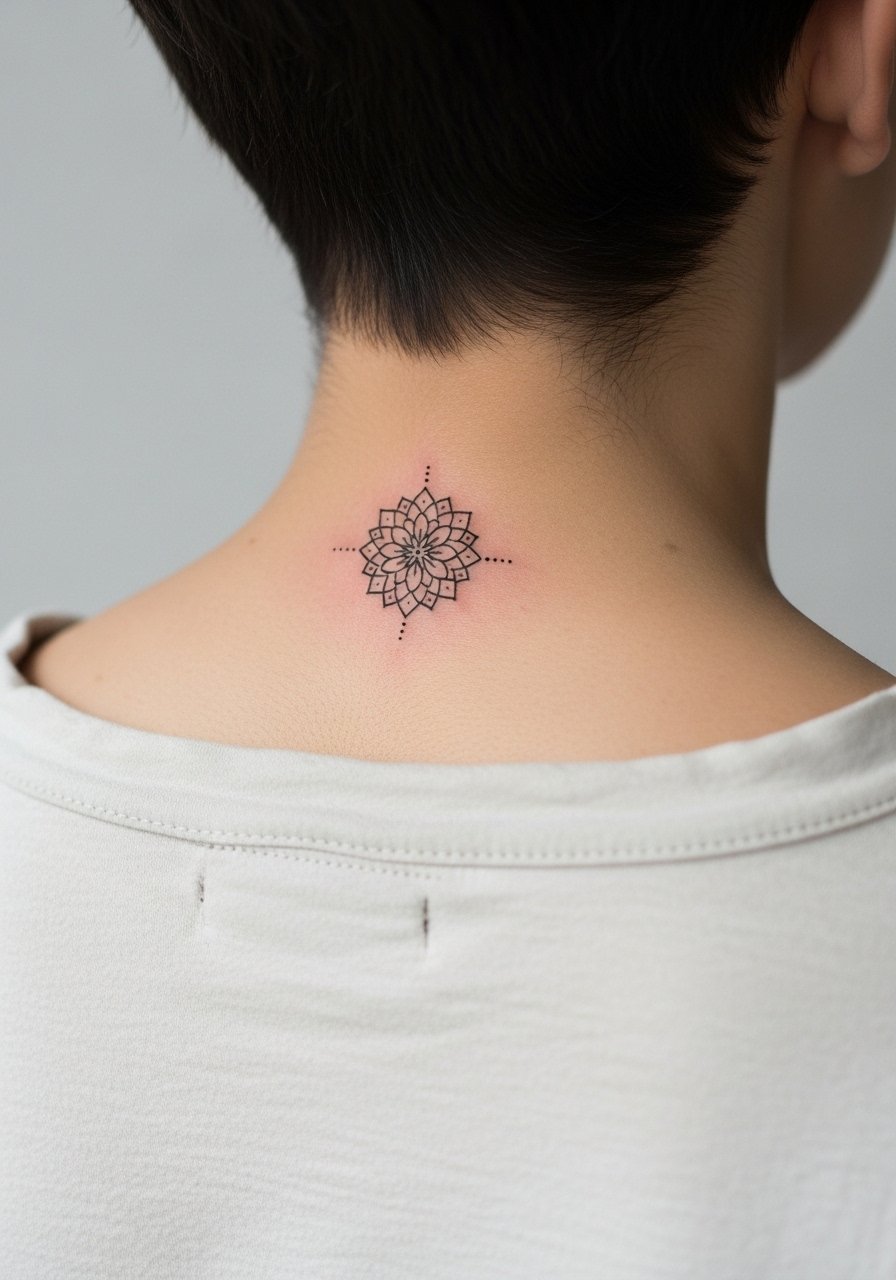
A small mandala at the nape reads as a focal point without overwhelming the vertebrae. Ask for simplified geometry and less dense inner fills so the negative space survives longer. The area can be more painful due to proximity to bone and thinner skin. The frequent error is over-detailing the center, which blurs into a dark spot. This placement looks elegant with hair worn up or a wide-neck sweater that reveals just the top curve.
8. Minimal Arrow Along the Spine
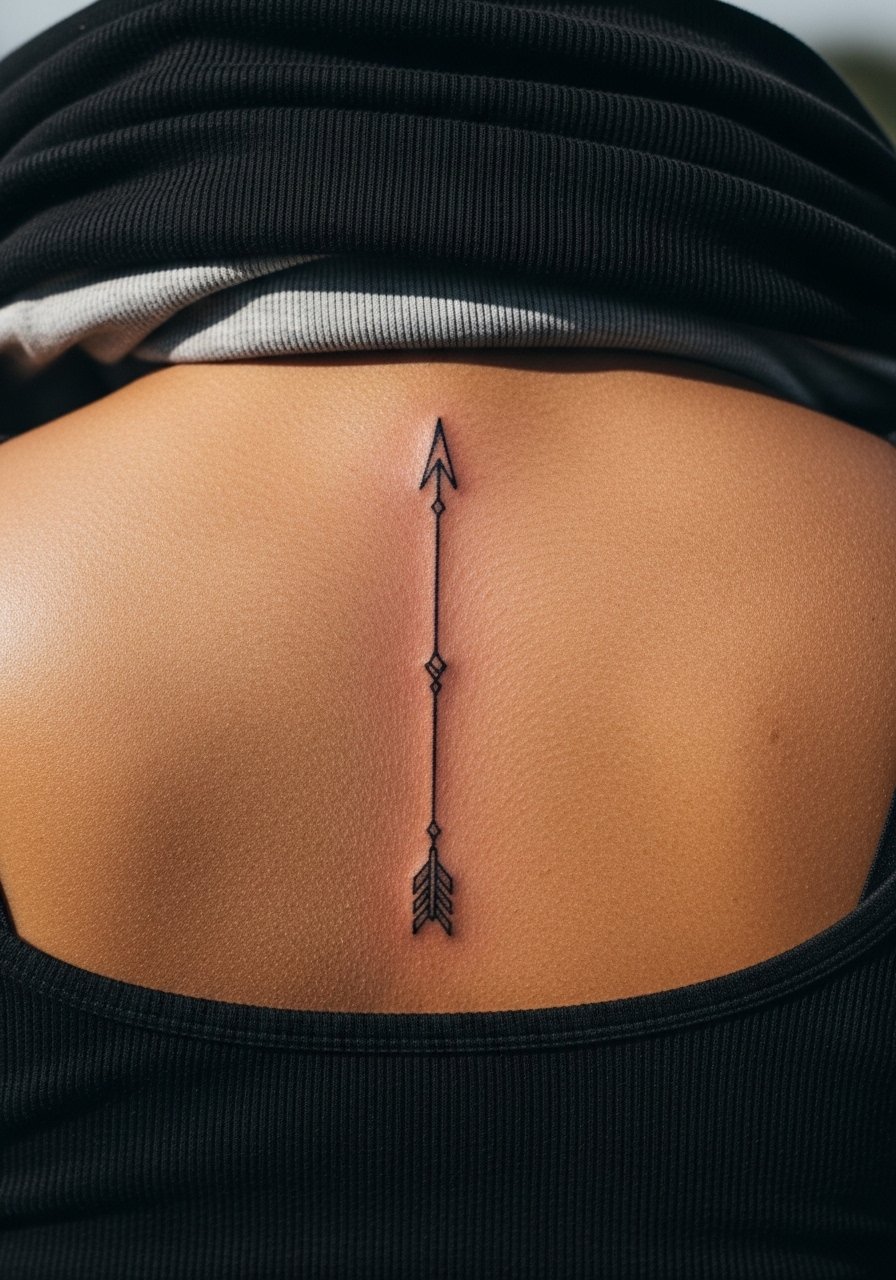
An arrow is a clear vertical statement when you ask for a slight increase in shaft thickness relative to the tip for durability. During consults I tell people the outline needs to be visible from a distance to remain readable after a few years. The session is brief and focused. A typical mistake is requesting a needle-fine shaft that fades into a thin smudge. Pair with an open-back bodysuit to lean fully into the vertical motif.
9. Negative Space Vertebrae with Soft Shading

This idea uses skin as part of the design by leaving small blocks of untouched skin between shaded areas. Tell your artist you want the negative zones at least 4 mm wide so they do not close up over time. The shading technique is gentle stipple and the session can be longer because of careful dot placement. Mistakes include compressing negative space to squeeze more elements, which ages poorly. For wardrobe, a low-back slip dress lets the composition breathe.
10. Micro-Realism Tiny Bird Mid-Spine

Micro-realistic birds can read delicate and lifelike when scaled correctly. Ask your artist to avoid tiny texture strokes that will merge, and to prioritize silhouette clarity. Pain is moderate along the spine and the session often requires breaks for posture relief. The common mistake is pushing for too much micro detail in a small area. Pair with an open-back blouse to show the perched silhouette without distraction.
11. Minimal Chain of Tiny Crescents

A repeated crescent motif reads rhythmic if spacing is consistent. During consult mention you want equal negative space between crescents so the line does not look patchy after healing. Expect small, quick needle work and moderate sensitivity. The mistake is uneven spacing or varying crescent sizes that make the run look unbalanced. For show-off wear a backless tank to keep the negative rhythm visible.
12. Vertical Minimalist Compass Spine Mark
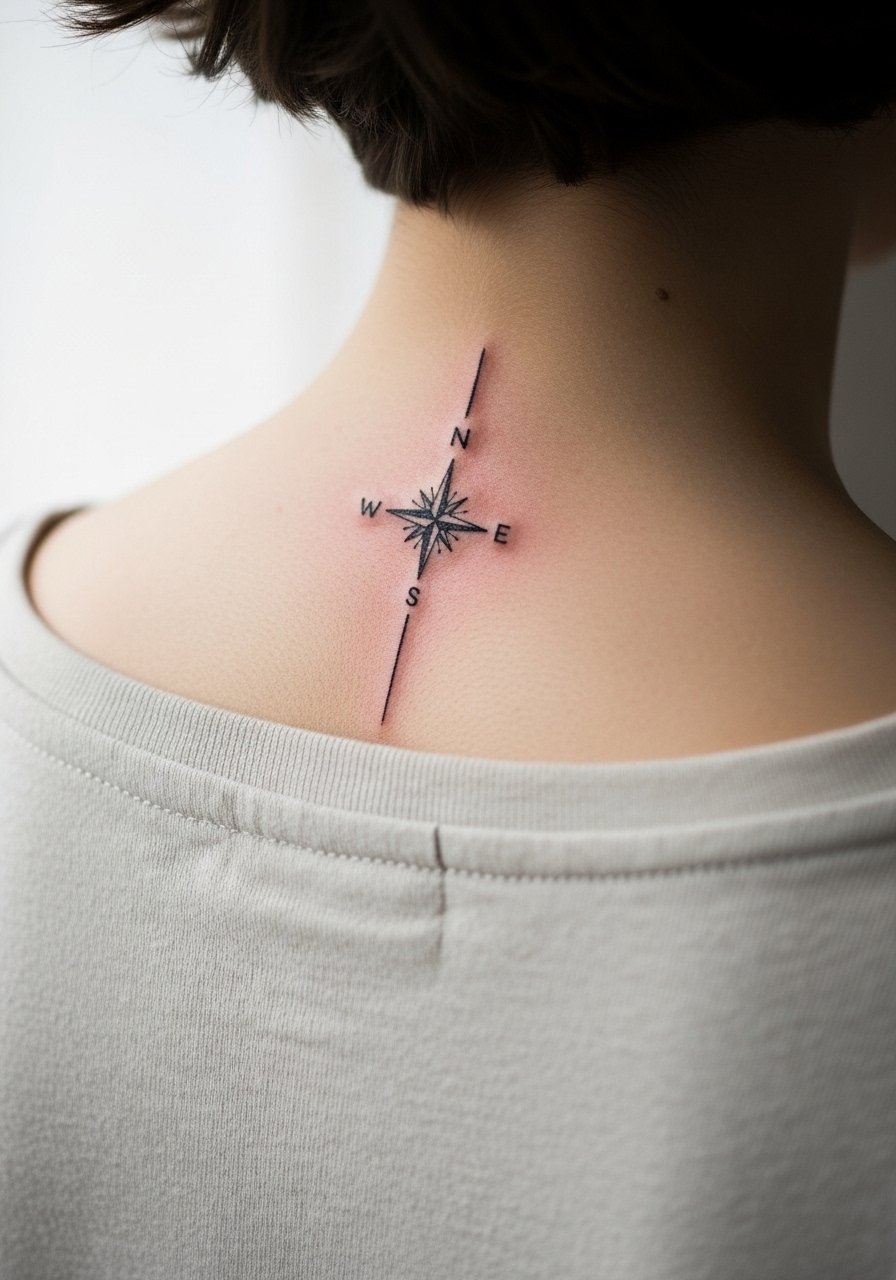
A compass anchors at the top of the spine and a thin tail can extend down as a guiding line. Ask for simplified cardinal points and a slightly reinforced outer circle for durability. The spine area produces sharper discomfort near bone, and a full compass plus tail often fits in a single session. A common error is requesting too many inner ticks which age into a blur. Pair with a thin chain pendant that sits above and complements the compass.
13. Minimal Floral Spine with Negative Space Leaves

Using negative space for leaves keeps the botanical look readable long term. Tell your artist to leave breathing room between flowers and leaves and to avoid dense fills. The session is a comfortable medium length. People often request too many small leaves which can collapse into a shaded block over time. Show with an open-back linen shirt for daytime styling that keeps the pattern visible.
14. Minimal Spine Constellation Trail
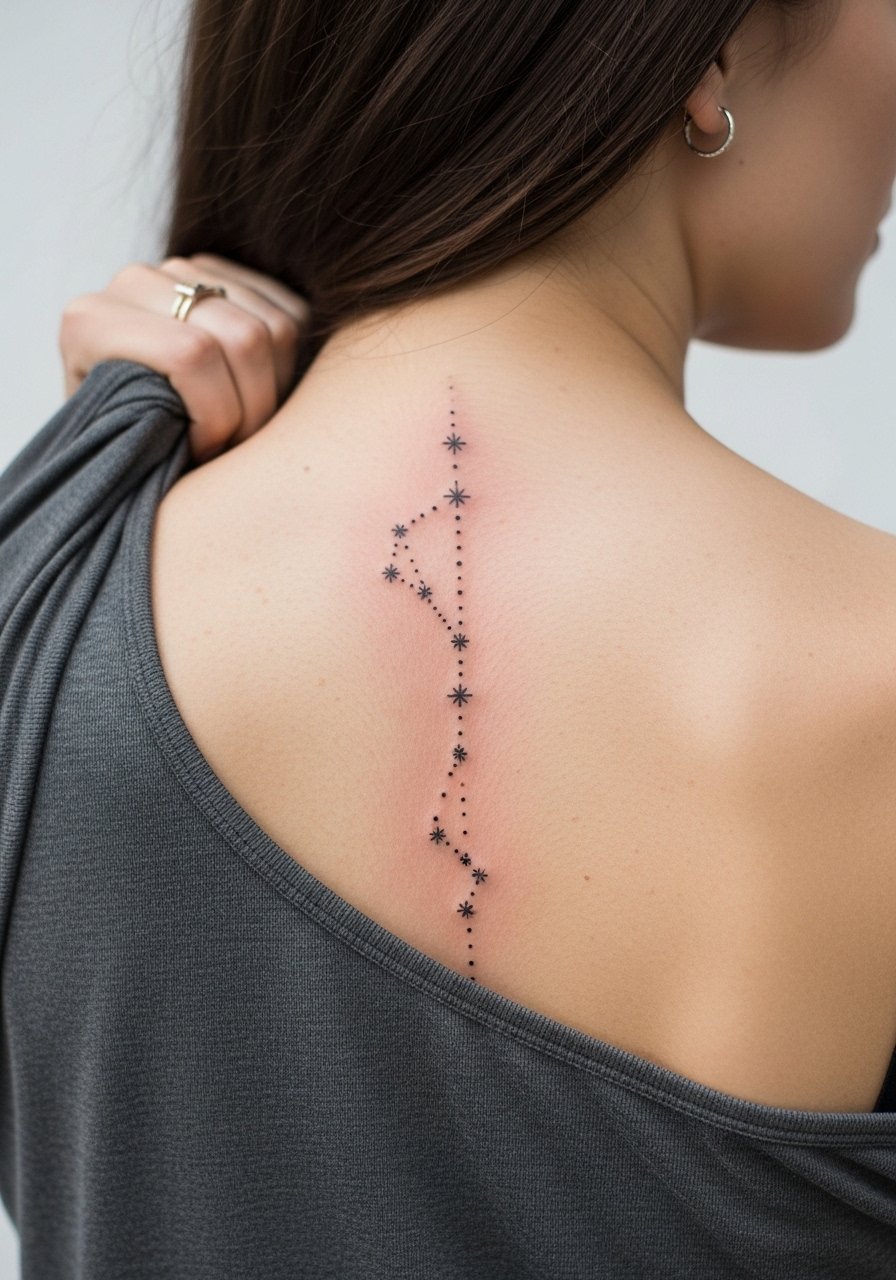
A vertical constellation uses spaced dots and tiny connecting lines. Request larger node dots and slightly thicker connectors to avoid early fading of the lines. The session feels pinprick-like and is short. The biggest mistake is using ultra-fine connectors that disappear under frequent movement. Pair with an open-back midi dress for nights out so the constellation is centered and visible.
15. Fine Line Rib Detail Running to the Spine
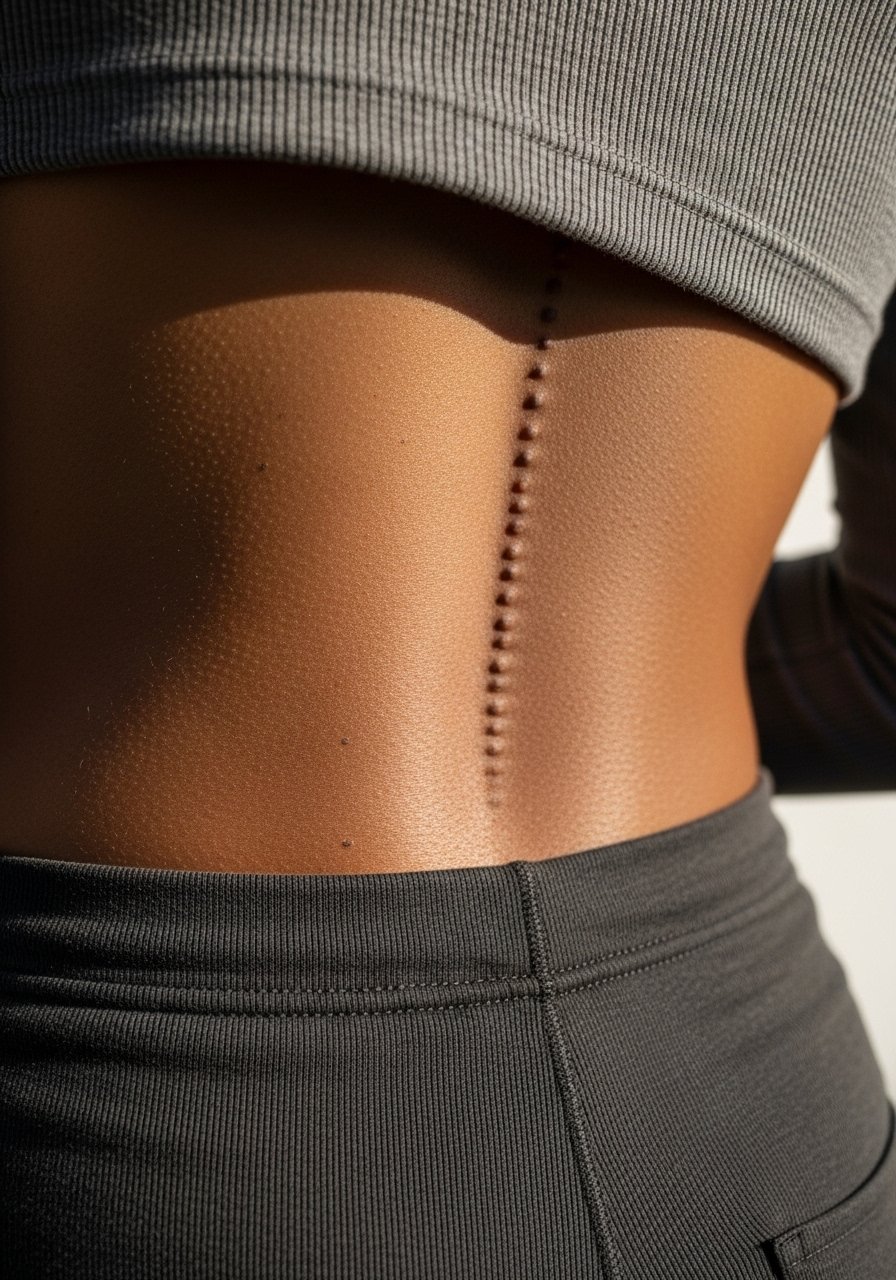
This hybrid runs from the rib edge into the spine and brings a common controversy into view. One camp argues that very fine linework on ribs and into the spine will blur quickly because the skin stretches. The other camp says careful depth and spacing can make fine lines hold up even across rib movement. The honest answer is it depends on both technique and how tight the line is. If you choose this, ask for slightly bolder anchor lines and minimal rib detail. For session wear bring a cropped tee that lifts easily so the artist can access both areas without discomfort.
16. Minimal Spine Arrow Cluster
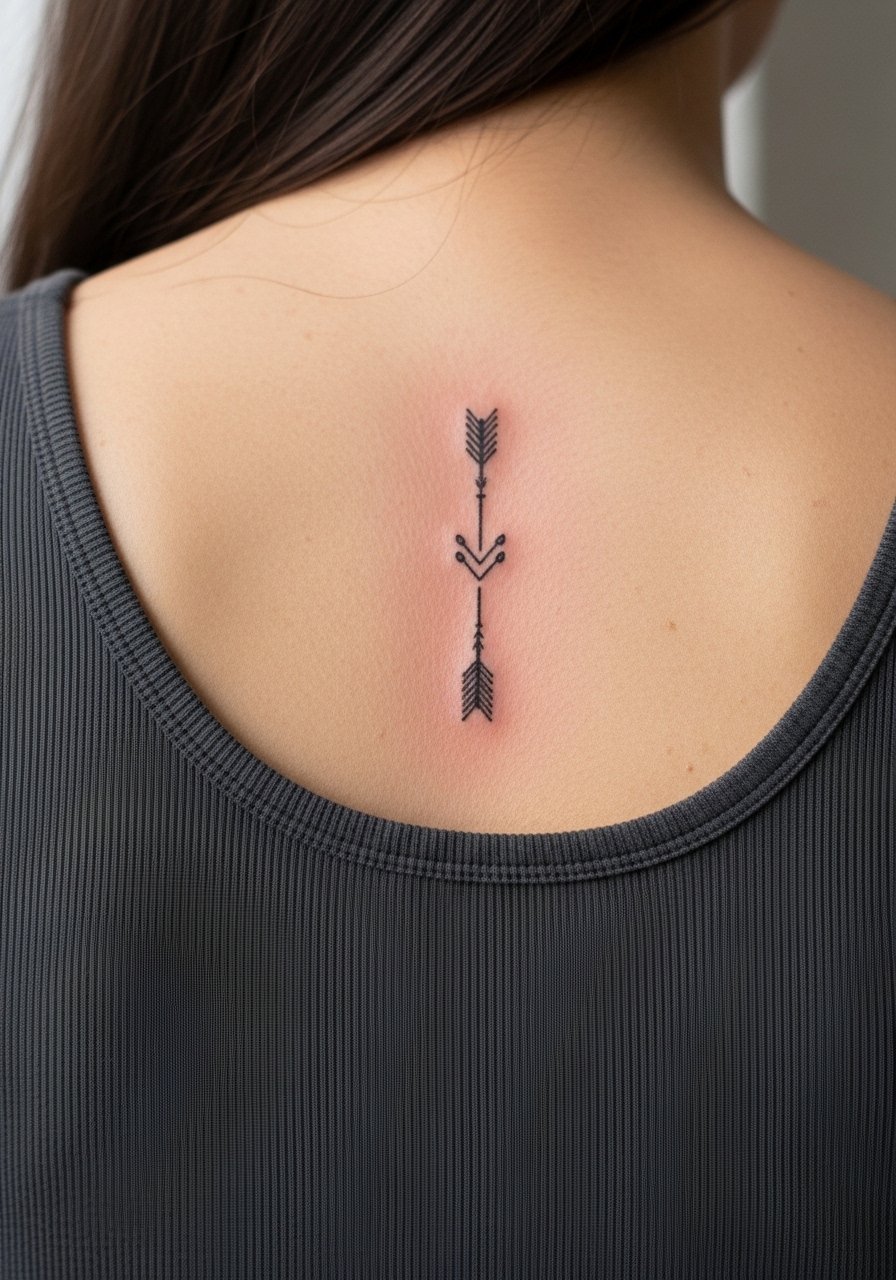
Using multiple small arrows creates movement without crowding. Ask your artist for consistent arrowhead angles and slightly thicker shafts so the cluster reads as intentional after a few years. Pain is moderate and sessions are quick. The mistake is varying shaft thickness, which causes the set to look uneven as it heals. Style with a backless bodysuit to keep the cluster centered and framed.
17. Minimalist Spine Wave Line
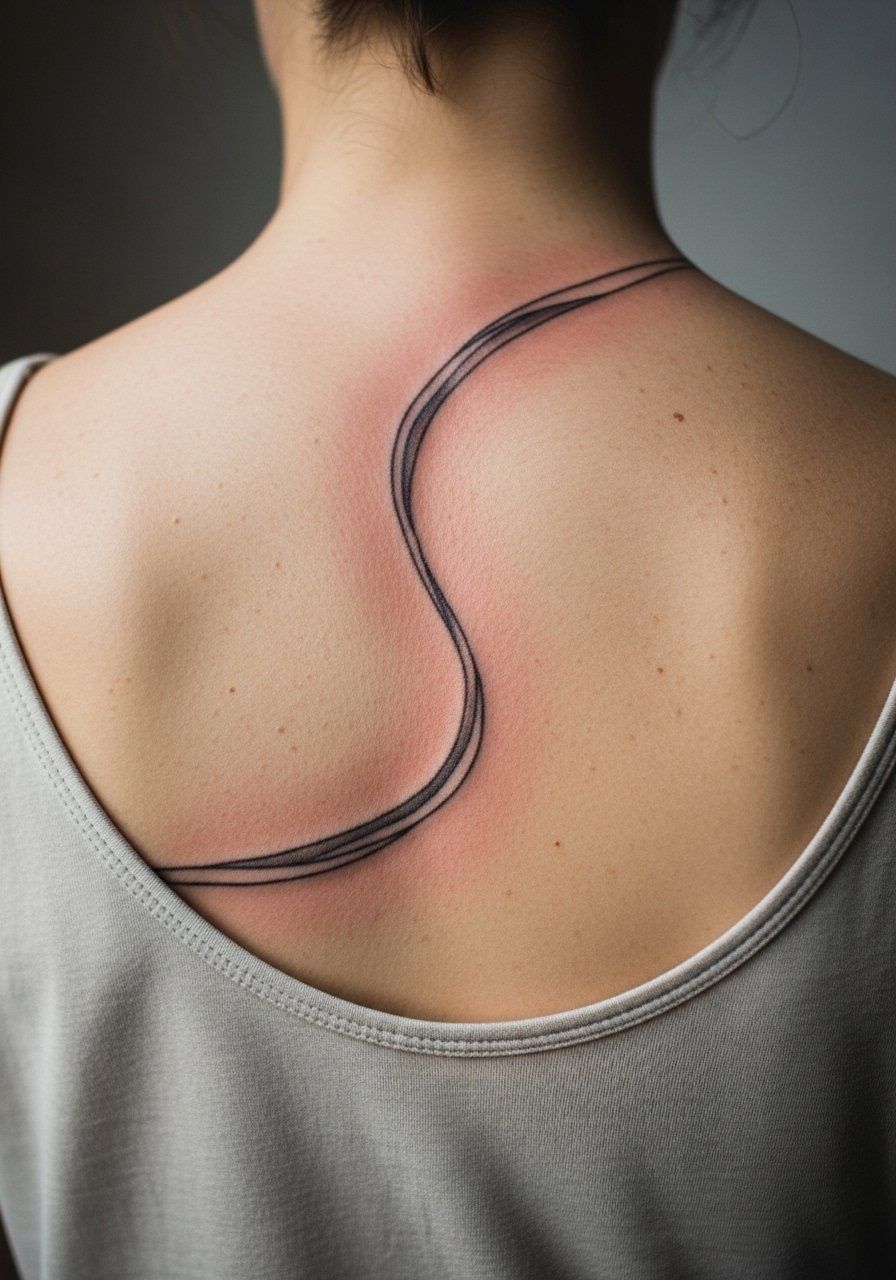
A wavy spine line is graceful when the curve follows your natural posture. During consult mention you want the curve to sit in a way that flatters your stance, and have the artist check it while you stand. The session is short, and pain is manageable. The error is forcing a curve that fights your natural line, which can look off in different clothes. For wardrobe try an open-back blouse to show the motion.
18. Minimal Spine Keyhole with Vertical Bar
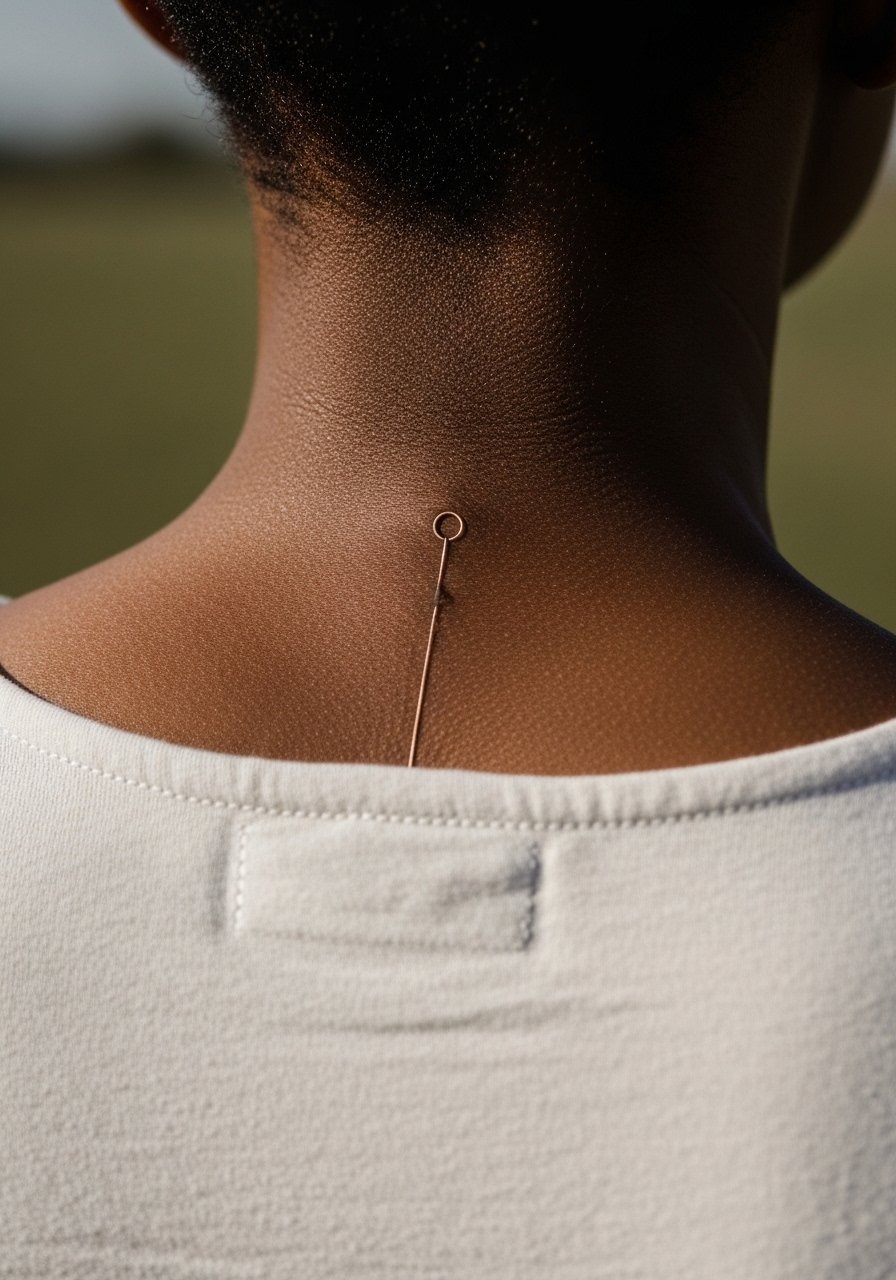
A keyhole can act as a focal anchor with a thin bar extending down. Ask for a slightly heavier outline on the keyhole so the shape stays defined. The base of the neck is sensitive and often needs short breaks during the session. A common mistake is an over-detailed keyhole interior that becomes indistinct. Pair with an open-back sweater when you want subtle reveal.
19. Minimal Spine Morse Code Message

Morse code along the spine is private and personal. Tell your artist the exact spacing you want and verify the positive and negative spaces on a test stencil. The session is quick but requires steady linework. People often pack dashes too close, which blurs them together. For a casual look, an open-back tee keeps the code readable while still being low-key.
20. Minimal Spine Laurel Wreath Outline
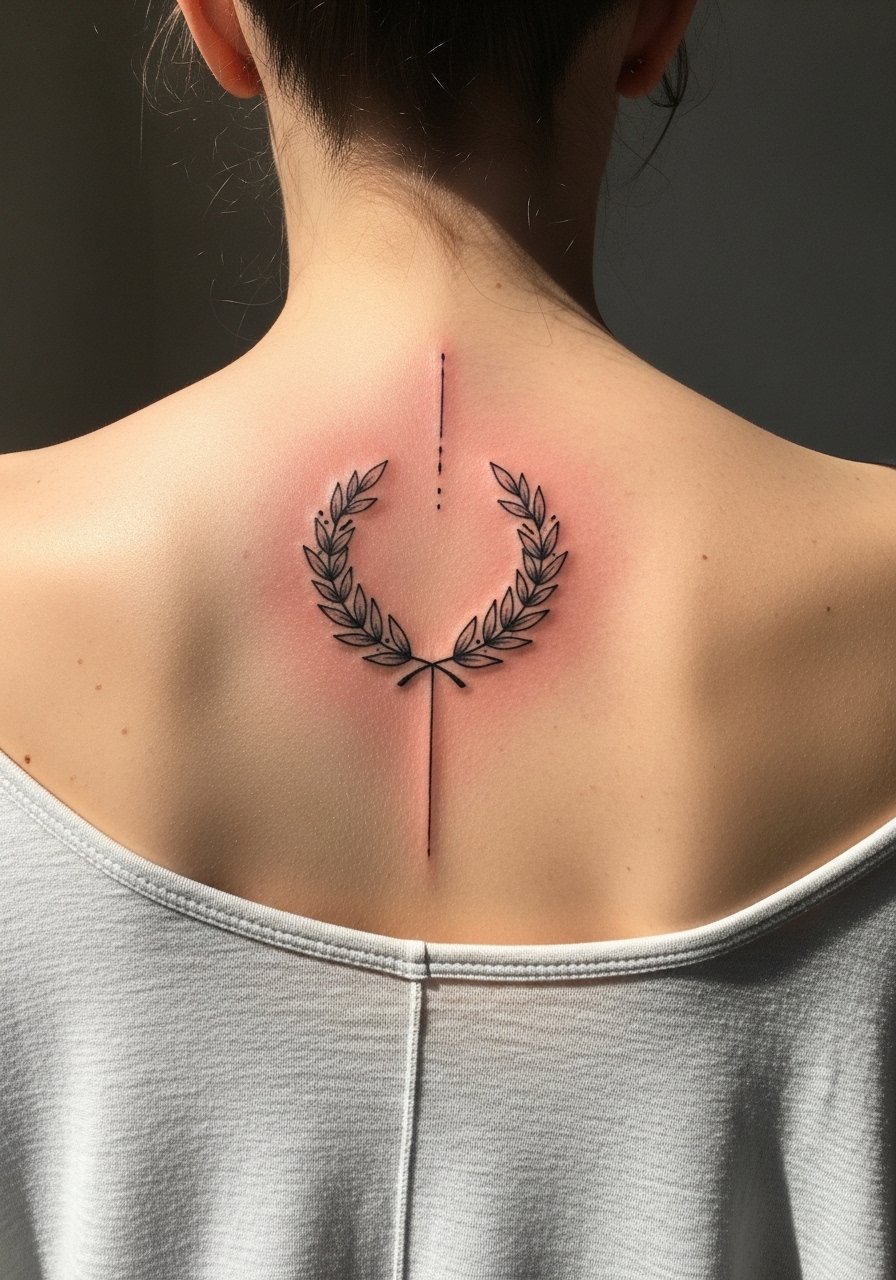
A laurel wreath reads classical when the leaves are simplified and spaced. Ask for clear negative gaps between leaves and a reinforced outer contour. Pain is moderate near the upper spine, and the session often takes less than an hour. The common mistake is overpacking leaf detail that merges into a blob. For evening wear choose a wide-neck dress to frame the wreath.
21. Minimal Spine Arrow with Dot Terminals

Dot terminals bookend the arrow and create punctuation. Ask the artist to size dots slightly larger for longevity and to align them vertically to the center of the vertebrae. The session is straightforward but can feel sharper at bone points. A mistake is making dots too small relative to the arrow, which disappears first. Style with an open-back camisole to keep attention on the punctuation.
22. Minimal Spine Tiny Leaf Chain

A leaf chain is organic and soft when leaves are spaced and simplified. Tell your artist you prefer fewer leaves spaced farther apart so the chain reads after many washes and suns. The session is medium length and sensitivity varies along the curve. The error is dense leaf clusters that age into a shaded strip. Pair with an open-back linen dress for daylight showing.
23. Minimal Spine Tiny Geometric Stack
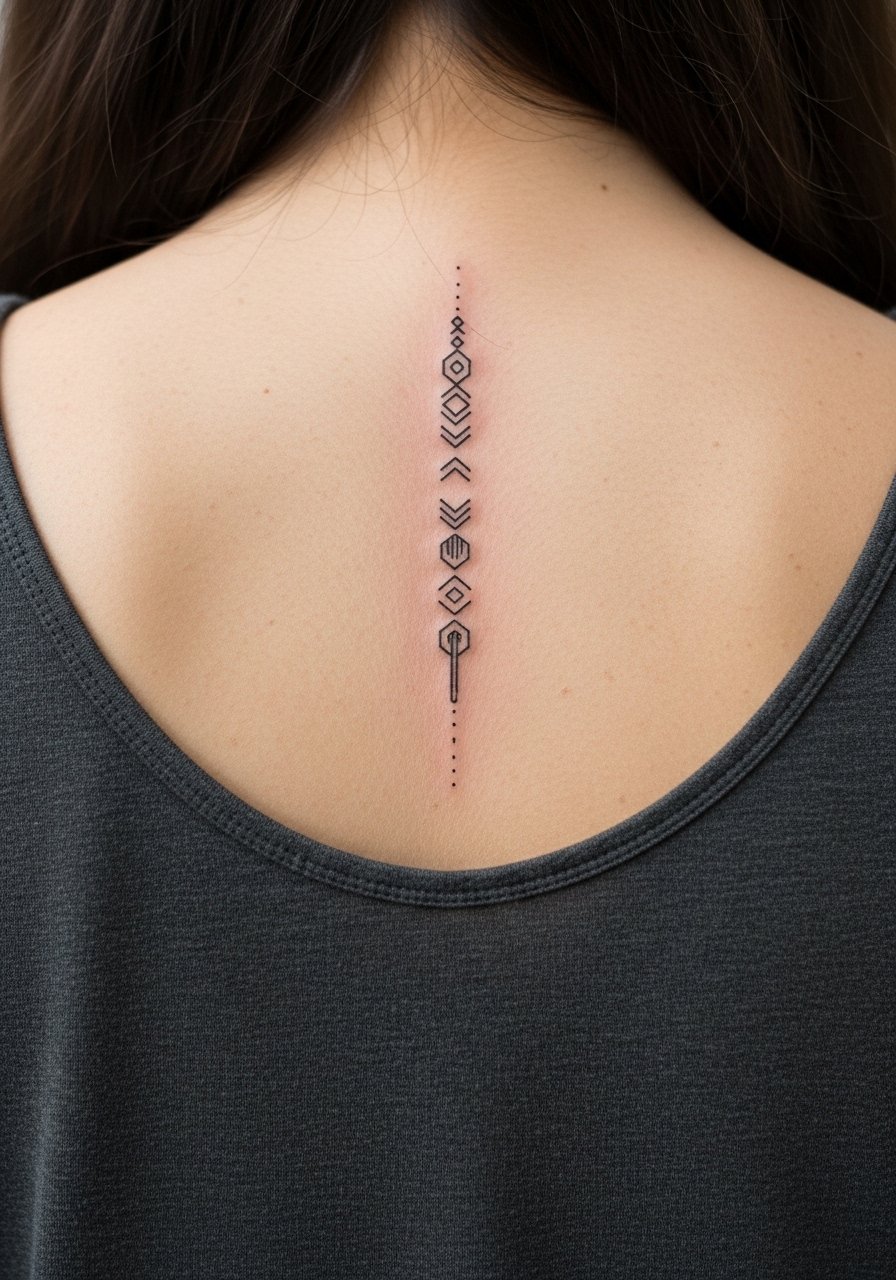
A vertical stack of shapes reads modern when each shape has breathing room. Ask for consistent scale and slightly bolder edges on smaller shapes to prevent early merging. Sessions can be brief depending on the number of shapes. Common mistakes include mixing scales that conflict as they settle. For an editorial look, pair with an open-back shirt that lets the stack act as a visual column.
24. Minimal Spine Thin Ribbon Flow
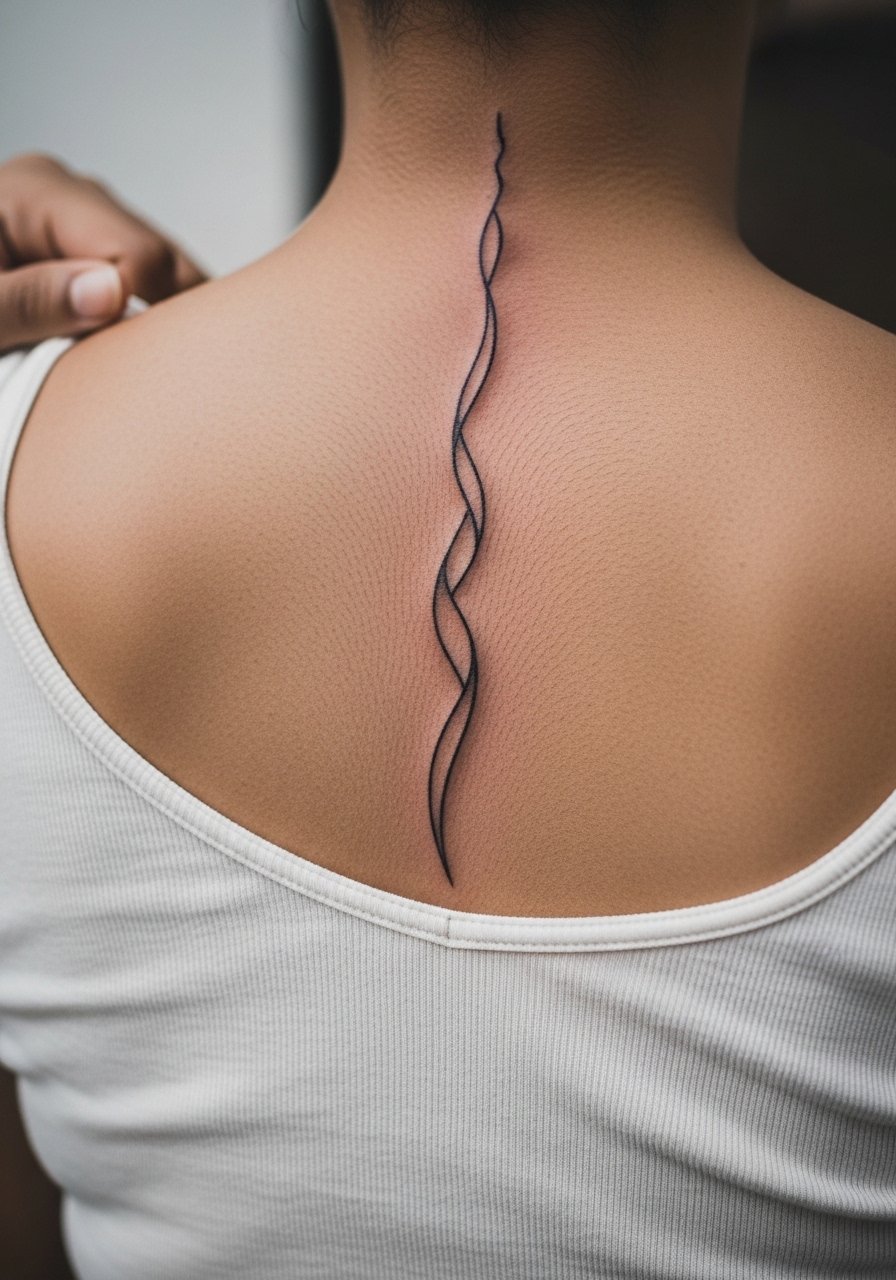
A ribbon effect reads dynamic if the twists are shallow and spaced. Tell the artist you want the twists fairly large so they do not collapse into each other. The session feels like consistent linework across a narrow field. A mistake is tiny tight twists that merge with movement. Pair with an open-back bodysuit to accentuate the flow.
25. Minimal Spine Single Floral Anchor at Lower Back

A single floral anchor at the lower spine reads intimate and contained. Ask for a reinforced outer petal to avoid early softening from friction with waistbands. Expect higher sensitivity on the lower back and a short session. People often underestimate clothing friction from waistbands and end up with extra scabbing. For session wear bring loose high-waisted pants and for showing off choose low-back dresses or a backless slip.
26. Minimal Spine Tiny Wave and Dot Combo

Alternating motifs create a subtle pattern that avoids crowding when spacing is planned. Tell the artist to keep dots slightly larger than the wave troughs so they stay legible. Sessions are short and focused. A common mistake is uneven spacing which makes the sequence read chaotic. Style with an open-back tee for a casual reveal.
27. Minimal Spine Single Bold Dot Anchor
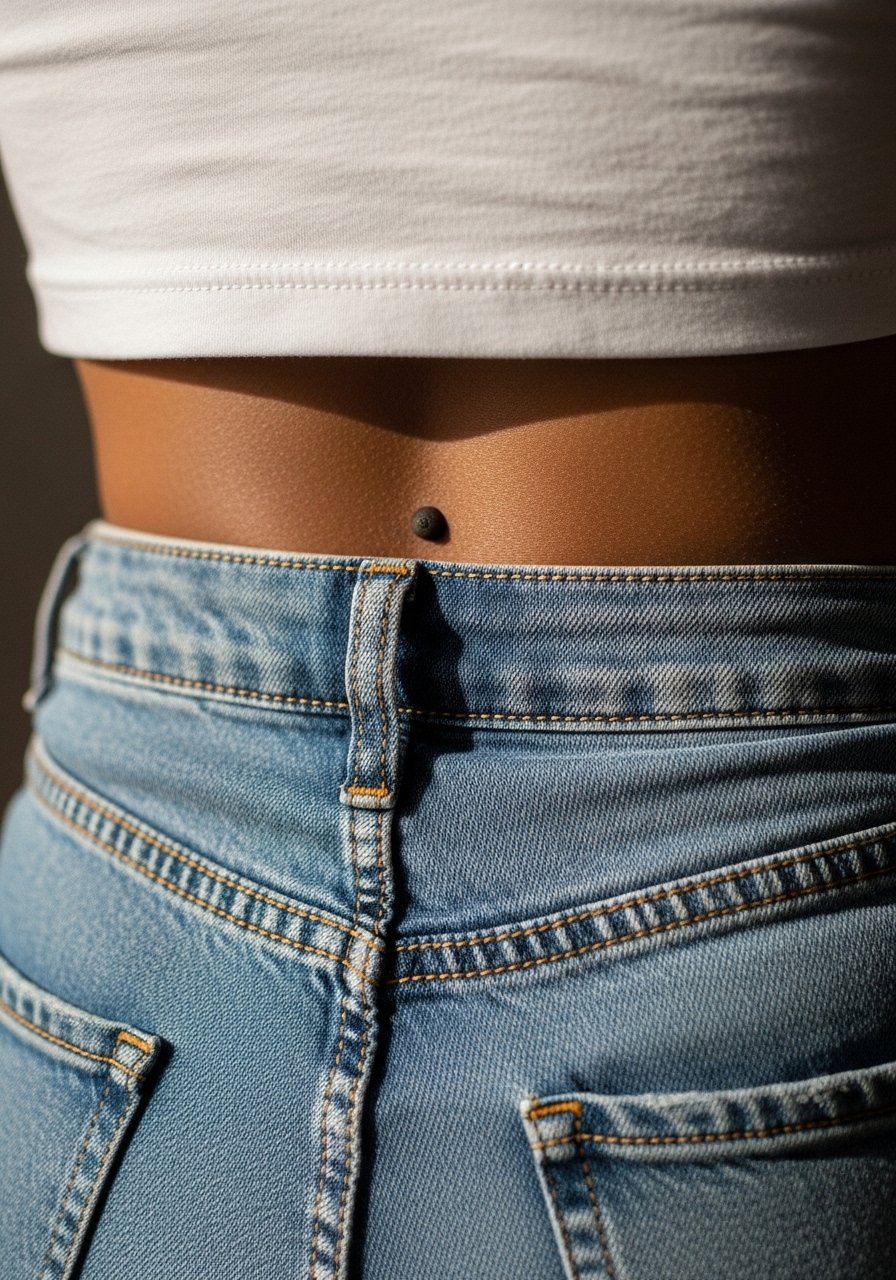
A solitary dot can be surprisingly expressive when placed precisely. Ask the artist for a crisp edge and slightly larger diameter than you imagine so the dot retains a readable presence. The lower sacral area can feel sharp during the session, and it is often a two- to three-minute procedure. The frequent mistake is choosing a micro-sized dot which disappears into skin texture over time. For outfits, a low-back open-back dress reveals the single point as an intentional anchor.
Frequently Asked Questions
Q: How does fine line spine work age compared with slightly bolder blackwork along the same placement?
A: From what I've seen, fine line tends to soften faster, especially on areas with frequent movement near the ribs and lower back. Bolder blackwork holds contrast longer, but it reads heavier. The middle ground is slightly reinforced lines that preserve the minimalist look while resisting early blurring.
Q: Will a spine tattoo interfere with clothing like bras or waistbands during healing?
A: Yes, lower and mid-spine pieces can rub against waistbands and bra straps. During the first week wear loose high-waisted pants or a sports bra you can loosen to reduce friction. Switching to soft, breathable fabrics helps limit scabbing and irritation.
Q: How often should I expect to need a touch-up for a minimalist spine tattoo?
A: It depends on your skin type, sun exposure, and placement. Many minimal pieces need a touch-up between year two and year five. If you get UV exposure on that area often, expect the contrast to drop sooner and plan for a touch-up earlier.
Q: Are there professional or career considerations for visible upper-spine tattoos?
A: Upper-spine tattoos are usually easy to conceal with shirts or hair, but if your job requires strict dress codes consider placement a few centimeters lower or choose designs that a collared shirt hides. I have seen some industries react conservatively to visible nape tattoos, so think about concealability.
Q: How do I find an artist comfortable with minimalist spine pieces without naming specific accounts?
A: Search local shop portfolios and use discovery pathways like studio websites, genre hashtags, and convention directories. Read portfolios for healed work photos rather than fresh shots, and ask the artist for healed examples of vertical work before booking.